Why are New 1P5 Editor Timothy Flanders & Taylor Marshall Sitting on the Fence on “a Canonical Trail and Investigation” of the Validity of the Francis Conclave and Pope Benedict Resignation?
–I’m happy to share with you that Timothy Flanders has been named the editor of OnePeterFive, effective today. – Eric Sammons [https://onepeterfive.com/announcement-new-1p5-editor/]
– Bishop Gracida is against the coronavirus hysteria and is strongly against Amoris Laetitia’s pushing of Communion for adulterers and as his co-host on the Taylor Marshall podcast Timothy Flanders said today Gracida says “there needs to be a canonical trial and investigation[1:15:12-1:15:30]” on the validity of the Francis conclave and Pope Benedict XVI resignation. This apparently goes against the Opus Dei narratives which it is possible is the reason Marshall feels the need to oppose passively by sitting on the fence on the virus hysteria as well as on “a canonical trail and investigation” of the validity of the Francis conclave and Pope Benedict XVI resignation. – Catholic MonitorSo, why are the new One Peter Five editor Timothy Flanders and Taylor Marshall apparently still sitting on the fence on “a canonical trail and investigation” of the validity of the Francis conclave and Pope Benedict XVI resignation? Maybe the answer is in this Catholic Monitor flashback from May 11, 2020:
The Spanish website called Sin Miedo de al “Opus Dei” which translates in English to Without Fear of “Opus Dei” stated in Spain that the leftist media and apparently the Opus Dei “conservative” media have united to push the coronavirus hysteria:
“[T]here is not a single Spanish media in which there is a dissident voice… No one dares move a finger or open their mouths to say that there is something strange in so much quarantine and interruption of activity [by lockdowns].” (Sinmiedoalopusdei, “Architecture of Oppression,” April 11, 2020)
Why is the supposedly conservative Opus Dei media in Spain according to this Spanish website pushing a narrative that is destroying the country’s political freedom, economy and banning the Mass?
Taylor Marshall who is against the banning of the Mass apparently is sitting on the fence on pushing strongly against on the Opus Dei coronavirus hysteria narrative (promoted in the Spanish Catholic media and by his former employer which are controlled by Opus Dei) which Archbishop Carlo Maria Vigano calls “the Media’s alarmism.”
Is it possible that Marshall’s connections to Opus Dei are why he is sitting on the fence, that is he lacks courage and decisiveness to choose sides, and is not strong in condemning the coronavirus hysteria and it’s “Media’s alarmism” which are causing the unconstitutional totalitarian lockdowns?
Marshall is so devoted to Opus Dei that he worked for their Catholic Information Center in Washington D.C. and named his son partly after the founder of the organization:
“Here is my son on the way home from the hospital today. He shall be baptized, Jude Ambrose Josemaria Marshall.”
“Jude because I prayed a novena (a nine day prayer) through St Jude that I might find a job. On the ninth day of that novena I was offered my current position in Washington DC…. “
Might Marshall’s connections to Opus Dei explain why he is so strongly against Archbishop Vigano including Bishop Rene Gracida in his anti-coronavirus hysteria petition to end the unconstitutional tyrannical lockdowns? Bishop Gracida is against the coronavirus hysteria and is strongly against Amoris Laetitia’s pushing of Communion for adulterers and as his co-host on the Taylor Marshall podcast Timothy Flanders said today Gracida says “there needs to be a canonical trial and investigation[1:15:12-1:15:30]” on the validity of the Francis conclave and Pope Benedict XVI resignation. This apparently goes against the Opus Dei narratives which it is possible is the reason that Marshall feels the need to oppose passively by sitting on the fence on the virus hysteria as well as on “a canonical trail and investigation” of the validity of the Francis conclave and Pope Benedict XVI resignation. Marshall speaking against Bishop Garcida’s position, that “a canonical trial and investigation” of the validity of the Francis conclave and Pope Benedict XVI resignation is needed, said: “I am a little concern that the [Vigano petition] movement can spin that way [towards Bishop Garcida’s position that “a canonical trial and investigation” is needed] and break apart. That is a concern I have.” (1:40- 1:40:16) [https://youtu.be/qUXK2I3G9Z8]
Stop for a moment of silence, ask Jesus Christ what He wants you to do now and next. In this silence remember God, Father, Son and Holy Ghost – Three Divine Persons yet One God, has an ordered universe where you can know truth and falsehood as well as never forget that He wants you to have eternal happiness with Him as his son or daughter by grace. Make this a practice. By doing this you are doing more good than reading anything here or anywhere else on the Internet.
Francis Notes:
– Doctor of the Church St. Francis de Sales totally confirmed beyond any doubt the possibility of a heretical pope and what must be done by the Church in such a situation:
“[T]he Pope… WHEN he is EXPLICITLY a heretic, he falls ipso facto from his dignity and out of the Church, and the Church MUST either deprive him, or, as some say, declare him deprived, of his Apostolic See.” (The Catholic Controversy, by St. Francis de Sales, Pages 305-306)
– LifeSiteNews, “Confusion explodes as Pope Francis throws magisterial weight behind communion for adulterers,” December 4, 2017:
The AAS guidelines explicitly allows “sexually active adulterous couples facing ‘complex circumstances’ to ‘access the sacraments of Reconciliation and the Eucharist.'”
– On February 2018, in Rorate Caeli, Catholic theologian Dr. John Lamont:
“The AAS statement… establishes that Pope Francis in Amoris Laetitia has affirmed propositions that are heretical in the strict sense.”
– On December 2, 2017, Bishop Rene Gracida:
“Francis’ heterodoxy is now official. He has published his letter to the Argentina bishops in Acta Apostlica Series making those letters magisterial documents.”
Pray an Our Father now for the restoration of the Church by the bishops by the grace of God.
One night, many years ago, I found myself embroiled in an unusual argument at a bar on Second Avenue in Midtown Manhattan. For reasons I have long forgotten, I mentioned the Mona Lisa to a young lady sitting there on the barstool next to me. She remarked that she did not care for the Mona Lisa. I was incredulous. I directly informed her that she was not permitted to “not like” the Mona Lisa. She responded with equal incredulity—by her taste, it was a rather dull painting.
But, I told her, your taste is irrelevant or malformed. For we do not judge the Mona Lisa, a work that has fascinated the centuries and stands at the center of all Western art. We can only admire such venerable and timeless treasures of our cultural patrimony, the achievements of man and their influence down through the ages.https://68a6b6fa6154d4c604025417317a0a13.safeframe.googlesyndication.com/safeframe/1-0-38/html/container.html
I did not convince my friend that night, but I have never wavered from my conviction in this regard. It is a sensibility that drew me to the “traditional” things of our religion as a young teenager, long before I had ever experienced the Traditional Latin Mass, during that time when the TLM was virtually extinct. It is the same sensibility that, years later, especially after the promulgation of Summorum Pontificum, reinforced my more informed revulsion at the arrogance and Philistinism of the reformers who so readily discarded the pearls of their own inheritance.
For, apart from its spiritual merits, the Traditional Mass is a cultural treasure of incomparable value. It is an ancient poem, like those of Homer, handed down across the ages, that cannot be judged by any one era or place, but that belongs to all time, and to no time. It is the living descendent of the Temple sacrifice of Jerusalem, carried through the Hellenized world at last to Rome, where it was imbued with the “noble simplicity” and austerity that was the quintessential mark of the great empire of the West. It retains in its lexicon the three great tongues of our patrimony, Latin, Greek and Hebrew. It is a product of Jerusalem, Athens and Rome.
Inspired by its ever-fixed lectionary, Bach set to music the St. Matthew Passion, the account read every Palm Sunday for a millennium before its composition and for three centuries thereafter. Mozart, Beethoven, Vivaldi, Hadyn, Schubert and countless other artisans set its ordinary parts to the greatest musical compositions.
Quasimodo the bell ringer was named in honor of the first word of the Introit of the Mass of Low Sunday, the day on which he was discovered on the steps of Notre Dame. Joyce’s Buck Mulligan intones the Introibo while shaving on the first page of Ulysses. And those most beautiful first words of Psalm 42, the first words of the Mass, are fittingly inscribed on the frieze above the chapel of my own college, looking down upon the thousands of youths made happy as they passed through its doors.
The Mass offers fixed things— words, expressions, readings—that have been said, sung and heard on the same cycle, down through time, in the worship of the Roman Church, the oldest living institution of the Western heritage. The most unchangeable of all the texts is the Roman Canon, whose very name means “fixed”.
In the letter to the bishops that accompanied the recent motu proprio, Pope Francis instructs that the Novus Ordo “contains all the elements of the Roman Rite, in particular the Roman Canon which constitutes one of its more distinctive elements.” This is a rather ironic contention, given that this venerable and untouchable prayer, dating to at least the papacy of Gregory the Great, that served as the sole and exclusive prayer for the consecration of the Eucharistic elements, was a source of annoyance to the authors of the reform, who thought to eliminate it altogether from the New Mass.
When John XXIII, in perhaps an excess of pius exuberance, thought to add the name of St. Joseph to the Communicantes part of the Canon, there was great trepidation. The power of the pope to alter even a period in the Canon was in doubt, but, in view of Joseph’s undeniable stature, and as a result of the growth of his cult in the 19th century, John XXIII inserted his name.
Less than a decade after this little, but audacious, change to the Communicantes, the reformers discovered, after 1,500 years, that the Canon was a burdensome hodgepodge and stylistic mess. They would provide a series of better prayers in the new missal that could be used freely in place of the Church’s most sacred and ancient liturgical formulation. Bugnini, the principal architect of the modern liturgy, wanted more “variety”, perhaps emulating Ed Sullivan. These churchmen exhibited not a shred of humility before this incomparable work of art and component of the Western tradition, literary and spiritual. To hold it “defective” is no different than to decree edits to the end of Hamlet, to rearrange the Fifth Symphony or to touch up the Sistine Ceiling.
As a result of the consequences of this tragic attitude, it is difficult to discern how the pope can today say that the New Mass is the Roman Rite due to the constitutive presence of the Roman Canon. It is a well-known fact that the Canon is rarely employed in the Novus Ordo, demoted as it is with the appellation “First Eucharistic Prayer.” When it is read, it is often shortened (no need to recite the names of all those martyrs!!) and its natural flow is disrupted by the annoying novelty of the “Mystery of Faith” acclamation. For decades, it was dreadfully mistranslated, such that its actual words were hardly rendered at all into the vernacular.
In short, the contention that the Novus Ordo is the present embodiment of the Roman Rite due to the “presence” of the Roman Canon actually proves the opposite proposition when held up to reality. The inability to recognize this obvious and longstanding state of affairs calls into question the basic knowledge and competence of the highest authorities in the Church. Sadly, all these years on, they ignore or defend the indefensible hubris exhibited towards the most sacred of the Church’s treasures, riches that belong to both our spiritual and cultural patrimony and that unite all the baptized across time. The circumstances of the mid-century Church that gave rise to the legitimate impetus for reform have long ago vanished. What remains, unfortunately, is the desire to turn up the corners of Mona Lisa’s smile.
Christian Browne is a practicing attorney in New York state. A board member of the Nassau County Catholic Lawyers Guild, he earned his J.D. from Fordham University in 2004. He is the author of The Pearl of Great Price: Pius VI & the Sack of Rome.
In 2019 I was being deployed to Bellevue. Significant portions of Nebraska and Iowa were underwater following a devastating storm, and I was to head up Operations. As I’ve done in anticipation of other disaster response deployments, I looked for local churches that might still be open. I found Immaculate Conception in Omaha, an FSSP Parish. Though already familiar with the TLM in “shared” situations, I had never been to a traditional Mass at an exclusively traditional parish before.
I was happy to discover this opportunity, and I got word of my deployment well enough in advance that I was able to start thinking about how I would get from the Forward Operating Base (FOB) to the parish. It was apparently a fifteen minute drive. That said, there were concerns about which roads would be impassable and what modes of transportation would be impacted. I emailed the parish and introduced myself, and explained my situation.https://f4635bf17a2e5b38dbf5043daef1903c.safeframe.googlesyndication.com/safeframe/1-0-38/html/container.html
A few days later—still in plenty of time before I was getting ready to leave for NE—the pastor emailed me. A parishioner had offered to drive me from the FOB to church and back again and, with my permission, Father was going to pass along my contact information. I agreed, of course, and soon received a call from a young airman stationed at nearby Offut AFB. After a brief conversation, everything was set! I was to arrive in Bellevue on Saturday afternoon; after getting myself situated there and clearing everything with the Incident Commander, I would text him the address and be ready the following morning for Mass at 07.30 hrs.
That Saturday afternoon, as the plane descended, I looked out my window and thought: Why are we so low over whatever huge lake this is? Then I noticed isolated squares of earth in the midst of the water, which housed collapsed structures and fallen trees. That’s how bad it was. We touched down and I retrieved my one bag. I had a bit of a wait for my ride to Bellevue; team members would be arriving from points all over the US in the next couple of hours and we’d all be heading over together.
Next day at the FOB, after giving the Ops presentation at the morning briefing outdoors, I ran back into the single-story grammar school building we were using as a command center to retrieve a few items. I exited the building on the charlie side onto a clear road and made my way to the main thoroughfare. Everything was deserted. Still. Silent. A few minutes later, the airman drove up and stopped at the corner. I got into the car and off we went.
As we arrived at the FSSP parish, one of my first thoughts was that the church facade was beautiful. Permanent-looking.
Notices, along with advertisements and requests of a less official sort, were pinned up on a bulletin board in the vestibule. Sacramentals and prayer cards were nicely arranged on tables provided for that purpose. People smiled as they came through, nodded and held the door. We blessed ourselves at the fonts and walked into the church.
It immediately occurred to me that this was a well-maintained place, that it was full of people, and that the lights were dim and it was quiet. Older couples and individuals, families of different sizes. Babies. There was no bustle of activity in the sanctuary or anywhere in the nave. No furnishings to be moved or rearranged. No liturgical colors to be changed. People seemed comfortable and everything had been prepared. We still had a few minutes until the Mass would begin, and I had the opportunity to say my prayers.
The lights got slightly brighter. The Mass was familiar to me, as I am accustomed to attending the Traditional Mass back home. I was very grateful to be at Mass at all—and at the Traditional Mass particularly—during this operation far from home. Mass proceeded as usual. In making his brief announcements before the homily, Father thanked those in the congregation who had responded to his request for help with my trip. He then announced the death of a parishioner and offered his condolences to family members and friends who were present, and led everyone in a Hail Mary for the repose of the person’s soul. The homily that followed was on the importance of preparing for death with a good life.
After Mass, again, it was the calmness that I appreciated. The priest and most people stayed inside the church for a period of thanksgiving, some for a longer time and some shorter, but there was no hurry. No disturbance. On the way into the vestibule and back out onto the street, people were warm and friendly and courteous. They talked about Sunday afternoon plans and about future events at Immaculate Conception School. My companion and I went to share a cup of coffee before our return to the FOB.
I have no idea if my impression of Immaculate Conception Church and School in Omaha is true to life. I was in Nebraska to help people in the aftermath of a storm that could cripple the beef industry in the heartland and raise meat prices in the eastern US for the next two years. Faced with a situation in which I was hoping to find any Catholic church available for any Mass, but everything I experienced in this parish seemed to have such integrity. That’s really the best word to describe it. Integrity. All the pieces seemed to fit.
I am very grateful to know that, not only is the Traditional Mass available, but that a traditional Catholic culture—an example of which I think I observed in Omaha—still exists. I’d like to see it spread far and wide.
I spent the better part of the week that followed inside our command center, tending to the needs of our Operations Section. I sent teams out to do damage assessments, report on mold mitigation needs, tear down rotting sheet rock and rip up flooring, pull nails and remove debris, tarp roofs, cut and swamp trees…Making properties and homes contractor-ready for people who had no idea where to begin. Then I was on my way back to Omaha for my return flight to New York.
The other day I heard that, at the height of its lockdown during the pandemic last year, New York and specifically New York City had to import a lot of beef from Nebraska and Iowa. When I see the Omaha logo in the butcher section of the grocery store, I smile and remember Bellevue and Omaha and the Traditional Catholics who supported me while we supported the good people of eastern Nebraska and western Iowa. Then I buy a few steaks and some stew meat.
A teacher is taking his class on a tour of a grand art gallery. The students are fluttering with excitement at the chance to view some of the world’s most cherished pieces. As they pass through security, the voice of their teacher halts them from advancing further.
“Ok, everyone needs to stay with me. No exceptions! I can’t trust you here alone. Now, we’re going to go over to a painting on loan to the gallery: Dali’s The Persistence of Memory.”https://3c3627b90e0894fb61e23e52e51df5d9.safeframe.googlesyndication.com/safeframe/1-0-38/html/container.html
The students oblige. They are quite familiar with Salvador Dali’s work, and are curious to see the impression it has on them.
After a good while of staring at the painting, the students begin to grow restless. One of them pipes up, “Teacher? Can we please, perhaps, move on? We would like to check out the works by Michelangelo and Fra Angelico.”
“Why?” snaps the teacher, aggravated to his core by the student’s question. “What’s wrong with The Persistence of Memory?”
“Well, it’s nice and all,” adds another pupil, “but the longer we look at it, the more we notice the melting clocks, ants, and hidden monster. It’s just… not impressing us like we thought it might.”
“How dare you say this! You’re just not understanding its genius!” the teacher shouts in anger.
“No, it’s good. Really,” tries another student, attempting to calm the situation. “We just think that Fra Angelico’s artwork is quite inspiring and…”
“Enough!” the teacher bawls. “We are not going anywhere until every single student here tells me this is the best painting in the art gallery! Do you hear? The best! No other piece will be viewed until this is done. Got it?”
A few students murmur sheepishly that Dali’s work is the best they’ve ever seen. Immediately the teacher, awakening some inner trust, gives these favored students permission to browse the rest of the gallery.
A loud crashing noise soon emanates from a nearby exhibit. No doubt one of the select students got carried away with his newfound freedom. The teacher ignores this, and glares at the remaining students. Unsurprisingly, the remnant of pupils cannot bring themselves to vocalize anything but the truth regarding Dali’s work. And so, the surreal standoff continues. The teacher holds the students hostage over The Persistence of Memory. Time slowly droops away. Like a clock melting in the sun.
* * *
I had hoped, perhaps beyond hope, that I was done with writing about Vatican II. The Council happened. It said some things that seem clear. It said some things that are not clear. And, if we are to be honest, it said some things that are downright puzzling.
Despite the disastrous “fruits” in the Catholic Church since Vatican II, I will give the benefit of the doubt and say simply it was a valid pastoral Council which, at least officially, was not intended to change Church doctrine (though Bugnini had other ideas on this). Vatican II was no Michelangelo or Fra Angelico masterpiece; it was more like a surreal portrait of Dali’s melting clocks. Forgive myself and others for wanting to move on to bigger and more beautiful things.
But we are not allowed to move on. How many homilies and articles have I heard in recent years trumpeting the need to embrace this Council. Some have even suggested my eternal salvation depends upon the championing of the Council’s vision. Often these words are said with an attitude of talking down to people like myself, as though I haven’t read the documents numerous times, nor a plethora of books and commentaries on them, nor still written hundreds of pages of university essays examining all aspects of the Council (I say this not to brag, but rather to my shame, for God knows the time wasted). Instead, it is reiterated that I simply do not understand the Council, and that I am needlessly acting as a difficult and entitled child. If everyone could just say, “I love you,” to the Council, all would be well.
Yet I, and many other Catholics, have not said those three little words. And now the consequences have come, thanks to Pope Francis’ recent motu proprio, Traditionis Custodes. The traditional Latin Mass (TLM) is to be taken away—or at least an attempt will be made—from those upstart Catholics. Pope Francis says that he is “saddened by an instrumental use of the Missale Romanum of 1962, increasingly characterized by a growing rejection not only of the liturgical reform, but of the Second Vatican Council, with the unfounded and unsustainable assertion that it has betrayed Tradition and ‘true Church.’”
In other words, he is warning that one must abandon the traditional Latin Mass in favor of Vatican II, for the Council is, apparently, “the only expression of the lex orandi of the Roman Rite.” I’m not sure how this action will help me love Vatican II, but I digress.
One could examine the envy, fear, and malice towards the TLM which caused Pope Francis to write this motu proprio. However, if we simply take the pope on his word, he essentially is punishing traditional Catholics for critiquing, questioning, and raising eyebrows towards Vatican II. Like the teacher in the art gallery, the pope is saying, “Sit here and don’t move until you tell me that Vatican II is the best. Only then are you free to roam.” This is the pope’s way of controlling the fast-spreading virus called the TLM. I call it the Vatican II passport.
What does the Vatican II passport get you? Whatever you want. The German bishops promote heresy daily, yet they are still free to teach, preach, and charge money for sacraments as they please. James Martin, S.J., is the darling at the Vatican right now, despite consistently promoting teachings at odds with the Catholic Church. As for all those monsters at the Vatican busy using their Grindr app, the pope seems in no rush to oust them from their positions. Why? They all have the Vatican II passport.
Now imagine if, say, Fr. James Martin came out tomorrow and publicly questioned why Gaudium et Spes sounds more like an enlightenment manifesto than an official Catholic proclamation. He would learn, within hours, that the Vatican does not build bridges towards such criticisms. But Martin knows better. He does not question Gaudium et Spes (just Catholic morality in general), and so he is a free man. The game is simple: Love Vatican II, and then do what you will.
But what happens if you do not have your Vatican II passport? You become a second-class citizen in need of re-education. Failing that, as we are seeing now, you will lose your holy Mass. You will lose your physical church building. You will lose your priests. You will lose your positions at universities and dioceses. You will lose your rights. You will lose your voice. You will be designated as unsafe to the wider Catholic population, for you will represent disunity. You will be mocked, punished, and sent to the confines of lowly basements and barns and told you are in schism for praying the Mass of Saints Padre Pio, Maximillian Kolbe, and countless others. No Vatican II passport means no active participation in the Church.
I will conclude simply by stating that Pope Francis’ draconian measures issued in Traditionis Custodes argue against themselves. If Vatican II is so necessary, lively, and fruitful, perhaps it would hold up on its own, and bear real fruit. But it does not, and thus it requires bitter enforcement. For now, the message is clear: Stop ignoring the Council. Get your Vatican II passport, or face the consequences. Do so before it is too late. The clock is melting away into a languid and blithering existence. Time is fading.
Or at least it is for Pope Francis.
[Image: The Persistence of Memory by Salvador Dalí]
Dan Millette is a husband and father of four. He teaches in Saskatchewan, Canada. Millette is a graduate from Our Lady Seat of Wisdom College in Ontario and has a Master of Arts degree in theology from Holy Apostles College in Connecticut. His personal blog is www.bravestthing.com.
(Editor’s Note: This is Part III of a three-part series: “Leading a Traditional Catholic Life in a Time of Civil War.” Part I can be found here, and Part II can be found here.)
In the first part, I spoke of how easy it would be to get discouraged by the renewed assault on the traditional Catholic Faith, and how much we can benefit from learning about the example of the first wave of traditionalists who kept the Latin Mass alive in what were truly the darkest days. In the second part, I spoke of the dangers we face—especially the most subtle danger, our own softness, a side-effect of fourteen years of (relative) liturgical peace. The sudden shift of papal policy has caught many unprepared and, to that extent, easy targets for soi-disant “Catholic apologists” who try to ram an indigestible version of “papal infallibility” down every throat within reach. To react appropriately, we need to make time for prayer, for study, and for action.https://3a2489795cdc27e08e0b0706961457e0.safeframe.googlesyndication.com/safeframe/1-0-38/html/container.html
I’d like to begin with a piece of simple advice. (It’s one that I’ve had to give myself more than once.) Pace yourself and don’t burn out. The problems the pope unleashed with Traditionis Custodes could take anywhere from fourteen months to fourteen years to resolve—we simply don’t know. As in any great war (think of World War I or II), there will be many individual battles, some of which we will win, some lose.
Don’t panic at this or that turn of events. Remember that we are all together in this war to the end, when Tradition is assured of victory by divine assistance. The attempted substitute for Christianity—what Fr. John Hunwicke calls “Bergoglianity”—cares nothing for tradition, but it is doomed to fail like all merely human constructs. So we can afford to take time to pray, to think, to prepare, to strategize, to network, to carry out small-scale and large-scale operations, and then to pray more.
The injustice inflicted on the Church must be protested and fought against in every morally permissible way, while we continue to nourish ourselves on the riches available to us—some of which, like the traditional Divine Office, can never be taken away by any power on earth.
Let’s begin with prayer. First, continue to assist at the Latin Mass, wherever and whenever you can. If your nearby option has been erased from the map, it may take more driving. I know families for whom the long trek to the Latin Mass has become an opportunity for conversation, listening to talks or good music, praying, or making time for a chunk of good spiritual reading. Or some of each. And it demonstrates what we hold most dear.
Acquire helpful aids for passing on the Faith in family customs and lessons. Sophia Institute’s Benedictus—a subscription-based monthly publication with Mass propers, meditations, daily prayers, and articles for every day of the month—could make a perfect devotional backbone for your home. Sophia will soon be coming out with deluxe full-color poster-sized Latin Mass calendars, illuminated in a medieval style, that will quickly become a cherished and practical means of living in accord with the liturgical year.
Ask sympathetic priests to have your children baptized in the old rite. Seek out the possibility of traditional Confirmation. No formal attempt has been made to control such things. If and when that happens, new solutions will be found.
Start to pray some portion of the traditional Divine Office. The Breviarium Romanum is pricey if you buy the complete three-volume set but Angelus Press offers excerpts: Vespers, Compline, and a selection they call Divine Office. (Note that the complete Brevarium Romanum is available, in Latin and English side-by-side, at https://divinumofficium.com.) The Monastic Diurnal, containing the day hours according to the Holy Rule of St. Benedict, is much more affordable (that’s what I use as an oblate). The Little Office of the Blessed Virgin Mary is another solid option. A good strategy for beginners is to start with the office of Prime, and to follow it up with the daily reading from the Roman Martyrology, an inspiring reminder of the triumph of God’s grace in the midst of the most excruciating trials. Any of these traditional office books is vastly superior to the Liturgy of the Hours, which was ruined even more extensively in the liturgical reform than the Mass itself was. An old office book will include the imprecatory or cursing verses of the Psalms, which were surgically removed from the Liturgy of the Hours, as if God had made a mistake when He provided these prayers for Israel and the Church. When we pray these potent words in union with the saints of all ages, the Lord will not only understand their correct meaning but will know, unerringly, how to fulfill them.
For days when the Mass of Ages is unavailable, learn how to pray a “dry Mass” at home, either as a method of personal prayer or as a family devotion. If Adoration is available in your neighborhood, make Holy Hours for the restoration of tradition, the renewal of the Church’s hierarchy in faith and holiness, and in reparation for blasphemies and sacrileges against the Most Holy Eucharist. Pray the family Rosary, perhaps accompanied by brief meditations (of which this would be an example).
The following “Prayer for the Traditional Movement” could be used from time to time:
O Lord, remember in Thy Kingdom N. and N. [names of individuals or communities], and all religious, clergy, and laity throughout the world who are dedicated or drawn to the venerable rites of Rome. Bless us, govern us, defend us, purify us, and multiply us for the good of souls, for the restoration of Thy Church, and for the glory of Thy Holy Name. Amen.
Those who cannot get to a traditional Latin Mass within a reasonable driving distance should seek out an Eastern Catholic parish or an Anglican Ordinariate parish. Since the Vatican has said more than once that attendance at SSPX chapels is permissible, that would be an option in a place where diocesan traditional Masses have been removed or never provided.
After prayer, the next most important thing is that we do some studying of the traditional Faith. The Latin Mass, together with the entire sacramental-mystical-cultural life of which it is the center, is something rich, profound, and subtle. While many of its benefits are obvious, others take time to appreciate—and when we feed our minds with the best books on the subject, we learn to see and hear so much more, and we learn how to explain and defend what we love. For fourteen years we’ve often been content to let tradition speak for itself (and it was definitely working, as the rising attendance at the TLM shows), but now that it’s under frontal attack and the papalist posse is hurling accusations of “disobedience,” “private judgment,” and the like, we need to step up the intellectual component.
There are so many worthwhile books that this could quickly turn into a gigantic (and, for that reason, intimidating) list. And, as it happens, such a list has already been published at OnePeterFive. Here, I’d like to mention just a few titles that are especially valuable for tradition-loving Catholics at this juncture:
#1. Michael Fiedrowicz’s The Traditional Mass: History, Form, and Theology of the Classical Roman Rite. The best book to read, bar none, on just what its subtitle says. If you want an accessible and intellectually bulletproof case that what we call the “Tridentine Mass” is the fairest flowering of a continuous development in Roman Catholic tradition and that St. Pius V did not “create a new missal” after Trent, this would be it. It’s a joy to read, with fresh discoveries to make on every page. It’s so good, in fact, that the Priestly Fraternity of St. Peter has adopted it as a main course book for their liturgy studies. The special virtue of this book is that it takes you first through the wonderful ways by which Providence built up our Mass, then examines the function, rationale, and symbolism of each of its major parts and aspects, and finally sets forth the divine wisdom contained in the missal, contrasting it with the defective lex orandi of the Novus Ordo. A tour de force!
#2. Fr. James Jackson’s Nothing Superfluous: An Explanation of the Symbolism of the Rite of St. Gregory the Great is a running commentary on the parts, prayers, objects, and actions of the traditional Latin Mass. Fr. Jackson appreciates that the Mass as a “poem,” the greatest poem our world has ever seen, a poem written by our Lord Jesus Christ and the Holy Spirit over the course of twenty centuries. He brings out the drama of the liturgy as a solemn re-presentation of the sacred mysteries of the life, death, and resurrection of Our Lord and a participation in their inexhaustible dynamism. The traditional Mass is not simply holy (although it is that, to the maximum degree); it is not simply doctrinally pure, ample, and trustworthy (for it is that, too, without a doubt); it is above all beautiful, orderly, and harmonious, elevating the senses, the imagination, the memory, the intellect, the will above themselves and into the precincts of the heavenly Jerusalem. After reading Nothing Superfluous, you will never think about or encounter the Mass in quite the same way. This book, which is more devotional and poetic, very nicely complements the historical and doctrinal angle of Fiedrowicz.
#3. The fruit of thirty years of experiencing, studying, and thinking, my book Reclaiming Our Roman Catholic Birthright: The Genius and Timeliness of the Traditional Latin Mass was written as the ultimate “apologetics manual” for the TLM, equipping its proponents with arguments, and responding to every objection one is likely to hear. Since liturgical knowledge among the general Catholic population is at an all-time low, I take pains to explain my terms (hence the Glossary) and try to avoid “inside baseball.” While the focus is on the Mass, there are frequent mentions of the other sacramental rites, the Divine Office, blessings and exorcisms, and, in general, the entire “shape” of traditional Catholic life, which follows the great law: lex orandi, lex credendi, lex vivendi. The book therefore engages the entire problem of Vatican II’s aggiornamento and how it soured into desacralization and secularization. The book is also intended to be concrete and practical. For example, chapter 2 sums up why the TLM “is the way it is”… how it “works” for God’s glory and our sanctification… and why it will always work; chapter 3 explains various ways of participating fruitfully in the traditional Mass; chapters 17–20 are directed to parents, telling them why the TLM is so important for forming the minds and hearts of children, and delving into how parents can assist their children in assimilating its riches; and chapter 22 talks about why those who are pro-life should also be pro-tradition.
#4. Fr. Raymond Dulac, In Defence of the Roman Mass. This valuable collection brings together the best of Fr. Dulac’s pugnacious and persuasive articles from the period 1967–1972, penned in defense of the superiority of the traditional missal and the perpetual right of priests to avail themselves of it. According to this canon lawyer, the classical Roman Rite was not forbidden and cannot be forbidden—a judgment on which he was vindicated decades later by Benedict XVI. I recommend this book precisely because it comes from the first tempestuous years of the imposition of the Novus Ordo Missae, which was resisted by keen intellects and great Catholic hearts like Fr. Dulac’s. Since the motto of Francis’s pontificate seems to be “Back to the 70s!,” the best writing from that period speaks directly to our present situation, when the pope is attempting once more to say there is only one “Roman rite,” the modern rite of Paul VI.
#5. Yves Chiron, Annibale Bugnini, Reformer of the Liturgy. Those who have heard of Bugnini tend to think of him either as an evil scheming Freemason bent on the destruction of the Catholic Faith or as a highly talented bureaucrat who smoothly guided a complex liturgical reform to its happy conclusion. The former view is debatable and the latter view is plain silly. This well-researched yet mercifully compact biography portrays a more complex and human figure, driven by rationalist and pastoralist theories about how liturgy should be, but running against opposition that eventually led to his expulsion. In relating the life and work of a man who was singularly influential in the unprecedented rewriting of the totality of Roman Catholic worship, Chiron simultaneously summarizes the twentieth-century liturgical reform, pope by pope, committee by committee, book by book. It is truly one of the most astonishing—and disturbing—stories in the history of Catholicism. As we learn more about how the “new and improved” sausage was made, the ingredients put into it and the people working in the factory, we have ever more reason to say “no thanks, I don’t want any of it.”
#6. Roberto De Mattei’s Love for the Papacy and Filial Resistance to the Pope in the History of the Church. Given our circumstances, we need to know about cases where popes have messed up, doctrinally or prudentially, and were legitimately resisted by members of the Church. It is comforting—in both the current meaning of the word (consoling, reassuring) and its old-fashioned sense (strengthening, galvanizing)—to know that there are precedents for such resistance, and to know what they looked like. Divine Providence raises the right people at the right moment.
#7. Bishop Athanasius Schneider’s Christus Vincit: Christ’s Triumph Over the Darkness of the Age. When people ask me: “What should I read to understand the current crisis in the Church, how we got here, and how we get out of it?,” I always recommend this book, which is written with the clarity, fortitude, kindness, and orthodoxy for which Bishop Schneider is famous (and which we saw once again on display in his reaction to the motu proprio).
Those who would like ideas for further reading will find, at the back of my book Reclaiming Our Roman Catholic Birthright, a “Select Bibliography” organized into seven categories: General; Missals or Guides; For Younger Readers; Liturgical Theology; History; Fiction; Online Resources.
I’d like to echo a recent statement of Dr. Joseph Shaw: “The best way to respond to Traditionis Custodes is to carry on with the work of restoring Tradition.” He goes on to talk about altar server training and mending vestments.
Get personally involved, to the extent possible, in your TLM community and help build it up through social, cultural, and educational events. We need one another like never before, and we need opportunities for our families to interact.
Write positive and respectful letters to your bishop and the tradition-friendly priests in your diocese. Tell them how much you love the Latin Mass, and why; how it has led you to a deeper life of prayer; how it has brought you neared to Jesus in the Most Holy Eucharist; how it has helped your family, your children, your spouse; how it has helped you build community with other families; the corporal or spiritual works of mercy to which it has given rise. Tell them that you know converts or reverts who have been brought back to the Faith by the ancient liturgy.
Bishops need to hear this, they need to be reminded of the countless good fruits Benedict XVI’s wise policy allowed to flourish. Priests, too, need to hear from the faithful. Knowing the needs and support and gratitude of the people of God strengthens them in their hour of trial and invigorates them to keep working toward having the Latin Mass back again, or building it up stronger where it still exists. It also makes it more likely that they will do the right thing when worse comes to worst.
(I do not recommend writing to the pope, because he gets a lot of letters he never looks at, and he is totally unsympathetic to you. In fact, he hates your traditionalism, so lots of letters, if he noticed them, would only confirm his prejudices. Devote your efforts to the local scene—the diocesan or regional scene.)
Has your bishop forbidden the Latin Mass? Take a cue from the French traditionalists: gather together a couple of hundred people (or even more, if you can organize it) and march up to the bishop’s house or office, and stay there for a while, singing chants, praying the Rosary, peacefully witnessing with placards. Ask him to come out and talk to you. Do not yell or threaten. Show him that you exist and that you will never stop asking for the traditional worship of the Church. It may also be possible to offer the Holy Mass outdoors, in public squares, in parking lots, in front of closed churches—as in the main photo of this article, showing the faithful of Saint-Germain-en-Laye having Mass outside a church that had been locked against them.
Make your donations count. Do not give a penny to any diocese that does not expressly support the TLM. Support the individuals, monasteries, communities, and societies that keep it alive and bring it to us. If you know “canceled” priests, invite them to your house to say Mass. Catholics around the world have begun to build home chapels for the days of recusancy that may be ahead. Support these priests with your friendship, meals, and aid.
Lastly, I will echo what Fr. Zuhlsdorf has said so often at his blog: traditional Catholics have every reason to get involved in spiritual and corporal works of mercy, in concrete works of charity. We already do a lot in the pro-life area but there are other opportunities we can take advantage of in our locales. Let it never be said (at least, by honest people) that “Latin Mass Catholics” are “only interested in the liturgy and not in helping others.” Any spouses with a large family to take care of are already giving to the world a beautiful image of Christ and the Church, a supreme witness of charity, and a heroic response to God’s call; but many of us, to be sure, could be doing more than we are doing in the non-liturgical sphere.
If we take all the categories—prayer, study, action—and all the suggestions in each one, that’s an awful lot, and may seem overwhelming. But I’m not saying everyone has to do everything, and certainly not all at once. As the Chinese saying goes, a journey of a thousand miles begins with a single step. Make your prayer life more central, one little step at a time. Make room for a bit of study, five or ten pages at a time. Make a bit more room for activities with like-minded fellow Catholics. We will find that, as months and years pass, our faith and hope and love will grow stronger, and so will our ability to respond to the crisis in the Church.
“Know that the Lord has set apart the godly for himself; the Lord hears when I call to him. Be angry, and do not sin… Offer right sacrifices, and put your trust in the Lord… In peace I will both lie down and sleep; for you alone, O Lord, make me dwell in safety” (Ps 4).
The Council had been over for less than a year. Catholics were excited and confused. Different moves towards implementation, sometimes contradictory, were rumored. Already Catholic liberals were hard at work to lead the Church in their direction. What was Rome to do? After fifty-five years, we know what Cardinal Ottaviani, one of Cardinal Ratzinger’s predecessors as Prefect of the Congregation for the Doctrine of the Faith, decided to do: on July 24, 1966, he wrote to the Ordinaries of the world to sound the alarm. He had been receiving daily indications of a revolt against sound doctrine; some were already falsely appealing to the Council to spread their errors. These errors had to be dealt with.
Cardinal Ottaviani, best known in liturgically-minded circles for his intervention regarding the Mass of Paul VI in 1969, begins his letter by praising the Council’s wise documents in doctrine and discipline. He soon points out, however, that his office has been receiving worrisome indications of drifts in the Council’s interpretation. He lists these drifts—“theses [that] go beyond simple opinion” and “affect dogma”—and reduces them to ten specific points. He thus produces a sort of post-conciliar syllabus of errors.https://ccebc2e35d2deedabfcdd9a982779bb1.safeframe.googlesyndication.com/safeframe/1-0-38/html/container.html
His list is prophetic. It outlines attacks on Biblical inerrancy, the Magisterium, objective truth, Christology, the True Presence, and other essentials of the Faith. It was against the consequences of these errors, which he foresaw back in 1966, that he asked the bishops and superiors general of the world to “take care to repress [these errors] or to prevent them.”
Perhaps the most famous response to this letter, sent just five days before its deadline of Christmas 1966, is that from Archbishop Marcel Lefebvre, Superior General of the Holy Ghost Fathers and of course the future founder of the Society of St. Pius X. At this point, the archbishop was imputing the reigning confusion not so much to erroneous interpretations of the Council as to the Council itself. In his response we find the early expression of some of his better known theses: that the Council marked an accommodation of the Church to the ideas leading to the French revolution; that the Council marked a break in the continuity of Tradition; that the new notion of Episcopal collegiality had broken the unity of the Church centered upon the Supreme Pontiff, etc.
We also find an expression of filial hope in the Pope: “And yet, the Successor of Peter and he alone can save the Church.” The archbishop follows this with some advice on how the Pope should proceed—most smarting is the reproach that “Wednesday allocutions cannot take the place of encyclicals, of commands, of letters to bishops.” This answer, therefore, forms an important document for the study of the development of Archbishop Lefebvre’s thought. For what I believe is the first time, his response is translated into English below.
The original French of these two letters is in Lettre à nos frères prêtres 29/30 (June 2006): 8-11. The following translations are my own. For the sake of readability, Cardinal Ottaviani’s letter is in blue, and Archbishop Lefebvre’s letter is in red.
SECRET LETTER OF CARDINAL OTTAVIANI:
Sacred Congregation For the Doctrine of the Faith Prot. No 871/66
Rome, 24 July 1966 Piazza del S. Uffizio, 11
Since the second Vatican ecumenical council, which was recently and successfully brought to a close, promulgated most wise documents in both doctrinal and disciplinary matters for the efficient promotion of the life of the Church, the entire people of God has the grave duty of making every effort to implement all that has been solemnly proposed or decreed in that great assembly of bishops under the presidency of the Supreme Pontiff.
Now it is up to the hierarchy—it is its right and its duty—to supervise, to direct, and to promote the movement of renewal undertaken by the Council, so that this Council’s documents and decrees may receive a correct interpretation and be implemented in keeping with the meaning and the spirit of the documents themselves. For indeed it is the bishops who must protect this doctrine, since they enjoy—under their head, Peter—the office of teaching authoritatively. It is thus praiseworthy that many Pastors have already begun to explain the Council in a fitting manner.
Nevertheless it is regrettable that from diverse quarters there is sad news of increasing abuses in the interpretation of the Council’s doctrine, as well as errant and bold opinions arising here and there that in no small measure distort the minds of many of the faithful. Though studies and efforts for a deeper investigation of the truth, rightly distinguishing between what must be believed and what is a matter of free opinion, are worthy of praise, nevertheless, upon examination of the documents submitted to this Sacred Congregation, it is clear that no inconsiderable number of theses effortlessly go beyond simple opinion or hypothesis and to a certain degree seem to affect dogma itself as well as the foundations of the faith.
It is appropriate to touch upon some of these theses by way of example as they are manifested either from the accounts of learned men or in their public writings.
In the first place, sacred Revelation itself: some men have recourse to Sacred Scripture by knowingly putting aside Tradition; they also reduce the extent and force of biblical inspiration and inerrancy and do not have a correct idea of the worth of historical texts.
As far as concerns the doctrine of the Faith, it is said that dogmatic formulas are subject to historical evolution in such a way that their objective meaning itself is subject to change.
The ordinary Magisterium of the Church, especially that of the Roman Pontiff, is sometimes so neglected and undervalued that it is relegated to the area of free opinion.
Objective and absolute truth, firm and immovable, comes close to not being admitted by certain men who subject all things to a sort of relativism. This for the faulty reason that all truth necessarily follows the rhythm of the evolution of conscience and history.
The adorable Person of Jesus Christ Himself is hit when, in dealing with Christology, such concepts of person and nature are used as are hardly compatible with dogmatic definitions. A sort of Christological humanism creeps about according to which Christ is reduced to the condition of a mere man who, allegedly, became conscious of His divine Sonship gradually. His miraculous conception, his miracles, even his Resurrection are granted verbally but in reality are reduced to the purely natural order.
Likewise in the theological tract on the sacraments certain elements are ignored or insufficiently taken into account, especially as concerns the Most Holy Eucharist. There is no dearth of those who discuss the true presence of Christ under the species of bread and wine by favoring an excessive symbolism, as if the bread and wine were not converted into the Body and Blood of Our Lord Jesus Christ through transubstantiation, but were simply transferred towards a certain signification. There also are those who push further than is reasonable the concept of agape for the Mass, giving it priority over the idea of Sacrifice.
Some, preferring to explain the sacrament of Penance as a means of reconciliation with the Church, do not sufficiently express reconciliation with God who is Himself offended. They claim that personal confession of sins is not necessary to the celebration of this sacrament; rather they are content to express only the social function of reconciliation with the Church.
There are many too who underrate the doctrine of the Council of Trent on original sin, or who comment on it in such a way that the original sin of Adam and its very transmission are obfuscated.
No less important errors are spread in the realm of moral theology. Indeed some, in no small number, dare to reject the objective rule of morality; others do not accept natural law and affirm the legitimacy of situation ethics, as they call it. Pernicious opinions are proposed on morality and responsibility in sexual and matrimonial matters.
To all of this one must add a note on ecumenism. The Apostolic See fully praises those who, in the spirit of the conciliar decree on ecumenism, promote initiatives with a view to favor charity towards separated brethren and to attract them to the unity of the Church, but it deplores the fact that there is no lack of those who, interpreting after their own fashion the conciliar decree, make claims to such ecumenical action as offends the truth of the unity of the Faith and of the Church, favoring a dangerous irenicism and indifferentism, which is assuredly foreign to the spirit of the Council.
These sort of errors and perils are widely distributed, but are nevertheless brought together in this letter in a summary synthesis and submitted to the Ordinaries, so that each of them, in keeping with his charge and office, may take care to repress them or to prevent them.
Moreover, this Sacred Dicastery earnestly entreats these same Ordinaries of regions, assembled in their respective Episcopal conferences, to take care of them, to refer them opportunely to the Holy See and to share their reflections before the Feast of the Nativity of Our Lord of the current year.
May the Ordinaries and those—whoever they are—to whom they have deemed it just to communicate this letter, which an obvious reason of prudence forbids to render public, cover it in utmost secrecy.
Card. OTTAVIANI Prefect
ARCHBISHOP LEFEBVRE’S ANSWER TO THE SECRET LETTER OF CARDINAL OTTAVIANI:
Rome, 20 december 1966
Most Reverend Eminence,
Your letter of July 24 concerning the questioning of certain truths has been forwarded to all our major superiors.
Few answers have reached us. Those that reached us from Africa do not deny that a great mental confusion reigns today. Though these truths appear not to be questioned, nevertheless in practice there is a diminishment of fervor and of regularity in the reception of the sacraments, especially penance. There is a much diminished respect for the Holy Eucharist, especially among priests; a dwindling of priestly vocations in French-language missions; English- and Portuguese-language missions are less hit by the new spirit, but periodicals and journals are already spreading the most advanced theories there too.
It seems that the cause of the slight number of responses received stems from the difficulty in grasping these errors, which are diffused everywhere; the trouble is to be found especially in a literature that spreads mental confusion through ambiguous and equivocal descriptions in which one discovers a new religion.
I think it my duty to expose to you very clearly what emerges from my conversations with many bishops, priests and laymen of Europe and Africa, and which emerges also from my reading in English- and French-language countries.
I should gladly follow the order of truth outlined in your letter, but I dare say that the present trouble seems to me far graver than the denial or questioning of a truth of our Faith. It manifests itself today in an extreme confusion of ideas, by the collapse of the Church and religious institutions, seminaries, Catholic schools, in a word of all that has been the abiding support of the Church. It is none other than the logical continuation of the heresies and errors that have been sapping the Church these last few centuries, especially since the last century’s liberalism, which has made every effort to reconcile the Church to the ideas that led to the Revolution.
To the extent that the Church has opposed these ideas that are against healthy philosophy and theology, she has progressed; contrariwise, any compromise with these subversive ideas has brought about an accommodation of the Church in common law and the risk of enslaving her to civil society. Moreover every time Catholic groups have allowed themselves to be drawn to these myths, Popes have bravely brought them back into line, enlightening them and if necessary condemning them. Catholic liberalism was condemned by Pius IX; modernism by Leo XIII, “Le sillon” by Saint Pius X; communism by Pius XI; neo-modernism by Pius XII. Thanks to this admirable vigilance, the Church grew stronger and developed. Conversions of pagans and Protestants were very numerous; heresy was completely routed and civil governments accepted a more Catholic legislation.
On the other hand groups of religious, imbued with these false notions, managed to spread within “l’Action catholique” and in seminaries, thanks to a certain indulgence on the part of bishops and the tolerance of certain Roman dicasteries. Soon bishops were chosen from among these priests.
This is the point at which the Council occurred. It had been readying itself, through its preparatory Commissions, to proclaim the truth before these errors in order to make them disappear for a long time from the Church’s midst. It might have been the end of Protestantism and the beginning of a fruitful era for the Church.
Yet this preparation was odiously rejected to make way for the worst tragedy the Church has ever endured. We have witnessed the marriage of the Church with liberal ideas. It would be to deny the facts, to close one’s eyes, not to affirm boldly that the Council has allowed those who profess the errors and the tendencies condemned by the aforementioned Popes to believe legitimately that their doctrines are now approved.
Whereas the Council was preparing to be a luminous cloud in the world of today—if use had been made the preconciliar texts, in which a solemn profession of sure doctrine regarding modern problems was to be found—nevertheless one can and unfortunately must affirm: That, in a nearly universal manner, when the Council innovated, it has shaken certitude in the truths taught by the authentic Magisterium of the Church as definitively belonging to the treasure of Tradition.
Whether one speaks of the transmission of the jurisdiction of bishops, of the two sources of Revelation, of biblical inspiration, of the necessity of grace for justification, of the necessity of Catholic Baptism, of the life of grace among heretics, schismatics, and pagans, of the ends of marriage, of religious liberty, of the last things, etc…. On these fundamental points, traditional doctrine was clear and unanimously taught in Catholic universities. Yet many conciliar texts on these truths now allow them to be called into doubt. The consequences of this have been quickly drawn and applied in the life of the Church:
-Doubts regarding the necessity of the Church and of the sacraments beget the disappearance of priestly vocations.
-Doubts regarding the necessity and nature of “conversion” of the soul beget the disappearance of religious vocations, the ruin of traditional spirituality in novitiates, the uselessness of missions.
-Doubts regarding the legitimacy of authority and the necessity of obedience, brought about by the exaltation of human dignity, of the autonomy of conscience, and of freedom, shake up all societies, starting with the Church, religious societies, diocese, civil society, the family. Pride has, as a normal consequence, every concupiscence of the eyes and of the flesh. One of the most appalling things to note is, perhaps, the moral degeneracy to which most Catholic publications have fallen. There is no reserve in talking about sexuality, the limitation of births by any and all means, the legitimacy of divorce, coeducation, flirting and dances as means of Christian education, about priestly celibacy, etc.
-Doubts regarding the necessity of grace for salvation bring about disregard for baptism, which is now postponed, and the abandonment of the sacrament of penance. All of this is principally the attitude of priests, not of the faithful. The same applies to the Real Presence: it is the priests who behave as if they no longer believe, hiding the Holy Reservation, suppressing all marks of respect toward the Blessed Sacrament and all ceremonies in Its honor.
-Doubts regarding the necessity of the Church as only source of salvation and regarding the Catholic Church as one true religion, derived from declarations on ecumenism and on religion freedom, destroy the authority of the Church’s Magisterium. Indeed, Rome is no longer the sole and necessary “Magistra Veritatis.”
Overcome by the facts, therefore, we must conclude that the Council has fostered the spreading of liberal ideas in an inconceivable way. Faith, morals, ecclesiastical discipline: these are shaken to their foundations, in keeping with the predictions of all the popes.
The Church’s destruction is proceeding apace. Through an exaggerated authority granted to Episcopal conferences, the Sovereign Pontiff has rendered himself impotent. In a single year, how many painful examples! And yet, the Successor of Peter and he alone can save the Church.
Let the Holy Father surround himself with vigorous defenders of the Faith, let him appoint them to significant dioceses. Let him deign to proclaim the truth in weighty documents, let him hunt down error without fear of opposition, without fear of schism, without fear of casting doubt upon the pastoral dispositions of the Council.
May the Holy Father deign to encourage the bishops to set faith and morals aright individually, as befits any good shepherd; to support courageous bishops, to incite them to reform their seminaries, to reestablish studies according to St. Thomas in them; to encourage superiors general to maintain in their novitiates and communities the fundamental principles of all Christian asceticism, especially obedience; to encourage the development of Catholic schools, of a doctrinally healthy press, of associations of Christian families; at last also to repress those who instigate error and to reduce them to silence. Wednesday allocutions cannot take the place of encyclicals, of commands, of letters to bishops.
Doubtless I am rather bold to express myself in this manner! But it is with ardent love that I write these lines, love of the glory of God, love of Jesus, love of Mary, of her Church, of the Successor of Peter, bishop of Rome, vicar of Jesus Christ.
May the Holy Ghost, to Whom our congregation is dedicated, deign to come to the assistance of the Shepherd of the Church universal.
May it please your Eminence to accept the assurance of my very respectful devotion in Our Lord.
+ Marcel Lefebvre Titular Archbishop of Synnada in Phrygia Superior General of the Congregation of the Holy Ghost.
These two letters reveal a few items of importance for the history of the post-conciliar era. On the one hand, we see that Rome did not remain inactive in the face of the whirlwind. She responded appropriately: the Prefect of the CDF fulfilled his function by informing all ordinaries of the problem; he asked them to nip error in the bud and to report to him on the local situation within five months. Clearly, he felt this to be a matter of urgency. Only further research will reveal what responses he received from the majority of ordinaries at the time. Archbishop’s Lefebvre’s response in this regard is not encouraging: even he seems to have had trouble getting answers from his inferiors.
The response of the Archbishop is revealing in another way too. He already finds the cause of the situation in the documents of Vatican II themselves and links them to eighteenth-century revolutionary ideas. In this he is expressing his disagreement with Card. Ottaviani, who had made of point of extolling the wisdom of these documents “in both doctrinal and disciplinary matters.” Ottaviani’s view must have been that Rome could not take the path of revising the texts, as Lefebvre was advocating. This exchange of letters, therefore, represents the fork in the road between the Vatican and Lefebvre. The consequences, fifty-five years later, are to be found in the ongoing dialogue between Rome and the Society of St. Pius X.
One night, many years ago, I found myself embroiled in an unusual argument at a bar on Second Avenue in Midtown Manhattan. For reasons I have long forgotten, I mentioned the Mona Lisa to a young lady sitting there on the barstool next to me. She remarked that she did not care for the Mona Lisa. I was incredulous. I directly informed her that she was not permitted to “not like” the Mona Lisa. She responded with equal incredulity—by her taste, it was a rather dull painting.
But, I told her, your taste is irrelevant or malformed. For we do not judge the Mona Lisa, a work that has fascinated the centuries and stands at the center of all Western art. We can only admire such venerable and timeless treasures of our cultural patrimony, the achievements of man and their influence down through the ages.https://fe231814f743c4c6c9ba42f9208ec342.safeframe.googlesyndication.com/safeframe/1-0-38/html/container.html
I did not convince my friend that night, but I have never wavered from my conviction in this regard. It is a sensibility that drew me to the “traditional” things of our religion as a young teenager, long before I had ever experienced the Traditional Latin Mass, during that time when the TLM was virtually extinct. It is the same sensibility that, years later, especially after the promulgation of Summorum Pontificum, reinforced my more informed revulsion at the arrogance and Philistinism of the reformers who so readily discarded the pearls of their own inheritance.
For, apart from its spiritual merits, the Traditional Mass is a cultural treasure of incomparable value. It is an ancient poem, like those of Homer, handed down across the ages, that cannot be judged by any one era or place, but that belongs to all time, and to no time. It is the living descendent of the Temple sacrifice of Jerusalem, carried through the Hellenized world at last to Rome, where it was imbued with the “noble simplicity” and austerity that was the quintessential mark of the great empire of the West. It retains in its lexicon the three great tongues of our patrimony, Latin, Greek and Hebrew. It is a product of Jerusalem, Athens and Rome.
Inspired by its ever-fixed lectionary, Bach set to music the St. Matthew Passion, the account read every Palm Sunday for a millennium before its composition and for three centuries thereafter. Mozart, Beethoven, Vivaldi, Hadyn, Schubert and countless other artisans set its ordinary parts to the greatest musical compositions.
Quasimodo the bell ringer was named in honor of the first word of the Introit of the Mass of Low Sunday, the day on which he was discovered on the steps of Notre Dame. Joyce’s Buck Mulligan intones the Introibo while shaving on the first page of Ulysses. And those most beautiful first words of Psalm 42, the first words of the Mass, are fittingly inscribed on the frieze above the chapel of my own college, looking down upon the thousands of youths made happy as they passed through its doors.
The Mass offers fixed things— words, expressions, readings—that have been said, sung and heard on the same cycle, down through time, in the worship of the Roman Church, the oldest living institution of the Western heritage. The most unchangeable of all the texts is the Roman Canon, whose very name means “fixed”.
In the letter to the bishops that accompanied the recent motu proprio, Pope Francis instructs that the Novus Ordo “contains all the elements of the Roman Rite, in particular the Roman Canon which constitutes one of its more distinctive elements.” This is a rather ironic contention, given that this venerable and untouchable prayer, dating to at least the papacy of Gregory the Great, that served as the sole and exclusive prayer for the consecration of the Eucharistic elements, was a source of annoyance to the authors of the reform, who thought to eliminate it altogether from the New Mass.
When John XXIII, in perhaps an excess of pius exuberance, thought to add the name of St. Joseph to the Communicantes part of the Canon, there was great trepidation. The power of the pope to alter even a period in the Canon was in doubt, but, in view of Joseph’s undeniable stature, and as a result of the growth of his cult in the 19th century, John XXIII inserted his name.
Less than a decade after this little, but audacious, change to the Communicantes, the reformers discovered, after 1,500 years, that the Canon was a burdensome hodgepodge and stylistic mess. They would provide a series of better prayers in the new missal that could be used freely in place of the Church’s most sacred and ancient liturgical formulation. Bugnini, the principal architect of the modern liturgy, wanted more “variety”, perhaps emulating Ed Sullivan. These churchmen exhibited not a shred of humility before this incomparable work of art and component of the Western tradition, literary and spiritual. To hold it “defective” is no different than to decree edits to the end of Hamlet, to rearrange the Fifth Symphony or to touch up the Sistine Ceiling.
As a result of the consequences of this tragic attitude, it is difficult to discern how the pope can today say that the New Mass is the Roman Rite due to the constitutive presence of the Roman Canon. It is a well-known fact that the Canon is rarely employed in the Novus Ordo, demoted as it is with the appellation “First Eucharistic Prayer.” When it is read, it is often shortened (no need to recite the names of all those martyrs!!) and its natural flow is disrupted by the annoying novelty of the “Mystery of Faith” acclamation. For decades, it was dreadfully mistranslated, such that its actual words were hardly rendered at all into the vernacular.
In short, the contention that the Novus Ordo is the present embodiment of the Roman Rite due to the “presence” of the Roman Canon actually proves the opposite proposition when held up to reality. The inability to recognize this obvious and longstanding state of affairs calls into question the basic knowledge and competence of the highest authorities in the Church. Sadly, all these years on, they ignore or defend the indefensible hubris exhibited towards the most sacred of the Church’s treasures, riches that belong to both our spiritual and cultural patrimony and that unite all the baptized across time. The circumstances of the mid-century Church that gave rise to the legitimate impetus for reform have long ago vanished. What remains, unfortunately, is the desire to turn up the corners of Mona Lisa’s smile.
Christian Browne is a practicing attorney in New York state. A board member of the Nassau County Catholic Lawyers Guild, he earned his J.D. from Fordham University in 2004. He is the author of The Pearl of Great Price: Pius VI & the Sack of Rome.
Bishops of Colorado gave an apparent Vaxx “Exemption” Letter & Stated: “Vaccination is Not Morally Obligatory and so Must Be Voluntary”
Today, the bishops of Colorado gave an apparent Vaxx “exemption” letter (21_8_Vaccine_Exemption_CCC_Fin…docx(20KB)) and stated that “Vaccination is Not Morally Obligatory and so Must Be Voluntary”:
COLORADO CATHOLIC CONFERENCE
1535 Logan Street | Denver, CO 80203-1913
303-894-8808 | cocatholicconference.org
[Date]
To Whom It May Concern,
[Name] is a baptized Catholic seeking a religious exemption from an immunization requirement. This letter explains how the Catholic Church’s teachings may lead individual Catholics, including [name], to decline certain vaccines.
The Catholic Church teaches that a person may be required to refuse a medical intervention, including a vaccination, if his or her conscience comes to this judgment. While the Catholic Church does not prohibit the use of most vaccines, and generally encourages them to safeguard personal and public health, the following authoritative Church teachings demonstrate the principled religious basis on which a Catholic may determine that he or she ought to refuse certain vaccines:
Vaccination is not morally obligatory in principle and so must be voluntary.
There is a moral duty to refuse the use of medical products, including certain vaccines, that are created using human cells lines derived from abortion; however, it is permissible to use such vaccines only under case-specific conditions—if there are no other alternatives available and the intent is to preserve life.
A person’s assessment of whether the benefits of a medical intervention outweigh the undesirable side-effects are to be respected unless they contradict authoritative Catholic moral teachings.
A person is morally required to obey his or her conscience.
A Catholic may judge it wrong to receive certain vaccines for a variety of reasons consistent with these teachings, and there is no authoritative Church teaching universally obliging Catholics to receive any vaccine. An individual Catholic may invoke Church teaching to refuse a vaccine that used abortion-derived cell lines at any stage of the creation of the vaccine. More generally, a Catholic might refuse a vaccine based on the Church’s teachings concerning therapeutic proportionality. Therapeutic proportionality is an assessment of whether the benefits of a medical intervention outweigh the undesirable side-effects and burdens in light of the integral good of the person, including spiritual, psychological, and bodily goods. The judgment of therapeutic proportionality must be made by the person who is the potential recipient of the intervention, not by public health authorities or by other individuals who might judge differently in their own situations.
The Catholic Bishops of Colorado have affirmed this in two letters dated December 14, 2020 and March 17, 2021, concerning COVID-19 vaccines, stating:
“The bishops of Colorado affirm that the use of some COVID-19 vaccines is morally acceptable under certain circumstances…. However, if individuals have serious moral objections or health concerns about vaccines, those concerns should be respected by society and government, and those individuals should not be forced into vaccination, contrary to their conscience. The government should not impose the COVID-19 vaccines on its citizens.”
Furthermore, the free-exercise clause of the U.S. Constitution’s First Amendment requires state accommodation of individuals who object to vaccinations on religious grounds. Government neutrality also requires religious accommodation when the state offers secular exemptions, which is the case in Colorado for medical and non-medical exemptions and exemptions through the Americans with Disabilities Act and Civil Rights Act of 1964.
Vaccination is not a universal obligation and a person must obey his or her own conscience. Therefore, if a Catholic comes to an informed judgment that he or she should not receive a vaccine, then the Catholic Church requires that the person follow this judgment of conscience and refuse the vaccine. The Catechism is clear: “Man has the right to act in conscience and in freedom so as personally to make moral decisions. ‘He must not be forced to act contrary to his conscience. Nor must he be prevented from acting according to his conscience, especially in religious matters.’”
Sincerely,
[Name and Title of Pastor]
We, the Catholic bishops of Colorado, consistent with our previous letterson COVID-19 vaccines, affirm that the use of some COVID-19 vaccines is morally acceptable under certain circumstances. Throughout the pandemic we have cooperated with the various secular authorities and encouraged Catholics to help each other, and the broader society, remain healthy and safe during this challenging time. We understand that some individuals have well-founded convictions that lead them to discern they should not get vaccinated. We are pleased to see that in the case of the most recent Denver vaccine mandate there is accommodation for sincerely held religious beliefs. This is appropriate under the laws protecting freedom of religion.
We always remain vigilant when any bureaucracy seeks to impose uniform and sweeping requirements on a group of people in areas of personal conscience. Throughout history, human rights violations and a loss of respect for each person’s God-given dignity often begin with government mandates that fail to respect the freedom of conscience. In the case of the COVID-19 vaccine, we are convicted that the government should not impose medical interventions on an individual or group of persons. We urge respect for each person’s convictions and personal choices.
We have been asked several questions by the Faithful about relevant Catholic teaching applicable to this issue. The Catholic Church teaches that a person may refuse a medical intervention, including a vaccination, if his or her conscience leads them to that decision. Here are relevant points for this personal decision:
• Vaccination is not morally obligatory and so must be voluntary.
• There is a moral duty to refuse the use of medical products, including certain vaccines, that are created using human cells lines derived from abortion; however, it is permissible to use such vaccines only under case-specific conditions—if there are no other alternatives available and the intent is to preserve life.
• A person’s assessment of whether the benefits of a medical intervention outweigh the undesirable side-effects are to be respected unless they contradict authoritative Catholic moral teachings.
• A person is morally required to obey his or her conscience.
• For more information on these weighty ethical issues, the United States Conference of Catholic Bishops (USCCB) has issued a statement that can be read here.
Taken as a whole, these points mean a Catholic may judge it right or wrong to receive certain vaccines for a variety of reasons, and there is no Church law or rule that obligates a Catholic to receive a vaccine — including COVID-19 vaccines.
The three Colorado Catholic dioceses remain committed to working with public health and other secular authorities to protect the wellbeing of our communities, at the same time urging that personal freedoms of conscience and expression be fully supported, and the integrity and autonomy of religious institutions be respected. The vaccination question is a deeply personal issue, and we continue to support religious exemptions from any and all vaccine mandates.
If any person comes to an informed judgment that he or she should receive or not receive a vaccine, that person should follow their conscience, and they should not be penalized for doing so. We encourage any individual seeking exemption to consult their employer or school. The Colorado Catholic Conference also has a letter template available to be signed by pastors of the Faithful if a Catholic wants a written record that they are seeking exemption on religious grounds.
Sincerely,
Most Reverend Samuel J. Aquila Archbishop of Denver
Most Reverend Stephen J. Berg Bishop of Pueblo
Most Reverend James R. Golka Bishop of Colorado Springs
Most Reverend Jorge Rodriguez Auxiliary Bishop of Denver


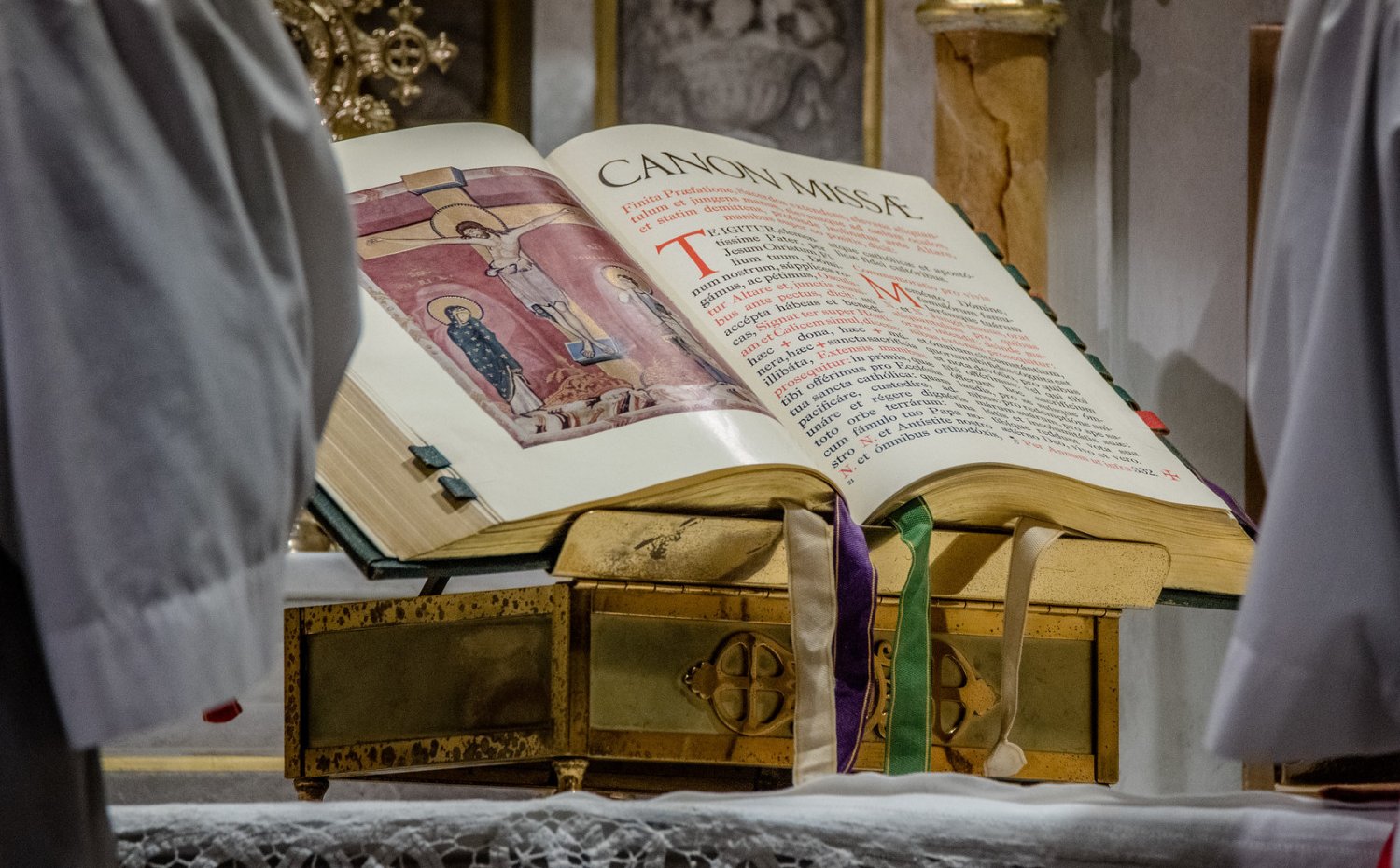



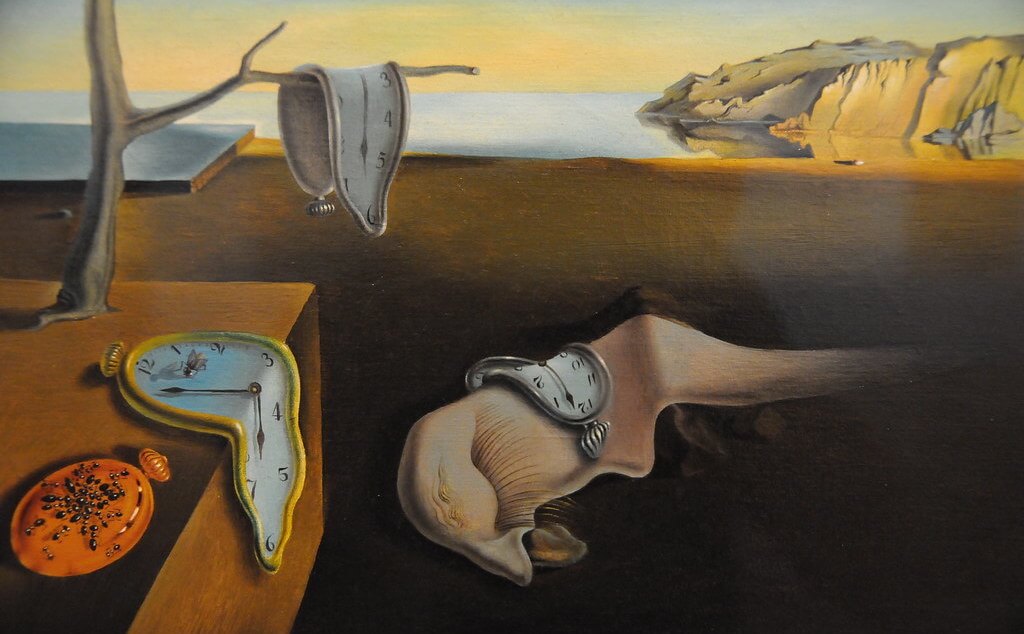

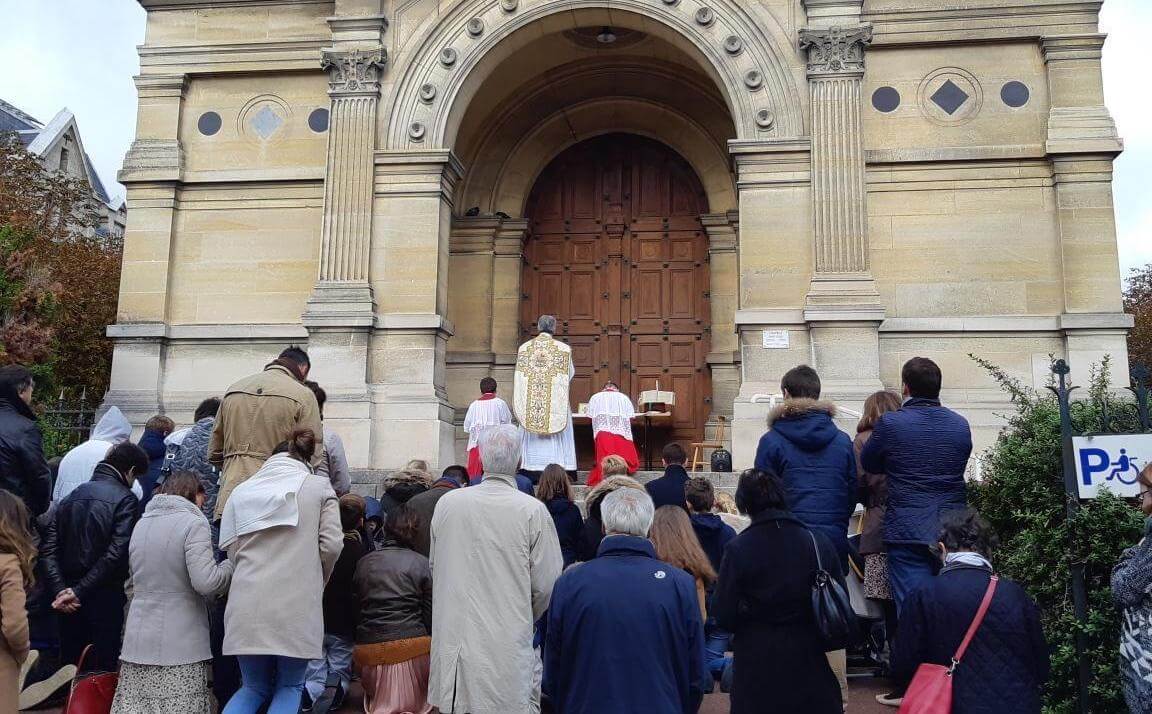
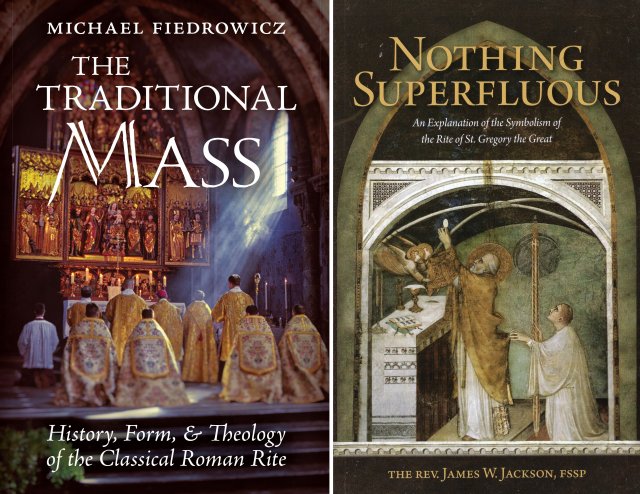
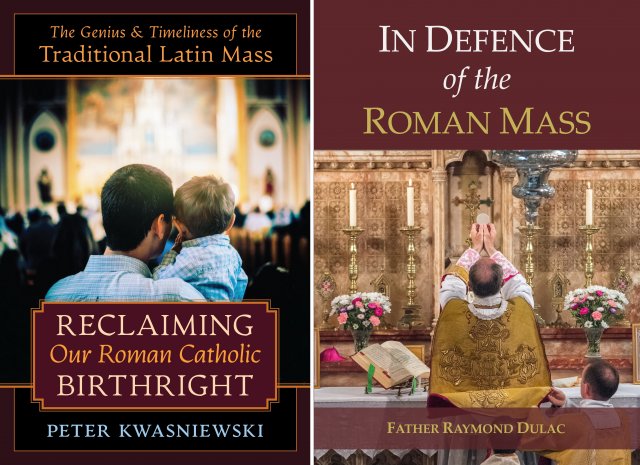
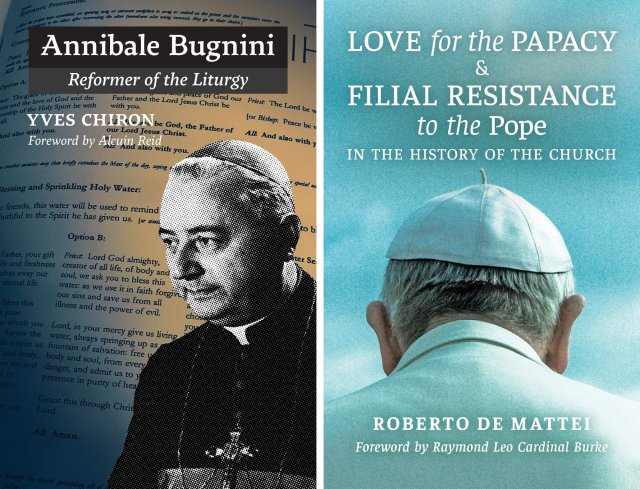

 ABYSSUS ABYSSUM INVOCAT / DEEP CALLS TO DEEP
You must be logged in to post a comment.