This is a difficult reflection to write. I apologize in advance for the length. But I think that every word is necessary. My hope is to give the people of God, and especially the clergy, some understanding as to why I believe the COVID-19 pandemic is happening.
In a word, we are experiencing a divine chastisement for idolatries. I fear more is to come.
Consider the following:
FACT 1: We all know that during the Amazon Synod last fall, the Pope permitted pagan ceremonies in the Vatican Gardens with a Pachamama statue. Pachamama is an idol within the pagan Amazonian mythology … specifically, a fertility goddess who (allegedly) sustains all life on earth (I’m not kidding … just Google it). However, at the Mass to close the Amazon Synod (Oct. 27, 2019) the Pope received a bowl with soil and plants during the offertory from an indigenous woman. In the Amazon, such bowls are synonymous with the Pachamama deity, symbolizing her status as Mother Earth (again, just Google “Pachamama” and “bowl”). The Pope instructed his Master of Ceremonies (Monsignor Guido Marini) to place the bowl on the high altar within the Basilica of St. Peter. Neither plants, nor any other object, save what is needed to celebrate Mass, is EVER PERMITTED TO BE PLACED ON AN ALTAR. This has been the constant practice of the Church for 2,000 years, and is the Vatican’s own directive. The video is here: https://www.youtube.com/watch?v=T1ud3rCiFog (from the entrance hymn the indigenous women–complete with a dress spotted with scorpions–leads the procession with the bowl; fast forward to the 56 minute mark and you see the transfer of the bowl to the Pope). The bowl remained on the altar during the Consecration of the Blessed Eucharist, as well as for the rest of the Mass. It remained on the altar after the Pope and the other celebrants left.
AFTERWARDS: That venerable altar—the most recognizable in the world—had no congregation around it tonight for the Mass of the Lord’s Supper. As well, for the first time in its storied history, it will have no congregation present for the Easter Vigil Mass, nor for the Easter Sunday Masses.
FACT 2: The Pachamama idol was placed on the altars of various churches throughout Rome during the Synod.
AFTERWARDS: Catholic Churches world-wide are now closed to the Faithful. No altar throughout the world had the People of God present for the Mass of the Lord’s Supper this evening, nor will they for any of the Easter liturgies this weekend. The priest(s) will celebrate alone. In fact, certain dioceses, such as that of Hamilton (Canada), have forbidden the Celebration of the Sacred Triduum in ANY parish even by the priests alone. (Who in God’s name would get sick by a priest offering Mass alone in his parish church? No one. Thus, preventing the spread of sickness cannot be the motive of such bishops.)
It is as if the Italian altars acted as proxies for every other altar, transferring their “sin” onto them. Neither the Roman Emperors, nor Attila the Hun, nor the Ottomans, nor the French Revolution, nor the World Wars, nor Hitler and Stalin were ever successful at emptying parishes of their congregations. And now every Catholic parish worldwide is empty during the holiest days of the year.
AFTERWARDS: Italy became the worldwide COVID-19 pandemic hotspot, and its hospitals were completely overwhelmed with the sick. Medical staff had to choose who to put on a ventilator, and who to simply let die. In other words, they had to play God. As of this evening (April 9, 2020), the virus has killed over 100 Italian priests, far more than in another other country.
FACT 4: Two years ago, in a deal brokered by disgraced (and now former) Cardinal Theodore McCarrick, the Vatican agreed to allow the evil and murderous Chinese Communist government to select the bishops for China. This, in effect, threw the always faithful “underground and unofficial” Catholic Church under the bus; it entailed that the Vatican would no longer partner with it, but with the murderous State instead. In fact, the faithful were told by the Vatican to abandon their bishops and parishes and join the Official State Church.
AFTERWARDS: Where did COVID-19 come from? China.
FACT 5: In January of 2019, the Governor of New York, Andrew Cuomo, signed a law that made abortion legal until the day of birth in the 9th month. In other words, he legalized infanticide.
AFTERWARDS: The United States became the world-wide epicenter of the COVID-19 pandemic, and New York is ground zero.
To both the people of God and my brother priests: we need to make reparation for the sins of the Church.
To the people of God: Pray MANY rosaries to Our Lady, Mother of the Church, asking her to convert sinful clergy, to crush the head of Satan, to exorcise the Church, and to purify the Bride of Her Son. Add fasting, so as to add muscle to your prayer. And spread the word to others.
Idolatry demands reparation. It always did. Blasphemy in the Bible was a crime whose punishment was always death. COVID-19 is the pestilence that is collecting on the Church’s mounting debt. Let us implore the Lord’s mercy. Let us implore the Lord to forgive and convert our errant shepherds .
Both the Church and God’s people will continue to be subject to the slaughter if we don’t.
Here above is the famous painting of John and Peter running together on that first Easter morning, by the French painter Eugene Burnand, painted in about 1898. A very peaceful and blessed Easter to all.—Robert Moynihan
Posted inUncategorized|Comments Off on DO WE RUN TO THE L0RD OR DO WE CRAWL OR DO WE REMAIN ROOTED IN OUR MALAISE?
Reports of organ harvesting from Falun Gong practitioners and other political prisoners in China have raised increasing concern by some groups within the international community. According to the reports,[1] political prisoners, mainly Falun Gong practitioners, are being executed “on demand” in order to provide organs for transplant to recipients. The organ harvesting is said to be taking place both as a result of the Chinese Communist Party‘s persecution of Falun Gong and because of the financial incentives available to the institutions and individuals involved in the trade.
Reports on systematic organ harvesting from Falun Gong prisoners first emerged in 2006, though the practice is thought by some to have started six years earlier. Several researchers—most notably Canadian human rights lawyer David Matas, former parliamentarian David Kilgour and investigative journalist Ethan Gutmann—estimate that tens of thousands of Falun Gong prisoners of consciencehave been killed to supply a lucrative trade in human organs and cadavers and that these abuses may be ongoing.[2] These conclusions are based on a combination of statistical analysis; interviews with former prisoners, medical authorities and public security agents; and circumstantial evidence, such as the large number of Falun Gong practitioners detained extrajudicially in China and the profits to be made from selling organs.[3]
The Chinese government has consistently denied the allegations. However, the perceived failure of Chinese authorities to effectively address or refute the charges has drawn attention and public condemnation from some governments, international organizations and medical societies. The parliaments of Canada and the European Union, as well as the Foreign Affairs Committee of the U.S. House of Representatives, have adopted resolutions condemning organ harvesting from Falun Gong prisoners of conscience. United Nations Special Rapporteurs have called on the Chinese government to account for the sources of organs used in transplant practices, and the World Medical Association, the American Society of Transplantation and the Transplantation Society have called for sanctions on Chinese medical authorities. Several countries have also taken or considered measures to deter their citizens from travelling to China for the purpose of obtaining organs. A documentary on organ harvesting from Falun Gong practitioners, Human Harvest, received a 2014 Peabody Award recognizing excellence in broadcast journalism.[4]
China has one of the largest organ transplant programs in the world. Although China does not keep nationwide statistics on transplant volume, Chinese officials estimated that as many as 20,000 organ transplants were performed in 2006[5], and approximately 9,000 of these were kidney and liver transplants[6]. Some sources say the actual number of transplants is significantly higher, based on detailed analysis of hospital records.[7] As a matter of culture and custom, however, China has extremely low rates of voluntary organ donation. Between 2003 and 2009, for instance, only 130 people volunteered to be organ donors.[8] In 2010 the Chinese Red Cross launched a nationwide initiative to attract voluntary organ donors, but only 37 people signed up.[9] Due to low levels of voluntary organ donation, most organs used in transplants are sourced from prisoners. The Chinese government approved a regulation in 1984 to allow the removal of organs from executed criminals, provided they give prior consent or if no one claims the body.[10]
Despite the absence of an organized system of organ donation or allocation, wait times for obtaining vital organs in China are among the shortest in the world—often just weeks for organs such as kidneys, livers, and hearts. This has made it a destination for international transplant tourism[11] and a major venue for tests of pharmaceutical anti-rejection drugs.[12][13][14] The commercial trade in human organs has also been a lucrative source of revenue for the Chinese medical, military and public security establishments.[15][16] Because there is no effective nationwide organ donation or allocation system, hospitals source organs from local brokers, including through their connections to courts, detention centers and prisons.[17]
Organ transplant recipients in China are generally not told the identity of the organ donor, nor are they provided with evidence of written consent. In some cases even the identity of the medical staff and surgeons may be withheld from patients. The problem of transparency is compounded by the lack of any ethicalguidelines for the transplant profession or system of discipline for surgeons who violate ethical standards.[16]
By the 1990s, growing concerns about possible abuses arising from coerced consent and corruption led medical groups and human rights organizations to start condemning China’s use of prisoner organs. These concerns resurfaced in 2001, when a Chinese military doctor testified before U.S. Congress that he had taken part in organ extraction operations from executed prisoners, some of whom were not yet dead.[18] In December 2005, China’s Deputy Health Minister Huang Jiefu acknowledged that up to 95% of transplant organs from deceased donors, which make up 65% of all transplantations, came from executed prisoners and promised steps to prevent abuse.[19][20] Huang reiterated these claims in 2008 and 2010, stating that over 90% of organ transplants from deceased donors are sourced from prisoners.[21][22][23] In 2006 the World Medical Association demanded that China cease harvesting organs from prisoners, who are not deemed able to properly consent.[24] In 2014, Huang Jiefu said that reliance on organ harvesting from death row inmates was declining, while simultaneously defending the practice of using prisoners’ organs in the transplantation system.[25][26]
In addition to sourcing organs from death-row inmates, international observers and researchers have also expressed concern that prisoners of conscience are killed to supply the organ transplant industry.[27] These individuals were not convicted of capital crimes, and in many cases were imprisoned extrajudicially on the basis of their political or religious beliefs.
Falun Gong is a Chinese qigong discipline involving meditation and a moral philosophy rooted in Buddhist tradition. The practice rose to popularity in the 1990s in China, and by 1998, Chinese government sources estimated that as many as 70 million people had taken up the practice.[28][29] Perceiving that Falun Gong was a potential threat to the Party’s authority and ideology, Communist Party leader Jiang Zemininitiated a nationwide campaign to eradicate the group in July 1999.[30]
An extra-constitutional body called the 6-10 Office was created to lead the persecution of Falun Gong,[31][32] and authorities mobilized the state media apparatus, judiciary, police force, army, education system, families, and workplaces to “struggle” against the group.[33][34]
Since 1999, Falun Gong practitioners have been the targets of systematic torture, mass imprisonment, forced labour, and psychiatric abuse, all with the aim of forcing them to recant their beliefs.[35][36] As of 2009, the New York Times reported that at least 2,000 Falun Gong practitioners had been killed amid the persecution campaign;[37] Falun Gong sources documented over 3,700 named death cases by 2013. Due to the difficulty in accessing and relaying information from China, however, this may represent only a portion of actual deaths.[35]
Verdicts and Reports of organ harvesting from Falun Gong[edit]
The first allegations of large-scale organ harvesting from Falun Gong practitioners were made in March 2006 by three individuals claiming knowledge of involuntary organ extractions at the Sujiatun Thrombosis Hospital in Shenyang, Liaoningprovince. One of the whistleblowers, the wife of a surgeon at the hospital, claimed her husband had performed numerous operations to remove the corneas of Falun Gong practitioners for transplant.[16][38]
Representatives of the U.S. State Department were dispatched to the Sujiatun hospital to investigate the claims. They were given a tour of the facilities and found no evidence to prove the allegations were true, but said they remained concerned over China’s treatment of Falun Gong and the reports of organ harvesting.[39] Soon thereafter, in May 2006, the Coalition to Investigate the Persecution of Falun Gong asked former Canadian parliamentarian David Kilgour and human rights lawyer David Matas to investigate the broader allegations of organ harvesting from Falun Gong practitioners in China. Kilgour and Matas agreed to conduct an investigation as volunteers.[40]
David Kilgour and David Matas released the results of their preliminary investigation on 20 July 2006, in a report titled “Report into Allegations of Organ Harvesting of Falun Gong Practitioners in China”.[41] Although the pair were denied visas to travel to China, they nonetheless compiled over 30 distinct strands of evidence which were consistent with allegations of organ harvesting from Falun Gong practitioners. These included an analysis of statistics on organ transplantation in China, interviews with former Falun Gong prisoners, and recorded admissions from Chinese hospitals and law enforcement offices about the availability of Falun Gong practitioners’ organs.[16]David Matas, senior legal counsel of B’nai Brith Canada, international human rights lawyer, coauthor of Bloody Harvest.
In the absence of evidence that would invalidate the organ harvesting allegations—such as a Chinese government registry showing the source of transplant organs— Kilgour and Matas concluded that the Chinese government and its agencies “have put to death a large but unknown number of Falun Gong prisoners of conscience. Their vital organs, including kidneys, livers, corneas and hearts, were seized involuntarily for sale at high prices, sometimes to foreigners, who normally face long waits for voluntary donations of such organs in their home countries.” They estimated that from 2000 to 2005, the source for 41,500 organ transplants was unexplained, and that Falun Gong prisoners were the most plausible source for these organs.[16][42][43] The authors qualified their report by noting the inherent difficulties in verifying the alleged crimes: no independent organizations are allowed to investigate conditions in China, eyewitness evidence is difficult to obtain, and official information about both organ transplantation and executions is often withheld or is contradictory.[16]
In 2007, Kilgour and Matas presented an updated report under the title “Bloody Harvest: Revised Report into Allegations of Organ Harvesting of Falun Gong Practitioners in China“. The findings were subsequently rewritten as a book released in October 2009.[44] The reports received international media coverage, and the authors travelled internationally to present their findings to governments and other concerned organizations.
In 2012, State Organs: Transplant Abuse in China, edited by Matas and Dr. Torsten Trey, was published with essays from Dr. Gabriel Danovitch, Professor of Medicine,[45]Arthur Caplan, Professor of Bioethics,[46] Dr. Jacob Lavee, cardiothoracic surgeon,[47] Dr. Ghazali Ahmad,[48] Professor Maria Fiatarone Singh,[49] Dr. Torsten Trey,[50]Ethan Gutmann and Matas.[51][52][53][54][55]
Ethan Gutmann with Edward McMillan-Scott at Foreign Press Association press conference, 2009
Ethan Gutmann, an investigative journalist and author specializing in China, initiated his own investigation into the allegations of organ harvesting from Falun Gong practitioners in 2006. Over the span of several years, he conducted interviews with over 100 refugees from China’s labor camp and prison system, as well as with Chinese law enforcement personnel and medical professionals.[56] Based on his research, Gutmann concluded that organ harvesting from prisoners of conscience became prevalent in the northwestern province of Xinjiang during the 1990s, when members of the Uyghur ethnic group were targeted in security crackdowns and “strike hard campaigns.”[57][58] Enver Tohti, an exiled pro-Uyghur independence activist, claims to have carried out the first live organ transplant on a Uyghur Muslim prisoner in 1995. He said that the first time he performed the transplant procedure, he was taken to a room near the execution ground in Urumqi to remove the liver and kidneys of an executed prisoner. He claimed that the man’s heart was still beating as he removed the liver and kidneys.[59]
By 1999, Gutmann says that organ harvesting in Xinjiang began to decline precipitously, just as overall rates of organ transplantation nationwide were rising. The same year, the Chinese government launched a nationwide suppression of the Falun Gong spiritual group. Gutmann suggests that the new Falun Gong prisoner population overtook Uyghurs as a major source of organs.[2] He estimated that approximately 65,000 Falun Gong practitioners had been killed for their organs between 2000 and 2008, and notes that this figure is similar to that produced by Kilgour and Matas when adjusted to cover the same time period.[2][60]
These findings have been published in a variety of journals and periodicals, including the World Affairs Journal, the Weekly Standard, the Toronto Star, and the National Review, among others. Gutmann has also provided testimony on his findings before U.S. Congress and European Parliament, and in August 2014 published his investigation as a book titled “The Slaughter: Mass Killings, Organ Harvesting and China’s Secret Solution to Its Dissident Problem.”[61]
On June 17, 2019, China Tribunal, an independent People’s Tribunal located at London, had pronounced its verdict on Organ Harvesting in China, and the Chinese government was found guilty.[62][63][64]
Several distinct strands of evidence have been presented to support allegations that Falun Gong practitioners have been killed for their organs in China. Researchers, human rights advocates and medical advocacy groups have focused in particular on the volume of organ transplants performed in China; the disparity between the number of transplants and known sources of organs; the significant growth in the transplant industry coinciding with the mass imprisonment of Falun Gong practitioners; short wait times that suggest an “on demand” execution schedule; and reports that Falun Gong prisoners are given medical exams in custody to assess their candidacy as organ suppliers.
Increase in nationwide organ transplants after 1999[edit]
Liver transplants performed annually at the Tianjin Orient Organ Transplant Centre, 1998–2004
The number of organ transplants performed in China grew rapidly beginning in 2000. This timeframe corresponds with the onset of the persecution of Falun Gong, when tens of thousands of Falun Gong practitioners were being sent to Chinese labor camps, detention centers and prisons.[65][66]
In 1998, the country reported 3,596 kidney transplants annually. By 2005, that number had risen to approximately 10,000.[16] The number of facilities performing kidney transplants increased from 106 to 368 between 2001 and 2005. Similarly, from 1999 to 2006, the number of liver transplantation centers in China rose from 22 to over 500.[5] The volume of transplants performed in these centers also increased substantially in this period. One hospital reported on its website that it performed 9 liver transplants in 1998, but completed 647 liver transplants in four months in 2005. The Jiaotong University Hospital in Shanghai recorded seven liver transplants in 2001, 53 in 2002, 105 in 2003, 144 in 2004, and 147 in 2005.[16]
Kilgour and Matas write that the increase in organ transplants cannot be entirely attributed to improvements in transplant technology: “kidney transplant technology was fully developed in China long before the persecution of Falun Gong began. Yet kidney transplants shot up, more than doubling once the persecution of Falun Gong started…Nowhere have transplants jumped so significantly with the same number of donors simply because of a change in technology.”[16]
Furthermore, they note that during this period of rapid expansion in China’s organ transplant industry, there were no significant improvements to the voluntary organ donation or allocation system, and the supply of death row inmates as donors also did not increase.[16][27] Although it does not prove the allegations, the parallel between rapid growth in organ transplants and the mass imprisonment of Falun Gong practitioners is consistent with the hypothesis that Falun Gong practitioners in custody were having their organs harvested.
Chinese officials reported in 2005 that up to 95% of organ transplants are sourced from prisoners.[19] However, China does not perform enough legal executions to account for the large number of transplants that are performed, and voluntary donations are exceedingly rare (only 130 people registered as voluntary organ donors nationwide from 2003 to 2009[8]).
In 2006, the number of individuals sentenced to death and executed was far fewer than the number of transplants. Based on publicly available reports, Amnesty International documented 1,770 executions in 2006; high-end estimates put the figure closer to 8,000.[67] Because China lacks an organized organ matching and allocation system, and in order to satisfy expectations for very short wait times, it is rare that multiple organs are harvested from the same donor. Moreover, many death row inmates have health conditions such as hepatitis B that would frequently disqualify them as organ donors. This suggests the existence of a secondary source for organs.[17]United Nations Special Rapporteur on Torture Manfred Nowak says “the explanation that most of these organs come from death row inmates is inconclusive…If so, the number of executed felons must then be much higher as so far assumed.”[68]
In a statement before the U.S. House of Representatives, Damon Noto said “the prisoners sentenced to death cannot fully account for all the transplantations that are taking place in China […] Even if they executed 10,000 and transplanted 10,000 a year, there would still be a very large discrepancy. Why is that? It is simply impossible that those 10,000 people executed would match perfectly the 10,000 people that needed the organs.”[69] David Kilgour and David Matas similarly write that traditional sources of transplants such as executed prisoners, donors, and the brain dead “come nowhere near to explaining the total number of transplants across China.” Like Noto, they point to the large number of Falun Gong practitioners in the labor camp and prison system as a likely alternative source for organs.[16]
Wait periods for organ transplants in China are significantly shorter than elsewhere in the world. According to a 2006 post on the China International Transplantation Assistance Center website, “it may take only one month to receive a liver transplantation, the maximum waiting time being two months. As for the kidney transplantation, it may take one week to find a suitable donor, the maximum time being one month…If something wrong with the donor’s organ happens, the patient will have the option to be offered another organ donor and have the operation again in one week.”[70] Other organ transplant centers similarly advertised average wait times of one or two weeks for liver and kidney transplants.[16][71][72] This is consistent with accounts of organ transplant recipients, who report receiving organs a matter of days or weeks.[11][73][74] By comparison, median wait times for a kidney in developed countries such as the United States, Canada and Great Britain typically range from two years to over four years, despite the fact that these countries have millions of registered organ donors and established systems of organ matching and allocation.[75][76][77]
Researchers and medical professionals have expressed concern about the implications of the short organ transplant wait times offered by Chinese hospitals. Specifically, they say these wait times are indicative of a pool of living donors whose organs can be removed on demand.[27] This is because organs must be transplanted immediately after death, or must be taken from a living donor (kidneys must be transplanted within 24–48 hours; livers within 12 hours, and hearts within 8 hours).[78]
Kirk C. Allison, Associate Director of the Program in Human Rights and Medicine at the University of Minnesota, wrote that the “short time frame of an on-demand system [as in China] requires a large pool of donors pre-typed for blood group and HLA matching,” which is consistent with reports of Falun Gong prisoners having blood and tissue tested in custody. He wrote that China’s short organ wait times could not be assured on a “random death” basis, and that physicians he queried about the matter indicated that they were selecting live prisoners to ensure quality and compatibility.[78] Dr. Jacob Lavee, Director of the Heart Transplant Unit at the Sheba Medical Center in Israel, recounts one of his patients traveling to China for a heart transplant. The patient waited two weeks for a heart, and the surgery was scheduled in advance—meaning the organ could not have been procured on the basis of a random death.[79] Franz Immer, chairman of the Swiss National Foundation for organ donation and transplantation, reports that during a visit to Beijing in 2007, he was invited by his Chinese hosts to observe a heart transplantation operation: “The organizer asked us whether we would like to have the transplantation operation in the morning or in the afternoon. This means that the donor would die, or be killed, at a given time, at the convenience of the visitors. I refused to participate.”[2]
Editors of the Journal of Clinical Investigation write that “The only way to guarantee transplant of a liver or heart during the relatively short time period that a transplant tourist is in China is to quickly obtain the requisite medical information from prospective recipients, find matches among them, and then execute a person who is a suitable match.”[27] Noto similarly says that China’s organ transplant wait times and the ability to schedule transplants in advance can only be achieved by having a large supply of “living donors that are available on demand.” Death row inmates alone are not numerous enough to meet this demand.[69]
Chinese torture victims as reported in the 2006 investigation of UN Special Rapporteur Manfred Nowak
Since 1999, hundreds of thousands of Falun Gong practitioners have been detained in re-education through labor camps, prisons, and other detention facilities in China, making them the largest group of prisoners of conscience in the country.[80] In 2008, the U.S. Department of State cited estimates that half of China’s official labor camp population of 250,000 were Falun Gong practitioners,[81][82] and a 2013 report by Amnesty International found that Falun Gong practitioners comprised between 30 and 100 percent of detainees in the labor camps studied.[35]
Former Chinese prisoners have also reported that Falun Gong practitioners consistently received the “longest sentences and worst treatment” in the camps, and that they are singled out for torture and abuse.[35][83] In 2006, a study by the UN’s Special Rapporteur on Torture noted that 66% of reported cases from China involved Falun Gong victims.[84] Thousands of Falun Gong practitioners have died or been killed in custody, often under disputed circumstances.[30][35] Family members of the deceased have reported being denied an autopsy;[85] in some instances bodies were summarily cremated without the family’s consent.[86] Analysts and rights groups have pointed to several factors that drive the especially severe treatment against Falun Gong practitioners in custody. These include directives issued from central government or Communist Party authorities;[87] incentives and quota systems that encourage abuse;[35] a sense of impunity in the event of deaths in custody;[88] and the effects of the state propaganda that dehumanizes and vilifies Falun Gong practitioners.[34][89]
The large numbers of Falun Gong prisoners in custody has led researchers to identify them as a likely source for organs. According to Gutmann’s research, other marginalized prisoner groups may also have been targeted, including ethnic Tibetans and Uyghurs who reside predominantly in China’s western regions. However, for reasons of geographic proximity, Falun Gong practitioners are more likely to be targeted. In addition, because their spiritual practice prohibits smoking or consumption of alcohol, they tend to be comparatively healthy.[2]
In the context of organ harvesting Kilgour and Matas point to a further source of vulnerability. Namely, in order to protect family members from punishment by security agencies, many detained Falun Gong practitioners refuse to give their names or other personally identifying information to police. “Though this refusal to identify themselves was done for protection purposes, it may have had the opposite effect. It is easier to victimize a person whose whereabouts is unknown to family members than a person whose location the family knows,” says their report. Kilgour and Matas wrote that they had yet to meet or hear of any Falun Gong practitioners who were safely released from custody after refusing to identify themselves, despite the prevalence of this practice.[16] Similarly, Ethan Gutmann reports that in over a hundred interviews with former prisoners, he encountered only one Falun Gong practitioner who had remained nameless while in custody, and “her organs were even more worn out than my own.”[2]
Ethan Gutmann interviewed dozens of former Chinese prisoners, including sixteen Falun Gong practitioners who recalled undergoing unusual medical tests while in detention. Gutmann says some of these tests were likely routine examinations, and some may have been designed to screen for the SARS virus. However, in several cases, the medical tests described were exclusively aimed at assessing the health of internal organs.[61]
One man, Wang Xiaohua, was imprisoned in a labor camp in Yunnan in 2001 when he and twenty other Falun Gong detainees were taken to a hospital. They had large quantities of blood drawn, in addition to urine samples, abdominal x-rays, and electrocardiogram. Hospital staff did not tend to physical injuries they had suffered in custody. This pattern was repeated in several other interviews. Qu Yangyao, a 30-something Chinese refugee, was taken from a labor camp to a hospital in 2000 along with two other Falun Gong practitioners. She says that hospital staff drew large volumes of blood, conducted chest x-rays and probed the prisoners’ organs. There was “no hammer on the knee, no feeling for lymph nodes, no examination of ears or mouth or genitals—the doctor checked her retail organs and nothing else,” writes Gutmann.[2]
Another woman, Jung Tian, recounts comprehensive physical exams and the extraction of large volumes of blood—enough for advanced diagnostics or tissue matching—while in a detention center in Shenyang city. At a women’s labor camp in Guangdong province, a former detainee says that 180 Falun Gong prisoners were subject to medical tests in early 2003 and that the tests exclusively focused on internal organs. Another female witness who was held at Masanjia Labor Camp in 2005 said that only young, healthy practitioners had comprehensive medical exams upon arrival at the camp; the old and infirm were given only cursory treatment.[2]
In addition to Falun Gong practitioners, researcher Jaya Gibson identified three Tibetan prisoners who were subject to “organs-only” medical exams, all of them shortly after 2005.[2]
In March 2006, immediately after allegations emerged that Falun Gong prisoners were being targeted for organ harvesting, overseas investigators began placing phone calls to Chinese hospitals and police detention centers. The callers posed as prospective transplant recipients or organ brokers and inquired about the availability of Falun Gong organs. In several instances, they obtained recorded admissions that organs could be procured from Falun Gong prisoners. A selection of these conversations were cited as evidence in the report by David Kilgour and David Matas.[2][16]
In one such call to a police detention center in Mishan city, an official said that they had five to eight Falun Gong practitioners under the age of 40 who were potential organ suppliers. When asked for details on the background of these individuals, the official indicated that they were male Falun Gong prisoners from rural areas.[90]
A doctor at the Minzu hospital in Nanning city said that the hospital did not currently have Falun Gong organs available, but that he had previously selected Falun Gong prisoners for organ harvesting. The doctor also advised the caller to contact a university hospital in neighboring Guangdong province, saying that they had better channels to obtain Falun Gong organs.[90] At the Zhongshan hospital in Shanghai, a doctor told investigators that all his hospital’s organs were sourced from Falun Gong practitioners. During an April 2006 phone call to a military hospital in Guangzhou, a doctor told investigators that he had “several batches” of Falun Gong organs, but that the supply could run dry after 20 May 2006. In another call, investigators posed as an organ broker to call the Jinzhou city people’s court. In response to a question about obtaining organs from Falun Gong prisoners, a court official said “that depends on your qualifications … If you have good qualifications, we may still provide some [organs].”[90]
Kilgour and Matas concede that in at least some instances, the hospital staff may have been supplying answers that the callers wanted to hear in order to make a sale. The results of these phone calls would also be difficult to replicate; as allegations of organ harvesting from Falun Gong gained attention, hospitals would become more reluctant to candidly discuss their organ sourcing practices.[16]
This investigative tactic was revived in 2012, when Communist Party officials began investigating Politburo member Bo Xilai for a variety of crimes. Bo had previously been governor of Liaoning province, which researchers believe was a major center for organ harvesting. The “World Organization to Investigate the Persecution of Falun Gong” made phone calls to mid- and high-level officials with prior connections to Bo, posing as members of the internal Communist Party discipline and inspection group that was building the case against him. They asked questions about the chain of command involved in procuring organs from prisoners, including Falun Gong prisoners. When asked about Bo Xilai’s involvement in organ harvesting, one high-ranking member of the Politburo reportedly told investigators that Politburo Standing Committee member and security czar Zhou Yongkang “is in charge of this specifically. He knows it.”[91]
A city-level official in Liaoning province was asked by investigators what direction Bo Xilai may have given regarding removing organs from Falun Gong prisoners. The official replied “I was asked to take care of this task. Party central is actually taking care of this…He [Bo] was involved quite positively, yeah it seemed quite positive. At that time we mainly talked about it during the meetings within the Standing Committee.” The official hung up after realizing that he had not confirmed the identity of the caller.[91] Another phone call recipient was a medical doctor at a military hospital in Liaoning. When asked about whether Falun Gong practitioners’ organs were ever used in transplant operations at a nearby hospital, the official answered in the affirmative: “All that was processed through the court.” The doctor soon grew uncomfortable with the line of questioning and refused to discuss the issue further without clearance from the hospital’s political division.[92]
Human rights researchers and medical practitioners have argued that the commercial nature of the organ trade in China promotes corruption and abuse. Namely, the profits to be made from selling organs may lead to more killings—both court-sanctioned and extrajudicial—than would otherwise occur. Although this argument is not specific to the Falun Gong practitioners, it has been used as circumstantial evidence to support claims that Falun Gong prisoners could be targeted for organ harvesting.
The growth of a commercial organ trade is linked to economic reforms in the late 1980s and early 1990s that saw a steep decline in government funding to the healthcare system. Healthcare moved toward a more market-driven model, and hospitals devised new ways to grow their revenue. This pattern also applies to military hospitals; since the mid-1980s, the People’s Liberation Army has engaged in commercial and profit-making ventures to supplement its budget.[16][69]
In their report on organ harvesting from Falun Gong practitioners, Kilgour and Matas describe transplant hospitals in China that cater to wealthy foreigners who paid upwards of $100,000 for liver, lung, and heart transplants. For instance, the website of the China International Transplantation Network Assistance Center posted the following price list on its website in 2006: Kidney: $62,000; Liver: $98,000–130,000; Liver+kidney: $160,000–180,000; Kidney+pancreas: $150,000; Lung: $150,000–170,000; Heart: $130,000–160,000; Cornea: $30,000.[16] In a statement before the U.S. House of Representatives, Gabriel Danovitch of the UCLA Medical Center said, “The ease in which these organs can be obtained and the manner that they may be allocated to wealthy foreigners has engendered a culture of corruption.”[93]
In his book on organ transplant abuse, Ethan Gutmann included a case study centered on China’s northeastern Liaoning province. Former Politburo member Bo Xilai served as mayor and party chief of Dalian city, Liaoning in the 1990s, and later was made Governor from 2001 to 2004. The province is known to have a high concentration of Falun Gong practitioners, and leads the country in reported Falun Gong deaths in custody.[2] Several observers have noted that Bo Xilai pursued an especially intense campaign against Falun Gong in the province, leading to charges of torture and crimes against humanity.[94][95][96]
Bo’s close associate Wang Lijun was named head of the Public Security Bureau in Jinzhou, Liaoning, in 2003. In this capacity, he ran an organ transplantation facility where he reportedly oversaw “several thousand” organ transplants, leading to concerns that many of the organs were taken from political prisoners.[97][98] During a 2006 award ceremony, Wang told reporters “For a veteran policeman, to see someone executed and within minutes to see the transformation in which this person’s life was extended in the bodies of several other people—it was soul-stirring.”[91] Gutmann says it is “extremely unlikely” that all the organs used in these operations were taken from executed death-row prisoners, who would not have been plentiful enough to supply thousands of organ transplants. However, Gutmann notes that Liaoning detained large numbers of Falun Gong practitioners in labor camps and prisons. “It is also germane that both Bo Xilai and Wang Lijun built a large measure of their political power on the repression of Falun Gong,” he writes.[2][91]
Dr. Huige Li, a spokesperson with the medical advocacy group Doctors Against Forced Organ Harvesting, reiterated this point in his 2015 testimony before European Parliament. By Li’s calculations, a city the size of Jinzhou could be expected to perform roughly 14 legally sanctioned executions in the time period in question, meaning that the source for thousands of transplant operations at the centre was unaccounted for.[99] In addition to organ transplants in Jinzhou, Gutmann notes that security agencies in Dalian city were supplying human cadavers to two major plastination factories, where the bodies are filled with plastics to be sent on display around the world as bodies exhibitions. According to an informant interviewed on the program 20/20, the plastinated cadavers came from executed prisoners. Again, however, Gutmann notes a disparity in the numbers: the body plastination factories operating in Dalian processed thousands of cadavers—far more than could be expected to be donated or taken from legally executed prisoners. The establishment of the body plastination factories coincided with the onset of the persecution of Falun Gong.[2]
This section needs expansion. You can help by adding to it. (September 2017)
Xu Jiapeng, an account manager at IQVIA (previously Quintiles IMS) from Beijing, claims that demands for immunosuppressant drugs, which are necessary for patients receiving a transplant to take for life to prevent their bodies from rejecting transplanted organs, are roughly in line with the official statistics, making it “unthinkable” for China to carry out many times more clandestine operations as alleged.[100]
The Chinese government has repeatedly and categorically denied that Falun Gong practitioners have been killed for their organs, and insists that it adheres to World Health Organization standards. Specifically, the government claims that one of the major sources for the transplant figures, Professor Shi Bingyi, later alleged that the Canadian led investigative reports quoting him were fabricated.[66] However, the government has not refuted the specific points of evidence cited by researchers, nor provided an alternative explanation for the source of organs used in transplants.[101]
In response to a 2014 resolution on organ harvesting by the U.S. House of Representatives, a Chinese embassy spokesperson said that China requires written consent from organ donors, and declared that “the so-called organ harvesting from death-row prisoners is totally a lie fabricated by Falun Gong”. The embassy representative then urged American lawmakers to stop “supporting and conniving” with Falun Gong.[102]
David Kilgour and David Matas say that the Chinese government’s response to their investigation in 2006 contained “a good deal of invective, but no factual information which contradicts or undermines our conclusions or analysis”. In particular, the Chinese government response centered on the charge that Falun Gong is an “evil cult”; questioned the motives and independence of the researchers; and noted a captioning error where their report had mislabeled the location of two Chinese cities. The government’s response also stated that China prohibits the sale of human organs and requires written consent of the donor—claims which Kilgour and Matas say are belied by the evidence.[16]
From 2006 to 2008, two UN Special Rapporteurs made repeated requests to the Chinese government to respond to allegations about Falun Gong prisoners and explain the source of organs used in transplant operations.[101][103] The Chinese government’s responses did not address these questions or explain the sources of transplant organs. Instead, it wrote China is in compliance with World Health Organization standards, and described the conditions under which organ transplants are permitted under Chinese laws and regulations. It further stated that allegations of organ harvesting “are merely the product of agitation by Falun Gong … most of them have already been revealed to be unfounded rumours”.[101]
The Chinese government also has sought to prevent public discussion of the issue outside its own borders, and has punished Chinese nationals who have spoken on the subject of organ harvesting. In May 2006, European Parliament Vice President Edward McMillan-Scott went to China on a fact-finding mission to investigate human rights violations. His tour guide, Cao Dong, said he knew of organ harvesting and had seen his Falun Gong practitioner friend’s cadaver “in the morgue with holes where body parts had been removed”.[104] Cao Dong was sentenced to five years in prison for speaking with the European Union official.[105]
In 2007, the Chinese embassy in Canada intervened to cancel the broadcast of a documentary on Falun Gong and organ harvesting, which was scheduled to air on the national broadcast network CBC Television.[106] The same year, the Chinese embassy in Israel tried unsuccessfully to cancel a talk by researcher David Matas on the subject of organ harvesting, threatening that his testimony would have an adverse impact on China–Israel relations.[79]
Allegations about organ harvesting from Falun Gong led to renewed focus on China’s transplant practices by international medical authorities and professional associations. Medical professionals have raised a number of concerns stemming from the use of prisoner organs, and have debated the ethics of conducting exchanges with Chinese transplant hospitals.
In 2006, the World Medical Association adopted a resolution demanding that China stop using prisoners as organ donors.[107] The U.S. National Kidney Foundation said it was “profoundly worried by the coercive methods used to obtain organs and tissues as described in the recent allegations.”[108]
Since 2011, several medical journals have declared that they would cease publishing articles related to organ transplantation operations in China due to concerns about violations of medical ethics. The Journal of Clinical Investigation, a prestigious publication on biomedical research, declared that China’s use of organs from executed prisoners “violates basic human rights. It violates core ethical precepts of transplant medicine and medical ethics. Worse still, some of those who are killed may be prisoners whose ‘crimes’ involve no more than holding certain political or spiritual beliefs.” The journal decided that it would no longer accept manuscripts on human organ transplantation “unless appropriate non-coerced consent of the donor is provided and substantiated”.[27] A similar decision was taken by the American Journal of Transplantation.[109]
Writing in The Lancet in 2011, a group of prominent American surgeons and bioethicists called for a boycott of Chinese science and medicine pertaining to organ transplantation. “It is clear from the numbers provided by China that not all of the organs for Chinese citizens and transplant tourists are provided by voluntary consenting donors. The source of many of these organs is executed prisoners whose consent is either non-existent or ethically invalid and whose demise might be timed for the convenience of the waiting recipient”, they wrote.[110] The article’s lead author, Dr. Arthur Caplan, later added “Killing prisoners for their parts is unethical on its own”, but the practice is even more heinous given that some of the executed prisoners were imprisoned for religious or political beliefs.[111][112]
In contrast, Jeremy Chapman, Australian transplantation surgeon, dismissed Kilgour and Matas’s report as “pure imagination piled upon political interest”.[113]
From 2006 to 2008, two UN Special Rapporteurs made repeated requests to the Chinese government to respond to allegations about Falun Gong prisoners and explain the source of organs used in transplant operations.[101] In a February 2008 report, UN Special Rapporteur on Torture Manfred Nowak noted that in China “there are many more organ transplants than identifiable sources of organs … It is alleged that the discrepancy between available organs and numbers from identifiable sources is explained by organs harvested from Falun Gong practitioners, and that the rise in transplants from 2000 coincides and correlates with the beginning of the persecution of these persons”.[103] The Chinese government’s responses did not address these questions or explain the sources of transplant organs.[101]
Nowak later said that “the Chinese government has yet to come clean and be transparent … The Chinese government has not invalidated [the allegations], but on the other hand they haven’t been proven either. This makes for a difficult dilemma—one that can only be resolved if China is willing to cooperate. And that is what is lacking.”[68]
Several national governments have held hearings in their national legislatures regarding organ harvesting from Falun Gong practitioners, with some of them subsequently adopting resolutions condemning organ transplant abuses in China or developing legislation to ban transplant tourism.
Rep. Ileana Ros-Lehtinen, who co-sponsored a Congressional resolution condemning organ harvesting from Falun Gong adherents, speaks at a rally in Washington D.C.
In July 2014, the Foreign Affairs Subcommittee of the U.S. House of Representatives unanimously adopted a resolution condemning state-sanctioned organ harvesting from Falun Gong prisoners of conscience and members of other minority groups.[102][114] The allegations have also surfaced in reports by the Congressional-Executive Commission on China,[115] and in the Department of State Country Report on Human Rights for China for 2011.[116] In January 2015, the White House responded to a petition signed by 34,000 Americans condemning organ harvesting from Falun Gong prisoners. The response noted that “China’s leaders have announced a pledge to abolish the practice of taking human organs for transplant from executed prisoners, although we are aware of continued reports of such practices. We take such allegations very seriously and will continue to monitor the situation.”[117]
The European Parliament heard testimony about organ harvesting in China during a 6 December 2012 session on human rights in China. One year later, it passed a resolution expressing “deep concern over the persistent and credible reports of systematic, state-sanctioned organ harvesting from non-consenting prisoners of conscience in the People’s Republic of China, including from large numbers of Falun Gong practitioners imprisoned for their religious beliefs, as well as from members of other religious and ethnic minority groups.” The resolution called for the immediate release of all prisoners of conscience, and urged Chinese authorities to respond to United Nations inquiries about the source of organs used in transplants.[118] In March 2014, the European Economic and Social Committee in Brussels convened a follow-up event on organ transplant abuses in China.[119] Participants and speakers at the session endorsed the recommendations of the parliamentary resolution, which recognized that Falun Gong and other minority groups are targets of forced organ harvesting in China. EESC President Henri Malosse called for greater pressure to be put on the Chinese government to end organ transplant abuses.[120]
In March 2014, the members of the Italian commission on human rights unanimously adopted a resolution calling for the immediate release of Falun Gong practitioners and other prisoners of conscience in China, and urging Italian hospitals to reconsider collaborations with China in the area of organ transplants.[121] In 2015, the Italian Senate adopted a bill which makes it a crime to traffic in organs from living donors. Individuals found guilty of this offence could face 3–12 years in prison and fines of up to 300,000 Euros ($350,000 USD).[122] Senator Maurizio Romani, one of the bill’s sponsors, noted that China performs the second highest number of transplants in the world, all without established procedures for organ donation or a national organ allocation system, and said that Falun Gong practitioners account for a significant portion of transplant organs. “We in Italy can’t stop these violations, but we have the duty to make any effort in order not to be accomplices to this,” he said.[123]
In December 2006, the Australian Ministry of Health revealed that two of the country’s major organ transplant hospitals had banned training of Chinese surgeons, in response to concerns about organ harvesting from Falun Gong practitioners and other prisoners.[124] On 21 March 2013, the Australian Senate unanimously passed a motion concerning reports of organ harvesting in China.[125][126] The motion, which was introduced one day after a parliamentary briefing on the subject of organ harvesting from Falun Gong prisoners, called on Australia to adopt strict standards to address the practice of international organ trafficking.[127] The same year, Green party lawmakers in New South Wales, Australia, proposed legislation to criminalize and create specific offenses related to trafficking in human organs and tissue.[128]
In 2007, Israel’s national legislative body the Knesset adopted new legislation barring insurance companies from providing coverage to Israeli citizens who travel abroad to purchase organs. The move was partly a response to an investigation in which Israeli authorities arrested several men involved in mediating transplants of Chinese prisoners’ organs for Israelis. One of the men had stated in an undercover interview that the organs came from “people who oppose the regime, those sentenced to death and from prisoners of the Falun Gong.”[129] In addition to prohibiting citizens from buying organs overseas, the law also imposed criminal charges on organ traffickers. The new rules resulted in a significant decrease in the number of Israeli citizens seeking transplants abroad, while also helping to catalyze an expansion of the voluntary donor registry domestically.[79]
In 2010, Spain implemented a law prohibiting its nationals from traveling abroad to obtain illegal organ transplants. The legislation was proposed after a Spanish citizen reportedly traveled to Tianjin, China, where he obtained a liver for $130,000 USD after waiting for just 20 days. The Spanish legislation makes it a crime to promote or facilitate an illegal organ transplant, punishable with up to 12 years in prison. In addition, any organization found to have participated in illegal organ transplant transactions will be subject to a fine.[130]
In June 2015, the national legislature of Taiwan passed an amendment to the “Human Organ Transplantation Act” to prohibit the sale or purchase of organs, including from abroad. The law also prohibits the use of organs from executed prisoners. Legislators who supported the bill noted that the amendments were intended to address the problem of Taiwanese citizens traveling to China to purchase organs, some of which were harvested from living donors.[131]
Similar bills against organ tourism have been proposed in the French national assembly (2010) and in Canadian parliament (2007, 2013).[132][133][134] The government of Canada has also raised the issue of organ harvesting from Falun Gong practitioners at the United Nations during the Universal Periodic Review process in 2014.[135]
On December 10, 2018, the S-240 bill – An Act to amend the Criminal Code and the Immigration and Refugee Protection Act (trafficking in human organs), was read the second time in House of Commons of Canada and referred to Canadian House of Commons Standing Committee on Foreign Affairs and International Development. In the debate, Vice-chair of Foreign Affairs and International Development Subcommittee on International Human Rights (SDIR) MP Ms. Cheryl Hardcastle mentioned that the numbers may actually be between 60,000 and 100,000 organ transplants per year. The principal victims of China’s organ-harvesting industry was Falun Gong followers. China’s organ-harvesting industry developed in tandem with its systematic repression of Falun Gong.” She said: “Today is a profound anniversary marking the UN Convention on the Prevention and Punishment of the Crime of Genocide and Universal Declaration of Human Rights 70 years ago. Those sentiments are inextricably linked after the horrors witnessed in World War II and the conviction of never again. I submit that those sentiments are profoundly linked here as well to Bill S-240. After World War II, the world sought to ensure such madness ensued against humanity never happened again. Organ harvesting and trafficking are a nauseating reality and we must put a stop to them. Canada must act and must start by passing Bill S-240.”[136]
the Gospels describing the Easter event testify to the fear of the disciples and, on the other hand, to the joyful reality of Christ’s triumphant resurrection.
“Then, the same day at evening, being the first day of the week, when the doors were shut where the disciples were assembled, for fear of the Jews, Jesus came and stood in the midst, and said to them, ‘Peace be with you.’ But they were terrified and frightened, and supposed they had seen a spirit. And He said to them, ‘Why are you troubled? And why do doubts arise in your hearts? Behold My hands and My feet, that it is I Myself. Touch Me and see!’” (Jn 20; Lk 24)
The same day at evening… And what happened on that Easter morning? Mary of Magdala is knocking at the door where the terrified disciples are assembled, and she cries out joyfully: “The tomb is empty! The stone has been rolled away! The guards ran away!” The apostles do not believe her. They are struck with fear. Shortly afterwards a group of other women come and tell the same. But the apostles were not relieved of fear. None of them thought to say: “Jesus has told us so many times – the Son of man will be delivered up to death but on the third day He will rise again!” Fear did not allow them to think of that prediction by Jesus.
Mary of Magdala comes again, crying out joyfully: “I have seen the Lord, and this is what He said to me…” The apostles not only hide behind locked doors but their mind, memory and will are closed too. They consider her testimony to be a fake, and still continue in fear. But on the same morning, the other women come again and say: “We have seen the Lord, we have spoken to Him and touched His feet!” Even after the testimony of several women, the apostles are unable to believe and they consider it to be another fake. Only John and Peter overcame fear and ran to the tomb. They went inside, but nowhere was there any sign of violence. The linen cloths Jesus had been wrapped in were lying there empty. John believed. Peter then went to the tomb again, and Jesus Himself appeared to him. When Peter came back, he just said to the others shortly: “The Lord is risen indeed. He has appeared to me!” Despite so many facts, the apostles are still in fear.
And what happened the same day at evening? The fear remained. The Apostle John, as an eyewitness, writes: “The disciples were together, with the doors locked for fear of the Jews.” Suddenly, someone is knocking on the door again. Two breathless disciples, both talking at once, tell how they met the risen Jesus on the road to Emmaus. The apostles also testify to them with their mouth: “Jesus is risen indeed and has appeared to Simon.” Yet fear and unbelief still remained in their hearts. It was manifested in a historic moment, as the evangelist describes: “As they were talking about these things, Jesus Himself stood in the midst of them, and said to them, ‘Peace to you!’” What was the reaction of the frightened apostles? The Gospel testifies: “They were terrified and frightened, and supposed they had seen a spirit. And He said to them, ‘Why are you troubled? Behold My hands and My feet, that it is I Myself. Touch Me and see!’” Jesus, by His presence, literally had to cast out the spirit of fear which closed their minds. They supposed Jesus to be a spirit rather than to be really present. Jesus had to convince them: “A spirit does not have flesh and bones as you see I have. Touch Me, it is I Myself.” And He ate a piece of a broiled fish in their presence. Then He opened their minds so they could understand the Scriptures.
For over three months, the spirit of coronavirus has been haunting Europe and the world. Individuals and entire nations have completely opened up to this spirit of manipulation and lies. The first ones were Bergoglio’s Vatican with the like-minded hierarchy. They aroused such fear that people were no longer able to perceive the real facts. The media also release fake news so intensely that those who uncritically believe it lose common sense.
What do the statistics say? On average, 55 million people worldwide die every year. The number of people in whom the coronavirus was coupled with other diseases and who died is 40,000, which is only 0.1%. About 7% of people die from alcohol every year, of which 13% are 20-39 years old. These are official WHO data. Alcohol takes 4 million lives each year, 100 times more than the coronavirus. Tobacco is the cause of death in 15% of the world’s deaths every year. It takes 8 million lives, 200 times more than the coronavirus. It would be useful for women to wear masks instead of smoking and to succumb to healthy panic at such a terrible percentage of smokers’ deaths! All smokers should consequently have the cigarette almost snatched out of their mouths!
As for the rumor about Italy, only 0.16% of the population is actually infected with the coronavirus at present. 0.016% of the population died. In addition, the risk group includes the over-75s, i.e. 80- to 90-year-old people. Besides the coronavirus, these people suffer from other serious diseases they die from. Anyone can find out in real statistics that the horror of overcrowded crematoria, as released by the media, is a fake.
1,890,000 people die annually in Russia. 44 people have died in a quarter of a year when the viral diseases are reaching their peak. But besides the coronavirus, those people suffered from other serious diseases. In percentage terms, it is only 0.0024% of all deaths. Nevertheless, people are seized with fear. If only, instead of panic, at least Christians were alert to the saving fear of death, of God’s judgment and of eternal suffering in hell. Not being mindful of these three realities is a dangerous disregard of truth and loss of sound judgment. People refuse to admit that they will die. Everyone has the painful experience in their own families when their parents, grandparents or close relatives and friends died. No one will avoid death. What kind of darkness is deep inside of us? Where we should have the necessary fear to prevent serious injuries or disasters, we do not have it! However, fake news in the mass media makes us mobilize all our efforts. Why? So that we push ourselves onto the path where the globalist mechanism will cruelly smash us. It will not only prematurely deprive us of health and physical life but will destroy our soul too. It will deprive it of its life so that it will end up in the lake of fire with the false prophet and the beast, where the terrible torment will never end. This distorted fear in us is caused by the source of lies and evil in the human soul, so-called original sin.
The saving fear, by contrast, leads to salvation. Scripture says: “The fear of the Lord is the beginning of wisdom.” However, people are exceptionally immune to the saving fear, or even have an aversion to it.
Think of the reality of physical suffering. For example, a gall bladder or kidney attack, or a sharp stone passing through the ureter, causes severe pain. How unbearable was the pain of those who experienced it. And yet physical pain is the lowest degree of pain, lower than mental or spiritual pain.
Maybe you have experienced a painful increasing toothache. You would be willing to undergo whatever medical procedure just to get rid of this pain. And when the pain intensifies, you even forget the instinct for self-preservation and wish to die rather than endure such suffering. People who are in grave sin have separated from God through unbelief or rebellion. If they endure great suffering and die in this state, they will not be relieved. They will pass from temporal suffering into eternal suffering unimaginably greater than that which they experienced on earth.
Now think of mental pain. Such pain is experienced by a mother whose beloved child has been officially stolen from her and she knows that she will never again get her child back. How many of these mothers end up in mental health hospitals, alcoholism, drug addiction or committing suicide! One of the many mothers was deprived of two children and jumped under a train the next day! What terrible mental suffering is experienced both by the mother and by the stolen child!
On the other hand, there is the harsh reality of abortion, which the Church rightly calls the killing of an unborn child. When a woman realizes that she has killed her own child, she suffers deep mental anguish, often for the rest of her life.
Now think also of spiritual pain. Our spirit, which God created in His image, desperately longs for God. If we are overwhelmed by worldly worries or vanities, we are not aware of this inner desire for God. But when our spirit leaves its earthly tabernacle of flesh and we begin to perceive the reality of eternity, we come to know with our whole being that God created us out of love and gave His own Son for us. Jesus died for us on the cross to pay for all our sins. But we did not care for our soul, rejecting the opportunity offered not once but time and again until the last minute of our life. We did not even stop when afflicted by suffering, pain or disappointment. We were thick-skinned about the grace of conversion and wasted our life in the bondage of lies and evil. We turned a deaf ear to the truth that would save us. We refused to turn away from the path of sin. And suddenly we see it is too late! There is no going back. We find ourselves beyond time, in eternity. While being in time, we could receive salvation in Christ free of charge, as a gift, and then perfect happiness forever! We lost this priceless treasure – eternal life – through our own fault! The despair that it can never be changed fills us with hopeless spiritual pain. It is coupled with the mental pain of remorse, and, moreover, with the physical pain of hell torment. This is what should put us into panic rather than some coronavirus associated with media hoaxes! The threat of eternal suffering must force us into quarantine that will make us avoid the near occasion of sin and protect us from the spirit of lies and evil.
It is hard to stand before an earthly court, but it is terrible to stand before the heavenly court. Before the heavenly court, each of us will be proven guilty on all charges. In the case of sins, the time factor is not important; they have no statute of limitations. The defendant’s allegations about not remembering his sins are not taken into account. He does not remember them because he did not want to admit them in his life, and because he deadened his conscience, mind and judgment. He did not receive the love of truth, but preferred to believe a comfortable lie that brought him to eternal death. How terrible it is to hear: “Depart from Me, all you workers of iniquity, into the eternal fire. I do not know you.” (Lk 13:27)
Dear brothers and sisters, the most essential thing in our earthly life is to save our immortal soul. If a person loses his arm, leg, eyes, or even if he is totally paralyzed, it is a great misfortune and a great loss, but it cannot be compared to the perdition of his own soul. Jesus emphasizes: “What profit is it to a man if he gains the whole world, and loses his own soul?” (Mk 8:36) Imagine huge balance weighing scales: on one side of the scales there is the whole world and on the other side is your soul. Your soul is worth more than the whole world. “We were not redeemed with gold or silver, but with the precious blood of Jesus Christ!” (1Pet 1:18f)
It is at Easter that we are to experience the reality of the forgiveness of sins through the blood of Christ shed on the cross. The redemptive death of the Son of God has delivered us from the bondage of the devil and eternal hell! The condition on your part is to personally accept this salvation, this liberation from sin and guilt. How? Through faith in Jesus Christ and repentance of your sins. Jesus said on the day of His resurrection: “Thus it is written: Christ will sufferand rise from the dead on the third day. Repentance and remission of sins will be preached in His name to all nations.” (Lk 24:46f)
This is the joy of Easter! Christ suffered and rose on the third day. In His name, repentance and remission of sins is being proclaimed to all nations! And to you as well! Give Him therefore your sins with faith! He forgives you. This Easter joy is confirmed by the reality of Christ’s physical resurrection! He has proven that He is the Son of God and that His Word which He has given us is the unchangeable and eternal truth! He is truly your Resurrection and your Life!
His words are directed to you who have received Jesus: “Peace be with you! Do not be afraid, it is I Myself! I am with you always, all the days of your life!” (Mt 28) And this refers to you personally: Peace be with you! Hallelujah!
Christ is risen! He is risen indeed!
Patriarch Elijah
and Bishops of the Byzantine Catholic Patriarchate
Harvard Law grad has dramatic entry into Catholicism
Lisa Fitzgerald moved to Portland and experienced a dramatic embrace of Catholicism. (Courtesy Lisa Fitzgerald)
Ed Langlois, Of the Catholic Sentinel 4/7/2020 12:03 PM
Jewish by birth and a gentle atheist by choice, Lisa Fitzgerald in 2017 relocated from the East Coast to Portland, one of the most unchurched cities in the nation. But it was here that she opened her heart’s door to prayer by just a crack — and was hit by a spiritual hurricane that hurled her into the arms of Catholicism.
Fitzgerald, a 2016 graduate of Harvard Law School, had hoped to be baptized, confirmed and receive the Eucharist during the Easter Vigil at St. Patrick Parish in Northwest Portland. The plan now is for her go through initiation at Pentecost. The coronavirus pause, she said, only allows her joyfully to explore her newfound faith more deeply.
Fitzgerald, 31, works for the public defender office in Portland, advocating for homeless youths. While her Catholic beliefs may be new, serving others is a venerable family value.
Fitzgerald, who grew up in Connecticut, learned from her mother, a nurse, that human beings have a responsibility to care for each other. For a long time, it’s been in serving others that Fitzgerald has felt most meaning.
Her atheism was not militant. She respected religion even while she could not embrace a higher power.
The change began when a friend in Portland suggested she read the works of Simone Weil, an early 20th-century French philosopher and agnostic Jew who grew more religious after attempting prayer.
Fitzgerald found this wisdom from Weil: Pray without expectation. Don’t seek anything. Accept the void, because that is the only way there will be space for God.
“Even as an atheist, I always said, ‘I am open; all God has to do is knock,’” Fitzgerald said. “But I had never embraced the void.
I made myself as busy as possible. I never left any space.”
With Weil’s advice in mind, Fitzgerald went into a Presbyterian Church on the flanks of Mount Tabor in Southeast Portland. In Christian tradition, Mount Tabor in Israel is the place where Jesus was transfigured amid brightness — an irrefutable showing of his divine identity.
But before Fitzgerald could experience any light, she tried prayer and emptiness in the old church for three weeks.
One morning in late March 2019, she awoke at 4 a.m. pulsing with energy. Though she is not an athlete, she decided to go for a run at Laurelhurst Park as the sun rose. The new feeling frightened her. A thought began to repeat itself firmly and repeatedly — “Ok. Ok. I accept.”
There in the park, Fitzgerald began to weep deeply and started to cross herself repeatedly. She felt an urge to pray the rosary, but did not know how. She looked it up on her phone and began.
After the dramatic experience, she felt a desire to pray more. She popped into Catholic churches. She began to read “Introduction to Christianity,” the 1968 book written by the future Pope Benedict XVI. Now, her intellect as well as her heart was being satisfied by Catholic tradition.
Over the following months, she wrestled with some Christian ideas, found a spiritual director and entered RCIA at St. Patrick Parish. She has welcomed many answers, and when not, she has found acceptance and peace.
Fitzgerald is highly captivated by the rich Catholic traditions of service and hospitality. She became active in Portland’s new Catholic Worker house, which is named after none other than Simone Weil. In the future, Fitzgerald hopes to become involved in the church’s restorative justice movement, a new approach to crime, punishment and reconciliation.
While the COVID-19 isolation has been good for Fitzgerald’s private prayer and reading, she misses friends made on her faith journey. That includes a women’s group from the People of Praise, a Christian charismatic movement that encompasses many Catholics.
Father Tim Furlow, pastor of St. Patrick Parish, said he stands in awe of what God has done in Fitzgerald.
“If there’s one thing that’s inspiring to see as a priest, it’s the sincere conversion of a soul via the grace of the Holy Spirit,” said Father Furlow. “For me, this year, Lisa is that soul.”Related ArticlesHow two women were confirmed hours before NYC shut down 16 CommentsNewest ▼Oldest ▲I don’t think Lisa is the only person whom Simone Weil greatly helped along the path to faith. Her combination of high intellect with personal self-sacrifice makes her a powerful evangelist. She must have a special place in heaven for the not-quite converted. Richard Ashton4/8/2020 6:25:00 AMReport this commentWelcome home Lisa. Coming to full union with God in the Blessed Sacrament is the coolest gift you can ever get. That’s what the Catholic Church has been doing for almost 2000 years. Meshach4/8/2020 5:35:00 AMReport this commentGod bless you, Lisa! God is great, all the time. Welcome home!Barry Little4/8/2020 4:46:00 AMReport this commentI am most moved by Lisa finding her way to the Catholic Church. I now live a life of prayers to see many find their way to GOD through Catholicism. Lisa will be very much in my prayers for the next three days as I prepare for Easter.Peter Francis4/8/2020 4:13:00 AMReport this commentWelcome, Lisa, from a fellow convert in the UK! I made the same journey 40 years ago and I have never regretted it! May God bless you and keep you!Cyprian Blamires4/8/2020 2:59:00 AMReport this commentBeautiful. I am so happy that S. Weil was used by God to bring you to Him, Lisa. I feed on Simone, too. I want to seek Truth in every possible way, as she did. I pray your Easter is richly blessed. May you commune with deeply with Jesus!Amy
Posted inUncategorized|Comments Off on God’s grace works in strange ways, but it works.
Recently, students in our Honors class were reading The Rule of St. Benedict. I then had them watch the 2010 film Of Gods and Men about the Trappist monastery in Tibhirine, Algeria, where nine French monks lived and worked until 1996 when, during the Algerian Civil War, seven of them were kidnapped by the Armed Islamic Group of Algeria and later found beheaded.
I won’t go into why I pair the movie with the book, other than to say that the movie does a nice job of portraying the Benedictine life, both its challenges and its understated beauties. Seeing it portrayed in this way helps make the Rule seem less alien. Rather than asking, “What kind of bizarre person would choose to live this way?” they see it as something more desirable, something worth choosing.
One of the additional questions the movie poses for us, however, is whether the monks made the right decision to stay in Algeria when the violence in their area increased and mortal danger became more threatening. The movie does a good job of showing how conflicted the monks were. They were far from determined to embrace martyrdom and rush to their deaths. At one meeting, a monk says point-blank: “I didn’t become a monk to die.”
I ask the students whether the monks were “imprudent,” perhaps even “foolish” to stay when they knew the threat to their lives was so great. The answer to this question is not clear to them, but has much to do with the way I have posed the question. They all admire the monks of Tibhirine. But could they say the choice to stay was prudent?
Since we in the modern world think of prudence as “exercising excessive caution” rather than, as the classical understanding of the virtue of prudence would have dictated, “making the right moral judgment,” it is difficult for them to call this act “prudent.”
Heroic, yes. But prudent?
In a different class, I posed the same question about whether it was prudent or foolish for the villagers in the little French town of Le Chambon to hide literally thousands of Jewish refugees during the Second World War while the German army was hunting them down and deporting them to concentration camps.
A young woman had come into the classroom that morning exclaiming about Magda Trocmé, the village pastor’s wife and one of the leaders of this conspiracy of goodness: “I love that woman! I want to be that woman!”
When the question of whether the villagers had been foolish to take in the Jews came up, I asked her whether she thought they had been foolish. “Oh yes,” she said, “definitely.” “But I thought you said you wanted to be like Magda?” “I do,” she replied. “So you want to be like a foolish woman?” I asked. “Yes,” she said, “because she was foolish in the right way.”
Perhaps she’s right. Perhaps Christians are foolish. No point in denying it. Just foolish “in the right way.”
The Trappists of Tibhirine
In my Honors class, most of the students are sure that the monks of Tibhirine made the right choice to stay. Perhaps this is simply due to their youthful naïveté. One student, perhaps out of that same delightful youth and naïveté, asked: “If you are a monk, and you’ve decided to hand your life over to Christ, martyrdom is kind of part of the deal if it comes along, isn’t it?”
What do you sayto that? Perhaps the best thing would have been to write it on the board and then let the whole class just sit and contemplate it in silence for five minutes.
But I don’t have that kind of saintly patience, so, instead, I asked: “Isn’t it just ‘part of the deal’ if you are a Christian, period?” If you’ve decided to hand your life over to Christ, martyrdom is kind of part of the deal if it comes along, isn’t it?
Thus if you weren’t willing to suffer the loss of – what? – your job, your status, even your life, then could you really say that you had “handed your life over to Christ”? Or would you have to say something more modest, like “I have handed part of my Sunday mornings over to Christ”?
And if you realized that this was, in essence, what you were saying to Christ, would you not have to admit you were expressing to Christ much the same sentiment the poet Billy Collins expresses to his mother in his poem “The Lanyard.”
I had never seen anyone use a lanyard. Or wear one, if that’s what you did with them. But that did not keep me from crossing strand over strand again and again until I had made a boxy, red and white lanyard for my mother. She gave me life and milk from her breasts, and I gave her a lanyard She nursed me in many a sick room, lifted teaspoons of medicine to my lips, set cold facecloths on my forehead then led me out into the airy light and taught me to walk and swim and I in turn presented her with a lanyard. “Here are thousands of meals” she said, “and here is clothing and a good education.” “And here is your lanyard,” I replied, “which I made with a little help from a counselor.” “Here is a breathing body and a beating heart, strong legs, bones and teeth and two clear eyes to read the world.” she whispered. “And here,” I said, “is the lanyard I made at camp.”
Some poor reader may be left wondering what reply my student gave as to whether serious sacrifice was required of every Christian, not just monks. “I guess so,” she said somewhat tentatively. “Yeah. I mean, it is. Isn’t it? I have to think about that.”
Randall B. Smith is a tenured Full Professor of Theology. His book Reading the Sermons of Thomas Aquinas: A Guidebook for Beginners is available from Emmaus Press. And his book Aquinas, Bonaventure, and the Scholastic Culture at Paris: Preaching, Prologues, and Biblical Commentary is due out from Cambridge University Press in the fall.
Posted inUncategorized|Comments Off on Since we in the modern world think of prudence as “exercising excessive caution” rather than, as the classical understanding of the virtue of prudence would have dictated, “making the right moral judgment,” it is difficult to call willingness to undergo martyrdom for Jesus Christ a “prudent” act.
“I have consistently maintained my innocence while suffering from a serious injustice.” These words, issued by George Cardinal Pell upon his acquittal on Tuesday, should both heal and haunt the Catholic Church.
There can be no justice if there is no truth. And, even in the wake of inexcusable abuse by Catholic bishops, the truth cannot be sacrificed to appease a mass demand of blood for blood. The victims of priests will not find restitution by victimizing priests.
After a five-year legal battle, and in a surprising turn, Cardinal Pell was released from prison after the Australian High Court unanimously overturned his conviction on five counts of historical child sex abuse. In a statement after the ruling, His Eminence said: “I hold no ill will toward my accuser, I do not want my acquittal to add to the hurt and bitterness so many feel; there is certainly hurt and bitterness enough.” That hurt, and that bitterness, run all too deep, as Cardinal Pell knows all too well.
At last, His Eminence has been vindicated of the preposterous charge of sexually abusing two boys in 1996—decades before he was ever brought to court. As the Vatican Treasurer and senior adviser to Pope Francis, Cardinal Pell was the most senior church official to be publicly indicted of a child-related sex crime. Yet Catholics and non-Catholics around the world joined him in vehemently denying the allegations of his sole accuser—especially given their outlandish description of the crime and impossible timeline given by the alleged victim, whose testimony comprised the prosecution’s only shred of “evidence.”
The accuser claimed that Pell had cornered the boys in the sacristy immediately after Mass in the sacristy and forced them to perform sexual acts upon him. There were no witnesses or any physical evidence, and the second “victim” died by suicide in 2014 after denying that he was sexually abused. Nevertheless, the accuser’s testimony was found so credible that the jury found Pell guilty, and he was sentenced to six years in prison.
Cardinal Pell’s dedicated legal team continued to fight the accusations strenuously, pointing out the sheer impossibility of such an attack given the logistics of the situation. Meanwhile, His Eminence spent over a year in prison for a crime he most certainly did not commit. Now, thank God, the truth is out. The High Court’s ruling—which cannot be overturned—declares that the jury did indeed fail to entertain reasonable doubt as to the Cardinal’s guilt, given the evidence (or lack thereof) for each of the convicted offenses. The original verdict has been quashed, and his name will be removed from Australia’s registry of sex offenders.
This is a painful story, though it has a rare happy ending. At the end of the day, an innocent man has found justice.
❧
When truth is not the concern of diocesan lawyers and Church bureaucrats, the innocent will be swallowed up with the guilty. As the Cardinal said in his statement,
My trial was not a referendum on the Catholic Church; nor a referendum on how Church authorities in Australia dealt with the crime of pedophilia in the Church. The point was whether I had committed these awful crimes, and I did not. The only basis for long term healing is truth and the only basis for justice is truth, because justice means truth for all.
Yet his initial conviction is a referendum on public opinion, which no longer holds Catholic priests to be innocent until proven guilty. The Australian media condemned Cardinal Pell long before the courts had a chance to do so. Our joy at his release should be mingled with a recognition that one of our own—a Prince of the Church—was thrown into jail without a shred of real evidence. He is not the first victim of these barbaric priest-hunts, as history attests, and we can be certain he’s far from the last.
So, we mustn’t allow Cardinal Pell’s travails to be wasted. We have a duty to pressure our political and legal classes to explain how such a gross miscarriage of justice could have occurred. We must demand to know how they intend to ensure it will never happen again.
But, first, we should celebrate Cardinal Pell’s victory with him, and give thanks to God for his deliverance. Following his release from prison, His Eminence told Catholic News Agency that “Holy Week is obviously the most important time in our Church, so I am especially pleased this decision came when it did. The Easter Triduum, so central to our faith, will be even more special for me this year.” It ought to be even more special for us, too. Cardinal Pell’s vindication is a light which shines in the darkness of our self-quarantine—a whisper of “Peace be upon you” as we hide in our upper rooms.
For those of us who have prayed ceaselessly for justice, our prayers have been answered. Thank God.
Posted inUncategorized|Comments Off on When truth is not the concern of diocesan lawyers and Church bureaucrats, the innocent will be swallowed up with the guilty.
Trump Administration Fights the Establishment Clause Virus, Too
APRIL 7, 2020BY GERARD V. BRADLEYWhen the Trump administration’s clarifying guidelines go to court, they not only should be upheld. One hopes, and even dares to expect, that the compelling circumstances of this public benefit program will bring forth a needed clarification of Establishment Clause law, one which finally buries the impetus behind any confusion surrounding the CARES Act and religious eligibility.
The Coronavirus Aid, Relief, and Economic Security Act is a three hundred thirty–page behemoth of a statute signed by President Trump on March 27, 2020. It is much more than an overwrought doorstop. Passed by a unanimous Senate and by voice vote in the House, the “CARES” Act is the largest relief bill in American history. It authorizes and regulates the disbursement of up to two trillion dollars in federal financial relief to people and institutions across the country, all to help fight COVID-19 and the economic fallout from it.
The most welcome of the Act’s provisions is the most widely known: checks for $1,200 are on their way to each American taxpayer. These payments phase out beginning for those with incomes over $75,000, and disappear at $100,000. It should surprise no reader that these checks do not phase out, nor do they ever disappear, depending upon the recipient’s religion. That one is a person of faith has no effect upon eligibility. Nothing in the law even prevents anyone from tithing his or her entire check to a church, or to a religious nonprofit like the Saint Vincent DePaul Society.
The CARES Act also distributes many billions of dollars (in forms ranging from outright grants to forgivable loans backed by the government) to non-profits and small businesses. Here one might expect that it would be similarly taken for granted that the religious affiliation or identity of an otherwise eligible nonprofit or small business would be irrelevant. Unfortunately, misguidedly secularist readings of the First Amendment’s Establishment Clause threatened that expectation—until the Trump administration issued late last Friday (April 3) the needed clarifications. These clarifications may yet be challenged in court by strict separationist groups. They nonetheless should be upheld in court. They should also be received more broadly as a valuable contribution, not only to the COVID-19 relief effort, but to church–state constitutional law.
Although the CARES Act explicitly makes nonprofit organizations eligible for the Paycheck Protection Program, for example, it does not directly address the eligibility of faith-based nonprofit organizations, including houses of worship. In the absence of clear guidance from Congress, confusion quickly ensued about whether religious organizations would have access to this program, and if so, under what terms—with suggestions coming from several quarters that houses of worship, at a minimum, could not receive these largely forgivable loans. To add to the confusion, the Small Business Administration (which is administering the program) has regulations in place stating that entities primarily “engaged in teaching, instructing, counseling or indoctrinating religion or religious beliefs” are barred from participating in SBA’s business loan program (which would seem to include PPP) as well as its Economic Injury Disaster Loan program. (See 13 C.F.R. §§ 120.110(k) and 123.301(g)).
The Trump administration cut through the confusion with a clear statement of the legal framework governing participation of faith-based organizations in the loan program. In a Frequently Asked Questions document, SBA first confirmed that faith-based organizations—including houses of worship—are indeed eligibleto participate in these programs. It declared that it would not enforce its two regulations that exclude some religious entities from participating in loan programs on the basis of their religious character, and implied that it believes those regulations to be unconstitutional. This would seem to be a straightforward application of the Supreme Court’s 2017 Trinity Lutheran decision, which basically held (with some qualifications omitted here) that religious groups that are otherwise eligible may not be excluded from competing for government benefits because of their status as churches or as religions. It clarified that eligibility did not hinge on whether an entity provides secular social services.
The SBA also addressed whether there are any limitations on the way that faith-based organizations may use loan funds they receive. Here, the SBA clarified that faith-based loan recipients are situated identically to all other recipients: subject to the same limitations and program requirements, but nothing more. Specifically—anticipating a question that was surely on the minds of many religious organizations—the SBA made clear that program loans “can be used to pay the salaries of ministers and other staff engaged in the religious mission of institutions.” The Establishment Clause properly understood does not require otherwise.
When the Trump administration’s clarifying guidelines go to court, they not only should be upheld, but one hopes—and even dares to expect—that the compelling circumstances of this public benefit program will bring forth a needed clarification of Establishment Clause law: one that finally buries the impetus behind the confusion that surrounds the CARES Act and religious eligibility. This impetus is the Court’s initiative, starting in earnest in 1970, to privatize religion—to make it an alien or allergen vis à vis public authorities in the United States.
The initiating case was Lemon v. Kurtzman. Chief Justice Burger wrote for seven members of the Lemon Court that “the Constitution decrees that religion must be a private matter for the individual, the family, and the institutions of private choice, and that, while some involvement and entanglement are inevitable, lines must be drawn.” This bold privatizing imperative is encoded in Lemon’s twin requirements that every public act have a “secular” purpose and that no such act have the (primary or principal) effect of “advancing” religion. Lemon established, and the Court has since held, that government efforts to promote religion, even where no one alleges that it is exercising coercion or favoritism among religions, lack the requisite “secular” purpose. The Lemon Court assumed, without explanation or justification, that promoting religion—admittedly, an undertaking only awkwardly describable as “secular”—was no legitimate part of care for the temporal common good of the polity.
This Lemon is overripe. The stars are aligned for its overruling. The Supreme Court is obviously on a journey, moving from decades of secularist readings of the Establishment Clause, launched in Lemon, to a center of gravity that is much more hospitable to religion and religious institutions. One hopes, and dares to expect, that the prospective challenge to the CARES Act will be the occasion to finally kick in the rotten door of Lemon.
On June 20, 2019 a badly splintered Court upheld the “Bladensburg Cross” (in the case of American Legion v. American Humanist Association). There was a total of seven opinions. A majority agreed nonetheless with this part of Justice Alito’s plurality opinion: “Lemon ambitiously attempted to distill from the Court’s existing case law a test that would bring order and predictability to Establishment Clause decision-making.” Alito understated the verdict: “The expectation of a ready framework has not been met, and the Court has many times either expressly declined to apply the test or simply ignored it.”
The truth is less flattering. In his concurrence, Justice Kavanaugh said that the Alito “opinion identifies five relevant categories of Establishment Clause cases,” which Kavanaugh dutifully listed. He then asserted that the “Lemon test does not explain the Court’s decisions in any of those five categories.” In fact, Lemon is one of the most frequently, and most colorfully, derided Supreme Court cases in history. The Bladensburg Court itself cited a huge critical chorus, comprising scholars and lower-court judges alike. The Court has joined in, with gusto: as long ago as 1993 Justice Scalia lampooned Lemon: “Like some ghoulin a late-night horror movie that repeatedly sits up in its grave and shuffles abroad, after being repeatedly killed and buried, Lemon stalks our Establishment Clause jurisprudence once again, frightening the little children and school attorneys.” It is so bad now that one can get a laugh from professional audiences by posing the question: Is the infamous three-part test named “Lemon” due to one party’s name—or because it works so poorly?
The Bladensburg Court’s criticisms of it would surely lead readers to think that they were attending Lemon’s funeral. And, in one of the first post–Bladensburg monument decisions, the Eleventh Circuit pronounced that “Lemon is dead.” “Well, sort of,” the Court added in Kondrat’yev v. City of Pensacola. “It’s dead, that is, at least with respect to cases involving religious displays and monuments—including crosses.” The Supreme Court treated Lemon as if it were a stinking carcass. Yet it refused to perform the deserved requiems.
It is not that Lemon is no longer worth overruling, as if has been so hemmed in by later decisions that there is scarcely anything left to actually jettison. Lemon’s doctrine—its infamous three-part test—is battered. Its secularist principle is perforated, and now wobbly. But the Court has not yet consigned it to the grave. The obvious necessity of government partnerships with communities of faith, on the same terms as with everyone else, to fight the pandemic and to rebuild the economy after it, may supply the last nails for the coffin.
Gerard V. Bradley teaches constitutional law at Notre Dame, where (with John Finnis) he directs the Natural Law Institute. His most recent books include Catholic Social Teaching: A Volume of Scholarly Essays (edited with Christian Brugger, published by Cambridge University Pr… READ MORE
Posted inUncategorized|Comments Off on YOU HAVE TO WATCH THIS VIDEO TO APPRECIATE WHAT PRESIDENT Donald Trump IS DOING TO PROTECT THE United States FROM INFILTRATION BY ITS ENEMIES
Pell’s Release Triggers Backlash April 8, 2020 Catholic League president Bill Donohue comments on critics of Cardinal George Pell: Most people are normal and desire justice. Abnormal people prize revenge. A case in point is the reaction to the release of Cardinal George Pell from an Australian prison. Normal people are happy with the news, but there are always the abnormal ones. Neither the Boston Globe, New York Times nor the Washington Post—the three most critical newspapers of the Catholic Church—put the Pell story on the front page (the latter two buried it on p. 19), but it is a sure bet they would have had his conviction been upheld. The first reaction to the acquittal of Cardinal Pell from the New York Times was to hammer the justice system in Australia. There is too much secrecy in their system, the two reporters said. They are right. The Australian courts are not nearly as transparent as the American courts. But if this were a problem, why did the newspaper not sound the alarms when the vector of change was moving against Pell? Why did they wait to register a complaint only when he won? The reporters cited as an example the court’s decision to pull from bookstores a work by Louise Milligan, Cardinal: The Rise and Fall of George Pell. The judge wanted to avoid a contempt of court charge. Who is she? Milligan is a hero in anti-Catholic circles in Australia, which are quite big. Speaking of Pell, she once said, “He’s a man for years was telling the rest of us how to live our lives—not the least how to live our sex lives.” There it is again: It’s always sex that drives Church haters over the edge. For them, the three most dreaded words in the English language are “Thou Shalt Not.” The first article Milligan ever wrote about Pell appeared in the April 16, 2001 edition of the Australian. It was about gay fascists who tried to storm St. Patrick’s Cathedral in Melbourne. They were screaming, “George Pell, Go to Hell.” Like Milligan, the gays objected to his defense of Catholic moral theology. [NOTE: Australian media are now reporting that “Rot in Hell Pell” and “No Justice” were scribbled on the doors of St. Patrick’s Cathedral in Melbourne following Pell’s acquittal.] BishopAccountability is the favorite source of left-wing journalists who don’t like the Catholic Church. It’s idea of priestly justice is to leave the names of exonerated priests on its website, suggesting to readers they may be guilty. One of its officials, Anne Barrett Doyle, said in relation to Pell’s release that “it is distressing to many survivors, the decision doesn’t change the fact the trial of the powerful cardinal was a watershed.” One can almost hear her groan. Not a word about putting an innocent man in solitary confinement for crimes he never committed. It was a watershed, alright—it was one of the most egregious cases of injustice ever endured by a high-ranking member of the Catholic hierarchy. SNAP (Survivors Network of those Abused by Priests), which the Catholic League played a major role in crippling in the United States, spoke for its Australian members saying, “We are dismayed and heartbroken that Cardinal George Pell has successfully challenged his conviction for sexually abusing two choirboys and will be freed from prison.” In other words, justice doesn’t matter. Punishing the Catholic Church is what matters. They are abnormal. Voice of the Faithful, another mostly moribund American letterhead, said, “The court’s ruling leaves clergy abuse survivors and supporters wondering where justice lies.” This proves once again that this pitiful band of elderly Catholic dissidents was never interested in Church reform. Justice, according to them, is when the person they hate gets punished, independent of his innocence. They are abnormal. We stand with what Pope Francis tweeted right after Cardinal Pell was freed. “In these days of #Lent, we’ve been witnessing the persecution that Jesus underwent and how He was judged ferociously, even though He was innocent. Let us #PrayTogether today for all those persons who suffer due to an unjust sentence because of someone had it in for them.”

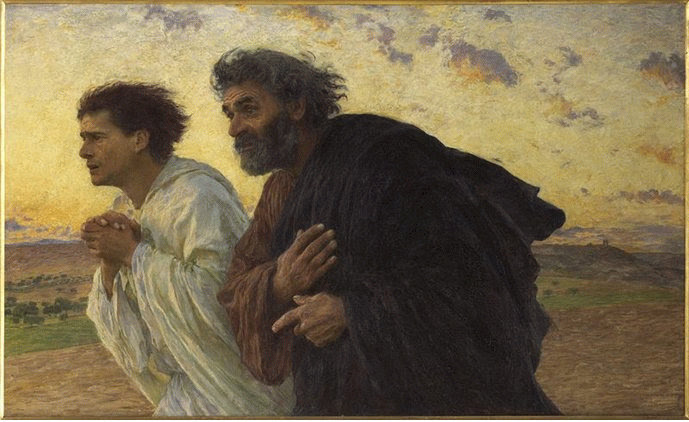









_with_Edward_McMillan-Scott.jpg)


You must be logged in to post a comment.