It is time for the Church, and our experience of the liturgy, to return to depths and heights.

FEBRUARY 26, 2019

Spiritual Egalitarianism is Deadly

ANTHONY ESOLEN

“It’s not going to be long now,” says the doctor, as you stand beside the bed of your loved one. “Shall I send for the head of the Liturgy Committee?”

Some years ago, on the island where we live during the summer, the bishop assigned a new priest and told him that his job was going to involve the closing of one or two of the four churches. I hate the closing of a church as much as I hate death. Or rather more, because for the place where people once worshiped, there is no promise of resurrection to new life. It is a blank, like a parking lot where a green field used to be.

But we were soon visited by a fellow layman in the know, inviting me also to be in the know, and to assist Wayne—as I will call him—in the novus ordo saeclorum. I didn’t want to be in the know. I didn’t share the layman’s odd jubilation at the consolidation of parishes. I also did not want to call the new priest Wayne, or even Father Wayne. I don’t need spiritual buddies. I do need an abbot, a real father. I don’t need democracy. I do need a hierarchy of humble authority and cheerful obedience. My soul needs it, as my body needs sunshine and fresh air.

It occurs to me, when I think about the incident, that democracy and equality are mostly fictional, and hierarchy and authority are real; and that this truth is reflected in liturgy, both bad and good. Wayne was a democrat. His lay assistant was a democrat. Wayne was shy of the priestly, or perhaps he coveted the hail-fellow ordinariness of the layman. Wayne’s assistant was ambitious. If you wanted to get some real music into the parish, you would have to go through the democratic channels. Wayne would lateral the matter to his lay assistant, and there it would die a death by committee and procedure.

I am told that some chanceries work this way too. A bishop may sport a cap at the football game, and visit schools with a big smile, and write an anodyne homily every week, and who knows, he may really desire the reform of his diocese, but all of that spirit of equality is but a veil over a diocesan machine, a democratic Tammany of the Church.

Let us consider its liturgical analogue and, perhaps, its most revealing liturgical expression. Suppose I go to Mass at a church whose organization is, shall we say, democratic. It looks less like a church than like a meeting hall. There is not much art. What there is, seems merely occasional and ornamental, ad hoc, not central to the architectural thrust of the place. The ambience is this-worldly. You are not raised out of yourself. In Fra Angelico’s Final Judgment, the saints in bliss turn their adoring eyes toward the risen Christ. He is the source and end of their unity. They are not looking at each other. But in the church by committee, it is hard to look toward Christ, because you are busy noticing and being noticed. Your eyes are directed toward a variety of democratic masters of ceremony. They welcome you, they bully you into telling your name to your neighbor, they announce their own names, they play music on stage, they drown out with a microphone what poor show of congregational singing there may be, they make welcoming gestures when it is time for you to mutter out the refrain of the psalm, and they otherwise make themselves visible and important, primi inter pares.Some parishioners are more equal than others.

I am not judging their souls. Good people can get into bad habits. Saintly people may sing awful music. But bad habits are bad habits, and awful music is awful music, and, as I have said, the show of democracy is mostly a show. Perhaps the setup is imparting nothing important at all, in which case it is merely irresponsible and ineffectual; or perhaps democracy, intellectual and spiritual egalitarianism, is both the medium and the message, in which case we have what Pope Benedict called the dictatorship of relativism. In turning toward the people and seeming to welcome them into a charmed circle of the really important, the priest makes Mass more about himself and his favorites than could otherwise be conceivable.

The alternative is different not in degree but in kind. It is the real and liberating converse to the fictively liberal. It cannot be described except by hierarchies and inequalities. The priest has the care of souls. The priest, not the Liturgy Committee. All spiritual authority in the parish is vested in him. That does not mean that we laymen never talk about the faith to other people. It does mean that we look to the priest for direction, and he looks to Christ for direction. We all look to Christ. We orient ourselves to the orient: to the risen Lord. It is onward, upward. We need none of the social paraphernalia of democracy. We have more important things to care for. Here, instead of draping a statue of Caesar with a veil of equality, we accept the inequality with grateful hearts, and that very acceptance makes us more equal than any show or ideology of democracy could make us.

I’m far from the first to notice it and discuss it. Imagine a church that is oriented, in its art, architecture, music, and liturgy, towards Christ to whom we all turn, bodily as well as in intent, or bodily because we intend it and want to strengthen the intention. The priest then is our leader, clearly; he is the head of the parish. But he is leading us in a humility that is visible. He makes of himself as it were an empty vessel. He kneels, and we kneel, and man is as Chesterton says, taller when he bows, and I’ll add that he’s a right giant when he kneels.

There is no chatty personality here. The priest is not to be honored and obeyed because he is a nice man. He is to be honored and obeyed because he is a priest; the office empties the man. Then we too might be emptied. We are out of the realm of the quotidian and the sociable. The saints surround us and call us on. The sacrament bursts into the Egypt of sin and feeds us with a food we otherwise do not know. Sure, that happens wherever there is a Mass. But where is the reality made so fully manifest to our always fitful and fleeting attention, as when we do humbly and obediently what otherwise we never do? Someone may say that kneeling is not necessary.  Some other bodily sign of humility and obedience may suffice. I should like to hear suggestions. For when we kneel at the rail, we kneel all together, not one by one. The child sees the grown man made small. The grown man sees the child beside him and may remember the words of Jesus; he may have an intimation that the child is his spiritual superior.

And then there are the hymns. They are not demotic, for a weekend in Atlantic City. They are not sung by performance artists in jeans. They come from the loft behind us and above us, invisibly, so their singers are exalted and humbled at once. It is hard to play the peacock in the pitch dark. The hymns are not merely decorative, nor do they steal the show. There is no show.  No one will applaud. That would be like whistling at the Virgin Mary. The content and the manner of the hymns are subordinated to the demands of worship.

In the novus ordo saeclorum, I do not know my place. I have no place. My place is whatever I may swagger into. In a larger sense, there is no place to know. Who has fond memories of a committee room? You can get lost in equality, because one flat plain is like another. Not when you stand on a mountain among mountains. It is time for the Church, and our experience of the liturgy, to return to depths and heights.

(Photo credit: Shutterstock)

Tagged as church governanceDemocracyEgalitarianismliturgical abusepost-Vatican II CrisisPriesthood81

Anthony Esolen

By Anthony Esolen

Professor Esolen is a teaching fellow and writer in residence at Thomas More College of the Liberal Arts, in Merrimack, New Hampshire. Dr. Esolen is a regular contributor to Crisis Magazine and the author of many books, including The Politically Incorrect Guide to Western Civilization (Regnery Press, 2008); Ten Ways to Destroy the Imagination of Your Child (ISI Books, 2010) and Reflections on the Christian Life (Sophia Institute Press, 2013). His most recent books are Reclaiming Catholic Social Teaching (Sophia Institute Press, 2014); Defending Marriage (Tan Books, 2014); Life Under Compulsion (ISI Books, 2015); Real Music: A Guide to the Timeless Hymns of the Church (Tan Books, 2016); Out of the Ashes(Regnery, 2017); and Nostalgia (Regnery, 2018).

Posted in Uncategorized | Comments Off on It is time for the Church, and our experience of the liturgy, to return to depths and heights.

MONSIGNOR POPE OFFERS A GOOD ANALYSIS OF THE JUST CONCLUDED ROMAN SYNOD OF HEADS OF EPISCOPAL CONFERENCES

menu


Register Logo


E

Pope Francis, flanked by cardinals and bishops, attends a Penitential Liturgy at the Vatican’s Regia Hall at the end of ‘The Protection of Minors in the Church’ meeting on Feb. 23, 2019.

Pope Francis, flanked by cardinals and bishops, attends a Penitential Liturgy at the Vatican’s Regia Hall at the end of ‘The Protection of Minors in the Church’ meeting on Feb. 23, 2019. (Photo by Vatican Pool/Getty Images)BLOGS | 

FEB. 25, 2019

Why the Summit Fell Flat, and What Might Happen NextThe refusal to consider vulnerable adults and homosexuality in the discussion is a severe blow to credibility.Msgr. Charles Pope

I respectfully offer here a brief reflection on the recent summit in Rome on sexual abuse by clergy (“The Protection of Minors in the Church”). To be clear, I was not in attendance nor was I able to follow the proceedings closely, even to the extent that they were publicly accessible. I welcome corrections and comments on my impressions.

That said, count me among those who are disappointed in the content and conclusions of the summit. Earlier in February I wrote of my hopes for the gathering, describing what I thought was necessary for credibility to be restored to the Church. I highlighted three things I deemed essential:

  1. The summit must focus on more than the sexual abuse of minors by clergy — it must also address the sexual abuse of vulnerable or subordinate adults.
  2. The summit must speak to the link between homosexuality and sexual abuse by clergy.
  3. The summit must establish a way forward to establishing greater accountability for bishops.

Of the three areas, only the last was addressed at all.

Regarding the first point, the summit’s very title (“The Protection of Minors in the Church”) and agenda limited the focus to the sexual abuse of minors. Not only is the abuse of minors egregious, it is criminal, and must be met with the strongest penalties. However, as the Theodore McCarrick case illustrates, the problem is more widespread than the abuse of minors. His abuse of at least two underage boys was preceded by many complaints. Even more widespread were the rumors of his sexual harassment of seminarians and younger priests. As has been well documented, even though many prelates in this country and in Rome knew of his behavior, there was little correction. Further, the restrictions that were finally placed upon him were largely ignored. His status as an active player in crucial Church matters, including international diplomacy and the advancement of men in the episcopacy, was effectively restored.

A tremendous opportunity to restore credibility to the Church was missed in failing to review and criticize the structures and decisions that allowed Theodore McCarrick to advance, failing to identify and call to account those responsible for it, and failing to discuss specific credible charges related to the overall sexual abuse crisis in any substantial way.

Regarding the second point, the silence—even outright refusal to discuss—the clear connection between the sexual abuse crisis and active homosexuality in the priesthood is a severe blow to credibility. That Cardinal Blase Cupich, a key organizer of the summit, denies a causal relationship between homosexual clergy and the fact that more than 80 percent of the victims have been post-pubescent males is not credible to most Catholics. There is simply no logical basis for such a claim, except perhaps among LBGTQ ideologues.

While this should not be used to rationalize the demonization of all people suffering from same-sex attraction, neither should we miss the opportunity to assess the data honestly and develop sane policies in response. In less politically-charged moments, Pope Francis has said as much. A summit purporting to address the sexual abuse of minors that ignores the high correlation between homosexual attraction and sexual abuse by clergy has no more credibility than a summit on lung cancer that ignores the link to smoking. Not only does this glaring omission strain the credibility of the conference, it makes its deliberations and conclusions seem largely irrelevant.

It is only on the final point (a way forward to ensuring greater accountability among the bishops) that I see something substantial. Cardinal Cupich, in his address to the attendees, set forth a concrete procedure for the investigation of charges against bishops. The proposal involves a more local system that uses metropolitans (regional archbishops) to oversee the bishops within their purview. These metropolitans would collaborate with laity and other clergy to establish review boards; this is similar to the system already in use in the United States for investigating charges against priests.

I am not a canon lawyer and leave that sort of commentary to others more qualified than I, but it seems to me that the proposal has several good points.

First, it would restore more local accountability to bishops. Second, it would replace the current system — in which every bishop who is the ordinary of a diocese answers directly to the pope — which has proved unwieldy. Third, it would respect the divine constitution of the Church as hierarchal while also including the lay faithful for the sake of transparency. If this proposed procedure can be implemented and made accessible, it will improve the accountability of bishops and permit the faithful an opportunity to air their concerns. It remains to be seen how well the system will work and how faithfully it will be implemented, but it is the one substantial result to emerge from the summit.

While not surprised at the outcome of the summit, I am disappointed. It hardly merited the intervention of the Pope and Rome that suppressed the votes and actions of the U.S. bishops on this topic at their meeting in November. The Catholic faithful are justified in being dismayed at the lackluster results coming from this much-trumpeted gathering.

In the days and weeks to come, we will see whether there will be a fiery response from the faithful or, as some Church leaders seem to hope, the storm just blows over. I would ask any Church leader who is so hoping to ponder the sound of church doors and consider the likelihood that they will be opening more as people exit than as they enter. Lying low and waiting for the storm to pass ignores the damage it leaves behind — the victims, to be sure, but also a dispirited laity who no longer find credibility in many of their leaders.

Simply advising God’s people not to leave Jesus just because of a few Judases does not remove the obligation of us who lead the Church to preach the truth boldly, refute error, and discipline those who dissent or stubbornly persist in sin. God will hold us accountable one day for the ministry He has given us. Collectively, we clergy have too often failed God’s people. We’ve put them in a very difficult position. It is a tribute to many of them that they have persevered for so long. They have learned to look beyond our human faults and still find Christ—but we shouldn’t make it so hard for them to do so.

Help us, Lord. Save us. Have mercy on us, and keep us all by your grace!

Posted in Uncategorized | Comments Off on MONSIGNOR POPE OFFERS A GOOD ANALYSIS OF THE JUST CONCLUDED ROMAN SYNOD OF HEADS OF EPISCOPAL CONFERENCES

A NEW SURVEY SHOWS THE VALUE OF THE TRADITIONAL LATIN MASS IN STRENGTHENING THE FAITH OF ORDINARY CATHOLICS

New Survey Shows Disparity of Beliefs Between Latin Mass, Novus Ordo Catholics

Steve Skojec

Steve Skojec

February 25, 2019

OnPeterFive

new survey conducted by Fr. Donald Kloster of St. Mary’s Catholic Church in Norwalk, Connecticut, in cooperation with a statistician and Brian Williams of LiturgyGuy.com, has highlighted some interesting data from an underrepresented group of Catholics: those who regularly attend the traditional Latin Mass.

The priest who initiated the survey has offered “both the Novus Ordo Mass (NOM) and the Traditional Latin Mass (TLM)” for over twenty years and states in the introduction to his findings that he has “observed variations between the people attending the two different Masses within the Roman Rite.”

Noting that “American Catholics attending the NOM have been surveyed repeatedly in terms of their beliefs and practices (Pew Research and Center for Applied Research in the Apostolate at Georgetown University [CARA]),” he also observes that “the body of research does not appear to include a description of Catholics who attend the TLM” who comprise “an estimated 100,000 Catholics” attending “at least 489 Sunday Masses nationwide.” Surveys were taken both in pew and online for a total of 1,773 respondents.

The findings on key questions were informative:

  • 2% of TLM-attending Catholics approved of contraception vs. 89% of NOM Catholics.
  • 1% of TLM Catholics approved of abortion compared to 51% of NOM attendees.
  • 99% of TLM Catholics said they attend Mass weekly vs. 22% of NOM.
  • 2% of TLM goers approved of “gay marriage” as opposed to 67% of NOM.

Also of note was the rate of giving among TLM Catholics, which was nearly six times the amount of giving (at 6% of income) as NOM parishioners (at 1.2%). TLM Catholics also had a fertility rate of 3.6 vs 2.3 for NOM — indicating “a nearly 60% larger family size”.

As the study authors state in their analysis, the differences between the two groups were “dramatic when comparing beliefs, church attendance, monetary generosity, and fertility rates.”

The initial survey, conducted over a number of months in 2018, was brief, but Fr. Kloster intends to engage in the study of additional topics in his next survey — such as propensity toward vocations — which he intends to launch this year.

The findings will likely come as little surprise to Catholics who regularly attend Mass at TLM chapels across the country. They indicate that these chapels are fertile ground for Catholic orthodoxy, large families, and an authentic practice of the faith and will continue to provide growth and nourishment to the Church for the foreseeable future.

Posted in Uncategorized | Comments Off on A NEW SURVEY SHOWS THE VALUE OF THE TRADITIONAL LATIN MASS IN STRENGTHENING THE FAITH OF ORDINARY CATHOLICS

Brothers selling baby parts arrested by ICE

Brothers selling baby parts arrested by ICE

Brothers selling baby parts arrested by ICE

Orange County District Attorney sued the companies for their body parts trade, FEBRUARY 24, 2019 4 COMMENTS

FacebookTwitterGoogle+Share

Brothers selling baby parts arrested by ICE
Orange County District Attorney sued the companies for their body parts trade,
FEBRUARY 24, 2019 4 COMMENTS

Isaias brothers, involved in trafficking baby parts in Calif.
The following comes from a story by Cheryl Sullenger of Operation Rescue on Feb. 21.
Two wealthy Ecuadorian brothers who were principals in DaVinci Biosciences and DV Biologics, the California companies fined and ordered to shut down for illegally trafficking world-wide in aborted baby parts it obtained from Planned Parenthood, were arrested by ICE on February 13, 2019.
According to Law.com:
U.S. Immigration and Customs Enforcement arrested Roberto and William Isaías on Feb. 13. ICE representative Nestor Yglesias said the brothers were “unlawfully present” in the U.S., and have been “transferred to ICE’s Enforcement and Removal Operations” for deportation proceedings following their arrest. Yglesias added the pair is “in agency custody pending removal proceedings.”
The arrest of Roberto and William Isaias was gratifying to Operation Rescue, which published an investigative research report on October 27, 2016 – just days before the Presidential Election that put Donald J. Trump in office – that detailed their crimes in Ecuador, dubious dealings with the Obama administration, their business with Planned Parenthood and the aborted baby body parts trade.
“We understood that this family was in the U.S. under suspicious circumstances, and that they had committed crimes in Ecuador and Southern California,” said Operation Rescue President Troy Newman. “We had hoped that one day they would return to Ecuador so that justice could be done, but their arrests still took us by surprise.”
In 2012, Roberto and William Isaias were sentenced in abstentia to eight years in prison for running their Ecuadorian bank into the ground then presenting false balance sheets to profit from bailout funds, wiping out the life savings of thousands of families. Ecuador says the Isaias family cost the impoverished country a total of $661.5 million.
The Isaias family began dumping large amounts of campaign contributions into American political campaigns, including $90,000 to Obama’s 2012 re-election campaign. As a result, after reaching out to then-Secretary of State Hillary Clinton for asylum, the Isaias’ were granted expedited immigration into the U.S. Clinton’s State Department then rebuffed attempts by Ecuador to extradite them to face justice.
Once in America, the Isaias family owned and operated DaVinci Biosciences and DV Biologics, companies that contracted exclusively with Planned Parenthood of Orange County to receive aborted baby tissues and organs, which they trafficked overseas.
Roberto and William Isaias’ nephew, Estafano Isaias, Jr., who was involved in profit-taking from the two biotech companies, also owned a business that sold pornography online.
After the release of the Center for Medical Progress’ undercover video exposés in 2015, Orange County District Attorney Tony Rackauckas sued the companies for their illegal body parts trade, and in 2017 reached a settlement agreement that fined them $7.8 million, and ordered their businesses to close.
“We have mentioned the Isaias brothers repeatedly in articles that we have published over the past couple of years, including the corruption in the Obama Administration, which allowed them to come to our country where they committed further crimes,” said Newman. “We hoped that someone would take notice.”
Just last month, Operation Rescue published an exposé that delved into the market for aborted baby body parts. It revealed that the DaVinci biotech companies sent tissues and organs obtained from Planned Parenthood around the world to businesses that were working to develop anti-aging drugs for the wealthy.
“The Isaiases are bad people, and we are very relieved that they will soon be back in Ecuador to serve their sentences and hopefully return the money they took from the people they bilked,” said Newman. “And we are especially glad that they are out of the baby parts trade permanently.”
Related
Abortionist Robert Santella has died
Daleiden accusers will be secret
Watsonville police arrest woman who knocked over crucifix
FacebookTwitterGoogle+Share
Comments
John D says:
February 25, 2019 at 6:42 am
Their realy name is Dassum, of Lebanese Jewish family. They relied heavily on the Democrats in Miami and Washington, D.C.—Obama, Clintons and Menendez to give them sanctuary despite their enormous bank robbery in Ecuador. One might suspect that they placed a lot of the stolen cash in Panama.

Reply
William Robert says:
February 25, 2019 at 6:59 am
Some sources are reporting that “higher ups” in political and business circles went after these two brothers because they were knowledgeable about abortions procured by some of the rich and famous. Go figure!

Reply
Anon says:
February 25, 2019 at 7:11 am
Thank you Jesus for DONALD TRUMP!

Reply
Peggy says:
February 25, 2019 at 7:12 am
Great work, ICE. Now if the FBI would only go after the Clintons and Obama for all their crimes…

Reply

Posted in Uncategorized | 1 Comment

THE BERGOLIAN CONSPIRACY

FEBRUARY 25, 2019

Francis Allies Reveal Their Plans for Revolutionary Change

JULIA MELONI

On March 3, 2013, Cardinal Cormac Murphy-O’Connor—an alumnus of the St. Gallen mafia—met with then-Cardinal Bergoglio over risotto and wine. It was the evening before the pre-conclave general congregations—as Murphy-O’Connor recalls in his memoirs—and the old friends were discussing “the sort of person we felt the cardinals should elect.”

A day earlier, an anonymous cardinal had been quoted saying, “Four years of Bergoglio would be enough to change things.” Later, Murphy-O’Connor would utter that same phrase, adding: “But pray to God we have him for much longer than that.”

Murphy-O’Connor was, as his memoirs detail, arrested by the careening post-conciliar “runaway Church”—cracking open the “rather rigid and self-righteous” Church of the past. But Murphy-O’Connor understood that “incremental change is usually best”—that the “trick” to keeping peace was to “let the leash out gently, so that you could allow things to develop while staying in control.”

And Cardinal Bergoglio was the mafia’s chosen leader for “gentle” revolution on a leash. In 2001, Bergoglio had been introduced to the mafia by its leader, the radical “ante-pope” Cardinal Carlo Martini. In the days before the 2005 conclave, Murphy-O’Connor sat with a gin and tonic giving his then-press secretary, Austen Ivereigh, hints about Bergoglio, the eventual runner-up.  Now, in 2013, Murphy-O’Connor gave Ivereigh another tip-off that Bergoglio could well be the next pope.

For Murphy-O’Connor and other mafia alumni, including Cardinals Kasper and Danneels, had expertly toured pre-conclave gatherings promoting Bergoglio.  And according to Marco Politi, on the evening of March 9 Murphy-O’Connor had met with Cardinals Kasper, Coccopalmerio, Bertello, Nicola, and Tauran to strategize seeking the backing of others. It is unclear whether one of the Italians in the group was the “influential Italian gentleman” who asked then-Cardinal McCarrick to “talk up” Bergoglio, but both McCarrick and Coccopalmerio gave early interviews pushing for a “Latin American” pope.

On March 12, before the conclave’s start that evening, Murphy-O’Connor fell into walking beside Bergoglio.

“Watch out, now it’s your turn,” Murphy-O’Connor said.

“I understand,” Bergoglio replied. He was calm, said Murphy-O’Connor, and “was aware that he was probably going to be a candidate going in.”

The next day, Pope Francis emerged at St. Peter’s Loggia flanked by Danneels—the mafia popemaker who had told a king to legalize abortion and a sexual abuse victim to seek forgiveness. A year later, Murphy-O’Connor boasted that a “Pandora’s box” had been opened—that the cardinals “did not know what a steely character [Bergoglio] was, they did not know that he was a Jesuit in very deep ways, they did not know who they were electing.”

For the new pope shared Martini’s “dream” of “permanent” synodalitypermanent revolution, via synods, on “knots” such as marriage and sexuality. Murphy-O’Connor said Pope Francis told him how crucial synods were for enstructuring “collegiality”—mafia code for decentralized Church authority. Eugenio Scalfari, too, said Francis told him how “long and difficult” Martini’s synodal road would be—how “gently, but firmly and tenaciously” he would need to proceed.

All this talk about long, inexorable marches sounded ominously Gramscian, ominously like cultural Marxist “revolution by stealth.” When Humanae Vitae was released, Murphy-O’Connor himself let the leash out artfully, paying lip service to the “Vatican position” on contraception while dispensing “pastoral compassion” on dissenters. Later, amidst the family synods, he would let the leash extend again, saying that doctrine changes indirectly and could “develop” on adultery.

Long ago, Murphy-O’Connor and his mafia predecessor, Cardinal Basil Hume, had received letters from Rome after saying “vaguely provocative things” about ordaining married men to the priesthood. Later, Hume would write a document on homosexuality softening the “harsh” term “objectively disordered” and Murphy-O’Connor would crusade for “gay Masses”—which he called a “route back to the sacraments,” with “rather better” music to boot.

Now, Murphy-O’Connor was saying how brilliant it was that Pope Francis had quipped, “Who am I to judge?”—a response to a question about Francis’s promotion of a clericwith a history of homosexual scandals. Historian Henry Sire argues that such patronage fits a “pattern”—“well established” during Bergoglio’s time in Argentina—“whereby he surrounds himself with morally weak people so as to have them under his thumb.”

Asked, before the conclave, if he’d advise that the new pope be “free from any kind of taint of cover-up,” Murphy-O’Connor at one point said: “You’re not going to get a saint straight away, you know; we’re all sort of, we’re all sinners” (31:31). Murphy-O’Connor had himself covered up for a notorious abuser who went on to molest other young victims, some disabled. One of the priest’s confirmed victims claimed that when he abused her Murphy-O’Connor and others were present and involved—yet the CDF’s 2013 investigation into Murphy-O’Connor was stopped because it lacked Pope Francis’s approval. Sources for a respected Vaticanist claim that an angry Francis interrupted Cardinal Müller while he was saying Mass, ordering the investigation’s shutdown.

Murphy-O’Connor died in 2017, too soon to witness what lay beyond “four years of Bergoglio.”  After five years, the pro-“LGBT” Fr. James Martin and alumni of the “gay Masses” were speaking officially at the World Meeting of Families—while Archbishop Viganò was claiming that Pope Francis had knowingly rehabilitated McCarrick and that Coccopalmerio was part of a “homosexual current” trying to subvert doctrine on homosexuality.

Coccopalmerio, who helped elect Francis after serving as Martini’s longtime personal secretary, has openly praised the “positive elements” of same-sex unions—and is allegedly connected to a drug-fueled homosexual orgy at a CDF apartment. He reportedly pushed for leniency for sex abusers as a Francis-appointed member of an appellate review board—even swaying Francis to overrule CDF sanctions against a notorious molester of boys.

In 2014, Ivereigh pointed out that Coccopalmerio, then the Vatican’s top canon law advisor, was “working out the details” on giving synods real decision-making power. In 2018, a new papal document said a synod’s final document could be declared part of the pope’s “ordinary magisterium”—and then a youth synod final document largely authored by the Vice President of the Martini Foundation smuggled in rigged agendas on “LGBT” causesconscience’s autonomy, and mafia-style “synodality.” Pope Francis, who helped draft the contentious final text, will release a full post-synodal exhortation soon.

Meanwhile, the synodal machine prepares to churn out revolution on the mafia’s other “knots,” including the “shortage of ordained ministers,” the “role of woman” in the Church, and the “need to revive ecumenical hopes.” Shortly before the 2013 conclave, Murphy-O’Connor said the issue of ordaining married men to the priesthood “very well might come up,” though it wouldn’t be “first on the agenda” (21:38). Now, Pope Francis has said he’s “open” to the practice—presaging the agenda of this year’s Amazon synod.

The larger goal, as Kasper’s book on Martin Luther makes clear, is to fully overcome “confessionally constricted Catholicism” in the name of ecumenical unity. Hence, as others explain, the revolution’s attempts to weaken Catholic markers such as the papacy, celibacy, auricular confession, indissoluble marriage, and the Holy Eucharist. The plan is to refashion the Church into a sort of federation of local churches—a postmodern “polyhedron” with diversity on doctrine and more (cf. Evangelii Gaudium 236, 32).

Pope Francis’s “small-step strategy is the right one,” explains Kasper to the homosexual activist Frédéric Martel. “If you advance too quickly, as in the ordination of women or the celibacy of the priesthood, there will be a schism… I tried to move the debate [on recognizing homosexual couples] forward at the [2015] synod, but we weren’t listened to. Francis found a middle way by talking about people, about individuals. And then, very gradually, he moved the lines.”

Kasper was gesturing towards the mafia’s ominous last “knot”: the relationship between “civil laws and the moral law.” Both Kasper and Danneels hailed homosexual “marriage” laws—while Martini and Danneels defended or even promoted legal abortion. For the “gently” leashed revolution leads, finally, to the “anti-creation”—pillared on the legal “rights” to abortion and the homosexual subversion of marriage.

“We will win,” insists Kasper to Martel, smiling.

Editor′s note: Above, Pope Francis appears with cardinals at the window of St Peter′s Basilica after being elected the 266th pope of the Roman Catholic Church on March 13, 2013, at the Vatican. Cardinal Danneels of the St. Gallen Mafia is second from right. (Photo credit: FILIPPO MONTEFORTE/AFP/Getty Images)

Tagged as Cardinal Cormac Murphy-O’ConnorConclave 2013lavender / gay mafia,Pope FrancisSt. Gallen MafiasynodalityTheological Dissent185

Julia Meloni

By Julia Meloni

Julia Meloni writes from the Pacific Northwest. She holds a bachelor’s degree in English from Yale and a master’s degree in English from Harvard.

ZZZZZZZZZZZZZZZZZZZZZZZZZZZZZZZZZZZZZZZZZZZZZZZZZZZZZZZZZZZZ

X

Posted in Uncategorized | 2 Comments

The Meeting just concluded in Rome tarnishes Francis’s credibility in opposing the plague of sexual abuse and in demanding from the bishops that “accountability” – that readiness in rendering an account for one’s actions – from which he exempts himself.

Settimo Cielodi Sandro Magister 

24 feb 

Sexual Abuse Through Too Much Power, Says Francis. But Meanwhile He Is Losing Power and “Accountability”

Bergoglio


> All the articles of Settimo Cielo in English

*

After the summit of February 21-24 between Pope Francis and the leaders of the whole world’s bishops on protecting minors from sexual abuse had just ended, the moderator of the meeting, Fr. Federico Lombardi, announced that “concrete initiatives will soon follow.”

In particular, the following four:

1. “A new Motu Proprio from the Pope ‘on the protection of minors and vulnerable persons,’ to
strengthen prevention and the fight against abuse on the part of the Roman Curia and Vatican City State. This document will accompany a new law of Vatican City State and Guidelines for the Vicariate of Vatican City on the same subject.”

2. “The Congregation for the Doctrine of the Faith will publish a Vademecum that will help bishops around the world clearly understand their duties and tasks.”

3. “In addition, in a spirit of communion with the universal Church, the Pope has expressed the intention of creating task forces of competent persons to help episcopal conferences and dioceses that find it difficult to confront the problems and produce initiatives for the protection of minors.”

4. “On Monday, 25 February, the Organizing Committee will meet with the heads of the Roman Curiawho participated in this Meeting in order to ascertain as of now the follow-up work necessary to the proposals and the ideas decided upon during these days, as desired by the Holy Father.”

So says Fr. Lombardi. But naturally, for an overall evaluation of the summit, one must consider the speech that Pope Francis gave at the end of the work.

It is an unusual speech in terms of the hefty dose of statistics that takes up the first part and the footnotes, aimed at highlighting the universal dimensions of sexual abuse against minors, in all its forms and in all its contexts.

What happens in the Catholic Church – the pope emphasizes – is part of this phenomenon of vast and multiform dimensions, with it own particular gravity because it is committed by consecrated ministers in doing the opposite of what they are supposed to do.

But in getting to the root of the phenomenon once again Francis generalizes in his own way. Sexual abuse against minors, both inside and outside of the Church, “is always the result of an abuse of power.” And this holds true “in the other forms of abuse affecting almost 85,000,000 children, forgotten by everyone: child soldiers, child prostitutes, starving children, children kidnapped and often victimized by the horrid commerce of human organs or enslaved, child victims of war, refugee children, aborted children and so many others.”

An abuse of power that for Francis – as he also reiterates in this speech – is in the Church synonymous with “clericalism.”

The unfolding of the summit has been evaluated in two previous posts from Settimo Cielo, the gist of which can be gotten from their titles:

> At the Summit, Homosexuality Is Taboo. But There Is Caution Over “Zero Tolerance”

> Second Day of the Summit. With New Accusations Against Bergoglio, From His Argentina

The case of the Argentine bishop Gustavo Óscar Zanchetta, very close to Jorge Mario Bergoglio and always protected and finally promoted by him as “assessor” of the Administration of the Patrimony of the Apostolic See, in spite of the pending accusations of sexual misconduct that were brought against him with the competent ecclesiastical authorities in Argentina and Rome starting in 2015, was brought up in a question at the summit’s concluding press conference, to which the reply was that “investigations are underway.”

It must be noted however that the Zanchetta case, on a par with the case of former cardinal Theodore McCarrick, weighs directly against the person of Pope Francis, who has never replied to the allegations that he supported and promoted both of them in spite of the fact that he knew about their reprehensible behavior.

And this inevitably tarnishes Francis’s credibility in opposing the plague of sexual abuse and in demanding from the bishops that “accountability” – that readiness in rendering an account for one’s actions – from which he exempts himself.

In the United States, a “lame duck” is a president who is still in office but whose power has dwindled away.

This is the risk that now seems to be looming over Pope Francis.Condividi:

Posted in Uncategorized | 1 Comment

A STATISTICAL PHOTOGRAPH OF THE CHURCH IN THE United States 53 YEARS AFTER THE CLOSE OF THE II VATICAN COUNCIL AND 5 YEARS AFTER THE ELECTION OF FRANCIS THE MERCIFUL

On Wednesday, February 20, 2019 3:09 PM, Rev. Fr. Donald Kloster <revfrkloster@yahoo.com> wrote:

Kloster 2019by Fr. Donald KlosterSt. Mary’s Catholic ChurchNorwalk, Connecticut USA
revfrkloster@yahoo.com
Contributors: Sha Balizet Fisher, PhD (Statistics consulting) –  Mr. Brian Williams liturgyguy.com (Consultant)                      Mrs. Christine Boyle (Webmaster)
Introduction
Through more than twenty years of offering both the Novus Ordo Mass (NOM) and the Traditional Latin Mass (TLM), this writer has observed variations between the people attending the two different Masses within the Roman Rite.  American Catholics attending the NOM have been surveyed repeatedly in terms of their beliefs and practices (Pew Research and Center for Applied Research in the Apostolate or Georgetown University’s CARA).
Yet, the body of research does not appear to include a description of Catholics who attend the TLM.  These Catholics attend at least 489 Sunday Masses nationwide (latinmassdir.org 2019).  On any given Sunday, an estimated 100,000 Catholics (on average over 200 faithful per Mass and/or parish) in the United States of America worship according to the ancient Mass that, prior to the Second Vatican Council (1962-1965), was offered in Latin for more than 1900 years.
The quickly growing number of TLM only parishes permits survey research going beyond one individual’s observations.  The objective of this pilot study was to measure the fruit of the two Masses, by directly comparing the TLM and NOM attendees’ responses to the same questions. 
MethodThe survey consisted of seven questions on the beliefs and attitudes of the respondents.  The surveys conducted were anonymous and had unique responses.  In pew surveys were administered to 1251-1322 responders according to the given question.  The same survey, administered online, received 451 responses.
In Pew Survey RespondentsArizona, California, Colorado, New Hampshire, Texas
Online Survey RespondentsConnecticut, Florida, Idaho, Kansas, Minnesota, Missouri, Pennsylvania, New York, Virginia, Washington, West Virginia
The TLM Survey was conducted to parallel questions posed in previous research, allowing a direct comparison between the TLM attendees and those of the NOM.  These were the topics:
1. Approval of contraception2. Approval of abortion3. Weekly Mass attendance4. Approval of same sex marriage5. Percentage of income donated6. Annual Confession among weekly Mass attendees7. Fertility Rate
ResultsSurvey Question                        TLM       TLM samples         NOM        Data Source1. Approve contraception             2%            1,773                   89%         Pew Research 2016 (Sept 28)2. Approve abortion                      1%            1,769                   51%         Pew Research 2018 (Oct 15)3. Weekly Mass attendance        99%            1,763                   22%         CARA 2017 (Apr 11, 2018)4. Approve gay marriage               2%            1,759                   67%         Daily Wire (July 2, 2017)5. Income % donated                    6%            1,702                  1.2%         Catholicphilly.com  (May 17, 2013)                                                               Protestants                   2.5%        Relevant Magazine (March 8, 2016)              All Christians during the Great Depression                   3.3%         Relevant Magazine (March 8, 2016)6. Annual Confession    and Weekly Mass                     98%            1,753                   25%         CARA 2014 (Feb 16)7. Fertility Rate                             6.0               1,085*                  2.3           Pew Research 2015 (May 12)
*This question was directed to women only.
Analysis
Modern society, by popular belief, is the cause of decreasing sacramental participation in the Catholic Church.  However, the present survey, compared with other data, reveals a striking variance between Catholics attending the TLM versus those who attend the NOM.  These differences are noticeably evident when comparing beliefs, church attendance, monetary generosity, and fertility rates.
Importantly, TLM families have a nearly 60% larger family size.  This will translate to a changing demographic within the Church.  TLM attendees donate 5 times more in the collection, indicating that they are far more invested than the NOM attendees.  TLM Catholics go to Mass every Sunday at 4.5 times the rate of their NOM brethren.  This implies a deep commitment to the faith.  The almost universal adherence to the Sunday Mass obligation depicts TLM Catholics who are deeply in love with their faith and cannot imagine missing their Sunday privilege.
Future ResearchWould young adult TLM Catholics be more likely to commit to a life in the Church?  This question has never been studied among TLM Catholics since the inception of the 1970 NOM.  Research is needed to explore TLM attendees’ vocations to the Priesthood, Religious Life, Married Life, and Single Life within the 18-39 year old subset of TLM Catholics.  Preliminary studies by this author indicate that the TLM produces 7-8 times the number of Priestly and Religious vocations.  Reception of the sacrament of Holy Matrimony would also seem to be much higher among TLM attendees.  Finally, how well does the TLM retain young adults once they leave their parent’s homes?   Rigorous study on these topics are planned for 2019-2020.
Bibliography
Pew Research          Contraception                         Sept 28, 2016Pew Research          Abortion                                  Oct   15, 2018 Pew Research          CatholicFertility Rate              May 12,  2015CARA                       Annual Conf/Weekly Mass       Feb 16,  2014       CARA 2017              Mass attendance                     April 11, 2018  Huffington Post quoting Dr. Mark GrayCatholic Philly.com   Donation %May 17,  2013Relevant Magazine   Donation %                             March 8, 2016Daily Wire                 Same sex marriage                  July  2,   2017                  

Traditional Latin Mass National Survey by Fr. Donald Kloster
St. Mary’s Catholic Church
Norwalk, Connecticut USA revfrkloster@yahoo.com
Contributors: Sha Balizet Fisher, Ph.D. (Statistics), Mr. Brian Williams liturgyguy.com (Consultant)
Introduction
Through more than twenty years of offering both the Novus Ordo Mass (NOM) and the Traditional Latin Mass (TLM), this writer has observed variations between the people attending the two different Masses within the Roman Rite. American Catholics attending the NOM have been surveyed repeatedly in terms of their beliefs and practices (Pew Research and Center for Applied Research in the Apostolate at or Georgetown University [CARA]).
Yet, the body of research does not appear to include a description of Catholics who attend the TLM. These Catholics attend at least 489 Sunday Masses nationwide (latinmassdir.org, 2019). On any given Sunday, an estimated 100,000 Catholics (slightly over 200 faithful per Mass and/or parish) in the United States of America worship according to the ancient Mass that, prior to the Second Vatican Council (1962-1965), was offered in Latin for 1,900 years.
The quickly growing number of TLM-only parishes permits survey research going beyond one individual’s observations. The objective of this pilot study was to measure the fruit of the two Masses, by directly comparing the TLM and NOM attendees’ responses to the same questions.
Method
The survey consisted of seven questions on the beliefs and attitudes of the respondents. Data was collected between March 2018 and November 2018. The surveys were anonymous and unique responses only were tallied. In pew surveys were administered to 1322 respondents. The number of responses varied (between 1,251 and 1,322) according to the given question. The same survey, administered online, received 451 responses.
In Pew Survey Respondents
Arizona, California, Colorado, New Hampshire, Texas
Online Survey Respondents
Connecticut, Florida, Idaho, Kansas, Minnesota, Missouri, Pennsylvania, New York, Virginia, Washington, West Virginia
The TLM Survey was designed to parallel questions posed in previous research, allowing a direct comparison between the TLM attendees and those of the NOM. These were the topics:
1. Approval of contraception 2. Approval of abortion
3. Weekly Mass attendance

4. Approval of same sex marriage
5. Percentage of income donated
6. Annual Confession among weekly Mass attendees 7. Fertility Rate
Results
Survey Question
TLM%
TLM samples
NOM%
NO Data Source
1. Approve contraception
2%
1773
89%
Pew Research 2016 (Sept 28)
2. Approve abortion
1%
1769
51%
Pew Research 2018 (Oct 15)
3. Weekly Mass attendance
99%
1763
22%
CARA 2017 (Apr 11, 2018)
4. Approve gay marriage
2%
1759
67%
Daily Wire (July 2, 2017)
5. Income % donated
6%
1702
1.2%
Catholicphilly.com (May 17, 2013)
Protestants
2.5%
Relevant Magazine (March 8, 2016)
All Christians during the Great Depression
3.3%
6. Annual Confession and Weekly Mass
98%
1753
25%
CARA 2014 (Feb 16)
7. Fertility Rate*
6
1085
2.3
Pew Research 2015 (May 12)
*This question was directed to women only.
Traditional Latin Mass national survey conducted by Fr. Donald Kloster (March 2018 through November 2018).
Analysis
Modern society, by popular belief, is the cause of decreasing sacramental participation in the Catholic Church. However, the present survey, compared with other data, reveals a striking variance between Catholics attending the TLM versus those who attend the NOM. These differences are dramatic when comparing beliefs, church attendance, monetary generosity, and fertility rates.
Importantly, TLM families have a nearly 60% larger family size. This will translate to a changing demographic within the Church. TLM attendees donate 5 times more in the collection, indicating that theyarefarmoreinvestedthantheNOMattendees. TLMCatholicsgotoMasseverySundayat4.5 times the rate of their NOM brethren. This implies a deep commitment to the faith. The almost universal adherence to the Sunday Mass obligation depicts Catholics who are deeply in love with their faith and cannot imagine missing their Sunday privilege.
Future Research
WouldyoungadultTLMCatholicsbemorelikelytocommittoalifeintheChurch? Thisquestionhas neverbeenstudiedamongTLMCatholicssincetheinceptionofthe1970NOM. Researchisneededto explore TLM attendees’ vocations to the Priesthood, Religious Life, Married Life, and Single Life within the 18-39 year old subset of TLM Catholics. Preliminary studies by this author indicate that the TLMproduces7-8timesthenumberofPriestlyandReligiousvocations. Receptionofthesacrament ofHolyMatrimonywouldalsoseemtobemuchhigheramongTLMattendees. Finally,howwelldoes the TLM retain young adults once they leave their parent’s homes? Rigorous study on these topics are planned for 2019.

Bibliography
CARA
CARA 2017
Gray
Catholic Philly.com Pew Research
Pew Research
Pew Research Relevant Magazine Daily Wire
Annual Conf/Weekly Mass Mass attendance
Donation % Catholic Fertility Rate Contraception Abortion
Donation %
Same sex marriage
Feb 16, 2014
April 11, 2018 Huffington Post quoting Dr. Mark
May 17, 2013 May 12, 2015
Sept 28, 2016 Oct 15, 2018
March 8, 2016 July 2, 2017

Here are some alarming numbers from CARA. Then too, below is the formalized and finalized National Study of the Traditional Latin Mass faithful comparing them to the Novus Ordo Mass Pew Research and CARA data.

In 1965 the USA had 17,637 parishes. 45 years later in 2010 there were 17,784.
In 2017 the USA had 17,156 parishes
In 1965 the USA had 48.5 million Catholics. In 2017, there were 74.3 million Catholics.

In those 52 years, we’ve lost 481 parishes and gained 25.8 million Catholics.

In 1970 there were 571 priest less parishes. In 2017 there were 3,552.

Posted in Uncategorized | 1 Comment

DID YOU KNOW THAT LONDON AND MANY OTHER CITIES IN ENGLAND HAVE MUSLIM MAYORS? OBAMA ADMITTED MANY MUSLIMS TO THE US DURING HIS 8 YEARS IN OFFICE. MUSLIMS DO NOT ABORT THEIR CHILDREN; NON-MUSLIMS DO. I AM HAPPY THAT I WILL NOT LIVE TO SEE THE DAY AMERICA BECOMES LIKE SO MANY EUROPEAN COUNTRIES IN THE NEAR FUTURE, DOMINATED BY MUSLIMS

How Many Muslims Won Political Office

The Numbers May Surprise You!……………….   FederalRashida Tlaib (D)MI 13th Congressional DistrictWONKeith Ellison (D)MN Attorney GeneralWONIlhan Omar (D)MN 5th Congressional DistrictWONAndre Carson (D)IN  7th Congressional DistrictWON

State

Sheikh Rahman (D)GA State Senate District 5WON
Safiya Wazir (D)NH State House Merrimack 17 DistrictWON
Robert Jackson (D)NY State Senate District 31WON
Nasif Majeed (D)NC State House District 99WON
Mujtaba Mohammed (D)NC State Senate District 38WON
Mohamud Noor (D)MN State House District 60BWON
Jason Dawkins (D)PA State House District 179WON
Hodan Hassan (D)MN State House District 62AWON
Charles Fall (D)NY State House District 61WON
Ako Abdul-Samad (D)IA State House District 35WON
Aboul Khan (R)NH State House Rockingham 20 DistrictWON
Abdullah Hammoud (D)MI State House District 15WON
Abbas Akhil (D)NM State House District 20WON

County

Sam Baydoun (D)MI Wayne County Commission District 13WON
Sadia Gul Covert (D)IL Dupage County Board District 5WON
Sabina TajMD Howard County Board of EducationWON
Mohammad RamadanNJ Passaic County Board of EducationWON
Cheryl SudduthCA West County Wastewater District DirectorWON
Babur LateefVA Prince William County School BoardWON
Assad Akhter (D)NJ Passaic County Board of Chosen FreeholdersWON
Abdul “Al” Haidous (D)MI Wayne County Commission District 11WON

Municipal

Salman BhojaniTX Euless City Council Place 6WON*
Dawn HaynesNJ Newark Public Schools School BoardWON*
Yasir KhogaliMI City of Plymouth District Library BoardWON
Mohamed KhairullahNJ Prospect Park MayorWON
Mohamed Al-HamdaniOH Dayton Public Schools Board of EducationWON
Mo SeifeldeinVA Alexandria City CouncilWON
Maimona Afzal BertaCA Franklin-McKinley School BoardWON
Jihan AiyashMI Hamtramck Public School BoardWON
Javed EllahieCA Monte Sereno City CouncilWON
Hazim YassinNJ Red Bank City CouncilWON
Haseeb JavedVA Manassas Park City CouncilWON
Farrah KhanCA Irvine City CouncilWON
Ali TajCA Artesia City CouncilWON
Alaa MatariNJ Prospect Park Borough CouncilWON
Alaa “Al” Abdel-AzizNJ Paterson City Council Ward 6WON
Aisha WahabCA Hayward City CouncilWON
Ahmad ZahraCA Fullerton City Council District 5WON
Salim PatelNJ Passaic City CouncilWIN
Posted in Uncategorized | Comments Off on DID YOU KNOW THAT LONDON AND MANY OTHER CITIES IN ENGLAND HAVE MUSLIM MAYORS? OBAMA ADMITTED MANY MUSLIMS TO THE US DURING HIS 8 YEARS IN OFFICE. MUSLIMS DO NOT ABORT THEIR CHILDREN; NON-MUSLIMS DO. I AM HAPPY THAT I WILL NOT LIVE TO SEE THE DAY AMERICA BECOMES LIKE SO MANY EUROPEAN COUNTRIES IN THE NEAR FUTURE, DOMINATED BY MUSLIMS

THE LEFT IS DETERMINED TO OPEN THE United States TO UNLIMITED IMMIGRATION AND TO ELIMINATE CITIZENSHIP STATUS AS A NECESSARY QUALIFICATION FOR VOTING IN OUR ELECTIONS

Good policy, bad policymaking, and the 2020 census fight

by Jeff Jacoby
The Boston Globe
February 24, 2019


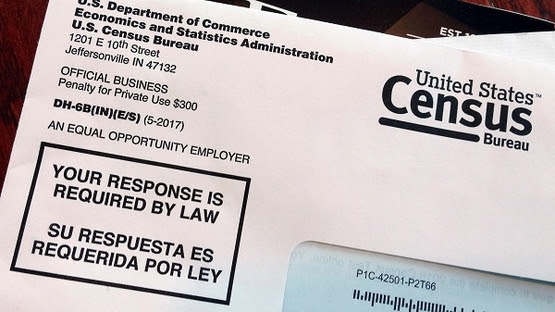
IN APRIL, the Supreme Court will review a decision by a federal judge in New York that bars the Commerce Department from adding a question about citizenship to the 2020 census. It is rare for the justices to take up a case before it’s been heard by an appeals court; they made an exception in this case because the government is facing a June deadline for printing the questionnaires that will be sent to every household next year.

You wouldn’t know it from the furor that greeted the Trump administration’s announcement that it planned to add the citizenship question, but the Census Bureau has been asking such a question for the better part of two centuries.

It was Thomas Jefferson who first recommended that the decennial census tally “the respective numbers of native citizens, citizens of foreign birth, and of aliens” living in the United States — a recommendation that was implemented in the 1820 census, which asked whether any persons in a household were “foreigners not naturalized.” Thereafter, a question about citizenship was on almost every census survey until 1950. From 1970 to 2000, the government used two different census questionnaires, one long and one short — and the citizenship question was always included on the long form. Since the turn of the century, the long form has been replaced by the American Community Survey, which is sent each year to about 3.5 million households. It too solicits the citizenship status of each resident.

In all those years, no one ever claimed that asking about citizenship is illegitimate. This time, liberals freaked out. Senator Dianne Feinstein, a California Democrat, described the proposed question as “an assault on the foundations of this country.” Former Attorney General Eric Holder said it “threatens American democracy.” Massachusetts Senator Ed Markey, applauding the district court decision blocking the question, called it “a defeat for the forces that seek to suppress the voices of American voters.”

Even in our age of hyperpolarized politics, when any step taken by the administration immediately comes in for scathing denunciation by the opposition, it is bizarre to erupt over asking about citizenship on the census. Numerous countries, such as AustraliaCanadaItaly, and South Africa, do so routinely. As Hans von Spakovsky of the Heritage Foundation observes, the United Nations actually recommends that member states gather citizenship data on census surveys. So why the outrage over re-inserting such an unremarkable query into the decennial US census?

The substantive concern is that a citizenship question may deter some immigrants from returning their census questionnaires, presumably out of fear that the Trump administration might use the information to track down people in the country illegally. Since congressional apportionment is based on total number of residents — not the total number of citizens — an undercount could theoretically reduce the number of seats in the House of Representatives to which states with large immigrant populations are entitled. And since census data are often used to allocate federal funds, an undercount would slow the flow of government dollars to those states, too.

But the citizenship question doesn’t ask about legal status. Most noncitizens — students, diplomatic personnel, and more than 13 million green card holders — are in the United States lawfully, and would have no reason to flinch from the question. Conversely, any residents prone to shun the census because they entered the country without permission aren’t likely to fill out a federal questionnaire anyway, whether it contains the word “citizen” or not.

Yet little of this may prove relevant when the Supreme Court weighs in this spring.

When it comes to any issue involving immigration, time and again the administration’s bullheadedness seems to override its good judgment. In this case, the Commerce Department’s proposed addition to the census is wholly defensible as a matter of history and common practice. But how the administration came to make that change is not nearly so easy to defend.

A federal judge ruled that Commerce Secretary Wilbur Ross resorted to deception in his bid to add a citizenship question to the 2020 census.

The case before the high court is likely to turn on a relatively narrow question: Did the Trump administration — and Commerce Secretary Wilbur Ross specifically — comply with the Administrative Procedure Act, which governs how federal agencies must act in crafting government policy?

According to the administration, the impetus for restoring the citizenship question was a request from the Justice Department, which said it needed the information to better enforce the Voting Rights Act. But in a blistering decision based on thousands of internal government documents, the trial judge ruled that Justice actually made that request at the behest of Ross, who had been “aggressively pressing” from the outset to get the questionnaire changed.

A majority of the Supreme Court may well accept the trial court’s finding that the citizenship question was added improperly — even though they might regard the question itself as historically and constitutionally unobjectionable. If so, that would mean no inquiry about citizenship will appear on the 2020 census.

More importantly, it would administer a rebuke that presidents and their lieutenants don’t absorb nearly often enough: Good policy does not excuse dishonest policymaking. Federal officials are entrusted with wide discretion. Slapping them down when they abuse that discretion is essential to good government. Even more essential, perhaps, than counting citizens.

(Jeff Jacoby is a columnist for The Boston Globe).

Posted in Uncategorized | Comments Off on THE LEFT IS DETERMINED TO OPEN THE United States TO UNLIMITED IMMIGRATION AND TO ELIMINATE CITIZENSHIP STATUS AS A NECESSARY QUALIFICATION FOR VOTING IN OUR ELECTIONS

IF THE PEOPLES REPUBLIC OF CALIFORNIA REMOVES THE PROTECTION THAT THE SEAL OF CONFESSION GIVES THE PENITENT, IT DESERVES TO BE EXCLUDED FROM THE UNION OF THE STATES OF AMERICA

Why This Priest is Ready for Martyrdom if California Forces Priests to Break Confessional Seal to Report Abusers

by Fr. Matthew P. Schneider, LC – February 23, 2019

Pixabay, Public Domain / Fr. Matthew P. Schneider, LC Facebook

This article originally appeared on Fr Matthew P. Schneider’s blog, Through Catholic Lenses.

A new bill was just presented in California that would force priests to reveal what is said in the confessional.

The result of this law would be imprisoned, and possibly martyred priests. And it probably won’t stand up in court.

I will explain the law, then go over why the seal of the confessional is inviolable, including those who’ve died to protect it, along with U.S. precedent.

New California Law

The LA Times reported:

“A California state lawmaker introduced a proposal on Wednesday that would require clergy to report child abuse or neglect disclosed during confession. […]

“‘SB 360 is about the safety and protection of children,” said Sen. Jerry Hill (D-San Mateo), who introduced the proposal. ‘The law should apply equally to all professionals who have been designated as mandated reporters of these crimes — with no exceptions, period. The exemption for clergy only protects the abuser and places children at further risk.’

“Clergy, doctors, psychologists, marriage and family therapists and social workers are among some 46 categories of professionals required to report any suspicion of abuse or neglect to law enforcement.

“But state law offers an exemption for any clergy member ‘who acquires knowledge or a reasonable suspicion of child abuse or neglect during a penitential communication,’ defined as a sacramental confession or other communication made in confidence.

“’Inserting government into the Confessional does nothing to protect children and everything to erode the fundamental constitutional rights and liberties we enjoy as Americans,’ said Steve Pehanich, director of communications and advocacy for the California Catholic Conference.”

Interestingly, they aren’t asking attorneys to break attorney-client privilege.

The Seal of the Confessional

We as Catholics know that in the confessional the priest is acting in the person of Christ so is not acting on his own.

Canon Law gives us the minimum standard: “The sacramental seal is inviolable; therefore it is absolutely forbidden for a confessor to betray in any way a penitent in words or in any manner and for any reason.” (983.1)

Catholic Straight Answers explains further:

“The standard of secrecy protecting a confession outweighs any form of professional confidentiality or secrecy.  When a person unburdens his soul and confesses his sins to a priest in the Sacrament of Penance, a very sacred trust is formed.

“While the priest is the minister of the sacrament, Christ is forgiving the sins, and the priest must not reveal to anyone else what has been really confessed to the Lord.

“Moreover, what sins are forgiven are now in one’s past not to be carried into the present via some communication.  Therefore, the priest must maintain absolute secrecy about anything that a person confesses.

“For this reason, confessionals were developed with screens to protect the anonymity of the penitent and to alleviate the possibility of the priest remembering a “face” with a confession.

“This secrecy is called ‘the sacramental seal,’ ‘the seal of the confessional,’ or ‘the seal of confession.’”

Martyrs of the Confessional

Several priests have died to maintain the seal. The most well known is St. John Nepomucene:

“One day, about 1393, the king asked him to tell what the queen had said in confession. When Father John refused, he was thrown into prison.

“A second time, he was asked to reveal the queen’s confession. ‘If you do not tell me,’ said the king, ‘you shall die. But if you obey my commands, riches and honor will be yours.’

“Again Father John refused. He was tortured. The king ordered him to be thrown into the river. Where he drowned, a strange brightness appeared upon the water.”

If you want a more recent example, St. Mateo Correa Magallanes was martyred over this under 100 years ago in Mexico:

“As a parish priest, Father Mateo Correa Magallanes, of Tepechitlan, Mexico, administered First Holy Communion to a youth who years later was to become a martyr, Blessed Miguel Pro. As it happened, Father Correa himself was to die for the faith in the same year as his communicant.

“In 1927, during the Mexican government’s continuing persecution of the Catholic Church, Father Correa was arrested by soldiers as he was bringing Viaticum to an invalid. Immediately, the priest consumed the Host he was carrying to save it from desecration.

“After spending several days in custody, Father Correa was asked by a military officer, General Eulogio Ortiz, to hear the confessions of some imprisoned members of an insurgency movement, the Cristeros. The devoted priest did not decline this opportunity to administer the sacrament.

“But afterward, General Ortiz demanded of Father Correa, under pain of death, that he reveal the contents of the confessions.

“Father Correa refused, answering, ‘But don’t you know, general, that a priest must guard the secret of confession? I am ready to die.’ He was shot to death on February 6, 1927.”

US Legal Precedent

In 1813, the Court of General Sessions in New York ruled protecting the confessional seal:

“The question then is, whether a Roman catholic priest shall be compelled to disclose what he has received in confession – in violation of his conscience, of his clerical engagements, and of the canons of his church, and with a certainty of being stripped of his sacred functions, and cut off from religious communion and social intercourse with the denomination to which he belongs. […]

“After carefully examining this subject, we are of opinion that such a witness [a priest who heard the accused’s confession] ought not to be compelled to answer.”

A more recent brief by the Christian Legal Society stated:

“Although modern courts do not recognize it, the clergyman-communicant privilege is best understood as grounded in church autonomy principles.

“The church autonomy doctrine recognizes that the church, with respect to ecclesiastical matters, possesses a sphere of authority into which the state may not intrude. [… cites above case]

“More recently, the U.S. Supreme Court stated in dicta that the evidentiary privileges protecting private communications between a ‘priest and penitent, attorney and client, and physician and patient . . . are rooted in the imperative need for confidence and trust.’

“In particular, ‘[t]he priest-penitent privilege recognizes the human need to disclose to a spiritual counselor, in total and absolute confidence, what are believed to be flawed acts or thoughts and to receive priestly consolation and guidance in return.’

“Although true, the jurisprudential basis for the privilege is anchored more deeply in the First Amendment. […]

“Thomas Jefferson made similar observations:

“I consider the government of the U.S. as interdicted by the Constitution from intermeddling with religious institutions, their doctrines, discipline, and exercise.

“Certainly no power to prescribe any religious exercise, or to assume authority in religious discipline, has been delegated to the general government.”

The Confessional Is a Hill I’m willing to Die on

Protecting the seal is not about protecting abusers but about protecting the inviolability of each person’s conscience.

If one person who goes in can’t be sure their secret remains between them and God, others will doubt it too.

On top of that, if an abuser knows its secret, he might go and the priest might convince them to turn themselves in – but if it isn’t secret, that opportunity is lost.

Honestly, I think many abusers don’t and won’t go as they’ve twisted their minds to think it is OK.

Even bad priests have kept the seal. We priests will stand up absolutely and submit to death and imprisonment first.

There are two possibilities likely if they enforce this law. First, innocent priests are put in jail. Second, it is overturned by the Supreme Court or a US Circuit Court. The civil authorities won’t be extracting information out of this power move over the Church.

I’ve said before that religious leaders should stay out of partisan political discussions. Now I say political leaders should stay out of the right of people to unburden their conscience religiously.

Posted in Uncategorized | Comments Off on IF THE PEOPLES REPUBLIC OF CALIFORNIA REMOVES THE PROTECTION THAT THE SEAL OF CONFESSION GIVES THE PENITENT, IT DESERVES TO BE EXCLUDED FROM THE UNION OF THE STATES OF AMERICA