Bishop Morlino Obit Reeks Of Politics November 28, 2018Catholic League president Bill Donohue addresses an obituary on Bishop Robert Morlino:
The obituary in the Wisconsin State Journal on Bishop Robert Morlino, who led the Diocese of Madison, reeks of politics. He died on November 24 at the age of 71.
The reader gets a sense of the narrative about to be weaved by the headline, “Catholics Express Mixed Feelings As They Mourn Bishop Robert Morlino.”
It would be instructive to learn from the authors of this obit, Chris Rickert and Rob Schultz, the names of those deceased public persons who held a leadership post—in any walk of life—who did not have his share of critics, as well as fans. Yet how many obit writers would conclude that his death was received by the public with “mixed feelings”?
A leader leads: he is not engaged in a popularity contest. Morlino certainly was not. That is why one of the shots taken at him—questioning whether he was a good fit for Madison—is so lame. Like most college towns, Madison enjoys a very liberal reputation, so having a bishop who defends traditional moral values is precisely the right fit: Morlino came to challenge the conventional wisdom, not ratify it.
“Morlino quickly became a polarizing force after his installation on Aug. 1, 2003,” the obit says, “gaining a national reputation for vigorously opposing abortion and same-sex unions.” Why is he a “polarizing force” but his harshest critics are not? Are not those who condemn racism in a racist community a “polarizing force”?
Similarly, before Election Day in 2006, “he ordered all priests to play, without comment, a recorded message from him at Mass in which he voiced opposition to same-sex marriage, the death penalty and embryonic stem-cell research. Some parishioners walked out or stood with their backs to the altar when the message was played.” The real beef these parishioners have is with the teachings of the Catholic Church, not with Morlino, who was simply enunciating them.
The authors write that in August, Morlino “claimed that a homosexual subculture within the Catholic Church’s hierarchy is mostly to blame for the church’s ongoing sexual abuse scandal….” If there is anyone still out there who doesn’t believe this to be the truth, then he is ideologically blinded and living in a state of denial.
The obit fairly notes that under his watch, “more young men studied to become priests.” That is an understatement. Father Raymond de Souza, writing in the National Catholic Register, is more accurate. “For a small diocese of fewer than 300,000 souls,” he says, “Bishop Morlino attracted an abundance of priestly vocations, at one time nearly three dozen. In his 15 years as bishop he ordained more than 40 priests.”
That’s what a real leader does—he leads other good people to do the right thing. The people of Madison, Wisconsin were lucky to have Bishop Morlino. So were all of us—he was a national figure.
November 27, 2018 (LifeSiteNews.com) – Almost all of the members of a conservative order of nuns that serve the elderly in French nursing homes have announced that they have asked to be released from their vows following attempts by the Vatican to force them to alter their way of life and to “modernize” their order.
According to their lay supporters, the sisters have been accused of engaging in “too much prayer” and concerns have been expressed that they wear the guimpe, a traditional form of religious head covering used by nuns that is no longer in vogue among the Church’s liberal elite. The sisters say that they are accused of a “deviant authoritarianism,” of being “too classical” in their thinking, and of being guilty of an “immobilism” in their devotion to their institute’s charism.
A total of 34 of the 39 members of the the Little Sisters of Mary, Mother of the Redeemer say they want to quit the order after a Vatican dicastery removed their superior general and attempted to impose three “commissioners” on them who were hostile towards their more traditional practices.
The three commissioners are led by a religious sister and theology professor with a short haircut who does not wear a habit, one who defends Amoris Laetitia and whom the sisters have said does not understand their religious charism.
The sisters say that their protests against the choice of commissioners and their request that they receive someone else more suited to their charism have fallen on deaf ears, leading them to the conclusion that they could no longer carry out their vocation within their institute.
“After having acquired the moral certainty throughout this year that the reception of the apostolic commissioner within our Institute would cause serious and certain harm, both regarding the understanding of the charisma bequeathed by God to Mother Mary of the Cross, our Foundress, and the way of living it, after many times proposing solutions of appeasement without any answer ever having been given to us, after consulting with authorized and competent persons, after having prayed much and always with the desire to remain daughters of the Church, wanting to remain faithful and obedient to the truth, it seemed to us that we had no choice but to renounce our vows,” the sisters wrote in a public statement issued on November 7 (PDF here).
“We are therefore 34 out of 39 Sisters who are members of the Institute, who have asked to be relieved of our vows by the Dicastery for Religious,” the sisters add. “We do not make this sacrifice lightly: we desire to remain in full communion with the Church, but we cannot indicate more clearly, nor more painfully, our impossibility, in conscience, to obey what is imposed.”
The Little Sisters of Mary, Mother of the Redeemer trace their origins back to 1939 when an organization of women was founded by Mere Marie de la Croix (“Mother Mary of the Cross”), according to the lay organization that defends their cause. It began as an association of the faithful and was given the status of an Institute of Consecrated Life in 1989 by the then-bishop of Laval, Louis-Marie Billé.
According to the French Catholic website Riposte Catholique, the Institute currently includes four communities located in the dioceses of Laval and Toulouse, where they supervise four nursing homes for the elderly in the French departments of Haute-Garonne and Mayenne. They also provide catechesis and training in the spiritual life to Catholic families, and open their convents to parish and spiritual retreat groups. Their service to the Catholic faithful, however, will soon come to an end if no resolution to the conflict can be found.
Invasive visitations
The Little Sisters’ travails began in 2016, when the Bishop of Laval, Thierry Scherrer, attempted to separate one of the nursing homes of the sisters from the association that administers them, despite concerns that such a reorganization would cost millions of euros and would endanger the financial viability of the home. The sisters opposed the idea, as did the nursing home’s board of directors, who rejectedScherrer’s proposal.
In apparent retaliation, Bishop Scherrer ordered a canonical visit of the sisters, sending two representatives to investigate them in late 2016. The result was a highly negative report, made public in June 2017, that asserted the existence of “problems of governance” in the order, a claim vigorously disputed by the sisters, who have issued strong expressions of satisfaction with their superiors. The sisters have called the report a “caricature” of their order, produced as a “pre-judgment” against them.
Both the sisters and Bishop Scherrer then asked the Holy See to resolve the dispute. The Congregation for Institutes of Consecrated Life and Societies of Apostolic Life responded in September 2017 by removing the superior general of the Institute, Mère Marie de Saint Michel, as well as their mistress of novices, and sending them away from the mother house.
The Congregation then appointed three “commissioners” to oversee the sisters, who refused to accept them on the grounds that they were unsuited to their charism, and asked that other, more suitable commissioners be appointed. When this was refused, the sisters appealed to the Supreme Tribunal of the Apostolic Signatura, the highest court in the Catholic Church. The sisters say that in August the Tribunal ruled against them without allowing their canon lawyer to present his arguments, which the sisters denounced as unjust.
Meet the new boss: habitless Sr. Geneviève Médevielle, a defender of Amoris Laetitia
The Vatican is attempting to impose on the order Sr. Geneviève Médevielle, the principal among the three commissioners. Médevielle is a religious sister who dresses in lay clothing and wears a short haircut without a head covering. She is a professor of ethics at the Catholic Institute of Paris and the author of the recently-published book “Migrants, Francis, and us.” Médevielle writes in defense of Amoris Laetitia against “conservatives and traditionalists” who criticize it.
Marcel Mignot, president of the Association of Support for the Little Sisters of Mary, told the French publication La Croix, “The Little Sisters are reproached for praying too much, and they also want them to change their habit. They want to modernize them and make them evolve by taking them away from their roots.”
Médevielle denies the claim that she wants to transform the Institute, responding to La Croix, “I want to respect them, not to transform them! If there are changes, they absolutely will not concern their charism.”
However, according to the sisters’ Association of Support, “the commissioners have likewise announced the general outline of their project of reforming the congregation. The Little Sisters, have, in effect, clearly seen the evolutions that await them, towards a supposed modernity, made of progressive trivialization if they allow Sr. Medevielle take the reins of their institute, with the support of the Dicastery.”
“The latter has stated, following a meeting, ‘We won’t touch your charism at all, but rather your way of living it.’ That says it all!” the sisters’ lay supporters add.
“The goal that is sought is not to establish the truth and to allow the Little Sisters to continue their mission for the benefit of all, with respect for their charism,” the sisters’ supporters write. “The only goal of Rome is to complete the project of Bishop Scherrer: to gain control over the Institute to make it evolve in accordance with his views, whether it be in defiance of the truth, whether it be in defiance of the rights of the defense, whether it be by recourse to lying. It is, at least, unworthy of the values promoted by the Holy Father whenever he speaks publicly.”
In the meantime, the commissioners insisted that they would conduct a visitation, despite the appeal, and threatened to remove the sisters from the Institute if they refused to allow them entrance. They dismissed the fact that the sisters were in the process of appealing the commissioners’ appointments, claiming that it did not provide them any legal relief from the obligation to obey. The sisters then relented and allowed the visitation, which seemed to confirm their worst fears.
‘Intimidation, threats, and manipulation’
According to the sisters’ Association of Support, the three commissioners sought to meet with each sister individually to pit the sisters against one another, suggesting that if they cooperated they could have positions of importance in the new reorganized Institute.
“The visits have been carried out under duress, in the form of an individual interview with the Little Sisters, who were alone facing two commissioners…the latter, based on the profile of the sisters, would try to reassure some, while seeking to lure others with ‘good positions’ within the future organization of the congregation…As if the principal objection of this operation were to open a breach within the unity of the Little Sisters, in the hope of dividing them, while there prevails a beautiful communion among them.”
“The methods used, a mix of intimidation, threats, and manipulation, feel like moral harassment to many sisters,” they add.
Sisters exonerated – but Vatican refuses to lift penalties
Following the visitation by the commissioners, a new report was issued on the state of the Institute in June of this year. According to the sisters’ Association of Support, the second report recognized that “many important elements in the first report of the canonical visit of 2016, on the basis of which the sanctions would be imposed, did not reflect reality.”
“They admit that the sisters constitute dynamic communities and that the spirit that reigns is positive. They only highlight some some rather banal criticisms, which don’t compare to the complaints made in the initial report,” the sisters’ supporters write.
Despite being vindicated in the second report, however, the sisters have been told that the sanctions placed on them by the dicastery will not be lifted. “The Little Sisters are stupefied!” writes the Association of Support. “They do not cease to express their indignation in the face of this fallacious report, demanding that justice be done for them, that all of the baseless and degrading sanctions be lifted.”
The sisters complain that while the accusation against their superiors of being too heavy handed is contradicted by the testimony of the sisters themselves, the Vatican itself has been extremely authoritarian in the way it has treated the sisters.
“Even though the superiors would be accused of a ‘deviant authoritarianism,’ as the first report says, here is obedience suddenly brandished as a duty without appeal, without the concern of a right conscience having a say in it, without ever having been explained to us the least objective foundation of all these Roman measures,” the sisters write in their most recent public statement. “So would there be two weights, two standards in this affair?”
In addition, the nuns write that one of their houses in southern France has been targeted by the Archbishop of Toulouse, Robert Le Gall, who has prohibited them from attending their more traditional form of Mass in their community chapel. This appears to be the same house that has refused to participate in Le Gall’s Mass at the local nursing home, presumably because of differences over liturgical practice. The house is located in Castelnau-d’Estrétefonds, to the north of Toulouse, in Haute-Garonne, and is led by Sr. Marie-Liesse Laplace.
Vatican sends ultimatum: submit or be dismissed
Finally, in September, the Cardinal Prefect of the Congregation for Institutes of Consecrated Life and Societies of Apostolic Life, João Braz de Aviz, sent an ultimatum to the sisters, requiring them to accept Sr. Geneviève Médevielle as their authority “without reserve” or face dismissal from the Institute. The vast majority have asked to be released from their vows, rather than submit to Médevielle. No announcements have yet been made regarding the response of the Holy See.
The sisters passed through a similar trial in the 1970s, when officials of the Holy See attempted to force them to join other institutes. The sisters resisted and expressed their preference for losing their status as religious rather than entering another institute, according to the Association of Support. However, their congregation survived the ordeal.
The sisters have stated publicly that they wish to see the public alerted to their situation, and to come to their aid in resisting what they regard as a grave injustice against their institute and its charism of aiding the suffering at the end of life. Contact information for those interested in supporting and defending the Little Sisters can be found at the bottom of this article.
The apparent persecution of the Little Sisters has garnered much media attention in France, and has been covered on television as well as in print media. The mayor of Saint-Aignan-sur-Roe, where the mother house of the sisters is located, is publicly supporting the sisters.
“I have trouble understanding this power struggle,” Mayor Loïc Pène told the newspaper Haut Anjou. “The Sisters have my full support because I know what they represent for the town. They are well integrated and it is of local interest that they remain present. I am well aware of everything they bring. All they do besides, they do well. I only hope for a happy ending to this conflict and that the nursing home does not end up being weakened.”
A representative of the Diocese of Laval told the same newspaper that the sisters have caused their own suffering by resisting the authority of Rome. She also claimed that the reform measures the commissioners are seeking to impose were already in the works years earlier.
“The situation is difficult, it is true, so much so that it is now in the hands of Rome. But from the beginning we have been involved in adjustments and recommendations and not at all in conflict or grievances,” said diocesan spokeswoman Véronique Larat. “The adjustments, by the way, had already been proposed by Bishops Billé and Maillard, the predecessors of Bishop Scherrer. He simply took a position in continuity with them.”
“The Sisters are very troubled by this situation due to [their] disobedience, [and] many people are suffering,” Larat added. “We are still calling for reconciliation and for them to allow the pontifical commissioner appointed by Rome to join them.”
Commenting on the impending destruction of the order, Risposte Catholiquewrotein September: “Everywhere these nuns are very much loved by the clergy and the people. What will become of the forty or so nuns who will no longer be? What are we going to do with their retirement homes, the elderly they welcome, the staff who are employed there? We thus see bloodless dioceses amputate their last living forces, in a sort of self-annihilation of moribund churches.”
Institute of Franciscan friars destroyed in a similar way
The destruction of the Little Sisters of Mary, Mother of the Redeemer follows a pattern similar to the Vatican-induced collapse of the Franciscan Friars of the Immaculate (FFI), an order of Franciscans that followed a more traditional pattern of community life and that made free use of the traditional Latin Mass in accordance with the rites prevailing in 1962. Although the friars were within their legal rights to use the traditional form of the Mass in accordance with the papal motu proprio Summorum pontificum, their order came under attack for such practices by Bishop Braz de Aviz and others who frowned upon them. Among them, it seems, is Pope Francis himself.
Just as in the case of the Little Sisters, Braz de Aviz brought about the removal of the superiors of the FFI from their positions, and even the founder, Fr. Stefano Maria Manelli, was sent into house arrest at the age of 81. Five years later, he remains under house arrest. Other superiors were sent to remote houses of the order.
Likewise, a commissioner was placed over the order, Fr. Stephano Volpi, who seemed implacably hostile to the order’s charism and its works in general. Under his leadership, the FFI’s seminary was completely shut down, as was its book publishing service. A majority of the brothers left and were incardinated in other dioceses, and at least 15 cloisters of the order reportedly have closed their doors. The Traditional Latin Mass was only permitted by special permission from the commissioner.
Moreover, just as in the case of the Little Sisters, the members of the FFI never were given any specific reason for the imposition of the commissioner, except vague hints that they were too “traditional” for the tastes of the Vatican authorities, including, presumably, Pope Francis, who has refused to accept appeals from the order’s members. Within a few years, a thriving and beloved institute of Franciscans had become a shell of its former self.
Contact information:
Association of Support for the Little Sisters of Mary, Mother of the Redeemer
Click here for links to coverage by the French blog Riposte Catholique (can be translated to English easily with Google Translate – in Chrome browser right click on webpage and select “Translate to English”).
TWELVE VALID CARDINALS, i.e. CARDINALS APPOINTED BY POPES BENEDICT XVI AND SAINT JOHN PAUL II, MUST ACT SOON TO REMOVE FRANCIS THE MERCIFUL FROM THE THRONE OF SAINT PETER BEFORE HE DAMAGES THE INSTITUTIONAL CHURCH EVEN MORE THAN HE HAS ALREADY DAMAGED IT.
Recently many educated Catholic observers, including bishops and priests, have decried the confusion in doctrinal statements about faith or morals made from the Apostolic See at Rome and by the putative Bishop of Rome, Pope Francis. Some devout, faithful and thoughtful Catholics have even suggested that he be set aside as a heretic, a dangerous purveyor of error, as recently mentioned in a number of reports. Claiming heresy on the part of a man who is a supposed Pope, charging material error in statements about faith or morals by a putative Roman Pontiff, suggests and presents an intervening prior question about his authenticity in that August office of Successor of Peter as Chief of The Apostles, i.e., was this man the subject of a valid election by an authentic Conclave of The Holy Roman Church? This is so because each Successor of Saint Peter enjoys the Gift of Infallibility. So, before one even begins to talk about excommunicating such a prelate, one must logically examine whether this person exhibits the uniformly good and safe fruit of Infallibility.
If he seems repeatedly to engage in material error, that first raises the question of the validity of his election because one expects an authentically-elected Roman Pontiff miraculously and uniformly to be entirely incapable of stating error in matters of faith or morals. So to what do we look to discern the invalidity of such an election? His Holiness, Pope John Paul II, within His massive legacy to the Church and to the World, left us with the answer to this question. The Catholic faithful must look back for an answer to a point from where we have come—to what occurred in and around the Sistine Chapel in March 2013 and how the fruits of those events have generated such widespread concern among those people of magisterial orthodoxy about confusing and, or, erroneous doctrinal statements which emanate from The Holy See.
His Apostolic Constitution (Universi Dominici Gregis) which governed the supposed Conclave in March 2013 contains quite clear and specific language about the invalidating effect of departures from its norms. For example, Paragraph 76 states: “Should the election take place in a way other than that prescribed in the present Constitution, or should the conditions laid down here not be observed, the election is for this very reason null and void, without any need for a declaration on the matter; consequently, it confers no right on the one elected.”
From this, many believe that there is probable cause to believe that Monsignor Jorge Mario Bergoglio was never validly elected as the Bishop of Rome and Successor of Saint Peter—he never rightly took over the office of Supreme Pontiff of the Holy Roman Catholic Church and therefore he does not enjoy the charism of Infallibility. If this is true, then the situation is dire because supposed papal acts may not be valid or such acts are clearly invalid, including supposed appointments to the college of electors itself.
Only valid cardinals can rectify our critical situation through privately (secretly) recognizing the reality of an ongoing interregnum and preparing for an opportunity to put the process aright by obedience to the legislation of His Holiness, Pope John Paul II, in that Apostolic Constitution, Universi Dominici Gregis. While thousands of the Catholic faithful do understand that only the cardinals who participated in the events of March 2013 within the Sistine Chapel have all the information necessary to evaluate the issue of election validity, there was public evidence sufficient for astute lay faithful to surmise with moral certainty that the March 2013 action by the College was an invalid conclave, an utter nullity.
What makes this understanding of Universi Dominici Gregisparticularly cogent and plausible is the clear Promulgation Clause at the end of this Apostolic Constitution and its usage of the word “scienter” (“knowingly”). The Papal Constitution Universi Dominici Gregis thus concludes definitively with these words: “. . . knowingly or unknowingly, in any way contrary to this Constitution.” (“. . . scienter vel inscienter contra hanc Constitutionem fuerint excogitata.”) [Note that His Holiness, Pope Paul VI, had a somewhat similar promulgation clause at the end of his corresponding, now abrogated, Apostolic Constitution, Romano Pontifici Eligendo, but his does not use “scienter”, but rather uses “sciens” instead. This similar term of sciens in the earlier abrogated Constitution has an entirely different legal significance than scienter.] This word, “scienter”, is a legal term of art in Roman law, and in canon law, and in Anglo-American common law, and in each system, scienter has substantially the same significance, i.e., “guilty knowledge” or willfully knowing, criminal intent.
Thus, it clearly appears that Pope John Paul II anticipated the possibility of criminal activity in the nature of a sacrilege against a process which He intended to be purely pious, private, sacramental, secret and deeply spiritual, if not miraculous, in its nature. This contextual reality reinforced in the Promulgation Clause, combined with: (1) the tenor of the whole document; (2) some other provisions of the document, e.g., Paragraph 76; (3) general provisions of canon law relating to interpretation, e.g., Canons 10 & 17; and, (4) the obvious manifest intention of the Legislator, His Holiness, Pope John Paul II, tends to establish beyond a reasonable doubt the legal conclusion that Monsignor Bergoglio was never validly elected Roman Pontiff.
This is so because:1. Communication of any kind with the outside world, e.g., communication did occur between the inside of the Sistine Chapel and anyone outside, including a television audience, before, during or even immediately after the Conclave;2. Any political commitment to “a candidate” and any “course of action” planned for The Church or a future pontificate, such as the extensive decade-long “pastoral” plans conceived by the Sankt Gallen hierarchs; and,3. Any departure from the required procedures of the conclave voting process as prescribed and known by a cardinal to have occurred:each was made an invalidating act, and if scienter (guilty knowledge) was present, also even a crime on the part of any cardinal or other actor, but, whether criminal or not, any such act or conduct violating the norms operated absolutely, definitively and entirely against the validity of all of the supposed Conclave proceedings.
Quite apart from the apparent notorious violations of the prohibition on a cardinal promising his vote, e.g., commitments given and obtained by cardinals associated with the so-called “Sankt Gallen Mafia,” other acts destructive of conclave validity occurred. Keeping in mind that Pope John Paul II specifically focused Universi Dominici Gregis on “the seclusion and resulting concentration which an act so vital to the whole Church requires of the electors” such that “the electors can more easily dispose themselves to accept the interior movements of the Holy Spirit,” even certain openly public media broadcasting breached this seclusion by electronic broadcasts outlawed by Universi Dominici Gregis. These prohibitions include direct declarative statements outlawing any use of television before, during or after a conclave in any area associated with the proceedings, e.g.: “I further confirm, by my apostolic authority, the duty of maintaining the strictest secrecy with regard to everything that directly or indirectly concerns the election process itself.” Viewed in light of this introductory preambulary language of Universi Dominici Gregis and in light of the legislative text itself, even the EWTN camera situated far inside the Sistine Chapel was an immediately obvious non-compliant act which became an open and notorious invalidating violation by the time when this audio-visual equipment was used to broadcast to the world the preaching after the “Extra Omnes”. While these blatant public violations of Chapter IV of Universi Dominici Gregis actuate the invalidity and nullity of the proceedings themselves, nonetheless in His great wisdom, the Legislator did not disqualify automatically those cardinals who failed to recognize these particular offenses against sacred secrecy, or even those who, with scienter, having recognized the offenses and having had some power or voice in these matters, failed or refused to act or to object against them: “Should any infraction whatsoever of this norm occur and be discovered, those responsible should know that they will be subject to grave penalties according to the judgment of the future Pope.” [Universi Dominici Gregis, ¶55]
No Pope apparently having been produced in March 2013, those otherwise valid cardinals who failed with scienter to act on violations of Chapter IV, on that account alone would nonetheless remain voting members of the College unless and until a new real Pope is elected and adjudges them.
Thus, those otherwise valid cardinals who may have been compromised by violations of secrecy can still participate validly in the “clean-up of the mess” while addressing any such secrecy violations with an eventual new Pontiff. In contrast, the automatic excommunication of those who politicized the sacred conclave process, by obtaining illegally, commitments from cardinals to vote for a particular man, or to follow a certain course of action (even long before the vacancy of the Chair of Peter as Vicar of Christ), is established not only by the word, “scienter,” in the final enacting clause, but by a specific exception, in this case, to the general statement of invalidity which therefore reinforces the clarity of intention by Legislator that those who apply the law must interpret the general rule as truly binding. Derived directly from Roman law, canonical jurisprudence provides this principle for construing or interpreting legislation such as this Constitution, Universi Dominici Gregis. Expressed in Latin, this canon of interpretation is: “Exceptio probat regulam in casibus non exceptis.” (The exception proves the rule in cases not excepted.) In this case, an exception from invalidity for acts of simony reinforces the binding force of the general principle of nullity in cases of other violations. Therefore, by exclusion from nullity and invalidity legislated in the case of simony: “If — God forbid — in the election of the Roman Pontiff the crime of simony were to be perpetrated, I decree and declare that all those guilty thereof shall incur excommunication latae sententiae. At the same time I remove the nullity or invalidity of the same simoniacal provision, in order that — as was already established by my Predecessors — the validity of the election of the Roman Pontiff may not for this reason be challenged.”
His Holiness made an exception for simony. Exceptio probat regulam in casibus non exceptis. The clear exception from nullity and invalidity for simony proves the general rule that other violations of the sacred process certainly do and did result in the nullity and invalidity of the entire conclave. Comparing what Pope John Paul II wrote in His Constitution on conclaves with the Constitution which His replaced, you can see that, with the exception of simony, invalidity became universal.
In the corresponding paragraph of what Pope Paul VI wrote, he specifically confined the provision declaring conclave invalidity to three (3) circumstances described in previous paragraphs within His constitution, Romano Pontfici Eligendo. No such limitation exists in Universi Dominici Gregis. See the comparison both in English and Latin below:Romano Pontfici Eligendo, 77. Should the election be conducted in a manner different from the three procedures described above (cf. no. 63 ff.) or without the conditions laid down for each of the same, it is for this very reason null and void (cf. no. 62), without the need for any declaration, and gives no right to him who has been thus elected. [Romano Pontfici Eligendo, 77: “Quodsi electio aliter celebrata fuerit, quam uno e tribus modis, qui supra sunt dicti (cfr. nn. 63 sqq.), aut non servatis condicionibus pro unoquoque illorum praescriptis, electio eo ipso est nulla et invalida (cfr. n. 62) absque ulla declaratione, et ita electo nullum ius tribuit .”] as compared with:Universi Dominici Gregis, 76: “Should the election take place in a way other than that prescribed in the present Constitution, or should the conditions laid down here not be observed, the election is for this very reason null and void, without any need for a declaration on the matter; consequently, it confers no right on the one elected.” [Universi Dominici Gregis, 76: “Quodsi electio aliter celebrata fuerit, quam haec Constitutio statuit, aut non servatis condicionibus pariter hic praescriptis, electio eo ipso est nulla et invalida absque ulla declaratione, ideoque electo nullum ius tribuit.”]Of course, this is not the only feature of the Constitution or aspect of the matter which tends to establish the breadth of invalidity.
Faithful must hope and pray that only those cardinals whose status as a valid member of the College remains intact will ascertain the identity of each other and move with the utmost charity and discretion in order to effectuate The Divine Will in these matters. The valid cardinals, then, must act according to that clear, manifest, obvious and unambiguous mind and intention of His Holiness, Pope John Paul II, so evident in Universi Dominici Gregis, a law which finally established binding and self-actuating conditions of validity on the College for any papal conclave, a reality now made so apparent by the bad fruit of doctrinal confusion and plain error. It would seem then that praying and working in a discreet and prudent manner to encourage only those true cardinals inclined to accept a reality of conclave invalidity, would be a most charitable and logical course of action in the light of Universi Dominici Gregis, and out of our high personal regard for the clear and obvious intention of its Legislator, His Holiness, Pope John Paul II. Even a relatively small number of valid cardinals could act decisively and work to restore a functioning Apostolic See through the declaration of an interregnum government. The need is clear for the College to convene a General Congregation in order to declare, to administer, and soon to end the Interregnum which has persisted since March 2013. Finally, it is important to understand that the sheer number of putative counterfeit cardinals will eventually, sooner or later, result in a situation in which The Church will have no normal means validly ever again to elect a Vicar of Christ. After that time, it will become even more difficult, if not humanly impossible, for the College of Cardinals to rectify the current disastrous situation and conduct a proper and valid Conclave such that The Church may once again both have the benefit of a real Supreme Pontiff, and enjoy the great gift of a truly infallible Vicar of Christ. It seems that some good cardinals know that the conclave was invalid, but really cannot envision what to do about it; we must pray, if it is the Will of God, that they see declaring the invalidity and administering an Interregnum through a new valid conclave is what they must do. Without such action or without a great miracle, The Church is in a perilous situation. Once the last validly appointed cardinal reaches age 80, or before that age, dies, the process for electing a real Pope ends with no apparent legal means to replace it. Absent a miracle then, The Church would no longer have an infallible Successor of Peter and Vicar of Christ. Roman Catholics would be no different that Orthodox Christians. In this regard, all of the true cardinals may wish to consider what Holy Mother Church teaches in the Catechism of the Catholic Church, ¶675, ¶676 and ¶677 about “The Church’s Ultimate Trial”. But, the fact that “The Church . . . will follow her Lord in his death and Resurrection” does not justify inaction by the good cardinals, even if there are only a minimal number sufficient to carry out Chapter II of Universi Dominici Gregis and operate the Interregnum. This Apostolic Constitution, Universi Dominici Gregis, which was clearly applicable to the acts and conduct of the College of Cardinals in March 2013, is manifestly and obviously among those “invalidating” laws “which expressly establish that an act is null or that a person is effected” as stated in Canon 10 of the 1983 Code of Canon Law. And, there is nothing remotely “doubtful or obscure” (Canon 17) about this Apostolic Constitution as clearly promulgated by Pope John Paul II. The tenor of the whole document expressly establishes that the issue of invalidity was always at stake. This Apostolic Constitution conclusively establishes, through its Promulgation Clause [which makes “anything done (i.e., any act or conduct) by any person . . . in any way contrary to this Constitution,”] the invalidity of the entire supposed Conclave, rendering it “completely null and void”. So, what happens if a group of Cardinals who undoubtedly did not knowingly and wilfully initiate or intentionally participate in any acts of disobedience against Universi Dominici Gregis were to meet, confer and declare that, pursuant to Universi Dominici Gregis, Monsignor Bergoglio is most certainly not a valid Roman Pontiff. Like any action on this matter, including the initial finding of invalidity, that would be left to the valid members of the college of cardinals. They could declare the Chair of Peter vacant and proceed to a new and proper conclave. They could meet with His Holiness, Benedict XVI, and discern whether His resignation and retirement was made under duress, or based on some mistake or fraud, or otherwise not done in a legally effective manner, which could invalidate that resignation. Given the demeanor of His Holiness, Benedict XVI, and the tenor of His few public statements since his departure from the Chair of Peter, this recognition of validity in Benedict XVI seems unlikely. In fact, even before a righteous group of good and authentic cardinals might decide on the validity of the March 2013 supposed conclave, they must face what may be an even more complicated discernment and decide which men are most likely not valid cardinals. If a man was made a cardinal by the supposed Pope who is, in fact, not a Pope (but merely Monsignor Bergoglio), no such man is in reality a true member of the College of Cardinals. In addition, those men appointed by Pope John Paul II or by Pope Benedict XVI as cardinals, but who openly violated Universi Dominici Gregis by illegal acts or conduct causing the invalidation of the last attempted conclave, would no longer have voting rights in the College of Cardinals either. (Thus, the actual valid members in the College of Cardinals may be quite smaller in number than those on the current official Vatican list of supposed cardinals.) In any event, the entire problem is above the level of anyone else in Holy Mother Church who is below the rank of Cardinal. So, we must pray that The Divine Will of The Most Holy Trinity, through the intercession of Our Lady as Mediatrix of All Graces and Saint Michael, Prince of Mercy, very soon rectifies the confusion in Holy Mother Church through action by those valid Cardinals who still comprise an authentic College of Electors. Only certainly valid Cardinals can address the open and notorious evidence which points to the probable invalidity of the last supposed conclave and only those cardinals can definitively answer the questions posed here. May only the good Cardinals unite and if they recognize an ongoing Interregnum, albeit dormant, may they end this Interregnum by activating perfectly a functioning Interregnum government of The Holy See and a renewed process for a true Conclave, one which is purely pious, private, sacramental, secret and deeply spiritual. If we do not have a real Pontiff, then may the good Cardinals, doing their appointed work “in view of the sacredness of the act of election” “accept the interior movements of the Holy Spirit” and provide Holy Mother Church with a real Vicar of Christ as the Successor of Saint Peter. May these thoughts comport with the synderetic considerations of those who read them and may their presentation here please both Our Immaculate Virgin Mother, Mary, Queen of the Apostles, and The Most Holy Trinity, Father, Son and Holy Spirit.N. de PlumeUn ami des Papes
“Will you walk into my parlour?” said the Spider to the Fly, “’Tis the prettiest little parlour that ever you did spy; The way into my parlour is up a winding stair, And I’ve a many curious things to show when you are there.”
Mary Howitt wrote 180 books with her husband, and was a friend of Wordsworth and Dickens, but is remembered perhaps most of all for her children’s parable about insects, written in 1828. She forsook her ardent Quaker roots sometime after moving to Rome where she became a Catholic, less because of the Latin atmosphere and more for her admiration of Pope Leo XIII and his social commentaries. She admitted that she loved the pope and not the papacy.
Combine her spider and fly with our Lord’s admonitions about sheep among wolves, and serpentine cleverness with dovelike innocence, and you have a whole menagerie as commentary on naiveté. It is possible to make all the tragedies of the modern age a montage of the perils of unwitting ignorance in the face of evil.
The spectacle of Neville Chamberlain standing in an unprecedented protocol between the King and Queen on the balcony of Buckingham Palace in 1938, cheered for having secured “peace for our time,” horresco referens, is not the proudest moment in modern royal history. But on the death of the appeaser two years later, Churchill paid him a tribute in the House of Commons with characteristic chivalry:
Whatever else history may or may not say about these terrible, tremendous years, we can be sure that Neville Chamberlain acted with perfect sincerity according to his lights and strove to the utmost of his capacity and authority, which were powerful, to save the world from the awful, devastating struggle in which we are now engaged. This alone will stand him in good stead as far as what is called the verdict of history is concerned.
It remains that the verdict of history is more acclamatory about Chamberlain’s successor. While there is some confusion about whether Churchill precisely said in January of the same year of 1940, as First Lord of the Admiralty, that an appeaser hopes that if he feeds the crocodile enough, he will be the last to be eaten, he did say verbatim: “Appeasement in itself may be good or bad according to the circumstances. Appeasement from weakness and fear is alike futile and fatal.” It was a trope on divine words: “For the simple are killed by their turning away, and the complacency of fools destroys them…” (Proverbs 1:32).
The future was not well served by the way Franklin Roosevelt found humor in the verbal gymnastics between Stalin and Churchill at Yalta, the latter being treated as a fly by both Stalin and FDR. That searing moment in history was not overlooked by the author of the encyclical Centesimus Annus who came from the Poland that was crucified by the moral lassitude of FDR and his “Uncle Joe.” One has a flashback to Lincoln Steffen saying of the Soviet Union, that he had seen the future and it works; and George Bernard Shaw clutching a small statue of Stalin. And then there is Helmut Schmidt’s recollection of a conversation about the Berlin Wall with the benighted Jimmy Carter: “Then, I realized how little my counterpart understood of the situation in a divided Europe and the power of the Soviet Union and its interests.”
Adroit diplomacy secures amity, but at its worst it lets loose ministers who are innocent as serpents and wise as doves. Charles de Gaulle, who was not subtle, said: “Diplomats are useful only in fair weather. As soon as it rains, they drown in every drop.” Without succumbing to cynicism, it is possible to see a mixture of calculation and callowness in the 2018 provisional agreement between the Holy See and Communist China, recognizing the primacy of the Pope, but at the price of a scandalously clandestine arrangement giving the government a role in the appointment of bishops, in direct abuse of Canon 377.5 in the Church’s own Code.
Ever since Constantine, and certainly since Pope Leo III crowned Charlemagne in 800, ecclesiastical and civil threads have been intertwined. The mediaeval Investiture Controversies were background for the sixteenth-century appointment privileges granted to the French crown and the Concordat between Pius VII with Napoleon. In the year that Mary Howitt wrote about the Spider, nearly five of every six bishops in Europe were appointed by heads of state. Right into modern times, Spain and Portugal invoked the PatronatoReal and the Padroado, but these involved governments that were at least nominally Catholic. The 1933 Reichskonkordat with the Nazi government was soon recognized as a maladroit concession for which the Holy See continues to have to justify itself. But Pius XI honored the Faith with his subsequent condemnations of Fascism. The Vatican’s accommodationist “Ostpolitik” in the 1960s made Cardinal Mindszenty a living martyr. The Second Vatican Council sought, largely successfully, to reserve the appointment of bishops to the Sovereign Pontiff (Christus Dominus, n. 20). But this was also in the context of an agreement with Russian Orthodox observers, and therefore obliquely with the Soviet government, not publicized, that the Council would never mention by name Communism, history’s worst oppressor of Christians. It was a jejune exercise in diplomacy, sterile in result, and remedied only by figures who rejected such supinity: John Paul II, Ronald Reagan, and Margaret Thatcher.
The mellow response of the People of God to the recent canonization of Pope Paul VI, is in significant contrast to the reaction of many to the diplomatic betrayal of Cardinal Mindszenty in 1974. After years of heinous torture, the Primate of Hungary tasked the papal Secretary of State, Cardinal Villot: “Why do you appoint bishops in the countries of the Eastern bloc? It would be better if there were none, rather than those whom the government allow you to appoint.” When Mindszenty refused to renounced his see of Eszertergom and the primacy, Paul VI declared his jurisdictions vacant, informing the “white martyr” of that on November 18, 1973. The cardinal said it was a crucifixion worse than his physical tortures. Upon Villot’s retirement in 1979, Cardinal Casaroli succeeded him, pursuing the same “Ostpolitik.” This writer remembers graffiti in Rome in that period: “Mindszenty Si. Casaroli No.” There is a poignant conundrum: Paul VI has just been canonized, and mention of Mindszenty remains mute.
It was my privilege to know Cardinal Ignatius Kung Pin-Mei of Shanghai, who endured thirty years in prison, and Archbishop Dominic Tang Yee-Ming of Canton who was imprisoned for twenty-two years, seven of them in solitary confinement. The retired Cardinal Archbishop of Hong Kong, Joseph Zen, sees a betrayal of those who have suffered so much for Christ. Time will tell if the present diplomacy is wise. An architect of this agreement, Cardinal Parolin, said: “The Church in China does not want to replace the state, but wants to make a positive and serene contribution for the good of all.” His words are drowned out by the sound of bulldozers knocking down churches while countless Christians languish in “re-education camps.” A fly would be mistaken if it thought that the Communist spider would nominate worthy bishops. Cardinal Zen, just a few years short of his ninetieth birthday, has made two arduous and futile trips to Rome, hoping to staunch this diplomatic wound. Redolent of Mindszenty, he has said: “Pope Francis does not know the real Communist Party in China.” Of Cardinal Parolin, the Secretary of State who signed the agreement, he told a reporter: “I told the pope that he has a poisoned mind. He is very sweet, but I have no trust in this person. He believes in diplomacy, but not in our faith.”
Pope Francis agreed to recognize the legitimacy of seven Communist-approved bishops, previously excommunicated, while removing two bishops loyal to Rome. Since the signing of the Vatican-China pact, a bishop appointed by the Vatican has been arrested by the Communist government and placed in a “re-education camp” with no comment from the Vatican. This was Bishop Zhumin’s fifth arrest in two years. Two government-sponsored bishops, one of whom was excommunicated by Pope Benedict in 2010, were welcome guests at this year’s Synod on Youth. One month after the diplomatic pact, the Chinese government contemptuously destroyed two Catholic shrines in the provinces of Shanxi and Guizhou. Uncertain is the fate of thirty bishops of the “Underground Church” loyal to the Holy See. Cardinal Zen laments the “annihilation” of the Catholic Church in China. State supervision of the Catholic Church has been placed under the total control of the Chinese Communist Party by a directive of Xi Jinping who, having abolished limits to his term of office, is a virtual dictator of the entire country. He has forbidden prayers, catechesis, and preaching to be published online.
Meanwhile, Bishop Marcelo Sanchez, Chancellor of the Pontifical Academy of Social Science, has hailed Communist China as the world’s best exemplar of Catholic social teaching and a “Land of Wonders.” Father Bernardo Cervellera, editor of AsiaNews, responded: “The idolization of China is an ideological affirmation that makes a laughing stock of the Church and harms the world.” A fourteenth-century maxim warned: “He who sups with the Devil should have a long spoon.” The Vatican might change spoon to chopsticks. Cardinal Zen offers more edifying counsel to his persecuted Catholic flock: “They take away your churches? You can no longer officiate? Go home, and pray with your family. Till the soil. Wait for better times. Go back to the catacombs. Communism isn’t eternal.”
Groundwork for the recent Vatican-China accord was laid by ex-cardinal Theodore McCarrick. He made at least eight trips to China over twenty years, advocating closer ties with President Xi Jinping. While privately inhibited by Pope Benedict XVI, who also cancelled negotiations with Communist China, McCarrick was rehabilitated by Pope Francis, in whose election he claimed to have been a protagonist, after which he was sent on another mission to China. In an interview in 2016 for a semi-official journal of the Chinese government, The Global Times, McCarrick said that similarities between Pope Francis and Xi Jinping could be “a special gift for the world.” He explained: “A lot of things that China worries about, [Pope Francis] worries about: about the care of poor, older people, children, our civilization and especially the ecology.” It is true that Pope Francis has frequently expressed more affinity for socialism than for capitalism. During his trip to Bolivia in 2015, he somewhat anachronistically invoked the fourth century Saint Basil of Caesarea to condemn “corporations, loan agencies, and certain free trade treaties.” Indulging his propensity for coprological metaphors, the pope called capitalist profits, “dung of the Devil.”
Of the twelve apostles, only one was a diplomat, and he is the only one of them who was not a saint, having drunk a toxic cocktail of arrogance and naiveté. That recipe still is fatal. Mary Howitt, moral dissector of the Spider and the Fly, had reason in her generation for devotion “to the pope and not the papacy.” In the ticking hours of our generation, there may be some cause for reversing that. It is a matter too grave to be tossed about lightly in a mere essay, but there is wise counsel in the ending of her poem:
And now dear little children, who may this story read, To idle, silly flattering words, I pray you ne’er give heed: Unto an evil counsellor, close heart and ear and eye, And take a lesson from this tale, of the Spider and the Fly.
(Photo credit: Chinese Deacon from an underground Catholic church holds a bible during Palm Sunday Mass, April 9, 2017; Kevin Frayer/Getty Images)
Fr. George W. Rutler is pastor of St. Michael’s church in New York City. He is the author of many books including Principalities and Powers: Spiritual Combat 1942-1943 (South Bend, IN: St. Augustine’s Press) and Hints of Heaven (Sophia Institute Press). His latest books are He Spoke To Us (Ignatius, 2016); The Stories of Hymns (EWTN Publishing, 2017); and Calm in Chaos (Ignatius, 2018).
TWELVE VALID CARDINALS, i.e. CARDINALS APPOINTED BY POPES BENEDICT XVI AND SAINT JOHN PAUL II, MUST ACT SOON TO REMOVE FRANCIS THE MERCIFUL FROM THE THRONE OF SAINT PETER BEFORE HE DAMAGES THE INSTITUTIONAL CHURCH EVEN MORE THAN HE HAS ALREADY DAMAGED IT.
Recently many educated Catholic observers, including bishops and priests, have decried the confusion in doctrinal statements about faith or morals made from the Apostolic See at Rome and by the putative Bishop of Rome, Pope Francis. Some devout, faithful and thoughtful Catholics have even suggested that he be set aside as a heretic, a dangerous purveyor of error, as recently mentioned in a number of reports. Claiming heresy on the part of a man who is a supposed Pope, charging material error in statements about faith or morals by a putative Roman Pontiff, suggests and presents an intervening prior question about his authenticity in that August office of Successor of Peter as Chief of The Apostles, i.e., was this man the subject of a valid election by an authentic Conclave of The Holy Roman Church? This is so because each Successor of Saint Peter enjoys the Gift of Infallibility. So, before one even begins to talk about excommunicating such a prelate, one must logically examine whether this person exhibits the uniformly good and safe fruit of Infallibility.
If he seems repeatedly to engage in material error, that first raises the question of the validity of his election because one expects an authentically-elected Roman Pontiff miraculously and uniformly to be entirely incapable of stating error in matters of faith or morals. So to what do we look to discern the invalidity of such an election? His Holiness, Pope John Paul II, within His massive legacy to the Church and to the World, left us with the answer to this question. The Catholic faithful must look back for an answer to a point from where we have come—to what occurred in and around the Sistine Chapel in March 2013 and how the fruits of those events have generated such widespread concern among those people of magisterial orthodoxy about confusing and, or, erroneous doctrinal statements which emanate from The Holy See.
His Apostolic Constitution (Universi Dominici Gregis) which governed the supposed Conclave in March 2013 contains quite clear and specific language about the invalidating effect of departures from its norms. For example, Paragraph 76 states: “Should the election take place in a way other than that prescribed in the present Constitution, or should the conditions laid down here not be observed, the election is for this very reason null and void, without any need for a declaration on the matter; consequently, it confers no right on the one elected.”
From this, many believe that there is probable cause to believe that Monsignor Jorge Mario Bergoglio was never validly elected as the Bishop of Rome and Successor of Saint Peter—he never rightly took over the office of Supreme Pontiff of the Holy Roman Catholic Church and therefore he does not enjoy the charism of Infallibility. If this is true, then the situation is dire because supposed papal acts may not be valid or such acts are clearly invalid, including supposed appointments to the college of electors itself.
Only valid cardinals can rectify our critical situation through privately (secretly) recognizing the reality of an ongoing interregnum and preparing for an opportunity to put the process aright by obedience to the legislation of His Holiness, Pope John Paul II, in that Apostolic Constitution, Universi Dominici Gregis. While thousands of the Catholic faithful do understand that only the cardinals who participated in the events of March 2013 within the Sistine Chapel have all the information necessary to evaluate the issue of election validity, there was public evidence sufficient for astute lay faithful to surmise with moral certainty that the March 2013 action by the College was an invalid conclave, an utter nullity.
What makes this understanding of Universi Dominici Gregisparticularly cogent and plausible is the clear Promulgation Clause at the end of this Apostolic Constitution and its usage of the word “scienter” (“knowingly”). The Papal Constitution Universi Dominici Gregis thus concludes definitively with these words: “. . . knowingly or unknowingly, in any way contrary to this Constitution.” (“. . . scienter vel inscienter contra hanc Constitutionem fuerint excogitata.”) [Note that His Holiness, Pope Paul VI, had a somewhat similar promulgation clause at the end of his corresponding, now abrogated, Apostolic Constitution, Romano Pontifici Eligendo, but his does not use “scienter”, but rather uses “sciens” instead. This similar term of sciens in the earlier abrogated Constitution has an entirely different legal significance than scienter.] This word, “scienter”, is a legal term of art in Roman law, and in canon law, and in Anglo-American common law, and in each system, scienter has substantially the same significance, i.e., “guilty knowledge” or willfully knowing, criminal intent.
Thus, it clearly appears that Pope John Paul II anticipated the possibility of criminal activity in the nature of a sacrilege against a process which He intended to be purely pious, private, sacramental, secret and deeply spiritual, if not miraculous, in its nature. This contextual reality reinforced in the Promulgation Clause, combined with: (1) the tenor of the whole document; (2) some other provisions of the document, e.g., Paragraph 76; (3) general provisions of canon law relating to interpretation, e.g., Canons 10 & 17; and, (4) the obvious manifest intention of the Legislator, His Holiness, Pope John Paul II, tends to establish beyond a reasonable doubt the legal conclusion that Monsignor Bergoglio was never validly elected Roman Pontiff.
This is so because:1. Communication of any kind with the outside world, e.g., communication did occur between the inside of the Sistine Chapel and anyone outside, including a television audience, before, during or even immediately after the Conclave;2. Any political commitment to “a candidate” and any “course of action” planned for The Church or a future pontificate, such as the extensive decade-long “pastoral” plans conceived by the Sankt Gallen hierarchs; and,3. Any departure from the required procedures of the conclave voting process as prescribed and known by a cardinal to have occurred:each was made an invalidating act, and if scienter (guilty knowledge) was present, also even a crime on the part of any cardinal or other actor, but, whether criminal or not, any such act or conduct violating the norms operated absolutely, definitively and entirely against the validity of all of the supposed Conclave proceedings.
Quite apart from the apparent notorious violations of the prohibition on a cardinal promising his vote, e.g., commitments given and obtained by cardinals associated with the so-called “Sankt Gallen Mafia,” other acts destructive of conclave validity occurred. Keeping in mind that Pope John Paul II specifically focused Universi Dominici Gregis on “the seclusion and resulting concentration which an act so vital to the whole Church requires of the electors” such that “the electors can more easily dispose themselves to accept the interior movements of the Holy Spirit,” even certain openly public media broadcasting breached this seclusion by electronic broadcasts outlawed by Universi Dominici Gregis. These prohibitions include direct declarative statements outlawing any use of television before, during or after a conclave in any area associated with the proceedings, e.g.: “I further confirm, by my apostolic authority, the duty of maintaining the strictest secrecy with regard to everything that directly or indirectly concerns the election process itself.” Viewed in light of this introductory preambulary language of Universi Dominici Gregis and in light of the legislative text itself, even the EWTN camera situated far inside the Sistine Chapel was an immediately obvious non-compliant act which became an open and notorious invalidating violation by the time when this audio-visual equipment was used to broadcast to the world the preaching after the “Extra Omnes”. While these blatant public violations of Chapter IV of Universi Dominici Gregis actuate the invalidity and nullity of the proceedings themselves, nonetheless in His great wisdom, the Legislator did not disqualify automatically those cardinals who failed to recognize these particular offenses against sacred secrecy, or even those who, with scienter, having recognized the offenses and having had some power or voice in these matters, failed or refused to act or to object against them: “Should any infraction whatsoever of this norm occur and be discovered, those responsible should know that they will be subject to grave penalties according to the judgment of the future Pope.” [Universi Dominici Gregis, ¶55]
No Pope apparently having been produced in March 2013, those otherwise valid cardinals who failed with scienter to act on violations of Chapter IV, on that account alone would nonetheless remain voting members of the College unless and until a new real Pope is elected and adjudges them.
Thus, those otherwise valid cardinals who may have been compromised by violations of secrecy can still participate validly in the “clean-up of the mess” while addressing any such secrecy violations with an eventual new Pontiff. In contrast, the automatic excommunication of those who politicized the sacred conclave process, by obtaining illegally, commitments from cardinals to vote for a particular man, or to follow a certain course of action (even long before the vacancy of the Chair of Peter as Vicar of Christ), is established not only by the word, “scienter,” in the final enacting clause, but by a specific exception, in this case, to the general statement of invalidity which therefore reinforces the clarity of intention by Legislator that those who apply the law must interpret the general rule as truly binding. Derived directly from Roman law, canonical jurisprudence provides this principle for construing or interpreting legislation such as this Constitution, Universi Dominici Gregis. Expressed in Latin, this canon of interpretation is: “Exceptio probat regulam in casibus non exceptis.” (The exception proves the rule in cases not excepted.) In this case, an exception from invalidity for acts of simony reinforces the binding force of the general principle of nullity in cases of other violations. Therefore, by exclusion from nullity and invalidity legislated in the case of simony: “If — God forbid — in the election of the Roman Pontiff the crime of simony were to be perpetrated, I decree and declare that all those guilty thereof shall incur excommunication latae sententiae. At the same time I remove the nullity or invalidity of the same simoniacal provision, in order that — as was already established by my Predecessors — the validity of the election of the Roman Pontiff may not for this reason be challenged.”
His Holiness made an exception for simony. Exceptio probat regulam in casibus non exceptis. The clear exception from nullity and invalidity for simony proves the general rule that other violations of the sacred process certainly do and did result in the nullity and invalidity of the entire conclave. Comparing what Pope John Paul II wrote in His Constitution on conclaves with the Constitution which His replaced, you can see that, with the exception of simony, invalidity became universal.
In the corresponding paragraph of what Pope Paul VI wrote, he specifically confined the provision declaring conclave invalidity to three (3) circumstances described in previous paragraphs within His constitution, Romano Pontfici Eligendo. No such limitation exists in Universi Dominici Gregis. See the comparison both in English and Latin below:Romano Pontfici Eligendo, 77. Should the election be conducted in a manner different from the three procedures described above (cf. no. 63 ff.) or without the conditions laid down for each of the same, it is for this very reason null and void (cf. no. 62), without the need for any declaration, and gives no right to him who has been thus elected. [Romano Pontfici Eligendo, 77: “Quodsi electio aliter celebrata fuerit, quam uno e tribus modis, qui supra sunt dicti (cfr. nn. 63 sqq.), aut non servatis condicionibus pro unoquoque illorum praescriptis, electio eo ipso est nulla et invalida (cfr. n. 62) absque ulla declaratione, et ita electo nullum ius tribuit .”] as compared with:Universi Dominici Gregis, 76: “Should the election take place in a way other than that prescribed in the present Constitution, or should the conditions laid down here not be observed, the election is for this very reason null and void, without any need for a declaration on the matter; consequently, it confers no right on the one elected.” [Universi Dominici Gregis, 76: “Quodsi electio aliter celebrata fuerit, quam haec Constitutio statuit, aut non servatis condicionibus pariter hic praescriptis, electio eo ipso est nulla et invalida absque ulla declaratione, ideoque electo nullum ius tribuit.”]Of course, this is not the only feature of the Constitution or aspect of the matter which tends to establish the breadth of invalidity.
Faithful must hope and pray that only those cardinals whose status as a valid member of the College remains intact will ascertain the identity of each other and move with the utmost charity and discretion in order to effectuate The Divine Will in these matters. The valid cardinals, then, must act according to that clear, manifest, obvious and unambiguous mind and intention of His Holiness, Pope John Paul II, so evident in Universi Dominici Gregis, a law which finally established binding and self-actuating conditions of validity on the College for any papal conclave, a reality now made so apparent by the bad fruit of doctrinal confusion and plain error. It would seem then that praying and working in a discreet and prudent manner to encourage only those true cardinals inclined to accept a reality of conclave invalidity, would be a most charitable and logical course of action in the light of Universi Dominici Gregis, and out of our high personal regard for the clear and obvious intention of its Legislator, His Holiness, Pope John Paul II. Even a relatively small number of valid cardinals could act decisively and work to restore a functioning Apostolic See through the declaration of an interregnum government. The need is clear for the College to convene a General Congregation in order to declare, to administer, and soon to end the Interregnum which has persisted since March 2013. Finally, it is important to understand that the sheer number of putative counterfeit cardinals will eventually, sooner or later, result in a situation in which The Church will have no normal means validly ever again to elect a Vicar of Christ. After that time, it will become even more difficult, if not humanly impossible, for the College of Cardinals to rectify the current disastrous situation and conduct a proper and valid Conclave such that The Church may once again both have the benefit of a real Supreme Pontiff, and enjoy the great gift of a truly infallible Vicar of Christ. It seems that some good cardinals know that the conclave was invalid, but really cannot envision what to do about it; we must pray, if it is the Will of God, that they see declaring the invalidity and administering an Interregnum through a new valid conclave is what they must do. Without such action or without a great miracle, The Church is in a perilous situation. Once the last validly appointed cardinal reaches age 80, or before that age, dies, the process for electing a real Pope ends with no apparent legal means to replace it. Absent a miracle then, The Church would no longer have an infallible Successor of Peter and Vicar of Christ. Roman Catholics would be no different that Orthodox Christians. In this regard, all of the true cardinals may wish to consider what Holy Mother Church teaches in the Catechism of the Catholic Church, ¶675, ¶676 and ¶677 about “The Church’s Ultimate Trial”. But, the fact that “The Church . . . will follow her Lord in his death and Resurrection” does not justify inaction by the good cardinals, even if there are only a minimal number sufficient to carry out Chapter II of Universi Dominici Gregis and operate the Interregnum. This Apostolic Constitution, Universi Dominici Gregis, which was clearly applicable to the acts and conduct of the College of Cardinals in March 2013, is manifestly and obviously among those “invalidating” laws “which expressly establish that an act is null or that a person is effected” as stated in Canon 10 of the 1983 Code of Canon Law. And, there is nothing remotely “doubtful or obscure” (Canon 17) about this Apostolic Constitution as clearly promulgated by Pope John Paul II. The tenor of the whole document expressly establishes that the issue of invalidity was always at stake. This Apostolic Constitution conclusively establishes, through its Promulgation Clause [which makes “anything done (i.e., any act or conduct) by any person . . . in any way contrary to this Constitution,”] the invalidity of the entire supposed Conclave, rendering it “completely null and void”. So, what happens if a group of Cardinals who undoubtedly did not knowingly and wilfully initiate or intentionally participate in any acts of disobedience against Universi Dominici Gregis were to meet, confer and declare that, pursuant to Universi Dominici Gregis, Monsignor Bergoglio is most certainly not a valid Roman Pontiff. Like any action on this matter, including the initial finding of invalidity, that would be left to the valid members of the college of cardinals. They could declare the Chair of Peter vacant and proceed to a new and proper conclave. They could meet with His Holiness, Benedict XVI, and discern whether His resignation and retirement was made under duress, or based on some mistake or fraud, or otherwise not done in a legally effective manner, which could invalidate that resignation. Given the demeanor of His Holiness, Benedict XVI, and the tenor of His few public statements since his departure from the Chair of Peter, this recognition of validity in Benedict XVI seems unlikely. In fact, even before a righteous group of good and authentic cardinals might decide on the validity of the March 2013 supposed conclave, they must face what may be an even more complicated discernment and decide which men are most likely not valid cardinals. If a man was made a cardinal by the supposed Pope who is, in fact, not a Pope (but merely Monsignor Bergoglio), no such man is in reality a true member of the College of Cardinals. In addition, those men appointed by Pope John Paul II or by Pope Benedict XVI as cardinals, but who openly violated Universi Dominici Gregis by illegal acts or conduct causing the invalidation of the last attempted conclave, would no longer have voting rights in the College of Cardinals either. (Thus, the actual valid members in the College of Cardinals may be quite smaller in number than those on the current official Vatican list of supposed cardinals.) In any event, the entire problem is above the level of anyone else in Holy Mother Church who is below the rank of Cardinal. So, we must pray that The Divine Will of The Most Holy Trinity, through the intercession of Our Lady as Mediatrix of All Graces and Saint Michael, Prince of Mercy, very soon rectifies the confusion in Holy Mother Church through action by those valid Cardinals who still comprise an authentic College of Electors. Only certainly valid Cardinals can address the open and notorious evidence which points to the probable invalidity of the last supposed conclave and only those cardinals can definitively answer the questions posed here. May only the good Cardinals unite and if they recognize an ongoing Interregnum, albeit dormant, may they end this Interregnum by activating perfectly a functioning Interregnum government of The Holy See and a renewed process for a true Conclave, one which is purely pious, private, sacramental, secret and deeply spiritual. If we do not have a real Pontiff, then may the good Cardinals, doing their appointed work “in view of the sacredness of the act of election” “accept the interior movements of the Holy Spirit” and provide Holy Mother Church with a real Vicar of Christ as the Successor of Saint Peter. May these thoughts comport with the synderetic considerations of those who read them and may their presentation here please both Our Immaculate Virgin Mother, Mary, Queen of the Apostles, and The Most Holy Trinity, Father, Son and Holy Spirit.N. de PlumeUn ami des Papes
Many of those who grew up in the pre-Vatican II era can’t understand why anyone born after, say, 1970 could possibly be attracted to the traditional Latin Mass. After all, they reason, who wants to go back to the days when the priest “turned his back to the people” and “mumbled in a dead language,” when only a “few old women” went up for Communion and most of the congregation “daydreamed” while these same old women said their Rosaries? I can still remember hearing these arguments, when I, as a 16-year-old, went to RCIA classes at St. Albert’s parish in North Tonawanda, N.Y. in the mid-1990s. “Ya like Latin, huh?” said Deacon Brick, my instructor, with an incomprehensive look on his face when I told him I preferred the TLM. Deacon Brick and others of his generation couldn’t fathom how any young Catholic would want to return to a past they thought they had buried for good.
My experience was unlike Deacon Brick’s. We used missalettes that weren’t easy to flip back and forth fast enough between the opening prayers and the readings for the day. The pastor would call out sarcastically, “I can’t hear you!” if the congregation didn’t make the responses loud enough. Some congregants talked all through Mass. People wandered in late continuously almost up until Communion time. Everyone received, no matter how late he came in or how little he paid attention to what was going on. The music was always either Peter, Paul, and Mary-style folk tunes or selections from Marty Haugen and Dan Schutte. Occasionally, we would sing the opening lines from Martin Luther’s “A Mighty Fortress Is Our God.” When it was time to say the Our Father, we ended with the Protestant doxology of “for the kingdom, the power, and the glory are yours, now and forever, amen.” In those days, nobody held hands during the Our Father and raised them up toward the ceiling during the doxology, which came later on. I dreaded the Sign of Peace because, inevitably, a person with a cold or what sounded like tuberculosis would come to Mass halfway through, sit in front of me, and thrust his hand out.
My Mass experience was not spiritually uplifting, to say the least. I never felt as if I was in God’s presence. It just seemed like something bland and trite that Catholics had to suffer through one hour a week.
When I was 15, I found out through watching shows on PBS such as David Macaulay’s Cathedral and Joseph Campbell and the Power of Myth that there was this thing called the Latin Mass that, until 30 years earlier, was the ordinary way most Catholics had worshiped for century after century, until Pope Paul VI got rid of it and replaced it with the watered down, Protestant-style service I was used to. I was determined to find one of these Latin Masses and see what it was like.
During those days, that was way easier said than done. In the mid-’90s, the traditional Mass was almost nonexistent. Summorum Pontificum wasn’t for another 13 years. Providentially, soon after I watched Cathedraland The Power of Myth, I noticed something strange in the Buffalo News religious advertising section. St. Joseph’s Cathedral in downtown Buffalo, N.Y. was celebrating a Latin Mass on Easter Sunday. I somehow convinced my family to attend.
If you’ve never been to a traditional Mass, find one at a cathedral on Easter Sunday if you can. The choir opened with Resurrexi, et Adhuc Tecum Sum. To this day, I’ve never heard any choir sing the propers quite as beautifully. Clouds of incense wafted from the high altar. Almost everyone there, from the celebrant down to the congregation, behaved with reverence and solemnity. The sense of the sacred was overwhelming. It made me imagine what it must have been like in old St. Paul’s in London or Notre Dame in Chartres before the Protestants and modernists took over. The Mass was night-and-day different from and superior to anything I’d ever attended before. Even all these years later, I’ve never found any TLM to equal it.
Six months later, I was taking RCIA classes with Deacon Brick. The reason I hadn’t had First Communion at a younger age was because I’d never been officially baptized. My parents couldn’t find anybody to be my godparents because everybody they knew had lapsed by the time I was born. My grandparents eventually agreed to become my godfather and mother, but that didn’t happen until high school. So a hospital chaplain had baptized me when I was 18 months old and in danger of death, but the Church didn’t recognize the baptism. I had to drop out of religious instruction classes, and I flirted with becoming a Protestant and didn’t fully return to the Faith until I was well into my teens, thanks to the traditional Mass. Yet the Mass that brought me back to Catholicism was almost anathema to the priest and deacon who finally received me into the Church. Many years later, the pastor, Father Fisher, retired around the same time Pope Benedict issued Summorum Pontificum. In his last sermon, Fisher criticized the move, saying Latin is a barrier to participation because the people in the pews have to understand everything going on.
Why do so many of us who were born after Vatican II prefer the traditional Mass and devotions that those in charge of the Church then, and who still run the Church now, disparage and oppose? I’ll mention a few reasons from my own experience. The first one is that everything about the Mass – the Latin language, the vestments, the rubrics, the celebrant’s orientation – points to God. The Mass is not about you; it’s about God. Eastern Catholics call Mass the Divine Liturgy because it has divine origins. Every prayer, gesture, and ritual action comes from Our Lord himself, the apostles, or other saints throughout the centuries. Each addition deepened our understanding of the Mass’s purpose and ends. All of the subtractions and changes that Annibale Bugnini and his committee made to the Mass eliminated its sacral character and supernatural effects. The vernacular language, stripped down vestments, reversed table, Protestant hymns, and Communion in the hand make the Mass look like less of what it is – Christ’s sacrifice on Cavalry – and more like an ordinary social event.
The second reason is related to the first. Because the traditional Mass emphasizes reverence, it attracts people who want reverence and take their faith very seriously. People who attend the Novus Ordo can still be devout and serious, and priests can celebrate the New Mass reverently, but it’s a lot harder. A regular Novus Ordo Mass-goer who is serious about his faith is more likely to rub shoulders with those who are not and encounter people who are casual about what they believe and how they act, and the New Mass encourages rather than discourages those tendencies. Simply put, a more reverent liturgy helps the average pewsitter become a saint, and it’s easier to do this surrounded by like-minded people focused on their salvation instead of on the things of this world.
A third way the traditional Mass is superior is because it’s not your grandparents’ Latin Mass. Elderly people who tell us youngsters that in the old days, the priest rushed through the Mass, that it was almost always a Low Mass and nothing special, wouldn’t recognize how much care and effort most celebrants and choirs put into their Latin Masses now. A sung High Mass is the norm, and the choir more often than not knows how to sing Gregorian chant. The priest at the altar is usually devout, and he says the Mass slowly and with great reverence.
A fourth advantage the Mass of Ages has over the Novus Ordo is in the cycle of readings. The Vatican II revolutionaries scrapped the old cycle of readings because they thought there wasn’t enough Scripture. Instead of a one-year cycle that emphasizes our falleness and need of God’s grace, the new cycle is a three-year run designed to get through the whole Bible. The new lectionary also took out, incredibly, a lot of passages that point to the Four Last Things and our need for a savior. The old Mass readings are quality over quantity. Someone who attends the TLM regularly will get weekly reminders that make it more likely he’ll examine his conscience, repent of his sins, and work on his weaknesses.
These are just a few of the reasons younger people have returned to the liturgy their forbears rejected. Many of those who love the Novus Ordo can’t understand why anyone could go back to the bad old Latin Mass. Many of those who prefer the Latin Mass can’t understand why anyone was so eager to get rid of it.
The “old” version was not even put to a vote, so that it was impossible to defend it. Because according to Francis it is only the devil who tempts, and it is not admissible that God too could “lead” us – literally, “bring [us] inside,” as in the Latin “inducas” and in the original Greek of the Gospel, “eisenènkes” – into temptation.
The English version of the “Our Father” in use in the United States has remained faithful to the original evangelical text: “And lead us not into temptation.” While agreeing with the wishes of Pope Francis are both the new translation in use in France and other French speaking countries – “Et ne nous laisse pas entrer en tentation” – and the one in use in various Spanish-speaking countries, including Argentina: “Y no nos dejes caer en la tentación.”
But to be strictly logical, if God cannot “lead” us into temptation, it is not clear why he should instead be allowed to “abandon us” to it. For two millennia, the Church has never dreamed of changing that difficult word of the Gospel, but has instead interpreted and explained it in its authentic meaning.
This is the launching point of the reflection that follows.
Silvio Brachetta, the author, is a diplomat at the Institute of Religious Sciences in Trieste, and has dedicated himself in particular to the study of the theology of Saint Bonaventure of Bagnoregio. He writes for the diocesan weekly “Vita Nuova.”
*
A brief reflection on the “new” Our Father
by Silvio Brachetta
It is not clear why a God who “leads” us, brings us inside temptation, should be worse than a God who “abandons” us to it. It is a mystery of modern exegesis, but also of human presumption, at least according to the desert father Saint Anthony:
“One day some of the elders made a visit to Fr. Anthony; with them was Fr. Joseph. Now the elder, to put them to the test, proposed to them a word from the Scripture and began from the youngest to ask them its meaning. Each of them spoke according to his capacity. But to each of them the elder said: ‘You have not found it.’ Last he asked Fr. Joseph: ‘And you, what do you say of this word?’ He replied: ‘I do not know.’ Fr. Anthony then said: Fr. Joseph has indeed found the way, because he has said: ‘I do not know’” (Apophthegmata Patrum, 80d; PJ XV, 4).
In the Sacred Scriptures there are things that are easy to understand, things that are difficult, and things that cannot be understood: does anyone remember this? No, all forgotten. The literal meaning rules and guides the other meanings of the Scriptures: does anyone remember this? No, all forgotten. The exegesis of texts cannot betray the exegesis of the fathers and doctors of the Church: does anyone remember this? No, all forgotten.
As for what God does, it should be clear how the God who in the “Our Father” leads into temptation is the same God who has Jesus say: “My God, my God, why have you abandoned me?” (Mk 15:34). There is no doubt – and in the magisterium of the Church there has never been any doubt – that the Greek “eisenènkes” of the “Our Father” expresses movement to a place and that the Aramaic “sabactàni” of Mk 15:34 signifies abandonment.
It is also true that the interpretation of these evangelical passages on the part of Saint Thomas or Saint Augustine may leave the reader dissatisfied, because the doctors know well that “fides at ratio” are in harmony but by no means coincident. Saint Thomas and Saint Augustine examine the mystery, but they do so in humility: at times they are able to satisfy fully and wisely a certain inquiry, but other times they can respond to or satisfy partially those who seek an explanation.
Contemporary theological activity is often indecent, because it intends to force those inviolable doors of mystery, which Hildegard of Bingen strongly advises not to violate (cf. “The book of the divine works”). Whence so much arrogance? How in the world has the modern theologian become incapable of saying “I do not know” in the face of questions on which God has decreed that the mystery should remain? Even the pagans were often more humble than many of our contemporaries. “I am all that was, is, and will be; and no mortal or god shall ever lift my garment,” says the Sibyl of Plutarch (“On Fate”).
It is as ancient as the world, the art of forcing or falsifying a text, when the word is incomprehensible or does not meet the expectations of our caprice. But likewise ancient as the world is the art of humility, the art of the faithful scribe, who hands on the voice of God by recopying the Scriptures and seeking to be precise, syllable after syllable, on what has been received from the fathers.
The truth has been confessed by the saints time and again: the God who “brings us inside” temptation is good, just like the God who “abandons” us to it. And he is good because he hears the prayer of the penitent, who insistently asks: “lead us not, do not abandon us.” God, therefore, does not lead and does not abandon those children who convert and pray to him, but he abandons the impious, who blasphemes him.
The mystery endures, and the reality of “perdition” – the Hebrew “abbadon” of Revelation (9:11) – cannot be crossed out with a forger’s pen. There exists, therefore, the “angel of the abyss” (ibid), because God permits him to exist, just as he permits hell and the possibility of damnation. Behind the negation of the evangelical “ne nos inducas” is the presumptuous rejection of a scandal: the scandal of the eternal perdition of the impious and the very fact that Christ could be a “stumbling block” himself, in fact a “scandal.”
(English translation by Matthew Sherry, Ballwin, Missouri, U.S.A.)
Damien Hirst’s giant sculpture of a fetus was unveiled outside a Qatari hospital.
Workers operate on The Miraculous Journey by Damien Hirst outside the Sidra Medical and Research Center. Photo by Stringer/AFP/Getty Images.
“[C]ulturally, it’s the first naked sculpture in the Middle East,” Damien Hirstsaid of his 216-ton installation outside Qatar’s Sidra Medical and Research Center. Whether this statement is true or not, the 14 sculptures that make up The Miraculous Journey (2005–13) are slated to cause controversy.
Originally unveiled in 2013, the monumental bronze works follow an embryo’s development from sperm to fetus to birthed baby boy. With the official opening this week of the hospital’s art collection, the sculptures—which had been covered for more than five years—have re-emerged into the public eye.
At the time, Sheikha Al Mayassa bint Hamad bin Khalifa Al-Thani, the chairwoman of the Qatar Museums Authority who commissioned the work for a reported price tag of $20 million, defended her decision following social media outcry.
“To have something like this is less daring than having a lot of nudity,” she toldThe New York Times. “There is a verse in the Koran about the miracle of birth. It is not against our culture or our religion.”
Layla Ibrahim Bacha, an art specialist at the government-supported Qatar Foundation, said not everyone is going to like the sculptures, but that’s the point.
“We are not expecting everyone to understand them,” she told the Guardian. “This is why they are there to actually create this element of debate, this element of thinking.”Alex WexelmanNov 19, 2018 at 1:07 pm, via The Guardian
Posted inUncategorized|Comments Off on IT IS BEYOND IRONIC THAT THE 216-TON SCULPTURE OF THE DEVELOPMENT OF THE HUMAN FETUS SHOULD GRACE THE LANDSCAPE OF MUSLIM QATAR IN VIEW OF THE KORAN’S PROHIBITION AGAINST PORTRAYING THE HUMAN FORM IN ART
The video is over two hours long but it is worth watching since it is the best summation of the arguments for the continuing validity of the Papacy of Pope Benedict XVI, with which I agree.
At 1:36:40 in the video Ann pays a compliment to me but indicates her disagreement with me about my call for a meeting of twelve valid cardinals to declare the ‘papacy’ of Francis the Merciful invalid as well as declaring invalid the status of “Cardinal” of all of the men he tried to elevate to the College of Cardinals.
Ann disagrees with my call for a meeting of valid cardinals primarily because she argues for the universal recognition that Pope Benedict XVI is the only valid pope of the Church. While I welcome her support of the continuing validity of the papacy of Pope Benedict, she does not offer a solution to the deepening crises for the Church that will follow the death of Pope Benedict.
I, on the other hand have offered a plan that calls for a meeting, as soon as possible, by twelve valid cardinals appointed by Popes Saint John Paul II and Benedict XVI who would declare the See of Peter vacant, thereby ending confusion about the validity of the resignation of Pope Benedict and ending the reign of Francis the Merciful and his cronies, and thus opening the way for the calling of a valid conclave which can only be held while the valid cardinals appointed by Popes John Paul and Benedict are still alive. The clock is ticking. With the death of a cardinal appointed by Popes John Paul and Benedict the possibility of an orthodox cardinal to be the next pope decreases. If what I propose is not done in the next twelve months, and Pope Benedict and Francis the Merciful die, the next conclave will be composed of a large majority of cardinals created by Francis and only a fool would suppose that they would not elect a clone of Francis as the next Pope.
TWELVE VALID CARDINALS, i.e. CARDINALS APPOINTED BY POPES BENEDICT XVI AND SAINT JOHN PAUL II, MUST ACT SOON TO REMOVE FRANCIS THE MERCIFUL FROM THE THRONE OF SAINT PETER BEFORE HE DAMAGES THE INSTITUTIONAL CHURCH EVEN MORE THAN HE HAS ALREADY DAMAGED IT.
Recently many educated Catholic observers, including bishops and priests, have decried the confusion in doctrinal statements about faith or morals made from the Apostolic See at Rome and by the putative Bishop of Rome, Pope Francis. Some devout, faithful and thoughtful Catholics have even suggested that he be set aside as a heretic, a dangerous purveyor of error, as recently mentioned in a number of reports. Claiming heresy on the part of a man who is a supposed Pope, charging material error in statements about faith or morals by a putative Roman Pontiff, suggests and presents an intervening prior question about his authenticity in that August office of Successor of Peter as Chief of The Apostles, i.e., was this man the subject of a valid election by an authentic Conclave of The Holy Roman Church? This is so because each Successor of Saint Peter enjoys the Gift of Infallibility. So, before one even begins to talk about excommunicating such a prelate, one must logically examine whether this person exhibits the uniformly good and safe fruit of Infallibility.
If he seems repeatedly to engage in material error, that first raises the question of the validity of his election because one expects an authentically-elected Roman Pontiff miraculously and uniformly to be entirely incapable of stating error in matters of faith or morals. So to what do we look to discern the invalidity of such an election? His Holiness, Pope John Paul II, within His massive legacy to the Church and to the World, left us with the answer to this question. The Catholic faithful must look back for an answer to a point from where we have come—to what occurred in and around the Sistine Chapel in March 2013 and how the fruits of those events have generated such widespread concern among those people of magisterial orthodoxy about confusing and, or, erroneous doctrinal statements which emanate from The Holy See.
His Apostolic Constitution (Universi Dominici Gregis) which governed the supposed Conclave in March 2013 contains quite clear and specific language about the invalidating effect of departures from its norms. For example, Paragraph 76 states: “Should the election take place in a way other than that prescribed in the present Constitution, or should the conditions laid down here not be observed, the election is for this very reason null and void, without any need for a declaration on the matter; consequently, it confers no right on the one elected.”
From this, many believe that there is probable cause to believe that Monsignor Jorge Mario Bergoglio was never validly elected as the Bishop of Rome and Successor of Saint Peter—he never rightly took over the office of Supreme Pontiff of the Holy Roman Catholic Church and therefore he does not enjoy the charism of Infallibility. If this is true, then the situation is dire because supposed papal acts may not be valid or such acts are clearly invalid, including supposed appointments to the college of electors itself.
Only valid cardinals can rectify our critical situation through privately (secretly) recognizing the reality of an ongoing interregnum and preparing for an opportunity to put the process aright by obedience to the legislation of His Holiness, Pope John Paul II, in that Apostolic Constitution, Universi Dominici Gregis. While thousands of the Catholic faithful do understand that only the cardinals who participated in the events of March 2013 within the Sistine Chapel have all the information necessary to evaluate the issue of election validity, there was public evidence sufficient for astute lay faithful to surmise with moral certainty that the March 2013 action by the College was an invalid conclave, an utter nullity.
What makes this understanding of Universi Dominici Gregisparticularly cogent and plausible is the clear Promulgation Clause at the end of this Apostolic Constitution and its usage of the word “scienter” (“knowingly”). The Papal Constitution Universi Dominici Gregis thus concludes definitively with these words: “. . . knowingly or unknowingly, in any way contrary to this Constitution.” (“. . . scienter vel inscienter contra hanc Constitutionem fuerint excogitata.”) [Note that His Holiness, Pope Paul VI, had a somewhat similar promulgation clause at the end of his corresponding, now abrogated, Apostolic Constitution, Romano Pontifici Eligendo, but his does not use “scienter”, but rather uses “sciens” instead. This similar term of sciens in the earlier abrogated Constitution has an entirely different legal significance than scienter.] This word, “scienter”, is a legal term of art in Roman law, and in canon law, and in Anglo-American common law, and in each system, scienter has substantially the same significance, i.e., “guilty knowledge” or willfully knowing, criminal intent.
Thus, it clearly appears that Pope John Paul II anticipated the possibility of criminal activity in the nature of a sacrilege against a process which He intended to be purely pious, private, sacramental, secret and deeply spiritual, if not miraculous, in its nature. This contextual reality reinforced in the Promulgation Clause, combined with: (1) the tenor of the whole document; (2) some other provisions of the document, e.g., Paragraph 76; (3) general provisions of canon law relating to interpretation, e.g., Canons 10 & 17; and, (4) the obvious manifest intention of the Legislator, His Holiness, Pope John Paul II, tends to establish beyond a reasonable doubt the legal conclusion that Monsignor Bergoglio was never validly elected Roman Pontiff.
This is so because:1. Communication of any kind with the outside world, e.g., communication did occur between the inside of the Sistine Chapel and anyone outside, including a television audience, before, during or even immediately after the Conclave;2. Any political commitment to “a candidate” and any “course of action” planned for The Church or a future pontificate, such as the extensive decade-long “pastoral” plans conceived by the Sankt Gallen hierarchs; and,3. Any departure from the required procedures of the conclave voting process as prescribed and known by a cardinal to have occurred:each was made an invalidating act, and if scienter (guilty knowledge) was present, also even a crime on the part of any cardinal or other actor, but, whether criminal or not, any such act or conduct violating the norms operated absolutely, definitively and entirely against the validity of all of the supposed Conclave proceedings.
Quite apart from the apparent notorious violations of the prohibition on a cardinal promising his vote, e.g., commitments given and obtained by cardinals associated with the so-called “Sankt Gallen Mafia,” other acts destructive of conclave validity occurred. Keeping in mind that Pope John Paul II specifically focused Universi Dominici Gregis on “the seclusion and resulting concentration which an act so vital to the whole Church requires of the electors” such that “the electors can more easily dispose themselves to accept the interior movements of the Holy Spirit,” even certain openly public media broadcasting breached this seclusion by electronic broadcasts outlawed by Universi Dominici Gregis. These prohibitions include direct declarative statements outlawing any use of television before, during or after a conclave in any area associated with the proceedings, e.g.: “I further confirm, by my apostolic authority, the duty of maintaining the strictest secrecy with regard to everything that directly or indirectly concerns the election process itself.” Viewed in light of this introductory preambulary language of Universi Dominici Gregis and in light of the legislative text itself, even the EWTN camera situated far inside the Sistine Chapel was an immediately obvious non-compliant act which became an open and notorious invalidating violation by the time when this audio-visual equipment was used to broadcast to the world the preaching after the “Extra Omnes”. While these blatant public violations of Chapter IV of Universi Dominici Gregis actuate the invalidity and nullity of the proceedings themselves, nonetheless in His great wisdom, the Legislator did not disqualify automatically those cardinals who failed to recognize these particular offenses against sacred secrecy, or even those who, with scienter, having recognized the offenses and having had some power or voice in these matters, failed or refused to act or to object against them: “Should any infraction whatsoever of this norm occur and be discovered, those responsible should know that they will be subject to grave penalties according to the judgment of the future Pope.” [Universi Dominici Gregis, ¶55]
No Pope apparently having been produced in March 2013, those otherwise valid cardinals who failed with scienter to act on violations of Chapter IV, on that account alone would nonetheless remain voting members of the College unless and until a new real Pope is elected and adjudges them.
Thus, those otherwise valid cardinals who may have been compromised by violations of secrecy can still participate validly in the “clean-up of the mess” while addressing any such secrecy violations with an eventual new Pontiff. In contrast, the automatic excommunication of those who politicized the sacred conclave process, by obtaining illegally, commitments from cardinals to vote for a particular man, or to follow a certain course of action (even long before the vacancy of the Chair of Peter as Vicar of Christ), is established not only by the word, “scienter,” in the final enacting clause, but by a specific exception, in this case, to the general statement of invalidity which therefore reinforces the clarity of intention by Legislator that those who apply the law must interpret the general rule as truly binding. Derived directly from Roman law, canonical jurisprudence provides this principle for construing or interpreting legislation such as this Constitution, Universi Dominici Gregis. Expressed in Latin, this canon of interpretation is: “Exceptio probat regulam in casibus non exceptis.” (The exception proves the rule in cases not excepted.) In this case, an exception from invalidity for acts of simony reinforces the binding force of the general principle of nullity in cases of other violations. Therefore, by exclusion from nullity and invalidity legislated in the case of simony: “If — God forbid — in the election of the Roman Pontiff the crime of simony were to be perpetrated, I decree and declare that all those guilty thereof shall incur excommunication latae sententiae. At the same time I remove the nullity or invalidity of the same simoniacal provision, in order that — as was already established by my Predecessors — the validity of the election of the Roman Pontiff may not for this reason be challenged.”
His Holiness made an exception for simony. Exceptio probat regulam in casibus non exceptis. The clear exception from nullity and invalidity for simony proves the general rule that other violations of the sacred process certainly do and did result in the nullity and invalidity of the entire conclave. Comparing what Pope John Paul II wrote in His Constitution on conclaves with the Constitution which His replaced, you can see that, with the exception of simony, invalidity became universal.
In the corresponding paragraph of what Pope Paul VI wrote, he specifically confined the provision declaring conclave invalidity to three (3) circumstances described in previous paragraphs within His constitution, Romano Pontfici Eligendo. No such limitation exists in Universi Dominici Gregis. See the comparison both in English and Latin below:Romano Pontfici Eligendo, 77. Should the election be conducted in a manner different from the three procedures described above (cf. no. 63 ff.) or without the conditions laid down for each of the same, it is for this very reason null and void (cf. no. 62), without the need for any declaration, and gives no right to him who has been thus elected. [Romano Pontfici Eligendo, 77: “Quodsi electio aliter celebrata fuerit, quam uno e tribus modis, qui supra sunt dicti (cfr. nn. 63 sqq.), aut non servatis condicionibus pro unoquoque illorum praescriptis, electio eo ipso est nulla et invalida (cfr. n. 62) absque ulla declaratione, et ita electo nullum ius tribuit .”] as compared with:Universi Dominici Gregis, 76: “Should the election take place in a way other than that prescribed in the present Constitution, or should the conditions laid down here not be observed, the election is for this very reason null and void, without any need for a declaration on the matter; consequently, it confers no right on the one elected.” [Universi Dominici Gregis, 76: “Quodsi electio aliter celebrata fuerit, quam haec Constitutio statuit, aut non servatis condicionibus pariter hic praescriptis, electio eo ipso est nulla et invalida absque ulla declaratione, ideoque electo nullum ius tribuit.”]Of course, this is not the only feature of the Constitution or aspect of the matter which tends to establish the breadth of invalidity.
Faithful must hope and pray that only those cardinals whose status as a valid member of the College remains intact will ascertain the identity of each other and move with the utmost charity and discretion in order to effectuate The Divine Will in these matters. The valid cardinals, then, must act according to that clear, manifest, obvious and unambiguous mind and intention of His Holiness, Pope John Paul II, so evident in Universi Dominici Gregis, a law which finally established binding and self-actuating conditions of validity on the College for any papal conclave, a reality now made so apparent by the bad fruit of doctrinal confusion and plain error. It would seem then that praying and working in a discreet and prudent manner to encourage only those true cardinals inclined to accept a reality of conclave invalidity, would be a most charitable and logical course of action in the light of Universi Dominici Gregis, and out of our high personal regard for the clear and obvious intention of its Legislator, His Holiness, Pope John Paul II. Even a relatively small number of valid cardinals could act decisively and work to restore a functioning Apostolic See through the declaration of an interregnum government. The need is clear for the College to convene a General Congregation in order to declare, to administer, and soon to end the Interregnum which has persisted since March 2013. Finally, it is important to understand that the sheer number of putative counterfeit cardinals will eventually, sooner or later, result in a situation in which The Church will have no normal means validly ever again to elect a Vicar of Christ. After that time, it will become even more difficult, if not humanly impossible, for the College of Cardinals to rectify the current disastrous situation and conduct a proper and valid Conclave such that The Church may once again both have the benefit of a real Supreme Pontiff, and enjoy the great gift of a truly infallible Vicar of Christ. It seems that some good cardinals know that the conclave was invalid, but really cannot envision what to do about it; we must pray, if it is the Will of God, that they see declaring the invalidity and administering an Interregnum through a new valid conclave is what they must do. Without such action or without a great miracle, The Church is in a perilous situation. Once the last validly appointed cardinal reaches age 80, or before that age, dies, the process for electing a real Pope ends with no apparent legal means to replace it. Absent a miracle then, The Church would no longer have an infallible Successor of Peter and Vicar of Christ. Roman Catholics would be no different that Orthodox Christians. In this regard, all of the true cardinals may wish to consider what Holy Mother Church teaches in the Catechism of the Catholic Church, ¶675, ¶676 and ¶677 about “The Church’s Ultimate Trial”. But, the fact that “The Church . . . will follow her Lord in his death and Resurrection” does not justify inaction by the good cardinals, even if there are only a minimal number sufficient to carry out Chapter II of Universi Dominici Gregis and operate the Interregnum. This Apostolic Constitution, Universi Dominici Gregis, which was clearly applicable to the acts and conduct of the College of Cardinals in March 2013, is manifestly and obviously among those “invalidating” laws “which expressly establish that an act is null or that a person is effected” as stated in Canon 10 of the 1983 Code of Canon Law. And, there is nothing remotely “doubtful or obscure” (Canon 17) about this Apostolic Constitution as clearly promulgated by Pope John Paul II. The tenor of the whole document expressly establishes that the issue of invalidity was always at stake. This Apostolic Constitution conclusively establishes, through its Promulgation Clause [which makes “anything done (i.e., any act or conduct) by any person . . . in any way contrary to this Constitution,”] the invalidity of the entire supposed Conclave, rendering it “completely null and void”. So, what happens if a group of Cardinals who undoubtedly did not knowingly and wilfully initiate or intentionally participate in any acts of disobedience against Universi Dominici Gregis were to meet, confer and declare that, pursuant to Universi Dominici Gregis, Monsignor Bergoglio is most certainly not a valid Roman Pontiff. Like any action on this matter, including the initial finding of invalidity, that would be left to the valid members of the college of cardinals. They could declare the Chair of Peter vacant and proceed to a new and proper conclave. They could meet with His Holiness, Benedict XVI, and discern whether His resignation and retirement was made under duress, or based on some mistake or fraud, or otherwise not done in a legally effective manner, which could invalidate that resignation. Given the demeanor of His Holiness, Benedict XVI, and the tenor of His few public statements since his departure from the Chair of Peter, this recognition of validity in Benedict XVI seems unlikely. In fact, even before a righteous group of good and authentic cardinals might decide on the validity of the March 2013 supposed conclave, they must face what may be an even more complicated discernment and decide which men are most likely not valid cardinals. If a man was made a cardinal by the supposed Pope who is, in fact, not a Pope (but merely Monsignor Bergoglio), no such man is in reality a true member of the College of Cardinals. In addition, those men appointed by Pope John Paul II or by Pope Benedict XVI as cardinals, but who openly violated Universi Dominici Gregis by illegal acts or conduct causing the invalidation of the last attempted conclave, would no longer have voting rights in the College of Cardinals either. (Thus, the actual valid members in the College of Cardinals may be quite smaller in number than those on the current official Vatican list of supposed cardinals.) In any event, the entire problem is above the level of anyone else in Holy Mother Church who is below the rank of Cardinal. So, we must pray that The Divine Will of The Most Holy Trinity, through the intercession of Our Lady as Mediatrix of All Graces and Saint Michael, Prince of Mercy, very soon rectifies the confusion in Holy Mother Church through action by those valid Cardinals who still comprise an authentic College of Electors. Only certainly valid Cardinals can address the open and notorious evidence which points to the probable invalidity of the last supposed conclave and only those cardinals can definitively answer the questions posed here. May only the good Cardinals unite and if they recognize an ongoing Interregnum, albeit dormant, may they end this Interregnum by activating perfectly a functioning Interregnum government of The Holy See and a renewed process for a true Conclave, one which is purely pious, private, sacramental, secret and deeply spiritual. If we do not have a real Pontiff, then may the good Cardinals, doing their appointed work “in view of the sacredness of the act of election” “accept the interior movements of the Holy Spirit” and provide Holy Mother Church with a real Vicar of Christ as the Successor of Saint Peter. May these thoughts comport with the synderetic considerations of those who read them and may their presentation here please both Our Immaculate Virgin Mother, Mary, Queen of the Apostles, and The Most Holy Trinity, Father, Son and Holy Spirit.N. de PlumeUn ami des Papes
This a long, but excellent, video by Ann Barnhardt.
At this point in the ever-worsening Bergoglian Debacle, Pope Bergoglio would appear to have no remaining staunch defenders in the neo-Catholic establishment, save a couple of unhinged, vituperative outliers with a penchant for obscene ranting, both of whom finally had to be shown the door by EWTN’s National Catholic Register. This is a papacy only a nutter can continue to defend as soundly orthodox.
The sense of the now almost unanimous non-traditionalist constituency opposing the madness of this Pope is ably summed up by Dr. Douglas Farrow, a theology professor at McGill University, writing for Catholic World Reportconcerning what he calls “the troubling Bergoglio pontificate”:
The critics are right that the revolution is wrong. This is not reform; it is not even conversion. It is conquest. If it is not stopped, the gates of Hades will prevail against the Church, which will die out everywhere just as it is dying out in the lands of the revolutionaries themselves. We must appeal to Heaven to stop it and be prepared to help stop it, confident in our Lord’s promise that those gates shall not prevail and that his Church will not fail.
One could not find a harsher assessment at a sedevacantist website, yet it appears on the pages of a resolutely “mainstream” publication that could never be accused of the dreaded “radical traditionalism.”
Farrow’s image of conquest is quite striking. Indeed, we have a Pope who seems bent on conquering the Church in order to level it to the ground and rebuild it according to his own dystopian “dream” of what she should be, which represents the distilled essence of a degenerate neo-Modernist Jesuitism combined with the cunning maneuvers of Argentine-style power politics. Recall Bergoglio’s own statement of intent in Evangelii Gaudium (EG), a sprawling 288-paragraph personal manifesto unlike anything in the history of the papacy:
I dream of a “missionary option”, that is, a missionary impulse capable of transforming everything, so that the Church’s customs, ways of doing things, times and schedules, language and structures can be suitably channeled for the evangelization of today’s world rather than for her self-preservation.
That Bergoglio sees an opposition between his “dream” and the Church’s self-preservation evinces more than the evident hubris. As he told his friend Eugenio Scalfari during that infamous interview with La Repubblica, shortly before EG appeared, not nearly enough has been done to remake the Church since Vatican II: “The council fathers knew that being open to modern culture meant religious ecumenism and dialogue with non-believers. But afterwards very little was done in that direction. I have the humility and ambition to want to do something.” It seems we are dealing with something of a maniac who, having somehow ascended to the Chair of Peter, poses an unprecedented clear and present danger to the Faith.
The furious activity of this Pope, who seems bent on a conquest of the Church which, were it not stopped, would indeed mean, just as Farrow says, that the gates of Hell had prevailed against her and that she would die out everywhere, brings to mind that famous citation from the works of Saint Robert Bellarmine (1542-1621), Doctor of the Church, in his massive compendium Controversies of the Christian Faith. In Book II of his volume On the Sovereign Pontiff, Bellarmine addresses various objections to the power of the papacy including the following:
It is lawful for anyone to kill a Pontiff, if he invades any territory unjustly: for that reason, it will be much more lawful for kings or a Council to depose a Pontiff, if he should disturb a commonwealth, or endeavor to slay souls by his example.
To which Bellarmine responds as follows:
I respond firstly by denying the consequent, because no authority is required to resist an invader and defend oneself, nor is it necessary that the one who is invaded should be a judge and superior of the one who invades; rather, authority is required to judge and punish. Therefore, just as it would be lawful to resist a Pontiff invading a body, so is it lawful to resist him invading souls or disturbing a state, and much more if he should endeavor to destroy the Church. I say, it is lawful to resist him, by not doing what he commands, and by blocking him, lest he should carry out his will; still, it is not lawful to judge or punish or even depose him, because he is nothing other than a superior. See Cajetan on this matter, and John de Turrecremata.
[Cfr. Controversies of the Christian Faith, trans. Ryan Grant (Mediatrix Press: 2015), p. 303. Cfr. also, Controversies of the Christian Faith, trans. Fr. Kenneth Baker, S.J. (Keep the Faith: 2016), Third General Controversy on the Sovereign Pontiff, Book II, p. 835]
Note an aspect of Bellarmine’s judgment often overlooked: that resistance to a wayward Roman pontiff who attacks the Church is not a matter of usurping authority but rather one of simple self-defence. Note also that Bellarmine does not regard as impossible the prospect of a Pope who would “endeavour to destroy the Church.” He says, rather, that no authority would be needed to defend souls or the Church against such a Pope. Quite the contrary, one would have a duty to resist such a Pope and the failure to resist him could would be culpable as what Saint Thomas calls “indiscreet obedience” to a superior, meaning obedience to any command that is “contrary to God or to the rule they [religious] profess, for obedience in this case would be unlawful.” [Cfr. Summa Theologiae, II-II, Q. 104, art. 5].
Implicit in these judgments is the truth that no one on earth, not even a Pope, is an absolute dictator whose will is law merely by the fact of his having willed it. That is precisely the point Benedict XVI made at the very outset of his mysteriously truncated pontificate:
The Pope is not an absolute monarch whose thoughts and desires are law. On the contrary: the Pope’s ministry is a guarantee of obedience to Christ and to his Word. He must not proclaim his own ideas, but rather constantly bind himself and the Church to obedience to God’s Word, in the face of every attempt to adapt it or water it down, and every form of opportunism. [Cfr. Homily for Mass for Possession of the Chair of the Bishop of Rome, May 7, 2005]
Bellarmine’s judgment is oft-cited in this unparalleled epoch, perhaps worse even than that of the Arian crisis, in which resistance to papal malfeasance has become practically obligatory if one wishes to preserve intact the faith of our fathers. But with advent of Bergoglio and “Bergoglianism,” as Antonio Socci calls it, we are confronted for the first time in 2,000 years with a realization of Bellarmine’s hypothetical Pope who endeavors to destroy the Church—a Pope who openly declares that the Church’s “self-preservation” is of less concern to him than his maniacal dream of “transforming everything.”
The destructive ecclesial transformation Bergoglio envisions includes the unheard-of notion of a “synodal Church” along the lines of schism-ridden Orthodoxy that would literally replace the Church that Christ founded. In his address on the 50th anniversary of Paul VI’s disastrous invention of a “universal Synod” periodically meeting in Rome, Bergoglio spoke of a “commitment to build a synodal Church,” declaring: “I am persuaded that in a synodal Church, greater light can be shed on the exercise of the Petrine primacy.”
Upon this synod Bergoglio will build his church, and the gates of hell would prevail against it were he the absolute monarch he seems to think he is. And what is this “synodal Church” if not merely an elaborately contrived fig leaf to hide the naked exercise of Bergoglio’s will, as we have seen with one manipulated Synod after another?
The just-concluded synodal sham “On Young People, the Faith and Vocational Discernment” culminated in an absurdly verbose Final Document of some 25,000 words, pre-written by Bergoglio’s handpicked drafting committee and laced with subjects the Synod Fathers never discussed, including “discernment” [i.e., excusing adultery and offering Holy Communion while the offender thinks it over], “sexual orientation” and the very “synodality” by which Bergoglio seeks to impose his will. The document was provided only in Italian on the Synod’s final day and was translated orally only at the moment of hurried paragraph-by-paragraph voting by the prelates in the hall—no amendments allowed!—most of whom were unable to read or speak Italian much less ponder the mountain of verbiage they were voting on.
In an interview with Edward Pentin, Bishop Anthony Fisher of Sydney politely let it be known that the synod was a manipulated joke of a proceeding: “Yes, it [the Final Document] was read so fast the translators struggled to keep up, and the fathers could not take notes in their own language. So, we were not always sure what we were being asked to vote Yes or No to.” Regarding the insertion of “synodality”—meaning the instrument of Bergoglio’s will—into the Final Document, Fisher offered this devastating assessment: “Well, it wasn’t in the working document, it wasn’t in the general assembly discussions, it wasn’t in the language-group discussions, in wasn’t in the reports from the small groups — it just appeared, as if from nowhere, in the draft final document.”
But one of the most international of the synod fathers observed that there seemed to be no or few young people of a more “classical disposition” (his words) present to speak for that point of view and that this made the young auditors not entirely representative of their generation….
No, I don’t think it was just the more traditionally minded who were shut down: We all were. The fact was that after our initial short speeches, it was almost impossible for bishops to get a hearing again in the general assembly….
And then voting on it in a matter of minutes, and under terrible pressure of time, with no opportunity for further amendments. To me, that’s not the way to make doctrine.
But it is the way for Bergoglio to “make doctrine” while claiming he is merely implementing the “decisions of the Synod,” shamelessly depicted as an oracle of “the Spirit.” Hence Bergoglio’s promulgation of Episcopalis Communio(EC), which formalizes the operations of his sham synods of his sham synods as a “process [that] not only has its point of departure but also its point of arrival in the People of God, upon whom the gifts of grace bestowed by the Holy Spirit through the gathering of Bishops in Assembly must be poured out.”
Under the mechanism created by EC, Bergoglio will be able to rubber-stamp the outcomes of the synods he stage-manages from start to finish, label the final documents part of “the ordinary Magisterium of the Successor of Peter” (Art. 18) and then declare the pre-written, predetermined synodal documents he approves as “the outcome of the working of the Spirit…” (¶ 5). In this way, Bergoglio can rig one pseudo-ecumenical council after another without all the fuss and bother of a true ecumenical council at which a stubborn conservative minority might impede his designs.
The Final Document of the last Synod begins with this inadvertently telling quotation from Chapter 2 of the Acts of Apostles, deceptively cropped to hide its context, as is typical with Bergoglian citations to Scripture: “… I will pour out my Spirit on all people. Your sons and daughters will prophesy, your young men will see visions, your old men will dream dreams.” (Acts 2:17). The preposterous suggestion—which no one, including Bergoglio, really believes—is that young people, simply by virtue of being young, have the gift of prophesy and receive heavenly visions, and that “This is the experience we had in this Synod, walking together and listening to the voice of the Spirit.” Meaning, of course, the voice of Bergoglio and his inner circle.
But what Bergoglio has hidden in the ellipses is that Peter, quoting the prophesy of Joel, is rebuking his fellow Jews on the day of Pentecost, warning them of what will happen during the End Times:
[And it shall come to pass, in the last days, (saith the Lord,)] I will pour out of my Spirit upon all flesh: and your sons and your daughters shall prophesy, and your young men shall see visions, and your old men shall dream dreams.
Also omitted is the rest of Joel’s prophesy:
And upon my servants indeed, and upon my handmaids will I pour out in those days of my spirit, and they shall prophesy.
And I will shew wonders in the heaven above, and signs on the earth beneath: blood and fire, and vapour of smoke.
The sun shall be turned into darkness, and the moon into blood, before the great and manifest day of the Lord come.
And it shall come to pass, that whosoever shall call upon the name of the Lord, shall be saved.
Ye men of Israel, hear these words: Jesus of Nazareth, a man approved of God among you, by miracles, and wonders, and signs, which God did by him, in the midst of you, as you also know:
This same being delivered up, by the determinate counsel and foreknowledge of God, you by the hands of wicked men have crucified and slain….[Cf. Acts 2:18-23]
Not exactly scriptural support for the laughable claim that young people have an inherent prophetic charism on display during Bergoglio’s Roman stage show. Quite the contrary, in context Peter is not speaking at all of an imaginary charism of prophecy in the young, but rather is exhorting the people of Israel to convert before the Christ they have crucified comes again amidst extraordinary signs most certainly not evident in any of Bergoglio’s works. And three thousand of Peter’s hearers do convert immediately—precisely as a true work of the Holy Ghost acting through the first Pope:
Now when they had heard these things, they had compunction in their heart, and said to Peter, and to the rest of the apostles: What shall we do, men and brethren?
But Peter said to them: Do penance, and be baptized every one of you in the name of Jesus Christ, for the remission of your sins: and you shall receive the gift of the Holy Ghost…. Save yourselves from this perverse generation.
They therefore that received his word, were baptized; and there were added in that day about three thousand souls. [Cfr. Acts 2: 22:41]
What does it tell us about Bergoglio that the very first words of the bloated document he rammed down the throats of the Synod Fathers are a blatantly misleading Scripture citation, seemingly plucked at random from the New Testament merely because they say something about young people prophesying? It tells us that he and his collaborators have a less-than-reliable commitment to the truth, but an unshakeable commitment to obtaining whatever result “the Dictator Pope” desires.
A clearly disgusted Sandro Magister writes that Bergoglio has installed “Anything but a synodal Church” and that “[a]fter extolling ‘synodality’ as the preeminent fruit of last October’s synod of bishops”—even though the bishops never discussed it—he “has dismembered the agenda of the plenary assembly of one of the biggest episcopates in the world, that of the United States” by ordering them to take no action on the homosexual priest crisis in which he himself is deeply implicated. Likewise, Bergoglio has “abandoned to themselves, in China, those bishops who are not part of the secret accord signed at the end of September between the Holy See and the authorities of Beijing, meaning the thirty or so bishops called ‘underground’ or clandestine who resist undaunted the regime’s despotism over the Church.”
But Magister—I assume he is merely being ironic—does not recognize that “synodality” has never been anything other than a vehicle for the Bergoglian dictatorship over the Church and that it operates only in Rome, where he is in total control of proceedings that are but a masquerade for his own exercise of power.
Perhaps for the first time in her history, the Chair of Peter is occupied by someone who regards his power as absolute, even in matters of doctrine; who makes a great show of humbly acting to decentralize ecclesiastical authority, but in a way that actually concentrates it as never before in the person of the Pope. Admitting as much, the Bergoglian spokesman Fr. Thomas Rosica, the rabidly pro-homosexual English attaché of the Vatican Press Office, exulted as follows:
Pope Francis breaks Catholic traditions whenever he wants because he is “free from disordered attachments [quoting Bergoglio].” Our Church has indeed entered a new phase: with the advent of this first Jesuit pope, it is openly ruled by an individual rather than by the authority of Scripture alone or even its own dictates of tradition plus Scripture.
One could not ask for a better description of a Pope who “endeavors to destroy the Church.” Following the advice of Saint Robert Bellarmine, the faithful cannot fail to respond to Bergoglio’s efforts, in ways appropriate to their stations in the Church, “by not doing what he commands, and by blocking him, lest he should carry out his will.” Such is the unprecedented state of ecclesial affairs in this, the final stage of the post-Vatican II crisis in the Church. And such is our lot until Heaven finally grants us the holy and courageous Pope who will restore the papacy and the Church to the order God intended. No doubt that Pope will reign during the Triumph of the Immaculate Heart that Our Lady promised us at Fatima. By then, the reign of the petty tyrant from Argentina, whom God allowed to afflict the Church as our chastisement, will be only a bitter memory.
The Pope Who Would Destroy the ChurchChristopher A. FerraraAt this point in the ever-worsening Bergoglian Debacle, Pope Bergoglio would appear to have no remaining staunch…
TWELVE VALID CARDINALS, i.e. CARDINALS APPOINTED BY POPES BENEDICT XVI AND SAINT JOHN PAUL II, MUST ACT SOON TO REMOVE FRANCIS THE MERCIFUL FROM THE THRONE OF SAINT PETER BEFORE HE DAMAGES THE INSTITUTIONAL CHURCH EVEN MORE THAN HE HAS ALREADY DAMAGED IT.
Recently many educated Catholic observers, including bishops and priests, have decried the confusion in doctrinal statements about faith or morals made from the Apostolic See at Rome and by the putative Bishop of Rome, Pope Francis. Some devout, faithful and thoughtful Catholics have even suggested that he be set aside as a heretic, a dangerous purveyor of error, as recently mentioned in a number of reports. Claiming heresy on the part of a man who is a supposed Pope, charging material error in statements about faith or morals by a putative Roman Pontiff, suggests and presents an intervening prior question about his authenticity in that August office of Successor of Peter as Chief of The Apostles, i.e., was this man the subject of a valid election by an authentic Conclave of The Holy Roman Church? This is so because each Successor of Saint Peter enjoys the Gift of Infallibility. So, before one even begins to talk about excommunicating such a prelate, one must logically examine whether this person exhibits the uniformly good and safe fruit of Infallibility.
If he seems repeatedly to engage in material error, that first raises the question of the validity of his election because one expects an authentically-elected Roman Pontiff miraculously and uniformly to be entirely incapable of stating error in matters of faith or morals. So to what do we look to discern the invalidity of such an election? His Holiness, Pope John Paul II, within His massive legacy to the Church and to the World, left us with the answer to this question. The Catholic faithful must look back for an answer to a point from where we have come—to what occurred in and around the Sistine Chapel in March 2013 and how the fruits of those events have generated such widespread concern among those people of magisterial orthodoxy about confusing and, or, erroneous doctrinal statements which emanate from The Holy See.
His Apostolic Constitution (Universi Dominici Gregis) which governed the supposed Conclave in March 2013 contains quite clear and specific language about the invalidating effect of departures from its norms. For example, Paragraph 76 states: “Should the election take place in a way other than that prescribed in the present Constitution, or should the conditions laid down here not be observed, the election is for this very reason null and void, without any need for a declaration on the matter; consequently, it confers no right on the one elected.”
From this, many believe that there is probable cause to believe that Monsignor Jorge Mario Bergoglio was never validly elected as the Bishop of Rome and Successor of Saint Peter—he never rightly took over the office of Supreme Pontiff of the Holy Roman Catholic Church and therefore he does not enjoy the charism of Infallibility. If this is true, then the situation is dire because supposed papal acts may not be valid or such acts are clearly invalid, including supposed appointments to the college of electors itself.
Only valid cardinals can rectify our critical situation through privately (secretly) recognizing the reality of an ongoing interregnum and preparing for an opportunity to put the process aright by obedience to the legislation of His Holiness, Pope John Paul II, in that Apostolic Constitution, Universi Dominici Gregis. While thousands of the Catholic faithful do understand that only the cardinals who participated in the events of March 2013 within the Sistine Chapel have all the information necessary to evaluate the issue of election validity, there was public evidence sufficient for astute lay faithful to surmise with moral certainty that the March 2013 action by the College was an invalid conclave, an utter nullity.
What makes this understanding of Universi Dominici Gregisparticularly cogent and plausible is the clear Promulgation Clause at the end of this Apostolic Constitution and its usage of the word “scienter” (“knowingly”). The Papal Constitution Universi Dominici Gregis thus concludes definitively with these words: “. . . knowingly or unknowingly, in any way contrary to this Constitution.” (“. . . scienter vel inscienter contra hanc Constitutionem fuerint excogitata.”) [Note that His Holiness, Pope Paul VI, had a somewhat similar promulgation clause at the end of his corresponding, now abrogated, Apostolic Constitution, Romano Pontifici Eligendo, but his does not use “scienter”, but rather uses “sciens” instead. This similar term of sciens in the earlier abrogated Constitution has an entirely different legal significance than scienter.] This word, “scienter”, is a legal term of art in Roman law, and in canon law, and in Anglo-American common law, and in each system, scienter has substantially the same significance, i.e., “guilty knowledge” or willfully knowing, criminal intent.
Thus, it clearly appears that Pope John Paul II anticipated the possibility of criminal activity in the nature of a sacrilege against a process which He intended to be purely pious, private, sacramental, secret and deeply spiritual, if not miraculous, in its nature. This contextual reality reinforced in the Promulgation Clause, combined with: (1) the tenor of the whole document; (2) some other provisions of the document, e.g., Paragraph 76; (3) general provisions of canon law relating to interpretation, e.g., Canons 10 & 17; and, (4) the obvious manifest intention of the Legislator, His Holiness, Pope John Paul II, tends to establish beyond a reasonable doubt the legal conclusion that Monsignor Bergoglio was never validly elected Roman Pontiff.
This is so because:1. Communication of any kind with the outside world, e.g., communication did occur between the inside of the Sistine Chapel and anyone outside, including a television audience, before, during or even immediately after the Conclave;2. Any political commitment to “a candidate” and any “course of action” planned for The Church or a future pontificate, such as the extensive decade-long “pastoral” plans conceived by the Sankt Gallen hierarchs; and,3. Any departure from the required procedures of the conclave voting process as prescribed and known by a cardinal to have occurred:each was made an invalidating act, and if scienter (guilty knowledge) was present, also even a crime on the part of any cardinal or other actor, but, whether criminal or not, any such act or conduct violating the norms operated absolutely, definitively and entirely against the validity of all of the supposed Conclave proceedings.
Quite apart from the apparent notorious violations of the prohibition on a cardinal promising his vote, e.g., commitments given and obtained by cardinals associated with the so-called “Sankt Gallen Mafia,” other acts destructive of conclave validity occurred. Keeping in mind that Pope John Paul II specifically focused Universi Dominici Gregis on “the seclusion and resulting concentration which an act so vital to the whole Church requires of the electors” such that “the electors can more easily dispose themselves to accept the interior movements of the Holy Spirit,” even certain openly public media broadcasting breached this seclusion by electronic broadcasts outlawed by Universi Dominici Gregis. These prohibitions include direct declarative statements outlawing any use of television before, during or after a conclave in any area associated with the proceedings, e.g.: “I further confirm, by my apostolic authority, the duty of maintaining the strictest secrecy with regard to everything that directly or indirectly concerns the election process itself.” Viewed in light of this introductory preambulary language of Universi Dominici Gregis and in light of the legislative text itself, even the EWTN camera situated far inside the Sistine Chapel was an immediately obvious non-compliant act which became an open and notorious invalidating violation by the time when this audio-visual equipment was used to broadcast to the world the preaching after the “Extra Omnes”. While these blatant public violations of Chapter IV of Universi Dominici Gregis actuate the invalidity and nullity of the proceedings themselves, nonetheless in His great wisdom, the Legislator did not disqualify automatically those cardinals who failed to recognize these particular offenses against sacred secrecy, or even those who, with scienter, having recognized the offenses and having had some power or voice in these matters, failed or refused to act or to object against them: “Should any infraction whatsoever of this norm occur and be discovered, those responsible should know that they will be subject to grave penalties according to the judgment of the future Pope.” [Universi Dominici Gregis, ¶55]
No Pope apparently having been produced in March 2013, those otherwise valid cardinals who failed with scienter to act on violations of Chapter IV, on that account alone would nonetheless remain voting members of the College unless and until a new real Pope is elected and adjudges them.
Thus, those otherwise valid cardinals who may have been compromised by violations of secrecy can still participate validly in the “clean-up of the mess” while addressing any such secrecy violations with an eventual new Pontiff. In contrast, the automatic excommunication of those who politicized the sacred conclave process, by obtaining illegally, commitments from cardinals to vote for a particular man, or to follow a certain course of action (even long before the vacancy of the Chair of Peter as Vicar of Christ), is established not only by the word, “scienter,” in the final enacting clause, but by a specific exception, in this case, to the general statement of invalidity which therefore reinforces the clarity of intention by Legislator that those who apply the law must interpret the general rule as truly binding. Derived directly from Roman law, canonical jurisprudence provides this principle for construing or interpreting legislation such as this Constitution, Universi Dominici Gregis. Expressed in Latin, this canon of interpretation is: “Exceptio probat regulam in casibus non exceptis.” (The exception proves the rule in cases not excepted.) In this case, an exception from invalidity for acts of simony reinforces the binding force of the general principle of nullity in cases of other violations. Therefore, by exclusion from nullity and invalidity legislated in the case of simony: “If — God forbid — in the election of the Roman Pontiff the crime of simony were to be perpetrated, I decree and declare that all those guilty thereof shall incur excommunication latae sententiae. At the same time I remove the nullity or invalidity of the same simoniacal provision, in order that — as was already established by my Predecessors — the validity of the election of the Roman Pontiff may not for this reason be challenged.”
His Holiness made an exception for simony. Exceptio probat regulam in casibus non exceptis. The clear exception from nullity and invalidity for simony proves the general rule that other violations of the sacred process certainly do and did result in the nullity and invalidity of the entire conclave. Comparing what Pope John Paul II wrote in His Constitution on conclaves with the Constitution which His replaced, you can see that, with the exception of simony, invalidity became universal.
In the corresponding paragraph of what Pope Paul VI wrote, he specifically confined the provision declaring conclave invalidity to three (3) circumstances described in previous paragraphs within His constitution, Romano Pontfici Eligendo. No such limitation exists in Universi Dominici Gregis. See the comparison both in English and Latin below:Romano Pontfici Eligendo, 77. Should the election be conducted in a manner different from the three procedures described above (cf. no. 63 ff.) or without the conditions laid down for each of the same, it is for this very reason null and void (cf. no. 62), without the need for any declaration, and gives no right to him who has been thus elected. [Romano Pontfici Eligendo, 77: “Quodsi electio aliter celebrata fuerit, quam uno e tribus modis, qui supra sunt dicti (cfr. nn. 63 sqq.), aut non servatis condicionibus pro unoquoque illorum praescriptis, electio eo ipso est nulla et invalida (cfr. n. 62) absque ulla declaratione, et ita electo nullum ius tribuit .”] as compared with:Universi Dominici Gregis, 76: “Should the election take place in a way other than that prescribed in the present Constitution, or should the conditions laid down here not be observed, the election is for this very reason null and void, without any need for a declaration on the matter; consequently, it confers no right on the one elected.” [Universi Dominici Gregis, 76: “Quodsi electio aliter celebrata fuerit, quam haec Constitutio statuit, aut non servatis condicionibus pariter hic praescriptis, electio eo ipso est nulla et invalida absque ulla declaratione, ideoque electo nullum ius tribuit.”]Of course, this is not the only feature of the Constitution or aspect of the matter which tends to establish the breadth of invalidity.
Faithful must hope and pray that only those cardinals whose status as a valid member of the College remains intact will ascertain the identity of each other and move with the utmost charity and discretion in order to effectuate The Divine Will in these matters. The valid cardinals, then, must act according to that clear, manifest, obvious and unambiguous mind and intention of His Holiness, Pope John Paul II, so evident in Universi Dominici Gregis, a law which finally established binding and self-actuating conditions of validity on the College for any papal conclave, a reality now made so apparent by the bad fruit of doctrinal confusion and plain error. It would seem then that praying and working in a discreet and prudent manner to encourage only those true cardinals inclined to accept a reality of conclave invalidity, would be a most charitable and logical course of action in the light of Universi Dominici Gregis, and out of our high personal regard for the clear and obvious intention of its Legislator, His Holiness, Pope John Paul II. Even a relatively small number of valid cardinals could act decisively and work to restore a functioning Apostolic See through the declaration of an interregnum government. The need is clear for the College to convene a General Congregation in order to declare, to administer, and soon to end the Interregnum which has persisted since March 2013. Finally, it is important to understand that the sheer number of putative counterfeit cardinals will eventually, sooner or later, result in a situation in which The Church will have no normal means validly ever again to elect a Vicar of Christ. After that time, it will become even more difficult, if not humanly impossible, for the College of Cardinals to rectify the current disastrous situation and conduct a proper and valid Conclave such that The Church may once again both have the benefit of a real Supreme Pontiff, and enjoy the great gift of a truly infallible Vicar of Christ. It seems that some good cardinals know that the conclave was invalid, but really cannot envision what to do about it; we must pray, if it is the Will of God, that they see declaring the invalidity and administering an Interregnum through a new valid conclave is what they must do. Without such action or without a great miracle, The Church is in a perilous situation. Once the last validly appointed cardinal reaches age 80, or before that age, dies, the process for electing a real Pope ends with no apparent legal means to replace it. Absent a miracle then, The Church would no longer have an infallible Successor of Peter and Vicar of Christ. Roman Catholics would be no different that Orthodox Christians. In this regard, all of the true cardinals may wish to consider what Holy Mother Church teaches in the Catechism of the Catholic Church, ¶675, ¶676 and ¶677 about “The Church’s Ultimate Trial”. But, the fact that “The Church . . . will follow her Lord in his death and Resurrection” does not justify inaction by the good cardinals, even if there are only a minimal number sufficient to carry out Chapter II of Universi Dominici Gregis and operate the Interregnum. This Apostolic Constitution, Universi Dominici Gregis, which was clearly applicable to the acts and conduct of the College of Cardinals in March 2013, is manifestly and obviously among those “invalidating” laws “which expressly establish that an act is null or that a person is effected” as stated in Canon 10 of the 1983 Code of Canon Law. And, there is nothing remotely “doubtful or obscure” (Canon 17) about this Apostolic Constitution as clearly promulgated by Pope John Paul II. The tenor of the whole document expressly establishes that the issue of invalidity was always at stake. This Apostolic Constitution conclusively establishes, through its Promulgation Clause [which makes “anything done (i.e., any act or conduct) by any person . . . in any way contrary to this Constitution,”] the invalidity of the entire supposed Conclave, rendering it “completely null and void”. So, what happens if a group of Cardinals who undoubtedly did not knowingly and wilfully initiate or intentionally participate in any acts of disobedience against Universi Dominici Gregis were to meet, confer and declare that, pursuant to Universi Dominici Gregis, Monsignor Bergoglio is most certainly not a valid Roman Pontiff. Like any action on this matter, including the initial finding of invalidity, that would be left to the valid members of the college of cardinals. They could declare the Chair of Peter vacant and proceed to a new and proper conclave. They could meet with His Holiness, Benedict XVI, and discern whether His resignation and retirement was made under duress, or based on some mistake or fraud, or otherwise not done in a legally effective manner, which could invalidate that resignation. Given the demeanor of His Holiness, Benedict XVI, and the tenor of His few public statements since his departure from the Chair of Peter, this recognition of validity in Benedict XVI seems unlikely. In fact, even before a righteous group of good and authentic cardinals might decide on the validity of the March 2013 supposed conclave, they must face what may be an even more complicated discernment and decide which men are most likely not valid cardinals. If a man was made a cardinal by the supposed Pope who is, in fact, not a Pope (but merely Monsignor Bergoglio), no such man is in reality a true member of the College of Cardinals. In addition, those men appointed by Pope John Paul II or by Pope Benedict XVI as cardinals, but who openly violated Universi Dominici Gregis by illegal acts or conduct causing the invalidation of the last attempted conclave, would no longer have voting rights in the College of Cardinals either. (Thus, the actual valid members in the College of Cardinals may be quite smaller in number than those on the current official Vatican list of supposed cardinals.) In any event, the entire problem is above the level of anyone else in Holy Mother Church who is below the rank of Cardinal. So, we must pray that The Divine Will of The Most Holy Trinity, through the intercession of Our Lady as Mediatrix of All Graces and Saint Michael, Prince of Mercy, very soon rectifies the confusion in Holy Mother Church through action by those valid Cardinals who still comprise an authentic College of Electors. Only certainly valid Cardinals can address the open and notorious evidence which points to the probable invalidity of the last supposed conclave and only those cardinals can definitively answer the questions posed here. May only the good Cardinals unite and if they recognize an ongoing Interregnum, albeit dormant, may they end this Interregnum by activating perfectly a functioning Interregnum government of The Holy See and a renewed process for a true Conclave, one which is purely pious, private, sacramental, secret and deeply spiritual. If we do not have a real Pontiff, then may the good Cardinals, doing their appointed work “in view of the sacredness of the act of election” “accept the interior movements of the Holy Spirit” and provide Holy Mother Church with a real Vicar of Christ as the Successor of Saint Peter. May these thoughts comport with the synderetic considerations of those who read them and may their presentation here please both Our Immaculate Virgin Mother, Mary, Queen of the Apostles, and The Most Holy Trinity, Father, Son and Holy Spirit.N. de PlumeUn ami des Papes
Dr. Anthony Levatino is a pro-life physician from New Mexico but, before having a change of heart on the issue of abortion he was an OBGYN who also performed abortions.
Levatino did as many as 1,200 abortions — some of them after 20 weeks of pregnancy. Then, after his daughter died in a tragic automobile accident, he re-evaluated his position on abortion and stopped doing abortions.
Levatino’s full testimony before the Subcommittee on the Constitution and Civil Justice appears below:
Chairman Franks and distinguished members of the subcommittee, my name is Anthony Levatino. I am a board-certified obstetrician gynecologist. I received my medical degree from Albany Medical College in Albany, NY in 1976 and completed my OB-GYN residency training at Albany Medical Center in 1980.
In my 33-year career, I have been privileged to practice obstetrics and gynecology in both private and university settings. From June 1993 until September 2000, I was associate professor of OB-GYN at the Albany Medical College serving at different times as both medical student director and residency program director. I have also dedicated many years to private practice and currently operate a solo gynecology practice in Las Cruces, NM. I appreciate your kind invitation to address issues related to the District of Columbia Pain-Capable Unborn Child Protection Act (H.R.1797).
During my residency training and during my first five years of private practice, I performed both first and second trimester abortions. Duringmy residency in the late 1970s,second trimester abortions were typically performed using saline infusion or, occasionally, prostaglandin instillation techniques. These procedures were difficult, expensive and necessitated that patients go through labor to abort their pre-born children. By 1980, at the time I entered private practice first in Florida and then in upstate New York, those of us in the abortion industry were looking for a more efficient method of second trimester abortion.
The Suction D&E procedure offered clear advantages over older installation methods. The procedure was much quicker and never ran the risk of a live birth. Understand that my partner and I were not running an abortion clinic. We practiced general obstetrics and gynecology but abortion was definitely part of that practice. Relatively few gynecologists in upstate NY would perform such a procedure and we saw an opportunity to expand our abortion practice.
I performed first trimester suction D&C abortions in my office up to 10 weeks from last menstrual period and later procedures in an outpatient hospital setting. From 1981 through February 1985, I performed approximately 1200 abortions. Over 100 of them were second trimester Suction D&E procedures up to 24 weeks gestation.
Imagine if you can that you are a pro-choice obstetrician/gynecologist like I once was. Your patient today is 24 weeks pregnant. At twenty-four weeks from last menstrual period, her uterus is two finger-breadths above the umbilicus.
If you could see her baby, which is quite easy on an ultrasound, she would be as long as your hand plus a half from the top of her head to the bottom of her rump not counting the legs. Your patient has been feeling her baby kick for the last 2 months or more but now she is asleep on an operating room table and you are there to help her with her problem pregnancy.
The first task is remove the laminaria that had earlier been placed in the cervix to dilate it sufficiently to allow the procedure you are about to perform. With that accomplished, direct your attention to the surgical instruments arranged on a small table to your right. The first instrument you reach for is a 14-French suction catheter. It is clear plastic and about nine inches long. It has a bore through the center approximately ¾ of an inch in diameter.Picture yourself introducing this catheter through the cervix and instructing the circulating nurse to turn on the suction machine which is connected through clear plastic tubing to the catheter. What you will see is a pale yellow fluid that looks a lot like urine coming through the catheter into a glass bottle on the suction machine. This is the amniotic fluid that surrounded the baby to protect her.
With suction complete, look for your Sopher clamp. This instrument is about thirteen inches long and made of stainless steel. At the end are located jaws about 2 ½ inches long and about ¾ of an inch wide with rows of sharp ridges or teeth. This instrument is for grasping and crushing tissue. When it gets hold of something, it does not let go. A second trimester D&E abortion is a blind procedure. The baby can be in any orientation or position inside the uterus. Picture yourself reaching in with the Sopher clamp and grasping anything you can.
At twenty-four weeks gestation, the uterus is thin and soft so be careful not to perforate or puncture the walls. Once you have grasped something inside, squeeze on the clamp to set the jaws and pull hard–really hard. You feel something let go and out pops a fully formed leg about six inches long. Reach in again and grasp whatever you can. Set the jaw and pull really hard once again and out pops an arm about the same length. Reach in again and again with that clamp and tear out the spine, intestines, heart and lungs.
The toughest part of a D&E abortion is extracting the baby’s head. The head of a baby that age is about the size of a large plum and is now free floating inside the uterine cavity. You can be pretty sure you have hold of it if the Sopher clamp is spread about as far as your fingers will allow. You will know you have it right when you crush d own on the clamp and see white gelatinous material coming through the cervix. That was the baby’s brains. You can then extract the skull pieces. Many times a little face will come out and stare back at you.
Congratulations! You have just successfully performed a second trimester Suction D&E abortion. You just affirmed her right to choose.
If you refuse to believe that this procedure inflicts severe pain on that unborn child, please think again.
Before I close, I want to make a comment on the necessity and usefulness of utilizing second and third trimester abortion to save women’s lives. I often hear the argument that we must keep abortion legal in order to save women’s lives in cases of life threatening conditions that can and do arise in pregnancy.
Albany Medical Center where I worked for over seven years is a tertiary referral center that accepts patients with life threatening conditions related to or caused by pregnancy. I personally treated hundreds of women with such conditions in my tenure there. There are several conditions that can arise or worsen typically during the late second or third trimester of pregnancy that require immediate care. In many of those cases, ending or “terminating” the pregnancy, if you prefer, can be life saving. But is abortion a viable treatment option in this setting? I maintain that it usually, if not always, is not.
Before a Suction D&E procedure can be performed, the cervix must first be sufficiently dilated. In my practice, this was accomplished with serial placement of laminaria. Laminaria is a type of sterilized seaweed that absorbs water over several hours and swells to several times its original diameter. Multiple placements of several laminaria at a time are absolutely required prior to attempting a suction D&E.
In the mid second trimester, this requires approximately 36 hours to accomplish. When utilizing the D&X abortion procedure, popularly known as Partial-Birth Abortion, this process requires three days as explained by Dr. Martin Haskell in his 1992 paper that first described this type of abortion.
In cases where a mother’s life is seriously threatened by her pregnancy, a doctor more often than not doesn’t have 36 hours, much less 72 hours, to resolve the problem. Let me illustrate with a real -life case that I managed while at the Albany Medical Center. A patient arrived one night at 28 weeks gestation with severe pre-eclampsia or toxemia.
Her blood pressure on admission was 220/160. As you are probably aware, a normal blood pressure is approximately 120/80. This patient’s pregnancy was a threat to her life and the life of her unborn child. She could very well be minutes or hours away from a major stroke. This case was managed successfully by rapidly stabilizing the patient’s blood pressure and “terminating” her pregnancy by Cesarean section. She and her baby did well. This is a typical case in the world of high-risk obstetrics. In most such cases, any attempt to perform an abortion “to save the mother’s life” would entail undue and dangerous delay in providing appropriate, truly life-saving care.
During my time at Albany Medical Center I managed hundreds of such cases by “terminating”pregnancies to save mother’s lives. In all those hundreds of cases, the number of unborn children that I had to deliberately kill was zero.
Posted inUncategorized|Comments Off on DOCTOR ANTHONY LEVANTINO KNOWS WHAT HE IS TALKING ABOUT
“You hear that Mr. Anderson? That is the sound of inevitability.” –Agent Smith, The Matrix
Allow me, if you will, to think out loud a bit. I had a theory pop into my head this morning after reading two pieces of Church news that were so unfathomably stupid that they jarred something loose.
First, the stories, in the order I saw them.
It was announced today that the Jesuit superior general, Fr. Arturo Sosa, was elected head of the International Union of Superiors General (USG), a group that “represents religious orders and congregations of brothers and priests around the world in almost all countries” and “brings together General Superiors of the male religious orders and congregations.”
Fr. Sosa is one of the most heterodox religious leaders in the Church today. He has expressed Marxist sympathies and praised Fidel Castro. During the debate on Amoris Laetitia, he told an interviewer, regarding Jesus’s teaching on divorce, “There would have to be a lot of reflection on what Jesus really said. At that time, no one had a recorder to take down his words.” He went on to say that “the word is relative, the Gospel is written by human beings, it is accepted by the Church which is made up of human persons[.] … So it is true that no one can change the word of Jesus, but one must know what it was!” When this statement stirred up controversy – Cardinal Burke said Sosa should be “corrected” – he defiantly stood his ground. He has also said that he believes the Devil is a “symbolic figure” created by man to “express evil.” (Even a quasi-denial from his spokesman couldn’t put out that dumpster fire.) And for added flair, he was described by a Jesuit website as the first Jesuit superior to officially “baptize himself Buddhist” after he participated in a ceremony of some kind during a conference in Cambodia “between Buddhists and Christians who work for peace.”
I’m sure there’s more. This is just what comes to mind from the past year or two. And yet this is the man who was just elected to head a global organization representing religious orders of men from around the world.
They have decided they want this.
The second piece of news today was the appointment of Cardinal Blase Cupich to the organizing committee for the upcoming meeting of the heads of the various bishops conferences in Rome in February to tackle the issue of abuse.
Cupich, who was the one prelate observers said looked unsurprised when the gathered American bishops were blindsided by an announcement that Rome was putting a stop to their action plan to deal with abuse during their annual fall meeting in Baltimore earlier this month.
Cupich, who, during what appeared to be a prepared interruption of USCCB head Cardinal DiNardo making the announcement about the Holy See’s intervention, expressed his support for the pope and said, “It is clear the Holy See is taking the abuse crisis seriously” when it was clear that the case was anything but.
Cupich, who was reported by the Catholic News Agency to have worked ahead of time with the disgraced-but-not-dismissed Cardinal Wuerl on an alternative action plan to deal with bishops accused of abuse – and who has flatly denied it.
Cupich, who locked parishioners out of their TLM parish during the Easter Triduum, pressured his own priestsnot to participate in pro-life activities, works with pro-abortion politicians, has said he would give communion to remarried and gay couples and promoters of abortion, dismissed the founder of St. John Cantius parish in Chicago for unproven allegations, and drove a priest who was himself a childhood victim of clerical sex abuse into hiding over the burning of a rainbow flag that had been used in promotion of the homosexual agenda in his parish.
Cupich, who has brown-nosed his way from obscurity in small American dioceses to ascending the third largest episcopal see in America, with a red hat to boot.
This entire debacle is on rails, and it is accelerating. Constantly.
No matter how bad it looks, no matter what it costs, they just keep doing the same things. The Vatican intervention in the U.S. bishops’ meeting was so controversial, one lay organization has decided to withhold $1 million in tithe money from the Vatican over it.
But the single supportive voice of that move? He gets appointed by the pope to keep doing what he’s doing.
So here comes the theory.
It is known that while demons have free will, their wills are locked. They make a choice, and that’s it. Fr. Chad Ripperger, who has become arguably the most noteworthy exorcist of our age, talks about this in one of his conferences (I can’t recall which one, or I’d quote him directly). He says exorcists have actually asked demons if, given the opportunity to make their choice again – serve God or not – they would make a different one. They always say no. No matter the torments and sufferings they endure, for the angels, free will is predicated upon a perfect knowledge that we men cannot understand. They make a decision, and they never go back on it. It’s a hard thing to wrap your mind around.
We are all tempted. We all sin. To the extent that we allow ourselves to be participants in evil, we give the devil and his minions some level of control over our lives. But when I watch the leaders of our Church make the same idiotic choices again and again, when I watch the pope and his cabal making one self-defeating move after another, provoking public backlash and turning even those most sympathetic to the “reform” agenda against them – I cannot help but wonder if we are seeing the results of a much more direct form of demonic influence. The only way any of what they are doing makes sense is to look at their agenda as though there is only one goal: destruction of the Church. The leading of souls into perdition. Scandalizing the faithful and causing them to doubt the promises Christ made about the Church’s ability to withstand the gates of Hell.
They are not even acting in their own apparent self-interest. The only thing that seems to matter is the cause.
To a lesser extent, I also see this when observing those who are not active proponents of the crisis, but who have been deceived by its architects. People who, seemingly once of sound faith and good will, are intoxicated, for lack of a better word, into a clearly false view of the events that are unfolding. They become so incapable of recognizing what is happening that they will fiercely attack anyone who tries to simply point out the obvious. They give terrifying meaning to the axiom, “There are none so blind as those who will not see.”
Even within the resistance to what is being perpetrated against our beloved Holy Mother Church, there is an increasing factionalization. Conspiracy theories deepen and distract and divide us as we become fixated on ways to make sense of what is going on and how to fix it. Bitterness and divisions set in, even over petty things. There is a seeming intractability, a hardening of positions that leads to endless, circular arguments about things we ultimately cannot change.
With all of this in mind, it would be well, I think, for us to reflect upon and pray against what may in fact be a far deeper preternatural battle than most of us realize. It looks more and more like a runaway train, and the devil is doing the driving.
TWELVE VALID CARDINALS, i.e. CARDINALS APPOINTED BY POPES BENEDICT XVI AND SAINT JOHN PAUL II, MUST ACT SOON TO REMOVE FRANCIS THE MERCIFUL FROM THE THRONE OF SAINT PETER BEFORE HE DAMAGES THE INSTITUTIONAL CHURCH EVEN MORE THAN HE HAS ALREADY DAMAGED IT.
Recently many educated Catholic observers, including bishops and priests, have decried the confusion in doctrinal statements about faith or morals made from the Apostolic See at Rome and by the putative Bishop of Rome, Pope Francis. Some devout, faithful and thoughtful Catholics have even suggested that he be set aside as a heretic, a dangerous purveyor of error, as recently mentioned in a number of reports. Claiming heresy on the part of a man who is a supposed Pope, charging material error in statements about faith or morals by a putative Roman Pontiff, suggests and presents an intervening prior question about his authenticity in that August office of Successor of Peter as Chief of The Apostles, i.e., was this man the subject of a valid election by an authentic Conclave of The Holy Roman Church? This is so because each Successor of Saint Peter enjoys the Gift of Infallibility. So, before one even begins to talk about excommunicating such a prelate, one must logically examine whether this person exhibits the uniformly good and safe fruit of Infallibility.
If he seems repeatedly to engage in material error, that first raises the question of the validity of his election because one expects an authentically-elected Roman Pontiff miraculously and uniformly to be entirely incapable of stating error in matters of faith or morals. So to what do we look to discern the invalidity of such an election? His Holiness, Pope John Paul II, within His massive legacy to the Church and to the World, left us with the answer to this question. The Catholic faithful must look back for an answer to a point from where we have come—to what occurred in and around the Sistine Chapel in March 2013 and how the fruits of those events have generated such widespread concern among those people of magisterial orthodoxy about confusing and, or, erroneous doctrinal statements which emanate from The Holy See.
His Apostolic Constitution (Universi Dominici Gregis) which governed the supposed Conclave in March 2013 contains quite clear and specific language about the invalidating effect of departures from its norms. For example, Paragraph 76 states: “Should the election take place in a way other than that prescribed in the present Constitution, or should the conditions laid down here not be observed, the election is for this very reason null and void, without any need for a declaration on the matter; consequently, it confers no right on the one elected.”
From this, many believe that there is probable cause to believe that Monsignor Jorge Mario Bergoglio was never validly elected as the Bishop of Rome and Successor of Saint Peter—he never rightly took over the office of Supreme Pontiff of the Holy Roman Catholic Church and therefore he does not enjoy the charism of Infallibility. If this is true, then the situation is dire because supposed papal acts may not be valid or such acts are clearly invalid, including supposed appointments to the college of electors itself.
Only valid cardinals can rectify our critical situation through privately (secretly) recognizing the reality of an ongoing interregnum and preparing for an opportunity to put the process aright by obedience to the legislation of His Holiness, Pope John Paul II, in that Apostolic Constitution, Universi Dominici Gregis. While thousands of the Catholic faithful do understand that only the cardinals who participated in the events of March 2013 within the Sistine Chapel have all the information necessary to evaluate the issue of election validity, there was public evidence sufficient for astute lay faithful to surmise with moral certainty that the March 2013 action by the College was an invalid conclave, an utter nullity.
What makes this understanding of Universi Dominici Gregisparticularly cogent and plausible is the clear Promulgation Clause at the end of this Apostolic Constitution and its usage of the word “scienter” (“knowingly”). The Papal Constitution Universi Dominici Gregis thus concludes definitively with these words: “. . . knowingly or unknowingly, in any way contrary to this Constitution.” (“. . . scienter vel inscienter contra hanc Constitutionem fuerint excogitata.”) [Note that His Holiness, Pope Paul VI, had a somewhat similar promulgation clause at the end of his corresponding, now abrogated, Apostolic Constitution, Romano Pontifici Eligendo, but his does not use “scienter”, but rather uses “sciens” instead. This similar term of sciens in the earlier abrogated Constitution has an entirely different legal significance than scienter.] This word, “scienter”, is a legal term of art in Roman law, and in canon law, and in Anglo-American common law, and in each system, scienter has substantially the same significance, i.e., “guilty knowledge” or willfully knowing, criminal intent.
Thus, it clearly appears that Pope John Paul II anticipated the possibility of criminal activity in the nature of a sacrilege against a process which He intended to be purely pious, private, sacramental, secret and deeply spiritual, if not miraculous, in its nature. This contextual reality reinforced in the Promulgation Clause, combined with: (1) the tenor of the whole document; (2) some other provisions of the document, e.g., Paragraph 76; (3) general provisions of canon law relating to interpretation, e.g., Canons 10 & 17; and, (4) the obvious manifest intention of the Legislator, His Holiness, Pope John Paul II, tends to establish beyond a reasonable doubt the legal conclusion that Monsignor Bergoglio was never validly elected Roman Pontiff.
This is so because:1. Communication of any kind with the outside world, e.g., communication did occur between the inside of the Sistine Chapel and anyone outside, including a television audience, before, during or even immediately after the Conclave;2. Any political commitment to “a candidate” and any “course of action” planned for The Church or a future pontificate, such as the extensive decade-long “pastoral” plans conceived by the Sankt Gallen hierarchs; and,3. Any departure from the required procedures of the conclave voting process as prescribed and known by a cardinal to have occurred:each was made an invalidating act, and if scienter (guilty knowledge) was present, also even a crime on the part of any cardinal or other actor, but, whether criminal or not, any such act or conduct violating the norms operated absolutely, definitively and entirely against the validity of all of the supposed Conclave proceedings.
Quite apart from the apparent notorious violations of the prohibition on a cardinal promising his vote, e.g., commitments given and obtained by cardinals associated with the so-called “Sankt Gallen Mafia,” other acts destructive of conclave validity occurred. Keeping in mind that Pope John Paul II specifically focused Universi Dominici Gregis on “the seclusion and resulting concentration which an act so vital to the whole Church requires of the electors” such that “the electors can more easily dispose themselves to accept the interior movements of the Holy Spirit,” even certain openly public media broadcasting breached this seclusion by electronic broadcasts outlawed by Universi Dominici Gregis. These prohibitions include direct declarative statements outlawing any use of television before, during or after a conclave in any area associated with the proceedings, e.g.: “I further confirm, by my apostolic authority, the duty of maintaining the strictest secrecy with regard to everything that directly or indirectly concerns the election process itself.” Viewed in light of this introductory preambulary language of Universi Dominici Gregis and in light of the legislative text itself, even the EWTN camera situated far inside the Sistine Chapel was an immediately obvious non-compliant act which became an open and notorious invalidating violation by the time when this audio-visual equipment was used to broadcast to the world the preaching after the “Extra Omnes”. While these blatant public violations of Chapter IV of Universi Dominici Gregis actuate the invalidity and nullity of the proceedings themselves, nonetheless in His great wisdom, the Legislator did not disqualify automatically those cardinals who failed to recognize these particular offenses against sacred secrecy, or even those who, with scienter, having recognized the offenses and having had some power or voice in these matters, failed or refused to act or to object against them: “Should any infraction whatsoever of this norm occur and be discovered, those responsible should know that they will be subject to grave penalties according to the judgment of the future Pope.” [Universi Dominici Gregis, ¶55]
No Pope apparently having been produced in March 2013, those otherwise valid cardinals who failed with scienter to act on violations of Chapter IV, on that account alone would nonetheless remain voting members of the College unless and until a new real Pope is elected and adjudges them.
Thus, those otherwise valid cardinals who may have been compromised by violations of secrecy can still participate validly in the “clean-up of the mess” while addressing any such secrecy violations with an eventual new Pontiff. In contrast, the automatic excommunication of those who politicized the sacred conclave process, by obtaining illegally, commitments from cardinals to vote for a particular man, or to follow a certain course of action (even long before the vacancy of the Chair of Peter as Vicar of Christ), is established not only by the word, “scienter,” in the final enacting clause, but by a specific exception, in this case, to the general statement of invalidity which therefore reinforces the clarity of intention by Legislator that those who apply the law must interpret the general rule as truly binding. Derived directly from Roman law, canonical jurisprudence provides this principle for construing or interpreting legislation such as this Constitution, Universi Dominici Gregis. Expressed in Latin, this canon of interpretation is: “Exceptio probat regulam in casibus non exceptis.” (The exception proves the rule in cases not excepted.) In this case, an exception from invalidity for acts of simony reinforces the binding force of the general principle of nullity in cases of other violations. Therefore, by exclusion from nullity and invalidity legislated in the case of simony: “If — God forbid — in the election of the Roman Pontiff the crime of simony were to be perpetrated, I decree and declare that all those guilty thereof shall incur excommunication latae sententiae. At the same time I remove the nullity or invalidity of the same simoniacal provision, in order that — as was already established by my Predecessors — the validity of the election of the Roman Pontiff may not for this reason be challenged.”
His Holiness made an exception for simony. Exceptio probat regulam in casibus non exceptis. The clear exception from nullity and invalidity for simony proves the general rule that other violations of the sacred process certainly do and did result in the nullity and invalidity of the entire conclave. Comparing what Pope John Paul II wrote in His Constitution on conclaves with the Constitution which His replaced, you can see that, with the exception of simony, invalidity became universal.
In the corresponding paragraph of what Pope Paul VI wrote, he specifically confined the provision declaring conclave invalidity to three (3) circumstances described in previous paragraphs within His constitution, Romano Pontfici Eligendo. No such limitation exists in Universi Dominici Gregis. See the comparison both in English and Latin below:Romano Pontfici Eligendo, 77. Should the election be conducted in a manner different from the three procedures described above (cf. no. 63 ff.) or without the conditions laid down for each of the same, it is for this very reason null and void (cf. no. 62), without the need for any declaration, and gives no right to him who has been thus elected. [Romano Pontfici Eligendo, 77: “Quodsi electio aliter celebrata fuerit, quam uno e tribus modis, qui supra sunt dicti (cfr. nn. 63 sqq.), aut non servatis condicionibus pro unoquoque illorum praescriptis, electio eo ipso est nulla et invalida (cfr. n. 62) absque ulla declaratione, et ita electo nullum ius tribuit .”] as compared with:Universi Dominici Gregis, 76: “Should the election take place in a way other than that prescribed in the present Constitution, or should the conditions laid down here not be observed, the election is for this very reason null and void, without any need for a declaration on the matter; consequently, it confers no right on the one elected.” [Universi Dominici Gregis, 76: “Quodsi electio aliter celebrata fuerit, quam haec Constitutio statuit, aut non servatis condicionibus pariter hic praescriptis, electio eo ipso est nulla et invalida absque ulla declaratione, ideoque electo nullum ius tribuit.”]Of course, this is not the only feature of the Constitution or aspect of the matter which tends to establish the breadth of invalidity.
Faithful must hope and pray that only those cardinals whose status as a valid member of the College remains intact will ascertain the identity of each other and move with the utmost charity and discretion in order to effectuate The Divine Will in these matters. The valid cardinals, then, must act according to that clear, manifest, obvious and unambiguous mind and intention of His Holiness, Pope John Paul II, so evident in Universi Dominici Gregis, a law which finally established binding and self-actuating conditions of validity on the College for any papal conclave, a reality now made so apparent by the bad fruit of doctrinal confusion and plain error. It would seem then that praying and working in a discreet and prudent manner to encourage only those true cardinals inclined to accept a reality of conclave invalidity, would be a most charitable and logical course of action in the light of Universi Dominici Gregis, and out of our high personal regard for the clear and obvious intention of its Legislator, His Holiness, Pope John Paul II. Even a relatively small number of valid cardinals could act decisively and work to restore a functioning Apostolic See through the declaration of an interregnum government. The need is clear for the College to convene a General Congregation in order to declare, to administer, and soon to end the Interregnum which has persisted since March 2013. Finally, it is important to understand that the sheer number of putative counterfeit cardinals will eventually, sooner or later, result in a situation in which The Church will have no normal means validly ever again to elect a Vicar of Christ. After that time, it will become even more difficult, if not humanly impossible, for the College of Cardinals to rectify the current disastrous situation and conduct a proper and valid Conclave such that The Church may once again both have the benefit of a real Supreme Pontiff, and enjoy the great gift of a truly infallible Vicar of Christ. It seems that some good cardinals know that the conclave was invalid, but really cannot envision what to do about it; we must pray, if it is the Will of God, that they see declaring the invalidity and administering an Interregnum through a new valid conclave is what they must do. Without such action or without a great miracle, The Church is in a perilous situation. Once the last validly appointed cardinal reaches age 80, or before that age, dies, the process for electing a real Pope ends with no apparent legal means to replace it. Absent a miracle then, The Church would no longer have an infallible Successor of Peter and Vicar of Christ. Roman Catholics would be no different that Orthodox Christians. In this regard, all of the true cardinals may wish to consider what Holy Mother Church teaches in the Catechism of the Catholic Church, ¶675, ¶676 and ¶677 about “The Church’s Ultimate Trial”. But, the fact that “The Church . . . will follow her Lord in his death and Resurrection” does not justify inaction by the good cardinals, even if there are only a minimal number sufficient to carry out Chapter II of Universi Dominici Gregis and operate the Interregnum. This Apostolic Constitution, Universi Dominici Gregis, which was clearly applicable to the acts and conduct of the College of Cardinals in March 2013, is manifestly and obviously among those “invalidating” laws “which expressly establish that an act is null or that a person is effected” as stated in Canon 10 of the 1983 Code of Canon Law. And, there is nothing remotely “doubtful or obscure” (Canon 17) about this Apostolic Constitution as clearly promulgated by Pope John Paul II. The tenor of the whole document expressly establishes that the issue of invalidity was always at stake. This Apostolic Constitution conclusively establishes, through its Promulgation Clause [which makes “anything done (i.e., any act or conduct) by any person . . . in any way contrary to this Constitution,”] the invalidity of the entire supposed Conclave, rendering it “completely null and void”. So, what happens if a group of Cardinals who undoubtedly did not knowingly and wilfully initiate or intentionally participate in any acts of disobedience against Universi Dominici Gregis were to meet, confer and declare that, pursuant to Universi Dominici Gregis, Monsignor Bergoglio is most certainly not a valid Roman Pontiff. Like any action on this matter, including the initial finding of invalidity, that would be left to the valid members of the college of cardinals. They could declare the Chair of Peter vacant and proceed to a new and proper conclave. They could meet with His Holiness, Benedict XVI, and discern whether His resignation and retirement was made under duress, or based on some mistake or fraud, or otherwise not done in a legally effective manner, which could invalidate that resignation. Given the demeanor of His Holiness, Benedict XVI, and the tenor of His few public statements since his departure from the Chair of Peter, this recognition of validity in Benedict XVI seems unlikely. In fact, even before a righteous group of good and authentic cardinals might decide on the validity of the March 2013 supposed conclave, they must face what may be an even more complicated discernment and decide which men are most likely not valid cardinals. If a man was made a cardinal by the supposed Pope who is, in fact, not a Pope (but merely Monsignor Bergoglio), no such man is in reality a true member of the College of Cardinals. In addition, those men appointed by Pope John Paul II or by Pope Benedict XVI as cardinals, but who openly violated Universi Dominici Gregis by illegal acts or conduct causing the invalidation of the last attempted conclave, would no longer have voting rights in the College of Cardinals either. (Thus, the actual valid members in the College of Cardinals may be quite smaller in number than those on the current official Vatican list of supposed cardinals.) In any event, the entire problem is above the level of anyone else in Holy Mother Church who is below the rank of Cardinal. So, we must pray that The Divine Will of The Most Holy Trinity, through the intercession of Our Lady as Mediatrix of All Graces and Saint Michael, Prince of Mercy, very soon rectifies the confusion in Holy Mother Church through action by those valid Cardinals who still comprise an authentic College of Electors. Only certainly valid Cardinals can address the open and notorious evidence which points to the probable invalidity of the last supposed conclave and only those cardinals can definitively answer the questions posed here. May only the good Cardinals unite and if they recognize an ongoing Interregnum, albeit dormant, may they end this Interregnum by activating perfectly a functioning Interregnum government of The Holy See and a renewed process for a true Conclave, one which is purely pious, private, sacramental, secret and deeply spiritual. If we do not have a real Pontiff, then may the good Cardinals, doing their appointed work “in view of the sacredness of the act of election” “accept the interior movements of the Holy Spirit” and provide Holy Mother Church with a real Vicar of Christ as the Successor of Saint Peter. May these thoughts comport with the synderetic considerations of those who read them and may their presentation here please both Our Immaculate Virgin Mother, Mary, Queen of the Apostles, and The Most Holy Trinity, Father, Son and Holy Spirit.N. de PlumeUn ami des Papes


.PNG_100_100gray_s_c1.png)







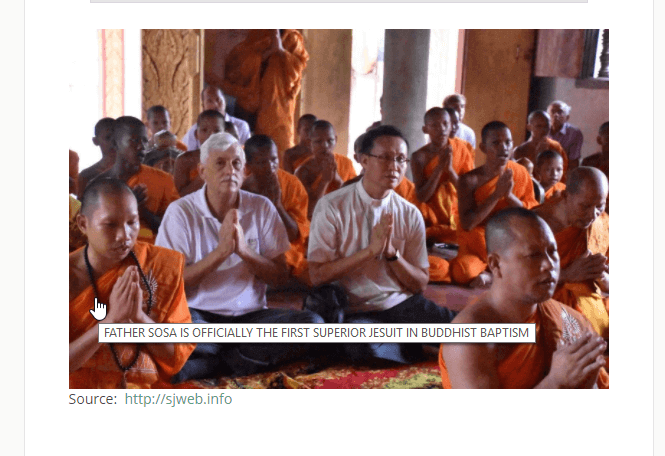


You must be logged in to post a comment.