A LITTLE DOSE OF SATIRE TO HELP YOU UNDERSTAND HOW THE VATICAN GETS RID OF TROUBLE-MAKERS

Eccles and Bosco is saved


The crimes of Cardinal Pell

Posted: 29 Mar 2018 04:50 AM PDT

A transcript of a confidential telephone conversation between Mgr Embezzla of the Vatican Bank and Superintendent Didgeridoo of the Australian Police.E: Well that didn’t go to well, did it? We asked you to frame Cardinal Pell for child abuse, so that he would stop his investigation into our financial – ahem – irregularities, and you’ve been found out!

D: We did our best, cobber. We wanted to nail him too, you know, for his opposition to same-sex marriage, and to the other plans we’ve got. We’ve had a crack team working on the case.

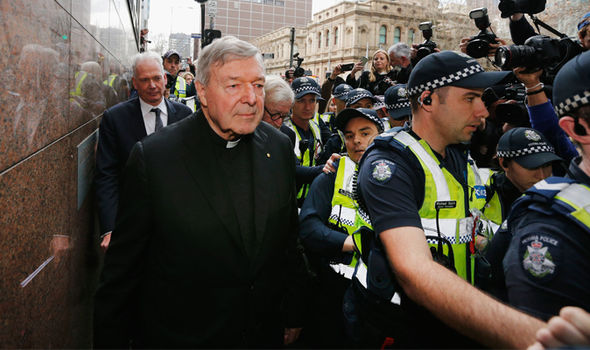
Pell and police

“We heard he possessed a beretta, so we sent 10 officers to arrest him.”

E: Yes, and it turns out that all the dates and times are wrong. Even Pope Francis can give him an alibi.

D: Don’t worry about him. He won’t give a definite answer to any questions that Pell’s counsel puts to him. Even cardinals can’t get a straight answer from the Pope.

E: Yes, but the 200 witnesses who were present when he offered Mass?

D: We think he bribed them all with promises of eternal life.

E: Well, never mind that. Can you trump up any other charges?

D: Yes, we think he may be the infamous swagman who was part of the Waltzing Matilda gang.

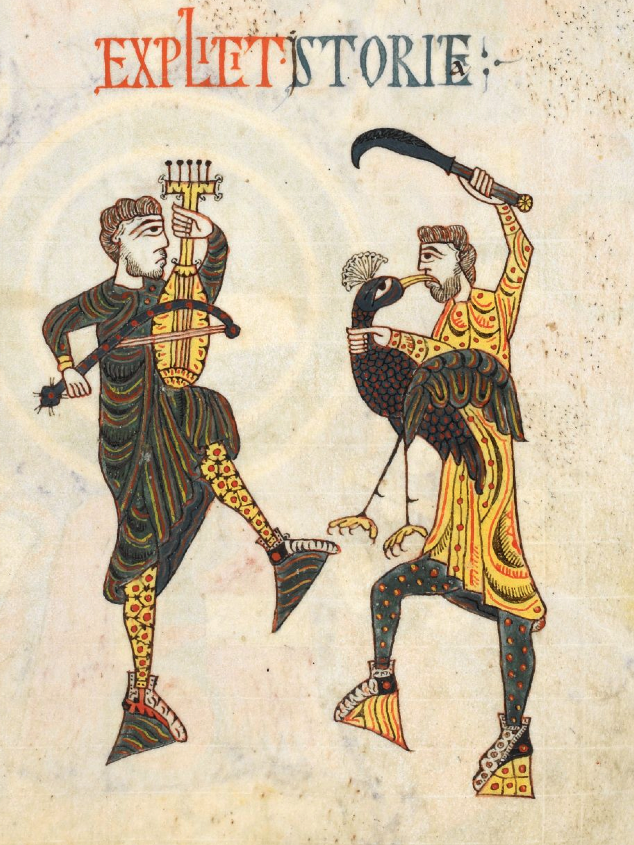
Waltzing Matlida

Could this be Cardinal Pell?

E: Sounds good. Get him for jumbuck-rustling! Will Matilda give evidence?

D: No, she died about 100 years ago. Although we might try forging some emails from Banjo Paterson. Or his descendant, the liberal Catholic, Guitar Paterson.

E: It all sounds a bit flimsy to me.

D: All right, one final idea. He’s fond of cricket, isn’t he?

E: Yes…

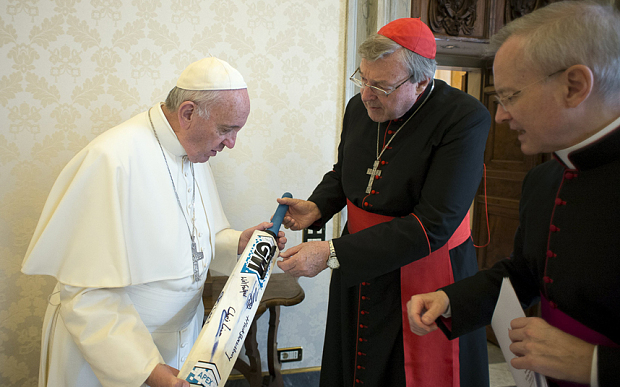
Pell, Pope, cricket bat

Cardinal Pell explains how he helped Australia win the Ashes.

D: Then he’s obviously the mastermind behind the new Aussie ball-tampering scandal. He brings shame on an entire nation. If that doesn’t put him behind bars, nothing will.

E: Look for traces of incense on the cricket ball. If you can’t find any, we can supply some.

D: It’s great to work with you.

Posted in Uncategorized | 2 Comments

Narrowly considered, Amoris Laetitia is about divorce, remarriage and Communion. In broad terms, it is about the Church’s stance toward liberalism. Moral and financial deregulation was championed by the generation of May 1968 and is now being challenged by its children. When it comes to the typical sins of this liberal culture, Amoris says, “Who am I to judge?”

Books

How Francis encouraged a generational battle

This is the most important book on the Church for years, contends Matthew Schmitz

To Change the Church BY ROSS DOUTHAT, SIMON & SCHUSTER, 256PP, £19

When Amoris Laetitia was published in 2016, few anticipated how deeply it would divide the Church, how endless the controversy would be. Amid all the scandal and chaos, one fact has become clear. Though John Paul II and Benedict XVI stabilised the Church after the Council, their programme – broadly liberal, but traditional on moral matters – was more a working settlement than a lasting synthesis.

This is the argument made by Ross Douthat in the most insightful book on the Church to be published in many years. He describes the increasingly polarisation between the two parties in the Catholic civil war and suggests the only plan that might bring them together.

“Attempts at a revolution have encouraged liberal Catholicism to become more ambitious, more aggressive, more optimistic about how far the Church can change,” Douthat writes. But they have also encouraged younger conservative Catholics “to take a darker view of the post-Vatican II era, and to reassess whether there might have always been more wisdom in the traditionalist critique than they wanted to believe”.

One thing Douthat does not explore is the way in which this generational battle is a kind of class war. Louis Veuillot called liberal Catholicism an error of the rich. If the young are less prone to this error, it may be because they are poorer than their parents in ways both material and cultural. They are less likely to have stable employment, lasting marriage or the prospect of children. Significantly for the Church’s current debates, they are less likely to have a married mother and father.

This is why there has been a generational polarisation in the reaction to Amoris Laetitia. Narrowly considered, the document is about divorce, remarriage and Communion. In broad terms, it is about the Church’s stance toward liberalism. Moral and financial deregulation was championed by the generation of May 1968 and is now being challenged by its children. When it comes to the typical sins of this liberal culture, Amoris says, “Who am I to judge?”

Pope Francis: a polarising figure

C N S

True, Francis rebuked wealthy Westerners for their wasteful consumption in Laudato Si’ – and rightly so. But no one is likely to be bothered by denunciations of pollution, war or capitalism that are not accompanied by concrete prohibitions – say, on usury. In fact, entertaining vaguely self-critical thoughts on matters outside one’s control tends to induce a pleasant feeling of broadmindedness, the righteous repose of the armchair radical. It is not enough for the Church to decry abstractions such as the “contraceptive mentality”, the “throwaway culture” or “systemic injustice”. Only when concrete acts are judged always and everywhere wrong is the individual forced to confront his own frailty and taint.

Douthat argues that Amoris seeks to strip Christian teaching of this absolute character. It recommends “discernment”, a process that allows the Church to preserve a vague moralism while denying that any act is per se immoral. Someone who wants Communion need not confess his sin with a firm purpose of amendment. He instead must be “a responsible and tactful person”. He does not need contrition, only “discretion”. Politeness takes the place of repentance. Uncouthness remains as the unforgivable sin.

The Australian Archbishop Mark Coleridge has explained how such a scheme works in practice: “A second marriage that is enduring and stable and loving, and where there are children who are cared for, is not the same as a couple skulking off to a hotel room for a wicked weekend.” Evil acts committed in good order with ample capital cease to be sins.

Douthat observes that it is not easy to know “how far to accommodate to liberalism, and when and where to draw lines and resist”. Newman provided the most generous standard for this difficult work in his Biglietto speech. He noted that “there is much in the liberalistic theory which is good and true; for example, not to say more, the precepts of justice, truthfulness, sobriety, self-command, benevolence.” He resisted blanket denunciation in order to weigh how liberalism worked in practice. “It is not till we find that this array of principles is intended to supersede, to block out, religion, that we pronounce it to be evil”, he said.

In the immediate wake of the Second World War, it seemed that liberalism and the Church could work as one. In spite of changed conditions and the accumulation of contrary evidence, the generation of 1968 still holds this dream. Amoris Laetitia seeks to extend it. In submission to the Council that called on us to read the signs of the times, we should acknowledge the present reality. For 50 years liberalism has superseded, has blocked out, religion. It has obscured the truth not only of revealed doctrine but of nature itself. Allowing every caveat, accepting each nuance, those who pronounce it evil are faithful to Newman’s standard.

Amid our current upheavals, wariness toward liberalism is a matter of prudence as well as principle. The liberal order is suffering challenges on every side, and wherever it succeeds it has itself become illiberal. In such an environment, the Catholic embrace of liberalism is a concordat with Atlantis, an attempt to make peace with a world that no longer exists and perhaps never did.

Instead of concessions to liberal hedonism, we need what Douthat calls a “distinctively Catholic sort of synthesis.” This would stress “the Church’s themes of economic and social solidarity without compromising its metaphysical and moral commitments”. It would bring about “religious solidarity, rather than secular technocracy”.

If Pope Francis were to do this, Catholicism’s ideological, generational and class divide might begin to heal. He could be a new Elijah, turning the hearts of the fathers to the children, and the hearts of the children to the fathers. Matthew Schmitz is a senior editor at First Things

38 CATHOLIC HERALD, MARCH 30 2018

Posted in Uncategorized | 2 Comments

WITHOUT UNEMPLOYMENT COMPENSATION, FOOD STAMPS AND WELFARE THESE PEOPLE WOULD STARVE

Posted in Uncategorized | 3 Comments

THERE IS A LITTLE (BUT DEADLY) GAME PLAYED BY SCALFARI AND BERGOLIO FOR OVER FIVE YEARS ENTITLED “DOUBLE MAGISTERIAL TRACK.” WHEN FRANCIS SPEAKS TO CATHOLICS HE EXPRESSES HIMSELF IN A CERTAIN VAGUE AND THEOLOGICALLY AMBIGUOUS WAY. HE AVOIDS EXPLICIT STATEMENTS AND THUS LITTLE BY LITTLE DEMOLISHES DOCTRINE (THE TACTIC OF BOILING FROGS SLOWLY)

Featured Image
Screen capture of Drudge Report headline this past Good Friday for most of the day. Drudge is one of Internet’s most-read websites. Drudge Report
Dorothy Cummings McLeanDorothy Cummings McLeanFollow Dorothy

NEWS

‘Catastrophic for the Catholic Church’: World media reacts to Pope Francis’ denial of hell

ROME, April 4, 2018 (LifeSiteNews) – Mainstream media was in a furor last week over the news of Pope Francis purportedly saying that “hell does not exist” and that unrepentant souls in mortal sin simply “disappear.”

On the eve of the Holy Thursday, an Italian journalist published an article claiming that the pope had told him that hell does not exist. Eugenio Scalfari, 93, atheist journalist and founder of the left-wing newspaper La Repubblica, claimed on March 28 that Pope Francis had told him two days before that the souls of those who do not go to heaven are annihilated.

“Souls are not punished,” Francis allegedly said. “Those who repent obtain God’s forgiveness and go among the ranks of those who contemplate him, but those who do not repent and cannot be forgiven disappear. There is no hell — there is the disappearance of sinful souls.”

Scalfari’s article — and then the Vatican’s vague warnings not to trust it — was picked up by mainstream media worldwide.

The story was highlighted in the United States by the Drudge Report, whose online headline shrieked “Pope Declares No Hell?” It linked to a March 29 article by Michael W. Chapman of CNS News, who called Francis’s alleged remarks “a denial of the 2,000-year-old teaching of the Catholic Church about the reality of Hell and the eternal existence of the soul.”

Chapman cited the translation of the popular Catholic news blog “Rorate Caeli.” 

The New York Times led with the news that the Vatican had responded to the Repubblica piece with an assertion that Pope Francis does indeed believe in hell and that “no quotation of the article should be considered as a faithful transcription of the words of the Holy Father.”

The Times observed that Scalfari does not make notes or use a tape recorder during interviews. Despite this fact, the report also observed that this interview had been Scalfari’s fifth meeting with the Argentinian pontiff.

The “Daily Intelligencer” of New York Magazine said that it was “beyond ironic” that Good Friday was “marked by a murky debate over a claim that Pope Francis recently denied the existence of Hell in a discussion with an atheist friend.”

“It’s hard to imagine your average Pope having any atheists friends with whom he holds genial conversations. But Francis isn’t your average Pope, and so the controversy continues to rage despite the Vatican’s efforts to pour cold water on its hellish fires.”

‘Left is even corrupting the Catholic Church’​

Conservative radio host Rush Limbaugh said that “it was easy to see, with this pope, that the left is even corrupting the Catholic Church”, something he had not thought possible after meeting the late Cardinal O’Connor of New York.

“This pope comes along, and I tell you, not just this,” Limbaugh said. “This pope is left-wing politically active on things like climate change. The whole left-wing agenda, the whole liberal agenda, this pope articulates it, and this pope is doing what he can to intermingle his own personal political beliefs with church doctrine. I never thought I would see that. I mean, I know there are leftists and liberals all over every organization, I’m not being naive, but the church is the church. What it believes is what it believes. It doesn’t change because public opinion changes, and yet it is, at least this pope seems to be doing just that.”

The Wall Street Journal intimated that with his remarks, which the Vatican did not deny, Pope Francis had yet again astonished.

“It was an extreme yet telling example of how Pope Francis has shaken up perceptions of Catholic doctrine,” wrote Francis X. Rocca, “drawing widespread attention from the non-Catholic world and causing turmoil within the church.”

Rocca detailed Francis’s emphasis on social and economic issues, and his downplaying of sexual and medical ethics. “Part of Pope Francis’ strategy has been generally to play down the importance of formal teaching,” he wrote.

The Boston Globe interviewed Catholic philosopher Peter Kreeft, who disbelieved Scalfari’s report that Francis had told him hell doesn’t exist.

“I doubt he said that because it’s heresy outright,” Kreeft said and explained the significance of the doctrine of hell.

“If there’s no hell, then heaven is no big deal,” he told the Globe. “If there’s no valley, the mountain isn’t very high. If it doesn’t exist, then ultimately we don’t have free will. … Scratch the doctrine of hell, and you find the possibility of free will underneath it.”

‘Catastrophic for the Catholic Church​’

Online newsmagazine Vox.com observed that the Vatican communications department was once again scrambling after a scandal regarding a doctored photo led its chief, Dario Vignanò, to resign.

Journalist Tara Isabella Burton wrote, “If the Pope indeed said those words [attributed to him by Scalfari], the consequences would be catastrophic for the Catholic Church, which — according to its own catechism — ‘affirms the teaching of hell and its eternity,’ including eternal fire,’ although it stresses that ‘The chief punishment of hell is eternal separation from God’.”

Remarking on Francis’ relationship with Scalfari, Burton said that the question of whether or not Francis denied the existence of hell was “subordinate to another question”: “Why does Francis repeatedly engage in interviews with Scalfari, only to later say Scalfari misquotes his words?”

If the answer is that he’s trying to change doctrine by stealth, then Pope Francis risks appearing insincere.

“By participating in a kind of bait and switch — putting forth potentially heretical ideas, then formally denying them — Francis leaves himself open to the charge of disingenuousness,” Barton wrote.

Gwynne Dyer of Canada’s Hamilton Spectator asserted that “of course” Pope Francis had denied the existence of hell, and that “the reason why is obvious.”

“It is very hard for a well-educated person of modern sensibilities to believe that a loving god would condemn any of the human beings he created to an eternity of physical torture and mental anguish,” Dyer wrote “That is not what loving human fathers do, even to children who disobey them, so the traditional notion of Hell is a permanent problem for many Catholic theologians.”

But acknowledging that that Annihilationism is a heresy in the Catholic Church, Dyer believes that Pope Francis has found a “practical” way of communicating his true beliefs without wasting the time he wants to direct to “other, more urgent changes”:

“Pope Francis is a practical man, and he chooses his battles carefully,” Dyer wrote. “Changing Catholic doctrine on Hell would be a long battle that consumed most of the energy within the Church that he would like to devote to other, more urgent changes. Yet he still cannot resist making his true views known (in a deniable way) by having these occasional conversations with Eugenio Scalfari.

In the United Kingdom, the Catholic Herald demanded, “Why on earth does Pope Francis still trust Eugenio Scalfari?”  Journalist Christopher Altieri called upon Francis to “disown not only the precise verbiage Scalfari reported in his piece, but the ideas foisted upon him therein—at least the ones that are manifestly heretical.”

“The longer he does not,” Altieri continued, “the stronger the case becomes for believing he cannot.”

Deploring all previous episodes of “Scalfarism”, Altieri acknowledged that Francis’s continued conversation with the elderly journalist may stem from the pontiff’s wish to save the atheist’s soul. But even this charitable motive suggests that the Pope’s judgement is “appalling”.

“If the Pope’s solicitude for Scalfari’s soul is indeed so great, and Scalfari’s protestation of friendship sincere, then let Francis resign the office and go talk with his friend all day over vino burino and biscola,” Altieri concluded.

‘Game being played​’

In Italy, a Vatican insider named Antonio Socci claimed on his blog Il Straniero(“The Stranger”) that the Vatican’s half-hearted distancing of Francis from Scalfari’s article had been precipitated by a threat from a “non-Italian” Cardinal. According to Socci, this unnamed Cardinal told Francis directly that the heretical statements attributed to him were grounds for the pontiff’s dismissal. The OnePeterFive blog has a translation of this as yet unsubstantiated story.

Socci speculated that Pope Francis and Scalfari are at some “game” in these interviews.

There is thus a game being played by Scalfari and Bergoglio for over five years now, in which the Argentine pope consents to a sort of double Magisterial track. When he speaks to Catholics he expresses himself in a certain vague and theologically ambiguous way. He avoids explicit statements and thus little by little demolishes doctrine (the tactic of boiling frogs slowly).

Meanwhile, he speaks through Scalfari to the secular world, making known his true ideas, which are so totally modern, in order to build up his “revolution” and to have popularity among non-Catholics and the media. [emphasis in original]

Some journalists acknowledged that on other occasions Pope Francis has certainly warned of the danger of souls going to hell. Meanwhile, the Catechism of the Catholic Church unequivocally affirms the existence of hell and the immortality of the human soul.

It states, “The teaching of the Church affirms the existence of hell and its eternity. Immediately after death the souls of those who die in a state of mortal sin descend into hell, where they suffer the punishments of hell, ‘eternal fire.’ The chief punishment of hell is eternal separation from God, in whom alone man can possess the life and happiness for which he was created and for which he longs (1035).”

It continues, “The affirmations of Sacred Scripture and the teachings of the Church on the subject of hell are a call to the responsibility incumbent upon man to make use of his freedom in view of his eternal destiny. They are at the same time an urgent call to conversion: ‘Enter by the narrow gate; for the gate is wide and the way is easy, that leads to destruction, and those who enter by it are many. For the gate is narrow and the way is hard, that leads to life, and those who find it are few.”’

“Since we know neither the day nor the hour, we should follow the advice of the Lord and watch constantly so that, when the single course of our earthly life is completed, we may merit to enter with him into the marriage feast and be numbered among the blessed, and not, like the wicked and slothful servants, be ordered to depart into the eternal fire, into the outer darkness where ‘men will weep and gnash their teeth’(1036).”

 D
Posted in Uncategorized | 2 Comments

WILL THE SOULS OF FOF EVENTUALLY GO “POOF”

Jorge, Life Site News

Sister Pelloni: Francis said Artificial Contraception is OK – “condoms, transitory, and reversible”

Sister Pelloni: Francis said Artificial Contraception is OK – “condoms, transitory, and reversible”

More heresy from the man wearing white. You will not see a Vatican denial.

ROME, April 4, 2018 (LifeSiteNews) — An Argentinian religious sister acclaimed for her work against the trafficking and exploitation of children has said Pope Francis told her responsible parenthood requires contraceptives in some cases.

This, despite the Church’s constant teaching that artificial contraception is an intrinsic evil.

In an interview on Tuesday with the Argentinian radio program Crónica Anunciada, Carmelite missionary sister Martha Pelloni said Pope Francis “told me three words” about the need for responsible parenthood among poor rural women: “condoms, transitory, and reversible.”

The radio interview covered poverty rates, drug trafficking and the decriminalization of abortion in Argentina.

Sr. Pelloni, who is opposed to abortion, said the Pope told her various forms of contraception could be permissible to prevent poor women from choosing abortion. She included condoms, “a diaphragm, and as a last resort, which is what we advise for rural women that we serve, because I have a foundation for the peasantry, tubal ligation.”

Pelloni argued that these methods are neither abortive nor destructive to the woman, despite the fact that tubal ligation is considered a permanent method, with reversal procedures not always proving successful.

“If there is sex education and state responsibility to care for women in poverty, we do not need to decriminalize abortion because it will not be necessary to have an abortion,” the superior of the Carmelite Missionaries said.

The Vatican has neither confirmed nor denied the Pope’s comments to Sr. Pelloni. LifeSiteNews contacted Vatican spokesman Greg Burke for comment but as of this writing has received no response.

Sr. Pelloni is highly regarded in Argentina. In 2013, she was awarded the International “Navarre” Prize for Solidarity, for her work against the trafficking of minors, sexual abuse, and the theft of children for the purpose of organ trafficking.

This is not the first time Pope Francis has approved of the use of contraceptives to avoid pregnancy. On a February 2016 flight, the Pope was asked about “avoiding pregnancy” in areas at risk of Zika virus transmission. “Paul VI, a great man, in a difficult situation in Africa, permitted nuns to use contraceptives in cases of rape,” he said.

“On the other hand, avoiding pregnancy is not an absolute evil,” he added. “In certain cases, as in this one, such as the one I mentioned of Blessed Paul VI, it was clear.” Asked for clarification, the Vatican confirmed that Pope Francis was approving use of “the contraceptive or condom” in certain cases.

According to the Catholic Church,  while “the regulation of births represents one of the aspects of responsible fatherhood and motherhood, legitimate intentions on the part of the spouses do not justify recourse to morally unacceptable means (for example, direct sterilization or contraception).” (CCC 2399)

Sr. Pelloni’s remarks come amid reports of efforts underway this year in Rome to overturn Humanae Vitae.

They also follow one week after Pope Francis was reported to have told his 94-year-old Italian atheist philosopher friend and founder of La Reppublica, Eugenio Scalfari, that “there is no hell.” The Vatican said that although the two men met, no interview was given and the comments were not a “faithful” rendering of what was said.

Read the full article at Life Site News

Posted in Uncategorized | 1 Comment

LIKE TWO-YEAR OLDS THEY CAN WALK AND THEY CAN TALK BUT THEY CAN’T THINK

Cronies, Life Site News

Francis-Cardinals March Leftist Rather than for Salvation of Souls

Francis-Cardinals March Leftist Rather than for Salvation of Souls

No surprise to anyone who is faithful.

April 3, 2018 (LifeSiteNews) – On Good Friday, two Pope Francis-appointed cardinals participated in processions that focused on immigration and gun control.

Cardinal Joseph Tobin of Newark, New Jersey joined a walk “for justice, for immigrants, and for all.” Chicago’s Cardinal Blase Cupich participated in a “peace walk” and praised anti-gun teenagers for giving “all of us a lesson in courage.”

Cardinal Cupich on Good Friday marched through Chicago’s Brighton Park neighborhood, which suffers from gun violence, with Fr Manuel Dorantes and young people before addressing crowd in English and Spanish, exhorting them to continue fighting against gun violence. pic.twitter.com/jpdSV9tnja

— Michael J. O’Loughlin (@MikeOLoughlin) March 30, 2018

The Chicago event also featured a re-enactment of the Last Supper and Jesus carrying and dying on the cross.

America magazine reported:

At the end of the route, a crowd of several hundred gathered in front of Immaculate Conception to watch a re-enactment of Jesus’ crucifixion. An actor portraying Jesus, wearing a crown of thorns and covered in artificial blood, carried a large wooden cross through the crowd. He paused for a moment under a nylon banner, with the March for Our Lives logo, affixed to the side of the red-brick church before taking his place on the cross.

The banner read: “Dejen los ‘Pensamientos y Oranciones’ a nosostros. Legisladores, legisen! Prohiban las armas de asalto AHORA! Pedimos acción!” (“Leave the ‘thoughts and prayers’ to us. Legislators, legislate! Ban assault weapons NOW! We ask for action!”)

Good Friday is the one day of the year when Mass is not offered. On Good Friday, “our worship is directed, not to the unbloody sacrifice of the Mass, but exclusively to the bloody but triumphant sacrifice of Calvary,” a 1962 daily missal from the Maryknoll fathers explains.

Earlier today in Newark, Cardinal @JoeTobin, together with fellow Catholics, participated in the “#GoodFriday Walk: For Justice, For Immigrants, and For All.” pic.twitter.com/TPzggzjXEr

— Newark Archdiocese (@NwkArchdiocese) March 30, 2018

Cupich frequently makes strong statements on gun violence and immigration. He imparted his blessing on youth from his archdiocese attending the “March for Our Lives” in Washington, D.C. last month. Planned Parenthood helped organize that march.

I just landed in Rome, but know of my prayers for all students, teachers, parents and administrators voicing their support for stronger gun-safety laws today. Let us never walk away from our duty to keep our children safe.

— Cardinal Cupich (@CardinalBCupich) March 14, 2018

I want to assure all our young people that “I am with you” and all those marching in Chicago and around the nation today to #EndGunViolence

— Cardinal Cupich (@CardinalBCupich) March 24, 2018

I’m at @stsabinachurch to bless Chicago youth joining the March for Our Lives in Washington, D.C. Let us listen to the voice of our young people and support stronger gun-safety measures.

— Cardinal Cupich (@CardinalBCupich) March 23, 2018

The “March for Our Lives” generated fawning media coverage, a courtesy not extended to the annual March for Life.

Chicago’s murder rate is among the highest in the country, consistently putting it on lists of America’s most dangerous cities.

Tobin, who champions liberal immigration policies, made his support of anti-gun youth known during in March.

Tobin personally welcomed an “LGBT pilgrimage” to his cathedral in 2017, and recently found himself in hot water after tweeting, “nighty-night, baby. I love you.” He said that tweet was meant for his sister.

Read the full article at Life Site News

Posted in Uncategorized | Comments Off on LIKE TWO-YEAR OLDS THEY CAN WALK AND THEY CAN TALK BUT THEY CAN’T THINK

IT IS IMPOSSIBLE FOR ANY PRESIDENTIAL ADMINISTRATION TO GOVERN THE NATION WITH CONGRESS IF THE COURT SYSTEM IS MISUSED AS THE “ENEMY.”

Jeff Jacoby

Pundicity

The citizenship question isn’t the only one the Census should scrap

by Jeff Jacoby
The Boston Globe
April 4, 2018

http://www.jeffjacoby.com/21030/the-citizenship-question-isnt-the-only-one

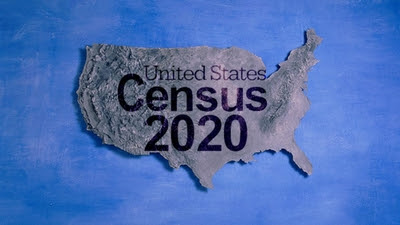
WITHIN HOURS of the Commerce Department’s announcement last Monday that there will be a question about citizenship on the 2020 Census, the state of California had gone to court to block it. Announcing the lawsuit, California Attorney General Xavier Becerra claimed that the Constitution bars the Census Bureau from asking people who live in America if they are US citizens. That sounds ridiculous, because it is.

“The Constitution requires the actual enumeration of all people in every state every 10 years,” Becerra said. “By including a citizenship question which will diminish response rates, the census will not be able to fulfill its constitutional duty to count everyone.”

California’s claim (echoed by 12 other states that filed a separate suit the next day) is that if the census questionnaire asks about citizenship status, some undocumented immigrants will be too spooked to answer. That may be true; it may be a good reason to refrain from asking the question. But it doesn’t remotely follow that asking it is unconstitutional.

The census has been posing questions about citizenship, off and on, for 200 years. The 1820 Census asked whether individuals were “foreigners not naturalized” — that is, noncitizens — and the question was repeated in 1830 and 1840. Respondents were queried more explicitly about citizenship status in 1870, and the question returned in every census from 1890 through 1950.

In short, the census has been enumerating citizens for nearly as long as it has been enumerating residents. To inveigh against the practice now as a violation of the Constitution — as, in former attorney general Eric Holder’s description, “a direct attack on our representative democracy” — is overwrought hyperbole, red meat for the progressive base, not a serious legal argument.

All the same, that doesn’t mean that putting a citizenship query on the 2020 Census is a sensible idea. A policy decision can be misguided, as this one is, without being unlawful.

The administration maintains that citizenship data is needed for proper enforcement of the Voting Rights Act, which relies on estimates of the number of voters in each state and district. But that’s disingenuous. Since 2000, the Justice Department has enforced the act with citizenship data extrapolated from the American Community Survey, a questionnaire sent each year to about 2.6 percent of the population. There isn’t any compelling reason to revert to a citizenship question in the decennial census.

Is the administration trying deliberately to depress the response rate from undocumented immigrants? Maybe not. Then again, some Republicans, like Senator David Vitter of Louisiana, have openly fumed that if the census doesn’t focus on citizenship, “states that have large populations of illegals would be rewarded.” Such cynicism may be inseparable from politics. But there’s no reason why it must be allowed to degrade the census.

An enumerator interviews a resident at her front door during the 1930 Census.

Unfortunately, that degradation has spread well beyond immigration politics.

The Constitution requires only that “the whole number of persons in each State” be counted every decade for purposes of congressional apportionment. It says nothing about using the census to dredge up vast amounts of demographic and economic data. No one objects to accurate data, but everyone should object to using the intimidating power of the federal government to extract that data under threat of punishment.

If Becerra and the other AGs are genuinely concerned about keeping the census within proper bounds, they should be pressing to exclude more than the question about citizenship. The census questionnaire shouldn’t ask whether respondents are of Hispanic origin. It shouldn’t ask people to assign themselves to a racial category. It shouldn’t ask whether they own or rent their homes. It shouldn’t ask if they have a mortgage.

In the 21st century, there is no lack of sophisticated tools for amassing data, both comprehensive and granular, about the American population. That’s not the function of the federal census. Just as the Census Bureau doesn’t delve into politics, religion, or sexual orientation, it shouldn’t delve into any characteristic that goes beyond a basic population count. Who lives here, and how old are they? That’s all the Constitution requires, and it’s enough.

(Jeff Jacoby is a columnist for The Boston Globe).

— ## —

Posted in Uncategorized | Comments Off on IT IS IMPOSSIBLE FOR ANY PRESIDENTIAL ADMINISTRATION TO GOVERN THE NATION WITH CONGRESS IF THE COURT SYSTEM IS MISUSED AS THE “ENEMY.”

HERE IS YOUR LITTLE DOSE OF SATIRE TO HELP YOU DIGEST THE NEWS THAT THE SOULS OF BAD PEOPLE GO POOF

Eccles and Bosco is saved


Father Jekyll and Pope Hyde

Posted: 03 Apr 2018 02:49 AM PDT

One of the classics of Gothic horror is the story of Father Jekoglio, the humble Argentine priest, who became interested in chemical research. He discovered a mysterious potion – Amorisine – which transformed him from a normally-benevolent cleric, anxious always to love his fellow men and teach true Catholic doctrine, into a raging tyrant who, under the name of Pope Hyde, left a trail of destruction behind him.Bunsen Honeydew

Father Jekoglio demonstrates his potion to Hans Küng.

To begin with, everyone believed that Jekoglio and Hyde were two different people. One dark night the police found the corpse of Fra’ Matthew Festing, beaten to death with a boeselager (a blunt instrument), and the witnesses claimed that a sinister man in a white coat was responsible. Others pointed to the mysterious fate of four cardinals who had been asking too many questions – two dying suddenly, the others fleeing into hiding. Surely Pope Hyde knew something about this? But then the next day Father Jekoglio appeared in public, smiling, and preaching about mercy and free love (or in Latin, Amoris Libertas).

Pope poster

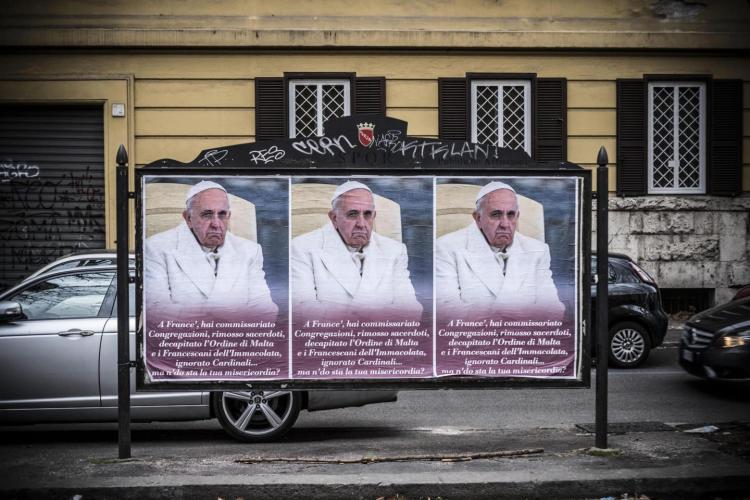
“Wanted” posters appear in the streets of Rome.

However, something linked the two men. Jekoglio and Hyde lived at the same address – “Humility Towers”, Vatican City. Was Jekoglio sheltering the infamous Hyde? Or was there a more sinister explanation?

Hyde continued to rampage through the streets of Rome. His closest associates were some of the riff-raff of the city: Emma Bonino, the “pump murderer”; Eugenio Scalfari, the 107-year-old journalist who made up his own stories; Antonio Spadaro, the mathematical genius who was also a master of invective; Walter Kasper, the escaped lunatic. Stories continued to mount of the infamous deeds of the mysterious Hyde. Had he really denied the existence of Hell? Was he really overturning Catholic teaching on marriage? What did he really know about the Vatican Bank Robbery?

Pope smiling

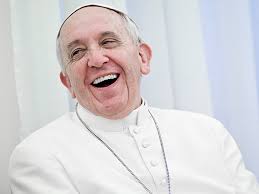
Jolly Father Jekoglio.

At first, Jekoglio could control his transformations into the infamous Hyde. But then they began to occur involuntarily – often on aeroplane journeys he would begin to utter unntelligible nonsense, and give the appearance of a soul in torment. The word “synod” also acted as a trigger, and whenever he heard it he had an uncontrollable urge to invite innocent people to meetings and make up accounts of what they had said.

In the end Jekoglio resolved to cease becoming Hyde. Perhaps there would be room for him in the Benedict XVI home for retired popes? He had a serum – Magisterine – that could reverse the transformation, but it required larger and larger doses to bring him back to his orthodox Jekoglio personality. Eventually, he had gone too far, and he knew that the transformation was irreversible. He would always be Pope Hyde. And, at the end, his soul would simply disappear.

Posted in Uncategorized | 2 Comments

MEET THE MAN WHO CALLED A SPADE A SPADE

Eyes Opened, Gloria TV

Interview with the Author of “The Dictator Pope”

Interview with the Author of “The Dictator Pope”

Gloria.tv: Your brilliant book “The Dictator Book” caused a lot of stir. What reaction did you like most?

Henry Sire: What I am most pleased at is that the book was immediately noticed in high ecclesiastical circles. One cardinal, who knows the Vatican well, has said, “90 per cent of the book is incontrovertible.” This is a reflexion of the concern that is felt at the way in which Pope Francis is governing the Church.

Gloria.tv: Which reaction did you expect the least?

Henry Sire: I am told by a friend that he knows of at least three people who have been brought to traditional Catholicism by reading my book. I didn’t expect that, because I wrote the book from a doctrinally neutral point of view, so that all parties in the Church would take it seriously. However, it should be clear that the only antidote to what is happening these days is a pope who understands his office in a traditional way, as an office subject to law and justice and as a trust for the preservation of the deposit of faith.

Gloria.tv: Why did you publish the book anonymously?

Henry Sire: I published anonymously because I wanted to avoid the reprisals that are all too familiar under the present pontificate. I fear these not only for myself but, more seriously, for those whom the Vatican may choose to associate with me.

Gloria.tv: Why did you decide to reveal your name?

Henry Sire: I always assumed that my identity would be discovered fairly soon. In any case, when I signed a contract for the printed book I understood that it was necessary to reveal who I am for the purpose of publicity and marketing.

Gloria.tv: Have you received many attacks on your person?

Henry Sire: So far, the worst I have suffered is being accused of being a traditionalist.

Gloria.tv: Did you receive “discernment, accompaniment and mercy” from those close to Pope Francis?

Henry Sire: It is too early to speak of a reaction from the Pope or those close to him.

Gloria.tv: You write that money from the Peter’s pence went to Hillary Clinton’s campaign. Is this a rumour or do you have hard evidence?

Henry Sire: It is more than a rumour. The story rests on the word of well-known figures within the Vatican’s financial offices. But there are journalists who are pursuing the story, and we can expect concrete details to be published before long.

Gloria.tv: The Order of Malta suspended you because of the book. What does this mean?

Henry Sire: Since January 2017, when the Pope forced Grand Master Festing to resign, the Order of Malta has been under the thumb of Baron Albrecht von Boeselager, who was reinstated as Grand Chancellor at the same time. He owes his position to the Vatican’s support, and naturally he could not allow a member of the Order to publish such a criticism of Pope Francis without punishment. The process to suspend me was initiated by him.

Gloria.tv: Why is this move illegal?

Henry Sire: The Order’s laws prescribe a certain procedure for suspending and disciplining a member, and it has not been followed. It is ironical that such illegalities have been committed by Baron Boeselager, who ousted the Grand Master a year ago by protesting at the supposed illegalities in his own suspension.

Gloria.tv: Albrecht von Boeselager who distributed condoms and abortive hormones wasn’t suspended from the order. What went wrong with the Knights of Malta?

Henry Sire: In the first instance, the mistake was due to a lack of proper doctrinal guidance in the charitable works of the Order, a defect that the Grand Master was trying to correct. But the real reason why the Grand Master was disavowed by the Holy See was to do with a large donation which was due to come through a compromise negotiation which Baron Boeselager promoted, and which was threatened by his dismissal. The Vatican itself and at least one high ecclesiastic were to benefit by this compromise, and that was more important to them than a question of the Church’s moral teaching.

Gloria.tv: What has remained of the Order of Malta after the recent coup?

Henry Sire: The Order has not suffered in its work or in its personnel, but it now has no effective leadership apart from its Grand Chancellor, and he has seized the opportunity to promote a series of so-called “reforms”. These are mainly to do with maintaining and even extending the secularisation in the Order’s management which was already too evident in recent years, and which Grand Master Festing tried to resist.

Gloria.tv: You have suddenly become very famous. Will you write another book like “The Dictator Pope”?

Henry Sire: No. When I started to write the book I was already 67 and what I was looking forward to was retiring soon. I certainly had not envisaged anything like such an exacting task lying ahead of me. However, I felt that if somebody with the privileged knowledge that I had was not prepared to speak out, the Church would continue to be abused by the false media image that characterises the present regime. But my work is done now: I have said what I know, and my book is only one of many that are beginning to come out exposing the real character of Pope Francis.

Read the full article at Gloria TV

Posted in Uncategorized | 1 Comment

WHAT? THE HELL!

After Recent Comments on Hell, Report Emerges of Curial Backlash Against the Pope

Italian Journalist and author Antonio Socci has made waves this week with a piece of commentary, posted on his website on Easter Sunday, alleging that Pope Francis’s most recent conversation with La Reppublica publisher Eugenio Scalfari on the supposed non-existence of Hell has made bigger ripples throughout the Vatican than can be seen on the surface.

According to Socci, the Vaticanist website Il Sismografo — which sources in Rome confirm is widely read within Vatican circles — lamented on Holy Saturday that despite the so-called “denial” from the Vatican (which wasn’t actually a denial at all) that the pope said what Scalfari reported — namely, that Hell does not exist and that the souls of the unrighteous are annihilated — “already now for 48 hours it has caused an avalanche on the web, in every language.”

Socci says that the effects were felt mostly abroad, with very little pickup in the Italian press — so little, in fact, that La Reppublica hasn’t even mentioned the Vatican’s “denial” of the report made by its founder.

“It’s strange,” writes Socci, “in fact, this story made the specter of impeachment for heresy hover (and perhaps it still is hovering) over Bergoglio, which could cost him the papacy.”

Socci argues that

There are only two possibilities: either Bergoglio did make the explosive heretical affirmations which “The Times” carried with the headline “Pope Francis Abolishes Hell”, or else Scalfari made it all up and thus committed an unheard of professional gaffe which undermines the credibility of “Repubblica”, a very “loud” mistake to make at a time when every day they are decrying “fake news.”

Socci argues that “every published interview is a reconstruction,” and that this excuse is not enough to dismiss concerns over what the pope is alleged to have said. “The Vatican,” he says, “should tell us if Bergoglio disavows and rejects the statement that was attributed to him or not”. But Socci has a theory as to why they haven’t, and it matches what we’ve been saying here for some time:

There is thus a game being played by Scalfari and Bergoglio for over five years now, in which the Argentine pope consents to a sort of double Magisterial track. When he speaks to Catholics he expresses himself in a certain vague and theologically ambiguous way. He avoids explicit statements and thus little by little demolishes doctrine (the tactic of boiling frogs slowly).

Meanwhile, he speaks through Scalfari to the secular world, making known his true ideas, which are so totally modern, in order to build up his “revolution” and to have popularity among non-Catholics and the media. [emphasis in original]

Socci informs his readers that Cardinal Martini — the former leader of the St. Gallen Mafia which conspired to elect Bergoglio and “one of the great precursors of this pontificate” — wrote of a very similar eschatological view not long before his death:

I nourish the hope that sooner or later everyone will be redeemed. I am a great optimist…. My hope is that God welcomes everyone, that He is merciful, and becomes ever stronger. On the other hand, naturally, I cannot imagine how people like Hitler or an assassin who abused children can be close to God. It seems easier for me to think that these sort of people are simply annihilated…

Those who promote these progressive theological ideas, argues Socci, want to be “more merciful than God and than Jesus Himself, who in the Gospel describes with terrible words the punishments of Hell. This is the meaning of Bergoglian mercy: to improve the mercy of Jesus.”

But Scalfari, Socci reminds us, has attributed similar statements to Francis several times over the last few years — a fact I documented in my own commentary on the matter last week. “The Vatican has never denied it.” Socci says. “It drew no reaction from the confused and annihilated Church. And so this time somebody thought that the moment had arrived to put these Bergoglian concepts inside quotation marks.”

This is a noteworthy development on its own — one I had not picked up on until seeing Socci’s analysis. The idea of the pope’s words being placed within quotation marks, rather than simply recounted and obviously paraphrased. Curious, I went looking. In October of 2017, in a review of a book by Archbishop Lorenzo Paglia, Scalfari makes a claim about what Pope Francis believes about Hell, but there are no quotes, just a simple assertion:

Pope Francis – I repeat – has abolished the places of eternal residence in the afterlife of souls. The thesis he advocates is that souls dominated by evil and not repentant cease to exist while those who have redeemed themselves from evil will be assumed in bliss while contemplating God.

And in 2015, the first time Scalfari published his conversations with Francis on the topic, we see a similar presentation:

What happens to that lost soul? Will it be punished? And how? The response of Francis is distinct and clear: there is no punishment, but the annihilation of that soul.  All the others will participate in the beatitude of living in the presence of the Father. The souls that are annihilated will not take part in that banquet; with the death of the body their journey is finished.

There are no quotation marks in either previous example. But this time, Scalfari has framed the entire conversation with them, lending a deeper assertion of specificity and accuracy to the representation of his words.

Still, Socci says, the Vatican ignored the escalating news coverage of the statement for hours when it came out on Holy Thursday, until finally, in the afternoon, a statement — the now-infamous non-denial — was issued. “Why?” Socci asks, “What happened?”

And this is where Socci claims an unexpected intervention took place:

It appears that this time – in the face of a direct quotation from Bergoglio stating two explicit heresies, contradicting two fundamental dogmas of the Church – an important cardinal (non-Italian) was outraged, called several of his colleagues and then, also in their name, directly sought to find out from the pope exactly what this interview could mean – because professing  explicit heresy is one of the four reasons the Petrine ministry can be lost.

Bergoglio then consulted with the Sostituto [of the Secretariat of State] Msgr. Becciu and decided to quickly run for cover through his spokesman, while Scalfari, who is in on the game to this very moment, was given a heads-up. [emphasis added]

If true, this is a significant moment for the papacy of Francis. If a cardinal was, in fact, able to force the so-called “Dictator Pope” to back down, it indicates that the balance of power in Rome is shifting, and Francis, who is often seen as autocratic and difficult to rein in, may now find himself in a much more precarious position than we’ve previously seen.

Keep reading for our translation of Antonio Socci’s full commentary below.


An Uprising of the Cardinals Has Stopped (For Now) The Bergoglian Heresy on Hell. The Staged Denial and the Risk of Impeachment.

by Antonio Socci

April 1, 2018

[All Emphasis in Original]

The falling plaster which fell from the ceiling of St. Peter’s Basilica on Good Friday seems like a symbol of the disastrous Easter 2018 of Pope Bergoglio and his declining pontificate. After months of incidents and slip-ups, now we have the eruption of a new thriller — the interview with Scalfari on hell.

It was supposed to be a high-profile attempt to recover the consensus that Francis is a “revolutionary pope” (he loves to define himself this way), but instead it became a serious misstep. He understood this on Thursday morning when he received a certain very difficult phone call (as we shall see below) and ran for cover.

The Ignored Denial 

But on Saturday the Vaticanist website “Il Sismografo” lamented that despite the “denial” of the “alleged sentence attributed to the Pope — something like ‘Hell does not exist’— already now for 48 hours it has caused an avalanche on the web, in every language.”

In fact it made a big splash abroad, but not in the Italian press. And above all — two days after the Vatican “denial” — “Repubblica” has not even mentioned it, as if it was non-existent. Why? Was it not unusual behavior? And why did Italian news outlets keep silent? So as not to step on the feet of the Vatican and “Repubblica”? It’s strange. In fact, this story made the specter of impeachment for heresy hover (and perhaps it still is hovering) over Bergoglio, which could cost him the papacy. Just as there is also hovering a sort of public moral-professional delegitimization over the “lay pope” of the Italian press, Bergoglio’s friend and confidant Eugenio Scalfari. Who is really telling the truth?

Either One or the Other

There are only two possibilities: either Bergoglio did make the explosive heretical affirmations which “The Times” carried with the headline “Pope Francis Abolishes Hell”, or else Scalfari made it all up and thus committed an unheard of professional gaffe which undermines the credibility of “Repubblica”, a very “loud” mistake to make at a time when every day they are decrying “fake news.”

If it’s true that Bergoglio said this, we are looking at the most colossal error in the 2000 year history of the papacy. If it’s not true that he said this, the supposed scoop of “Repubblica” would be the fake news of the century.

One or the other is true. Tertium non datur. There was only one possible third explanation that could have patched the hole at best, but in the Vatican they did not choose to make it. In fact — assuming that Scalfari did not render a sound account of their discussion about Hell — the matter could be finished if the press office had admitted that the two spoke about eschatological themes but that Scalfari completely misunderstood what the Pope said.

It would have been enough if the Pope, through his spokesman, restated his firm and convinced refutation of the heretical statements and his clear and explicit adherence to the Creed of the Church, adding that there was a colossal misunderstanding. 

That would have made Scalfari very wrong and appear totally incompetent, but it would have closed the case. But that is not what the Vatican “denial” said.

They Are Telling Us The Truth

In fact the Vatican did not deny that the two spoke on this topic, and they did not say that Scalfari misunderstood, but only affirmed that Scalfari’s text was “the fruit of his reconstruction” in which “the actual words [of the Pope] were not recorded.”

But what were the actual words? Why won’t they reveal them?

Every published interview is a reconstruction. The Vatican should tell us if Bergoglio disavows and rejects the statement that was attributed to him or not (that unrepentant souls “are not punished…there is no hell, only the disappearance of sinful souls”). Why hasn’t it done that? Authentic Catholic intellectuals in America have also asked the same thing: Why hasn’t the Vatican denied the substance of what was said?

The little story of the way Scalfari does his interviews informally without notes is old: it was already put in place by the preceding papal spokesman, Fr. Lombardi, after the first two interview-chats between Scalfari and Bergoglio.

All of the Vatican efforts to distance the pope from what Scalfari wrote were dissolved by the decision of the pope to republish those interviews in a book and thus endorse them.  Furthermore, on Thursday Scalfari said that he met Bergoglio for the umpteenth time “by his own invitation.”

“The Times” Believes Scalfari

Why did Bergoglio invite him to speak if he knew there was the risk that Scalfari would make one of his “explosive” non-authorized retellings of their conversation, attributing huge ideas to the pope which he doesn’t really think? Do they want to make us believe that once again, for the umpteenth time, Francis fell for it without wanting it to happen?

There is much that is doubtful. Such as, it is doubtful that “Repubblica” prints any of these interviews without some form of approval by the interested party.

“The Times” talked to an expert who said that on these interviews he “tends to believe Scalfari more than the Vatican,” because if you know that someone distorts your words, “you don’t continue to invite him.”

There is thus a game being played by Scalfari and Bergoglio for over five years now, in which the Argentine pope consents to a sort of double Magisterial track. When he speaks to Catholics he expresses himself a certain vague and theologically ambiguous way. He avoids explicit statements and thus little by little demolishes doctrine (the tactic of boiling frogs slowly).

Meanwhile, he speaks through Scalfari to the secular world, making known his true ideas, which are so totally modern, in order to build up his “revolution” and to have popularity among non-Catholics and the media.

It is no accident that “The Times” article, published on Friday on the front page, accredited Bergoglio’s words as substantially authentic and praised the pope, because with this “suggestion” on the non-existence of Hell he would be seeking “to reconcile the eternal truths with the customs and mentality of modern times.”

Already Stated By Cardinal Martini

As a matter of fact this idea about Hell has been a well known part of progressive theology. Cardinal Martini —who is considered one of the great precursors of this pontificate — in his final months wrote something of the sort in his book/testament:

“I nourish the hope that sooner or later everyone will be redeemed. I am a great optimist…. My hope is that God welcomes everyone, that He is merciful, and becomes ever stronger. On the other hand, naturally, I cannot imagine how people like Hitler or an assassin who abused children can be close to God. It seems easier for me to think that these sort of people are simply annihilated…”

With these ideas, progressive theology wants to be more merciful than God and than Jesus Himself, who in the Gospel describes with terrible words the punishments of Hell. This is the meaning of Bergoglian mercy: to improve the mercy of Jesus.

On Hell, he had allowed Scalfari to scout it out before him. Three times in “Repubblica” in the last few years, Scalfari has already attributed this statement to Bergoglio, without giving a direct quote. The Vatican has never denied it. It drew no reaction from the confused and annihilated Church. And so this time somebody thought that the moment had arrived to put these Bergoglian concepts inside quotation marks. When the interview was published on Thursday morning, there was no denial from the Vatican. Until at 3:00 pm, after several hours of delay, a statement was issued. Why? What happened?

The Revolt

It appears that this time – in the face of a direct quotation from Bergoglio stating two explicit heresies, contradicting two fundamental dogmas of the Church – an important cardinal (non-Italian) was outraged, called several of his colleagues and then, also in their name, directly sought to find out from the pope exactly what this interview could mean – because professing  explicit heresy is one of the four reasons the Petrine ministry can be lost.

Bergoglio then consulted with the Sostituto [of the Secretariat of State] Msgr. Becciu and decided to quickly run for cover through his spokesman, while Scalfari, who is in on the game to this very moment, was given a heads-up.

This explains why “Repubblica” made no mention of the “denial” and did not respond to it. But where is this whole thing going to end?

Antonio Socci

From “Libero” – 1 April 2018

Translated by Giuseppe Pellegrino

https://www.antoniosocci.com/una-sollevazione-di-cardinali-ha-fermato-per-ora-leresia-bergogliana-sullinferno-la-smentita-farlocca-e-il-rischio-impeachment/#more-6919

Posted in Uncategorized | 1 Comment