ONE OF MY PET PEEVES! THE FOOD STAMP PROGRAM. IT WAS A MIRACLE THAT TRUMP WON. THE DEMOCRATS BUY VOTES BY EXPANDING THE FOOD STAMP PROGRAM WHEN THEY ARE IN POWER. FOOD STAMPS CAN BE TRADED FOR DRUGS.

Judicial
Watch' />
Nearly 200 Busted in $3.7-Million Food-Stamp Fraud Operation

More than a year after the Obama administration slammed American taxpayers with a record-high tab to provide an unprecedented number of people with food stamps, the fraud continues full-throttle in the bloated welfare program.

Authorities in north Florida arrested nearly 200 people for operating a sophisticated ring in which millions of dollars in food stamps were fraudulently exchanged for cash and drugs. Keep in mind that food stamps—renamed by the Obama administration Supplemental Nutrition Assistance Program (SNAP) to eliminate stigma—are designed to help nourish the nation’s most needy.

For years Judicial Watch has reported extensively on the rampant fraud in the program that cost U.S. taxpayers a bewildering $80.4 billion in one year to provide a record 46 million people with the welfare benefit during the Obama tenure. Even then, a federal audit revealed that many who didn’t qualify for food stamps received them under a special “broad-based” eligibility program that disregards income and asset requirements.

The expansion was part of the former president’s mission to eradicate “food insecure households” in the U.S. To accomplish it, the administration spent millions of dollars on ad campaigns to recruit more food-stamp recipients, even doling out hefty cash rewards to local governments that signed up the most people. One state even bragged about a $5 million performance bonus it got from the feds for its “swift processing of applications.”

Not surprisingly, the food stamp program became a hotbed of fraud and corruption. Recipients use social media to illegally sell and buy food stamps online and others use the welfare benefit to buy drugs, weapons and other contraband from unscrupulous vendors, according to a federal audit that also says some trade food stamps for reduced amounts of cash. The fraud costs the government hundreds of millions of dollars, the audit discloses.

This was back in 2012 when the inspector general of the U.S. Department of Agriculture (USDA), the agency that distributes food stamps, told Congress about the serious issues plaguing the program. Things got so out of control that the Obama administration dedicated $7 million to crack down on food-stamp fraud in 2014. Among the anti-fraud initiatives that the money funded were strategies to identify and successfully investigate attempts to buy or sell SNAP benefits online using social media such as Facebook, Twitter or ecommerce websites like Craigslist and eBay.

More than a year after Obama left the USDA program in disarray, the scams continue. In the recently busted Florida operation, more than 22,000 fraudulent transactions totaling $3.7 million were documented by a task force of local and federal authorities. It has been coined Operation Half-Back and a Jacksonville news report says undercover officers personally observed 115 individuals commit 390 fraudulent transactions involving food stamps.

In most cases the food-stamp recipient took 50 cents per $1 in benefit. Some of the corrupt vendors were stores but many were mobile businesses that sell food and have USDA approval to accept food stamps as payment. Among the biggest offenders are a produce business that recorded 7,164 fraudulent transactions for $1.1 million, another that had 7,390 transactions totaling $1 million, a seafood store that recorded 3,958 transactions for $1.2 million and a mobile meat vender that had 3,958 fraudulent transactions for $572,282.

The undercover sting started back in 2012, the year the Obama administration shattered food-stamp records. Law enforcement agencies created fictitious businesses, according to the Florida Attorney General’s office, which disclosed last week that more than 115 individuals have been charged with felonies and 61 others with misdemeanors.

Though the federal government doles out food stamps, in Florida a state agency called Department of Children and Families administers it to provide nutrition assistance to vulnerable populations such as children, senior citizens and families in economic distress. “Food stamp trafficking steals from Florida’s hardworking taxpayers,” Florida Attorney General Pam Bondi said in a statement. “The SNAP/EBT program is designed to provide services to the most vulnerable among us and for anyone to take advantage of this system is shameful.”

Florida seems to be a hotbed of food-stamp rackets. Less than two years ago the feds busted the largest food-stamp fraud operation in U.S. history in south Florida. Twenty-two defendants in the largely black and Hispanic areas of Miami-Dade County known as Opa-Locka and Hialeah swindled the government out of $13 million by fraudulently trading food stamps for cash.

The crooked vendors operated food and produce stands at a local flea market as part of then-First Lady Michelle Obama’s initiative to eradicate “food deserts,” common in poor, minority communities where fresh, healthy food is tough to find or often unavailable. The feds say the business owners and their employees let food-stamp recipients use their welfare benefit to get cash in exchange for a cut of the money.

Posted in Uncategorized | 1 Comment

HERE IS YOUR DAILY DOSE OF SATIRE TO HELP YOU COPE WITH THE MYSTERY OF THE DICTATOR POPE, THE BOOK, NOT THE MAN

Eccles and Bosco is saved


Who wrote that book about the Pope?

Posted: 20 Mar 2018 08:28 AM PDT

At last the secret is out, and we can reveal who wrote that notorious book about the Pope, a best-seller that has brought its author riches beyond the dream of avarice.The book in question is, of course, “Pope Francis, the Great Reformer.” It told of Francis’s rise to power in Peronist Argentina, and how it affected his career. The author chose to publish the book under an obvious false name – Austen Ivereigh – as plausible an alias as Brontë Tusk, Eliot Gnashers, or Dickens Heffalump. Did he fear reprisals?

The Great Reformer

Sorry, wrong picture.

All we knew about the author was that he was some sort of Catholic journalist, with a gift for clunky prose and very liberal ideas. It seemed that he had spent some time in Argentina, but was now based in the UK. Somebody leaked the information that he ran some sort of dictatorship, the Kingdom of Voices, where his lackeys addressed him as “Sire”.

There was no limit to his boldness. He once presented Pope Francis with a copy of the controversial book, taking care to disguise himself as Ronnie Corbett, before melting into the crowd.

Ivereigh and the Pope

Austen Ivereigh in disguise. Is he really a six-foot blonde woman?

But in the end, the secret could be kept no longer. The brilliant Vatican secret police tracked down the real Austen Ivereigh, and it turned out to be

Sorry, that’s all we’ve got time for.

Posted in Uncategorized | Comments Off on HERE IS YOUR DAILY DOSE OF SATIRE TO HELP YOU COPE WITH THE MYSTERY OF THE DICTATOR POPE, THE BOOK, NOT THE MAN

HERE, IN THIS ANALYSIS, IS PROBABLY THE TRUTH ABOUT WHAT THE BENEDICT LETTER MEANS. YOU MAY NOT LIKE IT, BUT GIVEN THE COMPLEXITIES OF THE ‘SHARED PONTIFICATE’ IT IS PROBABLY THE BEST WE CAN EXPECT

FacebookEmailPinterestPocketGoogle+

Benedict Lettergate Offers Glimpse of a Papacy on the Ropes

OnePeterFive
{Abyssum}
.

The story about the letter from Pope Benedict to Msgr. Viganò (see here, herehere, and here for our coverage) has, as new deceptions have come to light piecemeal over the past week, grown from something seemingly insignificant into an enormous embarrassment for the Holy See.

It has become emblematic of the mess within the Church, and as the snowball appears at last to have stopped rolling, I’d like to take one last look at what we can learn from the debacle.

Depending which side of the issue one finds themselves on, the letter appears either to vindicate Francis, or Benedict. Or neither. Or both. I think like so much in the present pontificate, the letter is something of a Rorschach test. We look at it, and we manage to see a reflection of our own mind.

In the latest development — and hopefully the last one — we learned that even in the “full” text of the letter that was eventually made public, an entire section was omitted. On Saturday, we at last had the opportunity to see what that bit contained. We at last have what we believe — though who could ever be certain at this point? — is the full text of the letter, with the section that was missing emphasized in bold. The translation was provided by Edward Pentin of the National Catholic Register:

Benedictus XVI

Pope Emeritus

Most Reverend Msgr. Dario Edoardo Viganò

Prefect of the Secretariat for Communications

Vatican City

February 7, 2018


Most Reverend Monsignor,

Thank you for your kind letter of 12 January and the attached gift of the eleven small volumes edited by Roberto Repole.

I applaud this initiative that wants to oppose and react to the foolish prejudice in which Pope Francis is just a practical man without particular theological or philosophical formation, while I have been only a theorist of theology with little understanding of the concrete life of a Christian today.

The small volumes show, rightly, that Pope Francis is a man of profound philosophical and theological formation, and they therefore help to see the inner continuity between the two pontificates, despite all the differences of style and temperament.

However, I don’t feel like writing a short and dense theological passage on them because throughout my life it has always been clear that I would write and express myself only on books I had read really well. Unfortunately, if only for physical reasons, I am unable to read the eleven volumes in the near future, especially as other commitments await me that I have already made.

Only as an aside, I would like to note my surprise at the fact that among the authors is also Professor Hünermann, who during my pontificate had distinguished himself by leading anti-papal initiatives. He played a major part in the release of the “Kölner Erklärung”, which, in relation to the encyclical “Veritatis Splendor”, virulently attacked the magisterial authority of the Pope, especially on questions of moral theology. Also the “Europaische Theologengesellschaft”, which he founded, was initially conceived by him as an organization in opposition to the papal magisterium. Later, the ecclesial sentiment of many theologians prevented this orientation, allowing that organization to become a normal instrument of encounter among theologians.

I am sure you will understand my refusal and I offer you cordial greetings.

Yours,

Benedict XVI

So how, exactly, does the addition of this paragraph change the context of the letter? It is difficult to provide a simple answer. Some think it drastically alters the tone; others believe — as I do — that the concern over a particular contributor to the text as an aside only makes the rather strong praise for the initiative offered by Benedict to be even more bizarre.

Pope Benedict appears to have a problem with the presence of Hünermann as a contributor for the reasons he states — reasons dating back decades. Hünermann’s role in the release of the “Kölner Erklärung” (Cologne Declaration), which criticized John Paul II took place in 1989 — the same year the “Europaische Theologengesellschaft” (European Society for Catholic Theology) was founded.

But I too, would like to note my surprise at the appearance of Professor Hünermann in a papal text. In this case, however, it is not the work about the theology of Francis, but instead a book by Pope Benedict himself. For some reason, Hünermann was one of two editors of record for the 2005 German edition of God’s Word: Scripture, Tradition, Office by none other than Pope Benedict XVI. Several years later, the book was translated and published in English by Ignatius Press — retaining Hünermann’s editorial credit and his signature on the introduction. Depending on which edition one looks at for the English text, the publication dates range from 2007 to 2009, all of which coincided with Benedict’s time in the papal officeSurely, if he had such strong objections to a pope being associated with the anti-papalist Hünermann, there was no better time to have made them known than when his own book was published:
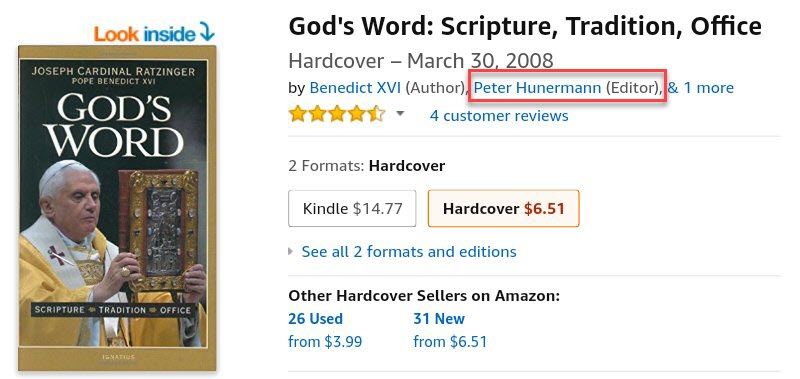
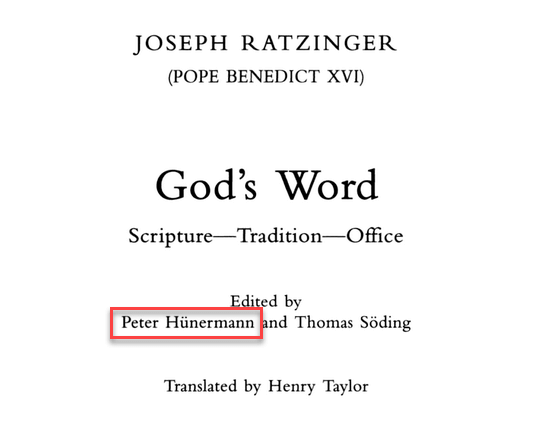
Hünermann was also a listed co-author of the book’s introduction:
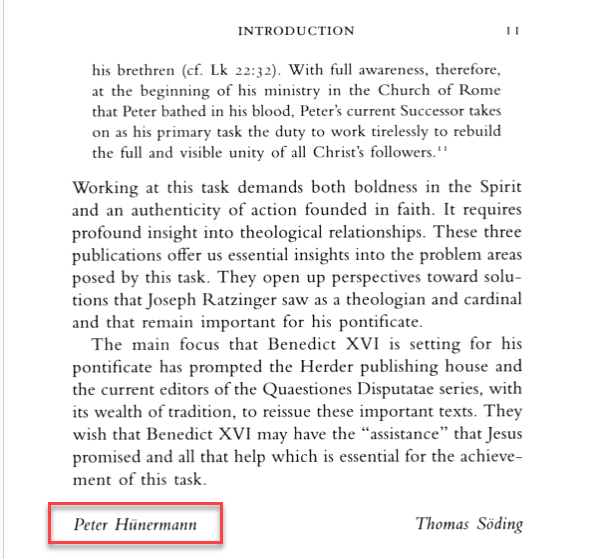
I must not be alone in finding this a little odd.

Not mentioned by Benedict in his note of concern to Viganò, but certainly deserving of attention, is the fact that Hünermann — who met with Pope Francis in May of 2015, in the midst of the two synods — has, according to Grant Kaplan at Commonweal, “exercised a seismic theological impact that stretches all the way to Francis’s much-debated Apostolic Exhortation Amoris laetitia.” In fact, writes Kaplan, it was

Hünermann’s work that has helped provide a theological justification for the pope’s insistence that the sacrament of marriage be understood in less legalistic terms. According to Hünermann, certain medieval reflections on the theology of marriage recognized that not all sacramental marriages were indissoluble in the way that indissolubility came to be understood in the modern period. The church should reclaim that understanding.

If Benedict had a problem with that particular contribution of Hünermann, one might reasonably have expected its inclusion in his letter. It is therefore somewhat noteworthy by its omission.

Whatever we are to make of all of this — and it’s really difficult to say what, exactly, we should make of it — the objection by Benedict to Hünermann’s work as a contributor to these volumes on Francis strikes a discordant note with the reality of Hünermann’s presence as a primary {?} editor of one of Ratzinger’s own books.

If reaching a conclusion about Benedict’s mind in this whole affair is shrouded in a jumble of subjective interpretations, ascertaining Monsignor Viganò’s place in the affair is a much easier task.

In a piece at La Nuova Bussola Quotidiana*, Editor Riccardo Cascioli takes aim at Viganò for his cringeworthy handling of the whole affair, and he doesn’t hold back:

One letter, the letter of Benedict XVI, we have finally succeeded in reading in its entirety. Now we are still missing two letters: the one sent on January 12 by Monsignor Dario Viganò to Benedict XVI, which provoked the response which we have seen. And next, another letter by Monsignor Viganò, in which he submits his irrevocable resignation. We don’t have this last letter yet, but it cannot wait – because it is unthinkable that he could remain calmly in his position after the terrible international loss of face he has caused [for the Vatican].

He spoke falsely about the origin of the letter, he tried to hide two different parts of it, he re-touched a photo of it, he tried to circumvent the Pope-emeritus, he exposed the Church to ridicule. What more does he have to do to be considered unworthy of remaining in such a sensitive role for the mission of the Church? The scandal he has caused has clearly demonstrated the total inadequacy of Monsignor Viganò to fulfill that role. How could he still have even the tiniest bit of moral authority in working with the Vatican communications team which is under his direction? And how could the Italian and foreign journalists accredited to the Vatican be able to still have confidence in someone who did not hesitate to falsify documents and a photo for the sake of his own ideological motivations?

Cascioli continues:

Although it is right for Msgr. Viganò to answer personally for what happened on this occasion, the affair ought to lead to a wider reflection on the communication system of this pontificate, above all on the papal Court where spokespersons and official interpreters of the thought of Pope Francis abound. All together they have created a false image of a super-hero Pope, of a man who is fighting alone against the Church which remains set against him; they have mocked and ridiculed all those who have simply tried to ask questions or expressed perplexity about certain aspects of the Pontificate.

At his blog, the English Priest Fr. John Hunwicke echoes some of Cascioli’s sentiments:

[I]n my country, an episode like this would, beyond any possibility of doubt, have ended up with a resignation or sacking in a context of public disgrace. Will any of my fellow-countrymen contradict me in my assertion?

Perhaps that will indeed be how this episode will end up. We shall see.

If this man Vigano were to be kept in office, it would be the final detail in the unfolding public demonstration of the moral corruption right at the heart of this failed pontificate. In politics, it is often not the big issues that bring a crisis to its head, but something that starts off by being insignificant to the point of pettiness. During this Bergoglian era, the two major disasters have been the shiftiness, accompanied by unbecoming bluster, in the area of paedophilia and coverups and cronyism; and attempts to get away with perverting the Church’s moral teaching by stealth. Those things matter infinitely more than the current silly and minor episode.

But ‘Lettergate’ provides such a vivid snapshot of dirty little men involved in dirty little plots for thoroughly dirty purposes. Even anti-Ratzinger veterans among the Commentariat like Robert Mickens are saying that Vigano should resign or be sacked.

If PF cannot be made to understand the need to clean out his own Augean Stables, surely he should be made to go. Not next week, but this week.

“Failed Pontificate”. A pope who “should be made to go”. More and more, we see such sentiments rising to the surface in the wake of Francis’s ever-more-frequent missteps.

Austrian commentator Armin Schwibach wrote, at Kath.net**, that the media was complicit in the debacle, noting that more than twenty journalists were present at the reading original reading of Benedict’s full letter by Msgr. Viganò. “It is true,” writes Schwibach, “the Vatican Media Secretariat favored this situation with the help of its set up and manipulated photo. But: there were, after all, more than 20 journalists present who all heard the reading of the second paragraph, and nevertheless…” He leaves the conclusion unstated. The reader should have no trouble filling in the gap.

Schwibach also notes that

Much energy was used for this fake construction which of course raises the question about the compentence of certain persons. And: in a hierarchical monarchy with a head who is known for his decisiveness, autocratic and authoritarian traits, such a procedure presents itself of course in an even darker light. One cannot get rid of the impression that with such dubious methods a fortress is being secured which is about to break apart at all ends and corners. It should not be in the interests of the pope to be ‘supported’ by such omissions and manipulations. But, unfortunately, that is the case in the ‘neo-Church’: the truth has been placed within parentheses.

Ross Douthat headlined his New York Timescolumn last Sunday with a simple observation: “Pope Francis is beloved. His papacy might be a disaster.” The essay, adapted from his forthcoming book, does not touch on the “lettergate” question, looking instead more broadly at the differing impressions of the papacy coming from those outside the Church (generally favorable) and those within (typically more critical). It’s a wide-ranging piece, touching broadly on a number of key issues, but it finds sharper focus in its conclusion: “to choose a path that might have only two destinations — hero or heretic — is also an act of presumption, even for a pope. Especially for a pope.”

Again and again, we hear this papacy described in terms of its autocracy, its disregard for rules, and its reckless, careening momentum along the edge of total destruction in the pursuit of risky, agenda-driven reform. A “failed pope” who allows “fake construction” of news to suit his agenda giving an impression that “a fortress is being secured which is about to break apart at all ends and corners”? These are not terms of endearment, or of even basic confidence in the competence of a leader or the institution he leads.

Taken in the context of the lettergate scandal, what conclusions may we draw from this?

First, it seems that the Vatican still believes that they control their own message in a way they clearly do not. Long-time Vatican watchers have told me that this is a particular blindspot in Rome: the arrogance of thinking that the truth is whatever the Holy See says it is; nothing more, nothing less. Watching the credibility of this story crumble, fall into the light, and crumble again as new details emerge is enlightening. One Vatican observer in Rome told me early last year that there’s a feeling that nobody working for the Holy See is accountable to anyone but Francis, and that it has made them think they are unstoppable. This episode has demonstrated how self-deluded such a philosophy is, and how unsustainable.

In all of this, I can’t help but have the feeling that Francis is shrinking before our eyes. That his pontificate, which was as brash as a bull in a China shop and drew all eyes to him, is suddenly so precarious that it has withdrawn from its usual braggadocio in search of a more conservative and measured tone. Suddenly, Pope Francis is saying Catholic things again, for example, his recent statement that Catholics in mortal sin cannot receive Holy Communion. Such a statement might have impressed the faithful a few years ago, but one wonders if he really believes we do not perceive the irony that it was made by the chief ecclesiastical advocate for the reception of Holy Communion by adulterers.

Author, journalist, and veteran Vatican watcher Antonio Socci also sees the change in tactic, observing that Francis is “clumsily seeking legitimacy from that Wojtylian and Ratzingerian Church that he and his court have bombarded for five years with all the controversial artillery.” Socci notes that Francis even visted Pietrelcina last Saturday, to “pay homage to the most traditional saint” — Padre Pio — a saint who, Socci contests, Francis would otherwise categorize as “most rigid and conservative”.

There is a certain desperation evident in all these transparently calculated set pieces. It is perhaps most evident in those periodic attempts — most recently by the inartful manipulation of the Benedict letter — to co-opt the popularity of the papacy’s frail, elderly, hidden-from-view, former occupant. Benedict was far from a universally popular figure in his day, but he is infinitely more appealing by comparison, and as the Bergoglian regime surveys the damage it has wrought, rather than attempting to fix what they’ve broken, they appear content to attempt to borrow credibility wherever they can find it. In this case, they have sought to hollow out the image of Pope Benedict and wear the carcass as a disguise. Even they must recognize that such an obvious gambit won’t work for long, which raises the question: how little time do they think they need to finish their unpleasant work of “irreversible reform“?

The conclusion to Cascioli’s piece indicates that he also sees the brutish and short-lived utility of such a tactic:

For some time there has been in motion a systematic operation of dismantling the Magisterium of the preceding popes, from liturgy to morality, from the sacraments to social doctrine, except for when they seek to forcibly “use” the preceding popes to legitimize the present changes. The “Viganò affair,” with all of its gaffes, is only the tip of the iceberg.

But what of Benedict?

Socci proposes that there is a key phrase in the letter that we should take note of: “interior continuity”. He writes, “it suggests that we do not see external continuity in the acts and teachings” of the two pontificates.

I would agree that there is a meaningful contrast between interior and exterior continuity, though I interpret this meaning differently. Obviously, there’s very little exterior continuity in “style and temperament” — those were the words Benedict used — between the two pontificates. The two men could hardly be more different in personality or comportment, and Bergoglio’s penchant for self-aggrandizing theatrics of humility and down-to-earthiness (as long as the cameras are rolling) are probably the most striking departure from Benedict’s genuine humility and willingness to allow his own personality to fade behind the trappings and duties of the office as he understands it. For Bergoglio, the papacy is the means to the end of his personal agendas; for Ratzinger, it is a sacred office which he appears never to have felt adequate to inhabit. But the question remains: how different are their theological outlooks?

I remain wary, as we attempt to assess such questions, of confirmation bias. Traditionalists, who are accustomed to looking at the post-conciliar papacies with a critical eye, may have led the charge against the Bergoglian pontificate, but I would argue that at this moment, its strongest resistance is found amongst those who see it as a rejection of the work of John Paul II and Benedict — the very popes Socci argues Francis is now trying superficially to co-opt. These people — people who are otherwise completely at ease with the new liturgy, the post-conciliar experiment, the alterations to classical Catholic theology, and so on — would make this a war between personalities, between the “celebrity popes”, rather than a conflict between the teachings of the popes of modernity and those of the unbroken line of their predecessors stretching back across the centuries. The theologies of Benedict and Francis may not appear, on the surface, to have much in common, but they have a good deal more in common than either of them are likely to have with, say, Pope St. Pius X. And it is in this sense that I think Benedict was being sincere when he spoke of an “interior continuity” between their two pontificates.

Socci, who continues to argue that Benedict is still the pope, of course manages to find in this episode confirmation for his thesis. He sees what he wants to see in a letter that is really not all that informative at all, interpreting sarcasm and indignation into the former pope’s refusal to review the books on his successor’s theology, calling his response “polemical”, and his praise merely a “courtesy” that should be “reinterpreted in the light of the omitted passages”.

Another source who formerly worked for the Holy See used the same word. Courtesy. He told me that there is a way in which these sorts of formal letters follow an expected “courtesy” that says all sorts of nice-sounding things while really saying nothing, and that this is what he saw in Benedict’s letter — a “pro forma” bit of positivity about Francis followed by some specific criticisms.

I find it difficult to accept that a man like Benedict, who is beloved for his moral stature, would resort to polite lies so strongly worded that they could be used as marketing copy, while he buries his criticisms in verbal camouflage that seems directed everywhere but at the problem — Francis himself.

And this brings us back to the Rorschach test, which we examine in order to find something we already believe. For my part, I think I still held out hope that Benedict could have taken a real stand, casting aside empty flattery for the harder path of Christian duty. I can’t say I was expecting him to play the diplomatic game — displaying obsequient politeness in lieu of honest concern — only that I was sadly unsurprised by it, because it follows a pattern.

That’s why I always believed that the letter was real. That’s why I still believe he meant the positive things that he said. Because either he’s the good man everyone believes him to be, or he’s a pusillanimous flatterer at a moment that calls for direct confrontation. He can’t be both. Believing he meant what he said, in my mind at least, speaks more highly of his character than the alternative. He might be wrong, but at least he isn’t a liar — and doesn’t charity demand that we believe that?

In conclusion, I continue to look for any sign that Benedict is, in fact, troubled by the Francis papacy. I keep my ears perked for some little report, even off-the-record, of consternation from the people who go in to see him. I keep a lookout for some word or sign of contradiction, however small. I have not found one. I have heard from people who believe that he is not happy, but they have provided no evidence for this impression. In the end, we can take all of this no further than speculation, and I don’t like speculation. I’d rather know facts. Sadly, facts about what’s going on in Rome are a luxury we haven’t been afforded in quite some time.

Whatever the case, Benedict is no longer the pope, and yet Francis seems desperately to need his approval. A papacy that can’t stand on its own is a troubled papacy indeed.


*Italian translations provide by Giuseppe Pellegrino.

**German translations provided by Maike Hickson.

Posted in Uncategorized | Comments Off on HERE, IN THIS ANALYSIS, IS PROBABLY THE TRUTH ABOUT WHAT THE BENEDICT LETTER MEANS. YOU MAY NOT LIKE IT, BUT GIVEN THE COMPLEXITIES OF THE ‘SHARED PONTIFICATE’ IT IS PROBABLY THE BEST WE CAN EXPECT

I HAD A GREAT DEAL OF DIFFICULTY GOING TO SLEEP LAST NIGHT

st-john-cantius-eric-allix-rogers-03

The interior of Saint John Cantius Church in Chicago


The cause of my inability to fall asleep was the news that a regular reader of Abyssum.org sent to me in an email yesterday informing me that the Cardinal Archbishop of Chicago had removed Father Frank Phillips as Pastor of Saint John Cantius Parish.  The reported reason for the removal was that Father Phillips had been reported as having had a sex with another man.  The announcement of the removal by the Cardinal indicated that the man was not a minor.

I was stunned by the news.  Several years ago Father Phillips had invited me to come to Saint John Cantius Church to celebrate that Parish’s annual All Souls’ Day Mass.  That Mass is not a simple Mass at St. John Cantius Church, it is a Solemn Pontifical High Mass celebrated with a symphony orchestra augmenting that Church’s magnificent choir singing Motzart’s Requiem Mass.  I went to Chicago and celebrated the Mass.  Needless to say it was an unforgettable experience.

Thirty years ago Father Phillips, a member of the Resurrection Congregation, had founded at Saint John Cantius Parish a Diocesan Institute known as the Canons Regular of Saint John Cantius.  Over the years the Canons Regular have grown in numbers and have made Saint John Cantius world famous as a church where the Traditional Latin Mass is celebrated in all its forms perfectly.

What I find so disturbing in the news about the removal of Father Phillips is that the public way in which Cardinal Cupich removed Father Phillips was so uncalled for.  Every bishop at one time or another is faced with the sexual misbehavior of a priest with a man or a woman who is not a minor.  In the case of minors the Dallas Charter demands rapid and harsh measures by the bishop in handling the case.  In the case of adults, such measures are not only not required but are inadvisable because of the scandal of the weak which results.  Instead, the priest is suspended and quietly removed from office and no public announcement by the Ordinary is necessary, a simple discrete letter to the people of the parish is sufficient.

Cardinal Cupich acquired a reputation in his former office as Bishop of Spokane as being totally opposed to the celebration of the Traditional Latin Mass in the Diocese.  That fact combined with his welcoming of Father James Martin, S.J. to the Cathedral in Chicago to speak in support of the homosexual lifestyle that he promotes in his book Building Bridges, a lifestyle that sometimes involves the sin of sodomy, causes me to wonder if the removal of Father Phillips is not part of an elaborate plot leading to the suppression of Saint John Cantius Parish as a center for the promotion of the Traditional Latin Mass.  The hypocrisy of removing Father Phillips as Pastor based on a possible false accusation of homosexuality on the eve of Father Martins talk at the Cathedral promoting ‘respect’ for homosexuals  is too much for people of common sense to accept and to wonder about hypocrisy.


Posted in Uncategorized | 9 Comments

QUO VADIS

Settimo Cielodi Sandro Magister

“Catholic Church, Where Are You Going?” A Conference. That It Not Lose Its Way

ViaAppia

{Abyssum}

It is confirmed. Next April 7, the Saturday of Easter Week, a very special conference will be held in Rome. The intention of which will be to show the Catholic Church the way to go, after the uncertain journey of the first five years of the pontificate of Pope Francis.

The reckoning of this five-year period, in fact, is rather critical, to judge from the title of the conference:

“Catholic Church, where are you going?”

And even more so if one looks at the subtitle: “Only a blind man can deny that in the Church there is great confusion.” This is taken from a statement of Cardinal Carlo Caffarra (1938-2017), not forgotten as an endorser, together with other cardinals, of those “dubia” submitted in 2016 to Pope Francis for the purpose of bringing clarity on the most controversial points of his magisterium, but which he has left without a response.

In a Church seen as being set adrift, the key question that the conference will confront will be precisely that of redefining the leadership roles of the “people of God,” the characteristics and limitations of the authority of the pope and the bishops, the forms of consultation of the faithful in matters of doctrine.

These are questions that were thoroughly explored, in his time, by a great cardinal who is often cited both by progressives and by conservatives in support of their respective theses, Blessed John Henry Newman.

And there will be other cardinals and bishops who will once again confront these questions, at the conference on April 7. Their names have not been released yet, but they are expected to include the signers of the “dubia,” and others who share their outlook.

In any case, there has already been confirmation of the contributions – with “ad hoc” video messages – of two very representative cardinals: the Chinese Joseph Zen Zekiun, bishop emeritus of Hong Kong, and the Nigerian Francis Arinze, former archbishop of Onitsha and then prefect of the congregation for divine worship, the same one that is headed today by Cardinal Robert Sarah.

There will also be a posthumous projection of a video interview with Cardinal Caffarra, on the controversial encyclical of Paul VI “Humanae Vitae.”

But there will also be presentations by lay scholars. Professor Valerio Gigliotti, a professor of history and of medieval and modern law at the university of Turin, will bring into focus the exercise of the “plenitudo potestatis” of the pope in the history of the Church. While Professor Renzo Puccetti, a physician and professor of bioethics at the John Paul II PontificalTheological Institute, will analyze the evolution of the bioethics taught at that institute, from its first phase with Caffarra as president to its current phase, under the aegis of Archbishop Vincenzo Paglia.

The final and culminating moment of the conference will be in any case the reading of a “declaratio,” a concise profession of faith on the points of doctrine and morality that are most controversial today.

Unlike the “dubia,” the declaration will not bear any specific signature, but the participants at the conference will propose it for the whole Church and for the world, as the voice of “baptized and confirmed members of the People of God.”

Of course, this “decleratio” will be the polar opposite of that “Kölner Erklärung” – the declaration signed in Cologne in 1989 by German theologians now in the good graces of Francis – which concerning the principles later reaffirmed by John Paul II in the encyclical “Veritatis Splendor” of 1993 “attacked in a virulent manner the magisterial authority of the pope especially on questions of moral theology,” as Benedict XVI wrote in the letter to Monsignor Dario Edoardo Viganò that caused such an uproar last week.

The conference, with no admission fee, will be held on Saturday, April 7 beginning at three in the afternoon, at the conference center “The Church Village” at 94 Via di Torre Rossa, a couple of miles to the west of the basilica of Saint Peter.

(English translation by Matthew Sherry, Ballwin, Missouri, U.S.A.)

Posted in Uncategorized | Comments Off on QUO VADIS

ONLY THE BISHOPS CAN NOW PREVENT MORE AND GREATER HARMS TO THE BODY OF CHRIST AND TO HER APOSTOLIC MISSION, WHICH THE “NEW PARADIGM” WILL SURELY CAUSE IF WE CONTINUE ON THE PRESENT COURSE. DO THE BISHOPS HAVE SUFFICIENT COURAGE TO ACT ???

(Daniel Ibanez/CNA)
.
COMMENTARY  |  MAR. 19, 2018
.
An Open Appeal to the Catholic Bishops of the World
.
Only fraternal episcopal interventions can now hope to avert what is sure otherwise to be a spiritual catastrophe for the Catholic Church.
.
{Abyssum}
.
.

After serving five years as a Catholic campus minister in the 1980s, I decided to begin graduate studies in moral theology.  This was in the heyday of proportionalism, when its founding fathers still held some of the world’s most influential chairs of Catholic moral theology: Richard McCormick at the University of Notre Dame, Josef Fuchs at the Gregorian University in Rome, Louis Janssens at the University of Louvain, and Bernard Häring (emeritus) at the Alphonsianum in Rome.

In Veritatis Splendor{I have long maintained that Veritatis Splendor and Humanae Vitae were the two most important magisterial documents issued by the popes of the 20th Century}John Paul II had sternly warned the Catholic Church against their moral theories. The saintly Pope’s overarching concern was that by appealing to complex circumstances, the activity of conscience and the notion that the moral law is merely an ideal, they end by justifying forms of behavior that have long been held to be contrary to the divine and natural laws (Veritatis Splendor, 56, 76, 103).

Then, 25 years later, comes what is now being called a “new paradigm” drawn from Amoris Laetitia. It proposes that, on the basis of complex circumstances, the activity of conscience and the notion that the moral law is merely an ideal, some Catholics are not required to submit obediently to the objective and concrete demands of the divine and natural laws.

After extensively studying this new form of moral reasoning, and discussing it with philosophers, theologians, canonists, bishops and cardinals, I am concerned that this “new paradigm” is contrary to Catholic fides et moralibus; that its teaching is harmful to souls; and that its further dissemination will greatly undermined Catholic morality.

Therefore, knowing that each member of the faithful must do what he can to preserve and promote the Christian deposit of faith (Canon 212), and believing in conscience that Jesus wants me to take this step, I address this appeal to the Catholic bishops of the world — humbly, directly, truly and resolutely — believing that only the bishops can now prevent more and greater harms to the Body of Christ and to her apostolic mission, which the “new paradigm” will surely cause if we continue on the present course.

I entrust this appeal and the response of the world’s bishops to the intercession of our humble father, St. Joseph, patron of the universal Church.


Dear Archbishops, Bishops and Brothers in Christ,

Some influential voices in the Church are using a “new paradigm” to justify forms of behavior long recognized as contrary to the precepts of the divine and natural laws. As I recently wrote:

“The ‘new paradigm’ — although never explicitly saying it — allows priests and bishops simultaneously to affirm that they accept the Church’s moral teaching and yet to liberate ‘individual consciences’ that are not living by that teaching to continue not living by it, while approaching the Table of the Lord.”

We see this in places where Catholics living in objectively sinful unions are being freed to return to Holy Communion without a sincere resolution to amend their behavior. The “new paradigm” effectively makes permissible actions rejected by Christ and St. Paul in the New Testament and by the Church for 20 centuries. In Germany, Argentina, Malta and elsewhere, we now have “Catholic divorce and remarriage” and “Catholic adultery.”

Unless you intervene to prevent the “new paradigm” from being brought to bear upon the wider body of Catholic moral teaching, its logic will surely be applied to contraceptive acts (despite the Church’s ancient teaching reaffirmed in Gaudium et Spes and Humanae Vitae), to homosexual behavior (despite the teaching reaffirmed in Persona Humana and the Catechism of the Catholic Church), and to other traditionally rejected behaviors.

And defenders of the “new paradigm” will say: “All we’re doing is applying Church teaching with greater pastoral sensitivity by paying heightened attention to the complexity of concrete ‘circumstances’ and by according greater respect to the dignity of ‘conscience’; the settled moral doctrines themselves are not in question {this is not true}.”

The interventions of laypeople and faithful priests are important, but are unlikely to influence the decisions of the Pope. Only fraternal episcopal interventions can now hope to avert what is sure otherwise to be a spiritual catastrophe for the Catholic Church. For if the “new paradigm” is officially applied to contraceptive acts, all the norms of Catholic sexual morality will fall like dominos. Great evil will occur. And many souls will be lost. God, of course, will bring good out of it. But not without immeasurable loss {as the history of the Church has demonstrated time after time.}

Therefore, to all Catholic bishops — East and West — who believe that the “new paradigm” is and will continue to be used to justify forms of behavior traditionally judged contrary to the divine and natural laws, I respectfully ask that you consider taking action in the following four ways:

  1. To privately write to the apostolic nuncio of your country and ask him respectfully to make known to the Holy Father your concerns about the “new paradigm” and especially to urge him to refrain from applying it to the teaching of Humanae Vitae.
  2. To privately write to Pope Francis himself fraternally expressing these same concerns and respectfully asking him to teach unambiguously the moral truths of the Catholic faith, especially on matters pertaining to the Fifth and Sixth Precepts of the Decalogue, and to correct the pastoral errors to which some of his teachings have given rise.
  3. To officially promulgate for your diocese a set of norms pastorally addressing the sensitive issues raised in Amoris Laetitia (especially Chapter 8), norms consistent with the teachings of John Paul II, Benedict XVI and Catholic moral and pastoral Tradition.
  4. To privately liaise with like-minded bishops and consider constructive ways to use your magisterium to carry out the episcopal duties affirmed by the Catechism of the Catholic Church:

“It is this magisterium’s task to preserve God’s people from deviations and defections and to guarantee them the objective possibility of professing the true faith without error. Thus, the pastoral duty of the magisterium is aimed at seeing to it that the People of God abides in the truth that liberates” (890).

When you address the “new paradigm” in your correspondences, you might consider a form similar to what John Paul II used when addressing proportionalism in Veritatis Splendor:

“Such theories [in this case ‘paradigms’] are not faithful to the Church’s teaching, when they believe they can justify, as morally good, deliberate choices of kinds of behavior contrary to the commandments of the divine and natural law. These [paradigms] cannot claim to be grounded in the Catholic moral tradition” (76).

It would be easy to say: “I’ve done all I can. It is all in God’s hands. We must be content to leave it there.” Please see that you are Jesus’ hands for addressing this very grave situation.

I am willing to assist you in any way I can — with summaries of concerns, talking points, diocesan guidelines, etc. Please do not hesitate to contact me.

Very respectfully yours in Jesus,


E. Christian Brugger D.Phil.
moral theologian
Jacksonville Beach, Florida
USA
ecb.assistance@gmail.com
E. Christian Brugger is a senior research fellow of ethics at the Culture of Life Foundation in Washington, D.C. In 2016 he was a theological consultant to the U.S. Conference of Catholic Bishops’ Committee on Doctrine. 
He has served as dean of the School of Philosophy and Theology at the University of Notre Dame, Australia, and the J. Francis Cardinal Stafford Professor of Moral Theology at St. John Vianney Theological Seminary in Denver.
He is the author of The Indissolubility of Marriage and the Council of Trent(Catholic University of America Press, 2017). He lives in Jacksonville Beach, Florida, with his wife and five children.

Posted in Uncategorized | 2 Comments

WILL YOU PARTICIPATE IN A ‘DUMBED DOWN’ LITURGY THIS GOOD FRIDAY ???

Dumb down liturgy. Great idea, right?

I seriously object to the dopey notion that liturgy has to made “understandable”. First, liturgical worship involves mysteries, such as that one about Christ turning the substances of bread and wine into His Body and Blood. How is that easy?  Indeed, Mass ought to be hard!

But no… let’s dumb everything down.  How insulting to congregations that attitude is.

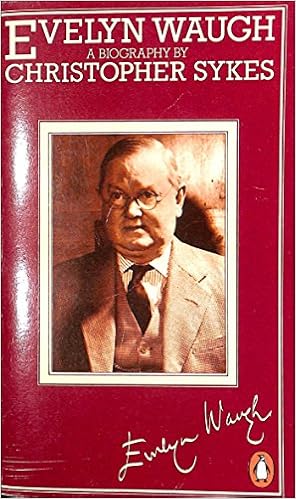
A long-time reader and benefactor of this blog (thanks!) sent me this quote about the changes (Bugnini) made to Holy Week from Evelyn Waugh: A Biography by Christopher Sykes (US HERE – UK HERE) with added emphases:

“(in the mid-1950s) ….the new service retained much of the beauty of the old, and the overwhelmingly impressive Maundy Thursday Mass, the ‘Altar of Repose’, the night offices of Tenebrae, and the liturgical masterpiece, the Good Friday ‘Mass of the Presanctified’, remained intact. Not for long. The belief grew that the celebration of Holy Week would be more valuable, would compel a greater corporate sense in the Church, if it was expressed in ceremonies which did not involve a keen appreciation of symbolism, if they were more easily understood by ordinary people and invited more ‘mass participation’ in the form of community singing; if they appealed less to the sense of awe, they avoided the accusation of meretricious aestheticism, above all of excessive indulgence of the sense of the past. Nowhere did the notion of a ‘Century of the Common Man’ exert more fascination than on Roman Catholic clergy. The entire edifice of the Holy Week Liturgy was swept away as being over-elaborate, and it was substituted by services of a more everyday kind. This was the beginning of a movement which was to reduce all Roman Catholic ceremonial to commonplace and to abolish the traditional order of the Mass in favour of a prayer-meeting in which only essential vestiges of the traditional celebration were retained.

Posted in Uncategorized | 2 Comments

Saint John Vianney was convinced of a fact more fabulous than a fable: “Not all the saints started well, but all of them ended well.”

 THE WISDOM OF FATHER GEORGE W. RUTLER
March 18, 2018
   There are those of us who remember how as schoolboys, the clever use of rhythmic dactyls in Virgil’s metrical Latin verses made unforgettable the sound of horses galloping. And one of my schoolmates gained fleeting fame when our French teacher announced that, as our classmate was recovering from an appendectomy, the first words he whispered as he came out of the anesthesia were from a line in LaFontaine’s fable about the Crow and the Fox: “Matître Corbeau sur un arbre perché…

Fables have always been entertaining ways to teach children to remember moral wisdom. LaFontaine in the late 17th century drew on stories of Aesop, a Greek slave in the fifth century before Christ. Many of those fables in the Aesopica were adopted along the way in Welsh (Chwedlau Odo—“Odo’s Tales”), Middle Low German, and even Middle Scots. Moral truths have no national borders or chronological barriers. Everyone in any place can learn a lesson from Aesop’s fable of the Tortoise and the Hare, in which the tortoise defies all odds and wins the race because the hare was so smug that it took a nap.

The parables of our Lord are different from fables, for they are about people, while fables make animals talk. Fables enliven moral consciences while Christ’s parables make moral points but also direct attention to eternal realities. When our Lord says, “The Kingdom of Heaven is like . . .” he describes a heavenly reality, and not a fantasy.

Commissioned as an apostle of the Good News, Saint Paul wrote: “Do you not know that in a race all the runners run, but only one receives the prize? Run in such a way as to take the prize. Everyone who competes in the games trains with strict discipline. They do it for a crown that is perishable, but we do it for a crown that is imperishable” (1 Corinthians 9:24-25). This race is not a fable about tortoises and hares. Those are illusions, but Paul’s race is an allusion. He is speaking of real people in Corinth, where the Isthmian Games took place before and after the Olympic Games, and whose winner received a crown of wild celery instead of the Olympic olive leaf. And celery leaves fade fast.

Lent is a microcosm of life in its entirety, with all its trials. When Saint Paul speaks of discipline, he employs a Greek word used for wrestling and any struggle for victory—agonia, from which we get agony. The Anti-Christ wants us to surrender the race and tries to persuade us that life is nothing but agony without a prize. His plot is to discourage, while Christ’s Holy Church is constantly encouraging, through the Sacraments and the heavenly cheerleaders called saints and angels. Saint John Vianney was convinced of a fact more fabulous than a fable: “Not all the saints started well, but all of them ended well.”

Posted in Uncategorized | 1 Comment

BISHOP ATHANASIUS SCHNEIDER ON THE WAY OUT OF THE CRISIS


Posted in Uncategorized | 1 Comment

FRANCIS SURROUNDS HIMSELF WITH ‘MAFIA’ TYPE FRIENDS AND MAINTAINS A LOYALTY TO THEM THAT IS SCANDALOUS

EmailPinterestPocketGoogle+

An Update on the Chilean Barros Scandal and its Ties to Pope Francis

OnePeterFive
{Abyssum}
.

In recent weeks, more information about the Barros case has come to us which is worth reporting. The Chilean Cardinal Javier Errázuriz Ossa – one of the members of the pope’s Council of Nine Cardinals – recently wrote a letter to various Latin American bishops’ conferences complaining about the fact that Bishop Juan Barros’ presence during the pope’s visit to Chile in January of 2018 drew too much attention to his case. Cardinal Errázuriz himself did not seem to be concerned about the whole Karadima sex abuse scandal itself, or that Bishop Barros might be culpably complicit in it. We shall now present some facts that might explain why it is so. For, Cardinal Errázuriz seems to have had a role himself in covering up that case for years while still in Chile.

First about the news. In that above-mentioned widely circulated letter – which was leaked and subsequently reportedon by the progressivist newspaper National Catholic Reporter, on 9 March, Errázuriz complains that “Barros made himself available for interviews with journalists after concelebrating at Masses with Francis along with other Chilean bishops.” (Nota Bene: our colleague in Germany, Giuseppe Nardi, reports that, according to Roman sources, it was Pope Francis himself who insisted upon Barros concelebrating with him. In any event, he would have had an influential word in the matter.) Errázuriz also bemoans that Barros “did not avoid group interviews” and gave the impression “that he considered them a favorable opportunity to spread his version of things and to defend himself against the accusations.” According to the Reporter, Barros is now being accused of having “destroyed incriminating correspondence from the priest [Karadima].” Later on in the letter, Errázuriz also regrets that there was no better “press speaker” available during the pope’s visit.

What is striking here is that this cardinal is more concerned about matters of public relations and of appearances, rather than being attentive to reveal the larger truth about Bishop Barros, and, thereby, to help the abuse victims. Let us thus look more deeply into his own role in the Barros-Karadima case.

In a recent interview with the German bishops’ news website Katholisch.de, Juan Carlos Cruz, one of the victims of the abusive priest (Father Fernando Karadima), insisted upon the fact that Karadima had been protected by cardinals and bishops. He also mentions, in addition to Bishop Barros, Bishop Tomislav Koljatic and Horacio Valenzuela, “all of whom have covered up for the sexual abuse,” and he calls for a “very detailed investigation.” He then comes to speak about Cardinal Errázuriz. When asked why he does not have any trust in the Chilean Church, Juan Carlos Cruz says:

We have always been encouraged to give testimony, and this we always did with good faith, but up to now, the cardinals and bishops have responded to it with less than good intentions. I am convinced that Cardinal Errázuriz – the former archbishop of the capital city [Santiago] has an enormously bad influence on the pope, because Errazuriz has covered up for things and because he tried to discredit the victims. His successor, Cardinal [Ricardo] Ezzati, only recently has called into question the objectivity of the victims. He is an absolutely insensible man.

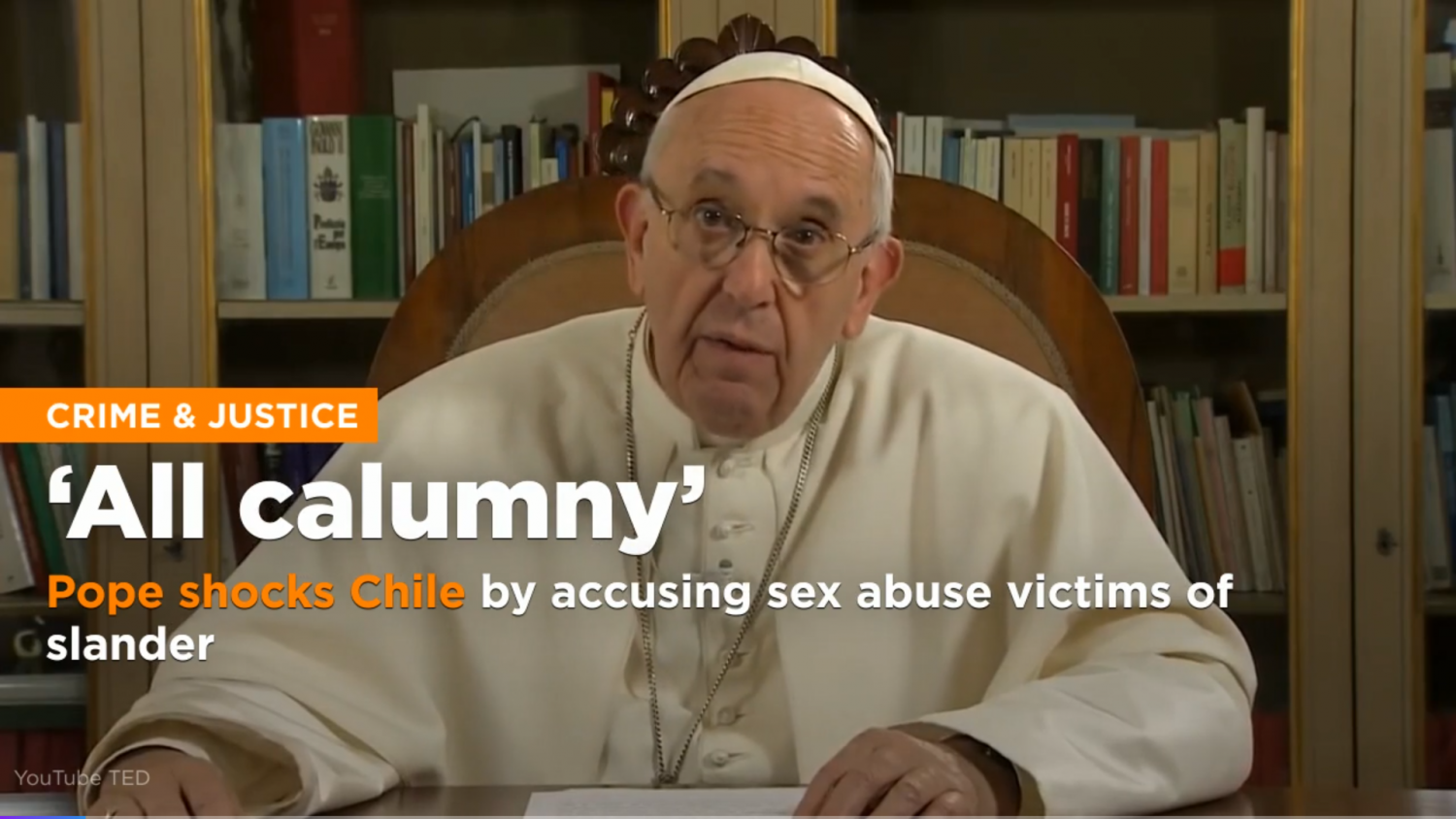
When we look back a little, we note that this whole scandal was already in the light of the day in the year 2010. According to an earlier excellent November 2015 report by the German journalist Julius Müller-Meiningen, when Cruz, together with two other abuse victims, had come forth into the public with their grave accusations against Karadima. One year later, the Vatican suspended Karadima from his office. As Müller-Meiningen, already in 2015, stated, this case “puts also Pope Francis into a dubious light. Cruz […] claims that Pope Francis is on the side of those who cover things up, in spite of contrary confessions.” When the pope then appointed Juan Barros as the bishop of Osorno, Cruz and the other two victims – José Andrés Murillo and James Hamilton – who all gave testimony that Barros had witnessed the abuse crimes “felt wounded by the pope,” especially after he called the accusations “stupidities” and “pushed by the left.”

In this report, Müller-Meiningen also speaks about the fact that Pete Saunders, at the time one of the members of the abuse commission in the Vatican, had proposed that, at the next commission meeting in February of 2015, this topic should be brought up, to include the demeaning words of the pope himself about the abuse victims. (This example shows, once more, that the pope had previous occasions to look more deeply into the Barros scandal.) Saunders then called the pope’s words “terrible.” Here, Saunders referred to two Chilean cardinals – Errázuriz and Ezzati – “who are in close contact with Francis and who play a key role in the Barros scandal,” in Müller-Meiningen’s words. The three victims who had together approached the Diocese of Santiago legally, asking for some restitution for the past abuse, have included in their appeal both the former and the current archbishop of Santiago, Errázuriz and Ezzati. Errázuriz had been the archbishop of Santiago from 1998 until 2010.

In September of 2015, according to Müller-Meiningen, a set of e-mails was published in which Errázuriz insulted Cruz and called him a “snake.” (See here one report on this event.) The German journalist continues, saying that “both prelates made use of their influence in the Vatican in order to stop Cruz from being named” as a member of the Vatican’s abuse commission. The publications of the set of e-mails led to an apology addressed to Cruz, coming from the president of the abuse commission, Cardinal Sean O’Malley. “However,” says Müller-Meiningen, “Francis had already been giving high honors to both Chilean bishops.” Errázuriz – with whom then-Cardinal Jorge Bergoglio had worked together in 2007 at the Brazilian Aparecida Fifth Latin American Episcopal Conference – “was later called in 2013 by Francisto be in the Council of then-Eight Cardinals, and Ezzati himself, a protegée of Errázuriz, was named a cardinal by Francis in 2014.”

As Cruz then said: “For us, these nominations were like a kick in the face from the pope in person.” Errázuriz knew about the accusations against Karadima since 2003, but only reacted when the Vatican itself started its own investigation, according to Müller-Meiningen. “Also Ezzati is said to have covered up for those abusers from his clergy, Cruz claims.” Cruz says, as quoted by the journalist: “The pope continues to stand on the side of the abusers and of those who cover up for them.”

As some colleagues of mine in Europe have observed, it seems that Pope Francis is putting his loyalities toward his friends over the common good of the Church, and certainly above the greater good of the abuse victims.

In light of these truly piercing and painful reports, let us thus consider what our colleague in Rome, Marco Tosatti, has to say about the matter. In a 10 March post on his own blog, Stilum Curiae, he speaks about what all of Francis’ friends have in common. About the above-mentioned letter written by Cardinal Errazuriz, Tosatti comments, as follows (translation courtesy of Giuseppe Pellegrino):

The Chilean Cardinal Javier Errázuriz Ossa wrote a letter to the Latin American bishops, to explain that Francis’ visit to Chile was not a flop but was “highly positive.” He did not accept any responsibility for the scandal of the priest-abuser Karadima, or for Bishop Barros, named bishop of Osorno by the Pope despite the protests and accusations of those who had been abused. And all this was notwithstanding the fact that the ex-archbishop of Santiago had neglected the case and declared that he did not believe the victims. Errázuriz in his letter accused the victims of seeking to profit from the protest and declared the accusations to be calumnies, made with the purpose of bringing a civil lawsuit against the diocese of Santiago. “Errázuriz is seeking to confuse things and to create a distraction to avoid his responsibility for the cover-up and for the poor management of the Chilean church which led to the disaster in which we find ourselves. The problem is not money,” said Juan Carols Cruz, one of the victims, in an interview with the AP [Associated Press].

Tosatti here makes a good summary and description of the modus operandi of Cardinal Errázuriz. He then asks what this whole matter also this has to do with Archbishop Vincenzo Paglia and his own recent scandalous defense of the British decision to kill yet another seriously ill baby in England. He says:

Everything. Because Errázuriz is one of the great friends and counselors of the Pope; that is to say, just as Cardinal Mahony, ex-archbishop of Los Angeles, had to resign because of his poor management of abuse cases; just like Cardinal Danneels of Malines-Brussels, who was swept away by covering up an abusive bishop; just like Cardinal Murphy-O’Connor, against whom there was an investigation, to be opened because of the lay people who denounced him to the Congregation for the Doctrine of the Faith for his poor management of abuse cases – on the outcome of which, and how it was then closed, it would be interesting, if the ex-Prefect of the Congregation [for the Doctrine of the Faith], Cardinal Gerhard Müller, himself would speak.

And what do all these cardinals have in common? Tosatti asks and responds:

Now the one thing that all of these persons have in common is that they are counselors and [papal] electors – at the time of the conclave – who are in the inner circle of the Pope, who seems to have a predilection for people with a “past.”

Here, Tosatti means “a past that is not exactly glorious.” Here, he mentions Monsignor Ricca, “named the head prelate of the IOR, or like Monsignor Paglia, archbishop of Terni, where he will be remembered, apart from the erotic fresco and the homosexual man with a zucchetto on his head, for the disastrous situation he left behind there, from which he was later liberated by a rapid and timely recall to work back inside the Vatican at St. Callisto.” Tosatti concludes his incisive post – and we shall also end with his words:

And the list could continue, and it is definitely not short. The Pope boasts of having a good memory, and of always having had it. Surely in the management of a government people with a past present advantages, at least of gratitude, towards a sovereign so magnanimous. But they do not always give guarantees of being adequate for the task to which they are called. Blind fidelity and competence are not synonymous. On the contrary.

Posted in Uncategorized | 3 Comments