ROME, March 8, 2018 (LifeSiteNews) — The Pope has no power to change or relax the Church’s ban on artificial contraception, just as he can never allow women to be ordained, Cardinal Gerhard Müller said on Wednesday.
The former prefect of the Congregation for the Doctrine for the Faith was speaking at a book launch at the Lateran University in Rome. The launch was hosted by the Pontifical John Paul II Institute and was attended by key Vatican figures.
His remarks on the infallibility of Humanae Vitae’s teaching were supported by comments made at the same event by Professor Livio Melina, who served as president of the John Paul II Institute in Rome from 2006-2016.
Prof. Melina said that while the Church’s ban on contraception has never been dogmatically defined ex cathedra, nonetheless the teaching “belongs to the universal ordinary magisterium,” and as such is infallible.
He also called media attempts to recast Karol Wojtyła (St. John Paul II) as a “rigid” traditionalist, in contrast to a “more open” Paul VI, “fake news.”
A never-before-published letter
The new book by Fr. Paweł Stanisław Gałuszka, entitled “Karol Wojtyła and Humanae vitae,” examines the contribution that Karol Wojtyła and the Polish bishops made to the editing and reception of Humanae Vitae when Wojtyła was Archbishop of Krakow. The book contains several never-before-published documents, including a letter that Wojtyła sent to Pope Paul VI in 1969, after numerous episcopates had spoken out critically of Humanae Vitae.
In the letter to Pope Montini, Wojtyła suggests that the Holy See “contemplate a series of provisions aimed at helping priests and laity” to resolve difficulties arising from“harmful” interpretations of the papal document.
To this end, Wojtyła includes with the letter several detailed proposals for an “instruction addressed to priests engaged in the ministry — above all confessors, catechists and to preachers.”
The Spin
In the lead up to Wednesday’s book launch, news reports circulated in Rome about the contents of the letter.
Avvenire’s editor-in-chief, Luciano Moia — a clear dissenter from Humanae vitae — said the “tone” of Wojtyła’s proposed guidelines represented a “substantial stiffening” [irrigidimento] with regard to what Paul VI wrote in Humanae vitae. He added that the guidelines were “explicitly” at odds with the thoughts expressed by “half the world’s bishops” at the time, which were characterized by “respect, welcoming and understanding.”
Moia said the “most surprising aspect of the letter” was that Wojtyła asked Paul VI to proclaim the “infallible and irreformable” character of the encyclical, even though Moia ignores the fact that the word “irreformabile” never appears in the letter.
“Is it possible that Wojtyła was unaware that Paul VI required Msgr. Ferdinando Lambruschini … to explain at the press conference presenting the encyclical that the text should not be considered either as infallible or irreformable?” Moia asked.
Moia has openly supported a relaxing of the Church’s ban on artificial contraception. Readers may also recall that Avvenire — the official newspaper of the Italian bishops — prominently featured and praised Fr. Maurizio Chiodi’s controversial public lecture in which he said that responsible parenthood can obligate married couples to use artificial contraception.
Fake News
During the question and answer session at the book launch, the panel was asked about the claims made in the Avvenire article. One gentleman asked: “If it’s true that Karol Wojtyla asked Pope Paul VI to declare Humanae vitae infallible, and Pope Paul VI did not grant his request, why didn’t he do it himself during his own 27-year pontificate?”
Prof. Melina welcomed the opportunity to clarify the matter, saying:
I think that all of this is what, today, is fashionably called “Fake News.” You just have to carefully and critically read the letter that the Archbishop of Krakow wrote to Paul VI in 1969 to realize that, in fact, he didn’t make this request.
The Archbishop of Krakow sharply distinguishes two things: he distinguishes a dogmatic definition ex cathedra which is not given in Humanae vitae, and the presence of a teaching that is affirmed in Humanae vitae with the authority of the ordinary universal magisterium.
And since the Archbishop of Krakow thinks, on the basis of what Humanae vitae itself states, that the moral teaching of the Church is not an arbitrary decision, that the Magisterium is not an exercise of power but is a service to the truth, the Archbishop of Krakow is convinced that the teaching of Humanae vitae expresses a truth about the good, which the Church does not have the right, does not have the presumption to define or to change, but of which she is simply the depository and witness.
In this sense, the letter of 1969 simply invites Pope Paul VI to reconfirm what the encyclical Humanae vitae says, that is, that the teaching belongs to the universal ordinary magisterium, which according to the teaching of the Second Vatican Council in Lumen Gentium, 25, is infallible. Therefore, not the definition ex cathedra of a new dogmatic truth according to the teaching of Vatican I, but rather the acknowledgment of the truth as ordinary universal magisterium of what is written in Humane vitae itself.
Furthermore, St. John Paul II, on various occasions, particularly in his address in June 1987, acknowledged that, after Humanae Vitae, the interventions of the bishops, the interventions at the Synod in 1980 and Familiaris Consortio, as well as the interventions of his own magisterium, had rendered that doctrine no longer — these are the precise words — an “object of possible theological discussion,” which is the formula according to which once can say that it belongs to the ordinary universal magisterium. Of course, this is not a definition ex cathedra but it is, we might say, an assessment that theologians can responsibly make regarding the theological note of this teaching.
Cardinal Müller endorsed Prof. Melina’s comments, saying “it is absolutely unnecessary to make an ex cathedra definition” about Humanae vitae’s ban on contraception.
“Materially it is infallible, because it belongs to Christian anthropology and revealed anthropology and natural anthropology,” Müller said. “God is the Creator and the parents are the servants of divine providence, which includes the existence of men,” he added.
“We have the same issue in Ordinatio Sacerdotalis, regarding the impossibility of the Church to administer the sacrament of ordination to a woman,” the former CDF prefect continued. “It’s clear… the Pope doesn’t have the power to change this doctrine.”
No one can change it
Also featured on the panel was Professor Stanisław Grygiel, a Polish layman who holds the Karol Wojtyła chair in philosophical anthropology at the JP II Institute in Rome. Prof. Grygiel was a close personal friend of Pope John Paul II and responded by recounting two events from his life and friendship with Wojtyła.
He said:
In the 1980s, on an evening when I was speaking to St. John Paul II, he showed me a letter written and addressed to him by a very well known moral theologian in Europe. In this letter, the theologian asked the Pope to change the moral teaching regarding sexual life in marriage, Humane vitae, because “we are losing the faithful.” It’s too difficult so we need to change — not because its false, no — because it’s too difficult. The Pope gave me this letter, and asked me what I thought. I read it immediately and a little imprudently a word popped out of my mouth. I said: “This letter is stupid.” And the Pope looked at me and said: “Yes, it’s true. But who will tell him.”
Prof. Grygiel recounted another event involving Pope St. John Paul II:
There was a priest who was telling him that people are leaving because it’s too difficult; they need condoms; they need the pill. What do we do? After a little pause of silence, the Pope said: “Dear Fr. [X], tell me, did I and Paul VI invent the doctrine contained in Humanae Vitae? I cannot change it. No one can change it. No one. Not even the Church, my dear priest. Think about this.”
“The priest didn’t respond. He bowed his head and the conversation ended. I think these two events give us something to think about,” Grygiel said.
Wednesday’s book launch was received by a packed hall. Among the attendees were key Vatican figures such as German Cardinal Walter Brandmüller, the Theologian of the Pontifical Household, Polish Dominican Wojciech Giertych, and former vice-president of the Pontifical Academy for Life, Bishop Jean Laffitte.
The Vatican published parts of a letter from Pope Benedict this week, and the Catholic world suddenly lost its mind.
The reason? Because the letter said that “Pope Francis is a man of profound philosophical and theological formation” and that the 11-volume theological work on the theology of the pope “help to see the inner continuity between the two pontificates” of Francis and Benedict.
Almost immediately, people concerned by the disaster of the present pontificate began calling the letter a fake.
“Thirty five years,” wrote one breathless Catholic on Twitter, “of reading, analysing and writing about the works of Joseph Ratzinger provides more than enough experience to know he would never resort to such trite inchoate Bergoglian banalities inherent in that letter”. It was a sentiment echoed across social media.
Others speculated about Benedict being a “prisoner” of the Vatican, of the “evil underground of…inernationalists with money and power” responsible for a coup that brought Benedict out of power, and so on. The name of George Soros appeared at least once in my feeds in connection with the latest developments.
Essentially, every unproven theory people have had about why Benedict abdicated, who was behind it, and what he’s now being forced to do has come back to the surface with a vengeance — all in the wake of a simple, brief letter about some books that, as it turns out, the former pope doesn’t even have the time to read.
And that last part is where the story gets interesting. At first, the letter was simply read at the presentation of the books on the theology of Pope Francis by Msgr. Viganò of the Vatican Secretariat for Communications, and excerpts were shared without the full text.Some reports say only parts of the letter were read at the presentation, others that it was read it in its entirety. The letter from Benedict, along with the books, appeared in a promotional photo sent to the media on Monday, March 12. Take a look and see if you see anything odd:
The first thing you’ll notice is that the stack of books, on the right, are covering all but the signature of the former pope. There is clearly some text there – we can see the words “la saluto” above the signature line, but that’s all.
But what people did not immediately notice — largely because soft focus around the edges of a photo is a common stylistic technique — is that the two bottom lines of the first page of the letter are blurred to the point that they are not readable.
When Sandro Magister released the full text of the letter, we were given to understand what is being hidden by clever staging and the application of some Photoshop filters. With the real text beside the image, one can make out the shape of the words, “Tuttavia non mi sento di scrivere su di essi una breve e densa pagina teologica perché in tutta la mia vita è sempre stato chiaro che…”
It is the opening line of a paragraph which reads, in English:
Nonetheless, I do not feel that I can write a brief and dense theological page about them because for my whole life it has always been clear that I would write and express myself only on books that I had also truly read. Unfortunately, even if only for physical reasons, I am not able to read the eleven little volumes in the near future, all the more so in that I am under other obligations to which I have already agreed.
Despite what nevertheless amounts to fairly hearty endorsement of Francis, the former pope was evidently demurring on a request made that he write something of more significance about the new set of theological texts, saying that he hasn’t had time to thoroughly read the books he’s being asked to help promote, and due to limitations of health and time, doesn’t plan to.
This is hardly a devastating letdown for Vatican PR. The two preceding paragraphs should have sufficed. Nevertheless, someone in the Vatican Secretariat for Communications apparently thought that Benedict’s strongly positive words about his successor weren’t unequivocal enough, and so the photo was doctored, and the less-than-emphatic section physically covered up.
The even more surprising thing is that the Vatican has admitted it. They have conceded that they violated what the Associated Press called, in a report on this story published today, “strict standards that forbid digital manipulation of photos” — standards followed by “most independent news media” .
The Vatican admitted Thursday that it blurred the two final lines of the first page where Benedict begins to explain that he didn’t actually read the books in question. He wrote that he cannot contribute a theological assessment of Francis as requested by Vigano because he has other projects to do.
The Vatican didn’t explain why it blurred the lines other than to say it never intended for the full letter to be released.
Not long ago, my home was broken into by someone known to our family while we were out of town. We had an immediate suspicion, and an arrest was made, which resulted in confession. When asked why he did it, the young man apparently tried to explain, among other poorly-thought-out reasons, that he “didn’t think he would be caught” — as though this somehow mitigated the stupidity of what he did. (You will be unsurprised to learn that this reasoning did not keep him from being convicted and serving time for his actions.)
Essentially, that’s what the Vatican is saying here: “We didn’t plan to release the entire letter, so we didn’t think we’d get caught attempting to mislead the public.” But they were caught, and they’ve damaged their credibility yet again with a once-friendly secular media:
The missing content significantly altered the meaning of the quotes the Vatican chose to highlight, which were widely picked up by the media. Those quotes suggested that Benedict had read the volume, agreed with it and given it his full endorsement and assessment. The doctoring of the photo is significant because news media rely on Vatican photographers for images of the pope at events that are closed to independent media.
There is nothing new in a story about the Vatican lying to the public. We’ve written about this before, here and hereand probably other places besides. It is a tragically common theme, and one that has quite serious implications for the Holy See. If they can’t be trusted to tell us the truth about something so small, what about more important things? Why should we accept anything they say — assertion or denial — as anything but another convenient falsehood to help advance whatever narrative they’re trying to promote?
Perhaps more disturbing is the effect all this dishonesty on the faithful. I don’t think I’ve ever seen so many Catholics reach the instantaneous conclusion that something coming out in the name of a pope was a phony — and it’s hard to blame them. It was the reaction I had when Pope Benedict allegedly issued a denial in response to our story about the Third Secret and Fr. Dollinger. (I’ve since come to believe that the denial may, in fact, have been real, but that’s another story.)
In this case, I’ve suspected all along that this letter’s expression of solidarity between the two popes was authentic — read this excellent article by Hilary White at The Remnant if you would like to understand why — but the admission of guilt on the part of the Vatican now removes most of my remaining doubt. Why would they go to the trouble to write a fake letter — and then doctor a photo of it — that doesn’t endorse the thing they were using it to promote?
What isn’t fake is the anger and betrayal many Catholics feel — anger and betrayal that will only deepen because of the events of this week.
{The Vatican was caught ‘redhanded’ in perpetrating this fraud on the Catholic people. “Redhanded” both in the sense that the Vatican had to admit that they had doctored the photo of the the letter of Benedict and ‘redhanded’ in the sense that t was probably a cardinal who was responsible for the decision to commit the fraud.
{Here is a definition of “redhanded”:
Where Did the Phrase “Caught Red Handed” Come From?
The expression “caught red handed” has its origins in Scotland around the 15th century. Given how it was used in the earliest references, the phrase “red hand” or “redhand” probably referred to people caught with blood on their hands from murder or poaching.
That the offender be taken reid hand, may be persewed, and put to the knawledge of ane Assise, befoir the Barron or Landeslord of the land or ground, quhidder the offender be his tennent, unto quhom the wrang is done or not… And uthers not taken reid hand, to be alwaies persewed befoir the…
It subsequently popped up numerous times in various legal proceedings in Scotland, nearly always referring to someone caught in the act of committing some crime, such as “apprehended redhand” or “taken with redhand.”
The first documented instance of the expression morphing from “red hand” to “red handed” was in the early 19th century work Ivanhoe, written by Sir Walter Scott:
I did but tie one fellow, who was taken redhanded and in the fact, to the horns of a wild stag.
Its use in Ivanhoe subsequently helped popularize it throughout the English speaking world.
“Caught red handed” made its debut in Guy Livingstone, written by George Alfred Lawrence and published in 1857:
My companion picked up the object; and we had just time to make out that it was a bell-handle and name-plate, when the pursuers came up – six or seven “peelers” and specials, with a ruck of men and boys. We were collared on the instant. The fact of the property being found in our possession constituted a ‘flagrans delictum’ – we were caught red-handed.
Ecclesiastical discipline has been slowly built up over many, many centuries, at times, in ways that could even be described as ‘canon-by-canon’. Lately that approach, ‘canon-by-canon’, seems to be a good way to dismantle Church order.
Divorced-and-remarried Catholics are not prohibited from attending Mass; indeed, they are required to attend Mass on Sundays and days of precept (c. 1247) just like everybody else. But divorced-and-remarried Catholics are not to approach for holy Communion and, if they do approach, ministers of holy Communion are required by Canon 915 and the unanimous tradition behind that norm to withhold the sacrament from them. The discomfort that they and the faith community feel at that exclusion is meant to spur those excluded to examine their conduct and to bring it into line with Christ’s fundamental expectations of his followers and to protect the community from the appearance of officially condoning the publicly contrarian conduct of some of its members.
Likewise, divorced-and-remarried Catholics are not prohibited from joining in many parish activities: prayer groups, service organizations, and fellowship activities come to mind. But as above, some roles, especially institutional and liturgical leadership roles, are, I suggest, prohibited to certain members of the faithful based on their public actions.
It is nonsense to hold, as it seems an influential diocesan bishop just a few clicks from the shadows of St. Peter’s holds, that divorced-and-remarried Catholics, though ineligible for holy Communion, might nevertheless be “outstanding in … the witness of Christian life” (c. 804) such that they could be “ideal for the teaching of the Catholic religion”. The inescapable contradiction between the canonical expectations in such cases and the public status of some persons might explain, albeit ironically, why many are so feverishly working to undermine the plain meaning of Canon 915 and now, I guess,Canon 804.
But to the objection that Canon 804 raises against admitting as teachers of the Catholic faith persons living in public contradiction to several important Church teachings, I would note one more problem.
Canon 149 states that, in order to be named to an “ecclesiastical office”, one “must be in communion with the Church” (debet esse in Ecclesiae communione). I have long argued that persons performing many ecclesiastical services, such as teaching religion or serving on a parish council, should be recognized as holding an “ecclesiastical office” per Canon 145 § 1. Several interesting implications would follow from such recognition but these can be discussed in another context. My point here is simply that, if, say, teaching religion under the auspices of a Catholic parish or diocese is a form of ecclesiastical office (as I think it is), then, the problems raised by a bishop promoting to such service those who are plainly not in communion with the Church despite what Canon 149 says is even more obvious. Or at least it should be. And that’s how the list of canons (I can recite a dozen more without even thinking about it) that must be distorted, ignored, or simply broken in order to accommodate holy Communion for divorced-and-remarried Catholics gets ever longer and longer.
In short, Canon 915 might be in the front lines of this controversy but it, and the ecclesiastical values behind it, are not the only ones being assailed these days. + + +
1983 CIC 145. § 1. An ecclesiastical office is any function constituted in a stable manner by divine or ecclesiastical ordinance to be exercised for a spiritual purpose.
March 14, 2018 (CatholicCulture.org) – So what’s the real story behind the letter from Pope-emeritus Benedict?
First, Msgr. Dario Vigano sent the former Pope a set of new books on the theology of Pope Francis, asking for a favorable comment. That was in January.
The former Pope declined to comment on the books. In fact he declined to read them, explaining that he was too busy. That was in February.
But a month later, the Vatican press office made public the letter from Benedict, leading reporters to believe that Benedict had essentially endorsed the theological approach of Pope Francis, just in time for the 5th anniversary of his pontificate.
In fact, the letter – which, as several observers noted, was not written in the familiar style of the former Pontiff – was something considerably short of an endorsement. Benedict acknowledged that Pope Francis has had considerable theological training (an issue that was not in doubt), and said that he saw an “interior continuity” between his pontificate and that of his successor, despite “all the differences of style and temperament.” At the same time, the retired Pope, quite uncharacteristically, used the letter to defend himself against the criticism that he was a detached academic rather than an engaged pastor.
Nevertheless, the release of the letter served the purpose for which it was obviously intended; hundreds of headlines appeared, announcing that Pope-emeritus Benedict had rebuked the critics of Pope Francis.
But Sandro Magister of L’Espressodug a bit deeper, and revealed that the letter from Benedict was not an endorsement of the new Pope’s approach, but a month-old response to a request for a comment on the new books. Magister posted the full translation of the former Pope’s letter, including the paragraph in which he politely declined to review – or even read – the books.*
During the news conference presenting those books, Msgr. Vigano read aloud the letter from Pope Benedict, and presented a photographic copy to the reporters in attendance. Now it emerges the photo had been altered, so that the paragraph in which Benedict declined to read the books – the paragraph that revealed the true purpose of the letter – was illegible.
This was a violation of ordinary journalistic standards, which will cause a severe setback to the Vatican’s hopes for establishing credibility with the media. Reporters do not react kindly when they learn that they have been hoodwinked. So this bid to gain a bit of favorable publicity for Pope Francis will inevitably backfire, contributing to the spate of unfavorable publicity that has suddenly struck this pontificate.
In my book Lost Shepherd I quote a friend, a journalist in Rome, who remarked on the favorable publicity that Pope Francis had enjoyed until very recently. “I can’t imagine what it would take” to turn the media against Pope Francis, he said. This episode might not turn reporters against the Pope himself, but it will certainly not enhance the image of the Vatican.
* Sandro Magister has also remarked that although the photocopy of Benedict’s letter was manipulated, Msgr. Vigano did read the full text aloud at the news conference. “So at least twenty Vaticanistas heard with their ears all that was written,” he observes; yet the other reporters went along with Msgr. Vigano’s plan, presenting the letter to the world as something that it manifestly was not. In that sense the news conference produced another example of how obliging the Vatican press has been in its handling of the current pontificate. If that sympathetic coverage is now in jeopardy, this promises to be a very difficult year in Rome.
In the world today, there is a tendency to separate spiritual things from objective guidelines and rules. How many people call themselves “spiritual but not religious,” as if to say the precepts of religion have no connection with the spiritual life? Nevertheless, it has been the constant teaching of the Church that doctrine and spirituality are inseparable. In this article, I want to focus on the idea that the spiritual life cannot be separated from the doctrine of the Church, as explained by many of the great saints, lest we fall into a kind of anthropological “feel-good” spiritualism [1]. This is a grave danger in our time, one to which we can easily succumb if we do not keep the presence of God at the center of all our actions.
Before looking at the connection between the spiritual life and doctrine, we must first define each. There are many ways to describe the spiritual life, but essentially, it is the inner life of man that unites him with God; gives him sanctifying grace; and increases the theological virtues of faith, hope, and charity. In The Three Conversions of the Spiritual Life, Fr. Reginald Garrigou-Lagrange writes, “Sanctifying grace, the principle of our interior life, makes us truly the children of God because it makes us partakers of His nature. We cannot be sons of God by nature, as the Word is; but we are truly sons of God by grace and by adoption”[2]. Thus, in accordance with the Gospels, “Grace is eternal life already begun [in us]” [3]. In such a way, the spiritual life is something “other” from our nature. While grace perfects our nature, the spiritual life is not and cannot be identical to our nature. The grace we receive in the spiritual life is fundamentally transformative – we are transformed to become more and more like the Son of God. By entering into the spiritual life, we are already entering into the life of God. In this way, the Kingdom of God is present here and now, even though we will not reach its fulfillment until the Beatific Vision.
Doctrine is not opposed to the spiritual life. Rather, as we will see, the spiritual life springs from doctrine. Doctrine is fundamentally rooted in God himself, Who is love. For this reason, all of doctrine is first rooted in Revelation, which is the manifestation of God Himself. The Church, who is the receiver of doctrine, cannot “invent” anything new in her teachings; rather, all of her teachings deepen what is already found in Revelation. Anyone who believes he does not have to follow the “rules” of the Catholic Church because they were “invented” is sadly mistaken, for God Himself is the author of all the truths taught by the Church. For example, as the Catechism of the Catholic Church explains, the Ten Commandments are given “in the midst of a theophany[.] … They belong to God’s revelation of himself and his glory. The gift of the Commandments is the gift of God himself and his holy will. In making his will known, God reveals himself to his people” (no. 2059). Thus, the Ten Commandments, which are principles or articles of doctrine by which we are called to live, come from God and are not merely established by the Catholic Church. If God is love, then He established these rules out of love for us, which means we should follow them with our whole being. This principle applies not only to the Ten Commandments, but to every other point of doctrine established by the Catholic Church.
How, then, are doctrine and spirituality related? Louis Boyer gives us an extended and helpful explanation:
Christian spirituality (or any other spirituality) is distinguished from dogma by the fact that, instead of studying or describing the objects of belief as it were in the abstract, it studies the reactions which these objects arouse in the religious consciousness[.] … [S]pirituality studies the consciousness only in its living relationship with these objects, in its real apprehension, as Newman said, of what it believes. Dogmatic theology, therefore, must always be presupposed as the basis of spiritual theology, even though the latter concerns itself with the former only under the relationship that they entertain with the religious consciousness. [4]
Essentially, Boyer is showing the intrinsic relationship between the spiritual life and dogma. Theology studies the articles of dogma and looks at them abstractly – what is the Trinity, what is the significance of each of the Ten Commandments, how do we define the human nature of Christ, etc. Spiritual theology, which is the source of the spiritual life, looks at each of these articles as it relates to an individual’s “religious consciousness.” This should not be taken in a relativistic way; rather, the objects of doctrine become the objects of prayer. Praying to the Trinity for an increase of faith, hope, and charity will look different from studying the doctrine of procession and relation in the Trinity – yet the object is the same in both cases. In this way, the spiritual life cannot be divorced from the doctrine of the Church. Because we are united through God in our spiritual lives, through the gift of his grace, there can be nothing contrary about doctrine and spirituality. Despite some questions that may arise with regard to his theological approach, Henri de Lubac is exactly right when he says, “[T]here is no authentic spirituality that does not put dogma into action” [5].
Moreover, what we learn about God in our spiritual lives should influence how we understand doctrine. As described above, many people believe that the Church imposes extrinsic “rules” onto peoples’ lives; these rules become particularly troublesome for people in the realm of marriage and sexuality. Nevertheless, if we know that God’s nature is love (1 John 4) from praying with the Scriptures, encountering Him in the liturgy, and spending time in meditative prayer, then should this not also influence how we understand doctrine, which comes from God? The idea that the God of my prayer is “nice” while the God of doctrine is “mean” is untenable. God is the author both of our spirituality and of doctrine; both flow from the same source, which means we should approach doctrine with the firm conviction that God is love, and that everything within doctrine is for our benefit and salvation.
By way of conclusion, it is worth reflecting on the relationship of this discussion with the sacred liturgy of the Church. While the sacred liturgy – the Holy Sacrifice of the Mass and the Divine Office – is considered the public prayer of the Church, we can see how participating in the liturgy helps us to keep doctrine and spirituality united. Indeed, in the liturgy of the Church, we encounter many of the doctrines of God through the prayer of the Church. The liturgy teaches us that doctrine and spirituality cannot be separated. If doctrine is separated from the liturgy, the liturgy becomes a celebration of man and the goodness of his earthly existence. If spirituality is separated from the liturgy, the actions and the responses become meaningless to us, as if we were puppets acting out a stage performance. Rather, because both doctrine and spirituality are united in the sacred liturgy, we are able to have a deep, full, and profound encounter with God – and this encounter should overflow into our own personal spiritual lives. Let us, therefore, turn to the God of love in confidence, Who is the author both of doctrine and our spiritual lives, entrusting ourselves to him, that we might grow both in knowledge and understanding of His inner life.
Notes
[1] I am deeply grateful for the insight gained through Prof. Douglas Bushman’s course on the “Theology of Conversion” at the Augustine Institute. Extensive notes from this course have directed me to the necessary and important sources concerning this principle.
[2] Fr. Reginald Garrigou-Lagrange, The Three Conversions in the Spiritual Life (Charlotte, NC: TAN Books, 1938, 1977), 10.
Five years ago today, a figure dressed in white came out on the balcony of St Peter’s, to be greeted by enthusiastic cries of “Who the heck is that?” Yes, it was Jorge Belgrano Bergoglio, variously described as “St Francis II” (by himself), “The Dictator Pope” (by that rude 16th Century general, Marcantonio Colonna) and “The Great Reformer” (a bit of wishful thinking by little Austen Ivereigh).
“I’d like to thank my agents, the St Gallen Mafia, … and of course God.”
Tributes have been pouring in, led by Emeritus Pope Benedict XVI, and we are happy to print some of them here.
Pope Benedict XVI: Ow! Let go of my ear! I’ll sign anything you like! All right, here goes. Pope Francis is a man of profound philosophical and theological formation. I mean, look, I may have written over 50 books myself (beginning with the very short Theological Highlights of Vatican II), and Francis still finds that a colouring book is a bit of an intellectual challenge if they don’t tell you what colours to use – all right, Fr Spadaro, I’ll drop that bit – but… anyway, the theology of Pope Francis is like the theology of nobody else, and everything he teaches is in continuity with what went before, even when it contradicts it. I can’t say fairer than that!
The Pope Francis colouring book. “I haven’t read it, but it’s very good.”
Cardinal Burke: I wish Pope Francis well on his anniversary. To tell the truth, I never wanted to know the answers to the Dubia anyway, and Francis is doing a great job in keeping them secret. For clarity of teaching, guidance, and a perpetual willingness to answer questions, you can’t do better than the Holy Father!
Fra’ Matthew Festing: I was very pleased to be told by Pope Francis that I had voluntarily retired as 79th Prince and Grand Master of the Sovereign Military Order of Malta. This left me more time for my own hobbies of hunting, shooting, and fishing. I also take an interest in historic churches as well as my collection of wax dummies: these are all effigies of Pope Francis, so you can see how much I respect the man whose coup at the Order of Malta was almost entirely bloodless.
Mrs Mary McAleese: Our recent Voices of Faith conference in Rome, marking International Whiners’ Day, was very successful, and it was a great shame that I did not get to meet you, Pope Francis. We sent you a letter of invitation but – would you believe it – you never read it! Now, normally I reject the patriarchal clerical hegemony of the Catholic Church – along with its teachings on abortion, marriage, homosexuality, God, Jesus, … well, everything really. But I am a faithful Catholic all the same, and therefore I offer you, Francis, in the spirit of friendship, a short 94-page working document explaining how I will do things so much better when I become Pope.
“Also, I had to leave early as my husband needed some clean socks and a proper cooked dinner.”
Cardinal Sarah: I have always preached the virtues of silence, and there is no better time than now.
The Double “Foolish Prejudice.” The Complete Text of the Letter by Benedict XVI
*{ABYSSUM}
The press office of the Holy See has not released the complete text of the letter sent by Benedict XVI last February 7 to the prefect of the Secretariat for Communications, Monsignor Dario Edoardo Viganò.
Viganò has, however, given it a reading (see photo) on the occasion of the presentation to the press of the series “The theology of Pope Francis,” published by Libreria Editrice Vaticana and made up of eleven booklets, by different authors, on various aspects of the written and oral magisterium of the current pontiff.
The letter bears the date of February 7 and is in response to a previous letter from Viganò of January 12. But given that it was made known on the evening of March 12, just before the fifth anniversary of the election as pope of Jorge Mario Bergoglio, it was received as if it were a sort of “vote,” more than just good, given by Benedict to his successor, at the end of his first five-year term.
This interpretation has also been fostered by the press release sent out for the occasion by Viganò himself, which cited only the second and third paragraphs of the letter.
In which, however, Benedict XVI rejects not one but a twofold “foolish prejudice”: both that according to which Francis would be “only a practical man devoid of particular theological or philosophical formation,” and the other according to which he himself, Joseph Ratzinger, would be “solely a theoretician of theology who could understand little of the concrete life of a Christian today.”
In Francis, Benedict recognizes that which is undeniable: his having had a profound “formation” in theology and philosophy. Just as he recognizes an “interior continuity” between the two pontificates, where the adjective “interior” applies at least as much as the substantive “continuity,” given “all the differences of style and temperament.”
And then there is that final paragraph, omitted in the press release, in which Ratzinger, with sincere candor, provides proof of his refined streak of irony. It’s all there for the reading. And he who wishes to understand, let him understand.
So here is the complete text of the letter, from the salutation to the final signature.
*
Benedictus XVI
Papa Emeritus
Rev.mo Signore
Mons. Dario Edoardo Viganò
Prefetto della
Segreteria per la Comunicazione
Città del Vaticano
7 febbraio 2018
Reverendissimo Monsignore,
I thank you for your courteous letter of January 12 and for the attached gift of the eleven small volumes edited by Roberto Repole.
I applaud this initiative which is intended to oppose and react to the foolish prejudice according to which Pope Francis would be only a practical man devoid of particular theological or philosophical formation, while I would be solely a theoretician of theology who could understand little of the concrete life of a Christian today.
The little volumes demonstrate, rightly so, that Pope Francis is a man of profound philosophical and theological formation, and they therefore help in seeing the interior continuity between the two pontificates, albeit with all the differences of style and temperament.
Nonetheless, I do not feel that I can write a brief and dense theological page about them because for my whole life it has always been clear that I would write and express myself only on books that I had also truly read. Unfortunately, even if only for physical reasons, I am not able to read the eleven little volumes in the near future, all the more so in that I am under other obligations to which I have already agreed. {WHAT DOES THAT MEAN???}
I am sure that you will understand, and I extend to you my cordial greeting.
Yours,
Benedict XVI
(English translation by Matthew Sherry, Ballwin, Missouri, U.S.A.)
Editor’s Note: In a March 11th letter signed by Pope Emeritus Benedict XVI and addressed to Msgr. Dario Vigano, prefect of the Secretariat for Communications, the former pope reportedly offers an impassioned defense of Pope Francis against the claim that he lacks theological and philosophical formation. In no uncertain terms, this letter, bearing Benedict’s signature, affirms that “there is an internal continuity between the two pontificates.” Whether Benedict actually wrote this letter or not, it gives rise to a number of grave questions that need to be answered rather urgently before history closes the book on this commedia diabolica. Our thanks to Remnant columnist, Hilary White, for addressing the most pertinent of these here below.MJM
Recently an editor of a “conservative” Catholic magazine asked me if I would be interested in contributing a piece about the resignation of Pope Benedict XVI, five years on. I declined, telling him that I was morally certain that anything I had to say about it would not be in keeping with his editorial policies. It’s been five years, and I’ve noticed that there are a lot fewer people talking about what a “courageous” act it was to give up the pontificate. The consequences of that act have been so outlandish – even for people who are mostly OK with Francis – that very few people are still willing to make polite noises about it.
In fact, five years after the resignation of Pope Benedict the Catholic faithful mostly want to know why; why would a pope – a man with decades of up-close-and-personal experience of the “filth” in the Curia and throughout the church – suddenly just decide to quit? Why would he choose to walk away knowing that his task was not completed? At the time and since then, particularly in light of what has been happening, it seems one of the most bizarre aspects of this whole bizarre situation that the reasons offered have been so trivial, so inappropriately, so disproportionately petty.
These absurd responses to serious questions of grave import have raised the inescapable suspicion that Benedict simply did not take the papacy as seriously as the rest of us did. We cannot help but wonder if these trivialised responses reveal some deep flaw that we had never suspected before. Could we have been wrong about him? And if so, could we have been this wrong?
For reasons, all we heard at the time was, essentially, “I’m tired.” There was some implication that he didn’t feel up to international travel anymore, so couldn’t make it to World Youth Day and similar events. The trivialising of the resignation seemed to go hand in hand with the modern concept of the pope-as-pop-star, something we had thought Benedict was too serious a man, too serious a Catholic, to believe himself. Of all people, we had assumed that Benedict XVI took the papacy seriously.
And since then, as all the poisons that had been lurking for fifty years in the NewChurch mud are busily hatching out, many Catholics want to know why we hear nothing from him? This man whom we had believed a “champion of orthodoxy,” whom we thought we knew. Error, even heresy and blasphemy are pouring daily out of the mouth of his successor, who has, literally, turned the Vatican into a den of thieves, and we hear nothing but the occasional, carefully worded statement on how fine everything is. How content he is with his decision and how happy with his current life.
After three years of systematic dismantling of everything he had attempted to do in his pontificate, we got this from an apparently utterly insouciant Ratzinger, addressed to Francis: “Your goodness is my home and the place where I feel safe.” Everyone who had ever read anything he had written were amazed he was capable of producing such maudlin drivel, but the video doesn’t lie:
So strange was this new tone that speculation started circulating that he was under some kind of external compulsion, not free to speak his mind. But this is not what we see. There he is, manifestly happy and reading it out loud. “Perhaps it was written for him.” Well, why repeat it then? Why, if he has any qualms, allow himself to be trotted out on such occasions, to read this blatant propaganda? If it is a deception, why participate in it?
In fact, all the hopeful commenters on blogs and other social media who keep telling me how much they “miss” him have failed to respect him in one way; they won’t take him at his word. Some insist that his resignation was under some sort of coercion and so isn’t valid. But we have repeatedly heard from him that he was under no constraint, that he had resigned freely. And indeed, far from being an isolated “prisoner of the Vatican,” Benedict has received many guests all of whom report that, though frail, he appears content and never utters a word of criticism. We have yet to hear any report of any notes begging for rescue hidden under a lunch table placemat.
There’s no doubt that this is an extremely strange and frankly fishy situation; something doesn’t add up, it’s true. All the questions have gone ignored, or have received frivolous, jokey responses:
Why did you resign?
Ratzinger: “I was a bit tired and didn’t feel up to partying with the kids at World Youth Day.”
If you’re not pope, why do you still wear the white?
Ratzinger: “Oh, there wasn’t a black cassock that fit me.”
Why do you continue to call yourself Benedict XVI if you are no longer pope?
Ratzinger: “Well, I’m an ‘emeritus,’ you see…”
And where did this “emeritus” business come from? Does it have any precedent in Catholic history? What does it mean canonically and doctrinally?
Ratzinger: “…”
What was all that rubbish from Ganswein about there being a divided “munus” – with an active member and a “contemplative member”? Doesn’t that just mean there are two popes now?
Ratzinger: “…”
And perhaps most agonising of all: “How can you just sit there smiling, issuing bland platitudinous nonsense, while this lunatic drives the sheep off a cliff?”
A few days ago, my friend Steve Skojec, of the traditionalist/restorationist website One Peter Five, summed up the consternation of those of us who still feel a lingering affection for (the man we used to call) Pope Benedict. Steve summons up in this brief post all the anger and all the crushing disappointment most of us probably still feel reluctant to express out loud:
Five years ago today, Pope Benedict XVI abdicated the papacy. And through the abandonment of his duty to shepherd the Church, he made way for the worst papacy of all time – one he steadfastly refuses to oppose in word, deed, or even the subtlest gesture.
You may love him for various reasons, you may miss him by contrast, but you may not excuse the responsibility he has. He walked away from his family, leaving the door open to an abusive stepfather, and he watches his children beaten and led astray not just in silence, but in apparent contentment.
And still, he was the best of the post-conciliar popes, which is why he’s the only one who won’t be canonized.
Who is the real Joseph Ratzinger?
I have had long-time Vatican watchers say to me, more than once, “Maybe it’s really just that he wasn’t who we thought he was.” I suspect there is a lot more to this than most people might imagine. I think we made the mistake of believing the press. We were delighted that the bitterly anti-Catholic media hated and feared him. We failed to recall that they know nothing at all about Catholicism.
What the papers never told us was that as a young priest and theologian Joseph Ratzinger was known as a “progressive,” as the term was understood in 1962. This reputation was cemented during his work as the peritus, the theological advisor, of one of the Council’s most influential of the bishops of the progressive camp, Cardinal Josef Frings of Cologne. Frings’ claim to fame in that great drama was a speech criticising the CDF – and its prefect Cardinal Alfredo Ottaviani – for the “conservatism” in the “schema,” the documents prepared by the CDF for guiding the bishops’ discussions.
After this speech, there was an uprising among the bishops of the preparatory committee who demanded that the schema – that had taken years to develop – be abandoned. This was done, over Ottaviani’s futile objections, and new documents were rapidly cobbled together by a coalition of German and French “progressives” who rejoiced that they had, in effect, seized control of the Council from that moment, before it had even started.
It has since been revealed that it was Joseph Ratzinger – the maverick “progressive” academic theologian Frings had brought to Rome as his secretary – who wrote that speech.
Cardinal Henri de Lubac, writing in 1985, recalling that drama, said:
“Joseph Ratzinger, an expert at the Council, was also the private secretary of Card. Frings, Archbishop of Cologne. Blind, the old Cardinal largely utilized his secretary to write his interventions. Now then, one of these interventions became memorable: it was a radical criticism of the methods of the Holy Office. Despite a reply by Card. Ottaviani, Frings sustained his critique.
“It is not an exaggeration to say that on that day the old Holy Office, as it presented itself then, was destroyed by Ratzinger in union with his Archbishop.
“Card. Seper, a man full of goodness, intiated the renovation. Ratzinger, who did not change, continues it.”
Ratzinger’s reputation as a “progressive” is not based on one incident, nor was it restricted to his early work. It went unnoticed in the shouting over his running of CDF, that he had written in 1982, a call for the Church “never to return” to the Syllabus of Errors of Pius IX. In his book Principles of Catholic Theology, Ratzinger proposed the question, “Should the Council be revoked?” and in response recommended the “razing of the bastions” of the Catholic Church in relation to the modern world:
The duty is, therefore, not to suppress the Council, but to discover the real Council and delve deep into what it truly wants with regard to what has happened since then.
This implies that there is no possible return to the Syllabus, which could well have been a first step in the combat against Liberalism and the nascent Marxism, but which cannot be the last word. Neither embraces nor the ghetto can resolve the problem of [relations with] the modern world for the Christian. Hence, the ‘razing of the bastions’ that Hans Urs von Balthasar called for already in 1952 was in effect an urgent duty.
It was necessary for her [the Church] to raze the old bastions and confide only in the protection of the faith, the power of the word that is her unique, true, and permanent strength. But to raze the bastions cannot signify that she no longer has anything to protect, or that she can live owing to different forces than those that engendered her: the water and the blood that poured from the open side of her crucified Lord.
His was the thesis – a mainstay of “conservative” ideology – that the “real” Council, if only implemented properly, would be the salvation of the Church and the world, a theme he never left.
How ironic it must have seemed to those who remembered this history that Ratzinger would himself be given the office he had “destroyed” and would gain the media-generated reputation as an “arch-conservative”. And it starts to suggest an answer, or at least a line of inquiry, about why so little was actually accomplished in his long tenure. With the “arch-conservative” “Rottweiler” Ratzinger in CDF, why do we have the situation we have today? What did he do to stop the explosion of neo-modernism – that burned like an unchecked wildfire throughout the Catholic world through the reign of John Paul II?
What did “silencing” by Ratzinger’s CDF do to stop Hans Kung becoming a celebrity “priest-theologian,” courted by the media for his loathing of Catholicism? Kung, who was never removed from the priesthood despite his manifest heresy? Can we think of any other names who were corrected even to this degree? Precious few.
But we can certainly think of many, many who spent their lives and vocations blatantly denying and undermining the Catholic Faith – academic theologians, religious, priests, bishops and cardinals around the world – with never a peep of protest from Rome. Moreover, the scandalous pack of frauds we currently have in the episcopate is entirely the product of the “arch-conservative” John Paul II and the “Rottweiler” Benedict XVI pontificates.
Why did we think that Ratzinger, in this crucial role of CDF prefect, was a bulwark of orthodoxy? Is it simply that we have moved so far away from the ancient Faith that we no longer have a realistic notion of the Faith ourselves to make a comparison, to make an objective judgement? The “progressive” destroyer of Ottaviani inheriting his office and the epithet “arch-conservative”…
Indeed, Ratzinger himself maintained that he had never changed his theological opinions. He was to say that it was his old academic colleagues like Kung and Kasper who had moved further to the ideological “left” after the 1960s while he stayed in place. Perhaps now, as an answer that fits our apparently contradictory puzzle pieces, we can finally accept his word on this. Perhaps the world of Catholic academic theology had become so corrupted that a man called “progressive” in 1963, but whose ideas remained the same, would look like a “champion of traditional Catholic orthodoxy” by 2005.
Is this why he resigned? Is it simply that his conception of the Church, of the papacy, was never what Catholics believed about it? Perhaps a hint at the answer comes from La Stampa in 2015 which published some of the memoirs of Silvano Fausti, SJ, who had been confessor and spiritual guide of Cardinal Carlo Maria Martini, the godfather of the “liberal” European Catholic Church, and alleged leader of the “Sankt Gallen Mafia” that Cardinal Danneels admitted conspired for years against Pope Benedict.
Fausti said that Benedict met with Martini at the bishops’ palace of Milan in June 2012. Martini, Fausti said, urged Benedict to resign the papacy. Apparently at the time of his election in 2005, Martini had said it would be his main task to reform the Curia. By 2012, this had proved impossible.
Why would Benedict take advice from a man like Martini – the “godfather” of the “liberal wing” of European Catholicism? I think the question would not even occur to a man like Ratzinger. They were esteemed academic colleagues. They were brothers of the episcopate. They were members of the club. Any appearance of ideological division between them was, in essence, a product of the media narrative. Why wouldn’t the pope take the advice of his most respected and senior cardinal?
Why is Walter Kasper a cardinal?
One of the most prominent of those puzzle pieces is the apparent inability of these “conservative” prelates, to detect, let alone effectively oppose, these brazen enemies of the Faith within the episcopate and College of Cardinals. It beggars belief of ordinary people that, after so many years of hearing and reading them, Ratzinger would remain on such friendly terms with men like Walter Kasper and Carlo Maria Martini, the alleged brains of the Sankt Gallen Mafia.
When, at his very first Angelus address in 2013, Pope Francis told the crowd how much he loved the writing of Walter Kasper, quite a lot of us who had spent many years watching the Vatican started understanding where we were all headed with the new pope. Jorge Bergoglio might have been unknown to the larger Catholic world, but Walter Kasper was a celebrity heretic, the media-savvy frontman for the “ultra-liberal” “wing” of the post-Vatican II Church.
In an article on the cardinal’s life’s work, Thomas Jansen, the editor-in-chief of Katholisch.de, recently noted that Walter Kasper could not possibly have done the damage he has without the direct assistance of both John Paul II and Pope Benedict. The monstrous debacle of Amoris Laetitia is as much Kasper’s work as Bergoglio’s. This is a man who has, for 40 years, never troubled to hide his heterodox opinions and has devoted much of his life to a campaign to bring about precisely this outcome.
Jansen points out that Kasper had already tried to bring out the same proposal for Communion for divorced and remarried in 1993, together with Karl Lehmann, another “Sankt Gallen” member. This was stopped by Ratzinger and the CDF.
But that raises the next question; if Ratzinger knew so well what kind of creature Kasper was, why wasn’t the next step to pitch him out of the episcopate on his ear? Why was he not – at the very least – given the same “silencing” treatment as Kung? Kasper has recently gone to the media again to complain of being called a heretic. But it’s a simple truth: he’s a heretic. Everyone knows he’s a heretic because we have heard him trumpeting in his blatant heresies from every rooftop he could find for decades.
After openly working against the Faith, instead of being demoted, silenced, laicised and/or excommunicated, John Paul II made him a cardinal. Remember that his scheme to Amoris-Latitia-ize the Church was stopped by Ratzinger’s CDF in 1993. But he was not demoted, reprimanded or corrected in any way. Nor was he removed from places of influence. Far from it. In 1994 Kasper was inserted into the Vatican Curia by being named co-chair of the International Commission for Lutheran-Catholic Dialogue. In 1999, he made another step up, being appointed secretary of the Pontifical Council for Promoting Christian Unity, the “ecumenical” office where his manifest religious indifferentism could be given free reign. In 2001, he was made a Cardinal-deacon with the awesome responsibility of voting in a Conclave.
Then Benedict allowed him to remain a cardinal. And, as if to add a finishing touch to the poisoned cake that is Ratzinger’s involvement in the creation of the New Catholic Paradigm, Benedict is now being said to have deliberately timed his resignation in order to allow his old academic colleague to participate in the 2013 Conclave.
Cardinal Kasper barely even made it into the last conclave, because he had just turned 80 years of age. But since the date of the death (or abdication, as it was the case in 2013) of the pope is decisive, he was still able to attend and vote in that election. (As some observers noted, it was a generous gesture toward Cardinal Kasper that Pope Benedict XVI had decided to retire in due time.)
Excuse me Maike, but I don’t think this is a parenthetical issue. Is it any wonder that so many Catholics have become disaffected?
Cardinal Ratzinger, Pope “Emeritus” Benedict – whatever you want to call yourself – I have one question that I would really like you to answer: Why is this man still a cardinal? Why is he still a bishop? Why is he still allowed to call himself a “Catholic theologian”? Why did you, apparently deliberately, ensure that he was able to enter the Conclave to decide who your successor was going to be?
Doesn’t anyone else want to know this? Don’t we all want to know why Hans Kung is still a priest? Why was Cardinal Mahony allowed to retire in good standing? Why a man like Weakland, the active homosexual who paid off his ex-lover, was not excommunicated? What are the names we all remember, just off the top of our heads? My own bishop in Victoria, the occultist Remi de Roo, Seattle’s Raymond Hunthausen, Miami’s Favalora, Rochester’s Matthew Clark, Derek Worlock of Liverpool… I sometimes wonder how long that list is going to be when this is all over.
For fifty years Catholics have wanted to know why nothing was ever done, as these wolves in the episcopate were allowed, year after year to continue attacking the Church. Why have we so often seen these men – compromised intellectually and morally – elevated to superior rank, despite the incredible brazenness of their hatred of the Catholic Faith?
The end of “Big Umbrella Catholicism”
The New York Times’ Ross Douthat is among those who are starting to ask these kinds of questions. Maike Hickson quotes him, writing of this bizarre situation – in which each, of the so-called “Sankt Gallen Mafia” prelates, including Kasper, who openly campaigned for the effective abolition of Catholic moral teaching: “It was characteristic of the church’s effective truce [between conservatives and progressivists] that John Paul II himself had given most of them their red hats, elevating them despite their disagreement with his restorationist approach.”
When journalists talk about Catholicism, they often speak of a man like Kasper being – as his Wikipedia page puts it – “one of the main figures of the liberal wing of the Catholic Church.” And this is supposed to make some kind of sense to Catholics, we’re supposed to accept it as the reality of our times. There’s a “liberal wing” and a “conservative wing” and they’re both Catholic.
Steve Skojec told me that our willingness to go along with the whole “emeritus pope” charade was an error: “I think the problem is that we all went along with their game of make believe, and we shouldn’t have.” In fact, I am starting to think that the willingness of most Catholics to go along with the entire charade of post-conciliar Catholicism has been a grave error. By playing along, by pretending that we could be “conservative Catholics” in this New Paradigm that also includes “liberal Catholics” we have helped them perpetrate one the most monstrous frauds in human history.
Because of this schizophrenic mindset of the Church’s leadership since 1965, we have all come to accept the underlying premise; that the Church is a “big umbrella” with plenty of room for people of all personal opinions, that such issues as liturgy are matters of personal “taste” …that two opposed things can both be Catholic truth.
This schizophrenia is the model under which “conservatives” have operated all this time, and by which they have judged a man like Joseph Ratzinger to be a “conservative champion of orthodoxy.” And what has this achieved? It created cover for the men of Kasper’s clique to maneuver their man on the throne of Peter five years ago.
And just like that, the jargon of “tolerance” and the “big umbrella” is over and the purge of faithful, believing Catholic religious, seminarians, priests, and academics has begun. As it had to. They, at least, do not harbour this insane contradiction, and understand – and frequently say out loud – that the New Paradigm and the Catholic Church are not the same. And their New Church is the only one left.
For five decades we played the Anglican game; as long as we don’t talk about it, there isn’t a problem. Ottaviani’s Holy Office and schema were the last gasp of the old Church – and as de Lubac said above, it was killed by Joseph Ratzinger. We had a long hiatus in which the popes pretended nothing essential had changed, while the institution around them fell to the New Paradigm, until the papacy was the only thing left.
One of the things I’ve been saying is a blessing in disguise, and an enormous relief, about the Bergoglian era is that we can finally leave behind us the absurd situation of the Wojtyla/Ratzinger era. We were expected for all those years to pretend we were in the “New Springtime of Vatican II,” while we watched these wolves in shepherds’ clothing eating the sheep.
Now we can, at least, finally stop pretending that everything is just dandy under the New Paradigm of Merciful Conciliar Wonderfulness. For those still wondering, Bergoglio isn’t a shock, he isn’t even a surprise; he’s just the logical end result. This pontificate isn’t an anomaly; it was the only possible outcome, and it was as much the work of Joseph Ratzinger as Walter Kasper.
Five years ago today, Rorate Caeli marked the revolutionary election of Jorge Mario Bergoglio to the papacy with a remarkable headline, “The Horror!” The ensuing years have indeed brought so much horror that many now have slipped into that apathy which overtakes victims of communist brainwashing in “re-education” camps. The latest assault involves the pending canonization of Paul VI.
There is much discussion about the announced canonization of Pope Paul VI. Is this canonization infallible? If so, what does it mean? Often, the discussion misses the point entirely, proving the disorientation so prevalent today. Before discussing the canonization of Paul VI which will be the crowning triumph of Pope Bergoglio’s Reformation, let’s review his papacy thus far.
It was on February 14, 2014, almost a year after this Pope’s election, that we reposted, “History, Fatima and the Bishop of Rome”, an article by Professor Roberto de Mattei from Rorate Caeli. Radio Maria had fired Dr. de Mattei for that article, thereby ironically proving the Professor’s point. Today, we will cite a few quotes from Dr. de Mattei’s article which have proven prescient:
“The events succeed one another more quickly. The latin ‘motus in fine velocior’ is commonly used to indicate the faster passing of the time at the end of an historical period. The multiplication of events, in fact, shortens the course of time, which in itself does not exist outside of the things that flow. Time, says Aristotle, is the measure of movement (Physics, IV, 219 b). More precisely we define it as the duration of changeable things. God is eternal precisely because He is immutable: every moment has its cause in Him, but nothing in Him changes. The more one distances himself from God the more chaos, produced by the change, increases.
February 11 marked the start of an acceleration of time, which is the consequence of a movement which is becoming vertiginous. We are living through an historical hour which is not necessarily the end of times, but certainly the end of a civilization and the termination of an epoch in the life of the Church.
Note, if you will, there is an easy to overlook item above that quote in the article.
“Homosexual marriage, being claimed by all the great international organisations and by almost all of the western governments, contradicts head-on, not only the faith of the Church, but the very natural and divine law which is written in the heart of every man.”
Dr. de Mattei then states that the point of this worldwide effort to assert homosexual marriage “rights” is the negation of the right of Christians; “Christianos esse non licet: the blasphemous cry which was made by Nero and Voltaire, re-echoes in the world today, whilst Jorge Mario Bergoglio is chosen by the worldly magazines as man of the year.”
And now, four years after Dr. de Mattei’s article, we see that the Bergoglian agenda to destabilize the faith has found no more effective instrument than the vice of sodomy which has flourished under his reign. Eponymous Flower (Link) recently broke the story of the 1,200 page dossier of male prostitute Francesco Mangiacapra and lately Lifesite News has featured it. See Doug Mainwaring’s article here. Mr. Mangiacapra opined of his sodomite clerics,
“Their behavior is, in many cases, a result of the impunity that the high hierarchy of the Church has made habitual, that unjust tolerance that feeds the idea that it is possible to separate that which is lived from that which is professed, as typical of those who have a schizophrenic, double morality.”
This habitual impunity of the hierarchy of the Church which has accelerated under this pope, shows that Pope Francis condones and even encourages this sin, so scandalous to the faithful. But then, perhaps that is the point of it . . . This past July the homosexual orgy in the Vatican forced even the head-in-the-sand Catholic press to take notice, but Jorge Mario Bergoglio treated the news with the same disdain he showed for the four Cardinals and their “Dubia”. In fact, the scandal of a cocaine fueled homosexual orgy in the Vatican did not dampen this pope’s enthusiasm for sodomite priests; he subsequently appointed the pro-homosexual Jesuit James Martin to a high profile position at the Vatican.
Last July we discussed the Cocopalmerio scandal in four posts, recapped below:
“Paul VI was the Fallen Star to whom the key to hell had been given. The Fallen Star was given a key, with which he opened the bottomless pit. The smoke of the pit arose, darkening the sun, and out of the smoke came locusts. The darkness of the sun is a spiritual disorientation, thus, another reference to the conciliar church. The locusts could not harm any green thing, but only harm “men who have not the sign of God on their foreheads”.
“And now, the latest scandal, for which we have to thank his Eminence Cardinal Cocopalmerio and his secretary, Msgr. Luigi Capozzi, but ultimately Pope Francis, who promotes and sustains all the corruption. Although Capozzi was arrested by the Vatican police some two months ago, when they found him so high on cocaine that he had to be treated at a Vatican clinic, and although the homosexual orgy which he was hosting took place in what was officially space belonging to Cardinal Cocopalmerio, not one statement condemning this disgusting behavior has been made by the Bergoglian Vatican. It is the silence of a rotting corpse.
“What is clear, or should be, from the above is that the locusts exemplify the effeminate occupiers of the Vatican since Vatican II invited the vermin in. There is virtually no vice, be it homosexuality, usurious greed for money, or lust for worldly power that has not been blatantly flaunted by these ruthless men.”
In the next post, “July 10, 2017“, we discussed the significance of the habitual vice of impurity among the clergy in destroying souls. As Sister Lucia reminded us, The devil knows that religious and priests who fall away from their beautiful vocation drag numerous souls to hell… The devil wishes to take possession of consecrated souls. He tries to corrupt them in order to lull to sleep the souls of laypeople and thereby lead them to final impenitence.This will be clearer very soon, perhaps.
The third post was July 12: “The Seraphic Virgin and the Diabolical Prelates” . In summary: In Chapter 124 of St. Catherine’s Dialogue, the Lord God discourses on how unnatural sin reigns among His ministers.
“But they act in a contrary way, for they come full of impurity to this mystery. … committing that accursed sin against nature, and as blind and fools with the light of their intellect darkened, they do not know the stench and misery in which they are. It is not only that this sin stinks before Me, Who am the Supreme and Eternal Truth, it does indeed displease Me so much and I hold it in such abomination that for it alone I buried five cities by a Divine judgment, My Divine justice being no longer able to endure it.
This sin not only displeases Me as I have said, but also the devils whom these wretches have made their masters . . . because their nature was originally angelic, and their angelic nature causes them to loathe the sight of the actual commission of this enormous sin. . .
See, therefore, dearest daughter, how abominable this sin is to Me in every creature. . . Thou couldest never understand how much more this sin displeases Me in them than in men of the world and private persons practising continence, of whom I have spoken to you . . .
I say to thee that on account of their inflated pride and lasciviousness they see and understand nothing but the shell of the letter, and that they receive without any profit, because the taste of their soul is not rightly ordered, but rather corrupted with self-love and pride, and their reins are full of impurity; for they desire to fulfill their disordinate delights, committing their sins publicly and without shame; and in addition to all this, so full are they of greed and avarice that they also commit usury which I have forbidden. Miserable indeed will those be who commit it.”
“The fact that Msgr. Capozzi partied in regal splendor in the same apartment that Cardinal Ratzinger lived in when he was head of the Congregation for the Doctrine of the Faith, and drove a luxury car with the very prized Vatican plates, making him immune from police searches (while he smuggled cocaine into the Vatican!) proves that he was highly regarded by powerful Vatican personages. Without that indulgent support of a Prince of the Church, Capozzi could not have had his orgies, or the flat, or the luxury car he used for drug smuggling. Thus, whether or not Pope Francis admits it, this scandal is laid at his humble feet. It would be a serious mistake to disregard the importance of this episode.”
Since those four articles were published in July, 2017, we have had Pope Francis blaspheme Our Lady at Fatima on her 100th anniversary (see here), followed by his insulting memorial stamp suppressing the Blessed Virgin at her Son’s Crucifixion, replacing her with the enemy of the Church, Martin Luther, and the year was ended by the disgusting homoerotic “Nativity Display” which scandalized so many faithful Catholics to the delight of the enemies of the Church.
Now, in 2018, we are seeing the intensity stepped up even more as Pope Francis (sensing his end is near?) pushes for the canonization of the pathetic Paul VI of whom we wrote,
Bergoglio’s Vatican Celebrates the Fallen Star
“Paul VI was the Fallen Star to whom the key to hell had been given.. . a key with which he opened the bottomless pit. The smoke of the pit arose, darkening the sun, and out of the smoke came locusts. The darkness of the sun is a spiritual disorientation, and thus another reference to the conciliar church. The locusts could not harm any green thing, but only harm “men who have not the sign of God on their foreheads”.
That is, those who have blotted out the sign of God by choosing to live in habitual grave sin, such as the effeminate crowd now occupying the Bergoglian hierarchy., which now will have its own patron saint.
We must stop looking at all these incidents as unrelated events! They constitute the agenda of this Pope and those who put him in the See of Peter, that is, Danneels and the rest of the St. Gallen/Lavender Mafia.
God willing, we will write more soon. And then perhaps, some rest.
Please, Pray the Rosary and confound satan and those who serve him!
Immaculate Heart of Mary, Queen of our hearts, Mother of the Church, do thou offer to the Eternal Father the Precious Blood of Our Lord Jesus Christ, for the conversion of poor sinners, especially our Pontiff.
Please pray for the Consecration of Russia to the Immaculate Heart of Mary!
~ by evensong for love of the Immaculate Heart of Mary and the Sacred Heart of Jesus Christ, King. Vouchsafe that I may praise thee, O Sacred Virgin! Give me strength against thine enemies!
In August of 2017, InfoVaticana, a small Catholic news portal based in Madrid, Spain, was surprised to receive a letter from Baker & McKenzie, the second largest law firm in the world, demanding that InfoVaticana transfer its domain (www.infovaticana.com) to the Vatican Secretariat of State. The reason for the demand was that the Vatican alleges that it possesses exclusive property rights over the name of the physical center of the Catholic world. The letter stated that InfoVaticana had seven days to comply with this order and that failing to do so would result in an exceedingly expensive lawsuit.
InfoVaticana, which was launched in May of 2013, says that it is “a free and independent media that has the vocation to serve the Catholic Church and society.” It’s stated mission is to “deepen the denunciation of Christianophobia and the corruption that the Church uses, the rejection of the totalitarian impositions of the powerful LGBT lobby and the support of our brothers, the persecuted Christians.”
InfoVaticana has written articles critical of the homosexual influence in the Vatican, Pope Francis’s Amoris Laetitia, the Vatican’s scandalous handling of the Order of Malta, the provision of a medal to a radical pro-abortion politician, and many other concerns held by Catholics around the world.
In early 2017, InfoVaticana filed a trademark request for its name beside the Emblem of the Vatican State. It wasn’t long before InfoVaticana discovered that it could not trademark a national emblem, and so on March 27, 2017, it withdrew its trademark application and opted to trademark its name along with a more generic pair of crossed keys instead.
The trouble began two months later, when on May 15, InfoVaticana received a letter from Baker & McKenzie on behalf of the Vatican Secretary of State, Cardinal Pietro Parolin. The letter argued that the crossed keys “represent the symbolic emblem of the Christ Delivering Keys to St. Peter [and] are an integral part of the Emblem,” and when combined with the name “InfoVaticana,” the public may draw the “wrongful and misleading impression that the Website is officially linked or directly managed by the Holy See.” As such, the letter requests that InfoVaticana withdraw its trademark application and cease using the Emblem of the Vatican State and the combined image of InfoVaticana with the crossed keys.
In August of 2017, InfoVaticana received a second letter from Baker & McKenzie, this time demanding that in addition to no longer using the crossed keys with the name InfoVaticana, InfoVaticana actually cease using the name “InfoVaticana” at all and turn the website domain over to the Secretary of State. The letter argues that the crossed keys used in InfoVaticana’s application for its trademarked logo is a violation of the Vatican’s intellectual property in the form of “State Symbols.” Such argumentation would imply that any portion of the formal symbols representing Vatican City (the Cross, the keys, a tassel, a gold and white flag) are prohibited from use by any entity without express permission from the Vatican.
If this is actually the case, then the Vatican would need to pursue lawsuits against the following as well:
But then the letter from Baker & McKenzie gets even more ridiculous. In addition to demanding that InfoVaticana refrain from using the crossed keys as a symbol of the website, the letter demands:
4) Immediately transfer in favor of the Secretary of State (or in favor of whom it designates), the domain name http://www.infovaticana.com.
Why? Because:
“the domain name infovaticana.com (the “Name of Infringing Domain”) incorporates the vocabulary “INFOVATICANA” that, as seen, induces the public to error about the nature and origin of the service offered by you.
In short, the described uses not authorized by the Secretary of State on the Website in the Name of the Infringing Domain and the way in which your Website and the business carried out by you are presented to the public constitute clear infractions of the State Symbols and other signs that designate the Vatican institution that the Secretary of State is not willing to tolerate.”
In other words, the argument is that (forgetting that InfoVaticana’s “about us” page clearly states that it is “a free and independent media” site) InfoVaticana gives the appearance that it is an officially sanctioned Vatican website (it does not) and so therefore must not only cease using any portion or imitation of official symbols of the Vatican State, but hand over the domain name as well.
This would be like the Federal Government of the United States telling USA Today that it must hand over its name and web domain to the US government because the use of “USA” is exclusive to the government. Perhaps, then, the state of New York should demand that the New York Times hand over its name and domain for the same reason. Same thing with America Magazine.
In response to the letter, InfoVaticana enlisted the aid of a legal team who provided a compromise to Baker & McKenzie, proposing that InfoVaticana cease to use the crossed keys in its logo, as well as any other image that may correspond to official emblems of the Holy See. The proposal was not a concession of any wrong-doing, but an act of good faith and good will in a desire to avoid causing confusion or the impression that InfoVaticana was in any way involved with the Vatican State.
Baker & McKenzie’s response was an emphatic refusal to negotiate, reiterating the demand that the domain name must be transferred to the Vatican Secretary of State.
But that’s not even the worst of it.
The law firm Cardinal Parolin hired to handle the case, Baker & McKenzie, is well known for the promotion of homosexuality, and even represented the abortion giant, Planned Parenthood.
“We believe that no-one should be put at a disadvantage, professionally, financially or socially, on the basis of who they are. Here in Belfast, we set up our LGBT network just over a year ago and we are thrilled to be sponsoring Cara-Friend’s Awareness Teacher programme, to help influence our future leaders to respect and support all lesbian, gay, bisexual and transgender people in Northern Ireland.”
In September of last year, Baker & McKenzie’s London office implemented “Gender Transition Guidelines.” Following the implementation of the Firm’s “North America Gender Transition and Identity Guidelines,” the London Office guidelines are intended to:
“support transitioning employees and ensure that the Firm, and all relevant managers and employees, support individuals through their transition. This includes, for example, a Workplace Transition Plan which provides a framework for the transitioning individual, their line manager and HR to follow.”
“the right of a transgender woman to have direct contact with her children who belong to the ultra-orthodox Charedi Jewish Community. The case raised the questions of human rights and discrimination, in evaluating a child’s welfare.”
On top of this, in 1991, Baker & McKenzie represented Planned Parenthood in the case “Planned Parenthood V. Wilson.” Timothy Wilson was a pro-life activist in this case.
It remains to be seen what further action the Vatican will take against InfoVaticana. InfoVaticana (rightfully) refuses to hand over the domain name of their website, and the Vatican Secretary of State (Cardinal Parolin) is threatening to engage in a protracted legal battle, which will inevitably ruin InfoVaticana financially. Baker & McKenzie’s specious arguments about the use of crossed keys and the word “Vatican” in the name “InfoVaticana” likely don’t have the strength to win in court, but battles such as these tend to more about attrition than victory. And all the while, a great enemy of the Catholic Church will swell with Catholic funding, because some dissident clericalists in the Curia are annoyed by the criticisms of a single voice.


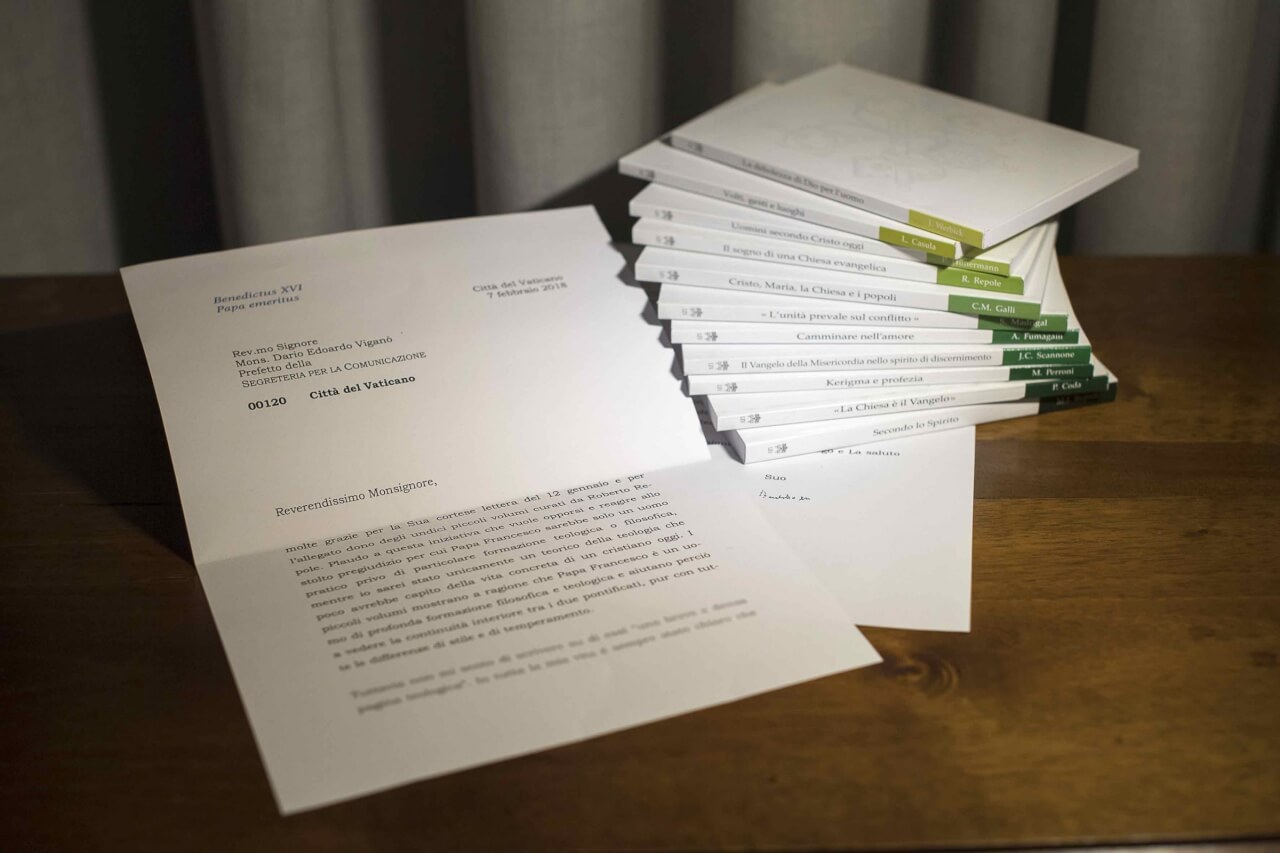




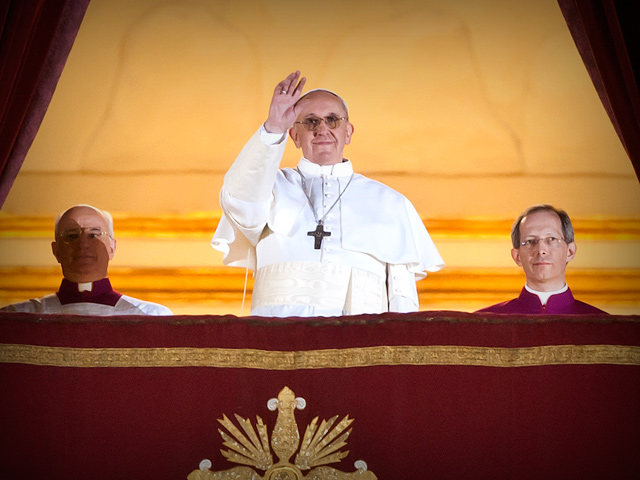
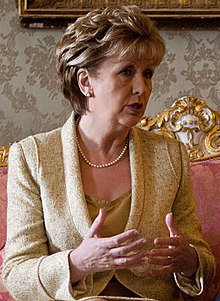



 Since those four articles were published in July, 2017, we have had Pope Francis blaspheme Our Lady at Fatima on her 100th anniversary (



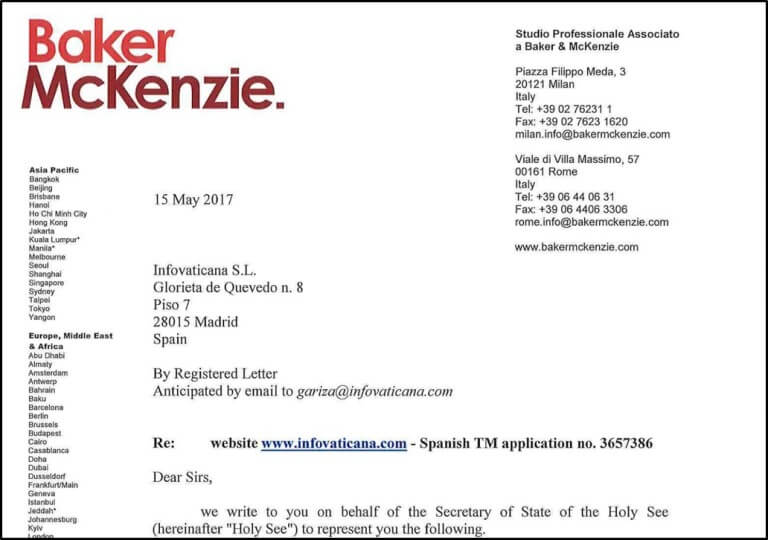 The trouble began two months later, when on May 15, InfoVaticana received a letter from Baker & McKenzie on behalf of the Vatican Secretary of State, Cardinal Pietro Parolin. The letter argued that the crossed keys “represent the symbolic emblem of the Christ Delivering Keys to St. Peter [and] are an integral part of the Emblem,” and when combined with the name “InfoVaticana,” the public may draw the “wrongful and misleading impression that the Website is officially linked or directly managed by the Holy See.” As such, the letter requests that InfoVaticana withdraw its trademark application and cease using the Emblem of the Vatican State and the combined image of InfoVaticana with the crossed keys.






_Side_chapel.jpg)
You must be logged in to post a comment.