ONCE THE BARQUE OF PETER UNTIES ITS MOORINGS TO DIVINE REVELATION AND RESORTS TO CONTEMPORARY MEANS OF EVALUATING REALITY, THE BARQUE WILL FOUNDER

Holding Moral Theory Accountable

Crisis Magazine
{Abyssum}

The death earlier this year of Germain Grisez, the eminent Catholic moral theologian, made me think of the last time I saw something bearing his name in the media. To the best of my recollection, it was an Open Letter addressed to Pope Francis that he and the distinguished legal theorist John Finnis wrote on November 21, 2016. What occasioned the Open Letter was the issuance of the papal document Amoris Laetitia (2016). The concern articulated by Grisez and Finnis was that the misuse of Amoris Laetitia supports errors against the Catholic faith. What the two men do in their Open Letter is identify eight positions which contradict Catholic teaching. My interest is in two of these positions—the ones labelled Position C and Position D.

Position C says that no general moral rule is exceptionless. Even divine commandments forbidding specific kinds of actions are subject to exceptions in some situations. Position D is similar and it holds that divine commandments only express ideals which do not bind us in complex, concrete situations. It is thus morally permissible to act against these divine precepts depending on the circumstances.

The other positions outlined by Grisez and Finnis in their Open Letter—positions A, B, E, F, G and H—are not unimportant for they have to do with sin (A and B), conscience (E), sexual pleasure (F), marriage’s indissolubility (G) and the risk of hell (H). Each one and all of them together are central considerations in Catholic moral theology. What sets positions C and D apart, though, is their connection to an enormously problematical moral theory which makes the misuse of Amoris Laetitia not less but more likely.

While in the prime of his career, Grisez in The Way of the Lord Jesus (1983) deals with the moral theory we call proportionalism. Not only does he describe it there as an appeal to the proportion of good and bad as a basis of moral judgment, but he critiques it as a misconstrual of morality. It undermines the absoluteness of moral norms, he contends, and makes possible the unravelling of unconditional commitments such as are made by spouses in holy matrimony. We must be careful though not to think of proportionalism as some kind of inchoate, arbitrary arrangement which happens to be at the service of moral actors. It really is a conceptual framework or mentality which then is made habitual after repeated personal usage. {Such a habit, dealing as it does with the most serious sins, becomes a vice.}

Proportionalism is, not surprisingly, subject to an exacting assessment in the encyclical Veritatis Splendor (1993). There, Saint John Paul II says that proportionalism cannot be considered a sound moral theory because its precepts are always relative and open to exceptions. The upshot of this mentality, he argues, would be to deny that there is a universally valid objective morality. He goes on to observe that only a morality which acknowledges certain norms as valid always and for everyone, with no exceptions, can guarantee the ethical foundation of society.

There is no getting around the fact that Veritatis Splendor is a re-affirmation of traditional truths in the field of moral philosophy. While Amoris Laetitia is not a work of moral philosophy, its prescriptions for pastoral life are not drawn out of thin air, either. No, they originate with ideas. And ideas have consequences, Richard Weaver reminds us in his book (1948) by this very title. We would all do well to heed this philosophical and practical admonition.

Two months ago, Cardinal Pietro Parolin, the Vatican’s secretary of state, said in an interview that Amoris Laetitia represents a “paradigm shift.” In the aftermath of this characterization by Parolin, the former Prefect of the Congregation for the Doctrine of the Faith, Cardinal Gerhard Mueller, called the idea of a paradigm shift a corruption, not a development. Here, he was following the thinking of Blessed John Henry Newman who judged real doctrinal development according to certain tests. Likewise, George Weigel, the American scholar at the Ethics and Public Policy Center in Washington, D.C., ruled out a paradigm shift because it suggests a rupture with what has gone before it. He too was relying on Newman’s principles of authentic doctrinal development. Newman, we know, held that genuine development is organic and in continuity with the Tradition, not in conflict with it.

Objection to the notion of a paradigm shift also comes from Archbishop Charles Chaput who makes his position clear in an interview last month with the Catholic News Agency. An amplification of his position is found in an article in the March issue of First Things where he writes that the de-coupling of philosophy and theology in our time has produced an historicism. By historicism, he is referring to the enshrinement of one historical epoch over others, and almost always it is the modern era which is given priority. The temptation to “historicize” the truth is noted by Saint John Paul II in Fides et Ratio (1998). In that encyclical, the pontiff contends that historicism makes the odd claim that what was true in one period may not be true in another. As others have already pointed out about Amoris Laetitia, where you live could determine the interpretation and implementation of the document. This arises from the fact that bishops of various local churches have taken various positions on the right meaning of Amoris Laetitia. Now we can say that depending on when you live may determine how Catholic moral theology is to be understood.

A sense of time is utterly decisive for proportionalism. We know this because the proportionalist mindset grew out of what is known as historical consciousness. Against a classical consciousness which holds that there is a constancy to things despite the passage of time, an historical consciousness is premised on the notion that things are always changing—including of course circumstances. So, could this mean that our moral theology now turns on circumstances? Up till now, we could always say that we do not cede to circumstances an authority in moral discernment which human nature and reality have precluded for them.

It is good to recall here that changing circumstances has been a part of the campaign to reverse or modify Catholic teaching on contraception. What was acceptable for spouses fifty years ago regarding the inseparability of life and love in the marital act is no longer acceptable today because of changing circumstances, the argument is made. History evolves and our moral stances evolve too—at least that is what some will try to argue today.

The Catholic position has always been that circumstances do affect moral evaluation, but they cannot be determinative in moral judgment as proportionalists would have us believe. We realize this when we remember that moral theology, like all of theology itself, is centered on the Logos. The Logos entered history in the fulness of time. But time does not make the Logos; the Logos makes time. Making time is not essentially innovative but restorative. Christ redeems us in time so that we can be fit for eternity.

The goal of Catholic moral theology ought to be the illumination of what are perennially valid principles, ones which are true in all circumstances. This way, we will then be able to apply these unchanging principles in such a way that the Lord of history reigns over all circumstances. For it is the eternal Logos who guides us providentially, not circumstantially, through the portals of history unto life on high with him.

(Photo credit: Catholic News Service photo)

Msgr. Robert Batule

By

Msgr. Robert Batule is a priest of the Diocese of Rockville Centre. He is on the faculty of Saint Joseph Seminary in Yonkers where he teaches dogmatic theology. He is the current Editor-in-Chief of the Catholic Social Science Review published by the Society of Catholic Social Scientists.


{I shall be forever indebted to Germain Grisez for his critique of my Dissent from the Statement of the Bishops of Texas on the Withdrawal of Nutrition and Hydration from Comatose Patients which he  made for  me prior to my publication of my Dissent. +Rene Henry Gracida}
Posted in Uncategorized | 1 Comment

A disturbing tactic, under Francis, has become almost routine: A Vatican official who finds himself in a trouble, overreaching himself or flat-out in the wrong, can avoid being held to account by getting the Pope to sign off and place the matter beyond appeal. This is a manoeuvre that’s been deployed more than once by the Secretariat of State, most flagrantly in the putsch it backed against the leadership of the Knights of Malta, which breached both canon and international law. Other departments soon caught on and have followed suit.

Five years on: the paradox of Francis’s papacy

{Abyssum}

The Pope tried to bypass Vatican norms in pursuit of reform. How far has he succeeded?

This week marks the fifth anniversary of Pope Francis’s election. His appearance on the loggia above St Peter’s was a shock to almost everyone. He was not the Pope we were expecting. The world scrambled to catch up, and it took a few hours. In Washington DC, where I was at the time, the initial description of Jorge Mario Bergolio given by the ultra-liberal National Public Radio was that he was a hyper-conservative authoritarian who probably had far-right sympathies in Argentina.

But it did not take long for everyone to realise we had a new Pope with a different style. Right from his famous “good evening” from the loggia, the first days of his pontificate refreshed the image of the papacy as he settled his hotel bill in person and announced he would remain at the Domus Sanctae Marthae guest house instead of moving into the Apostolic Palace.

This somewhat demonstrative humility charmed the world’s press. They hailed him as the simple priest from the far side of the world who would blow through the stale Vatican corridors like a cleansing wind. It was a hope many shared.

It is easy to forget just what a cloud Pope Benedict XVI resigned under. After two instalments of the Vatileaks scandals and the constant background noise of financial corruption and mafia-esque cliques in the curia, Pope Benedict commissioned an enquiry into Vatican governance. The final report, which was for meant his eyes only, supposedly confirmed him in his intention to resign and hand the Herculean task of reform over to a new pope.

The initial signs suggested that Francis was the man for the job. The world expected the new outsider Pope to focus on curial reform, and he seemed ready to think and act on a grand scale. A slew of new committees and departments were created, all of them expressly directed towards wholesale reform.

Francis formed the Council of Cardinals (C9) with the aim of reviewing and renewing not just curial operations but also the Vatican’s entire governing constitution. He created a new Council and Prefecture for the Economy, as well as the Office of the Auditor General, and gave Cardinal George Pell, himself a determined reformer, a mandate to clean up the finances.

Benedict XVI had brought the Church through the worst of the sexual abuse crisis and, thanks to his unflinching willingness to confront past failings and force others to do so, he had seen through significant changes to canon law to prevent any repetition. Conscious of the need to bring about cultural change to accompany legal reform, Francis established the Pontifical Commission for the Protection of Minors and placed the unimpeachable Cardinal Séan O’Malley of Boston at its head.

Just before the family synod in 2015, Francis issued the apostolic letter Mitis Iudex Dominus Iesus, which reformed the process for handling cases of marriage nullity, offering a simpler and faster process for couples with clear-cut cases, and reaffirming that couples in irregular situations needed to be guided to marriage tribunals to have the truth of their situation examined.

Throughout, Francis made good on his intention to remain outside the grasp of handlers and schedulers. He eschewed not only the apartments of the Apostolic Palace, but also the office routine that went along with them. Rather than rely on regular formal meetings with department heads, the Pope preferred informal, even spontaneous encounters in the Domus Sanctae Marthae, and otherwise kept himself to a small circle of advisers both inside and outside the official curia.

As his media image and reach arguably surpassed that of any of his predecessors, he seemed to wear his celebrity lightly, admitting that he had not watched television since 1990, did not use the internet and only read one newspaper a day. He took to holding impromptu press conferences on the papal plane before and after foreign trips, and seemed ready to speak off the cuff in a way no previous pope ever had. It was a style well suited to his message of openness and engagement: this was a pope who wanted to see the Church reach out.

If we could stop here, we might conclude that Francis was the towering reformer we were promised, delivering on every hope we had for him. But, of course, this is not where the story ends. For all the fanfare surrounding new Vatican departments and commissions aimed at cleaning up the curia, the corruption seems, if anything, worse than ever.

From the beginning, Cardinal Pell found himself fighting against vested interests, both personal and structural. While the cardinal had to return to Australia last year, in reality his authority to effect real reform was lost in 2016, when the independent audit of the Vatican finances by PwC was cancelled by the Vatican Secretariat of State. The decision was taken without reference to the Prefecture for the Economy – behind Pell’s back. Yet in all the Prefecture’s work, including the audit, Pell was responsible directly to the Holy Father and not answerable to the Secretariat of State. But before he could respond, the act had been taken to the Pope, who had retroactively approved it.

This was the first example of a disturbing tactic which, under Pope Francis, has become almost routine. A Vatican official who finds himself in a corner, overreaching himself or flat-out in the wrong, can avoid being held to account by getting the Pope to sign off and place the matter beyond appeal. This is a manoeuvre that’s been deployed more than once by the Secretariat of State, most flagrantly in the putsch it backed against the leadership of the Knights of Malta, which breached both canon and international law. Other departments have followed suit.

……

Even as Pope Francis insists on the ongoing need for sweeping reform, as he did again in his address to the Curia last December, the rule of law is breaking down around his ears. Yet, as was also made clear in that address, he does not seem to be aware of it.

Along with many other observers, I believe that Pope Francis neither condones nor is even properly informed of the scandalous behaviour at the Vatican – at least, until it is too late. By isolating himself from the ordinary mechanisms of governance in favour of a “free-range” style of pontificate, Francis has made it far easier than perhaps he realises for people to operate in his blind spots.

As a result of his insulation from both the traditional mechanisms of keeping the pope informed and from the wider media, the Pope’s inner circle have an effective monopoly over what Francis sees and hears. This is something of which they are well aware.

It has become a more or less open secret that, if you have the right friends, the way to get something done in the Vatican is to just get on and do it, then ask for the Pope’s forgiveness, rather than his permission. {The quality of mercy is strained.}

The inner circle’s monopoly is strengthened by Francis’s impatience with long formal meetings. He much prefers brief personal chats and informal briefings, cutting out the formerly regular official updates the pope would receive.

But this aversion to the formal way of doing things is personal as much as structural: five years into his reign, Pope Francis is still suspicious of – and reportedly even downright hostile towards – many of the curial rank and file whom he suspects of not being supportive of him. There is no shortage of stories of relatively minor officials getting a phone call from the Pope, or being hauled before their superiors, for a hint of disloyalty.

This style of governance has consequences. When he was still head of the Congregation for the Doctrine of the Faith (CDF), Cardinal Gerhard Müller was ordered point blank by the Pope to sack three of his best officials. There was no explanation given, or any indication that the Pope even knew what jobs the men had; they simply had to go. Müller protested that they were some of the most capable staff he had and were crucial to clearing the still mountainous backlog of abuse cases handled by the CDF. But it didn’t matter.

If continued financial corruption and curial dysfunction are bad, the re-emergence of sexual abuse scandals has been devastating. Cases like that of Mauro Inzoli, a paedophile who at one point appealed successfully to Francis not to be laicised, underscored how the Pope’s good intentions are abused by those around him, who seem to have sought clemency for friends in the same way they secure approval for questionable acts of governance.

For all the good will behind it, the Pontifical Commission for the Protection of Minors has had a frustrating time. Two of its highest profile members, themselves survivors of sexual abuse, left the commission. One of them, Peter Saunders, did so expressing his frustration at the failure of Church authorities to pay due attention to emerging problems in South America. This very issue came back with a vengeance in the ongoing row over the Chilean Bishop Juan Barros, whom the Pope initially seemed to back to the hilt.

……

The opening towards Communion for the remarried has been the source of the fiercest contention during the last five years. Ever since the family synod in 2014, those who want to see a crack forced in the Church’s perennial teaching on marriage, sexuality and the natural law have been dreaming of a clear moment of victory which has never quite arrived.

First, it was going to be inserted into the the synod’s final report, but that was scuppered by the synod fathers. Then it was definitely going to be laid out clearly in the Pope’s post-synodal exhortation, but Amoris Laetitia went no further than a tortured footnote which could be read any number of ways. Then Francis was going to clarify it himself. But when he was asked directly if fully incorporating the divorced and remarried into the life of the parish meant they could take Communion, he said: “Being integrated into the Church does not mean ‘taking Communion’.”  {Unbelievable !!!  Receiving legitimately the Body and Blood of Jesus Christ is the ultimate sign of being integrated into the Church !!!}

Advocates have had to make do with attempts by various bishops’ conferences to “interpret” Amoris and get the Pope to publicly smile on these. It is a sly campaign of creeping change in practice, if never explicitly in theory. {Excused as just an example of Jesuit ‘discernment’ .}The problem for them is that, absent any actual change in Church teaching, the whole thing rests on the Pope’s tacit support, and therefore his personal credibility. Consequently, there is a whole section of the liberal Catholic establishment and media who cannot be made to notice any scandal, financial or sexual, which might suggest serious problems in Rome.

……

Despite Pope Francis’s clear desire for change, and for all the grand, structurally reforming moves of the last five years, it is hard to point to any measurable progress. In fact, things look worse, not better, in many cases. How is this possible?

The key to understanding Francis is his paradoxical style of governance. He wants to think big, give clear direction and leave it to others to carry through the minutiae. Yet he has kept himself apart, and even at odds with, the very structures and mechanisms which would allow him to work like this.

The small circle on which he has become dependent are far from the loyal friends he needs. Many are now enmeshed in scandals of their own, well past the age of retirement, freelancing their own agendas, or jockeying outright for position at the next conclave.

A zealous reformer and a conscientious, maybe even saintly, priest Francis may be, but as the head of a functioning government, he cuts an increasingly isolated figure. Cardinal Parolin recently spoke of curial reforms as “not so much a matter of structural reforms, with the promulgation of new laws, new norms, personnel appointments and so on. It’s more about the spirit.” That’s hardly the root and branch renewal we had hoped for.

If, as Francis has said, curial reform is “like cleaning the Egyptian sphinxes with a toothbrush”, he can be forgiven for the frustrating lack of progress in the last five years. But unless he dramatically changes the tools he is using for the job, there is little hope that the next five years will be any different.

Ed Condon is a canon lawyer and contributing editor of the Catholic Herald

This article first appeared in the March 9 2018 issue of the Catholic Herald.

Posted in Uncategorized | 2 Comments

THE VIEW FROM EAST OF EDEN: GOD PROMISED US A LIFE FREE FROM SUFFERING AND PAIN, DIDN’T HE? SO LET’S KILL THEM!

258d6-four-horsemen

Professor Supports Euthanizing Disabled Children Because “Parents are Harmed Seeing Their Child Suffer”

NATIONAL   WESLEY SMITH   MAR 6, 2018   |   11:28AM    WASHINGTON, DC

The U.S. assisted-suicide movement pretends to want a limited legalization of assisted suicide to competent adults with a terminal illness.

That’s not true. It’s just the expedient to persuade us to accept the premise that suicide or killing is an acceptable solution to human suffering.

If we ever do that — the jury is still out — then, the killing license thereby granted will not only expand way beyond the terminally ill, but will eventually also include children and the incompetent.

The evidence of this isn’t hard to find. Case in point. Pediatrics asked Dutch and American bioethicists whether they would support repealing all age limits for euthanasia in the Netherlands — as the Belgians already have. (Currently, euthanasia in the Netherlands is legal starting at age 12.)

If American advocates were serious about their espoused limits, they would be appalled by the existing Dutch law, and even more so by the Pediatricshypothetical proposal.

But at least one prominent U.S. proponent — Margaret P. Battin, a favored source on the issue for the New York Times and other mainstream media outlets — is enthusiastically in favor of the Dutch doing away with all euthanasia age limits. From her comment:

I generally support [the] change in Dutch law governing eligibility for euthanasia.‍ Given that euthanasia is currently legal for infants <1 year of age and children and adults >12 years of age, I believe that opponents would have to show evidence that at least 1 and perhaps many of the following propositions are true if they are to persuade you [a hypothetical Dutch health minister] not to support the change in the law:

Battin lists several propositions, including:

That parents aren’t harmed by seeing their children suffer.

In other words, children should be put out of the parents’ misery:

That pediatricians can’t understand the difference between killing a healthy, curable child and hastening a bad death that is already in progress.

Except that Dutch law does not require a terminal illness to be killed. Indeed, the infanticide-allowing Groningen Protocol — it isn’t technically legal, but is virtually never punished — specifically does not require that the killed baby be otherwise dying. In fact, under the Protocol, serious disabilities justify infanticide.

That allowing this practice would lead to wholesale killing of children from 1 to 12 years of age.

SUPPORT LIFENEWS! If you like this pro-life article, please help LifeNews.com with a donation!

In other words, killing would only be wrong if it amounted to a pogrom against seriously ill or disabled children. Good grief.

That it is always wrong to end a life.‍ (Proponents of this view would need to address situations such as killing in war, killing in self-defense, killing in defense of others, and [more controversially] capital punishment; they would also need to oppose current laws in the Netherlands that allow euthanasia for children <1 year of age and adults >18 years of age.

So, since babies and children age 12 and up can be killed, the Dutch should go all-in. Or to put it another way, once a society starts down Euthanasia Road, there is no stopping.

Battin’s radical proposals aren’t usually made by U.S. assisted-suicide proponents because they know that our society has not completely swallowed the hemlock (as has the Netherlands). If we ever do, we will go exactly to the dark place that country has gone over the last few decades — just as Battin advocates.

It’s a very big deal that a respected Dutch medical journal such as Pediatricshosted a debate on the ethical propriety of child euthanasia without international criticism. It means that among the medical intelligentsia, child euthanasia has become a respectable proposition.

For those with eyes to see, let them see.

LifeNews.com Note: Wesley J. Smith, J.D., is a special consultant to the Center for Bioethics and Culture and a bioethics attorney who blogs at Human Exeptionalism.


Posted in Uncategorized | 1 Comment

HERE IS TODAY’S LITTLE DOSE OF SATIRE TO HELP YOU LIVE PEACEFULLY THROUGH ANOTHER DAY OF THIS MADNESS

Eccles and Bosco is saved


How social media bring people to the Catholic Church

Posted: 07 Mar 2018 04:39 AM PST

In the news this week is Youtuber (whatever that is) Lizzie Estrella Reezay, who has announced her conversion to Catholicism. Apparently, social media are bringing in converts by the zillion: this blog will try and discover why.Lizzie Estrella Reezay

“I owe it all to reading the Eccles blog.”

Says one convert, “I feel that the Catholic Church is truly united behind Pope Francis at present. There is a general sense of well-being. He has solved the problems of China, by allowing them to appoint their own bishops, and probably the next Pope as well. He has waved his hand and made all the sex and financial scandals vanish into thin air. He has written a document on marriage and the family, Amoris Laetitia, that everyone can agree on. He has made some brilliant appointments of cardinals, by choosing the most unlikely people! What a time to be alive!”

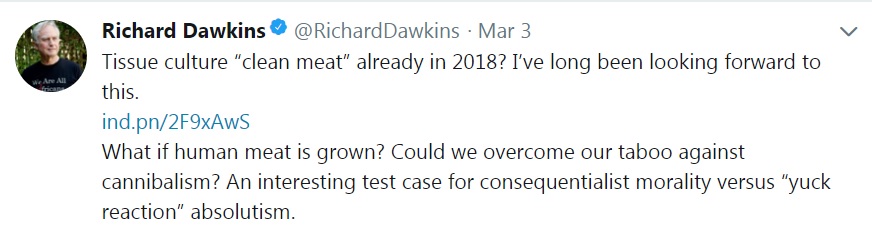
Dawkins tweet

“I’ll have the shepherd’s pie, made with real shepherds.” No wonder people would rather be Catholics.

Said another convert, “I like the way new Catholics are made welcome. Austen Ivereigh – surely one of the giants of Catholic journalism – has described us as neurotic, and he is spot on! Then there’s Professor Doctor Doctorior Doctorissimus Massimo Faggioli, a man whose knowledge of Catholic theology since 2013 (when the subject was invented) is second to none: he has warned us against conservative converts, and quite right too. Apparently the Catholic catechism will soon contain a section explaining that we should support Marxism, and that’s only fair.”

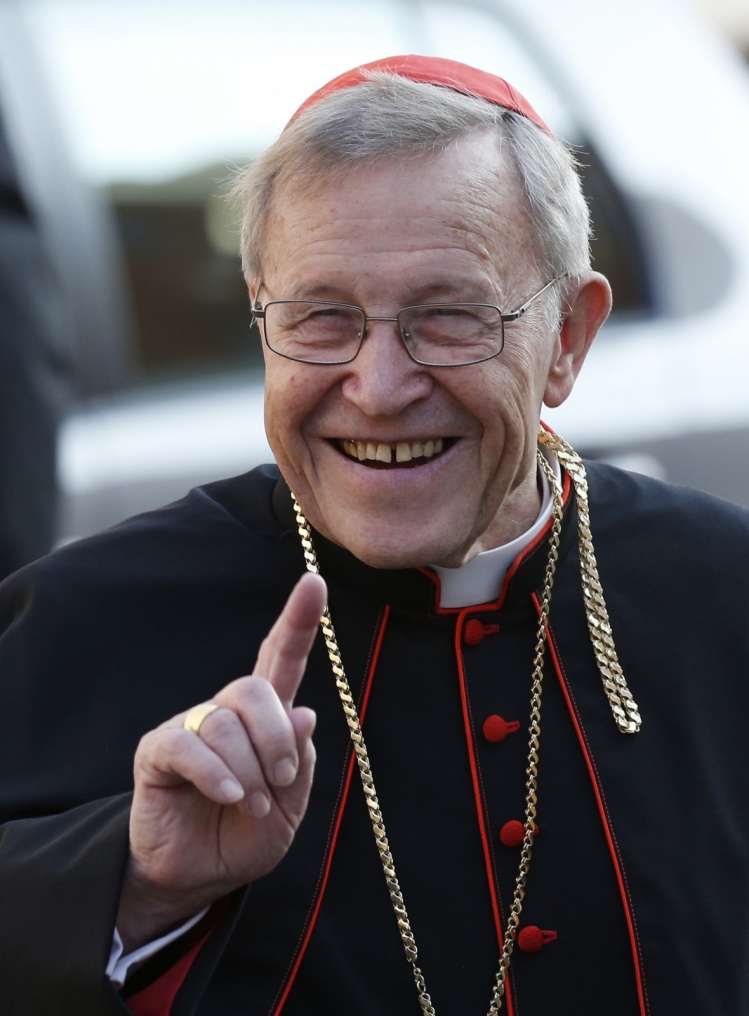
Kasper

“Walter Kasper is my hero. A pillar of orthodoxy and traditional teaching.”

Another convert spoke of the powerful work of Father James Martin LGBTSJ in driving people into the Catholic Church. “His new book, Digging a hole, is pure genius, and explains how we should all strive to go downhill. As explained in the papal encyclicals Facilis descensus Averno and Lasciate ogne speranza, voi ch’intrate, there is wide path that we can all follow, paved with good intentions, and this is the way he wants Catholics to go.”

But why do people rely on social media for their spiritual nourishment? Instead, could the Catholic Church not appoint people as leaders – you know, generally-respected shepherds of the sheep, who could give guidance? We would expect such people to speak out on issues of public concern. I’ve even thought of a name for them – bishops!

chess bishop

A bishop, showing leadership.

No, there’s no hope there, and so people are driven to social media for guidance.

A final word from another convert: “In the end, the most effective tool for Evangelisation is surely the Eccles blog. Pope Francis is a regular reader of his “How to be a good pope” advice column; Peter Hitchens has never been the same since it was pointed out to him that Queen Elizabeth I martyred Catholics; Antonio Spadaro hangs on his every word. It can’t be long before these three people (and many others) come out as Catholics.” He’s right, you know.

Posted in Uncategorized | 1 Comment

WAKE UP: YOUR FREEDOM IS THREATENED BY THE VERY SOCIAL MEDIA YOU HAVE COME TO REGARD AS REPRESENTATIVE OF THE NEW FREEDOMS


MICHAEL L. BROWN

Featured Image
‘Googleplex,’ Google Headquarters, Mountain View, California. achinthamb / Shutterstock.com

BLOGS

Radical leftist group is helping YouTube ‘flag’ content. Here’s why that’s concerning

March 6, 2018 (LifeSiteNews) – I have never been a fan of Alex Jones and Infowars, and I strongly reject some of the conspiracy theories Jones has put forth. But if it is true that his channel could be removed from YouTube, we should not ignore this, whether we are on the left or right or in between, especially since the Daily Caller reported that, “YouTube is getting help from the left-wing Southern Poverty Law Center (SPLC) in its effort to identify extremist content.”

The SPLC? I would honestly have a hard time coming up with a major organization that I would trust less than the SPLC to help YouTube, an organization rightly branded an anti-Christian hate group.

Writing for Polygon.com, Julia Alexander noted that, “Whenever YouTube institutes a tougher moderation stance, a common debate emerges over censorship — especially from notable conservative voices.”

Specifically, she explained, “Questions over YouTube’s moderators and the power they hold were raised this week after notable conservative pundits, gun advocates, conspiracy channels and other right-wing voices received community strikes or were locked out of their channels. Creators who are affected by lockouts, strikes and suspensions are referring to it as the ‘YouTube Purge,’ claiming that YouTube is purging all right-wing or pro-gun content. The move follows the company’s attempt to clamp down on dangerous content following the Parkland shooting.”

To be sure, YouTube must do a careful balancing act, removing certain content without infringing on lawful free speech. And some content should be removed. For example, does anyone think that someone should have the “right” to post a map to your house with pictures of your family, replete with false accusations against you and a call to burn your house down? Obviously not.

But the so-called “YouTube Purge” raises many concerns, even if Jones has not accurately represented his own situation in every detail.

In the 1980’s, a broad coalition from the left and right came together in support of Rev. Sun Myung Moon and the Unification Church after he was found guilty on three counts of willfully filing false Federal income tax returns and one count of conspiracy.

Among those filing briefs in defense of Moon were the Center for Law and Religious Freedom, the ACLU, and the National Bar Association, while leaders who vocally stood with Moon after he was imprisoned included conservatives like Jerry Falwell, liberals like Joseph Lowery, Harvard professor Harvey Cox, Senator Eugene McCarthy, and many others.

It was quite an unlikely coalition, and it was equally surprising to see evangelicals and liberals rally around Rev. Moon. Both sides had ample reasons to reject him and his cult, but there were larger issues at stake, and these leaders recognized that the threat to Moon was a threat to others as well.

Wikipedia notes that, “A United States Senate subcommittee, chaired by Senator Orrin Hatch, conducted its own investigation into Reverend Moon’s tax case and published its findings in a report which concluded:

‘We accused a newcomer to our shores of criminal and intentional wrongdoing for conduct commonly engaged in by a large percentage of our own religious leaders, namely, the holding of church funds in bank accounts in their own names. Catholic priests do it. Baptist ministers do it, and so did Sun Myung Moon.’”

And, Sen. Hatch noted, “I do feel strongly, after my subcommittee has carefully and objectively reviewed this case from both sides, that injustice rather than justice has been served. The Moon case sends a strong signal that if one’s views are unpopular enough, this country will find a way not to tolerate, but to convict. I don’t believe that you or I or anyone else, no matter how innocent, could realistically prevail against the combined forces of our Justice Department and judicial branch in a case such as Reverend Moon’s.”

The case was of such concern that Regnery, a leading conservative publisher, released a book by Carlton Sherwood titled, Inquisition: The Persecution and Prosecution of the Reverend Sun Myung Moon.

Hatch’s cautionary words can be repeated with regard to Infowars and others today: “if one’s views are unpopular enough, this country will find a way not to tolerate” – or even “to convict.”

Prager U is currently in a legal battle with YouTube, and their web page announcingthe lawsuit begins with a quote from former California Governor Pete Wilson: “This is speech discrimination plain and simple, censorship based entirely on unspecified ideological objection to the message or on the perceived identity and political viewpoint of the speaker.”

Many others have voiced complaint with YouTube’s uneven, censorious policies, and on a weekly (or, daily basis), my organization has to request the review of videos on the AskDrBrown YouTube page after they are flagged as being Not Suitable for Most Advertisers.

I’m not sure if we have trolls complaining about our videos or if it’s just part of YouTube’s very flawed system, but something is obviously wrong when YouTube flags and demonetizes videos like “What Made Billy Graham Special” and “A Common-Sense Discussion About Guns and Gun Control” and “Overcoming Hatred with Love; and How Christians Can Regain Credibility in America.”

And all the while, YouTube allows vile, hate-filled, incendiary videos from the left to proliferate. Some would even argue that they promote such leftist videos, while demoting (or demonetizing or blocking or removing) videos which express a contrary, conservative point of view.

Indeed, Jim Hoft on Gateway Pundit is now reporting that “Google-YouTube is shutting down prominent conservative and right-leaning channels” and that “Google-YouTube is also blocking conservative channels — Like the Official Gateway Pundit channel — from posting.”

Not only so, Hoft states that, “Google is also altering search results to portray far left websites and organizations as conservative. Today [March 4] if [you] search Google for a list of pro-life organizations you get this…Google lists Planned Parenthood as the top Pro-Life website.”

As ridiculous as this sounds, this is no joke, and it is similar to what recently happened to Pamela Geller and Robert Spencer and others who warn against radical Islamic jihad.

And so, whether you’re an Infowars fan or you find their work distasteful, their potential removal from YouTube should concern you.

Otherwise, soon enough, we’ll have our own version of Martin Niemöller’s famous poem, which will now sound something like this:

First they came for Infowars, and I did not speak out—because I found them offensive.
Then they came for Geller and Spencer, and I did not speak out—because I found them obnoxious.
Then they came for Prager U, and I did not speak out—because I found them opinionated.
Then they came for a host of others, and I did not speak out—because I have my own life to live.
Then they came for me—and there was no one left to speak for me.

++++++++++++++++++++++++++++++++++++++++++++++++++++++++++++++++++++++++++++

Michael L. Brown

Follow Michael…

Dr. Michael L. Brown is a national and international speaker on themes of spiritual renewal and cultural reformation, and host of the nationally syndicated Line of Fire radio program. He and his wife Nancy, both Jewish believers in Jesus, have been married since 1976. They have two daughters and four grandchildren.

He became a believer in Jesus 1971 as a sixteen year-old, heroin-shooting, LSD-using Jewish rock drummer. Since then, he has preached throughout America and around the world, bringing a message of repentance, revival, reformation and cultural revolution. He holds a Ph.D. in Near Eastern Languages and Literatures from New York University and has served as a visiting or adjunct professor at Southern Evangelical Seminary, Gordon Conwell Theological Seminary (Charlotte), Trinity Evangelical Divinity School, Fuller Theological Seminary, Denver Theological Seminary, the King’s Seminary and Regent University School of Divinity.

Dr. Brown is the author of more than 25 books, including Our Hands Are Stained with Blood: The Tragic Story of the “Church” and the Jewish People, which has been translated into more than twelve languages, the highly acclaimed five-volume series, Answering Jewish Objections to Jesus, a commentary on Jeremiah (part of the revised edition of the Expositor’s Bible Commentary), and several books on revival and the Jesus revolution. His newest books are Outlasting the Gay Revolution: Where Homosexual Activism Is Really Going and How to Turn the Tide (2015), The Grace Controversy: Answering 12 Common Questions about Grace (2016), Breaking the Stronghold of Food (2017), and Saving a Sick America: A Prescription for Moral and Cultural Transformation (2017).

Posted in Uncategorized | 1 Comment

I URGE YOU TO WATCH THIS YOUTUBE OF GOVERNOR BEVIN OF KENTUCKY

h5_1975


http://www.kentuckynewera.com/multimedia/video/news/youtube_c2674705-960f-52ed-b8d8-9d2c34d514e4.html

Posted in Uncategorized | 2 Comments

IF YOU WANT TO KNOW WHAT INSANITY IN ACADEMIA LOOKS LIKE, TAKE A LOOK AT JESUIT MARQUETTE UNIVERSITY

Muzzled Academic’s Free Speech Defended by Public Interest Law Firm in Wisconsin Supreme Court

Thomas More Society Challenges Marquette University Punishment of Professor Who Spoke Out

Contact: Tom Ciesielka, 312.422.1333, tc@tcpr.net


(March 7, 2018 – Madison, WI) Thomas More Society attorneys filed an amicus curiae (“friend of the court”) brief today in a Wisconsin Supreme Court case, John McAdams v. Marquette University. The lawsuit involves a Marquette University professor who was punished for exercising his free speech rights in defense of an undergraduate student who was berated for expressing his opinion on same sex marriage.


The Thomas More Society brief supports Dr. John McAdams, a professor at the Catholic university in Milwaukee, Wisconsin, for more than 30 years. Dr. McAdams, a vocal conservative, found himself suspended after writing a personal blog post critical of an incident that he viewed as a retreat from the school’s Catholic tradition.


Dr. McAdams came to the defense of an undergrad student who approached the graduate student instructor after a Philosophy of Ethics class in 2014. The student explained that he did not favor same-sex marriage and was dismayed that the teacher had not allowed discussion of a viewpoint questioning same-sex marriage during class. The instructor told the student that she considered his opinion homophobic and therefore out of bounds.


Viewing this as an attack on academic freedom, Dr. McAdams, wrote, “Like the rest of academia, Marquette is less and less a real university. And when gay marriage cannot be discussed, certainly not a Catholic university.”


The school chose to view Dr. McAdams’ action as “harassment” of the graduate student, rather than as defense of the undergraduate student and as advocacy for free discussion at the university. A university spokesman said that the school would “not tolerate harassment and will not stand for faculty members subjecting students to any form of abuse, putting them in harm’s way.”


Marquette suspended Dr. McAdams without pay, ordered him to apologize, and stripped him of tenure, in violation of his contract, in which it promised to respect his “rights guaranteed by the United States Constitution.”


Andrew Bath, Thomas More Society Executive Vice President and General Counsel, highlighted the main points of the amicus brief. “Dr. McAdams is entitled to express his opinions on matters of public concern in an extracurricular public forum, even if they involve what happens at the university. The right to disagree on matters of public concern is protected by the First Amendment and by academic freedom, which the university agreed to respect in its contract with Dr. McAdams.  For the university to punish faculty members like McAdams for their speech on public issues amounts to an exercise in censorship, which contradicts the university’s commitment to academic freedom and violates the clear terms of Dr. McAdams’ contract of employment with Marquette,” he explained.


Read the amicus curiae submitted to the Wisconsin Supreme Court in John McAdams v. Marquette University, filed March 7, 2018 by Thomas More Society attorneys here [https://www.thomasmoresociety.org/wp-content/uploads/2018/03/180307-TMS-McAdams-Amicus-Brief-File-Stamped-Version.pdf].


About the Thomas More Society

The Thomas More Society is a national not-for-profit law firm dedicated to restoring respect in law for life, family, and religious liberty. Headquartered in Chicago and Omaha, the Thomas More Society fosters support for these causes by providing high quality pro bono legal services from local trial courts all the way up to the United States Supreme Court. For more information, visit thomasmoresociety.org

Posted in Uncategorized | Comments Off on IF YOU WANT TO KNOW WHAT INSANITY IN ACADEMIA LOOKS LIKE, TAKE A LOOK AT JESUIT MARQUETTE UNIVERSITY

0UR FATHER, WHO ART IN HEAVEN, HALLOWED BE THY NAME; THY KINGDOM COME, THY WILL BE DONE ON EARTH AS IT IS IN HEAVEN. GIVE US THIS DAY OUR DAILY BREAD, AND FORGIVE US OUR TRESPASSES, AS WE FORGIVE THOSE WHO TRESPASS AGAINST US; DO NOT PUT US TO THE TEST AND DELIVER US FROM EVIL.

Settimo Cielodi Sandro Magister

“Pater Noster,” No Peace. The Battle Begins Among the Translations

Francesco


“This not a good translation,” Pope Francis snapped, in commentingon television last December 6 on the translation used in Italy for the phrase of the “Pater noster” that in Latin reads: “Et ne nos inducas in tentationem.”

In Italy, the translation that is recited or sung during Masses is patterned on the Latin almost to the letter: “E non c’indurre in tentazione.” Just like the English version used in the United States: “And lead us not into temptation.”

And this is precisely the kind of version that Francis does not like. The reason – he explained in front of the cameras of TV 2000, the channel of the Italian bishops, miming the gesture of pushing and knocking down (see photo) – is that “it is not He, God, who knocks me into temptation, to see afterward how I have fallen. No, the Father does not do this, the Father helps us to get up right away. The one who leads us into temptation is Satan. The prayer that we say is: When Satan leads me into temptation, You, please, give me a hand.”

Vice-versa, the pope does like – and has said so – the new translation in use since last year in France and in other French-speaking countries: “Et ne nous laisse pas entrer en tentation,” which replaced the previous one: “Et ne nous soumets pas à la tentation” which in its turn is similar to the one currently in use in various Spanish-speaking countries, including Argentina: “Y no nos dejes caer en la tentación.”

In Italy, the episcopal conference will meet in an extraordinary assembly from November 12 to 24 precisely to discuss whether or not to introduce into the “Our Father” in the Mass the new version that for years has been part of the official Italian translation of the Bible: “E non abbandonarci nella tentazione.”

But after the pronouncement that Francis has already made, it could be said that the outcome of the discussion has already been decided from the outset – “Roma locuta, causa finita” – with the guaranteed, upcoming insertion into the Italian missal as well of the translation that has already been put into the Bible and is surely more agreeable to the pope.

And yet no. It is not really a given that it will end up like this. Because meanwhile Rome has spoken again. And has laid out a different solution.

It was not the pope himself who spoke this time, but it was close enough. The speaking voice, in fact, is one close to him, very close and at times even one and the same: that of “La Civiltà Cattolica.”

In the magazine directed by Francis’s Jesuit confidant, Antonio Spadaro, another Jesuit, the illustrious biblicist Pietro Bovati, has published an article entirely dedicated to none other than the analysis of the “difficult” question: “Et ne nos inducas in tentationem.”

In the first half of the article, Bovati explains how in effect this prayer to the heavenly Father has raised interpretative difficulties in Christian history. And it shows how authoritative Fathers of the Church such as Ambrose, Augustine, and Jerome tended to interpret it in this sense: “Do not allow us to enter into and/or succumb to temptation,” or: “Do not abandon us to/in temptation.” That is, precisely “in the direction in which the modern translations incline.”

Except that, having come to this point, Bovati unexpectedly pivots. And he declares that he wants to propose a new translation. Which does not coincide at all with the one that in Italy would seem to be on the verge of becoming official, nor with those already in use in France, in Argentina, and in other countries.

The new translation that Bovati proposes and strongly substantiates is: “E non metterci alla prova.”

In support of this translation, he explains that the word “prova” [“test/trial”] is much more faithful than “temptation” to the original Greek “peirasmos.” This because in the New Testament “to tempt” has the malevolent meaning of wanting to make someone fall through seduction or deceit, while the “prova” or putting to the test is in the entire Bible that which God does with man, in various moments and in sometimes unfathomable ways, and is what Jesus experienced to the highest degree in the Garden of Olives before the passion, when he prayed in these words: “My Father, if it be possible, let this cup pass away from me!”

“So this is not a matter,” Bovati writes, “of praying to the Father exclusively for the sake of being capable of overcoming temptations and defeating the seductions of the Evil One, something that is certainly necessary, but also of beseeching the good God that he may grant his help to one who is small and fragile, so as to make it through the night without getting lost. Let us think of all those who turn to God asking for healing, and let us also think of the many requests that we repeat on a daily basis, employing the formulas of the Psalms or of the liturgical prayers, let us think finally of how many invocations are hidden in our hearts when we perceive a danger, or are struck with anxiety for the future, or have already been touched by some symptom of evil. So then, this variegated form of requests to the Lord is entirely summed up and as it were condensed in a single petition, that which says: “Do not put us to the test.”

Bovati’s article is worth reading in its entirety. And who knows if the Italian bishops may not take it to heart, when next November they are deciding what is to be done.

With one last observation, of a musical nature. The words: “E non metterci alla prova” would fit to perfection the classical melody of the chanted “Padre nostro.” Something that is impossible, instead, with the unwieldy “E non abbandonarci nella tentazione” that is in danger of being approved.

(English translation by Matthew Sherry, Ballwin, Missouri, U.S.A.)

{In all of the arguments for changing the translation of et ne nos inducas in tentationem I have found no reference to Matthew 4,1 where Tunc Jesus ductus set in desert a Spiritu, ut tentaretur a diabolo, which is translated in our Liturgy for the First Sunday of Lent, “At that time Jesus was led by the Spirit into the desert, to be tempted by the devil.”

It is clear that God/the Holy spirit is not leading Jesus into temptation, he is leading Jesus into the desert where he will be put to the test in his humanity by the temptations offered by the devil.

Familiar as we all are with those opening words of the Gospel for the First Sunday of Lent  who but Francis and others obsessed with mercy, could understand those words to mean that God Himself is doing the tempting?  Granted that no one is happy that God puts man to the test from time to time, yet we should not be surprised that God does this since the Old Testament indicates that from the time of Adam and Eve we humans have been tempted with our own fruit of the tree of the knowledge of good and evil.

I for one would vote “no” (if I had a vote, which I will never have as a retired Bishop) in the proposal to rewrite the translation of the Lord’s Prayer.  But if there has to be a change, I like the proposal of Father Bovati.}


Posted in Uncategorized | Comments Off on 0UR FATHER, WHO ART IN HEAVEN, HALLOWED BE THY NAME; THY KINGDOM COME, THY WILL BE DONE ON EARTH AS IT IS IN HEAVEN. GIVE US THIS DAY OUR DAILY BREAD, AND FORGIVE US OUR TRESPASSES, AS WE FORGIVE THOSE WHO TRESPASS AGAINST US; DO NOT PUT US TO THE TEST AND DELIVER US FROM EVIL.

HERE IS WHY I ONLY USE FACEBOOK TO MAKE MY ABYSSUM POSTS AVAILABLE TO THOSE POOR SOULS WHO DO NOT SUBSCRIBE (ITS FREE) TO ABYSSUM.ORG


 To others of MY generation who still DO NOT and canNOT comprehend WHY FACEBOOK even exists… orrrr … what kind of people regularly use it, here’s what I’m doing to gain better understanding:  

I am trying to make new “friends” without using FACEBOOK… BUT… while applying the SAME principles…

Every day I walk down the street and tell passers-by…   WHAT I have eaten….   HOW I feel at the moment….   WHAT I have done the night before… WHAT I will do later…    and WITH WHOM.

I give them pictures of my family…  my dog…   and …   of me gardening…   taking things apart in the garage…   watering the lawn…  

standing in front of landmarks…   driving around town…   having lunch…   and doing what anybody and everybody does every day.

I also listen to their conversations and then give them the “thumbs up” !!   ANNND … THEN …I tell em’ …  I “like” them !!! 🙂

ANNNNNNNND …  IT WORKS !!!!

I already have FOUR people following me ! 🙂 … Two police officers…   a private investigator…   and a psychiatrist.;-)

Hat Tip: David Best

Posted in Uncategorized | 5 Comments

One in two: that is the current number of children in the U.S. who are being raised by both their married biological parents throughout their childhood.

notre_dame_paris

Only half of US children are being raised by their married parents

Credit: vladgphoto/Shutterstock.

.- One in two: that is the current number of children in the U.S. who are being raised by both their married biological parents throughout their childhood.

“This figure is based on the proportion of 17-and-18-year-old high school students who were reported to be living with both their married birth mothers and biological fathers in 2016,” noted a report issued by the Institute for Family Studies.

“The fact that they were still living in such families at the culmination of their schooling means that the vast majority of them grew up in them since birth,” the report continued.

The Feb. 27 report was authored by researchers Nicholas Zill and W. Bradford Wilcox, and published by the Institute of Family Studies. It analyzed data from a survey released by the U.S. Department of Education.

With lower marriage rates in the U.S., declining rates of children living with married parents are not a surprising find for researchers.

However, the study considered the numbers in light of several different factors, particularly including education and race.

“Among high school seniors whose parents or guardians had a college education or more, 64 percent lived with married parents throughout childhood in 2016,” the study noted.

“The more education a woman or man has, the more likely she or he is to get married and stay married when raising children.”

Only 29 percent of children whose parents or guardians had less than a high school education still lived with married parents from their birth through the end of high school.

Race was also examined in the study. Asian-American children were found to be the most stable group, with two-thirds of them living with married parents throughout their childhood. Fifty-eight percent of white children could say the same.

However, less than one-quarter of African-American children experienced a married, two-parent household, and only 45 percent of Hispanic children grew up with married parents. The study noted an additional multiracial group, of which 35 percent experienced a childhood with both married parents.

The report also examined the 50 percent of children who did not grow up with both married parents.

Overall, 23 percent of children were raised by only their birth mother. Eleven percent were raised by a birth parent and a stepparent. Six percent were raised by their birth father only. And the other 10 percent were mixed between grandparents, foster care, cohabiting birth parents, adoption, and same-sex couples.

The report also highlighted the “abundant evidence” that children fare better when both of their biological, married parents raise them throughout childhood.

“As shown in numerous analytic studies, students with stably-married parents are more likely to do well in school and less likely to cut classes, repeat grades, be suspended or expelled, or drop out,” the report said.

“Rich or poor, this is a type of advantage which parents from all social classes can bestow upon their children: the privilege of growing up in a stable, married two-parent family.”

The authors advised that American society would do well to place more efforts in promoting the marital privilege of parents for children in the country, saying the success and future of children will depend on it.

“Because the type of family in which children are raised matters a great deal to their well-being and future success, we should seek ways to enable less-educated and less-affluent parents to raise their children together in a stable family.”

Tags: Marriage, Family, Catholic News, Children, Parents

Posted in Uncategorized | 1 Comment