IF THIS IS TRUE, JOIN ME IN CHANTING THE TE DEUM THIS SUMMER

Featured Image
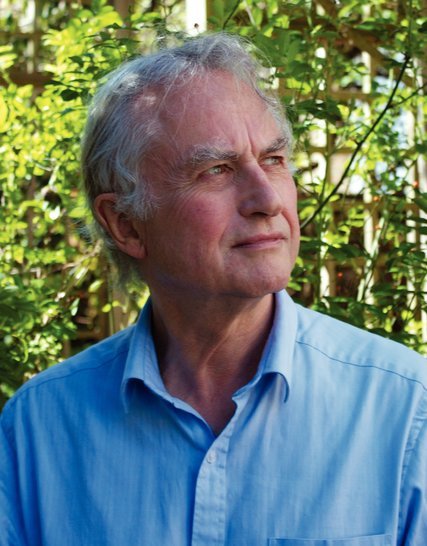
Supreme Court Justice Anthony Kennedy
Claire ChretienClaire ChretienFollow Claire

NEWS

Republican senator: pro-abortion Supreme Court Justice Anthony Kennedy will retire this summer

LAS VEGAS, Nevada, March 9, 2018 (LifeSiteNews) – Sen. Dean Heller, R-NV, who has drawn the ire of pro-lifers and pro-abortion advocates for seemingly flip-flopping on life issues, predicts anti-life-and-family Supreme Court Justice Anthony Kennedy will retire this summer.

Heller made this prediction at a private event last week from which Politico obtained audio.

“Kennedy is going to retire around sometime early summer,” he said. “I’m hoping [that] will get our base a little motivated because right now they’re not very motivated. But I think a new Supreme Court justice will get them motivated.”

Heller suggested pro-life Sen. Mike Lee, R-UT, might be a replacement for Kennedy.

In April 2017, Heller promised to “protect Planned Parenthood,” saying he has “no problem” funding it. He then backtracked this statement.

Then in September 2017, Heller was one of four senators who introduced an Obamacare replacement bill that would have defunded the abortion company.

Planned Parenthood is targeting Heller – labeled by Politico “the most vulnerable Republican senator in the country” – as he runs for re-election. The abortion company is pouring $20 million into the 2018 midterm elections in a campaign they are calling “March. Vote. Win.”

Kennedy, a Catholic, has delivered rulings defending abortion.

In Planned Parenthood v. Casey, which upheld legalized abortion, he infamously joined the majority opinion that contended: “At the heart of liberty is the right to define one’s own concept of existence, of meaning, of the universe, and of the mystery of human life.”

Kennedy is also known for his sympathy to the homosexual cause. It was Kennedy who authored the Supreme Court’s majority opinion in Obergefell v. Hodges, the 2015 case that imposed same-sex “marriage” across the U.S.

He has delivered three major rulings on the gay issue, all released on June 26 of different years: Lawrence v. Texas, United States v. Windsor, and Obergefell.

In Obergefell, Kennedy wrote, “Marriage responds to the universal fear that a lonely person might call out only to find no one there.”

Ever since President Trump took office, there have been persistent rumors about Kennedy retiring.

Kennedy was appointed by President Ronald Reagan.

Related: 

Justice Kennedy: Christians with convictions resigned under Hitler and they should today too

Posted in Uncategorized | 2 Comments

YOU CANNOT HOLD A CANDLE TO THIS!

ASK FATHER: Mass without proper gear? Pusillanimous stingy ignorant pride.

From a reader…

QUAERITUR:

can you have catholic mass without candles

The THE GENERAL INSTRUCTION OF THE ROMAN MISSAL – says the following

307. The candles, which are required at every liturgical service out of reverence and on account of the festivity of the celebration (cf. no. 117), are to be appropriately placed either on or around the altar in a way suited to the design of the altar and the sanctuary so that the whole may be well balanced and not interfere with the faithful’s clear view of what takes place at the altar or what is placed on it.

First, sit a little closer to your keyboard so that you can reach those punctuation keys.

Candles must be used for Mass.  That’s clear.

What’s also clear that is Mass can be celebrated without them.  Absolutely required are the properly ordained priest and valid matter for the Eucharist.  Vestments and candles and so forth are required by the rubrics, but if they are lacking, Mass could still be celebrated validly.

Analogously, even though you sent a mere sentence fragment with no capitalization or punctuation, I understood that you were trying to ask a question.  It didn’t show much respect for orthography or the reader, but even in it’s minimalist form it eked out its message.  Similarly, neglecting to use proper vestments, vessels, candles, etc., could “get the job done” in a minimal sense of what is required, but it shows little respect for our Catholic identity, which is tied up with our rites, or for the congregation, who deserve care and true liturgical worship.

That said, writing an email is one thing, while the Church’s sacred liturgical rites for the most precious thing we have, the Eucharist, is quite another.  The former is not nearly as weighty as the latter.

If in some situation where there are no candles available, or the wind or other conditions are such that it would be impossible to use them, Mass could still be celebrated, and celebrated reverently provided we do our best.  The same goes for certain vestments for Mass or other accoutrement.  Think about a windy deck of a battleship steaming across the Pacific to face the Japanese fleet or in the Channel heading for France.

That doesn’t justify not using candles under normal circumstances.

The refusal to use proper furnishings for Mass, to use candles and proper vestments, etc., is a sign of spiritual immaturity and pride, a pusillanimous stinginess that knows nothing of what is being wrought in the sacred liturgical action.

You can’t use what you don’t have, and you are not bound to the impossible.  But we are bound to do our best. Ultra posse nemo obligatur.

Look how these men did their best. Do you think for a moment that they would have said, “Candles? Nah!”, if they had them and could light them?

Hey! Look! Candles!

About Fr. John Zuhlsdorf

Fr. Z is the guy who runs this blog. o{]:¬)

2 Responses to ASK FATHER: Mass without proper gear? Pusillanimous stingy ignorant pride.

  1. frjimt says:

    One of our priests, recently deceased, Msgr Joe Dooley, had a picture of him celebrating Holy Mass on the front of a jeep during the 2nd World War. Having visited with him while serving with the Bishop, he delighted in recounting the joy of bringing the sacraments to the soldiers in wartime. He would always use candles, even if the wind blew them out!

  2. Some of the most well-celebrated Masses I have ever attended had no candles lit. The elderly priest, who got up very early and traveled to the parish in all kinds of weather to offer daily Mass (and who has since gone on to his reward), was on oxygen and could not be near open flames.

Posted in Uncategorized | 1 Comment

SO NOW, IN OREGON IT IS LEGAL FOR A NURSE, ON HER OWN INITIATIVE, TO PULL THE PLUG ON A PATIENT AND CAUSE DEATH. IS YOUR STATE NEXT? THANK GOD WE HAVE TEXAS RIGHT TO LIFE IN TEXAS TO FIGHT FOR US, OUR BISHOPS ARE NO HELP.

Your email updates, powered by FeedBlitz


Oregon Weakens Protection for Unrepresented Patients

A small handful of states, including Oregon, authorize an attending physician to make healthcare decisions on behalf of an incapacitated patient when there is no available surrogate.  This approach is insufficiently protective of the patient’s interests.

This month, the Oregon Legislature amended this provision to provide that if no other surrogate is available, then “life-sustaining procedures may be withheld or withdrawn upon the direction and under the supervision of the attending physician OR attending health care provider.
So, now the decision is not only left to a single clinician but also that clinician does not even need to be a physician.

Posted in Uncategorized | 2 Comments

ONE OF THE MOST OUTSPOKEN SUPPORTERS OF FRANCIS AND THE HETERODOX INTERPRETATION OF AMORIS LAETITIA IS TEACHING TEXANS THE NEW PARADIGM IN AUSTIN

The Rome official, an outspoken critic of the dubia, is teaching a US diocese about Amoris Laetitia

Mgr Pinto’s Texas visit: the latest Vatican intervention in the US Church

The Rome official, an outspoken critic of the dubia, is teaching a US diocese about Amoris Laetitia

A curious course on matrimony and family is taking place at the moment in the diocese of Austin, Texas. Curious because the three-day event, which began yesterday, is being led by Mgr Pio Vito Pinto, Dean of the Roman Rota – while his office back in Rome appears to have had little or no involvement in the course’s preparation.

Judging from its content, its speaker, and its somewhat low-profile nature, the course could set out to push a certain interpretation of Amoris Laetitia in the USA: one which departs from traditional Church teaching on Communion for the remarried.

The course includes talks such as: “The Discernment, a necessary method for this Reformation: love and crisis of marriage and family according to the Magisterium of the last two Synods,” “Reconciliation and the Eucharist in regard to the divorced and remarried: guidelines and orientation regarding salvation of souls,” as well as “The Bishop, as Master of the Eucharist and of Discernment, sends and assists the parish priests in the search of the lost: divorced, remarried, civilly married, common life couples,” and “Fundamental Principles of the Reformation of Pope Francis on the canonical marriage process” (all italics in the original).

The course is mandatory for clergy of the diocese of Austin and invites all “Bishops, Priests, Judicial Vicars (Canonists), and Permanent Deacons and lay people who collaborate with Family Life and Tribunal” to participate.

The course seems to have been prepared by Mgr Pinto personally, since members of the Rota in Rome appear unaware that it is even happening. When contacted by the Catholic Herald, one Rota official said that in his office he had neither heard about the course nor about its preparation.

The content of the course may be guessed from Mgr Pinto’s previous contributions. He described the dubia, which asked Pope Francis to reaffirm Church teaching on the sacraments and the moral law, as “a very grave scandal”.

It is not the first time Mgr Pinto has acted as a sort of Vatican envoy on the interpretation of Amoris Laetitia. In August 2017 he paid a visit to Costa Rica where he held a course for cardinals, bishops and priests from Nicaragua, Costa Rica and Panama.

InfoCatolica reported Mgr Pinto as saying that that “pastors cannot know the conscience of the faithful and therefore […] it is up to the person himself to discern which path he should follow within the Church.” If he did say this – and it echoes some other Vatican officials’ words on Amoris Laetitia – one wonders how it can be reconciled with the teaching of previous popes.

For instance, John Paul II and the Congregation for the Doctrine of the Faith condemned the idea that the divorced and remarried, if living in a sexual relationship, could receive Communion. The CDF and the Pope taught that if the remarried received Communion anyway, “pastors and confessors, given the gravity of the matter and the spiritual good of these persons as well as the common good of the Church, have the serious duty to admonish them that such a judgment of conscience openly contradicts the Church’s teaching.”

Mgr Pinto’s travels will continue: it is understood that the Archbishop of Trujillo, Mexico has invited him to give a course on marriage in July.

Although the texts of Mgr Pinto’s Texas course are not yet available, it seems probable that he will continue to support Communion for the remarried in some circumstances.

Given that the involvement of the Rota seems limited at best, it is likely that the initiative for the Texas trip comes partly from senior Vatican figures.

This suggests that some at the Vatican are trying to lead the US Church into a certain interpretation of Amoris Laetitia. Cardinal Blase Cupich, a close associate of Pope Francis, recently helped to lead three seminars for US bishops on Amoris Laetitia. He believes that “conscience” should ultimately determine the reception of Communion.

Cardinal Cupich’s seminars were invitation-only and closed to the media, rather as Mgr Pinto’s event has been little publicised – perhaps in order to avoid criticism of the content of the respective courses.

It is easy to see why there would be criticism. As Cardinal Willem Eijk recently warned, “The question of whether the so-called divorced and remarried can be allowed to receive sacramental absolution and therefore the Eucharist is cracking the Church apart.” If Mgr Pinto’s course fails to reaffirm the Church’s traditional doctrine, it can only lead to more such confusion and grief.

Posted in Uncategorized | 2 Comments

FRANK SINATRA DID NO ONE A FAVOR WHEN HE PUBLISHED HIS HIT SONG “I DID IT MY WAY!”

EDITORIAL  |
MAR. 9, 2018
New CDF Document Affirms: Only Jesus Can Save Us
EDITORIAL: The Church ‘proclaims Jesus as the only Savior of the whole human person and of all humanity,’ reads Placuit Deo, a letter released by the Congregation for the Doctrine of the Faith (CDF).

As the Church celebrates Christ’s Kingship on Palm Sunday and prepares for his saving passion, crucifixion and resurrection, a new Vatican document reveals how two heresies seemingly from the Church’s ancient past are challenging the ability of the faithful to understand and especially to proclaim Jesus Christ as both King and Savior. Terms like “neo-Pelagianism” and “neo-Gnosticism” will probably at first go straight over the head of the average Catholic — let alone the average person — but the new manifestations of two old heresies have very real consequences for us today and are creating powerful headwinds to evangelization in contemporary culture.

The Church “proclaims Jesus as the only Savior of the whole human person and of all humanity,” reads Placuit Deo, a letter released by the Congregation for the Doctrine of the Faith (CDF) Feb. 22. (See story here.)

But instead of stirring hope and a deeper religious engagement, this message of salvation through Christ is often met today with skepticism and resistance.

Naysayers contend that human beings can save themselves and should not rely on God, let alone deeply flawed religious institutions. They don’t need the Church or the sacraments, they say; they can go it alone, or they have secured a private backchannel to God, and that suffices. As the all-too-common refrain goes, “I’m spiritual but not religious.”

Catholic parents, catechists and pastors are painfully familiar with this kind of pushback. Indeed, Dominican Father Thomas Joseph White, the author of The Light of Christ: An Introduction to Catholicism and the director of the Thomistic Institute, which organizes lectures at secular college campuses, told the Register that he routinely fields similar questions from students.

One front of resistance, he said, is “secular liberalism, which seeks to benefit the human race primarily through political transformation without any reference to religion. The reality, however, is that God’s grace and mercy play an integral role in our healing and in our moral progress.”

Another recurring problem is the common belief “that our relation to God … occurs only spiritually through an individual’s hidden religious consciousness or their private relationship with God,” said Father White. “Paradoxically this isolates people religiously and tends to make their relationship with God less real and less profound.”

A professor of theology at the Dominican House of Studies in Washington, D.C., Father White agrees with Placuit Deo’s trenchant critique of social trends that are hindering the work of evangelization. As the CDF’s letter explains, Pope Francis has spoken often about two current “tendencies” that resemble the ancient heresies of Pelagianism and Gnosticism, and the CDF wants the world’s bishops — to whom the letter is addressed specifically — to understand the dimensions of the problem.

The CDF readily acknowledges the immense differences between today’s “secularized society and the social context of early Christianity, in which these two heresies were born,” but both Gnosticism and Pelagianism represent perennial dangers.

“On one hand,” the CDF writes, “individualism centered on the autonomous subject tends to see the human person as a being whose sole fulfilment depends only on his or her own strength. … On the other hand, a merely interior vision of salvation is becoming common, a vision which, marked by a strong personal conviction or feeling of being united to God, does not take into account the need to accept, heal and renew our relationships with others and with the created world.”

Both heresies were battled centuries ago by the Fathers and Doctors of the Church, most notably St. Augustine of Hippo in the fifth century. The Pelagian heresy rejected the doctrine of original sin and argued that man could attain salvation without the need of grace.

In its modern form, Placuit Deo writes, neo-Pelagianism sees the individual as “radically autonomous” and transforms Christ into “a model that inspires generous actions with his words and his gestures, rather than as He who transforms the human condition by incorporating us into a new existence, reconciling us with the Father and dwelling among us in the Spirit.”

One of the earliest of the heresies, Gnosticism discounted the central role of the body in the economy of salvation. Gnostics believed that the soul could be saved through an intuitive knowledge of the mysteries of the universe. Jesus was viewed as a heavenly messenger, and the salvific power of his bodily suffering, death and resurrection held no importance.

According to the CDF, modern Gnostics embrace a model of salvation that is merely interior, closed off in its own subjectivism.

If, as the CDF warns, “the only thing that mattered were liberating the inner reality of the human person from the limits of the body and the material,” many of the modern threats to the human person become inevitable, from abortion to the ideologies of transgenderism and transhumanism.

The new versions of the heresies, however, also have clear implications for a proper understanding of salvation.

“Both neo-Pelagian individualism and the neo-Gnostic disregard of the body deface the confession of faith in Christ, the one, universal Savior,” explains Placuit Deo.

“How would Christ be able to mediate the Covenant of the entire human family, if human persons were isolated individuals, who fulfill themselves by their own efforts, as proposed by neo-Pelagianism?”

The Father sent his only Son into the world to redeem our bodies, not to enslave them. Christ wept at the death of Lazarus and sweated blood in the Garden of Gethsemane.

Holy Week is a time for all of us to examine ourselves and ask the difficult question: Am I a neo-Pelagian or neo-Gnostic? Or do I truly embrace the healing power of the Incarnation and the cross and hear properly the Palm Sunday epistle from Paul to the Philippians that says Christ “emptied himself, taking the form of a slave, coming in human likeness; and found human in appearance, he humbled himself, becoming obedient to the point of death, even death on a cross”?

“Christ’s kingship is proclaimed on Palm Sunday, but it also inaugurates his suffering and death. Christ is King at the cross,” said Father White.

“In the Crucifixion, we are saved through the bodily suffering and death of Christ. The material body of the Lord is essential to our salvation. But this also means that our bodies can be saved, even in the midst of human suffering,” he concluded.

“The kingship of Christ on Palm Sunday and the Crucifixion teach us that only through a dependence on the grace of Christ can we find a path to salvation. The human race cannot save itself. Only God can save us.”

Posted in Uncategorized | Comments Off on FRANK SINATRA DID NO ONE A FAVOR WHEN HE PUBLISHED HIS HIT SONG “I DID IT MY WAY!”

WUERL IS WORLDS APART FROM FAMILIARIS CONSORTIO AND EVEN WORSE, WUERL IS WORLDS APART FROM GAUDIUM ET SPES NO 16 AND VERTATIS SPLENDOR

Why Cardinal Wuerl’s ‘Amoris Laetitia’ document is open to abuse

Those who want to change practice on Communion for divorced-and-remarried couples could exploit a rather awkward sentence

As this magazine has reported, the Archdiocese of Washington has published a detailed pastoral plan for the implementation of Amoris Laetitia. The beautifully produced and lavishly illustrated booklet can be found on the archdiocesan website. It runs to 58 pages. Never before, as far as I can remember, has a Papal document produced such a response. I don’t remember anyone, for example, producing something similar for Familiaris Consortio or even for Veritatis Splendor. Amoris Laetitia is clearly, as some see it, in a class of its own. Why this should be, given that it is only one post-Synodal Exhortation among many, is not immediately clear.

Moving onto the text of the document, which says a lot of things no one could possibly disagree with, one immediately wants to know what it has to say about the reception of Holy Communion by those who are living as man and wife in unions that are not recognised by the Church, specifically the divorced and the remarried. But on this the document has nothing to say at all – at least not specifically. The canonist Ed Peters has, however, spotted one phrase in which may be a coy reference to this matter, though it is hardly clear and specific.

“Priests are called to respect the decisions made in conscience by individuals who act in good faith since no one can enter the soul of another and make that judgment for them.” SJL, p. 52.

Dr Peters points out that this could apply to those living in second unions as well as to people in numerous other situations. He is not at all happy with the implications of this from a canonical perspective, and neither am I from a moral perspective.

The sentence seems to say that everyone can be the judge of his or her own case. This implies that moral decisions are subjective. In other words, when I ask myself should I go to Holy Communion (a question we all need to ask ourselves, by the way), the answer depends not on my consideration of objective criteria, but on something much less robust, namely how I feel about myself and my actions. So, instead of asking myself whether I am in a state of mortal sin, and whether my actions constitute mortal sin – using the criteria of grave matter, deliberate choice and full knowledge – instead I ask myself whether I feel guilty or not. But as we know, lots of people who have done gravely immoral things feel no guilt at all, because they have practiced self-absolution.

Of course the sentence above does say “in conscience” and refers to those acting “in good faith”, but I am not at all sure that this reflects the riches of the Second Vatican Council’s teaching about conscience, found in Gaudium et Spes 16. That famous passage starts off thusly: “In the depths of his conscience, man detects a law which he does not impose upon himself, but which holds him to obedience.” The Washington statement seems to tend in exactly the opposite direction, hinting that we make the law for ourselves, rather than discovering a pre-existing law that calls us to obey.

As this magazine reports, Cardinal Wuerl has spoken of “the understanding of the family as the site of God’s revelation lived out in practice.” Again, this is difficult territory. The whole of human experience is the locus for the living out of Divine Revelation, but, and it is a huge but, Divine Revelation must not be reduced to whatever we think our lived experience makes it. God calls us upwards, onwards, to ever deeper understandings of truth. He never pats us on the back and tells us that our sin-stained experience is what we are meant for. Family life is not the end point of Divine Revelation – with the exception perhaps of the Holy Family of Nazareth – it is rather a staging post on the way to salvation, which is altogether different. We learn a lot in family life, but sometimes the most important lesson we learn is how wrong we are, and how badly we need Divine Grace.

Posted in Uncategorized | 3 Comments

KASPER ATTACKS HUMANAE VITAE BUT HE DRAWS BRILLIANT COUNTER ATTACKS

Settimo Cielodi Sandro Magister

“Humanae Vitae” Under Siege. Two New Assaults and a Counterattack

HV

*

The siege on Paul VI’s 1968 encyclical “Humanae Vitae” has racked up two new assaults in recent days. But also an energetic counterattack.

The first and more authoritative assault bears the signature of Cardinal Walter Kasper. In a booklet released contemporaneously in German and in Italy he exalts the “paradigm shift” inaugurated by Pope Francis with the exhortation “Amoris Laetitia.” A paradigm shift – Kasper writes – that does not limit itself to allowing communion for the divorced and remarried, but “concerns moral theology in general and thus has effects on many analogous situations,” including none other than recourse to artificial methods of birth control.

Kasper does not find in “Amoris Laetitia” the passage – in effect nonexistent – that would explicitly legitimize the use of contraceptives. But he points out that Francis, when he cites the encyclical of Paul VI, “encourages the use of the method of observing the cycles of natural fertility, but does not say anything about other methods of family planning and avoids all casuistic definitions.” From which Kasper deduces that “in ‘Amoris Laetitia’ even that which is not said may say something,” meaning that it may give the go-ahead to contraceptives, entrusting the use of them to the “deliberate decision of conscience” of the individual.

*

The second assault is less noble and not authoritative at all. And it is the acrobatic review, given a full page in the Sunday, December 4 edition of the newspaper of the Italian episcopal conference, “Avvenire,” with the byline of its specialist on questions of family morality, Luciano Moia, of the following important book, just off the presses:

Pawel Stanislaw Galuszka, “Karol Wojtyla e ‘Humanae vitae’. Il contributo dell’Arcivescovo di Cracovia e del gruppo di teologi polacchi all’enciclica di Paolo VI,” Cantagalli, Siena, 2018, pp. 550, 28 euro.

Among the documents published for the first time in this book, Moia isolates a letter written by Karol Wojtyla to Paul VI in 1969, after numerous episcopal conferences had spoken out critically against “Humanae Vitae.” In that letter the archbishop of Krakow asked the pope to publish urgently an instruction against the “harmful opinions” that were circulating, reiterating even more forcefully the teaching of the encyclical.

Paul VI did not do what Wojtyla had asked him. It was enough for him to hold firm what he had written in “Humanae Vitae,” without retreating one step. But by capitalizing on this silence of his, Moia contrasts Wojtyla’s “rigidity” with the presumed “openness” of Paul VI to the objections of various episcopates, all of them “characterized” – according to Moia’s prose – “by respect, acceptance, and comprehension.”

In reality, the erudite book by Galuszka documents not only Wojtyla’s important contribution to the drafting of “Humanae Vitae,” but also the extraordinary expansion that he offered afterward, as pope, to the comprehension of that encyclical, both with the cycle of catechesis on the theology of the body from 1979 to 1984, and with the encyclical “Veritatis Splendor” of 1993.

An expansion, that offered by John Paul II, which Benedict XVI has also recognized in this sincere autobiographical note of his, in the book-length interview published after his resignation from the papacy:

“In my situation, in the context of the theological thought back then, ‘Humanae Vitae’ was a difficult text. It was clear that what it was saying was valid in substance, but the way in which it was presented to us, at the time, even for me, was not satisfactory. I was seeking a broader anthropological approach. And in effect, John Paul II afterward integrated the encyclical’s natural law style with a personalistic vision.”

*

And here we are at the counterattack in defense of “Humanae Vitae,” which has been expressed both with the publication of the book mentioned above and with the presentation of it that was made on Wednesday, March 7 at the Pontifical Lateran University by Cardinal Gerhard L. Müller, the Polish philosopher Stanislaw Grygiel, and the Italian theologian Livio Melina, in addition to the author of the book,  Pawel Stanislaw Galuszka of Poland.

Melina, formerly the dean of the pontifical John Paul II institute for studies on marriage and family, is also the author of the preface to the book. His contribution on March 7 is reproduced in its entirety on another page of Settimo Cielo.

And these are his parting shots, in which he immediately takes aim at both Kasper and Moia, after which he makes an interesting reference to the letter “Placuit Deo” published a few days ago by the congregation for the doctrine of the faith, with the approval of Pope Francis.

*

THOSE WHO MANIPULATE PAUL VI

by Livio Melina

Today one hears ambiguous talk of an epochal “paradigm shift,” which it is alleged must be applied  to Catholic sexual morality. In order to impose it there is also underway a questionable attempt at historical reinterpretation, which contrasts the figures of Paul VI and John Paul II, seeing in the second an intransigent and rigid traditionalist who is thought to have compromised the open and flexible attitude of the former.

In reality, this crude and arbitrary falsification is made only to serve an ideological manipulation of the magisterium of Pope Paul VI. Putting between parentheses the teaching of Saint John Paul II on the theology of the body and on the foundations of morality, his catecheses and “Veritatis Splendor,” in the name of the new pastoral paradigm of “case by case” discernment, does not bring us a step forward, but only a step backward toward casuistry, with the disadvantage that at least that was sustained by a solid ecclesial and cultural context of Christian life, while today it could not help but result in the total subjectivization of morality.

Pope Francis recently approved the publication, by the congregation for the doctrine of the faith, of the letter “Placuit Deo,” which among other things warns against a resurgent neo-Gnosticism. Is not this perhaps the poison that is hidden in these self-proclaimed reinterpretations and implementations of “Humanae Vitae,” which beyond the outmoded letter would like to grasp the spirit, or which, presumptuously denying its normative pertinence (“The problem of ‘Humanae Vitae’ is not pill yes or pill no”), extol it for a vague and empty anthropological propheticalness, an affirmation of values that are then left to subjective interpretation, according to the circumstances?

Against these tendencies, the book by Pawel Galuszka is a potent medicine, which allows us to breathe the good moral theology of Karol Wojtyła, a devoted and faithful son of Paul VI first and then his great successor on the see of Peter.

(English translation by Matthew Sherry, Ballwin, Missouri, U.S.A.)

Condividi
Posted in Uncategorized | 1 Comment

HERE IS A BIG DOSE OF SATIRE TO CURE YOUR HUNGER PAINS FOR SANITY IN THIS INSANE WORLD

Eccles and Bosco is saved


The Book of St Richard, Chapter 26

Posted: 08 Mar 2018 06:32 AM PST

Continued from Chapter 25.1. And it came to pass that Richard spake out on the subject of food.

2. “What if human meat is grown? Could we overcome our taboo against cannibalism?” he asked.

Dawkins dining

“No, it’s not beef, it’s not pork. Have another guess!”

3. For he had begun to tire of the land of milk of honey in which he found himself in his old age. Especially the honey, which his thousands of admirers sent him daily.

4. For Richard had cried out in woe at the loss of his favourite honey pot to the guardians of the port that is called Air. Which was all the fault of Bin Laden.

5. And now he craved the flesh of Man.

6. The lunch of the ploughman, the pie of the shepherds, and the stew of the biologist, all these he craved.

7. The toad in the hole craved he not, neither the rare delicacy known as spam.

Dr Who scene

A dish fit for a celebrity atheist.

8. And many mocked Richard, but other devout people supported him.

9. For the Ecumenical Episcopalian-Aztec Fellowship said that in a very real sense Richard was to be commended.

10. Moreover, the Hannibal Lecteran Church wished to feast with the great professor.

11. Indeed, he was even blessed by the Catholic Diocese of the Borneo head-hunters, who had been praised by the Bishop Sorondo for their social teachings.

Dawkins in jungle

“The head-hunters will be meeting me somewhere round here for dinner.”

12. But the friends of Richard hardened their hearts against the cooking-pots of Dawkins.

13. Even the learned atheist that is called Grayling refused to partake of Tête d’agent d’assurances à la Dawkins avec pommes frites. For alas! he had his own woes.

14. Yeah, he had discovered that Brexodus was like unto the Great War, that Maysis was using the gas of mustard, that the Rees that is Mogg was literally the Kaiser, and that millions had already been slain.

15. Wherefore then should he divert himself with the lighter pastimes of the table?

16. So Richard ate alone.

To be continued.

Posted in Uncategorized | 1 Comment

LORD, WHAT AM I TO DO IN THE MIDST OF ALL THIS CHAOS IN YOUR CHURCH?

Working Title/Artist: Christ Carrying the CrossDepartment: Robert Lehman CollnCulture/Period/Location: HB/TOA Date Code: Working Date: 1580s (?)
Digital Photo File Name: h1_1975.1.145.tif
Online Publications Edited By Steven Paneccasio for TOAH 07/09/15


In this Lenten Journey of 2018 as we look forward to the Joy of the Risen Christ during Easter, we must first pass through the “Good Friday” in our lives. The Catholic Church was founded by Our Lord Jesus Christ, based off the Jewish Faith and the Old Testament coming to its fulfillment. The New Testament is not merely a fulfillment of the Old, rather, it speaks to us all. “Speak Lord, your servant is listening”, applies to those throughout history from the beginning to the end. “I am the Alpha and the Omega” God said. He breathed life and is infinite in time. He is everything. His love is but a touch of heaven we can experience now. How do we know that God, the Holy Trinity is Real? How do we go about it so sincerely with all the Chaos.

First, we cannot “prove” his existence. He already exists whether we prove him or not. We can only reach to his Love and we do so in many ways. The First is that the Catholic Faith is a fulfillment of God’s love in the Old Testament. He gave us Jesus, who was always divine with his Human Nature. Jesus walked, lived, and breathed that Love in his time here. He was scourged, crucified and died for us all, even the worst of the worst of sinners. He rose again, because his love conquered all through divine will of the Father, united with the Son and the Holy Spirit.

The Catholic Church, therefore, has always existed since then as that Beautiful fulfillment, always and with us. Since God is Love, he is with us before, during, and after. We cannot look into him without having a clear heart of Conscious and love. The Love is the one which tells us that all the commandments, all the Traditions of the Church are loving. It has been gifted to us by The Trinity. The Church doesn’t make rules, the Church is the gift which keeps the Love of God with US.

Therefore, we must all take a reflective look today. We must accurately discern, with great zeal in our beating hearts; what God’s will is for us. It is with this that we place our First and Primary hope in God’s plan for us. We FIRST use his instrument, the Church, to discern our Path. We do not go to others and ask them for God’s Will. We go directly to Him the almighty and we use his Gift, the Church. God is the “Alpha and the Omega”. So he freely gives us his created plan. He knows us. He knew us before, as we are now, and as we will be. We do not ask counselors or the Government what we are meant to do in life. We ask God and then we live our lives.

The Catholic Church may be badly bruised right now. However, in the words of Father Jay Finelli “What the Diocese does or doesn’t do has no effect on you following God’s Will”. End Quote. Therefore, we as Catholics are obliged to stick with 2,000 years of the Love of God. We do not decide tomorrow that the Church doesn’t suit us and that we leave it. We cannot run to the Sedevacantists, who tell us there is no Pope during and after Vatican II. We do not run to the Modernists, who tell us that the Church is changing its teachings. The Church is only able to be even more compassionate with crosses. We must accompany not in sin; but to the confessional not out of a “nostalgia” but out of Love. It is in this that we must and should seek to apply greater Mercy and Love. God is Love, God is not Mercy. We apply Mercy as God applies his Love which is unchanging.

We Laity, have no right to touch the Sacred Species except in rare cases at Mass or when we are taking The Holy Eucharist to the Sick and Shut in, the disabled, the infirm, the needy. We are more welcoming, because we shall restore Altar Rails. We shall restore things to bring back a more firm zeal of love. We can help those in all and every walk of life to the altar rail, or let the Priest/Deacon Minister to them. Let the Minister of Christ on the high Altar come to them. We will restore our beautiful churches to welcome the Poor. We will always be aware that we are a Church of sinners and that there have been bad times in Church History, but we recover. We do not seek to restore those bad times in history, or the Traditions that did not help us. We seek to restore so we can tell God and show him in our lives, “Thank you”. They are not just traditions. We restore what is due God. We restore our way of life, which is his way of the Breath of Life We, can direct all attention back to HIM first and foremost, and then we will be better able to direct our attention to the people. We then minister to all who come, all, no matter what. Then, when the GREAT zeal of love is in their hearts, they come to the fullness and joy of living the Catholic Life and all the precepts of the Church. Not as rules, but as LOVE. God keeps us safe and has ways in which we can and cannot live our Lives. They are here to protect us and those around us, and for God to fulfill his love to Us. He fulfills his love to us and we can choose to accept it. We should all accept it. Be still this Lent. Pray. Be loving. Be Strong. Watch for yourselves and others. Watch for God, and see to it that you are filled with happiness this Easter after the Lenten journey. May we always have the courage to face our trials of these times. God be with everyone, and let us all go in peace thanking God.

-Sheepdog094
Posted in Uncategorized | Comments Off on LORD, WHAT AM I TO DO IN THE MIDST OF ALL THIS CHAOS IN YOUR CHURCH?

I WILL GO TO THE ALTAR OF GOD, TO GOD WHO GIVES JOY TO MY YOUTH

The Fourth Commandment as Applied to Liturgical Abuses

OnePeterFive

While my parents are well within the Baby Boomer age range, they were not hippies. But if they had been, and if there were extant film footage that depicted them frolicking in mud pits at Woodstock, or holding up “Drop Acid, Not Bombs” picket signs, I would not let my children see it. If such film existed, I would do whatever I could to obtain it, and I would bury it, or burn it in my fire pit. Being a good and decent son, I would shield my children’s grandparents from their worst excesses, as Shem and Japheth covered the nakedness of Noah. I would do this because displaying my parents’ indiscretions to my children would detract from the office they hold as their elders, and possibly diminish the respect their grandkids had for them. And I would do this not only for my parents, but for my own grandparents, aunts and uncles, and family priests.

Just as I would obscure my elders’ cultural indiscretions, I would mask their spiritual follies. This is why in part, every Sunday, instead of attending Mass at the church that is little more than a stone’s throw from our house, we drive to a TLM parish three highways, four towns, and twenty miles away from us. On the way we pass numerous parishes that would provide my children with a virtual slideshow of their elders’ spiritual, liturgical, and architectural indiscretions. There’s one church whose sanctuary resembles the waiting room in a dentist’s office. Over there is Saint So-and-So’s, whose confessors have never met an impenitent Sixth Commandment violation they didn’t absolve, no questions asked. On the right stands the church I was baptized in, whose current pastor permits Bette Midler ballads to be sung at my relatives’ funerals.

Now, attending the TLM is a good thing in and of itself. Marcel Lefebvre, in his advice to families wishing to combat the spirit of modernism and liturgical abuses infecting the Church, exhorts parents to “[h]old on to the true Mass and the sacraments such as were formerly administered everywhere” (Open Letter to Confused Catholics, p.158). Recently in OnePeterFive, Dr. Peter Kwasniewski pointed out that the ancient liturgy “most deeply forms the minds and hearts of our children in reverence for Almighty God, in the virtues of humility, obedience, and adoring silence. It fills their senses and imaginations with sacred signs and symbols, ‘mystic ceremonies’ (as the Council of Trent puts it). Maria Montessori herself frequently pointed out that small children are very receptive to the language of symbols, often more than adults are, and that they will learn more easily from watching people do a solemn liturgy than from hearing a lot of words with little action. All of this is extremely impressive and gripping for children who are learning their faith, and especially boys who become altar servers.” So, yes, we attend the TLM for the eternally good value it possesses in and of itself.

However, we also actively avoid the worst incarnations of the New Mass because “besides obeying our parents in all that is not sinful, we must also help them. When we are helpful to our parents, we can be sure that God will be pleased” (Baltimore Catechism). One way we can be helpful to our parents and elders is to refrain from revealing their past liturgical foolishness to the generations that followed them. This applies even more to families with young children who have already been attending the TLM regularly.

An example from my own family: Fulfilling duties of charity occasionally means attending the Novus Ordo for weddings, funerals, and other relatives’ sacraments. My nine-year-old son, James, has been an altar boy at the Solemn High Mass for several months. He is already developing a solid Sensus Fidei and notices the differences between the two forms of the Roman Rite. Whispered conversations at these events usually proceed along the lines of: “Dad, where’s the altar?” “It’s right there.” “Why does it look like the counter in grandma’s kitchen?” Another: “Mom, why wouldn’t the priest give me communion on the tongue?” Or our current family favorite: “What religion is this?”

Underlying all of these questions is the uncomfortable fact that we are in the church of someone we love, participating in the Mass that nearly all of our Catholic relatives have attended willingly for decades. In the late 1960s and 1970s, other families joined traditional societies, turned East, or lost their faith and dropped off entirely. We, however, are the descendants of those who accepted the Vatican II reforms, and we must now abide the tension created when our liturgical worlds collide.

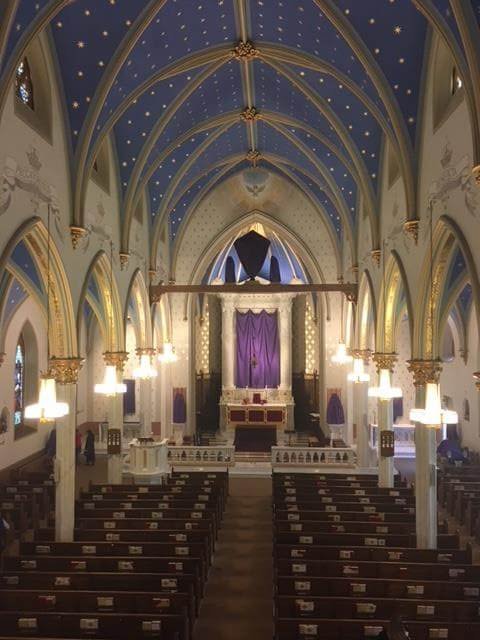
Another example: The church nearest us is an attractive Norman-Gothic building constructed in the late 1950s. While no one would describe it as grand, it is nothing like the architectural monstrosities erected in the decades that soon followed. In the late 1960s, this church was placed in the care of a priest who is now a retired monsignor and a longtime family friend. A “renovation” of the sanctuary followed soon after and stands unchanged to this day. The interior of the sanctuary is bare white. A cross shape has been incised, cookie cutter-style, into the rear wall, where a bloodless corpus is suspended over fabric whose color changes with the liturgical calendar. The free-standing “altar” consists of three slabs of marble whose arrangement appears to have been inspired by the edifices of Stonehenge. Two household planters stand like ancient Druids at either end (sometimes, at least, though not in the image below). The tabernacle might as well be on Long Island.

Once again, problems arise when my wife and I have occasion to visit this church with our three children, especially the elder two. My kids know that this church is where their great aunts and uncles were baptized and married, where their grandfather served as an altar boy before Vatican II. Furthermore, they know that it doesn’t look Catholic. When they inquire about its appearance, am I to tell my children “Well, it was quite a pretty church until our friend Monsignor X took a sledgehammer to the altar rails and moved Jesus to a broom closet?” No. Out of charity, I must conceal this priest’s rashness from them. The priest who vandalized my family’s parish is a priest of the Order of Melchizedek, who participates in the priesthood of Christ, presides at the Holy Sacrifice of the Mass, offers absolution for sins. The office this priest holds is a holy one, and we honor and encourage respect for him by concealing his transgressions from the generations that followed his.

The fomenters of Vatican II are now our elders and lawful superiors, and the best way we can honor them is by limiting our exposure to their worst missteps. The Roman Catholic Church is the Bride of Christ, our Holy Mother. Let’s treat the worst excesses of Vatican II as if they’re our biological progenitors’ embarrassing college Hare Krishna phase. Sure, we show our kids the photographs of their grandparents as children, eating ice cream floats in saddle shoes and cardigan sweaters. We show them the Polaroids they took of each other as young adults, proudly bouncing us on their knees as new parents, or watching us open our He-Man action figures on Christmas morning. But the pictures from those awful undergrad years that depict them sitting cross-legged, mouthing drug-induced mantras in polyester robes…let’s box them up in a dusty corner and pretend they don’t exist. To do differently would be to sully our children’s perception of their elders, whom we love despite their past infractions.

Avoiding the New Rite entirely, especially when family obligations are involved, might not be possible. Duties of charity are, indeed, duties, and we must avoid turning our love for the church of tradition into distasteful standoffs born of superiority. But if we limit our exposure to it to those occasions when our presence is truly required, and do our best to avoid churches that embody the worst excesses of Vatican II, we can hope (especially if our children are still young) to decrease any blemish that might have attached itself to their impression of their forbears’ liturgical sensibilities.

A bit of context, too, can go a long way. As they get older, our children can be made to understand that most of their elders – laymen and women especially – aren’t theologians and professional liturgists and simply believed that they were receiving what the institutional Church had passed on to them.

It is no secret that tradition-leaning Catholic journalism and social media these past few years have been awash with bitterness toward the upheavals of Vatican II and the generations perceived as having allowed and encouraged them. These commentators capture the contrasting feelings so many of us had after discovering the ancient Mass – reverential awe in the face of the supernatural beauty we had just encountered on the one hand and our sense of betrayal after considering that our spiritual heritage had been denied us on the other. They capture the dumbfounded looks our children give my wife and me at their cousins’ First Communions, the acid I get in my throat at family weddings, the sensation of embarrassed discomfort I’m overcome with at my uncles’ funeral services. Above all, they address the underlying questions we silently ask our older brethren at these events: “How could you have allowed this to happen? Why did you think this was okay?”

I’ve spoken here of honoring our parents and elders. How do we honor our children, who will someday be parents; aunts; uncles; and, God willing, priests themselves? Perhaps by passing on the heritage we ourselves were denied. Perusing traditional media of late has given us glimpses of hope for the future. Many writers and commentators note the number of traditional-leaning seminarians and of young priests reclaiming the Church’s ancient beauty. They are conducting their own renovations and building places that future generations will be proud of.

The neighborhood church I mentioned earlier has a new young pastor. He has asked the altar girls for their resignations and will soon commission a beautiful new high altar and reredos. In fact, he’s employing the same architect who renovated our own vibrant TLM parish just a few years ago. With its luminous sanctuary, polyphony-filled Masses, virtuosic M.C.s, and swashbuckling thurifers, our parish is the antithesis of the liturgical poverty of my generation’s youth.
I am a police officer, and I know well that the appurtenances of my profession are the objects of longing of nine-year-old boys everywhere. I have caught the envy in James’s eye as I remove my portable radio from its charger, or make my service weapon safe when I return home. What my son does not know is what his father would give to have served at the ancient Mass as his son does every Sunday, connected to the saints, his ancestors, his history.

Like most boys his age, James is a Star Wars fan, and, like young Skywalker, he is discovering a patrimony that was nearly kept from him. His little sister and I accompany him to the sacristy early on Sundays to prepare for the Solemn High Mass. I help him button up his cassock before he whisks up the stairs, deftly holding up the sides of the garb so as not to trip. In the hallway outside the nave, he joins a small army of young men receiving their assignments – torch-bearers, patens, tower bell-ringers, sanctuary gate-keepers. They form up by height and rank. The incense whirls, the bell rings, and they process in to the entrance hymn, the priest and solemn ministers following behind in birettas and shining vestments. They will go in to the altar of God, to God, who brings joy to their youth – to a youth that is reclaiming beauty from generations that conspired to destroy it. And their descendants – their own children, grandchildren, parishioners – will honor them not by concealing their transgressions, but by proudly displaying to a fallen world the gifts their forbears bequeathed to them.

Posted in Uncategorized | 3 Comments