IS SOMEONE OR SOME GROUP KILLING OFF THE DUBIA CARDINALS ONE BY ONE? REMINDS US OF THE BORGIA PONTICATE! CARDINAL BURKE HAD BETTER HIRE PROTECTION

Settimo Cielodi Sandro Magister

06 set 17

Carlo Caffarra, Unheeded Prophet. His Last Letter to Pope Francis

Caffarra


*[Emphasis and {commentary} in red type by Abyssum}

The morning of September 6 saw the sudden passing of Cardinal Carlo Caffarra, archbishop emeritus of Bologna and a moral theologian of the highest rank, especially on questions of the family and life.

With his decease and after the likewise unexpected death, last July 5, of Cardinal Joachim Meisner, the four cardinal signers of the “dubia” submitted last year to Pope Francis on the controversial points of “Amoris Laetitia” have dropped by half. The two still alive are the German Walter Brandmüller and the American Raymond L. Burke.

Of the four, Caffarra was the driving figure. His signature is on the letter with which last spring he asked for an audience from the pope for himself and the other three. This time as well, as previously for the “dubia,” without getting any response.

Shortly before sending that letter, Caffarra chanced to meet with Pope Francis when he visited Carpi, near Bologna, on April 2. During the lunch he sat beside him, but the pope preferred to converse with an elderly priest and with the seminarians who were sitting at the same table.  { Incredible!  Is this what one should expect from a person who has made “mercy” the leitmotiv of their pontificate?  Truly it is more characteristic of Latin American dictators like Fidel Castro, Maduro, et al.}

The following is the complete text of the letter, the last one Caffarra wrote to the pope, published by Settimo Cielo as an exclusive last June 20, with the author’s permission.

*

“OUR CONSCIENCE IMPELS US…”

Most Holy Father,

It is with a certain trepidation that I address myself to Your Holiness, during these days of the Easter season. I do so on behalf of the Most Eminent Cardinals: Walter Brandmüller, Raymond L. Burke, Joachim Meisner, and myself.

We wish to begin by renewing our absolute dedication and our unconditional love for the Chair of Peter and for Your august person, in whom we recognize the Successor of Peter and the Vicar of Jesus: the “sweet Christ on earth,” as Saint Catherine of Siena was fond of saying. We do not share in the slightest the position of those who consider the See of Peter vacant, nor of those who want to attribute to others the indivisible responsibility of the Petrine “munus.” We are moved solely by the awareness of the grave responsibility arising from the “munus” of cardinals: to be advisers of the Successor of Peter in his sovereign ministry. And from the Sacrament of the Episcopate, which “has placed us as bishops to pasture the Church, which He has acquired with his blood” (Acts 20:28).

On September 19, 2016 we delivered to Your Holiness and to the Congregation for the Doctrine of the Faith five “dubia,” asking You to resolve uncertainties and to bring clarity on some points of the post-synodal Apostolic Exhortation, “Amoris Laetitia.”
Not having received any response from Your Holiness, we have reached the decision to ask You, respectfully and humbly, for an Audience, together if Your Holiness would like. We attach, as is the practice, an Audience Sheet in which we present the two points we wish to discuss with you.

Most Holy Father,

A year has now gone by since the publication of “Amoris Laetitia.” During this time, interpretations of some objectively ambiguous passages of the post-synodal Exhortation have publicly been given that are not divergent from but contrary to the permanent Magisterium of the Church. Despite the fact that the Prefect of the Doctrine of the Faith has repeatedly declared that the doctrine of the Church has not changed, numerous statements have appeared from individual Bishops, Cardinals, and even Episcopal Conferences, approving what the Magisterium of the Church has never approved. Not only access to the Holy Eucharist for those who objectively and publicly live in a situation of grave sin, and intend to remain in it, but also a conception of moral conscience contrary to the Tradition of the Church. And so it is happening – how painful it is to see this! – that what is sin in Poland is good in Germany, that what is prohibited in the archdiocese of Philadelphia is permitted in Malta. And so on. One is reminded of the bitter observation of B. Pascal: “Justice on this side of the Pyrenees, injustice on the other; justice on the left bank of the river, injustice on the right bank.”

Numerous competent lay faithful, who are deeply in love with the Church and staunchly loyal to the Apostolic See, have turned to their Pastors and to Your Holiness in order to be confirmed in the Holy Doctrine concerning the three sacraments of Marriage, Confession, and the Eucharist. And in these very days, in Rome, six lay faithful, from every Continent, have presented a very well-attended study seminar with the meaningful title: “Bringing clarity.”

Faced with this grave situation, in which many Christian communities are being divided, we feel the weight of our responsibility, and our conscience impels us to ask humbly and respectfully for an Audience.

May Your Holiness remember us in Your prayers, as we pledge to remember You in ours. And we ask for the gift of Your Apostolic Blessing.

Carlo Card. Caffarra

Rome, April 25, 2017
Feast of Saint Mark the Evangelist

*

AUDIENCE SHEET

1. Request for clarification of the five points indicated by the “dubia;” reasons for this request.

2. Situation of confusion and disorientation, especially among pastors of souls, in primis parish priests.

*

In addition to Italian, English, Spanish, and French, the letter is also available in Portuguese and German:

> “A nossa consciência força-nos…”

> “Unser Gewissen drängt uns…”

Settimo Cielodi Sandro Magister

06 set

Carlo Caffarra, Unheeded Prophet. His Last Letter to Pope Francis

Caffarra

> Italiano
> English
> Español
> Français

> All the articles of Settimo Cielo in English

*

The morning of September 6 saw the sudden passing of Cardinal Carlo Caffarra, archbishop emeritus of Bologna and a moral theologian of the highest rank, especially on questions of the family and life.

With his decease and after the likewise unexpected death, last July 5, of Cardinal Joachim Meisner, the four cardinal signers of the “dubia” submitted last year to Pope Francis on the controversial points of “Amoris Laetitia” have dropped by half. The two still alive are the German Walter Brandmüller and the American Raymond L. Burke.

Of the four, Caffarra was the driving figure. His signature is on the letter with which last spring he asked for an audience from the pope for himself and the other three. This time as well, as previously for the “dubia,” without getting any response.

Shortly before sending that letter, Caffarra chanced to meet with Pope Francis when he visited Carpi, near Bologna, on April 2. During the lunch he sat beside him, but the pope preferred to converse with an elderly priest and with the seminarians who were sitting at the same table.

The following is the complete text of the letter, the last one Caffarra wrote to the pope, published by Settimo Cielo as an exclusive last June 20, with the author’s permission.

*

“OUR CONSCIENCE IMPELS US…”

Most Holy Father,

It is with a certain trepidation that I address myself to Your Holiness, during these days of the Easter season. I do so on behalf of the Most Eminent Cardinals: Walter Brandmüller, Raymond L. Burke, Joachim Meisner, and myself.

We wish to begin by renewing our absolute dedication and our unconditional love for the Chair of Peter and for Your august person, in whom we recognize the Successor of Peter and the Vicar of Jesus: the “sweet Christ on earth,” as Saint Catherine of Siena was fond of saying. We do not share in the slightest the position of those who consider the See of Peter vacant, nor of those who want to attribute to others the indivisible responsibility of the Petrine “munus.” We are moved solely by the awareness of the grave responsibility arising from the “munus” of cardinals: to be advisers of the Successor of Peter in his sovereign ministry. And from the Sacrament of the Episcopate, which “has placed us as bishops to pasture the Church, which He has acquired with his blood” (Acts 20:28).

On September 19, 2016 we delivered to Your Holiness and to the Congregation for the Doctrine of the Faith five “dubia,” asking You to resolve uncertainties and to bring clarity on some points of the post-synodal Apostolic Exhortation, “Amoris Laetitia.”
Not having received any response from Your Holiness, we have reached the decision to ask You, respectfully and humbly, for an Audience, together if Your Holiness would like. We attach, as is the practice, an Audience Sheet in which we present the two points we wish to discuss with you.

Most Holy Father,

A year has now gone by since the publication of “Amoris Laetitia.” During this time, interpretations of some objectively ambiguous passages of the post-synodal Exhortation have publicly been given that are not divergent from but contrary to the permanent Magisterium of the Church. Despite the fact that the Prefect of the Doctrine of the Faith has repeatedly declared that the doctrine of the Church has not changed, numerous statements have appeared from individual Bishops, Cardinals, and even Episcopal Conferences, approving what the Magisterium of the Church has never approved. Not only access to the Holy Eucharist for those who objectively and publicly live in a situation of grave sin, and intend to remain in it, but also a conception of moral conscience contrary to the Tradition of the Church. And so it is happening – how painful it is to see this! – that what is sin in Poland is good in Germany, that what is prohibited in the archdiocese of Philadelphia is permitted in Malta. And so on. One is reminded of the bitter observation of B. Pascal: “Justice on this side of the Pyrenees, injustice on the other; justice on the left bank of the river, injustice on the right bank.”

Numerous competent lay faithful, who are deeply in love with the Church and staunchly loyal to the Apostolic See, have turned to their Pastors and to Your Holiness in order to be confirmed in the Holy Doctrine concerning the three sacraments of Marriage, Confession, and the Eucharist. And in these very days, in Rome, six lay faithful, from every Continent, have presented a very well-attended study seminar with the meaningful title: “Bringing clarity.”

Faced with this grave situation, in which many Christian communities are being divided, we feel the weight of our responsibility, and our conscience impels us to ask humbly and respectfully for an Audience.

May Your Holiness remember us in Your prayers, as we pledge to remember You in ours. And we ask for the gift of Your Apostolic Blessing.

Carlo Card. Caffarra

Rome, April 25, 2017
Feast of Saint Mark the Evangelist

*

AUDIENCE SHEET

1. Request for clarification of the five points indicated by the “dubia;” reasons for this request.

2. Situation of confusion and disorientation, especially among pastors of souls, in primis parish priests.

*

In addition to Italian, English, Spanish, and French, the letter is also available in Portuguese and German:

> “A nossa consciência força-nos…”

> “Unser Gewissen drängt uns…”

++++++++++++++++++++++++++++++++++++++++++++++++++++++++++++++++++++++++++++

New post on Roma Locuta Est

And then there were two!

by Steven O’Reilly

September 6, 2017 (Steven O’Reilly) – Sad news out of Italy.  LifeSite News and others are reporting that Cardinal Caffara,  one of the Dubia cardinals, has died.  May God rest his soul.  He is the second of two Dubia cardinals to have passed away in the last two months. After the first died, I penned a blog entitled “…and then there were three.”  That title was a play on the Agatha Christie murder mystery “And Then there were None.” With the passing of Cardinal Caffara we must sadly say: “And then there were two.” The two remaining ones are Cardinal Burke (79)  and Cardinal Walter Brandmuller (88).

Yikes.  It seems that being a “Dubia Cardinal” is quite hazardous to ones health.  I am not suggesting anything, but a fifty percent mortality rate in under a year raises an eyebrow – just a bit.  Just saying. Let’s just say if I were a dubia cardinal, from here on out – I’d hire some professional food testers to check my meals in the Roman ristoranti, inclusive of sipping cappucinos and the aqua – either “con o senza gas”!  Just saying.

I do wonder what sort of bench strength the Dubia cardinals have, if any.  It would be nice for some fill-ins to step forward – the team is getting a bit thin. If there are reinforcements – now would be a good time. What I said following the death of the first Dubia cardinal still holds:

“As the dubia cardinals gather together next time, there will be one less person at that conference table. Before their numbers dwindle still further, and the composition of the College of Cardinal shifts even more against them than it has already, the dubia cardinals (as well as any silent partners they have) need to act – in my humble opinion – with greater urgency and boldness. I recently, again, outlined my suggestion for the next course of action (see here). I am not saying it is the best plan, but whatever might be out there as alternatives – I hope the dubia cardinals have one; and that their plan doesn’t include too much time as a variable. The time to act is now. . .before we run out of dubia cardinals. Fortune favors the bold. Who dares, wins.” (Emphasis added!)

Our remaining pair of Dubia cardinals, I hope, act quickly and decisively with regard to a formal correction, which – based on what they have said – might look something like what I suggest in one of my articles (see High Noon: Musings on a Formal Correction of a Pope). Who knows, but they should not waste any time in getting it out to the public. Fr. Luca Brasi might come one night for a visit. Just saying.  Rules to live by: don’t sleep with the fishes.

Steven O’Reilly is a graduate of the University of Dallas and the Georgia Institute of Technology. He lives near Atlanta with his wife Margaret. He has four children. He has written apologetic articles and is working on a historical-adventure trilogy, set during the time of the Arian crisis. He can be contacted at StevenOReilly@AOL.com.


Posted in Uncategorized | 2 Comments

ANTIFA, NEO-NAZI, NIHILISTS, MARXISTS, JESUITS, CONSERVATIVES, PROGRESSIVES, SOCIALISTS, FACISTS, ANARCHISTS, THE LIST GROWS AND GROWS AND GROWS AS MORE PEOPLE LOOSE THEIR MOORINGS IN RELIGIOUS FAITH

An Explanation for the Bewildered

Crisis Magazine

Gather round, my children. Perhaps I should have explained this before Charlottesville and Berkeley, though I never thought you would hear me.

Years ago you read this poem by William Butler Yeats.  You said you didn’t understand it, but really you were just having too much fun in those days to pay it much attention:

The Second Coming

W. B. Yeats, 18651939

Turning and turning in the widening gyre
The falcon cannot hear the falconer;
Things fall apart; the centre cannot hold;
Mere anarchy is loosed upon the world,
The blood-dimmed tide is loosed, and everywhere
The ceremony of innocence is drowned;
The best lack all conviction, while the worst
Are full of passionate intensity.

Surely some revelation is at hand;
Surely the Second Coming is at hand.
The Second Coming! Hardly are those words out
When a vast image out of Spiritus Mundi
Troubles my sight: somewhere in sands of the desert
A shape with lion body and the head of a man,
A gaze blank and pitiless as the sun, 
Is moving its slow thighs, while all about it
Reel shadows of the indignant desert birds.
The darkness drops again; but now I know
That twenty centuries of stony sleep
Were vexed to nightmare by a rocking cradle,
And what rough beast, its hour come round at last,
Slouches towards Bethlehem to be born?


Now, in your bewilderment, you understand. I see you listening keenly for a falconer, or at least some explanation. So I mean for you to know what has unfolded while you still have time to push back against the forces that surround you. I need to tell you about the Sexual Revolution.

Oh gracious, that?! I’m sure you want to say that you know all about the Sexual Revolution, and such questions make me sound old. Perhaps you think you’re way ahead of me; you may even be ready to tell me the Sexual Revolution is a bad thing. Oh, it’s fine if you think it a bad thing, but—and I mean this with the deepest affection—you have no idea what you’re talking about.

I sense that you think the “Sexual Revolution” is what your MacBook dictionary says it is:

the liberalization of established social and moral attitudes toward sex, particularly that occurring in western countries during the 1960s, as the women’s liberation movement and developments in contraception instigated greater experimentation with sex, especially outside of marriage.

The particulars of the story listed above did occur (i.e., our attitudes toward sex did liberalize in the 1960s; the modern women’s liberation movement did get rolling about that time; contraception, and the rest). But your MacBook dictionary means for you to believe that the Sexual Revolution is a sociological term ascribed to certain historical events after the fact. This is not true.

I do not deny that the en masse practice of sexual permissiveness bloomed in the late 1960s and 1970s and continues today. And your Apple dictionary is correct when it says that this permissiveness and its consequences were in part technology-driven.

But the “Sexual Revolution” was not coined to describe something that happened in the past. It was planned and written by a man decades before any of these particulars took place. The plan continues to play out today just as its designer said it would.  It has made much progress, and it is far from over.

Let me be blunt: you’ve been played for idiots. Idios, in the original Greek, means an independent agent, belonging to oneself. That is how I mean it. The designer of the Sexual Revolution believed you’d go so far to sacrifice your own families for sexual autonomy (most of you aren’t even married yet, but you’ve severed yourselves from what your ancestors handed down, a process of cutting begun by your grandfathers).

The term sexual revolution, my dear children, was invented by a man named Wilhelm Reich in the 1920s. Wilhelm Reich was born in Austria-Hungary in 1897. Raised to be an atheist, he developed sexual addictions as a child. Later, he joined Sigmund Freud’s clinic as a physician, after which he became a disciple of Karl Marx and joined the Communist Party in 1922. He referred to himself as a “Freudo-Marxist,” believing his utopic dream of a Marxist world order would require nothing short of a sexual revolution.

Karl Marx taught that the “first requisite for the happiness of the people is the abolition of religion,” which in Europe and Russia meant Judaism and Christianity. Reich believed that his sexual revolution would eradicate the Jewish and Christian faith. Pay attention closely now, it is necessary to connect the dots.

Wilhelm Reich understood that religious faith is sustained and passed down through the natural family. And so he concluded that the natural family must be dethroned, disrupted, and ultimately redefined to cut off this contagion of faith. Fatherless homes aren’t church-going homes, which is why the officially atheist Soviet Union abolished the term “illegitimate children” as one of its first decrees, followed by the streamlining of Russian divorce laws.

But Reich knew the brute forces of the Soviet government would never work in Europe and America. There, he said, the family would have to destroy itself from within. And so he formulated a plan to do just that. And once his plan was underway, Reich said, no power on earth would be able to stop it.

Reich correctly surmised that the way to knock the props out from underneath the American family would be to condition Western man to see contraception, fornication, adultery, pornography, sodomy, etc. as perfectly normal and not unhealthy things. And he saw sex education in schools as the best way to “divest parents of their moral authority.” The late Italian philosopher Augusto Del Noce described Reich’s book The Sexual Revolution as “the Mein Kampf of permissivism.”

Reich knew that a sexually permissive nation would be an increasingly fatherless nation, and fatherless children don’t go to church.  In 1929, the American illegitimacy rate hovered around 3 percent. Today it is 40 percent overall.  Church attendance for adults who grew up in a household with a father who attended church every week is 72 percent; church attendance for adults who did not have a church-attending father is 2-4 percent.

I know you are troubled by what you see happening around you, such as the rioting in Charlottesville and Berkeley and Middlebury. What I’m writing to you about today might seem like a secondary concern. But look closer. How many rioters grew up following their fathers into church every week? To talk about these rioters as representing “two sides” is nonsense. This is the army of sexual autonomy, free from the falconer, the idios who believes only in himself. This is the Sexual Revolution, nothing more, nothing less.

You must put on your armor. Find a parish with its footers sunk deep in the church of our fathers, and go. Go now! There you will hear the falconer.

.

J. Douglas Johnson

By

J. Douglas Johnson serves as the Parish Council President for All Saints Antiochian Eastern Orthodox Church in Chicago, IL.

++++++++++++++++++++++++++++++++++++++++++++++++++++++++++++++++++++++++++++


{ My additional advice to you is don’t let more than a nano-second elapse before you turn off internet porn when you stumble across it while browsing the internet.  If you linger more than that nano-second you will be hooked.  That is the way internet porn is designed by the porn industry.  Watching internet porn for more than that nano-second will stimulate endorphins in your brain.  What are endorphins?

Here is the Wikipedia definition of endorphin:

Endorphins (contracted from “endogenous morphine”[note 1]) are endogenous opioid neuropeptides and peptide hormones in humans and other animals. They are produced by the central nervous system and the pituitary gland. The term “endorphins” implies a pharmacological activity (analogous to the activity of the corticosteroid category of biochemicals) as opposed to a specific chemical formulation. It consists of two parts: endo- and -orphin; these are short forms of the words endogenous and morphine, intended to mean “a morphine-like substance originating from within the body”.[2] The class of endorphin compounds includes α-endorphin, β-endorphin, γ-endorphin, σ-endorphin, α-neo-endorphin, and β-neo-endorphin. The principal function of endorphins is to inhibit the transmission of pain signals; they may also produce a feeling of euphoria very similar to that produced by other opioids.[3]

Get that?  Endorphins are a species of opioids.  Right now the United States is suffering from an epidemic of addiction to opioid prescription medications.  There are a lot of news stories about this epidemic of addiction to prescription opioids, but NOBODY IS TALKING about the bigger epidemic of addiction to endorphin opioids available free (?) from porn on the internet.

I put that question mark after “free” because the price people have to pay for internet porn addiction is huge:  personality change for the worse, usually a growth of narcissism. Increasingly one tends to view others as objects for sexual gratification rather than as persons also made in the image of God.

DO NOT LET MORE THAN A NANO-SECOND ELAPSE BEFORE YOU CHANGE CHANNELS.} 


Posted in Uncategorized | Comments Off on ANTIFA, NEO-NAZI, NIHILISTS, MARXISTS, JESUITS, CONSERVATIVES, PROGRESSIVES, SOCIALISTS, FACISTS, ANARCHISTS, THE LIST GROWS AND GROWS AND GROWS AS MORE PEOPLE LOOSE THEIR MOORINGS IN RELIGIOUS FAITH

JESUS TO PETER: “DO YOU LOVE ME?” PETER T0 JESUS: “LORD, YOU KNOW THAT I LOVE YOU!”

IMG_5480

Rod Dreher

LGBT, Nashville, & Spiritual Friendship

Ron Belgau, in a screenshot from a lecture on marriage, the church, and the common good

I received the other day a very thoughtful letter from Ron Belgau, a founder of the Spiritual Friendship movement, which is for gay Christians living celibately, in obedience to the teachings of the faith. I print it here with his permission. My answer follows:

Dear Rod,

I’m writing in reply to your response to criticisms of the Nashville Statement. Although some of your other responses—like the email from Chris Roberts and the piece on the cost of the divorce culture—addressed some of my concerns, I think it would be helpful to explain my worries about your response in more depth. (I apologize in advance for the length, but it’s not always easy to address weighty problems in a few words.)

In the first place, I was surprised by this post because, when I read The Benedict Option, I was particularly impressed with your analysis of the sexual revolution in Chapter 9. You spelled out the ways that it has not only corrupted the surrounding culture, but has also penetrated into the church, undermining many Christians’ faith. Like Russell Moore’s 2014 keynote on “Slow Motion Sexual Revolutionaries,” you spoke prophetically of the ways that Christians have been co-opted by the sexual revolution. You made clear that we need to recover a distinctly Christian way of thinking about sexuality and living in sexual purity. Your whole book is about how we need to stand apart from the anti-Christian ethos of modern culture, and do better at building community practices that enable us pass on the faith, catechize, and keep us from turning into moralistic therapeutic Deists.

But there are two ways of distancing ourselves from the ethos of the broader culture.

The first—which I understood you to be advocating in The Benedict Option—is a repentance which recognizes that we have been drawn away from God and into worldly ways of thinking. We need the purification that can only come through asceticism, and so we seek the encouragement and accountability of other Christians to be faithful and to pass on the faith.

The second, however, is to become a self-righteous clique, whose members don’t call each other out, but instead focus on blaming all their problems on those outside the clique, whether other Christians who fall short by the clique’s standards, or non-Christians.

The Nashville Statement falls pretty clearly into the second category. The preamble asks,

Will the church of the Lord Jesus Christ lose her biblical conviction, clarity, and courage, and blend into the spirit of the age? Or will she hold fast to the word of life, draw courage from Jesus, and unashamedly proclaim his way as the way of life? Will she maintain her clear, counter-cultural witness to a world that seems bent on ruin?

The answer to these questions, obviously, is that many churches have already lost their biblical conviction, clarity, and courage—especially regarding sex. I grew up Southern Baptist, and have first-hand experience of the “slow motion sexual revolution” that Russell Moore describes. And I’ve watched how that shaped my Christian peers’ acceptance of gay marriage.

However, in the historical account implicit in the Nashville Statement, none of that ever happened. The church is beset by the culture, yes, but still standing firm, and the only question is whether our heroes will continue to stand firm or will cave before the homosexual and transgender onslaught. And yet, the statement itself abandons biblical clarity, courage, and conviction on a wide range of other challenges to the sanctity of marriage.

To cite just one example, by far the best thing about the Nashville Statement is the clarity with which it speaks about God’s creation as an essential foundation to Christian thinking about sexuality:

By and large the spirit of our age no longer discerns or delights in the beauty of God’s design for human life. Many deny that God created human beings for his glory, and that his good purposes for us include our personal and physical design as male and female. It is common to think that human identity as male and female is not part of God’s beautiful plan, but is, rather, an expression of an individual’s autonomous preferences. The pathway to full and lasting joy through God’s good design for his creatures is thus replaced by the path of shortsighted alternatives that, sooner or later, ruin human life and dishonor God.

However, the New Testament passages which show this most clearly are Matthew 19:3-12 and Mark 10:2-12, where Jesus invokes Genesis 1 and 2 to reject permissive divorce: a subject which the Statement does not address directly at all. (And this is not because divorce and remarriage after divorce are not serious challenges in the churches the signers of the Nashville Statement represent.)

I understand, as you point out, that it would be very difficult to get widespread agreement from the signers of the Nashville Statement on what the virtue of chastity demands on a variety of sexual issues other than homosexuality and transgenderism. But simply to write that is to write a reasonably damning (I do not use the word casually) indictment of the state of American Christianity.

I called Chapter 9 of The Benedict Option prophetic because you were willing to speak to Christians’ own failures. You wrote:

Americans accepted gay marriage so quickly because it resonated with what they had already come to believe about the meaning of heterosexual sex and marriage.

We have gay marriage because the straight majority came to see sexuality as something primarily for personal pleasure and self-expression and only secondarily for procreation. We have gay marriage because the straight majority, in turn, came to see marriage in the same way—and two generations of Americans have grown up with these nominalist values on sex and marriage as normative.

And in “Is the Benedict Option Good for Gays?,” you reiterate, “In the book, I am clear that this is not the fault of gays, that the heterosexuals who made the Sexual Revolution’s first wave demolished the Christian model of sex and sexuality. I quote Philip Rieff, no Christian he, on how the Sexual Revolution dissolves orthodox Christianity.”

In response to criticism of the Nashville Statement, you wrote that “if the church normalizes SOGI [Sexual Orientation and Gender Identity] ideology, it surrenders grounds from which to fight these other disorders.” But equally, as you have shown in the past, if the church normalizes no-fault divorce and other aspects of the (hetero)sexual revolution, it surrenders the ground from which to fight SOGI ideology. Given how clearly you drew the link between these past failures and the current fights about sexual orientation and gender identity in The Benedict Option, it surprises me that you defend the Nashville Statement, despite its silence on no-fault divorce and other offenses against the sanctity of marriage which have become acceptable (even if still viewed with some concern) within conservative Christian culture.

Still, SOGI has become a unique threat to traditional Christian belief, which you describe elsewhere as “the tip of the spear at our throats in the culture war.” It’s worth saying more about why. In The Benedict Option, you wrote:

Tying the gay rights cause to the civil rights movement was a strategic masterstroke. Though homosexuality and race are two very different phenomena, the media took the equivalence for granted and rarely if ever gave opposing voices a chance to be heard.

However, this move was made plausible by Christians who decided to single out gay people for unique shaming and condemnation, while ignoring heterosexual sin. Instead of presenting chastity as a difficult challenge which all Christians are called to, Christian rhetoric focused on condemning the homosexual aspects of the sexual revolution while making a (sometimes uneasy) truce with the more “respectable” heterosexual revolutionaries.

In the small Southern Baptist Church I grew up in, the youth group was served with James Dobson’s Preparing for Adolescence, where he recommended masturbation as a safety valve for adolescent hormones. The heterosexual youth fooled around at a rate that was not easily distinguishable from that of the unchurched boys and girls at the local schools, and the adults pretended not to notice. And, from the pulpit, we heard things like, “If America doesn’t bring back the death penalty for homosexuality, God will destroy us the way He destroyed Sodom and Gomorrah.”

When I was in college, I briefly attended Rev. Ken Hutcherson’s Antioch Bible Church in Seattle. Hutcherson cheerfully threw around epithets like “faggoty-assed” and made jokes in sermons like, “If I was in a drugstore and some guy opened the door for me, I’d rip his arm off and beat him with the wet end.” In 2004, Hutcherson organized the Mayday for Marriage rally in Washington, DC, and in 2010, he presided over Rush Limbaugh’s fourth marriage. When questioned, Hutcherson claimed, “The Buffalo Bills went to the Super Bowl and they lost a lot of times, but they never gave up. Rush Limbaugh never gave up on the institution of marriage.” For some reason, Christianity Today’s reporter didn’t ask for Hutcherson’s Scripture references for this answer.

A few years ago, you said that every pastor should read the letter you published as “Confessions Of An Ex-Evangelical, Pro-SSM Millennial.” I hope it’s not presumptuous to recommend that you re-read it now. Your correspondent wrote:

In all the years I was a member, my evangelical church made exactly one argument about SSM. It’s the argument I like to call the Argument from Ickiness: Being gay is icky, and the people who are gay are the worst kind of sinner you can be. Period, done, amen, pass the casserole.

I could keep multiplying examples—like the callousness of the Christian right to the suffering of AIDS victims in the 1980s—but I think most people realize that there’s a bad track record here. And it is precisely because of the kind of double standards I’ve just described that comparisons to Jim Crow make sense to so many people. They don’t see Christians as bigots because they hear it in the liberal media. Many who grew up in Christian homes think it because they heard it and saw it from the pulpit growing up.

What is the cost of all this?

From time to time, I have debated with Justin Lee, the gay-affirming founder of the Gay Christian Network. Like me, Justin grew up Southern Baptist. Sometimes, someone will ask me why I think Justin “changed his theology” to support gay marriage, while I stuck with conservative theology. However, the question actually rests on a misunderstanding. I did not “hold onto” the theology of marriage I learned in Southern Baptist Churches growing up. If I had, I would support same-sex marriage.

When I listen to Justin’s presentations, what I hear in his arguments for same-sex marriage is simply the logical outworking of the theology of marriage we both grew up with. Many of his arguments are modified versions of the arguments which I heard to rationalize divorce and contraception in the Southern Baptist congregation I grew up in.

And because of the obvious prejudice of so many conservative Christians toward gay people, it’s easy for him to dismiss conservative exegesis as Pharisaical legalism.

And it’s not just gay Christians like Justin who make that leap. Many of my straight friends struggle to articulate a coherent vision of Christian marriage in which it would make sense to say “no” to same-sex marriage. And the reason they are unable to do this is both the acceptance of the heterosexual offenses against the sanctity of marriage which the Nashville Statement remains silent on, and the hostility toward gay people, including those trying to obey, which the Nashville Statement embodies.

This brings me to article 7 of the Nashville Statement. Like your Evangelical pastor friend, I suspect that the wording of article 7 was chosen to exclude Spiritual Friendship. Although the language of “self conception” is new, there’s a long history with Denny Burk and others at the CBMW criticizing Spiritual Friendship in similar terms. (With regard to your conversations with Rosaria Butterfield about us, please see Jeremy Erickson’s responses to her attacks here and here. Her public remarks about us also seriously misrepresented the Presbyterian Church in America and Reformed University Fellowship.)

All Spiritual Friendship writers support the belief that same sex sexual acts are sinful. All support the belief that same-sex lust is sinful. All would agree that the temptation to sexual acts or lust should be resisted. But we are not Freudians. We do not believe that all attraction to a person of the same sex is reducible to sexual temptation or lust.

The Spiritual Friendship blog is named after Aelred of Rievaulx’s treatise on friendship because we believe that the Christian anthropology of friendship provides the foundation for rightly ordered same sex love (we aren’t alone in this belief: the Catholic Church recommends friendship in numerous pastoral documents about homosexuality).

If, as many have suggested, it turns out that the drafters of the Nashville Statement did, in fact, intend to exclude those at Spiritual Friendship, while remaining silent about straight Christians who have compromised on divorce and other aspects of the sexual revolution, that would only reinforce the argument that conservative Christians are not motivated by upholding what the Bible says about human sexuality, but rather by hostility toward gay people, including those who reject the sexual revolution and seek to live chaste lives.

Given the stakes for the Statement, and for Christian witness in contemporary culture, I think the CBMW needs to publicly clarify their intent ASAP.

I’ve long been grateful for your writing. You are an independent thinker, willing to speak out when others stay silent. You rightly called out the Catholic Bishops for their failure to address the abuse crisis when many other Catholic writers stayed silent. The Benedict Option is starting a necessary conversation for Christians who want to figure out how to remain remain orthodox in our increasingly secular culture. I’m grateful to you for calling attention to Spiritual Friendship’s approach, and for publishing Christopher Roberts’s email on Why It’s Okay For Christians To Say ‘Gay’. While I’m not a huge fan of the analogy between homosexuality and alcoholism, his email does explain some of the reasons I am willing to identify with others who are gay, while fully embracing Christian teaching about sexual purity, including lust in the heart, and seeking to reorder my own affections in line with Christian teaching on friendship.

I began by saying that there are two ways of turning away from the broader culture. I’ve always understood you to advocate the first, the repentant and penitential way. But your defense of the Nashville Statement, it seems to me, makes it easier for Christians to respond in the second, self-righteous way. I hope that you will continue to speak prophetically, as you have in the past, against the kind of self-satisfied Christian culture which cannot see its own complicity in the sexual revolution, and hence cannot preach a living faith either to the surrounding culture or within its own institutions.

Your friend in Christ,
Ron Belgau

Let me start my reply by thanking Ron for this great letter, and in particular for its spirit fo charity. My response is below. Forgive me, because it rambles.

The first thing that came to mind when I read the letter is how very different my own experience of sexual teaching within church is. I’ve said many times before here that I really don’t know much about Evangelical culture. I went to a Mainline Protestant church as a child (and not very often at that). My only direct adult experience of Christianity is within Roman Catholicism and Eastern Orthodoxy.

So, I think one gap in my understanding of how the Nashville Statement is received by others is that I never heard anybody disparage gays from the pulpit or in a church setting. My experience has, to the contrary, been that no priest or church leader (aside from the Pope) would talk about sexuality (homo or hetero) at all.

As I’ve written in the past on my blog and in my books, Christ led me out of heterosexual sin into chastity as a Roman Catholic convert. I recall with some bitterness still (I regret to admit) how back in the 1990s, when I was a new convert and struggling mightily to be chaste, the Catholic Church (in the form of parish priests) left me all alone. In 13 years of regular Catholic practice, the only time I heard sex of any kind addressed from the pulpit was one occasion when a visiting priest at St. Matthew’s Cathedral in DC criticized contraception and abortion. Other than that, I’ve heard priests (especially in south Florida, where I lived for three years) criticizing “judgmentalism” towards gays, and preaching acceptance — by which they meant affirmation.

I’ve never heard an Orthodox priest preach on sexuality of any kind — this, in 11 years as a practicing Orthodox.

Point is, my only experience of sexuality as discussed in parish churches (minus books and papal encyclicals) has been either total avoidance, or pro-gay boosterism. Overwhelmingly, it’s total avoidance. That’s why something bold and clear, like the Nashville Statement, is so appealing to me, despite my misgivings about some of it. Christian leaders on my sides of the two great schisms in Christianity have been mostly silent, and if they’ve said anything, it’s tended to be perfunctory at best. I prefer the bold, if flawed, approach that the Nashville Statement Evangelicals take to the silence in the pulpit and public square of so many others.

Hearing what Ron had to go through growing up in church, and about things like what the Rev. Ken Hutcherson said about gays, not to mention his contemptible hypocrisy regarding heterosexual marriage when such allowed him to officiate at the fourth marriage of a celebrity — well, I better understand why so many otherwise conservative Christians responded so sharply against the Nashville Statement. Again, I ask you Evangelical readers to imagine what it’s like to be part of a parish churches where nobody ever taught what the Church teaches about sexuality in any sense. That’s where I’m coming from. It should be no surprise, I guess, that in opinion polls, a majority of both Catholic and Orthodox Americans favor same-sex marriage.

This recent statement by the Orthodox Christian theologian Bradley Nassif is hugely important. I’ve never heard anything remotely like it in nearly 25 years of regular churchgoing in Catholic and Orthodox parishes. Here’s an excerpt:

At times, Orthodox responses have been knee-jerk in their opposition to same-sex marriage and the LGBTQ agenda. But a blunt rejection is woefully inadequate. A rebuke is no reply. If Christians have any hope of defending the sacred institution of marriage then they need to articulate the reasons that the Christian theological vision requires marriage to constitute a union of man and woman. Perhaps one of the most profound, yet often unrecognized, explanations for this lies in Christian teaching of the Trinity itself.

Orthodox Christian ethics maintains that marriage and sex are sacred mysteries that point beyond themselves to the mystery of Christianity’s three-personed God and to His redemptive self-giving in the Incarnation, which is actualized in the life of the Church.

The inner life of the Holy Trinity offers a model understanding marital relationships. The Nicene Creed, coupled with the “in” language of the New Testament to describe the intimate relations between the three Persons of the Trinity (John 14:1; 17:21 et al.), is what some Church Fathers have described as “perichoresis”–meaning “to co-inhere, inhabit, inter-dwell, or to live within.” In other words, each Person of the Trinity eternally dwells within the other two in a perfect unity-in-distinction.

The mystery of God’s own Trinitarian character is extended to human existence and reflected in the Genesis account where God says, “Let us make humans in our image, in our likeness …. Male and female He created them” (Genesis 1:26–7).  Thus, the sexual intimacy that Adam and Eve experience as they become “one flesh” can be said to reflect the eternal union-in-distinction between the Father, Son and Spirit and their mutual indwelling.

In Genesis 2:18 we read, “The Lord God said, ‘It is not good for the man to be alone. I will make a helper suitable for him.’” This “not good” is the only negative assessment given in the entire creation narrative. Only a woman that was fashioned from Adam’s own side could complete him. Male alone could not properly reflect the “image of God,” nor could female by herself. Alone, Adam would have been a distorted, “not good” image of God. Once Eve was present, humanity was able to reflect the personal and relational intimacy that God is. Eve’s presence meant that humanity could experience life-giving, interpersonal union–an earthly echo of God’s own inter-personal, perichoretic life.  Together, their unity reflects the union-in-distinction that exists within the Trinity. Personal union (both human and divine) is the ground of all human existence.

A further divine mystery that models the integrity of male/female relationship is the union of Christ with His bride, the Church. Marital intimacy between a man and a woman is a sacramental image of the saving intimacy that now exists between Christ and His people. The female imagery of the Church’s bridal relation to Christ, the male bridegroom, is used in Ephesians 5 to manifest the mystery of salvation when Paul quotes the Genesis text, “‘the two shall become one flesh.’” “This mystery is profound,” he continues, “and I am saying that it refers to Christ and the Church” (Ephesians 5:29–32).  There is thus a soteriological, iconic dimension to marriage and human sexuality that are to be understood in light of God’s self-revelation in Christ (the male bridegroom) and His relation to the Church (His female bride).

Read the whole thing. It’s not long. With the exception of a few theological words (e.g., “soteriological,” which means “saving”) can understand it. It provides a very basic theological explanation for why same-sex marriage is impossible, and not just because of Bible verses prohibiting homosexual conduct. In this understanding, sexual complementarity and marriage between one man and one woman are written into the nature of reality. This is why we cannot simply take the traditional Christian model of marriage and make it fit to homosexual couples. The divinely ordained nature of marriage itself will not allow it.

I wonder if this is what Ron is getting at when he says that pro-SSM arguments by an Evangelical he debates with are “the logical outworking of the theology of marriage we both grew up with.” I would like to know more about this, so please, Evangelical readers, educate me. I am pretty sure that your average Catholic and Orthodox Christian cannot give any kind of theological argument against same-sex marriage — not because these arguments don’t exist (they certainly do!) but because they have never heard them, and have therefore been catechized on the meaning of sex and marriage by American popular culture. If marriage is nothing more than the solemnizing of the love and commitment that two people have for each other, then of course there is no real argument against same-sex marriage.

That said, Article I of the Nashville Statement describes marriage as a “covenantal, sexual, procreative, lifelong union of one man and one woman,” and “is meant to signify the covenant love between Christ and His bride the Church.” Could the Nashville Statement drafters said more about this? Sure. But the point of the Nashville Statement was to address two specific challenges to the Christian church in our culture: homosexuality and transgenderism. The failure of certain Evangelical churches to preach and teach effectively about the nature of marriage, as defined in Article I — a definition with which no Catholic or Orthodox Christian would disagree — should not silence them on speaking out about LGBT issues, which are tearing the churches apart right now. It only means they need to be much more aggressive in teaching about sexuality, gender, and marriage in a comprehensive way.

Not to put too fine a point on it, but again, I agree that the Nashville Statement could have been broader, and spoken strongly against heterosexual sins and failings that helped create a culture in which same-sex attraction has been normalized. I only know personally a few of the Nashville Statement’s signers, and not one of them would argue against the idea that the infidelity and disobedience heterosexuals, often with the complicity of their churches, laid the groundwork for same-sex marriage. In fact, I’ve had conversations with the men I’m thinking about, in which they have explicitly agreed with me on this point. In The Benedict Option, one of the signers of the Nashville Statement discusses how at his Evangelical church, the leadership has taken a strong stand against easy divorce, and explains what they’re doing.

I do believe, though, that the Nashville Statement was a bold and necessary document, whatever its shortcomings may be. The British Evangelical theologian Alastair Roberts gets it right here, in his defense of his signature. Excerpts:

Much confusion and error is to be found even in conservative Christian circles on these matters. As we are pressed by the culture to examine matters that we may have formerly taken for granted, many have lost their footing, uncertain of what to believe, or why we believe it. A statement that simply yet firmly presents an orthodox position can be both clarifying and emboldening at such a time, giving Christians a clearer apprehension of the truth, of the lines that need to be defended, and of the willingness of their leaders to nail their own colours to the mast. Also, like a flare shot up over a darkened field of debate, it reveals where different people are positioned and where troubling movement has occurred.

The Nashville Statement is a reassertion and defence of the creational reality of humanity, of the basic anthropological difference: that humanity is created and divinely blessed with fruitfulness as male and female. It is this reality that is under assault today on various fronts, as the natural order of creation is challenged by those who variously deny this difference, whether they reduce the sexed body to a superficial façade that can be changed, abandon substantive sexed selfhood for radical gender performativity, studiously downplay the ways in which the sexes are naturally physically and psychologically ordered to each other, or detach marriage from any procreative end or form. In standing against these developments, we aren’t expressing some peculiar or eccentric claims of Christian theology, but upholding creational realities that have been generally recognised across human ages and cultures.

True. More:

While important, this statement is far from the final or only word on the subject. The goodness of the truths set forth in this statement will only truly be practically discovered as wise and gracious leaders give us gospel-shaped guidance for charting our discipleship through the treacherous and difficult paths of our sexual brokenness and disorientation of our age, guidance marked by the truths of forgiveness, conversion, restoration, deliverance, and resurrection.

Roberts goes on to say that there have been good-faith criticisms of the document, and that these critics should be listened to and learned from. But:

Having considered the criticisms, however, and recognised various of the statement’s weaknesses, I am determined that the perfect shouldn’t be the enemy of the good here. This statement is an important step, though only one step of many.

That’s where I am on the statement, though of course I did not sign it because it is meant as a teaching document by Evangelicals for Evangelicals. The fact that there has been so much outrage surrounding the document, and that some of its signers are experiencing serious harassment, even from within the church, simply for affirming Christian orthodoxy, is a sign that this statement was badly needed.

I defended the narrowness of the Nashville Statement in part because of the difficulty of getting so many Evangelical theologians to agree on things like divorce and contraception. Ron says:

I understand, as you point out, that it would be very difficult to get widespread agreement from the signers of the Nashville Statement on what the virtue of chastity demands on a variety of sexual issues other than homosexuality and transgenderism. But simply to write that is to write a reasonably damning (I do not use the word casually) indictment of the state of American Christianity.

That may be. I have seen Catholic conservatives criticized the Nashville Statement for being silent on what the contraceptive mentality has done to undermine marriage. As a philosophical matter, I believe they have a good point, but that it is also unrealistic to expect Protestants to accept Catholic teaching on this point (a teaching that the overwhelming majority of American Catholics reject, by the way) before they can speak credibly about homosexuality and transgenderism. In conversation with one of the signers of the Nashville Statement, I heard him say that yes, Evangelicals really do need to think hard, and self-critically, about divorce and contraception. It is no bad thing for them to be challenged on these points.

Having said that, is it really the case that in order to speak out credibly against abortion, you have to hold a certain view of the death penalty, or stand accused of hypocrisy? Why not say, “Yes, friend, you are right about the sanctity of unborn life. Now consider why that is, and what your principles about the sanctity of unborn life teach us about the life of the condemned prisoner. Can’t you see the contradiction?”

That’s the kind of critical dialogue that moves Christians forward, and it’s the kind of critical dialogue related to sexuality and gender that I believe the Nashville Statement can bring forth.

I am still unclear on the true nature of the conflict between the Nashville Statement’s Article VII, which denies that “adopting a homosexual or transgender self-conception” is consistent with God’s will. When I first read the Nashville Statement, I saw no problem with that statement, but I apparently didn’t sufficiently understand what it meant. As Ron said, it is intended to exclude the Spiritual Friendship approach, in which Christians with same-sex attraction admit that they are gay, and go forward from there towards building a holy life of celibacy.

Me, I don’t see anything wrong with that, which is why I endorsed Spiritual Friendship in my book. Catholic and Orthodox teaching says that suffering, if accepted in the right spirit, can be redemptive as an aid to repentance and love. I took the Spiritual Friendship movement to bring together in non-sexual friendship gay Christians who are committed to chastity and indeed to celibacy — that is, to help them bear the cross of their desires together, in community, and to bring spiritual fruit out of their suffering and sacrifice.

But I now understand that this is controversial. Daniel Mattson, a same-sex-attracted Catholic and author of a powerful new book, Why I Don’t Call Myself Gay, has written in First Things:

I refuse to identify myself as gay because the label “gay” does not accurately describe who (or what) I am. More fundamentally, I refuse to use that label because I desire to be faithful to the theological anthropology of the Church.

In 1986, as head of the Congregation for the Doctrine of the Faith, Joseph Cardinal Ratzinger wrote the “Pastoral Letter on the Care of the Homosexual Person.” In it, we read:

The human person, made in the image and likeness of God, can hardly be adequately described by a reductionist reference to his or her sexual orientation. Every one living on the face of the earth has personal problems and difficulties, but challenges to growth, strengths, talents and gifts as well. Today, the Church provides a badly needed context for the care of the human person when she refuses to consider the person as a “heterosexual” or a “homosexual” and insists that every person has a fundamental Identity: the creature of God, and by grace, his child and heir to eternal life.With confidence in the Church, I embrace this teaching about my identity in the same way that I have accepted the word “consubstantial” in the Creed. I accept all of the words of the Catechism concerning who I am in nature and in grace. I take no umbrage at the phrase “ objectively disordered” and feel no shame that it truthfully describes my sexual desires. I view my same-sex attraction as a disability, in some ways similar to blindness, or deafness, and I view it with the same hope communicated by Jesus about the man born blind: It has been allowed in my life, so that God’s work would be made manifest in me (cf. John 9:3). In the words of Tolkien, I view it as my personal “Eucatastrophe.”

Ithink it is a mistake to view homosexuality as a gift, in and of itself. Those who identify as gay speak of the great gifts that supposedly flow from their homosexuality. But of course, any goods that are supposedly unique to homosexuality are common to man, and all that is good in man is the result of being made in the image and likeness of God. My career in the performing arts is not even indirectly caused by my same-sex attraction, but instead because God is the creator of music and beauty. I believe that great good can come as a result of living with this disordered inclination, but it only comes when I acknowledge it as a weakness, and in response, fall to my knees before the good God who looks upon me daily with “a serene and kindly countenance,” and comforts me with the words “My grace is sufficient for you, for power is perfected in weakness.”

The good that flows from the homosexual inclination is not an exceptional “otherness,” as Elizabeth Scalia seems to suggest. No, the good is the redemptive healing work of God that begins when we honestly acknowledge that homosexuality is a wound. If we do so, we can become “Wounded Healers,” in the way that Henri Nouwen viewed his own wounds, which we now know included same-sex attraction.

On the other hand, Joshua Gonnerman, a Catholic who identifies as gay and who is chaste, defends calling himself “gay”:

“You can’t identify as gay,” many said, “because to do so is to say that the label ‘gay’ encompasses you in your totality.” I have no taste for identity politics, but the truth is that all of us do, in fact, navigate complex identities. I identify first as a Christian, secondly as an orthodox Roman Catholic. After that, we find a slew of monikers; an Augustinian, a scholar, a theologian, an American, a single person, a theatergoer, a cook, a pedestrian, and—here comes the controversy—a gay or queer person.

The central locus of my identity, which shapes all other aspects of it, is Christ. But no one, upon honest self-reflection, can realistically claim that this entirely does away with all other aspects of one’s identity. Christ is the foundation which shows how other aspects of my identity can and cannot be expressed, but other aspects of who I am do say something significant about me.

More:

So, then, we are presented with two different sexual identities for the homosexually-inclined. To identify as “gay” usually means to experience one’s homosexuality, in some way, as valuable. The competing sexual identity (known by many names, but most often “same-sex attracted” or “struggling with same-sex attraction”), indicates, in general, an experience of one’s sexuality as entirely problematic, and thus to be overcome (though, again, “overcoming” has a wide range of meanings here).

Yet there are many things I find valuable about my experience of being gay. Any number of studies indicate that there are real trends of difference between gay people and straight people, however difficult to define. Gay Christians are, perhaps, “called to otherness” as Elizabeth Scalia’s suggested on these pages in an article I consider one of the best things written on the subject. Her suggestion is that people with same-sex desire experience a kind of attraction that, when not concupiscent, is a gift to the Church”a sign of contradiction.

So: it seems to me that this is not merely an issue of semantics, but one of anthropology. Is homosexuality only a disorder, a “thorn in the flesh,” or is it in some sense good, even within the understanding that it cannot be expressed sexually or genitally? And, to what extent does sexual desire define a person?

Tentatively — tentatively! — I come down on the side of Mattson and the Nashville Statement. That said, it seems to me at this point in my own investigation of the question that the Spiritual Friendship approach is valid, at least to a point. I confess to you that I simply do not know enough to say definitively. I do believe, though, that I would draw the dividing line as a matter of public Christian witnessbetween those who say that homosexuality cannot be expressed in sexual acts, and those who say it can. I don’t wish to dismiss the importance of the argument between the Spiritual Friendship people and their opponents like Mattson and the Evangelicl signers of the Nashville Statement. It really is important!

But I also don’t think that it is a make-or-break issue for Christians who agree that gays and lesbians are called exclusively to celibacy, unless for some reason they experience the call to heterosexual marriage. In other words, I wouldn’t say that the Spiritual Friendship folks are outside the bounds of Christian orthodoxy, even if their approach may, as I suspect, be flawed.

And of course yes, it can’t be said often enough: Evangelicals (and the rest of us Christians who hold to orthodoxy on sexual matters) have to do much, much better in teaching and living out the truth within heterosexuality. But like Alastair Roberts, I don’t believe perfection should be the enemy of the good. I remain grateful for the Nashville Statement as a start for serious, sustained, robust, and comprehensive Christian reflection about sexuality, sexual orientation, and gender identity. I am also grateful for Ron Belgau’s criticism, and promise that I will continue to speak out against “the kind of self-satisfied Christian culture which cannot see its own complicity in the Sexual Revolution.”

Let me close by repeating the words from The Benedict Option that Ron quoted in his letter to me:

However, this move was made plausible by Christians who decided to single out gay people for unique shaming and condemnation, while ignoring heterosexual sin. Instead of presenting chastity as a difficult challenge which all Christians are called to, Christian rhetoric focused on condemning the homosexual aspects of the sexual revolution while making a (sometimes uneasy) truce with the more “respectable” heterosexual revolutionaries.

As I cut-and-pasted that passage, I thought about a college student who reached out to me last year, when I was writing the book. She told me the people in her theologically conservative Evangelical parachurch group were all sleeping with each other, but considered themselves to be good Christians. Unless those young people repent, if they remain in the church, they will either become a) the kind of hypocrites Ron Belgau and others rightly criticize, or b) supporters of normalizing homosexuality and premarital heterosexual sex. I wish I had written that college student and asked her to clarify whether or not the older adults running the group were aware of the sexual activity among its members. My sense from her account was that they preferred not to know. If that’s the case, that would be par for the course in my own experience, alas.

UPDATE: Oh, wow. Brian and Monica Gee were a married Christian couple in which the husband, Brian, was same-sex attracted. They began dating even though Brian admitted up front that he was attracted to men. In this 2015 blog post on the Spiritual Friendship blog, the couple talk about their unconventional marriage. Excerpts:

Brian: By the time that Monica and I started dating, I could honestly say that I was physically, emotionally, relationally, and spiritually attracted to her. The first of those four was as much a surprise to me as it is to anyone reading this. I did not and do not identify as bisexual. But considering we both believed in a God who works in unusual or unconventional ways, it didn’t feel disconnected from the bigger picture.

With that physical dimension (seemingly, at the time) resolved, we got married for two very normal but important reasons. First, we were in love with each other in every way that one experiences love in the early days of a relationship. Second, we were convinced that we could help others better together than if we were apart. At our core, we knew God was bringing us together so that we could serve more effectively together. That formed the basis of our best hopes and expectations for our marriage. Looking back, we could never have imagined what this would blossom into through the years of smiles, trials, and pain.

I think our fears were aligned, even if we didn’t talk about it much. I feared that this unexpected attraction would go away, and Monica feared that I wouldn’t be attracted to her. But those were underlying emotions that neither of us spent time thinking deeply about. We were genuinely in love, after all. So those emotions were simply there, waiting to return to the surface.

More, this time from Monica, talking about the effect of a letter Brian wrote to her four years into their marriage, in which he confessed that he no longer felt attracted to her physically:

That letter began the hardest month—the hardest year—of our relationship to date. It brought up hurts, fears, realities, and suffering for both of us. Brian finally used the word “gay” to describe himself (not same-sex attracted or any other safe, Christian phrase) [Emphasis mine — RD] and admitted to me that his physical attraction towards me had vanished soon after we were married. He hadn’t wanted to tell me because he wanted to protect me, knowing that this would be unbearably painful. In the meantime, he had bottled up his emotions and experienced confusion with—and anger toward—God.

During that time, we realized that in our marriage, we were both being called to live with form of suffering if our relationship was to continue. I say ‘called’ because it certainly wasn’t our choice, and yet it was exactly where God had directed our lives. In remaining faithful, Brian suffered by not experiencing the fulfillment of many of his physical and emotional needs. And by remaining in our marriage, I suffered by having my deepest fears realized and feeling a deeply painful form of rejection. We both realized that this suffering wasn’t going to be temporary and would probably never find resolution in our lifetime. And yet, this common suffering that we experienced united us to Christ’s suffering and to each other in an inexplicable way. We began to take solace in this unity, a unity that would become a keystone for our life and work together in the years that have followed.

She concludes the interview like this:

Monica: On the other hand, we have found in many a beautiful picture of what the church should be: an eye learning that it is not a foot and benefitting from what they eye has to offer the body. We have definitely found community and sustenance, even among those who don’t fully understand or agree with everything we believe. I feel like our marriage has actually made us more effective in relationships and in ministry. Being open about our life has allowed for great depth in friendships, which I wouldn’t give up despite the pain it has sometimes caused. Whatever suffering we have endured, whether internal or external, it has all served to knit us together and to hopefully make the gospel attractive by our continued love for Christ and his church.

That was 2015. Brian became a blogger for Spiritual Friendship — which, to its credit, did not erase his contributions when he and his wife divorced, and he started wearing skirts and encouraging other men to do the same.  

Monica Gee has just posted her reflections on the divorce, and the way she and her ex-husband embraced gay culture (“You remember seeing me post pictures at Pride Parades, having countless LGBT-friendly gatherings in my home…”). Today, she’s saying otherwise. Excerpt (emphasis below is hers):

 I think we were wrong. Not for getting married, not for attempting to stay married, not for pursuing Christ and forsaking all others. Those things were right and I wholeheartedly believe our marriage could have survived based on that foundation. But we were wrong to embrace “being gay” as an identity. We were wrong to move away from the gospel and to move towards figuring out some new way to exist. When I look back on what we wrote, I think, “dear Monica, run to Jesus. He is ever and only the answer. There is no other way. Don’t succumb to pressure, don’t give in to what feels comfortable and more palatable. Cling to God and truth.” Brian slowly, inch by inch walked away from faithfulness to the Scripture. Our hearts can only serve one god, and he chose identity in his sexuality above all else. He eventually sacrificed everything on that altar: his relationship with God, our marriage, and our family.

When I read the Nashville statement, all I can think is “YES. Thank you.” I wish this was written twenty years ago and that I had never begun to depart from it. I obviously bear responsibility for allowing myself to be moved on a variety of topics, but I felt helpless to do otherwise. Like many, if not all of you, I had heard that because I did not personally experience these issues that I could not have a voice in the discussion. I trusted Brian. I trusted him to lead me and our family, and so I often deferred to his judgment. When he said “we don’t like what so-and-so is saying” I agreed. I didn’t bother to read for myself or figure out how things were lining up with Scripture. I planted my flag in the ground, defending him at all costs whether I fully understood why or not. That is my fault. I should not have done that. Now as I read the people that he did not endorse, I can see why. People like Rosaria Butterfield and Christopher Yuan. People who were saying, “No. It doesn’t matter what your experience is, Jesus is the only answer and finding hope or identity in anything other than him will not work.”

I cannot say it any more clearly or emphatically or with as much authority as Rosaria Butterfield did in her recent blog. She is someone who has a legitimate voice in the discussion because of her sexual orientation. I am incredibly grateful for what she wrote and follow it with a hearty “amen.” I literally felt sick when I read the response to the Nashville Statement in the Christians United statement along with others echoing their sentiment. Because you cannot get away with calling sin “good”, just because it feels more loving. Because I know where attempting to find a middle ground leads. I know because I watched it happen first hand in the person I loved more dearly than any other in this world. I watched this man who loved Jesus turn into someone who I do not recognize. There is no middle ground. There are only two ways to live — towards and for Christ or away and against Him. I choose the former.

Posted in , , . Tagged , , , , , , , , .
Posted in Uncategorized | Comments Off on JESUS TO PETER: “DO YOU LOVE ME?” PETER T0 JESUS: “LORD, YOU KNOW THAT I LOVE YOU!”

If the churches today compromise on sex and sexuality, it’s over. This may or may not be a theological truth, exactly, but it is a sociological truth. This is why Christian sexual ethics — including but not limited to same-sex marriage — is so important, and not something otherwise orthodox Christians can agree to disagree about.

h5_1975

Working Title/Artist: Christ Carrying the CrossDepartment: Robert Lehman CollnCulture/Period/Location: HB/TOA Date Code: Working Date: 1580s (?) Digital Photo File Name: h1_1975.1.145.tif Online Publications Edited By Steven Paneccasio for TOAH 07/09/15

Rod Dreher

Cheap Sex = Dying Christianity

If the churches today compromise on sex and sexuality, it’s over. This may or may not be a theological truth, exactly, but it is a sociological truth. This is why Christian sexual ethics — including but not limited to same-sex marriage — is so important, and not something otherwise orthodox Christians can agree to disagree about.


As marriage declines, so does Christianity (pgaborphotos/Shutterstock)

In 2014, a reader of this blog who identified himself as an ex-Evangelical, pro-gay Millennial wrote to explain why he changed his mind on homosexuality. Excerpt:

You see SSM [same-sex marriage] advocates as employing emotive arguments in order to win, but you have to realize that a lot of the Christians that are being argued against have traded in nothing but emotion for the last 30 years.  Salvation is a weeping, sinners-prayer mumbling, emotional roller coaster, and the emoting never stops.  In all the years I was a member, my evangelical church made exactly one argument about SSM. It’s the argument I like to call the Argument from Ickiness:  Being gay is icky, and the people who are gay are the worst kind of sinner you can be.  Period, done, amen, pass the casserole.

When you have membership with no theological or doctrinal depth that you have neglected to equip with the tools to wrestle with hard issues, the moment ickiness no longer rings true with young believers, their faith is destroyed.  This is why other young ex-evangelicals I know point as their “turning point” on gay marriage to the moment they first really got to know someone who was gay.  If your belief on SSM is based on a learned disgust at the thought of a gay person, the moment a gay person, any gay person, ceases to disgust you, you have nothing left.  In short, the anti-SSM side, and really the Christian side of the culture war in general, is responsible for its own collapse.  It failed to train up the young people on its own side preferring instead to harness their energy while providing them no doctrinal depth by keeping them in a bubble of emotion dependent on their never engaging with the outside world on anything but warlike terms.  Perhaps someday my fellow ex-evangelical Millennials and I will join other churches, but it will be as essentially new Christians with no religious heritage from our childhoods to fall back on.

With that in mind, I hope that every conservative Christian reader of this blog — and all religious conservatives, for that matter — will read this stunning Washington Post op-ed by sociologist Mark Regnerus, and share it widely. Regnerus points out that Christians are becoming more permissive on everything sexual because they don’t see dating as having much of anything to do with religion:

Young Christians are suffering the bruising effects of participating in the same wider mating market as the rest of the country. Many Orthodox Jews and Mormons have eschewed the wider mating market, while Christians in their 20s and 30s have not. These Christians’ narratives are seldom radically different from non-religious Americans.

Marriage rates across the board are decreasing, and Christians are no exception to this. More:

As marriage rates among Christians begin to decrease, additional change is afoot. Yale sociologist Justin Farrell assessed the sexual and marital attitudes of evangelicals and found consistent age differences — younger evangelicals (below age 30) were notably more permissive on nearly all issues, especially on pornography. Critics might claim that this is nothing more than the standard age effect on sex visible from time immemorial — that older Americans have always been less permissive about sex than younger ones. However, exceptions to Farrell’s age effect are apparent among married evangelicals, meaning that under-30 evangelicals who were already married were notably less permissive. But the age at first marriage of evangelicals is climbing, in step with — about a year earlier than — the median age of other marrying Americans (27 for women and 29 for men).

Pastors can no longer count on people becoming more conservative, and involved with their churches, as they get older. More:

It’s not only in the diminished numbers of returnees that mating-market dynamics are affecting congregations. Longstanding Christian sexual ethics are making less and less sense to the unchurched — a key market for evangelicals. That’s giving church leadership fits over just how “orthodox” they can be or should be on matters of sex and sexuality. “Meeting people where they’re at” becomes challenging. Congregations are coming face to face with questions of just how central sexual ethics are to their religious life and message. The new Nashville Statement on marriage and sexuality — and emotional reactions to it — newly demonstrates just how live and poignant the tension is.

Regnerus lists some truly jaw-dropping statistics about how confused even regular churchgoing Christians are about Christian sexual ethics. For example, 17 percent were not sure whether or not consensual polyamorous unions were okay for Christians, or not. Having sifted the sociological data, Regnerus concludes that there is a connection between sexual “liberation” and the loss of Christian faith:

Cheap sex, it seems, has a way of deadening religious impulses. It’s able to poke holes in the “sacred canopy” over the erotic instinct, to borrow the late Peter Berger’s term. Perhaps the increasing lack of religious affiliation among young adults is partly a consequence of widening trends in nonmarital sexual behavior among young Americans, in the wake of the expansion of pornography and other tech-enhanced sexual behaviors.

Cohabitation has prompted plenty of soul searching over the purpose, definition and hallmarks of marriage. But we haven’t reflected enough on how cohabitation erodes religious belief.

We overestimate how effectively scientific arguments secularize people. It’s not science that’s secularizing Americans — it’s sex.

Read the whole thing. If you can’t get behind the Post’s subscription wall, you may be able to access the piece via news.google.com.

I am really looking forward to reading Regnerus’s new book, Cheap Sex: The Transformation of Men, Marriage, and Monogamy.   It sounds like he’s found strong evidence for something I wrote about in The Benedict Option. From that book’s chapter on sex and sexuality:

As the Benedictines teach, one of our tasks in life is to be a means by which God orders Creation, bringing it into harmony with His purposes. Sexuality is an inextricable part of that work.

Wendell Berry has written, “Sexual love is the heart of community life. Sexual love is the force that in our bodily life connects us most intimately to the Creation, to the fertility of the world, to farming and the care of animals. It brings us into the dance that holds the community together and joins it to its place.”

This is more important to the survival of Christianity than most of us understand. When people decide that historically normative Christianity is wrong about sex, they typically don’t find a church that endorses their liberal views. They quit going to church altogether.

This raises a critically important question: Is sex the linchpin of Christian cultural order? Is it really the case that to cast off Christian teaching on sex and sexuality is to remove the factor that gives—or gave—Christianity its power as a social force?

Though he might not have put it quite that way, the eminent sociologist Philip Rieff would probably have said yes. Rieff’s landmark 1966 book The Triumph of the Therapeutic analyzes what he calls the “deconversion” of the West from Christianity. Nearly everyone recognizes that this process has been under way since the Enlightenment, but Rieff showed that it had reached a more advanced stage than most people — least of all Christians — recognized.

Rieff, writing in the 1960s, identified the Sexual Revolution — though he did not use that term — as a leading indicator of Christianity’s demise. In classical Christian culture, he wrote, “the rejection of sexual individualism” was “very near the center of the symbolic that has not held.” He meant that renouncing the sexual autonomy and sensuality of pagan culture and redirecting the erotic instinct was intrinsic to Christian culture. Without Christianity, the West was reverting to its former state.

If the churches today compromise on sex and sexuality, it’s over. This may or may not be a theological truth, exactly, but it is a sociological truth. This is why Christian sexual ethics — including but not limited to same-sex marriage — is so important, and not something otherwise orthodox Christians can agree to disagree about.


Posted in , , . Tagged , , , .
Posted in Uncategorized | Comments Off on If the churches today compromise on sex and sexuality, it’s over. This may or may not be a theological truth, exactly, but it is a sociological truth. This is why Christian sexual ethics — including but not limited to same-sex marriage — is so important, and not something otherwise orthodox Christians can agree to disagree about.

There is an appointed time for everything. And there is a time for every event under heaven.

photo(1)

The Time Has Come

In one of the last conversations I had with Fr. Carota about this blog, I asked him, specifically, what do you want me to publish?  He was too weak at that time to give me much of an answer (and it was rather unfair of me to ask that question at that time) but he did say “stay away from polemics.”

Looking back now, I do find that somewhat ironic because he was very good at doing that exact thing.  Over the last two years in which I have been posting,  I have tried to avoid doing just that.  In general, you are always safe just sticking to what the Saints and Doctors of the church have said.  This is the reason, I seldom will post anything “original” as there are very few things that need to be said that haven’t already been said and answered by our Holy Mother The Church.

With that caveat, the time has come that I do put up a post that is rather disquieting for me to do.  The readership of this blog hasn’t slackened since Father passed.  Through the analytics I am able to see what people are searching for an how they find these site and I am constantly amazed at the desire for people to still know the truth.  That was one of the driving factors of Father Carota.  He desired to lead souls to God and he tried to do just that through explaining the truth of our faith in this blog.   He was quick to point out things that were contrary to God and didn’t shy away from posting them on this blog.  The most notable one that quickly comes to my mind is his post of: Pope Francis Is Not Saving Souls, But Losing Them.

It seems his entire life was one of stepping on toes and he seemed to be comfortable doing that if he knew what he was saying was Truth.  I don’t believe he would classify what he wrote as Polemics, but they were, most definitely, “hard hitting” and holding nothing back.

It is within this vein, I think the time has come to post something that could be considered Polemic, but in reality, it is not.  The goal of this blog, as Father Carota envisioned, was to help save souls and This continues to be the primary objective.

With that in mind (the good of souls), I think the point has come to publicly comment on Jorge Bergoglio the man that most refer to as Pope Francis.  I do not intend to get into a lengthy discourse concerning him, but to publicly put on record and state my opinion on this matter as I think the time has long since passed and I can no longer be silent on the matter.

In my estimation, for what it is worth, Jorge Bergoglio is an Anti-Pope and Pope Benedict is still the reigning pontiff.  This is a position I have held for at least the last year but wanted to wait for a time to make it publicly.  As time has passed, I have become even more convinced of this.

One of the main line of arguments that is used against those who believe Jorge Bergogio is an Anti-Pope are character attacks against the blogger or person who states the facts.  I have yet to read a clear – concise – rebuttal of any of the bloggers who have raised this.  In fact, it has been quite the opposite which is the usual for Modernists.

I am not going to outline, all of my reasons for my belief, but I will link to others that have done so you can read it for yourself.

I will provide you with four resources that you can view to see the rationale behind this belief.

The first I will point you to is an extremely long post on the RadTrad Thomist site by Fr. Kramer.  You can read that one here.  He goes into great length to show the invalid nature of the resignation of Pope Benedict (with excerpts from his actually address) but also the manifest heresy that come forth from the mouth of Jorge Bergoglio on a seemingly daily basis.

The next one is a shorter post, but the blog also points to the year long battle that it took to come to this conclusion and you can read that one here.

Louie Verrechio at the AKACatholic.com blog has also come out publicly in support of this position.  You read his post here.

And finally, I would like to point out Ann Barnhardt.  She was one of the original bloggers (if not the only one initially) to publicly put this forth and she has several blog posts that are worth reading.

The above bloggers have put together enough on the topic for you to come to a conclusion. There are many more that I could site but they all use the same basic arguments.  I couldn’t say anything else other than what they have already written, so it seems pointless to outline it all over again on this blog.

It still seems surreal to me to have to even make a post like the above. However, these are the times in which we live.  Our Lord said you will know them by their fruit and I can tell you, the fruit is rotten and putrid.

Reading prophecy which has been approved of by our Holy Mother The Church, one gets the impression, that we are living in the times most of them were speaking about.  The outlook, for the long term, is wonderful as we know that Mary’s Immaculate Heart will triumph and she shall crush the head of Satan.  The outlook for the short term is nothing but the pathway to Golgotha. The mystical bride of Christ is heading to her crucifixion.  Luke 18:18 “…But yet the Son of man, when he cometh, shall he find, think you, faith on earth?

I will leave you with a few quotes which seem appropriate.

Saint Vicent Of Lerins once said:

“If one yields ground on any single point of Catholic doctrine, one will later have to yield later in another, and again in another, and so on until such surrenders come to be something normal and acceptable. And when one gets used to rejecting dogma bit by bit, the final result will be the repudiation of it altogether.”

And

“All novelty in faith is a sure mark of heresy.”

And

“True piety admits no other rule than that whatsoever things have been faithfully received from our fathers the same are to be faithfully consigned to our children; and that it is our duty, not to lead religion whither we would, but rather to follow religion whither it leads; and that it is the part of Christian modesty and gravity not to hand down our own beliefs or observances to those who come after us, but to preserve and keep what we have received from those who went before us.”

And

“I cannot sufficiently be astonished that such is the insanity of some men, such the impiety of their blinded understanding, such, finally, their lust after error, that they will not be content with the rule of faith delivered once and for all from antiquity, but must daily seek after something new, and even newer still, and are always longing to add something to religion, or to change it, or to subtract from it!”

And Finally…

“What, then, shall a Catholic Christian do … if some novel contagion attempt to infect no longer a small part of the Church alone but the whole Church alike? He shall then see to it that he cleave unto antiquity, which is now utterly incapable of being seduced by any craft or novelty.”

Traditional Catholic with a wife, 10 kids, 5 cats and 2 dogs. To learn why this lay person is running this blog rather than a priest, go here.
++++++++++++++++++++++++++++++++++++++++++++++++++++++++++++++++++++++++++++
SUPPLEMENTAL INFORMATION ON THIS SUBJECT BY ABYSSUM:
Only God knows whether or not Francis is an Antipope.
 
There is no doubt that he was elected a pope, but is he a pope or is he an antipope?
There is doubt that his election was both valid and licit, there is good reason to believe that it was either illicit but valid or licit and invalid.
 
The reason for the confusion is that the Apostolic Constitution, Universi Dominici Gregis, governing papal conclaves provides for the automatic excommunication of any cardinal who participates in a conspiracy to cause or prevent the election of a cardinal.  There is no doubt that Francis was party to a conspiracy to get him elected.  Therefore it is a legitimate question whether or not it is possible for an excommunicated cardinal to be both licitly and validly elected pope.
 
All of this combined with doubt about the validity of the resignation of Pope Benedict XVI justifies doubt concerning whether Francis is THE pope. 
There is some evidence that Benedict was forced to resign.  If that is true, his resignation was invalid.  The one person who could have ruled on the validity or invalidity of his resignation was the Prefect of the Apostolic Signatura who at that time was Cardinal Raymond Burke. The first act of Francis as Pope was to remove Cardinal Burke as Prefect of the Apostolic Signatura and to appoint Cardinal Pinto, a supporter of Francis. 
If Pope Benedict’s resignation was forced it
was invalid and he is still the Pope of the Church but with the chair of Saint Peter occupied by an antipope.
Antipope

ROMAN CATHOLIC HISTORY

Antipope, in the Roman Catholic church, one who opposes the legitimately elected bishop of Rome, endeavours to secure the papal throne, and to some degree succeeds materially in the attempt. This abstract definition is necessarily broad and does not reckon with the complexity of individual cases. The elections of several antipopes are greatly obscured by incomplete or biased records, and at times even their contemporaries could not decide who was the true pope. It is impossible, therefore, to establish an absolutely definitive list of antipopes, but it is generally conceded that there were at least 37 from 217 to 1439. Felix V (1439–49) was the last. Historically, antipopes have arisen as a result of a variety of causes; the following are some examples from among the 37 antipopes.

Tentative list of antipopes
Hippolytus (217/218–235)
Novatian (251)
Felix (II) (355–365)
Ursinus (366–367)
Eulalius (418–419)
Laurentius (498, 501–c. 505/507)
Dioscorus (530)
Theodore (687)
Paschal (687)
Constantine (II) (767–768)
Philip (768)
John (844)
Anastasius (855)
Christopher (903–904)
Boniface VII (974, 984–985)
John XVI (or XVII) (997–998)
Gregory (VI) (1012)
Benedict X (1058–59)
Honorius (II) (1061–64)
Clement (III) (1080–1100)
Theodoric (1100–01)
Albert (or Aleric) (1101)
Sylvester (IV) (1105–11)
Gregory (VIII) (1118–21)
Celestine (II) (1124)
Anacletus (II) (1130–38)
Victor (IV) (1138)
Victor (IV) (1159–64)
Paschal (III) (1164–68)
Calixtus (III) (1168–78)
Innocent (III) (1179–80)
Nicholas (V) (1328–30)
Clement (VII) (1378–94)
Benedict (XIII) (1394–1417)
Alexander (V) (1409–10)
John (XXIII) (1410–15)
Clement (VIII) (1423–29)
Felix (V) (1439–49)

1. Doctrinal disagreement. The spread of Monarchianism (a Trinitarian heresy) led a Roman priest, Hippolytus, to try to replace Pope Calixtus I in the 3rd century. Hippolytus was later reconciled to Pope Pontianus during the persecution of Maximinus and died a martyr’s death (235).

2. Deportation of the pope. The Arian emperor Constantius II exiled Pope Liberius for his orthodoxy (355) and imposed the archdeacon Felix on the Roman clergy as Pope Felix II. Eventually, Liberius was allowed to return, and Felix lived in retirement until his death.

3. Double elections arbitrated by the secular authority. In 418 the archdeacon Eulalius was elected by a faction partial to him, and he was supported by the imperial prefect and the Byzantine court. The rest of the clergy, however, chose the priest Boniface I, who was eventually given official recognition by the emperor.

4. Double elections and subsequent recourse to a third candidate. In the 7th century Paschal and Theodorewere rivals for the papacy, and both were unwilling to renounce their claims. Finally, a part of the community more inclined to moderation gained the papacy for Sergius I.

Somewhat similarly, in the 14th century the official residence of the papacy was moved to Avignon, Fr. This led to a schism (the Great Western Schism) beginning in 1378 that resulted in a papacy in Rome (regarded as canonical), a papacy in Avignon (regarded as antipapal), and eventually a third papacy established by the Council of Pisa (also regarded as antipapal). Unity was finally achieved by the election of Martin V on Nov. 11, 1417.

5. Change in the manner of choosing the pope. In 1059 a new procedure for electing popes, proclaimed by Pope Nicholas II, deprived the German emperors of the leading role that they had played in earlier papal elections and also limited the influence of the Roman nobility. This led to the election of the antipope Honorius II in opposition to the canonically elected Alexander II, who was eventually recognized by the emperor. See alsopapacy (table).

I hope that all of this helps you to understand the complexity of the present situation in the Church.

ABYSSUM


Posted in Uncategorized | 3 Comments

NO, THE QUESTION REALLY IS: HOW MUCH LOWER WILL THE LORD JESUS CHRIST ALOW THINGS TO DESCEND???

unnamed-2

A Pontificate of Mercy — or a Merciless Pontificate?

September 2017
[ Emphasis and {commentary} in red type by Abyssum }

For the past four-plus years, faithful Catholics have bent over backwards to give Pope Francis the benefit of the doubt, telling themselves that the Argentine Jesuit means well, that he is a faithful son of the Church, that he — like his immediate predecessors — has an enduring love of Catholicism and Western civilization, even if at times he comes across as ambiguous, contradictory, and intellectually deficient. The NOR, more than most Catholic-oriented journals, has published critical assessments of Francis’s confusing statements, pontifical missteps, muddled theological writings, and misguided initiatives (we have an entire online dossier devoted to this pontificate: http://www.newoxfordreview.org/dossier.jsp?did=dossier-francis)http://www.newoxfordreview.org/dossier.jsp?did=dossier-francis). Nevertheless, we have always approached the subject with an eye toward giving Francis the benefit of the doubt. We respect the Petrine ministry and we respect the office, but that presupposes the man elected to that office respects the ministry too. The time has come to offer an unvarnished look at the fruits of this papacy and to suggest that we move beyond giving Francis the so-called benefit of the doubt. Frankly, doubt is no longer an issue. Four-and-a-half years of evidence shows that Francis has fomented division, preached politics over the Gospel, and conducted himself more like a South American strongman than a vicar of Christ.

Leaving aside for now the theological hubbub and ensuing kerfuffle surrounding Francis’s controversial apostolic exhortation Amoris Laetitia (see “Amoris Laetitia: What Is Pope Francis Up To?” by Anthony Giambrone, O.P., June), his accommodation and appeasement of Islam (see “Pope Francis’s Appeasement Plan: Securing a False Peace with Iran” by Timothy D. Lusch, June 2016), his enigmatic comments on shared communion (see “Francis & the Lutherans: Intercommunion Confusion” New Oxford Note, Jan.-Feb. 2016), his serial insults of orthodox Catholics (see “Pope Francis: Put-Down Artist?” New Oxford Note, April 2014), his equivocal statements regarding contraception (see “A Virus, a Crisis” by Monica Migliorino Miller, April 2016), and his willfully vague and confusing comments to reporters at 30,000 feet (see “The Poor Misunderstood Pope?” New Oxford Note, Nov. 2013, and “A Sign of Self-Contradiction,” New Oxford Note, Dec. 2016), let’s simply look at the current state of the Church vis-à-vis Pope Francis and the Bergoglio Vatican.

Longtime Francis watchers will know that, shortly after being elected, the Holy Father gave every indication that, as an outsider, he would “clean house” — ridding the Vatican of bureaucratic excesses, financial scandals, and the horrific sexual immorality among the Roman clergy, late lamented by Pope Benedict XVI. Although Francis has effected some much-needed streamlining of the Holy See’s offices, he has shown himself more intent on removing every last vestige of the St. John Paul II and Benedict eras, up to and including the Church’s commitment to life issues, defense of marriage, and support of believers who suffer persecution.

Add to that, in recent months, Pope Francis has championed Islam as a “religion of peace,” hammered Catholic Poland as a nation of xenophobes, supported the “fake” government-sponsored Catholic church in communist China, floated the idea of ordaining married priests and women deacons, and marginalized conservative prelates who question his pontifical trajectory or uncover inconvenient truths that might cast his ideological allies in an unflattering light.

Let’s look at personnel: Much has been made of the Pope’s ham-fisted treatment of Raymond Cardinal Burke, the U.S.’s premiere canon-law expert. After Burke publicly aired his “conservative” views on divorce and “remarriage” at the 2014 Synod on the Family, Francis summarily removed him as prefect of the Supreme Tribunal of the Apostolic Signatura, where he served as the highest-ranking canon lawyer in the Church, and reassigned (read: demoted) him to the obscure position of patron of the Sovereign Military Order of Malta. Earlier this year, Francis removed Burke even from this largely ceremonial post after Burke uncovered the order’s promotion of condom use in Africa. To make a long story short, Pope Francis came down on the side of the condom promoter, Grand Chancellor Albrecht von Boeselager, over the whistleblower, Cardinal Burke. Not to go unnoticed: Burke was one of the four cardinals who signed the dubia asking the Pope to clarify certain passages in Amoris Laetitia, which Francis has refused to do, either publicly or privately.

There’s more: For four years running, Pope Francis has passed up awarding the red hat to either of the longtime leaders of the archdioceses of Los Angeles and Philadelphia, two of the largest sees in the U.S., both of which are traditionally home to cardinals. L.A.’s José Gómez and Philly’s Charles Chaput, appointed to their posts by Pope Benedict, are widely known as faithful, orthodox prelates. Some Vatican watchers have tried to explain this away by citing Francis’s desire for a more diversified College of Cardinals and admitting that — to put it bluntly — the Holy Father doesn’t like Americans.

 { It should be noted here that it is the long standing policy of the Holy See to not name a new occupant of a See to the College of Cardinals as long has the new archbishop’s immediate Cardinal predecessor is still alive, as is the case with Cardinal Mahoney and Cardinal Rigali.}

That might explain why Francis has awarded cardinalates to prelates in obscure sees in far-flung parts of the world that have minuscule Catholic populations (relatively speaking), such as José Luis Lacunza Maestrojuán of the diocese of David in Panama, Philippe Ouédraogo of the diocese of Ouahigouya in Burkina Faso, Patrick D’Rozario of the diocese of Dhaka in Bangladesh, Sebastian Koto Khoarai of the diocese of Mohale’s Hoek in Lesotho, and Charles Bo of the diocese of Yangon in Myanmar, to name a few. But that doesn’t explain why Francis, after appointing Blase Cupich as archbishop of Chicago and Joseph Tobin as archbishop of Newark (New Jersey), immediately raised them to the College of Cardinals.

Francis appointed Cupich to his post in September 2014 and named him a cardinal less than two months later, one day after Cupich’s installation as Chicago’s new archbishop. Francis named Tobin a cardinal in November 2016, just 12 days after appointing him archbishop of Newark. For the record, Newark has never been home to a cardinal, perhaps because a cardinal has always lived eight miles away in Manhattan. According to The New York Times, Tobin “is considered a friend and ally of Pope Francis in a potentially important spot in the Roman Catholic hierarchy in the United States not far from New York City, where Cardinal Timothy F. Dolan has been the face of American Catholicism in the nation’s media capital” (Jan. 6). More recently, the Times contrasted him with Dolan, noting that “Cardinal Tobin is emerging as a champion of progressive, center-left Catholics” (July 16).

As for Cupich, not only is he an ardent Francis ally, the hyper-liberal National Catholic Reporter (NCR) said his appointment is symbolic of the Pope’s personal involvement in “reorienting the U.S. hierarchy after 35 years of seriously conservative, dogmatic appointments” (Sept. 25, 2014). Presumably, NCR, and Pope Francis, would lump Gómez and Chaput in the pile of “seriously conservative, dogmatic appointments” — in other words, orthodox in their views of the Church and her teachings. (By the way, it is just silly for NCR to speak of 35 years of conservative appointments, considering the extremely liberal cardinals Roger Mahony of Los Angeles and Joseph Bernardin of Chicago were appointed during that time and became the two primary kingpins in recommending U.S. bishop appointments. That said, after Bernardin died and Mahony retired, the appointments did get more “conservative.”)

Make no mistake: Francis is politically astute. His modus operandi is to marginalize Benedict’s “conservative, dogmatic” picks and promote his own like-minded ideologues. Francis knows that, if nothing else, his appointees to the College of Cardinals will be hand-picking the next pope, and maybe the one after that. Those whom Francis passes over — the Chaputs and Gómezes of the Church — will be locked out of the conclave. This is the surest way for Francis to promote his legacy for decades to come.

But Francis hasn’t stopped there. Oh no. He has extended his legacy-promoting plan by ridding the Vatican of other Benedict holdouts. In early July, Francis abruptly removed 69-year-old Gerhard Cardinal Müller as prefect of the Congregation for the Doctrine of the Faith (CDF). Müller, whom Benedict appointed to the Church’s chief doctrinal post in 2012, told Deutsche Presse-Agentur that Pope Francis “did not give him a reason” for his dismissal, “just as he gave no reason for firing three highly competent members of the CDF a few months earlier” (July 19). Müller also told Allgemeine Zeitung that the Pope justified his dismissal by claiming that he “no longer intends to prolong roles in the Curia beyond five years,” and that Müller was the first one to whom this practice has been applied (July 10). It is instructive to note that Müller’s dismissal came on July 2, the exact expiration date of his five-year term, and that prior to that date, it had been customary for the head of the CDF to continue in his post until he resigned or reached the age of retirement, which is 75. Why the change for Cardinal Müller? Francis won’t say, but it bears mention that Müller, serving as the Vatican’s top doctrinal watchdog, has been critical of Amoris Laetitia, instead upholding the Church’s traditional teaching on Holy Communion and divorced-and-remarried Catholics. Further, he cannot have won brownie points with Francis by criticizing the Pope’s cult of personality and the accompanying “sanctimonious papolatry” he says is rampant within the Vatican. In a nutshell, it seems that Müller is too “dogmatic” for a Bergoglio Vatican. Francis prefers sycophants in his service.

Are we really supposed to believe that the Pope is going to oust every Vatican prelate at the end of his five-year term? The ever-reliable Vatican watcher Sandro Magister of Italy’s L’Espresso has noted (July 10) that Francis has kept in place other curial officials whose terms have expired. Msgr. Pio Pinto, for example, despite being 76 years old (one year past the mandatory retirement age) and at the end of his five-year term as dean of the Tribunal of the Roman Rota, remains in his position. Pinto, charged by the Pope to revise the annulment process in the Church, is a well-known Francis supporter. And then there’s Argentine cardinal Leonardo Sandri, prefect of the Congregation of Oriental Churches, whose second five-year term has expired. He’s still there. Is he a big Francis supporter? Yep, you bet.

The list goes on! Most notably, February 15 of this year brought the end of the second five-year term of one of the Pope’s closest collaborators, 79-year-old Francesco Cardinal Coccopalmerio, president of the Pontifical Council for Legislative Texts. Coccopalmerio published a book earlier this year defending Amoris Laetitia and promoting unmarried, cohabiting couples receiving Holy Communion. (Cardinal Cupich wrote the foreword to the English-language edition of the book, by the way.) Of course, Coccopalmerio is still in his position, despite his age, despite his double-term expiration, and despite a bizarre drug-sex scandal involving his secretary, Luigi Capozzi. Msgr. Capozzi, a 49-year-old canonist, was arrested by Vatican police this spring after they caught him hosting a cocaine-fueled homosexual orgy in the former Palace of the Holy Office — a mere 500 yards away from Francis’s Santa Marta residence. Lord have mercy! Accounts by Italian news service Il Fato Quotidiano, which broke the story months after the fact, reported that Capozzi, whom it described as an “ardent supporter of Pope Francis,” was so high on cocaine when arrested that he had to be hospitalized for detoxification (June 28). Interestingly, Capozzi’s arrest came on the verge of his appointment as a bishop — on the recommendation of Cardinal Coccopalmerio, who, incidentally, made news in 2014 by emphasizing, in an interview with the Italian Catholic website Rossoporpora, the “positive realities” of homosexual relationships. No, the cardinal hasn’t yet shared his thoughts on the possible “positive realities” of cocaine use.

As of this writing, Capozzi remains Coccopalmerio’s secretary. Further, in follow-up accounts of the coked-up gay orgy, a senior member of the Curia told veteran Vatican correspondent Edward Pentin that homosexual activity among the clergy in Rome has “never been worse” (National Catholic Register, July 8). According to the NOR’s boots-on-the-ground sources in Rome, the Vatican is filled with an active gay subculture that is flourishing under Pope Francis. Why? It just so happens that those who are members of this subculture are the Pope’s most ardent ideological supporters, in a certain sense “friends of Francis.” No wonder he tends to look the other way. (Il Fato Quotidiano reported that Francis knew all about Capozzi’s orgy and arrest, months before the story broke in the news, but has remained silent about it.)

Francis is also hard at work undoing the great pro-life work begun by John Paul II. This May, Francis dismantled and reconstituted the Vatican’s Pontifical Academy for Life. He dismissed those, appointed by John Paul and Benedict, who believe abortion is an intrinsic evil, in favor of new members who aren’t so sure. In at least one case, the Pope appointed a pro-abortion theologian who has expressed support for euthanasia in certain circumstances. Francis began his initiative last November when he released new statutes for the academy that summarily ended the terms of 116 of its 139 members (23 of them were re-appointed). The revised statutes no longer require Francis’s new appointees to sign a declaration that they uphold the Church’s pro-life teachings. Among the new appointees who won’t be signing that declaration is Nigel Biggar, a professor of moral and pastoral theology at the University of Oxford. Biggar has supported legal abortion up to 18 weeks and has expressed qualified support for euthanasia. And this man now represents the Vatican on life issues!

Founded by John Paul II in 1994, the academy is dedicated to promoting the Church’s consistent life ethic and carries out research in bioethics and Catholic moral theology. It has promoted and developed the Church’s teaching on medical ethics, including in-vitro fertilization, gene therapy, euthanasia, and abortion. Francis has now expanded the academy’s mandate to include a focus on the environment and street violence, giving Cardinal Bernardin’s “seamless garment” concept a further watering down.

For those wondering (1) why the Pope has summarily dismissed longtime, faithful, intelligent, and effective pro-life leaders around the world, and (2) why he wants to “refocus” the efforts of the Pontifical Academy for Life, the newly appointed head of the academy provides some insight. In an interview with Cruxnow.com (July 19), Archbishop Vincenzo Paglia — a close collaborator and ally of Pope Francis? but of course! — explained that the academy “now aims to be missionary in outlook…in collaboration with believers of other churches and faiths as well as non-believers.” The Pope’s new appointments include two Jews, a Muslim, an Anglican, and a number of those “non-believers.” Paglia went on to criticize the current Catholic pro-life movement, calling it ineffectual. “If I may say so,” he told Cruxnow.com, “there is a certain way of defending life that doesn’t defend it.”

And so, Francis is entrusting the pro-life mission to Archbishop Paglia, who presumes to know more about promoting the pro-life ethic (as redefined by Francis) than those dismissed from the academy, including philosopher Robert Spaemann of Germany, Maria Mercedes Arzú de Wilson of Guatemala, Christine de Marcellus Vollmer of Venezuela, Andrzej Szostek of Poland, Mieczyslaw Grzegocki of Ukraine, Jaroslav Sturma of the Czech Republic, and Etienne Kaboré of Burkina Faso, whom Sandro Magister describes as “perfectly in line with the positions of the African Church on marriage, family, and sexuality, seen at work during the last two synods” (L’Espresso, March 13). These are just some of the dismissed members, but the list illustrates how geographically diversified the former members of the academy were. What all the dismissed members have in common is that they ardently believe in the teachings of the Church on critical life issues. What many of the dismissed members have in common, according to Magister, is that “they have distinguished themselves in publicly criticizing the new moral and practical paradigms that have entered into vogue with the pontificate of Francis.”

Have you noticed a pattern yet?

Interesting, isn’t it? Pope Francis has consistently removed those who dare to try to “dialogue” with him or who publicly criticize his initiatives, his offhand utterances, his publications, or his “moral and practical paradigms.” If you’re tempted to draw parallels between Francis’s managerial playbook and that of your run-of-the-mill 20th-century communist dictator, you wouldn’t be alone. Bishop Athanasius Schneider of Kazakhstan made the same comparison, likening the Bergoglio Vatican to the Soviet “regime” under which he was born, where those who didn’t “follow the line of the party” weren’t allowed a voice (LifeSiteNews.com, Dec. 6, 2016).

Certainly, in any institution, a case can be made for removing those in positions of authority who seek to undermine that institution through public words and actions. But it is important to note that, by and large, those who are being “silenced” in the Church of Francis are those who have consistently upheld and defended what the Church has always taught, not those liberal Catholics who have made a career of undermining those teachings in a very public manner.

One last point about personnel, and this one is arguably the most troubling of Pope Francis’s pontifical trajectories. One would think that, given the Pope’s penchant for naming cardinals throughout the world — even in traditionally non-Christian countries — he would readily accept the advice of Joseph Cardinal Zen when it comes to the Church in China. Zen was China’s first cardinal and a key adviser to Pope Benedict regarding China-Vatican détente. But now it seems that Francis is ignoring the longtime advocate of religious liberty in communist China. Back in 2014 Cardinal Zen warned Francis not to visit China, cautioning that he would be manipulated by the government, which controls the “officially recognized” church on the mainland and persecutes the Chinese Catholics who make up the Vatican-aligned “underground” Church. The government-sanctioned church includes illegitimate bishops, three of whom have been excommunicated by the real Church. Nevertheless, Pope Francis disregarded Cardinal Zen’s warning. In an interview with Spanish daily El País, the Pope stated in a very dramatic manner that he would like to go to China, and that he awaits his invitation. “In China, the churches are packed,” he said. “In China they can worship freely” (Jan. 24).

Cardinal Zen knows there’s no truth to the Pope’s statement. The Catholic Church in China — the real Church — remains small and persecuted. In 2016 alone, five “underground” bishops from mainland China who had served time in prison or labor camps died either in prison or from health complications arising from their confinement. In 2016 the U.S. Commission for International Religious Freedom recommended that China be designated a “country of particular concern,” meaning it is one of the world’s worst violators when it comes to respecting the right to religious liberty. Are we to believe that Francis, the alleged Pope of the peripheries, is unaware of the realities in China, given the advice from Cardinal Zen and the widely available reports issued by international agencies?

In response to the Pope’s inaccuracies, Cardinal Zen said he feared that the Vatican, in its desperation to make a deal with China, would sell out the long-persecuted underground Church, the only legitimate Catholic presence in the communist country. The situation regarding religious liberty in China, Zen has said, is worse today than ever.

And now Pope Francis’s Vatican has indeed made an agreement with the Chinese government. Although Benedict stated that China has no legitimate Catholic bishops’ conference, the Holy See under Francis has given the initiative of choosing bishops to the so-called Chinese Patriotic Catholic Association. This agreement amounts to giving an atheistic government the power to choose bishops for its state-sponsored church.

Cardinal Zen has repeated Benedict’s insistence that no legitimate bishops’ conference exists in mainland China. “The whole thing is fake,” he explained in an interview with the Polish outlet Polonia Christiana (July 14). “I really cannot believe that the Holy See doesn’t know that there is no bishops’ conference! There is only a name. They never really have a discussion, meetings. They meet when they are called by the government. The government gives instructions. They obey.” Francis’s Vatican, continued Zen, is “too eager to dialogue, dialogue so they tell everybody not to make noise, to accommodate, to compromise, to obey the government. Now things are going down, down.”

Clearly, Francis has his own ideas, regardless of what Pope Benedict might have said and despite Cardinal Zen’s warnings and the reports of violations of human rights and religious liberty from the international community. Pope Francis will plow determinedly ahead, with his sycophants at his side, just as he has done vis-à-vis his detractors in the hierarchy, even while preaching mercy, mercy, mercy and dialogue, dialogue, dialogue. But where exactly is the mercy for those with whom he disagrees? Where is the dialogue?

To recap: Pope Francis is making deals with the state-sponsored church in communist China, diluting the Church’s pro-life ministry, sidelining his critics in the hierarchy, and looking the other way when it comes to homosexual activity that takes place right under his nose (when those involved happen to be his ardent supporters). He has consistently demonstrated that he rejects orthodox Catholicism, a Catholicism that recognizes and respects the legitimate structures and devotional life of the Church — e.g., the parish, the priesthood, religious life, the liturgy properly celebrated, traditional devotions and devotionals, a faith life built on prayer, the corporal and spiritual works of mercy, and so on.

A recent article in L’Osservatore Romano, the official Vatican newspaper and often considered a “mouthpiece” of the papacy, illustrates well Francis’s attitude. The article, penned by Giulio Cirignano, an Italian Scripture scholar, asserts that the “main obstacle” to implementing Pope Francis’s vision for the Church is “closure, if not hostility” from bishops and priests. Fr. Cirignano believes that the laity understands and supports Francis’s vision, but those pesky bishops and priests keep getting in the way. Fr. Cirignano charges that “seriously conservative” and “dogmatic” clergymen are unfit for a 21st-century Church. He says, for example, that they hold to an “antiquated image of the priesthood,” one that sees the priest as the “boss” or a “sort of solitary protagonist”; that they are relatively uneducated, their “theological and Biblical preparation is often scarce”; and — wait for it — these “seriously conservative” priests and bishops subscribe to a kind of counterreformation theology that is “lacking the resources of the Word,” is “without a soul,” and has “transformed the impassioned and mysterious adventure of believing into religion,” resulting in a “limpid faith.” Yow!

It’s actually reassuring, assuming Fr. Cirignano is correct, to know that bishops and priests present the greatest obstacle to the implementation of Pope Francis’s program. Further, Fr. Cirignano has unwittingly revealed that the Pope just might be the one who considers himself a “sort of solitary protagonist,” that he is unwilling or unable to be collaborative, to listen to other authentic voices in the Catholic Church.

But we’ll give Francis this: His perseverance in reversing so many of the great strides made during the pontificates of St. John Paul II and Benedict XVI is impressive. For Francis, his pontificate has become about his geopolitical agenda, his scattershot efforts at “reform,” the installation of his comrades in high places, and the exercise of his own personal power. The aim of his pontificate seems to be to remake the Church in the idiosyncrasies of Jesuit-trained Jorge Mario Bergoglio of Argentina, son of an Italian communist. As Cardinal Zen said, “Now things are going down, down.” Perhaps that’s exactly Pope Francis’s intent. The question is: How much further will things descend?

DOSSIER: Pope Francis

New Oxford Notes: September 2017

Posted in Uncategorized | 1 Comment

VATICAN WEBSITE PUBLISHES THE INFAMOUS LETTER TO THE BISHOPS OF ARGENTINA


Amoris Laetitia, Featured, Vatican

It’s Essentially Official: Holy Communion for Adulterers Now on the Vatican Website

The letter that Francis sent to Argentine bishops, originally claimed to be only a rumor, is now officially published on the Vatican website. It is produced in the original Spanish below, with the link following.

In this letter, Francis says that the only proper interpretation of Amoris Laetitia is that persons living in adultery may receive Holy Communion.


CARTA DEL SANTO PADRE FRANCISCO
A LOS OBISPOS DE LA REGIÓN PASTORAL DE BUENOS AIRES
EN RESPUESTA AL DOCUMENTO
“CRITERIOS BÁSICOS PARA LA APLICACIÓN DEL CAPÍTULO VIII DE LA AMORIS LAETITIA”


Mons. Sergio Alfredo Fenoy
Delegado de la Región Pastoral Buenos Aires

Querido hermano:

Recibí el escrito de la Región Pastoral Buenos Aires “Criterios básicos para la aplicación del capítulo VIII de Amoris laetitia”. Muchas gracias por habérmelo enviado; y los felicito por el trabajo que se han tomado: un verdadero ejemplo de acompañamiento a los sacerdotes… y todos sabemos cuánto es necesaria esta cercanía del obispo con su clero y del clero con el obispo. El prójimo “más prójimo” del obispo es el sacerdote, y el mandamiento de amar al prójimo como a sí mismo comienza, para nosotros obispos, precisamente con nuestros curas.

El escrito es muy bueno y explícita cabalmente el sentido del capitulo VIII de Amoris laetitia. No hay otras interpretaciones. Y estoy seguro de que hará mucho bien. Que el Señor les retribuya este esfuerzo de caridad pastoral.

Y es precisamente la caridad pastoral la que nos mueve a salir para encontrar a los alejados y, una vez encontrados, a iniciar un camino de acogida, acompañamiento, discernimiento e integración en la comunidad eclesial. Sabemos que esto es fatigoso, se trata de una pastoral “cuerpo a cuerpo” no satisfecha con mediaciones programáticas, organizativas o legales, si bien necesarias. Simplemente: acoger, acompañar, discernir, integrar. De estas cuatro actitudes pastorales la menos cultivada y practicada es el discernimiento; y considero urgente la formación en el discernimiento, personal y comunitario, en nuestros Seminarios y Presbiterios.

Finalmente quisiera recordar que Amoris laetitia fue el fruto del trabajo y la oración de toda la Iglesia, con la mediación de dos Sínodos y del Papa. Por ello les recomiendo una catequesis completa de la Exhortación que ciertamente ayudará al crecimiento, consolidación y santidad de la familia.

Nuevamente les agradezco el trabajo hecho y los animo a seguir adelante, en las diversas comunidades de las diócesis, con el estudio y la catequesis de Amoris laetitia.

Por favor, no se olviden de rezar y hacer rezar por mí. Que Jesús los bendiga y la Virgen Santa los cuide.

Fraternalmente,

Vaticano, 5 de septiembre de 2016

Francisco


Región pastoral Buenos Aires

Criterios básicos para la aplicación del capitulo VIII de Amoris laetitia

Estimados sacerdotes:

Recibimos con alegría la exhortación Amoris laetitia, que nos llama ante todo a hacer crecer el amor de los esposos y a motivar a los jóvenes para que opten por el matrimonio y la familia. Esos son los grandes temas que nunca deberían descuidarse ni quedar opacados por otras cuestiones. Francisco ha abierto varias puertas en la pastoral familiar y estamos llamados a aprovechar este tiempo de misericordia, para asumir como Iglesia peregrina la riqueza que nos brinda la Exhortación Apostólica en sus distintos capítulos.

Ahora nos detendremos solo en el capítulo VIII, dado que hace referencia a “orientaciones del Obispo” (300) en orden a discernir sobre el posible acceso a los sacramentos de algunos “divorciados en nueva unión”. Creemos conveniente, como Obispos de una misma Región pastoral, acordar algunos criterios mínimos. Los ofrecemos sin perjuicio de la autoridad que cada Obispo tiene en su propia Diócesis para precisarlos, completarlos o acotarlos.

l) En primer lugar recordamos que no conviene hablar de “permisos” para acceder a los sacramentos, sino de un proceso de discernimiento acompañado por un pastor. Es un discernimiento “personal y pastoral” (300).

2) En este camino, el pastor debería acentuar el anuncio fundamental, el kerygma, que estimule o renueve el encuentro personal con Jesucristo vivo (cf. 58).

3) El acompañamiento pastoral es un ejercicio de la “via caritatis”. Es una invitación a seguir“el camino de Jesús, el de la misericordia y de la integración” (296). Este itinerario reclama la caridad pastoral del sacerdote que acoge al penitente, lo escucha atentamente y le muestra el rostro materno de la Iglesia, a la vez que acepta su recta intención y su buen propósito de colocar la vida entera a la luz del Evangelio y de practicar la caridad (cf. 306).

4) Este camino no acaba necesariamente en los sacramentos, sino que puede orientarse a otras formas de integrarse más en la vida de la Iglesia: una mayor presencia en la comunidad, la participación en grupos de oración o reflexión, el compromiso en diversos servicios eclesiales, etc. (cf. 299).

5) Cuando las circunstancias concretas de una pareja lo hagan factible, especialmente cuando ambos sean cristianos con un camino de fe, se puede proponer el empeño de vivir en continencia. Amoris laetitia no ignora las dificultades de esta opción (cf. nota 329) y deja abierta la posibilidad de acceder al sacramento de la Reconciliación cuando se falle en ese propósito (cf. nota 364, según la enseñanza de san Juan Pablo II al Cardenal W. Baum, del 22/03/1996).

6) En otras circunstancias más complejas, y cuando no se pudo obtener una declaración de nulidad, la opción mencionada puede no ser de hecho factible. No obstante, igualmente es posible un camino de discernimiento. Si se llega a reconocer que, en un caso concreto, hay limitaciones que atenúan la responsabilidad y la culpabilidad (cf. 301302), particularmente cuando una persona considere que caería en una ulterior falta dañando a los hijos de la nueva unión, Amoris laetitia abre la posibilidad del acceso a los sacramentos de la Reconciliación y la Eucaristía (cf. notas 336 y 351). Estos a su vez disponen a la persona a seguir madurando y creciendo con la fuerza de la gracia.

7) Pero hay que evitar entender esta posibilidad como un acceso irrestricto a los sacramentos, o como si cualquier situación lo justificara. Lo que se propone es un discernimiento que distinga adecuadamente cada caso. Por ejemplo, especial cuidado requiere “una nueva unión que viene de un reciente divorcio” o “la situación de alguien que reiteradamente ha fallado sus compromisos familiares” (298). También cuando hay una suerte de apología o de ostentación de la propia situación “como si fuese parte del ideal cristiano” (297). En estos casos más difíciles, los  pastores debemos acompañar con paciencia procurando algún camino de integración (cf. 297, 299).

8) Siempre es importante orientar a las personas a ponerse con su conciencia ante Dios, y para ello es útil el “examen de conciencia” que propone Amoris laetitia 300, especialmente en lo que se refiere a “cómo se han comportado con sus hijos” o con el cónyuge abandonado. Cuando hubo injusticias no resueltas, el acceso a los sacramentos es particularmente escandaloso.

9) Puede ser conveniente que un eventual acceso a los sacramentos se realice de manera reservada, sobre todo cuando se prevean situaciones conflictivas. Pero al mismo tiempo no hay que dejar de acompañar a la comunidad para que crezca en un espíritu de comprensión y de acogida, sin que ello implique crear confusiones en la enseñanza de la Iglesia acerca del matrimonio indisoluble. La comunidad es instrumento de la misericordia que es “inmerecida, incondicional y gratuita” (297).

10) El discernimiento no se cierra, porque “es dinámico y debe permanecer siempre abierto a nuevas etapas de crecimiento y a nuevas decisiones que permitan realizar el ideal de manera más plena” (303), según la “ley de gradualidad” (295) y confiando en la ayuda de la gracia.

Somos ante todo pastores. Por eso queremos acoger estas palabras del Papa: “Invito a los pastores a escuchar con afecto y serenidad, con el deseo sincero de entrar en el corazón del drama de las personas y de comprender su punto de vista, para ayudarles a vivir mejor y a reconocer su propio lugar en la Iglesia” (312).

Con afecto en Cristo.

Los Obispos de la Región

05de septiembre de 2016

Link (in Spanish): http://w2.vatican.va/content/francesco/es/letters/2016/documents/papa-francesco_20160905_regione-pastorale-buenos-aires.html

Posted in Uncategorized | Comments Off on VATICAN WEBSITE PUBLISHES THE INFAMOUS LETTER TO THE BISHOPS OF ARGENTINA

COUPLES THAT HAVE TWELVE CHILDREN ARE “BREEDING LIKE RABBITS”, YOUNG PEOPLE WHO DISCOVER AND LOVE THE TRADITIONAL LATIN MASS ARE “RIGID”

b01cf-255

Bearing false witness: the defining sin of our era?

By Phil Lawler

| Sep 04, 2017

CATHOLIC CULTURE.COM
.
.

Could a society have its own defining sin? My wife Leila addressed that question on her own blogrecently, and as usual I think she’s right.

By a “defining” sin I don’t mean to suggest that a particular society is prone to only one type of moral failing. All Ten Commandments are at risk every day, in every time and place where fallen human beings are gathered. Rather, I mean one persistent problem that points toward a weakness of the entire culture.

There have been murders, for instance, since Cain slew Abel. But in the 20th century the commandment, “Thou shalt not kill,” was violated on a scale the world had never before seen.

We still see killing at a shocking rate. Theft and adultery and covetousness are all too common, while only a minority of those who call themselves Christians bother to honor the Lord’s Day. But of all the commandments, I suggest, the one most conspicuously disregarded in our society today is: “Thou shalt not bear false witness.”

We typically think of this commandment as an injunction against lying—which it certainly is. We are warned against all forms of dishonesty: from “spin control” to outright deceit, from the “little white lie” to the Big Lie. Sadly, we notice those offenses frequently; public figures seem especially likely to commit them.

But more specifically, the Eighth Commandment forbids testifying to a falsehood. To swear that something is a fact, knowing that it is not, is the quintessential violation of this commandment. There always have been, and always will be, liars. But it is rare that society’s leaders proclaim a falsehood, and then ask—or demand—that ordinary people do the same.

Yet in America today, our political leaders—led by judges, sworn to uphold the law—told us that a man can marry a man, and a woman can marry a woman, even though such unions cannot possibly qualify for recognition as what people from time immemorial have recognized as marriage. Then, barely pausing for breath, the same leaders have ordered us to recognize girls as boys, and boys as girls, on demand. As good citizens of the secular society, we are expected to accept a claim that contradicts the evidence before us, and embrace that claim as true.

There is another gross violation of the Eighth Commandment: “bearing false witness” by accusing someone of an offense that he did not commit. Sad to say, we have also seen clear cases of this offense, committed by leaders within our own American Catholic community.

When the sex-abuse scandal came to the forefront 15 years ago, we learned to our horror that many bishops—not a few; many—had deceived the faithful by covering up the misconduct of predatory priests. Worse still, when they were confronted with charges of clerical abuse—charges that they knew to be true—many Church leaders not only denied those charges, but accused the people who lodged them of calumny. In doing so, they bore false witness against honest, faithful Catholics who were asking for justice. Since 2002, dozens of bishops have issued public apologies for tolerating priestly misconduct and for covering up evidence of abuse. But has a single bishop ever apologized to the many good Catholics who were accused of recklessly smearing a priest’s reputation, when in fact they were telling the truth?

“Live Not By Lies.” That is the title of a powerful essay by Aleksandr Solzhenitsyn, dated February 12, 1974. Solzhenitsyn was arrested that very day, and exiled by the Soviet regime the next. In the essay he argued that if ordinary Russians simply refused to accept the lies of the Communist ideology, the corrupt regime could not survive. We now know that he was right.

Truth is a powerful weapon; light is a strong disinfectant. A culture that bears false witness cannot indefinitely withstand the power of simple honesty.

Phil Lawler has been a Catholic journalist for more than 30 years. He has edited several Catholic magazines and written eight books. Founder of Catholic World News, he is the news director and lead analyst at CatholicCulture.org. See full bio.
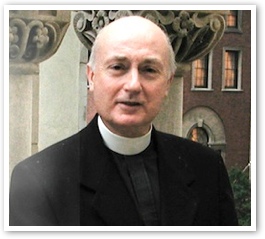
Posted in Uncategorized | Comments Off on COUPLES THAT HAVE TWELVE CHILDREN ARE “BREEDING LIKE RABBITS”, YOUNG PEOPLE WHO DISCOVER AND LOVE THE TRADITIONAL LATIN MASS ARE “RIGID”

In his novel Nineteen-Eighty Four, George Orwell described the sterile world of the New Man shorn of dignity conferred by God and natural law: “Every record has been destroyed or falsified, every book rewritten, every picture has been repainted, every statue and street building has been renamed, every date has been altered. And the process is continuing day by day and minute by minute.

Rutler5

The Mindless Iconoclasm of Our Age

by George W. Rutler

[ Emphasis in red type by Abyssum ]

DESCRIPTION

Fr. Rutler addresses the current absurdity of removing portions of our history because of political correctness. He refers to similar acts in the past such as the Vandals in Hippo, the Protestant iconoclasts in the sixteenth century and the Puritans in the Cromwellian period.

Crisis Magazine

Sophia Institute Press, August 23, 2017

.

.

Galla Placida, the regent for her young son, the emperor Theodosius III, was shocked when Saint Augustine died in 430 on August 28, three months into the siege of his city Hippo by the Vandals. He may have died of malnutrition, if not stress, because the wheat crop had not been harvested. As destroyers go, the Vandals were not as bad as some of the other sackers of Roman civilization, and when they burned Hippo they preserved Augustine’s cathedral and library, but they certainly were energetic: in a short space they had made their way from home in southern Scandinavia all the way to North Africa. Physically, they fascinated the sultrier races and, a bit like Pope Gregory who called the fair Angles angels, the sixth century Byzantine chronicler Procopius said that the Vandals “all have white bodies and fair hair, and are tall and handsome to look upon.” Vandalism has come to be an unflattering sobriquet, much like the customs of the Thugs of India and the Buggers of Bulgaria. The three of them combined would resemble the platform of some contemporary progressives.

As the Vandals had a conflicted social history, not to mention their heretical Arianism, they were amenable to contracts and concessions. That is a roundabout way of saying that nobody is totally perfect, and even if no one seems to have been inspired to erect monuments to the Vandals whose eccentric perfection was their skill at toppling statues, it would be hard to think of any historical figures who did not warrant criticism one way or another. Even George Washington’s greatest admirers, who justifiably were and remain legion, snickered when Horatio Greenough exhibited his colossal statue of the Father of our Country bare-chested in the toga and pose of Zeus. Charles Bullfinch, the third architect of the Capitol said: “I fear that this statue will give the idea of Washington’s entering or leaving a bath.” It stood in the Capitol Rotunda from 1841 to 1843 and then was removed to the East Lawn of the Capitol, eventually all twelve tons of it ending up in the National Museum of American History. In an hour of ill-advised passion after a public reading of the Declaration of Independence, a mob from New York stormed down to Bowling Green and destroyed the statue of King George III, which the people of the city themselves had erected in gratitude for the monarch’s tax concessions. This infuriated George Washington who, fully clad, berated them for such an indignity.

Thomas Jefferson was not perfect, as his many uncompensated employees would attest; Franklin Roosevelt was not laureled by victims of his Yalta Agreement; and, among the most commemorated modern figures, Martin Luther King was not morally unblemished in the instances of his problematic use of sources and strained conjugal life. But heroes are such because of acts of heroism, and not necessarily for the kind of heroic virtue that constitutes sanctity. Those who desecrate statues of real saints do not understand the difference or, worse, they do not understand heroic virtue. Theodore Roosevelt knew he was not a saint but he knew who were, and so you can still see in his library at Oyster Bay in places of honor, engravings of Thomas More and John Fisher. There are some historical figures who made big mistakes because they also took big risks. Roosevelt grinned as he said in Paris at the Sorbonne in 1910: “It is not the critic who counts; not the man who points out how the strong man stumbles, or where the doer of deeds could have done them better. The credit belongs to the man who is actually in the arena, whose face is marred by dust and sweat and blood; who strives valiantly; who errs, who comes short again and again, because there is no effort without error and shortcoming; but who does actually strive to do the deeds…” But in recent times, dilettantes who have never ventured into the arena actually want to pull down the statue of Teddy in front of the Museum of National History. There were pianists who performed more perfectly than Arthur Rubenstein, but as one critic who did not mind the stumbling wrote: “A couple of wrong notes from Rubinstein told more about Brahms or Chopin or Beethoven than could a whole evening of right notes from less authoritative hands.”

In 1501, the torso of an ancient statue was uncovered in Rome and, nicknamed “Pasquino.” It became the billboard for scribbled jokes and rhymes, often caustic and even treasonous, which came to be known as “pasquinades.” While the Christians melted lots of architectural marble for lime, pagan temples were consecrated as churches, and even pagan memorials were preserved, such as the Arch of Titus with its depiction of the spoliation of the Jerusalem Temple, and Hadrian’s Column. Long after, Napoleon replicated that column in the Place Vendome to commemorate his victory at Austerlitz. Recently, The New York Times sustained its reputation for obliviousness to history by saying that the statue of Napoleon on top of it remained untouched through the vicissitudes of France’s anxious generations. In fact, it was pulled down in 1816, and again during the Commune at the instigation of the painter Gustave Courbet who was fined and forced into Swiss exile. It was replaced a couple of times, by Louis-Philip and Napoleon III. The Grey Lady’s copy editors are not what they used to be.

Protestant iconoclasts did much damage to art in the sixteenth century, and Puritans did worse in the Cromwellian period like a battalion of post-Vatican II liturgists, smashing some of the world’s most glorious windows, and leaving the cathedrals pockmarked with their contempt. The Eleanor Cross erected in London in the thirteenth century and destroyed in 1647, had its second restoration in 2010—but at considerable cost. Not content with beheading their own king, French revolutionaries decapitated the twenty-eight stone kings of Judah on the west façade of the cathedral of Notre Dame. Islamic iconoclasm has been international, conspicuously in the several invasions of India. Explosives have made it a more efficient job, as in Iraq and the Levant, Mali, and the Taliban dynamiting of statues in Afghanistan.

Erecting statues can be a risky business, as in the ancient instances of the golden one, ninety feet tall, that Nebuchadnezaar wanted everyone to worship with unblinking vigils (Daniel 3). The Bar Kochba Revolt began when Hadrian erected on the Temple Mount, of all places, statues of Jupiter and himself. This is recorded by the historian Cassio Dio who also claimed that the Iceni and Trinobantian tribes of Britain rebelled with an army of 100,000, chiefly for economic reasons, when Seneca called in some loans that they owed. It was a powerful show of force, but one doomed, not unlike the Confederate Army. The Victorians were fascinated with the queen of the Iceni, Boudica, and erected Thomas Thornycroft’s tremendous statue of her in a chariot along the Thames in 1850. It would be foolish to remove that statue now to avoid offending Italians. It would be foolish, too, to tear down the Saint-Gaudens statue of General Sherman in Central Park. He burnt a lot of things but he also built a lot of things, and the provocative iconography of his horse trampling on Georgia pine cones, is mitigated by the allegorical figure of Peace leading the horse: a lovely young girl whose model was an African-American, Harriette Anderson. In a final analysis, whether statues are of stone or bronze, all of them have feet of clay like the statue in Nebuchadnezzar’s dream, because all people do.

After the Civil War, Robert E. Lee, son of one of Washington’s generals, urged that no monuments be erected to figures however noble, so as to smooth the way to peace. It was only on the fiftieth anniversary of that war, that monuments appeared on a big scale. When a freed black slave stunned the congregation in St. Paul’s Episcopal Church in Richmond by kneeling at the communion rail, General Lee caused more of a stir when he knelt beside him. Descriptions vary, but there seems solid substance to the story and its image in words is better than any in bronze. Lee did not even want a statue of himself at his Washington College where he spent his last years promoting the liberal arts and classical virtues. In one letter, Lee wrote: “All I think that can now be done, is to aid our noble & generous women in their efforts to protect the graves & mark the last resting places of those who have fallen, & wait for better times.”

These days the latest hysteria is the toppling of statues by immoderate and ignorant people. Someone as bereft of a knowledge of history as some media pundits and politicians, has even vandalized a statue of St. Joan of Arc in the city of St. Louis, apparently under the impression either that she was a transgendered Confederate general, or a symbol of that ultimate scourge of the vandals of culture: the Catholic Church. It is not the boast of Catholics that Chief Justice Roger B. Taney of the Dred Scott decision found his position on slave ownership consistent with his Catholicism, but he had called slavery “a blot on our national character” and emancipated his own slaves. His statue has been removed by night without notice or respect for his reasons and judicial distinction. Archbishop John Hughes of New York shoulders the mantle of veneration by many despite his own prejudices. Having delivered himself of pro-slavery sermons in the 1850’s he said about rumors of Emancipation which he opposed: if it were true, Irishmen “will turn away in disgust from the discharge of what would otherwise be a patriotic duty.” He was not alone. In the elections of 1860 and 1864, New Yorkers voted against Lincoln two to one.

The vandalism by those who would plant themselves on moral pedestals is highly selective. There have been no protests about a statue of Lenin on La Brea Avenue in Los Angeles, or one on Norfolk Street in Seattle, or one on the Lower East Side of Manhattan, notwithstanding the more than 60 million humans whose deaths he engineered, and the pall of misery with which he blanketed much of the world. As for race, there are untouched statues of Margaret Sanger whose eugenic symbiosis with the National Socialists set in motion the annihilation of millions of African-American babies. Some have proposed that the Capitol receive a bust of Justice Harry Blackmun whose opinion in the Roe v. Wade decision was the American equivalent of the protocol of the Wannsee Conference. Paraliptically, one need not mention the much heralded and memorialized Exalted Cyclops of the Ku Klux Klan, Senator Robert C. Byrd who said during World War II that he would refuse to fight with a Negro by his side and who was the only senator to refuse to confirm the nomination of the only two black nominees for the Supreme Court. There was also the institution of Jim Crow in federal departments by that favorite of the Klan, Woodrow Wilson.

These are facts and the problem with facticity is that it is a menace to theory and an obstacle to policy. Like the old Soviet Encyclopedia, inconvenient people must be eliminated from the next edition, making them “non-persons.” Imperial Romans ritualized the obliteration of ancestors in their abolitio memoriae, which ceremoniously smashed images and inscriptions of antecedents. Even much earlier, soon after the death in 1457 BC of the Egyptian female pharaoh Hatshepsut, her epitaphs were chiseled out and statues of her were torn down. In his novel Nineteen-Eighty Four, George Orwell described the sterile world of the New Man shorn of dignity conferred by God and natural law: “Every record has been destroyed or falsified, every book rewritten, every picture has been repainted, every statue and street building has been renamed, every date has been altered. And the process is continuing day by day and minute by minute. History has stopped. Nothing exists except an endless present in which the Party is always right.”

The architects of that kind of mindless and soulless dystopia have one statue left to tear down, and it must be toppled if statists are to smash the Image of God in men, and it is Rodin’s “The Thinker.”

Fr. George W. Rutler is pastor of St. Michael’s church in New York City. He is the author of many books including Principalities and Powers: Spiritual Combat 1942-1943 (South Bend, IN: St. Augustine’s Press) and Hints of Heaven (Sophia Institute Press). His latest books are He Spoke To Us (Ignatius, 2016) and The Stories of Hymns (EWTN Publishing, 2017).

© Copyright 2017 Crisis Magazine. All rights reserved.

This item 11639 digitally provided courtesy of CatholicCulture.org

Posted in Uncategorized | Comments Off on In his novel Nineteen-Eighty Four, George Orwell described the sterile world of the New Man shorn of dignity conferred by God and natural law: “Every record has been destroyed or falsified, every book rewritten, every picture has been repainted, every statue and street building has been renamed, every date has been altered. And the process is continuing day by day and minute by minute.

AT THIS CRITICAL MOMENT IN THE LIFE OF THE CHURCH LEAVE IT TO CARDINAL CUPICH TO SAY SOMETHING STUPID ABOUT WHAT IT MEANS TO BE A CHRISTIAN


On ‘Christians’ and the ‘greatest Christians’

September 5, 2017

When Cdl. Cupich of Chicago says “some of the greatest Christians I know are people who don’t actually have a faith system that they believe in”, I kinda sorta get what he means.

Raised as we were by an active Catholic mother and a nominally Methodist father, I had many opportunities to compare religious observances over the years. My mom did what was expected of Catholic moms through those years, God bless her, and I scarcely noticed it. But my dad’s religious conduct (or better, his conduct related to religion) caught my attention.

He willingly paid for Catholic schools when there were free public schools just a few blocks away. His Friday dinner was always fish although he would have loved a hamburger. And from time to time, he was the parent who actually made sure we kids got to Mass on Sunday. Thus, when my mother remarked, as she did more than once, that “Your father is the best Catholic in this house”, I knew what she meant.

But I also knew what she didn’t mean.

She did not mean that dad enjoyed the graces that came with Confirmation, the Eucharist, and Confession (being baptized, he and mom shared in the graces of Matrimony). She certainly did not mean that Catholicism was simply one more option among various belief systems, or none. And she never parlayed my dad’s Christian sensibilities into an ersatz Catholic identity cooked up in gratitude for his support in raising the children Catholic. Why not? If for no other reason, because words meant something in our house. Dad saw to that.

These thoughts came to mind when I read Cupich’s remarks about some of the “greatest Christians” being people who believe in nothing—or at any rate in nothing related to Christ. I can, in a way, appreciate his point for, obviously, people need not have a “faith system” in order to be mature, responsible, loving members of society.

But, unless both Cupich and his listeners know the personal examples he has in mind (in the way that my mom and I both knew much about my dad), I think it is confusing, in a world where words seem pretty much to mean whatever a speaker wants them to mean, for a prelate of the Catholic Church to refer to people “who don’t actually have a faith system that they believe in” as counting among the greatest Christians, of all things. Greatest people? Sure. Greatest humanitarians? Quite possible. But greatest Christians? Is that not to treat the word “Christian” as devoid of some specific, belief-oriented, content?

Consider a related point: Canon 205, rooted in Lumen gentium 14, sets out three criteria whereby baptized persons are found fully in communion with the Catholic Church, beginning with the profession of faith, and including also participation in sacraments and cooperation with ecclesiastical governance. Those who have, therefore, no “faith system that they believe in”, and who thus cannot claim full communion with the Church, are to be respected, of course, but also prayed for—not held up as role models for Catholics qua Catholics. Indeed, if one’s lack of “a faith system” is the result of an actual repudiation of the Christian faith (suggesting apostasy per Canon 751) one’s need for prayer and an invitation out of disbelief is all the more urgent, these, being among the pastoral points for bishops included in, say, Canon 383.

Likewise, I suggest, being “Christian” has something to do with, among other things, professing faith in Jesus Christ; being a “great Christian” has something to do with, among other things, proclaiming him boldly; and thus, holding out persons with no discernible beliefs as examples of the “greatest Christians” is not helpful especially in days of so much confusion about the meaning of, and the importance of being, Christian.

Posted in Uncategorized | 1 Comment