NOT ALL THIEVES ARE STUPID, TAKE BETTER PRECAUTIONS


NOT ALL THIEVES ARE  STUPID  
 
1. LONG  – TERM PARKING 
 
Some  people left their car in the long-term parking at San Jose while away, and  someone broke into the car. Using the information on the car’s  registration in the glove compartment, they drove the car to the  people’s home in Pebble Beach and robbed it.  So I guess if we are going to leave the car in long-term parking, we  should NOT leave the registration/insurance cards in it, nor your remote  garage door opener. This gives us something to think about with all our  new electronic technology.  
 
 
2. GPS: 
 
Someone had their car broken into  while they were at a football game. Their car was parked on the  green which was adjacent to the football  stadium and specially allotted to football fans. Things stolen from the  car included a garage door remote control, some money and a GPS which had  been prominently mounted on the dashboard. When the victims got  home, they found that their house had been ransacked and just  about everything worth anything had been  stolen. The thieves had used the GPS to guide them to the house.  They then used the garage remote control  to open the garage door and gain entry to the house. The thieves  knew the owners were at the football  game, they knew what time the game was scheduled to finish and so  they
knew how much time they had to clean  out the house. It would appear that they had brought a truck to  empty the house of its contents. Something  to consider if you have a GPS – don’t put your home address in it.  Put a nearby address (like a store or  gas station) so you can still find your way home if you need to, but no  one else would know where you live if  your GPS were stolen. 
 
 
3. CELL  PHONES: 
 
I  never thought of this! This lady has now changed her habit of how she  lists her names on her cell phone  after her handbag was  stolen. Her handbag, which contained her cell phone, credit card, wallet,  etc., was stolen. Twenty minutes later when  she called her hubby, from a pay phone telling him what had happened,  hubby says, “I received your text asking about our Pin number and I’ve  replied a little while ago” When they  rushed down to the  bank, the bank staff told them all the money was already withdrawn. The  thief had actually used the stolen cell phone to text  “hubby” in the contact list and got hold of the pin number. Within 20  minutes he had withdrawn all the money from  their bank account. 
 
 
Moral lesson: 
a. Do not disclose the relationship  between you and the people in your contact list. Avoid using names  like Home, Honey, Hubby, Sweetheart, Dad,  Mom, etc.
b. And very importantly, when  sensitive info is being asked through texts, CONFIRM by calling  back.
c. Also, when you’re being texted by friends or family to meet  them somewhere, be sure to call back to  confirm that the message came from them. If  you don’t reach them, be very careful about going places to meet  “family and friends” who text  you. 
 
 
4. PURSE IN THE  GROCERY CART SCAM:
A lady went grocery-shopping at a  local mall and left her purse sitting in the children’s seat of the cart  while she reached something off a shelf/ Wait  till you read the WHOLE story! Her wallet was stolen, and she reported  it to the store personnel. After  returning home, she received a phone call from the Mall Security 
to  say that they had her wallet and that although  there was no money in it, it did still hold her personal papers. She  immediately went to pick up her wallet, only to  be told by Mall Security that they had not called her. By the time she  returned home again, her house had been  broken into and burglarized. The thieves knew that by calling and saying  they were Mall Security, they could lure  her out of her house long enough for them to burglarize it. 


Posted in Uncategorized | Comments Off on NOT ALL THIEVES ARE STUPID, TAKE BETTER PRECAUTIONS

MONEY, MONEY, MONEY !!! ITS MONEY THAT MAKES THE WORLD GO ROUND (AND UPSIDE DOWN) NOT LOVE

Settimo Cielodi Sandro Magister 

23 mar 17

Knights of Malta. The Mystery of Those 30 Million Swiss Francs

Cavalieri


The saga of the Knights of Malta has been expanded with a new chapter, staged by the Grand Chancellor of the order, the German baron Albrecht Freiherr von Boeselager, in an interview in the widely read German newspaper “Bild” on March 16.

In the interview, conducted by Nikolaus Harbusch, a well-known journalist who specializes in financial crimes, the Grand Chancellor confirmed that at the beginning of this month the order received the first installments of a donation of 30 million Swiss francs, after verifying the correct provenance of the sum and the reliability of the person with whom on March 1 it signed the transfer agreement, identified by the “Bild” as Ariane S. and a fiduciary of the CPVG trust in Geneva, registered in New Zealand, which is the trustee of the money.

According to the investigations of the “Bild,” however, the trail of this endowment still has its obscure points. And the order of Malta itself had initially reported the fiduciary of the CPVG trust to the Geneva courts for embezzlement, an accusation that was withdrawn shortly before the framework agreement lat March 1.

The following is Boeselager’s complete interview with the “Bild.” Immediately followed by a few notes on the questions that it raises.

*

Q: Mr von Boeselager, on March 1st you concluded an important agreement for the Order of Malta.

A: We concluded a framework agreement with the trustee of the New Zealand Trust CPVG from Geneva, concerning the acceptance of a large donation.

Q: What was the donation amount?

A: The donation amounts to 30 million Swiss francs over a period of 7 years. 3 million of which have already been paid.

Q: Have you taken this decision alone?

A: The acceptance of this money was reviewed by lawyers and, subsequently, the decision was taken unanimously by the government of the Order.

Q: Who is this “Mr Latour”, who allegedly is the source of this legendary 120 million euro inheritance?

A: I do not know the donor. He comes from a rich French family. The money was placed into a trust before World War II. Since then, there have been only investment. That is all I know.

Q: Do you know Mr Latour’s first name and date of birth?

A: We really don’t know these details. This is due to the fact our donor is the CPVG Trust, not “Mr Latour” personally. “Mr Latour” requested anonymity and we had to accept that. This is common.

Q: Is this money black money?

A: To the best of our knowledge, no. According to a so-called wish list of the donor, the Order of Malta was supposed to receive a quarter of the trust capital.

Q: The public prosecutor in Geneva has currently frozen the money and is carrying out an investigation against the trustee for embezzlement. And carrying out an investigation of allegations. According to Bild information experts assume that the money was never subject to proper taxation in France.

A: The public prosecutor asked us to settle with the Trust in order to close the case. We withdrew our charges against the trustee as the allegation was unfounded and no damage was caused. But generally: 30 million is by far the biggest cash donation received in the last 10 years. But one thing remains clear. If money is dirty, we will not take it. I remember two donations from Switzerland and the USA which we had to decline.

Q: You will go down in the proud history of your military order as the “dirty money baron…”.

A: In the CPVG case, we have carried out a very diligent risk analysis. Therefore, I do not see a reason to put the Order on a “money launder list” and paint the order to be something it is not.

Q: Critics say that you want to transform your Catholic military Order into a normal NGO?

A: They clearly don’t know me at all. In fact, the opposite is true. We are continuing with our mission: evangelization through assistance and charity.

Q: How do you plan to avoid future conflicts like the case concerning the replaced Grand Master Festing?

A: You can never avoid human conflict. We have to limit the autonomy of the Grand Master in the coming reform of the Order. In the future, he should have to be bound to the decisions of the Order’s government.

*

Already this last statement by Boeselager is astonishing, considering what came before it. Because it is true that the Grand Master at the time, Matthew Festing, in removing Boeselager last December 6 made use of his power without the prior approval (not obligatory) of the whole government of the order, but it is also true that Boeselager, first as Grand Grand Hospitaller and then as Grand Chancellor, often acted without informing the Grand Master, contrary to the rules, and this was one of the very reasons for the rupture between the two.

Moreover, one of the matters on which the Grand Master was kept in the dark was precisely the existence of those 30 million Swiss francs kept by the CPVG in Geneva. When he found out about it, the Grand Master set up an internal commission to investigate that trust with its unclear delineations but with definite ties to Boeselager and three other leading representatives of the order of Malta: Archbishop Silvano Tomasi, former observer of the Holy See at the United Nations in Geneva; Marc Odendall, a Franco-German financier; and Marwhn Sehnaoui, president of the order in Lebanon.

The investigation of the commission set up by Grand Master Festing led the order of Malta to report the fiduciary of the CPVG trust to the judiciary in Geneva on the suspicion of embezzlement, with the result that the sum held by the trust was frozen by a court order.

But in spite of this, after Boeselager was removed by the Grand Master and after his immediate appeal to the pope for a return to his functions, the commission that Francis set up on December 22 to patch up the squabble was made up of none other than Tomasi, Odendall, and Sehnaoui, in addition to the Belgian lawyer Jacques de Liedekerke and the Jesuit canonist Gianfranco Ghirlanda. Apart from this last, these are persons closely connected to Boeselager and above all personally involved in the “affair” of the Geneva trust.

Without counting the contemporaneous appointment as a member of the board of the IOR, the Vatican “bank,” of Boeselager’s brother, Georg Freiherr.

Grand Master Festing protested over this clear “conflict of interest” in at least three members of the commission. But in vain. The commission set up by the pope completed its investigations in record time and delivered its final report even before the deadline set at the end of January.

With consequences that were apparent immediately: the forced resignation of Festing handed over to Francis; the nullification of all his decisions from December 6 onward; Boeselager’s reinstatement as Grand Chancellor; the appointment of a “special delegate” of the pope “for the spiritual and moral renewal of the order,” in the person of substitute secretary of state Angelo Becciu.

But also with results that Boeselager revealed after the fact, in the interview with the “Bild”: the withdrawal of the accusation against the fiduciary of the CPVG trust in Geneva, the signing of the framework agreement and the depositing of the first 3 million of the donation.

There remains the mystery of this fiduciary with whom the Grand Chancellor of the Knights of Malta signed the pact.

Approached in January by the “National Catholic Register,” the woman whom the “Bild” calls “Ariane S.” responded by threatening to sue at the mere publication of the names of the members of the trust of which she is the fiduciary, as also of the documents concerning it.

*

The most detailed and documented reconstruction of the saga of the Knights of Malta is in these articles by Edward Pentin for the National Catholic Register:

January 7, 2017
> Disorder in the Order of Malta

January 18, 2017
> Order of Malta, Holy See Remain at Odds Over Inquiry Commission

January 26, 2017
> Pope Francis Declares All of Festing’s Recent Acts “Null and Void”

January 28, 2017
> Order of Malta Votes in Favor of Accepting Festing’s Resignation

February 4
> New Order of Malta Government Shares Its Vision for the Future

February 18
> Cardinal Burke Firmly Rejects Account by Order of Malta’s Acting Head

March 17
> German Newspaper Investigates Mysterious Trust Connected to Order of Malta

*

The two previous posts from Settimo Cielo on this topic:

January 25
> Between Rome and Malta, Great Is the Disorder Under Heaven

January 29
> After the Grand Master, Another Head Is About To Fall: That of Cardinal Burke

(English translation by Matthew Sherry, Ballwin, Missouri, U.S.

Posted in Uncategorized | Comments Off on MONEY, MONEY, MONEY !!! ITS MONEY THAT MAKES THE WORLD GO ROUND (AND UPSIDE DOWN) NOT LOVE

To what end fraternal correction? Preferably rehabilitation, healing, and return of the prodigal sons – else excommunication.

The Conclave Of Cardinals Have Elected A New Pope To Lead The World's Catholics

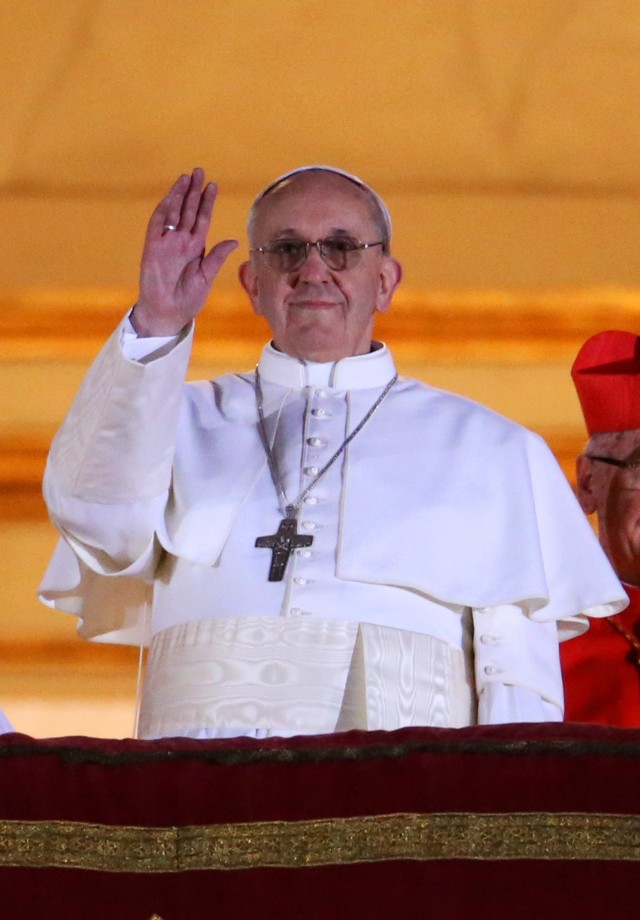
VATICAN CITY, VATICAN – MARCH 13: Newly elected Pope Francis I appears on the central balcony of St Peter’s Basilica on March 13, 2013 in Vatican City, Vatican. Argentinian Cardinal Jorge Mario Bergoglio was elected as the 266th Pontiff and will lead the world’s 1.2 billion Catholics. (Photo by Peter Macdiarmid/Getty Images)

Monday, December 19, 2016

Does Amoris Laetitia Evoke Scandal?

by  John J. Arechiga

John J. Arechiga is known to me to be a researcher of exceptional ability.
For some time I have read the results of his research and at my urging 
he has agreed to allow me to publish several of his essays.  This essay 
addresses a matter of critical importance to the Roman Catholic Church at this moment in its history.  I publish this essay in the hope that it will contribute to the efforts of persons in the Church in authority who have the power to find solutions to the problems that currently afflict the Church.
 
+Rene Henry Gracida, Bishop Emeritus of Corpus Christi


The question of the day focuses on whether Amoris Laetitia (The Joy of Love) evokes scandal – and whether fraternal correction of Pope Francis is an option.

The question of the day focuses on scandal – not heresy. That being said, keep in mind what Edward Peters, a prominent Canon Lawyer, wrote on December 16, 2016:

“No one in a position of ecclesial responsibility—not the Four Cardinals posing dubia, not Grisez & Finnis cautioning about misuses, and not the 45 Catholics appealing to the College, among others—has, despite the bizarre accusations made about some of them, accused Pope Francis of being a heretic or of teaching heresy. While many are concerned for the clarity of various Church teachings in the wake of some of Francis’ writings and comments, and while some of these concerns do involve matters of faith and morals, no responsible voice in the Church has, I repeat, accused Pope Francis of holding or teaching heresy.”

What is Amoris Laetitia?  It is a post-synodal apostolic exhortation (The Joy of Love) given by Pope Francis on March 19, 2016.

What is a post-synodal apostolic exhortation?  Arguably, “an apostolic exhortation is a type of communication from the Pope of the Roman Catholic Church. It encourages a community of people to undertake a particular activity but does not define Church doctrine. It is considered lower in formal authority than a papal encyclical, but higher than other ecclesiastical letters, Apostolic Letters and other papal writings.  Apostolic exhortations are commonly issued in response to an assembly of the Synod of Bishops, in which case they are known as post-synodal apostolic exhortations.”

What is scandal?

“Scandal is any sinful word, deed, or omission that disposes others to sin, or lessens their respect for God and holy religion.”  [1885 Baltimore Catechism No. 3, Question 1279]

“The fifth commandment can be broken by giving scandal or bad example and inducing others to sin, because such acts may destroy the life of the soul by leading it into mortal sin.” [1885 Baltimore Catechism No. 3, Question 1279]

“Scandal is an attitude or behavior which leads another to do evil. The person who gives scandal becomes his neighbor’s tempter. He damages virtue and integrity; he may even draw his brother into spiritual death.  Scandal is a grave offense if by deed or omission another is deliberately led into a grave offense.”  [1994 CCC 2284]

“Any action or its omission, not necessarily sinful in itself, that is likely to induce another to do something morally wrong.  Direct scandal, also called diabolical, has the deliberate intention to induce another to sin.  In indirect scandal a person does something that he or she foresees will at least likely lead another to commit sin, but his is rather tolerated than positively desired.”  [Hardon, Modern Catholic Dictionary, definition of Scandal, page 491]

What is Scandal of the Weak?

“Disedifying morally weak persons by permissible conduct.  Circumstances determine the duty in charity to avoid giving scandal to the weak.  The existence of such a duty is clear from the teaching of St. Paul, who would not eat meat that had been offered to idols lest he scandalize the weaker brethren.  He warned the early Christians not to rationalize their conduct but to follow his example, lest “by sinning in this way against our brothers and injuring their weak consciences, it would be Christ against whom you sinned” (1 Corinthians 8:12).  This obligation in charity is such that one may licitly refrain from fulfilling even a grave positive precept that is not necessary for salvation in order to prevent serious scandal to the weak.  Behind the obligation is the mandate of selfless love that seeks not only to help another in obvious need but also by self-restraint to protect another from spiritual harm.  (emphasis supplied)”  [Hardon, Modern Catholic Dictionary, definition of Scandal of the Weak, page 491

What else does the Catechism of the Catholic Church (CCC) say about scandal?

(CCC 2285)  Scandal takes on a particular gravity by reason of the authority of those who cause it or the weakness of those who are scandalized.  It prompted our Lord to utter this curse: “Whoever causes one of these little ones who believe in me to sin, it would be better for him to have a great millstone fastened round his neck and to be drowned in the depth of the sea.”  Scandal is grave when given by those who by nature or office are obliged to teach and educate others.  Jesus reproaches the scribes and Pharisees on this account: he likens them to wolves in sheep’s clothing.

(CCC 2286)  Scandal can be provoked by laws or institutions, by fashion or opinion.

Therefore, they are guilty of scandal who establish laws or social structures leading to the decline of morals and the corruption of religious practice, or to “social conditions that, intentionally or not, make Christian conduct and obedience to the Commandments difficult and practically impossible.”  This is also true of business leaders who make rules encouraging fraud, teachers who provoke their children to anger, or manipulators of public opinion who turn it away from moral values.

(CCC 2287)  Anyone who uses the power at his disposal in such a way that it leads others to do wrong becomes guilty of scandal and responsible for the evil that he has directly or indirectly encouraged.  “Temptations to sin are sure to come; but woe to him by whom they come!”

Does Amoris Laetitia (The Joy of Love) evoke scandal?  Decide for yourself. On April 16, 2016, John-Henry Westen, wrote:

“On the flight returning from Greece, Pope Francis was asked if the Apostolic Exhortation contained a “change in discipline that governs access to the sacraments” for Catholics who are divorced and remarried.

, “I can say yes, period.” Adding, however, that this would be “too small” of an answer, the Pope then urged reading the presentation of Cardinal Schönborn, calling Schönborn a “great theologian who knows the doctrine of the Church.”

On April 18, 2016, Christopher A. Ferrara wrote,

“EWTN’s show The World Over presented a politely devastating critique by Fr. Gerald Murray, Robert Royal and Raymond Arroyo. The participants described passages to be examined here as “dangerous,” “very disturbing,” “very problematic,” “not the language of the Gospel,” “very odd,” “very strange,” “a big mistake,” “set[ting] up straw men to knock down,” “a direct contradiction of John Paul II in Familiaris consortio and subsequent documents,” “not in accord with what the Church has said until now,” “false mercy” favorable to “‘Father Friendly’ who wants to sell the store,” that would make receiving Communion “a badge of honor that you receive even you though you know what you are doing is contrary to the teaching of the Church,” and an “attempt to paper over what really is a change of doctrine… but denying that you’re changing the doctrine.” As Arroyo observed, according to the general tenor of the document “the exception becomes a very difficult rule, or no rule at all” while the Church, to quote Father Murray, becomes involved in “the excuse-making business, not the Gospel business.”

Diverse authors also wrote critical articles, opinions, and reviews of Amoris Laetitia.  For example:

On April 18, 2016, Deacon Jim Russell, published Amoris Laetitia and the “Brinkmanship” of Pope Francis, in Crisis Magazine, a voice for the faithful Catholic laity.

On April 18, 2016, Clifford Longley, published Amoris Laetitia: Pope Francis has created confusion where we needed clarity, in The Tablet, the international Catholic news weekly.

On April 18, 2016, Christopher A. Ferrara, published Amoris Laetitia: Anatomy of a Pontifical Debacle, in The Remnant, a national Catholic newspaper.

On April 19, 2016, Hillary White, published Does No One Care About the Pope’s Immortal Soul?, in Fetzen Fliegen, a Remnant newspaper blog.

On April 20, 2016, Claire Chretien published Exhortation allows Communion for divorced/remarried on case-by-case basis, claim 3 German bishops, in LifeSiteNews.

On May 9, 2016, John-Henry Westen published Voice of the Family calls on Pope Francis to withdraw Amoris Laetitia, in LifeSiteNews.

On May 9, 2016, Claire Chretien published Archbishop: Pope told me we must avoid speaking ‘plainly’ on Communion for remarried, in LifeSiteNews.

May a person fraternally correct a person in a higher position – to include a prelate? To the extent that Amoris Laetitia(The Joy of Love) evokes scandal, who may fraternally correct the Pope Francis?

In Summa Theologica, Saint Thomas Aquinas wrote: “Show mercy not only to yourselves, but also to him who, being in the higher position among you (emphasis supplied), is therefore in greater danger. But fraternal correction is a work of mercy. Therefore even prelates ought to be corrected (emphasis supplied). I answer that, A subject is not competent to administer to his prelate the correction which is an act of justice through the coercive nature of punishment: but the fraternal correction which is an act of charity is within the competency of everyone in respect of any person towards whom he is bound by charity (emphasis supplied), provided there be something in that person which requires correction.” (Summa Theologica, II-II, Question 33, Article 4)

“We have been weighed upon by the thought that a matter of this kind [i.e. error in respect of the Faith] is so grave and so dangerous that the Roman Pontiff(emphasis supplied), who is the representative upon earth of God and our God and Lord Jesus Christ, who holds the fullness of power over peoples and kingdoms, who may judge all and be judged by none in this world, may nonetheless be contradicted if he be found to have deviated from the Faith(emphasis supplied).  Remembering also that, where danger is greater, it must more fully and more diligently be counteracted, We have been concerned lest false prophets or others, even if they have only secular jurisdiction, should wretchedly ensnare the souls of the simple, and drag with them into perdition, destruction and damnation countless peoples committed to their care and rule, either in spiritual or in temporal matters; and We have been concerned also lest it may befall Us to see the abomination of desolation, which was spoken of by the prophet Daniel, in the holy place. In view of this, Our desire has been to fulfil our Pastoral duty, insofar as, with the help of God, We are able, so as to arrest the foxes who are occupying themselves in the destruction of the vineyard of the Lord and to keep the wolves from the sheepfolds, lest We seem to be dumb watchdogs that cannot bark and lest We perish with the wicked husbandman and be compared with the hireling.”  (Cum Ex Apostolic Officio, Apostolic Constitution by Pope Paul IV, given in Rome on February 15, 1559, paragraph 1)

Did Amoris Laetitia (The Joy of Love) evoke scandal?  Is fraternal correction of Pope Francis an option?

Before answering this last question, it behooves all of us to revisit the definition of Catholic modernism (about which we were warned in 1907 by Pope Saint Pius X – long before the Second Vatican Council); revisit the parameters of fraternal correction; and, revisit the election of Pope Francis pursuant to Universi Dominici Gregis.

In moving on, it must be emphasized that the issue is not heresy, sedevacantism, schism, or the indefectibility of the Church.  The issue is fraternal correction of scandalous Catholic modernists.  To what end fraternal correction?  Preferably rehabilitation, healing, and return of the prodigal sons – else excommunication.

+++++++++++++++++++++++++++++++++++++++++++++++++++++++++++++++++++++++

Originally published in The Remnant.

This is the THIRD in a series of essays by John J. Arechiga, another will be posted tomorrow


Posted in Uncategorized | Comments Off on To what end fraternal correction? Preferably rehabilitation, healing, and return of the prodigal sons – else excommunication.

THE BARQUE OF PETER SEEMS TO BE FOUNDERING, PUT ON YOUR LIFE JACKET (CHRIST) AND HOLD ON TIGHT


Francis: No Catholic Mass available? Just go to the Anglicans!

March 21, 20173/21/2017

Chaos Frank strikes again…

Francis: No Catholic Mass available? Just go to the Anglicans!


Every day we are being drowned in news about “Pope” Francis and the Vatican machinery. The incessant flood of information is becoming increasingly difficult for everyone to process, which means it is easy for stories to get missed.

Such was apparently the case with a real bombshell Francis dropped on February 26, 2017 while visiting an Anglican parish church in Rome. Virtually everyone seems to have missed it. What happened? During a Q&A session in which Francis was answering people’s questions off the cuff, he related an anecdote about ecumenical practice with Anglicans in his homeland of Argentina.

Have a look at what Francis said, and don’t forget to close your mouth afterwards:

And then, there is my experience. I was very friendly with the Anglicans at Buenos Aires, because the back of the parish of Merced was connected with the Anglican Cathedral. I was very friendly with Bishop Gregory Venables, very friendly. But there’s another experience: In the north of Argentina there are the Anglican missions with the aborigines, and the Anglican Bishop and the Catholic Bishop there work together and teach. And when people can’t go on Sunday to the Catholic celebration they go to the Anglican, and the Anglicans go to the Catholic, because they don’t want to spend Sunday without a celebration; and they work together. And here [at the Vatican], the Congregation for the Doctrine of the Faith knows this. And they engage in charity together. And the two Bishops are friends and the two communities are friends.

I think this is a richness [treasure] that our young Churches can bring to Europe and to the Churches that have a great tradition. And they give to us the solidity of a very, very well cared for and very thought out tradition. It’s true, — ecumenism in young Churches is easier. It’s true. But I believe that – and I return to the second question – ecumenism is perhaps more solid in theological research in a more mature Church, older in research, in the study of history, of Theology, of the Liturgy, as the Church in Europe is. And I think it would do us good, to both Churches: from here, from Europe to send some seminarians to have pastoral experience in the young Churches, so much is learned. We know [that] they come, from the young Churches, to study at Rome, at least the Catholics [do]. But to send them to see, to learn from the young Churches would be a great richness in the sense you said. Ecumenism is easier there, it’s easier, something that does not mean [it’s] more superficial, no, no, it’s not superficial. They don’t negotiate the faith and [their] identity. In the north of Argentina, an aborigine says to you: “I’m Anglican.” But the bishop is not here, the Pastor is not here, the Reverend is not here . . . “I want to praise God on Sunday and so I go to the Catholic Cathedral,” and vice versa. They are riches of the young Churches. I don’t know, this is what comes to me to say to you.

(“Pope’s Q & A at Anglican All Saints Church”, Zenit, Feb. 27, 2017; underlining added. Original Italian at Vatican web site here.)


Posted in Uncategorized | 3 Comments

The replacement of the 1910 Sacrorum antistitum Oath against Modernism on July 17, 1967,reopened the modernist floodgate – and is a date that will live in modernist infamy…

The Conclave Of Cardinals Have Elected A New Pope To Lead The World's Catholics

VATICAN CITY, VATICAN – MARCH 13: Newly elected Pope Francis I appears on the central balcony of St Peter’s Basilica on March 13, 2013 in Vatican City, Vatican. Argentinian Cardinal Jorge Mario Bergoglio was elected as the 266th Pontiff and will lead the world’s 1.2 billion Catholics. (Photo by Peter Macdiarmid/Getty Images)

July 17, 1967 – A Day That Will Live In Modernist Infamy

“Because that which is known of God is manifest in them.  For God hath manifested it unto them.”  [Douay-Rheims translation, Romans 1:19]

by John J. Arechiga

22 March 17


John J. Arechiga is known to me to be a researcher of exceptional ability.
For some time I have read the results of his research and at my urging 
he has agreed to allow me to publish several of his essays.  This essay 
addresses a matter of critical importance to the Roman Catholic Church at this moment in its history.  I publish this essay in the hope that it will contribute to the efforts of persons in the Church in authority who have the power to find solutions to the problems that currently afflict the Church.
 
+Rene Henry Gracida, Bishop Emeritus of Corpus Christi


The days of yore – traditional Catholicism – effectively ended on July 17, 1967.  


Why?  On that date Pope Saint Pius X’s comprehensive 1910 Oath Against Modernization was replaced with a tepid Profession of Faith.  Arguably, the tepid Profession of Faith reopened the modernist floodgates on July 17, 1967 – and is a day that will live in modernist infamy.  


Apparently, the comprehensive 1910 Oath Against Modernism had little effect on modernist oath takers.  Many modernist oath takers arguably took the comprehensive 1910 oath with mental reservation and/or purpose of evasion.  


You also have to wonder whether many of today’s clergy, pastors, confessors, preachers, religious superiors, and professors in philosophical-theological seminaries, have even heard about the comprehensive 1910 Oath Against Modernism.  


A collateral issue is whether the Sacred Congregation for the Doctrine of the Faith’s tepid Profession of Faith actually abrogated (I.e., did away with) Pius X’s Motu Proprio Oath Against Modernization.  This is an issue best left to canon lawyers, bishops, archbishops, and cardinals…


It bears repeating that on September 8, 1907, Pope Saint Pius X did not mince words when he wrote Pascendi Dominici Gregis about Catholic modernists:     


“We allude, Venerable Brethren, to many who belong to the Catholic laity, nay, and this is far more lamentable, to the ranks of the priesthood itself, who, feigning a love for the Church, lacking the firm protection of philosophy and theology, nay more, thoroughly imbued with the poisonous doctrines taught by the enemies of the Church, and lost to all sense of modesty, vaunt themselves as reformers of the Church; and, forming more boldly into line of attack, assail all that is most sacred in the work of Christ, not sparing even the person of the Divine Redeemer, whom, with sacrilegious daring, they reduce to a simple, mere man.”  [Paragraph 2]


“But since the Modernists (as they are commonly and rightly called) employ a very clever artifice, namely, to present their doctrines without order and systematic arrangement into one whole, scattered and disjointed one from another, so as to appear to be in doubt and uncertainty, while they are in reality firm and steadfast, it will be of advantage, Venerable Brethren, to bring their teachings together here into one group, and to point out the connexion (sic) between them, and thus to pass to an examination of the sources of the errors, and to prescribe remedies for averting the evil.”  [Paragraph 4]


“To proceed in an orderly manner in this recondite subject, it must first of all be noted that every Modernist sustains and comprises within himself many personalities; he is a philosopher, a believer, a theologian, a historian, a critic, an apologist, a reformer.  These roles must be clearly distinguished from one another by all who would accurately know their system and thoroughly comprehend the principles and the consequences of their doctrines.” [Paragraph 5]   


Three years later, on September 10, 1910, Pope St. Pius X, followed up with Sacrorum antistitum, a comprehensive Motu Proprio Oath Against Modernism, to be sworn to by all clergy, pastors, confessors, preachers, religious superiors, and professors in philosophical-theological seminaries.  


Interestingly, Sacrorum antistitum is available on the Vatican website in Latin only.  You have to look elsewhere for an online English translation.  An English print translation of “The Oath Against the Errors of Modernism” can be found in Henry Denzinger’s renowned The Sources of Catholic Dogma, 30th edition, DS (paragraphs) 2145-2147.  You have to wonder whether the modernists are trying to hide this oath.  The Denzinger translation is substantially as follows:  


“I . . . . firmly embrace and accept each and every definition that has been set forth and declared by the unerring teaching authority of the Church, especially those principal truths which are directly opposed to the errors of this day. And first of all, I profess that God, the origin and end of all things, can be known with certainty by the natural light of reason from the created world (see Rom. 1:19), that is, from the visible works of creation, as a cause from its effects, and that, therefore, his existence can also be demonstrated: Secondly, I accept and acknowledge the external proofs of revelation, that is, divine acts and especially miracles and prophecies as the surest signs of the divine origin of the Christian religion and I hold that these same proofs are well adapted to the understanding of all eras and all men, even of this time. Thirdly, I believe with equally firm faith that the Church, the guardian and teacher of the revealed word, was personally instituted by the real and historical Christ when he lived among us, and that the Church was built upon Peter, the prince of the apostolic hierarchy, and his successors for the duration of time. Fourthly, I sincerely hold that the doctrine of faith was handed down to us from the apostles through the orthodox Fathers in exactly the same meaning and always in the same purport. Therefore, I entirely reject the heretical’ misrepresentation that dogmas evolve and change from one meaning to another different from the one which the Church held previously. I also condemn every error according to which, in place of the divine deposit which has been given to the spouse of Christ to be carefully guarded by her, there is put a philosophical figment or product of a human conscience that has gradually been developed by human effort and will continue to develop indefinitely. Fifthly, I hold with certainty and sincerely confess that faith is not a blind sentiment of religion welling up from the depths of the subconscious under the impulse of the heart and the motion of a will trained to morality; but faith is a genuine assent of the intellect to truth received by hearing from an external source. By this assent, because of the authority of the supremely truthful God, we believe to be true that which has been revealed and attested to by a personal God, our creator and lord.  


“Furthermore, with due reverence, I submit and adhere with my whole heart to the condemnations, declarations, and all the prescripts contained in the encyclical Pascendi and in the decree Lamentabili, especially those concerning what is known as the history of dogmas. I also reject the error of those who say that the faith held by the Church can contradict history, and that Catholic dogmas, in the sense in which they are now understood, are irreconcilable with a more realistic view of the origins of the Christian religion. I also condemn and reject the opinion of those who say that a well-educated Christian assumes a dual personality-that of a believer and at the same time of a historian, as if it were permissible for a historian to hold things that contradict the faith of the believer, or to establish premises which, provided there be no direct denial of dogmas, would lead to the conclusion that dogmas are either false or doubtful. Likewise, I reject that method of judging and interpreting Sacred Scripture which, departing from the tradition of the Church, the analogy of faith, and the norms of the Apostolic See, embraces the misrepresentations of the rationalists and with no prudence or restraint adopts textual criticism as the one and supreme norm. Furthermore, I reject the opinion of those who hold that a professor lecturing or writing on a historico-theological subject should first put aside any preconceived opinion about the supernatural origin of Catholic tradition or about the divine promise of help to preserve all revealed truth forever; and that they should then interpret the writings of each of the Fathers solely by scientific principles, excluding all sacred authority, and with the same liberty of judgment that is common in the investigation of all ordinary historical documents.  


“Finally, I declare that I am completely opposed to the error of the modernists who hold that there is nothing divine in sacred tradition; or what is far worse, say that there is, but in a pantheistic sense, with the result that there would remain nothing but this plain simple fact-one to be put on a par with the ordinary facts of history-the fact, namely, that a group of men by their own labor, skill, and talent have continued through subsequent ages a school begun by Christ and his apostles. I firmly hold, then, and shall hold to my dying breath the belief of the Fathers in the charism of truth, which certainly is, was, and always will be in the succession of the episcopacy from the apostles. The purpose of this is, then, not that dogma may be tailored according to what seems better and more suited to the culture of each age; rather, that the absolute and immutable truth preached by the apostles from the beginning may never be believed to be different, may never be understood in any other way.  


“I promise that I shall keep all these articles faithfully, entirely, and sincerely, and guard them inviolate, in no way deviating from them in teaching or in any way in word or in writing. Thus I promise, this I swear, so help me God. . .”  [Denzinger, 30th edition, DS 2145-2147]


The first part of the comprehensive Oath Against Modernism is a strong affirmation of the principal Catholic truths opposed to Modernism: the demonstrability of God’s existence by human reason, the value of miracles and prophecies as criteria of revelation, the historical institution of the Church founded by Christ, the invariable constancy of the essentials of Catholic tradition, and the reasonableness and supernaturality of the Christian faith. The second part of the oath is an expression of interior assent to the decree Lamentabili Sane Exitu and the encyclical Pascendi Dominici Gregis.  Particular modernist errors were singled out for censure and rejection.  The oath closes with a declaration by the oath taker that he or she is completely opposed to the error of the modernists.  


On July 17, 1967, the Sacred Congregation for the Doctrine of the Faith replaced Pope Saint Pius X’s comprehensive Oath Against Modernism with a tepid Profession of the Faith.  The text of the tepid Profession of Faith is substantially as follows:  


“I, N., believe and profess with firm faith each and every truth which is contained in the Symbol of the faith, namely:


“I believe in one God, the Father almighty, maker of heaven and earth, of all things visible and invisible.


“I believe in one Lord Jesus Christ, the Only Begotten Son of God, born of the Father before all ages. God from God, Light from Light, true God from true God, begotten, not made, consubstantial with the Father; through him all things were made. For us men and for our salvation he came down from heaven, and by the Holy Spirit was incarnate of the Virgin Mary, and became man. For our sake he was crucified under Pontius Pilate, he suffered death and was buried, and rose again on the third day in accordance with the Scriptures. He ascended into heaven and is seated at the right hand of the Father. He will come again in glory to judge the living and the dead and his kingdom will have no end.  


“I believe in the Holy Spirit, the Lord, the giver of life, who proceeds from the Father and the Son, who with the Father and the Son is adored and glorified, who has spoken through the prophets. I believe in one, holy, catholic and apostolic Church. I confess one Baptism for the forgiveness of sins and I look forward to the resurrection of the dead and the life of the world to come. Amen.  


“I also firmly accept and retain each and every truth regarding the doctrine of faith and morals, whether solemnly defined by the Church or asserted and declared with the ordinary Magisterium, as well as those doctrines proposed by the same Magisterium, above all those which regard the mystery of the Holy Church of Christ, the Sacraments, the Sacrifice of the Mass, as well as the Primacy of the Roman Pontiff.”  


Presumably, on July 17, 1967, the Congregation for the Doctrine of the Faith acted with the permission and blessing of Pope Paul VI.  


Arguably, the text of the July 17, 1967, Profession of Faith is not an oath against modernism.  The halfhearted Profession of Faith does not include a declaration by the oath taker that he or she is completely opposed to the error of the modernists.  


In effect the comprehensive September 10, 1910, Oath Against Modernism was replaced with a tepid Profession of Faith on July 17, 1967.  In effect the tepid Profession of Faith reopened the modernist floodgates on July 17, 1967.    


Arguably, replacement of the comprehensive 1910 Oath Against Modernization with the tepid 1967 Profession of Faith raises a collateral issue.   Did the Sacred Congregation for the Doctrine of the Faith’s Profession of Faith abrogate (I.e., do away with) Pius X’s Motu Proprio Oath Against Modernization?  Can the Sacred Congregation for the Doctrine of the Faith abrogate a Motu Proprio papal document?  This smacks of modernist obfuscation.  This is an issue best left to canon lawyers, bishops, archbishops, and cardinals.  Moving on…


Today you have to wonder how many priests ordained after July 17, 1967, have even heard about the comprehensive 1910 Oath Against Modernization.  


Today’s ruckus – The modernists are here; the modernists have arrived – is not new.  The difference is that today’s ruckus has serious implications.  The difference is that today’s ruckus has discernible common threads: HISTORY MAY WELL SHOW either that Pope Francis lost the papacy and spiritual charism by virtue of his scandalous modernist activity and scandalous papal documents or that Jorge Mario Cardinal Bergoglio’s (Pope Francis) election pursuant to Universi Dominici Gregis was invalid. 


More importantly, buried in the ruckus are questions about how we got to this point.  Arguably, it all started July 17, 1967, when the Sacred Congregation for the Doctrine of the Faith replaced the Oath against Modernism first published on September 10, 1910.  


The July 17, 1967, Pope Paul VI’s replacement of the 1910 Sacrorum antistitum Oath against Modernism reopened the modernist floodgate – and is a date that will live in modernist infamy…  


Less than two years later the traditional Latin Mass was effectively replaced by the Novus Ordo Missae.  On April 3, 1969, Pope Paul VI issued Missale Romanum, Apostolic Constitution on New Roman Missal.  The traditional Latin Mass was effectively replaced by the addition of three new canons for the Mass and the modification of the ritual.  Recall that Pope Paul VI had previously authorized the use of the vernacular language “even in the Canon of the Mass.”  [Hardon, Modern Catholic Dictionary, definition of Missale Romanum, page 354]


On September 5, 1969, Cardinals Alfredo Ottavani and Antonio Bacci presented Pope Paul VI with a Short Critical Study of the New Order of Mass (known as the Ottavani Intervention) that essentially went unanswered.  


The Ottavani Intervention was a June 5, 1969, Short Critical Study on the New Order of Mass written by twelve Roman Catholic theologians who worked under the direction of Archbishop Marcel Lefebvre.  Cardinals Alfredo Ottaviani and Antonio Bacci sent the critical study to Pope Paul VI with a cover letter dated 25 September 1969. The study cast doubt on the orthodoxy of the mass promulgated by Pope Paul VI’s April 3, 1969 Missale Romanum.  


Shortly thereafter, on August 15, 1972, Pope Paul VI published Ministeria Quaedam – a Motu Proprio Apostolic Letter, On First Tonsure, Minor Orders, and the Subdiaconate.  Ministeria Quaedam effectively suppressed tonsure, minor orders, and the subdiaconate in the Latin Rite of the Catholic Church effective January 1, 1973.  [Hardon, Modern Catholic Dictionary, definition of Ministeria Quaedam, page 351]


Among other things, in reopening the modernist floodgate Pope Paul VI single-handedly (i.e., on his own accord) suppressed the traditional Latin mass and replaced it with the vernacular Novus Ordo mass.   


The traditional Latin mass is quietly fading into history and it makes you wonder whether the Latin mass will eventually be replaced by the Tango mass.  That being said, sacrilege and scandal are subjects unto themselves.  


It bears repeating:  The issue is not removal of the pope, sedevacantism, schism, or the indefectibility of the Church.  The primary issue is fraternal correction (Matthew 18:15-18) of scandalous Catholic modernists.  To what end fraternal correction?  Preferably healing and return of the prodigal sons to the Catholic Church – else excommunication. 
[17 March 2017 Revision by Author]

+++++++++++++++++++++++++++++++++++++++++++++++++++++++++++++++++++++++

Originally published in The Remnant.

This is the second in a series of essays by John J. Arechiga, another will be posted tomorrow


Posted in Uncategorized | Comments Off on The replacement of the 1910 Sacrorum antistitum Oath against Modernism on July 17, 1967,reopened the modernist floodgate – and is a date that will live in modernist infamy…

FRANCIS, MEET MARX !!! NO, NOT KARL, NOT GROUCHO, BUT REINHARD !!


Cardinal Marx’ Seminary Received Only One New Seminarian in 2016

It is about a “visibility in place.” However, this has to be organized according to the current given conditions — the discussion about the conditions for admittance to the priesthood, for example concerning the viri probati [proven married men who could become ordained priests] will continue. Marx said that, in the last year [2016], only one new candidate entered the Priestly Seminary of the Archdiocese.

Cardinal Marx here reveals the fact of a serious pastoral situation: the growing lack of priests in Munich. But importantly he himself relates this fact in connection with a discussion about the viri probati, something he had somewhat shyly refused to do at the end of the recent 6-9 March spring General Assembly of the German Bishops in Bergisch Gladbach, Germany.

As OnePeterFive then reported, Cardinal Marx insisted at the final 9 March press conference of that collective episcopal meeting that Pope Francis’ own recent proposal to discuss further the viri probati solution was meant especially for “far distant places” and for “extreme situations,” not really for Germany. Marx had then even explicitly said the following, in the context of the comparative need for the viri probati:

I mean, I do not speak here about Germany, I speak here about extreme situations which are of course also in the pope’s mind and thoughts, and not necessarily our own situation in Germany where we are still pretty well equipped with clergy and collaborators, in comparison with the Universal Church. [my emphasis]

As we then also summed up his understated words:

Marx came back to mentioning [at the 9 March press conference] that it is, indeed, about “a pastoral situation which is very extreme,” and he repeated several times that “one has to think about it.” Marx does not think, however, “that this is going to be a theme for tomorrow, or for us,” adding that “there is no taboo so that one may not speak about it. That cannot be.” The cardinal added that there is “no ban on speaking” and he stated again: “He [the pope] only said: ‘We have to think about it.’ […] He did not give an answer.” [my emphasis]

As we then said: “Methinks thou dost protest too much!” This expression of doubt has now found, it seems, some stronger foundation.

Due to the proposed questions of a dear friend and colleague of mine in Rome some weeks ago, I had made some initial investigations into this matter of the current number of actual seminarians in the Munich Archdiocese, and I thus first called up the Priesterseminar München, Georgenstrasse, which is the only seminary for the Archdiocese of Munich. I was told that there are still 19 seminarians currently studying for the priesthood in the seminary, with 36 seminarians altogether, because some of the current seminarians are already variously working in the pastoral field as a final preparation for their own priestly ordination. One other seminarian is also studying for the priesthood, but not there in the Priesterseminar München. That is to say, there are altogether 37 seminarians for the whole Archdiocese of Munich — for around 1.7 million Catholics. (As a comparison, the Diocese of Lincoln, Nebraska, has currently 49 seminarians for some 96,000 Catholics.)

When looking at the website of the Munich seminary, we note that the current seminarians are first mentioned and presented. For the first and preparatory year — called Propaedeutikum — there is the link to only one student.

In the face of such a desolating state of affairs with regard to priestly vocations, there should be two consequential aspects to be considered further.

First, that Cardinal Marx expressly mentioned in his 9 March Press Conference that Pope Francis, back in 2015, had recommended to some of the German bishops several books authored by Fritz Lobinger, the former bishop of Aliwal, South Africa. Lobinger is one of those who advocate the idea of ordaining to the sacramental priesthood certain respected elders of a community who are married and who are, in many areas of the world, also female. Thus, he has opened up the idea of a second group of ordained married priests — both male and female — who would be spiritually counselled by some regular priests who had already undergone their own regular priestly education and formation. This revolutionary alternative and purportedly practical approach now seems to be favored by Pope Francis himself, since he himself recommended Lobinger also in a 2014 conversation with the promoter of the idea of married priests, Bishop emeritus Erwin Kräutler.

The second aspect will also lead us again to a consideration of the pastoral thought of Pope Francis himself. Why does Pope Francis ask Cardinal Marx to become a select member of the Council of Nine Cardinals — established in order to counsel the pope in his pontificate — when Cardinal Marx himself is conspicuously deficient in creating in his own diocese an atmosphere and culture of the Faith and Catholic devotion which would also sufficiently foster new vocations to the priesthood? Pope Francis might better have asked, for example, someone from the Diocese of Lincoln, Nebraska to consult him about how to help increase the number of vocations with the help of open and sustained fidelity to the entirety of Church teaching. Moreover, this diocese has generally kept many traditional practices; it has no altar girls, has no permanent deacons, and offers Holy Mass ad orientem. It also has invited the Priestly Fraternity of St. Peter to establish its seminary there. Lincoln has some of the highest vocation numbers of the U.S. It is worth studying this question by reading, for example, a 2016 interview given by Bishop James Conley of Lincoln, Nebraska, as published by the Catholic World Report.

Perhaps it would be helpful, both to Pope Francis and to Cardinal Marx himself, to go for an extended visit to the Diocese of Lincoln, instead of first fully discussing the progressive and novel idea of ordaining — male and female — married elders.

Posted in Uncategorized | Comments Off on FRANCIS, MEET MARX !!! NO, NOT KARL, NOT GROUCHO, BUT REINHARD !!

“Do not think that I have come to abolish the Law or the Prophets; I have not come to abolish them but to fulfill them.”

FGB-1-1024x490

Gospel and Law according to Ratzinger

Recently, a prominent Italian Rabbi, Giuseppe Laras, criticized Pope Francis’s homilies for their “resumption of the old polarization between the morality and theology of the Hebrew Bible and of pharisaism, and Jesus of Nazareth and the Gospels.”

Decades ago, Joseph Ratzinger wrote a chapter titled, “Israel, the Church, and the World,” from his short study, Many Religions – One Covenant (1998). He argued there: “Jesus did not act as a liberal reformer recommending and presenting a more understanding interpretation of the Law. In Jesus’ exchange with the Jewish authorities of his time, we are not dealing with a confrontation between a liberal reformer and an ossified traditionalist hierarchy. Such a view, though common, fundamentally misunderstands the conflict of the New Testament and does justice neither to Jesus nor to Israel.”

This view of the relationship between the Gospel and the Law of Israel sounds familiar because Rabbi Laras is right: it is a steady drumbeat in Pope Francis’ homilies.

I have already written here about Francis’s oppositional interpretation of the Gospel and the Law. I won’t repeat what I’ve said. Rather, I want to discuss Cardinal Ratzinger’s reasons for rejecting such a “crass contrast” between the Gospel and the Law.

Ratzinger characterizes this contrast as a “cliché in modern and liberal descriptions where Pharisees and priests are portrayed as the representatives of a hardened legalism, as representatives of the eternal law of the establishment presided over by religious and political authorities who hinder freedom and live from the oppression of others. . . .In light of these interpretations, one sides with Jesus, fights his fight, by coming out against the power of priests in the Church.”

The Pharisees Question Jesus by J.J. Tissot, c. 1890 [Brooklyn Museum]

Why does Ratzinger hold that this contrast fundamentally misconstrues the New Testament understanding of the relationship between the Gospel and the Law, and hence fails to do justice to Jesus and Israel?

The key Biblical principle that helps Ratzinger plumb the theological depth of the relationship between the Gospel and the Law is expressed in the words of Jesus: “Do not think that I have come to abolish the Law or the Prophets; I have not come to abolish them but to fulfill them.” (Mt 5:17) The Catechism of the Catholic Church (CCC, 577-582) functions as the interpretive lens through which Ratzinger understands the words of Jesus. That the Law is fulfilled in Christ does not mean that the Gospel has no further relation to the Law. The moral Law remains God’s will for the life of the Christian. How so?

Jesus fulfills the Law by bringing out its fullest and complete meaning. He also fulfills it by bringing the finishing or capstone revelation. He radicalizes the Law’s demands by going to its heart and center. In Matthew 22:40, Jesus says, “On these two commandments hang all the Law and the Prophets.” Jesus neither replaces nor adds to the moral teachings of the Law, but rather he exposes its true and positive, indeed, fullest meaning in light of the twofold yet single, central Commandment: that we love God completely and love our neighbor as ourselves. (Mt 7:12; 22:34-40; Mk 12:38-43; Lk 10:25-28; Jn 13:34; Rom 13:8-10)

In that sense, Jesus interiorizes the demands of the Law because fulfillment of the Law must be measured by that central commandment to love. Because love of God and neighbor is the heart of the Law, Jesus shows that the commandments prohibiting murder and adultery mean more than the letter of the Law states. Jesus is not an ethical minimalist, a view that associates the Law with mere formality and externalism in morals, but rather an ethical maximalist. A maximalist – and Christ was a maximalist – refers to the dimension of interiority. (cf. Mt 5) Christ appeals to the inner man because “the Law is led to its fullness through the renewal of the heart.” (CCC, 1964)

Indeed, CCC teaches that the central Commandment to love expresses the “fundamental and innate vocation of every human being.” (1604). Ratzinger explains: “By saying Yes to the double commandment, man lives up to the call of his nature to be the image of God that was willed by the Creator and is realized as such in loving with the love of God.” The moral laws, whose core is the Ten Commandments, retain their direct and unchanging validity. Moreover, even these Commandments receive a new foundation in the Gospel. In short, “The Law of the Gospel ‘fulfills’, refines, surpasses, and leads the Old Law to its perfection.” (CCC,1967)

Furthermore, Jesus’ perfect fulfillment of the Law includes his taking upon himself the “‘curse of the Law’ incurred by those who do not ‘abide by the things written in the book of the Law, and do them.’” (Gal 3:11) In this light, we can understand why CCC states that Jesus brings about “the perfect fulfillment of the Law by being the only Righteous One in place of all sinners.” (CCC 579)

Christ’s atonement is vicarious, that is, it is a substitutionary atonement. He was a substitute for others, taking their place by paying the penalty for their sins – sins that involved breaking the Law of God. When a law is broken, a punishment is incurred. That is, Jesus was made sin on our behalf so that he would satisfy God’s righteousness and hence we might become righteous. (2 Cor 5:21): “He who was delivered up because of our transgressions, and was raised because of our justification.” (Rom 4:25) Mercy and justice meet at the Cross.

In sum, “Jesus did not abolish the Law of Sinai, but rather fulfilled it (cf. Mt 5:17-19) with such perfection (cf. Jn 8:46) that he revealed its ultimate meaning (cf. Mt 5:33) and redeemed the transgressions against it (cf. Heb 9:15).” (CCC, 592)

Eduardo J. Echeverria

Eduardo J. Echeverria

Eduardo J. Echeverria is Professor of Philosophy and Systematic Theology, Sacred Heart Major Seminary, Detroit. His publications include Pope Francis: The Legacy of Vatican II (2015) and Divine Election: A Catholic Orientation in Dogmatic and Ecumenical Perspective (2016).

Posted in Uncategorized | Comments Off on “Do not think that I have come to abolish the Law or the Prophets; I have not come to abolish them but to fulfill them.”

THANKS BE TO GOD !!!

unnamed-2

https://ordinariate.net/news/becoming-one

Becoming One

Personal Ordinariate of the Chair of St. Peter
March 21, 2016

HOUSTON, TEXAS  — The first Pastoral Provision parish in the U.S. is coming into the Ordinariate.

Our Lady of the Atonement Catholic Church and its school, the Atonement Academy, have been transferred to the Personal Ordinariate of the Chair of Saint Peter, effective March 21. At the direction of the Holy See, all parishes of the Pastoral Provision are to be incorporated into the Ordinariate: a special diocese for Roman Catholics who were nurtured in the Anglican tradition or whose faith has been renewed by the liturgy and evangelizing mission of the Ordinariate.

Founded in 1983 in San Antonio, Our Lady of the Atonement was a parish of a “Pastoral Provision” established by Pope John Paul II to allow for former Anglicans to form Catholic parishes within existing U.S. dioceses. With the establishment of the North American Ordinariate in 2012 and the ordination of its first bishop in 2016, the Holy See now expects all Pastoral Provision parishes in the U.S. to be integrated into the Personal Ordinariate of the Chair of Saint Peter.

The Ordinariate expresses its deepest gratitude to the Archdiocese of San Antonio for welcoming and caring for Our Lady of the Atonement since its inception, and for the Archdiocese’s ongoing commitment to the Church’s care for the unity of Christians. Through continued collaboration in the coming months, the Archdiocese and the Ordinariate will remain dedicated to supporting the natural evolution of this Pastoral Provision parish into the Ordinariate.

Our Lady of the Atonement and its school join more than 40 Ordinariate parishes and parochial communities in North America. Ordinariate parishes celebrate Mass according to a special form of the Roman Rite, using Vatican-approved texts which for centuries nourished the faith in Anglican contexts and prompted members’ desire to join the Catholic Church.

In 2009, the apostolic constitution, Anglicanorum coetibus, authorized the creation of global “Ordinariates”: a type of diocese which could receive groups of former Anglicans directly into the Catholic Church. (There are three Ordinariates in the world: Our Lady of Walsingham in the United Kingdom; the Chair of Saint Peter in the United States and Canada; and Our Lady of the Southern Cross in Australia.)

-30-

Media Contact: Jenny Faber, 346-247-2208 | 832-819-2686 | media@ordinariate.net

=================

Posted in Uncategorized | Comments Off on THANKS BE TO GOD !!!

“And I heard the voice of the Lord, saying: Whom shall I send, and who shall go for us? And I said: Lo, here am I. Send me.”

The Conclave Of Cardinals Have Elected A New Pope To Lead The World's Catholics

VATICAN CITY, VATICAN – MARCH 13: Newly elected Pope Francis I appears on the central balcony of St Peter’s Basilica on March 13, 2013 in Vatican City, Vatican. Argentinian Cardinal Jorge Mario Bergoglio was elected as the 266th Pontiff and will lead the world’s 1.2 billion Catholics. (Photo by Peter Macdiarmid/Getty Images)

Tuesday, December 13, 2016

Situation Report: What Happened to the Catholic Church

by  John J. Aréchiga

John J. Arechiga is known to me to be a researcher of exceptional ability.
For some time I have read the results of his research and at my urging 
he has agreed to allow me to publish several of his essays.  This essay 
addresses a matter of critical importance to the Roman Catholic Church at this moment in its history.  I publish this essay in the hope that it will contribute to the efforts of persons in the Church in authority who have the power to find solutions to the problems that currently afflict the Church.
 
+Rene Henry Gracida, Bishop Emeritus of Corpus Christi

I am a 73-year-old Catholic – Roman Catholic – and I believe in one holy catholic and apostolic Church. In some circles I am known as Don Quixote de la Santa Fe. They say I joust with windmills – but that I have won my fair share.

In days of yore – as a child, teenager, and young adult – we were a Roman Catholic community. We were well schooled in traditional catechism and well formed in our traditional Roman Catholic faith.

Today we are a Christian community that is further evolving into a community of the faithful; a community where Sunday mass is about the Sermon of the Amount and a second collection; a community of marginally catechized and marginally formed modernist Catholics.

In days of yore we went to Catholic universities, colleges, and K-12 schools where catechized priests, brothers, and sisters taught us to read and write; where catechized priests, brothers, and sisters taught us math, science, history, literature, and civics; where catechized priests, brothers, and sisters taught us catechism – traditional Catholic doctrine; where catechized priests, brothers, and sisters helped our parents and godparents form us in our traditionalCatholic faith.

In days of yore we sent our children to Catechism classes where catechized priests, brothers, and sisters taught our children catechism – traditional Catholic doctrine; where catechized priests, brothers, and sisters helped us form our children in our traditional Catholic faith.

Today we send our children to Catholic universities, colleges, and K-12 schools where marginally catechized educators teach our children to read and write; where marginally catechized educators teach our children math, science, history, literature, and civics; where marginally catechized educators teach our children catechism – arguably, modernistCatholic doctrine; where marginally catechized educators form our children in a modernist form of Catholicism. Clearly not all educators are marginally catechized – but there are enough to make it relevant.

Today we home school our children where well intentioned, but often marginally catechized parents, teach their children to read and write; where well intentioned, but often marginally catechized parents, teach their children math, science, history, literature, and civics; where well intentioned, but often marginally catechized parents, teach their children catechism – arguably, modernist Catholic doctrine; where well intentioned, but often marginally catechized parents, form their children in their personal form of Catholicism. Clearly not all home school parents are marginally catechized – but there are enough to make it relevant.

Today we send our children to CCD classes where well intentioned, but often marginally catechized catechists, teach our children catechism – arguably, modernist Catholic doctrine; where well intentioned, but often marginally catechized catechists, form our children in a modernist form of Catholicism.  Clearly not all catechists are marginally catechized – but there are enough to make it relevant.

As result we have become a Christian community of marginally catechized and marginally formed modernist Catholics.

Arguably, today there is a screaming need for traditional Catholic educators who are trained and accredited Catholic catechists.

Arguably, there is also a screaming need for continuing traditional Catholic education for all of us – and that includes me.

Arguably, that is what brings us to where we are today – trying to restore our traditional Roman Catholic Community to the pedestal from which it has fallen…

That being said, in recent days, weeks, and months it has become abundantly clear. It is only a matter of time before the informal schism of the last fifty plus years will formally manifest itself – and I am neither a sedevacantist nor a schismatic.

Clearly, the issue is not sedevacantism, schism, or the indefectibility of the Church.  The primary issue is fraternal correction (Matthew 18:15-18) of scandalous Catholic Modernists – prodigal sons – that elected Pope Francis. To what end fraternal correction?  Preferably healing and return of the prodigal sons to the Catholic Church – else excommunication.

In recent days, weeks, and months it has also become abundantly clear there are two evolving arguments: EitherPope Francis has lost the papacy and spiritual charism by virtue of his scandalous modernist activity and heretical papal documents or Jorge Mario Cardinal Bergoglio’s (Pope Francis) election pursuant to Universi Dominici Gregiswas invalid (and Pope Emeritus Benedict XVI is still our Pope pending a valid election of his successor). Which is it?

What is a modernist Catholic?  In 1907 Pope Saint Pius X did not mince words when he wrote Pascendi Dominici Gregisabout Catholic modernists:

“We allude, Venerable Brethren, to many who belong to the Catholic laity, nay, and this is far more lamentable, to the ranks of the priesthood itself, who, feigning a love for the Church, lacking the firm protection of philosophy and theology, nay more, thoroughly imbued with the poisonous doctrines taught by the enemies of the Church, and lost to all sense of modesty, vaunt themselves as reformers of the Church; and, forming more boldly into line of attack, assail all that is most sacred in the work of Christ, not sparing even the person of the Divine Redeemer, whom, with sacrilegious daring, they reduce to a simple, mere man.” [Paragraph 2]

“But since the Modernists (as they are commonly and rightly called) employ a very clever artifice, namely, to present their doctrines without order and systematic arrangement into one whole, scattered and disjointed one from another, so as to appear to be in doubt and uncertainty, while they are in reality firm and steadfast, it will be of advantage, Venerable Brethren, to bring their teachings together here into one group, and to point out the connexion (sic) between them, and thus to pass to an examination of the sources of the errors, and to prescribe remedies for averting the evil.” [Paragraph 4]

“To proceed in an orderly manner in this recondite subject, it must first of all be noted that every Modernist sustains and comprises within himself many personalities; he is a philosopher, a believer, a theologian, a historian, a critic, an apologist, a reformer.  These roles must be clearly distinguished from one another by all who would accurately know their system and thoroughly comprehend the principles and the consequences of their doctrines.” [Paragraph 5]

What is scandal?

“Scandal is any sinful word, deed, or omission that disposes others to sin, or lessens their respect for God and holy religion.”  [1885 Baltimore Catechism No. 3, Question 1279]

“The fifth commandment can be broken by giving scandal or bad example and inducing others to sin, because such acts may destroy the life of the soul by leading it into mortal sin.” [1885 Baltimore Catechism No. 3, Question 1279]

“Scandal is an attitude or behavior which leads another to do evil. The person who gives scandal becomes his neighbor’s tempter. He damages virtue and integrity; he may even draw his brother into spiritual death.  Scandal is a grave offense if by deed or omission another is deliberately led into a grave offense.”  [1994 CCC 2284]

What is the root cause of contemporary modernist Catholicism and scandal? Today’s proliferation of marginallycatechized Catholics. It can be argued that the movement away from traditional catechism-based education is why the flame of righteousness that once roared from our pulpits has been reduced to a flicker….

It is obvious that legions of lay persons, deacons, priests, bishops, archbishops, and cardinals will probably spend their eternal afterlife in Hell – because of their scandalous silence and lack of fraternal correction of Francis and others.

Why the scandalous silence and lack of fraternal correction? Some simply opt to be politically correct. Others fear “outing” of their past transgressions. Other Catholics do not want anyone to introduce new concepts (i.e. loss of papacy or invalid papal election) because it is seen as a challenge to their sphere of influence. Still others within the Church no longer see their primary objective as stopping scandalous Catholic modernism. The latter are only interested in perpetuating their own agendas, fiefdoms, and organizations – for love of ego and money.

What is the solution? Someone has to break the silence. The argument that Pope Francis has lost the papacy and spiritual charism, by virtue of his scandalous modernist activity and heretical papal documents, has quietly surfaced. What remains is for someone to break the silence regarding Jorge Mario Cardinal Bergoglio’s (Pope Francis) election pursuant to Universi Dominici Gregis.

In recent months it has become abundantly clear that reading a stand-alone commentary on the election of Jorge Mario Cardinal Bergoglio’s (Pope Francis) raises more questions than it answers. The election of Jorge Mario Cardinal Bergoglio (Pope Francis) is best put in perspective by first reading relevant commentaries about Catholic tradition, scandal, modernism, fraternal correction, and catechesis.

That being said, the faithful need to know about and understand both arguments – especially the arguments regarding Jorge Mario Cardinal Bergoglio’s (Pope Francis) election pursuant to Universi Dominici Gregis.

In moving on it bears repeating. The issue is not sedevacantism, schism, or the indefectibility of the Church.  The issue is fraternal correction (Matthew 18:15-18) of scandalous Catholic Modernists.  To what end fraternal correction?  Preferably rehabilitation, healing, and return of the prodigal sons – else excommunication.

That being said, it is written in the Old Testament prophecy of Isaias:

“And I heard the voice of the Lord, saying:  Whom shall I send, and who shall go for us?  And I said:  Lo, here am I.  Send me.”  (Douay-Rheims translation, Old Testament, Isaias 6:8)

Today we must ask who will go first, who will raise the issue of fraternal correction, who will say:

“Lo, here am I.  Send me.”

Speak now or forever hold your peace!

+++++++++++++++++++++++++++++++++++++++++++++++++++++++++++++++++++++

This essay was originally published by The Remnant.
 Tomorrow I will publish another of John J. Arechiga’s essays here on Abyssum.org. +rhg
Posted in Uncategorized | 3 Comments

Church has undertaken to declare consciences wrong when they violate the Gospel and has applied various pastoral remedies to bring her members to alter mistaken beliefs and practices.


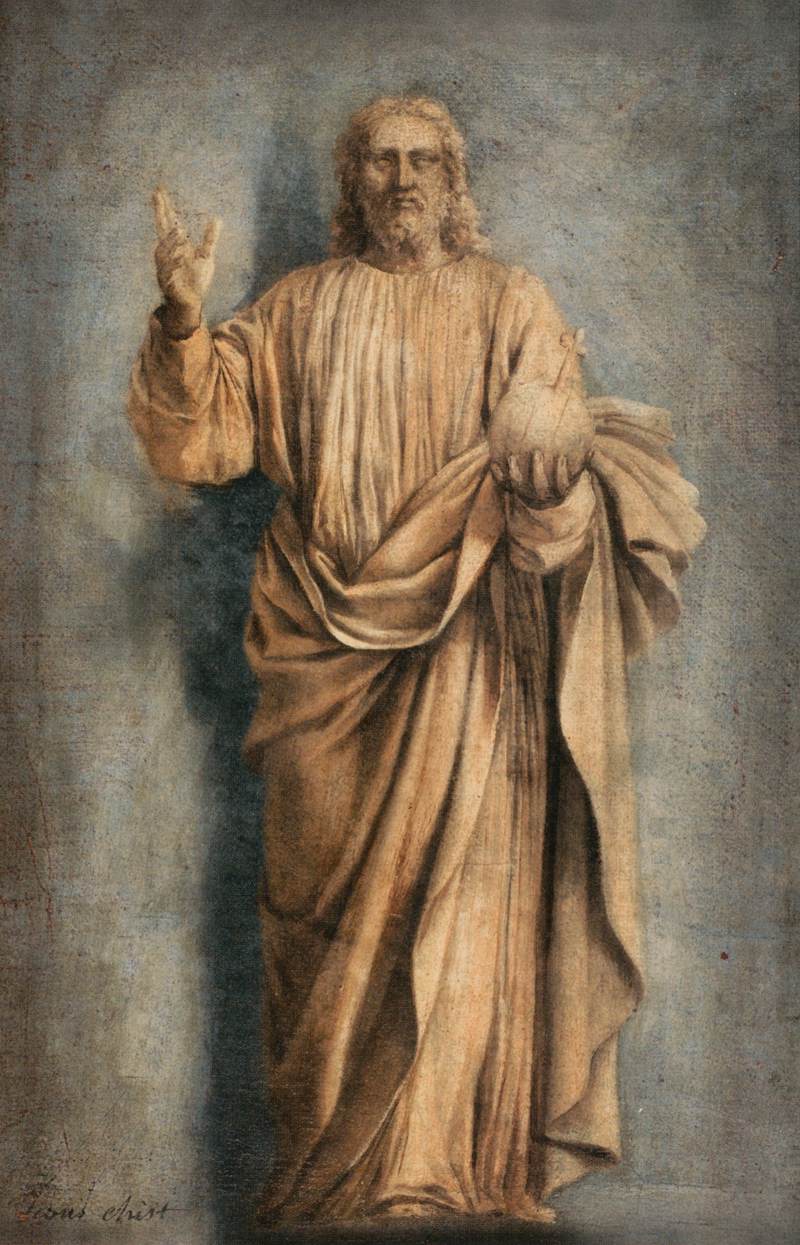
Christ the Judge by Laurent de La Hyre, c. 1650 [Louvre, Paris]


The Church Teaches – and Judges – Consciences

THE CATHOLIC THING

SUNDAY, MARCH 19, 2017

A number of bishops have announced that Catholics in irregular unions whose consciences are “at peace” with God must be allowed to receive Holy Communion. This has never been the belief or practice of the Church, yet they assert it is rooted in the traditional teaching that conscience must be respected, even when mistaken. They fail to mention, however, that only the dictates of conscience are binding, not all its judgments, and that conscience is subject to the teaching and judgment of the Church. Once these truths are taken into account, the coherence of the Church’s apostolic practice stands out as clearly as the errors of the recent, unwarranted innovation.

In Catholic thought, conscience has two roles. First, it sometimes commands that a particular action be done or avoided. The action can be external or internal. Conscience has this authority naturally because it is an expression of practical reason, which comes from God. Although distorted by imperfection and error, the dictate must be obeyed because it is the echo of God’s voice. This is why our primary duty in life is to form conscience according to the truth and to obey its commands regardless of any earthly authority.

The second role of conscience is judging past, present, or hypothetical actions. This might be called our “sense of morality.” It judges, for example, whether certain acts are right or wrong, better or worse, or permissible, but without commanding a present action. At times it lacks clarity or certitude. As a judgment of reason, it cannot be equated with feelings or opinions. Unless joined in a particular instance to a dictate for action, these judgments can and must yield to commands from legitimate authorities.

We obey the dictate of conscience because we must, not because it is correct. In that moment, it is all we have to guide us. Afterward, the judgment of conscience may reassess our actions or previous judgments in light of a better understanding of the truth. It might even reveal that we were culpable about an erroneous dictate rooted in an ill-formed conscience. Thus, the two roles are distinct, but inseparable.

Christ the Judge by Laurent de La Hyre, c. 1650 [Louvre, Paris]

It is crucial to recognize that conscience, like the related human capacities of reason and will, has been created for a purpose: to enable us to respond and to commit ourselves to God, others, and creation. As such, conscience engages the entire human person, expressing an on-going dialogue that shapes our relationships and who we become. It has eternal significance.

This means that conscience, both in its dictates and its judgments, is personal and communal, not “private” in an autonomous or subjectivist sense. No one stands as an isolated individual before God in conscience because everyone exists in a myriad of relations with others. This includes a relation to Christ and the Church, who intercede and collaborate with the Holy Spirit to draw every person to share life with God. Christians, of course, stand as members of Christ and his Church.

These truths about conscience present a dilemma. The fallible dictates of conscience must be followed in response to God for the sake of ourselves, others, and the world. We do not want, deliberately or innocently, to act or to judge incorrectly because of the harm this would do. Nevertheless, we know that through innumerable and unrecognized influences – including sin –we suffer from defects and errors that distort our perceptions and judgments. Who, then, can trust himself, alone, to judge morality and circumstances accurately, especially when these involve vested interests (e.g., the validity of a marriage)?

It was precisely to enlighten and strengthen conscience that Jesus proclaimed the Gospel and drew humanity to himself as members of his Church, establishing her pastoral office and infallible Magisterium. The Church, like her Spouse, does not replace or coerce conscience, but with Him serves conscience by teaching, correcting, healing, and, when needed, rebuking. That is the entire mission of Christ and the Church, since in conscience we acknowledge sin, receive the Gospel, and live as children of God. Thus, it would be a betrayal of Christ to suggest that conscience, as dictate or judgment, lies outside the Church and her judgment.

Recognizing her apostolic duty, the Church has undertaken to declare consciences wrong when they violate the Gospel and has applied various pastoral remedies to bring her members to alter mistaken beliefs and practices. Her motive is simple: Jesus came to free everyone to share his joy by living God’s truth in love, even those burdened and imprisoned by innocent errors.

Consequently, the Church has never limited herself to helping the faithful discern whether their conscience is “at peace with God,” as some have recently claimed, insisting instead that Catholics are bound in conscience to accept and to live the Gospel as taught by the Church. Otherwise, no one in good conscience could ever have been refused Holy Communion, even if their beliefs and behaviors were damaging to themselves and others.

Contrary to recent innovations, the Church has consistently taught that a judgment of conscience cannot appeal to “the greater good” to justify evil actions, such as targeting civilians during war, contraception, or sexual relations outside a valid marriage. Those making such appeals must set aside the fallible judgment of their conscience in favor of the Gospel proclaimed by the Church. Of course, they must obey their conscience if it erroneously commands the action. The Church, however, can still seek to dissuade and correct them, even withholding Holy Communion, in order to lead them and others from harmful behaviors to healthy ones. This in no way judges their personal culpability or denies them access to God’s grace.

The Church must judge consciences and confront error and evil, culpable or not. We know the tragedies that have unfolded when bishops and clergy set aside Catholic teaching and discipline in their lives and in the Church. That some pastors have mandated a repetition of this mistake is disheartening. That genuine pastoral care continues nevertheless is a source of solace and hope.

Fr. Timothy V. Vaverek

Fr. Timothy V. Vaverek

Fr. Timothy V. Vaverek, STD has been a priest of the Diocese of Austin since 1985 and is currently pastor of parishes in Gatesville and Hamilton. His doctoral studies were in Dogmatics with a focus on Ecclesiology, Apostolic Ministry, Newman, and Ecumenism.

Posted in Uncategorized | Comments Off on Church has undertaken to declare consciences wrong when they violate the Gospel and has applied various pastoral remedies to bring her members to alter mistaken beliefs and practices.