
!!!!
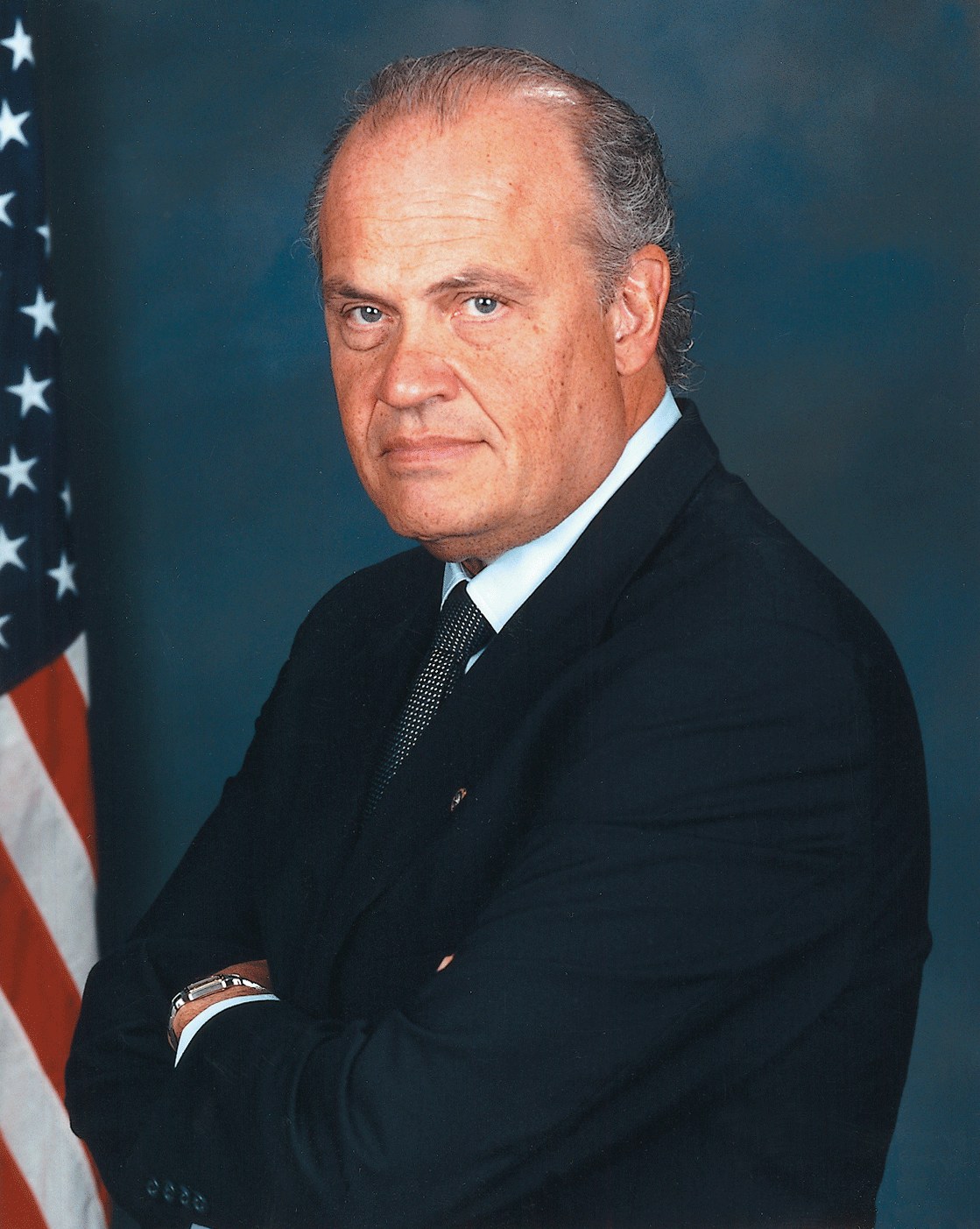

FRED THOMPSON’S INCREDIBLE LIFE:
02 November 15
[ I supported Fred Thompson’s candidacy for the Republican nomination for President in the 2008 campaign. I liked him for what he had to say about the state of our Nation, not because of his film and TV celebrity, and for his record as a United States Senator from Tennessee. When I think of what might have been with him as POTUS and then look at the state of the Nation under our Muslim President, Barack Hussein Obama, I pray to God to protect our Nation. We have only to look at the Islamization of Europe at the present moment of history to recognize the danger we are in. – Abyssum ]
John Podhoretz. http://vlt.tc/25xz “In 1993, I was sent to Nashville by Esquire Magazine to write a profile of Fred Thompson, who was about to undertake a run for Senate in Tennessee. I arrived and spent a day digging through the archives of the city’s two newspapers to find out whatever I could about him. I knew he had been a lawyer in private practice and had become a movie actor by accident following a stint as minority counsel on the Senate Watergate Committee. I remembered having watched as Thompson asked White House official Alexander Butterfield the question whose answer ultimately led to the downfall of the Nixon administration — a question about whether there had been a secret taping system in the White House.
“In those archives, I learned more. I learned Thompson was the son of a car salesman who had married during high school (with a child following in short order). He put himself through college and law school by winning scholarships and supported his family by working the night shift at various cheap motels. After law school, he became an assistant U.S. attorney in Memphis until Senator Howard Baker asked him to run Baker’s reelection campaign in 1972. Thompson was not yet 30 years old. When Baker was given the job of serving as the leader of the minority on the Watergate committee, he asked Thompson to serve as counsel.
“I found a story in the Nashville Banner‘s morgue about a case in which AUSA Thompson had successfully prosecuted a family for running a moonshine business. How colorful, I thought. This would make a great lead anecdote for my article. Fred, 6’6″ in his stocking feet and as broad in the shoulders as a linebacker, offered me a dry smile as I shook his hand in his law office. We sat down, and I said, “Do you remember a case you prosecuted in 1970 against a moonshine family? That must have been something. Would you tell me about it?”
“His smile turned rueful. He went quiet, and then came one of those moments in which the world actually enlarged for me — in which my perspective was unexpectedly broadened. “Yeah, I remember,” he said. “Those people. Those poor, poor people. They had rickets. Living in a shotgun shack. What they made from that liquor — nothing.” He explained that the case had been brought to his office by the Bureau of Alcohol, Tobacco and Firearms, and the bureau was still trying to justify the A part of ATF that had been part of its original mandate under its original name: the Bureau of Prohibition. So it went around hunting backwoods folk on the grounds that they weren’t reporting the income they made off their moonshine to the IRS. He shook his head at the memory. “We should have left those people alone,” he said. “What harm were they doing. What harm had they done.”
“There I was, all excited to have found a cool tale about an ambitious young DA making a sexy case. So cinematic! And Thompson brought me up short. Twenty-five years later, the memory I had surfaced did not provoke an amusing anecdote but rather a feeling of shame.
“I asked him what it was that had made him a Republican. He said that when he was working at nights behind a motel desk, he needed to stay awake, and he began to read National Review. Eventually that led him to William F. Buckley Jr.’s oeuvre, and to Hayek, and to Whittaker Chambers’s Witness, and to Richard Weaver’s Ideas Have Consequences, and to other works that helped him develop a philosophy about the centrality of the individual and the dangers of an overreaching state — the same overreaching state he would serve in prosecuting those moonshiners a few years later.”
“I knew his acting career had begun when Hollywood had come to Nashville to make a movie about Marie Ragghianti, a whistleblower who discovered that the governor of Tennessee had literally been selling pardons to prisoners. She was fired and hired Thompson as her lawyer; the case eventually led to the governor’s ouster. Thompson was a key character in the movie’s final act, and after a few days of interviewing actors in Nashville to play him, a frustrated casting director named Lynn Stalmaster asked Thompson if he’d like to read for the part of himself. Fred said he guessed sure, took a walk around the block, and then did the reading. Stalmaster told me that moment of inspiration was the proudest of his career in casting. The movie, Marie, is not very good — until Thompson appears and quietly sets it afire.
“People ask me how to make a career as a character actor,” Fred said. “I tell them, ‘Well, first, get hit by lightning.’”
 ABYSSUS ABYSSUM INVOCAT / DEEP CALLS TO DEEP