THE CATHOLIC MONITOR

Are those Controlling & Covering-up for the Francis & Biden Regimes Totally Corrupt Narcissitic Pathological Liars? 

“I’ve unlocked this article because I believe it’s vital to document the historically corrupt behavior of the media, in with the intelligence community, prior to the 2020 election. They knowingly lied — over and over — that the Hunter documents were ‘Russian disinformation.'” [https://twitter.com/ggreenwald/status/1337393996319117312] – Pulitzer winner and liberal Glen GreenwaldStephen Murphy, President at Steffan Resources, speaking of pathological liars said “to the Narcissist it’s not a lie”:Hitler had many serious physical and psychological issues.

Hitler had a high level of NPD or Narcissitic Personality Disorder. What this means is that whatever he thinks, believes, and says is 100% true even though it is clearly not, thus to the Narcissist it’s not a lie.

When people act in this way and are adamant in this adherence to this thinking, like minded and those with no direction in life will follow the Hitlers, Jim Joneses, and Charles Mansons.

This doesn’t only apply to psychopaths, but regular people. When you are unfortunate to have a parent with NPD. Your life will be a living hell, no different than living under a dictators rule. if you don’t agree with their belief system you are no longer seen as a son or daughter but an enemy to be destroyed.[https://www.quora.com/Did-Hitler-lie-to-everyone-around-him]

Sadly, It appears that many of the elites may be narcissists.

Catholic blogger Ann Barnhardt wrote of Joe Biden’s apparent open “lust on a pre-pubescent child from the podium”:

Remember, the greatest rush that demoniacs feel is from openly manifesting their evil and then watching people let them get away with it.

Biden is obviously demented, but the pedophilia is intrinsic to him – he was sexually into children, including his own, according to his daughter, long before any brain injuries or dementia. So The Powers That Be placed a pedophile with rapidly fading self-censoring capability as the “president” of the “united states”.

I think at this point, this is a trolling operation. I think they are positively luxuriating in the utter refusal of the unwashed masses to do a damn thing to resist them in any way.

They can literally let their front puppet openly lust on a pre-pubescent child from the podium, and nobody bats an eye. [https://www.barnhardt.biz/2021/05/29/the-only-question-remaining-at-this-point-is-whether-joe-bidens-open-pedophilia-is-considered-a-feature-or-a-bug-by-the-powers-that-be/]

Miss Barnhardt in another post showed how people like Biden, Andrew Cuomo, Bill Crosby and Francis gets away with their shenanigans:

In this episode we discuss Bill Cosby and his effeminate supporting caste of beta narcissists — including his wife — who allowed and empowered him to act as sexual predator for DECADES. Also, Ann wonders: “If I learn to read bad poetry really slowly, can I be a Wise Woman of Color(tm) too?” And we discuss a listener’s email and how it applies to another group of beta narcissists, Professional Catholics, and why they don’t enunciate the full truth.

This week’s required studying: the section on Alpha/Beta Diabolic Narcissist dynamics from her video: https://www.youtube.com/watch?v=X4dtcwv5dPM&feature=youtu.be&t=1h38m52s[https://www.barnhardt.biz/2017/06/13/barnhardt-podcast-008-massa-cosby-and-all-his-little-house-negroes/]

Are the secular and Catholic media their supporting “caste of beta narcissists” that “empowered” them?

The feminist Crusader Newspaper Group gave an overview of some of those “empowered” by the media “caste of beta narcissists”: 

Once again, a high profile male is in the spotlight due to allegations of inappropriate sexual behavior. New York Governor Andrew Cuomo has been called upon to resign from office due to sexual harassment claims leveled by former employees

… Cuomo’s situation is one of the latest of the accusations made by women regarding improper sexual behavior. Other accusations of inappropriate sexual conduct have been leveled at the R & B singer R. Kelly, who is currently in jail, and former comedian and sitcom star Bill Cosby, who is currently serving time in prison for allegedly drugging and raping a woman.

These cases are just a drop in the proverbial bucket of a huge number of them. In fact, these accusations are so pervasive that almost every man in a position of power can become suspect. Even our current President, Joe Biden, has had fingers pointed at him based on his “affectionate” behavior.

One of the things that all of these cases have in common is that there is often a great deal of time, usually multiple years, between the alleged incidents and the victims’ reporting of the events. [https://chicagocrusader.com/male-sexist-culture-on-trial/]

Next, we return to 2018, when faithful Catholics thought that Archbishop Carlo Maria Vigano had single-handedly destroyed Francis and his sex abuse cover-up and heretical legacy. The LifeSiteNews headline was “Pope Francis covered up McCarrick abuse, former US nuncio.” 

But, the media “caste of beta narcissists” then also stepped in.

The mainstream media apparently has protected Francis and the Vatican gay lobby for a long time from the following being known by most people:

Taylor Marshall on YouTube in “Dr. Taylor Marshall ties together Vatican financial scandal with homosexual activity” summarized what lead to Pope Benedict XVI’s resignation and Francis:

If Archbishop Carlo Marie Vigano is telling the truth then it appears that the Vatican gay lobby apparently forced Pope Benedict XVI’s resignation and it appears that Francis has “reinstated and promoted” all those who brought about the resignation.

Marshall stated:

“First of, Vigano blew the whistle on money laundering.”

“Two, the accusations of money laundering leads to the Vatileaks scandal.”

“Three, the Vatileaks scandal leads Benedict to form a secret investigation with three cardinals.”

“Four, those three cardinals expose moral rot, sexual deviancy, that is paired up with financial irregularity.”

“This is what moves the Pope to resignation. And just to make sure there is enough pressure on him to do it and do it quick something funny goes on with the Vatican Bank beginning on January 1, 2013.”

“And it seems the powerful cardinals within Vatican City wanted it to happen fast because they don’t want the 300 page dossier released to the public because there is moral scandal in those pages.”

“That binder was left with Pope Francis, but nothing has been done. And what we see is that those who were oppose to Benedict XVI theologically, but also on administration, have been reinvolved, reinstated and promoted.”

Finally, The Epoch Times showed the elites and media behind them as well as those controlling the Biden regime are totally corrupt liars in the article “Remembering What Was Done to the Trump Administration”:

Everyone who pays attention to politics knows what happened in the administration of Donald Trump…

… An accurate recollection of those events isn’t easy to come by.

‘All Fake’

Which is why we must be grateful to Darryl Cooper, who, writing under the soubriquet @martyrmade, put together a remarkable aide mémoire in the form of a lengthy Twitter thread on July 8.

I wasn’t the only one to notice this public service bulletin.

The website The American Mind provided a transcription of the thread and then substituted an essay by Cooper, adding some fabric and body to the thread.

Tucker Carlson read most of the thread aloud on his television program, bringing enlightening recollection to millions.

Cooper succeeds brilliantly in his aim to sketch a “general theory” about the suspicion of “Boomer-tier Trump supporters” that the 2020 election was fraudulent.

It’s the same perspective, he notes, of “most of the people at the Capitol on 1/6” and, quite possibly, of Trump himself.

It begins in 2015, when the resources of the federal government were mobilized to spy on the Trump campaign, and then to frame various people close to candidate, then President Trump, and eventually to launch a full-throated criminal investigation of the Trump administration.

Cooper gets it exactly right: “The FBI/etc spied on the 2016 Trump campaign using evidence manufactured by the Clinton campaign. We now know that all involved knew it was fake from Day 1.”

Remember the Steele dossier, the fantastical document confected by the “well-regarded” British spook Christopher Steele?

It was the only relevant predicate for ordering FISA warrants against Carter Page and other U.S. citizens.

But the dossier was opposition research covertly paid for by the Democratic National Committee and the Hillary Clinton campaign. It was a tissue of lies and fabrications.

Everyone involved (but not the media, which gleefully circulated and commented on it) knew all along it was garbage. But it was nonetheless used to deploy the awesome coercive power of the state against a presidential candidate of whom the ruling bureaucracy disapproved.

It was OK to subject Page and others to secret FBI investigations, to mount dawn raids (carefully coordinated with CNN so they could televise them) against the president’s colleagues.

Cooper limns the evolution of the story.

“We only learned the DNC paid for the manufactured evidence because of a court order. [James] Comey [disgraced former director of the FBI] denied on TV knowing the DNC paid for it, when we have emails from a year earlier proving that he knew.”

Penalty for that? Comey gets a huge book deal and tours the country denouncing Trump, to the gleeful satisfaction of his anti-Trump audiences.

Cooper is right: What was true of Comey was true of “everyone, from CIA Dir[ector John] Brennan & Adam Schiff—who were on TV saying they’d seen clear evidence of collusion w/Russia, while admitting under oath behind closed doors that they hadn’t—all the way down the line. In the end, we learned that it was ALL fake.”

It was all fake. Recollect that.

Immense Disillusionment

For a brief moment, it seemed almost OK because—we were assured—justice would be done.

Inspectors general were on the case, a new attorney general would clean house, John Durham (remember him?) was a tough, no-nonsense U.S. attorney who would get to the bottom of all the rottenness and make sure the people who had broken the law and trampled on the Constitution would be brought to justice.

Ha, ha, ha, ha.

“At first, many Trump ppl were worried there must be some collusion, because every media & intel agency wouldn’t make it up out of nothing. When it was clear that they had made it up, people expected a reckoning, and shed many illusions about their gov’t when it didn’t happen.”

You can say that again, especially the bit about shedding “many illusions about their government” when there was no reckoning.

Mike Flynn has his career ruined, and is bankrupted—for what? Meanwhile, Comey, Brennan, Andrew McCabe, Lisa Page, Peter Strzok, and all the rest of the crew at the FBI, the CIA, and other intel agencies: what happened to them?

Nothing. They caught one FBI lawyer who altered an email in order to help get a FISA warrant. What happened to him? Probation. Probation!

So, Trump supporters “went from worrying the collusion must be real, to suspecting it might be fake, to realizing it was a scam, then watched as every institution—agencies, the press, Congress, academia—gaslit them for another year.”

That’s bad. But this from Cooper is worse: “collusion was used to scare people away from working in the administration. They knew their entire lives would be investigated. Many quit because they were being bankrupted by legal fees. The DoJ, press, & gov’t destroyed lives and actively subverted an elected admin.”

Emphasis mine, but justified by the reality the sentence describes.

And here is where we come to the turning point, the payload, the illumination of the recollection: “People whose political identity was largely defined by a naive belief in what they learned in Civics class began to see the outline of a Regime that crossed all institutional boundaries. Because it had stepped out of the shadows to unite against an interloper.”

This realization had, and is having, consequences. The disillusionment among conservatives was immense.

And it wasn’t directed only at the government.

Yes, the behavior of the government was terrible.

But its effect on the conservative populace—all 75 million voters—was compounded by the behavior of what Cooper calls “the corporate press,” which went all in trying to destroy Trump.

That’s what really radicalized the pro-Trump Right.

“They hate journalists more than they hate any politician or gov’t official, because they feel most betrayed by them.”

They see that the media is “the propaganda arm of the Regime they now see in outline. Nothing anyone says will ever make them unsee that, period. Now they see, correctly, that every institution is captured by ppl who will use any means to exclude them from the political process.”

Then, the Election

That’s where we were in the fall of 2020. Still, some residual faith in the system persisted, as people showed up in record numbers to vote for Trump.

Thirteen million more people voted for Trump in 2020 than voted for him in 2016.

Wow. But then, in the dead of night, odd things began to happen in four critical wing states, and only there. 

Again, Cooper gets it exactly right: “Everything about the election was strange—the changes to procedure, unprecedented mail-in voting, the delays, etc.—but rather than admit that and make everything transparent, they [the media] banned discussion of it (even in DMs!).”

It wasn’t only the media, of course. It was also the governors and the regime apparat in the key states.

“It’s a fact that governors used COVID to unconstitutionally alter election procedures (the Constitution states that only legislatures can do so) to help Biden to make up for a massive enthusiasm gap by gaming the mail-in ballot system.”

Italics furnished free and for nothing on the word “unconstitutionally” in case you think acting in an unconstitutional way to alter elections results is a problem.Apparently, the judges who heard complaints about election procedures in those states are not among those who think it is a big deal if governors violate the Constitution. [https://www.theepochtimes.com/remembering-what-was-done-to-the-trump-administration_3898424.html]

Stop for a moment of silence, ask Jesus Christ what He wants you to do now and next. In this silence remember God, Father, Son and Holy Ghost – Three Divine Persons yet One God, has an ordered universe where you can know truth and falsehood as well as never forget that He wants you to have eternal happiness with Him as his son or daughter by grace. Make this a practice. By doing this you are doing more good than reading anything here or anywhere else on the Internet.

Francis Notes:

– Doctor of the Church St. Francis de Sales totally confirmed beyond any doubt the possibility of a heretical pope and what must be done by the Church in such a situation:

“[T]he Pope… WHEN he is EXPLICITLY a heretic, he falls ipso facto from his dignity and out of the Church, and the Church MUST either deprive him, or, as some say, declare him deprived, of his Apostolic See.”
(The Catholic Controversy, by St. Francis de Sales, Pages 305-306)

Saint Robert Bellarmine, also, said “the Pope heretic is not deposed ipso facto, but must be declared deposed by the Church.”
[https://archive.org/stream/SilveiraImplicationsOfNewMissaeAndHereticPopes/Silveira%20Implications%20of%20New%20Missae%20and%20Heretic%20Popes_djvu.txt]

– “If Francis is a Heretic, What should Canonically happen to him?”: http://www.thecatholicmonitor.com/2020/12/if-francis-is-heretic-what-should.html

– “Could Francis be a Antipope even though the Majority of Cardinals claim he is Pope?”: http://www.thecatholicmonitor.com/2019/03/could-francis-be-antipope-even-though.html

 –  LifeSiteNews, “Confusion explodes as Pope Francis throws magisterial weight behind communion for adulterers,” December 4, 2017:

The AAS guidelines explicitly allows “sexually active adulterous couples facing ‘complex circumstances’ to ‘access the sacraments of Reconciliation and the Eucharist.'”

–  On February 2018, in Rorate Caeli, Catholic theologian Dr. John Lamont:

“The AAS statement… establishes that Pope Francis in Amoris Laetitia has affirmed propositions that are heretical in the strict sense.”

– On December 2, 2017, Bishop Rene Gracida:

“Francis’ heterodoxy is now official. He has published his letter to the Argentina bishops in Acta Apostlica Series making those letters magisterial documents.”

Pray an Our Father now for the restoration of the Church by the bishops by the grace of God.

Election Notes: 

– Intel Cryptanalyst-Mathematician on Biden Steal: “212Million Registered Voters & 66.2% Voting,140.344 M Voted…Trump got 74 M, that leaves only 66.344 M for Biden” [http://catholicmonitor.blogspot.com/2020/12/intel-cryptanalyst-mathematician-on.html?m=1]

– Will US be Venezuela?: Ex-CIA Official told Epoch Times “Chávez started to Focus on [Smartmatic] Voting Machines to Ensure Victory as early as 2003”: http://catholicmonitor.blogspot.com/2020/12/will-us-be-venezuela-ex-cia-official.html– Tucker Carlson’s Conservatism Inc. Biden Steal Betrayal is explained by “One of the Greatest Columns ever Written” according to Rush: http://catholicmonitor.blogspot.com/2021/01/tucker-carlsons-conservatism-inc-biden.html?m=1 – A Hour which will Live in Infamy: 10:01pm November 3, 2020: 
http://www.thecatholicmonitor.com/2021/01/a-hour-which-will-live-in-infamy-1001pm.html?m=1 What is needed right now to save America from those who would destroy our God given rights is to pray at home or in church and if called to even go to outdoor prayer rallies in every town and city across the United States for God to pour out His grace on our country to save us from those who would use a Reichstag Fire-like incident to destroy our civil liberties. [Is the DC Capitol Incident Comparable to the Nazi Reichstag Fire Incident where the German People Lost their Civil Liberties?http://catholicmonitor.blogspot.com/2021/01/is-dc-capital-incident-comparable-to.html?m=1 and Epoch Times Show Crossroads on Capitol Incident: “Anitfa ‘Agent Provocateurs‘”: 
http://catholicmonitor.blogspot.com/2021/01/epoch-times-show-crossroads-on-capital.html?m=1
Pray an Our Father now for the grace to know God’s Will and to do it. 

Posted in Uncategorized | Comments Off on

Loaves, Fish, and Shepherds

THE CATHOLIC THING

Fr. Paul D. Scalia

SUNDAY, JULY 25, 2021

Our Lord’s multiplication of the loaves and fish occupies a privileged place in the list of miracles. It is the only one recorded by all four Evangelists and the only one that prompts such a strong response from the crowd: they want to make him king. It points us to the Eucharist, the source and summit of our faith. Thus, in this scene our Lord announces the inestimable gift of the Eucharist. In his treatment of the Apostles, He also outlines how the Church’s Shepherds are to continue nourishing us.

Perhaps most significantly, He tests them first: “Where can we buy enough food for them to eat?” He asks this question not because He needs the answer but because Philip and the others need to think about it. The temptation for the Apostles is to rely on human means. As Philip observes, “Two hundred days’ wages worth of food would not be enough for each of them to have a little.” Andrew chimes in with the same natural way of thinking: “There is a boy here who has five barley loaves and two fish; but what good are these for so many?” These are voices of discouragement because they are voices of worldly thinking.

Here is the constant temptation of bishops and priests: to rely on human ingenuity and worldly resources rather than on Christ. It’s naturalism, the error of thinking that what a diocese or parish really needs can be found in what the world supplies. If only we have more money, the right resources, the best programs, greater social media presence, etc.

Christ’s Church, born from His pierced side, lives by His grace. We might use human means and worldly resources (as our Lord used bread and fish, the help of the Apostles, and baskets for the fragments). But we do not rely on them. We use worldly means; we rely on divine grace.

Our current crisis is not due to a lack of human ingenuity or worldly resources. The Church in Germany is wealthy – and moribund. It is a crisis of faith and the lack of a supernatural outlook, a failure of confidence in His grace and truth. This scene indicates that such has always been the temptation of the shepherds, and that only by way of such confidence can shepherds feed the flock.

*

In Saint Mark’s account, when the Apostles voice their concerns about the hungry crowd, Jesus responds, “Give them some food yourselves.” This response has the same purpose as His question about buying enough bread: to bring the Apostles face to face with their – and the world’s – inadequacy. It also leads us to a second pastoral lesson: our Lord incorporates the Apostles into His working of the miracle. He has them tell the people to recline. He has them distribute the loaves and fish. He thus makes them coworkers in the feeding of His flock, participants in that divine work.

Consider the situation of the Apostles. They had to possess both the authority to accomplish what He asked and the humility to do it as ministers. Yes, He had entrusted this task to them, not others. Still, it was His miracle, not theirs. If they don’t exercise that authority, the miracle is impeded. If they don’t do so humbly, it becomes about them and is, again, impeded.

Ecclesial authority is ordered to the handing on of what Christ has given. The twofold temptation for shepherds has always been either to neglect their genuine authority or to abuse it for selfish gain. Or both. As this scene indicates, they are to be ministers, not masters, of Christ’s grace and truth. Theirs is but to do and disappear.

Then comes the final, somewhat curious, command: “Gather the fragments left over, so that nothing will be wasted.” It seems superfluous. Surely, the One Who multiplies loaves and fish need not concern Himself with leftovers. Of course, He gives the command not for His own benefit but for theirs – and ours.

It is an apostolic duty to gather up what Christ has given – so that it can be handed down to others. This is the grave obligation the Shepherds have to Tradition. They have authority precisely so that they can gather up and hand down the Church’s liturgical and doctrinal patrimony. Failure to do so detaches their authority from Tradition and thus distorts it. Without the content of the Tradition, without a reference to generations past and future, authority becomes just an exercise of power here and now. It leads to a magisterial positivism that values Church authority, not because of its service to what was received and should be handed on, but simply because it has the power to compel.

Such an exchange of authority for positivism traps the faithful in a particular moment of time. It makes them prisoners of the present, temporal orphans with no tradition to receive and, therefore, nothing to hand on to future generations. This dangerous situation makes the faithful prey to whatever new ideas or, more likely, ideologies come along. With no Tradition in which they can stand and by which they can discern, they fall easily into error.

Like the crowds that followed our Lord into the deserted place, the faithful need true shepherds – who rely on Christ’s grace and truth, who exercise genuine authority humbly, and who faithfully preserve and hand on the Church’s Tradition.

*Image: The Miracle of the Loaves and Fishes by Tintoretto (Jacopo Robusti), c. 1445-50 [The MET, New York]

© 2021 The Catholic Thing. All rights reserved. For reprint rights, write to: info@frinstitute.orgThe Catholic Thing is a forum for intelligent Catholic commentary. Opinions expressed by writers are solely their own.

Posted in Uncategorized | Comments Off on


TRADITION BETRAYED: Diane Montagna Interviews Bishop Schneider on “Traditionis Custodes”

Written by  Diane Montagna 

Rate this item

(76 votes)O'Kelly, Aloysius. (1883). Mass in a Connemara Cabin.O’Kelly, Aloysius. (1883). Mass in a Connemara Cabin.

Portuguese Translation HERE

In his first print interview since the release of Pope Francis’ new decree restricting the Traditional Latin Mass, Traditionis Custodes, Bishop Athanasius Schneider has said the document “demeans” a thousand-year-old liturgy of the Roman Rite, commits an “injustice” against Catholics who adhere to it, and creates a “two-class society” in the Church.

“The privileged first-class are those who adhere to the reformed liturgy,” Bishop Schneider asserts, “and the second-class Catholics, who will now barely be tolerated, include a large number of Catholic families, children, young people and priests” who, through the traditional liturgy, have “experienced, with great spiritual benefit, the reality and mystery of the Church.”

The bishop also contends that the “astonishingly narrow-minded attitude” and “disparaging tone” displayed in the motu proprio and accompanying letter stand in “glaring contrast” not only to the guiding principles of the current pontificate, but also fly in the face of the “conciliar” claim of “openness to diversity” and rejection of liturgical “uniformity.”

In this exclusive interview, Bishop Athanasius Schneider, auxiliary of Astana, Kazakhstan, discusses his chief concerns about the document, offers counsel to seminarians and young priests who fear they may be prohibited from celebrating the traditional Mass, and addresses Pope Francis’ claim that his chosen course of action is analogous to that taken by Pope St. Pius V.

He also defends Catholics who attend the traditional Mass against what he sees as the document’s unjust accusations that they sow division and deny Vatican II. A “considerable portion” of young Catholic families and others who attend the traditional Mass “keep away” from discussions on Vatican II and ecclesial politics, the bishop maintains. “They just want to worship God in the liturgical form through which God has touched and transformed their hearts and lives.”  

Bishop Schneider also praises his brothers in the episcopate who have supported the faithful in response to the new measures, and says he is convinced the new decree will ultimately have a “boomerang effect.” The “continuous growth” of the traditional Mass across the globe, he says, is “undoubtedly the work of the Holy Spirit, and a true sign of our time.”  

He therefore encourages Pope Francis and those charged with implementing the new measures to heed the “wise counsel” of Gamaliel to those persecuting the early Christians (Acts 5:38-39), lest they find themselves to be “opposing God.”

Here is our full interview with Bishop Athanasius Schneider.

_______________

Diane Montagna: Your Excellency, Pope Francis’ new apostolic letter, issued motu proprio on July 16, 2021, is called “Traditionis Custodes” (Guardians of Tradition). What was your initial impression of the choice of this title?

Bishop Schneider: My initial impression was of a shepherd who instead of having the smell of his sheep, is angrily beating them with a stick.

What are your general impressions of the Motu Proprio and of Pope Francis’ accompanying Letter to the bishops of the world, in which he explains his rationale for restricting the Traditional Latin Mass?

In his programmatic Apostolic Exhortation, Evangelii Gaudium, Pope Francis advocates “certain attitudes which foster openness to the message: approachability, readiness for dialogue, patience, a warmth and welcome which is non-judgmental” (n. 165). Yet in reading the new Motu Proprio and accompanying Letter, one has the opposite impression, namely, that the document, as a whole, exhibits a pastoral intolerance and even spiritual rigidity. The Motu Proprio and accompanying Letter communicate a judgmental and unwelcoming spirit. In the document on Human Fraternity (signed in Abu Dhabi on February 4, 2019), Pope Francis embraces the “diversity of religions,” whereas in his new Motu Proprio he resolutely rejects the diversity of liturgical forms in the Roman Rite.

What a glaring contrast in attitude this Motu Proprio presents, compared to the guiding principle of Pope Francis’ pontificate, i.e., inclusiveness and a preferential love for minorities and those on the peripheries in the life of the Church.

What a glaring contrast in attitude this Motu Proprio presents, compared to the guiding principle of Pope Francis’ pontificate, i.e., inclusiveness and a preferential love for minorities and those on the peripheries in the life of the Church. And what an astonishingly narrow-minded stance one discovers in the Motu Proprio, in contrast to Pope Francis’s own words: “We know that we are tempted in various ways to adopt the logic of privilege that separates, excludes and closes us off, while separating, excluding and closing off the dreams and lives of so many of our brothers and sisters” (Homily at the Vespers, December 31, 2016). The new norms of the Motu Proprio demean the millennial form of the lex orandi of the Roman Church and, at the same time, close off “the dreams and lives of so many” Catholic families, and especially of young people and young priests, whose spiritual lives and love for Christ and the Church have grown and greatly benefited from the traditional form of the Holy Mass.

The Motu Proprio establishes a principle of a rare liturgical exclusivity, by stating that the new promulgated liturgical books are the only [unica] expression of the lex orandi of the Roman Rite (Art. 1). What a contrast this position, too, is with these words of Pope Francis: “It is true that the Holy Spirit brings forth different charisms in the Church, which at first glance, may seem to create disorder. Under his guidance, however, they constitute an immense richness, because the Holy Spirit is the Spirit of unity, which is not the same thing as uniformity” (Homily of Pope Francis at the Catholic Cathedral of the Holy Spirit, Istanbul, Saturday, November 29, 2014).

What are your greatest concerns about the new document?

As a bishop, one of my chief concerns is that, instead of fostering a greater unity by the coexistence of diverse authentic liturgical forms, the Motu Proprio creates a two-class society in the Church, i.e. first-class Catholics and second-class Catholics. The privileged first-class are those who adhere to the reformed liturgy, i.e. the Novus Ordo, and the second-class Catholics, who will now barely be tolerated, include a large number of Catholic families, children, young people and priests who, in the last decades, have grown up in the traditional liturgy and experienced, with great spiritual benefit, the reality and mystery of the Church thanks to this liturgical form, which earlier generations held as sacred and which formed so many saints and outstanding Catholics throughout history. 

An almost one thousand-year-old valid and highly esteemed liturgical treasure is not the private property of a pope, which he can freely dispose of.

The Motu Proprio and accompanying letter commit an injustice against all Catholics who adhere to the traditional liturgical form, by accusing them of being divisive and of rejecting the Second Vatican Council. In fact, a considerable portion of these Catholics keep far away from doctrinal discussions regarding Vatican II, the new Order of Mass (Novus Ordo Missae), and other problems involving ecclesiastical politics. They just want to worship God in the liturgical form through which God has touched and transformed their hearts and lives. The argument invoked in the Motu Proprio and accompanying letter, i.e., that the traditional liturgical form creates division and threatens the unity of the Church, is disproven by the facts. Furthermore, the disparaging tone taken in these documents against the traditional liturgical form would lead any impartial observer to conclude that such arguments are merely a pretext and a ruse, and that something else is at play here.

How convincing do you find Pope Francis’ comparison (in his accompanying letter to bishops) between his new measures and those adopted by St Pius V in 1570?

The time of Second Vatican Council and the so-called “conciliar” Church has been characterized by an openness to a diversity and inclusivity of spiritualities and local liturgical expressions, along with a rejection of the principle of a uniformity in the liturgical praxis of the Church. Throughout history, the true pastoral attitude has been one of tolerance and respect towards a diversity of liturgical forms, provided they express the integrity of the Catholic Faith, the dignity and sacredness of the ritual forms, and that they bear true spiritual fruit in the lives of the faithful. In the past, the Roman Church acknowledged the diversity of expressions in its lex orandi. In the apostolic constitution promulgating the Tridentine Liturgy, Quo Primum (1570), Pope Pius V, in approving all those liturgical expressions of the Roman Church that were more than two hundred years old, recognized them as an equally worthy and legitimate expression of the lex orandi of the Roman Church. In this bull, Pope Pius V stated that he in no wise rescinds other legitimate liturgical expressions within the Roman Church. The liturgical form of the Roman Church that was valid until the reform of Paul VI did not arise with Pius V, but was substantially unchanged even centuries before the Council of Trent. The first printed edition of the Missale Romanum dates back to 1470, thus one hundred years before the missal published by Pius V. The order of Mass of both missals is almost identical; the difference lies more in secondary elements, such as the calendar, number of prefaces, and more precise rubrical norms.

CIC ad Diane and Schneider

Pope Francis’ new Motu Proprio is also deeply concerning in that it manifests an attitude of discrimination against an almost one thousand-year-old liturgical form of the Catholic Church. The Church has never rejected that which, over the span of many centuries, has expressed sacredness, doctrinal precision and spiritual richness, and been exalted by many popes, great theologians (e.g. St Thomas Aquinas) and numerous saints. The peoples of Western and, in part, of Eastern Europe, of Northern and Southern Europe, of the Americas, Africa, and Asia were evangelized and doctrinally and spiritually formed by the traditional Roman Rite, and these peoples found in that rite their spiritual and liturgical home. Pope John Paul II gave an example of a sincere appreciation of the traditional form of the Mass, when he said: “In the Roman Missal, called ‘of St. Pius V,’ as in various Eastern Liturgies, there are beautiful prayers with which the priest expresses the deepest sense of humility and reverence before the holy mysteries: they reveal the very substance of any liturgy” (Message to Participants in the Plenary Assembly of the Congregation for Divine Worship and the Discipline of the Sacraments, September 21, 2001).

Seminarians and young priests must ask for the right to use this common treasure of the Church, and should they be denied this right, they can use it nevertheless.

It would go against the true spirit of the Church of all ages to now express contempt for this liturgical form, to label it as “divisive” and as something dangerous for the unity of the Church, and to issue norms aimed at making this form disappear in time. The norms enshrined in Pope Francis’ Motu Proprio seek to unmercifully rip out of the souls and lives of so many Catholics the traditional liturgy, which in itself is holy and represents the spiritual homeland of these Catholics. With this Motu Proprio, Catholics who today have been spiritually nourished and formed by the traditional liturgy of Holy Mother Church, will no longer experience the Church as a mother but rather as a “stepmother,” consistent with Pope Francis’ own description: “A mother who criticizes, who speaks ill of her children is not a mother! I believe you say “stepmother” in Italian…. She isn’t a mother” (Address to Consecrated Men and Women of the diocese of Rome, May 16, 2015)

Pope Francis’ apostolic letter was issued on the feast of Our Lady of Mount Carmel, patroness of Carmelites (such as St. Thérèse of Lisieux), who pray especially for priests. In light of the new measures, what would you say to diocesan seminarians and young priests who had hoped to celebrate the Traditional Latin Mass?

Cardinal Joseph Ratzinger spoke about the limitation of the powers of the pope regarding the liturgy, with this illuminating explanation: “The pope is not an absolute monarch whose will is law; rather, he is the guardian of the authentic Tradition and, thereby, the premier guarantor of obedience. He cannot do as he likes, and he is thereby able to oppose those people who, for their part, want to do whatever comes into their head. His rule is not that of arbitrary power, but that of obedience in faith. That is why, with respect to the Liturgy, he has the task of a gardener, not that of a technician who builds new machines and throws the old ones on the junk-pile. The “rite”, that form of celebration and prayer which has ripened in the faith and the life of the Church, is a condensed form of living Tradition in which the sphere using that rite expresses the whole of its faith and its prayer, and thus at the same time the fellowship of generations one with another becomes something we can experience, fellowship with the people who pray before us and after us. Thus the rite is something of benefit that is given to the Church, a living form of paradosis, the handing-on of Tradition.” (Preface to “The Organic Development of the Liturgy.  The Principles of Liturgical Reform and Their Relation to the Twentieth-century Liturgical Movement Prior to the Second Vatican Council” by Dom Alcuin Reid, San Francisco 2004).

The norms enshrined in Pope Francis’ Motu Proprio seek to unmercifully rip out of the souls and lives of so many Catholics the traditional liturgy, which in itself is holy and represents the spiritual homeland of these Catholics.

The traditional Mass is a treasure that belongs to the entire Church, since it has been celebrated and deeply regarded and loved by priests and saints for at least a thousand years. In fact, the traditional form of the Mass was almost identical for centuries before the publication of the Missal of Pope Pius V in 1570. An almost one thousand-year-old valid and highly esteemed liturgical treasure is not the private property of a pope, which he can freely dispose of. Therefore, seminarians and young priests must ask for the right to use this common treasure of the Church, and should they be denied this right, they can use it nevertheless, perhaps in a clandestine manner. This would not be an act of disobedience, but rather of obedience to Holy Mother Church, who has given us this liturgical treasure. The firm rejection of an almost one thousand-year-old liturgical form by Pope Francis represents, in fact, a short-lived phenomenon compared to the constant spirit and praxis of the Church.

Your Excellency, what has been your impression thus far of the implementation of “Traditionis Custodes”?

Within a few short days, diocesan bishops and even an entire bishops’ conference have already begun a systematic suppression of any celebration of the traditional form of the Holy Mass. These new “liturgy-inquisitors” have displayed an astonishingly rigid clericalism, similar to that described and lamented by Pope Francis, when he said: “There is that spirit of clericalism in the Church, which one feels: the clerics feel themselves superior, the clerics turn away from the people, the clerics always say: ‘this is done like this, like this, like this, and you go away!’” (Daily meditation in the Holy Mass from December 13, 2016).

Pope Francis’ anti-traditional Motu Proprio shares some similarities with the fateful and extremely rigid liturgical decisions made by the Russian-Orthodox Church under Patriarch Nikon of Moscow between 1652 and 1666. This eventually led to a lasting schism known as the “Old Ritualists” (in Russian: staroobryadtsy), who maintained the liturgical and ritual practices of the Russian Church as they were before the reforms of Patriarch Nikon. Resisting the accommodation of Russian piety to the contemporary forms of Greek Orthodox worship, these Old Ritualists were anathematized, together with their ritual, in a Synod of 1666–67, producing a division between the Old Ritualists and those who followed the state church in its condemnation of the Old Rite. Today the Russian-Orthodox Church regrets the drastic decisions of Patriarch Nikon, for if the norms he implemented had been truly pastoral and allowed the use of the old rite, there would not have been a centuries-long schism, with many unnecessary and cruel sufferings.

What is urgently needed is a Motu Proprio with strict norms suppressing the practice of such “LGBT-Masses,” since they are an outrage to the divine majesty.

In our own day we are witnessing ever more celebrations of the Holy Mass, which have become a platform for promoting the sinful lifestyle of homosexuality—the so called “LGBT-Masses,” an expression which in itself is already a blasphemy. Such Masses are tolerated by the Holy See and many bishops. What is urgently needed is a Motu Proprio with strict norms suppressing the practice of such “LGBT-Masses,” since they are an outrage to the divine majesty, a scandal to the faithful (the little ones), and an injustice towards sexually active homosexual persons, who by such celebrations are confirmed in their sins, and whose eternal salvation is thereby being put in danger.

And yet a number of bishops, particularly in the United States but also elsewhere, such as in France, have supported the faithful of their diocese who are attached to the Traditional Latin Mass. What would you say to encourage these your brother bishops? And what attitude ought the faithful to have toward their bishops, many of whom were themselves surprised by the document?

These bishops have shown a true apostolic and pastoral attitude, as those who are “shepherds with the smell of the sheep.” I would encourage these and many other bishops to continue with such a noble pastoral attitude. Let neither the praises of men nor the fear of men move them, but only the greater glory of God, and the greater spiritual benefit of souls and their eternal salvation. For their part, the faithful should demonstrate toward these bishops, gratitude and filial respect and love.

In time, a worldwide chain of catacomb-Masses will surely arise, as happens in times of emergency and persecution.

What effect do you think the Motu Proprio will have?

Pope Francis’s new Motu Proprio is ultimately a pyrrhic victory and will have a boomerang effect. The many Catholic families and ever-growing number of young people and priests—particularly young priests—who attend the traditional Mass, will not be able to allow their conscience to be violated by such a drastic administrative act. Telling these faithful and priests that they must simply be obedient to these norms will ultimately not work with them, because they understand that a call to obedience loses its power when the aim is to suppress the traditional form of the liturgy, the great liturgical treasure of the Roman Church.

In time, a worldwide chain of catacomb-Masses will surely arise, as happens in times of emergency and persecution. We may in fact witness an era of clandestine traditional Masses, similar to that so impressively depicted by Aloysius O’Kelly in his painting, “Mass in Connemara (Ireland) during Penal Times.” Or perhaps we shall live through a time similar to that described by St Basil the Great, when traditional Catholics were persecuted by a liberal Arian episcopate in the fourth century. St. Basil wrote: “The mouths of true believers are dumb, while every blasphemous tongue wags free; holy things are trodden under foot; the better laity shun the churches as schools of impiety; and lift their hands in the deserts with sighs and tears to their Lord in heaven. Even you must have heard what is going on in most of our cities, how our people with wives and children and even our old men stream out before the walls, and offer their prayers in the open air, putting up with all the inconvenience of the weather with great patience, and waiting for help from the Lord” (Letter 92).

RELATED: Many traditional Catholics will remember what “clandestine” Masses were like. The brief video below took place in the basement of Michael Matt’s house when the Traditional Movement was very small, and had on its side only two bishops in the whole world:

The admirable, harmonious and quite spontaneous spread and continuous growth of the traditional form of the Mass, in almost every country of the world, even in the most remote lands, is undoubtedly the work of the Holy Spirit, and a true sign of our time. This form of the liturgical celebration bears true spiritual fruits, especially in the life of the youth and converts to the Catholic Church, since many of the latter were attracted to the Catholic faith precisely by the irradiating power of this treasure of the Church. Pope Francis and the other bishops who will execute his Motu Proprio should earnestly consider the wise counsel of Gamaliel, and ask themselves if they actually are fighting against a work of God: “In the present case I tell you, keep away from these men and let them alone; for if this plan or this undertaking is of men, it will fail; but if it is of God, you will not be able to overthrow them. You might even be found opposing God!” (Acts 5:38-39). May Pope Francis reconsider, with a view to eternity, his drastic and tragic act, and courageously and humbly retract this new Motu Proprio, recalling his own words: “In truth, the Church shows her fidelity to the Holy Spirit in as much as she does not try to control or tame him.” (Homily at the Catholic Cathedral of the Holy Spirit, Istanbul, Saturday, November 29, 2014)

For the time being, many Catholic families, young people and priests on every continent are now weeping, for the Pope—their spiritual father—has deprived them of the spiritual nourishment of the traditional Mass, which has so greatly strengthened their faith and their love for God, for Holy Mother Church and for the Apostolic See. They may, for a time, “[go] out weeping, bearing the seed for sowing, but they shall come home with shouts of joy, bringing his sheaves with them” (Psalm 126:6).

These families, young people and priests could address to Pope Francis these or similar words: “Most Holy Father, give us back that great liturgical treasure of the Church. Do not treat us as your second-class children. Do not violate our consciences by forcing us into a single and exclusive liturgical form, you who always proclaimed to the entire world the necessity of diversity, pastoral accompaniment, and of respect for conscience. Do not listen to those representatives of a rigid clericalism who counseled you to carry out such an unmerciful action. Be a true family father, who “brings out of his treasure what is new and what is old” (Mt 13:52). If you will hear our voice, on the day of your judgment before God, we will be your best intercessors.”Published inRemnant Articles[Comment Guidelines – Click to view

Posted in Uncategorized | Comments Off on

MAIKE HICKSON

BLOGS

Head of SSPX on Traditionis Custodes: ‘The era of the hermeneutics of continuity … is radically over’

‘The problem is not simply liturgical, aesthetic or purely technical,’ Don Davide Pagliarani went on to say. ‘The problem is simultaneously doctrinal, moral, spiritual, ecclesiological and liturgical. In a nutshell, it is a problem that affects all aspects of the Church’s life, without exception. It is a question of faith.’Fri Jul 23, 2021 – 3:16 pm EST

Featured Image
Fr. Davide Pagliarani SSPX News – English / YouTube

July 23, 2021 (LifeSiteNews) – Don Davide Pagliarani, the General Superior of the Society of St. Pius X (SSPX) – whose priests exclusively celebrate the Traditional Latin Mass – has published today a response to Pope Francis’s motu proprio Traditionis Custodes.

In his letter, Father Pagliarani makes it clear that there are, indeed, two different Masses – the Traditional Mass and the Novus Ordo Mass – representing two different faiths. He says that this motu proprio has now shown that the concept of the “hermeneutics of continuity” – which insists that the post-conciliar Church in her liturgy, doctrine, and morals, essentially is in continuity with the Church from before the Second Vatican Council – “is over.” He writes:

The motu proprio Traditionis custodes and the letter that accompanied it have caused a profound upheaval in the so-called traditionalist movement. We can point out, quite logically, that the era of the hermeneutics of continuity, with its equivocations, illusions and impossible efforts, is radically over – swept aside with a wave of a sleeve.

MM Live

Since the Holy Sacrifice of the Mass – the center of the Christian life – represents Calvary, the struggle between Our Lord and Satan, says Father Pagliarani, the Mass itself is a sign of contradiction and has to be. This is the essence of the Traditional Mass, or Tridentine Mass. For this priest, the Tridentine Mass “expresses and conveys a conception of Christian life – and consequently, a conception of the Catholic Church – that is absolutely incompatible with the ecclesiology that emerged from the Second Vatican Council.”

Therewith, Father Pagliarani says that Pope Francis is right when he points out that many Catholics who adhere to the Tridentine Mass are critical of Vatican II, which took place from 1962 to 1965 and which brought forth several doctrinal and liturgical changes in the life of the Church. This is a point that others in this current debate variously try to deny.

“The problem is not simply liturgical, aesthetic or purely technical,” Don Pagliarani goes on to say. “The problem is simultaneously doctrinal, moral, spiritual, ecclesiological and liturgical. In a nutshell, it is a problem that affects all aspects of the Church’s life, without exception. It is a question of faith.”

So the Superior General of the SSPX says that the question of the Tridentine Mass affects the entire life of the Church. And this Mass and its faith is “incompatible with the ecclesiology that emerged from the Second Vatican Council.”

Father Pagliarani then explains the differences between the Novus Ordo Mass as it was promulgated by Pope Paul VI in 1969 and the Mass as it had been pruned and restored by Pope Pius V during the Council of Trent – hence the name Tridentine Mass. “On one side is the Mass of All Times,” he writes. It stands for a “Church that defies the world and is certain of victory, for its battle is nothing less that the continuation of the battle that Our Blessed Lord waged to destroy sin and to destroy the kingdom of Satan.” The traditional Mass, therefore, has “a fundamentally militant conception of Christian life” containing two elements: “a spirit of sacrifice and an unwavering supernatural hope.”

The new Mass, however, which emerged from the new faith that came out of the Second Vatican Council and that downplays the gravity of sin, trying to embrace the world, has a completely different characteristic. Says the Superior General:

On the other side stands the Mass of Paul VI. It is an authentic expression of a Church that wants to live in harmony with the world and that lends an ear to the world’s demands. It represents a Church that, in the final analysis, no longer needs to fight against the world because it no longer has anything to reproach the world. Here is a Church that no longer has anything to teach the world because it listens to the powers of the world. 

Such an understanding of the Church means that it “no longer needs the Sacrifice of Our Blessed Lord because, having lost the notion of sin, it no longer has anything for which to atone,” according to Pagliarani.

On could add that this explains the characteristic of the New Mass that resembles more of a meeting, of a “supper” or “meal” rather than of a sacrifice, with its sober atmosphere and gravity.

Don Pagliarani explains here that the new understanding of the Church is that she wants to help humanistic endeavors on earth, not keeping her eyes on heaven and the mission to lead as many souls as possible to heaven, establishing the Kingship of Christ on earth. He states about the New Mass and the new understanding of the Church:

Here is a Church that no longer has the mission of restoring the universal kingship of Our Lord Jesus Christ, because it wants to make its contribution to the creation on this earth of a better world that is freer, more egalitarian and more eco-responsible – and all this with purely human means. This humanist mission that the men of the Church have given themselves must necessarily be matched by a liturgy that is equally humanist and emptied of any notion of sacredness.

Thereby confirming Pope Francis’s claim that there is a conflict between the Novus Ordo Mass and the Tridentine Mass and its ecclesiologies, Father Pagliarani says that there has been a “battle” waged over the last 50 years, and this battle is not just “a war between two rites.”

Pope Francis, in his letter to the bishops concerning his new motu proprioregrets that “the instrumental use of Missale Romanum of 1962 is often characterized by a rejection not only of the liturgical reform, but of the Vatican Council II itself, claiming, with unfounded and unsustainable assertions, that it betrayed the Tradition and the ‘true Church.’”

Indeed, according to Pagliarani, it is a war between “two different and opposing conceptions of the Catholic Church and of Christian life,” and these conceptions are “incompatible with each other.” The priest goes on to say: “In paraphrasing Saint Augustin, one could say that the two Masses have built two cities: the Mass of All Times has built a Christian city; the New Mass seeks to build a humanist and secular city.”

Since God always allows things to bring out a greater good, Don Pagliarani sees that this “shock” of July 16 – the publication of Pope Francis’s motu proprio – can renew in us the awareness of what a gift we have in the traditional Latin Mass. We should consider it a great gift and be willing to suffer for it:

This Mass – our Mass – must really be for us like the pearl of great price in the Gospel, for which we are ready to renounce everything, for which we are ready to sell everything. He who is not prepared to shed his blood for this Mass is not worthy to celebrate it! He who is not prepared to give up everything to protect it is not worthy to attend it!

Don Pagliarani calls upon us to be strong and ready to be courageous. Our response “must be profound and more far-reaching than all those feeble and sometimes hopeless commentaries.” It is here that all those souls who have in the recent years found access to the Mass of All Ages and its better means for sanctification are called to make a decision of a “well-formed Catholic conscience” whether or not they will allow this Mass to be taken away from them.They will have to make “an important choice that will affect their faith,” because the Holy Mass is the “supreme expression of a doctrinal and moral universe,” explains the Italian priest. It is about “choosing the Catholic faith in its entirety and through it, choosing Our Lord Jesus Christ, with His Cross, His Sacrifice and His universal kingship … imitating the Crucified One and of following Him to the end, by a complete, rigorous and coherent fidelity.”In the end, Father Pagliarani assures all the faithful that the SSPX will do all it can to help faithful who are now in distress, wishing to extend a “warm helping hand” to them.“We have the duty,” he writes, “to offer them the certitude that the Tridentine Mass can never disappear from the face of the earth.”

In a recent interview just before the new motu proprio, Bishop Athanasius Schneider, said that it would be “violation” and an “abuse of power” should the traditional Mass be abolished. He saw the possibility that some priests of the Fraternity of St. Peter (FSSP) – which is under the direct authority of Rome – might well go to the SSPX should they be forbidden to celebrate this liturgy. Should the ban of the Traditional Mass come, he continued, priests “can continue to celebrate this Mass because it is the Mass of the entire Church and the faithful have a right [to] what’s holy.” He also said that it is “licit” to go to Masses of the Society of St. Pius X. In case the traditional Mass were to be abolished, he went on to say, “if the other priests of the Fraternity of St. Peter and others will be forced to concelebrate the New Mass, I think that there will be priests who will join the Society of Saint Pius X because they have, in this case, some more independence to keep the tradition of the Church.”

As Bishop Schneider reminded us, though, the SSPX is not yet fully regularized due to their consecration of four bishops without papal permission in 1988. But they have already received from Rome the faculty to hear Confessions and to witness marriages, thus coming closer to a regularized situation. However, since they have “more independence” (Schneider) from Rome, they would certainly not stop offering the Traditional Latin Mass, should the Pope order them to do so.

Only recently, Father James Altman, in two different interviews (one with The Rundown), discussed the possibility that the SSPX might be the only place for him to receive faculties, since he has been suspended and it is not clear whether his appeal will have success. These words of his were at this stage merely theoretical, and he did not say he would do this step, but it shows that he, too, considers the SSPX as being a serious option. He stated in one of the interviews that he believes it is “valid” for Catholics to go to SSPX Masses.

On July 16, Pope Francis issued his motu proprio Traditionis Custodes, in which he declared that, for the sake of “unity,” the Traditional Latin Mass – or the “Extraordinary form of the Roman rite,” as Pope Benedict XVI had termed it – is essentially to be abolished. He declared that the Novus Ordo Mass is to be the “unique expression” of the Roman rite and that in the end, all traditionally-minded Catholics should be moved to accept the Latin canon of that Novus Ordo Mass, thus attempting to abolish the traditional Mass – as it had been set by the Council of Trent in the 16th century. In his letter to the bishops concerning this motu proprio, Francis spoke of the “need to return in due time to the Roman Rite promulgated by Saints Paul VI and John Paul II.”

As Cardinal Gerhard Ludwig Müller wrote about this new motu proprio, “the clear intent is to condemn the Extraordinary Form to extinction.”

The Italian Professor Massimo Viglione, in an essay endorsed by Archbishop Carlo Maria Viganò, however, pointed out that this Mass can never be abrogated. He wrote:

The Lex Orandi comprises all twenty centuries of the history of the Church, and there is no man or group of men in the world who can change this twenty-century-old deposit. There is no pope, council, or episcopate that can change the Gospel, the Depositum Fidei, or the universal Magisterium of the Church. Nor can the Liturgy of all time be changed. 

For Viglione, this attack on the Traditional Mass is an attempt to extinguish that in the Church that is still opposed to the New World Order. The “true goal of this multi-decade war against the Sacred Catholic Liturgy,” he stated, “which then is the true goal of the creation of the New Rite ex nihilo…, is the dissolution of the Catholic Liturgy in itself, of every form of the Holy Sacrifice, of doctrine itself, of the Church herself in the great globalist current of the universal religion of the New World Order.”

Part of this Catholic liturgy are concepts such as “the Most Holy Trinity, the Cross, original sin, Good and Evil understood in the Christian and traditional sense, the Incarnation, the Resurrection and thus the Redemption, the Marian privileges and the very figure of the Mother of God who is the Immaculate Conception, the Eucharist and the Sacraments, Christian morality with its Ten Commandments and the Doctrine of the Universal Magisterium (defense of life, of the family, of rightly ordered sexuality in all its forms, with all the consequent condemnations of today’s follies) – all of this must disappear into the universal and monist cult of the future.”

For Professor Viglione – who has just edited a book against the abortion-tainted coronavirus vaccine, with Archbishop Viganò and LifeSite’s John-Henry Westen contributing to it – the question of obedience is depending upon the end of it. One can also be obedient to something that is evil.

“Obedience – and this is an error that finds its deepest roots even in the pre-conciliar Church, it must be said – is not an end. It is a means of sanctification,” he explained. Obedience, therefore “is not an absolute value, but rather an instrumental one. It is a positive value, very positive, if it is ordered towards God. But if one obeys Satan, or his servants, or error, or apostasy, then obedience is no longer a good, but rather a deliberate participation in evil.” In conclusion, this Italian professor wrote:

We must be “pleasing not to men, but to God, who tests our hearts” (1 Thess 2:4). Exactly! Therefore, whoever obeys men while being aware of facilitating evil and obstructing the Good, whoever they may be – including the ecclesiastical hierarchy, including the pope – in reality becomes an accomplice of evil, of lies, and of error.

Archbishop Viganò endorsed this statement by Viglione, calling it “great and powerful” and saying that it “constitutes one of the most lucid and profound comments on the ominous Motu Proprio Traditionis Custodes.”

“I intend to offer it to the reading and reflection of all the faithful, Catholics and also non-Catholics, so that each one can draw from it prophetic clarity and apostolic courage in the very hard war that we are all called to face, a war whose inevitable outcome will be the triumph of the Bride of Christ over the unleashing of the infernal powers,” the Italian prelate explained.

It might very well be that these voices presented in this report – Don Davide Pagliarani, and then Archbishop Viganò, and Professor Viglione – are the most honest ones who do not shy away from a conflict with Rome. Unlike many other commentators who are insisting – and perhaps pretending, because most traditional Catholics know that something went wrong at and after Vatican II – that they are faithful to the post-conciliar Church, the voices presented in this report speak the truth plainly and prepare us to face the coming battle with strength, conviction, and courage. Even Pope Francis might have more respect for these men than for those who try to square the circle, pretending something that they in truth, in their hearts, do not believe.

Posted in Uncategorized | Comments Off on

THE CATHOLIC MONITOR

SEARCH

What would St. Paul say to Francis & Luther about attempting to “Destroy the Mass &… Destroy the Church”? 

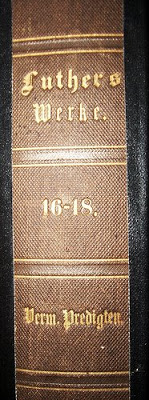
Looking for Luther's Works? Here's My On-Line collection

 “Destroy the Mass and you destroy the Church.” – Martin Luther

Catholic commentator Ann Barnhardt quoted “Quo primum, the great document of Pope SAINT Pius V, issued on 14 July, ARSH 1570” that apparently declared Francis “will incur the wrath of Almighty God and of the Blessed Apostles Peter and Paul” for his new document:

[The Francis Motu Proprio states in] Art. 1. The liturgical books promulgated by Saint Paul VI and Saint John Paul II, in conformity with the decrees of Vatican Council II, are the unique expression of the lex orandi of the Roman Rite.

Well, let’s see. Quo primum, the great document of Pope SAINT Pius V, issued on 14 July, ARSH 1570, said of the Tridentine Rite:

“We grant in perpetuity that this Missal is hereafter freely and lawfully to be used, without any scruple of conscience or fear of incurring any penalty or censure…

No one whosoever is permitted to alter this notice of Our permission, statute, ordinance, command, precept, grant, indult, declaration, will, decree, and prohibition. Should anyone dare to contravene it, let him know that he will incur the wrath of Almighty God and of the Blessed Apostles Peter and Paul.”

From your lips to God’s ear, Pope St. Pius V. [https://www.barnhardt.biz/2021/07/16/antipope-bergoglio-abolishes-the-venerable-rite-of-pius-v-in-article-i-of-his-document-which-is-further-proof-positive-he-isnt-the-pope-quo-primum-is-explicit-the-pian-r/]

Catholic scholar Robert Higdon presented evidence that indeed St. Paul would not be happy with Francis’s Lutheran attempt to “destroy the Church” for “Luther stated: ‘destroy the Mass and you destroy the Church'”:

St. Paul says, “I have handed over that which I received.” He then explains what it is that he has received. What he describes is the Holy Mass. That the Lord, before he suffered, took bread saying “This is My Body which is given up for you. This is the chalice of My Blood,” etc. So when St. Paul says “hold fast to the traditions” and “I have handed over that which I have received,” he refersspecifically to the liturgy of Holy Mass…

… The sacred liturgy of the Mass is both Sacrifice and Sacrament. Holy Mass is ‘the Prayer’ of the Holy Church! Hence the venerable maxim “let the rule for prayer determine the rule of belief.” In other words: “what we pray at Mass determines what we believe!” The protestant reformers understood this concept well as Luther stated: “destroy the Mass and you destroy the Church.”

Could this be why Pius XII warned the Church of the suicide of altering the Faith in her liturgy! Could this be why St. Pius V when he canonized the Roman Rite, in Quo Primum, bound the Roman Church to the ‘Traditional Latin Roman Rite’ under the threat of the wrath of Almighty God, including the wrath of Peter and Paul ….Surely St. Pius V knew that to bind the Roman Rite under such a threat would not be possible if Holy Mass was only a discipline subject to radical change! 

Considering the liturgical chaos of today and the wholesale loss of faith everywhere, do you think we might be under the ‘wrath of almighty God’ that St. Pius V warned us about?

I would submit that if St. Paul were to appear on the liturgical scene today, knowing only what he knew at his death; that he would immediately recognize the Apostolic Tradition of the Latin Roman Rite; and therefore the legitimate successor to the Rite of St. Peter. I wonder if St. Paul would regard the Novus Ordo as illegitimate since it has neither Tradition for its father or Custom for its mother. [https://remnantnewspaper.com/web/index.php/articles/item/2645-on-the-rite-of-saint-peter-the-glorious-roman-rite-most-beautiful-thing-this-side-of-heaven]

Might Francis in some sense be possessed by the spirit of Martin Luther? 

Francis in his fixation with the devil and his Traditionalist enemies as well as feces and heresy appears almost to be possessed by the spirit of Martin Luther who never stopped talking about excrement and talking to the devil:

“”Devil, I have just s*** in my trousers. Have you smelled it?”
-Martin Luther
(Queenmobs.com, “Fecal Fridays: Martin Luther on the Toilet,” December 1, 2017)

Luther had continuous visions of the devil and of excrement as all Luther scholars know:

“The filthy language of Luther… a vocabulary of excrement… -against Satan… in his later years the violence and frequent obscenity… directed at his human foes.”
(“Martin Luther,” by Michael A. Mullet, page 338)

Besides the Francis’s fixation on the devil, his enemies and feces, it appears that Francis has, also, joined Luther in believing in the heresy of imputed grace justification.

Francis referring to Luther said:

“Lutherans and Catholics, Protestants, all of us agree on the doctrine of justification. On this point, which is very important, he did not err.” (patheos.com/blog/scotticalt, “Pope Francis is Wrong about Luther and Justification,” April 5, 2017)

Theologian Dr. E. Christian Brugger and First Thing editor Elliott Milco agree that Francis’s grace/justification teachings in Amoris Laetitia and his Argentine letter apparently are condemned as heretical by the Council of Trent.

Milco in his article “Francis’s Argentine Letter And The Proper Response” counters Francis’s idea of grace with the infallible Catholic teaching which says:

Trent’s doctrine of infused grace said “that graces truly sanctify and liberates, and that baptized Christians are always free to fulfill the moral law, even when they fail to do so.”

Francis is denying the very concept of Catholic sanctifying grace and justification.

This is the greatest material error by any pope or antipope is the entire history of the Church.

It needs to be “loudly and forcefully condemned” or it will lead to apostasy and will destroy the vast majority of the Christian faith worldwide as it did in Luther’s Northern Europe up to the present day.

In 2017, Former Congregation for the Doctrine consultor Msgr. Nicola Bux under Pope Benedict XVI told Vatican expert Edward Pentin that Francis is spreading “apostasy”:

“Francis could stem the ‘confusion and apostasy”… by ‘correcting’ his own ‘ambiguous and erroneous words and acts.” (lifesitenews.com, “Only Pope Francis can end the ‘apostasy’ his words caused: Italian monsignor,” June 21, 2017) 

Francis isn’t ending the “apostasy.” Instead he appears to be joining Luther in attempting to “destroy the Church.”  

Stop for a moment of silence, ask Jesus Christ what He wants you to do now and next. In this silence remember God, Father, Son and Holy Ghost – Three Divine Persons yet One God, has an ordered universe where you can know truth and falsehood as well as never forget that He wants you to have eternal happiness with Him as his son or daughter by grace. Make this a practice. By doing this you are doing more good than reading anything here or anywhere else on the Internet.

Francis Notes:

– Doctor of the Church St. Francis de Sales totally confirmed beyond any doubt the possibility of a heretical pope and what must be done by the Church in such a situation:

“[T]he Pope… WHEN he is EXPLICITLY a heretic, he falls ipso facto from his dignity and out of the Church, and the Church MUST either deprive him, or, as some say, declare him deprived, of his Apostolic See.”
(The Catholic Controversy, by St. Francis de Sales, Pages 305-306)

Saint Robert Bellarmine, also, said “the Pope heretic is not deposed ipso facto, but must be declared deposed by the Church.”
[https://archive.org/stream/SilveiraImplicationsOfNewMissaeAndHereticPopes/Silveira%20Implications%20of%20New%20Missae%20and%20Heretic%20Popes_djvu.txt]

– “If Francis is a Heretic, What should Canonically happen to him?”: http://www.thecatholicmonitor.com/2020/12/if-francis-is-heretic-what-should.html

– “Could Francis be a Antipope even though the Majority of Cardinals claim he is Pope?”: http://www.thecatholicmonitor.com/2019/03/could-francis-be-antipope-even-though.html

 –  LifeSiteNews, “Confusion explodes as Pope Francis throws magisterial weight behind communion for adulterers,” December 4, 2017:

The AAS guidelines explicitly allows “sexually active adulterous couples facing ‘complex circumstances’ to ‘access the sacraments of Reconciliation and the Eucharist.'”

–  On February 2018, in Rorate Caeli, Catholic theologian Dr. John Lamont:

“The AAS statement… establishes that Pope Francis in Amoris Laetitia has affirmed propositions that are heretical in the strict sense.”

– On December 2, 2017, Bishop Rene Gracida:

“Francis’ heterodoxy is now official. He has published his letter to the Argentina bishops in Acta Apostlica Series making those letters magisterial documents.”

Pray an Our Father now for the restoration of the Church by the bishops by the grace of God.

Election Notes: 

– Intel Cryptanalyst-Mathematician on Biden Steal: “212Million Registered Voters & 66.2% Voting,140.344 M Voted…Trump got 74 M, that leaves only 66.344 M for Biden” [http://catholicmonitor.blogspot.com/2020/12/intel-cryptanalyst-mathematician-on.html?m=1]

– Will US be Venezuela?: Ex-CIA Official told Epoch Times “Chávez started to Focus on [Smartmatic] Voting Machines to Ensure Victory as early as 2003”: http://catholicmonitor.blogspot.com/2020/12/will-us-be-venezuela-ex-cia-official.html– Tucker Carlson’s Conservatism Inc. Biden Steal Betrayal is explained by “One of the Greatest Columns ever Written” according to Rush: http://catholicmonitor.blogspot.com/2021/01/tucker-carlsons-conservatism-inc-biden.html?m=1 – A Hour which will Live in Infamy: 10:01pm November 3, 2020: 
http://www.thecatholicmonitor.com/2021/01/a-hour-which-will-live-in-infamy-1001pm.html?m=1 What is needed right now to save America from those who would destroy our God given rights is to pray at home or in church and if called to even go to outdoor prayer rallies in every town and city across the United States for God to pour out His grace on our country to save us from those who would use a Reichstag Fire-like incident to destroy our civil liberties. [Is the DC Capitol Incident Comparable to the Nazi Reichstag Fire Incident where the German People Lost their Civil Liberties?http://catholicmonitor.blogspot.com/2021/01/is-dc-capital-incident-comparable-to.html?m=1 and Epoch Times Show Crossroads on Capitol Incident: “Anitfa ‘Agent Provocateurs‘”: 
http://catholicmonitor.blogspot.com/2021/01/epoch-times-show-crossroads-on-capital.html?m=1
Pray an Our Father now for the grace to know God’s Will and to do it. Pray an Our Father now for America. Pray an Our Father now for the restoration of the Church as well as the Triumph of the Kingdom of the Sacred Heart and the Immaculate Heart of Mary. Fr. Walijewski, pray for Bishop Callahan to retract his decision about Fr. Altman!

Posted in Uncategorized | Comments Off on

THE CATHOLIC MONITOR

SEARCH

What would St. Paul say to Francis & Luther about attempting to “Destroy the Mass &… Destroy the Church”? 

Looking for Luther's Works? Here's My On-Line collection

 “Destroy the Mass and you destroy the Church.” – Martin Luther

Catholic commentator Ann Barnhardt quoted “Quo primum, the great document of Pope SAINT Pius V, issued on 14 July, ARSH 1570” that apparently declared Francis “will incur the wrath of Almighty God and of the Blessed Apostles Peter and Paul” for his new document:

[The Francis Motu Proprio states in] Art. 1. The liturgical books promulgated by Saint Paul VI and Saint John Paul II, in conformity with the decrees of Vatican Council II, are the unique expression of the lex orandi of the Roman Rite.

Well, let’s see. Quo primum, the great document of Pope SAINT Pius V, issued on 14 July, ARSH 1570, said of the Tridentine Rite:

“We grant in perpetuity that this Missal is hereafter freely and lawfully to be used, without any scruple of conscience or fear of incurring any penalty or censure…

No one whosoever is permitted to alter this notice of Our permission, statute, ordinance, command, precept, grant, indult, declaration, will, decree, and prohibition. Should anyone dare to contravene it, let him know that he will incur the wrath of Almighty God and of the Blessed Apostles Peter and Paul.”

From your lips to God’s ear, Pope St. Pius V. [https://www.barnhardt.biz/2021/07/16/antipope-bergoglio-abolishes-the-venerable-rite-of-pius-v-in-article-i-of-his-document-which-is-further-proof-positive-he-isnt-the-pope-quo-primum-is-explicit-the-pian-r/]

Catholic scholar Robert Higdon presented evidence that indeed St. Paul would not be happy with Francis’s Lutheran attempt to “destroy the Church” for “Luther stated: ‘destroy the Mass and you destroy the Church'”:

St. Paul says, “I have handed over that which I received.” He then explains what it is that he has received. What he describes is the Holy Mass. That the Lord, before he suffered, took bread saying “This is My Body which is given up for you. This is the chalice of My Blood,” etc. So when St. Paul says “hold fast to the traditions” and “I have handed over that which I have received,” he refersspecifically to the liturgy of Holy Mass…

… The sacred liturgy of the Mass is both Sacrifice and Sacrament. Holy Mass is ‘the Prayer’ of the Holy Church! Hence the venerable maxim “let the rule for prayer determine the rule of belief.” In other words: “what we pray at Mass determines what we believe!” The protestant reformers understood this concept well as Luther stated: “destroy the Mass and you destroy the Church.”

Could this be why Pius XII warned the Church of the suicide of altering the Faith in her liturgy! Could this be why St. Pius V when he canonized the Roman Rite, in Quo Primum, bound the Roman Church to the ‘Traditional Latin Roman Rite’ under the threat of the wrath of Almighty God, including the wrath of Peter and Paul ….Surely St. Pius V knew that to bind the Roman Rite under such a threat would not be possible if Holy Mass was only a discipline subject to radical change! 

Considering the liturgical chaos of today and the wholesale loss of faith everywhere, do you think we might be under the ‘wrath of almighty God’ that St. Pius V warned us about?

I would submit that if St. Paul were to appear on the liturgical scene today, knowing only what he knew at his death; that he would immediately recognize the Apostolic Tradition of the Latin Roman Rite; and therefore the legitimate successor to the Rite of St. Peter. I wonder if St. Paul would regard the Novus Ordo as illegitimate since it has neither Tradition for its father or Custom for its mother. [https://remnantnewspaper.com/web/index.php/articles/item/2645-on-the-rite-of-saint-peter-the-glorious-roman-rite-most-beautiful-thing-this-side-of-heaven]

Might Francis in some sense be possessed by the spirit of Martin Luther? 

Francis in his fixation with the devil and his Traditionalist enemies as well as feces and heresy appears almost to be possessed by the spirit of Martin Luther who never stopped talking about excrement and talking to the devil:

“”Devil, I have just s*** in my trousers. Have you smelled it?”
-Martin Luther
(Queenmobs.com, “Fecal Fridays: Martin Luther on the Toilet,” December 1, 2017)

Luther had continuous visions of the devil and of excrement as all Luther scholars know:

“The filthy language of Luther… a vocabulary of excrement… -against Satan… in his later years the violence and frequent obscenity… directed at his human foes.”
(“Martin Luther,” by Michael A. Mullet, page 338)

Besides the Francis’s fixation on the devil, his enemies and feces, it appears that Francis has, also, joined Luther in believing in the heresy of imputed grace justification.

Francis referring to Luther said:

“Lutherans and Catholics, Protestants, all of us agree on the doctrine of justification. On this point, which is very important, he did not err.” (patheos.com/blog/scotticalt, “Pope Francis is Wrong about Luther and Justification,” April 5, 2017)

Theologian Dr. E. Christian Brugger and First Thing editor Elliott Milco agree that Francis’s grace/justification teachings in Amoris Laetitia and his Argentine letter apparently are condemned as heretical by the Council of Trent.

Milco in his article “Francis’s Argentine Letter And The Proper Response” counters Francis’s idea of grace with the infallible Catholic teaching which says:

Trent’s doctrine of infused grace said “that graces truly sanctify and liberates, and that baptized Christians are always free to fulfill the moral law, even when they fail to do so.”

Francis is denying the very concept of Catholic sanctifying grace and justification.

This is the greatest material error by any pope or antipope is the entire history of the Church.

It needs to be “loudly and forcefully condemned” or it will lead to apostasy and will destroy the vast majority of the Christian faith worldwide as it did in Luther’s Northern Europe up to the present day.

In 2017, Former Congregation for the Doctrine consultor Msgr. Nicola Bux under Pope Benedict XVI told Vatican expert Edward Pentin that Francis is spreading “apostasy”:

“Francis could stem the ‘confusion and apostasy”… by ‘correcting’ his own ‘ambiguous and erroneous words and acts.” (lifesitenews.com, “Only Pope Francis can end the ‘apostasy’ his words caused: Italian monsignor,” June 21, 2017) 

Francis isn’t ending the “apostasy.” Instead he appears to be joining Luther in attempting to “destroy the Church.”  

Stop for a moment of silence, ask Jesus Christ what He wants you to do now and next. In this silence remember God, Father, Son and Holy Ghost – Three Divine Persons yet One God, has an ordered universe where you can know truth and falsehood as well as never forget that He wants you to have eternal happiness with Him as his son or daughter by grace. Make this a practice. By doing this you are doing more good than reading anything here or anywhere else on the Internet.

Francis Notes:

– Doctor of the Church St. Francis de Sales totally confirmed beyond any doubt the possibility of a heretical pope and what must be done by the Church in such a situation:

“[T]he Pope… WHEN he is EXPLICITLY a heretic, he falls ipso facto from his dignity and out of the Church, and the Church MUST either deprive him, or, as some say, declare him deprived, of his Apostolic See.”
(The Catholic Controversy, by St. Francis de Sales, Pages 305-306)

Saint Robert Bellarmine, also, said “the Pope heretic is not deposed ipso facto, but must be declared deposed by the Church.”
[https://archive.org/stream/SilveiraImplicationsOfNewMissaeAndHereticPopes/Silveira%20Implications%20of%20New%20Missae%20and%20Heretic%20Popes_djvu.txt]

– “If Francis is a Heretic, What should Canonically happen to him?”: http://www.thecatholicmonitor.com/2020/12/if-francis-is-heretic-what-should.html

– “Could Francis be a Antipope even though the Majority of Cardinals claim he is Pope?”: http://www.thecatholicmonitor.com/2019/03/could-francis-be-antipope-even-though.html

 –  LifeSiteNews, “Confusion explodes as Pope Francis throws magisterial weight behind communion for adulterers,” December 4, 2017:

The AAS guidelines explicitly allows “sexually active adulterous couples facing ‘complex circumstances’ to ‘access the sacraments of Reconciliation and the Eucharist.'”

–  On February 2018, in Rorate Caeli, Catholic theologian Dr. John Lamont:

“The AAS statement… establishes that Pope Francis in Amoris Laetitia has affirmed propositions that are heretical in the strict sense.”

– On December 2, 2017, Bishop Rene Gracida:

“Francis’ heterodoxy is now official. He has published his letter to the Argentina bishops in Acta Apostlica Series making those letters magisterial documents.”

Pray an Our Father now for the restoration of the Church by the bishops by the grace of God.

Election Notes: 

– Intel Cryptanalyst-Mathematician on Biden Steal: “212Million Registered Voters & 66.2% Voting,140.344 M Voted…Trump got 74 M, that leaves only 66.344 M for Biden” [http://catholicmonitor.blogspot.com/2020/12/intel-cryptanalyst-mathematician-on.html?m=1]

– Will US be Venezuela?: Ex-CIA Official told Epoch Times “Chávez started to Focus on [Smartmatic] Voting Machines to Ensure Victory as early as 2003”: http://catholicmonitor.blogspot.com/2020/12/will-us-be-venezuela-ex-cia-official.html– Tucker Carlson’s Conservatism Inc. Biden Steal Betrayal is explained by “One of the Greatest Columns ever Written” according to Rush: http://catholicmonitor.blogspot.com/2021/01/tucker-carlsons-conservatism-inc-biden.html?m=1 – A Hour which will Live in Infamy: 10:01pm November 3, 2020: 
http://www.thecatholicmonitor.com/2021/01/a-hour-which-will-live-in-infamy-1001pm.html?m=1 What is needed right now to save America from those who would destroy our God given rights is to pray at home or in church and if called to even go to outdoor prayer rallies in every town and city across the United States for God to pour out His grace on our country to save us from those who would use a Reichstag Fire-like incident to destroy our civil liberties. [Is the DC Capitol Incident Comparable to the Nazi Reichstag Fire Incident where the German People Lost their Civil Liberties?http://catholicmonitor.blogspot.com/2021/01/is-dc-capital-incident-comparable-to.html?m=1 and Epoch Times Show Crossroads on Capitol Incident: “Anitfa ‘Agent Provocateurs‘”: 
http://catholicmonitor.blogspot.com/2021/01/epoch-times-show-crossroads-on-capital.html?m=1
Pray an Our Father now for the grace to know God’s Will and to do it. Pray an Our Father now for America. Pray an Our Father now for the restoration of the Church as well as the Triumph of the Kingdom of the Sacred Heart and the Immaculate Heart of Mary. Fr. Walijewski, pray for Bishop Callahan to retract his decision about Fr. Altman!

Posted in Uncategorized | Comments Off on

THE CATHOLIC MONITOR

Flashback: Did Francis Steal the Election? 

Is it possible for someone to be a antipope even though the majority of cardinals claim he is pope?

Yes, if the antipope got illegal votes or other illegal actions were taken or happened contrary to the conclave constitution.
The case of Antipope Anacletus II proves that it is possible for a majority of cardinals to claim a man is pope while he, in reality, is an antipope.
In 1130, a majority of cardinals voted for Cardinal Peter Pierleone to be pope. He called himself Anacletus II. He was proclaimed pope and ruled Rome for eight years by vote and consent of a absolute majority of the cardinals despite the fact he was a antipope.

In 1130, just prior to the election of antipope Anacletus, a small minority of cardinals elected the real pope: Pope Innocent II.

How is this possible?

St. Bernard said “the ‘sanior pars’ (the wiser portion)… declared in favor of Innocent II. By this he probably meant a majority of the cardinal-bishops.”(St. Bernard of Clairvaux by Leon Christiani, Page 72)
Again, how is this possible when the absolute majority of cardinals voted for Anacletus?

Historian Warren Carroll explains:
“[C]anon law does not bind a Pope arranging for his successor… [Papal Chancellor] Haimeric proposed that… a commission of eight cardinals should be selected to choose the next Pope… strong evidence [shows] that the Pope [Honorius] endorsed what Haimeric was doing, including the establishment of the electoral commission [of eight cardinals].”(The Glory of Christendom, Pages 36-37)
The majority or “sanior pars,” five cardinals out of eight of “the electoral commission,” elected Pope Innocent II as St. Bernard said and as evidence shows was the will of the previous pope in what we can call a constitution for the election of his successor.

In the same way, is it possible that Francis was not elected pope even though he received a absolute majority of cardinals votes and is now as in the case of Anacletus proclaimed pope by the same absolute majority?

As with the case of Anacletus, it is possible Francis is a antipope if his election contradicted or violated the constitution promulgated by Pope John Paul II for electing his successor.
The award-winning Mexican journalist and President of Vida para Nacer Jose Munguia who studied theology at the Gregorian University in Rome brings forward evidence that there were “serious irregularities” against John Paul II’s constitution that governed the 2013 conclave that could invalidate the conclave which elected Francis:

“Article 79 of the Constitution Universi Domenici Gregis, which establishes the details of how the conclave must be celebrated, says the following: ‘Confirming the prescriptions of my predecessors, I likewise forbid anyone, even if he is a cardinal, during the Pope’s lifetime and without having consulted him, to make plans concerning the election of his successor, or to promise votes, or to make decisions in this regard in private gatherings’.”

“And in article 81 it is established that these agreements are punished with excommunication latae sententiae (i.e. automatic, without the need of a declaration by anybody, ipso facto and eo ipsa).”

“The information revealed by Cardinal Daneels days before the Synod, coincides with that published by Austin Ivereigh, in his book “The Great Reformer” in which he reveals how, during the 2013 conclave, four cardinals from the Mafioso Saint Galen group (Kasper, Lehman, Danneels and Murphy O’Connor) came together to illicitly orchestrate a campaign in favour of the election of Bergoglio, after the latter had agreed to be the beneficiary of this scheming.”

“… After the election came the two books which revealed the serious irregularities committed within the conclave that elected Bergoglio. The first is the [Spanish language] book by Elisabbeta Piqué (Bergoglio’s authorised biographer from Argentina) entitled ‘Francisco, Vida y Revolución’ (Francisco, Life and Revolution). Piqué knew, through Francis himself, what happened inside the conclave. The other book is by the famous vaticanologist Antonio Socci ‘Non é Francesco’ (Francis is not the Pope).”

“The revelations of [Spanish speaking] Piqué [which are almost unknown to the English speaking world] are so well believed as coming from Francis that the Osservatore Romano, the official Vatican newspaper, published the chapter that deals with how the conclave developed. Vatican Radio and Television did likewise. What happened is that Bergoglio, on being elected Pope, felt that the threat of excommunication – which falls on any cardinal for revealing what happened in the conclave – no longer affected him and related to the journalist the things that happened within the Sistine Chapel.”

“The narration: In the conclave, in the evening of the 13th of March, in the fourth vote count of the day, there were 116 votes when there were only 115 cardinals in the hall. One cardinal put in one paper too many. This fourth vote was won by Cardinal Angelo Scola of Milan (The Italian Episcopal Conference itself released a bulletin congratulating Scola for having been elected Pope). This vote count was improperly annulled. Angelo Scola’s website published that the recently elected Pope had taken the name of John XXIV. Wikipedia also published it. A few minutes later both sites took down this result. What happened is that when the recently elected Pope was on his way to the balcony of Saint Peter’s, a group of cardinals, mostly Germans and Americans, approached him to tell him that he had to return to the Sistine Chapel because the vote count had to be annulled.”

“Now, the Apostolic Constitution Universi Domenici Gregis (Art 69) establishes that if two folded papers came from the same cardinal with the same name or if one was blank, they must be counted as a single vote. If, on the other hand, there were two different names, both papers are annulled and none of the two votes is valid. But it clearly establishes: “In none of the two cases must the election be annulled”. In this case there was an extra white paper. The established procedure was not followed but rather the election was annulled, which was expressly prohibited.”

“Contravening the dispositions of the Constitution, the fourth vote count was declared null, they forced Cardinal Angelo Scola, recently elected and having taken the name of John XXIV, to resign and return to the Sistine Chapel, and they proceeded with a fifth vote in which Jorge Mario Bergoglio was elected.”

“This was the second irregularity of the conclave, because the Constitution establishes (Art 63) that there must only be four voting sessions per day, two in the morning and two in the evening.”

“The case for saying that the designation of Bergoglio is effectively invalid is clear, according to canon lawyers, who refer us to article 76 which states: ‘Should the election take place in a way other than that prescribed in the present Constitution, or should the conditions laid down here not be observed, the election is for this very reason null and void, without any need for a declaration on the matter; consequently, it confers no right on the one elected’.”

“This pile of evidence led Cardinal George Pell to declare that Francis could well be the 38th antipope in the history of the church, and not the 266th Pope as the vast majority believe.”

“Finally, it is worth pointing out here, that even if all the aforementioned be cast in doubt or discredited, all opposing arguments collapse with Cardinal Danneels’s admission in his biography, that he and a group of cardinals, the “Mafia Club”, plotted to force Benedict XVI to resign. When you have a confession, proof is not necessary.”[https://www.ultimostiempos.org/en/blog-en/item/81-antipopes-conclave.html]

Bishop Rene Gracida, also, brings forward evidence that the conclave that elected Francis was invalid because there were “serious irregularities” against John Paul II’s constitution that governed the 2013 conclave.

However, the popular and respected traditional Catholic commentator Steve Skojec on May 7, 2018 apparently rejected Bishop Gracida’s call for the cardinals to judge if Francis’s election to the papacy was valid calling the validity question itself a “potentially dangerous rabbit hole.”
(Onepeterfive, “Cardinal Eijk References End Times Prophecy in Intercommunion,” May 7, 2018)

At the time, Skojec referred back to his September 26, 2017 post where he said:

“JPII has removed the election-nullifying consequences of simony… nowhere else in the following paragraphs is nullity of the election even implied.”
(Onepeterfive, “A Brief note on the Question of a Legally Valid Election,” September 26, 2017)

Bishop Gracida shows that Skojec is wrong in his Open Letter quoting Pope John Paul II’s Universi Dominici Gregis’ introductory perambulary and paragraph 76:

– “I further confirm, by my Apostlic authority, the duty of maintaining the strictest secrecy with regard to everything that directly or indirectly concerns the election process” [the above which Gracida clearly shows in his Open Letter was not maintained thus making the conclave and Francis’s papacy invalid according to the Bishop].
(Introductory perambulary)

– “Should the election take place in a way other than laid down here not to be observed, the election is for this very reason null and void.”
(Paragraph 76)

Gracida’s Open Letter, moreover, shows that Skojec is wrong above:

“The clear exception from nullity and invalidity for simony proves the general rule that other violations of the sacred process certainly do and did result in the nullity and invalidity of the entire conclave.”

On top of all that, Skojec ignores paragraph 5 and contrary to what conservative canon lawyer Edward Peters has said about Universi Dominici Gregis when he suggests canon lawyers have a role in interpreting the John Paul II Constitution, the document says:

“Should doubts arise concerning the prescriptions contained in this Constitution, or concerning the manner of putting them into effect. I [Pope John Paul II] Decree that all power of issuing a judgment of this in this regard to the College of Cardinals, to which I grant the faculty of interpreting doubtful or controverted points.”
(Universi Dominici Gregis, paragraph 5)

Later in the paragraph it says “except the act of the election,” which can be interpreted in a number of ways.

The point is, as Bishop Gracida says and Universi Dominici Gregis said, only the cardinals can interpret its meaning, not Skojec, not canon lawyers or anyone else.

The Bishop is saying what the document says: only the cardinals can interpret it.

He, also, says put pressure on the cardinals to act and interpret it which both Skojec and Peters appear to prefer to ignore.

Moreover, Bishop Gracida’s Open Letter and Pope John Paul II’s document make a number of points which neither Skojec, Peters or anyone else to my knowledge have even brought up or offered any counter argument against.

I have great respect for both Skojec and Peters, but unless Gracida’s Open Letter is squarely responded to my respect for them will greatly diminish for they will be neglecting their responsibility to God and His Church.

They are both wrong if they ignore this important Open Letter of Bishop Gracida.

If Peters and Skojec as well as the conservative and traditional Catholic media are ignoring Bishop Gracida because he isn’t a cardinal and retired, remember that St. Athanasius wasn’t a cardinal (that is involved in the selection or election process of the pope of the time) and was retired.

During the Arian heresy crisis, Pope Liberius excommunicated Athanasius. You don’t get any more retired than being excommunicated.

Skojec gave blogger Ann Barnhardt’s analysis of the papal validity a long article and podcast. The only bishop in the world contesting Francis in a meaningful way deserves as much. Why is he apparently so afraid of Bishop Gracida?

Skojec and Peters need to answer Gracida’s theologically clear and precise arguments and either clearly and precisely counter them or put pressure on the cardinals to put into action the needed canonical procedures to remove Francis if he was “never validly elected” the pope or else remove him from the Petrine office for heterodoxy.

Francis is not orthodox so there are only two things he could be:

1. A validly elected pope who is a material heretic until cardinals correct him and then canonically proclaim he is a formal heretic if he doesn’t recant thus deposing him (See: “Unambiguously Pope Francis Materially Professes Death Penalty Heresy: Cd. Burke: ‘If a Pope would Formally Profess Heresy he would Cease, by that Act, to be the Pope'”: http://catholicmonitor.blogspot.com/2018/08/unambiguously-pope-francis-materially.html?m=1) or

2. a invalidly elected antipope who is a heretic.

The point is whether you think using all the information available 1. is the objective truth or 2. is the objective truth you must act.

You must as the Bishop says put: “pressure on the cardinals to act” whichever you think. 

There are many ways to put pressure such as pray and offer Masses for this intention, send the Gracida link to priests, bishops and cardinals, make signs and pray the rosary in front of their offices as we do in front of abortion clinics. Use your imagination to come up with other ideas.

Gracida is calling the cardinals to “[a]ddress… [the] probable invalidity” before they attempt to depose him from the Petrine office for heterodoxy. But, just as importantly he is calling all faithful Catholics to act and not just bemoan Francis’s heresy. 

Bishop Gracida in a email to me and through the Catholic Monitor to all faithful Catholics said:

“ONE CAN SAY THAT FRANCIS THE MERCIFUL IS A HERETIC UNTIL ONE DIES BUT IT CHANGES NOTHING. WHAT IS NEEDED IS ACTION… WE MUST PRESSURE THE CARDINALS TOACT. SEND THAT LINK TO EVERY PRIEST AND BISHOP YOU KNOW”: 
https://wp.me/px5Zw-95e.

Remember that many who are calling those like Bishop Gracida, journalist Munguia  and others “schismatics” for calling for a cardinal investigation are following in the footsteps of the real schismatics who promoted and followed Antipope Anacletus II.  
Renowned Catholic historian Carroll explicitly says that what matters in a valid papal election is not how many cardinals claim a person is the pope. What is essential for determining if someone is pope or antipope is the “election procedures… [as] governed by the prescription of the last Pope”:

“Papal election procedures are governed by the prescription of the last Pope who provided for them (that is, any Pope can change them, but they remain in effect until they are changed by a duly elected Pope).” 

“During the first thousand years of the history of the Papacy the electors were the clergy of Rome (priests and deacons); during the second thousand years we have had the College of Cardinals.”

“But each Pope, having unlimited sovereign power as head of the Church, can prescribe any method for the election of his successor(s) that he chooses. These methods must then be followed in the next election after the death of the Pope who prescribed it, and thereafter until they are changed. A Papal claimant not following these methods is also an Antipope.”

“Since Antipopes by definition base their claims on defiance of proper Church authority, all have been harmful to the Church, though a few have later reformed after giving up their claims.” 
[http://www.ewtn.com/library/homelibr/antipope.txt

The schismatic followers of  Antipope Anacletus II didn’t want St. Bernard to investigate who was the real pope. It was the followers of the real pontiff Pope Innocent II who asked Bernard to investigate. 

Why are so many traditional and conservative Catholics afraid of a cardinal investigation of the apparent “serious irregularities” against John Paul II’s constitution that governed the 2013 conclave that could invalidate the conclave which elected Francis?

March 18 & 19, 2019 Note:

I have gotten some push back from Skojec’s blog in a post by Robert Siscoe and from someone about a bishop who attacked Bishop Gracida apparently using Siscoe’s claim that it is a infallible dogma that a man is infallibly a pope if there is “peaceful and universal acceptance” by the Church.

Was there peaceful and universal  acceptance?

In Siscoe’s own book “True or False Pope,”  he mentions the following scholars who questioned the validity of Francis’s election: Vatican expert Antonio Socci and “Stefano Violin, esteemed Professor of Canon Law” (Page 390). And there is a bishop and many other scholars who question the validity not mentioned by him.

Apparently, Siscoe didn’t get his “peaceful and universal” dogma from a dogmatic statement from a pope or council, but from a good, but a not necessarily infallible theologian John of St. Thomas.  Here is his quote from John of St. Thomas:

“[T]his man in particular, lawfully elected and accepted by the Church, is the supreme pontiff.”
(Trueorfalsepope.com, “Peaceful and Universal Acceptance of a Pope,” 2-28-19 and 3-13-19)

This bring us back to the renown historian Carroll statement: “A Papal claimant not following these methods [which is the conclave constitution of a previous pope] is also an Antipope.”

Even John of St. Thomas agrees with Carroll when he said as quoted by Siscoe:

Besides “acceptance” a valid pope needs to be “lawfully elected.”

Again, Bishop Gracida is asking for a cardinal investigation. He is saying what John Paul II’s conclave constitution says about the question of if Francis was “lawfully elected” or not: only the cardinals can investigate it and interpret it, not Siscoe, Skojec, canon lawyers or John of St. Thomas.

I ask Siscoe to specifically answer if Francis was not “lawfully elected” then does a “peaceful and universal acceptance” overturn a unlawful election?

More importantly, why are Siscoe and Skojec apparently so afraid of a investigation by cardinals?

I ask both to please give a specific answer to why they are apparently so afraid of a investigation. Stop for a moment of silence, ask Jesus Christ what He wants you to do now and next. In this silence remember God, Father, Son and Holy Ghost – Three Divine Persons yet One God, has an ordered universe where you can know truth and falsehood as well as never forget that He wants you to have eternal happiness with Him as his son or daughter by grace. Make this a practice. By doing this you are doing more good than reading anything here or anywhere else on the Internet.

Francis Notes:

– Doctor of the Church St. Francis de Sales totally confirmed beyond any doubt the possibility of a heretical pope and what must be done by the Church in such a situation:

“[T]he Pope… WHEN he is EXPLICITLY a heretic, he falls ipso facto from his dignity and out of the Church, and the Church MUST either deprive him, or, as some say, declare him deprived, of his Apostolic See.”
(The Catholic Controversy, by St. Francis de Sales, Pages 305-306)

Saint Robert Bellarmine, also, said “the Pope heretic is not deposed ipso facto, but must be declared deposed by the Church.”
[https://archive.org/stream/SilveiraImplicationsOfNewMissaeAndHereticPopes/Silveira%20Implications%20of%20New%20Missae%20and%20Heretic%20Popes_djvu.txt]

– “If Francis is a Heretic, What should Canonically happen to him?”: http://www.thecatholicmonitor.com/2020/12/if-francis-is-heretic-what-should.html

– “Could Francis be a Antipope even though the Majority of Cardinals claim he is Pope?”: http://www.thecatholicmonitor.com/2019/03/could-francis-be-antipope-even-though.html

 –  LifeSiteNews, “Confusion explodes as Pope Francis throws magisterial weight behind communion for adulterers,” December 4, 2017:

The AAS guidelines explicitly allows “sexually active adulterous couples facing ‘complex circumstances’ to ‘access the sacraments of Reconciliation and the Eucharist.'”

–  On February 2018, in Rorate Caeli, Catholic theologian Dr. John Lamont:

“The AAS statement… establishes that Pope Francis in Amoris Laetitia has affirmed propositions that are heretical in the strict sense.”

– On December 2, 2017, Bishop Rene Gracida:

“Francis’ heterodoxy is now official. He has published his letter to the Argentina bishops in Acta Apostlica Series making those letters magisterial documents.”

Pray an Our Father now for the restoration of the Church by the bishops by the grace of God.

Election Notes: 

– Intel Cryptanalyst-Mathematician on Biden Steal: “212Million Registered Voters & 66.2% Voting,140.344 M Voted…Trump got 74 M, that leaves only 66.344 M for Biden” [http://catholicmonitor.blogspot.com/2020/12/intel-cryptanalyst-mathematician-on.html?m=1]

– Will US be Venezuela?: Ex-CIA Official told Epoch Times “Chávez started to Focus on [Smartmatic] Voting Machines to Ensure Victory as early as 2003”: http://catholicmonitor.blogspot.com/2020/12/will-us-be-venezuela-ex-cia-official.html– Tucker Carlson’s Conservatism Inc. Biden Steal Betrayal is explained by “One of the Greatest Columns ever Written” according to Rush: http://catholicmonitor.blogspot.com/2021/01/tucker-carlsons-conservatism-inc-biden.html?m=1 – A Hour which will Live in Infamy: 10:01pm November 3, 2020: 
http://www.thecatholicmonitor.com/2021/01/a-hour-which-will-live-in-infamy-1001pm.html?m=1 What is needed right now to save America from those who would destroy our God given rights is to pray at home or in church and if called to even go to outdoor prayer rallies in every town and city across the United States for God to pour out His grace on our country to save us from those who would use a Reichstag Fire-like incident to destroy our civil liberties. [Is the DC Capitol Incident Comparable to the Nazi Reichstag Fire Incident where the German People Lost their Civil Liberties?http://catholicmonitor.blogspot.com/2021/01/is-dc-capital-incident-comparable-to.html?m=1 and Epoch Times Show Crossroads on Capitol Incident: “Anitfa ‘Agent Provocateurs‘”: 
http://catholicmonitor.blogspot.com/2021/01/epoch-times-show-crossroads-on-capital.html?m=1
Pray an Our Father now for the grace to know God’s Will and to do it.  

Posted in Uncategorized | Comments Off on


Archbishop Viganò: Vaccines made with fetal tissue are a ‘human sacrifice of innocent victims offered to Satan’

‘The most innocent and defenseless creature, the baby in the womb in the third month of gestation, is sacrificed and dismembered in order to extract tissue from his still palpitating body with which to produce a non-cure, a non-vaccine, which not only does not heal from the virus, but in all likelihood causes a greater percentage of death than Covid itself, especially in the elderly or those who are sick.’Wed Jul 21, 2021 – 1:00 pm EST

Featured Image
Archbishop Carlo Maria Viganò speaks at the Rome Life Forum in May 2018. 

July 21, 2021 (LifeSiteNews) – Archbishop Carlo Maria Viganò, in a foreword to a book on the problem of the coronavirus vaccine, decries the satanic nature of this vaccine using tissue of aborted babies in its production and testing. For this Italian prelate, the vaccine is a tool of the globalist ideology which is “anti-human, anti-religious, and antichristic.”

Viganò sees that “abortion is proposed by the Satanists as a true and proper religious rite,” arguing that in this Satanic world view, through an abortion-tainted vaccine, one becomes a member of the Satanic anti-church. He writes that Satan claims, “through the pharmaceutical companies that use fetal tissue from abortions to manufacture a so-called vaccine that is presented in the delirium of Covid-19 as a sacrament of salvation by which one is incorporated into the ‘mystical body’ of Satan, the globalist anti-church.”

Mors Tua Vita Mea (Your death is my life) is the title of the Italian book on the abortion-tainted coronavirus vaccines to which Archbishop Viganò has contributed a foreword (see excerpts of it in English translation below). Edited by Professor Massimo Viglione, the book contains essays also by Bishop Athanasius Schneider and LifeSite’s editor-in-chief John-Henry Westen. Its subtitle is: “The End Does Not Justify the Means.”For Archbishop Viganò, there is no doubt that coronavirus vaccines can never justify the killing of unborn babies. On the contrary, this vaccine seems to be used as a means to getting us more and more used to the killing of babies for the sake of humanity. He states:…we cannot fail to see how instrumental it [the vaccine] is, precisely in its “mystical” value, to the collective acceptance of human sacrifice as normal and indeed necessary: the most innocent and defenseless creature, the baby in the womb in the third month of gestation, is sacrificed and dismembered in order to extract tissue from his still palpitating body with which to produce a non-cure, a non-vaccine, which not only does not heal from the virus, but in all likelihood causes a greater percentage of death than Covid itself, especially in the elderly or those who are sick.Below is the excerpt of Archbishop Viganò’s foreword to the book Mors Tua Vita Mea, published with kind permission by Professor Massimo Viglione:Aures habent, et non audient.
Ps 113The barbarism in which our society finds itself is now evident: its values have been gradually erased as hateful vestiges of an extinct world, to the advantage of the delusions of globalist ideology, which shows itself to be ever more anti-human, anti-religious, and antichristic. The most antithetical principle of this infernal barbarism with respect to Christian civilization is infanticide, the human sacrifice of innocent victims offered to Satan; and despite the horror of seeing it brazenly admitted, we cannot be surprised if abortion is proposed by the Satanists as a true and proper religious rite, to which protection must be given in the name of freedom of worship. The ancient pagan rituals – omnes dii gentium demonia, says the Psalm – live again today in the sacrificial offering that unfortunate mothers believe can be claimed as a right.If the firstborn of Israel belong to the Lord, the simia Dei demands much more of the firstborn and even claims them through the pharmaceutical companies that use fetal tissue from abortions to manufacture a so-called vaccine that is presented in the delirium of Covid-19 as a sacrament of salvation by which one is incorporated into the “mystical body” of Satan, the globalist anti-church. On the other hand, the “liturgical” connotation of the pandemic intentionally echoes signs and symbols proper to the True Religion in such a way as to deceive even the simple and push them to conform to a collective cult that exempts them from making decisions independently and binds them to an uncritical obedience. We cannot forget the funeral processions of military trucks, the contradictory and intolerant attitude of the Covid priests, the health magisterium of the “experts,” the inquisition against the denier “heretics,” and the fideistic adherence to the most grotesque superstitions passed off as science by virologist sorcerers and television vestals.The gene serum that is called a vaccine, as scientists and specialists have very well demonstrated and as its producers themselves admit, does not guarantee immunity; it does not rule out serious short-term and long-term side effects; it is not effective against certain variants of Covid; it does not eliminate the need for masks and social distancing; in the majority of cases the number of positive tests increases, and so media terrorism and the tightening of containment measures also increases. Proposed as a panacea, the so-called “vaccine” has turned out only to be the source of enormous, scandalous profits for Big Pharma and, at the same time, serves as a pretext to impose health passports and other systems for controlling the masses and limiting natural liberties. But alongside this obvious uselessness of the “vaccine” – a uselessness that any doctor not subservient to the system would have considered from the beginning, since the Corona viruses are susceptible to mutation – we cannot fail to see how instrumental it is, precisely in its “mystical” value, to the collective acceptance of human sacrifice as normal and indeed necessary: the most innocent and defenseless creature, the baby in the womb in the third month of gestation, is sacrificed and dismembered in order to extract tissue from his still palpitating body with which to produce a non-cure, a non-vaccine, which not only does not heal from the virus, but in all likelihood causes a greater percentage of death than Covid itself, especially in the elderly or those who are sick.But who are the mothers who, denying their very nature, agree to kill their own child? The majority of them are women in their first pregnancy, unaware of the horror they are about to commit and the remorse that will accompany them forever. Here are the first-born to be consecrated to Satan: the children of unfortunate mothers and spoiled girls, who discover what it means to be mothers precisely in not wanting to be so, instead perverting their femininity by reducing it to a bargaining chip or an instrument of ephemeral enjoyment, in the name of rights which they claim for themselves but which they permit themselves to deny to the creatures they carry in their womb. The non serviam repeats itself inexorably every time the obedience of the fiat is refused and the will of the Almighty is rebelled against.In abortion, Satan achieves the greatest injury to God: he offends Him as Creator, making the mother the murderer of her own child; he offends Him as Lord, usurping the right of life and death over innocent creatures and claiming the right to violate the Fifth Commandment with impunity; he offends Him as Redeemer, nullifying the fruits of Christ’s Passion for creatures killed without the grace of Baptism; he offends Him as Father, while also vilifying the Sacred Maternity of the Most Holy Virgin.Great confusion reigns in this painful phase of the history of the Church: the inaction or abuse of the authority of the Hierarchy, along with the betrayal of so many false pastors and mercenaries, does not help to dispel the confusion of the faithful, and indeed the Shepherds even feed the confusion with partial, discordant and contradictory directions. In this too we can realize the gravity of the situation, and how much the defection of the Pastors is a necessary premise for the establishment of the kingdom of the Antichrist. If the Pope and the Bishops had a minimum of fear of God, they would not try to justify with unworthy sophistry a vaccine that in order to be produced requires stem cells obtained from voluntarily aborted fetuses. The pretium sanguinis would be enough to make them not even take it into consideration, but perhaps among the beneficiaries of that pretium there are also Prelates who care more about the hypocritical praise of the enemies of Christ than the heroic witness of the Faith. […]

Posted in Uncategorized | Comments Off on

MAIKE HICKSON

BLOGS

Head of SSPX on Traditionis Custodes: ‘The era of the hermeneutics of continuity … is radically over’

‘The problem is not simply liturgical, aesthetic or purely technical,’ Don Davide Pagliarani went on to say. ‘The problem is simultaneously doctrinal, moral, spiritual, ecclesiological and liturgical. In a nutshell, it is a problem that affects all aspects of the Church’s life, without exception. It is a question of faith.’Fri Jul 23, 2021 – 3:16 pm EST

Featured Image
Fr. Davide Pagliarani SSPX News – English / YouTube

July 23, 2021 (LifeSiteNews) – Don Davide Pagliarani, the General Superior of the Society of St. Pius X (SSPX) – whose priests exclusively celebrate the Traditional Latin Mass – has published today a response to Pope Francis’s motu proprio Traditionis Custodes.

In his letter, Father Pagliarani makes it clear that there are, indeed, two different Masses – the Traditional Mass and the Novus Ordo Mass – representing two different faiths. He says that this motu proprio has now shown that the concept of the “hermeneutics of continuity” – which insists that the post-conciliar Church in her liturgy, doctrine, and morals, essentially is in continuity with the Church from before the Second Vatican Council – “is over.” He writes:

The motu proprio Traditionis custodes and the letter that accompanied it have caused a profound upheaval in the so-called traditionalist movement. We can point out, quite logically, that the era of the hermeneutics of continuity, with its equivocations, illusions and impossible efforts, is radically over – swept aside with a wave of a sleeve.

JVM Show

Since the Holy Sacrifice of the Mass – the center of the Christian life – represents Calvary, the struggle between Our Lord and Satan, says Father Pagliarani, the Mass itself is a sign of contradiction and has to be. This is the essence of the Traditional Mass, or Tridentine Mass. For this priest, the Tridentine Mass “expresses and conveys a conception of Christian life – and consequently, a conception of the Catholic Church – that is absolutely incompatible with the ecclesiology that emerged from the Second Vatican Council.”

Therewith, Father Pagliarani says that Pope Francis is right when he points out that many Catholics who adhere to the Tridentine Mass are critical of Vatican II, which took place from 1962 to 1965 and which brought forth several doctrinal and liturgical changes in the life of the Church. This is a point that others in this current debate variously try to deny.

“The problem is not simply liturgical, aesthetic or purely technical,” Don Pagliarani goes on to say. “The problem is simultaneously doctrinal, moral, spiritual, ecclesiological and liturgical. In a nutshell, it is a problem that affects all aspects of the Church’s life, without exception. It is a question of faith.”

So the Superior General of the SSPX says that the question of the Tridentine Mass affects the entire life of the Church. And this Mass and its faith is “incompatible with the ecclesiology that emerged from the Second Vatican Council.”

Father Pagliarani then explains the differences between the Novus Ordo Mass as it was promulgated by Pope Paul VI in 1969 and the Mass as it had been pruned and restored by Pope Pius V during the Council of Trent – hence the name Tridentine Mass. “On one side is the Mass of All Times,” he writes. It stands for a “Church that defies the world and is certain of victory, for its battle is nothing less that the continuation of the battle that Our Blessed Lord waged to destroy sin and to destroy the kingdom of Satan.” The traditional Mass, therefore, has “a fundamentally militant conception of Christian life” containing two elements: “a spirit of sacrifice and an unwavering supernatural hope.”

The new Mass, however, which emerged from the new faith that came out of the Second Vatican Council and that downplays the gravity of sin, trying to embrace the world, has a completely different characteristic. Says the Superior General:

On the other side stands the Mass of Paul VI. It is an authentic expression of a Church that wants to live in harmony with the world and that lends an ear to the world’s demands. It represents a Church that, in the final analysis, no longer needs to fight against the world because it no longer has anything to reproach the world. Here is a Church that no longer has anything to teach the world because it listens to the powers of the world. 

Such an understanding of the Church means that it “no longer needs the Sacrifice of Our Blessed Lord because, having lost the notion of sin, it no longer has anything for which to atone,” according to Pagliarani.

On could add that this explains the characteristic of the New Mass that resembles more of a meeting, of a “supper” or “meal” rather than of a sacrifice, with its sober atmosphere and gravity.

Don Pagliarani explains here that the new understanding of the Church is that she wants to help humanistic endeavors on earth, not keeping her eyes on heaven and the mission to lead as many souls as possible to heaven, establishing the Kingship of Christ on earth. He states about the New Mass and the new understanding of the Church:

Here is a Church that no longer has the mission of restoring the universal kingship of Our Lord Jesus Christ, because it wants to make its contribution to the creation on this earth of a better world that is freer, more egalitarian and more eco-responsible – and all this with purely human means. This humanist mission that the men of the Church have given themselves must necessarily be matched by a liturgy that is equally humanist and emptied of any notion of sacredness.

Thereby confirming Pope Francis’s claim that there is a conflict between the Novus Ordo Mass and the Tridentine Mass and its ecclesiologies, Father Pagliarani says that there has been a “battle” waged over the last 50 years, and this battle is not just “a war between two rites.”

Pope Francis, in his letter to the bishops concerning his new motu proprioregrets that “the instrumental use of Missale Romanum of 1962 is often characterized by a rejection not only of the liturgical reform, but of the Vatican Council II itself, claiming, with unfounded and unsustainable assertions, that it betrayed the Tradition and the ‘true Church.’”

Indeed, according to Pagliarani, it is a war between “two different and opposing conceptions of the Catholic Church and of Christian life,” and these conceptions are “incompatible with each other.” The priest goes on to say: “In paraphrasing Saint Augustin, one could say that the two Masses have built two cities: the Mass of All Times has built a Christian city; the New Mass seeks to build a humanist and secular city.”

Since God always allows things to bring out a greater good, Don Pagliarani sees that this “shock” of July 16 – the publication of Pope Francis’s motu proprio – can renew in us the awareness of what a gift we have in the traditional Latin Mass. We should consider it a great gift and be willing to suffer for it:

This Mass – our Mass – must really be for us like the pearl of great price in the Gospel, for which we are ready to renounce everything, for which we are ready to sell everything. He who is not prepared to shed his blood for this Mass is not worthy to celebrate it! He who is not prepared to give up everything to protect it is not worthy to attend it!

Don Pagliarani calls upon us to be strong and ready to be courageous. Our response “must be profound and more far-reaching than all those feeble and sometimes hopeless commentaries.” It is here that all those souls who have in the recent years found access to the Mass of All Ages and its better means for sanctification are called to make a decision of a “well-formed Catholic conscience” whether or not they will allow this Mass to be taken away from them.They will have to make “an important choice that will affect their faith,” because the Holy Mass is the “supreme expression of a doctrinal and moral universe,” explains the Italian priest. It is about “choosing the Catholic faith in its entirety and through it, choosing Our Lord Jesus Christ, with His Cross, His Sacrifice and His universal kingship … imitating the Crucified One and of following Him to the end, by a complete, rigorous and coherent fidelity.”In the end, Father Pagliarani assures all the faithful that the SSPX will do all it can to help faithful who are now in distress, wishing to extend a “warm helping hand” to them.“We have the duty,” he writes, “to offer them the certitude that the Tridentine Mass can never disappear from the face of the earth.”

In a recent interview just before the new motu proprio, Bishop Athanasius Schneider, said that it would be “violation” and an “abuse of power” should the traditional Mass be abolished. He saw the possibility that some priests of the Fraternity of St. Peter (FSSP) – which is under the direct authority of Rome – might well go to the SSPX should they be forbidden to celebrate this liturgy. Should the ban of the Traditional Mass come, he continued, priests “can continue to celebrate this Mass because it is the Mass of the entire Church and the faithful have a right [to] what’s holy.” He also said that it is “licit” to go to Masses of the Society of St. Pius X. In case the traditional Mass were to be abolished, he went on to say, “if the other priests of the Fraternity of St. Peter and others will be forced to concelebrate the New Mass, I think that there will be priests who will join the Society of Saint Pius X because they have, in this case, some more independence to keep the tradition of the Church.”

As Bishop Schneider reminded us, though, the SSPX is not yet fully regularized due to their consecration of four bishops without papal permission in 1988. But they have already received from Rome the faculty to hear Confessions and to witness marriages, thus coming closer to a regularized situation. However, since they have “more independence” (Schneider) from Rome, they would certainly not stop offering the Traditional Latin Mass, should the Pope order them to do so.

Only recently, Father James Altman, in two different interviews (one with The Rundown), discussed the possibility that the SSPX might be the only place for him to receive faculties, since he has been suspended and it is not clear whether his appeal will have success. These words of his were at this stage merely theoretical, and he did not say he would do this step, but it shows that he, too, considers the SSPX as being a serious option. He stated in one of the interviews that he believes it is “valid” for Catholics to go to SSPX Masses.

On July 16, Pope Francis issued his motu proprio Traditionis Custodes, in which he declared that, for the sake of “unity,” the Traditional Latin Mass – or the “Extraordinary form of the Roman rite,” as Pope Benedict XVI had termed it – is essentially to be abolished. He declared that the Novus Ordo Mass is to be the “unique expression” of the Roman rite and that in the end, all traditionally-minded Catholics should be moved to accept the Latin canon of that Novus Ordo Mass, thus attempting to abolish the traditional Mass – as it had been set by the Council of Trent in the 16th century. In his letter to the bishops concerning this motu proprio, Francis spoke of the “need to return in due time to the Roman Rite promulgated by Saints Paul VI and John Paul II.”

As Cardinal Gerhard Ludwig Müller wrote about this new motu proprio, “the clear intent is to condemn the Extraordinary Form to extinction.”

The Italian Professor Massimo Viglione, in an essay endorsed by Archbishop Carlo Maria Viganò, however, pointed out that this Mass can never be abrogated. He wrote:

The Lex Orandi comprises all twenty centuries of the history of the Church, and there is no man or group of men in the world who can change this twenty-century-old deposit. There is no pope, council, or episcopate that can change the Gospel, the Depositum Fidei, or the universal Magisterium of the Church. Nor can the Liturgy of all time be changed. 

For Viglione, this attack on the Traditional Mass is an attempt to extinguish that in the Church that is still opposed to the New World Order. The “true goal of this multi-decade war against the Sacred Catholic Liturgy,” he stated, “which then is the true goal of the creation of the New Rite ex nihilo…, is the dissolution of the Catholic Liturgy in itself, of every form of the Holy Sacrifice, of doctrine itself, of the Church herself in the great globalist current of the universal religion of the New World Order.”

Part of this Catholic liturgy are concepts such as “the Most Holy Trinity, the Cross, original sin, Good and Evil understood in the Christian and traditional sense, the Incarnation, the Resurrection and thus the Redemption, the Marian privileges and the very figure of the Mother of God who is the Immaculate Conception, the Eucharist and the Sacraments, Christian morality with its Ten Commandments and the Doctrine of the Universal Magisterium (defense of life, of the family, of rightly ordered sexuality in all its forms, with all the consequent condemnations of today’s follies) – all of this must disappear into the universal and monist cult of the future.”

For Professor Viglione – who has just edited a book against the abortion-tainted coronavirus vaccine, with Archbishop Viganò and LifeSite’s John-Henry Westen contributing to it – the question of obedience is depending upon the end of it. One can also be obedient to something that is evil.

“Obedience – and this is an error that finds its deepest roots even in the pre-conciliar Church, it must be said – is not an end. It is a means of sanctification,” he explained. Obedience, therefore “is not an absolute value, but rather an instrumental one. It is a positive value, very positive, if it is ordered towards God. But if one obeys Satan, or his servants, or error, or apostasy, then obedience is no longer a good, but rather a deliberate participation in evil.” In conclusion, this Italian professor wrote:

We must be “pleasing not to men, but to God, who tests our hearts” (1 Thess 2:4). Exactly! Therefore, whoever obeys men while being aware of facilitating evil and obstructing the Good, whoever they may be – including the ecclesiastical hierarchy, including the pope – in reality becomes an accomplice of evil, of lies, and of error.

Archbishop Viganò endorsed this statement by Viglione, calling it “great and powerful” and saying that it “constitutes one of the most lucid and profound comments on the ominous Motu Proprio Traditionis Custodes.”

“I intend to offer it to the reading and reflection of all the faithful, Catholics and also non-Catholics, so that each one can draw from it prophetic clarity and apostolic courage in the very hard war that we are all called to face, a war whose inevitable outcome will be the triumph of the Bride of Christ over the unleashing of the infernal powers,” the Italian prelate explained.

It might very well be that these voices presented in this report – Don Davide Pagliarani, and then Archbishop Viganò, and Professor Viglione – are the most honest ones who do not shy away from a conflict with Rome. Unlike many other commentators who are insisting – and perhaps pretending, because most traditional Catholics know that something went wrong at and after Vatican II – that they are faithful to the post-conciliar Church, the voices presented in this report speak the truth plainly and prepare us to face the coming battle with strength, conviction, and courage. Even Pope Francis might have more respect for these men than for those who try to square the circle, pretending something that they in truth, in their hearts, do not believe.

Posted in Uncategorized | Comments Off on

No. 19-1392

IN THE

Supreme Court of the United States

————

THOMAS E. DOBBS, M.D., M.P.H., STATE HEALTH OFFICER OF THE MISSISSIPPI DEPARTMENT OF HEALTH, ET AL.,

Petitioners,

v.
JACKSON WOMEN’S HEALTH ORGANIZATION, ET AL.,

Respondents.

————

On Writ of Certiorari to the United States Court of Appeals for the Fifth Circuit

————

BRIEF FOR PETITIONERS

————

LYNN FITCH Attorney General

WHITNEY H. LIPSCOMB Deputy Attorney General

SCOTT G. STEWART Solicitor General

Counsel of Record

JUSTIN L. MATHENY Deputy Solicitor General WILSON MINOR
Special Assistant

Attorney General MISSISSIPPI ATTORNEY GENERAL’S OFFICE

P.O. Box 220
Jackson, MS 39205-0220 scott.stewart@ago.ms.gov (601) 359-3680

Counsel for Petitionerspage1image3059541424page1image3059542288

QUESTION PRESENTED

Whether all pre-viability prohibitions on elective abortions are unconstitutional.

ii

PARTIES TO THE PROCEEDING

Petitioners are Thomas E. Dobbs, M.D., M.P.H., in his official capacity as State Health Officer of the Mis- sissippi Department of Health, and Kenneth Cleve- land, M.D., in his official capacity as Executive Direc- tor of the Mississippi State Board of Medical Licen- sure.

Respondents are Jackson Women’s Health Organ- ization, on behalf of itself and its patients, and Sa- cheen Carr-Ellis, M.D., M.P.H., on behalf of herself and her patients.

iii

TABLE OF CONTENTS

QUESTION PRESENTED ………………………………….. i

PARTIES TO THE PROCEEDING……………………… ii

TABLE OF AUTHORITIES …………………………………v

INTRODUCTION ……………………………………………….1

OPINIONS BELOW…………………………………………….5

JURISDICTION ………………………………………………….6

CONSTITUTIONAL AND STATUTORY PROVI- SIONS INVOLVED……………………………………………..6

STATEMENT ……………………………………………………..6 SUMMARY OF ARGUMENT……………………………..10 ARGUMENT …………………………………………………….11

I. This Court Should Hold That A Pre-Viability Prohibition On Elective Abortions Is Constitu- tional Where, As Here, A Rational Basis Supports The Prohibition ……………………………11

  1. The Constitution Does Not Protect A Right To Abortion Or Limit The States’ Authority To Restrict Abortion …………………………………..12
  2. This Court Should Overrule Its Precedents Subjecting Abortion Restrictions To Heightened Scrutiny………………………………141. This Court’s Abortion Precedents Are Egregiously Wrong ……………………………14

Page

iv

  1. This Court’s Abortion Precedents Are Hopelessly Unworkable……………………..19
  2. This Court’s Abortion Precedents Have Inflicted Severe Damage ……………………23
  3. Legal And Factual Progress Have Overtaken This Court’s Abortion Precedents ……………………………………….28
  4. Reliance Interests Do Not Support Retaining This Court’s Abortion Prece- dents………………………………………………..31

C. This Court Should Conclude That The Act Satisfies Rational-Basis Review And So Is Constitutional ……………………………………….36

II. At Minimum This Court Should Hold That Viability Is Not A Barrier To Prohibiting Elective Abortions And Should Reject The Judgment Below ………………………………………………………..38

  1. This Court Should Reject Viability As A Barrier To Prohibiting Elective Abortions……………………………………………..38
  2. This Court Should Reject The Judgment Below…………………………………………………..45

CONCLUSION ………………………………………………….48

v

TABLE OF AUTHORITIES
Page(s)

Cases

Beal v. Doe,
432 U.S. 438 (1977)……………………………………….26

Box v. Planned Parenthood of
Indiana & Kentucky, Inc.
,
139 S. Ct. 1780 (2019)……………………………………38

Bray v. Alexandria Women’s Health Clinic,
506 U.S. 263 (1993)……………………………………….18

Brown v. Board of Education,
347 U.S. 483 (1954)……………………………………….34

Burwell v. Hobby Lobby Stores, Inc.,
573 U.S. 682 (2014)……………………………………….30

Citizens United v. FEC,
558 U.S. 310 (2010)………………………………….36, 45

City of Akron v. Akron Center for
Reproductive Health, Inc.
,
462 U.S. 416 (1983)…………………………2, 22, 43, 44

Collins v. Youngblood,
497 U.S. 37 (1990)…………………………………………18

Crawford v. Washington,
541 U.S. 36 (2004)…………………………………………18

Dickerson v. United States,
530 U.S. 428 (2000)……………………………………….24

Edwards v. Beck,
786 F.3d 1113 (8th Cir. 2015)…………………………43

vi

Garcia v. San Antonio Metropolitan
Transit Authority
,
469 U.S. 528 (1985)………………………………3, 20, 23

Gonzales v. Carhart,
550 U.S. 124 (2007)….17, 25, 30, 31, 37, 42, 44, 48

Griswold v. Connecticut,
381 U.S. 479 (1965)………………………………….15, 16

Harris v. McRae,
448 U.S. 297 (1980)…………………………2, 16, 28, 38

Janus v. AFSCME,
138 S. Ct. 2448 (2018)………………..4, 17, 28, 32, 33

June Medical Services L.L.C. v. Russo, 140 S. Ct. 2103 (2020)

………………………………..2, 19, 20, 21, 22, 25, 32, 47

Knick v. Township of Scott,
139 S. Ct. 2162 (2019)…………………………14, 18, 31

Lawrence v. Texas,
539 U.S. 558 (2003)……………………………………….17

Lochner v. New York,
198 U.S. 45 (1905)…………………………………………36

Maher v. Roe,
432 U.S. 464 (1977)……………………………………….21

Maryland v. King,
567 U.S. 1301 (2012)……………………………………..27

McCorvey v. Hill,
385 F.3d 846 (5th Cir. 2004)……………………..29, 30

MKB Mgmt. Corp. v. Stenehjem,
795 F.3d 768 (8th Cir. 2015)…………..30, 42, 43, 44

vii
556 U.S. 778 (2009)……………………………………….19

Montejo v. LouisianaObergefell v. Hodges,

576 U.S. 644 (2015)………………………………….13, 17

Payne v. Tennessee,
501 U.S. 808 (1991)…………….19, 23, 31, 32, 33, 34

Planned Parenthood of Central Missouri v. Danforth, 428 U.S. 52 (1976)……………………………………20, 25

Planned Parenthood of Indiana &
Kentucky, Inc. v. Box
,
991 F.3d 740 (7th Cir. 2021)…………………………..33

Planned Parenthood of Southeastern
Pennsylvania v. Casey
,
505 U.S. 833 (1992)………………………………..passim

Preterm-Cleveland v. McCloud,
994 F.3d 512 (6th Cir. 2021)…………………………..23

Ramos v. Louisiana,
140 S. Ct. 1390 (2020)……………………14, 18, 23, 31

Roe v. Wade,
410 U.S. 113 (1973)………………………………..passim

Seminole Tribe of Fla. v. Florida,
517 U.S. 44 (1996)…………………………………………31

Stenberg v. Carhart,
530 U.S. 914 (2000)……………………………………….24

Thornburgh v. American College of
Obstetricians & Gynecologists
,
476 U.S. 747 (1986)……..3, 4, 17, 21, 25, 26, 33, 41

United States v. Richardson,
418 U.S. 166 (1974)……………………………………….27

viii
521 U.S. 793 (1997)……………………………………….18

Vacco v. QuillVasquez v. Hillery,

474 U.S. 254 (1986)……………………………………….27 Washington v. Glucksberg,

521 U.S. 702 (1997)………………………………..passim Webster v. Reproductive Health Services,

492 U.S. 490 (1989)……………………….25, 42, 44, 48

West Coast Hotel Co. v. Parrish,
300 U.S. 379 (1937)……………………………………….31

Whole Woman’s Health v. Hellerstedt,
136 S. Ct. 2292 (2016)………………………………19, 25

Williamson v. Lee Optical Co.,
348 U.S. 483 (1955)……………………………………….42

Williams-Yulee v. Florida Bar,
575 U.S. 433 (2015)……………………………………….46

Constitutional Provisions

U.S. Const. art. I, § 10………………………………………..12 U.S. Const. amend. I ………………………………………….15 U.S. Const. amend. IV ……………………………………….15 U.S. Const. amend. X………………………………..6, 13, 23 U.S. Const. amend. XIV, § 1 ……………………….. passim

Statutes

26 U.S.C. § 21……………………………………………………35 28 U.S.C. § 1254 ………………………………………………….6 29 U.S.C. § 2612 ………………………………………………..35

ix
42 U.S.C. § 2000e ………………………………………………35 Cal. Health & Safety Code § 123460 et seq. ………….36 Idaho Code § 18-622…………………………………………..36 Ill. Comp. Stat., ch. 775 § 55/1-1 et seq.………………..36 Miss. Code Ann. § 41-41-45 ………………………………..36 Miss. Code Ann. § 41-41-191 ……………………….passim N.Y. Pub. Health Law § 2599aa ………………………….36 N.Y. Pub. Health Law § 2599bb ………………………….36

Other Authorities

CDC, Abortion Surveillance—
Findings and Reports (Nov. 25, 2020)……………..48

CDC, Birth Control Methods (Aug. 13, 2020) ……… 30

Center for Reproductive Rights,
The World’s Abortion Laws (2021)………………….31

Children’s Bureau, HHS,
Infant Safe Haven Laws (2016) ……………………..29

John Hart Ely, The Wages of Crying Wolf:
A Comment on Roe v. Wade,
82 Yale L.J. 920 (1973) ………………………………….40

Ruth Bader Ginsburg, Some Thoughts on Autonomy and Equality in Relation to Roe v. Wade,
63 N.C. L. Rev. 375 (1985)……………………………….3

H.J. Res. 427, 93d Cong.,
119 Cong. Rec. 7569 (1973) ……………………………33

Dahlia Lithwick, Foreword: Roe v. Wade at Forty,
74 Ohio St. L.J. 5 (2013)………………………………..24

x

Rosalind Pollack Petchesky, Abortion and Woman’s Choice (rev. ed. 1990)…………………………………….35

A. Raymond Randolph, Before Roe v. Wade:
Judge Friendly’s Draft Abortion Opinion,
29 Harv. J.L. & Pub. Pol’y 1035 (2006)………24, 26

S.J. Res. 3, 98th Cong.,
129 Cong. Rec. 671 (1983) ……………………………..33

Laurie Sobel et al., The Future of Contraceptive Coverage (Kaiser Family Foundation,
Issue Brief, Jan. 2017)…………………………………. 29

Aparna Sundaram et al., Contraceptive Failure
in the United States: Estimates from the 2006-2010 National Survey of Family Growth, 49 Persps. on Sexual & Reprod. Health 7 (2017)

……………………………………………………………………29

James S. Witherspoon, Reexamining Roe: Nineteenth-Century Abortion Statutes
and the Fourteenth Amendment,
17 St. Mary’s J.L. 29 (1985)………………………12, 39

INTRODUCTION

On a sound understanding of the Constitution, the answer to the question presented in this case is clear and the path to that answer is straight. Under the Constitution, may a State prohibit elective abortions before viability? Yes. Why? Because nothing in consti- tutional text, structure, history, or tradition supports a right to abortion. A prohibition on elective abortions is therefore constitutional if it satisfies the rational- basis review that applies to all laws.

This case is made hard only because Roe v. Wade, 410 U.S. 113 (1973), and Planned Parenthood of Southeastern Pennsylvania v. Casey, 505 U.S. 833 (1992), hold that the Constitution protects a right to abortion. Under those cases, a state law restricting abortion may not pose an “undue burden” on obtain- ing an abortion before viability. 505 U.S. at 877 (plu- rality opinion). And “[b]efore viability,” this Court has said, a State may not maintain “a prohibition of abor- tion,” id. at 846—despite the State’s “important inter- ests” in protecting unborn life and women’s health, Roe, 410 U.S. at 154. Both courts below understood Roe and Casey to require them to strike down Missis- sippi’s Gestational Age Act because it prohibits (with exceptions for life and health) abortion after 15 weeks’ gestation and thus before viability.

Roe and Casey are thus at odds with the straight- forward, constitutionally grounded answer to the question presented. So the question becomes whether this Court should overrule those decisions. It should. The stare decisis case for overruling Roe and Casey is overwhelming.

Roe and Casey are egregiously wrong. The conclu- sion that abortion is a constitutional right has no

2

basis in text, structure, history, or tradition. Roe based a right to abortion on decisions protecting as- pects of privacy under the Due Process Clause. 410 U.S. at 152-53. But Roe broke from prior cases by in- voking a general “right of privacy” unmoored from the Constitution. Notably, Casey did not embrace Roe’s reasoning. See 505 U.S. at 846-53. And Casey’s de- fense of Roe’s result—based on the liberty this Court has afforded to certain “personal decisions,” id. at 851, 853—fails. Casey repeats Roe’s flaws by failing to tie a right to abortion to anything in the Constitution. And abortion is fundamentally different from any right this Court has ever endorsed. No other right in- volves, as abortion does, “the purposeful termination of a potential life.” Harris v. McRae, 448 U.S. 297, 325 (1980). So Roe broke from prior cases, Casey failed to rehabilitate it, and both recognize a right that has no basis in the Constitution.

Roe and Casey have proven hopelessly unworka- ble. Heightened scrutiny of abortion restrictions has not promoted administrability or predictability. And heightened scrutiny of abortion laws can never serve those aims. Because the Constitution does not protect a right to abortion, it provides no guidance to courts on how to account for the interests in this context. A court cannot “objectively … weigh[ ]” or “meaning- ful[ly] … compare” the “imponderable values” in- volved. June Medical Services L.L.C. v. Russo, 140 S. Ct. 2103, 2136 (2020) (Roberts, C.J., concurring in judgment). Heightened scrutiny—be it the undue- burden standard or another heightened standard—is also “a completely unworkable method of accommo- dating” the state interests “in the abortion context.” City of Akron v. Akron Center for Reproductive Health, Inc., 462 U.S. 416, 454 (1983) (O’Connor, J.,

3

dissenting). While crediting States with important in- terests, Roe and Casey impede States from advancing them. Before viability the undue-burden standard has been understood to block a State from prohibiting abortion to assert those interests. And that standard forces a State to make an uphill climb even to adopt regulations advancing its interests. That is flawed. If a State’s interests are “compelling” enough after via- bility to support a prohibition, they are “equally com- pelling before” then. Thornburgh v. American College of Obstetricians & Gynecologists, 476 U.S. 747, 795 (1986) (White, J., dissenting).

Roe and Casey have inflicted significant damage. Those cases “disserve[ ] principles of democratic self- governance,” Garcia v. San Antonio Metropolitan Transit Authority, 469 U.S. 528, 547 (1985), by “plac[ing]” one of the most important, contested policy issues of our time largely “outside the arena of public debate and legislative action,” Washington v. Glucks- berg, 521 U.S. 702, 720 (1997). Far from bringing peace to the controversy over abortion, Roe and Casey have made matters worse. Seee.g., Ruth Bader Gins- burg, Some Thoughts on Autonomy and Equality in Relation to Roe v. Wade, 63 N.C. L. Rev. 375, 385-86 (1985) (“Heavy-handed judicial intervention [in Roe] was difficult to justify and appears to have provoked, not resolved, conflict.”). Abortion jurisprudence has placed this Court at the center of a controversy that it can never resolve. And Roe and Casey have produced a jurisprudence that is at war with the demand that this Court act based on neutral principles. Abortion caselaw is pervaded by special rules—the undue-bur- den standard, the large-fraction test, and more—that feed the perception that “when it comes to abortion” this Court does not “evenhandedly apply[ ]” the law.

4

Thornburgh, 476 U.S. at 814 (O’Connor, J., dissent- ing). Casey retained Roe’s central holding largely on the view that overruling it would hurt this Court’s le- gitimacy. 505 U.S. at 864-69. The last 30 years show the opposite. Roe and Casey are unprincipled deci- sions that have damaged the democratic process, poi- soned our national discourse, plagued the law—and, in doing so, harmed this Court.

The march of progress has left Roe and Casey be- hind. Those cases maintained that an unwanted preg- nancy could doom women to “a distressful life and fu- ture,” Roe, 410 U.S. at 153, that abortion is a needed complement to contraception, Casey, 505 U.S. at 856, and that viability marked a sensible point for when state interests in unborn life become compelling, id. at 860. Factual developments undercut those assess- ments. Today, adoption is accessible and on a wide scale women attain both professional success and a rich family life, contraceptives are more available and effective, and scientific advances show that an unborn child has taken on the human form and features months before viability. States should be able to act on those developments. But Roe and Casey shackle States to a view of the facts that is decades out of date.

Reliance interests do not support retaining Roe and Casey. Almost all of this Court’s abortion cases have been fractured, with many Justices questioning Roe’s central premises. The people have long been “on notice” of “misgivings” on this Court about Roe and CaseyJanus v. AFSCME, 138 S. Ct. 2448, 2484 (2018). And where, as with the undue-burden stand- ard, precedents “do[ ] not provide a clear or easily ap- plicable standard,” “arguments for reliance based on [their] clarity are misplaced.” Ibid. (internal quota- tion marks omitted). That abortion has remained a

5

wholly unsettled policy issue also undermines reli- ance on Roe and CaseyCasey maintained that socie- tal reliance interests favored retaining Roe. 505 U.S. at 855-56. Developments since Roe tell a different story. Innumerable women and mothers have reached the highest echelons of economic and social life inde- pendent of the right endorsed in those cases. Sweep- ing policy advances now promote women’s full pursuit of both career and family. And many States have al- ready accounted for Roe and Casey’s overruling.

Overruling Roe and Casey makes resolution of this case straightforward. The Mississippi law here pro- hibits abortions after 15 weeks’ gestation, with excep- tions for medical emergency or severe fetal abnormal- ity. That law rationally furthers valid interests in pro- tecting unborn life, women’s health, and the medical profession’s integrity. It is therefore constitutional. If this Court does not overrule Roe and Casey’s height- ened-scrutiny regime outright, it should at minimum hold that there is no pre-viability barrier to state pro- hibitions on abortion and uphold Mississippi’s law. The court of appeals’ judgment affirming a permanent injunction of the State’s law should be reversed.

OPINIONS BELOW

The court of appeals’ opinion (Petition Appendix (App.) 1a-37a) is reported at 945 F.3d 265. The court of appeals’ order denying rehearing en banc (App.38a- 39a) is unreported. The district court’s decision grant- ing summary judgment to respondents (App.40a-55a) is reported at 349 F. Supp. 3d 536.

6

JURISDICTION

The court of appeals’ judgment was entered on De- cember 13, 2019. The court of appeals denied rehear- ing en banc on January 17, 2020. On March 19, 2020, Justice Alito extended the time to file a petition for a writ of certiorari to and including June 15, 2020. The petition was filed on June 15, 2020. The jurisdiction of this Court rests on 28 U.S.C. § 1254(1).

CONSTITUTIONAL AND STATUTORY PROVISIONS INVOLVED

The Tenth Amendment to the U.S. Constitution provides: “The powers not delegated to the United States by the Constitution, nor prohibited by it to the States, are reserved to the States respectively, or to the people.” U.S. Const. amend. X. The Fourteenth Amendment’s Due Process Clause provides: “nor shall any State deprive any person of life, liberty, or prop- erty, without due process of law.” U.S. Const. amend. XIV, § 1.

Mississippi’s Gestational Age Act, Miss. Code Ann. § 41-41-191, is reproduced at App.65a-74a.

STATEMENT

1. Enacted in 2018, Mississippi’s Gestational Age Act prohibits abortion after 15 weeks’ gestation, with exceptions for medical emergency or severe fetal ab- normality. App.70a; see App.65a-74a.

The Act sets forth several findings. To start, the Legislature found that the United States is one of few countries that permit elective abortions after 20 weeks’ gestation. App.65a. After 12 weeks’ gestation, 75% of all nations “do not permit abortion” “except (in

7
most instances) to save the life and to preserve the

physical health of the mother.” Ibid.

Next, the Legislature made findings about fetal development. App.65a-66a. At 5-6 weeks’ gestation, “an unborn human being’s heart begins beating.” App.65a. At about 8 weeks’ gestation, he or she “be- gins to move about in the womb.” Ibid. At 9 weeks, “all basic physiological functions are present,” as are teeth, eyes, and external genitalia. App.66a. At 10 weeks, “vital organs begin to function” and “[h]air, fin- gernails, and toenails … begin to form.” Ibid. At 11 weeks, an unborn human being’s diaphragm is devel- oping, “and he or she may even hiccup.” Ibid. At 12 weeks’ gestation, he or she “can open and close … fin- gers,” “starts to make sucking motions,” and “senses stimulation from the world outside the womb.” Ibid. He or she “has taken on the human form in all rele- vant respects.” Ibid. (internal quotation marks omit- ted).

The Legislature then identified several state inter- ests concerning abortion. First, the State “‘has an in- terest in protecting the life of the unborn.’” App.66a (quoting Planned Parenthood of Southeastern Penn- sylvania v. Casey, 505 U.S. 833, 873 (1992) (plurality opinion)). Second, the State has interests in protect- ing the medical profession. App.66a-67a. Most abor- tion procedures performed after 15 weeks’ gestation, the Legislature found, are dilation-and-evacuation procedures that “involve the use of surgical instru- ments to crush and tear the unborn child apart before removing the pieces of the dead child from the womb.” App.66a. The Legislature found that this “is a bar- baric practice” when performed for nontherapeutic reasons and is “demeaning to the medical profession.” App.66a-67a. And third, the State has “legitimate

8

interests from the outset of pregnancy in protecting the health of women.” App.68a. Dilation-and-evacua- tion abortions risk “[m]edical complications.” App.67a. These include: “pelvic infection; incomplete abortions (retained tissue); blood clots; heavy bleed- ing or hemorrhage; laceration, tear, or other injury to the cervix; puncture, laceration, tear, or other injury to the uterus; injury to the bowel or bladder; depres- sion; anxiety; substance abuse; and other emotional or psychological problems.” Ibid. Abortion also carries “significant physical and psychological risks” to women that “increase with gestational age.” Ibid. Af- ter 8 weeks’ gestation, abortion’s risks “escalate expo- nentially.” Ibid. In abortions performed after 15 weeks’ gestation, “there is a higher risk of requiring a hysterectomy, other reparative surgery, or blood transfusion.” App.67a-68a.

In light of those findings, the Act provides: “Except in a medical emergency or in the case of a severe fetal abnormality, a person shall not intentionally or know- ingly perform, induce, or attempt to perform or induce an abortion” when “the probable gestational age of the unborn human being has been determined to be greater than fifteen (15) weeks.” App.70a. The Act also generally requires (with the same exceptions) a physician to “determin[e]” “probable gestational age” before any abortion and to file a report (omitting a pa- tient’s identifying information) with the State Depart- ment of Health addressing abortions performed after 15 weeks’ gestation. App.70a-71a. The Act permits sanctions, civil penalties, and additional enforcement. App.71a-72a.

2. Respondents Jackson Women’s Health Organi- zation and its medical director filed this lawsuit chal- lenging the Act’s legality. App.63a. They allege that

9

they provide abortions up to 16 weeks’ gestation and that the organization is the State’s sole abortion clinic. D. Ct. Dkt. 23 at 7 ¶ 16, 20 ¶ 51.

The district court issued a TRO blocking the Act. App.62a-64a. It limited discovery to “whether the 15- week mark is before or after viability.” App.60a. The court reasoned that the Act functions as a prohibition on abortions after 15 weeks’ gestation, that under Roe and Casey a State “cannot ‘support a prohibition of abortion’” before viability regardless of “any interests” the State may have, and that the Act’s lawfulness thus “hinges on a single question: whether the 15- week mark is before or after viability.” App.59a, 60a (quoting Casey, 505 U.S. at 846). The court denied the State discovery on matters such as pre-viability fetal pain. App.60a-61a; App.56a-57a; see App.75a-100a (declaration provided as offer of proof on fetal pain).

After discovery, the court granted summary judg- ment to respondents and permanently enjoined the Act. App.40a-55a. The court reasoned: Supreme Court precedent establishes that “States may not ban abor- tions prior to viability.” App.45a; see App.42a-44a. The Act is a “ban” on abortions at or before 15 weeks’ gestation. App.55a; see App.48a. And 15 weeks’ gesta- tion “is prior to viability.” App.45a; see App.44a-45a, 53a. So “the Act is unlawful.” App.45a. The court de- clined to assess whether the State’s interests could justify the Act. App.47a-48a. The court also stated: “the Mississippi Legislature’s professed interest in ‘women’s health’ is pure gaslighting” (App.46a n.22); the Act “is closer to the old Mississippi—the Missis- sippi bent on controlling women and minorities” (ibid.); and “[t]he Mississippi Legislature has a his- tory of disregarding the constitutional rights of its cit- izens” (App.50a n.40).

10

3. The Fifth Circuit affirmed. App.1a-37a. As rele- vant here, the court of appeals explained that under Casey “no state interest can justify a pre-viability abortion ban,” that 15 weeks’ gestation is before via- bility, and that by prohibiting abortion after 15 weeks’ gestation the Act “undisputedly prevents the abor- tions of some non-viable fetuses.” App.8a, 11a-12a. The court rejected the argument that the district court should have weighed the State’s interests in as- sessing the Act’s validity. App.9a-13a. Because the Act “is a prohibition on pre-viability abortion,” App.12a, the court explained, it is unconstitutional under Supreme Court precedent, App.13a. Judge Ho concurred in the judgment. He stated: “Nothing in the text or original understanding of the Constitution es- tablishes a right to an abortion.” App.20a. But he be- lieved that “[a] good faith reading” of Supreme Court precedent required affirmance. Ibid.see App.22a- 29a, 37a. He added, however, that the district court’s opinion “displays an alarming disrespect for … mil- lions of Americans.” App.21a. The Fifth Circuit de- nied rehearing. App.38a-39a.

4. This Court granted certiorari, limited to the first question presented by the State’s petition: “Whether all pre-viability prohibitions on elective abortions are unconstitutional.” Pet. i; see JA60.

SUMMARY OF ARGUMENT

I. This Court should hold that a State may prohibit elective abortions where, as here, a rational basis sup- ports doing so. The Constitution does not protect a right to abortion or limit States’ authority to restrict it. On a sound view of the Constitution, a state law restricting abortion is valid if it satisfies the rational- basis review that applies to all laws. Rational-basis

11

review is not applied to abortion laws because this Court’s precedents subject such laws to heightened scrutiny. This Court should overrule those prece- dents. Those precedents are grievously wrong, un- workable, damaging, and outmoded. Reliance inter- ests do not support retaining them. This Court should conclude that the Act rests on a rational basis and so is constitutional. The Act reasonably furthers valid interests in protecting unborn life, women’s health, and the medical profession’s integrity. The judgment below should be reversed.

II. At minimum, this Court should reject viability as a barrier to prohibiting elective abortions and re- ject the judgment below. A viability rule has no con- stitutional basis, it harms state interests, and it pro- duces other severe negative consequences.

ARGUMENT

I. This Court Should Hold That A Pre-Viability Prohibition On Elective Abortions Is Consti- tutional Where, As Here, A Rational Basis Supports The Prohibition.

The Constitution does not protect a right to abor- tion. It does not place limits—beyond those that apply to all laws—on state authority to restrict elective abortions. Under our Constitution, then, a State may prohibit elective abortions if a rational basis supports doing so. The question presented arises only because this Court’s precedents hold that abortion restrictions are subject to heightened scrutiny. The lower courts could not do anything about that, but this Court can. This Court should overrule those precedents, uphold the Act, and reverse the judgment below.

12

A. The Constitution Does Not Protect A Right To Abortion Or Limit The States’ Authority To Restrict Abortion.

The Constitution does not protect a right to abor- tion. The Constitution’s text says nothing about abor- tion. Nothing in the Constitution’s structure implies a right to abortion or prohibits States from restricting it. Seee.g., U.S. Const. art. I, § 10 (denying States several powers but not the power to restrict abortion).

A right to abortion is not a “liberty” that enjoys substantive protection under the Due Process Clause. U.S. Const. amend. XIV, § 1. That Clause “specially protects those fundamental rights and liberties which are, objectively, deeply rooted in this Nation’s history and tradition, and implicit in the concept of ordered liberty, such that neither liberty nor justice would ex- ist if they were sacrificed.” Washington v. Glucksberg, 521 U.S. 702, 720-21 (1997) (internal citations and quotation marks omitted). History does not show a deeply rooted right to abortion. Rather, history shows a long tradition—up to, at, and long after ratification of the Fourteenth Amendment—of States restricting abortion. At the end of 1849, 18 of the 30 States had statutes restricting abortion; by the end of 1864, 27 of the 36 States had them; and, at the end of 1868, the year the Fourteenth Amendment was ratified, 30 of the 37 States had such laws, as did 6 Territories. James S. Witherspoon, Reexamining Roe: Nine- teenth-Century Abortion Statutes and the Four- teenth Amendment, 17 St. Mary’s J.L. 29, 33 (1985). At the Fourteenth Amendment’s ratification, moreo- ver, many States restricted abortion broadly (and without regard to viability). Seee.g.id. at 34 (placing at 27 the number of States that, at the end of 1868, had statutes that “prohibited attempts to induce

13

abortion before quickening”). The public would have understood that, consistent with the Fourteenth Amendment, States could restrict abortion to pursue legitimate interests and could do so throughout preg- nancy. And when Roe v. Wade, 410 U.S. 113 (1973), was decided, most States had “restrict[ed] … abor- tions for at least a century.” Id. at 174 (Rehnquist, J., dissenting); see id. at 175 n.1 (listing 36 States’ or Ter- ritories’ laws restricting abortion), 176 n.2 (listing 21 States whose abortion laws in 1868 were in effect 100 years later).

Nor can a right to abortion be justified under Ober- gefell v. Hodges, 576 U.S. 644 (2015), which recog- nized a fundamental right to marry. Obergefell ap- plied the understanding that when a right “is funda- mental as a matter of history and tradition”—like marriage—then a State must have “a sufficient justi- fication for excluding the relevant class” from exercis- ing it. Id. at 671. That understanding has no rele- vance here, where the question is not “who [may] ex- ercise[ ]” a fundamental right to abortion but whether the Constitution protects such a right at all. Ibid.

Because nothing in text, structure, history, or tra- dition makes abortion a fundamental right or denies States the power to restrict it, that “power[ ]” is “re- served to the States.” U.S. Const. amend X. Judicial review of abortion restrictions should be limited to the rational-basis review that applies to all laws. Glucks- berg, 521 U.S. at 728. A state law restricting abortion is constitutional if it is “rationally related to legiti- mate government interests.” Ibid.

14

B. This Court Should Overrule Its Prece- dents Subjecting Abortion Restrictions To Heightened Scrutiny.

This Court’s abortion precedents depart from a sound understanding of the Constitution. In Roe v. Wade, 410 U.S. 113 (1973), and Planned Parenthood of Southeastern Pennsylvania v. Casey, 505 U.S. 833 (1992), this Court held that abortion is a right spe- cially protected by the Fourteenth Amendment, and so laws restricting it must withstand heightened scru- tiny. Casey described Roe’s “essential holding,” which the lower courts thought dispositive here, to include a rule that, “[b]efore viability, the State’s interests are not strong enough to support a prohibition of abor- tion.” 505 U.S. at 846; see App.6a-13a; App.43a, 47a- 48a.

This Court should overrule Roe and CaseyStare decisis is “at its weakest” with constitutional rulings, Knick v. Township of Scott, 139 S. Ct. 2162, 2177 (2019), and the case for overruling here is overwhelm- ing. Roe and Casey are egregiously wrong. They have proven hopelessly unworkable. They have inflicted profound damage. Decades of progress have over- taken them. Reliance interests do not support retain- ing them. And nothing but a full break from those cases can stem the harms they have caused.

1. This Court’s Abortion Precedents Are Egregiously Wrong.

Roe and Casey are egregiously wrong. See Ramos v. Louisiana, 140 S. Ct. 1390, 1414 (2020) (Ka- vanaugh, J., concurring in part) (whether a precedent is “grievously or egregiously wrong” is a lead stare de- cisis consideration). As just explained, their

15

conclusion that abortion is a constitutional right trig- gering heightened scrutiny, Casey, 505 U.S. at 869-79 (plurality opinion); Roe, 410 U.S. at 155-56, has no ba- sis in text or structure, and history and tradition show that abortion is not a right protected by the Due Pro- cess Clause. Supra Part I-A.

Roe grounded a right to abortion on a constitu- tional “right of privacy” recognized in cases preceding it. 410 U.S. at 152-53. This was profoundly erroneous. The Constitution does not protect a general “right of privacy.” It protects aspects of privacy through spe- cific textual prohibitions on government action (e.g., U.S. Const. amend. I, IV) or structural features that limit government power (such as federalism and the separation of powers). No textual prohibition or struc- tural feature guarantees a right to abortion. And al- though this Court’s cases provide that the “liberty” protected by the Due Process Clause may sometimes embrace certain unenumerated privacy interests, those interests would need grounding in history and tradition—which a right to abortion lacks. See Glucksberg, 521 U.S. at 723-24 (the substantive-due- process question is not whether an interest is “con- sistent with this Court’s substantive-due-process line of cases,” but whether it is supported by “this Nation’s history and practice”). Consistent with these points, Griswold v. Connecticut, 381 U.S. 479 (1965), on which Roe relied and which applied the most expan- sive approach to the right of privacy among pre-Roe cases, finds grounding in text and tradition. In inval- idating a state law regulating the use of contracep- tives, Griswold vindicated the textually and histori- cally grounded Fourth Amendment protection against government invasion of the home—which would likely have been necessary to prosecute under the

16

statute. E.g.id. at 480, 484-85. Griswold also vindi- cated our history and tradition of safeguarding “the marriage relationship”—which raises privacy inter- ests “older than the Bill of Rights.” Id. at 486. Roe de- parted from prior cases by invoking a sweeping gen- eral “right of privacy” unmoored from constitutional text, structure, history, and tradition.

Casey did not embrace Roe’s right-of-privacy rea- soning, and instead grounded Roe’s holding on an “ex- plication of individual liberty” that focused on the con- stitutional protection that this Court’s cases have af- forded “to personal decisions relating to marriage, procreation, contraception, family relationships, child rearing, and education.” 505 U.S. at 851, 853; see id. at 846-53. This effort shares the flaws of Roe’s reason- ing. The Constitution does protect certain liberty in- terests in these categories—just as it protects certain privacy interests. But those interests need grounding in text, structure, history, or tradition. And although certain liberty interests in these categories can claim the backing of history and tradition, a right to abor- tion cannot. Again, history shows that when the Four- teenth Amendment was ratified—and for a century thereafter—the public would have understood that it left States free to legislate comprehensively on abor- tion. Supra Part I-A.

Beyond all of these points is another that funda- mentally distinguishes abortion from any privacy or liberty interest that this Court has ever recognized. None of the privacy or liberty interests embraced in this Court’s cases involves, as abortion does, “the pur- poseful termination of a potential life.” Harris v. McRae, 448 U.S. 297, 325 (1980). Abortion is thus “dif- ferent in kind from” other interests “that the Court has protected under the rubric of personal or family

17

privacy and autonomy.” Thornburgh v. American Col- lege of Obstetricians & Gynecologists, 476 U.S. 747, 792 (1986) (White, J., dissenting). Roe itself acknowl- edged that “[t]he pregnant woman cannot be isolated in her privacy.” 410 U.S. at 159. Casey too recognized that abortion is “a unique act.” 505 U.S. at 852. But the Court in both cases failed to confront what that means—that a right to abortion cannot be justified by a right of privacy or a right to make important per- sonal decisions. Nowhere else in the law does a right of privacy or right to make personal decisions provide a right to destroy a human life. Cf. Obergefell, 576 U.S. at 679 (“[T]hese cases involve only the rights of two consenting adults whose marriages would pose no risk of harm to themselves or third parties.”); Law- rence v. Texas, 539 U.S. 558, 578 (2003) (similar). So Roe’s departure from the Constitution and past cases—and Casey’s staredecisis-focused adherence to that departure, see 505 U.S. at 853; infra Part I-B— fail to account for the material difference between a right to abortion and interests recognized in other cases.

These features—that a right to abortion has no ba- sis in constitutional text, structure, history, or tradi- tion, and that such a right is fundamentally different from any right recognized by this Court—show that Roe and Casey were “poorly reasoned.” Janus v. AF- SCME, 138 S. Ct. 2448, 2479 (2018). Abortion re- strictions should be subject only to the rational-basis review that applies to every law.

Some have attempted to defend a right to abortion under equal-protection principles. Seee.g.Gonzales v. Carhart, 550 U.S. 124, 172 (2007) (Ginsburg, J., dis- senting) (“[L]egal challenges to undue restrictions on abortion procedures do not seek to vindicate some

18

generalized notion of privacy; rather, they center on a woman’s autonomy to determine her life’s course, and thus to enjoy equal citizenship stature.”). Of course, the “fact that the justification” for Roe “continues to evolve” itself “undermin[es] the force of stare decisis.” Knick, 139 S. Ct. at 2178. And this reconstruction of Roe lacks merit. This Court’s cases “establish conclu- sively” that “the disfavoring of abortion … is not ipso facto sex discrimination.” Bray v. Alexandria Women’s Health Clinic, 506 U.S. 263, 272-73 (1993). Abortion restrictions like the one here do not “treat anyone dif- ferently from anyone else or draw any distinction be- tween persons.” Vacco v. Quill, 521 U.S. 793, 800 (1997) (rejecting equal-protection challenge to prohi- bition on assisting suicide). And far from evincing an inherently discriminatory purpose, “there are com- mon and respectable reasons for opposing [abortion], other than hatred of, or condescension toward (or in- deed any view at all concerning), women as a class— as is evident from the fact that men and women are on both sides of the issue.” Bray, 506 U.S. at 270. In- deed, the Act here promotes women’s health, and it protects unborn girls and boys equally. See App.66a- 68a, 70a. Attempts to re-ground Roe on equal-protec- tion footing fail.

Roe and Casey are, in sum, irreconcilable with con- stitutional text and “historical meaning”—which pro- vides compelling grounds to overrule them. Ramos, 140 S. Ct. at 1405; see Crawford v. Washington, 541 U.S. 36, 42, 68-69 (2004) (overruling where precedent “stray[ed] from the original meaning”); Collins v. Youngblood, 497 U.S. 37, 50 (1990) (overruling where precedent “depart[ed] from” original meaning).

19

2. This Court’s Abortion Precedents Are Hopelessly Unworkable.

This Court’s abortion jurisprudence has proved “unworkable.” Montejo v. Louisiana, 556 U.S. 778, 792 (2009); seee.g.Payne v. Tennessee, 501 U.S. 808, 827 (1991) (this Court “has never felt constrained to follow precedent” that has proved “unworkable”).

First, heightened scrutiny of abortion restrictions has not promoted administrability, clarity, or predict- ability—core features of a workable legal standard. Seee.g.Payne, 501 U.S. at 827 (stare decisis aims to “promote[ ] the evenhanded, predictable, and con- sistent development of legal principles”). Thirty years under Casey’s undue-burden standard shows this. There is no objective way to decide whether a burden is “undue.” Casey, 505 U.S. at 877 (plurality opinion). This Court accordingly divides deeply in case after case not just over what result Casey requires, seee.g.,Whole Woman’s Health v. Hellerstedt, 136 S. Ct. 2292 (2016), but also over what Casey even means. Com- paree.g.June Medical Services L.L.C. v. Russo, 140 S. Ct. 2103, 2120-32 (2020) (plurality opinion) (finding undue burden based on one view of Casey), with id. at 2135-42 (Roberts, C.J., concurring in judgment) (find- ing undue burden despite a different view of Casey), and with id. at 2154-65 (Alito, J., dissenting) (reject- ing finding of undue burden and voting to remand for trial, on a view of Casey different from the plurality’s). And this administrability problem will plague any heightened-scrutiny regime for reviewing abortion re- strictions. Because the Constitution does not protect a right to abortion in the first place, it provides no guidance on how to gauge or balance the interests in this context. The “imponderable values” here are ones that a court cannot “objectively … weigh[]” or

20

“meaningful[ly] … compare.” Id. at 2136 (Roberts, C.J., concurring in judgment).

This Court has overruled precedent in circum- stances like these. In Garcia v. San Antonio Metropol- itan Transit Authority, 469 U.S. 528 (1985), this Court overruled a federalism precedent that required courts to examine whether a governmental function is “traditional, integral, or necessary.” Id. at 546 (inter- nal quotation marks omitted). Such a constitutionally unmoored inquiry, this Court explained, “inevitably invites an unelected federal judiciary to make deci- sions about which state policies it favors and which ones it dislikes.” Ibid. The same is true for the inquiry whether an abortion restriction satisfies a heightened standard. Just as the Constitution does not speak to whether a governmental function is “traditional,” it does not speak to whether a burden on abortion is “un- due.” Indeed, soon after Roe it was clear that policing the limitations that an abortion right imposes on state authority would be “a difficult and continuing venture.” Planned Parenthood of Central Missouri v. Danforth, 428 U.S. 52, 92 (1976) (White, J., concur- ring in part and dissenting in part). Experience under Casey shows that that venture cannot produce a workable, administrable, predictable jurisprudence.

Second, heightened scrutiny is an unworkable mechanism for accommodating state interests in the abortion context. Workability extends beyond whether a precedent is administrable and predicta- ble: this Court also asks whether a precedent worka- bly accounts for the interests at stake. Seee.g.Gar- cia, 469 U.S. at 531, 546 (overruling precedent that had sought to serve “federalism principles” where that precedent could not “be faithful to the role of fed- eralism in a democratic society”). Although the

21

undue-burden standard aimed to better honor States’ interests and allow them greater leeway to legislate on abortion than did strict scrutiny, e.g.Casey, 505 U.S. at 875 (plurality opinion), it has failed at the task—as any heightened-scrutiny standard would fail. The undue-burden standard broadly diminishes a State’s pre-viability interests in protecting unborn life, women’s health, and the medical profession’s in- tegrity. It impedes a State from prohibiting abortion to pursue those interests and forces a State to make an uphill climb even to adopt modest regulations pur- suing them. See also infra Part II-A.

The workable approach to accommodating the competing interests here is to return the matter to “legislators, not judges.” June Medical, 140 S. Ct. at 2136 (Roberts, C.J., concurring in judgment). Abor- tion policy is as suited to legislative judgment as it is unsuited to judicial refereeing. The question of how the law should treat abortion “is fraught with judg- ments of policy and value over which opinions are sharply divided.” Maher v. Roe, 432 U.S. 464, 479 (1977). Under our Constitution, such issues “are to be resolved by the will of the people.” Thornburgh, 476 U.S. at 796 (White, J., dissenting). That is all the more important when medical and other advances matter so much. Legislatures should be able to re- spond to those advances, which they cannot do in the face of flawed precedents that are anchored to dec- ades-stale views of life and health. See also infra Parts I-B-4, II-A. The task will be hard for legislators and the people too. But the Constitution leaves the task of debate and compromise to them. When im- portant, imponderable values are at stake, and when the Constitution does not take sides on which value prevails, the matter is for legislatures—

22

“[i]rrespective of the difficulty of the task.” City of Ak- ron v. Akron Center for Reproductive Health, Inc., 462 U.S. 416, 456 n.4 (1983) (O’Connor, J., dissenting).

Casey maintained that Roe “has in no sense proven unworkable,” “representing as it does a simple limita- tion beyond which a state law is unenforceable.” 505 U.S. at 855 (internal quotation marks omitted). Al- though Roe requires “judicial assessment of state laws” on abortion, Casey stated, “the required deter- minations fall within judicial competence.” Ibid. This is wrong, as the last 30 years make clear. Roe supplied workability only in the sense that, by employing strict scrutiny, it predictably required invalidating nearly any pre-viability state abortion law of substance. Ca- sey recognized that Roe’s disregard for state interests had to be abandoned—which is to say, Casey recog- nized that Roe failed to workably account for state in- terests. See id. at 871-76 (plurality opinion). Casey tried to improve upon Roe by replacing strict scrutiny with the undue-burden standard. But that standard too defeats important state interests rather than ac- counts for them. See also infra Part II-A. And Casey exacerbated the workability problems under Roe. By replacing strict scrutiny with another heightened- scrutiny regime, Casey waved in the administrability problems that have plagued abortion caselaw ever since. Again, last year the five Justices supporting the Court’s judgment in June Medical could not agree on what Casey means, and the five Justices who agreed on what Casey means could not agree on the judg- ment. Roe and Casey are irredeemably unworkable.

23

3. ThisCourt’sAbortionPrecedentsHave Inflicted Severe Damage.

Roe and Casey have caused “significant negative jurisprudential [and] real-world consequences,” Ra- mos, 140 S. Ct. at 1415 (Kavanaugh, J., concurring in part), and will continue to do so until this Court over- rules them. See also Payne, 501 U.S. at 825-27.

First, this Court’s abortion jurisprudence “dis- serves principles of democratic self-governance.” Gar- cia, 469 U.S. at 547. The Constitution generally leaves to “the States” and “the people” the power to address important policy issues. U.S. Const. amend. X. Yet Roe and Casey block the States and the people from fully protecting unborn life, women’s health, and their professions. As long as those cases stand, the people and their elected representatives can never achieve, through person-to-person engagement and deliberation, any real compromise on the hard issue of abortion. See Washington v. Glucksberg, 521 U.S. 702, 720 (1997) (“By extending constitutional protec- tion to an asserted right or liberty interest, we, to a great extent, place the matter outside the arena of public debate and legislative action.”). This Court’s precedents wall off too many options and force people to look to the Judiciary to solve the abortion issue— which, 50 years shows, it cannot do. See Preterm- Cleveland v. McCloud, 994 F.3d 512, 536, 537 (6th Cir. 2021) (Sutton, J., concurring) (“judicial authority over” abortion results in “a warping of democracy and a perceived manipulation of the decision-making pro- cess”).

Second, abortion jurisprudence has harmed the Nation. “The issue of abortion is one of the most con- tentious and controversial in contemporary American

24

society.” Stenberg v. Carhart, 530 U.S. 914, 947 (2000) (O’Connor, J., concurring). Although Casey sought to “call[ ] the contending sides” to end that controversy, 505 U.S. at 867, the controversy has not abated. Un- like Miranda warnings, for example, a right to abor- tion has not become an “embedded,” manageable part of “our national culture.” Dickerson v. United States, 530 U.S. 428, 443 (2000). Our national discourse re- mains marked by heated, zero-sum disputes about abortion, abortion engulfs confirmation hearings, and “[d]ay after day, week after week, and year after year, regardless of the case being argued and the case being handed down, the issue that brings protesters to the plaza of the Supreme Court building is abortion.” Dahlia Lithwick, Foreword: Roe v. Wade at Forty, 74 Ohio St. L.J. 5, 11 (2013). The national fever on abor- tion can break only when this Court returns abortion policy to the States—where agreement is more com- mon, compromise is often possible, and disagreement can be resolved at the ballot box. E.g., A. Raymond Randolph, Before Roe v. Wade: Judge Friendly’s Draft Abortion Opinion, 29 Harv. J.L. & Pub. Pol’y 1035, 1060 (2006) (“The legislature can make choices among these variants, observe the results, and act again as observation may dictate. Experience in one state may benefit others … .”).

Third, abortion jurisprudence is at war with the constitutional demand that this Court act based on neutral principles of law. This Court’s abortion cases are pervaded by special rules that apply largely or only in the abortion context. This Court applies a spe- cial standard of scrutiny (the undue-burden stand- ard), Casey, 505 U.S. at 876-78 (plurality opinion); it applies a special test for facial constitutional chal- lenges (the large-fraction test), id. at 895; and

25

ordinary principles of statutory interpretation often “fall[ ] by the wayside” when this Court “confront[s] a statute regulating abortion,” Gonzales, 550 U.S. at 153. Members of this Court have called out many other examples. E.g.Whole Woman’s Health, 136 S. Ct. at 2350-53 (Alito, J., dissenting) (severability); Danforth, 428 U.S. at 100-01 (White, J., concurring in part and dissenting in part) (same); June Medical, 140 S. Ct. at 2171-73 (Gorsuch, J., dissenting) (appel- late review of factual findings); id. at 2173-75 (stand- ing); id. at 2176-78 (prospective injunctive relief); id. at 2178-79 (treatment of factbound prior decisions).

Too many Members of this Court, in too many cases, over too many decades have called out this spe- cial-rules problem to dismiss it. “The permissible scope of abortion regulation is not the only constitu- tional issue on which this Court is divided, but—ex- cept when it comes to abortion—the Court has gener- ally refused to let such disagreements, however longstanding or deeply felt, prevent it from evenhand- edly applying uncontroversial legal doctrines to cases that come before it.” Thornburgh, 476 U.S. at 814 (O’Connor, J., dissenting). This all contributes to a perception of the Court that does “damage to the Court’s legitimacy.” Casey, 505 U.S. at 869. The Judi- ciary should not apply “the law of abortion.” Webster v. Reproductive Health Services, 492 U.S. 490, 541 (1989) (Blackmun, J., concurring in part and dissent- ing in part). It should apply the law—in abortion cases as in every other case.

Fourth, abortion jurisprudence has had an “insti- tutionally debilitating effect” on the Judiciary. Thorn- burgh, 476 U.S. at 814 (O’Connor, J., dissenting). The Roe/Casey regime endlessly injects this Court into “a hotly contested moral and political issue.” Id. at 796

26

(White, J., dissenting). Continued judicial involve- ment here contributes to public perception of this Court as a political branch, cf. Beal v. Doe, 432 U.S. 438, 461 (1977) (Marshall, J., dissenting) (“The [Court’s] abortion decisions are sound law and un- doubtedly good policy.”) (emphasis added), and has subjected this Court to pressure that only political bodies should receive. This flows inevitably from this Court’s taking an “expansive role” on a policy matter that should be left to the political process. Thorn- burgh, 476 U.S. at 814 (O’Connor, J., dissenting); see Randolph, 29 Harv. J.L. & Pub. Pol’y at 1061 (Judge Friendly observed that heightened judicial involve- ment in abortion, “however popular at the moment with many high-minded people, would ultimately bring the courts into the deserved disfavor to which they came dangerously near in the 1920’s and 1930’s”).

Casey retained Roe’s central holding largely on the view that overruling it would hurt this Court’s legiti- macy. 505 U.S. at 864-69. According to Casey, this Court’s legitimacy derives from “substance and per- ception”: the Court must not just make “principled” decisions but must do so “under circumstances in which their principled character is sufficiently plausi- ble to be accepted by the Nation.” Id. at 865-66. The Court thought it could not achieve that in overruling Roe: it lacked (it thought) “the most compelling rea- son” to overrule and so it would look like it was doing so “unnecessarily and under pressure.” Id. at 867.

The last 30 years show that assessment to be wrong. As explained, Roe and Casey are profoundly unprincipled decisions that have damaged the demo- cratic process, poisoned our national discourse, plagued the law, and harmed the perception of this

27

Court. Retaining those precedents harms this Court’s legitimacy. This Court can thus offer the Nation an overwhelming case for overruling Roe and Casey. And a principled affirmation that the Constitution leaves most issues to the people—and that abortion is such an issue—would be a powerful example to the Nation of this Court’s “commitment to the rule of law.” Id. at 869.

Stare decisis “permits society to presume that bed- rock principles are founded in the law rather than in the proclivities of individuals, and thereby contrib- utes to the integrity of our constitutional system of government, both in appearance and in fact.” Vasquez v. Hillery, 474 U.S. 254, 265-66 (1986). For the rea- sons given above, these aims are served by overruling Roe and Casey. And consider one more. Under Roe and Casey the Judiciary mows down state law after state law, year after year, on a critical policy issue. That is dangerously corrosive to our constitutional system. Cf. United States v. Richardson, 418 U.S. 166, 188 (1974) (Powell, J., concurring) (recognizing that “repeated and essentially head-on confrontations be- tween the life-tenured branch and the representative branches of government will not, in the long run, be beneficial to either,” and that “[t]he public confidence essential to the former and the vitality critical to the latter may well erode if we do not exercise self-re- straint in the utilization of our power to negative the actions of the other branches”). Invalidating a state law should always be a grave matter. Seee.g.Mary- land v. King, 567 U.S. 1301, 1303 (2012) (Roberts, C.J., in chambers) (“Any time a State is enjoined by a court from effectuating statutes enacted by represent- atives of its people, it suffers a form of irreparable in- jury.”) (brackets omitted). If an area of this Court’s

28

constitutional jurisprudence requires this Court to strike down state law after state law, that jurispru- dence needs a firm constitutional basis. Abortion ju- risprudence has no such basis. The matter should be returned to the States and the people.

4. Legal And Factual Progress Have Overtaken This Court’s Abortion Prec- edents.

Legal and factual developments have “eroded” Roe and Casey’s “underpinnings.” Janus v. AFSCME, 138 S. Ct. 2448, 2482 (2018).

Start with legal developments. First, Roe and Ca- sey are irreconcilable with this Court’s rigorous, now “established method of substantive-due-process anal- ysis.” Glucksberg, 521 U.S. at 720. That analysis fore- closes from substantive-due-process protection inter- ests that, like a right to abortion, are unmoored from (indeed, defeated by) history and tradition. Supra Part I-A. Second, since Roe and Casey this Court has refused to hold in any other context that liberty or pri- vacy interests support a constitutional right to effect “the purposeful termination” of a human life (actual or “potential”). Harris v. McRae, 448 U.S. 297, 325 (1980); see Glucksberg, 521 U.S. at 728 (holding that a right to “assistance in committing suicide is not a fundamental liberty interest protected by the Due Process Clause”). This reaffirms that the right to abortion is an outlier among this Court’s cases. And third, the special-rules regime applied in abortion cases shows that Roe and Casey represent a stark de- parture from this Court’s general approach of apply- ing neutral rules of law. Supra Part I-B-3.

29

Now take factual developments. First, modern op- tions regarding and views about childbearing have dulled concerns on which Roe rested. Roe suggested that, without abortion, unwanted children could “force upon” women “a distressful life and future.” 410 U.S. at 153. But numerous laws enacted since Roe— addressing pregnancy discrimination, requiring leave time, assisting with childcare, and more—facilitate the ability of women to pursue both career success and a rich family life. Seee.g.infra Part I-B-5. And today all 50 States and the District of Columbia have enacted “safe haven” laws, giving women bearing un- wanted children the option of “leaving [the] newborn directly in the care of the state until it can be adopted.” McCorvey v. Hill, 385 F.3d 846, 851 (5th Cir. 2004) (Jones, J., concurring); seee.g., Children’s Bureau, HHS, Infant Safe Haven Laws 2 (2016), https://perma.cc/ZL5D-9X24.

Second, even if abortion may once have been thought critical as an alternative to contraception, see Casey, 505 U.S. at 856, changed circumstances under- mine that view. Policy can effect dramatic expansions in access to contraceptives. Seee.g., Laurie Sobel et al., The Future of Contraceptive Coverage 4 (Kaiser Family Foundation, Issue Brief, Jan. 2017), https://perma.cc/T7TY-FVTT (“By 2013, most women had no out-of-pocket costs for their contraception, as median expenses for most contraceptive methods, in- cluding the IUD and the pill, dropped to zero.”). And failure rates for all major contraceptive categories have declined since Caseyseee.g., Aparna Sundaram et al., Contraceptive Failure in the United States: Es- timates from the 2006-2010 National Survey of Fam- ily Growth, 49 Persps. on Sexual & Reprod. Health 7, 11 tbl.2 (2017), with some methods now approaching

30

zero, see CDC, Birth Control Methods (Aug. 13, 2020), https://perma.cc/6NCC-SDEV. Contraceptive devel- opments undercut any claim that Roe is needed to en- able “women to participate equally in the economic and social life of the Nation” by “facilitat[ing] … their ability to control their reproductive lives.” Casey, 505 U.S. at 856; see Burwell v. Hobby Lobby Stores, Inc., 573 U.S. 682, 741 (2014) (Ginsburg, J., dissenting) (Casey’s “understanding” applies to broadened access to contraception).

Third, advances in medicine and science have eroded the assumptions of 30—and 50—years ago. Casey recognized that “time has overtaken some of Roe’s factual assumptions,” including about abortion risks and the timing of viability. 505 U.S. at 860. Ca- sey thought that those changes “have no bearing on the validity of Roe’s central holding, that viability marks the earliest point at which the State’s interest in fetal life is constitutionally adequate to justify a legislative ban on nontherapeutic abortions.” Ibid. Whatever the truth of that statement in 1992, events have left it behind. Advances in “neonatal and medi- cal science,” McCorvey, 385 F.3d at 852 (Jones, J., con- curring), now show that an unborn child has “taken on ‘the human form’ in all relevant respects” by 12 weeks’ gestation, App.66a (quoting Gonzales v. Car- hart, 550 U.S. 124, 160 (2007)). Knowledge of when the unborn are sensitive “to pain” has progressed con- siderably. MKB Mgmt. Corp. v. Stenehjem, 795 F.3d 768, 774 (8th Cir. 2015). And while the Roe Court thought there was no “consensus” among those “trained in … medicine” as to whether “life … is pre- sent throughout pregnancy,” 410 U.S. at 159, the Court has since acknowledged that “by common un- derstanding and scientific terminology, a fetus is a

31

living organism while within the womb,” before and after viability, Gonzales, 550 U.S. at 147. Yet Casey and Roe still impede a State from acting on this infor- mation by prohibiting pre-viability abortions.

The United States finds itself in the company of China and North Korea as some of the only countries that permit elective abortions after 20 weeks’ gesta- tion. App.65a; seee.g., Center for Reproductive Rights, The World’s Abortion Laws (2021), https://perma.cc/8TH8-WEDJ. That is not progress. The time has come to recognize as much.

5. Reliance Interests Do Not Support Re- taining This Court’s Abortion Prece- dents.

No legitimate reliance interests call for retaining Roe and CaseySeee.g.Payne v. Tennessee, 501 U.S. 808, 828 (1991); Ramos v. Louisiana, 140 S. Ct. 1390, 1415 (2020) (Kavanaugh, J., concurring in part) (the reliance inquiry “focuses on the legitimate expecta- tions of those who have reasonably relied on the prec- edent”).

First, abortion jurisprudence’s claim to reliance is undermined by how fractured and unsettled that ju- risprudence has always been. Seee.g.Seminole Tribe of Fla. v. Florida, 517 U.S. 44, 63-64, 66 (1996) (con- sidering fractured nature of precedent in stare decisis analysis); West Coast Hotel Co. v. Parrish, 300 U.S. 379, 390 (1937) (“the close division by which” a prior decision was reached is a ground for reconsidering that decision). Roe was decided over two “spirited dis- sents challenging” the decision’s “basic underpin- nings.” Payne, 501 U.S. at 828-29; accord Knick v. Township of Scott, 139 S. Ct. 2162, 2178 (2019)

32

(overruling a decision that had “come in for repeated criticism over the years from Justices of this Court and many respected commentators”). And in the dec- ades since Roe, this Court’s abortion cases have con- sistently been “decided by the narrowest of margins,” with “Members of the Court” repeatedly “ques- tion[ing]” Roe and later CaseyPayne, 501 U.S. at 828- 30. Casey was itself sharply fractured. It was led by a three-Justice joint opinion that no other Justice joined in full and was issued against four Justices’ votes to overrule Roe. This fracturing persists. Again, just last year in June Medical Services L.L.C. v. Russo, 140 S. Ct. 2103 (2020), the five Justices sup- porting the Court’s judgment could not agree on why—indeed, those five Justices could not even agree on how to read Casey, the lead precedent to which lower courts must look to decide abortion cases. Com- pare id. at 2120-32 (plurality opinion), with id. at 2135-39 (Roberts, C.J., concurring in judgment).

This fractured, unsettled jurisprudence shows that any reliance on Roe and Casey is not reasonable. To start, it shows that people have long been “on no- tice” of “misgivings” on this Court about Roe and Ca- seyJanus, 138 S. Ct. at 2484. Next, where, as here, precedent “does not provide a clear or easily applica- ble standard,” “arguments for reliance based on its clarity are misplaced.” Ibid. (internal quotation marks omitted). Roe and Casey do not supply a work- able legal standard to begin with. Supra Part I-B-2. And the fractured, confusion-sowing nature of this Court’s abortion cases exacerbates that problem. In- deed, within months of this Court’s decision in June Medical, the courts of appeals had already divided over whether the Chief Justice’s opinion supplies the controlling legal standard. See Planned Parenthood of

33

Indiana & Kentucky, Inc. v. Box, 991 F.3d 740, 751-52 (7th Cir. 2021) (declining to treat the Chief Justice’s opinion as controlling and recognizing that two other circuits have held otherwise). Add to all this the Court’s use of special rules in the abortion context: This Court’s cases cannot produce reasonable reliance when “governing legal standards are open to revision in every case.” Thornburgh v. American College of Ob- stetricians & Gynecologists, 476 U.S. 747, 787 (1986) (White, J., dissenting). Roe and Casey thus fail to “promote[ ] the evenhanded, predictable, and con- sistent development of legal principles”—and so can- not “foster[ ] reliance.” Payne, 501 U.S. at 827.

Second, reliance on Roe and Casey is undermined by the reality that abortion has for 50 years continued to be a wholly unsettled policy issue. Roe did not an- nounce a rule that has governed quietly and unques- tioned for decades. Soon after Roe, Congress consid- ered constitutional amendments aimed at overturn- ing it. E.g., H.J. Res. 427, 93d Cong., 119 Cong. Rec. 7569, 7591 (1973); S.J. Res. 3, 98th Cong., 129 Cong. Rec. 671-75 (1983). Many States have enacted laws exploring Roe’s bounds ever since. The legitimacy, limits, and policy responses to this Court’s abortion cases have been contested continuously for five dec- ades. This too saps any claim that reliance interests support Roe and Casey. This Court has overruled precedent even where “[m]ore than 20 States ha[d] statutory schemes built on [it]” and “[t]hose laws un- derpin[ned] thousands of ongoing contracts involving millions of employees.” Janus, 138 S. Ct. at 2487 (Ka- gan, J., dissenting). Overruling Roe and Casey, by contrast, would leave the States with exactly as much authority to protect abortion as they have now.

34

ThirdRoe and Casey do not raise reliance inter- ests in the traditional sense at all. This Court has in- voked reliance interests most strongly where upend- ing a precedent could broadly undercut reasonable ex- pectations that have formed the basis for long-term plans and commitments that cannot readily be un- wound, as “in cases involving property and contract rights.” Payne, 501 U.S. at 828. Casey itself appeared to acknowledge that a judicially announced right to abortion does not call up any traditional form of reli- ance. 505 U.S. at 855-56. Abortion, it said, is “custom- arily … an unplanned response to … unplanned activ- ity,” and arguably “reproductive planning could take virtually immediate account of” a change in the law. Id. at 856.

Casey maintained that reliance interests favored retaining Roe because, “for two decades of economic and social developments, people have organized inti- mate relationships and made choices that define their views of themselves and their places in society, in re- liance on the availability of abortion in the event that contraception should fail.” Ibid. But given the many flaws in Roe and Casey, the possibility that contracep- tion might fail is a weak ground for retaining them— particularly given contraceptive advances since Ca- seySupra Part I-B-4. Further, this Court is not in a position to gauge such societal reliance. That reality may help explain why some of this Court’s most im- portant—and societally impactful—decisions overrul- ing precedent do not even mention reliance. E.g.Brown v. Board of Education, 347 U.S. 483 (1954).

Casey added: “The ability of women to participate equally in the economic and social life of the Nation has been facilitated by their ability to control their re- productive lives.” 505 U.S. at 856. This again is not an

35

assessment that this Court is in a position to make. And the only authority that Casey cited for this claim says that women’s “growing labor force participation and college attendance” began “long before abortion became legal” and that the “relationship between low- ered fertility among women and their higher labor force participation rates” is “complex and variable” and “not subject to generalization.” Rosalind Pollack Petchesky, Abortion and Woman’s Choice 109, 133 n.7 (rev. ed. 1990). Casey’s assessment would, moreover, be greeted coolly by many women and mothers who have reached the highest echelons of economic and so- cial life independent of the right bestowed on them by seven men in Roe. Many laws (largely post-dating Roe) protect equal opportunity—including prohibi- tions on sex and pregnancy discrimination in employ- ment (e.g., Pregnancy Discrimination Act (1978), see 42 U.S.C. §2000e(k)), guarantees of employment leave for pregnancy and birth (e.g., Family and Medi- cal Leave Act of 1993, see 29 U.S.C. § 2612), and sup- port to offset the costs of childcare for working moth- ers (e.g., child-and-dependent-care tax credit, see 26 U.S.C. § 21). Casey gives no good reason to believe that decades of advances for women rest on Roe, and evidence is to the contrary.

Casey said that the reliance inquiry “counts the cost of a rule’s repudiation as it would fall on those who have relied reasonably on the rule’s continued application.” 505 U.S. at 855. Repudiating the rule of Roe and Casey would not itself bar a single abortion. It would simply let the people resolve the issue them- selves through the democratic process. Indeed, many States have already accounted for Roe and Casey’s overruling: some by statutorily codifying the right en- dorsed in those cases or otherwise providing broad

36

access to abortion, e.g., Cal. Health & Safety Code § 123460 et seq.; Ill. Comp. Stat., ch. 775 § 55/1-1 et seq.; N.Y. Pub. Health Law §§ 2599-aa, 2599-bb; oth- ers by adopting restrictions that cannot stand under Roe and Casey but would take effect if they were over- ruled, e.g., Idaho Code § 18-622; Miss. Code Ann. § 41- 41-45. Our Constitution “is made for people of funda- mentally differing views.” Lochner v. New York, 198 U.S. 45, 76 (1905) (Holmes, J., dissenting). A post-Roe world will honor that foundational feature.

***

Stare decisis’s “greatest purpose is to serve a con- stitutional ideal—the rule of law.” Citizens United v. FEC, 558 U.S. 310, 378 (2010) (Roberts, C.J., concur- ring). Adhering to Roe and Casey “does more to dam- age this constitutional ideal than to advance it.” Ibid. This Court should overrule Roe and Casey.

C. This Court Should Conclude That The Act Satisfies Rational-Basis Review And So Is Constitutional.

Overruling Roe and Casey makes resolving the question presented straightforward: An abortion re- striction is constitutional if it satisfies the same ra- tional-basis review that applies to all laws. Under ra- tional-basis review, a court asks only whether the law at issue is “rationally related to legitimate govern- ment interests.” Washington v. Glucksberg, 521 U.S. 702, 728 (1997). The Act satisfies that standard.

The Act itself identifies three valid state objectives and it rationally relates to each one. First, the State asserted its “interest in protecting the life of the un- born.” App.66a. This Court has endorsed that inter- est. E.g.Casey, 505 U.S. at 846. The Act rationally

37

relates to that interest by generally prohibiting abor- tion after 15 weeks’ gestation. App.70a. The Legisla- ture could reasonably believe that this would save un- born lives.

Second, the State asserted its interest “in protect- ing the health of women.” App.68a. That interest is legitimate. E.g.Casey, 505 U.S. at 846. The Act iden- tifies several “risks” to women that increase as preg- nancy progresses. App.67a; see ibid. (listing possible medical complications). In abortions performed after 15 weeks’ gestation, the Legislature added, “there is a higher risk of requiring a hysterectomy, other repar- ative surgery, or blood transfusion.” App.67a-68a. By limiting abortion after 15 weeks’ gestation, App.70a, the Legislature could have reasonably believed that it was averting these harms to some women.

Third, the State asserted its interest in protecting the medical profession’s integrity. App.66a-67a. That interest is legitimate. E.g.Gonzales, 550 U.S. at 157. The Act rationally relates to it. The Legislature found that most abortion procedures performed after 15 weeks’ gestation “involve the use of surgical instru- ments to crush and tear the unborn child apart before removing the pieces of the dead child from the womb.” App.66a. The Legislature concluded that this “is a barbaric practice” when performed for nontherapeutic reasons and is “demeaning to the medical profession.” App.66a-67a. The Legislature could reasonably be- lieve that prohibiting abortions after 15 weeks’ gesta- tion would protect the profession by reducing poten- tial exposure to a demeaning, harmful practice.

Any of these interests justifies the Act. It does not matter that another State might weigh these inter- ests differently. Under rational-basis review, “making

38

an independent appraisal of the competing interests involved” goes “beyond the judicial function.” Harris v. McRae, 448 U.S. 297, 326 (1980). And it does not matter if the Act “is not perfectly tailored to” its “end[s]”—rational-basis review does not require such precision. Box v. Planned Parenthood of Indiana & Kentucky, Inc., 139 S. Ct. 1780, 1782 (2019) (per cu- riam); see also Glucksberg, 521 U.S. at 728 n.21 (re- jecting as irrelevant the contention “that Washington could better promote and protect [its interests] through regulation, rather than prohibition”). The Act satisfies rational-basis review, so it is constitutional. The court of appeals’ judgment should be reversed.

II. At Minimum This Court Should Hold That Vi- ability Is Not A Barrier To Prohibiting Elec- tive Abortions And Should Reject The Judg- ment Below.

Even if this Court does not reject heightened scru- tiny for abortion restrictions, it should reject any rule barring a State from prohibiting elective abortions be- fore viability and should reject the judgment below.

A. This Court Should Reject Viability As A Barrier To Prohibiting Elective Abor- tions.

The courts below understood Roe and Casey to erect a bright-line rule that “no state interest can jus- tify a pre-viability abortion ban.” App.8a. Because the Act prohibits some pre-viability abortions, the lower courts reasoned, it is unconstitutional under Roe and Casey—regardless of any interests the State may have. App.8a-13a; App.44a-48a; cf. Casey, 505 U.S. at 879 (plurality opinion) (identifying “the central hold- ing of Roe” as: “a State may not prohibit any woman

39

from making the ultimate decision to terminate her pregnancy before viability”). Other lower courts have taken the same approach to similar laws.

This Court should reject a rule that a State may not prohibit any elective abortions before viability. Such a rule rests on flawed reasoning that has no con- stitutional or principled basis. It fails to accommodate state interests. It inflicts severe negative conse- quences. It is not well grounded in precedent.

First, a viability rule is baseless. Like a right to abortion itself, a viability rule has no basis in the Con- stitution. Supra Part I-A. Nothing in constitutional text or structure protects a right to an abortion before viability or prevents States from restricting abortion before viability.

Even if the “liberty” secured by the Due Process Clause did protect some right to abortion, nothing in constitutional history or tradition supports tying such a right to viability. History shows that when the Four- teenth Amendment was ratified the American public understood that States could prohibit abortion before viability. By the end of 1868, the year the Fourteenth Amendment was ratified, most States prohibited at- tempts to induce abortion before quickening—whichRoe understood to be 6-12 weeks before viability. E.g., James S. Witherspoon, Reexamining Roe: Nine- teenth-Century Abortion Statutes and the Four- teenth Amendment, 17 St. Mary’s J.L. 29, 33-34 (1985) (finding that at the end of 1868, 30 of the 37 States had statutes restricting abortion, and 27 of those 30 States prohibited attempts to induce abor- tion before quickening); Roe, 410 U.S. at 132 (quick- ening usually occurs at 16-18 weeks of pregnancy); id.

40

at 160 (viability usually occurs at 24-28 weeks of preg- nancy).

This Court’s cases do not provide persuasive sup- port for a viability rule. Roe concluded that the State’s interest in unborn life becomes “compelling” at viabil- ity “because the fetus then presumably has the capa- bility of meaningful life outside the womb.” 410 U.S. at 163. Casey added: viability “is the time at which there is a realistic possibility of maintaining and nourishing a life outside the womb, so that the inde- pendent existence of the second life can in reason and all fairness be the object of state protection that now overrides the rights of the woman.” 505 U.S. at 870 (plurality opinion). Each explanation boils down to a circular assertion: when an unborn child can live out- side the womb then the State’s interest is compelling because the unborn child can live outside the womb. That explanation “mistake[s] a definition for a syllo- gism” and is linked to nothing in the Constitution. John Hart Ely, The Wages of Crying Wolf: A Com- ment on Roe v. Wade, 82 Yale L.J. 920, 924 (1973). All Casey adds to Roe is to emphasize “the independent existence of the second life.” But that adds no content and fails to explain why (limited) independence mat- ters or should serve as the centerpiece of a constitu- tional framework. Independence is a particularly flawed justification. Even after viability, an unborn life will remain dependent: viability contemplates the ability to live with “artificial aid.” Roe, 410 U.S. at 160. Indeed, well after birth any child will be highly dependent on others for survival. It makes no sense to say that a State has a compelling interest in an un- born girl’s life when she can survive somewhat inde- pendently but not when she needs a little more help.

41

In explaining why viability has “an element of fair- ness,” Casey said: “In some broad sense it might be said that a woman who fails to act before viability has consented to the State’s intervention on behalf of the developing child.” 505 U.S. at 870 (plurality opinion). But this provides no basis for a viability line. Innu- merable other points before viability could be deemed to promote fairness just as well. Respondents do not provide abortions after 16 weeks’ gestation—weeks before viability. That undercuts any suggestion that viability is central to fairness. Given the difficult line- drawing that the competing interests call for—and on which the Constitution gives no guidance—only legis- latures can properly decide what is fair in this con- text.

Second, a viability rule disserves the state inter- ests recognized in this Court’s cases. This Court’s cases credit States’ interests in protecting women’s health and unborn life “from the outset of … preg- nancy,” Casey, 505 U.S. at 846, and “in protecting the integrity and ethics of the medical profession,” Glucksberg, 521 U.S. at 731. But a viability rule hob- bles a State from acting on those interests. No matter the value a State places on unborn life, it may never fully act on that judgment before viability. That is un- sound. A State’s interest, “if compelling after” one point in pregnancy, “is equally compelling before” that point. Thornburgh, 476 U.S. at 795 (White, J., dis- senting). Nor can a State fully protect women. Al- though health risks increase as pregnancy progresses, App.67a, States must, under a viability rule, sur- mount a heightened-scrutiny bar whenever they seek to address pre-viability risks by restricting abortion. This prevents States from providing health benefits and protections that they can provide in other

42

contexts. Cf. Gonzales v. Carhart, 550 U.S. 124, 163 (2007) (emphasizing that this Court “has given state and federal legislatures wide discretion to pass legis- lation in areas where there is medical and scientific uncertainty”). And a viability rule thwarts the state interest in maintaining the medical profession’s in- tegrity. Williamson v. Lee Optical Co., 348 U.S. 483, 489-91 (1955) (affirming State’s broad power when regulating “members of a profession”). No matter what a State learns—about fetal pain, about when unborn life takes on the human form, about women’s health, about what effect performing abortions has on doctors—the State cannot fully act on that knowledge before viability.

Third, a viability rule produces significant nega- tive consequences. Beyond defeating state interests in a sweeping way (as just explained), and beyond the grave consequences of Roe and Casey overall, supra Part I-B-3, a viability rule produces its own damaging consequences. For one, it “remove[s] the states’ ability to account for advances in medical and scientific tech- nology that have greatly expanded our knowledge of prenatal life.” MKB Mgmt. Corp. v. Stenehjem, 795 F.3d 768, 774 (8th Cir. 2015) (internal quotation marks and brackets omitted). Again, a State cannot account for what it may learn about unborn life— about pain perception, how early a child fully takes on the human form, and more. But see Webster v. Repro- ductive Health Services, 492 U.S. 490, 552 (1989) (Blackmun, J., concurring in part and dissenting in part) (State’s interest “increases … dramatically” as “capacity to feel pain … increases day by day”). In practical effect, a State must shut its eyes to these de- velopments: a viability rule prevents it from fully act- ing on them.

43

For another, a viability rule makes constitution- ally decisive such factors as the state of medicine and a woman’s proximity and access to sufficient medical care. Seee.g.City of Akron v. Akron Center for Re- productive Health, Inc., 462 U.S. 416, 458 (1983) (O’Connor, J., dissenting) (faulting a framework that is “inherently tied to the state of medical technology that exists whenever particular litigation ensues”); MKB Mgmt., 795 F.3d at 774 (a viability rule “tie[s] a state’s interest in unborn children to developments in obstetrics, not to developments in the unborn”). A vi- ability rule also means that a State was blocked from prohibiting particular abortions in 1973 but may to- day prohibit the same abortions. Seee.g.Edwards v. Beck, 786 F.3d 1113, 1118 (8th Cir. 2015) (per curiam) (“scientific advancements” since Roe “have moved the viability point back”). The arbitrary nature of a via- bility rule is a terrible flaw in a judicially announced rule of constitutional law.

The unprincipled nature of a viability rule harms the Judiciary. Under our Constitution, a legislature “may draw lines which appear arbitrary”—say, a 55- mile-per-hour speed limit. Casey, 505 U.S. at 870 (plu- rality opinion). But a court must “justify the lines [it] draw[s].” Ibid. A stages-of-pregnancy framework— like one anchored to viability—conflicts with the Ju- diciary’s “need to decide cases based on the applica- tion of neutral principles.” City of Akron, 462 U.S. at 452 (O’Connor, J., dissenting). There is no principled reason “why the State’s interest in protecting poten- tial human life”—or protecting women’s health and the medical profession’s integrity—“should come into existence only at the point of viability, and that there should therefore be a rigid line allowing state regula- tion after viability but prohibiting it before viability.”

44

Webster, 492 U.S. at 519 (plurality opinion); accord City of Akron, 462 U.S. at 461 (O’Connor, J., dissent- ing) (“[P]otential life is no less potential in the first weeks of pregnancy than it is at viability or afterward. … The choice of viability as the point at which the state interest in potential life becomes compelling is no less arbitrary than choosing any point before via- bility or any point afterward.”). A viability rule erects an arbitrary line that produces arbitrary results. That cannot stand from the Branch that must act based on principle. Casey, 505 U.S. at 865 (“a decision without principled justification would be no judicial act at all”).

There is no persuasive reason for a viability rule. Casey’s defenses of a viability-centered heightened- scrutiny framework do not justify a rule that a State may not prohibit any abortions before viability. Casey itself upheld laws that would have prohibited some pre-viability abortions—including laws imposing a 24-hour waiting period and a parental-consent re- quirement. See infra Part II-B. And a viability rule cannot be reconciled with this Court’s decision in Gon- zales upholding a prohibition on an abortion proce- dure performed both before and after viability. 550 U.S. at 147. This Court has thus already “blur[red] the line … between previability and postviability abortions.” Id. at 171 (Ginsburg, J., dissenting). In ar- ticulating a viability line, moreover, this Court has considered the State’s interest “in the protection of po- tential life,” 505 U.S. at 871 (plurality opinion), but has not addressed its interest in preventing fetal pain—an interest backed by medical and scientific ad- vances since RoeMKB Mgmt., 795 F.3d at 774.

Casey asserted that Roe’s viability line was “elab- orated with great care.” 505 U.S. at 870 (plurality

45

opinion). As already explained, that is not so. Roe’s (and Casey’s) defense of a viability-based regime is circular and without substance. And Roe’s canvassing of the historical treatment of abortion did not disclose a historical basis for a viability rule. 410 U.S. at 129- 47. Casey maintained that “no line other than viabil- ity … is more workable.” 505 U.S. at 870 (plurality opinion). But even if viability did provide a measure of workability in a heightened-scrutiny framework (and it does not, supra Part I-B-2), that would not jus- tify making it an unyielding barrier, regardless of the state interests involved, to prohibitions on abortions. Last, Casey said that the Court had twice reaffirmed a viability line “in the face of great opposition.” 505 U.S. at 870 (plurality opinion). But that again does not support a firm rule that a State may not prohibit any abortions before viability.

This Court should reject a viability rule. Reasons for rejecting heightened scrutiny, supra Part I, apply here. And the poor reasoning, harm to state interests, and other negative consequences with a viability rule itself decisively favor rejecting it—and negate any precedential force that such a rule can claim.

B. This Court Should Reject The Judgment Below.

For reasons already given, the soundest way to re- solve this case is to reject heightened scrutiny for abortion restrictions and reverse the judgment below under rational-basis review. Supra Part I; see Citizens United v. FEC, 558 U.S. 310, 375 (2010) (Roberts, C.J., concurring) (“It should go without saying … that we cannot embrace a narrow ground of decision simply because it is narrow; it must also be right.”). If this Court rejects a viability rule but is not prepared

46

to reject heightened scrutiny, however, it should still reverse the court of appeals’ judgment. Two chief al- ternatives are addressed below.

First, if this Court does not adopt rational-basis review, it should hold that the Act satisfies any stand- ard of constitutional scrutiny including strict scru- tiny, reverse the judgment below, and leave for an- other day the question of what standard applies in the absence of a viability rule. The Court could hold that the State’s interests in protecting unborn life, women’s health, and the medical profession’s integ- rity are, at a minimum, compelling at 15 weeks’ ges- tation—when risks to women have increased consid- erably, App.67a-68a; when the child’s basic physiolog- ical functions are all present, his or her vital organs are functioning, and he or she can open and close fin- gers, make sucking motions, and sense stimuli from outside the womb, App.66a; and thus when a doctor would be extinguishing a life that has clearly taken on the human form. The Court could hold that the Act serves those “compelling interest[s]” in a “narrowly tailored” way. Williams-Yulee v. Florida Bar, 575 U.S. 433, 444 (2015). It prohibits abortions after 15 weeks’ gestation except when a woman’s health is at risk (the medical-emergency exception, App.70a) or when the unborn life is likely not to survive outside the womb (the severe-fetal-abnormality exception, ibid.see App.69a).

Second, and alternatively, this Court could reject a viability rule, clarify the undue-burden standard, and reverse on the ground that the Act does not im- pose an undue burden. On this approach, the Court could hold that the undue-burden standard is “a standard of general application,” Casey, 505 U.S. at 876 (plurality opinion), that does not categorically bar

47

prohibitions of pre-viability abortions. That holding would draw some support from the fact that Casey up- held restrictions on abortion that would prohibit some pre-viability abortions. E.g.id. at 881-87 (joint opin- ion) (upholding 24-hour waiting period, which would prohibit pre-viability abortions sought the day before viability); id. at 899-900 (joint opinion) (upholding pa- rental-consent provision, which would prohibit abor- tions for minors who could not secure consent or a ju- dicial bypass). Casey upheld those provisions on the ground that they did not “constitute an undue bur- den.” June Medical Services L.L.C. v. Russo, 140 S. Ct. 2103, 2137 (2020) (Roberts, C.J., concurring in judgment).

Applying that approach here, this Court could hold that a State may prohibit elective abortions before vi- ability if it does not impose a substantial obstacle to “a significant number of women” seeking abortions. Ibid.cf. Casey, 505 U.S. at 895 (assessing facial chal- lenge by looking to whether abortion restriction “will operate as a substantial obstacle” “in a large fraction of the cases in which” it “is relevant”). Respondents allege that they do not perform abortions after 16 weeks’ gestation, so the Act reduces by only one week the time in which abortions are available in Missis- sippi. D. Ct. Dkt. 23 at 20 ¶ 51. Under no sound meas- ure of the Act’s facial validity does it impose an un- constitutional burden. See D. Ct. Dkt. 5-1 at 2 ¶ 7; D. Ct. Dkt. 85-5 at 11 (providing data indicating that in 2017 at most 4.5% of the women who obtained abor- tions from respondents did so after 15 weeks’ gesta- tion). Indeed, given that the vast majority of abortions take place in the first trimester, a 15-week law like the Act does not pose an undue burden because it does not “prohibit any woman from making the ultimate

48

decision to terminate her pregnancy.” Gonzales, 550 U.S. at 146; see CDC, Abortion Surveillance—Find- ings and Reports (Nov. 25, 2020), https://perma.cc/33EE-Z2PY (“The majority of abor- tions in 2018 took place early in gestation: 92.2% of abortions were performed at ≤ 13 weeks’ gestation … .”). It just prevents a woman from doing so when the health risks are magnified, when the unborn child has fully taken on “the human form,” Gonzales, 550 U.S. at 160, and when the typical method of accom- plishing it is (a State could conclude) as “brutal” and “gruesome” as what the Court permitted Congress to ban in Gonzalesid. at 182 (Ginsburg, J., dissenting). The Act also provides medical-emergency and severe- fetal-abnormality exceptions, which confirm that there is no undue burden. And if this Court believes that its existing approach to assessing facial chal- lenges to abortion restrictions does not allow this re- sult, that is another reason to reject Casey outright.

However this Court answers the question pre- sented, it should reject the judgment below. At least it should reject a viability rule and uphold the Act. But the best resolution is overruling Roe and Casey and upholding the Act under rational-basis review. Only that approach will eliminate the grave errors of Roe and Casey, restore workability, pare back decades of negative consequences, and allow the people to ad- dress this hard issue.

CONCLUSION

“The goal of constitutional adjudication is to hold true the balance between that which the Constitution puts beyond the reach of the democratic process and that which it does not.” Webster, 492 U.S. at 521 (opin- ion of Rehnquist, C.J.). Roe and Casey—and a

49

viability rule—do not meet that goal. And they never can. Retaining them harms the Constitution, the country, and this Court. This Court should hold that the Act is constitutional because it satisfies rational- basis review, overrule Roe and Casey, and reverse the judgment below.

Respectfully submitted.

July 22, 2021

Posted in Uncategorized | Comments Off on