
Attachments area
Preview YouTube video The little angel of ColombiaThe little angel of Colombia
CatholicPreaching.com > Teaching > Adult Education Resources > John Paul II and Habits to Grow Closer to God, Napa Institute Meditation, May 1, 2020
April 30, 2020 by Fr. Roger Landry
Fr. Roger J. Landry
Meditation for the Napa Institute
May 1, 2020
To watch a video recording of this presentation, please click below:
To download a copy of the slides used during the presentation, please click below:
JP II and Training in Holiness

FROM ROME EDITORLEAVE A COMMENT
by Br. Alexis Bugnolo
A Sunday Mass of 14 persons stopped by the police (Carabinieri). The first scene shows the priest, Don Lino Viola, denouncing the unconstitutionality of the restrictions. Then a police man says the Mayor has not approved the mass. The final intervention, the police man brings a cellphone to the Altar and demands that the Priest while celebrating speak to the Mayor!
After the first segment, the Italian MP Sgarbi explains the grave violation to Article 19 of the Italian Constitution. He then cites several cases which occurred in Italy. Then, he explains what happened in this video.
This video is from April, 21, 2020.
Since 2017, I have been advocating that each Parish should have men trained to defend the Church and the faithful. Here is a clear case, where such a corps of men could have prevented the sacrileges committed by the Carabinieri, by preventing them entrance to the Church, and using force if necessary to prevent the transgression of Article 19 of the Italian Constitution, which grants the Church sovereignty in Her own buildings.
In this exclusive interview with the Daily Compass, the Prefect of the Congregation for Divine Worship and the Discipline of the Sacraments intervenes on the subject of “take away” Communion and on the “negotiations” underway to guarantee its taken with the correct precautions: no compromise, “the Eucharist is a gift we receive from God and we must receive it in a dignified way. We are not at the supermarket.” “No-one has the right to prevent a priest from hearing Confession and giving Communion.” “ There is a rule and this must be respected, the faithful are free to receive Communion in the hand or in the mouth.” “It’s a question of faith, the heart of the problem lies in the crisis of faith in the priesthood.” “Mass in streaming is misleading also for priests: they must look at God not at a camera»


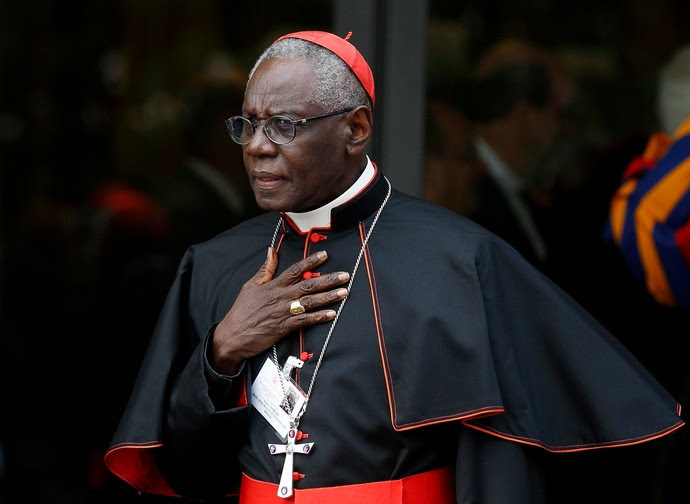
“It’s a matter of faith and if we were really aware of what we are celebrating in the Mass and what the Eucharist is, certain ways of distributing Communion wouldn’t even come to mind.” Cardinal Sarah, Prefect of the Congregation for Divine Worship and the Discipline of the Sacraments responds publicly to the “concerns” of the faithful, who have not only been deprived of Holy Mass, but who are now dismayed by the bizarre proposals being put forward, with a view to a limited return to public Masses, that guarantee hygienic safety for the distribution of communion.
Recently, and in Italy, there has been talk about a solution which has already been adopted in Germany by some, whereby the Body of Christ is “packaged” : “To allow Italian Catholics to return to it, whilst avoiding contamination – states the newspaper La Stampa – consideration is being given to a “do it yourself” communion with “take away” hosts previously consecrated by the priest, which would be closed individually in plastic bags placed on shelves in the church”. «No, no, no – Cardinal Sarah replies shocked on the phone – it’s absolutely not possible, God deserves respect, you can’t put Him in a bag. I don’t know who thought of this absurdity, even if it is true that the deprivation of the Eucharist is certainly a suffering, the matter of how to communicate is not open to negotiation. We communicate in a dignified way, worthy of God who comes to us. The Eucharist must be treated with faith, we cannot treat it as a trivial object, we are not at the supermarket. This is total madness.”
Something like this has already taken place in Germany …
Unfortunately, many things are done in Germany that are not Catholic, but that doesn’t mean you have to imitate them. Recently I heard a bishop say that in the future there will be no more Eucharistic assemblies, only the liturgy of the Word. But this is Protestantism.
As usual, “compassionate” reasons prevail: the faithful need Communion, which they have been deprived of for some time, but since the risk of contagion is still high, a compromise must be found …
There are two issues that must be absolutely clarified. First of all, the Eucharist is not a right or a duty: it is a gift that we receive freely from God and that we must welcome with veneration and love. The Lord is a person, no one would welcome the person he loves in a bag or otherwise in an unworthy way. The response to the privation of the Eucharist cannot be desecration. This really is a matter of faith, if we believe we cannot treat it unworthily.
And the second issue?
Nobody can prevent a priest from confessing and giving communion, nobody has the right to stop him. The sacrament must be respected. So even if it is not possible to attend Masses, the faithful can ask to be confessed and to receive Communion.
Speaking of Masses, what do you think about the prolonging of celebrations on streaming or on TV?
We cannot get used to this, God became incarnate, He is flesh and blood, He is not a virtual reality. It is also highly misleading for priests. In Mass the priest has to look at God, instead he is getting used to looking at the camera, as if it were a show. We cannot go on like this.
Let’s go back to Communion. In a few weeks, there is still hope that public Masses will be restored. And apart from the more sacrilegious solutions, there is also discussion as to whether it is more appropriate to receive Communion in the mouth or in the hand, and in the latter case how to receive it in the hand. What should be done?
There is already a rule in the Church and this must be respected: the faithful are free to receive Communion in the mouth or hand.
In recent years, there has been concern that a clear attack on the Eucharist is taking place: first there was the question of the divorced and remarried, under the banner of “communion for all”; then intercommunion with Protestants; then the proposals on making the Eucharist available in the Amazon and in the regions with a shortage of clergy, now the Masses at the time of the coronavirus …
It should not surprise us. The devil strongly attacks the Eucharist because it is the heart of the life of the Church. But I believe, as I have already written in my books, that the heart of the problem is the crisis of faith in the priesthood. If priests are aware of what the Mass is and what the Eucharist is, certain ways of celebrating or certain hypotheses about Communion would not even come to mind. Jesus cannot be treated like this.
Invia


donate nowNewsletterSaints Philip and James the Lesser3 May 2020 Saint of the dayby Ermes DovicoCalled to love JesusThe one who enters by the gate is the shepherd of the sheep. (John 10: 2)Gospel Pearlsby Fr. Stefano Bimbi

Daily Compass
Via Giuseppe Ugolini, 11
20900 Monza – MB
Tel. +39 039 9418930
englishdesk@thenewdailycompass.com
  NEW Documentary Film: NEW Documentary Film: Tracking Down the Mysterious Origins of the CoronavirusThe FIRST coronavirus documentary ever to investigate the hidden TRUTH behind the global pandemic. In this new documentary, Epoch Times investigative reporter Joshua Philipp takes an in-depth look at the progression of the pandemic from January to April and leads us on a journey of discovery to bring the truth behind the matter to light. WATCH NOW |
Latest reports of plummeting death rates from all causes, indicates that this crisis is over. The pandemic of doom erupted as a panic of pols and is now a comedy of Mash-minded med admins and stooges, covering their ifs ands and butts with ever more morbid and distorted statistics.
The crisis now will hit the politicians and political Doctor Faucis who gullibly accepted and trumpeted what statistician William Briggs calls “the most colossal and costly blown forecast of all time.”
An egregious statistical horror story of millions of projected deaths, suffused with incense and lugubrious accents from Imperial College of London to Harvard School of Public Health, prompted the pols to impose a vandalistic lockdown on the economy. It would have been an outrage even if the assumptions were not wildly astronomically wrong.
Flattening the curve was always a fool’s errand that widened the damage.
President Trump had better take notice. He will soon own this gigantic botch of policy and leadership. No one will notice that his opponents urged even more panicky blunders.
The latest figures on overall death rates from all causes show no increase at all. Deaths are lower than in 2019, 2018, 2017 and 2015, slightly higher than in 2016. Any upward bias is imparted by population growth.
Now writing a book on the crisis with bestselling author Jay Richards, Briggs concludes: “Since pneumonia deaths are up, yet all deaths are down, it must mean people are being recorded as dying from other things at smaller rates than usual.” Deaths from other causes are simply being ascribed to the coronavirus.
As usual every year, deaths began trending downward in January. It’s an annual pattern. Look it up. Since the lockdown began in mid-March, the politicians cannot claim that their policies had anything to do with the declining death rate.
A global study published in Israel by Professor Isaac Ben-Israel, chairman of the Israeli Space Agency and Council on Research and Development, shows that “the spread of the coronavirus declines to almost zero after 70 days—no matter where it strikes, and no matter what measures governments impose to try to thwart it.”
In fact, by impeding herd immunity, particularly among students and other non-susceptible young people, the lockdown in the U.S. has prolonged and exacerbated the medical problem. As Briggs concludes, “People need to get out into virus-killing sunshine and germicidal air.”
This flu like all previous viral flues will give way only to herd immunity, whether through natural propagation of an extremely infectious pathogen, or through the success of one of the hundreds of vaccine projects.
No evidence indicates that this flu was exceptionally dangerous. On March 20th, the French published a major controlled study that shows no excess mortality at all from coronavirus compared to other flues. SARS and Mers were both much more lethal and did not occasion what Briggs’ reader “Uncle Dave” described as “taking a hammer and sickle to the economy.”
We now know that the crisis was a comedy of errors. The Chinese let it get going in the raw bat markets of Wuhan. But together with the Koreans, the Chinese dithered and demurred and allowed six weeks of rampant propagation to create herd immunity before they began locking everyone up. Therefore, the Chinese and Koreans were among the first to recover.
The Italians scared everybody with their haphazard health system and smoking fogies. Crammed together in subways and tenements, the New Yorkers registered a brief blip of extreme cases. Intubations and ventilators turned out not to help (80 percent died). This sowed fear and frustration among medical personnel slow to see that the problem was impaired hemogloblin in the blood rather than lung damage.
The New York media piled on with panic, with bogus reports of rising deaths. “Coronavirus deaths” soared by assuming that people dying with the virus were dying from it and then by ascribing to the coronavirus other deaths among people with symptoms of pulmonary distress, even without being tested.
Now jacking up the case rate will be further pointless testing. As Briggs points out,
“Fauci is calling for ‘tripling’ of testing, which can only boost these dailies [case totals]. And make it seem like there’s a genuine increase occurring. Oh my! The daily reported cases are up! It must mean the disease is spreading!
“No. It could also mean, and probably does given all the other evidence we now have from sampling, that the disease was already there, and we just now have measured it.”
The death rate rises with further reclassification of pneumonia and other pulmonary deaths. When we reach herd immunity, and nearly everyone has the antigen, nearly all deaths can be chalked up to COVID19. Hey, it will be Quod Erat Demonstrandum for the panic mongers.
In a fascinating open letter to German Prime Minister Angela Merkel, epidemiologist Mihai Grigoriu concludes that with the French study, corroborated by findings from a Stanford antibody seroprevalence study in Santa Clara county, “the case for extreme measures collapses like a house of cards.” Grigoriu says that since the virus has already spread widely in the general population, efforts to stop further spread are both futile and destructive.
So let’s stop pretending that our policies have been rational and need to be phased out, as if they once had a purpose. They should be reversed summarily and acknowledged to be a mistake, perpetrated by statisticians with erroneous computer models.
Perhaps then we can learn from this experience with the flaws of expertise not to shut down the economy again for the totally bogus “crisis” of climate change.
Reprinted from RealClearMarkets
George Gilder is a Senior Resident Fellow at the American Institute for Economic Research. Mr. Gilder is one of the leading economic and technological thinkers of the past forty years and is the author of nineteen books, including The Scandal of Money and Life After Google. Mr. Gilder is a founding fellow of the Discovery Institute, where he began his study of information theory.Get notified of new a
Archbishop Jan Lenga was formerly the “Apostlic Administrator” of not only Kazakhstan, but of the tiny country of Turkmenistan.
(Fatima, Russia and Pope John Paul II: How Mary Intervened to Deliver Russia,” Page 202)
Interestingly, the Catholic Monitor which has given some coverage to Archbishop Lenga’s position that Francis is an antipope has begun noticing that the people of Turkmenistan are starting to read the online Monitor.
Might Lenga’s former territory of Turkmenistan be the first country to declare Francis an antipope in an imperfect council as St. Bernard of Clairvaux’s imperfect council in France was the first to declared the supposed pope in Rome Anacletus an antipope?
Is Lenga in schism as some may be stating for claiming Pope Benedict XVI’s resignation was invalid thus Francis is an antipope?
It must be remembered in history that St. Bernard claimed the supposed pope in Rome was an antipope as Lenga is doing and was declared correct by an imperfect council which he headed.
Author Msgr. Leon Cristiani wrote:
“King Louis convoked a Council at Etampes, to consider the question of the double pontifical election… Bernard was received at Etampes as God’s envoy.”
(St. Bernard of Clairvaux, Pages 70-71)
Was St. Bernard in schism?
The Arian heretics were saying the same thing about St. Athanasius. That he was in schism.
The saint was resisting the Arian heretic bishops even apparently outside the valid pope’s approval.
It appears that Archbishop Lenga may force the cardinals and bishops to do an investigation and call an imperfect council into the validity of the Francis’s papacy because a bishop cannot suspend a bishop. Only a pope can suspend a bishop.
But, Lenga states Benedict is still pope because of a invalid resignation and therefore Francis isn’t pope according to the archbishop.
Cardinal John Henry Newman it appears showed that a validly appointed bishop can’t suspend another validly appointed bishop.
Newman said Athanasius ordained priests against the authority of the Arian heretical bishops who were validly appointed bishops.
In fact, scholar Joseph Bingham on page 98 in “The Antiquities of the Christian Church” said:
“Athanasius… made no scruples to ordain… [Bishop] Euesebius of Samosata… ordained bishops also in Syria and Cilicia.”
Moreover, Newman in his “The Development of Christian Doctrine” denied that Bishop Athanasius’s “interference” in the dioceses of the heretical Arian bishops was schism:
“If interference is a sin, division which is the cause of it is a greater; but where division is a duty, there can be no sin interference.”
(Gutenberg.org, “An Essay on the Development of Christian Doctrine,” Sixth Edition)
Was Doctor of the Church St. Athanasius a schismatic?
Moreover, serious scholars are claiming Francis is a material heretic. The 19 Scholar’s Open Letter say that Francis is a material heretic which also brings into play the Bellarmine and Francis de Sales option of declaring an explicit heretical pope self-deposed.
Bishop Gracida’s Open Letter to the Cardinals analysing and quoting Pope John Paul II’s Universi Dominici gregis questions the validity of the Francis conclave calling for an cardinal investigation into the validity of the Francis conclave.
Latin language expert Br. Alexis Bugnolo’s in-depth thesis “Munus and Ministerium: A Textual Study of their Usage in the Code of Canon Law of 1983” using exhaustive quotations from canon law showing why canon law explicitly states that ministerium and munus cannot be synonyms that mean the exact same thing or nearly the same thing thus denying the validity of Pope Benedict XVI’s resignation.
Pray an Our Father now for the restoration of the Mass and the Church as well as the Triumph of the Kingdom of the Sacred Heart and the Immaculate Heart of Mary.Posted by Fred Martinez at 1:15 PM Email ThisBlogThis!Share to TwitterShare to FacebookShare to Pinterest
VIDEOFROM ROME EDITORLEAVE A COMMENT
Italy has become China.
This is the most outrageous violation yet of Italians liberty. An Italian citizen at Agrigento, in Sicilly, for the “crime” merely driving down the street warning everyone of the fake pandemic he was stopped by the Carabinieri, who called medical doctors to forcibly sedate him. He was then taken to a mental hospital.
What will happen to him next? Will he be listed as having died from COVID-19?
According to the unconstitutional decrees it is not a crime to drive your car, nor to use a megaphone. He was no threatening anyone medically or physically.
He was attacked by the police for bucking the narrative. It is as simply as that.
Italy has become a full-blow Marxist Dictatorship.
Conte today confirmed it, by saying speaking to the nation on TV saying, “We will permit you to do this, and we will not permit you to do that”.
On National Television, Conte was derided for just this:
CORONAVIRUS, RELIGION, RELIGION AND THE PUBLIC SQUARE
https://mail.google.com/mail/u/0/?hl=en&shva=1#inbox/FMfcgxwHNCsqSLnkwTffNSGBZgWCLrXq
APRIL 29, 2020BY THOMAS JOSEPH WHITE, O.P.One can certainly debate the scientific warrant of a quarantine, its effectiveness in a given region or country, its proportionate value in the face of its economic consequences, and its psychological effects on citizens. Still, in principle, the state may legitimately request Catholic Christians to undertake such a quarantine, in accord with the natural law. There is nothing illegitimate about such a request, if it falls within certain parameters of temporary and just use, nor is it historically unprecedented.
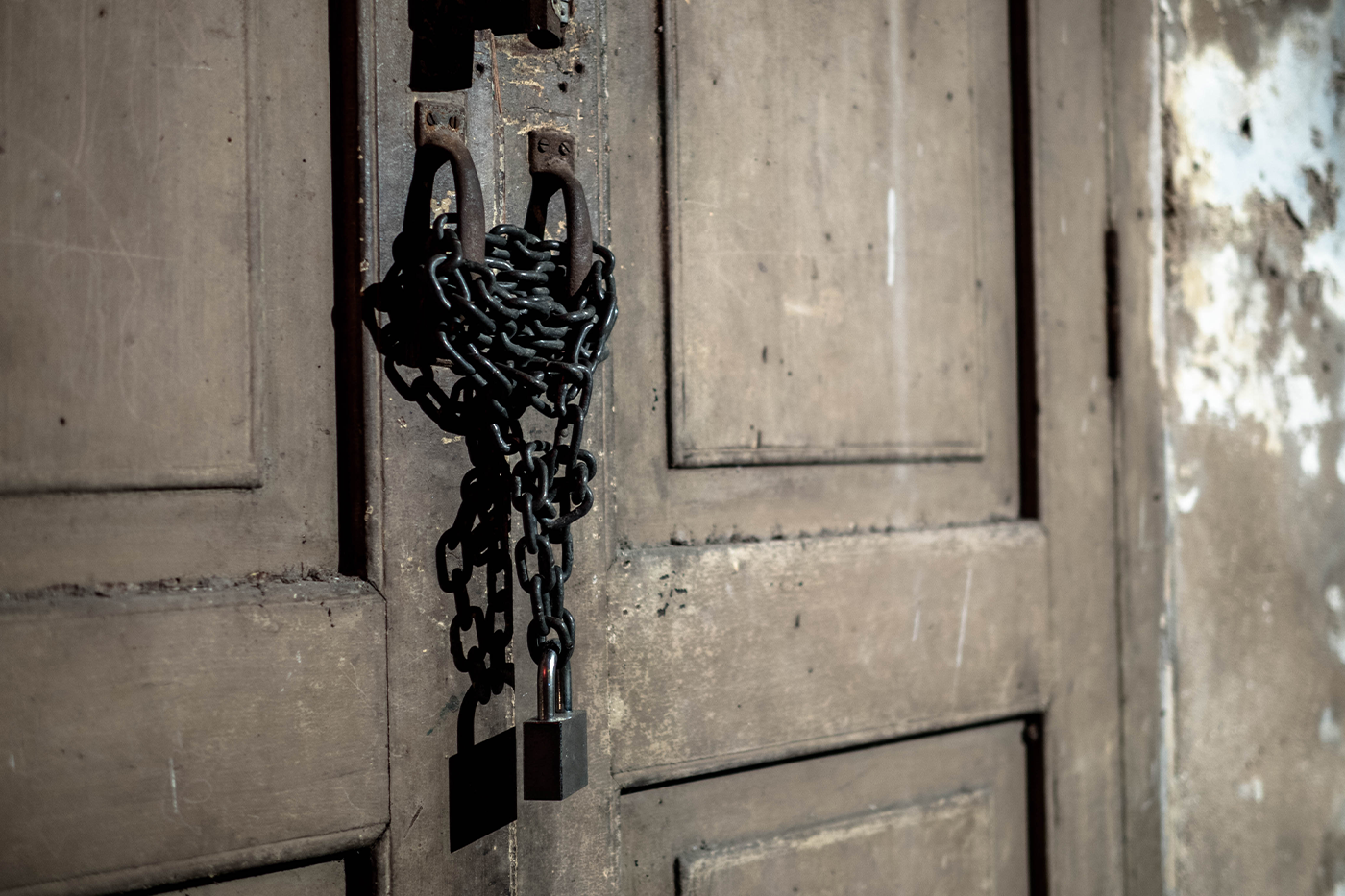
Some have argued that the Church’s temporary suspension of public masses in many regions of the world for the sake of public health concerns is unethical.
They give several reasons. Some say that it violates basic principles of natural law, since the Church is instituted by God to maintain public worship of God for the good of society. Others claim that it contravenes the Church’s respect for the divine institution of the sacraments, which the clergy have an obligation to celebrate for the good of the Christian faithful. Relatedly, some argue that the faithful have a right to the sacraments in the current circumstances and that their canonical rights are being neglected.
These are all significant concerns. In this essay, I offer some theological reflections in answer to them. I proceed in two parts: First, I consider the natural law and the relation of the Church and the state in matters of natural right. Second, I address the teaching that the sacraments are of divine right.
What Does the State Owe the Church? And What Do Members of the Church Owe the State?
We should first briefly recall the reasons why any modern national government is obliged by natural law to respect the rights of the religious freedom of the Church.
Human beings have a natural inclination, obligation, and right to seek the truth about God and to adhere to that truth when they find it. Since they do this collectively, as social animals, they also have the right to communicate religious truth to one another corporately and to worship God collectively.
This acknowledgement of religious practice does not harm the state. On the contrary, it helps to sustain its well-being. The Church contributes to a set of natural goods that the state either presupposes—such as healthy family life, which the state needs to survive—or can use assistance with—such as the cultivation of virtuous action, observance of the natural law, just defense of the country, education, heathcare, and the arts. Moreover, the Church provides an orientation toward a transcendent end of life with God that no government can provide. This animates society with a spirit of hope in the future, in view of eternal life. The Church’s natural law teaching also sheds light on just and unjust practices, and it can help in public debate to safeguard the most vulnerable. Consequently, it is unrealistic, unreasonable, and unjust for any government to seek to suppress Christian religious belief and practice so long as the latter accords with the precepts of the natural law.
All this being said, members of the Church also owe something to the state. Human government is that instrument or collective set of offices and agencies that seeks to maintain the common good of human political and social life at a variety of levels: public health, a functional economy, protection against crime and violence, public utilities, education, social services, defense of the society, and so on. The list is long. To the extent that public officials have obligations to seek justice and social flourishing, members of the Church are called upon to identify realistic political ideals and name unjust abuses. But they are also called upon to respect the natural goods that the state rightly seeks to defend and promote, and to cooperate in reasonable ways with the authorities of the state when these goods are under assault and have to be protected.
What Happens When Governments and Churches Disagree?
Conflicts arise when there are substantive disagreements about the content of the natural law in public society. For example, the Church has an obligation to promote a culture of the defense of unborn human life, especially in those nations where members of the government fail to acknowledge the dignity of human beings from conception to natural death. Any civil law that is defective on this point constitutes a form of grave injustice. Much more rarely, religious practices can become a genuine threat to public safety. In these cases, there are grounds for the state to act against the self-perceived interests of religious groups. There are clear and non-controversial examples: the state can act directly against those who engage in religiously motivated terrorism, and it can seek to shut down religious zealots who might entice their practitioners to acts of collective suicide (such as Jim Jones).
In more subtle and complex cases, the state should engage with religious leaders to invite religious organizations to temper their behavior voluntarily. If a nuclear power plant were to destabilize in a populated area and emit lethal doses of radiation within a multi-mile radius, for example, the state would be well within its rights to ask the local bishop to cancel the celebration of public masses in that region, even for a prolonged period of time. Analogous rules apply in regions of active warfare and in places that are subject to intensive outbreaks of epidemics. The state can have a reasonable vested interest to protect the lives of citizens by asking for a period of quarantine. By asking people to shelter in place for a sustained but limited period of time (four to twelve weeks, for example) the state can seek to limit the spread of a deadly disease that is likely to kill tens of thousands of people.
One can certainly debate the scientific warrant of a quarantine, its effectiveness in a given region or country, its proportionate value in the face of its economic consequences, and its psychological effects on citizens. My point here is not to defend the practice on public policy grounds. Health specialists, economists, ethicists, and policymakers should continue to debate and assess these matters for the good of all. My point is simply to underscore that the state may legitimately request Catholic Christians to undertake such a quarantine in accord with the principles of the natural law. There is nothing illegitimate about it per se if it falls within certain parameters of temporary and just use, nor is it rare historically.
Were some political leaders to try to exploit such measures to seek to suppress public Christian practice permanently, or to inhibit it for an unwarranted or arbitrary period of time, it would then be incumbent upon the Church to push back in defense of her proper religious freedoms, including through instruments of civic justice such as the judiciary. But this possibility—which is all too real in some places—is not a reason per se to claim that a given state’s request for a temporary quarantine is inherently unjust.
The Church should cooperate with the state to protect its citizens and work reasonably with those in government who seek to do so. Furthermore, if the lives of many citizens really are at stake, then it can become incumbent on Christian citizens to observe protocols for the common good of others. Again, the conditional “if” matters: intelligent people can disagree about prudential questions. But what my claim implies is that those who observe the requests of the state may be acting in accord with a well-formed Catholic conscience. They can obey the state and argue defensibly that they are doing so in accord with Catholic social teaching in this particular case.
The Sacraments Are of Divine Right. How Does That Affect the Question?
The Catholic Church teaches that the seven sacraments are instruments of grace instituted by Christ Himself (in explicit or implicit ways) and handed on by the apostolic community to the early Church. Consequently, the celebration and use of these sacraments in the Church is of “divine right,” meaning they come from God and cannot be abrogated or altered essentially by any human power, including ecclesiastical authorities. The bishops, as successors of the apostles, serve and administer the sacraments. They can teach authoritatively about what these same sacraments accomplish and can formulate rituals for their celebration, but they cannot change or alter the reality of the sacraments as such. All of this is expressed doctrinally in longstanding Catholic teaching.
One dimension of divine right worth underscoring pertains to the episcopacy. The bishops are by divine right the successors of the apostles. Accordingly, in virtue of their consecration and their communion with the Petrine See, they receive juridical authority over the exercise and use of the sacraments. They do not possess this authority merely by sociological convention or ecclesial right, but by divine right. It follows that they must carefully exercise their responsibility to oversee the application and use of the sacraments in accord with the intentions of Christ Himself and the teachings of the Church in many complex contingent circumstances.
Likewise, the faithful (i.e., baptized Catholics) possess the moral right and privilege of access to the sacraments, including confession, communion, marriage (in which they are the celebrants in the West), anointing of the sick, and the right to have their children baptized. Priests, by virtue of their ordination and ecclesial mandate, also have the right to celebrate the sacraments and to conduct the care of souls as regulated by the Church and in communion with their bishops. None of this means that the people in question act impeccably or infallibly. Nor are such rights always and everywhere absolute; they too are subject to limits. But such rights are enshrined in canon law to protect persons from undue forms of injustice by one another and by external forces (including the state). Bishops and priests are not meant to impede the celebration or reception of the sacraments by one another or by the laity except for just and serious reasons.
Moreover, whether acknowledged or not by the state, the sacraments constitute the greatest good of public civil society. The sacrifice of the Mass is, in some real sense, the heart of human society, the place where it is most intensively oriented toward the absolute mystery of God. The real presence of Christ in the Eucharist is the source of the most basic spiritual sustenance of mankind and its greatest spiritual consolation. It sustains the Church collectively and each Christian individually. Confession, meanwhile, is the most essential means for human beings to effectively and with certitude arrive at true reconciliation with God and obtain peace in the face of their sinfulness and mortality. We could continue such a litany, but the point is that the sacraments are the supreme means for human persons to encounter God and to achieve a stable orientation toward the highest supernatural goods.
Yet all this being said, no one has a right to all the sacraments at any time or any place that they choose. A mother does not have the right to have her child baptized on Christmas morning; and a couple does not have a right to be married on Good Friday. Rather, the celebration and reception of the sacraments must take place under the local bishop’s jurisdiction and in accordance with the tradition and law of the Church.
What Reasons Could Justify Suspending Access to the Sacraments?
There can be good reasons for bishops and priests to suspend ordinary public access to the sacraments to a given person or populace in a given context. One of these is malfeasance. A cleric who is culpable of grave misconduct and who causes public scandal may be rightly suspended by the Holy See from exercising the functions of the clerical state. He does not enjoy an open-ended right to carry out priestly functions due solely to the fact that the sacrament of holy orders is of divine right. In fact, we sometimes worry about whether the hierarchy has used its authority swiftly and vigorously enough in certain contexts to defend the good of the Church and to protect the faithful.
Other cases are easy to identify: the suspension of communion for those who maintain erroneous ideas about the faith, politicians who publicly and obstinately disavow the natural law, parishes that go into strange schisms, couples who want to be married but refuse to promise lifelong commitment or who want their child baptized but refuse to raise the child in the Church. The list goes on, but the idea is clear enough. The divine institution of the sacraments exists in an inescapably ecclesial mode, which is inseparable from episcopal oversight.
Does any of this apply in a pandemic? The examples given above are primarily about moral obstacles, not external factors beyond our control. Yet one can think here again of my Chernobyl example. A bishop could rightly suspend the celebration of the sacrifice of the mass in a given time and place for reasons of public safety in the case of a dangerous radiation leak. This suspension would not constitute an intrinsically evil act, nor does it violate the principles of canon law. In fact, it would be an obviously prudent thing to do. Likewise, in a region consumed by active warfare, the clergy could maximize the safety of the faithful by suspending public masses in Church buildings for a given period of time.
The case of a pandemic is analogous, although there are also special circumstances that apply. A viral disease that spreads by means of proximity can infect a sacramental minister, who may then transmit it to many others, even while being asymptomatic. The gathering of large groups for sustained periods of time enhances the probability of contagion passing from family to family (and this is arguably quite different from a person going into a store alone for a shorter period of time). Older and vulnerable people are likely to be present alongside asymptomatic infected people at a large Sunday mass. All of this can prolong the time the illness persists in a given locale instead of decreasing its spread through a short-term quarantine.
Are Bishops Choosing the Good of the Body over the Good of the Soul?
But why shouldn’t Christians continue to meet openly in a pandemic precisely as a witness to the faith? After all, such an act could show that Christians seek primarily the good of the soul rather than the goods of the body. Failure to do so could even suggest an implicit lack of trust in God.
However well-intentioned such objections are, they are not well-grounded in the Church’s theological tradition. This tradition maintains that the sacramental economy of grace is meant to operate in harmony with the natural law, not over or against it. There is a coherence to grace and nature, not an opposition.
In accordance with the natural law, human beings should seek to preserve their bodily life from harm. Consequently, in a context where sacramental practice is likely to directly endanger the health of persons, the Church ought not to require it. Individual Catholics can choose to embrace this kind of activity freely, of course. Think, for example, of the priest who brings communion to the dying on an active battlefield or who ministers actively to patients with COVID-19. Such action is not only licit but laudable and beautiful. The Church should make room for such behavior since it epitomizes the life of Christian charity in the gift of one’s self for others. Yet actions such as these should be done freely and without unnecessarily harming others.
Furthermore, when circumstances warrant it, the Church can temporarily suspend the public exercise of Christian worship and the celebration of the sacraments—not to invert the hierarchy of values but to cooperate in a collective exercise designed to protect human lives. The principle that spiritual goods are higher than material ones does not resolve all factors that go into practical and prudential decision-making. A person can remain in a state of grace for two weeks without receiving communion. He cannot preserve his bodily life for two weeks without eating. Faced with a stark alternative between the two over that period of time, it is defensible to choose the latter option. In some ways, the graced soul is more durable than the material body. Most people in the Middle Ages—who only received communion a few times a year—understood this perfectly well.
The arguments given above are not being presented in defense of every decision being made in every diocese with respect to the public celebration of the sacraments. They are not even intended to defend the widespread current policy of the suspension of public masses as necessarily the best one, let alone as one that cannot be questioned. In fact, precisely because the policy is based on a prudential decision in a complex context it is very difficult to say with certitude what “must” be best. Rather, epistemic humility is in order for all of us. My arguments here are intended to defend the current policy as a defensibly prudent course of action that can be undertaken in charity with concern for the good of public safety, for a limited period of time, and without violating any norms of the natural law, the divine right of the sacramental economy, or the just provisions of canon law. The bishops of the Catholic Church have the inalienable responsibility to make prudential contingent decisions of precisely this kind for the good of all. If the policy is theologically and ethically defensible, it is also reasonable for Catholic clergy and laity to obey them and to extend to bishops the benefit of good will in the exercise of their ministry and to work with them constructively. After all, it is especially incumbent upon us in a time of pandemic to seek to uphold the communion of the Church in charity as a witness to the primacy of Christ and as a means to our own deeper union with God.
Appendix on Historical Precedents
While I am not an academic Church historian, I’ve attempted with the help of others to provide a brief list of some noteworthy historical precedents in this domain.

Thomas Joseph White, O.P., grew up in southeast Georgia, and grew up in an inter-religious household. He studied at Brown University and Oxford university, and entered the Order of Preachers in 2003. He is the director of the Thomistic Institute at the Angelicum in Rome and a pro… READ MORE
Paul A. Byrne, M.D. column
Coronavirus (COVID-19) in nursing homes
Paul A. Byrne
Paul A. Byrne, M.D.
April 29, 2020
We are in the midst of a Coronavirus Disease (COVID-19) pandemic. Early reports included multiple, now more than 40 deaths in a nursing home in the State of Washington. Twenty percent of the COVID-19 deaths in New York and New Jersey are residents of nursing homes. Many other nursing homes have increased deaths. Is this because the COVID-19 virus is so virulent or other factors?
“The Associated Press conducted its own survey in the U.S. and found there had been nearly 11,000 COVID-related nursing home deaths across the country as of April 24. However, just 23 stateshave been publicly reporting nursing home deaths.” https://medicalxpress.com/news/2020-04-failure-covid-nursing-home-deaths.html (Accessed 4-28-20)
This is not surprising considering that patients in nursing homes are older and have co-morbidities and therefore, are more susceptible to succumb to an infection.
Most in nursing homes require assistance in living. A prerequisite for acceptance into most, if not all, nursing homes is an Advance Directive for Healthcare. It is common that the Advance Directive will include a Do Not Resuscitate (DNR) Order.
In addition some may have already unwittingly been put into Palliative care (PC). Most residents of nursing homes and their relatives do not have full and complete information about PC.
Triggers for PC are not limited to incurable diseases that are painful, but include declining ability to complete activities of daily living, weight loss, uncertainties regarding prognosis, limited social support and a serious illness (e.g., homeless, chronic mental illness), perceived psychological or spiritual distress of the patient or family. https://getpalliativecare.org/resources/clinicians/ (Accessed 4-28-20)
PC sets the stage for more deaths for the most vulnerable. How? PC focuses on alleged relief of symptom-burden, not necessarily treatment of the cause, i.e., the underlying medical conditions, treatment of which could alleviate the symptoms. For example, an elderly patient with cancer is noted to have a change in mental status. This could be a result of medication, a urinary tract infection, dehydration, or a myriad of other treatable conditions, not related to the cancer. Yet, in PC the symptom-focus response may be to give Valium-like drugs or narcotics to sedate the patient, omit evaluation and simple tests to diagnose the actual problem, and not provide common medications or interventions that could successfully treat the medical condition causing the symptom(s).
There are many concerns during this time of sheltering at home and social distancing. Separation of loved ones in nursing homes from family and visitors including clergy, done for their protection from COVID-19, was sudden and not predictable and raises other questions concerning care needs of these vulnerable persons.
Doctors and Death – Redefinitions and Participation
How did we get here? Medicine changed drastically and horrifically in 1968 with “brain death” when a Committee at Harvard published “A Definition of Irreversible Coma.” “Brain death” calls a person with a beating heart and circulation, “dead.” Everyone in coma is alive, nevertheless the Harvard Committee without any scientific or medical references, declared that someone unconscious in coma, on a ventilator without brainstem reflexes of the eye and ear, and unable to take a breath on their own, but many other signs of life including being warm with normal color, a beating heart, blood pressure, pulse, oxygen being taken in and carbon dioxide going out, can be considered “dead.” To call a person dead while there are many signs of life and then to participate in organ procurements by stopping the beating heart and removing it thereby making the person definitively dead was a major change in the direction of medicine. This change had and still has an impact on medical practice. Doctors were blinded to the most basic good of the presence of life itself and were now participating in causing deaths albeit with the intention of helping others live. Laws were passed to protect this new definition of death. In 1970 Kansas was the first state to pass a “brain death” statute. Judges and legislators from all 50 states became involved making it legal to call someone dead while the heart was beating with many other signs of life.
Advance Directives and Do Not Resuscitate (DNR) Orders
In 1990 Medicare and Medicaid were amended to require hospitals and skilled nursing facilities to inform patients of their rights to make decisions concerning their medical care and to periodically inquire as to whether a patient executed an Advance Directive and document the patient’s wishes regarding their medical care. As a result, when entering any hospital or nursing home the patient and/or those who represent the patient are asked if the patient has a Living Will or Advance Directive. This is commonly done by an admission clerk, not a treating physician. If the patient does not have an Advance Directive, quite commonly a “sample” is provided for consideration.
Every state had a “brain death” statute before a Living Will statute. A Living Will is a written statement detailing a person’s desires under some future, hypothetical, circumstances not to be treated. Decisions about non-treatment in the future violate two basic principles of medicine. The first is that a physician gathers all timely, relevant information about the patient before a diagnosis and plan of treatment are made. The second is that a doctor is expected to provide the most up-to-date treatments that can be most beneficial to the patient. Neither of these are available when a Living Will is executed.
Another form of Advance Directive is a Power of Attorney for Health Care. This allows one to designate someone to speak for him/her.
POLST (Physician Orders for Life Sustaining Treatments) is a type of Advance Directive designed to have patients choose to get less treatment and care and once signed by a physician becomes a legal medical order binding future caregivers from providing the care refused. The future, including the onslaught of a coronavirus, cannot be known by the person completing an Advance Directive.
Once society and medicine has accepted 1) calling people “dead” who are really alive, participating in their deaths, 2) advance directives that aim at refusing or limiting treatments and care, it is an easy step to 3) palliative care principles that further limit treatments with their focus on symptoms, not cures.
Then enter coronavirus especially in nursing homes. Everything is in place for those with weak or absent immunity to acquire the virus. Those with underlying disease are more likely to get sicker. Almost everyone in a nursing home has an Advance Directive in place not to be treated and receive less care.
People with disabilities and the elderly are considered to be more likely to die from COVID-19 and therefore they may be denied life-saving or life-sustaining treatments to enable a person who is viewed as more likely to survive to receive treatment.
Nursing home residents, relatives and friends are affected by the involuntary mandated imposition of no visitors. If a person, labeled a “client,” in a nursing home has an acute illness, they are subject to whatever is provided. Their Advance Directive is in place for non-treatment, even for unspecified imaginable illnesses. Many are frail; they are without relatives; treatment depends on whatever personnel in the nursing home provide. Their Advance Directive indicates that the person has chosen not to receive some treatments; thus, it is so easy to translate this into no treatment.
The palliative care movement, preceded by “brain death” and Living Will statutes, is another related change in medical care in our country. Palliative care involves a palliative care team (which can include physicians, nurses, social workers, and chaplains) that helps the family determine when the patient’s care should be shifted away from cure and toward death. Palliative care is less treatment and no care and is a major part of the System of Death that exists in Medicine, the Law and the Church.
The person in the nursing home and their relatives did not appreciate this. This was done before COVID-19. Now, nursing home residents, relatives and friends are stuck with it.
Shortly after the onset of COVID-19, the anticipated need for ventilators started the push to make more ventilators. However, patients in nursing homes with a DNR order will not get a ventilator, even if it might be a temporary treatment that would allow recovery from the virus. Is the death rate among the elderly higher because of their age and co-morbidities alone or because they will not be offered a chance to survive whether that be on a ventilator or possibly due to other innovative care strategies that may have a reasonable chance for even greater effectiveness and improved survival? The Advance Directive may be the mechanism to the ending of their life even if unintended by the patient.
In general, many patients seem to have the idea that ventilator use would mean a comatose existence on a machine indefinitely. How many are informed that ventilator use can be temporary and a means to continued living? The use of ventilator guidelines is being questioned for COVID-19 patients. Are death rates from COVID-19 higher in nursing homes because in the face of advance directives that limit potentially curative therapy, treatments, whether with a life-saving ventilator or with other modalities, are being denied to the elderly?
Palliative Care proponents want opioids to relieve breathlessness and pain. Opioids do not relieve breathlessness per se but make a patient sedated and breathe less because they decrease respiratory rate and volume. The patient too sedated to take hydration or nutrition, dies. They may appear more comfortable but if they are too sedated to respond, one does not really know how they feel inside. They could be motionless and still have nausea, itching, pain, constipation, dysphoria, feel unable to handle their secretions, and other undesired side-effects.
While attention is drawn to their age and co-morbidities in discussing the increased death rates among nursing home residents and while these are valid considerations, what is not discussed is how healthcare has changed to a system of death that does not aim for protection and preservation of lives of those considered a drain on society’s resources.
First came “brain death” with the goal to eliminate persons who needed ventilators. Next, came Living Wills and Advance Directives to discourage life-saving treatments, including ventilators, assisted nutrition and hydration, and even antibiotics. Then most nursing home residents have a “DNR – Do Not Resuscitate” order, which often results in, decreased treatments and care even if not directly related to resuscitation.
Add taxpayer funds to the push for PC for all, even if not dying or in pain. Enter Coronavirus-19 with sudden, social isolation for all, even those not sick. It is no surprise that elderly persons are more vulnerable to disease, but are they getting the care that protects and preserves their life and health and gives them their best chance of recovery?
A ventilator may or may not preserve the life of a person, especially when the person is older with co-morbidities and COVID 19, but denial of a needed ventilator associated with DNR in PC can shorten life and hasten death.
Dr. Paul A. Byrne is a Board Certified Neonatologist and Pediatrician. He is the Founder of the Neonatal Intensive Care Unit at SSM Cardinal Glennon Children’s Medical Center in St. Louis, MO. He is Clinical Professor of Pediatrics at University of Toledo, College of Medicine. He is a member of the American Academy of Pediatrics and Fellowship of Catholic Scholars.
Dr. Byrne is past-President of the Catholic Medical Association (USA), formerly Clinical Professor of Pediatrics at St. Louis University in St. Louis, MO and Creighton University in Omaha, NE. He was Professor of Pediatrics and Chairman of the Pediatric Department at Oral Roberts University School of Medicine and Chairman of the Ethics Committee of the City of Faith Medical and Research Center in Tulsa, OK. He is author and producer of the film “Continuum of Life” and author of the books “Life, Life Support and Death,” “Beyond Brain Death,” and “Is ‘Brain Death’ True Death?”
Dr. Byrne has presented testimony on “life issues” to nine state legislatures beginning in 1967. He opposed Dr. Kevorkian on the television program “Cross-Fire.” He has been interviewed on Good Morning America, public television in Japan and participated in the British Broadcasting Corporation Documentary “Are the Donors Really Dead?” Dr. Byrne has authored articles against euthanasia, abortion, and “brain death” in medical journals, law literature and lay press.
Paul was married to Shirley for forty-eight years until she entered her eternal reward on Christmas 2005. They are the proud parents of twelve children and have thirty-five grandchildren and five great-grandchildren.
© Copyright 2020 by Paul A. Byrne, M.D.
http://www.renewamerica.com/columns/byrne/200429


You must be logged in to post a comment.