en.news
6
9 hours ago
Francis: Church Must “Let Go” Her Traditions
The Church needs the “courage” of letting go her traditions, Pope Francis preached during a Mass for Caritas Internationalis (May 23).
His starting point was the decision of the Council of the Apostles (Acts 15) that pagans embracing the Faith don’t need to accept judaism first.
Francis deduced from this that the first Christians “left behind” important religious traditions and precepts. But this is not true: These things were not “left behind” but fulfilled.
Then Francis fantasized that the early Christians did not need a “pile of doctrines and traditions” but only the announcement that “God is love,” disregarding that Catholic doctrine cannot be and never was reduced to a slogan.
Francis speculated that Christ didn’t tell his disciples many things so that the Church would learn “to renounce the desire for clarity and order.”
That’s not true either: Christ promised his apostles the Holy Spirit who would teach them “everything” while confusion and disorder are signs of the devil.
Nevertheless, Francis is ultimately right: He needs renouncing his worn-out liberal traditions that have brought the Church to the brink of perdition.
6 hours agoThe Church needs the “courage” of letting go her traditions, Pope Francis preached…
Here is one tradition that certainly needs “ letting go.” Why should the supreme pontiff be in that office until he dies? This is too much power and authority for one man. (He is just a man, right?)
Why not let go of this obsolete tradition and get new ideas, fresh faces, bold innovators and indivi…MoreLikeChatMore
8 hours agoRead this line from Francis again: “Jesus intentionally omitted telling his disciples many things so that the Church would learn to renounce the desire for clarity and order”LikeChatMore
9 hours agoRenouncing the desire for clarity and order is renouncing the desire for the Universal Logos, who is Jesus the Christ. No more clear evidence can be had why Bergoglio uses ambiguity, double talk, and equivocation so systematically to sow confusion, doubt and division among the faithful. What is perfectly clear is that such confusion is of the Devil.
Judge: Bishop Michael Mulvey can be questioned in lawsuits over list of accused priests
Eleanor Dearman, Corpus Christi Caller TimesPublished 12:29 p.m. CT May 24, 2019 | Updated 6:30 p.m. CT May 24, 2019
A lawyer will be able to take the deposition of Bishop Michael Mulvey in lawsuits over a list of priests who had been “credibly accused” of sexual misconduct.
However, that deposition will be limited in scope, 319th District Judge David Stith ordered. The judge said it must be restricted to “his statement that he made to the press and his state of mind.”
In January, the Catholic Diocese of Corpus Christi released the names of priests and other clergy who have been “credibly” accused of sexual abuse of minors. The list included more than 20 Diocese of Corpus Christi clergy members.
When the names were made public, Mulvey spoke to reporters about the list.
Buy Photo
Bishop Michael Mulvey answers questions from the media after Diocese of Corpus Christi released a list of names of priests accused of sexual abuse of minors on Thursday, Jan. 31, 2019. (Photo: Courtney Sacco/Caller-Times)
In March, lawsuits, which also name Mulvey, were filed on behalf of Fr. John Feminelli and Msgr. Michael Heras, who were among those on the list. They claimed the diocese made “false” statements by including them.
“Defendants knew the statement was false and acted with reckless disregard for the truth,” both lawsuits state. “The publication of the statement was made with malice.”
Friday’s order comes after attorneys for the bishop and the diocese filed motions to dismiss the suits.
“The Bishop’s communication to the members of the Dioceses of Corpus Christi were made in good faith and the Bishop, as author, and the members of the Diocese, as recipients, had an interest sufficiently affected by that communication,” the document states.
That request is scheduled to be heard in June.
The deposition approved Friday must be done before then, as it was filed by Heras and Feminelli’s attorney in response to the dismissal motions.
“The diocese is trying to short circuit the lawsuit” by filling the motion to dismiss, said attorney Andrew Greenwell, who represents Heras and Feminelli.
Greenwell also asked for the depositions of the diocese’s press liaison and the person who publishes to their web page, but that request was denied.
He told the Caller-Times the deposition and discovery is needed to support his case against the dismissal request.
Attorneys for the diocese declined to comment following the hearing.
Posted inUncategorized|Comments Off on THERE IS A CERTAIN RISK IN PUBLISHING THE NAMES OF PRIESTS “CREDIBLY ACCUSED OF PEDOPHLIA”. THE RISK IS THAT IF THE PUBLICATION CITES ‘FACTS’ THAT CANNOT BE PROVEN LIBEL LAWSUITS CAN RESULT
Victor Davis Hanson is a classicist and historian at the Hoover Institution at Stanford University, and author of the book “The Second World Wars: How the First Global Conflict Was Fought and Won.” You can reach him by e-mailing authorvdh@gmail.com.
Sometime around A.D. 60, in the age of Emperor Nero, a Roman court insider named Gaius Petronius wrote a satirical Latin novel, “The Satyricon,” about moral corruption in Imperial Rome. The novel’s general landscape was Rome’s transition from an agrarian republic to a globalized multicultural superpower.
The novel survives only in a series of extended fragments. But there are enough chapters for critics to agree that the high-living Petronius, nicknamed the “Judge of Elegance,” was a brilliant cynic. He often mocked the cultural consequences of the sudden and disruptive influx of money and strangers from elsewhere in the Mediterranean region into a once-traditional Roman society.
The novel plots the wandering odyssey of three lazy, overeducated, and mostly underemployed single young Greeks: Encolpius, Ascyltos, and Giton. They aimlessly mosey around southern Italy. They panhandle and mooch off the nouveau riche. They mock traditional Roman customs. The three and their friends live it up amid the culinary, cultural, and sexual excesses in the age of Nero.
Certain themes in “The Satyricon” are timeless and still resonate today.
The liberal Left continue to push their radical agenda against American values. The good news is there is a solution. Find out more >>
The abrupt transition from a society of rural homesteaders into metropolitan coastal hubs had created two Romes. One world was a sophisticated and cosmopolitan network of traders, schemers, investors, academics, and deep-state imperial cronies. Their seaside corridors were not so much Roman as Mediterranean. And they saw themselves more as “citizens of the world” than as mere Roman citizens.
In the novel, vast, unprecedented wealth had produced license. On-the-make urbanites suck up and flatter the childless rich in hopes of being given estates rather than earning their own money.
The rich in turn exploit the young sexually and emotionally by offering them false hopes of landing an inheritance.
Petronius seems to mock the very world in which he indulged.
His novel’s accepted norms are pornography, gratuitous violence, sexual promiscuity, transgenderism, delayed marriage, childlessness, fear of aging, homelessness, social climbing, ostentatious materialism, prolonged adolescence, and scamming and conning in lieu of working.
The characters are fixated on expensive fashion, exotic foods, and pretentious name-dropping. They are the lucky inheritors of a dynamic Roman infrastructure that had globalized three continents. Rome had incorporated the shores of the Mediterranean under uniform law, science, institutions—all kept in check by Roman bureaucracy and the overwhelming power of the legions, many of them populated by non-Romans.
Never in the history of civilization had a generation become so wealthy and leisured, so eager to gratify every conceivable appetite—and yet so bored and unhappy.
But there was also a second Rome in the shadows. Occasionally the hipster antiheroes of the novel bump into old-fashioned rustics, shopkeepers, and legionaries. They are what we might now call the ridiculed “deplorables” and “clingers.”
Even Petronius suggests that these rougher sorts built and maintained the vast Roman Empire. They are caricatured as bumpkins and yet admired as simple, sturdy folk without the pretensions and decadence of the novel’s urban drones.
Petronius is too skilled a satirist to paint a black-and-white picture of good old traditional Romans versus their corrupt urban successors. His point is subtler.
Globalization had enriched and united non-Romans into a world culture. That was an admirable feat. But such homogenization also attenuated the very customs, traditions, and values that had led to such astounding Roman success in the first place.
The multiculturalism, urbanism, and cosmopolitanism of “The Satyricon” reflected an exciting Roman mishmash of diverse languages, habits, and lifestyles drawn from northern and Western Europe, Asia, and Africa.
But the new empire also diluted a noble and unique Roman agrarianism. It eroded nationalism and patriotism. The empire’s wealth, size, and lack of cohesion ultimately diminished Roman unity, as well as traditional marriage, child-bearing, and autonomy.
Education likewise was seen as ambiguous. In the novel, wide reading ensures erudition and sophistication, and helps science supplant superstition. But sometimes education is also ambiguous. Students become idle, pretentious loafers. Professors are no different from loud pedants. Writers are trite and boring. Elite pundits sound like gasbags.
Petronius seems to imply that whatever the Rome of his time was, it was likely not sustainable—but would at least be quite exciting in its splendid decline.
Petronius also argues that with too much rapid material progress comes moral regress. His final warning might be especially troubling for the current generation of Western Europeans and Americans. Even as we brag of globalizing the world and enriching the West materially and culturally, we are losing our soul in the process.
Getting married, raising families, staying in one place, still working with our hands, and postponing gratification may be seen as boring and out of date. But nearly 2,000 years later, all of that is what still keeps civilization alive.
(C) 2019 TRIBUNE CONTENT AGENCY, LLC.
Posted inUncategorized|Comments Off on SATYRICON WAS MADE INTO A MOVIE BY THE GREAT MASTER FILM MAKER FELINI AND WHEN I FIRST SAW IT I RECOGNIZED THAT IT WAS A DEPICTION OF OUR OWN ‘ROMAN’ CULTURE, BOTH THAT OF THE MODERN Roman Catholic Church AND OUR WESTERN SOCIETY
South Bend Mayor Pete Buttigieg has degrees from Harvard and Oxford and was a Rhodes scholar. The New Republic is in love with him, calling the son of two college professors a “genius.” When it comes to abortion, however, the “genius” hasn’t a clue what he is talking about. He even admitted that last year.
In 2018, Buttigieg declared that abortion was too hard a subject for him to figure out. He told the South Bend Tribune that “Issues on the legality or morality of abortion are dramatically beyond my pay grade as a mayor.”
On May 1, 2019, presidential candidate Buttigieg said on Meet the Press that “in my view, [abortion] is a question that is almost unknowable. This is a moral question that’s not going to be settled by science.”
Abortion is unknowable? Not to Planned Parenthood, the abortion-mill behemoth that Buttigieg likes. He is right to say that abortion is a moral issue, but he is wrong to say it’s not going to be settled by science. It already has. Science tells us that life begins at fertilization, and not a day later. If left unobstructed, the life that begins at conception develops into a man or a woman.
Between May 1 and May 19, it was apparent that Buttigieg took a crash course on abortion, one that lifted him above his pay grade and allowed him to opine on what science tells us. On Sunday he told a Fox News audience that pro-life legislators were “ignoring science” by pushing for restrictions. He must have meant science fiction.
Buttigieg also said on Sunday that aborting a baby just prior to being born is “an impossible, unthinkable choice.” Wrong. It is not only possible, it is done all the time. He was also being deceitful. He said in the interview that he favors no restrictions on abortion at any time during pregnancy.
Some reporter should ask Buttigieg about the baby that was cut from his mother’s womb over the weekend. A Chicago pregnant mother was murdered but doctors were able to save the child.
Buttigieg should be asked if the doctors did the right thing. If he disagrees, what would he say to the father who wants to raise his son? If he agrees that the doctors did the right thing, how can he explain his support for late-term abortion? What does he think it does?
Australian Cardinal George Pell is pictured at the Vatican in this Aug. 5, 2014, file photo. (CNS photo/Robert Duncan)
In three weeks, a panel of senior judges will hear Cardinal George Pell’s appeal of the unjust verdict rendered against him at his retrial in March, when he was convicted of “historical sexual abuse.” That conviction did not come close to meeting the criterion of guilt “beyond a reasonable doubt,” which is fundamental to criminal law in any rightly-ordered society. The prosecution offered no corroborating evidence sustaining the complainant’s charge. The defense demolished the prosecution’s case, as witness after witness testified that the alleged abuse simply could not have happened under the circumstances charged — in a busy cathedral after Mass, in a secured space.
Yet the jury, which may have ignored instructions from the trial judge as to how evidence should be construed, returned a unanimous verdict of guilty. At the cardinal’s sentencing, the trial judge never once said that he agreed with the jury’s verdict; he did say, multiple times, that he was simply doing what the law required him to do. Cardinal Pell’s appeal will be just as devastating to the prosecution’s case as was his defense at both his first trial (which ended with a hung jury, believed to have favored acquittal) and the retrial. What friends of the cardinal, friends of Australia, and friends of justice must hope is that the appellate judges will get right what the retrial jury manifestly got wrong.
That will not be easy, for the appellate judges will have been subjected to the same public and media hysteria over Cardinal Pell that was indisputably a factor in his conviction on charges demonstrated to be, literally, incredible. Those appellate judges will also know, however, that the reputation of the Australian criminal justice system is at stake in this appeal. And it may be hoped that those judges will display the courage and grit in the face of incoming fire that the rest of the Anglosphere has associated with “Australia” since the Gallipoli campaign in World War I.
In jail for two months now, the cardinal has displayed a remarkable equanimity and good cheer that can only come from a clear conscience. The Melbourne Assessment Prison allows its distinguished prisoner few visitors, beyond his legal team; but those who have gone to the prison intending to cheer up a friend have, in correspondence with me, testified to having found themselves cheered and consoled by Cardinal Pell — a man whose spiritual life was deeply influenced by the examples of Bishop John Fisher and Sir Thomas More during Henry VIII’s persecution of the Church in 16th-century England. The impact of over a half-century of reflection on those epic figures is now being displayed to Cardinal Pell’s visitors and jailers, during what he describes as his extended “retreat.”
Around the world, and in Australia itself, calmer spirits than those baying for George Pell’s blood (and behaving precisely like the deranged French bigots who cheered when the innocent Captain Alfred Dreyfus was condemned to a living death on Devil’s Island) have surfaced new oddities — to put it gently — surrounding the Pell Case.
How is it, for example, that the complainant’s description of the sexual assault he alleges Cardinal Pell committed bears a striking resemblance — to put it gently, again — to an incident of clerical sexual abuse described in Rolling Stone in 2011? How is it that edited transcripts of a post-conviction phone conversation between the cardinal and his cathedral master of ceremonies (who had testified to the sheer physical impossibility of the charges against Pell being true) got into the hands (and thence into the newspaper writing) of a reporter with a history of anti-Pell bias and polemic? What is the web of relationships among the virulently anti-Pell sectors of the Australian media, the police in the state of Victoria, and senior Australian political figures with longstanding grievances against the politically incorrect George Pell? What is the relationship between the local Get Pell gang and those with much to lose from his efforts to clean up the Vatican’s finances?
And what is the state of serious investigative journalism in Australia, when these matters are only investigated by small-circulation journals and independent researchers?
An “unsafe” verdict in Australia is one a jury could not rationally have reached. Friends of truth must hope that the appellate judges, tuning out the mob, will begin to restore safety and rationality to public life Down Under in June.
About George Weigel 215 ArticlesGeorge Weigel is Distinguished Senior Fellow of Washington’s Ethics and Public Policy Center, where he holds the William E. Simon Chair in Catholic Studies. He is the author of over twenty books, including Witness to Hope: The Biography of Pope John Paul II (1999), The End and the Beginning: Pope John Paul II—The Victory of Freedom, the Last Years, the Legacy (2010), and The Fragility of Order: Catholic Reflections on Turbulent Times (Ignatius Press, 2018). He is the recipient of eighteen honorary doctorates in fields including divinity, philosophy, law, and social science.
Posted inUncategorized|Comments Off on IN THREE WEEKS A PANEL OF SENIOR JUDGES IN AUSTRALIA WILL RENDER A VERDICT ON AUSTRALIA’S SYSTEM OF JUSTICE IN THE CASE OF CARDINAL GEORGE PELL.
In entitling (see above) the speech given on May 20 by Pope Francis to the Pontifical Institute for Foreign Missions, “Vatican News,” the official digital news bulletin of the Holy See, emphasized his umpteenth inevitable broadside against “proselytism.”
The text that Francis was reading did not mention it, but the pope could not resist making this addition off the cuff:
“There is a danger that is popping up again – it seems overcome, but it pops up again: confusing evangelization with proselytism. No. Evangelization is testimony to Jesus Christ, dead and risen. It is He who draws in. This is why the Church grows by attraction, and not by proselytism, as Benedict XVI had said. But this confusion has arisen to some extent from a political-economic conception of evangelization, which is no longer evangelization. Then the presence, the concrete presence, through which they ask you why you are this way. And then you proclaim Jesus Christ. It is not seeking new members for this ‘Catholic society,’ no, it is showing Jesus: that He should show himself in my person, in my behavior; and with my life opening up spaces for Jesus. This is evangelizing. And this is what your founders had in their hearts.”
Further on Francis again added off the cuff:
“On this allow me to recommend to you the last sections of ‘Evangelii Nuntiandi.’ You know that ‘Evangelii Nuntiandi’ is the greatest pastoral document of the post-Council: it is still recent, it is still in effect, and has not lost its power. In the last paragraphs, when it describes what an evangelizer should be like, it speaks of the joy of evangelizing. When Saint Paul VI speaks of the sins of the evangelizer: the last four or five sections. Read it well, thinking of the joy that he urges for us.”
In these two additions there is no surprise. Both the criticism of proselytism and the exaltation of “Evangelii Nuntiandi” are the mantra of Jorge Mario Bergoglio, every time he speaks of missions.
But it is the why and the how of this twofold insistence of his that are difficult to understand.
ON PROSELYTISM
If by “proselytism” Francis means a missionary effort pushed to the extreme, forced, measured by the number of the newly baptized, it is a mystery from where he would gather the conviction that this is a real “danger” in the Catholic Church that “is popping up again today.”
Because if there is one incontestable reality in the Church of the past half century, it is not the excess but the collapse of the missionary drive.
It is the collapse that was well-known to Paul VI, John Paul II, and Benedict XVI, who tried in various ways to oppose it and call the Church back to an authentic mission: the first, among other ways, with a synod on evangelization and with the subsequent apostolic exhortation “Evangelii Nuntiandi” of 1975, the second with the 1990 encyclical “Redemptoris Missio,” the third with the 2007 “Doctrinal note on some aspects of evangelization” and with a new synod on the missions.
Without receiving a favorable welcome for these appeals of theirs, except in the vitality of some young Churches of Africa and of Asia or, in the West, in a few isolated pockets that have been able to keep alive the authentic missionary impulse. Among which none other than the Pontifical Institute for Foreign Missions received in audience three days ago by the pope.
One member of this institute was Fr. Piero Gheddo (1929-2017), to whom John Paul II entrusted the composition of the encyclical “Redemptoris Missio” and who even before that was among the main authors of the missionary decree “Ad Gentes” of Vatican Council II.
But contrary to his predecessors and on the basis of an opposite interpretation of the missionary experience of the Church in the last few decades, Francis seems to want instead to put the brakes on the missions.
In essence, he wants a silent “testimony” to the Christian faith with one’s life, with one’s behavior, in the first place with love of neighbor. And only after the testimony has eventually prompted questions does he encourage “proclaiming Jesus.” But without ever clarifying this second step, and instead stopping every time with insisting on the first, the only healthy alternative – for Francis – to the much-deplored “proselytism,” complete with citations from Paul VI’s “Evangelii Nuntiandi,” in the judgment of the current pope “the greatest pastoral document of the post-Council.”
ON “EVANGELII NUNTIANDI”
However, even Francis’s frequent recourse to this document of Paul VI opens contradictions. Because it is true that Paul VI assigns a “primordial importance” to the silent testimony of life, in the hope that this may touch minds and hearts and ignite an expectation.
But immediately afterward he writes:
“Nevertheless this always remains insufficient, because even the finest witness will prove ineffective in the long run if it is not explained, justified – what Peter called always having ‘your answer ready for people who ask you the reason for the hope that you all have’ – and made explicit by a clear and unequivocal proclamation of the Lord Jesus. The Good News proclaimed by the witness of life sooner or later has to be proclaimed by the word of life. There is no true evangelization if the name, the teaching, the life, the promises, the kingdom and the mystery of Jesus of Nazareth, the Son of God are not proclaimed.”
And that’s not all. Because proclamation is not enough – Paul VI continues – if it does not “arouse a genuine adherence in the one who has thus received it,” an adherence to the Church and a desire to become an evangelizer in turn. “Witness, explicit proclamation, inner adherence, entry into the community, acceptance of signs, apostolic initiative:” all of this is, for Paul VI, the “complex process” of evangelization.
Francis systematically skims over all of this. And even the appeal he addresses to the missionaries of the Pontifical Institute for Foreign Missions to reread in the last paragraphs of “Evangelici Nuntiandi” the warnings of Paul VI against “the sins of the evangelizer” appears contradictory.
If for example one rereads section 80 of the exhortation, one will see that Paul VI brands as errors precisely those modes of thinking that for the most part apply to the many supporters of the current pontificate, and that in fact paralyze any sort of missionary impulse:
“One too frequently hears it said, in various terms, that to impose a truth, be it that of the Gospel, or to impose a way, be it that of salvation, cannot but be a violation of religious liberty. Besides, it is added, why proclaim the Gospel when the whole world is saved by uprightness of heart? We know likewise that the world and history are filled with ‘seeds of the Word;’ is it not therefore an illusion to claim to bring the Gospel where it already exists in the seeds that the Lord Himself has sown?”
And again, in section 78, against certain facile domestications of the truths of faith:
“The preacher of the Gospel will be a person who even at the price of personal renunciation and suffering always seeks the truth that he must transmit to others. He never betrays or hides truth out of a desire to please men, in order to astonish or to shock, nor for the sake of originality or a desire to make an impression. He does not refuse truth. He does not obscure revealed truth by being too idle to search for it, or for the sake of his own comfort, or out of fear.”Condividi:
The Global and Regional markets (except the US) are analyzed by the following Product Segments: Heart, Kidney, Liver, Pancreas, and Lung, and Corneal Transplantation. The US market is analyzed by the following Segments: Organ Type (In Volume and Value) – Heart, Kidney, Liver, Pancreas, Lung, and Intestine; Tissue Type (Volume Only) – Cornea, Heart Valve, Skin Grafts, Vascular Grafts, Bone Marrow, and Bone Grafts; and Bone Graft Transplantation (Volume Only) -By Graft Type: Autologous Graft, Allograft, and Other Materials; and By Application Type: General Orthopedics, Spinal Fusions, and Cranio/Maxillofacial. The report provides separate comprehensive analytics for the US, Canada, Japan, Europe, Asia-Pacific, Latin America, and Rest of World.
Annual estimates and forecasts are provided for the period 2016 through 2024. Also, a five-year historic analysis is provided for these markets. Market data and analytics are derived from primary and secondary research. Company profiles are primarily based on public domain information including company URLs.
The report profiles 19 companies including many key and niche players such as: – Acelity L.P. Inc. – CryoLife, Inc. – Exactech, Inc. – Dr. Franz Köhler Chemie GmbH – Organogenesis, Inc. – Organ Recovery Systems
ORGAN AND TISSUE TRANSPLANTATION MCP-1 MARKET ANALYSIS, TRENDS, AND FORECASTS, MAY 2 CONTENTS
I. INTRODUCTION, METHODOLOGY & PRODUCT DEFINITIONS
Study Reliability and Reporting Limitations Disclaimers Data Interpretation & Reporting Level Quantitative Techniques & Analytics Product Definitions and Scope of Study Organ Transplantation Heart Transplantation Kidney Transplantation Liver Transplantation Pancreas Transplantation Small Intestine Transplantation Lungs Tissue Transplantation Corneal Transplantation Blood Stem Cell Transplantation Bone Marrow Transplantation Heart Valves Transplantation
II. EXECUTIVE SUMMARY
1. MARKET OVERVIEW
Market Outlook Current & Future Analysis A Review of Organ Donors Worldwide Table 1: World Deceased Organ Donors (2016 & 2017): Number of Donors Per Million Population (PMP) for Leading Countries (includes corresponding Graph/Chart) Table 2: World Living Organ Donors (2016 & 2017): Number of Donors Per Million Population (PMP) for Leading Countries (includes corresponding Graph/Chart) Table 3: World Deceased Organ Donors by Type (2011, 2013 & 2015): Percentage Breakdown of Number of Donors for DCD and DBD (includes corresponding Graph/Chart) Demand and Supply Imbalance Measures to Address Organ Shortage Cardiac Arrest Death Patients: The Untapped Potential Donors Table 4: World Organ Donors After Circulatory Death (2016): Number of Donors Per Million Population (PMP) for Leading Countries (includes corresponding Graph/Chart) Donation after Circulatory Death – Rife with Ethical Issues Transplantation – Expenditure and Regional Variations Table 5: US Organ Transplantation Charges – Total Billed Charges per Transplant by Type (2014) (includes corresponding Graph/Chart) Bone Grafts: An Overview Table 6: Fractures by Age Group (2017E): Percentage Share Breakdown of Number of Fractures by Age Group (includes corresponding Graph/Chart) Orthopedic Grafts – Regional Market Variations
2. MARKET TRENDS
Combined Organ Transplantation – Gaining Attention Illegal Organ Trafficking – A Risky Proposition Transplant Tourism – Creating Brighter Avenues Graying Population and Chronic Diseases Surge Need for Transplants Table 7: Global Aging Population (in Thousands) by Age Group: 1975-2050 (includes corresponding Graph/Chart) Table 8: Global Aging Population in Select Regions/Countries: Population of 60+ Individuals in ‘000s and as a Percentage of Total Population for 2015 & 2050 (includes corresponding Graph/Chart) Table 9: Global Population Statistics for the 60+ Age Group by Region (2017) (includes corresponding Graph/Chart) Table 10: Global Life Expectancy at Birth (Years) by Geographic Region: 1950-2050 (includes corresponding Graph/Chart) Table 11: Life Expectancy for Select Countries in Number of Years: 2016 (includes corresponding Graph/Chart) Optimization Strategies for Organs Catch Attention and Supply – Demand Gap Widens Advent of Innovative Devices Mitigate Chances of Organ Damages Investment Opportunities Rise for Allied Fields as Organ Transplantation Market Grows Shortage of Organs Propels Research on Xenotransplantation A Peek into the Organ Transplant Immunosuppressants Market Market to Come Under Tremendous Pressure Rising Incidences of Degenerative Intervertebral Disc Diseases Promote Tissue Transplantation Table 12: % of Women Affected by Osteoporosis (includes corresponding Graph/Chart) Fetal Tissue for Bionic Devices – Assuming Importance LVADs – Gaining Significance for Impending Heart Transplants Synthetic Bone Graft – The Latest Trend Stem Cell Therapies – Expanding the Horizon of Transplantation Rising Cancer Incidence to Drive Stem Cell Transplants Table 13: Global Cancer Incidence (2015): Number of New Cancer Cases in Thousands by Type and Gender (includes corresponding Graph/Chart) Table 14: Global Cancer Mortality (2015): Number of Cancer Related Deaths in Thousands by Type and Gender (includes corresponding Graph/Chart) Demineralized Bone Matrix (DBM): Strong Growth but Tough Competition Bone Morphogenetic Protein – Safety Concerns Affect Growth Prospects Dental Bone Grafting – A High Potential Market Table 15: Dental Tissue & Bone Regeneration Materials Market (2015): Percentage Share Breakdown by Segment for Allografts, Synthetics, and Xenografts (includes corresponding Graph/Chart) Key Recent Technological Innovations 3-D Bioprinting Preloaded Corneal Tissue Cartridges Lung Perfusion Technology
3. MAJOR ISSUES IMPACTING TRANSPLANTATION MARKET
Organ Rejection – A Major Barrier to Transplantation Scarcity of Donor Organs – A Stumbling Block in Organ Transplantation Other Issues for Organ Transplantation Ethical Concerns in Transplants Bioethical Issues Hinder Organ Donation Process Lack of Requisite Expertise – Hindering Implantation Process Corneal Transplantation in Developing Countries: Key Challenges
4. PRODUCT OVERVIEW
Organ and Tissue Transplantation Organ Transplantation Heart Transplantation Heart Diseases and Disorders Post-Operative Complications and Consequences of Heart Transplants Bleeding Infection Arrhythmia Heart Attack Coronary Artery Disease Respiratory Dysfunction Renal Dysfunction Graft Rejection and Dysfunction Death Kidney Transplantation Kidney Disorders and Diseases Donor Evaluation Waiting List Surgery/Post-Operation Post-Operative Supervision and Issues Liver Transplantation Liver Disorders and Diseases Pancreas Transplantation Post-Operative Complications and Consequences of Pancreas Transplants Small Intestine Transplantation Intestine Disorders and Diseases Lung Transplantation Lung Diseases and Disorders Lung Patients Survival Statistics Heart-and-Lung Transplantation Tissue Transplantation Types of Grafts Autograft Allograft/Homograft Transplant Tolerance Isograft Xenograft Corneal Transplantation Penetrating Keratoplasty Lamellar (Non-Penetrating) Keratoplasty Aftercare Risks Associated with Corneal Transplants Transplantation Outcomes Morbidity and Mortality Rates Alternatives Blood Stem Cells Peripheral Blood Stem Cell Transplant Umbilical Cord Blood Stem Cell Transplant Bone Marrow and Hematopoietic Stem Cells Bone and Tissue Transplantation Bone Marrow Transplants Stem Cell Therapy Human Heart Valves Atrioventricular Valves Mitral Valve Tricuspid Valve Semilunar Valves Aortic Valve Pulmonic Valve Pathology of Valves Prosthetic Heart Valves Prosthetic Mechanical Valve Advantages Disadvantages Prosthetic Biologic Valve Advantages Disadvantages Fetal Cells Fetal Tissue for Transplantation Storage Duration Time Storage Time Period for Organs and Tissues Cold Ischemia Time Transplantation Immunology Acute Cellular Rejection Chronic Rejection Post-Transplant Observations Types of Donors Alive Donors Related Donors Good Samaritans Rewarded/Forced Donors Deceased Donors Directed / Allocated Organs and Tissues Transplanted by Type of Donor Organ/Tissue Donation and Eligibility Criteria Factors Considered for Matching Recipients to Donor Organs Testing Blood Typing Tissue Typing Histocompatibility – A Major Barrier for Organ Transplantation Transplantation – Safety Requirements Waiting List Active Waiting List Patients Inactive Waiting List Patients History Major Milestones in Organ Transplantation
5. ARTIFICIAL ORGANS – AN ALTERNATIVE TO SOLID ORGAN TRANSPLANTS
Artificial Organs Revolutionize Medical Technology Industry Artificial Organs Categorization of Artificial Organs External Artificial Organs Internal or Implantable Artificial Devices Artificial Heart Total Artificial Heart (TAH) Ventricle Assist Device (VAD) Right Ventricular Assist Systems (RVAS) Left Ventricular Assist Systems (LVAS) Select Ventricular Assist Devices Artificial Kidney (Dialyzer) Limitations of Artificial Kidney Artificial Liver Select Liver Assist Devices Categorization of Liver Devices Mechanical Systems Bio-Artificial Systems Artificial Pancreas Artificial Lungs (Oxygenator) Types of Artificial Lung Artificial Cornea Keratoprostheses Tissue Engineered Corneas Artificial Skin/Skin Replacement Products AlloDerm Regenerative Tissue Matrix Apligraf Cymetra Micronized AlloDerm Tissue Dermagraft Epicel Integra Products OrCel TransCyte Core Competitive Factors Market Outlook for Artificial Organs
Organ Preservation Solutions Celsior Solution Collins Solution Euro Collins Solution Custodiol® HTK Solution Hypothermosol ViaSpan Immunosuppressant Drugs Antibody Products for Treatment of Organ Transplant Rejection Antithymocyte Globulin ATGAM Thymoglobulin Therapeutic Antibody Products Antiproliferative Agents Azathioprine CellCept Certican Myfortic Calcineurin Inhibitors Cyclosporine Gengraf Neoral Prograf (Tacrolimus) TOR Inhibitors Side Effects of Immunosuppression Therapy
7. REGULATORY ENVIRONMENT
Transplant Center Organ Procurement Organization (OPO) Health Resources and Services Administration (HRSA) Division of Transplantation (DoT) United Network for Organ Sharing (UNOS) Organ Procurement and Transplantation Network (OPTN) University Renal Research and Education Association (URREA) Scientific Registry of Transplant Recipients (SRTR) Funding Sources Patient Education and Advocacy Organizations Legal Framework for Transplantation Legislation Covering Organ Transplant Organ Transplantation and Ethics
8. PRODUCT LAUNCHES
Royal Biologics Launches Demineralized Bone Matrix Product, MAXX-Fuse Extremity Medical Launches Next-Gen Viable Cell Bone Graft, BioFuse AlloSource Launches Two New Demineralized Cortical Fiber Allografts Immucor Launches Kidney Solid Organ Response Test, kSORT
9. RECENT INDUSTRY ACTIVITY
Exactech Merges with TPG Capital CryoLife Acquires JOTEC SeaSpine Receives FDA Approval for OsteoBallast™ DBM in Resorbable Mesh Medtronic Receives FDA Approval for Endurant™ II/IIs Stent Graft System Organogenesis Acquires NuTech Medical Allergan to Acquire Acelity’s LifeCell Business Unit CryoLife Acquires On-X Life Technologies MiMedx Group Acquires Stability Biologics
10. FOCUS ON SELECT PLAYERS IN ALLIED AREAS
Acelity L.P. Inc. (USA) CryoLife, Inc. (USA) Exactech, Inc. (USA) Dr. Franz Köhler Chemie GmbH (Germany) Organogenesis, Inc. (USA) Organ Recovery Systems (USA) Organ Transport Systems (USA) XVIVO Perfusion AB (Sweden)
11. GLOBAL MARKET PERSPECTIVE
Table 16: World Recent Past, Current & Future Analysis for Organ Transplantation by Geographic Region – US, Canada, Japan, Europe, Asia-Pacific (excluding Japan), Latin America and Rest of World Markets Independently Analyzed with Number of Procedures for Years 2016 through 2024 (includes corresponding Graph/Chart) Table 17: World Historic Review for Organ Transplantation by Geographic Region – US, Canada, Japan, Europe, Asia-Pacific (excluding Japan), Latin America and Rest of World Markets Independently Analyzed with Number of Procedures for Years 2011 through 2015 (includes corresponding Graph/Chart) Table 18: World 14-Year Perspective for Organ Transplantation by Geographic Region – Percentage Breakdown of Number of Procedures for US, Canada, Japan, Europe, Asia-Pacific (excluding Japan), Latin America and Rest of World Markets for Years 2011, 2017 & 2024 (includes corresponding Graph/Chart) Table 19: World Recent Past, Current & Future Analysis for Heart Transplantation by Geographic Region – US, Canada, Japan, Europe, Asia-Pacific (excluding Japan), Latin America and Rest of World Markets Independently Analyzed with Number of Procedures for Years 2016 through 2024 (includes corresponding Graph/Chart) Table 20: World Historic Review for Heart Transplantation by Geographic Region – US, Canada, Japan, Europe, Asia-Pacific (excluding Japan), Latin America and Rest of World Markets Independently Analyzed with Number of Procedures for Years 2011 through 2015 (includes corresponding Graph/Chart) Table 21: World 14-Year Perspective for Heart Transplantation by Geographic Region – Percentage Breakdown of Number of Procedures for US, Canada, Japan, Europe, Asia-Pacific (excluding Japan), Latin America and Rest of World Markets for Years 2011, 2017 & 2024 (includes corresponding Graph/Chart) Table 22: World Recent Past, Current & Future Analysis for Kidney Transplantation by Geographic Region – US, Canada, Japan, Europe, Asia-Pacific (excluding Japan), Latin America and Rest of World Markets Independently Analyzed with Number of Procedures for Years 2016 through 2024 (includes corresponding Graph/Chart) Table 23: World Historic Review for Kidney Transplantation by Geographic Region – US, Canada, Japan, Europe, Asia-Pacific (excluding Japan), Latin America and Rest of World Markets Independently Analyzed with Number of Procedures for Years 2011 through 2015 (includes corresponding Graph/Chart) Table 24: World 14-Year Perspective for Kidney Transplantation by Geographic Region – Percentage Breakdown of Number of Procedures for US, Canada, Japan, Europe, Asia-Pacific (excluding Japan), Latin America and Rest of World Markets for Years 2011, 2017 & 2024 (includes corresponding Graph/Chart) Table 25: World Recent Past, Current & Future Analysis for Liver Transplantation by Geographic Region – US, Canada, Japan, Europe, Asia-Pacific (excluding Japan), Latin America and Rest of World Markets Independently Analyzed with Number of Procedures for Years 2016 through 2024 (includes corresponding Graph/Chart) Table 26: World Historic Review for Liver Transplantation by Geographic Region – US, Canada, Japan, Europe, Asia-Pacific (excluding Japan), Latin America and Rest of World Markets Independently Analyzed with Number of Procedures for Years 2011 through 2015 (includes corresponding Graph/Chart) Table 27: World 14-Year Perspective for Liver Transplantation by Geographic Region – Percentage Breakdown of Number of Procedures for US, Canada, Japan, Europe, Asia-Pacific (excluding Japan), Latin America and Rest of World Markets for Years 2011, 2017 & 2024 (includes corresponding Graph/Chart) Table 28: World Recent Past, Current & Future Analysis for Pancreas Transplantation by Geographic Region – US, Canada, Japan, Europe, Asia-Pacific (excluding Japan), Latin America and Rest of World Markets Independently Analyzed with Number of Procedures for Years 2016 through 2024 (includes corresponding Graph/Chart) Table 29: World Historic Review for Pancreas Transplantation by Geographic Region – US, Canada, Japan, Europe, Asia-Pacific (excluding Japan), Latin America and Rest of World Markets Independently Analyzed with Number of Procedures for Years 2011 through 2015 (includes corresponding Graph/Chart) Table 30: World 14-Year Perspective for Pancreas Transplantation by Geographic Region – Percentage Breakdown of Number of Procedures for US, Canada, Japan, Europe, Asia-Pacific (excluding Japan), Latin America and Rest of World Markets for Years 2011, 2017 & 2024 (includes corresponding Graph/Chart) Table 31: World Recent Past, Current & Future Analysis for Lung Transplantation by Geographic Region – US, Canada, Japan, Europe, Asia-Pacific (excluding Japan), Latin America and Rest of World Markets Independently Analyzed with Number of Procedures for Years 2016 through 2024 (includes corresponding Graph/Chart) Table 32: World Historic Review for Lung Transplantation by Geographic Region – US, Canada, Japan, Europe, Asia-Pacific (excluding Japan), Latin America and Rest of World Markets Independently Analyzed with Number of Procedures for Years 2011 through 2015 (includes corresponding Graph/Chart) Table 33: World 14-Year Perspective for Lung Transplantation by Geographic Region – Percentage Breakdown of Number of Procedures for US, Canada, Japan, Europe, Asia-Pacific (excluding Japan), Latin America and Rest of World Markets for Years 2011, 2017 & 2024 (includes corresponding Graph/Chart) Table 34: World Recent Past, Current & Future Analysis for Corneal Transplantation by Geographic Region – US, Canada, Europe, Asia-Pacific (including Japan), Latin Americaand Rest of World Markets Independently Analyzed with Number of Procedures for Years 2016 through 2024 (includes corresponding Graph/Chart) Table 35: World Historic Review for Corneal Transplantation by Geographic Region – US, Canada, Europe, Asia-Pacific (including Japan), Latin America and Rest of World Markets Independently Analyzed with Number of Procedures for Years 2011 through 2015 (includes corresponding Graph/Chart) Table 36: World 14-Year Perspective for Corneal Transplantation by Geographic Region – Percentage Breakdown of Number of Procedures for US, Canada, Europe, Asia-Pacific(including Japan), Latin America and Rest of World Markets for Years 2011, 2017 & 2024 (includes corresponding Graph/Chart)
III. MARKET
1. THE UNITED STATES
A.Market Analysis Current & Future Analysis Organ Transplant Sector Holds Growth Potential Table 37: Number of Transplants and Waiting List for Organ Transplantation in the US: 2005 & 2016 (In Thousands) (includes corresponding Graph/Chart) Table 38: Organ Transplantation Donors in the US by Type (2016): Number of Organ Donors in Thousands and Percentage Share Breakdown for Living and Deceased (includes corresponding Graph/Chart) Table 39: Organs Donated for Transplantation in the US by Type (2016): Number of Donated Organs in Thousands and Percentage Share Breakdown for Living and Deceased (includes corresponding Graph/Chart) Table 40: US Deceased Donors by Ethnicity (2016): Percentage Breakdown of Number of Donors for African America, Asian, Caucasian, Hispanic and Others (includes corresponding Graph/Chart) Table 41: Transplant Recipients in the US by Ethnicity (2016): Percentage Breakdown of Number of Transplants for African America, Asian, Caucasian, Hispanic and Others (includes corresponding Graph/Chart) Waiting List for Organ Transplants in the US Table 42: Organ Transplant Waiting List in the US by Ethnicity (2017): Percentage Breakdown of Number of People on Waiting List for African America, Asian, Caucasian, Hispanic and Others (includes corresponding Graph/Chart) Select Market Trends Rising Incidence of ESRD in the US: A Business Case for Kidney Transplants Innovative Education Programs Contribute to Higher Organ Donors Awareness Programs to Address Shortage of Minority Donors US Organ Procurement Organizations by State KPD Enables Compatibility Factor for Kidney Transplants Tissue Transplantation in the US Dental Bone Graft Substitutes Market: An Overview Regulatory Challenges Limit Growth in the US Orthopedic Biomaterials Market Rising Incidence of Degenerative Intervertebral Disc Diseases – Opportunity Indicators for Bone Grafts Osteoporosis Table 43: Osteoporosis and Low Bone Mass Population in the US: 2010 & 2020 (includes corresponding Graph/Chart) Table 44: Breakdown of Osteoporotic Fractures by Site in the US (includes corresponding Graph/Chart) Regulatory Bodies The United Network for Organ Sharing The American Association of Tissue Banks (AATB) Accredited Banks from Select US States Eye Banks from Select US States National Organ Transplant Act (NOTA) Good Tissue Practices Tissue Banking Regulation FDA Regulations on Xenograft DBM-based Products in US Synthetic Bone Graft Substitutes Product Launches Strategic Corporate Developments Select Key Players B.Market Analytics By Value Sales Table 45: The US Recent Past, Current & Future Analysis for Organ Transplantation by Organ Type – Heart, Kidney, Liver, Pancreas, Lung and Intestine Markets Independently Analyzed with Annual Sales Figures in US$ Million for Years 2 through 2024 (includes corresponding Graph/Chart) Table 46: The US Historic Review for Organ Transplantation by Organ Type – Heart, Kidney, Liver, Pancreas, Lung and Intestine Markets Independently Analyzed with Annual Sales Figures in US$ Million for Years 2011 through 2 (includes corresponding Graph/Chart) Table 47: The US 14-Year Perspective for Organ Transplantation by Organ Type – Percentage Breakdown of Dollar Sales for Heart, Kidney, Liver, Pancreas, Lung and Intestine Markets for Years 2011, 2017 & 2024 (includes corresponding Graph/Chart) Table 48: The US Recent Past, Current & Future Analysis for Cornea Transplantation Market Analyzed with Annual Sales Figures in US$ Million for Years 2016 through 2 (includes corresponding Graph/Chart) Table 49: The US Historic Review for Cornea Transplantation Market Analyzed with Annual Sales Figures in US$ Million for Years 2011 through 2015 (includes corresponding Graph/Chart) By Number of Procedures Table 50: The US Recent Past, Current & Future Analysis for Organ Transplantation by Organ Type – Heart, Kidney, Liver, Pancreas, Lung and Intestine Markets Independently Analyzed with Number of Procedures for Years 2016 through 2 (includes corresponding Graph/Chart) Table 51: The US Historic Review for Organ Transplantation by Organ Type – Heart, Kidney, Liver, Pancreas, Lung and Intestine Markets Independently Analyzed with Number of Procedures for Years 2011 through 2015 (includes corresponding Graph/Chart) Table 52: The US 14-Year Perspective for Organ Transplantation by Organ Type – Percentage Breakdown of Number of Procedures for Heart, Kidney, Liver, Pancreas, Lung and Intestine Markets for Years 2011, 2017 & 2 (includes corresponding Graph/Chart) Table 53: The US Recent Past, Current & Future Analysis for Tissue Transplantation by Tissue Type – Cornea, Heart, Skin Grafts, Vascular Grafts, Bone Marrow and Bone Grafts Markets Independently Analyzed with Number of Procedures for Years 2016 through 2024 (includes corresponding Graph/Chart) Table 54: The US Historic Review for Tissue Transplantation by Tissue Type – Cornea, Heart, Skin Grafts, Vascular Grafts, Bone Marrow and Bone Grafts Markets Independently Analyzed with Number of Procedures for Years 2011 through 2015 (includes corresponding Graph/Chart) Table 55: The US 14-Year Perspective for Tissue Transplantation by Tissue Type – Percentage Breakdown of Number of Procedures for Cornea, Heart, Skin Grafts, Vascular Grafts, Bone Marrow and Bone Grafts Markets for Years 2011, 2017 & 2024 (includes corresponding Graph/Chart) Table 56: The US Recent Past, Current & Future Analysis for Bone Graft Transplantation by Graft Type – Autologous Graft, Allograft and Other Materials Markets Independently Analyzed with Number of Procedures for Years 2016 through 2024 (includes corresponding Graph/Chart) Table 57: The US Historic Review for Bone Graft Transplantation by Graft Type – Autologous Graft, Allograft and Other Materials Markets Independently Analyzed with Number of Procedures for Years 2011 through 2015 (includes corresponding Graph/Chart) Table 58: The US 14-Year Perspective for Bone Graft Transplantation by Graft Type – Percentage Breakdown of Number of Procedures for Autologous Graft, Allograft and Other Materials Markets for Years 2011, 2017 & 2 (includes corresponding Graph/Chart) Table 59: The US Recent Past, Current & Future Analysis for Bone Graft Transplantation by Application – General Orthopedics, Spinal Fusions and Cranio/Maxillofacial Markets Independently Analyzed with Number of Procedures for Years 2016 through 2024 (includes corresponding Graph/Chart) Table 60: The US Historic Review for Bone Graft Transplantation by Application – General Orthopedics, Spinal Fusions and Cranio/ Maxillofacial Markets Independently Analyzed with Number of Procedures for Years 2011 through 2015 (includes corresponding Graph/Chart) Table 61: The US 14-Year Perspective for Bone Graft Transplantation by Application – Percentage Breakdown of Number of Procedures for General Orthopedics, Spinal Fusions and Cranio/ Maxillofacial Markets for Years 2011, 2017 & 2024 (includes corresponding Graph/Chart)
2. CANADA
A.Market Analysis Current & Future Analysis Canadians More Receptive to Organ Transplants Table 62: Organ Transplants in Canada by Province (2016): Percentage Breakdown of Number Transplants for Alberta, British Columbia, Manitoba, Ontario, Quebec, Saskatchewan and Others (includes corresponding Graph/Chart) Table 63: Combination Organ Transplants in Canada by Province (2016): Percentage Breakdown of Number Transplants for Alberta, British Columbia, Ontario and Quebec(includes corresponding Graph/Chart) Table 64: Combination Organ Transplants in Canada by Combination (2016): Percentage Breakdown of Number Transplants for Heart-Lung, Kidney-Liver, Kidney-Pancreas, Liver-Small Intestine, Multi-visceral Cluster and Others (includes corresponding Graph/Chart) Organ Donors Table 65: Canadian Organ Donors by Donor Type – Deceased and Living for Years 2012-2016 (includes corresponding Graph/Chart) Table 66: Living Donor Transplants in Canada by Organ (2016): Percentage Breakdown of Number of Transplants for Kidney, Kidney Paired Donation, and Liver (includes corresponding Graph/Chart) Table 67: Deceased Organ Donations in Canada (2016): Organ Donations Per Million Population (PMP) by Province (includes corresponding Graph/Chart) Waiting List Table 68: Organ Transplantation Waiting List in Canada (2016): Number of Patients on Waiting List by Organ Type – Heart, Kidney, Liver, Lung, Pancreas and Others (includes corresponding Graph/Chart) Table 69: Waiting List Trends in Recent Past (2012-2016): Number of Patients on Waiting List for Heart, Kidney, Liver and Lung Transplantation (includes corresponding Graph/Chart) Table 70: Combination Organ Transplants Waiting List in Canada by Combination (2016): Percentage Breakdown of Number Transplants for Heart-Lung, Heart-Liver, Kidney-Heart, Kidney-Pancreas, Kidney-Liver, Liver-Lung, Liver-Small Intestine and Others (includes corresponding Graph/Chart) Favorable Growth Prospects in Bone Graft Substitutes Market B.Market Analytics Table 71: Canadian Recent Past, Current & Future Analysis for Organ Transplantation by Organ Type – Heart, Kidney, Liver, Pancreas and Lung Markets Independently Analyzed with Number of Procedures for Years 2016 through 2024 (includes corresponding Graph/Chart) Table 72: Canadian Historic Review for Organ Transplantation by Organ Type – Heart, Kidney, Liver, Pancreas and Lung Markets Independently Analyzed with Number of Procedures for Years 2011 through 2015 (includes corresponding Graph/Chart) Table 73: Canadian 14-Year Perspective for Organ Transplantation by Organ Type – Percentage Breakdown of Number of Procedures for Heart, Kidney, Liver, Pancreas and Lung Markets for Years 2011, 2017 & 2024 (includes corresponding Graph/Chart)
3. JAPAN
A.Market Analysis Current & Future Analysis Terumo Corporation (Japan) – A Key Player B.Market Analytics Table 74: Japanese Recent Past, Current & Future Analysis for Organ Transplantation by Organ Type – Heart, Kidney, Liver, Pancreas and Lung Markets Independently Analyzed with Number of Procedures for Years 2016 through 2024 (includes corresponding Graph/Chart) Table 75: Japanese Historic Review for Organ Transplantation by Organ Type – Heart, Kidney, Liver, Pancreas and Lung Markets Independently Analyzed with Number of Procedures for Years 2011 through 2015 (includes corresponding Graph/Chart) Table 76: Japanese 14-Year Perspective for Organ Transplantation by Organ Type – Percentage Breakdown of Number of Procedures for Heart, Kidney, Liver, Pancreas and Lung Markets for Years 2011, 2017 & 2024 (includes corresponding Graph/Chart)
4. EUROPE
A.Market Analysis Current & Future Analysis Key Statistics Table 77: European Organ Transplantation Rate in Per Million Population for Leading Countries: 2016 (includes corresponding Graph/Chart) Table 78: European Deceased Organ Donors Per Million Population (PMP) in Select Leading Countries: 2 (includes corresponding Graph/Chart) Table 79: European Living Organ Donors Per Million Population (PMP) in Select Leading Countries: 2 (includes corresponding Graph/Chart) Policy Changes – Key to Bridge Variability in Kidney Donors and Transplants across Europe B.Market Analytics Table 80: European Recent Past, Current & Future Analysis for Organ Transplantation by Geographic Region – France, Germany, Italy, UK, Spain, Russia and Rest of Europe Markets Independently Analyzed with Number of Procedures for Years 2016 through 2024 (includes corresponding Graph/Chart) Table 81: European Historic Review for Organ Transplantation by Geographic Region – France, Germany, Italy, UK, Spain, Russia and Rest of Europe Markets Independently Analyzed with Number of Procedures for Years 2011 through 2 (includes corresponding Graph/Chart) Table 82: European 14-Year Perspective for Organ Transplantation by Geographic Region – Percentage Breakdown of Number of Procedures for France, Germany, Italy, UK, Spain, Russia and Rest of Europe Markets for Years 2011, 2017 & 2024 (includes corresponding Graph/Chart) Table 83: European Recent Past, Current & Future Analysis for Organ Transplantation by Organ Type – Heart, Kidney, Liver, Pancreas and Lung Markets Independently Analyzed with Number of Procedures for Years 2016 through 2024 (includes corresponding Graph/Chart) Table 84: European Historic Review for Organ Transplantation by Organ Type – Heart, Kidney, Liver, Pancreas and Lung Markets Independently Analyzed with Number of Procedures for Years 2011 through 2015 (includes corresponding Graph/Chart) Table 85: European 14-Year Perspective for Organ Transplantation by Organ Type – Percentage Breakdown of Number of Procedures for Heart, Kidney, Liver, Pancreas and Lung Markets for Years 2011, 2017 & 2024 (includes corresponding Graph/Chart)
4a. FRANCE A.Market Analysis Current & Future Analysis Organ Donation Statistics Table 86: Organ Donations in France (2016): Number of Donors and PMP by Type – Deceased and Living (includes corresponding Graph/Chart) B.Market Analytics Table 87: French Recent Past, Current & Future Analysis for Organ Transplantation by Organ Type – Heart, Kidney, Liver, Pancreas and Lung Markets Independently Analyzed with Number of Procedures for Years 2016 through 2024 (includes corresponding Graph/Chart) Table 88: French Historic Review for Organ Transplantation by Organ Type – Heart, Kidney, Liver, Pancreas and Lung Markets Independently Analyzed with Number of Procedures for Years 2011 through 2015 (includes corresponding Graph/Chart) Table 89: French 14-Year Perspective for Organ Transplantation by Organ Type – Percentage Breakdown of Number of Procedures for Heart, Kidney, Liver, Pancreas and Lung Markets for Years 2011, 2017 & 2024 (includes corresponding Graph/Chart)
4b. GERMANY A.Market Analysis Current & Future Analysis Strategic Corporate Development Key Player B.Market Analytics Table 90: German Recent Past, Current & Future Analysis for Organ Transplantation by Organ Type – Heart, Kidney, Liver, Pancreas and Lung Markets Independently Analyzed with Number of Procedures for Years 2016 through 2024 (includes corresponding Graph/Chart) Table 91: German Historic Review for Organ Transplantation by Organ Type – Heart, Kidney, Liver, Pancreas and Lung Markets Independently Analyzed with Number of Procedures for Years 2011 through 2015 (includes corresponding Graph/Chart) Table 92: German 14-Year Perspective for Organ Transplantation by Organ Type – Percentage Breakdown of Number of Procedures for Heart, Kidney, Liver, Pancreas and Lung Markets for Years 2011, 2017 & 2024 (includes corresponding Graph/Chart)
4c. ITALY A.Market Analysis Current & Future Analysis Surge in Organ Transplants Table 93: Organ Donations in Italy (2016): Number of Donors and PMP by Type – Deceased and Living (includes corresponding Graph/Chart) B.Market Analytics Table 94: Italian Recent Past, Current & Future Analysis for Organ Transplantation by Organ Type – Heart, Kidney, Liver, Pancreas and Lung Markets Independently Analyzed with Number of Procedures for Years 2016 through 2024 (includes corresponding Graph/Chart) Table 95: Italian Historic Review for Organ Transplantation by Organ Type – Heart, Kidney, Liver, Pancreas and Lung Markets Independently Analyzed with Number of Procedures for Years 2011 through 2015 (includes corresponding Graph/Chart) Table 96: Italian 14-Year Perspective for Organ Transplantation by Organ Type – Percentage Breakdown of Number of Procedures for Heart, Kidney, Liver, Pancreas and Lung Markets for Years 2011, 2017 & 2024 (includes corresponding Graph/Chart)
4d. THE UNITED KINGDOM A.Market Analysis Current & Future Analysis Organ Transplantation in the UK Key Statistics Table 97: Organ Donation in the UK by Type: Number of Deceased and Living Donors for Years 2012-13 through 2016-17 (includes corresponding Graph/Chart) Table 98: Deceased Organ Donors in the UK by Organ and Country (2017): Number of Organ Donors for England, Scotland, Wales and Northern Ireland (includes corresponding Graph/Chart) Table 99: Organ Transplantation Waiting List in the UK by Organ and Country (2017): Number of People on Waiting List for England, Scotland, Wales and Northern Ireland(includes corresponding Graph/Chart) Table 100: Deceased Solid Organ Donors in the UK by Organ Type and Type of Death: 2016-17 (includes corresponding Graph/Chart) Table 101: Organs Retrieved per Deceased Donor by Country (2016-17): Average Number of Organs Retrieved from Deceased Patients of all Ages for England, Wales, Scotland and Northern Ireland (includes corresponding Graph/Chart) Table 102: Organ Donors in the UK by Age Group and Death Type: 2016-17 (includes corresponding Graph/Chart) The UK Organ Transplantation System: An Overview B.Market Analytics Table 103: UK Recent Past, Current & Future Analysis for Organ Transplantation by Organ Type – Heart, Kidney, Liver, Pancreas and Lung Markets Independently Analyzed with Number of Procedures for Years 2016 through 2024 (includes corresponding Graph/Chart) Table 104: UK Historic Review for Organ Transplantation by Organ Type – Heart, Kidney, Liver, Pancreas and Lung Markets Independently Analyzed with Number of Procedures for Years 2011 through 2015 (includes corresponding Graph/Chart) Table 105: UK 14-Year Perspective for Organ Transplantation by Organ Type – Percentage Breakdown of Number of Procedures for Heart, Kidney, Liver, Pancreas and Lung Markets for Years 2011, 2017 & 2024 (includes corresponding Graph/Chart)
4e. SPAIN A.Market Analysis Current & Future Analysis Spain – A Global Leader in Organ Donation B.Market Analytics Table 106: Spanish Recent Past, Current & Future Analysis for Organ Transplantation by Organ Type – Heart, Kidney, Liver, Pancreas and Lung Markets Independently Analyzed with Number of Procedures for Years 2016 through 2024 (includes corresponding Graph/Chart) Table 107: Spanish Historic Review for Organ Transplantation by Organ Type – Heart, Kidney, Liver, Pancreas and Lung Markets Independently Analyzed with Number of Procedures for Years 2011 through 2015 (includes corresponding Graph/Chart) Table 108: Spanish 14-Year Perspective for Organ Transplantation by Organ Type – Percentage Breakdown of Number of Procedures for Heart, Kidney, Liver, Pancreas and Lung Markets for Years 2011, 2017 & 2024 (includes corresponding Graph/Chart)
4f. RUSSIA A.Market Analysis Current & Future Analysis Organ Transplantations Show a Downward Trend in Russia Organ Donation Statistics Table 109: Organ Donations in Russia (2016): Number of Donors and PMP by Type – Deceased and Living (includes corresponding Graph/Chart) B.Market Analytics Table 110: Russian Recent Past, Current & Future Analysis for Organ Transplantation by Organ Type – Heart, Kidney, Liver, Pancreas and Lung Markets Independently Analyzed with Number of Procedures for Years 2016 through 2024 (includes corresponding Graph/Chart) Table 111: Russian Historic Review for Organ Transplantation by Organ Type – Heart, Kidney, Liver, Pancreas and Lung Markets Independently Analyzed with Number of Procedures for Years 2011 through 2015 (includes corresponding Graph/Chart) Table 112: Russian 14-Year Perspective for Organ Transplantation by Organ Type – Percentage Breakdown of Number of Procedures for Heart, Kidney, Liver, Pancreas and Lung Markets for Years 2011, 2017 & 2024 (includes corresponding Graph/Chart)
4g. REST OF EUROPE A.Market Analysis Current & Future Analysis Turkey Table 113: Turkey – High PMP Numbers of Living Organ Donors/Transplants (includes corresponding Graph/Chart) Table 114: Organ Donations in Turkey (2016): Number of Donors by Type – Deceased and Living (includes corresponding Graph/Chart) Akdeniz University – A World-Renowned Transplantation Center Strategic Corporate Development Key Player B.Market Analytics Table 115: Rest of European Recent Past, Current & Future Analysis for Organ Transplantation by Organ Type – Heart, Kidney, Liver, Pancreas and Lung Markets Independently Analyzed with Number of Procedures for Years 2016 through 2024 (includes corresponding Graph/Chart) Table 116: Rest of European Historic Review for Organ Transplantation by Organ Type – Heart, Kidney, Liver, Pancreas and Lung Markets Independently Analyzed with Number of Procedures for Years 2011 through 2015 (includes corresponding Graph/Chart) Table 117: Rest of European 14-Year Perspective for Organ Transplantation by Organ Type – Percentage Breakdown of Number of Procedures for Heart, Kidney, Liver, Pancreas and Lung Markets for Years 2011, 2017 & 2024 (includes corresponding Graph/Chart)
5. ASIA-PACIFIC
A.Market Analysis Current & Future Analysis Table 118: Asia-Pacific Deceased Organ Donor Per Million Population (PMP) by Country for 2013 & 2016 (includes corresponding Graph/Chart) Table 119: Asia-Pacific Living Organ Donor Per Million Population (PMP) by Country for 2012, 2014 & 2016 (includes corresponding Graph/Chart) Thriving Orthopedic Biomaterials Market in Asia-Pacific Focus on Select Regions Australia – One of the Major Organ Transplant Markets in Asia-Pacific Key Facts on Organ and Tissue Transplantation in Australia Organ Transplantations Reach Record Highs Table 120: Organ Donations in Australia (2016 & 2017): Number of Organ Donors by Type – Deceased (DBD and DCD) and Living (AKX and Others) (includes corresponding Graph/Chart) Table 121: Organs and Tissue Donor Volume in Australia by Type: 2017 (includes corresponding Graph/Chart) Table 122: Deceased Organ Donors and Donor PMP in Australia by State: 2017 (includes corresponding Graph/Chart) Table 123: Organ Transplantations Volume in Australia by Organ: 2016 & 2017 (includes corresponding Graph/Chart) Table 124: Tissue Donations in Australia (2016 & 2017): Number of Deceased Tissue Donations by Type – Musculoskeletal, Cardiovascular and Skin (includes corresponding Graph/Chart) Government Efforts Key for Improving Organ Donation Activity Government Mulls Easing Registration Process Further China Chinese Organ Transplant Market – Embroiled in Controversy A New and Promising Legal Organ Transplantation Set Up Emergence in China Transplantation Tourism in China Low Transplant Success Rate Due to Unskilled Professionals Illegal Activities for Harvesting Organs in China Regulations on Organ Transplantation Regulations on Brain Death India Organ Transplantation in India – Present Status Rise in Medical Tourism Drives Bone Grafts Market Aging Population Boosts the Indian Orthopedic Market The Current Status of Organ Donation and Transplantation Overview of Renal Transplantation Structural Deficiencies Affecting Indian Organ Donation Space Singapore Awareness Programs to Increase Living Kidney Donations in Singapore B.Market Analytics Table 125: Asia-Pacific Recent Past, Current & Future Analysis for Organ Transplantation by Organ Type – Heart, Kidney, Liver, Pancreas and Lung Markets Independently Analyzed with Number of Procedures for Years 2016 through 2024 (includes corresponding Graph/Chart) Table 126: Asia-Pacific Historic Review for Organ Transplantation by Organ Type – Heart, Kidney, Liver, Pancreas and Lung Markets Independently Analyzed with Number of Procedures for Years 2011 through 2015 (includes corresponding Graph/Chart) Table 127: Asia-Pacific 14-Year Perspective for Organ Transplantation by Organ Type – Percentage Breakdown of Number of Procedures for Heart, Kidney, Liver, Pancreas and Lung Markets for Years 2011, 2017 & 2024 (includes corresponding Graph/Chart)
6. LATIN AMERICA
A.Market Analysis Current & Future Analysis Dental Bone Graft Substitutes Market – Overview Key Statistics Table 128: Latin American Deceased and Living Organ Donors Per Million Population (PMP) by Country: 2016 (includes corresponding Graph/Chart) B.Market Analytics Table 129: Latin American Recent Past, Current & Future Analysis for Organ Transplantation by Geographic Region – Brazil and Rest of Latin America Markets Independently Analyzed with Number of Procedures for Years 2016 through 2024 (includes corresponding Graph/Chart) Table 130: Latin American Historic Review for Organ Transplantation by Geographic Region – Brazil and Rest of Latin America Markets Independently Analyzed with Number of Procedures for Years 2011 through 2015 (includes corresponding Graph/Chart) Table 131: Latin American 14-Year Perspective for Organ Transplantation by Geographic Region – Percentage Breakdown of Number of Procedures for Brazil and Rest of Latin America Markets for Years 2011, 2017 & 2024 (includes corresponding Graph/Chart) Table 132: Latin American Recent Past, Current & Future Analysis for Organ Transplantation by Organ Type – Heart, Kidney, Liver, Pancreas and Lung Markets Independently Analyzed with Number of Procedures for Years 2016 through 2024 (includes corresponding Graph/Chart) Table 133: Latin American Historic Review for Organ Transplantation by Organ Type – Heart, Kidney, Liver, Pancreas and Lung Markets Independently Analyzed with Number of Procedures for Years 2011 through 2015 (includes corresponding Graph/Chart) Table 134: Latin American 14-Year Perspective for Organ Transplantation by Organ Type – Percentage Breakdown of Number of Procedures for Heart, Kidney, Liver, Pancreas and Lung Markets for Years 2011, 2017 & 2024 (includes corresponding Graph/Chart)
6a. BRAZIL A.Market Analysis Current & Future Analysis Brazil – A Major Transplant Market B.Market Analytics Table 135: Brazilian Recent Past, Current & Future Analysis for Organ Transplantation by Organ Type – Heart, Kidney, Liver, Pancreas and Lung Markets Independently Analyzed with Number of Procedures for Years 2016 through 2024 (includes corresponding Graph/Chart) Table 136: Brazilian Historic Review for Organ Transplantation by Organ Type – Heart, Kidney, Liver, Pancreas and Lung Markets Independently Analyzed with Number of Procedures for Years 2011 through 2015 (includes corresponding Graph/Chart) Table 137: Brazilian 14-Year Perspective for Organ Transplantation by Organ Type – Percentage Breakdown of Number of Procedures for Heart, Kidney, Liver, Pancreas and Lung Markets for Years 2011, 2017 & 2024 (includes corresponding Graph/Chart)
6b. REST OF LATIN AMERICA Market Analysis Table 138: Rest of Latin American Recent Past, Current & Future Analysis for Organ Transplantation by Organ Type – Heart, Kidney, Liver, Pancreas and Lung Markets Independently Analyzed with Number of Procedures for Years 2016 through 2024 (includes corresponding Graph/Chart) Table 139: Rest of Latin American Historic Review for Organ Transplantation by Organ Type – Heart, Kidney, Liver, Pancreas and Lung Markets Independently Analyzed with Number of Procedures for Years 2011 through 2015 (includes corresponding Graph/Chart) Table 140: Rest of Latin American 14-Year Perspective for Organ Transplantation by Organ Type – Percentage Breakdown of Number of Procedures for Heart, Kidney, Liver, Pancreas and Lung Markets for Years 2011, 2017 & 2024 (includes corresponding Graph/Chart)
7. REST OF WORLD
Market Analysis Table 141: Rest of World Recent Past, Current & Future Analysis for Organ Transplantation by Organ Type – Heart, Kidney, Liver, Pancreas and Lung Markets Independently Analyzed with Number of Procedures for Years 2016 through 2024 (includes corresponding Graph/Chart) Table 142: Rest of World Historic Review for Organ Transplantation by Organ Type – Heart, Kidney, Liver, Pancreas and Lung Markets Independently Analyzed with Number of Procedures for Years 2011 through 2015 (includes corresponding Graph/Chart) Table 143: Rest of World 14-Year Perspective for Organ Transplantation by Organ Type – Percentage Breakdown of Number of Procedures for Heart, Kidney, Liver, Pancreas and Lung Markets for Years 2011, 2017 & 2024 (includes corresponding Graph/Chart)
Posted inUncategorized|Comments Off on TRANSPLANTING HUMAN BODY ORGANS FROM LIVING PERSONS IS A MULTI-BILLION DOLLAR BUSINESS (NOT JUST MEDICAL) AROUND THE WORLD. WHEN A VITAL ORGAN IS TRANSPLANTED, SUCH AS A HEART, THE DONOR DIES. ORGANS CANNOT BE TRANSPLANTED FROM A CORPSE, ONLY FROM A LIVING PERSON.
· I am especially delighted to report that the Senate has just confirmed President Trump’s nomination of Daniel P. Collins to the Ninth Circuit.
Dan and I have been good friends since we clerked together for Justice Scalia during the Court’s October 1991 term. In recent years, Dan authored two outstanding amicusbriefs on behalf of the Ethics and Public Policy Center—the think tank I head—in the Hobby Lobby and Little Sisters of the Poor/Zubik challenges to the Obama administration’s HHS contraceptive mandate.
Dan is a man of exceptional integrity and intelligence, and I am confident that he will be a great addition to the Ninth Circuit.
When Kenneth Lee and Dan Collins fill their seats, the Ninth Circuit will have 16 Democratic appointees and 11 Republican appointees. When President Trump was inaugurated, the imbalance was 19 D vs. 6 R. Beyond numbers, the fact that Lee and Collins are filling the seats held for decades by arch-activists Stephen Reinhardt and Harry Pregerson, respectively, dramatically signals the stark improvements underway.
Daniel Bress, also a former Scalia clerk, has been nominated to one of the two remaining vacancies and will have his confirmation hearing tomorrow. The other vacancy, to the putative Oregon seat to which Ryan Bounds had previously been nominated, awaits a new nominee.
Why Is the Remnant’s Matt Sounding like Jimmy Akin & Why is he Ignoring the Bishop Gracida Solution?
We are in the greatest crisis in the history of the Church, which is equal to the Arian crisis, because we appear to have a heretical Pope and his pro-gay bishops network who make the immoral Borgia Popes and their inner circles look like choir boys.
It seems that Remnant editor Michael Matt understands the depth of the crisis saying we must fight for the restoration of the Catholic Church and the papacy including getting a “serious” Catholic Pope to replace Pope Francis.
He says we must join forces with non-Catholic conservatives to help us get rid of Francis by critiquing his globalist evil politics.
This sounds like when the National Catholic Register’s Jimmy Akin said you can’t make a case of heresy out of a “Open Letter [that] also fails to demonstrate that Pope Francis obstinately doubts or denies dogma.”
But, Matt and Akin aren’t able to show how you can’t make a case of heresy out of Communion for those committing adultery which way back in 2017 was endorsed by Francis’s Argentine letter that is called “authentic magisterium” by his Vatican and placed in the Holy See’s AAS.
Please explain how this doesn’t make a case of heresy and “demonstrate obstinately doubts or den[y] dogma.”
Matt then says the Open Letter is highly unpopular so forget about it and only attempt to get a “serious” Catholic pope by critiquing Francis’s globalist evil politics.
Why can’t we go after Francis for both his heretical teachings and his evil globalist politics? The Mundabor blog summed up the best case scenario of the Matt tactic:
“Now, everyone with an IQ bigger than the size of his shoes knows that the Bishops aren’t avoiding to release information so that they can investigate more thoroughly than the public could do. No, they are keeping information away from you so that they can a) protect the vast number of people implicated in the protection and enabling of Cardinal McCarrick, b) avoid the unearthing of a vast, vast homosexual clerical net inside and outside of the Vatican, and c) pretend that they are acting against clerical abuse when they are, in fact, consolidating it and helping it to fester inside and even at the very heart of the Church.”
“If you thought that the US Bishops would put themselves at the head of the movement (not because of concern for the victims or desire to do Christ’s work; but merely in order to avoid the donations drying out) curb your enthusiasm, because I don’t think that this is going to happen. These people are, evidently, too compromised to risk any degree of openness.”
The solution, at this point, is the handcuffs. I hope AGs all over the Country will soon start to treat the US Bishops like the organised criminal ring they are.Let them feel the cold metal on their wrists, and see whether this helps to, as they say today, “facilitate” a change of attitude.” [https://mundabor.wordpress.com/2018/11/15/make-purple-the-new-orange/]
This is part of the solution, but as a good priest recently said even if we can get the state or Church to remove all the bad bishops, Pope Francis is only going to replace them with worse bishops. And a conclave packed with Francis cardinal electors is only going to give us not a “serious” Catholic Pope, but a Francis clone.
Of course, we must continue to work for the removal of Francis’s immoral pro-gay bishops network and it’s evil globalist politics, but the only way we are going to begin a real restoration of the Church is to remove Francis as well as all his controllers and collaborators.
The only way to end the greatest crisis in the history of the Church is to remove Pope Francis and his collaborators!
How do we do this?
The Vatican is a sovereign state so no government is going to put Francis in handcuffs and even if they did he would still be Pope.
If putting the Pope in handcuffs along with his pro-gay bishops network and collaborators “organised criminal ring” is not the answer then what is?
The only answer is the Bishop René Gracida solution which strangely Matt’s Remnant and Steve Skojec’s Onepeterfive choose to ignore.
But, before I get to the solution, we need to remember what early Church expert Rod Bennett wrote:
“Another historian asserts that the number of episcopal sees that can be shown to have remained in orthodox [Catholic] hands throughout the crisis can be counted on the finger of one hand.” (“Bad Shepherds,” Page 29)
I have been reading St. Athanasius’s writings lately and his situation was so dire and grim that he keeps referring to the antichrist and apparently the end times.
But, before we get to the Gracida solution here is a short history of his dire situation in a old 1919 book by F. A. Forbes titled “St. Athanasius” which shows we in the rag-tag Catholic resistance have not come close to the persecution that the Catholic heroes of the Arian crisis endured:
“It was indeed the hour of darkness, and it seemed as if the powers of evil were let loose upon the world. The Arians, with the Emperor on their side, were carrying everything before them. Nearly all the Bishops who had upheld the Nicene faith were in exile or in prison.”
“St. Anthony, over a hundred years old, was on his death-bed.”
“… Fear not,” replied the old man, “for this power is of the earth and cannot last. As for the sufferings of the Church, was it not so from the beginning, and will it not be so until the end?”
“… [A] new reign of terror began, in which all who refused to accept the Arian creed were treated as criminals. Men and women were seized and scourged; some were slain. Athanasius was denounced as a ‘run-away, an evil-doers, a cheat and an impostor, deserving of death.”
“… In the meantime, where was Athanasius? No one knew – or, at least, so it seemed. He had vanished into the darkness of the night. He was invisible, but his voice could not be silenced, and it was a voice that moved the world. Treatise after treatise in defence of the true faith; letter after letter… to the faithful, were carried far and wide by the hands of trusty messengers. The Arians had the Roman Emperor on their side, but the pen of Athanasius was more powerful than the armies.”
“… Rumour said that Athanasius was in hiding in the Thebaid amongst the monk. The Arians searched the desert… The monks [of St. Anthony] themselves might of thrown some light on the matter, but they were silent men… even when questioned with a dagger at their throats.”
“Silent, but faithful, their sentinels were everywhere, watching for the enemy’s approach. Athanasius was always warned in time, and led by trusty guides to another and safer place. Sometimes it was only by a hair’s breadth that he escaped, but for six years he eluded his enemies.”
“… Tide and wind were against them; the monks had to land and tow the boat; progress was slow and the soldiers of Julian were not far off. Athanasius was absorbed in prayer, preparing for the martyr’s death that, this time at least, seemed very near.”
“… ‘I have no fear,’ answered Athanasius; ‘for many long years I have suffered persecution, and never has it disturbed the peace of my soul, It is a joy to suffer, and the greatest of all joys is to give one’s life for Christ.'”
“There was a silence, during which all gave themselves to prayer. As the Abbott Theodore besought God to save their Patriarch, it was suddenly made known to him by divine revelation that at that moment the Emperor Julian had met his end in battle… and that he had been succeeded by Jovian, a Christian and a Catholic. At once he told the good news to Athanasius, advising him to go without delay to see the new Emperor and ask to be restored to his see.”
“…. [After meeting Emperor Jovian] Athanasius was back once more in the midst of his people.”
“He had grown old, and his strength was failing, but his soul, still young and vigorous, was undaunted and heroic as ever…”
“His pen was still busy. One of his first acts on return to Alexandria was to write the life of St. Anthony, a last tribute of love and gratitude to the memory of his dear old friend.”
“… In 366 Pope Liberius [who had excommunicated Athanasius] died, and was succeeded by Pope St. Damasus, a man of strong character and holy life. Two years later in a Council of the Church, it was decreed that no Bishop should be consecrated unless he held the creed of Nicaea. Athanasius was overwhelmed with joy on hearing this decision. The triumph of the cause for which he had fought so valiantly was now assured. His life was drawing to an end.”
“… Scarcely was he dead when he was honoured as a Saint. Six year after his death, St. Nazianzen speaks of him in one breath with the patriarchs, prophets, and martyrs who had fought for the Faith and won the crown of glory.”
Now, finally, the Bishop Gracida solution is:
“ONE CAN SAY THAT FRANCIS THE MERCIFUL IS A HERETIC [or a anti-pope] UNTIL ONE DIES BUT IT CHANGES NOTHING. WHAT IS NEEDED IS ACTION… WE MUST PRESSURE THE CARDINALS TOACT. SEND THAT LINK TO EVERY PRIEST AND BISHOP YOU KNOW”: https://wp.me/px5Zw-95e.
The link goes to his Open Letter which shows that there is strong evidence that Francis may be a anti-pope. But only the cardinals can validly make that Church juridical declaration.
In 2018, Onepeterfive’s anti-Open Letter Steve Skojec rejected Bishop Gracida’s call for the cardinals to judge if Francis’s election to the papacy was valid calling the validity question itself a “potentially dangerous rabbit hole.” (Onepeterfive, “Cardinal Eijk References End Times Prophecy in Intercommunion,” May 7, 2018)
At the time, Skojec referred back to his September 26, 2017 post where he said:
“JPII has removed the election-nullifying consequences of simony… nowhere else in the following paragraphs is nullity of the election even implied.” (Onepeterfive, “A Brief note on the Question of a Legally Valid Election,” September 26, 2017)
Bishop Gracida shows that Skojec is wrong in his legally crafted Open Letter quoting Pope John Paul II’s Universi Dominici Gregis’ introductory perambulary and paragraph 76:
-“I further confirm, by my Apostlic authority, the duty of maintaining the strictest secrecy with regard to everything that directly or indirectly concerns the election process [the above which Gracida clearly shows in his Open Letter was not maintained thus making the conclave and Francis’s papacy invalid according to the Bishop].” (Introductory perambulary)
-“Should the election take place in a way other than laid down here not to be observed, the election is for this very reason null and void.” (Paragraph 76)
Gracida’s Open Letter, moreover, shows that Skojec is wrong above:
“The clear exception from nullity and invalidity for simony proves the general rule that other violations of the sacred process certainly do and did result in the nullity and invalidity of the entire conclave.”
On top of all that, Skojec ignores paragraph 5 and contrary to what canon lawyer Edward Peters has said about Universi Dominici Gregis when he suggests canon lawyers have a role in interpreting the John Paul II Constitution, the document says:
“Should doubts arise concerning the prescriptions contained in this Constitution, or concerning the manner of putting them into effect. I [Pope John Paul II] Decree that all power of issuing a judgment of this in this regard to the College of Cardinals, to which I grant the faculty of interpreting doubtful or controverted points.” (Universi Dominici Gregis, paragraph 5)
Later in the paragraph it says “except the act of the election,” which can be interpreted in a number of ways.
The point is, as Bishop Gracida says and Universi Dominici Gregis said, only the cardinals can interpret its meaning, not Skojec or canon lawyers.
The Bishop is saying what the document says: only the cardinals can interpret it.
He, also, says put pressure on the cardinals to act and interpret it which both Skojec and Peters appear to prefer to ignore.
Moreover, Bishop Gracida’s Open Letter and Pope John Paul II’s document make a number of points which neither Skojec, Peters or anyone else to my knowledge have even brought up or offered any counter argument against.
They are both wrong if they ignore this important Open Letter of Bishop Gracida.
If Skojec and Peters as well as the conservative and traditional Catholic media are ignoring Bishop Gracida because he isn’t a cardinal and retired, remember that St. Athanasius wasn’t a cardinal (that is involved in the selection or election process of the pope of the time) and was retired.
During the Arian heresy crisis, Pope Liberius excommunicated Athanasius. You don’t get any more retired than being excommunicated.
Skojec gave blogger Ann Barnhardt’s analysis of the papal validity a long article. The only bishop in the world (besides Archbishop Carlo Maria Vigano) contesting Francis in a meaningful way deserves as much.
Matt, Skojec, Peters and all scholarly Catholics need to answer Gracida’s theologically clear and precise arguments and either clearly and precisely counter them or put pressure on the cardinals to put into action the needed canonical procedures to remove Francis if he was “never validly elected” the pope or else remove him from the Petrine office for heterodoxy.
Francis is not orthodox so there are only two things he could be:
1. A validly elected pope who is a material heretic (as the scholar’s Open Letter states) until cardinals correct him and then canonically proclaim he is a formal heretic if he doesn’t recant thus deposing him (See: “In-depth Explanation of Dubia Consequences for Pope Francis including ‘Removing him from Office'”: https://catholicmonitor.blogspot.com/2016/12/in-depth-explanation-of-dubia.html?m=1) or
2. a invalidly elected anti-pope who is a heretic.
The point is whether you think using all the information available 1. is the objective truth or 2. is the objective truth you must act.
You must as the Bishop says put: “pressure on the cardinals to act” whichever you think.
Gracida is calling on pressure to be put on the cardinals to “[a]ddress… [the] probable invalidity” due to a invalid conclave or a invalid resignation by Pope Benedict’s XVI before they attempt to depose him from the Petrine office for heterodoxy. But, just as importantly he is calling all faithful Catholics to act and not just bemoan Francis’s heresy.
There are many ways to put pressure such as pray and offer Masses for this intention, send the Gracida link to priests, bishops and cardinals, make signs and pray the rosary in front of their offices as we do in front of abortion clinics. Use your imagination to come up with other ideas.
But, the best way to put pressure on the cardinals to remove Francis is the rosary. The solution to the greatest crisis in the history of the Church is the rosary as it was for the Austrians.
The way to victory for the Austrians to defeat the Russians according to Fr. Pater Petrus was “a tithe: that ten percent of the Austrians, 700,000, would pledge to say the rosary daily for the Soviets to leave their country. 700,000 pledged” as told on the Santo Rosario website:
“At the end of World War II, the allies did a nasty thing: they turned Catholic Austria over to the Russians. The Austrians tolerated this Soviet domination for three years, but that was enough. They wanted the Soviets out of their country. But what could Austria do: seven million against 220 million?”
“Then a priest, Pater Petrus, remembered Don John of Austria. Outnumbered three to one, Don John led the Papal, Venetian, and Spanish ships against the Turks at Lepanto, and through the power of the rosary miraculously defeated them.So Pater Petrus called for a rosary crusade against the Soviets. He asked for a tithe: that ten percent of the Austrians, 700,000, would pledge to say the rosary daily for the Soviets to leave their country. 700,000 pledged.”
“For seven years the Austrians prayed the rosary. Then, on May 13, the anniversary of the apparition at Fatima, in 1955, the Russians left Austria.”
“Even to this day military strategists and historians are baffled. Why did the Communists pull out? Austria is a strategically located country, a door to the West, rich in mineral deposits and oil reserves? To them it was an enigma.”
“Al Williams, former custodian of the National Pilgrim Statue of Our Lady of Fatima, heard me tell this story once. He said to me, “You know, Father, I am Austrian. Well, three months before Therese Neumann died, I visited her (June 18, 1962). One question I asked her was, ‘Why did the Russians leave Austria?’ She told me, ‘Verily, verily, it was the rosaries of the Austrian people.’ ‘ “
“In other words, Our Lady’s rosary did what the Hungarian Freedom Fighters could not do with a bloodbath of 25,000 people. John Cortes, brilliant writer and diplomat of the 19th century wrote: ‘Those who pray do more for the world than those who fight. If the world is going from bad to worse, it is because there are more battles than prayers.'”[http://www.santorosario.net/power.htm]
St. Athanasius pray for Bishop Gracida, the resistance for Faith in this present time and the restoration of the Church.
Pray an Our Father now that a Fr. Petrus be risen up by God in the United States and all countries to bring about a tithe: that ten percent of the faithful American Catholics as well as faithful Catholics in every country say the rosary daily for the cardinals to remove Francisand his collaborators. I am going to start praying one of my rosaries everyday for those two intentions
TWELVE VALID CARDINALS, i.e. CARDINALS APPOINTED BY POPES BENEDICT XVI AND SAINT JOHN PAUL II, MUST ACT SOON TO REMOVE FRANCIS THE MERCIFUL FROM THE THRONE OF SAINT PETER BEFORE HE DAMAGES THE INSTITUTIONAL CHURCH EVEN MORE THAN HE HAS ALREADY DAMAGED IT.
++++++++++++++++++++++++++++++++++++++++++++++++++++++++++++++++++++++++++++++++++++++++++++++++++++++++++++++++++AN OPEN LETTER TO THE CARDINALS OF THE HOLY ROMAN CATHOLIC CHURCH AND OTHER CATHOLIC CHRISTIAN FAITHFUL IN COMMUNION WITH THE APOSTOLIC SEE
Recently many educated Catholic observers, including bishops and priests, have decried the confusion in doctrinal statements about faith or morals made from the Apostolic See at Rome and by the putative Bishop of Rome, Pope Francis. Some devout, faithful and thoughtful Catholics have even suggested that he be set aside as a heretic, a dangerous purveyor of error, as recently mentioned in a number of reports. Claiming heresy on the part of a man who is a supposed Pope, charging material error in statements about faith or morals by a putative Roman Pontiff, suggests and presents an intervening prior question about his authenticity in that August office of Successor of Peter as Chief of The Apostles, i.e., was this man the subject of a valid election by an authentic Conclave of The Holy Roman Church? This is so because each Successor of Saint Peter enjoys the Gift of Infallibility. So, before one even begins to talk about excommunicating such a prelate, one must logically examine whether this person exhibits the uniformly good and safe fruit of Infallibility.
If he seems repeatedly to engage in material error, that first raises the question of the validity of his election because one expects an authentically-elected Roman Pontiff miraculously and uniformly to be entirely incapable of stating error in matters of faith or morals. So to what do we look to discern the invalidity of such an election? His Holiness, Pope John Paul II, within His massive legacy to the Church and to the World, left us with the answer to this question. The Catholic faithful must look back for an answer to a point from where we have come—to what occurred in and around the Sistine Chapel in March 2013 and how the fruits of those events have generated such widespread concern among those people of magisterial orthodoxy about confusing and, or, erroneous doctrinal statements which emanate from The Holy See.
His Apostolic Constitution (Universi Dominici Gregis) which governed the supposed Conclave in March 2013 contains quite clear and specific language about the invalidating effect of departures from its norms. For example, Paragraph 76 states: “Should the election take place in a way other than that prescribed in the present Constitution, or should the conditions laid down here not be observed, the election is for this very reason null and void, without any need for a declaration on the matter; consequently, it confers no right on the one elected.”
From this, many believe that there is probable cause to believe that Monsignor Jorge Mario Bergoglio was never validly elected as the Bishop of Rome and Successor of Saint Peter—he never rightly took over the office of Supreme Pontiff of the Holy Roman Catholic Church and therefore he does not enjoy the charism of Infallibility. If this is true, then the situation is dire because supposed papal acts may not be valid or such acts are clearly invalid, including supposed appointments to the college of electors itself.
Only valid cardinals can rectify our critical situation through privately (secretly) recognizing the reality of an ongoing interregnum and preparing for an opportunity to put the process aright by obedience to the legislation of His Holiness, Pope John Paul II, in that Apostolic Constitution, Universi Dominici Gregis. While thousands of the Catholic faithful do understand that only the cardinals who participated in the events of March 2013 within the Sistine Chapel have all the information necessary to evaluate the issue of election validity, there was public evidence sufficient for astute lay faithful to surmise with moral certainty that the March 2013 action by the College was an invalid conclave, an utter nullity.
What makes this understanding of Universi Dominici Gregisparticularly cogent and plausible is the clear Promulgation Clause at the end of this Apostolic Constitution and its usage of the word “scienter” (“knowingly”). The Papal Constitution Universi Dominici Gregis thus concludes definitively with these words: “. . . knowingly or unknowingly, in any way contrary to this Constitution.” (“. . . scienter vel inscienter contra hanc Constitutionem fuerint excogitata.”) [Note that His Holiness, Pope Paul VI, had a somewhat similar promulgation clause at the end of his corresponding, now abrogated, Apostolic Constitution, Romano Pontifici Eligendo, but his does not use “scienter”, but rather uses “sciens” instead. This similar term of sciens in the earlier abrogated Constitution has an entirely different legal significance than scienter.] This word, “scienter”, is a legal term of art in Roman law, and in canon law, and in Anglo-American common law, and in each system, scienter has substantially the same significance, i.e., “guilty knowledge” or willfully knowing, criminal intent.
Thus, it clearly appears that Pope John Paul II anticipated the possibility of criminal activity in the nature of a sacrilege against a process which He intended to be purely pious, private, sacramental, secret and deeply spiritual, if not miraculous, in its nature. This contextual reality reinforced in the Promulgation Clause, combined with: (1) the tenor of the whole document; (2) some other provisions of the document, e.g., Paragraph 76; (3) general provisions of canon law relating to interpretation, e.g., Canons 10 & 17; and, (4) the obvious manifest intention of the Legislator, His Holiness, Pope John Paul II, tends to establish beyond a reasonable doubt the legal conclusion that Monsignor Bergoglio was never validly elected Roman Pontiff.
This is so because:1. Communication of any kind with the outside world, e.g., communication did occur between the inside of the Sistine Chapel and anyone outside, including a television audience, before, during or even immediately after the Conclave;2. Any political commitment to “a candidate” and any “course of action” planned for The Church or a future pontificate, such as the extensive decade-long “pastoral” plans conceived by the Sankt Gallen hierarchs; and,3. Any departure from the required procedures of the conclave voting process as prescribed and known by a cardinal to have occurred:each was made an invalidating act, and if scienter (guilty knowledge) was present, also even a crime on the part of any cardinal or other actor, but, whether criminal or not, any such act or conduct violating the norms operated absolutely, definitively and entirely against the validity of all of the supposed Conclave proceedings.
Quite apart from the apparent notorious violations of the prohibition on a cardinal promising his vote, e.g., commitments given and obtained by cardinals associated with the so-called “Sankt Gallen Mafia,” other acts destructive of conclave validity occurred. Keeping in mind that Pope John Paul II specifically focused Universi Dominici Gregis on “the seclusion and resulting concentration which an act so vital to the whole Church requires of the electors” such that “the electors can more easily dispose themselves to accept the interior movements of the Holy Spirit,” even certain openly public media broadcasting breached this seclusion by electronic broadcasts outlawed by Universi Dominici Gregis. These prohibitions include direct declarative statements outlawing any use of television before, during or after a conclave in any area associated with the proceedings, e.g.: “I further confirm, by my apostolic authority, the duty of maintaining the strictest secrecy with regard to everything that directly or indirectly concerns the election process itself.” Viewed in light of this introductory preambulary language of Universi Dominici Gregis and in light of the legislative text itself, even the EWTN camera situated far inside the Sistine Chapel was an immediately obvious non-compliant act which became an open and notorious invalidating violation by the time when this audio-visual equipment was used to broadcast to the world the preaching after the “Extra Omnes”. While these blatant public violations of Chapter IV of Universi Dominici Gregis actuate the invalidity and nullity of the proceedings themselves, nonetheless in His great wisdom, the Legislator did not disqualify automatically those cardinals who failed to recognize these particular offenses against sacred secrecy, or even those who, with scienter, having recognized the offenses and having had some power or voice in these matters, failed or refused to act or to object against them: “Should any infraction whatsoever of this norm occur and be discovered, those responsible should know that they will be subject to grave penalties according to the judgment of the future Pope.” [Universi Dominici Gregis, ¶55]
No Pope apparently having been produced in March 2013, those otherwise valid cardinals who failed with scienter to act on violations of Chapter IV, on that account alone would nonetheless remain voting members of the College unless and until a new real Pope is elected and adjudges them.
Thus, those otherwise valid cardinals who may have been compromised by violations of secrecy can still participate validly in the “clean-up of the mess” while addressing any such secrecy violations with an eventual new Pontiff. In contrast, the automatic excommunication of those who politicized the sacred conclave process, by obtaining illegally, commitments from cardinals to vote for a particular man, or to follow a certain course of action (even long before the vacancy of the Chair of Peter as Vicar of Christ), is established not only by the word, “scienter,” in the final enacting clause, but by a specific exception, in this case, to the general statement of invalidity which therefore reinforces the clarity of intention by Legislator that those who apply the law must interpret the general rule as truly binding. Derived directly from Roman law, canonical jurisprudence provides this principle for construing or interpreting legislation such as this Constitution, Universi Dominici Gregis. Expressed in Latin, this canon of interpretation is: “Exceptio probat regulam in casibus non exceptis.” (The exception proves the rule in cases not excepted.) In this case, an exception from invalidity for acts of simony reinforces the binding force of the general principle of nullity in cases of other violations. Therefore, by exclusion from nullity and invalidity legislated in the case of simony: “If — God forbid — in the election of the Roman Pontiff the crime of simony were to be perpetrated, I decree and declare that all those guilty thereof shall incur excommunication latae sententiae. At the same time I remove the nullity or invalidity of the same simoniacal provision, in order that — as was already established by my Predecessors — the validity of the election of the Roman Pontiff may not for this reason be challenged.”
His Holiness made an exception for simony. Exceptio probat regulam in casibus non exceptis. The clear exception from nullity and invalidity for simony proves the general rule that other violations of the sacred process certainly do and did result in the nullity and invalidity of the entire conclave. Comparing what Pope John Paul II wrote in His Constitution on conclaves with the Constitution which His replaced, you can see that, with the exception of simony, invalidity became universal.
In the corresponding paragraph of what Pope Paul VI wrote, he specifically confined the provision declaring conclave invalidity to three (3) circumstances described in previous paragraphs within His constitution, Romano Pontfici Eligendo. No such limitation exists in Universi Dominici Gregis. See the comparison both in English and Latin below:Romano Pontfici Eligendo, 77. Should the election be conducted in a manner different from the three procedures described above (cf. no. 63 ff.) or without the conditions laid down for each of the same, it is for this very reason null and void (cf. no. 62), without the need for any declaration, and gives no right to him who has been thus elected. [Romano Pontfici Eligendo, 77: “Quodsi electio aliter celebrata fuerit, quam uno e tribus modis, qui supra sunt dicti (cfr. nn. 63 sqq.), aut non servatis condicionibus pro unoquoque illorum praescriptis, electio eo ipso est nulla et invalida (cfr. n. 62) absque ulla declaratione, et ita electo nullum ius tribuit .”] as compared with:Universi Dominici Gregis, 76: “Should the election take place in a way other than that prescribed in the present Constitution, or should the conditions laid down here not be observed, the election is for this very reason null and void, without any need for a declaration on the matter; consequently, it confers no right on the one elected.” [Universi Dominici Gregis, 76: “Quodsi electio aliter celebrata fuerit, quam haec Constitutio statuit, aut non servatis condicionibus pariter hic praescriptis, electio eo ipso est nulla et invalida absque ulla declaratione, ideoque electo nullum ius tribuit.”]Of course, this is not the only feature of the Constitution or aspect of the matter which tends to establish the breadth of invalidity.
Faithful must hope and pray that only those cardinals whose status as a valid member of the College remains intact will ascertain the identity of each other and move with the utmost charity and discretion in order to effectuate The Divine Will in these matters. The valid cardinals, then, must act according to that clear, manifest, obvious and unambiguous mind and intention of His Holiness, Pope John Paul II, so evident in Universi Dominici Gregis, a law which finally established binding and self-actuating conditions of validity on the College for any papal conclave, a reality now made so apparent by the bad fruit of doctrinal confusion and plain error. It would seem then that praying and working in a discreet and prudent manner to encourage only those true cardinals inclined to accept a reality of conclave invalidity, would be a most charitable and logical course of action in the light of Universi Dominici Gregis, and out of our high personal regard for the clear and obvious intention of its Legislator, His Holiness, Pope John Paul II. Even a relatively small number of valid cardinals could act decisively and work to restore a functioning Apostolic See through the declaration of an interregnum government. The need is clear for the College to convene a General Congregation in order to declare, to administer, and soon to end the Interregnum which has persisted since March 2013. Finally, it is important to understand that the sheer number of putative counterfeit cardinals will eventually, sooner or later, result in a situation in which The Church will have no normal means validly ever again to elect a Vicar of Christ. After that time, it will become even more difficult, if not humanly impossible, for the College of Cardinals to rectify the current disastrous situation and conduct a proper and valid Conclave such that The Church may once again both have the benefit of a real Supreme Pontiff, and enjoy the great gift of a truly infallible Vicar of Christ. It seems that some good cardinals know that the conclave was invalid, but really cannot envision what to do about it; we must pray, if it is the Will of God, that they see declaring the invalidity and administering an Interregnum through a new valid conclave is what they must do. Without such action or without a great miracle, The Church is in a perilous situation. Once the last validly appointed cardinal reaches age 80, or before that age, dies, the process for electing a real Pope ends with no apparent legal means to replace it. Absent a miracle then, The Church would no longer have an infallible Successor of Peter and Vicar of Christ. Roman Catholics would be no different that Orthodox Christians. In this regard, all of the true cardinals may wish to consider what Holy Mother Church teaches in the Catechism of the Catholic Church, ¶675, ¶676 and ¶677 about “The Church’s Ultimate Trial”. But, the fact that “The Church . . . will follow her Lord in his death and Resurrection” does not justify inaction by the good cardinals, even if there are only a minimal number sufficient to carry out Chapter II of Universi Dominici Gregis and operate the Interregnum. This Apostolic Constitution, Universi Dominici Gregis, which was clearly applicable to the acts and conduct of the College of Cardinals in March 2013, is manifestly and obviously among those “invalidating” laws “which expressly establish that an act is null or that a person is effected” as stated in Canon 10 of the 1983 Code of Canon Law. And, there is nothing remotely “doubtful or obscure” (Canon 17) about this Apostolic Constitution as clearly promulgated by Pope John Paul II. The tenor of the whole document expressly establishes that the issue of invalidity was always at stake. This Apostolic Constitution conclusively establishes, through its Promulgation Clause [which makes “anything done (i.e., any act or conduct) by any person . . . in any way contrary to this Constitution,”] the invalidity of the entire supposed Conclave, rendering it “completely null and void”. So, what happens if a group of Cardinals who undoubtedly did not knowingly and wilfully initiate or intentionally participate in any acts of disobedience against Universi Dominici Gregis were to meet, confer and declare that, pursuant to Universi Dominici Gregis, Monsignor Bergoglio is most certainly not a valid Roman Pontiff. Like any action on this matter, including the initial finding of invalidity, that would be left to the valid members of the college of cardinals. They could declare the Chair of Peter vacant and proceed to a new and proper conclave. They could meet with His Holiness, Benedict XVI, and discern whether His resignation and retirement was made under duress, or based on some mistake or fraud, or otherwise not done in a legally effective manner, which could invalidate that resignation. Given the demeanor of His Holiness, Benedict XVI, and the tenor of His few public statements since his departure from the Chair of Peter, this recognition of validity in Benedict XVI seems unlikely. In fact, even before a righteous group of good and authentic cardinals might decide on the validity of the March 2013 supposed conclave, they must face what may be an even more complicated discernment and decide which men are most likely not valid cardinals. If a man was made a cardinal by the supposed Pope who is, in fact, not a Pope (but merely Monsignor Bergoglio), no such man is in reality a true member of the College of Cardinals. In addition, those men appointed by Pope John Paul II or by Pope Benedict XVI as cardinals, but who openly violated Universi Dominici Gregis by illegal acts or conduct causing the invalidation of the last attempted conclave, would no longer have voting rights in the College of Cardinals either. (Thus, the actual valid members in the College of Cardinals may be quite smaller in number than those on the current official Vatican list of supposed cardinals.) In any event, the entire problem is above the level of anyone else in Holy Mother Church who is below the rank of Cardinal. So, we must pray that The Divine Will of The Most Holy Trinity, through the intercession of Our Lady as Mediatrix of All Graces and Saint Michael, Prince of Mercy, very soon rectifies the confusion in Holy Mother Church through action by those valid Cardinals who still comprise an authentic College of Electors. Only certainly valid Cardinals can address the open and notorious evidence which points to the probable invalidity of the last supposed conclave and only those cardinals can definitively answer the questions posed here. May only the good Cardinals unite and if they recognize an ongoing Interregnum, albeit dormant, may they end this Interregnum by activating perfectly a functioning Interregnum government of The Holy See and a renewed process for a true Conclave, one which is purely pious, private, sacramental, secret and deeply spiritual. If we do not have a real Pontiff, then may the good Cardinals, doing their appointed work “in view of the sacredness of the act of election” “accept the interior movements of the Holy Spirit” and provide Holy Mother Church with a real Vicar of Christ as the Successor of Saint Peter. May these thoughts comport with the synderetic considerations of those who read them and may their presentation here please both Our Immaculate Virgin Mother, Mary, Queen of the Apostles, and The Most Holy Trinity, Father, Son and Holy Spirit.N. de Plume Un ami des Papes
Something out of the ordinary happened this past week. On Saturday, over 10,000 people walked the streets of Rome in defense of children in the womb. Italian lay people have organized a march for nine years now, and it grows – despite no support from the Italian bishops – including the pope.
On Friday, Francis did encourage members of the Catholic Medical Association to “defend life,” though so vaguely that you couldn’t tell whether he was talking about abortion, euthanasia, immigration, climate, poverty – or all of them (more of this below).
But as usual no Italian bishops participated in the Marcia per la Vita– they’ve been saying that they don’t want it to be seen as only “Catholic,” though why is not clear. And that they prefer to work through elected officials rather than public protest (though they seem to support other public demonstrations, e.g., on immigration and poverty, and don’t have any natural partners in government now that the Christian Democrats have splintered). Italian television, accordingly, didn’t even mention the march occurred.
The lone Italian prelate in the past, Archbishop Viganò, was missing, for good reasons.
None of this was out of the ordinary. And neither, basically, were the large pro-life marches in London last week and Ottawa. There are marches in many other countries in Europe and Latin America as well, though we rarely hear about them outside of the Catholic press, and not very much even there.
No, the real novelty is that Alabama essentially banned abortion last week with a bill that was passed by the legislature and signed into law by governor Kay Ivey who, like large numbers of women, believes abortion is the taking of innocent human life.
Numerous states have now passed law restricting abortion, so we’re about to see a titanic battle in the Supreme Court – and American society.
Pro-abortion commentators are worrying about a reversal of Roe v. Wade, though the swift discrediting of the Center for Medical Progress’s videos showing Planned Parenthood selling fetal body parties suggests that it’s still easy to gaslight the public about such matters. (Remember when Groucho Marx’s line – “Who you gonna believe, me or your own lying eyes?” – was a joke?)
But pro-lifers too are nervous, several wondering whether such “extreme” legislation makes it easier for courts to strike down such measures.
In any case, we’ll shortly know whether our legal system is entirely captive to anti-scientific ideology or still capable of rational moral debate. The Supremes may only send questions on abortion back to the states, where – as Justice Antonin Scalia often argued – it belongs, since the Federal government has no constitutional jurisdiction over such matters. The fundamental right to life will probably be addressed, if ever, further down the line.
But there’s reason for hope here.
Abortion supporters are beginning to deploy arguments that may delay but will not dispel the main question. Some states, for example, have tried to draw a line at the point where the fetus has a detectible heartbeat or some other biological marker.
A writer in the Washington Post this weekend elaborated on a new formula now appearing everywhere from Hollywood to Manhattan; “Lest I be chastened for daring to humanize an embryo, let me state for the record that the correct term for ‘heartbeat’ is ‘fetal pole cardiac activity,’ because at six weeks, said embryo doesn’t have a cardiovascular system and, therefore, no fully formed beating heart.”
*
Valiant effort, but if people – and the courts – start to pay attention to such details, we will inevitably have to decide, “So when do we have enough ‘fetal pole’ motion and vascular system to call what’s going on simply a heartbeat?” It’s not long after.
Similarly, as even outlets like The New York Times have been conceding for more than a decade, there is rudimentary brainwave activity detectible about as early as “fetal pole” motion – not a developed brain of course, but by ten weeks an articulated brain is forming.
These defenses of early abortion will look increasingly weak as people (and courts) look more carefully. Is there anyone who thinks that as science advances we will discover less rather than more complexity and activity in the early embryo? I’d be nervous, too, about the science if I supported abortion.
The Church – and especially the Vatican – should get squarely behind this burgeoning pro-life pushback. Commentators recognize that the radicalism of new abortion laws in New York, Virginia, and Canada have provoked the current reaction.
And anyway, protecting human life in the womb has been and remains the central human-rights question of our time.
Respect for human life is never merely a numbers game. But we need to find ways to take proper measure of the horror. For instance, authorities estimate 2241 people died crossing the Mediterranean illegally from Africa to Europe in 2018. In an average year, on the U.S. border, there are usually 200-400 such deaths.
So some simple math: 2241+400 (to take the high estimate) = 2641. Abortions in America are at a low point, “only” 652,639 in 2015 (though this is clearly an undercount since California and other states don’t report abortions to the Centers for Disease Control).
That’s 1788 per day. So every two days, the abortion body count exceeds the migrant deaths for a whole year. Planned Parenthood alone does almost 1000 abortions per day.
No one really knows global numbers, but a good estimate is 16 million abortions a year, roughly 44,000 per day. If that many innocents were dying while migrating or in a repressive regime or owing to racism or some climate shift or even in a war zone, the world would be – rightly – in an uproar.
Yet very few people, even those who say they believe abortion wrong – even high Church officials – seem much moved. If you are truly convinced that abortion is the destruction of innocent human life, there’s no excuse for passivity in the presence of such massive, casual, brutal carnage.
We’re all going to need to learn to debunk terms like “fetal pole cardiac activity” and whatever other rationalizations will be coming now. But this is a new and special moment when some real change seems possible. And we – Church leaders, laity, all people of good will – have to seize it, if we don’t want history to say that we did nothing while millions of innocents were being slaughtered.
*Image:Visitation by Tanzio da Varallo, c. 1627 [Church of San Brizio, Domodossola, Italy]



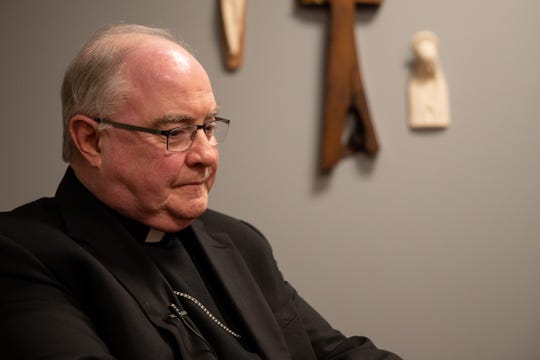





You must be logged in to post a comment.