March 7 is the dies natalis, the heavenly birthday — and therefore the traditional liturgical commemoration — of St. Thomas Aquinas, the Angelic Doctor, a Dominican friar who combined childlike innocence, guileless humility, and fervent prayer with one of the most towering intellects the human race has ever seen. He has been put forward by the Church not only as a guide to the truth but as a model of discipleship.
The Lord has granted me the privilege of studying the works of St. Thomas for almost thirty years, and of teaching them for almost twenty. As time passes, I find his writings ever more beautiful and fruitful; I find the principles he invokes deeper in their rootedness, broader in their extension. The articles in the Summa theologiae and the Disputed Questions make for incomparable springboards into difficult matters, providing at every step more material for reflection than one could ever reach the end of.
The way these articles hold together — their order, their internal logic, their movement from point to point, conclusion to conclusion, one light giving rise to another light… One can see why the art historian Erwin Panofsky was so enamored of the Summa-cathedral comparison. The medieval mind that gave us both Gothic architecture and scholasticism has a loving luminosity that transcends both the cold mathematical clarity of Descartes and the wild passions of a Schopenhauer, leading one to see that truth, any truth, is not a small, dark, confining thing, but a pinnacle up in the heavens, a rising of incense and waterfall mist, a great field of flowers with a message greater than the sum of leaf and petal, a window that looks into the soul and outward to God. Truth is the antithesis of smallness (rationalism), darkness (irrationalism), confinement (secularism).
Some find it surprising that St. Thomas, who seemed to think, speak, and dream in syllogisms, was able to compose stirring poetry for the Feast of Corpus Christi. I do not find it surprising at all. He had been a poet in his heart, a troubadour of the transcendentals, long before the verses came from his mind. Jacques Maritain was right to say of the saint’s vast body of work: “The achievement which dominates the flux of the ages … overflowed entirely from the fulness of contemplation in a heart united to eternity.”[i] Thomas found his poet’s voice in the Cross he loved, in the beauty of a love that spills itself out in radiant waves of mercy.
“For this have I come into the world, to bear witness to the truth. Every one who is of the truth hears my voice” (Jn. 18:37). “If you continue in my word, you are truly my disciples, and you will know the truth, and the truth will make you free” (Jn. 8:31–32). St. Thomas heard that voice; he continued in that word; he found the freedom of self-surrender.
We live in an age peculiarly bent on running away from truth, veritas — be it the truth about God and Jesus Christ and the Church He founded; the truth about oneself, friendship, marriage, family, sexuality; the truth about society and the political order. The human heart does not, cannot, cease to long for the truth, but there is no guarantee that our desires will remain uncorrupted. Modern academia exhibits the worst tendencies in this regard. Scholarship exalts the evolutionary paradigm, placing an excessive weight on change and discrepancy rather than continuity and agreement. By rewarding novelty with honors, the university system generates continual motivation for trivia, conflict, and revisionism.
Wahrheit ist Feuer und Wahrheit reden heisst leuchten und brennen.[ii] “Truth is fire, and to speak the truth means to illumine and to burn.” When Jesus spoke, His words were kindling; when He acted, His deeds were light; when He looked into men’s hearts, His gaze was a sword that cut the sincere from the false, the pious friend from the pious fraud. This supreme witness to the truth — Truth incarnate — met with scorn, rejection, torture, and death. He let Himself be buried like a seed in the soil, to burst forth in the glory of an inexhaustible fruitfulness, yielding across the ages a harvest beyond all human reckoning.
Fire, even just embers or sparks, gets around. The good fire of sound doctrine, nourished by a devout life, will not be without offspring. If fragmentation is the problem, fire is the answer, for it belongs to fire to melt what is hardened, to purify the dross and unify the precious. In a youthful work not marred by later cynicism, Yves Congar describes this interplay of thought and thirst, faith and fire:
The source, therefore, of that perfect service of the truth to which St. Thomas devoted his life, was this warm, personal and vital relationship with the truth which we call love … This was due to the fact that, for him, the truth was not merely an object of knowledge, not merely an idea, not even a thing, but a living person to be loved, a living and merciful person who begins by offering himself to our love and by inserting in our frozen souls the warm and vital seed of friendship. This “truth” is, in reality, “the gentle primal truth,” the living God of Abraham, Isaac and Jacob, the adorable Trinity, the Saviour-God, indeed the incarnate Word, the truth who is Jesus Christ. [iii]
Study is an occasion for the Spirit of truth to reveal the face of Jesus to us and conform our face — our eyes, our ears, our mouths — to His [iv]. The end is the blessed vision of God, “face to face.”
We all need to keep reading good and great books, and keep learning our faith. We “graduate” from the academy of grace only when we die and yield our souls to God. The Doctors of the Church speak the fire of truth, which illumines and burns. Their writings enlighten our minds and burn away our compromises, our excuses, our pettiness. St. Thomas stands as a prince among them.
What is the sign that our studies in school or our private endeavors to learn are leading us into greater intimacy with Jesus Christ, the Truth in person? We will hear His words echoing in our hearts when the book is away. We will notice how, without being able to say when it came or where it came from, suddenly His light is cast on our problems or the problems of others with whom we live and work. We will be caught by His gaze, only for a moment, it seems, yet layer after layer of elaborately crafted thoughts are simplified and unified, or a dense tangle of feelings is loosened into calm. We are carried by our studies into a more profound understanding of the mystery of Jesus Himself — the mysteries of His life, His death, His resurrection, all the mysteries of His humiliation and glory. This is what I call the healing grace of study.
In an essay by a student who was applying to an institute where I taught, I once read these words, which so resonated with me that I copied them down:
All those things that orthodox Catholics desire for themselves and their children, namely, a persevering faith, a willingness to make heroic sacrifice, a sense of belonging within the flow of history, a scriptural mindset and an awareness of judgment all flow from the sense of wonder at the Person of the God-Man. Prior to any great renewal of the Church, the faithful must be taught to stand adoring and incensing in the interior temple.
When the Psalmist says, “Your face, O Lord, I shall seek,” he is giving us a motto not only for the Christian life as a whole, but for the particular task of study. Charity’s bright-eyed daughter, Joy, abandons theology when the Lord’s face is not sought. Understanding what is beyond reason, beyond all domination at our hands, comes only to the beggar on bended knee [v].
Our desire for the truth is the good soil in which the Holy Spirit wants to sow the seeds of grace. Light and love can never be separated. The point of studying is to increase and intensify our love for God and our yearning to see His face. “Holy study” unites light and love, so that each can build on the other in an escalating spiral.
It is not odd, though it may at first seem so to us, that this stout intellectual, this “Dumb Ox” whose angelic doctrine has illuminated the globe for seven centuries, was often seen by his brethren tenderly weeping, especially during the celebration of the Holy Mass. Let us, says Maritain, “exert ourselves to love the truth as he himself loved it, that great Doctor whose tranquil eyes were wet with tears, so weary was his heart with waiting for the vision” [vi].
“Three things come together in heavenly fruition — perfect vision, full embracing, and the clinging of consummated love.”[vii] This is what the Angelic Doctor was longing for; this is what we should be aspiring to. If we remember this goal, there is no trial or difficulty we cannot endure.
[i]St. Thomas Aquinas, Angel of the Schools, trans. J. F. Scanlan (London: Sheed & Ward, 1942), 31.
[ii] L. Schefer, quoted in Carl Schorske, Fin-de-siècle Vienna: Politics and Culture (New York: Vintage, 1981), 217.
[iii] “St. Thomas: Servant of the Truth,” in Faith and Spiritual Life, trans. A. Manson and L. C. Sheppard (New York: Herder and Herder, 1969), 82.
[v] Edward D. O’Connor writes: “The Word of God is not a philosophical discourse addressed simply or even primarily to the intellect and susceptible of being apprehended by the intellect alone. It is a Word of Life, summoning men into a personal relationship with the Lord and nourishing, guiding, and confirming them in that relationship. For this reason, it can only be understood deeply and rightly by those who respond personally to its call. There are, of course, superficial levels on which Scripture can be read and understood by the most detached observer; but its profound meaning becomes accessible only in the measure that one enters into that life to which it summons.” Appendix 2, in vol. 24 [I-II.68–70] of the Blackfriars Summa Theologiae (New York: McGraw-Hill, 1964), 96.
Dr. Peter Kwasniewski, Thomistic theologian, liturgical scholar, and choral composer, is a graduate of Thomas Aquinas College and The Catholic University of America. He has taught at the International Theological Institute in Austria, the Franciscan University of Steubenville’s Austria Program, and Wyoming Catholic College, which he helped establish in 2006. He writes regularly for Catholic blogs and has published seven books, the most recent being Tradition and Sanity (Angelico, 2018). For more information, visit www.peterkwasniewski.com.http://www.peterkwasniewski.com
Posted inUncategorized|Comments Off on March 7 is the dies natalis, the heavenly birthday — and therefore the traditional liturgical commemoration — of St. Thomas Aquinas, the Angelic Doctor, a Dominican friar who combined childlike innocence, guileless humility, and fervent prayer with one of the most towering intellects the human race has ever seen. He has been put forward by the Church not only as a guide to the truth but as a model of disciples
Cardinal George Pell outside the Hotel Quirinale in Rome, March 3, 2016. Credit: Alexey Gotovskiy/CNA.
Melbourne, Australia, Mar 6, 2019 / 11:25 am (CNA).- An Australian court announced Wednesday that Cardinal George Pell’s application for leave to appeal his conviction of sexual abuse will be heard June 5-6.
Pell, 77, was convicted in December on five counts of sexual abuse stemming from charges that he sexually assaulted two choirboys while serving as Archbishop of Melbourne in 1996. He has maintained his innocence.
It was the cardinal’s second trial, as a jury in an earlier trial had failed to reach a unanimous verdict. The first jury were deadlocked 10-2 in Pell’s favor.
Pell’s appeal will by led by barrister Bret Walker, SC, who will be assisted by Robert Richter, QC, the cardinal’s defense lawyer; Paul Galbally, his solicitor; and Ruth Shann, Richter’s junior barrister.
The cardinal’s appeal will be made on three points: the jury’s reliance on the evidence of a single victim, an irregularity that kept Pell from entering his not guilty plea in front of the jury, and the defense not being allowed to show a visual representation supporting his claim of innocence.
The appeal document, The Age reported, says that “the verdicts are unreasonable and cannot be supported, having regard to the evidence, because on the whole of the evidence, including unchallenged exculpatory evidence from more than 20 Crown witnesses, it was not open to the jury to be satisfied beyond reasonable doubt on the word of the complainant alone.”
Pell is incarcerated at the Melbourne Assessment Prison while he awaits the results of a sentencing hearing, which will be announced March 13.
In December, a district judge overturned the May 22 conviction of Archbishop Philip Wilson for failing to report allegations of child sexual abuse disclosed to him in the 1970s, saying there was reasonable doubt a crime had been committed.
The judge, Roy Ellis, said acceptance of the accuser “as an honest witness does not automatically mean I would be satisfied beyond reasonable doubt that he complained to Philip Wilson in 1976 that James Fletcher had indecently assaulted him.”
The news of Pell’s conviction has met with varied reactions. While many figures in Australian media have applauded Pell’s conviction, some Australians have called it into question, prompting considerable debate across the country.
Greg Craven, vice-chancellor of the Australian Catholic University, suggested that the justice process was tainted by media and police forces that had worked “to blacken the name” of Pell “before he went to trial.”
“This is not a story about whether a jury got it right or wrong, or about whether justice is seen to prevail,” Craven said in a Feb. 27 opinion piece in The Australian. “It’s a story about whether a jury was ever given a fair chance to make a decision, and whether our justice system can be heard above a media mob.”
Pell was ordained a priest of the Diocese of Ballarat in 1966. He was consecrated a bishop in 1987, and appointed auxiliary bishop of Melbourne, becoming ordinary of the see in 1996. Pell was then Archbishop of Sydney from 2001 to 2014, when he was made prefect of the newly-created Secretariat for the Economy. He served on Pope Francis’ Council of Cardinals from 2013 to 2018. Pell ceased to be prefect of the economy secretariat Feb. 24.
Coincidences: After Pell Reprimanded APSA & Shipped for Secret Trial, Francis’s Shady Friend Zanchetta installed at APSA
Almost everyone seems to have forgotten that that Cardinal George Pell wrote two letter on May 3 and 5, 2017 reprimanding the Vatican’s real estate body APSA for “serious irregularities” and lack of cooperation in the “‘moment of truth’ for economic reforms.” (National Catholic Register, “Cardinal Pell Reprimands Vatican’s Real Estate Body for Exceeding it’s Authority,” May 10, 2017)
A few months after the reprimands, by coincidence, Pell was shipped off to Australia to face decade old accusations which ended in a shady secret trail.
A few more months later, again by coincidence, Pope Francis installed his shady personal friend Archbishop Gustavo Zanchetta at the APSA who even back then according to the Argentine press was allegedly involved in shady economic mismanagement and who according to recently reported Argentine official Church documents is allegedly a gay pervert.
Pray an Our Father now for the restoration of the Church.
What kind of people must we be, if God is permitting this man to destroy the Catholicity of the Church, to the degree to which it is possible to destroy the Church?
The Gates of Hell shall not prevail against the Church, but that doesn’t mean that the enemy cannot inflict overwhelming damage in his rage against us.
I haven’t a clue if she, my then-roommate, was telling me the truth, because the Ordo Templi Orientis, the OTO, is a Gnostic secret society that doesn’t admit scrutiny. That said, I have no founded reason to doubt the idea that the final step in initiation to that group is to realize that you are a deity in your own right. For those who might be curious, the penultimate step is, or so I’m told, ritualized sodomy.
I don’t care to discuss my living arrangement at the time, save for this: I had forsaken my Catholic baptism because, I think, upon reflection, I saw nothing but duplicity in the institutional Church, a problem that persists in my diocese to this day.
In the void that follows such apostasy, I would have counted myself an occultist; I read tarot cards, I participated in occult rituals, I wrote a few of them, I cast spells, and every so often I was disturbingly efficacious at accomplishing natural things through decidedly evil and unnatural means. Perhaps the greatest insult in all of it: I called it religion.
The OTO is scarcely unique among occult groups experimenting with varying degrees of sexual libertinism and self-indulgence as substitutes for authentic religious piety. The Witches Bible Complete calls for ritualized symbolic, or actual, sexual intercourse for third-degree initiation. It can barely even be called a secret anymore. There are still places and times when the willfully blind gather themselves in literal orgies devoted to little more than their self-indulgence. I thank God that’s something that never came to pass for me — not that they didn’t make some attempts to drag me into it.
I reverted to the Catholic Church, in part, because she is to be the one safeguard in the world, the one sure rock against the self-indulgent, self-abusing luciferian religions that have sprung up in recent years like so many weeds. I escaped, and I thanked God for it — which is, I think, what has sparked so much anger at Pope Francis’s recent endorsement of the document “Human Fraternity for World Peace and Living Together.”
During his recent trip to the United Arab Emirates, Pope Francis signed a document that gives, insofar as it is possible, license to all of the above on the grounds that they are willed by God — the orgies, the tarot cards, the spells, the witchcraft. This is a direct contradiction and challenge to the First Commandment.
Worse, perhaps, is the duplicity of those who defend this idea as perfectly orthodox, based on the fig leaf that this is nothing more than God’s permissive will. That is total and complete nonsense, and it merits refuting on my part, because the whole thing is profoundly insulting. Those who have spread such deception into the text grasp at the straws that remain of orthodoxy. But in truth and charity, there is no Catholicity in this document.
The line in question:
Freedom is a right of every person: each individual enjoys the freedom of belief, thought, expression and action. The pluralism and the diversity of religions, colour, sex, race and language are willed by God in His wisdom, through which He created human beings. This divine wisdom is the source from which the rights, and saw that it was good also.
The common usage of language does not admit changing the sense of a thing in the same sentence. Hence, the plain meaning of the words as written is that the multiplicity of religions is a function of God’s active will. We know, because even the pagans and witches are inclined to celebrate after a fashion the diversity of the sexes: they place and hold as central to their liturgical rites the marital embrace, of which an essential component is the celebration of male and female.
It therefore follows naturally that God must also have willed them to be witches, pagans, and sorcerers.
The only alternative interpretation consistent with the usage of language is that God permits or allows male and female persons to exist but that they are not intrinsically good. Such a thing is absolutely alien to all traditional religions. For this understanding to be true, it would be a terrible and frightful irony that in pledging tolerance for all human persons, Pope Francis had undermined the most basic and intrinsic identity around which most people organize themselves: male and female.
Since, given the overwhelming evidence, we cannot reasonably expect clarification or correction from the mouth of Francis, I am compelled to break my long silence and to speak: witchcraft is evil. “Quoniam omnes dii gentium daemonia” — all the Gods of the gentiles are devils (Psalm 95:5). It is a Gnostic luciferian cult, which, when it’s not seeking personal aggrandizement and personal power, is engaged in the worship of demons. Though I wouldn’t have called it that at the time, I have channeled them. Witchcraft has nothing but scarcely concealed contempt for Our Blessed Lord Jesus Christ, and especially His Church. I lived it, approximately fifteen years. I got out for a few reasons; one was that the Church is the certain bulwark against this kind of evil.
I thought I got away from the pagans, thanks be to God. I got away from the witches, thanks be to God. I didn’t think the luciferians were waiting for me inside the Catholic Church. But they are inside the walls. They are present at every level of the Church, and that includes the highest office.
I believe that God will bring about a cleansing of the Church in some way. If this offering can spur the vox populi to begin rejecting these malefactors from within, then may God draw good out of all my evil works.
Make no mistake: they are workers of evil. Though they deny it in a multitude of rationalizations, modernists and luciferians are all, universally, opposed to the worship and reverence of Our Blessed Lord, Jesus Christ. When pressed, they answer, “Non serviam.” I will not serve. I will serve myself.
What kind of people must we be for God to permit this? The worst. A generation that has not been seen since the Flood. I don’t know what I will do in penance and sorrow over my sins, but it will surely need to be every bit as drastic as building an ark.
I cannot say if, or when, God will destroy the world again. I can say that until these malefactors and evildoers are purged from the Church from top to bottom, the inexorable decline will continue unabated and all but unmitigated.
May God have mercy on me. May God have mercy on us.
“The most evident mark of God’s anger and the most terrible castigation He can inflict upon the world are manifested when He permits His people to fall into the hands of clerics who are priests more in name than in deed, priests who practice the cruelty of ravening wolves rather than the charity and affection of devoted shepherds.” —St. John Eudes
Adrian Hau was born in the middle of Canada in the early 1980s. He holds a Bachelor of Arts (Honors) from Queen’s University, Kingston, Ontario, where he presently resides with his wife and three children.
Posted inUncategorized|Comments Off on REMEMBER THE LOOK OF JOY ON THE FACE OF FRANCIS THE MERCIFUL AS HE WAS HANDED THE STANG LAST YEAR AND HE FOCUSED ON THE WICCAN BRACELET WORN BY THE WOMAN WHO WAS PRESENTING THE STANG TO HIM
From Santa Marta an Order Has Gone Forth. But Cardinal Bassetti Is Not Obeying
*
Italy is Pope Francis’s backyard, in addition to being his country of origin. And so it comes as no surprise that he should take a strong interest in the who and how of leadership at the CEI, the Italian episcopal conference.
This has been seen since 2013, when Francis imposed as secretary general of the organism the semi-unknown Nunzio Galantino, who essentially took over – strong as he was with the authority of his backer, the pope – for the president of the CEI at the time, Cardinal Angelo Bagnasco.
It was seen again in 20015 at the general assembly of the Italian Church gathered in Florence, where Jorge Mario Bergoglio acted as absolute protagonist and where his trusted henchmen – Galantino himself, but also the Jesuit Antonio Spadaro, director of “La Civiltà Cattolica” – insisted on demanding “a broad involvement of the people of God, in a synodal process not restricted to the élites of Catholic thought.”
Since 2017 the CEI has had as its new president Cardinal Gualtiero Bassetti, in whom Francis is showing he places more trust than in his predecessor, and since 2018 has had as its new secretary Bishop Stefano Russo in the place of Galantino, who has in any case remained in the good graces of the pope, who has promoted him as president of the Administration of the Patrimony of the Apostolic See.
But even in this new configuration, Spadaro continues to act as the papal “longa manus.” And at the end of January of this year he must have crossed the line, seeing how the leadership of the CEI felt unjustly blamed.
*
Spadaro launched his attack with an article in “La Civiltà Cattolica” in which he again demanded “a synod for the Italian Church,” implicitly accusing the leadership of the CEI of having “locked away in a cabinet” the “prophetic” speech that Francis gave at the conference in Florence, and of having fallen back into the “old forms of rhetoric” and into “clericalism.”
Settimo Cielo gave prompt coverage to all of this, in a post on February 7:
As was natural, the presidency of the CEI did not take kindly at all to this hostile attack by Fr. Spadaro. But neither was it able to mount a strong immediate counterattack, given the proximity between Spadaro and the pope and their acting in concert.
Cardinal Bassetti made a first attempt in a subdued voice, in a conversation reported by “Avvenire” on February 10, to clarify that in the Italian Church a “synodal” process is already underway “from the bottom up,” for example in the construction of a “civic network” among Catholics involved in politics.
But meanwhile “Avvenire,” which is the newspaper of the CEI but even more the organ of Casa Santa Marta, on January 31 had republished in its entirety the article by Spadaro.
And on February 2, “L’Osservatore Romano” had played its part in the maneuver, with a front-page interview with Rieti bishop and former CEI undersecretary Domenico Pompili, who endorsed and reissued Spadaro’s proposal of a synod for the Italian Church.
Not only that. Even after Bassetti’s first subdued statement in his own defense, two other bishops, both fervent fans of Bergoglio, took to the field to give assistance to Spadaro.
The first, with a letter published in “Avvenire” on February 17, was Modena bishop and president of the CEI commission for the doctrine of the faith Erio Castellucci. Who, in addition to reiterating that “the time has come for a synod for the Italian Church,” took the opportunity to denounce the “short circuit seen in Italy a few decades ago when, after the fall of the ‘ideological’ parties, the bishops undertook a compensatory effort that ended up squashing the political initiative of the Catholic laity,” undermining in its own way the strategy for Italy of John Paul II, Benedict XVI, and Cardinal Camillo Ruini.
The second, with a letter published in the “Corriere della Sera” of February 18 on the editorials page entitled “A synod for Italy,” was Corrado Lorefice, appointed archbishop of Palermo by Bergoglio but also a disciple of the “school of Bologna,” a famous international coterie of progressive Catholic intellectuals.
Both Castellucci’s article and that of Lorefice were retweeted by an enthusiastic Fr. Spadaro, promptly receiving likes from Alberto Melloni, a Church historian and the current director of the Bologna institute, and Massimo Faggioli, his spokesman in the United States.
Curiously, however, neither Spadaro nor any of these figures who supported him in attacking the presidency of the CEI made reference to the most important initiative that the CEI itself has been planning for some time: an “Encounter of reflection and spirituality for peace in the Mediterranean,” which next year will gather in Bari the bishops of all the countries bordering on this sea, from Europe, Africa, and Asia.
It is an encounter conceived by Cardinal Bassetti in the wake of the “Mediterranean conversations” organized seventy years ago in Florence by a great figure of Italian political Catholicism, Giorgio La Pira, whose cause of beatification is at an advanced phase.
The presidency of the CEI has staked a great deal on this conference, and will certainly not be overjoyed to revolutionize its agenda to obey an article from “La Civiltà Cattolica.”
In fact, it is precisely to this encounter that Cardinal Bassetti referred in his second and much more resolute counterattack against the assault of Spadaro and company, on the front page of “L’Osservatore Romano” of February 27, in an interview signed by the director of the Vatican newspaper, Andrea Monda.
Cardinal Bassetti’s thought is summarized well in these final exchanges of the interview:
Q: The pope has spoken, since the conference of Florence, of synodality, which amounts to an invitation to take on a style to be maintained on all levels, from the parish to the CEI, structures that perhaps are to be reconsidered. To start this process, is it perhaps necessary to go through a concrete event, as for example a thematic synod for the entire Catholic Church?
A: That of the synod is a good idea, but it must be developed over time. At this moment it is fundamental to explore some criteria of synodality, and above all to prepare ourselves for the “Encounter of reflection and spirituality for peace in the Mediterranean” that will take place in February of 2020. A unique assembly of its kind, organized by the Italian Church, which will permit the encounter among the bishops of the countries that border the Mediterranean and which, above all, will employ synodality to foster ecclesial discernment on the problems and future of the entire region. The encounter in Bari, which takes its inspiration from an intuition of La Pira, will therefore be a concrete application of the synodal method to address several questions of great importance for Italy and Europe, as for example interreligious dialogue, peace in the Mediterranean basin, and international migration.
It remains to be explained why “L’Osservatore Romano,” in presenting this energetic clarification by Bassetti, should have given it such a drab headline: “The task and duty of Italian Catholics.”
And it also remains to be explained why “Avvenire,” the newspaper of the CEI, should not have reproduced the interview with its cardinal president online. And why on paper it should have furnished only a modest and hardly prominent summary, on the bottom of page 17.
John Henry Cardinal Newman, the great precursor and prophet of Vatican II, challenged the Catholic Church of his day with his ideas about the laity. He challenged laymen to sanctify both the temporal order and the Church. And he challenged the clergy to co-operate with and utilize the energy, wisdom, and holiness contained in that vast member of the Mystical Body of Christ called the laity. Thanks to Vatican II many are now aware of the layman’s call to sanctity in the world and his duty to transform the world. But Newman’s challenge still stands: There is still widespread misunderstanding of the role of the lay person in the Church.
Perhaps the greatest misunderstandings in recent years have come from the “left.” Vatican II has been used to clericalize the laity and laicize the clergy. But we must also avoid the equally hazardous overreaction of the “right.” For if wild innovation can damn, so can that cramped protection of the deposit of faith which keeps it from God’s people and prevents its implementation and legitimate development. Newman should be our ideal of that authentic orthodoxy which transcends liberalism and conservatism. And to better implement the teachings of Vatican II on the laity we should study Newman’s thought. After all, he has been called the “absent Council Father” and was cited during the Council with greater frequency than any other authority, including Aquinas.
Newman was a visionary. Although he was unswervingly faithful to the Church, he recognized certain problems with the Church of his day. He realized that the Church must change if it is to remain at its best. Said he: “To live is to change, and to be perfect is to have changed often.”
To fulfill his vision of a dynamic and holy Church, Newman wanted to change the role of the laity. He saw a divided Catholicism: the laity and clergy were detached from one another. According to many Catholics of Newman’s day, only bishops, priests, nuns, and brothers are called to sanctity and to activity in the Church; everyone else is to essentially passive. Monsignor Talbot, an English contemporary of Newman’s, considered laymen only good enough “to hunt, to shoot, to entertain. These matters they understand, but to meddle with ecclesiastical matters they have no business at all.” Happily, Vatican II rejected this clericalism which would keep the layman ignorant servile. But how many real challenges and responsibilities has the layman been given in the Church in the 1980s? Being an extraordinary eucharistic minister at Mass is undoubtedly a privilege, how does it hasten the coming of God’s kingdom? Does it bring people into the Church? Does it stretch one’s mind and soul?
Newman objected to the petty role given to lay people partly because their rights were being obstructed, but mainly because of the loss the Church and the lay people themselves were suffering. He recognized in the laity a great source of spiritual power which could do much to transform the Church and the world, and he was afraid that much of that power was going to waste because the layman was not being given sufficient freedom or responsibility in the Church.
Newman did not advocate change for its own sake. His reason for seeking to activate the laity that they could then better sanctify themselves, the Church, and the world. Nor would Newman advocate change that was other than orthodox.
Here is Newman’s definition of the Church: it is
the congregation of the faithful who pass on the revealed Word of God which they themselves have received and believed. It is neither hierarchy alone, but the whole people of God as a body.
Newman’s handling of this definition caused many to doubt his orthodoxy. None of Newman’s fellow clerics denied that the Church included the laity, and Newman agreed with them that the laity is obliged to be obedient to the hierarchy. But Newman’s teaching diverged from the majority of clercs in the amount of freedom he allowed the laity. In fact, he had such radical ideas about the laity that Monsignor Talbot wrote in a letter to Cardinal Manning: “Newman is the most dangerous man in England, and you will see that he will make use of the laity against your Grace.”
Newman caused particular friction with his article entitled “On Consulting the Faithful in Matters of Doctrine.” Bishop Brown of Newport even contacted the Holy See because he thought Newman’s article heretical. Brown wrote that Newman’s position that the Church could be and sometimes has been “maintained far more by the faithful than by the episcopate” is “totally subversive of the essential authority of the Church in matters of faith.”
Cardinal Newman heretical? His thoughts “totally subversive”? Newman’s thought was fresh and he was a more speculative thinker than many Catholics of his day, but he was no Luther. Once he became a Catholic, Newman always strove to be obedient to the Church’s teachings and to his superiors.
Newman was ever obedient, but not merely obedient. He obeyed out of love — out of love for Christ and the truth. He saw both of these embodied in the Catholic Church. Pope Paul VI, a self-proclaimed disciple of Newman, confirmed that Newman “was guided solely by love of truth and fidelity to Christ.”
For Newman every vocation in the Church is equal in the sense that they are all equally necessary if mankind is to reach that eschatological end for which God created us. The parish priest guides his parishioners, but would be useless without them. No vocation is identical to another, but they are all equally necessary. Furthermore, all vocations should be complementary — “separate but concordant…like a concert of musical instruments, each different, but concurring in a sweet harmony.”
But to expect the layman to share in the responsibility of saving souls and perfecting the Church and the world means to recognize his freedom. Many among the clergy of Newman’s day sought to inhibit this freedom. They wanted to protect the laity from the dangerous intellectual and ideological currents of the day. But Newman believed their efforts were counterproductive. He held that they were turning laymen into helpless babies who could do nothing productive in the Church or the world. “Our theological philosophers,” he wrote, “are like old nurses who wrap the unhappy infant in swaddling bands or boards…as if he were not healthy enough to bear wind and water in due measure.” Newman had confidence in the power of humans to recognize truth: “Error may flourish for a time, but truth will prevail in the end. The only effect of error, ultimately, is to promote Truth.”
Of course, a natural result of freedom is diversity, but Newman believed that, even with regard to religious themes, a certain amount of diversity is beneficial to the Church and her members, as long as the Church is unified in her essential doctrines and practices. Lay people need freedom in order to grow spiritually, to sharpen their wits, to procure a vital and resilient faith, and to be able to defend their faith intelligently.
This argument for freedom, however, seems to contradict Newman’s opinion about obedience that we find in his writing and exemplified in his life. How can one exercise freedom and still be subject to the Church? Newman’s answer to this question can be found in his conception of conscience.
In A Letter to the Duke of Norfolk, Newman addressed the paradox of freedom and obedience. He said that there is only one authority we are bound to obey at all times, and that is our conscience, yet the Church alone provides the basis of a truly informed conscience. Newman maintained that the obedience of the laity to the Magisterium must not be blind obedience; we must use the freedom and intelligence God has given us. But on the other hand, he taught that the Church is the Body of Christ on earth, and God is always guiding it. We should, therefore, not make light of any difference we might have with her. Philip Flanagan paraphrased Newman’s thought this way:
If your conscience tells you you may do this act but the Church tells you you must not do it, you must obey the Church. If, however, your conscience tells you you must do this act, then you must do it, though the Church tells you you should not do it. Your conscience is mistaken, but you must obey it. And if you honestly do obey it, then it will eventually lead you on to the truth.
Newman believed that a Christian is obliged to follow his conscience because it is the “aboriginal Vicar of Christ.” But conscience does not give one the right to indulge oneself. “Conscience is not a long-sighted selfishness…but it is a messenger from Him, who, in nature and in grace, speaks to us behind a veil.” As in our time, many people in Newman’s day appealed to what they called their “consciences” in order to disregard difficult Church doctrines. For Newman, though, conscience is to be followed even though it might lead one toward painful decisions or unpleasant tasks. Newman followed his own conscience meticulously, and he often suffered for it. He lost many friends when his conscience led him to join the Catholic Church. Once inside the Church, he continued to suffer for his integrity: his teachings were repeatedly criticized. But his love of truth forbade him to be silent.
Likewise, his love for the Church forbade him ever to seek autonomy from her. There was but one true Church for Newman — only one that was apostolic and only one universal — and he had complete trust in that Church.
Newman held that in the West the Catholic hierarchy represents the only unbroken line of descent from the Apostles. In both East and West the Catholic tradition is the most consistent Christian tradition and the one that most directly proceeds from Jesus Christ. It is the Christian tradition.
The second factor which made the Church completely trustworthy for Newman was her universality. Securus judicat orbis terrarium — these words of Augustine troubled Newman when he was still an Anglican and made him think that Anglicanism was merely an offshoot which ought to submit itself to Augustine’s “secure judgment of the whole world.” Once Newman became a Catholic, he found that universal security.
The apostolicity and universality of the Church meant for Newman that the Church’s authority was perfectly credible. The Church was for him the infallible voice of Christ.
By “Church,” remember that Newman meant the entire body of the faithful. Newman knew that Christ was speaking to the Church as a whole when he promised: “I will be with you always.” The hierarchy has the particular role of expounding doctrine, but the laity has the responsibility to witness to that doctrine. The beliefs held by the large majority of the Church serve to verify the teachings of the hierarchical minority: “The body of the faithful is one of the witnesses to the fact of the tradition of revealed doctrine, and…their consensus through Christendom is the voice of the infallible Church.”
Newman’s teaching here is truly prophetic of Vatican II. He maintained that the universal conviction of Catholic lay people should act as a mirror held up to the hierarchy: the belief of the laity should reflect pastoral teaching. The hierarchy, moreover, should learn from that reflection.
The Magisterium should even consult the faithful in matters of doctrine. Newman quotes Pope Gregory to say: “In controversy about a matter of faith, the consent of all the faithful has such a force in the proof of this side or that, that the Supreme Pontiff is able and ought to rest upon it as being the judgement or sentiment of the infallible Church.” And popes have indeed consulted the faithful when defining doctrine. For example, Pope Pius IX did so before he defined the doctrine of the Immaculate Conception.
However, infallibility does not reside in the consensus fidelium (consensus of the faithfub~ The Church is not a democracy. Instead, said Newman, “that ‘consensus’ is an indicium or instrumentum to us of the judgement of the [whole] Church which is infallible.” However, the role of the laity as indicium (indication or index) is more than a merely passive one. The direction in which the millions of lay Catholics move influences to a great extent the direction in which the Church as a whole moves.
The historical example Newman used to justify much of his argument in “On Consulting the Faithful in Matters of Doctrine” came from the time of the Arian heresy in the fourth century. There was so much division in the hierarchy at that time that, regarding some doctrines, no consistent teaching was being passed along to the people: “At one time the Pope, at other times the patriarchal, metropolitan, and other great sees, at other times general councils said what they should not have said, or did what obscured and compromised the revealed truth.”
As a result, it fell to lay Catholics to uphold the faith: “In that time of immense confusion, the divine dogma of our Lord’s divinity was proclaimed, enforced, maintained, and (humanly speaking) preserved far more by the ‘Ecclesia docta‘ [the laity] than by the ‘Ecclesia docens‘ [the Magisterium] .”
In our day, Pope John Paul II has championed what he calls co-responsibility in the Church — co-operation between laity and clergy in order best to maintain the Church and convert the world. Newman argued the same point:
The Ecclesia docens is more happy when she has…enthusiastic partisans around her…than when she cuts off the faithful from the study of her divine doctrines and the sympathy of her divine contemplations, and requires from them a fides implicita in her word which in the educated classes will terminate in indifference, and in the poorer in superstition.
Newman’s advocacy of a responsible, free, and dignified laity was echoed clearly in the documents of Vatican II, especially in Lumen Gentium.
There is now hope that, as in ages past, the laity will have a large share in the life of the Church and the propagation of the faith. But we must still denounce that clericalism which builds a wall between clergy and faithful, relegates the latter to mute subservience, and justifies complacence on both sides. Clericalism is dying; let us see to it that it is buried.
Lay people are the hope of the world. Free them. Respect them. Put them to work.
[The progressivists] are always impatient to adapt the content of faith, Christian ethics, liturgy and the organization of the Church…to the demands of the world, without sufficiently taking into account not only the common sense of the faithful…but also the essence of the faith…its age-long experience and the standards necessary for its fidelity, its unity and its universality.
“The traditionalists are shutting themselves up rigidly in a given period of the history of the Church, and at a given moment of theological formulation or liturgical expression which they have absolutized…fearing new questions without admitting, in the long run, that the Holy Spirit is at work today in the Church with its pastors united around the successor of Peter.”— Pope John Paul II
Anthony Anderson is a seminarian at Holy Apostles Seminary in Cromwell, Connecticut.
Posted inUncategorized|Comments Off on ROME HAS JUST ANNOUNCED THAT BLESSED CARDINAL JOHN HENRY NEWMAN WILL SOON BE CANONIZED. IT IS ABOUT TIME, MUCH OF WHAT NEWMAN WROTE HAS PROVIDED THOSE OF US WHO ARE FAMILIAR WITH HIS WRITINGS WITH HOPE FOR THE CHURCH IN THIS TIME OF CRISIS. THAT IS ESPECIALLY TRUE OF WHAT HE WROTE ABOUT THE Arian heresy OF THE THIRD CENTURY. “THERE WAS A TIME IN THE LIFE OF THE CHURCH WHEN THE BISHOPS OF THE CHURCH WERE, WITH FEW EXCEPTIONS, ARIAN HERETICS OR SEMI-HERETICS.”
The stakes of Pell’s Vatican trial Cardinal George Pell.
By Ed Condon and JD Flynn
Vatican City, Mar 5, 2019 / 05:00 am (CNA).-
The Vatican has announced that a canonical process against Cardinal George Pell will soon begin in the Congregation for the Doctrine of the Faith. Pell was convicted last year by an Australian jury on five counts of child sexual abuse.
Pell’s case is well known to be controversial: while the cardinal was convicted by a jury of his peers, at least some Church figures seem to support his claim of innocence, and observers in Australia have raised serious questions about the integrity of his trial. Secular media outlets and commentators, including some of Pell’s otherwise most implacable critics, have called the Victoria jury’s verdict into question.
Under those circumstances, the CDF has an unenviable task. Officials will approach the case with an awareness that their verdict, no matter where it lands, could have serious repercussions for the Church. Canonical trials often take place after a civil government has ended its case against an alleged abuser, and the Church has developed some practices as a consequence of that.
For example, the transcripts of criminal trials in sexual abuse cases are routinely admitted as canonical evidence in Church trials. Very often, civil findings are treated as practically conclusive proofs, leading to an abbreviated administrative process. Given the controversy caused by the Australian verdict, Pell’s canonical representatives are likely to insist on a full trial at the CDF, and to resist any overtures toward an abbreviated administrative process, like the one that handled the recent case of Theodore McCarrick.
Still, the situation invites comparison to McCarrick’s. Pell now has a criminal conviction, while McCarrick does not. Like McCarrick, Pell has been accused of other incidents of abuse: he is alleged to have molested four boys in a swimming pool in the 1970s. But his defenders say there are a paucity of proofs in the allegations against Pell, and the swimming pool allegations were dropped by criminal prosecutors because they lacked proof. And by the time a McCarrick process got underway at CDF, there was a thick dossier of mutually supportive and easily proven allegations. Pell’s dossier is not quite the same.
CDF judges will approach Pell’s case with less moral certitude than they approached McCarrick’s. And unlike Pell’s case, McCarrick’s verdict had little potential to cause an international incident. In this trial, the stakes have gotten higher. If Pell’s appeal is denied a hearing in Australia, Rome will face considerable external pressure to confirm the initial conviction and laicize Pell on the basis, principally, of the Australian verdict. But there would be a cost to yielding to that pressure. If the CDF expedites Pell’s trial and uses as evidence his criminal conviction, at least some canonists and theologians will argue that the Church is ceding the role of canon law – and the “sacred freedom” the Church claims for herself – to civil authorities.
More concretely, priests and bishops, especially those from countries with disreputable justice systems or well-known anti-Catholicism, could find themselves asking what kind of justice they can expect from the Vatican if they should ever be accused of sexual abuse. In the aftermath of the 2002 sexual abuse crisis in the U.S., many priests expressed concern that their right of due process was being routinely trumped by the desire of American bishops to demonstrate seriousness about all sexual misconduct allegations.
If Pell is perceived to have been denied a fair canonical trial at the CDF, the same kind of crisis of confidence could emerge on a global scale, among both bishops and priests. On the other hand, if Pell is found ‘not guilty’ by a Vatican court that considers the same evidence presented in Victoria, the consequences could be just as dramatic.
If a Vatican court finds in Pell’s favor, some might accept the decision as a just verdict founded on the evidence, or lack thereof. Others might also welcome it as a stand in favor of due process and the autonomy of the Church. But the outcry from victims and their advocates would be considerable. Catholics are already asking impatient questions about whether the Vatican takes seriously allegations of abuse: a CDF decision that runs counter to an Australian criminal conviction – however controversial – could set back Roman efforts to show how seriously the Church takes the issue of abuse.
If the Australian government faces a domestic uproar, or sees a ‘not guilty’ decision as an implied condemnation of its justice system, it might join with other countries that have begun asking if the Holy See ought to have sovereign status in international law, or even threaten to sever its diplomatic ties. That is no small thing.
Under the seal of the pontifical secret, canon lawyers and Church officials know that priests have been canonically convicted of child sexual abuse on evidence no more compelling than that facing Pell. Still greater is the number of priests who have found themselves made permanently “unassignable” after a single, unsupported accusation.
But Pell’s case, unlike those, will unfold with a global audience, and amid the great series of crises over sexual abuse the Vatican has faced in recent years. The decision in Pell’s canonical trial, no matter what it is, could steer the direction of the crisis– no verdict will be without consequence. Canonical judges are exhorted to judge only the facts of the case- but in this case, no matter the outcome, that will be no easy request.
76,000 Migrants Entered Through Southwest Border in February — Most in 12 Years, Says CBP1
Photo: U.S. Border Patrol/Tucson Sector
5 Mar 2019
BREITBART
U.S. Customs and Border Patrol (CBP) reports that 76,103 migrants appeared at ports of entry and illegally crossed between ports in February. This is the largest number of apprehensions and inadmissible migrants for a February reporting period in 12 years, CBP stated Tuesday.
Of the 76,103 migrants who came to the border seeking admission or illegally crossing between ports of entry, 62 percent were family units and unaccompanied minors. This presents both a border security and humanitarian crisis at our southwest border, U.S. Customs and Border Protection Commissioner Kevin K. McAleenan said in a press conference on Tuesday afternoon.
United States Border Patrol Chief of Operations Brian Hastings told reporters that during February, Border Patrol agents apprehended more than 66,000 migrants who illegally crossed the border from Mexico between ports of entry. This is up from nearly 48,000 in January — a nearly 40 percent increase. When compared to the first five months of Fiscal Year 2018, this fiscal year has seen a 97 percent increase, he stated.
“A lot of folks look at that and they say, ‘we have seen numbers like that in the past,” Hastings explained. He said that many people do not understand the “significant change in the demographics of what we are seeing today is what presents us and our partners with a lot of challenges.”
The Border Patrol operations chief said that historically, agents have apprehended about 70 to 90 percent Mexican nationals. “We could apply a consequence to that demographic,” he stated. “We could return them quickly to Mexico.”
“Today, 70 percent of all of those we are arresting are from the (Central American) northern triangle — Guatemala, El Salvador, and Honduras,” Hastings continued. He explained that under current laws and court rulings there is no consequence to these migrants and they are nearly all released into the U.S. for an indefinite period of time.
“Without being able to deliver a consequence to these individuals for crossing our border, the Border Patrol has no reason to expect that this trend will decrease — in fact, we believe it will increase,” he surmised. “It’s well known at this time that immigrants with children will not be detained during the immigration proceedings. The word of mouth and social media quickly gets back to those in the northern triangle countries that ‘If you bring a child, you’ll be successful.”
Due to these circumstances, the number of cases of people falsely claiming to be family units has increased substantially. “From April 2018 through February 2019 we have had almost 2,400 fraudulent claims of families,” the operations chief explained. “Of those fraudulent claims, some are people who claim they are under 18 and they’re not. Others have actually been fraudulent familial claims.”
So far this fiscal year, Border Patrol agents apprehended 136,150 migrants claiming to be family units and 26,937 people claiming to be unaccompanied minors, according to the February Southwest Border Migration Report released Tuesday afternoon. This is a total of 163,087 family unit aliens (FMUA) and unaccompanied minors so far this year. In all of Fiscal Year 2018, Border Patrol agents only apprehended 157,248, the 2018 Southwest Border Migration Report stated.
Hastings and Commissioner McAleenan explained that these demographics present substantial challenges for the Border Patrol and CBP. In addition to the demographics, they explained that transnational criminal organizations (Mexican cartels) are shifting the crossing points to the most remote areas of the El Paso, Tucson, and Yuma Border Patrol Sectors and are crossing them in much larger groups in order to tie up Border Patrol resources.
The El Paso Sector witnessed a 1,697 percent increase in the number of family units apprehended in remote areas like the Antelope Wells crossing area. The Yuma and Tucson Sectors have both witnessed increases in excess of 230 percent. Other unsecured areas of the border including the Del Rio Sector in Texas saw an increase of nearly 400 percent over the previous February.
Commissioner McAleenan announced the formation of a new migrant processing center for the El Paso Sector to “provide one location for the processing of family units and children.”
The commissioner cautioned that the new facilities for processing migrants “will assist with managing the increased flows … The fact is that these solutions are temporary and this situation is not sustainable. Remote locations of the United States border are not safe places to cross and they are not places to seek medical care.”
Bob Price serves as associate editor and senior political news contributor for the Breitbart Border team. He is an original member of the Breitbart Texas team. Follow him on Twitter @BobPriceBBTX and Facebook.
Posted inUncategorized|Comments Off on The Border Patrol operations chief says that historically, agents have apprehended about 70 to 90 percent Mexican nationals. “We could apply a consequence to that demographic,” he stated. “We could return them quickly to Mexico.” “But today, 70 percent of all of those we are arresting are from the (Central American) northern triangle — Guatemala, El Salvador, and Honduras,” Hastings continued. He explained that under current laws and court rulings there is no consequence to these migrants and they are nearly all released into the U.S. for an indefinite period of time.
Archbishop of Washington, D.C., from 2006 to 2018, Donald Cardinal Wuerl succeeded the now-notorious serial molester Theodore Cardinal McCarrick, a onetime high roller in the Church, as titular head of the nation’s most prominent see. Before that, Wuerl was bishop of Pittsburgh from 1988 to 2006. By coincidence — or not! — both Washington and Pittsburgh have become flashpoints in the resurgent sex-abuse crisis.
To say that Wuerl is complicit in the cover-up of McCarrick’s crimes would be an understatement. To say he has a record of stretching the truth would be insufficient. It would be more accurate to say that Wuerl is “completely compromised” and he “lies shamelessly,” as the much-maligned Archbishop Carlo Maria Viganò put it in his “testimony” (Aug. 22). Heck, Wuerl could have been whom Al Franken had in mind when he wrote Lies and the Lying Liars Who Tell Them.
Why? This past July, the Pennsylvania Supreme Court ordered the publication of the results of its two-year investigation of clerical sexual abuse in six dioceses, including Pittsburgh. Known as the “Pennsylvania grand jury report,” it mentions Wuerl more than 200 times, describing him as one of the bishops who helped cover up the abuse of possibly thousands of children in the state. The report even says Wuerl coined a phrase to describe the cover-up: “circle of secrecy.”
One particularly horrific case in Pittsburgh involved a ring of pedophile priests who produced child pornography on parish property and used “whips, violence and sadism in raping their victims.” One of the priests, Fr. George Zirwas, was the subject of numerous complaints involving underage boys between 1987 and 1995. In December 1988 he was sent to a mental hospital, but upon release was reassigned to parish work. In 1994 he was placed on a leave of absence but “was returned to ministry by Bishop Donald Wuerl.” Months later, in response to yet another complaint, Zirwas was again placed on leave, after which he moved to Miami. In 1996 he told the Pittsburgh diocese he knew of other priests’ sexual activity, and he “demanded that his sustenance payments be increased” in exchange for the information. Wuerl told him that to get an increase, he must either provide the names of the priests or “state that he had no knowledge of what he had previously claimed.” Zirwas chose the latter course, and he “was granted an additional financial stipend and his sustenance payments were continued,” the report states. In other words, Wuerl paid him to shut up and stay away. (Zirwas later fled to Havana, became involved in the local “gay” scene, and was murdered in 2001.)
Maybe Wuerl figured that nobody would bother to read the report — it’s 1,356-pages long, after all. Whatever the reason, he had the temerity to claim that it “confirms that I acted with diligence, with concern for the victims and to prevent future acts of abuse.”
Liar, liar!
Pennsylvania Attorney General Josh Shapiro responded that many of Wuerl’s statements regarding the grand jury report “are directly contradicted by the Church’s own documents and records from their Secret Archives.” Wuerl, he said, is simply “not telling the truth.”
But we don’t have to Shapiro’s or Viganò’s word for it. Wuerl’s own words accuse him.
Last year, when it was announced that McCarrick had been accused of sexually abusing a minor while he was a priest in New York, Wuerl claimed in a public statement (June 21, 2018) that he was “shocked.” He went on to say that a review of archdiocesan records indicated that “no claim — credible or otherwise — has been made against Cardinal McCarrick during his time here in Washington.”
A month later, after it became public knowledge that two of the dioceses where McCarrick served as bishop, Metuchen and Newark, had reached out-of-court settlements with seminarians who had accused him of sexual assault, Wuerl claimed he had no prior knowledge of these settlements. Incredibly, in an interview with the D.C. archdiocesan newspaper (July 31, 2018), he said he was unaware even of any rumors of homosexual mischief that had long dogged his predecessor, rumors that were widespread even among ecclesial outsiders. Everybody knew, but nobody was willing to go public — until The New York Times published a series of exposés.
Wuerl knew too, and he did nothing to stop McCarrick’s abuse of power and people. As Ed Condon and J.D. Flynn of Catholic News Agency reported (Jan. 10, 2019), “A spokesman for the Archdiocese of Washington confirmed to CNA that an allegation against McCarrick was presented to Wuerl while he served as Bishop of Pittsburgh” — in 2004 — yes, during McCarrick’s time in D.C. (he retired in 2006).
Pants on fire!
The Pittsburgh diocese corroborated this in a statement, revealing that Wuerl had reported the allegation, which involved a seminarian in his early 20s, to Archbishop Gabriel Montalvo, then-apostolic nuncio to the U.S. and Viganò’s predecessor. The seminarian, Robert Ciolek, received an $80,000 settlement in 2005.
Consider this further vindication of Viganò. As he wrote in his testimony, Pope Benedict XVI imposed canonical restrictions on McCarrick following a series of complaints against him. “Obviously,” Viganò wrote, “the first to have been informed of the measures taken by Pope Benedict was McCarrick’s successor in the Washington See, Cardinal Donald Wuerl.” It is “unthinkable,” Viganò said, that Wuerl would not have been told of the restrictions. Moreover, Viganò, apostolic nuncio to the U.S. from 2011 to 2016, said he himself had raised the issue with Wuerl and found that he “didn’t need to go into detail because it was immediately clear that [Wuerl] was fully aware of it.”
Of course, Wuerl tried to worm his way out of the hole he had dug for himself. Like a true denizen of D.C., he denied that his earlier denials were indeed denials. Instead, he said the sordid episode had simply slipped his mind! “When I was asked if I had any previous knowledge of allegations against Archbishop McCarrick, I said I did not,” Wuerl wrote in a letter to his priests (Jan. 12). “Only afterwards was I reminded of the 14-year-old accusation of inappropriate conduct which, by that time, I had forgotten.”
That’s absurd. As Ciolek told CNA (Jan. 16), “It’s unfathomable to me that he has forgotten; I don’t believe it for one second.” Wuerl, Ciolek said, “is not being honest. He knew, he knew.”
Hanging from a telephone wire!
The burning question is why Wuerl was in a position to make a fool of himself in so public a manner. He had tendered his resignation to Pope Francis last October. According to Condon (CNA, Jan. 19), “Francis seemed to accept Wuerl’s resignation as archbishop with reluctance, and he heaped praise on the cardinal while he did so.” In fact, Francis was so reluctant to see Wuerl go that he asked him to remain in charge of the archdiocese as apostolic administrator, essentially acting as a placeholder until Francis named his successor. In his reply to Wuerl’s resignation, Francis called him a “model bishop.” He elaborated: “You have sufficient elements to ‘justify’ your actions and distinguish between what it means to cover up crimes or not to deal with problems, and to commit some mistakes. However, your nobility has led you not to choose this way of defense. Of this, I am proud and thank you.”
“That praise,” Condon says, “now looks, to many Catholics, to have been seriously misplaced.”
Ya think?
Francis’s favoritism came to the fore once more at the U.S. bishops’ meeting last November. In light of l’affaire McCarrick, conference president Daniel Cardinal DiNardo was prepared to announce a new policy for handling abuse allegations against bishops. But the Pope pushed DiNardo aside in favor of Wuerl and his buddy, Blase Cardinal Cupich of Chicago. The two had worked together on an alternative plan for weeks and presented it to the Vatican’s Congregation for Bishops prior to the U.S. bishops’ assembly. According to Condon (Nov. 16), “The conference’s proposed plan would have established an independent lay-led commission to investigate allegations against bishops. The Cupich-Wuerl plan would instead send allegations against bishops to be investigated by their metropolitan archbishops, along with archdiocesan review boards. Metropolitans themselves would be investigated by their senior suffragan bishops.”
Bishops investigating bishops? This is the type of insular thinking that got us into this mess in the first place. What is this other than the institutionalization of Wuerl’s “circle of secrecy”?
The whole Wuerl saga goes to show — yet again — that many of the leaders of the Church, the men who are running the show, aren’t so much interested in professing the truth as they are in protecting their prestige and preserving their power. Their obstinate and remorseless self-interest does damage to the witness of the Church and undermines the Gospel of Christ.
Of course, where the sex scandal is concerned, the buck stops at the top, with Pope Francis. What can we expect from him? Not much, says Msgr. Charles Pope. Writing at the National Catholic Register (Nov. 16), Msgr. Pope, a priest of the Washington archdiocese, observed that “Francis, who was himself tasked by the last conclave with rooting out abuse and corruption, has tended to surround himself with men who are at the very heart of the scandals rocking the Church throughout the world.” For this reason, Msgr. Pope says, “I am not confident that we will see anything close to a full inquiry or a clear adjudication of this matter in Rome. Too many there are implicated and compromised to be able to carry out a clear and forceful investigation. The testimonies of Archbishop Viganò have substantially withstood scrutiny: former Cardinal McCarrick’s misdeeds were known and ignored.”
“Oh, what a tangled web we weave/ when first we practice to deceive!” — Sir Walter Scott
Posted inUncategorized|Comments Off on ” To say that Wuerl is complicit in the cover-up of McCarrick’s crimes would be an understatement. To say he has a record of stretching the truth would be insufficient. It would be more accurate to say that Wuerl is “completely compromised” and he “lies shamelessly,” as the much-maligned Archbishop Carlo Maria Viganò put it in his “testimony” (Aug. 22). Heck, Wuerl could have been whom Al Franken had in mind when he wrote Lies and the Lying Liars Who Tell Them. “
Last week, it was announced by the Australian court system that Cardinal George Pell had been convicted in December of child sex abuse. The media had been prevented from reporting on the verdict because there was a hope of moving forward with yet another trial against the cardinal. That trial against Pell fell apart. Another, earlier proceeding ended in a mistrial due to a hung jury. The cases were confidential, but some outlets have reported that the jurors in that early trial voted 10-2 in favor of acquittal.
Nevertheless, one guilty verdict out of three was good enough to send a 77-year old cardinal to jail. And if the reporting is to be believed, this verdict was obtained without a shred of corroborating physical evidence or testimony. It comes as the result of just one complainant on decades-old charges. The defense had over 20 “unanswerable” witnesses testify on Pell’s behalf about his character and the logistical impossibility of him doing what he was alleged to have done. The man was, they said, never alone after offering Mass, never in a position to abuse anyone in such a public space, and vested in such a way that he would have been physically prevented from doing what was alleged.
One of the two boys Pell was convicted of abusing died of a drug overdose in 2014 before the case ever went to trial. He never accused Pell, nor gave evidence against him. The deceased’s mother admitted that he’d denied having been abused on at least two occasions. According to CNN:
The boy’s mother told police she’d explicitly asked her son if he’d ever been “interfered with or touched up in choir,” according to a transcript of Pell’s trial. The boy, then a teenager, said no.
It is impossible for us on the outside to prove innocence or guilt, but it is difficult not to form an opinion based on what is known. It is also clear that there has been a longstanding war against Cardinal Pell, with a number of questionable accusers appearing over the years, none of whose accusations could be verified, and some of which were simply proven false.
But now, after years of tireless efforts, Australia has a judgment against this hated figure who stood against the hedonistic impulses of the nation as a defender of Catholic orthodoxy. It is noteworthy, in public discussions of the case, that homosexual activists seem to be among those most gleeful over Pell’s conviction. That doesn’t appear to be a coincidence. Pell was notorious for not succumbing to their demands. He wouldn’t pretend that homosexuality was a force for societal good. He didn’t downplay the risks it posed to those engaged in the lifestyle. And so it’s no surprise that he was hated by them.
For a prime example, see this ugly opinion piece at The Guardian entitled “Brutal and dogmatic, George Pell waged war on sex – even as he abused children”. The contempt oozes out from between the words. “He was particularly brutal to homosexuals,” the author writes. “He laid the blame for their [homosexuals] troubles at the door of homosexuals themselves.”
“He kept it simple and brutal,” the author laments again. And he projects this disdain on the nation as a whole:
Australia never shared Rome’s high opinion of George Pell. That such an uncongenial, and at times embarrassing, figure was appointed auxiliary bishop of Melbourne in 1987 distressed many of the faithful in his home country. But these were the early days of John Paul II’s papacy, when such men were being rewarded around the world.
The author of the piece is David Marr. On the surface, he’s listed as an award-winning journalist. Dig deeper, though, and you’ll find that he was twice named as one of the 25 most influential gay Australians. Marr said,at the time of his second appearance on that list:
“I’m appallingly arrogant. I’m incredibly vain. I’m all those things that writers tend to be,” says Marr. But he also somewhat modestly admits that he sees himself as unworthy of the accolade. “There are so many more gay and lesbian people in Australia who do more for the gay and lesbian community than I do, who work harder at it, who have tougher lives.”
In the nomination profile, Marr is touted for being tough enough. Particular note is made of his work “regularly voicing opposition to the church on its teachings”.
Pell stood in his way. Pell stood in a lot of people’s way. Pell had to be removed.
Another place stood in the way was in his capacity as the head of the Vatican Bank reform. He was quite a nuisance to certain men in the highest reaches of the Vatican apparatus who were busily burying talents in places where they didn’t belong. So much off the books money, in fact, was discovered by Pell, that the final accounting was in the neighborhood of a billion Euros. Was it a coincidence that after digging up these hidden caches, Pell found himself suddenly facing renewed interest in decades-old charges? Former Vatican auditor Libero Milone — himself the victim of an apparent purge by entrenched Vatican interests — noted the suspicious timing of Pell’s charges:
The large international auditing firm PricewaterhouseCoopers (PwC) was appointed by Pell in Dec 2015 to conduct an in-depth audit of Vatican finances. The authority given to PWC to continue the audit was suddenly suspended by other Vatican authorities in April 2016.
Pell is currently on a leave of absence facing sex abuse charges in his home country. The cardinal strongly denies the charges, which have been likened to a personal witch-hunt with dubious handling by Australian authorities.
Milone indicated it may not have been a coincidence that Cardinal Pell’s abuse charges – decades old – hadn’t appeared until the last few years, a Crux report said, about the same time his attempts at major financial reform inside the Vatican were beginning to cause waves.
Cardinal Angelo Becciu — described by Christopher Lamb of the progressive Catholic weekly The Tablet as the “most loyal of papal aides” — personally intervened to stop Pell’s work. Once Pell was hauled back to Australia, Becciu seemed more comfortable with the state of the financial reform. “There is a great deal of collaboration” in the process now, Cardinal Becciu told Lamb, “because the points [of dispute with Pell’s authority] were clarified.”
The respected and tireless Vaticanista, Marco Tosatti, noted in his March 1 column that with Pell, the word in Rome is that “the cannons are in Australia, but the cannonballs were made in the Vatican.” In other words, while Australia had already long-since taken aim at their moral public enemy, it has been alleged that it was people inside the Holy See who gave them the ammunition to take him down.
Tosatti notes, however, that there have been unintended consequences for this action against Pell, inasmuch as it has come back to haunt a papacy now beleaguered by its entanglement with various sexual abusers or those who protect them. Permit me to quote at some length from Tosatti’s fascinating analysis*:
Anyone who repeated to me this sibylline phrase [about the cannonballs], or something similar to it, at the time when Msgr. Dario Edoardo Viganò was still in the saddle, was alluding to the rather intense clashes of the Bergoglian circle with the Australian cardinal, who, indeed, is certainly not a member of the magic circle! Some will recall his role at the time of the Synod on the Family in opposing the attempt by Msgr. Bruno Forte and associates to sterilize the debate among the synod fathers, in order to present them all as Kaperian lights.
Pell is one who, when he is angry, pounds his fists, Bergoglio or no Bergoglio. If he is convinced that something is right, he pursues is like a bulldozer. And it is also well known that the Argentine is more aggressive with the weak, but is intimidated by the few who resist him to his face.
In short, Pell is a tank and was rather feared. My hypothesis is this: that Pell has been shot down by two separate sets of fire. The first is the “friendly” fire of the clerical establishment (this is the clericalism with which Bergoglio ought to occupy himself!) and the second is the enemy fire, secular and masonic, which saw in him a conservative traditionalist who needed to be eliminated.
Many clues lead us to think this; the fact is, however, that the news of Pell’s verdict came out at a very specific time.
When they used to tell me that phrase which I have cited, the gay lobby of the Vatican was in full force, and Pell was able to be singled out for sacrifice; but the verdict has arrived after the lobby has started to go into crisis, having lost many key pieces and ending up in the center of the storm thanks to the McCarrick case, the Chilean affair, the (Carlo Maria) Viganò dossier, the disgraceful behavior of the ultra-Bergoglian cardinal Donald Wuerl, the voices speaking out on the new Zanchetta scandal…
And so? And so Operation “Let’s Smash Pell” carried out with clerical contribution may now be revealing itself to be a boomerang, because in public opinion, which knows nothing of the backstory, Pell is merely the umpteenth Bergoglian man to end up in scandal, even though he is the only one among all those cited who really is not a Bergoglian man!
To sum it up, in the holy rooms of the Vatican, what is being said today seems to be, “What beautiful news! But if only it had arrived two years ago instead of now! Right now we don’t want this!”
Tosatti then takes note of the tragedy at the hear of this affair: “If Pell is innocent, if Pell is the man of faith I think he is, Pell is carrying the Cross of Christ, condemned like Him by today’s synagogue.”
It is a sobering thought, and one echoed by the Australian Catholic scholar and professor Dr. Anna Silvas, in a piece for La Nuova Bussola Quotidiana. In her essay, entitled, “Cardinal Pell is innocent, that’s why,” Silvas says she doesn’t believe “that justice was served in this jury trial. It has all the smell of a ritual sacrifice for an ugly agenda”. She speaks of her own experience of the Melbourne Cathedral, and of Pell, and of the logistical impossibilities and “preparatory moral degradation” that would be required to pull off an act like that which the Cardinal was accused of. “It is unthinkable,” she writes, “that after thirty years or more of committed and proven intellectual, moral, priestly and episcopal life, that he, just having been appointed a Metropolitan, should on the first occasion of a Sunday Mass stoop to so crass and crude and sordid an exercise of pedophilia of which he has been legally convicted.” But she also notes the increasing degradation of both the Australian culture and the Australian Church, the specific animosity that the homosexual community in Australia has against Pell — who refused them a “rainbow” protest at a Sunday Mass in 1996 — and a “homosexualist agenda in Church and Society” that has been “gunning for him ever since”. Silvas also notes, however, the “disturbing number of priests in the Melbourne Archdiocese implicated in sexual scandals over the last three or four decades” — ammunition, she says, for those who would “attack us from without—or subvert us from within.”
“Without a doubt,” Silvas laments, “the Church, whether in Australia or worldwide is semper purificanda. We are long overdue for a severe chastisement, if you ask me, and I think things are set to become much worse for us.”
And worse they will become.
Although Pell is appealing his verdict, he sits alone in a jail cell under constant protection. The other prisoners are not likely to be kind to a man accused of committing heinous acts on children, and they will clearly make no more effort than the Australian courts have to determine if they’re true. The Vatican has now opened its own canonical investigation into Pell, and according to JD Flynn and Ed Condon of the Catholic News Agency — both of them canon lawyers themselves, a complicated road fraught with difficulty lies ahead:
Canonical trials often take place after a civil government has ended its case against an alleged abuser, and the Church has developed some practices as a consequence of that.
For example, the transcripts of criminal trials in sexual abuse cases are routinely admitted as canonical evidence in Church trials. Very often, civil findings are treated as practically conclusive proofs, leading to an abbreviated administrative process.
Given the controversy caused by the Australian verdict, Pell’s canonical representatives are likely to insist on a full trial at the CDF, and to resist any overtures toward an abbreviated administrative process, like the one that handled the recent case of Theodore McCarrick.
[…]
In this trial, the stakes have gotten higher.
If Pell’s appeal is denied a hearing in Australia, Rome will face considerable external pressure to confirm the initial conviction and laicize Pell on the basis, principally, of the Australian verdict. But there would be a cost to yielding to that pressure.
If the CDF expedites Pell’s trial and uses as evidence his criminal conviction, at least some canonists and theologians will argue that the Church is ceding the role of canon law – and the “sacred freedom” the Church claims for herself – to civil authorities.
More concretely, priests and bishops, especially those from countries with disreputable justice systems or well-known anti-Catholicism, could find themselves asking what kind of justice they can expect from the Vatican if they should ever be accused of sexual abuse.
In the aftermath of the 2002 sexual abuse crisis in the U.S., many priests expressed concern that their right of due process was being routinely trumped by the desire of American bishops to demonstrate seriousness about all sexual misconduct allegations. If Pell is perceived to have been denied a fair canonical trial at the CDF, the same kind of crisis of confidence could emerge on a global scale, among both bishops and priests.
Pell will not stand alone in the crosshairs. While McCarrick had no verdict, the number of allegations about his conduct was overwhelming. Pell has had no preponderance of credible accusers, but he now has a conviction. Together, they will form, in the minds of people both inside and outside the Church, a symbol of corruption going to the highest echelons of the Catholic Church, and the repercussions are only just beginning.
Abuse victims in Australia are now lining up to sue the Church for “tens of millions”. Victims who had already reached settlements and “waived their right to take civil action” against the Archdiocese of Melbourne. Lawyers will argue that laws have to be changed. The clincher? “The integrity of the Melbourne Response” — Pell’s program of dealing with compensation for victims of clerical abuse –“is further diminished by the fact it was introduced by Pell in 1996, about the same time he sexually assaulted two 13-year-old choirboys.” Do we think such action will end in Australia?
In my piece last September about this transformative moment in Catholicism, “The Big Ugly,” I wrote:
If people don’t start tearing down churches with their bare hands by the end of this, I’ll be pleasantly surprised. Of course, they won’t have to, because dioceses around the world will sell them off to property-developers who will turn them into high-rent residential spaces or maybe even gay nightclubs. After all, something we’ve learned from all the sexual abuse cases is that co-opting religious imagery is a feature of degeneracy.
And why will dioceses sell them off? To pay for abuse settlements, of course. Or legal defense against civil suits. Or simply because they can no longer afford to maintain them, because nobody shows up for Mass anymore. A great many people will no longer wish to be part of a Church that is perceived as fundamentally perverse and corrupt. That they almost certainly already had one foot out the door will be of little consequence when the demographic cost is totaled.
Someone on social media — a Catholic — said to me last night that they were excited to see the Church endure the financial bankruptcy that would mirror the moral bankruptcy already present.
I think a number of people feel that way, the impulse is somewhat understandable. But this genie can’t be put back in its bottle, and I don’t think people are really going to enjoy what happens as much as they anticipate. When the number of parishes in their diocese is diminished significantly. When the availability of sacraments is drastically reduced. When priests who are innocent are falsely accused in the hope of obtaining a financial settlement. When just admitting that you are a Catholic — that you continue to be a part of a Church known best for preaching against the popular sexual practices of our day while its leaders engage in criminal sexual activities — will make you a pariah.
That time is coming soon, I think. In some places, it’s already here.
Becoming a smaller, purer Church may ultimately be a good thing. But we shouldn’t fool ourselves into thinking it’ll be a painless one. A chastisement is coming indeed.
Steve Skojec is the Founding Publisher and Executive Director of OnePeterFive.com. He received his BA in Communications and Theology from Franciscan University of Steubenville in 2001. His commentary has appeared in The New York Times, USA Today, The Washington Post, The Washington Times, Crisis Magazine, EWTN, Huffington Post Live, The Fox News Channel, Foreign Policy, and the BBC.Steve and his wife Jamie have seven children.
ZZZZZZZZZZZZZZZZZZZZZZZZZZZZZZZZZZZZZZZZZZZZZZZZZZZZZZZZZ
Analysis: The stakes of Pell’s Vatican trial
33822
Cardinal George Pell. Credit: Alexey Gotovskiy/CNA.
Cardinal George Pell. Credit: Alexey Gotovskiy/CNA.
By Ed Condon and JD Flynn
Vatican City, Mar 5, 2019 / 05:00 am (CNA).- The Vatican has announced that a canonical process against Cardinal George Pell will soon begin in the Congregation for the Doctrine of the Faith. Pell was convicted last year by an Australian jury on five counts of child sexual abuse.
Pell’s case is well known to be controversial: while the cardinal was convicted by a jury of his peers, at least some Church figures seem to support his claim of innocence, and observers in Australia have raised serious questions about the integrity of his trial.
Secular media outlets and commentators, including some of Pell’s otherwise most implacable critics, have called the Victoria jury’s verdict into question.
Under those circumstances, the CDF has an unenviable task. Officials will approach the case with an awareness that their verdict, no matter where it lands, could have serious repercussions for the Church.
Canonical trials often take place after a civil government has ended its case against an alleged abuser, and the Church has developed some practices as a consequence of that.
For example, the transcripts of criminal trials in sexual abuse cases are routinely admitted as canonical evidence in Church trials. Very often, civil findings are treated as practically conclusive proofs, leading to an abbreviated administrative process.
Given the controversy caused by the Australian verdict, Pell’s canonical representatives are likely to insist on a full trial at the CDF, and to resist any overtures toward an abbreviated administrative process, like the one that handled the recent case of Theodore McCarrick.
Still, the situation invites comparison to McCarrick’s.
Pell now has a criminal conviction, while McCarrick does not. Like McCarrick, Pell has been accused of other incidents of abuse: he is alleged to have molested four boys in a swimming pool in the 1970s. But his defenders say there are a paucity of proofs in the allegations against Pell, and the swimming pool allegations were dropped by criminal prosecutors because they lacked proof. And by the time a McCarrick process got underway at CDF, there was a thick dossier of mutually supportive and easily proven allegations. Pell’s dossier is not quite the same.
CDF judges will approach Pell’s case with less moral certitude than they approached McCarrick’s. And unlike Pell’s case, McCarrick’s verdict had little potential to cause an international incident.
In this trial, the stakes have gotten higher.
If Pell’s appeal is denied a hearing in Australia, Rome will face considerable external pressure to confirm the initial conviction and laicize Pell on the basis, principally, of the Australian verdict. But there would be a cost to yielding to that pressure.
If the CDF expedites Pell’s trial and uses as evidence his criminal conviction, at least some canonists and theologians will argue that the Church is ceding the role of canon law – and the “sacred freedom” the Church claims for herself – to civil authorities.
More concretely, priests and bishops, especially those from countries with disreputable justice systems or well-known anti-Catholicism, could find themselves asking what kind of justice they can expect from the Vatican if they should ever be accused of sexual abuse.
In the aftermath of the 2002 sexual abuse crisis in the U.S., many priests expressed concern that their right of due process was being routinely trumped by the desire of American bishops to demonstrate seriousness about all sexual misconduct allegations. If Pell is perceived to have been denied a fair canonical trial at the CDF, the same kind of crisis of confidence could emerge on a global scale, among both bishops and priests.
On the other hand, if Pell is found ‘not guilty’ by a Vatican court that considers the same evidence presented in Victoria, the consequences could be just as dramatic.
If a Vatican court finds in Pell’s favor, some might accept the decision as a just verdict founded on the evidence, or lack thereof. Others might also welcome it as a stand in favor of due process and the autonomy of the Church.
But the outcry from victims and their advocates would be considerable. Catholics are already asking impatient questions about whether the Vatican takes seriously allegations of abuse: a CDF decision that runs counter to an Australian criminal conviction – however controversial – could set back Roman efforts to show how seriously the Church takes the issue of abuse.
If the Australian government faces a domestic uproar, or sees a ‘not guilty’ decision as an implied condemnation of its justice system, it might join with other countries that have begun asking if the Holy See ought to have sovereign status in international law, or even threaten to sever its diplomatic ties. That is no small thing.
Under the seal of the pontifical secret, canon lawyers and Church officials know that priests have been canonically convicted of child sexual abuse on evidence no more compelling than that facing Pell. Still greater is the number of priests who have found themselves made permanently “unassignable” after a single, unsupported accusation.
But Pell’s case, unlike those, will unfold with a global audience, and amid the great series of crises over sexual abuse the Vatican has faced in recent years. The decision in Pell’s canonical trial, no matter what it is, could steer the direction of the crisis– no verdict will be without consequence.
Canonical judges are exhorted to judge only the facts of the case- but in this case, no matter the outcome, that will be no easy request.
Our mission is the truth. Join us!
As a CNA reader, you know our team is committed to finding, reporting, and publishing the truth. Like you, we know that Jesus Christ is the way, the truth, and the life.
Generous donors have given to make sure that all the news you read here at CNA is always free of charge—not only for you, but for millions of readers each year.
Will you join them and become a CNA supporter today?
Your one-time or monthly donation will help our team continue reporting the truth, with fairness, integrity, and fidelity to Jesus Christ and his Church. Thank you.
Yours in Christ,
JD Flynn
CNA Editor-in Chief
Catholic News Agency
Posted inUncategorized|Comments Off on THE INJUSTICE OF THE VERDICT AGAINST Cardinal Pell AND THE LIKELIHOOD THAT SINCE IT SERVES THE INTERESTS OF THE BERGOLIAN REGIME THAT IT WILL ACCELERATE THE GROWING RESISTANCE TO THE BERGOLIAN REGIME AND CONTRIBUTE TO ITS COLLAPSE
Greenpeace co-founder Patrick Moore has launched a ferocious attack on U.S. Rep. Alexandria Ocasio-Cortez, D-N.Y., calling her an “immature bully” and “pompous little twit” with “ZERO expertise” who is “going for the jugular of civilization” and “would bring about mass death.”
Moore has a Ph.D. in ecology, and explains he left the environmental group 33 years ago “because they were hijacked by eco-fascists.”
He unloaded on the freshman congresswoman in a series of tweets over the weekend after the Democrat slammed a New York Post report that called her a hypocrite for her frequent use of planes and cars, both of which she attacked as part of her Green New Deal.
“I also fly & use A/C Living in the world as it is isn’t an argument against working towards a better future,” Ocasio-Cortez tweeted. “The Green New Deal is about putting a LOT of people to work in developing new technologies, building new infrastructure, and getting us to 100% renewable energy.”
Moore responded: “The ‘world as it is’ has the option of taking the subway rather than a taxi. option of Amtrak rather than plane, option of opening windows rather than A/C. You’re just a garden-variety hypocrite like the others. And you have ZERO expertise at any of the things you pretend to know.”
He added: “Pompous little twit. You don’t have a plan to grow food for 8 billion people without fossil fuels, or get food into the cities. Horses? If fossil fuels were banned every tree in the world would be cut down for fuel for cooking and heating. You would bring about mass death.”
Moore noted “greens” such as Ocasio-Cortez “are just as much against natural gas as they are against oil and coal. They just play them off against each other. Make no mistake, these people are going for the jugular of civilization. It is a green jihad with no compromise.”
Moore also slammed Ocasio-Cortez for her “arrogance” and lack of education: “Yep, arrogance plus ignorance (of science, technology, history, etc.) is a recipe for disaster, especially when the person delivering it is so outwardly attractive. Unfortunately there is an immature bully inside who would stop at nothing to gain control.”
He concluded: “Not too often someone comes along that really deserves mocking.”

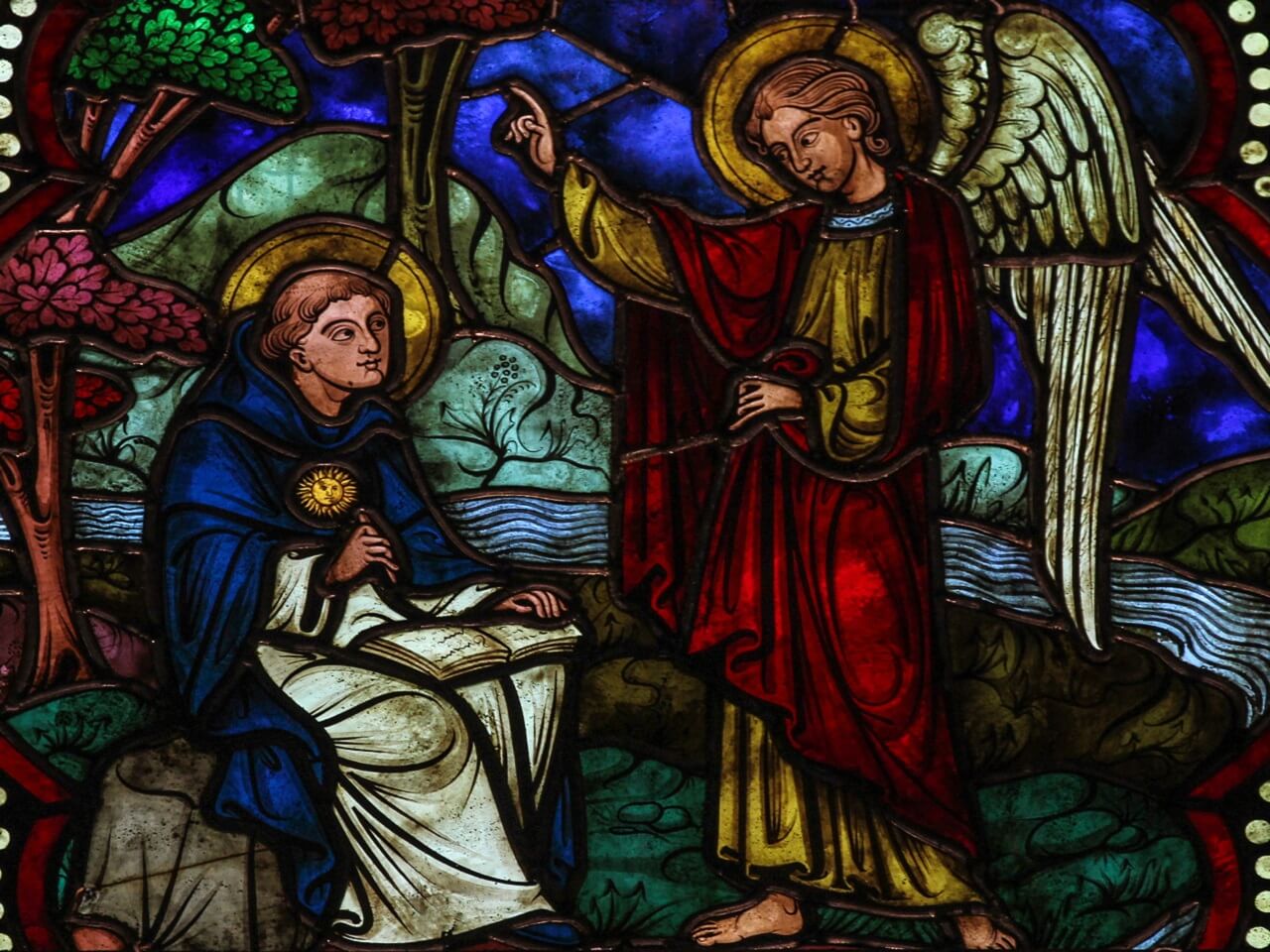









 ABYSSUS ABYSSUM INVOCAT / DEEP CALLS TO DEEP
You must be logged in to post a comment.