Nurse Caught Laughing As Patient Dies Faces Murder Charge
C
This episode, likely not uncommon, is produced by an abortion-indifferent society, with many hearts hardened by an ignorance (root word ‘ignoring’) of 46 years of “legal” murder of 60 million citizens. The same sclerotic self-righteous hearts, aflame with the latest virtue-signaling of high school boys from Kentucky, are now growing more enraptured with post-natal murder in cases of botched pre-natal murder.
The culture of death, in its appeal to selfish exigency and pragmatism, and so favored in our time, is now increasingly and widely accepted with blindingly momentous acceleration. Even many of our professional organizations have now abandoned their ancient charters and are becoming its agents.
There is no love of persons without authentic communion and there is no true personal communion without sacrifice. True sacrifice occurs in selfless caring for one another in good times and in bad ones, especially during the time of dependency in early life and during those days of final illnesses and death. To love fully as a human person requires us often to efface our own interests and to care for the other even at great personal cost.
Life and its respect is not the only casualty in a debased culture of death; in fact it is not the worst loss. First, for many, the memory of love will be lost and then love itself, too, will disappear. The dependent among us will no longer be loved and will forget what it is to be loved. Heartless acts by those with hollow concrete shells of hearts will inflict upon the innocent and on those in need (that is, each of us if not now but eventually.)
We will all need natural “guardian” caregivers in this life (just as we have guardian angels in our supernatural life). This episode underscores this essential need. But we must not neglect our obligation to fight to end this culture which is in love with its ease and so therefore easily able to dispense with others who are inimical to this end of self love. We must strive to (and pray to) instill in our children the precious sanctity of each and every person’s life and teach the virtue of sacrificial love, the perfect model of which is our object during this penitential season.
If you missed Dinesh D’Souza’s contentious lecture at Stanford University last week, now is your chance to see what happened when he showed up to do battle with campus progressives!
FULL VIDEO:STANFORD’S SMARTEST LEFTISTS SHOW UP TO BATTLE D’SOUZAIf you missed Dinesh D’Souza’s contentious lecture at Stanford University last week—complete with an attempted leftist disruption using stink bombs—now is your chance to see what happened when he showed up to do battle with campus progressives!In the now-viral lecture, Dinesh D’Souza makes the moral case for Trump’s border wall, reveals the ways the Left twists the truth to spread #FakeNews, calls out progressives over “social justice,” anti-capitalism, and other radical positions, and goes head-to-head with the campus Left during a fiery Q&A round!Want to learn how the Left is twisting the truth? Watch the full video now:This event was just the latest in Dinesh D’Souza’s national #FakeHistory Debunkedcampus tour with Young America’s Foundation.What #FakeHistory do YOU want to see Dinesh D’Souza debunk in his next live lecture?CWATCH THE WHOLE VIDEO
Last week, it was announced by the Australian court system that Cardinal George Pell had been convicted in December of child sex abuse. The media had been prevented from reporting on the verdict because there was a hope of moving forward with yet another trial against the cardinal. That trial against Pell fell apart. Another, earlier proceeding ended in a mistrial due to a hung jury. The cases were confidential, but some outlets have reported that the jurors in that early trial voted 10-2 in favor of acquittal.
Nevertheless, one guilty verdict out of three was good enough to send a 77-year old cardinal to jail. And if the reporting is to be believed, this verdict was obtained without a shred of corroborating physical evidence or testimony. It comes as the result of just one complainant on decades-old charges. The defense had over 20 “unanswerable” witnesses testify on Pell’s behalf about his character and the logistical impossibility of him doing what he was alleged to have done. The man was, they said, never alone after offering Mass, never in a position to abuse anyone in such a public space, and vested in such a way that he would have been physically prevented from doing what was alleged.
One of the two boys Pell was convicted of abusing died of a drug overdose in 2014 before the case ever went to trial. He never accused Pell, nor gave evidence against him. The deceased’s mother admitted that he’d denied having been abused on at least two occasions. According to CNN:
The boy’s mother told police she’d explicitly asked her son if he’d ever been “interfered with or touched up in choir,” according to a transcript of Pell’s trial. The boy, then a teenager, said no.
It is impossible for us on the outside to prove innocence or guilt, but it is difficult not to form an opinion based on what is known. It is also clear that there has been a longstanding war against Cardinal Pell, with a number of questionable accusers appearing over the years, none of whose accusations could be verified, and some of which were simply proven false.
But now, after years of tireless efforts, Australia has a judgment against this hated figure who stood against the hedonistic impulses of the nation as a defender of Catholic orthodoxy. It is noteworthy, in public discussions of the case, that homosexual activists seem to be among those most gleeful over Pell’s conviction. That doesn’t appear to be a coincidence. Pell was notorious for not succumbing to their demands. He wouldn’t pretend that homosexuality was a force for societal good. He didn’t downplay the risks it posed to those engaged in the lifestyle. And so it’s no surprise that he was hated by them.
For a prime example, see this ugly opinion piece at The Guardian entitled “Brutal and dogmatic, George Pell waged war on sex – even as he abused children”. The contempt oozes out from between the words. “He was particularly brutal to homosexuals,” the author writes. “He laid the blame for their [homosexuals] troubles at the door of homosexuals themselves.”
“He kept it simple and brutal,” the author laments again. And he projects this disdain on the nation as a whole:
Australia never shared Rome’s high opinion of George Pell. That such an uncongenial, and at times embarrassing, figure was appointed auxiliary bishop of Melbourne in 1987 distressed many of the faithful in his home country. But these were the early days of John Paul II’s papacy, when such men were being rewarded around the world.
The author of the piece is David Marr. On the surface, he’s listed as an award-winning journalist. Dig deeper, though, and you’ll find that he was twice named as one of the 25 most influential gay Australians. Marr said,at the time of his second appearance on that list:
“I’m appallingly arrogant. I’m incredibly vain. I’m all those things that writers tend to be,” says Marr. But he also somewhat modestly admits that he sees himself as unworthy of the accolade. “There are so many more gay and lesbian people in Australia who do more for the gay and lesbian community than I do, who work harder at it, who have tougher lives.”
In the nomination profile, Marr is touted for being tough enough. Particular note is made of his work “regularly voicing opposition to the church on its teachings”.
Pell stood in his way. Pell stood in a lot of people’s way. Pell had to be removed.
Another place stood in the way was in his capacity as the head of the Vatican Bank reform. He was quite a nuisance to certain men in the highest reaches of the Vatican apparatus who were busily burying talents in places where they didn’t belong. So much off the books money, in fact, was discovered by Pell, that the final accounting was in the neighborhood of a billion Euros. Was it a coincidence that after digging up these hidden caches, Pell found himself suddenly facing renewed interest in decades-old charges? Former Vatican auditor Libero Milone — himself the victim of an apparent purge by entrenched Vatican interests — noted the suspicious timing of Pell’s charges:
The large international auditing firm PricewaterhouseCoopers (PwC) was appointed by Pell in Dec 2015 to conduct an in-depth audit of Vatican finances. The authority given to PWC to continue the audit was suddenly suspended by other Vatican authorities in April 2016.
Pell is currently on a leave of absence facing sex abuse charges in his home country. The cardinal strongly denies the charges, which have been likened to a personal witch-hunt with dubious handling by Australian authorities.
Milone indicated it may not have been a coincidence that Cardinal Pell’s abuse charges – decades old – hadn’t appeared until the last few years, a Crux report said, about the same time his attempts at major financial reform inside the Vatican were beginning to cause waves.
Cardinal Angelo Becciu — described by Christopher Lamb of the progressive Catholic weekly The Tablet as the “most loyal of papal aides” — personally intervened to stop Pell’s work. Once Pell was hauled back to Australia, Becciu seemed more comfortable with the state of the financial reform. “There is a great deal of collaboration” in the process now, Cardinal Becciu told Lamb, “because the points [of dispute with Pell’s authority] were clarified.”
The respected and tireless Vaticanista, Marco Tosatti, noted in his March 1 column that with Pell, the word in Rome is that “the cannons are in Australia, but the cannonballs were made in the Vatican.” In other words, while Australia had already long-since taken aim at their moral public enemy, it has been alleged that it was people inside the Holy See who gave them the ammunition to take him down.
Tosatti notes, however, that there have been unintended consequences for this action against Pell, inasmuch as it has come back to haunt a papacy now beleaguered by its entanglement with various sexual abusers or those who protect them. Permit me to quote at some length from Tosatti’s fascinating analysis*:
Anyone who repeated to me this sibylline phrase [about the cannonballs], or something similar to it, at the time when Msgr. Dario Edoardo Viganò was still in the saddle, was alluding to the rather intense clashes of the Bergoglian circle with the Australian cardinal, who, indeed, is certainly not a member of the magic circle! Some will recall his role at the time of the Synod on the Family in opposing the attempt by Msgr. Bruno Forte and associates to sterilize the debate among the synod fathers, in order to present them all as Kaperian lights.
Pell is one who, when he is angry, pounds his fists, Bergoglio or no Bergoglio. If he is convinced that something is right, he pursues is like a bulldozer. And it is also well known that the Argentine is more aggressive with the weak, but is intimidated by the few who resist him to his face.
In short, Pell is a tank and was rather feared. My hypothesis is this: that Pell has been shot down by two separate sets of fire. The first is the “friendly” fire of the clerical establishment (this is the clericalism with which Bergoglio ought to occupy himself!) and the second is the enemy fire, secular and masonic, which saw in him a conservative traditionalist who needed to be eliminated.
Many clues lead us to think this; the fact is, however, that the news of Pell’s verdict came out at a very specific time.
When they used to tell me that phrase which I have cited, the gay lobby of the Vatican was in full force, and Pell was able to be singled out for sacrifice; but the verdict has arrived after the lobby has started to go into crisis, having lost many key pieces and ending up in the center of the storm thanks to the McCarrick case, the Chilean affair, the (Carlo Maria) Viganò dossier, the disgraceful behavior of the ultra-Bergoglian cardinal Donald Wuerl, the voices speaking out on the new Zanchetta scandal…
And so? And so Operation “Let’s Smash Pell” carried out with clerical contribution may now be revealing itself to be a boomerang, because in public opinion, which knows nothing of the backstory, Pell is merely the umpteenth Bergoglian man to end up in scandal, even though he is the only one among all those cited who really is not a Bergoglian man!
To sum it up, in the holy rooms of the Vatican, what is being said today seems to be, “What beautiful news! But if only it had arrived two years ago instead of now! Right now we don’t want this!”
Tosatti then takes note of the tragedy at the hear of this affair: “If Pell is innocent, if Pell is the man of faith I think he is, Pell is carrying the Cross of Christ, condemned like Him by today’s synagogue.”
It is a sobering thought, and one echoed by the Australian Catholic scholar and professor Dr. Anna Silvas, in a piece for La Nuova Bussola Quotidiana. In her essay, entitled, “Cardinal Pell is innocent, that’s why,” Silvas says she doesn’t believe “that justice was served in this jury trial. It has all the smell of a ritual sacrifice for an ugly agenda”. She speaks of her own experience of the Melbourne Cathedral, and of Pell, and of the logistical impossibilities and “preparatory moral degradation” that would be required to pull off an act like that which the Cardinal was accused of. “It is unthinkable,” she writes, “that after thirty years or more of committed and proven intellectual, moral, priestly and episcopal life, that he, just having been appointed a Metropolitan, should on the first occasion of a Sunday Mass stoop to so crass and crude and sordid an exercise of pedophilia of which he has been legally convicted.” But she also notes the increasing degradation of both the Australian culture and the Australian Church, the specific animosity that the homosexual community in Australia has against Pell — who refused them a “rainbow” protest at a Sunday Mass in 1996 — and a “homosexualist agenda in Church and Society” that has been “gunning for him ever since”. Silvas also notes, however, the “disturbing number of priests in the Melbourne Archdiocese implicated in sexual scandals over the last three or four decades” — ammunition, she says, for those who would “attack us from without—or subvert us from within.”
“Without a doubt,” Silvas laments, “the Church, whether in Australia or worldwide is semper purificanda. We are long overdue for a severe chastisement, if you ask me, and I think things are set to become much worse for us.”
And worse they will become.
Although Pell is appealing his verdict, he sits alone in a jail cell under constant protection. The other prisoners are not likely to be kind to a man accused of committing heinous acts on children, and they will clearly make no more effort than the Australian courts have to determine if they’re true. The Vatican has now opened its own canonical investigation into Pell, and according to JD Flynn and Ed Condon of the Catholic News Agency — both of them canon lawyers themselves, a complicated road fraught with difficulty lies ahead:
Canonical trials often take place after a civil government has ended its case against an alleged abuser, and the Church has developed some practices as a consequence of that.
For example, the transcripts of criminal trials in sexual abuse cases are routinely admitted as canonical evidence in Church trials. Very often, civil findings are treated as practically conclusive proofs, leading to an abbreviated administrative process.
Given the controversy caused by the Australian verdict, Pell’s canonical representatives are likely to insist on a full trial at the CDF, and to resist any overtures toward an abbreviated administrative process, like the one that handled the recent case of Theodore McCarrick.
[…]
In this trial, the stakes have gotten higher.
If Pell’s appeal is denied a hearing in Australia, Rome will face considerable external pressure to confirm the initial conviction and laicize Pell on the basis, principally, of the Australian verdict. But there would be a cost to yielding to that pressure.
If the CDF expedites Pell’s trial and uses as evidence his criminal conviction, at least some canonists and theologians will argue that the Church is ceding the role of canon law – and the “sacred freedom” the Church claims for herself – to civil authorities.
More concretely, priests and bishops, especially those from countries with disreputable justice systems or well-known anti-Catholicism, could find themselves asking what kind of justice they can expect from the Vatican if they should ever be accused of sexual abuse.
In the aftermath of the 2002 sexual abuse crisis in the U.S., many priests expressed concern that their right of due process was being routinely trumped by the desire of American bishops to demonstrate seriousness about all sexual misconduct allegations. If Pell is perceived to have been denied a fair canonical trial at the CDF, the same kind of crisis of confidence could emerge on a global scale, among both bishops and priests.
Pell will not stand alone in the crosshairs. While McCarrick had no verdict, the number of allegations about his conduct was overwhelming. Pell has had no preponderance of credible accusers, but he now has a conviction. Together, they will form, in the minds of people both inside and outside the Church, a symbol of corruption going to the highest echelons of the Catholic Church, and the repercussions are only just beginning.
Abuse victims in Australia are now lining up to sue the Church for “tens of millions”. Victims who had already reached settlements and “waived their right to take civil action” against the Archdiocese of Melbourne. Lawyers will argue that laws have to be changed. The clincher? “The integrity of the Melbourne Response” — Pell’s program of dealing with compensation for victims of clerical abuse –“is further diminished by the fact it was introduced by Pell in 1996, about the same time he sexually assaulted two 13-year-old choirboys.” Do we think such action will end in Australia?
In my piece last September about this transformative moment in Catholicism, “The Big Ugly,” I wrote:
If people don’t start tearing down churches with their bare hands by the end of this, I’ll be pleasantly surprised. Of course, they won’t have to, because dioceses around the world will sell them off to property-developers who will turn them into high-rent residential spaces or maybe even gay nightclubs. After all, something we’ve learned from all the sexual abuse cases is that co-opting religious imagery is a feature of degeneracy.
And why will dioceses sell them off? To pay for abuse settlements, of course. Or legal defense against civil suits. Or simply because they can no longer afford to maintain them, because nobody shows up for Mass anymore. A great many people will no longer wish to be part of a Church that is perceived as fundamentally perverse and corrupt. That they almost certainly already had one foot out the door will be of little consequence when the demographic cost is totaled.
Someone on social media — a Catholic — said to me last night that they were excited to see the Church endure the financial bankruptcy that would mirror the moral bankruptcy already present.
I think a number of people feel that way, the impulse is somewhat understandable. But this genie can’t be put back in its bottle, and I don’t think people are really going to enjoy what happens as much as they anticipate. When the number of parishes in their diocese is diminished significantly. When the availability of sacraments is drastically reduced. When priests who are innocent are falsely accused in the hope of obtaining a financial settlement. When just admitting that you are a Catholic — that you continue to be a part of a Church known best for preaching against the popular sexual practices of our day while its leaders engage in criminal sexual activities — will make you a pariah.
That time is coming soon, I think. In some places, it’s already here.
Becoming a smaller, purer Church may ultimately be a good thing. But we shouldn’t fool ourselves into thinking it’ll be a painless one. A chastisement is coming indeed.
Steve Skojec is the Founding Publisher and Executive Director of OnePeterFive.com. He received his BA in Communications and Theology from Franciscan University of Steubenville in 2001. His commentary has appeared in The New York Times, USA Today, The Washington Post, The Washington Times, Crisis Magazine, EWTN, Huffington Post Live, The Fox News Channel, Foreign Policy, and the BBC.Steve and his wife Jamie have seven children.http://www.steveskojec.com
What kind of people must we be, if God is permitting this man to destroy the Catholicity of the Church, to the degree to which it is possible to destroy the Church?
The Gates of Hell shall not prevail against the Church, but that doesn’t mean that the enemy cannot inflict overwhelming damage in his rage against us.
I haven’t a clue if she, my then-roommate, was telling me the truth, because the Ordo Templi Orientis, the OTO, is a Gnostic secret society that doesn’t admit scrutiny. That said, I have no founded reason to doubt the idea that the final step in initiation to that group is to realize that you are a deity in your own right. For those who might be curious, the penultimate step is, or so I’m told, ritualized sodomy.
I don’t care to discuss my living arrangement at the time, save for this: I had forsaken my Catholic baptism because, I think, upon reflection, I saw nothing but duplicity in the institutional Church, a problem that persists in my diocese to this day.
In the void that follows such apostasy, I would have counted myself an occultist; I read tarot cards, I participated in occult rituals, I wrote a few of them, I cast spells, and every so often I was disturbingly efficacious at accomplishing natural things through decidedly evil and unnatural means. Perhaps the greatest insult in all of it: I called it religion.
The OTO is scarcely unique among occult groups experimenting with varying degrees of sexual libertinism and self-indulgence as substitutes for authentic religious piety. The Witches Bible Complete calls for ritualized symbolic, or actual, sexual intercourse for third-degree initiation. It can barely even be called a secret anymore. There are still places and times when the willfully blind gather themselves in literal orgies devoted to little more than their self-indulgence. I thank God that’s something that never came to pass for me — not that they didn’t make some attempts to drag me into it.
I reverted to the Catholic Church, in part, because she is to be the one safeguard in the world, the one sure rock against the self-indulgent, self-abusing luciferian religions that have sprung up in recent years like so many weeds. I escaped, and I thanked God for it — which is, I think, what has sparked so much anger at Pope Francis’s recent endorsement of the document “Human Fraternity for World Peace and Living Together.”
During his recent trip to the United Arab Emirates, Pope Francis signed a document that gives, insofar as it is possible, license to all of the above on the grounds that they are willed by God — the orgies, the tarot cards, the spells, the witchcraft. This is a direct contradiction and challenge to the First Commandment.
Worse, perhaps, is the duplicity of those who defend this idea as perfectly orthodox, based on the fig leaf that this is nothing more than God’s permissive will. That is total and complete nonsense, and it merits refuting on my part, because the whole thing is profoundly insulting. Those who have spread such deception into the text grasp at the straws that remain of orthodoxy. But in truth and charity, there is no Catholicity in this document.
The line in question:
Freedom is a right of every person: each individual enjoys the freedom of belief, thought, expression and action. The pluralism and the diversity of religions, colour, sex, race and language are willed by God in His wisdom, through which He created human beings. This divine wisdom is the source from which the rights, and saw that it was good also.
The common usage of language does not admit changing the sense of a thing in the same sentence. Hence, the plain meaning of the words as written is that the multiplicity of religions is a function of God’s active will. We know, because even the pagans and witches are inclined to celebrate after a fashion the diversity of the sexes: they place and hold as central to their liturgical rites the marital embrace, of which an essential component is the celebration of male and female.
It therefore follows naturally that God must also have willed them to be witches, pagans, and sorcerers.
The only alternative interpretation consistent with the usage of language is that God permits or allows male and female persons to exist but that they are not intrinsically good. Such a thing is absolutely alien to all traditional religions. For this understanding to be true, it would be a terrible and frightful irony that in pledging tolerance for all human persons, Pope Francis had undermined the most basic and intrinsic identity around which most people organize themselves: male and female.
Since, given the overwhelming evidence, we cannot reasonably expect clarification or correction from the mouth of Francis, I am compelled to break my long silence and to speak: witchcraft is evil. “Quoniam omnes dii gentium daemonia” — all the Gods of the gentiles are devils (Psalm 95:5). It is a Gnostic luciferian cult, which, when it’s not seeking personal aggrandizement and personal power, is engaged in the worship of demons. Though I wouldn’t have called it that at the time, I have channeled them. Witchcraft has nothing but scarcely concealed contempt for Our Blessed Lord Jesus Christ, and especially His Church. I lived it, approximately fifteen years. I got out for a few reasons; one was that the Church is the certain bulwark against this kind of evil.
I thought I got away from the pagans, thanks be to God. I got away from the witches, thanks be to God. I didn’t think the luciferians were waiting for me inside the Catholic Church. But they are inside the walls. They are present at every level of the Church, and that includes the highest office.
I believe that God will bring about a cleansing of the Church in some way. If this offering can spur the vox populi to begin rejecting these malefactors from within, then may God draw good out of all my evil works.
Make no mistake: they are workers of evil. Though they deny it in a multitude of rationalizations, modernists and luciferians are all, universally, opposed to the worship and reverence of Our Blessed Lord, Jesus Christ. When pressed, they answer, “Non serviam.” I will not serve. I will serve myself.
What kind of people must we be for God to permit this? The worst. A generation that has not been seen since the Flood. I don’t know what I will do in penance and sorrow over my sins, but it will surely need to be every bit as drastic as building an ark.
I cannot say if, or when, God will destroy the world again. I can say that until these malefactors and evildoers are purged from the Church from top to bottom, the inexorable decline will continue unabated and all but unmitigated.
May God have mercy on me. May God have mercy on us.
“The most evident mark of God’s anger and the most terrible castigation He can inflict upon the world are manifested when He permits His people to fall into the hands of clerics who are priests more in name than in deed, priests who practice the cruelty of ravening wolves rather than the charity and affection of devoted shepherds.” —St. John Eudes
Adrian Hau was born in the middle of Canada in the early 1980s. He holds a Bachelor of Arts (Honors) from Queen’s University, Kingston, Ontario, where he presently resides with his wife and three children.
Posted inUncategorized|Comments Off on During his recent trip to the United Arab Emirates, Pope Francis signed a document that approved of the things listed below on the grounds that they are willed by God — the orgies, the tarot cards, the spells, the witchcraft. This is a direct contradiction and challenge to the First Commandment. Worse, perhaps, is the duplicity of those who defend this idea as perfectly orthodox, based on the fig leaf that this is nothing more than God’s permissive will. That is total and complete nonsense and it merits refuting on my part, because the whole thing is profoundly insulting. But in truth and charity, there is no Catholicity in this document.
The Truth Himself spent forty days in the wilderness combatting the Prince of Lies. He did it as our “champion.” A champion is more than someone who gets his face on a cereal box for having won contests.
Go back to the thirteenth century and you will see that the word meant a combatant who fights on behalf of others. Since humility is honesty, and the Sacrament of Reconciliation is the declaration and manifestation of humility, sacramental confession, preferably frequently in Lent, is at the heart of Lent. The ashes we wore on Wednesday are signs of that intention; otherwise, they are blemishes advertising a failure to live up to it.
If everyone told the truth these days, our culture would shatter, because it functions by deceit in countless forms. There are polite “white lies,” such as kind things said about the deceased. Dr. Johnson said, “In lapidary inscriptions a man is not upon oath.” But to lie before the bar of justice in order to deceive a human judge is perjury, and to lie before God is worse, because He “knows what is in the heart of man.”
One should not be scandalized when church leaders trim the truth. Since the Church is Satan’s chief enemy, he twists the Church’s weakest parts: fallible humans. This is why saints regularly pray to be saved from becoming the worst sinners, since their powerful virtues can be turned into equally powerful vices.
The deceits and willfulness of prelates and ecclesiastical bureaucrats are more contemptible because of the trust placed in them. But such faults are also easily understood, because these figures are central in Satan’s crosshairs. There is potential for cynicism because of the machinations of those who betray the faithful.
It is one thing to become cynical about human institutions, which is why there is sound counsel in words mistakenly attributed to Otto von Bismarck: “Laws, like sausages (Gesetze sind wie Würste) cease to inspire respect in proportion as we know how they are made.”
It is more problematic when confronted with the intrigues of synods and prelates. Monsignor Ronald Knox thus explained why he hesitated about visiting Rome: “He who travels in the barque of St. Peter had better not look too closely into the engine room.” David, himself a king, psalmed: “put not your trust in princes . . .” (Psalm 146:3).
In our days, there are churchmen who feign surprise and even shock at the discovery of evil that they really had already known for a long time. They are prelatical imitators of the “Shock!” of Captain Renault in Casablanca when told of gambling in Rick’s club. Yet they are only mortal functionaries of the immortal Shepherd who prayed in His agony that we might be sanctified by the One whose “word is truth” (John 17:17).
Posted inUncategorized|Comments Off on BE A CHAMPION, A CHAMPION IS MORE THAN SOMEONE WHO GETS HIS FACE ON A CEREAL BOX FOR HAVING WON SPORTING CONTESTS
In their recent ad limina visit to Rome, the bishops of Kazakhstan and Central Asia raised a number of concerns which have been widely shared in the Church over the last several years, concerning perceived ambiguities in the magisterium of Pope Francis.
______________________________________________
Asked about Cardinal Blase Cupich’s denial of a causal relationship between homosexuality and clerical sex abuse, Schneider asked despairingly: “How can I speak with a man who denies reality?”
_______________________________________________
At the March 1 meeting, Bishop Athanasius Schneider, auxiliary of Astana, Kazakhstan, also obtained from Pope Francis a clarification that God only permits but does not positively will a “diversity of religions.”
In an exclusive interview with LifeSite, Bishop Schneider said the concerns raised during the two-hour meeting with the Holy Father included “Communion for divorced and civilly ‘remarried’ Catholics, the issue of Communion for Protestant spouses in mixed marriages, and the issue of the practical spread of homosexuality in the Church.”
In a direct exchange between Pope Francis and Bishop Schneider, the claim that the “diversity of religions” is “willed by God” was also discussed. The expression, CONTAINED IN A JOINT STATEMENT that Pope Francis signed last month with a Grand Imam in Abu Dhabi, has incited considerable controversy.
The Pope explicitly stated that Bishop Schneider could share the contents of their exchange on this point. “You can say that the phrase in question on the diversity of religions means the permissive will of God,” he told the assembled bishops, who come from predominantly Muslim regions.
The auxiliary of Astana in turn asked the Pope to officially clarify the statement in the Abu Dhabi document.
LifeSite sat down with Bishop Schneider in Rome following the ad limina visit. In a wideranging interview, we discussed his meeting with Pope Francis, his views on the recent Vatican sex abuse summit, and anticipated attacks on clerical celibacy at the forthcoming Amazonian Synod.
Schneider branded the sex abuse summit a “clerical show” and a “failure” for not addressing the “deep roots” of the crisis and issuing “very precise, compelling and incisive norms.” He expounds on what he believes are the four causes of the abuse crisis and proposes two concrete norms he believes should have come out of the summit.
Asked about Cardinal Blase Cupich’s denial of a causal relationship between homosexuality and clerical sex abuse, Schneider asked despairingly: “How can I speak with a man who denies reality?”
Cardinal Blase Cupich
In the interview, Bishop Schneider also praises the open letter issued by Cardinal Raymond Burke and Cardinal Walter Brandmüller ahead of the Vatican abuse summit and suggests further action that cardinals and bishops might take to address the current crisis in the Church.
Here below is our exclusive interview with Bishop Athanasius Schneider.
LifeSite: Your Excellency, what can you tell us about your recent ad limina visit and meeting with Pope Francis?
Bishop Schneider: It was for me a very spiritual experience — a pilgrimage to the tombs of Saints Peter and Paul, where we celebrated the Holy Mass. At the tomb of St Peter we sang for Pope Francis the antiphon “Oremus pro pontifice nostro” followed by the Creed. We also prayed for the intentions of the Pope to gain the plenary indulgence. We did the same at the Basilica of St Paul Outside the Walls and at the Marian Basilica of St Mary Major.
Regarding our meeting with the Pope, he is the Vicar of Christ on earth in this time, and he was very fraternal and kind to us. It was a very kind atmosphere.
Our meeting with him lasted two hours. I consider this an act of great generosity on the part of the Pope, to spend so much time with our group of 10 bishops and ordinaries of Kazakhstan and Central Asia.
During the meeting, the Pope invited us to freely express our concerns and even our criticisms. He stressed that he likes a very free conversation.
Some bishops were able to raise concerns about the life of the Church in our days. For example, the issue of Communion for divorced and civilly “remarried” Catholics; the issue of Communion for Protestant spouses in mixed marriages; and the issue of the practical spread of homosexuality in the Church. These points were discussed.
Then I also asked the Holy Father to clarify the statement in the Abu Dhabi document on the diversity of religions being “willed” by God.
The Pope was very benevolent in his response to our questions and sought to answer us from his own perspective on these problems. He answered in a more general way about principles of the Catholic Faith, but in the given circumstances we were not able to go into detail on the specific issues. Even so, I am very thankful to the Holy Father that he gave us the possibility in a very serene atmosphere to raise several concerns and to speak with him.
LifeSite:Can you say more about how Pope Francis responded to your concern about the Abu Dhabi statement on the diversity of religions? The controversial passage reads: “The pluralism and the diversity of religions, color, sex, race and language are willed by God in His wisdom, through which He created human beings.”
On the topic of my concern about the phrase used in the Abu Dhabi document – that God “wills” the diversity of religions – the Pope’s answer was very clear: he said that the diversity of religions is only the permissive will of God. He stressed this and told us: you can say this, too, that the diversity of religions is the permissive will of God.
I tried to go more deeply into the question, at least by quoting the sentence as it reads in the document. The sentence says that as God wills the diversity of sexes, color, race and language, so God wills the diversity of religions. There is an evident comparison between the diversity of religions and the diversity of sexes.
I mentioned this point to the Holy Father, and he acknowledged that, with this direct comparison, the sentence can be understood erroneously. I stressed in my response to him that the diversity of sexes is not the permissive will of God but is positively willed by God. And the Holy Father acknowledged this and agreed with me that the diversity of the sexes is not a matter of God’s permissive will.
But when we mention both of these phrases in the same sentence, then the diversity of religions is interpreted as positively willed by God, like the diversity of sexes. The sentence therefore leads to doubt and erroneous interpretations, and so it was my desire, and my request that the Holy Father rectify this. But he said to us bishops: you can say that the phrase in question on the diversity of religions means the permissive will of God.
LifeSite: For readers who may not be familiar with the distinction between the permissive and positive will of God, can you give some examples of other things that God allows through his permissive will?
Yes, permissive will means that God allows certain things. God allowed or permitted Adam’s sin and all its consequences; and even when we personally sin, in some sense God permits this or tolerates this. But God does not positively will our sin. He permits it in view of the infinitely meritorious sacrifice of Our Lord Jesus Christ on the Cross, and because he does not want to destroy our freedom. This is the meaning of the permissive will of God.
Vatican sex abuse summit
LifeSite:Many people, including victims of sexual abuse who had come to Rome for the February 25-27 Vatican summit on the protection of minors in the Church, were disappointed with the meeting for what they considered its lack of concrete action. Your Excellency, what do you believe would be the most effective way to solve the problem of sexual abuse and coverup in the Church?
When there is a huge problem — which the abuse of children, minors and adult subordinates by the clergy certainly is — we always have to go to the deepest root, as every good doctor and physician does.
We cannot resolve a sickness only by making a superficial diagnosis. A deep and integral diagnosis is needed. And in my opinion, this was not done at the summit, because one of the evident, observable and deepest roots of the sexual abuse of minors is homosexuality among the clergy. Of course, I will not say that all homosexuals are necessarily abusing children. This would be unjust and untrue. But we are speaking about clerical abuse in the Church, and so we have to focus on this illness. It has been proven that more than 80 percent of victims were post-pubescent males. It is therefore evident that the nature of the majority of this abuse involved homosexual acts. We have to stress that this is one of the main roots.
___________________________________________
But we are speaking about clerical abuse in the Church, and so we have to focus on this illness. It has been proven that more than 80 percent of victims were post-pubescent males. It is therefore evident that the nature of the majority of this abuse involved homosexual acts. We have to stress that this is one of the main roots.
_____________________________________________
The other main root of the abuse crisis is the relativism on moral teaching which began after the Second Vatican Council. Since then, we have been living in a deep crisis of doctrinal relativism, not only of dogmatics but also of morals — the moral law of God. Morals were not taught clearly in seminaries over the past 50 years; it was often not clearly taught in Seminaries and Theological faculties that a sin against the sixth commandment is a grave sin. Subjectively there may be mitigating circumstances, but objectively it is a grave sin. Every sexual act outside a valid matrimony is against the will of God. It offends God and is a serious sin, a mortal sin. This teaching was so relativized. And this is one of the other deep roots. We have to stress this. And in my opinion, this was not stressed at the summit: the relativism of moral teaching, specifically on the sixth commandment.
Another deep cause is the lack of a true, serious and authentic formation of seminarians. There was a lack of asceticism in the life and formation of seminarians. It has been proven by two thousand years, and by human nature, that without physical asceticism like fasting, praying, and even other forms of corporal mortifications, it is impossible to live a constant life in virtue without mortal sin. Due to the deep wound of original sin and the concupiscence still at work in every human being, we need corporal mortification.
St. Paul says: “Make no provision for the flesh, to gratify its desires.” (Rom. 13:14) We can paraphrase these words, saying: do not nurture your flesh too much or concupiscence will dominate you. And this is exactly what often happened in seminaries. Seminarians and priests nurtured the flesh through a comfortable life without asceticism, without fasting and other bodily and spiritual mortifications.
But to me, the deepest cause of the clerical sex abuse crisis is the lack of a deep and personal relationship with Jesus Christ. When a seminarian or a priest does not have a deep personal relationship with Jesus Christ, in constant fidelity to a life of prayer and really enjoying a personal love for Jesus, he is easy prey for the temptations of the flesh and other vices.
Furthermore, when you have a deep and personal love of Christ, you cannot deliberately commit a horrendous sin. Occasionally, because of the weakness of human nature, a priest or seminarian could commit a mortal sin against purity. But in the same moment, he is deeply repentant and decides to avoid the next sin at any cost. This is a manifestation of a true love of Christ. But it is for me completely excluded that a person who deeply loves Christ can sexually abuse minors. It is for me impossible. To my opinion, a deep love of Christ excludes this.
__________________________________________
These are the main roots: homosexuality among the clergy, relativism of doctrine, a lack of ascesis and above all the absences of a deep and true love for Christ. And this was not stressed in the summit. Therefore, I consider the summit to be a failure, as a doctor fails to cure an illness when he fails to address its causes. This problem will break out again.
___________________________________________
These are the main roots: homosexuality among the clergy, relativism of doctrine, a lack of ascesis and above all the absences of a deep and true love for Christ. And this was not stressed in the summit. Therefore, I consider the summit to be a failure, as a doctor fails to cure an illness when he fails to address its causes. This problem will break out again.
LifeSite:You mentioned the statistic that 80 percent of victims were post-pubescent males. How do you respond to Cardinal Blase Cupich and others who point to the John Jay report and other studies as evidence there is no causal relationship between homosexuality and clerical sex abuse?
It’s a denial of reality. How can I speak with a man who denies reality? This is only explainable as an ideological position.
LifeSite: What concrete measures do you believe the summit should have taken to offer real solutions to the problem of clerical sexual abuse?
The summit should have issued concrete canonical norms, but it didn’t, and therefore I think the summit was a failure. It was a beautiful clerical show, it was a show of clericalism— all the clerics with their titles came from all over the world. And many beautiful words — very emotional words — were spoken. But these deep roots were not addressed, and concrete and incisive norms were not given.
To my mind, very precise, compelling and incisive norms should be given.
The first canonical norm I would propose is this: that people with homosexual inclinations should categorically not be accepted in seminaries. And if they are discovered, of course with respect and love, they must be dismissed from the seminary and helped to be healed and to live as a good Christian layman.
Currently the NORMS ONLY SAY that those with “deep-seated homosexual tendencies” should not be admitted to seminary, but for me this is not sufficient. What does “deepseated” mean? If an adult man comes to the seminary and feels homosexual attraction, even if it is not yet deep-seated, it is still a homosexual attraction. And in itself it is already a condition that, in some circumstances — such as in the exclusively male atmosphere of a seminary — could develop into a deeper or more aggressive tendency.
And when he becomes a priest, he will be with seminarians, with young altar boys and so on. And so while perhaps in seminary these tendencies were not deep-seated, they can become deeper in certain circumstances.
It is for me in some way disingenuous. Let’s say that a young man is not an aggressive homosexual. He does not take pleasure in having homosexual tendencies, and they are not so deeply rooted. But when he acknowledges that he has these tendencies, or when it is proven by exterior acts or signs that he has homosexual tendencies, even if they are not deep-seated, he should be charitably sent away from the seminary. And this should be a canonical norm: that someone who acknowledges that he has homosexual tendencies, even not deep-seated, cannot be received into another seminary and cannot be ordained.
Homosexual tendencies are a kind of a personality disorder trait and a distorted perception of reality, since this signifies a desiring an object of pleasure against the natural order of the sexes. Magisterial documents call it an “objective” disorder. How can you ordain a man with a disorder in his personality or in his psycho-somatic makeup? Of course, there are other psychological disorders as well. We do not ordain men with certain psychological disorders, even when they are not so deep. It would harm the priesthood.
LifeSite: You mentioned exterior signs. In the canonical norm you propose, what sort of exterior signs do you have in mind?
If he were to have an exclusive and ostentatious friendship with a man, it would already be an exterior sign. Or if he looks at male pornography on the internet, this would be another sign. These are exterior, verifiable signs. Once these are discovered, such a seminarian should be forever excluded from ordination. Yes, he can be healed, but the seminary is not a sanitarium for healing people with psychological disorders or homosexual tendencies. This is naïve, and it will harm the priesthood and the person. It would be better for such a person to be a good Christian in the world and save his soul, and not to be a priest. We can and should help him, or course. But we have to be willing to say to him: you will not be ordained, it is for the salvation of your soul. Be a good Christian in the world.
Better to have fewer priests but healthy, psychologically healthy men. And deep lovers of Christ, deeply spiritual men. It would be better for the entire Church. Better to leave some parishes without a priest and some dioceses without a bishop for several years than to ordain a man who has a disorder, either homosexual or other personality disorders.
___________________________________________
Better to have fewer priests but healthy, psychologically healthy men. And deep lovers of Christ, deeply spiritual men. It would be better for the entire Church. Better to leave some parishes without a priest and some dioceses without a bishop for several years than to ordain a man who has a disorder, either homosexual or other personality disorders.
___________________________________________
LifeSite: What other concrete norms do you believe the Vatican sex abuse summit should have issued?
In a case when a priest or a bishop commits sexual abuse, even one case, he has to be dismissed from the clerical state. There should be “zero-tolerance” in this case, and it should be established in Canon Law. There should be no exception. Of course, the fact of the sexual abuse must be proven and verified by a true canonical process, but when it is,he has to be dismissed from the clerical state.
These two norms (the categorical non-admittance to the seminary and to ordination of men with homosexual tendencies, and the dismissal from the clerical state), in my view, should have been explicitly mentioned in the summit, if it is to have a concrete impact. Otherwise it was a beautiful meeting, but more or less a clerical show with sentimental words and statements.
LifeSite: Should a priest who has abused minors receive any money from the Church?
I think yes. We have to be merciful and should not be cruel. We must always still be human and Christian, and I think the Church should at least temporarily give these clerics who are dismissed financial help – maybe for the first two years
Open Letter of Cardinals Burke and Brandmüller
LifeSite: Prior to the summit, Cardinal Raymond Burke and Cardinal Walter Brandmüller issued an open letter calling on the bishops attending the summit to end their silence on the moral corruption in the Church and to uphold divine and natural law. How much do you think their open letter was listened to and heeded at the meeting?
Cardinals Brandmueller (l.) and Burke.
I think the letter of the two cardinals was meritorious and very timely, and history will regard it as a truly positive contribution in this very delicate crisis of abuse on the universal level of the Church. It was a beautiful witness, and I believe this letter honored the College of Cardinals.
But I think it was heard more by the simple people than by the clerics: again, clericalism.
LifeSite:Some have suggested that the Vatican sex abuse summit was the greatest example of clericalism.
They failed to listen to the voices of the lay people. The voice of the laity was not heard sufficiently by clerics. Is this not clericalism?
LifeSite: What do you believe explains the obvious and repeated refusal to address the issue of homosexuality at the summit? Some have argued it might be due to a desire to protect homosexual networks within the hierarchy. Others have suggested it comes from bishops being afraid to say anything negative about homosexuality for fear of repercussions from the State.
I think that the first argument does not have considerable weight in the context of the summit. There are homosexual groups, but in this summit it was not decisive, in my opinion.
The second argument which you mentioned does have some weight but was not decisive. Fear on the part of bishops to confront the world is a factor; the fear of the world. Even though they may personally be against homosexuality, they fear a confrontation with the world. Clerical cowardice: again, clericalism.
But the deepest reason, in my opinion, is that there are mighty clerical clans among bishops and cardinals who want to promote and change in the Church the divine moral law on the intrinsic evil of homosexual acts and of the homosexual lifestyle. They want to make homosexuality acceptable as a legitimate variant of sexual life. In my view, this is the deepest and perhaps the decisive reason why they were silent and failed to address this.
Amazonian Synod
LifeSite: In October a Synod on the Amazon will be held at the Vatican. Your Excellency, you lived in Brazil for a time and are familiar with the region. It’s been said there is a shortage of priests in the Amazon, which some say justifies introducing viri probati.Is it true that such a sacramental crisis and shortage of priests exist?
Well, there is a shortage of priests in Amazonia, but there is also a shortage elsewhere. There is an increasing shortage of priests in Europe. But the shortage of priests is only an obvious pretext to abolish practically (not theoretically) celibacy in the Latin Church. This has been the aim since Luther. Among the enemies of the Church and sects, the first step is always to abolish celibacy. Priestly celibacy is the last stronghold to abolish in the Church. The sacramental life is only the pretext for doing so.
In my own experience in the Soviet Union, we had several years go by with no Holy Mass. And we survived strong in faith. The faith was lived in the domestic Church which is the family. The faith was handed on through the Catechism. We prayed. We made spiritual communions, through which we received many graces. When suddenly a priest came after one or two years, it was really a feast, and we were so happy, and we sacramentally confessed, and God guided us. So I have had personal experience of this in my life, in the Soviet Union.
Regarding Brazil: I also lived and worked in Brazil for 7 years. And I know the Brazilians. They are very pious people, simple people. They would never think up married clergy. No, this is an idea put into their heads not by indigenous peoples but by white people, by priests who themselves are not living a deep apostolic and sacrificial life. Without the true sacrificial life of an apostle you cannot build up the Church. Jesus Christ gave us the example of the sacrificial offering of himself, as did the Apostles, the Fathers of the Church, the Saints, the Missionaries. This built up the Church with lasting spiritual fruits for entire generations.
_____________________________________________
The Brazilians . . . are very pious people, simple people. They would never think up married clergy. No, this is an idea put into their heads not by indigenous peoples but by white people, by priests who themselves are not living a deep apostolic and sacrificial life.
_____________________________________________
The shortage of priests in the Amazon is for me an example of the contrary: perhaps priests lack a deeply committed and sacrificial life in the spirit of Jesus and the Apostles and the Saints. They therefore seek human substitutes. Indigenous married clergy will not lead to a deepening and growth in the Amazonian Church. Other problems will surely arise with the advent of married clergy in the indigenous culture of the Amazon and in other parts of the world of the Latin Rite.
What is most needed is to deepen the roots of the faith and to strengthen the domestic church in the Amazon. We need to begin a crusade in the Amazon among these indigenous families, among Christian Catholics, for vocations – imploring God for vocations to the celibate priesthood, and they will come.
Our Lord said to “pray,” so this lack is a sign that we are not praying enough. And people will be tempted to pray even less because men are filling their heads with the promise that in October they will receive the possibility of having married priests. So they no longer pray for their sons to be priests like Jesus, who was celibate. And Jesus is the model for all cultures.
Even one good indigenous celibate priest, a spiritual man, could transform tribes, as the saints did. St. John Marie Vianney transformed almost all of France. Padre Pio is another example. I am not saying that we must expect this standard of holiness but am offering them as examples of the supernatural fruitfulness that can come through one holy priest. Even a simple, deep spiritual man who is dedicated to Jesus and to souls in celibacy, an indigenous priest from Amazonia, will surely build up the Church so much there, and awaken new vocations by his example.
This has been the Church’s method since the time of the Apostles. And this method has been tried and proven through 2000 years of the Church’s missionary experience. And this will be true until Christ comes. There is no other way. Adapting to purely humanistic, naturalistic approaches will not enrich the Amazonian Church. We have 2000 years of history to prove this.
I repeat: Brazilian people are deeply aware of the sacredness of the priesthood. This is what the Amazonian Synod should do: deepen the awareness of the sacredness of the celibate priesthood. The Church has such beautiful examples of missionaries. It should deepen and strengthen the domestic Church, i.e. family life. And the synod should start Eucharistic adoration and prayer campaigns for priests and new priestly vocations. Without the sacrifice of love, without prayer, we will not build up a local Church. With married clergy, no.
I am not speaking against the married clergy in the Orthodox Churches or Eastern Catholic Churches. I am speaking of the Latin tradition in America and Europe. We have to keep this treasure without weakening it through the introduction of a married clergy, because it has been proven by so much fruitfulness when we look at it from a comprehensive point of view.
Cardinals and the current crisis
LifeSite: Do you believe it’s important for the Cardinals to speak up about the crisis in the Church, and if so what form do you believe this should take?
Yes, it’s very timely and very necessary because the confusion is only increasing.
I think the cardinals should address the issue of the Abu Dhabi document and the phrase on the diversity of religions, because this statement leads ultimately to a denial of the truth of the unique and obligatory character of the Faith in Christ, which is commanded by Divine Revelation. In my view, the Abu Dhabi statement is the most dangerous from the doctrinal point of view. The cardinals ought respectfully to ask the Holy Father to correct this phrase officially.
I believe it would also be very timely and needed for cardinals or bishops to issue a kind of profession of faith, of truths, while also rejecting the most widespread errors of our time. In my view, they should make a very specific, enumerated profession of truths, saying for example: “I hold firmly that …” followed by the refutation of an error. I believe such a profession should include all of the main dangerous errors which are spreading through the life of the Church in our day.
LifeSite: A profession reaffirming the faith but also refuting the error?
Yes, in the same sentence. Such a text should be published and widely disseminated to priests and bishops, perhaps asking them to make a public profession with this text in parishes and cathedrals. There would be no novelties. It would only state what the Church has always professed.
Experts including Cardinal Raymond Burke and Bishop Athanasius Schneider are sounding the alarm over a shocking proposal at the Vatican to consider changing the matter of the Eucharist.
Such a move, critics warn, would invalidate the Sacrament and create, in effect, a “new religion.” Jesuit theologian Father Francisco Taborda last week raised the possibility that the upcoming Amazonian Synod scheduled for next October might consider changing the matter of the Eucharist, allowing the use of a South American vegetable called yuca rather than wheaten bread.
Fr. Taborda told Crux on Feb. 28 that climate issues and inculturation warrant the change. Intense humidity during the Amazonian rainy season turns wheaten hosts into a pasty mush, he said, adding that “in the Amazon, bread is made out of yuca,” a shrub native to South America from which tapioca is derived.
Taborda, a professor of theology at the Jesuit university in Belo Horizonte, Brazil, was a featured speaker at a study seminar held at the Vatican on Feb. 25-27, in preparation for the October synod on “Amazonia: New Paths for the Church and for an Integral Ecology.”
Key figures at the two-day seminar included Italian Cardinal Lorenzo Baldisseri, secretary general of the Synod of Bishops, and Brazilian Cardinal Claudio Hummes, a principal proponent of married priests in the Latin Rite.
Also in attendance were presidents of Pan-Amazonian bishops conferences and other “prelates and experts” from Amazonia and other geographical regions.
While Fr. Taborda acknowledged that a change to the matter of the Eucharist is a “very complex question,” he said he believes it should be decided by local bishops.
Yucarist: A new religion
LifeSite approached a number of prominent Catholic theologians and ecclesiastics to ask them if such a change is even conceivable. They replied unanimously and vehemently in the negative.
“It would be entirely improper for the Synod on the Amazon to discuss the change of the matter of the Holy Eucharist,” Cardinal Burke told LifeSite. “To depart from the use of what has always been the matter of the Sacrament of the Holy Eucharist has the gravest of implications,” he said.
“This is completely impossible because it is against the divine law which God has given us,” Bishop Athanasius Schneider, auxiliary of Astana, responded to the proposed change. “To celebrate the Eucharist with yuca would mean introducing a kind of a new religion.”
Fr. John Saward, senior research fellow at Blackfriars Hall, University of Oxford, said that replacing wheaten bread with yuca would contravene the witness of Tradition, St. Thomas Aquinas, and the Code of Canon Law.
And one prominent theologian, speaking on condition of anonymity, told LifeSite:
If the Pope were to press ahead with this permission on the grounds of “development of doctrine,” thereby aiding and abetting the heterodox theologians in Rome (or Brazil or Germany or wherever) who proposed it, then he will be authorizing a change of the substance of the Sacrament as determined by the action of Christ our Lord at the Last Supper. “Masses” celebrated with “yuca” bread would not be Masses; there would be no Real Presence, no Sacrifice.
Simply impossible
We asked these authorities to explain in more detail why it is simply impossible for such a change to occur.
Cardinal Burke explained that “according to the Faith of the Roman Church, the matter of the Sacrament of the Holy Eucharist is wheat bread and natural grape wine.”
“If any other matter is used, the Sacrament of the Holy Eucharist is not validly confected,” he said.
The cardinal noted that “the ancient custom of the Church, according to which only wheaten bread may be used for the Eucharistic Sacrifice, was confirmed at the Council of Florence (Bull of Union with the Armenians Exsultate Deo, November 22, 1439).
“The matter of the sacraments respects what is taught in the Holy Scriptures,” Cardinal Burke also explained. “The narrative of the Institution of the Holy Eucharist specifies that Christ took wheat bread, not barley bread or any other form of bread, at the Last Supper and changed its substance into the substance of His Body. The Greek word, artos, nearly always signifies wheaten bread.”
Bishop Athanasius Schneider agreed, saying: “Our Lord Jesus Christ took wheat bread and natural grape wine, and the Church has constantly and in the same sense taught for over two thousand years that only wheat bread is the matter of the sacrament of the Eucharist. This is an infallible teaching of the Ordinary Universal Magisterium.”
The auxiliary of Astana added that the Catechism of the Council of Trent states that the matter of the Holy Eucharist is only wheaten bread. The relevant passage reads: There are, however, various sorts of bread, either because they consist of different materials — such as wheat, barley, pulse and other products of the earth; or because they possess different qualities — some being leavened, others altogether without leaven. It is to be observed that, with regard to the former kinds, the words of the Savior show that the bread should be wheaten; for, according to the common usage, when we simply say bread, we are sufficiently understood to mean wheaten bread. This is also declared by a figure in the Old Testament, because the Lord commanded that the loaves of proposition, which signified this Sacrament, should be made of fine flour.
He therefore argued that to change the matter of the Eucharist from wheat bread to another kind of matter would be “tantamount to inventing a sacrament, alien to the one established by Our Lord, which has been preserved unchangingly by the bi-millennial tradition of the entire Church in East and West.
“To celebrate the Eucharist with yuca would mean introducing a kind of a new religion,” Schneider contended. “Were they to introduce yuca as matter for the Eucharist, it would no longer be the sacrament of the Catholic religion. It would be a new Amazonian religion with Catholic decoration, but it would no longer be the sacrament of the Eucharist of the Catholic Apostolic Church.”
Bishop Schneider also pointed out that “the Council of Trent, Pope Pius XII and John Paul II taught that the Church has no power to change the substance of the sacraments.”
“The Church can only change what she has established,” he said. “Yet the Church did not establish the matter of the Eucharist. It was established by Our Lord Jesus Christ Himself, who likewise established that water be the matter of Baptism.”
LifeSite also asked the highly regarded English theologian and author, Father John Saward, to explain why it is impossible to introduce a change in the matter of the Eucharist. Fr. Saward responded:
The witness of Tradition is as clear as can be: the only valid matter of the Eucharist is wheaten bread (panis triticeus). It is the teaching of the Council of Florence and is argued for by St. Thomas in his treatise on the Eucharist in the Summa: “We believe that Christ used this kind of bread when He instituted the Eucharist” (3a q. 74, a. 3). “Without wheaten bread,” St. Thomas goes on to say, “the Sacrament is not validly confected” (sine quo non perficitur sacramentum ) (3a q. 74, a. 4).
“The 1983 Code is likewise unambiguous: ‘The bread must be made of wheat alone’ (can. 924/2),” he added.
Fr. John Saward
Saward argued that a vague notion of “development of doctrine” cannot be invoked to justify this rupture with Sacred Tradition. The limits of such development, he said, are carefully set out by the First Vatican Council: “That meaning of the sacred dogmas is perpetually to be retained which our Holy Mother Church has once declared, and there must never be a deviation from that meaning on the specious ground and title of a more profound understanding.” (Dogmatic Constitution Dei Filius on the Catholic Faith, ch. 4).
Blessed John Henry Newman
The Oxford-based theologian noted that “Blessed John Henry Newman made the same point in this way: ‘There is nothing which the Church has defined or shall define but what an Apostle, if asked, would have been fully able to answer and would have answered.’ (Letter to Flannigan). In other words, if you had asked St. Peter, ‘What is the only valid matter of the Eucharist?’ he would have replied, ‘Wheaten bread.’”
Fr. Saward also observed that, in recent times, the Congregation for the Doctrine of the Faith has insisted that celiac priests “must consecrate and consume altar breads made of wheat, even if the gluten content is reduced.” As recently as 2017, in fact, the Congregation for Divine Worship and the Discipline of the Sacraments issued guidelines for bishops on the bread and wine to be used for the Holy Eucharist.
Serious questions raised
Cardinal Raymond Leo Burke (CCI Banquet Speaker (2015))
For all these reasons, Cardinal Burke has said “it would be entirely improper for the Synod on the Amazon to discuss the change of the matter of the Holy Eucharist.”
“It would signify some doubt about the unbroken Tradition by which the Holy Eucharist continues to be the action of Christ in our midst, in fact, the highest and most perfect manifestation of His Presence with us,” he said. “To depart from the use of what has always been the matter of the Sacrament of the Holy Eucharist has the gravest of implications.”
The cardinal added: “One wonders why, after centuries of the celebration of the Holy Eucharist in the Amazon, now there is so much difficulty surrounding the use of hosts of wheaten bread.”
“There is something more involved than a problem of keeping the hosts fresh,” Cardinal Burke observed. “The use of some local food, which is like bread but is not the kind of bread which Our Lord used at the Last Supper, reflects a totally horizontal view of the Holy Eucharist, in which the Holy Eucharist is the action of the community which gathers instead of the action of Christ Who gathers the community.”
If, as these authorities suggest, the proposal to change the matter of the Eucharist from wheaten bread to yuca represents a clear and manifest break with the Catholic Faith, the question arises: Should an orthodox bishop refuse even to participate in the Amazonian Synod were such a question on its agenda?
March 7, 2019 (RenewAmerica) — The following e-letter (slightly edited) was recently sent to supporters of the pro-life organization LifeTree by its executive director, Elizabeth D. Wickham, Ph.D.
Dear friends,
Many of us remember being with Bishop Rene Henry Gracida on the Feast of St. Benedict, 2015 here in Raleigh at the Renaissance Hotel. The sex abuse scandals were then on the back burner, but we were a small group committed to discussing the takeover of America’s health care system. In his keynote address, Bishop Gracida said the problem with palliative care was that it has grown from the cultural virus of proportionalism.
He guided our discussions in the afternoon brainstorming session and urged that we take to social media. Surprise advice from a nonagenarian ordinary, but this was not your ordinary bishop, despite his claim to be one. (His autobiography is titled An Ordinary’s Not So Ordinary Life.) This is a humble bishop who trusts in the Lord and sees an obligation to act to save lives and souls.
Here we are, nearly four years later, and we are yet to stretch far into social media. Trusting in the ways of the Lord, we continue to pray for help.
We at LifeTree are small, but we are presently directing our efforts at trying to prevent passage of the Palliative Care and Hospice Education Training Act (PCHETA) here in America. Click here to read the bill. This bill will replace millions of foundation funding with government funding. These monies will provide for the training of palliative professionals, the training of non-palliative professionals in the palliative philosophy, and finance a government-run campaign to encourage people to think favorably about today’s palliative medicine. The bill passed the House of Representatives with no opposition in the last Congress. It was done by voice vote. On that basis the bill has a strong chance of passing both the Senate and House in the present Congress. Unfortunately, I fear that our president does not know what he would be signing.
In 2017 Pope Francis positioned two Soros people front and center at the Vatican. Soros scholars from his Project on Death in America (PDIA) are now members of the Pontifical Academy for Life. A year ago, the Pontifical Academy for Life launched the PAL-Life Project in cooperation with the Secretariat of State and the Dicastery for the Laity, Family and Life to bring palliative care to the entire world. Their theme was “Palliative Care: Everywhere and By Everyone.” The implication is that all patients and all providers will be required to participate.
Think about where we are headed. We all know how strong the current of globalism is today. Now ask yourself: why push palliative care globally? The obvious answer is to install palliative medicine’s guidelines in a one-world economy. Palliative care will become a basic human right!
We pray for more people to realize what is happening within the Church in regard to the subtle ways of the euthanasia movement. We pray for a general awakening that people will see where the framers of Obamacare wanted to take us … and so then did!
It breaks my heart to say the sad truth that, although the Church is officially against the radical campaign for physician-assisted suicide, in its official capacities it is working to achieve the same end through the full transformation of health care.
Elizabeth D. Wickham, Ph.D. Executive Director, LifeTree http://www.lifetree.org PO Box 17301 Raleigh, NC 27619
I asked Ron Panzer, president of the pro-life organization Hospice Patients Alliance, to comment on Dr. Wickham’s e-letter. His response (slightly edited) is as follows:
Dr. Wickham is absolutely correct. We have been warning about the infiltration of the secular utilitarians into health care for 20 years, and especially into end-of-life care, hospice, and, yes, into every niche of health care. False palliative care-style interventions are now incorporated into all niches so that often patients receive ‘care’ that does not help but simply sedates and allows an intended death to occur, rather than a recovery to health.
News about the widespread medical killings that occur throughout the nation has been censored 100 percent so that almost all family members and patients have no idea when they are blindsided by physicians, nurses, and others who actively sabotage their health. The death culture is thriving within the system. Government funding of tainted hospice and palliative care will set in stone death-dealing protocols — just like that which is done at the National Health Service in the United Kingdom, and just like the Roe v. Wade Supreme Court ruling did in regard to abortion.
The government bureaucrats are decidedly not pro-life and financially punish physicians and hospitals that provide care rather than limiting care and shunting patients into tainted hospice or palliative care settings to assure they die. People need to contact their senators and congressional representatives to let them know what is really happening and stop PCHETA from being enacted.
NEW YORK—Seven miles down the road from the Supreme Court—about a 15-minute taxi ride—is a 40-foot concrete World War I memorial known as the Peace Cross.
The existence of the Peace Cross at the three-way intersection of Bladensburg Road, Baltimore Avenue, and Annapolis Road in the tiny town of Bladensburg, Maryland, is so annoying to Steven Lowe, Fred Edwords, and Bishop McNeill that they have embarked on a mission to get the nine justices to destroy it, remove it, or otherwise get it out of their eyesight. They’re claiming some kind of psychic pain and suffering every time they have to drive by it.
The Peace Cross has been there for 94 years as a tribute to 49 soldiers from Prince George’s County who died in the trenches of the War to End All Wars, but it wasn’t deemed reprehensible until 2017, when the Fourth Circuit Court of Appeals, which sits in Richmond, Virginia, heeded the complaints of the three aggrieved non-Christians and deemed it unconstitutional. Their reasoning: The county parks system maintains the monument and therefore the government is endorsing one religion above others. (There are no Christian inscriptions on the monument, by the way, just the names of the fallen and a quote from President Woodrow Wilson.)
The Supreme Court heard oral arguments in the case last week, and the questioning turned on a myriad of issues, including the so-called Lemon Test—long used to determine whether the Establishment Clause is being violated—as well as various surmises about what the real purpose of the cross is. I don’t think I need to outline what the two sides are saying—these “destroy that monument” cases are so frequent now that they’re almost social-activist clichés—but I want to say two things that aren’t being mentioned by the plaintiffs, the defendants, the appellants, the friends of the court, the state attorneys general, or any of the other umpteen jillion lawyers involved in this.
Numero Uno: We are not France.
Increasingly I hear the opponents of religious monuments say, “There must be no religious symbols on public land.”“The target here is not an ugly 40-foot concrete cross. The target here is the Christian religion.”
This is pure Francophilia. This is their principle of laïcité, which says everything in the so-called “public square” must be secular, and all religious communication must be in places reserved for religious observance. In other words, the French aim to make preaching or worshipping God a second-class form of speech.
There’s no such principle in our Constitution, and there’s no such meaning in Thomas Jefferson’s famous “separation of church and state” letter. To the contrary, we have precedents going back three centuries saying that the public square is a shared space, open to all, including the various religions. The only thing the government can’t do is endorse one religion over the others.
But the second point I want to make addresses the ulterior motives of the plaintiffs:
The idea for the giant cross was proposed by citizens of Prince George’s County in 1918, just as the war ended, and groundbreaking came in 1919. Unfortunately the citizens ran out of money in 1922 and couldn’t finish the project. So the local post of the American Legion took over, raised the needed funds, and started using the site for various memorial services for fallen soldiers. (The American Legion is not officially Christian. You can join the American Legion even if you’re not Christian, but you probably wouldn’t be too happy there.)
At any rate, the county parks commission took over the cross in 1961 because, over the years, the monument site had become a busy intersection, and the cross ended up sitting on a traffic median. The commission agreed to take care of the cross and repair it if necessary.
This is what Lowe, Edwords, and McNeill are pissed off about—their tax money being used to support a Christian symbol. And apparently some very senior jurists agree with them.
The Supreme Court is fond of analogies. I’d like to suggest one simple analogy that, to my mind, exposes the insanity of this whole case.
Let’s say that, instead of honoring the dead Christian doughboys of World War I, this was a monument to the Navajo Code Talkers of World War II—those Marines who handled secret radio communications for the United States by using Navajo, Comanche, Hopi, and Meskwaki words that could never be deciphered by the Germans. And let’s say that the citizens who wanted to honor the Navajo Code Talkers decided that a fitting tribute would be a four-sided monument with turquoise, abalone, white shell, and jet on each of the sides, representing the four sacred colors of the four sacred mountains of Navajo religion. And let’s say that, for a few years, the monument was maintained by the Navajo tribe itself, but eventually the tribe ran short on funds and so maintenance was taken over by the Bureau of Indian Affairs.
Would we allow the Navajo Code Talker Monument to be destroyed because a Christian, Muslim, or Jew got tired of driving by it and decided that it was an annoying attempt by the government to support religion in the public square?
Of course we wouldn’t.
The target here is not an ugly 40-foot concrete cross. The target here is the Christian religion. The co-plaintiffs are the American Humanist Association (the word “humanist” always means atheist), with friend-of-the-court standing by the Freedom From Religion Foundation and another atheist organization called the Center for Inquiry.
I don’t care if people attack Christianity—there are plenty of voices on the other side—but let’s not be coy about what’s going on here. These are atheists who are not just trying to make us take “In God We Trust” off our money, and they’re not just trying to make us confine Christian symbolism to Joel Osteen basketball arenas. No, these people are trying to railroad us into something much, much worse.



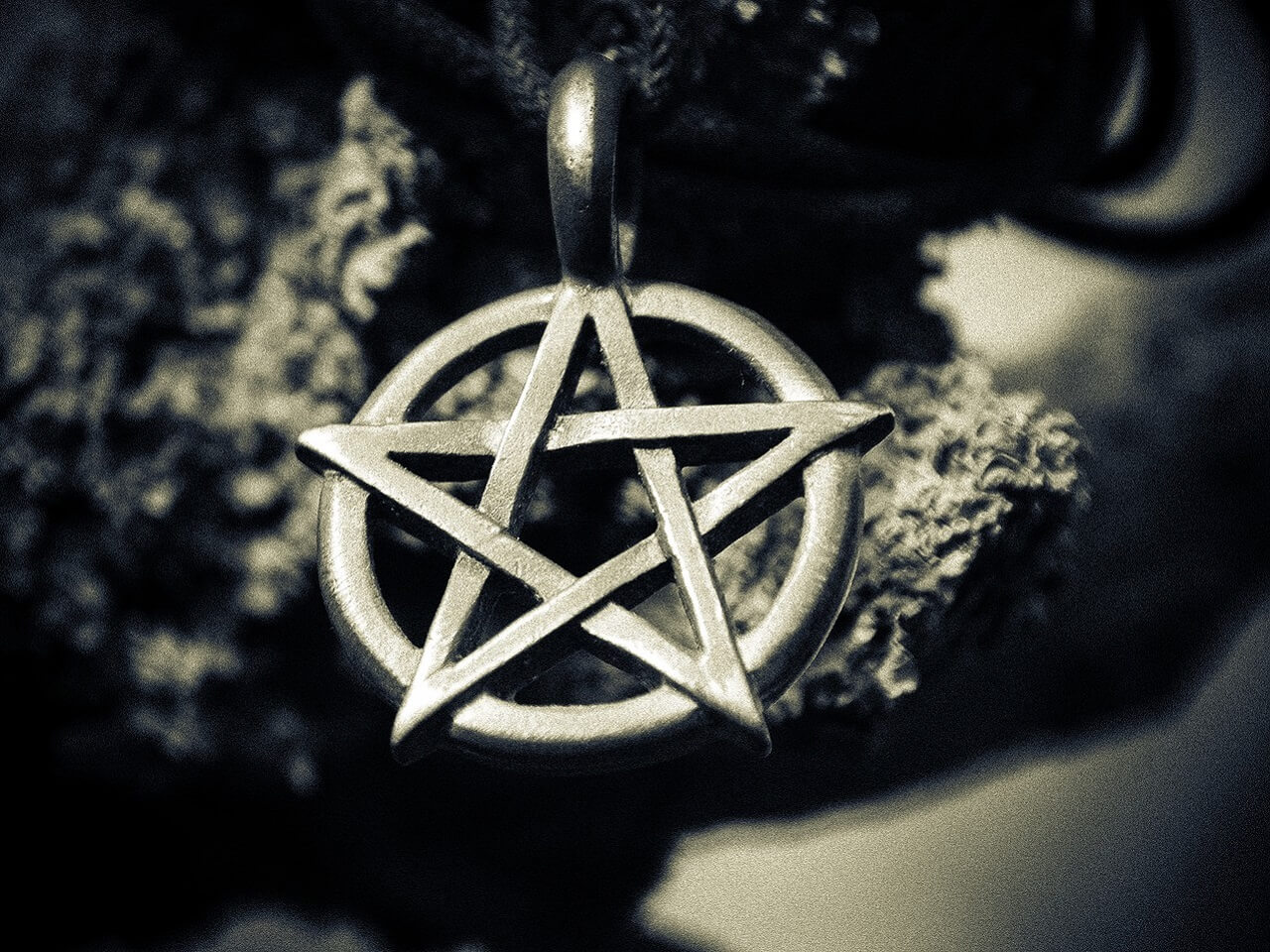


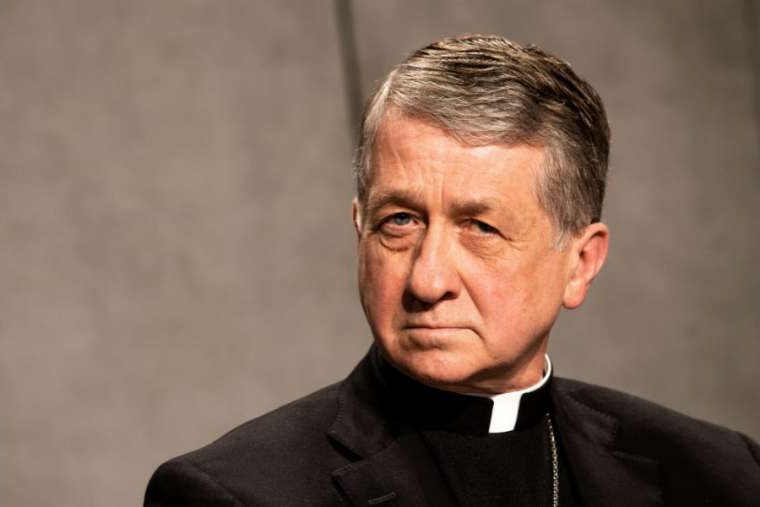




You must be logged in to post a comment.