Catholics are being played again, this time in Illinois.
Illinois Attorney General Lisa Madigan has released a report by her office on sexual abuse by the Catholic clergy in Illinois. Before addressing her report, consider the backdrop to her investigation.
A few years ago, one teacher at a Northwestern Pennsylvania high school, Brother Stephen Baker, was reported to the authorities on grounds that he allegedly molested a minor in the 1990s. Who reported him? His bishop, Altoona-Johnstown Bishop Mark Bartchak.
What happened next? The Pennsylvania Attorney General, who is now in prison, launched a state-wide probe of six of the eight dioceses in the state. That was all it took—one old case to ignite a huge probe of nearly all Catholic dioceses in the state extending back to World War II.
Illinois Attorney General Madigan said it was that grand jury report that inspired her to launch her investigation. The Pennsylvania grand jury report was released in August. Which begs the question: Why didn’t Madigan launch an investigation of the public schools throughout the state following revelations of a Chicago Tribune report on sexual abuse in Chicago? That report was released in June.
The Chicago Tribune found that there were 523 credible cases of rape and sexual abuse of Chicago students over the past decade. Even more astounding, in the last three months—between September and December—Chicago public school officials fielded 624 new complaints, including a teen track star who was allegedly raped 40 times by her coach. Worse again, these school officials “knew about these abuse cases and hid them from the public for eight years.”
Why didn’t Illinois Attorney General Madigan insist on a probe of every public school in the state, dating back decades?
Kids are being raped by public school teachers right now in Illinois, but this does not concern her. There is no “Teacher Abuse Hotline” posted on her website, but there is a “Clergy Abuse Hotline.” Furthermore, we know that she is not interested in cases of abuse committed by the clergy in all religions. Just one.
This is why I say Catholics are being played.
Catholics, and the public, are being led to believe that the Catholic Church owns this problem. It does not. It is widespread, but few prosecutors have any interest in examining current cases of sexual abuse in the public schools, never mind cases of abuse committed by the clergy in other religions. They are too busy uncovering decades-old cases of abuse committed by priests.
Regarding the Illinois Attorney General’s report, there are many unanswered questions.
Why is the report being touted as an examination of alleged sexual abuse in Illinois, when that is only partly true? The Clergy Abuse Hotline allows callers to report instances outside the state, or, as the report says, “in Illinois and elsewhere.”
Who called the Hotline? They were “survivors who were abused decades ago.” Why are they not referred to as alleged survivors? Did they ever report their alleged offense? “Survivors informed the Office [of the Illinois Attorney General] that, at various times over the years, they reported the abuse they suffered to one of the Illinois Dioceses.”
Did all of the alleged survivors register a complaint at the time of the offense, or just some? If some, how many? More important, there is no evidence that the Attorney General’s office sought to verify any of these accusations. Yet it takes Church officials to task for disregarding allegations brought to their attention.
The report says that “The Illinois Dioceses often disregarded survivors’ allegations by either not investigating the allegations, or finding reasons not to substantiate the allegations.”
Perhaps some of the allegations were not found credible on the face of it (e.g., the accused priest wasn’t even in the parish where his alleged offense occurred at that time). The report shows its true colors when it accuses Church officials of “finding reasons not to substantiate the allegations” (my italic.) Does the Attorney General’s office have evidence that Church officials contrived their conclusions? If not, why the stab?
The report acknowledges that in some cases the alleged victim chose not to have his name made public (a not uncommon practice). In other cases, a criminal investigation was already underway. In still others, the clergy had fled the country. These are all plausible reasons why Church officials decided not to launch a probe. But the authors of the report do not see it that way, and act as though non-Church officials typically start probes in similar instances. This is nonsense.
Perhaps most unconvincing of all, the report concludes that “Based on its review, the Office believes that additional allegations should be deemed ‘credible’ or ‘substantiated’ by the Illinois Dioceses.” On what grounds? On what basis does the Attorney General’s office make such a determination? It provides not one iota of evidence to make such a claim.
To say it “believes” this to be true means nothing. What specific cases did it find that should have been deemed credible or substantiated by Church officials? In other words, can the Attorney General’s office substantiate its claim?
There was a time when the Illinois Attorney General’s office raised questions about sexual abuse in the public schools. For example, it was distressed to learn that school officials did not accept its recommendation that cases of sexual abuse should be reported to the authorities. Instead, these officials insisted on doing their own probes first, arguing, quite persuasively, that in more than half the cases they examined, there was nothing to the charges.
That time was the mid-1980s. “Teachers Slip Through Abuse Law Loophole” was the headline of this December 8, 1985 story in the Chicago Tribune.
To this day, there has never been a grand jury investigation of the public schools in Illinois, or in any other state. Which is why Catholics are being played. We don’t own this problem, but the elites in government, the media, and education would like everyone to think we do.
Pope Francis’ new comments on the death penalty are incoherent and dangerous
Pope Francis says that his innovative teaching “does not imply any contradiction” of the Church’s tradition but, one has to say reluctantly, it indeed does.
Pope Francis meets with a delegation from the International Commission Against the Death Penalty in the papal library of the apostolic palace Dec. 17. (CNS photo/Vatican Media)
Debate has always been an invigorating and constructive way of defining and refining views, assuming that the debaters have minds of probity and reason. This is increasingly absent in our culture, where subjectivism rules, and where there is only one debater, and his opponent is a straw man of his own construction.
Yet when one reads the “spontaneous remarks” of Pope Francis on various subjects of the day, the quality of reasoning and information of facts is so fugitive, that frustration yields to sheer embarrassment. There is, for example, the Holy Father’s remarks to youth in Turin on a hot June day in 2015: even a Reuters press release said that his smorgasbord of concerns, from bankers to the weapons industry to Nazi concentration camps, was “rambling.” While constrained by respect for the Petrine office, and aware of the strains that imposes, it is distressing to look for a train of thought and find only a train wreck.
That has to be the impression after reading the Pope’s remarks to a Delegation of the International Commission Against the Death Penalty. Pope Francis reiterated his absolutist opposition to the death penalty which, by a singular gesture, he has also ordered be inscribed in the Catechism. Perhaps aware that public response might be problematic, he did not mention his opposition even to life sentences, having called them a form of “hidden death penalty”. This went far beyond the second edition of the 1992 Catechism, which affirmed the integrity of capital punishment in Scripture and Tradition but added that the cases in which the execution of the offender as an absolute necessity “are very rare, if not practically nonexistent.” By adding to a catechetical text a prudential opinion, John Paul II did something unprecedented and the whirlwind now being reaped in a pontificate less theologically acute, could justify concluding that the insertion of a prudential apostrophe was imprudent.
Pope Francis uses the term ”inadmissible” to describe the death penalty, although it has no theological substance, and by avoiding words such as “immoral” or “wrong”, inflicts on discourse an ambiguity similar to parts of Amoris Laetitia. The obvious meaning is that capital punishment is intrinsically evil, but to say so outright would be too blatant. He also calls all life “inviolable,” a term which applies only to innocent life and has no moral warrant otherwise. Then there is the ancillary and unmentioned consideration of the role of punishment and hell in all this, conjuring a suspicion of universalism, which is the denial of eternal alienation from God.
In 2004, Cardinal Ratzinger explained: “There may be a legitimate diversity of opinion even among Catholics about waging war and applying the death penalty, but not however with regard to abortion and euthanasia” and should a Catholic support the death penalty “he would not for that reason be considered unworthy to present himself to receive Holy Communion.” Pope Francis has discarded that, just as he has set aside the entire magisterial tradition of the Church on the kinds of penalties—medicinal and retributive—and their functions. This is no surprise, since an attaché of the Holy See Press Office, Father Thomas Rosica, has said in a statement ultramontane to the point of heresy: “Our Church has indeed entered a new phase: with the advent of this first Jesuit pope, it is openly ruled by an individual rather than by the authority of Scripture alone or even its own dictates of tradition plus Scripture.”
Exceptional delineations of authentic teaching on penalties were explained by Pius XII in his discourse to the First National Conference of Italian Lawyers in 1949 and the Sixth Internal Congress of Penal Law in 1953. A definitive new study is the book By Man Shall His Blood be Shed by Edward Feser and Joseph Bessette. Professor Feser has logically asked why we should have reverence for a father who has no reverence for the fathers, and warns that by divorcing his teaching from the constant tradition, Pope Francis is cutting off the very branch on which he sits.
Pope Francis justifies himself by invoking a “”progress” in society, but this is a humanistic—even Pelagian—confidence that has no warrant in reality. It also lets loose a cataract of contradictions. For instance, one of the Pope’s men, Archbishop Marcelo Sorondo, praised Communist China for coming “closer to Catholic social teaching” than the United States, although there were 23 executions in the United States last year compared with 1,551 in China, more than all other nations combined.
Pope Francis says that his innovative teaching “does not imply any contradiction” of the Church’s tradition but, one has to say reluctantly, it indeed does. The shift cannot be called a legitimate development of doctrine because it neglects all the classical criteria for authentic development, most especially what John Henry Newman named “preservation of type.” And as capital punishment pertains to natural law, once it is rejected as intrinsically wrong, the same could happen to any aspect of natural law, not least the anthropology of Humanae Vitae or the moral doctrine of Veritatis Splendor. Abidingly conscious of the claims and burdens of the Church’s highest office, that holy seat and high duty is diminished by neglect of its obligations to the perennial teachings of the fathers; and the faithful are at risk when they are offered confusion and superficiality in place of systematic thought. In short, the Vatican has become a theological Chernobyl. We are in dangerous territory.•
About Fr. George William Rutler 4 ArticlesFather George William Rutler, a parish priest in Manhattan, is a popular preacher and writer known internationally for his many TV programs on EWTN. He is the author of nineteen books, and he holds degrees from Dartmouth, Johns Hopkins, the Angelicum in Rome, and Oxford.
Washington D.C., Dec 17, 2018 / 06:05 pm (CNA).- Following the conviction of Cardinal George Pell in the Australian state of Victoria last week, new details have emerged about the nature of the crimes for which he has been found guilty.
Pell was found guilty Dec. 11 on five charges of sexual abuse of minors, following accusations that he sexually assaulted two former members of the Melbourne cathedral choir.
A sweeping court injunction prevents the nature of the accusations, the progress of the case, or the even the result of the trial from being discussed by the media in Australia.
Despite the gag order, CNA has spoken to several individuals who attended Pell’s trial in person, as well as others present for pre-trial hearings in early 2018.
During the March preliminary hearings, the defense petitioned for the allegations against Pell to be heard in two separate trials, the first concerning the accusations of the Melbourne choristers, and the second related to allegations from Pell’s time as a priest in Ballarat. Other charges Pell faced were dropped during the pre-trial committal hearings.
Sources say that five counts of sexual abuse were allegedly committed by Pell against the two choristers immediately following a 10:30 a.m. Sunday Mass in Melbourne’s cathedral. Pell is accused of abusing both choir members in the same incident.
Only one of the alleged victims was present in court to give evidence against Pell. The other alleged victim, according a 2017 report from Australian newspaper The Age, died of a drug overdose in 2014.
Before his death, the deceased man reportedly told his mother at least twice that he had not been a victim of sexual abuse. The other former choir member reportedly told the deceased man’s mother only after the man died that both had been abused by Pell, The Age reported, citing a 2017 book on Pell by journalist Louise Milligan.
According to the prosecution, Pell and the choir members “went missing” from a recessional procession at the end of a Mass celebrated by the archbishop. Pell is alleged to have abused the choristers somewhere within the cathedral sacristy immediately following that Mass.
Milligan has reported that the abuse might have taken place in the early months of 1997, but sources told CNA that the prosecution identified a period between August and December 1996, shortly after Pell was installed as Melbourne’s archbishop.
In June 2017, a priest who says he was with the archbishop every time Pell celebrated Mass at Melbourne’s cathedral was questioned by police about a timeframe that seems to match the one identified by prosecutors.
The priest told police that there was no occasion when Pell would have been alone with choir members. “At no time before, during or after Mass was the Archbishop in direct contact with anyone except that I was present,’’ the priest said, according to The Australian.
“I was always standing next to him and usually at an arm’s length away.’’
Pell was known to habitually celebrate the 10:30 a.m. Sunday Mass, at which the choir regularly sung, while he served as Archbishop of Melbourne.
However, Melbourne’s cathedral was undergoing restoration work at the time of his installation in August 1996, which prevented Pell from being installed in the cathedral building itself or from regularly celebrating Mass there for several weeks.
In fact, during the pre-trial committal hearing in March 2018, records were produced showing that during the period between August and December 1996, Pell only celebrated the cathedral’s 10:30 Sunday Mass twice.
According to a source present for the pre-trial hearing, on both of the occasions on which Pell celebrated the cathedral’s 10:30 Mass during the designated period, the choir held practices for the taping of a Christmas performance immediately following the 10:30 Mass, when the absence of two choristers would have been immediately noticed.
Cathedral and choir leaders and former members testified at the pre-trial hearing that choir leaders kept a close eye on the children and would have noticed if any slipped away. Former choir director Peter Finigan testified at the committal hearing that while it would have been possible for two choir members to slip away, he did not remember that it had ever happened.
“Two altos going missing would have stood out right away, as would their late arrival for the practice straight after Mass,” a source present at the committal hearing told CNA.
“That much was crystal clear.”
During the same committal hearing in March, a pastoral associate at the cathedral, Rodney Dearing, told the court that Pell required help to remove his vestments after every Mass, and it would have been nearly impossible for the archbishop to expose his genitals while fully vested, or to commit other sexual acts in the vestments.
Dearing also told Victoria police that the layout of the cathedral did not align with the accusations.
“I can’t understand, knowing the layout [of the cathedral] and how things worked, how it could have occurred,” Dearing told police, according to Australian media reports filed before a gag order on the trial was instituted.
CNA has previously reported that concerns were raised about the layout of the cathedral sacristy, where the abuse is meant to have taken place, which is open-planned and usually full of people following Mass.
Further evidence was reportedly heard during the November trial confirming that Pell only celebrated 10:30 a.m. Mass in the cathedral twice during the alleged timeframe of the events, and the court heard witness testimony that Pell had been with guests immediately following Mass on one of the two Sundays.
Sources close to the trial underscored to CNA that cases of sexual abuse often rely on the persuasive testimony of the victims, and that due to the nature of sexual abuse crimes, corroborating evidence is difficult to present. In such cases, the relative reliability of the victims can be a crucial factor.
During Pell’s trial, the judge reportedly excluded both the prosecution and the defense from disclosing to the jury or discussing in court anything which could bear upon the credibility of the accuser.
When asked how the jury could have delivered a unanimous conviction despite the seeming weight of evidence in his favor, several trial attendees noted that Pell refused to give evidence in his own defense.
“Pell didn’t take the stand, and that definitely made a negative impression; it doesn’t look good if you won’t deny it with your own lips,” one source told CNA.
Others close to the cardinal defended the decision not to have Pell take the stand.
“If you hire Robert Richter [Pell’s lead lawyer], you bloody well take his advice,” one source close to Pell noted. Some sources believe that Pell’s attorneys were concerned that the cardinal would try to give expansive answers from the witness box, rather than confine himself to narrow responses on points of fact.
Instead of Pell’s testimony, recordings were played for the jury of Pell’s interviews with police and state authorities, in which he had previously answered questions about the charges and denied ever sexually abusing a minor.
The Melbourne trial began in June, ending first in a hung jury and a mistrial, with jurors reportedly siding 10-2 in favor of Pell’s innocence. A second hearing with a new jury began in November, delivering a unanimous conviction on Dec. 11. The gag order remains in place pending Pell’s sentencing and expected appeal, and ahead of the trial on the Ballarat allegations expected to begin early next year.
Prior to the institution of the gag order, questions were raised by Australian media and legal figures about the possibility that jury pools could be tainted by years of negative coverage of Pell.
In other Australian states, high-profile cases like Pell’s have the option of being tried by a judge only, without a jury, called a bench trial. Victoria, where Pell is on trial, is one of the only jurisdictions in Australia not to have this option.
On Dec. 13, two days after the Pell conviction, Victoria state Attorney-General Jill Hennessy told the Australian newspaper The Age that she had asked her department to examine the option of judge-only trials in high profile cases, where an impartial jury might be difficult to find. This followed the exoneration of former Adelaide archbishop Philip Wilson, whose conviction for failing to report child sexual abuse was overturned by a judge on appeal.
In the Wilson case, appellate judge Roy Ellis noted that media portrayals of the Church’s sexual abuse crisis might have been a factor in the guilty verdict.
Such portrayals “may amount to perceived pressure for a court to reach a conclusion which seems to be consistent with the direction of public opinion, rather than being consistent with the rule of law that requires a court to hand down individual justice in its decision-making processes,” he said.
The state of Victoria has faced sustained criticism for the use of suppression orders by the state’s courts. Despite an Open Courts Act passed in 2013 aimed at improving judicial transparency, Victorian courts issued more than 1500 suppression orders between 2014-2016.
It has been reported that local media petitioned Victoria County Court to lift the suppression order on the Pell case, but that no decision had been issued on that request.
The case against Pell: new details emergeFollowing the conviction of Cardinal George Pell in the Australian state of Victoria last week, new details have…
Trial observer: “It was absolutely clear to everyone in that court that the accusations were baseless. It wasn’t that Pell didn’t do what he’s accused of — he clearly couldn’t have done it.” DECEMBER 17, 2018 2 COMMENTS
We’ve talked a lot on this show about the threat to free speech. It turns out it’s very real.
Here’s one example: Last week, we interviewed a man named Genaro Lopez. Lopez is an elected official in Tijuana, Mexico. He’s exactly the kind of person you’d think a lot of American journalists would want to talk to. For months, the media have demanded that the migrant caravan from Honduras must be admitted into the United States. Once it gets here, they’ve told us, our country will be greatly improved by its presence. That’s how immigration works.
OK. It turns out we can test that hypothesis. That very same caravan, the one they’ve been telling you about, is now encamped in Tijuana. It’s been there for weeks. Simple question: Has the caravan made Tijuana better? Genaro Lopez would know the answer. His job is to represent the citizens of that city. We’ve invited Lopez on twice to ask about the caravan. He’s some of what he told us.
I asked him, “Behind you it seems that somebody’s cleaning up garbage. Is there a lot of trash there?”
Lopez responded: “There’s a lot of trash because, what I was trying to tell you, the 360 [people we had here] grew to 6,200. And that’s why it got out of hand. So, we got another facility. It’s a big concert hall where you can have like 10,000 people under a roof.”
That was on December 3. Ten days later, we invited Genaro Lopez back on to the show to see how Tijuana was doing.
Nobody else in the media seemed interested in what had happened to the caravan. As long as the migrants remained in Mexico, they couldn’t really be used to attack Donald Trump. So the press moved on to the next dumb, shiny thing. But we were interested. Here’s what Lopez told us:
“Things aren’t getting better. They’re probably getting worse,” he said. “Last weekend, we issued an ultimatum to all the Hondurans and Guatemalans that are camping out here on the street. They’re blocking the street. And they’re bringing all their necessities, trashing the street. … Problems are still going on. There’s been like 280 arrests. Before, it was solely for drug possession and being drunk in the streets. Now, it’s for breaking and entering into homes.”
Trashing the street. Doing drugs in public. Blocking traffic. Breaking into homes. That’s not at all what CNN promised us.
Was Genaro Lopez one of those white nationalists the New York Times is always warning us about? Did he make the whole thing up, pictures and all, for his own sick, bigoted reasons?
Possibly. Or maybe, and this was our conclusion, there could be a lesson here for the United States. Here’s what we said that night on the show:
“Our country’s economy is becoming more automated and tech-centered by the day. It’s obvious that we need more scientists and skilled engineers. But that’s not what we’re getting. Instead, we’re getting waves of people with high school educations or less. Nice people, no one doubts that but as an economic matter, this is insane. It’s indefensible, so nobody even tries to defend it. Instead, our leaders demand that you shut up and accept this. We have a moral obligation to admit the world’s poor, they tell us, even if it makes our own country poorer and dirtier and more divided.”
In a fast-evolving economy, it could be preferable to import more engineers, and fewer people with low skills, no matter how nice or well-meaning those people might be. And we always assume they are.
That’s what we said. That was our claim. And it’s hard to argue with that. In fact, nobody on the left did argue with it. They ignored it. Instead, they zeroed in on the last line: “The left says we have a moral obligation to admit the world’s poor, even if it makes our own country more like Tijuana is now, which is to say poorer and dirtier and more divided.”
That’s what we said. It’s true. Ask Genaro Lopez. Thanks to the efforts of the American left, he and his city are living with the consequences. But precisely because it is so obviously true, saying it out loud is a threat. Our immigration policy exists for the profit and the comfort of a relatively tiny number of people. Everybody else gets shafted, including Genaro Lopez and an awful a lot of people just like him. Meanwhile, the people profiting from the policy don’t want the rest of us to think about it too much. They want us just to mouth the empty platitudes and move on. Nothing to see here. Shut up and go away.
Those who won’t shut up get silenced. You’ve seen it a million times. It happens all the time. The enforcers scream “racist!” on Twitter until everyone gets intimidated, and changes the subject to the Russia investigation or some other distraction.
It’s a tactic. A well-worn one. Nobody thinks it’s real. And it won’t work with this show. We’re not intimidated. We plan to try to say what’s true until the last day. And the truth is, unregulated mass immigration has badly hurt this country’s natural landscape.
Take a trip to our southwestern deserts, if you don’t believe it. Thanks to illegal immigration, huge swaths of the region are covered with garbage and waste that degrade the soil and kill wildlife.
The Arizona Department of Environment Quality estimates that each illegal border crosser leaves six to eight pounds of trash during the journey into our country. If you’re interested in more detail, look at the website they’ve created, it’s called Arizona Border Trash. It’s dedicated to highlighting and cleaning up the thousands of tons of garbage strewn across Arizona by immigrants every year.
Illegal immigration comes at a huge cost to our environment. The Government Accountability Office (GAO) put it this way: “Illegal border activity on federal lands not only threatens people, but endangered species and the land itself. Illegal aliens and smugglers have destroyed cactus and other sensitive vegetation that can take decades to recover, including habitat for endangered species. One land management official described another federal property on Arizona’s border as so unsafe and with resources so destroyed that it is now primarily used for illegal activities and no longer visited by the general public.”
Keep in mind this is not a press release from Donald Trump’s campaign team.That’s a federal study from 2002. That was back when people could do science without getting fired for it.
The left used to care about the environment – the land, the water, the animals. They understood that America is beautiful because it is open and uncrowded.
Not so long ago, environmentalists opposed mass immigration. They knew what the costs were. They still know. But they don’t care.
We do care. And we’re going to continue telling you about it. We think you have a right to know. No matter what they say.Tucker Carlson currently serves as the host of FOX News Channel’s (FNC) Tucker Carlson Tonight (weekdays 8PM/ET). He joined the network in 2009 as a contributor.
A war memorial is in the form of a cross. Is that a problem?by Jeff Jacoby The Boston Globe December 16, 2018
http://www.jeffjacoby.com/21883/a-war-memorial-is-in-the-form-of-a-cross-is-thatThe World War I memorial cross in Bladensburg, Md.TO HONOR the memory of 49 men from Prince George’s County, Md., killed in action during World War I, a 40-foot memorial cross made of concrete and pink granite has stood for nearly 100 years at an intersection in the town of Bladensburg near Washington, DC. Though it was erected with private funds, the cross stands on public land, and since 1961 has been maintained by a state agency.Is that constitutional?The Supreme Court has agreed to decide next year whether the Bladensburg Peace Cross violates the First Amendment, which prohibits government from any “establishment of religion.” The legal challenge comes from the American Humanist Association, which filed a lawsuit demanding that the cross be removed because it sends “a clear message that Christianity is the preferred religion over all others.” Last year, a panel of the Fourth Circuit US Court of Appeals agreed with that claim, ruling that the Peace Cross is tantamount to an endorsement of Christianity, and an unconstitutional use of public funds and property.The American Legion, which intervened to defend the cross, petitioned the Supreme Court to review the case. The storied veterans group was a key sponsor and fundraiser for the memorial; its emblem (a star bearing the initials “US”) appears prominently in the center of the cross. The petitioners argue that unless the Fourth Circuit is overruled, cross-shaped memorials on public land everywhere — such as two prominent World War I monuments at Arlington National Cemetery — will be endangered. More generally, the American Legion is asking the high court to clarify what constitutes “an establishment of religion” under the Constitution, and to make clear that there is nothing improper about religion-infused displays that are consistent with American custom.Everyone agrees that the Constitution bars the government from using its power to coerce religious belief or practice, to penalize dissenters, or to affect religious doctrine. But what about a passive monument like the Bladensburg Peace Cross, which doesn’t compel anyone to do anything? Does a memorial shaped like a cross violate the Establishment Clause simply because it is exhibited on public land?Why, of course it does, says the American Civil Liberties Union, insisting in an essay at Scotusblog that the case “should be a no-brainer.” Any display featuring a cross is obviously meant to honor and represent Christianity, contends ACLU senior attorney Heather Weaver, and the Constitution forbids the government from sponsoring such a display.But if anything about this case is a no-brainer, it is that the Supreme Court is not going to ban a World War I memorial that has stood, without objection, for nearly a century. The justices will not rule that any appearance of a cross on the public square is by definition an unlawful attempt by government to advance religion.Crosses, after all, have a well-known secular meaning, too — particularly when used as memorials to the dead. There were numerous reminders of that last month, when John McCrae’s haunting memorial poem was invoked in connection with the centennial of the Armistice that ended World War I. The poem begins: “In Flanders fields the poppies blow/ Between the crosses, row on row/ That mark our place. . .”The Supreme Court itself has noted that crosses are routinely displayed for nonreligious reasons. No one regards a cross planted alongside a highway where someone died in an accident as a government advertisement for religion. As Justice Anthony Kennedy wrote in a 2010 case, the raising of a prominent Latin cross need not be an affirmation of Christian belief: “It is a symbol often used to honor and respect those whose heroic acts, noble contributions, and patient striving help secure an honored place in history for this Nation and its people.”The same is true of the crosses that figure in America’s military decorations, such as the Air Force Cross and the Distinguished Service Cross, or in the crests of naval vessels like the USS Pearl Harbor: They are plainly meant as tributes to valor, not as efforts to promote Christianity.All of which means that if the court is inclined to decide this case on narrow grounds, it can do so by restricting itself to the nonreligious connotations of the Bladensburg cross.But the American Legion is asking the court to go farther. It wants the justices to rule that a government’s use of religious imagery and language, so long as they are in line with longstanding American traditions and historical practices, will be presumed unobjectionable under the First Amendment.At times, the court has recognized the legitimacy of those traditions and practices.”There is an unbroken history of official acknowledgment by all three branches of government of the role of religion in American life from at least 1789,” Chief Justice Warren Burger wrote for the majority in Lynch v. Donnelly, a 1984 case upholding the lawfulness of a Pawtucket, R. I., Christmas display that included a crèche. The First Amendment has never required official coolness toward religion. Indeed, the same Congress that adopted the First Amendment also hired congressional chaplains. Presidential announcements, such as the annual Thanksgiving proclamation, have frequently been cast in religious terms. “In God We Trust” is the national motto. US postage stamps commemorate Christian, Jewish, Muslim, and Hindu holidays.None of these amounts to an “establishment of religion,” as the Framers of the Constitution understood that term. Neither does the Bladensburg Peace Cross. However much the ACLU and the American Humanist Association may wish it were otherwise, the First Amendment does not require governments to scour every allusion to religion from public spaces and government budgets.The Constitution is friendly to religion; it is only hostile to religious coercion. The difference between the two is usually wide and clear. The Supreme Court has often suggested as much. Now it ought to say so explicitly.(Jeff Jacoby is a columnist for The Boston Globe).– ## —
Washington D.C., Dec 17, 2018 / 06:05 pm (CNA).- Following the conviction of Cardinal George Pell in the Australian state of Victoria last week, new details have emerged about the nature of the crimes for which he has been found guilty.
Pell was found guilty Dec. 11 on five charges of sexual abuse of minors, following accusations that he sexually assaulted two former members of the Melbourne cathedral choir.
A sweeping court injunction prevents the nature of the accusations, the progress of the case, or the even the result of the trial from being discussed by the media in Australia.
Despite the gag order, CNA has spoken to several individuals who attended Pell’s trial in person, as well as others present for pre-trial hearings in early 2018.
During the March preliminary hearings, the defense petitioned for the allegations against Pell to be heard in two separate trials, the first concerning the accusations of the Melbourne choristers, and the second related to allegations from Pell’s time as a priest in Ballarat. Other charges Pell faced were dropped during the pre-trial committal hearings.
Sources say that five counts of sexual abuse were allegedly committed by Pell against the two choristers immediately following a 10:30 a.m. Sunday Mass in Melbourne’s cathedral. Pell is accused of abusing both choir members in the same incident.
Only one of the alleged victims was present in court to give evidence against Pell. The other alleged victim, according a 2017 report from Australian newspaper The Age, died of a drug overdose in 2014.
Before his death, the deceased man reportedly told his mother at least twice that he had not been a victim of sexual abuse. The other former choir member reportedly told the deceased man’s mother only after the man died that both had been abused by Pell, The Age reported, citing a 2017 book on Pell by journalist Louise Milligan.
According to the prosecution, Pell and the choir members “went missing” from a recessional procession at the end of a Mass celebrated by the archbishop. Pell is alleged to have abused the choristers somewhere within the cathedral sacristy immediately following that Mass.
Milligan has reported that the abuse might have taken place in the early months of 1997, but sources told CNA that the prosecution identified a period between August and December 1996, shortly after Pell was installed as Melbourne’s archbishop.
In June 2017, a priest who says he was with the archbishop every time Pell celebrated Mass at Melbourne’s cathedral was questioned by police about a timeframe that seems to match the one identified by prosecutors.
The priest told police that there was no occasion when Pell would have been alone with choir members. “At no time before, during or after Mass was the Archbishop in direct contact with anyone except that I was present,’’ the priest said, according to The Australian.
“I was always standing next to him and usually at an arm’s length away.’’
Pell was known to habitually celebrate the 10:30 a.m. Sunday Mass, at which the choir regularly sung, while he served as Archbishop of Melbourne.
However, Melbourne’s cathedral was undergoing restoration work at the time of his installation in August 1996, which prevented Pell from being installed in the cathedral building itself or from regularly celebrating Mass there for several weeks.
In fact, during the pre-trial committal hearing in March 2018, records were produced showing that during the period between August and December 1996, Pell only celebrated the cathedral’s 10:30 Sunday Mass twice.
According to a source present for the pre-trial hearing, on both of the occasions on which Pell celebrated the cathedral’s 10:30 Mass during the designated period, the choir held practices for the taping of a Christmas performance immediately following the 10:30 Mass, when the absence of two choristers would have been immediately noticed.
Cathedral and choir leaders and former members testified at the pre-trial hearing that choir leaders kept a close eye on the children and would have noticed if any slipped away. Former choir director Peter Finigan testified at the committal hearing that while it would have been possible for two choir members to slip away, he did not remember that it had ever happened.
“Two altos going missing would have stood out right away, as would their late arrival for the practice straight after Mass,” a source present at the committal hearing told CNA.
“That much was crystal clear.”
During the same committal hearing in March, a pastoral associate at the cathedral, Rodney Dearing, told the court that Pell required help to remove his vestments after every Mass, and it would have been nearly impossible for the archbishop to expose his genitals while fully vested, or to commit other sexual acts in the vestments.
Dearing also told Victoria police that the layout of the cathedral did not align with the accusations.
“I can’t understand, knowing the layout [of the cathedral] and how things worked, how it could have occurred,” Dearing told police, according to Australian media reports filed before a gag order on the trial was instituted.
CNA has previously reported that concerns were raised about the layout of the cathedral sacristy, where the abuse is meant to have taken place, which is open-planned and usually full of people following Mass.
Further evidence was reportedly heard during the November trial confirming that Pell only celebrated 10:30 a.m. Mass in the cathedral twice during the alleged timeframe of the events, and the court heard witness testimony that Pell had been with guests immediately following Mass on one of the two Sundays.
Sources close to the trial underscored to CNA that cases of sexual abuse often rely on the persuasive testimony of the victims, and that due to the nature of sexual abuse crimes, corroborating evidence is difficult to present. In such cases, the relative reliability of the victims can be a crucial factor.
During Pell’s trial, the judge reportedly excluded both the prosecution and the defense from disclosing to the jury or discussing in court anything which could bear upon the credibility of the accuser.
When asked how the jury could have delivered a unanimous conviction despite the seeming weight of evidence in his favor, several trial attendees noted that Pell refused to give evidence in his own defense.
“Pell didn’t take the stand, and that definitely made a negative impression; it doesn’t look good if you won’t deny it with your own lips,” one source told CNA.
Others close to the cardinal defended the decision not to have Pell take the stand.
“If you hire Robert Richter [Pell’s lead lawyer], you bloody well take his advice,” one source close to Pell noted. Some sources believe that Pell’s attorneys were concerned that the cardinal would try to give expansive answers from the witness box, rather than confine himself to narrow responses on points of fact.
Instead of Pell’s testimony, recordings were played for the jury of Pell’s interviews with police and state authorities, in which he had previously answered questions about the charges and denied ever sexually abusing a minor.
The Melbourne trial began in June, ending first in a hung jury and a mistrial, with jurors reportedly siding 10-2 in favor of Pell’s innocence. A second hearing with a new jury began in November, delivering a unanimous conviction on Dec. 11. The gag order remains in place pending Pell’s sentencing and expected appeal, and ahead of the trial on the Ballarat allegations expected to begin early next year.
Prior to the institution of the gag order, questions were raised by Australian media and legal figures about the possibility that jury pools could be tainted by years of negative coverage of Pell.
In other Australian states, high-profile cases like Pell’s have the option of being tried by a judge only, without a jury, called a bench trial. Victoria, where Pell is on trial, is one of the only jurisdictions in Australia not to have this option.
On Dec. 13, two days after the Pell conviction, Victoria state Attorney-General Jill Hennessy told the Australian newspaper The Age that she had asked her department to examine the option of judge-only trials in high profile cases, where an impartial jury might be difficult to find. This followed the exoneration of former Adelaide archbishop Philip Wilson, whose conviction for failing to report child sexual abuse was overturned by a judge on appeal.
In the Wilson case, appellate judge Roy Ellis noted that media portrayals of the Church’s sexual abuse crisis might have been a factor in the guilty verdict.
Such portrayals “may amount to perceived pressure for a court to reach a conclusion which seems to be consistent with the direction of public opinion, rather than being consistent with the rule of law that requires a court to hand down individual justice in its decision-making processes,” he said.
The state of Victoria has faced sustained criticism for the use of suppression orders by the state’s courts. Despite an Open Courts Act passed in 2013 aimed at improving judicial transparency, Victorian courts issued more than 1500 suppression orders between 2014-2016.
It has been reported that local media petitioned Victoria County Court to lift the suppression order on the Pell case, but that no decision had been issued on that request.
Catholic News Agency has not published, broadcast, or distributed this news story in Australia.
Posted inUncategorized|Comments Off on It begins to look more and more as though Francis the Merciful arranged to have Cardinal Pell accused of pedophilia thereby removing him from oversight of Vatican finances.
ROME, December 17, 2018 (LifeSiteNews) — Pope Francis has incited further controversy in a recent address expounding on his reasons for changing the Catechism of the Catholic Church on the death penalty.
As LifeSite reported earlier today, Pope Francis told a delegation from the International Commission against the Death Penalty in a Dec. 17 address that popes “in centuries past” ignored “the primacy of mercy over justice” in using the death penalty, which he called an “inhuman form of punishment” that is now “always inadmissible.”
Insisting that the change to n. 2267 of the Catechism is not a “contradiction with the teaching of the past,” but the “harmonious development” of doctrine, Pope Francis reiterated that the Church now teaches that, “in light of the Gospel, the death penalty is always inadmissible because it violates the inviolability and dignity of the person.”
The Pope has already faced criticism for seeking to change infallible Catholic teaching on the permissibility of execution in principle. This latest papal intervention will make it even more difficult for those who argue that there is no contradiction between Pope Francis’s teaching and the doctrine of his 266 predecessors.
Already, one prominent philosopher and writer on capital punishment is challenging the basis of the Pope’s new teaching, while a Dominican theologian and a Catholic historian have both expressed concerns at the coherence and defensibility of the pontiff’s novel claims.
A prominent philosopher weighs in
Renowned Catholic philosopher Edward Feser, Associate Professor of Philosophy at Pasadena City College in Pasadena, California, is one of the foremost contemporary writers in the Thomistic tradition. He is the author of such works as The Last Superstition, Scholastic Metaphysics, Five Proofs of the Existence of God, By Man Shall His Blood Be Shed (with Joseph Bessette) and the forthcoming (and much anticipated) Aristotle’s Revenge.
By Man Shall His Blood Be Shed, is a study and defense of the perennial Catholic teaching on the death penalty as legitimate in principle and often advisable in practice even in contemporary social conditions.
In comments to LifeSite regarding Pope Francis’s Dec. 17 address to the International Commission against the Death Penalty, Feser said:
Once again the Pope both appears to condemn capital punishment as intrinsically wrong and claims that his remarks are consistent with past teaching. He tries to justify the claim that there is no inconsistency by saying that the Church has always affirmed the dignity of life. But this is analogous to denying the doctrine that there are three divine Persons and then claiming that this is consistent with past teaching, on the grounds that the Church has always affirmed that there is only one God. In fact, the doctrine of the Trinity requires us to say both that there is only one God and that there are three Persons in God. Similarly, consistency with scripture and previous papal teaching requires us to say both that life has dignity but also that an offender can in principle lose the right to his life. To fail to affirm both of these things is precisely to contradict past teaching, not “develop” it.
Feser continued:
The Pope implicitly criticizes previous popes for upholding and applying capital punishment, such as in the Papal States, and he implies that these popes were deficient in their doctrinal understanding insofar as they lacked awareness of our “present level of development of human rights” and ignored “the primacy of mercy over justice” — this despite the fact that previous popes rested their teaching on scripture, the Fathers and Doctors of the Church, and all their predecessors in the papal office. Perhaps the pope does not realize that he is inadvertently laying the groundwork for a future pope to criticize him the way he is criticizing his predecessors. If 2000 years of popes can be wrong about capital punishment — as Pope Francis implies — why should we not conclude instead that it is Pope Francis himself, rather than they, who has gotten things wrong?
The co-author of By Man Shall His Blood Be Shed added:
As he has done several times in the past, the Pope appears to be condemning life imprisonment as well as capital punishment. Curiously, Catholics who praise the Pope’s views on capital punishment never seem to comment on his views about life imprisonment. Why not? Are Catholics now required to call for releasing serial killers and the like from prison at some point, however heinous their crimes and however dangerous they remain? If not, why not, given the Pope’s repeating sweeping condemnations of life imprisonment as no less wrong than capital punishment? How are we supposed to deal with the worst offenders if both capital punishment and life imprisonment are ruled out? Exactly how long should prison sentences be if life sentences are ruled out? Why do the Pope’s admirers not address these questions or call on the Pope to address them?
Analysis from a Dominican Theologian
A Dominican theologian who wished to remain anonymous offered a more detailed critique of Pope Francis’s Dec. 17 address on the death penalty.
In comments to LifeSite, the Dominican noted that Pope Francis’ claim that his teaching “does not imply any contradiction” with the Church’s teaching in the past “renders the entire speech incoherent, since the Church clearly taught in the past the legitimacy of capital punishment.”
In initial remarks, he notes that the death penalty cannot be a “cruel punishment,” as Pope Francis claims, arguing that “since capital punishment is sometimes just, it cannot always be cruel.”
The Dominican pointed out that Pope Francis confuses his own theological views with the teachings of the Church; for example, when he refers to the Church’s commitment to abolition. This is really “his personal commitment” and “Catholics as such are not obliged to share it,” the Dominican theologian added.
The circumstances, as laid down by the First Vatican Council, in which the teaching of the Pope is also necessarily the teaching the Church, are actually quite restricted.
The Dominican theologian pointed out that Pope Francis’ appeal to St. John Paul II rests on “a confusion between the doctrine of John Paull II and his personal judgement of the prudence of capital punishment in modern times.”
Taking umbrage at the Pope’s statement that the death penalty is “contrary to the Gospel,” he also points out that: “Christ says the law of Moses was given by God, instancing the command that those who curse their parents be put to death (Mk. 7:9-10), and that Scripture, including therefore the imposition of capital punishment for many offences, cannot be broken (Jn. 10:35).”
“Hence, it is the claim that the death penalty is opposed to the gospel which is opposed to the Gospel,” he argues.
While agreeing with Pope Francis that “extrajudicial, summary or arbitrary executions” are to be condemned, the Dominican theologian takes issue with the Pope’s appeal to the authority of St. Thomas regarding the death penalty as a (now obsolete) form of self-defence observing that it rests on a misunderstanding.
St Thomas is talking here about self-defense by private individuals, notabout the rights of the State. In article 3 of the same question in the Summa, he says: “it is lawful to kill an evildoer in so far as it is directed to the welfare of the whole community, and hence this belongs to him alone who has charge of the community’s welfare. Thus it belongs to a physician to cut off a decayed limb, when he has been entrusted with the care of the health of the whole body. Now the care of the common good is entrusted to persons of rank having public authority: wherefore they alone, and not private individuals, can lawfully put evildoers to death.” In article 2 he says: “if a man be dangerous and infectious to the community, on account of some sin, it is praiseworthy and advantageous that he be killed in order to safeguard the common good, since a little leaven corrupteth the whole lump.”
Like Feser and Bessette in their book By Man Shall His Blood Be Shed, the Dominican argues that capital punishment can work powerfully to illicit repentance in serious criminals.
“Capital punishment offers the possibility for a repentant criminal to expiate at least part of his sin upon earth, more briefly and less painfully than in purgatory; hence it can itself be an offer of mercy,” he said.
The theologian added: “Cardinal Newman wrote movingly in Difficulties of Anglicans, about the compassion felt for condemned criminals in the papal states, and how special confraternities existed to pray that they would accept their penalty in this spirit, and how in this way the conversions of great sinners were sometimes accomplished.”
Pope Francis in contrast says that this “inhuman form of punishment” ignores “the primacy of mercy over justice.”
Like Feser, the Dominican is also concerned about the Pope’s attack on life imprisonment.
“He who can do the greater can do the less. Since the civil power can inflict death, it can also inflict perpetual punishment,” he said. “This claim [by Pope Francis] also gives new grounds for doubt about whether Pope Francis believes in the dogma of hell, in the way in which the Church teaches it, namely as a state, precisely, of ‘perpetual punishment.’”
In his Dec. 17 address to the International Commission against the Death Penalty, the Pope says that his predecessors, have unduly “sacralized the value of laws.” On the contrary, the Dominican theologian sees the Pope’s perspective as secularized.
“Temporal power, as a shadow of divine power, has an intrinsically sacred element. St. Paul states that the ruler, even if a pagan, is ‘the minister of God’, and that he ‘does not bear the sword in vain’, i.e. that he can legitimately execute the worst criminals. Pope Francis’s words put him at odds the apostle to the Gentiles,” he says.
A Catholic Historian comments
A British Catholic historian based in the U.S also questioned the defensibility of Pope Francis’ novel teaching on the death penalty.
Dr. Alan Fimister is an Assistant Professor of Theology and Church History at St. John Vianney Theological Seminary in Denver, and Director of the Dialogos Institute, which encourages debate on legitimately disputed theological questions among Catholics.
Dr. Fimister has expressed concern in the pastabout the possibility of reconciling opposition to capital punishment in principle with the traditional teaching of the Church throughout the first and second millennium (up to and including John Paul II and Benedict XVI) and also about the compatibility of episcopal demands for its abolition in practice with the rightful autonomy of the laity in questions of temporal government.
As he explains “It is for the hierarchy to define, in accordance with scripture and tradition, the conditions under which capital punishment is legitimate but it is for the laity to decide when and where those conditions are met. Obviously, clerics will have views on these matters like anyone else but they ought not to be expressed in an official capacity.”
“Although the new paragraph in the Catechism is not unproblematic” Dr. Fimister told LifeSite, “it is still possible to read the text itself as making the inadmissibility of the death penalty dependent on the alleged fact that ‘more effective systems of detention have been developed.’”
“Read this way, while appearing to take up a temporal prudential judgment reserved to the lay faithful, it would not directly contradict the teaching of the ordinary and universal magisterium concerning the legitimacy of the death penalty in principle,” he said.
“On the other hand, it has always been clear that Pope Francis’s personal view expressed in less formal contexts (including sadly the statement cited in the new section of the Catechismand now this address) is much harder to reconcile with the immemorial teaching of the Church.”
Fimister continued:
There is an ambiguity in John Paul II’s 1997 version of 2267 as to what is meant by ‘the unjust aggressor.’ If ‘the unjust aggressor’ means ‘the murderer’ or ‘the rapist’ as a category then the 1997 version is giving us the same doctrine the 1566 Roman Catechism which implies that the legitimate use of the death penalty would both avenge crime and give security to life. Unfortunately, there is another way of interpreting n. 2267 (1997) and that is as saying that the actual individual murderer etc. has to be uncontainable by the prison system in order for the death penalty to be justified. This would not be consistent with prior teaching and would also imply a much too broad understanding of double effect. The use of the death penalty cannot be justified in such a way as would imply that one may do evil that good may come of it. One may never do evil that good may come of it. Pope Francis is coming down on the problematic side of this ambiguity and developing it into further and even more problematic conclusions (including the implicit condemnation of the universal and ordinary magisterium as “more legalistic than Christian” and “lacking in humanity and mercy”).
Dr. Fimister also pointed to some remarks of the philosopher Elizabeth Anscombe in her essay ‘The Dignity of the Human Being.’
“To regard someone as deserving of death is very definitely regarding him, not just as a human being but as endued with a dignity belonging to human beings, as having free will and as answerable for his actions … Capital punishment, though you may have reason against it, does not, just as such, sin against the human dignity of one who suffers it. He is at least supposed to be answering for crime of which he has been found guilty by due process.”
Professor Anscombe, sometime head of the Cambridge philosophy faculty and celebrated pupil of Wittgenstein, was no slouch in her zeal for human dignity facing arrest for barricading abortion clinics with her own body.
“We always have to be careful to avoid claiming that the teachings of Christ and the Apostles somehow contain hidden meanings contrary to how the Church has understood them and apparent to us only now,” Fimister said. “As Vatican I reminds us, ‘If anyone says that it is possible that at some time, given the advancement of knowledge, a sense may be assigned to the dogmas propounded by the Church which is different from that which the Church has understood and understands: let him be anathema.’”
As one informed source observed wryly: “It is hard to understand how Pope Francis can hold that the death penalty is per se contrary to the Gospel and yet was taught and practiced legitimately (if regrettably) in the past but is now ‘inadmissible.’ But one needs to remember that the pope is widely held to teach that sometimes some people simply cannot help but commit adultery and are therefore blameless. We can only hope that one day the ‘change in the conscience of the Christian people’ will make adultery inadmissible as well.”
TWELVE VALID CARDINALS, i.e. CARDINALS APPOINTED BY POPES BENEDICT XVI AND SAINT JOHN PAUL II, MUST ACT SOON TO REMOVE FRANCIS THE MERCIFUL FROM THE THRONE OF SAINT PETER BEFORE HE DAMAGES THE INSTITUTIONAL CHURCH EVEN MORE THAN HE HAS ALREADY DAMAGED IT.
++++++++++++++++++++++++++++++++++++++++++++++++++++++++++++++++++++++++++++++++++++++++++++++++++++++++++++++++++AN OPEN LETTER TO THE CARDINALS OF THE HOLY ROMAN CATHOLIC CHURCH AND OTHER CATHOLIC CHRISTIAN FAITHFUL IN COMMUNION WITH THE APOSTOLIC SEE
Recently many educated Catholic observers, including bishops and priests, have decried the confusion in doctrinal statements about faith or morals made from the Apostolic See at Rome and by the putative Bishop of Rome, Pope Francis. Some devout, faithful and thoughtful Catholics have even suggested that he be set aside as a heretic, a dangerous purveyor of error, as recently mentioned in a number of reports. Claiming heresy on the part of a man who is a supposed Pope, charging material error in statements about faith or morals by a putative Roman Pontiff, suggests and presents an intervening prior question about his authenticity in that August office of Successor of Peter as Chief of The Apostles, i.e., was this man the subject of a valid election by an authentic Conclave of The Holy Roman Church? This is so because each Successor of Saint Peter enjoys the Gift of Infallibility. So, before one even begins to talk about excommunicating such a prelate, one must logically examine whether this person exhibits the uniformly good and safe fruit of Infallibility.
If he seems repeatedly to engage in material error, that first raises the question of the validity of his election because one expects an authentically-elected Roman Pontiff miraculously and uniformly to be entirely incapable of stating error in matters of faith or morals. So to what do we look to discern the invalidity of such an election? His Holiness, Pope John Paul II, within His massive legacy to the Church and to the World, left us with the answer to this question. The Catholic faithful must look back for an answer to a point from where we have come—to what occurred in and around the Sistine Chapel in March 2013 and how the fruits of those events have generated such widespread concern among those people of magisterial orthodoxy about confusing and, or, erroneous doctrinal statements which emanate from The Holy See.
His Apostolic Constitution (Universi Dominici Gregis) which governed the supposed Conclave in March 2013 contains quite clear and specific language about the invalidating effect of departures from its norms. For example, Paragraph 76 states: “Should the election take place in a way other than that prescribed in the present Constitution, or should the conditions laid down here not be observed, the election is for this very reason null and void, without any need for a declaration on the matter; consequently, it confers no right on the one elected.”
From this, many believe that there is probable cause to believe that Monsignor Jorge Mario Bergoglio was never validly elected as the Bishop of Rome and Successor of Saint Peter—he never rightly took over the office of Supreme Pontiff of the Holy Roman Catholic Church and therefore he does not enjoy the charism of Infallibility. If this is true, then the situation is dire because supposed papal acts may not be valid or such acts are clearly invalid, including supposed appointments to the college of electors itself.
Only valid cardinals can rectify our critical situation through privately (secretly) recognizing the reality of an ongoing interregnum and preparing for an opportunity to put the process aright by obedience to the legislation of His Holiness, Pope John Paul II, in that Apostolic Constitution, Universi Dominici Gregis. While thousands of the Catholic faithful do understand that only the cardinals who participated in the events of March 2013 within the Sistine Chapel have all the information necessary to evaluate the issue of election validity, there was public evidence sufficient for astute lay faithful to surmise with moral certainty that the March 2013 action by the College was an invalid conclave, an utter nullity.
What makes this understanding of Universi Dominici Gregisparticularly cogent and plausible is the clear Promulgation Clause at the end of this Apostolic Constitution and its usage of the word “scienter” (“knowingly”). The Papal Constitution Universi Dominici Gregis thus concludes definitively with these words: “. . . knowingly or unknowingly, in any way contrary to this Constitution.” (“. . . scienter vel inscienter contra hanc Constitutionem fuerint excogitata.”) [Note that His Holiness, Pope Paul VI, had a somewhat similar promulgation clause at the end of his corresponding, now abrogated, Apostolic Constitution, Romano Pontifici Eligendo, but his does not use “scienter”, but rather uses “sciens” instead. This similar term of sciens in the earlier abrogated Constitution has an entirely different legal significance than scienter.] This word, “scienter”, is a legal term of art in Roman law, and in canon law, and in Anglo-American common law, and in each system, scienter has substantially the same significance, i.e., “guilty knowledge” or willfully knowing, criminal intent.
Thus, it clearly appears that Pope John Paul II anticipated the possibility of criminal activity in the nature of a sacrilege against a process which He intended to be purely pious, private, sacramental, secret and deeply spiritual, if not miraculous, in its nature. This contextual reality reinforced in the Promulgation Clause, combined with: (1) the tenor of the whole document; (2) some other provisions of the document, e.g., Paragraph 76; (3) general provisions of canon law relating to interpretation, e.g., Canons 10 & 17; and, (4) the obvious manifest intention of the Legislator, His Holiness, Pope John Paul II, tends to establish beyond a reasonable doubt the legal conclusion that Monsignor Bergoglio was never validly elected Roman Pontiff.
This is so because:1. Communication of any kind with the outside world, e.g., communication did occur between the inside of the Sistine Chapel and anyone outside, including a television audience, before, during or even immediately after the Conclave;2. Any political commitment to “a candidate” and any “course of action” planned for The Church or a future pontificate, such as the extensive decade-long “pastoral” plans conceived by the Sankt Gallen hierarchs; and,3. Any departure from the required procedures of the conclave voting process as prescribed and known by a cardinal to have occurred:each was made an invalidating act, and if scienter (guilty knowledge) was present, also even a crime on the part of any cardinal or other actor, but, whether criminal or not, any such act or conduct violating the norms operated absolutely, definitively and entirely against the validity of all of the supposed Conclave proceedings.
Quite apart from the apparent notorious violations of the prohibition on a cardinal promising his vote, e.g., commitments given and obtained by cardinals associated with the so-called “Sankt Gallen Mafia,” other acts destructive of conclave validity occurred. Keeping in mind that Pope John Paul II specifically focused Universi Dominici Gregis on “the seclusion and resulting concentration which an act so vital to the whole Church requires of the electors” such that “the electors can more easily dispose themselves to accept the interior movements of the Holy Spirit,” even certain openly public media broadcasting breached this seclusion by electronic broadcasts outlawed by Universi Dominici Gregis. These prohibitions include direct declarative statements outlawing any use of television before, during or after a conclave in any area associated with the proceedings, e.g.: “I further confirm, by my apostolic authority, the duty of maintaining the strictest secrecy with regard to everything that directly or indirectly concerns the election process itself.” Viewed in light of this introductory preambulary language of Universi Dominici Gregis and in light of the legislative text itself, even the EWTN camera situated far inside the Sistine Chapel was an immediately obvious non-compliant act which became an open and notorious invalidating violation by the time when this audio-visual equipment was used to broadcast to the world the preaching after the “Extra Omnes”. While these blatant public violations of Chapter IV of Universi Dominici Gregis actuate the invalidity and nullity of the proceedings themselves, nonetheless in His great wisdom, the Legislator did not disqualify automatically those cardinals who failed to recognize these particular offenses against sacred secrecy, or even those who, with scienter, having recognized the offenses and having had some power or voice in these matters, failed or refused to act or to object against them: “Should any infraction whatsoever of this norm occur and be discovered, those responsible should know that they will be subject to grave penalties according to the judgment of the future Pope.” [Universi Dominici Gregis, ¶55]
No Pope apparently having been produced in March 2013, those otherwise valid cardinals who failed with scienter to act on violations of Chapter IV, on that account alone would nonetheless remain voting members of the College unless and until a new real Pope is elected and adjudges them.
Thus, those otherwise valid cardinals who may have been compromised by violations of secrecy can still participate validly in the “clean-up of the mess” while addressing any such secrecy violations with an eventual new Pontiff. In contrast, the automatic excommunication of those who politicized the sacred conclave process, by obtaining illegally, commitments from cardinals to vote for a particular man, or to follow a certain course of action (even long before the vacancy of the Chair of Peter as Vicar of Christ), is established not only by the word, “scienter,” in the final enacting clause, but by a specific exception, in this case, to the general statement of invalidity which therefore reinforces the clarity of intention by Legislator that those who apply the law must interpret the general rule as truly binding. Derived directly from Roman law, canonical jurisprudence provides this principle for construing or interpreting legislation such as this Constitution, Universi Dominici Gregis. Expressed in Latin, this canon of interpretation is: “Exceptio probat regulam in casibus non exceptis.” (The exception proves the rule in cases not excepted.) In this case, an exception from invalidity for acts of simony reinforces the binding force of the general principle of nullity in cases of other violations. Therefore, by exclusion from nullity and invalidity legislated in the case of simony: “If — God forbid — in the election of the Roman Pontiff the crime of simony were to be perpetrated, I decree and declare that all those guilty thereof shall incur excommunication latae sententiae. At the same time I remove the nullity or invalidity of the same simoniacal provision, in order that — as was already established by my Predecessors — the validity of the election of the Roman Pontiff may not for this reason be challenged.”
His Holiness made an exception for simony. Exceptio probat regulam in casibus non exceptis. The clear exception from nullity and invalidity for simony proves the general rule that other violations of the sacred process certainly do and did result in the nullity and invalidity of the entire conclave. Comparing what Pope John Paul II wrote in His Constitution on conclaves with the Constitution which His replaced, you can see that, with the exception of simony, invalidity became universal.
In the corresponding paragraph of what Pope Paul VI wrote, he specifically confined the provision declaring conclave invalidity to three (3) circumstances described in previous paragraphs within His constitution, Romano Pontfici Eligendo. No such limitation exists in Universi Dominici Gregis. See the comparison both in English and Latin below:Romano Pontfici Eligendo, 77. Should the election be conducted in a manner different from the three procedures described above (cf. no. 63 ff.) or without the conditions laid down for each of the same, it is for this very reason null and void (cf. no. 62), without the need for any declaration, and gives no right to him who has been thus elected. [Romano Pontfici Eligendo, 77: “Quodsi electio aliter celebrata fuerit, quam uno e tribus modis, qui supra sunt dicti (cfr. nn. 63 sqq.), aut non servatis condicionibus pro unoquoque illorum praescriptis, electio eo ipso est nulla et invalida (cfr. n. 62) absque ulla declaratione, et ita electo nullum ius tribuit .”] as compared with:Universi Dominici Gregis, 76: “Should the election take place in a way other than that prescribed in the present Constitution, or should the conditions laid down here not be observed, the election is for this very reason null and void, without any need for a declaration on the matter; consequently, it confers no right on the one elected.” [Universi Dominici Gregis, 76: “Quodsi electio aliter celebrata fuerit, quam haec Constitutio statuit, aut non servatis condicionibus pariter hic praescriptis, electio eo ipso est nulla et invalida absque ulla declaratione, ideoque electo nullum ius tribuit.”]Of course, this is not the only feature of the Constitution or aspect of the matter which tends to establish the breadth of invalidity.
Faithful must hope and pray that only those cardinals whose status as a valid member of the College remains intact will ascertain the identity of each other and move with the utmost charity and discretion in order to effectuate The Divine Will in these matters. The valid cardinals, then, must act according to that clear, manifest, obvious and unambiguous mind and intention of His Holiness, Pope John Paul II, so evident in Universi Dominici Gregis, a law which finally established binding and self-actuating conditions of validity on the College for any papal conclave, a reality now made so apparent by the bad fruit of doctrinal confusion and plain error. It would seem then that praying and working in a discreet and prudent manner to encourage only those true cardinals inclined to accept a reality of conclave invalidity, would be a most charitable and logical course of action in the light of Universi Dominici Gregis, and out of our high personal regard for the clear and obvious intention of its Legislator, His Holiness, Pope John Paul II. Even a relatively small number of valid cardinals could act decisively and work to restore a functioning Apostolic See through the declaration of an interregnum government. The need is clear for the College to convene a General Congregation in order to declare, to administer, and soon to end the Interregnum which has persisted since March 2013. Finally, it is important to understand that the sheer number of putative counterfeit cardinals will eventually, sooner or later, result in a situation in which The Church will have no normal means validly ever again to elect a Vicar of Christ. After that time, it will become even more difficult, if not humanly impossible, for the College of Cardinals to rectify the current disastrous situation and conduct a proper and valid Conclave such that The Church may once again both have the benefit of a real Supreme Pontiff, and enjoy the great gift of a truly infallible Vicar of Christ. It seems that some good cardinals know that the conclave was invalid, but really cannot envision what to do about it; we must pray, if it is the Will of God, that they see declaring the invalidity and administering an Interregnum through a new valid conclave is what they must do. Without such action or without a great miracle, The Church is in a perilous situation. Once the last validly appointed cardinal reaches age 80, or before that age, dies, the process for electing a real Pope ends with no apparent legal means to replace it. Absent a miracle then, The Church would no longer have an infallible Successor of Peter and Vicar of Christ. Roman Catholics would be no different that Orthodox Christians. In this regard, all of the true cardinals may wish to consider what Holy Mother Church teaches in the Catechism of the Catholic Church, ¶675, ¶676 and ¶677 about “The Church’s Ultimate Trial”. But, the fact that “The Church . . . will follow her Lord in his death and Resurrection” does not justify inaction by the good cardinals, even if there are only a minimal number sufficient to carry out Chapter II of Universi Dominici Gregis and operate the Interregnum. This Apostolic Constitution, Universi Dominici Gregis, which was clearly applicable to the acts and conduct of the College of Cardinals in March 2013, is manifestly and obviously among those “invalidating” laws “which expressly establish that an act is null or that a person is effected” as stated in Canon 10 of the 1983 Code of Canon Law. And, there is nothing remotely “doubtful or obscure” (Canon 17) about this Apostolic Constitution as clearly promulgated by Pope John Paul II. The tenor of the whole document expressly establishes that the issue of invalidity was always at stake. This Apostolic Constitution conclusively establishes, through its Promulgation Clause [which makes “anything done (i.e., any act or conduct) by any person . . . in any way contrary to this Constitution,”] the invalidity of the entire supposed Conclave, rendering it “completely null and void”. So, what happens if a group of Cardinals who undoubtedly did not knowingly and wilfully initiate or intentionally participate in any acts of disobedience against Universi Dominici Gregis were to meet, confer and declare that, pursuant to Universi Dominici Gregis, Monsignor Bergoglio is most certainly not a valid Roman Pontiff. Like any action on this matter, including the initial finding of invalidity, that would be left to the valid members of the college of cardinals. They could declare the Chair of Peter vacant and proceed to a new and proper conclave. They could meet with His Holiness, Benedict XVI, and discern whether His resignation and retirement was made under duress, or based on some mistake or fraud, or otherwise not done in a legally effective manner, which could invalidate that resignation. Given the demeanor of His Holiness, Benedict XVI, and the tenor of His few public statements since his departure from the Chair of Peter, this recognition of validity in Benedict XVI seems unlikely. In fact, even before a righteous group of good and authentic cardinals might decide on the validity of the March 2013 supposed conclave, they must face what may be an even more complicated discernment and decide which men are most likely not valid cardinals. If a man was made a cardinal by the supposed Pope who is, in fact, not a Pope (but merely Monsignor Bergoglio), no such man is in reality a true member of the College of Cardinals. In addition, those men appointed by Pope John Paul II or by Pope Benedict XVI as cardinals, but who openly violated Universi Dominici Gregis by illegal acts or conduct causing the invalidation of the last attempted conclave, would no longer have voting rights in the College of Cardinals either. (Thus, the actual valid members in the College of Cardinals may be quite smaller in number than those on the current official Vatican list of supposed cardinals.) In any event, the entire problem is above the level of anyone else in Holy Mother Church who is below the rank of Cardinal. So, we must pray that The Divine Will of The Most Holy Trinity, through the intercession of Our Lady as Mediatrix of All Graces and Saint Michael, Prince of Mercy, very soon rectifies the confusion in Holy Mother Church through action by those valid Cardinals who still comprise an authentic College of Electors. Only certainly valid Cardinals can address the open and notorious evidence which points to the probable invalidity of the last supposed conclave and only those cardinals can definitively answer the questions posed here. May only the good Cardinals unite and if they recognize an ongoing Interregnum, albeit dormant, may they end this Interregnum by activating perfectly a functioning Interregnum government of The Holy See and a renewed process for a true Conclave, one which is purely pious, private, sacramental, secret and deeply spiritual. If we do not have a real Pontiff, then may the good Cardinals, doing their appointed work “in view of the sacredness of the act of election” “accept the interior movements of the Holy Spirit” and provide Holy Mother Church with a real Vicar of Christ as the Successor of Saint Peter. May these thoughts comport with the synderetic considerations of those who read them and may their presentation here please both Our Immaculate Virgin Mother, Mary, Queen of the Apostles, and The Most Holy Trinity, Father, Son and Holy Spirit.N. de Plume Un ami des Papes
CATHOLIC LEAGUE FOR RELIGIOUS AND CIVIL RIGHTSBoy Scouts Took The Inclusion Bait December 17, 2018Catholic League president Bill Donohue comments on the fate of the Boy Scouts:
The Boy Scouts of America (BSA) is exploring the possibility of declaring bankruptcy. How could an organization which had roughly 5.5 million members in the early 1970s, and now commands only 2.3 million, collapse so rapidly?
Several factors are at work, but none are more important than the left-wing assaults on the BSA, and the role of molesting Scout masters.
In the early 1990s, I was asked by the Center for the Study of Natural Law at the Claremont Institute in California to write a monograph on the problems facing the BSA. The second edition of On the Front Line of the Culture War: Recent Attacks on the Boy Scouts of America was published in 1993, the year I came to the Catholic League. More than any other left-wing entity, it was the ACLU that first declared war on the BSA.
The ACLU started suing the BSA left and right, and this, in turn, inspired other left-wing organizations to do likewise. The ACLU sued over the Three “G’s”—Gays, Godless, and Girls—hoping to force the organization to allow homosexuals, atheists, and girls to join. While the BSA officials initially fought these efforts, they eventually succumbed to the politics of inclusion, changing its traditional standards to appease its critics.
History shows, however, that hard-core ideologues are not interested in being appeased—they are interested in winning. In this case, victory meant the demise of the BSA.
The only one of the Three “G’s” that the BSA held the line on were the atheists. But even there, the organization that prided itself on honoring the Judeo-Christian ethos adjusted its sails to appease its critics. So they let anyone join who professed a belief in anything, ranging from devotees of Zeus to Wiccans.
Allowing girls to join the BSA was long considered a non-starter: after all, there is an organization called the Girl Scouts of America. But to zealots this is not enough—their radical egalitarian agenda demanded that the girls crash the BSA. Last year, the BSA gave in and allowed girls to join.
Two things immediately happened: the BSA lost 425,000 members in the month it made the announcement (October 2017), and last month the Girl Scouts sued them as well. Inclusion anyone?
The biggest headache for the BSA came from homosexual activists. They won the support of the media, higher education, left-wing legal groups, even corporate America. In 2013, the BSA allowed homosexual boys to join and in 2015 it ended its ban on gay adult leaders. In 2017, it yielded again, ruling that biological boys who identify as girls can join. Not much left after that.
In 1920, ten years after the BSA was founded, it started a “red flag” system to identify adult males who were known to sexually abuse the boys and young men. It would later be known as the “Ineligible Volunteer Files,” commonly referred to as the “perversion files.”
Fast forward to October 2012. The Oregon Supreme Court ordered the release of 1,200 confidential files detailing cases of sexual molestation that occurred between 1965 and 1985. It was this that started a wave of lawsuits, with victims, alleged and real, seeking lucrative financial settlements. This proved to be devastating.
In 2012, the Los Angeles Times also got its hands on 1,600 confidential files dating from 1970 to 1991. In most cases, the BSA found out about the sexual abuse after it had been reported to the authorities.
It is hard to say exactly how many of the molesters were pedophiles (those who hit on prepubescent boys or girls) and how many were homosexuals (those who hit on postpubescent males). For reasons that are entirely political, the media have shown no interest in getting to the bottom of this.
Why the left-wing assault on the BSA? It is a bastion of traditionalism, and that is one thing the Left hates, especially the core Judeo-Christian values. It is also a voluntary organization, one of the most important intermediate associations in the nation; these social institutions separate the individual from the state.
Leftists are nothing but statists: They want the power to control the people. Thus, anything that stands in their way—such as the family, church, and voluntary associations (the BSA)—are an obstacle to the power and reach of the state. Following the philosophy of Rousseau, these institutions must be destroyed.
Would matters have turned out differently had the BSA officials not adopted the politics of inclusion? Hard to say, but at least they could have made their mark in the culture war. Instead, they caved, and now they are paying the price.
Father Munkelt is a New York City-based priest who is as intelligent and well-read as anyone I’ve known, and he wrote most of this essay for Takimag under my byline. (Journalists are expert cheaters and plagiarizers, but when it comes to a man of God, I cannot speak with forked tongue.) I asked the good father why the Catholic Church is in such turmoil and about the sex scandal. Since the end of the classical pagan world, the Catholic Church has been the most important and formative institution of Western civilization, according to Father Munkelt. Yet it is now the most vilified, and hardly a day goes by without an attack against it by that most malignant and subversive of newspapers, The New York Times. (The sex scandals perpetrated by Hasidic rabbis in New York against children are, of course, ignored by the Times.)
Basically the Church is under attack for two reasons: First, the Church at its core naturally opposes the soi-disant establishment from whence anti-Christian modernity sprang. After the Second Vatican Council, contrary to its essence, the Church has gone through an orgy of liberalism, a concomitant breakdown in discipline and teaching, and homosexual-fueled scandals that are the perfect expression of the Vatican-inspired efforts to rebrand the Church as a nice, effete, and welcoming group.“It’s time for the Church to stop trying to curry favors with an age that basically hates Christ and his message of true love.”
Regrettably, the debauched within the Church of Christ have in practice brought the Church to its knees before the world. After brilliantly dissecting the errors of modernism for over 100 years, the Vatican lost its nerve and cravenly embraced the enemy. In practice, that is. For the Church retains a doctrinal tradition that is fundamentally anti-modern. While it does not reject technological progress, it absolutely dismisses moral progress. Mind you, there is moral teaching and immoral practice, and the vile New York Times equates the two when attacking the Church. The present moral decay of the West is the direct outgrowth of the modern detestation of the moral order of nature. (Same-sex marriage must be anti-nature, no matter what Elton John or some Hollywood types tell us.) From the beginning, that order has been the foundation of the Church’s ethics. But then it was watered down until ethics began to collapse, and now we have to seek our own good and pleasure, but not injure others.
Under the guise of human (not natural) rights, Western elites have become purveyors of fiat rights, rights based on demands, no matter how perverse, of noisy interests and their liberal anti-Christian backers. It’s time for the Church to stop trying to curry favors with an age that basically hates Christ and his message of true love. And in my opinion—Father Munkelt kept quiet on this one—the Pope should resign and stop telling us to open our borders to everyone. We already have, and our own poor do not enjoy the comforts of the Vatican but experience firsthand the crime the Pope’s favorites bring us. More Father Munkelts, less Argentine Popes is my message. Have a very happy Christmas, all of you Takimag readers.
Deep State, Complicit Media, Soros and Why didn’t Francis Question Pell’s Secret Trial?
Why is the complicit media, such as The New York Times, Reuter and others, attempting to cover-up for George Soros’ “conniving”?
The United Kingdom magazine Christian Order in its August/September issue on the Deep State and the “controlled press” said:
“Occasionally, media scrutiny and/or public prosecution of global criminal scams… provide a glimpse like the Bank of Credit and Commerce International during the 1970s/80s and currently the Clinton Foundation… the first-tier all hold so much dirt on each other that mutual protection and continuing is assured.”
“As for whistle-blowers, the lower-level variety are either bought off, blackmailed, ruined, or murdered with impunity. Exposure and defiance at the highest levels by uncontrollable presidential forces like JFK, Donald Trump and Vladimir Putin, on the other hand, sometimes leads to assassination… but more usually is handled by a controlled press.”
“President Putin’s complaint at the recent Helsinki summit of a massive swindle involving the transfer of $400 million… to Hillary Clinton’s election campaign, for example, was either totally ignored, or mentioned but not pursued… [as was] Putin’s further pointed reference to the transnational conniving of Hillary’s nefarious backer, George Soros.”(Christian Order, “Deep State Armageddon,” August/September 2018)
Everyone who has read or seen on YouTube internationally respected investigator and attorney Elizabeth Yore’s detailed research knows that not only Hillary, but Pope Francis’s Vatican is in bed or in alliance with Soros. Yore revealed:
“George Soros operatives are embedded in the Vatican. They have drafted Vatican documents that set up the Soros agenda which mirrors the Francis agenda.” (YouTube, “An Unholy Alliance: the UN, Soros, and the Francis Papacy,” February 21, 2017)
The Christian Order article, moreover, showed that apparently Francis’s collaborator Soros and his ally the Obama/Clinton Deep State don’t just have the “controlled press” working for them, but the intelligence agencies:
“As George Neumayr commented… ‘Obama via Brennan, did the equivalent for Hillary’… namely, by turning CIA HQ at Langley, Virginia, into the Clinton War Room.”
“… For [Trump] his tenure is a providential opportunity to face down the Washington vermin; to thwart their occult designs. So let us pray that he [Trump] traps and eradicates them before they trap and eradicate him – or it’s criminal game, globalist set, and godless match to the dirty rats.” (Christian Order, “Deep State Armageddon,” August/September 2018)
Apparently, the complicit media is in bed with the Deep State, Francis and Soros in applying “pressures [to] governments to adopt high immigration targets and porous border policies” not just in Trump’s United States, but in Australia according to NewsMax:
“The network of billionaire lobbyist George Soros, who ‘pressures governments to adopt high immigration targets and porous border policies’ through his Open Society Foundations, has influence in Australia though GetUp!, as Jennifer Oriel wrote Monday for The Australian.”
“Oriel chronicled GetUp!’s involvement as the Australia arm of Soros’ transnational network.”
“‘GetUp! has engaged in an effective reframing of politics by rebranding conservatives as the hard right while recasting the left as moderate or progressive,’ she wrote. ‘Many sections of the media have uncritically adopted GetUp!’s rhetoric, which effectively divides the Coalition by aligning conservatives falsely with a range of hard-Right views that they abhor.’” [https://www.newsmax.com/Newsfront/Soros-Australia-networks/2016/08/21/id/744504/]
As journalist Oriel showed “the Australia arm of Soros’ transnational network” has been “effective [in] reframing” how the Australian complicit media covers the news including it appears its complete non-protest against the denial of freedom of the press by the country’s court system in the worldwide important secret trial of Cardinal George Pell on sex abuse accusations.
Doesn’t the Australian media know that “the principle of ‘open justice’… dates back to Magna Carta“ and “[s]ecret trials have been a characteristic of almost every dictatorship of the modern era“?
– “Secret trials have been a characteristic of almost every dictatorship of the modern era, but even in democratic regimes secret trials have taken place, usually cited by state authorities as necessary for the same reason as those in dictatorships—national security.” [https://en.m.wikipedia.org/wiki/Secret_trial]
– “The UK’s justice system rests on several important principles, including the principle of ‘open justice’. Openness means that the public generally has an interest in knowing about matters of significance, such as the arguments in and results of trials. This principle dates back to Magna Carta. It ensures fairness and confidence in the whole justice system. Justice is not only done, but seen to be done.” (Human Rights News, Views & Info.org, “What Are ‘Secret Trials’ And Do They Violate Human Rights?,” 2nd August 2016) [https://rightsinfo.org/secret-trials-what-are-they-do-they-violate-human-rights/]
As Catholic journalist Phil Lawler reported the Australia court system and it appears the non-protesting Australian complicit media are apparently against “open justice” and freedom of the press and therefore want “to keep things secret”:
“… [I]t’s not the cardinal who wants to avoid public scrutiny at a trial. On the contrary, Cardinal Pell has consistently indicated that he wants a chance to clear his name. It’s the prosecution that has asked for a secret trial.”
Gloria.tv thinks the Australian “secret mock trial” of Cardinal Pell is a “kangaroo court” that might “take revenge on the Cardinal” if it publishes news of trial:
“On September 20, under this URL a [truthful] piece of news about the ungoing secret mock trial against Cardinal George Pell was published. The news were based on first hand information.”
“On September 21, 03:59:07 GMT Gloria.tv received an email from Nevena Spirovska, a public affairs manager of the County Court of Victoria, Austrialia, who claimed that ‘this article likely constitutes a breach of the suppression order issued by His Honour Chief Judge Kidd on 25 June 2018.'”
“Spirovska asked Gloria.tv to “immediately remove the article in question”. She added Kidd’s Proceeding Suppression Order as an attachment.”
“It is unlikely that Kidd’s order may lawfully raise the claim of a worldwide jurisdiction. Nevertheless Gloria.tv complies with it, not because it has respect for the Australian judical system that has compromised itself through the kangaroo court against Cardinal Pell, but because there is a real danger that this system will (again) take revenge on the Cardinal.” [https://gloria.tv/article/2tBJkXnLyxSB3EKwTVJYa7nYK]
The final question is why didn’t Pope Francis call for “open justice” and question as well as protest against the secret trail of Pell?
The answer may be the following:
Ganesh Sahathevan is a Fellow at the (American Center for Democracy) ACD’s Economic Warfare Institute.
The ACD/EWI team specializes in economic warfare, purposeful interference in civilian infrastructure, including the financial markets, transnational criminal and terrorist organizations. ACD fellow Sahathevan said Pope Francis’s closest collaborator has “an illegal slush fund financed by George Soro”:
“Cardinal Oscar Rodríguez Maradiaga, the so-called “Vice Pope” given his close association with Pope Francis, has refused to answer questions concerning his work with a number of NGOs funded by billionaire George Soros.Cardinal Oscar has also refused to answer queries concerning any funding he, or entities associated with him, may have received from Soros…”
“… It does appear as if the “Vice Pope” is on some campaign to change the Vatican from within, and that he is doing so with what amounts to an illegal slush fund financed by George Soros.” (realpolitikasia.blogspot.com, “‘Vice Pope’ Cardinal Oscar Rodríguez Maradiaga does not deny being funded by George Soros,and working with the ‘Catholic Spring’ movement ,”February 9, 2017),[https://acdemocracy.org/ourteam/], [http://realpolitikasia.blogspot.com.au/2017/02/vice-pope-cardinal-oscar-rodriguez.html?m=1]
Financial expert Sahathevan, also, reported that the most powerful official in Francis’s Vatican, Secretary of State Cardinal Pietro Parolin, apparently knew that funds not appearing on “official balance sheets”could be illegal and he may be covering up illegal slush funds and asked Francis & Parolin to “come clean”:
“In the above story it was concluded that Oscar appears to be in charge of a slush fund financed by George Soros, which is intended to be used for purposes Oscar sees fit, which may include financing of a ‘Catholic Spring.'”
“While that story was the result of an independent investigation by this writer it does seem that the Vatican’s Prefect of the Secretariat for the Economy, Cardinal George Pell, may have uncovered the existence of similar financial structures, even if he did not quite understand what it is he had uncovered.”
“In late 2014 Pell announced that he had ‘discovered that … some hundreds of millions of euros were tucked away in particular sectional accounts (of departments within the Vatican ) and did not appear on the Vatican’s balance sheet.’
“What was even more interesting than that revelation was the reaction of the Vatican’s Director of the Holy See Press Office, Fr. Federico Lombardi, S.J, presumably acting under instructions from the Vatican;s Secretary Of State Cardinal Pietro Parolin:” ‘It should be observed that Cardinal Pell has not referred to illegal, illicit or poorly administered funds, but rather funds that do not appear on the official balance sheets of the Holy See or of Vatican City State, and which have become known to the Secretariat for the Economy during the current process of examination and revision of Vatican administration…'”
“..It does seem as if there is some concern within the Vatican that slush funds such as that which appear to be controlled by Cardinal Oscar, that ought to have been reported and accounted for as required by Canon Law, remain secret. Wikileaks and in time other publications are going to make that task near impossible, and hence it is best that all concerned come clean.” (realpolitikasia.blogspot.com, “Vice Pope” Cardinal Oscar’s Soros funding-Has the Vatican Bank acted as conduit , is it in breach of international AML,CTF and KYC regulations?,”February 14, 2017), [http://realpolitikasia.blogspot.com/2017/02/vice-pope-cardinal-oscars-soros-funding_14.html?m=1]
Sahathevan could have predicted that Francis’s chief adviser later in 2017, again, would be accused of financial corruption as reported by Edward Pentin:
“One of Pope Francis’ chief advisers on Church reform has rejected allegations of financial corruption made in an Italian publication this week, but questions remain over diocesan accounting procedures…Honduran Cardinal Oscar Andrés Rodriguez Maradiaga… The documents, which the Register has obtained, show general figures denoting gross income for the archdiocese and spending running into millions of dollars, but with no particulars.”
What financial expert Sahathevan apparently didn’t know was that Parolin and Pell were in a power struggle when he reported the above. Cardinal Pell was suppose to reform the Vatican corruption including the Secretary of State’s finances. Parolin according to the Catholic Herald in a “series of power struggles” ended the outside audit and Vatican financial reform “even before” Pell was forced to return to Australia on old sex-abuse allegations. (“How Cardinal Parolin won the Vatican civil war,” November 9, 2017)
In the Pell power struggle shady and suspicious actions were taken by a employee of Parolin (Archbishop Angelo Becciu) on former Auditor General Libero Milone. The Auditor suspecting that he was being spied on brought in a external contractor who “determined” his computer was “infected with file copying spyware” according to LifeSiteNews.com in its September 28, 2017 article “Former Vatican auditor accused of spying says ‘shady games’ going on in Rome.”
The website The Eye Witness reported on shady and suspicious spying done on Pope Benedict and Pope Francis before and after the last conclave:
“Bergoglio ‘ had been a person of interest to the American secret services since 2005, according to Wikileaks’ it said.”
“The bugged conversations were divided into four categories: ‘leadership intentions’, ‘threats to financial systems’, ‘foreign policy objectives’ and ‘human rights’, it claimed.”
“Why the American Secret Service considered Cardinal Bergoglio a person of interest for the past eight years is an interesting question although the Secret Service like all other US agencies is widely believed to have been corrupted, so it remains unclear as to how one should assess this piece of information or what it was about the activities of the Cardinal that prompted their extreme interest. Still it is curious to say the very least…”
“…But if the Conclave was compromised in some way (and even if it wasn’t we do know that the NSA has been listening to electronic communications of high Churchmen in Rome and probably everywhere else) then this opens up a whole new avenue of inquiry.” [http://theeye-witness.blogspot.com/2013/10/a-compromised-conclave.html?m=1]
One reason why the NSA could reasonably have been spying on Pope Benedict and Cardinal Bergogliowho would become Pope Francis at that conclave could be that the spy agency was corrupted by the Obama administration.
It is not unreasonable to assume that the administration wanted Bergoglio to replace Benedict.
Benedict’s agenda put anti-abortion and moral pro-family issues as top priorities while Francis gives lip services to those issues, but sees them as secondary to his agenda which is almost identical to the Obama administration and Soros agendas such unrestricted mass immigration (See: http://catholicmonitor.blogspot.com/2017/12/the-dark-lord-soros-his-servant-white_27.html?m=1).
Zero Hedge shows that NSA became a servant of the Democrat’s agenda and it’s FISA abuses:
Fred MartinezFred Martinez is a widely published Catholic writer and former TV broadcaster who has been a pro-life activist, speaker and Board member/adviser with various organisations for many years. In 1985 he founded the Juan Diego Society through which hundreds of babies under threat of abortion were saved. Praise for Fred Martinez’s The Hidden Axis : “[T]horough piece of journalism.”- Dale Ahlquist, EWTN host and American Chesterton Society President, “[N]ecessary reading.” – Ginny Hitchcock, National pro-life leader and longtime colleague of Fr. Paul Marx, “[A] moral tour de force that is must reading .”- Chuck Morse, radio talk show host, WROL-Boston, “[O]ne incredible, thought-provoking book.” – Tony DiGirolamo, Executive Producer of the Culture Shock television show, “[P]rofoundly important.” – Dr. Pravin Thevathasan, Catholic Psychologist, “[T]renchant expose.” Click here for “Hidden Axis”: http://www.amazon.com/exec/obidos/ASIN/1410746186/qid=1099936755/sr=11-1/refView my complete profile


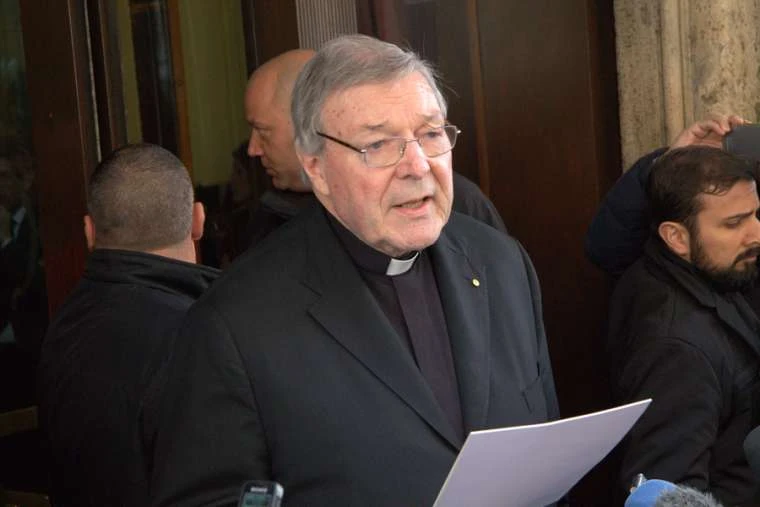



 ABYSSUS ABYSSUM INVOCAT / DEEP CALLS TO DEEP
You must be logged in to post a comment.