Judica me, Deus, et discerne causam meam de gente non sancta.
Wiccan Stang Given to Antipope Bergoglio By Woman Wearing Wiccan Red String Bracelet
The red string bracelet is a very common talisman in witchcraft/Wicca and Kabbalah, which is basically a hybrid of Talmudic Judaism and witchcraft.
Here in the picture of Antipope Bergoglio being presented with the Stang he carried yesterday by two females at a “youth rally” at the Circus Maximus in Rome in August, you can clearly see the woman on the left, holding the Stang, is wearing the knotted red thread talisman bracelet.
I have the sense that the Red Thread is one of the deeper Mysteries of the Craft as we are coming to know it. This sense is based on the fact that both Glaux and I find ourselves referring to it regularly in symbolic ways and during Craft discussions, but I am having difficulty putting my thoughts together in any coherent manner in this blog entry. The fact that we are able to point to the symbol as a deep point of connection for our magic, but verbalization seems to fail on some level, tells me that “here be a grave Mystery.”
Perhaps in order to approach the Mystery, we should only look at one aspect of it in this post. The Red Thread and the Initiatory Process.
The “Red Thread” is the moniker we use to refer to the line of Witch Blood that connects us to Tubal Qayin. A few of us come to this Tradition with ties to Qayin, bonds or possibly even Witch Marks that we reinforce through charms or the process of admission into a curveen. Many create that link through specific ritual.
Our system of admission is actually quite simple. We have a beginning level which we call Greening. I’ll reserve full discussion of this level for another post, but I’ll say here that this is the level for “children” within this path — whether literal or figurative.
Next is Adoption, and it is at this time when the Red Thread is linked. This Tradition is linked very intimately to flow and nature of the family, so the Adoption corresponds to the time of puberty. When a child has come into physical, mental and emotional maturity sufficient for the study of basic magic, she may be brought into her Craft family. When a Seeker, regardless of physical age, has passed the period of initial giddiness and done some serious work and review of his aims as a Witch, he too is eligible for adoption into the Craft family.
The goals of the Adoption Rite (which you can also think of as a Dedication) are to forge a formal magical link between the student and the coven and to establish a formal training period of at least a year and a day. (This period is until the age of adulthood, in the case of family trad practitioners performing the Adoption with teens and tweens.)
This rite can happen at any of the Gates or Castles. In other words, it can happen at any Sabbat.
During the course of the ritual, the candidate is challenged and queried by the curveen members. Provided that she meets with approval at the end of all challenges, she will take blood oath on the anvil. There are two points to make note of here: 1) participation in the ritual doesn’t guarantee success; and 2) the anvil is the “oath stone” of the Tradition and is intimately linked in symbolic terms to Tubal Qayin.
The candidate is given a Red Cord to wear at the waist, which is a reminder of the Red Thread itself, the umbilical cord, and the fire of Qayin’s forge. He is also given a bone and silver ring, which is symbolic of the bone soul (intimately related to the Red Thread and the Ancestors). The ring should be fitted to the Witch’s index finger in his power hand, as this is the ultimate location where he will be tattooed with the Stang (or Witch’s Mark) at his Raising.Posted by Laurelei at 3:52 AM
The Church’s Disease Is Called Post-modernism. The Diagnosis of a Theologian
Settimo Cielodi Sandro Magister
Published as received. The author, a former member of the Franciscans of the Immaculate, teaches dogmatic theology at the theological faculty of Lugano, in Switzerland, and performs pastoral service in England, at St. Mary’s Church in Gosport, in the diocese of Portsmouth. Notable among his books is “Vatican II, a Pastoral Council: Hermeneutics of Council Teaching”, Gracewing, 2016.
Of particular relevance is his reference, among the roots of the current crisis, to the intraecclesial opposition against the encyclical “Humanae Vitae,” the preeminent text of the magisterium of Paul VI, the pope who on October 14 will be proclaimed a saint.
*
To the Root Of Today’s Church Crises
by Serafino M. Lanzetta
Holy Mother Church is facing a crisis unprecedented in her entire history. Abuses of all kinds, especially in the sexual sphere, have always existed among the clergy. The current epidemic, however, is atypical for the intersection of a moral crisis and a doctrinal one, whose roots are deeper than the simple misbehaviour of some members of the hierarchy and clergy. We must scratch beyond the surface and delve deeper. Doctrinal confusion begets moral disorder, and vice versa; sexual abuses have prospered now for so many years under the cover of complacency, to such an extent that they have turned silently the doctrine of sexual morality into an anachronistic story.
Without doubt, as Bishop Philip Egan of Portsmouth, UK, said, this crisis exists on three levels: “first, the alleged catalogue of sins and crimes against the young by members of the clergy; secondly, the homosexual circles centered around Archbishop Theodore McCarrick, but present in other areas across the Church, too; and then, thirdly, the mishandling and cover-up of all this by the hierarchy up to the highest circles.”
How far have we to go to identify the roots of this crisis? We can consider, among other things, essentially two moral causes as the main root. One is remotely linked with this today’s problem afflicting the Church, the other proximately.
*
The first cause can be pinpointed in the opposition within the Church to the encyclical “Humanae vitae.” By objecting to the indissoluble covenant between the unitive and procreative principles of marriage, the way was paved for tolerating any other form of union and to justify it in the name of love. Love had to be put before and above the fixity of nature. Contraception would be held as a legitimate moral means by which to safeguard the priority of man’s responsibility over God’s natural and divine law. Actually, the scenario that unfolded was quite different.
In fact, if procreation was no longer the first and highest blessing of marriage, it was not only to be split from love, but, conversely, love had to be split from procreation, up to justifying procreation without union as the logical conclusion of a love without procreation. A sterile love, isolated from its natural and sacramental context, was forcefully pushed onto society and the Church.
The identity of love is at stake. As recently pointed out by Bishop Kevin Doran, the chair of the Irish Bishops’ Committee for Bioethics, there is a “direct connection between the ‘contraceptive mentality’ and the surprisingly high number of people who seem ready to redefine marriage today as a relationship between two people without distinction as to sex.” He added also that if the act of love can be separated from its procreative purpose, “then it is also pretty difficult to explain why marriage needs to be between a man and a woman.”
Today’s crisis in the Church is on the one hand the manifestation of a sexual identity crisis, an ideological rebellion against a Magisterium anchored in a perennial moral tradition; and on the other, the incapacity to address the real problem, namely, homosexuality and homosexual circles among the clergy. More than 80% of known sexual abuses committed by clergy are not in fact cases of paedophilia, but of pederasty. The conviction that any form of love is to be accepted has become more commonplace as a consequence of lifting the ban on contraception, even without changing dogmatic formulas. The very essence of Modernism consists in changing the theory with the praxis, by letting people become used to customs accepted by the majority.
“Humanae vitae” became the object of an unprecedented protest arising from within the Church. A book entitled “The Schism of ’68” describes among others how Catholics were campaigning for a sexual aggiornamento. “Aggiornamento” was one of the keys to unlock Vatican II and its documents.
Cardinals, bishops and episcopates took an active role in this rebellion. The primate of Belgium, Cardinal Leo Joseph Suenens, after the publication of the encyclical, managed to make the whole Belgian Episcopate publish a declaration in opposition to “Humanae vitae,” supposedly in the name of freedom of conscience. This declaration, together with the one formulated by the German Episcopate, served as a template for the protests of other episcopates. Cardinal John C. Heenan of Westminster described the release of Pope Giovanni Battista Montini’s encyclical on the transmission of life as “the greatest shock since the Reformation.” Cardinal Bernard Alfrink, together with nine other Dutch bishops, even voted in favour of the Independence Declaration, which invited the people of God to reject the ban on contraception.
In England more than 50 priests had drawn up a letter of protest, published in “The Times of London.” Among these priests was also Michael Winter, who described his decision the leave the priesthood as “sparked by the crisis over ‘Humanae vitae’.” Winter later got married, and in 1985 authored “Whatever happened to Vatican II?”, in order to resurrect the Council’s teaching from what he perceived as its burial by the authorities in Rome. Perhaps he was convinced that the root of contraception, perceived as the supremacy of love, was to be found in Vatican II’s teaching. Winter is also the founder member of the Movement for a Married Clergy. What is truly astonishing – Winter is not the only case – from the point of view of the clergy, is the drama they lived when, in their words, the burden of the ban on contraception was laid on the shoulders of lay people. How could they really understand – if it was so – such a pain?
However, there is another point to make here: if an “official” protest against “Humanae vitae,” led by Cardinals and Bishops, was deemed legitimate by its harmony with the ideology of the moment – let’s not forget that in those years the ’68 movement was intent on subverting Christian morality in the name of free sex – then it is hard to see why an “official” mentality that justifies homosexuality within the clergy, as well as all kinds of sexual unions, could not also take over and one day become even the majority view. The cover-up culture, which today seems so pervasive among episcopacies and the clergy, spreads initially from here.
“If the matter is before the bar of conscience,” as Tom Burns commented in “The Tablet” on 3 August 1968 (the same editorial has just been republished on 28 July 2018), there can always be a conscience that rejects the bar as such. A conscience with no prior enlightenment by the truth is like a ship buffeted by the sea. It capsizes. ‘Conscience alone’ – that is, ‘conscience’ without the truth – is no conscience at all. It has to be educated to pursue good and reject evil.
It is no mystery that those working to finally bury “Humanae vitae” now rejoice at the promulgation of “Amoris laetitia,” as if some gap of love in the Church’s teaching has finally been filled. Today’s theological attempt is to overcome “Humanae vitae” with “Amoris laetitia” in such a way that this most recent teaching of Pope Francis on love in the family is tied directly with “Gaudium et spes,” with no reference at all to “Humanae vitae” and “Casti Connubii.” The temptation to isolate Vatican II from the whole Tradition of the Church is still strong. As with ‘conscience alone’, so it is with a single document of the Magisterium (either “Gaudium et spes” or “Amoris laetitia”); no document can be read in the light of itself, but only in light of the whole Tradition of the Church.
*
After a very vocal rebellion, the silence on the doctrine began. And so we come to the proximate root of this scandal: the cover-up of the doctrine of sin. The word “sin” began almost to disappear from preaching in the aftermath of Vatican II. Sin – as a separation from God and an offense against Him, as a turning away from God and a fixation on creatures – was ignored. The extraordinary gap left by the doctrine of sin was now filled with psychological assessments of a multifaceted condition of weakness in man. Spiritual theology was replaced with the reading of Freud and Jung, the true masters in many seminaries. Sin became irrelevant, while self-esteem and the overcoming of all taboo, especially in the sexual sphere, were the new ecclesial passwords.
On the other hand, a new theology of mercy, especially the one promoted by Cardinal Kasper, has helped to reframe God’s mercy as an intrinsic attribute of his divine essence (if this is so, is there a divine forgiveness of God with Himself, since mercy requires repentance and forgiveness?) so as to overcome the punishment of justice by turning it into an always-forgiving love. In this new definition, does the eternal punishment in hell play any role? Mercy has become a theological surrogate to cover (up) sin, to ignore it, and to take it under the mantle of forgiveness. Luther’s idea about justification is not far from this.
It would be interesting to ask those among the clergy who commit such horrible crimes what they think of sin. The Scriptural teaching from St Paul: “…they that are Christ’s have crucified their flesh, with the vices and concupiscences” (Gal 5:24), might easily appear old-fashion morality, not because the Scripture is wrong or not inspired by the Holy Spirit, but simply because to propose such a teaching to our modern society would merely be anachronistic, outmoded. The spirit of the world – often mixed with a supposed “spirit of the Council” – has been allowed to suffocate the true doctrine of faith and morals.
Is clericalism also the root of the present sexual abuse crisis? Pope Francis repeatedly said so. Certainly, clerical power is wielded in the sexual enslavement of seminarians and men in formation. But it is very difficult to understand how clericalism can explain the predation of generations of seminarians if homosexuality plays no role at all. It would be like saying that a drinker is always drunk not because he has an addiction to drink, but because he has money and can buy all alcohol he likes.
Clericalism cannot be the only answer, also because there is another form of it – more subtle, but often ignored – that is far worse: to make use of one’s clerical power to pervert good doctrine. The clergy easily feels itself to be the owners of the Gospel, taking licenses to dispense from the precepts of God and the Church according to the fashion-theology of the moment. When one ceases to hold to the right doctrine of the Church, one can easily fall into the pit of self-amusement and sin. Conversely, a life of sin without God’s sanctifying grace is the best ally to manipulate the doctrine. Doctrine of faith and the moral life go always together.
To sum up: the very root of this grievous scandal laid open is Modernism, which today has already become a post-Modernism. From favouring the change of dogmatic formulas with the flow of time, we have graduated to completely ignoring them. Doctrine is safe as an important book on a very dusty bookshelf, but has no word to say to the pulse of our daily life.
There must be no doubt about the vastness of this crisis and the necessity of taking action to root out the present evil. But this drastic action, that we hope might soon be at work, will be far from effective if we do not turn back first to the truth of love, wisely understanding that a contraceptive mentality has brought about only a very rigid demographic winter with a culture of death. Contraception is sterile love that opens up the possibility of a love outside its context, beyond itself, immature. A dead love now threatens the Church with its visible repercussions in sexual abuses and clerical scandals. The mentality of the world has violently impacted the life of the Church.
Finally, we should go back to calling things by their name. Sin is still sin. If we do not have the strength to do that, it is already a sign that sin has prevailed. If we do call sin by its name, then the way is paved instead for rooting it out.
Posted inUncategorized|Comments Off on Only slightly less acceptable in polite society than the “F” word, is the word “sin.”After the very vocal rebellion following the promulgation of Humanae Vitae, the silence on doctrine began. And so we come to the proximate root of this scandal: the cover-up of the doctrine of sin. The word “sin” began almost to disappear from preaching in the aftermath of Vatican II. Sin – as a separation from God and an offense against Him, as a turning away from God and a fixation on creatures – was ignored. The extraordinary gap left by the neglect of the doctrine of sin was now filled with psychological assessments of a multifaceted condition of weakness in man. Spiritual theology was replaced with the reading of Freud and Jung, the true masters in many seminaries. Sin became irrelevant, while self-esteem and the overcoming of all taboo, especially in the sexual sphere, were the new ecclesial passwords.
Fr. Rutler’s Weekly ColumnOctober 7, 2018 The opening line of a children’s poem by Mary Howitt in 1828 is a caution for growing up in a duplicitous world: “‘Will you walk into my parlour?’ said the Spider to the Fly.” Christians must be “wise as serpents and innocent as doves” (Matthew 10:16) because we are sent as sheep into a world of wolves. So there we have a whole menagerie of metaphors, all making the same point about naiveté. The best diplomacy secures amity, but at its worst it lets loose ministers who are innocent as serpents and wise as doves. Charles de Gaulle, who was not subtle, said, “Diplomats are useful only in fair weather. As soon as it rains, they drown in every drop.” Without succumbing to cynicism, it is possible to see a mixture of calculation and callowness in the provisional agreement between the Holy See and Communist China, recognizing the primacy of the Pope, but at the price of an unclear arrangement giving the government a role in the appointment of bishops. Ever since Constantine, and certainly since Pope Leo III crowned Charlemagne in 800, ecclesiastical and civil threads have been intertwined. The mediaeval Investiture Controversies were background for the sixteenth-century appointment privileges granted to the French crown and the Concordat between Pius VII with Napoleon. In the year that Mary Howitt wrote about the Spider, nearly five of every six bishops in Europe were appointed by the heads of state. Right into modern times, Spain and Portugal invoked the PatronatoReal and the Padroado, but these involved governments that were at least nominally Catholic. The 1933 Reichskonkordat with the Nazi government was not the proudest achievement of the Church. The Vatican’s accommodationist “Ostpolitik” in the 1960s, made Cardinal Mindszenty a living martyr. The Second Vatican Council sought, largely successfully, to reserve the appointment of bishops to the Sovereign Pontiff (Christus Dominus, n. 20). It was my privilege to know Cardinal Ignatius Kung Pin-Mei of Shanghai, who endured thirty years in prison, and Archbishop Dominic Tang Yee-Ming of Canton who was imprisoned for twenty-two years, seven of them in solitary confinement. The eighty-seven-year-old Cardinal Archbishop of Hong Kong, Joseph Zen, sees a betrayal of those who have suffered so much for Christ. Time will tell if the present diplomacy is wise. An architect of this agreement, Cardinal Parolin, said: “The Church in China does not want to replace the state, but wants to make a positive and serene contribution for the good of all.” His words are drowned out by the sound of bulldozers knocking down churches while countless Christians languish in “re-education camps.” A fourteenth-century maxim warned: “He who sups with the devil should have a long spoon.” For spoon we might now say chopsticks. When it comes to cutting deals with governments, it is sobering to recall that of the Twelve Apostles only one was a diplomat, and he hanged himself.
Pope John Paul II and U.S. President Ronald Reagan stroll through the gardens at Vizcaya Museum in Miami, Sept. 10, 1987. (Mike Sargent/AFP/Getty Images)COMMENTARY | OCT. 5, 2018John Paul II’s Warning on ‘Final Confrontation’ With the ‘Anti-Church’COMMENTARY: It seems more likely now that we are indeed facing, as Cardinal Karol Wojtyla said in 1976, the greatest historical confrontation humanity has gone through.Paul Kengor
A remarkable gathering took place in the nation’s capital Sept. 26. In two locations, the John Paul II Shrine on the campus of The Catholic University of America and the Ronald Reagan Building on Pennsylvania Avenue, more than 500 people convened for a conference honoring Pope St. John Paul II and President Ronald Reagan and how these two men changed the world for the better.
The event featured speakers worldwide, from those who stood beside the Pope and the president to historians and scholars who have written about them. They ranged from the likes of Peter Robinson, who penned speeches for President Reagan, including the historic Berlin Wall speech, to Monika Jablonska, who has studied the writings of Karol Wojtyla and his poetry and plays. They included Msgr. Slawomir Oder, the postulator for the beatification and canonization of John Paul II, and Arturo Mari, papal photographer for L’Osservatore Romano, who began photographing popes in 1956 with Pius XII.
When I asked Mari if he had a favorite, he didn’t hesitate to say in Italian “Giovanni Paolo.” He gestured to his eyes and said of John Paul II: “You could see saintliness in his eyes.”
But perhaps the most compelling statement of the conference came in the opening remarks by John Lenczowski, who had been a crucial member of the National Security Council (NSC) of Reagan and his chief aide, Judge William Clark. Lenczowski was the director of European and Soviet affairs at the NSC, where he played a significant and underappreciated role in the Reagan effort to undermine the “evil empire” of Soviet Communism. Lenczowski, a faithful American Catholic of Polish lineage, also looked to Pope John Paul II for inspiration.
Lenczowski called attention to an intriguing if not enigmatic admonition by Cardinal Karol Wojtyla made in America in 1976.
That summer, Catholic Americans welcomed this Polish archbishop of Krakow, who, truth be told, was known to very few Americans at the time. It was the nation’s bicentennial, and Philadelphia, the birthplace of the Declaration of Independence in the summer of 1776, had been selected as a rare American city to host an international Catholic Church congress: the 41st International Eucharistic Congress.
The patriotic and pro-American Pole came to the United States for a six-week stay, beginning in Boston. He visited numerous cities, big and small, from Baltimore and Los Angeles to Geyser, Montana, and Stevens Point, Wisconsin.
Amid this tour, Cardinal Karol Wojtyla arrived in Philadelphia for the Eucharistic Congress, which ran Aug. 1-8. The huge event also included a little-known Albanian nun named Mother Teresa. Wojtyla and Mother Teresa were overshadowed by the presence of names more popular at the time: Dorothy Day, Cardinal John Krol and even President Gerald Ford, who attended Mass in the city’s Municipal (JFK) Stadium.
Near the end of his visit, in September, Cardinal Wojtyla shared some striking words. The exact provenance of those words remains elusive to scholars, though they were reported in TheWall Street Journal as having been delivered by the future pontiff in his final speech in the United States before his departure. In one particularly dramatic passage, reprinted by the Journal Nov. 9, 1978 (shortly after he became pope), Karol Wojtyla stated:
“We are now standing in the face of the greatest historical confrontation humanity has gone through. I do not think that wide circles of the American society or wide circles of the Christian community realize this fully. We are now facing the final confrontation between the Church and the anti-Church, of the Gospel versus the anti-Gospel. This confrontation lies within the plans of divine Providence; it is trial which the whole Church, and the Polish Church in particular, must take up. It is a trial of not only our nation and the Church, but, in a sense, a test of 2,000 years of culture and Christian civilization with all of its consequences for human dignity, individual rights, human rights and the rights of nations.”
This was a halting statement. Note the line, “We are now standing in the face of the greatest historical confrontation humanity has gone through.”
What was Cardinal Wojtyla talking about? The Cold War battle against atheistic communism dominated the global scene, but was it genuinely “the greatest historical confrontation” that humanity had undertaken? Were the people of that late-summer 1976 standing in the face of that particular confrontation?
As biographer George Weigel noted in Witness to Hope, “Wojtyla never would have narrowed this ‘confrontation,’ which he insisted ‘lies within the plans of divine Providence,’ to the clash between democracy and communism,” even as communism clearly was “one particularly threatening expression” of that clash in the late 20th century.
Surely there was more at stake in the future pope’s mind at that moment.
Who or what was the anti-Church to which the Polish cardinal was referring? What was the final confrontation? Was this some sort of dire prophecy sensed and not even fully understood by Cardinal Wojtyla at that moment?
As of August-September 1976, the final confrontation with Soviet Communism was indeed at hand — in the coming decade. It was tumultuous, and some blood was shed, including the Holy Father’s when he was shot in May 1981, but communism’s collapse was also considerably less bloody and far more peaceful than anyone anticipated. It seems likewise remarkable that the future pontiff shared this vision in the United States of America at the bicentennial of its birth, one of his few pre-papal visits to the country — the same country that would one day join forces with him, under Ronald Reagan’s leadership, in taking down Soviet Communism and ending the Cold War.
So, again, was the Cold War triumph against atheistic communism circa 1989-91 the final confrontation, or is that showdown still to come?
Here was a statement, a prediction, from a man who not only would be pope, but would be a saint. Was the prophecy met in his lifetime? Was it intended for us beyond his lifetime?
Lenczowski bringing up those words Sept. 26, some four decades after they were delivered, seems particularly poignant. I reported on those words in my book A Pope and a President, published in May 2017; they’ve stuck with me ever since I first read them years ago.
Since then, the problems faced by and within the Church — and arguably posed by an anti-Church — seem to have only gotten worse. They stem from controversies over sex abuse, over corrupted priests and bishops and cardinals, over Church doctrine, over the current Holy Father himself, and, worldwide (especially in the West), over matters once seemingly settled since the dawn of humanity but now openly contested: sexuality, gender, family, marriage and the very nature of humanity.
One of those who stood firmly against this dictatorship of relativism (as Pope Benedict XVI called it) was Cardinal Carlo Caffarra, who helped found the Pontifical John Paul II Institute for Studies on Marriage and Family in 1981. Cardinal Caffarra reminded us of the words of Fatima seer Sister Lucia and of what he called an “anti-creation.” He shared a letter written by Sister Lucia, where she warned that “there will come a time when the decisive confrontation between the Kingdom of God and Satan will take place over marriage and the family.”
We are in quite a confrontation right now. The sheer fullness and explosive breadth of that confrontation today would seem more in keeping with the sweeping, apocalyptic warnings of Cardinal Karol Wojtyla back in 1976.
It seems more likely now, in 2018, that we are indeed facing the greatest historical confrontation humanity has gone through. And the Church and its foes — the anti-Church — are at the center of the battle.
Paul Kengor is professor of political science at Grove City College.
Posted inUncategorized|Comments Off on “We are now standing in the face of the greatest historical confrontation humanity has gone through. I do not think that wide circles of the American society or wide circles of the Christian community realize this fully. We are now facing the final confrontation between the Church and the anti-Church, of the Gospel versus the anti-Gospel. This confrontation lies within the plans of divine Providence; it is trial which the whole Church, and the Polish Church in particular, must take up. It is a trial of not only our nation and the Church, but, in a sense, a test of 2,000 years of culture and Christian civilization with all of its consequences for human dignity, individual rights, human rights and the rights of nations.” – Saint John Paul II
Posted inUncategorized|Comments Off on Barnhardt Satanists Manifesting: Antipope Bergoglio Carries a Stang – the Ritual Staff of Witchcraft As I have said and written before, one of satan’s most clever moves has been to foment, encourage and push mentally ill and demonically oppressed people to LOUDLY broadcast insane, ridiculous, totally false “conspiracy theories”. We all know the types and categories. Mind control beams, “chem trails”, shape shifting lizards, underground civilizations, flat earthers, the list goes on and on and on. What this has done is make it almost impossible to point out, discuss, and warn about ACTUAL sinister goings-on and actual, honest-to-goodness conspiracies that are very real. We all know that the word “Freemasonry” in the U.S. is automatically lumped into the above category, even though in Europe Freemasonry is largely understood to be the extremely powerful and influential socio-political entity that it is, and many Europeans further understand that the core of Freemasonry is the desire to exterminate the Catholic Church and replace it with the one-world secular humanist political religion of Freemasonry. Trying to warn about such things as the musloid political system gets one lumped in with “conspiracy theorists”, as does trying to warn about the massive infiltration, influence, power and agenda of the sodomite cabal, both in the secular realms of politics and entertainment, AND in terms of the infiltration of the Institutional Church. Perhaps the most difficult actual conspiracy to discuss without being dismissed out of hand is the actual cult worship of satan. But, it is real, and it is manifesting before our eyes, so someone has to call these things out knowing full well that to do so means that 99.9999% of the populace will instantly call one a “crazy fool”. That’s fine. If fitting in to this culture constitutes sanity, then please God, let me never be sane. Antipope Bergoglio carrying a Stang. Note the prominent iron nail, and the human form at the base of the fork. Textbook Stang. It is a MORAL CERTAINTY that the stick that Antipope Bergoglio tried to pass off as a ferula yesterday in the Mass opening the Sin-nod on Sodomy is a “STANG”. Antipope Bergoglio said is was a “gift” from “young people” who SPECIFICALLY REQUESTED that he use it in the opening Mass of the Sodo-synod. That story right there by itself is DAMN PECULIAR. A Stang is a witch/warlock’s ceremonial staff. It is always forked, and always has an iron nail driven through it. Ideally it has a human form carved or integrated into it somehow. The Stang signifies several things, the first being a satan himself. Read the quote below from a witchcraft blog: “Gary describes the Stang as primarily a symbolic tool rather than a working one, and as such it stands in for the Devil himself, holding his power and his dual nature. The Devil and the Stang is often less about strict duality and more about the transgressing of boundaries, The Devil being a spirit I often think of as non-binary and difficult to define in terms of absolutes.” Almost like a… “god of surprises?” Sounds familiar, eh? Like every Casa Santa Marta sermon, and every airplane presser? Yeah. That’s mild compared to this quote from the same article: “The witch is bound to no dogma. This makes them a threat to a Christianity established on doctrine. The witch insists everything in creation has its place. The Church insisted on two contrary substances God and The Devil. The witch strives for synthesis.” Nicholaj De Mattos Frisvold- Craft of The Untamed. G.W.F. Hegel, please dial “666” on a white courtesy telephone…. Let us revisit the quote of the Canadian faggot priest Tom Rosica, who is, once again, the English language press spokesman for this Sodo-synod from just a few weeks ago: “Pope Francis (sic) breaks Catholic traditions whenever he wants because he is “free from disordered attachments.” Our Church has indeed entered a new phase: with the advent of this first Jesuit pope (sic), it is openly ruled by an individual rather than by the authority of Scripture alone or even its own dictates of tradition plus Scripture. “ -Fr. Tom Rosica, Vatican press spokesman Anyway, the iron nail in the Stang symbolizes multiple things, including a phallus/coitus, a mocking of the Crucifixion of Our Lord, and is the triple motif of the threefold serpentine, telluric and cainic “powers”. The “serpentine” meaning is obvious – the devil himself, in the garden, “gifting” Adam and Eve with the “liberating” and “enlightening” words, “No, you shall not die the death. For God doth know that in what day soever you shall eat thereof, your eyes shall be opened: and you shall be as Gods, knowing good and evil.“ The word “telluric” refers to earthly power, whose source and symbol is “the serpent”, “deep in the earth”. The third motif symbolized by the iron nail in the Stang is the Cainic “powers”. Now, hold on to your hats. Here’s the opening from the Wiki article on “Cainism”, and remember folks, we are talking about Cain, whose sacrifice God rejected and he thus murdered his brother Abel because as St. John teaches, “Cain slew Abel because his works were evil, while those of his brother were just (1 John 3:12), and we read in Hebrews that “by faith Abel offered to God a more excellent sacrifice than Cain” (Hebrews 11:4).” —— The oldest source is to be found in Irenaeus, adv. Haer. i. 31. Cain and Abel He tells us that the Cainites regarded Cain as derived from the higher principle. They claimed fellowship with Esau, Korah, the men of Sodom, and all such people, and regarded themselves as on that account persecuted by the Creator. But they escaped injury from Him, for Sophia used to carry away from them to herself that which belonged to her. —— One thing I learned in researching the actual cult worship of satan once I learned about and confirmed that the Vatican is the nexus of satanism in the world today, is the fact that satanists are commanded, at some point once they have sufficient power, to openly MANIFEST their satanism. If the Bergoglian antipapacy doesn’t constitute “having sufficient power”, then I don’t know what would. I am morally certain that Antipope Bergoglio’s carrying of a Stang with the iron nail so prominently positioned, into the opening of a farce synod whose entire agenda is the ratification of sodomy, is a clear case of manifestation of satanism. And if that makes me a conspiracy theorist, so be it. Some conspiracies are real. St. Michael the Archangel, defend us in battle, be our protection against the wickedness and snares of the devil. May God rebuke him, we humbly pray, and do thou, O prince of the Heavely Host, by the power of God, cast into hell satan and all evil spirits who prowl throughout the world seeking the ruin of souls. Amen. Links: “How To Use A Stang” Wikipedia article on Cainism (must read) “The Stang and the Devil At the Crossroads” This entry was posted in Uncategorized on October 4, ARSH 2018 by Ann Barnhardt.
The current claims and counterclaims about what Judge Brett Kavanaugh did or did not do more than thirty years ago should – in theory – have been weighed on the merits (and out of the public eye unless further corroboration emerged). But it’s difficult not to see the controversy, which is now impossible to resolve after so much time, as a proxy war over something else. Whether Judge Kavanaugh is confirmed – today or at some point in the future – that proxy war is not coming to an end, but only entering a new phase.
Abortion is not just a particular issue on which the present candidate for Supreme Court Justice has been examined; it is the crucial issue. Republicans and Democrats disagree, sometimes sharply, on many things – global warming, immigration, religious freedom, gay marriage, capital punishment, health care, contraception, entitlement spending, gun rights, etc. But the defining “red line” is abortion.
The Democratic Party, in its platform and practices, has become the party of abortion. A valiant group, Democrats for Life America (DFLA), has been fighting to include pro-life provisions in the Democratic platform and claims that one-third of Democrats are pro-life. DFLA refused to endorse Barak Obama in 2008; there are only a handful of Democratic candidates that they have been able to endorse.
A Democratic president like Barak Obama would never appoint or nominate a candidate for an important position who was openly pro-life, as was clearly demonstrated in the State, Education, and Justice Departments, Homeland Security, etc. during Obama’s presidency. The “deep state” is not open-minded.
Republicans vary. They are not universally pro-life but typically support pro-life candidates. Some Republicans are primarily interested in economics, national security, limited government, or other issues; but being “pro-life” does not automatically disqualify a candidate in the minds of most Republicans.
Consider: Brett Kavanaugh might have shown some sympathy for issues connected with Republicans in his Congressional hearings – gun rights, limiting paths to citizenship for illegal immigrants, discontinuing elements of Obamacare, etc. – and still have gained support from some Democrats, as well as Republicans. But if he had even suggested that he would favor overturning Roe v. Wade, it would have killed his candidacy, even for Republicans such as Sens. Susan Collins of Maine and Lisa Murkowski of Alaska.
Essentially, the right to abortion is a right to kill a human being during gestation. Some Democratic “pro-choicers” might personally refuse to exercise their “license to kill.” But they consistently preach that fetuses are just a “mass of tissue” and women have the right to control their own bodies.
Photo: Sipa/AP
Such homicides, therefore, have to be sanitized by being assigned to professional medical hit men (or women). But a “woman’s right” is unquestioned, like a religious belief. Following the patterns of Aztecs and Incas and other pagans, ancient and modern, practitioners of this religion would be willing to sacrifice human children to obtain a great gift – for them, the gift of sex without the threat of parental obligations.
It’s doubtful that even adamant feminists would be willing to die for these beliefs – since such a belief by definition prioritizes their own lives over their unborn children. But quasi-religious beliefs do not always demand a willingness to die rather than renounce them.
Ethical and unethical beliefs often display a “slippery slope” syndrome. If you believe it is perfectly all right to destroy a human being in utero, it may seem quite easy to believe you can destroy the reputation of another human being for the sake of the cause. If you can lie to yourself that a human fetus is “just a mass of tissue,” it’s not too great a stretch to lie to others to maintain the falsehood.
If you really believe that a fifth conservative on the Supreme Court could destroy forever the “abortion right” that has been bestowed on millions of women by a few liberal members of the Court in the past, then you may feel duty-bound to keep a potential Justice out of such a position by any means possible.
The present situation seems to exemplify such garbled ethics.
To review: Christine Ford, a California psychology professor active in the Trump Resistance movement, sent a letter to the senior Democratic senator in California, Dianne Feinstein, alleging attempted rape in high school by candidate Kavanaugh. She requested anonymity, but her message was leaked to the media and cast a cloud over the largely successful (though interrupted by angry and boisterous activists) Congressional hearing on Kavanaugh’s candidacy.
Professor Ford’s lawyer, Debra Katz, noted for defending Democrats Bill Clinton and Al Franken when they were accused of sexual crimes, came to Professor Ford’s defense, along with other lawyers and interested parties. Senate Democrats, all except two of whom have pledged never to support Kavanaugh’s candidacy anyway, pushed for a renewed “he-said, she-said” hearing, in which both the accuser and the accused presented credible testimonies. Kavanaugh, being accused of an indictable felony, understandably became more emotional than in his earlier Senate hearing.
Other even less credible accusations of sexual crimes and even gang-rape began to surface, preventing Republican senators from making a final decision until an FBI investigation could be conducted, interviewing alleged witnesses (several of whom had already sworn under conditions of perjury, that they know nothing of the alleged crimes).
We are now at the end of FBI investigations – at least it appears so – but as many anticipated, they have only been able to show that no one has corroborated Professor Ford’s charges. Such uncorroborated accusations, recklessly released to the public, seem to have done nothing more than further poison our politics and inflame our national passions.
Howard Kainz, Emeritus Professor at Marquette University, is the author of twenty-five books on German philosophy, ethics, political philosophy, and religion, and over a hundred articles in scholarly journals, print magazines, online magazines, and op-eds. He was a recipient of an NEH fellowship for 1977-8, and Fulbright fellowships in Germany for 1980-1 and 1987-8. His website is at Marquette University.
Posted inUncategorized|Comments Off on A “woman’s right” to kill her unborn child is unquestioned, like a religious belief. Following the patterns of Aztecs and Incas and other pagans, ancient and modern, practitioners of this religion are willing to sacrifice human children to obtain a great gift – for them, the gift of sex without the threat of parental obligations. It’s doubtful that even adamant feminists would be willing to die for these beliefs – since such a belief by definition prioritizes their own lives over their unborn children. But quasi-religious beliefs do not always demand a willingness to die rather than renounce them. Ethical and unethical beliefs often display a “slippery slope” syndrome. If you believe it is perfectly all right to destroy a human being in utero, it may seem quite easy to believe you can destroy the reputation of another human being (Brett Kavanaugh) for the sake of the cause.
My family has had its inevitable brushes with the Culture of McCarrick. They emerge unexpectedly in our day-to-day activities and unfold fully on Sundays at church.
One began at a country club swimming pool two summers ago. Shortly after our boys, then nine and six, began splashing around, a group of teen girls entered. They were junior high school-age, as revealed in conversation they saw no need to conceal. One soon began boasting of her romantic relationship with another girl.
On a separate occasion, we were in an elevator along with a mother and her children who were having a conversation about how a boy was allowed to use the girls’ bathroom at school. The family seemed to approve.
Prior to this, my wife and I had been living out of the country and our boys were born overseas. While we were a little surprised by how things seem to have changed in the U.S. over our time away, we don’t have any illusions that the culture offers any assistance to people trying to raise families in the light of faith. We try to be on guard for mainstreamed perversity that might insinuate itself between us and our children – even in the most mundane settings.
We had also counted on the Church, which is supposed to be for us where the culture is against us. It’s a “field hospital” where nicked up families can be healed and fortified in the faith before heading back out to the fight.
Yet care is not forthcoming. Week after week, we get nothing but the slow, stupefying drip of silence from the pulpit and from our schools. Meanwhile, the culture continues to chip away.
After the Alfie Evans saga, we got – nothing. Two men can marry and raise children, and from the pulpit we got nothing. On abortion, I guess I’d have to admit we get a little bit of lip service once in a while. But on items like contraception, drug abuse, children and parents alienated from each other in a filthy, puerile culture – nothing, nothing, and more nothing.
This is where the real evil of Theodore McCarrick deals its soundless blows. The man himself may be gone (unless you live in Kansas), but the culture he represents is ensconced on the couch in the Church’s living room, with his feet on the table and his mind on the obscene. This obese, demonic lump has no plans to go anywhere, and if we don’t like it, well, we can shut up and pray.
Families like mine come to church each Sunday, put their fair share and maybe more in the collection plate, send their children to Catholic schools, and end up being victimized. Even if every pederast predator were caught, even if there were no harassment in the seminaries, those living unchaste lifestyles subsidized by the Church are doing great damage. With their influence, they are keeping the truth on a leash, and families are paying the price.
As a father, I know I am the one responsibility for the moral education of my children. So when we are confronted with boys using girls’ bathrooms or girls dating each other, I have to do two things: provide moral clarity by way of explanation and make certain that I am raising my children in a setting where they will know something is wrong about certain things they have seen or heard.
But is it too much to ask for a little messaging help from the Church? There are beauty and coherence in the Church’s teaching on personal morality – especially as it should be applied to the prominent issues of the day. But it is left unarticulated. Instead, we get accommodations to the zeitgeist veiled as exhortations to “tolerance,” “diversity,” and “mercy.” There is nothing merciful about leaving the truth unspoken.
How long will it be before my children recognize the conflict between the silence from the pulpit and the morality I am teaching and attempting to model for them? Cardinal Timothy Dolan admitted the problem when asked about abortion, so-called “same-sex marriage,” and contraception in a news interview a few years ago. “I look at myself,” he said, “in my almost 37 years as a priest, rare would be the times that I preached about those issues.” As a husband and father, this is not what I need.
At this point, I am not even asking for the Church to be a sign of contradiction in the culture. I’m begging it to preach the fullness of the faith within its own walls and for Catholic schools not to be ashamed of their identity and tradition.
At our boys’ school not long ago, a new teacher put a small, LGBTQ triangle-shaped rainbow sticker on the window of his classroom door. Another father and I talked to the principal about it immediately, and the sticker was gone by the end of the day. While that was the appropriate response, it never should have come to that. The morals of the school should have been clear enough that no teacher would ever have thought of putting up one of those stickers. I also wonder if anyone else would have raised the issue if my friend and I hadn’t said anything. This is the state of the faith.
True and clear messaging is vital for adolescents. A 1994 study found that three of four boys who think they are homosexual as teenagers even out their sexual desires by the time they are adults. Of children who think they’re the opposite sex, 80 to 95 percent come to accept themselves as they are. These numbers clearly show that the lost can find their way home. But our churches are not even leaving the porch light on, and some get stuck in the wilderness, in a misery they may never have approached if they had heard a few of the right words at the right time from the pulpit.
That is because McCarrick remains with us, at least for now. He’s among the faithful every Sunday in all that you are not hearing but should be.
Editor’s note: This article comes to 1P5 from an anonymous dad trying to live the Faith.
Posted inUncategorized|Comments Off on True and clear messaging is vital for adolescents. A 1994 study found that three of four boys who think they are homosexual as teenagers even out their sexual desires by the time they are adults. Of children who think they’re the opposite sex, 80 to 95 percent come to accept themselves as they are. These numbers clearly show that the lost can find their way home. But our churches are not even leaving the porch light on, and some get stuck in the wilderness, in a misery they may never have approached if they had heard a few of the right words at the right time from the pulpit. If your priest is negligent in this regard, print this post and share it with him.
October 5, 2018 (LifeSiteNews) – Lately we are hearing a great deal from the pope, his collaborators, and his allies about the dangers of “clericalism” in the Catholic Church, as they attempt to steer the conversation away from the cause of the vast majority of sexual abuse cases (the psychological disorder of homosexuality) and to lay the blame on structural and institutional factors that play into their liberal narrative of a Church in need of radical reformation in its teachings connected with sexuality (e.g., ordination of women, clerical celibacy, regularization of divorcees, normalization of homosexual relationships).
In a perfect expression of this mentality, Bishop Felix Genn of Münster recently remarked: “I can tell you firmly: I do not want pre-conciliar clerical guys and I will not ordain them.” The language used here connects with a frequent theme in Pope Francis’s preaching, namely, that before the Council the Church was segregated into first-class citizens (clergy) and second-class citizens (laity), the former lording it over the latter; and that the phenomenon of traditionalism today is characterized by the same false ecclesiology. In this respect he shows himself a perfect son of the 1970s, when it was fashionable to grant a monopoly to the expression “People of God” in a quasi-Marxist, democratic, secularized sense.
I was thinking about all this recently as I watched the way parishioners at my local parish—an oratory of the Institute of Christ the King, Sovereign Priest—behave towards the priest as he processes down the aisle for Holy Mass. The faithful first make the sign of the cross as the Cross passes by, and then they bow towards the priest—not because he is this or that particular man, wielding authority over other men, but because he represents Christ the High Priest who offers the one saving sacrifice that unites all of us to Him and to one another. The very fact that the priest is clothed with a cope and later with a chasuble, and that he faces eastwards at the altar, shows very clearly that he is actively and powerfully standing in for Christ, clothed in the garments of His priesthood, with his own individuality hidden and his office exalted. In this way the faithful are paying homage to their Lord, not to a mere creature.
The same can be said for other pious customs of tradition-loving Catholics, such as kissing a newly-ordained priest’s hands when receiving his first blessing, or kneeling for his blessing. In so acting, we recognize in the priest in front of us an efficacioussign of the One whose blessing he has been empowered, by holy orders, to impart. This is not clericalism; this is simply Catholicism.
What, on the other hand, does clericalism really look like? Let me suggest six ways it manifests itself in the Catholic Church today.
1. When a priest, contradicting nearly 2,000 years of unanimous tradition in the apostolic churches of the East and the West, faces the people at Mass (versus populum), he unavoidably imposes himself on them as the principal actor in the liturgy, standing “over against” the passive congregation. In this way the message is transmitted—whether the priest intends it or not—that he is the center of attention, the facilitator and even the validator of the assembled faithful. This is an efficacious sign of clericalism if ever there has been one. When a priest faces eastwards, on the contrary, the attention is focused more on the liturgical rite and on the altar, crucifix, or reredos that may dominate the sanctuary as a reminder of the supreme Sacrifice of Calvary. All in common, oriented in a single direction, offer a single prayer together. This is the antithesis of clericalism, and may explain why so many clergy fed on the “spirit of Vatican II” are vehemently opposed to its recovery.
2. When a priest says “call me Fr. Jimmy,” acts casually, tells lots of jokes and stories from the pulpit, and “doesn’t stand on ceremony,” he is in fact promoting a cult of the individual personality, the cult of Jimmy, rather than humbly accepting his God-given office or role in the Church as the impersonal minister of the Lord Jesus, one of a million that God will make use of in the span of history. A certain respect or reverence towards the priest is in fact crucial not only for the laity but also (and perhaps especially) for the priest, if they are to understand the seriousness of their respective tasks in the world and in the liturgy. An informal or casual manner of celebrating the liturgy, which rests on a lack of living faith in the awesome holiness of the sacred mysteries, is a terrible scourge of clericalism that causes countless laity to wince from week to week.
3. On the other hand, when clergy extend traditionally clerical ministries to lay people (e.g., extraordinary ministers of holy communion), they are perpetuating the false view that the only worthwhile, validating “work” for a Catholic is to be busy in the sanctuary. This is one of the worst manifestations of clericalism. The proper role of the laity is not to substitute as “straw ministers” but to sanctify the world outside of the church building, as many popes have taught and as Vatican II reiterated. The lay faithful are responsible for imbuing family life, their culture, their civil society, with the radiant truths of the Faith—a task that is noble, indispensable, and rewarding. The proper role of the clergy is and has always been to dedicate themselves to prayer, the sacred liturgy, the sacraments, and preaching. When clergy become social activists and laity become mini-priests, all is thrown into confusion, and we lose the beauty of the Mystical Body of Christ with its graceful hierarchical order that reflects the ranks of angels and saints in the heavenly Jerusalem.
4. When priests, bishops, and even the pope ignore or hold in contempt the legitimate aspirations and needs of the faithful or of their subordinate clergy; when only the pope, only his collaborators, only his allies, know what is best for everyone else, regardless of education, competency, or expertise—we are facing another notorious form of clericalism, which could be summed up as: “My way or the highway.” This, sadly, is something we have seen continually during the pontificate of Francis, who seems to think it a virtue to ignore cardinals, bishops, priests, and hundreds of thousands of laity when they express their (quite understandable!) concerns about certain of his teachings and actions. We also see it in parishes where a young parochial vicar, desirous of reintroducing beauty and tradition, is gagged or hamstrung by an older priest who “knows better.” St. Benedict was wise to recognize that “God often reveals what is better to the younger” (Rule, ch. 3).
5. When bishops or priests want to intrude their personal theological opinions into their preaching and writing, rather than following and handing down the common and traditional teaching of the Church, we are certainly dealing with a particularly acidic form of clericalism.
6. When the pope appoints ambitious men as bishops and curial officials instead of imitating great reforming popes who scoured observant monasteries and parishes for humble, holy, orthodox candidates, or when people entrusted with proposing episcopal candidates fail in their grave charge, they are flexing the muscles of a clericalism that becomes mightier the more successful the ambitious are. It is like a disease that feeds upon itself. We can see, from the St. Gallen “mafia” to the McCarrick scandal to the Viganò exposé, how flourishing this form of clericalism is in the Church today—and, ironically, most of all in those who have made an incoherent notion of “clericalism” a diverting screen behind which they think to hide.
THE VALID CARDINALS, i.e. CARDINALS APPOINTED BY POPES BENEDICT XVI AND SAINT JOHN PAUL II, MUST ACT SOON TO REMOVE FRANCIS THE MERCIFUL FROM THE THRONE OF SAINT PETER BEFORE HE DAMAGES THE INSTITUTIONAL CHURCH EVEN MORE THAN HE HAS ALREADY DAMAGED IT.
Recently many educated Catholic observers, including bishops and priests, have decried the confusion in doctrinal statements about faith or morals made from the Apostolic See at Rome and by the putative Bishop of Rome, Pope Francis. Some devout, faithful and thoughtful Catholics have even suggested that he be set aside as a heretic, a dangerous purveyor of error, as recently mentioned in a number of reports. Claiming heresy on the part of a man who is a supposed Pope, charging material error in statements about faith or morals by a putative Roman Pontiff, suggests and presents an intervening prior question about his authenticity in that August office of Successor of Peter as Chief of The Apostles, i.e., was this man the subject of a valid election by an authentic Conclave of The Holy Roman Church? This is so because each Successor of Saint Peter enjoys the Gift of Infallibility. So, before one even begins to talk about excommunicating such a prelate, one must logically examine whether this person exhibits the uniformly good and safe fruit of Infallibility. If he seems repeatedly to engage in material error, that first raises the question of the validity of his election because one expects an authentically-elected Roman Pontiff miraculously and uniformly to be entirely incapable of stating error in matters of faith or morals. So to what do we look to discern the invalidity of such an election? His Holiness, Pope John Paul II, within His massive legacy to the Church and to the World, left us with the answer to this question. The Catholic faithful must look back for an answer to a point from where we have come—to what occurred in and around the Sistine Chapel in March 2013 and how the fruits of those events have generated such widespread concern among those people of magisterial orthodoxy about confusing and, or, erroneous doctrinal statements which emanate from The Holy See. His Apostolic Constitution (Universi Dominici Gregis) which governed the supposed Conclave in March 2013 contains quite clear and specific language about the invalidating effect of departures from its norms. For example, Paragraph 76 states: “Should the election take place in a way other than that prescribed in the present Constitution, or should the conditions laid down here not be observed, the election is for this very reason null and void, without any need for a declaration on the matter; consequently, it confers no right on the one elected.” From this, many believe that there is probable cause to believe that Monsignor Jorge Mario Bergoglio was never validly elected as the Bishop of Rome and Successor of Saint Peter—he never rightly took over the office of Supreme Pontiff of the Holy Roman Catholic Church and therefore he does not enjoy the charism of Infallibility. If this is true, then the situation is dire because supposed papal acts may not be valid or such acts are clearly invalid, including supposed appointments to the college of electors itself. Only valid cardinals can rectify our critical situation through privately (secretly) recognizing the reality of an ongoing interregnum and preparing for an opportunity to put the process aright by obedience to the legislation of His Holiness, Pope John Paul II, in that Apostolic Constitution, Universi Dominici Gregis. While thousands of the Catholic faithful do understand that only the cardinals who participated in the events of March 2013 within the Sistine Chapel have all the information necessary to evaluate the issue of election validity, there was public evidence sufficient for astute lay faithful to surmise with moral certainty that the March 2013 action by the College was an invalid conclave, an utter nullity. What makes this understanding of Universi Dominici Gregisparticularly cogent and plausible is the clear Promulgation Clause at the end of this Apostolic Constitution and its usage of the word “scienter” (“knowingly”). The Papal Constitution Universi Dominici Gregis thus concludes definitively with these words: “. . . knowingly or unknowingly, in any way contrary to this Constitution.” (“. . . scienter vel inscienter contra hanc Constitutionem fuerint excogitata.”) [Note that His Holiness, Pope Paul VI, had a somewhat similar promulgation clause at the end of his corresponding, now abrogated, Apostolic Constitution, Romano Pontifici Eligendo, but his does not use “scienter”, but rather uses “sciens” instead. This similar term of sciens in the earlier abrogated Constitution has an entirely different legal significance than scienter.] This word, “scienter”, is a legal term of art in Roman law, and in canon law, and in Anglo-American common law, and in each system, scienter has substantially the same significance, i.e., “guilty knowledge” or willfully knowing, criminal intent. Thus, it clearly appears that Pope John Paul II anticipated the possibility of criminal activity in the nature of a sacrilege against a process which He intended to be purely pious, private, sacramental, secret and deeply spiritual, if not miraculous, in its nature. This contextual reality reinforced in the Promulgation Clause, combined with: (1) the tenor of the whole document; (2) some other provisions of the document, e.g., Paragraph 76; (3) general provisions of canon law relating to interpretation, e.g., Canons 10 & 17; and, (4) the obvious manifest intention of the Legislator, His Holiness, Pope John Paul II, tends to establish beyond a reasonable doubt the legal conclusion that Monsignor Bergoglio was never validly elected Roman Pontiff. This is so because:1. Communication of any kind with the outside world, e.g., communication did occur between the inside of the Sistine Chapel and anyone outside, including a television audience, before, during or even immediately after the Conclave;2. Any political commitment to “a candidate” and any “course of action” planned for The Church or a future pontificate, such as the extensive decade-long “pastoral” plans conceived by the Sankt Gallen hierarchs; and,3. Any departure from the required procedures of the conclave voting process as prescribed and known by a cardinal to have occurred:each was made an invalidating act, and if scienter (guilty knowledge) was present, also even a crime on the part of any cardinal or other actor, but, whether criminal or not, any such act or conduct violating the norms operated absolutely, definitively and entirely against the validity of all of the supposed Conclave proceedings. Quite apart from the apparent notorious violations of the prohibition on a cardinal promising his vote, e.g., commitments given and obtained by cardinals associated with the so-called “Sankt Gallen Mafia,” other acts destructive of conclave validity occurred. Keeping in mind that Pope John Paul II specifically focused Universi Dominici Gregis on “the seclusion and resulting concentration which an act so vital to the whole Church requires of the electors” such that “the electors can more easily dispose themselves to accept the interior movements of the Holy Spirit,” even certain openly public media broadcasting breached this seclusion by electronic broadcasts outlawed by Universi Dominici Gregis. These prohibitions include direct declarative statements outlawing any use of television before, during or after a conclave in any area associated with the proceedings, e.g.: “I further confirm, by my apostolic authority, the duty of maintaining the strictest secrecy with regard to everything that directly or indirectly concerns the election process itself.” Viewed in light of this introductory preambulary language of Universi Dominici Gregis and in light of the legislative text itself, even the EWTN camera situated far inside the Sistine Chapel was an immediately obvious non-compliant act which became an open and notorious invalidating violation by the time when this audio-visual equipment was used to broadcast to the world the preaching after the “Extra Omnes”. While these blatant public violations of Chapter IV of Universi Dominici Gregis actuate the invalidity and nullity of the proceedings themselves, nonetheless in His great wisdom, the Legislator did not disqualify automatically those cardinals who failed to recognize these particular offenses against sacred secrecy, or even those who, with scienter, having recognized the offenses and having had some power or voice in these matters, failed or refused to act or to object against them: “Should any infraction whatsoever of this norm occur and be discovered, those responsible should know that they will be subject to grave penalties according to the judgment of the future Pope.” [Universi Dominici Gregis, ¶55] No Pope apparently having been produced in March 2013, those otherwise valid cardinals who failed with scienter to act on violations of Chapter IV, on that account alone would nonetheless remain voting members of the College unless and until a new real Pope is elected and adjudges them. Thus, those otherwise valid cardinals who may have been compromised by violations of secrecy can still participate validly in the “clean-up of the mess” while addressing any such secrecy violations with an eventual new Pontiff. In contrast, the automatic excommunication of those who politicized the sacred conclave process, by obtaining illegally, commitments from cardinals to vote for a particular man, or to follow a certain course of action (even long before the vacancy of the Chair of Peter as Vicar of Christ), is established not only by the word, “scienter,” in the final enacting clause, but by a specific exception, in this case, to the general statement of invalidity which therefore reinforces the clarity of intention by Legislator that those who apply the law must interpret the general rule as truly binding. Derived directly from Roman law, canonical jurisprudence provides this principle for construing or interpreting legislation such as this Constitution, Universi Dominici Gregis. Expressed in Latin, this canon of interpretation is: “Exceptio probat regulam in casibus non exceptis.” (The exception proves the rule in cases not excepted.) In this case, an exception from invalidity for acts of simony reinforces the binding force of the general principle of nullity in cases of other violations. Therefore, by exclusion from nullity and invalidity legislated in the case of simony: “If — God forbid — in the election of the Roman Pontiff the crime of simony were to be perpetrated, I decree and declare that all those guilty thereof shall incur excommunication latae sententiae. At the same time I remove the nullity or invalidity of the same simoniacal provision, in order that — as was already established by my Predecessors — the validity of the election of the Roman Pontiff may not for this reason be challenged.” His Holiness made an exception for simony. Exceptio probat regulam in casibus non exceptis. The clear exception from nullity and invalidity for simony proves the general rule that other violations of the sacred process certainly do and did result in the nullity and invalidity of the entire conclave. Comparing what Pope John Paul II wrote in His Constitution on conclaves with the Constitution which His replaced, you can see that, with the exception of simony, invalidity became universal. In the corresponding paragraph of what Pope Paul VI wrote, he specifically confined the provision declaring conclave invalidity to three (3) circumstances described in previous paragraphs within His constitution, Romano Pontfici Eligendo. No such limitation exists in Universi Dominici Gregis. See the comparison both in English and Latin below:Romano Pontfici Eligendo, 77. Should the election be conducted in a manner different from the three procedures described above (cf. no. 63 ff.) or without the conditions laid down for each of the same, it is for this very reason null and void (cf. no. 62), without the need for any declaration, and gives no right to him who has been thus elected. [Romano Pontfici Eligendo, 77: “Quodsi electio aliter celebrata fuerit, quam uno e tribus modis, qui supra sunt dicti (cfr. nn. 63 sqq.), aut non servatis condicionibus pro unoquoque illorum praescriptis, electio eo ipso est nulla et invalida (cfr. n. 62) absque ulla declaratione, et ita electo nullum ius tribuit .”] as compared with:Universi Dominici Gregis, 76: “Should the election take place in a way other than that prescribed in the present Constitution, or should the conditions laid down here not be observed, the election is for this very reason null and void, without any need for a declaration on the matter; consequently, it confers no right on the one elected.” [Universi Dominici Gregis, 76: “Quodsi electio aliter celebrata fuerit, quam haec Constitutio statuit, aut non servatis condicionibus pariter hic praescriptis, electio eo ipso est nulla et invalida absque ulla declaratione, ideoque electo nullum ius tribuit.”]Of course, this is not the only feature of the Constitution or aspect of the matter which tends to establish the breadth of invalidity. Faithful must hope and pray that only those cardinals whose status as a valid member of the College remains intact will ascertain the identity of each other and move with the utmost charity and discretion in order to effectuate The Divine Will in these matters. The valid cardinals, then, must act according to that clear, manifest, obvious and unambiguous mind and intention of His Holiness, Pope John Paul II, so evident in Universi Dominici Gregis, a law which finally established binding and self-actuating conditions of validity on the College for any papal conclave, a reality now made so apparent by the bad fruit of doctrinal confusion and plain error. It would seem then that praying and working in a discreet and prudent manner to encourage only those true cardinals inclined to accept a reality of conclave invalidity, would be a most charitable and logical course of action in the light of Universi Dominici Gregis, and out of our high personal regard for the clear and obvious intention of its Legislator, His Holiness, Pope John Paul II. Even a relatively small number of valid cardinals could act decisively and work to restore a functioning Apostolic See through the declaration of an interregnum government. The need is clear for the College to convene a General Congregation in order to declare, to administer, and soon to end the Interregnum which has persisted since March 2013. Finally, it is important to understand that the sheer number of putative counterfeit cardinals will eventually, sooner or later, result in a situation in which The Church will have no normal means validly ever again to elect a Vicar of Christ. After that time, it will become even more difficult, if not humanly impossible, for the College of Cardinals to rectify the current disastrous situation and conduct a proper and valid Conclave such that The Church may once again both have the benefit of a real Supreme Pontiff, and enjoy the great gift of a truly infallible Vicar of Christ. It seems that some good cardinals know that the conclave was invalid, but really cannot envision what to do about it; we must pray, if it is the Will of God, that they see declaring the invalidity and administering an Interregnum through a new valid conclave is what they must do. Without such action or without a great miracle, The Church is in a perilous situation. Once the last validly appointed cardinal reaches age 80, or before that age, dies, the process for electing a real Pope ends with no apparent legal means to replace it. Absent a miracle then, The Church would no longer have an infallible Successor of Peter and Vicar of Christ. Roman Catholics would be no different that Orthodox Christians. In this regard, all of the true cardinals may wish to consider what Holy Mother Church teaches in the Catechism of the Catholic Church, ¶675, ¶676 and ¶677 about “The Church’s Ultimate Trial”. But, the fact that “The Church . . . will follow her Lord in his death and Resurrection” does not justify inaction by the good cardinals, even if there are only a minimal number sufficient to carry out Chapter II of Universi Dominici Gregis and operate the Interregnum. This Apostolic Constitution, Universi Dominici Gregis, which was clearly applicable to the acts and conduct of the College of Cardinals in March 2013, is manifestly and obviously among those “invalidating” laws “which expressly establish that an act is null or that a person is effected” as stated in Canon 10 of the 1983 Code of Canon Law. And, there is nothing remotely “doubtful or obscure” (Canon 17) about this Apostolic Constitution as clearly promulgated by Pope John Paul II. The tenor of the whole document expressly establishes that the issue of invalidity was always at stake. This Apostolic Constitution conclusively establishes, through its Promulgation Clause [which makes “anything done (i.e., any act or conduct) by any person . . . in any way contrary to this Constitution,”] the invalidity of the entire supposed Conclave, rendering it “completely null and void”. So, what happens if a group of Cardinals who undoubtedly did not knowingly and wilfully initiate or intentionally participate in any acts of disobedience against Universi Dominici Gregis were to meet, confer and declare that, pursuant to Universi Dominici Gregis, Monsignor Bergoglio is most certainly not a valid Roman Pontiff. Like any action on this matter, including the initial finding of invalidity, that would be left to the valid members of the college of cardinals. They could declare the Chair of Peter vacant and proceed to a new and proper conclave. They could meet with His Holiness, Benedict XVI, and discern whether His resignation and retirement was made under duress, or based on some mistake or fraud, or otherwise not done in a legally effective manner, which could invalidate that resignation. Given the demeanor of His Holiness, Benedict XVI, and the tenor of His few public statements since his departure from the Chair of Peter, this recognition of validity in Benedict XVI seems unlikely. In fact, even before a righteous group of good and authentic cardinals might decide on the validity of the March 2013 supposed conclave, they must face what may be an even more complicated discernment and decide which men are most likely not valid cardinals. If a man was made a cardinal by the supposed Pope who is, in fact, not a Pope (but merely Monsignor Bergoglio), no such man is in reality a true member of the College of Cardinals. In addition, those men appointed by Pope John Paul II or by Pope Benedict XVI as cardinals, but who openly violated Universi Dominici Gregis by illegal acts or conduct causing the invalidation of the last attempted conclave, would no longer have voting rights in the College of Cardinals either. (Thus, the actual valid members in the College of Cardinals may be quite smaller in number than those on the current official Vatican list of supposed cardinals.) In any event, the entire problem is above the level of anyone else in Holy Mother Church who is below the rank of Cardinal. So, we must pray that The Divine Will of The Most Holy Trinity, through the intercession of Our Lady as Mediatrix of All Graces and Saint Michael, Prince of Mercy, very soon rectifies the confusion in Holy Mother Church through action by those valid Cardinals who still comprise an authentic College of Electors. Only certainly valid Cardinals can address the open and notorious evidence which points to the probable invalidity of the last supposed conclave and only those cardinals can definitively answer the questions posed here. May only the good Cardinals unite and if they recognize an ongoing Interregnum, albeit dormant, may they end this Interregnum by activating perfectly a functioning Interregnum government of The Holy See and a renewed process for a true Conclave, one which is purely pious, private, sacramental, secret and deeply spiritual. If we do not have a real Pontiff, then may the good Cardinals, doing their appointed work “in view of the sacredness of the act of election” “accept the interior movements of the Holy Spirit” and provide Holy Mother Church with a real Vicar of Christ as the Successor of Saint Peter. May these thoughts comport with the synderetic considerations of those who read them and may their presentation here please both Our Immaculate Virgin Mother, Mary, Queen of the Apostles, and The Most Holy Trinity, Father, Son and Holy Spirit.N. de PlumeUn ami des Papes
Posted inUncategorized|Comments Off on In a perfect expression of the mentality of Francis the Merciful, Bishop Felix Genn of Münster recently remarked: “I can tell you firmly: I do not want pre-conciliar clerical guys and I will not ordain them.” The language used here connects with a frequent theme in Pope Francis’s preaching, namely, that before the Council the Church was segregated into first-class citizens (clergy) and second-class citizens (laity), the former lording it over the latter; and that the phenomenon of traditionalism today is characterized by the same false ecclesiology.
CARDINAL GERHARD MÜLLER CONFIRMS POPE STOPPED SEX ABUSE PROBE
by Stephen Wynne • ChurchMilitant.com • October 4, 2018
Pontiff halted investigation of Vatican ally Cdl. Cormac Murphy-O’Connor7
VATICAN CITY (ChurchMilitant.com) – Cardinal Gerhard Müller has acknowledged that Pope Francis personally halted a high-level investigation into clerical sex abuse.
In an interview with LifeSiteNews on Tuesday, Müller confirmed recent reports that just months into his papacy, Francis personally blocked an investigation into sex abuse allegations against U.K. Cdl. Cormac Murphy-O’Connor.
When asked if the Pope had intervened to halt the inquiry, Müller, former prefect for the Congregation for the Doctrine of the Faith (CDF — the body responsible for investigating abuse claims) said he was “bound by Pontifical Secret,” but said that “the Pope’s approval is required for investigations” of a cardinal. LifeSiteNews followed up by asking Müller if he could confirm whether the investigation was halted.
“Yes,” the cardinal replied.As archbishop of Westminster and president of the Bishops’ Conference of England and Wales, Cdl. Murphy-O’Connor played a particularly key role in electing Bergoglio to the papacy. Tweet
The accusations against Murphy-O’Connor are traced to an English woman who claims she was abused by the cardinal as a teenager. Long after the abuse allegedly occurred, she filed a complaint with the CDF, and an investigation was launched.
In July 2017, Vatican expert Marco Tossati reportedthat, in June 2013, Francis demanded to meet with Müller, then head of the CDF, to quash a dossier on one of his allies — going so far as to order Müller’s secretary to interrupt the cardinal while he was offering Mass:
The cardinal was celebrating Mass in the church attached to the congregation palace, for a group of German students and scholars. His secretary joined him at the altar: “The pope wants to speak to you.” “Did you tell him I am celebrating Mass?” asked Müller. “Yes,” said the secretary, “but he says he does not mind — he wants to talk to you all the same.” The cardinal went to the sacristy. The pope, in a very bad mood, gave him some orders about a dossier concerning one of his friends, a cardinal.
At the time of the article’s publication last year, Tossati did not know who this “friend” of the Pope was. But in an article published Sept. 24, he revealed that a highly placed inside Vatican source told him the friend was Cdl. Murphy-O’Connor.
Cdl. Cormac Murphy-O’Connor
Francis’ personal intervention into the case is raising questions, especially in light of the fact that Murphy-O’Connor was a member of the St. Gallen Mafia, a leftist clique whose members canvassed for then-Cdl. Jorge Bergoglio during the 2013 conclave.
As archbishop of Westminster and president of the Bishops’ Conference of England and Wales, Cdl. Murphy-O’Connor played a particularly key role in electing Bergoglio to the papacy. He actively lobbied North American bishops to vote for the Argentine prelate and served as “a link” to bishops from the British Commonwealth.
In fact, not long after becoming pope, Francis encountered Murphy-O’Connor at a papal audience and joked that he was “to blame” for his election to the papacy.
THE VALID CARDINALS, i.e. CARDINALS APPOINTED BY POPES BENEDICT XVI AND SAINT JOHN PAUL II, MUST ACT SOON TO REMOVE FRANCIS THE MERCIFUL FROM THE THRONE OF SAINT PETER BEFORE HE DAMAGES THE INSTITUTIONAL CHURCH EVEN MORE THAN HE HAS ALREADY DAMAGED IT.
Recently many educated Catholic observers, including bishops and priests, have decried the confusion in doctrinal statements about faith or morals made from the Apostolic See at Rome and by the putative Bishop of Rome, Pope Francis. Some devout, faithful and thoughtful Catholics have even suggested that he be set aside as a heretic, a dangerous purveyor of error, as recently mentioned in a number of reports. Claiming heresy on the part of a man who is a supposed Pope, charging material error in statements about faith or morals by a putative Roman Pontiff, suggests and presents an intervening prior question about his authenticity in that August office of Successor of Peter as Chief of The Apostles, i.e., was this man the subject of a valid election by an authentic Conclave of The Holy Roman Church? This is so because each Successor of Saint Peter enjoys the Gift of Infallibility. So, before one even begins to talk about excommunicating such a prelate, one must logically examine whether this person exhibits the uniformly good and safe fruit of Infallibility. If he seems repeatedly to engage in material error, that first raises the question of the validity of his election because one expects an authentically-elected Roman Pontiff miraculously and uniformly to be entirely incapable of stating error in matters of faith or morals. So to what do we look to discern the invalidity of such an election? His Holiness, Pope John Paul II, within His massive legacy to the Church and to the World, left us with the answer to this question. The Catholic faithful must look back for an answer to a point from where we have come—to what occurred in and around the Sistine Chapel in March 2013 and how the fruits of those events have generated such widespread concern among those people of magisterial orthodoxy about confusing and, or, erroneous doctrinal statements which emanate from The Holy See. His Apostolic Constitution (Universi Dominici Gregis) which governed the supposed Conclave in March 2013 contains quite clear and specific language about the invalidating effect of departures from its norms. For example, Paragraph 76 states: “Should the election take place in a way other than that prescribed in the present Constitution, or should the conditions laid down here not be observed, the election is for this very reason null and void, without any need for a declaration on the matter; consequently, it confers no right on the one elected.” From this, many believe that there is probable cause to believe that Monsignor Jorge Mario Bergoglio was never validly elected as the Bishop of Rome and Successor of Saint Peter—he never rightly took over the office of Supreme Pontiff of the Holy Roman Catholic Church and therefore he does not enjoy the charism of Infallibility. If this is true, then the situation is dire because supposed papal acts may not be valid or such acts are clearly invalid, including supposed appointments to the college of electors itself. Only valid cardinals can rectify our critical situation through privately (secretly) recognizing the reality of an ongoing interregnum and preparing for an opportunity to put the process aright by obedience to the legislation of His Holiness, Pope John Paul II, in that Apostolic Constitution, Universi Dominici Gregis. While thousands of the Catholic faithful do understand that only the cardinals who participated in the events of March 2013 within the Sistine Chapel have all the information necessary to evaluate the issue of election validity, there was public evidence sufficient for astute lay faithful to surmise with moral certainty that the March 2013 action by the College was an invalid conclave, an utter nullity. What makes this understanding of Universi Dominici Gregisparticularly cogent and plausible is the clear Promulgation Clause at the end of this Apostolic Constitution and its usage of the word “scienter” (“knowingly”). The Papal Constitution Universi Dominici Gregis thus concludes definitively with these words: “. . . knowingly or unknowingly, in any way contrary to this Constitution.” (“. . . scienter vel inscienter contra hanc Constitutionem fuerint excogitata.”) [Note that His Holiness, Pope Paul VI, had a somewhat similar promulgation clause at the end of his corresponding, now abrogated, Apostolic Constitution, Romano Pontifici Eligendo, but his does not use “scienter”, but rather uses “sciens” instead. This similar term of sciens in the earlier abrogated Constitution has an entirely different legal significance than scienter.] This word, “scienter”, is a legal term of art in Roman law, and in canon law, and in Anglo-American common law, and in each system, scienter has substantially the same significance, i.e., “guilty knowledge” or willfully knowing, criminal intent. Thus, it clearly appears that Pope John Paul II anticipated the possibility of criminal activity in the nature of a sacrilege against a process which He intended to be purely pious, private, sacramental, secret and deeply spiritual, if not miraculous, in its nature. This contextual reality reinforced in the Promulgation Clause, combined with: (1) the tenor of the whole document; (2) some other provisions of the document, e.g., Paragraph 76; (3) general provisions of canon law relating to interpretation, e.g., Canons 10 & 17; and, (4) the obvious manifest intention of the Legislator, His Holiness, Pope John Paul II, tends to establish beyond a reasonable doubt the legal conclusion that Monsignor Bergoglio was never validly elected Roman Pontiff. This is so because:1. Communication of any kind with the outside world, e.g., communication did occur between the inside of the Sistine Chapel and anyone outside, including a television audience, before, during or even immediately after the Conclave;2. Any political commitment to “a candidate” and any “course of action” planned for The Church or a future pontificate, such as the extensive decade-long “pastoral” plans conceived by the Sankt Gallen hierarchs; and,3. Any departure from the required procedures of the conclave voting process as prescribed and known by a cardinal to have occurred:each was made an invalidating act, and if scienter (guilty knowledge) was present, also even a crime on the part of any cardinal or other actor, but, whether criminal or not, any such act or conduct violating the norms operated absolutely, definitively and entirely against the validity of all of the supposed Conclave proceedings. Quite apart from the apparent notorious violations of the prohibition on a cardinal promising his vote, e.g., commitments given and obtained by cardinals associated with the so-called “Sankt Gallen Mafia,” other acts destructive of conclave validity occurred. Keeping in mind that Pope John Paul II specifically focused Universi Dominici Gregis on “the seclusion and resulting concentration which an act so vital to the whole Church requires of the electors” such that “the electors can more easily dispose themselves to accept the interior movements of the Holy Spirit,” even certain openly public media broadcasting breached this seclusion by electronic broadcasts outlawed by Universi Dominici Gregis. These prohibitions include direct declarative statements outlawing any use of television before, during or after a conclave in any area associated with the proceedings, e.g.: “I further confirm, by my apostolic authority, the duty of maintaining the strictest secrecy with regard to everything that directly or indirectly concerns the election process itself.” Viewed in light of this introductory preambulary language of Universi Dominici Gregis and in light of the legislative text itself, even the EWTN camera situated far inside the Sistine Chapel was an immediately obvious non-compliant act which became an open and notorious invalidating violation by the time when this audio-visual equipment was used to broadcast to the world the preaching after the “Extra Omnes”. While these blatant public violations of Chapter IV of Universi Dominici Gregis actuate the invalidity and nullity of the proceedings themselves, nonetheless in His great wisdom, the Legislator did not disqualify automatically those cardinals who failed to recognize these particular offenses against sacred secrecy, or even those who, with scienter, having recognized the offenses and having had some power or voice in these matters, failed or refused to act or to object against them: “Should any infraction whatsoever of this norm occur and be discovered, those responsible should know that they will be subject to grave penalties according to the judgment of the future Pope.” [Universi Dominici Gregis, ¶55] No Pope apparently having been produced in March 2013, those otherwise valid cardinals who failed with scienter to act on violations of Chapter IV, on that account alone would nonetheless remain voting members of the College unless and until a new real Pope is elected and adjudges them. Thus, those otherwise valid cardinals who may have been compromised by violations of secrecy can still participate validly in the “clean-up of the mess” while addressing any such secrecy violations with an eventual new Pontiff. In contrast, the automatic excommunication of those who politicized the sacred conclave process, by obtaining illegally, commitments from cardinals to vote for a particular man, or to follow a certain course of action (even long before the vacancy of the Chair of Peter as Vicar of Christ), is established not only by the word, “scienter,” in the final enacting clause, but by a specific exception, in this case, to the general statement of invalidity which therefore reinforces the clarity of intention by Legislator that those who apply the law must interpret the general rule as truly binding. Derived directly from Roman law, canonical jurisprudence provides this principle for construing or interpreting legislation such as this Constitution, Universi Dominici Gregis. Expressed in Latin, this canon of interpretation is: “Exceptio probat regulam in casibus non exceptis.” (The exception proves the rule in cases not excepted.) In this case, an exception from invalidity for acts of simony reinforces the binding force of the general principle of nullity in cases of other violations. Therefore, by exclusion from nullity and invalidity legislated in the case of simony: “If — God forbid — in the election of the Roman Pontiff the crime of simony were to be perpetrated, I decree and declare that all those guilty thereof shall incur excommunication latae sententiae. At the same time I remove the nullity or invalidity of the same simoniacal provision, in order that — as was already established by my Predecessors — the validity of the election of the Roman Pontiff may not for this reason be challenged.” His Holiness made an exception for simony. Exceptio probat regulam in casibus non exceptis. The clear exception from nullity and invalidity for simony proves the general rule that other violations of the sacred process certainly do and did result in the nullity and invalidity of the entire conclave. Comparing what Pope John Paul II wrote in His Constitution on conclaves with the Constitution which His replaced, you can see that, with the exception of simony, invalidity became universal. In the corresponding paragraph of what Pope Paul VI wrote, he specifically confined the provision declaring conclave invalidity to three (3) circumstances described in previous paragraphs within His constitution, Romano Pontfici Eligendo. No such limitation exists in Universi Dominici Gregis. See the comparison both in English and Latin below:Romano Pontfici Eligendo, 77. Should the election be conducted in a manner different from the three procedures described above (cf. no. 63 ff.) or without the conditions laid down for each of the same, it is for this very reason null and void (cf. no. 62), without the need for any declaration, and gives no right to him who has been thus elected. [Romano Pontfici Eligendo, 77: “Quodsi electio aliter celebrata fuerit, quam uno e tribus modis, qui supra sunt dicti (cfr. nn. 63 sqq.), aut non servatis condicionibus pro unoquoque illorum praescriptis, electio eo ipso est nulla et invalida (cfr. n. 62) absque ulla declaratione, et ita electo nullum ius tribuit .”] as compared with:Universi Dominici Gregis, 76: “Should the election take place in a way other than that prescribed in the present Constitution, or should the conditions laid down here not be observed, the election is for this very reason null and void, without any need for a declaration on the matter; consequently, it confers no right on the one elected.” [Universi Dominici Gregis, 76: “Quodsi electio aliter celebrata fuerit, quam haec Constitutio statuit, aut non servatis condicionibus pariter hic praescriptis, electio eo ipso est nulla et invalida absque ulla declaratione, ideoque electo nullum ius tribuit.”]Of course, this is not the only feature of the Constitution or aspect of the matter which tends to establish the breadth of invalidity. Faithful must hope and pray that only those cardinals whose status as a valid member of the College remains intact will ascertain the identity of each other and move with the utmost charity and discretion in order to effectuate The Divine Will in these matters. The valid cardinals, then, must act according to that clear, manifest, obvious and unambiguous mind and intention of His Holiness, Pope John Paul II, so evident in Universi Dominici Gregis, a law which finally established binding and self-actuating conditions of validity on the College for any papal conclave, a reality now made so apparent by the bad fruit of doctrinal confusion and plain error. It would seem then that praying and working in a discreet and prudent manner to encourage only those true cardinals inclined to accept a reality of conclave invalidity, would be a most charitable and logical course of action in the light of Universi Dominici Gregis, and out of our high personal regard for the clear and obvious intention of its Legislator, His Holiness, Pope John Paul II. Even a relatively small number of valid cardinals could act decisively and work to restore a functioning Apostolic See through the declaration of an interregnum government. The need is clear for the College to convene a General Congregation in order to declare, to administer, and soon to end the Interregnum which has persisted since March 2013. Finally, it is important to understand that the sheer number of putative counterfeit cardinals will eventually, sooner or later, result in a situation in which The Church will have no normal means validly ever again to elect a Vicar of Christ. After that time, it will become even more difficult, if not humanly impossible, for the College of Cardinals to rectify the current disastrous situation and conduct a proper and valid Conclave such that The Church may once again both have the benefit of a real Supreme Pontiff, and enjoy the great gift of a truly infallible Vicar of Christ. It seems that some good cardinals know that the conclave was invalid, but really cannot envision what to do about it; we must pray, if it is the Will of God, that they see declaring the invalidity and administering an Interregnum through a new valid conclave is what they must do. Without such action or without a great miracle, The Church is in a perilous situation. Once the last validly appointed cardinal reaches age 80, or before that age, dies, the process for electing a real Pope ends with no apparent legal means to replace it. Absent a miracle then, The Church would no longer have an infallible Successor of Peter and Vicar of Christ. Roman Catholics would be no different that Orthodox Christians. In this regard, all of the true cardinals may wish to consider what Holy Mother Church teaches in the Catechism of the Catholic Church, ¶675, ¶676 and ¶677 about “The Church’s Ultimate Trial”. But, the fact that “The Church . . . will follow her Lord in his death and Resurrection” does not justify inaction by the good cardinals, even if there are only a minimal number sufficient to carry out Chapter II of Universi Dominici Gregis and operate the Interregnum. This Apostolic Constitution, Universi Dominici Gregis, which was clearly applicable to the acts and conduct of the College of Cardinals in March 2013, is manifestly and obviously among those “invalidating” laws “which expressly establish that an act is null or that a person is effected” as stated in Canon 10 of the 1983 Code of Canon Law. And, there is nothing remotely “doubtful or obscure” (Canon 17) about this Apostolic Constitution as clearly promulgated by Pope John Paul II. The tenor of the whole document expressly establishes that the issue of invalidity was always at stake. This Apostolic Constitution conclusively establishes, through its Promulgation Clause [which makes “anything done (i.e., any act or conduct) by any person . . . in any way contrary to this Constitution,”] the invalidity of the entire supposed Conclave, rendering it “completely null and void”. So, what happens if a group of Cardinals who undoubtedly did not knowingly and wilfully initiate or intentionally participate in any acts of disobedience against Universi Dominici Gregis were to meet, confer and declare that, pursuant to Universi Dominici Gregis, Monsignor Bergoglio is most certainly not a valid Roman Pontiff. Like any action on this matter, including the initial finding of invalidity, that would be left to the valid members of the college of cardinals. They could declare the Chair of Peter vacant and proceed to a new and proper conclave. They could meet with His Holiness, Benedict XVI, and discern whether His resignation and retirement was made under duress, or based on some mistake or fraud, or otherwise not done in a legally effective manner, which could invalidate that resignation. Given the demeanor of His Holiness, Benedict XVI, and the tenor of His few public statements since his departure from the Chair of Peter, this recognition of validity in Benedict XVI seems unlikely. In fact, even before a righteous group of good and authentic cardinals might decide on the validity of the March 2013 supposed conclave, they must face what may be an even more complicated discernment and decide which men are most likely not valid cardinals. If a man was made a cardinal by the supposed Pope who is, in fact, not a Pope (but merely Monsignor Bergoglio), no such man is in reality a true member of the College of Cardinals. In addition, those men appointed by Pope John Paul II or by Pope Benedict XVI as cardinals, but who openly violated Universi Dominici Gregis by illegal acts or conduct causing the invalidation of the last attempted conclave, would no longer have voting rights in the College of Cardinals either. (Thus, the actual valid members in the College of Cardinals may be quite smaller in number than those on the current official Vatican list of supposed cardinals.) In any event, the entire problem is above the level of anyone else in Holy Mother Church who is below the rank of Cardinal. So, we must pray that The Divine Will of The Most Holy Trinity, through the intercession of Our Lady as Mediatrix of All Graces and Saint Michael, Prince of Mercy, very soon rectifies the confusion in Holy Mother Church through action by those valid Cardinals who still comprise an authentic College of Electors. Only certainly valid Cardinals can address the open and notorious evidence which points to the probable invalidity of the last supposed conclave and only those cardinals can definitively answer the questions posed here. May only the good Cardinals unite and if they recognize an ongoing Interregnum, albeit dormant, may they end this Interregnum by activating perfectly a functioning Interregnum government of The Holy See and a renewed process for a true Conclave, one which is purely pious, private, sacramental, secret and deeply spiritual. If we do not have a real Pontiff, then may the good Cardinals, doing their appointed work “in view of the sacredness of the act of election” “accept the interior movements of the Holy Spirit” and provide Holy Mother Church with a real Vicar of Christ as the Successor of Saint Peter. May these thoughts comport with the synderetic considerations of those who read them and may their presentation here please both Our Immaculate Virgin Mother, Mary, Queen of the Apostles, and The Most Holy Trinity, Father, Son and Holy Spirit.N. de PlumeUn ami des Papes
The recent publication of a devastating report on Pope Francis in the German news magazine Der Spiegel marks a new phase in the continuing crisis in the Catholic Church. The report (as yet unavailable in English) is entitled: “Thou shalt not lie: The silence of the shepherds.”
Contradicting the widespread image of Pope Francis as a “reformer” concerned to expose clerical sexual abuses within his church and punish the offenders, the report reveals a pope who for years has been indifferent to the complaints of abuse survivors, and has surrounded himself with an inner circle of close advisors, several of whom have been accused of cover-ups.
Der Spiegel’s report is decisively important for at least three reasons.
1. Ordinary people are speaking out.
The report is the carefully documented result of hard journalistic work, some of it in Argentina, where Francis, then Jorge Bergoglio, had been cardinal archbishop before his elevation to the papacy in 2013. It also gives voice to ordinary lay Catholics whose complaints about clerical sex abuse Francis has studiously rejected or ignored. These charges do not come from Vatican insiders who want a grudge match with Francis over doctrinal differences.
For example: An Argentine woman, Julieta Añazco, says that a priest sexually abused her when she was six years old. She and 13 other survivors wrote to the pope shortly after his election. They have had no reply. A defender of Argentine abuse survivors, Juan Pablo Gallego, says that in Argentina, Francis is suspected of having protected rapists and child abusers “for years.” This witness points to a certain Fr. Grassi, now in prison for raping teenage boys. Francis ordered a legal report to defend Grassi.
When Gallego met then Cardinal Bergoglio in 2006 to discuss the complaints, Gallego found him indifferent. According to Gallego, Francis was “withdrawn and mistrusting, he said no word about the fact that the Church paid Grassi’s lawyers. The current image of an open, sympathetic Pope Francis does not fit the man whom I sat in front of at the time.”
2. Der Spiegel changed its mind.
Der Spiegel is a major European news outlet with a left-leaning bias. No one could seriously suspect it of wanting to do a hatchet job on Francis because of ideological differences. In fact, early in Francis’ Papacy, Der Spiegel published an adulatory article on him, describing him as a pope who would “clean up the Catholic Church and improve its image.”
The story declared: “He has taken his office to heavenly heights. He makes it easy for people to love him. They like his incongruous approach and his plain words.”
But in a single stroke, the new Der Spiegel report demolishes the argument of Francis’ apologists that we should dismiss the accusations against him because they came from supposedly “right wing” sources. The report comes from a periodical that once thought that he had raised the papacy to “heavenly heights.”
3. The Watergate paradigm doesn’t apply.
Third, before the Der Spiegel report, attention had been focused on a rather narrow issue: What had Francis known about the decades-long sexual abuses of which former cardinal Theodore McCarrick stood accused, and when had he known it? (More on McCarrick below). Those questions forced the debate into the Watergate-type mold, long familiar to American journalism: What did he know, and when did he know it?
Der Spiegel’s report helpfully redirects the focus away from American obsessions with Watergate to a broader and more salient inquiry: How has Francis governed his church? What should Francis have known, and what should he have done about it? Is he a reformer, or is he part of the problem?
It is becoming unmistakably clear that he is not only part of the problem, but also the chief obstacle to its solution.
How the Current Crisis Emerged
As we have written, this crisis threatens the Roman Catholic Church as nothing else has since the events of the Reformation just over 500 years ago. It is not, any longer, simply a crisis about pedophilia, or the abuse of young children. As Maureen Mullarkey wrote in The Federalist recently, the current scandals are about homosexuality, including the abuse of adult Roman Catholic seminarians and clergy by higher ranking homosexual clergy, and the concealment of those offenses by other high-ranking clergy.
The particular scandal that triggered the current public discussion is that of McCarrick, the former cardinal archbishop of Washington, D.C., who was a close advisor to Pope Francis and reputedly influential as a lobbyist in Francis’ election to the papacy. In the course of his long career in the church, McCarrick routinely abused and assaulted seminarians. And everyone knew, or should have known.
As far back as 2012, mainstream media outlets were inches away from running stories about McCarrick — a “progressive” Catholic — only to have the stories shut down. A book in late 2002 outlined the abuses by an anonymous bishop, immediately identified as McCarrick, “who was notorious for taking groups of seminarians to his weekend home and sexually harassing or abusing them but was nonetheless promoted up through the ranks by Pope John Paul II.”
Church officials were contacted, but nothing was done.
McCarrick’s Rise and Fall
As archbishop of Newark from 1986 to 2000, McCarrick had a “well established” reputation for visiting the seminary, where he would make unwanted sexual advances at seminarians. There was a long-running joke in Newark’s seminary that they had to “hide the handsome ones” before McCarrick arrived.
Former seminarians, speaking to the National Catholic Register, describe McCarrick’s visits as an “uncomfortable experience.” McCarrick would often touch seminarians, including by putting his hands on their thighs. Then he would invite the willing to stay the night at his beach house, paid for by the church, or at the cathedral rectory in Newark.
The behavior went far above and beyond activities “between two consenting adults.” This was about power, and the abuse of subordinates who felt powerless to fight back. It was like the Hollywood of Harvey Weinstein, but within the training grounds of the Catholic priesthood.
That culture, which started at the top of Newark’s diocese, filtered down. One priest, Father Desmond Rossi, has publicly alleged that he was sexually assaulted by two transitional deacons in the late 1980s. Father Rossi immediately told the archdiocesan authorities about the assault and went before a review board. Despite finding his version of events “credible,” nothing was done, and Rossi even faced retaliation.
Another priest, speaking anonymously, recalls being invited to a priests-only cocktail party that turned out to be a gay sex party. “They were all carrying big mixed drinks, pink ones, it was like something out of Sex in the City.” After being whistled at, among other things, the priest left the party, while those who remained inched closer to each other on the couch.
Another priest, who was ordained during McCarrick’s reign in Newark, said “a lot of people lost their innocence in the seminary.” Seminarians would come to him in tears. According to this priest, there were two types of seminarians: “You had the men who were there because they had a deep love of the Lord and a vocation to serve his Church … But there was a subculture, with its own group of men, that was openly homosexual and petty and vindictive with everyone else.”
This priest was warned before entering the seminary that he would “see things that weren’t right.” Seminarians were advised to lock their door at night to avoid “visitors.” Even after McCarrick left the Newark diocese in 2000, abuses continued. In 2014, Father Mark O’Malley was removed as rector of St. Andrew’s Hall, the college seminary, after he allegedly hid a camera in the bedroom of a young seminarian.
Understandably, this culture — not just a culture of open homosexuality, but of textbook sexual assault and harassment, and the abuse of power — left many priests incredibly demoralized. In the words of the National Catholic Register, “One priest said that some graduating classes from the middle 1990s have seen nearly half of their members leave ministry, and concerns have been raised about the behavior of some of those who remain in ministry.” All this was an open secret: In his important 2008 book Sacrilege, the investigator Leon Podles had thoroughly documented it.
McCarrick, meanwhile, had moved on and up. He was named archbishop of Washington in 2000, and soon after promoted to cardinal by John Paul II. The fall came, however, when it emerged that McCarrick had repeatedly abused at least one minor, “James,” beginning when James was 11. James, now a grown man, has struggled with alcoholism, which broke up his marriage, and attempted suicide multiple times. He’s been sober since he was 33.
As an adult, James threatened McCarrick that he would tell all. According to James, McCarrick responded: “No one’s going to believe you. You’re a drunk. You’re an idiot. … Do you know how important I am?”
Rot in the Catholic Hierarchy
Once these allegations came to light, all hell broke loose. McCarrick was forced out as cardinal and will stand trial under (church) canon law next year. But greater questions remained. How could such a high-ranking Roman Catholic official have gotten away with this behavior for so long? Why were secular media outlets aware of this behavior, and not the church’s hierarchy?
Then came the accusations of Archbishop Carlo Maria Viganò, who had served as the papal “nuncio” or ambassador to the United States from 2011 to 2016. According to Viganò, Pope Benedict had learned of McCarrick’s behavior toward adult seminarians and removed him from public life. When Francis was elected pope in 2013, Viganò says he warned Francis about McCarrick’s abuses, and gave him a dossier on McCarrick’s misdeeds. According to Viganò, Francis then ignored the warnings, and promoted McCarrick to the position of a close personal advisor.
Viganò himself is a very senior Vatican official, an archbishop, and a former ambassador. His good character has been vouched for — at some risk to their own careers — by other leading Catholic prelates. He has produced several documents that appear to corroborate at least some of his charges and, to the embarrassment of the Vatican, he has used those documents to rebut one main objection to his credibility.
Viganò repeated the substance of his earlier charges last week, added at least one important additional one (that Francis had halted the investigation of sex abuse scandals against a British cardinal, now dead), and openly invited his former colleague, Canadian Cardinal Marc Ouellet, to confirm his charges about Francis’ handling of McCarrick.
For his efforts, Viganò’s credibility has been repeatedly attacked. Pope Francis even made a veiled denunciation of Vigano as the Great Accuser — a kind of Satan. It may be that Viganò’s hands are not so clean either: The purpose and effect of Viganò’s intervention as nuncio during an in-house investigation of former Archbishop John Nienstadt of St. Paul-Minneapolis has not been fully explained, and further disclosure might affect the judgment of his credibility.
But Viganò’s personal credibility aside, the pope’s handling of the McCarrick case remains highly troubling. In the words of Brett Decker, writing at USA Today, “For Church leaders to deny knowledge of notorious, serial abuses that appeared in print in prominently published books strains credulity.”
The Pope who Stonewalled
Just look at how Francis has reacted to the charges. When Vigano’s original eleven-page memorandum detailing the basis of his charges was made public, the global media questioned Francis about the charges. He told reporters to “read the statement carefully and make your own judgment.”
“I will not say a single word on this,” Francis said. Then, he invited the world press to investigate — Viganò. Francis has maintained his arrogant, stony silence since then, except to make oblique attacks on Viganò in contexts (like sermons) in which he could not be questioned.
When The New York Times took up Francis’ invitation to the press to investigate Viganò’s allegations, not a single cardinal in the Roman Curia (the papal court in Rome) was willing to answer the Times’ questions. In an in-flight press conference during his recent return journey from a visit to the Baltics, Francis refused to allow any questions from English-speaking journalists.
So much for Francis’ calls for openness, dialogue, and accountability. So far, Francis has not said one word about the McCarrick affair.
Francis Denies Bishops’ Request to Investigate
Since the McCarrick scandal broke, there have been two other significant developments relating to the Catholic efforts to expose and correct abuses. On neither has Francis shown himself deserving of his flock’s trust.
After McCarrick became front page news, the head of the U.S. Conference of Catholic Bishops, Cardinal Daniel DiNardo, petitioned Pope Francis on Aug. 16 for a meeting to discuss the appointment of an “Apostolic Visitor” – essentially, a Vatican-led investigation into how McCarrick had climbed so far in the church despite the notoriety of his conduct.
After holding DiNardo off for weeks, the pope finally agreed to meet with him on Sept. 23. Also present at the meeting was Boston Cardinal Sean O’Malley, the president of the Pontifical Commission for the Protection of Minors.
In characteristic Vatican fashion, the pope’s decision at the meeting was simply not revealed. But it has become clear that the pope has flatly turned down the request made by his own American bishops for an investigation. As his “counter-offer” to the American bishops’ request, the pope reportedly proposed that they take a week-long spiritual retreat.
The Global Meeting of Catholic Bishops
The second development was that Francis called for a “summit” of world Catholic bishops to meet in Rome next February to discuss the “protection of minors.” That is well and good. But it also looks like an attempt to distract public attention away from another class of victims whom Francis prefers to ignore: Catholic seminarians at risk from the clerical predators who run their seminaries.
This self-imposed limitation on the global bishops’ agenda looks to us like more than a transparent effort to hide the sins of the hierarchy. The problem of clerical sexual abuse of minors — and it is a very serious matter indeed — should not be allowed to eclipse the also-serious problem of the sexual abuse of vulnerable young adults.
Note that the abuse of minors is predominantly a problem about the conduct of the lower clergy, like parish priests or teachers, while the problem of predation in seminaries is primarily a matter of the conduct of bishops and higher-ranking clergy. In other words, we suspect that February’s global summit may be designed to scapegoat the lower clergy, while continuing the evil practice of ignoring the abuses more characteristic of the higher clergy. The lower clergy are being set up as the fall-guys, and the issues of homosexuality, sexual harassment, and the abuse of power among the hierarchy are being quietly swept under the rug. Again.
So, is there any chance of reform? The best hope lies in an engaged, activist, and protesting Catholic laity. Sadly, in our conversations with some of our Catholic colleagues and friends, we have noticed what seems to us to be a growing resignation, indifference, or even apathy in the face of a steadily worsening Catholic crisis. What accounts for that?
After years, or rather decades, of news about clerical misconduct, are Catholics (or some of them) beginning to suffer scandal-fatigue? The outcome of this crisis lies, as it always has, entirely in the hands of Catholic lay persons.Willis L. Krumholz lives in Minneapolis, Minnesota. He is a JD/MBA graduate from the University of St. Thomas, and works in the financial services industry. Robert J. Delahunty is a professor of law at the University of St Thomas and has taught Constitutional Law there for a decade.
THE VALID CARDINALS, i.e. CARDINALS APPOINTED BY POPES BENEDICT XVI AND SAINT JOHN PAUL II, MUST ACT SOON TO REMOVE FRANCIS THE MERCIFUL FROM THE THRONE OF SAINT PETER BEFORE HE DAMAGES THE INSTITUTIONAL CHURCH EVEN MORE THAN HE HAS ALREADY DAMAGED IT.
Recently many educated Catholic observers, including bishops and priests, have decried the confusion in doctrinal statements about faith or morals made from the Apostolic See at Rome and by the putative Bishop of Rome, Pope Francis. Some devout, faithful and thoughtful Catholics have even suggested that he be set aside as a heretic, a dangerous purveyor of error, as recently mentioned in a number of reports. Claiming heresy on the part of a man who is a supposed Pope, charging material error in statements about faith or morals by a putative Roman Pontiff, suggests and presents an intervening prior question about his authenticity in that August office of Successor of Peter as Chief of The Apostles, i.e., was this man the subject of a valid election by an authentic Conclave of The Holy Roman Church? This is so because each Successor of Saint Peter enjoys the Gift of Infallibility. So, before one even begins to talk about excommunicating such a prelate, one must logically examine whether this person exhibits the uniformly good and safe fruit of Infallibility. If he seems repeatedly to engage in material error, that first raises the question of the validity of his election because one expects an authentically-elected Roman Pontiff miraculously and uniformly to be entirely incapable of stating error in matters of faith or morals. So to what do we look to discern the invalidity of such an election? His Holiness, Pope John Paul II, within His massive legacy to the Church and to the World, left us with the answer to this question. The Catholic faithful must look back for an answer to a point from where we have come—to what occurred in and around the Sistine Chapel in March 2013 and how the fruits of those events have generated such widespread concern among those people of magisterial orthodoxy about confusing and, or, erroneous doctrinal statements which emanate from The Holy See. His Apostolic Constitution (Universi Dominici Gregis) which governed the supposed Conclave in March 2013 contains quite clear and specific language about the invalidating effect of departures from its norms. For example, Paragraph 76 states: “Should the election take place in a way other than that prescribed in the present Constitution, or should the conditions laid down here not be observed, the election is for this very reason null and void, without any need for a declaration on the matter; consequently, it confers no right on the one elected.” From this, many believe that there is probable cause to believe that Monsignor Jorge Mario Bergoglio was never validly elected as the Bishop of Rome and Successor of Saint Peter—he never rightly took over the office of Supreme Pontiff of the Holy Roman Catholic Church and therefore he does not enjoy the charism of Infallibility. If this is true, then the situation is dire because supposed papal acts may not be valid or such acts are clearly invalid, including supposed appointments to the college of electors itself. Only valid cardinals can rectify our critical situation through privately (secretly) recognizing the reality of an ongoing interregnum and preparing for an opportunity to put the process aright by obedience to the legislation of His Holiness, Pope John Paul II, in that Apostolic Constitution, Universi Dominici Gregis. While thousands of the Catholic faithful do understand that only the cardinals who participated in the events of March 2013 within the Sistine Chapel have all the information necessary to evaluate the issue of election validity, there was public evidence sufficient for astute lay faithful to surmise with moral certainty that the March 2013 action by the College was an invalid conclave, an utter nullity. What makes this understanding of Universi Dominici Gregisparticularly cogent and plausible is the clear Promulgation Clause at the end of this Apostolic Constitution and its usage of the word “scienter” (“knowingly”). The Papal Constitution Universi Dominici Gregis thus concludes definitively with these words: “. . . knowingly or unknowingly, in any way contrary to this Constitution.” (“. . . scienter vel inscienter contra hanc Constitutionem fuerint excogitata.”) [Note that His Holiness, Pope Paul VI, had a somewhat similar promulgation clause at the end of his corresponding, now abrogated, Apostolic Constitution, Romano Pontifici Eligendo, but his does not use “scienter”, but rather uses “sciens” instead. This similar term of sciens in the earlier abrogated Constitution has an entirely different legal significance than scienter.] This word, “scienter”, is a legal term of art in Roman law, and in canon law, and in Anglo-American common law, and in each system, scienter has substantially the same significance, i.e., “guilty knowledge” or willfully knowing, criminal intent. Thus, it clearly appears that Pope John Paul II anticipated the possibility of criminal activity in the nature of a sacrilege against a process which He intended to be purely pious, private, sacramental, secret and deeply spiritual, if not miraculous, in its nature. This contextual reality reinforced in the Promulgation Clause, combined with: (1) the tenor of the whole document; (2) some other provisions of the document, e.g., Paragraph 76; (3) general provisions of canon law relating to interpretation, e.g., Canons 10 & 17; and, (4) the obvious manifest intention of the Legislator, His Holiness, Pope John Paul II, tends to establish beyond a reasonable doubt the legal conclusion that Monsignor Bergoglio was never validly elected Roman Pontiff. This is so because:1. Communication of any kind with the outside world, e.g., communication did occur between the inside of the Sistine Chapel and anyone outside, including a television audience, before, during or even immediately after the Conclave;2. Any political commitment to “a candidate” and any “course of action” planned for The Church or a future pontificate, such as the extensive decade-long “pastoral” plans conceived by the Sankt Gallen hierarchs; and,3. Any departure from the required procedures of the conclave voting process as prescribed and known by a cardinal to have occurred:each was made an invalidating act, and if scienter (guilty knowledge) was present, also even a crime on the part of any cardinal or other actor, but, whether criminal or not, any such act or conduct violating the norms operated absolutely, definitively and entirely against the validity of all of the supposed Conclave proceedings. Quite apart from the apparent notorious violations of the prohibition on a cardinal promising his vote, e.g., commitments given and obtained by cardinals associated with the so-called “Sankt Gallen Mafia,” other acts destructive of conclave validity occurred. Keeping in mind that Pope John Paul II specifically focused Universi Dominici Gregis on “the seclusion and resulting concentration which an act so vital to the whole Church requires of the electors” such that “the electors can more easily dispose themselves to accept the interior movements of the Holy Spirit,” even certain openly public media broadcasting breached this seclusion by electronic broadcasts outlawed by Universi Dominici Gregis. These prohibitions include direct declarative statements outlawing any use of television before, during or after a conclave in any area associated with the proceedings, e.g.: “I further confirm, by my apostolic authority, the duty of maintaining the strictest secrecy with regard to everything that directly or indirectly concerns the election process itself.” Viewed in light of this introductory preambulary language of Universi Dominici Gregis and in light of the legislative text itself, even the EWTN camera situated far inside the Sistine Chapel was an immediately obvious non-compliant act which became an open and notorious invalidating violation by the time when this audio-visual equipment was used to broadcast to the world the preaching after the “Extra Omnes”. While these blatant public violations of Chapter IV of Universi Dominici Gregis actuate the invalidity and nullity of the proceedings themselves, nonetheless in His great wisdom, the Legislator did not disqualify automatically those cardinals who failed to recognize these particular offenses against sacred secrecy, or even those who, with scienter, having recognized the offenses and having had some power or voice in these matters, failed or refused to act or to object against them: “Should any infraction whatsoever of this norm occur and be discovered, those responsible should know that they will be subject to grave penalties according to the judgment of the future Pope.” [Universi Dominici Gregis, ¶55] No Pope apparently having been produced in March 2013, those otherwise valid cardinals who failed with scienter to act on violations of Chapter IV, on that account alone would nonetheless remain voting members of the College unless and until a new real Pope is elected and adjudges them. Thus, those otherwise valid cardinals who may have been compromised by violations of secrecy can still participate validly in the “clean-up of the mess” while addressing any such secrecy violations with an eventual new Pontiff. In contrast, the automatic excommunication of those who politicized the sacred conclave process, by obtaining illegally, commitments from cardinals to vote for a particular man, or to follow a certain course of action (even long before the vacancy of the Chair of Peter as Vicar of Christ), is established not only by the word, “scienter,” in the final enacting clause, but by a specific exception, in this case, to the general statement of invalidity which therefore reinforces the clarity of intention by Legislator that those who apply the law must interpret the general rule as truly binding. Derived directly from Roman law, canonical jurisprudence provides this principle for construing or interpreting legislation such as this Constitution, Universi Dominici Gregis. Expressed in Latin, this canon of interpretation is: “Exceptio probat regulam in casibus non exceptis.” (The exception proves the rule in cases not excepted.) In this case, an exception from invalidity for acts of simony reinforces the binding force of the general principle of nullity in cases of other violations. Therefore, by exclusion from nullity and invalidity legislated in the case of simony: “If — God forbid — in the election of the Roman Pontiff the crime of simony were to be perpetrated, I decree and declare that all those guilty thereof shall incur excommunication latae sententiae. At the same time I remove the nullity or invalidity of the same simoniacal provision, in order that — as was already established by my Predecessors — the validity of the election of the Roman Pontiff may not for this reason be challenged.” His Holiness made an exception for simony. Exceptio probat regulam in casibus non exceptis. The clear exception from nullity and invalidity for simony proves the general rule that other violations of the sacred process certainly do and did result in the nullity and invalidity of the entire conclave. Comparing what Pope John Paul II wrote in His Constitution on conclaves with the Constitution which His replaced, you can see that, with the exception of simony, invalidity became universal. In the corresponding paragraph of what Pope Paul VI wrote, he specifically confined the provision declaring conclave invalidity to three (3) circumstances described in previous paragraphs within His constitution, Romano Pontfici Eligendo. No such limitation exists in Universi Dominici Gregis. See the comparison both in English and Latin below:Romano Pontfici Eligendo, 77. Should the election be conducted in a manner different from the three procedures described above (cf. no. 63 ff.) or without the conditions laid down for each of the same, it is for this very reason null and void (cf. no. 62), without the need for any declaration, and gives no right to him who has been thus elected. [Romano Pontfici Eligendo, 77: “Quodsi electio aliter celebrata fuerit, quam uno e tribus modis, qui supra sunt dicti (cfr. nn. 63 sqq.), aut non servatis condicionibus pro unoquoque illorum praescriptis, electio eo ipso est nulla et invalida (cfr. n. 62) absque ulla declaratione, et ita electo nullum ius tribuit .”] as compared with:Universi Dominici Gregis, 76: “Should the election take place in a way other than that prescribed in the present Constitution, or should the conditions laid down here not be observed, the election is for this very reason null and void, without any need for a declaration on the matter; consequently, it confers no right on the one elected.” [Universi Dominici Gregis, 76: “Quodsi electio aliter celebrata fuerit, quam haec Constitutio statuit, aut non servatis condicionibus pariter hic praescriptis, electio eo ipso est nulla et invalida absque ulla declaratione, ideoque electo nullum ius tribuit.”]Of course, this is not the only feature of the Constitution or aspect of the matter which tends to establish the breadth of invalidity. Faithful must hope and pray that only those cardinals whose status as a valid member of the College remains intact will ascertain the identity of each other and move with the utmost charity and discretion in order to effectuate The Divine Will in these matters. The valid cardinals, then, must act according to that clear, manifest, obvious and unambiguous mind and intention of His Holiness, Pope John Paul II, so evident in Universi Dominici Gregis, a law which finally established binding and self-actuating conditions of validity on the College for any papal conclave, a reality now made so apparent by the bad fruit of doctrinal confusion and plain error. It would seem then that praying and working in a discreet and prudent manner to encourage only those true cardinals inclined to accept a reality of conclave invalidity, would be a most charitable and logical course of action in the light of Universi Dominici Gregis, and out of our high personal regard for the clear and obvious intention of its Legislator, His Holiness, Pope John Paul II. Even a relatively small number of valid cardinals could act decisively and work to restore a functioning Apostolic See through the declaration of an interregnum government. The need is clear for the College to convene a General Congregation in order to declare, to administer, and soon to end the Interregnum which has persisted since March 2013. Finally, it is important to understand that the sheer number of putative counterfeit cardinals will eventually, sooner or later, result in a situation in which The Church will have no normal means validly ever again to elect a Vicar of Christ. After that time, it will become even more difficult, if not humanly impossible, for the College of Cardinals to rectify the current disastrous situation and conduct a proper and valid Conclave such that The Church may once again both have the benefit of a real Supreme Pontiff, and enjoy the great gift of a truly infallible Vicar of Christ. It seems that some good cardinals know that the conclave was invalid, but really cannot envision what to do about it; we must pray, if it is the Will of God, that they see declaring the invalidity and administering an Interregnum through a new valid conclave is what they must do. Without such action or without a great miracle, The Church is in a perilous situation. Once the last validly appointed cardinal reaches age 80, or before that age, dies, the process for electing a real Pope ends with no apparent legal means to replace it. Absent a miracle then, The Church would no longer have an infallible Successor of Peter and Vicar of Christ. Roman Catholics would be no different that Orthodox Christians. In this regard, all of the true cardinals may wish to consider what Holy Mother Church teaches in the Catechism of the Catholic Church, ¶675, ¶676 and ¶677 about “The Church’s Ultimate Trial”. But, the fact that “The Church . . . will follow her Lord in his death and Resurrection” does not justify inaction by the good cardinals, even if there are only a minimal number sufficient to carry out Chapter II of Universi Dominici Gregis and operate the Interregnum. This Apostolic Constitution, Universi Dominici Gregis, which was clearly applicable to the acts and conduct of the College of Cardinals in March 2013, is manifestly and obviously among those “invalidating” laws “which expressly establish that an act is null or that a person is effected” as stated in Canon 10 of the 1983 Code of Canon Law. And, there is nothing remotely “doubtful or obscure” (Canon 17) about this Apostolic Constitution as clearly promulgated by Pope John Paul II. The tenor of the whole document expressly establishes that the issue of invalidity was always at stake. This Apostolic Constitution conclusively establishes, through its Promulgation Clause [which makes “anything done (i.e., any act or conduct) by any person . . . in any way contrary to this Constitution,”] the invalidity of the entire supposed Conclave, rendering it “completely null and void”. So, what happens if a group of Cardinals who undoubtedly did not knowingly and wilfully initiate or intentionally participate in any acts of disobedience against Universi Dominici Gregis were to meet, confer and declare that, pursuant to Universi Dominici Gregis, Monsignor Bergoglio is most certainly not a valid Roman Pontiff. Like any action on this matter, including the initial finding of invalidity, that would be left to the valid members of the college of cardinals. They could declare the Chair of Peter vacant and proceed to a new and proper conclave. They could meet with His Holiness, Benedict XVI, and discern whether His resignation and retirement was made under duress, or based on some mistake or fraud, or otherwise not done in a legally effective manner, which could invalidate that resignation. Given the demeanor of His Holiness, Benedict XVI, and the tenor of His few public statements since his departure from the Chair of Peter, this recognition of validity in Benedict XVI seems unlikely. In fact, even before a righteous group of good and authentic cardinals might decide on the validity of the March 2013 supposed conclave, they must face what may be an even more complicated discernment and decide which men are most likely not valid cardinals. If a man was made a cardinal by the supposed Pope who is, in fact, not a Pope (but merely Monsignor Bergoglio), no such man is in reality a true member of the College of Cardinals. In addition, those men appointed by Pope John Paul II or by Pope Benedict XVI as cardinals, but who openly violated Universi Dominici Gregis by illegal acts or conduct causing the invalidation of the last attempted conclave, would no longer have voting rights in the College of Cardinals either. (Thus, the actual valid members in the College of Cardinals may be quite smaller in number than those on the current official Vatican list of supposed cardinals.) In any event, the entire problem is above the level of anyone else in Holy Mother Church who is below the rank of Cardinal. So, we must pray that The Divine Will of The Most Holy Trinity, through the intercession of Our Lady as Mediatrix of All Graces and Saint Michael, Prince of Mercy, very soon rectifies the confusion in Holy Mother Church through action by those valid Cardinals who still comprise an authentic College of Electors. Only certainly valid Cardinals can address the open and notorious evidence which points to the probable invalidity of the last supposed conclave and only those cardinals can definitively answer the questions posed here. May only the good Cardinals unite and if they recognize an ongoing Interregnum, albeit dormant, may they end this Interregnum by activating perfectly a functioning Interregnum government of The Holy See and a renewed process for a true Conclave, one which is purely pious, private, sacramental, secret and deeply spiritual. If we do not have a real Pontiff, then may the good Cardinals, doing their appointed work “in view of the sacredness of the act of election” “accept the interior movements of the Holy Spirit” and provide Holy Mother Church with a real Vicar of Christ as the Successor of Saint Peter. May these thoughts comport with the synderetic considerations of those who read them and may their presentation here please both Our Immaculate Virgin Mother, Mary, Queen of the Apostles, and The Most Holy Trinity, Father, Son and Holy Spirit.N. de PlumeUn ami des Papes

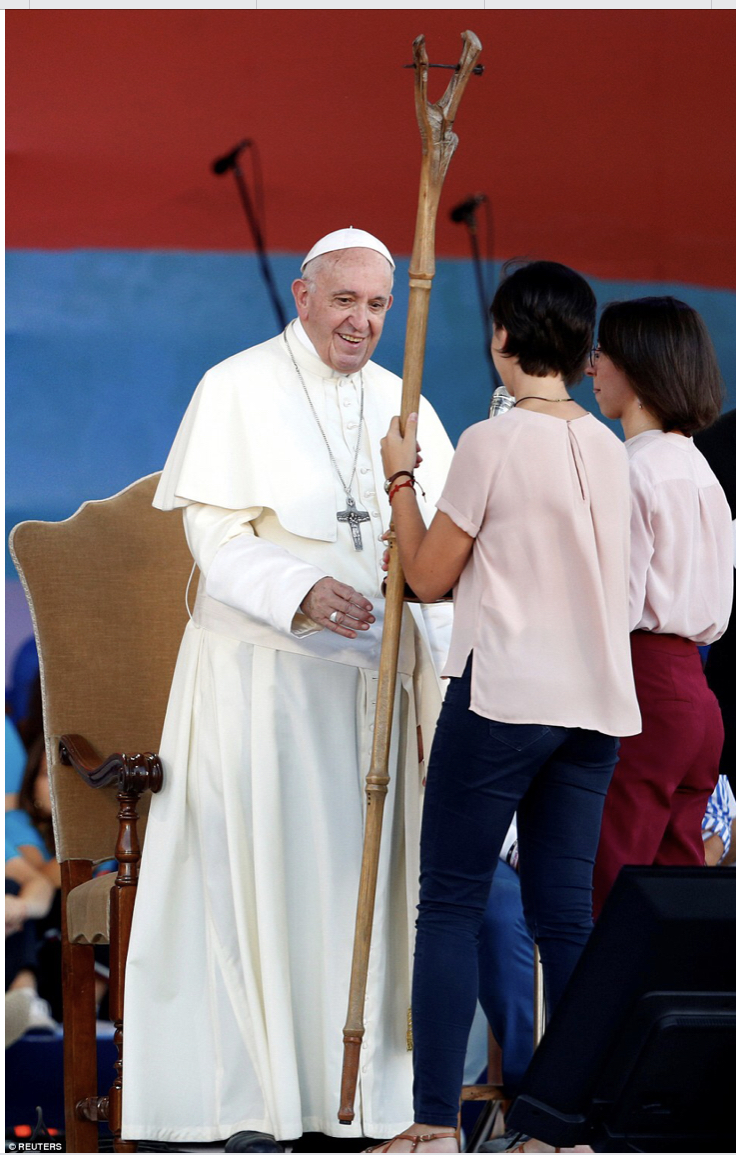
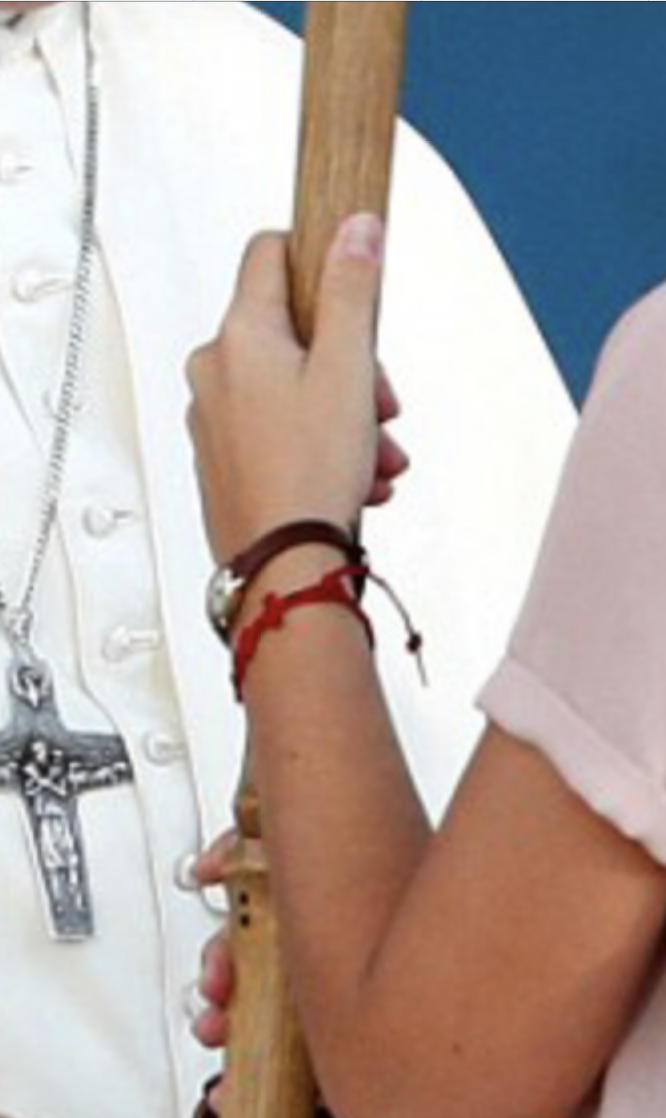








You must be logged in to post a comment.