The following guest post was written by frequent contributor Fr. Donald Kloster, parochial vicar at St. Mary’s in the Diocese of Bridgeport, Connecticut.
I’ve been mulling over many questions lately that pertain to the families of those who enter a Traditional Latin Mass (TLM) vocation to the Priesthood and/or Religious life. A related query is how well the Traditional Latin Mass retains those children now being brought up within the Traditional Latin Mass since their early childhood or at least from the time of their earliest memories.
My experience with those raised in the Latin Mass prior to the Second Vatican Council tells me that the knowledge and retention of the faith is promoted by the Vetus Ordo. My Novus Ordo observations tell me that it leaks faithful like a faulty gasket of an engine leaks oil.
The Novus Ordo culture has produced a plethora of faithful who know very little about their faith despite a myriad of “new” catechetical gimmicks. The Rite of the Mass cannot but help to nourish the soul in the degrees of fidelity to the Apostolic praxis. We are the result of the Mass we pray. In the Novus Ordo, the engine still runs, but it runs at a diminished capacity because of a minimalist design.
My priest friends who don’t say the TLM are almost single minded in their rebuttal of my conclusion. They insist that it’s all about the families in which people are raised. Wrong. On both sides of the argument, either one can point to families that were fairly exemplary but their children don’t practice the faith once they leave home. Or, as I’ve come across, many others whose parents did not practice the Faith regularly and now their children have chosen to do so as adults on their own.
I’ve lived in 11 different US Dioceses and lived on three continents. Perhaps that speaks less in my favor as it pertains to my being bounced around as I was! Anecdotes can only be dismissed if the sample size of the given observation is small and fairly isolated. My sample size is quite large. Sometimes anecdotal occurrences are repeated so often that the conclusion should not be dismissed; that is as it pertains to reasonable thinking.
I’ve been involved in TLM circles for 28 years and have said the Traditional Mass for 20 years. I am, however, a product of the Novus Ordo. I never even saw a TLM until I was 24 years old. I went to the Seminary and was ordained as a Novus Ordo priest. My first TLM was as a 3 year ordained priest in 1998. I have no dog in this fight. Really, when I began to say the TLM I thought it was just for the good of my priestly spirituality. I never thought the TLM would catch on again in any wider scope; ever.
This past year, I have been doing a National Study on the TLM only parishes in the USA. Currently, there are around 70 of these but they are exploding in numbers with each passing year because the TLM priestly vocations are outpacing Novus Ordo priestly vocations by more than 7 to 1. My preliminary numbers are exceeding my initial expectations.
There is a huge wave transforming the Catholic landscape and it is largely being ignored by the Catholic leadership. I can now say what I suspected last year. The Novus Ordo is dying and it will be replaced by the Vetus Ordo sooner than anyone had foreseen, but certainly by 2050 the TLM will be the dominant liturgical practice once again.
My instincts tell me that 30-50% of the current vocations coming from the Traditional Latin Mass were not raised in it. Next year, I’ll try to test that feeling with the aforementioned study. A great number of the young men and women entering the TLM orders discovered it themselves; it wasn’t their family upbringing. My belief is that the Ancient Mass is the vocations catalyst and not the family per se.
One can certainly find a vocation as a Novus Ordo attendee, but all of the evidence suggests that many, many more are found as a TLM attendee. One huge proof is the precipitous vocations drop off after the Council and the abandoning of the 1962 Missal. The other proof is that vocations continue to rocket up in 2018 in the TLM and have leveled off at a very much lower level in the Novus Ordo seminaries and convents using the 1970 Missal. The Novus Ordo closed convents and seminaries will never reach their previous levels because there is no upward trend; not even in the same ballpark. Remember, all Catholics live in the same society and we all have similar temptations and spiritual obstacles to overcome. “By their fruit ye shall know them” (Mt. 7:16).
Finally, let’s be clear. This article is not intended to disparage anyone. Not one of us should cling to anything that is passing away. There is no reason to put your faith in something in order to win an argument or simply because at one time you thought things would improve with the Novus Ordo. Instead, things got much worse.
At the dawn of the promulgation of the Novus Ordo, we bled a big majority of Mass attending Catholics. No one asked them what they preferred. No one gave them any options. If they had been asked and/or allowed to attend the Mass of the Ages, the Novus Ordo would not have supplanted the formative Mass of every canonized saint to date.
Now bishops often repeat the stale quoted refrain, “almost no one wants the TLM.” Why do they suddenly care what the proverbial “people” want? They didn’t care back in 1970 when almost none of the faithful wanted a vernacular Mass. It’s true the Church is not a democracy. She is a theocracy and God will have His way! Everything is coming back full circle and I have a lot of buried relatives and friends who, if living today, would be overjoy
Posted inUncategorized|Comments Off on A National Study on the TLM only parishes in the USA shows that currently there are around 70 of these but they are exploding in numbers with each passing year because the TLM priestly vocations are outpacing Novus Ordo priestly vocations by more than 7 to 1. Preliminary numbers are exceeding initial expectations.
As a rule I abhor conspiracy theories. However, it would be ahistoric of me to deny that conspiracies have occurred. John Hinderaker at Powerline points us to a liberal site that begins to draw lines between some disturbing dots:
James Kunstler is a liberal who has a site called Clusterf*** Nation. Although a liberal, he casts a cold, intelligent eye on the follies of our time. The linked post begins by questioning why anyone would believe Christine Ford. What follows is an explosive theme:
I believe that the Christine Blasey Ford gambit was an extension of the sinister activities underway since early 2016 in the Department of Justice and the FBI to un-do the last presidential election, and that the real and truthful story about these seditious monkeyshines is going to blow wide open.
Stunning if true.
It turns out that the Deep State is a small world. Did you know that the lawyer sitting next to Dr. Ford in the Senate hearings, one Michael Bromwich, is also an attorney for Andrew McCabe, the former FBI Deputy Director fired for lying to investigators from his own agency and currently singing to a grand jury? What a coincidence. Out of all the lawyers in the most lawyer-infested corner of the USA, she just happened to hook up with him.
It’s a matter of record that Dr. Ford traveled to Rehobeth Beach Delaware on July 26, where her Best Friend Forever and former room-mate, Monica McLean, lives, and that she spent the next four days there before sending a letter July 30 to Senator Diane Feinstein that kicked off the “sexual assault” circus. Did you know that Monica McClean was a retired FBI special agent, and that she worked in the US Attorney’s office for the Southern District of New York under Preet Bharara, who had earlier worked for Senate Minority Leader Chuck Schumer?
Could Dr. Ford have spent those four days in July helping Christine Blasey Ford compose her letter to Mrs. Feinstein? Did you know that Monica McClean’s lawyer, one David Laufman is a former DOJ top lawyer who assisted former FBI counter-intel chief Peter Strozk on both the Clinton and Russia investigations before resigning in February this year — in fact, he sat in on the notorious “unsworn” interview with Hillary in 2016. Wow! What a really small swamp Washington is!
Of all the gin joints lawyers in all the towns in all the world, she walks in with one from the FBI. Funny coincidence.
Go here to read the rest. Things about the Ford allegations that raise huge red flags:
Her success in scrubbing her social media presence. I have never seen such a successful job of scubbing. She had to have top level help.
The Christine Ford that showed up at the hearing was apparently quite different from the Christine Ford prior to the hearing, in voice and general presentation of herself.
Why no comments from her family, other than her husband and his side of the family?
She cited the second front door of her house as precipitating couples’ counseling in 2012, during which she revealed to her husband that her desire for a second door was caused by anxiety as a result of her alleged encounter back in the early eighties with Brett Kavanaugh. In fact, the door went in during 2008 and a business was conducted at that new entrance.
It is becoming increasingly apparent that this was a setup which assumed that in the face of the mere allegation Kavanaugh would withdraw or Trump would pull his nomination, demonstrating a grave misunderstanding as to both Kavanaugh and Trump. Records need to be subpoenaed, especially communications between the legal team of Ms. Ford and the staff of Democrat senators. This nation was put through hell over allegations that were likely a fraud from the beginning and that at least some of the Democrat senators may well have known were a fraud.Share With Friends
Cradle Catholic. Active in the pro-life movement since 1973. Father of three and happily married for 35 years. Small town lawyer and amateur historian. Former president of the board of directors of the local crisis pregnancy center for a decade.MORE POST
4 COMMENTS
Tuesday, October 9, AD 2018 ART DECO1. Scott Adams has speculated that the scrubbing had to have been done by Google employees. No clue.2. IMO, that CB was recruited by David Laufman via Monica McLean is as good an explanation as any for her conduct. Since she was a period resident of Montgomery County of the right age and social profile, she’d do. If they’d found the sister of a Georgetown Prep alumnus or found an alumna of the school attended by Mark Judge’s sister, the story would have packed more punch, of course. They needed a pussyhat who could hold her own with committee counsel and she was that person, conveniently located in Monica McLean’s circle of friends. Neo-neocon pointed a few days ago to an unnoticed interview with Russell Ford in which he admits she’s been on bad terms with her family the last few years.
Tuesday, October 9, AD 2018 GUY MCCLUNGDoes anyone really wonder that the demonic were clawing and scratching the doors of the Supreme Court in agony over the installation of Justice Kavanaugh ? The demons and their accomplices were gnashing their teeth because they know that now they will get to kill fewer babies with him on the court. The demon democrats turned the court into their Supreme Legislature, an evil instrument to outvote all the American people with five minions. Now they see their own court from hell is going to become the Court of Heaven. They should have been careful what they sowed; just like that wonderful man, Harry Prdeath Reid, made it possible for the GOP to do this without 61 votes. Thank God for Harry Reid! Let us pray that God, the Almighty Father who creates the immortal soul of each baby int he womb, removes prodeath justices and puts more probaby anti-evil ones on the court, soon. “Oh Lord God, we have the disease, send us the cure, asap.” Guy McClung, Texas
Tuesday, October 9, AD 2018 PHILIP NACHAZELA set up???? Nahhhhhhh. (Major Sarcasm Alert.)Desperate times lead to desperate measures. That old serpent sure has a cast of characters that are bought and paid for. The things his children do…
Tuesday, October 9, AD 2018 YE OLDE SCRIBE“Could Dr. Ford have spent those four days in July helping Christine Blasey Ford compose her letter to Mrs. Feinstein?” I hope he meant Monica McClean, not Dr. Ford. That said, it is beyond me that anyone in their right mind could find this utterly neurotic, and perhaps mentally disturbed woman credible. Then again, it is also beyond me how anyone in their right mind could find modern Democrats credible.
Finally there is some movement. This weekend the Vatican began responding to the dismay of the laity over the McCarrick scandal. The responses are certainly tardy, and still not terribly reassuring. But they are responses, at least; the “stonewall” approach is breaking down.
The first response, issued by the Vatican press office on October 6, was a notice that Pope Francis, “aware of and concerned by the confusion that these accusations are causing in the conscience of the faithful,” was taking further steps to investigate the scandal.
Confusion? Who is confused? The statement attributes the “confusion” to the “accusations regarding the conduct” of McCarrick. Actually there is very little confusion on that score; there is now a good deal of testimony about the former cardinal’s behavior. And the public responses to that testimony is not so much confusion as outrage: righteous anger.
If there is confusion about the case, it is due to the conflicting claims over how the Vatican responded to the revelations about McCarrick’s misconduct. The Vatican statement feeds any such confusion, by creating the impression that the problem first came to light a few short weeks ago. There is no acknowledgment that in fact the Vatican was made aware of McCarrick’s homosexual escapades at least 15 years ago. Nor is there an acknowledgment that before Pope Francis ordered McCarrick to remove himself from public life, Pope Benedict XVI had already issued the same sort of order, only to see it flouted by the American prelate and then (if Archbishop Vigano’s charge is accurate) rescinded by Pope Francis.
For that matter, the October 6 statement never mentions the basic complaint against McCarrick. The word “homosexual” does not appear. There are a few references to abuse and to cover-ups—and, in keeping with the current vogue, to “clericalism”—but the word “homosexual” does not appear. So the statement immediately fails the test of candor.
The main thrust of the statement is the promise that Pope Francis has authorized a “further thorough study of the entire documentation present in the Archives of the Dicasteries and Offices of the Holy See regarding the former Cardinal McCarrick.” That is a small step in the right direction. But who will conduct this study? And when, and under what conditions? If the investigation will be done by the same people who are accused of covering up the evidence initially, lay Catholics have every right to remain “confused.”
Just two weeks earlier, we learned—by inference, not thanks to any forthright announcement—that Pope Francis had apparently declined a request from the American bishops for an apostolic visitation, a sort of investigation that would have carried the clout necessary to turn up all the available evidence. Now we learn the Pope is due to meet with the leaders of the US bishops’ conference again this week. Could the October 6 statement indicate that he might reconsider the American request? That, too, would be a step in the right direction—particularly if, following the advice from the American contingent, he took some steps to ensure that the work was done by reliable, independent investigators.
A final observation about that October 6 statement: the Vatican warned that the results, when they are released, might show “that choices were taken that would not be consonant with a contemporary approach to such issues.” On one level that is a considerable understatement; we already know that “choices were taken” (notice the passive voice, skirting the question of who made those choices) that were irresponsible and indefensible. But the reference to a “contemporary approach” is particularly noisome. Again there is a hint that until recently, Catholic bishops could not have been expected to know that the serial molestation of seminarians was a moral failing. St. Peter Damian (1007-1072) would disagree.
If there is a serious investigation into Vatican files pertaining to the McCarrick scandal, the bulk of the evidence would likely be found in the archives of the Congregation for Bishops. So it is noteworthy—and I wonder, is it coincidental?—that the second major Vatican announcement of the weekend came from the prefect of that dicastery, Cardinal Marc Ouellet. And if the October 6 announcement left key questions unanswered, the Ouellet statement actually added to the “confusion” of the laity—that is, the mounting suspicion that the Vatican in general, and Pope Francis in particular, had handled the McCarrick affair very, very badly.
A senior Vatican official on Sunday denounced what he called the “monstrous accusation” that Pope Francis ignored reports of sexual misconduct a favorite U.S. cardinal, but he also confirmed that the cardinal had already been under disciplinary measures when the pope took office.
Cardinal Ouellet was responding to a public challenge from Archbishop Carlo Maria Vigano, who had urged him to confirm that Pope Benedict XVI had imposed sanctions on McCarrick, ordering the American cardinal to withdraw from public life. Although he denounced the Vigano testimony as “monstrous” and “blasphemous” and “extremely deplorable,” Cardinal Ouellet essentially confirmed the essential point that Archbishop Vigano had asked him to make.
On the surface, the Canadian cardinal seemed to deny that point, writing:
After re-examining the archives, I can ascertain that there are no corresponding documents signed by either Pope, neither is there a note of an audience with my predecessor, Cardinal Giovanni-Battista Re, giving Archbishop Emeritus McCarrick an obligatory mandate of silence and to retire to a private life, carrying canonical penalties.
However, a careful reading of that long sentence reveals that Cardinal Ouellet had inserted several conditions. The key question was whether or not McCarrick had been ordered out of public life. Whether such an order appeared over a papal signature, or carried formal canonical penalties: these were secondary issues.
As to the primary issue, Cardinal Ouellet allowed that McCarrick had been “strongly advised not to travel and not to appear in public.” The cardinal even admitted that he had told Archbishop Vigano that McCarrick “was supposed to obey certain conditions and restrictions.” So even if “sanctions” is not the proper term, there were restrictions in place.
Cardinal Ouellet then went on to deplore Archbishop Vigano’s complaint that McCarrick had remained in office, and even gained power and influence, long after charges against him had been brought to the attention of Vatican officials. Cardinal Ouellet wrote that “at that time, unlike today, there was not sufficient proof of his alleged guilt.” In a revealing sentence, he continued, “It seems unjust to me to conclude that the persons in charge of the prior discernment are corrupt even though, in this concrete case, some suspicions provided by witnesses should have been further examined.”
Here Cardinal Ouellet betrayed the symptoms of the very problem that created this scandal. He acknowledged the existence of rumors about McCarrick, but argued that no action was required since there was no proof of the American prelate’s guilt. Wouldn’t a more responsible approach have been to investigate the rumors, to ascertain whether there was a cause for concern? How often have Vatican officials dismissed charges of clerical misconduct, classifying them as “rumors,” rather than taking them seriously? Has this lesson still not sunk in?
A charge, a report, or a rumor is not sufficient reason to dismiss a priest or a bishop. But a serious charge is sufficient reason to think twice about promoting that cleric. And when the reports multiply, as reports about McCarrick multiplied, that is ample reason to question whether the object of those charges should be given greater influence. These questions were not raised, in McCarrick’s case, and that failure to respond to obvious signs of trouble is a sign of negligence—or something worse than negligence.
Cardinal Ouellet concluded his open letter with several paragraphs of fulsome, cloying praise of Pope Francis, paired with a round denunciation of Vigano’s “open and scandalous rebellion.” It is remarkable that the prefect of the Congregation for Bishops, who in this very letter cautions against questioning the motivations of other bishops, does not hesitate to say that Archbishop Vigano is suffering from “bitterness and delusions” that have led him to inflict “a very painful wound on the Bride of Christ.”
Until very recently it was rare to see one bishop engage in such open criticism of another. No doubt Archbishop Vigano realized that he would be bringing such criticism on himself, when he dared to raise public questions about the leadership of Pope Francis. But isn’t it revealing that the bishop who has become the target for the most vituperative public criticism is not the bishop who preyed on his seminarians, nor the bishop who used diocesan funds to pay for the silence of an old lover, nor any of the bishops who lied to aggrieved parents, but the one bishop who, by telling inconvenient truths, put himself outside the protection of the clerical club?
Phil Lawler has been a Catholic journalist for more than 30 years. He has edited several Catholic magazines and written eight books. Founder of Catholic World News, he is the news director and lead analyst at CatholicCulture.org. See full bio.
THE VALID CARDINALS, i.e. CARDINALS APPOINTED BY POPES BENEDICT XVI AND SAINT JOHN PAUL II, MUST ACT SOON TO REMOVE FRANCIS THE MERCIFUL FROM THE THRONE OF SAINT PETER BEFORE HE DAMAGES THE INSTITUTIONAL CHURCH EVEN MORE THAN HE HAS ALREADY DAMAGED IT.
Recently many educated Catholic observers, including bishops and priests, have decried the confusion in doctrinal statements about faith or morals made from the Apostolic See at Rome and by the putative Bishop of Rome, Pope Francis. Some devout, faithful and thoughtful Catholics have even suggested that he be set aside as a heretic, a dangerous purveyor of error, as recently mentioned in a number of reports. Claiming heresy on the part of a man who is a supposed Pope, charging material error in statements about faith or morals by a putative Roman Pontiff, suggests and presents an intervening prior question about his authenticity in that August office of Successor of Peter as Chief of The Apostles, i.e., was this man the subject of a valid election by an authentic Conclave of The Holy Roman Church? This is so because each Successor of Saint Peter enjoys the Gift of Infallibility. So, before one even begins to talk about excommunicating such a prelate, one must logically examine whether this person exhibits the uniformly good and safe fruit of Infallibility. If he seems repeatedly to engage in material error, that first raises the question of the validity of his election because one expects an authentically-elected Roman Pontiff miraculously and uniformly to be entirely incapable of stating error in matters of faith or morals. So to what do we look to discern the invalidity of such an election? His Holiness, Pope John Paul II, within His massive legacy to the Church and to the World, left us with the answer to this question. The Catholic faithful must look back for an answer to a point from where we have come—to what occurred in and around the Sistine Chapel in March 2013 and how the fruits of those events have generated such widespread concern among those people of magisterial orthodoxy about confusing and, or, erroneous doctrinal statements which emanate from The Holy See. His Apostolic Constitution (Universi Dominici Gregis) which governed the supposed Conclave in March 2013 contains quite clear and specific language about the invalidating effect of departures from its norms. For example, Paragraph 76 states: “Should the election take place in a way other than that prescribed in the present Constitution, or should the conditions laid down here not be observed, the election is for this very reason null and void, without any need for a declaration on the matter; consequently, it confers no right on the one elected.” From this, many believe that there is probable cause to believe that Monsignor Jorge Mario Bergoglio was never validly elected as the Bishop of Rome and Successor of Saint Peter—he never rightly took over the office of Supreme Pontiff of the Holy Roman Catholic Church and therefore he does not enjoy the charism of Infallibility. If this is true, then the situation is dire because supposed papal acts may not be valid or such acts are clearly invalid, including supposed appointments to the college of electors itself. Only valid cardinals can rectify our critical situation through privately (secretly) recognizing the reality of an ongoing interregnum and preparing for an opportunity to put the process aright by obedience to the legislation of His Holiness, Pope John Paul II, in that Apostolic Constitution, Universi Dominici Gregis. While thousands of the Catholic faithful do understand that only the cardinals who participated in the events of March 2013 within the Sistine Chapel have all the information necessary to evaluate the issue of election validity, there was public evidence sufficient for astute lay faithful to surmise with moral certainty that the March 2013 action by the College was an invalid conclave, an utter nullity. What makes this understanding of Universi Dominici Gregisparticularly cogent and plausible is the clear Promulgation Clause at the end of this Apostolic Constitution and its usage of the word “scienter” (“knowingly”). The Papal Constitution Universi Dominici Gregis thus concludes definitively with these words: “. . . knowingly or unknowingly, in any way contrary to this Constitution.” (“. . . scienter vel inscienter contra hanc Constitutionem fuerint excogitata.”) [Note that His Holiness, Pope Paul VI, had a somewhat similar promulgation clause at the end of his corresponding, now abrogated, Apostolic Constitution, Romano Pontifici Eligendo, but his does not use “scienter”, but rather uses “sciens” instead. This similar term of sciens in the earlier abrogated Constitution has an entirely different legal significance than scienter.] This word, “scienter”, is a legal term of art in Roman law, and in canon law, and in Anglo-American common law, and in each system, scienter has substantially the same significance, i.e., “guilty knowledge” or willfully knowing, criminal intent. Thus, it clearly appears that Pope John Paul II anticipated the possibility of criminal activity in the nature of a sacrilege against a process which He intended to be purely pious, private, sacramental, secret and deeply spiritual, if not miraculous, in its nature. This contextual reality reinforced in the Promulgation Clause, combined with: (1) the tenor of the whole document; (2) some other provisions of the document, e.g., Paragraph 76; (3) general provisions of canon law relating to interpretation, e.g., Canons 10 & 17; and, (4) the obvious manifest intention of the Legislator, His Holiness, Pope John Paul II, tends to establish beyond a reasonable doubt the legal conclusion that Monsignor Bergoglio was never validly elected Roman Pontiff. This is so because:1. Communication of any kind with the outside world, e.g., communication did occur between the inside of the Sistine Chapel and anyone outside, including a television audience, before, during or even immediately after the Conclave;2. Any political commitment to “a candidate” and any “course of action” planned for The Church or a future pontificate, such as the extensive decade-long “pastoral” plans conceived by the Sankt Gallen hierarchs; and,3. Any departure from the required procedures of the conclave voting process as prescribed and known by a cardinal to have occurred:each was made an invalidating act, and if scienter (guilty knowledge) was present, also even a crime on the part of any cardinal or other actor, but, whether criminal or not, any such act or conduct violating the norms operated absolutely, definitively and entirely against the validity of all of the supposed Conclave proceedings. Quite apart from the apparent notorious violations of the prohibition on a cardinal promising his vote, e.g., commitments given and obtained by cardinals associated with the so-called “Sankt Gallen Mafia,” other acts destructive of conclave validity occurred. Keeping in mind that Pope John Paul II specifically focused Universi Dominici Gregis on “the seclusion and resulting concentration which an act so vital to the whole Church requires of the electors” such that “the electors can more easily dispose themselves to accept the interior movements of the Holy Spirit,” even certain openly public media broadcasting breached this seclusion by electronic broadcasts outlawed by Universi Dominici Gregis. These prohibitions include direct declarative statements outlawing any use of television before, during or after a conclave in any area associated with the proceedings, e.g.: “I further confirm, by my apostolic authority, the duty of maintaining the strictest secrecy with regard to everything that directly or indirectly concerns the election process itself.” Viewed in light of this introductory preambulary language of Universi Dominici Gregis and in light of the legislative text itself, even the EWTN camera situated far inside the Sistine Chapel was an immediately obvious non-compliant act which became an open and notorious invalidating violation by the time when this audio-visual equipment was used to broadcast to the world the preaching after the “Extra Omnes”. While these blatant public violations of Chapter IV of Universi Dominici Gregis actuate the invalidity and nullity of the proceedings themselves, nonetheless in His great wisdom, the Legislator did not disqualify automatically those cardinals who failed to recognize these particular offenses against sacred secrecy, or even those who, with scienter, having recognized the offenses and having had some power or voice in these matters, failed or refused to act or to object against them: “Should any infraction whatsoever of this norm occur and be discovered, those responsible should know that they will be subject to grave penalties according to the judgment of the future Pope.” [Universi Dominici Gregis, ¶55] No Pope apparently having been produced in March 2013, those otherwise valid cardinals who failed with scienter to act on violations of Chapter IV, on that account alone would nonetheless remain voting members of the College unless and until a new real Pope is elected and adjudges them. Thus, those otherwise valid cardinals who may have been compromised by violations of secrecy can still participate validly in the “clean-up of the mess” while addressing any such secrecy violations with an eventual new Pontiff. In contrast, the automatic excommunication of those who politicized the sacred conclave process, by obtaining illegally, commitments from cardinals to vote for a particular man, or to follow a certain course of action (even long before the vacancy of the Chair of Peter as Vicar of Christ), is established not only by the word, “scienter,” in the final enacting clause, but by a specific exception, in this case, to the general statement of invalidity which therefore reinforces the clarity of intention by Legislator that those who apply the law must interpret the general rule as truly binding. Derived directly from Roman law, canonical jurisprudence provides this principle for construing or interpreting legislation such as this Constitution, Universi Dominici Gregis. Expressed in Latin, this canon of interpretation is: “Exceptio probat regulam in casibus non exceptis.” (The exception proves the rule in cases not excepted.) In this case, an exception from invalidity for acts of simony reinforces the binding force of the general principle of nullity in cases of other violations. Therefore, by exclusion from nullity and invalidity legislated in the case of simony: “If — God forbid — in the election of the Roman Pontiff the crime of simony were to be perpetrated, I decree and declare that all those guilty thereof shall incur excommunication latae sententiae. At the same time I remove the nullity or invalidity of the same simoniacal provision, in order that — as was already established by my Predecessors — the validity of the election of the Roman Pontiff may not for this reason be challenged.” His Holiness made an exception for simony. Exceptio probat regulam in casibus non exceptis. The clear exception from nullity and invalidity for simony proves the general rule that other violations of the sacred process certainly do and did result in the nullity and invalidity of the entire conclave. Comparing what Pope John Paul II wrote in His Constitution on conclaves with the Constitution which His replaced, you can see that, with the exception of simony, invalidity became universal. In the corresponding paragraph of what Pope Paul VI wrote, he specifically confined the provision declaring conclave invalidity to three (3) circumstances described in previous paragraphs within His constitution, Romano Pontfici Eligendo. No such limitation exists in Universi Dominici Gregis. See the comparison both in English and Latin below:Romano Pontfici Eligendo, 77. Should the election be conducted in a manner different from the three procedures described above (cf. no. 63 ff.) or without the conditions laid down for each of the same, it is for this very reason null and void (cf. no. 62), without the need for any declaration, and gives no right to him who has been thus elected. [Romano Pontfici Eligendo, 77: “Quodsi electio aliter celebrata fuerit, quam uno e tribus modis, qui supra sunt dicti (cfr. nn. 63 sqq.), aut non servatis condicionibus pro unoquoque illorum praescriptis, electio eo ipso est nulla et invalida (cfr. n. 62) absque ulla declaratione, et ita electo nullum ius tribuit .”] as compared with:Universi Dominici Gregis, 76: “Should the election take place in a way other than that prescribed in the present Constitution, or should the conditions laid down here not be observed, the election is for this very reason null and void, without any need for a declaration on the matter; consequently, it confers no right on the one elected.” [Universi Dominici Gregis, 76: “Quodsi electio aliter celebrata fuerit, quam haec Constitutio statuit, aut non servatis condicionibus pariter hic praescriptis, electio eo ipso est nulla et invalida absque ulla declaratione, ideoque electo nullum ius tribuit.”]Of course, this is not the only feature of the Constitution or aspect of the matter which tends to establish the breadth of invalidity. Faithful must hope and pray that only those cardinals whose status as a valid member of the College remains intact will ascertain the identity of each other and move with the utmost charity and discretion in order to effectuate The Divine Will in these matters. The valid cardinals, then, must act according to that clear, manifest, obvious and unambiguous mind and intention of His Holiness, Pope John Paul II, so evident in Universi Dominici Gregis, a law which finally established binding and self-actuating conditions of validity on the College for any papal conclave, a reality now made so apparent by the bad fruit of doctrinal confusion and plain error. It would seem then that praying and working in a discreet and prudent manner to encourage only those true cardinals inclined to accept a reality of conclave invalidity, would be a most charitable and logical course of action in the light of Universi Dominici Gregis, and out of our high personal regard for the clear and obvious intention of its Legislator, His Holiness, Pope John Paul II. Even a relatively small number of valid cardinals could act decisively and work to restore a functioning Apostolic See through the declaration of an interregnum government. The need is clear for the College to convene a General Congregation in order to declare, to administer, and soon to end the Interregnum which has persisted since March 2013. Finally, it is important to understand that the sheer number of putative counterfeit cardinals will eventually, sooner or later, result in a situation in which The Church will have no normal means validly ever again to elect a Vicar of Christ. After that time, it will become even more difficult, if not humanly impossible, for the College of Cardinals to rectify the current disastrous situation and conduct a proper and valid Conclave such that The Church may once again both have the benefit of a real Supreme Pontiff, and enjoy the great gift of a truly infallible Vicar of Christ. It seems that some good cardinals know that the conclave was invalid, but really cannot envision what to do about it; we must pray, if it is the Will of God, that they see declaring the invalidity and administering an Interregnum through a new valid conclave is what they must do. Without such action or without a great miracle, The Church is in a perilous situation. Once the last validly appointed cardinal reaches age 80, or before that age, dies, the process for electing a real Pope ends with no apparent legal means to replace it. Absent a miracle then, The Church would no longer have an infallible Successor of Peter and Vicar of Christ. Roman Catholics would be no different that Orthodox Christians. In this regard, all of the true cardinals may wish to consider what Holy Mother Church teaches in the Catechism of the Catholic Church, ¶675, ¶676 and ¶677 about “The Church’s Ultimate Trial”. But, the fact that “The Church . . . will follow her Lord in his death and Resurrection” does not justify inaction by the good cardinals, even if there are only a minimal number sufficient to carry out Chapter II of Universi Dominici Gregis and operate the Interregnum. This Apostolic Constitution, Universi Dominici Gregis, which was clearly applicable to the acts and conduct of the College of Cardinals in March 2013, is manifestly and obviously among those “invalidating” laws “which expressly establish that an act is null or that a person is effected” as stated in Canon 10 of the 1983 Code of Canon Law. And, there is nothing remotely “doubtful or obscure” (Canon 17) about this Apostolic Constitution as clearly promulgated by Pope John Paul II. The tenor of the whole document expressly establishes that the issue of invalidity was always at stake. This Apostolic Constitution conclusively establishes, through its Promulgation Clause [which makes “anything done (i.e., any act or conduct) by any person . . . in any way contrary to this Constitution,”] the invalidity of the entire supposed Conclave, rendering it “completely null and void”. So, what happens if a group of Cardinals who undoubtedly did not knowingly and wilfully initiate or intentionally participate in any acts of disobedience against Universi Dominici Gregis were to meet, confer and declare that, pursuant to Universi Dominici Gregis, Monsignor Bergoglio is most certainly not a valid Roman Pontiff. Like any action on this matter, including the initial finding of invalidity, that would be left to the valid members of the college of cardinals. They could declare the Chair of Peter vacant and proceed to a new and proper conclave. They could meet with His Holiness, Benedict XVI, and discern whether His resignation and retirement was made under duress, or based on some mistake or fraud, or otherwise not done in a legally effective manner, which could invalidate that resignation. Given the demeanor of His Holiness, Benedict XVI, and the tenor of His few public statements since his departure from the Chair of Peter, this recognition of validity in Benedict XVI seems unlikely. In fact, even before a righteous group of good and authentic cardinals might decide on the validity of the March 2013 supposed conclave, they must face what may be an even more complicated discernment and decide which men are most likely not valid cardinals. If a man was made a cardinal by the supposed Pope who is, in fact, not a Pope (but merely Monsignor Bergoglio), no such man is in reality a true member of the College of Cardinals. In addition, those men appointed by Pope John Paul II or by Pope Benedict XVI as cardinals, but who openly violated Universi Dominici Gregis by illegal acts or conduct causing the invalidation of the last attempted conclave, would no longer have voting rights in the College of Cardinals either. (Thus, the actual valid members in the College of Cardinals may be quite smaller in number than those on the current official Vatican list of supposed cardinals.) In any event, the entire problem is above the level of anyone else in Holy Mother Church who is below the rank of Cardinal. So, we must pray that The Divine Will of The Most Holy Trinity, through the intercession of Our Lady as Mediatrix of All Graces and Saint Michael, Prince of Mercy, very soon rectifies the confusion in Holy Mother Church through action by those valid Cardinals who still comprise an authentic College of Electors. Only certainly valid Cardinals can address the open and notorious evidence which points to the probable invalidity of the last supposed conclave and only those cardinals can definitively answer the questions posed here. May only the good Cardinals unite and if they recognize an ongoing Interregnum, albeit dormant, may they end this Interregnum by activating perfectly a functioning Interregnum government of The Holy See and a renewed process for a true Conclave, one which is purely pious, private, sacramental, secret and deeply spiritual. If we do not have a real Pontiff, then may the good Cardinals, doing their appointed work “in view of the sacredness of the act of election” “accept the interior movements of the Holy Spirit” and provide Holy Mother Church with a real Vicar of Christ as the Successor of Saint Peter. May these thoughts comport with the synderetic considerations of those who read them and may their presentation here please both Our Immaculate Virgin Mother, Mary, Queen of the Apostles, and The Most Holy Trinity, Father, Son and Holy Spirit.N. de PlumeUn ami des Papes
Posted inUncategorized|Comments Off on “Isn’t it revealing that the bishop who has become the target for the most vituperative public criticism is not the bishop who preyed on his seminarians, nor the bishop who used diocesan funds to pay for the silence of an old lover, nor any of the bishops who lied to aggrieved parents, but the one bishop who, by telling inconvenient truths, put himself outside the protection of the clerical club?”
I would like to make a special appeal to Cardinal Ouellet, because as nuncio I always worked in great harmony with him, and I have always had great esteem and affection towards him. He will remember when, at the end of my mission in Washington, he received me at his apartment in Rome in the evening for a long conversation. At the beginning of Pope Francis’ pontificate, he had maintained his dignity, as he had shown with courage when he was Archbishop of Québec. Later, however, when his work as prefect of the Congregation for Bishops was being undermined because recommendations for episcopal appointments were being passed directly to Pope Francis by two homosexual “friends” of his dicastery, bypassing the Cardinal, he gave up. His long article in L’Osservatore Romano, in which he came out in favor of the more controversial aspects of Amoris Laetitia, represents his surrender.
Your Eminence, before I left for Washington, you were the one who told me of Pope Benedict’s sanctions on McCarrick. You have at your complete disposal key documents incriminating McCarrick and many in the curia for their cover-ups. Your Eminence, I urge you to bear witness to the truth.
In a scathing open letter released by the Vatican yesterday — the entire thing is here — Ouellet responds vigorously. Note this part:
You said that on June 23, 2013, you provided Pope Francis with information about McCarrick in an audience he granted to you, as he also did for many pontifical representatives with whom he met for the first time that day. I can only imagine the amount of verbal and written information that was provided to the Holy Father on that occasion about so many persons and situations. I strongly doubt that the Pope had such interest in McCarrick, as you would like us to believe, given the fact that by then he was an 82-year-old Archbishop emeritus who had been without a role for seven years. Moreover, the written instructions given to you by the Congregation for Bishops at the beginning of your mission in 2001 [Note: this must be an error; Vigano’s mission as nuncio began in 2011 — RD] did not say anything about McCarrick, except for what I mentioned to you verbally about his situation as Bishop emeritus and certain conditions and restrictions that he had to follow on account of some rumors about his past conduct.
Emphasis mine. This appears to vindicate Vigano’s claim that Benedict XVI put McCarrick on some sort of leash because McCarrick was a lecher. Notice how carefully he words this: that there were “rumours” that McCarrick was dirty.
Note too that Ouellet’s defense of Francis is that the pope was probably too overwhelmed by information to remember that his nuncio to the most powerful nation in the world had warned him that the retired cardinal archbishop of the capital city of the most powerful nation in the world was a sex abuser. That strains credulity. Even if it’s true, that does not put Francis in the best light, does it?
More:
From 30th June 2010, when I became Prefect of the Congregation for Bishops, I never presented in audience the McCarrick case to Pope Benedict XVI or to Pope Francis – not until recently, after his dismissal from the College of Cardinals. The former Cardinal, retired in May of 2006, had been requested not to travel or to make public appearances, in order to avoid new rumors about him.
Not “in order to keep him from molesting again,” but “in order to avoid new rumours about him.” This felicitous formulation preserves deniability, but also underscores the importance for the Vatican of maintaining “bella figura” — an attractive appearance. More:
It is false, therefore, to present those measures as “sanctions” formally imposed by Pope Benedict XVI and then invalidated by Pope Francis.
OK, so where did the restrictions that Ouellet recalls having mentioned verbally to the incoming nuncio Vigano originate? Given that only the Pope could restrict the activities of a cardinal archbishop, there’s a lot riding on the word “formally” in this paragraph.
More:
After a review of the archives, I find that there are no documents signed by either Pope in this regard, and there are no audience notes from my predecessor, Cardinal Giovanni-Battista Re, imposing on the retired Archbishop the obligation to lead a quiet and private life with the weight normally reserved to canonical penalties. The reason is that back then, unlike today, there was not sufficient proof of his alleged culpability. Thus, the Congregation’s decision was inspired by prudence, and the letters from my predecessor and my own letters urged him, first through the Apostolic Nuncio Pietro Sambi and then through you, to lead a life of prayer and penance, for his own good and for the good of the Church. His case would have deserved new disciplinary measures if the Nunciature in Washington, or any other source, had provided us recent and definitive information about his behavior. I am of the opinion that, out of respect for the victims and given the need for justice, the inquiry currently underway in the United States and in the Roman Curia should provide a comprehensive and critical study of the procedures and the circumstances of this painful case in order to prevent something like it from ever happening in the future.
So, according to Cardinal Ouellet, there are no documents that back up Vigano’s claim that Benedict XVI formally — that word — sanctioned McCarrick. The reason for that, Ouellet continues, is that there wasn’t enough proof against McCarrick.
To believe that the Vatican operated in good faith with regard to McCarrick back then, you have to believe that these statements from Archbishop Vigano, in his first testimony, are untrue. First, he mentions the 2000 letter from Father Boniface Ramsey, which we now know, thanks to this September 7 report from Catholic News Service, was sent, and was acknowledged by the Vatican as received. Moreover, as these screenshots from the Vigano memo claim:
To believe Ouellet’s claim that the Vatican hadn’t sufficient proof to act against McCarrick, you have to believe that Vigano is lying about documents, including his own 6 December 2006 memo.
Ouellet goes on:
How is it possible that this man of the Church [McCarrick — RD], whose incoherence has now been revealed, was promoted many times, and was nominated to such a high position as Archbishop of Washington and Cardinal? I am personally very surprised, and I recognize that there were failures in the selection procedures implemented in his case. However, and without entering here into details, it must be understood that the decisions taken by the Supreme Pontiff [John Paul II — RD] are based on the information available to him at the time and that they are the object of a prudential judgment which is not infallible. I think it is unjust to reach the conclusion that there is corruption on the part of the persons entrusted with this previous discernment process, even though in the particular case some of the concerns that were raised by testimonies should have been examined more closely. The Archbishop also knew how to cleverly defend himself from those concerns raised about him. Furthermore, the fact that there could be in the Vatican persons who practice or support sexual behavior that is contrary to the values of the Gospel, does not authorize us to make generalizations or to declare unworthy and complicit this or that individual, including the Holy Father himself. Should not ministers of the truth avoid above all calumny and defamation?
Shorter Ouellet: just because there might be a lavender mafia in the Curia doesn’t mean that they had anything to do with promoting and protecting a powerful gay cardinal. Sure, that’s possible. But is it likely?
Here’s where the nonsense gets really thick:
Dear pontifical representative emeritus, I tell you frankly that to accuse Pope Francis of having covered-up knowingly the case of an alleged sexual predator and, therefore, of being an accomplice to the corruption that afflicts the Church, to the point that he could no longer continue to carry out his reform as the first shepherd of the Church, appears to me from all viewpoints unbelievable and without any foundation. I cannot understand how could you have allowed yourself to be convinced of this monstrous and unsubstantiated accusation. Francis had nothing to do with McCarrick’s promotions to New York, Metuchen, Newark and Washington. He stripped him of his Cardinal’s dignity as soon as there was a credible accusation of abuse of a minor. For a Pope who does not hide the trust that he places in certain prelates, I never heard him refer to this so called great advisor for the pontificate for episcopal appointments in the United States. I can only surmise that some of those prelates are not of your preference or the preference of your friends who support your interpretation of matters. I think it is abhorrent, however, for you to use the clamorous sexual abuse scandal in the United States to inflict an unmerited and unheard of a blow to the moral authority of your superior, the Supreme Pontiff.
As reported at the top, multiple signs point to Newark’s fourth archbishop [McCarrick — RD] as the lead architect behind the choice of his second successor. Having maintained an enduring devotion for and among the Jersey church since his transfer to the capital in 2000, McCarrick – who Francis is said to revere as “a hero” of his – made a direct appeal over recent weeks for Tobin to be named to Newark, according to two sources familiar with the cardinal’s thinking.
For Chicago, it appears that Pope Francis proceeded with his own personal consultation, parallel to that of the dicastery. The appointment of Cupich is thought to have been recommended to the pope with particular enthusiasm by Cardinal Óscar Andrés Rodríguez Maradiaga and above all by Cardinal Theodore McCarrick, archbishop emeritus of Washington, a representative of the “liberal” old guard of the U.S. episcopate.
Of course Francis had nothing to do with McCarrick’s rise within the hierarchy; that was all John Paul II’s doing. But nobody claims that Francis did! Furthermore, it is simply not credible that McCarrick had no influence with Francis. Back in 2014, Catholic journalist David Gibson, also a progressive, published a breezy National Catholic Reporter profile about McCarrick’s new role under Francis’s pontificate. Excerpt:
McCarrick is one of a number of senior churchmen who were more or less put out to pasture during the eight-year pontificate of Pope Benedict XVI. But now Francis is pope, and prelates like Cardinal Walter Kasper (another old friend of McCarrick’s) and McCarrick himself are back in the mix and busier than ever.
McCarrick in particular has been on a tear in the past year, traveling to the Philippines to console typhoon victims and visiting geopolitical pivot points such as China and Iran for sensitive talks on religious freedom and nuclear proliferation.
“I truly believe there should be a religious channel in handling things where you do not have the diplomatic channel,” he told NBC’s “Meet the Press” last month after a trip to Tehran.
McCarrick travels regularly to the Middle East and was in the Holy Land for Francis’ visit in May. “The bad ones, they never die!” the pope teased McCarrick again when he saw him.
Ha ha! That’s the second joke Francis made about McCarrick’s poor character, according to the piece, which presents them as a lighthearted matter. It’s much less so in light of what we now know, of course.
Remember that his famous “who am I to judge?” remarks about homosexuality came in a certain context. Here is that context, in the transcript of the 2013 press conference in which he made the remarks. “Monsignor Ricca” is Battista Ricca, a former papal nuncio who Francis had just appointed as his representative to the Vatican Bank. Ricca had led a dissolute lifestyle as nuncio, living openly with a gay lover, being found in a trapped elevator by police with a male prostitute, and so on. And yet, he continued to rise and rise. From the press conference; emphases below are mine:
Ilze Scamparini
I would like permission to ask a delicate question: another image that has been going around the world is that of Monsignor Ricca and the news about his private life. I would like to know, Your Holiness, what you intend to do about this? How are you confronting this issue and how does Your Holiness intend to confront the whole question of the gay lobby?
Pope Francis
About Monsignor Ricca: I did what canon law calls for, that is a preliminary investigation. And from this investigation, there was nothing of what had been alleged. We did not find anything of that. This is the response. But I wish to add something else: I see that many times in the Church, over and above this case, but including this case, people search for “sins from youth”, for example, and then publish them. They are not crimes, right? Crimes are something different: the abuse of minors is a crime. No, sins. But if a person, whether it be a lay person, a priest or a religious sister, commits a sin and then converts, the Lord forgives, and when the Lord forgives, the Lord forgets and this is very important for our lives. When we confess our sins and we truly say, “I have sinned in this”, the Lord forgets, and so we have no right not to forget, because otherwise we would run the risk of the Lord not forgetting our sins. That is a danger. This is important: a theology of sin. Many times I think of Saint Peter. He committed one of the worst sins, that is he denied Christ, and even with this sin they made him Pope. We have to think a great deal about that. But, returning to your question more concretely. In this case, I conducted the preliminary investigation and we didn’t find anything. This is the first question. Then, you spoke about the gay lobby. So much is written about the gay lobby. I still haven’t found anyone with an identity card in the Vatican with “gay” on it. They say there are some there. I believe that when you are dealing with such a person, you must distinguish between the fact of a person being gay and the fact of someone forming a lobby, because not all lobbies are good. This one is not good. If someone is gay and is searching for the Lord and has good will, then who am I to judge him? The Catechism of the Catholic Church explains this in a beautiful way, saying … wait a moment, how does it say it … it says: “no one should marginalize these people for this, they must be integrated into society”. The problem is not having this tendency, no, we must be brothers and sisters to one another, and there is this one and there is that one. The problem is in making a lobby of this tendency: a lobby of misers, a lobby of politicians, a lobby of masons, so many lobbies. For me, this is the greater problem. Thank you so much for asking this question. Many thanks.
It seems quite clear from this that Francis considers sex with adults to be merely “sins,” not crimes. This would explain why he rehabilitated McCarrick, even while joking about what a bad boy he is. This would also explain why he punished McCarrick when he found out that the New York Archdiocese had concluded, after investigation, that McCarrick had molested a minor decades ago. The likeliest explanation, in my view, is that Francis knew about McCarrick’s past as a molester of seminarians, but did not take it seriously. This is something that’s demonstrably within his character.
We are finding out that Francis has an ugly past handling abuse as Cardinal Archbishop of Buenos Aires (for example). And we know that when Chileans complained bitterly about his appointment of a bishop who was a disciple of a serial child molester, Francis repeatedly denounced them as pawns of a leftist political plot. Only later, did the Pope admit he had been wrong, and apologize to Chilean victims. Keep that in mind when you hear Francis and his defenders, like Cardinal Ouellet, denounce Vigano and other critics as pawns of a rightist political plot.
Cardinal Ouellet’s letter is oozes sweetness and oil like a doughnut fresh out of the fryer. It is not credible. Archbishop Vigano’s claims remain unaddressed in a meaningful way. The real news out of the Ouellet letter is that McCarrick was placed on some kind of restriction over his behavior, though Ouellet maintains that there is no paper record of it having been done. But Ouellet’s claims that Francis had no particular interest in McCarrick, and that there is no evidence that McCarrick had influence over Francis, cannot be taken seriously. The greater part of the Ouellet epistle amounts to a sanctimonious, “How dare you, Vigano?!” Ouellet:
I find your current attitude incomprehensible and extremely troubling, not only because of the confusion it sows among the People of God, but because your public accusations gravely harm the reputation of the bishops, successors of the Apostles.
But are they true? Read Ouellet’s letter closely. It’s almost entirely unsupported assertion.
Ouellet’s letter is propaganda. We are scarcely closer to determining the truth of what happened in the case of McCarrick. Francis has yet to speak publicly to journalists about what he knew and when he knew it. At least he has stopped giving that series of embarrassing homilies (for example) in which he presented himself as a suffering, silent, sweet Christ, and Vigano as the Devil. That’s something.
THE VALID CARDINALS, i.e. CARDINALS APPOINTED BY POPES BENEDICT XVI AND SAINT JOHN PAUL II, MUST ACT SOON TO REMOVE FRANCIS THE MERCIFUL FROM THE THRONE OF SAINT PETER BEFORE HE DAMAGES THE INSTITUTIONAL CHURCH EVEN MORE THAN HE HAS ALREADY DAMAGED IT.
Recently many educated Catholic observers, including bishops and priests, have decried the confusion in doctrinal statements about faith or morals made from the Apostolic See at Rome and by the putative Bishop of Rome, Pope Francis. Some devout, faithful and thoughtful Catholics have even suggested that he be set aside as a heretic, a dangerous purveyor of error, as recently mentioned in a number of reports. Claiming heresy on the part of a man who is a supposed Pope, charging material error in statements about faith or morals by a putative Roman Pontiff, suggests and presents an intervening prior question about his authenticity in that August office of Successor of Peter as Chief of The Apostles, i.e., was this man the subject of a valid election by an authentic Conclave of The Holy Roman Church? This is so because each Successor of Saint Peter enjoys the Gift of Infallibility. So, before one even begins to talk about excommunicating such a prelate, one must logically examine whether this person exhibits the uniformly good and safe fruit of Infallibility. If he seems repeatedly to engage in material error, that first raises the question of the validity of his election because one expects an authentically-elected Roman Pontiff miraculously and uniformly to be entirely incapable of stating error in matters of faith or morals. So to what do we look to discern the invalidity of such an election? His Holiness, Pope John Paul II, within His massive legacy to the Church and to the World, left us with the answer to this question. The Catholic faithful must look back for an answer to a point from where we have come—to what occurred in and around the Sistine Chapel in March 2013 and how the fruits of those events have generated such widespread concern among those people of magisterial orthodoxy about confusing and, or, erroneous doctrinal statements which emanate from The Holy See. His Apostolic Constitution (Universi Dominici Gregis) which governed the supposed Conclave in March 2013 contains quite clear and specific language about the invalidating effect of departures from its norms. For example, Paragraph 76 states: “Should the election take place in a way other than that prescribed in the present Constitution, or should the conditions laid down here not be observed, the election is for this very reason null and void, without any need for a declaration on the matter; consequently, it confers no right on the one elected.” From this, many believe that there is probable cause to believe that Monsignor Jorge Mario Bergoglio was never validly elected as the Bishop of Rome and Successor of Saint Peter—he never rightly took over the office of Supreme Pontiff of the Holy Roman Catholic Church and therefore he does not enjoy the charism of Infallibility. If this is true, then the situation is dire because supposed papal acts may not be valid or such acts are clearly invalid, including supposed appointments to the college of electors itself. Only valid cardinals can rectify our critical situation through privately (secretly) recognizing the reality of an ongoing interregnum and preparing for an opportunity to put the process aright by obedience to the legislation of His Holiness, Pope John Paul II, in that Apostolic Constitution, Universi Dominici Gregis. While thousands of the Catholic faithful do understand that only the cardinals who participated in the events of March 2013 within the Sistine Chapel have all the information necessary to evaluate the issue of election validity, there was public evidence sufficient for astute lay faithful to surmise with moral certainty that the March 2013 action by the College was an invalid conclave, an utter nullity. What makes this understanding of Universi Dominici Gregisparticularly cogent and plausible is the clear Promulgation Clause at the end of this Apostolic Constitution and its usage of the word “scienter” (“knowingly”). The Papal Constitution Universi Dominici Gregis thus concludes definitively with these words: “. . . knowingly or unknowingly, in any way contrary to this Constitution.” (“. . . scienter vel inscienter contra hanc Constitutionem fuerint excogitata.”) [Note that His Holiness, Pope Paul VI, had a somewhat similar promulgation clause at the end of his corresponding, now abrogated, Apostolic Constitution, Romano Pontifici Eligendo, but his does not use “scienter”, but rather uses “sciens” instead. This similar term of sciens in the earlier abrogated Constitution has an entirely different legal significance than scienter.] This word, “scienter”, is a legal term of art in Roman law, and in canon law, and in Anglo-American common law, and in each system, scienter has substantially the same significance, i.e., “guilty knowledge” or willfully knowing, criminal intent. Thus, it clearly appears that Pope John Paul II anticipated the possibility of criminal activity in the nature of a sacrilege against a process which He intended to be purely pious, private, sacramental, secret and deeply spiritual, if not miraculous, in its nature. This contextual reality reinforced in the Promulgation Clause, combined with: (1) the tenor of the whole document; (2) some other provisions of the document, e.g., Paragraph 76; (3) general provisions of canon law relating to interpretation, e.g., Canons 10 & 17; and, (4) the obvious manifest intention of the Legislator, His Holiness, Pope John Paul II, tends to establish beyond a reasonable doubt the legal conclusion that Monsignor Bergoglio was never validly elected Roman Pontiff. This is so because:1. Communication of any kind with the outside world, e.g., communication did occur between the inside of the Sistine Chapel and anyone outside, including a television audience, before, during or even immediately after the Conclave;2. Any political commitment to “a candidate” and any “course of action” planned for The Church or a future pontificate, such as the extensive decade-long “pastoral” plans conceived by the Sankt Gallen hierarchs; and,3. Any departure from the required procedures of the conclave voting process as prescribed and known by a cardinal to have occurred:each was made an invalidating act, and if scienter (guilty knowledge) was present, also even a crime on the part of any cardinal or other actor, but, whether criminal or not, any such act or conduct violating the norms operated absolutely, definitively and entirely against the validity of all of the supposed Conclave proceedings. Quite apart from the apparent notorious violations of the prohibition on a cardinal promising his vote, e.g., commitments given and obtained by cardinals associated with the so-called “Sankt Gallen Mafia,” other acts destructive of conclave validity occurred. Keeping in mind that Pope John Paul II specifically focused Universi Dominici Gregis on “the seclusion and resulting concentration which an act so vital to the whole Church requires of the electors” such that “the electors can more easily dispose themselves to accept the interior movements of the Holy Spirit,” even certain openly public media broadcasting breached this seclusion by electronic broadcasts outlawed by Universi Dominici Gregis. These prohibitions include direct declarative statements outlawing any use of television before, during or after a conclave in any area associated with the proceedings, e.g.: “I further confirm, by my apostolic authority, the duty of maintaining the strictest secrecy with regard to everything that directly or indirectly concerns the election process itself.” Viewed in light of this introductory preambulary language of Universi Dominici Gregis and in light of the legislative text itself, even the EWTN camera situated far inside the Sistine Chapel was an immediately obvious non-compliant act which became an open and notorious invalidating violation by the time when this audio-visual equipment was used to broadcast to the world the preaching after the “Extra Omnes”. While these blatant public violations of Chapter IV of Universi Dominici Gregis actuate the invalidity and nullity of the proceedings themselves, nonetheless in His great wisdom, the Legislator did not disqualify automatically those cardinals who failed to recognize these particular offenses against sacred secrecy, or even those who, with scienter, having recognized the offenses and having had some power or voice in these matters, failed or refused to act or to object against them: “Should any infraction whatsoever of this norm occur and be discovered, those responsible should know that they will be subject to grave penalties according to the judgment of the future Pope.” [Universi Dominici Gregis, ¶55] No Pope apparently having been produced in March 2013, those otherwise valid cardinals who failed with scienter to act on violations of Chapter IV, on that account alone would nonetheless remain voting members of the College unless and until a new real Pope is elected and adjudges them. Thus, those otherwise valid cardinals who may have been compromised by violations of secrecy can still participate validly in the “clean-up of the mess” while addressing any such secrecy violations with an eventual new Pontiff. In contrast, the automatic excommunication of those who politicized the sacred conclave process, by obtaining illegally, commitments from cardinals to vote for a particular man, or to follow a certain course of action (even long before the vacancy of the Chair of Peter as Vicar of Christ), is established not only by the word, “scienter,” in the final enacting clause, but by a specific exception, in this case, to the general statement of invalidity which therefore reinforces the clarity of intention by Legislator that those who apply the law must interpret the general rule as truly binding. Derived directly from Roman law, canonical jurisprudence provides this principle for construing or interpreting legislation such as this Constitution, Universi Dominici Gregis. Expressed in Latin, this canon of interpretation is: “Exceptio probat regulam in casibus non exceptis.” (The exception proves the rule in cases not excepted.) In this case, an exception from invalidity for acts of simony reinforces the binding force of the general principle of nullity in cases of other violations. Therefore, by exclusion from nullity and invalidity legislated in the case of simony: “If — God forbid — in the election of the Roman Pontiff the crime of simony were to be perpetrated, I decree and declare that all those guilty thereof shall incur excommunication latae sententiae. At the same time I remove the nullity or invalidity of the same simoniacal provision, in order that — as was already established by my Predecessors — the validity of the election of the Roman Pontiff may not for this reason be challenged.” His Holiness made an exception for simony. Exceptio probat regulam in casibus non exceptis. The clear exception from nullity and invalidity for simony proves the general rule that other violations of the sacred process certainly do and did result in the nullity and invalidity of the entire conclave. Comparing what Pope John Paul II wrote in His Constitution on conclaves with the Constitution which His replaced, you can see that, with the exception of simony, invalidity became universal. In the corresponding paragraph of what Pope Paul VI wrote, he specifically confined the provision declaring conclave invalidity to three (3) circumstances described in previous paragraphs within His constitution, Romano Pontfici Eligendo. No such limitation exists in Universi Dominici Gregis. See the comparison both in English and Latin below:Romano Pontfici Eligendo, 77. Should the election be conducted in a manner different from the three procedures described above (cf. no. 63 ff.) or without the conditions laid down for each of the same, it is for this very reason null and void (cf. no. 62), without the need for any declaration, and gives no right to him who has been thus elected. [Romano Pontfici Eligendo, 77: “Quodsi electio aliter celebrata fuerit, quam uno e tribus modis, qui supra sunt dicti (cfr. nn. 63 sqq.), aut non servatis condicionibus pro unoquoque illorum praescriptis, electio eo ipso est nulla et invalida (cfr. n. 62) absque ulla declaratione, et ita electo nullum ius tribuit .”] as compared with:Universi Dominici Gregis, 76: “Should the election take place in a way other than that prescribed in the present Constitution, or should the conditions laid down here not be observed, the election is for this very reason null and void, without any need for a declaration on the matter; consequently, it confers no right on the one elected.” [Universi Dominici Gregis, 76: “Quodsi electio aliter celebrata fuerit, quam haec Constitutio statuit, aut non servatis condicionibus pariter hic praescriptis, electio eo ipso est nulla et invalida absque ulla declaratione, ideoque electo nullum ius tribuit.”]Of course, this is not the only feature of the Constitution or aspect of the matter which tends to establish the breadth of invalidity. Faithful must hope and pray that only those cardinals whose status as a valid member of the College remains intact will ascertain the identity of each other and move with the utmost charity and discretion in order to effectuate The Divine Will in these matters. The valid cardinals, then, must act according to that clear, manifest, obvious and unambiguous mind and intention of His Holiness, Pope John Paul II, so evident in Universi Dominici Gregis, a law which finally established binding and self-actuating conditions of validity on the College for any papal conclave, a reality now made so apparent by the bad fruit of doctrinal confusion and plain error. It would seem then that praying and working in a discreet and prudent manner to encourage only those true cardinals inclined to accept a reality of conclave invalidity, would be a most charitable and logical course of action in the light of Universi Dominici Gregis, and out of our high personal regard for the clear and obvious intention of its Legislator, His Holiness, Pope John Paul II. Even a relatively small number of valid cardinals could act decisively and work to restore a functioning Apostolic See through the declaration of an interregnum government. The need is clear for the College to convene a General Congregation in order to declare, to administer, and soon to end the Interregnum which has persisted since March 2013. Finally, it is important to understand that the sheer number of putative counterfeit cardinals will eventually, sooner or later, result in a situation in which The Church will have no normal means validly ever again to elect a Vicar of Christ. After that time, it will become even more difficult, if not humanly impossible, for the College of Cardinals to rectify the current disastrous situation and conduct a proper and valid Conclave such that The Church may once again both have the benefit of a real Supreme Pontiff, and enjoy the great gift of a truly infallible Vicar of Christ. It seems that some good cardinals know that the conclave was invalid, but really cannot envision what to do about it; we must pray, if it is the Will of God, that they see declaring the invalidity and administering an Interregnum through a new valid conclave is what they must do. Without such action or without a great miracle, The Church is in a perilous situation. Once the last validly appointed cardinal reaches age 80, or before that age, dies, the process for electing a real Pope ends with no apparent legal means to replace it. Absent a miracle then, The Church would no longer have an infallible Successor of Peter and Vicar of Christ. Roman Catholics would be no different that Orthodox Christians. In this regard, all of the true cardinals may wish to consider what Holy Mother Church teaches in the Catechism of the Catholic Church, ¶675, ¶676 and ¶677 about “The Church’s Ultimate Trial”. But, the fact that “The Church . . . will follow her Lord in his death and Resurrection” does not justify inaction by the good cardinals, even if there are only a minimal number sufficient to carry out Chapter II of Universi Dominici Gregis and operate the Interregnum. This Apostolic Constitution, Universi Dominici Gregis, which was clearly applicable to the acts and conduct of the College of Cardinals in March 2013, is manifestly and obviously among those “invalidating” laws “which expressly establish that an act is null or that a person is effected” as stated in Canon 10 of the 1983 Code of Canon Law. And, there is nothing remotely “doubtful or obscure” (Canon 17) about this Apostolic Constitution as clearly promulgated by Pope John Paul II. The tenor of the whole document expressly establishes that the issue of invalidity was always at stake. This Apostolic Constitution conclusively establishes, through its Promulgation Clause [which makes “anything done (i.e., any act or conduct) by any person . . . in any way contrary to this Constitution,”] the invalidity of the entire supposed Conclave, rendering it “completely null and void”. So, what happens if a group of Cardinals who undoubtedly did not knowingly and wilfully initiate or intentionally participate in any acts of disobedience against Universi Dominici Gregis were to meet, confer and declare that, pursuant to Universi Dominici Gregis, Monsignor Bergoglio is most certainly not a valid Roman Pontiff. Like any action on this matter, including the initial finding of invalidity, that would be left to the valid members of the college of cardinals. They could declare the Chair of Peter vacant and proceed to a new and proper conclave. They could meet with His Holiness, Benedict XVI, and discern whether His resignation and retirement was made under duress, or based on some mistake or fraud, or otherwise not done in a legally effective manner, which could invalidate that resignation. Given the demeanor of His Holiness, Benedict XVI, and the tenor of His few public statements since his departure from the Chair of Peter, this recognition of validity in Benedict XVI seems unlikely. In fact, even before a righteous group of good and authentic cardinals might decide on the validity of the March 2013 supposed conclave, they must face what may be an even more complicated discernment and decide which men are most likely not valid cardinals. If a man was made a cardinal by the supposed Pope who is, in fact, not a Pope (but merely Monsignor Bergoglio), no such man is in reality a true member of the College of Cardinals. In addition, those men appointed by Pope John Paul II or by Pope Benedict XVI as cardinals, but who openly violated Universi Dominici Gregis by illegal acts or conduct causing the invalidation of the last attempted conclave, would no longer have voting rights in the College of Cardinals either. (Thus, the actual valid members in the College of Cardinals may be quite smaller in number than those on the current official Vatican list of supposed cardinals.) In any event, the entire problem is above the level of anyone else in Holy Mother Church who is below the rank of Cardinal. So, we must pray that The Divine Will of The Most Holy Trinity, through the intercession of Our Lady as Mediatrix of All Graces and Saint Michael, Prince of Mercy, very soon rectifies the confusion in Holy Mother Church through action by those valid Cardinals who still comprise an authentic College of Electors. Only certainly valid Cardinals can address the open and notorious evidence which points to the probable invalidity of the last supposed conclave and only those cardinals can definitively answer the questions posed here. May only the good Cardinals unite and if they recognize an ongoing Interregnum, albeit dormant, may they end this Interregnum by activating perfectly a functioning Interregnum government of The Holy See and a renewed process for a true Conclave, one which is purely pious, private, sacramental, secret and deeply spiritual. If we do not have a real Pontiff, then may the good Cardinals, doing their appointed work “in view of the sacredness of the act of election” “accept the interior movements of the Holy Spirit” and provide Holy Mother Church with a real Vicar of Christ as the Successor of Saint Peter. May these thoughts comport with the synderetic considerations of those who read them and may their presentation here please both Our Immaculate Virgin Mother, Mary, Queen of the Apostles, and The Most Holy Trinity, Father, Son and Holy Spirit.N. de PlumeUn ami des Papes
Posted inUncategorized|Comments Off on “Ouellet’s letter is propaganda. We are scarcely closer to determining the truth of what happened in the case of McCarrick. Francis has yet to speak publicly to journalists about what he knew and when he knew it. At least he has stopped giving that series of embarrassing homilies (for example) in which he presented himself as a suffering, silent, sweet Christ, and Vigano as the Devil. That’s something. “
In his treatise “On Pastors,” Augustine wrote: “’You have failed to strengthen the weak,’ says the Lord. He is speaking of wicked shepherds, false shepherds who seek their own concerns and not those of Christ.”
The turmoil about deviant pastors and bishops is not wholly a new one. Christ, in a famous passage, stated that the Scribes and Pharisees sat on the Chair of Moses. Follow what they say, not what they do. The weak need the strength of the strong. But the strong can choose themselves over others.
The corruption of the shepherds affects more than themselves. Their corruption essentially consists in their establishing their own rules, not in following the example laid down by Christ for that office.
God is often blamed for permitting evil in the world. This tolerance, it is claimed, proves that He is not God, or even that He causes evil by not preventing it. Augustine is famous for stating that God could permit evil in a good world if, and only if, by allowing it, a greater good could follow. Evil can thus be the occasion of an unexpected good coming about.
We would not know what mercy is, for instance, if we had nothing to forgive or be merciful about. We are not, however, to do evil in order that good can happen. But if we do evil, the Lord can bring something good from our actions, from the good that remains in us in spite of our sins.
“There are men who want to lead a good life and have already decided to do so,” Augustine continued, “but are not capable of bearing sufferings, even though they are ready to do good. Now it is part of the Christian’s strength not only to do good works, but also to endure evil.”
Some of this understanding of evil was already in Plato. His fundamental principles were these: 1) It is “never right to do wrong.” 2) “Death is not the worst of evils.” 3) “Nothing evil could harm a good man.” 4) “It is better to suffer evil than to do it.”
*
Initially, these principles seem counter-productive. Why not return evil for evil? Why is the man who does both evil and good not better than the one who restricts himself to the good? To do what is evil means to place ourselves first. We are not to lay down our lives for our friends. We are not to lay them down at all if we can help it. We are to trust both our sword and our primacy.
In 1977, Josef Ratzinger wrote that modern thought wants to “redeem suffering by removing it: not redemption through suffering, but redemption from suffering.” Man does not expect “divine assistance but the humanization of man by man.” (Co-Heirs of the Truth, 123)
Man takes the place of God. He will remove suffering by his own means. The ways of God through endurance and suffering are rejected. We are left with what we can make of ourselves in this world. Having set out in a noble cause, as is often the case, we make things worse by following our own rules.
Charlie Brown and Lucy are walking home after school. He asks her: “Did the little boy who sits in front of you cry again today?” Lucy turns to Charlie to explain: “He cries every day! All the simple childhood fears. . . .Fear of being late for school, fear of his teacher, and fear of the principal.”
In the third panel, she goes on: “Fear of not knowing what room to go to after recess, fear of forgetting his lunch, fear of bigger kids, fear of being asked to recite. . .” Finally, Lucy, undaunted, continues: “Fear of missing the school bus. Fear of not knowing when to get off the school bus. . . .Fear. . .”
To all of this, Charlie, obviously dazed by it all, simply says: “Good Grief!!” (You’re the Greatest, Charlie Brown, 1964).
As the weepy little boy in front of Lucy at school had to learn, we have to endure many evils to survive in this world. Some of them are pretty messy. We wonder what the world might be like if noting evil or even inconvenient were in it.
The Lord gave us an imperfect world to see what we would do within it. Our record is our history. We are supposed to make an already good world more livable. But we can, and often do, make it a hell on earth. We have to endure the sins of others. They have to endure ours.
Some hate God for putting us in this situation of having to choose the good and endure what is evil. Others realize that this fallen world is the only one in which we ourselves could exist. Charlie was right – even our “grief” can be “good” if we endure it.
As Deputy Assistant Vice-Pope, and one who might have gone to the top if it hadn’t been for the St Gallen mob – er, I mean the Holy Spirit – I am writing to you about your latest statements spilling the Faggioli about Pope Francis (a little Vatican joke, there. Beans, get it? Oh, suit yourself.) “Oh look, it’s Ted over there!
“I find your current attitude incomprehensible and extremely troubling, as it makes the Pope, Cardinals and Bishops look like complete fools. Which nobody ever suspected before. Remember that criticising the Holy Father is blasphemy (CCC 9745, added today), and far worse than, say, criticising Jesus, who did not have the advantages of reading Amoris Laetitia.
How dare you say that Pope Benedict – whoever he may be – put sanctions on Uncle Ted McCarrick? The fact is that when Pope Francis took over he found Ted lying in chains in a deep dungeon, deprived of even the humblest seminarian for companionship. Being a merciful as well as humble pope, he promptly released him, saying “Go and sin some more” (John 8:11).
Uncle Ted was promptly made the Vatican’s Special Envoy to Vulnerable Seminarians, and how do you dare criticise the Pope’s decision? “Read this lot before you release McCarrick.
“Of course, Pope Francis makes prudential judgements, and he is not infallible, except when he chooses to be. And he does now. Dear pontifical representative emeritus, I tell you frankly that to accuse Pope Francis of having covered-up knowingly the case of an alleged sexual predator is unbelievable and without foundation. He didn’t bother mentioning the case to anyone, but that is not the same thing at all.
I have the privilege of having long meetings with Pope Francis every week to discuss the appointment of bishops and the problems that affect their governance. I know very well how he treats persons and problems: with great charity, mercy, attentiveness and seriousness, as you too have experienced. (Hang on a minute, Eccles, that’s a real quotation.)
We must recognise Pope Francis for what he is, a true shepherd, a martyr, a saint, a resolute and compassionate father, a prophetic grace for the Church and for the world; yes, a humble man who gave his last euro to a dying beggar, and didn’t ask for it back until later.
He is incapable of doing wrong, and I can only conclude that your revelations are part of a plot to incriminate him for things he may or may not have done; until he agrees to a DNA test we can’t be sure, can we?
“No, no, I’m only *dressed* like a hit-man.”Don’t think you’ll get away with this, Viganò. We know where you live. Well, we don’t, but when we find you, you’ll wish you’d taken out extra accident insurance. Your loving brother in Christ, Marc Ouellet, the Very Eminent.
Posted inUncategorized|Comments Off on HERE IS YOUR LITTLE DAILY DOSE OF SATIRE TO HELP YOU COPE WITH ALL THE INSANITIES YOU WILL ENCOUNTER DURING TODAY
October 8, 2018 (LifeSiteNews) – Cardinal Ouellet’s response to Archbishop Viganò is obviously a document of great seriousness that attempts to respond to the latter’s revelations and allegations. Both the eminent position of its author and its severe content compel those who are investigating the truth of the matter to take it seriously as part of the many documents that the McCarrick case has occasioned.
But if the Prefect for the Congregation of Bishops (and therefore one who has been involved in the appointments in recent years of some of the Church’s most controversial liberal prelates) thinks his letter is going to be enough to shut the door on Viganò’s account, he is mistaken. There are three things that give one pause about this letter.
First, although Ouellet accuses Viganò of essentially “going over to the dark side,” he never invokes a higher authority in support of his own claims. That is, unlike Viganò, he does not say his conscience is compelling him in the sight of God and that he swears before God to the truth of what he is reporting. For Ouellet, it seems the guiding rule is: “Trust me. I’m an important person. I have access to the Pope. All that I’m saying is true and all that Viganò is saying is false.”
I’m sorry, but with so much evidence of real lying and cover-up on the part of hierarchs of the Church, “just take my word for it” is not going to cut it anymore. If someone, even the highest authority in the Church, were to say to you: “The Synod of Bishops on the Family was run with perfect transparency, fairness, and collaboration,” would you buy it? Of course not. Truth has its claims on our human reason.
More particularly, since there are already many reasons to distrust Pope Francis’s handling of this and other disciplinary and doctrinal affairs, saying that “the Holy Father assures me” and “has given me permission to say this” and “will ensure all documents are thoroughly searched” is about as convincing as Cardinal Wuerl and Cardinal Tobin saying “they didn’t know” there were serious problems with their predecessor McCarrick. Does anyone really expect intelligent people to believe this kind of thing? It reflects sadly on the breakdown of trust under this pontificate to note that many Catholics fear and even expect (again, not unreasonably) that incriminating documentary evidence will be or has already been shredded. Conveniently, investigations will discover nothing!
Second, if some have criticized Viganò’s letter for being “over-the-top” distrustful and disrespectful of Pope Francis, unfortunately this letter by Ouellet is “over-the-top” sycophantic, even papolatrous. He undermines his credibility by speaking of the Holy Father as of a veritable Messiah who has only labored selflessly, with heavenly purity, for the Kingdom of God: “a true shepherd, a resolute and compassionate father, a prophetic grace for the Church and for the world…”
Yes, by all means, we want to remain in communion with the Successor of Peter—and nothing in Viganò’s letter suggests that he repudiates this Successor or would wish to sever communion with him. But do we have to crawl on our knees to lick the boots of the fisherman? Ouellet undercuts his case by showing that, in his eyes, this pope can do no wrong (at least no serious wrong), and on the contrary, is the God-given prophet for our times. Would that this were so, but it cannot simply be assumed as a kind of geometrical axiom.
Along these lines, our eyebrows rise when Ouellet claims that his own “interpretation of Amoris Laetitia”—namely, an interpretation that favors access to holy communion for those living objectively in adultery, contrary to divine law—“is grounded in this fidelity to the living tradition, which Francis has given us another example of by recently modifying the Catechism of the Catholic Church on the question of the death penalty.”
Again, Your Eminence, with all due respect, no one on earth can excuse Catholics from the solemn duty they have before God to follow the settled and established tradition of the Church, not to mention Sacred Scripture and the ordinary universal Magisterium, all of which measure, delimit, and control the so-called “living” tradition—whether about divorce and “remarriage,” the legitimacy of the death penalty, or any number of issues. The loaded phrase “missionary reform” in Ouellet’s final sentence is another signal that he is thinking along the lines of a hermeneutic of rupture and discontinuity. For Catholics concerned about the novelties of this pontificate, such sweeping language will not incline us to meekly drop our objections.
Third, Ouellet’s letter is strangely, one might say eerily, bereft of believably genuine acknowledgment of the sheer amount of damage done by McCarrick and others like him in the Church. He writes:
How is it possible that this man of the Church, whose incoherence has now been revealed, was promoted many times, and was nominated to such a high position as Archbishop of Washington and Cardinal? I am personally very surprised, and I recognize that there were failures in the selection procedures implemented in his case.
“Incoherence” is as weasily a word as “inadmissible.” How about “vicious behavior”? The prefect says he is “very surprised.” I dare him to look a victim of abuse in the eyes and say: “I am personally very surprised that this could have happened to you. There must have been failures in our procedures.” A little frank discourse here would have gone a long way towards giving Ouellet ground to stand on, but he is so intent on slamming Viganò that he forgets the gravity of the matters about which Viganò is indignant in the first place.
Let’s put it bluntly: No one reading this letter by Ouellet can believe that he cares about the extent of the moral corruption of homosexuality in the hierarchy, that he recognizes it and its fallout as a crisis, and that he and his Vatican associates intend to exterminate it. Rather, reading between the lines, one senses that the only man who is really in trouble is Viganò himself.
As Edward Pentin pointed out, not once in Ouellet’s letter is Viganò referred to as a bishop; and in one chilling moment, the prefect appeals to him to “return to communion” with the pope. This suggests that Viganò has already been stripped of his episcopal dignity and excommunicated, or that this will soon take place. Given that such severe penalties have been rarely administered even to bishops of monstrous moral corruption, the implicit message is that no crime whatsoever can compare with that of challenging the Dictator Pope.
All told, Cardinal Ouellet has accomplished two things with this letter. First, he will have equipped progressive and “conservative” Catholics with the perfect excuse for discrediting and discounting Viganò’s testimony; hence, whatever truth is contained in it will have an even harder time gaining a foothold and prompting overdue reforms. Second, and ironically, he will have strengthened the conviction of many that it is precisely a blind adulation of Church leadership that has led us straight into the lion’s den of the current abuse crisis.
(Pixabay/CC0)BLOGS | OCT. 8, 2018There are Hopeful Signs from Rome, But Stay VigilantYes, stay angry at sin and corruption — but let your anger take the form of holy perseverance, not unholy bitterness.Msgr. Charles Pope
I wrote most of this post before the open letter of Cardinal Ouellet was released. I will leave extended commentary on that letter to others for now, except to say that whatever scolding the cardinal issued to Archbishop Viganò, he does confirm a central claim made by the archbishop — namely, that allegations about Cardinal McCarrick were known well before June of this year and resulted in some sort of censure, even if informal. And this helps to confirm my main thesis here: that in these difficult days, many are compelled to speak out and express rightful anger. And, though these methods have become regretfully necessary, they are effective and must continue if reforms are to happen.
Even before Cardinal Ouellet’s letter, a communique from Rome dated Oct. 6 shows hope that the Holy See is increasingly aware of the seriousness of the breach of trust demonstrated by the clerical sexual abuse scandal and its alleged cover-up. Here are some key passages:
After the publication of the accusations regarding the conduct of Archbishop Theodore Edgar McCarrick, the Holy Father Pope Francis, aware of and concerned by the confusion that these accusations are causing in the conscience of the faithful, has established that the following be communicated:
… The Holy Father ordered a thorough preliminary investigation … which was carried out by the Archdiocese of New York, at the conclusion of which the relative documentation was forwarded to the Congregation for the Doctrine of the Faith. …
Moreover … the Holy Father has decided that information gathered during the preliminary investigation be combined with a further thorough study of the entire documentation present in the Archives of the Dicasteries and Offices of the Holy See regarding the former Cardinal McCarrick, in order to ascertain all the relevant facts, to place them in their historical context and to evaluate them objectively.
The Holy See is conscious that, from the examination of the facts and of the circumstances, it may emerge that choices were taken that would not be consonant with a contemporary approach to such issues. However, as Pope Francis has said: “We will follow the path of truth wherever it may lead” (Philadelphia, Sept. 27 2015). Both abuse and its cover-up can no longer be tolerated and a different treatment for Bishops who have committed or covered up abuse, in fact represents a form of clericalism that is no longer acceptable.
… As previously made known, the Holy Father has convened a meeting of the Presidents of the Bishops’ Conferences from around the world for next February, while the words of his recent Letter to the People of God still resonate: “The only way that we have to respond to this evil that has darkened so many lives is to experience it as a task regarding all of us as the People of God … ” (Aug. 20, 2018).
This communique exhibits a great improvement in the demeanor of the Holy See and the Pope. Up until this time, Pope Francis has brusquely refused to address the allegations that Archbishop McCarrick’s offenses were long known up to the highest levels in Rome. Those who viewed the allegations as credible and worthy of further investigation or who expressed concern over them were greeted with an announced policy of silence at best, and at worst were implicated by the Pope in his sermons as scandalmongers in league with the Great Accuser. This most recent communication, though, seems to accept the need for a thorough examination of documents in relevant dicasteries and congregations and of following the truth wherever it leads, even if such an investigation demonstrates poor decisions not in keeping with “a contemporary approach.”
This is great progress if the stated approach is in fact followed. However, we need to realize that this change in tone and policy is the fruit of active insistence by God’s faithful. Laity and clergy together must persist in this approach if the investigation is to be sufficiently thorough and true reforms are to be forthcoming. The communique itself states as much: “The only way that we have to respond to this evil … is to experience it as a task regarding all of us as the People of God… ” (Aug. 20, 2018).
So stay angry, my friends. Stay angry at sin, at cover-ups, and at different standards for the powerful and those at the top. Yes, stay angry.
Anger is an unruly passion, though, so be careful. Do not misdirect it to imprudent ends. Our anger is to be focused on opposing sin, the approval of sin, and any ambiguity that winks at sin. Scripture says, Hewho winks at a fault causes trouble,but one who frankly reproves promotes peace (Proverbs 10:10). Therefore, we may never make light of sin, but should direct our indignation against it and any approval of it. Our anger is to be channeled into reproof so as to promote peace, the well-being of all, and the repentance of sinners. Yes, may our heart’s truest desire be the purification of the Church and the conversion of sinners—including ourselves.
Persistence has gotten us this far, but we must not allow a mere statement to lull us into inaction in the future. It is action we must seek, not mere words.
Edward Pentin of the National Catholic Register reports:
Sources have confirmed to the Register that the Pope is to meet privately on Monday with Cardinal Daniel DiNardo and Archbishop Jose Gomez, president and vice-president of the U.S. bishops’ conference.
Continue to pray for the many bishops who in stages and in ranks are insisting on what is right. We ought to affirm every sign of courage and progress and assure them of our prayers and support. We must also be prepared to hold them accountable for doing what is right.
Somewhere in this sad situation there is a potential good: God’s people are setting aside an unhealthy deference to authority and taking up their rightful role as members of the Body of Christ. We must never reject the divine constitution of the Church, wherein the Lord has set forth the Church as hierarchal, but the Church is head and members together not merely a head (or a hierarchy) all by itself. It is the obligation of all the members of the Body of Christ to ensure the proper functioning of the Church, both as those who receive direction from the head and as those who send important and urgent information to the head.
Even in our own individual lives, the members of our body must sometimes say to our proud head, “Slow down and rest,” “Eat less,” “Watch out for that temptation,” “Don’t touch that hot stove,” or “Pay attention!”
Yes, the body is head and members together. This is no less the case for the Church.
Stay strong, persistent, faithful and properly angry, fellow Catholics. Although it is a step in the right direction, one communique cannot solve this mess. Affirm it, but continue to demand action. Insist that that the communique be a true path forward both to the November meeting of the United States Conference of Catholic Bishops (USCCB) and the February meeting of Presidents of the Bishops’ Conferences called by the Pope.
Like many of you, I feel awkward in this new role of loyal agitator. It should not be this way, but it has become necessary in a pontificate of weaponized ambiguity and often stubborn refusal to listen. The step forward represented by this communique has only occurred because we have refused to remain silent and have respectfully demanded accountability and a just investigation.
Yes, stay properly angry. This is going to be a marathon, not a sprint. Pace and long-term determination are going to be critical.
THE VALID CARDINALS, i.e. CARDINALS APPOINTED BY POPES BENEDICT XVI AND SAINT JOHN PAUL II, MUST ACT SOON TO REMOVE FRANCIS THE MERCIFUL FROM THE THRONE OF SAINT PETER BEFORE HE DAMAGES THE INSTITUTIONAL CHURCH EVEN MORE THAN HE HAS ALREADY DAMAGED IT.
Recently many educated Catholic observers, including bishops and priests, have decried the confusion in doctrinal statements about faith or morals made from the Apostolic See at Rome and by the putative Bishop of Rome, Pope Francis. Some devout, faithful and thoughtful Catholics have even suggested that he be set aside as a heretic, a dangerous purveyor of error, as recently mentioned in a number of reports. Claiming heresy on the part of a man who is a supposed Pope, charging material error in statements about faith or morals by a putative Roman Pontiff, suggests and presents an intervening prior question about his authenticity in that August office of Successor of Peter as Chief of The Apostles, i.e., was this man the subject of a valid election by an authentic Conclave of The Holy Roman Church? This is so because each Successor of Saint Peter enjoys the Gift of Infallibility. So, before one even begins to talk about excommunicating such a prelate, one must logically examine whether this person exhibits the uniformly good and safe fruit of Infallibility. If he seems repeatedly to engage in material error, that first raises the question of the validity of his election because one expects an authentically-elected Roman Pontiff miraculously and uniformly to be entirely incapable of stating error in matters of faith or morals. So to what do we look to discern the invalidity of such an election? His Holiness, Pope John Paul II, within His massive legacy to the Church and to the World, left us with the answer to this question. The Catholic faithful must look back for an answer to a point from where we have come—to what occurred in and around the Sistine Chapel in March 2013 and how the fruits of those events have generated such widespread concern among those people of magisterial orthodoxy about confusing and, or, erroneous doctrinal statements which emanate from The Holy See. His Apostolic Constitution (Universi Dominici Gregis) which governed the supposed Conclave in March 2013 contains quite clear and specific language about the invalidating effect of departures from its norms. For example, Paragraph 76 states: “Should the election take place in a way other than that prescribed in the present Constitution, or should the conditions laid down here not be observed, the election is for this very reason null and void, without any need for a declaration on the matter; consequently, it confers no right on the one elected.” From this, many believe that there is probable cause to believe that Monsignor Jorge Mario Bergoglio was never validly elected as the Bishop of Rome and Successor of Saint Peter—he never rightly took over the office of Supreme Pontiff of the Holy Roman Catholic Church and therefore he does not enjoy the charism of Infallibility. If this is true, then the situation is dire because supposed papal acts may not be valid or such acts are clearly invalid, including supposed appointments to the college of electors itself. Only valid cardinals can rectify our critical situation through privately (secretly) recognizing the reality of an ongoing interregnum and preparing for an opportunity to put the process aright by obedience to the legislation of His Holiness, Pope John Paul II, in that Apostolic Constitution, Universi Dominici Gregis. While thousands of the Catholic faithful do understand that only the cardinals who participated in the events of March 2013 within the Sistine Chapel have all the information necessary to evaluate the issue of election validity, there was public evidence sufficient for astute lay faithful to surmise with moral certainty that the March 2013 action by the College was an invalid conclave, an utter nullity. What makes this understanding of Universi Dominici Gregisparticularly cogent and plausible is the clear Promulgation Clause at the end of this Apostolic Constitution and its usage of the word “scienter” (“knowingly”). The Papal Constitution Universi Dominici Gregis thus concludes definitively with these words: “. . . knowingly or unknowingly, in any way contrary to this Constitution.” (“. . . scienter vel inscienter contra hanc Constitutionem fuerint excogitata.”) [Note that His Holiness, Pope Paul VI, had a somewhat similar promulgation clause at the end of his corresponding, now abrogated, Apostolic Constitution, Romano Pontifici Eligendo, but his does not use “scienter”, but rather uses “sciens” instead. This similar term of sciens in the earlier abrogated Constitution has an entirely different legal significance than scienter.] This word, “scienter”, is a legal term of art in Roman law, and in canon law, and in Anglo-American common law, and in each system, scienter has substantially the same significance, i.e., “guilty knowledge” or willfully knowing, criminal intent. Thus, it clearly appears that Pope John Paul II anticipated the possibility of criminal activity in the nature of a sacrilege against a process which He intended to be purely pious, private, sacramental, secret and deeply spiritual, if not miraculous, in its nature. This contextual reality reinforced in the Promulgation Clause, combined with: (1) the tenor of the whole document; (2) some other provisions of the document, e.g., Paragraph 76; (3) general provisions of canon law relating to interpretation, e.g., Canons 10 & 17; and, (4) the obvious manifest intention of the Legislator, His Holiness, Pope John Paul II, tends to establish beyond a reasonable doubt the legal conclusion that Monsignor Bergoglio was never validly elected Roman Pontiff. This is so because:1. Communication of any kind with the outside world, e.g., communication did occur between the inside of the Sistine Chapel and anyone outside, including a television audience, before, during or even immediately after the Conclave;2. Any political commitment to “a candidate” and any “course of action” planned for The Church or a future pontificate, such as the extensive decade-long “pastoral” plans conceived by the Sankt Gallen hierarchs; and,3. Any departure from the required procedures of the conclave voting process as prescribed and known by a cardinal to have occurred:each was made an invalidating act, and if scienter (guilty knowledge) was present, also even a crime on the part of any cardinal or other actor, but, whether criminal or not, any such act or conduct violating the norms operated absolutely, definitively and entirely against the validity of all of the supposed Conclave proceedings. Quite apart from the apparent notorious violations of the prohibition on a cardinal promising his vote, e.g., commitments given and obtained by cardinals associated with the so-called “Sankt Gallen Mafia,” other acts destructive of conclave validity occurred. Keeping in mind that Pope John Paul II specifically focused Universi Dominici Gregis on “the seclusion and resulting concentration which an act so vital to the whole Church requires of the electors” such that “the electors can more easily dispose themselves to accept the interior movements of the Holy Spirit,” even certain openly public media broadcasting breached this seclusion by electronic broadcasts outlawed by Universi Dominici Gregis. These prohibitions include direct declarative statements outlawing any use of television before, during or after a conclave in any area associated with the proceedings, e.g.: “I further confirm, by my apostolic authority, the duty of maintaining the strictest secrecy with regard to everything that directly or indirectly concerns the election process itself.” Viewed in light of this introductory preambulary language of Universi Dominici Gregis and in light of the legislative text itself, even the EWTN camera situated far inside the Sistine Chapel was an immediately obvious non-compliant act which became an open and notorious invalidating violation by the time when this audio-visual equipment was used to broadcast to the world the preaching after the “Extra Omnes”. While these blatant public violations of Chapter IV of Universi Dominici Gregis actuate the invalidity and nullity of the proceedings themselves, nonetheless in His great wisdom, the Legislator did not disqualify automatically those cardinals who failed to recognize these particular offenses against sacred secrecy, or even those who, with scienter, having recognized the offenses and having had some power or voice in these matters, failed or refused to act or to object against them: “Should any infraction whatsoever of this norm occur and be discovered, those responsible should know that they will be subject to grave penalties according to the judgment of the future Pope.” [Universi Dominici Gregis, ¶55] No Pope apparently having been produced in March 2013, those otherwise valid cardinals who failed with scienter to act on violations of Chapter IV, on that account alone would nonetheless remain voting members of the College unless and until a new real Pope is elected and adjudges them. Thus, those otherwise valid cardinals who may have been compromised by violations of secrecy can still participate validly in the “clean-up of the mess” while addressing any such secrecy violations with an eventual new Pontiff. In contrast, the automatic excommunication of those who politicized the sacred conclave process, by obtaining illegally, commitments from cardinals to vote for a particular man, or to follow a certain course of action (even long before the vacancy of the Chair of Peter as Vicar of Christ), is established not only by the word, “scienter,” in the final enacting clause, but by a specific exception, in this case, to the general statement of invalidity which therefore reinforces the clarity of intention by Legislator that those who apply the law must interpret the general rule as truly binding. Derived directly from Roman law, canonical jurisprudence provides this principle for construing or interpreting legislation such as this Constitution, Universi Dominici Gregis. Expressed in Latin, this canon of interpretation is: “Exceptio probat regulam in casibus non exceptis.” (The exception proves the rule in cases not excepted.) In this case, an exception from invalidity for acts of simony reinforces the binding force of the general principle of nullity in cases of other violations. Therefore, by exclusion from nullity and invalidity legislated in the case of simony: “If — God forbid — in the election of the Roman Pontiff the crime of simony were to be perpetrated, I decree and declare that all those guilty thereof shall incur excommunication latae sententiae. At the same time I remove the nullity or invalidity of the same simoniacal provision, in order that — as was already established by my Predecessors — the validity of the election of the Roman Pontiff may not for this reason be challenged.” His Holiness made an exception for simony. Exceptio probat regulam in casibus non exceptis. The clear exception from nullity and invalidity for simony proves the general rule that other violations of the sacred process certainly do and did result in the nullity and invalidity of the entire conclave. Comparing what Pope John Paul II wrote in His Constitution on conclaves with the Constitution which His replaced, you can see that, with the exception of simony, invalidity became universal. In the corresponding paragraph of what Pope Paul VI wrote, he specifically confined the provision declaring conclave invalidity to three (3) circumstances described in previous paragraphs within His constitution, Romano Pontfici Eligendo. No such limitation exists in Universi Dominici Gregis. See the comparison both in English and Latin below:Romano Pontfici Eligendo, 77. Should the election be conducted in a manner different from the three procedures described above (cf. no. 63 ff.) or without the conditions laid down for each of the same, it is for this very reason null and void (cf. no. 62), without the need for any declaration, and gives no right to him who has been thus elected. [Romano Pontfici Eligendo, 77: “Quodsi electio aliter celebrata fuerit, quam uno e tribus modis, qui supra sunt dicti (cfr. nn. 63 sqq.), aut non servatis condicionibus pro unoquoque illorum praescriptis, electio eo ipso est nulla et invalida (cfr. n. 62) absque ulla declaratione, et ita electo nullum ius tribuit .”] as compared with:Universi Dominici Gregis, 76: “Should the election take place in a way other than that prescribed in the present Constitution, or should the conditions laid down here not be observed, the election is for this very reason null and void, without any need for a declaration on the matter; consequently, it confers no right on the one elected.” [Universi Dominici Gregis, 76: “Quodsi electio aliter celebrata fuerit, quam haec Constitutio statuit, aut non servatis condicionibus pariter hic praescriptis, electio eo ipso est nulla et invalida absque ulla declaratione, ideoque electo nullum ius tribuit.”]Of course, this is not the only feature of the Constitution or aspect of the matter which tends to establish the breadth of invalidity. Faithful must hope and pray that only those cardinals whose status as a valid member of the College remains intact will ascertain the identity of each other and move with the utmost charity and discretion in order to effectuate The Divine Will in these matters. The valid cardinals, then, must act according to that clear, manifest, obvious and unambiguous mind and intention of His Holiness, Pope John Paul II, so evident in Universi Dominici Gregis, a law which finally established binding and self-actuating conditions of validity on the College for any papal conclave, a reality now made so apparent by the bad fruit of doctrinal confusion and plain error. It would seem then that praying and working in a discreet and prudent manner to encourage only those true cardinals inclined to accept a reality of conclave invalidity, would be a most charitable and logical course of action in the light of Universi Dominici Gregis, and out of our high personal regard for the clear and obvious intention of its Legislator, His Holiness, Pope John Paul II. Even a relatively small number of valid cardinals could act decisively and work to restore a functioning Apostolic See through the declaration of an interregnum government. The need is clear for the College to convene a General Congregation in order to declare, to administer, and soon to end the Interregnum which has persisted since March 2013. Finally, it is important to understand that the sheer number of putative counterfeit cardinals will eventually, sooner or later, result in a situation in which The Church will have no normal means validly ever again to elect a Vicar of Christ. After that time, it will become even more difficult, if not humanly impossible, for the College of Cardinals to rectify the current disastrous situation and conduct a proper and valid Conclave such that The Church may once again both have the benefit of a real Supreme Pontiff, and enjoy the great gift of a truly infallible Vicar of Christ. It seems that some good cardinals know that the conclave was invalid, but really cannot envision what to do about it; we must pray, if it is the Will of God, that they see declaring the invalidity and administering an Interregnum through a new valid conclave is what they must do. Without such action or without a great miracle, The Church is in a perilous situation. Once the last validly appointed cardinal reaches age 80, or before that age, dies, the process for electing a real Pope ends with no apparent legal means to replace it. Absent a miracle then, The Church would no longer have an infallible Successor of Peter and Vicar of Christ. Roman Catholics would be no different that Orthodox Christians. In this regard, all of the true cardinals may wish to consider what Holy Mother Church teaches in the Catechism of the Catholic Church, ¶675, ¶676 and ¶677 about “The Church’s Ultimate Trial”. But, the fact that “The Church . . . will follow her Lord in his death and Resurrection” does not justify inaction by the good cardinals, even if there are only a minimal number sufficient to carry out Chapter II of Universi Dominici Gregis and operate the Interregnum. This Apostolic Constitution, Universi Dominici Gregis, which was clearly applicable to the acts and conduct of the College of Cardinals in March 2013, is manifestly and obviously among those “invalidating” laws “which expressly establish that an act is null or that a person is effected” as stated in Canon 10 of the 1983 Code of Canon Law. And, there is nothing remotely “doubtful or obscure” (Canon 17) about this Apostolic Constitution as clearly promulgated by Pope John Paul II. The tenor of the whole document expressly establishes that the issue of invalidity was always at stake. This Apostolic Constitution conclusively establishes, through its Promulgation Clause [which makes “anything done (i.e., any act or conduct) by any person . . . in any way contrary to this Constitution,”] the invalidity of the entire supposed Conclave, rendering it “completely null and void”. So, what happens if a group of Cardinals who undoubtedly did not knowingly and wilfully initiate or intentionally participate in any acts of disobedience against Universi Dominici Gregis were to meet, confer and declare that, pursuant to Universi Dominici Gregis, Monsignor Bergoglio is most certainly not a valid Roman Pontiff. Like any action on this matter, including the initial finding of invalidity, that would be left to the valid members of the college of cardinals. They could declare the Chair of Peter vacant and proceed to a new and proper conclave. They could meet with His Holiness, Benedict XVI, and discern whether His resignation and retirement was made under duress, or based on some mistake or fraud, or otherwise not done in a legally effective manner, which could invalidate that resignation. Given the demeanor of His Holiness, Benedict XVI, and the tenor of His few public statements since his departure from the Chair of Peter, this recognition of validity in Benedict XVI seems unlikely. In fact, even before a righteous group of good and authentic cardinals might decide on the validity of the March 2013 supposed conclave, they must face what may be an even more complicated discernment and decide which men are most likely not valid cardinals. If a man was made a cardinal by the supposed Pope who is, in fact, not a Pope (but merely Monsignor Bergoglio), no such man is in reality a true member of the College of Cardinals. In addition, those men appointed by Pope John Paul II or by Pope Benedict XVI as cardinals, but who openly violated Universi Dominici Gregis by illegal acts or conduct causing the invalidation of the last attempted conclave, would no longer have voting rights in the College of Cardinals either. (Thus, the actual valid members in the College of Cardinals may be quite smaller in number than those on the current official Vatican list of supposed cardinals.) In any event, the entire problem is above the level of anyone else in Holy Mother Church who is below the rank of Cardinal. So, we must pray that The Divine Will of The Most Holy Trinity, through the intercession of Our Lady as Mediatrix of All Graces and Saint Michael, Prince of Mercy, very soon rectifies the confusion in Holy Mother Church through action by those valid Cardinals who still comprise an authentic College of Electors. Only certainly valid Cardinals can address the open and notorious evidence which points to the probable invalidity of the last supposed conclave and only those cardinals can definitively answer the questions posed here. May only the good Cardinals unite and if they recognize an ongoing Interregnum, albeit dormant, may they end this Interregnum by activating perfectly a functioning Interregnum government of The Holy See and a renewed process for a true Conclave, one which is purely pious, private, sacramental, secret and deeply spiritual. If we do not have a real Pontiff, then may the good Cardinals, doing their appointed work “in view of the sacredness of the act of election” “accept the interior movements of the Holy Spirit” and provide Holy Mother Church with a real Vicar of Christ as the Successor of Saint Peter. May these thoughts comport with the synderetic considerations of those who read them and may their presentation here please both Our Immaculate Virgin Mother, Mary, Queen of the Apostles, and The Most Holy Trinity, Father, Son and Holy Spirit.N. de PlumeUn ami des Papes
During his “Election Special” show on Fox News Sunday, conservative commentator Ben Shapiro picked apart the abortion issue with utter concision – a quality that has seen him rise to become one of the most popular political critics in America.
Using the simple ultrasound image of a baby in the womb, Shapiro dismantled the idea that unborn children are somehow devoid of basic human characteristics. “Let’s look reality in the face,” Shapiro declared, before delivering a stunning monologue in which he sought to outline the clear-cut personhood present with an unborn child.
“This is a picture of a 19-week-old baby. This is a human child. This is not a ball of goo,” the commentator reeled off.
“In January, 44 Democrats voted not to protect the rights of babies older than this unborn child. Only three Democrats voted to protect children at 20 weeks.”
“Take a good look at that baby. That is a human being with zero rights according to the mainstream of the Democratic party.”
Then, Shapiro pulled up another image of a baby at 12 weeks.
“You can see this baby with his hands near his chest,” Shapiro explained. “This is not a cluster of cells. His liver and spleen are producing red blood cells. This is an unborn human being. But not a single federally-elected Democrat would vote for an abortion ban that would protect this babies life.”
Shapiro, however, went even further, offering his take on the exact starting point of a human being’s existence. “Life does not begin at 14 weeks. Life doesn’t begin at 8 weeks either,” he declared. “It begins at fertilization, when a new human life is born – a new human being with its own DNA.”
“Human life is a continuous process of growth from the moment of fertilization onward.”
Therefore, simply, abortion is “the killing of this human life,” Shapiro noted. “The later the abortion takes place, the more brutal the procedure. No matter the brutality of the procedure, it is obvious that abortion is not some mere optional surgery to be performed for convenience.”
So what about the much-quoted argument that those who value the lives of unborn babies are attempting to “control women’s bodies”? Well, as you’d expect, Shapiro has an answer to that one as well. “Those who want to protect the lives of the unborn aren’t trying to control women’s bodies,” he said, noting that those who “cherish abortion” are “trying to control, and dismember, the bodies of the unborn.”
“Think about that next time you see a radical feminist, in a handmaid’s tale outfit, suggesting that you better respect her right to carve apart an unborn baby in the womb, or else you are some sort of fascist.”
Posted inUncategorized|Comments Off on BEN SHAPIRO IS ONE OF THE FEW PROMINENT JEWISH PRO-LIFE ADVOCATES, MAY THEIR TRIBE INCREASE
Another dirty Democrat reportedly facing Federal charges. Let’s see how he wiggles his way out of this one.
Democratic Texas Rep. Beto O’Rourke’s senate campaign was flagged by the Federal Election Commission (FEC) on Sunday for accepting “excessive” and “impermissible” donations.
The FEC notified O’Rourke that a preliminary review of his campaign’s July quarterly report showed contributions from one or more individuals with addresses outside of the United States. Donations were also made that “exceed the limit” determined by the federal government. O’Rourke has 45 days to respond.
The warning from the FEC came on the same evening that O’Rourke was scheduled to debate Sen. Ted Cruz at the University of Houston. The El Paso congressman declined Cruz’s invitation to the debate, instead of live streaming his repeated attempts at making a campaign ad.
O’Rourke notably avoided committing to any debates against Cruz for weeks during the summer and even bowed out of the first tentatively scheduled debate saying he was unhappy that he didn’t get a big enough say in the terms.
Cruz and O’Rourke are in a competitive race for the Texas Senate seat. Cruz leads O’Rourke by nine points according to independent Quinnipiac University poll released in September.
O’Rourke’s campaign did not immediately respond to The Daily Caller News Foundation’s request for comment.
Meanwhile, Ted Cruz is moving full steam ahead with his campaign, winning over voter left and right.
What happens when a disrespectful Democratic Representative shames the American flag and the national anthem? A video by Ted Cruz answering the calls of patriotic Texans is just the answer you’re looking for. It was none other than Robert (Beto) O’Rourke who claimed that taking a knee during the national anthem is one of the most “American” things that someone can do in form of a peaceful protest. As much as people are allowed to protest, it’s certainly not very American-like to disrespect the flag of our nation or the people who fought to keep it standing.
Posted inUncategorized|Comments Off on BETO O’ROURKE FACING FEDERAL CHARGES FOR CAMPAIGN VIOLATIONS


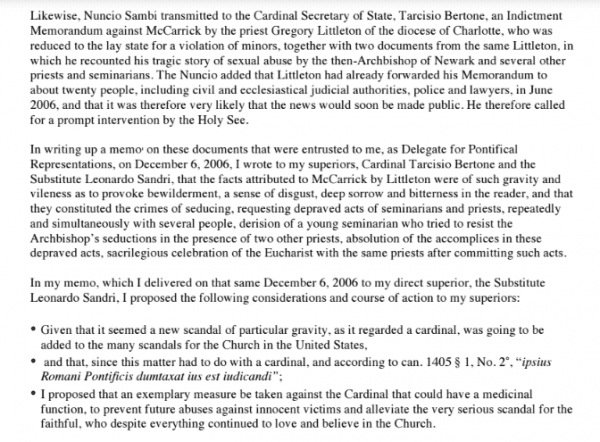
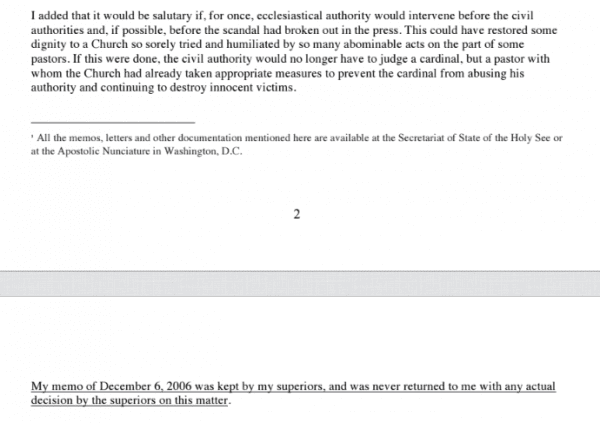


 ABYSSUS ABYSSUM INVOCAT / DEEP CALLS TO DEEP
You must be logged in to post a comment.