WASHINGTON, D.C., October 12, 2018 (LifeSiteNews) – Pope Francis’ praise of Cardinal Wuerl for his “nobility” and “docility to the Spirit” in his letter accepting the Cardinal’s resignation signals that Francis is “not the Pope to clean out the stables” of the abuse crisis that is rocking the Church, a Catholic scholar said.
“In the Roman Curia and in many Bishops’ Conferences there is a widespread attitude that bishops and senior officials should never be publicly disgraced: there should be no ‘brutta figura‘ [loss of face],” Shaw explained. “Even when sacked for bad behaviour, they should be allowed to depart in a dignified manner.”
“One would expect, then, a carefully-worded and diplomatic send-off from the Pope on such an occasion, but Pope Francis’ letter goes far beyond this. It sounds like a letter written by a political leader forced to sack an underling very much against his will,” he continued.
It seems remarkable to Shaw that Pope Francis has failed to use this opportunity to distance himself from the “nightmarish, interconnected abuse allegations and convictions” rocking the Catholic Church in the USA.
“He seems to be sending the signal that he is not the Pope to clean out the stables,” Shaw remarked.
Francis’s warm letter to a prelate implicated in cover-up of abuse of both minors and seminarians seems at odds with his 2014 pledge of “zero tolerance” for sexual predators. It also seems out of tune with his theory that the roots of the sex abuse crisis stem from “clericalism”.
In his letter to Wuerl, the Pope merely mentioned “some mistakes” the Cardinal had made regarding abusive priests, indicating that he did not believe the former archbishop had covered up or ignored abuse.
“You have sufficient elements to ‘justify’ your actions and distinguish between what it means to cover up crimes or not to deal with problems, and to commit some mistakes,” Francis wrote. “However, your nobility has led you not to choose this way of defense. Of this, I am proud and thank you.”
However, Wuerl did indeed justify his actions as Bishop of Pittsburgh. After the Philadelphia Grand Jury Report was released, he published a website that defended his handling of clerical sexual abuse cases. Called “The Wuerl Record”, it wasremoved after criticism.
Wuerl’s resignation comes in the wake of a barrage of allegations that he mishandled and covered up instances of criminal sexual abuse by priests while he was bishop of Pittsburgh, from 1988-2006. In a sweeping grand jury report on criminal sexual abuse released on August 14, Wuerl was mentioned some 200 times.
The cardinal was also accused in August by a former apostolic nuncio to the United States, Archbishop Carlo Viganò, of lying “shamelessly” in stating that he did not know about now ex-Cardinal Theodore McCarrick’s abuse of seminarians.
Columnist Fr. Raymond de Souza suggested that Wuerl was brought down because his priests became tired of a “clerical culture of mendacity.”
Writing in theNational Catholic Register, Fr. de Souza posited that Wuerl’s resignation has come about because his priests no longer believed him.
“When Cardinal Wuerl traveled to Rome to meet with Pope Francis in August about this future, the Holy Father told him to return home and consult with his priests,” De Souza wrote. “The cardinal did so in early September and soon after announced that he would be asking Pope Francis to accept his resignation…”
De Souza stated that what brought Wuerl down in the eyes of his priests was the McCarrick crisis:
“Precisely, his repeated insistence that he did not know about Cardinal McCarrick until the Archdiocese of New York announced in June that an allegation of sexual abuse of minor had been ‘substantiated’,” the columnist wrote.
“His priests did not believe him,” De Souza continued. “They thought that he was lying in public and lying to them. When Archbishop Carlo Viganò wrote that Cardinal Wuerl ‘lies shamelessly’ in his ‘testimony’ published in late August, it confirmed conclusions that many Washington priests had already arrived at.”
De Souza indicated that bishops often hide the truth from — or lie outright to — their priests and guessed that the priests of Washington had tired of this “culture of clerical mendacity”.
“A culture of clerical mendacity can take hold in which violations of the Eighth Commandment no longer have the power to shock and are treated as routine,” he wrote.
“And when clerical culture accommodates itself to routine violations of the Eighth Commandment, matters violating the Seventh Commandment — embezzlement, fraud, theft — and the Sixth Commandment — failing in chastity of all kinds, including sexual abuse — are not far behind,” he continued.
“It may be that the priests of Washington, after Pennsylvania, after McCarrick, were just tired of a culture that was less than forthright.”
De Souza hopes that Wuerl’s resignation will help cleanse clerical culture of “one of its most serious vices, the failure to tell the truth.”
He has elevated immoral men in order to change the Catholic faith
Just over five years ago, the Argentine cardinal Jorge Mario Bergoglio came out onto the loggia of St. Peter’s as Pope Francis. It is useful to recall the situation of the Church that he inherited.
The sex-abuse scandals that had rocked the Church in America and some European countries at the turn of the millennium were subsiding, or so it seemed. But the dysfunction at the Vatican under Pope Benedict XVI had overwhelmed the scholarly pontiff. Benedict’s chosen reformer for the corrupt Vatican Bank, Archbishop Carlo Maria Viganò, initially had success in turning blood-red deficits toward the black, but he was swiftly undermined and sent packing to be the Vatican’s ambassador to the United States. Benedict’s butler, Paolo Gabriele, was arrested for stealing and leaking to the media documents revealing the intrigue and backbiting within Vatican City. Benedict assigned three cardinals to investigate the VatiLeaks scandal. They returned to the pope a long dossier, which was widely reported to contain an account of the financial and sexual misdeeds of senior officials in the Vatican itself. At about this time European banks began squeezing the Vatican Bank, and by the turn of the New Year the Vatican’s own ATMs stopped working. Their function was restored days after Benedict announced that he would resign the papacy, the first papal resignation in five centuries.
Two storylines emerged out of the election of Bergoglio. The first was that the Church had elected a man who had a common touch and would stop the Church from becoming a museum of dead dogmas. The second is that the Church had chosen him because he had shown the energy to reform the dysfunctional curia.
At first, Pope Francis seized the momentum on both fronts. He quickly earned a great deal of positive media for making symbolic breaks with his predecessor. Some of the more traditional vestments were immediately dropped, along with the red shoes. He decided against taking up residence in the papal apartments. Instead he would live in Casa Santa Marta, a Vatican hotel. And he quickly began making his earthy and endlessly quotable comments to the media. He gave candid interviews to the atheist Italian journalist Eugenio Scalfari. Asked to comment on how he would counsel gays, he responded: “Who am I to judge?” Francis also quickly formed a special group of nine cardinal advisers to help him accomplish the work of reforming the Vatican itself.
The Francis pontificate was to be an era of mercy for sinners at the peripheries and accountability for malefactors at the Vatican. Instead, almost the opposite has taken place.
While trying to please the progressives who elected him, Pope Francis has plunged the Church into acrimony and confusion. He has put forward a revision of the Church’s teaching on the sacraments that puts traditional concepts of Christian virtue out of reach for all but the most “heroic” Christians. It is a theological revolution that not only threatens the coherence of the Catholic faith but has the potential to affect all Christians.
As for reform? Forget it. Nearly half of the members of Pope Francis’s reformist team have been pulled into sexual-abuse scandals themselves. Cardinal George Pell has returned to his native Australia to face charges of fondling children. Cardinal Óscar Rodríguez Maradiaga has been accused of protecting churchmen who fostered a culture of sexual predation in the seminaries of Honduras. The German cardinal Reinhard Marx was revealed to have been negligent in investigating an abusive priest when he was bishop of Trier. American cardinal Sean Patrick O’Malley, who heads the Pontifical Commission for the Protection of Minors, has been exposed as having passed the buck when a priest tried to inform him of the serial sexual predation of Cardinal Theodore McCarrick against seminarians.
These twin scandals of the Francis papacy became intertwined this summer. Reports came out of the Archdiocese of New York that McCarrick had sexually abused a child, and he resigned from the College of Cardinals. But that was not the end of the story. The frustrated reformer of the Vatican Bank, Archbishop Viganò, soon issued a stunning set of public accusations against Francis and his closest collaborators. Viganò charged the pope with having knowingly rehabilitated Cardinal McCarrick and collaborated with other immoral churchmen in order to pursue his progressive theological agenda. Viganò called on the pope to resign in disgrace.
The Vatican’s response to Viganò has been to denounce him forcefully — to accuse him of breaking communion with the pope — while at the same time admitting by inference that his main charge is correct. The Vatican noted that McCarrick had not been formally sanctioned during the Benedict papacy, owing to a lack of evidence — but thereby admitted that McCarrick had at least been restricted. McCarrick took on a larger public profile after the election of Francis, indicating either that these restrictions were lifted or that the Vatican was negligent in continuing to enforce them.
Perhaps we should have seen this coming. The fact is that Pope Francis has conducted his papacy in a way that made Viganò’s claims immediately credible. Francis appointed a bishop in Chile, Juan Barros Madrid, over the loud protests of laity there who accused him of covering up child abuse. Francis scolded these people as calumniators, but eventually the scandal overwhelmed him — and he was forced to send in investigators, who uncovered a Chilean church mired in corruption. In Italy, after interventions by two influential allies of his theological agenda, Francis restored to ministry an infamous priest, Mauro Inzoli, who had molested children in the confessional and who had been defrocked by the relevant Vatican authorities. As civil trials in Italy revealed to the public the depth of Inzoli’s depravity, Francis removed him from ministry again.
There is a type of churchman that Francis seems to favor: the morally compromised and the doctrinally suspect. The archbishop of Bruges, Jozef De Kesel, was known to promote the ordination of women and the making voluntary of priestly celibacy, and was credibly accused of knowingly appointing a pastor who had molested a child. Francis made him a cardinal. There was the archbishop of Stockholm, Anders Arborelius, who ignored calls to investigate a pedophile priest for years. The victim was told to go see a therapist instead. Arborelius is sympathetic to the idea of creating a female version of the College of Cardinals. Francis made him a cardinal, and Arborelius speculated that his elevation was a way for the pope to honor Sweden’s commitment to refugees. There’s also Giovanni Becciu, who was working for the pope’s secretary of state. When the accounting firm PricewaterhouseCoopers began uncovering financial fraud in the Church, Becciu suspended its audit. The auditor general from PwC later said he was forced out on trumped-up accusations; Becciu accused that accountant of being a spy. Francis then made Becciu a cardinal. Another cleric, Archbishop Luis Ladaria Ferrer, is set to stand trial in France for his role in covering up a child-sex-abuse scandal in Lyon. Francis made him the head of the Vatican’s doctrinal office, which adjudicates abuse cases.
Or consider Monsignor Battista Ricca, reportedly Francis’s “eyes and ears at the Vatican Bank.” Ricca was widely known for engaging in affairs with men at different posts during his clerical career. He was attacked in an area of Montevideo known for cruising, and he had to be rescued from an elevator in which he was trapped with a rent boy. (It was a question about Ricca that Francis made the occasion of his headline-grabbing statement “Who am I to judge?”) And finally there is the man known as the “vice pope,” Cardinal Rodríguez Maradiaga, the one being charged by seminarians in Honduras with allowing a culture of predation to flourish. Rodríguez Maradiaga first became famous across the Catholic world for saying that the Church scandals in Boston in 2002 were the invention of Jewish-controlled media who were avenging themselves on the Catholic Church for “confirm[ing] the necessity of the creation of a Palestinian state.”
The truth is that Jorge Bergoglio had another mandate. It is candidly discussed by journalist Austen Ivereigh in his book The Great Reformer. Ivereigh, who has become the Anglophone world’s papal hagiographer, details how a group of progressive European churchmen that had been meeting for decades at St. Gallen in Switzerland to discuss their views on the Church had come to see Bergoglio as their candidate. Among these were the archbishop of Brussels, as well as the Belgian cardinal Godfried Danneels and the German cardinal Walter Kasper. What they wanted was a pope who would open up all the theological debates that had been closed by John Paul II and Benedict XVI. Communion for the divorced and remarried. A revision of Church teaching on homosexual relations and relationships.
Kasper was a theological progressive who believed that the Church was no longer able to reach modern man in a pluralistic society. He was also given to sometimes grand pronouncements, writing that “dogma never settles a theological issue once and for all.” Danneels was Belgium’s leading bishop from 1979 to 2010; as it did in Ireland and Quebec, secularization seemed to come almost overnight in Belgium, and Danneels has occasionally been a cheerleader for these changes. He wrote a private letter to his prime minister, Guy Verhofstadt, praising the government’s decision to allow same-sex unions. It was a position he would reiterate emphatically years later, telling two newspapers that the Church “has never opposed the fact that there should exist a sort of ‘marriage’ between homosexuals, but one therefore speaks of a ‘sort of’ marriage. But it is not true marriage, that between a man and a woman, therefore you have to put another word in the dictionary. But that it is lawful, that the law can legitimately provide for it, that’s something about which the Church has nothing to say.” In a major public scandal, Danneels was revealed to have pressured the victim of sex abuse by a Catholic bishop, the victim’s uncle, to remain silent. He was enduring a quiet and disgraced retirement, but after pushing for the election of Bergoglio, he appeared on the loggia next to the new pope. He was also invited by Francis to contribute to the Synod on the Family.
That is why it is easy to credit the allegations against Francis. He’s done it all before.
What is a pope for Catholics? The Council of Florence said that he is “the true Vicar of Christ, and the Head of the whole Church, and the Father and Teacher of all Christians; and that to him in blessed Peter was delivered by our Lord Jesus Christ the full power of pasturing, ruling, and governing the whole Church.” The first Vatican Council rejected those who claimed the pope can deliver new doctrines, saying that his responsibility was to protect and safeguard the existing truths of the Catholic faith. “To satisfy this pastoral duty, our predecessors ever made unwearied efforts that the salutary doctrine of Christ might be propagated among all the nations of the earth, and, with equal care, they watched that it might be preserved, genuine and pure, where it had been received.”
Francis’s defenders have rejected that modest duty. One of his chief apologists and attack dogs, Father Thomas Rosica, has grandly claimed that “Pope Francis breaks Catholic traditions whenever he wants because he is ‘free from disordered attachments.’” He explains that the Church has entered a “new phase,” and that “with the advent of this first Jesuit pope, it is openly ruled by an individual rather than by the authority of Scripture alone or even its own dictates of tradition plus Scripture.” By this definition, the papacy would be transferred from a guardian of truth to its living oracle. It would be easy to dismiss Rosica as a mere enthusiast but for the fact that Francis openly challenges Church teaching. Most recently, Francis revised the Catechism of the Catholic Church to say that the death penalty had become inadmissible, effectively declaring that the Church had been in error until his arrival.
But most crucially, Francis has worked to undermine the moral teachings of the Church that touch on matters of sex. Francis called the two-year Synod on the Family and immediately reopened a controversy that had seemingly been put to bed. He heavily promoted a thesis of Cardinal Walter Kasper that those who had left their first marriage and made a second one could be admitted back to Holy Communion without repenting of the second adulterous union.
The synod turned into a rancorous and confusing spectacle, and it ended with Pope Francis hysterically denouncing the conservative faction that was resisting his revisions. The resulting document, Amoris Laetitia, soft-pedaled the change Francis wanted, suggesting only in a footnote that people in unions the Church was obliged to recognize as adulterous could receive Holy Communion.
To most non-Catholic Christians this may seem like the most sectarian of concerns, touching on an obscure matter of discipline that is unique to Catholicism’s particularly exalted view of marriage. But in fact this revision was accomplished by dropping a depth charge into the heart of Christianity.
The pope, with the bishops, had recast adulterous second marriages as “irregular unions,” as if the matter were something to do with paperwork rather than a sacramental reality. And instead of “living in sin,” the remarried were in a state described as “not fully the objective ideal.” The Vatican’s own translation is eye-opening: COMMENTS
Yet conscience can do more than recognize that a given situation does not correspond objectively to the overall demands of the Gospel. It can also recognize with sincerity and honesty what for now is the most generous response which can be given to God, and come to see with a certain moral security that it is what God himself is asking amid the concrete complexity of one’s limits, while yet not fully the objective ideal.
Beyond this, the pope proposed to judge these cases not by the categories of Christian faith but by bourgeois norms. Pastors are urged to “include” people who are in “irregular” marriages. Instead of seeking signs of penitence, contrition, and a willingness to amend one’s life in confession, pastors are to look for signs of “stability” in the lives of those who are in a non-ideal state.
The logic of transforming commandments that one must obey into ideals that one more or less, but never fully, approximates is to turn all sins into semi-virtues. And the implications of this revolutionary change become obvious when applied to other moral matters. Some Canadian bishops read the pope’s teaching as licensing them to offer the Last Rites to people before euthanasia. After all, who are they to judge whether the soul before them fully understands and is culpable of the sin of suicide? What do you expect them to do, start instructing them in the faith?
It may seem crazy to focus on the footnotes in a mostly unread and forgettable document, but the theological revolution at work can spread across all Christianity. Under Francis the Church now teaches that sometimes God’s commandments are simply impossible to follow, that it would be cruel to urge someone to obey them, and that it would be foolish to tell people that God will generously grant them help in actually obeying them. Cardinal Kasper had occasionally defended this understanding by saying that following the Church’s teaching on marriage required “heroism” in certain circumstances, but that “heroism is not for the average Christian.” Francis was widely reported to speculate privately that perhaps half of all Christian marriages are invalid because modern man is so morally deformed he cannot be expected to understand what a marriage is. This is a kind of B-school Christianity, for moral mediocrities. It is a place where God’s love stops short of transforming your life. It’s a mercy where, in the name of inclusion, the Church blesses the sins that break up families and create orphans.
Ultimately the vision Francis has promoted presents a God who is not merciful but indulgent, even lazy, and indifferent. It is God as a Baby Boomer parent. He expects less of you, and you can expect less of Him. In this new religion, where our faults become semi-virtues, salvation itself is changed. Instead of a free gift from God, it becomes a debt owed to us. Christ is not moved by an act of love to sacrifice himself as a propitiation for sinners. Instead, he dies on the cross because our human dignity, revealed in our semi-virtues, obliges him to do so.
What Francis is slowly instituting is a religion of presumption. A religion of “good enough,” where our misguided efforts put God in our debt. Communion becomes a participation trophy. And by freeing the Church from its preoccupation with outdated sins such as adultery, Francis can refocus the Church on the things he likes to denounce, such as the building of border walls, or air conditioning.
And no wonder, then, that the Vatican itself is filled with moral mediocrities, with men who are sexually and financially compromised. No wonder the Vatican investigates and inveighs against whistleblowers immediately but waits decades to investigate predator bishops. Believing in sin is now worse than sin itself. No wonder this church has a pope who refuses to wear red shoes. They symbolize martyrdom. That’s for heroic Christians, not for men like Pope Francis.
August 22, 2018San Quentin State Prison To Have Sung Latin Mass Starting August 25thDavid Clayton
TWENTY-FIVE INMATES TO FORM NEW SCHOLA UNDER THE GUIDANCE OF BENEDICT XVI INSTITUTE
As part of the program of the initiatives of the recently rejuvenated Benedict XVI Institute for Sacred Music and Divine Worship, which is under the patronage of His Excellency Archbishop Cordileone and the Archdiocese of San Francisco, the Latin Mass is to return to San Quentin State Prison with the first Mass scheduled for August 25th.
The Institute runs its own schola which is a teaching choir that can visit parishes and communities in order to enable communities to chant the Mass. Archbishop Cordileone recently visited the prison with the schola for an evening of musical meditation and prayers and when there proposed the idea to the prisoners who attended. The response was enthusiastic and gratifying.
Maggie Gallagher, the director of the Benedict XVI Institute tells us about the evening:
I have just come back from an extraordinary evening with some extraordinary news for you: The Latin Mass is coming back to San Quentin for the first time in three generations!
Last night, our new Benedict XVI Institute Schola and Teaching Choir went to San Quentin for three reasons:
First to give men forgotten by many in society the uplifting experience of pure Sacred Beauty—with music performed by four very talented professional singers.
Second, to teach these men they can chant too; Just hearing these men chant the Litany of the Saints together was inspiring! Our Benedict XVI Institute Schola and Teaching Choir is not just a performing choir: we aim to show ordinary Catholics they can participate in the Mass in this special way.
So our third and most important goal last night was to invite the men at San Quentin to form a schola that will help bring back the Traditional Latin Mass on August 25. And guess what? Twenty-five men said yes!
This overwhelming response was for me a totally unexpected gift from God. Here’s how the evening went: I drove in with Archbishop Cordileone and met Father Cassian (who will celebrate the Latin Mass August 25) as well as a prison volunteer and the Catholic chaplain Father George Williams at the entrance. As we walked into the Chapel, Father George told us: “The men are just very grateful you are here. Feel free to chat with them, they love that.”
Prison is a kind of community and like any community, there are some who actively work to make it better. We met a lot of men like that last night. Dwight, the sound guy, introduced himself and started asking about how we want to be miked for the Latin Mass. “Bobby”, an old hand, told me he used to sing the Latin Mass at St. Peter’s in the Mission district [of San Francisco] with the “Christian brothers.” (What a gorgeous old San Francisco church I would love to do a chant camp there! Take a look!) “Sam” who sat behind me, was a Protestant curious what this new music sounded like. He’s only been in San Quentin for two weeks “but the church scene is popping!” he told me.
Father George Williams introduced Archbishop Cordileone for the opening prayer. “This is our brand-new teaching choir and you are our first gig!” he told the men to thunderous applause. “I love telling people our first teaching gig is the San Quentin Schola!”
More applause.
Then the music started. Rebekah Wu, our talented music director, organized the music around the “Six Seasons” of the liturgical year. We began with Frank La Rocca’s Ave Maria (and come to think of it also ended with Hail Holy Queen).
Starting in Advent season, the choir mesmerized 60 or so San Quentin prisoners with a mix of Gregorian chant (“Creator Alme Siderum,” “Resonet in Laudibus,” “Attende Domine,” and sacred polyphony old and new (Bruckner’s “Vexilla Regis,” Jean Berger’s “The Eyes of All,” the lovely Christmas carol “I wonder as I wander,” and during the Easter Tridium “Jesus so Lowly”).
During the deep Lenten season, Rebekah gave testimony to God’s healing power in her own life, mentioning the good thief who ended up in paradise with Jesus. Father George interrupted to say a few words: pointing to a huge painting hung on the wall he explained. “That is Saint Dismas,” Fr. George told us. “The good thief who repented and whom Jesus saved. That painting was gifted to us by a death row inmate who died last year Fernando Caro.” Out of evil, God can rescue beauty and give hope, if we let him.
Then it was time to bring the men into chant with the choir. Rebekah taught us all to sing the Alleluia as the chorus of “O Filii et Filiae,” and then had the men chant The Jesus Prayer: Lord Jesus, Son of God, have mercy on me, a sinner.
“Now it’s your turn to sing,” she said to the men. (“Do you really want to record this?” a man in front of me quipped.) Then as I described came the Litany of the Saints, as well as an invitation to form a schola.
Not only do we have 25 enthusiastic volunteers, all the men I spoke with, whether they joined the schola or not, are anxious to come and attend the Latin Mass on the 25th of August.
For some it will be a trip down memory lane to the music of their Catholic boyhoods. But for many of the young men present, it is a fresh chance to participate in the ancient rituals of the Church, to share the noble sacred beauty that is their heritage too
“One young man told me that he felt the Holy Spirit buzzing in his soul while he joined the choir in some chanting during the concert. I was especially delighted to see that so many men want to learn Gregorian chant and classical sacred choral music, and help bring the Latin Mass to San Quentin,” said Rebekah Wu who directs the Benedict XVI Institute Schola and Teaching Choir.
After the closing prayer by Archbishop Cordileone, more than a dozen men came up to talk to the singers and to Father Cassian, the Contemplative of St. Joseph monk who is going to celebrate the first Traditional Latin Mass on August 25 at San Quentin. As one of the prisoners put it to one of our singers: “I don’t want to be in here. But if I have to be in here, I want to be in here listening to music like that.”
“I saw these men, who humanly speaking are in a dire situation that may seem hopeless, be lifted up to God by sacred beauty and given new hope,” Archbishop Cordileone told me afterward.
“They love to sing, and they worship well. So the response of the men to the invitation to form a Latin Mass schola was overwhelming but not surprising.” He added: “The Benedict XVI Institute teaching choir is clearly fulfilling an important need in ordinary parishes but also for those at the margins of society.”
Thank you Archbishop Cordileone–and all the supporters the Benedict XVI Institute for Sacred Music and Divine Worship who’ve helped make this possible: with your prayers, with your financial support, with your words of encouragement.
People who are interested in supporting the San Quentin schola can follow the link here. And for those in the San Francisco Bay area who would like to bring the Benedict XVI Institute Schola and Teaching Choir to your parish (they offer children, teen, and young adult chant programs), email Rose Marie at wongr@sfarch.org.
Many who have studied the life and pontificate of Pope Paul VI are convinced that he was far from exemplary in his conduct as pastor; that he not only did not possess heroic virtue, but lacked certain key virtues; that his promulgation of a titanic liturgical reform was incompatible with his papal office of handing on that which he had received; that he offers us a portrait of failed governance and tradition betrayed. In short, for us, it is impossible to accept that a pope such as this could ever be canonized. Not surprisingly, then, we are vexed about Pope Francis’s “canonization” of Giovanni Battista Montini on Sunday, October 14, 2018 and have grave doubts in conscience about its validity or credibility.
But are we allowed to have such doubts? Surely (people will say), canonization is an infallible exercise of the papal magisterium and therefore binding on all – indeed, the very language used in the ceremony indicates that! – therefore we must accept that Paul VI is a saint in Heaven, honor him and imitate him, and embrace all that he did and taught as pope.
Not so fast. In reality, the situation is more complicated. In this tempestuous time, it is just as well that we know the complexity of it, rather than seeking refuge in naïve simplifications. In this article, I will cover seven topics: (1) The status of canonizations, (2) The purpose of canonizations, (3) The process of canonization, (4) What is objectionable in Paul VI?, (5) What is admirable in Paul VI?, (6) The limits of canonization’s meaning, and (7) Practical consequences.
The status of canonizations
While historically the majority of theologians have defended the view of the infallibility of canonizations – especially neoscholastic theologians who tend to be extreme ultramontanists [1] – the Church herself has, in fact, never taught this as binding doctrine [2]. The exact status of canonizations remains a legitimate subject of theological debate, and it is all the more debatable given the changing expectations, procedures, and motivations for the act of canonization itself (points to which I shall return).
The infallibility of canonizations is not taught by the Church, nor is it necessarily implied by any de fide doctrine of the Faith. Catholics are therefore not required to believe it as a matter of faith and may even, for serious reasons, doubt or question the truthfulness of a certain canonization. This conclusion is rigorously established and defended in John Lamont’s “The Authority of Canonisations” (Rorate Caeli, August 24, 2018), which, in my opinion, in the best treatment of the subject yet published and well worth reading in full, especially by those who are troubled in conscience about this question [3].
The purpose of canonizations
Traditionally, canonization is not merely a recognition that a certain individual is in Heaven; it is the recognition that this man lived a life of such heroic virtue (above all, the theological virtues of faith, hope, and charity), had fulfilled in so exemplary a fashion the duties of his state in life (and this would include, for a cleric, the duties of his office), and had so practiced asceticism as befits a soldier of Christ that public veneration (including liturgical) should be offered to him by the universal Church, and his example deserves to be followed as a model to imitate (cf. 1 Cor 11:1) [4]. We can see all of these features shining in the “classic” saints, to whom there is much popular devotion.
In recent pontificates, we have seen a shift take place in why individuals – at least, certain individuals – are canonized. Donald Prudlo observes:
As an historian of sainthood, my greatest hesitation with the current process stems from the canonizations done by John Paul II himself. While his laudable intention was to provide models of holiness drawn from all cultures and states in life, he tended to divorce canonization from its original and fundamental purpose. This was to have an official, public, and formal recognition of an existing cult of the Christian faithful, one that had been confirmed by the divine testimony of miracles. Cult precedes canonization; it was not meant to be the other way around. We are in danger then of using canonization as a tool to promote interests and movements, rather than being a recognition and approval of an extant cultus. [5]
Prudlo is making the obvious point that beatification and canonization are supposed to be responses of the Church to a strong popular devotion shown to a particular individual, whose heavenly intercession God has endorsed, so to speak, by working several demonstrable miracles. It is not supposed to be the Vatican rubber-stamping particular individuals the Vatican happens to want to promote. There is no serious cultus of Paul VI, nor has there ever been, and it is doubtful that papal fiat can create a cultus ex nihilo.
In reality, we see that Pope Francis has carried to its extreme the “politicization” of the process, whereby the individual to be beatified or canonized is instrumentalized for an agenda. As Fr. Hunwicke points out:
There has been, in some quarters, an uneasy suspicion for some time that canonisations have turned into a way of setting a seal upon the ‘policies’ of some popes. If these ‘policies’ are themselves a matter of divisive discussion and debate, then the promotion of the idea that canonisations are infallible becomes itself an additional element in the conflict. Canonisation, you will remind me, does not, theologically, imply approval of everything a Saint has done or said. Not formally, indeed. But the suspicion among some is that, de facto and humanly, such can seem to be its aim. This is confirmed by a prevailing assumption on all sides that the canonisations of the ‘Conciliar Popes’ does bear some sort of meaning or message.
Similarly, Fr. “Pio Pace” writes:
We must dare say it: by canonizing all Vatican II popes, it is Vatican II that is canonized. But, likewise, canonization itself is devalued when it becomes a sort of medal thrown on top of a casket. Maybe a council that was “pastoral” and not dogmatic is deserving of canonizations that are “pastoral” and not dogmatic. [6]
Most keenly, Prof. Roberto de Mattei observes:
For the papolater, the pope is not the vicar of Christ on Earth, who has the duty of handing on the doctrine he has received, but is a successor of Christ who perfects the doctrine of his predecessors, adapting it to the changing of the times. The doctrine of the Gospel is in perpetual evolution, because it coincides with the magisterium of the reigning pontiff. The “living” magisterium substitutes [for] the perennial Magisterium, expressed by pastoral teaching which changes daily, and has its regula fidei (rule of faith) in the subject of the authority and not in the object of the transmitted truth.
A consequence of papolatry is the pretext of canonizing all and each of the popes of the past, so that retroactively, each word of theirs, every act of governing is “infallibilized.” However, this concerns only the popes following Vatican II and not those who preceded that Council.
At this point arises the question: the golden era of the history of the Church is the Middle Ages, and yet the only medieval popes canonized by the Church are Gregory VII and Celestine V. In the twelfth and thirteenth centuries, there were great popes, but none of these were canonized. For seven hundred years, between the fourteenth and twentieth centuries, only Saint Pius V and Saint Pius X were canonized. Were all the others unworthy popes and sinners? Certainly not. But heroism in the governing of the Church is an exception, not the rule, and if all the popes were saints, then nobody is a saint. Sanctity is such an exception that it loses meaning when it becomes the rule. [7]
This last paragraph is particularly worth emphasizing: it should cause the deepest astonishment and skepticism to note that while the Church had canonized exactly two popes from a 700-year period [8], in recent years, she has “canonized” three popes from a period of scarcely over 50 years – a half-century that magically coincides with the preparation, execution, and aftermath of that most magical of all Councils, Vatican II. Must be that “new Pentecost” effect. If this is not enough to make a cynic of someone, I’m not sure what would be [9].
The process of canonization
In order to expedite the making of saints, John Paul II introduced many significant changes in the canonization process that had been stably in place since the work of Prosper Lambertini (1734-1738), who later became Pope Benedict XIV (1740-1758). This process was based, in turn, on norms going back to Pope Urban VIII (1623-1644). It was none other than Paul VI who, in this area as in so many others, initiated a simplification of the procedures in 1969, a process John Paul II completed in 1983.
Studying a comparison of the old process and the new process is illuminating. A comparative chart has been provided at the Unam Sanctam Catholicam site. After noting the obvious fact that the old process is considerably more involved and thorough, Unam Sanctam proffers this evaluation:
The difference between the old and new procedures is not in their length, but in their character.In the pre-1969 procedure, you will note the care with which the integrity of the process itself is safeguarded. The Sacred Congregation must attest to the validity of the methodology used by the diocesan tribunals. The Promotor Fidei must sign off on the canonical form of every act of the Postulator and the Congregation. The validity of the inquiries into the candidate’s miracles [is] scrutinized. There is a very strict attention to form and methodology in the pre-1969 procedure which is simply lacking in the post-1983 system. … Essentially, while the modern canonization procedure maintains the nuts-n’-bolts of the pre-1969 system, the aspect of “checks and balances” that characterized the pre-1969 procedure is weakened. The rigid oversight is missing in the [modern] system. [10]
The role of the promotor fidei, the so-called “devil’s advocate,” was massively reduced. In the old system, this person’s crucial role was:
… to prevent any rash decisions concerning miracles or virtues of the candidates for the honours of the altar. All documents of beatification and canonization processes must be submitted to his examination, and the difficulties and doubts he raises over the virtues and miracles are laid before the congregation and must be satisfactorily answered before any further steps can be taken in the processes. It is his duty to suggest natural explanations for alleged miracles, and even to bring forward human and selfish motives for deeds that have been accounted heroic virtues[.] … His duty requires him to prepare in writing all possible arguments, even at times seemingly slight, against the raising of any one to the honours of the altar. The interest and honour of the Church are concerned in preventing any one from receiving those honours whose death is not juridically proved to have been “precious in the sight of God.” [11]
This paragraph bears repeated reading. Rash decisions concerning miracles or virtues…all documents must be submitted…apparent virtues must be argued against…the Church’s interest and honor must be defended at all costs…
The loosening up of the process, together with the chaos that often seems to reign in the Vatican in its free-wheeling postconciliar years, has meant that nothing comparable to the above stringent “devil’s advocate” role has been seen since 1983 (and, arguably, since 1969, when instability was first introduced into the process).
Among other things, it was taken for granted that all of the documentary archives associated with a proposed blessed or saint should be reviewed carefully for doctrinal, moral, and psychological issues that might be red flags.
Here I must share some disturbing information. A person who works at the Vatican in the Congregation for the Causes of Saints told me personally that orders were received from “on high” that the canonization process for Paul VI should be sped along as quickly as possible – and that, as a result, the Congregation did not examine all of the documents by or about Paul VI housed in the Vatican archives. This glaring lacuna is all the more grave when we recall that Paul VI was accused of being an active homosexual, a charge that was taken seriously enough to be denied [12]. It is also grave because of his involvement in secret negotiations with communists and his endorsement of “Ostpolitik,” under which many injustices were committed [13]. One would think a desire for transparent truth about every aspect of Montini would have led to an exhaustive examination of the relevant documents. However, this was purposefully bypassed. It goes without saying that this lack of due diligence, all by itself, is sufficient to cast into doubt the legitimacy of the canonization.
Arguably the worst change to the process is the number of miracles required. In the old system, two miracles were required for both beatification and canonization – that is, a total of four investigated and certified miracles. The point of this requirement is to give the Church sufficient moral certainty of God’s “approval” of the proposed blessed or saint by the evidence of His exercise of power at the intercession of this individual. Moreover, the miracles traditionally had to be outstanding in their clarity – that is, admitting of no possible natural or scientific explanation.
The new system cuts the number of miracles in half, which, one might say, also cuts the moral certainty in half – and, as many have observed, the miracles put forward often seem to be lightweight, leaving one scratching one’s head: was that really a miracle, or was it just an extremely improbable event? The two miracles for Paul VI (one may read about them here) are, to be frank, underwhelming. I mean, it’s lovely that two babies were “healed” or “protected” in the way described, but that we are dealing with a naturally inexplicable supernatural intervention by the force of Paul VI’s prayers is not patently obvious. Four miracles that were all robust, like the restoration of sight to the blind or the raising of the dead, would carry a great deal more conviction.
With the greatly increasing number of canonizations; the removal of half of the number of miracles required (which are sometimes even waived [14]); the lack of a robust advocatus diaboli role; and, at times, the rushed manner in which documentation is examined or at times passed over (as, apparently, has been the case with Paul VI), it seems to me not only that it has become impossible to claim that today’s canonizations always require our consent, but also that there may be canonizations about which one would have an obligation to withhold assent.
What is objectionable in Paul VI?
Beyond the general consideration of the status of canonizations, the purpose that should animate them, and the procedures by which they are securely or insecurely conducted, we must also consider the particular merits of the case at hand. Why, specifically, do traditional Catholics object to the canonization of Paul VI?
During his pontificate, Montini presented a lack of heroic virtue in shouldering his solemn responsibilities as shepherd of the universal flock. Instead, he displayed a habitual incapacity for effective discipline, as he wavered between extreme indulgence and extreme sharpness (e.g., rarely punishing the most obnoxiously heretical theologians but treating Archbishop Lefebvre as if he were worse than Martin Luther or empowering Annibale Bugnini with continual papal access and support throughout the course of the liturgical reform, then suddenly banishing him to Iran). The contradictory signals he gave – encouraging modernism, then curtailing it; intervening in controversial matters and then withdrawing, back and forth, like Hamlet (a character to whom he compared himself in a private note from 1978), only compounded the confusion and anarchy of the period. What was needed was a pilot with a steady hand in the midst of the storm, not a self-doubting soft modernist suffering an existential crisis.
Particularly glaring problem areas include the liturgical reform, where Paul VI gave ample evidence of operating under rationalist Pistoian principles incompatible with Catholicism and of gross negligence in reviewing materials. (There seem to have been quite a number of things he signed off on without being familiar with their details.) His Ostpolik dealings with communists, including his disobedience to Pius XII, are well known. Although Paul VI reached the right conclusion on birth control, the manner in which he failed to respond to the media barrage connected with the Pontifical Commission on Birth Control, failed to discipline dissenters from Humanae Vitae, and even allowed to be marginalized those who upheld the papal teaching all conspired to undermine that teaching’s effectiveness. The irrational harshness of his dealings with traditional Catholics was shameful, as when he turned down the petition of a large group of over 6,000 Spanish priests [15] who wished to continue celebrating the immemorial Roman Rite of St. Gregory and St. Pius V (while later granting this permission to priests in England and Wales – once more showing the stuff out of which Hamlets are made). He abused his papal authority by discarding what should have been revered and by treating as forbidden what could never be forbidden.
The pope has a solemn obligation to uphold and defend the traditions and rites of the Church; he has no moral authority to modify them past recognition. No pope in the 2,000-year history of the Catholic Church ever came close to modifying more traditions and rites, and more extensively, than Paul VI did. This alone should make him forever suspicious in the eyes of any orthodox believer. Either this pope was the great liberator who delivered the Church from centuries, perhaps over a millennium, of bondage to harmful forms of worship – in which case the Holy Spirit had fallen asleep on the job and the Protestants were correct all along that the true Church of Christ had disappeared or gone “underground” – or he was the great destroyer who tore down what Divine Providence had lovingly built up and sold the Church into a slavery to intellectual fashion more humiliating than the physical bondage suffered by the Israelites.
Paul VI did not helplessly watch the Church’s “autodemolition” (his own term for the collapse after the Council); he did not merely preside over the single greatest exodus of Catholic laity, clergy, and religious since the Protestant Revolt. He aided and abetted this internal devastation by his own actions. By pushing ahead at breakneck speed a radical liturgical and institutional “reform” that left nothing untouched, he multiplied a hundredfold the destabilizing forces at work in the 1960s. Anyone who enjoyed the functionality of reason would have been able to see that it was dangerous, not to mention impious, to change so much, so fast. But no: Paul VI was a willing votary of the ideology of modernization, a high priest of progress, who boldly went where none of his predecessors had ever gone before.
Ironically, it is none other than Pope Francis, the willful canonizer of Paul VI, who has demonstrated past all doubt the self-destructive trajectory of postconciliar Catholicism, when its own tendencies are acted on without restraint (rather as Theodore McCarrick acted on his own tendencies without restraint).
Many Catholics are rightfully anxious about Pope Francis. But what he has done in the past five years is arguably small potatoes compared with what Paul VI had the audacity to do: substituting a new liturgy for the ancient Roman Mass and sacramental rites, causing the biggest internal rupture the Catholic Church has ever suffered. This was the equivalent of dropping an atomic bomb on the People of God, which either wiped out their faith or caused cancers by its radiation. It was the very negation of paternity, of the papacy’s fatherly function of conserving and passing on the family heritage. Everything that has happened after Paul VI is no more than an echo of this violation of the sacred temple. Once the most holy thing is profaned, nothing else is safe; nothing else is stable.
At this point, someone may object: “Okay, so what if Paul VI wasn’t very good at being pope? Surely he could still have been a holy man on the inside. He was living in a tempestuous period, when everyone was confused, and he was doing his very best. We should admire his intentions and his great desires, even if we might criticize in retrospect certain decisions and actions. Sanctity isn’t a blanket approval of everything a person says or does.”
The problem with this objection is that it fails to recognize that how a Catholic lives out his primary vocation in life is part and parcel of his sanctity. How a bishop of the Church – and all the more, a pope – exercises his ecclesiastical office is not incidental, but essential to his sanctity (or lack thereof). Imagine it this way: could we canonize a man who, in spite of beating his wife and neglecting his children, was dutiful in attending daily Mass, praying the Rosary, and giving alms to the poor? It would be absurd, because we would rightly say: “A married man with children has to be holy as a husband and father, not in spite of being a husband and father.” It is no less absurd to say: “Such-and-such a pope was negligent, irresponsible, indecisive, rash, and revolutionary in his papal decisions, but his heart was in the right place, and he was always striving for the glory of God and the salvation of men.” A pope is a saint because he “poped” well. He showed heroic faith, hope, charity, prudence, justice, fortitude, temperance, etc. in his very activity of governing the Church. this cannot be reasonably maintained for Paul VI.
If we are supposed to venerate Paul VI, then inconsistency, ambiguity, pusillanimity, injustice, reckless change, negligence, indecisiveness, false signaling, despondency, wishful thinking, irritability, scorn, and contempt for tradition are not merely virtues, but virtues one can exercise to such a heroic degree that they are actually sources of sanctifying grace, deserving of general admiration, veneration, and emulation. Sorry, I’m having none of it. Such things have always been, and will always be, vices. Montini was a terrible ruler of the Church, and if the virtuous fulfillment of one’s responsibilities in one’s state in life is constitutive of sanctity, we may conclude that it is impossible to imagine a worse role model for any ruler than Montini.
To read more about the flaws of Paul VI as pope, the following are recommended:
Do traditionally-minded Catholics admire Paul VI for anything? Yes, of course. We would be foolish not to acknowledge the good he did. But that good is not sufficient to cancel out the many and serious problems discussed in the preceding section. Indeed, the history of Montini’s pontificate is as vivid a demonstration as one could wish to have of the difference between the person and the office. In the case of saintly popes, the grace of office seems to take up and enfold the person and transform him into a luminous icon of St. Peter and of Christ. In the case of bad popes or mediocre popes, the grace of office is something that occasionally flares up, that comes out of hiding in emergency situations, but does not transform the incumbent in the same way. The latter is what we see with Paul VI, as an editorial at Rorate Caeli astutely expressed it (with my emphasis):
Pope Paul VI is described by most historians as a kind of tragic figure, trying to control the whirlwind of events surrounding him, but unable to do much. It is probably because of this, because it seemed that Montini often bent to the opinions of the world, because it seemed that he frequently accepted the fabricated notions and texts which committees of false sages delivered to him (with very small modifications), that the moments in which he did not bend shine so clearly with the simple brightness of Peter. The Nota Prævia to Lumen Gentium, the vigorous defense of the traditional Eucharistic doctrines (in Mysterium Fidei) and of the teachings on Indulgences (in Indulgentiarum Doctrina), the Credo of the People of God are pillars which remain standing in a crumbling edifice, signs of supernatural protection. Amidst the moral collapse of the 1960s, and against the commission set up by his predecessor to reexamine the matter, Peter spoke though [Pope] Paul in Humanæ Vitae: “it is never lawful, even for the gravest reasons, to do evil that good may come of it.”
If such good actions and teachings had been habitual, normal, and characteristic of Paul VI, and had been imbued with the panoply of Christian virtues St. Thomas discusses in the Second Part of the Summa, and on top of this, a popular cultus had arisen around a beloved pontiff, culminating in many indisputable miracles, then – and only then – would we have had reason to elevate Paul VI to the altars.
Here is is worthwhile to point out that time will show, as we have already begun to see, that the good for which Paul VI was responsible is not at all the point of his canonization. In fact, all of the things listed above as “good moments” are contrary to the prevailing trends of the Bergoglio party. We are therefore ringside witnesses of the most cynical case of “promoveatur ut amoveatur” ever seen in Church history – that is, promoting someone to another, usually more distant position in order to remove them from their current more influential position. I have argued this point here.
The limits of canonization’s meaning
There is, as usual, a divine irony in all of this. Even if the canonization of Paul VI turns out to have been legitimate – one may have one’s serious doubts, obviously, but one cannot rule out this possibility altogether – it would not, strictly speaking, accomplish what its political proponents intend by it. They intend that by canonizing Paul VI, they effectively canonize his entire Vatican II program and, above all, the liturgical reform. But, as Shawn Tribe of the Liturgical Arts Journal noted:
Anyone who would try to use the canonization of Paul VI to seriously propose that therefore all of the ecclesial and liturgical reforms that took place around his pontificate are therefore canonized and cannot be questioned (let alone reformed/rescinded) is either being intentionally and deceitfully manipulative or is woefully misinformed and uncatechized. Personal sanctity does not equate to infallibility; saints are often found at cross purposes with other saints; not every utterance/policy/decision/opinion of a saint stands the test of time nor the eventual judgement of the Church, nor is it dogmatic – not to mention that the Conciliar and liturgical reforms are not the personal possession of Paul VI but rather of a whole host of people and figures.
The canonization of a Saint does not change the facts of his earthly life. It does not rectify the mistakes he may have made, whether knowingly or unknowingly. It does not change his failures into successes, whether they came about through his fault or that of others. …
[T]he intrinsic merits or demerits of the post-Conciliar reform, and its status as a success or a failure, will not change in any way, shape or form if Pope Paul VI is indeed canonized. No one can honestly say otherwise, and no one has the right to criticize, attack, silence or call for the silencing of other Catholics if they contest that reform. If that reform went beyond the spirit and the letter of what Vatican II asked for in Sacrosanctum Concilium, as its own creators openly bragged that it did; if it was based on bad scholarship and a significant degree of basic incompetence, leading to the many changes now known to be mistakes; if it failed utterly to bring about the flourishing of liturgical piety that the Fathers of Vatican II desired, none of these things will change if Paul VI is canonized. Just as the canonizations of Pius V and X, and the future canonization of XII, did not place their liturgical reforms beyond question or debate, the canonization of Paul VI will not put anything about his reform beyond debate, and no one has any right to say otherwise.
Practical consequences
Given the foregoing, what are the practical consequences for clergy, religious, and laity who doubt the validity of this canonization?
This topic may deserve a separate fuller treatment, but briefly, I would say that anyone with such a doubt or difficulty should not pray to Paul VI, should not invoke him publicly in prayer, should not respond to such invocation, should not offer a Mass in his honor or attend a Mass in his honor, and should not comply with or financially support efforts to promote his artificial “cultus.” On the contrary, it would be advisable to remain silent and, if circumstances permit and prudence dictates, to help other Catholics to see the real problems this canonization raises, as well as other beatifications and canonizations that may have run afoul of Catholic principles.
We are all obliged to pray for the salvation of the Holy Father and for the liberty and exaltation of our Holy Mother the Church on Earth. This intention would implicitly include a petition that the papacy, the Roman Curia, the Congregation for the Causes of Saints, and the very process of beatification and canonization all be reformed in due season, so that they may better serve the needs of Christ’s faithful and give glory to Almighty God, who is “wondrous in His saints” (Ps 67:36).
NOTES
[1] For example, arguing that all papal disciplinary acts that bear on the entire church must be inerrant and certainly favoring the common good – a position that one might have defended earlier in history, but which, at the present moment, is nothing less than grossly risible.
[2] It is therefore harmful when popularizers write things like this: “Beatification requires one attested miracle and allows the beatified person to be venerated by his local church. Canonization requires two attested miracles and allows veneration of the saint by the universal Church. Canonization is an infallible statement by the Church that the saint is in heaven” (https://www.catholic.com/qa/what-is-the-difference-between-saints-and-blesseds). This is to state too much, unless some qualifications are added.
[3] In order not to make my own article unduly long, I will not summarize his argument here, but merely note that it responds fully and amply to the objections usually raised by proponents of the infallibility of canonizations. Inter alia, Lamont refutes the claim that the use of certain Latin terms in the rite of canonization adequately establishes its infallible nature. Additional worthwhile treatments of the subject include this and this.
[4] For example: “A canonization … is a formal papal decree that the candidate was holy and is now in heaven with God; the decree allows public remembrance of the saint at liturgies throughout the church. It also means that churches can be dedicated to the person without special Vatican permission. … ‘In addition to reassuring us that the servant of God lives in heaven in communion with God, miracles are the divine confirmation of the judgment expressed by church authorities about the virtuous life’ lived by the candidate, Pope Benedict said in a speech to members of the Congregation for Saints’ Causes in 2006” (http://www.catholicnews.com/services/englishnews/2011/holy-confusion-beatification-canonization-are-different.cfm, emphases added).
[6]https://rorate-caeli.blogspot.com/2018/02/guest-note-paul-vi-pastoral.html. Fr. Hunwicke similarly noted prior to the event: “As if he has not yet created enough divisions within the Church Militant, Pope Francis intends this month to perform the highly divisive act of canonising Blessed Paul VI. Even he, judging from what he said in giving this information to the Clergy of the City, can see that this canonisation business has become a silly giggle: ‘And Benedict and I are on the waiting list,’ he quipped. Delightfully humorous. A very witty joke. Very drole, Sovereign Pontiff. I share the views of many, however, that the joke is a bad one, in as far as this projected canonisation is fundamentally a political action to be linked with the apparent conviction of Pope Francis that he himself is the champion and beneficiary of Bl Paul’s work at Vatican II and afterwards.”
[8] This is surely not for lack of many heroic individuals in that 700-year period – but, as we have said, if there was no popular cultus yielding indisputable miracles, the Church was not going to go rifling through the archives to find whatever candidates for honors she could find and push their causes.
[12] Wikipedia capably summarizes the basic information: “Roger Peyrefitte, who had already written in two of his books that Paul VI had a longtime homosexual relationship, repeated his charges in a magazine interview with a French gay magazine that, when reprinted in Italian, brought the rumors to a wider public and caused an uproar. He said that the pope was a hypocrite who had a longtime sexual relationship with a movie actor. Widespread rumors identified the actor as Paolo Carlini, who had a small part in the Audrey Hepburn film Roman Holiday (1953). In a brief address to a crowd of approximately 20,000 in St. Peters Square on 18 April, Paul VI called the charges ‘horrible and slanderous insinuations’ and appealed for prayers on his behalf. … The charges have resurfaced periodically. In 1994, Franco Bellegrandi, a former Vatican honour chamberlain and correspondent for the Vatican newspaper L’Osservatore Romano, alleged that Paul VI had been blackmailed and had promoted other gay men to positions of power within the Vatican. In 2006, the newspaper L’Espresso confirmed the blackmail story based on the private papers of police commander General Giorgio Manes. It reported that Italian Prime Minister Aldo Moro had been asked to help.” As incredible as such a story may seem, we are more inclined to believe it today because of the indisputable evidence we have of Pope Francis promoting homosexuals to positions of power within the Vatican.
[13] See George Weigel on Ostpolitik. Again, we see that Bergoglio is simply following in Montini’s footsteps by his negotiations and compromises with Communist China.
[14] Or redefined: see this revealing article by John Thavis. Pope Francis waived the requirement of a second miracle for the “canonization” of John XXIII. Thus, incredibly, a pope who does not stand out for notable sanctity and whose cultus was never particularly strong or widespread was elevated to the honors of the altar on the basis of one miracle. We can see in this a fine example of the crass abuse of pontifical power that Francis depends on for his ideological consolidation.
[15] Namely, the “Hermandad Sacerdotal Española de San Antonio Mª Claret y San Juan de Ávila,” which was formed by the “Hermandad Sacerdotal Espanola,” founded in 1969 by Spanish priests to defend Tradition in the face of the changes in the Church, and another similar group, based in Catalonia, called “Asociación de Sacerdotes y Religiosos de San Antonio Maria Claret.” They sent a letter to the Vatican in 1969 petitioning the continued use of the old Roman missal – and Paul VI refused them flatly. Unfortunately, as Spanish and Italian traditionalism was characterized by absolute obedience to Rome, the Novus Ordo was thereafter accepted without cavil, and to this day tradition has difficulty making inroads into either of these cultural spheres.
A Synod on “The Benedict Option”? The Analysis of a Church Historian
The young hold the key to the future. So it would be natural for the synod on young people underway in Rome to consider the future of Christianity in an era that is more and more post-Christian.
It is the same consideration that is behind “The Benedict Option” by the American Rod Dreher, the most widely discussed book on religious issues in recent years.
The following commentary enters into the thick of this discussion. With original and penetrating reflections.
Its author is Roberto Pertici, 66, professor of contemporary history at the university of Bergamo and a specialist on relations between Church and state. Last April the readers of Settimo Cielo got the chance to appreciate his illuminating analysis on the end of “Roman Catholicism” set in motion by the current pontificate:
In discussing “The Benedict Option” – at point 5 of his analysis – Pertici sets up an evocative parallel with the vision of history of the great and controversial French writer Michel Houellebecq. To raise the doubt that the current dechristianization is definitive and “forever,” because instead it too might meet with a “rupture” like the one that marked the end of previous stages of civilization. And it is for this that one must be ready, “preserving the Christian heritage intact in order to present it again in a changed world.”
His turn.
*
Rod Dreher, conservative and Christian
by Roberto Pertici
1. There has been a great deal of discussion in Italy over the now-famous book by Rod Dreher, “The Benedict Option,” also translated into Italian, especially after the tour that its author made in our country for the purpose of presenting and discussing it. But I get the impression that the debate has been focused mainly on the proposal with which the American writer has distinguished himself: the creation of communities that would strive to preserve and develop the Christian tradition and in some way keep it alive in view of a future return, while the surrounding world is not only clearly losing its Christian roots but threatening them with hostile behaviors. The function that was performed precisely by the Benedictine monasteries of the late Middle Ages. It seems to me that less attention has been paid to the political-cultural background of this proposal and to the historical analysis underlying it.
This comes as no surprise: from the very first lines of the book, Dreher calls himself “a believing Christian and a committed conservative.” The galaxy of political, cultural, and religious conservatism is for the most part unknown to Italian public opinion and to its media. One of the great victories of the opposing cultures has been, in fact, of a semantic nature: to surround that word always and in every case with a negative meaning, concealing its true scope.
It has not always been this way: in the nineteenth and twentieth centuries it was still possible to define oneself as “conservative” without fear of being delegitimized: like those more or less “liberal” Catholics who sought inclusion in Italian politics through some sort of conciliation between Church and state. This process of delegitimization, if it was not begun, was certainly accentuated during fascism (which not by coincidence represented itself as “revolutionary”) and reached fulfillment after the second world war, when “conservative” culture was mostly associated with the defeated fascism. And this was another great success of its adversaries: as if De Gaulle and Churchill, Benedetto Croce and Thomas Mann, the Polish government exiled in London and the conspirators of July 20, 1944 were not “conservatives.”
The same thing happened in the ecclesiastical camp. Perhaps the biggest achievement of some of the journalists who closely covered the sessions of the council Vatican II (among the Italians, Giancarlo Zizola and Raniero La Valle) was to transmit to the media an image of the conciliar clash as a fight between “conservatives” and “progressives,” entangling the former in an aura of negativity. In part because those outside the Church who felt they were on the side of “progress” coopted the latter right away for their side: think of the underhanded intervention in the conciliar debate made by the communist leader Palmiro Togliatti in his famous speech in Bergamo on March 20, 1963.
*
2. A “conservative” believes that man is a social being, situated in a community that gives him a “status” and almost an identity; that he has duties toward this community, of an importance at least equal to his rights; that true morality consist not so much in self-actualization as in overcoming his own particularism in view of a “common good,” which however does not remain abstract, but is identified in something concrete: family, land, nation. These entities do not remain fixed and rigid; like everything else, they develop and change, but slowly and harmoniously: they do not admit upheavals planned in fantasy land, on the basis of abstract demands of social engineering.
Within this perspective, the conservative is well aware of the importance of authority and order, in that he has an organic view of society, in which each has a function to perform for the good functioning of the whole. He therefore believes in the role of hierarchy, of the necessity, that is, of different levels of prestige and influence. He does not reduce relationships to merely economic or utilitarian values, because he harbors distrust toward the pure law of the market (even if there are “marketist” conservatives). For him society is made up of customs and traditions, which go far beyond that which is immediately rational and useful. An essential role is in fact played by the religious element, the crumbling of which has disastrous consequences for the whole social structure. Contemporary man – at least in the West – is therefore alienated, in that he is cut off from a positive relationship with other men and from the moral aims that the community proposes.
As Dreher points out, the “déraciné,” the uprooted one, abandons objective moral norms; refuses to accept any sort of “narrative framework” that is binding from the religious or cultural point of view but does not stem from his own will; he repudiates the memory of the past as irrelevant; he distances himself from the community as also from any other social obligation that he has not chosen. In this context, even the Christian religion, even the Catholic one, undergoes an analogous metamorphosis: it becomes a therapeutic moralistic deism, in which God is a sort of “imaginary friend” or benevolent psychologist, who guarantees us help when we need it, wants us to be happy, does not crush us under excessive burdens, because the fundamental aim of life is to be happy and have good self-esteem: thus the certainty of a paradise that awaits us after death. Hell must be empty.
*
3. Rod Dreher is therefore a critic of modernity: he does not reject it “in toto,” but he sketches a critical inventory of it. This aspect is also in contrast with the culture prevalent in our country, in which a positive relationship with the famous “modernity” has become almost an obligation for conferring dignity on cultures and political positions. Modernity does not identify an historical phase, but has become an ethical-political value. The keywords of “The Benedict Option” have instead a deliberate critical value: rule, order, prayer, work, ascesis, stability, community, hospitality, balance. Even a nonbeliever who were to decide to live as if God did not exist would have no difficulty making them his own: how many figures great and small, of the past and of the present, without calling themselves Christians “tout court,” have lived by putting them into practice!
An analogous critical framework is presented by the pedagogical system that Dreher proposes. The American writer demonstrates a marked distrust toward the educational priorities prevalent today in the public schools, but he also entertains no great illusions about how the “Catholic” schools are run, from primary to university. In the face of the overflow of the technological culture and cultural consumption of the “Erasmus generation,” he re-proposes the classical pedagogy elaborated by Dorothy Sayers in 1947 in “The Lost Tools of Learning”: in practice, a Christian-classical school, based on a return to the roots of Western culture, both Greco-Roman and Christian, which had already met in late antiquity and then in Italian Humanism. Yes, “Western,” because our young people – Dreher insists – must be immersed in the history of Western culture, not vaccinated against it: in the conviction that it has elaborated the fundamental concepts of life, ignorance of which will have an enormous cost in the evolution of our societies.
A “hidebound” pedagogy? Dreher does not believe – as we will see – in “historical inevitability,” and he is therefore convinced that it is possible to look to the past in order to plan the future: “multa renascentur quae iam cecidere,” Horace’s motto could be his own. But in view of this it is necessary to maintain a critical position toward the present. It is necessary to elaborate – he says – a “counterculture,” otherwise Christianity and Western civilization will not be saved. Referring to the apocalypticists of a former time, now tamely integrated, so numerous in the newsrooms and in the think tanks, Dreher could repeat – adapting it – an old slogan of the Communist International: “The theory critical of society, which you have thrown into the mud, we will take back and make it ours!”
*
4. But how did we get to this critical phase? Here Dreher re-proposes an historical vision that is not particularly original, with the exception – as we will see – of its outcome. He essentially adopts the strategy that the proponents of modernity have elaborated for centuries and that their adversaries – including traditional Catholic thinking – have essentially made their own, obviously changing its character: what for the one was a journey of progressive emancipation and illumination, for the other was an advance toward the abyss. But the stages were more or less the same: the crisis of medieval theological thought, fifteenth-century Humanism, the Reformation of the 1500’s, the scientific revolution of the 1600’s, the Enlightenment of the eighteenth century, the industrialism and consequent modernization of the nineteenth century.
In this last phase the proponents of modernity began to disagree in their predictions: for some, the outcome of this age-old process of emancipation from mythical thinking and from transcendent religion was liberalism. But for others another stage was necessary: because the journey would be continued toward a communist society. In Italy, between the two wars, there was no lack of voices that identified fascism as the summit of “modern thought.” And once again traditional Catholic thought, which also emerged in the pontifical magisterium, did not hesitate to fight every step of the way against liberalism, communism, and fascism, precisely as extreme stages of modernity.
But these are all discussions from the twentieth century! Dreher identifies two different outcomes for today: the sexual revolution, and the technological. The first is the process that began around 1960 and led to the abandonment of the “social” conception of sexuality that until then had been proper to Christian thought, but – I would say – also to common sense, toward a complete sexual individualism. The second, developed after 1980, is that of biotechnology, the internet, smartphones: in short, of information and technology consumerism.
The American writer’s judgment on the “sexual revolution” is radical: it was catastrophic for Christianity – as well as for, we might add, traditional morality – because it struck at the heart of the biblical doctrine on sexuality and the human person, demolishing the Christian conception of society, of the family, and of the nature of human beings. In short, it radically changed the presuppositions of social life as they had been established over millennia.
But also very drastic is his judgment on the technological revolution. He does not repeat the analyses of many, according to which technology is morally neutral and can be used badly but also positively. For Dreher, “Technology as a worldview trains us to privilege what is new and innovative over what is old and familiar and to valorize the future uncritically. It destroys tradition because it refuses any limits on its creativity. Technological Man says, ‘If we can do it, we must be free to do it.’ To the technological mind, questions of why we should, or should not, accept particular technological developments are hard to comprehend.”
Dreher does not propose to his readers an impossible return to the past, but a sort of “technological ascesis.” Both on the pedagogical level (how we present technology to our children, with what digital devices we equip them, what alternatives we present to them) and in our daily life: all of us, including the “secular,” can achieve a lifestyle that exorcises the most pervasive aspects of the “technological revolution.” To this end, of course, there is a need for “spiritual exercises” (in the sense of Pierre Hadot): for example taking on, for one or more days, a digital “fast” could be a useful ascetic practice for rediscovering oneself.
*
5. In his book Dreher never cites the work of Michel Houellebecq, the great and controversial French writer, but he has repeatedly stated that he considers him an interlocutor in his work. I believe that he is right: in his best novels there is more history and philosophy than in many professorial volumes (one could read in this regard the book by Louis Betty “Without God. Michel Houellebecq and Materialist Horror” released in 2016).
His 1998 novel “The Elementary Particles” revolves around the concept of “metaphysical mutation.” Houellebecq writes: “In the history of humanity, metaphysical mutations – meaning the radical and global transformations of the worldview adopted by the majority – are rather rare. […] As soon as it is produced, the metaphysical mutation develops until it reaches its extreme consequences, without ever encountering resistance. Imperturbable, it overturns economic and political systems, aesthetic judgments, social hierarchies. There are no forces capable of interrupting its course, neither human nor of another kind, apart from the advent of a new metaphysical mutation.”
One first example that the French author gives is that of the advent of Christianity: in those centuries “the Roman empire was at the summit of its power; perfectly organized, it dominated the known universe; its technological and military superiority was unrivaled. And yet it had no hope.”
Analogously at the end of what we call the Middle Ages: “At the advent of modern science, medieval Christianity constituted a complete system of comprehension of man and of the universe; it served as a foundation for governing the people, produced knowledge and works, decided both peace and war, organized the production and division of wealth. All that did not succeed in preventing the collapse.”
Since then there has been the gradual assertion of what the writer calls “the materialist age.” Its conclusive moment is precisely in the “sexual revolution,” the development of which in France and in the world is followed by Houellebecq, almost year by year, with a series of extremely evocative notations: in the novel, it is personified in the figure of Janine Ceccaldi, the mother of the two protagonists. Janine, born in 1928, belongs to the “dispiriting category of forerunners”: those who “have a mere role as historical accelerator – generally an accelerator of a historical decomposition – without ever being able to give a new direction to events.”
Houellebecq had already dealt with the “sexual revolution” in his 1994 debut novel “Extension du domaine de la lutte,” in English “Whatever.” This is not the place to explore its analysis, suffice it to say that for the French writer it is the extension to the sexual sphere of the unbridled competition and economic individualism typical of the pure market society. That is, there exists a parallel between uncontrolled economic liberalism and absolute sexual liberalism: both produce phenomena of absolute impoverishment, widespread forms of exclusion.
The proponents of hypermodernity are convinced that they have the world in their hands. Who knows, however, if they may be like the pagans of the late empire or the scholastic philosophers of the early modern era: that among the possible hypotheses there may be a change of paradigm, a new “metaphysical mutation.”
The readers of “The Elementary Particles” know how this happens, in what direction it develops and who is – so to speak – its promoter: it is certainly not the one desired by Dreher. But beyond the narrative plot (it must always be remembered that we are talking about a novelist and poet, not a professional historian or philosopher), it is important to register his rejection of a continuous and inexorable journey of history, of a unidirectional conception of historical development, which is instead typical of “progressivism,” including the Catholic form. Ruptures are possible, and what seems to triumph today, as has been stated, can decline.
I don’t know to what extent Dreher has been influenced by this vision, but at the foundation of “The Benedict Option” one perceives something analogous. It is not to be taken for granted that the era that began with the “metaphysical mutation” of the first centuries of the modern era and has led to the current Western dechristianization is “forever.” The complete unfolding of its consequences could lead to a new rupture: one must be ready for this moment. This is why it is important to preserve the Christian heritage intact in order to be able to present it again in a mutated world: unlike Houellebecq, the American writer maintains that this is possible. To preserve it by working together with the humanity of our time – Dreher says – not in idleness. At the bottom of his vision there does not seem to be, therefore, a disconsolate pessimism or – as has been said – the perception of a state of siege: but the reasonable hope for a revival.
*
6. As can be seen, the plate that the American writer offers is for strong stomachs. It is true that certain Italian experiences have inspired some of his proposals, but the observer cannot avoid a concluding question: can these find true interlocutors in the Italian reality? I don’t mean in the hierarchical Church, but – what do I know? – in specific cultural environments and in certain ecclesial groups? Will they want and know how to come down, perhaps critically, to the terrain of that Christian “counterculture” proposed by the American writer?
(English translation by Matthew Sherry, Ballwin, Missouri, U.S.A.)
*
Posted inUncategorized|Comments Off on WE MUST PRAY AND WORK FOR A NEW METAPHYSICAL MUTATION OF SOCIETY. “In the history of humanity, metaphysical mutations – meaning the radical and global transformations of the worldview adopted by the majority – are rather rare. […] As soon as it is produced, the metaphysical mutation develops until it reaches its extreme consequences, without ever encountering resistance. Imperturbable, it overturns economic and political systems, aesthetic judgments, social hierarchies. There are no forces capable of interrupting its course, neither human nor of another kind, apart from the advent of a new metaphysical mutation.” WE MUST PRAY AND WORK TO BRING ABOUT THE NEXT METAPHYSICAL MUTATION
October 11, 2018 (LifeSiteNews) – One of the benefits of writing regularly on the internet is that I receive a fair number of notes from readers with whom something I’ve published has struck a chord. I hear disproportionately from priests, religious, and seminarians who are struggling to live a faithful Catholic life—above all, liturgically—in the midst of a hostile wasteland, with wolves on one side and hyenas on the other.
A priest recently wrote to me about the challenges created for him by the Pope’s rough manhandling of settled Catholic doctrine in regard to capital punishment (about which I have written a number of times: that Francis’s new text is not in accord with the truth; that it cannot be defended; and that it should neither be taught nor adhered to). Here is what he said, apropos the last of these articles:
Thank you so much for writing this article. It seems odd that this subject has received such little attention. I’ve not found anyone who thinks Pope Francis’ actions are problematic. Until now, I have always taught that despite some sinful popes and bishops, none has ever officially proclaimed an error to be truth. The teachings of the Magisterium cannot be “overturned” like an unconstitutional law. Teachings can be expanded or elaborated on to account for new developments or discoveries, but not reversed. To my knowledge, no encyclical with a declarative statement to establish, explain, and define the [new] teaching was issued. It’s simply inexplicable that an act is morally good/allowable for thousands of years, to become today an intrinsic evil. This event leads me to believe that Francis has no clue about the workings of the Magisterium or the Holy Spirit!
One of my concerns is the damage this kind of thing does to my ability to teach moral truths. It’s essential for the faithful to have absolute confidence in the accuracy of the Church’s teachings. I fear similar errors will follow from the current Vatican in regard to teachings on marriage, human sexuality, and ordination. If a pope can simply bypass common sense, convention, and tradition to revise the Catechism, all moral teachings are questionable.
This good priest is quite correct. The faithful deserve clear and consistent moral guidance that is not peppered with contradictions, ambiguities, doubts, and loopholes, otherwise they will turn away from the Church either to a secularism that has no rules except self-gratification or a sect that has strict (but not always correct) rules. For man cannot live without some principle to live by, and he will live either by true principles such as Christ has given us through His Church, or by false principles such as self-love, political messianism, or sectarian codes. The extent to which the Vatican appears to be operating by all three—the messianic complex of the great leader, the sectarian creed of liberal Protestantism, and the self-love that places modern differentness over traditional commonality—is therefore most appalling, and presents the single greatest challenge to pastoral care, Church renewal, and evangelization that the Church has yet seen in the post-Tridentine period.
In responding to the priest, I expressed my agreement with his analysis. What the pope is doing is terribly destabilizing, not only for Catholic pastors today, but for the future work of all of his successors. The papacy has become far too politicized, as if each conclave is a new parliamentary session electing a new prime minister to run the country’s affairs in a liberal or conservative direction. This is certainly not the vision of the pope as the staunch guardian of doctrinal orthodoxy and the determined upholder of ecclesiastical traditions that Church history reveals to us at the papacy’s best moments, nor is it the theological vision of the papacy discussed at and taught by the First Vatican Council.
In my opinion, Pope Francis has not attempted to engage his full magisterial authority to teach anything, let alone something erroneous. After all, if we look at the conditions under which earlier popes have signified their intention to teaching infallibly, we will see an exceptional care taken to use the most solemn language coupled with threats of the most dire punishments. (This prompts me to wonder if any modern pope, inasmuch as he buys into the false ideas about justice and mercy first enunciated by John XXIII in the run-up to Vatican II, would ever be able to muster the courage or clarity to issue a solemn pronouncement that could be knownto be an infallible statement!)
As for teaching error, either the Holy Spirit would prevent the pope from doing so (e.g., by bringing about his death prior to the act of teaching error), or in the moment he uttered the error, he would ipso facto cease to be pope. For this latter scenario to play out, the error would have to be manifest to all, e.g., “Jesus Christ did not actually rise physically from the dead on Easter Sunday; he only rose spiritually, inasmuch as the early Christians were inspired to follow his example in their hearts.” If a pope ever came out and said such a thing, and it was clear that he was not insane or joking, it would be time for the cardinals to book their plane tickets to Rome. (Actually, if he was insane or joking, it would also be time for them to book their tickets.)
Let us hope, for the sake of preserving the little sanity we have left, that Our Lord does not permit us to capsize into still murkier and rougher waters than those in which we are currently sailing.
I return now to the issue raised by my correspondent. There is no question that the death penalty is permissible in some circumstances, and that is because the death penalty is taught by God to be, and is accepted by Catholic tradition as, a legitimate exercise of punitive and retributive justice on the part of the state, which has its authority from God, the Lord of life and death. One is allowed to argue that those circumstances no longer obtain, but one cannot say the thing in itself is evil. That, indeed, would be heresy, and one notes that Francis did not dare to say this explicitly in the new Catechism text. But he implies it, which is hardly less damaging, for all the reasons we have seen.
Are you a Catholic tempted to tear out your hair and say: “Wait a minute, if the pope can’t be trusted, who can?” There is a way out of this perplexing situation. It involves admitting forthrightly, as most Catholics in history would readily have done, that the pope is not above the law, not above tradition, not above the theological witness of the Fathers and Doctors, but in communion with them and, in a sense, subordinate to them. Therefore, one may always be confident believing and teaching what has been held “by everyone, always, and everywhere” prior to this time of confusion.
Peter Kwasniewski holds a B.A. in Liberal Arts from Thomas Aquinas College in California and an M.A. and Ph.D. in Philosophy from The Catholic University of America in Washington, D.C. After teaching at the International Theological Institute in Austria and for the Franciscan University of Steubenville’s Austrian Program, he joined the founding team of Wyoming Catholic College in Lander, Wyoming, where he taught theology, philosophy, music, and art history, and directed the Choir and Schola. He now works as a freelance author, public speaker, editor, publisher, and composer.
Dr. Kwasniewski has published five books: Wisdom’s Apprentice (CUA Press, 2007); On Love and Charity (CUA Press, 2008); Sacred Choral Works (Corpus Christi Watershed, 2014); Resurgent in the Midst of Crisis: Sacred Liturgy, the Traditional Latin Mass, and Renewal in the Church (Angelico Press, 2014); and most recently, Noble Beauty, Transcendent Holiness: Why the Modern Age Needs the Mass of Ages (Angelico Press, 2017). Resurgent in the Midst of Crisis has also been published in Czech, Polish, German, and Portuguese, and will soon appear in Spanish and Belarusian.
Kwasniewski is a board member and scholar of The Aquinas Institute for the Study of Sacred Doctrine, which is publishing the Opera Omnia of the Angelic Doctor, a Fellow of the Albertus Magnus Center for Scholastic Studies, and a Senior Fellow of the St. Paul Center. He has published over 750 articles on Thomistic thought, sacramental and liturgical theology, the history and aesthetics of music, and the social doctrine of the Church.
A bishop’s failure to enforce canon law does not excuse clergy and his faithful from following it
By Edward Peters, JD, JCD, Ref. Sig. Ap.
October 10, 2018
It needs no long blog post from a canon lawyer to explain how wrong would be a failure by a bishop to protect his faithful against scandal (CCC 2284, 2287) and/or to defend the Eucharist against potential sacrilege (CCC 2120) but, make no mistake, in reiterating that “it is not [his] policy” to withhold holy Communion from persons in ‘same-sex marriages’, that is what Cdl. Cupich’s refusal to act as ‘the guardian of the entire liturgical life in the church entrusted to him’ (c. 835 § 1) and “to exercise vigilance so that abuses do not creep into ecclesiastical discipline, especially regarding … the celebration of the sacraments and sacramentals, [and] the worship of God” (c. 392 § 2) in this matter, does.
Cupich’s failure ‘to bishop’ in this regard, of course, effectively abandons his pastors and other ministers of holy Communion to face alone the anger of some Catholics in ‘same-sex marriages’ who (like persons in merely civil marriages following divorce) must nevertheless be refused holy Communion by pastors correctly recognizing that, no matter what their archbishop doesn’t say, theyare still required by canon law not to admit to holy Communion those who ‘obstinately persevere in manifest grave sin’ (c. 915).
Canon 915, as has been explained many, many times, rests on ancient, indeed Biblical, foundations, nothing in modern canon law or recent magisterial literature annuls it, and it unquestionably applies in regard to Catholics who have attempted a ‘same-sex marriage’. But it might still be useful to explicitate briefly the application of Canon 915 in some same-sex pastoral situations.
1. A homosexual inclination or orientation does not, in anyone’s opinion, disqualify a person from being admitted to holy Communion.
2. Cohabitation by homosexuals does not, in my opinion, disqualify them from being admitted to holy Communion because one does not assume that persons of the same sex are engaged in sexual activity (and in this respect, yes, homosexual cohabitation differs from heterosexual, or has differed, according to about 5,000 years of recorded human behavior).
3. Attempted civil marriage between persons of the same sex (just like those following divorce between heterosexuals) disqualifies, in the common and constant opinion of learned persons (which I share), such Catholics from being admitted to holy Communion because the sign-values that marriage (c. 1055) enjoys in the Church and civil society—itself a public sign proclaimed, by the way, irrespective of whatever private sexual activity might or might not be occurring between the persons involved—are contradicted by persons purporting to be in a ‘marriage’ that cannot be a marriage.
The above analysis applies, I suggest, even if it is not promoted by local Church authorities.
+ + +
PS: Speaking of Chicago, has an announcement been made yet that the two Chicago-based priests recently arrested for XXXing each other in a car parked a short distance from a playground in Miami will be prosecuted canonically toward their dismissal from the clerical state? If not, might one ask what the delay is?
Pope Francis in his Fixation on the Devil, Feces & Heresy appears to be Possessed by the Spirit of Martin Luther
-Updated October 9, 2018-
Pope Francis in his fixation with the devil and his foes, feces as well as heresy appears to be possessed by the spirit of Martin Luther who never stopped talking about excrement and talking to the devil:
“”Devil, I have just sh*t in my trousers. Have you smelled it?” -Martin Luther (Queenmobs.com, “Fecal Fridays: Martin Luther on the Toilet,” December 1, 2017)
Luther had continuous visions of the devil and of excrement as all Luther scholars know:
“The filthy language of Luther… a vocabulary of excrement… -against Satan… in his later years the violence and frequent obscenity… directed at his human foes.” (“Martin Luther,” by Michael A. Mullet, page 338)
Besides the Pope’s fixation on the devil, his foes and feces, it appears that Francis has, also, joined Luther in believing in the heresy of imputed grace justification.
Luther’s image of imputed grace was that man was a pile of dung covered with snow.
Protestant “justification” for him was totally corrupted man being covered by grace and unfree because of his corruption to fulfill the moral law.
The pro-Francis Bishop Robert Barron wrote Martin Luther is “a mystic of grace” and “the religious movement he launched was ‘a love affair.'”
Pope Francis’s love affair with Luther’s justification heresy goes even farther than Barron who said “I disagree with lots of his ideas.”
Francis referring to Luther said:
“Lutherans and Catholics, Protestants, all of us agree on the doctrine of justification. On this point, which is very important, he did not err.” (patheos.com/blog/scotticalt, “Pope Francis is Wrong about Luther and Justification,” April 5, 2017)
Francis & Barron need to explain what part of man being a pile of dung covered with snow (grace) so corrupt that he isn’t free to fulfill the moral law is “not err” and a “love affair” of a “mystic of grace.”
Theologian Dr. E. Christian Brugger and First Thing editor Elliott Milco agree that Francis’s grace/justification teachings in Amoris Laetitia and his Argentine letter apparently are condemned as heretical by the Council of Trent.
Milco in his article “Francis’s Argentine Letter And The Proper Response” counters Francis’s idea of grace with the infallible Catholic teaching which says:
Trent’s doctrine of infused grace said “that graces truly sanctify and liberates, and that baptized Christians are always free to fulfill the moral law, even when they fail to do so.”
Pope Francis is denying the very concept of Catholic sanctifying grace and justification.
This is the greatest material error by any Pope is the entire history of the Church.
It needs to be “loudly and forcefully condemned” or it will lead to apostasy and will destroy the vast majority of Catholicism like it did European Protestantism.
Former Congregation for the Doctrine consultor Msgr. Nicola Bux under Pope Benedict XVI told Vatican expert Edward Pentin that Francis is spreading “apostasy”:
“Pope Francis could stem the ‘confusion and apostasy”… by ‘correcting’ his own ‘ambiguous and erroneous words and acts.” (lifesitenews.com, “Only Pope Francis can end the ‘apostasy’ his words caused: Italian monsignor,” June 21, 2017)
Pray an Our Father now that one cardinal receive the grace to correct Francis.
Fred Martinez is a widely published Catholic writer and former TV broadcaster who has been a pro-life activist, speaker and Board member/adviser with various organisations for many years. In 1985 he founded the Juan Diego Society through which hundreds of babies under threat of abortion were saved.
THE VALID CARDINALS, i.e. CARDINALS APPOINTED BY POPES BENEDICT XVI AND SAINT JOHN PAUL II, MUST ACT SOON TO REMOVE FRANCIS THE MERCIFUL FROM THE THRONE OF SAINT PETER BEFORE HE DAMAGES THE INSTITUTIONAL CHURCH EVEN MORE THAN HE HAS ALREADY DAMAGED IT.
Recently many educated Catholic observers, including bishops and priests, have decried the confusion in doctrinal statements about faith or morals made from the Apostolic See at Rome and by the putative Bishop of Rome, Pope Francis. Some devout, faithful and thoughtful Catholics have even suggested that he be set aside as a heretic, a dangerous purveyor of error, as recently mentioned in a number of reports. Claiming heresy on the part of a man who is a supposed Pope, charging material error in statements about faith or morals by a putative Roman Pontiff, suggests and presents an intervening prior question about his authenticity in that August office of Successor of Peter as Chief of The Apostles, i.e., was this man the subject of a valid election by an authentic Conclave of The Holy Roman Church? This is so because each Successor of Saint Peter enjoys the Gift of Infallibility. So, before one even begins to talk about excommunicating such a prelate, one must logically examine whether this person exhibits the uniformly good and safe fruit of Infallibility.
If he seems repeatedly to engage in material error, that first raises the question of the validity of his election because one expects an authentically-elected Roman Pontiff miraculously and uniformly to be entirely incapable of stating error in matters of faith or morals. So to what do we look to discern the invalidity of such an election? His Holiness, Pope John Paul II, within His massive legacy to the Church and to the World, left us with the answer to this question. The Catholic faithful must look back for an answer to a point from where we have come—to what occurred in and around the Sistine Chapel in March 2013 and how the fruits of those events have generated such widespread concern among those people of magisterial orthodoxy about confusing and, or, erroneous doctrinal statements which emanate from The Holy See.
His Apostolic Constitution (Universi Dominici Gregis) which governed the supposed Conclave in March 2013 contains quite clear and specific language about the invalidating effect of departures from its norms. For example, Paragraph 76 states: “Should the election take place in a way other than that prescribed in the present Constitution, or should the conditions laid down here not be observed, the election is for this very reason null and void, without any need for a declaration on the matter; consequently, it confers no right on the one elected.”
From this, many believe that there is probable cause to believe that Monsignor Jorge Mario Bergoglio was never validly elected as the Bishop of Rome and Successor of Saint Peter—he never rightly took over the office of Supreme Pontiff of the Holy Roman Catholic Church and therefore he does not enjoy the charism of Infallibility. If this is true, then the situation is dire because supposed papal acts may not be valid or such acts are clearly invalid, including supposed appointments to the college of electors itself.
Only valid cardinals can rectify our critical situation through privately (secretly) recognizing the reality of an ongoing interregnum and preparing for an opportunity to put the process aright by obedience to the legislation of His Holiness, Pope John Paul II, in that Apostolic Constitution, Universi Dominici Gregis. While thousands of the Catholic faithful do understand that only the cardinals who participated in the events of March 2013 within the Sistine Chapel have all the information necessary to evaluate the issue of election validity, there was public evidence sufficient for astute lay faithful to surmise with moral certainty that the March 2013 action by the College was an invalid conclave, an utter nullity.
What makes this understanding of Universi Dominici Gregisparticularly cogent and plausible is the clear Promulgation Clause at the end of this Apostolic Constitution and its usage of the word “scienter” (“knowingly”). The Papal Constitution Universi Dominici Gregis thus concludes definitively with these words: “. . . knowingly or unknowingly, in any way contrary to this Constitution.” (“. . . scienter vel inscienter contra hanc Constitutionem fuerint excogitata.”) [Note that His Holiness, Pope Paul VI, had a somewhat similar promulgation clause at the end of his corresponding, now abrogated, Apostolic Constitution, Romano Pontifici Eligendo, but his does not use “scienter”, but rather uses “sciens” instead. This similar term of sciens in the earlier abrogated Constitution has an entirely different legal significance than scienter.] This word, “scienter”, is a legal term of art in Roman law, and in canon law, and in Anglo-American common law, and in each system, scienter has substantially the same significance, i.e., “guilty knowledge” or willfully knowing, criminal intent.
Thus, it clearly appears that Pope John Paul II anticipated the possibility of criminal activity in the nature of a sacrilege against a process which He intended to be purely pious, private, sacramental, secret and deeply spiritual, if not miraculous, in its nature. This contextual reality reinforced in the Promulgation Clause, combined with: (1) the tenor of the whole document; (2) some other provisions of the document, e.g., Paragraph 76; (3) general provisions of canon law relating to interpretation, e.g., Canons 10 & 17; and, (4) the obvious manifest intention of the Legislator, His Holiness, Pope John Paul II, tends to establish beyond a reasonable doubt the legal conclusion that Monsignor Bergoglio was never validly elected Roman Pontiff.
This is so because:1. Communication of any kind with the outside world, e.g., communication did occur between the inside of the Sistine Chapel and anyone outside, including a television audience, before, during or even immediately after the Conclave;2. Any political commitment to “a candidate” and any “course of action” planned for The Church or a future pontificate, such as the extensive decade-long “pastoral” plans conceived by the Sankt Gallen hierarchs; and,3. Any departure from the required procedures of the conclave voting process as prescribed and known by a cardinal to have occurred:each was made an invalidating act, and if scienter (guilty knowledge) was present, also even a crime on the part of any cardinal or other actor, but, whether criminal or not, any such act or conduct violating the norms operated absolutely, definitively and entirely against the validity of all of the supposed Conclave proceedings.
Quite apart from the apparent notorious violations of the prohibition on a cardinal promising his vote, e.g., commitments given and obtained by cardinals associated with the so-called “Sankt Gallen Mafia,” other acts destructive of conclave validity occurred. Keeping in mind that Pope John Paul II specifically focused Universi Dominici Gregis on “the seclusion and resulting concentration which an act so vital to the whole Church requires of the electors” such that “the electors can more easily dispose themselves to accept the interior movements of the Holy Spirit,” even certain openly public media broadcasting breached this seclusion by electronic broadcasts outlawed by Universi Dominici Gregis. These prohibitions include direct declarative statements outlawing any use of television before, during or after a conclave in any area associated with the proceedings, e.g.: “I further confirm, by my apostolic authority, the duty of maintaining the strictest secrecy with regard to everything that directly or indirectly concerns the election process itself.” Viewed in light of this introductory preambulary language of Universi Dominici Gregis and in light of the legislative text itself, even the EWTN camera situated far inside the Sistine Chapel was an immediately obvious non-compliant act which became an open and notorious invalidating violation by the time when this audio-visual equipment was used to broadcast to the world the preaching after the “Extra Omnes”. While these blatant public violations of Chapter IV of Universi Dominici Gregis actuate the invalidity and nullity of the proceedings themselves, nonetheless in His great wisdom, the Legislator did not disqualify automatically those cardinals who failed to recognize these particular offenses against sacred secrecy, or even those who, with scienter, having recognized the offenses and having had some power or voice in these matters, failed or refused to act or to object against them: “Should any infraction whatsoever of this norm occur and be discovered, those responsible should know that they will be subject to grave penalties according to the judgment of the future Pope.” [Universi Dominici Gregis, ¶55]
No Pope apparently having been produced in March 2013, those otherwise valid cardinals who failed with scienter to act on violations of Chapter IV, on that account alone would nonetheless remain voting members of the College unless and until a new real Pope is elected and adjudges them.
Thus, those otherwise valid cardinals who may have been compromised by violations of secrecy can still participate validly in the “clean-up of the mess” while addressing any such secrecy violations with an eventual new Pontiff. In contrast, the automatic excommunication of those who politicized the sacred conclave process, by obtaining illegally, commitments from cardinals to vote for a particular man, or to follow a certain course of action (even long before the vacancy of the Chair of Peter as Vicar of Christ), is established not only by the word, “scienter,” in the final enacting clause, but by a specific exception, in this case, to the general statement of invalidity which therefore reinforces the clarity of intention by Legislator that those who apply the law must interpret the general rule as truly binding. Derived directly from Roman law, canonical jurisprudence provides this principle for construing or interpreting legislation such as this Constitution, Universi Dominici Gregis. Expressed in Latin, this canon of interpretation is: “Exceptio probat regulam in casibus non exceptis.” (The exception proves the rule in cases not excepted.) In this case, an exception from invalidity for acts of simony reinforces the binding force of the general principle of nullity in cases of other violations. Therefore, by exclusion from nullity and invalidity legislated in the case of simony: “If — God forbid — in the election of the Roman Pontiff the crime of simony were to be perpetrated, I decree and declare that all those guilty thereof shall incur excommunication latae sententiae. At the same time I remove the nullity or invalidity of the same simoniacal provision, in order that — as was already established by my Predecessors — the validity of the election of the Roman Pontiff may not for this reason be challenged.”
His Holiness made an exception for simony. Exceptio probat regulam in casibus non exceptis. The clear exception from nullity and invalidity for simony proves the general rule that other violations of the sacred process certainly do and did result in the nullity and invalidity of the entire conclave. Comparing what Pope John Paul II wrote in His Constitution on conclaves with the Constitution which His replaced, you can see that, with the exception of simony, invalidity became universal.
In the corresponding paragraph of what Pope Paul VI wrote, he specifically confined the provision declaring conclave invalidity to three (3) circumstances described in previous paragraphs within His constitution, Romano Pontfici Eligendo. No such limitation exists in Universi Dominici Gregis. See the comparison both in English and Latin below:Romano Pontfici Eligendo, 77. Should the election be conducted in a manner different from the three procedures described above (cf. no. 63 ff.) or without the conditions laid down for each of the same, it is for this very reason null and void (cf. no. 62), without the need for any declaration, and gives no right to him who has been thus elected. [Romano Pontfici Eligendo, 77: “Quodsi electio aliter celebrata fuerit, quam uno e tribus modis, qui supra sunt dicti (cfr. nn. 63 sqq.), aut non servatis condicionibus pro unoquoque illorum praescriptis, electio eo ipso est nulla et invalida (cfr. n. 62) absque ulla declaratione, et ita electo nullum ius tribuit .”] as compared with:Universi Dominici Gregis, 76: “Should the election take place in a way other than that prescribed in the present Constitution, or should the conditions laid down here not be observed, the election is for this very reason null and void, without any need for a declaration on the matter; consequently, it confers no right on the one elected.” [Universi Dominici Gregis, 76: “Quodsi electio aliter celebrata fuerit, quam haec Constitutio statuit, aut non servatis condicionibus pariter hic praescriptis, electio eo ipso est nulla et invalida absque ulla declaratione, ideoque electo nullum ius tribuit.”]Of course, this is not the only feature of the Constitution or aspect of the matter which tends to establish the breadth of invalidity.
Faithful must hope and pray that only those cardinals whose status as a valid member of the College remains intact will ascertain the identity of each other and move with the utmost charity and discretion in order to effectuate The Divine Will in these matters. The valid cardinals, then, must act according to that clear, manifest, obvious and unambiguous mind and intention of His Holiness, Pope John Paul II, so evident in Universi Dominici Gregis, a law which finally established binding and self-actuating conditions of validity on the College for any papal conclave, a reality now made so apparent by the bad fruit of doctrinal confusion and plain error. It would seem then that praying and working in a discreet and prudent manner to encourage only those true cardinals inclined to accept a reality of conclave invalidity, would be a most charitable and logical course of action in the light of Universi Dominici Gregis, and out of our high personal regard for the clear and obvious intention of its Legislator, His Holiness, Pope John Paul II. Even a relatively small number of valid cardinals could act decisively and work to restore a functioning Apostolic See through the declaration of an interregnum government. The need is clear for the College to convene a General Congregation in order to declare, to administer, and soon to end the Interregnum which has persisted since March 2013. Finally, it is important to understand that the sheer number of putative counterfeit cardinals will eventually, sooner or later, result in a situation in which The Church will have no normal means validly ever again to elect a Vicar of Christ. After that time, it will become even more difficult, if not humanly impossible, for the College of Cardinals to rectify the current disastrous situation and conduct a proper and valid Conclave such that The Church may once again both have the benefit of a real Supreme Pontiff, and enjoy the great gift of a truly infallible Vicar of Christ. It seems that some good cardinals know that the conclave was invalid, but really cannot envision what to do about it; we must pray, if it is the Will of God, that they see declaring the invalidity and administering an Interregnum through a new valid conclave is what they must do. Without such action or without a great miracle, The Church is in a perilous situation. Once the last validly appointed cardinal reaches age 80, or before that age, dies, the process for electing a real Pope ends with no apparent legal means to replace it. Absent a miracle then, The Church would no longer have an infallible Successor of Peter and Vicar of Christ. Roman Catholics would be no different that Orthodox Christians. In this regard, all of the true cardinals may wish to consider what Holy Mother Church teaches in the Catechism of the Catholic Church, ¶675, ¶676 and ¶677 about “The Church’s Ultimate Trial”. But, the fact that “The Church . . . will follow her Lord in his death and Resurrection” does not justify inaction by the good cardinals, even if there are only a minimal number sufficient to carry out Chapter II of Universi Dominici Gregis and operate the Interregnum. This Apostolic Constitution, Universi Dominici Gregis, which was clearly applicable to the acts and conduct of the College of Cardinals in March 2013, is manifestly and obviously among those “invalidating” laws “which expressly establish that an act is null or that a person is effected” as stated in Canon 10 of the 1983 Code of Canon Law. And, there is nothing remotely “doubtful or obscure” (Canon 17) about this Apostolic Constitution as clearly promulgated by Pope John Paul II. The tenor of the whole document expressly establishes that the issue of invalidity was always at stake. This Apostolic Constitution conclusively establishes, through its Promulgation Clause [which makes “anything done (i.e., any act or conduct) by any person . . . in any way contrary to this Constitution,”] the invalidity of the entire supposed Conclave, rendering it “completely null and void”. So, what happens if a group of Cardinals who undoubtedly did not knowingly and wilfully initiate or intentionally participate in any acts of disobedience against Universi Dominici Gregis were to meet, confer and declare that, pursuant to Universi Dominici Gregis, Monsignor Bergoglio is most certainly not a valid Roman Pontiff. Like any action on this matter, including the initial finding of invalidity, that would be left to the valid members of the college of cardinals. They could declare the Chair of Peter vacant and proceed to a new and proper conclave. They could meet with His Holiness, Benedict XVI, and discern whether His resignation and retirement was made under duress, or based on some mistake or fraud, or otherwise not done in a legally effective manner, which could invalidate that resignation. Given the demeanor of His Holiness, Benedict XVI, and the tenor of His few public statements since his departure from the Chair of Peter, this recognition of validity in Benedict XVI seems unlikely. In fact, even before a righteous group of good and authentic cardinals might decide on the validity of the March 2013 supposed conclave, they must face what may be an even more complicated discernment and decide which men are most likely not valid cardinals. If a man was made a cardinal by the supposed Pope who is, in fact, not a Pope (but merely Monsignor Bergoglio), no such man is in reality a true member of the College of Cardinals. In addition, those men appointed by Pope John Paul II or by Pope Benedict XVI as cardinals, but who openly violated Universi Dominici Gregis by illegal acts or conduct causing the invalidation of the last attempted conclave, would no longer have voting rights in the College of Cardinals either. (Thus, the actual valid members in the College of Cardinals may be quite smaller in number than those on the current official Vatican list of supposed cardinals.) In any event, the entire problem is above the level of anyone else in Holy Mother Church who is below the rank of Cardinal. So, we must pray that The Divine Will of The Most Holy Trinity, through the intercession of Our Lady as Mediatrix of All Graces and Saint Michael, Prince of Mercy, very soon rectifies the confusion in Holy Mother Church through action by those valid Cardinals who still comprise an authentic College of Electors. Only certainly valid Cardinals can address the open and notorious evidence which points to the probable invalidity of the last supposed conclave and only those cardinals can definitively answer the questions posed here. May only the good Cardinals unite and if they recognize an ongoing Interregnum, albeit dormant, may they end this Interregnum by activating perfectly a functioning Interregnum government of The Holy See and a renewed process for a true Conclave, one which is purely pious, private, sacramental, secret and deeply spiritual. If we do not have a real Pontiff, then may the good Cardinals, doing their appointed work “in view of the sacredness of the act of election” “accept the interior movements of the Holy Spirit” and provide Holy Mother Church with a real Vicar of Christ as the Successor of Saint Peter. May these thoughts comport with the synderetic considerations of those who read them and may their presentation here please both Our Immaculate Virgin Mother, Mary, Queen of the Apostles, and The Most Holy Trinity, Father, Son and Holy Spirit.N. de PlumeUn ami des Papes
Throughout his five-year reign, Pope Francis has been a controversial figure. He has pushed for novelties and innovations to both the papacy and the Church itself, from superficialities like refusing to live in the papal apartments to more substantial changes like permitting communion for the divorced and remarried. These innovations have been welcomed in some quarters, but have been strongly resisted in others.
The resistance to Francis has grown with each passing year. At first, it was the reserve of only traditionalist Catholics. As the changes kept coming, more and more Catholics became uncomfortable with his papacy. And with the global sexual abuse scandal ravaging the Church and creeping closer and closer to implicating Pope Francis, many of those who supported him initially have begun to distance themselves from his pontificate. This growing discontent from all quarters has led to increasing whispers of a question unheard in centuries: “Is it possible to depose the pope?”
This is not an easy question to answer. If you look at the history of what the Church has taught on this subject as well as the actual record of possible papal depositions, you get a confusing set of often conflicting opinions, actions, and teachings. It will be instructive to review that history in order to address the question seriously.
To Resign or to Be Deposed
Before exploring the history, some definitions are in order. A papal “resignation” means that a pope chooses to leave office and stops practicing his office. Even if he has been pressured to resign, as long as he chooses to step down, it is a “resignation.”
A papal “deposition,” on the other hand, refers to the removal of a pope who does not choose to leave office. Rather, an outside body or person removes him from office, and the Church recognizes another man as the legitimate pope. In this case, the “deposed” pope still considers himself pope while the Church does not. An important note: the Church “recognizing” a pope refers to the official Church list of popes, which wasn’t finalized until years after some of the popes in question. Oftentimes in these cases, debate within the Church – including among papal electors – during the time in question rages as to who is the “real pope.” So in these situations, it’s a question of a historical looking back: whom does the Church today recognize as the legitimate pope at that time?
To make these definitions clear, let’s posit some hypothetical examples:
Pope N is tired of being pope and decides of his own free accord to step down. Everyone acknowledges this decision, and the Church elects a new pope. Pope N lives out his retirement quietly and makes no claims to be the “real pope.” This is a papal resignation.
Pope N faces extreme pressure from his enemies to step down. He initially resists but eventually feels that the pressure is too great, so he announces that he is stepping down. The Church elects a new pope, and Pope N makes no claims that he’s the “real pope.” Again, this is a papal resignation.
Pope N faces extreme pressure from his enemies to step down. One of his enemies is Emperor O, who announces that he is deposing the pope. The emperor, along with his allies in the Church, announces a new pope, Pope P. The Church, however, never officially recognizes Pope P, continuing to recognize Pope N as the legitimate pope. In this case, no resignation or deposition happened. Pope P is actually an antipope.
Pope N faces extreme pressure from his enemies to step down. One of his enemies is Emperor O, who announces that he is deposing the pope. The emperor, along with his allies in the Church, announces a new pope, Pope P. The Church officially recognizes Pope P, even though Pope N claims to be the “real pope.” This is a papal deposition.
In summary, if a legitimate pope says he’s no longer pope, he’s resigned. But if a legitimate pope claims he’s still pope, but the Church doesn’t recognize him as pope any longer, then he’s been deposed.
Let’s now review what the Church has taught when it comes to papal depositions, then explore the history of how those teachings have been applied in practice.
Historical Review of Church Teaching
When reviewing Church teaching on any subject, it’s important to keep in mind that Catholic teaching develops over time. This does not mean that it fundamentally changes: what was considered true in the 1st century is still true in the 21st. However, the Church’s understanding of that truth deepens as she reflects on it. Such a development of understanding is evident regarding the role and authority of the pope.
From the beginning, it was recognized that St. Peter had been given authority over the other apostles and the Church in general. This is clear from the scriptural texts (Matt 16:13-19, Luke 22:31-34, John 21:15-17). This authority was also seen to have been transferred in some sense to his successors as the bishop of Rome.
First Millennium
For the first millennium of the Church’s life, however, the exact contours of that authority were being developed and defined. During this time, all Christians knew that the church in Rome was pre-eminent above all other local churches on account of its association with St. Peter (as well as with St. Paul, who was also martyred in Rome). Although later apologists from the East would claim that Rome’s authority came from it being the capital of the Empire, that argument was a later attempt to diminish the authority of Rome in comparison to Constantinople, the new imperial capital and the center of the Eastern church.
In the first millennium, the governance of the Church was much more decentralized than it is today. Bishops were not appointed by the pope, and regional churches often governed themselves with little or no contact from Rome. It was always, however, considered necessary to be in communion with Rome, as it was the center of the Church. But “communion with” did not always equate to “directly governed by.”
In cases of dispute between bishops, it was also the common practice to see Rome as the court of final appeal. No matter the dispute, getting Rome’s support was a necessary step in being vindicated. Rome was considered the supreme defender of the faith as handed on by the apostles.
This authority was often attached to the church of Rome rather than the person of the bishop of Rome. It wasn’t as clearly recognized that the pope himself was the center of communion or the defender of the faith; instead, Rome was that center and defender. So, at least in theory, it was widely assumed that the bishop of Rome could be deposed, and even that the bishop of Rome could be a heretic. Since the focus was on the church of Rome, it was not controversial to believe that the person of the bishop of Rome could be removed in certain situations. However, in the first millennium, those situations were never clearly defined and never actually implemented.
Decretum Gratiani (12th Century)
As the Church entered the second millennium of her life, the teaching on the papacy quickly gained more focus and clarity. With the Gregorian reforms of the papacy in the 11th century, the power of the pope himself – instead of the generic “church of Rome” – was more explicitly defined.
A primary demonstration of this clarity can be found in the Decretum Gratiani, a collection of canon law compiled in the 12th century by the jurist Gratian. Although it wasn’t promulgated as formally as modern Codes of Canon Law, it laid out the laws used by the Church until the promulgation of the 1917 Code of Canon Law.
Regarding papal authority, the Decretum Gratiani states:
Let no mortal man presumes to rebuke [the pope] for his faults, for, it being incumbent upon him to judge all, he should be judged by no one, unless he is suddenly caught deviating from the faith.
The phrase “he should be judged by no one” is important, for it will form the basis for later canons related to the authority of the pope. This declaration makes explicit the implicit use of Rome as the court of final appeal throughout the first millennium. No authority in the Church exists that can judge the pope.
However, an important qualifier is added in the Decretum Gratiani: “unless he is suddenly caught deviating from the faith.” What does this mean? This qualifier could be interpreted in a variety of ways, but the most common interpretation is that this is an exception for the case of a heretical pope. Essentially, if the pope were to fall into heresy, then he could be judged. Unfortunately, the Decretum Gratiani does not state exactly who could judge him: a council, the college of cardinals, or some other group? More to the point, what could they do if he were judged to be a heretic? Could they also remove him from office? These questions were left unanswered.
Thus, for hundreds of years, the canon law that was used throughout the Church did hold that a pope could be judged for “deviating from the faith,” though failing to explain exactly who would judge him or what “deviating from the faith” entailed. Many great Catholic scholars shared this position. St. Robert Bellarmine, Tommaso de Vio Gaetani Cajetan, and Francisco Suarez all held to the view that a pope could be judged in certain extreme circumstances, and they attempted to explain some of the practical details left out by the Decretum Gratiani. It’s important to note that this viewpoint was not universally held, nor were the details of how a heretical pope could be judged. The debate remained open.
Decree of Celestine V (1294)
For a long time, it was also an open question whether a pope could even legitimately resign from his office. As will be shown below, popes stepped down from their office during the first millennium, but some in the Church still wondered if voluntary papal resignations were valid. In 1294, Pope Celestine V, a saintly hermit and compromise candidate in his papal election, issued a decree stating that a pope could resign. A week after he issued the decree, he put it into practice by stepping down from the papacy.
His immediate successor, Pope Boniface VIII, confirmed the validity of Celestine’s decree and resignation, which officially put to rest the question of whether a pope could voluntarily resign from office.
Council of Constance (1414-1418)
During the first half of the 15th century, the Church was reeling from the Great Western Schism, when there were multiple claimants to the papal throne. In response, the Council of Constance was convoked to set a path out of the morass. No one knew for sure who the “true pope” was, so a solution was offered: ecumenical councils were to be deemed of a higher authority than popes, so they could depose popes and elect new ones. Constance issued the decree Haec Sancta, which stated (emphasis added):
This holy synod of Constance … declares in the first place that legitimately convened in the Holy Spirit, forming a general council and representing the militant Catholic Church, it has its powers immediately from Christ, and that each and every one of whatever state or dignity, even if it be papal, is bound to obey it in those things which pertain to faith, the rooting out of the schism and the general reform of the Church of God in head and members.
The council further declared that all subsequent councils would have this same power. Thus, it made clear that councils were above the pope and could depose him if necessary. This was the high mark of the movement known as conciliarism, which fought for the power of councils to rule the Church. The popes, however, accepted Haec Sancta only by excepting “any prejudice to the rights, dignity and pre-eminence of the Apostolic See.” Because of this, although Constance is one of the twenty-one legitimate ecumenical councils of the Church, Haec Sancta itself is now considered heretical and its declarations moot. (See “Haec Sancta (1415): A conciliar document condemned by the Church” for more details about the lack of reception of this document.)
Council of Florence (1438-1445)
Only a few years after Constance, the Church met again in council, this time in Florence. The prime purpose of this council was to reconcile with the Eastern churches, which had been in schism for centuries. The reconciliation was officially formalized, but it became a dead letter when the churches of the East refused to recognize it. In the debates over what the East needed to accept to be reconciled, the issue of the authority of the pope was raised. Florence declared:
We also define that the holy apostolic see and the Roman pontiff holds the primacy over the whole world and the Roman pontiff is the successor of blessed Peter prince of the apostles, and that he is the true vicar of Christ, the head of the whole church and the father and teacher of all Christians, and to him was committed in blessed Peter the full power of tending, ruling and governing the whole church, as is contained also in the acts of ecumenical councils and in the sacred canons.
While not directly addressing the issue of papal depositions, the language used here – “head of the whole church,” “full power of … ruling” – indicates that the pope is above councils and any other person or body within the Church and so cannot be judged by them.
First Vatican Council (1869-1870)
As mentioned, the Decretum Gratiani held sway in the Church until the early 20th century, with the promulgation of a new Code of Canon Law. Before that happened, another event in the Church touched directly on this subject of judging a pope and potentially deposing him.
The First Vatican Council promulgated teachings related to the authority of the pope. After describing the power of the pope, it concludes:
So, then, if anyone says that the Roman pontiff has merely an office of supervision and guidance, and not the full and supreme power of jurisdiction over the whole church, and this not only in matters of faith and morals, but also in those which concern the discipline and government of the church dispersed throughout the whole world; or that he has only the principal part, but not the absolute fullness, of this supreme power; or that this power of his is not ordinary and immediate both over all and each of the churches and over all and each of the pastors and faithful: let him be anathema.
Vatican I clearly defines a universal jurisdiction of the pope over the whole Church. It also makes explicit that he has the “absolute fullness of this supreme power.” In other words, no one exists above the pope in the Church, and from this, it seems implicit that no one in the Church can judge him. For who has the authority to judge a person who holds “supreme power”?
Although Vatican I doesn’t directly address the question of papal depositions, this declaration of papal authority appears to severely limit, if not eliminate, the possibility. It’s important, however, to remember that during this ecumenical council the Decretum Gratiani was essentially still in effect. So even with this sweeping and definitive declaration of the pope’s authority, there was still lurking within the Church’s Law the qualifier “unless he is suddenly caught deviating from the faith.”
1917 Code Canon Law (1917)
In 1903, Pope St. Pius X ordered the creation of a new and definitive canon law for the whole Church. It was completed and promulgated by Pope Benedict XV in 1917 and came into effect on Pentecost 1918. It is traditionally referred to as the “Pio-Benedictine Code of 1917” or just the “1917 Code of Canon Law.”
For our purposes, the most important part of the Code is canon 1556, which states, “The First See is judged by no one.” This language is quite similar to the Decretum Gratiani, which stated that the pope “should be judged by no one.” However – and this is a big “however” – no qualifier is added to this canon, no mention of “deviating from the faith” or heresy or any other reason. In effect, the Law of the Church now admitted no exemptions to the supreme authority of the pope and no way to judge him.
A related canon for our purposes is Canon 221, which states, “If it happens that the Roman Pontiff resigns his office, it is not required for validity that the resignation is accepted by the Cardinals or by anyone else.” This canon confirms Pope Celestine V’s decree that a pope can choose to resign, but it also makes clear that no person or body in the Church is “above” the pope who has to accept his resignation to make it effective.
1983 Code of Canon Law (1983)
Only sixty-six years after the Pio-Benedictine Code of 1917, and in the wake of the Second Vatican Council, Pope John Paul II promulgated a new Code of Canon Law for the Church. This new Code had many adaptations from the 1917 Code, but for our subject, it was essentially left unchanged.
Canon 1404 of the 1983 Code repeats Canon 1556 of the 1917 Code: “The First See is judged by no one.” Canon 332, however, slightly modifies Canon 221 of the 1917 Code:
If it happens that the Roman Pontiff resigns his office, it is required for validity that the resignation is made freely and properly manifested but not that it is accepted by anyone.
For a papal resignation to be valid, the qualifier is now added, “the resignation is made freely and properly manifested.” This adds an interesting wrinkle to the discussion of papal resignations and depositions, for what does it mean by “made freely”? What if a pope were to publicly resign but was pressured behind the scenes to do so? Does that make his resignation invalid? The exact contours of what it means to be “made freely” are open to a good deal of interpretation and are not defined by Canon Law. This is not an inconsequential issue, as many papal resignations appear to involve pressure from outside forces.
From this study of the teaching of the Church regarding papal depositions, it seems clear that the teaching has developed, and has clearly developed in the direction against deposition. In the first millennium, a papal deposition seemed a legitimate possibility; in the Middle Ages, the idea was restricted to a precise situation; and in the modern age, no qualifier is given to the pope’s supreme place in the Church. So although it could still be considered an open question, it’s clear where the development has headed.
Historical Review of Papal Resignations and Possible Depositions
If anything could definitively answer the “open question,” it would be an actual papal deposition. If one could find a historical example of a papal deposition, then obviously it is possible and therefore cannot contradict Church teaching. The simple fact that many saints and scholars through the ages have believed that a pope could be deposed doesn’t mean he actually can. Saints, scholars, and even Canon Law can make mistakes. None is infallible. A classic example of this is St. Thomas Aquinas’s rejection of the Immaculate Conception. Even though Aquinas is the “Angelic Doctor,” he was wrong on this particular teaching.
So has a pope been deposed in the past? Let’s take a look at the historical record.
Early Church
The first 900 years of the Church’s history provide few cases of a pope leaving office for reasons other than his death. Further, most instances have little substantial evidence detailing what happened. Let’s briefly look at them.
Pontian (230-235)
In 235, Pope Pontian was exiled to the island of Sardinia. So that a new pope could be elected, he resigned from office. It is the first instance of a papal resignation, and there’s no evidence his resignation was forced or influenced by outside forces.
Marcellinus (296-304)
Marcellinus was pope during the height of the Diocletian persecution of the Church. Some sources state that Marcellinus offered incense to idols to avoid persecution and then later repented. Others state that he completely defected from office under the persecution. The Passio Marcellini, which was written two hundred years after the pope’s death, further recounts that Marcellinus asked a synod to pass judgment on his actions, but the synod refused on the grounds that it could not judge a pope. What is known is that he died while still acknowledged as pope. While not a confirmed instance of a papal resignation or deposition, this incident was brought up in later debates regarding the judgment of popes.
Liberius (352-366)
In 355, the Emperor Constantius II banished Pope Liberius for refusing to join in the condemnation of St. Athanasius. Then antipope Felix II was installed, and he “reigned” until his death in 365. However, Liberius returned to Rome in 357, which forced Felix out of the Eternal City. Some scholars have posited that Liberius himself resigned in 365 (perhaps due to confusion with the end of Felix’s “reign” in 365), but no proof of this exists, and most historians consider it unlikely.
Martin I (649-655)
In 653, Pope Martin I was exiled and imprisoned on the island of Cherson by Emperor Constans II. He remained there until his death in 655. However, before his death, in 654, Eugene I was elected pope. No record exists of Martin resigning or being deposed, yet the Church recognizes Eugene as the legitimate pope starting with his election in 654, not with Martin’s death in 655.
(Note: Although infamous, the cases of Pope Honorius and Pope Formosus are not relevant to this discussion. Both were condemned after their deaths, and at no time during their reign did they resign, nor were they deposed.)
Saeculum obscurum
Universally acknowledged as the nadir of the papacy, the saeculum obscurum or “Dark Age” of the papacy occurred during the first half of the 10th century. During this time, the papacy was essentially the puppet of a corrupt local aristocratic family, the Theophylacti. Further, it was during the saeculum obscurum that a number of popes left office under a cloud of suspicion.
John X (914-928)
John X, like all the popes of the saeculum obscurum, was highly connected with, and influenced by, the Theophylacti family. Rumors even swirled that he was the lover of Theodora, the wife of the most powerful member of that family. As was typical of the time, he was involved mostly in political intrigues rather than spiritual matters. Eventually, his enemies captured him and threw him in a dungeon, where he eventually died. Some have claimed that he was deposed while imprisoned, but there is no convincing evidence for this, and his successor, Pope Leo VI, did not begin his reign until after John’s death.
John XII (955-964)
Elected pope near the end of the saeculum obscurum, John XII is known to history as a corrupt and depraved pontiff. In 961, John crowned Otto, king of Germany, as the Roman emperor. Their relationship soon turned sour. Otto wanted John to renounce his immoral lifestyle and clean up the papal court. John did nothing to change, and so Otto called a council that deposed John as pope and elected Leo VIII as the new pope. After Otto left Rome, however, John returned, rallied the Roman people to his cause, chased Leo VIII out of the city, and then called a synod to invalidate Otto’s synod. He remained ruler of Rome until his death in May 964 (which occurred during an adulterous affair). In the Church’s official reckoning of popes, John XII never left the office of the papacy, and Leo VIII’s brief reign was as antipope.
Benedict V (964)
After John XII’s death, Pope Benedict V was elected over the objections of Otto. Only a month into Benedict’s papacy, Otto’s forces attacked Rome and captured Benedict. He was accused of usurping the Chair of St. Peter from the man whom they considered the rightful occupant (Leo VIII). After being promised that his life would be spared, Benedict acknowledged his guilt before Leo and abdicated.
Benedict was stripped of his pallium, and his consecration as bishop was revoked. He was exiled from Rome, and he lived for another year before dying in 965. However, during this time of exile, the Church recognizes his successor, Leo VIII, as the rightful pope (thus making Leo VIII both a pope and an antipope). This raises the question: is this a case of a legitimate papal deposition?
One could look at it in two ways: either Benedict resigned – under pressure – by accepting the decision of Otto, or he was forcibly deposed by the emperor. No evidence exists that Benedict challenged his abdication after his exile. Further, Leo died before Benedict, and there’s no record of Benedict challenging the election of John XIII to succeed Leo. But there’s not enough information about Benedict’s decision to say for sure if this was a pressured resignation or a true forced deposition.
Middle Ages
John XVIII (1004-1009)
John XVIII became pope during a time when the papal elections were still controlled by warring aristocratic Roman families. After five years in office, he abdicated his position and became a monk. Unfortunately, no details of the reason or circumstances regarding his resignation have been handed down.
Benedict IX (1032-1044, 1045, 1047-1048)
Pope Benedict IX surely must be considered a contender for Worst Pope in History. The Catholic Encyclopedia calls him a “disgrace to the Chair of Peter.” He is the only man to hold the office of the papacy on multiple occasions. He left the papal office not once, not twice, but three times!
Benedict was first elected pope at a young age, likely through bribery by his father. He initially reigned for twelve years (the longest of his three reigns). However, in 1044, the people of Rome tired of his dissolute behavior, and he was driven out of the city. Soon after Sylvester III was elected as the new pope. A few months later, Benedict returned and expelled Sylvester. The details of Sylvester’s expulsion are unknown, but after his expulsion, he returned to the city of Sabina and took up the office of bishop (he had been bishop there prior to being elected pope). The Church recognizes Sylvester’s brief papal reign as legitimate and also recognizes his post-papal reign as the bishop of Sabina. After Sylvester left Rome, Benedict’s second reign as pope was short-lived: he decided to abdicate the Chair of St. Peter, selling the office to Gregory VI.
Soon afterward, the fickle Benedict changed his mind again. He declared himself pope once more, even though Gregory was still reigning. Eventually, King Henry of Germany intervened and removed Benedict, Gregory, and Sylvester (who was still alive), after which Clement II was elected pope (who in return crowned Henry as the Holy Roman Emperor).
When Clement died in 1047, Benedict returned and forcibly seized Lateran Palace and reigned for less than a year. He was then driven away from Rome by German troops, and Damasus II was elected pope. Benedict lived for another seven or eight years in obscurity.
Ultimately, the Church recognized three legitimate and distinct reigns for this contemptible man:
Benedict IX (1st reign): October 1032–December 1044
Sylvester III: January 1045-March 1045
Benedict IX (2nd reign): March–May 1045
Gregory VI: May 1045-December 1046
Clement II: December 1046-October 1047
Benedict IX (3rd reign): November 1047–July 1048
It’s difficult centuries later to untangle this historical mess, but it seems quite possible that Benedict did not resign, but was deposed from the papacy, at least in the first instance of his removal from office in 1044. It’s also possible that Sylvester’s ouster was a deposition, although it appears he accepted being bishop of his former hometown after he left Rome. Benedict’s capricious nature and the complexities of contemporary Roman politics make it impossible to say anything for certain.
Celestine V (1294)
In 1292, Pope Nicholas IV died, leaving the Chair of St. Peter vacant. For two years, papal electors debated and fought over his successor to no avail. Finally, as a compromise, they picked Celestine V, a humble Benedictine hermit, in the last non-conclave papal election. It wasn’t long before everyone – including Celestine himself – realized that this was a mistake. His talents were more suited to the hermitage than the Vatican. As already mentioned, after just five months in office, he issued a decree declaring that popes have the right to resign, and then, a week later, he himself resigned from the papal office. No one disputes that this was a voluntary resignation.
Great Western Schism
There has been no greater crisis for the authority of the papacy than the Great Western Schism, when multiple men, backed by powerful factions, claimed occupancy of the Chair of St. Peter. It left Catholics divided and confused, and it greatly decreased the influence of the papacy in the medieval world. It also led to numerous claimants’ resignations and possible depositions.
Gregory XII (1406-1415)
The Great Western Schism came about due to the Avignon Captivity of the papacy, during which popes reigned from Avignon, France instead of from Rome. In 1378, after almost 70 years of French popes based in Avignon, the college of cardinals elected an Italian – Urban VI – who moved the papacy back to Rome. Soon, however, French cardinals elected an antipope who reigned from Avignon. Although today it’s clear who the “real pope” was, at the time, many powerful forces supported each claimant, and it was difficult for Catholics to know whom to follow.
This schism lasted for almost forty years, and during this time, groups of cardinals made numerous attempts to re-unite the Church under one pope, including at the Council of Pisa in 1409. During this time, the Roman pope was Gregory XII, and the Avignon pope was Benedict XIII. The college of cardinals, comprising members with allegiance to each pope, called the council with a plan to depose both “popes” and elect a new, single, pope. Both popes were declared heretics, which might seem a bit strange, but it was necessary, since heresy, according to the Decretum Gratiani, was the only way a pope could be deposed. After deposing the two popes, the council then elected Alexander V as pope.
Instead of improving the situation, this just made things worse. Neither Gregory XII nor Benedict XIII accepted his deposition, and so now instead of two claimants to the papacy, there were three, in Rome, Avignon, and Pisa.
Alexander soon died. John XXIII was elected in his stead, maintaining the situation of three competing popes. In 1414, another council was called, this time in Constance. Instead of condemning the various popes as heretics, this council tried to end the Schism diplomatically by asking all the rival claimants to resign voluntarily.
Of the three claimants, only Gregory XII, of the “Roman” line, voluntarily resigned, doing so in 1415. Both Benedict XIII and John XXIII refused. John was arrested and deposed, and although Benedict stayed in office in Avignon until his death in 1423, he was marginalized by most of the Church. For the next two years after Gregory resigned, the Council of Constance in essence ruled the Church until it elected Martin V as pope, effectively ending the Schism.
Although there was a confusing mix of papal claimants, the Church recognizes only the Roman line as legitimate. Thus, Gregory XII was the true pope. He was deposed by the Council of Pisa in 1409, but he rejected that deposition, and Pisa’s decision is now considered invalid. His abdication in 1415, done in response to the Council of Constance’s request, is seen as a voluntary resignation for the good of the Church instead of a deposition.
Eugene IV (1431-1447)
Although the Great Western Schism is officially considered to have ended with the elevation of Martin V, it had a lingering impact on the Church. A council held in Basel in the 1430s fell into conflict with Pope Eugene IV. The question revolved around the issue that was raised by the Schism and was addressed at Constance: is the pope or the council the supreme authority in the Church? Many council fathers believed that it was the council, not the pope. Eugene decided to dissolve the council and transfer it to Ferrara (and later to Florence). However, many participants remained in Basel and continued the council without him. They deposed Eugene as a “heretic” and elected Felix V as pope. This schism lasted only a decade, and eventually, its adherents were reconciled to the Church. Eugene’s deposition was never considered valid by the larger Church, and Felix V is considered an antipope.
Modern Times
From Felix V to the present, the Church has not endured any further significant antipopes, and there have been no more serious attempts to remove a pope from office. Further, after Gregory XII’s resignation in 1414, no pope abdicated from the Chair of St. Peter until the 21st century. It was an era of peace and stability in the papacy.
Benedict XVI (2005-2013)
In 2013, Pope Benedict shocked the world by declaring he would be the first pope to resign in almost 600 years. In his resignation announcement, he made clear that he was making the decision of his own free will, in accord with the 1983 Code of Canon Law’s stipulation that a pope’s resignation must be “made freely and properly manifested.” Most people today accept his resignation as voluntary and legitimate, although some believe that significant pressures within the Vatican forced his hand, thus calling into question the resignation’s voluntary nature. History in all likelihood will view his resignation as a freely made choice.
Thus, in almost 2,000 years, there have been 264 men who have been pope and numerous men who unsuccessfully tried to claim the Chair of St. Peter. In that time, only a dozen or so have left the papacy for a reason other than death. In most of those cases, the resignations were likely voluntary, even if at times outside pressure was involved in the decision. However, in a handful of cases, coercion may have been involved, and even a forced deposition. In the two cases in which it is most likely that a papal deposition might have happened – Benedict V and especially Benedict IX – it’s noteworthy that neither of these popes was removed for heresy, which is supposedly, according to Decretum Gratiani, the only reason a pope can be deposed. Thus, the historical record isn’t clear cut on the issue of papal depositions.
Answering the Question
So can popes be deposed? Based on this review of the history of Church teaching as well as instances of papal resignations and “depositions,” it is my personal conclusion that popes cannot be deposed. I base this conclusion on three factors: (1) the obvious trajectory of Church teaching in this regard, (2) the lack of clear evidence of an actual papal deposition in the past, and (3) the de fide teaching of Vatican I (and the Council of Florence) regarding the supreme authority of the pope.
However, I freely acknowledge that the case is not airtight. One could easily argue that a “trajectory” of teaching isn’t the same as a “definitive” teaching, and as I’ve admitted, canon law, which currently has no room for a papal deposition, isn’t infallible. Also, one could interpret the historical evidence of papal “depositions” differently from how I have, and even if no pope has ever been deposed, it doesn’t prove that one can’t be deposed. Finally, the teaching of Vatican I, while infallible and related to papal authority, does not directly address the issue of papal depositions.
Earlier in this essay, I noted regarding papal depositions, “This is not an easy question to answer. If you look at the history of what the Church has taught on this subject as well as the actual record of possible papal depositions, you get a confusing set of often conflicting opinions, actions, and teachings.” Even though my conclusion is that papal depositions are not possible, I recognize that this is but one more opinion in the “confusing set of often conflicting opinions, actions, and teachings.” Let us all pray to the Holy Spirit that clarity in this area might be granted, but, even more importantly, that it will never be necessary to put it into practice.
THE VALID CARDINALS, i.e. CARDINALS APPOINTED BY POPES BENEDICT XVI AND SAINT JOHN PAUL II, MUST ACT SOON TO REMOVE FRANCIS THE MERCIFUL FROM THE THRONE OF SAINT PETER BEFORE HE DAMAGES THE INSTITUTIONAL CHURCH EVEN MORE THAN HE HAS ALREADY DAMAGED IT.
Recently many educated Catholic observers, including bishops and priests, have decried the confusion in doctrinal statements about faith or morals made from the Apostolic See at Rome and by the putative Bishop of Rome, Pope Francis. Some devout, faithful and thoughtful Catholics have even suggested that he be set aside as a heretic, a dangerous purveyor of error, as recently mentioned in a number of reports. Claiming heresy on the part of a man who is a supposed Pope, charging material error in statements about faith or morals by a putative Roman Pontiff, suggests and presents an intervening prior question about his authenticity in that August office of Successor of Peter as Chief of The Apostles, i.e., was this man the subject of a valid election by an authentic Conclave of The Holy Roman Church? This is so because each Successor of Saint Peter enjoys the Gift of Infallibility. So, before one even begins to talk about excommunicating such a prelate, one must logically examine whether this person exhibits the uniformly good and safe fruit of Infallibility.
If he seems repeatedly to engage in material error, that first raises the question of the validity of his election because one expects an authentically-elected Roman Pontiff miraculously and uniformly to be entirely incapable of stating error in matters of faith or morals. So to what do we look to discern the invalidity of such an election? His Holiness, Pope John Paul II, within His massive legacy to the Church and to the World, left us with the answer to this question. The Catholic faithful must look back for an answer to a point from where we have come—to what occurred in and around the Sistine Chapel in March 2013 and how the fruits of those events have generated such widespread concern among those people of magisterial orthodoxy about confusing and, or, erroneous doctrinal statements which emanate from The Holy See.
His Apostolic Constitution (Universi Dominici Gregis) which governed the supposed Conclave in March 2013 contains quite clear and specific language about the invalidating effect of departures from its norms. For example, Paragraph 76 states: “Should the election take place in a way other than that prescribed in the present Constitution, or should the conditions laid down here not be observed, the election is for this very reason null and void, without any need for a declaration on the matter; consequently, it confers no right on the one elected.”
From this, many believe that there is probable cause to believe that Monsignor Jorge Mario Bergoglio was never validly elected as the Bishop of Rome and Successor of Saint Peter—he never rightly took over the office of Supreme Pontiff of the Holy Roman Catholic Church and therefore he does not enjoy the charism of Infallibility. If this is true, then the situation is dire because supposed papal acts may not be valid or such acts are clearly invalid, including supposed appointments to the college of electors itself.
Only valid cardinals can rectify our critical situation through privately (secretly) recognizing the reality of an ongoing interregnum and preparing for an opportunity to put the process aright by obedience to the legislation of His Holiness, Pope John Paul II, in that Apostolic Constitution, Universi Dominici Gregis. While thousands of the Catholic faithful do understand that only the cardinals who participated in the events of March 2013 within the Sistine Chapel have all the information necessary to evaluate the issue of election validity, there was public evidence sufficient for astute lay faithful to surmise with moral certainty that the March 2013 action by the College was an invalid conclave, an utter nullity.
What makes this understanding of Universi Dominici Gregisparticularly cogent and plausible is the clear Promulgation Clause at the end of this Apostolic Constitution and its usage of the word “scienter” (“knowingly”). The Papal Constitution Universi Dominici Gregis thus concludes definitively with these words: “. . . knowingly or unknowingly, in any way contrary to this Constitution.” (“. . . scienter vel inscienter contra hanc Constitutionem fuerint excogitata.”) [Note that His Holiness, Pope Paul VI, had a somewhat similar promulgation clause at the end of his corresponding, now abrogated, Apostolic Constitution, Romano Pontifici Eligendo, but his does not use “scienter”, but rather uses “sciens” instead. This similar term of sciens in the earlier abrogated Constitution has an entirely different legal significance than scienter.] This word, “scienter”, is a legal term of art in Roman law, and in canon law, and in Anglo-American common law, and in each system, scienter has substantially the same significance, i.e., “guilty knowledge” or willfully knowing, criminal intent.
Thus, it clearly appears that Pope John Paul II anticipated the possibility of criminal activity in the nature of a sacrilege against a process which He intended to be purely pious, private, sacramental, secret and deeply spiritual, if not miraculous, in its nature. This contextual reality reinforced in the Promulgation Clause, combined with: (1) the tenor of the whole document; (2) some other provisions of the document, e.g., Paragraph 76; (3) general provisions of canon law relating to interpretation, e.g., Canons 10 & 17; and, (4) the obvious manifest intention of the Legislator, His Holiness, Pope John Paul II, tends to establish beyond a reasonable doubt the legal conclusion that Monsignor Bergoglio was never validly elected Roman Pontiff.
This is so because:1. Communication of any kind with the outside world, e.g., communication did occur between the inside of the Sistine Chapel and anyone outside, including a television audience, before, during or even immediately after the Conclave;2. Any political commitment to “a candidate” and any “course of action” planned for The Church or a future pontificate, such as the extensive decade-long “pastoral” plans conceived by the Sankt Gallen hierarchs; and,3. Any departure from the required procedures of the conclave voting process as prescribed and known by a cardinal to have occurred:each was made an invalidating act, and if scienter (guilty knowledge) was present, also even a crime on the part of any cardinal or other actor, but, whether criminal or not, any such act or conduct violating the norms operated absolutely, definitively and entirely against the validity of all of the supposed Conclave proceedings.
Quite apart from the apparent notorious violations of the prohibition on a cardinal promising his vote, e.g., commitments given and obtained by cardinals associated with the so-called “Sankt Gallen Mafia,” other acts destructive of conclave validity occurred. Keeping in mind that Pope John Paul II specifically focused Universi Dominici Gregis on “the seclusion and resulting concentration which an act so vital to the whole Church requires of the electors” such that “the electors can more easily dispose themselves to accept the interior movements of the Holy Spirit,” even certain openly public media broadcasting breached this seclusion by electronic broadcasts outlawed by Universi Dominici Gregis. These prohibitions include direct declarative statements outlawing any use of television before, during or after a conclave in any area associated with the proceedings, e.g.: “I further confirm, by my apostolic authority, the duty of maintaining the strictest secrecy with regard to everything that directly or indirectly concerns the election process itself.” Viewed in light of this introductory preambulary language of Universi Dominici Gregis and in light of the legislative text itself, even the EWTN camera situated far inside the Sistine Chapel was an immediately obvious non-compliant act which became an open and notorious invalidating violation by the time when this audio-visual equipment was used to broadcast to the world the preaching after the “Extra Omnes”. While these blatant public violations of Chapter IV of Universi Dominici Gregis actuate the invalidity and nullity of the proceedings themselves, nonetheless in His great wisdom, the Legislator did not disqualify automatically those cardinals who failed to recognize these particular offenses against sacred secrecy, or even those who, with scienter, having recognized the offenses and having had some power or voice in these matters, failed or refused to act or to object against them: “Should any infraction whatsoever of this norm occur and be discovered, those responsible should know that they will be subject to grave penalties according to the judgment of the future Pope.” [Universi Dominici Gregis, ¶55]
No Pope apparently having been produced in March 2013, those otherwise valid cardinals who failed with scienter to act on violations of Chapter IV, on that account alone would nonetheless remain voting members of the College unless and until a new real Pope is elected and adjudges them.
Thus, those otherwise valid cardinals who may have been compromised by violations of secrecy can still participate validly in the “clean-up of the mess” while addressing any such secrecy violations with an eventual new Pontiff. In contrast, the automatic excommunication of those who politicized the sacred conclave process, by obtaining illegally, commitments from cardinals to vote for a particular man, or to follow a certain course of action (even long before the vacancy of the Chair of Peter as Vicar of Christ), is established not only by the word, “scienter,” in the final enacting clause, but by a specific exception, in this case, to the general statement of invalidity which therefore reinforces the clarity of intention by Legislator that those who apply the law must interpret the general rule as truly binding. Derived directly from Roman law, canonical jurisprudence provides this principle for construing or interpreting legislation such as this Constitution, Universi Dominici Gregis. Expressed in Latin, this canon of interpretation is: “Exceptio probat regulam in casibus non exceptis.” (The exception proves the rule in cases not excepted.) In this case, an exception from invalidity for acts of simony reinforces the binding force of the general principle of nullity in cases of other violations. Therefore, by exclusion from nullity and invalidity legislated in the case of simony: “If — God forbid — in the election of the Roman Pontiff the crime of simony were to be perpetrated, I decree and declare that all those guilty thereof shall incur excommunication latae sententiae. At the same time I remove the nullity or invalidity of the same simoniacal provision, in order that — as was already established by my Predecessors — the validity of the election of the Roman Pontiff may not for this reason be challenged.”
His Holiness made an exception for simony. Exceptio probat regulam in casibus non exceptis. The clear exception from nullity and invalidity for simony proves the general rule that other violations of the sacred process certainly do and did result in the nullity and invalidity of the entire conclave. Comparing what Pope John Paul II wrote in His Constitution on conclaves with the Constitution which His replaced, you can see that, with the exception of simony, invalidity became universal.
In the corresponding paragraph of what Pope Paul VI wrote, he specifically confined the provision declaring conclave invalidity to three (3) circumstances described in previous paragraphs within His constitution, Romano Pontfici Eligendo. No such limitation exists in Universi Dominici Gregis. See the comparison both in English and Latin below:Romano Pontfici Eligendo, 77. Should the election be conducted in a manner different from the three procedures described above (cf. no. 63 ff.) or without the conditions laid down for each of the same, it is for this very reason null and void (cf. no. 62), without the need for any declaration, and gives no right to him who has been thus elected. [Romano Pontfici Eligendo, 77: “Quodsi electio aliter celebrata fuerit, quam uno e tribus modis, qui supra sunt dicti (cfr. nn. 63 sqq.), aut non servatis condicionibus pro unoquoque illorum praescriptis, electio eo ipso est nulla et invalida (cfr. n. 62) absque ulla declaratione, et ita electo nullum ius tribuit .”] as compared with:Universi Dominici Gregis, 76: “Should the election take place in a way other than that prescribed in the present Constitution, or should the conditions laid down here not be observed, the election is for this very reason null and void, without any need for a declaration on the matter; consequently, it confers no right on the one elected.” [Universi Dominici Gregis, 76: “Quodsi electio aliter celebrata fuerit, quam haec Constitutio statuit, aut non servatis condicionibus pariter hic praescriptis, electio eo ipso est nulla et invalida absque ulla declaratione, ideoque electo nullum ius tribuit.”]Of course, this is not the only feature of the Constitution or aspect of the matter which tends to establish the breadth of invalidity.
Faithful must hope and pray that only those cardinals whose status as a valid member of the College remains intact will ascertain the identity of each other and move with the utmost charity and discretion in order to effectuate The Divine Will in these matters. The valid cardinals, then, must act according to that clear, manifest, obvious and unambiguous mind and intention of His Holiness, Pope John Paul II, so evident in Universi Dominici Gregis, a law which finally established binding and self-actuating conditions of validity on the College for any papal conclave, a reality now made so apparent by the bad fruit of doctrinal confusion and plain error. It would seem then that praying and working in a discreet and prudent manner to encourage only those true cardinals inclined to accept a reality of conclave invalidity, would be a most charitable and logical course of action in the light of Universi Dominici Gregis, and out of our high personal regard for the clear and obvious intention of its Legislator, His Holiness, Pope John Paul II. Even a relatively small number of valid cardinals could act decisively and work to restore a functioning Apostolic See through the declaration of an interregnum government. The need is clear for the College to convene a General Congregation in order to declare, to administer, and soon to end the Interregnum which has persisted since March 2013. Finally, it is important to understand that the sheer number of putative counterfeit cardinals will eventually, sooner or later, result in a situation in which The Church will have no normal means validly ever again to elect a Vicar of Christ. After that time, it will become even more difficult, if not humanly impossible, for the College of Cardinals to rectify the current disastrous situation and conduct a proper and valid Conclave such that The Church may once again both have the benefit of a real Supreme Pontiff, and enjoy the great gift of a truly infallible Vicar of Christ. It seems that some good cardinals know that the conclave was invalid, but really cannot envision what to do about it; we must pray, if it is the Will of God, that they see declaring the invalidity and administering an Interregnum through a new valid conclave is what they must do. Without such action or without a great miracle, The Church is in a perilous situation. Once the last validly appointed cardinal reaches age 80, or before that age, dies, the process for electing a real Pope ends with no apparent legal means to replace it. Absent a miracle then, The Church would no longer have an infallible Successor of Peter and Vicar of Christ. Roman Catholics would be no different that Orthodox Christians. In this regard, all of the true cardinals may wish to consider what Holy Mother Church teaches in the Catechism of the Catholic Church, ¶675, ¶676 and ¶677 about “The Church’s Ultimate Trial”. But, the fact that “The Church . . . will follow her Lord in his death and Resurrection” does not justify inaction by the good cardinals, even if there are only a minimal number sufficient to carry out Chapter II of Universi Dominici Gregis and operate the Interregnum. This Apostolic Constitution, Universi Dominici Gregis, which was clearly applicable to the acts and conduct of the College of Cardinals in March 2013, is manifestly and obviously among those “invalidating” laws “which expressly establish that an act is null or that a person is effected” as stated in Canon 10 of the 1983 Code of Canon Law. And, there is nothing remotely “doubtful or obscure” (Canon 17) about this Apostolic Constitution as clearly promulgated by Pope John Paul II. The tenor of the whole document expressly establishes that the issue of invalidity was always at stake. This Apostolic Constitution conclusively establishes, through its Promulgation Clause [which makes “anything done (i.e., any act or conduct) by any person . . . in any way contrary to this Constitution,”] the invalidity of the entire supposed Conclave, rendering it “completely null and void”. So, what happens if a group of Cardinals who undoubtedly did not knowingly and wilfully initiate or intentionally participate in any acts of disobedience against Universi Dominici Gregis were to meet, confer and declare that, pursuant to Universi Dominici Gregis, Monsignor Bergoglio is most certainly not a valid Roman Pontiff. Like any action on this matter, including the initial finding of invalidity, that would be left to the valid members of the college of cardinals. They could declare the Chair of Peter vacant and proceed to a new and proper conclave. They could meet with His Holiness, Benedict XVI, and discern whether His resignation and retirement was made under duress, or based on some mistake or fraud, or otherwise not done in a legally effective manner, which could invalidate that resignation. Given the demeanor of His Holiness, Benedict XVI, and the tenor of His few public statements since his departure from the Chair of Peter, this recognition of validity in Benedict XVI seems unlikely. In fact, even before a righteous group of good and authentic cardinals might decide on the validity of the March 2013 supposed conclave, they must face what may be an even more complicated discernment and decide which men are most likely not valid cardinals. If a man was made a cardinal by the supposed Pope who is, in fact, not a Pope (but merely Monsignor Bergoglio), no such man is in reality a true member of the College of Cardinals. In addition, those men appointed by Pope John Paul II or by Pope Benedict XVI as cardinals, but who openly violated Universi Dominici Gregis by illegal acts or conduct causing the invalidation of the last attempted conclave, would no longer have voting rights in the College of Cardinals either. (Thus, the actual valid members in the College of Cardinals may be quite smaller in number than those on the current official Vatican list of supposed cardinals.) In any event, the entire problem is above the level of anyone else in Holy Mother Church who is below the rank of Cardinal. So, we must pray that The Divine Will of The Most Holy Trinity, through the intercession of Our Lady as Mediatrix of All Graces and Saint Michael, Prince of Mercy, very soon rectifies the confusion in Holy Mother Church through action by those valid Cardinals who still comprise an authentic College of Electors. Only certainly valid Cardinals can address the open and notorious evidence which points to the probable invalidity of the last supposed conclave and only those cardinals can definitively answer the questions posed here. May only the good Cardinals unite and if they recognize an ongoing Interregnum, albeit dormant, may they end this Interregnum by activating perfectly a functioning Interregnum government of The Holy See and a renewed process for a true Conclave, one which is purely pious, private, sacramental, secret and deeply spiritual. If we do not have a real Pontiff, then may the good Cardinals, doing their appointed work “in view of the sacredness of the act of election” “accept the interior movements of the Holy Spirit” and provide Holy Mother Church with a real Vicar of Christ as the Successor of Saint Peter. May these thoughts comport with the synderetic considerations of those who read them and may their presentation here please both Our Immaculate Virgin Mother, Mary, Queen of the Apostles, and The Most Holy Trinity, Father, Son and Holy Spirit.N. de PlumeUn ami des Papes
Among astute observers of the Vatican scene – okay, forget that; among warm bodies with evidence of consciousness – it has been known for several years now that we cannot expect Pope Francis, who is a major cause of the problems the Church is suffering under, to be a major part of those problems’ solution. This includes anything to do with clerical sex abuse and the death grip of progressive prelates. Each passing month, we see that it’s business as usual for the Peronist pontiff.
But, as many writers have pointed out, this pontificate has been, in spite of all the evils, a tremendous gift of Divine Providence to us. Yes, we can truly say this. For Francis has brought to a clarity past any reasonable (or unreasonable) doubt, one might even say has amplified to fever pitch, the utter bankruptcy of “Vatican II Catholicism,” with its lightweight liturgy; its unserious opposition to the world, the flesh, and the devil; and its continual compromise with the reigning forces of liberalism.
Everyone knows what I am talking about. I was once one of those Talmudic scholars who attempted to square every circle in the sixteen documents of the Council. I praised their textual orthodoxy and lamented their neglect or distortion at the hands of hijackers. I knew that the loyal Catholic mentality always began its sentences “if only…”: “If only the new liturgy were properly celebrated…”; “If only the new catechism were widely taught…”; “If only people everywhere could just follow the lead of the great Polish pope” (and later, “the great German pope”).
That’s where I used to live. I have since moved on to a bigger and more beautiful dwelling called traditional Catholicism. I was tired of living in the newly built, supposedly more energy-efficient and environmentally sound but in reality flimsy, drafty, fluorescent, insect-infested, falling-apart building produced by the only ecumenical council that made no solemn definitions and issued no solemn condemnations. I came to see, thanks to detailed studies by such authors as Wiltgen, Davies, Amerio, Ferrara, de Mattei, and Sire, that the hijackers were not the ones after the Council, but the ones inside the Council who cleverly steered it toward the progressivism and modernism they secretly longed for, deliberately planting “time bombs” throughout the documents – ambiguous phrases that could be turned this way or that, and which were turned this way and that in the neverending turf war between liberals and “conservatives” of every stripe, at every level.
I came to see that the problem was the new liturgy – not just in the obviously bad manner in which it was being “celebrated” throughout the world, but in and of itself, in its official books, their texts, their rubrics. The new Catechism, too, in its diffuse verbosity and its glossing over difficult points like the headship of the husband in marriage, was not the magic solution; indeed, it was recently demoted to the status of reflecting pool for the reigning Narcissus, which gives it about as much value as an airplane interview. Above all, I came to see that “just following the pope” wheresoever he may go, on land or sea or sky, is not only not the solution, but a large part of the problem.
And what is that problem? The eclipse, in our times, of any coherent idea of what Catholicism is, has been, and will always be – the willed eclipse, since “men loved darkness rather than the light, for their works were evil” (Jn. 3:19).
The liturgy we were given by Paul VI, courtesy of Archbishop Bugnini and his all-star Consilium, is indeed a lightweight liturgy that cannot sustain the weight of God’s glory or meet the weighty needs of the human soul. Many know nothing else, and their plight reminds me of the black and white photos of long lines of people in Soviet Russia waiting for their crust of bread. This is not what the liturgy of the Church has offered to her people in ages past: it offered them a royal banquet, a king’s delight, a glimpse of heaven, fellowship with the saints and angels. I’m not saying preconciliar liturgy was always perfect, for we know it wasn’t, but the rites of the Church possessed in themselves the density and beauty that made a rich liturgical life always possible and frequently attainable. Catholics today who have gone back to the traditional liturgy often come away with amazement: “They took that away from us?!” Yes, they did: this incomparable school of prayer, this inflexible staff to support our weakness, this comforting beauty to lure our earthbound souls into heaven – this was taken away, and those who did it knew exactly what they were doing, and why.
Earlier I spoke of “unserious opposition to the world, the flesh, and the devil.” This is the mark of postconciliar Catholicism. Oppose the world? No, we have to dialogue with it, understand it, sympathize with it, come to terms with it, make common cause with it, recycle its garbage and adopt its slogans. Out went all the ancient prayers of the Mass that spoke of spiritual warfare, the deceits of the evil one, the need for ascetical violence against our fallen nature. Everything was smoothed over in recognition of the goodness of everything and everyone (if only they knew it).
Heavy-duty exorcisms were stripped out of the baptismal rite, where they had been since apostolic times, because of the revealed truth that mankind after the Fall is under Satan’s princedom and the citizens of heaven have to be torn away from his influence. Days of fasting and abstinence were canceled out left and right; instead of renewing ancient tradition (as the talking heads claimed), it was ignored or shrugged off as superstitious. The only direction was downhill: dispensing, simplifying, abbreviating, abolishing.
As for self-control, the sexual morality of the Christian people worldwide, above all in the West, from which the conciliar documents and reforms emanated, is at an all-time nadir – not only because of the unforeseen intensity of the anti-authoritarian revolution of 1968, but even more because of a fundamental loss of faith in the salvific truth and liberating power of God’s commandments.
Today, in 2018, we are reaping the putrid fruits of this loss of faith, this lack of self-control, this stripping away of all asceticism and warfare from the Christian vision of life, this foolish optimism that rippled through the Church of the 1960s and begot the demon offspring of “Nietzschean Catholicism.” It has been a continual compromise with the reigning forces of liberalism, a chipping away at the demands of the Gospel, a suppression of hard truths and the love of God for His own sake and above all things. The end is nothing-worship—the nihilism concentrated in the unforgettable image of a priest, later a cardinal of the Holy Roman Church, abusing a boy who happened to be the first person he baptized two weeks after his ordination.
For a long time, I thought John Paul II and Benedict XVI were fighting the good fight against this revolutionary reinterpretation of Christianity, but after a few high-profile interreligious meetings, osculations of the Koran, book-length interviews with dialectical answers to every question, and other such indicators, I lost my enthusiasm for them as pastors, whatever I might have admired in their philosophical or theological writings (which, however you slice it, are not the primary job of a pope). It was a shock to the system to realize that these popes, though undoubtedly well intentioned, were swimming in a lake of Kool-Aid rather than the ocean of Tradition – the only difference being that they were strong enough to keep swimming and occasionally cry out to heaven for help, instead of drowning and sinking to the bottom like a millstone with a cardinal tied around its neck.
The last five years are not a sudden catastrophe that came from nowhere; they are the orange juice concentrate of the past fifty years, the last act in a tragedy that has been escalating to this point. Bergoglio is the distillation of all the worst tendencies in Roncalli, Montini, Wojtyła, and Ratzinger, without any of their redeeming qualities. Francis’s predecessors were conflicted and inconsistent progressives; he is a convicted modernist. Just as political conservatism is liberalism in slow motion, so postconciliar Catholicism is modernism in slow motion. The sooner people see this, the sooner they will reject the whole failed and torturous experiment of aggiornamento in favor of an unequivocal embrace of the Catholic Faith in its age-old and perennially youthful liturgy, its magnificently harmonious and comprehensive doctrine, its all-demanding, life-saving morals.
Let us not forget that John Paul II and Benedict XVI were both involved in the Assisi meetings; that they never questioned the rightness of the “razing of the bastions,” the “turn toward the world” and the embrace of modernity that was the hallmark of Vatican II; that they encouraged feminism with one hand [1] while trying to restrain it with the other; and that, above all, they appointed and promoted so many of the terrible bishops and cardinals under whom we are suffering today, as this chart shows:
It is not all Francis’s fault; indeed, he is grimly reaping what they have sown, even while he is tearing down much of what they built. In the end, there are only two reasons we had a conclave of cardinals who voted for Bergoglio: Wojtyła and Ratzinger. More generally, they are the reason we have a worldwide episcopacy made up of a tiny minority of traditional bishops (by which I mean bishops who believe, preach, teach, and enforce the Catholic Faith as taught, inter alia, by the Council of Trent) and a huge majority of ferocious liberals, toothless conservatives, and pencil-pushing bureaucrats. If John Paul II had spent less time globetrotting and writing massive, dense, and now mostly forgotten encyclicals (with Veritatis Splendor as the glowing exception) and more time on his single most important duty, that of vetting and choosing bishops of proven doctrinal orthodoxy, moral probity, and commitment to the sacred liturgy, men without the slightest hint of liberalism or laxity, the Church might be in a dramatically different place today. The same could be said of the beloved but largely ineffectual professor-turned-pontiff Benedict XVI. That he had a retiring personality turned from a forgivable quirk into a nightmare on February 11, 2013.
These two popes also knew – as we now see in ever greater detail – about wicked behavior in high places and seldom took decisive and severe measures to uproot it. Bergoglio celebrates unnatural vice, and his predecessors tolerated it. Bergoglio shamelessly promotes those enemies of Catholicism whom his predecessors were too afraid to fight.
* * *
Can we say, at last, that practicing and believing Catholics generally have been awakened from their dogmatic slumber?
Would that it were so. Alas, the capacity of the human mind to ignore reality even when it is crashing around one’s head is all too real, and the capacity for ideology to blind the eye and deafen the ear is no less notorious. But for those with eyes open to seeing and ears open to hearing, the truth has emerged into broad daylight: the Catholic Faith as our forefathers believed and lived it, the Catholic Faith as a vast cloud of witnesses knew it and loved it, this Catholic Faith is something utterly different from what is being peddled by the Vatican today. What the new regime offers is ephemeral, fragile, and self-contradictory, held together only by force.
The alternative is equally clear: the complex but internally consistent religion taught by the Fathers and Doctors of the Church; savored by monks and mystics; authoritatively proclaimed by the great councils; unanimously codified in hundreds of catechisms; and, above all, luminously, exultantly embodied in the great liturgical rites of East and West, the common heritage of all orthodox Christians who worship the thrice-holy Trinity in an unbroken tradition.
This, this is Catholicism. Nothing else. Do not look for it where it cannot be found. Do not strain or break your neck trying to find a way to look at the novelties as if they were tradition, for it cannot be done. Do not strain the gnats while swallowing the camels. Hearken again to the one true Faith that missionized the globe in the Old Evangelization.
What will it take to free every last Catholic from the last illusions about the supposed “new springtime” of Vatican II? I do not know. It may be that only death will rescue some from the jealous clutches of the new paradigm, but there are certainly many signs that the charm – or perhaps more accurately, the mirage – is vanishing as many find their way back to the divine religion of Christ.
The Vatican II period that officially began in 1962 officially ended with l’affaire McCarrick and Viganògate in 2018. Fifty-six years of alternately riotous and lazy living gave heart disease to this human similitude of the Church, and it died from sudden cardiac arrest. Let us bury it in unconsecrated ground, with the fond wish that it may rest in the silence of the tomb and never rise.
[1] For example, by ensuring that the Catechism contained no reference to the headship of the husband, in spite of the fact that this is taught more frequently in the New Testament than many other doctrines of our faith, and by approving the use of female altar servers, and or by continuing the custom of female lectors at Mass, contrary to 2,000 years of universal tradition in churches of apostolic descent.
THE VALID CARDINALS, i.e. CARDINALS APPOINTED BY POPES BENEDICT XVI AND SAINT JOHN PAUL II, MUST ACT SOON TO REMOVE FRANCIS THE MERCIFUL FROM THE THRONE OF SAINT PETER BEFORE HE DAMAGES THE INSTITUTIONAL CHURCH EVEN MORE THAN HE HAS ALREADY DAMAGED IT.
Recently many educated Catholic observers, including bishops and priests, have decried the confusion in doctrinal statements about faith or morals made from the Apostolic See at Rome and by the putative Bishop of Rome, Pope Francis. Some devout, faithful and thoughtful Catholics have even suggested that he be set aside as a heretic, a dangerous purveyor of error, as recently mentioned in a number of reports. Claiming heresy on the part of a man who is a supposed Pope, charging material error in statements about faith or morals by a putative Roman Pontiff, suggests and presents an intervening prior question about his authenticity in that August office of Successor of Peter as Chief of The Apostles, i.e., was this man the subject of a valid election by an authentic Conclave of The Holy Roman Church? This is so because each Successor of Saint Peter enjoys the Gift of Infallibility. So, before one even begins to talk about excommunicating such a prelate, one must logically examine whether this person exhibits the uniformly good and safe fruit of Infallibility. If he seems repeatedly to engage in material error, that first raises the question of the validity of his election because one expects an authentically-elected Roman Pontiff miraculously and uniformly to be entirely incapable of stating error in matters of faith or morals. So to what do we look to discern the invalidity of such an election? His Holiness, Pope John Paul II, within His massive legacy to the Church and to the World, left us with the answer to this question. The Catholic faithful must look back for an answer to a point from where we have come—to what occurred in and around the Sistine Chapel in March 2013 and how the fruits of those events have generated such widespread concern among those people of magisterial orthodoxy about confusing and, or, erroneous doctrinal statements which emanate from The Holy See. His Apostolic Constitution (Universi Dominici Gregis) which governed the supposed Conclave in March 2013 contains quite clear and specific language about the invalidating effect of departures from its norms. For example, Paragraph 76 states: “Should the election take place in a way other than that prescribed in the present Constitution, or should the conditions laid down here not be observed, the election is for this very reason null and void, without any need for a declaration on the matter; consequently, it confers no right on the one elected.” From this, many believe that there is probable cause to believe that Monsignor Jorge Mario Bergoglio was never validly elected as the Bishop of Rome and Successor of Saint Peter—he never rightly took over the office of Supreme Pontiff of the Holy Roman Catholic Church and therefore he does not enjoy the charism of Infallibility. If this is true, then the situation is dire because supposed papal acts may not be valid or such acts are clearly invalid, including supposed appointments to the college of electors itself. Only valid cardinals can rectify our critical situation through privately (secretly) recognizing the reality of an ongoing interregnum and preparing for an opportunity to put the process aright by obedience to the legislation of His Holiness, Pope John Paul II, in that Apostolic Constitution, Universi Dominici Gregis. While thousands of the Catholic faithful do understand that only the cardinals who participated in the events of March 2013 within the Sistine Chapel have all the information necessary to evaluate the issue of election validity, there was public evidence sufficient for astute lay faithful to surmise with moral certainty that the March 2013 action by the College was an invalid conclave, an utter nullity. What makes this understanding of Universi Dominici Gregisparticularly cogent and plausible is the clear Promulgation Clause at the end of this Apostolic Constitution and its usage of the word “scienter” (“knowingly”). The Papal Constitution Universi Dominici Gregis thus concludes definitively with these words: “. . . knowingly or unknowingly, in any way contrary to this Constitution.” (“. . . scienter vel inscienter contra hanc Constitutionem fuerint excogitata.”) [Note that His Holiness, Pope Paul VI, had a somewhat similar promulgation clause at the end of his corresponding, now abrogated, Apostolic Constitution, Romano Pontifici Eligendo, but his does not use “scienter”, but rather uses “sciens” instead. This similar term of sciens in the earlier abrogated Constitution has an entirely different legal significance than scienter.] This word, “scienter”, is a legal term of art in Roman law, and in canon law, and in Anglo-American common law, and in each system, scienter has substantially the same significance, i.e., “guilty knowledge” or willfully knowing, criminal intent. Thus, it clearly appears that Pope John Paul II anticipated the possibility of criminal activity in the nature of a sacrilege against a process which He intended to be purely pious, private, sacramental, secret and deeply spiritual, if not miraculous, in its nature. This contextual reality reinforced in the Promulgation Clause, combined with: (1) the tenor of the whole document; (2) some other provisions of the document, e.g., Paragraph 76; (3) general provisions of canon law relating to interpretation, e.g., Canons 10 & 17; and, (4) the obvious manifest intention of the Legislator, His Holiness, Pope John Paul II, tends to establish beyond a reasonable doubt the legal conclusion that Monsignor Bergoglio was never validly elected Roman Pontiff. This is so because:1. Communication of any kind with the outside world, e.g., communication did occur between the inside of the Sistine Chapel and anyone outside, including a television audience, before, during or even immediately after the Conclave;2. Any political commitment to “a candidate” and any “course of action” planned for The Church or a future pontificate, such as the extensive decade-long “pastoral” plans conceived by the Sankt Gallen hierarchs; and,3. Any departure from the required procedures of the conclave voting process as prescribed and known by a cardinal to have occurred:each was made an invalidating act, and if scienter (guilty knowledge) was present, also even a crime on the part of any cardinal or other actor, but, whether criminal or not, any such act or conduct violating the norms operated absolutely, definitively and entirely against the validity of all of the supposed Conclave proceedings. Quite apart from the apparent notorious violations of the prohibition on a cardinal promising his vote, e.g., commitments given and obtained by cardinals associated with the so-called “Sankt Gallen Mafia,” other acts destructive of conclave validity occurred. Keeping in mind that Pope John Paul II specifically focused Universi Dominici Gregis on “the seclusion and resulting concentration which an act so vital to the whole Church requires of the electors” such that “the electors can more easily dispose themselves to accept the interior movements of the Holy Spirit,” even certain openly public media broadcasting breached this seclusion by electronic broadcasts outlawed by Universi Dominici Gregis. These prohibitions include direct declarative statements outlawing any use of television before, during or after a conclave in any area associated with the proceedings, e.g.: “I further confirm, by my apostolic authority, the duty of maintaining the strictest secrecy with regard to everything that directly or indirectly concerns the election process itself.” Viewed in light of this introductory preambulary language of Universi Dominici Gregis and in light of the legislative text itself, even the EWTN camera situated far inside the Sistine Chapel was an immediately obvious non-compliant act which became an open and notorious invalidating violation by the time when this audio-visual equipment was used to broadcast to the world the preaching after the “Extra Omnes”. While these blatant public violations of Chapter IV of Universi Dominici Gregis actuate the invalidity and nullity of the proceedings themselves, nonetheless in His great wisdom, the Legislator did not disqualify automatically those cardinals who failed to recognize these particular offenses against sacred secrecy, or even those who, with scienter, having recognized the offenses and having had some power or voice in these matters, failed or refused to act or to object against them: “Should any infraction whatsoever of this norm occur and be discovered, those responsible should know that they will be subject to grave penalties according to the judgment of the future Pope.” [Universi Dominici Gregis, ¶55] No Pope apparently having been produced in March 2013, those otherwise valid cardinals who failed with scienter to act on violations of Chapter IV, on that account alone would nonetheless remain voting members of the College unless and until a new real Pope is elected and adjudges them. Thus, those otherwise valid cardinals who may have been compromised by violations of secrecy can still participate validly in the “clean-up of the mess” while addressing any such secrecy violations with an eventual new Pontiff. In contrast, the automatic excommunication of those who politicized the sacred conclave process, by obtaining illegally, commitments from cardinals to vote for a particular man, or to follow a certain course of action (even long before the vacancy of the Chair of Peter as Vicar of Christ), is established not only by the word, “scienter,” in the final enacting clause, but by a specific exception, in this case, to the general statement of invalidity which therefore reinforces the clarity of intention by Legislator that those who apply the law must interpret the general rule as truly binding. Derived directly from Roman law, canonical jurisprudence provides this principle for construing or interpreting legislation such as this Constitution, Universi Dominici Gregis. Expressed in Latin, this canon of interpretation is: “Exceptio probat regulam in casibus non exceptis.” (The exception proves the rule in cases not excepted.) In this case, an exception from invalidity for acts of simony reinforces the binding force of the general principle of nullity in cases of other violations. Therefore, by exclusion from nullity and invalidity legislated in the case of simony: “If — God forbid — in the election of the Roman Pontiff the crime of simony were to be perpetrated, I decree and declare that all those guilty thereof shall incur excommunication latae sententiae. At the same time I remove the nullity or invalidity of the same simoniacal provision, in order that — as was already established by my Predecessors — the validity of the election of the Roman Pontiff may not for this reason be challenged.” His Holiness made an exception for simony. Exceptio probat regulam in casibus non exceptis. The clear exception from nullity and invalidity for simony proves the general rule that other violations of the sacred process certainly do and did result in the nullity and invalidity of the entire conclave. Comparing what Pope John Paul II wrote in His Constitution on conclaves with the Constitution which His replaced, you can see that, with the exception of simony, invalidity became universal. In the corresponding paragraph of what Pope Paul VI wrote, he specifically confined the provision declaring conclave invalidity to three (3) circumstances described in previous paragraphs within His constitution, Romano Pontfici Eligendo. No such limitation exists in Universi Dominici Gregis. See the comparison both in English and Latin below:Romano Pontfici Eligendo, 77. Should the election be conducted in a manner different from the three procedures described above (cf. no. 63 ff.) or without the conditions laid down for each of the same, it is for this very reason null and void (cf. no. 62), without the need for any declaration, and gives no right to him who has been thus elected. [Romano Pontfici Eligendo, 77: “Quodsi electio aliter celebrata fuerit, quam uno e tribus modis, qui supra sunt dicti (cfr. nn. 63 sqq.), aut non servatis condicionibus pro unoquoque illorum praescriptis, electio eo ipso est nulla et invalida (cfr. n. 62) absque ulla declaratione, et ita electo nullum ius tribuit .”] as compared with:Universi Dominici Gregis, 76: “Should the election take place in a way other than that prescribed in the present Constitution, or should the conditions laid down here not be observed, the election is for this very reason null and void, without any need for a declaration on the matter; consequently, it confers no right on the one elected.” [Universi Dominici Gregis, 76: “Quodsi electio aliter celebrata fuerit, quam haec Constitutio statuit, aut non servatis condicionibus pariter hic praescriptis, electio eo ipso est nulla et invalida absque ulla declaratione, ideoque electo nullum ius tribuit.”]Of course, this is not the only feature of the Constitution or aspect of the matter which tends to establish the breadth of invalidity. Faithful must hope and pray that only those cardinals whose status as a valid member of the College remains intact will ascertain the identity of each other and move with the utmost charity and discretion in order to effectuate The Divine Will in these matters. The valid cardinals, then, must act according to that clear, manifest, obvious and unambiguous mind and intention of His Holiness, Pope John Paul II, so evident in Universi Dominici Gregis, a law which finally established binding and self-actuating conditions of validity on the College for any papal conclave, a reality now made so apparent by the bad fruit of doctrinal confusion and plain error. It would seem then that praying and working in a discreet and prudent manner to encourage only those true cardinals inclined to accept a reality of conclave invalidity, would be a most charitable and logical course of action in the light of Universi Dominici Gregis, and out of our high personal regard for the clear and obvious intention of its Legislator, His Holiness, Pope John Paul II. Even a relatively small number of valid cardinals could act decisively and work to restore a functioning Apostolic See through the declaration of an interregnum government. The need is clear for the College to convene a General Congregation in order to declare, to administer, and soon to end the Interregnum which has persisted since March 2013. Finally, it is important to understand that the sheer number of putative counterfeit cardinals will eventually, sooner or later, result in a situation in which The Church will have no normal means validly ever again to elect a Vicar of Christ. After that time, it will become even more difficult, if not humanly impossible, for the College of Cardinals to rectify the current disastrous situation and conduct a proper and valid Conclave such that The Church may once again both have the benefit of a real Supreme Pontiff, and enjoy the great gift of a truly infallible Vicar of Christ. It seems that some good cardinals know that the conclave was invalid, but really cannot envision what to do about it; we must pray, if it is the Will of God, that they see declaring the invalidity and administering an Interregnum through a new valid conclave is what they must do. Without such action or without a great miracle, The Church is in a perilous situation. Once the last validly appointed cardinal reaches age 80, or before that age, dies, the process for electing a real Pope ends with no apparent legal means to replace it. Absent a miracle then, The Church would no longer have an infallible Successor of Peter and Vicar of Christ. Roman Catholics would be no different that Orthodox Christians. In this regard, all of the true cardinals may wish to consider what Holy Mother Church teaches in the Catechism of the Catholic Church, ¶675, ¶676 and ¶677 about “The Church’s Ultimate Trial”. But, the fact that “The Church . . . will follow her Lord in his death and Resurrection” does not justify inaction by the good cardinals, even if there are only a minimal number sufficient to carry out Chapter II of Universi Dominici Gregis and operate the Interregnum. This Apostolic Constitution, Universi Dominici Gregis, which was clearly applicable to the acts and conduct of the College of Cardinals in March 2013, is manifestly and obviously among those “invalidating” laws “which expressly establish that an act is null or that a person is effected” as stated in Canon 10 of the 1983 Code of Canon Law. And, there is nothing remotely “doubtful or obscure” (Canon 17) about this Apostolic Constitution as clearly promulgated by Pope John Paul II. The tenor of the whole document expressly establishes that the issue of invalidity was always at stake. This Apostolic Constitution conclusively establishes, through its Promulgation Clause [which makes “anything done (i.e., any act or conduct) by any person . . . in any way contrary to this Constitution,”] the invalidity of the entire supposed Conclave, rendering it “completely null and void”. So, what happens if a group of Cardinals who undoubtedly did not knowingly and wilfully initiate or intentionally participate in any acts of disobedience against Universi Dominici Gregis were to meet, confer and declare that, pursuant to Universi Dominici Gregis, Monsignor Bergoglio is most certainly not a valid Roman Pontiff. Like any action on this matter, including the initial finding of invalidity, that would be left to the valid members of the college of cardinals. They could declare the Chair of Peter vacant and proceed to a new and proper conclave. They could meet with His Holiness, Benedict XVI, and discern whether His resignation and retirement was made under duress, or based on some mistake or fraud, or otherwise not done in a legally effective manner, which could invalidate that resignation. Given the demeanor of His Holiness, Benedict XVI, and the tenor of His few public statements since his departure from the Chair of Peter, this recognition of validity in Benedict XVI seems unlikely. In fact, even before a righteous group of good and authentic cardinals might decide on the validity of the March 2013 supposed conclave, they must face what may be an even more complicated discernment and decide which men are most likely not valid cardinals. If a man was made a cardinal by the supposed Pope who is, in fact, not a Pope (but merely Monsignor Bergoglio), no such man is in reality a true member of the College of Cardinals. In addition, those men appointed by Pope John Paul II or by Pope Benedict XVI as cardinals, but who openly violated Universi Dominici Gregis by illegal acts or conduct causing the invalidation of the last attempted conclave, would no longer have voting rights in the College of Cardinals either. (Thus, the actual valid members in the College of Cardinals may be quite smaller in number than those on the current official Vatican list of supposed cardinals.) In any event, the entire problem is above the level of anyone else in Holy Mother Church who is below the rank of Cardinal. So, we must pray that The Divine Will of The Most Holy Trinity, through the intercession of Our Lady as Mediatrix of All Graces and Saint Michael, Prince of Mercy, very soon rectifies the confusion in Holy Mother Church through action by those valid Cardinals who still comprise an authentic College of Electors. Only certainly valid Cardinals can address the open and notorious evidence which points to the probable invalidity of the last supposed conclave and only those cardinals can definitively answer the questions posed here. May only the good Cardinals unite and if they recognize an ongoing Interregnum, albeit dormant, may they end this Interregnum by activating perfectly a functioning Interregnum government of The Holy See and a renewed process for a true Conclave, one which is purely pious, private, sacramental, secret and deeply spiritual. If we do not have a real Pontiff, then may the good Cardinals, doing their appointed work “in view of the sacredness of the act of election” “accept the interior movements of the Holy Spirit” and provide Holy Mother Church with a real Vicar of Christ as the Successor of Saint Peter. May these thoughts comport with the synderetic considerations of those who read them and may their presentation here please both Our Immaculate Virgin Mother, Mary, Queen of the Apostles, and The Most Holy Trinity, Father, Son and Holy Spirit.N. de PlumeUn ami des Papes



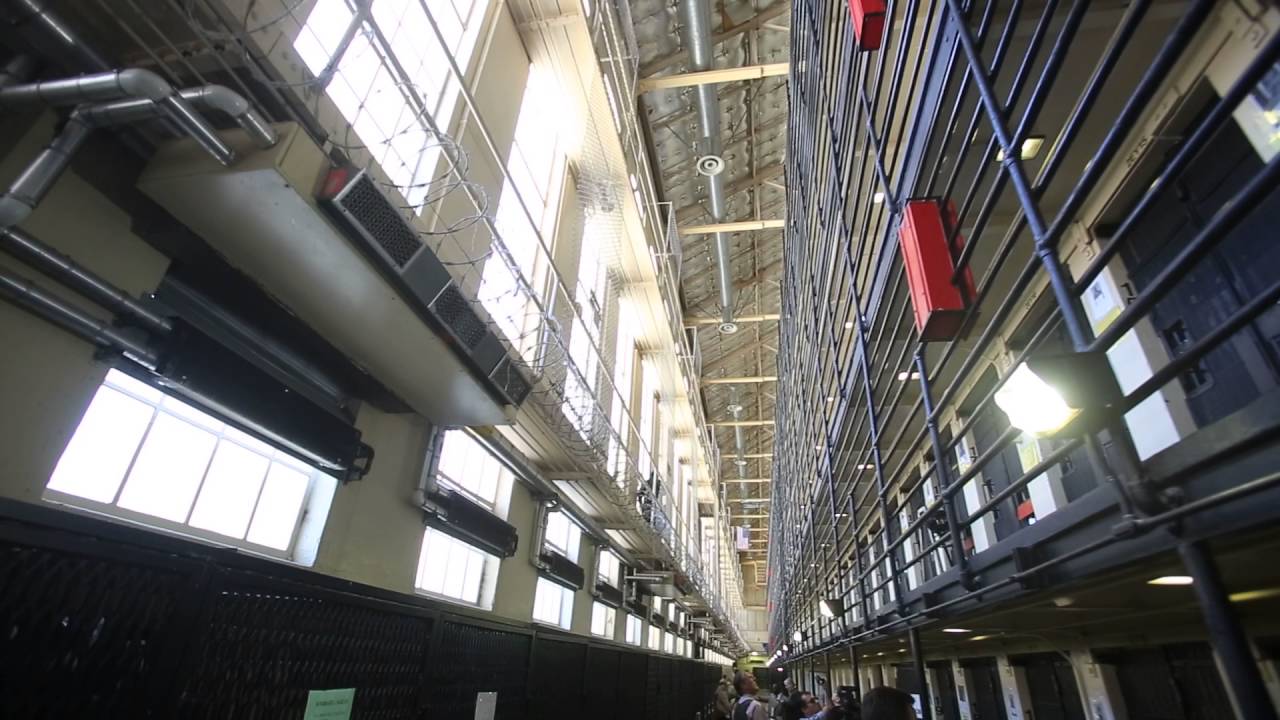
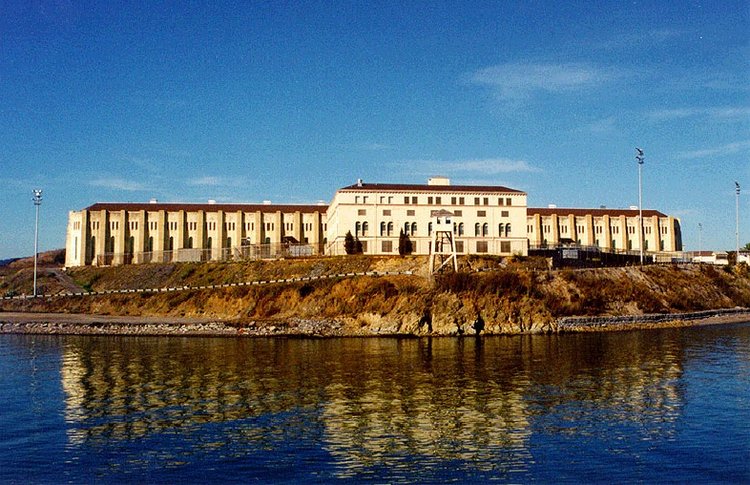


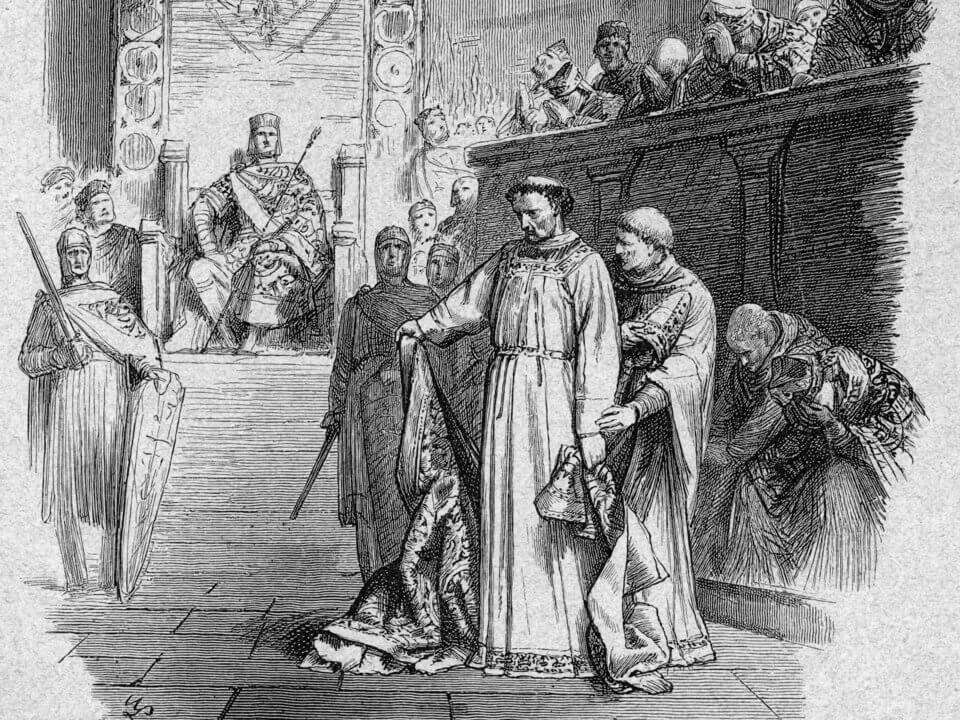



You must be logged in to post a comment.