ATTACKS AGAINST CATHOLIC PRIESTS AND BISHOPS IS ONLY THE PRELUDE TO ATTACKS AGAINST THE INSTITUTIONAL CHURCH ITSELF, BOTH FROM WITHIN AND FROM WITHOUT

Becket (Richard Burton) confronts his accusers

The Courage of Our Convictions


{Abyssum}

One of my favorite scenes in the movie Becket (if one can single out a thread from that masterpiece) is the moment when the eponymous archbishop is confronted by King Henry’s lieutenants, who try to arrest him on trumped-up charges. Archbishop Becket appears fully vested, mitered and coped, with ferula in hand. As he approaches the crowd of soldiers and nobleman, he holds out the crucifix-topped staff, causing the gruff men to backpedal. When Robert de Beaumont begins to read out the charges, Becket calls him by his first name, then warns him, “Robert de Beaumont, hear me for the sake of your soul, which is in the gravest danger.”

He then denies the charges and announces to the gathered mob, “As head of the Church of England and as your spiritual father, I forbid you to pass judgment on me. I command you and all who would charge me to hold your peace on pain of endangering your immortal souls.” As he begins to leave and is confronted by one soldier, he upbraids him, “Sheathe your sword, Morville, before you impale your soul upon it!” Becket is allowed to depart.

It is difficult to imagine such a scenario today in a film, let alone in the Western world. Would a bishop who is confronted with such animosity stand up to his accusers and invoke his apostolic authority? Would such a rabble back down rather than simply seizing the cleric and clapping him in irons, as a prelude to much worse?

Such questions seem academic, relating only to tales from a world long gone. Yet in certain parts of the world today, these spiritual and moral encounters are being repeated. China has no qualms about arresting bishops, or of holding them for years until they die in prison. Even in nations with deep Christian histories, such as the quickly disintegrating Nicaragua, bishops and cardinals are finding themselves under attack.

But surely such things are for dictatorships and failed states, we say. Surely it could not happen here.

I think that, before very long, we shall see.

The animosity of formerly Christian countries toward the Church is ramping up. After voters eliminated Ireland’s constitutional protection for the unborn, the Irish government has said that Catholic hospitals that wish to keep their government funding will be required to perform abortions. This from a nation that still televises the Angelus every day. And some Australian states have recently passed a law requiring priests who hear of child sexual abuse and other serious crimes in the confessional to break the sacramental seal and report it to the police.

Many Australian priests and at least one bishop have publicly stated they will not comply with the law, which – depending on the state – would mean a hefty fine or even jail time.

If push comes to shove, will they follow through? Will bishops help to pay the fines of their priests, or visit them if they are jailed? Will the Irish bishops be willing to forgo government funding rather than submit to the new abortion regime?

One can hope that the bishops will have the courage, should the time come, to stand by their convictions. Even in a time of increasing secularization and hostility toward the Church in Western countries, bishops still have largely remained respected figures. They are invited to important civil functions and given places of honor. They receive politicians and are pleased to release statements on this or that bill proposed in the legislature.

But things could become quite different quite quickly. In fact, seem likely to. The late Cardinal Francis George may have had it exactly right when he said, “I expect to die in bed, my successor will die in prison and his successor will die a martyr in the public square.”

Too strong? Perhaps. Perhaps not. But consider this, too: imagine the opportunity suddenly present to give a living testimony for the faith. As Alfie Evans lay dying in a Liverpool hospital, (while his parents were barred from removing him to seek further help), one commentator wrote, “What if the archbishop walked into the hospital and said, ‘This boy and his family are leaving with me’?” If he were allowed to leave, what solace that would have given the family; if he were arrested, what a powerful witness that would have shown.

It may soon be the case that it will not be enough for society to reject the Church’s teaching; it may feel compelled to silence and squash the institution itself. But this will not be because secular society is finding itself growing strong and wishes to crush a rival. It will be because society, having rejected truth, finds itself terminally ill, and it will rage at the physician whose diagnosis is sound but undesired. {It is already happening around the world and is happening close to us, in Canada.}

Then, God willing, the last portion of Cardinal George’s statement may come to fruition: “His successor will pick up the shards of a ruined society and slowly help rebuild civilization, as the church has done so often in human history.”

Nicholas Senz

Nicholas Senz is the Director of Children’s and Adult Faith Formation at St. Vincent de Paul Catholic Church in Arlington, TX, where lives with his wife and two children. He holds master’s degrees in philosophy and theology from the Dominican School of Philosophy and Theology in Berkeley, CA. His website is nicholassenz.com.

Posted in Uncategorized | Comments Off on ATTACKS AGAINST CATHOLIC PRIESTS AND BISHOPS IS ONLY THE PRELUDE TO ATTACKS AGAINST THE INSTITUTIONAL CHURCH ITSELF, BOTH FROM WITHIN AND FROM WITHOUT

HERE IS YOUR LITTLE DOSE OF SATIRE TO HELP YOU COPE WITH THE REVELATION THAT GLASGOW CALEDONIAN UNIVERSITY STARTED AS Angus McPride’s Haggis Parlour.

Eccles and Bosco is saved


Glasgow Caledonian appoints a new Catholic Chaplain

Posted: 21 Jul 2018 06:19 AM PDT

Following the sacking of Catholic chaplain Father Mark Morris by Glasgow Caledonian University for the crime of being too Catholic – in particular, holding a prayer serviceto seek “reparation for the gross offence to God which is Pride Glasgow” – GCU have finally found a replacement who sees no problem with Catholic priests parading in rainbow leotards if it helps to build bridges and promote equality and diversity, inclusivity, whips and leather accessories for all.Mark Morris

Fr Mark – note the offensive painting behind him.

Cardinal “Ted” McCarrick of the St Gallen Mafia had offered his services, but it was felt that this would be a step too far, even for GCU. Besides, it will take another ten years or so for Catholic doctrine to evolve to a point where sexual abuse can be publicly supported (although several of the Pope’s closest advisers are said to be “encouraging”).

No, GCU has gone for a more respected figure, Fr James Martin LGBTSJ FBPE (we are not sure what the last one is about, but we think the F stands for “fruitcake”). Not only will he refuse to quote the Catholic Catechism on homosexual relations (let alone Biblical teaching on the subject), but he is a man whose Pride knows no bounds.

James Martin

Getting down with the youth…

Finally, Archbishop Tartaglia, the 40th successor of St Mungo, has complained in the strongest possible terms to the principal of GCU about the treatment of Fr Mark, “a totally orthodox priest, persecuted for upholding Catholic teaching”. Only joking, folks!

Note for non-UK readers, Glasgow Caledonian University isn’t a distinguished seat of learning, similar to Oxford and Cambridge, nor even a research-led university such as Liverpool or Bristol. It is one of a large number of lesser establishments that now call themselves universities – in this case it started life as Angus McPride’s Haggis Parlour.

Posted in Uncategorized | Comments Off on HERE IS YOUR LITTLE DOSE OF SATIRE TO HELP YOU COPE WITH THE REVELATION THAT GLASGOW CALEDONIAN UNIVERSITY STARTED AS Angus McPride’s Haggis Parlour.

WHAT MAKES A HUMAN BEING BE IN THE “IMAGE AND LIKENESS” OF GOD IS THAT GOD HAS GIVEN US OUR INTELLECT AND WILL. WE CAN BOTH KNOW AND LOVE. IF YOU DO NOT KNOW GOD YOU CANNOT LOVE HIM. IF YOU DO NOT LOVE HIM YOU ARE THE MOST MISERABLE OF ALL HUMAN BEINGS.

Some say the greatest question in life is ‘does God exist?’ I say it’s this one


{Abyssum}

I found a place. It’s east of San Diego, not far from my home in El Cajon. Forgive me for not being more specific, but that little desolate spot in East County is sacred to me and I treasure its privacy.

During trying moments of my life, I go there to be alone with God. During a difficult period some years ago, I spent a lot of time there, meditating and thinking, praying and sorting out my attitudes and decisions.

It was holy ground where I could be alone – yet not alone, for the Lord always met me there. As I walked the rugged trails, I sensed His footsteps beside me. When we talked together, He reminded me of His Word. I pondered Scriptures stored up in my mind, and I told Him what was on my heart and cast my burdens on Him.

I felt a kinship with the writer of Psalm 62, who said, “My soul finds rest in God alone.”

I’ve spent my life being overwhelmed with the wonder of the person of God. Some say the greatest question in life is: Does God exist? I say the greatest question is: Do I know the God who does exist? Do I know about Him, and do I know Him personally?

You may not know God as well as you think, for He is as far above us as the heavens are above the earth. The Bible says His greatness is unsearchable (Psalm 145:3). His judgments are unsearchable (Romans 11:33). His riches are unsearchable (Ephesians 3:8).

Nevertheless He is knowable. In fact, God seeks to be known. He desires to be worshiped, and He has revealed aspects of Himself in both nature and in Scripture. We can know Him who is unsearchable.

Not only are we equipped to know God, our very purpose is to know God – to know about Him and to know Him personally, as a Father, as a Friend, and as our Creator and Sustainer. When we don’t know God, we don’t really know anything. Our lives are as incomplete without Him as a sky without a sun.

The most important thing in life is not what we do, where we go, who we’re with, how high we rise, how long we live, or how influential we become. The most important thing in life is Him.

Nothing compares with getting to know the God who knows us. Though our finite minds can never comprehend all there is of God, our souls find rest in Him. When everything around us fails, He will never falter. When the foundations tremble, He is changeless, immovable – eternal in the heavens. When our hearts are overwhelmed, He is a rock that is higher than we.

Knowing implies we are growing in knowledge. When the apostle Peter was nearing martyrdom, he wrote a final note to his friends and ended with these words: “But grow in the grace and knowledge of our Lord and Savior Jesus Christ. To Him be the glory both now and forever. Amen” (2 Peter 3:18).

Peter’s final letter consists of only three chapters, yet he used the word knowledge seven times. He began 2 Peter by saying, “Grace and peace be multiplied to you in the knowledge of God” (2 Peter 1:2).

To me, the study of the person of God is like plunging into a bottomless sea. I can never plumb its depths, but I cannot ignore its relevance. And, oh, how it refreshes the mind and restores the soul. We may not be able to fathom every aspect of God’s character this side of eternity, but the Bible encourages us to try.

I can’t go hiking in East County every single day. We can’t always run to the backside of the desert, but I hope to never let a day pass without drawing nearer to Him and coming to know Him better.

This is an adaptation from Dr. Jeremiah’s new book, “The God You May Not Know.”


David Jeremiah

By | Fox News

Dr. David Jeremiah is among the best known Christian leaders in the world. He serves as senior pastor of Shadow Mountain Community Church in El Cajon, California and is the founder and host of “Turning Point.” Turning Point‘s 30-minute radio program is heard on more than 2,200 radio stations daily. A New York Times bestselling author and Gold Medallion winner, he has written more than fifty books.

Posted in Uncategorized | 1 Comment

DO YOU KNOW ANYONE WHO HAS BEEN EDUCATED BEYOND THEIR LEVEL OF INTELLIGENCE? I HAVE KNOWN QUITE A FEW DURING MY 95 YEARS !!!

67b37-varadkar-martin

{Abyssum}

   Samuel Taylor Coleridge indulged his romantic naiveté in suggesting that culture should be governed by an educated elite, which he called a “clerisy.” The word had the same root as “cleric,” since the clergy {in Coleridge’s time}had a pre-eminent role in erudition. Coleridge meant it to include all who were versed in higher thought. He was ignorant of the dictum that an intellectual is often someone educated beyond his intelligence. Knowledge is not wisdom. Common sense thrives best among those whom the clerisy caste tend to patronize as common.

Along with professors and bureaucrats, the clergy have to be careful, since clerisy is a relentless illusion. The clergy are at their best when they proclaim the solid Gospel, and they can be at their weakest when they assume a prerogative to comment on problems outside their competence. The National Conference of Catholic Bishops published in 1983 a pastoral letter on disarmament, “The Challenge of Peace,” which, if taken seriously, might have prevented the fall of the Berlin Wall six years later. {The pacifists were led by Archbishop Rembert Weakland and the militarists were led by Cardinal John O’Connor, the debate was not very edifying; I know, I was there.}Their pastoral letter on economics in 1986, “Economic Justice for All,” prescribed a big-government solution that could have thwarted the economic boom that ensued despite them {God is good}.  The clerisy rejected a cogent critique of “Economic Justice” chaired by the former Secretary of the Treasury, William Simon, and supported by Secretary of State Alexander Haig and J. Peter Grace, among others. Opponents of the peace pastoral, Archbishop Philip Hannan and then-Bishop John J. O’Connor, were ignored even though Hannan was the only bishop who had served in World War II {wrong, Hannan was a Chaplain and did not fight in the Second World War; I was a member of a flight crew in the 8th Air Force and flew 32 combat missions over Germany in 1945} , and the future cardinal {O’Connor} was auxiliary bishop for the Armed Forces  {and never engaged in combat}.

Recently, a bishop suggested that anyone who supported laws on illegal immigration might be subject to canonical penalties {a statement on the par with the famous statement of Nancy Pelosi that “Illegal immigrants should not be detained unless they have done something illegal”}, a stricture he did not invoke against Catholic congressmen in his state who support abortion. The bishops have also disagreed with the Supreme Court’s defense of the right to work for federal employees. Clerisy often prefers gratuitous politics to doctrinal orthodoxy. {a syndrome knowns as PP, political pandering}

Then there is the curious inconsistency of a cardinal who has said that priests “have no credibility” when it comes to marriage instruction because they have not been married themselves. {This cardinal also said that Jesus Christ’s teachings about marriage should not be taken too seriously because He, Christ, was never married.} Having prepared over eight hundred people for marriage, I might venture to enlist most of them in witness against his demurral from competence, and would also ask, if that cardinal is correct, why does he not see any inconsistency {insanity} in declaring this as prefect of the Dicastery for the Laity, Family, and Life. Pope Francis has said that “no one better than [a priest] knows” the challenges that married couples face. Clerisy may be well-intentioned, but Saint Bernard of Clairvaux said that the road to Hell is full of good intentions.

Clerisy does have its flaws, in witness to which one might conjure the ghost of Samuel Taylor Coleridge who, despite his erudition, died from recourse to opium.

  • Father George W. Rutler
Posted in Uncategorized | 1 Comment

WHO ARE THE ‘GREATEST’ CATHOLICS?

I Am Not One of the

“Greatest Catholics of All Time”

A friend passed along to me one of the more recent frenzied Facebook posts of a former Catholic apologist who will not be named. (His signature writing style will make it clear enough for those who are aware.) He’s not someone I believe deserves any attention aside from our prayers, but just in case anyone is still listening to him, I want to address something he comes back to time and again: the notion that Catholics who care about the integrity of their faith and the quality of their worship — particularly “traditionalist” Catholics or those who are critical of the pope — deem themselves the “Greatest Catholics of All Time.”

I’ll say it right here in front of anyone who cares to listen, since I am included in those to whom this label has been applied: I do not consider myself a great Catholic. I am, if I’m being honest, not even a particularly good Catholic. Here’s why…

I do not prefer the old Mass because this is somehow demonstrative of my superior taste; I prefer the old Mass because through my study of the differences between the old and new rites and my understanding of theology I have come to believe it to be a more perfect and pleasing way of worshiping God – a way which benefits both the Worshiped and the worshiper. It has stood the test of time by nourishing countless saints, and is not tarnished in any way by those who disparage it or those who have come to love it. In the same vein, it derives no additional merit from my presence and no added value from my preference. It is a testament to the love of God of Catholics over 1500 years, and it was taken from us by those who feared its power. We are so blessed to have found it, not the other way around.

I do not believe the pope presents a problem to the faith because I don’t like the way he looks or where he’s from or the manner in which he expresses himself; I believe he presents a problem to the faith because he appears to believe he has the power even to supersede the divine law, re-shaping the teachings of Our Divine Lord according to his own conceptions. These beliefs are not the fruit of arrogance, but of the demonstrative incompatibilities between certain papal actions, words, and writings that have been examined by not a small number of competent theologians, philosophers, pastors, and prelates. No Catholic feels greater for having an adversarial relationship with the man who is supposed to be the guardian of the faith, and has so often chosen otherwise.

I do not believe that following the laws and precepts of the Church automatically bestows goodness or sanctity on a person, but I do believe that they are necessary to attain goodness and sanctity. I do not believe that these things are important because observe and follow them (I often fail), or because I have some obsession with the law or some infatuation with rigidity. Instead, I believe they are important because God said that they are, and He seemed very concerned that we observe them carefully, and His ministers and Vicars and countless saints over the years impressed upon us that these things matter a great deal to our eternal salvation. It is not out of a sense of self-importance that I seek to do these things, but out of a sense of obligation to our Divine Creator, which, I hope, given enough graces, might even be transformed into a desire to do them purely out of love for Him.

On the same token, I am not interested in displaying harshness and judgmentalism towards sinners. I am very much one of them. Like so many of us, I often wish the rules were easier to follow, that the laws weren’t so easy to break, that we could do more of what we want and less of what we are required to do. I have often, perhaps more often that not, chosen the easy path, broken the laws, and failed in the voluntary efforts — like prayer and penance — that would aid me in observing them.

I have committed the sin of presumption, time and again, giving in to what I want and knowing that when I decided I should try harder the confessional would be there waiting for me. I have taken God’s mercy for granted.

But I do not want excuses made for me, because I know I will take advantage of them. I do not want someone to tell me that my sin is not my fault, or not a sin at all. I do not want to be accompanied as I continue in my selfishness, but rather, encouraged gently but firmly that I must stop what I’m doing and return to God’s graces if I want to enjoy eternal life.

And I do not want excuses made for others who have perhaps not had the benefit of learning their faith as well as some, because I fear they will be left to remain in their sin, and lose their hope of eternal life. My opposition to this coddling of sin is not because I believe I am better than they, or because I want them to suffer. It’s because I want them to have the fullness of life in Christ.

To be clear: there is nothing about me that makes Catholicism great, but I am made better by the greatness of Catholicism, and I seek to serve it by preserving that greatness.

As for the matter of traditionalism in particular, I observed something today that I wanted to share with you.

As I’ve no doubt written countless times, I absolutely believe the Novus Ordo is defective and damaging to the life of faith. But as I left the local parish after confession this morning, I saw a woman who looked to be in her 80s, stooped over and shuffling with a cane so slowly towards the church that her forward progress was almost imperceptible. I made it the better part of 100 yards towards my car, turned around, and saw that she was still making her way up the same 20 feet or so of sidewalk so she could get to daily Mass.

That’s devotion. I don’t know how else to describe it. If I was in that physical condition there’s not a chance I’d make that much effort to do anything that wasn’t incredibly important to me. And maybe not even some of those things.

We needn’t give up our certainties on the importance of right worship to recognize that God still provides grace to those who seek Him even in impoverished circumstances. And this is why I urge caution to my fellow traditionalists when I see them casting aspersions on those who attend the NO, or using derogatory terms like “neo-caths,” indiscriminately to describe not just those who lead the revolution in the Church, but those who have been victimized by it by no fault of their own. Some of the people in the pews at the NO could put us to shame with their faithfulness. Well, they can put ME to shame at least. You’ll have to do your own reflection. But I bet we all know some pious person – perhaps even a family member – who remains an example to us all, even though they’ve been immersed in half a century of liturgical destruction.

So who are the real Greatest Catholics of All Time? They are the people we know as the saints. By any measure, they were men and women who cared quite a great deal about the particulars of the faith, fought rhetorically and often died physically to defend its truths, worshiped devoutly, lived lives of charity and example, and did not spend lives consumed by rage aimed at those who didn’t see the world the way they did. None of us have attained what they have yet, and that is where our focus should be.

So no, I am not one of the Greatest Catholics of All Time, but I aspire to be — and you should too.

Posted in Uncategorized | Comments Off on WHO ARE THE ‘GREATEST’ CATHOLICS?

Reflecting on the experiences behind #MeToo and the hook-up culture teaches us that something is deeply broken at the heart of the sexual revolution. The pathetic scramble to shore it up with consent speech codes only casts doubt on its key doctrines, bearing negative witness to the need for a comprehensive form of consent that is worthy of sex between persons—worthy of sexual love and that is marriage between a man and a woman for the purposes God disclosed in Genesis.

What #MeToo and Hooking Up Teach Us About The Meaning of Sex
by Elizabeth Schlueter and Nathan Schlueter
within Culture, Sexuality
Jul 19, 2018 08:09 pm http://www.thepublicdiscourse.com/2018/07/22167/
Reflecting on the experiences behind #MeToo teaches us that something is deeply broken at the heart of the sexual revolution.
Share this article:    

The #MeToo movement provides a sobering opportunity for deeper reflection on the meaning of sex and the nature of the sexual revolution. A core question is this: Do the experiences underlying #MeToo reveal the need to carry the sexual revolution still further, or do they reveal fundamental flaws in that revolution?

Some are treating the movement with suspicion, worrying that it is a pretext for promoting identity politics. Others, predictably, are doubling down on the logic of the sexual revolution, rushing to assure us that #MeToo is merely a correction toward kinder, more equitable, more explicitly consensual sexual milieu. But recent efforts by #MeToo activists to take on pornography and shut down brothels in Nevada suggest that both of these approaches are missing what is really going on.

A growing number of people sense, often from painful personal experience, that “something is rotten” in the sexual revolution—something that no regime of affirmative consent codes is likely to fix. And although there have been compelling arguments challenging the basic claims of the sexual revolution, experience may be the most powerful argument of all.

The Personal Experience of Sex

Sometimes the things we most take for granted escape our notice precisely because they lie in plain sight. Start with the experience underlying the #MeToo movement. Large numbers of people, mostly women, report traumatic experiences of being coerced to engage in sexual activity with men.

Although Americans today are deeply divided about many things, the wrongfulness of sexual assault is not one of them. This is encouraging, but there is also something mysterious about it. Why do we treat sexual assault differently from other forms of assault, giving it a special and more serious legal classification? Why is it that some people can require years of therapy after being touched on their genitals without their consent but can quickly forget a much more painful punch to the face? Why is it that if someone touches any other part of our body without our consent it is not usually traumatic, but if they touch our genitals without our consent we feel personally violated?

Or consider sexual shame, a characteristic unique to homosapiens. Why is it that people do not generally object when pictures of them are circulated in public, but they feel personally violated when naked pictures of them are circulated? Why is covering the genitals in public a universal norm? Why do people—even advocates of radical sexual autonomy—seek some privacy for their sexual activity, and why are public sexual activity and nakedness legally banned in most societies? Pornography is not an exception. Porn is not “public sex” but curious voyeurism that trades on the private fantasy that one is being given a privileged “peek” into the intimacy of others.

The Meaning of Sex

These experiences suggest that human sexuality is somehow bound up with the whole person in a unique way. It has a deeply personal meaning that we cannot simply construct for ourselves. If the meaning of sexuality is wholly conventional—if sex is merely a biological event—then the seriousness of sexual assault and ubiquity of sexual shame make no sense.

In fact, in human experience, the meaning of sexuality is closely connected with a particular desire, the desire forembodied union with another person. (For the best account of the intentionality of sexual desire, and its distortions, see Roger Scruton’s marvelous book by this title). This desire is not simply reducible to biology, although it is certainly inseparable from it. Each of our other organs can fulfill its complete organic function within our own bodies. The genitals alone, as reproductive organs, can be organically actualized only in sexual intercourse, when a man and a woman become a single, complete organism.

This reality suggests that sexual intercourse will always mean a wholly personal union, whatever the partners to that union may intend or think. In other words, sexuality has its own language, which human beings cannot completely change. They can only choose to live the truth of their bodies with integrity or to contradict and falsify that truth with their bodies, damaging their own integrity as well as that of their sexual partners. In sexual intercourse, the body uniquely says “I give my whole self to you, and I receive your whole self, which you are giving me.”

Certain moral norms follow from the personal meaning of sex. In the first place, there is a need for consent. Sexual contact without consent is a direct assault against the whole person. It is deeply depersonalizing. But sexual assault is only the most extreme kind of sexual depersonalization. Every time a person is used for sexual gratification, he or she is depersonalized. This fact accounts for the true meaning of sexual modesty (and shame), not puritanical repression. It is our natural defense against the “objectifying” gaze, against being used for someone else’s gratification.

But not just any kind of consent is adequate to the intrinsic and personal language of sex, and thus to the dignity of the person. Because sex is an embodied union of the wholeperson, consent to sex without total commitment to the whole person contradicts the meaning and language of the body. It makes an act that speaks love between persons into an act of use of persons.

Sex is thus very different from other human activities. In some contexts, the mutual “use” of persons is morally acceptable. In typical market transactions, for example, the parties “use” one another for their own benefit. When someone purchases bread from the baker, each person is unproblematically looking to his or her own advantage, and (unless the transaction involves force or fraud) neither person feels “used.”

Why is it that “feeling used” is a common experience in sexual intercourse, even when it is consented to? And what conditions for sexual intercourse would prevent that feeling? While “affirmative consent” may at least avoid rape, most people have a sense that consent should be broader, that sex should at least be “a part of a relationship.” But what kind of relationship is sufficient to prevent sex from being depersonalizing? A committed one? How committed? Experience leads us to the following conclusion: Nothing short of comprehensive personal consent—in other words, marriage—is adequate to the intrinsic language of sex or the vulnerability it necessarily entails.

Thus Karol Wojtyla, the future John Paul II, writes that “an actual sexual relationship between a man and a woman demands the institution of marriage as its natural setting, for the institution legitimates the actuality above all in the minds of the partners to the sexual relationship themselves.” The institution of marriage, Wojyla makes clear, is not a means of legitimating the mutual use of one another’s bodies for sex (as Immanuel Kant describes it) but of expressing and facilitating the full meaning of conjugal love, which is reciprocal, total self-gift.

The Hook-Up Culture and #MeToo reveal the Contradictions of the Sexual Revolution

These reflections help to highlight the deep contradiction at the heart of the sexual revolution, which trivializes sex while at the same time making it the very center of personal identity.

There is a deep tension between the premises of the sexual revolution and those of #MeToo. The sexual revolution promises greater availability and enjoyment of sexual pleasure without commitment or guilt. This promise can only be accomplished by the trivialization of the intrinsically personal meaning of sex. It is very difficult to see how we can simultaneously promote the trivialization of sex and treat sexual assault with the seriousness that it deserves.

But a powerful personal drive like sexual desire cannotreally be trivialized, and its personal meaning cannot be completely denied. If sex ceases to be about love, it will necessarily be about war. This is evident in the hook-up culture, which pushes the revolution’s core premise—sex without marital commitment, or “free love”—to its logical conclusion by elevating sex without any commitment at all.In the hook-up culture and its #MeToo reaction, we can see how sex without comprehensive commitment necessarily becomes predatory, thus paving the way for sexual assault.

In a powerful article called “I Thought Casual Sex Would Be Empowering, But It Wasn’t, Jennifer Joyner describes her initial attraction to hooking up: “The idea of the 21st century woman making her own sexual narrative sounded enticing,” she writes. “I wanted to be in control . . . and I didn’t want to be left out.” Joyner then recalls her experience the day after losing her virginity to a stranger in the back of a car:

He was concerned and called the next day to see if I was okay. I didn’t call back. I remember feeling smug about it, as if in successfully caring less than him I had somehow “won” the game. I proceeded to hook up with many more men in short order, chasing an elusive thrill.

As Joyner, Donna Freitas, and others have shown, the primary motive of those who “hook up” is not sexual pleasure, but power, or the achievement of victory over another. Victory is won by having sex without caring, without vulnerability. In other words, hooking up invertsthe intrinsic meaning of sex, transforming eros, the desire for intimate embodied union with another person, with its attendant emotional and physical vulnerability, into thumos, the desire for domination, recognition, control, and independence. The #MeToo movement has exposed the ugly and predatory underside of the revolution waged under the banner of radical feminism, and it highlights the ironic result that men have the upper hand in the new sexual marketplace.

This inversion of the personal meaning of sex in the hook-up culture reveals the deeper contradiction at the heart of the sexual revolution itself. Underlying the apparent trivialization of sex for the sake of more “love” or more widely available sexual pleasure is the pursuit of a much more radical personal agenda: sexual autonomy for its own sake. Why sexual autonomy? If sex has a unique connection to our personhood and is also fundamentally erotic, an experience of going out of oneself, of potentially life-altering vulnerability and risk, then our sexuality is the most patent reminder that human beings are not radically autonomous.

This explains the otherwise mysterious fixation of modern liberals on sex. If human vulnerability and dependence are to be vanquished, the decisive battle must take place on the field of sex. It is precisely here that radical autonomy must prove itself, and why modern liberalism has made uncommitted sex the chief “liturgy” of its religion of personal identity (and why inebriation is its chief sacrament). At the heart of the sexual revolution is the dogma that sex is the privileged arena where, in the words of the Supreme Court, I define and express my own “concept of existence, of meaning, of the universe, and of the mystery of human life” (Planned Parenthood v. Casey).

Making War, Not Love

In the harsh light of #MeToo, core assumptions and achievements of the sexual revolution don’t seem quite so attractive. In these latter days of Tinder and hooking up, all pretensions to the “love” part of “free love” have been shed, along with the naïvete of the hippie generation. We are left with just “free”—as in cheap—sex.  Perhaps all the sexual revolution can really deliver is a world where sex is a kind of weapon in the never-ending battle to continually create and achieve autonomous personal identity. No wonder asexuality has recently emerged as another strange feature of the modern sexual landscape. If sex is really about making war, not love, there are many who would rather opt out of such a destructive game.

Reflecting on the experiences behind #MeToo and the hook-up culture teaches us that something is deeply broken at the heart of the sexual revolution. The pathetic scramble to shore it up with consent speech codes only casts doubt on its key doctrines, bearing negative witness to the need for a comprehensive form of consent that is worthy of sex between persons—worthy of sexual love.

Nathan Schlueter is a professor of Philosophy and Religion at Hillsdale College. Elizabeth Schlueter, his wife, is a homemaker, homeschooler, mother of eight and a Michigan State Leader for CanaVox.

Posted in Uncategorized | 1 Comment

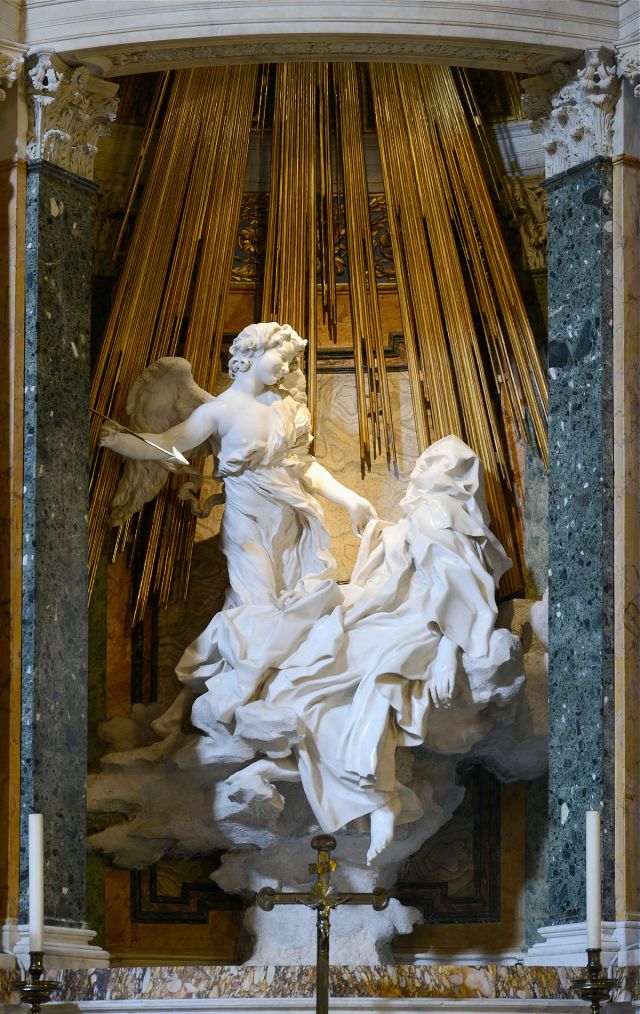
LOVE: WHERE DO YOU FIT? ARE YOU THE DRY BONES OF EZEKIEL OR THE ECSTACY OF TERESA?

Ecstasy_of_Saint_Teresa_September_2015-2a


Posted in Uncategorized | Comments Off on LOVE: WHERE DO YOU FIT? ARE YOU THE DRY BONES OF EZEKIEL OR THE ECSTACY OF TERESA?

HERE IS YOUR LITTLE DOSE OF SATIRE TO HELP YOU UNDERSTAND THAT THE BEST THING THAT FRANCIS THE MERCIFUL CAN DO TO ATONE FOR WHAT HE HAS DONE TO THE INSTITUITIONAL CHURCH WOULD BE TO ABOLISH THE COLLEGE OF CARDINALS

Eccles and Bosco is saved


Diarmuid Martin punishes all his clergy

Posted: 19 Jul 2018 02:39 AM PDT

Archbishop Diarmuid Martin of Dublin has finally shaken off the labels “weak”, “spineless” and “pathetic”, which he has received so many times, and taken action. He has at last punished the entire clergy of his Archdiocese for affirming Catholic teaching.It began quietly enough, when he disciplined Fr James Larkin for being dangerously pro-life. Fr Larkin had spoken against the Irish referendum, and pointed out that anyone who had voted “yes” (through ignorance, through weakness, through their own deliberate fault, as the Anglican Prayer Book puts it) should regard this as a sin and go to Confession.

Molesworth cartoon

Diarmuid Martin, Dublin’s Iron Man.

Now, however, the good Archbishop has noticed that many of his priests are expressing dangerously pro-life attitudes; the others, less interested in the question whether babies in the womb should be dismembered, are still receiving confessions, or at least conducting masses in which the “Kyrie” is present. “Better be on the safe side,” he said today, “and punish the lot of them.”

There are of course difficulties in exiling several hundred priests to Craggy Island, or dumping them on the Loreto sisters in Rathfarnham, but the good archbishop is working hard to find a solution. The other problem is that Irish churches will no longer have priests to offer Mass: however, in the era of Diarmuid most Catholics have stopped attending church anyway, so this may not be a serious difficulty.

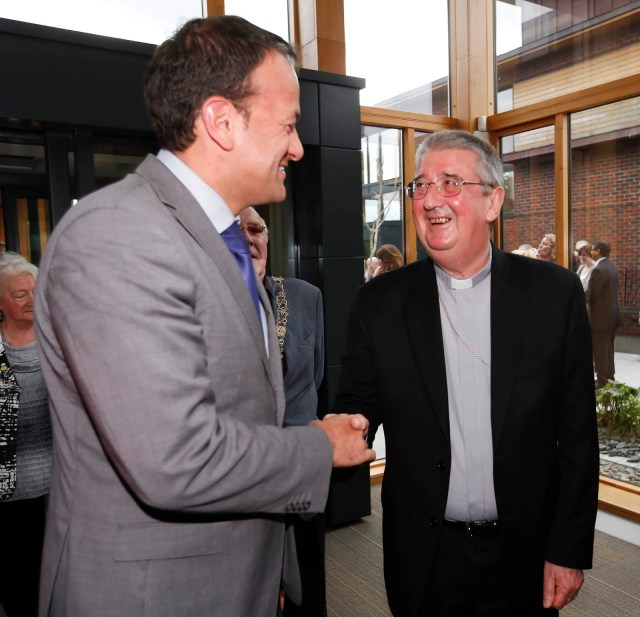
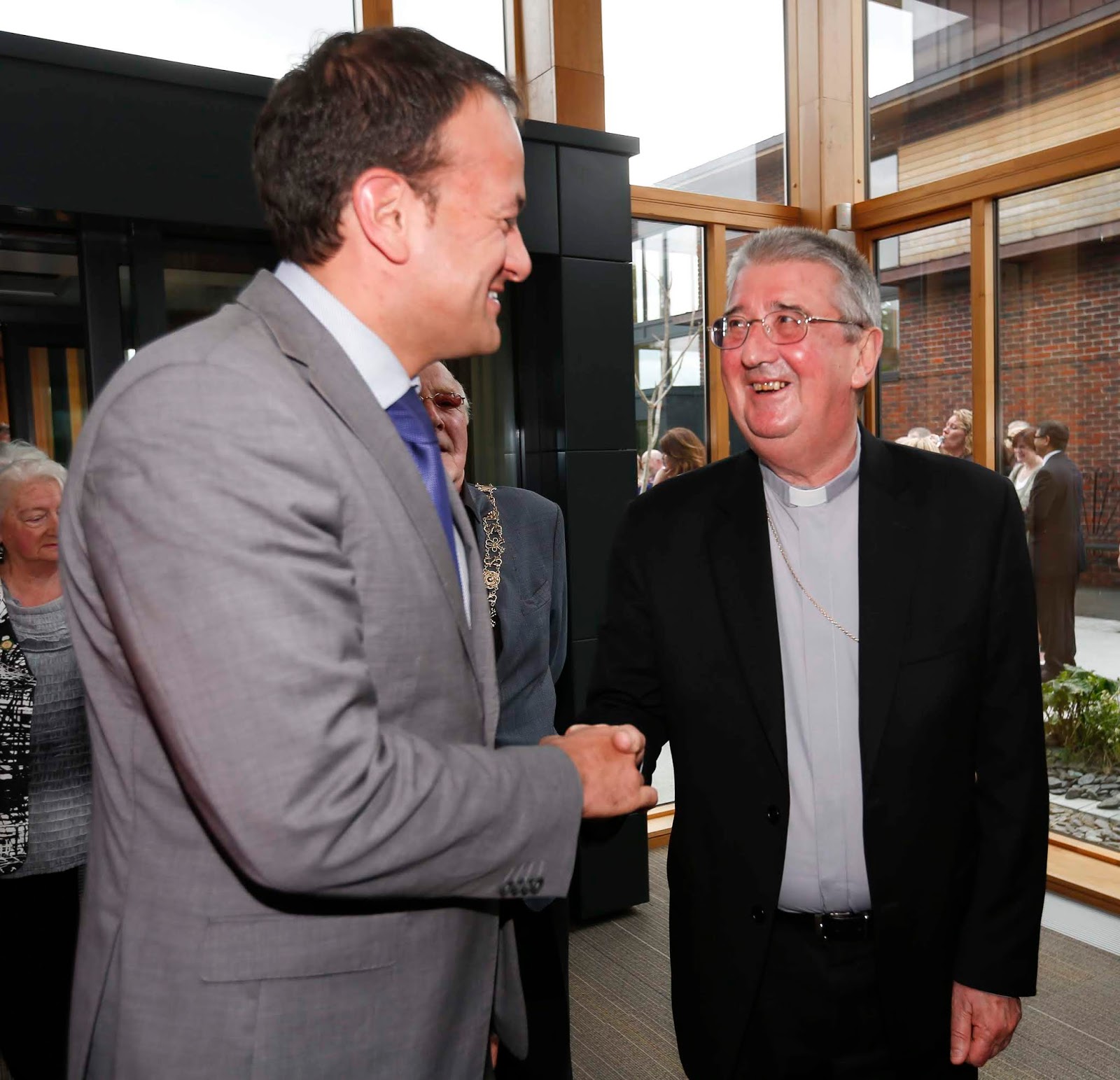
Varadkar and Diarmuid

Well done, thou good and faithful servant!

It is not known how Archbishop Martin himself voted on the 8th Amendment Referendum; at the time he made very vague pro-life noises, but obviously the whole point of the Catholic Church is that it should stay in step with whatever secular government is in power. Did not Jesus say “Render unto Caesar whatever he asks of you: God really isn’t bothered”?

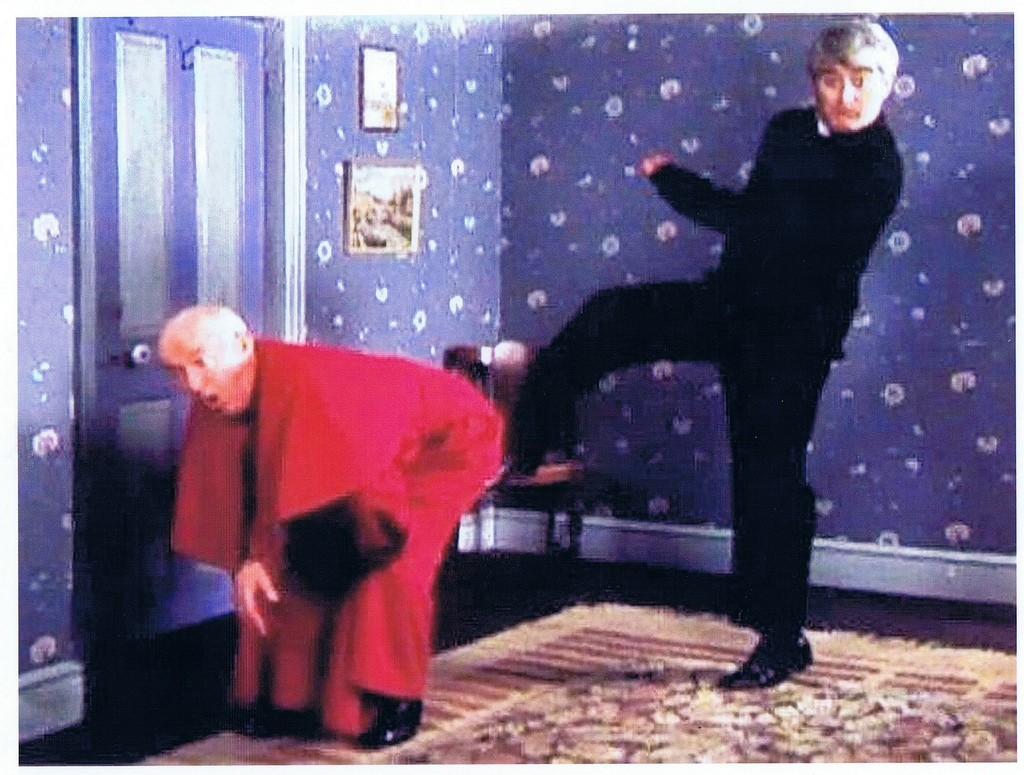
Many priests in the Dublin Archdiocese are angry with the archbishop for his decision to exile them. One at least has taken the matter into his own hands, or rather feet.

Kicking Bishop Brennan

The martrydom of Archbishop Diarmuid.

In view of the wide dislike for Dublin’s spiritual leader expressed by ordinary Catholics, it cannot be long before Pope Francis makes him a cardinal. It worked for Cupich.

Posted in Uncategorized | 2 Comments

DID YOU KNOW THAT THE WAY YOU VOTE CAN START A FIRE

10dd0-daddbf1xsaassj8

Vote Democrat, Mortal Sin

THE AMERICAN CATHOLIC


It was clear before – vote democrat, commit mortal sin –  but two things the Democrat Party has done since the last presidential election  make this crystal.


Ignore for the moment, for purposes of this discussion,  the state of the Catholic Church in America, the foetid, stinking, evil, corrupt  entity it has become.  Simply put, those in power at the very highest echelons in the church hierarchy should not be heard when they tell anyone to vote for democrats; and, in general, they should not be heard on any moral issue, period.  Michael Brendan Doughtery has summarized the state of the Catholic Church:

I thought I was already inured to the moral rot in the Catholic clergy . . . There is an undeniable psychological tension between my religious belief that I cannot have hope for salvation outside the visible, institutional Church and my honest conviction that of all the institutions and societies that intersect with my life, the Church is by far the most corrupt, the most morally lax, the most disillusioning, and the most dangerous for my children. In that tension, personal prayer will dry up like dew at noon. (“Off the Shelf: What Catholic Traditionalists Foresaw;” National Review, June 29, 2018 )

Two more recent developments have exposed the democrat party for what it really is, and has been.

First, proceeding initially under the guise of seeking only “toleration,” they sought to accord the legal status of “married” to those who voluntarily engage in homosexual actions. This alleged “toleration” has now morphed into a totalitarian call by democrats to label words that amount to “marriage always was, is, and always will be the  marriage of a man to a woman” as hate speech; and, by some democrats, to have any public denial that “same-sex” marriage is either not possible or, in some sense, wrong, be declared a crime. Again and again, they seek to use the power of government:  to abridge or abolish  the religious liberty of those who disagree with them;  to abridge believers’ right to free speech in saying what they believe; and to have these rights squelched with governmental power by requiring all to implicitly affirm “same-sex marriage.”

Secondly, and is some ways far more deadly, the democrats, who in the past supported, advocated for, and demanded taxpayer support of all abortions, now are openly celebrating abortions. They have implicitly admitted that their previous camouflaging mantra for abortion – “legal, safe, and rare” – was a smokescreen. All along their goal was abortion as a killing  to be welcomed, promoted, paraded, and joyously celebrated.

Prior to the 2016 elections, liberal bishops, priests, and pastors, many of them either open or closet democrats, who wanted to deliver the “catholic vote” to their beloved democrats, hid behind “we are not single issue voters” and “life is s seamless garment.” They ignored the fact that – with respect to intrinsic evils like abortion and racism, as proclaimed to us by the United States bishops – if a candidate is wrong regarding an intrinsic evil, that is a “disqualifying” issue . No matter what else a candidate says or does or stands for, if a candidate is wrong on a disqualifying issue, a catholic with a well-formed conscience cannot vote for such a candidate.  For the democrats, the Party of Death, party in toto, is disqualified

Clerical shills for the democrats may spout that “when a democrat is disqualified on abortion, but a republican is disqualified on ________ (fill in with war, poverty, immigration, justice, etc.), then a catholic can, in good, well-formed conscience,  vote for the democrat.”  But the fact is, when a candidate is disqualified because of support for intrinsic evil,  there is no issue, no consideration that then makes it moral to vote for such a candidate. Even if all the listed candidates of all parties are wrong and all are disqualified, a catholic with a well-formed conscience cannot then vote for a democrat. One option is not to vote or to vote for an unlisted “sign-in” candidate.

This must be made perfectly clear: to state the fact that it is a mortal sin to vote for any democrat is not to endorse any candidate of any other party.  Of course the democrat clergy, bishops,  priests, and pastors fear that if the truth gets out – it is a mortal sin to vote for any democrat – that some, or worse, many, such voters will vote for a republican. Their other fear is that some of those whose votes they have in the past herded 100% into the democrat fold simply will not vote at all.

What is especially feared by the democrat clergy in Texas and elsewhere in the United States is that the truth will become widely known – the truth that the republican party is now the party of family and the democrat party is now the party of baby death – not just baby death, but the party of “If-you’re-happy-killing-babies- clap-your- hands” celebrations of abortions. This truth is particularly damning for democrats among Hispanics who value family above party affiliation.

The mortal sinfulness of voting for a democrat is presented in some detail in  “Faith-Filled Citizenship Voting Catechism,”

http://sinvote.democrat/faith-filled-citizenship-voting-catechism/


Here are some excerpts:


DEMOCRATIC PARTY –  PARTY OF INTRINSIC EVIL  PARTY OF ABORTION, PARTY  OF DEATHQ.

Q. Does the Democratic Party promote abortions?

A. Yes. The Democratic Party advocates abortion, promotes abortion, celebrates abortions, and seeks to have and has succeeded in having abortions paid for with taxpayer money.

Q. Will the Democratic Party support a prolife candidate?

A.No, never. The Democratic Party has stated publicly that any candidate who wants to receive funds and campaign money from the party must be proabortion. It has stated that this position is non-negotiable.

Q. Is the platform of the Democratic Party proabortion?

A.  The Democratic Party Platform has and continues to advocate for taxpayer-funded abortion for all nine months of pregnancy; and has ignored the request of some thousands of people to amend the Party Platform to recognize the existence of pro-life members. The Party also rescinded language that abortion should be “rare.” For these and other reasons it has been called the “Party Of Abortion,” and the “Party Of Death.”

Q. Has a Cardinal Archbishop of the Church called the Democratic “Party the Party of Death”? A.  Yes.

Q. Has a Bishop of the Church resigned as a registered Democrat because of the Democratic Party’s support of abortion? A.  Yes.

Q. Is it a mortal sin for me to vote for a Democrat with the intention that the Party’s Platform be enacted and preborn babies be aborted?

A. If you vote for a Democrat so that preborn babies will be killed by abortions, you commit mortal sin.

Q. What if I do not vote for a Democrat knowing that preborn babies will be killed by abortion and this will be a result of my vote – but I vote for a Democrat to achieve some other good, such as the reduction of poverty, the end of war, the elimination of the death penalty, a fair economic system, or just treatment of immigrants?

A. Since abortion is an intrinsic evil, none of the other goods listed can change this evil and none of the other goods listed can be used to outweigh or negate this evil. So, again, in this situation, you will commit mortal sin.

Q. Does this apply to all Democrats at all levels of government?

A. Yes, this applies to all Democrat candidates. The Democratic Party does not change its program, policies, platform, or agenda for any member who disagrees with its policies and aims regarding abortion, nor does it do so for Democrats who say they are against the party’s proabortion program. No candidate for office – at any level – who is a Democrat no matter if he or she denies  individual support of intrinsic evil –  can negate the Party’s involvement in, advocacy of,  and promotion of intrinsic evil.  Therefore, a vote for any Democrat at any level of government is a vote on behalf of the Party’s program, goals, platform, policies, and agenda and a vote for its agenda of abortion.

Q. So is it a mortal sin to vote for any Democrat?

A. Yes, it is a mortal sin to vote for any Democrat.


This Voting catechism also deals with the racism of the democrats:

DEMOCRATIC PARTY –  PARTY OF RACISM

PARTY OF BLACK & HISPANIC GENOCIDE

Q. Does the Democratic party advance racism and racist policies?

A. Yes. The Democratic Party is a racist organization because it advocates and promotes abortion businesses that perform abortions for racist motives, such as Planned Parenthood, an organization founded on principles of eugenics and racial superiority, which intentionally locates about 70% of its locations in or near minority neighborhoods and is on record as willing to accept donations used for the killing of minority babies who be killed by abortions at Planned Parenthood abortion business locations. The Democratic Party has seen to it that millions of taxpayer dollars have been paid to Planned Parenthood and other abortion businesses, knowing full well that this money will be and has been used for racist purposes.  For these reasons, the Democratic Party is the “Party Of Racism.”

Q. What if I do not vote for a Democrat so that its racist agenda, programs, and policies will be successful, or so that minority preborn babies will be killed – even though I know my vote will result in this  racism – but I vote for a Democrat to achieve some other good, such as the reduction of poverty, the end of war, a fair economic system, or just treatment of illegal aliens?

A. Since racism is an intrinsic evil, none of the other goods you list can change this evil and none of the other goods you list can be used to outweigh or negate this evil. So, again, in this situation, you will commit mortal sin.

Q. So is it a mortal sin to vote for any Democrat?

A. Yes, it is a mortal sin to vote for any Democrat.


Despite the fact that all this is known and has been published;  despite the clear teachings of the Church; and despite the revelations about the living evil that is many of the highest ranking clergy in America; the  priests, pastors, bishops and cardinals who support the democrat party will, somehow, say to the faithful this Fall and in Fall 2020 “you can, in good conscience, vote for a democrat.”  Nothing will stop them because they saw what happened in 2016 – from their vantage point they failed. More than half the catholic voters voted non-democrat.

Each time they speak for a democrat, whether it be outright endorsement or an attack on a republican running against a democrat they support, they must be openly and vigorously opposed. Each time some well-meaning catholic or some yellow-dog democrat (whether family member or not) says that the Church says you can vote for a democrat, they must be publicly and openly corrected.

Posted in Uncategorized | 3 Comments

WHEN HYPOCRISY BORDERS ON INSANITY

476566040-612x612

“new world unity” – Francis. (are you aware your gun owning Christians are a bunch of hypocrites?):
http://www.neonnettle.com/news/4149-pope-francis-gun-owners-can-t-call-themselves-christian-anymore

———————

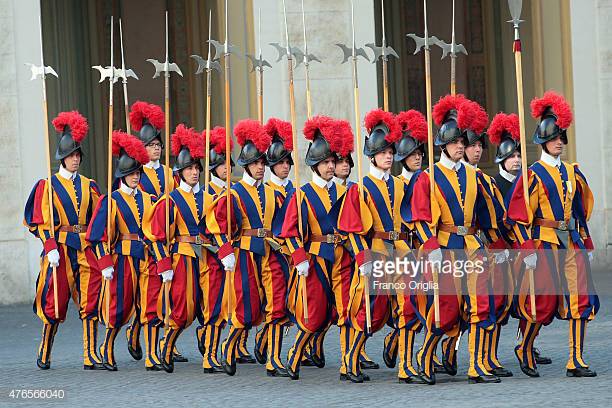
At Francis’ beck and call – The Vatican Swiss Guard (forget about the tin can suit and spear in hand illusion, commando fitted is more accurate):

https://foxtrotalpha.jalopnik.com/the-pope-has-a-small-but-deadly-army-of-elite-warriors-1733268646

“Although many would think the Vatican is protected by a token force of spear-slinging cosplayers, this is not the case. Although the Vatican does not like to discuss it, many plain-clothed officers are nearby the Pope when he is moving about. This especially includes when he travels abroad. These Swiss Guard officers pack the best weaponry available, namely tricked-out Heckler & Koch MP7 personal defense weapon (PDW) that fires armor piercing small caliber rifle rounds. This weapon is extremely popular with elite units ranging from SEAL Team Six to presidential protection units around the globe. It is also compact enough to be packed in an underarm-sling that can be concealed underneath a sport coat. . . .”

Posted in Uncategorized | 2 Comments