Here is a fitting punishment for the women who voted against the ban on abortion after the 20th week of life in the womb: to not know sleep for all eternity because of the crying of the aborted babies who suffered a painful death at the hands of an abortionist.

http://www.virtueonline.org/unborn-babies-lose-us-senate

Unborn babies lose in US Senate
Women break ranks
Catholics cave
Mormons try to hold the lineĀ 
Episcopalians embrace painful abortive death
Democrats and Republicans play party politics

By Mary Ann Mueller
VOL Special Correspondent
www.virtueonline.org
Feb. 2, 2018

WASHINGTON, DC — Something happened on Monday (Jan. 29) in the US Senate. Something that most Americans wouldn’t notice or even give a second thought to. Something that should tear at the souls of Christians. Something that should tear, at the very least, the hearts of women — the bearers of life.

The Senate, by a vote of 51 to 46, decided to reject the Pain-Capable Unborn Child Protection Act through failing to bring it to a floor vote. The Act would ban abortions after 20 weeks of gestation, a point where some believe that the unborn baby is well enough developed neurologically to feel pain. That still-developing baby can feel the pain of being ripped from its mother’s womb through the act of abortion. In its last moments of life, the womb becomes a death chamber and the baby experiences horrific agony before it is returned into the hands of its loving Creator. That child never draws a breath of life on earth. Its potential as a human being is wiped out and its soul returns to God, who placed it in its developing body.

The latest bill for the Pain-Capable Unborn Child Protection Act was introduced to the 115th Congress in January 2017 by Rep. Trent Franks (AZ-R). His House Bill HR 36, had 182 co-sponsors. Franks, a Baptist, stepped down from Congress on Jan. 31 amid allegations of alleged sexual harassment. Franks is the fourth US legislator to leave Congress under a cloud of suspicion.

Since December, Rep. John Conyers (MI-D/Baptist); Rep. Tim Murphy (PA-R/Catholic); and Sen. Al Franken (MN-D/Jewish) also left Congress following alleged accusations of inappropriate sexual conduct.

Franks’ House Bill HR 36 came to vote on October 3, 2017, and passed by a margin of 237 to 189. The House vote was along party lines, with three Democrats Collin Peterson (MN-D/Lutheran); Henry Cuellar (TX-D/Catholic); and Dan Lipenski (IL-D/Catholic) crossing over to vote with the Republicans. Two Republicans, Rodney Frelinghuysen (NJ-R/Episcopalian) and Charlie Dent (PA-R/Presbyterian) voted with the Democrats.

Currently there are 31 Congressmen who self-declare as Anglican or Episcopalian. Those voting for HB 36 included: Don Young (AK-R); Brady Byrne (AL-R); Ken Calvert (CA-R); Scott Tipton (CO-R); Lleana Ros-Lohtinen (FL-R); Rod Blum (IA-R); Peter Roskam (IL-R); Andy Barr (KY-R); Tom MacArthur (NJ-R); Greg Walden (OR-R); Mark Sanford (DC-R); Tom Rice (SC-R); Scott Des Jarlais (TN-R); Diane Black (TN-R); Jeb Hensarling (TX-R); Michael Burgess (TX-R); Blake Frarenthold (TX-R); and Rob Wittman (VA-R).

Episcopalians voting against the House bill included: Julia Brownley (CA-D); Al Lawson (FL-D); Frederica Wilson (FL-D); Niki Tsongas (MA-D); Louise Slaughter (NY-D); Kurt Schrader (OR-D); Jim Coopers (TN-D); Robert Scott (VA-D); Don Beyer (VA-D); Suzan DelBene (WA-D); Adam Smith (WA-D); David McKinley (WV-R); and Rodney Frelinghuysen (NY-R).

On Oct. 5, 2017, the House bill was taken up by the Senate for consideration as Senate Bill S-1922. It was sponsored by Sen. Lindsey Graham (SC-R/Baptist) and had 46 co-sponsors.

Cloture Motion defeated

Then on Jan. 16 Graham introduced a cloture motion (Senate Bill S-2311) to cease debate, break the Democrats’ filibuster and bring about a vote on Senate Bill S-1922. A roll call vote was called and the motion failed 51 to 46 nine votes shy of passing because 60 votes, not 51 votes, were needed to break the Democrats’ filibuster and bring the Pain-Capable Unborn Child Protection Act to a full floor vote.

The vote was basically along party lines, however two Republicans crossed over to join the Democrats: Lisa Murkowski (AK-R) and Susan Collins (ME-R). Both are women and both are Roman Catholics. Three Democrats also crossed over to vote with the Republicans: Joe Donnelly (IN-D); Joe Manchin (WV-D); and Bob Casey (PA-D). All Catholic men.

In the end, three of the Senate’s seven current — or former — Episcopalians did not vote. Bill Nelson (FL-D); Tammy Baldwin (WI-D); and John McCain (AZ-R).

Nelson received flak on Facebook for not voting: “Hey Bill, why didn’t you care about babies being killed?” Kathy Vercamen Widner asked. “You did not even bother to vote on the bill limiting abortion to less than 20 weeks. Why do you want to kill babies that die in terrible pain? You must agree with the ability to kill them since you neglected to vote to protect them.”

McCain, who was raised as an Episcopalian but now worships as a Baptist, did not vote because he is battling cancer and was unable to travel to Washington for the debate and vote.

Baldwin, the first lesbian in the US Senate, was baptized as an Episcopalian, but now lists herself a “None.” The other four sitting Episcopalians in the Senate — Angus King (ME-I); Gary Peters (MI-D); Christopher Van Hollen (MD-D); and Sheldon Whitehouse (RI-D) — all voted against the measure, helping to torpedo the Pain-Capable Unborn Child Protection Act and keeping it from a full vote.

The Washington Post reported that King — one of two Independent senators — voted against the cloture motion because “ninety-nine percent of abortions take place before 20 weeks, so this is a solution in search of a problem.” The other Independent in the senate is Bernie Sanders (VT-I/Jewish) who ran as a Democrat in the 2016 presidential primaries. While in Washington, both King and Sanders caucus with the Democrats. There are currently no Independent congressmen in the House of Representatives.

This is the third time that the Pain-Capable Unborn Child Protection Act failed to get through the Senate. Initially in 2013, Franks introduced House Bill HR 1797 to the 113th Congress. The House of Representatives passed the measure 228 to 196, but it failed to even get to the Senate floor for a vote. In 2015, Franks tried again with the 114th Congress and introduced House Bill HR 36 which passed his chamber by 242 to 184. But a similar bill in the Senate was filibustered by the Democrats and the cloture motion to bring the bill up for a full vote failed 54 to 42, shy six votes needed to break the filibuster.

Finally, on Jan. 3, 2017, Franks reintroduced HR 36 to the 115th Congress. It passed in a roll call vote of 237 to 189 but again failed to make it to the floor of the Senate for a full vote.

Individually, 15 Heartland and Southern states have passed similar Pain-Capable Unborn Child Protection Acts. Those states include: Alabama, Arkansas, Georgia, Kansas, Kentucky, Louisiana, Nebraska, North Dakota, Ohio, Oklahoma, Texas, South Carolina, South Dakota, West Virginia, and Wisconsin. One other state — Idaho — also passed a Pain-Capable Unborn Child Protection law, but it was challenged in court and has since been enjoined. The law is not in effect in Idaho.

The United States is one of only seven nations in the world which allows abortion after 20 weeks of pregnancy. The other countries include: Canada, China, the Netherlands, North Korea, Singapore and Vietnam. The 20th week of gestation is midway through the second trimester of pregnancy, about halfway from conception to birth. At that point, the growing baby is beyond the embryo and fetus stages. It is about eight inches long and has all its fingers and toes, albeit very tiny. The baby has a face and its sex is discernable. The baby’s heartbeat can be heard and its interuteral movement is felt by the mother as she begins to wear maternity clothes to accommodate her growing baby bump. Her 20-week baby is a living, growing being who can feel pain.

According to the National Right to Life Committee since the 1973 passage of Roe Vs. Wade — marking the legalization of on-demand abortion — through 2016, there have been more than 58 million elective abortion procedures, which is equivalent to the combined population of California and Florida. The latest 2017 abortion statistics have not yet complied.

A 2015 LifeWay survey revealed that 70 percent of American women who have abortions are self-proclaiming Christians. Of that number more than 40 percent of them were active church members at the time of their procedure, including 20 percent who were attending church on a weekly basis. The survey also discovered that three-quarters of the women who had undergone abortions noted that their church had “no influence on their decision” to end their pregnancy. Another third of the women felt their church was judgmental about their abortion choice.

Catholic senators reject church teaching

The Roman Catholic Church’s strong stance on life is that life begins at conception and continues until natural death. This precludes abortion, murder, euthanasia, suicide and execution to artificially end a human life.

The Catechism of the Catholic Church teaches: “Human life must be respected and protected absolutely from the moment of conception. From the first moment of his existence, a human being must be recognized as having the rights of a person – among which is the inviolable right of every innocent being to life.” CCC 2270

The Church of Rome goes on to say: “Since the first century the Church has affirmed the moral evil of every procured abortion. This teaching has not changed and remains unchangeable. Direct abortion, that is to say, abortion willed either as an end or a means, is gravely contrary to the moral law …” CCC 2271.

The Catholic Church calls abortion “constitutes a grave offense,” and calls on legislators to enact legislation which would protect the unborn. Anyone who participates in an abortion is excommunicated for the “crime against human life.”

“A person who procures a completed abortion incurs excommunication ‘latae sententiae’ (an automatic action) by the very commission of the offense …” CCC 2272.

“The inalienable right to life of every innocent human individual is a constitutive element of a civil society and its legislation … The inalienable rights of the person must be recognized and respected by civil society and the political authority … As a consequence of the respect and protection which must be ensured for the unborn child from the moment of conception, the law must provide appropriate penal sanctions for every deliberate violation of the child’s rights.” CCC 2273.

On Monday, 14 of 24 Catholic senators ignored their church’s teaching and voted against the cloture motion to bring the Pain-Capable Unborn Child Protection Act to a full Senate vote. The dissenting Catholic senators included: Lisa Murkowski (AK-R); Susan Collins (ME-R); Maria Cantwell (WA-D); Dick Durbin (IL-D); Kirsten Gillibrand (NY-D); Heidi Heitkamp (ND-D); Tim Kaine (VA-D); Patrick Leahy (VT-D); Ed Markey (MA-D); Catherine Cortez Masto (NV-D); Claire McCaskill (MO-D); Bob Menendez (NJ-D); Patty Murray (WA-D); and Jack Reed (RI-D).

The Catholic senators who did take their church’s prolife beliefs to heart and voted for the cloture motion were: Bob Casey (PA-D); Joe Donnelly (IN-D); John Hoeven (ND-R); Joe Machen (WV-D); Jim Risch (ID-R); Mike Rounds (SD-R); Mario Rubio (FL-R); Dan Sullivan (AK-R); Thom Tillis (NC-R); and Patrick Toomey (PA-R).

The Catholics base their prolife beliefs upon Jer. 1:5: “Before I formed you in the womb I knew you, and before you were born I consecrated you …” Also: Job 10: 8-12: “Thy hands fashioned and made me … Thou hast granted me life and steadfast love; and thy care has preserved my spirit …” And Ps. 22:10-11: “Upon thee was I cast from my birth, and since my mother bore me thou hast been my God …” RSV

The Mormons, too, base their strong prolife stance on Jeremiah 1:5 and the Sixth Commandment which forbids murder meaning that “elective abortion … is contrary to the will and the commandments of God …” and those who participate in it may face excommunication.

The Church of Jesus Christ of the Latter-Day Saints clearly teaches that “Human life is a sacred gift from God. Elective abortion for personal or social convenience is contrary to the will and the commandments of God. Church members who submit to, perform, encourage, pay for, or arrange for such abortions may lose their membership in the Church.”

There are six Mormons in the Senate and they maintained their party’s political line. The five Republicans: Mike Lee (UT-R); Dean Heller (NV-R); Orrin Hatch (UT-R); Jeff Flake (AZ-R) and Mike Crapo (ID-R) voted for the cloture motion, while the lone Mormon to vote against the cloture motion was Tom Udall (NM-D).

The Episcopal “Abortion is a Blessing” chant

The Episcopal Church embraces abortion. Although in 1982, the 67th General Convention “condemns abortion for the purpose of sex selection and for non-serious abnormalities in the fetus.” Yet in 1994, the 71st General Convention resolved to “express its unequivocal opposition to any legislative, executive or judicial action on the part of local, state or national governments that abridges the right of a woman to reach an informed decision about the termination of pregnancy or that would limit the access of a woman to safe means of acting on her decision.”

TEC is notorious for its embrace of abortion. In 2009 the Rev. Katherine Hancock Ragsdale, a radicalized feminist progressive LGBT advocate and lesbian Episcopal priest declared that “abortion was a blessing,” in her first sermon as the new president of Episcopal Divinity School.

“When a woman wants a child but can’t afford one because she hasn’t the education necessary for a sustainable job, or access to health care, or day care, or adequate food, it is the abysmal priorities of our nation, the lack of social supports, the absence of justice that are the tragedies; the abortion is a blessing,” Ragsdale preached.

“And when a woman becomes pregnant within a loving, supportive, respectful relationship; has every option open to her; decides she does not wish to bear a child; and has access to a safe, affordable abortion – there is not a tragedy in sight — only blessing. The ability to enjoy God’s good gift of sexuality without compromising one’s education, life’s work, or ability to put to use God’s gifts and call is simply blessing,” she continued.

“I want to thank all of you who protect this blessing — who do this work every day: the health care providers, doctors, nurses, technicians, receptionists, who put your lives on the line to care for others (you are heroes — in my eyes, you are saints); the escorts and the activists; the lobbyists and the clinic defenders; all of you. You’re engaged in holy work,” she explained.

“These are the two things I want you, please, to remember — abortion is a blessing and our work is not done. Let me hear you say it: ‘Abortion is a blessing and our work is not done … Abortion is a blessing and our work is not done … Abortion is a blessing and our work is not done,'” the Episcopal priest chanted.

In 2015, Jeff Walton, with the Institute of Religion and Democracy wrote: “The Episcopal Church has long been an affiliate of the Religious Coalition for Reproductive Choice (RCRC), an ostensibly religious organization funded by secular philanthropies and providing a veneer of religious support to abortion-on-demand.”

In 2016, the Rev. Anne Fowler’s abortion was championed in an amicus brief before the US Supreme Court. She was an abortion activist with the Religious Coalition for Reproductive Choice and a Planned Parenthood board member. She also was a speaker at National Abortion Federation Conferences where she told the pro-choice crowd that “God was on their side”, sees “abortion as a moral choice,” and felt no regret at ending a pregnancy.

“If the Reverend Anne Fowler had not had access to an abortion when she accidentally became pregnant after enrolling in [the Episcopal] Divinity School, she would never have been able to graduate, to serve as a parish rector, or to help the enormous number of people whose lives she has touched,” the amicus brief explained. “… Anne knew she could not complete Divinity School and pursue a career as a priest if she did not have an abortion.”

Fowler was ordained a priest in 1986 by Bishop David Johnson (XIV Massachusetts). He committed suicide in 1995 following revelations that he was involved in several extra marital affairs.

Episcopal priests have even been known to bless abortion clinics. In 2015 the V. Rev. Tracey Lind, then dean of Trinity Cathedral in Cleveland, Ohio, blessed an abortion clinic in her city.

“Bless this building,” she prayed. “May its walls stand strong against the onslaught of shame thrown at it. May it be a beacon of hope for those who need its services.”

In 2009, Abby Johnson, an Episcopalian in Texas, left her employment at Planned Parenthood after she assisted at the abortion of a late first trimester pregnancy. Even though she has undergone abortion herself, Johnson was so sickened by the experience, she quit her job. Afterward she was so hounded by her local Episcopal congregation for her change of heart, that she became a Roman Catholic.

“Now that I have taken this stand, some of the people there are not accepting of that,” she told Julia Duin of The Washington Times. “People have told me they disagree with my choice. One of the things I’ve been told is that ‘as Episcopalians, we embrace our differences and disagreements.’ While I agree with that, I am not sure I can go to a place where I don’t feel I am welcome.”

“Liberal Anglicans in America are among the most fervent supporters of abortion in the world, outstripping even atheists in their enthusiasm for this gruesome procedure,” the Berean Call wrote in 2009.’

However, the Anglican Church in North American stands against The Episcopal Church’s stance on abortion. ACNA’s Constitution and Canons says: “all members and clergy are called to promote and respect the sanctity of every human life from conception to natural death …” echoing what the Catholic Church states.

Episcopalians vote in the Senate

In keeping with how The Episcopal Church views abortion, the four voting Episcopal Senators all voted against the cloture motion, including Angus King (I-ME); Gary Peters (D-MI); Christopher Van Hollen (D-MD); and Sheldon Whitehouse (D-RI). The three non-voting, current — or former — Episcopal senators were Bill Nelson (D-FL); Tammy Baldwin (D-WI); and John McCain (AZ-R).

It is the woman who undergoes the abortion procedure. In later years, many times she is left with emotional trauma, regrets, shame, guilt, emptiness, loss and painful memories. Project Rachel is the Catholic Church’s ministry to traumatized post-abortion women.

In 2000, the 73rd General Convention acknowledged “that some men and women suffer from post-abortion stress …” and the need for men and women who have participated in an abortion and who may feel the need for pastoral and sacramental ministries of this church.” Resolution D083 called for “parishes to make available contact information for counseling agencies that offer programs to address post-abortion stress for all seeking help.”

An Episcopal priest told VirtueOnline that men, too, are traumatized by abortions performed on their wives and sweethearts. Many times, the man is left out of the decision-making process and in the end, he, too, has lost his own unborn child and is left with empty arms, a broken heart and dashed dreams.

However, the priest explained that there is not a churchwide ministry superficially dedicated to helping Episcopal women deal with the post abortion trauma caused by the ripping of their babies from their wombs by the pregnancy-ending procedure.

He noted that The Episcopal Church was too focused on supporting abortion rights to provide meaningful after-the-abortion spiritual care.

There are 22 women in the US Senate. All but three voted against the cloture motion, even if they had to cross the aisle to do it. Those who joined with the Democrats to cast a NO vote were: Susan Collins (ME-R) and Lisa Murkowski (AK-R). Both are Catholics. Other women senators who voted against the measure were: Diane Feinstein (CA-D/Jewish); Kamala Harris (CA-D/Baptist); Mazie Hirono (HA-D/Buddhist); Tammy Duckworth (IL-D/None); Elizabeth Warren (MA-D/Methodist); Debbie Stabenow (MI-D/Methodist); Amy Klobuchar (MN-D/Congregationalist); Claire McCaskill (MO-D/Catholic); Tina Smith (MN-D/Unknown); Catherine Masto (NV-D/Catholic); Jeanne Shaheen (NH-D/Protestant); Maggie Hassan (NH-D/Congregationalist); Kirsten Gillibrand (D-NY/Catholic); Heidi Heitkamp (ND-D/Catholic); Maria Cantwell (WA-D/Catholic) and Patty Murray (WA-D/Catholic).

The three Republican senators who did want to move the Pain-Capable Unborn Child Protection Act toward a floor vote were: Joni Ernest (IA-R/Lutheran); Deb Fischer (NE-R/Presbyterian); and Shelley Capito (WV-R/Presbyterian). Tammy Baldwin (WI-D/None) did not vote.

Mary Ann Mueller is a journalist living in Texas. She is a regular contributor to VirtueOnline

Posted in Uncategorized | 1 Comment

THE WAR AGAINST ORTHODOXY IS GOING TO GET UGLY

The Escalating War Against Orthodox Catholicism

OnePeterFive

{Abyssum}

EmailPinterestPocketGoogle+

When it was announced last year that Fr. James Martin, SJ, was being brought in as a ā€œconsultorā€ to the Vatican’s communications team, reactions were predictably on a spectrum ranging from deeply perplexed to blood-vessel bursting outrage. Known for his role as editor-at-large for the far-left Catholic ragĀ America MagazineĀ as well as his boundary-pushing views on the Church and homosexuality, Fr. Martin is the kind of name that gets an instant reaction when brought up in any conversation. And among orthodox Catholics, it’s decidedly not a positive one.

Fr. Martin became the second high-profile Jesuit to join the Vatican’s propaganda arm, joining ā€œpapal mouthpieceā€ and editor of La CiviltĆ  Cattolica (LCC), Fr. Antonio ā€œ2 + 2 = 5ā€ Spadaro. Together, the two wayward spiritual sons of St. Ignatius have a media audience of some 60,000 souls baked right in, just based on print circulation. Online, AmericaĀ and LCC are globally ranked #25,181 and #838,795 respectively by Alexa.com. This means Americaā€˜s footprint is far larger in the digital age, but LCC’s status as a 150-year-old Jesuit publication with direct oversight from the Vatican’s Secretariat of State gives it a unique prestige.

Still, since he’s joined the team, Fr. Martin’s role seemed fairly subdued. While Fr. Spadaro made a bit of a name for himself going after the pope’s ā€œenemiesā€ online (joined by Fr. Thomas Rosica of Salt & Light TV, papal biographer Austen Ivereigh ofĀ Crux,Ā and Villanova ā€œtheologyā€ professor Massimo Faggioli), Martin has continued to wage a one-man media war to promote his own books, his own causes, and his own unique vision for a decidedly different Church than any the popes and saints of old would have recognized. And with a gigantic social media audience (174,000 Twitter followers; 561,848 Facebook fans), he has the clout to move opinions.

But he’s been getting a lot of pushback.

Recently, a parish in New Jersey canceled a talk by Fr. James Martin after Catholic group Tradition, Family and Property (TFP) got over 12,000 signatures on a petition to pull the plug.

Fr. Martin was, to say the least, not happy. Not content to simply accept that faithful Catholics didn’t want to hear his heterodox message, he called for a war against those ragged few out there still fighting in defense of the authentic teachings of the Church:

As John Zmirak wroteĀ in response to Martin’s comments atĀ The Stream:

Have you got that? Bishops should step in and condemn lay Catholics who criticize Fr. Martin. Or else they’re complicit in giving in to ā€œhate.ā€ Catholics should face public condemnation by their bishops if they dare to disagree with Martin’s new, Caesar-friendly stance on same-sex sin.

Think of Martin’s position as a special advisor to the Vatican. Of his friendly relations with many bishops. Of his long list of media buddies. (He worked with Martin Scorcese on the movieĀ Silence,Ā and appears on Stephen Colbert’s show.) Don’t be surprised if he finds some takers. He’s doubtless hoping to see compliant bishops condemn groups like TFP. He hopes they’ll ban them from churches, denounce them in Church newspapers, as if they were indeed some kind of hate group.


Zmirak also made another important point about the rhetoric Martin uses:

When faithful Catholics speak out against him, he accuses them of ā€œhate speech,ā€ which in some places is borderline illegal. He casts the organizations that criticize his stance as ā€œextremists,ā€ even ā€œalt-right.ā€ He’s trying to smear orthodox Christians with the dung-soaked brush of disgraceful racism.

As someone who has been subject to such accusations myself, I can attest to the fact that these labels are applied without the slightest concern for the truth — or the damage done.

Just days after Fr. Martin’s comments, Joseph Bernstein, Senior Tech Reporter for Buzzfeed, published a piece on Fr. John Zuhlsdorf — known to the Catholic blogosphere as Fr. Z — that was anything but flattering. ā€œMeet the Blogger Priest Firing Red Pills At the Vaticanā€, reads the headline. ā€œFr. Z’s critics say he’s an ā€˜alt-right’ priest. He says they’re snowflakes who should toughen up. His surprising rise to prominence shows that in 2018, even the longest-lasting institution in the Western world isn’t immune to the strains of the social internet.ā€

Notice the language. ā€œAlt-right priest.ā€ Just the kind of label Zmirak was talking about. And who showed up in the article to comment on Fr. Z? The manĀ himself, Fr. James Martin. Martin had previously had another speech cancelled — this time at Catholic University — in part because of a post Fr. Z had written drawing his reader’s attention to it.

ā€œFor me the saddest thing about Father Z’s blog is how cruel it is,ā€ Martin told BuzzFeed News. ā€œIt’s astonishing to me that a priest could traffic in such cruelty and hatred.ā€

Fr. Z told BuzzFeed News that it was not his intention to sic the Zedheads — as he affectionately calls his readers — on Martin, and added that though he did not think it was appropriate for Martin to speak, he, too, had been disinvited from similar engagements for his views.

ā€œI don’t whine about it though,ā€ said Fr. Z. ā€œThis isn’t bean bag.ā€

The zinger from Fr. Z might be a cheering moment for Fr. Martin’s critics, but with characterizations like ā€œtheĀ sometimesĀ shockinglyĀ antagonisticĀ attitudeĀ of Fr. Z and his ilk toward the Vatican and liberal culture has invited comparisons to the alt-rightā€, the overall piece is little more than instant wish-fulfillment for Fr. Martin.

The attack on faithful Catholicism is nothing new, but it seems to have taken on a new and dangerous edge. We’ve seen the culture at both Christendom College and Franciscan University — both seen as seedbeds of authentic Catholicism — come under fire from progressive Catholic bloggers in the past month after alleged mishandling of accusations of sexual misconduct. Voices critical of the current Vatican regime have suffered reprisals, from the retributive actions taken against some academics and priests who have signed the various theological critiques of Amoris Laetitia to the unjust firing of Josef Seifert for publishing articles questioning that same document to the attacks on the dubiacardinals and the Kazakhstani bishops. It seems that suppressing orthodoxy is becoming trendy.Ā  And it isn’t going to stop. I received an inquiry from a ā€œjournalistā€ several days ago about our financial records here at 1P5 — a clear indication that if they can find something to use against us, they will. I can’t imagine we’re alone in that.

Strangely, I think we can take this as a positive sign. It means that while we may be outnumbered, we’re winning — or at least heavily influencing — the war for public perception. Nobody bothers to attack someone who doesn’t pose a threat.

Nevertheless, I ask your prayers for all the men and women who are out there courageously standing up for the truth against unscrupulous opposition. The people looking for ways to discredit their critics don’t let the 8th Commandment get in their way. And as anyone who has ever been dragged through the mud knows, it isn’t a pleasant experience.

Posted in Uncategorized | 3 Comments

IT HAS BEEN OBVIOUS SINCE THE DAY VERITATIS SPLENDOR WAS PUBLISHED THAT IT WOULD BE THE ONLY TOUCHSTONE TO USE IN DECLARING THE HERESY OF COSEQUENTIALISM AND PROPORTIONALISM APPLIED TO ALL MORAL ACTS OF MAN

Interview: Josef Seifert on his Dismissal, Amoris Laetitia, & The Fight For an Authentic Catholic Life Ethic

OnePeterFive
FacebookTwitterEmailPinterestPocketGoogle+

Editor’s Note: The following interview with Dr. Joseph Seifert,Ā founding rector of the International Academy of Philosophy in Liechtenstein &Ā President of the newly founded John Paul II Academy for Human Life and the Family was conducted by Dr. Maike Hickson on behalf of OnePeterFive.Ā 


Maike Hickson (MH): At the end of August of 2017, Archbishop Javier Martƭnez FernƔndez, of Granada, dismissed you from your Dietrich von Hildebrand Chair at the International Academy of Philosophy. You decided to take some legal steps against this unjust treatment which was justified by the Diocese with your public criticism of Amoris Laetitia. How is now your own situation with regard to Archbishop Martƭnez, after he dismissed you from your Chair and you resisted that step with legal means?

Joseph Seifert (JS): Yes, after my dismissal (first, in 2016, on the basis of my article;Ā  from my teaching some courses in the Seminary, as Professor in the Instituto de FilosofĆ­a Edith Stein; and in 2017, after the publication of my second article, from my Dietrich von Hildebrand Chair at the IAP-IFES – a new Campus of the International Academy of Philosophy in the Principality Liechtenstein together with the Instituto de FilosofĆ­a Edith Stein, created by archbishop MartĆ­nez), I defended myself against a declaration and action which I considered a grave violation of truth and of justice.

Following the advice of a Cardinal whom I hold in the highest respect, and who told me that also for the sake of a just treatment of other Professors and for the good of the Church, I should not leave this action unchallenged, I took two legal steps. One was an ecclesiastic ā€œremonstratioā€, according to Canon Law (which also upholds free expression of thought and academic freedom, and demands that before taking any punitive action one has to give the alleged trespasser the right to defend himself); the other one a civil complaint based on Spanish law. Since the content of the two complaints were almost identical, and I did not unnecessarily want to enter into a long drawn-out legal dispute with an archbishop and personal friend, I withdrew the ecclesiastical suit and made several offers for extrajudicial peaceful agreements in order to end the civil suit as well, before it would come to a judgment of the tribunal, foreseeably against the diocese and IFES. In my ā€œpeace-propoalsā€ I offered, among other things, to withdraw any demand to be re-instituted as professor in my chair.

I am happy to inform you that after 4 1/2 months an extrajudicial agreement that ended the legal proceedings was recently signed by both parties. While the diocese never retracted, as I had asked for, the grave (and in my opinion completely unfounded) public charges (that I confounded and damaged the faith and morals of the faithful, undermined papal authority, and did not serve the Church but the world), this agreement gave me and, I believe, did so in truth and justice, the confirmation that I was not forced to retire ā€œnormallyā€ according to a Spanish retirement law for University Professors, but dismissed on the basis of my articles on Amoris Laetitia, and that this dismissal was done against justice and law.

MH: What is the content of that peaceful agreement, and how did it come to such a peaceful agreement? Will you be able to return to your previous position?

JS: I am not free to reveal the specific contents and conditions accepted by both sides in the agreement, because we both signed aĀ  clause in the agreement that we would not divulge these to the press. The same discretion prevents me from answering your questions about the exact ways through which this agreement came about. As I, before proposing this agreement through my lawyer, freely abandoned any claim to return to my previous position, and did not pursue the legal suit to its end (which would have demanded the nullity of my dismissal and reinstatement in my chair), I am unable to return to my previous chair in the Institute (IAP-IFES).Ā  However, I have good chances to be offered a research Institute and Research Professorship in another University and at present explore four such possibilities.

MH: Being an Austrian, have you ever contacted Cardinal Christoph Schƶnborn, whom the Pope has named as best interpreter of Amoris Laetitia, to ask him about the actions of archbishop Martƭnez and his response to your articles critical of Amoris Laetitia that he so strongly defends?

JS: Yes, I had recently a long telephone conversation with Cardinal Schƶnborn, who is an old acquaintance and friend of mine (we have been colleagues in the 1980s as professors, as regular visiting professors, in the John Paul II Institute for the Studies of Marriage and Family at the Lateran University in Rome). As is well known, this Institute has been founded by the holy Pope on the day on which the assassination attempt was made against him May 13, 1981. (I lived this horrible and unforgettable day with his friend, his former student and successor in the chair of Ethics at the Catholic University of Lublin and co-director of the International Academy of Philosophy in Texas, the ancestor Institute of the IAP in Liechtenstein: Professor Tadeusz StyczeƮ in Krakow in Poland, where both of us had been invited for a lecture.)

I did not contact Cardinal Schƶnborn in order to ask him about my situation in Granada, but because the Vice-Rector of a University Institution under his tutelage had contacted me to ask whether I would perhaps accept a chair in this Institute. Knowing that Cardinal Schƶnborn had been named by the Pope the highest authority in the Church to interpret Amoris Laetitia correctly as being in line with the magisterium of the Church, I expected him to be wholly opposed to the possibility of my professorship at this Institute and totally in support of Archbishop Martinez’s action against me. Therefore, I was pleasantly surprised and greatly pleased that he neither was opposed in principle to a professorship of mine in this International Institute, nor in support of my having been dismissed for my articles about AL in Granada. While he certainly thinks similarly to archbishop MartĆ­nez on Amoris Laetitia, he expressed astonishment and some bewilderment about the way of my having been treated in Granada and observed that in his opinion the only way to approach such differences of opinion would be an academic response and dialogue and not a disciplinary action.

MH: Were there some high-ranking prelates of the Church, or even close collaborators of Pope Francis involved in this peaceful solution?

JS: Not as far as I know of.

MH: What do you think is the possible effect of the resolution of your own unjust dismissal for other orthodox scholars in the Catholic Church with regard to a well-reasoned and faithful criticism of papal documents?

JS:Ā I greatly hope that my unjust dismissal and the peaceful resolution of the conflict with Archbishop Don Javier MartĆ­nez (who treated me up to my articles on Amoris Laetitia always as a friend, whom I admire for many of his actions and to whom I owe much gratitude) will encourage other philosophers and theologians to express, according to the judgment of their conscience, the truth even when it means some criticism of papal documents. It is likewise my hope that my ā€œcaseā€ will free many others from a false papolatry, so as if a Catholic would not ever be permitted to criticize something a pope said. I think such an attitude, possibly fostered by the great and holy popes we had during the last 150 years, is not at all Catholic, as the splendid examples of Saint Athanasius, Saint Catherine of Siena and others show. The pope neither is the lord over truth nor the Lord of the Church, but their servant.Ā  Finally I hope that others will be freed by the happy outcome of my legal complaint from the kind of fear that reigns now in the Vatican and elsewhere in the Church, as Cardinal Müller impressively explained in an Interview. For such a fear, especially if it paralyzes us in the defense of truth, is unworthy of a true Catholic, who should be ready to give his life for the defense of the truth, and does great damage to the Church and its credibility.

MH: What are the underlying principles, in short, for a Catholic academician, to conduct a critical examination of Church documents, for example of the post-synodal exhortation Amoris Laetitia?

JS: Professor Pierantoni, many others such as Professor Spaemann, doctors of the Church, and also myself explained these principles in different articles (I may refer here to two articles and an Interview of Church historians and to an interview with bishop Athanasius Schneider:

Of Bishop Athanasius Schneider see:

A Pope is absolutely protected against errors and heresies only when he pronounces dogmas and speaks ā€œex cathedraā€. Therefore it does not contradict in any way the Catholic belief in the infallibility of the pope if a true pope (or a false pope, of whom the Church had a few) commits errors, such as pope Liberius whom Saint Athanasius resisted, or if a pope even is condemned as heretic like Pope Honorius I, or stricken from the list of Popes such as John XXIII (not the Saint of the 20th century but the earlier one who was asked by a Council to resign and actually resigned during the Council of Constance 1414-1418). This shows that a pope is absolutely not quite generally exempt from error and therefore each Catholic is free and even obliged to reverently but courageously examine also papal utterances in the light of Divine Revelation and the Perpetual Church Teaching. As soon as even an utterance of the apparently ā€œordinary magisteriumā€ of the Church contradicts the depositum fidei and the perpetual Church teaching, it has to be rejected.

MH: The Pontifical Academy for Life just posted an article on their website which speaks about ā€œa weak point in the traditional moral-theological doctrine of the ā€˜intrinsically evil action’ā€ in light of Amoris Laetitia.Ā Would you comment on this line of argument, also and especially in light of your own concern about the possible undermining of the moral absolutes as it is laid out in Amoris Laetitia?

JS: First, Gerhard Hƶver has published this article originally in German. He has recently published an article on human dignity and physician-assisted suicide in which he presents excellent reasons against any compromise through laws that permit physician-assisted suicide in some cases. Therefore the last sentence of the abstract of his article and his claim in the article that the teaching that there are intrinsically evil acts is ā€œtoo narrowā€ is surprising, because Hƶver seems to state in the other article that any direct assault on human life is intrinsically evil. Professor Gerhard Hƶver is Professor emeritus of the University of Bonn, Germany. From the way he cites Franz Bƶckle’s Fundamentalmoral, I assume he was a student of Professor Franz Bƶckle, who was also Professor of Moral Theology at the University of Bonn and a fervent champion of the enemies of Humanae Vitae and of the teaching that there are intrinsically evil acts. Hƶver published several books jointly with Bƶckle: Ja zum Menschen : Bausteine einer Konkreten Moral (München: Kƶsel, 1993), and Franz Böckle; Gerhard Hƶver; Ludger Honnefelder, Der Streit um das Gewissen, Ā (München: Kƶsel, 1995). The teachings of the avalanche of Catholic moral theologians who, like Bƶckle, opposed Humanae Vitae and introduced a proportionalist ethics that denies not only the intrinsic moral wrongness of contraception, but any intrinsically evil acts, was forcefully and, I would say, gloriously refuted and condemned in Veritatis Splendor.

Secondly, because PAV puts a caveat at the end of Hƶver’s article: ā€œThe article we publish does not necessarily reflect the opinions of the Pontifical Academy for Lifeā€¦ā€ ,Ā  we cannot directly attribute this article to PAV, while I would certainly not agree that our new John Paul II Academy for Human Life and the Family, whose President I am, publish such an article on our website, because this can only either suggest consent (despite the caveat) or confuse the reader.

Thirdly, I would say that this article expresses, in my opinion, an extremely illogical and weird conclusion from a somewhat obscure explanation of the difference of Bonaventure’s and Aristotle’s notion of time and the assertion that ā€œtime is greater than spaceā€. This latter affirmation certainly has some good sense if we recognize that space is only the medium in which physical reality is located and moves, while time also encompasses purely spiritual creatures, such as angels, who have a beginning in time (only God is beginningless), can change in time (Ezekiel 28: 11 ff. reports that Satan was a beautifulĀ  and noble angel in paradise and only at a later time fell, seduced by bis pride), and whose higher form of temporality was called aeon by St. Bonaventure and other philosophers.

After going into this distinction and the medieval notion of the aeon as being in some ways different from the time of physical movement, but still including time, and after he affirmed the superior greatness of time over space, Hƶver jumps, in a short phrase, into a moral-theological conclusion against the existence of intrinsically evil acts that has nothing, but absolutely nothing, to do with St. Bonaventure’s and Ratzinger’s reflections on time. The author asserts, in his abstract:

ā€œThe expanded concept of time, which is theological in the truest sense of the term, also shows us a weak point in the traditional moral-theological doctrine of the ā€˜intrinsically evil action’, which has its background in the Aristotelian concept of movement and is thus based on a restricted concept of time. Accordingly, the principle that ā€˜Time is greater than space’ demands both a correction and a constructive development.ā€œ

In his longer article he explains that Pope Francis as well rejects in Amoris Laetitia the teaching of the ordinary magisterium of Pope John Paul II, solemnly declared in Veritatis Splendor, as Ā·too narrow,ā€ saying:

The Pope warns directly: ā€˜By thinking that everything is black and white, we sometimes close off the way of grace and of growth, and discourage paths of sanctification which give glory to God’ (AL 305) This makes it clear that the principle that ā€˜time is greater than space’ takes on a moral-theological significance that refers to the level of norm structures and affects the previous teaching about ā€˜intrinsically evil actions.’ It is not without reason that some have requested further clarification on this point.

The doctrine in Thomas and Thomism about ā€œintrinsically evil actionsā€ contains the axiom bonum ex causa integra, malum ex quocumque defectu, that is to say, ā€œgoodnessā€ and (in this sense) also ā€œregularityā€ exist only when all the factors that constitute the ethical quality of an action form an integral unity; if even only one element is defective, the consequence is ā€œbadnessā€ and (in this sense) also ā€œirregularity.ā€ If one looks more closely at the Aristotelian background, one sees that the theorem is based on the contrary opposition between form and lack (privatio, ā€œabsenceā€) as a model for the explanation of movements of change in space. According to Bonaventure’s conception of time, however, this means that the theorem is based on a coarctata temporis acceptio, and this means that the definition of that which is ā€œintrinsically evilā€ is also affected. It seems that theological reasons lead Pope Francis to refuse to go on accepting this restriction.

In this regard, Hƶver, in an obscure German language and based on a wholly unrelated metaphysics of time, supports Father Chiodi’s ā€œinterpretation of Humanae Vitae in the Light of Amoris Laetitiaā€ that stands in direct contradiction to Humanae Vitae and Veritatis Splendor. Chiodi proposes that contraception is not only NOT always forbidden, as Humanae Vitae teaches, but can even be obligatory. Against these claims, see the newly discovered and published speech of Pope John Paul II. See also my critique of Chiodi.

While Father Chiodi pretends that his interpretation of AL proposes a ā€œnew moral theological paradigmā€ I will show in a new book to be published this year that this allegedly new moral paradigm is, on the contrary, an old moral-theological heresy condemned most outspokenly and clearly by Saint John Paul II and therefore to be condemned again by Pope Francis, given the unity of Church Teaching.

MH: You are the President of the newly founded John Paul II Academy for Human Life and the Family (JAHLF). Could you describe to our readers the goals of this new academy? What do you think is the role and importance of JAHLF in a time where we have Vatican institutions such as the PAV publishing articles which put a doubt on essential concepts of the moral teaching, such as ā€œintrinsically evil actsā€?

JS: The task of the John Paul II Academy for Human Life and the Family is the same that the original PAV has been designed for. We want to put the whole range of philosophy, theology, science, etc. into the service of defending and clarifying those fundamental truths about human life and the family that are under attack from countless sides. We believe that many of these truths, for example those taught in Humanae Vitae or in Veritatis Splendor about intrinsically bad acts, are also accessible to human reason. Therefore we wish to explain these truths also by means of philosophy, thus aiming at a synthesis between fides and ratio with respect to human life issues. That the PAV itself again and again attacks these truths (see Hƶver’s and Chiodi’s writings) is nothing new that would have begun only under Pope Francis. The truth about life had to be, during a number of years under the Presidency of Mons. Fisichella, and also under that of Mons. Carrasco, also defended under Pope Benedict XVI against some events organized by the Pontifical Academy for Life and some publications of its members and even Presidents. As member of PAV, I wrote two open letters at that time, deploring the direct contradiction to Evangelium Vitae in an article by Mons. Fisichella in L’Osservatore Romano, and in a PAV-organized symposium on infertility treatement in which a large majority of speakers directly opposed fundamental moral teachings of the Church. And even in the golden times of PAV, under the PAV Presidency of Mons. (now Cardinal) Sgreggia, its president defended opinions about ā€œbrain deathā€ which all members of JAHLF consider deeply erroneous. Thus the John Paul II Academy for Human Life and the Family should have been founded a long time ago. But perhaps this part of our mission, to defend the truth even against The Pontifical Academy for Life, is today more relevant than ever, as can be seen when we just think of the articles of Chiodi and Hƶver. To this end, we just published a JAHLF statement on a recent conference presented under the auspices of PAV.

The Academy sees it is an especially urgent task, projected as theme for the first General Assembly Meeting and public Congress planned for later this year, to present an in-depth analysis and defense of the encyclicals Humanae Vitae and Veritatis Splendor. Having presented a critical analysis of Father Maurizio Chiodi’s re-interpretation of Humanae Vitaein the light of Amoris Laetitia, an article that constitutes a frontal attack on Humanae Vitae and a negation of the central content of Veritatis Splendor – the teaching of intrinsically evil actions (see this article) – I wish to publish a large book on the topic, in German, in 2018, on the theme: ā€œNew moraltheological paradigm or old moraltheological heresy?ā€, and enlist the work of a number of members and corresponding members of our new Academy to present these eternal truths which Chiodi denies (under the title of a new moral theological paradigm he attributes to Pope Francis).

Thus I do think the JAHLF has a great mission in serving the Splendor of Moral Truth and in dispelling the darkness that threatens to throw its shadow, even in the Catholic Church, over Truth’s eternal splendor. May the Holy Spirit prevent this!

Posted in Uncategorized | 1 Comment

IN ADDITION TO DRAINING THE SWAMP PRESIDENT DONALD TRUMP NEEDS TO UNPLUG THE CLINTON SEWER

WHO REALLY CREATED THE TRUMP DOSSIER?

Was it really a British intel agent or a Clinton political operative?

Daniel Greenfield, a Shillman Journalism Fellow at the Freedom Center, is an investigative journalist and writer focusing on the radical left and Islamic terrorism.

In the very early nineties, the Democrats were as obsessed with cocaine as they are now are with Russia. The cocaine in question was alleged to have been bought by Vice President Dan Quayle. The 1992 election was coming up. The decades of corruption, slime and lies by the Clintons were about to pay off.

But that’s not how it looked then.

President George H.W. Bush was enjoying high approval ratings. Bill Clinton would weasel and claw his way to the front of the line largely because the election seemed like a lot cause for the Democrats.

But the Clintons still had plenty of dirty tricks left to play. The Quayle cocaine story was one of them. Like most discredited Democrat smears, it was forgotten once it was no longer needed. It’s hard now to understand how so many reporters and politicians could be sucked in by a ridiculous smear campaign.

One of the Quayle accusers had confessed to lying both to prison officials and to 60 Minutes.

“This guy not only flunked the lie detector test, but he broke down and cried in front of Morley Safer and said that he had made it up because he wanted to get out of jail,” Don Hewitt, the executive producer of 60 Minutes, recollected.

But the more the story came apart, the more new conspiracy theories were spawned to bolster it. Like Michael Wolff’s smears, it was too good for the left not to believe. Much like Russian collusion, the story quickly shifted from whether Quayle had actually bought drugs to whether the Bush administration had tried to cover it up. The shift from a specific criminal accusation to nebulous conspiracy theories that can never be disproven, but that empower open-ended witch hunts, are a hallmark of Dem smears.

The Mueller investigation likewise isn’t actually hunting for Russian collusion, but trying to entrap President Trump with accusations that he covered up a crime that it can’t prove ever happened.

The second phase of a smear is to use the damage control tactics of the victim to create its own crime. The dubious original accusation, Quayle’s drugs or Trump’s Russian plot, never needs to be proven. It only needs to be shown that the target attempted to defend against the accusation.

Why does an old discredited Dem smear matter? Because it shares a number of troubling similarities with the Trump Russia smear, including the Clinton political operative who may have originated it.

In his syndicated column, Thomas Oliphant traced the popularization of the cocaine smear to Cody Shearer’s contact in the DEA. “I’ve known him for a long time and like him, but that wouldn’t stop me from looking out the window if he told me the sun was shining,” the columnist wrote.

Cody Shearer is also the author of another Russia-Trump dossier used by the FBI, a memo that Steele, the author of the better known dossier, passed along. How did Steele come to possess Shearer’s memo? Shearer was one of Bill’s plumbers, notorious for spreading and circulating scandals aimed at Republicans. He’s also been accused of targeting and intimidating Bill Clinton’s victims.

Is it more likely that a British agent happened to independently come across a memo by a Clinton political operative that echoed his own material or that his dossier was based on the memo? Was the Steele dossier an original piece of work by a former British intel agent doing his own research or had he been hired to put some meat on a conspiracy theory created by a Dem political operative?

We don’t know the answer. Yet. But it’s quite possible that Steele, Russian intel operatives and all the other elements of the vast campaign were never more than window dressing on a smear from the same guy who had peddled the Dan Quayle cocaine story the last time the Clintons needed help.

The Steele dossier, with its sloppy fact-checking and lurid tales of prostitutes urinating in a Moscow hotel, is far too unprofessional to be the work of a British ex-intel agent, but it reads like a Cody Shearer smear. Nasty and vicious has always been Shearer’s stock in trade as a variety of Republicans can testify.

The successful Shearer smear is a conspiracy theory built around a shocking image. A prisoner kept ā€œin the holeā€ to stop him from testifying about Dan Quayle buying drugs or Senator John Tower starting a hotel fire in Dallas by drunkenly dropping a cigarette on an armchair. That’s followed by accusations of a cover-up, by Bush, the DEA, the CIA, the Russians, the Bureau of Prisons, and the media does the rest.

The Trump smear follows that same nasty pattern. And there are other curious overlaps.

Before Fusion GPS, there was Investigative Group International (IGI). Like Fusion GPS, IGI was a shadowy organization that specialized in digging up dirt for insiders. IGI’s boss was a longtime Clinton pal and the organization was turned loose on Bill Clinton’s political enemies. Shearer was accused of working as a subcontractor for IGI to go after George H.W. Bush and Dan Quayle.

Like Fusion GPS, the Quayle push appeared to have married a politically connected journalist with an investigative firm and political sympathizers inside law enforcement to try and influence an election.

The Los Angeles Times reported in ’91 that a ā€œfree-lance journalistā€ had told the paper that an assistant U.S. attorney had tried to persuade the DOJ to conduct a sting operation by trying to sell cocaine to Quayle. No one involved in this story was named, but reports from the era showed that Shearer had been heavily involved in pushing the Quayle smear.

That particular sting was never approved. But another sting operation aimed at the Bush campaign was.

The FBI conducted a sting of James Oberwetter, the chairman of Bush’s Texas campaign, offering him a supposed wiretap of Ross Perot’s phones. ā€œThe decision to use an undercover agent as a step in a carefully constructed investigation came only after lengthy consideration in Dallas and here in Washington,ā€ FBI Director William Sessions wrote in a letter to the New York Times.

Bush told Oberwetter that he would review the FBI’s conduct after the election. But there was no ā€œafter the electionā€ to speak of. Before Comey, Sessions became the only other FBI director to be fired.

Like Comey, Sessions had attempted to navigate the abuses of a politicized FBI by grandstanding. And he paid the price. By ’93, he was another casualty of the Clinton efforts to further politicize the FBI.

“I always defended the FBI, but not anymore,” President Bush would later reminisce.

There are still many questions to be answered about the Steele dossier. But the most important question is how a piece of opposition research was transformed into a law enforcement matter.

And what is most troubling is that it may not even be the first time that the Clintons have pulled that off.

The campaign against Trump is unprecedented because of the scale of the abuses. The collusion between Obama government officials and Clinton campaign personnel transformed opposition research into a license for surveillance on the political opposition. A conspiracy theory from the Clinton campaign became leverage for delegitimizing and trying to reverse the results of an election. And the conspiracy theory that elements of the FBI loyal to the Democrats relied upon to attack Trump originated from the deepest sewer in Clintonworld that had been covertly smearing political enemies for decades.

“The evil that men do lives after them; the good is oft interred with their bones,” Antony tells the Roman mob.

The Clintons are done. But their legacy lives on after them. The Russia conspiracies and the Mueller investigation continue to divide this nation even though Hillary’s political career is deader than Julius Caesar. Fusion GPS is still around. So is IGI. And there are other organizations like them out there.

There will always be political operatives like Cody Shearer out there. But if we don’t insulate law enforcement from them, elections won’t be determined by voters, they’ll be decided by political coups disguised as scandals. The establishment and its private police state will decide who runs the country.

After Hillary’s Reset Button with Russia and Obama’s hot mic vow to show Moscow more flexibility after the election, the Democrats now spend all their time claiming that Trump is secretly working for Putin.

And must be removed from office.

That’s not how we do things in America. But it’s how Putin does things in Russia.

Even as the Democrats pretend that they hate Putin, they fantasize about jailing their political opponents the way that Vladimir Putin does. Using police surveillance to spy on your enemies is a KGB tactic. So is accusing them of secretly working for foreign interests and trying to arrest them.

The final tragic irony of the Democrat’s Russian conspiracies would be to make America just like Russia.


Share

Posted in Uncategorized | 1 Comment

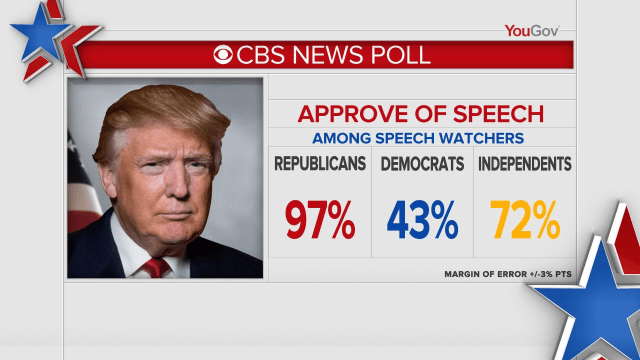
WHEN 43% OF DEMOCRATS APPROVE OF TRUMP’S STATE OF THE UNION SPEECH YOU KNOW THAT THE SCHUMER-PELOSI CONSPIRACY IS IN TROUBLE

image-2

Posted in Uncategorized | 4 Comments

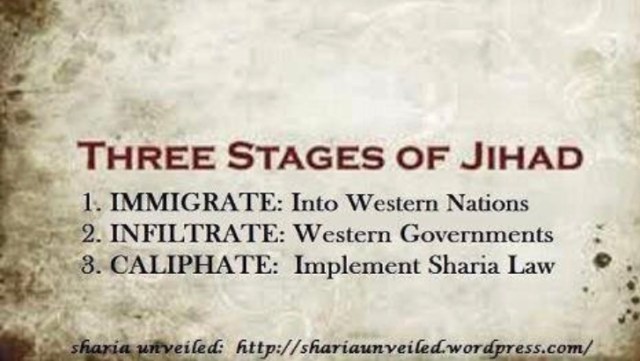
JIHAD DOES NOT SUCCEED BY WINING BATTLES, IT SUCCEEDS BY IMMIGRATION

IMG_1478

Posted in Uncategorized | 2 Comments

Every time I go to Fredericksburg, Texas I thank God for Chester Nimitz. God gave us Admiral Nimitz in 1941, we must trust God to give the Church a ‘Pope Nimitz’ in 2018.

What God did at Pearl Harbor
Pearl Harbor that day is interesting and I never knew this little bit of history:
Tour boats ferry people out to the USS Arizona Memorial in Hawaii every thirty minutes.
We just missed a ferry and had to wait thirty minutes. I went into a small gift shop to kill time.
In the gift shop, I purchased a small book entitled, “Reflections on Pearl Harbor” by Admiral Chester Nimitz.

Sunday, December 7th, 1941–Admiral Chester Nimitz was attending a concert in Washington, DC. He was paged and told there was a phone call for him. When he answered the phone, it was President Franklin Delano Roosevelt on the phone. He told Admiral Nimitz that he (Nimitz) would now be the Commander of the Pacific Fleet.Ā  Admiral Nimitz flew to Hawaii to assume command of the Pacific Fleet. He landed at Pearl Harbor on Christmas Eve, 1941. There was such a spirit of despair, dejection and defeat–you would have thought the Japanese had already won the war.Ā  On Christmas Day, 1941, Adm. Nimitz was given a boat tour of the destruction wrought on Pearl Harbor by the Japanese.Ā  Big sunken battleships and navy vessels cluttered the waters everywhere you looked. As the tour boat returned to dock, the young helmsman of the boat asked,
“Well Admiral, what do you think after seeing all this destruction?”
Admiral Nimitz’s reply shocked everyone within the sound of his voice.
Ā 
Admiral Nimitz said,
“The Japanese made three of the biggest mistakes an attack force could ever make, or God was taking care of America.Ā  Which do you think it was?”Ā 
Shocked and surprised, the young helmsman asked,
“What do mean by saying the Japanese made the three biggest mistakes an attack force ever made?”
Nimitz explained:

Mistake number one:
The Japanese attacked on Sunday morning. Nine out of every ten crewmen of those ships were ashore on leave. If those same ships had been lured to sea and been sunk–we would have lost 38,000 men instead of 3,800.

Mistake number two:
When the Japanese saw all those battleships lined in a row, they got so carried away sinking those battleships, they never once bombed our dry docks opposite those ships.Ā  If they had destroyed our dry docks, we would have had to tow every one of those ships to America to be repaired.Ā  As it is now, the ships are in shallow water and can be raised. One tug can pull them over to the dry docks, and we can have them repaired and at sea by the time we could have towed them to America .Ā  And I already have crews ashore anxious to man those ships.

Mistake number three:
Every drop of fuel in the Pacific theater of war is in top of the ground storage tanks five miles away over that hill. One attack plane could have strafed those tanks and destroyed our fuel supply.Ā 
That’s why I say the Japanese made three of the biggest mistakes an attack force could make or God was taking care of America.
I’ve never forgotten what I read in that little book. It is still an inspiration as I reflect upon it.Ā  In jest, I might suggest that because Admiral Nimitz was a Texan, born and raised in Fredericksburg, Texas — he was a born optimist.Ā  But any way you look at it–Admiral Nimitz was able to see a silver lining in a situation and circumstance where everyone else saw only despair and defeatism.
President Roosevelt had chosen the right man for the right job. We desperately needed a leader that could see silver linings in the midst of the clouds of dejection, despair and defeat.

There is a reason that our national motto is, IN GOD WE TRUST.
Why have we forgotten?
PRAY FOR OUR COUNTRY!
In God we trust!
Please pass this important message to others.Ā 
Americans need to know.


Posted in Uncategorized | 1 Comment

GENUINE STATISTICS DO NOT LIE, SOME PRESIDENTS DO

nkkcgcfakmegihjf

Posted in Uncategorized | 1 Comment

JESUIT DISCERNMENT MEANS PERMISSION TO COMMIT SIN

Featured Image
Bishop Athanasius Schneider Edward Pentin
Pete BaklinskiPete Baklinski

Bishop Schneider: ā€˜Discernment’ now means to ā€˜allow to sin’

January 31, 2018 (LifeSiteNews) – The controversy surrounding Pope Francis’ teaching on marriage and family as found in his exhortation Amoris Laetitia can be reduced to allowing Catholics ā€œto sin,ā€ said Bishop Athanasius Schneider in an exclusive interview with LifeSiteNews.

The auxiliary bishop of Astana Kazakhstan said that phrases such as ā€œdiscernment,ā€ ā€œpastoral accompaniment,ā€ and ā€œchange of paradigm,ā€ while sounding ā€œbeautifulā€ amount to a concession to sin. He said it was similar to how Moses allowed the Israelites to sin by allowing divorce because of their ā€œhardness of heart.ā€

ā€œThe suggestion is that now, after 2000 years, the Church has discovered the subjective aspect of the truth — that until now the Church has only been presenting the objective part of the truth, and now [is presenting] the subjective [part of the truth],ā€ he said.

ā€œBut this language, the so-called ā€˜discovery of the subjective part of the truth’ is none other, when you translate this into common sense language — for every man who still has common sense — it ultimately means ā€˜to allow to sin’ – to give permission to sin, as Moses gave because of the hard-heartedness of the people,ā€ he continued.

This language…ultimately means ā€˜to allow to sin.’

ā€œAnd Jesus Christ condemned this. How can the Apostles and the Successors of the Apostles today introduce a pastoral norm which is in substance what Moses did?ā€ he added.

Amoris Laetitia unleashed moral mayhem into the Church upon it’s publication in the spring of 2016. Leading Church prelates and various bishops interpreted the teaching as allowing Holy Communion to be given to ā€œremarriedā€ Catholics engaging in sexual relations with one another. The teaching has also been used to push homosexualityĀ (here and here)within the Catholic Church. It has also been used to suggest that the Church’s teaching against contraception as set forth in Humanae Vitae needs to be overturned.

Amoris Laetitia’s moral core has been called a ā€œtheological atomic bombā€ that has the capacity to destroy all Catholic moral teaching.

READ:Ā Bishop Schneider invites world’s prelates to sign Profession of Immutable Truths

Schneider said in his interview with LifeSiteNews that behind the push to allow adulterers to receive Holy Communion is really a hidden agenda to introduce divorce into the Catholic Church.

Advocates for Communion for the ā€œremarried,ā€ he said, are ā€œusing this as an implicit tool to introduce divorce into the Church, and to introduce…permission to have sexual activity outside of a valid marriage.ā€

This is to ā€œintroduce the spirit of the world todayā€ into the Church, he added.

Following the teachings of Jesus Christ, the Catholic Church has always taught that the marriage bond validly contracted between a husband and wife cannot be broken ā€œtill death do us part.ā€ This teaching is largely based on the words of Jesus, who taught that ā€œwhat God has joined together, let no one separate” (Mark 10:9).

The Church teaches that those who engage in sexual relations outside of a valid marriage commit adultery, which is prohibited by the Six Commandment. The Church furthermore teaches, following St. Paul, that the one who receives Communion with grave sin on his soul commits sacrilege and brings ā€œjudgment upon himself.ā€

Schneider said that giving Holy Communion to those who intentionally perform sexual activity outside a valid marriage ā€œis a cruel medicine…a false medicine.ā€

ā€œThis is confirming them in their disease to continue to live against the will of God, against Revelation. And this will never bring the subjective part of the truth to them. This is distorting the truth. This is not pastoral love,ā€ he said.

Posted in Uncategorized | 1 Comment

ASK FATHER: Can’t Father say things louder at Mass? We can’t hear.


From a reader…

QUAERITUR:

I know that certain parts are not, the secret etc.Ā I am new to TLM. I live in ___ and do not have access to regularĀ TLM, other than thru the computer (livemass.net). My diocesan priestĀ does it once a month if able. My sons and husband do not connect to itĀ because they have no idea where they are at in the mass because weĀ cannot hear anything the priest says during the mass.Ā I asked the priest if he would be able to speak louder or wear aĀ microphone. He said that the rubrics say to speak so only the serverĀ can hear him. Is this true? If so, how do people follow along in bigĀ churches?

{Father Z’s response below is good but it occurs to me that the questioner may actually be participating in a TLM with a priest celebrant who celebrates THE WHOLE MASS in a voice that can only be heard by the server. Ā In that caseĀ the poor questioner has a legitimate complaint. Ā According to the rubrics of the TLM parts of the Mass are to be proclaimed in a voice loud enough to be heard by ALL present and parts of the Mass are to be said sotto voce,Ā heard only by the priest himself.Ā  Abyssum}

.

This is a great email. Ā It raises all sorts of issues. Let’s drill in.

First, just as I repeat until I am blue in the face to clerics: If you don’t know the TLM, you don’t really know the Roman Rite for which you have been ordained. Ā Lay people don’t have the same obligations as priests in this regard: to know the Roman Rite as they might. However, when we love something, and we should love our sacred liturgical worship, we should want to know more about it. Ā We are our rites. Ā They shape us.

This is an example of someone who doesn’t really know the Roman Rite, on the one hand, and who has – through no fault, mind you! – been conditioned to that thing that so typifies the Novus Ordo: the lowering of the Rite.

The older form and newer form are similar in some respects, but quite different in others. Ā Those differences are important. Ā However, I guarantee that once you begin to learn theĀ older, traditional form more and more, then more and more you will understand about the newer rite! Ā Similarly, when priests learn the traditional form, it affects how they say Mass in the newer form.

And yet, people who are not yet familiar with the older form can become disoriented.

ā€œI can’t hear what’s going on.ā€ Ā ā€œI can’t see.ā€ Ā ā€œI don’t know where they are.ā€

These are common remarks. Ā Sometimes they are complaints.

The Novus Ordo tends to shove everything at you and leave nothing unexposed. Ā The TLM tends to withhold some things so that you have to seek and wait within the gaps for the mystery that is taking place. Ā That’s really hard for many people today. Ā We are accustomed to having everything exposed.

Think about watching a baseball game where now you can see slo-motion of the stitches on the rotating ball. Ā Nothing is left to the imagination.

Once you are more accustomed to the older, traditional form, you will recognize the various gestures and signals that tell you where you are in the Mass. Ā However, Mass is not a didactic follow-the-bouncing-ball sing-along, either. Ā There are times when just being still, resting in the moment, are what we should and can do. Ā If you don’t know what Father is doing precisely at moment X, that’s okay. Ā You know what he is doing overall. Ā You are on Calvary. Ā You are in the Upper Room. Ā You are at the Tomb.

People think that they have to hear everything or see everything. Ā Instead, the genius of all the rites of all Churches are that they deprive the senses, to help you to encounter mystery.

On another line of thought, I sometimes with tongue in cheek say that the older Mass is like grown up food and the newer Mass is like baby food. Ā There’s nothing wrong with baby Ā food or with adult food.

Babies need to be feed. Ā ā€œOpen wiiiiiiide! Ā Here comes the airplaaaaaaane! Ā mmmnumnn mnuuum!ā€ Ā You spoon feed stuff that doesn’t have to be chewed to junior.

Eventually, they awkwardly start holding their own spoon, with which they pound cheerios into oblivion. Ā Little frowns appear as they switch hands or how they hold it.

After that, harder food arrives with new teeth, but it has to be cut up.

You get my drift. Ā  Having everything audible all the time, everything visible all the time, is like spoon feeding the blended carrots with choo-choo sounds. Ā That’sĀ perfect for junior. Ā But junior grows. Ā Junior growsĀ because of the baby-appropriate food. Ā Adults can eat that food too, but they won’t thrive on it. Ā They eventually need more complicated and satisfying food. Ā They don’t have to have things cut up for them. Ā It is a little demeaning to do that, as a matter of fact.

Even people who are deaf or blind can participate at Mass in a profound way. Ā We have to get beyond the mania of spoon-feeding and get into the heart of the Mass.

In any event, after a while, after more exposure, you will pick up on all the small signals whereby people for centuries have known what’s going on and how to follow. Ā  Yep… they did this for centuries. Ā They weren’t that much smarter than we are.

Finally, microphones. Ā  Oh dear. Ā They really are lethal to liturgy, aren’t they. Ā  Artificial implication constantly ramming your ears so that you can’t have a natural experience of the liturgical moment. Ā No, no. Ā Thank God that you don’t have to have a microphone blaring everything at you. Ā  Be grateful for the silence. Ā Be happy that the Church is confident in you.

Microphones are useful maybe for the sermon, but let the rest of Mass be natural.

And, yes, the rubrics do control the level of voice of the priest during the older form of Mass and – to a very curtailed extent – the newer. Ā  Father must obey these rubrics. Ā Somethings you are not to hear.

But also remember that sometimes Father is not talking to you!

Lastly, ā€œunveilingā€ things is a profound liturgical sign. Ā But you can’t unveil something that hasn’t in the first place been veiled.

Let there be veilings and unveilings in their due time.

Posted in Uncategorized | 2 Comments