Danger of Schism in China. Cardinal Zen: “The Pope Told Me…”. With a Postscript
*
The open letter reproduced in its entirety below was published today, Monday, January 29, by Cardinal Joseph Zen Ze-Kiun, bishop emeritus of Hong Kong, on his blog, and was immediately republished by the agency Asia News of the Pontifical Institute for Foreign Missions.
In it, the cardinal reveals the essential contents of a conversation he had with Pope Francis, to whom he revealed his grave fears over the steps taken recently in China by Vatican representatives.
These steps consisted in asking two “underground” bishops who are recognized by the Holy See, those of Shantou and Mindong, to make way for two bishops appointed by the government, both illicit and, the first one, excommunicated.
Cardinale Zen now reveals that Pope Francis replied to him that he had given the order “not to create another Mindszenty case,” alluding to the heroic cardinal and primate of Hungary who was required by the Vatican authorities to leave his country in 1971, was removed from his position in 1973, and in 1975 was replaced with a new primate favored by the communist regime.
But now it’s the cardinal’s turn.
*
Dear Friends in the Media,
Since AsiaNews has revealed some recent facts in the Church in mainland China, of legitimate bishops being asked by the “Holy See” to resign and make place for illegitimate, even explicitly excommunicated, “bishops”, many different versions of the facts and interpretations are creating confusion among the people. Many, knowing of my recent trip to Rome, are asking me for some clarification.
Back in October, when Bishop Zhuang received the first communication from the Holy See and asked me for help, I send someone to bring his letter to the Prefect of the Congregation for the Evangelization of Peoples, with, enclosed, a copy for the Holy Father. I don’t know if that enclosed copy reached the desk of the Holy Father.
Fortunately, Archbishop Savio Hon Tai Fai was still in Rome and could meet the Pope in a fare-well visit. In that occasion, he brought the two cases of Shantou and Mindong to the knowledge of the Holy Father. The Holy Father was surprised and promised to look into the matter.
Given the words of the Holy Father to Archbishop Savio Hon, the new facts in December were all the more a shocking surprise to me. When the old distressed Bishop Zhuang asked me to bring to the Holy Father his answer to the message conveyed to him by the “Vatican Delegation” in Beijing, I simply could not say “No”. But what could I do to make sure that his letter reach the Holy Father, while not even I can be sure that my own many letters did reach him.
To make sure that our voice reached the Holy Father, I took the sudden decision of going to Rome. I left Hong Kong the night of 9th January, arriving in Rome the early morning of 10th January, just in time (actually, a bit late) to join the Wednesday Public Audience. At the end of the audience, we Cardinals and Bishops are admitted to the “bacia mano” and I had the chance to put into the hands of the Holy Father the envelop, saying that I was coming to Rome for the only purpose of bringing to him a letter of Bishop Zhuang, hoping he can find time to read it (in the envelop there was the original letter of the Bishop in Chinese with my translation into Italian and a letter of mine).
For obvious reasons, I hoped my appearance at the audience would not be too much noticed, but my late arrival in the hall made it particularly noticeable. Anyway, now everybody can see the whole proceeding from the Vatican TV (by the way, the audience was held in Paul VI Hall, not in St. Peter’s Square and I was a little late to the audience, but did not have to “wait in a queue, in a cold weather”, as some media erroneously reported).
When in Rome, I met Fr. Bernard Cervellera of AsiaNews. We exchanged our information, but I told him not to write anything. He complied. Now that someone else broke the news, I can agree to confirm it. Yes, as far as I know, things happened just as they are related in AsiaNews (the AsiaNews report “believes” that the Bishop leading the Vatican Delegation was Msgr. [Claudio Maria] Celli. I do not know in what official capacity he was there, but it is most likely that he was the one there in Beijing).
In this crucial moment and given the confusion in the media, I, knowing directly the situation of Shantou and indirectly that of Mindong, feel duty-bound to share my knowledge of the facts, so that the people sincerely concerned with the good of the Church may know the truth to which they are entitled. I am well aware that in doing so I may talk about things which, technically, are qualified as “confidential”. But my conscience tells me that in this case the “right to truth” should override any such “duty of confidentiality”.
With such conviction, I am going to share with you also the following:
In the afternoon of that day, 10th January, I received a phone-call from Santa Marta telling me that the Holy Father would receive me in private audience in the evening of Friday 12th January (though the report appeared only on 14th January in the Holy See bulletin). That was the last day of my 85 years of life, what a gift from Heaven! (Note that it was the vigil of the Holy Father’s departure for Chile and Peru, so the Holy Father must have been very busy).
On that evening the conversation lasted about half an hour. I was rather disorderly in my talking, but I think I succeeded to convey to the Holy Father the worries of his faithful children in China.
The most important question I put to the Holy Father (which was also in the letter) was whether he had had time “to look into the matter” (as he promised Archbishop Savio Hon). In spite of the danger of being accused of breach of confidentiality, I decide to tell you what His Holiness said: “Yes, I told them (his collaborators in the Holy See) not to create another Mindszenty case”! I was there in the presence of the Holy Father representing my suffering brothers in China. His words should be rightly understood as of consolation and encouragement more for them than for me.
I think it was most meaningful and appropriate for the Holy Father to make this historical reference to Card. Josef Mindszenty, one of the heroes of our faith. (Card. Josef Mindszenty was the Archbishop of Budapest, Cardinal Primate of Hungary under Communist persecution. He suffered much in several years in prison. During the short-lived revolution of 1956, he was freed from prison by the insurgents and, before the Red Army crashed the revolution, took refuge in the American Embassy. Under the pressure of the Government he was ordered by the Holy See to leave his country and immediately a successor was named to the likings of the Communist Government).
With this revelation, I hope I have satisfied the legitimate “right to know” of the media and of my brothers in China.
The important thing for us now is to pray for the Holy Father, very fittingly by singing the traditional song “Oremus”: “Oremus pro Pontifice nostro Francisco, Dominus conservet eum et vivificet eum et beatum faciat eum in terra et non tradat eum in animam inimicorum eius.”
Some explanations may still be in order.
1. Please, notice that the problem is not the resignation of the legitimate Bishops, but the request to make place for the illegitimate and even excommunicated ones. Many old underground Bishops, though the retirement age law has never been enforced in China, have insistently asked for a successor, but have never received any answer from the Holy See. Some others, who have a successor already named, may be even already in possession of the Bulla signed by the Holy Father, were ordered not to proceed with the ordination for fear of offending the Government.
2. I have talked mainly of the two cases of Shantou and Mindong. I do not have any other information except the copy of a letter written by an outstanding Catholic lady, a retired University professor well-acquainted with affairs of the Church in China, in which she warns Msgr. Celli against pushing for the legitimization of “bishop” Lei Shi Ying in Sichuan.
3. I acknowledge myself as a pessimist regarding the present situation of the Church in China, but my pessimism has a foundation in my long direct experience of the Church in China. From 1989 to 1996 I used to spend six months a year teaching in the various Seminaries of the official Catholic community. I had direct experience of the slavery and humiliation to which those our brother Bishops are subjected. And from the recent information, there is no reason to change that pessimistic view. The Communist Government is making new harsher regulations limiting religious freedom. They are now strictly enforcing regulations which up to now were practically only on paper (from the 1st of February 2018 attendance to Mass in the underground will no longer be tolerated).
4. Some say that all the efforts to reach an agreement is to avoid the ecclesial schism. How ridiculous! The schism is there, in the Independent Church! The Popes avoided using the word “schism” because they knew that many in the official Catholic community were there not by their own free will, but under heavy pressure. The proposed “unification” would force everybody into that community. The Vatican would be giving the blessing on the new strengthened schismatic Church, taking away the bad conscience from all those who are already willing renegades and those others who would readily join them.
5. Is it not good to try to find mutual ground to bridge the decades-long divide between the Vatican and China? But can there be anything really “mutual” with a totalitarian regime? Either you surrender or you accept persecution, but remaining faithful to yourself (can you imagine an agreement between St. Joseph and King Herod?)
6. So, do I think that the Vatican is selling out the Catholic Church in China? Yes, definitely, if they go in the direction which is obvious from all what they are doing in recent years and months.
7. Some expert on the Catholic Church in China is saying that it is not logical to suppose a harsher religious policy from Xi Jinping. However, we are not talking about logical thinking, but the obvious and crude reality.
8. Am I the major obstacle in the process of reaching a deal between the Vatican and China? If that is a bad deal, I would be more than happy to be the obstacle.
Hong Kong, January 29, 2018
———-
POSTSCRIPT – On January 30 Vatican press office director Greg Burke released the following statement:
“With reference to widespread news on a presumed difference of thought and action between the Holy Father and his collaborators in the Roman Curia on issues relating to China, I am able to state the following:
‘The Pope is in constant contact with his collaborators, in particular in the Secretariat of State, on Chinese issues, and is informed by them faithfully and in detail on the situation of the Catholic Church in China and on the steps in the dialogue in progress between the Holy See and the People’s Republic of China, which he follows with special attention. It is therefore surprising and regrettable that the contrary is affirmed by people in the Church, thus fostering confusion and controversy’.”
In return, Cardinal Zen wrote in a fresh blog post that the Vatican had shifted the focus on the issue of appointment of bishops to the relations between the pope and his diplomats.
“In fact, my blog never mentions that the pope does not know (what the Vatican diplomats are doing), but the pope really told (Archbishop) Savio Hon Tai-fai: ‘Why the group (Vatican diplomats) never discussed with me (about recent appointments)?’
“What the pope told me is true: That his opinions are different to theirs. Therefore, at the end of the ‘statement,’ they cannot doubt the pope telling a lie, and then assert that I tell a lie,” he wrote.
“I say in my blog that they are doing bad things (wrong things) but not say that they are lying, and now, readers are needed to judge either I or they tell a lie,” he wrote.
“Of course I know my [first] statement will cause controversy but not confusion. I hope the result of the controversy is that they admit what they are doing is bad (wrong) and should step back from the precipice.”
Meantime, Vatican Insider interviewed Cardinal Pietro Parolin, Secretary of State:
The Wisconsin Supreme Court has agreed to hear John McAdams’ lawsuit against Marquette University over the conservative faculty member’s suspension for defending a student.
With the Wisconsin Supreme Court agreeing to hear Associate Professor John McAdams’ lawsuit against Marquette University sometime later this year, the Jesuit school’s “suspension” of the tenured conservative faculty member is back in the news. Earlier this month the Wall Street Journalrecapped the facts underlying the case:
The sacked professor is John McAdams, who in 2014 wrote a blog post criticizing by name Cheryl Abbate, who taught a course in ethics. Ms. Abbate had told a student he could not express his disagreement with same-sex marriage in her ethics class because it was ‘homophobic’ and on that issue, there could be no debate. In his post on the incident, Mr. McAdams made no judgment on same-sex marriage. But he noted that liberals are inclined to deem views they disagree with as offensive and then use that to shut down debate. The story went national.
Marquette officials took action—against Mr. McAdams. He was blamed for the hate mail that Ms. Abbate received after he named her, even though there’s no evidence he was part of any of it. Marquette President Michael Lovell gave him an ultimatum: apologize or be suspended without pay indefinitely. Mr. McAdams refused to apologize and has been effectively fired.
McAdams took Marquette to court, but a trial court judge tossed his case last June. McAdams immediately appealed. While typically an intermediate court would review the case, given its importance, the Wisconsin Supreme Court agreed to hear McAdams’ appeal directly. This news brought renewed criticism over the tenured professor’s “suspension,” with the Wall Street Journal’s editorial board chastising Marquette and concluding: “How much better we’d all be if Marquette would acknowledge its mistake and give the professor his job back.”
Marquette President Michael R. Lovell defended McAdams’ “suspension” in a letterWSJ published a few days later. There, Lovell claimed McAdams’ “suspension” was justified because he “inflicted a public and personal internet attack on our student.” In this attempt to save face, Lovell quoted the Milwaukee County judge’s opinion that concluded “academic freedom does not mean that a faculty member can harass, threaten, intimidate, ridicule, or impose his or her views on students.”
1. Marquette Promised Not to Fire Faculty Members for Speech
In his lawsuit, McAdams claims the Jesuit university breached the terms of his employment contract. In its contract with McAdams, Marquette guaranteed that it would not “impair the full and free enjoyment of [faculty members’] legitimate personal or academic freedom of thought, doctrine, discourse, association, advocacy or action.” Marquette also promised that “dismissal will not be used to restrain faculty members in their exercise of academic freedom or other rights guaranteed by the United States Constitution.”
As the Wall Street Journal editorial board put it: “No one forced Marquette to enter into an employment contract with Mr. McAdams. But it did. And that contract says he cannot be fired for exercising a right guaranteed by the U.S. Constitution. By any reasonable standard that would include the First Amendment—even at a Jesuit university.”
Marquette guaranteed McAdams “full and free enjoyment” of academic freedom of thought, discourse, advocacy, and action, as well as freedom of speech by incorporating the rights guaranteed in the U.S. Constitution. McAdams’ blog post fell squarely within the scope of these contractual promises.
The entire blog post can be read here, but because a summary cannot suffice to show the absurdity of Marquette’s actions and the legitimacy of McAdams’ advocacy for the academic freedom of a student, extended screenshots are necessary:
3. McAdams Did Not ‘Harass,’ ‘Attack,’ or ‘Shame’ Abbate
Marquette “suspended” McAdams because of the above-quoted blog post, which Marquette president Lovell characterized as “a personal, demeaning internet attack on a Marquette student.” In no sane world do these adjectives describe McAdams’ words! Read them again.
In fact, the morning after McAdams’ blog post, an associate dean wrote Abbate, the graduate student who in teaching a class had forbidden dissent on gay marriage: “[Y]ou come off well. That is, anyone who looks at the blog will see where sanity lies.” Abbate concurred: “When I saw the blog I was pleasantly surprised.”
While Marquette paints McAdams as the harasser whose actions were “disturbing,” pretrial discovery revealed a different reality. A few days after the blog post, Abbate called McAdams a “bigoted moron,” an “uncritical, creepy homophobic person with bad argumentation skills,” “a flaming bigot, sexist and homophobic idiot,” and for good measure added he had an “ugly face.”
The chair of Marquette’s Philosophy Department also had some choice words, referring to McAdams in writing as a “right wing lunatic.” The chair also called the student who had complained about Abbate—identified in court proceedings only as JD—a “insulin [sic] little twerp,” a “little twit,” and a “jackass.”
5. McAdams Violated No University Rule by Blogging About the Incident
In justifying McAdams’ “suspension,” president Lovell complained that McAdams did not express “his concerns through established internal channels, [b]ut instead chose to blog about our graduate student….” But Marquette’s promise of “full and free enjoyment” of advocacy for academic freedom is not limited to “established internal channels.” Marquette also admitted there is no rule against faculty members identifying individuals or linking to their websites, as McAdams had.
Further, it is beyond cheeky for Lovell to complain that McAdams did not use “internal channels,” when he only blogged about the incident after the student attempted to do so for naught: JD complained about the incident to an associate dean, who directed him to raise the issue with the Philosophy Department. When JD later met with the chair and assistant chair of the Philosophy Department, rather than discussing Abbate’s silencing of his dissenting view, the administrators told JD “he needs to change his attitude, so he comes across as less insolent and disrespectful,” then later, presumably behind his back, engaged in the name-calling noted above.
After the meeting, Abbate thanked the chair, writing, “Hopefully this experience has informed him that oppressive discourse is not acceptable.” McAdams only went public with the story after internal channels failed—even though nothing prohibited him from doing so earlier and the contract expressly guarantees him the right to advocate for academic freedom.
6. It Is Disingenuous to Call Abbate a Student
Since the scandal first broke, Marquette has attempted to paint McAdams as a bully by characterizing Abbate as a mere student. Yes, she was a graduate student, but like many graduate students she also teaches at the university.
McAdams’ blog post focused on Abbate’s conduct solely as an instructor. He never once called her a student. And his criticism of Abbate focused on her behavior as an instructor—silencing the viewpoint of students in her class—a class Abbate was responsible for both teaching and grading and for which she was compensated.
Yet in his letter to the Wall Street Journal, Lovell calls Abbate “a graduate student[],” “our student,” “our graduate student,” “our student,” and “a Marquette student.” Not once did Lovell acknowledge the reality of Abbate’s role in the controversy: She was acting as a faculty member and in that role, the only student involved was JD—the conservative student whom Abbate silenced and McAdams defended.
7. Abbate Attempted to Get McAdams Fired
After McAdams’ blog post, Abbate went on a mission to get McAdams fired. She noted to a confidant that she couldn’t believe “this bigoted moron has a job at Marquette,” then within two days of the blog post, worked to see that he didn’t. She filed a complaint about McAdams’ blog post with the university, claiming she had “been the target of harassing emails, sent by [McAdams’] followers.”
However, as discovery would later reveal, at the time Abbate filed the complaint she had received only a single email, and that email was critical but not harassing. Abbate later demanded that the university fire McAdams, punish JD, pay her damages, and threatened that if Marquette did not agree to do so, she would have “recourse to a lawsuit.” On December 10, Abbate wrote president Lovell a second time, seeking “reparations,” and threatening to sue and “reach out to national, academic news sources again.”
8. Raising the Heckler’s Veto
Although at the time Abbate first filed a complaint against McAdams she had only received one critical email in response to the McAdams blog post, after the College Fix, Insider Higher Ed, and Fox News picked up the story she received a total of 135 emails or letters. Of these, 49 supported her and of the ones that criticized her, only 18 were truly harassing.
Yet Lovell attempts to justify McAdams’ “suspension” by positing that McAdams’ blog post “exposed [Abbate] to a flood of violent threats and hateful messages.” But McAdams had nothing to do with the email complaints Abbate received. They came about as Abbate and Marquette’s actions were publicized in unrelated outlets — and Abbate was the one who sought media attention.
Further, McAdams’ right to “full and free enjoyment” of academic freedom cannot be disregarded because third parties heckled Abbate. A heckler’s veto cannot overcome rights to free speech.
9. Abbate’s Transfer Wasn’t Over This Incident
Not only did Marquette defend its “suspension” of McAdams by stressing the conduct of unrelated third parties, it slanted the story from the beginning. When the university first advised McAdams that it was “commencing the process to revoke your tenure and to dismiss you from the faculty,” Dean Richard Holz blamed McAdams’s blog for causing Abbate to withdraw from the university’s “graduate program and move to another University to continue her academic career.”
Yes, Abbate withdrew from Marquette and moved to another university—the University of Colorado. But, as McAdams would only discover after suing Marquette, Abbate “had tried and failed to transfer to the more prestigious philosophy program” the prior year. Following the national attention garnered from McAdams’ post, Abbate “succeeded and was offered ‘significant financial aid.’” Transferring from Marquette, which according to one source ranks 97th for Ph.D. programs in philosophy, to Colorado’s 38th-ranked program, isn’t quite the harm the university paints.
10. Marquette’s Hearing Committee Was a Sham
President Lovell also continues to portray McAdams’ “suspension” as justified by relying on the Marquette Faculty Hearing Committee’s unanimous conclusion “in a 123-page report that Mr. McAdams violated his core obligations as a tenured professor when he used his blog needlessly and recklessly to harm our student.”
As already noted: (1) the blog post advocated for students’ academic freedom—something McAdams’ contract protects; (2) any harm came from third parties; (3) the “harm” ended up benefitting Abbate; and (4) Abbate’s role in the kerfuffle was as an instructor, not as a student.
The Faculty Hearing Committee seems nothing but a post-hoc rationalization for a predetermined outcome.
But let’s consider that “Faculty Hearing Committee.” Its hearing took place in September 2015, but Marquette had “suspended McAdams from his teaching duties and banished him from campus” on December 16, 2014, declaring the university “will not stand for faculty members subjecting students to any form of abuse, putting them in harm’s way.” (Apparently, the “student” was Abbate and the “abuse” was McAdams’ blog post.)
The Faculty Hearing Committee seems nothing but a post-hoc rationalization for a predetermined outcome. In fact, one committee member, “Dr. Lynn Turner, signed an open letter critical of McAdams and supportive of Ms. Abbate prior to the [Faculty Hearing Committee meeting].”
The letter stated: ‘We support Ms. Abbate and deeply regret that she has experienced harassment and intimidation as a direct result of McAdams’s actions. McAdams’s actions—which have been reported in local and national media outlets—have harmed the personal reputation of a young scholar as well as the academic reputation of Marquette University. *** This is clearly in violation of . . . the Academic Freedom section of Marquette’s Faculty Handbook[.]’” McAdams asked that Turner be recused from the Faculty Hearing Committee, but that request was denied.
Marquette also withheld information from McAdams, such as Abbate’s demand for “reparations,” her threat to sue and cause more publicity, the supportive emails she received, and information about Abbate’s prior attempt to transfer to Colorado. McAdams only discovered this information after he was “suspended” and sued Marquette.
Likewise, the public is only first learning of the extent of Marquette’s outrageous disregard for its promise to safeguard the academic freedom of McAdams. With this added information, it seems clear now that someone does deserve an apology. It just isn’t Abbate. And someone does deserve to be fired. It just isn’t McAdams.
Disclosure: Cleveland is a graduate of Marquette University. She did not know McAdams while a student and only learned of him when reading of the controversy in 2014. She also does not know Abbate, although as a 17-year old Marquette University freshman in 1985, she had a philosophy instructor made in the same mold. She just lacked the maturity, mentor, and moral training (and fortitude) necessary at the time to confront the heresy taught as truth at this purportedly Catholic university.
Margot Cleveland is a senior contributor to The Federalist. Cleveland is a lawyer and a graduate of the Notre Dame Law School as well as a former full-time faculty member and current adjunct professor for the college of business at the University of Notre Dame. Email her: MargotCleveland@nd.edu.
This probably breaks several of the rules about the secrecy of the confessional, but we must take the risk. The penitent may have been a different senator, or a different priest, but the story is the same.Senator Tim Kaine: Father, forgive me blah blah blah, I can’t be expected to remember the right form of words, can I? I’m a busy man.
Bishop Knestout of Richmond, VA (for it is he): Of course not, your importantship. Still, it’s good to see you, and I am honoured to receive your confession in person, especially as I know you are incapable of sin.
When the Confession doesn’t have any really meaty bits.
Tim: Yes, I wouldn’t have come to Confession unless I knew that someone of the rank of bishop would be available.
Knestout: Now, how can I help you?
Tim: Well it’s hard for me to think of any really interesting sins. I did make a rude noise during the State of the Union address. Also, I knocked over an old blind lady who was blocking my way this morning, but that’s perfectly normal, isn’t it?
Knestout: Totally normal, your wonderfulness.
Tim: Oh, and I chewed gum and spat it out during Mass.
Knestout: You’re not being totally honest here, are you?
Tim: True. That was 3 years ago, and I confess it every time. I’ve not actually been to Mass recently.
Knestout: It seems to me that you’re a typical modern Catholic. Keen on same-sex marriage and abortion, I see. Nothing else?
Tim Kaine with an unidentified friend.
Tim: Um, well suppose, hypothetically, that I voted against the Pain-Capable Unborn Child Protection Act, admitting that I saw no problem at all with the idea that children should be tortured, dismembered, and ripped screaming from the womb, with their corpses thrown into a bin marked “biological waste”?
Knestout: Well, technically, you’d be excommunicated and I should announce it publicly. Meanwhile, you would need to do a penance which involved wearing a sign saying “I’M A SCUMBAG” round your neck for the rest of your life. Still…
Tim: Still?
Knestout: Look, I won’t mention it, if you don’t. I absolve you from your sins blah blah blah (now you’ve got me doing it!)
Judaea, AD 30.The celebrity demon Nitram, who was scheduled to possess the soul of Mr Rusay, a local pastor, has complained about the actions of “that rad-trad, far-right Jesus”, who has cancelled his speaking engagement and sent him down to the pits of Hell.
“All I wanted to do was build bridges.”
Nitram, a prominent Demoncrat supporter who has publicly stated “Don’t believe what they say about the Last Trump,” is well known for his outspoken views on religion. His speaking engagement, occupying the soul of Mr Rusay, would have allowed him to put out a stream of blasphemy and heresy. Following an online petition (anyone know what this is? Some sort of prayer? St Mark doesn’t say) Jesus was called in to cancel this engagement.
However, all is not lost, as Nitram’s talk on “Why Jesus was a great sinner until he met the Canaanite woman, but that’s not a problem” has been rescheduled for the Lake of Fire Lecture Theatre, where he expects a warm welcome.
Begone to the Tablet!
Supporters of Nitram, including H’gierevi of Crux and Legion of the National Catholic Reporter, have also complained about far-right rad-trad campaigns designed to reinforce Christian teaching. The debate for the soul of Catholicism continues.
America Magazine has long held a reputation for promoting hard left ideologies.
Whether it was Franciscan Friar Daniel Horan’s June 26, 2015 celebration of same-sex “marriage,” or the blasphemous advertisement (image on the right) published in America’s December 2005 issue which depicted a statue of the Blessed Virgin Mary enveloped in a condom, this Jesuit-run publication is constantly pushing the envelope against the Magisterial teachings of the Church. And yet, despite America Magazine’s reputation for heterodoxy, this is the first time it has even been shown to be directly linked to out-right communism.
According to America’s website, Dean Dettloff is America’s Toronto Correspondent and a junior member of the Institute for Christian Studies.
In addition to this, Dettleoff is the co-host of a podcast bearing an extremely blasphemous logo called The Magnificast. The Magnificast bills itself as “a podcast exploring Christianity and the political left,” but the content of the podcasts are all about socialism and the fusion of communist ideologies with Christianity.
On social media, Dettloff makes no attempt to hide his allegiance to Marxist Communism. What follows are a series of statements Dettleoff has published on his twitter and facebook:
And it’s not as if America Magazine is unaware of the fact that they are employing a full-on communist as one of their writers. In November 2018, Dean Dettloff’s editor, Kevin Clarke tweeted about having “in-house socialists,” tagged Dettloff in the tweet, and Dettloff “checked in” as a “Catholic Socialist.”
Brief Refresher on Papal Condemnations of Socialism/Communism
Over the last 150 years, the Catholic Church, through Her visible head, has always only ever spoken in condemnation of socialism and communism. The following encyclicals fully condemn socialism and communism:
In January of 2017, Dettloff published an article for America Magazine in favor an Canada’s Bill C-16, which “would amend the Canadian Human Rights Act to make it illegal to discriminate against people based on their gender identities or expressions.” The article was picked up by the heretical New Ways Ministry, which Dettloff calls an “awesome” organization.”
Complaining about its definition of marriage as between one man and one woman, Dettloff writes:
But the kudos are short-lived when in point 12 the manifesto immediately pivots to cement marriage heteronormatively, saying marriage is exclusively between a man and a woman, followed by a reduction of the marriage relationship to its procreative capacities (critiques of bourgeois family life notwithstanding).
A little further down in the article, Dettloff equally complains about the Manifesto’s desire to ban abortion:
Things are further problematized by the unequivocal and unnuanced stance on abortion in point 13. Combat sexism, the manifesto clearly states, but not by encouraging careful thought about the complexities of sexism, the complexities of biology, etc. Abortion politics in the culture wars are ugly, on both sides, but any baseline history of feminism should at least give pause to recognize why and under what circumstances abortion has been considered a liberating measure for women in a society where patriarchy and property rights over women and the family are necessarily connected.
Conclusion
As we stated in the beginning of the article, America Magazine has long held a reputation for heterodoxy, but never before has its connection to outright communism been so obvious. No Catholic publication has any business employing a reporter with any socialist sympathies, let alone an outright communist, and yet, there he is. And just like any loyal communist, he actively promotes immoral ideologies directly opposed to the Church’s teachings on abortion and human sexuality. Because of this, this publication has no place in Catholic parishes, chanceries, or seminaries. We strongly encourage you to contact your bishop with this article and ask him what steps he is going to take to protect the faithful in his diocese from a publication so closely aligned with the enemies of Christ.
“Even the majority can end up with wrong or harmful decisions, especially if the concept of the common good becomes uncertain, because there is no consensus even on the anthropological foundations of law. That is why it is difficult for the State to decide what is good for man.” —Cardinal Peter Erdo, Archbishop of Esztergom-Budapest, Hungry, in his magisterial Brampton Lecture last evening, January 29, in the Low Library at Columbia University in New York City. In his talk, attended by about 300 people, Erdo, who holds doctorates in Theology and in Canon Law, explored the question of “Church and Religion in the Secular State.” His chief point: that modern secular, “post-Christian” society in the West, and globally, faces a grave and growing crisis of trust in the justice and goodness of its laws, and that this crisis can be faced and overcome only if society returns to the presently discarded wisdom of the great religious traditions of mankind, and to the wisdom of Christianity in particular, to provide a solid and just support for the laws which govern society
“But this did not resolve the problem which arose from the uncertainty of natural morals, and from the doubt of the knowability and contents of morals. Would it be possible to say, that we can legally enforce morals, if we cannot even establish what the content of morals is? In this matter different anthropological views became apparent. The questions became: Who is the human being? What is the good of the human being? Is the existence of the individual human being, as well as society, a part of a great project, or should it be, or indeed can it be, up to the human person himself to determine?”—Cardinal Erdo, in the same talk
“After the epistemological upheavals of the second half of the 20th century, many started to doubt the existence of objective goods and tried to narrow the question down to the problem of desires and interests based on a subjective choice. That is how they reached the more relative and formal concept of justice and its separation from the common good, which they declare was unknowable, or may not exist at all.” —Cardinal Erdo, in the same talk
“The Judeo-Christian heritage contains the belief that behind the whole universe there is a personal and benevolent Creator, who revealed himself and wants to communicate with man. And this, beyond giving a basic moral point of view, gives something extra, which is even more important. It generates trust both in the individual and in the community. It generates trust that even though our cognitive abilities cannot keep up with the fullness of reality, we can always somehow reach the necessary knowledge and cognitions. So, the weakness of our recognition is not a reason to give up our pursuit of the truth, and our striving for upright behavior.”—Cardinal Erdo, in the same talk
Cardinal Péter Erdő, 65 (photo), of Esztergom-Budapest, Primate of Hungary, yesterday evening delivered, in a magisterial way, the 40th Bampton Lecture in America in the Low Library of Columbia University in New York City before an audience of about 300 people. (The Low Library was built in 1895 by Columbia University President Seth Low as the University’s central library. Financed with $1 million of Low’s own money, he named it in memory of his father, Abiel Abbot Low.)
Cardinal Erdo’s one-hour lecture, titled “The Role of Religion and the Churches in a Secular State,” was a wide-ranging treatment of the crisis of trust in the justice and “goodness” of the laws in modern secular societies.
“Church and religion in the secular State seems to be an actual question, because we are facing a profound, grave crisis which may be summed up in the word ‘relativism,'” Erdo began, speaking in English. “This means we, as a society, are increasingly unable to say something is ‘right’ or ‘wrong,’ ‘true’ or ‘false’ (even our news, which is often ‘fake news’) because, as we say, and generally now believe, it is all ‘relative.’”
Erdo asked, in brief: What is the problem with separating Church and religion — and the ideas of ethics and morals which are so central to the Christian religious tradition — from the State?
In essence, he was asking: What is the problem with relativism? What are its consequences?
And he answered, essentially: That the law may become immoral.
That is, he argued, that one can follow the laws of the State, but in doing so, do moral evil.
And this contradiction, he suggested, can create a crisis of trust in the entire legal edifice of a secularized society, leading to a general, chaotic, and often cruel, situation of lawlessness.
“For example,” Erdo said, “Gustav Radbruch (photo) [1878-1949, the German legal scholar who served as Minister of Justice of Germany during the early Weimar period and was in retirement during the National Socialist period, regarded as one of the most influential legal philosophers of the 20th century] was a prominent representative of legal relativism and legal positivism. He went beyond the neo-Kantian principle which held that the law depends on moral values. And, since according to him these are not absolute, then law and justice are relative, too.”
This had profound consequences.
Erdo continued: “The law, rendered independent from the broader reality of morals, led to horrible abuses in National Socialist Germany. The trials of Nuremberg showed where the separation of law and morals can lead.”
By bringing Radbruch into his argument, Erdo was implicity bringing into his discussion also Radbruch’s theory, developed at the end of his life — influenced by the experience of National Socialism — that where statutory law is incompatible with the requirements of justice “to an intolerable degree,” or where statutory law is obviously designed in a way that deliberately negates “the equality that is the core of all justice,” statutory law must be disregarded by a judge in favor of the principle of justice.
Since its first publication in 1946, Radbruch’s principle has been accepted by Germany’s Federal Constitutional Court in a variety of cases. Many people partially blame the older German legal tradition of legal positivism for the ease with which Hitler obtained power in an outwardly “legal” manner, rather than by means of a coup.
Arguably, Erdo in this part of his talk was suggesting that the return to a concept of natural law ought to act as a safeguard against dictatorship, an untrammeled State power and the abrogation of civil rights.
In the end, Erdo’s final proposal seemed a rather modest one: a renewed dialogue between these modern secular States and the world’s great religious traditions, and Christianity in particular, in order to address this dangerous crisis of trust.
“The Judeo-Christian heritage contains the belief that behind the whole universe there is a personal and benevolent Creator, who revealed himself and wants to communicate with man,” Erdo concluded. “And this, beyond giving a basic moral point of view, gives something extra, which is even more important. It generates trust both in the individual and in the community.”
In other words, by linking human behavior and human life to a reality or principle that is unchanging and transcendent, not able to be voted into law one year and voted out of law the next, and by stipulating that that principle is not only moral, that is, just, but also benevolent, desiring the common good and the good of individuals, human law — even in secular States — can have a much better chance to avoid becoming capricious, cruel, and in this way, this law can generate trust.
Erdo, whose talk included a reflection of the present challenges of “social media” and the development of “artificial intelligence” which represent technological developments which seem to surpass the ability of the human mind to comprehend, summed up: “It (the belief of the Judeo-christian heritage) generates trust that, even though our cognitive abilities cannot keep up with the fullness of reality, we can always somehow reach the necessary knowledge and cognitions. So, the weakness of our recognition is not a reason to give up our pursuit of the truth, and our striving for upright behavior.”
Cardinal Erdő was also the guest of Columbia University Chaplain Father Dan O’Reilly at Mass on Sunday, January 28, at St. Paul’s Chapel on Columbia University’s central campus at 5 pm.
Columbia Prof. Robert Somerville (photo) invited Erdo to give the lecture, and introduced the cardinal. Somerville received his Ph.D at Yale University, and teaches pre-modern Western Christianity at Columbia. His research deals primarily with the Medieval Latin Church, the papacy and its documents and institutions, canon law, and medieval Latin manuscripts. He is presently completing a second edition (with Bruce C. Brasington), of “Prefaces to Canon Law Books in Latin Christianity.”
Founded in 1948 through a bequest from Ada Byron Bampton Tremaine, the Bampton Lectures in America are a series of lectures given by prominent scholars in the fields of theology, science, art, and medicine. In accordance with the wishes of Ms. Tremaine, the lectures are delivered to a general audience and subsequently published. Included among those who have delivered the Bampton Lectures are: Arnold Toynbee, Paul Tillich, Fred Hoyle, Alasdair C. MacIntyre, Jonathan Riley-Smith, and Irving Weissman.
Normally, the Bampton Lectures are given as a series of lectures, but Prof. Somerville told me that Cardinal Erdo could not be in New York more than once this year so it was decided that this lecture of Erdo would be the sole Bampton Lecture Erdo he delivers.
Cardinal Péter Erdő, Archbishop of Esztergom-Budapest, Primate of Hungary, was ordained priest on June 18, 1975 in Budapest. Between 1975-1977 he served in a parish in the city of Dorog, Hungary. He obtained a Doctorate in Theology in 1976, then between 1977-1980 he studied at the Pontifical Lateran University’s Institutum Utriusque Iurisin Rome, at the end of which he obtained a Doctorate in Canon Law (1980). Over the next 20 years he served in higher education in Esztergom, at the Pontifical Gregorian University in Rome, at the Péter Pázmány Catholic University, and at the post-graduate Canon Law Institute.
On November 5, 1999, Pope St. John Paul II appointed him Auxiliary Bishop of the Diocese of Székesfehérvár.
On December 7, 2012, John Paul II transferred him to the Metropolitan See of Esztergom-Budapest, appointing him Archbishop of Esztergom-Budapest and Primate of Hungary. He was created Cardinal on October 21, 2003, becoming the youngest cardinal in the Church at that time.
His prodigious systematic reading has led to the publication of more than 250 articles and 25 books in the fields of Canon Law and the medieval history of Canon Law. Since 2013 he has been an ordinary member of the Hungarian Academy of Sciences.
This event was organized by the Institute for Religion, Culture and Public Life, with co-sponsorships from the World Leaders Forum and the Columbia Department of Religion.
Due to security protocols, the event was open to members of the Columbia community by pre-registration.
Editor’s Note: Fr. Clovis gave this talk at the Rome Life Forum on May 18, 2017. Read LifeSiteNews’ article about the talk here.
Fr. Linus Clovis at the 2017 Rome Life Forum. Claire Chretien / LifeSiteNews
ROME, May 18, 2017 (LifeSiteNews) — Pope St John Paul II’s first words, on appearing on the loggia of St Peter’s Basilica, on 16th October, 1978, the day of his election, were “Be not afraid”. Now, thirty-nine years later, in light of the events that have overtaken contemporary Catholicism, his first words seem to be, not only prophetic but more, a clarion call in preparation for battle (1).
Whenever the pendulum of human and salvation history swings through a period of encroaching darkness and turmoil, God often inspires prophets to speak so that some light may be cast to dispel the darkness and, that the turmoil may be assuaged with hope. These prophets appealed for more trust in God’s active and caring concern for His people (2). Thus, for example, with entreaties to have faith in God’s loving providence, Isaiah (3) begged King Ahaz to ask God for a sign before he acted and, Jeremiah (4) warned that God would save Jerusalem from total destruction only if the city surrenders to the Babylonians. The Church herself, has not been deprived of the blessings of the prophetic grace as is amply demonstrated by God raising up saints such as Bernard of Clairvaux, Francis of Assisi, Catherine of Siena, Margaret Mary Alacoque and, in more recent times, by sending His Blessed Mother to Lourdes, La Salette and Fatima.
A century ago, God sent the Queen of Prophets to the Cova da Iria in Fatima, Portugal with a double pronged message for our contemporary world. First, She warned that the world was already facing a peril far more destructive than that which faced Jerusalem and, secondly, She presented a heavenly solution, wiser and more prudent than that offered to Ahaz who had refused to ask God for a sign either as “deep as Sheol or high as heaven” (5). The Virgin, however, from maternal solicitude, established the gravity and veracity of Her twin message with a vision and a sign. On 13th July, 1917 ‘deep as Sheol’ was illustrated by a disturbing vision of hell. Four months later, on 13th October, ‘high as heaven’ was confirmed with a sign, the awe-inspiring miracle of the “dance of the sun” which was witnessed by more than seventy thousand people.
On October 13, 1884, exactly 33 years before Our Lady’s appearance at Fatima, Pope Leo XIII, had an extraordinary spiritual experience. He overheard a conversation between God and Satan in which Satan challenged God, boasting that, given greater power over priests (6), he could destroy the Church within 100 years. God granted him that time to test the Church – ultimately for His own honour and glory (7) and also, to confirm that His Church was indeed built on rock and able to sustain the attacks of hell (8) with as much fortitude as the Patriarch Job. In preparation for this trial, Pope Leo immediately composed the Leonine prayers, with a particular invocation of St Michael, for the defence and protection of the clergy and he ordered their recital after every Mass.
Aware of how desperate modern times would be, with the battle being fought at fever pitch, the Virgin proposed a strategy which, if adopted would secure the salvation of a great number of souls. The strategy required that, in order to “appease God, who was already so deeply offended”, three major conditions should be satisfied, namely, a reform of morals with full adherence to natural and divine laws, the Five First Saturdays devotion and the Consecration of Russia to the Immaculate Heart of Mary. Then to further emphasise how perilous the approaching times would be, the Virgin, with motherly concern, warned of the consequences of ignoring Her message: wars, Russia spreading her errors, the persecution of the Church and of the Holy Father. She, nonetheless, concluded Her message with a vestige of hope: “in the end my Immaculate Heart will triumph and a period of peace will be given to the world.”
On 13th August, 1917, the children were kidnapped and, through no fault of theirs, were unable to keep their tryst with the Lady. Appearing to them six days later, the Lady asked them to return to the Cova da Iria on 13th September, confirming that She would work the promised miracle, although it would not be “as great”. This incident highlights the importance of observing all Heaven’s instructions exactly (9) since partial compliance diminishes the proffered blessings. In 1929, Our Lady specifically promised a period of world peace if the Pope, in union with the bishops of the world, would consecrate Russia to Her Immaculate Heart. This specific consecration has not yet been done and, I believe, that, this has contributed to the present crisis. While blessings may follow partial compliance to Heaven’s requests, these, no doubt, are bestowed as encouragement to proceed to full compliance. Thus, both Spain and Portugal were spared the Second World War, after their bishops consecrated those countries to the Immaculate Heart of Mary. Similarly, the Second World War was shortened, after Pope Pius XII, even without the bishops’ participation, consecrated the world to the Immaculate Heart and, Communism collapsed soon after Pope John Paul II, with the bishops’ participation but with no explicit mention of Russia, consecrated the world to the Immaculate Heart.
The social and political uncertainties of the post World War I years provided the conditions for the twin spectres of Nazism and Communism to grow until 25-26 January, 1938, that fateful “night of the unknown light”. This “unknown light” signified the imminent outbreak of a worse war which, Our Lady of Fatima predicted, in July 1917, would occur during the pontificate of Pius XI. This Second World War ended in 1945 with the defeat of Nazism but peace was not assured as the now hungry spectre of Communism, having swallowed half of Europe, ominously and threateningly, loured and looked to further territorial expansion.
The Church
The election of a cardinal from Communist Poland at the second Conclave of 1978 was sufficiently a threat to the status quo that an attempt to eliminate him was made on 13th May, 1981. Two years, prior to his election as Pope John Paul II, Karol Wojtyla, the archbishop of Cracow, delivered a prophetic message in Philadelphia on the occasion of the bicentennial anniversary of American Independence.
We are now standing in the face of the greatest historical confrontation humanity has gone through. I do not think that wide circles of American society or wide circles of the Christian community realize this fully. We are now facing the final confrontation between the Church and the anti-Church, of the Gospel versus the anti-Gospel.
We must be prepared to undergo great trials in the not-too-distant future; trials that will require us to be ready to give up even our lives, and a total gift of self to Christ and for Christ. Through your prayers and mine, it is possible to alleviate this tribulation, but it is no longer possible to avert it. . . .How many times has the renewal of the Church been brought about in blood! It will not be different this time.
Today, forty years later, this speech has such an ominous ring to it that, in the current global climate, it is difficult not to recall Our Lord’s own words: People will faint from fear and foreboding of what is coming upon the world, for the powers of the heavens will be shaken. (10) At present we are experiencing recurring afflictions and uncertainties causing fear which can be attributed to the wilful neglect of the Virgin’s warning.
There is a growing sense, even among the least sophisticated, the spiritually indifferent and the historically naive, that something is wrong, that something has to give or, as W. B. Yates expressed with poetic elegance:
Things fall apart; the centre cannot hold;
Mere anarchy is loosed upon the world,
The blood-dimmed tide is loosed, and everywhere
The ceremony of innocence is drowned;
The best lack all conviction, while the worst
Are full of passionate intensity. (11)
Certainly, in regard to the Church, it seems that the centre can no longer hold. The Petrine authority has stealthily been whittled away that it seems to no longer possess the supremacy of judicial power but rather only that of primus inter pares. One need only recall Paul VI’s prohibition against Communion in the hand and the outright disobedience, if not defiance, of several hierarchies that forced his capitulation or, the uproar and denunciation that followed his issuance of Humanae Vitae. Equally the declaration (12) of John Paul II against female altar servers was soon undeclared by a new and authentic interpretation of Canon 230§2 in the Code of Canon Law. Benedict XVI’s Summorum Pontificum, like a lame duck, fared no better.
Perhaps even more serious is the feeling that “things ecclesiastic and catholic” are falling apart and a pastoral anarchy has been loosed upon the Church. The current media spin presents the Petrine office as little more than the opinion, even the most insouciant, of the incumbent. Yet, even in the midst of this imbroglio, there seems to be a hidden exercise of power at work that can reform the marriage annulment process without the customary consultation of the appropriate Roman dicasteries; issue a broad and scathing rebuke of the Roman Curia in a Christmas address; purge a dicastery’s membership, which effectively vitiate the influence of its Prefect who had stood firmly against innovations injurious both to the teachings on marriage and to the tenets of the liturgy; cripple the Franciscan Friars of the Immaculate; and shut down the Melbourne campus of the John Paul II Institute. One can hardly be blamed for judging like Isaac, mutatis mutandis that “Although the voice is Jacob’s, the hands are Esau’s” (13).
With such teachings and with unespied power behind it (14), it is no surprise that the “best lack all conviction, while the worst are full of passionate intensity”. Indeed, the sensuscatholicus is troubled and voices that should be raised in its defence are muted, while the spirit of the age is not short of tongues that proclaim from the housetops (15) what could well be the anti-Gospel of which, four decades ago, Cardinal Wojtyla had spoken. It becomes even more dire as the Cardinal went on to warn that we should be “prepared to undergo great trials in the not-too-distant future; trials that will require us to be ready to give up even our lives, and a total gift of self to Christ and for Christ”.
Cardinal Wojtyla’s anxiety gives us additional grounds to take the message of Fatima seriously. In August 1931, Our Lord Himself appeared to Sister Lucia and, referring to His command for the collegial consecration of Russia, commanded her to “Make it known to My ministers that given they follow the example of the King of France in delaying the execution of My request, they will follow him into misfortune.” (16) This warning, together with the Cardinal’s declaration that this trial cannot be averted, is perhaps, what has so many fearful. Like every passion, fear, in order to be morally good, must be regulated by reason.
Fear
In Thomistic thought (17), a passion is that motion or modification that the recipient undergoes when acted on by some agent. In human nature, a passion is that motion which arises from the senses and can even affect the body when one imagines or thinks of good or evil. One such passion is fear which springs from the perceived threat of some present or future evil and whose power resides in the belief that one lacks the ability to overcome the evil. In simple terms, fear is an unsettling of soul – a mental disturbance that regards a present or future evil as irresistible and actually able to conquer good. It can be contrasted with hope, whose object is a future good, difficult but possible to attain.
St. Thomas enumerates the various manifestations of fear as: laziness, shamefacedness, shame, amazement, stupor and anxiety. The cause of fear may be intrinsic or extrinsic. The first three are intrinsic since they come from one’s personal actions and may be defined as follows. Laziness is that response which shrinks from work for fear of effort. This is characterised by the third servant in the parable (18) of the talents who, having hidden his talent, offered the excuse he was afraid. He was punished for being “wicked and lazy”. Shamefacedness, a kind of embarrassment, is that fear that deters one from committing a disgraceful act. The parable (19) of the steward who was afraid to beg illustrates that fear. Adam hid from God because of shame for having disobeyed. Amazement, stupor and anxiety are extrinsic since they have their origin in external factors far greater than one can overcome. Amazement is the fear that is felt when the threat is so great that one is unable to gauge its magnitude, whilst at the threat of an unprecedented evil one feels stupor even to the point of being cataleptic. Lastly, anxiety is the kind of fear produced by an unforeseen occurrence resulting from an unexpected event. Examples of these would be the resurrection of Our Lord from the dead, which was a source of amazement (20) to the disciples, stupor (21) to the guards at the tomb who were like dead men and, anxiety to those who were responsible (22) for the crucifixion of the Lord.
Amazement and stupor paralyse the understanding just as laziness is the paralysis brought about by fear of exertion. This implies that amazement and stupor shrink from the difficulty of grappling with a great and unwonted occurrence just as laziness shrinks from undertaking physical toil. There is a subtle difference between stupor and amazement in that the one amazed shrinks from forming a judgment on what, at present, amazes him but, he would be willing to do so later. Stupor, however, places one in a seemingly permanent coma. Amazement, therefore, may be the beginning of philosophical research to which stupor is a hindrance since, the one overcome by stupor fears both to judge at present and to inquire into the future.
For our purpose, two different kinds of fear need to be considered. First, fear may be grave if it influences a steadfast person but slight if it affects only a person of weak will. In order for fear to be grave,
It must be grave in itself and not merely in the estimation of the person fearing
It must be based on a reasonable foundation
The threat must be possible of execution
The execution of the threat must be inevitable
Grave fear diminishes will power but does not necessarily remove it totally. This is exemplified by those of the disciples who, after their panic when Jesus was arrested, followed Him at a distance (23). Slight fear is not considered as even diminishing will power.
Second, reverential fear is that disposition one has towards one’s parents or towards those in positions of authority and it springs primarily from one’s reluctance to offend them. If such fear is used as a compelling force, then its justness or otherwise comes from the validity for which it was exercised.
It is important to recall that fear did not exist in human nature at the time of creation but rather, is one of the consequences of the sin of our first parents. In the state of original innocence, Adam lived with beasts without any fear and his relationship with God was also void of fear. Once he sinned, however, he became exceedingly afraid and hid himself among the trees. When God called him, he responded: “I heard the sound of thee in the garden, and I was afraid, because I was naked; and I hid myself”(24).
This fear arose not only from dread of punishment but also from shame for having disobeyed God. Human fear increased and became terror when Cain had to face the consequences of his act of fratricide: “My punishment is greater than I canbear. Behold, thou hast driven me this day away from the ground; and from thy face I shall be hidden; and I shall be a fugitive and a wanderer on the earth, and whoever finds me will slay me” (25). From the moment Cain laid violent hands on his brother, fear morphed itself into a hierarchy: dismay, fright, cowardice, dread, terror. Additionally, fear, arising from many sources and manifesting itself in multitudinous ways, has enthroned itself in the human psyche and, even more grievous, the devil uses it as a weapon to enslave and oppress us (26).
In acknowledging the reality and indeed the power of fear, Christ distinguished between the two kinds of fear to which we are subjected. “And do not fear those who kill the body but cannot kill the soul; rather fear him who can destroy both soul and body in hell, …. yes, I tell you, fear him!” (27). Although threats to our body may provoke many degrees of fear, these fears can all be vanquished by a holy and reverential fear: “The fear of the Lord is a fountain of life, that one may avoid the snares of death” (28). Fear of God leads to awe and obedience to Him, that is, to keep His commandments, to love Him and to lead a life of repentance. The fear of the Lord is the beginning of wisdom” (29).
In Christ’s counsel that we should fear our Creator above all things is a simple reminder of the existence of a hierarchy of fears. In particular, since death, the greatest of the natural objects of fear, is inescapable, we should be even less afraid of losing all the things belonging to this world, that is, all material goods, all social and professional advantages, all titles and all dignities which, on our departure, must, in any case, be left behind. “God said to him, ‘Fool! This night your soul is required of you; and the things you have prepared, whose will they be?’” (30). Moreover, Our Lord merely confirmed what the heroes of the Maccabeus period had already believed, articulated and zealously practised. The great martyr Eleazar who was determined not to violate the ancestral laws by eating pig’s flesh, vociferously rejected, his friends’ ploy that he should only pretend to do so.
Such pretence is not worthy of our time of life,” he said, “lest many of the young should suppose that Elea′zar in his ninetieth year has gone over to an alien religion, and through my pretence, for the sake of living a brief moment longer, they should be led astray because of me, while I defile and disgrace my old age. For even if for the present I should avoid the punishment of men, yet whether I live or die I shall not escape the hands of the Almighty. Therefore, by manfully giving up my life now, I will show myself worthy of my old age and leave to the young a noble example of how to die a good death willingly and nobly for the revered and holy laws (31).
This narrative illustrates Eleazar’s two major fears. First, was his inability to escape the hand of God and the second, the fear of setting a bad example which could mislead the young. Interestingly, we are told that “Those who a little before had acted toward him with good will now changed to ill will, because the words he had uttered were in their opinion sheer madness” (32). This supposed madness of Eleazar was also shared by the mother of the seven sons who exhorted each and every one of them to hold faithfully to God’s laws and to accept a most cruel death rather than to abandon their “ancestral way of life,” (33) saying “Do not fear this butcher, but prove worthy of your brothers. Accept death, so that in God’s mercy I may get you back again with your brothers” (34).
The zeal and clear-sightedness of the Maccabean martyrs should be a source of inspiration and encouragement for us, especially as we are currently confronted with resolute policies that threaten to undermine and to change our ancestral customs and traditional beliefs. We need to recall that, even when those advocating such change seem to have the support (35) of authority, we are not facing anything new as the Preacher (36) once declared “What has been is what will be, and what has been done is what will be done; and there is nothing new under the sun”.
As disciples of Christ, as believers and more, as leaders aware of our responsibilities before God, we need to become “full of passionate intensity” for our convictions and, to proclaim, even “from the housetops”, the unadulterated Gospel of Our Lord and Saviour Jesus Christ. It is time to cleave the deepening darkness with the light of truth.
The Church and anti-Church
Pope Paul VI (37) spoke of the “smoke of Satan” having entered the Church, and Sister Lucia, that the apostasy in the Church would begin at the top. For the past half-century, there has been a growing crisis in the Church, arising as much from a lack of clear and unambiguous teaching, as from the climate of dissent among priests, Religious and laity. Within the contemporary Church, the crisis has been brought to fever pitch, if not breaking point, by the rejection of Our Lord’s yes/no
paradigm and the undermining of established doctrinal positions by protean pastoral practises. One recent example is Bishop Fernando Ocariz’s pixilated declaration in defence of Amoris Laetitia’s proposed Holy Communion for adulterers – quote – “a new pastoral impulse which requires concrete answers in continuity with the doctrine of the Magisterum” (39). The blood-dimmed tide is loosed as there emerges from the darkness and confusion a real and open conflict between those who remain faithful and loyal to Our Lord’s Gospel and the increasing numbers of the uncatechised, who, by adhering to the praxis of ‘political correctness’ formulated by LGBT ideologues, reject the Christian Gospel. The open and unilateral imposition of this politically correct ideology in many parishes and dioceses is validating an anti-Church that is in opposition to the Catholic Church, the true Church of Christ.
The anti-Gospel of the anti-Church is, in many cases, indistinguishable from secular ideology, which has overturned both the natural law and the Ten Commandments, the sources that, from time immemorial, have informed and protected man’s moral, spiritual and physical well-being. This anti-Gospel, which seeks to elevate the individual’s will to consume, to pleasure and to power over the will of God, was rejected by Christ when tempted in the wilderness (40). Disguised as “human rights”, it has reappeared, in all its luciferian hubris, to promulgate a narcissistic, hedonistic attitude that rejects any constraint except that imposed by man-made laws. Thus approaching its fulfilment is St. Pius X’s prophesy that “the great movement of apostasy being organized in every country for the establishment of a One-World Church which shall have neither dogmas, nor hierarchy, neither discipline for the mind, nor curb for the passions, and which, under the pretext of freedom and human dignity, would bring back to the world (if such a Church could overcome) the reign of legalized cunning and force, and the oppression of the weak, and of all those who toil and suffer.” (41)
Cardinal Carlo Caffarra, the founding president of the Pontifical John Paul II Institute for Studies on Marriage and the Family, wrote to Sister Lucia asking for prayers for this new undertaking. She declared in a signed response (42) to him that “the final battle between the Lord and the kingdom of Satan will be about marriage and the family. Do not be afraid, (she added), because anyone who works for the sanctity of marriage and the family will always be fought and opposed in every way, because this is the decisive issue.” And then she concluded: “however, Our Lady has already crushed his head.” The Cardinal noted that for John Paul II this was the crux, as it touches the very pillar of creation, the truth of the relationship between man and woman, and among generations. It is well known that any tampering with a keystone risks the collapse of the entire building. The keystone, the basic cell of society is marriage and family. With the tacit acceptance of contraception and divorce, the recent ‘merciful’ embracing of remarried civil divorcees and the benign nod to same-sex ‘marriage’, the keystone has been tampered with and the omega point has been reached. With this background, the question as to whether Amoris Laetitia should be treated as a gauntlet thrown down or a Trojan horse naturally raises its head.
For nearly three centuries, the popes have confronted the dark trinity of masonry, liberalism and modernism, which in our time, having transmuted into atheistic secularism, has a baneful grip on all the major institutions of global influence but particularly on education, communications, politics and the law. Atheistic secularism has been working for the demise of the family, its driving spirit being the LGBT ideology; its public face, “political correctness”; its Sunday dress, “inclusivity and non-judgmentalism”.
St. Pius X was the first to clearly identify Modernism, that subversive rebellion against fixed moral norms and religious belief, as the synthesis of all heresies and as the hidden enemy within the Church. Though he unmasked Modernism, with his Encyclical Pascendi, he failed to uproot it and, like the cockle (43) in the field, it continued growing and developing ideals, doctrines and goals that were quite alien, if not diametrically opposed to the Catholic Church. Thus, Modernism, remaining within the Catholic Church, has metastasised into the anti-Church.
It is self-evident that the Catholic Church and the anti-Church currently co-exist in the same sacramental, liturgical and juridical space. The latter, having grown stronger, is now attempting to pass itself off as the true Church, all the better to induct, or coerce, the faithful into becoming adherents, promoters and defenders of a secular ideology (44). Should the anti-Church succeed in commandeering all the space of the true Church, the rights of man will supplant the rights of God through the desecration of the sacraments, the sacrilege of the sanctuary, and the abuse of apostolic power. Thus, politicians who vote for abortion and same-sex “marriage” will be welcome at the Communion rails; husbands and wives who have abandoned their spouses and children and entered into adulterous relationships will be admitted to the sacraments; priests and theologians who publicly reject Catholic doctrines and morals will be at liberty to exercise ministry and to spread dissent, while faithful Catholics will be marginalised, maligned and discredited at every turn. Thus, the anti-Church would succeed in achieving its goal of dethroning God as Creator, Saviour and Sanctifier and replacing Him with man the self-creator, the self-saviour and the self-sanctifier.
To achieve its objectives, the anti-Church, in collaboration with the secular powers, uses the law and media to browbeat the true Church into submission. By adroit use of the media, the activists of the anti-Church have managed to intimidate bishops, clergy and most of the Catholic press into silence. Equally, the lay faithful are terrorised by fear of the hostility, ridicule and hate that would be visited upon them should they object to the imposition of LGBT ideology. For example, in 2015, the congregation of St Nicholas of Myra in the Archdiocese of Dublin gave a standing ovation to their parish priest when he declared from the pulpit that he was gay and urged them to support same-sex “marriage” in the Irish referendum. It is not difficult to imagine the kind of treatment that an objector would have received. Thus, the oppressive influence of the anti-Church is most clearly seen at work when a person is fearful to openly uphold God’s revelation about homosexuality, abortion or contraception in their parish community.
Indeed, faithful Catholics, both lay and clerical, are increasingly subjected to a legitimate fear that their livelihood and careers would be in jeopardy should they stand up against the anti-Church (45). Employers are particularly fearful when activists of secular groups level charges of ‘homophobia’ or ‘transphobia’ against their faithful Catholic employees. Dreading the potential loss of business, employers, in these situations, often feel constrained into silencing or even dismissing accused Catholics. Whilst bad publicity from the LGBT lobby can damage business, most employers have an even greater fear of the adverse legal judgments that conflicts with such groups can bring them. Even so, one should not ignore the reality that there are still other employers who would readily acquiesce to complaints against a faithful Catholic because consciously, or unconsciously, they are in sympathy with the anti-Church. As is well known from numerous test cases, when employers are faced with pressure from LGBT activists, freedom of speech and freedom of conscience of their employees are disregarded, if not suppressed. Most faithful Catholics, especially those working in the public sector, know this, feel intimidated and so keep quiet about their opposition to secular ideology.
Priests and bishops are the immediate and more natural leaders of the laity and they, above all, are caught in the broadening spectrum of fear generated by the Anti-Church. Additionally, because of the clerical vow of obedience and respect, their fear, being reverential, is greatly aggravated, especially when they find their ranks divided; their unity split; long-standing sacramental disciplines violated; canon law ignored; their evangelising spirit dismissed as proselytism and solemn nonsense. In regard to their persons, they are labelled as little monsters throwing stones at poor sinners, or who reduce the sacrament of reconciliation to a torture chamber or, hide behind the Church’s teachings, sitting on the chair of Moses and judging at times with superiority and superficiality. As clerical sons, they see themselves as less deserving of a papal embrace than Italy’s arch-abortionist Emma Bonino and even less worthy of rehabilitation than renowned false prophet and global population and abortion advocate, Paul Ehrlich. As priests, they are told they owe an apology to gays and that the “great majority” of Catholic marriages they would have blessed are invalid; in addition, they are called sayers of prayers and, for considering Mass attendance and frequent confession as important, are branded Pelagians. As Catholics, knowing that the Five First Saturdays were requested in reparation for blasphemy against our most Blessed Lady, they are personally affronted by the scurrilous musings (46) that, on Calvary, where She became the Mother (47) of all those redeemed by Christ, the Holy Virgin of Fatima perhaps, desired in Her heart to say to the Lord “Lies! Lies! I was deceived.” As “trees of the forest shake before the wind” (48), so clerical hearts quake with fear at the possibility that they could actually be more Catholic than the Pope (49)!
In the end …
The advent of Pope Francis has, in the divine order of things, proved a great and true blessing. A hidden conflict has been raging in the Church for over one hundred years: a conflict explicitly revealed to Pope Leo XIII, partially contained by St. Pius X, unleashed at Vatican II. Under Francis, the first Jesuit pope, the first pope from the Americas and the first pope whose priestly ordination was in the New Rite, it is now full blown, with the potential of rendering the Church smaller but more faithful. Consequently, there is a burgeoning fear among the more astute of the clergy who, because of their training, education and expertise in matters ecclesiastical, are generally able to see further and understand better than the average lay person the fallout from either an open conflict or the maintenance of the status quo. The apostolic exhortation, Amoris Laetitia is the catalyst that has divided not only bishops and Episcopal Conferences from each other but, priests from their bishops and from each other, and the laity, anxious and confused. As a Trojan horse, Amoris Laetitia spells spiritual ruin for the entire Church, as a gauntlet thrown down it calls for courage in overcoming fear. In either case, it is now poised to separate the anti-Church of which St. John Paul II spoke from the Church that Christ founded. As the separation begins to take place, each one of us, like the angels, will have to decide for himself whether he would rather be wrong with Lucifer than right without him.
At this point, if Amoris Laetitia is interpreted “in continuity with the doctrine of the Magisterum” the conflict will continue surreptitiously as anti-Church not only flourishes best in double speak, ambiguities and uncertainties but also fears the sensus catholicus. On the other hand, should it be interpreted as actually contrary to the perennial Magisterum, it is difficult to conceptualise how an open break can be avoided and even more difficult to predict the fall out. It falls to Pope Francis, whose charism is to confirm his brethren, to resolve the doubts rising in the wake of Amoris Laetitia and, until he does so, great fear is being generated by the uncertainties the separation will precipitate. If, however, it is remembered that one is called to be united first and foremost to Christ (50) and through Him to all those who belong to Him (51), then this fear will be greatly mitigated.
To further reduce our fear it is necessary that we face squarely the reality of our situation. That is, since ignorance is a cause of fear, we must both admit that there is a problem and identify the nature of the problem. Thank God, this work has already been done for us by St Pius X who unmasked Modernism, the enemy within; by St John Paul who alerted us to the anti-Church, the form of the enemy within; and by Pope Paul VI, who on the 60th anniversary of the Miracle of the sun, described the extent of the success of the enemy within “The tail of the devil is functioning in the disintegration of the Catholic world. The darkness of Satan has entered and spread throughout the Catholic Church even to its summit. Apostasy, the loss of the faith, is spreading throughout the world and into the highest levels within the Church.” (52) Grappling with the thought that the evil of the great apostasy of which the Apostles spoke (53) could actually be imminent and hearing of its source, magnitude, extent, influence and power, we are naturally overwhelmed by fear.
To conquer our fear we must first identify and overcome its various manifestations. Given that we love the shepherds whom Christ has placed over us as the guardians of our souls (54), our fear is reverential. Our fear can also be considered grave since the thought that the true Church could disappear or, that the teaching of error could be attributed to her, would disturb even the most steadfast among us. We must, therefore, be zealous and ready to defend the Church first, by living its teachings uncompromisingly; second, by preaching its truths courageously from the housetops (55); and third, by being willing and ready, like the Maccabean martyrs, to die for it. Thus, fear’s first manifestation, laziness, is overcome.
A consideration of the fact that we brought nothing into this world and can take nothing out (56) should be sufficient for us to overcome shamefacedness, the second manifestation of fear. The loss of our jobs, positions, titles, family, friends, is of little import as long as we can remain faithful to Christ’s Church which is the light (57) He has placed on the lamp stand to give light to all in the house (58).
The Apostles’ joyful resilience after suffering dishonour for the sake of the Name (59), illustrates that shame, fear’s third manifestation, can be conquered when one realises there is absolutely nothing to fear in being ridiculed or, abused or, punished for doing what is right (60).
We are overwhelmed by a fear that is essentially extrinsic in as much as the unthinkable suddenly becomes possible. It is with amazement that we observe that the Church we love and know to be the barque of Peter, while under attack from all sides, “is drifting perilously like a ship without a rudder, and indeed, shows symptoms of incipient disintegration”. We gain encouragement from the Gospel story of the Apostles (61), who, while the Lord slept at the stern of the boat, were caught in a violent night storm on the Sea of Galilee and, though frightened, worked all the harder at baling the water. Far from being paralysed ourselves, we should, therefore, like them work even harder, all the time calling on the Lord, who sleeps in the barque of Peter: Lord, do you not care that we are going down? Thus, amazement and stupor, the fourth and fifth manifestation of fear are overcome.
The present situation in the Church and in the world is a consequence of our infidelities and sins as Our Lady had made abundantly clear one hundred years ago at Fatima. Our sins make us anxious, especially when we realise that we are once again responsible for crucifying Christ, albeit in His Mystical Body. Knowing, however, that God is always ready to forgive and to show mercy to a repentant sinner, let us beat our breasts, saying, “Lord be merciful to us sinners” and we would have overcome anxiety, fear’s sixth manifestation.
At Baptism we became members of the Church Militant and, at Confirmation, soldiers of Christ; we, therefore, have been recruited and armed for deadly combat against the three implacable enemies of our souls: the world, the flesh and the devil. Recognising that “we are not contending against flesh and blood, but against the principalities, against the powers, against the world rulers of this present darkness, against the spiritual hosts of wickedness in the heavenly places” (62), we fight, like the Apostles, taking the martyrs for our models and Christ Jesus, Himself as our reward. Since Our Lord has told us explicitly that we should not fear those who kill the body but cannot kill the soul, we can immediately dismiss those whose greatest injury to us is in the material order. Christ, however, does warn us about the soul killers, namely, the “many false prophets (who) will arise and lead many astray” (63), especially those prophets who “show signs and wonders, to lead astray, if possible, the elect.” (64) Further, since the world will speak approvingly (65) of these false prophets, they will be readily believed by people who “will not endure sound teaching, but having itching ears they will accumulate for themselves teachers to suit their own likings, and will turn away from listening to the truth and wander into myths” (66). These then we should fear because they lead poor sinners to eternal damnation as much with a multiplicity of words and writings that dilute the rigor of the Gospel as with their deliberately ambiguous and confused affirmations (67).
Whilst it is true that we should be wary of those who, like Eleazar’s friends with their specious reasoning and counterfeit compassion, seem to have our best interests at heart, ultimately, however, it is the Creator of all, whose law is life (68), whom we should fear. God has told us to listen to His Son (69). The rigor of His Son’s Gospel, that is, those things that in the words of St Vincent of Lerins are believed “always, everywhere and by everybody”, is what will save souls (70). Any dilution of the rigor of Christ’s Gospel (71), whether in the name of modern scholarship or, in light of a new and more profound understanding or, out of mercy, not only reduces it to a human gospel (72) but also, by proposing only a pharisaic righteousness (73), does great spiritual injury to souls.
The salvation of souls is the supreme law (74). This was the reason that one hundred years ago our most Blessed Lady came to Fatima and convinced three young children to embrace an austere lifestyle and to practise rigorous penances that the souls of poor sinners may not fall into hell. Encouraged by St John Paul II’s first words and confident in Her promise that “in the end My Immaculate Heart will triumph”, let us not be afraid. Rather, let us “Be strong!” We will not give in where we must not give in. We will fight, not hesitantly but, with courage; not in secret but, in public; not behind closed doors but, in the open. Audemus fidem nostram defendere! Non timemus!
37 On June 29, 1972, Pope Paul VI remarked that the smoke of Satan was seeping into the Church through the cracks in the wall. On October 13, 1977, he said: “The darkness of Satan has entered and spread throughout the Catholic Church even to its summit. Apostasy, the loss of faith, is spreading throughout the world and in to the highest levels within the Church.”
In his latest document Gaudeamus Igitur, our great Chairman Francis has announced a “cultural revolution” in pontifical universities. Thousands of capitalist running-dog theologians will be purged, and the rest sent out to the people’s farms to plant rice.
Our chairman, in excellent health, seen here swimming in the Tiber with some friends.
Members of the ruling Jesuit party applauded Chairman Francis’s latest “great leap forward”, condemning the “paper tigers” of traditional Catholicism. This follows the notorious “long march” (in fact a long aeroplane journey) towards a new Catholicism.
Naturally the Chairman’s supporters have been enthusiastically waving their little red books: these contain the thoughts of Chairman Francis, including his new translation of the “capitalist” Lord’s Prayer, and his new “people’s” Beatitudes.
The Thoughts of Chairman Francis.
Francis has promised to “let a hundred flowers” bloom, each symbolizing a new change in Church teaching. Critics of the regime have now largely disappeared, as “reactionary” party bishops have been sidelined and replaced by state-approved functionaries.
Sometimes, there has not been enough spineless people to go round. The Chairman’s latest innovation is to replace them with wobbly blancmanges, believing (rightly) that nobody will be able to tell the difference.
A typical Francis-appointed cardinal (with modernist crozier).
AUSTIN, Texas—After months and months of effort, grassroots activists scored a major victory Saturday when the Texas GOP’s executive committee voted to concur with efforts by the Bexar County Republican Party to hold one of the state’s most powerful elected officials accountable by a vote of 43-19.
Taking power in 2009 through the result of a Democrat-led coup against Republican Speaker Tom Craddick of Midland, House Speaker Joe Straus spent almost a decade obstructing and subverting the will of Republican primary voters and the party platform—killing efforts to protect life, gun rights, and limit government from coming to the floor of the Texas House.
But despite Straus’ open defiance of the Texas GOP, efforts to depose him both in his district and on the floor of the Texas House repeatedly fell short until Fall of 2017 when the Texas Freedom Caucus successfully pushed the Texas House Republican Caucus to amend its bylaws and provide for a process to elect the Speaker internally. Under that albeit flawed process, Straus or a similar liberal Republican would no longer have the ability to partner with Democrats in order to win the gavel.
Such a change made it clear that no matter the result of the primary elections, Straus would no longer be returning as Speaker. And rather than lose in caucus, he headed for the hills—announcing his “retirement” along with that of his lead hatchetman, State Rep. Byron Cook (R—Corsicana).
Meanwhile, all across the state grassroots Texans had finally had enough, and pushed their county executive committees to pass “No Confidence” resolutions condemning Straus and calling on his constituents to pursue a Rule 44 censure resolution to hold him accountable.
According to Rule 44 of the party’s bylaws, an elected official may be censured if he is found to have violated the core principles of the party on three or more occasions. Following a county party’s decision to censure an elected official, the resolution would then be presented to the State Republican Executive Committee for final approval.
After Bexar County activists passed a resolution against Straus last year, the question was before the SREC at its January meeting to vote to concur or not to concur with the resolution—a vote that was closely watched by grassroots activists around the state considering the impact.
Debate on the issue raged for more than an hour, with contentious arguments on both sides, but perhaps most cogent were the arguments from Senate District 10 Committeeman Jeremy Blosser who said, “This is our mechanism to condemn our elected officials from giving power to Democrats.”
That argument struck home with SD 20 Committeewoman Janie Melendez who said Straus’ loyalty to Democrat representatives in the Rio Grande Valley made it hard to grow the party in its weakest part of the state.
Following a motion of previous question by SD 11 Committeeman JT Edwards, the SREC voted the resolution 41-19. Such a margin fell short of the two-thirds of the full membership required by Rule 44, but giving RPT Chairman James Dickey and Vice Chair Amy Clark the opportunity to cast deciding votes.
Both voted in favor of the resolution.
The SREC’s decision to stand with grassroots activists should be cause for celebration for conservatives across the state. While Straus should have undoubtedly been dethroned sooner, the party’s formal condemnation of his record as Speaker of the Texas House should allow the ugly chapter in Texas Republican history to come to a final end.
But while Straus is gone from the battlefield, the forces that propelled him and kept him in power are still ever present in the Texas GOP. And grassroots voters still have a long road ahead of them to bringing accountable and honest leadership to the Texas House.
The Republican Primary election on March 6th provides them an opportunity to do just that.
The Catholic Church’s Attitude of Dhimmitude Toward Islam
Written by Joseph D’Hippolito
The Remnant
{ABYSSUM}
While focusing on a Pope’s election and the enthusiasm that ensued, the world ignored another significant religious event.
Twelve days after Cardinal Jorge Bergoglio became Pope Francis in 2013, a prominent journalist and member of the European Parliament – a convert from Islam whom Pope Emeritus Benedict XVI baptized in 2008 – announced he would leave the Catholic Church.
Magdi Allam, an Egyptian expatriate who fights Islamism in Europe, wrote in Milan’s Il Giornale that he was leaving “because this Church is too weak against Islam.”
Allam is right.
Five centuries after the Battle of Lepanto, Catholic leadership exemplifies dhimmitude. Catholic leaders appease Islam by sacrificing both the victims of violent persecution and the Church’s moral credibility on the altar of ecumenical dialogue with an ostensibly Abrahamic religion.
The Church’s approach reflects the ideas of French-Catholic scholar Louis Massignon, who became involved with archeological and diplomatic ventures in North Africa and the Middle East during the early 20th Century.
As chairman of the Department of Muslim Sociology and Sociography at Paris’ College de France for 28 years, Massignon studied Abraham’s significance to Christianity, Judaism and Islam. Among his conclusions:
– The God of Abraham is also the God of Muhammad, whom Massignon described as occupying a “patriarchal state” on Abraham’s level.
– Islam is “the faith of Abraham revived with Muhammad,” wrote Massignon, who believed it had a prophetic role in reminding Christians of their own vocation: “Islam is a great mystery of the divine will, the claim of the excluded, those chased into the desert with Ishmael, their ancestor, against the ‘privileged’ ones of God, the Jews, and especially the Christians, who have abused the divine privileges of Grace.Islam is the divine lance, which, by the Holy War, has stigmatized Christianity.”
– The Qur’an contains a level of divine inspiration designed “to make minds rediscover, and to recall to them the name of God, the temporal and eternal sanctions, the natural religion, the primordial law, the very simple cult which God had prescribed forever, which Adam, Abraham and the prophets practiced under the same forms,” Massignon wrote.
Because Muslims are Abraham’s descendants, Massignon concluded, “they have the right to equality among the monotheisms descended from Abraham to participate in the double promise made to Abraham, that of the Messiah and that of the Holy Land.”
Massignon corresponded with Thomas Merton, consulted with Popes Pius XI, Pius XII and John XXIII and formed friendships with Jacques Maritain and Cardinal Giovanni Battista Montini – the future Pope Paul VI. That latter friendship led to one of Vatican II’s most important encyclicals: “Nostra Aetate,”the document on inter-religious relations. While focusing on the Church’s repudiation of anti-Semitism, “Nostra Aetate” addressed Islam:
“The Church regards with esteem also the Moslems. They adore the one God, living and subsisting in Himself; merciful and all-powerful, the Creator of heaven and earth, who has spoken to men; they take pains to submit wholeheartedly to even His inscrutable decrees, just as Abraham, with whom the faith of Islam takes pleasure in linking itself, submitted to God. Though they do not acknowledge Jesus as God, they revere Him as a prophet. … (T)his sacred synod urges all to forget the past and to work sincerely for mutual understanding and to preserve as well as to promote together for the benefit of all mankind social justice and moral welfare, as well as peace and freedom.”
Another Vatican II encyclical, “Lumen Gentium,” stated that “the plan of salvation also includes those who acknowledge the Creator. In the first place amongst these there are the Mohamedans, who, professing to hold the faith of Abraham, along with us adore the one and merciful God, who on the last day will judge mankind.”
Yet Massignon’s views reflect not his consideration of Islam as a whole but of Sufi mysticism, which most Muslims consider heretical. Massignon wrote his four-volume doctoral dissertation on a Persian mystic from the 10th Century, Mansour al-Hallaj, who believed in a mystical union with God that approached annihilating the ego and contradicted Muslim theology.
Edward Said, the Columbia professor who advocated Palestinian statehood, accused Massignon of exploiting al-Hallaj to represent “values essentially outlawed by the mainstream doctrinal system of Islam, a system that Massignon himself described mainly in order to circumvent it with al-Hallaj,” he wrote.
Massignon’s emphasis on the mystical reflected an experience that became the turning point of his life. In 1908, Ottoman authorities arrested the 24-year-old Massignon, whom they accused of espionage. While incarcerated, Massignon said a “Stranger without a Face” visited him in a vision and judged him for his self-centered life. Yet the “Stranger” withheld punishment, Massignon said, because of the intercessory prayers of five parties — including al-Hallaj and a prominent Iraqi family with whom Massignon was lodging. As a result, Massignon not only re-committed himself to Catholicism. He projected that experience and his ensuing studies onto Islam as a whole.
“Massignon never forgot that he owed his physical and moral salvation to the hospitality of this Muslim family,” Jerry Ryan wrote in 2004 for the National Catholic Reporter. “Through them and his other intercessors, Massignon encountered the God of Abraham, Isaac and Jacob, the Father, Son and Holy Spirit.”
Statements from Catholic officials reflect Massignon’s projection. Popes Francis and John Paul II appealed to what the late pope called, “authentic religious Islam, the praying Islam, the Islam that knows how to join in solidarity with the needy.”
The late Cardinal William Keeler, Archbishop of Baltimore, also ignored Islam’s violent tendencies. Keeler served as a specialist in interfaith relations during Vatican II. When National Catholic Reporter in 2005 asked about Iranian President Mahmood Ahmadinejad’s public demand for Israel’s annihilation, Keeler offered this response:
“I thought, ‘This is another politician trying to get an easy solution to a very complicated problem.’ I also thought, ‘This guy obviously doesn’t know what Islam teaches about the relationship to the Jewish people.’ The Koran esteems Moses as a lawgiver, and there are many passages that draw upon Hebrew scripture…”
Keeler disregarded numerous verses in the Qur’an and the Hadiths, declarations traditionally attributed to Muhammad, not only calling Jews evil but advocating their murder.
Despite superficial similarities, Islam rejects the doctrines of atonement and redemption that define Christianity and Judaism. Islam also has no concept of a covenant between God and humanity.
Instead, Allah decrees his law “by means of a unilateral pact, in an act of sublime condescension (that) precludes any notion of imitating God as is urged in the Bible,” Alain Besancon, another French-Catholic scholar, wrote in Commentary Magazine.
Islam also rejects the Christian doctrines of original sin and the necessity of mediation between God and humanity. In the Koran, Jesus “appears… out of place and out of time, without reference to the landscape of Israel,” Besancon wrote.
Most importantly, Judeo-Christian and Muslim concepts of divinity revolve around one irreconcilable difference:
“Although Muslims like to enumerate the 99 names of God, missing from the list, but central to the Jewish and even more so to the Christian conception of God, is ‘Father’ – i.e., a personal god capable of a reciprocal and loving relation with men,” Besancon wrote. “The one God of the Koran, the God Who demands submission is a distant God; to call him ‘Father’ would be an anthropomorphic sacrilege.”
Nevertheless, “an entire literature favorable to Islam has grown up in Europe,” Besancon wrote, “much of it the work of Catholic priests under the sway of Massignon’s ideas.”
That work also reflects Catholic anxiety over secularism.
“Contributing to the partiality toward Islam is an underlying dissatisfaction with modernity, and with our liberal, capitalist, individualistic arrangements,” Besancon wrote. “Alarmed by the ebbing of religious faith in the Christian West, and particularly in Europe, these writers cannot but admire Muslim devoutness…. Surely, they reason, it is better to believe in something than in nothing, and since these Muslims believe in something, they must believe in the same thing we do.”
John Paul II embodied that attitude when he forged a de facto alliance with Islam against secularism and materialism. During the United Nations’ 1994 conference on population and development in Cairo, the Vatican voted along with Iran, Libya and Sudan to deny funding for health programs that included abortion and contraception.
“For Karol Wojtyla, religious dialogue is necessary in order to foster the common good of humanity,” wrote Renzo Guolo, an expert in Islam at the University of Trieste. “This dialogue is sustained by the awareness that there are common values across cultures, because these values are rooted in human nature. These include the defense of the family, opposition to abortion, and peace.”
Ultimately, John Paul planned for the alliance to provide an ideological alternative following European Communism’s collapse – which the late pope helped instigate.
“The Church is aware that it can offer a sort of new civil religion to the United States of Europe,” wrote Enzo Pace, sociology professor at the University of Padua. “The search for moral unity … represents for the Church a reconfirmation of its central role in history and, at the same time, the opening of a dialogue with other religious cultures of the Old World.”
Islam, one of those cultures, would play a pivotal role.
“Islam thus becomes the most important moral interlocutor because the Church sees it as a well-structured religion which is on the increase in contemporary Europe,” Pace wrote. “The real object of this consideration of Islam is the social and cultural integration of Muslim groups in the new Europe.
“To ensure this integration, the Catholic Church believes it is necessary to accept the idea of recognizing Islam as a universal religion, while, at the same time, inviting Islam to accept at least the basic moral and juridical principles of the European Christian culture (the rights of man).”
Bishops began following that imperative blindly. John Paul and his highest officials ignored the problems in Arab and Muslim countries while criticizing Western culture. The late pope and his bishops routinely referred to the West’s embrace of abortion, contraception and euthanasia as a “culture of death,” but never used that term to describe the Muslim embrace of murder for the Greater Glory of Allah.
In November 2002, the late Cardinal Bernard Law of Boston visited a suburban mosque.
“Law removed his shoes,” the Boston Globe reported. “Then, as the imam chanted the sunset prayers, the bishop knelt with his forehead just inches from the carpet and offered praise to Allah.”
”I feel very much at home with my fellow fundamentalists here,” Law said, “who are convinced that God must be at the center of our lives.”
Catholic bishops also encourage Muslims to build mosques and even cede Catholic worship space to Muslims. In 2006, the Capuchin Franciscan friars helped the Union of Islamic Communities and Organizations in Italy build a mosque next to one of its monasteries in Genoa.
Two years later, the Archbishop of Milan defended such cooperation.
“We need places of worship in every neighborhood of the city,” Cardinal Dionigi Tettamanzi said. “People belonging to faiths other than Christianity need them even more urgently, especially Islam. We also need cultural initiatives that promote reflection, not provocation that only creates dead-end debates and sensationalism.”
As Catholicism deteriorates across North America and Europe, dioceses sell unused or under-utilized churches and schools to Muslims, who convert them for their own religious use. For example, Catholic officials in Glasgow approved the transformation of St. Albert’s School into an Islamic institution in 2003. Muslims constituted at least 90 percent of the school’s 360 students.
“We are in favor of Muslim schools,” an unidentified church spokesman told Edinburgh’s The Scotsman. “We support faith schools across the board. In the case of St. Albert’s, we see a school in which for 95 percent of the children, the festival of Eid has more significance than Christmas or Easter. It is de facto not a Catholic school.”
Five years later, the Catholic bishops of England and Wales endorsed providing Muslim prayer rooms and special bathrooms for Muslim cleansing rituals in every Catholic school. According to the bishops’ study:
“If practicable, a room (or rooms) might be made available for the use of pupils and staff from other faiths for prayer. Existing toilet facilities might be adapted to accommodate individual ritual cleansing which is sometimes part of religious lifestyle and worship. If such space is not available on a permanent or regular basis, extra efforts might be made to address such need for major religious festivals.”
Cardinal Renato Martino, president of the Pontifical Council for Justice and Peace at the time, gave his blessing to similar policies one month before Italy’s 2006 general election. A major issue was massive Muslim immigration and the ensuing place for religious education mandated by the Concordat between Italy and the Vatican.
During a press conference, Martino suggested that Muslim students should receive teaching in the Qur’an during the hour mandated for Catholic religious instruction.
“If there are 100 Muslim children in a school, I don’t see why they shouldn’t be taught their religion,” Martino said. “If we said ‘no’ until we saw equivalent treatment for the Christian minorities in Muslim countries, I would say that we were placing ourselves on their level.”
Meanwhile, Belgian bishops have allowed Muslim immigrants to live in churches as part of a campaign to pressure the government to grant them amnesty. Catholic relief agencies provided tents for the squatters, who conducted Muslim worship. Squatters even lit a fire on the floor of Our Lady of Perpetual Succor Church in Brussels.
In 1998, Father Herwig Arts told Gazet van Antwerpen how the squatters remodeled Antwerp’s Jesuit chapel:
“(Immigrants) removed the tabernacle, (and) installed a television set and radios, depriving us of the opportunity to pray in our own chapel and say Mass. It has upset me very much. For me, the place has been desecrated. I feel I cannot enter it anymore.”
But as The Brussels Journal reported in 2006, “Father Arts was severely criticized for his comments. Today he remains silent, as do all Catholic priests.”
When Pope Benedict XVI issued a subtle yet powerful challenge to Islam in 2006 while visiting the German town of Regensburg, his remarks infuriated the sitting archbishop of Buenos Aires – the future Pope Francis.
“These statements will serve to destroy in 20 seconds the careful construction of a relationship with Islam that Pope John Paul II built over the last 20 years,” said Bergoglio, who added that Benedict’s remarks “don’t reflect my own opinions.”
As pope, Francis owns the ultimate Catholic platform for his opinions. Many Western bishops embrace those opinions, especially on Muslim immigration, while disregarding the plight of Christians facing Muslim persecution.
In 2015, Francis called for Catholic churches, seminaries, monasteries, convents, schools and families in Europe to house at least one family of Syrian refugees, who are overwhelmingly Muslim. But never during his papacy has Francis issued a similar call to protect Christians from Muslim lands.
Moreover, Francis follows John Paul’s approach toward Islam. Bishops remembered how the late pope, “who ordinarily speaks about all topics,” Guozo wrote, “had spread a veil of silence over the persecution of Christians in Muslim countries.”
Meanwhile, Christians in the Muslim world suffer. An Arab convert named Nura told Milan’s Corriere della Sera in 2002:
“We feel abandoned. After our conversion, we have no one to support us. We ask the Church and Italy: Protect us, defend us.”
Instead of providing an ideological alternative embodying Catholic values, what Besancon called the Church’s “indulgent ecumenism” has sabotaged Catholic credibility. The late Oriana Fallaci, the Italian journalist and atheist, blamed that indulgent ecumenism for Europe’s disintegration in her final book, The Force of Reason:
“This Catholic Church…gets on so well with Islam because not few of its priests and prelates are the first collaborators of Islam. The first traitors. This Catholic Church, without whose imprimatur the Euro-Arab dialogue could neither have begun nor gone ahead for 30 years. This Catholic Church without which the Islamization of Europe, the degeneration of Europe in Eurabia, could never have developed. This Catholic Church…remains silent even when the crucifix gets insulted derided, expelled from the hospitals. This Catholic Church…never roars against (Muslims’) polygamy and wife-repudiation and slavery….”
Three decades after John Paul took a Churchillian stand against Communism, Catholicism embraces his Chamberlain-esque approach to Islam. As a result, for the second time in 80 years, Europe is ill-prepared against an existential threat.
Q:Will Muslim Americans be exempt from the mandate to have health insurance?
A: The Muslim faith does not forbid purchasing health insurance, and no Muslim group has ever been considered exempt under the definitions used in the health care law.
FULL QUESTION
Are Muslims exempted from the new health care law? Is any of the following chain e-mail true?
Word of the Day: Dhimmitude
Dhimmitude is the Muslim system of controlling non-muslim populations conquered through jihad. Specifically, it is the TAXING of non-muslims in exchange for tolerating their presence AND as a coercive means of converting conquered remnants to islam.
The ObamaCare bill is the establishment of Dhimmitude and Sharia muslim diktat in the United States . Muslims are specifically exempted from the government mandate to purchase insurance, and also from the penalty tax for being uninsured. Islam considers insurance to be “gambling”, “risk-taking” and “usury” and is thus banned. Muslims are specifically granted exemption based on this.
[EET ]How convenient. So I John Smith, as a Christian, will have crippling IRS liens placed against all of my assets, including real estate, cattle, and even accounts receivables, and will face hard prison time because I refuse to buy insurance or pay the penalty tax. Meanwhile, Louis Farrakhan will have no such penalty and will have 100% of his health needs paid for by the de facto government insurance. Non-muslims will be paying a tax to subsidize muslims. Period. This is Dhimmitude.
Dhimmitude serves two purposes: it enriches the muslim masters AND serves to drive conversions to islam. In this case, the incentive to convert to islam will be taken up by those in the inner-cities as well as the godless Generation X, Y and Z types who have no moral anchor. If you don’t believe in Christ to begin with, it is no problem whatsoever to sell Him for 30 pieces of silver. “Sure, I’ll be a muslim if it means free health insurance and no taxes. Where do I sign, bro?”
I recommend sending this post to your contacts. This is desperately important and people need to know about it – quickly.[/EET]
FULL ANSWER
In our article “More Malarkey About Health Care,” we wrote that some religious groups may indeed be considered exempt from the requirement to have health insurance. The law defines exempt groups using the definition from 26 U.S. Code section 1402(g)(1), which describes the religious groups currently considered exempt from Social Security payroll taxes. Eligible sects must forbid any payout in the event of death, disability, old age or retirement, including Social Security and Medicare.
Since we posted our article, we’ve obtained a list through the Freedom of Information Act of all the groups that have successfully applied for exemptions from payroll taxes. (We have posted the Excel file here.) The overwhelming majority of them are explicitly Anabaptist — that is, Mennonite, Amish or Hutterite. Those that don’t specify their denomination are still explicitly Christian. Having gone through the list, we can say with certainty that no Muslim group, and indeed no non-Christian group, has ever qualified for an exemption under the statute used to define exempt religious groups in the health care law.
Nor are they likely to want to, says Ibrahim Hooper of the Council on American-Islamic Relations, which opposes discrimination and defamation against Muslims. “I’ve never even heard it brought up as an issue,” Hooper told us. “I have health insurance. We give health insurance to our employees. Every Muslim group I know of does the same thing.” Hooper told us that he has seen some Muslims raise religious objections to life insurance, but not health insurance, and that, in fact, providing health coverage is very much in line with Islamic ideals of social justice.
As for “dhimmitude,” it’s a politically charged academic concept, not a tenet of Muslim faith. The term was coined by scholar Bat Ye’or to describe the condition of the “dhimmis,” protected non-Muslims living in Muslim empires starting in the 7th century. Dhimmi populations, Ye’or says, were allowed by their lands’ Muslim conquerors to keep property and practice their faith, as long as they paid a poll tax. It is Ye’or’s assertion that the condition of dhimmitude still persists in countries under shari’a law, and that, furthermore, it is spreading worldwide. In particular, she says, Europeans are accepting a state of dhimmitude and moving toward becoming “Eurabia.” This position is controversial, and Ye’or is not secretive about her political commitments. For instance, she is a vocal supporterof Geert Wilders, the Dutch politician who was once banned from the United Kingdom because of his inflammatory anti-Islam views. For the e-mail to present “dhimmitude” as an established Muslim value rather than a scholarly concept from an author with open political commitments is misleading.
Finally, the e-mail repeats one other claim we’ve debunked before. It says that “I … will face hard prison time because I refuse to buy insurance or pay the penalty tax.” This is false. The House version of the bill left open the possibility of criminal penalties for deliberately evading a tax for not having health insurance, but the Senate version did not, nor did the final law.


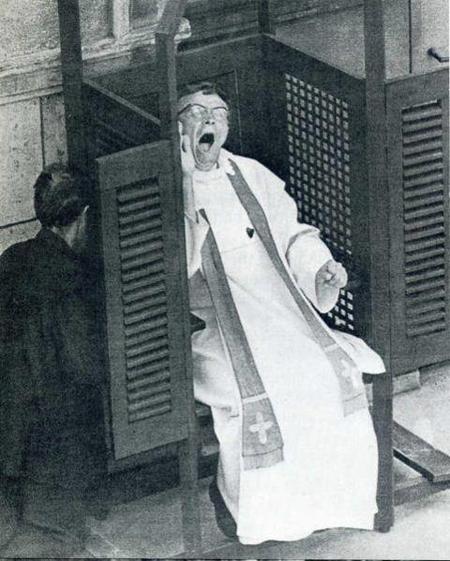


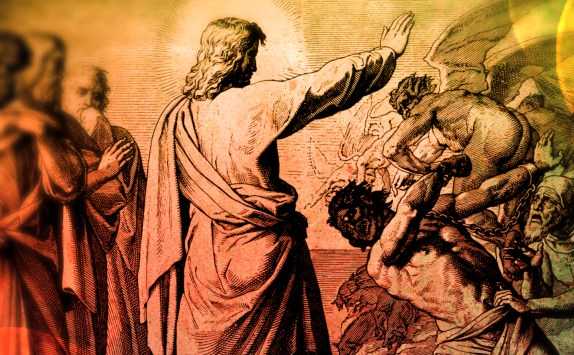


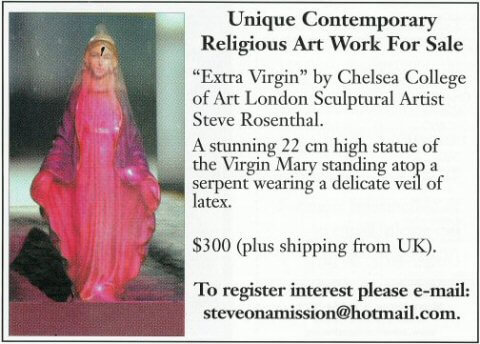 Whether it was Franciscan Friar Daniel Horan’s June 26, 2015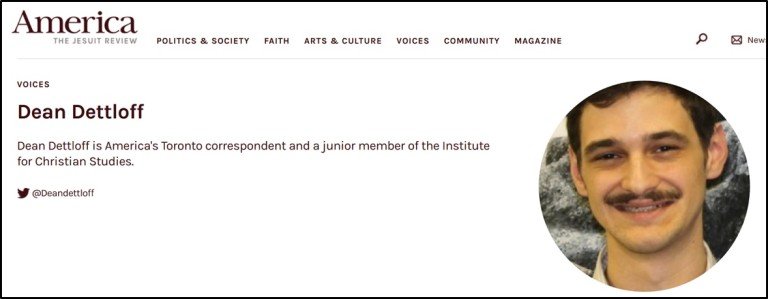
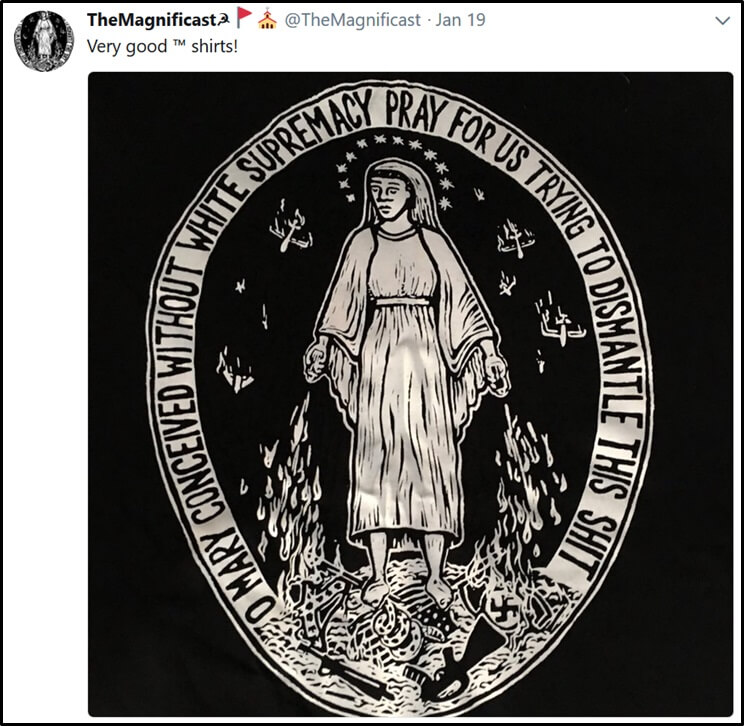

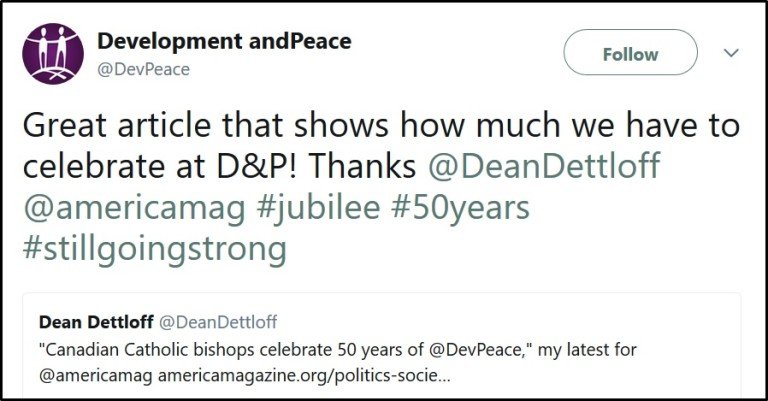

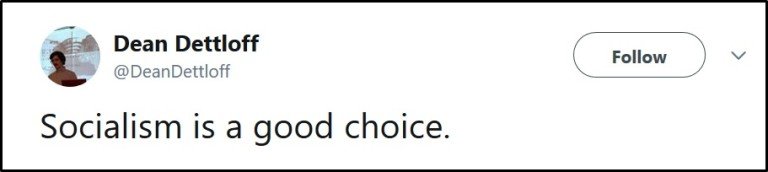
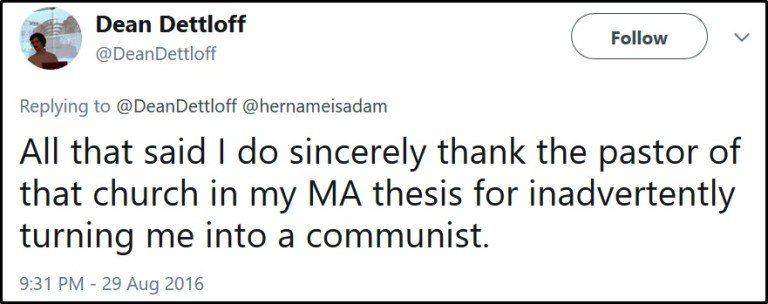
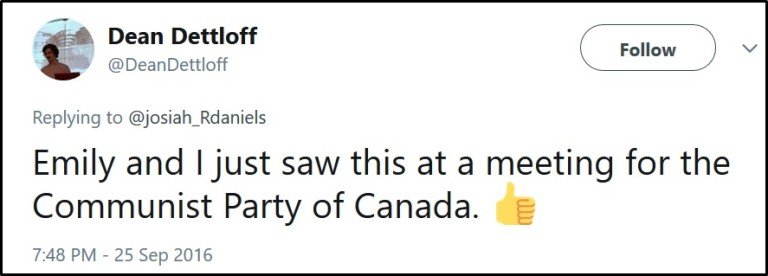


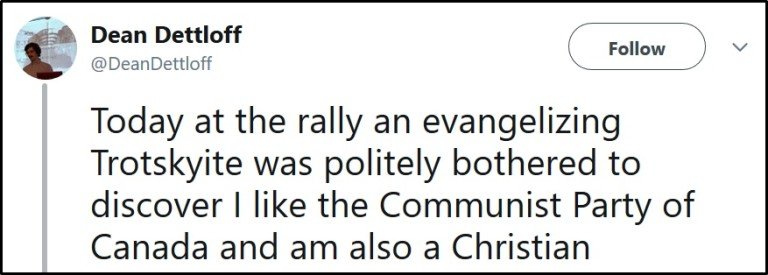


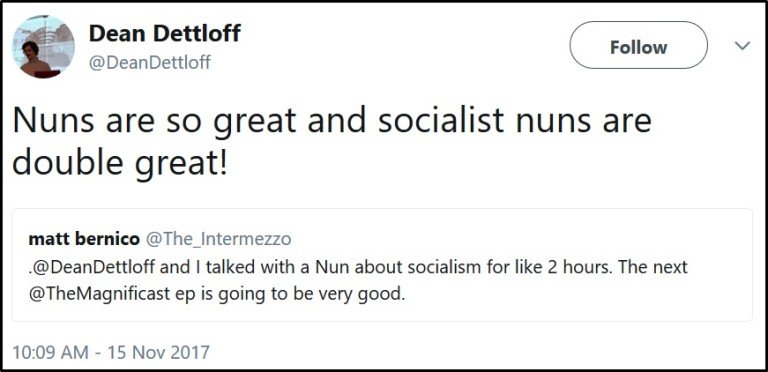
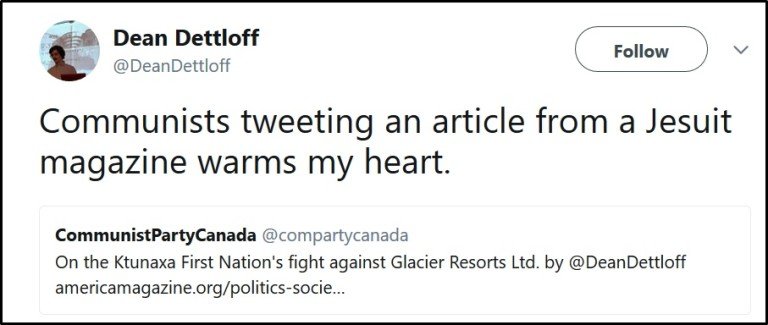

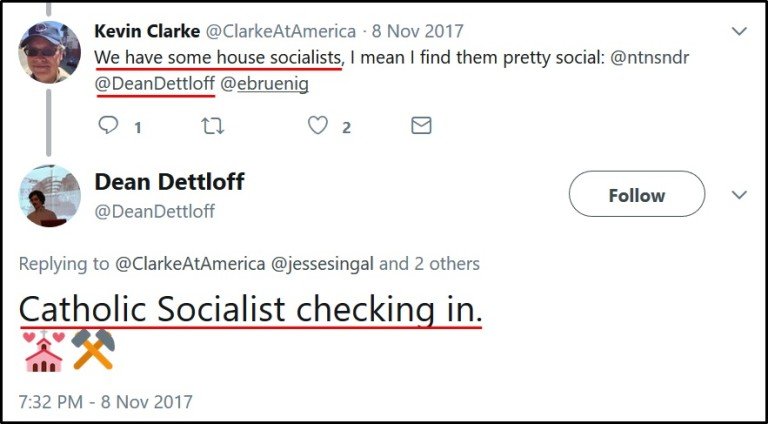
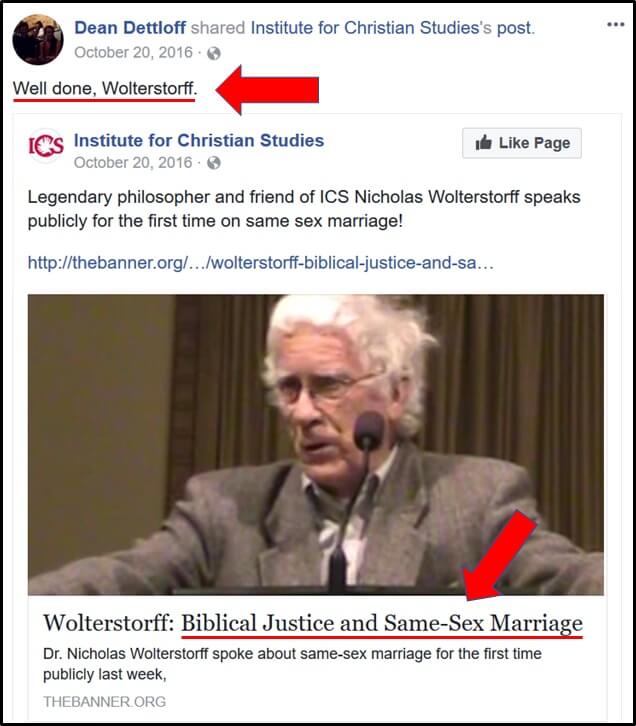
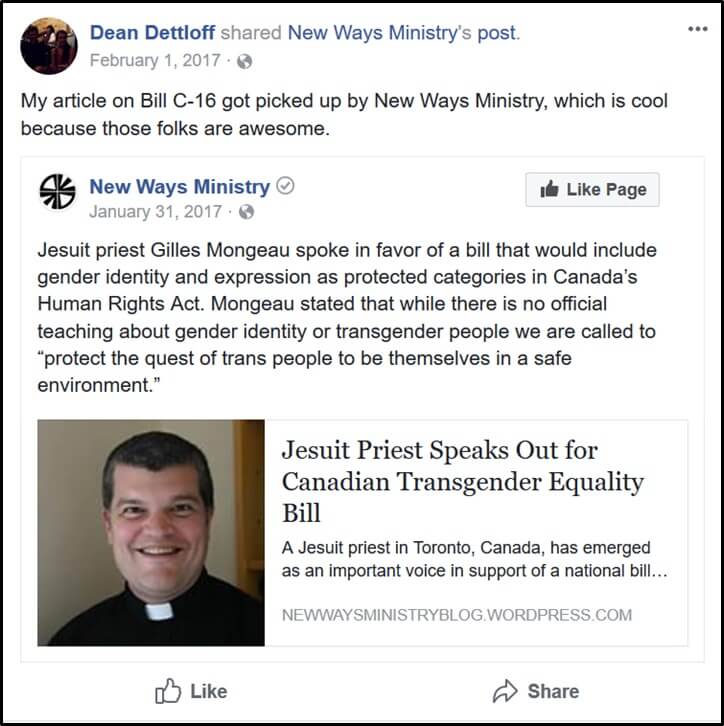
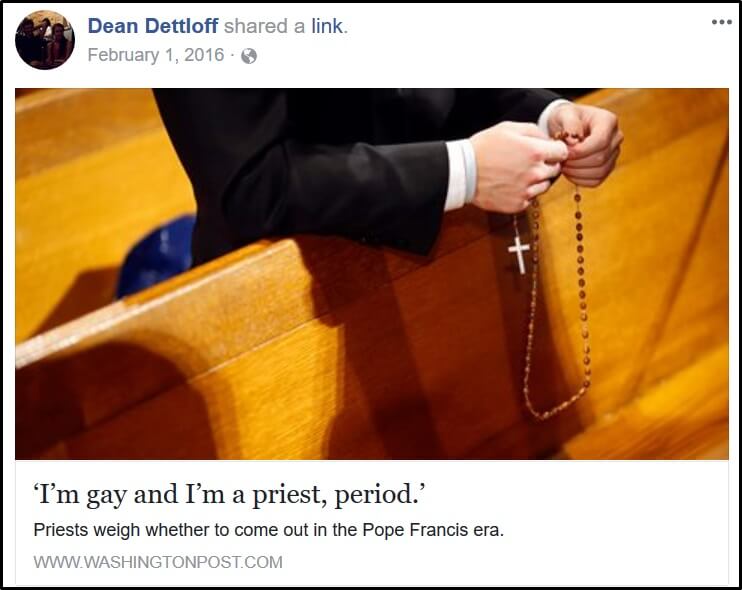
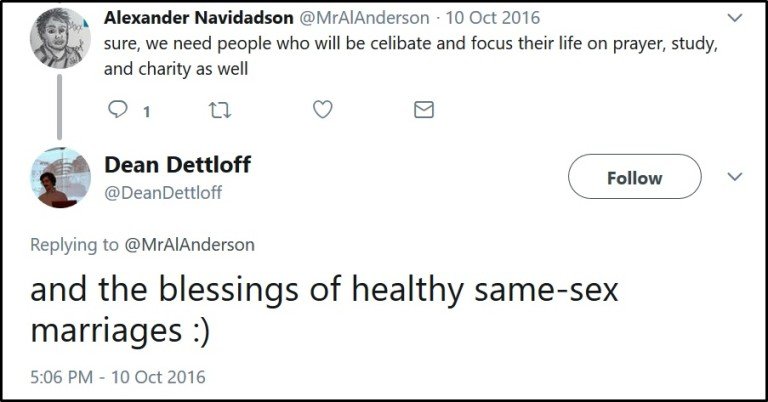

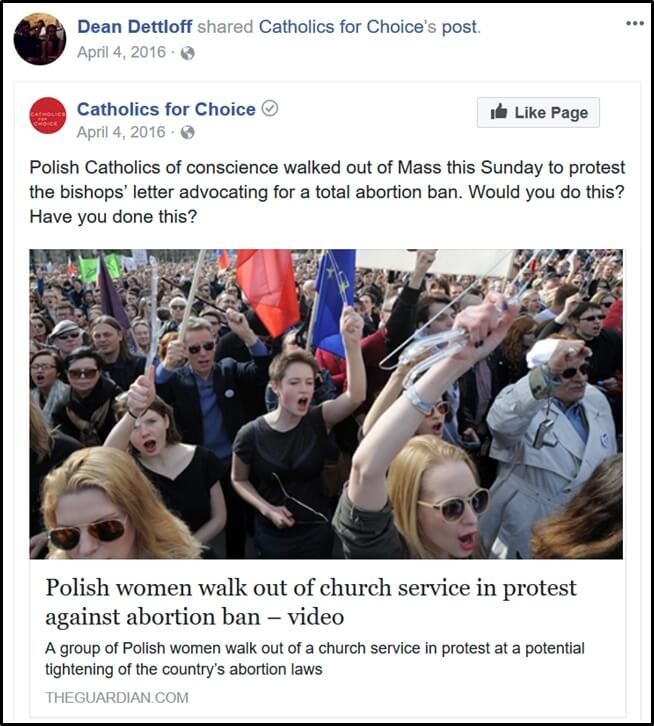
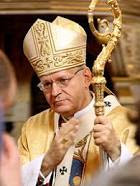 Cardinal Péter Erdő, 65 (photo), of Esztergom-Budapest, Primate of Hungary, yesterday evening delivered, in a magisterial way, the 40th Bampton Lecture in America in the Low Library of Columbia University in New York City before an audience of about 300 people. (The Low Library was built in 1895 by Columbia University President Seth Low as the University’s central library. Financed with $1 million of Low’s own money, he named it in memory of his father, Abiel Abbot Low.)
 “For example,” Erdo said, “Gustav Radbruch (photo) [1878-1949, the German legal scholar who served as Minister of Justice of Germany during the early Weimar period and was in retirement during the National Socialist period, regarded as one of the most influential legal philosophers of the 20th century] was a prominent representative of legal relativism and legal positivism. He went beyond the neo-Kantian principle which held that the law depends on moral values. And, since according to him these are not absolute, then law and justice are relative, too.”
 Columbia Prof. Robert Somerville (photo) invited Erdo to give the lecture, and introduced the cardinal. Somerville received his Ph.D at Yale University, and teaches pre-modern Western Christianity at Columbia. His research deals primarily with the Medieval Latin Church, the papacy and its documents and institutions, canon law, and medieval Latin manuscripts. He is presently completing a second edition (with Bruce C. Brasington), of “Prefaces to Canon Law Books in Latin Christianity.”





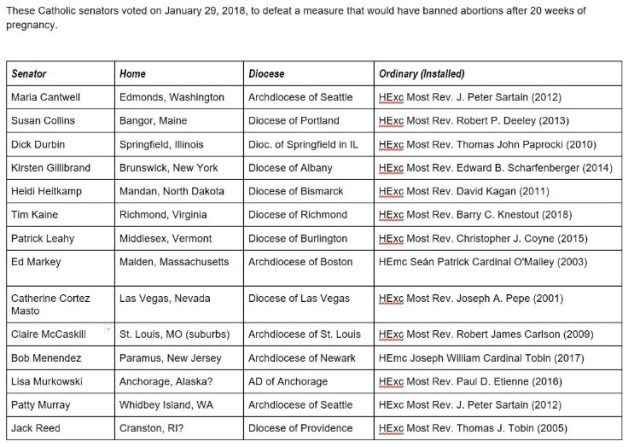


You must be logged in to post a comment.