THE BOOK OF GOMORRAH, Part Two of a Review

{ ABYSSUM }

Matthew Cullinan Hoffman

Matthew Cullinan Hoffman is an essayist, journalist, and author whose articles have appeared in numerous publications worldwide, both secular and Catholic, including the Wall Street Journal, London Sunday Times, Detroit News, New York Daily News, LifeSiteNews, Catholic World Report, Crisis Magazine, and theNational Catholic Register. He is the translator and author of The Book of Gomorrah and St. Peter Damian’s Struggle Against Ecclesiastical Corruption (2015). He holds an M.A. in Philosophy from Holy Apostles College and Seminary, where he is certified for academic competency in five foreign languages. He currently resides in Mexico, and does specialized coverage of Latin America for LifeSite and other publications.

Matthew Cullinan Hoffman is obviously a vey talented person.  The above brief biographical sketch, taken from the LifeSite website, does not mention his competency in Church History, but the reader of the Book of Gomorrah should linger on the biographical introduction he wrote for The Book of Gomorrah because as a contribution to our understanding of what is happening in the Church at the present time its value cannot be overstated.  Hoffman writes Church History extremely well.  The facts of the life of Saint Peter Damian presented in the Introduction by Hoffman to this book speak clearly to our present situation in the Church as well as does the content of Saint Peter Damian’s own book.

In this Part Two of my Review I will quote from Hoffman’s Introduction with my own interlinear commentary.


INTRODUCTION

by Matthew Cullinan Hoffman

ST. PETER DAMIAN’S STRUGGLE AGAINST ECCLESIASTICAL CORRUPTION

A Church in Crisis

The great reformer who would become known to the world as Peter Damian was born into a troubled Italy and a troubled Church.

When he first opened his eyes in the year 1007, Western Europe was in the last decades of its most obscure period, having suffered more than a century and a half of violent incursions of Vikings, Muslims, and Magyars {and equally violent misrule by popes, emperors, kings and clergy}.

The region had fragmented into countless principalities, and trade and intellectual commerce had declined. The literary patrimony of Latin antiquity maintained a tenuous presence in the care of monasteries and diocesan libraries, which had been decimated by the marauding invaders. During this tumultuous epoch, Italy had been largely cut off from the stabilizing rule of the German emperors and had become an armed camp of fortified towns under the rule of local strongmen, constantly on the defense against attacks by invaders as well as one another.

The papacy had also become embroiled in the anarchy of the time, as the popes, who had ruled the city of Rome since the sixth century, became power brokers and ultimately pawns in the political infighting that convulsed the peninsula.

The precipitous decline of the papacy had begun after the deposition in 887 of Charlemagne’s great-grandson, Charles the Fat, the last of a line of Carolingian kings who had protected the papacy and held the title of Roman Emperor. With the end of Charles’s reign, the empire that had been erected by Charlemagne, stretching from the Pyrenees to the Elbe river and encompassing half of Italy, collapsed in all but name.

Pope Stephen VI (885–91) gave the title of emperor, and therefore the rule of Italy, to the Italian Guido III, duke of the neighboring territory of Spoleto. However, Stephen’s successor, Pope Formosus (891–96), favored Guido’s Frankish rival, Arnulf of Carinthia, crowning him as Emperor instead. The battle over the throne of Italy then became a vindictive rivalry between kingmaker popes, as Formosus’s successor, the pro-Spoletan Stephen VII (896–97), had his predecessor’s body disinterred and put on trial for the purpose of declaring him an antipope and invalidating all of his ordinations and acts of governance. 

The tit-for-tat between the two parties continued for a decade, with Pope Theodore II (897) confirming the papacy of Formosus and nullifying his condemnation by Stephen, a verdict confirmed by his successor, John IX (898–900), and in turn reinforced by Benedict IV (900–03), who crowned the German king Louis the Blind as emperor. However, after Benedict’s successor was violently deposed and imprisoned, the pro–Spoletan Sergius III (904–11) in turn deposed his predecessor and again nullified the tenure of Formosus and all of his ordinations.1

{Wow! And we think we are in terrible times!  At least Francis has not disinterred the body of Saint John Paul II, put him on trial for the purpose of declaring him an antipope and invalidating all of his ordinations and acts of governance along wth his magisterial teachings, especially VERITATIS SPLENDOR which contradicts AMORIS LAETITIA.  But Francis should beware, his successor might very well do that to Francis.}

The battle over the papacy (and the body) of Pope Formosus was devastating for the Holy See and the Italian church. The illegal acts of Stephen VII and Sergius III, and the political rivalry of the popes who opposed them, could only undermine respect for papal authority and cast into doubt the validity of the ordinations of countless bishops and priests. The popes had politicized the papacy by appropriating its spiritual functions for secular ends.

{That certainly resonates with what we are experiencing.}

However, the shameful affair was merely a prelude to decades of instability, violence, and corruption, as rival factions of the Roman elite vied for control of the city and the ecclesiastical regime that governed it. In 928 the Roman noblewoman Marozia, daughter of papal kingmakers Count Theophylact of Tusculum and his wife Theodora, had the illustrious Pope John X deposed and imprisoned, whereupon he quickly died.2 She soon placed a young son (rumored to also be the illegitimate offspring of Pope Sergius III) on the papal throne as John XI (931–35). After Marozia and her faction was overthrown by her disowned son, Alberic II, Pope John XI was converted into a political protégé of the latter, as were his successors Leo VII (936–39), Stephen IX (939–42), Marinus II (942–46), and Agapetus II (946–55).

Finally, following the death of Alberic, his eighteen-year-old son, Octavius, was elected Pope John XII (955–63). We are told by commentators of the time that John “lived in a pigsty of lust,”3 which was so scandalous that a synod of bishops was called to treat the problem, and an antipope was unsuccessfully named to replace him.4 He died shortly after deposing and mutilating his rival and restoring himself to power at the age of 26 (5).

The turmoil in the papacy continued following the restoration of the imperial title in 962 under the Saxon king Otto I, who began to rein in the recalcitrant Italian aristocracy by supporting his own papal candidates. A century more of sometimes violent conflict over the papacy would follow, which only slowly subsided as Otto and his successors began to subdue the chaotic mess that was northern and central Italy. The popes continued to function as the temporal rulers of Rome but were now perceived as political vassals of the German emperors, who in turn depended upon the popes for their own imperial title.

The dynamics of this symbiotic relationship were often confused with the spiritual power of the papacy, which in theory remained distinct and independent of the secular power. Although the official acts of the popes of this period were generally unobjectionable and often laudable, their compromised situation and poor personal example had combined with the vicissitudes of the age to provoke a catastrophic decline in clerical morality.

The ranks of the monasteries and secular priesthood had been adulterated with lax and uneducated men, unworthy of their office. Corruption was rife, and the offices of the clergy, including bishoprics, were often sold. Many priests violated the Church’s strictures against sacerdotal marriage by entering into illicit unions with wives or concubines, with the consent and even the approval of their flocks. Large numbers had succumbed to unnatural sexual practices, alone or with others, all of which fell under the dread name of “sodomy,” in reference to the city of Sodom destroyed by God in the book of Genesis.

{ This graphic historical portrait of the ecclesial world into which Saint Peter Damian was born may be of small comfort to us when we compare it with our own times, but what Matthew Hoffman has done for us is give us hope.  If the Lord could rescue his Church from the clutches of such evil men (and women) surely it should give us hope that He can rescue us from the reign of Jorge Maria Bergolio, aka Francis.  In the next part of our review we will focus on the early life of Saint Peter Damian.}


Posted in Uncategorized | Comments Off on THE BOOK OF GOMORRAH, Part Two of a Review

MY PREDICTION: THE SYNOD OF BISHOPS NEXT OCTOBER ON THE WORLDS YOUTH, DOMINATED BY LGBTG CARDINALS AND ENCOURAGED BY FRANCIS WILL SEEK TO MAKE THE LGBTG AGENDA OFFICIALLY THE CHURCH’S AGENDA

Push For Greater Acceptance of Homosexual Unions Continues in German Church

Since the beginning of this year, there seems to be an intensification of progressivist activity within the Catholic Church in Germany in order to liberalize the Church’s teaching on, and assessment of, homosexuality. As if a dam has broken, one initiative rapidly follows another. It seems as if Germany might become the guiding country with regard to this issue, just as the Amazon region might become the leader of reform with regard to married priests, in the sense of a “decentralized Church” as recently outlined by the progressivist theologian Father Paul Zulehner. The near future will tell us more. Let us for now recount some of these new German statements here.

In the January issue of the German Catholic journal Herder Korrespondenz, there is an interview with Cardinal Reinhard Marx. As the President of the German Bishops’ Conference and a papal adviser, Marx proposed that the Catholic Church rethink her teaching on sexual morality in which case he argued against “blind rigorism.” For him, it is “difficult to say from the outside whether someone is in the state of mortal sin.” Marx applied this statement not only to men and women in “irregular situations,” but also to those in a homosexual relationship, saying that there has to be “a respect for a decision made in freedom” and in light of one’s “conscience”; he added that one also has “to listen to the voice of the Church.”

Not long after this piece of news broke (already a few days before the new year started, on 27 December 2017) – and after the German Bishops’ official news website immediately reported on this statement by Marx – there came the now-widely-discussed call for a blessing of homosexual couples which had been issued in an interview, on 10 January, given by the Vice President of the German Bishops’ Conference, Bishop Franz-Josef Bode, of Osnabrück. Bode then stated that it would be important to discuss this entire matter, adding:

We have to reflect upon the question as to how to assess, in a differentiated manner, a relationship between two homosexual persons. […] Is there not so much positive and good and right so that we have to be more just?

Only three days later, on 13 January, the German bishops’ website Katholisch.de published an interview with Professor Benedikt Kranemann who is a liturgy scholar at the Catholic Theology department at the University of Erfurt. Kranemann is also an adviser to the German Bishops’ Conference. In that 13 January interview, this German professor bluntly stated that, thus far,

there has not yet been a real theological discussion in the Catholic Church about in what ritual form such a salvific promise [sic] from God – because that is what a blessing stands for – could be expressed for these [homosexual] couples.

Kranemann added that “I find it theologically problematic if one makes a blessing dependent upon the moral assessment of human conduct.” To support his argument, he referred to the blessing of cars “where the drivers receive a blessing independently of their way of driving.” According to Kranemann, the blessing of a homosexual couple is not not necessarily a first step which then leads to a sacrament. “Blessings are manifold; some lead to sacraments, others not.”

As if speaking about a “human right to a blessing,” Kranemann further explains:

I consider it to be theologically problematic if one denies such a blessing to people  who consider it to be necessary for them. People also have the right that the grace of God should be extended to them, as the pastoral theologian Ottmar Fuchs has explained in his recent studies.

At the end of this interview, Professor Kranemann lauds Bishop Bode for his own initiative, saying: “And I think it is good that Bishop Bode – no less than the Vice President of the German Bishops’ Conference – is pushing this topic now.”

Just four days after this Kranemann interview, on 18 January, Professor Stephan Goertz raised his own voice in support of homosexual unions in the Catholic Church. Writing for the religion section of the prominent German newspaper Die Zeit, Christ&Welt, Goertz entitles his article: “Praise the Luck, Brothers!” As is to be expected, Katholisch.de published a report about this new article, and even presented it one day before the official publication date.

Goertz is professor of moral theology at the University of Mainz and is a known supporter of relaxing the Catholic Church’s teaching on sexual morality. Already in 2015, he wondered whether homosexual unions could not have a “sacramental character.” He had just then published a book which is entitled: Who Am I to Judge? Homosexuality and the Catholic Church. Now, in 2018, Goertz sees much (progressive and favorable) movement within the Catholic Church with regard to this topic. He highlights the three recent statements by Cardinal Marx, Bishop Bode, as well as Archbishop Heiner Koch of Berlin (who stated in 2017 that “same-sex cohabitation can be valued through other institutional arrangements without opening up the legal institute of marriage”); and says that they have “attracted attention.” Goertz sees that it is “legitimate that the Catholic Church comes in the 21th century to a new assessment of homosexual relationships.” Too long, he adds, the Church has had a “rigoristic attitude” toward homosexuality. “Now, under Pope Francis, there has been a change.” The Church now trusts more in the moral competence and judgment of the the people, according to Goertz. “The scope of freedom is being carefully widened.” With a hopeful outlook, he predicts that, were the Church to change her views in this matter, and recognize “the good and the right” in homosexual relationships, “the crampedness in dealing with homosexual caregivers (male and female) would come to an end.”

As one German Catholic observer put it, so far not one German bishop has come out to resist any of these recent liberalizing initiatives as promoted by the German Bishops’ Conference.

It is important to note here that there are links between these new progressivist initiatives concerning homosexuality and those concerning contraception. As Edward Pentin recently showed, two of the speakers at a series of talks about “re-thinking Humanae Vitae” hosted by the Gregorian University in Rome – Father Maurizio Chiodi (who now claims that contraception might sometimes be required) and Father Miguel Yanez – both also participated at a presentation of a book edited by Professor Goertz (together with Caroline Witting). As Pentin keenly puts it, in this new Goertz book “it is argued that Amoris Laetitia represents a paradigm shift for all moral theology and especially in interpreting Humanae Vitae.

Let us also recall here that it was at that same Roman university – the Gregorian University – that, in May of 2015, the controversial “shadow council” or “Day of Study” took place which, organized among others by the German bishops, seems to have prepared the way for Amoris Laetitia, as well as for the change of other areas of the Church’s moral teaching. One of the speakers of that event, Professor Anne-Marie Pelletier of Paris, France, had in the meantime received the honor of being asked by Pope Francis to write the Meditations for the 2017 Stations of the Cross in Rome.

Thus we shall continue to bear truthful witness in the face of the complete destruction of the moral edifice of the Catholic Church, as it has been both encouraged by Pope Francis in his post-synodal exhortation Amoris Laetitia, and as it has been also discerningly criticized by Professor Josef Seifert as a potential “moral atomic bomb.”

Posted in Uncategorized | 5 Comments

THE POWER OF THE LGBTG MAFIA IN POSITIONS OF POWER IN THE VATICAN CURIA IS BEING FLAUNTED MORE AND MORE

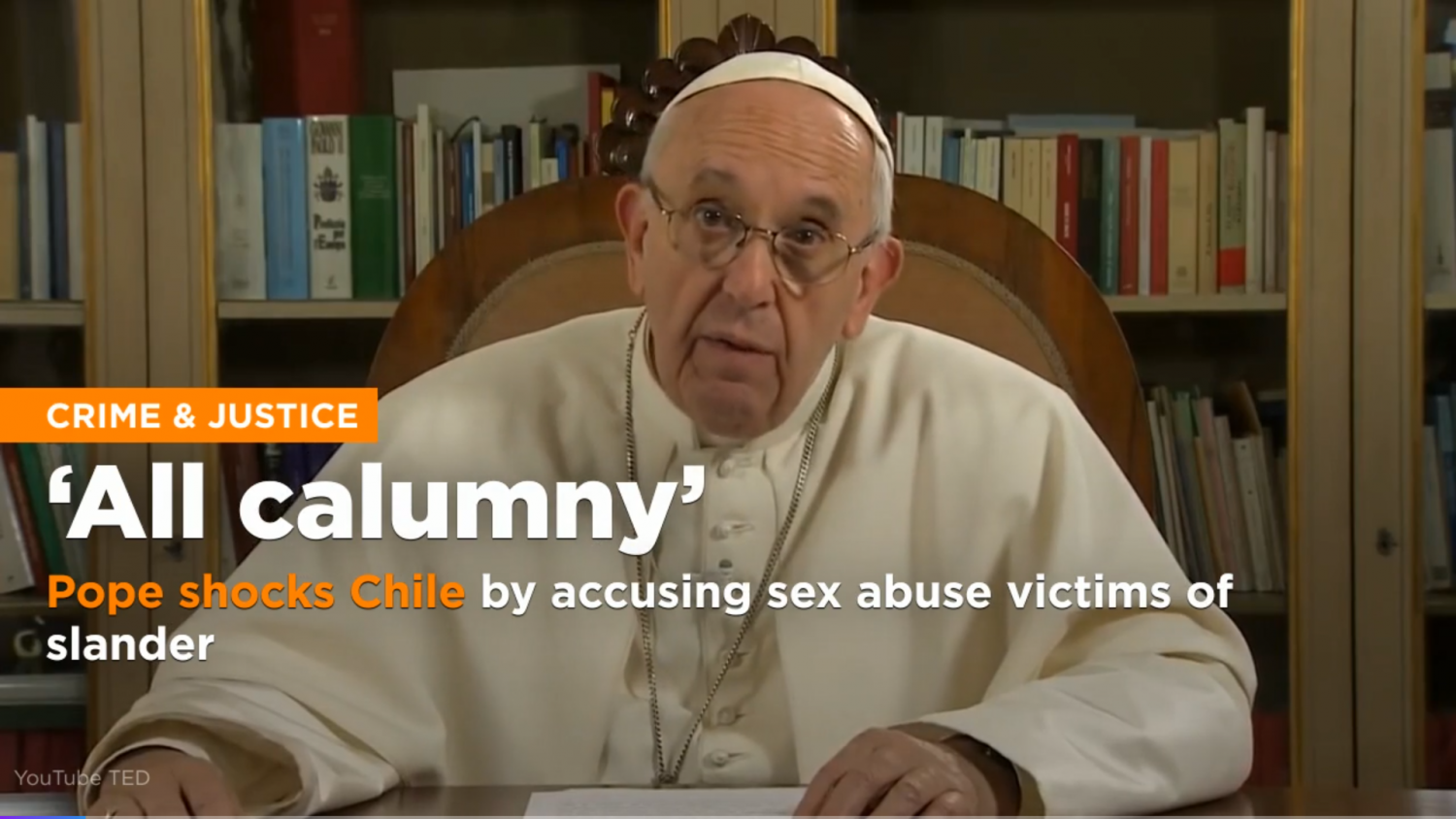
Pope Francis Prompts Outrage With Accusations Against Clerical Sex Abuse Victims

abyssum }

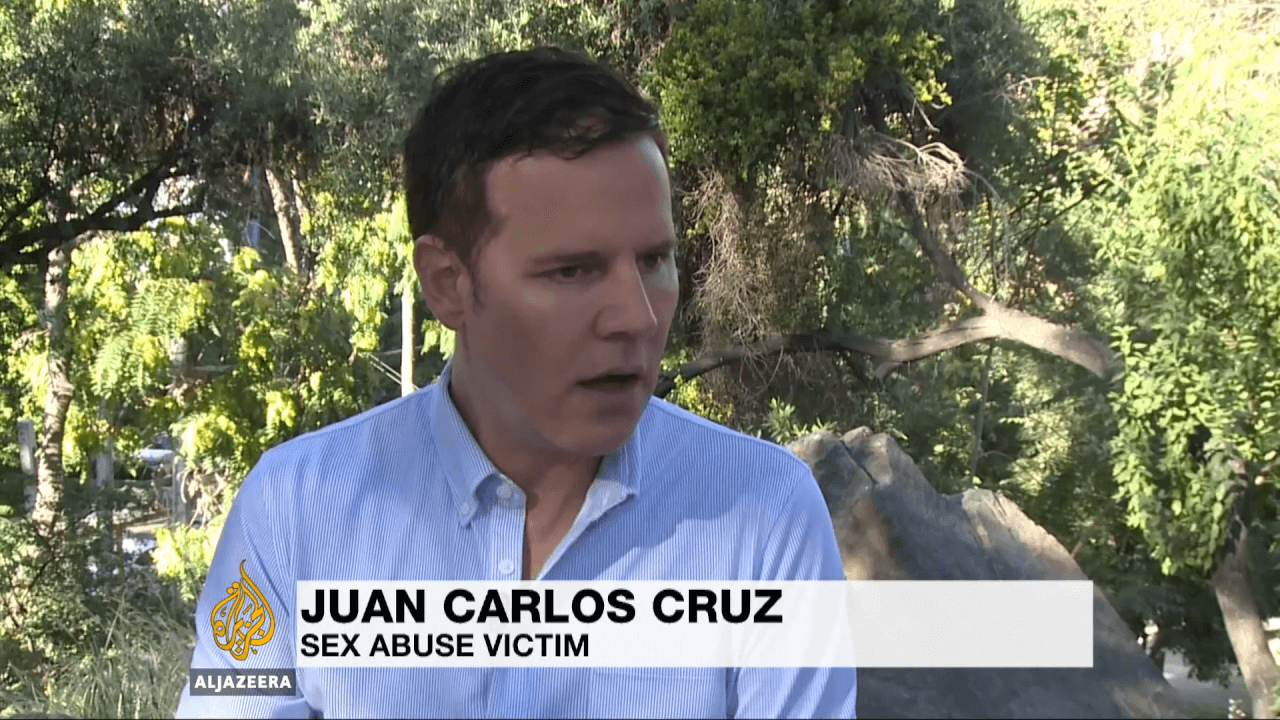
On Twitter, Barros’ “most vocal accuser”, Juan Carlos Cruz, lashed out about the absurdity of the pope expecting proof from his abuse:

“As if one could have taken a selfie or a photo while Karadima abused me and others and Juan Barros standing next to him watching everything. These people from above are crazy and @Pontifex is talking about reparation to the victims. We remain the same and his forgiveness remains empty.”

Barros reiterated his outrage in an exchange with Crux‘ Austen Ivereigh, when the latter questioned his claims. “Does he need a photo, a selfie, as proof? Sorry Austen, we did not think of it as we were being abused and Juan Barros watching.”

According to the Associated Press, the pope’s “astonishing” comments “drew shock from Chileans and immediate rebuke from victims and their advocates.”

A group of Karadima victims spoke out against the pope’s words yesterday, saying, “This is serious and we cannot accept it … what he has done today is offensive and painful, and it also reveals an unknown face of the Pontiff.”


Talking Tough on Sex Abuse 

Those who are surprised by the pope’s comments in Chile are likely more familiar with his tough talk on clerical sex abuse. In September 2015, Pope Francis addressed victims of abuse at St. Charles Borromeo Seminary in Philadelphia in clear, unequivocal terms:

I carry in my heart the stories, the suffering and the pain of the minors who were sexually abused by priests. I’m overwhelmed by the shame that people who were in charge of caring for those young ones raped them and caused them great damages. I regret this profoundly. God weeps! The crimes and sins of sexual abuse to minors can’t be kept a secret anymore. I commit to the zealous oversight of the Church to protect minors, and I promise that everyone responsible will be held accountable.

In June of the following year, the pope issued a new motu proprio letter taking steps further than just words. Entitled “Come una madre amorevole” (As a Loving Mother), the letter established norms seeking the removal of bishops who have, “through negligence, committed or omitted acts that have caused grave harm to others, either with regard to physical persons, or with regard to the community itself.”  At the time, Vatican spokesman Fr. Federico Lombardi said that the letter “clarifies that negligence regarding cases of sexual abuse committed against children or vulnerable adults are among the ‘grave causes’ that justify removal from ecclesiastical Offices, even of Bishops.”

During his current visit to South America, Gerard O’Connell of America magazine tweeted about a moment where the pope expressed solidarity with victims:

Vatican spokesman, Greg Burke, said Pope Francis “listened, prayed and cried” with a small group of victims abused by priests, when he met them at the nunciature in Santiago, after lunch today. He spent around half an hour with them, alone, without anyone else present.

Nevertheless, by the end of the trip, the pope expressed his indignance at accusations against Barros from known victims of Fr. Karadima.


Empty Words: The Way Francis Really Deals With Abusers

Despite powerful words and moving gestures, the pope’s track record on dealing with perpetrators of abuse or those who covered for them has been wildly inconsistent. While there have been some cases — like that of the conservative Bishop Robert Finn of the diocese of Kansas City-St. Joseph, who was removed on the basis of what some have termed “politically motivated” charges of neglect — other, more egregious examples have not only gone ignored, but in some cases have been actively thwarted or even promoted by Francis. As we reported in October, 2015, not long after his statement in Philadelphia, the pope’s words and actions on the matter are often worlds apart.

Bishop Barros

The case of Bishop Barros and the controversy that surrounds it is nothing new, though his harsh response in Chile is now bringing attention to an issue that many have never heard about before this week. The appointment of Barros by Francis in 2015 was, in fact, so controversial, that five members of the pope’s anti-abuse commission expressed“concern and incredulity” at the assignment. Similarly, Barros’ installation Mass was forced to be cut short when hundreds of protesters showed up.

It was at this time that Francis first showed his contempt for victims in Chile — a contempt his recent words appear to confirm. In a video from May of 2015, Francis accused those who implicated Barros of being “dumb”:

“The Osorno community is suffering because it’s dumb,” Pope Francis told a group of tourists on St. Peter’s Square in Vatican City, because it “has let its head be filled with what politicians say, judging a bishop without any proof.”

“Don’t be led by the nose by the leftists who orchestrated all of this,” the pope said.

Cardinal Danneels

Also of particular note is the pope’s closeness with Cardinal Godfried Danneels from Belgium, who has become perhaps the most notorious member of the so-called “St. Gallen Mafia” — a group of curial conspirators who worked together to ensure Bergoglio’s election to the papacy. Danneels was caught on tape in 2010 trying to stop a sex abuse victim from going public. As Marcantonio Colonna later reported in The Dictator Pope, Danneels’ home and his diocesan offices were later raided by police, who seized computers and documentation on abuse allegations. “For reasons that remain unclear,” wrote Colonna “the seized evidence was declared to have been inadmissible, the documents returned to the archdiocese and the investigation was abruptly closed. This despite the fact that individuals had come forward with almost five hundred separate complaints, including many that alleged Danneels had used his power and connections to shield clerical sex abusers.” [emphasis added]

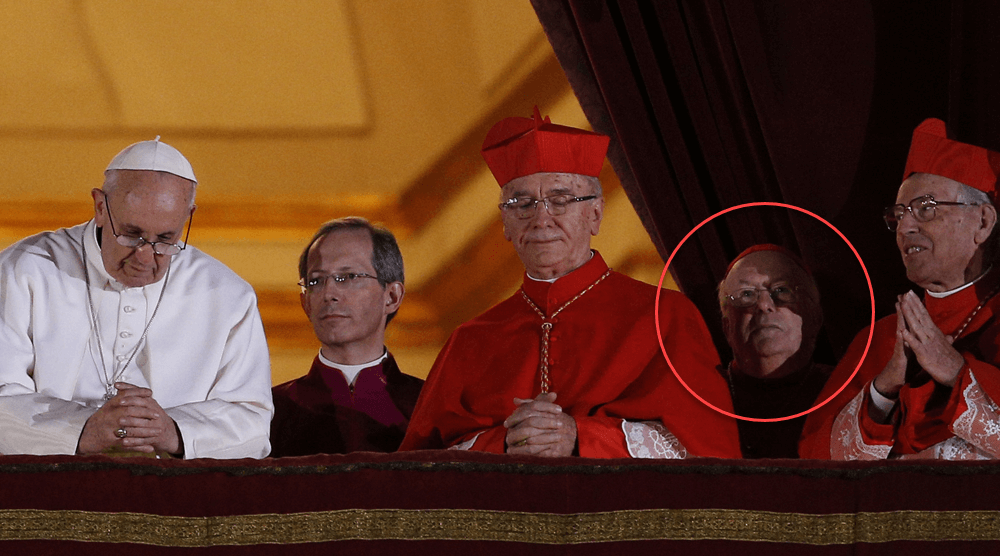
Nevertheless, Colonna writes that according to Danneels, the 2013 conclave was for him “a personal resurrection experience.” And sure enough, if one looks closely at the photos of the new pope on the Loggia, standing there in shadows is the triumphant-looking kingmaker himself, the once-disgraced Cardinal Archbishop of Mechelen-Brussels:

Later, Danneels — a man who was implicated and even recorded in the act of covering up the clerical abuse of children — would be personally invited by the pope to both synods on the family. 

Father Inzoli

In a January, 2017 report, Michael Brendan Dougherty wrote of a “child abuse scandal” “coming for Pope Francis”. Dougherty detailed the way clerics accused of abuse were able to avoid discipline under Francis by means of powerful friends and connections:

Consider the case of Fr. Mauro Inzoli. Inzoli lived in a flamboyant fashion and had such a taste for flashy cars that he earned the nickname “Don Mercedes.” He was also accused of molesting children. He allegedly abused minors in the confessional. He even went so far as to teach children that sexual contact with him was legitimated by scripture and their faith. When his case reached CDF, he was found guilty. And in 2012, under the papacy of Pope Benedict, Inzoli was defrocked.

But Don Mercedes was “with cardinal friends,” we have learned. Cardinal Coccopalmerio and Monsignor Pio Vito Pinto, now dean of the Roman Rota, both intervened on behalf of Inzoli, and Pope Francis returned him to the priestly state in 2014, inviting him to a “a life of humility and prayer.” These strictures seem not to have troubled Inzoli too much. In January 2015, Don Mercedes participated in a conference on the family in Lombardy.

This summer, civil authorities finished their own trial of Inzoli, convicting him of eight offenses. Another 15 lay beyond the statute of limitations. The Italian press hammered the Vatican, specifically the CDF, for not sharing the information they had found in their canonical trial with civil authorities. Of course, the pope himself could have allowed the CDF to share this information with civil authorities if he so desired.

Francis was subsequently forced to laicize Inzoli last summer. But not until the predator priest had shown up at a family conference where he had no business being. For his part, it was Cardinal Coccopalmerio who had petitionedFrancis to give an apartment in the CDF building to his secretary, Msgr. Luigi Capozzi — an apartment reports later indicated were raided by Vatican police, where last year they allegedly broke up “a drug-fueled, homosexual debauched party.” (Coccopalmerio had also reportedly requested that Capozzi be raised to the episcopacy.)


A Seemingly Impervious Papacy Begins to Crack

For years, Francis’ progressive-friendly papacy has made him nearly bulletproof with the secular press and the progressive Catholic media. His infamous “Who am I to judge?” comment about a known homosexual priest in his employ helped to land him on the cover of “LGBT news” magazine The Advocate as “Person of the Year” in 2013. He has also graced the covers of Rolling Stone, Time, Newsweek, Esquire, Fortune, People, and Vanity Fair, among others — almost always in a positive context. It’s a distinction virtually unknown to his recent predecessors, who more often than not found themselves maligned for their teachings.

But the victim-shaming by the pope this week may mark a change in his fortunes. A few months ago, a Google search of “Pope Francis” and “Sex Abuse” was likely to return our October, 2015 report on Danneels and Barros on the first page of results. But in the wake of the pope’s inconceivably tone-deaf comments in Chile, our report has been buried in a deluge of new stories from major outlets around the world. Rumors of the pope’s temper are a thing of legend, but always from behind closed doors, clouded in anonymous sources. His indignation over the Barros accusations is a rare misstep from arguably the most media-savvy pope in history. Nevertheless, the clerical sex abuse crisis is a powerful third rail in the Church’s relations with the secular world. The damage done here likely won’t soon be forgotten.


Beginning of the End, Or Blip on the Radar? 

I’ve said from the outset of 2018 that I think this is the year Francis’ fortunes will turn. The world has reached “peak Francis,” and those who love him, love him for his push towards a new, progressive iteration of Catholicism. The faithful, on the other hand, have had more than their fill of his appetite for destruction. What is certain is that his outrageous comments about abuse victims will not endear him to either camp, lowering his stock among supporters and cementing his reputation among critics.

Still, Francis has enormous good will in the bank among those with a vested interest in the furtherance of his agenda. The news of a papal award being given to one of the most notorious abortion promoters in the world began making international headlines just days after the joint reports first appeared here and at The Lepanto Institute. For the global Left, this was nothing but a feather in the pope’s cap, but the story was quickly drowned out with coos of wistful approval from women the world over (including true believers) when news broke that Francis had offered, on the spot, to officiate the wedding of two flight attendants on a recent papal flight. The couple, so the story went, was planning to marry in 2010 when their parish was damaged by an earthquake. Although they have been living together in a civil marriage for years and have two children, they never found the time to be married in a Catholic Church. The “impromptu” wedding was quickly picked up as yet another heartwarming story demonstrating the humanity of “the people’s pope” — nevermind that it broke a bunch of canon laws, made a triviality of something sacred, set a terrible precedent that will put priests the world over in a tough situation, and was, contrary to a calculated pretense of spontaneity, actually planned out a month in advance. In other words, it was a cheap and transparent PR stunt, but it appears to have done some good for the pope’s damaged image.

When all the smiley face emojis and animated hearts fade, however, the question will remain: how many tricks does a papacy that sees clerical abuse victims unafraid to stand up for themselves as “dumb” people full of “calumny” need to stay afloat? For that matter, how many tricks does it have left?

The Internet is famous for having a short attention span, but there are some things people have a hard time forgetting. Abusing spiritual power to take advantage of children and vulnerable young adults is one of them. With the armor of this papacy finally cracking, it appears there may finally be a chance for the world to see what some of us have long known: the ugly reality that lies beneath.

Posted in Uncategorized | 1 Comment

GOD BLESS PRESIDENT TRUMP’S EFFORTS TO CORRECT THE IMMIGRATION MESS GIVEN TO THE NATION BY THE OBAMACRATS


Judicial
Watch' />
3 Out of 4 Convicted Terrorists Came to U.S. Legally Via Current Immigration System

JANUARY 17, 2018

Illustrating the national security threats created by the nation’s immigration system, the overwhelming majority of individuals convicted of terrorism are foreigners who entered the United States legally through various federal programs.

Three out of every four convicted terrorists between September 11, 2001 and December 31, 2016 are foreign born and came to the United States through our immigration system, according to a new report issued jointly by the Department of Homeland Security (DHS) and the Department of Justice (DOJ).

At least 549 individuals were convicted of terrorism-related charges in American federal courts since 2001 and 402 of them—approximately 73%–were foreign-born, the report says. Here’s the breakdown by citizenship at the time of their convictions; 254 were not U.S. citizens, 148 were naturalized and received American citizenship and 147 were U.S. born.

Additionally, 1,716 foreigners with national security concerns were removed from the United States. The Trump administration stresses that figures include only those aliens who were convicted or removed and therefore do not represent the total measure of foreign terrorist infiltration of the United States. Statistics on individuals facing terrorism charges who have not yet been convicted will be provided in follow-up reports that will be made available to the public.

This DHS/DOJ report, issued this month, is disturbing enough and reveals that a significant number of terrorists entered the country through immigration programs that use family ties and extended-family chain migration as a basis for entry.

Among them is Mufid Elfgeeh, a national of Yemen who benefitted from chain migration in 1997 and was sentenced to more than 22 years in prison for attempting to recruit fighters for ISIS.
Sudanese Mahmoud Amin Mohamed Elhassan came to the U.S. in 2012 as a relative of a lawful permanent resident and eventually pleaded guilty to attempting to provide material support to ISIS.
Pakistani Uzair Paracha was admitted to the U.S. in 1980 as a family member of a lawful permanent resident and in 2006 was sentenced to more than three decades in prison for providing material support to Al Qaeda.
Khaleel Ahmed, a national of India, was admitted to the United States in 1998 as a family member of a naturalized United States citizen. Ahmed eventually became an American citizen and in 2010 was sentenced to more than eight years in prison for conspiring to provide material support to terrorists.

Other convicted terrorists came to the U.S. through the controversial visa lottery program, the multi-agency probe found. Among them is Abdurasaul Hasanovich Juraboev, a national of Uzbekistan who was admitted into the country as a diversity visa lottery recipient in 2011. In 2015, he pleaded guilty to conspiring to support ISIS and in 2017 Juraboev was sentenced to 15 years in prison.

Sudanese Ali Shukri Amin was admitted to the U.S. in 1999 as the child of a diversity visa lottery recipient and subsequently obtained American citizenship through naturalization. In 2015, he was sentenced to more than 11 years in prison for conspiring to provide material support and resources to ISIS. Amin admitted to using social media to provide advice and encouragement to ISIS and its supporters and facilitated ISIS supporters seeking to travel to Syria to join the terrorist group. Amin also helped a Virginia teen named Reza Niknejad get to Syria to join ISIS in 2015.

“The United States faces a serious and persistent terror threat, and individuals with ties to terror can and will use any pathway to enter our country,” the new DHS/DOJ report states. “Accordingly, DHS has taken significant steps to improve the security of all potential routes used by known or suspected terrorists (KST) to travel to the United States to ensure that individuals who would do harm to Americans are identified and detected, and their plots are disrupted. These figures reflect the challenges faced by the United States and demonstrate the necessity to remain vigilant and proactive in our counterterrorism posture.”


Day Watch Updates: 

Every Friday @ 4 PM Catch Tom Fitton’s Weekly Update Live on JW’s Youtube Channel
Judicial Watch President Tom Fitton, every Friday, does a video update recapping the important work Judicial Watch has done over the previous week fighting government corruption.

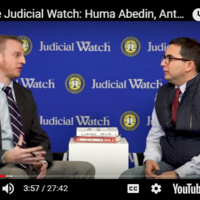
Inside Judicial Watch: Huma Abedin, Anthony Weiner, & the Clinton Email Scandal
In this episode of Inside Judicial Watch, host Jerry Dunleavy joins JW Staff Attorney Michael Bekesha to discuss the latest on the Clinton/Abedin State Department emails found on Anthony Weiner’s laptop, which were obtained by Judicial Watch last week.

Judicial Watch Statement on Federal Court Order for FBI to Turn Over Comey Memos for Court Review by Next Week
Judicial Watch President Tom Fitton made the following statement regarding last night’s ruling by United States District Judge James E. Boasberg that the FBI …

Posted in Uncategorized | 1 Comment

Today’s little dose of satire to help you keep your sanity in the midst of all the insanity the day brings.

Eccles and Bosco is saved


How a pope should give out medals

Posted: 18 Jan 2018 04:17 AM PST

This is the latest instalment in our self-help guide “How to be a good pope”, designed to help those of our readers who may suddenly find themselves catapulted into the Chair of St Peter.Now, as Pope you have lots of gongs that you can hand out to your friends. For example, the Badge for Amoris Laetitia Learning and Study (BALLS) is for those who unquestioningly agree with everything Amoris Laetitia says, showing aggression when anyone asks them to explain something.

Likewise, the St Ignatius Medal for Profoundly Lecherous Explanations (SIMPLE) is for Jesuits who suggest that naughtiness – especially between members of the same sex – is all right really; while the Francis Order of Logic (FOOL) goes to those who maintain, in the face of all opposition, that 2+2=5.

Lilianne Ploumen

“Look! The Pope loves me!”

There are also some older awards that your more rigid predecessors instituted. For example the Pontifical Equestrian Order of St. Gregory the Great. These are for giving out in a “goodie-bag” to any visiting dignitaries who come to see you, together with a chocolate model of Martin Luther, a copy of Amoris Laetitia, and a comical red nose.

Now, as Pope you are a very busy man, with lots of other duties to perform. Obviously, you’ve managed to save some time by cutting down the praying and worshipping, but you still have to keep your “frequent flier” platinum status, and catch up on your unanswered correspondence – some cardinals have been waiting for answers from you for over a year.

So you delegate the award of the goodie-bag to one of your lackeys, who probably didn’t bother to check the credentials of the people who received them. And here’s the problem.

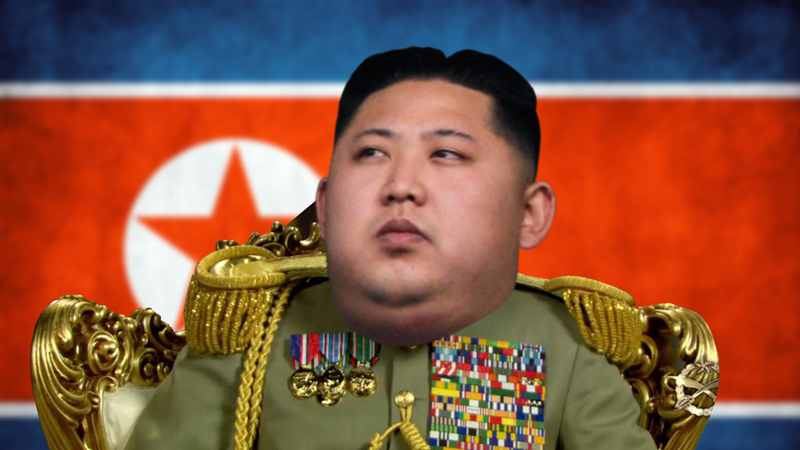
King Jong-un

“The Pope loves me too!”

Among the lucky recipients of your latest batch of medals are five euthanasiacs, four torturers, three war criminals, two serial killers, and an abortionist in a pear tree. Well, that’s fairly normal, if you will insist on giving awards to politicians. But it’s embarrassing.

Your critics are going to say, “The Pope should withdraw the honour. The buck stops here. We don’t think he’s very pro-life anyway. Remember Emma Bananas?”

Your fans are going to say, “Of course he knew nothing about it, and will never find out, as he doesn’t read the paper, and anyway he’s far too busy partying in Chile right now, and have you noticed that it’s always the same people who criticise the Pope? The rigid ones who believe in Christian doctrine! Didn’t you read America’s latest survey in which 99% of women who never go to church said he was a living saint? Now get lost, I’ve got to practise the piano.”

young Pecknold at the piano

Playing the piano versus populum, as recommended by Vatican II.

And you? What will you do? Why, nothing of course. You’re in Chile, where they don’t have the internet, or newspapers, or telephones. And by the time you get back there will be some new scandal to amuse people. Well done!

Posted in Uncategorized | 3 Comments

THE BOOK OF GOMORRAH – Part One of a Review

{I have begun to read this book and will devote several posts in the coming weeks as a review of the book, inspired by the Lord who gave me the Latin word 
curvatrix; the word in Latin is literally a woman who is bent over.  Think of the Church as a woman, the Bride of Christ, bent double by the sins of the clergy.  St. Peter Damian uses it in the plural “curvatrices” to refer to women like the prophetess Anna.  Recall the story in Luke 13:10-17, where Jesus heals a woman who was bent over for eighteen years; 

10 And he was teaching in their synagogue on their sabbath.

11 And behold there was a woman, who had a spirit of infirmity eighteen years: and she was bowed together, neither could she look upwards at all.

12 Whom when Jesus saw, he called her unto him, and said to her: Woman, thou art delivered from thy infirmity.

13 And he laid his hands upon her, and immediately she was made straight, and glorified God.

14 And the ruler of the synagogue (being angry that Jesus had healed on the sabbath) answering, said to the multitude: Six days there are wherein you ought to work. In them therefore come, and be healed; and not on the sabbath day.

15 And the Lord answering him, said: Ye hypocrites, doth not every one of you, on the sabbath day, loose his ox or his ass from the manger, and lead them to water?

16 And ought not this daughter of Abraham, whom Satan hath bound, lo, these eighteen years {five years?}, be loosed from this bond on the sabbath day?

17 And when he said these things, all his adversaries were ashamed: and all the people rejoiced for all the things that were gloriously done by him.

It is my hope that after reading these review posts you will be inspired to read the book yourself (it can be purchased easily from Amazon) and will most importantly of all pray and beg our Lord to work a miracle and cure Our Holy Mother the Church, His Bride, of her affliction as a curvatrix bent double by the moral corruption of her clergy.

 I will begin with the Foreword written by Juan Cardinal Sandoval Iniquez.

+Rene Henry Gracida (Abyssum)


FOREWORD

Saint Peter Damian (1007–1072) is the author of the Book of Gomorrah, which he dedicated to Pope Leo IX. In it he bluntly exposes and energetically condemns the immoral conduct of many Catholics of his time.

Lax and poorly educated men, unworthy of their state, had infiltrated both the monasteries and the ranks of the secular clergy. Simony was practiced in the buying and selling of ecclesiastical offices, including the episcopacy. There was meddling by the civil authority in ecclesiastical affairs and in the nomination of abbots and bishops. The high dignitaries of the Church were often feudal lords, with the riches and the vices associated with such. Concubinage and marriage were common among the secular clergy and, even more sadly, with the approval of the faithful. And, as the saint says, the “cancer of sodomy,” including pedophilia, had proliferated, above all in the monasteries.

Peter Damian forcefully and fearlessly denounced these evils, threatening the punishments of hell, and cried out to the pope for a reform that would purify the Church. He proposed disciplinary measures that were adopted by the Church, and some of them continue in effect in the law until today, although unfortunately they are not always applied.

Peter Damian was most eminent in his day: he was highly educated, a great theologian, bishop, cardinal of the Holy Church, and legate of various Supreme Pontiffs before princes and kings, but above all, he was a saint who contributed to the reform of the Church.

Pope Saint Leo IX thanked Saint Peter Damian in a commemoratory letter regarding the Book of Gomorrah and vigorously undertook the reform of the customs of the Church, which, by the acts of this Pontiff and others who followed him, would be raised to its splendor in sanctity and knowledge during the 12th and 13th centuries.

The Book of Gomorrah has recently been translated from the original Latin into English, with copious introductory material, by an erudite Catholic who is faithful to Christ and his Church: Matthew Cullinan Hoffman.

I have accepted with pleasure the task of writing this brief presentation of a book which, upon its reading, brings us to the realization that a thousand years ago sexual vices were being practiced by various sons of the Church that lamentably are present today and have been the occasion of scandal, discredit, and apostasy.

Today, like then, with prayer and the example of the saints, and the firm hand of pastors, the sons of the Church can return to the way of faithfulness in order to fully carry out the mission of being “salt of the earth and the light of the world.”

Juan Cardinal Sandoval Íñiguez
Archbishop Emeritus of Guadalajara

Guadalajara, Jalisco, June 30, 2015

{To be continued}


Posted in Uncategorized | 3 Comments

IT IS EASIER TO ENCOUNTER GOD IN THE TRADITIONAL LATIN MASS THAN IN THE NOVUS ORDO MASS WHERE TOO OFTEN THE PRIEST GETS IN THE WAY RATHER THAN FACILITATE THE ENCOUNTER

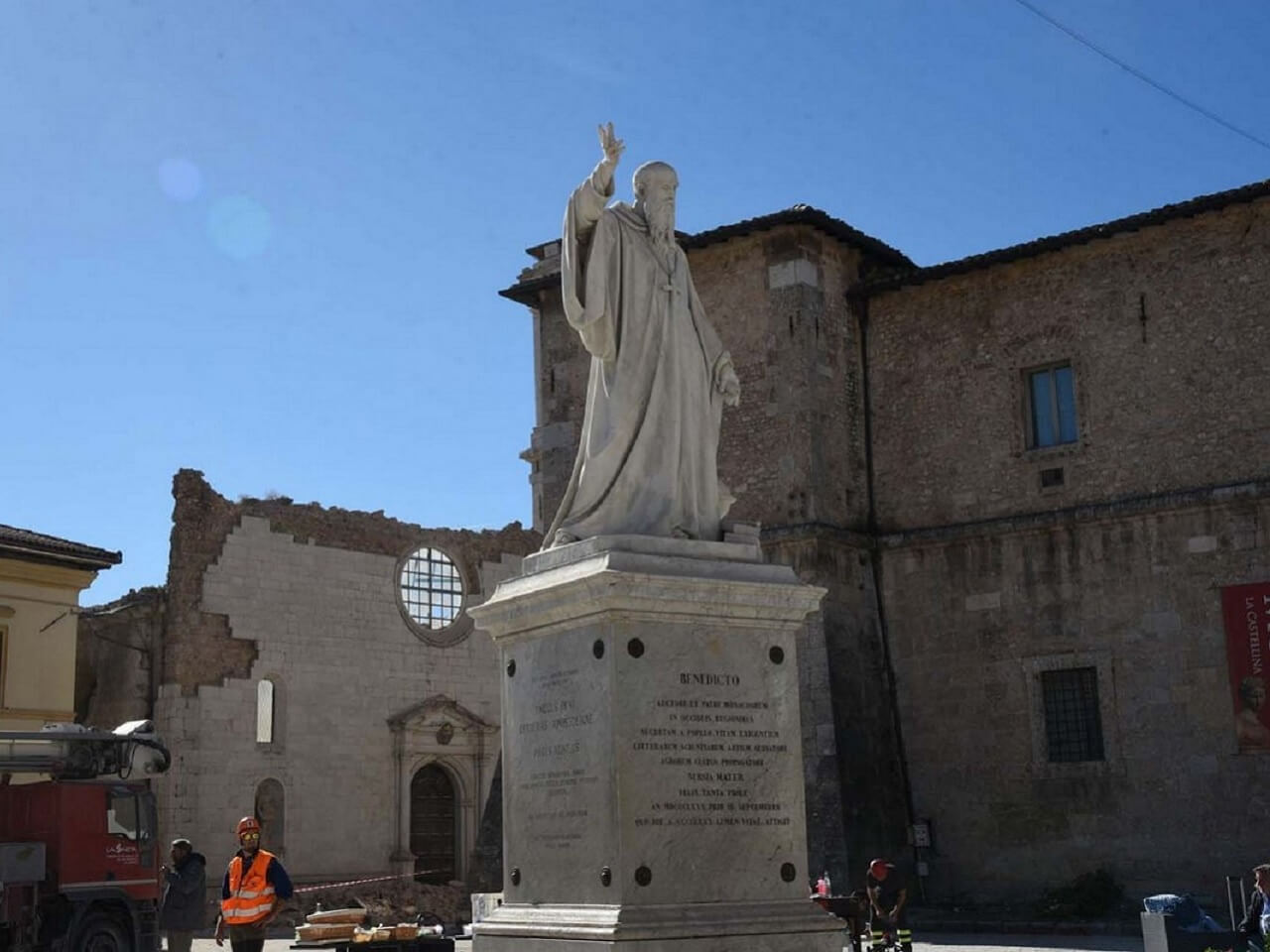
‘I discovered the beauty of the Roman Rite’: An Interview with Rev. Cassian Folsom, OSB


This interview was conducted in person during a retreat given by Fr. Cassian in Chicago for American oblates of the Benedictine monastery in Norcia. Fr. Cassian graciously allowed the author to publish a transcript of the interview.

Julian Kwasniewski: Did you want to become a monk at a young age?

Fr. Cassian: Well, not exactly. I wanted to become a priest at a young age. But I did not even hear about monks until I was in college.

JK: Really?

FC: I didn’t even know they existed. So that was a gift of God.

JK: Well, what was your first monastic experience, then? How did you first find out about monks?

FC: I was at Indiana University, as a freshman, which is only two hours from St. Meinrad. There were two monks from St. Meinrad at the university that year studying. And so I met them at the daily Mass crowd; that was my first contact with monks. Then, later, I went to St. Meinrad with some other friends on a kind of picnic, that’s all. There was obviously the action of God; it was like love at first sight. I was hooked immediately. I had already been thinking about changing my major and all that sort of thing and was interested in the seminary once again. Since St. Meinrad ran a seminary, I transferred from Indiana University to the college seminary at St. Meinrad in my sophomore year. I lived around monks…

JK: …and that was the end of it!

FC: Yes.

JK: So you were a monk at St. Meinrad’s first.

CF: That’s right.

JK: And when did you, from St. Meinrad, become involved with the founding of Norcia?

FC: I entered St. Meinrad in 1979. I was ordained in ’84, in April, and in June sent to Rome to study. So I had five years – I’m just giving a little sketch here – five years for my graduate studies in Rome. Afterward, I went back to St. Meinrad and taught for four years, then was sent back to Rome in ’93 to teach at the Benedictine University there. As I lived there at Sant’Anselmo, it became clear to me that I wanted a more authentic monastic life, because Sant’Anselmo takes sort of the lowest common denominator of all the monasteries in the world…and it’s not terribly satisfying. I had always been full of high monastic ideals and so was searching for what I should do. In 1995, a priest friend of mine, who was studying in Rome, he and I went on holiday together. It was while on the train from Rome to Naples that I received the inspiration to found a new monastery – from God, because it just came to me in a flash.

JK: Did you see something specific, like passing Norcia, or something else?

FC: No, no. I didn’t know anything about Norcia – well, I knew of its existence – but it did not enter into the picture at this point. This is 1995. I went back to St. Meinrad at Christmastime and asked the new abbot if I could make a foundation. Much to my surprise, he said, “Yes.” But it took three years for that to mature – three years of testing the spirits to see if they were from God. So it wasn’t until 1998 that the abbot primate had the project for me. He wanted to found a monastery in Rome, at Sant’Anselmo (where I still was), to care for the place and supply manpower for the Benedictine university there. So between my inspiration and the abbot primate’s desire, that’s how the monastery was founded, in Rome, in 1998. It moved to Norcia two years later because the abbot primate had a heart attack and resigned in September of 2000, and I needed to find a new solution for the life of the community because he had basically been our “protector.” At that time, the bishop of Spoleto-Norcia invited us to transfer to Norcia, to re-establish monastic life at the very birthplace of St. Benedict. So that’s how we got to Norcia, in late November of 2000.

JK: Now you were ordained in, and all your experience at St. Meinrad was in, the Novus Ordo?

FC: Correct.

JK: How, then, did you find out about the traditional Mass?

FC: Well…in a gradual way. That is, at Sant’Anselmo, as a student, I belonged to the “Latin Chapel,” as there were different language groups that prayed Lauds and Mass together every day. I gravitated toward the Latin Chapel, learning how to offer the New Mass, in Latin. I studied Latin with a famous Latinist in Rome while I was doing my other studies there, so I discovered the beauty of the Roman Rite in Latin – but the Novus Ordo – and with the chant. I also learned the chant repertoire, which is mostly the same as that of the Usus Antiquior.

And here’s another step to the Old Mass: I was very interested, because of my studies in liturgy, in the Byzantine Rite. One summer, I spent two months in Greece living in a Byzantine House of Studies, going to the Holy Mountain (Mount Athos). I was asked even to live at the Greek college in Rome, to assist there. It didn’t work out, but I was interested. Through the Byzantine Rite I discovered a different ethos of liturgy. Now, that’s important; I discovered the traditional Latin Mass through the Byzantine Rite, because of the very similar ethos.

It was not until ’93 or ’94, when I returned to Sant’Anselmo to teach, that I met a monk from Le Barroux who was also studying there. He invited me to go and visit them, and I did. It was an experience similar to the one I had at St. Meinrad in 1973 – of being just blown off my feet! When I experienced the Liturgy there, I thought, “Oh! Well, this is what it’s supposed to be like!” It was this kind of insight. A moment of insight. Extraordinarily beautiful. It just took my breath away, because of that beauty. I had already studied the orations from an academic point of view (liturgical history and all those things), so it was sort of the way of the whole thing coming together in a unit.

JK: While we are talking about beauty in the Mass, and specifically in the Old Mass, could you comment a little bit on the way that, in your experience, the celebration of Mass can be related to the verse in Scripture that says, “Enoch walked with the Lord and was seen no more, for God took him”?

FC: That’s interesting…what connection do you see there?

JK: Well, the priest as an alter Christus… How is it that in the Mass, God takes the priest, and he is seen no more? And how is this the case in the Old Mass, but not in the New?

FC: Ah, very good. That’s wonderful – that is, it is an important insight, and it is wonderful that you connect that passage with it.

JK: It’s just an odd expression…curious, one might say.

FC: You’re absolutely right. In the Old Mass, the personality of the priest does not matter. His office matters, and he and the people together are facing the Lord. Conversus ad Dominum. And for that reason the role of the priest is an objectiveone. It’s not subjective, and for that reason he disappears. That is, obviously, he is the mediator between the congregation and God, leading the congregation toward God, but because of the objectivity of the structure, he disappears. That is very salutary, because the Mass is not about the priest; it’s about God. In the Novus Ordo, because of the versus populum practice, and because of all the options of the priest inserting something like a comment, or spontaneity, the role of the priest becomes terribly subjective. Therefore, he becomes the focus of attention, so the New Mass is terribly clericalized because it’s all about the priest, as opposed to the Old Mass. And this is unfortunate.

JK: People sometimes say, “Oh, there’s too much respect paid to the priest in the Old Mass,” like all the kissings of his hands and moving things for him and things of that sort, but really the Novus Ordo, in fact, makes a much greater deal of the priest.

FC: That’s right.

JK: In Compline we have the verse: “Offer up the sacrifice of praise and trust in the Lord; for many say, Who sheweth us good things?” Can you talk about how young men today are not being shown “good things” liturgically, and how they won’t be attracted to God, to a priestly or monastic vocation, unless they see this beauty in the liturgy?

FC: The good things are abundant. The Tradition of our faith, our liturgy, our prayer, our mysticism…those good things are extraordinary and available but not presented to people, not known…forgotten, in large part. So young men don’t see those good things. They see other manifestations of the Church, which, in the practice after the Council, tend to be very horizontal and earthly oriented: “social action” and “doing good.” Well, doing good, of course, is important and good, but the transcendent is often missing. Simply “doing good” is not enough of a motivation for giving your entire life to God. That motivation has to be union with God. I think we have really cheated ourselves by abandoning that wealth of tradition, which focuses on God. It doesn’t neglect good works, for heaven’s sake! But it focuses on God.

JK: Talking about monastic life, and as one who has seen a lot of vocations – some that worked and others that didn’t – how would you reflect on the words of Christ: “Many are called, but few are chosen”? It seems mysterious; many are called but few chosen?

FC: I would interpret it this way: it is not that God calls many and then sort of sifts through them and chooses only some of those. I think it is rather, “Many are called, but few respond” – that sense of being chosen. And few respond because, like the rich young man in the Gospel, there are many things that in a superficial way seem more attractive. And if they could only experience the transcendence that we spoke of earlier, they would see another beauty. Then things would change for them.

JK: In conversation with people who attend the traditional liturgy, one hears so frequently: “Oh, I was captured by the beauty of the Mass.” But going back a little, do you remember anything of your first Mass?

FC: No, nothing. But here’s something curious: in the monastic way of looking at things, the monastic vocation is primary, and the priesthood is secondary. Now, that runs contrary to the way a lot of pious people think. That would be somewhat scandalous, perhaps. But that’s the way it is in the monastery: your monastic commitment is primary, and the priesthood is secondary. The priesthood is splendid, wonderful, but it means that the life of the monk-priest (if I can put a hyphen there) does whatever kind of work needs to be done in the monastery. He might be assigned to say Mass; he might be assigned to wash the dishes. He might be assigned to hear confessions, or he might be assigned to sweep the floor. In a certain sense, all of that is harmonious; in one sense, it does not matter. The care of souls on the part of the monk-priest is something that is integrated into his monastic life. It’s not the “be-all and end-all” of his vocation; it’s an outgrowth of the monastic charism. So there is a whole different view of the priesthood from [that of] the diocesan priesthood where it is the “be-all and end-all,” whereas for the monk, being a monk is the “be-all and end-all.”

JK: That makes sense. So, talking of this monastic vocation, according to my parents, when I was about five years old, I asked you what it was like to be a monk, and you said, “It’s wonderful!” Could you say a little bit more about this? What is the attractiveness of the monastic vocation? How it is wonderful?

FC: What’s wonderful about the monastic vocation is God, in the first place. Perhaps I could tell a little anecdote. Maybe that will describe it better. When I was a small boy, about five years old, my mother gave me a children’s Bible storybook. I was a precocious child, as you were, and could read at five years old and was happy to read this Bible storybook. So I came across this story about Exodus 3 and the burning bush. I remember reading it, because it was not dumbed down, and it was recorded, as Scripture says, what God says from the Bush: He said His Name, “I AM WHO AM.” Even as a child of five years old, I thought, “Well, nobody talks like that. That’s very strange!” I felt the wonderful attractiveness of God in that strangeness, in His revealing His Name…a very odd name. In the monastic life, there are all kinds of moments like that when you encounter the living God. That being the goal – and, as St. John Cassian describes, the indwelling of the Holy Spirit and the daily visitation of Christ in the soul – the rest of the life is ordered to that, which means asceticism and struggling with your vices and recognition of reality the way it is, and trying to order all things to the worship of God, which means beauty and music and liturgy and architecture, everything. But it is also focused on that hunger for God, that desire for God. For me, there is nothing else in the world I would rather do.

JK: So the monastic life – the heart of it – is the daily visitation of God. And there’s nothing that gets better than that in life!

FC: Yes. It’s a great summary.

{ One does not have to become a monk to encounter God in the Traditional Latin Mass; just find a church were the Traditional Latin Mass is celebrated and go to Mass there regularly.}

Posted in Uncategorized | Comments Off on IT IS EASIER TO ENCOUNTER GOD IN THE TRADITIONAL LATIN MASS THAN IN THE NOVUS ORDO MASS WHERE TOO OFTEN THE PRIEST GETS IN THE WAY RATHER THAN FACILITATE THE ENCOUNTER

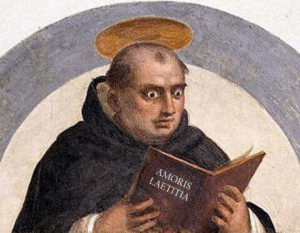
PHOTO OF SAINT THOMAS AQUINAS READING AMORIS LAETITIA

image


hat tip: ed hummel

Posted in Uncategorized | 3 Comments

THOSE WHO DENY THE EXISTENCE OF HELL ARE DESTINED TO DISCOVER, TO THEIR EVERLASTING REGRET, THAT IT EXISTS

The Reality of Hell and the Fear of God: Banished from a Church Near You

OnePeterFive
EmailPocketGoogle+

In my article “The Fifty-Year Descent to Footnote 351: Our Progressive Desensitization to the Most Holy Eucharist,” I spoke of how the liturgical reform’s many sudden and drastic changes in ritual and ceremonial have contributed to a continual erosion of belief in the Mass as a true and proper Sacrifice and in the Real Presence of Our Lord in the Blessed Sacrament. In the present article, I wish to look at a closely related topic, namely, how the holy fear of God, which begins in the dreading of His just punishments for sin and matures into love of Him for His own sake and a desire to dwell with Him forever in heaven, has been undermined by the systematic removal of texts from the liturgy concerning the reality of hell and our need for vigilance and self-denial in order to steer clear of it.

There are many articles that show how radically the prayers were altered in the missal of the Novus Ordo, whether to downplay the subordination of earthly to heavenly things (as, for instance, with St. Albert), or to “purge the mythical element” (as with St. Catherine), or to avoid addressing Christ directly as God (as occurred in Advent), or to downplay the kingship of Christ over societies and governments (as with the reinvention of Christ the King). The list goes on and on, as Lauren Pristas, Anthony Cekada, and other authors have shown. Here, my purpose is more modest: I will focus on texts that mention hell, and we will see how they have fared in the time between the 1962 Missale Romanum and its intended replacement of less than a decade later.

The Requiem Mass

The most obvious and eloquent testimony to the Church’s doctrine about the Four Last Things (death, judgment, heaven, and hell, as well as their adjunct, purgatory) is the traditional Requiem Mass, which was prayed in the Latin Rite for so many centuries unchanged and is still used wherever the Latin Mass flourishes. The Requiem Mass organically developed in such a way that there is a balance in its texts between, on the one hand, consolation and confidence in heaven, and, on the other hand, the fear of punishment with prayers for the rescuing of the soul from hell. It is simply catholic in this regard, taking into account the fullness of Gospel teaching about the afterlife. Needless to say, all of these texts must be recited or sung at every Requiem Mass—nothing is “optional,” just as neither are death, judgment, and an eternal destiny of bliss or pain optional.

The Requiem is certainly not lacking in consoling or confident prayers. Look at the Introit, the Epistle (1 Thess 4:13–18), the Gradual (Ps 111:7), the Gospel (John 11:21–27), the Secret, the Communion, and the Postcommunion: all of these ask for a merciful pardon and eternal rest, and express confidence that the soul with faith in Christ “will be in everlasting remembrance” and “not fear the evil hearing” (Gradual). The Tract seems to waver between light and darkness:

Absolve, O Lord, the souls of all the faithful departed from every bond of sin: and by the help of Thy grace, may they be enabled to escape the avenging judgment and enjoy the happiness of light eternal.

The Sequence, the famous “Dies Irae,” gives free rein to terrifying and trembling truths:

The day of wrath, that awful day, shall reduce the world to ashes, as David and the Sibyl prophesied. How great will be the terror, when the Judge shall come to examine all things rigorously! … The written book shall be brought forth, containing all for which the world must be judged. When, therefore, the Judge shall be seated, whatsoever is hidden shall be brought to light, naught shall remain unpunished. What then shall I, unhappy man, allege? Whom shall I invoke as protector, when even the just shall hardly be secure? O King of awful majesty, who of Thy free gift savest them that are to be saved, save me, O fount of mercy! … My prayers are not worthy, but Thou who art good, grant in Thy kindness that I may not burn in the everlasting fire. Give me a place among Thy sheep and separate me from the goats, setting me on Thy right side. When the reprobate, covered with confusion, shall have been sentenced to the cruel flames, call me with the blessed.

The Offertory continues in a similar vein:

O Lord Jesus Christ, King of glory, deliver the souls of all the faithful departed from the pains of hell and the bottomless pit. Deliver them from the jaws of the lion, that hell not swallow them up, that they be not plunged into darkness. But let the holy standard-bearer Michael lead them into that holy light, R. which once Thou didst promise to Abraham and to his seed. V. Lord, we offer unto Thee sacrifices of praise and prayers; accept them on behalf of those whom we remember this day: Lord, make them pass from death to life, R. which Thou once promised to Abraham and to his seed.[1]

Perhaps most telling of all is the Collect appointed for the day of death or burial:

O God, whose property is ever to have mercy and to spare, we humbly entreat Thee on behalf of thy servant N., whom Thou hast bidden this day to pass out of this world, that Thou wouldst not deliver him into the hands of the enemy, nor forget him forever, but command that he be taken up by Thy holy angels and borne to the fatherland of paradise; that as he put his hope and faith in Thee, he will not suffer the pains of hell, but may possess everlasting joys.

These are strong prayers that deal unabashedly with the gaping jaws of hell and the possibility that we may be consumed by them for unrepented sins. The gates of hell will not prevail against the Church; but they may very well prevail against you or me.

Such a liturgy presents the whole of the Catholic Faith. Once again: lex orandi, lex credendi. We believe as we pray. And what we do not pray, we will sooner or later cease to believe—it will be replaced by ersatz doctrine of dubious pedigree.

The Witness of the Lex Orandi

A wholesome recognition of eternal consequences may be seen in any number of places in the traditional Roman missal. Here is the Collect for the feast of St. Nicholas on December 6:

O God, who didst adorn the blessed Bishop Nicholas with countless miracles: grant, we beseech Thee, that by his merits and prayers we may be delivered from the flames of hell.

(In the Novus Ordo, this has been tamed into: “We humbly implore your mercy, Lord: protect us in all dangers through the prayers of the Bishop Saint Nicholas, that the way of salvation may lie open before us.”)

The Friday of Passion Week includes this galvanizing Collect:

Mercifully pour forth, we beseech Thee, O Lord, Thy grace into our hearts: that we who restrain ourselves from sin by voluntary chastisement may rather suffer for a time than be condemned to eternal punishment.

The Collect for the Mass of Maundy Thursday speaks with clarity about the fate of Judas:

O God, from whom Judas received the punishment of his guilt, and the thief the reward of his confession: grant unto us the full fruit of Thy clemency; that even as in His Passion our Lord Jesus Christ gave to each retribution according to his merits, so having cleared away our former guilt, he may bestow on us the grace of His resurrection.

The Second Sunday after Easter prays in its Collect:

O God, who, by the humility of Thy Son, hast lifted up a fallen world, grant unending joy to Thy faithful; that those whom Thou hast snatched from the perils of endless death, Thou mayest cause to enjoy neverending delights.

The Third Sunday after Pentecost offers one of those magnificent Collects that says so much in so few words, and can be prayed with fervor by anyone who has the slightest self-knowledge:

O God, the protector of all that trust in Thee, without whom nothing is strong, nothing is holy, multiply Thy mercies upon us: that having Thee for our ruler and guide, we may so pass through things temporal, that we finally lose not those which are eternal.

Of course, the only Eucharistic Prayer ever used in the usus antiquior is the 6th-century Roman Canon, which forthrightly implores the Divine Majesty:

We beseech Thee, O Lord, to be appeased and accept this oblation of our service, as also of Thy whole family, and to dispose our days in Thy peace, snatch us from eternal damnation, and count us in the flock of Thine elect.

In addition, one could cite pertinent verses from the Sequences Stabat Mater and Lauda Sion, which, while still given as options in the Novus Ordo, are generally skipped over, due to length; they are, as usual, required in the old Latin Mass on certain days of the year.

Gentle reader, would you believe me if I said that none of the foregoing liturgical texts have survived the liturgical reform? But it is true. In some cases, the texts were removed altogether and can be found nowhere in the new books. In other cases, certain texts (such as the Offertory of the Requiem) can be found in a recondite and rarely-used book like the Graduale Romanum, or tucked away as a fourteenth option somewhere, but in practice they have disappeared from the life of the Church. The only place they thrive is where they are front and center as a required part of her public worship, namely, in communities that avail themselves of the traditional liturgy.

“The Word of God is Not Chained” (2 Tim 2:9) 

Beyond such prayers, hell is mentioned many times each year in the Gospel readings of the traditional Latin Mass, which, thankfully, retains the ancient one-year cycle of readings, rather than the gargantuan off-rhythm two- and three-year cycles of the Novus Ordo. In the usus antiquior, the solemn pronouncement of Our Lord in chapter 12 of the Gospel of St. Luke—“I say to you, my friends: Be not afraid of them who kill the body, and after that have no more that they can do. But I will shew you whom you shall fear: fear ye him, who after he hath killed, hath power to cast into hell. Yea, I say to you, fear him”—is read at least four times in the year, namely, for the feast of St. Justin Martyr (April 14), SS. John and Paul (June 26), the Holy Maccabees (August 1), and SS. Tiburtius and Susanna (August 11), as well as any other time the common of several martyrs might be used. In comparison, this passage is read onceevery other year in the Novus Ordo. The parallel passage in chapter 10 of the Gospel of St. Matthew—“And fear ye not them that kill the body, and are not able to kill the soul: but rather fear him that can destroy both soul and body in hell”—is read for four feasts, those of St. Polycarp (January 26), St. Cyril of Jerusalem (March 18), St. Athanasius (May 2), and St. Irenaeus (July 3). In the Novus Ordo, it is read on one Saturday each year, and one Sunday every third year.

Matthew 5:22, “Whosoever shall say, Thou Fool, shall be in danger of hell fire,” is part of the Gospel on the Fifth Sunday after Pentecost. In the Novus Ordo, this fortunately appears two weekdays per year, and one Sunday every third year. The pericope of Matthew 18:1–10, which includes these haunting words—

Woe to the world because of scandals. For it must needs be that scandals come: but nevertheless woe to that man by whom the scandal cometh. And if thy hand, or thy foot scandalize thee, cut it off, and cast it from thee. It is better for thee to go into life maimed or lame, than having two hands or two feet, to be cast into everlasting fire. And if thy eye scandalize thee, pluck it out, and cast it from thee. It is better for thee having one eye to enter into life, than having two eyes to be cast into hell fire.

—is read at least twice each year in the usus antiquior, namely, for the Dedication of St. Michael Archangel (September 29) and the Holy Guardian Angels (October 2). In the Novus Ordo, astonishingly, these verses are never read at all: the “friendly” verses 1–5, 10, and 12–14 are read a number of times, but the above-cited verses about hell-fire are excised. Too scary, I guess.

If I have done the math correctly, over a three-year period, one who attends the traditional Latin Mass daily will hear these particular hell-mentioning Gospels 33 times, while one who attends the Novus Ordo will hear them 13 times.[2]Obviously, there are a lot of other factors one would need to take into account for a full comparison of the presentation of the four last things in both forms of the Roman Rite, a project that exceeds the purpose of this article. Nevertheless, the comparison just given already exposes the kind of deep differences in lex orandi that I am claiming are relevant for understanding the confusion of our times in doctrine (lex credendi) and morals (lex vivendi).[3]

Spiritual Consequences for the Faithful

We have seen that the traditional liturgy prays for the living and the dead in a realistic manner and instructs us accordingly, emphasizing the mercy of God and the attainability of eternal life but not neglecting the Lord’s “avenging judgment” and the real possibility of damnation. The liturgy inculcates in us a lively awareness of our weakness and dependency on grace, the gravity of sin, the need for penance and asceticism, and the fundamental role that fear of the Lord must play in our interior life. The basic attitude of the worshiper is the one praised by the Psalmist: “Serve ye the Lord in fear, and rejoice before Him with trembling” (Ps 2:11).[4]

Instructed by the Mass of the Ages and other liturgical texts,[5] we believe that (a) not everyone automatically goes to heaven, (b) there is an almighty, all-knowing, all-just Judge who will scrutinize our works and give us what we ourselves have sought in our choices—whether glory or shame, beatitude or damnation; (c) the departed soul desperately needs our prayers because we wish them to be released from the agonies of purgatory, and one of the ways that happens is when members of the Church Militant offer prayers and penances for the dead.

Our actions in this life have eternal consequences, for good or for ill. One of those actions we must discern is whether we are living right now in accordance with the commandments of God, especially the Ten Commandments. This is not an optional examination of conscience for the extra-pious but a required examination for every human being who has reached the use of reason. In other words, no one may excuse himself before the Judge by saying: “I didn’t know I was supposed to examine my conscience on whether or not I was adhering to the Ten Commandments.” There are some things no one can be blamed for not knowing if they were never told, but there are other things—the natural moral law, in particular—that we are obliged to know and are capable of knowing. Moreover, the Catholic, having examined his conscience in this manner, must make a discernment about whether he is in a state of sanctifying grace, that he may approach the heavenly Banquet to receive the wounded and glorified Flesh of the Savior. This, after all, is the teaching of no less an authority that the Apostle St. Paul in 1 Corinthians 11:27–29:

Whosoever shall eat this bread, or drink of the chalice of the Lord unworthily, shall be guilty of the Body and of the Blood of the Lord. But let a man prove himself; and so let him eat of that bread, and drink of the chalice. For he that eatheth and drinketh unworthily, eateth and drinketh judgment to himself, not discerning the Body of the Lord.

But these verses, too, have been entirely omitted from the Novus Ordo. One begins to detect a pattern in all of this. The frightening fact, ladies and gentlemen, is that the Novus Ordo systematically downplays the reality of hell.[6]

The virtual disappearance of certain liturgical prayers and readings, and the significant reduction of others, is surely part of the reason, arguably the principal reason, that today’s Catholics are inclined to hold both universal salvation AND an “everyone is welcome” attitude about who may receive Holy Communion. The one view fits the other hand-in-glove.

The Amoris Laetitia debacle can be solved only when there is a broad return to traditional (i.e., Catholic) teaching on all of these subjects. The restoration of this teaching depends for its penetration, efficacy, and longevity on zealous adherence to traditional liturgies (Eastern and Western) where they already flourish, and their complete restoration wherever they do not. As far away as this goal seems, we must never tire of pursuing it, for the bond that unites the lex orandi, the lex credendi, and the lex vivendi is intrinsic, indissoluble, and inevitable.


NOTES

[1] Incidentally, the great antiquity of this Offertory is evident in a number of features. First, it preserves the form of a responsory, which was the original form of all the offertory antiphons. As time went on, the other offertory chants were shortened, but this one always remained in full. (The original verses for other Offertory chants are available in the Offertoriale published by Solesmes.) Second, its Old Testament resonances are characteristic of the classic prayer of the Roman Church, in particular the mention of the promise to Abraham and to his seed (i.e., Christ, as St. Paul teaches in Galatians), and the use of the phrase “sacrifice of praise,” which is how the 6th-century Roman Canon describes the Eucharistic oblation. We are peering here into the very heart of the Roman Catholic liturgy.

[2] The numbers I am adding together are (4+4+4)+(4+4+4)+(1+1+1)+(2+2+2) for the usus antiquior Gospels, and (1+0+1)+(1+1+2)+(2+2+3)+(0+0+0) for the Novus Ordo.

[3] The ideal study aid for this question is Matthew P. Hazell’s Index Lectionum: A Comparative Table of Readings for the Ordinary and Extraordinary Forms of the Roman Rite (n.p.: Lectionary Study Press, 2016). My Foreword to this volume goes into a number of other disturbing aspects of the revised lectionary. Recently I wrote about the significance of the fact that the Gospel of the wedding feast at Cana is read every year in the traditional Mass (Second Sunday after Epiphany) but only once every three years in the Novus Ordo (Second Sunday of Ordinary Time, Year C).

[4]St. Augustine comments on this verse: “Serve the Lord with fear, lest what is said, You kings and judges of the earth,turn into pride: And rejoice with trembling. Very excellently is rejoice added, lest serve the Lord with fear should seem to tend to misery. But again, lest this same rejoicing should run on to unrestrained inconsiderateness, there is added with trembling, that it might avail for a warning, and for the careful guarding of holiness.”

[5] Such as the Athanasian Creed Quicumque vult, whose opening words are like a throwing-down of the gauntlet to indifferentism and universalism: “Whosoever will be saved, before all things it is necessary that he hold the catholic faith. Which faith except every one do keep whole and undefiled; without doubt he shall perish everlastingly.”

[6] We often see the same thing in the dumbed-down versions of traditional prayers that are used in many catechism classes today. I came across an Act of Contrition in a CCD classroom that read more or less as follows: “My Lord, I am sorry for my sins. Help me to live like Jesus and to love everyone I meet. Amen.” A prayer of this sort does not adequately express either perfect or imperfect contrition. Contrast it with one of the traditional versions of the Act of Contrition: “O my God, I am heartily sorry for having offended Thee, and I detest all of my sins, because I dread the loss of heaven and the pains of hell, but most of all because these sins have offended Thee, my God, who art all good and deserving of all my love. I firmly resolve, with the help of Thy grace, to do penance, to sin no more, and to avoid whatever leads me to sin. Amen.”

Posted in Uncategorized | 5 Comments

HERE IS TODAYS DOSE OF SATIRE TO HELP YOU COPE WITH THE MADNESS IN THE CHURCH AND WORLD

 Pope Francis and Vincent Nichols
 Cardinal Vincent Nichols and Friend

Eccles and Bosco is saved


I’ll be the Eminence Grey, sir!

Posted: 17 Jan 2018 04:09 PM PST

To celebrate Cardinal Vincent Nichols’s recent complete and utter silence on moral issues such as abortion, and his new support of the dissident organization Quest, we have rewritten a classic song in his honour.Any resemblance between the following song and the “Vicar of Bray” (words and historical background here, and a sung version here) is purely deliberate.

In good Pope Pius' golden days,
When I was just a laddie,
I knew that if I wanted power,
I'd have to be a traddy.
At football matches I wore red,
Dressed in the finest satin.
In Liverpool they speak broad Scouse,
But I spoke classic Latin.

And this is law, I will maintain
Unto my dying day, Sir.
That whatsoever Pope may reign,
I'll be the Eminence Grey*, Sir!

*Eminence Grise, a person of great power.

Pius XII

“That kid’s up to no good.”

When John the saintly came to rule
And called a great assembly,
I really thought "Oh, this is dull,
I'd rather be at Wembley!"
The Council's rush for drastic change
I could not but acknowledge,
So feeling "cool" and "modern", I
Went to the English College.

And this is law...

When Paul the Sixth possessed the throne
Amidst reforms spectacular
I dropped my Latin, and soon learnt
To pray in the vernacular.
And as the liberals seized the church
I grew each day much bolder.
I got ordained and offered Mass
With God behind my shoulder.

And this is law...

John XXIII and Paul VI

“Watch out, that young chap is up to no good.”

John Paul the first did not stay long
But soon we got the Second:
Quite orthodox was I just then
And soon preferment beckoned.
From Westminster (auxiliary)
To Birmingham translated -
As Archbishop, I knew that now
For greatness I was slated.

And this is law...

When Benedict became the Pope,
He thought I was inspiring,
To Westminster he sent me then
Since Cormac was retiring.
Summ-or-um Pont-i-fic-um now
Meant Us-us An-ti-qui-or.
It caused most liberals, like me
Despair, regret and fear.

But this is law...

John-Paul II and Benedict XVI

“Watch out, he’s up to no good.”

At last they drove old Ben away.
Pope Francis came, and said that
To mark the year of Mersey, now
I'd get my longed-for red hat.
I praised the clarity and style
Of good Pope Francis' preaching,
Though soon the outraged world found out
He'd dropped all ancient teaching.

And this is law...

Pope Francis and Vincent Nichols

Any time you feel like retiring…

So now I have run through the list
Of popes I've had to follow,
And if I don't become the next,
Then life will seem quite hollow.
For Quest and ACTA I support,
I let "gay" masses flourish,
And this is what you'll get from me
When e'er Pope Francis perish.

Still, this is law, I will maintain
Unto my dying day, Sir.
That whatsoever Pope may reign,
I'll be the Eminence Grey, Sir!

Posted in Uncategorized | Comments Off on HERE IS TODAYS DOSE OF SATIRE TO HELP YOU COPE WITH THE MADNESS IN THE CHURCH AND WORLD