-
Join 1,479 other subscribers
Archives
- April 2025
- March 2025
- February 2025
- January 2025
- December 2024
- October 2024
- September 2024
- August 2024
- July 2024
- June 2024
- May 2024
- April 2024
- March 2024
- February 2024
- January 2024
- December 2023
- November 2023
- October 2023
- September 2023
- August 2023
- July 2023
- June 2023
- May 2023
- April 2023
- March 2023
- February 2023
- January 2023
- December 2022
- November 2022
- October 2022
- September 2022
- August 2022
- July 2022
- June 2022
- May 2022
- April 2022
- March 2022
- February 2022
- January 2022
- December 2021
- November 2021
- October 2021
- September 2021
- August 2021
- July 2021
- June 2021
- May 2021
- April 2021
- March 2021
- February 2021
- January 2021
- December 2020
- November 2020
- October 2020
- September 2020
- August 2020
- July 2020
- June 2020
- May 2020
- April 2020
- March 2020
- February 2020
- January 2020
- December 2019
- November 2019
- October 2019
- September 2019
- August 2019
- July 2019
- June 2019
- May 2019
- April 2019
- March 2019
- February 2019
- January 2019
- December 2018
- November 2018
- October 2018
- September 2018
- July 2018
- June 2018
- May 2018
- April 2018
- March 2018
- February 2018
- January 2018
- December 2017
- November 2017
- October 2017
- September 2017
- August 2017
- July 2017
- June 2017
- May 2017
- April 2017
- March 2017
- February 2017
- January 2017
- December 2016
- November 2016
- October 2016
- September 2016
- August 2016
- July 2016
- June 2016
- May 2016
- April 2016
- March 2016
- February 2016
- January 2016
- December 2015
- November 2015
- October 2015
- September 2015
- August 2015
- July 2015
- June 2015
- May 2015
- April 2015
- March 2015
- February 2015
- January 2015
- December 2014
- November 2014
- October 2014
- September 2014
- August 2014
- July 2014
- June 2014
- May 2014
- April 2014
- March 2014
- February 2014
- January 2014
- December 2013
- November 2013
- October 2013
- September 2013
- August 2013
- July 2013
- June 2013
- May 2013
- April 2013
- March 2013
- February 2013
- January 2013
- December 2012
- November 2012
- October 2012
- September 2012
- August 2012
- July 2012
- June 2012
- May 2012
- April 2012
- March 2012
- February 2012
- January 2012
- December 2011
- November 2011
- October 2011
- September 2011
- August 2011
- July 2011
- June 2011
- May 2011
- April 2011
- March 2011
- February 2011
- January 2011
- December 2010
- November 2010
- October 2010
- September 2010
- August 2010
- July 2010
- June 2010
- May 2010
- April 2010
- March 2010
- February 2010
- January 2010
- December 2009
- November 2009
- October 2009
- September 2009
- August 2009
- July 2009
- June 2009
- May 2009
-
Recent Posts
- REFLECTIONS BY VICTOR DAVIS HANSON ON THE COUNTER-REVOLUTION
- The Church’s conscience must always be clear in examining any conflict between the Divine and natural law when justifying the acceptance of government aid and largesse.
- THE PATRIOT POST SCORES AGAIN
- THIS IS TOO IMPORTANT FOR YOU TO NOT READ IT
- MY LAST COMMENT ON THIS!!!
Top Posts & Pages
- SAINT PATRICK NEEDS TO COME AND CHASE THE SNAKES OUT OF NEW YORK
- THE IMAGE OF OUR LADY OF GUADALUPE POSES SUCH A THREAT TO ATHEISTS THAT THEY WILL GO TO EXTRAORDINARY LENGTHS TO DISCREDIT IT
- WHY IS ALMOST EVERYTHING OUT OF CONTROL?
- AN ORDINARY'S NOT SO ORDINARY LIFE, CHAPTER NINETEEN
- FRANCIS EXCOMMUNICATED ???
- MEOW!
- WASH ONLY THE FEET OF MEN, CATHOLIC MEN, MEN WHO WITNESS TO THE CATHOLIC FAITH
- The Church, when stating some doctrine, also formulates it in a negative way, in the form of an “anathema”, i.e., explicitly condemning the opposite error, this is something Francis does not do.
- ROME HAS JUST ANNOUNCED THAT BLESSED CARDINAL JOHN HENRY NEWMAN WILL SOON BE CANONIZED. IT IS ABOUT TIME, MUCH OF WHAT NEWMAN WROTE HAS PROVIDED THOSE OF US WHO ARE FAMILIAR WITH HIS WRITINGS WITH HOPE FOR THE CHURCH IN THIS TIME OF CRISIS. THAT IS ESPECIALLY TRUE OF WHAT HE WROTE ABOUT THE Arian heresy OF THE THIRD CENTURY. "THERE WAS A TIME IN THE LIFE OF THE CHURCH WHEN THE BISHOPS OF THE CHURCH WERE, WITH FEW EXCEPTIONS, ARIAN HERETICS OR SEMI-HERETICS."
- WHAT IT MEANS TO ENACT BIDEN'S ATTACK ON OUR OIL INDUSTRY
Top Clicks
YOU MAY FIND A FEW REAL MEN IN NEWSROOMS, BUT IF YOU WANT TO FIND A LOT OF REAL MEN GO TO HOUSTON NOW
Let this sink in for a minute…..Hundreds and hundreds of small boats pulled by countless pickups and SUVs from across the South are headed for Houston. Almost all of them driven by men. They’re using their own property, sacrificing their own time, spending their own money, and risking their own lives for one reason: to help total strangers in desperate need.
Most of them are by themselves. Most are dressed like the redneck duck hunters and bass fisherman they are. Many are veterans. Most are wearing well-used gimme-hats, t-shirts, and jeans; and there’s a preponderance of camo. Most are probably gun owners, and most probably voted for Trump.
These are the people the Left loves to hate, the ones Maddow mocks. The ones Maher and Olbermann just *know* they’re so much better than.
These are The Quiet Ones. They don’t wear masks and tear down statues. They don’t, as a rule, march and demonstrate. And most have probably never been in a Whole Foods.
But they’ll spend the next several days wading in cold, dirty water; dodging gators and water moccasins and fire ants; eating whatever meager rations are available; and sleeping wherever they can in dirty, damp clothes. Their reward is the tears and the hugs and the smiles from the terrified people they help. They’ll deliver one boatload, and then go back for more.
When disaster strikes, it’s what men do. Real men. Heroic men. American men. And then they’ll knock back a few shots, or a few beers with like-minded men they’ve never met before, and talk about fish, or ten-point bucks, or the benefits of hollow-point ammo, or their F-150.
And the next time they hear someone talk about “the patriarchy”, or “male privilege”, they’ll snort, turn off the TV and go to bed.
In the meantime, they’ll likely be up again before dawn. To do it again. Until the helpless are rescued. And the work’s done.
They’re unlikely to be reimbursed. There won’t be medals. They won’t care. They’re heroes. And it’s what they do.
Posted in Uncategorized
5 Comments
THE COUNTER REVOLUTION IS UNDERWAY RIGHT ON SCHEDULE
Bishop Edward Slattery of Tulsa, Oklahoma celebrates a Solemn High Mass in the Old Rite at the Basilica of the National Shrine of the Immaculate Conception in Washington, DC (CNS photo/Matthew Barrick)
The kids are old rite
Young Catholics feel they have been denied their inheritance. Where do they go from here?
Last week, in a speech to Italian liturgists, Pope Francis appeared to set in stone the liturgical changes that came at the time of Vatican II. “After this magisterium, after this long journey,” he said, “we can affirm with certainty and with magisterial authority that the liturgical reform is irreversible.” Liberal commentators celebrated his comments as a blow to the “the re-emergence of a certain neo-clericalism with its formalism” and rejoiced that the “restorationist movement in liturgy is being reversed”.
Liberals have reason to be glad: Francis has shown that he is sympathetic to their desire for a liturgy that feels more like a communal meal than an ancient sacrifice. But does Francis’s declaration mean that after millennia of development liturgical evolution has arrived at a final state and now must stop?
In a word, no. One might as well magisterially declare that spilt milk can’t be put back in the carton, or dogmatically define that Humpty Dumpty can’t be reassembled, as proclaim that liturgical reform cannot be reversed. It is like proudly stating that one cannot undo a grave mistake. The observation is incontestable, even if shame would be preferable to boasts. The question is not whether we can undo past blunders, but rather how to clean up the mess.
Francis’ remarks are yet another sign of his anxiety over the traditional direction in which young Catholics are carrying the Church. We have seen this before, in the stories he tells about young priests who shout at strangers and play dress-up, unlike the wise, old, compassionate (and liberal) monsignori. Francis has played variations of John Lennon’s Imagine: “We are grandparents called to dream and give our dream to today’s youth: they need it.” Maybe so, but the youth do not seem to want it.
As any young progressive or old traditionalist will tell you, age does not dictate whether one prefers dogma or liberty, ritual or casualness. Yet across much of the Catholic world, young traditionalists are competing against old progressives. Ironies abound, as youths who revere the venerable face off against elders who chase the up-to-date, and progressives who fear the future battle with traditionalists who loathe their immediate forebears.
Anyone who doubts the reality of the conflict should visit a monastery or convent, where young monastics will almost invariably be more traditional than their elders. In France, in 20 years’ time a majority of priests will celebrate exclusively the traditional Latin mass. Wherever one looks, the kids are old rite.
Few have spoken as eloquently about the changes the Church is undergoing as Fr René Dinklo, provincial of the Dutch Dominicans, and the only member of his order from Generation X. One of Fr Dinklo’s earliest memories is of a confessional filled with the drums used by the youth choir. By the time he joined the order in the early 1990s, the Dutch Dominicans had discarded their traditional prayers and come to believe that the order would be transformed into an assembly of laymen. He had reason to think he would be the last priest in a province that had lasted for 500 years.
Then the province began to get vocations. The young Dutch Dominicans were eager to reconstitute the forms of life and prayer their elders had dismantled. “We are on the brink of far-reaching changes,” Fr Dinklo observed last year. “In this situation tensions between generations may arise.” The younger men want to wear the habit and “re-discover a number of religious practices, rituals, forms of singing and prayer from the tradition which the older generation has set aside”. In order to avoid generational conflict, these young men are being established in a new house.
In a 2010 address, Archbishop Augustine DiNoia described the experiences of these young traditionalists. “My sense is that these twenty- and thirty-somethings have been radicalised by their experience … in a way that we were not.” After “God-knows-what kinds of personal and social experiences”, they have come to know “moral chaos, personally and socially, and they want no part of it”. A sense of narrow escape guides their vocations. “It is as if they had gone to the edge of an abyss and pulled back.”
DiNoia’s generation sought to unite the Church and the world, but the young priests believe the two are finally opposed. “It may be hard for us to comprehend, but these young people do not share the cultural optimism that many of us learned to take for granted in the post-conciliar period.” They lament the “Church’s own internal secularisation”, particularly “the disenchantment of the liturgy”. This explains their enthusiasm for the 1962 missal.
DiNoia is anxious for the priests of his generation. Despite their talk of being open to the future, “I am not certain that we … are entirely ready for the kind of radical rejection of the ambient culture on the one hand, and, on the other, the radical commitment to the Dominican-Catholic alternative way of life that we recognise in the young men.”
Many young Catholics feel that they have been denied an inheritance that was rightly theirs. They have had to reassemble piecemeal something that should have been handed to them intact. An English academic recently told me of his attempt to obtain a copy of the Dictionnaire de théologie catholique, a reference book that went from impeccable authority to liber prohibitus at the time of the Council. He contacted a Belgian who helped declining religious houses dispose of their libraries. This Belgian found a Franciscan community that was willing to sell its set – but at the last moment took a different course. The monks decided to burn the books, “to prevent them getting into the hands of traditionalists”.
Who are these terrifying young traditionalists? Step into a quiet chapel in New York and you will find an answer. There, early each Saturday morning, young worshippers gather in secret. They are divided by sex: women on the left, men on the right. Dressed in denim and Birkenstocks, with the occasional nose piercing, they could be a group of loiterers on any downtown sidewalk. But they have come here with a purpose. As a bell rings, they rise in unison. A hooded priest approaches the altar and begins to say Mass in Latin. During Communion, they kneel on the bare floor where an altar rail should be.
In a city where discretion is mocked and vice goes on parade, the atmosphere of reverence is startling. These Masses began a year ago, when a young priest finally gave in to the young worshippers’ demands. They wanted the traditional Mass; he feared offending older colleagues who loathe it. This secret conventicle was the compromise. Advertised by word of mouth among students and young professionals, it has slowly grown.
After the Last Gospel, the worshippers break their fast nearby with coffee. I ask one how she started coming here. “I’ve been going to Mass for 24 years,” she says. “I still go to both forms, but when I encountered the Latin Mass it felt more reverent. I was taken out of this world.” Her manner is disarming, her dress contemporary and unassuming. As the conversation drifts into a discussion of why Pius IX was right in the Mortara case, I reflect that she is the kind of person image-conscious Catholics would like to hold up as the Church’s future – were she not so drawn to its past.
Matthew Schmitz is senior editor of First Things and a Robert Novak Journalism Fellow
This article first appeared in the September 1 2017 issue of the Catholic Herald. To read the magazine in full, from anywhere in the world, go here
Posted in Uncategorized
Comments Off on THE COUNTER REVOLUTION IS UNDERWAY RIGHT ON SCHEDULE
IS GOING T0 CONFESSION A PROBLEM FOR YOU? READ ON…
Anneka | Shutterstock
The seal of confession: What it is and why it should be protected
Fr. Christopher Seiler | Sep 02, 2017The seal of confession is among a priest’s chief weapons in thwarting Satan’s plot.
The late Cardinal Francis George of Chicago once called the encounters that take place within the sacrament of Penance “the most important conversations on the planet.” He was right. The most important conversations in our world don’t happen in boardrooms or courtrooms. They are not in the oval office or in the chambers of parliament. They transpire in the confessional.
.
.
These conversations effect the salvation of the human race. In these meetings the power of the Blood of Jesus transforms contrite sinners into saints. Because something of infinite worth occurs in confession, it requires a unique level of protection. This is what the Church calls the seal of confession.
.
.
In the early Church, the sacrament of Reconciliation was administered communally; grave sinners would confess their sins publicly and take on necessary acts of satisfaction in order eventually — sometimes after months or years of penance — to be reconciled to God and His Church.
.
.
As the Church grew, Her ecclesial rites developed. While public penance continued, confession of particular sins would often take place in private. In the 4th century, St. Ambrose was praised for his role as a discreet minister of mercy with these words:
“Of the transgressions, however, which the penitent confessed, he spoke to no one but God, with whom he interceded, leaving a beautiful example to future priests, that they should be intercessors before God rather than accusers before men.”
.
.
A century later, Pope St. Leo the Great famously condemned the practice of reading out the lists of sins committed by those taking on public penance. The Church’s saints understood that the sins spoken to God in the privacy of confession must be sealed by supernatural secrecy.
.
.
Towards the end of the 6th century, St. Columban and his fellow missionary monks popularized the practice of private penance. As private confession became the norm across Christendom, the privileged secrecy of sacramental conversations became formalized. By the start of the second Christian millennium, the Church’s law set forth grave consequences for priests who would reveal the sins of penitents to others.
In 1215, the Fourth Lateran Council taught:
“For whoever shall dare to reveal a sin disclosed to him in the tribunal of penance we decree that he shall be not only deposed from the priestly office but that he shall also be sent into the confinement of a monastery to do perpetual penance.”
.
.
Some 800 years later, the Church still assiduously protects the seal, punishing any priest that would break it with excommunication. These grave consequences flow from the supreme importance of the sacrament of Confession.
.
.
And who grants it such importance? The Lord Jesus Himself, who came to seek and save those who are lost (Luke 19:10). He came to the lost sheep of the house of Israel (Mt 15:34), and his mission is to those sick with the deadly illness of sin (Mk 2:17). The sacrament of Confession continues this merciful mission.
.
.
As another Christ, the priest is privileged to sit in on the most important conversations in the world. He receives the grace to be an instrument of the power of Christ’s cross to heal every wound that sin inflicts. He mediates the encounter between the Prodigal Father and His wayward children.
.
.
But while these sacramental realities are monumental, the truth of the matter is that sin itself is rather boring! Confessors remember the saints much more than the sinners, because sin is far less interesting than sanctity! It is my experience, and that of many priests, that more often than not we cannot remember the particular sins confessed by individual penitents. Even if we do, they remain enclosed in our priestly hearts, not out of shock or desire to condemn, but in the joyful knowledge that God has brought his son or daughter back to the life of grace.
.
.
.
.
As a priest, I often hear that people do not like the sacrament of Confession because they fear telling someone their sins. This universal human experience of shame is one of the strongest tools of the devil’s blackmail. Having caught us in sin, the enemy uses shame over what we have done to prevent us from confessing and being reconciled with our loving Father.
.
.
The seal of confession is among a priest’s chief weapons in thwarting Satan’s plot, because it guarantees to the contrite Christian that his sins—no matter how big or small—will never leave the safety of God’s merciful tribunal.
.
.
The sacrament of Penance is one of the great gifts of the Trinity to the pilgrim people of God. It is the permanent institution of Christ’s mercy in the world. And it is a divinely instituted safe-space where fear and condemnation have no place, but hope and forgiveness reign. We should pray that this sacrament and her seal is respected and preserved by those within and without the communion of the Church.
.
.I
Posted in Uncategorized
Comments Off on IS GOING T0 CONFESSION A PROBLEM FOR YOU? READ ON…
ARBEIT MACHT FREI WITH THE HELP OF AMORIS LAETITA

Blood Pool

08/29/2017 at 2:50 PM Posted by Mary Anne Hackett
Let us examine how this moral principle might apply in situations of organised and industrialised genocide.
A man involved in the extermination of Jewry, for example … if he were to decline to collaborate in any more murders, not only might he be subjected to discriminatory responses, but his family also might suffer grievously. His marriage might suffer!
Is he, perhaps, required by the Bergoglian moral principle of “what is for now the most generous response” to try, gradually so as not to be noticed, to reduce the number of Jews whom he kills each day? Or might Bergoglianism mean that he should do his very best to see that they die less painfully? Or should he attempt, again without drawing too much attention to himself, so to work the system that in three months time he gets transferred to duties which involve him less directly in extermination … like, for example, harmlessly organising the train schedules?
I am aware that my questions lay me wide open to an accusation that I am either an unbalanced crank in making an equivalence between well-mannered habitual adultery among the nice, if rather gleefully rutting, German middle-classes, and genocide; or ‘antisemitic’ for illustrating a moral priple by talking so calmy about something as vile as what Nazi Germany did to the Jews.
It is my view that such an accusation by such an interlocutor would in fact amount to an admission that Adultery is not really sinful … that it is, well, perhaps not technically in accordance, quite, with the book of rules, but it is not really wrong. Cardinal Coccopalmerio has in fact said something rather like this.
It is also my view that a mortal sin is a mortal sin is a mortal sin is a mortal sin. And Mortal Sin is the area into which, like several fair-sized and unstable bulls in a very tiny china shop, Bergoglio and his cronies have strayed. And by sanctioning what Fr Aidan Nichols has neatly called “tolerated concubinage”, I do not think they will bring a single murdered Jew back to life or even save a single victim in future genocides.
In fact, quite the contrary. Do we save lives … or marriages … by chipping away at the Decalogue, or by shoring it up when it comes under threat?
A person, you tell me, may well know a rule yet be in a concrete situation which does not allow him or her to act differently. So …. if this does not also apply within genocidal situations, where can it apply?
A person’s long involvement, you tell me, in sinful actions may well so habituate him to those actions that the subjective sinfulness, as AL claims, is radically diminished … yes; I happen to agree with you there, and, like all confessors, I am mindful of this when I sit with my ear against the grill. But you won’t forget, will you, that somebody who has been killing Jews for a couple of years might also well be in such a condition. And the tribunals which judged War Criminals after 1945 don’t seem to have taken this laudable casuistic principle into their jurisprudence.
Bergoglio’s ‘jesuitical’ campaign to circumvent Veritatis splendor paragraph 80, as well as Familiaris consortio, is both a moral and an ecclesial disaster. If Bergoglian ‘moral principles’ prevail, then, as Fr Aidan Nichols has accurately put it, “no area of Christian morality can remain unscathed”.
__________________________________
{There can be no doubt about it: the complete absence of any reference to Veritatis Splendor and Familiaris Consortio in Amoris Laetitia is a dead giveaway that Francis and his ghost writer, Archbishop Fernandez, realized that those two monumental magisterial documents contradict the basic principles of Amores Laetitia and reveal them to be vehementer suspectus de haeresi and therefore could not afford to draw the readers attention to those two magisterial documents which are among the most important promulgated in the Twentieth Century. }
__________________________________
Father John Hunwicke was for nearly three decades at Lancing College; where he taught Latin and Greek language and literature, was Head of Theology, and Assistant Chaplain. He has served three curacies, been a Parish Priest, and Senior Research Fellow at Pusey House in Oxford. He is now incardinated into the Personal Ordinariate of our Lady of Walsingham.
The opinions expressed on this Blog are not asserted as being those of the Magisterium of the Church, but as the writer’s opinions as a private individual. Nevertheless, the writer strives, hopes, and prays that the views he expresses are conformable with and supportive of the Magisterium.
Nothing on this site is to be taken as representing the views of the Ordinariate of our Lady of Walsingham, of its Ordinary, or of any part of it.
Posted in Uncategorized
2 Comments
DO NOT CONFUSE CIVIL MARRIAGES OF THOSE WHO ARE NOT CATHOLIC WITH CIVIL MARRIAGES BETWEEN CATHOLICS

The Catholic Church recognizes most of the world’s ‘civil marriages’
by Edward Peters
IN THE LIGHT OF THE LAW BLOG
Father Brennan said he would continue to espouse church teaching on marriage—namely that it is between a man and a woman—but this had to be separated from civil marriage, which was the question Australian people were being asked. “It’s a very different institution from what marriage is in the Catholic Church,” he told Sky News.
Balderdash, folks. Complete balderdash.
That being said, though, while supporting “same-sex marriage” is, as I shall reiterate below, gravely morally wrong, Australian Jesuit Frank Brennan’s culpability for endorsing “same-sex marriage” might be mitigated if Brennan is speaking out of that Catholic, benign contempt for “civil marriage” that comes from Rome’s maintaining the requirement of ‘canonical form for marriage’ long after canonical form has ceased to serve important social or ecclesiastical goods.
Let’s back up.
Marriage, a fundamental human right, comes about from the mutual consent of a capable man and a capable woman, while sacramental marriage (what I suggest we rigorously call Matrimony) is a theologically certain consequence of marriage occurring between a baptized man and a baptized woman. Now, insofar as marriage is fundamentally a contract, and Matrimony is a consequence of this contract between Christians (a consequence that allows a contract of marriage between persons to take on the special characteristics of a covenant between Christians), any time a marriage happens between the baptized, Matrimony also happens; but if a marriage did not, for whatever reason, happen, then no Matrimony occurred either.
So far so good. Let’s continue.
For reasons that made sense four centuries ago (chiefly to confront the crisis of clandestine marriage), the Roman Catholic Church began to impose on her faithful the novel requirement that, for the very validity of their marriages (which marriages would automatically be sacraments, of course), the weddings of Catholics must take place before Catholic clergy. This new requirement of “canonical form for marriage” was, to put it mildly, a huge step for the Church to take, one whereby the exercise of a fundamental human right was sharply delineated by ecclesiastical authority. Ever since then, the harsh medicine of canonical form has been administered unsparingly, at times harshly, even though the social and religious malady that it was designed to treat (clandestine marriage) was cured long ago.
In short, in the wake of Trent’s law, the failure of Catholics to marry according to form (that is, if Catholics married “outside the Church”, typically “civilly”) means that their ‘marriage’—even though it is recognized under civil law—does not count before the Church and, given the implications of Matthew XVIII:18, does not count before God. Thus, if Catholics bound by canonical form go through only a civil (or even a religious, but still non-Catholic) wedding and thereafter present themselves to the world as “married” they give the scandal of falsehood and sexual relations on the pretext of a “civil marriage” is morally tantamount to fornication.
Meanwhile, again to this day, non-Catholics (which is most of the world!) can exercise their fundamental human right to marry in a wide variety of ways, including by civil marriage, and the Church herself not only recognizes such marriages as binding, she even regards such marriages between baptized persons (say, between Protestants) as sacraments (even if those Protestants do not recognize marriage as a sacrament) and holds all persons in these marriages (including the merely civil ones!) to abide by them. It is all very logical legally, and it is within the Church’s authority to so act, but pastorally, the implications of requiring canonical form for marriage lead many Catholics to, among other things, talk about “civil marriage” as if it were not real marriage—which it most certainly is for nearly everybody on earth except Catholics!
This, I say, might explain why Brennan speaks with a polite disdain for “civil marriage”—an attitude that makes some sense in conversation with Catholics but which smacks of contempt for the marriages of hundreds of millions of persons not bound by canonical form and leads him, and many others like him, to fail to recognize just how crucial and non-negotiable is the Church’s defense of marriage itself, marriage that is the foundation of Matrimony.
Even so, however, even as a Catholic speaking to Catholics, Brennan’s defense of “same-sex marriage” is quite wrong.
As I have explained here, that marriage can only exist between one man and one woman is a truth taught with infallible certainty by the Catholic Church, meaning that for a Catholic to endorse any other kind of union (same-sex, group, inanimate objects, etc.) as a form of marriage is for that person to be “opposed to the doctrine of the Catholic Church” (1983 CIC 750 § 2) rendering him or her liable to a just penalty (1983 CIC 1371 n. 1). Moreover, if, as seems to be the case, the divine establishment of marriage as uniting one man and one woman is a “revealed truth”, then a Catholic’s endorsement of any other kinds of unions as marriage is actually heresy (1983 CIC 750) in turn rendering a Catholic liable to even more severe ecclesiastical sanctions including excommunication (1983 CIC 1364 § 1), expulsion from religious life (1983 CIC 696 § 1), and dismissal from the clerical state (1983 CIC 1364 § 2).
There are, to be sure, obstinacy requirements in Canons 750 and 1371 as well, which is why I noted that Brennan’s endorsement of “same-sex marriage” might be based on confusion arising from a common Catholic rejection of “civil marriage” as not real marriage. But my observation highlights what is only an affirmative defense, one rebuttable by contrary evidence and, in any event, a man of Brennan’s legal acumen could not long remain confused about these distinctions.
In the meantime, Catholics should not be misled by thinking that “civil marriage” is not usually real marriage (for most of the world, it is) or think that any approval of “same-sex marriage” is consistent with Church teaching (because it isn’t).
Posted in Uncategorized
Comments Off on DO NOT CONFUSE CIVIL MARRIAGES OF THOSE WHO ARE NOT CATHOLIC WITH CIVIL MARRIAGES BETWEEN CATHOLICS
DO FELLOW TRAVELERS WEAR WHITE SKULL CAPS ???
_810_500_55_s_c1.jpg)
NEWSCATHOLIC CHURCHFri Sep 1, 2017 – 3:45 pm EST
A Communist Pope? An interview with author George Neumayr
EDITOR’S NOTE: The opinions expressed in the following conversation are those of the book’s author and do not necessarily reflect the opinions of LifeSiteNews.
September 1, 2017 (LifeSiteNews) — Journalist Maike Hickson conducted an interview with author George Neumayr on his new book, The Political Pope. Neumayr offers insights into communist influences on Pope Francis.
Maike Hickson: Throughout your book, you make references to Pope Francis’ relationship with communism or with certain communists in particular. Could you describe for us in general his attitude toward communism?
George Neumayr: He tends to speak of communism in benign terms. He told the Italian press that he wasn’t “offended” if people call him a communist since he has “met many Marxists in my life who are good people.” Another time he said, “I must say that communists have stolen our flag,” because “the flag of the poor is Christian.” Past popes, who recognized the power of communism to enslave the poor, would have found such comments very puzzling.
MH: You write in your book that Pope Francis is sympathetic and supportive of the “radical political agenda of the global left” and you call him an “ecclesiastical equivalent of Barack Obama.” What are specific topics that Pope Francis is promoting that remind you of a worldview which is sympathetic with communist ideas?
GN: Hardline leftists used to say that they dreamed of a world without popes. But now they gush about Pope Francis. The radical academic Cornel West summed up the reason why: “I love who he is, in terms of what he says, and the impact of his words on progressive forces around the world.”
In other words, Pope Francis has turned the Vatican into a bully pulpit for the left’s favorite causes, including: open borders, gun control, climate-change activism, the abolition of the death penalty and lifetime imprisonment, and the socialism of central planners.
This is why the 1960s radical Tom Hayden said his election “was more miraculous, if you will, than the rise of Barack Obama.”
MH: Which prominent communists has Pope Francis publicly praised during his pontificate? Could you give us names and their backgrounds?
GN: As I describe in the book, he rolled out the red carpet for Raul Castro, which flabbergasted Cubans who have suffered under the heel of his communist thuggery. Castro was so thrilled by the pope’s support and his tributes to government-run economies that he declared, “If you continue talking like this … I will return to the Catholic Church. I am not joking. I may convert again to Catholicism, even though I am a communist.”
MH: Who of his closest advisers has a socialist worldview?
GN: They all lean in that direction, but one of the loudest socialists around him is the Honduran Cardinal whom he elevated to secretary of his council of cardinals – Cardinal Óscar Rodríguez Maradiaga.
It came out through the WikiLeaks disclosures that Maradiaga has been working with George Soros operatives to promote socialism in the Church.
Pope Francis used the strident socialist Leonardo Boff, a disgraced liberation theologian from Brazil who left the priesthood, as an adviser when drafting his environmentalist encyclical Laudato Si. Boff says Francis asked to see his plans for the promotion of world government through the UN.
MH: As you write in your book, Pope Francis, when visiting Cuba, celebrated a Holy Mass “in the shadow of Che Guevara.” Could you explain this scene and its symbolism?
GN: Saying a Mass in the shadow of a mass murderer like Guevera was a propaganda gift to the brothers Castro. Cuban dissidents were appalled by the scene, with even some liberals expressing unease.
MH: Could you also describe to us Pope Francis’ reaction when he received, as a gift, from the Bolivian President Morales a crucifix in the form of a hammer and sickle? What kind of message did he send by his reaction?
GN: That grotesque cross had been designed by the late Jesuit, Fr. Luís Espinal, whose memory Pope Francis had honored upon his arrival in Bolivia. Other popes would have rejected such a perversity; Pope Francis accepted it warmly, saying that he “understood” it. He thereby left the impression that he regards one of the most anti-Christian systems ever devised as harmless.
MH: As you write, Pope Francis has had several mentors in his life who were pro-communist. Could you first tell us about Esther Ballestrino and what he later, as archbishop in Buenos Aires, did for her burial?
GN: She was, by his own description, a “fervent communist.” He has described her as one of his chief mentors. “I owe a huge amount to that great woman,” he has said, saying that she “taught me so much about politics.” She introduced him to communist periodicals and literature. When she got into trouble with the authorities, he hid her Marxist tracts in a Jesuit library, according to the author James Carroll (who wrote up the story approvingly).
The reporter John Allen says that when her family asked for her to be buried in a Catholic cemetery, Bergoglio “readily consented” even though he knew she wasn’t a believing Catholic.
MH: Could you tell us more about Pope Francis’ relationship with Leónidas Barletta?
GN: He was a communist filmmaker in Latin America, whose writings a young Jorge Bergoglio devoured. He says that he would rush to get the publication of the communist party in Argentina, Nuestra Palabra y Propósitos, because he was “enchanted” by Barletta’s writings. Bergoglio says they “helped me in my political formation.”
MH: You report that, while in Argentina as a younger priest, then-Father Bergoglio was close to the Jesuit General Superior, Fr. Pedro Arrupe who himself opened up the Jesuit Order to socialist ideas. Could you explain this thesis a little more?
GN: He was a protege of Arrupe, who identified Bergoglio as a rising liberal star in the order. That is why he made him a provincial at the age of 36. Arrupe presided over the order during its most intense period of liberalization and used Bergoglio as a liberal enforcer at the infamous worldwide gathering of Jesuits in 1975 that sealed the order’s socialist and modernist direction.
MH: Pope Francis has been meeting with, and supportive of, the World Meeting of Popular Movements. Could you tell us more about this movement and its political orientation? More specifically, could you tell us about Pope Francis’ participation at such a meeting in Bolivia, together with its socialist President?
GN: It is a collection of radicals and socialists. In 2016, they gathered in Bolivia to celebrate among other things that the papacy had fallen into their hands. Pope Francis shared the platform with Bolivia’s Marxist president, who was wearing a jacket emblazoned with a picture of Che Guevara
Francis used his speech to urge the attendees to keep agitating against the “new colonialism,” which he equated with budget-cutting, free-market-oriented governments. The speech was catnip for the communists in the audience.
Bolivia’s president said after that he “finally” could follow a pope.
MH: In the context of Pope Francis’ possible sympathies with communism, could you tell us more about the canonizations of Archbishop Óscar Romero and Dom Hélder Câmara?
GN: Romero’s canonization movement had stalled under the two previous popes. But under Francis it bolted forward, with the meaning of martyrdom stretched to include politically-motivated assassinations. That is a papal nod to Romero’s status as a fashionable left-wing victim of government brutality. By way of contrast, it is hard to imagine the Vatican fiddling also with the rules for a right-wing bishop whose politics led to his death.
The Camâra canonization movement – he was called the red cardinal for his support for communist guerillas — would have been rejected out of hand by previous popes. But Pope Francis is letting it move forward.
MH: What is the symbolism behind Pope Francis’ personal visit with the widow of Paolo Freire, the author of the book “Pedagogy of the Oppressed”?
GN: That meeting was set up by Cardinal Cláudio Hummes, who had whispered in the pope’s ear upon his election, “Don’t forget the poor,” by which Hummes really meant, don’t forget to push socialism. Freire’s widow said after the meeting that her husband, whose book is regarded as a communist classic in Latin America, had influenced this pope. The pope likes to say that the “meeting is the message,” and his meeting with Freire’s widow lived up to that adage, reinforcing the confidence that a generation of radicals raised on the Pedagogy of the Oppressed has in Francis.
MH: You also discuss in your book Pope Francis’ leniency toward Liberation Theology. Could you describe to us his assessment of this theory and how he deals with its main representatives, such as Gustave Gutiérrez?
GN: Liberation theology, which is an attempt to incorporate socialism into Catholic theology, was marginalized under Pope John Paul II and Pope Benedict XVI. Pope Francis has brought it back into the mainstream. Leonardo Boff, one of the most outré liberation theologians, has gloated about how he and many of his renegade confreres have been rehabilitated by Francis.
After Pope Francis honored Gustavo Gutiérrez, one of the founding fathers of liberation theology, L’Osservatore Romano reported that Francis was bringing liberation theology “out of the shadows to which it has been relegated for some years.”
MH: How would you describe Pope Francis’ relationship with Barack Obama and with the U.S. Left in general? Could you tell us more about George Soros and the pope? Are there connections between these two men, and are they sharing some of the same agendas?
GN: Pope Francis is turning the Church into an appendage of the political left. Look at all the pro-abortion pols who describe themselves as Pope Francis Democrats. Look at all the Soros-funded partnerships between the left and this Vatican. Soros practically wrote the script for the pope’s visit to the US, as the WikiLeaks exposure attests.
MH: Do you think that Pope Francis is preparing and willing to work with global elites for the establishment of a World Government?
GN: He is certainly flirting with proposals that would move the world in that direction. He has turned advocates for world government, such as Cardinal Peter Turkson, into key advisers. Laudato Si has a section, ghostwritten by Turkson, that says climate-change regulations should be imposed on countries by a global authority.
MH: How would you assess in this context the pope’s open criticism of Donald Trump before his election as President of the U.S.?
GN: He in effect called Trump a bad Christian – a strange charge given his unwillingness to call pro-abortion Catholic pols bad Christians.
But his comment, as even Jeb Bush acknowledged, ended up helping Trump win. The media call Francis the people’s pontiff, but he is actually the elite’s pontiff. They love his politics but the man on the street is shrugging at it.
MH: You speak in your book about the pope’s visit to the U.S. in 2015. How would you describe the message and the purpose of that visit, and also what he omitted?
GN: In short, he omitted Catholicism. His speeches contained no distinctively Catholic content whatsoever. Had someone swapped out his speeches for those of almost any Democratic senator, no one would have known the difference.
MH: Did Pope Francis, according to your knowledge, ever issue a public critique of communism and of practices of communist countries?
GN: He spares it of any of the sustained critiques he has applied to the free market. Instead of acknowledging socialism’s role in impoverishing countries, he prefers to tweet out such Marxist cliches as “inequality is the root of all evil.”
Posted in Uncategorized
1 Comment
CARDINAL SARAH SHOWS US HOW TO LOVE THOSE WHO HAVE A HOMOSEXUAL INCLINATION

Settimo Cielo
01 set 17
Cardinal Sarah Confutes the Pro-Gay Jesuit
This morning the “Wall Street Journal” published in its editorial and opinion section the following article by Cardinal Robert Sarah, prefect of the Vatican congregation for divine worship:
> How Catholics Can Welcome LGBT Believers
In it, the cardinal criticizes the ideas of Fr. James Martin, a leading author for the magazine of the New York Jesuits, “America,” and a consultant for the Vatican secretariat for communication, the author of a book published this year that upends the teaching of the Church on the subject of homosexuality, legitimizing relations between persons of the same sex. A book that was promptly contested, in the United States, by the archbishop of Philadelphia, Charles Chaput, but also publicly hailed by other prominent representatives of the American Church, cardinals Kevin Farrell and Joseph Tobin.
Here are the essential passages from the article by Cardinal Sarah.
*
HOW CATHOLICS CAN WELCOME LGBT BELIEVERS
by Robert Sarah
The Catholic Church has been criticized by many, including some of its own followers, for its pastoral response to the LGBT community. […] Among Catholic priests, one of the most outspoken critics of the church’s message with regard to sexuality is Father James Martin, an American Jesuit. In his book “Building a Bridge,” published earlier this year, he repeats the common criticism that Catholics have been harshly critical of homosexuality while neglecting the importance of sexual integrity among all of its followers.
Father Martin is correct to argue that there should not be any double standard with regard to the virtue of chastity, which, challenging as it may be, is part of the good news of Jesus Christ for all Christians. For the unmarried — no matter their attractions — faithful chastity requires abstention from sex.
This might seem a high standard, especially today. Yet it would be contrary to the wisdom and goodness of Christ to require something that cannot be achieved. Jesus calls us to this virtue because he has made our hearts for purity, just as he has made our minds for truth. With God’s grace and our perseverance, chastity is not only possible, but it will also become the source for true freedom.
We do not need to look far to see the sad consequences of the rejection of God’s plan for human intimacy and love. The sexual liberation the world promotes does not deliver its promise. Rather, promiscuity is the cause of so much needless suffering, of broken hearts, of loneliness, and of treatment of others as means for sexual gratification. As a mother, the church seeks to protect her children from the harm of sin, as an expression of her pastoral charity.
In her teaching about homosexuality, the church guides her followers by distinguishing their identities from their attractions and actions. First there are the people themselves, who are always good because they are children of God. Then there are same-sex attractions, which are not sinful if not willed or acted upon but are nevertheless at odds with human nature. And finally there are same-sex relations, which are gravely sinful and harmful to the well-being of those who partake in them. People who identify as members of the LGBT community are owed this truth in charity, especially from clergy who speak on behalf of the church about this complex and difficult topic.
It is my prayer that the world will finally heed the voices of Christians who experience same-sex attractions and who have discovered peace and joy by living the truth of the Gospel. I have been blessed by my encounters with them, and their witness moves me deeply. I wrote the foreword to one such testimony by Daniel Mattson’s book, “Why I Don’t Call Myself Gay: How I Reclaimed My Sexual Reality and Found Peace,” with the hope of making his and similar voices better heard.
These men and women testify to the power of grace, the nobility and resilience of the human heart, and the truth of the church’s teaching on homosexuality. In many cases, they have lived apart from the Gospel for a period but have been reconciled to Christ and his church. Their lives are not easy or without sacrifice. Their same-sex inclinations have not been vanquished. But they have discovered the beauty of chastity and of chaste friendships. Their example deserves respect and attention, because they have much to teach all of us about how to better welcome and accompany our brothers and sisters in authentic pastoral charity.
Posted in Uncategorized
1 Comment
GLOBAL WARMING CAUSED BY HUMAN ACTIVITY??? DON’T BE STUPID. DON’T BE ANTHROPOMORPHIC. GOD IS IN CHARGE AND HIS ESTABLISHED PLAN FOR EARTH IS BEYOND OUR CONTROL.
Earth Changes
© endoftheamericandream.com
.
.
[ Emphasis and {commentary} in red type by Abyssum ]
.
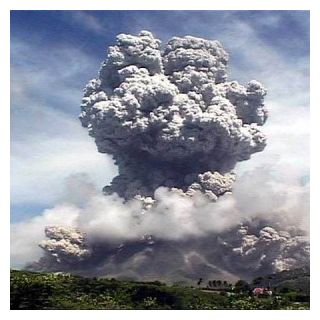
Volcano Eruption.
Volcano Eruption.
Is the number of volcanic eruptions worldwide increasing? Yes. During the 20th century, there were a total of 3,542 volcanic eruptions globally. That works out to approximately 35 eruptions per year. That may sound like a lot, but according to Volcano Discovery there are 36 volcanoes erupting around the world right now. In other words, the number of volcanoes erupting as you read this article is greater than the 20th century’s yearly average.
And all of this is part of a larger trend. In 2013, we witnessed the most volcanic eruptions worldwide that we had ever seen in a single year, and 2015 is already threatening to be another one for the record books. All over the planet, volcanoes that have long been dormant are beginning to wake up, and this is greatly puzzling many scientists.
Fortunately, most of the eruptions in recent years have been relatively small. But scientists tell us that if we do see a VEI 7 or a VEI 8 eruption today, the amount of energy that would be released would be somewhere in the neighborhood of a million nuclear bombs going off all at once, and such an eruption would completely literally transform our civilization almost overnight.
The last VEI 7 eruption that the world witnessed was in Indonesia in 1815.
According to the Express, that massive eruption resulted in a “year without summer” and created famine all over the globe…
The deadly eruption of Mount Tambora in Indonesia sparked what was known as the ‘Year Without Summer’ in 1815 as crops failed and livestock died in much of the Northern Hemisphere – causing the worst famine for hundreds of years.
However, academics have warned that the chances of a similar disaster happening in the next 85 years, which could see the Earth flung back into a “pre-civilisation state”, was estimated to be as high as one in 10.
Due to dense population, an eruption which killed tens of thousands only two centuries ago would now be “cataclysmic” for today’s population, the authors warned.
“Large volcanic eruptions have the potential to impact climate, anthropogenic infrastructure and resource supplies on a global scale,” the panel of geologists, economists and climate scientists from the European Science Foundation have written in a new paper.
If you don’t think that such a thing could happen today, you should keep in mind that global food production is just barely keeping up with global food demand. In fact, in some years the world actually eats more food than it produces. Global food reserves are at perilously low levels, and so a “year without summer” would be absolutely cataclysmic.
And right now, some of the biggest volcanoes in the world are starting to wake up.
{ While volcanic eruptions produce global cooling due to the insertion of volcanic dust into our atmosphere, the daily activity of volcanos produce trillions of cubic meters of hot gases which rise into our atmosphere and produce global warming by creating the “hot house” effect here on earth, the opposite effect of volcanic eruptions which produce “deep freeze” conditions on the surface of earth. }
For example, consider what is happening at one of the most prominent volcanoes in Iceland…
Small earthquake swarms occurred at shallow depths during the past days near the volcano. The quakes were located approx. 6-10 km south of Hekla volcano and at shallow depths around 5 km. The largest quakes were two magnitude 2.6 events at 4 km depth on Thursday (9 April). It is impossible to say whether the earthquakes are linked to volcanic activity and thus might be precursors of a new eruption, but Hekla is probably the most likely candidate volcano for the next eruption to occur on Iceland.
One of the country’s most active, and the most frequently erupting volcano, Hekla has been believed to be “due” and have its magma chamber filled for several years now. Known for not giving much precursory signals (and only few earthquakes), an eruption would not be a surprise at all. Hekla volcano’s last eruption was 15 years ago.
In Japan, a swarm of earthquakes around Mount Zao has authorities extremely concerned…
Fears of fresh eruption of Mount Zao, a volcano that sits on the border of the Yamagata and Miyagi prefectures, rattled Japan after the country’s meteorological agency recorded 12 volcanic earthquakes on Tuesday. The seismic activity prompted warnings of a volcanic eruption, with the agency asking the public to stay safe from falling rocks in a 1.2 km radius of the volcano, The Japan Times reported.
And a massive volcano near the border between North Korea and China is showing signs of life. If Mount Paektu were to fully erupt, scientists tell us that the energy released could potentially be equivalent to “1,000,000 nuclear weapons all going off at the same time”…
More than 1,000 years ago Mount Paektu blew its top, sending tons of rock and magma spewing into the air and blanketing the much of the region in a thick layer of ash.
“It’s hard really to imagine the scale,” Oppenheimer said, “but you’re talking about something like 1,000,000 nuclear weapons all going off at the same time in terms of the energy involved.”
If an eruption of that magnitude were to happen today, it would truly be a global event.
For instance, consider the chaos that an eruption in Iceland in 1783 caused. The following comes from the Daily Mail…
In Iceland an estimated 20 – 25% of the population died in the famine and from fluorine poisoning after the fissure eruptions ceased.
Around 80% of sheep, 50% of cattle, and 50% of horses died because of dental and skeletal fluorosis from the 8 million tons of hydrogen fluoride that were released.
There is evidence that the Laki eruption also weakened African and Indian monsoon circulations, reducing precipitation over areas in Africa.
The resulting famine that afflicted Egypt in 1784 caused nearly one sixth of the country’s population to die out.
In Britain the summer of 1783 was known as the ‘sand summer’ because of the ash fallout and an estimated 25,000 people died due to breathing problems.
The truth is that volcanoes are far, far, far more of a threat to our climate than human activity is. All throughout history, volcanic eruptions have instantly changed the climate in a dramatic way. The following list was compiled by Wikipedia…
Most recently, the 1991 explosion of Mount Pinatubo, a stratovolcano in the Philippines, cooled global temperatures for about 2 – 3 years.
In 1883, the explosion of Krakatoa (Krakatau) created volcanic winter-like conditions. The four years following the explosion were unusually cold, and the winter of 1887-1888 included powerful blizzards. Record snowfalls were recorded worldwide.
The 1815 eruption of Mount Tambora, a stratovolcano in Indonesia, occasioned mid-summer frosts in New York State and June snowfalls in New England and Newfoundland and Labrador in what came to be known as the “Year Without a Summer” of 1816.
A paper written by Benjamin Franklin in 1783 blamed the unusually cool summer of 1783 on volcanic dust coming from Iceland, where the eruption of Laki volcano had released enormous amounts of sulfur dioxide, resulting in the death of much of the island’s livestock and a catastrophic famine which killed a quarter of the Icelandic population. Northern hemisphere temperatures dropped by about 1 °C in the year following the Laki eruption.
In 1600, the Huaynaputina in Peru erupted. Tree ring studies show that 1601 was cold. Russia had its worst faminein 1601-1603. From 1600 to 1602, Switzerland, Latvia and Estonia had exceptionally cold winters. The wine harvest was late in 1601 in France, and in Peru and Germany, wine production collapsed. Peach trees bloomed late in China, and Lake Suwa in Japan froze early.
Are you starting to get the picture?
These kinds of events have happened many times before, and scientists tell us that they will happen again.
Here in the United States, people are closely watching the supervolcano that sits under Yellowstone national park. In recent years the ground in Yellowstone has been rising, and many observers are concerned that we are witnessing the lead up to a full-blown eruption.
If a full-blown eruption of Yellowstone were to occur, all of our lives would instantly change. The following are some facts about Yellowstone that I put together for a previous article…
#1 A full-scale eruption of Yellowstone could be up to 1,000 time more powerful than the eruption of Mount St. Helens in 1980.
#2 A full-scale eruption of Yellowstone would spew volcanic ash 25 miles up into the air.
#3 The next eruption of Yellowstone seems to be getting closer with each passing year. Since 2004, some areas of Yellowstone National Park have risen by as much as 10 inches.
#4 There are approximately 3,000 earthquakes in the Yellowstone area every single year.
#5 In the event of a full-scale eruption of Yellowstone, virtually the entire northwest United States will be completely destroyed.
#6 A massive eruption of Yellowstone would mean that just about everything within a 100 mile radius of Yellowstone would be immediately killed.
#7 A full-scale eruption of Yellowstone could also potentially dump a layer of volcanic ash that is at least 10 feet deep up to 1,000 miles away.
#8 A full-scale eruption of Yellowstone would cover virtually the entire midwest United States with volcanic ash. Food production in America would be almost totally wiped out.
#9 The “volcanic winter” that a massive Yellowstone eruption would cause would radically cool the planet. Some scientists believe that global temperatures would decline by up to 20 degrees.
#10 America would never be the same again after a massive Yellowstone eruption. Some scientists believe that a full eruption by Yellowstone would render two-thirds of the United States completely uninhabitable.
#11 Scientists tell us that it is not a matter of “if” Yellowstone will erupt but rather “when” the next inevitable eruption will take place.
Are you beginning to understand why the rise of volcanic activity all over the planet is such a big deal?
Just a single VEI 7 or VEI 8 eruption could fundamentally alter the way that we all live our lives in a single moment.
Despite all of our knowledge and all of our technology, the forces of nature are still vastly more powerful than we are, and scientists assure us that someday the United States will be directly confronted with that reality.
Posted in Uncategorized
Comments Off on GLOBAL WARMING CAUSED BY HUMAN ACTIVITY??? DON’T BE STUPID. DON’T BE ANTHROPOMORPHIC. GOD IS IN CHARGE AND HIS ESTABLISHED PLAN FOR EARTH IS BEYOND OUR CONTROL.
RE HARVEY, I AM OK !!!

Several readers of this Abyssum.org Blog have suggested to me that I should publish a post on Abyssum.org letting my readers know that I am ok. So, here it is:
I am well, unlike many other people in Texas (especially my home town of Houston where I have relatives who were badly affected by Harvey) and Louisiana (where I was born) I suffered no injuries or serious inconvenience or dislocation in the passage of Harvey.
For the entire duration of Harvey I stayed in my residence in Sinton, Texas which is a house belonging to Our Lady of Guadalupe Parish. The house did not experience any damage: no leaks, no broken windows, etc. The only physical damage was to the vegetation on the property. Several trees were uprooted and they all suffered heavy defoliation. I have a large vegetable garden in the 30 protein tubs I used to feed cattle on my former little ranch. When I gave up the ranch I brought them empty with me to my residence in Corpus Christi in 2012. When I moved to Sinton in 2016 the men of Our Lady of Guadalupe Parish insisted on bringing my container garden and even though I resisted their generous offer they insisted on doing it and I am grateful to them. That container garden was pretty hard hit by Harvey’s wind.
The main reason why I chose to remain in my house during the hurricane was because I was well prepared for it. You see, I have been through so many hurricanes during my 94 years in New Orleans, Texas City, Texas, Houston, Texas, Miami, Florida, Pensacola-Tallahassee, Florida and Corpus Christi, Texas that I am more than a little hurricane-savvey.
When the tropical storm that would be named Harvey passed from the Atlantic Ocean to the Caribbean Sea over the southernmost island of the Lesser Antilles, Trinidad, I knew that the probability of Harvey making landfall in the Honduras, or Mexico, OR TEXAS was very high because I had seen that happen so many times over the decades of my life. Consequently I started getting prepared for Harvey’s visit.
I stocked up on food and water. I readied the portable electric generator that I had brought from my ranch and I secured anything and everything that could possibly be blown down or away by the wind. I moved my car from the street where it was usually parked onto the driveway of the house which was a foot or two higher than the street. Finally, I made preparations for my three dogs ( Ginger,a Belgian Malinois, Zelie a Jack Russell Terrorist, she was born on the day that Saint Marie Azelie Martin was canonized and hence her name and Rambo, a Rat Terrier) to join me and my housecat, Ziggy, in the house when the storm would be at its worse.
Harvey was forecast to make landfall at Corpus Christi and then continue on a Northerly course which would have brought the center right over Sinton. At the last minute Harvey changed its course slightly to the East and crossed the coast at Arransas Pass and Rockport. I cannot help but believe that the city which was named after the Body and Blood of Our Lord Jesus Christ is protected from direct hits by hurricanes. I believe that in the last 100 years Corpus Christi was affected by only two large hurricanes, Celia and Carla. That new course took the center about twenty-five miles east of Sinton.
Since the eye of Harvey did not pass directly over Sinton we only experienced winds with gusts of 100 mph and not 150 mph. Also, the forecast flooding of Sinton did not occur since we were on the west side of the center and the really heaviest rain is always on the eastern side of the center of a hurricane.
My experience of Harvey was not a pleasant experience. There is always the possibility of tornados in a hurricane, so there was tension, even as I slept, as I listened for two days for the telltale roaring sound of a tornado.
I prayed all during Harvey’s visit to the Gulf Coast and I continue to pray, not for myself, but for all those who were and still are in his path as he moves across the interior states of America, the devastation and the human suffering is enormous.
At my age I will probably not experience another hurricane. I cannot help but marvel that what was probably the last hurricane of my life was one of the worst to ever hit the United States. Somehow that seems to fit in with the other Signs of the Times we are experiencing in the Church, in the nation and in the world.
God save us !!!
Posted in Uncategorized
10 Comments
THE FAILURE OF FRANCIS TO MENTION POPE BENEDICT IN HIS RECENT TALK ON THE LITURGY (HIS FIRST) BODES ILL FOR THE TRADITIONAL LATIN MASS

Tue Aug 29, 2017 – 3:53 pm EST
Cardinal Burke: Pope Benedict restored the ‘correct order and beauty’ to the liturgy
LA CROSSE, Wisconsin, August 29, 2017 (LifeSiteNews) — Cardinal Raymond Burke said in a recent interview that Pope Emeritus Benedict’s “most splendid contribution” to the Catholic Church was his work of restoring the liturgy.
“There is no question in my mind that the most splendid contribution of the pontificate of Pope Benedict XVI was in the area of restoring the correct order and beauty to the Sacred Liturgy,” said Burke in an interview with The Wandererpublished August 21.
The interview was published three days before Pope Francis invoked “magisterial authority” to declare Vatican II liturgical reforms “irreversible.”
Some liturgists are interpreting the declaration, according to Vatican expert Sandro Magister, as a “halt ordered” from Pope Francis to Pope Emeritus Benedict’s program of reviving authentic liturgy through a rediscovery of the Traditional Latin Mass.
“And in effect, in the long speech delivered by Pope Francis there are abundant citations of Pius X, Pius XII, and Paul VI. But for Benedict XVI, a tremendous scholar of the liturgy, there is not so much as a nod,” said Magister.
Notably absent from Pope Francis’ statement on the liturgy, pointed out Magister, is any mention of Benedict’s 2007 edict Summorum Pontificum, which allowed priest to celebrate the Traditional Latin Mass and thereby “preserve the riches” found in it.
Cardinal Burke said in his interview with The Wanderer that Pope Benedict XVI’s teaching on the liturgy was “so profound because he had the courage to issue Summorum Pontificum.”
“The teaching contained in that document will certainly endure in its effects,” he said.
Before becoming Pope Benedict XVI in 2005, Cardinal Joseph Ratzinger was a world-renowned liturgist who wrote some of the most revered books to this day on the subject, including The Feast of Faith and The Spirit of the Liturgy.
In the preface to The Spirit of the Liturgy published in 2000, then-Cardinal Ratzinger wrote that the liturgy envisioned by the Vatican II Council Fathers was “endangered” and even “threatened with destruction” because of the introduction of novelties and innovations foreign to it.
“In 1918 … the (Roman Catholic) liturgy was rather like a fresco. It had been preserved from damage, but it had been almost completely overlaid with whitewash by later generations. … The fresco was laid bare by the Liturgical Movement and, in a definitive way, by the Second Vatican Council (1962-65),” he wrote.
“But since then the fresco has been endangered. … In fact, it is threatened with destruction, if the necessary steps are not taken. … What is imperative is a new reverence in the way we treat it, a new understanding of its message and its reality, so that rediscovery does not become the first stage of irreparable loss,” he added.
Pope Benedict’s liturgical legacy includes:
- Writing about the Eucharist as the “source and summit” of the Christian life in his 2007 Apostolic Exhortation Sacramentum Caritatis.
- Supporting an authentic re-translation of the Roman Missal into English which came into effect in the U.S. in Advent, 2011.
- Restoring the use of the Traditional Latin Mass in his 2007 motu proprio Summorum Pontificum, suggesting that the “two Forms of the usage of the Roman Rite can be mutually enriching.”
Cardinal Burke said in The Wanderer interview that Cardinal Robert Sarah, Prefect of the Congregation for Divine Worship, has pointed Catholics in a “good direction” in implementing what Sarah has called a “reform of the reform.”
“First, he encouraged offering the Mass with everyone facing the Lord [ad orientem]. This will help so much to restore the sense of worship and to show that the Mass is not some kind of social event between the priest and parishioners, or the parishioners among themselves. Rather, it is an action of the whole community with the priest at the head acting in the person of Christ [in persona Christi], of ‘worshiping the Father in spirit and truth’ (John 4:23) as our Lord said to the Samaritan woman at the well. I think this would be a very good place to begin,” said Burke.
“Cardinal Sarah addressed a second area of reform at the 2017 Sacra Liturgia Conference in Milan when he asked once again for consideration of receiving Holy Communion kneeling and on the tongue. I think those are two areas to address that would be very effective,” Burke continued.
“I think the matter of orientation of all towards the Lord with the priest at the head (toward the East if possible, unless it is physically impossible because of the geographical location of the church) and the manner of receiving Holy Communion reverently on one’s knees and on the tongue are important places to start,” he concluded.
Posted in Uncategorized
5 Comments


You must be logged in to post a comment.