The silence of Pope Francis on the dubia is potentially similar to the silence of Pope Honorius and this should be of grave concern to all Catholics.

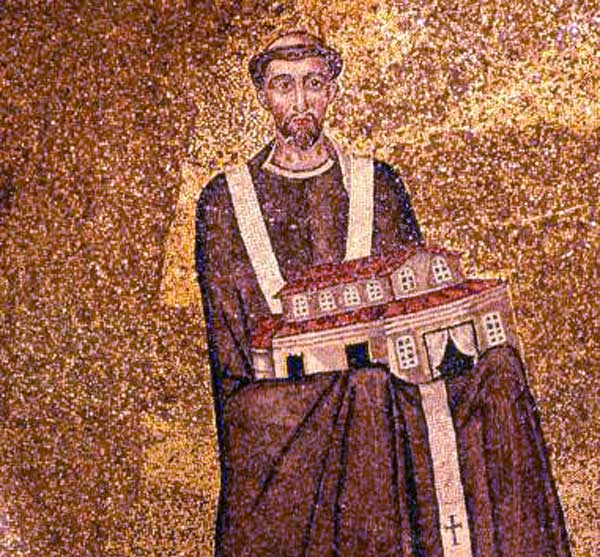
Pope-Honorius-I

Pope Honorius I


Why the Case of Pope Honorius Matters, Mr. Alt

ROMA LOCUTA EST

July 31, 2017 (Steven O’Reilly) – I recently came across an article by Scott Eric Alt on the subject of Pope Honorius dating back to March 2017. This will be my second response to one of his blogs, the first being on the topic of St. Paul’s correction of St. Peter and its relation to a potential “correction” of Pope Francis.

The notoriety of Pope Honorius stems from the fact the bishops of the Sixth Ecumenical Council condemned him as a “heretic” and that Pope Leo II wrote of him: “[Pope Honorius] did not illuminate this apostolic see with the doctrine of apostolic tradition, but permitted her who was undefiled to be polluted by profane teaching” (see here). I will not provide all the background on the case here to save on space, but the reader should read Mr. Alt’s article, and Mr. Spencer’s article (cited in Mr. Alt’s). While there are some particulars I would disagree with in regard to Mr. Alt’s treatment of the case of Pope Honorius, I essentially agree with Mr. Alt. My own position and treatment of the case of Pope Honorius can be read in my articles on the topic which include (1) a rebuttal to Mr. William Webster’s treatment of Pope Honorius from his book The Church of Rome at the Bar of History (my rebuttal originally found in This Rock/Catholic Answer may be foundhere: Guilty Only of a Failure to Teach) and (2) my direct rebuttal to Dr. James White’s attempt to come to Mr. Webster’s defense and reply to my article (see my rebuttal of Dr. White entitled White is Wrong also originally found in This Rock/Catholic Answers). (NB: As an aside, separately, I rebutted Mr. Webster’s attempt in his book to use the False Decretals against the doctrine of papal infallibility. This rebuttal may be found here).

While I might on any other occasion recommend Mr. Alt’s fine article in so far as it specifically and only addresses the case of Pope Honorius, I do disagree with the first paragraph of his article where he attempts to deflect even the possibility of potential similarities between the cases of Pope Honorius and of Pope Francis. Mr. Alt writes (emphasis added):

“Pope Honorius I (625-638) is a favorite example among anti-Catholic Protestants who wish to dispute the doctrine of papal infallibility. (See here for an example, from our old friend Dr.* James White.) Of late, some Catholics have picked up on this, seemingly in an effort to lay groundwork for the claim that Pope Francis teaches heresy. “Why, popes have taught heresy before!” they will say. “The Third Council of Constantinople condemned Pope Honorius I. Don’t you know that? He accepted the Monothelite error.” Thus do Catholics, in a zeal of Pope Francis Derangement Syndrome, begin to sound like Protestants who reject the papacy, and the Church, altogether.”

Mr. Alt does not say above who the “some Catholics” are he has in mind, i.e., those who he believes use the case of Honorius “seemingly in an effort to lay ground for the claims that Pope Francis teaches heresy.” His article is dated March 30 of this year, and I did happen to write a couple articles in February 2017 that do mention Pope Honorius (here and here and here) – so I do not know if I am one of these “some” he had in mind. But, then again, this wee blog (www.RomaLocutaEst.com) could have easily and understandably escaped his notice – as it has the world’s. But, my view for the record has been and remains: (1) Francis is Pope; (2) Honorius was not a monothelite and (3) a pope cannot be a formal heretic.

Yet, the problem with the first paragraph of Mr. Alt’s article – quoted above – is that it is something of an unintentional red herring, if there can be such a thing. Mr.Alt’s argument fails because it is incomplete, as it reduces the question of the potential relevance of Pope Honorius to Pope Francis to whether or not Honorius taught heresy. Mr. Alt’s error is that this single focus – exculpating Honorius from the charge of heresy (i.e., monothelitism) – neglects Honorius was nonetheless guilty of something which other popes, current or future, might also fall into. Therefore, Mr. Alt’s implicit argument is a non sequitur: Pope Honorius was not a heretic and did not teach heresy, therefore there is no possible relevance, even hypothetically, to Pope Francis.

Now, while I agree with Mr. Alt that Pope Honorius was not a monothelite; it must be remembered what Pope Honorius did do something he should not have done and did not do something he should have. Pope Honorius did put orthodox and heretical expressions under the same rule of silence and thus on equal footing, and he did not teach the apostolic faith with the voice of Peter when he should have. Both this policy and failure contributed to the spread of confusion and heresy and it was in this sense, as a favorer of heresy, Honorius was condemned by the Sixth Ecumenical Council and by Pope Leo II who said of him: “[Pope Honorius] did not illuminate this apostolic see with the doctrine of apostolic tradition, but permitted her who was undefiled to be polluted by profane teaching” (see here). Pope Agatho (678-681) obliquely refers to Honorius and his silence (and its gravity) in his letter to the Emperor and the Sixth Ecumenical Council:

“For woe is me, if I neglect to preach the truth of my Lord, which they (i.e., the Roman pontiffs) have sincerely preached. Woe is me, if I cover over with silence the truth which I am bidden to give to the exchangers, i.e., to teach to the Christian people and imbue it therewith. What shall I say in the future examination by Christ himself, if I blush (which God forbid!) to preach here the truth of his words? What satisfaction shall I be able to give for myself, what for the souls committed to me, when he demands a strict account of the office I have received?”[Nicene and Post-Nicene Fathers, 333]

In the current crisis in the wake of Pope Francis’ Amoris Laetitia 305 (n. 351), there are two interpretations:

(1) Communion for manifest adulterers living in a marital way, in at least certain cases, is permissible

(2) Communion for manifest adulterers living in a marital way in no circumstance is permissible

The two positions above are mutually exclusive and contradictory. Both cannot be true. The principle of non-contradiction excludes the possibility. Yet, as time marches on, Catholics are being inexorably led to affirm one or the other. If the second position is correct and if it is based on received teaching, the first position is heretical. Anyone who allows the existence of the first practice would in fact be favoring heresy. Some might counter by arguing that the practice of either allowing or forbidding communion for manifest adulterers is simply a discipline that is changeable. I don’t know if Mr. Alt believes communion for adulterers is a changeable discipline. In an article from last November, Mr. Alt to his credit admits some honest struggles with Amoris Laetitia (see here). Folks should read Mr. Alt for his opinion.

For me at least, my respect for the teaching authority of the See of St. Peter, past and present, leads me to conclude that the prohibition against communion for adulterers is not a changeable practice and that this has been the constant teaching of the popes. In my humble and fallible opinion, the strength of the argument against communion for manifest adulterers far surpasses the novel argument which would allow it. While some disciplines and practices are changeable, not all are. In some cases an infallible teaching is also expressed by a “doctrine implicitly contained in a practice of the Church:”

“It should be noted that the infallible teaching of the ordinary and universal Magisterium is not only set forth with an explicit declaration of a doctrine to be believed or held definitively, but is also expressed by a doctrine implicitly contained in a practice of the Church’s faith, derived from revelation or, in any case, necessary for eternal salvation, and attested to by the uninterrupted Tradition: such an infallible teaching is thus objectively set forth by the whole episcopal body, understood in a diachronic and not necessarily merely synchronic sense. (Doctrinal Commentary on the Concluding Formula of the Professio fidei. Joseph Cardinal Ratzinger, June 29 1998. (n. 17).  Congregation for the Doctrine of the Faith [emphasis added])

With the above in mind – that infallible teaching can be expressed by “doctrines implicitly contained in a practice of the Church, derived from revelation or, in any case, necessary for eternal salvation, and attested to by the uninterrupted Tradition” – let us  consider the words of Pope John Paul II in Familiaris Consortia (FC) (emphasis added):

“However, the Church reaffirms her practice, which is based upon Sacred Scripture, of not admitting to Eucharistic Communion divorced persons who have remarried. They are unable to be admitted thereto from the fact that their state and condition of life objectively contradict that union of love between Christ and the Church which is signified and effected by the Eucharist. Besides this, there is another special pastoral reason: if these people were admitted to the Eucharist, the faithful would be led into error and confusion regarding the Church’s teaching about the indissolubility of marriage.” (Familiaris Consortio, 84)


We see in Pope John Paul II’s teaching a clear statement that the practice of withholding communion in such cases is based on Revelation (Sacred Scripture) and is implicitly connected to the doctrines of the Eucharist and the indissolubility of marriage. This same teaching was re-affirmed by John Paul II in 1984 in Reconciliatio et Paenitentia (34), and through that pope’s approval of the Catholic Catechism (1650) in 1992, and again through his approval of guidance issued by the Congregation for the Doctrine of the Faith (CDF) in 1994, and in Reconciliatio et Paenitentia (34). This was also taught by Pope Benedict XVI in 2007 in Sacramentum Caritatis (29). With regard to the aforementioned CDF guidance, responding to queries whether there could be additional exceptions to allow communion for the divorced and remarried, the CDF under Cardinal Ratzinger, with the approval of the Pope John Paul II, issued a response (Letter to the Bishops of the Catholic Church Concerning the Reception of Holy Communion by the Divorced and Remarried Members of the Faithful. September 14, 1994). In it, the Cardinal Prefect says in part (emphasis added):

“At the same time it (i.e., Familiaris Consortio 84) confirms and indicates the reasons for the constant and universal practice, “founded on Sacred Scripture, of not admitting the divorced and remarried to Holy Communion”. The structure of the Exhortation and the tenor of its words give clearly to understand that this practice, which is presented as binding, cannot be modified because of different situations.”[ Letter to the Bishops of the Catholic Church Concerning the Reception of Holy Communion by the Divorced and Remarried Members of the Faithful. September 14, 1994.]

The CDF’s letter above, confirmed by the pope, clearly says the teaching of FC 84 confirms a constant and universal practice founded on scripture. And note the CDF’s comment about the tenor of the words, which “give clearly to understand that this practice, which as presented cannot be modified because of different situations” (emphasis added). Certainly, a common sense reading of John Paul II’s words, along with the papal-approved guidance from the CDF, and all the other teachings referenced above, gives a Catholic reasonable grounds to conclude, believe and hold that this practice cannot be modifiedfor whatever situation. It should not be surprising then that “dubia” were submitted to Pope Francis on this and other questions once thought settled, and that many of the faithful want the Pope to clear up the confusion – entirely of his own making.

Yet, it is surprising Pope Francis has refused to answer the “dubia” and speak with the voice of St. Peter on the question. I am fallible and so are the dubia cardinals. The one individual who can settle the question is Pope Francis, yet he is the only one who is keeping his mouth shut. Even Mr. Alt recognizes this problem in his November article. Pope Francis has not spoken clearly to the Church on the question. Indeed, in Amoris Laetitia (2, 3 and 4) Pope Francis disclaims the need for an “intervention of the magisterium.” Curiously, Honorius had said something similar in a letter to Sergius.  Amoris Laetitia 305 (n.351) is also ambiguous as to which “cases” can receive communion and which cannot.  A dubia on this specific question has been posed to Pope Francis. He refuses to answer. Different bishops and bishops’ conferences have opposing positions on the contradictory interpretations – each citing Amoris Laetitia.

Given the similarities to the case of Honorius are so striking, it is surprising Mr. Alt has not yet connected the dots between his own concerns voiced in his November 2016 article on Amoris Laetitia and his research for his March 2017 article on Honorius. Unfortunately, he dismisses the potential relevance of Honorius with a facile argument and a smug, derisive label (“Pope Francis derangement syndrome“) which get him no closer to presenting an effective rebuttal than when he first started. Consider that Mr. Alt in his own Honorius article is somewhat forced to grudgingly admit in passing the truth of the following accusations against Pope Honorius:

“As for Leo II, he condemned Honorius, instead, because he “permitted the immaculate faith to be subverted.” That is to say (as the New Catholic Encyclopedia says), Honorius was negligent in combatting the heresy.”

“Some also point to the condemnation of Honorius was included in an oath that every new pope had to swear until the eleventh century. (The oath is in the Liber diurnus.) However, the oath scorns Honorius only in that he “added fuel” to the “wicked assertions” of the Monothelites.”

Mr. Alt – by quoting Leo II and Liber Diurnus – concedes Honorius “permitted the immaculate faith to be subverted” and that Honorius by negligence “added fuel” to the “wicked assertions” of the monothelites! Surely, these charges are something – even if Mr. Alt cannot see it! Yet, the frustrating thing is that Mr. Alt seem to get so close to connecting the dots in his November article when he says of the dubia (emphasis added):

“These strike me as fair questions. The cardinals are seeking a definitive,Magisterial answer to some people’s doubts—not answers in interviews, not private lectures, not “go listen to so-and-so.” The reason the Church needs a definitive answer is to prevent bishops in some places from running wild and doing whatever they want to the potential harm of souls. If someone in a state of mortal sin, not disposed to receive the Eucharist, receives the Eucharist anyway, that compounds the problem. It is a harm to both the individual who receives and the priest who knowingly distributes. A definitive clarification would, potentially, forestall this.”

Since we know from above that Mr. Alt had the silence of Pope Francis on his mind, it is surprising his research for the Honorius article did not lead him to a true eureka moment, i.e., recognizing the potential similarities between Honorius and Francis. The old Catholic Encyclopedia on New Adventprovides additional quotes that might have helped him. This excellent article states:

“The new pope, Leo II, had naturally no difficulty in giving to the decrees of the council the formal confirmation which the council asked from him, according to custom. The words about Honorius in his letter of confirmation, by which the council gets its ecumenical rank, are necessarily more important than the decree of the council itself: “We anathematize the inventors of the new error, that is, Theodore, Sergius, …and also Honorius, who did not attempt to sanctify this Apostolic Church with the teaching of Apostolic tradition, but by profane treachery permitted its purity to be polluted.” This appears to express exactly the mind of the council, only that the council avoided suggesting that Honoriusdisgraced the Roman Church. The last words of the quotation are given above as in the Greek of the letter, because great importance has been attached to them by a large number of Catholic apologists. Pennacchi, followed by Grisar, taught that by these words Leo II explicitly abrogated the condemnation for heresy by thecouncil, and substituted a condemnation for negligence. Nothing, however, could be less explicit. Hefele, with many others before and after him, held that Leo II by the same words explained the sense in which the sentence of Honorius was to be understood. Such a distinction between the pope’s view and the council’s view is not justified by close examination of the facts. At best such a system of defence was exceedingly precarious, for the milder reading of the Latin is just as likely to be original: “but by profane treachery attempted to pollute its purity“. In this form Honorius is certainly not exculpated, yet the pope declares that he did not actually succeed in polluting the immaculate Roman Church. However, in his letter to the Spanish King Erwig, he has: “And with them Honorius, who allowed the unspotted rule of Apostolic tradition, which he received from his predecessors, to be tarnished.” To the Spanish bishops he explains his meaning: “With Honorius, who did not, as became the Apostolic authority, extinguish the flame of heretical teaching in its first beginning, but fostered it by his negligence.” That is, he did not insist on the “two operations”, but agreed with Sergius that the whole matter should be hushed up.” (Catholic Encyclopedia on New Advent)

The question Mr. Alt needs ask himself: given the case of Pope Honorius, and what Pope Leo II said of him, what is so impossible to imagine, if only as a hypothetical, for a future pope (or a current one) to be guilty of the following?

(1) a Pope did not attempt to sanctify the Apostolic Church with the teaching of Apostolic tradition, but by profane treachery permitted its purity to be polluted.

(2) a Pope allowed the unspotted rule of Apostolic tradition, which the Pope received from his predecessors, to be tarnished.

(3) a Pope who did not, as became the Apostolic authority, extinguish the flame of heretical teaching in its first beginning, but fostered it by his negligence

(4) a Pope ‘added wicked fuel to the wick assertions’ of others who are heretics

The charges above are based on the words of Pope Leo II and/or the papal oath in the Liber Diurnus about Honorius. Therefore, it is clear no living or future pope is absolutely immune from the possibility of being guilty of them. Mr. Alt is an honest gentleman. He must admit it is possible for a pope to be guilty of these things because we already have had one (i.e., Honorius). Thus, having had one such pope, perhaps Mr. Alt will understand (in light of his own Amoris Laetitia article) that the potential relevance of Honorius to the current crisis is not whether Honorius was a monothelite heretic, but whether it is possible – and just as damaging – for a pope to favor heresy through negligence and silence – and to even “add fuel” to the “wicked assertions” of heretics.

The current crisis as seen by “some Catholics” – i.e., the ones Mr. Alt smugly derides (but who I think he is closer to than even he might realize) – is that we have a pope whose seeming policy and silence (e.g., on the dubia) are allowing two incompatible interpretations to coexist on the question of communion for manifest adulterers. This current crisis bears striking similarities to the case of Honorius, the pope condemned for being silent. A pope need not be a heretic to foster heresy through “negligence,” “silence” and “profane treachery.” If Mr. Alt can understand that demonstrated principle from Church history, he might – just might – quit the facile arguments against “some Catholics” and begin to understand (1) why the silence of Pope Francis on the dubia is potentially similar to the silence of Pope Honorius and (2) why this should be of grave concern to all Catholics.

Let us pray for Pope Francis that he is predecessor Honorius – speak with the voice of Peter, answer the dubia and bring an end to the mounting confusion in the Church.

Steven O’Reilly is a graduate of the University of Dallas and the Georgia Institute of Technology. He lives near Atlanta with his wife Margaret. He has four children. He  has written apologetic articles and is working on a historical-adventure trilogy, set during the time of the Arian crisis. Book one of the trilogy will be completed in 2017. He can be contacted at StevenOReilly@AOL.com.
Posted in Uncategorized | 1 Comment

THE CHURCH’S RULES ARE NOT LIKE GOVERNMENT REGULATIONS, THANK GOD FOR EPIEIKEIA

unnamed-2

[ Emphasis and {commentary} in red type by Abyssum ]


REGULATIONS – REGULATIONS
It was a normal day in Sharon Springs, Kansas, when a Union Pacific crew boarded a loaded coal train for the long trek to Salina.
The Bad news: Just a few miles into the trip a wheel bearing became overheated and melted, letting a metal support drop down and grind on the rail, creating white hot molten metal droppings spewing down to the rail.
The Good news: A very alert crew noticed smoke about halfway back in the train and immediately stopped the train in compliance with the Governmental Regulations.
The Bad news: The train stopped with the hot wheel over a wooden bridge with creosote ties and trusses. When crew tried to explain to higher-ups they needed to move the train, they were instructed not to move the train because Federal Regulations prohibit moving the train when a part is defective.
Well okee-dokey then, the pictures tell the rest.
As always the Government knows what is best for us
91DE064DC7A2456398D5BE316189E7B3@GunsUp
93E134BA3A4149D09101D7A48BF28FB8@GunsUp3ECD2F33C33B42188EE703D71A2C9C99@GunsUp
40DF345A56564F4BAD4AC5BC6DB930CD@GunsUp


REMEMBER, RULES ARE RULES!
Don’t ever let common sense get in the way of a
Government Regulation.Image removed by sender.
{from Wikipedia}

English

Alternative forms

Etymology

From Ancient Greek ἐπιείκεια (epieíkeia, reasonableness).

Noun

epikeia (uncountable)

  1. (philosophy, theology) The principle in ethics that a law can be broken to achieve a greater good.
  2. reasonable
 {N.B.  “greater good” must be strictly interpreted, objectively not subjectively}
Posted in Uncategorized | 2 Comments

JESUS CHRIST TRANSFIGURED GIVES US A GLIMPSE INTO OUR FUTURE IF ONLY WE LOVE HIM AND FOLLOW THE WAY HE HAS LAID OUT FOR US

The Transfiguration of Humanity (Homage to Paul VI)

Gaudium et spes, the “Pastoral Constitution on the Church in the Modern World,” is rightly invoked to support Catholic commitment to issues of social justice. However, often lacking in appeals to the document is due appreciation of the Christological foundation that underlies and governs the Constitution’s approach.

Especially important in this regard is the remarkable Christological vision:

The Church firmly believes that Christ, who died and was raised up for all, can through His Spirit offer humanity the light and the strength to measure up to its highest vocation. Nor has any other name under heaven been given to man by which he must be saved. She likewise believes that in her Lord and Master is found the key, the center, and the goal of all human history. The Church also holds that beneath all changes there are many realities which do not change and which have their ultimate foundation in Christ, Who is the same yesterday and today, yes and forever. Hence in the light of Christ, the image of the unseen God, the firstborn of every creature, the council wishes to speak to all men and women in order to shed light on the mystery of man and to cooperate in finding the solution to the outstanding problems of our time. (GS 10)

In relation to Jesus Christ who, as the Constitution boldly states, is “the key, the center and the goal of human history,” humankind discovers its own true identity and vocation.

The confession confounds our minds and we strain to comprehend something of its magnitude. Here, as Cardinal John Henry Newman knew, an image or icon can serve to focus our attention and open new vistas to explore, both intellectually and affectively.

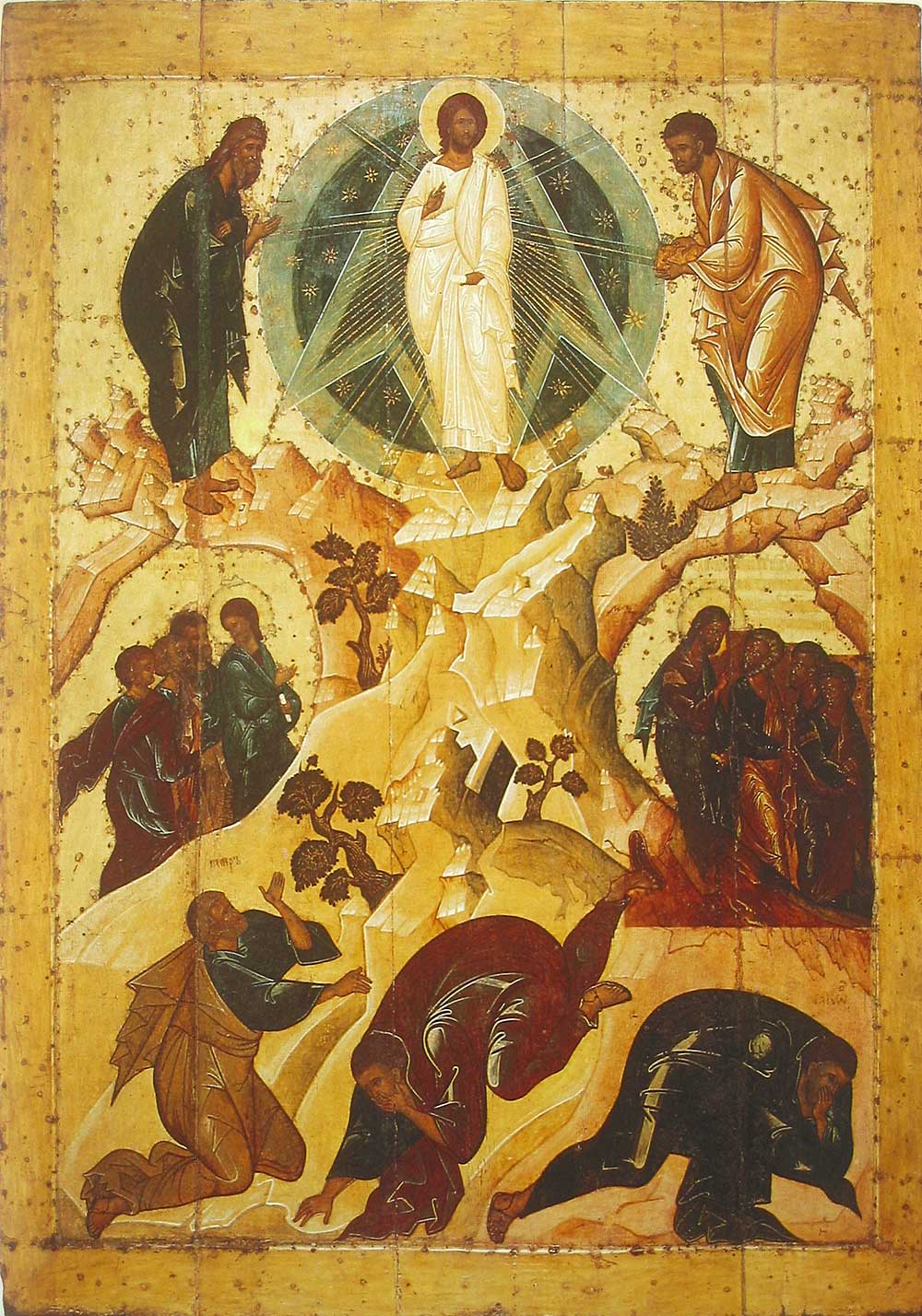
Does any image more richly and suggestively portray Christ as “key, center, and goal of history” than that of the Transfiguration? Moses and Elijah are portrayed flanking Jesus, bathed in his light. Their own luster is but a partial and passing reflection of the glory that radiates from him.

Jesus transfigured not only fulfills Torah and prophets, he recapitulates in himself all God’s dealings with humanity. Jesus concentrates and intensifies all the spiritual forces of the universe, and redirects them toward the awe-struck disciples. They receive him as they are able, “grace answering to grace.” For he is the true, if not always recognized, desire of every human heart.

The Transfiguration (artist unknown), c. 1516 [Transfiguration Monastery, Yaroslavl, Russia]

In the “Preface” to the Eucharistic Prayer on the Feast of the Transfiguration of the Lord, we rightly pray that there be fulfilled “in the Body of the whole Church what so wonderfully shone forth first in its Head.”

But we know, from Saint Luke’s account of the Transfiguration, the subject of the interchange between Jesus, Moses, and Elijah: “They spoke of his exodus which he was about to accomplish in Jerusalem.” (Lk 9:31) So the exodus from Egypt led by Moses and the exodus accomplished by Elijah, as Elisha gazed on in wonder, were sacramental foreshadowings of the true exodus of Jesus to the Father.

As Gaudium et spes proclaims in another place: “the Holy Spirit, in a way known to God, offers to all the possibility of sharing in Christ’s paschal mystery.” (GS, 22) The logic of the Transfiguration is always paschal logic. Transfiguration only transpires by way of the Cross.

Thus two other images, personal icons if you will, illuminate this feast for me. One is a photo that hangs on my wall, dated late June 1963. That day, Francis Cardinal Spellman shepherded fifteen New York priests and seminarians, who were studying in Rome, into an audience with the newly elected Paul VI. In the photo, we are grouped in a semi-circle – the vibrant Pontiff stands in our midst, his face aglow – ready to undertake the Lord’s call.

One of Pope Paul’s first momentous acts was to reconvene the Second Vatican Council, whose first session had ended the previous December and whose future was uncertain. In his address at the opening of the second session in September 1963, Paul summed up the goal of the Council in these words: “to proclaim to the whole world. . .that Christ is our beginning and guide, our way, our hope, and our goal.” Each of the documents that the Council laboriously produced over the ensuing three sessions bears this clear Christological imprint, as Paul skillfully steered the conciliar ship to port.

The second image placed beside that of the newly elected pope dates from fifteen years later. It shows a gaunt, exhausted Paul in the pulpit of the Basilica of St. John Lateran. The turbulent years had wreaked their toll – not least the reaction to his re-affirmation of moral teachings in Humanae vitae. Now a final heart-stabbing thrust: the kidnapping and assassination by the Red Brigade of Paul’s friend the Italian statesman, Aldo Moro.

Paul presided over the funeral, and from the pulpit, like an Old Testament prophet, berated the Lord. “We pleaded to you for the safety of this good and innocent man who was my friend, but you did not heed our prayer.” But the pope, in grief, reaffirmed the faith in Christ that had sustained him his entire life. He exclaimed: “you, O Lord, have not abandoned his immortal spirit, sealed by faith in Christ, who is the resurrection and the life.”

Contemplating these two images – the energetic young pope and the old pontiff, face furrowed by depths of trial and suffering – the eyes of faith discern the paschal trajectory of transfiguration in a human life. Whether pope, prophet or everyman, the cost of transfiguration is “not less than everything.”

Paul VI, his death surely hastened by Moro’s murder, completed his own exodus to the Lord a scant three months later, on the Feast of the Transfiguration, August 6, 1978. It was Sunday: the day of resurrection.

Fr. Robert P. Imbelli

Fr. Robert P. Imbelli

Robert Imbelli, a Priest of the Archdiocese of New York, is Associate Professor of Theology Emeritus at Boston College. He is the author of Rekindling the Christic Imagination: Theological Meditations for the New Evangelization.

Posted in Uncategorized | Comments Off on JESUS CHRIST TRANSFIGURED GIVES US A GLIMPSE INTO OUR FUTURE IF ONLY WE LOVE HIM AND FOLLOW THE WAY HE HAS LAID OUT FOR US

I THANK YOU, LORD, FOR LETTING ME BE A TEXAN !!!

Dems face fundamental problem in Texas: Getting people to vote
© Getty

Dems face fundamental problem in Texas: Getting people to vote

THE HILL
[ EMPHASIS AND {COMMENTARY} IN RED TYPE BY ABYSSUM ]

SAN ANTONIO — On paper, Texas should be a swing state.

Urban growth and suburban sprawl have radically changed Lone Star country, which not so long ago was a largely rural state.

A demographic shift is also underway. Forty-three percent of residents now are non-Hispanic white.

Thirty-nine percent are Hispanic, another 13 percent are African American, and almost 5 percent are Asian Americans.

Yet amid all this change, Texas has become more solidly red.

Republicans control super majorities in both the state House and Senate, every statewide elected office and the vast majority of the 5,000 or so local elected positions throughout the state.Still, there are some hints, if only slight, that Texas represents new possibilities for a Democratic comeback.

Of the millions of new residents pouring into the state, a little more than half come from Mexico, Guatemala, Honduras and other South and Central American countries. The rest largely come from California, Florida, New York and Illinois.

Democrats say this demographic change suggests the state has purple characteristics, if only people would go to the polls.

“We’re not a red state. We’re a low-turnout state,” said Rafael Anchia, a Democratic state representative from Dallas.

This is the sixteenth story in The Hill’s Changing America series, in which we examine the demographic and economic trends driving American politics today.

Texas was once a bastion of Yellow Dog Democrats, a state where Lyndon Johnson helped John F. Kennedy capture the presidency. But slowly, the state’s politics changed.

The East Texas counties that helped Kennedy beat Richard Nixon are now among the most solidly Republican in America. Fort Worth is one of the largest cities in America that consistently elects Republican leaders. Former Gov. George W. Bush’s election in 1994, when he beat popular Gov. Ann Richards, marked the beginning of what has so far been a three-decade long drought for Democrats.

The story of Texas is one of growth: Across the state, new migrants are moving in so fast that simply building the infrastructure necessary to serve the population has become a policymaker’s greatest challenge.

Even at midday on a recent Friday, the stretch of Interstate 35 that connects Austin to San Antonio is jammed with pickup trucks and tractor trailers, flying south at 75 miles per hour. A reporter has been warned to leave especially early. Traffic these days is always bad.

This drive through the rolling scrubland of Texas Hill County was once dotted with small oases of civilization. Today, most of the 80 or so miles between Texas’s two fastest-growing metropolitan areas are taken up by urban sprawl, as new developments wind ever farther into the most rapidly expanding counties in America.

Since Bush quit the governorship in 2000 to become president, San Antonio’s Bexar County has added half a million new residents. Travis County, where the red granite dome of the state Capitol looms over downtown Austin, has added 350,000 new residents. Among the top six fastest growing counties in America, three are suburbs of San Antonio or Austin.

“People have gone from a rural setting in Texas to a largely urban setting,” Gov. Greg Abbott (R) said in an interview, just moments after the reporter who had not heeded advice to leave Austin early showed up at his re-election kickoff in San Antonio.

Most of the state’s population lives in a triangle between San Antonio, Dallas and Houston.

“The cities and the counties that are growing fast, they basically can’t build roads fast enough and can’t build schools fast enough and can’t build the infrastructure they need,” said Lloyd Potter, who heads the Institute for Demographic and Socioeconomic Research at the University of Texas at San Antonio and serves as the state’s official demographer.

About 86 percent of Texans live east of Interstate 35, Potter said. And about 80 percent of all Texas voters live in just 40 of the state’s 254 counties.

Many have come for the economic opportunity, which Abbott’s predecessor, Gov. Rick Perry (R), called the “Texas miracle.” Since Perry was sworn in, the state has added about 2.8 million jobs. Texas has added jobs every month since March 2009, even before the rest of the country hit the depths of the recession.

“The Texas miracle was not a cosmic accident,” said Jeff Moseley, the former head of economic development under Bush and Perry who now heads the Texas Association of Business.

Democrats believe the votes exist to make Texas a competitive state. Hundreds of thousands of people eligible to vote have not bothered to register. Millions more simply don’t show up on Election Day. A state court has found that hundreds of thousands who might vote do not have access to the ballot box because they lack the necessary identification under a strict voter ID law passed earlier this decade.

The pace of demographic change has given Democrats hope that they can compete once again. Hispanic voters turn out at markedly lower rates than blacks or whites; if those numbers increase, Democrats believe they have a chance to be competitive. Younger voters are aging into the electorate, and Democrats will spend millions registering and turning out older voters in the future.

“Much of [the Hispanic] growth is being driven by natural increase. That means they tend to have a younger population,” Potter said.

They point to the 2016 presidential race when, without the aid of any paid advertising, Hillary Clinton came closer to winning Texas, which she lost by nine percentage points, than she did to winning Iowa.

“The political awakening is happening now,” Anchia said. “We are now seeing in the Hispanic community a great deal of fear and loathing in the Trump/Abbott brand.”

But at a time when Republicans like President Trump are alienating Hispanic voters with intemperate language, Texas Republicans have made a concerted effort to build bridges where none had existed — beginning with Bush, who won 44 percent of the Hispanic vote when he sought re-election in 2004.

It was no accident that Abbott, after kicking off his campaign in his wife’s hometown of San Antonio, headed south for a swing through the heavily Hispanic Rio Grande Valley. In the four main counties that make up the valley, the Republican share of the vote has grown from about 32 percent in 2002 to 36 percent for Abbott in 2016.

“We spent time and money and resources down there, and statewide, courting Hispanic voters,” said David Carney, Abbott’s chief strategist. “You can’t expect people to support you if you don’t go out there and aggressively court their vote.”

Most demographers believe the pace of growth, and the much slower increase in voter participation, will eventually make Texas a swing state. If Texas is in play, it will be a huge advantage for a Democratic candidate’s path to the 270 electoral votes necessary to win the White House.

Already, two of the nation’s four largest states — California and New York — are solidly in the Democratic column. The third, Florida, is the consummate swing state. Together, those four states represent 151 electoral votes, more than half those necessary to get to 270.

But Democrats are still parched from their three-decade drought, and the rains seem a long way off.

Abbott has yet to draw a serious Democratic challenger. Sen. Ted Cruz (R) has a credible rival in Rep. Beto O’Rourke (D), but other prominent Democrats — including Rep. Joaquin Castro (D), former Housing and Urban Development Secretary Julian Castro, Anchia and a handful of others — have decided against statewide races.

Several months ago, some of the biggest donors to Texas Democratic candidates sat down with the Castros, Anchia and former Houston Mayor Annise Parker (D). One donor pledged to write a $1 million check if he saw a plan that could get a Democratic candidate to the 50 percent threshold necessary to win. The check remains unwritten.

“I still think we’re a couple of years away,” Anchia admitted. “We just want to win one.”

{Please, Lord, keep the Californians out of Texas !!!}


Posted in Uncategorized | 1 Comment

WILL YOU HUG SOMEONE TODAY?

Posted in Uncategorized | Comments Off on WILL YOU HUG SOMEONE TODAY?

SHEEP REMEMBER, WOLVES CAN RUN FASTER THAN YOU CAN, BUT YOU HAVE HIDDEN POWER: CHRIST

Featured ImagePoles gather for a Year of Mercy celebration.

DOROTHY CUMMINGS MCLEAN

BLOGS,

We must fight like the Poles to restore the culture

WARSAW, Poland, August 4, 2017 (LifeSiteNews) — On Tuesday at 5 p.m., the city of Warsaw came to a halt as air raid sirens split the air. Instead of diving for cover, drivers and pedestrians remained motionless for a solid minute. Then they went about their business, leaving bewildered foreign tourists open-mouthed.

Uprising

Why? Because it was the 73rd anniversary of the start of the Warsaw Uprising, and Warsaw remembered. The Uprising, lasting from August 1 to October 2, 1944, was the angry city’s most concerted effort against the Nazi occupation. The Soviet allies were just outside Warsaw. The Poles expected them to take advantage of the Uprising and help defeat the Germans. They didn’t. Stalin had his own plans for Poland’s future.

During and in the immediate aftermath of the Warsaw Uprising (not to be confused with the Warsaw Ghetto uprising of 1943), approximately 16,000 members of the Armia Krajowa (Polish resistance) were killed and between 150,000 and 200,000 Polish civilians were massacred. Twenty-five percent of the city’s buildings were destroyed during the two months of battle, and afterward the Germans deliberately razed the city block by block so that only 15 percent of Warsaw’s original buildings remained. The pretty historic center that tourists see today is a  brick-by-brick reconstruction.

Nazis’ failure

The Nazis despised the Poles as “subhuman Slavs” and hoped to wipe Warsaw off the face of the earth. They failed. They failed even from entirely subjugating Poland during the occupation, for the Poles kept fighting, both at home and abroad beside foreign banners. After the defeat of France, more than 20,000 Polish soldiers landed in Britain to prepare for a rematch. By 1944, there was an army of 195,000 Polish soldiers in the West alone. They were not officially disbanded until 1947, and as those of us alive in 1989 saw, the dream of freeing Poland from the new Soviet yoke never died.

‘We remember’

“Pamiętamy” (“we remember”) is the slogan of the anniversary of the Warsaw Uprising. It could also be the secret of Poland’s cultural power, which remains strong even as other western nations, like the United Kingdom, France and Germany, slide helplessly into civilizational decline. The descent of Britain has been well-documented by Peter Hitchens, brother of Christopher, and Anthony Daniels (aka Theodore Dalrymple). Therefore, although I live in Britain, I will confine my remarks to the secrets of Poland’s ability to remain, despite a devastating war, 45 years of Communism and the Sexual Revolution, Polish.

Enduring importance of fathers in the home

The 2012 film Jesteś Bogiem (“You are God”), which told the story of a Polish hip-hop band, failed hilariously to express how poor Poland was in 2001. Sure, the buildings were crumbling and one of the boys had a Walkman in constant need of repair by his father. But his father lived with him at home. All the hip-hop loving boys had fathers at home. Even today, only 3.7 percent of Polish households are composed of a single parent with kids.

When the band’s big star gets his girlfriend pregnant, they marry before the baby is born. Today, 23.3 percent of Polish households are composed of a couple and their children. This is not the biggest figure in Europe (Ireland wins there), but it is quite a contrast to Sweden’s 14.4 percent  and Germany’s 15 percent.  And although the out-of-wedlock birth rate has skyrocketed since 1990 (24.6 percent from 6.2 percent), it should be considered in relation to the rest of central Europe. In Bulgaria, 58 percent of babies born in 2015 were out of wedlock.

Love stronger than death

But statistics do not adequately express the enduring importance of family in contemporary Poland. Anyone who has a nodding acquaintance with the country, or even its films, can attest to the strength of its family bonds, which survive even death. On Halloween, all living Poland goes to its cemeteries to tend the graves of, and pray for, its dead. The hundreds of thousands of candles lighting up the cemeteries of southwestern Poland is an airplane view I will never forget.

The elephant in the Polish living room is its low birth rate — only 1.3 children per Polish woman living in Poland. However, Polish women living in the richer United Kingdom have 2.13 children, a figure significantly higher than the 1.9 children of British women. This suggests that it is economics, not a distaste for children, that is to blame. The conservative, family-friendly Polish government has taken steps to lessen the financial burden on parents, and they seem to be working, as in 2016 16,000 more babies were born in Poland than in 2015.

Faith

Although there are attempts by tastemakers to get the Poles more interested in the paganism of their pre-966 AD, the vast majority of Poles (86 percent) are still Roman Catholics and a whopping — for Europe — 40 percent to 45 percent  — still attend weekly Mass. Compare this with Scotland, where only 19 percent of the country’s small Catholic minority bother. Meanwhile, in 2014, 83 percent of Poles said they kept the Good Friday fast. (Quixotically, only 48 percent went to Church on Easter Sunday.) And about 25 percent of Europe’s younger priests are Polish.

Again, statistics alone do not adequately tell the story. On my first visit to Warsaw, I was astonished to discover a church on Marszalkowska Street absolutely packed with worshippers on a dark Friday evening. When I mentioned this to my host, he was puzzled that I would find this at all unusual. “But it was a First Friday,” he said.

Jesus is king and lord of Poland

The influence of Saint John Paul II, of course, was an enormous boost to Polish Catholicism while he was alive and still endures today, particularly in the city of Krakow, whose archbishop he once was. The Polish Bishop Conference remains a byword for Catholic orthodoxy; no matter how influential the German bishops have become under this pontificate, leaders like Archbishop Stanislaw Gadecki keep the Church in Poland on course. Mary Wagner, the Canadian pro-life prisoner of conscience, is a household name in Poland.

Meanwhile, in November 2016, the Polish Bishops, with leading Polish politicians in attendance, formally celebrated the enthronement of Jesus Christ as King and Lord of Poland. Jesus’ mother Mary has been venerated as the Queen of Poland for more than 300 years.

Patriots

In contrast to the corrosive disgust for the past destroying other European nations, Polish pride in being Polish is flourishing. A 2016 survey conducted by the Polish Centre for Social Opinion Research revealed that 88 percent of Poles surveyed considered themselves patriots; 43 percent declared themselves very much so. Fully 98 percent of surveyed Poles in leadership positions described themselves as patriots, and 95 percent people with right of center views surveyed were patriots.

Interestingly, the groups of Poles least likely to describe themselves as patriots were 18-24-year-old students (25 percent), the unskilled (15 percent) and the least educated (14 percent). However, 96 percent of all respondents felt pride in the accomplishments of Polish athletes, 91 percent read about Polish history and an astonishing 79 percent attended public ceremonies and celebrations. According to the study, Polish patriotism has increased since 2010. That said, only 7 percent of Poles call themselves “nationalists” — which by most definitions they are — probably because of the negative publicity attached to the term.

‘Poland has not perished so long as we still live’

The Polish national anthem, written two years after the Third Partition wiped Poland off the map, begins with a challenge to history: “Poland has not perished so long as we still live.” No matter how many times the borders of Poland are erased or changed, and no matter what power rules over territory lived in by the Polish people, Poland itself cannot be destroyed. This is because, like the Jews, the Poles are a people who transcend geography.

What makes Poles Polish is not political power or self-governance or even citizenship. Polishness is determined by a shared language, a shared literature, a shared “majority religion” that inescapably influences Poland’s tiny minority religions, and a shared history.

Poles know their history, perhaps because they have been doomed to repeat it. The most cursory glance at the past 300 years of Polish history reveals invasions, foreign rule, massacres of Poles, particularly of Polish leaders and intellectuals, and — very tragically — the treason of Poland’s German minority in 1939. Many Germans in Poland collaborated with the Nazis, sometimes providing kill-lists of Polish notables to officers from Germany.

Enemy within

The 21st century Poland has also suffered from an enemy within. In 2007, a Cameroonian anti-racism activist feted by Poland’s left wing, soi-disant “refugee” Simon Mol, was charged with knowingly infecting several Polish women with HIV. Allegedly Mol told women that wanting to use a condom with a black man was racist. The Polish trial of the century ended with Mol’s death from AIDS in 2008. Knowledge of Polish history should offer clues to why Poland hasn’t gone along with Western Europe’s new love affair with multiculturalism — and open borders activism.

Left-wing Poles may cry out at this point that mentioning Simon Mol is a dirty trick, and that reminds me that Poland is not a political wonderland. The left and right sides of the aisle are quite as divided in Poland as they are in the United States. The Gazeta Wyborcza is just as biased as the Washington Post, if not more so.

Fight like the Poles

However, this very similarity suggests that Poland can be imitated in better ways. The future of whole nations depends on a re-appreciation of the family as the living cell of society, on the preservation of Christianity, including the “cultural Christianity” recognized by such European atheists as Marcello Pera, and history taught so that children are both proud (not ashamed) to belong to their countries and on their guard against fallen human nature.

Rebuilding the family, nourishing our Christian roots and restoring love for our western histories may seem an impossible task. Like the Polish Home Army, we are fighting against the most terrible odds, abandoned by our supposed allies amid the ruins of our cultural homes. However, Western Civilization isn’t yet dead, so long as we still live. As some American said, let’s fight like the Poles.

Posted in Uncategorized | 1 Comment

ALL TEENAGERS HAVE MORAL IMAGINATION, BUT MANY ARE EXPERIENCING MORAL DEFORMATION THROUGH THEIR USE OF THEIR SMARTPHONES

Rod Dreher

Deforming Teens’ Moral Imagination

A male reader writes (and I post with his permission):

[ Emphasis and {Commentary} in red type by Abyssum ]

I was reading your article on social isolation among high schoolers (and to a somewhat lesser but significant extent, Millennials) in relation to use of smartphones this morning. I wanted to send you an observation of my own in that area, which reminded me of something else (re: porn use) that fits in pretty well with what you’ve talked about before.

On social isolation in young people, something the article from The Atlanticdidn’t address but that I’ve seen a lot among people my age and younger (I’m 23) is a strong tendency to identify as in some way preferring isolation from other people. The most obvious instance of this is the large number of people I know in that age range who identify themselves as introverts. Oftentimes this comes with posturing (on social media especially) about how much they like being alone and can’t stand being out in social gatherings. The presence of other people is treated as a nuisance, an exhausting and tedious task of putting up with overly-energetic plebeians who couldn’t possibly understand your tastes in photography and gritty, authentic literature. I’ve even heard more than one particularly nasty people in
this group say, on multiple occasions, that they hate people. Full stop, without qualification, “I hate people.” This is usually occasioned by some petty rudeness or ignorance on part of the unwashed masses with whom these elevated introverts have the misfortune of using the same grocery store or university.

Of course, introversion in the real psychological sense of the term (as opposed to the Tumblr “I don’t hate people, I just feel happier when they’re not around” kind of circle-jerk) simply means the disposition towards needing to recharge from social situations alone. But the popularization of the personality trait in popular culture in the past few years has given anti-social tendencies a respectable air among the young. No longer is a disdain for other people’s company and an unwillingness to spend time with other people or talk to strangers a sign of being haughty or weird; it’s a hip way of demonstrating your
unique individual brand of sophistication and depth. You won’t be surprised to learn, I’m sure, that the rate of depression and anxiety among the self-identified introverts I know is ridiculously high. In fact, I don’t know if I can think of a single person I know who parades that personality trait who doesn’t have long-standing issues with mental illness.

Now regarding porn use, which I know you’ve blogged about a lot recently: you’re right. I’m a high church Christian myself, but was an active member of Reformed University Fellowship (RUF) all through college. RUF is a conservative Presbyterian ministry, and they take Christianity seriously, which means deep and lengthy sermons, an appreciation of hymnody, and a higher than average level of real devotion among the members. RUF is about as far from the stereotypical entertainment fluff stereotype of youth / college ministries as you can get. And yet in my senior year when I tried out a couple of community groups, which were split by sex, I found that I simply couldn’t join them. To the best of my recollection, every single male besides myself in both RUF community groups I visited (and there was no overlap of people) was an active porn user, or had been relatively recently. As the discussions went on in both groups, I found myself uncomfortably silent — I’ve never watched or even wanted to watch porn, but I didn’t want to say so and sound impossibly holier-than-thou.

So there I sat, listening as guys whom girls I know and deeply respect had crushes on and wished would ask them out, go on about how porn was just too hard of a habit to break because of dopamine addiction. The young women who were taken with these young men would no doubt be shocked and horrified to know what these gentlemen spent their evenings doing, and were at risk of walking into a relationship with a porn-addicted man who would almost certainly conceal his private habit from this girl until she was emotionally involved enough that breaking off the relationship would be hard. Because of the confidentiality involved, I couldn’t warn these girls off from dating these guys, and I couldn’t bear to think about the indignity these women would be subjected to in dating these men, so I left and never went back. Most of my good platonic friends in college were women; and I consider the lack of male community where perversion was not the accepted norm to be one of the principal causes of that fact.

In brief: I’ve got a close view of the rising generation from my age group, and it’s a dark view. People who laugh off your warnings in The Benedict Optionare going to be in for an unpleasant surprise in 10-20 years as the consequences of my generation’s and the next’s degradation into cocoons of social media, mental illness, porn, and disconnection from other people start to manifest themselves in public ways.

In his long piece on negligence at the DOE, the journalist Michael Lewis writes about “an American impulse: to avoid knowledge that conflicts with whatever your narrow, short-term interests might be.” We parents want to get our kids through their childhood, adolescence, and teenage years with as little trouble as possible. So we prefer not to know what smartphones and porn are doing to their moral imaginations. It’s easier that way.

Posted in , , , , . Tagged , .
Posted in Uncategorized | Comments Off on ALL TEENAGERS HAVE MORAL IMAGINATION, BUT MANY ARE EXPERIENCING MORAL DEFORMATION THROUGH THEIR USE OF THEIR SMARTPHONES

WOW! IF EVERY CATHOLIC SCHOOL WAS, IS AND WILL BE LIKE THIS ONE THE CHURCH IN THE UNITED STATES WOULD BE MORE LIKE THE “BRIDE OF CHRIST”


El_Greco_021-large

The Hartford Catholic High School (Archdiocese of Hartford, CT) published this 2-minute video in response to a senator’s remark about “Where is God in all the tragedy in the world?” It is an excellent video made in the last few weeks by high school students who don’t say a word.
Honor their request and forward……..
Posted in Uncategorized | 2 Comments

JOSE, LIVE LONGER WITH YOUR LIVER BY SWITCHING TO FLOUR TORTILLAS INSTEAD OF CORN TORTILLAS

Liver cancer in Latinos linked to contaminated food

Liver cancer in Latinos linked to contaminated food

Even as U.S. cancer rates decline, liver cancer rates remain on the rise, especially among Latinos.

But why?

A new UT Health San Antonio study found that Latinos with liver cancer had much higher levels of aflatoxins than those without liver cancer. Aflatoxins are cancer-causing chemicals produced by mold that can contaminate improperly stored foods.

People can ingest aflatoxins in contaminated corn, nuts, rice, sesame seeds, wheat, and some spices.

For the study, researchers gauged aflatoxin exposure in 42 liver cancer cases and 42 non-cases. Two-thirds of the pairs were Latinos.

Liver cancer cases had 6 times higher odds of having detectable levels of aflatoxins in their blood, compared to non-cases.

“This study means that Latinos have unique exposures that put them at higher risk for liver cancer,” said study leader Amelie G. Ramirez, Dr.P.H. Dr. Ramirez is professor of epidemiology and biostatistics and head of the Institute for Health Promotion Research at UT Health San Antonio.

The study, published in the journal Clinical Gastroenterology and Hepatology, is the first to link liver cancer with aflatoxin exposure among Latinos.

Dr. Ramirez and her team previously found that Latinos in South Texas have the highest rate of liver cancer in the nation.

Their 2014 study found that liver cancer incidence rates were 3.1 higher in men and 4 times higher in women than their non-Latino white counterparts. South Texas Latinos had even higher rates.

Dr. Ramirez plans to continue examining the causes and potential solutions.

“Understanding the causes of increasing liver cancer in South Texas is critical. We must develop interventions and identify high-risk individuals who may be screened and treated with the best available care,” she said.

Other UT Health San Antonio researchers contributed to the new study, including: Edgar Muñoz, M.S., Dorothy Long Parma, M.D., M.P.H., Joel Michalek, Ph.D., and Alan Holden, Ph.D. Brad Pollock of The University of California, Davis, and Timothy Phillips of Texas A&M University also contributed.

Posted in Uncategorized | Comments Off on JOSE, LIVE LONGER WITH YOUR LIVER BY SWITCHING TO FLOUR TORTILLAS INSTEAD OF CORN TORTILLAS

EAST IS EAST AND WEST IS WEST, WHEN WILL THE TWAIN MEET ???

Settimo Cielodi Sandro Magister

03 ago

Eastern Churches, a Thorn in the Pope’s Side

Pew
*

Eastern Europe is a thorn in the side of Francis’s pontificate, and there are many varied elements that prove it.

In the twofold synod on the family, the bishops of eastern Europe were among the most resolute defenders of tradition, starting with the relator general of the first session, Hungarian cardinal Péter Erdõ, author among other things of a sensational public condemnation of the violations committed by the reformist faction, which clearly had the support of the pope.

After the synod, eastern Europe was once again the source of the most restrictive interpretations of the papal document “Amoris Laetitia.” The bishops of Poland were particularly unanimous in calling for an application of the document in perfect continuity with the age-old teaching of the Church from its origin until John Paul II and Benedict XVI.

The bishops of Ukraine – where 10 percent of the population is Catholic – are also among the most dedicated in opposing ruptures with respect to tradition in the areas of marriage, penance, the Eucharist. But in addition they have not failed to criticize strongly the pro-Russian positions of Pope Francis and of the Holy See concerning the war underway in their country, a war that they experience as aggression on the part of none other than Vladimir Putin’s Russia.

The embrace between the pope and Moscow patriarch Kirill at the Havana airport on February 12, 2016, with the associated document signed by both, was also a powerful element of friction between Jorge Mario Bergoglio and the Ukrainian Catholic Church, which sees itself as being unjustly sacrificed on the altar of this reconciliation between Rome and Moscow.

The death last May 31 of Cardinal Lubomyr Husar, the previous major archbishop of the Greek Catholic Church of Ukraine, called attention back to this personality of the highest profile, capable of spiritually rebuilding a Church that emerged from decades of persecution without any sort of concession to the diplomatic calculations – in conjunction with Moscow and its patriarchate – that however during the pontificate of Francis have come back to the forefront.

Husar’s successor, the young Sviatoslav Shevchuck, is well known to Bergoglio from his previous pastoral activity in Argentina. But he too is one of the most straightforward critics of the tendencies of the current pontificate, both on political terrain and on doctrinal and pastoral.

And “it was certainly not a coincidence,” pope emeritus Benedict XVI wrote three weeks ago at the death of his friend Cardinal Joachim Meisner, the indomitable archbishop of Berlin during the communist regime, “that the last visit of his lifetime should have been made to a confessor of the faith,” a bishop of Lithuania whose beatification was being celebrated, one of the countless martyrs of communism in eastern Europe who today are in danger of falling into oblivion.

*

Against this backdrop the question naturally arises: in this region of Europe what is the state of health of Catholicism, which is known to be in serious decline in other areas of the world and particularly in neighboring western Europe?

This question has received an exhaustive reply – albeit in purely sociological terms – in a comprehensive survey by the Pew Research Center in Washington, which is perhaps the world’s most reliable barometer of the presence of religion on the public stage:

> Religious Belief and National Belonging in Central and Eastern Europe

The survey concerned none other than the countries of eastern Europe, almost all of them subjected to atheistic communist regimes in the past. And the first striking fact is the rebirth in them, almost everywhere, of a strong and widespread sense of religious belonging, which for the Orthodox – a distinct majority over the whole area – coexists with rare attendance at the Sunday liturgies, while for Catholics it is accompanied by fairly substantial weekly participation at Mass: in Poland, for example, 45 percent of the baptized go, and 43 percent in Ukraine, while in Russia attendance at the Sunday liturgy for the faithful of the Orthodox confession is only 6 percent.

The Czech Republic bore the brunt of state atheism, which added to an older anti-Catholic hostility going back to “Hussite” Protestantism and to the subsequent re-Catholicizing imposed by the Habsburgs has made it such that in this country fully 72 percent of the population declares itself to be unaffiliated with any sort of religious faith. But here as well, among the Catholics who make up a fifth of the population Sunday attendance is in any case 22 percent, more or less like in Italy and considerably more than in Germany, France, or Spain, not to mention Belgium and Holland.

And the same holds true for Bosnia, where there are very few Catholics, just 8 percent, but Sunday attendance among them is a hefty 54 percent.

The whole survey from the Pew Research Center is worth reading, for the richness of the information it provides. But here it is enough to point out that the Catholics of eastern Europe are distinguished from the Orthodox not only by their much higher levels of religious practice but also by a contrasting geopolitical vision.

While among the Orthodox Russia is looked at as the natural bastion against the West and receives the approval of large majorities, among Catholics there is much more coolness toward Russia, especially in Ukraine and Poland, which lean much more toward an alliance with the United States and the West.

And a further divergence can also be found in the Orthodox camp between those who, as in Russia, recognize the patriarch of Moscow as the highest hierarchical authority of Orthodoxy, and those who opt more for the patriarch of Constantinople than for that of Moscow, as in Ukraine, with 46 percent of the Orthodox for the one and only 17 percent for the other.

On marriage, family, homosexuality, and related issues at least half of Catholics side with the traditional positions of the Church. And a large majority of the whole population – with the sole exception of the Czech Republic – is opposed to the legal recognition of unions between persons of the same sex.

But in breaking down the data by age groups it is easy to point out that young people are increasingly adopting the permissive mentality that in western Europe – including the Catholic Church – is already rampant.

A mentality that is certainly meeting no resistance from the pontificate of Francis.

(English translation by Matthew Sherry, Ballwin, Missouri, U.S.A.)

++++++++++++++++++++++++++++++++++++++++++++++++++++++++++++++++++++++


Oh, East is East and West is West, and never the twain shall meet,
Till Earth and Sky stand presently at God’s great Judgment Seat;
But there is neither East nor West, Border, nor Breed, nor Birth,
When two strong men stand face to face, though they come from the ends of the earth!

– Rudyard Kipling
Posted in Uncategorized | Comments Off on EAST IS EAST AND WEST IS WEST, WHEN WILL THE TWAIN MEET ???