AN EXCELLENT REVIEW OF THE NEW BOOK BY GEORGE NEUMAYR

Review: Praise for The Political Pope: A Book Worth Supporting

FacebookGoogle+PinterestPocket

A Guest Book Review
By Matt P. Gaspers*
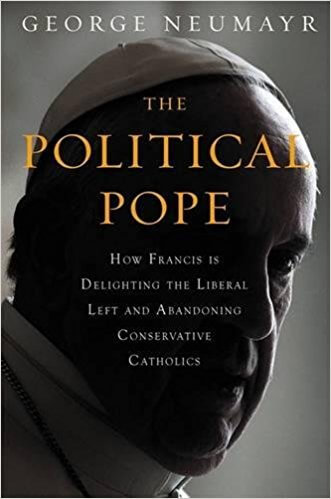
The Political Pope: How Pope Francis Is Delighting the Liberal Left and Abandoning Conservatives
George Neumayr
Hachette Book Group
220 pages
$18.36 Hardcover; $9.95 Paperback

In early May of this year, I was browsing the headlines at OnePeterFive and came across one that peaked my interest: “An Interview with George Neumayr, Author of The Political Pope” by Dr. Maike Hickson. After I began reading the interview, it didn’t take long for me to conclude that I needed to read Mr. Neumayr’s book. One statement of his, in particular, which appears about a third of the way down, caught my attention: “Pope Francis is the worst teacher of the Faith in the history of the Catholic Church. One could not trust him to teach an elementary school religion class.” Immediately I had come to mind a strikingly similar observation made by John Vennari, the beloved late editor of Catholic Family News, just a few months into Francis’ pontificate:

I’ve been following Pope Francis’ words and actions, and read the entire book On Heaven and Earth that he co-wrote with Rabbi Skorka.

He seems to have a good heart and some good Catholic instincts, but theologically he is a train wreck – remarkably sloppy.

Though this might shock some readers, I must say that I would never allow Pope Francis to teach religion to my children.[1]

One of the first things I did after receiving my copy of The Political Pope in the mail was review the chapter endnotes to see what kinds of sources were used to document the contents of the book. Upon investigating, I was pleasantly surprised to find several familiar and trusted names listed, including Catholic Family News, The Remnant, Christopher Ferrara’s Fatima Perspectives column, Tradition in Action, Rorate Coeli, LifeSiteNews, and OnePeterFive. While also drawing from a wide variety of secular sources for relevant information, Neumayr demonstrates a clear and unapologetic support for traditional Catholicism throughout his book, which is wonderful to see.

An Exposé of Pope Francis – In His Own Words

One of the most powerful aspects of The Political Pope is that a good amount of material throughout the book consists of direct quotes from Francis himself. In many ways, it is a compilation in one volume of Francis’ most scandalous and revealing statements, which tragically exist in abundance. For example, Neumayr begins with a thorough look at the people, ideas, and culture which most shaped Jorge Mario Bergoglio during his formative years. The opening chapter, called “The Pope They Have Been Waiting For”, includes a section examining Francis’ communist mentor, a woman named Esther Ballestrino de Careaga, for whom he worked at a laboratory in Buenos Aires. Neumayr quotes Francis’ pleasant memories of Ballestrino and describes his enduring association with her:

“She often read Communist Party texts to me and gave them to me to read. So I also got to know that very materialistic conception. I remember that she also gave me the statement of the American Communists in defense of the Rosenberg’s, who had been sentenced to death,” he has said. Learning about communism, he said, “through a courageous and honest person was helpful. I realized a few things, an aspect of the social, which I then found in the social doctrine of the Church.” After entering the priesthood, he took pride in helping her hide the family’s Marxist literature from the authorities who were investigating her. According to the author James Carroll, Bergoglio smuggled her communist books, including Marx’s Das Kapital, into a “Jesuit library.”[2]

Francis’ admiration for Communists like Ballestrino remains the same to this day, as evidenced by his profoundly offensive claim (quoted by Neumayr) that “if anything, it is the communists who think like Christians.”[3]

Who is Pope Francis?

This is perhaps the central theme or core thesis of the book: Jorge Mario Bergoglio “is a product of political leftism and theological Modernism,” as Neumayr summed up in his interview with Dr. Hickson. He is the quintessential liberal Jesuit, born and raised in socialist Argentina, who in his young adult years encountered and embraced the Marxist-inspired heresy known as “liberation theology.” Neumayr spends roughly the first four chapters developing his thesis, relating biographical information about Bergoglio’s “progressive” formation under Fr. Pedro Arrupe (the Jesuits’ Superior General from 1965-1983), his single term as Provincial Superior in Argentina (1973-1979), and his tenure as Auxiliary Bishop of Buenos Aires (1992-1998) and later Archbishop of the same (1998-2013). In each successive chapter, Neumayr explores a different facet of Francis’ pontificate in light of the above-mentioned thesis and presents copious supporting evidence.

Interestingly, Neumayr’s description of how the Church ended up with Pope Francis is reminiscent of John Vennari’s assessment as presented in The Permanent Instruction of the Alta Vendita: A Masonic Blueprint for the Subversion of the Catholic Church (published by TAN Books in 1999), more proof positive that Neumayr has done his homework. He opens Chapter Three (“The Left’s Long March to the Papacy”) of The Political Pope as follows:

The election of Jorge Bergoglio marked the culmination of the left’s long march through the Church. For decades, liberals, both inside and outside the Church, had labored for the elevation of a progressive pope who would incorporate the tenets of modern liberalism into Catholicism. That movement has been gathering strength since at least the advent of the modernist heresy in the Church, which Pope Pius X addressed in his 1907 encyclical Pascendi Dominici Gregis.

To read that encyclical today, one might think Pope Pius X was writing about the papacy of Francis. Pope Pius X warned that the modernists wish to fashion a faith “suited to the times in which we live,” based not on the immutable doctrines of Catholicism but on the subjectivism of “modern philosophy.” He foresaw a Church that would chase after elite fads, defer to the spurious claims of modern science, bow down to the secularism of the state, treat all religions as equal, cast Jesus Christ as a mere human political activist, reduce priests to social workers, and Protestantize its worship and doctrine.

Despite Pope Pius X’s efforts, modernism continued to spread in the Church throughout the twentieth century, bubbling up most visibly at Vatican II and its aftermath. … The liberalism of Francis’ pontificate can be traced to that modernist spirit.[4]

Granted, the errors mentioned above began well before Jorge Bergoglio was elected the 265th successor of St. Peter (they began in earnest during the reign of Pope John XXIII, 1958-1963), but it is equally true that Francis has taken those errors to unprecedented extremes.

The Marxist Pope

To understand Pope Francis and his radical pontificate, we must examine his words and deeds through the lens of his self-professed Marxism. As unbelievable as it is, the current occupant of the Chair of St. Peter is a firm adherent of liberation theology – that is, Communism with a Christian veneer – which was concocted by the Soviet KGB (secret police) and brought into Latin America by KGB agents as a means of subverting the Catholic Church.[5] During his four years as Supreme Pontiff, Francis has personally rehabilitated several previously censured liberation theologians, including Gustavo Gutierrez, Leonardo Boff,[6] and Miguel d’Escoto Brockmann. It is very reminiscent of how Pope John XXIII rehabilitated so many notorious Modernists just prior to Vatican II and invited them to participate as periti(theological experts) during the Council.[7] “According to Boff,” writes Neumayr, “Pope Francis will eventually rehabilitate all of the condemned liberation theologians from Latin America. Boff believes that Pope Francis is waiting until their old critic, Pope Benedict XVI, dies.”[8]

His championing of socialism and admiration for socialists extends into the secular sphere as well, thus making him “a darling of the global left” and “the ecclesiastical equivalent of Barack Obama,” says Neumayr.[9] Whether it be his lobbying for the dubious “science” of climate change, his support of the United Nations’ radical environmentalism (i.e. population control via abortion and contraception), or his honoring of Alinskyite politicians such as Bernie Sanders with invitations to speak at the Vatican, Francis has proven himself a staunch ally of liberals the world over. And specifically in regard to the United States, Francis fosters what Neumayr calls “The Unholy Alliance” (Chapter Five of The Political Pope) between the Catholic left and the Democratic left. Prime examples of this alliance include such “Catholic” Democrats as former vice president Joe Biden, former House speaker Nancy Pelosi, and Senator Tim Kaine (Hillary Clinton’s running mate) – all notorious for their full support of abortion, contraception, homosexual “marriage,” etc. – who have nothing but praise for Pope Francis, a fellow socialist.

It is quite providential that Neumayr’s book has been published during this Fatima Centennial Year – in the month of May, no less – since it demonstrates so thoroughly that the “errors of Russia” about which Our Lady of Fatima came to warn us have indeed infected the Church at the highest levels.[10]

No Tolerance for Tradition111

One of the hallmarks of Francis’ pontificate continues to be his overt disdain for Sacred Tradition. It was evident, literally, from the first moments of his papacy when he was presented to the Church and the world on the central loggia of St. Peter’s Basilica. On that most solemn occasion, he declined to wear the traditional papal vestments (red mozzetta and stole)[11] and requested “the prayer of the people asking the blessing for their Bishop” from those gathered in St. Peter’s Square.[12] Only after a moment of silence for this “blessing from the people” did he then impart his Apostolic Blessing as Supreme Pontiff.

This was only the beginning, the proverbial tip of the iceberg, as Neumayr chronicles throughout his book. Pope Francis has publicly ridiculed, scolded, and otherwise defamed devout Catholics (clergy and laity) on multiple occasions simply for their sincere fidelity to the traditional liturgy, doctrine, and discipline of Holy Mother Church. He has referred to traditional Catholics as “rigid,” “pharisaical,” “hardheaded,” and even “heretical” for refusing to accept his heterodox version of the Faith. In his inaugural Apostolic Exhortation Evangelii Gaudium (On the Proclamation of the Gospel in Today’s World), Francis critiqued traditionalists in a very condescending and denigrating manner, as noted by Neumayr:

He has accused traditional Catholics of “self-absorbed promethean neopelagianism,” without bothering to clarify the insult. Oozing contempt for traditionalist Catholics, he said they consider themselves “superior to others because they observe certain rules or remain intransigently faithful to a particular Catholic style from the past” and that their “supposed soundness of doctrine or discipline leads instead to a narcissistic and authoritarian elitism, whereby instead of evangelizing, one analyzes and classifies others, and instead of opening the door to grace, one exhausts his or her energies in inspecting and verifying.”[13]

Unfortunately, Francis’ fierce opposition to Tradition and those Catholics faithful to it does not end with mere words. As Neumayr observes, “One of Pope Francis’ first moves was to harass a growing traditionalist order in Italy called the Franciscan Friars of the Immaculate, which had enthusiastically embraced Summorum Pontificum, Pope Benedict XVI’s order authorizing wider use of the traditional Latin Mass.”[14] Neumayr goes on to quote from the decree issued by the Congregation for Institutes of Consecrated Life and Societies of Apostolic Life (colloquially known as the Congregation for Religious) concerning the Franciscan Friars of the Immaculate (Protocol 52741/2012, dated 11 July 2013):

“…the Holy Father Francis has directed that every religious of the congregation of the Franciscan Friars of the Immaculate is required to celebrate the liturgy according to the ordinary [i.e. Novus Ordo] rite and that, if the occasion should arise, the use of the extraordinary form (Vetus Ordo) must be explicitly authorized by the competent authorities, for every religious and/or community that makes the request.”[15]

This sort of treatment of traditional Catholics has apparently been par for the course throughout his clerical tenure. As Archbishop of Buenos Aires, Neumayr explains:

The only group of Catholics whom Archbishop Bergoglio treated severely were conservative Catholics, whose interest in the traditional Latin Mass he blocked. “He has persecuted every single priest who made an effort to wear a cassock, preach with firmness, or that was simply interested in Summorum Pontificum,” Argentine journalist Marcelo González has written. Bergoglio referred to conservative religious orders as “restorationist factions” and decried their “rigid religiosity.”[16]

Cheerleader for the Church’s Historic Enemies

While Pope Francis is unjustly harsh with members of his own flock, he is inexplicably supportive of the Church’s most notorious enemies. Neumayr spotlights Francis’ incessant call for Europeans to allow a virtually unlimited number of Muslim “refugees” into their respective countries, thus referring to Francis as “The Open-Borders Pope” (Chapter Seven). He observes:

In stark contrast to his predecessors, Pope Francis has shown no interest in reviving a historically Christian Europe against a potentially Eurabian future. Pope Francis subscribes to the left’s suicidally softheaded explanation for the rise of Islamic terrorism in Europe. He blames it not on Islamic radical ideology but on the West’s unwillingness to “integrate” Muslims and open its borders to them.[17]

In conjunction with his dangerous call for open borders, Francis shamelessly defends Islam against reasonable criticism and promotes the false notion that it is a “religion of peace.” For example, he wrote thus in Evangelii Gaudium(portion quoted by Neumayr in bold):

“We Christians should embrace with affection and respect Muslim immigrants to our [traditionally Christian] countries in the same way that we hope and ask to be received and respected in countries of Islamic tradition. I ask and I humbly entreat those countries to grant Christians freedom to worship and to practice their faith, in light of the freedom which followers of Islam enjoy in Western countries! Faced with disconcerting episodes of violent fundamentalism, our respect for true followers of Islam should lead us to avoid hateful generalizations, for authentic Islam and the proper reading of the Koran are opposed to every form of violence.[18]

I am reminded of Christopher Ferrara’s intrepid questions in response to this passage: “By what authority does Francis declare who are the ‘true followers of Islam’ and what constitutes ‘authentic Islam and the proper reading of the Koran’? Is this the Vicar of Christ or the Vicar of Mohammad speaking?”[19]

Neumayr’s refreshingly accurate treatment of Islam throughout The Political Pope also brings to mind the magnificent declaration With Burning Concern: We Accuse Pope Francis penned by Michael Matt, Christopher Ferrara, and John Vennari (issued jointly by The Remnant and Catholic Family News in Sept. 2016). Addressing the Pope directly, the esteemed authors of With Burning Concern confront Francis on a whole host of subjects, including what they correctly identify as his “Absurd Whitewash of Islam.”[20]

Pope Francis displays equal enthusiasm and spreads similar disinformation about the heresiarch Martin Luther, as evidenced by his trip last October to Lund, Sweden to commemorate the 500th anniversary of the Protestant revolt. Neumayr discusses this most regrettable episode, as well as the virtual “canonization” (or at least exoneration) of Luther by Pope Francis, which occurred in the Vatican a couple of weeks prior to the Lund trip:

Pope Francis goes out of his way to prop up the Church’s historic opponents. Who could have imagined any other pope than this one celebrating the 500th anniversary of the Protestant Reformation? In October 2016, Pope Francis traveled to Sweden to participate in a Catholic-Lutheran service that commemorated the beginning of Martin Luther’s revolt against Catholicism. According to L’Osservatore Romano, the idea for the joint commemoration came from Pope Francis, not from the Lutherans. …

In anticipation of the trip, Pope Francis praised Luther, describing him as a “reformer.” He didn’t mention Luther’s sweeping rejection of Catholic doctrine and sacraments, reserving his criticism not for Luther but for the Church. “I believe the intentions of Martin Luther were not wrong,” he said. …

… On October 13, 2016, in an event that played out almost like an Onion parody at the Vatican, a group of Lutherans presented a smiling Pope Francis with a copy of Martin Luther’s “95 Theses” against the Church.

At that event, a young Catholic girl asked the pope, “My friends do not go to Church, but they are my friends. Do I have to help them to go to Church or is it enough that they simply remain good friends?” Don’t bother, the pope replied: “It is not licit that you convince them of your faith; proselytism is the strongest poison against the ecumenical path.”[21]

So said the pope who devoted over 200 pages (Evangelii Gaudium) to discussing the urgent need for evangelization! What is “evangelization” if not an effort to convince others of our Faith – the one true Faith – and their need to embrace it for salvation?

What Must Be Done?

To conclude his groundbreaking work, Neumayr poses a most pressing question: “Will Paul Correct Peter?” (Chapter Twelve). As he explains, he is referring to the famous episode at Antioch when St. Paul “withstood [St. Peter] to the face, because he was to be blamed” for giving a bad example (see Gal. 2:11-14). Neumayr goes on to quote from Aquinas’ Summa on the importance of fraternal correction and exhorts his readers about the need to resist Francis, citing Bellarmine:

“Just as it is lawful to resist the pope that attacks the body,” argued St. Robert Bellarmine, the celebrated sixteenth-century Jesuit, “it is also lawful to resist the one who attacks souls or who disturbs civil order, or, above all, who attempts to destroy the Church. I say that it is lawful to resist him by not doing what he orders and preventing his will from being executed.”[22]

Neumayr also discusses examples of the recent “historic pushback,” as John Vennari called it, such as the theological critique of Amoris Laetitia by an international group of 45 scholars and the famous dubia submitted to Pope Francis by Cardinals Burke, Brandmüller, Meisner, and Caffarra.

Read the Book, Spread the Word

This review has truly just scratched the surface of the contents of George Neumayr’s book. I strongly encourage readers to support his laudable work by purchasing a copy of The Political Pope, reading it in full, and then spreading the truth of its contents far and wide. As Neumayr ultimately concludes, our solemn duty as Catholics during this time of unprecedented crisis is to “defend the faith from a pope who aligns with her enemies.”[23] May we all “contend earnestly for the faith once delivered to the saints” (Jude 3) and persevere in that Faith unto the end.

And may we remember to pray much for the Holy Father, as Our Lady of Fatima and the three little shepherds taught us.


* Originally published at Catholic Family News. 

NOTES:

[1] John Vennari, “Blessed Pius IX, a Model in Our Struggle,” blog posted dated June 13, 2013 (http://www.cfnews.org/page88/files/3b2770bc5b3d323b6bb4e64cc38a8521-114.html)

[2] George Neumayr, The Political Pope: How Pope Francis is Delighting the Liberal Left and Abandoning Conservatives(New York: Center Street, 2017), p. 8

[3] Ibid., p. 153; see also Steve Skojec, “Pope: ‘It is the Communists Who Think Like Christians,’” OnePeterFive online article posted Nov. 11, 2016 (https://onepeterfive.com/pope-communists-think-like-christians/).

[4] Neumayr, The Political Pope, p. 41-42

[5] Neumayr cites Ion Mihai Pacepa, former head of intelligence for communist Romania, who defected to the United States in 1978 (see The Political Pope, p. 2-3). Pacepa offers a detailed account of the Soviet origins of liberation theology in his book Disinformation: Former Spy Chief Reveals Secret Strategies for Undermining Freedom, Attacking Religion, and Promoting Terrorism (Washington, DC: WND Books, Inc., 2013), p. 106-110.

[6] Neumayr cites an article by John Vennari (“Pastoral Discernment and Dead Members ‘Alive’”) as his source for a quote from Boff (see The Political Pope, p. 16, note 11).

[7] See Roberto de Mattei, The Second Vatican Council: An Unwritten Story (Fitzwilliam: Loreto Publications, English Ed. 2012), p. 188-192

[8] Neumayr, The Political Pope, p. 5

[9] Ibid., p. 11

[10] See Maike Hickson, “Have the ‘Errors of Russia’ Now Infected Rome?” OnePeterFive online article posted Dec. 13, 2016 (https://onepeterfive.com/errors-russia-now-infected-rome/); Jan Bentz, “Bishop Schneider likens treatment of four Cardinals to Soviet regime: ‘We live in a climate of threats,’” LifeSiteNews online article posted Dec. 6, 2016 (https://www.lifesitenews.com/news/bishop-schneider-compares-treatment-of-four-cardinals-to-soviet-regime)

[11] He wore the traditional gold-embroidered red stole only while imparting his first papal blessing, then immediately removed it.

[12] First Greeting and Apostolic Blessing (Urbi et Orbi) of Pope Francis given Mar. 13, 2013 (http://w2.vatican.va/content/francesco/en/speeches/2013/march/documents/papa-francesco_20130313_benedizione-urbi-et-orbi.html)

[13] Neumayr, The Political Pope, p. 164; see Evangelii Gaudium, n. 94 (http://w2.vatican.va/content/francesco/en/apost_exhortations/documents/papa-francesco_esortazione-ap_20131124_evangelii-gaudium.html)

[14] Ibid., p. 190

[15] Ibid.; see Sandro Magister, “For the First Time, Francis Contradicts Benedict,” Chiesa online article posted July 29, 2013 (http://chiesa.espresso.repubblica.it/articolo/1350567bdc4.html?eng=y&refresh_ce)

[16] Neumayr, The Political Pope, p. 73

[17] Ibid., p. 126

[18] Ibid., p. 147-148; Evangelii Gaudium, n. 253

[19] Christopher A. Ferrara, “Vicar of Christ or Vicar of Mohammad?” article published in Sept. 2016 issue of Catholic Family News

[20] See With Burning Concern: We Accuse Pope Francis, Part II (http://www.cfnews.org/page88/files/1acc7a02ab4cff28e85a9d0ac970f643-634.html)

[21] Neumayr, The Political Pope, p. 155-156

[22] Ibid., p. 219

[23] Ibid., p. 221

Print Friendly
c60af2a5166f1485871300-OnePeterFiveIcon-2015.png
Posted in Uncategorized | Comments Off on AN EXCELLENT REVIEW OF THE NEW BOOK BY GEORGE NEUMAYR

A REFLECTION OF THE THOUGHT OF POPE BENEDICT IN THIS MOMENT OF CRISIS AS THE BARQUE OF PETER IS IN DANGER OF CAPSIZING

unnamed-25


BREAKING: Benedict issues clarion call to all bishops
Louie July 17, 2017
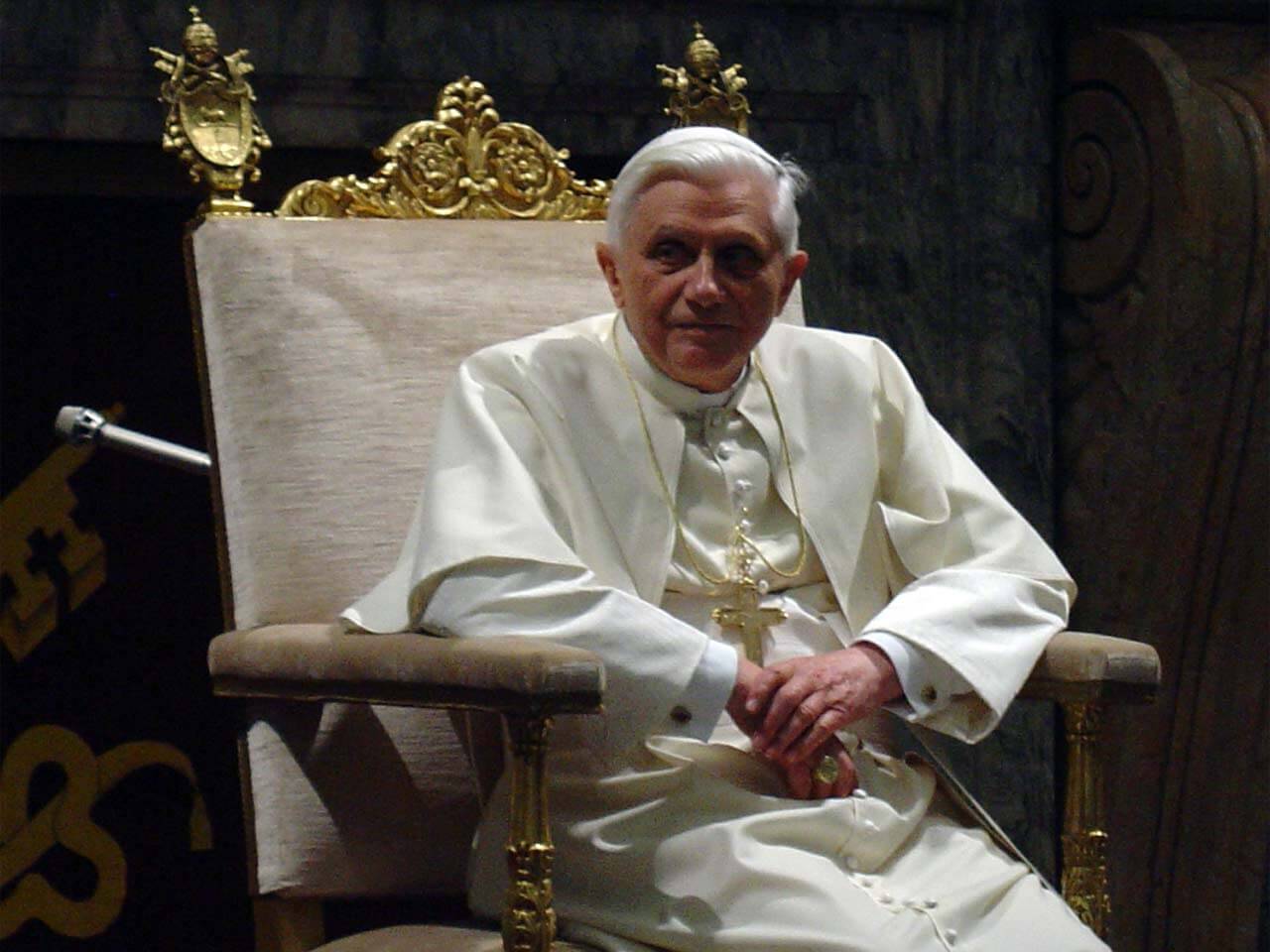
Cardinal Ratzinger Pro Eligendo Romano Pontifice


[ Emphasis and {Commentary} in red type by Abyssum ]

Cardinal Ratzinger delivers sermon, Pro Eligendo Romano Pontifice, 18 April 2005

The message sent by Benedict to be read aloud at the funeral of Cardinal Meisner is generating a great deal of buzz in Catholic circles, and for good reason.

Even so, some very important aspects of the text don’t seem to be getting nearly enough attention. Before we get to that, however, let’s take a moment to consider just how extraordinary this situation truly is.

We have good reason to believe that Benedict is a man “under wraps,” if you will. One might even suggest that he is being held captive to some extent.

Yes, I know… It sounds like a Dan Brown novel, but let’s not forget yet another bombshell that Benedict managed to lob into the public record; this one dated October 2014.

Recall that Benedict had responded by letter to an invitation that he received to participate in a Pontifical High Mass as part of a Summorum Pontificum pilgrimage in Rome.

The Pope Contemplatus wrote:

“My state as a ‘cloistered monk’ does not allow me a presence that is also exterior. I leave my cloister only in particular cases, [when] personally invited by the Pope.”

Get that?

Benedict plainly, albeit cleverly, informed the world that he is not “allowed an exterior presence” unless personally invited by Francis. Not allowed!

This is a far cry from what Benedict said just 20 months earlier when he announced his resignation:

“With regard to myself, I wish to also devotedly serve the Holy Church of God in the future through a life dedicated to prayer.” (Benedict XVI, February 11, 2013)

How did we get from choosing “a life dedicated to prayer” to becoming a “cloistered monk” who can only leave his cloister when personally invited by the Pope?

The solitary conclusion that can be drawn from this is that the veritable imprisonment of which Benedict spoke isn’t his own idea; it had to have come from his “superior,” that is, Francis himself.

Let’s be clear:

Benedict is not one to shoot from the hip. He chooses his words carefully. Of this we can be especially certain when it comes to a written text, and this applies to both the letter of 2014 and the one that we’re about to discuss.

With this in mind, let’s now take a closer look at the message that was read aloud at Cardinal Meisner’s funeral.

First, it seems obvious that the two men had a close relationship and spoke rather regularly. We are told, in fact, that they had spoken just the day before the cardinal died.

Benedict further relates:

“What particularly impressed me from my last conversations [NOTE: plural] with the now passed Cardinal was the relaxed cheerfulness, the inner joy and the confidence at which he had arrived.”

From the content of the message, one gets the impression that the two men had a “fraternal” relationship.

Benedict went on to relate concerning their final conversation that Cardinal Meisner was pleased to be on vacation. This is just the kind of thing one might expect to come up when good buddies shoot the breeze, right?

Sure, but don’t be fooled.

In spite of however many years their friendship went back, Cardinal Meisner was “old school” enough that there is little doubt that he saw his relationship with Benedict primarily as one of Holy Father and son.

In other words, Benedict was someone from whom the cardinal could seek guidance, and we can be certain that it was always carefully considered when given.

Note that Benedict wrote of the cheerfulness, joy and confidence at which Cardinal Meisner had arrived.

Evidently, he was Meisner’s confidence even prior to this point; presumably in the lead up to the dubia.

One wonders what kind of advice, if any, Benedict may have given to Cardinal Meisner in those days…

We can only speculate, of course, but two things seem very unlikely:

Firstly, that Meisner would not have failed to seek Benedict’s counsel before participating in the dubia, and secondly, that he would not have added his name to the text had Benedict counseled against it.

At this, we come to the money quote:

“What moved me all the more was that, in this last period of his life, he learned to let go and to live out of a deep conviction that the Lord does not abandon His Church, even if the boat has taken on so much water as to be on the verge of capsizing.”

I get the sense that Benedict may have been speaking of himself to some extent – learning to let go in this last period of life; arriving at a place of relaxed cheerfulness, inner joy and confidence in spite of the unprecedented turmoil in the Church (to say nothing of one’s own contribution to it).

Either way, I think it’s safe to say that Benedict had a hand in leading his son, Cardinal Meisner, to this point of resignation (no pun intended).

Before we discuss the capsizing Church and the extent to which it represents a cleverly delivered critique of Captain Bergoglio, I’d like to focus on that portion of the text that was read just prior as it is critically important:

“The Church stands in particularly pressing need of convincing shepherds who can resist the dictatorship of the spirit of the age and who live and think the faith with determination.”

Dictatorship…

Again, let us be certain that Benedict has chosen his words very carefully.

With this in mind, it would seem rather obvious, to me at any rate, that Benedict is calling our attention back to the now-famous words that he had spoken in his homily for the Pro Eligendo Romano Pontifice, the Mass for the Election of the Roman Pontiff, offered just prior to the conclave of 2005 that elected him pope.

“Relativism, that is, letting oneself be ‘tossed here and there, carried about by every wind of doctrine,’ seems the only attitude that can cope with modern times. We are building a dictatorship of relativism that does not recognize anything as definitive and whose ultimate goal consists solely of one’s own ego and desires.”

In this, Benedict – a veritable “cloistered monk” beholden to the whims of his “superior” – is providing a masterclass in Romanitas. He is telling all with ears to hear what he really thinks of the Bergoglian enterprise!

It seems clear to me that this text was not, as one might expect, properly vetted by Bergoglio’s operatives prior to being read. Might someone’s head roll as a result; perhaps even that of Georg Ganswein? We shall see…

In any case, it is no coincidence that we were invited to reconsider, in light of current events, that portion of Cardinal Ratzinger’s 2005 homily wherein he spoke of being “tossed about,” and this just prior to his comment concerning the Church of today being like a boat on the verge of capsizing.

(See, continuity can be useful!)

It is helpful to know that this imagery is Scriptural in a twofold sense.

In 2005, then Cardinal Ratzinger was referring to St. Paul’s Epistle to the Ephesians:

“That henceforth we be no more children tossed to and fro and carried about with every wind of doctrine, by the wickedness of men, by cunning craftiness by which they lie in wait to deceive. (Eph. 4:14)”

At that time, the soon-to-be Pope Benedict XVI was speaking of “dictatorship” as that worldly point of view opposed by the Church. He immediately went on to describe this opposition thus:

“We, however, have a different goal: the Son of God, the true man … a mature adult faith is deeply rooted in friendship with Christ. It is this friendship that opens us up to all that is good and gives us a criterion by which to distinguish the true from the false, and deceit from truth.”

In 2017, by contrast, Benedict is calling our attention back to his words of 2005 while speaking of the present state of affairs inside the Church. He is telling us that the “dictatorship” has entered her very bosom.

Yes, I understand, it entered primarily via the Almighty {Vatican II} Council; a point lost on men like Benedict, but be that as it most certainly is, his indictment of Dictator Bergoglio stands.

Wicked, crafty, cunning, lying in wait to deceive… A man who does not recognize anything as definitive and whose ultimate goal consists solely of one’s own ego and desires.

Is this not a fitting description of he who masterminded the Synods in order to pave the way for Amoris Laetitia?

As I stated, the seafaring imagery under discussion is Scriptural in a twofold sense. The second concerns the Church as a boat that has taken on so much water as to be on the verge of capsizing.

“And behold a great tempest arose in the sea, so that the boat was covered with waves, but he was asleep. And they came to him, and awaked him, saying: Lord, save us, we perish. And Jesus saith to them: Why are you fearful, O ye of little faith? Then rising up, he commanded the winds, and the sea, and there came a great calm. But the men wondered, saying: What manner of man is this, for the winds and the sea obey him? (Matthew 8:24-27)”

From this, we can glean a couple of things.

One, in the eyes of the world, the Church is fast crumbling to the point of irrelevancy; so much so that her detractors are moved to taunt the faithful in the manner of the Pharisees:

Your Church is beaten and bloodied. Where is your Lord now; sleeping?

Through the eyes of faith, however, while we recognize the severity of the ecclesial crisis as much or more than anyone, we know that it only appears as if Our Lord has left us to perish. We know that He is ever the true Head of His Church, and He will not let her fail.

More specifically as it concerns Dictator Bergoglio, this scene from the Gospels is highly relevant.

In the interest of space, I invite you to read (or reread as the case may be) the following post from June 2015: The Church will doubt as Peter doubted…

There you will find a treatment of Our Lady’s warning as given at Fatima and the commentary of Cardinal Eugenio Pacelli (the future Pope Pius XII) concerning it:

“This persistence of Mary about the dangers which menace the Church is a divine warning against the suicide of altering the Faith, in Her liturgy, Her theology and Her soul … A day will come when the civilized world will deny its God, when the Church will doubt as Peter doubted. She will be tempted to believe that man has become God.”

In the above-mentioned scene described in Matthew’s Gospel, Bergoglio is represented (if you will allow) by Peter who is among those who ask of Jesus, What manner of man is this?

Long story short, he knows that Jesus is a man, but he doubts that He is God.

As I argue in the post linked above, the entire Bergoglian menace rests upon just such a Christological heresy; namely, doubt concerning the divinity of Jesus Christ.

In conclusion, it seems as if the most profound aspect of Benedict’s message as read at the funeral of Cardinal Meisner has been overlooked by many:

Having painted this dreadful and stunningly accurate portrait of the Dictator Bergoglio, Benedict issued a call directed at the entire episcopate:

“The Church stands in particularly pressing need of convincing shepherds who can resist the dictatorship…”

Bishops of the world, are you listening?

aka focus

Posted in Uncategorized | Comments Off on A REFLECTION OF THE THOUGHT OF POPE BENEDICT IN THIS MOMENT OF CRISIS AS THE BARQUE OF PETER IS IN DANGER OF CAPSIZING

CONSOLING HIS HEART

His heart.jpg


Posted in Uncategorized | 1 Comment

OUR CONGRESS IS IMPOTENT, UNABLE TO FUNCTION, UNABLE TO SOLVE THE MAJOR PROBLEMS FACING THE COUNTRY

Kids with illnesses, like mine, deserve better than ObamaCare

THE HILL
[ Emphasis and {Commentary} in red type by Abyssum ]
Kids with illnesses, like mine, deserve better than ObamaCare
© Getty

While both sides of the healthcare debate are rolling out stories of victims to pull on the heartstrings, every American is going to be a loser if ObamaCare isn’t repealed and replaced. I have two children with cystic fibrosis (CF), a genetic disease that ravages the lungs and digestive system, will ultimately shorten my children’s lifespans, and cost a fortune to treat throughout their lives.

This debate has a very real impact on my family. We need good health insurance, just like other families or individuals with pre-existing conditions. But the false promises of ObamaCare have never been the answer.

Legislators and lobbyists in Washington, D.C., can argue for months over how to fix ObamaCare, the healthcare legislation forced through Congress in 2010 under President Obama’s tutelage. He promised the law would cover 23 million people; in actuality, it’s covered less than half of that.

In 2013, Politifact declared President Obama’s pithy ObamaCare pitch, “If you like your health plan, you can keep it,” as the Lie of the Year. Insurers are fleeing the exchanges and states all together. When they aren’t doing that, they are asking for insane rate increases, like the one and only insurer left in Delaware, who asked for a 33.6 percent rate increase for 2018. Residents of Delaware are getting off easy compared to people in Iowa, whose only ObamaCare insurer in the state asked for a rate hike of 43.5 percent. And, next year, it’s projected that 2.4 million Americans will only have one insurer to “choose” from, while 27,000 Americans will have zero options under ObamaCare.

ObamaCare is collapsing and Americans are worried sick about what’s next, especially families like mine, that rely on health insurance to pay for expensive treatment.

While politicians in Washington are arguing about the finer details of ObamaCare, it’s imploding all around the country. Soon, they will have nothing to argue over because ObamaCare won’t exist.

And part of me wonders if that was the plan all along. Step 1: Create an unsustainable quasi-private, quasi-government health coverage that will fail because ObamaCare did nothing to help reduce the costs of healthcare and prescription drugs. Step 2: When ObamaCare fails, con Americans into believing that European-style single payer healthcare is the savior.

And as a parent of two children with life-threatening diseases, this impending implosion of ObamaCare and the subsequent national pitch for single payer health care terrifies me the most. The state would then have the ability to say when they would cut off care to any American.

Look at who President Obama chose for a recess appointment as the head of Center for Medicare and Medicaid Services in 2010, Dr. Donald Berwick. The esteemed doctor actually published papers effectively laying out how the state could ration care to those who were deemed to contribute less to society.

In the UK, baby Charlie Gard’s parents are being told that he will be removed from life support against their wishes and that they are not allowed to move their son out of the hospital to die at home or to take to another country for treatment, even those though they have raised all of the money to pay for it. The state is holding their son hostage.

While I share the concern that Sen. Ted Cruz’s (R-Texas) Better Care Reconciliation Act would cut Medicaid, which 45 percent of CF patientsrely on for some type of coverage to help pay the tens of thousands of dollars each month just for prescription drugs, a single payer health care system is not the way to go.

As Americans, my children are very lucky. They live in a nation that, because of the free market, gives great incentives to drug companies to spend millions of dollars on research to find life-sustaining and life-prolonging treatments. For example, Boston-based Vertex Pharmaceuticals developed Kalydeco and Orkambi, two of the first drugs in the history of the world that correct a specific genetic defect. Those two medicines could add years of life for CF patients.

While the annual costs of these medicines are high, so was the cost of developing them. Are they making millions in profits? I hope so. They took the risk and spent years doing something others have previously failed to do, researching a drug that they knew would only treat about 30,000 Americans. So yes, I hope they are making a hefty load of cash as I pray they go back and keep researching until they find a cure.

Patients in other countries are still waiting for these drugs because their single-payer government health care system won’t pay the high costs.

Watching the wheels of Washington turn is agonizing for parents and patients of deadly and expensive diseases.OUR

And the bottom line is this: Congress needs to uphold President Trump’s promise to repeal ObamaCare and replace it with something better, something that keeps health insurance companies in the game and encourages citizens to pay for private insurance, something that allows those who truly need it to have access to Medicaid benefits, something that helps lower the cost of healthcare with free market reforms, and something that keeps our health care system far, far away from Charlie Gard’s kidnappers in the UK.

Get to work, Congress. Either step up and do your jobs or get out of the way.

Kristan Hawkins is president of Students for Life of America.


The views expressed by contributors are their own and not the views of The Hill.

Posted in Uncategorized | Comments Off on OUR CONGRESS IS IMPOTENT, UNABLE TO FUNCTION, UNABLE TO SOLVE THE MAJOR PROBLEMS FACING THE COUNTRY

WHEN BOATS FILL WITH WATER THEY USUALLY CAPSIZE

Pope Benedict’s Message at Funeral of Cardinal Meisner: “The Lord Does Not Abandon His Church”

OnePeterFive

We reported last week on the death of Cardinal Joachim Meisner of Germany, Archbishop Emeritus of Cologne and one of the four so-called “dubia cardinals”. Dr. Maike Hickson also shared a touching memorial of Meisner, who by all accounts was beloved by all who knew him. In a report on the German cardinal written last year, Hickson also noted his closeness to Pope Benedict XVI, and his role in the election of Cardinal Joseph Ratzinger to the office of the papacy in 2005, in opposition to the wishes of the so-called “Sankt Gallen Mafia,” who were reported to have desired the election of Cardinal Jorge Mario Bergoglio at that time.

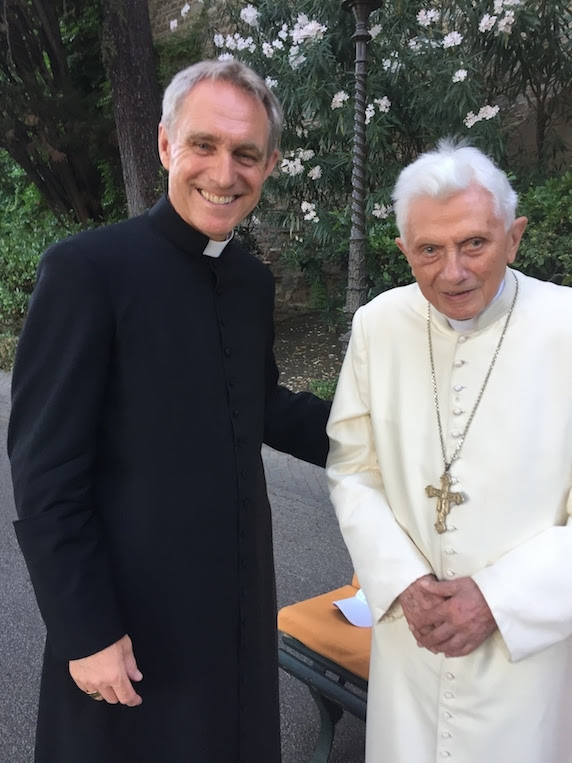
Today, Saturday, July 15, 2017, the funeral Mass for Cardinal Meisner was offered in Cologne Cathedral. Pope Francis, who was not present, had a message read to those gathered by the Apostolic Nuncio to Germany, Archbishop Nikola Eterović. Then, in what has been characterized as a surprise — particularly considering his usual silence on matters facing the Church — a message from the Pope Emeritus himself was read by his Personal Secretary, Archbishop Georg Gänswein, who also serves as Prefect of the Papal Household for Pope Francis.

When one reads the following message — particularly that moment where the Pope Emeritus speaks of how Meisner “learned to let go and to live out of a deep conviction that the Lord does not abandon His Church, even if the boat has taken on so much water as to be on the verge of capsizing,” one cannot help but see in it a possible reflection on his own choice to step away from the papacy, and the crisis that even now engulfs the Church in his absence. This message, of course, of the Lord not abandoning His Church, cannot be read in isolation from the somewhat cryptic message the Pope Emeritus gave the five new cardinals at the ordinary public consistory last month: “The Lord wins in the end.” It would appear this is a theme very much on the mind of the former pontiff in recent days.

Below we provide the full text of Pope Benedict’s message on the occasion of the funeral of Cardinal Joachim Meisner, graciously translated by 1P5’s Matthew Karmel.


Vatican City 11. 7. 2017

At this hour, as the faithful of the church of Cologne and far beyond bid Cardinal Joachim Meisner farewell, my heart and my thoughts are with you, and I am pleased to fulfill Cardinal Woelki’s request to address a word of remembrance to you.

As I learned last Wednesday via telephone of the death of Cardinal Meisner, I initially couldn’t believe it. We had spoken on the telephone to one another just the day before. Gratefulness for finally being able to begin his vacation after having participated in the beatification ceremony of Bishop Teofilius Matulionis in Vilnius on the previous Sunday (25th June) was audible in his voice. Love for the churches in the neighboring countries to the East, which suffered under Communist persecution, as well as an appreciation for their holding fast amidst the suffering of those times made a lifelong impression upon him. And, thus, it is no coincidence that the last visitation of his life was paid in respect to a Confessor of the Faith from those lands.

What particularly impressed me from my last conversations with the now passed Cardinal was the relaxed cheerfulness, the inner joy and the confidence at which he had arrived. We know that this passionate shepherd and pastor found it difficult to leave his post, especially at a time  in which the Church stands in particularly pressing need of convincing shepherds who can resist the dictatorship of the spirit of the age and who live and think the faith with determination. However, what moved me all the more was that, in this last period of his life, he learned to let go and to live out of a deep conviction that the Lord does not abandon His Church, even if the boat has taken on so much water as to be on the verge of capsizing.

Of late, two things caused him to become ever more joyful and confident:

For one, he repeatedly related to me how it filled him with profound delight to see how young people, especially young men, experienced the grace of forgiveness in the Sacrament of Confession – the gift of having truly found that life which only God can give them.

The other thing which always touched him anew and put him in a joyful mood was the quiet spread of Eucharistic Adoration. At World Youth Day in Cologne, this was a central concern of his: that there be Adoration – a silence in which only the Lord speaks to the heart. Some experts in pastoral work and liturgy were of the opinion that such silence in contemplation of the Lord could not be achieved with such a large number of people. A few even considered Eucharistic Adoration as such to be obsolete, as the Lord desires to be received in the Eucharistic Bread, and not examined. That, however, one cannot eat this Bread like some common aliment, and that to “receive” the Lord in the Eucharistic Sacrament makes demands upon every dimension  of our existence – that to receive must be to adore – has since become once again very clear. Thus, the interlude of the Eucharistic Adoration at the Cologne World Youth Day became an interior  event  which  remained,  not only for the Cardinal, unforgettable. This moment remained ever present, like a great light, within him.

When, on his last morning, Cardinal Meisner didn’t appear to Mass, he was found dead in his room. His breviary had slipped from his hands: he died praying, looking to the Lord, speaking with the Lord. The manner of death which was granted to him shows once again how he lived: looking to the Lord and speaking with the Lord. Therefore, we may with confidence recommend his soul to the benevolence of God. Lord, we thank Thee for the witness of Thy servant Joachim. May he be an intercessor for the church of Cologne and for the whole world! Requiescat in pace!

(Signed Benedict XVI)

Posted in Uncategorized | 1 Comment

BRAVO SUSAN FOX!!! MAY YOUR TRIBE INCREASE !!!

Friday, July 14, 2017

Alas Babylon: Fallen Into Sexual Immorality

Then the kings of the earth who committed sexual immorality and lived in luxury with her will weep and wail at the sight of the smoke rising from the fire that consumes her. In fear of hertorment, they will stand at a distance and cry out: “Woe, woe to the great city, the mighty cityof Babylon! For in a single hour your judgment has come.” And the merchants of the earth will weep and mourn over her, because there is no one left to buy their cargo. (Rev. 18:9-11)
by Susan Fox
Civilisations rise and fall.
But few are able to tell why.
For me, the story begins in the tourist mecca of Port Townsend, Washington, U.S.A. on a sunny day in 2013.  Born and raised in the United States, I am a relic of that bygone age of the 1950s — the last gasp of a mostly Christian nation full of churches and temples where lifelong fidelity in marriage and patriotism was respected.
On that summer day, however, I was with my dear atheist poet friend. If you love good writing in the U.S. today, you love pagans and atheists. Now I imagined as most of them present themselves as completely rational beings free of all religion, that she was of the same ilk.
She had just given me the sad news that her live-in boyfriend of 22 years had dumped her. The rat. However, she was

coming to the startling realisation that free love didn’t work. “Susan, I was so proud of the fact that we stayed together 22 years without a piece of paper!” she wept.

To console her, I promised to take her shopping downtown Port Townsend. I forgot half the stores there sold New Age paraphernalia and books. One minute I was standing in the sunshine on a lovely seaside Victorian street corner with automobiles and ice cream stores, and the next minute I followed her into the  dark and mysterious New Age.
Where I stood: Port Townsend, Washington
There was nothing in that store that I wanted. I sat down and waited patiently. She looked at the counter full of rocks. They were small ordinary rocks, but some cost quite a bit of money. She was trying to be frugal. She began to tell me that she used to have a rock she kept in her pocket and she thought she lost it while still living with her boyfriend just before the break up. But now she would find a more meaningful rock to keep in her pocket. “Wait a minute,” I thought, “Did she suggest a new rock would get her a new

boyfriend?”

Primitive Culture
Suddenly, I realised I had passed through another invisible curtain. I was standing in a primitive zoistic culture. That word may not be familiar to you. British anthropologist Dr. J.D. Unwin used the term to describe a society that  loved magic rocks, permitted prenuptial sexual freedom, but had no religious rites. Unwin — author of Sex and Culture (1934) — studied the sexual behaviours of 86 cultures in every geographic region of the world through 5,000 years of history. He carefully categorised each civilisation by their religious rites and sexual activity. It was a very clever way of categorising numerous cultures with a wide range of beliefs.
Zoistic cultures were dead civilisations. They were on the bottom rung of the ladder: they had no temples, no burial rites, no chastity, no energy. Usually, they got swallowed up by a more chaste group of people full of energy and creativity. Or else they began to practice prenuptial chastity and they thrived.
Regarding one zoistic culture, Unwin wrote,
  • “Any man may find a stone for himself, the shape of which strikes his fancy, or some other object … which seems to him something unusual. He gets money and scatters it around the stone or on the place where he has seen the object of his fancy.”
This becomes a sacred place and the man the master of the sacred place or the rock. The owner of the sacred rock becomes rich and famous, especially if he successfully uses the rock to bring rain, end disease or find a new love interest.  His neighbour would immediately come over to obtain a share of the power. The rock owner would charge for the privilege.
My friend paid $15 for a little rock to keep in her pocket.
  • “The man who was fortunate to possess such a a stone was consulted in cases of sickness and distress… Such a man … might cary the stone with him on his daily rounds.” Unwin continued.
Among the uncivilised cultures, Unwin categorised three types: zoistic (no temples, no funeral rites, but pre-nuptial sexual freedom); manistic (funeral rites for the dead and irregular or occasional sexual continence) and deistic (erected temples, had priests, insisted on pre-nuptial chastity.) The civilised societies he studied were deistic and rationalistic, which means they insisted on pre-nuptial and post-nuptial chastity.
Unwin found that cultures — supporting faithful marriage and prenuptial chastity — prosper, actually thrive in the area of the arts, science,  commerce,  architecture, colonisation and domination of surrounding cultures. Britain established colonies all over the world while at home, their wives were faithful, their daughters virgins.
“I offer no opinion about rightness or wrongness,” Unwin said. He wouldn’t even use “chastity,” a word with Christian connotations. He calls it limited sexual opportunity before and after marriage. The results he discovered puzzled him, and he could offer no explanation.
“The whole of human history does not contain a single instance of a society which has advanced to the rational condition unless its females have been born into an absolutely monogamous tradition,” Unwin wrote, “Nor is there any example of a group which has retained its high position in the cultural scale after less rigorous customs have become part of the inherited tradition of all its members.”
Is Europe and the United States sliding into zoistic and manistic cultures? Here in Austria, there are temples — Catholic Churches in every little town — but few families attend regularly. The days set aside to remember the dead, however, still attract a large crowd at the cemetery. So perhaps Austria could be categorised by Dr. Unwin as manistic.
We greet one another with Gruß Gott! or God’s Greeting. I myself was thrilled to find the Heilige Geist Apotheke (Holy Spirit Pharmacy), but it was operated by a Muslim. All the other drug stores have Catholic names as well in Austria. But young people here are living together without marriage, and most couples seeking to be married in the Catholic Church are already cohabitating.
“In human records there is no instance of a society retaining its energy after a complete new generation has inherited a tradition which does not insist on pre-nuptial and post-nuptial continence,” Unwin wrote. That’s right. The completely unreligious British anthropologist found that societies flourished during times that sexual fidelity and prenuptial virginity was valued. But once sexual mores loosened, societies decline.
“If we make a god of sexuality, that god will fail in ways that affect the whole person and perhaps the whole society,” wrote Philip Yancey after he reread Unwin’s book, which he dubbed the “Lost Sex Study.”
Imagine that! It’s not such a private thing to decide to live together without marriage.  It destroys your culture. The opposite unleashes cultural creativity in arts, science,

economic prosperity and the spread of civilisation!

  • “There are very few uncivilised societies who compelled a girl to confine her sexual activity to one man throughout her life; these societies, as we shall see, occupied the highest position in the uncivilised cultural scale. I do not know a single case in which a man was compelled to limit his sexual qualities to one woman; this custom has been in force only in some civilised societies. Those societies which have maintained  the custom for the longest period have attained the highest position in the cultural scale, which the human race has yet reached,” Unwin wrote.
Alas Babylon. Weep United States. Farewell many European nations. Your sexual mores have sealed your fate. Your clouded unchaste minds have opened your doors to your demise: Islam, an aggressive culture that insists on female chastity. Your children will be ruled by Sharia law.
The genius of Unwin’s completely secular study is that it provides empirical evidence for natural law, which is present in the heart of each man and established by reason. (Catechism of the Catholic Church #1956)
  1. “For there is a true law: right reason. It is in conformity with nature, is diffused among all men, and is immutable and eternal; its orders summon to duty; it prohibitions turn away from offence… To replace it with a contrary law is a sacrilege; failure to apply even one of its provisions is forbidden; no one can abrogate it entirely.” (Cicero, Rep.III, 22, 33)
That civilisations prosper when they practice monogamy and prenuptial chastity is no surprise to a Christian. Our God Incarnate is Virgin in the flesh, born of a virgin mother. There is no conflict between natural law and divine law. “Therefore

the Lord himself will give you a sign: The virgin will conceive and give birth to a son, and will call him Immanuel,” which means God is with us. (Isaiah 7:14)

In the book of Genesis, we are told “God created man in His own image, in the image of God He created him; male and female He created them.” (Genesis 1:27)   Original sin marred the likeness of God’s image in man. With God, we work hard “in fear and trembling” to restore that likeness in us, the Perfect Image found in the Person of Jesus Christ.
  • “Therefore, my beloved, just as you have always obeyed, not only in my presence, but now even more in my absence, continue to work out your salvation with fear and trembling. For it isGod who works in you to will and to act on behalf of His good pleasure.(Philippians 2:12-13)
What has this to do with chastity and natural law? St. Paul holds all peoples responsible for knowing natural law because God has made it clear to them.
  • The wrath of God is being revealed from heaven against all the godlessness and wickedness of people, who suppress the truth by their wickedness,  since what may be known about God is plain to them, because God has made it plain to them.” (Romans 1:18-19)
And God has made it clear that that sexual immorality before and after marriage has catastrophic consequences for a human being. “For of this you can be sure: No immoral, impure, or greedy person (that is, an idolater), has any inheritance in the kingdom of Christ and of God.” (Ephesians 5:6)
“Marriage, as we’ve always known it, wasn’t invented by a group of bishops. It arose from the nature of our procreating

bodies. Long before it was etched into legal documents or canon law, marriage was etched into our flesh.” said Author Chris Stefanick of the Chastity Project.

Nature instructed humans that for the survival of their species, fidelity in marriage was key:
  • “At the risk of over-simplifying this: one can almost imagine, tens of thousands of years ago, cavemen “discovering” that the sex drive is ordered, by its nature, to the union of man and woman so that they can carry on the human race. Since children come from sex and demand so much responsibility, a caveman probably had to swear to commit to that woman before the other people in the cave, lest the cave chief hit him with a club for turning cave life into chaos—and marriage was born!” he added.
In Romans chapter 1, St. Paul says that man fell into idolatry. They exchanged the glory of the immortal God for material images made to look like a human being or animals. Today we are talking about the harvesting of human organs in the womb, experiments on tiny humans in test tubes, political power, atheism itself and the love of money. I suppose keeping little magic rocks in our pockets would qualify too.
  • “Therefore God gave them over in the sinful desires of their hearts to sexual impurity for the degrading of their bodies with one another. They exchanged the truth about God for a lie, and worshiped and served created things rather than the Creator—who is forever praised. Amen. Because of this, God gave them over to shameful lusts. Even their women exchanged natural sexual relations for unnatural ones. In the same way the men also abandoned natural relations with women and were inflamed with lust for one another. Men committed shameful acts with other men, and received in themselves the due penalty for their error.” (Romans 1: 24-27)
“It’s no accident that marriage has been between a man and woman and has involved a public ritual in virtually every culture throughout history.” Stefanick added. Now Unwin shows us empirically that promiscuity is also bad for the societies  in which we live.
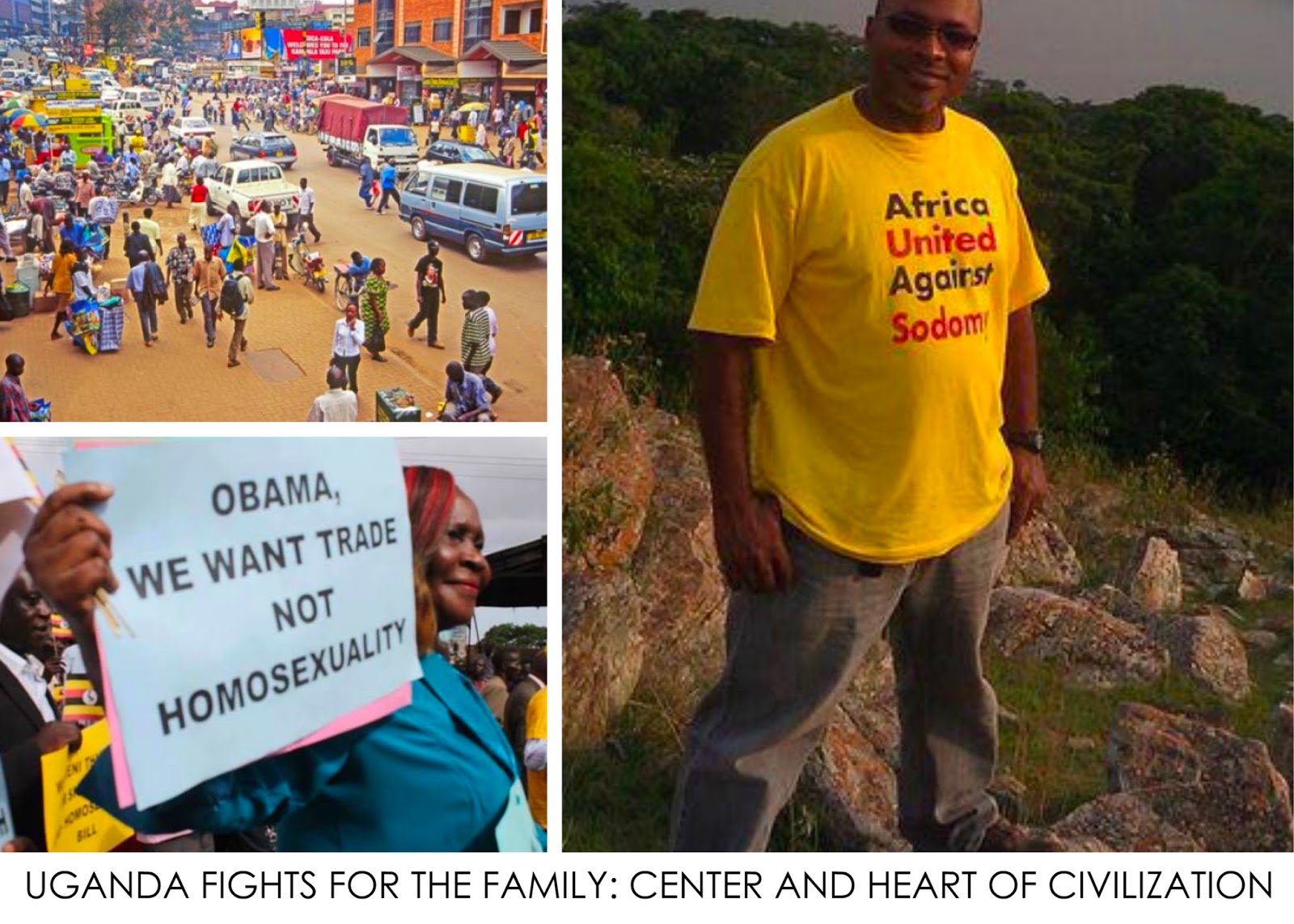
Unwin’s study suggests that if civilisations modelled their society on this pattern — prenuptial chastity, strict heterosexual monogamy, they also would attain prosperity and great influence in arts, science, and world affairs. Watch Uganda. It is pro-life, pro-family, Christian and encourages  chastity among its rapidly growing population of 39 million with an average age of 15 (2015 revision of the World Population Prospects). They are on track to have the world’s largest population growth in the coming decades, according to the Population Reference Bureau, a think tank in Washington, D.C.
The African nation bravely stood up to U.S. President Barack Obama when he tried to stop them from passing an “anti-gay” bill  in 2014. They thumbed their noses at the United States when Uganda was deliberately omitted from a three-country tour of sub-Saharan Africa by U.S. Secretary of State John Kerry. In response, they organised a Ugandan Pride parade to mock U.S. Gay Pride Parades. The Guardian Africa Network reported that on March 24, 30,000 people rallied in support of the “anti-homosexual” legislation, which is really a law against public indecency and rape.
Caught in a vast tide of sexual immorality, can the world be saved? In 1956, Pitirim A. Sorokin, founder of the sociology department at Harvard University and another secularist, released a work similar to Sex and Culture, called the The American Sex Revolution. He agreed with Unwin: a loosening of sexual mores was a common factor in every decaying society.
The culture “that tolerates sexual anarchy is slowly but surely debilitating itself, impairing its collective health and endangering its very survival,” Unwin wrote. But Sorokin found that individuals who resist the ongoing sexual revolution can actually hinder the corruption process. If a whole stratum of a society remained committed to sexual restraint and monogamous marriage, “The process of decline can be halted.” Sorokin said.
If you drive the freeways of Louisiana on Sunday morning, it is possible not to see another car. In contrast, roads are packed on the West Coast on the same morning.
Where is the Louisiana  population on Sunday morning?

Louisiana still prays:
Louisiana woman praying with a Baton Rouge sheriff’s deputy

They are all in Church. The Southern United States is still dominated by a stratum of society that values monogamy and chastity as well as the worship of God. At a Southern airport, I was in line and someone pushed ahead of me. I bowed, and said, “Please go ahead. The first will be last and the last will be first.” (Matt 20:16). Suddenly 40 people pushed me to the front of the line. I was overjoyed. They were truly practicing Christians! That never would have happened in the West, where many states have legalised euthanasia.

Sorokin said that the majority of the people caught up in the sexual revolution of any decaying society did not understand the dangerous path upon which they were embarked:
  •  “Most peoples and leaders of decaying societies were unaware of their cancerous sickness,” he said. “Most of them were sanguine about their present state and future prospects. They continued to live cheerfully in a fool’s paradise, and hopefully looked forward to the realisation of their unrealistic dreams. Their leaders attacked all honest appraisals of the situation and called them false prophecies of doom and gloom.”
But such blindness leads man to lose dominion over the earth. Societies that do not practice chastity become a mere footnote in history.
  • Then God said, “Let Us make man in Our image, according to Our likeness; and let them rule over the fish of the sea and over the birds of the sky and over the cattle and over all the earth, and over every creeping thing that creeps on the earth.” Godcreated man in His own image, in the image of God He created him; male and femaleHe created them. God blessed them; and God said to them, “Be fruitful and multiply, and fill the earth, and subdue it; and rule over the fish of the sea and over the birds of the sky and over every living thing that moves on the earth.” (Gen 1: 26-28)
Modern man is terrified of global warming. It is a symptom of his failure to be fruitful and multiply. He suffers from an uneasy conscience, a recognition that his time is short. For God’s promise of dominion over the earth only comes to those living in chaste marriage and open to new life. The secular studies of Unwin and Sorokin merely confirm the evidence we already see in our decaying civilisations.
Susan Fox is working on a master’s degree in Marriage and Family at the International Theological Institute in Trumau, Austria. This is a paper she did for Dutch Bishop Everard de Jong, who introduced her to the work of J.D. Unwin. These are his comments: “Thank you very much for your excellent paper.” 

Bishop Everard De Jong

Follow Bishop de Jong on Facebook at  https://www.facebook.com/everarddejong

 
Interested in studying at the International Theological Institute? You can apply here.
Each student at ITI is only charged 6,000 Euros a year in tuition, but the actual cost of the education is 20,000 Euros. Donate here


Or to donate contact: Dipl. Ing. Alexander Pachta-Reyhofen, Director of Development (Europe), International Theological Institute, Email: a.pachtareyhofen@iti.ac.at
 
 
Bibliography
Unwin, J.D. Sex and Culture. London: Oxford University Press, 1934.
Yancey, Philip “The Lost Sex Study,” Christianity Today Dec 12, 1994.
Boggs, Kelly “Sexual Anarchy: America’s Demise?” crosswalk.com July 27, 2009.
Vitagliano, Ed “The morally heroic and the rescue of culture,” AFA Journal December 2012.  https://afajournal.org/2012/December/1212heroes.html
Fox, Susan “Uganda Fights for the Family: Centre and Heart of the Civilisation of Love” Christ’s Faithful Witness June 6, 2014.  https://christsfaithfulwitness.blogspot.co.at/2014/06/by-susanfox-kristu-abagumye.html#.WOEzDRh7HFw
Stefanick, Chris “What’s Natural Law Got to Do With It?” The Chastity Project, June 22, 2013.  http://chastityproject.com/2013/06/whats-natural-law-got-to-do-with-it/
Catechism of the Catholic Church, Second Edition (Vatican: Libreria Editrice Vatican, Part 3.
Burkett, Bob “On Civilizations and Sex” Ethika Politika, Aug. 19, 2014.
Craven, S. Michael, “In Defense of Marriage” crosswalk.com, July 7, 2008.
8

Posted in Uncategorized | 2 Comments

IN THE END, THERE IS ONLY ONE CHOICE FOR FAITHFUL CATHOLICS: HEROIC RESISTANCE, REMAINING FAITHFUL TO JESUS CHRIST

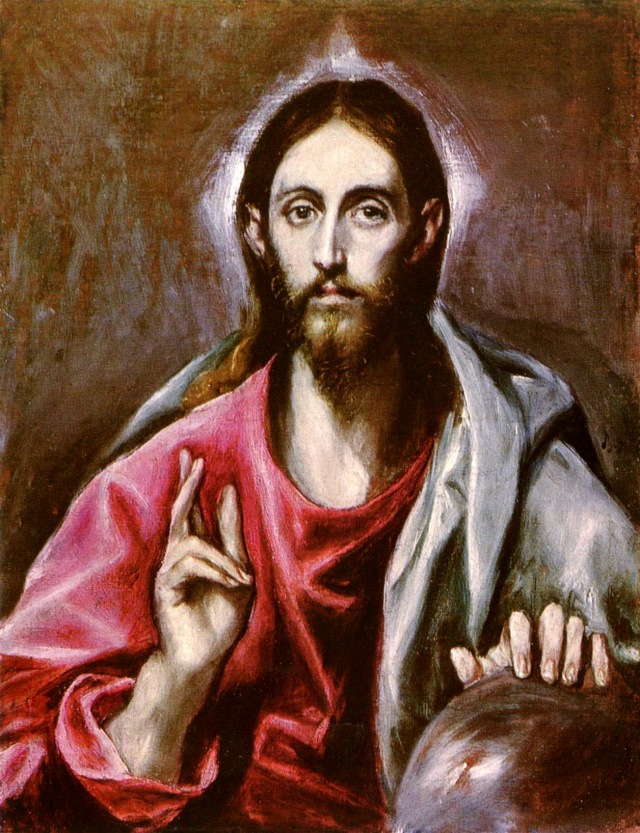
El_Greco_021-largeDe Mattei – An example of Catholic resistance: Princess Elvina Pallavicini
Roberto de Mattei

Corrispondenza Romana

RORATE CAELI

July 12, 2017

Forty years ago a historical event took place: Monsignor Marcel Lefebvre held a conference on June 6th 1977 at the Pallavicini Palace in Rome, on the subject “The Church after the Council”. I  think it is worthwhile to recall that event, on the basis of notes and documents I have kept.


Monsignor Marcel Lefebvre, founder of the Priestly Fraternity of St. Pius X (1970), after the priestly ordinations of June 29th 1976, was suspended a divinis on July 22nd of the same year.  Informed Catholics however, had serious doubts as to the canonical legitimacy of these measures and in particular, incomprehension with regard to the behavior of Paul VI who seemed to reserve his censorships for only those who said they wanted to remain faithful to Church Tradition.  In this climate of disorientation, in April of 1977, Princess Elvina Pallavicini (1914 -2004) decided to invite Monsignor Lefebvre to her palace in the Quirinal, to hear his reasoning.

Princess Pallavicini was 63 years old at the time and the widow of Prince Guglielmo Pallavicini who had been killed on his first war mission in 1940.  For many years she had been in a wheelchair as a result of progressive paralysis, but she was a woman of indomitable spirit. She had a close group of  friends and advisors around her, among whom were Marquis Roberto Malvezzi Campeggi (1907-1979), Colonel of the Papal Noble Guard at the time of the corps’ dissolution in 1970, and Marquis Luigi Coda Nunziante di San Ferdinando (1930-2015), former Commander of the Italian Navy. Initially, news of the conference circulating during the month of May did not stir up any concern from the Vatican.  Paul VI thought it would have been easy to convince the Princess to desist from her idea and entrusted the task to one of his closest collaborators, “Don Sergio” Pignedoli (1910-1980) whom he had made a cardinal in 1973.

The prelate called the Princess and first of all asked kindly about her illness. “I am happy –Elvina Pallavicini noted ironically – about your interest [in my physical well-being] after such a long period of silence”. After about an hour of pleasantries the cardinal’s question at last arrived: “I heard you will be receiving Monsignor Lefebvre. Will it be a public or private conference?”If it is at my home it can only be private”, the princess replied. The cardinal then ventured: “Wouldn’t it be opportune to postpone it? Monsignor Lefebvre has made the Holy Father suffer quite a lot. He is very grieved about this initiative…” Princess Elvina’s reply chilled Cardinal Pignedoli “Your Eminence, I think I can receive anyone I like in my own home.”  

Faced with this unexpected resistance, the Vatican turned to Prince Aspreno Colonna (1916-1987), who still occupied, ad personam, the office of Assistant to the Papal Throne. When the head of this historic household asked to be received, the Princess told him she was busy. Prince Colonna asked to visit the next day at the same time, but the noblewoman’s reply was the same. While the Prince withdrew quietly, the Secretary of State thought of getting through in another way.  Monsignor Andrea Lanza Cordero di Montezemolo, who had just been consecrated Archbishop and named Nuncio to Papua-New Guinea, asked for an audience with the Princess. The prelate was the son of Colonel Giuseppe Cordero Lanza di Montezemolo (1901-1944), head of the Monarchic Resistance in Rome and shot by the Germans at the Fosse Ardeatine. During the German occupation, the young Princess Elvina had collaborated with him, meriting a bronze medal of honor.  I also took part in the meeting, but my presence really irritated the future cardinal, who, in vain, appealed to the memory of his father to avert the upcoming conference. The Nuncio was told that it was the same resistance of many soldiers to National Socialism, and how it was necessary at times, to disobey unjust orders from superiors in order to respect the dictates of one’s conscience.

At this point the Secretary of State played his last card, by turning to the King of Italy, Umberto II, in exile in Cascais. Marquis Falcone Lucifero, Minister of the Royal Household, telephoned the Princess to let her know that the Sovereign had strongly urged her to postpone the conference. “I’m astonished at how His Majesty allows himself to be intimidated by the Secretary of State, after everything the Vatican did to the monarchy”, she replied decisively, confirming that the conference would be duly held on the date established.  Marquis Lucifero, being the elderly gentleman he was, sent the Princess a bouquet of roses.

At this point the Vatican decided to use tougher tactics. A real campaign of psychological terrorism then began in the major daily newspapers presenting the Princess as an obstinate aristocrat, surrounded by a handful of “nostalgics” in a world destined to disappear.  In private, it was made known to Donna Elvina that, if the conference was to take place, she would be excommunicated.

On May 30th, with a press release to Ansa, the Princess specified that “her initiative was not motivated by any intention of challenging ecclesiastic authority, but rather by love and fidelity to Holy Mother Church and the Magisterium.” “The contrasts in the conciliar Church – continued the communiqué – unfortunately exist, apart from the person of Monsignor Lefebvre, and in Italy to no lesser degree, even if less evident than in the rest of the Catholic world. We intend with the conference on June 6th to offer Monsignor Lefebvre the possibility of voicing directly his theses in full freedom, precisely with the aim of clarifying the problems which disturb and grieve the Catholic world so much, in the certainty that peace and serenity can be brought back again through a restored unity to the truth:”

On May 31st, on the front page of the daily newspaper “Il Tempo”, a declaration from Prince Aspreno Colonna appeared where we read “The Roman Patriciate dissociates itself from the initiative”, deploring it as “completely inopportune”. The bombshell was dropped however, on June 5th by the Cardinal Vicar of Rome, Ugo Poletti (1914 1997). With a  aggressive statement in the Italian Bishops’ daily newspaper Avvenire, Poletti attacked Monsignor Lefebvre and “ his aberrant followers”, defining them as “a handful of class nostalgics,  prisoners of traditional habits”. He further expressed, “astonishment, pain and sorrow, but the firmest disapproval for the offence made against the Faith, the Catholic Church and Her Divine Head, Jesus” , Monsignor Lefebvre having placed in doubt “fundamental truths of the kind relating to the infallibility of the Catholic Church founded on Peter and his successors, in matters of doctrine and morals”.

From the Princess’ headquarters there came an immediate reply: “It is difficult to understand how the private expression of theses which have been those of all the bishops of the world until a few years ago, can disturb the security of an authority to such an extent, as it has on its side the strength of doctrinal continuity and the evidence of its positions.” The Princess declared: “I am a more than convinced Apostolic Roman Catholic, seeing that I have reached the true sense of Religion through the refining of  physical and moral suffering: I owe nothing to anyone, I have no honours nor prebends to defend, and I thank God for everything. Within the limits that the Church allows, I may dissent, I may talk, I may act: I have to talk and I have to act: it would be cowardice not to. And allow me say, that in our Home, also in this generation, there is no room for the cowardly.”

Finally the fateful day of June 6th arrived. The conference was carefully reserved for four hundred invited guests, controlled by “private security” provided by the “Alleanza Cattolica” youth, but there were more than a thousand who filled up the staircases and the garden of the historical Rospigliosi-Pallavicini Palace, famous all over the world for its works of art.  Monsignor Lefebvre arrived accompanied by his young representative in Rome, Don Emanuele du Chalard.  Princess Pallavicini went to meet him in her wheelchair, pushed by her Lady-in Waiting, Donna Elika Del Drago. Princess Virginia Ruspoli, widow of Marescotti, one of the two hero-princes at the Battle of  El Alamein, gave Monsignor Lefebvre a relic of St. Pius X which had been given to her personally by Pius XII.

Despite [the fact] that the Grand Priory of the Order of Malta in Rome had expressed “a binding necessity” to abstain from intervening at the conference, Prince Sforza Ruspoli, Count Fabrizio Sarazani and some other courageous aristocrats defied the censures of the institution and were there in the front row, right beside Monsignor François Ducaud Bourget (1897-1984), who had led the occupation of the Church Saint-Nicolas du Chardonnet in Paris on February 27th.

Princess Pallavicini introduced Monsignor Lefebvre and he took his place under the red baldachin with the coat of Arms of Pope Clement IX, Rospigliosi. The Archbishop after some moments of prayer, began with these words: “I respect the Holy See. I respect Rome. If I am here it is because I love this Catholic Rome.”  The Catholic Rome that he had before him interrupted his speech repeatedly with thunderous applause. The hall was filled to overflowing and a crowd had gathered on the great staircases of the palace.

The “Council of aggiornamento” – explained Monsignor Lefebvre – in reality wants a new definition of the Church. To be “open” and be in communion with all religions, all ideologies, all cultures, the Church should change its excessively hierarchal institutions and break up into many National Episcopal Conferences. The sacraments will insist on initiation and the collective life, more than the driving out of Satan and sin. The leit-motiv of change will be ecumenism. The practice of the missionary spirit will disappear.  The principle that “every man is Christian and doesn’t know it”  will be proclaimed, so it doesn’t matter whatever confession is practiced – it is seeking salvation.

The liturgical and ecumenical changes – continued Monsignor Lefebvre in the hushed silence of all those present – cause the disappearance of religious vocations and make for deserted seminaries. The principle of “religious liberty” sounds outrageous to the Church and Our Lord Jesus Christ, as it is nothing other than “the right to public confession of a false religion with no interference from any human authority”.

Monsignor Lefebvre then lingered for a bit on the post-council’s caving-in to Communism, referring to the repeated audiences given to Communist leaders by the Holy See; the agreement not to condemn Communism during the Council;  the contemptuous treatment reserved for more than 450 bishops who asked for this condemnation. On the contrary, dialogue with Communism was encouraged by nominating pro-Communist bishops like Monsignor Helder Camara in Brazil, Monsignor Silva Henriques in Chile, and Monsignor Mendez Arceo in Mexico.

It is a fact, added Monsignor Lefebvre in conclusion, that numerous Dominicans and many Jesuits who profess heresies openly are not condemned and bishops who practice inter-communion, who introduce false religions in their dioceses and churches, who even end up blessing concubinage, are not even placed under inquiry. Only faithful Catholics risk being thrown out of churches, persecuted, condemned. “I have been suspended a divinis because I continue to form priests as they were once formed.”

Turning to a listener touched by his words, Monsignor Lefebvre concluded his conference saying: “Today the most serious obligation for a Catholic is that of conserving the Faith. It is not licit to obey those who are working to diminish Her or make Her disappear. With Baptism we asked the Church for the Faith because the Faith conducts us to eternal life.  We will continue to our very last breath to ask the Church for this Faith.

The meeting ended with the singing of the Salve Regina.

The Vatican reporter, Benny Lai in La Nazione of June 7th, commented: “Those who expected a tribune found themselves in front of a man of meek bearing, who, before inviting those present to recite the Salve Regina, concluded [his speech], with these worlds: “I don’t want to form a group of any kind, I don’t want to disobey the Pope, but he must not ask me to become Protestant.”

The conference was a strategic victory for those who were inappropriately called traditionalists, as Monsignor Lefebvre managed to make his theses known on the international level, without [suffering] canonical consequences.

Paul VI died a year later, devastated by the death of his friend Aldo Moro.

The name of Cardinal Poletti is still linked to the murky business of  the nulla osta he granted on March 10th 1990, for the entombment of the Banda della Magliana Boss “Renatino” De Pedis, in the Basilica of Sant’Apollinare.

Princess Pallavicini came out a winner from this “challenge”. Not only was she not excommunicated, but in the following years her palace became the point of reference for many cardinals, bishops and Catholic intellectuals. She and her Roman friends were not “phantoms from the past”, as the Corriere della Sera defined them on June 7th 1977, but witnesses to the Catholic Faith who were preparing the future.  Forty years later, history has proven them right.

Translation: Contributor Francesca Romana

Labels: Church of Vatican II, de Mattei, Lefebvre, Paul VI, The Church of Vatican II, TLM Survival Pioneers,Traditionalists: Second-Class Faithful

Posted by Adfero. at 7/13/2017 02:45:00 PM

Posted in Uncategorized | 1 Comment

FEELING A LITTLE SEASICK? RECEIVE HOLY COMMUNION! YES, IT IS THE BEST ‘MEDICINE’ FOR WHAT AILS YOU SPIRITUALLY


When Waves Break Over the Barque of Peter

Those who love the Church and have followed the papacies of Paul VI, St. John Paul II, and Benedict XVI with dedication and enthusiasm, are in a state of alarm. Suddenly, amid much sweet-talk, the clarity of Catholic teaching seems to be being disassembled. What is happening? And why must we hold on tight, without fear?

The lucidity and truth that graced the second half of the 20th Century through the teachings of these great Pontiffs, touching untold millions of Catholics and non-Catholics alike, awakened a love and respect for the Roman Catholic Church which had been largely dormant after World War II and had then been severely questioned in the 1960s and 1970s.

A great revolt engulfed Western culture. Doctrine was thrown out; family was subverted; tradition was turned upside down: rather than representing the slowly accumulated wisdom of centuries, it was made to seem ridiculous; morality became “intolerance,” “fanaticism,” pointless self-limitation.


As a result, the 1980s witnessed the beginning of societal and legal changes that were confusing and distressing to believers of all faiths. In the Catholic Church, the hierarchy – educated in an earlier time – kept up appearances of orthodoxy, but dissent was tolerated, and (for those of us who were young at the time) it was clear there were two kinds of priests.

Faithful priests and bishops accepted Paul VI’s prophetic 1968 encyclical, Humanae vitae, even if they didn’t fully understand it at the time. By contrast, those formed in 1960s permissiveness and relativism, contemptuously disregarded it. Pope Paul VI rightly remarked that “the smoke of Satan has infiltrated the Church.” It was a very tough time for young couples, and for parents who increasingly saw their young adopting a contraceptive sexual morality.

Soft teaching in the seminaries led many future priests to believe that “authority” has no right to impose standards or morality; and it also produced the homosexual priests who committed dreadful acts of pederasty. Efforts made to hide this shameful reality as an “illness” (pedophilia) were belied by the fact that the vast majority of cases involved adolescent boys. Some bishops, cowardly or worse, protected those priests, as we know.

Why was this tolerated?

It was tolerated because the generation of the 1960s and 1970s, by then in positions of authority, was averse to the “imposition” of morals or discipline. It was permissive by conviction.

The surprising and captivating arrival on the scene of Karol Wojtyla, St. John Paul II, with his riveting presentation of the time-honored truths of the Gospel and his true aggiornamento was destabilizing for the 1960s. But it impassioned and stimulated the following generation, and faithful priests, religious, and laity everywhere.

He came with experience of war, Nazism, Communism, and wickedness of every kind and knew the logic of the Gospel, and the Good News about the human person and salvation. Further, his knowledge had been honed among young people and couples, among those who suffered, heroes and ordinary lay people. He electrified the world with inspiring explanations of how we should live. He did not bring easy solutions, but happy ones. He gave us comprehensible explanations of who we are and how we are to live the Gospel message in our day.

When Benedict XVI succeeded John Paul, he turned his attention to the vice that had infiltrated the higher echelons of the Church. He disciplined and exiled Father Marcial Maciel and initiated an investigation into the widespread rumors of homosexuality and financial improprieties within the Curia. We do not know the contents of the report that was produced; but we do know that it caused great alarm within some high circles in Rome.

The three decades of brilliant worldwide evangelization by Popes John Paul II and Benedict XVI was enormously successful among the laity and a whole new generation of priests, willing and able to teach true Catholic faith and morals.

But many among those of the generation before were not happy to see conviction and firmness in the faith blossoming again. A number of bishops and cardinals in the developed world felt quite uncomfortable as their easy-going, permissive ways clashed with this new vigor. Some of these by now very powerful old prelates, we now know, decided to “save” the Church from what they evidently considered old-fashioned and ‘rigid’ teachings.

We are told they founded the “St. Gallen Club” or “mafia” in order to lay plans to wrench the Barque of Peter around to a different course. Taking advantage of the tolerance of the former popes, who never humiliated them for their doctrinal laxity, this St. Gallen club was successful in promoting a candidate for pope. Jorge Bergoglio was elected.

The generation of the 1970s is now in power in the Church. In business and politics, that generation is mainly retired. Many were broken by the tragedies of drugs and sex that destroyed their own children. But in the Church, many are still there – and are now powerful.

The outrageous homoerotic mural commissioned by Archbishop Vincenzo Paglia for his cathedral in Terni did not prevent his being put in charge of, and radically changing, the sections of the Vatican pertaining to Life and Family: the Pontifical Council for Family, the Pontifical Academy for Life and the John Paul II Institutes for Family Studies.

Archbishop Paglia (surely soon to be a Cardinal) also commissioned a “Sex Education” program, in five languages, which contradicts important principles of Church teaching on sexual education.

And so we see a great divide today in the Church. The rank and file of practicing Catholics are more motivated than ever to live and teach real Catholic social and moral doctrine. But they see that prelates formed in permissiveness and relativity being promoted. Even scandals involving drugs and sex within the Vatican do not seem to slow the repeal and replacement of the traditional categories of morality and gender, so beautifully confirmed by our recent great popes.

We are headed for very rough waters and we must not lose heart. Our Lord is alive and we must be faithful to Him and His teaching during this time of trial. Young priests and laity, and the many faithful movements, must hold firmly to the Truth, united in prayer and action until this storm is calmed. Jesus, I trust in You!

Christine Vollmer

Christine Vollmer

Christine de Marcellus Vollmer, a new contributor to The Catholic Thing, is president of PROVIVE in Venezuela, coordinator of the Curriculum Alive to the World, and has served as a member of the Pontifical Council for Family (1990-2016) and of the Pontifical Academy for Life from (1994-2016). She also served on the Holy See Delegation to the United Nations (1990-1995).

+++++++++++++++++++++++++++++++++++++++++++++++++++++++++++++++++++++++++++


image003-2 


Pope Benedict XVI released this statement today July 14, 2017, marking the death of Cardinal Meisner, his friend and one of the signers of the dubia:

“We know that this passionate pastor and shepherd found it particularly difficult to leave his post, especially at a time in which the Church stands in particularly pressing need of convincing shepherds who can resist the dictatorship of the spirit of the age and who live and think the faith with determination. However, what moved me all the more was that, in this last period of his life, he learned to let go and to live out of a deep conviction that the Lord does not abandon his church, even when the boat has taken on so much water as to be on the verge of capsizing.”


Posted in Uncategorized | Comments Off on FEELING A LITTLE SEASICK? RECEIVE HOLY COMMUNION! YES, IT IS THE BEST ‘MEDICINE’ FOR WHAT AILS YOU SPIRITUALLY

Jorge Bergolio, aka Francis, versus Donald Trump and Steve Bannon. Not a love note. A manifesto? A declaration of war? What is it? A Jesuit dream of One World Government?


July 14, 2017, Friday
Father Spadaro vs. Steve Bannon


Both Evangelical and Catholic Integralists condemn traditional ecumenism and yet promote an ecumenism of conflict that unites them in the nostalgic dream of a theocratic type of state.” —A provocative sentence from a very important article recently published in Rome, co-authored by Jesuit Father and close advisor to Pope Francis Fr. Antonio Spadaro, which argues that conservative American Catholics (including Trump strategic advisor Steve Bannon) and conservative American Protestant Evangelicals have entered into a sort of pragmatic theological and political alliance in support of the presidency of Donald Trump, and that the underlying theological principles of this “alliance” are completely opposed to the theological principles underlying Pope Francis’ vision, expressed on every possible occasion during his pontificate. Because the two authors of the article are considered to be very close to Pope Francis, the article is being read as a sort of dramatic “anti-Trump” and “anti-Steve Bannon” manifesto. One central question is: Why is this article being published now, just weeks after the Pope’s meeting with Trump in May, and just days after Trump’s July 7 meeting with Russian President Vladimir Putin in Hamburg, Germany? It is unquestionably a very important article, and may well represent a watershed in this pontificate. However, the deep meaning of this article, and whether or not Pope Francis has actually given his full support to the article, it is not yet entirely clear. Clearly, this article should be carefully read, and parsed, by everyone who wishes to follow the unfolding history of this pontificate. I hope to give a more complete commentary on the article soon. I write from Rome after eight days in Ukraine and Russia, including interesting conversations on this very topic with both Ukrainians and Russians. Stay tuned…  


Francis radically rejects the idea of activating a Kingdom of God on earth as was at the basis of the Holy Roman Empire and similar political and institutional forms, including at the level of a ‘party.’ Understood this way, the ‘elected people’ [Note: this might better be translated as the “chosen people” or the “elect people”] would enter a complicated political and religious web that would make them forget they are at the service of the world, placing them in opposition to those who are different, those who do not belong, that is the ‘enemy.’ So, then the Christian roots of a people are never to be understood in an ethnic way. The notions of roots and identity do not have the same content for a Catholic as for a neo-Pagan. Triumphalist, arrogant and vindictive ethnicism is actually the opposite of Christianity.—Another passage from the same article


Pastor Rousas John Rushdoony (1916-2001) is the father of so-called ‘Christian reconstructionism’ (or ‘dominionist theology’) that had a great influence on the theopolitical vision of Christian fundamentalism. This is the doctrine that feeds political organizations and networks such as the Council for National Policy and the thoughts of their exponents such as Steve Bannon, currently chief strategist at the White House and supporter of an apocalyptic geopolitics.[1]—Another passage from the article, which directly names Trump advisor Steve Bannon in a critical way, something  unusual for the close advisors of a Pope to do


There is a shocking rhetoric used, for example, by the writers of Church Militant, a successful US-based digital platform that is openly in favor of a political ultraconservatism and uses Christian symbols to impose itself. This abuse is called ‘authentic Christianity.’ And to show its own preferences, it has created a close analogy between Donald Trump and Emperor Constantine, and between Hilary Clinton and Diocletian. The American elections in this perspective were seen as a ‘spiritual war.'[3]—Another passage from the article, which directly criticizes the website of Michael Voris, Churchmilitant.com. Again, naming specific names like this is rather unusual for articles by close advisors to a Pope


Which feeling underlies the persuasive temptation for a spurious alliance between politics and religious fundamentalism?

“It is fear of the breakup of a constructed order and the fear of chaos…

“The political strategy for success becomes that of raising the tones of the conflictual, exaggerating disorder, agitating the souls of the people by painting worrying scenarios beyond any realism.

“Religion at this point becomes a guarantor of order and a political part would incarnate its needs. The appeal to the apocalypse justifies the power desired by a god or colluded in with a god. And fundamentalism thereby shows itself not to be the product of a religious experience but a poor and abusive perversion of it.
“This is why Francis is carrying forward a systematic counter-narration with respect to the narrative of fear. There is a need to fight against the manipulation of this season of anxiety and insecurity. Again, Francis is courageous here and gives no theological-political legitimacy to terrorists, avoiding any reduction of Islam to Islamic terrorism. Nor does he give it to those who postulate and want a ‘holy war’ or to build barrier-fences crowned with barbed wire. The only crown that counts for the Christian is the one with thorns that Christ wore on high.[4]”
—The final paragraphs of this important article. laying out the two positions in stark contrast


What is arguably the single most important article thus far of this pontificate, written by close advisors to Pope Francis, has just been published (July 13, yesterday) in the Jesuit twice-monthly journal named La Civiltà Cattolica (“Catholic Civilization”). The articles in this journal are “vetted” before publication in the Vatican Secretariat of State, and for this reason are considered “semi-official.” Only an actual text signed by Pope Francis would be more representative of the Pope’s own position than a “semi-official” text like this.


The article is now drawing attention around the world. Here are links to four articles that have already appeared: Financial Times, Washington Post, The Guardian, and The National Catholic Reporter.


It is an article thoughtful observers of this papacy, and of the current world situation, should read.


Here is a link to the article: link.


And here is the complete text of the article:


Evangelical Fundamentalism and Catholic Integralism in the USA: A Surprising Ecumenism


By Antonio Spadaro S.J., Editor-in-chief of La Civiltà Cattolica and Marcelo Figueroa, Presbyterian pastor, Editor-in-chief of the Argentinean edition of L’Osservatore Romano
In God We Trust. This phrase is printed on the banknotes of the United States of America and is the current national motto. It appeared for the first time on a coin in 1864 but did not become official until Congress passed a motion in 1956.


A motto is important for a nation whose foundation was rooted in religious motivations. For many it is a simple declaration of faith. For others, it is the synthesis of a problematic fusion between religion and state, faith and politics, religious values and economy.


Religion, political Manichaeism and a cult of the apocalypse
Religion has had a more incisive role in electoral processes and government decisions over recent decades, especially in some US governments. It offers a moral role for identifying what is good and what is bad.
At times this mingling of politics, morals and religion has taken on a Manichaean language that divides reality between absolute Good and absolute Evil.


In fact, after President George W. Bush spoke in his day about challenging the “axis of evil” and stated it was the USA’s duty to “free the world from evil” following the events of September 11, 2001.


Today President Trump steers the fight against a wider, generic collective entity of the “bad” or even the “very bad.” Sometimes the tones used by his supporters in some campaigns take on meanings that we could define as “epic.”
These stances are based on Christian-Evangelical fundamentalist principles dating from the beginning of the 20th Century that have been gradually radicalized. These have moved on from a rejection of all that is mundane – as politics was considered – to bringing a strong and determined religious-moral influence to bear on democratic processes and their results.
The term “evangelical fundamentalist” can today be assimilated to the “evangelical right” or “theoconservatism” and has its origins in the years 1910-1915.


In that period a South Californian millionaire, Lyman Stewart, published the 12-volume work The Fundamentals. The author wanted to respond to the threat of modernist ideas of the time. He summarized the thought of authors whose doctrinal support he appreciated. He exemplified the moral, social, collective and individual aspects of the evangelical faith. His admirers include many politicians and even two recent presidents: Ronald Reagan and George W. Bush.
The social-religious groups inspired by authors such as Stewart consider the United States to be a nation blessed by God. And they do not hesitate to base the economic growth of the country on a literal adherence to the Bible. Over more recent years this current of thought has been fed by the stigmatization of enemies who are often “demonized.”
The panorama of threats to their understanding of the American way of life have included modernist spirits, the black civil rights movement, the hippy movement, communism, feminist movements and so on. And now in our day there are the migrants and the Muslims.


To maintain conflict levels, their biblical exegeses have evolved toward a decontextualized reading of the Old Testament texts about the conquering and defense of the “promised land,” rather than be guided by the incisive look, full of love, of Jesus in the Gospels.
Within this narrative, whatever pushes toward conflict is not off limits. It does not take into account the bond between capital and profits and arms sales.


Quite the opposite, often war itself is assimilated to the heroic conquests of the “Lord of Hosts” of Gideon and David. In this Manichaean vision, belligerence can acquire a theological justification and there are pastors who seek a biblical foundation for it, using the scriptural texts out of context.
Another interesting aspect is the relationship with creation of these religious groups that are composed mainly of whites from the deep American South.


There is a sort of “anesthetic” with regard to ecological disasters and problems generated by climate change. They profess “dominionism” and consider ecologists as people who are against the Christian faith. They place their own roots in a literalist understanding of the creation narratives of the book of Genesis that put humanity in a position of “dominion” over creation, while creation remains subject to human will in biblical submission.
In this theological vision, natural disasters, dramatic climate change and the global ecological crisis are not only not perceived as an alarm that should lead them to reconsider their dogmas, but they are seen as the complete opposite: signs that confirm their non-allegorical understanding of the final figures of the Book of Revelation and their apocalyptic hope in a “new heaven and a new earth.”
Theirs is a prophetic formula: fight the threats to American Christian values and prepare for the imminent justice of an Armageddon, a final showdown between Good and Evil, between God and Satan. In this sense, every process (be it of peace, dialogue, etc.) collapses before the needs of the end, the final battle against the enemy.


And the community of believers (faith) becomes a community of combatants (fight). Such a unidirectional reading of the biblical texts can anesthetize consciences or actively support the most atrocious and dramatic portrayals of a world that is living beyond the frontiers of its own “promised land.”
Pastor Rousas John Rushdoony (1916-2001) is the father of so-called “Christian reconstructionism” (or “dominionist theology”) that had a great influence on the theopolitical vision of Christian fundamentalism. This is the doctrine that feeds political organizations and networks such as the Council for National Policy and the thoughts of their exponents such as Steve Bannon, currently chief strategist at the White House and supporter of an apocalyptic geopolitics.[1]
“The first thing we have to do is give a voice to our Churches,” some say. The real meaning of this type of expression is the desire for some influence in the political and parliamentary sphere and in the juridical and educational areas so that public norms can be subjected to religious morals.
Rushdoony’s doctrine maintains a theocratic necessity: submit the state to the Bible with a logic that is no different from the one that inspires Islamic fundamentalism. At heart, the narrative of terror shapes the world-views of jihadists and the new crusaders and is imbibed from wells that are not too far apart. We must not forget that the theopolitics spread by Isis is based on the same cult of an apocalypse that needs to be brought about as soon as possible. So, it is not just accidental that George W. Bush was seen as a “great crusader” by Osama bin Laden.
Theology of prosperity and the rhetoric of religious liberty
Together with political Manichaeism, another relevant phenomenon is the passage from original puritan pietism, as expressed in Max Weber’s The Protestant Ethic and the Spirit of Capitalism, to the “Theology of Prosperity” that is mainly proposed in the media and by millionaire pastors and missionary organizations with strong religious, social and political influence. They proclaim a “Prosperity Gospel” for they believe God desires his followers to be physically healthy, materially rich and personally happy.
It is easy to note how some messages of the electoral campaign and their semiotics are full of references to evangelical fundamentalism.


For example, we see political leaders appearing triumphant with a Bible in their hands.
Pastor Norman Vincent Peale (1898-1993) is an important figure who inspired US Presidents such as Richard Nixon, Ronald Reagan and Donald Trump. He officiated at the first wedding of the current president and the funeral of his parents. He was a successful preacher. He sold millions of copies of his book The Power of Positive Thinking (1952) that is full of phrases such as “If you believe in something, you get it,” “Nothing will stop you if you keep repeating: God is with me, who is against me” or “Keep in mind your vision of success and success will come” and so on.


Many prosperity prosperous televangelists mix marketing, strategic direction and preaching, concentrating more on personal success than on salvation or eternal life.
A third element, together with Manichaeism and the prosperity gospel, is a particular form of proclamation of the defense of “religious liberty.” The erosion of religious liberty is clearly a grave threat within a spreading secularism. But we must avoid its defense coming in the fundamentalist terms of a “religion in total freedom,” perceived as a direct virtual challenge to the secularity of the state.
Fundamentalist ecumenism
Appealing to the values of fundamentalism, a strange form of surprising ecumenism is developing between Evangelical fundamentalists and Catholic Integralists brought together by the same desire for religious influence in the political sphere.
Some who profess themselves to be Catholic express themselves in ways that until recently were unknown in their tradition and using tones much closer to Evangelicals. They are defined as value voters as far as attracting electoral mass support is concerned. There is a well-defined world of ecumenical convergence between sectors that are paradoxically competitors when it comes to confessional belonging. This meeting over shared objectives happens around such themes as abortion, same-sex marriage, religious education in schools and other matters generally considered moral or tied to values.


Both Evangelical and Catholic Integralists condemn traditional ecumenism and yet promote an ecumenism of conflict that unites them in the nostalgic dream of a theocratic type of state.
However, the most dangerous prospect for this strange ecumenism is attributable to its xenophobic and Islamophobic vision that wants walls and purifying deportations. The word “ecumenism” transforms into a paradox, into an “ecumenism of hate.” Intolerance is a celestial mark of purism. Reductionism is the exegetical methodology. Ultra-literalism is its hermeneutical key.
Clearly there is an enormous difference between these concepts and the ecumenism employed by Pope Francis with various Christian bodies and other religious confessions.


His is an ecumenism that moves under the urge of inclusion, peace, encounter and bridges. This presence of opposing ecumenisms – and their contrasting perceptions of the faith and visions of the world where religions have irreconcilable roles – is perhaps the least known and most dramatic aspect of the spread of Integralist fundamentalism. Here we can understand why the pontiff is so committed to working against “walls” and any kind of “war of religion.”
The temptation of “spiritual war”
The religious element should never be confused with the political one.


Confusing spiritual power with temporal power means subjecting one to the other.


An evident aspect of Pope Francis’ geopolitics rests in not giving theological room to the power to impose oneself or to find an internal or external enemy to fight.


There is a need to flee the temptation to project divinity on political power that then uses it for its own ends.


Francis empties from within the narrative of sectarian millenarianism and dominionism that is preparing the apocalypse and the “final clash.”[2]


Underlining mercy as a fundamental attribute of God expresses this radically Christian need.
Francis wants to break the organic link between culture, politics, institution and Church.


Spirituality cannot tie itself to governments or military pacts for it is at the service of all men and women.


Religions cannot consider some people as sworn enemies nor others as eternal friends.


Religion should not become the guarantor of the dominant classes.


Yet it is this very dynamic with a spurious theological flavor that tries to impose its own law and logic in the political sphere.
There is a shocking rhetoric used, for example, by the writers of Church Militant, a successful US-based digital platform that is openly in favor of a political ultraconservatism and uses Christian symbols to impose itself. This abuse is called “authentic Christianity.”


And to show its own preferences, it has created a close analogy between Donald Trump and Emperor Constantine, and between Hilary Clinton and Diocletian. The American elections in this perspective were seen as a “spiritual war.”[3]
This warlike and militant approach seems most attractive and evocative to a certain public, especially given that the victory of Constantine – it was presumed impossible for him to beat Maxentius and the Roman establishment – had to be attributed to a divine intervention: in hoc signo vinces (“In this sign — i.e., in the sign of the cross, which Constantine saw appear in the sky in a vision — you will conquer”).
Church Militant asks if Trump’s victory can be attributed to the prayers of Americans. The response suggested is affirmative. The indirect missioning for President Trump is clear: he has to follow through on the consequences. This is a very direct message that then wants to condition the presidency by framing it as a divine election. In hoc signo vinces. Indeed.
Today, more than ever, power needs to be removed from its faded confessional dress, from its armor, its rusty breastplate.


The fundamentalist theopolitical plan is to set up a kingdom of the divinity here and now. And that divinity is obviously the projection of the power that has been built. This vision generates the ideology of conquest.
The theopolitical plan that is truly Christian would be eschatological, that is it applies to the future and orients current history toward the Kingdom of God, a kingdom of justice and peace. This vision generates a process of integration that unfolds with a diplomacy that crowns no one as a “man of Providence.”
And this is why the diplomacy of the Holy See wants to establish direct and fluid relations with the superpowers, without entering into pre-constituted networks of alliances and influence.


In this sphere, the pope does not want to say who is right or who is wrong for he knows that at the root of conflicts there is always a fight for power. So, there is no need to imagine a taking of sides for moral reasons, much worse for spiritual ones.
Francis radically rejects the idea of activating a Kingdom of God on earth as was at the basis of the Holy Roman Empire and similar political and institutional forms, including at the level of a “party.”


Understood this way, the “elected people” would enter a complicated political and religious web that would make them forget they are at the service of the world, placing them in opposition to those who are different, those who do not belong, that is the “enemy.”
So, then the Christian roots of a people are never to be understood in an ethnic way.


The notions of roots and identity do not have the same content for a Catholic as for a neo-Pagan.


Triumphalist, arrogant and vindictive ethnicism is actually the opposite of Christianity.


The pope on May 9 in an interview with the French daily La Croix, said: “Yes Europe has Christian roots. Christianity has the duty of watering them, but in a spirit of service as in the washing of feet. The duty of Christianity for Europe is that of service.” And again: “The contribution of Christianity to a culture is that of Christ washing the feet, or the service and the gift of life. There is no room for colonialism.”
Against fear
Which feeling underlies the persuasive temptation for a spurious alliance between politics and religious fundamentalism?


It is fear of the breakup of a constructed order and the fear of chaos. Indeed, it functions that way thanks to the chaos perceived.


The political strategy for success becomes that of raising the tones of the conflictual, exaggerating disorder, agitating the souls of the people by painting worrying scenarios beyond any realism.
Religion at this point becomes a guarantor of order and a political part would incarnate its needs.


The appeal to the apocalypse justifies the power desired by a god or colluded in with a god.


And fundamentalism thereby shows itself not to be the product of a religious experience but a poor and abusive perversion of it.
This is why Francis is carrying forward a systematic counter-narration with respect to the narrative of fear.


There is a need to fight against the manipulation of this season of anxiety and insecurity.


Again, Francis is courageous here and gives no theological-political legitimacy to terrorists, avoiding any reduction of Islam to Islamic terrorism.


Nor does he give it to those who postulate and want a “holy war” or to build barrier-fences crowned with barbed wire.


The only crown that counts for the Christian is the one with thorns that Christ wore on high.[4]
FOOTNOTES
[1] Bannon believes in the apocalyptic vision that William Strauss and Neil Howe theorized in their book The Fourth Turning: What Cycles of History Tell Us About America’s Next Rendezvous with Destiny. See also N. Howe, “Where did Steve Bannon get his worldview? From my book”, in The Washington Post, February 24, 2017.
[2] See A. Aresu, “Pope Francis against the Apocalypse”, in Macrogeo(www.macrogeo.global/analysis/pope-francis-against-the-apocalypse), June 9, 2017.
[3] See “Donald ‘Constantine’ Trump? Could Heaven be intervening directly in the election?”, in Church Militant(www.churchmilitant.com/video/episode/vortex-donald-constantine-trump).
[4] For further reflection see D. J. Fares, “L’antropologia politica di Papa Francesco», in Civ. Catt. 2014 I 345-360; A. Spadaro, “La diplomazia di Francesco. La misericordia come processo politico”, ib 2016 I 209-226; D. J. Fares, “Papa Francesco e la politica”, ib 2016 I 373-385; J. L. Narvaja, “La crisi di ogni politica cristiana. Erich Przywara e l’‘idea di Europa’”, ib2016 I 437-448; Id., “Il significato della politica internazionale di Francesco”, ib 2017 III 8-15.


Posted in Uncategorized | Comments Off on Jorge Bergolio, aka Francis, versus Donald Trump and Steve Bannon. Not a love note. A manifesto? A declaration of war? What is it? A Jesuit dream of One World Government?

THE STATE IS GOLLUM

charlie-gard-parents

It Takes A Village To Raise A Child. Totalitarian translation: It Takes A Village To Take A Child.

“Precious Child”

by Guy McClung, Feb 11, 2017

If we wants the child,
The precious,
Get it from mommy and daddy,
How can we does it?

We hides us,
We sneaks around,
Near the ground,
And we calls us, “Village”.

We means “steal,” but we says “raise”.
“Village” is good, “raise” is good.
Takes a village to raise a child!
We gets the precious child !

The child loves us, Village,
And hates mommy
Hates daddy.
We gets the child to dead them all.

Dead the mommy and the daddy ,
Dead the aunties and the uncles.
Dead the brothers and the sisters, and
Grandma and Granddad, dead.

All done dead, the family – dead.
Us Village alive.
The precious, the child,
Ours.

Copyright © Guy McClung 2017

Posted in Uncategorized | 2 Comments