PITY POOR CARDINAL MUELLER; AS FRANCIS’ PREFECT OF THE CDF HE CAN COME CLOSE TO CALLING AMORIS LAETITA HERETICAL, BUT HE KNOWS THAT THE CONSEQUENCES OF HIM SAYING IT MAY MAKE THINGS WORSE, SO HE NOT CAN NOT SAY IT.

Amoris LaetitiaLife Site News

Cardinal Müller: Those Who Have Left a Valid Marriage and Re-married Cannot Receive Holy Communion

Cardinal Müller: Those Who Have Left a Valid Marriage and Re-married Cannot Receive Holy Communion

We hear part of the truth spoken by Cardinal Muller, but he refuses to condemn Amoris Laetitia.

ROME, Italy, June 21, 2017 (LifeSiteNews) — Holy Communion cannot be given to Catholics who have left a “valid” marriage and have become civilly divorced and remarried to someone else until they have repented of and confessed “all grave sin,” said the Vatican’s doctrinal chief, Cardinal Gerhard Müller, in a new interviewpublished today.

“Contrition, confession, and reparation are the three necessary elements for absolution. These are the immediate conditions for the receiving the Holy Eucharist, Jesus Christ, who is the same divine person who forgives us,” he said in the interview with the National Catholic Register’s Ed Pentin.

The Prefect of the Congregation for the Doctrine of the Faith, considered second only to the Pope as the Vatican’s authority on doctrinal matters, said the bond of marriage was created by God to be unbreakable.

“I have said it many times, and I repeat it here again. Matrimony is instituted by God the Creator and is elevated as a sacrament by Jesus Christ. …Jesus established clearly, and without doubt, the indissolubility of valid Matrimony,” he said.

“This is what we must preach, declare, and explain to the Catholic faithful,” he added.

The Catholic Church teaches that those who leave their spouse to whom they are validly married for sexual relations with another person commit the grave sin of adultery, which is against the Sixth Commandment. The Church, following St. Paul, furthermore teaches that those who are in grave sin cannot receive Holy Communion since, having cut themselves off from God by their sin, they would be eating unworthy, even to their own “condemnation.”

Cardinal Müller’s words come after an Argentinian bishop celebrated a special Mass in his diocese earlier this month for civilly-divorced-and-remarried couples living in adultery, where they were all invited to receive Holy Communion.

The special Mass came nine months after the bishops of Buenos Aires released guidelines based on Pope Francis’ Exhortation Amoris Laetitia in which they said that in “complex circumstances” when remarried couples cannot “obtain a declaration of nullity,” priests can nevertheless move forward to grant them access to the sacraments, including Communion.

Then, in a surprise move, Pope Francis wrote to the bishops, telling them that there is ‘no other interpretation’ of his Exhortation than what they put in their guidelines.

But Müller said in his interview with Pentin that Catholic couples who find themselves facing “marital difficulty” should be helped, “but not only with pragmatic reflections according to the spirit of the world, but according to the Holy Spirit, with the means of the sacraments and the internal and canonical conditions for the reception of Holy Communion, which necessar(ily) includes the confession of all grave sin.”

“Contrition, confession, and reparation are the three necessary elements for absolution. These are the immediate conditions for receiving the Holy Eucharist, Jesus Christ, who is the same divine person who forgives us,” he stated.

Despite Cardinal Müller’s numerous statements that Amoris Laetitia has not opened the door to giving Communion to adulterers (for example, herehere, and here), various cardinals, bishops, and bishops’ groups have directly disobeyed his directives.

Bishops in ArgentinaMaltaGermany, and Belgium have issued pastoral guidelines based on their reading of the Exhortation that allow Communion to be given to civilly-divorced-and-remarried Catholics living in adultery. This interpretation has also been pushed by high-ranking cardinals such as Francesco Coccopalmerio and Blase Cupich.

But other bishops, such as those in Canada and Poland, have issued statements based on their reading of the Exhortation that follows Catholic teaching and forbids adulterous couples from receiving Communion.

Read the full article at Life Site News

Posted in Uncategorized | 1 Comment

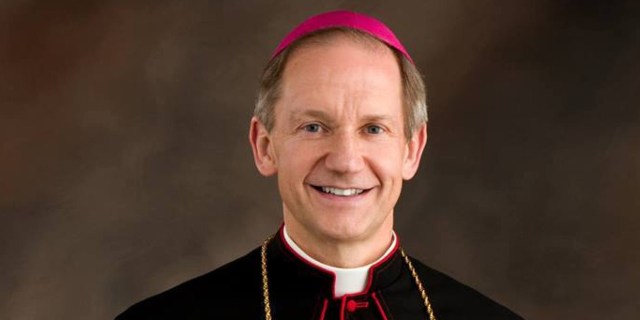
BRAVO BISHOP THOMAS PAPROCKI, MAY YOUR TRIBE INCREASE, PLEASE GOD !!!

unnamed(58)

U.S. Bishop: No funerals, Communion for people in same-sex ‘marriages’

by Claire Chretien

SPRINGFIELD, Illinois, June 23, 2017 (LifeSiteNews) – Those in same-sex “marriages” shouldn’t present themselves to or be admitted to Holy Communion, nor may they receive a Catholic funeral if they died without showing signs of repentence, Illinois Bishop Thomas Paprocki says.

Paprocki is the Catholic bishop of Springfield, Illinois and well-known to the pro-life and pro-family movements for his defense of Catholic orthodoxy and morality.

On June 12, Paprocki signed a “Decree Regarding Same-Sex ‘Marriage’ and Related Pastoral Issues.” It was sent to priests and diocesan staff last week and subsequently leaked to media sympathetic with the homosexual cause.

“The Church has not only the authority, but the serious obligation, to affirm its authentic teaching on marriage and to preserve and foster the sacred value of the married state,” Paprocki explained after reminding his flock of “the clear and consistent teaching of the Catholic Church since her founding by Our Lord Jesus Christ.”

Paprocki wrote that he has a “responsibility as diocesan bishop to guide the people of God entrusted to me with charity but without compromising the truth.” Because of this, he outlined diocesan policy on issues related to same-sex “marriage,” citing the Code of Canon Law throughout.

Paprocki holds a licentiate and doctorate in canon law from the Pontifical Gregorian University in Rome, in addition to a civil law degree from DePaul University and theology degrees. (Paprocki co-founded the South Chicago Legal Clinic to offer legal services to the poor when he was a parish priest.)

No diocesan facilities – such as parishes, schools, or “dedicated, consecrated or used for Catholic worship” – are to be “used for solemnization or blessing of same-sex marriages or hosting of receptions for these events,” Paprocki instructed. Priests and diocesan employees are not to assist at or solemnize same-sex “weddings.” Doing so could result in “just punishment” for them.

Citing Canon 915 and 916, Paprocki wrote, “Given the objectively immoral nature of the relationship created by same-sex marriages, persons in such unions should not present themselves for Holy Communion, nor should they be admitted to Holy Communion.”

Canon 915 says that those “obstinately persevering in manifest grave sin are not to be admitted to Holy Communion.”

Canon 916 instructs Catholics conscious of grave sin not to “receive the body of the Lord without previous sacramental confession.”

Paprocki instructed his priests to privately meet with people living in such situations, “calling them to conversion.” They can receive Holy Communion after they have been “restored to Communion with the Church through the Sacrament of Reconciliation.”

In the case of someone in a same-sex “marriage” in danger of death, he or she may be given Holy Communion as part of Viaticum (the Last Rites) provided he or she “expresses repentence for his or her sins.”

Paprocki’s instructions also outlined how to deal with the reception of the sacraments for children whose parent or guardians are living in a same-sex relationship. If there is “well-founded hope that he or she will be brought up in the Catholic faith,” it’s okay to baptize him or her. Pastors should “use due discretion in determining the appropriateness of the public celebration of the baptism.”

Children living with same-sex couples may receive First Holy Communion and Confirmation provided they are “otherwise qualified and properly disposed.”

They won’t be denied admission to Catholic schools or catechetical programs, Paprocki said, but the children will be taught “according to the Church’s teachings on marriage and sexuality.” So “parents or those who legally take the place of parents” should be aware of this if they choose to enroll their children in diocesan schools. They must agree to follow the Family School Agreement.

Those who have publicly entered same-sex “marriages” may not be Baptism or Confirmation sponsors. They are not to receive the sacrament of Confirmation unless they have “withdrawn from the objectively immoral relationship.” They are also not to serve in “public liturgical ministry,” like being a reader at Mass or extraordinary minister of Holy Communion.

The risk of ‘pubic scandal’

“Unless they have given some signs of repentence before their death, deceased persons who had lived openly in a same-sex marriage giving public scandal to the faithful are to be deprived of ecclesiastical funeral rites,” the letter continues. “In case of doubt, the proper pastor or parochial administrator is to consult the local ordinary, whose judgment is to be followed (cf. c. 1184).”

It was this section in particular to which the liberal media drew attention.

The Code of Canon Law states in Canon 1184:

Unless they gave some signs of repentance before death, the following must be deprived of ecclesiastical funerals:

1/ notorious apostates, heretics, and schismatics;

2/ those who chose the cremation of their bodies for reasons contrary to Christian faith;

3/ other manifest sinners who cannot be granted ecclesiastical funerals without public scandal of the faithful.

The Catechism of the Catholic Church defines scandal as “an attitude or behavior which leads another to do evil” (CCC 2284).

The Archdiocese of Philadelphia issued similar guidelines last summer.

“Two persons in an active, public same-sex relationship, no matter how sincere, offer a serious counter-witness to Catholic belief, which can only produce moral confusion in the community,” wrote Philadelphia Archbishop Charles Chaput. “Such a relationship cannot be accepted into the life of the parish without undermining the faith of the community, most notably the children…those living openly same-sex lifestyles should not hold positions of responsibility in a parish, nor should they carry out any liturgical ministry or function.”

Chaput’s guidelines also instructed priests that those actively participating in adultery – another sexual union the Church labels immoral – are not to receive Holy Communion.

Pro-gay Jesuit Father James Martin seemed to accidentally explain consistent Catholic teaching on marriage and public scandal with the following tweet:

“And?” asked TradStrips, a Facebook page that posts traditional Catholic memes.

“When you’re so liberal that you accidentally wrap around to being conservative again,” one commenter posted.

“Brilliant deduction,” wrote another.

Martin went on to release a storm of tweets suggesting Paprocki’s guidelines should ban from Catholic funerals women who have given birth out of wedlock, people who haven’t been “forgiving,” and people who don’t respect the environment. He did not appear to make a distinction between a person committing, and then repenting, of a sin like fornication versus continually and publicly living in defiance of Church teaching on homosexual activty.

He also tweeted links to statements from New Ways Ministry and Dignity USA, two groups that reject Catholic teaching on sexuality. The New Ways Ministry post went as far as to suggest that Catholics who “deny climate change” ought to be denied funerals under Paprocki’s reasoning. It also said that Paprocki’s upholding of Church teaching was telling employees not to “adhere to a most fundamental church teaching and follow their properly formed consciences.”

“Channeling Fr. James Martin’s outrageous claim that ‘Pretty much everyone’s lifestyle is sinful’, [New Ways Ministry’s] Shine apparently thinks that, because it is manifest that everyone sins, everyone’s sins must be ‘manifest,'” observed canon lawyer Dr. Ed Peters. “But Paprocki, having actually studied canon law, knows what canon law means by the phrase ‘manifest sinners’.”

“Paprocki’s decree is not aimed at a category of persons (homosexuals, lesbians, LGBT, etc., words that do not even appear in his document) but rather, it is concerned with an act, a public act, an act that creates a civilly-recognized status, namely, the act of entering into a ‘same-sex marriage,'” Peters explained. “That public act most certainly has public consequences, some civil and some canonical.”

Paprocki’s former secretary was murdered by a gay activist after she suggested he change his lifestyle.

++++++++++++++++++++++++++++++++++++++++++++++++++++++++++++++++++++++++

Bp Paprocki’s norms on ‘same-sex marriage’

BY EDWARD PETERS, JCD
IN THE LIGHT OF THE LAW
June 23, 2017


.

.A few days ago, doubtless in response to pastoral questions he had been receiving from ministers in his local Church, Springfield IL Bp Thomas Paprocki issued diocesan norms regarding ministry toward persons who had entered a ‘same-sex marriage’. These norms, hardly remarkable for what they say, are nevertheless noteworthy for being necessary and for Paprocki’s willingness to state them clearly while knowing what kind of vilification he would suffer in their wake.

Predictably New Way’s Ministry attacked Paprocki’s norms using equally predictable language and arguments and by hosting a combox replete with personal attacks on the bishop. All of this is sad, but none of it is newsworthy. Worth underscoring, though, is the glibness with which Robert Shine, an editor at New Ways, attempts to school Paprocki, of all people, on canon law, of all things. A little background.

Paprocki has, besides the master’s degree in theology that Shine claims, a further licentiate degree in theology and, even more, a licentiate and doctorate in canon law from the Pontifical Gregorian University in Rome. While I can’t quite say that Paprocki “wrote the book” on the defense of rights in the Church, he certainly wrote abook on it, his 580 page doctoral dissertation, Vindication and Defense of the Rights of the Christian Faithful through Administrative Recourse in the Local Church (1993), which tome I can spy from my desk right now. And before his canon law studies, Paprocki had already earned a civil law degree from DePaul University and had centered his legal practice around services to the poor.

And now Shine (sporting zero legal credentials) is going to tell Paprocki how canon law should be understood? Okay …

According to Shine, among the “other things wrong with Paprocki’s new guidelines” is their use of Canon 1184 which, as Shine correctly notes, restricts ecclesiastical funeral rites for, among others, “manifest sinners” whose funerals would provoke scandal. But then Shine attempts to explain what Canon 1184 means by the phrase “manifest sinners”.

Per Shine, “It is discrimination to target LGBT people when, in a certain sense, all Catholics could be deemed ‘manifest sinners.’” Channeling Fr. James Martin’s outrageous claim that “Pretty much everyone’s lifestyle is sinful”, Shine apparently thinks that, because it is manifest that everyone sins, everyone’s sins must be “manifest”. But Paprocki, having actually studied canon law, knows what canon law means by the phrase “manifest sinners”.

Paprocki knows, for example, that the CLSA New Commentary (2001) discussing Canon 1184 at p. 1412, understands one in “manifest sin” as one “publicly known to be living in a state of grave sin”. That’s a far cry from Shine’s rhetorical jab, delivered as if it were the coup de grace to Paprocki’s position, “Who among us, including Bishop Paprocki, does not publicly sin at different moments?” Hardly anyone, I would venture, and so would Paprocki. But the law is not directed at those who, from time to time, commit sin, even a public sin; it is concerned about those who make an objectively sinful state their way of life. Fumble that distinction, as Shine does, and one’s chances of correctly reading Canon 1184 drop to, well, zero.

Yet Shine goes on, thinking that offering some examples of supposedly-sinning Catholics who yet are not refused funeral rites should shame Paprocki into changing his policy, citing, among other debatables, “Catholics who … deny climate change.” Yes. Shine actually said that. And this sort of silliness is supposed to give a prelate like Paprocki pause?

There are several other problems with Shine’s sorry attempts to explain the canon law of ecclesiastical funerals, but I want to end these remarks by highlighting a much more important point: Paprocki’s decree is not aimed at a category of persons (homosexuals, lesbians, LGBT, etc., words that do not even appear in his document) but rather, it is concerned with an act, a public act, an act that creates a civilly-recognized status, namely, the act of entering into a ‘same-sex marriage’. That public act most certainly has public consequences, some civil and some canonical.

Bp Paprocki, by long training and awesome office, understands what the consequences of ‘same-sex marriage’ are and are not and he is much more likely to be thinking clearly about them than is Mr Shine.

+++++++++++++++++++++++++++++++++++++++++++++++++++++++++++++++++++++++++

Bishop Paprocki responds to controversy, criticisms over decree on same-sex “marriage”

“Speaking objectively,” says the bishop of Springfield, Illinois, “… all those who have sexual relations outside of valid marriage, whether they are heterosexual or homosexual, should not receive Holy Communion unless they repent, go to confession and amend their lives.  This includes the divorced and remarried without an annulment, as is well known from all the recent media attention on that issue.”

Bishop Thomas Paprocki, Diocese of Springfield, Illinois

On June 12, Bishop Thomas Paprocki of Springfield, Illinois issued a decree regarding same-sex “marriage” (SSM) and “related pastoral issues”.  In it, he reaffirmed traditional Catholic teaching that marriage can only be “a covenant between one man and one woman …” and promulgated diocesan norms relating to SSM.  Norms included that no member of the diocesan clergy or staff is allowed to participate in a SSM service in any way, nor is church property to be used for SSM services or receptions.  Persons in SSM relationships may not receive Holy Communion, and when in danger of death, persons in SSM relationships may not receive Holy Communion in the form of Viaticum unless they express repentance for their lifestyle.

Additionally, persons in SSM relationships may not receive a Catholic funeral unless they offered some signs of repentance before their death, nor may they serve as lectors or extraordinary ministers of Holy Communion at Mass.  Children of parents in SSM relationships may receive the sacraments and attend Catholic schools; however, such parents should be aware that their children will be instructed in the fullness of Catholic teaching.

In a follow-up statement released June 23rd, Bishop Paprocki added that “the Church has not only the authority, but the serious obligation to affirm its authentic teaching on marriage and to preserve and foster the sacred value of the married state.”

While the decree was applauded by some Catholic commentators and pundits, it drew vehement criticism from others.  Michael Sean Winters of the National Catholic Reporter said that the bishop should be “sacked,” and that the decree is “so completely at odds with the direction Pope Francis is trying to take the church.”  Christopher Pett, the incoming President of DignityUSA, described the decree as “mean-spirited and hurtful in the extreme.  It systematically and disdainfully disparages us and our relationships. It denies us the full participation in the life of our Church to which we are entitled by our baptism and our creation in God’s image.”  Fr. James Martin, SJ, who frequently comments on issues related to same-sex attraction, complained, “To focus only on LGBT people, without a similar focus on the moral and sexual behavior of straight people is, in the words of the Catechism, a ‘sign of unjust discrimination’ (2358).”

Bishop Paprocki, who was interviewed by Catholic World Report last December, spoke with CWR about his recent decree and the controversy that has followed.

CWR: What prompted you to issue this decree on issues related to same-sex “marriage”?

Bishop Paprocki: These norms regarding same-sex “marriage” and related pastoral issues were prompted by changes in the law and in our culture regarding these issues.  Jesus Christ Himself affirmed the privileged place of marriage in human and Christian society by raising it to the dignity of a sacrament.  Consequently, the Church has not only the authority, but the serious obligation, to affirm its authentic teaching on marriage and to preserve and foster the sacred value of the married state.

CWR: Have you been surprised at the extensive national media coverage it has received?

Bishop Paprocki: Yes, to the extent that the decree is a rather straightforward application of existing Church teaching and canon law.  The Catholic Church has been very clear for two thousand years that we do not accept same-sex “marriage,” yet many people seem to think that the Church must simply cave in to the popular culture now that same-sex “marriage” has been declared legal in civil law.  From a pastor’s perspective, it is quite troubling to see that so many Catholics have apparently accepted the politically correct view of same-sex “marriage.”  This just shows how much work needs to be done to provide solid formation about the Catholic understanding of marriage.

CWR: Fr. James Martin, SJ, has complained (on his Facebook page) that this decree is “discrimination” against people with same-sex attraction because it does not include heterosexuals who commit sin or non-sexual sins. Additionally, relating to people in same-sex “marriages” receiving Holy Communion, he recently told The New York Times, “Pretty much everyone’s lifestyle is immoral.” How do you respond?

Bishop Paprocki: Father Martin gets a lot wrong in those remarks.  Everyone is a sinner, but not everyone is living an immoral lifestyle.  Since we are all sinners, we are all called to conversion and repentance.  He misses the key phrase in the decree that ecclesiastical funeral rites are to be denied to persons in same-sex “marriages” “unless they have given some signs of repentance be­fore their death.”  This is a direct quote from canon 1184 of the Code of Canon Law, which is intended as a call to repentance.  Jesus began his public ministry proclaiming the Gospel of God with these words: “This is the time of fulfillment.  The kingdom of God is at hand.  Repent, and believe in the gospel” (Mark 1:15).  Applying this biblical teaching to the specific issue of funeral rites, people who had lived openly in same-sex “marriage,” like other manifest sinners that give public scandal, can receive ecclesiastical funeral rites if they have given some signs of repentance before their death.

Father Martin’s comments do raise an important point with regard to other situations of grave sin and the reception of Holy Communion.  He is right that the Church’s teaching does not apply only to people in same-sex “marriages.” According to canon 916, all those who are “conscious of grave sin” are not to receive Holy Communion without previous sacramental confession.  This is normally not a question of denying Holy Communion, but of people themselves refraining from Holy Communion if they are “conscious of grave sin.”  While no one can know one’s subjective sinfulness before God, the Church can and must teach about the objective realities of grave sin.  Speaking objectively, one can say, for example, that all those who have sexual relations outside of valid marriage, whether they are heterosexual or homosexual, should not receive Holy Communion unless they repent, go to confession and amend their lives.  This includes the divorced and remarried without an annulment, as is well known from all the recent media attention on that issue.

CWR: Francis DeBernardo, Executive Director of New Ways Ministry, said that the decree will drive people with same-sex attraction away from the Church.  What is your response?

Bishop Paprocki: The real issue is not how many people will come to church, but how to become holy, how to become a saint.  The Church is a means on the path to holiness.  Jesus teaches us how to be holy, but not everyone accepted His teaching, for example, the rich young man who walked away from Jesus sadly because he did not want to sell his possessions to follow Jesus (Matthew 19:16-22).  People are free to accept or reject Church teaching, as they are free to accept or reject Jesus Himself.  It is disappointing when people leave the Church, just as it surely must have been disappointing for Jesus when people walked away from Him.

CWR: When you read the press coverage relating to the decree, are there any common misunderstandings or misinterpretations you see?

Bishop Paprocki: A lot of people seem to have missed the whole point of the call to repentance and conversion.  They seem to think that the decree is a blanket condemnation of people who are gay and lesbian.  It is not.  My decree does not focus on “LGBT people,” but on so-called same-sex “marriage,” which is a public legal status.  No one is ever denied the sacraments or Christian burial for simply having a homosexual orientation.  Even someone who had entered into a same-sex “marriage” can receive the sacraments and be given ecclesiastical funeral rites if they repent and renounce their “marriage.”

CWR: What comments are you receiving privately about the decree?  Have any of your fellow diocesan bishops spoken to you privately about it (if so, what are they saying)?

Bishop Paprocki: I have received many supportive comments and assurances of prayer.

CWR: What reaction have you received from your diocesan priests?  My first reaction is that many must be grateful that you have taken the heat off them.  For example, should a person in a same-sex “marriage” come for Holy Communion or asking for a Catholic funeral for a recently deceased (and unrepentant) lover, the priest can simply say, “I’m sorry, I work under the authority of the diocese and its bishop, and diocesan regulations do not permit me to do that.”

Bishop Paprocki: I have received positive reactions from my priests for the clarity of the Church’s teaching and expressions of gratitude for providing guidance regarding how to respond to such situations as they may arise.

CWR: Do you believe other dioceses will issue similar decrees?

Bishop Paprocki: I believe some already have, but for whatever reason they did not receive much, if any, publicity.

CWR: Has the negative press on this issue been difficult for you personally, or have you come to see that it goes with the office you hold?

Bishop Paprocki: I’ll take my cue on that question from my patron saint, Sir Thomas More, who said, “I do not care very much what men say of me, provided that God approves of me.”

CWR: Any other thoughts?

Bishop Paprocki: Gay activists have harassed my staff and me with obscene telephone calls, e-mail messages and letters using foul language and profanity, supposedly in the name of love and tolerance.  I am sorry that people around me have been subjected to such hateful and malicious language.

CWR: Is there anything you’d like to see Catholics who support the decision do to help?

Bishop Paprocki: Please pray for the conversion of sinners.

++++++++++++++++++++++++++++++++++++++++++++++++++

Bishop Paprocki and his critics: someone here is unhinged

By Phil Lawler (bio – articles – email) | Jun 28, 2017

Liberal Catholics are badly rattled by Bishop Thomas Paprocki’s decree that Catholics engaged in same-sex marriage cannot receive the sacraments in his Springfield diocese. So badly rattled, in fact, that…

The excitable Michael Sean Winters of the National Catholic Reporter argues that Bishop Paprocki “should be sacked.” In a column that carried a headline referring to the bishop’s decree as “unhinged” (and “unhinged” is a good word to use here, although not for the Paprocki policy) Winters says that the bishop’s stand “warrants the extreme sanction of removal from office proposed in the motu proprio Come una madre amorevole. As you may recall, Come una madre amorevole was released by Pope Francis just a year ago, detailing how a bishop could be removed from office if he had “committed or omitted acts that have caused grave harm to others.”

To date, the Vatican has never invoked Come una madre amorevole to explain the removal of any bishop. Winters believes it is time to start. Not with the bishops who covered up evidence of sexual abuse—for whom the motu proprio was obviously intended. But with Bishop Paprocki.

The problem, you see, is that Bishop Paprocki’s policy is not merciful. Winters, showing his deep commitment to the merciful treatment of all offenders, tells us that if he were a bishop, “I would issue a decree that Tom Paprocki can’t be buried in my diocese.” The Gospel of Mercy meets lex talionis.

All this, in response to a decree which—as Bishop Paprocki himself observes in an interview with Catholic World Report, answering his critics, is a “rather straightforward application of existing Church teaching and canon law.”

Another outraged critic of the Paprocki decree, Father James Martin, SJ, has paused in his promoting his own new book on acceptance of gay Catholics just long enough to condemn the bishop’s policy as discriminatory. Father Martin’s Facebook post is worth a careful look:

If bishops ban members of same-sex marriages from receiving a Catholic funeral, they also have to be consistent. They must also ban divorced and remarried Catholics who have not received annulments, women who has [sic] or man who fathers a child out of wedlock, members of straight couples who are living together before marriage, and anyone using birth control. For those are all against church teaching as well.

As Bishop Paprocki notes in his CWR interview, “Father Martin gets a lot wrong in those remarks.” The Church does ban all those people from Communion—at least until they have confessed their sins and reformed their lives. (The same logic that applies to reception of Communion also applies to funerals; the Church cannot treat someone as being “in full communion” if that person is actually not in communion.) However, in most such cases, the Church instructs the individuals to refrain from Communion on their own; the ban is not made public, because the sins are not public acts. A legal marriage falls into a different category; it is a public act, and a Catholic whose public act is incompatible with Church teaching engages in a public scandal. Which is why the Church does ban Communion for divorced and remarried Catholics who have not received annulments. Someone should probably inform Father Martin.

But just for the sake of the argument, imagine that an American bishop issued a policy similar to that set by Bishop Paprocki, but expanded (with appropriate clarification) along the lines suggested by Father Martin. Imagine that a bishop directed his priests to remind Catholics that they should not receive Communion if they had been involved in procuring an abortion, or if they were living together outside marriage, or if they were using contraceptives. Imagine that the bishop warned Catholics who are divorced and remarried that they could not have a funeral in a Catholic parish. Does that prospect frighten you? Because I say: Go for it!

Phil Lawler has been a Catholic journalist for more than 30 years. He has edited several Catholic magazines and written eight books. Founder of Catholic World News, he is the news director and lead analyst at CatholicCulture.org. See full bio.

Posted in Uncategorized | Comments Off on BRAVO BISHOP THOMAS PAPROCKI, MAY YOUR TRIBE INCREASE, PLEASE GOD !!!

BRACE YOURSELF, YOU MAY SOON SEE THE ABOMINATION OF DESOLATION IN OUR CHURCHES


https://veritas-vincit-international.org/2017/06/20/vatican-reportedly-working-on-ecumenical-rite-of-mass-for-joint-worship-with-protestants/

Posted in Uncategorized | 1 Comment

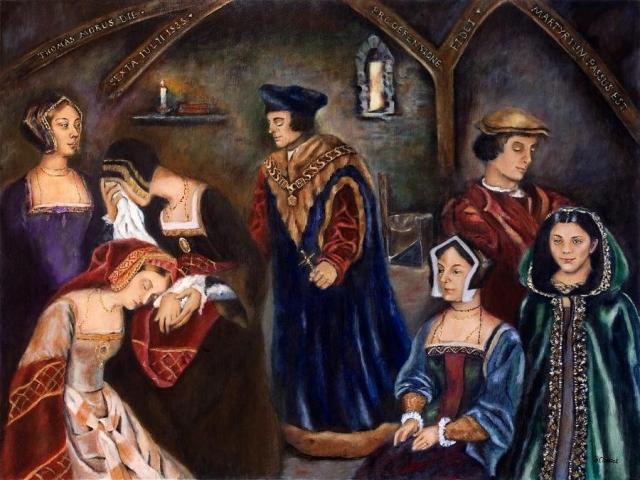
ST THOMAS MORE, TRULY A MAN FOR ALL SEASONS

st-thomas-more-martyred-sharon-clossick

June 22, 2017Thursday, Feast pf St. Thomas More
In the Cell of St. Thomas More

by Robert Moynahan

LETTERS FROM THE VATICAN

This morning we go to the cell of St. Thomas More, where he was held for about 15 months in the Tower of London from 1534 to 1535.


We have been traveling from Oxford to London in the footsteps of St. Thomas More, and of Blessed John Henry Newman, in order to arrive at this moment, when, in two hours, we will celebrate Mass in the cell where More was held before his execution by beheading on July 6, 1535.


Our intent is to pray for the intentions of all those who are prisoners, especially those who are falsely accused, and for all those who are victims of conscience, in political life and in the medical world, for all writers, communicators, and bearers of Good News, for the intentions of Pope Francis and of Emeritus Pope Benedict XVI, and for the intentions of all who long for God’s peace and justice in this world, who hunger and thirst for it, and for those who long for the unity of the Church, and for those who work that the hungry and thirsty may receive nourishment and drink.


To offer prayers in this place, in the Tower of London, in the center of the City, in England, Mary’s Dowry, on this 22nd of June, in the Year of Our Lord 2017.


A pilgrim from Florida, Carol Marquardt, handed me a little hand-written note as we set out a few days ago. She said she felt she had heard these words in prayer. It reads: “Walking the way of the cross is never easy — cling to me. I carried your burden along the way in my walk — as your savior. Listening to others can sometimes confuse you, but never will I abandon you or leave you in such confusion unless God has allowed it for a time for his own higher purpose. Even then I walk and have walked beside you. Stress — reaching for answers or resolutions — will not suffice, only receptivity to my words and my timing as the Father allows. Journal entry, June 18th, Carol.”


In Littlemore, near Oxford, where Newman (1801-1890) made his confession to Blessed Dominic Barberi (1792-1849), in 1845, on October 8 and 9, and was received into the Catholic Church on October 9, we prayed for the renewal of the faith in England, for a new springtime of faith in these lands. Sister Caroline, a custodian in the place, gave us prayer cards with a prayer of Newman. I have it with me now. It reads:


Prayer of Newman
Some Definite Purpose 


by Cardinal John Henry Newman


God has created me to do Him some definite service.
He has committed some work to me which He has
not committed to another.
I have my mission —
I may never know it in this life but I shall be told it
in the next.
I am a link in a chain,
a bond of connection between persons.
He has not created me for naught.
I shall do good — I shall do His work.
I shall be an angel of peace,
a preacher of truth in my own place while not
intending it — if I do but keep His commandments.
Therefore, I will trust Him. Whatever, wherever I am, I can never
be thrown away
If I am in sickness, my sickness may serve Him;

in perplexity, my perplexity may serve Him;
if I am in sorrow, my sorrow may serve Him.
He does nothing in vain.
He knows what he is about.
He may take away my friends.
He may throw me among strangers.
He may make me feel desolate,
make my spirits sink,
hide my future from me –

still He knows what He is about.


In the cell of St. Thomas More, and in memory of that good servant of the King, but of God first, we will pray for all these things.


What is the glory of God?


“The glory of God is man alive; but the life of man is the vision of God.” —St. Irenaeus of Lyons, in the territory of France, in his great work Against All Heresies, written c. 180 A.D.


Posted in Uncategorized | Comments Off on ST THOMAS MORE, TRULY A MAN FOR ALL SEASONS

BRAVO, FATHER RICHARD PEROZICH, MAY YOUR TRIBE INCREASE

father-richard-perozich


“Most Courageous” Parish Priest . . . Plans To Start Retired Life As “Hermit Monk” In Maui

21 June 2017 – By DEXTER DUGGAN


A veteran clergyman described by an admirer as “the most courageous priest in our San Diego Diocese” warned at his pre-retirement party that although the priority of Christianity is saving souls, he was hearing more from prelates concerned about earthly matters than religious ones.

Fr. Richard Perozich, sometimes involved in news events reported in The Wanderer, gave a farewell talk in early June to about 30 members of Ecclesia Militans of San Diego, conservative lay Catholics for whom he served as spiritual adviser.

Perozich’s final assignment as pastor, ending at the close of June, is at Immaculate Conception Church in San Diego’s historic Old Town, near where St. Junipero Serra offered his first Mass in California in 1769. Perozich plans to move to the Hawaiian island of Maui, living, he said, “more as a hermit monk.”

According to his text provided by a listener to The Wanderer, Perozich told the Ecclesia Militans gathering, at the La Jolla home of one of its members:

“I hear new opinions substituting for truth. I hear studied ambiguities, carefully crafted statements which allow for multiple interpretations. I hear calls to change language of truth to a language that will not offend sinners. I hear sophistries, good-sounding arguments with just enough truth, but which are misleading.

“When those who are supposed to care for me are not doing so, in my opinion, I must retreat from them into the longstanding Tradition of the Church. I have to be vigilant about my own holiness in the Holy Spirit so as not to be drawn into their spirit of this age and be corrupted by it,” he said.

He criticized both the long-serving retired San Diego bishop, Robert Brom, and current Bishop Robert McElroy.

The Wanderer asked Kevin Eckery, the diocese’s vice chancellor for Communications and Public Affairs, if he or McElroy was aware of the critical comments or had a reaction to them.

Eckery promptly replied on June 9: “No reaction, Dexter. Wasn’t there.”

In its September 11, 2014, hardcopy issue, The Wanderer reported that prominent dissenter Fr. Timothy Radcliffe, OP, former master general of the Dominican order and a foe of traditional Church teaching on homosexuality, would be a major speaker at the San Diego Diocese’s annual convocation for its priests later that month.

However, Perozich declined to attend that convocation. The California Catholic Daily website posted a story that July about Perozich’s refusal headlined, “Guess who might get in trouble? Guess who doesn’t really care.”

Local conservative Catholics said a speaking invitation to Radcliffe was extended by Fr. Michael Murphy, the pastor at Sacred Heart Catholic Church in Coronado, a beautiful, wealthy residential community across San Diego Bay from downtown San Diego.

After Bishop Brom retired in 2013, he was succeeded by coadjutor Cirilo Flores, who didn’t even complete a year as bishop before dying of cancer in early September 2014. McElroy, previously an auxiliary bishop in San Francisco, was named by Pope Francis to succeed Flores and was installed in April 2015.

The December 15, 2016, hardcopy issue of The Wanderer reported that McElroy rebuked Perozich after the priest emphasized the non-negotiable moral issues in the November election for his parish voters. McElroy subsequently issued a statement saying there were other issues as well, including poverty and economic justice, the environment and immigration.

Perozich told his farewell gathering in La Jolla in early June:

“It can be a little more daunting when one is a priest and whose spiritual father and brothers seem to me to be moving away from clarity of truth to ambiguity, from the spiritual to the worldly, from holiness into sin. Recent sophistry: bishop wanting solar panels in every parish, gays and lesbians welcomed in every parish, their children in our Catholic schools.”

Allyson Smith, one of the Ecclesia Militans members present for the talk, told The Wanderer:

“Father spoke how we can no longer depend on major political, educational, and economic institutions, including the Church, to protect and enable us to practice our Catholic faith, and so therefore we must find a ‘Benedict Option’ that entails rebuilding our own societal structures and ‘intentional communities that more fully embody our Christian faith.’

“He detailed some of the problems with the Church at large, and within our local Diocese of San Diego, such as the trend toward acceptance of sexual immorality and opinions now being substituted for truth, that have led him to seek his own version of the Benedict Option in retirement, living as a hermit monk community of one,” Smith said, adding:

“Above all, he exhorted us to be holy, as Christ is holy; to continue daily Scripture reading, prayer, and reception of the sacraments.”

Currently in the diocese, Perozich told his listeners: “Priests who were ignored before because of their lifestyles are now on boards and giving talks and photographed with the bishop; others are promoted in the diocese. It has reached a level too great for me to tolerate, so I choose the Benedict Option for myself.”

He said some people believe the Benedict Option equates with disengaging and withdrawing. But, Perozich said, it’s “all about being active and engaging the problems of society. It recognizes, however, that solutions will begin locally, in the relationships that we can influence. Rebuilding will begin there. Do we really think that our political, educational, and economic institutions will provide a secure future for the practice of our Christian faith?”

Complaints Perozich listed against the San Diego Diocese included, “Vapid days of recollection and retreats for us priests” and “Public promotion of sodomy and adultery with Holy Communion.”

“My skills are pastoring, anointing, Confession, Mass, preaching, teaching,” he continued. “I can balance a budget, rebuild a failing parish, speak Spanish and be faithful to the Tradition of the Church. I cannot be faithful to the sophistries promoted by prelates. . . . “Other than be faithful myself, I am unable to influence my fellow clergy except for about ten priests here,” he said. “Most just go along, and if they are faithful, they are silent about it. I cannot be that way. . . . I have an intentional community of one, living apart more as a hermit monk.

“I support the Church financially, but not any diocese and certainly no parish who has drag-queen ministers, openly homosexual employees, giving Communion to adulterers, supporting community-organizing groups for $15 minimum wage, open immigration, inviting Muslim refugees but not our brother Christian ones who are being killed in the Middle East. I have other ways of giving money to the church and to faithful ministries,” he said.

“I cannot leave the Church even if its leaders deviate. It still is protected by the Holy Spirit from total destruction, but can still be damaged. Now, I do need to care for my own spiritual health and will do so intentionally in a way I find fulfilling,” Perozich said.


http://thewandererpress.com/catholic/news/featured-today/most-courageous-parish-priest-plans-to-start-retired-life-as-hermit-monk-in-maui/

Posted in Uncategorized | 2 Comments

IT’S DEJA VU ALL OVER AGAIN

The New Barbarism is the Old Normal

by charliej373

Luxembourg-Gardens-20123

By Charlie Johnston


“How often would I have gathered your children together as a hen gathers her brood under her wings, and you would not!” – Luke 13:34


To be a serious student of history does not engender optimism. The arc of history no more bends towards justice than the arc of botany bends toward elegantly intricate formal gardens. Both history and gardens are what men shape them to be. If the men of an age are brutish and crude, so will it be with the history and gardens they leave behind them.

All of recorded history is a monotonous repetition of various factions of men seeking to rule through the use of force and violence, taking command, ruling ruthlessly, then ultimately collapsing or being overthrown by other factions using the same tactics against them. It is the default setting for humanity. The founding of Christianity carved out what should have been an enclave for personal conscience and dissent. Certainly its founder, Jesus Christ, insisted that people were to come to Him by evangelization rather than coercion. People are supposed to know we are Christians by our love for each other and for all. It sometimes worked that way. The way for Christianity to be favored in ancient Rome was paved even in the midst of the persecutions as more than a few Roman tribunals turned a blind eye to Christians in their midst and encouraged the same in their superiors. The reason? Christians were noted for giving care and succor to all, regardless of religion – and the Romans were hard put to provide adequate relief, themselves, to the suffering. Alas, when prosperous and dominant, Christians, themselves, have often used the human tools of oppression, force and violence to enforce their will, quite in defiance of our Founder.

The Anglo-Saxons were notable in, over time, limiting the power even of kings. The Magna Carta of 1215 was an early formal document limiting that power, but it was not quite the bold statement on the rights of man many imagine it to be. It merely limited the king’s arbitrary power over feudal barons – barons who still retained arbitrary, brute power over the common people in their own lands. Still, this seed sprouted over centuries into a growing conviction that men had some rights that even a victorious king could not trespass against. In the century before the American Revolution, England had advanced quite remarkably in respecting the rights of minorities in the home country, even as raw force and brute power were the means to control the common rabble in most of the rest of Europe. Whatever refinement England had developed on the subject rarely applied to its colonial subjects.

Most (though not all) of the religious wars were only tangentially religious: they were wars for territory or dominance and used religion as a fig leaf over the real intentions or to whip troops into a fighting frenzy. Even so, religious authorities often did themselves no honor. Everyone knows about the Catholic executions of people for heresy. Fewer are aware that after the Reformation, the Protestants executed an order of magnitude more “witches” than the Catholics ever did heretics. England’s King Henry VIII embarked on a murderous, bloody repression of Catholics after he founded the Anglican Church. When, a century later, Catholics re-took power in England they embarked on the same murderous, bloody repression of Protestants. When the Protestants re-took power, more of the same. The St. Bartholomew’s Day Massacre in Catholic France was a sickening episode of treachery and slaughter. The Catholic King had lured Protestant Hueguenots to Paris for the marriage of his daughter, Marguerite to the Protestant King Henry III of Navarre, pretending a reconciliation. Then was launched several weeks of targeted assassinations and mob violence against the Protestants who had come under the banner and promise of peace. With St. Joan of Arc, I was particularly struck when I first learned that the evil conspirators took a break in the midst of her trial to celebrate Holy Week. It was striking they did not see the stark parallels between the judicial murder of Jesus, which they were celebrating and the judicial murder of Joan, which they were committing. Even had Joan been a fraud, her accusers would have brought the wrath of God on themselves for their malice, lies and deceptions. They decided from the beginning there was no acceptable outcome but her death – and lied, cheated and deceived to get it. Most despicable, her tormentors constantly claimed that they did what they did out of “charity and love” for her. Nicholas Loyseleur, who spied on Joan in her cell while pretending to be her friend, recommended out of “charity” for her soul and “love” for her person that she be tortured until she confess. There ever has been a species of false piety that deceives itself by calling its malice charity and its vicious assaults love. But God gets His own in striking ironies: Nicholas Midi preached a two-hour homily preceding the burning of St. Joan, comparing her relentlessly to a leprosy on the Body of Christ. He insisted the only way to deal with leprosy was to burn it out entirely. Shortly after her death, Midi was consumed with leprosy and died miserably.

The Enlightenment rose among French intellectuals in the very late 17th Century, explicitly elevating the “rights of man” as a primary philosophical and political imperative. The American Revolution was the first flowering of the Enlightenment – and the only flowering before the divorce of faith and reason. If the Enlightenment did well in enshrining the “rights of man” as a priority, it disastrously redefined the nature of man as a consumer – a complicated animal – rather than a subordinate creator imbued with innate dignity from his Divine Creator. Faith without reason is mere superstition, but reason without faith quickly degenerates into unreasoning brutality and tyranny.

Soon, all revolutions and upheavals were done in the name of “the people” rather than national glory – and the new humanists seemed determined to show that when it came to murderous mayhem visited on innocents, religious folk were shabby second-raters compared to the new leftist utopians. The French Revolution overthrew the established order and God along with it, while terrorizing the people of France (in the name of “the people,” of course) until the terror consumed quite a few leaders of the revolution, as well. Order was finally re-established, if a bit rockily, with the rise of Napoleon. The atheist utopian movements of the 20th Century alone (Bolshevism, Nazism, Chinese Communism) butchered more people than were killed in all the religious wars of history combined. Nothing changed with the Enlightenment except that murder was always done in the name of “the people” and the ambitious hyper-charged their murderous rage, unconstrained by concern that they might ultimately face a just God. If some people did not bend to their utopian schemes, their response was to kill the dissenters – and then surely utopia would reign.

Strikingly, there has not been a genuine intellectual among the monstrous “idealistic” revolutionaries who have shed so much blood, except perhaps for Vladimir Lenin (who had some real abstract heft, but was seriously deficient in logic and in the practical matter of administration). Lenin was also the only one who, reaching the end of his life, was sincere enough and smart enough to see he had erred, perhaps tragically. He had unleashed brutal methods for a half-baked idealistic cause and came to suspect that, in his aftermath, it would be all brutality and no idealism. “I am, I believe, strongly guilty before the workers of Russia…” he wrote in his last year – and denounced Josef Stalin – but too late. The utopian ideologues imagine themselves to be enlightened, even though they wholly abandon intellectual rigor. They embrace an ideology which, they think, explains everything, so it relieves them of the obligation of actual study and learning. They mount childish, unexamined fantasies as the formula for utopia. Any failure has to be the result of sabotage or incorrect thinking. Rather than examine themselves critically, they attack critics, first denouncing them, then jailing them, then (with no Christianity to restrain them) executing them. Even massive executions do not make their crackpot schemes any more effective, so they almost always end by executing allies before the whole project collapses. The contrast between the dull-witted, but thuggish, stupidity of the atheist utopians and their fatuous self-regard as brilliant and enlightened is remarkable.

Somehow the leftist utopian movements almost always incorporate some form of genocide before they collapse. In Revolutionary France, it was against aristocrats – and some Jacobin partisans complained that not enough children of aristocrats were being regularly executed on the guillotine. In Russia, it was the kulaks (peasant landholders). Kulaks were always regarded by the Soviets as enemies of the state, for anyone who owned a cow, two chickens and a quarter acre of land was obviously an incipient capitalist. Some seven million kulaks were intentionally starved or executed (mostly in Ukraine) by Stalin’s forces. This did NOT increase Soviet grain production, as Stalin promised it would, but set it back 20 years. Only a Communist could believe murdering millions of your top farmers could increase crop yields. Nazi Germany’s genocide against Jews particularly, but Catholics, gypsies, the handicapped, and Christians generally is well known. Mao Zedong probably beats all in sheer numbers and comprehensive brutality. During the four years of the “Great Leap Forward” he killed about 45 million of his own people through forced starvation, and working or beating them to death. Prominent among his victims were the peasants who had helped bring him to power. Then in the later decade of the “Cultural Revolution” he murdered many of the very people he had used to enforce the Great Leap Forward. Put simply, socialism is the ideology of the death camp and atheism the theology of genocide.

The American Founders accomplished a myriad of astonishing things, not by adopting some ideology that relieved them of the obligation of studying evidence, facts, logic and history; but by considering all of these with starkly rigorous honesty, then working to find solutions to seemingly intractable problems. They created a self-governing republic that defended liberty while maintaining stability. It was an unprecedented accomplishment. They set up a system that allowed for the most vigorous of disputes to be settled without routine resort to violence and bloodshed. Given the history of the world, it was as striking, rare and fragile as a rose growing in a dung heap. They accomplished this primarily in two ways: First, they adopted universal standards of justice that were to be objectively applied to all, great and small. Standards could be changed by the majority act of the governed, but judges and law enforcement were to be governed by those standards rather than personal opinions or affections. Second was the separation of powers between legislative, executive and judicial authority so that none was supreme over the others, and the division of powers between the federal and state governments, creating a form of subsidiarity to prevent power from centralizing and becoming unaccountable. In the United States, you gained power by the persuasiveness of your case, not the force of your fist. Should you try, instead, to brutalize your opponent or commit violence to take power, the whole society would pursue your arrest and imprisonment. To sustain this, a great deal of emphasis was placed on maintaining the integrity of processes. This was critical for the same reason that process is critical to a baseball game. If umpires are routinely able to say that some batters only get two strikes before they are out and others get four, it won’t be long until confidence in the game itself collapses. To maintain public consensus in a system which all sometimes – and many, often – lose, the standards must be seen to be rigorously fair, objective and equally applied to all.

After a pause of about 50 years, nations throughout the globe slowly began to adopt versions of the American system, desperate to escape the routine violence and brutality that rocked their own systems. To get an idea of the proportion of human history and global geography that has lived in a society where disputes were settled by peaceful means rather than by violence and brute force, imagine a postage stamp on a football field. Many of us have lived on that postage stamp for so long we have forgotten how terrible the normal way of settling disputes was. And, so, a new atheist utopian movement has risen in America and the west. The movement is as ignorant as its forebears, as airily certain of its own brilliance and rectitude, as unwilling to engage in real and rigorous scholarship, and as impatient to impose its own vision on its contemporaries by any means necessary. Incapable – and unwilling to put in the effort – to accomplish its aims through persuasion of contemporaries, it thinks it has stumbled onto something new by subverting legal processes, using brute force, and encouraging violence to achieve its aims rather than something depressingly tiresome and old.

Confronted with the depredations of the atheist left, the leadership of Christians and the right has been utterly ineffective in defending freedom or even basic standards of law and jurisprudence. I am not entirely unsympathetic to the right’s impotence: it suggests, at least, that it knows how horrible things will get if the atheist left does not return to objective and equally applied standards of law, does not stand down from the rebellion against legal norms. So leaders on the right and among Christian communities make shows of good will, which do not lead the left to live by objective standards of justice, but persuade it that its shrieking hysteria is winning. Historically, there are only three ways stability is restored when a culture has reached this level of division and volatility. Either the aggressors stand down their violent rhetoric and riots (very rare), society cracks down on the aggressors with sufficient vigor to put an end to the offenses and sufficient restraint to let them re-integrate into lawful behavior without triggering opposite abuses (rarely well-calibrated), or widespread violent strife or revolution comes, to be contained ultimately by some level of dictatorial power.

The aftermath of the attempted mass murder of Republican Congressmen on June 14 makes it almost certain we will go the way of widespread violent strife. It is not the shooting itself that clinches it, but the aftermath. Even the healthiest societies are subject to occasional atrocities and tragedies. When an atrocity comes, a healthy society quickly and forcefully unites to condemn the terror in unambiguous terms. We had a day of pro forma denunciations and then went back to business as usual. Worse, many on the left – and in the establishment media – suggested that seriously wounded Congressman Steve Scalise brought it on himself by being conservative. Joy Reid of MSNBC suggested it was his fault for being “racist.” She gave no examples of his racism, because there are none – but the left has re-defined racism to mean being conservative, regardless of one’s actual attitudes on race. CBS Anchorman Scott Pelley hideously suggested that Scalise’s wounds were “self-inflicted” because of the injection of violent rhetoric into the political system. The only example of violent rhetoric Pelley showed came from Bernie Sanders, not Scalise. The gunman was a far-left Democrat who had volunteered on Sander’s campaign for president. This was not just a smear, but an incoherent one. Leaders on the right did not steel themselves to demand that the left adopt a commitment to equal justice under law. Lois Lerner, who oversaw targeting of Christians and conservatives at the IRS is still free and collecting her pension. John Koskinen, who headed the IRS during this targeting – and publicly dared Congress to do anything about it – is still IRS Commissioner. I could go through a litany of leftist violence against Christians and conservatives, but suffice it to note that it has reached critical mass and has mainstream left-wing approval.

While the modern left shares all the intellectual deficiencies of its socialist antecedents, it lacks their low animal cunning. Oh sure, it has adopted Orwell’s Newspeak enthusiastically. Just as Lenin maintained that the truest form of democracy is the dictatorship of the proletariat, just as Stalin adopted a constitution that promised free speech, so long as it was “proper” speech – any other kind would get you a one-way ticket to Siberia if it did not get you shot, the modern left comically calls its fascist tactics “anti-fascism;” calls attacks on free speech, liberty; and calls the flouting of the law, justice. It has failed in a critical respect, though, that all its predecessors took great care in. Marat, Robespierre, Lenin, Stalin, Hitler and Mao all took great pains to cultivate substantial support in their countries’ military and police communities. They took great pains to heavily arm themselves while disarming the ordinary population. The modern left treats both the military and the police with open contempt and hostility. They have tried, ineffectively, to disarm the populace while ostentatiously disarming themselves. I am reminded of Casey Stengel’s forlorn lament about the incompetence of the ’63 New York Mets: “Don’t nobody here know how to play this game?”

The left’s agitation is like Peewee Herman trying to pick a fight with Arnold Schwarzenegger in his prime: the suspense continues only so long as Arnold ignores Peewee. As soon as he engages the fight is over. I can only think the left believes ordinary people will turn out to be as flaccid in defending themselves as conservative and Christian leaders have been in defending them. The people’s restraint thus far does not mean they will submit to be ruled and bullied by progressive whim. The restraint has held in the forlorn hope that the leadership class would defend both them and American traditions. And so, a great battle will come. Though the left has been agitating for it, the right will prevail (though it will be bloodier than it ever had to be had leaders simply done the job of insisting that equal standards of justice apply to all). Under normal circumstances, a right-wing dictatorship would prevail, at least for a time. What I would fear under those circumstances is that bitterness and anger would so reign for a time that the right might mount similar or worse depredations to what the left has mounted. Yet for all the historical reality and imperatives, I remain an optimist. It is because I know and trust in God, the God who, for the sake of ten righteous people, would have saved Sodom.

At Fatima 100 years ago, Our Lady promised that, in the end, her Immaculate Heart will triumph, despite the terrible offenses that man keeps inflicting on himself in defiance of God. I have said all along that a primary purpose of this Storm has been to reveal hearts, to show where people actually stand in contrast to what they say. How terrible it is to see so many hearts being revealed to hold such malice and venom! Since the inauguration I have re-visited some of my interpretations of what I have been shown (and have had much instruction, which I will not discuss). My optimism sometimes veered into naievete. I assumed that, if Our Lord revealed the Kingdom to all by sending Our Lady to appear to us all, people would stand down from their errant defiance. The furious, irrational and unrelenting rage of the atheist left since the inauguration has disabused me of that notion. I should have known. I wrote of the great atheist naturalist, Emile Zola, and how when he was presented with compelling evidence of God’s goodness and willingness to intervene through a miracle, just doubled down on his rage and hate. He would not accept something greater than himself under any circumstances, even if it were to destroy him. I knew that, with the raising of the siege of Orleans in 1429, St. Joan of Arc reversed in a few days the conviction of 85 years, both by the English and the French, that France could not survive as in independent nation. After that victory, neither the French nor the English thought France could ever be defeated – a complete reversal of the conventional wisdom of the past century. Even so, the fighting lingered on for another 24 years after all involved had concluded that subjugating France was a lost cause. Watching the furious malice of the atheist left the first half of this year, I no longer expect them to accept the embrace of Christ even after they know that defeat is certain and continued defiance will destroy them. It is the pointless nihilism of the satan’s original rebellion – and he rejoices in taking so many to share in his needless destruction.

In all of these events, God is not just reclaiming us, but instructing us in what we are called to do and to be. Most of those who read this site have not been involved in the assaults on the faith or on the faithful. Yet we were called to be guardians of the faith and defenders of the faithful. We have failed badly in that call. What are some of the lessons God would have us internalize?

First, we need to banish the myth of the milquetoast Christ. Jesus was not always gentle and sweet – and He most emphatically did NOT approve of everyone as they are. He was quite frequently harsh and condemning to those who, out of lust for power or self-congratulatory self-righteousness oppressed the faithful and the little ones. Read the Gospels. Many have abused the universality of Christianity – that no ethnic, racial, national or other external characteristics would be a bar to full Christianity to mean that even avowed enemies of the faith must be enabled in their assaults on the faith and the faithful. The blood of Christ has not gone anemic. He defended His own against such assaults – and we are to do the same.

Even so, victory is not in our hands. Victory is in the hands of God and not dependent on our calculations. We are all called to defend the faith, hearten the faithful, and defend the faithful. When we take that next right step, we become like one of Gideon’s 300 chosen men (Judges 7), invulnerable against even a multitude. But God’s primary intention is the rescue of the souls of as many of His children as can be rescued. We will all be held to account for every depredation against the faithful that we could have stopped, but did not out of timidity. We will also be held to account for every soul we could have effectively evangelized, but did not out of anger. It is an impossible task that we will often fail in – but God’s grace will justify us so long as we keep our eyes on and our hearts in Him. We are called to be just, to judge righteous judgment with both charity and resolve.

There are three great examples I like to contemplate when considering how to behave in extreme, tumultuous circumstances. First is St. Joan of Arc. Usually, for an hour or more before she commenced battle, she would plead with the English to retreat, to save themselves and to be just. On the occasion when they fled, she was content to let them go. But if they had not retreated after her pleas, it was all hammer and tongs until the victory was won. After it was won, she took great care to see that the wounded enemies were well cared for. She fought with vigorous resolve, but entirely without malice. Abraham Lincoln’s 2nd Inaugural Address is one of the most beautiful and noble speeches ever given. Lincoln pressed on with unshakeable resolve to win the war, but did it with malice towards none and charity towards all. His main aspiration was to re-unite the country as brothers, not to destroy the rebels as enemies. Finally, there is the Rev. Martin Luther King’s Letter from the Birmingham Jail. I cannot read it without misting up. It is the best instruction on how to resist evil without becoming the evil you resist I have ever read.

Do not fret about those good things you can’t do, lest you neglect the good you can. Don’t let either passion or apathy cause you to neglect the little good you can do, for such are the building blocks of God’s kingdom on earth. In short, play your position well, man your post, be it humanly little or grand. Acknowledge God, take the next right step and be a sign of hope to those around you.

A couple of years ago, I casually wrote a phrase I have come to cherish deeply. I wrote, As you look at your life, you cannot measure it by the books published, the soup kitchens worked, the refuges built-though if you do those things they are good. Rather, you must judge it from the perspective of the hope you inspired, the peace you spread, the joy you engendered, the love you kindled- for these are the sure marks of the Kingdom of God. All else is detail.” If we live this fully, God will seize the victory, for we will be a Godly people – and we will fully participate now as the heralds of the Triumph of Our Lady’s Immaculate Heart.


charliej373 | June 21, 2017 at 4:28 pm | Categories: Uncategorized | URL: http://wp.me/p4dCVy-21Y
Posted in Uncategorized | Comments Off on IT’S DEJA VU ALL OVER AGAIN

YOU SHALL NOT BEAR FALSE WITNESS

THESE STONE WALLS

On the Island of Guam, Is the Eighth Commandment Discarded?

A prayer is offered for a falsely accused priest at the London prison cell of St Thomas More while on the Island of Guam a new Catholic Inquisition makes its debut.

“Hear me out. You and your class have ‘given in’ – as you rightly call it – because the religion of this country means nothing to you one way or the other.” (Sir Thomas More in Robert Bolt’s A Man for All Seasons, London, 1961, P. 122).

Sir Thomas More became Saint Thomas More, a martyr for faith and truth when he was executed for “high treason” upon the order of King Henry VIII in 1535. The King demanded complicity from Thomas More in a campaign against the Catholic Church when the Pope denied the King an annulment from his marriage to Catherine of Aragon to marry Anne Boleyn.

As Lord Chancellor of England, Thomas More surrendered his favor with the King and his Court to defend his Church and faith. The King’s response set in motion the Protestant Reformation in England. Meanwhile, Henry VIII went on to marry a total of six times. Thomas More, condemned for fidelity to his Catholic faith, was imprisoned in the Tower of London and beheaded on July 6, 1535. His head was mounted on a pole at the Tower of London Bridge.

Saint Thomas More was canonized a saint and a martyr 400 years later, and today is honored by the Catholic Church on June 22. On June 22 this year, Dr. Robert Moynihan will visit the London prison cell of Saint Thomas More where, among his prayers, will be offered one for me and for These Stone Walls. Dr. Moynihan is Editor and Publisher of the very fine Inside the Vatican magazine.

The prayer was requested by Suzanne Formanek, a TSW reader in Eastern Europe who has asked that readers join that day in a prayer for justice through the intercession of Saint Thomas More. I am most grateful to them both.

There is a special significance to this development. Readers may recall our most recent pursuit of justice before a U.S. court. The outcome was described by Catholic writer, Ryan MacDonald in “A Grievous Error in Judge Joseph Laplante’s Court.” It’s worth a short visit to scroll to the last segment of that post to see the great irony of Saint Thomas More’s presence in this story.

CATHOLIC SCANDAL & THE RULE OF LAW

I cannot help but ponder, today, how Saint Thomas More might weigh the state of justice and civil liberties on the Western Pacific Island of Guam, the southernmost of the Mariana Islands. For those unfamiliar with the territory, the Marianas were visited by Ferdinand Magellan in 1521 and later colonized by Spain. The island chain was named for Maria Anna, widow of Philip II, King of Spain from 1556 to 1598.

In 1898, at the end of the Spanish-American War, Guam was ceded to the United States. The Japanese captured the island in December of 1941, but it was retaken by American forces in the summer of 1944. In 1950, U.S. citizenship was conferred upon the people of Guam which remains a self-governed U.S. territory.

Following a trend of reactionary legislative controversies across the United States in the wake of Catholic scandal during the last two decades, the legislature and governor of Guam last year passed and signed into law “Public Law 33-187.” The law opened a window to extend civil statutes of limitations in sex abuse claims against institutions such as the Catholic Church.

Saint Thomas More, a lawyer, legislator, and statesman, would likely deem Public Law 33-187 to be contemptible in the arena of human rights and civil liberties. The misguided law opens a retroactive door for lawsuits and other claims for compensation years or decades after existing statutes of limitation have expired. It provides for no standard of justice to separate the real from the contrived.

Like the bishops of virtually every American Catholic diocese where such an unjust law was considered, the Guam version was opposed by the Archdiocese of Agana, Guam. It was opposed because it also opens a window to fraud. Most mainland USA legislatures that considered such a law ultimately rejected it as biased and unjust.

I wrote the truth, from my own experience, about why such laws are an affront to truth and justice. In “Due Process for Accused Priests,” a 2009 article in Catalyst: the Journal of the Catholic League for Religious & Civil Rights, I described how some states were duped by nefarious agendas into considering “window legislation” similar to what has been passed in Guam.

THE FACTS, THE FRAUD, THE STORIES

Those agendas are the fuel that has kept the Catholic scandal in the United States going and growing. Leaders of SNAP – the Survivors Network of those Abused by Priests – used the story of Catholic scandal to promote their own interests and line their own pockets. This latest offshoot of the Catholic scandal is the most recent to be exposed, as it was recently in these pages in “David Clohessy Resigns SNAP in Alleged Kickback Scheme.”There is layer upon layer in the Catholic scandal as it emerges anew in Guam, and the various layers appear to be a blueprint drafted from what has happened across America. First, there is the layer of the cold hard fact that a guarantee of a financial windfall is the end result of virtually every claim.

It should come as no surprise to anyone that there are some in our midst who would sell their souls for money. After the September 11, 2001, terrorist attacks on the Pentagon and the Twin Towers in New York, a Commission had to be set up to investigate the rampant fraud attempts of those who claimed to lose loved ones who were not even there.

After the infamous BP oil rig explosion and its environmental disaster in the Gulf of Mexico, BP had to set up its own fraud commission to deal with a vast number of fraudulent claims for money. BP took out full-page ads in The Wall Street Journal to describe the multitude of fraud attempts aimed in its direction.

There were two waves in the Catholic clergy sexual abuse story. The first wave came in the 1980s when victims and their parents came forward with grave concerns about the behaviors of a very small percentage of priests. In far too many of these cases, bishops failed to use canon law effectively to deal with those situations and instead were too caught up in warding off public scandal. These cases deserved to be compensated and were.

The second wave was a tsunami of far older claims. In 2002 The Boston Globe set in motion a classic New England witch hunt that spread its moral panic. The sheer volume and tone of the public face of the scandal eroded civil liberties for all priests.

The civil liberty of a presumption of innocence was eliminated, and the floodgates were opened for false claims, most of which were many years or decades old and for which no evidence exists.

Of the total claims against priests in the United States, a full 70-percent fall into this second category. They reaped in excess of three billion dollars in uninvestigated, unquestioned abuse settlements. In each case, the accused priests – both the guilty and innocent alike – are ruined, permanently barred from any ministry. Noted Boston Civil Rights attorney Harvey Silverglate described the feeding frenzy in his 2002 article, “Fleecing the Shepherds”:

“There is good reason to doubt the veracity of these newer claims, many of which were brought only when it became known that the [Catholic] Church would settle for big bucks.”

Recent revelations about lawsuits against David Clohessy and the organizers of S.N.A.P. allege a partnership with personal injury lawyers and the manipulation of a scandal-hungry media. I wrote of this phenomenon in “How SNAP Brought McCarthyism to American Catholics.”

By no means does this imply that all claims are false. It means that those most offended and harmed by false claims are, not only the priests and dioceses that are the targets of fraud, but also the legitimate victims of abuse whose suffering becomes tainted, suspected and cheapened when the floodgates are opened to invite false claims. Opposing fraud is part of the sacred trust owed to real victims of abuse.

THE EIGHTH COMMANDMENT IS AT THE HEART OF JUSTICE

David F. Pierre chronicles many such accounts in his landmark book, Catholic Priests Falsely Accused: The Facts, the Fraud, the Stories. It exposes one chilling tale after another of priests whose careers and reputations were ruined by false claims of abuse (including, for full disclosure, a chapter about claims against me).

Before the law was passed in Guam, the Archbishop of Agana was himself accused of abuse dating back many years. Cardinal Raymond Burke was sent by the Vatican to investigate the case, but reportedly some of the accusers have declined to answer any questions while waiting for the Church’s ATM to open.

One brave Catholic blogger in Guam has taken up the necessary discussion that the mainstream news media refuses to have. Armed with the journalistic skepticism that was once the hallmark of the American press, “Diana,” on her blog, the Neocatechumenal Way – An Insider’s View, has almost single-handedly brought sanity and truth to the moral panic as it now emerges anew in Guam.

Diana deserves to have her voice heard and shared. Ironically, one of her most-cited sources has been the writings at These Stone Walls, and especially two that she posted on May 4, 2017, under the titles, “The Injustice Against Father Gordon MacRae,” and “Civil Liberties of the Priests.” When these were printed and sent to me, I was so very proud to see comments posted on them by some of the readers of These Stone Walls.

I also noticed that most of the local comments were posted anonymously. The reason, I am told, is that the various agendas behind this story have as much to do with quarrels over property and finances than with child protection policies. Commenters fear public ridicule or retaliation for posting their opinions.

In such struggles – and Guam has been no exception – great polarization takes place. The result may well be a local sex abuse scandal that has become just one more weapon in the arsenal of hidden agendas and scurrilous motives.

The sole entity for whom none of the secret agendas remains hidden is God Himself. He notes every keystroke written by accusers and defenders alike and knows also the state of the hearts and souls behind them.

This is not a new story. The Eighth Commandment, “Thou shalt not bear false witness against thy neighbor,” (Exodus 20:16) also commands certain elements in the law that must remain intact for the Commandment to remain God’s Law. One of these elements is that hearsay, rumor, and innuendo are simply not good enough to bring a charge – not even for God.

Harvard Law Professor Alan Dershowitz in The Genesis of Justice (Warner Books, 2000) describes the origin of the Eighth Commandment as being a false accusation of sexual abuse brought against Joseph by Potiphar’s wife (Genesis 39:6-20):

“The Commandment, ‘Thou shalt not bear false witness against thy neighbor’ derives directly from Potiphar’s wife bearing false witness against Joseph…. [The] desperate question – ‘How can we clear ourselves?’ – is answered by this prohibition and the subsequent procedural safeguards that rest on this Commandment.” (The Genesis of Justice, p. 250)

When false witness results in profit, God’s law reveals it as the vilest of betrayals of the law. Jezebel did “what is evil in the sight of God” when she obtained profit from false witness against Ahab (1 Kings 21: 8-14). The law requires that:

“A single witness shall not prevail against any man for any crime or any wrong. Only on the evidence of two witness or three witnesses shall a charge be sustained.” (Deuteronomy 19:15-21)

As for Guam’s embrace of Public Law 33-187 and any potential for its role in violations of the Eighth Commandment:

“There is no crueler tyranny than that which is perpetrated under the shield of law and in the name of justice.” (Charles-Louis de Secondat, Baron de Nontesquieu, 1742)

About Fr. Gordon J. MacRae

The late Cardinal Avery Dulles and The Rev. Richard John Neuhaus encouraged Father MacRae to write. Cardinal Dulles wrote in 2005: “Someday your story and that of your fellow sufferers will come to light and will be instrumental in a reform. Your writing, which is clear, eloquent, and spiritually sound will be a monument to your trials.” READ MORE

donate

Comments

  1. Fr. Stuart MacDonald says

    June 21, 2017 at 7:13 AM

    “Opposing fraud is part of the sacred trust owed to real victims of abuse.”

    Fr Gordon, as usual, you have hit the nail on the head. So often, when someone raises questions about the handling of these tragic cases, one is labelled as being a priest protector or worse. What you understand, and have so poignantly highlighted, is that real victims deserve our care and respect, as do all the priests who have been treated so unfairly. Unfortunately the tyranny of fear and panic is still with us. The grace of justice and truth is very much needed. May St Thomas More watch over you and strengthen you. I beg your blessing.

    Fr Stuart

  2. Father George David Byers says

    June 21, 2017 at 6:55 AM

    Judge Joseph Laplante, who denied Father MacRae’s appeal while refusing to hear evidence or testimony was awarded the Saint Thomas More Medal by New Hampshire Bishop Peter Labasci and the Catholic Lawyers Guild. Just sayin’…

  3. Helen says

    June 21, 2017 at 4:11 AM

    Father Gordon, your tenacity is awe inspiring, especially with the conditions with which you must endure to bring us these Truths. I can only pray the Father bless you as He does us thru you.

    Today, reading your words, I have no words of comfort to give. You surely deserve comfort and promises of justice, which never come. This is a helpless scenario. All we, together, with all who read and admire you and your writings, can do is to continue to plead the mercy of God, Who IS Mercy, Itself.

    Thank you, once again, Father Gordon, for sharing with us what it IS to suffer for the sake of the Kingdom. God bless and free you and bring you to a place of love and comfort, strength and hope, and of course, FREEDOM.

    Always your fan,
    Helen

Posted in Uncategorized | Comments Off on YOU SHALL NOT BEAR FALSE WITNESS

FATHERS, THE FATE OF YOUR CHILDREN IS IN YOUR HANDS IN THIS TIME OF CRISIS IN THE CHURCH AND WORLD

If Dad Takes Faith in God Seriously, So Will His Children

IF DAD TAKES FAITH IN GOD SERIOUSLY, SO WILL HIS CHILDREN

Facebook

“And I sought for a man among them who should build up the wall and stand in the breach before Me for the land …” Ezekiel 22:30

MEN … these are the times in which you and I live … this is the hand we have been dealt. What are we going to do about it?

In a powerfully worded apostolic exhortation, Bishop Thomas Olmsted of Phoenix, Arizona, has urged men to “not hesitate to engage in the battle that is raging around you.”

In a 23-page exhortation, entitled “Into the Breach,” Bishop Olmsted challenges men to join in a “primarily spiritual” battle against forces that are “progressively killing the remaining Christian ethos in our society and culture, and even in our homes.”

“Men, do not hesitate to engage in the battle that is raging around you, the battle that is wounding our children and families, the battle that is distorting the dignity of both women and men. This battle is often hidden, but the battle is real. It is primarily spiritual, but it is progressively killing the remaining Christian ethos in our society and culture, and even in our own homes.


The world is under attack by Satan, as our Lord said it would be (1 Peter 5:8-14). This battle is occurring in the Church herself, and the devastation is all too evident. Since AD 2000, 14 million Catholics have left the faith, parish religious education of children has dropped by 24%, Catholic school attendance has dropped by 19%, infant baptism has dropped by 28%, adult baptism has dropped by 31%, and sacramental Catholic marriages have dropped by 41%. This is a serious breach, a gaping hole in Christ’s battle lines …


One of the key reasons that the Church is faltering under the attacks of Satan is that many Catholic men have not been willing to “step into the breach” – to fill this gap that lies open and vulnerable to further attack. A large number have left the faith, and many who remain “Catholic” practice the faith timidly and are only minimally committed to passing the faith on to their children. Recent research shows that large numbers of young Catholic men are leaving the faith to become “nones” – men who have no religious affiliation. The growing losses of young Catholic men will have a devastating impact on the Church in America in the coming decades, as older men pass away and young men fail to remain and marry in the Church, accelerating the losses that have already occurred.


These facts are devastating. As our fathers, brothers, uncles, sons, and friends fall away from the Church, they fall deeper and deeper into sin, breaking their bonds with God and leaving them vulnerable to the fires of Hell. While we know that Christ welcomes back every repentant sinner, the truth is that large numbers of Catholic men are failing to keep the promises they made at their children’s baptisms – promises to bring them to Christ and to raise them in the faith of the Church.


This crisis is evident in the discouragement and disengagement of Catholic men like you and me. In fact, this is precisely why I believe this Exhortation is needed, and it is also the reason for my hope, for God constantly overcomes evil with good. The joy of the Gospel is stronger than the sadness wrought by sin! A throw-away culture cannot withstand the new life and light that constantly radiates from Christ. So I call upon you to open your minds and hearts to Him, the Savior who strengthens you to step into the breach!

Read the rest HERE


STUDY CONFIRMS NEED FOR FATHERS TO TAKE THEIR FAITH SERIOUSLY

A rather large and important study conducted by the Swiss government in 1994 and published in 2000 revealed some astonishing facts with regard to the generational transmission of faith and religious values. In short, the study reveals: “It is the religious practice of the father of the family that, above all, determines the future attendance at or absence from church of the children.”

The study reports:

1. If both father and mother attend regularly, 33 percent of their children will end up as regular churchgoers, and 41 percent will end up attending irregularly. Only a quarter of their children will end up not practicing at all.

2. If the father is irregular and mother regular, only 3 percent of the children will subsequently become regulars themselves, while a further 59 percent will become irregulars. Thirty-eight percent will be lost.

3. If the father is non-practicing and mother regular, only 2 percent of children will become regular worshippers, and 37 percent will attend irregularly. Over 60 percent of their children will be lost completely to the church!

What happens if the father is regular but the mother irregular or non-practicing? Amazingly, the percentage of children becoming regular goes up from 33 percent to 38 percent with the irregular mother and up to 44 percent with the non-practicing. This suggests that loyalty to the father’s commitment grows in response to the mother’s laxity or indifference to religion.

In short, if a father does not go to church – no matter how faithful his wife’s devotions – only one child in 50 will become a regular worshipper. If a father does go regularly, regardless of the practice of the mother, between two-thirds and three-quarters of their children will become churchgoers (regular and irregular). One of the reasons suggested for this distinction is that children tend to take their cues about domestic life from Mom while their conceptions of the world outside come from Dad. If Dad takes faith in God seriously then the message to their children is that God should be taken seriously.

This confirms the essential role of father as spiritual leader, which I would argue is true fatherhood. Fathers are to love their wives as Christ loves the church, modeling the love of the Father in their most important earthly relationship. Fathers are to care for their children as our Father in heaven cares for us and finally, fathers play a primary role in teaching their children the truth about reality. It is the father who should instruct his children in their understanding of the world from a consciously and informed Christian worldview. It is the father who is essential for sending his children forth with a biblical view of reality and a faith in Jesus Christ that is rooted in solid understanding.

It is time for fathers to return to honorable manhood and reconsider their priorities and realign them with God’s commands, decrees, and laws, teaching these things to your children “when you sit in your house, and when you walk by the way, when you lie down, and when you rise” (Deuteronomy 6:7).

Have a Happy Father’s Day!


 CATEGORY HEARTLATEST POSTS
Fr Richard Heilman

FR RICHARD HEILMAN

Posted in Uncategorized | 1 Comment

THE FOUR CARDINALS SEND ANOTHER LETTER TO FRANCIS, SO FAR THERE IS ONLY SILENCE ON THE PART OF FRANCIS

Settimo Cielodi Sandro Magister 

20 giu 17

Another Letter From the Four Cardinals To the Pope. This Too With No Response

papaFr


*

Seven months on from the “dubia,” Pope Francis has received midway through this spring another letter from the same four cardinals, signed by Carlo Caffarra in the name of the other three: Walter Brandmüller, Raymond L. Burke, and Joachim Meisner.

And to this letter as well, like to the “dubia” before it, he has not responded.

The four cardinals were asking the pope for an audience. To talk with him about the divisions generated by “Amoris Laetitia” and about the resulting “situation of confusion and disorientation” in much of the Church.

The letter was in Francis’s hands back on May 6. But the prolonged absence of a response has expanded its nature. As has already happened with the “dubia,” the four cardinals now think it right that the letter be offered for the reflection of the whole “people of God,” from which arises the demand for clarification to which they are giving voice.

The complete text of the letter, translated from the original Italian, is reproduced further below.

But in the meantime it is also useful to point out that, during the 45 days that have passed between the delivery of the letter to the pope and its publication, the Babel of interpretations of “Amoris Laetitia” – but not only this – has continued to grow.

The following facts can be presented in this regard:

– In Poland, the episcopal conference has announced that in October it will publish guidelines for the application of “Amoris Laetitia” that will hold firm, without exception, the teaching of John Paul II on the divorced and remarried, who will be able to receive communion only if they resolve to live “as brother and sister.”

– In italy, the episcopal conference of the region of Sicily has published “Pastoral guidance” on the eighth chapter of “Amoris Laetitia” that provides for “practical solutions distinguished according to the situations,” including absolution and communion for the divorced and remarried who live “more uxorio.”

– In Belgium too, the bishops with a “Pastoral letter” have given the go-ahead to communion for the divorced and remarried, even if simply “decided in conscience.”

– In Argentina, in the diocese of Reconquista, Bishop Ángel José Macín, installed there by Pope Francis in 2013, has publicly celebrated the full readmission into the Church of around thirty divorced and remarried couples that continue to live “more uxorio,” giving them communion – he said – at the end of a collective course of preparation based on the indications of “Amoris Laetitia” and of the subsequent letter written by the pope to the bishops of the region of Rio de la Plata.

– Also in Italy, the theologian Maurizio Chiodi has published in the latest issue of the authoritative “Rivista del Clero Italiano” an essay in which he argues in the light of “Amoris Laetitia” for the possibility of communion for the divorced and remarried on the basis of “a theory of conscience beyond the alternative of the norm.” The “Rivista del Clero Italiano” is published by the Catholic University of Milan, under the direction of three bishops: Gianni Ambrosio, Franco Giulio Brambilla, and Claudio Giuliodori. And Chiodi was appointed by the pope a few days ago as an ordinary member of the renovated Academy for Life.

– Again in Italy, in Turin, the Catholic priest Fredo Olivero has confirmed that the interconfessional group “Breaking bread” in which he participates meets once a month to celebrate the Eucharist now according to the Catholic ceremony and now the Protestant, all of those present receiving communion. He has said that he is sure this is the true “personal thinking” of Pope Francis, according to what he said on November 15, 2015 during his visit to the Lutheran church of Rome. He added that the dogma of transubstantiation must be reinterpreted in a “spiritual” vein, and that according to Jesus the Mass can be celebrated by anyone, not only an ordained minister. Fr. Olivero made this disclosure in the latest issue of “Riforma,” the weekly of the Waldensian Church.

– And finally, at the Vatican, it turns out that has been set up a commissioncharged with “reinterpreting” in the light of “Amoris Laetitia” the encyclical of Paul VI “Humanae Vitae” on contraception. The members of this commission are Pierangelo Sequeri, head of the Pontifical John Paul II Institute for Studies on Marriage and Family, Angelo Maffeis, head of the Paul VI Institute in Brescia, and Philippe Chenaux, a professor of Church history at the Pontifical Lateran University. The coordinator is Gilfredo Marengo, a professor of theological anthropology at the aforementioned institute founded by John Paul II and a longstanding supporter of revisionist ideas.

This is the state of the facts. And this the letter to the pope from four cardinals who are not resigning themselves to it.

In addition to Italian, English, Spanish, and French, the letter is also available in Portuguese and German:

> “A nossa consciência força-nos…”

> “Unser Gewissen drängt uns…”

*

“OUR CONSCIENCE IMPELS US…”

Most Holy Father,

It is with a certain trepidation that I address myself to Your Holiness, during these days of the Easter season. I do so on behalf of the Most Eminent Cardinals: Walter Brandmüller, Raymond L. Burke, Joachim Meisner, and myself.

We wish to begin by renewing our absolute dedication and our unconditional love for the Chair of Peter and for Your august person, in whom we recognize the Successor of Peter and the Vicar of Jesus: the “sweet Christ on earth,” as Saint Catherine of Siena was fond of saying. We do not share in the slightest the position of those who consider the See of Peter vacant, nor of those who want to attribute to others the indivisible responsibility of the Petrine “munus.” We are moved solely by the awareness of the grave responsibility arising from the “munus” of cardinals: to be advisers of the Successor of Peter in his sovereign ministry. And from the Sacrament of the Episcopate, which “has placed us as bishops to pasture the Church, which He has acquired with his blood” (Acts 20:28).

On September 19, 2016 we delivered to Your Holiness and to the Congregation for the Doctrine of the Faith five “dubia,” asking You to resolve uncertainties and to bring clarity on some points of the post-synodal Apostolic Exhortation, “Amoris Laetitia.”

Not having received any response from Your Holiness, we have reached the decision to ask You, respectfully and humbly, for an Audience, together if Your Holiness would like. We attach, as is the practice, an Audience Sheet in which we present the two points we wish to discuss with you.

Most Holy Father,

A year has now gone by since the publication of “Amoris Laetitia.” During this time, interpretations of some objectively ambiguous passages of the post-synodal Exhortation have publicly been given that are not divergent from but contrary to the permanent Magisterium of the Church. Despite the fact that the Prefect of the Doctrine of the Faith has repeatedly declared that the doctrine of the Church has not changed, numerous statements have appeared from individual Bishops, Cardinals, and even Episcopal Conferences, approving what the Magisterium of the Church has never approved. Not only access to the Holy Eucharist for those who objectively and publicly live in a situation of grave sin, and intend to remain in it, but also a conception of moral conscience contrary to the Tradition of the Church. And so it is happening – how painful it is to see this! – that what is sin in Poland is good in Germany, that what is prohibited in the archdiocese of Philadelphia is permitted in Malta. And so on. One is reminded of the bitter observation of B. Pascal: “Justice on this side of the Pyrenees, injustice on the other; justice on the left bank of the river, injustice on the right bank.”

Numerous competent lay faithful, who are deeply in love with the Church and staunchly loyal to the Apostolic See, have turned to their Pastors and to Your Holiness in order to be confirmed in the Holy Doctrine concerning the three sacraments of Marriage, Confession, and the Eucharist. And in these very days, in Rome, six lay faithful, from every Continent, have presented a very well-attended study seminar with the meaningful title: “Bringing clarity.”

Faced with this grave situation, in which many Christian communities are being divided, we feel the weight of our responsibility, and our conscience impels us to ask humbly and respectfully for an Audience.

May Your Holiness remember us in Your prayers, as we pledge to remember You in ours. And we ask for the gift of Your Apostolic Blessing.

Carlo Card. Caffarra

Rome, April 25, 2017
Feast of Saint Mark the Evangelist

*

AUDIENCE SHEET

1. Request for clarification of the five points indicated by the “dubia;” reasons for this request.

2. Situation of confusion and disorientation, especially among pastors of souls, in primis parish priests.

++++++++++++++++++++++++++++++++++++++++++++++++++++++++++++++++++++++++++++


June 20, 2017Tuesday
The Four “Dubia” Cardinals Asked Two Months Ago for a Private Meeting with Pope Francis, and Have Received No Answer


There is news this morning out of Rome.


And it is now being repeated on many websites, so many of you will have heard of it already.


The central point is that a private letter to the Pope has just been made public.


Italian Cardinal Carlo Caffara, retired archbishop of Bologna in Italy, close to the thought of Pope St. John Paul II on marriage and the family, and one of the four cardinals who almost a year ago submitted four “dubia” (in the Latin, “doubts,” the plural of “dubium,” doubt, a technical term in Catholic theology used when raising a question, and seeking a clarification, about the meaning of a doctrinal teaching), has made public a letter he wrote about two months ago to Pope Francis, asking for a private audience with the Pope for himself and the other three cardinals who signed the “dubia,” Cardinal Raymond Burke (American), Cardinal Joachim Meisner (German), and Cardinal Walter Brandmueller (German).


The letter was first made public on two Italian websites, here and here.


The letter is being made public, Caffara is saying, because the Pope did not answer the letter, and did not grant the request for a meeting.


What this suggests is that the battle of the interpretation of Amoris Laetitiaand its interpretation, and in a sense the battle over the entire “reform agenda” of this pontificate, has today reached a new stage, and is about to reach a new inflection point.


Below is a copy of the letter.


Clearly, what is needed now more than ever is the “sensus fidelium” — the “sense of the faithful.”


That is, the “sense” of the all members of Church against all attempts to break the Church’s unity, but in truth, that is, in keeping with the “depositum fidei” — the deposit of the faith — handed down from the beginning.


The Church is being buffeted, and is about to be buffeted, with waves of a doctrinal storm. The need to remain faithful to Christ, to hold fast to Him in prayer and contemplation, is very great, now as always.


I hope to write more on this later today, and to return to the commentary on the liturgy, which is relevant to this debate.


I write from Oxford, England, on a pilgrimage in the footsteps of Blessed John Henry Newman and St. Thomas More, who had much to say about conscience and doctrine, and gave a witness by their lives to what they believed.


======================


Posted in Uncategorized | 2 Comments

REMEMBRANCE OF THINGS PAST, III

h5_1975

Memory: Human and Divine

What he did at supper seated,
Christ ordained to be repeated,
His memorial ne’er to cease.
(From Lauda Zion, Sequence for Corpus Christi)

Have you outsourced your memory? No, probably not. And neither have those who claim to have done so. At best, they have enlisted digital devices to aid their recall – but not their memory. The distinction is essential. Man does not merely recall; he remembers. The reduction of memory to recall trivializes one of our greatest powers – and threatens our appreciation of the Eucharist.

Recall simply brings up data: a phone number, an address, a date. As such, it is approximated fairly well by computers. But memory goes much deeper. To remember means more than to spit out data. It is not a purely intellectual act but involves the entire person, soul and body. In days of yore – before cell phones and speed dial – to remember a phone number meant more than to recall the digits. It meant to see and feel the pattern of the numbers on the dial pad or even to hear the varying clicks on the rotary dial.

Which is to say that memory is embodied. When I think of summers at the beach, I do not merely recall the fact of it. I remember the smell and feel of the salt air, the tug of a fish on the line, the sound of the surf at night. No device can compensate for this, because it is profoundly human.

To remember is, in a certain way, to make something from the past present to us, here and now. We do this by thought and conversation, by monuments and ceremonies. We recite poems and sing songs about past deeds. We set aside perfectly good land and erect monuments where battles were fought.

We want to keep the past present because we know that the events ought to influence us still today. The virtues of those who served, the heroism of those who died, the glory of just deeds, the travesty of injustice – these should be made present in order to form us.

But our efforts fail. The world has plenty of monuments, decrees, songs, and ballads meant to remind us, but which have themselves been forgotten. The Roman poet Horace boasted that he had created a monument “more lasting than bronze.” But. . .who reads Horace anymore? Mere creatures that we are, we cannot make the past fully present. The songs are forgotten, the monuments crumble, and the ideals are lost.

The Last Supper by Juan de Juanes, c. 1562 [Museo del Prado]

And yet our Lord commands us, Do this in memory of me. These words indicate a deeper kind of memory than we have. They speak of a divine memory, so to speak, a participation in the memory of the One for Whom all is alive. (see Lk 20:38) The Church calls the Mass the “memorial” of Christ’s Passover. Now, the colloquial understanding of “memorial” does not convey the Church’s meaning. The Catechism explains it as follows:

In the sense of Sacred Scripture the memorial is not merely the recollection of past events but the proclamation of the mighty works wrought by God for men. In the liturgical celebration of these events, they become in a certain way present and real. This is how Israel understands its liberation from Egypt: every time Passover is celebrated, the Exodus events are made present to the memory of believers so that they may conform their lives to them. (CCC 1363, emphases added)

This is no ordinary, human memorial. This is God’s remembering and thus fulfills our desire to make the past present.

In the Mass, our Lord’s sacrifice becomes present and real under the sacramental form of bread and wine. The Catechism repeats the words of the Council of Trent:

The victim is one and the same: the same now offers through the ministry of priests, who then offered himself on the cross; only the manner of offering is different. . . .In this divine sacrifice which is celebrated in the Mass, the same Christ who offered himself once in a bloody manner on the altar of the cross is contained and is offered in an unbloody manner. (CCC 1367)

Our symbols of remembrance remain merely that – symbols. Our monuments remind us, but they do not make present. Only the Lord fulfills the longing of human memory by making history’s greatest event present to us now under the form of bread and wine. In what Saint Thomas calls the “memorial ne’er to cease,” everything of His Sacrifice is made present: His offering to the Father, the stretching of His Body on the Cross, the shedding of His Blood, His prayer for mercy, and even the giving of His mother.

“Were you there when the crucified my Lord?” the American spiritual asks. No, we were not – nor did we need to be. The Mass makes His crucifixion present to us, precisely so that we can become participants in His offering and conform our lives to that event.

This consideration of the Eucharistic memorial teaches us something about how Mother Church remembers. She does not reminisce about the good old days or merely recall her Lord. She is always – throughout history and throughout the world – making Him present through the ministry of her priests.

All teaching about Jesus Christ reaches its fulfillment in this memorial, in which He is not just recalled but made present. And without this memorial all teaching would remain only a recollection about past events.

To appreciate the memorial sacrifice, then, requires an appreciation of human memory. If we reduce our memory to that technological recall, easily delegated to a device, then we lose the template for understanding the memorial that perfects all human memory.

The exercise of authentic human memory, on the other hands, prepares us for the sacrificial memorial. It cultivates in us a desire to make the past present and indeed to make ourselves present to the sacrificial Victim present to us.

Fr. Paul Scalia

Fr. Paul Scalia

Fr. Paul Scalia is a priest of the Diocese of Arlington, Va, where he serves as Episcopal Vicar for Clergy. His new book is That Nothing May Be Lost: Reflections on Catholic Doctrine and Devotion.47400b6822f5090564c584418c42951c

Posted in Uncategorized | Comments Off on REMEMBRANCE OF THINGS PAST, III