HAVE YOU GOT AN INVALID MARRIAGE IN THE CIRCLE OF YOUR FAMILY OR FRIENDS?

IMG_5480

HOW TO ACT TOWARD INVALIDLY MARRIED CATHOLICS

Concerned Catholics of Illinois Editor’s Note:  This article has been recommended on several websites.  Written in the 1950’s, it is suggested as a response to the accompaniment recommended in Amoris Laetitia, the document by Pope Francis, promulgated after the Synod on the Family, which has caused considerable consternation among Cardinals, Bishops, and Theologians and especially confusion among the laity.   

HOW TO ACT TOWARD INVALIDLY MARRIED CATHOLICS

by Fr. Donald F. Miller, C.SS.R.

Some guiding principles for those who face the too common problem of an invalid marriage in the circle of their family or friends

ONE of the most common and difficult moral problems that must be faced by Catholics today is that concerning the right attitude to be taken toward Catholics who have publicly renounced the grace of God by entering an invalid marriage. Sometimes parents have to face the problem when a son or daughter takes this fateful step. Other relatives, friends, neighbours, business associates, fellow parishioners, not infrequently run into the same thing. All want an answer to questions like these: “How should we act toward a relative or friend who has chosen to live publicly in a state of sin? Must we avoid them? May we keep up some contact with them? May we or should we help them in any way?”

The problem is so common in this divorce-ridden world of ours, that it needs to be thrashed out as thoroughly as possible. When that is done, it will be seen that some rules can be set down that are very definite and seriously binding in conscience, while other principles must be asserted that leave much to the honest judgment of the individual Catholic in a set of particular circumstances.

This important study will deal, therefore, first, with the difficulties surrounding this touchy problem; second, with certain principles that can be set down; third, with a few practical recommendations.

Let it be noted carefully that we are speaking, not of divorced and remarried persons in general, but of informed Catholics who attempt marriage after a divorce, or with a divorced but validly married person. The principles set down will apply in some measure to Catholics who marry outside the Church, but who could be rightly married before a priest. In this case, however, it is far easier for the sinner to return to the grace of God by having the marriage rectified in the Church, and Catholic friends and relatives will ordinarily concentrate on achieving that end. The difficult cases are those in which a Catholic insists on living as if married to a person with whom there can be no valid marriage in the eyes of God and of His Church. What attitude is to be taken toward such Catholics?

I. THE DIFFICULTIES

ALL the difficulties connected with deciding on a right mode of conduct toward such as these arise from the fact that two different kinds of obligation must be weighed carefully against each other.

A. On the one hand, there is the obligation of not giving scandal by any manifestation or appearance of approval of the invalid marriage.

Scandal is defined as any wrong words, actions, even omissions, that may incite or assist or facilitate or contribute to the sins of others. Note two things in this definition: 1) that it is a wrong or evil word, action or omission contributing to the sin of another, that carries the stigma of scandal; good or virtuous actions, which someone might twist into their own purposes of evil, are not sins of scandal; 2) that practically any sort of help or encouragement given to another in his sins would involve scandal if it resulted from the bad actions, words or omissions.

In the case of those who commit the great public sin of entering an invalid marriage, and who continue to live in the habitual sins of an invalid marriage, it is entirely sinful to give, before, at, or after the so-called marriage, any sign of approval of the sins. That would be like saying: “I think you are doing the right thing, despite Christ’s clear statement that he who puts away his wife and marries another is guilty of adultery. I accept your marriage, even though I know God cannot accept it, and Christ cannot accept, and the Church cannot accept it.” It is easy to see how such words from a relative or friend, or actions easily interpreted as meaning the same thing, will contribute to and make easier the continuation of the sins of one invalidly married.

There is another reason for the fact that any approval of a Catholic’s bad marriage constitutes scandal. It makes it easier for person not yet married to yield to the temptation, if it arises, of entering a similar sinful and invalid marriage. No one can possibly doubt that the frequency with which this moral tragedy overtakes Catholics today is due in large measure to the fact that many Catholics do in some way give their blessing and approval to such invalid marriages. One can realistically imagine many a Catholic who has fallen in love with a divorced person saying to himself (or herself): “So-and-so is a Catholic and he married after a divorce, or married a divorced person. He’s getting along fine. All his friends and relatives have accepted his marriage as if it were as good as any other. It won’t be so bad if I do the same thing.”

The danger of such scandal prompted the apostles, in the inspired words of the New Testament, and even Our Lord Himself, to make some stern statements in regard to the treatment of those who publicly renounced Christ and His doctrine. Thus, St. Paul, in 2 Thessalonians, 3:6: “We charge you, brethren, in the name of Our Lord, Jesus Christ, to withdraw yourselves from every brother who lives irregularly, and not according to the teaching received from us.” Again in 3:13 of the same letter, “If anyone does not obey our word by this letter, note that man and do not associate with him, that he may be put to shame. Yet do not regard him as an enemy, but admonish him as a brother.” And St. John, in his second epistle, filled as it is with repetitions of his familiar theme of the necessity of fraternal charity, still has this to say: “Anyone who advances and does not abide in the doctrine of Christ, has not God. . . . If anyone comes to you and does not bring this doctrine, do not receive him into the house, or say to him welcome. For he who says to him welcome, is a sharer in his evil works.”

Our Lord Himself has equally severe words, to be understood always in the light of His great hatred of scandal. Of the offender who, after repeated correction, will not hear the Church, he says, “Let him be to thee as the heathen and the publican.” (Matt. 18/17).

Thus the case for not giving scandal by any sort of approval of the sins of an invalidly married Catholic, must be made very strong. Of course the greatest scandal, and the first scandal, is given by the Catholic who enters the invalid marriage, and thereby sets an evil example that others may follow. It must be the desire and the duty of other Catholics not to increase that scandal by taking sides with the sinner through any show of approval for his sins.

B. On the other hand, this urgent and clear obligation must be weighed against the duty of charity toward sinners. It is an essential part of Catholic teaching that God wants no sinner, not even the greatest, to be lost; that there is hope for every sinner until death has actually sealed his fate forever; that it is the duty of every Catholic to desire, to pray for, and, in so far as he has the power, to work for the conversion of sinners, especially of those to whom he is bound in some way.

The difficulty is to exercise this charity in such a way as to eliminate any real scandal. When it is remembered that scandal is given only when some kind of approval is expressed or manifested for the sin of entering an invalid marriage, certain guiding principles can be set down. But there are always two extremes to be avoided.

The first is that of erroneously making the danger of scandal a reason for cutting off every form of charity to the sinner and thus practically slamming the door against his return to the grace of God. This is sometimes motivated more by selfishness and resentment than by any real spiritual desire to avoid scandal. Thus, a Catholic family, naturally feeling that it has been deeply disgraced by the defection of one of its members who has entered an invalid marriage, might be merely expressing its personal resentment in withholding all signs of charity toward that person. Thus they may so embitter the one fallen, and the illicit partner who may be more or less ignorant of the evil of the marriage, that even if both became free to marry validly, or able in some other way to escape their sinful state, they would not do so.

THE other extreme is to make charity a cloak for so complete and warm-hearted an acceptance of the invalidly married couple that it amounts to approval of the evil itself, encourages them to be content in their sins, and encourages others to commit the same grave sins. All charity toward public sinners of any kind must be inspired and marked by the desire to help them escape from their sins. It is no longer charity, but rather the most terrible form of unkindness, to encourage a person to be satisfied with his sins.

It is obvious, then, from this interplay of various considerations and obligations toward the invalidly married, that the solution of individual cases is not always easily decided upon. To help toward such solutions the following principles are laid down.

II. PRINCIPLES

1.Before a Catholic enters an invalid marriage toward which he seems to be tending, every reasonable effort should be made by relatives and friends to dissuade him (or her) from taking this step.

The obligation mentioned here begins as soon as a Catholic with whom a relative or friend has some influence is seen to be going steady with a person who cannot be married before God. Right here is where many Catholics are guilty of grave sin. Not only do they not warn a close relative or friend against the rising danger of an invalid marriage, but they even promote and encourage regular dates between a couple that cannot validly marry. It is the same kind of grave scandal as to approve or encourage the invalid marriage in which it can so easily result. Few divorced Catholics have not at times been victims of diabolic advice from friends that they should find “a pal (of the opposite sex) and go out and have a good time.” Catholics should not even invite to their homes or their parties other Catholics who they know will be acccompanied by a steady date whom they cannot validly marry.

Besides avoiding such scandal, good Catholics – parents, brothers and sisters, good friends – of one who has started company-keeping with a person who cannot be validly married, will marshal every argument and every bit of influence they possess to save the one whom they love from the great danger in which he has placed himself.

2. It is a mortal sin of scandal for any Catholic to express or show approval of an attempted but invalid marriage of a Catholic.

Certainly this is true of direct words of approval. For one Catholic to say to another who is about to marry a divorced person, or after a divorce, “Even if the Church refuses to accept your marriage, I do,” or, “It’s too bad the Church doesn’t get up to date and recognize marriages like yours,” or, “I don’t blame you for this marriage; you’re in love and that’s all that matters,” is direct approval, direct scandal, clearly mortal sin.

But one can show approval of an invalid marriage without putting it into direct words. Here many Catholics infected with secularism or the world’s un-Christian outlook on things, often fail seriously. The truth is that to take any part in the preparations for and the ceremony and celebration of the invalid marriage of a Catholic is a show of approval and therefore serious scandal. This holds for parents and all members of the immediate family of the one attempting the marriage, as well as for friends.

Thus it would be seriously wrong for Catholics to attend “showers,” engagement parties, pre-wedding dinners for Catholics about to attempt an invalid marriage.

It would be seriously wrong to send wedding presents or congratulatory cards to such persons.

It would be seriously wrong to attend the wedding ceremony, either as a member of the wedding party or as a mere guest, or to go to the breakfast or banquet served after the wedding.

It would be seriously wrong to help the invalidly marrying Catholic to find, rent, buy or furnish living quarters to be used after the wedding.

It would be seriously wrong to offer hospitality, assistance or facilities for the honeymoon of the invalidly married Catholic.

All these actions can be readily recognized as the equivalent of saying to the Catholic who is, according to the words of Christ, entering publicly into a life of sin, “I don’t see anything wrong with what you are doing. May you be most happy in your sins.”

3. After a Catholic has entered and settled down in an invalid marriage, loyal Catholics may not give direct or indirect approval of the situation, but they should be guided by true and sincere charity in the attitude they take toward the person.

The first and most necessary object of all fraternal charity is to help one’s neighbours reach heaven. Scandal is the greatest sin against charity precisely because it means turning a person away from heaven. When the scandal of showing approval of the public sins of another has been diligently avoided, there still remains the duty of doing anything within one’s power to win the person away from his sins and back to the road to heaven.

Thus it must not be thought that in all cases of invalidly married relatives or friends, Catholics should completely ostracize and avoid them. St. Paul, in one of the admonitions quoted above, commands Christians not to look upon sinners as enemies, but rather to admonish them as brothers. There must be a desire for the conversion and salvation of the one gone astray; and prudent means must be used to express and fulfill the desire.

However, circumstances differ so widely in this matter that it is difficult to lay down universal rules. The individual Catholic must himself weigh his obligation not to give scandal against his obligation of charity toward the sinner and make the best decision he can with the help of God’s grace. At the same time, a few sample solutions of the problem may be given.

a. Sometimes charity itself will suggest that a most effective way of “admonishing the sinner” (to use St. Paul’s phrase) is to sever all social relations with him (or her). This is true especially in cases where family ties have been strong; where the one entering the invalid marriage had obviously expected family and friends to be just as kind and affectionate after the invalid marriage as before; where it is prudently judged by the family and friends that the rupture of social relations will bring home to the outcast the evil of his state and the desire to escape it.

b. Sometimes charity to others than the invalidly married person requires an almost complete break with that person. In a family of many children, in which the oldest married outside the Church (or even in the case of a cousin or uncle or aunt doing the same thing), the mother and father might prudently decide that the surest, and possibly only adequate, way of impressing on the growing and teen-aged children the evil of a bad marriage is to sever relations with the one who chose such a “marriage.” In these cases, too, there is usually a good effect on the latter, in that the sadness of his (or her) spiritual state will be more clearly recognized.

c. Sometimes, and here we may say most often, the right program to adopt is that of keeping up a limited contact with the one who has severed himself from the sacraments of the Church, with at least the hope that in due time the person will be willing to accept solid spiritual advice.

We say limited contact, because there always remains the obligation of avoiding any manifest approval of the bad marriage. Thus the family or friends of an invalidly married couple may not invite the latter to occupy a guest room in their house just as any truly married couple might be invited to do. They should not spend vacations with them, thus publicly supporting their pretence of being validly married in the eyes of God.

But apart from such things, a certain amount of social contact may be kept up so long as there is a flicker of hope of being able to help the person spiritually in the end. In such contacts, the friend or relative will use opportunities to urge the invalidly married Catholic to pray daily, to attend Mass, at least on Sundays, to read spiritual books that may eventually provide the motives for a break with sin. It should be remembered that nagging, that is, using every opportunity to berate, condemn and scold the person, will never accomplish much, except perhaps to stiffen him in the rejection of grace.

III. PRACTICAL RECOMMENDATIONS

Catholics should be aware that this problem is one on which they are bound to be misunderstood and misinterpreted by many non-Catholics. They will be accused, even when they do what their consciences dictate, of adopting a “holier-than-thou” attitude, of being intolerant and bigoted and hypocritical, of proudly sitting in judgment on sinners.

None of these charges will be justified, and none should be worried about, if they keep clearly in mind their own spiritual objectives. They want to prevent sin, and that is why they must not give the scandal of showing any approval of what Christ (not they) called a sinful and invalid marriage. They want to save sinners, and that is why they do what they think best to bring about the conversion of anyone who has publicly renounced Christ’s teaching about marriage.

Three recommendations are offered to Catholics who face the problem of dealing with invalidly married Catholics.

1. Be humble. Remember your own sins, which Christ has forgiven. Be mindful that you, too, might have severed yourself publicly from Christ’s Church, except for His grace. Suppress personal resentment and anger based on a feeling that you have been disgraced by the action of one dear to you. Think often of this: If you had been a truer and a better loved one or friend, you might have prevented the tragedy that occurred.

2. Explain your position simply and clearly to the invalidly married relative or friend, and to others who have a right and a need to know. When you have charted your course according to the principles set down in this article, let it be known, and with it your sole desire to help the wanderer back into the fold of Christ.

3. In doubt, lean to the side of kindness. Let there be no room in your heart for personal bitterness, the least tinge of contempt for any sinner, the slightest pretext of making a final judgment. Give no scandal of approval of a bad marriage, but in all other things let kindness reveal your desire for the salvation of one who has turned away from Christ and His sacraments for the love of a human being. Never stop praying for that soul, never stop hoping for its salvation; never stop looking for an opportunity to help it back to the fold of Christ.

This essay can be found in The Catholic Collection: 734 Catholic Essays on Authentic Catholic Teaching (Catholic Way Publishing, 2013). Fr. Miller’s article first appeared in the March 17, 1957 issue of The Liguorian.


HTTP://NOVUSORDOWATCH.ORG/2017/06/GOODBYE-AMORIS-LAETITIA/

Posted in Uncategorized | Comments Off on HAVE YOU GOT AN INVALID MARRIAGE IN THE CIRCLE OF YOUR FAMILY OR FRIENDS?

ALAS, POOR RELIGIOUS LIBERTY, I KNEW IT WELL, HORATIO !!!

Featured Image
Cardinal Blase Cupich Claire Chretien / LifeSiteNews
Claire ChretienClaire Chretien


[ Emphasis and {commentary} in red type by Abyssum ]

NEWS

Fireworks at U.S. Bishops’ meeting as Francis-appointed Cardinals oppose permanent religious liberty committee


{To understand what is involved in the dispute described in this account of the meeting of the United States Conference of Catholic Bishops just concluded in Indianapolis, Indiana you need to know the cast of characters who played their roles in the little drama last week in the debate over the question of whether the Ad Hoc Committee on Religious Liberty should or should not be made a permanent standing Committee of the Conference.

Practically all of the bishops who opposed the motion to make the Committee a permanent standing committee were ‘franciscans.’  Not members of the Franciscan Order but men appointed as bishops (or cardinals) by Francis, who occupies the Chair of Saint Peter.  They have demonstrated in the recent past that they have bought into the errors of the Kasper/Bergolian heterodoxy.  

The real reason these men opposed the motion to make the Committee a permanent  standing committee is not financial, it is because they know that the Committee in the future will guide the Conference of bishops in fighting the LGBTG agenda which they have publicly bought into.  Naturally they could not base their opposition to the motion on their concern for the future opposition the Committee might promote to the LGBTG agenda, that would have caused an uproar, if not in the meeting itself surely in the news media.  So, in what some would deem hypocrisy they opposed the motion for financial reasons.

It is alarming that 53 bishops sided with the ‘franciscans’ and voted against the motion to make the Committee on Religious Liberty a permanent standing committee of the USCCB.  It does not bode well for the Church in America and for the future of religious liberty in America.}

Blaise Cupich ,  Catholic ,  Donald Wuerl ,  Religious Liberty ,  Robert Mcelroy ,  Timothy Dolan,  Us Bishops ,  Usccb17

INDIANAPOLIS, Indiana, June 15, 2017 (LifeSiteNews) – The U.S. Conference of Catholic Bishops (USCCB) voted 132 to 53 today to approve the establishment of a permanent Standing Committee for Religious Liberty.

Five bishops abstained from voting.

The USCCB formed the Ad Hoc Committee for Religious Liberty for three years in September 2011. It was then extended for another three-year term. Today’s vote was on making this committee a permanent part of the USCCB, funded independently of the conference and thus not affecting its budget.

The Committee will be under the USCCB’s Department of Justice, Peace, and Human Development. It will focus on domestic and international religious liberty. Its domestic efforts will especially emphasize the freedom of all people to serve others according to the tenets of their faith.

Religious liberty hadn’t been at the forefront of the USCCB’s spring 2017 meeting until this morning. Wednesday afternoon was dedicated to a presentation on the “Spirituality of Immigration” and a report from the Bishops’ Working Group on Immigration Issues.

Baltimore Archbishop William Lori, who chaired the Ad Hoc Committee, asked his brother bishops to make the Committee permanent. Lori said that while the HHS contraceptive mandate may be about to end, there are still other pressing threats to religious liberty.

The “most obvious reason” a permanent committee is needed “is that religious liberty remains under challenge,” said Lori. It’s “likely that these challenges will intensify in years ahead.”

Regarding the HHS contraception mandate forcing religious employers to participate in the provision of contraception, Lori said, the fight isn’t over.

“The end may be in sight, but victory is not assured,” he said. “We have to stay the course to ensure that this heavy burden to our ministries is lifted…even if the new [proposed] regulations are enacted, they may be only a temporary reprieve.”

A “future administration may well revive the contraceptive mandate along with its extraordinary fines and penalties,” Lori warned.

Lori also noted that another threat to religious freedom is “HHS issued a transgender mandate that would require doctors in Catholic hospitals” to help “biological men transition to women and vice versa.”

Also, the Supreme Court’s imposition of same-sex “marriage” on the country “has raised a host of challenges,” said Lori.

Pope Francis-appointed Cardinal Blase Cupich of Chicago raised a red card in opposition to the vote during the debate. He didn’t explicitly argue against the committee, but called into question whether the Committee would have proper funding. If it didn’t have the proper funding, he asked, wouldn’t it need a two-thirds vote rather than a simple majority?

Image
From left to right: Cardinal Joseph Tobin, Bishop Wilton Gregory, Cardinal Doland Wuerl, Apostolic Nuncio Archbishop Christophe Pierre, Cardinal Blase Cupich, and another bishop 

“This issue of religious freedom is so very important,” said Cupich, but “the Ad Hoc Committee’s task was to deal with this issue domestically.”

The Committee would continue to be “budget-neutral,” meaning its funding wouldn’t come out of regular USCCB funding. Cupich questioned if it had enough financial backing.

The Ad Hoc Committee “has been able to function” from donations “to the tune of almost half a million dollars,” said Cupich. He wondered whether that would be able to continue.

Washington’s Cardinal Donald Wuerl, New York’s Cardinal Timothy Dolan, and Louisville Archbishop Joseph Kurtz argued in favor of making the Committee permanent. Dolan and Kurtz are both former USCCB presidents.

It would be part of the “fabric of our conference,” Wuerl said.

Dolan thanked Lori for his leadership. He said Catholic bishops around the world look to the U.S. bishops to be “real quarterbacks” for religious liberty.

“Obviously, I’m for it [the permanent Committee], enthusiastically so,” said Dolan. “We need to be in the forefront of” defending religious liberty internationally, he said. He also said the bishops’ defense of religious liberty helps with ecumenical dialogue and their pro-immigrant efforts.

Burlington, Vermont Bishop Christopher Coyne said he didn’t support making the Committee permanent because “money and funding can disappear for all kinds of reasons” and he was concerned about “optics.” He wondered if making the Committee permanent would be “sending out a message” that religious liberty is more of a priority for the bishops than immigration is, because its immigration committee is “evolving” into a “different place.”

He said he was “not in favor of the motion as it’s presented now.”

Kurtz said the Committee is a chance for “a clear dialogue and even a clear teaching opportunity.”

Another Pope Francis-appointed Cardinal, Cardinal Joseph Tobin of Newark, New Jersey, argued against the Committee.

“I’d like to respectfully disagree with the proposition” to make the Committee permanent, said Tobin. “I agree with Bishop Coyne that the timing of this is very unfortunate.”

As the “conference [is] ready to disband its Ad Hoc Committee dealing with the migration emergency,” the establishment of a Permanent Committee on Religious Liberty might send the wrong message about the bishops’ priorities, Tobin said. Migration is “actually a crisis that is growing stronger each day.”

Tobin suggested the defense of religious liberty “can be handled by the domestic policy committee” and internationally, “can be handled by” the USCCB’s international committee and efforts.

“I’m not convinced that there is a need at this time to establish this committee,” concluded Tobin.

Toward the end of the debate, Cupich again brought up questions about whether it was acceptable for a majority to vote on the establishment of a permanent committee if there wasn’t a permanent funding committment from the independent sources.

“Can we take a vote on establishing a permanent standing committee if we do not have a permanent committment from the funding sources?” he asked. “Again, on this funding aspect, we’ve always taken votes on establishing permanent standing committees when there are budget implications, which means the ordinaries are the ones that vote.”

The parliamentarian responded that because the vote didn’t involve the budget, budget issues would have to be addressed later on if they arose.

Liberal San Diego Bishop Robert McElroy asked if the USCCB since its 2006-2008 reorganization had ever been presented with a proposal on a revenue-neutral permanent standing committee.

It appears this is the first time it has happened.

Lori said he didn’t feel the bishops were in “the appropriate forum” to discuss greater details of the Committee’s funding. However, he assured his fellow bishops, “I would say that I’m very familiar with [the Committee funders] and there are several.”

Their committment is “bedrock and I know that they are able to assist us year [after] year,” said Lori.

“The challenges to religious freedom run deeper than any set of specific court decisions or laws or policies,” said Lori. “And it’s not just a question of who happens to have political power…rather, the very idea of religious freedom and its roots in human nature is [being] challenged” by society at the moment.

Cupich and Tobin were also both very vocal during discussions about immigration on Wednesday.

Posted in Uncategorized | Comments Off on ALAS, POOR RELIGIOUS LIBERTY, I KNEW IT WELL, HORATIO !!!

DEFENDING ISLAM IN THE NAME OF TOLERANCE BETRAYS THE TRUTH


Jesuit Father Henri Boulad.
Jesuit Father Henri Boulad. (www.cathkathcatt.ch)
{ Yes, Virginia, there actually are a few good Jesuits in the Church and in the world.}
[Emphasis and {commentary} in red type by Abyssum ]
.
  JUN. 15, 2017
The National Catholic Register
by Edward Pentin
.
.
Jesuit Scholar: “Seeking to Defend Islam at All Costs Is Betraying the Truth
In an interview with the Register, Egyptian Greek Melkite Jesuit Father Henri Boulad explains why he believes Islamist terrorists are applying what their religion teaches them, and why the Church fails to address this because she has fallen prey to a leftist ideology that is destroying the West.”

The Church should not defend Islam “at all costs” and seek to “exonerate it from the horrors committed every day in its name” or else “one ends up betraying the truth,” a leading Jesuit scholar of Islam has asserted.

Greek Melkite Jesuit Father Henri Boulad believes that when it comes to dealing with Islam, the Catholic Church has succumbed to a “liberal left ideology which is destroying the West” based on the pretext of “openness, tolerance and Christian charity.”

In a June 10 interview with the Register, Father Boulad reveals that he shared these sentiments with Pope Francis in a letter he wrote to him last August, telling him that many think the Pope’s own views on Islam are “aligned with this ideology, and that, from complacency, you go from concessions to concessions, and compromises in compromises, at the expense of the truth.”

“Christians,” he wrote, “are expecting something from you other than vague and harmless declarations that may obscure reality.”

Some said the Pope took a diplomatic yet slightly firmer line on Islam when he gave an address to Al Azhar university in Cairo at the end of April.

Father Boulad, 85, an Egyptian and a relative of the Jesuit scholar of Islam Father Samir Khalil Samir, also discusses in this interview why he believes Islamists are merely carrying out what their religion teaches, whether Islam is capable of reform, and how, despite its problems, the religion can help the Church in acting as a bulwark against secularist ideology.


Father Boulad, what evidence is there to show that Islam is inherently violent?

Here are clear statements of the Koran itself :

“Kill the unbelievers wherever you find them.” Koran 2:191

“Make war on the infidels living in your neighbourhood.” Koran 9:123

“When opportunity arises, kill the infidels wherever you catch them.” Koran 9:5

“Any religion other than Islam is not acceptable.” Koran 3:85

“The Jews and the Christians are perverts; fight them.”… Koran 9:30

“Maim and crucify the infidels if they criticize Islam” Koran 5:33

“Punish the unbelievers with garments of fire, hooked iron rods, boiling water; melt their skin and bellies.” Koran 22:19

“The unbelievers are stupid; urge the Muslims to fight them.” Koran 8:65

“Muslims must not take the infidels as friends.” Koran 3:28

“Terrorize and behead those who believe in scriptures other than the Qur’an.” Koran 8:12

“Muslims must muster all weapons to terrorize the infidels.” Koran 8:60


Added to these are a few samples of Muhammad’s teachings and life. Here are some quotations taken from Muslim sources:

– “I have been commanded to fight against people till they testify that there is no god but Allah, and that Muhammad is the messenger of Allah” – (Muslim 1:33)

– “Fight everyone in the way of Allah and kill those who disbelieve in Allah.”  (Ibn Ishaq 992). Muhammad’s life was a succession of warfare, plundering and killings… and every Muslim is invited to imitate this supreme “model”.

– Muhammad owned and traded slaves – (Sahih Muslim 3901), and ordered his followers to stone women for adultery. – (Muslim 4206)

– He himself beheaded 800 Jewish men and boys, (Abu Dawud 4390) ordered the murder of women (Ibn Ishaq 819, 995) and killed those who insulted him. – (Bukhari 56:369, 4:241)

– According to him, Jihad in the way of Allah elevates one’s position in Paradise by a hundred fold. – (Muslim 4645)

– In his last ten years, he ordered 65 military campaigns and raids. – (Ibn Ishaq) and killed captives taken in battle. – (Ibn Ishaq 451)

– He encouraged his men to rape enslaved women, (Abu Dawood 2150, Quran 4:24), he put apostates to death, plundered and lived off the wealth of others, captured and enslaved non-Muslim people.

– After Mohammed’s death, his followers attacked and conquered the populations of 28 countries and declared holy war on the people of five major world religions.


Examples from Islamic history:

– In the first 240 years, 11 of the first 32 caliphs were murdered by fellow Muslims.

– Muslim clerics have always engaged in or condoned terrorism all along history and up till now.

– We witness daily religious violence against Hindus, Jews, Buddhists, Muslims, Christians. The converts to Christianity are beheaded.

– The victims of slave traffic done by the Arabs during almost ten centuries amount to tens of millions of people.

– Each year, thousands of Christian homes and churches are torched or bombed by Muslim mobs, and hundreds of Christians, priests, pastors, nuns and other church workers are murdered at the hands of Islamic extremists.  The so-called justification varies, from charges of apostasy or evangelism, to purported “blasphemy” or ” insulting” Islam.  Innocent people have even been hacked to death by devout Muslims over cartoons. Islam is an open-ended declaration of war against non-Muslims.


Are the extremists simply being faithful to an authentic Islam in your view?

Clearly YES. Extremists are just applying what their religion teaches them to do.


Should the Pope and the Vatican shed what some view as political correctness and address Islam for what scholars and others believe it really is?

Of course. To illustrate my view, I quote here some excerpts of my personal letter to Pope Francis addressed to him last August:

“It seems to me that — on the pretext of openness, tolerance and Christian charity — the Catholic Church has fallen into the trap of the liberal left ideology which is destroying the West. Anything that does not espouse this ideology is immediately stigmatized in the name of “political correctness”. Many think that a certain number of your positions are aligned with this ideology and that, from complacency, you go from concessions to concessions and compromises in compromises at the expense of the truth.”

“The West is in an ethical and moral debacle, both religious and spiritual. And it is not by relativizing the painful reality that these societies will be helped to emerge from their disarray. By defending at all costs Islam and seeking to exonerate it from the horrors committed every day in its name, one ends up betraying the truth.”

“Jesus said to us, ‘the Truth will set you free.’ It is because he refused any compromise on this point that he knew the fate which was his. Following him, countless Christians preferred martyrdom to compromise, as is the case in Egypt and elsewhere to this day.”

“In the extreme fragility of Christians — both in the West and in the East — they are expecting something from you other than vague and harmless declarations that may obscure reality. Your predecessor, Pope Benedict XVI, had the courage to take a clear and unambiguous position. His attitude has raised a lot of shields and earned him many enemies. But is not a frank confrontation healthier than a dialogue based on compromise? When the Jewish hierarchs asked the apostles to stop announcing the Gospel, they replied: “As for us, we can not proclaim what we have seen and heard …” (Acts 4:20).

“It is high time to emerge from a shameful and embarrassed silence in the face of this Islamism that attacks the West and the rest of the world. A systematically conciliatory attitude is interpreted by the majority of Muslims as a sign of fear and weakness. If Jesus said to us: Blessed are the peacemakers, he did not say to us: Blessed are the pacifists. Peace is peace at any cost, at any price. Such an attitude is a pure and simple betrayal of truth.”


How much is violence more of an Arabic problem, given the significantly fewer violent attacks in, for example, Indonesia, the world’s largest Muslim nation?

One can say that ‘Arabs’ are naturally violent. But the same could be said of the Barbarians who conquered Europe in the past. These invaders have been progressively ‘civilized’ by the Christian faith to become what they are now. In my opinion, the religious element plays an essential role in shaping a society. The fact that Christian ‘Arabs’ are different than Muslim Arabs is a proof of the strong connection between religion and society.


Are there genuine and workable possibilities for reform of Islam and can dialogue ever be effective?

All attempts to reform Islam by liberal open-minded Muslims have tragically failed so far and I doubt that a ‘reformed Islam’ will still remain ‘Islam’. Here are six unsuccessful attempts to reform Islam in the last two centuries:

1. Reformism in the 19th century: Afghani, Mohamed Abdo, Rashid Reda

2. The Renaissance — or Nahda — in late 19th-early 20th century: Yasji, Girgi Zeidan, Taha Hussein, Salama Moussa, Tewfik el-Hakim…

3. Kemalism and the secularization of the Turkish state — Kemal Atatürk — 1923

4. The Baath and its Pan-Arabism ideology: Michel Aflaq, Bitar, George Habash and the PLO

5. Egyptian nationalism and the neutrality of the state (principle of secularism) – 1919 : Saad Zaghloul: “Religion is God’s affair and the State everybody’s. ”

6. Reversal of the decree on the abrogating and abrogated. At the instigation of El-Azhar institution, Mahmoud Mohamed Taha was hanged in Khartoum on 18.1.1895 for wanting to give the pre-eminence to the Mekkan verses over the Medina ones inciting to war, hated and intolerance.


The Church has often allied with Islamic countries in the past in defense of life issues. Islamic countries can also act as a filter against secularist ideas, preventing such trends as gender ideology from entering their society. How can Islam’s strengths in these areas be best promoted despite its associations with violence?

On such ethical issues, and others, the Church should ally with Muslims to fight against whatever demeans and degrades the human being. This is fertile ground for understanding between the two religions. It can also pave the way for us to denounce anything which is morally unacceptable in Islamic teaching.

Posted in Uncategorized | 1 Comment

WOW! THIS IS SO BEAUTIFUL I JUST HAD TO POST IT!

noname
This is a photo of Bishop Richard Umbers, 46, auxiliary bishop of Sydney (the youngest bishop in Australia and the first born in the 1970’s) from the Opus Dei prelature,  celebrating a pontifical extraordinary form of the Roman Rite Mass recently, in the Sydney suburb of Arcadia.

He celebrated the old liturgy quite regularly as a priest as well, and it is rather unusual for Opus Dei clergy to do this.  Umbers has been a bishop for less than twelve months.

Perhaps it is evidence that among a younger generation of Catholics, the Tridentine Mass is becoming far more popular.
With talk of a much touted reconciliation with the Society of St Pius X, it may indeed a sign that in the future, older liturgical forms will become more common place in church life.

HAT TIP:  ANDREW RABEL

Posted in Uncategorized | 4 Comments

KASPER AND COMPANY SOWED THE WIND AND NOW GERMANY IS REAPING THE CYCLONE

Pope Francis Exchanges Christmas Greetings With The Roman Curia

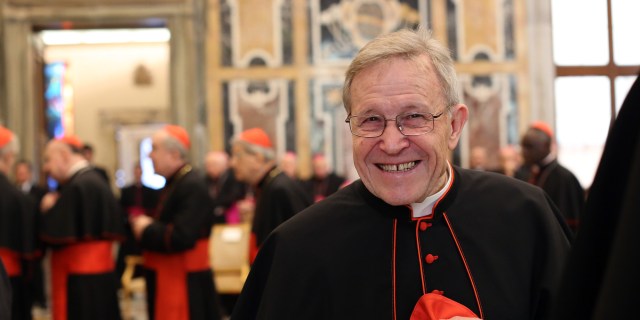
VATICAN CITY, VATICAN – DECEMBER 21: German cardinal Walter Kasper waits to exchange Christmas greetings with Pope Francis at the Clementina Hall on December 21, 2013 in Vatican City, Vatican. In his message, the Pope expressed the three hallmarks of a Curial official: professionalism, service and holiness of life. He urged the Curia to be ‘conscientious objectors to gossip’ and expressed his gratitude for the dedicated service of the retiring members of the Curia. (Photo by Franco Origlia/Vatican Pool/Getty Images)


Oldest German Diocese to Close 96% of Parishes

OnePeterFive

FacebookGoogle+PinterestPocket

Bishop Stephan Ackermann of the Diocese of Trier, in Germany, has announced that the diocese will be closing almost all of its parishes. From Gloria.tv:

Trier diocese, the oldest in Germany, will dissolve its 903 parishes and reduce them to 35, liberal Bishop Stephan Ackermann (54) explained on Friday during an information meeting of the diocese in Trier. He spoke of a “crisis”.

Ackermann admitted that the new parishes will have nothing in common with the traditional ones “but the name”. Trier is the birthplace of Karl Marx.

A Feature, Not a Bug

For most Catholics in the English-speaking world, there is a generalized knowledge of Germany’s difficulties with the faith. Their role in the liberalization that took place at the Second Vatican Council inspired the title of Fr. Ralph Wiltgen’s famous book, The Rhine Flows Into the Tiber. Several German prelates were involved in the so-called Sankt Gallen Mafia, a group alleged to have meddled in the last two papal elections with the aim of electing a pope who would progressively “reform” the Church. And as 1P5’s Maike Hickson reported earlier this month, two German dioceses (Osnabrück and Mainz) will not ordain any priests this year. These problems are just to name a few.

But the specifics of the situation in Trier are worth noting as we evaluate this stunning liquidation of the Catholic Church there.

First, Trier is not just the oldest Catholic diocese in Germany and the birthplace of Karl Marx, it was also, until recently, the diocesan see of Cardinal Reinhardt Marx, head of the German bishops’ conference and one of the closest advisers to Pope Francis. Marx is known, among other things, for rejecting the dubiasupporting Holy Communion for the “remarried”, for pushing the discussion forward on revisiting priestly celibacy, and for stating publicly that the Catholic Church needs to apologize to homosexuals “because we’ve done a lot to marginalize [them].”

From his time as Bishop of Trier a decade ago, Marx has been accused of negligence in the handling of a particular clerical sexual abuse case, an accusation that he has just recently admitted is true.

Since 2009, Bishop Stephan Ackerman has been at the helm of the diocese, following the translation of Reinhard Marx to become Archbishop of Munich and Freising. (It should be noted that Munich, now under the care of Marx, had only 1 new seminarian last year, with a total of 37 seminarians in various stages of formation to serve a diocese of 1.7 million Catholics.)

Ackermann made waves in 2014 when he said, following a review of the surveys sent out in advance of the Synod on the Family, that the responses

showed “quite clearly” that for the majority of the faithful the church’s teaching on moral sexuality was “repressive” and “remote from life.” Declaring a second marriage after a divorce a perpetual mortal sinand under no circumstances allowing remarried divorced people ever to receive the Sacraments, was not helpful, he said and added, “We bishops will have to make suggestions here. We must strengthen people’s sense of responsibility and then respect their decisions of conscience.”

It was also no longer tenable to declare that every kind of cohabitation before marriage was a grievous sin, and “the difference between natural and artificial birth control is somehow artificial. No one understands it I fear,” Ackermann said.

As far as homosexual relationships were concerned, the church would have to appeal to people’s sense of responsibility, he continued. “The Christian concept of the human being emanates from the polarity of the sexes but we cannot simply say homosexuality is unnatural,” he explained. While the church must “hold fast” to the uniqueness of marriage between a man and a woman, it could not just ignore registered same-sex unions where the couples had promised to be faithful to and responsible for one another.

It was a theme he repeated in 2015 as the German bishops voted to “allow Church employees to publicly defy Catholic teaching”, as reported by Maike Hickson at the time in an article for LifeSiteNews.

Bishop Ackermann made the news again when he refused to allow a Traditional Requiem Mass for Father Adolf Mohr, an 86-year-old priest of the diocese who had died of cancer and expressly asked for his funeral to be held in the old rite in his will. Ackermann eventually relented after backlash, originating mostly on the Internet, turned public sentiment against him.

It is ironic to see a Bishop lamenting a “crisis” in his languishing diocese when he has demonstrated little to no interest in upholding the Catholic Faith.

Does he believe that in an environment where the people who come to Mass are given the same moral framework as they are in the surrounding, secular culture, that they will be drawn into the life of the Faith? For what reason would such people make sacrifices, follow moral precepts (when they are discouraged from doing so by their shepherd), or in any way live their Catholicism?

Of course, from a business standpoint, it makes sense to close these parishes, especially if the people stay “on the books” as Catholics and continue to pay Germany’s rather steep (8 or 9 percent of total income tax) Church Tax, which keeps the German Catholic Church flush with cash even as it is hollowed out from within. Why keep such liabilities on your ledger sheet if you can sell them at a profit but still keep the faithful on the hook with a feel-good substitute for Catholicism that demands nothing of them and affirms them in their sin?

For the official Catholic Church in Germany, the rush to the bottom seems as though it can’t come fast enough. And yet good, orthodox Catholics remain there, desperate for a way to truly worship God and live their faith. May God grant them consolation and hope amidst this bitter trial.

And what does Bishop Ackermann mean when he says “that the new parishes will have nothing in common with the traditional ones ‘but the name’.”? I thought that was already the case. If he has something even further from real Catholicism in mind, I shudder to think what it might be.

Print Friendly
Posted in Uncategorized | 1 Comment

CANARIES ARE THE NEW THREATENED SPECIES; YOU PROBABLY DID NOT KNOW THAT YOU ARE A CANARY

Rod Dreher

Tim Farron: Christian Canary In The Coalmine

THE AMERICAN CONSERVATIVE

Tim Farron resigned his post as leader of the UK’s Liberal Democratic party. You might say that he quit because the party took a walloping in the recent election, which it did. But Farron quit because the UK’s secular establishment hounded him constantly about his Evangelical Christian faith. Here is his resignation speech in full:

This last two years have seen the Liberal Democrats recover since the devastation of the 2015 election.

That recovery was never inevitable but we have seen the doubling of our party membership, growth in council elections, our first parliamentary by-election win for more than a decade, and most recently our growth at the 2017 general election.

Most importantly the Liberal Democrats have established ourselves with a significant and distinctive role – passionate about Europe, free trade, strong well-funded public services underpinned by a growing market economy.

No one else occupies that space. Against all the odds, the Liberal Democrats matter again.

We can be proud of the progress we have made together, although there is much more we need to do.

From the very first day of my leadership, I have faced questions about my Christian faith. I’ve tried to answer with grace and patience. Sometimes my answers could have been wiser.

At the start of this election, I found myself under scrutiny again – asked about matters to do with my faith. I felt guilty that this focus was distracting attention from our campaign, obscuring our message.

Journalists have every right to ask what they see fit. The consequences of the focus on my faith is that I have found myself torn between living as a faithful Christian and serving as a political leader.

A better, wiser person than me may have been able to deal with this more successfully, to have remained faithful to Christ while leading a political party in the current environment.

To be a political leader – especially of a progressive, liberal party in 2017 – and to live as a committed Christian, to hold faithfully to the Bible’s teaching, has felt impossible for me.

I’m a liberal to my finger tips, and that liberalism means that I am passionate about defending the rights and liberties of people who believe different things to me.

There are Christians in politics who take the view that they should impose the tenets of faith on society, but I have not taken that approach because I disagree with it – it’s not liberal and it is counterproductive when it comes to advancing the gospel.

Even so, I seem to be the subject of suspicion because of what I believe and who my faith is in.

In which case we are kidding ourselves if we think we yet live in a tolerant, liberal society.

That’s why I have chosen to step down as leader of the Liberal Democrats.

I intend to serve until the parliamentary recess begins next month, at which point there will be a leadership election according to the party’s rules.

This is a historic time in British politics. What happens in the next months and years will shape our country for generations.

My successor will inherit a party that is needed now more than ever before. Our future as an open, tolerant and united country is at stake.

The cause of British liberalism has never been needed more. People who will fight for a Britain that is confident, generous and compassionate are needed more than ever before.

That is the challenge our party and my successor faces and the opportunity I am certain that they will rise to.

I want to say one more thing: I joined our party when I was 16, it is in my blood, I love our history, our people, I thoroughly love my party.

Imagine how proud I am to lead this party. And then imagine what would lead me to voluntarily relinquish that honour.

In the words of Isaac Watts it would have to be something ‘so amazing, so divine, (it) demands my heart, my life, my all’.”

Farron supports same-sex marriage and supports abortion rights, but that was not enough for his media inquisitors. They wanted to know if he thought those things were sinful. It wasn’t enough for him to pledge to defend gay rights and abortion rights. It wasn’t even enough for him to clarify that no, he doesn’t think that gay sex is a sin (a heterodox position for a Christian to take, but he took it.) No, Farron had to think correct thoughts, and to have thought them at all times, clearly, or be shamed and hounded out of public life. As he has been.

At least in the end, he learned that it profits a man nothing to gain the world if he loses his soul.

Michael Brendan Dougherty:

We live in an age in which our liberal media elite and most people who call themselves Christian in social surveys treat liberalism and Christianity as strangers to themselves and each other. Farron sought relief from his public trial by recalling the proud history of his faith in the reformation of British politics. No one wanted to hear it. He called upon the decency and forbearance that are supposed to mark British society. There is none left.‌

Unlike Tim Farron, I think the creative tension between political liberalism and Christian orthodoxy has ceased to be creative and is now just tension. But it is hard not to respect his witness. Today is the day Tim Farron landed on a truth in his statement: “We are kidding ourselves if we think we yet live in a tolerant, liberal society.” The truth has set him free.

Truth.

You saw last week Sen. Bernie Sanders declaring that an Evangelical Christian nominee for a budget office position in the Trump Administration was unfit for public service because of a private theological opinion he holds about the fate of Muslims in the afterlife. You saw a Christian colleague of Sanders’s, a Democrat who is a theological universalist, agree with him; the Evangelical nominee is the wrong kind of Christian, apparently, at least for these two Democratic senators.

We are not yet in the same place as Britain regarding Christianity and liberal, Democratic party politics. But we’re getting there very quickly. Ask yourself: what stands in the way of the US devolving into British-style bigotry? No laws were broken in the hounding of Tim Farron from political life. It was just the relentless pressure from secular bigots in the media, and, one presumes, at least some liberal voters.

A couple of years ago, columnist Damon Linker — himself a liberal — denounced liberal intolerance of Christianity. He wrote:

Contemporary liberals increasingly think and talk like a class of self-satisfied commissars enforcing a comprehensive, uniformly secular vision of the human good. The idea that someone, somewhere might devote her life to an alternative vision of the good — one that clashes in some respects with liberalism’s moral creed — is increasingly intolerable.

That is a betrayal of what’s best in the liberal tradition.

Liberals should be pleased and express gratitude when people do good deeds, whether or not those deeds are motivated by faith. They should also be content to give voluntary associations (like religious colleges) wide latitude to orient themselves to visions of the human good rooted in traditions and experiences that transcend liberal modernity — provided they don’t clash in a fundamental way with liberal ideals and institutions.

In the end, what we’re seeing is an effort to greatly expand the list of beliefs, traditions, and ways of life that fundamentally clash with liberalism. That is an effort that no genuine liberal should want to succeed.

What happened to a liberalism of skepticism, modesty, humility, and openness to conflicting notions of the highest good? What happened to a liberalism of pluralism that recognizes that when people are allowed to search for truth in freedom, they are liable to seek and find it in a multitude of values, beliefs, and traditions? What happened to a liberalism that sees this diversity as one of the finest flowers of a free society rather than a threat to the liberal democratic order?

It’s going away, fast. Today the Democratic Party will tolerate Christians like Tim Kaine, a Catholic who supports abortion rights though he is personally opposed to abortion. For how much longer will they? And is it possible for any Democrat to succeed in national party politics without being 100 percent on board with every gay rights claim, even those made at the expense of religious liberty?

If it is, it won’t be much longer. There are no restraining forces in liberal politics, or in the institutions of liberalism (media, academia, etc). As I’ve said again and again: there are conservative Christians who may not like Donald Trump or approve of him, but who voted for him because they are confident that the Democrats hate them and would seek to do them harm. I believe they are correct in their judgment of the Democrats, though not necessarily of Donald Trump. The point is that these Christians are not afraid of a phantom here. This liberal intolerance is real. Britain is farther along the road than we in the US are, but we’re getting there.

It’s not only going to be in politics. What does gay rights have to do with soccer? A Christian female soccer player quit the national team last week rather than wear the gay pride jersey the team decreed its players must wear. Believers who work for companies are going to be required to declare themselves “allies” of the LGBT community, either formally or informally, or fall under suspicion. If you think you can declare yourself an ally and retain your faith-based dissent quietly, think again. One day, you will be asked why you attend a bigot church if you aren’t a bigot yourself. And so on.

Liberals will say it won’t happen here. Don’t believe them. There is no reason to believe them at all. None. True, there are some liberals who oppose this intolerant, illiberal trend within their tribe, but they are not the determinative factor.

Hear me clearly: Christians have to fight this politically and legally with all we have. But we also have to prepare for serious and painful trials ahead. The grounds for political and legal victories in the future are fast eroding. From The Benedict Option:

The practical challenges facing us are unlike any that most believers in this country have ever dealt with. Schools and colleges—morally, spiritually, and vocationally—will have to prepare young believers for some increasingly harsh realities.

Because of florists, bakers, and photographers having been dragged through the courts by gay plaintiffs, we now know that some orthodox Christians will lose their businesses and their livelihoods if they refuse to recognize the new secular orthodoxies. We can expect that many more Christians will either be denied employment opportunities by licensing or other professional requirements, because they have been driven out of certain workplaces by outright bigotry or by dint of the fact that they cannot in good conscience work in certain fields. What will they do?

If we aren’t thinking about these questions and talking about them seriously within our churches and Christian communities, we are fools. We don’t have a lot of time here. Tim Farron is a Christian canary in the coal mine. We had better have a Plan B.

Posted in . Tagged .
Posted in Uncategorized | 1 Comment

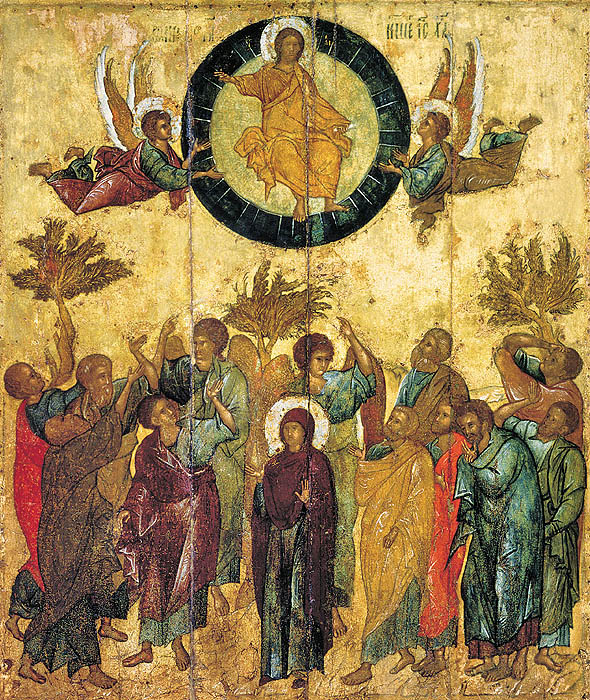
WE HAVE SEEN HIS GLORY

ascension-ic-rus-s15-in

ET VERBUM CARO FACTUM EST

ET HABITAVIT IN NOBIS

ET VIDIMUS GLORIAM EIUS

GLORIAM QUASI UNIGENITI A PATRE

PLENUM GRATIAE ET VERITATIS

AND THE WORD WAS MADE FLESH

AND DWELT AMONG US

FULL OF GRACE AND TRUTH

WE HAVE BEHELD HIS GLORY

GLORY AS THE ONLY-BEGOTTEN SON OF THE FATHER


Posted in Uncategorized | Comments Off on WE HAVE SEEN HIS GLORY

HOW MANY MILLSTONES WILL BE NEEDED?

eddie-redmayne-danish-girl

Transgenderism is the latest version of snake oil.  Ever since it was suggested to Eve that “you will be as gods” man has toyed with the idea that he can control everything, including creation.

The ancient Greeks understood that there are some things that should not be tampered with and their mythology warned of the dangers of opening Pandora’s Box.  But Doctor Frankenstein could not resist the temptation and so we have ‘progressed‘ from IVF and cloning to transgenderism.

What else can we do to endanger future generations?  We have unleashed drugs and pornography and abortion on them.  Now, transgenderism.

It was to be expected that left/liberal/progressives would take the lead in advancing “creationism”, but that leaders of the Roman Catholic Church should have joined them in promoting this diabolical campaign of subversion of our youth cries to Heaven for justice.  We can only trust that God is getting the millstones ready.

Posted in Uncategorized | 2 Comments

INTO THE GREAT SILENCE, IF ONLY FOR A MOMENT


OnePeterFive

FacebookGoogle+PinterestPocket

Have you ever been to a particularly boisterous and noisy party, and, perhaps getting a bit weary of the noise, slipped off into a quiet room by yourself for a bit and shut the door behind you? Or maybe out into the garden? You can still hear the racket behind you, but it’s distant and you feel for a moment delightfully alone and separated.

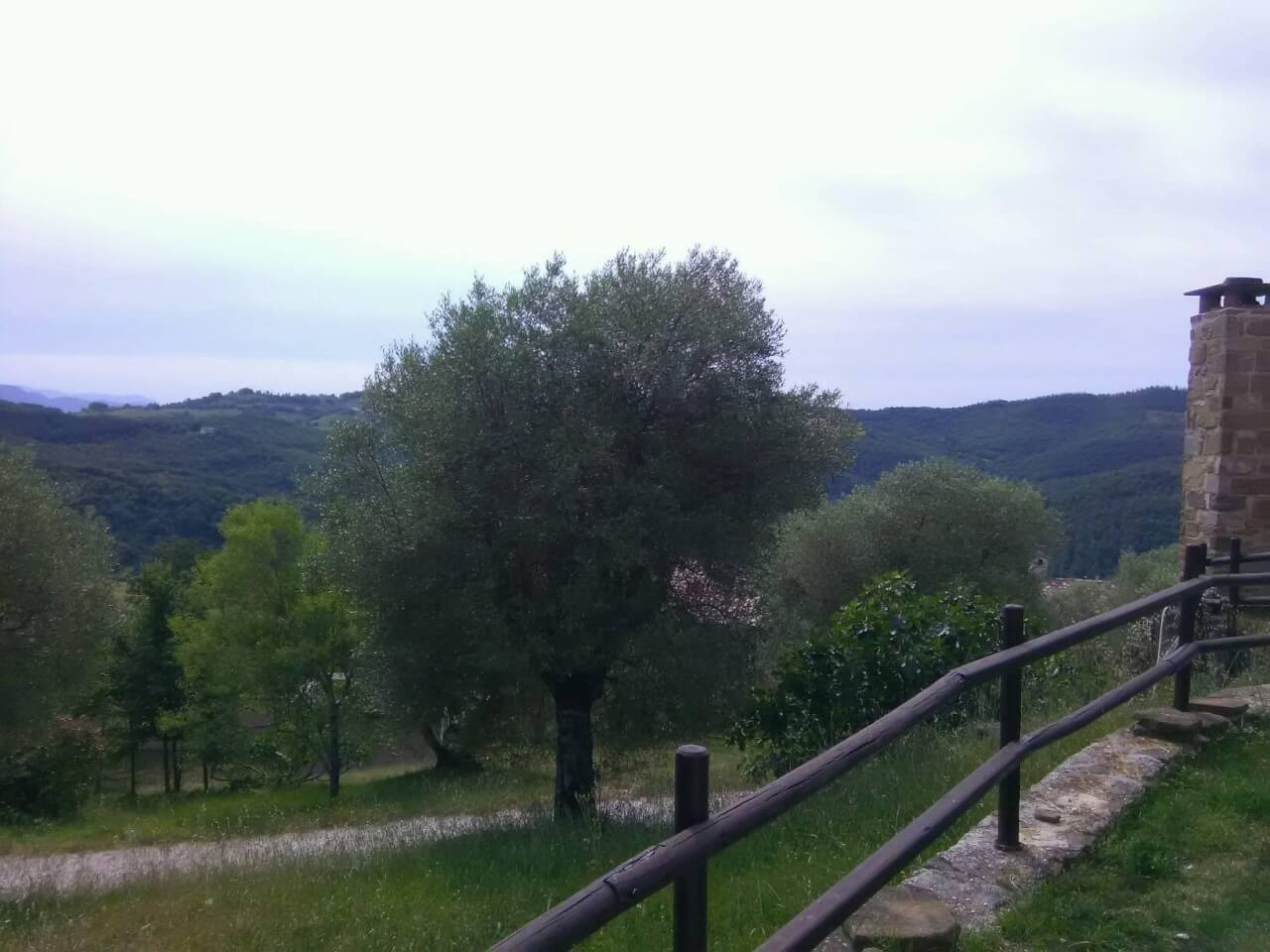
I spent last weekend at a monastery – a very, very monastic monastery, obscure and utterly, utterly silent – in the precise middle of exact nowhere, vaguely in the vicinity of the old Umbrian town of Gubbio, of St. Francis and the Wolf fame. This place was rebuilt on top of a small mountain where an ancient hilltop farming village once was. There is little left of the old village now – a place so small that even locals with old family roots have never heard of it.

On Friday morning, I walked out the door and got on a bus, and came after about four hours to the quietest place on earth. Despite my loud and frequent protestations against Modernia, I met with correction of my illusions upon arrival. I asked the extern sister who greets and settles guests if it would be all right to take some pictures of the grounds and buildings for my website. She looked at me quite blankly for a moment and then said, “I’m sorry. I don’t really know what that is. I’m sure it will be OK to take some pictures, but you’ll have to talk to our new sister about the internet. We didn’t have it when I entered.” We were speaking in Italian, which was the first language of neither of us so maybe I simply wasn’t being clear. But I think she simply had no idea what I meant. It was then that I realized that nearly all my objections to Modernia have been voiced on the internet; an irony I was vaguely aware of before, but which may have come completely home to me only at that moment.

This little known area is the home now of a surprisingly successful monastic community, founded in 1950, that is based on the Carthusian model. The monastic Family of Bethlehem, of the Assumption of the Virgin Mary and St. Bruno, has about 30 monasteries around the world – many more than survive today of the original Carthusian order – and unusually, nearly all of them are houses of nuns. They are mostly in France; there is one women’s monastery near Gubbio and a matching men’s monastery in the same general area, near the town of Bastia Umbra, close to where I now live. Umbria has ever been the “cuore verde,” the green heart of Italy and it seems this is especially true in things religious, monastic and mystical. It is still so; Umbrians know that theirs is a place of saints and mystics.

It’s the best time of year; the summer is not advanced so everything except the wheat fields is still green. The warm air is full of the scent of flowers; this is the season of the Tiglia blossom, and the sound of bees. The June wildflowers are blooming, buddleia, columbine, valerian and the late campanulas, as well as the delicate and precious little pink pyramid orchids that are everywhere the sun is. Dawn is about five am, and the birds wake you up well before your alarm. The sun warms the ground beneath the cypresses and alpine cedars, and the scent of summer pine comes in on the breeze through your hermitage windows.

Guests come for silence and solitude and are housed in the same little three-level wooden hermitages as the nuns, each with its high wall and stout wooden door, and the little hutch with a door on either side in which the claustral sister leaves your meals. Each hermitage is a tiny world, complete; walled garden, private oratory and little wood stove for winter, a bed built into an alcove, a tiny bath and a desk next to the window for your meals. Each of the “eremi” are named: I’m in “San Francesco”.

(Note to self: next time stop at a ferramenta in Gubbio and buy mosquito nets and a packet of thumbtacks. No one really has ever been able to explain to me why Italians never, ever have screens on their windows. They dislike mosquitoes as much as we do.)

At seven in the singing morning, you walk slowly up the hill, up the little stone steps and through the locked wooden door that leads out of the guest cloister, and up to the chapel to hear the nuns chant their morning offices and the Mass. Then the day is yours until 5:45 for Vespers. You are shown where the hidden key is for the adoration chapel, and that is where I have been singing my own Offices in solitude. The nuns use some combination of the western and Byzantine rite of Divine Office that I find flatly incomprehensible, though so beautiful that I’m happy to just be carried along it like a boat on a stream.

You can take your passeggiata around the grounds – the cloistered parts of the monastery are clearly labeled and surrounded by high wooden walls, so there’s no chance of accidentally stumbling into the wrong place. There are paths that take you through woods and past fields and down to one of the older hermitages – a prefab they used when the place was first founded and is now used for occasional married guests – where there is a sun shade set up and chairs like a suburban terrace, but with all the grand vista of the mountains in every direction, noble and wild and empty.

You take your meals as the nuns do, at the little desk in the hermitage; in the drawers are an extra cloth napkin, olive oil, a little jar of salt, packets of tea and a tiny electric kettle. The bells ring throughout the day to tell the nuns when it is time to pray their Offices, work, eat and sleep. When you are here, it is the only indication that you are not totally alone with the birds and trees.

For most of the day, apart from Mass and the two Offices, morning and evening, in the monastery chapel, the sisters spend their days, as all Carthusians do, in their hermitages, doing manual and artistic work, reading, praying, resting. They get together once a week for a long walk during which they talk freely – I expect about the things they have read and prayed about the rest of the week. And that is all there is to it.

They make pottery and sacred art, painted and carved icons and statues to sell, and do all their own woodwork, gardening, sewing to make habits, and anything else that is needed. And while they do it, they raise their hearts and minds to the listening God. It is perhaps the quietest life in the world. So much so that when you come to visit, it can be a struggle to relinquish our interior noise – our beloved mental racket – that makes up so much of our daily secular lives and makes us feel important. I read once that the Abbot of La Grande Chartreuse said that it takes a monk ten years to completely “settle into the life.” I can well imagine. What a fight it would be to give up noise.

It is also a place so out of the way that even with my amazing new smarty-smart smart phone I can barely get an intermittent signal. I really had no idea such places still existed in Italy, where the use of “devices” is so universal I’ve begun to wonder if they just issue you a smartphone at birth. Being, essentially, both a modern person and a slacker, I have brought both my phone and my laptop, because… well… because. I can’t help being a writer. The days during which you have only prayer, birdsong, and the book of Renaissance painting you brought with you, can be a bit long, so I’ll admit to occasionally taking a hopeful poke at my phone. Sometimes it flashes to life and, sure enough, there everybody still is, on Facebook and Twitter, still yammering and arguing merrily away, as always. It’s like peeking back into the party from the quiet terrace garden.

I’ve been told that though we aren’t here for life, it really still takes at least a week for guests to lose the rattle and ringing in their minds that the world creates. That frantic sense of being surrounded not only with people but with demands and expectations; and the monastery demonstrates that the expectations are of such little actual moment! One is not only required to do the practical, sensible and necessary things like pay one’s bills, clean the bathroom, dig the weeds and feed the kitties, but to “keep up”. And this means to keep up with everything. With the latest television shows, the jabbering of the late night talks shows, the latest slang and cool-kid, in-crowd internet lingo, the plot details of Game of Thrones or Breaking Bad, or the Walking Dead, the latest superhero films, the latest memes, the latest running jokes… what Luke Skywalker is saying about Donald Trump on Twitter. And heaven help you if you are a week behind! No Boomerposting!

One must know the latest patter of secular politics (in my case this covers four countries and the EU). One must keep track of the latest Islamic outrages, the bombings, the car-rammings, the stabbings and slashings; the useless and cowardly witterings of politicians and churchmen after each day’s blood-smear is hosed away again, cleared up and ready for the next attack. And who is staging counter demonstrations in Poland, in Britain; and then the counter demonstrations to the counter demonstrations, and what the BBC has to say about it. And one must do it every day, because none of that is likely to end soon.

In the Church one must be up to the minute on the daily outrages and all the posturing, blustering pack of heathens; every disaster, every heresy uttered, every act of  brutal suppression and dissolution and every response by the (pitifully few, weak and diffident) people fighting back, as the forces of anti-Christ slowly crush and suffocate the Faith out of the Church. One must know the names and positions, backgrounds and histories of every news-making cardinal and bishop who make excuses and create space for them. One must be conversant with the editorial positions of all the various news outlets, magazines and writers, Catholic and secular, as well as the blogs, knowing which are enemies and which are friends, and which can’t make up their minds.

And one must watch it all, every day, unable to do anything to stop it. One must be in a constant condition of hyper-awareness of what is happening on the little screen, and be ready in a moment to pick out the noteworthy bits and have something sensible to say about them. One must try to listen to all of them at the same time; some of them sly and manipulative, some curt and sarcastic, some direct and factual, many of them in a frightening, screaming rage, many suffering from Modernian anti-rationality, a few so blatantly and forthrightly evil it is breathtaking. One must, in short, be constantly locked in a small room with hundreds people all talking and shouting and demanding attention at once, perhaps the worst nightmare imaginable for a natural introvert, a veritable vision of some upper circle of hell.

At one point, I glanced at my phone and Steve had posted something about Cardinal Paglia defending his homoerotic mural in the Terni cathedral – not very far from where I was sitting – with some pretty obvious smug, contemptuous lies. I looked up from the little screen and heard the bell begin to ring for the evening Office, a sound like a stone dropped into a deep and still pond, one that somehow merely enhanced the holy silence without breaking it. I realized something at that moment that was difficult to put into words, but which the great English art critic John Ruskin came close to summarizing once: “Nothing can be beautiful which is not true.”

This … putrid slime issuing from the mouths of these churchmen cannot be the Truth, whatever their rank. Its very ugliness, the repulsive, sneering twist of their mouths when it comes seething out, is enough to tell you. But at that moment, the utterly sublime beauty of holy stillness where I sat contrasted so perfectly with that horror that there could be no further flicker of doubt – if there had been any. The contrast, indeed, showed me maybe a tiny, dim glimpse of what all this looks like from the perspective of heaven.

The Office of Laudes for Saturday:

He found him in the desert
in a place of horror, and vast wilderness.

He led him about and taught him,
and cherished him as the apple of His eye

As the eagle enticeth her young to fly,
and hovereth over them,

So he spread out His wings and took him up
and carried him on His shoulders.

The Lord alone was his leader
and no strange god was at his side.

He brought him into a high land
that he might eat the fruits of the fields…

They sacrificed to demons that are not God,
to gods whom they had not known before;

To new ones that only lately came,
whom their fathers never worshipped.

Thou hast forgotten the God that bore thee,
didst not think of the Lord Who created thee…

Gloria Patri et Filio, et Spiritui Sancto…

I can’t join those nuns and live in that separate world all the time. Haven’t got a vocation to the life, and anyway I’m too old. But I know without the slightest doubt that I want to stay close to them, to visit often and drink the water from that living stream as an antidote to the noxious poisons of the world.

Posted in Uncategorized | 2 Comments

REMEMBRANCE OF THINGS PAST II

On Bob Dylan’s Nobel Speech

CRISIS MAGAZINE
[ Emphasis and {commentary} n red type by Abyssum ]
{I was intrigued by Bob Dylan (aka Robert Zimmerman) from the moment he appeared on the musical scene in America in the 1960’s.  His songs chronicled social unrest:  “Blowin’ in the Wind” and “The Times They Are a-Changin’” and proved to be prophetic.  To me he was not just an entertainer, he belonged to the long line of ministrels originating in the Middle Ages who chronicled the good the bad and the indifferent aspects of contemporary society }

Bob Dylan plays a guitar and sings into a microphone.

Dylan at Azkena Rock Festival in Vitoria-Gasteiz, Spain, in June 2010

Bob Dylan (/ˈdɪlən/; born Robert Allen Zimmerman, May 24, 1941) is an American poetic songwriter, singer, painter, writer, and Nobel prize laureate. He has been influential in popular music and culture for more than five decades. Much of his most celebrated work dates from the 1960s, when his songs chronicled social unrest. Early songs such as “Blowin’ in the Wind” and “The Times They Are a-Changin’” became anthems for the Civil Rights Movement and anti-war movement. Leaving behind his initial base in the American folk music revival, his six-minute single “Like a Rolling Stone“, recorded in 1965, enlarged the range of popular music. –  Wikipedia


Plato said that changes in music and sports were also indications in changes in constitutions of polities. Changes in politics are usually also indicative of changes in souls. Music mirrors human souls and the direction they are taking, good or bad. The mind and body may be closest together in music. The notion that we can understand politics without understanding the music we sing or the music that our children hear is itself unpolitical, indeed unphilosophical.

“Though students do not have books,” Allan Bloom began his well-worthwhile reading chapter on “Music” in The Closing of the American Mind (1986), “they most emphatically do have music. Nothing is more singular about this (1960’s on) generation than its addiction to music.” It was not only wise to know what the words being sung meant, but also what their rhythms indicated and suggested. In many ways, it was not a side issue to politics and education. It was politics and education that became largely the same thing.

Bob Dylan was born Robert Zimmerman in 1941 in Duluth, Minnesta, but his family of Russian and Lithuanian Jewish background lived in near-by Hibbing, one of the colder spots in the country. He changed his name to Dylan after the Welsh poet Dylan Thomas. He held that freedom includes the freedom to change the “arbitrary” name given to one at birth. This freedom, logically, obscures the relation of one’s-self to the parental and ancestral lines that ground one’s genealogical origins.

Dylan was awarded the Nobel Prize for Literature in 2016, though his address has just been released. He was a major figure in music, politics, painting, and general culture since the early 1960s. His musical productivity in terms both of quantity and quality was prodigious. Dylan’s well-presented Nobel Lecture is worth considerable reflection.

Since Dylan, a musician, was given a literary prize, he wanted to understand the relationship between his kind of music and what we normally mean by literature. { In this he He begins his account by telling us how, when he was eighteen, a musician by the name of Buddy Holly influenced him. He did not really know him; in fact Holly was killed in an airplane crash when he (Holly) was twenty-two. Hence, already here we find poignancy about the death that much literature takes up. In Dylan’s view, the connection between music and literature is grounded, perhaps not too surprisingly, in the fact that he had a very good grammar school education.

After reflecting on the music and musicians that he grew up with—country, rock ‘n’ roll, and rhythm—Dylan added: “But (besides this music) I had something else as well. I had principles and sensibilities and an informed view of the world. And I had had that for a while. I learned it all in grammar school. Don Quixote, Ivanhoe, Robinson Crusoe, Gulliver’s Travels, Tale of Two Cities, and the rest—typical grammar school reading that gave you a way of looking at life, an understanding of human nature, and a standard to measure things by. I took it all with me when I started composing lyrics.” As it stands in the annals of modern education, that passage is remarkable when read today.

{ The above paragraph really struck a resonant chord in my psyche.  I am who I am today at 94 years of age in part because of the books I have read in my lifetime.  One of the first books I read, after Grimm’s Fairy Tales, was a little novel by Eleanor Porter, Just David. 

Just David is a 1916 children’s novel by Eleanor H. Porter. It was among the top six bestsellers in cities across the United States in 1916, and in July 1916 it was the second bestselling novel.[1][2]

Originally published by Houghton Mifflin, it tells the story of a young boy, David, who must learn to adapt to living with others after the death of his recluse father; along the way, the villagers and his adoptive parents adapt as much or more to him. Though criticized by reviewers as “mush”[3] and “too perfectly lovely,”[4] the novel was very popular in the early half of the twentieth century in middle and high schools, and has recently seen a number of reprints. The novel was transcribed in Braille in 1922,[5] and translated in Chinese (1959) and Russian (2005).  – Wikipedia }

One might wonder if any grammar school in the land reads such books these days. Do kids actually own them as books that they can keep and mark up? But what is memorable about this list is that it almost contains the definition of what is (or was) meant by a liberal education. Dylan recognized that these novels that he read in grammar school in Hibbing, Minnesota, left things on his soul. He calls them “principles and sensitivities,” not just good yarns. From these stories, he learned something of human nature. This learning, no doubt, is, as C.S. Lewis told us in An Experiment in Criticism, the source of our knowledge of things other than ourselves and our immediate experience which is always, no matter when and where we live, narrow by comparison to what is.

Dylan sees standards in these books, things he is expected to live up to. When he began to write and sing on his own, his lyrics and rhythms came from a soul that had read things other than what happens in Hibbing in the long winter. Or to put it another way, if one is in Hibbing in the winter, he is not cut off from the rest of the world, past or present. He is given time to discover it. If we ask ourselves whether the on-line availability of almost everything today, including these same novels, does not make us better off than the folks in Hibbing in Dylan’s youth, we can only say that availability is not the issue. Reading these books at an age when they grip and form our very souls is the issue.

{ What Bob Dylan had to say about the importance of reading great books reminded  me of the book about John Senior that I recently read:  John Senior and the Restoration of Realism by Francis Bethel.  Here is what Alice von Hildebrand has to say about Bethel’s book:

“, it is a book that should be in the hands of every educator and parent.  It is all about education – and to educate, as Plato already saw twenty-five centuries ago, is a task of such dignity that only the very best are good enough.”

II.

In the Nobel lecture, Dylan organizes his thoughts around three novels that he presumably read in his early years. Dylan did begin college at the University of Minnesota, but quit after a year to move to New York and the music world he sought to learn. From the viewpoint of a liberal education, he seems not to have needed anything that the Minnesota Gophers might have added. The three books on which he reflects in the Lecture are Melville’s Moby Dick, All’s Quiet on the Western Front, and the Odyssey. It is around these three books of obvious literary merit that Dylan explained the sources of his music and the meaning he put into them.

One might say that the origins of Dylan’s music are not in music but in that literature that has philosophical overtones. On reading them, he mostly came out with an anti-war, radical view of things. One wonders how his life would have gone if he had instead lectured on, say Death Comes to the Archbishop, Thucydides, and the Education of Henry Adams or Dante, The Lord of the Rings, and The Brothers Karamazov.

Melville tells us, in Dylan’s view, “How different men react to the same experience in different ways.” We are not predetermined beings. Dylan is aware of the Old Testament background of Ahab in the whole story. The Old Testament, his own family heritage, is about a covenant made with Yahweh. Are we loyal to it or are we not? Music, especially Blue Grass and country music are noticeably filled with nostalgia and broken promises—“I was dancin’ with my darling to the Tennessee Waltz….” Life is filled with broken promises, but also with kept ones, with romance. At bottom, as Chesterton said in his essay defending “Rash Vows,” love seems to be a longing that promises be kept.

“Lots of facts in this book,” Dylan says of Moby Dick, “geographical knowledge, whale oil—good for coronation of royalty—noble families in the whaling industry. Whale oil is used to anoint the kings. History of the whale, phrenology, classical philosophy, pseudo-scientific theories, justification for discrimination, all of it thrown in and none of it hardly rational.” Such confusion is often found in music also. Ahab has his mission, a kind of eternal justice that approaches vengeance and madness. This is how Dylan saw the end of the novel: “Ishmael survives. He is in the sea floating on a coffin. And that’s about it. That’s the whole story. That theme and all that it implies would work its way into more than a few of my songs.” So it is not just music that we hear when we hear music. We hear what is already in the soul of the singer and composer.

Dylan’s description of All’s Quiet on the Western Front is a relentless condemnation of war. It is seen in the context of one of the most devastating and senseless wars in history—World War I. This war was the concrete evidence upon which he based his universal-ab uno disce omnes. “Warfare has no limits. You’re being annihilated and that leg of yours is bleeding too much.” Nothing makes sense.

“You’ve come to despise the older generation who sent you out into this madness.” The men who brought on the war were well-educated, civilized. “All that culture from a thousand years ago, that philosophy, that wisdom—Plato, Aristotle, Socrates—what happened to it? It should have prevented this.” All wars can be prevented. Nature, meanwhile, goes right along as if nothing is changed. Poppies still grow in Flanders Fields.

Finally, Dylan tells us, “I put this book down and closed it up. I never wanted to read another war book again. And I never did.” Decisions like this, I suspect, are at the origin of both the utopianism and the lethargy of his generation’s music. War is not caused by war. The most likely result of abolishing war is either the submission to Islam or to totalitarian movements that allow no alternative but their own way after they have eliminated all external and internal enemies. Socrates fought in the Peloponnesian War, only to return home and be tried in the best existing city of his time.

It is always useful to read more than one book on war. Dylan cites a ballad from Charlie Poole from North Carolina. When he sees an army recruiting sign, he sings: “Killin’ with a gun don’t sound so fun / You ain’t talking to me.” We find here no sense of military courage that it takes to prevent what ls worse than war, that is, being alive with someone else in total control of your soul and body, with no guns, no nothin’ but submission.

III.

The final book was the Odyssey, not the Iliad, in which things greater than war itself are fought over. Odysseus is trying to get home “after the fighting.” He is a “travelling man” with many stops on the way. He has all sorts of strange adventures. Dylan adds: “In a lot of ways some of these same things have happened to you.” So we can expect in his songs a touch of Homer. “Gods and goddesses protect him; but others want to kill him.” He finally makes it back home to find things in a mess. The place is full of suitors for his wife. He fights them off.

“So what does it all mean?” Dylan tells us that he has been “influenced” by these stories. But they can mean a lot of things. He isn’t going to “worry” about it. All sorts of strange things are in Moby Dick. Neither Dylan nor Melville seemed to worry about the question. Dylan likes things that sound good, whatever their meaning. When Odysseus meets Achilles in the underworld after the defiant act that cost him his life, he tells Odysseus that he (Achilles) would just as soon be back on earth. His deeds did not mean much. Songs participate in this preference for life on earth, whatever its agonies.

We are, in the end, supposed to sing songs, their lyrics, to read Shakespeare aloud. We can only know the song if we sing it. It draws us into its being. Dylan’s final words in his lecture are from Homer: “Sing in me, Oh Muse, and through me tell the story.” A song enables us to re-live that experience of life, which we may have never known without it. We sing the same song again and again.

Yet, in conclusion, on finishing Dylan’s lecture, we come back to Charlie Poole’s affirmation: “You ain’t talkin’ to me.” After all his songs, after reading at Hibbing grammar school Don Quixote, Ivanhoe, Robinson Crusoe, Gulliver’s Travels, and The Tale of Two Cities, we finish not with Plato, Aristotle, or Socrates, but with Moby Dick, the Western Front, and Odysseus in Hades longing to return to this passing world that he so flamboyantly left.

In this lecture, as interesting as it is, we see no day in the House of the Lord that is worth a thousand in time. We end up with no transcendence. We just sing among ourselves our stories. Yet, they are really no stories at all for they have only beginnings and middles, but no endings, no judgments. That is, we end with a composer, a literate man, who evidently never put to song the ending of the Republic of Plato or the Prologue of the Gospel of John.

We end up, in other words, right where we began—wondering about the meaning of our stories that recount the travels, the evils, and the feelings of our lives, endlessly repeated. In many ways, Dylan’s music records, to return to Plato, the change from a society that understood its relation to the divine to one that does not, to one that has decided to live without anything but itself. Our songs are designed to make such a choice comfortable, to avoid wondering whether it was a good choice.

(Photo credit: ZUMA Press / MGM)

Rev. James V. Schall, S.J.

By 

Rev. James V. Schall, S.J., taught political science at Georgetown University for many years. His recent books include The Mind That Is Catholic from Catholic University of America Press; Remembering Belloc from St. Augustine Press; and Reasonable Pleasures from Ignatius Press. His newest books are A Line Through the Human Heart: On Sinning and Being Forgiven (2016) and the forthcoming On the Principles of Taxing Beer and Other Brief Philosophical Essays(2017). His most recent book is Catholicism and Intelligence (Emmaus Road, 2017).

Posted in Uncategorized | Comments Off on REMEMBRANCE OF THINGS PAST II