Walking the Jordan River Trailby charliej373By Charlie JohnstonMost folks here are familiar with the story of Naaman, the commander of the Syrian King’s armies (2 Kings 5:1-27). Naaman was stricken with leprosy and came to the prophet Elisha to find how he might be healed. Elisha told him to go and wash himself in the Jordan River seven times and he would be healed. This instruction infuriated Naaman who, in essence, said, “No, really, what is the secret to getting healed?” After wasting precious time in which Naaman kept wanting the REAL secret to healing, he finally grudgingly went and washed himself in the Jordan River – and was healed. It strikes me that the Jordan River was where God Himself, after He took on our humanity, would be baptized some 800 years later. In eternity, where everything is present now, the Jordan River must have been sacred from the very creation because that was where God chose to accept human baptism. When we are in Fatima or Lourdes or St. Peter’s Basilica, we know we are in sacred space – but we do not know when we are in space made sacred because of an event that will be made manifest in time a thousand, a hundred, or even just a year from now. So, we scoff. But every space that ever will be sacred is already sacred in eternity and has been from the very beginning. Better then that we put away our scoffing and approach the world with the wonder of an innocent child, who intuitively recognizes that the world, itself, is amazing and sacred space.I feel a certain kinship with the prophet, Elisha, these days. Many people ask me what the secret is to weathering the storm. When I tell them, “Acknowledge God, take the next right step, and be a sign of hope to those around you,” they are usually unhappy and want to know the REAL secret. I have spent six decades wrestling with things I have been shown, trying by trial and error to figure out what they signify, often barking up the wrong tree, sometimes erring pitifully, but steadily stumbling forward, winnowing out what is extraneous from what is needful. I look with no little sympathy on such requests, for I have been there myself – thankfully, long ago. People usually expect that when God speaks it is going to be as complicated and chaotic as a Rube Goldberg contraption, with all sorts of extraneous whistles, bells, and useless moving parts. The voice of God is simple, profound and deep. The key to discernment is not to add the curlicues and buttresses of our own imagination, but to winnow out what is extraneous. It is the project of a lifetime. As it emerges from the fog our imagination imposes over reality, it is simple, regal, majestic, commanding and unimaginably beautiful. The simplicity and power of His voice then guides every decision and choice we make through our lives.Consider music. If you were an amateur first discovering it, you might think there were thousands of notes to account for the infinite variety of it. There are 12. There are infinite octaves of these 12, only a small handful of which are accessible to our poor power of hearing, but there are only 12 notes, the foundation of all musical composition. All composers work from these 12. Beethoven and Tchaikovsky, Benny Goodman and Johnny Cash, Louis Armstrong and Elton John, even Barry Manilow all work from the same 12 notes to create the infinite variety of styles and types of music – combining and orchestrating them in ever original ways. Only 12. Elegant simplicity offering infinite variety, untarnished by chaotic complications.It is a paradox, but once we have basic knowledge of things, the key to expanding wisdom is not in adding on curlicues and such from our over-eager imaginations, but in winnowing away the chaff that obscures our vision of God’s reality. Boil things down to its necessary constituent parts. From there you can begin to discern and contemplate the infinite variety of God’s creation in all its majestic and elegant simplicity. Eleven notes would make for an impoverished music. Thirteen notes would make for a chaotic and confused jumble. Twelve notes, as Goldilocks might say, is just right. Knowing what the genuinely necessary constituent parts are and are not paves the way for fruitful contemplation.Acknowledge God: When we are children in a healthy family, we are always aware of our parents; their authority over us, our duty to them, our reliance on them, and the mutual love between us. Even when we get up to some mischief, they are never far from our mind’s eye. If we land in trouble, we call on them and trust them to help extricate ourselves from our errors. We trust them to help teach us, to learn how to exercise wise initiative and prudence. We don’t spend our day unceasingly begging them for everything we need, but trust they will provide for our needs while encouraging us to develop the best parts of our authentic personality – and take delight at our efforts, embryonic as they may be. So they attach our little drawings or poems or stories to their refrigerator, genuinely proud of us, as we are genuinely proud of their pride in us – and encouraged by it to do a little more. This is to acknowledge our parents – and captures the bulk of what I mean when I say, Acknowledge God. See Him as true Father: rely on Him, trust in His care for you, and act so as to make Him proud. Imagine your drawing on God’s refrigerator – and get to drawing.Take the Next Right Step: This acknowledges our duty to do, to act while simultaneously recognizing the severe limits of our prowess. It acknowledges our responsibility to get it as right as we possibly can, taking each little step, without letting the satan seduce us with delusions of grandeur. It emphasizes both our reliance on God for each step and trust that He will correct our wrong steps while realizing we may NOT bury our talent by taking no initiative. God has given each of us gifts and He expects us to use them, trusting that He will uphold us when we use them while acknowledging Him, even when the way forward is obscure and scary. There is no risk when you risk yourself on behalf of your love for God. This is the beginning of contemplation on what the next right step means.Be a Sign of Hope to Those Around You: This does not mean be a wimp or even to just “be nice.” If friends are being assaulted, the way you be a sign of hope to them is to defend them. That means you are, at the very least, a sign of contradiction to those doing the assaulting. In some cases, you can even become a sign of hope to the one doing the assaulting. In grade school, I became friends with a bully because I held my ground on behalf of a friend, took a bit of a beating while taking a few chunks out of the bully, and would not back off, though I was losing. Somehow, it triggered in him the idea that he could use his strength and aggression to defend and help people. We became friends in the process and HE became a sign of hope to others. Being a sign of hope means carrying God with you as best you can to all you meet – meeting them where they are, respecting their conscience as you demand they respect yours, and enjoying your interactions with them. It means seeing the thread of virtue in them by which God calls them, thin though it may be. Acknowledge the virtue that is there and you help grow it. Doing their work with refinement and precision IS a virtue, whatever else is involved. Consider St. Paul. God acknowledged his passion, fidelity and fortitude, even though it was directed against Christians and transformed those virtues into a great asset for God’s Kingdom. Sometimes, when someone who has a good heart is doing the most wrong thing they can, what is really happening is that the devil is training them to eventually become his powerful enemy. Try to be a pure, untarnished lens through which the light of God may truly be magnified to all you meet. This is the beginning of contemplation of what it means to be a sign of hope.God’s voice is to be found in the little whisper, not the roaring thunder. The thunder, in fact, is an effort to obscure His voice. We do not approach Him by adding layer upon layer of complication over our understanding, but by winnowing away the chaff which obscures our vision of Him. The more clearly we see and hear Him, the more reliable are the first principles we can discern which help us to make sound decisions in all the particulars that confront us in our lives. I have told you well the nature of the battle, along with a faithful description of the topography of the battlefield. And from the moment I started writing about the Storm, I told you true the real secret to weathering it well: Acknowledge God, take the next right step, and be a sign of hope to those around you. Contemplate this in its majestic simplicity and you will be prepared for whatever may come.We must wash ourselves in the Jordan River. For us, as for Naaman, that is the real secret.First meeting of CORAC in SwedenOn Friday I did my first ZOOM meeting with CORAC affiliates from other nations. Sweden, Ireland, Spain, Australia, Canada and Germany were represented. In Sweden they have started the equivalent of what we used to call “storm dinners,” where people get together to pray and make arrangements to help each other and others who will need it as things get darker. I encourage people throughout the world to get your storm dinners going. Make provision now to live solidarity for whatever may come. People constantly ask me what the most important thing to do is now. My reply is always the same: make friends. By making friends, we weave together the bonds of solidarity that will support us throughout all trials.I can’t oversee affiliates throughout the world. But I can live solidarity with my friends throughout the world. This was my first international ZOOM meeting (though I did do a livestream presentation in Mexico a few years back), but it will not be my last. Wherever you are in the world, get your storm dinners going. If it will help, I will visit with you by ZOOM. If you are outside the USA and want to get more involved with CORAC, contact Sue at region11@coracusa.com.*********Monday we begin our Easter fundraising drive for CORAC for the second quarter. We have committees and teams covering the country, focusing on working together and working up ways to help each other with Health and Wellness, Communications, Prayer and Education. Throughout the last year, the Health and Wellness Team put together wildly popular classes on homeopathy and videos on how to care for yourself and your family. The Sustainability Team is now running classes and developing videos on gardening and other skills you may need if things get more primitive. Our radio communications network crisscrosses the continental US and is growing stronger by the day. We are now running online catechism classes with Desmond Birch each week. Good old Dr. Joe Brickner and I do a weekly podcast on matters large and small. Sheryl Collmer produces and edits a bi-weekly newspaper that gives you news of CORAC Regions and of national and world interest that you won’t get from the establishment media narrative. I travel the country, meeting with CORAC groups, endeavoring to hearten the faithful and ignite action. In the last two months I have had meetings in Florida, Georgia, Maryland, Virginia, Minnesota, Wisconsin, Illinois, Kansas, Mississippi, Louisiana and Texas. Some are private, most are public. Like Johnny Cash, I’ve been everywhere. And where I haven’t been, I’m going!There is no charge to join CORAC, nor for any of the classes or videos we produce. But it takes money to keep everything afloat – and for that we depend on the generosity of those who join us in our commitment to faith, family and freedom. Our monthly nut for web services, legal services, travel and all administrative costs is still right around $10,000. Your dollar stretches a long way with CORAC.We are working a project now to get Brazen Serpent Prayer Cards designed, printed and distributed around the country for all those who have been damaged by Covid shots or other dangerous mandates and seek to turn to God for healing and reliance. We will order an initial 5,000 cards, with miraculous medals included, to give to Regional Coordinators and Team Leaders for distribution – and they will be available for direct order from the supply house with which I am working to design them.Won’t you give us the largest donation you can today to keep our mission going? And if you have not yet joined CORAC, what are you waiting for? We need you. You need us. Together, we seek to humbly collaborate with God in the renewal of the face and faith of the earth. You can donate online or send a check to CORAC, 18208 Preston Rd., Ste. D9-552, Dallas, Texas 75252. Let’s keep those cards and letters coming!Just briefly, as things get ever more chaotic and scary, let us bear with one another with great patience. Even some of the best minds and most committed Christian witnesses are struggling to stay on the rails right now. Do not be quick to condemn. Cut each other some slack. Panic is the thing that undoes so many in the early stages of a crisis. Remember that both fear and confusion often present as anger. So listen not only to what those around you say, but what they mean. Hear the cry of their heart, however camouflaged it may be. Deliberately bear each other up. The person who your calm resolution saves from panic now may well be the one who saves you from panic later. Bear with one another and keep focused on Christ. He is the one who calms the sea around us.If communication goes out for any length of time, meet outside your local Church at 9 a.m. on Saturday mornings. CORAC teams will be out looking for people to gather in and work with.Find me on Gab at Charliej373 or at the CORAC group.Donate to CORAC!Join the Conversation!The Corps of Renewal and Charity (CORAC)18208 Preston Rd., Ste. D9-552Dallas, Texas 75252charliej373 | April 3, 2022 at 10:30 am | Categories: Bible Contemplations, Conversion, CORAC, Discernment, Encouragement, Evangelization, Solidarity, The Storm, Triumph of the Immaculate Heart | URL: https://wp.me/p9wpk6-18w
Posted inUncategorized|Comments Off on A NEW POST ON A SIGN OF HOPE
April 3, 2022Extra___________________________________________________Two thoughtful essays by Judd GarrettObjectivity is the ObjectiveAre We Insane?March 30, 2022 At the start of the 94th Academy Awards on Sunday, the three hosts, Amy Schumer, Wanda Sykes, and Regina Hall, shouted, “gay, gay, gay, gay!” in unison as a protest against the Florida bill which protects 5, 6, and 7-year-olds from being indoctrinated into the LGBTQ ideology by their teachers. Shortly, thereafter, actor Will Smith stormed on stage and slapped Chris Rock in the face for telling a joke about Smith’s wife, Jada Pinkett. Later, after winning the Oscar for best actor, Smith gave a speech about the similarities between himself and his character, Richard Williams, both being “fierce defenders” of family. Smith received a standing ovation from the same crowd protesting the Florida bill. So, when you slap someone in the face because they told a joke about your wife, you’re a “fierce defender” of family, but when you try to protect your children from being groomed into the LGBTQ community, you’re a bigot.Are we insane? We should not care one iota about Will Smith, Chris Rock, or Jada Pinkett; We should care about our kids. The bill in question, Florida’s HB 1557, was signed into law on Monday by Governor Ron DeSantis. The bill is often mischaracterized as the “don’t say gay” bill, but never uses the expression, “don’t say gay” or even uses the word “gay”. So, the people who are opposed to this bill, are lying about the bill. When people lie like this, it means they want something much more objectionable than what they claim they are fighting for. They are doing what they always do, shrouding their sinister agenda, under a more reasonable goal because they don’t want anyone to know what they are actually up to. This is why teachers do not want parents involved in their students’ education because their indoctrination will be exposed. The at-home learning brought on by Covid exposed the nefarious workings of the schools and teachers because parents saw first-hand what was being taught to their children. So, after spending two years locking kids out of school, masking them, and forcing them to get vaccinated to protect them from a virus that wasn’t any deadlier to the students than the seasonal flu, the people who did all that are now vilifying the students’ parents who want to protect them from the poison of radical gender ideology and Critical Race Theory, both of which will have a more devastating effect on the students’ lives than Covid. Should we be teaching 6-year-old children about sex, much less homosexuality and transgenderism? In any other context, a grown adult talking to a 6-year-old about sex, sexuality, hormones, and genitalia would be considered borderline criminal. Do we want adult teachers having these types of intimate conversations with 5, 6, and 7-year-olds? Medical doctors are not allowed to be alone with minor children during an appointment to protect the child from potential inappropriate interaction, yet we are opening the door for other adults to talk to children about sex. Are we insane? Discussions of sex and sexuality with children can be seen in the same vein as teaching religion in public schools. Just as we would not want public school teachers imposing their religious beliefs onto children who come from families of all various religious backgrounds, we do not want teachers imposing their beliefs on sexuality onto children who come from families who teach differing concepts of sexual morality which are rooted in their differing religious beliefs. Beyond the teaching of the pure biology of human reproduction, the teacher should have no other role in the students’ sexuality or sex life. And the fact that these teachers and school boards are so eager to get involved in these minor students’ sex life is very disturbing and revealing. The fervent and misguided objection to this bill by teachers leads one to believe that maybe those objecting get some sort of pleasure out of exposing young children to this type of sexuality. They pretend that since this interaction occurs with a teacher, it makes it okay as if a teacher exploiting his or her position to have sex with a student never happens. The school environment in our country is not pristine when it comes to sexual matters between teachers and students. The incidents of teachers acting sexually inappropriately with their students is on the rise and at a disturbing level, so opening the door to teachers broaching the subject of sexuality with students is creating a potentially dangerous situation. Every week, on average, 15 students in America are sexually victimized by the educators entrusted to protect them. And we want to make it easier for teachers to talk about sexuality with the most vulnerable students in the school? Is this really what we want to do? Are we insane? The people on the left continually tell the government to stay out of their bedrooms, yet they are the ones who are opening the door of young students’ bedrooms to adult teachers who happen to work for the government. American teachers can barely educate our children in reading, writing, and arithmetic, and they want to take on the highly nuanced and complex issues surrounding human sexuality? Our teachers are failing our children across the board. Only thirty-five percent of 4th graders in America are reading at or above proficiency level. Out of the top 64 industrialized countries in the world, American students rank 30th in math, 8th in reading, and 11th in science, even though the US is in the top 4 spending on education. We spend 37% more per student than the average industrialized nation, yet our academic performance does not mirror the money invested. Maybe, we are lagging because we spend too much time and money indoctrinating, and not educating. And that is why many teachers want to do away with the traditional grading system and standardized testing because those measures of the academic proficiency of the students expose the teachers’ inability to teach. Beliefs and attitudes about sex and human sexuality are not scientific facts or universally accepted. There are many competing and conflicting attitudes towards sexuality. Do we want adults who we barely know, and who may not have gained our trust, teaching our children about homosexuality, transgenderism, premarital sex, abortion, promiscuity? These are all subjects that will eventually come up when you open this door. How many of these teachers will be able to resist the temptation of imposing their personal beliefs about these issues on the students? Have we looked at American politics lately? All we see are people imposing their political beliefs on others. Do we think that will stop at sex? Of course not. As we see with political issues in our schools, conservative students are continually shut down and silenced by the liberal teachers and administrators who run the schools. So, the sexuality that will be taught in schools will come strictly from the far-left perspective. There will be no room for disagreement or dissenting opinions from the morality (or lack thereof) that is being taught in these matters, and as always, those in charge want to keep the parents blind to what is going on. In New Jersey, a public middle school was caught teaching children about transgender hormone therapy without the parents’ knowledge or consent. That is how much respect schools have for the parents. Many of these students will get conflicting messages about sex because much of what is being taught in school will be dramatically different from the beliefs and morals that many of these children’s parents are teaching at home. And we wonder why we have a sharp increase of kids throughout our country who are confused about their sexuality. Many believe that parents should not have a say about what is taught to their children and that the so-called “professionals” should control the curriculum. Remember, the teachers have no vested interest in the student lives, none. After the final bell rings, the teachers go home to their houses, and their families, and any problem that arises in the student’s lives based on attitudes and morality that are being indoctrinated in school, the parents must deal with, confront, and work through, not the teachers. The teachers have no real concern about the life outcomes of the students. How much sleep are American school teachers losing from the fact that only thirty-seven percent of 12th graders are reading at or above proficiency level, and are not prepared to be productive citizens? Not only aren’t the kids being taught but their lack of proficiency also is not being identified by the teachers, as they are pushing kids ahead who are not working at grade level. The teachers’ unions have made it virtually impossible to fire teachers for poor performance. And what happens after the teacher gets involved with the students, talking to them about sexual issues, and injecting their own beliefs and ideologies onto the child? The teacher goes home. But the parents are the ones who must deal with the fallout from their child’s indoctrination or miseducation. The parents are going to have to pick up the pieces of their child’s shattered life if they made a poor decision because of what they “learned” in school. The teacher disappears from the student’s life, never being heard from again while the parent is the parent of the child for the remainder of their lives. This desire to teach 5, 6, and 7-year-olds about radical gender ideology, progressive sexual beliefs, and critical race theory, is solely about getting to the children as early as possible, before their sense of self, and their morality is developed, so they can indoctrinate the children into their neo-Marxist, post-modernist worldview, which many parents are fighting tooth and nail against not only in the schools but throughout most of the popular culture. Nothing good will ever come of this type of indoctrination. What would the outcry be if a pro-life group were able to get access to these children and teach them about their pro-life beliefs? The same people objecting to the Florida Bill would be objecting to that practice because they are not about teaching children, they are solely about indoctrinating them. And the best way to indoctrinate the masses is to get to them as young as possible. They cannot allow these children to start thinking for themselves beyond their indoctrination. It is absolutely no business of any adult teacher in any school to have any conversation with any child about their sexuality. None. Not their business. None. 100% inappropriate. The children in question are prepubescent, their bodies have not even begun to develop sexually so their thoughts and minds are not on sexual matters, yet these teachers want to inject sexuality into these young minds. If the parent believes that there is an issue with a child, the parent can take the child to a trained professional to have those types of discussions. The teacher is not qualified to have those conversations. And any teacher who wants to or is forcing himself into those discussions suspiciously appears as somebody who gains gratification from talking about sexual things with minors. These people in the education establishment are hell-bent on corrupting the innocence of the youth, and they will label anybody a bigot who fights to protect their children from their corrupting influences. This is why Jesus said, “whoever causes the downfall of one of these little ones who believe in me – it would be better for him if a heavy millstone were hung around his neck, and he were thrown into the sea.” Mark 9:42 PrideApril 3, 2022 As we are still dealing with the fallout from the Will Smith-Chris Rock episode at the Oscars last week, one word continues to come to mind; it is a word that has come to dominate American culture. And that word is ‘pride’. Pride was on full display at the Oscars last week. Will Smith slapped Chris Rock out of pride. The hosts mocked Florida parents who are trying to protect their children out of pride. Pride may be the most destructive of all human emotions. It is the most anti-Christian emotion. Why did the devil rebel against God? Pride. Why did Adam and Eve disobey God and eat the apple? Pride. It is that sense of personal superiority. It is not enough for Will Smith to be rich and famous and about to win an Oscar, he could not allow one perceived slight against him because his pride demands that he must be better than everyone else always, so his pride forced him to act out in anger, to become the exact opposite of the person he wants to be. His pride caused him to later go on stage and make a speech claiming, “I want to be a vessel for love… I want to be an ambassador of that kind of love and care and concern”, moments after punching someone in the face. He showed no humility. It was all about him, and his superiority even when he just proved he wasn’t. The way he framed what he said was all about him. “I want to be… I want to be…”. “I, I, I, I.” Pride is the reason why comedy has become so hard these days. Out of pride, too many people are unwilling to laugh at themselves, to see the humor in the way they behave. Comedy knocks people down a peg, and the prideful refuse to let that happen. New York Times contributor Roxane Gay defended Smith’s action in a column arguing that black women like actress Jada Pinkett Smith shouldn’t have to tolerate jokes made at their expense. That sentiment comes from pride. The prideful cannot stand any criticism, critique, or joke about themselves. We have become a culture of the perpetually offended. Oscar’s co-host, Wanda Sykes on the Ellen Show, complained that “no one offered me an apology.” She wasn’t the comedian who was struck by Smith, but she was so offended that she is demanding an apology. But that incident is the logical destination of the Academy Awards. The entire ceremony has become a three-hour-long display of pride. Rich and famous celebrities putting their beauty and opulence on display for the whole world to see at a ceremony where they give each other awards for how great they are. The red carpet is the ultimate, “look at me” venue, putting themselves on display, on a pedestal believing they are better than someone else because they are wearing the most prestigious designer’s clothes. That’s why most of their speeches have become virtue-signaling pablum because they know how self-indulgent it all is. So, they have to show the world they are morally superior through their high-minded, empty, words. Most of the speeches at the Academy awards have turned from humble words of gratitude into expressions of superior virtue. Today, American culture is being strangled by this virtue signaling pride. It is what causes someone like Hilary Clinton to call the people who disagree with her politically, a “basket of deplorables”. We cannot simply disagree on a matter. We must make it personal, and in making it personal, we are feeding our pride. ‘I am better than you because you hold different opinions than me.’ How can we come together when what’s keeping us apart is not merely differences of opinion, but a contrived sense of moral hierarchy? Most of our political debates are framed as moral litmus tests. The other side is painted as the devil when the real devil is the one who dons the garb of moral superiority. And it is that moral superiority that will not only lead to the destruction of our country but the desecration of our souls. Pride took hold of many people who bought into the Covid orthodoxy. Those who wore masks or got the shots looked down upon, sneered at, and even rejoiced at the deaths of those who chose not to. They viewed themselves as morally superior and more worthy of life than those lesser creatures. This prideful attitude shows up in many political positions, including BLM, Ukraine, the border, vaccines, and masks. If you are on the “moral” side of those issues, then you are a better, more worthy person than those who aren’t. Pride leads to the pro-choice position. Pride is dripping all over their abortion arguments. “My body, my choice” – me, me, me, me, me. The only concern is about the self. They believe they are so much more valuable and superior of a person than the baby that they can decide whether the baby lives or dies. That is all pride. Adults and teachers grooming children into the LGBTQ lifestyle do so out of pride; they are putting their woke virtue ahead of the child’s well-being. They are proclaiming, ‘Look how virtuous I am promoting this progressive lifestyle’, as they encourage children to have their sexual organs removed, rendering them sterile, causing them to live an inauthentic existence. They proudly attend “pride marches” and wave “pride flags” believing their lifestyles are so morally superior that they push it onto others, onto children. It is all about themselves, their virtue, their pride. Critical race theory which teaches our children that certain races are inherently bad and other races are inherently good stems from pride, the desire to say I am superior to others. And the white virtue signalers who go along with critical race theory and beat themselves up for their “whiteness”, do so out of pride, believing they can gain moral superiority by confessing to sins they did not commit or admitting to character flaws they do not have to gain moral superiority through feigned humility. The censorship which is taking hold in our country is motivated by pride. Certain people believing they alone know the truth to such an extent that anybody who disagrees with them needs to be shut down and silenced is all prideful. Cancel culture which denies certain people forgiveness, is the ultimate expression of pride. It is complete moral superiority to render somebody unworthy of your forgiveness. But that pride is far more destructive to us and our society than even the worst piece of misinformation or misguided opinion could ever be. Social media sites promote pride through their platforms. Users are constantly posting pictures of themselves showing how superior their lives are. No matter what the issue, the virtue signalers all change their Facebook pages to reflect their virtuous position. Their so-called statement of support for the cause is a statement of their virtue. They are proclaiming, ‘Look at me. Look at how wonderful, compassionate, caring, and moral I am.’ This is what we get from the selfie generation, masses of people taking pictures of themselves to post on social media to show everyone how much better their life is than the reader’s. Our leaders’ tone-deaf policy decisions come from their deep-seated sense of pride – their belief in their moral superiority over the masses. Joe Biden’s refusal to represent the will of the people, and to continue with his failed policies to appease a small segment of his party at the expense of those he is supposed to represent is driven by his pride. He believes that he and the far left of his party are superior to hundreds of millions of suffering citizens to the point that he will do their will over the citizens. Elites like Mark Zuckerberg who chose to use $400 million of his own money and his social media platform to thwart the will of the people and help rig the 2020 election was done out of pride. He believed his opinions, and his will are so far superior to everyone else’s that he disenfranchised the entire citizenry and rigged the election to his desired outcome. That’s why he censored the authenticated Hunter Biden laptop story to ensure that his will was done over the collective will of the people. Pride is driving the people who want to replace objective truth with subjective reality, those who believe their subjective reality is superior to the objective truth. Only the prideful believe they can change reality to suit their wants and desires. A true non-prideful person, even when he believes he holds the moral position, would never use that position to mock or degrade others. A non-prideful moral person would attempt to build connection and unity with those with whom he may disagree, not highlight the difference to emphasize his superiority. He would attempt to bring them along to his side by trying to understand their perspective, and why they believe what they believe. He would show empathy, not ridicule. Whenever we believe we are morally superior, we are not, because pride is never moral. In fact, there is no such thing as moral superiority. We have lost the sense and importance of humility in our culture, and that more than anything is why we are so divided. Pride divides, humility unites. The prideful person makes it about themselves. The humble person sublimates himself for others and the cause. This is all brought to us by the biggest liar of them all, the one who was so prideful that he rebelled against God because he believed he was equal to God, the devil. In the end, it is not ours to judge. I know in my life I’ve let my pride get the best of me far too often. I’ve just been fortunate enough that it wasn’t in front of millions of people or posted on YouTube. Rather, it’s ours only to pray for, and forgive those who commit transgressions just as we would like God to forgive our transgressions. So, I’m not judging Will Smith for what he did, I’m trying to point out the traps that are set by our own pride that we can easily fall into. And far too often, myself included, we become victims of our prideful nature. We should not define Will Smith by this one regrettable moment. When the crowd was ready to stone the adulterous woman to death, Jesus told them, “He who is without sin, may cast the first stone.” Jesus refused to define that woman by her sin, the way the prideful so often do. Jesus brought everyone down to her level which meant he saved those people from the most egregious sin of all, pride.
Posted inUncategorized|Comments Off on ARE WE INSANE?
Is there such a thing as sinful obedience? What about virtuous disobedience? On this Crisis Point, we’re going to talk about a proper understanding of that most Catholic of virtues: obedience.
Is there such a thing as sinful obedience? What about virtuous disobedience? We’re going to talk about a proper understanding of that most Catholic of virtues, obedience, today on Crisis Point. Hello, I’m Eric Sammons, your host, the editor-in-chief of Crisis Magazine. Just want to encourage people before we get started to like and subscribe to the channel wherever you listen to it, wherever you might watch it. Also, I want to encourage people to follow us on the various social media channels. We’re on a lot of them. Just recently, I was actually personally locked out of Twitter because of saying things that are hateful content according to Twitter. So we’re also on channels like Gab and Gitter MeWe and all those places. So be sure to follow Crisis Magazines at crisismag.
Well, let’s go ahead and just jump into topic today. We have Peter Kwasniewski. I’m not going to do a long introduction because I think everybody knows who he is. He’s written or edited 14 different books. It might be more than 14 by now because every time I have him on, it’s probably an extra one or two. But the one we want to talk about today is this. It’s a short little book, almost a booklet, but it’s deep. It has more than most books have in it. It’s called True Obedience in the Church: A Guide to Discernment in Challenging Times. And it’s from Sophia Institute Press. Thanks for coming on, Peter.
Peter Kwasniewski:
Thank you for having me again.
Eric Sammons:
Along with Kennedy Hall, you’re one of my three-time people now guests. So thanks, I appreciate your availability. Now I personally consider the issue of obedience and a proper understanding of it might be one of the most important issues in the Church today. And to me, when I look at obedience, I feel like the history of kind of this virtue goes back centuries, definitely to the Protestant reformation. I mean, I’m sure, since the time of Adam and Eve, obviously it goes back to there, but really, in our modern times, the Protestant reformation really formed our ideas of obedience and disobedience.
But then you also see it in the secular world this past century because you have the example of Nazi Germany, where you have millions of people blindly obedient to a mad man, and then just 20 years later, in the 1960s, you see a complete desire to abandon any obedience to legitimate authority throughout our cultures. We see these swings going back and forth. And I think what your book is trying to do is, let’s put obedience in this proper place that we don’t go to one extreme of Nazi Germany type obedience, but we also don’t go to the 1960s, let’s throw all authority out the window.
Peter Kwasniewski:
Exactly. Exactly. Yes. Yes. And as you pointed out, I mean, there are many ways of putting this contrast, but one way of putting it is that we’re living in a time that alternates between legalism and lawlessness, right, between authoritarianism and anarchy, right? You could put this in all sorts of ways. It seems like people either want to have no restraints, or they don’t even want to use their minds. They just want to be restrained, just basically, “Rule me, and don’t ask me to use my faith and reason.” And these are all deviations, right?
Obedience is a virtue. A virtue is a good habit by which we rightly use our powers according to God’s will. And God is a God of order, and he’s a God of truth. And so obedience is always going to be a structure that begins with God and flows down through all of the legitimate authorities until it reaches the subject who is supposed to be obedient.
Eric Sammons:
Right. And I think like obedience, it is interesting how our culture does seem to be, to just go to these extremes, because of course you have the idea of, all authority is bad, we just don’t want to do anything, but then we see the totalitarian nature of so many things going on in society, where it’s… I mean, just what happened with COVID with everybody saying, “Okay, you have to obey these authorities,” and Fauci was saying, “If you even dare question them,” not saying they’re even wrong, but just saying, “Well, hold on a second, let’s look at the data,” “that was enough to get you banned because you had to have this lockstep conformity, this blind obedience to it. And it just seems to be this schizophrenic idea, and you wonder if it’s because when you go completely to freedom, this idea of unbridled freedom, people start realizing how terrible that is. And then you go to the other extreme of, okay, let’s all obey, but then eventually you see how terrible that is, so let’s go back to the other side.
Peter Kwasniewski:
Yes. Well, I mean, let’s put it this way, right? In modernity, freedom or liberty has an awful career. I mean, the great revolution that was supposed to bring freedom to all the French, the French revolution, and the slogan of which was liberty, fraternity, equality, right, it ended up guillotining thousands of people and abolishing all kinds of rights and introducing Napoleonic imperialism, which also wrecked huge parts of Europe.
I mean, and if you look at a philosopher like Rousseau, Rousseau is talking about how wonderful liberty is and how primitive man was just sort of walking around freely in the jungle, eating fruit, a sort of secularized Garden of Eden. But then Rousseau tells you, “Oh, well, once you join a social contract,” right, “and you’ve become part of a nation, then the general will, which is determined by the government, binds everybody regardless of what you think,” right? And so then that’s what you’re seeing with some of these COVID policies. Like in Australia and Canada and Austria, right, it’s the government acting, quote-unquote, “on behalf of the people and for their good,” that is now dictating to them what they may and may not do, even down to having a foreign substance injected into your body against your will. I mean, that’s insane, right? But that’s where we’re at.
Eric Sammons:
And I think it really gets to the heart of… I was going to ask you what the definition of obedience is, what a good definition of obedience is. But first, I actually want to take a step back. I think we have to look what is the proper definition of law because if law is just simply what the superior commands the monarch or the dictator or the democratically elected government, whatever it might be, if law is simply whatever they command, then that changes what we think of obedience. So how would we first define laws, legitimate laws?
Peter Kwasniewski:
Right, right. Well, basically you could say law is a precept of practical reason issued by a competent or legitimate authority duly promulgated for the sake of the common good. So that’s more or less what St. Thomas says in his famous treatise on law. And each of those parts is very important. So it has to do with practical action when we’re dealing with law in the sense which we usually speak about them, not the laws of physics, that’s a different meaning and a metaphor or analogous, metaphorical meaning, but if we’re talking about laws in the usual sense, it has to do with our behavior, what we are supposed to do or refrain from doing. It has to be given by a legitimate authority. And that implies, this is very important, within the sphere of that authority and about those matters to which the authority extends, and then duly promulgated, so it has to observe certain legal forms that everybody is clear, “This is what I’m required to do.” That’s why it’s important, for instance, that there be no contradictions in the law or no ambiguities, right, because if those things are there, then you don’t know actually what the law’s asking or demanding.
And then finally, and most importantly, it must be for the common good, right? So not just for the private good of the ruler, not for some vested interest, like a tobacco company or the mafia or whatever, but it has to be for the common good. And this is something I would just point out. We can get into this more. But the idea is that a well-formed virtuous citizen or subject will be able to tell, in most cases, whether a law is actually for the common good or not, or they are able to find out. And sometimes it’s clear that a law is egregiously contrary to the common good. So that’s enough maybe for the definition.
Eric Sammons:
So there we have law. So then obedience, and I think when it comes to obedience, I think everybody, if you really push them, they understand there are limits to it. I mean, everybody, for example, even the most hyper-papalistic Catholic, who just really is devoted to this idea of obedience, would agree that you don’t obey, for example, in a case of sexual abuse or something like that, you won’t obey then, in fact, that’s often given as a definition is, everything but sin, you obey in everything but sin, but at least in a Catholic sense, how would you define what obedience actually is then?
Peter Kwasniewski:
Yes. So I would define obedience as a virtue by which the subject, in any context, in any community, the subject renders prompt and complete adherence to the legitimate laws given by the one in charge of that community, by the authority in charge of that community. So what that presupposes is that the authority is legislating for the good of the governed, the good of the people, and also, that our reason and our faith and our conscience see nothing in what we’re being required to do that actually conflicts with the law of God, with the Divine Law, the natural law, other relevant laws, whether they be canonical or civil laws, right? So we’re sort of living in this framework. I guess I would put it this way, every human being, it’s easy to talk about human beings because that’s what we know, every human being is actually located or situated in a kind of complex, a multidimensional domain of authorities, right?
We’re under God’s authority first and foremost and always, and he tells us what he wants us to do in his divine law. We’re under his authority in terms of natural law, that is the law that is our participation as rational creatures in God’s eternal law. And similarly, we are always citizens of some government. I mean, I doubt there’s any human being who isn’t a citizen of some government. I don’t know what you’d have to be, I don’t know how that would even be possible, right? So we’re all bound by civil laws. And then those of us who are Catholics are bound by canon law and by whatever the Pope and the bishops and pastors do legislate in accordance with canon ;aw. So you see what I mean? We’re sort of we’re subjects in many different ways and under many different authorities. And what’s important to see if we don’t want to have this picture of chaos is that there’s a hierarchy of these authorities, right? And in my little booklet, as you know, there’s a nifty feature that was suggested to me by an editor at Sophia Institute.
Eric Sammons:
Oh, with a chart?
Peter Kwasniewski:
Yes.
Eric Sammons:
… the pyramid?
Peter Kwasniewski:
[crosstalk 00:11:52].
Eric Sammons:
Yes. It was excellent.
Peter Kwasniewski:
Making a pyramid that talks about… It starts with God, the eternal law, then goes to the revealed divine law, natural law, human ecclesiastical law, human civil law, family rules, and other rules, policies, and standards. So it’s an attempt to present the entirety of the kinds of demands that will be placed on us as human beings.
Eric Sammons:
And I think that’s important for people to recognize. When we talk about law, we’re not necessarily talking about written down laws. For example, in my family, we have certain rules. We, we don’t post them or anything like that. In fact, some of them have never even been said. But there’s an understanding that there’s certain rules. Now in the family, of course, as the father, the wife and the children are subject to me as the head of the family. But even I have certain rules I have to follow within the family or else I’m violating the laws as well, even as the authority in the family. And of course, and then like you said, there’s even customs that you can have in a community, in a parish even or in a village or something like that. So we’re not just talking about written down, like canon law or civil law.
Peter Kwasniewski:
Exactly, exactly.
Eric Sammons:
But it does show how much obedience matters because literally you can’t go through a day without having to be obedient to some law, to some person. You might not even realize you’re doing it, but you’re being obedient on some way. When you drive somewhere, you’re driving on these public roads and there’s certain laws about it. And so you have consequences if you violate those laws, could have them, and it’s a lot of-
Peter Kwasniewski:
Yes, exactly.
Eric Sammons:
… different levels there.
Peter Kwasniewski:
Right. And I think part of the reason why people don’t reflect often enough on obedience is that we actually are obeying many of these customs laws and rules without even being aware of it. And it seems like we become aware of it only when something conflicts with us, when we crash up against a barrier. When somebody tells us to do something we don’t want to do or something that we think is wrong to do, then suddenly, we become very much aware of, oh, there’s an authority, there’s a command or a prohibition, and there’s me, and what am I going to do now? Right? And what does my conscience dictate, and is my conscience itself well-formed in this regard? So, yes, I think we need to become more conscientious about the virtue obedience and about what authority resides in, where it comes from, in order that when these moments of great conflict arise, we’ll be prepared to make good, rational, prudent, and courageous decisions.
Eric Sammons:
I think one of the first arguments kind of against what you’re saying, so there’s this definition of obedience that you find very commonly within Catholic circles of, you obey your legitimate superior in all things but sin. I hear that a lot myself. I see that a lot where it’s like, so if the Pope tells you to do something, as long as it’s not a sin, you have to do it. Or if a bishop tells you or something, or if a bishop tells a priest something, he has to do it unless it’s a sin. But what you’re saying and suggesting is that where you would, quote-unquote, “disobey,” I think we could argue on the terms because if you’re not required to obey something, you’re not really disobeying if you don’t do it, but let’s just call it disobedience.
If you disobey on something, because you believe it is outside maybe the sphere of authority of your superior or something like that, well, doesn’t that then just denigrate into Protestant private judgment? I mean, I think that the argument against this is, by having this strict thing of, if it’s not sin, you obey, it’s pretty easy in general to follow that, whereas if all of a sudden, now you open it up to, well, if it’s this or that, how is that different from the Protestant who just says, “Well, I follow my private judgment on what is right and what God wants”?
Peter Kwasniewski:
Well, I mean, I think the problem is that there’s a huge amount of territory between blind servile obedience, as long as the 10 commandments are not violated, and Protestant private judgment. I mean, those are two really far distant poles. And there are a lot of situations in life where, well, first of all, I would just say common sense, comes into play. So I mean, if a bishop were to tell a priest, I mean, this is a silly example, but I’m just using it as a silly example, “I don’t want you to wear black clerics anymore or your cassock. I just want you always to wear pink and blue clerical shirts and khakis. That’s all that you’re allowed to wear. And I’m telling you, you have to obey me,” okay, is that sinful? I don’t think so. I mean, I don’t think there’s anything sinful about pastels and khakis, right? But I think the priest in that situation can basically say, I mean, in a very polite way, “Get lost,” that, “You have no business telling me what my wardrobe should be.
And on the contrary, I can cite for you five Vatican documents that say that priests should wear their clerical attire.” And even those documents might not be authoritative. They might just be sort of guidelines or something like thar or just a speech given by some curial official. But nevertheless, it would give the priest ground to stand on, right? If there’s something more serious, let’s take an example like Cardinal Cupich telling priests, “You’re not allowed to celebrate the Novus Ordo mass ad orientem,” toward the east. “Oh, really? So tell me. Tell me, your eminence, how exactly do you, as an archbishop, have the authority to contradict the general instruction of the Roman missal and the rubrics printed in the Novus Ordo Missae and all the guidelines that have come out on this subject from the congregation for divine worship? Tell me how exactly is it that you have authority over all of that?” Right?
So again, the problem with saying, “Obey in everything but sin,” is that there are things which wouldn’t necessarily be sinful to do or not do, but which are nevertheless not subject to these authorities’ commands or governance. And that’s where it just helps to be aware. I mean, if you’re a pastor, you need to know canon law. You need to know the rubrics of the missal. You need to understand customary law. That is the way that custom has the force of law. And that’s even recognized in the canonical tradition. Sometimes the custom can trump written laws, right?
Eric Sammons:
Right. And I wonder, I read something, I don’t know where it was, but it talked about that part of the history of thinking on the virtue of obedience in the Catholic Church really took a turn in response to Protestant reformation. When I read Thomas, I mean, I actually printed out the part from the Summa here so I’d have it referenced, where he talks about obedience. And as everything with Thomas, it’s so balanced. It’s hilarious. I mean, he’s just like, “Okay, yes, you do this, but no, you don’t do this.” I mean, it’s like, yes, you obey God in all things no matter what, but no man has that deserves that absolute obedience. But then you do see a lot of Catholic works, particularly, I think, at least I found, it’s after the Protestant reformation, that it talks a lot about obedience being the ultimate virtue and that you really do obey no matter what. And I saw it connected to the Jesuit, rise of the Jesuits. I love St. Ignatius of Loyola obviously. And the early Jesuits, I mean, they’re just great. But do you think there might have been something that… in legitimate response to the Protestant disobedience, that there might have been a reaction over the other side?
Peter Kwasniewski:
Yes, absolutely. No, no, I mean, for sure, the Protestant reformation unleashed private judgment, unleashed free independent inquiry and the scripture. Scripture means whatever you and the Holy Spirit think it means. I mean, it was a disaster. It was like pulling the linchpin out of Christianity, and it all falls apart. It’s like taking the soul from the body, right? That’s why there are 30,000 denominations of Protestants. They can’t agree about very much. And maybe about the trinity and the incarnation and the redemptive passion or something, but it’s a pretty much open game from there. So yes, of course the Catholic Church responded with… But I think we have to ask, how did the Catholic Church respond to the Protestant revolt? It didn’t respond just by a Renaissance Pope saying, “Listen, all of this Lutheran Calvinist stuff is garbage. You just need to obey me, follow what I say, do what I say, and much less live like me.” Right? No. What actually happened is the Church realized this is a crisis situation. “We need to get our house in order. We need to define clearly what we hold and why we hold it. We need to teach better and preach better and form priests better.”
Basically, the Protestant revolt ended up becoming a wake up call for the revitalization of the Church and for the, how should I put it, the recovery of so many lost virtues. So in other words, I think there was a kind of healthy salutary humiliation that took place as the leaders of the Church recognized, “You know what? This Protestant revolt happened because of our sins and our faults.” Right? And unfortunately, that’s a humility that is still lacking in the Church today, right? If you think about the disaster that followed the Second Vatican Council, there were more Catholics who left the Church after Vatican Two than Catholics who were lost to the Church in the Protestant revolt, okay, I mean, proportionally speaking, not just in absolute numbers, but in percentages, right? It was the biggest crash that ever happened. Have the ecclesiastical authorities taken responsibility for that in the way that people did in the Renaissance period around the Council of Trent? No, they haven’t. They’re still pretending that either nothing really went wrong, or we couldn’t have done anything about it anyway, or Vatican Two was great, but it’s all of these traditionalists and conservatives who are preventing it from bearing its fruits. No, they haven’t taken responsibility for that. So they haven’t shown servant leadership in that regard.
But there was something you brought up that I wanted to comment to. Oh, yes, Jesuits. Yes. The thing about the Jesuits is this. Ignatius himself lauds prompt and immediate and total obedience. So does St. Benedict of Nursia. You find this in all the traditions of all the religious orders. But as St. Thomas Aquinas points out, the kind of obedience that a religious pledges as a vow to his superior is different from the kind of obedience that any layman or even a secular priest, a diocesan priest has. It’s a different kind of obedience. It’s a vow of that total obedience, which is a Holocaust of the will, is the way that St. Thomas puts it. So the Benedictine monk or the Jesuit is saying, “I am freely choosing to let my superior tell me to clean bathrooms instead of studying theology. I don’t care how brilliant I am. I might be the most brilliant theologian in the world, but if he tells me to go and scrub toilets, that’s what I’m going to do because I made this vow obedience,” right?
But a layman doesn’t take a vow like that. So if a bishop said to a layman or to lay people in general, “You shouldn’t be homeschooling your children. You should be sending them to the Catholic schools, the parochial schools,” and there have been bishops who’ve actually tried to kind of guilt trip families into doing this and basically abusing their authority to make them think they needed to follow that instruction. The father of the family could say, “No, I’m sorry, Bishop. With all due respect, I’m the head of my family. I’m in charge of my family. I’m in charge of my children. You are not, except in regard to what strictly pertains to your episcopal functions. And so if I decide to educate my children, I’m going to educate my children, period, so.
Eric Sammons:
And I feel like though when I read history, the Catholic history, when you look at the Middle Ages, there seems to be this… I think it’s healthy, but maybe it led to Protestant reformation, I don’t know, but there’s this kind of healthy attitude of bishops towards the Pope, of priests towards bishops, where it’s, they’re not as subservient as you then later see after the Protestant reformation. You see bishops who are very willing to say, “Holy Father, you’re the Pope. Great, but I’m not doing that. I’m simply not going to do that because it’s not something I think that should be done. And I think it’s outside your authority,” whatever. But then you see and even thinking that in maybe the 17th or 18th century, it actually was unthinkable. And I wonder if that’s just simply because it’s like, “We don’t want to be Protestant. We have to really make sure we guard our unity together and don’t have any cracks,” so to speak, “against Protestantism.”
Peter Kwasniewski:
I mean, I think you yourself wrote an article, didn’t you, about Robert Grosseteste-
Eric Sammons:
Yes.
Peter Kwasniewski:
… where you pointed out that a Pope ordered him to, was it install someone-
Eric Sammons:
It was, install his nephew or something as a canon in his diocese.
Peter Kwasniewski:
Right. And Bishop Grosseteste wrote back a pretty fiery response saying, “Absolutely not. I will not do this. It’s wrong, and you can’t command me to do it.” No, I think you’re right. Actually medieval history, well, really the history of the Church from the beginning through the middle ages up until the Protestant revolt, shows many examples of individuals who had to say to the Pope or to bishops, basically non possumus, we can’t do the thing that you’re asking to be done. It goes against our customs. It goes against tradition. It goes against the limits of your office or whatever it might be, whatever the case might be. There’s a book that I always recommend to people because I think it’s so important. It’s by Roberto de Mattei called Love for the Papacy and Filial Resistance to the Pope in the History of the Church. It’s a fascinating book because he goes through a few dozen examples like this, including some saints, right, some recognized saints who said no to their authority, to the higher authorities in the Church.
So really, what I think we’re looking at is the realization… It’s what I call Catholic common sense. More technically, you could call it sensus fidei or the sensus fidelium, that is, that there are times when people recognize that something is just not right. This is not right. John the XXII is teaching that the souls of the just don’t see God until the end of time. That offends my Catholic ears. It doesn’t sound like anything I’ve ever heard before. No, no, your holiness, we’re not going to teach that. And John XXIII, in fact, was opposed by secular rulers and by Dominicans. And he apparently, I think, even threw some of them in jail. He threw a Dominican in jail, at least. For having opposed him on this question. But the Dominican didn’t budge. I mean, he wasn’t going to just obey. And similarly, I believe that there was a king at the time who threatened the Pope and said, “If you don’t renege on this heresy, on this error, I’m coming after you.” Right? And in fact, there was another example in Church history. I wish I could remember the name of the emperor, but there was an emperor who was so disgusted at the corruption in the papacy at a given moment that he invaded Roman. He deposed the Pope.
Eric Sammons:
Is that Otto?
Peter Kwasniewski:
That’s right. Otto, exactly. Right now, Church historians, they tie themselves into pretzels, and they say things like, “Well, really, he shouldn’t have done that, but he did it, and I guess the outcome was all right, but we don’t really recommend it as a policy,” whatever. No, but the point is that Church history is just a lot more dynamic and a lot more colorful. And it shows that people had backbones. They had consciences. They had a sense of tradition that was strong enough that they would at least be able to respectfully push back sometimes to authority.
Eric Sammons:
Can you imagine what the world would be like if the Pope knew if you got a little too heretical, some emperor might invade Rome?
Peter Kwasniewski:
Yes.
Eric Sammons:
That would change things a little bit. I mean, I think, and the fact is that it definitely shows a fundamentally different understanding of obedience than most Catholics have today because of the fact that under the common understanding of the virtue obedience today in the Catholic world, something like what Otto did or these bishops and even saints when they resisted Popes was just unheard of. You just couldn’t do that. That was somehow uncatholic. Now I will say as well that Protestants did later use some of those examples to defend themselves. They said that, “Oh, these are basically Proto-Protestants happening there.” And so you do have that situation as well.
Peter Kwasniewski:
So look, the claim that it’s inherently Protestant to question authority, is it complete absurdity, I mean, the problem with the Protestants is that they had false first principles. They had sola scriptura, which is a false first principle. They had sola fide, which was a false first principle. They had sola gratia, which was a false first principle. And all of their disobediences followed from their false principles. Okay? With a Catholic, a Catholic who today says, “I’m not going to do this thing that I’ve been told to do because it conflicts with authoritative Catholic teaching from the past or a universally accepted practice or tradition,” that’s an anti-Protestant response. That’s a Catholic’s response to a Church leader who is acting like a Protestant, if I can put it that way.
Eric Sammons:
Right. Now within the Church, let’s confine it now to just within the Church, now I would argue then that there are a couple different types of demanded obedience among different people. So for example, there’s a bishop to the Pope. There’s a diocesan priest to his bishop. There is a religious to his or her superior. There’s a layperson to the pastor, to the bishop, and to the Pope. I guess there’s everybody’s obedience on some level just to canon law as an entity, just the laws in canon law. So that would be to the kind of the magisterium and what’s set up like that. And so let’s first talk about, so how do they differ from each other, those different levels? And is there any others that I kind of forgot?
Peter Kwasniewski:
Well, yes, let me well, maybe just make a preliminary remark before we get into the nitty-gritty. And that is, sometimes if one explains the whole structure of obedience, it sounds incredibly complicated, like it’s some kind of astrophysics. How am I ever supposed to navigate all these different obediences that I owe, and how could I ever know enough about law and tradition and so on to navigate them? But I think that’s an understandable reaction when you try to analyze something and make a map of it. Just like if you make a map of all the virtues and vices, it kind of freaks you out because you’re like, “Oh, my goodness. I don’t have most of those virtues.” It makes you think almost too much at once, right?
But the point I like to emphasize, as I mentioned a little bit before, is that most of the time, we are able to obey effortlessly, right? I mean, most of the time, if a husband asks something reasonable of his children or his wife, they will do it. He doesn’t have to constantly be wailing on the kids or shouting at his wife or something. People just do if it’s reasonable, and if it’s not, asking them to turn themselves inside out, then people follow. And it seems to me, in general, that unless there’s something we’re told to do or not to do that flagrantly conflicts with what we know to be true or what we believe to be true, then there’s no reason for us to fuss about it. We shouldn’t have to have an elaborate mental process, like, “Do I obey?”
So if a bishop says to a priest, “I know you really love being at St. Stanislaus’ parish, but I really need you to go over to St. Genevieve’s parish and be the priest there, and so I’m asking you to do that,” I mean, why would a priest disagree with that? I mean, unless he had a really compelling argument, like, “Well, you have to take into account this factor or that factor,” but he shouldn’t disobey because the bishop is fully within his rights to move his priests wherever he wants to, right?
Eric Sammons:
Right. Yes. Now, this whole debate in the books, in the context of books, book has a lot to do with the Traditionis Custodes, where Pope Francis basically is trying to limit now the celebration of the traditional Latin mass. And this caused a huge debate when it came out. A lot of Catholics, and I’m talking about good faithful Catholics, I’m not talking about Fr. James Martin or somebody like that, there was a real disagreement between sides, so to speak, between those who said, “A priest basically does have to obey his bishop. If his bishop says or the Pope says that, ‘No, you cannot celebrate your traditional Latin mass, you have to celebrate the Novus Ordo,’” there was those who said that, “You have to obey,” and then there were the others who said, “No,” and you’re one of them, who said, “No, he does not have to obey.” Could you first give your argument of why a priest in that situation does not? And just before I even finish the question, we’re not talking about whether or not it’s prudent, consequences, all that stuff. We’re just talking about the morality of it here. So why could a priest morally disobey that order from his bishop when a bishop is considered the person-in-charge of the liturgy on some level in his diocese?
Peter Kwasniewski:
Yes. Thank you for that question. It’s a pretty complicated question. So let me try to tackle it from a couple of angles. The first and easier case to make, I’m just going to go here first, is the following. Okay. Traditionis Custodes itself, on a close analysis, is full of problems. It’s full of contradictions, ambiguities, and errors. And the responses to the dubia in December of last year are even worse in that respect. And very careful analysis of that has been made. I’ve written several things, canon lawyers, like Fr. Gerald Murray, have written analyses of these documents, saying these documents are not, so to speak, competent legal instruments. They’re not the kind of thing you can obey. They leave you in doubt about what the legislator’s mind is, about what exactly he is changing or not changing. What is being abrogated is anything being… Summorum Pontificum itself is not completely abrogated if you read these things carefully.
And there’s a principle in canon law, which is that, an uncertain law does not bind. Okay? So and therefore, I think the easier case to make, and some bishops have made this although not very publicly, but some bishops have basically said, “This is a mess. I’m dispensing from it, and we’re going to carry on in our diocese peacefully as we’ve already been doing. I didn’t ask for this headache. My survey was positive. I don’t know about the other bishops. And I’m just carrying on as usual, invoking canon 87,” okay, which is, the bishop gets to dispense from laws even handed down by the highest authority in the Church.
Okay. So one approach would be for a priest to say, “You know what? There just isn’t the groundwork necessary for a prohibition to take effect.” So basically, it’s a mistake in judgment. The authority here is mistaken in thinking that they are able to or that they have successfully prohibited the traditional mass. But that’s just a legalistic kind of argument. And in a way, one could say, “Well, look, okay, well, what about the harder case? What if the Pope was really clear about what he wanted, and there were no contradictions and no ambiguities and no errors, and he said, ‘It’s abolished. The mass is abolished,’ and your bishop says, ‘I agree with the Pope, and now you have to follow this, too’?” That gets into a major theme in my book here, my booklet, and that is the relationship between authority and the common good.
Basically what I argue is that authority exists. The reason authority arises is, you have a community, and the community has a good common to all of its members, and some member has to take charge of that good in order for the whole community to move towards the good and to possess it in an orderly fashion. That’s the origin of authority. If everybody somehow had sort of infused knowledge about everything they were supposed to do and how to pursue it, then there would be no need for authority. So authority is kind of a shepherd who guides the sheep in the right direction. But these are rational sheep, of course, and they participate in the common good. They’re not just brood animals. So in the Church, too, the same thing is the case, right? The Pope, the papacy, and the episcopacy exist to preserve and protect the common good of the Church, which means the common good that belongs to each and every one of the faithful. Even the lowliest baptized baby possesses that common good just like the Pope and the bishops do, even though we all have different relations to it. Some of us are in charge, some of us are not.
And then the next step is to see that liturgy tradition, the tradition of the Church, belongs to her common good. And the traditional liturgy, in a super abundant way, belongs to the common good of the Church, that is to say, the good that has always been recognized, treasured, loved handed on, right, without exception, down all the ages of the Church. And so it seems to me that this is the basis of Pope Benedict’s famous statement that what was sacred in the past remains sacred and great for us, too, and it cannot be forbidden, cannot be forbidden, or declared harmful or even declared harmful, but must, must be given its due place in the life of the Church. So Benedict’s statement is a theological, comprehensive, objective statement. It’s not a disciplinary judgment. And I think it’s rooted in this idea of the entirely positive attitude that Catholics should have towards their own heritage. And that’s the basis on which I argue in some detail, obviously I go into detail on this, that not even a Pope or a bishop has the authority to abolish the traditional right of the Church or any traditional right of the Church.
Eric Sammons:
Now, okay, so let’s get a little bit… A specific example that will not even touch upon the traditional Latin mass, but let’s say, for example, the Pope and the proper authorities, let’s say, was all done with the right, no ambiguity, “I decided to say that in the Novus Ordo, you are now forbidden to celebrate ad orientem.” Okay? So it’s not just a suggestion or something like that, just saying it, but the Pope actually says, “We’re going to make it now that the only proper way to celebrate the Novus Ordo is ad orientem.” Now-
Peter Kwasniewski:
You mean, versus populum?
Eric Sammons:
I’m sorry, versus populum. Yes, absolutely. Yes. I apologize. Yes, exactly, versus populum. I think the right way. But yes, okay, so, sorry. So yes, the only way you can celebrate the Novus Ordo is versus populum. You are forbidden to celebrate ad orientem. And this comes from the Pope, the legitimate authorities. They say, “We’re resending any previous allowances in canon law or in the different documents. And now we’re saying this is the only way to do it.” Is that something that a priest could and bishops could just say, “Now, we’re just not going to follow that.” And if so, why?
Peter Kwasniewski:
Yes, no, I mean, I generally believe that any kind of frontal assault on an uninterrupted immemorial and venerable tradition of Catholic worship is inherently illicit and illegitimate, cannot possibly have legal force. That’s my position, and I’m willing to die for it, I hope. It’s because what you’re doing there, if you actually say that tradition is completely malleable and plastic and has no standing whatsoever and that the Pope has complete and unlimited authority over anything that has to do with the worship of the Church no matter what the record of history and the practice of the saints and the theological defenses have been, then I think what you’re doing is you’re just making Catholicism into the play toy of the Pope, to use an expression of Bishop Mutsaerts of the Netherlands, right?
Peter Kwasniewski:
It’s making a mockery, mockery out of Catholic tradition, and it’s something that would justify every Eastern Orthodox and every Protestant person to never become Catholic if that’s what the Pope can do. And I feel passionately about this because I’m a trained philosopher, okay? Philosophers take reason seriously. They take truth seriously. They take consistency seriously. And what we see, unfortunately, with recent pontificates, and I mean, this is going back now for five, six decades, is this kind of ping-pong match between different popes where it’s like, “Okay, now this is allowed, now this is forbidden. This is good, now this is bad. The Church was actually wrong for 500 or 1,000 years.” I mean, kind of, it’s a joke, right? It’s a caricature. And what we need is Popes who can actually embrace and defend and promote the great tradition of the Church.
St. Basil the Great, okay, who is writing in the Fourth Century, St. Basil the Great says in his work on the Holy Spirit that, “Worshipping to the east was handed down to us by the apostles.” Okay? And every Church Father says the same thing. Okay, this is an apostolic custom. And in fact, Basil uses eastward prayer as a way to prove the divinity of the Holy Spirit. How’s that? Because he says, “Look, you all accept you, the heretics who are disputing the divinity of the Holy Spirit, you accept that we should worship eastwards, right?” Well, guess what? We believe the divinity of the Holy Spirit for the same reason that we believe that we should worship eastwards. I mean-
Eric Sammons:
Wow.
Peter Kwasniewski:
… that’s enough to blow your mind, right, when you see that kind of argument in the Church Fathers, and it makes you realize how absolutely without force it is for a Pope to go against that unbroken witness.
Eric Sammons:
And I’ve heard the argument that if it’s apostolic in origin, St. Irenaeus of course in the Second Century was saying that, the reason we believe this is because it was handed to us by the apostles. And so if it apostolic origin, I’ve heard it argued that, therefore, it can’t be abrogated by Popes or anybody else.
Peter Kwasniewski:
That’s right. That’s right. And look, I mean, the Church Fathers were ultra-conservative, okay? They were not like Hans Kung and Edward Schillebeeckx and who knows what other modern theologians who just make things up, or Teilhard de Chardin, “Oh, we’re in a new era in history. We need to make up a new theology, a new liturgy, a new this and that.” No, the Church Fathers were fiercely conservative. So when they talked about having, let’s say, subdeacons and deacons, right, that wasn’t because somebody one fine day woke up and said, “Let’s invent this office of subdeacon and acolytes and lector.” No, it’s because for as long as anyone could remember, there were lectors and acolytes and subdeacons, right? I mean, the Church is inherently conservative. And yes, there may have been a moment just like there’s a moment in the Acts of the Apostles where deacons are introduced, right, but under divine authorization obviously, under divine inspiration. Yes, there was undoubtedly a moment when the Church saw the need to create subdeacons that is basically servants to deacons, just as deacons are servants to priests, right?
But once that office came into being through the experience of worship and of liturgy and through prayerful discernment and once it existed, nobody dreamt of deconstructing it and getting rid of it. So I mean, that’s what we have to understand about Church history in general, is that it’s additive. It adds. The liturgy grows over time, becomes more and more splendid, more and more expressive, more and more beautiful, more and more doctrinally rich. But you don’t ever have somebody coming along and just hacking out big pieces of it and saying, “No, we don’t need this stuff anymore. This is too much claptrap. We need a simplified, abbreviated, efficient utilitarian mechanism.” No, nobody ever did that until the 20th Century.
Eric Sammons:
So I’m probably getting nitpicky here, I admit, but I’m trying to make sure it’s very clear to where our lines are, what Popes and in the Church can and cannot do particularly when it comes to the liturgy. So we know, for example, certain aspects of the liturgy are of apostolic origin. The East, I think it’s pretty much well-established that the Roman canon in general is apostolic in origin. But then we do have a lot of things that, let’s say, from the time of the apostles until the time of right after the apostles until the time of, let’s say, Gregory the Great, where things were being added to. For example, correct me if I’m wrong in this, but I think, for example, the Agnus Dei, maybe, the ninefold Kyrie. Things like that were later, later, in the sense of after the time of the apostles, they don’t have truly specifically apostolic origin, but yet I think probably, wouldn’t you argue that those things aren’t something that the Pope really can just say, “Okay, we’re not going to have the Agnus Dei anymore in the mass”? Or is that because it’s not apostolic? How do we have our principles that we can’t get rid of that, for example?
Peter Kwasniewski:
No, I think, so basically, I think the reason why Catholics are so attempted to have a simplistic notion of obedience is that it actually requires a certain amount of hard work, and there are prudential decisions in thinking through what can a Pope do and what can’t he do, that it’s easier just to say, “Well, he can do whatever he darn well pleases, and you have to just suck it up.” It’s easier to say that than it is to say, “Well, it seems like Popes can and do and maybe even should make minor changes. But if they make a huge raft of thousands of changes all at once, that’s a really bad thing, and that’s harmful to the Church. It’s contrary to our common good, and it should be resisted.”
Do you see what I’m saying? It’s like, you can’t escape. I think you cannot escape a certain amount of prudential judgment about whether a Pope is being reckless or not, right? And this is recognized by the theologians, by people like Suarez, Cajetan, John, and St. Thomas. They all say, “If the Pope is attacking the common good of the Church, you can resist him.” Well, that presuppose being able to recognize that the Pope is attacking the common good of the Church, right? And I think that there were Catholics in the 1960s, fascinating to study, the mid-60s, right, because what was happening in the mid-60s? Well, Vatican Two was just finished or finishing up. And it was before the Novus Ordo, but all these liturgical changes were already being imposed, including the vernacularization of the liturgy. So after, what, 16, 1700 years of worshipping in Latin, everywhere in the world, the Church of the Latin, right, was chucking out Latin for the sake of dozens scholars of vernacular languages, right?
There were Catholics in the mid-60s who are strongly protesting against that and saying, “This is deeply antithetical to the unity of the Church, the stability of the Church, the integrity of the faith, the solemnity of the liturgy,” right? “This is bad stuff.” Okay? And their consciences would not let them be at ease with a vernacular liturgy. And anyway, so just, what are the limits to what a Pope can do? Well, I don’t know. It seems like in history, Popes do various things. And if what they do is reasonable enough, then they don’t get any blowback for it. And if it’s ridiculous, as some things have been, then they get blowback for it. Do you see what I mean? It’s not like you could come up with some kind of Newtonian equation that’s going to cover this.
Eric Sammons:
It’s interesting because these debates are occurring about obedience in a situation that shouldn’t exist, because like you said, one of the things I think we’ve forgotten as Catholics is how inherently conservative the Church has always been, particularly when it comes to liturgy. The funny thing is, if you look in the First Millennium, in the West, the Church… Rome particularly was conservative about everything, whereas in East, they did get a little bit crazy about the doctrinal stuff. I mean, they would try to expand and figure all the stuff. Sometimes it worked, sometimes it obviously didn’t. But when we came to liturgy, both east and west, it was like, oh no, you can’t touch that. You can’t make changes. And so these changes happen very slowly, very organically. And then eventually it was kind of like, we’re not even going to touch it because people rail on-
Peter Kwasniewski:
Exactly.
Eric Sammons:
… or critique the West because in the 16th Century, when Pius V, Pius V, right? When he kind of locked it down, so to speak, he didn’t create it. He just kind of locked it down. But the truth is, the East is the same way. They just did it naturally. I mean, it’s not like the Eastern liturgy has changed in almost forever.
Peter Kwasniewski:
I mean, there are complicated questions there, too, but let’s just put it this way. And this is something that I love to tell people just to get them to think about it, right? For over 1,500 years, so for three quarters of the existence of the Catholic Church on the earth, Catholics in the Latin West, in the West, worshipped with liturgical rights that were never approved by a Pope. They weren’t even approved by bishops, at least explicitly, right? They were worshipping with rights that were simply handed down to them that had the force of custom, which as I said before, is this considerable force and which were seen to be right precisely because people had worshipped with them for such a long time. Okay? And that was a basic confidence in the guidance of the Church by the Holy Spirit, of a divine providence. We didn’t need a Pope to be sort of looking over our shoulder as if we were permanently infantile, right? Like, we can’t actually recognize liturgy when we see it, and so the Pope has to always be there over our shoulder, saying, “Oh, no. I approve that. I approve that. You’re allowed to do that. You’re allowed to…” No, no. For 1,500 years, that was never the case.
And then at the end of the 16th Century, 1570, in order to combat the confusion introduced into many local liturgies throughout Europe, because the Protestant revolt, the Protestant revolt, we have to remember, was a messy business, so there were lots of Catholics who were half involved, they were half Protestant. And there were Catholics who were starting to revise their own local missals in response to things Protestants were saying, right? So it was a chaotic situation. [inaudible 00:52:03], it’s in his book, the traditional mass. It’s very good on the subject. And so Pius V did the unprecedented but direly necessary act of standardizing liturgical right for everybody in the West who didn’t have a continuous liturgical tradition of at least 200 years standing.
So if you could prove, in other words, that you were using liturgical books that went back unchanged for 200 years, you were fine. You didn’t have to adopt the Tridentine missal. But if you couldn’t do that, there was monkey business going on with your missals, then you had to adopt the Tridentine missal. That was probably [inaudible 00:52:37] by Pius V. Now once he did that, as I say, I think it was prudentially necessary or advisable, but he introduced this dangerous implicit assumption, or at least some people could draw the assumption, I don’t think Pius V would have this assumption at all, that any Pope at any time could create a missal and could do whatever he wanted with a missal and give it to the people and make them use it, right?
And that wasn’t Pius V’s thinking. His thinking was, let’s do the best addition possible of what was already traditional in Rome, in the Papal court. That’s exactly what he did. He didn’t invent anything new. And so subsequent Popes received that missal from Pius V, and when they made modifications, they were small. They added saints. Maybe they took off a saint or reduced the rank of a saint. They added a preface or something like that. It’s very, very minor stuff. And every subsequent addition, editio typica, of the Tridentine missal was prefaced with quo primum, right, with the great constitution of Pius V, saying, “This is the Roman right. For all times, this is the worship of the Catholic Church. Everybody, all priests, always have the right to use this missal,” and so on.
And the Popes subsequently published that as a way of saying, “Yes, we ascent. We agree. We recognize this as the canonical Roman rights.” Okay? So I mean, when you start to ponder the implications of these things, that is the force of 1,500 years of tradition combined with the force of another 400 years of Popes explicitly or implicitly embracing the same Roman right, the Tridentine right, then I think that’s when you have a serious crisis of conscience about what Paul VI did in the liturgical reform. And that is really the deepest level at which this question has to be pursued. And as you know, I go into that in my booklet to some extent.
That is what Pope Francis is doing, is he’s sort of reopening wounds from the pontificate of Paul VI, that Benedict was trying to heal. Benedict XVI was trying to heal them by a natural organic process, basically a kind of free market process. Like, “Let’s allow priests and faithful and religious who love the tradition of the Church to keep using some version of the Tridentine missal. Let’s just allow them to do that. And may they flourish if that’s God’s will. And if that’s what’s going to bring spiritual fruit, may they flourish.” And Paul VI didn’t want that. He just wanted to replace the one missal with his own missal. And Francis is right in the line of Paul VI. And that brings us exactly to that kind of ping-pong match that I was talking about before. Obedience becomes kind of mechanistic and blind if we’re just supposed to change the color of our shirts, we’re supposed to change sides every time that the Pope changes. “Oh, now I’m in favor of the Old Rite. Now I’m against it. Now I’m in favor of it.” I mean, what the heck? This is so irrational, right?
Eric Sammons:
Right, or welly, in fact. I also think that it seems, based on what you just said, I just had a thought that it’s almost fundamentally wrong to call it the mass of Pius V, which I’ve heard that term.
Peter Kwasniewski:
Of course.
Eric Sammons:
Because it’s not his mass. But to call it the mass of Paul VI, that actually is somewhat accurate.
Peter Kwasniewski:
Yes, exactly.
Eric Sammons:
And that’s really getting back to the issue of obedience. There’s a fundamental difference between what happened in those cases because what Paul, I’m sorry, what Pius V said to people who were using these more innovative, new liturgies wasn’t saying, “Okay, you’ve received this all the way back to the apostles, and now you have to do something different because I say so.” Instead, he was saying the opposite. He’s saying, “You start innovating things,” and not them maybe particularly but their area, their community, their country, whatever. “And so what I’m saying is, no, you have to go back to doing the way we’ve always done it since the time of the apostles,” whereas Paul VI is doing literally the exact opposite. He’s saying, “You’re doing what everybody’s been doing for 2,000 years, but I’m telling you, no, we have to do this new innovative thing. And you have to obey that just like the 16th Century Catholics had to obey Pius V. Now you have to obey me.” But really, that is very problematic because it’s completely different commands being given in those two cases.
Peter Kwasniewski:
Of course, of course. I mean, and it’s really important to point this out again and again and again, that what Pius V did and what Paul VI did were absolutely opposed to each other. For Pius V, it was, a legitimate liturgy has to be at least 200 years old. And the Roman liturgy deserves pride of place because it’s at least 1,600… Well, I mean, now it’s 1,600 years old, but at the time of Pius V, you could say at least 1,100 or 1,200 years old, and I say that because, yes, it originates with the apostles, but also it seems like Latin liturgy, as we know, was born in the Fourth Century. So that’s why I modify my millennia, my centuries in that way, but yes, whereas Paul VI was saying, “Forget about the fact that we have a liturgy that’s 1,600 at least or 1,700 years old. You have to use my liturgy that was just compiled yesterday,” right?
And therefore, the only argument behind the Novus Ordo is Papal authority, sheer untrammeled, “I say so because I’m the Pope,” [foreign language 00:58:18], right? That’s it. And it’s like Louis XIV okay? And you know what? This is not a Catholic view of the papacy. It never has been. It’s an abusive view. And that’s why I think the whole question of obedience surrounding the liturgy, people get bogged down too quickly in legalism. And they want to know what canon allows me to do this, or whatever. And they have to step back and look at the big picture and look at what’s rational and what’s traditional versus what is nominalistic and voluntaristic and irrational, really.
Eric Sammons:
There’s a million other things we could still cover. But what I want to maybe finish it on is let’s address though the practical reality, that if a priest decides, like a priest in Chicago says, “I’m not going to do what you said,” or down in Florida, the bishop down there said, “You can’t do ad orientem,” and he says, “No, I’m going to do it anyway,” practically speaking, I think we all know exactly what would happen to that priest. We have the phenomenon of canceled priests, and I think that’s exactly what would happen. And so realistically, and because we’re not talking about morality anymore, we’re talking more about just the prudential decision-
Peter Kwasniewski:
Exactly.
Eric Sammons:
And so what would you say to priests in these terrible situations? Even now, I mean, it could get worse, we don’t know, but even now, where they’re being told that you can’t do something, which they know they can disobey virtuously, but what do you say to them?
Peter Kwasniewski:
Right. No, as you said, it’s an excruciating set of questions because even though there are certain things that could be justified in terms of not obeying particular commands, it’s also not always required that one would disobey in those situations. That is, one can voluntarily accept the lesser of two goods, or one could voluntarily accept an imperfect situation as long as it wasn’t requiring sin, and in your conscience, you didn’t think you were being required to sin. So in other words, it’s not, just because we’ve established that every priest has the right that no Pope can take away from him or no bishop can take away from him to celebrate the traditional mass, doesn’t mean that in every concrete case, the priest should be willing to sacrifice everything in order to do that.
However, I think in our times, it’s crucial, more crucial than ever, that there be more and more priests who don’t let themselves be pushed around, who don’t let themselves be stepped on and their rights denied and a false theology and a false ecclesiology of legal positivism be promoted because if all priests just go along with these abuses, it’s just like with the sexual abuse crisis, I think it’s a very close parallel, the liturgical abusiveness that’s been happening and the sexual abuse crisis. The more people who tolerate it and who consent to it silently and implicitly, the worse the problem is, the more it becomes sort of hardened and a permanent feature of Church life, right, which we don’t want to be the case.
And I can tell you that, I mean, I don’t know how likely this is, but there’s such a priest shortage right now that if enough priests in a given area said together, “We can’t abide. We can’t accept this unjust policy. We ask respectfully for it to be changed. And otherwise, we are all retiring. We’ve saved up. We’ve got lay people who are going to help us. And we’re just going to go into early retirement,” if enough priests did that, you better believe that there would be some pretty quick changes going on at chanceries. Either that or the dioceses would just drive themselves into the ground, and they’d have to be rescued later on, right, by traditional priests.
Let me just give you a concrete example of somebody who did this. So I’m not just talking in sort of La La Land. There’s a famous priest named Fr. Brian Houghton who wrote this incredible autobiography called Unwanted Priest. The English manuscript was just recently rediscovered, only a couple of years ago. It was written back around 1990, but the English manuscript was lost, and then it was rediscovered a couple of years ago. And now it’s been published. It’s published by Angelical Press. First of all, he’s a fabulous writer. It’s a hugely entertaining book. But this was a man of such high principle, and he was very generous. He worked. He worked so hard on his parishes. He wasn’t lazy at all, but he was of such high principle that he told his bishop in the mid-60s, he said, “If they ever touch the canon of the mass, if they ever change the mass into something else, I am going to resign. I won’t do it.”
And on midnight of November, I think it was 30th, November 29th, November 30th of 1969, when the Novus Ordo officially went into effect, he resigned his pastorship, and he retired. He retired to a little town in France because in his conscience, he would not do the Novus Ordo. He simply would not do it. And the Lord blessed him there. The Lord blessed him with a congregation. He wasn’t even expecting it. The local bishop ended up saying, “Oh, I’m fine if you say the old mass.” And he had a whole bunch of grateful French people who formed a congregation for him.
So actually, he is priest that continued to be pastorally fruitful, even though he was planning on just reading and writing and praying. But basically for him, the mass was so important. Remaining faithful to tradition was so important that he would not give that up. He gave up his pastorship instead of giving up the mass. And I personally believe that we need that kind of heroism. We need that kind of courage. And the lay people themselves will do anything for priests who have that kind of principled and courageous stance, right? I mean, we will support you, priests, and we will find ways for you to still be pastorally fruitful.
Eric Sammons:
I think that’s a great point. I think we’re going to end it on that, in fact, because I do think because the fact that we have a such a bad understanding of obedience, and more importantly, because the fact that authorities are abusing this virtue of obedience, that it’s going to take heroism. It’s going to take courage actually to right the ship, so to speak, because it’s not going to happen overnight. In fact, the first wave of priests and lay people who say, “No, this is just not something you’re allowed to do,” they’re going to be hit the hardest because-
Peter Kwasniewski:
Yes, exactly.
Eric Sammons:
… that’s the way it works. But hopefully over time-
Peter Kwasniewski:
But see what happened, just briefly, because I know we have to finish, but what happened when the first generation of traditionalists in the 70s said, “Non possumus,” right, this is one of my favorite phrases, we were not able to go along with this crazy reform, then you’re right, the book was thrown at them. They were punished. They were suspended. They were excommunicated, whatever happened in various cases. But they persevered. They didn’t give up. They didn’t roll over and play dead. They remained faithful to Catholicism, to the Catholic faith. And over time, there were more and more of them. And that’s why John Paul II had to reach out and give the indult. And that’s why Benedict XVI wrote Summorum Pontificums after having been part of that Council of Cardinals. And so really, I think Traditionis Custodes is a temporary phenomenon. If tradition-loving Catholics remain staunch and committed, there will be a future Pope who will have to undo this.
Eric Sammons:
Right, right. Amen. Okay. Well, where is it, here it is, I want to recommend everybody to check out Peter’s book. I will link to it in the show notes, of course, True Obedience in the Church: A Guide to Discernment in Challenging Times. I want to say it’s an easy read, and it is, but I don’t want to just diminish the fact that this thing is thick. I mean, it’s thin, but it’s got a lot in there. And so you’re going to be able read through it in one or two sittings, but then you’re going to go back. You’re going to go through the… There’s many end notes in here that go into more details. So there’s a lot here in this little book. So I just highly recommend it. So True Obedience in the Church: A Guide to Discernment in Challenging Times.
Peter Kwasniewski:
Thank you. And let me also just mention lastly that there is a website, a dedicated website for it.
Eric Sammons:
Oh, great.
Peter Kwasniewski:
Trueobedience.com, which you can put. It’s got reviews and videos and other things.
Eric Sammons:
Okay. I’m just writing a note here. I’ll link that as well in the show notes, so.
Peter Kwasniewski:
Thanks.
Eric Sammons:
Awesome. Well, thanks for being on the show, Peter. I really appreciate it.
Peter Kwasniewski:
You’re welcome. God bless.
Eric Sammons:
Okay. God bless you. Until next time, everybody. God love you.
Posted inUncategorized|Comments Off on HERE IS A LONG BUT VALUABLE GUIDE TO THE PROBLEM OF WHETHER OR NOT YOU MUST OBEY EVERY ORDER OR COMMAND THAT COMES OUT OF THE VATICAN IN THESE TROUBLED TIMES
The parent organization Take Action has accused the Joe Biden regime of “weaponizing” the apparent Gestapo-like FBI against conservative parents and seemingly against our American Democracy through U.S. Attorney General Merrick Garland:
Recently, U.S. Attorney General Merrick Garland released a memo to the FBI, calling on them to “use its authority” against parents who threaten or use violence against public school officials. Garland is weaponizing the FBI to investigate parents and concerned citizens who are speaking out at school board meetings against harmful and leftist policies such as Critical Race Theory, LGBTQ indoctrination, pornographic books used in curriculum, vaccine mandates, implementing bathroom policies that leave students in danger, and general failure to be accountable and transparent to taxpayers. Garland’s memo is a response to the National School Board Association’s request to classify protests as “domestic terrorism.” It appears he is in complete agreement with that designation.[https://ifapray.org/take-action/?vvsrc=%2fcampaigns%2f88988%2frespond]
Biden’s FBI is acting like the Gestapo against conservative parents according to The Epoch Times:
An example of this Gestapo-like behavior occurred early in the morning on Nov. 16 in western Colorado. A woman named Sherronna Bishop—who helped flip nine school boards in the parents’ direction—had her door rammed by the FBI and was handcuffed in front of her young, home-schooled children—children who had been taught to love and respect the police. This was over an as-yet unclear, but what appears to be extremely minor, investigation having something to do with local elections.
Our friends at The Daily Beast have excused this behavior by the feds because Bishop, through a woman for whom she was a campaign manager, has some alleged connection to QAnon, whatever that is. (I say “whatever that is” because I know little of the obviously minuscule QAnon—except for that goofy Chewbacca fellow who got 41 months for marching harmlessly around the Capitol as their “Shaman”—and because the FBI never seems to ram the doors of the obviously far from minuscule, indeed international, Antifa. [https://www.theepochtimes.com/mkt_morningbrief/the-weimar-republic-comes-to-nordstroms_4116683.html?slsuccess=1]
Sadly, the headlines show that Barack Obama and Biden apparently made the FBI and other intelligence agencies Gestapo-like in serving their leftist political regimes:
Ironically, the Obama/Biden double agent moles in the intelligence and military-industrial complex unwittingly admitted they are Biden Gestapo-like agents as they falsely projected their dictatorial agenda on to Donald Trump and half the country in this military.com post:
Pray an Our Father now for reparation for the sins committed because of Francis’s Amoris Laetitia.
Pray an Our Father now for the restoration of the Church as well as the Triumph of the Kingdom of the Sacred Heart and the Immaculate Heart of Mary.
Stop for a moment of silence, ask Jesus Christ what He wants you to do now and next. In this silence remember God, Father, Son and Holy Ghost – Three Divine Persons yet One God, has an ordered universe where you can know truth and falsehood as well as never forget that He wants you to have eternal happiness with Him as his son or daughter by grace. Make this a practice. By doing this you are doing more good than reading anything here or anywhere else on the Internet.
Francis Notes:
– Doctor of the Church St. Francis de Sales totally confirmed beyond any doubt the possibility of a heretical pope and what must be done by the Church in such a situation:
“[T]he Pope… WHEN he is EXPLICITLY a heretic, he falls ipso facto from his dignity and out of the Church, and the Church MUST either deprive him, or, as some say, declare him deprived, of his Apostolic See.” (The Catholic Controversy, by St. Francis de Sales, Pages 305-306)
– If Francis betrays Benedict XVI & the”Roman Rite Communities” like he betrayed the Chinese Catholics we must respond like St. Athanasius, the Saintly English Bishop Robert Grosseteste & “Eminent Canonists and Theologians” by “Resist[ing]” him: https://www.thecatholicmonitor.com/2021/12/if-francis-betrays-benedict-xvi.html
– LifeSiteNews, “Confusion explodes as Pope Francis throws magisterial weight behind communion for adulterers,” December 4, 2017:
The AAS guidelines explicitly allows “sexually active adulterous couples facing ‘complex circumstances’ to ‘access the sacraments of Reconciliation and the Eucharist.'”
– On February 2018, in Rorate Caeli, Catholic theologian Dr. John Lamont:
“The AAS statement… establishes that Pope Francis in Amoris Laetitia has affirmed propositions that are heretical in the strict sense.”
– On December 2, 2017, Bishop Rene Gracida:
“Francis’ heterodoxy is now official. He has published his letter to the Argentina bishops in Acta Apostlica Series making those letters magisterial documents.”
Pray an Our Father now for the restoration of the Church by the bishops by the grace of God.
What is needed right now to save America from those who would destroy our God given rights is to pray at home or in church and if called to even go to outdoor prayer rallies in every town and city across the United States for God to pour out His grace on our country to save us from those who would use a Reichstag Fire-like incident to destroy our civil liberties. [Is the DC Capitol Incident Comparable to the Nazi Reichstag Fire Incident where the German People Lost their Civil Liberties?: http://catholicmonitor.blogspot.com/2021/01/is-dc-capital-incident-comparable-to.html?m=1 and Epoch Times Show Crossroads on Capitol Incident: “Anitfa ‘Agent Provocateurs‘”: http://catholicmonitor.blogspot.com/2021/01/epoch-times-show-crossroads-on-capital.html?m=1]
Pray an Our Father now for the grace to know God’s Will and to do it.
Posted inUncategorized|Comments Off on BIDEN’S CREEPY ATTORNEY GENERAL, MERRICK GARLAND, IS PROBABLY THE MOST DANGEROUS (TO AMERICA’S CONSTITUTIONAL FREEDOMS) ATTORNEY GENERAL IN THE HISTORY OF OUR NATION
In his writings on Fatima and Russia, the Venerable Archbishop Fulton Sheen pointed out that the world has “become so used to judging temporal events in terms of other events,” that it has lost sight of that “greater standard of judgment, namely, the Eternal.” Michael Warren Davis, in an article for Crisis, has recently accused another archbishop, Carlo Maria Viganò, of having fallen into precisely this error, becoming so absorbed in worldly events, so “swept away by trends in modern politics,” that he has let “the clamor of current events drown out…the voice of God,” and “blind him to the evils of the Russian government.”
I strongly disagree. In fact, if we look at Viganò’s writings in the light of Sheen’s discussion of Fatima, we can see that just the opposite is true. Far from Viganò being the one drowning out the voice of God, it is actually the entire Western world that is guilty of drowning out not only the voice of God but even the very clear signs of His intervention in and movement through world events.
ADVERTISEMENT – CONTINUE READING BELOW
To understand this, we must step back and address what Mary meant when she spoke of Russia’s errors. The most common interpretation is that she was referring to the errors of communism. But there are several reasons to reject this interpretation. First, she spoke of these errors in her July appearance, months before the communists took over. The February Revolution had been a “bourgeois democratic” one that ended what had previously been seen as the divinely-appointed Tsarist monarchy. If Mary meant the errors of communism, why appear before the communists took over? Why appear when those at the time would have thought she was referring to the democratic revolution?
Further, communism was not newly spawned in Russia in 1917. By that time, it had been spreading its errors across Europe and the world for more than 70 years, and the Church had been sounding the alarm about it throughout those years. Neither it nor its spread were new to Russia. Third, if Mary meant communism, why not just say communism or communist errors? Why just errors?
Sheen points us in a different direction—specifically, to the year 1858. He asks us to look not only at the world events of that year but at the Eternal ones as well. Rejecting the commonly held view that the Modern Age started with the rise of science, something that is not at odds with Faith, he argues that it began instead with the writing of three seminal works: Darwin’s On the Origins of Species, Mill’s On Liberty, and Marx’s A Contribution to the Critique of Political Economy. In those three works, Man summarized the errors of the Modern Age and announced his independence from God: we were not divinely created but rather evolved from mere matter; there is no higher authority than man to which we must answer, freedom is license, the only laws are those we choose to make; and Man and history are driven by economics and politics not religion and certainly not anything spiritual.
ADVERTISEMENT – CONTINUE READING BELOW
These are not the errors of communism. They are the errors of modernism. They are errors that have to do with Modern Man’s denial of God, of Creation, of God’s Authority over Man, of any obedience due to Him. Sheen points out that what was effectively said in those works, in that year of 1858, was that all men are immaculately conceived, all born without Original Sin. For if there was no Divine Creation, then there was no Fall. No Fall, no Original Sin. If there is no Original Sin, then all men are born immaculate and free to be whatever they want to be, answerable to and in need of no higher authority.
Those were the key human events of 1858 to which Sheen directs us. He then shifts our attention to God’s response, His Eternal judgment, that occurred that very same year: the Apparitions at Lourdes. Mary appeared from Heaven and announced: “I am the Immaculate Conception.” Sheen points out that at “the very moment the world was denying original sin, our Blessed Mother claimed the prerogative solely as her own…she alone and uniquely was immaculately conceived—everyone else was born in original sin.”
In the Blessed Mother’s appearance at Lourdes, Sheen notes, God answered Man’s arrogant claim of independence and provided proof of his errors. Her very appearance said yes, there is more than matter; yes, there is a God; yes, there is a Heaven; yes, Man was born in Original Sin; and yes, Man owes obedience to God and reparations for the sins committed against Him. Every error contained in those three seminal works was contradicted in that one announcement: “I am the Immaculate Conception.”
ADVERTISEMENT – CONTINUE READING BELOW
Thus, Sheen says, began the Modern Age—not with science and reason, but with the denial of Original Sin and God’s response.
But Man did not take notice of, nor heed, that Eternal pronouncement, that Eternal judgment.
Instead, the modernist errors continued to be spread throughout Europe, along with all the other errors that went hand in hand with them: rationalism, socialism, communism, and all the others Pope Pius IX listed in Quanta Cura and its attached Syllabus of Errors. But that was in 1864. By 1917, those errors had existed and been spreading for another 50-plus years before the Russian Revolution and Mary’s appearance at Fatima. They were unique neither to Russia nor to communism. So, what was different about Russia that Mary would single it out?
ADVERTISEMENT – CONTINUE READING BELOW
The answer can be found in the pages of Pope Leo XIII’s Rerum Novarum. In it, he gives the Church’s answer to communism: inequality and class conflict are not aberrations to be fixed, but rather they are a part of the human condition. Mankind lives in a fallen world, a world felled by man’s disobedience to God. Only through God and with God, through His Church, will peace and harmony be possible. All the sects, organizations, societies, fraternities, all the governmental solutions that communists and socialists think able to “fix” the world are futile and delusional. No organization or State, apart from God, will ever be able to bring peace to the world. Social problems cannot be solved apart from God and His Church.
If we look to all the writings of the Church throughout this time, what we see is increasing concern not just over the errors themselves but over the increasing belief that man could fix the human condition through the creation of a godless State, through the implementation of mere economic and political change. And that is what was new in Russia, in the February Revolution and to be completed in the Bolshevik one: the successful creation of a political body that incorporated all those errors—a secular State that, apart from any reference at all to God, claimed to be able to solve the problems inherent in the human condition; a State that said no to God, no to any authority higher than itself, no to natural law; and a State that would be powerful enough to spread those errors across the world. As Sheen put it, “Russia gave political form and social substance” to the “de-spiritualization of the Western world.”
The danger in believing Mary was pointing specifically to communism and to Russia lay in believing the problem is Russia and the error communism, when in fact the error is believing that man is nothing more than a rational animal who can fix all his social problems through the political and economic policies enacted by a secular State.
When Mary appeared at Fatima, her first announcement was this: “I am from Heaven.” As God responded to Mankind’s announcement of its separation from Him in 1858, so He responded in 1917 to its erection of a godless State as the new path to human happiness and freedom: Mary stepped into time and announced that Heaven exists. And if Heaven exists, then there is a higher authority. Salvation and redemption will not come from a man-made State but from God and only from God. And to prove this, to drive the message home, Mary would appear six times. And on the last one, she would bring direct proof from Heaven, a miracle that would prove the lie that man is the highest authority on earth and fully capable of fixing that earth as he alone wills it to be fixed.
But even with a miracle witnessed by tens of thousands, Modern Man again said no and did not heed the message.
And the Soviet State grew and did indeed spread its errors across the world. Not the errors of communism, but rather the modernist errors that man is independent and can create his own path to utopia by means of the secular State. Throughout the West, in country after country, man began to turn to the government, the State, to solve more and more of his social problems. Care of the poor shifted to the State. Mediation of class conflict shifted to the State. Alleviation of discrimination, racial conflicts, income inequality: all shifted to the State. Individual charity was replaced by State-run charity.
Even the Church turned to the State to solve society’s problems, man’s human condition, and she shifted her focus to influencing public policy. Every social problem came to be seen as fixable through a new State policy, a new institutional or systemic change. It was only a matter of time until they were also seen as the result of poor government policy, not a wound in man’s human nature. Everything was fixable through the State, not by healing hearts and souls through grace attained through the Church God created to heal men’s souls.
Sheen drives home the point again and again that the errors were not specific to Russia or communism. They caught fire in capitalist countries as easily as they did in communist ones. He notes that there is “a closer relation between communism and monopolistic capitalism than most minds suspect. They are agreed on the materialistic basis of civilization; they disagree only on who shall control that basis, capitalists or bureaucrats.” And further, he says: “Capitalistic economy is godless; communism makes economics God…. Capitalism denies that economics is subject to a higher moral order. Communism says that economics is morality.”
In fact, he highlights how the Church is as opposed to monopoly capitalism as it is to communism. The errors permeate both. Both reduce man to a mere economic animal. Both use the State to rule.
The issue isn’t Viganò being blind to the evils of the Russian government. It is the West that is blind to the evils that have permeated its own existence to its very core. It is the modernist Church that is blind to the evils of thinking it right to replace sacraments with social action, taking government money to feed bellies at the expense of feeding souls.
Viganò looks at the WEF, the IMF, the UN, NATO, the EU, and all the other associations that have risen in the West and sees them not in terms of other worldly events but in terms of the Eternal. He sees them as Pope Leo XIII saw the secular associations of his day: efforts by man to fix the world apart from God and His Church.
He sees, too, that what they are trying to do is create a new, even more powerful State than the Russian one Mary warned us about, a Global State with the declared goal of creating a New World Order and a new transhuman creature. Modernism stripped man of his spiritual nature. Transhumanism seeks to strip him of his most basic human nature, reducing him to a mere machine, perfected by technology and microbiology.
Viganò has not become absorbed with politics. He has become absorbed with the Eternal, with seeing the Eternal in the affairs of the day, including both those things God seems to be moving as well as those things Satan seems to be moving. We don’t know if the Consecration occurred as Mary asked, but Viganò asks us to look at world events not just in terms of other world events, but in terms of spiritual events. What we do know is that the Soviet State collapsed in 1989. And we know that since that time, Russia has been undergoing a Re-Christianization while the entire Western world has been experiencing its De-Christianization.
Viganò asks us to see that it isn’t really Russia, or communism, or capitalism that we are battling but rather the Principalities, the Satanic forces that seek to enslave all men to a godless Global State. He asks us to consider that God is giving Russia—re-Christianizing Russia—the chance to atone for its sins by being the very thing that prevents that Global State from being created.
And is that so hard to imagine? Is it not just like our God? To let Russia atone for its sins and be the means of saving many souls?
And is this not also just like Our God: To once again respond to man’s rejection by guiding us to Him and Our Blessed Mother Mary? Is it not just like Him that, on the Marian feast day of the Annunciation of God’s Incarnation, the most modernist pope in the history of the Church got down on his knees and called the entire world, East and West, to likewise fall to its knees, every bishop, all people, on our knees, and not just recognize, finally, the Immaculate Conception, but more—to consecrate ourselves, and our entire world, to her Immaculate Heart, the Immaculate Heart of the Immaculate Conception, thereby saying, at last, after all these years, after all these appearances, finally: yes, there is a God; yes, there is a Heaven; yes, we are more than mere matter; yes, we are all sinners; and yes, we must obey God and make reparations for our sins.
In turning our eyes and our hearts to Mary, are we not finally conceding, agreeing with Pope Leo XIII, that apart from God, there will be no peace? Apart from God, no merely human institution, no godless State—no matter how big, how global—is going to save us.
And is that not just like our God? The most modernist pope of all time—leading the world to renounce the most fundamental errors of modernism?
Is it not a fitting way for the Eternal to announce the end of the Modern Age?
At just that moment when man can’t even define what a woman is, God reminds us that it is to a woman that He has given the power of overcoming evil, a woman who will crush the head of the Serpent. Modern Man lost Jesus. His Mother has returned to help us find Him. She has experience in that.
Barbara J. Farrah is a convert to the Church, a former Marxist atheist. She spent 30 years in Strategic Management roles before retiring two years ago. She has advanced degrees in multiple fields, including: M.A. in European history, MS in Community Health Administration, and Ph.D. (ABD) in American history. She has taught university classes in European and American History, US Government, Leadership Ethics, and Nonprofit Management.
When ideologues demand power but cannot achieve it politically because they are cruel ideologues, expect more of their insanity to follow.
By: Victor Davis Hanson
American Greatness
March 27, 2022
(Emphasis added)
“Madness! Madness . . . madness!”
— The Bridge on the River Kwai
With that exclamation, director David Lean ended his epic film about a dutiful but vainglorious British officer who sought to display to his Japanese captors superior British discipline and morale in a prisoner of war camp. As proof of British engineering superiority, he pursues his agendas by ordering his POWs to build for their Japanese captors a strategic bridge that otherwise they could not have built—only to try to destroy the efforts of fellow Allied soldiers sent to blow up his masterpiece. For the delusional ideologue, reality must never intrude.
So it is now. When the rock of green and woke ideology hits the hard place of reality, sheer madness always results.
The world prices of oil and natural gas are skyrocketing. At the time of a major war in Ukraine, the Western democracies have framed the conflict as existential, with a Russia/Mordor on the attack against a declining West/Gondor.
A subtext of the struggle is that the world’s illiberal regimes—fossil-fuel exporting Russia, Venezuela, Iran, and the various Middle Eastern autocracies—are getting richer by the day while destroying Mother Earth, as noble gas and oil-importing green Western nations can scarcely afford to drive or heat their homes.
Normally, the mad Left would not object terribly to the ensuing fuel price hikes. Remember, Joe Biden bragged on the campaign trail that he would end fossil fuels during his tenure.
Obama’s soon-to-be Energy Secretary Steven Chu said during the 2008 campaign he wished to see American gas prices match those in Europe (i.e. $9-10 a gallon). And then President Obama himself did not disagree. He meekly added that such increases should be “gradual.” He had also warned that his cap-and-trade initiatives would necessarily “skyrocket” electricity prices—without suggesting that his off-guard brag was even a gaffe of unexpectedly telling the truth.
So green orthodoxy dictates that the highest possible fossil fuel prices are good. Unaffordability will hasten the end of gas and oil, ensuring currently subsidized but uneconomical green energy as the only remaining alternative.
But like most leftist top-down agendas, the details and consequences are usually hidden. After all, green wokeism usually exempts the lifestyles of its elite advocates. The Obamas currently are building a most un-green luxury Hawaiian beach mansion (their third such estate). And Al “Earth in the Balance” Gore got rich selling his failed cable outlet to a carbon-fueled Al Jazeera.
Nonetheless exorbitant gas and heating prices are toxic politically to the middle class. Worse yet for the Left, we are currently in a Biden-created inflationary spiral, in the middle of a savage Ukrainian war, and facing a catastrophic Democratic wipeout in the upcoming November midterms.
The result of green theory meeting cruel reality is sheer madness. As a good green, Joe Biden in one of his first acts sought to cancel the critical EastMed pipeline that is planned to feed over 10 billion cubic meters per year of natural gas into southern Europe. That clean-burning fuel would enhance the suppliers, our allies Greece, Cyprus, and Israel.
Yet Biden also dropped all sanctions against the Russian-German Nord Stream 2 pipeline, enriching Vladimir Putin with profits from global exports. Biden talked a good game, Corn Pop-style, to Putin—but acted in ways throughout 2021 that would appease Russia until it subsequently invaded Ukraine.
What other than sheer madness is the logic of helping enemies like Putin and hurting our Mediterranean allies?
When Biden entered office, the United States was the largest gas and oil producer in the world. Yet he immediately began jawboning the oil and gas industry about their fated doom on the horizon, pressuring lending agencies not to aid the American frackers, canceling pipelines, ending ANWR, and stopping all new federal gas and oil leases.
So Biden achieved his goal of higher prices and less U.S. production. But now politics wars with green dogmatism. And madness once again ensues. As a result, Biden has variously in the past months begged, but been rebuffed by Iran, Russia, Saudi Arabia, and Venezuela to help out the Democratic cause by pumping their filthy, smelly, hot gas and oil, all of which we too have in abundance, but are too clean and too noble to tap. Finally, after trying to destroy the U.S. natural gas industry, he is on his knees begging it to export American supplies to fuel-starved green Europe—which has also mostly outlawed fracking.
Here in California, Governor Gavin Newsom has gone mad. He reigns over the most expensive gas and diesel prices in the history of the United States, at over $6 and $7 a gallon respectively in most parts of the state.
Californians suffer from the highest gas taxes in the nation and are shutting down nuclear plants. They seek reductions in clean-burning natural gas generators at a time of drought when hydroelectric production is constrained.
So what does Newsom do? To fuel his state, and keep a shrinking middle class sustainable, does he tap California’s huge gas and oil reserves? They are the seventh largest of the 50 states and might bring down prices in a state that consumes more fossil fuels than any state but Texas.
No, that would be green heresy. So instead Newsom has proposed spending $11 billion in subsidies to drivers—at $400 per registered vehicle—so that the state’s drivers can buy more smelly, dirty gasoline and diesel fuel that they otherwise would not at the prohibitive, but secretly desirable, $6-7 a gallon price.
Post-reset Democratic orthodoxy now says Putin and the Russians are evil. That narrative fueled the Russian collusion hoax, the Alfa-Bank hoax, and the Hunter Biden Russian disinformation hoax.
But what if sealing a new “Iran Deal” is critical before the midterms to show something—anything—of substance after a string of Biden foreign policy disasters? In other words, which agenda reveals the greatest clout: Biden’s demonization of Putin as a “killer,” “bully,” “war criminal,” and “butcher” or positioning Putin as the suddenly needed Iranian Deal 2.0 fixer?
That is a tough call between Joe’s foreign policy “accomplishments” and Putin slaughtering Ukrainians. But in the end, nonetheless, we have asked the Russians to adjudicate a new Iran deal that almost certainly will pave the way to an Iranian-fossil-fueled nuke.
Remember that in 2012 Obama invited the Russians into the Middle East after a 40-year hiatus. Biden will trump that disaster by ensuring Putin becomes the nuclear protector of the old Obama vision of a Persian-Iran-Shiite-Syrian-Lebanon-Hezbollah-Axis from Tehran to the Mediterranean—likely to be protected by nuclear Russia as an apparent counterweight to U.S. allies in the Gulf and Israel.
Enraging Contradictions
The southern border since late January 2021, for all intents and purposes, has ceased to exist. That is unless we are talking about Cuban and Russian refugees who seem to the Left to be too politically independent to embrace as victim constituents needing left-wing permanent government patronage.
Yet the midterms loom. One of the most unpopular of Joe Biden’s initiatives is his welcoming of nearly 2 million impoverished, unvaccinated, unaudited, and untested illegal immigrants to cross the southern border. By any fair measure, Biden deliberately violated his oath of office by failing to enforce U.S. immigration laws. Political agendas outweighed his promises to uphold the sanctity of federal law.
Yet he fears polls. Of all the Biden failures, the southern border and illegal immigration seem to infuriate Americans of all persuasions the most.
So what to do? Spring is here. Warmer weather ushers in a huge new influx. Over 140,000 illegal immigrants entered in a cold February alone—at an annualized rate of nearly 1.7 million that will likely soar even higher over the summer.
The collapsing world economy and stagflation will send record numbers northward. They will simply walk illegally into U.S. sovereign territory anywhere the detested Trump wall remains (intentionally) unfinished.
Homeland “Security” Secretary Alejandro Mayorkas has shackled the border patrol and destroyed its morale, turning a once effective border deterrence force into agents of their humiliation as they watch thousands simply walk past them.
Adding insult to injury, Biden—in the fashion of his rush-to-judgment support of the faker Jussie Smollett—was quick to condemn his federal employees as mounted criminals who “whipped” illegal aliens from their horses.
There was clear evidence that the agents were trying to block entry, did not whip any illegal alien, and were using long reins to maneuver panicking horses. No matter: Biden shot off the cuff with, “I promise you, those people will pay. There will be an investigation underway now and there will be consequences. There will be consequences.”
Mayorkas then piled on against “those people” as weaponizing their horses.
So how is that circle squared? On the one hand, Biden must encourage more illegal aliens from the south, but he also must alter the optics of such a summertime flood of illegal immigrants on the eve of the midterms.
Or in starker terms, how does one galvanize a border patrol that the president had promised will pay for their purported sins when he temporarily needs such good team players to pose as orderly accommodators of the new influx for a few months?
Answer? Mayorkas is calling for an emergency “DHS Volunteer Force” that will provide the appearance of “order” to an otherwise riotous mob-like scene at the border.
Stranger still, the Left is demanding an end to a “Title 42”provision—the public health order during the COVID-19 pandemic that allowed for quicker deportation of illegal aliens right at the border.
Yet, at the same time, federal health officials and many in the administration are warning that COVID-19 is not over. With his accustomed gloom and doom, Dr. Anthony Fauci warns that the new variants of the Omicron wave may threaten to send us into yet another cycle of pandemic social distancing, masking, and quarantining.
Who wins this left-wing agenda war—the Faucites who want permanent COVID-19 emergency powers, or the coalition of the La Raza-istas, the hard Left, and labor-hungry employers who want millions more of illegal aliens—when their shared open border agendas spell catastrophe in seven months at the polls?
These contradictions that lead to insanity enrage Americans. They believe the fiascos of 2021-2022 were almost a case study of how to destroy a great nation economically, materially, culturally, socially, politically, and militarily in just 14 months.
Yet madness is predictable when the unchecked left-wing’s demand for limitless and endless power collides with a hated, but unremorseful ideological agenda utterly divorced from reality. Put simply, when ideologues demand power but cannot maintain it politically because they are cruel ideologues that destroy what they touch, expect more of their insanity to follow.
Posted inUncategorized|Comments Off on Obama’s soon-to-be Energy Secretary Steven Chu said during the 2008 campaign he wished to see American gasoline prices match those in Europe (i.e. $9-10 a gallon). And then President Obama himself did not disagree. He meekly added that such increases should be “gradual.” He had also warned that his cap-and-trade initiatives would necessarily “skyrocket” electricity prices—without suggesting that his off-guard brag was even a gaffe of unexpectedly telling the truth.
Finland Eludes Fascist Label March 30, 2022 Catholic League president Bill Donohue comments on an historic ruling on religious liberty in Finland: Most Americans pay no attention to events in Finland, but what happened today merits their attention. A Helsinki court dropped all charges against two notable Christians for their alleged crime of voicing Christian beliefs. Thus did Finland elude charges that it has become a fascist nation. No matter, the fact that charges were brought against Christians for being Christian is evidence of the war on Christianity in the West. This ordeal started in June 2019 when Finnish parliamentarian Päivi Räsänen and Lutheran Bishop Juhuna Pohjola were investigated for making Christian statements about marriage and sexuality that may have violated the law. What triggered this case was an address that Räsänen made on Twitter questioning why the Lutheran Church leadership decided to be an official sponsor of the LGBT “Pride 2019” event. An investigation followed and found that she had committed an earlier offense. In 2004, she wrote a pamphlet about marriage titled, “Male and Female He Created Them.” The bishop was charged with publishing the booklet. A third charge against her was made after she appeared on a humorous radio talk show in 2019 and said, “What would Jesus think about homosexuals.” Räsänen was charged with three counts of “ethnic agitation” under a hate speech law; it prohibits threatening, defaming and insulting a certain group of people. Her crime? Articulating a Christian understanding of marriage and sexuality. The prosecutor said the Bible was not on trial. He lied—it most certainly was. Even the judicial ruling said that “it is not for the district court to interpret biblical concepts.” The prosecutor never cited a single comment she made that could in any way be deemed hate speech. There were no slurs made against homosexuals, nor were there untoward remarks of any kind. His outrage was based solely on her willingness to offer a Biblical account of marriage and sexuality. The prosecutor even admitted that Räsänen did not use “rude” language. But, he said, “she uses terms that are discriminatory and offensive. She portrays homosexuals as immoral and psychosexual broken.” What really irked the prosecutor were Biblical declarations citing homosexual acts as sinful. Here is how a reporter characterized comments made by the prosecutor in a court proceeding. “According to the prosecutor, it is not innocent to say that homosexuality is a sin. On the contrary, it could be more serious saying that it is a sin than a crime (my italics).” Perhaps the most morally offensive gambit tried by the prosecutor was the attempt to privatize freedom of religion. “Everybody has the freedom of religion and belief. Everybody may believe and think what he wants,” he said. “But expressing all this has boundaries.” Similarly, “The court does not address the religious views of the Bible and homosexuality. It is addressing expression of these views.” So gracious of the prosecutor to say that everyone is free to “believe and think what he wants,” something he is powerless to stop anyway. Moreover, to say someone can “believe and think what he wants” about the Bible, but is not free to express it, is a flagrant violation of freedom of speech and religion. Indeed, this is the mark of totalitarian regimes, not free societies. “When one judges deeds,” the prosecutor said, “the whole person is judged. Actions cannot be separated from identity because actions are part of identity. Understanding deeds as sin is derogatory.” This would mean that those who condemn adultery are making derogatory comments and could therefore be prosecuted under the hate crimes law. The media cheered this attack on freedom of speech and religion. Helsingin Sanomat is the largest newspaper in Finland. It showed its fascist colors last year it weighed in against the defendants. In an editorial, it said the real issue was not “an individual personal opinion,” rather it was “society’s long lasting cruel position against sexual minorities.” It noted that “just a little time ago such opinions represented the mainline view in society.” So how have things worked out in Finland, now that it is proudly free of its Christian heritage? Are people still getting married at the same rate as before? Not at all. There were 30,557 marriages in 2010; in 2020 the figure was 22,082. What about sexually transmitted diseases in libertine Finland? “In 2019,” a report revealed, “the number of sexually transmitted diseases increased significantly.” Small wonder why. According to the website Queer in the World, Finland is “one of the most progressive and gay-friendly countries in the world.” But there are problem nonetheless. Gay travelers who like to prey on men in saunas should know that “there is only one explicitly gay sauna in Helsinki and overtures in traditional saunas will not go down well.” This is what happens when Christianity collapses: radical individualism reigns supreme, and with it come assaults on religion and the creation of a morally debased society. The International Lutheran Church called the decision to prosecute Räsänen and Pohjola “egregious.” Too bad it didn’t say the same about the decision of the Finnish Lutheran Church to herald “Gay Pride” events, the proximate cause of this unseemly episode in the first place.
Posted inUncategorized|Comments Off on FINLAND ELUDES FASCIST LABEL
Finland Eludes Fascist Label March 30, 2022 Catholic League president Bill Donohue comments on an historic ruling on religious liberty in Finland: Most Americans pay no attention to events in Finland, but what happened today merits their attention. A Helsinki court dropped all charges against two notable Christians for their alleged crime of voicing Christian beliefs. Thus did Finland elude charges that it has become a fascist nation. No matter, the fact that charges were brought against Christians for being Christian is evidence of the war on Christianity in the West. This ordeal started in June 2019 when Finnish parliamentarian Päivi Räsänen and Lutheran Bishop Juhuna Pohjola were investigated for making Christian statements about marriage and sexuality that may have violated the law. What triggered this case was an address that Räsänen made on Twitter questioning why the Lutheran Church leadership decided to be an official sponsor of the LGBT “Pride 2019” event. An investigation followed and found that she had committed an earlier offense. In 2004, she wrote a pamphlet about marriage titled, “Male and Female He Created Them.” The bishop was charged with publishing the booklet. A third charge against her was made after she appeared on a humorous radio talk show in 2019 and said, “What would Jesus think about homosexuals.” Räsänen was charged with three counts of “ethnic agitation” under a hate speech law; it prohibits threatening, defaming and insulting a certain group of people. Her crime? Articulating a Christian understanding of marriage and sexuality. The prosecutor said the Bible was not on trial. He lied—it most certainly was. Even the judicial ruling said that “it is not for the district court to interpret biblical concepts.” The prosecutor never cited a single comment she made that could in any way be deemed hate speech. There were no slurs made against homosexuals, nor were there untoward remarks of any kind. His outrage was based solely on her willingness to offer a Biblical account of marriage and sexuality. The prosecutor even admitted that Räsänen did not use “rude” language. But, he said, “she uses terms that are discriminatory and offensive. She portrays homosexuals as immoral and psychosexual broken.” What really irked the prosecutor were Biblical declarations citing homosexual acts as sinful. Here is how a reporter characterized comments made by the prosecutor in a court proceeding. “According to the prosecutor, it is not innocent to say that homosexuality is a sin. On the contrary, it could be more serious saying that it is a sin than a crime (my italics).” Perhaps the most morally offensive gambit tried by the prosecutor was the attempt to privatize freedom of religion. “Everybody has the freedom of religion and belief. Everybody may believe and think what he wants,” he said. “But expressing all this has boundaries.” Similarly, “The court does not address the religious views of the Bible and homosexuality. It is addressing expression of these views.” So gracious of the prosecutor to say that everyone is free to “believe and think what he wants,” something he is powerless to stop anyway. Moreover, to say someone can “believe and think what he wants” about the Bible, but is not free to express it, is a flagrant violation of freedom of speech and religion. Indeed, this is the mark of totalitarian regimes, not free societies. “When one judges deeds,” the prosecutor said, “the whole person is judged. Actions cannot be separated from identity because actions are part of identity. Understanding deeds as sin is derogatory.” This would mean that those who condemn adultery are making derogatory comments and could therefore be prosecuted under the hate crimes law. The media cheered this attack on freedom of speech and religion. Helsingin Sanomat is the largest newspaper in Finland. It showed its fascist colors last year it weighed in against the defendants. In an editorial, it said the real issue was not “an individual personal opinion,” rather it was “society’s long lasting cruel position against sexual minorities.” It noted that “just a little time ago such opinions represented the mainline view in society.” So how have things worked out in Finland, now that it is proudly free of its Christian heritage? Are people still getting married at the same rate as before? Not at all. There were 30,557 marriages in 2010; in 2020 the figure was 22,082. What about sexually transmitted diseases in libertine Finland? “In 2019,” a report revealed, “the number of sexually transmitted diseases increased significantly.” Small wonder why. According to the website Queer in the World, Finland is “one of the most progressive and gay-friendly countries in the world.” But there are problem nonetheless. Gay travelers who like to prey on men in saunas should know that “there is only one explicitly gay sauna in Helsinki and overtures in traditional saunas will not go down well.” This is what happens when Christianity collapses: radical individualism reigns supreme, and with it come assaults on religion and the creation of a morally debased society. The International Lutheran Church called the decision to prosecute Räsänen and Pohjola “egregious.” Too bad it didn’t say the same about the decision of the Finnish Lutheran Church to herald “Gay Pride” events, the proximate cause of this unseemly episode in the first place.
Posted inUncategorized|Comments Off on Most Americans pay no attention to events in Finland, but what happened today merits their attention. A Helsinki court dropped all charges against two notable Christians for their alleged crime of voicing Christian beliefs.
“Ashes to ashes, dust to dust,” said the preacher in the mossy graveyard next to a rather mossy and moldy church. A few people were standing round, putting on their solemn best. “We commit our sister to the grave,” he said, “in the sure and certain hope,” and here he paused for the slightest anticipation of the climax, “that we will keep her always in our memories. Amen.”
“Amen,” said the bystanders.
Hope? That’s not hope. That isn’t even optimism. It’s just the way human beings are. Then the people who knew you die in turn, and nobody remembers you, even if your name is still known and people still say things about you. Nobody remembers Shakespeare. Nobody remembers Michelangelo.
That scene was from one of the Star Trek shows, about forty years old by now. I can’t tell whether the writers wanted to insult Christianity and the intelligence of Christians. Maybe it was a case of bad writing and bonehead thinking. There was and is a lot of that going around. But it puts me in mind of another scene that I myself witnessed in front of the state capitol a few months ago.
A chapter of the Knights of Columbus had put up a beautiful Christmas creche on grounds that are open to all and some, for such displays. That irritated the people at the local Freedom from Religion Foundation. So, they put up a competing creche, with George Washington and Thomas Jefferson and Benjamin Franklin standing beside a manger with no child in it, but rather a copy of the Constitution.
That was meant to be offensive, but surely the joke was on the Freedom from Religion Foundation because they showed, unwittingly, how parasitical they and other post-Christian secularists are. Just as the writers of the lame and dopey scene from the television show could not imagine a truly religious burial without raiding the faith they had rejected or hoped to leave in ruins, so the celebrators of a set of national by-laws could not sit quietly by and let the Christians celebrate in public, nor could they come up with their own solemnity, or gin up their own joy.
George Orwell and Aldous Huxley saw the phenomenon and satirized it; Orwell, grimly and mercilessly, Huxley, happily and mercilessly. It was the Two Minutes Hate instead of the Angelus. It was Orgy-Porgy with soma-spiked ice cream instead of the Eucharist. In neither dystopian world do we get any great art, or even any genuine folk culture. And, if we dispense with the dramatic exaggerations, that is where we in the western world are right now.
I bring these matters up because of the strategy the Church has taken, all my life long, toward evangelizing the current world. “Strategy” is, in this regard, an ugly term. But if you must be a calculating politician, you should at least be able to calculate. If you are going to reduce evangelism to an advertising campaign, you should at least know how to grab people’s attention. We have been like tacticians who have never heard of a flank attack; who play tic-tac-toe, and not very well, while the enemy is playing like Mikhail Tal.
Our strategy has been to accommodate ourselves to the culture, reversing the words of St. Paul; we grow old and stale, conforming to the world. Let me shout this from the housetops. There is a universe of difference between a real pagan culture waiting for reformation, rejuvenation, and baptism, and a formerly Christian culture, or rather a formerly Christian thing that was formerly a culture.
The pagan culture is alive—often wickedly alive. The formerly Christian thing is in its death rattle. The pagan culture’s very virtues are bloody, but they are virtues. The formerly Christian thing has mostly given up on virtue. The pagan culture breathes fire. The formerly Christian thing breathes disease and decay.
If only for the strategy of it, if only out of a desire to build and not tear down, to be remembered by men and not forgotten, our Church leaders should do all they can to make the practice of the faith be different from everything else people will commonly see and hear and do.
Of course, our desire should be to spread the Good News. The world has only bad news; it is the great and inescapable mis-angel, the preacher, at its worst, of hedonism that brings no pleasure, study that brings no wisdom, labor that brings no profit to the family, politics without polity, equity without equity, and a gray cloud of global amalgamation, sometimes called—for the devils do not lose all their sense of humor—“diversity.”
So we bring the Good News. We bring it, and we confirm ourselves in it, by doing things the world does not do. These are easy to enumerate. The world never kneels. We do kneel—and the more we kneel, the better.
I have said this many times before. If a bishop says, “We should all stand during Communion to show our solidarity with one another,” his motive is good, though it is not the best; we have something more important to show than that, something called adoration, or humility, or gratitude; and something more important to do, something called prayer. But let us accept his motive. He is still wrong in his strategy because he is wrong about the facts.
The action, standing in line to receive Communion, and continuing to stand afterward, does not in fact convey what he wishes it to convey. The world stands in line. It stands in line, irritated, bored, at the bus terminal. It stands in line to buy mass-produced doughnuts. It stands in line and wishes the line were shorter. It counts the people ahead and checks its watch and is happy to see a couple of them get impatient and leave.
The world does not kneel. Then kneel.
The world does not sing. What is there to sing? One of the most striking things about the world’s mass-produced music is that it cannot be sung. Folk melodies are meant to be sung. They are easy to remember, and they convey something of the character of the people from which they come.
I am, ethnically, Italian, but I am very fond of Celtic folk songs, especially the Welsh. But the last Welsh men’s choir I saw, singing along with the great operatic baritone Bryn Terfel, was almost all gray—fifty men past the age of fifty. Wales will conform herself to the world, and then there will be no more Wales.
There is no longer any real tradition of American folk music. What we English-speaking Catholics sing at Mass is not “folk,” but awkward and incoherent melodies that can hardly be remembered, that characterize off-Broadway musicals, with texts that bear no relation to real poetry, whether learned or folk.
So we should sing, which means that we should learn how to sing. And we should sing real hymns, with their authentic texts. It is not my fault that only a few real hymns have been written in the last sixty years, as it is not my fault that almost nobody can write even workmanlike poetry in meter and rhyme anymore.
And then we have chant. One of the virtues of chant, right now, is that it is utterly unlike anything that most people will ever hear. Make laminated cards for the people in the pews, with six or seven chant settings for each of the great prayers at Mass.
That’s for starters. The post-Christian world is a post-human world. Its disease is terminal. That is not so for the individual persons in that world. But they cannot be healed by more of the disease. Let us be reformed in the renewing of our minds.
Anthony Esolen, a contributing editor at Crisis, is a professor and writer-in-residence at Magdalen College of the Liberal Arts. He is the author, most recently, of Sex and the Unreal City (Ignatius Press, 2020).
Posted inUncategorized|Comments Off on The post-Christian world is a post-human world. Its disease is terminal. That is not so for the individual persons in that world. But they cannot be healed by more of the disease. Let us be reformed in the renewing of our minds.
Polls taken in November 2021 showed a sharp drop in the popularity of the Black Lives Matter movement that had once peaked in June 2020 at over 50 percent public approval. The recent liberal Civiqs survey, commissioned by the hard-Left website Daily Kos, found of those registered voters who expressed a clear opinion, about 44 percent were opposed to BLM. Only 43 percent polled supportive.
Most telling, those identifying as independent voters were less sympathetic (49 percent opposed) than the public at large. A recent Morning Consult/Politico poll replicated the Civiqs findings. And an even earlier August 2020 Harvard/Harris poll, taken before the release of 2020 annual crime statistics, the Kyle Rittenhouse verdict, and the Waukesha killings, found that 57 percent of the public had a negative view of BLM.
What explains both the original rise and the current fall of BLM? The loosely formed black-advocacy national organization reached its apex in public sympathy after the May 2020 death of George Floyd in police custody, which resulted in the subsequent murder conviction in April 2021 of the Minneapolis Police Officer Derek Chauvin. Yet in the eighteen months since Floyd’s death, BLM has insidiously alienated the public.
BLM advocates rarely offer any public opinion without resorting to almost obsessive-compulsive charges of racism. Surprised at their current dismal poll results, BLM leaders and supporters claimed that the drop in popularity over a year later was a reassertion of only temporarily dormant white racism. They believed that the Civiqs poll (perhaps correctly) reflected real white majority opinion. So the Critical Race Theory professor Vida Robertson intoned, “These polls are quite representative of America’s approach. There’s no historical evidence whatsoever that America has ever been interested in Black liberation and building an equitable society.”
Racism, then, is apparently calibrated by the degree to which one supports or opposes BLM: whites were given only a brief reprieve amid the post–George Floyd upheavals for their empathy for BLM. But now its sinking popularity once more indicts them. Few BLM leaders admit that the organization is largely culpable for its decline, which owes especially to unpopular and destructive ideologies and policies that BLM has so often insinuated successfully into the policies of big-city mayors and district attorneys.
If we accept the BLM premise that racial solidarity among whites equals racism, then it is difficult to explain how lockstep racial solidarity for BLM, most pronounced among blacks (82 percent approval), is not itself racist. So, we are back to the paradigm of citing white racism even when whites vote less predictably along tribal lines than do blacks. In 2008, for example, the white vote was higher (by three points) for the presidential candidate Barack Obama than it had been four years earlier for the Democratic nominee, John Kerry, while the black vote increased even more dramatically (by seven points) for Obama.
More germanely, BLM certainly is correct that the climate of late 2021 and 2022 is no longer that of early summer 2020. To be fair, all activist movements that spread like wildfire can burn out simply due to ennui, distractions, and the diminishment of media fuel and attention. Yet, more importantly, the zeal of revolutionaries eventually risks collateral damage to kindred ideologues, or, more often, extends exemptions to culpable allies that boomerang as charges of hypocrisy. Leftists are often felt to be too valuable to the cause to be lost to the movement, thus exposing so-called idealists as hypocritical rather than principled.
For example, it was not Donald Trump but the candidate Joe Biden who, at the peak of BLM’s power and without much pushback from BLM, derided a black interviewer as a “junkie,” and said in another interview “you ain’t black”if you didn’t vote for him. Later, as president, Biden referred to an African-American advisor as a “boy” and Satchel Paige as a “the great negro at the time.” Again, BLM was largely silent, even with Biden’s prior racialist “Corn Pop” fantasies. And it had no desire to rehash Biden’s earlier characterization of Barack Obama as the first “mainstream” African-American presidential candidate who was also “clean” and “articulate.”
In the similar case of the #MeToo movement, once too many liberal icons risked career implosions due to increasing focus on what they did and said, cancel-culture activism became considered too cannibalistic to continue. “Believe all women” jumped the proverbial shark when, in March 2020, a former Biden aide named Tara Reade made credible charges that a younger Senator Biden in 1993 had once sexually assaulted her. That allegation threatened to derail the only 2020 Democratic presidential candidate perceived as able to beat Donald Trump. This calculus thus earned Reade the countercharge from feminists that she should not be believed. Such hypocrisy marked the veritable end of #MeToo as a credible and consistent advocacy campaign.
The ideology, leadership, and current national political climate—coupled with the news cycles of the last eighteen months—also explain the downward popular spiral of BLM. The more concern about police violence waned in the months after the Floyd death and waxed about ensuing skyrocketing violent-crime rates, the more residual focus shifted instead to BLM itself and the perceived negative effects of its strident advocacy on society at large, mostly in its campaign to defund the police. The result of such recalibrated awareness was new disapproval of both BLM’s acts of commission and omission.
What once fueled BLM’s stature was the perception that it had played a useful role for the Left in galvanizing minority opposition to the presidency of Donald Trump, especially during the upheavals in major American cities during the summer of 2020. For all its talk of spontaneity and grassroots outrage, BLM’s sanctioned street violence was seen as useful in the summer of 2020 but increasingly counterproductive as the November 2020 election approached. Despite Trump’s eventual success in gaining more black and Latino voters than most past Republican presidents, he was nonetheless cast in the media and by BLM as a catalyst for one hundred twenty days of violence, and thus his absence would and should naturally end it. Indeed, in a bizarre Time magazine article, the insider journalist Molly Ball, after the 2020 election, even bragged about a good cabal of rich and “powerful people” who had managed to modulate the street protests to help Biden and hurt Trump: “There was a conspiracy unfolding behind the scenes, one that both curtailed the protests and coordinated the resistance from CEOs.”
Ironically for BLM, with Trump’s exit from office in January 2021, and with Joe Biden finding himself atop the Washington establishment, BLM’s prior utility to the Left as a romantic, revolutionary, anti-Trump force was lost. The movement became more dispensable. With the hard Left now in control of both houses of Congress and the presidency, with Vice President Kamala Harris just a heartbeat away from the Oval Office, and with a commander-in-chief exhibiting general cognitive fragility, BLM itself no longer enjoyed its prior status as a convenient national receptacle for black anger and social upheaval. Liberal observers went from the notion of “Trump caused justified BLM anger and activism” to“Why would BLM continue the planned unrest when we are in power?”
The origins of BLM remained controversial and mostly obscure, given that, like many cults’ foundational myths, they were based on abject untruths and were often hidden or disguised. The birth of the new black-advocacy group, first emerging as the hashtag #BlackLivesMatter, is credited to three avowed and self-described leftists. Patrisse Khan-Cullors, Opal Tometi, and Alicia Garza welcomed epithets such as “cultural Marxists.” Their efforts at forming BLM were in response to the supposedly racist shooting in February 2012 of Trayvon Martin by a volunteer neighborhood security guard, George Zimmerman, and his subsequent exoneration of any criminal culpability.
Note first that Khan-Cullors has been in the news most recently in the context of something rather different from fighting for racial justice. The amount of corporate money—over $90 million in 2020 alone—that flowed into the BLM national coffers after the death of George Floyd was as staggering as its dispersions were poorly audited. Accordingly, Khan-Cullors in 2021 announced her retirement from BLM. But her departure occurred in the context of news disclosures that she had spent over $3 million for at least four houses, one of which was a $1.4 million home in the nearly all-white area of Topanga Canyon, not far from Malibu.
Such acquisitive habits and tony tastes seemed at odds with a vocal self-described Marxist who had damned the inequality inherent in capitalism. Her choice of an elite, mostly white California zip code as her primary residence also appeared ironic for someone who had helped create a movement based on the idea that whiteness was at war with and toxic to the black population—with redistributive racialist Marxism the best cure.
As a sharp critic of border enforcement and the police, it was further problematic that Khan-Cullors almost immediately paid cash for a $35,000 security fence with an electric gate around her new home. Or was it all that illogical for Khan-Cullors to install a sophisticated security system since she had called for the entire abolition of the police, jails, prison, and the court system? Still, the public does not like political grifting. Note the implosion of the Lincoln Project, beset with charges of hypocrisy, incestuous profiteering, and even pederasty. But the public especially does not accept hypocritical grifting by capitalist profiteers masquerading as Marxist social justice warriors surfing their revolution to Topanga Canyon.
Moreover, we now forget that BLM was founded as an advocacy group that initially focused more narrowly on purported bias against gay and transgendered blacks—not so much endemic racism per se. Or, as a recent ABC News article emphasized in both its title and subtitle, “From the start, Black Lives Matter has been about LGBTQ lives. Two of three Black Lives Matter founders identify as queer.”
That headline is somewhat paradoxical given that, among progressive voters, there has been a long-held perception, rightly or wrongly, that black voters were among the least supportive constituencies of gay marriage and transgender rights. That worry prompted the left-wing, gay presidential candidate Pete Buttigieg in 2020 to run black focus groups during the South Carolina primary. He was fearful, apparently with cause, that the state’s large Democratic black vote would be lost in part due to his overt homosexuality. Recall how in 2008 it was black voters who were often held responsible for the defeat of Proposition 8, which would have allowed gay marriage in California. Such toxic bias plagued, for example, the current MSNBC host and racial firebrand Joy Reid. Only with all sorts of verbal gymnastics, fantasy stories about computer hacks, countercharges of racism, and eventual forced half-apologies was Reid able to sidestep a long social media record of her past homophobic slurs.
Buttigieg’s pollsters who surveyed three small but varied black focus groups warned their candidate that “Being gay was a barrier for these voters, particularly for the men who seemed deeply uncomfortable even discussing it.” If it were true that BLM has “from the start” been “about LGBTQ lives,” then its chief challenge might have been logically directed at changing the hearts and minds of blacks rather than just a general condemnation of the white population. That original BLM emphasis on enlightening the black community about perceived homosexual bias was completely lost in subsequent years, as millions of corporate donations rolled in. Meanwhile, the gay Marxist black women leaders of the movement had agendas that superseded those of the black community at large.
After its 2012 founding, BLM did not achieve real notice again until August 2014, in the aftermath of the Ferguson, Missouri, shooting of a suspect, Michael Brown. During the subsequent rioting in Ferguson and media coverage, BLM played the most prominent role in advancing the false narrative that Michael Brown was gratuitously murdered by Officer Darren Wilson. For example, in a hagiographic account of BLM in TheGuardian (“Black Lives Matter: The Birth of a Movement”), Wesley Lowery explained BLM’s popularity both as a reaction to several allegedly unjustified police shootings of black suspects and as the ushering in of a new generation of more ideological and confrontational post-civil-rights activists:
Even if you believe Mike Brown’s own questionable choices sealed his fate, did Eric Garner, John Crawford, Tamir Rice, Walter Scott, Freddie Gray, and Sandra Bland all deserve to die? Ferguson would mark the arrival on the national stage of a new generation of black political activists—young leaders whose parents and grandparents had been born as recently as the 1970s and 1980s, an era many considered to be post-civil rights.
“Black Lives Matter,” in its expanded incarnation, was meant to convey the idea that so-called white people, especially those armed and in law enforcement, or more generally employed in security, did not value the lives of African Americans to the same degree they did those of whites. The white majority needed both to be reminded of that fact and to face commensurate pressures to change their behaviors and to offer redress.
Yet juries found that both the shooters of Trayvon Martin and Michael Brown, respectively George Zimmerman and Officer Darren Wilson, had acted in self-defense and with justified force when first assaulted by Martin and Brown. Many of the BLM-generated alternative narratives surrounding both cases were simply factually inaccurate. Zimmerman—despite the media’s use of a photoshopped picture that erased some of his facial and head injuries suffered from Martin, and an edited 911 tape falsely calibrated to make him sound racist—had been beaten in a fistfight by Martin and fired in self-defense.
The New York Times also found Zimmerman’s own Latin American ancestry inconvenient to its racialist agendas. His mother was Peruvian. Zimmerman himself had previously identified as Hispanic on voter-registration forms. As a result, the media avoided reporting a less controversial brown-on-black shooting by quickly coining the term “white Hispanic” for Zimmerman—in a way quite different from, say, its coverage of a half-black Barack Obama as “black” rather than “white-black” to reflect his biracial parentage.
In the end, Zimmerman’s acquittal by a jury of all murder charges was not challenged. Federal prosecutors from the Department of Justice’s Civil Rights Division, working under Attorney General Eric Holder, as well as officials from the FBI and the Justice Department’s Community Relations Service, all found that Martin’s civil rights had not been violated. Nor did they seek any further federal prosecutions of Zimmerman.
As for Ferguson’s Michael Brown, he had never shouted to Officer Wilson, as BLM insisted and the media echoed, “Hands up, don’t shoot.” Instead, after being stopped by Wilson on reports that Brown had just robbed a convenience store and assaulted the clerk, Brown reached into the car after Wilson, assaulted him, and grabbed at the officer’s weapon. After an altercation and a firing of the weapon, Brown fled, chased by the officer. Brown then turned around, faced Wilson, and charged him. At that point, the officer shot and killed the advancing Brown. The fact that Brown’s body was left at the scene of the shooting for four hours where he was shot was reprehensible. But that callous laxity did not change the fact that the policeman’s use of lethal force was found by later examination to be justified.
So, both police investigations and local prosecutors found that Wilson had clearly acted in self-defense. After days of rioting and violent protests, much of it encouraged by an ascendent BLM, Eric Holder’s Department of Justice once again reinvestigated. The Obama administration DOJ once more concluded that Wilson had not violated Brown’s civil rights, a finding based on credible witnesses and forensic evidence. The local St. Louis County grand jury examined over five thousand pages of testimony. It came to the same conclusion as a self-defense shooting. No matter—still a third additional prosecutorial party, St. Louis District Attorney Wesley Bell, spent over five months reviewing the case on promises to reopen the investigation. He too also ultimately found no wrongdoing.
In sum, the two seminal events in the birth and growth of BLM offered little support for the organization’s charter indictments of a racist and venomous America waging a veritable war on blacks spearheaded by biased police. These latter themes had diverted BLM from its origins as a Marxist-centered anti-homophobic advocacy group to its present role of combating supposedly systemic racialized police brutality.
What revived an increasingly anemic BLM as a potent political force was the tragic death of George Floyd—and the poignant video recordings of his pleas for help in extremis. A jury found officer Derek Chauvin guilty of murdering Floyd. It decided that Floyd’s resistance to arrest, his long prior felonious and violent record, his attempt to pass counterfeit currency that had prompted his police arrest, and his then-current dangerous state of drug intoxication were immaterial to the circumstances that led to his death. Certainly, the smug look on Officer Chauvin’s face, broadcast around the world, together with Floyd’s anguished plea that he could not breathe, and the officer’s seemingly callous insistence at keeping a knee apparently on his neck collectively made most of America angry at the televised indifference to a suffocating suspect.
The ensuing results were one hundred twenty days of riot, arson, and murder and over thirty deaths, $2 billion in damage, and 14,000 arrests—and a radical BLM mission reboot that eventually included spin-off agendas from mandatory capitalization of the word “Black” and the crucial allotment of rationed covid-19 tests and medications partly on the basis of race to legions of new diversity, equity, and inclusion czars at universities, bureaucracies, and corporations—all immune from the usual staff and union charges of unnecessary administrative bloat.
Yet, again, the chief charge of BLM against America—that Floyd’s death was indicative of systemic racism among law enforcement that led to inordinate deaths of black suspects—was simply not true. So far, BLM has produced no clear-cut data that supports the claim that victims such as Martin and Brown were part of a larger institutionalized pattern of anti-black police violence.
Instead, statistics show that the number of unarmed black suspects killed by police does not illustrate a racially biased disproportionate use of lethal force, at least in proportion to the numbers of blacks taken into police custody of the some ten to eleven million Americans who are recorded as arrested each year. In 2019 The Washington Post found that, nationwide, the police shot and killed about fifty-five unarmed suspects. Among the various groups, twenty-five were white and fourteen black. Not all those shootings involved police culpability, but among the suspects were included many who resisted arrest and sometimes violently tried to flee.
Blacks represented about 25 percent of all races of those lethally shot while unarmed in contact with the police. That number was roughly twice as high as their percentages within the general population (i.e., 12–13 percent)—but not disproportionate when compared to the percentages of blacks arrested each year for violent and non-violent crimes (roughly 25–27 percent) among suspects who were identified by race. Studies have shown that the race of the officer has also not been predictive of the race of the unarmed suspect shot during arrest.
In terms of arrests for violent crimes, where the race of the perpetrators is known, blacks account for over 50 percent of those arrested for robbery, murder, and manslaughter. FBI statistics also reveal that blacks, not whites, are also overrepresented percentage-wise as the perpetrators of hate crimes and commit them at rates three times proportionally higher than do whites. In general, black males commit violent crimes at nearly four times their rates in the general population. Recently, in an incisive article about the media’s indifference to black-on-black crime, especially that directed against children, and its racialist double-standard of reporting interracial crimes, Heather Mac Donald noted:
School shootings with white perpetrators and white victims are even rarer than school shootings generally, but they get all the attention. They are irrelevant to the U.S. homicide toll, which last year topped 20,000 victims. (More than half of those 20,000 homicide victims were black, though blacks are less than 13 percent of the population; their killers were overwhelmingly neither whites nor cops, but instead other black civilians.) White-on-white school shootings receive disproportionate attention partly because the media value white life more than black life (except in those vanishingly few instances involving a white shooter and black victim). But saturation coverage of the handful of white-on-white school shootings is also essential to establishing the myth that whites with legal guns, especially those from Trump-voting areas, are the biggest criminal and terror threat today. Never mind that black males between the ages of 14 and 17 commit lethal gun violence at over ten times the rate of white and Hispanic teen males combined.
BLM has mostly successfully silenced any discussion of these disturbing issues in popular discourse. Indeed, to talk of black-on-black crime or the greater propensity of black-on-white than white-on-black crime is to be all but indicted as a racist. In the general climate of defunding the police, and with the prevalence of leftist district attorneys who often do not prosecute crimes envisioned as originating from social justice issues, violence has spiked. To the degree that BLM does talk about inordinate violent criminal activity, it is often to excuse or contextualize it.
Murder in America reached its highest per annum increase (up 30 percent) in modern history in 2020. In 2021, twelve major cities by early December had already posted record murder totals. They were not just Philadelphia or Washington, D.C., but also supposedly progressive white-majority cities like Austin, Portland, and St. Paul.
In 2020, some 8,600 blacks were murdered, a number that only increased in 2021. In 2021 a record number of police were shot (around 314) and a near-record (fifty-eight) murdered. Heather Mac Donald has also shattered the mythology that police inordinately shoot unarmed black men and instead reminds us that blacks are disproportionately lethally shooting police:
Historically, black males have made up over 40 percent of cop-killers nationwide, though black males are 6 percent of the population.
Conservatively estimating that 40 percent of the cop-killers this year have been black, 26 officers have been killed by a black suspect in 2021, for a rate of nearly four cops per 100,000 officers killed by black civilians. A police officer is about 400 times as likely to be killed by a black suspect as an unarmed black is to be killed by a police officer.
About this epidemic of violent loss of life, mostly in the inner city, BLM was all but silent, given that its main premise was that crime, in general, was a reflection not, in part, of social pathologies in particular communities, but was entirely due to the inherent racist nature of the United States in general. In BLM thinking, to talk of fatherless households or the need for school reform would be to cancel out its existence, which is predicated on blaming America in general, and white America in particular, for the disproportionate violence in the black community.
Trapped in such a rhetorical prison that demanded defunding the police and the release of convicted felons—both acts most dangerous to the black communities of the inner cities—the BLM leadership simply went silent on the thousands of blacks killed by other blacks and the data that showed unarmed blacks were not inordinately killed by white police officers.
When New York City’s incoming Mayor Eric Adams vowed to be “conservative on public safety,” the local chapter head of Black Lives Matter grew irate at the very mention of reforming the plainclothes crime units of the NYPD discarded by former mayor Bill de Blasio. Indeed, the cofounder of New York BLM promised in response that there would be “riots,” “fire,” and “bloodshed.”
Such nihilist attitudes toward spiraling crime rates are now BLM orthodoxy. Recently, four BLM activists—Jessica Louise, Kyra Jay Harvey, Michelle Anastasia, and Leah Derray—addressed a largely black group of Indianapolis public school students and in postmodern fashion reminded them that
[c]rime is made up. People created these rules and people break them. It’s just that if you are black, brown, or poor, you are more likely to be jailed for these things, to be enslaved, imprisoned, for these things that a lot of people do.
Remember that BLM was created by intent to be quite different from the original civil rights movements that had once appealed to white America to live up to the standards that had been enshrined in the Declaration of Independence, Bill of Rights, and subsequent congressional legislation and court rulings. And while some early civil rights leaders purportedly harbored hard-leftist sympathies, the movement was careful to isolate most alleged Marxists from its hierarchy.
In contrast, BLM championed Marxist ideology from the very beginning, and it usually weighed in on several leftist causes, from illegal immigration to climate change to transgenderism. Yet its chief difference from the civil rights movement was the notion that America at present is not redeemable, given that its origins (in 1619, not 1776) were racist from the beginning, increasingly racist during its maturation, and more covertly and systemically racist in the present, with no hope it would not be in the future, at least as presently constituted.
If BLM cannot, then, discuss rationally the extent, causes, and remedies of the current epidemic of black-on-black crime, it is equally silent on the general increase in hate crimes. The reporting of the latter by the media is often disingenuous and passed off as a largely white phenomenon as if nearly 70 percent of the population were committing such crimes at disproportionate rates. In fact, the very opposite is true. The black population, at roughly 13 percent of the population, commits a disproportionate number of hate crimes by any measurement, nearly double their percentage of the general population. In contrast, whites committing hate crimes, even in recent recalibrations of such definitions, account for only about 50 percent of the perpetrators.
If BLM’s origins were predicated on the untruths surrounding the Trayvon Martin and Michael Brown shootings, and its growth on the myths of law enforcement’s lethal war against unarmed blacks, its ascendence until now was assured largely by the George Floyd death and the political weaponization of the hundred twenty days of Antifa and BLM looting, arson, and violence that followed.
Yet one of the little-appreciated aspects of BLM was how easily it had become part of the mainstream of public discourse and popular culture. This manifested in the acceptance of overt hostility to whites as a collective. Such toxic stereotyping was not in any sense seen as racist, even though exhibiting prejudice against a single group based on race is the definition of racism. The Chicago Mayor, Lori Lightfoot, proudly claimed at one point that she would refuse to grant interviews to white reporters. The Nation’s Elie Mystal remarked that after the end of the lockdowns he looked forward to a new “whiteness-free” life. One wonders whether Mystal meant such segregationist musings in regards to his mostly white colleagues at The Nation, or the business associates of his wife, a legal counsel at the mostly white JPMorgan Chase & Co.
Damon Young—a senior editor of The Root and an occasional New York Times contributor—charged that white pathologies were almost disease-like: “Whiteness is a public health crisis. It shortens life expectancies.” And the Barnard College English instructor Ben Philippe recently wrote a novel envisioning the mass gassing and blowing-up of white people. In a Yale School of Medicine public lecture, the New York psychiatrist Dr. Aruna Khilanani felt emboldened to suggest her hatred of white people included imagining their violent deaths:
This is the cost of talking to white people at all—the cost of your own life, as they suck you dry. There are no good apples out there. White people make my blood boil. . . . I took some actions. I systematically white-ghosted most of my white friends, and I got rid of the couple white bipocs that snuck in my crew, too. . . . I had fantasies of unloading a revolver into the head of any white person that got in my way, burying their body, and wiping my bloody hands as I walked away relatively guiltless with a bounce in my step, like I did the world a favor.
Note that these most virulent expressions of segregation, apartheid and racial violence are found among the most privileged and elite of left-wing activists and politicians. Apparently, they are confident in the BLM mood of the times that old taboos about racial stereotyping and hate speech are now mostly irrelevant. And yet in their obliviousness to their class privilege and the increasing class divides that are overtaking race as barometers of inequality, they sound somewhat ridiculous as authentic spokespeople for the victims of institutionalized racism.
Inspired by this new BLM revisionism, The New York Times generated mythologies around the date of the nation’s founding (now said to be 1619, when the first slaves arrived from Africa) followed. Critical Race Theory indoctrination in primary schools, the separation of students by race in classrooms, and the increasing acceptance of racially segregated spaces, dorms, and graduations on campus also grew in the wake of BLM street pressures and success. Again, if this was the boutique expression of BLM performance art, then the more dire consequences were on the streets of America.
In 2021, the hard Left within the Biden administration, and its kindred spirits at the state and local level, decriminalized an assortment of violent crimes. In response, gangs staged serial large-scale thefts of upscale stores in the Bay Area, Chicago, and New York. The crime spree lapped into suburban shopping centers and even boutique stores from Beverly Hills to Carmel to Walnut Creek. Two high-profile—and loudly progressive—federal and state representatives were carjacked at gunpoint by black suspects. Ironically, the two female victims were loud advocates for defunding traditional police forces.
BLM’s increasing irrelevance was made evident when Beverly Hills residents were observed buying firearms in record numbers and the local liberal city council voted unanimously to support the recall of the left-wing, Soros-funded Los Angeles County District Attorney, George Gascón. Hollywood celebrities are now hiring droves of new security guards. A hard-Left campus organ, The Stanford Daily, published an op-ed faulting BLM for indifference to rising crime rates: “Homicide is also the leading cause of death among Black males aged 1–44 years, which is not the case for any other ethnic group, but these numbers never seem to make it into BLM talking points.”
So, the ongoing collapse in BLM support did not come from white conservative opposition alone. Inner-city blacks in 2020–21 were likely more concerned with rising internecine criminality rather than black solidarity in blaming law enforcement. An increasing number of independents and liberals were scared that their neighborhoods and shopping haunts were now fair game for criminals without fear in a climate of defunded police and ideologically driven district attorneys. If an elite had once felt its progressivism won exemption from BLM, it became increasingly perturbed that BLM said little when liberal affluence seemed to offer no exemption or even to attract criminal attacks to their zip codes.
BLM is now unpopular for a variety of reasons. A spiking crime wave, associated with BLM’s advocacy of lax prosecution and defunding law enforcement, hit hard the two core constituencies of the Left—the minority poor and the very rich and liberal. The end of the Trump presidency removed a common bogeyman among the Left—and the perceived usefulness of BLM to the Democratic establishment. The revelations of the false narratives surrounding BLM’s origins and the hypocrisies of its founders further eroded support. Finally, there were three additional totemic acts of violence (or supposed violence) in the news that have revealed to the public the often absurd racism of BLM.
The first was the farcical Jussie Smollett hoax. In December 2021 Smollett was found guilty on five of six counts of lying to authorities in staging a fake hate crime. His preposterous story of white, maga-hatted racists roaming Chicago at 2 a.m. in subfreezing weather, apparently intent on finding black gay actors of Empire to assault, to douse with bleach, and to decorate with a noose, should have fooled no one. But some members of the Left apparently felt it was necessary to further that lie and virtue signal their support for Smollett—including both Joe Biden and Kamala Harris.
But as Smollett dug deeper on the stand and lied further in front of a jury about his multilayered hoaxes, most of the nation, black and white, were sickened by the fraudster—all except BLM. One of its self-appointed heads, Dr. Melina Abdullah, the director of BLM Grassroots and cofounder of BLM Los Angeles, summed up Smollett’s trial as a “white supremacist charade.” Abdullah claimed the trial had “forced” poor Smollett to face “judges and juries operating in a system that is designed to oppress us while continuing to face a corrupt and violent police department, which has proven time and again to have no respect for our lives.”
Furthermore, BLM’s Abdullah then officially accepted the many lies of Smollett as truth only because he was half-black. Or as Abdullah further put it, “In our commitment to abolition [of the police], we can never believe police, especially the Chicago Police Department (cpd) over Jussie Smollett, a Black man who has been courageously present, visible, and vocal in the struggle for Black freedom.” Many adjectives come to mind for Smollett; “courageous” is not one. The BLM arguments rested on reductionist racial solidarity and unthinking hatred, not unlike what once had characterized the racialized Jim Crow South.
The November 2021 Kyle Rittenhouse trial had nothing to do with race. The seventeen-year-old armed Rittenhouse had shot three pursuers, two fatally, during the Kenosha rioting of August 2020. All were white. All had arrest records. All in some manner attacked or threatened to attack him. One was armed and pointed his handgun at Rittenhouse.
Given that the three pursuers were part of a mob that had sought to run after and injure Rittenhouse, a self-appointed volunteer security guard of Kenosha businesses, the jury found him innocent of all felony charges, having acted in self-defense against aggressors. No matter. Shouting, armed BLM protestors surrounded the courthouse in an effort to intimidate the jurors and proceedings inside. The racially obsessed BLM claimed on its website that the trial was once again somehow proof of anti-black racism:
We are not shocked. Today’s not-guilty verdict is expected when white supremacy lives and breathes within our institutions. It is a reminder of how our legal systems are deeply rooted in white supremacy.
It was a setup from the beginning. The police, the judge, the court, mainstream media, and every single system involved all wrapped their arms around Kyle Rittenhouse from the very beginning—from even before the murders he committed. What this verdict reminds us of is that this is a nation deeply rooted and still very committed to white supremacy, and we must continue to fight against it.
In other words, BLM cared little that the white-on-white shootings had nothing to do with race because the news cycle must always be focused on race.
BLM still further embarrassed itself in response to the Waukesha, Wisconsin, mass murder. Two days after the Rittenhouse verdict was announced, Darrell Brooks, an African American, drove his SUV deliberately into a Christmas parade, killing six whites and injuring sixty-two. Bystanders reported that Brooks zig-zagged his vehicle to run over as many of the parade participants as possible. Brooks had just been freed on bail days earlier after being charged with attempting to run down and kill his estranged girlfriend with his car. Brooks was also an apparent BLM aficionado. His social media accounts offered ample proof of advocacy of violence against whites (“So when we start bakk knokkin white people TF out ion wanna hear it . . . the old white ppl 2, knokk dem tf out!! period”).
BLM had just earlier milked the Rittenhouse trial, which had nothing to do with race, for racial relevance. Yet, the Waukesha killings did have a racially violent theme, given Brooks’s own venomous anti-white social media repertoire and the race of his targets. BLM, naturally, showed no sympathy for the six innocents killed and over sixty injured by the convicted felon Brooks. The supportive media, which is to say most mainstream media, buried the Waukesha story, in the opposite fashion of the widely reported Kenosha shootings.
Worse still, a Milwaukee BLM leader gave the game away when he seemed giddy at the possibility that the racially inspired murders of innocents might have been encouraged by the recent Rittenhouse trial verdict, and thus marked the beginning of a “revolution.” So the macabre Milwaukee BLM activist Vaun Mayes—self-described as a “Battle rapper, Community activist, Songwriter, Tattoo artist, Militant”—raced to the scene of the killings, where other BLM activists had assembled, and live-streamed a video feed: “The revolution may have started in Wisconsin.” In the aftermath of the shooting, the media, the Biden administration, and BLM activists largely ignored any commentaries about the Waukesha slaughter.
As an endnote to Waukesha, shortly after the killings, a jury (eleven whites, one black) delivered a verdict against three white defendants who had confronted in a Georgia town a man named Ahmaud Arbery, an African-American jogger. The three alleged, without proof, that Arbery had been a burglary suspect, whose lethal shooting by one of the defendants was justified when the victim resisted their supposed collective citizens’-arrest efforts.
The media and BLM supporters had earlier complained that eleven whites on a twelve-person jury substantiated their charge of two racially distinct justice systems, one exempting white suspects, the other unfairly prejudicial to blacks. In contrast, the jury, properly in the eyes of the public, found all three—including the two suspects who did not shoot Arbery—equally guilty of murder. A white judge handed down life sentences to all three.
Collate BLM’s reactions to the Smollett caper, the Kenosha trial, the Waukesha mass murdering, and the Arbery verdict, and one can understand why it has lost credibility. It predicates its commentaries only on its racial obsessions—and its ability to scare or delude donors into funding its top-heavy hierarchy. Apparently, BLM believes that it can find continued resonance among many of the left-wing black elite by voicing such fanatical views on race that the extreme voices of the latter group seem somewhat reasonable in comparison.
What, then, is the future of radical black activism as BLM loses its residual trust and legitimacy? At some point, America will again appreciate the goals and methods of the original successful non-violent civil rights movement that eschewed racial chauvinism, with its emphases instead on equal opportunity, economic empowerment, integration and assimilation, and ecumenical class concerns. Class divisions that transcend race are increasingly defining American inequality.
The time-tried agenda of the civil rights movement of the past now seems as revolutionary as BLM’s misguided, elite, and careerist activism is banal, tedious, and—predictably—failed.
Posted inUncategorized|Comments Off on HOW MUCH LONGER WILL WE HAVE THE BLACK LIVES MATTER MOVEMENT ORGANIZATION BE A SIGNIFICANT FACTOR IN OUR NATIONAL ELECTIONS????????????????


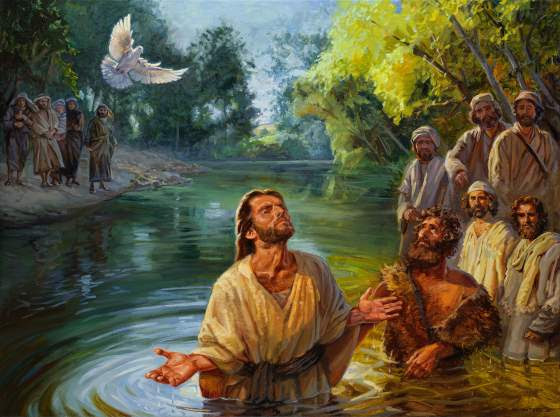 By Charlie JohnstonMost folks here are familiar with the story of Naaman, the commander of the Syrian King’s armies (2 Kings 5:1-27). Naaman was stricken with leprosy and came to the prophet Elisha to find how he might be healed. Elisha told him to go and wash himself in the Jordan River seven times and he would be healed. This instruction infuriated Naaman who, in essence, said, “No, really, what is the secret to getting healed?” After wasting precious time in which Naaman kept wanting the REAL secret to healing, he finally grudgingly went and washed himself in the Jordan River – and was healed. It strikes me that the Jordan River was where God Himself, after He took on our humanity, would be baptized some 800 years later. In eternity, where everything is present now, the Jordan River must have been sacred from the very creation because that was where God chose to accept human baptism. When we are in Fatima or Lourdes or St. Peter’s Basilica, we know we are in sacred space – but we do not know when we are in space made sacred because of an event that will be made manifest in time a thousand, a hundred, or even just a year from now. So, we scoff. But every space that ever will be sacred is already sacred in eternity and has been from the very beginning. Better then that we put away our scoffing and approach the world with the wonder of an innocent child, who intuitively recognizes that the world, itself, is amazing and sacred space.I feel a certain kinship with the prophet, Elisha, these days. Many people ask me what the secret is to weathering the storm. When I tell them, “Acknowledge God, take the next right step, and be a sign of hope to those around you,” they are usually unhappy and want to know the REAL secret. I have spent six decades wrestling with things I have been shown, trying by trial and error to figure out what they signify, often barking up the wrong tree, sometimes erring pitifully, but steadily stumbling forward, winnowing out what is extraneous from what is needful. I look with no little sympathy on such requests, for I have been there myself – thankfully, long ago. People usually expect that when God speaks it is going to be as complicated and chaotic as a Rube Goldberg contraption, with all sorts of extraneous whistles, bells, and useless moving parts. The voice of God is simple, profound and deep. The key to discernment is not to add the curlicues and buttresses of our own imagination, but to winnow out what is extraneous. It is the project of a lifetime. As it emerges from the fog our imagination imposes over reality, it is simple, regal, majestic, commanding and unimaginably beautiful. The simplicity and power of His voice then guides every decision and choice we make through our lives.Consider music. If you were an amateur first discovering it, you might think there were thousands of notes to account for the infinite variety of it. There are 12. There are infinite octaves of these 12, only a small handful of which are accessible to our poor power of hearing, but there are only 12 notes, the foundation of all musical composition. All composers work from these 12. Beethoven and Tchaikovsky, Benny Goodman and Johnny Cash, Louis Armstrong and Elton John, even Barry Manilow all work from the same 12 notes to create the infinite variety of styles and types of music – combining and orchestrating them in ever original ways. Only 12. Elegant simplicity offering infinite variety, untarnished by chaotic complications.It is a paradox, but once we have basic knowledge of things, the key to expanding wisdom is not in adding on curlicues and such from our over-eager imaginations, but in winnowing away the chaff that obscures our vision of God’s reality. Boil things down to its necessary constituent parts. From there you can begin to discern and contemplate the infinite variety of God’s creation in all its majestic and elegant simplicity. Eleven notes would make for an impoverished music. Thirteen notes would make for a chaotic and confused jumble. Twelve notes, as Goldilocks might say, is just right. Knowing what the genuinely necessary constituent parts are and are not paves the way for fruitful contemplation.Acknowledge God: When we are children in a healthy family, we are always aware of our parents; their authority over us, our duty to them, our reliance on them, and the mutual love between us. Even when we get up to some mischief, they are never far from our mind’s eye. If we land in trouble, we call on them and trust them to help extricate ourselves from our errors. We trust them to help teach us, to learn how to exercise wise initiative and prudence. We don’t spend our day unceasingly begging them for everything we need, but trust they will provide for our needs while encouraging us to develop the best parts of our authentic personality – and take delight at our efforts, embryonic as they may be. So they attach our little drawings or poems or stories to their refrigerator, genuinely proud of us, as we are genuinely proud of their pride in us – and encouraged by it to do a little more. This is to acknowledge our parents – and captures the bulk of what I mean when I say, Acknowledge God. See Him as true Father: rely on Him, trust in His care for you, and act so as to make Him proud. Imagine your drawing on God’s refrigerator – and get to drawing.Take the Next Right Step: This acknowledges our duty to do, to act while simultaneously recognizing the severe limits of our prowess. It acknowledges our responsibility to get it as right as we possibly can, taking each little step, without letting the satan seduce us with delusions of grandeur. It emphasizes both our reliance on God for each step and trust that He will correct our wrong steps while realizing we may NOT bury our talent by taking no initiative. God has given each of us gifts and He expects us to use them, trusting that He will uphold us when we use them while acknowledging Him, even when the way forward is obscure and scary. There is no risk when you risk yourself on behalf of your love for God. This is the beginning of contemplation on what the next right step means.Be a Sign of Hope to Those Around You: This does not mean be a wimp or even to just “be nice.” If friends are being assaulted, the way you be a sign of hope to them is to defend them. That means you are, at the very least, a sign of contradiction to those doing the assaulting. In some cases, you can even become a sign of hope to the one doing the assaulting. In grade school, I became friends with a bully because I held my ground on behalf of a friend, took a bit of a beating while taking a few chunks out of the bully, and would not back off, though I was losing. Somehow, it triggered in him the idea that he could use his strength and aggression to defend and help people. We became friends in the process and HE became a sign of hope to others. Being a sign of hope means carrying God with you as best you can to all you meet – meeting them where they are, respecting their conscience as you demand they respect yours, and enjoying your interactions with them. It means seeing the thread of virtue in them by which God calls them, thin though it may be. Acknowledge the virtue that is there and you help grow it. Doing their work with refinement and precision IS a virtue, whatever else is involved. Consider St. Paul. God acknowledged his passion, fidelity and fortitude, even though it was directed against Christians and transformed those virtues into a great asset for God’s Kingdom. Sometimes, when someone who has a good heart is doing the most wrong thing they can, what is really happening is that the devil is training them to eventually become his powerful enemy. Try to be a pure, untarnished lens through which the light of God may truly be magnified to all you meet. This is the beginning of contemplation of what it means to be a sign of hope.God’s voice is to be found in the little whisper, not the roaring thunder. The thunder, in fact, is an effort to obscure His voice. We do not approach Him by adding layer upon layer of complication over our understanding, but by winnowing away the chaff which obscures our vision of Him. The more clearly we see and hear Him, the more reliable are the first principles we can discern which help us to make sound decisions in all the particulars that confront us in our lives. I have told you well the nature of the battle, along with a faithful description of the topography of the battlefield. And from the moment I started writing about the Storm, I told you true the real secret to weathering it well: Acknowledge God, take the next right step, and be a sign of hope to those around you. Contemplate this in its majestic simplicity and you will be prepared for whatever may come.We must wash ourselves in the Jordan River. For us, as for Naaman, that is the real secret.
 First meeting of CORAC in SwedenOn Friday I did my first ZOOM meeting with CORAC affiliates from other nations. Sweden, Ireland, Spain, Australia, Canada and Germany were represented. In Sweden they have started the equivalent of what we used to call “storm dinners,” where people get together to pray and make arrangements to help each other and others who will need it as things get darker. I encourage people throughout the world to get your storm dinners going. Make provision now to live solidarity for whatever may come. People constantly ask me what the most important thing to do is now. My reply is always the same: make friends. By making friends, we weave together the bonds of solidarity that will support us throughout all trials.I can’t oversee affiliates throughout the world. But I can live solidarity with my friends throughout the world. This was my first international ZOOM meeting (though I did do a livestream presentation in Mexico a few years back), but it will not be my last. Wherever you are in the world, get your storm dinners going. If it will help, I will visit with you by ZOOM. If you are outside the USA and want to get more involved with CORAC, contact Sue at region11@coracusa.com.*********Monday we begin our Easter fundraising drive for CORAC for the second quarter. We have committees and teams covering the country, focusing on working together and working up ways to help each other with Health and Wellness, Communications, Prayer and Education. Throughout the last year, the Health and Wellness Team put together wildly popular classes on homeopathy and videos on how to care for yourself and your family. The Sustainability Team is now running classes and developing videos on gardening and other skills you may need if things get more primitive. Our radio communications network crisscrosses the continental US and is growing stronger by the day. We are now running online catechism classes with Desmond Birch each week. Good old Dr. Joe Brickner and I do a weekly podcast on matters large and small. Sheryl Collmer produces and edits a bi-weekly newspaper that gives you news of CORAC Regions and of national and world interest that you won’t get from the establishment media narrative. I travel the country, meeting with CORAC groups, endeavoring to hearten the faithful and ignite action. In the last two months I have had meetings in Florida, Georgia, Maryland, Virginia, Minnesota, Wisconsin, Illinois, Kansas, Mississippi, Louisiana and Texas. Some are private, most are public. Like Johnny Cash, I’ve been everywhere. And where I haven’t been, I’m going!There is no charge to join CORAC, nor for any of the classes or videos we produce. But it takes money to keep everything afloat – and for that we depend on the generosity of those who join us in our commitment to faith, family and freedom. Our monthly nut for web services, legal services, travel and all administrative costs is still right around $10,000. Your dollar stretches a long way with CORAC.We are working a project now to get Brazen Serpent Prayer Cards designed, printed and distributed around the country for all those who have been damaged by Covid shots or other dangerous mandates and seek to turn to God for healing and reliance. We will order an initial 5,000 cards, with miraculous medals included, to give to Regional Coordinators and Team Leaders for distribution – and they will be available for direct order from the supply house with which I am working to design them.Won’t you give us the largest donation you can today to keep our mission going? And if you have not yet joined CORAC, what are you waiting for? We need you. You need us. Together, we seek to humbly collaborate with God in the renewal of the face and faith of the earth. You can donate online or send a check to CORAC, 18208 Preston Rd., Ste. D9-552, Dallas, Texas 75252. Let’s keep those cards and letters coming!
 Just briefly, as things get ever more chaotic and scary, let us bear with one another with great patience. Even some of the best minds and most committed Christian witnesses are struggling to stay on the rails right now. Do not be quick to condemn. Cut each other some slack. Panic is the thing that undoes so many in the early stages of a crisis. Remember that both fear and confusion often present as anger. So listen not only to what those around you say, but what they mean. Hear the cry of their heart, however camouflaged it may be. Deliberately bear each other up. The person who your calm resolution saves from panic now may well be the one who saves you from panic later. Bear with one another and keep focused on Christ. He is the one who calms the sea around us.
 If communication goes out for any length of time, meet outside your local Church at 9 a.m. on Saturday mornings. CORAC teams will be out looking for people to gather in and work with.Find me on Gab at Charliej373 or at the CORAC group.Donate to CORAC!Join the Conversation!The Corps of Renewal and Charity (CORAC)18208 Preston Rd., Ste. D9-552Dallas, Texas 75252charliej373 | April 3, 2022 at 10:30 am | Categories: Bible Contemplations, Conversion, CORAC, Discernment, Encouragement, Evangelization, Solidarity, The Storm, Triumph of the Immaculate Heart | URL: https://wp.me/p9wpk6-18w


 ABYSSUS ABYSSUM INVOCAT / DEEP CALLS TO DEEP
You must be logged in to post a comment.