“We are witnessing a massive effort to remake our historic Faith.” (Father Hardon, as spoken solemnly, at least thrice, to RDH during our work, in the early 1990s, on the final draft of the New Catechism.)
***
“We are only as courageous as we are convinced. But what are we truly and sincerely convinced of? Meekness is not weakness.” (Father Hardon’s words, as spoken to RDH many times during our collaborations and research throughout the years 1980-2000.)
***
Before Jesuit John A. Hardon died (on 30 December 2000), he still remembered the formative importance of his 1950 time in Rome during the Jubilee Year—especially three events.
The temporal sequence of these formative momentous events are: 12 June 1950; 12 August 1950; and 1 November 1950 (the Feast of All Saints).
These three sequential dates cited above also substantively disclose, in order, Pope Pius XII’s Canonization of Maria Goretti (d. 1902); then his promulgated Encyclical entitled Humani Generis (a partly updated and still largely effective new Syllabus of Errors, presented without naming any familiar names, though they often were subtly subversive and evasive writers and speakers, alas); and, finally, Pius XII made his promulgated declaration of the Dogma of the Assumption of the Blessed Mother Mary, entitled Munificentissimus Deus (Most Bountiful God) and he proclaimed it on All Saints’ Day in Rome in 1950. Father Hardon, as he told me often, was profoundly affected by all three.
In 1950, Father Hardon was still a young vivid priest in Rome (having been recently ordained in the U.S. on his 33rd birthday on 18 June in 1947). Father Hardon was born on 18 June 1914, and was now in 1950 studying at the Jesuit Gregorian University for his Theological Doctorate.
Father Hardon told me that he worked personally with Pope Pius XII for his announcement over Vatican Radio on 12 June 1950, where Pius XII so memorably said that “Maria Goretti is especially to be honored as a Martyr for our Twentieth Century: for she was a Martyr to Purity.”
(Father Hardon said that he thereafter never forgot those words and their implication.)
Father Hardon also remembered well—and with earnestness—his 1950 encounter with the notably trenchant and emphatically brief Humani Generis and its inchoate effects among the Jesuits in the Gesu in Rome. (He later saw some of its longer-range effects in the larger Church, to be seen, for example, in his own three-day Ignatian Retreat which he formulated and personally delivered in the 1980s, and which I also attended.)
One of its effects was that the 1950 Librarian at the Gesu promptly received an awkward mission which also involved a strict assignment to Father Hardon himself as a human agent and young instrument of the higher papal strategy and its clerical policy. Father Hardon was to go to the individual rooms at the Gesu and gather up formal and informal texts and many concealed Samizdat (covert “self-publishing” in Russian) as composed by the suspect authors alluded to in that brief, authoritative encyclical Humani Generis—such as still then Jesuit Father Hans Urs von Balthasar, who was soon himself to leave the Society of Jesus, formally and permanently.
Father Hardon told me that he had never expected such bitter, both general and individual responses that he received as the resident clergy very reluctantly yielded up the documents and suspect, often dangerously speculative texts de Ecclesia and de Gratia, for example.
The third formative event was the papal declaration on 1 November 1950 of the Dogma of the Assumption of Mary into Heaven, Body and Soul. This declaration was not just an opinion but an expression of “Irreformable Doctrine” (in Father Hardons’s formulation): in other words, a Dogma.
As a Dogmatic Theologian himself as he already was, Father Hardon gratefully acknowledged the importance of the Sources of Revelation—both of them—both of which Pope Pius XII proportionately accented, namely “Divinely Revealed Sacred Tradition” and “Divinely Revealed Sacred Scripture.” Moreover, the Pope said that it was the Divinely Revealed Sacred Tradition that was decisive in his proclamation of a new Dogma, and thus also in opposition to those who believe there to be only one Source of Revelation, Holy Scripture (as was the case with Father Hans Urs von Balthasar according to Father Hardon).
Father Hugo Rahner, S.J.—the scholarly brother of the Jesuit Father Karl Rahner—also tried in vain to prove (in his essays and in his sincere book) how the Assumption could be found supported in Scriptural Texts alone, or at least pre-eminently so, according to Father Hardon.
Pope Pius XII thereby effectively strengthened the trustworthiness and stability of Sacred Tradition. For example, said Father Hardon, the enduring move of Saint Peter the Pope from Antioch to Rome was a part of Divinely Revealed Sacred Tradition.
Moreover, for example, was not the transmitted and differentiated Corpus of Sacred Music also somehow part of Divinely Revealed Sacred Tradition, as at least an aid to indispensable Meditations and then also to a fruitful and deeper receptiveContemplation?
“Catholic Media” JPII Pewsitters: Is Francis Promoting Heresy and Sacrilege in allowing Communion for Adulterers? Do you Believe in Communion for Adulterers?
This week, I asked a Pope John Paul II kind of Catholic with apparently a post graduated degree to PLEASE answer yes or no to the two following questions:Is Francis promoting heresy and sacrilege in allowing Communion for adulterers? Do you believe in Communion for adulterers?
This educated Catholic asked me to show her where Francis said adulterers could receive Communion.
This is for all Catholics like her (who read the so-called journalism of the vast majority of the “Catholic media”) who don’t seem to know what is going on with Francis:
– [2017] Pope’s Letter on Argentinian Communion Guidelines for Remarried Given Official Status
A letter from Pope Francis praising episcopal guidelines that would allow divorced and remarried Catholics to receive Holy Communion in some cases while living in a state of objective grave sin has now been added to the official acts of the Apostolic See [AAS], conferring official status on what was formerly considered by many to be merely private communication — and raising the stakes on the Amoris Laetitia debate significantly.
Of the guidelines issued by the bishops of the Buenos Aires region that would open “the possibility of access to the sacraments of Reconciliation and the Eucharist” in “complex circumstances” where “limitations that lessen the responsibility and guilt” of couples who will not make the commitment to “live in continence” despite living in an objectively adulterous situation, the pope said in his letter that “The document is very good and completely explains the meaning of chapter VIII of Amoris Laetitia. There are no other interpretations.”
In August of this year, this letter was added to the Vatican website as a papal document available for public reference. Concerns were raised that what had previously been viewed as only private correspondence — and thus, completely outside the realm of papal magisterium — was being given the appearance of an official papal act. [https://catholictruthscotland.com/2017/12/03/concern-over-pope-francis-grows-schism-looms-cardinals-must-act/]
– LifeSiteNews, “Confusion explodes as Pope Francis throws magisterial weight behind communion for adulterers,” December 4, 2017:
The AAS guidelines explicitly allows “sexually active adulterous couples facing ‘complex circumstances’ to ‘access the sacraments of Reconciliation and the Eucharist.'”
– On February 2018, in Rorate Caeli, Catholic theologian Dr. John Lamont:
“The AAS statement… establishes that Pope Francis in Amoris Laetitia has affirmed propositions that are heretical in the strict sense.”
– On December 2, 2017, Bishop Rene Gracida: “Francis’ heterodoxy is now official. He has published his letter to the Argentina bishops in Acta Apostlica Series making those letters magisterial documents.”
Sadly, Francis’s concept of sin appears to be contrary to “the Sixth Commandment and to Saint Paul’s prohibition outlined in 1 Cor. 11:27-30” and the infallible Council of Trent.
Dr. Luca Gili, a professor of philosophy at the University of Quebec in Montreal, told LifeSiteNews:
“By saying that ‘there is no other interpretation’ [to [the Argentinian] guidelines that appear to blatantly approve Communion for adulterers], the pope is stating that he is (magisterially) proposing a doctrine which is contrary to the Sixth Commandment and to Saint Paul’s prohibition outlined in 1 Cor. 11:27-30.”
The Argentinian Bishops Guidelines says couples in adulterous second marriages not living in continence in “other more complex circumstances… Amoris Laetitia opens up the possibility of access to… the Eucharist.” (Aleteia.org, September 13, 2016)
Francis’s letter to the Argentinian Bishops on their guidelines says there is “no other interpretation.” (Aleteia.org, September 13, 2016)
In simple words, Francis is officially saying couples committing the grave sin of the sexual act of adultery can receive Holy Communion with the excuse of “complex circumstances” which is against God’s Divine Law and Revelation as taught be the infallible Council of Trent:
Trent’s decree on justification: “If anyone says that the commandments of God are, even for one that is justified and constituted in grace, impossible to observe, let him be anathema.”
Versus
Amoris Laetitia, 301: Hence it is can no longer simply be said that all those in any “irregular” situation are living in a state of mortal sin and are deprived of sanctifying grace. More is involved here than mere ignorance of the rule. A subject may know full well the rule, yet have great difficulty in understanding “its inherent values”, or be in a concrete situation which does not allow him or her to act differently and decide otherwise without further sin.’ [http://www.catholicworldreport.com/2016/04/22/five-serious-problems-with-chapter-8-of-amoris-laetitia/]
On January 2, Vatican expert Edward Pentin reported that Francis’s president of the Pontifical Council for Legislative Texts Cardinal Francesco Coccopalmerio unwittingly said that the official endorsement of the Argentine directive of Amoris Laetitia contradicted the infallible doctrine of Trent:
“In comments to the Register last month, Cardinal Francesco Coccopalmerio insisted the Francis’s official endorsement of an Argentine directive on the issue did not contradict canon law.”
“The president of the Pontifical Council for Legislative Texts said it is true that ‘divorced and remarried (or cohabiting) cannot be admitted to Holy Communion because they are ‘in manifest grave sin.’””
“But he added that there are ‘divorced and remarried (or cohabiting) who have the intention to change their condition but cannot. Therefore such faithful are only in objective sin, not subjective sin, precisely because they have the intention to change, even if they cannot. This intention makes a difference!”
He further noted that the relevant canon, number 915, states that Holy Communion cannot be allowed if the person remains “obstinately persevering” in grave sin. The word “obstinate” means “without any intention to change,” Cardinal Coccopalmerio said, “so these faithful can be admitted to Holy Communion because they have the intention to leave the condition of sin and therefore they are not in sin.’”
“He added that the “doctrine of sincere repentance” which contains the purpose of changing one’s condition of life as a necessary requisite to be admitted to the sacrament of Penance ‘is respected’ because the faithful in such hypothesised situations ‘are conscious, have conviction, of the situation of objective sin in which they currently find themselves.’ They also ‘have the purpose of changing their condition of life, even if, at this moment, they are not able to implement their purpose.’”
“‘The cardinal added that the doctrine of ‘sanctifying grace as a necessary requisite to be admitted to the sacrament of the Eucharist is also respected’ because the faithful in this case ‘haven’t yet arrived at a real change of life because of the impossibility of doing so, but have the intention of implementing this change.’”
The Cardinal in the above statement said it is impossible to “change the condition of sin” which is another way of saying Amoris Laetitia’s “in concrete situations which does not allow him or her to decide otherwise.”
Trent said “If anyone says that the commandments of God are, even for one that is justified and constituted in grace, impossible to observe, let him be anathema.”
Coccopalmerio’s above statement of the Francis’s understanding of sin is important because he was Francis’s selected Vatican official who stated:
As stated by Francis’s own selected Vatican official Coccopalmerio to explain the pontiff’s authentic interpretation:
The Francis’s Amoris Laetitia appears to have fallen into the heresies of Martin Luther and situation ethics which are condemned by Trent and Veritatis Splendor. Francis said of the heresy of Luther on justification which includes his teaching on sin:
“Lutherans and Catholics, Protestants, all of us agree on the doctrine of justification. On this point, which is very important, he did not err.” (patheos.com/blog/scotticalt, “Pope Francis is Wrong about Luther and Justification,” April 5, 2017)
On May 25, 2016, the Catholic Herald said new “revelations suggest that some of Amoris’s most contentious paragraphs – relating to “situations of sin” and “mitigating factors” – had their origin in Archbishop Fernández’s articles, which gave a critique of John Paul II’s encyclical Veritatis Splendor.”
The evidence shows that the Francis’s intimate friend and ghostwriter Archbishop Víctor Manuel Fernandez did a “cut and paste” from his ten year old anti-John Paul II tracts which made up some of the most controversial parts of the papal document according to a May 25 article of The Spectator.
Francis’ friend, The Spectator said, is seen as “a joke figure” in terms of his reputation as a theologian who wrote a silly book called “Heal me with your mouth. The art of kissing.”
All these revelations came from Vatican expert Sandro Magister’s blog. Magister said Pope John Paul II condemned the situational ethics of “theologians” like Fernandez in his important and magisterial encyclical ‘Veritatis Splendor.’ [http://chiesa.espresso.repubblica.it/articolo/1351303?eng=y&refresh_ce ]
The Vatican expert in the article showed how the intimate a friend of Francis then Archbishop Bergoglio was his protege:
“Partly on account of those two articles, the congregation for Catholic education blocked the candidacy of Fernández as rector of the Universidad Católica Argentina, only to have to give in later, in 2009, to then-archbishop of Buenos Aires Jorge Mario Bergoglio, who fought tooth and nail to clear the way for the promotion of his protege.”
The Catholic Herald quoted a passage from Fernandez’s situational ethics articles which were “consciously echoed” in Amoris Laetitia’s paragraph 301:
“A subject may know full well the rule, yet have great difficulty in understanding ‘its inherent values’, or be in a concrete situation which does not allow him or her to act differently and decide otherwise without further sin.”
This passage according to the Catholic Herald may be directly counter to defined Catholic doctrine:
“This paragraph of the exhortation has been criticised by theologians including E. Christian Brugger, who argued that it apparently goes against Church teaching: ‘This seems to contradict the defined doctrine in Trent on Justification, canon 18: ‘If any one says the commandments of God are impossible to keep, even by a person who is justified and constituted in grace: let him be anathema.’”
First Things, in “Francis’s Argentine Letter And The Proper Response ” by Elliott Milco, says the exact same thing about Francis’s letter which endorses the Argentine norms.
America’s most influential journal of religion and public life, First Things’ Deputy Editor Milco says:
“The Church teaches and has always taught, from St. Paul to the Council of Trent and beyond, that grace strengthens and liberates us from the bonds of sin, and that while we may never, in the present life, be perfectly free from the inclination to do wrong, it is possible through grace to keep the commandments.”
“This doctrine was given force of law in Trent’s decree on justification: ‘If anyone says that the commandments of God are, even for one that is justified and constituted in grace, impossible to observe, let him be anathema.'”
“‘The same decree explains that ‘God does not command impossibilities, but by commanding admonishes you to do what you can and to pray for what you cannot, and aids you that you may be able.'”
“The real problem with the Argentine norms is their deviation from this larger and more fundamental principle: that grace truly sanctifies and liberates, and that baptized Christians are always free to fulfill the moral law, even when they fail to do so. Jesus Christ holds us to this standard in the Gospel. It is presumptuous of Francis—however benign his intentions—to decide that his version of ‘mercy’ trumps that given by God himself.”
Brugger and Milco are not speaking about the Kasper proposal, but the Catholic doctrine of infused grace which was denied by Martin Luther and the other “reformers”
On that other issue, Fr. Raymond de Sousa’s article “What Argentina’s ‘Amoris Laetitia’ Guidelines Really Mean” in the National Catholic Register tries to make the case that the Kasper proposal in it’s totality actually suffered a lose despite media hype claiming otherwise and despite Francis’s efforts to implement the total proposal.
De Sousa tries to makes the case that the Argentine norms is not mistaken because it could be treated in pre-Amoris Laetitia “standard principles of moral theology and confessional practice, analogous to the the moral culpability of contraception when the spouses do not agree.”
On this separate issue from the topic of grace, Brugger in the Catholic World Report with the article “The Catholic Conscience, the Argentine Bishops, and “Amoris Laetitia” destroys the De Sousa attempt to justify the Argentine norms by using Pope John Paul II’s Veritatis Splendor that shows it creates a “destructive dichotomy, that which separates faith from morality.”
He demonstrates that the only solution to the problematic Argentine norms is to form consciences not create loopholes so persons can sin in invincible ignorance.
Be that as it may, the point is that the Kasper proposal isn’t the issue here, but Amoris Laetitia and the Argentine norms apparent denial of a defined doctrine of the Council of Trent on grace which the “reformers” denied.
The “reformers” idea of imputed grace saw man as “totally depraved” and corrupt who even after justification was not infused with grace and truly changed on the inside.
Luther’s image of imputed grace was that of man as a pile of dung covered with snow.
Man isn’t changed on the inside (he is still a pile of dung), but “justified” man is covered with grace (snow) while not being changed on the inside.
As Milco said Trent’s doctrine on infused grace says “that graces truly sanctifies and liberates, and that baptized Christians are always free to fulfill the moral law, even when they fail to do so.”
It is a very big and scary moment in Church history when it appears that the Vatican is openingly teaching error that is anathema by the infallible Trent:
Moral Theologian Dr. E. Christian Brugger, on April 22, wrote Amoris Leatitia (A.L.) in 301 is “inconsistent with the teaching of Trent on grace.”
Brugger then writes that it appears that Canon 18 of Trent, which is infallible doctrine, gives an anathema to Pope Francis’s 301 teaching on grace.
Pray a Our Father now for the Dubia Cardinals to issue the correction.
Endnotes and quotes from Dr. E. Christian Brugger’s CWR article: Dr. E. Christian Brugger is the J. Francis Cardinal Stafford Professor of Moral Theology at St. John Vianney Theological Seminary in Denver and Senior Fellow of Ethics at the Culture of Life Foundation in Washington, D.C. He has a forthcoming book with Catholic University of America Press on the indissolubility of marriage and the Council of Trent.
Dr. Brugger said of Amoris Laetitia, 301 in the Catholic World Report:
‘Inconsistency with the teaching of Trent on grace 301. Hence it is can no longer simply be said that all those in any “irregular” situation are living in a state of mortal sin and are deprived of sanctifying grace. More is involved here than mere ignorance of the rule. A subject may know full well the rule, yet have great difficulty in understanding “its inherent values”, or be in a concrete situation which does not allow him or her to act differently and decide otherwise without further sin.”
Again, the ‘rule” is the norm against adultery articulated in the sixth precept of the Decalogue, which Jesus says is violated by one who divorces his spouse and marries another (cf. Mt. 5:32, 19:9; Mk. 10:11-12; Lk. 16:18). Here chapter 8 teaches that someone who knows full well the “rule” (and is by hypothesis justified in Trent’s/Paul’s sense) can “be in a concrete situation which does not allow him or her to act differently and decide otherwise without further sin” (emphasis added). This seems to contradict the defined doctrine in Trent on Justification, canon 18: “If any one says the commandments of God are impossible to keep, even by a person who is justified and constituted in grace: let him be anathema.”
It might be replied that no. 301 is addressed to pastors and is about mitigation, not objective possibility, not subjects in their deliberations about possible options. But in fact it is addressed to everyone, and no. 300 has identified “responsible personal and pastoral discernment” as proceeding on the same logic and as extending to personal discernment of possible present options, a logic that 301 is just unfolding.
What AL is ignoring is the adequacy of grace to enable people to respond to the overall objective demands of the Gospel. ENDNOTES:1 The note reads: “This is also the case with regard to sacramental discipline, since discernment can recognize that in a particular situation no grave fault exists.” 2 See no. 301 where “rule” clearly refer back to the “demands of the Gospel” 3 Note 336 makes clear that participation in the sacraments is one of the forms of participation in play in this passage. 4 The note references the Pontifical Council for Legislative Texts, Declaration Concerning the Admission to Holy Communion of Faithful Who Are Divorced and Remarried (June 24, 2000), no. 2. AL references the text to help overcome the potential judgment excluding remarried divorcees from Holy Communion. But the Pontifical text is saying just the opposite. The relevant passage reads: “The Code of Canon Law establishes that ‘Those upon whom the penalty of excommunication or interdict has been imposed or declared, and others who obstinately persist in manifest grave sin, are not to be admitted to Holy Communion’ (can. 915). In recent years some authors have sustained, using a variety of arguments, that this canon would not be applicable to faithful who are divorced and remarried…. [These] authors offer various interpretations of the above-cited canon that exclude from its application the situation of those who are divorced and remarried. For example, since the text speaks of ‘grave sin’, it would be necessary to establish the presence of all the conditions required for the existence of mortal sin, including those which are subjective, necessitating a judgment of a type that a minister of Communion could not make ab externo; moreover, given that the text speaks of those who ‘obstinately’ persist in that sin, it would be necessary to verify an attitude of defiance on the part of an individual who had received a legitimate warning from the Pastor…. “The reception of the Body of Christ when one is publicly unworthy constitutes an objective harm to the ecclesial communion: it is a behavior that affects the rights of the Church and of all the faithful to live in accord with the exigencies of that communion. In the concrete case of the admission to Holy Communion of faithful who are divorced and remarried, the scandal, understood as an action that prompts others towards wrongdoing, affects at the same time both the sacrament of the Eucharist and the indissolubility of marriage. That scandal exists even if such behavior, unfortunately, no longer arouses surprise: in fact it is precisely with respect to the deformation of the conscience that it becomes more necessary for Pastors to act, with as much patience as firmness, as a protection to the sanctity of the Sacraments and a defense of Christian morality, and for the correct formation of the faithful. “Any interpretation of can. 915 that would set itself against the canon’s substantial content, as declared uninterruptedly by the Magisterium and by the discipline of the Church throughout the centuries, is clearly misleading. One cannot confuse respect for the wording of the law (cfr. can. 17) with the improper use of the very same wording as an instrument for relativizing the precepts or emptying them of their substance. The phrase ‘and others who obstinately persist in manifest grave sin’ is clear and must be understood in a manner that does not distort its sense so as to render the norm inapplicable. The three required conditions are: a) grave sin, understood objectively, being that the minister of Communion would not be able to judge from subjective imputability; b) obstinate persistence, which means the existence of an objective situation of sin that endures in time and which the will of the individual member of the faithful does not bring to an end, no other requirements (attitude of defiance, prior warning, etc.) being necessary to establish the fundamental gravity of the situation in the Church; c) the manifest character of the situation of grave habitual sin.” 5 The encyclical Veritatis Splendor (Aug. 6, 1993) was the last papal document to be addressed to these issues, and is known to be an unprecedentedly serious effort to expound the Church’s understanding on moral norms from the apostles until today. 6 The note says: “In certain cases, this can include the help of the sacraments.” [http://www.catholicworldreport.com/2016/04/22/five-serious-problems-with-chapter-8-of-amoris-laetitia/] Stop for a moment of silence, ask Jesus Christ what He wants you to do now and next. In this silence remember God, Father, Son and Holy Ghost – Three Divine Persons yet One God, has an ordered universe where you can know truth and falsehood as well as never forget that He wants you to have eternal happiness with Him as his son or daughter by grace. Make this a practice. By doing this you are doing more good than reading anything here or anywhere else on the Internet.
Francis Notes:
– Doctor of the Church St. Francis de Sales totally confirmed beyond any doubt the possibility of a heretical pope and what must be done by the Church in such a situation:
“[T]he Pope… WHEN he is EXPLICITLY a heretic, he falls ipso facto from his dignity and out of the Church, and the Church MUST either deprive him, or, as some say, declare him deprived, of his Apostolic See.” (The Catholic Controversy, by St. Francis de Sales, Pages 305-306)
– LifeSiteNews, “Confusion explodes as Pope Francis throws magisterial weight behind communion for adulterers,” December 4, 2017:
The AAS guidelines explicitly allows “sexually active adulterous couples facing ‘complex circumstances’ to ‘access the sacraments of Reconciliation and the Eucharist.'”
– On February 2018, in Rorate Caeli, Catholic theologian Dr. John Lamont:
“The AAS statement… establishes that Pope Francis in Amoris Laetitia has affirmed propositions that are heretical in the strict sense.”
– On December 2, 2017, Bishop Rene Gracida:
“Francis’ heterodoxy is now official. He has published his letter to the Argentina bishops in Acta Apostlica Series making those letters magisterial documents.”
– [2017] Pope’s Letter on Argentinian Communion Guidelines for Remarried Given Official Status
A letter from Pope Francis praising episcopal guidelines that would allow divorced and remarried Catholics to receive Holy Communion in some cases while living in a state of objective grave sin has now been added to the official acts of the Apostolic See [AAS], conferring official status on what was formerly considered by many to be merely private communication — and raising the stakes on the Amoris Laetitia debate significantly.
Of the guidelines issued by the bishops of the Buenos Aires region that would open “the possibility of access to the sacraments of Reconciliation and the Eucharist” in “complex circumstances” where “limitations that lessen the responsibility and guilt” of couples who will not make the commitment to “live in continence” despite living in an objectively adulterous situation, the pope said in his letter that “The document is very good and completely explains the meaning of chapter VIII of Amoris Laetitia. There are no other interpretations.”
In August of this year, this letter was added to the Vatican website as a papal document available for public reference. Concerns were raised that what had previously been viewed as only private correspondence — and thus, completely outside the realm of papal magisterium — was being given the appearance of an official papal act. [https://catholictruthscotland.com/2017/12/03/concern-over-pope-francis-grows-schism-looms-cardinals-must-act/]
Pray an Our Father now for the restoration of the Church by the bishops by the grace of God.
”Pope Francis could soon promulgate a new law (in the form of an Apostolic Constitution) to regulate the resignation of the Pope, and especially the status following the resignation of a Pontiff… In short, it is not even excluded, although it would be sensational, that for the new law there has been no Pope Emeritus at all.” —well-informed Italian Vaticanist Maria Antonietta Calabrò, in an article published today in Rome (complete text below) Letter #92, 2021, Monday, August 23: Calabrò Two very interesting articles today, focusing on the possibility of a coming resignation of Pope Francis, and a conclave to elect a new Pope. But the most interesting thing is a rumor that Pope Francis may soon issue a document on “emeritus Popes,” regulating the role of “retired” or “resigned” Popes. And the most interesting fact — all still rumor — is that the document may actually eliminate the role of “Emeritus Pope.” This, of course, would be a dramatic way of dealing with the ambiguity, the confusion, but also the undeniable reality of the role played since his resignation in 2013 of Pope Benedict. So, especially canon lawyers, but also all theologians, and all faithful Catholics, and interested onlookers as well, fasten your seatbelts. *** Some years ago, in a conversation with ArchbishopCarlo Maria Viganò, as we were discussing some aspect of the situation of Pope Benedict and the “Vatileaks” case, the archbishop said to me: “Have you read the latest by Maria Antonietta Calabrò? You really should. She has something quite interesting to say. As usual, she is… very well-informed.” What he meant, I think, was that Calabrò has Vatican or Vatican-related sources or “interlocutors” who are well-placed. When these sources wish to have an idea or scenario “ventilated” in the media, to see how it might “fly,” they speak with Maria Antonietta, and people like Archbishop Viganò (and now also me), lift our eyebrows a bit when we see that she has published something interesting. So what has Maria AntoniettaCalabrò just published today in Italy? *** She has published an article entitled: “Francis could promulgate a rule on the status of ‘Pope Emeritus'” The subtitle is: “New rumors about the resignation of Bergoglio, who is said to be working on a discipline of his role after the resignation” Again, slightly paraphrased and expanded: “Pope Francis is said (rumored) to be working on a discipline (a text laying out certain rules and regulations) for his role as a resigned Pope, for his role after he resigns from his current role as an active Pope” *** One further preliminary note. In 2019, Pope Francis gave an interviews to an Argentine journalist and said that he expected to die in Rome. In an interview published in the Argentine newspaper La NaciónFebruary 27 this year — but based on a conversation from February 2019 — the Pope said that while he thinks about death, he is not afraid of it. “How do you imagine your death?” the Pope was asked by Argentine journalist and doctor Nelson Castro. “As pope, either in office or emeritus. And in Rome. I will not return to Argentina,” Francis replied. The interview was an excerpt from Castro’s new book, titled La Salud de Los Papas (“The Health of the Popes”), which details the health of the pontiffs from Pope Leo XIII to Pope Francis. According to Castro, Pope Francis encouraged him to write the book and agreed to be interviewed. The conversation took place in February 2019. *** Here is a copy of the new Calabrò article, which appeared today in the Huffington Post. “Francis could promulgate a rule on the status of ‘Pope Emeritus'” New rumors about the resignation of Bergoglio, who is said to be working on a discipline of his role after the resignation By Maria Antonietta Calabrò The article opens with the following photo, from August 18, 2021, five days ago, showing a very active, alert, seemingly healthy Pope Francis, now 84, playing “foosball” (table soccer) during his weekly Wednesday General Audience in Paul VI Hall. (ANSA / VATICAN MEDIA) Here is Calabrò’s article today: ”Stay tuned, state sintonizzati.” On August 1, 2021, the dean of American Vaticanists John Allen urged his readers to keep their ears open and alert for a possible August surprise, the Vatican equivalent of the October surprise that in American politics falls the month before the vote to choose the new president of the United States. Perhaps this article is the origin of the assumptions and rumors — as Antonio Socci writes today in Libero (link; and published in its entirety below) — of the imminent resignation of Pope Francis. So what is going on? Clearly, a climate is being recreated (but strongly still among a minority today, compared to what happened with Ratzinger, even in the mass media) similar to the climate that was created in the last year of Benedict XVI’s pontificate [Note: in 2012; Benedict resigned on February 11, 2013]. This takes place against a backdrop: a major financial scandal, that of the London palace which even involved the Vatican Secretariat of State (in 2012, the scandal looming in the background was “only” the IOR, the Vatican’s bank), with a trial just opened against 10 defendants, including Cardinal Angelo Becciu. Death threats [against Pope Francis] have also arrived — as happened for Ratzinger — two different mailings of envelopes with bullets addressed to Pope Francis, the first intercepted on 9 August. All seasoned with speculations on Bergoglio’s state of health, given that he underwent a colon operation on July 4th. The pontiff’s “frail health” despite his “iron constitution” however, disappointed those who expected the discovery of cancer: the surgery was “decisive” and it is not enough — for those who are predicting an imminent physical collapse — to speculate on the fact that the Pope’s (post-operative July health) bulletins were issued by the Vatican Press Office and not from the Gemelli Polyclinic hospital, where the surgery was performed. Of course, Pope Francis is an elderly man, who will turn 85 in December, but who also openly said in a (February 27) interview that he will never leave Rome (“I spent seventy-eight years in Argentina”). In reality, a legislative change could soon occur which, yes, greatly worries the supporters of the “Pope Emeritus.” [Note: Pope Emeritus Benedict] Pope Francis could soon promulgate a new law (in the form of an Apostolic Constitution) to regulate the resignation of the Pope, and especially the status following the resignation of a Pontiff. This is also to avoid a whole series of misleading interpretations on the existence of two Popes, on their cohabitation, on the thesis of “an enlarged papacy” and on other issues which, although not having touched the vast majority of the faithful, have fed the underground poisons of the so-called “Pope-vacantists,” [Note: “Pope” or “Papacy Vacantists”] who have come to hypothesize that the only true Pope is Ratzinger. In short, it is not even excluded, although it would be sensational, that for the new law there has been no Pope Emeritus at all. —Maria Antonietta Calabrò, journalist, for 30 years at Corriere della Sera, in the Rome correspondence office. Winner of the Saint-Vincent Prize for Journalism in 2001. She has published In prima linea (1993, interviews with 10 Italian magistrates), The Secrets of the Vaticantogether with Gian Guido Vecchi (e-book of the Corriere della Sera, 2012) on the Vatileaks 1 case, The Hands of the Mafia, an investigative book on the bankruptcy of the Banco Ambrosiano, the IOR and the death of Roberto Calvi (2014). She currently collaborates with the Huffington Post. *** And here is Antonio Socci‘s article, which Calabrò cites, also from today: Pope Francis ready to resign “for health. Not age.” Tam tam in the Vatican: “Conclave air” By Antonio Socci 23 August 2021 In the Vatican, there is ever more insistence on a (coming) new conclave. Pope Francis would in fact have expressed his intention to leave. In December, among other things, he turns 85, which is the same age as Benedict XVI at the time of his resignation. But the reason for Bergoglio’s renunciation would not primarily be his age, but the state of health that came under the spotlight in a sudden and unexpected way with the surgery last July 4 at the Gemelli Hospital. In reality it would not have been a planned intervention (it is said that even the Secretary of State, Cardinal (Pietro) Parolin, did not know about the hospitalization). Furthermore, it seems that the Gemelli doctors would have liked to keep the Pope in the hospital longer. For the media and the Vatican, the issue of Popes’ health has always been problematic. Criticizing the official Vatican communications in this matter was above all the site Il Sismografo, which is always defined as “paravaticano” [“semi-official”] due to its proximity to the Secretariat of State (it is certainly based on Bergoglian positions). Many questions Already on 6 July, the director of the site, Luis Badilla wrote: “The information that officials decide to amplify through the press must be extremely transparent and extremely authoritative. If we are talking about medical releases, the text must bear the signature of the doctor or the team, with names and surnames; if the days of hospitalization are anticipated after colon surgery, clinical support must be given to this claim. Journalists exist to ask questions and seek the greatest possible truth and not to act as a microphone stand, otherwise the real facts cannot be distinguished from the journalistic hypotheses.” The next day — titled “Pope Francis does not need courtesy in the press” — Badilla rejoiced at the good progress of the Holy Father, but added: “However, there is a very significant detail that many in these hours underestimate, ignore or manipulate: the disease that has struck Pope Francis is severe and degenerative. It could also be chronic. Certainly the Holy Father will return to the Vatican to resume his journey in the footsteps of Peter but he will never be the same again. All the rhetoric about a superman Jorge Mario Bergoglio damages his image and his charisma… He knows that he will have to change his life a lot: fatigue, rest, limits, nutrition, rehabilitative physical exercises.” A month after the operation, Badilla noted that the press releases “on the Pope’s health conditions” have always been issued by the Vatican Press Office and “have never been signed by doctors and by the Gemelli Polyclinic,” adding that “they remain open some questions that it has never been possible to submit to the doctors who follow the Pope’s health conditions, especially on the prognosis, which — although it is a question never addressed — remains confidential.” So many questions for which even the Infovaticana website on 10 August headlined: “La salud del Papa no es la que dicen” [“The Pope’s health is not what they say it is”]. That it may therefore be health problems (we all hope not serious) that induce the Pope to consider resigning is more than likely. Interviews Over the years, Pope Bergoglio had spoken several times in interviews of his possible renunciation, but always as a hypothesis of the distant future. Today it seems to have become a current hypothesis. The first to speak of the “air of conclave” was a long-time Vatican scholar, Sandro Magister who, on July 13, titled one of his articles in his very popular Blog: “Conclave invites everyone to distance themselves from Francis.“ He did not concern himself with the Pope’s health, although he wrote shortly after the operation, but examined two “twin books” that had just come out: The Church Burns and The Lost flock. “Both,” Magister noted, “diagnosed a poor state of health in the Church, with a marked deterioration during the current pontificate.” Noting that “their authors are not at all opponents of Pope Francis.” The first book is by Andrea Riccardi, Church historian and founder of the Community of Sant ‘Egidio, much listened to by the Pope who often receives him in private audience and has entrusted him — among other things — with the direction of the spectacular interreligious summit chaired by Francis himself last October 20 in the Piazza del Campidoglio. The second book is by a newborn association called “Being here” whose number one is Giuseppe De Rita, 89 years old, founder of Censisand dean of Italian sociologists, as well as a progressive Catholic intellectual of the Montinian period. Already in the preceding weeks from the Catholic progressive world strong criticism had come to Pope Bergoglio, due to certain recent decisions of him. Giving the feeling of the end of a season. However, Magister, in his article, underlined the repositioning underway not only on the part of the Bergoglian intellectuals (to which the media could be added), but also on the part of the cardinals considered closest to Francis: “The time has come to take the distance from the reigning Pope, if you aim to succeed him.” In fact, the general situation of the Church, which is dramatic, could also affect the timing of the decision to resign: suffice it to recall the conflicts with the German and American episcopates (the two Churches that bring the most donations to the Vatican), the bleak statistics on religious practice and vocations in recent years, the confusion that is rampant among the faithful due to a hierarchy that seems too different from the clear and authoritative magisterium of the previous Popes, then the scandals, the dead end of the reforms of the Curia, the trial underway in the Vatican, the doctrinal controversies… The canon However — for a Pope who has always been extremely active like Bergoglio — the problem of physical health has a heavy impact. A week after the July 4 surgery, a long article was published in the Argentine newspaper La Nacion, close to the Pope, dedicated to the “difficult questions raised by Francis’ advanced age.” The subtitle explained that, after the surgery, there was talk of possible resignation. According to the Argentine newspaper, “Vatican observers” believe “unanimously that Francis is not close to resigning,” but — we observe — this also happened on the eve of the resignation of Benedict XVI. ”I can’t imagine Francis resigning while Benedict is still alive,” said Christopher Bellitto, a papal historian at Kean University in Union, New Jersey. “Having a Pope Emeritus already creates confusion. Having two would end up complicating the picture.” However, this topic begins to be addressed in a “scientific” way by canonists and theologians who seem to prepare the ground for official provisions of the Holy See to define precisely all the legal aspects relating to the Petrine ministry since Benedict XVI renounced and defined himself as “Pope Emeritus” (a completely new expression in the history of the Church). The canonist Geraldina Boni has just published “a proposal of law, the result of the collaboration of canon law science, on the totally impeded Roman see and the resignation of the Pope” so that “the supreme legislator can draw reasoned and well-argued ideas for the promulgation of legislation on these issues: legislation that now seems urgent and cannot be postponed.” Why such urgency after eight years in which the problem of the coexistence of two Popes seemed to be ignored by everyone? Perhaps precisely because there is in the air the idea of a new conclave? La Nacion, after having assured that Pope Francis is well and that he is not about to resign, reports the thought of Alberto Melloni, a prominent Italian Church historian who is intellectual symbol of Catholic progressive thought. According to Melloni, the pontificate of Pope Francis has in any case entered its final chapter: ”When a Pope gets old, we enter an unknown and uncertain territory,” he writes. This does not mean, in his opinion, that Pope Bergoglio is necessarily on the eve of his resignation, but that by now the Popes will no longer want to wait for a very advanced age and poor health conditions to resign. According to Melloni, who sees a risk that the Vatican curia bureaucracy will take the helm, “if a Pope wants to resign, he must find the right moment, before the weakness becomes too evident.” And Francis, in recent weeks, between serious and jocular, told someone that next spring there could be a new Pope. (www.antoniosocci.com) ***
Posted inUncategorized|Comments Off on IS IT REALLY POSSIBLE THAT WE MAY BE RID OF Jorge Bergolio THIS YEAR??????????????????????????????????????????????
According to highly reliable sources in the Vatican, Jorge Mario Bergoglio has expressed his decision to resign in December. The news broke this morning in Rome, on the front page of the Libero Newspaper, in an article written by Antonio Socci. The source cited is il Sismografo, the highly influential and authoritative blog which is published by anonymous members of the Secretary of State Department at the Vatican. While there is much speculation contain in the three page article at the Libero, the substance of the news is simply and only that: a voluntary resignation for reasons of health on his 85th birthday.
Rumors have flown this way and that in recent days, here in Italy, as to whether Bergoglio has cancer of the colon, has had part of one of his feet amputated, or is dying of the effects of the Vaxx.
Above is a photo of the front page of the Libero newspaper.
If Bergoglio resigns, and the Cardinals call a Conclave, the confusion in the vatican might multiply from 2 to 3 claimants to the Papacy, like in 1046. The only thing I can say is God help us!
The Libero article, seen above, says, “might resign”, and the report from il Sismografo says that Bergoglio has expressed “a desire” to resign. So the news is not as bright or dark, as it may seem.
+ + +
Pope Francis is ready to resign “because of health, not age”
The Vatican grapevine says: “A conclave is in the air”
In the Vatican there is ever-more-insistent talk of a new conclave. Pope Francis is said to have revealed that he intends to resign. This coming December, among other things, he will turn 85, the age that Benedict XVI was when he resigned. But the reason for Bergoglio’s resignation would not be so much age as the state of his health, which came into the spotlight in a sudden and unforeseen way with the surgery he underwent on 4 July at Gemelli Hospital [in Rome]. Actually, it is said that it was not a planned procedure (it is said that even the Secretary of State Cardinal Parolin did not know about the hospitalization). Furthermore, it seems that the doctors at Gemelli wanted to keep the Pope in the hospital longer. For the media and the Vatican, the topic of the pope’s health has always been problematic. Among those criticizing the official Vatican communication in this affair was above all the website Il Sismografo which is always defined as “paravatican” because of its close ties to the Secretariat of State (it is definitely based on Bergoglian positions).
MANY QUESTIONS
Already on 6 July, the director of Il Sismografo, Luis Badilla, wrote, “The information that one decides to amplify by means of the press must be extremely transparent and extremely authoritative. If one is talking about medical updates, the text must carry the signature of the doctor or the medical team, giving their full names; if several days of hospitalization are anticipated after colon surgery, clinical support must be given for such an affirmation. Journalists exist in order to ask questions and seek the greatest possible truth, not to simply act as microphone stands; otherwise, the real facts cannot be distinguished from journalistic hypotheses.”
The next day, in an article titled “Pope Francis does not need flattery in the press,” Badilla rejoiced at the good progress made by the Holy Father, but he added: “There is, however, a very significant detail that during these hours many people are underestimating, ignoring, or manipulating: the disease that has struck Pope Francis is severe and degenerative. It could also be chronic. Of course, the Holy Father will return to the Vatican to resume his journey in the footsteps of Peter, but he will never be the same again. All of the rhetoric about Jorge Mario Bergoglio as a superman damages his image and his charisma… He knows that he will have to greatly change his life: fatigue, rest, limits, nutrition, physical rehabilitative therapy.”
A month after the operation, Badilla noted that the press releases “on the health of the Pontiff” have always been issued by the Vatican Press Office and “they have never been signed by the doctors and by the Gemelli Clinic,” adding that “there remain some open questions that it has never been possible to the doctors who care for the Pope’s health, above all about the prognosis, which – although it is a question that is never addressed – remains confidential.” Many questions, about which the website Infovaticana published an articletitled “The health of the Pope is not what they are saying.” The possibility that it may be health problems (which we all hope are not serious) leading the pope to consider resigning is more than probable.
THE INTERVIEWS
Over the years, Pope Bergoglio has spoken several times in interviews about his possible resignation, but always as a hypothesis about a far-off future. Today it seems that it has become a present hypothesis. The first one to speak about “the air of a conclave” was a long-time Vatican journalist like Sandro Magister, who on 13 July titled his article on his widely followed blog as follows: “Conclave in View, Everyone Backing Away From Francis.” He did not focus on the pope’s health, although he was writing shortly after the operation, but rather he examined two “twin books” that just came out: La Chiesa Brucia [The Church is Burning] and Il Gregge Smarrito [The Lost Flock]. “Both books,” Magister noted, diagnose a poor state of health for the Church, with a marked deterioration during the present pontificate.” But “the books’ authors are not at all opponents of Pope Francis,” the Vaticanist added.
The first book was written by Andrea Riccardi, a Church historian and the founder of the Saint Egidio Community. The Pope listens closely to Riccardi, and often receives him in private audience. The Pope entrusted him – among other things – with the direction of the spectacular inter-religious summit presided over by Francis himself last 20 October [2020] in the Piazza del Campidoglio.
The second book was written by a brand-new association called “Essere Qui [Be Here]” led by 89-year-old Giuseppe De Rita, the founder of Censis [an economic research foundation] and “the dean of Italian sociologists,” as well as a progressive Catholic intellectual of the Montinian era. Already in the preceding weeks, strong criticism had come against Pope Bergoglio from the progressive-Catholic world due to some of his recent decisions. This gives the feeling that we are at the end of a season.
In his article, however, Magister, emphasized the repositioning that is currently under way, not only by Bergoglian intellectuals (to whom we could also add the media) but also by cardinals considered to be the closest ones to Francis: “The time has come to take distance from the reigning pope, if you aim to succeed him.” In fact, the general situation of the Church, which is dramatic, could also be driving the decision to resign: it is enough to recall the conflicts with the German and American episcopates (the two nations that give the most donations to the Vatican), the bleak statistics on religious practice and vocations in the past few years, the confusion that is spreading among the faithful concerning a hierarchy that seems too different with respect to the clear and authoritative Magisterium of the preceding popes; then there are the scandals, the dead end of the reform of the Curia, the trial currently underway in the Vatican, the doctrinal controversies…
THE CANON
However – for a pope who has always been extremely active like Bergoglio – the problem of health has a huge impact. One week after the surgery, a long article was published in the Argentine daily La Nacion, which is close to the pope, about “the difficult questions raised by Francis’s advanced age.” The subtitle of the article explained that, after the surgery, there began to be talk of a possible resignation. According to the Argentine daily, “Vatican observers” believe “unanimously that Francis is not close to resigning,” but – we observe – this also happened on the eve of the resignation of Benedict XVI. “I can’t imagine Francis resigning as long as Benedict is still alive,” said Christopher Bellitto, a papal historian at Kean University in Union, New Jersey. “Having a pope emeritus already creates confusion. Having two would end up complicating the picture.” However, this question is beginning to be addressed in a “scientific” manner by canonists and theologians who seem to be preparing the ground for official provisions of the Holy See to precisely define the case record relative to the Petrine ministry after Benedict XVI resigned and called himself “pope emeritus” (an entirely new expression in the history of the Church).
The canonist Geraldina Boni has just published “a proposal of law, which is the fruit of collaboration [of experts] in canonical science, on the totally impeded Roman See and the resignation of the Pope” so that “the supreme legislator may draw out reasoned and well-argued ideas for the promulgation of legislation on these issues: norms that now seem urgent and cannot be postponed.” Why such an urgency after eight years in which the problem of the co-existence of two popes seemed to be ignored by everyone? Is it perhaps because there is a new conclave in the air? La Nacion, after having assured that Pope Francis is well and that he is not on the point of resigning, reports the thoughts of Alberto Melloni, a Church historian who is an intellectual symbol of progressive Catholicism. According to Melloni, the pontificate of Pope Francis has entered the final chapter: “When a pope gets old, we enter unknown and uncertain territory.” This does not mean, in his opinion, that Pope Bergoglio is necessarily on the eve of his resignation, but that popes now will no longer want to wait for a very advanced age and a state of poor health before resigning. According to Melloni, who sees the risk of the Vatican bureaucracy taking over, “if a pope wants to resign, he must find the right moment, before his weakness becomes too apparent.” And Francis, in the last few weeks, half-serious and half-joking, said to someone that next spring there could be a new pope.
Continuation of the Commentary by Br. Alexis Bugnolo
Dr. Sanchez Saez, ordinary professor of jurisprudenze at the Unviersity of Seville has already reacted to the news, saying that such a decision would be a catastrophy if the Cardinals take it as an excuse to elect another Antipope. Indeed, the decision to resign, rather than die in office might be an astute political decision to guarantee control of what happens during the succession, to prevent a restoration of Pope Benedict XVI. Click the image below to read the article in Spanish by Saez.
Ana MilanThey are probably testing the waters & hopefully Cardingl Burke will be fully recovered by then & prepared to call that imperfect council he promised us some years ago. Francis the Destroyer must be denounced quickly!REPLY
Joan1. Many reported he took the jab along with Pope Benedict. 2. It was reported the vaxx was mandated for the Vatican. 3. It’s been widely reported Catholic Church globally is requiring the vaxx. 4. You yourself were one of the first to say the vaxxed have not long to live 5. Countless doctors have said same. 6. CDC is even supposedly saying it.REPLY
Lynn Colgan CohenMy initial reaction—to both the previous rumors and now this latest news—is that Jorge wants to control the next conclave. I can see him presiding with his witch’s stang close at hand, and Pachamama crouching in a place of honor….REPLY
As the Screws Turn – News From CanadaInboxRandy Engel10:31 AM (1 hour ago)to rvte61TCollege of Physicians and Surgeons of Ontario 80 College Street Toronto, ON, M5G 2E2 416-967-2600Physicians hold a unique position of trust with the public and have a professional responsibility to not communicate anti-vaccine, anti-masking, anti-distancing and anti-lockdown statements and/or promoting unsupported, unproven treatments for COVID-19. Physicians must not make comments or provide advice that encourages the public to act contrary to public health orders and recommendations.-College of Physicians and Surgeons of Ontario, – https://www.cpso.on.ca/…/Key-Updates/COVID-misinformation, 30 April 2021. Statement on Public Health Misinformation4/30/2021There have been isolated incidents of physicians using social media to spread blatant misinformation and undermine public health measures meant to protect all of us. In response, the College released the statement below. The statement is intended to focus on professional behaviour and is not intended to stifle a healthy public debate about how to best address aspects of the pandemic. Rather, our focus is on addressing those arguments that reject scientific evidence and seek to rouse emotions over reason. We continue to recognize the important roles physicians can play by advocating for change in a socially accountable manner. [ Aren’t physicians supposed to put their patients. Or have doctors become the slave of the State?] Thanks to Frontline Doctors these mini-dictators must really be shivering in the hob-nailed boots and white coats. Randy Engel]CPSO Statement: From their website at CPSO – Statement on Public Health MisinformationThe College is aware and concerned about the increase of misinformation circulating on social media and other platforms regarding physicians who are publicly contradicting public health orders and recommendations. Physicians hold a unique position of trust with the public and have a professional responsibility to not communicate anti-vaccine, anti-masking, anti-distancing and anti-lockdown statements and/or promoting unsupported, unproven treatments for COVID-19. Physicians must not make comments or provide advice that encourages the public to act contrary to public health orders and recommendations. Physicians who put the public at risk may face an investigation by the CPSO and disciplinary action, when warranted. When offering opinions, physicians must be guided by the law, regulatory standards, and the code of ethics and professional conduct. The information shared must not be misleading or deceptive and must be supported by available evidence and science.CONTACT US
Posted inUncategorized|Comments Off on AS THE SCREW TURNS
Biden “Election… Chao[s]”: “Nearly 15 Million Mail-in-Ballots Unaccounted for in 2020 Election” & “Biden Claims 13 MILLION More Votes Than There Were Eligible Voters”
The Epoch Times reported “Nearly 15 Million Mail-in-Ballots Unaccounted for in 2020 Election, Report Says”:
In the November 2020 general election, whose chaotic results have been vigorously disputed, almost 15 million mail-in ballots went unaccounted for, according to a good-government group that focuses on electoral integrity.
The research brief by the Indianapolis-based Public Interest Legal Foundation (PILF) notes that as the nation dealt last year with the CCP virus (which causes COVID-19), various U.S. states “hastily pushed traditionally in-person voters to mail ballots while, at the same time, trying to learn how to even administer such a scenario.”
PILF describes itself as “the nation’s only public interest law firm dedicated wholly to election integrity,” existing “to assist states and others to aid the cause of election integrity and fight against lawlessness in American elections.”
[… ]
Federal data compilations show that during the 2020 election, there were 14.7 million ballots whose whereabouts were deemed “unknown” by election officials, according to the brief…
… PILF put these figures in perspective by noting that President Joe Biden carried Arizona by 10,457 votes, yet Maricopa County, the state’s largest county, reportedly sent ballots to 110,092 outdated or wrong addresses. The post-voting audit process in Maricopa is still in progress.[https://www.theepochtimes.com/mkt_morningbrief/nearly-15-million-ballots-unaccounted-for-in-2020-election-report-says_3955184.html?utm_source=Morningbrief&utm_medium=email&utm_campaign=mb-2021-08-23&mktids=7554ea55c4925123346234ab24b157c7&est=kYD4I50q0F0%2B9nwFxzCee1t4L2ljzsYRkeYKxbN2ExFKYeTIpOHEx%2FnOcie5]
Last year, former intelligence official with the National Security Agency (NSA) and whistleblower,William Edward Binney, whose occupation is cryptanalyst-mathematician explained that Joe Biden’s “win” was impossible because “Biden Claims 13 MILLION More Votes Than There Were Eligible Voters Who Voted in 2020 Election” according to Gateway Pundit.
Binney revealed “With 212Million registered voters and 66.2% voting,140.344 M voted. Now if Trump got 74 M, that leaves only 66.344 M for Biden”:
Bill Binney, Constitutional Patriot@Bill_Binney(39)With 212Million registered voters and 66.2% voting,140.344 M voted. Now if Trump got 74 M, that leaves only 66.344 M for Biden. These numbers don’t add up to what we are being told. Lies and more Lies! http://worldpopulationreview.com/state-rankings/number-of-registered-voters-by-state
Gateway Pundit reported “Binney, of US Intel fame tweeted out a message yesterday noting that more people voted in the 2020 election nation-wide than were eligible to vote…
… Binney attaches a link to the number of registered voters in the US. We made a copy as of today and added these voters up. When we add up the number of registered voters we obtain 213.8 million registered voters in the US as of this morning.
Using the numbers as of today, which are materially similar to Binney’s, we find a huge issue. If we have 213.8 million registered voters in the US and 66.2% of all voters voted in the 2020 election, that equals 141.5 voters who voted in the 2020 election (Binney shows 140 million which is materially the same).
Did the media and Tucker Carlson lie that there wasn’t any evidence of voter fraud?
Here is just the iceberg tip of the mountain of evidence that there was voter fraud in the 2020 presidential election: – Dominion Contractor Says She Witnessed Fraudulent Actions at Detroit Ballot-Count Site [https://www.theepochtimes.com/dominion-contractor-says-she-witnessed-fra] – AWFUL. Tucker Carlson Doubles Down, Hits Sidney Powell and Says No Evidence of Switching Votes — HERE ARE 11 TIMES THEY GOT CAUGHT SWITCHING VOTES (Video) [https://www.thegatewaypundit.com/2020/11/disgusting-tucker-carlson-doubles-hits-sidney-powell-says-no-evidence-switching-votes-11-times-got-caught-switching-votes-video/] – Mark Levin said “The Washington Post FLAT OUT LIED,” but did Francis & Tucker Carlson Lie? [https://catholicmonitor.blogspot.com/2020/11/mark-levin-said-washington-post-flat.html and https://www.thegatewaypundit.com/2020/11/insulting-demanding-rude-told-never-contact-sidney-powell-goes-off-tucker-carlson-video/] – Fellow at Hoover Institution: “To Lose a Margin of 58 to 41 with 600 to 700 Thousand Votes with One & Half million Mail-in Ballots… how… Statistically Possible”[https://catholicmonitor.blogspot.com/2020/11/fellow-at-hoover-institution-to-lose.html] – On Oct. 11, Judge “Agreed” that “Dominion… presented ‘Serious System Security Vulnerability… Issues that may place… Voters at Risk… of their… Right to Cast an Effective Vote'” [ttps://catholicmonitor.blogspot.com/2020/11/on-oct-11-judge-agreed-that-dominion.html] – Exclusive: Rep. Paul Gosar Suggests Some Election Results ‘Very Skewed,’ Citing Reported Software Glitch [https://www.theepochtimes.com/exclusive-rep-paul-gosar-suggests-some-election-results-very-skewed-citing-reported-software-glitch_3569629.html] – “INCONCEIVABLE”: “Exact same Ratio” Hour after hour was “% Biden 54” to “% Trump 45” can “make No Logical Sense other than to Assume Fraud” [https://catholicmonitor.blogspot.com/2020/11/inconceivable-exact-same-ratio-hour.html] – “STATISTICALLY IMPOSSIBLE”: There’s “1 Nonagintillion is equal to 1.0E+261 trillions” Chance that there was no Biden Voter Fraud in the Georgia Election [https://catholicmonitor.blogspot.com/2020/11/statistically-impossible-theres-1.html] – Attorney Barnes: “Media Gaslighting… Now Sworn Testimony Doesn’t Count as ‘Evidence’? 90% of all Evidence… is Testimonial Evidence” [https://catholicmonitor.blogspot.com/2020/11/attorney-barnes-media-gaslighting-now.html and [https://twitter.com/Barnes_Law/status/1326993408779575297 and Hundreds provide testimonies — but no real evidence — in Trump campaign lawsuit to stop certification of Michigan election results https://www.clickondetroit.com/decision-2020/2020/11/12/hundreds-provide-testimonies-but-no-real-evidence-in-trump-campaign-lawsuit-to-stop-certification-of-michigan-election-results/?__vfz=medium%3Dsharebar] – Voter Fraud Is Real, Elections Expert Says [https://www.theepochtimes.com/voter-fraud-is-real-expert_3529504.html] – 2 Charged With Voter Fraud, Allegedly Submitted 8,000 Fraudulent Registration Applications [https://www.theepochtimes.com/2-charged-with-voter-fraud-allegedly-submitted-8000-fraudulent-registration-applications_3583016.html] – 2012 Palm Beach Post: Dominion “’Shortcoming’ led to Votes being Assigned to the Wrong Candidates… Declaring the Wrong Winners”[https://catholicmonitor.blogspot.com/2020/11/2012-palm-beach-post-dominion.html] – MIT Ph.D Inventor of the Email: “Our Analysis in Michigan indicates a Computer Algorithm was likely used to Transfer 69,000 Votes”[https://catholicmonitor.blogspot.com/2020/11/mit-phd-inventor-of-email-our-analysis.html and Dr.SHIVA Ayyadurai, MIT PhD. Inventor of Email@va_shiva: https://twitter.com/va_shiva/status/1326595796947656716%5D – Blabber Buzz News: “More Proof Of Fraud: ‘Hundreds Of Boxes’ Of Ballots ‘Ditched’, Then Found ‘Uncounted’ On Friday” [https://catholicmonitor.blogspot.com/2020/11/blabber-buzz-news-more-proof-of-fraud.html] – Democracy Institute Poll: “Biden Underperformed Hillary Clinton in every Major Metro area around the Country, Save for Milwaukee, Detroit, Atlanta and Philadelphia” [https://catholicmonitor.blogspot.com/2020/11/democracy-institute-poll-biden.html] – The Director of The Democracy Institute Poll Basham presents the Overwhelming Evidence for “Ballot Fraud”https://catholicmonitor.blogspot.com/2020/11/the-director-of-democracy-institute.html and https://democracyinstitute.org/patrick-bashams-sunday-express-article-assesses-us-election-pollingtemp/] – Mark Levin: “The Washington Post FLAT OUT LIED” about [whistleblower] Richard Hopkins recanting his sworn statement [https://catholicmonitor.blogspot.com/2020/11/mark-levin-washington-post-flat-out-lied.html and Mark R. Levin@marklevinshow: https://twitter.com/marklevinshow/status/1326572247239290880%5D – High-profile Attorney Marcus: “Legacy Media are Lying when they Claim that all of President Trump’s Allegations of Voter Fraud are Baseless” [https://catholicmonitor.blogspot.com/2020/11/high-profile-attorney-marcus-legacy.html and https://tikvahfund.org/faculty/jerome-marcus/ and https://thefederalist.com/2020/11/10/i-was-in-philadelphia-watching-fraud-happen-heres-how-it-went-down/] – International Cold War Expert Dr. Kengor said of the Pennsylvania Voting Curve “I don’t see how this can be Statistically Possible” [https://catholicmonitor.blogspot.com/2020/11/the-international-cold-war-expert-dr.html and [https://www.theepochtimes.com/dr-paul-kengor-the-pennsylvania-voting-curve-doesnt-line-up_3569060.html] – Bishop Gracida says “FRAUD: YOUR NAME IS DEMOCRAT”: “Report… Michigan USPS Whistleblower claims Superiors Instructed Employees to Back-date Mail-in-ballots coming in after November 3rd” [https://catholicmonitor.blogspot.com/2020/11/bishop-gracida-says-fraud-your-name-is.html and “FRAUD: YOUR NAME IS DEMOCRAT”: https://abyssum.org/2020/11/05/fraud-your-name-is-democrat/]
Stop for a moment of silence, ask Jesus Christ what He wants you to do now and next. In this silence remember God, Father, Son and Holy Ghost – Three Divine Persons yet One God, has an ordered universe where you can know truth and falsehood as well as never forget that He wants you to have eternal happiness with Him as his son or daughter by grace. Make this a practice. By doing this you are doing more good than reading anything here or anywhere else on the Internet.
Francis Notes:
– Doctor of the Church St. Francis de Sales totally confirmed beyond any doubt the possibility of a heretical pope and what must be done by the Church in such a situation:
“[T]he Pope… WHEN he is EXPLICITLY a heretic, he falls ipso facto from his dignity and out of the Church, and the Church MUST either deprive him, or, as some say, declare him deprived, of his Apostolic See.” (The Catholic Controversy, by St. Francis de Sales, Pages 305-306)
– LifeSiteNews, “Confusion explodes as Pope Francis throws magisterial weight behind communion for adulterers,” December 4, 2017:
The AAS guidelines explicitly allows “sexually active adulterous couples facing ‘complex circumstances’ to ‘access the sacraments of Reconciliation and the Eucharist.'”
– On February 2018, in Rorate Caeli, Catholic theologian Dr. John Lamont:
“The AAS statement… establishes that Pope Francis in Amoris Laetitia has affirmed propositions that are heretical in the strict sense.”
– On December 2, 2017, Bishop Rene Gracida:
“Francis’ heterodoxy is now official. He has published his letter to the Argentina bishops in Acta Apostlica Series making those letters magisterial documents.”
Pray an Our Father now for the restoration of the Church by the bishops by the grace of God.
The abandonment of Afghanistan and its people is tragic, dangerous, unnecessary, not in their interests and not in ours. In the aftermath of the decision to return Afghanistan to the same group from which the carnage of 9/11 arose, and in a manner that seems almost designed to parade our humiliation, the question posed by allies and enemies alike is: has
Tony Blair: Why We Must Not Abandon the People of Afghanistan – For Their Sakes and Ours
Commentary Posted on: 21st August 2021
Tony Blair
Former Prime Minister of Great Britain and Northern Ireland and Executive Chairman of the Tony Blair Institute for Global Change
The abandonment of Afghanistan and its people is tragic, dangerous, unnecessary, not in their interests and not in ours. In the aftermath of the decision to return Afghanistan to the same group from which the carnage of 9/11 arose, and in a manner that seems almost designed to parade our humiliation, the question posed by allies and enemies alike is: has the West lost its strategic will? Meaning: is it able to learn from experience, think strategically, define our interests strategically and on that basis commit strategically? Is long term a concept we are still capable of grasping? Is the nature of our politics now inconsistent with the assertion of our traditional global leadership role? And do we care?
As the leader of our country when we took the decision to join the United States in removing the Taliban from power – and who saw the high hopes we had of what we could achieve for the people and the world subside under the weight of bitter reality – I know better than most how difficult the decisions of leadership are, and how easy it is to be critical and how hard to be constructive.
Almost 20 years ago, following the slaughter of 3,000 people on US soil on 11 September, the world was in turmoil. The attacks were organised out of Afghanistan by al-Qaeda, an Islamist terrorist group given protection and assistance by the Taliban. We forget this now, but the world was spinning on its axis. We feared further attacks, possibly worse. The Taliban were given an ultimatum: yield up the al-Qaeda leadership or be removed from power so that Afghanistan could not be used for further attacks. They refused. We felt there was no safer alternative for our security than keeping our word.
We held out the prospect, backed by substantial commitment, of turning Afghanistan from a failed terror state into a functioning democracy on the mend. It may have been a misplaced ambition, but it was not an ignoble one. There is no doubt that in the years that followed we made mistakes, some serious. But the reaction to our mistakes has been, unfortunately, further mistakes. Today we are in a mood that seems to regard the bringing of democracy as a utopian delusion and intervention, virtually of any sort, as a fool’s errand.
The world is now uncertain of where the West stands because it is so obvious that the decision to withdraw from Afghanistan in this way was driven not by grand strategy but by politics.
We didn’t need to do it. We chose to do it. We did it in obedience to an imbecilic political slogan about ending “the forever wars”, as if our engagement in 2021 was remotely comparable to our commitment 20 or even ten years ago, and in circumstances in which troop numbers had declined to a minimum and no allied soldier had lost their life in combat for 18 months.
We did it in the knowledge that though worse than imperfect, and though immensely fragile, there were real gains over the past 20 years. And for anyone who disputes that, read the heartbreaking laments from every section of Afghan society as to what they fear will now be lost. Gains in living standards, education particularly of girls, gains in freedom. Not nearly what we hoped or wanted. But not nothing. Something worth defending. Worth protecting.
We did it when the sacrifices of our troops had made those fragile gains our duty to preserve.
We did it when the February 2020 agreement, itself replete with concessions to the Taliban, by which the US agreed to withdraw if the Taliban negotiated a broad-based government and protected civilians, had been violated daily and derisively.
We did it with every jihadist group around the world cheering.
Russia, China and Iran will see and take advantage. Anyone given commitments by Western leaders will understandably regard them as unstable currency.
We did it because our politics seemed to demand it. And that’s the worry of our allies and the source of rejoicing in those who wish us ill.
They think Western politics is broken.
Unsurprisingly therefore friends and foes ask: is this a moment when the West is in epoch-changing retreat?
I can’t believe we are in such retreat, but we are going to have to give tangible demonstration that we are not.
This demands an immediate response in respect of Afghanistan. And then measured and clear articulation of where we stand for the future.
We must evacuate and give sanctuary to those to whom we have responsibility – those Afghans who helped us, stood by us and have a right to demand we stand by them. There must be no repetition of arbitrary deadlines. We have a moral obligation to keep at it until all those who need to be are evacuated. And we should do so not grudgingly but out of a deep sense of humanity and responsibility.
We need then to work out a means of dealing with the Taliban and exerting maximum pressure on them. This is not as empty as it seems. We have given up much of our leverage, but we retain some. The Taliban will face very difficult decisions and likely divide deeply over them. The country, its finances and public-sector workforce are significantly dependent on aid notably from the US, Japan, the UK and others. The average age of the population is 18. A majority of Afghans have known freedom and not known the Taliban regime. They will not all conform quietly.
The UK, as the current G7 chair, should convene a Contact Group of the G7 and other key nations, and commit to coordinating help to the Afghan people and holding the new regime to account. NATO – which has had 8,000 troops present in Afghanistan alongside the US – and Europe should be brought fully into cooperation under this grouping.
We need to draw up a list of incentives, sanctions and actions we can take, including to protect the civilian population so the Taliban understand their actions will have consequences.
This is urgent. The disarray of the past weeks needs to be replaced by something resembling coherence, and with a plan that is credible and realistic.
But then we must answer that overarching question. What are our strategic interests and are we prepared any longer to commit to upholding them?
Compare the Western position with that of President Putin. When the Arab Spring convulsed the Middle East and North Africa toppling regime after regime, he perceived that Russia’s interests were at stake. In particular, in Syria, he believed that Russia needed Assad to stay in power. While the West hesitated and then finally achieved the worst of all worlds – refusing to negotiate with Assad, but not doing anything to remove him, even when he used chemical weapons against his own people – Putin committed. He has spent ten years in open-ended commitment. And though he was intervening to prop up a dictatorship and we were intervening to suppress one, he, along with the Iranians, secured his goal. Likewise, though we removed the Qaddafi government in Libya, it is Russia, not us, who has influence over the future.
Afghanistan was hard to govern all through the 20 years of our time there. And of course, there were mistakes and miscalculations. But we shouldn’t dupe ourselves into thinking it was ever going to be anything other than tough, when there was an internal insurgency combining with external support – in this case, Pakistan – to destabilise the country and thwart its progress.
The Afghan army didn’t hold up once US support was cancelled, but 60,000 Afghan soldiers gave their lives, and any army would have suffered a collapse in morale when effective air support vital for troops in the field was scuttled by the overnight withdrawal of maintenance.
There was endemic corruption in government, but there were also good people doing good work to the benefit of the people.
Read the excellent summary of what we got right and wrong from General Petraeus in his New Yorker interview.
It often dashed our hopes, but it was never hopeless.
Despite everything, if it mattered strategically, it was worth persevering provided that the cost was not inordinate and here it wasn’t.
If it matters, you go through the pain. Even when you are rightly disheartened, you can’t lose heart completely. Your friends need to feel it and your foes need to know it.
“If it matters.”
So: does it? Is what is happening in Afghanistan part of a picture that concerns our strategic interests and engages them profoundly?
Some would say no. We have not had another attack on the scale of 9/11, though no-one knows whether that is because of what we did post 9/11 or despite it. You could say that terrorism remains a threat but not one that occupies the thoughts of a lot of our citizens, certainly not to the degree in the years following 9/11.
You could see different elements of jihadism as disconnected, with local causes and containable with modern intelligence.
I would still argue that even if this were right and the action in removing the Taliban in November 2001 was unnecessary, the decision to withdraw was wrong. But it wouldn’t make this a turning point in geopolitics.
But let me make the alternative case – that the Taliban is part of a bigger picture that should concern us strategically.
The 9/11 attack exploded into our consciousness because of its severity and horror. But the motivation for such an atrocity arose from an ideology many years in development. I will call it “Radical Islam” for want of a better term. As a research paper shortly to be published by my Institute shows, this ideology in different forms, and with varying degrees of extremism, has been almost 100 years in gestation.
Its essence is the belief that Muslim people are disrespected and disadvantaged because they are oppressed by outside powers and their own corrupt leadership, and that the answer lies in Islam returning to its roots, creating a state based not on nations but on religion, with society and politics governed by a strict and fundamentalist view of Islam.
It is the turning of the religion of Islam into a political ideology and, of necessity, an exclusionary and extreme one because in a multi-faith and multicultural world, it holds there is only one true faith and we should all conform to it.
Over the past decades and well before 9/11, it was gaining in strength. The 1979 Iranian Islamic Revolution and its echo in the failed storming of the Grand Mosque in Mecca in late 1979 massively boosted the forces of this radicalism. The Muslim Brotherhood became a substantial movement. The Soviet invasion of Afghanistan saw jihadism rise.
In time other groups have sprung up: Boko Haram, al-Shabab, al-Qaeda, ISIS and many others.
Some are violent. Some not. Sometimes they fight each other. But at other times, as with Iran and al-Qaeda, they cooperate. But all subscribe to basic elements of the same ideology.
Today, there is a vast process of destabilisation going on in the Sahel, the group of countries across the northern part of sub-Saharan Africa. This will be the next wave of extremism and immigration that will inevitably hit Europe.
My Institute works in many African countries. Barely a president I know does not think this is a huge problem for them and for some it is becoming THE problem.
Iran uses proxies like Hizbullah to undermine moderate Arab countries in the Middle East. Lebanon is teetering on the brink of collapse.
Turkey has moved increasingly down the Islamist path in recent years.
In the West, we have sections of our own Muslim communities radicalised.
Even more moderate Muslim nations such as Indonesia and Malaysia have, over a period of decades, seen their politics become more Islamic in practice and discourse.
Look no further than Pakistan’s prime minister congratulating the Taliban on their “victory” to see that although, of course, many of those espousing Islamism are opposed to violence, they share ideological characteristics with many of those who use it – and a world view that is constantly presenting Islam as under siege from the West.
Islamism is a long-term structural challenge because it is an ideology utterly inconsistent with modern societies based on tolerance and secular government.
Yet Western policymakers can’t even agree to call it “Radical Islam”. We prefer to identify it as a set of disconnected challenges, each to be dealt with separately.
If we did define it as a strategic challenge, and saw it in whole and not as parts, we would never have taken the decision to pull out of Afghanistan.
We are in the wrong rhythm of thinking in relation to Radical Islam. With Revolutionary Communism, we recognised it as a threat of a strategic nature, which required us to confront it both ideologically and with security measures. It lasted more than 70 years. Throughout that time, we would never have dreamt of saying, “well, we have been at this for a long time, we should just give up.”
We knew we had to have the will, the capacity and the staying power to see it through. There were different arenas of conflict and engagement, different dimensions, varying volumes of anxiety as the threat ebbed and flowed.
But we understood it was a real menace and we combined across nations and parties to deal with it.
This is what we need to decide now with Radical Islam. Is it a strategic threat? If so, how do those opposed to it including within Islam, combine to defeat it?
We have learnt the perils of intervention in the way we intervened in Afghanistan, Iraq and indeed Libya. But non-intervention is also policy with consequence.
What is absurd is to believe the choice is between what we did in the first decade after 9/11 and the retreat we are witnessing now: to treat our full-scale military intervention of November 2001 as of the same nature as the secure and support mission in Afghanistan of recent times.
Intervention can take many forms. We need to do it learning the proper lessons of the past 20 years according not to our short-term politics, but our long-term strategic interests.
But intervention requires commitment. Not time limited by political timetables but by obedience to goals.
For Britain and the US, these questions are acute. The absence of across-the-aisle consensus and collaboration and the deep politicisation of foreign policy and security issues is visibly atrophying US power. And for Britain, out of Europe and suffering the end of the Afghanistan mission by our greatest ally with little or no consultation, we have serious reflection to do. We don’t see it yet. But we are at risk of relegation to the second division of global powers. Maybe we don’t mind. But we should at least take the decision deliberatively.
There are of course many other important issues in geopolitics: Covid-19, climate, the rise of China, poverty, disease and development.
But sometimes an issue comes to mean something not only in its own right but as a metaphor, as a clue to the state of things and the state of peoples.
If the West wants to shape the 21st century, it will take commitment. Through thick and thin. When it’s rough as well as easy. Making sure allies have confidence and opponents caution. Accumulating a reputation for constancy and respect for the plan we have and the skill in its implementation.
It will require parts of the right in politics to understand that isolation in an interconnected world is self-defeating, and parts of the left to accept that intervention can sometimes be necessary to uphold our values.
It requires us to learn lessons from the 20 years since 9/11 in a spirit of humility – and the respectful exchange of different points of view – but also with a sense of rediscovery that we in the West represent values and interests worth being proud of and defending.
And that commitment to those values and interests needs to define our politics and not our politics define our commitment.
This is the large strategic question posed by these last days of chaos in Afghanistan. And on the answer will depend the world’s view of us and our view of ourselves.
Meaning: is it able to learn from experience, think strategically, define our interests strategically and on that basis commit strategically? Is long term a concept we are still capable of grasping? Is the nature of our politics now inconsistent with the assertion of our traditional global leadership role? And do we care?
As the leader of our country when we took the decision to join the United States in removing the Taliban from power – and who saw the high hopes we had of what we could achieve for the people and the world subside under the weight of bitter reality – I know better than most how difficult the decisions of leadership are, and how easy it is to be critical and how hard to be constructive.
Almost 20 years ago, following the slaughter of 3,000 people on US soil on 11 September, the world was in turmoil. The attacks were organised out of Afghanistan by al-Qaeda, an Islamist terrorist group given protection and assistance by the Taliban. We forget this now, but the world was spinning on its axis. We feared further attacks, possibly worse. The Taliban were given an ultimatum: yield up the al-Qaeda leadership or be removed from power so that Afghanistan could not be used for further attacks. They refused. We felt there was no safer alternative for our security than keeping our word.
We held out the prospect, backed by substantial commitment, of turning Afghanistan from a failed terror state into a functioning democracy on the mend. It may have been a misplaced ambition, but it was not an ignoble one. There is no doubt that in the years that followed we made mistakes, some serious. But the reaction to our mistakes has been, unfortunately, further mistakes. Today we are in a mood that seems to regard the bringing of democracy as a utopian delusion and intervention, virtually of any sort, as a fool’s errand.
The world is now uncertain of where the West stands because it is so obvious that the decision to withdraw from Afghanistan in this way was driven not by grand strategy but by politics.
We didn’t need to do it. We chose to do it. We did it in obedience to an imbecilic political slogan about ending “the forever wars”, as if our engagement in 2021 was remotely comparable to our commitment 20 or even ten years ago, and in circumstances in which troop numbers had declined to a minimum and no allied soldier had lost their life in combat for 18 months.
We did it in the knowledge that though worse than imperfect, and though immensely fragile, there were real gains over the past 20 years. And for anyone who disputes that, read the heartbreaking laments from every section of Afghan society as to what they fear will now be lost. Gains in living standards, education particularly of girls, gains in freedom. Not nearly what we hoped or wanted. But not nothing. Something worth defending. Worth protecting.
We did it when the sacrifices of our troops had made those fragile gains our duty to preserve.
We did it when the February 2020 agreement, itself replete with concessions to the Taliban, by which the US agreed to withdraw if the Taliban negotiated a broad-based government and protected civilians, had been violated daily and derisively.
We did it with every jihadist group around the world cheering.
Russia, China and Iran will see and take advantage. Anyone given commitments by Western leaders will understandably regard them as unstable currency.
We did it because our politics seemed to demand it. And that’s the worry of our allies and the source of rejoicing in those who wish us ill.
They think Western politics is broken.
Unsurprisingly therefore friends and foes ask: is this a moment when the West is in epoch-changing retreat?
I can’t believe we are in such retreat, but we are going to have to give tangible demonstration that we are not.
This demands an immediate response in respect of Afghanistan. And then measured and clear articulation of where we stand for the future.
We must evacuate and give sanctuary to those to whom we have responsibility – those Afghans who helped us, stood by us and have a right to demand we stand by them. There must be no repetition of arbitrary deadlines. We have a moral obligation to keep at it until all those who need to be are evacuated. And we should do so not grudgingly but out of a deep sense of humanity and responsibility.
We need then to work out a means of dealing with the Taliban and exerting maximum pressure on them. This is not as empty as it seems. We have given up much of our leverage, but we retain some. The Taliban will face very difficult decisions and likely divide deeply over them. The country, its finances and public-sector workforce are significantly dependent on aid notably from the US, Japan, the UK and others. The average age of the population is 18. A majority of Afghans have known freedom and not known the Taliban regime. They will not all conform quietly.
The UK, as the current G7 chair, should convene a Contact Group of the G7 and other key nations, and commit to coordinating help to the Afghan people and holding the new regime to account. NATO – which has had 8,000 troops present in Afghanistan alongside the US – and Europe should be brought fully into cooperation under this grouping.
We need to draw up a list of incentives, sanctions and actions we can take, including to protect the civilian population so the Taliban understand their actions will have consequences.
This is urgent. The disarray of the past weeks needs to be replaced by something resembling coherence, and with a plan that is credible and realistic.
But then we must answer that overarching question. What are our strategic interests and are we prepared any longer to commit to upholding them?
Compare the Western position with that of President Putin. When the Arab Spring convulsed the Middle East and North Africa toppling regime after regime, he perceived that Russia’s interests were at stake. In particular, in Syria, he believed that Russia needed Assad to stay in power. While the West hesitated and then finally achieved the worst of all worlds – refusing to negotiate with Assad, but not doing anything to remove him, even when he used chemical weapons against his own people – Putin committed. He has spent ten years in open-ended commitment. And though he was intervening to prop up a dictatorship and we were intervening to suppress one, he, along with the Iranians, secured his goal. Likewise, though we removed the Qaddafi government in Libya, it is Russia, not us, who has influence over the future.
Afghanistan was hard to govern all through the 20 years of our time there. And of course, there were mistakes and miscalculations. But we shouldn’t dupe ourselves into thinking it was ever going to be anything other than tough, when there was an internal insurgency combining with external support – in this case, Pakistan – to destabilise the country and thwart its progress.
The Afghan army didn’t hold up once US support was cancelled, but 60,000 Afghan soldiers gave their lives, and any army would have suffered a collapse in morale when effective air support vital for troops in the field was scuttled by the overnight withdrawal of maintenance.
There was endemic corruption in government, but there were also good people doing good work to the benefit of the people.
Read the excellent summary of what we got right and wrong from General Petraeus in his New Yorker interview.
It often dashed our hopes, but it was never hopeless.
Despite everything, if it mattered strategically, it was worth persevering provided that the cost was not inordinate and here it wasn’t.
If it matters, you go through the pain. Even when you are rightly disheartened, you can’t lose heart completely. Your friends need to feel it and your foes need to know it.
“If it matters.”
So: does it? Is what is happening in Afghanistan part of a picture that concerns our strategic interests and engages them profoundly?
Some would say no. We have not had another attack on the scale of 9/11, though no-one knows whether that is because of what we did post 9/11 or despite it. You could say that terrorism remains a threat but not one that occupies the thoughts of a lot of our citizens, certainly not to the degree in the years following 9/11.
You could see different elements of jihadism as disconnected, with local causes and containable with modern intelligence.
I would still argue that even if this were right and the action in removing the Taliban in November 2001 was unnecessary, the decision to withdraw was wrong. But it wouldn’t make this a turning point in geopolitics.
But let me make the alternative case – that the Taliban is part of a bigger picture that should concern us strategically.
The 9/11 attack exploded into our consciousness because of its severity and horror. But the motivation for such an atrocity arose from an ideology many years in development. I will call it “Radical Islam” for want of a better term. As a research paper shortly to be published by my Institute shows, this ideology in different forms, and with varying degrees of extremism, has been almost 100 years in gestation.
Its essence is the belief that Muslim people are disrespected and disadvantaged because they are oppressed by outside powers and their own corrupt leadership, and that the answer lies in Islam returning to its roots, creating a state based not on nations but on religion, with society and politics governed by a strict and fundamentalist view of Islam.
It is the turning of the religion of Islam into a political ideology and, of necessity, an exclusionary and extreme one because in a multi-faith and multicultural world, it holds there is only one true faith and we should all conform to it.
Over the past decades and well before 9/11, it was gaining in strength. The 1979 Iranian Islamic Revolution and its echo in the failed storming of the Grand Mosque in Mecca in late 1979 massively boosted the forces of this radicalism. The Muslim Brotherhood became a substantial movement. The Soviet invasion of Afghanistan saw jihadism rise.
In time other groups have sprung up: Boko Haram, al-Shabab, al-Qaeda, ISIS and many others.
Some are violent. Some not. Sometimes they fight each other. But at other times, as with Iran and al-Qaeda, they cooperate. But all subscribe to basic elements of the same ideology.
Today, there is a vast process of destabilisation going on in the Sahel, the group of countries across the northern part of sub-Saharan Africa. This will be the next wave of extremism and immigration that will inevitably hit Europe.
My Institute works in many African countries. Barely a president I know does not think this is a huge problem for them and for some it is becoming THE problem.
Iran uses proxies like Hizbullah to undermine moderate Arab countries in the Middle East. Lebanon is teetering on the brink of collapse.
Turkey has moved increasingly down the Islamist path in recent years.
In the West, we have sections of our own Muslim communities radicalised.
Even more moderate Muslim nations such as Indonesia and Malaysia have, over a period of decades, seen their politics become more Islamic in practice and discourse.
Look no further than Pakistan’s prime minister congratulating the Taliban on their “victory” to see that although, of course, many of those espousing Islamism are opposed to violence, they share ideological characteristics with many of those who use it – and a world view that is constantly presenting Islam as under siege from the West.
Islamism is a long-term structural challenge because it is an ideology utterly inconsistent with modern societies based on tolerance and secular government.
Yet Western policymakers can’t even agree to call it “Radical Islam”. We prefer to identify it as a set of disconnected challenges, each to be dealt with separately.
If we did define it as a strategic challenge, and saw it in whole and not as parts, we would never have taken the decision to pull out of Afghanistan.
We are in the wrong rhythm of thinking in relation to Radical Islam. With Revolutionary Communism, we recognised it as a threat of a strategic nature, which required us to confront it both ideologically and with security measures. It lasted more than 70 years. Throughout that time, we would never have dreamt of saying, “well, we have been at this for a long time, we should just give up.”
We knew we had to have the will, the capacity and the staying power to see it through. There were different arenas of conflict and engagement, different dimensions, varying volumes of anxiety as the threat ebbed and flowed.
But we understood it was a real menace and we combined across nations and parties to deal with it.
This is what we need to decide now with Radical Islam. Is it a strategic threat? If so, how do those opposed to it including within Islam, combine to defeat it?
We have learnt the perils of intervention in the way we intervened in Afghanistan, Iraq and indeed Libya. But non-intervention is also policy with consequence.
What is absurd is to believe the choice is between what we did in the first decade after 9/11 and the retreat we are witnessing now: to treat our full-scale military intervention of November 2001 as of the same nature as the secure and support mission in Afghanistan of recent times.
Intervention can take many forms. We need to do it learning the proper lessons of the past 20 years according not to our short-term politics, but our long-term strategic interests.
But intervention requires commitment. Not time limited by political timetables but by obedience to goals.
For Britain and the US, these questions are acute. The absence of across-the-aisle consensus and collaboration and the deep politicisation of foreign policy and security issues is visibly atrophying US power. And for Britain, out of Europe and suffering the end of the Afghanistan mission by our greatest ally with little or no consultation, we have serious reflection to do. We don’t see it yet. But we are at risk of relegation to the second division of global powers. Maybe we don’t mind. But we should at least take the decision deliberatively.
There are of course many other important issues in geopolitics: Covid-19, climate, the rise of China, poverty, disease and development.
But sometimes an issue comes to mean something not only in its own right but as a metaphor, as a clue to the state of things and the state of peoples.
If the West wants to shape the 21st century, it will take commitment. Through thick and thin. When it’s rough as well as easy. Making sure allies have confidence and opponents caution. Accumulating a reputation for constancy and respect for the plan we have and the skill in its implementation.
It will require parts of the right in politics to understand that isolation in an interconnected world is self-defeating, and parts of the left to accept that intervention can sometimes be necessary to uphold our values.
It requires us to learn lessons from the 20 years since 9/11 in a spirit of humility – and the respectful exchange of different points of view – but also with a sense of rediscovery that we in the West represent values and interests worth being proud of and defending.
And that commitment to those values and interests needs to define our politics and not our politics define our commitment.
This is the large strategic question posed by these last days of chaos in Afghanistan. And on the answer will depend the world’s view of us and our view of ourselves.
Posted inUncategorized|Comments Off on In the aftermath of the decision to return Afghanistan to the same group from which the carnage of 9/11 arose, and in a manner that seems almost designed to parade our humiliation, the question posed by allies and enemies alike is: has the West lost its strategic will
The Kabul airport gates are reportedly closed Saturday, as additional details indicate the Taliban is confiscating U.S. passports.
“All of the entrance gates to the airport were closed on Saturday morning because of the dangerous situation,” the New York Times reported, adding that the U.S. embassy in Kabul is advising evacuees not to travel to the airport in light of “security threats.”
“Because of potential security threats outside the gates at the Kabul airport,” the embassy alerted on its website, “we are advising U.S. citizens to avoid traveling to the airport and to avoid airport gates at this time unless you receive individual instructions from a U.S. government representative to do so.”
The active security threats come as the New York Post reported the Taliban is “now attempting to take their U.S. passports and identification orders in an attempt to stop them from leaving the country.”
A Taliban fighter (R) searches the bags of people coming out of the Kabul airport in Kabul on August 16, 2021, after a stunningly swift end to Afghanistan’s 20-year war, as thousands of people mobbed the city’s airport trying to flee the group’s feared hardline brand of Islamist rule (Photo by Wakil Kohsar / AFP) (Photo by WAKIL KOHSAR/AFP via Getty Images).
“I got to the gates and was about to show my passport, but the Taliban got it, and he said you are not allowed to go through and wouldn’t give it back,” one Afghan American on the ground told the Post. “I was lucky a U.S. marine was right there and forced him to give it back.”
“U.S. passports, driver’s licenses — they are confiscating those pieces of documentation from American citizens,” said Mattos. “They lose proof of who they are, and this has happened on multiple occasions in multiple places”:
A Passport Processing employee uses a stack of blank passports to print a new one at the Miami Passport Agency (Joe Raedle/Getty).
The crisis on the ground in Kabul, Afghanistan, comes after President Joe Biden claimed Friday that to the “best of our knowledge – Taliban checkpoints – they are letting through people showing American passports.”
WASHINGTON, DC – AUGUST 12: U.S. President Joe Biden delivers remarks during an East Room event at the White House August 12, 2021 in Washington, DC. President Biden spoke on “how his Build Back Better agenda will lower prescription drug prices” (Photo by Alex Wong/Getty Images).
Reporting on the ground also confirms Washington Post reports that indicate the Taliban fighters are blocking “access” to the airport “with gunfire and violence.” In another report, the Taliban even attacked CNN’s camera crew.
“It’s definitely chaotic,” reporter Clarissa Ward said on the ground. “It’s definitely dangerous.”
Media reports suggest an estimated 10,000 to 40,000 American citizens are stranded in Afghanistan.
The freight train of Bergoglio is “comin around the bend” at such a high speed he is ensuring that the Catholic Church ends up looking like it has been in a huge train wreck.
Andrea Grillo (born 1961) is a professor of Sacramental Theology and Philosophy of Religion at the Pontifical Athenaeum of St. Anselm in Rome (Sant’Anselmo) and of Liturgy in Padua at the Abbey of Santa Giustina. With the promulgation of Pope Francis’s motu proprio of July 16th, 2021, Traditionis Custodes, he has become a more important figure in Catholic thought. Many indications point to Professor Grillo as an author or at least inspirer of the document, serving as the Pontiff’s “house” liturgist and theologian, as he is often called in Rome. He joins many others from Sant’Anselmo who have exercised a disproportionate progressive influence.
The Foundations of the Motu Proprio
For years now, Professor Grillo has espoused avant la lettre the tenets of Traditionis Custodes, maintaining that the Mass of Paul VI represents the exclusive rite of the Roman Church and that the Traditional Latin Mass should be legislated in such a way that its disappearance is assured.[1]
In an open letter dated March 27, 2020, a full sixteen months prior to the motu proprio, Professor Grillo (along with some 180 signatories) boldly described the Traditional Latin Mass as “closed in the historical past, inert and crystallized, lifeless and without vigor…there can be no resuscitation for it.”[2] “Continuing to nourish a ‘state of liturgical exception’—one that was born to unite but does nothing but divide—only leads to the shattering, privatization, and distortion of the worship of the Church.”[3] Furthermore, the letter puts forth the following:
The intention of Summorum Pontificum (SP) was pacification and reconciliation.
Unfortunately, SP led to division, conflict, and a “liturgical rejection” of the Second Vatican Council.
Certain seminaries where both the NOM and the TLM are expected to be learned represent the “greatest distortion of the initial intentions” of SP.
It is time for the abolition of the “state of liturgical exception” introduced by SP.
All powers concerning the liturgy must be restored to diocesan bishops and to the Congregation for Divine Worship. This has multiple implications. (a) The Ecclesia DeiCommission and Section IV of the Congregation for the Doctrine of the Faith with authority over liturgical matters must be terminated. (b) The CDF has been acting as a substitute in exercising competences either conferred on bishops by the Second Vatican Council or ordinarily entrusted to the Congregation for Divine Worship by the pope; this irregular situation must end. (c) The CDF has undertaken to elaborate “liturgical variants” of theordines without having the historical, textual, philological and pastoral competences. (d) The CDF seems to ignore, precisely on the dogmatic level, a grave conflict that arises between the lex orandi and the lexcredendi, since it is inevitable that a dual, conflictual ritual form will lead to a significant division in the faith. (e) The CDF seems to underestimate the disruptive effect this “reservation” (as in, Indian reservation) will have on the ecclesial level, by immunizing a part of the community from the “school of prayer” that the Second Vatican Council and the liturgical reform have providentially given to the common ecclesial journey.[4]
It is clear from reading Grillo’s Italian articles online that he considers the liturgical reform to have been, on the whole, very good; that the major obstacle to its success has been a regrettable tendency for clergy and laity to maintain or reintroduce bad practices or resources from the past that get in the way of the reformed rites’ shining forth in their clean lines and new orientations; that a preoccupation with “liturgical abuses” on the part of John Paul II and Benedict XVI and the curial officials they appointed did nothing but reassert a Tridentine legalistic mentality that threatened to quench the openness to adaptation and freedom characteristic of the Novus Ordo (indeed, he says expressly that it is more important to advance the “use” of an active communal liturgy than to correct “abuses,” since the latter effort reflects a superseded vision of worship as a clerical box-checking exercise); and that the parallel existence of the traditional Mass as well as the Ratzingerian Reform of the Reform movement threaten the integrity of the reformed rites as given by Paul VI.
Reacting to the Motu Proprio
In an article published at the blog Come se non on July 16, 2021 (how prompt!) and then published in English at La Croix International on July 19, “From ‘Supreme Pontiffs’ to ‘guardians of tradition’: the vicissitudes of the Roman Rite,”[5] Grillo does not hide his triumphant glee about the motu proprio that his own thinking helped create. Concerning the much-criticized claim in Article 1 that “the liturgical books promulgated by Saint Paul VI and Saint John Paul II, in conformity with the decrees of Vatican Council II, are the unique [correctly, sole] expression of the lex orandi of the Roman Rite,” Grillo comments:
This radically supplants the bold sophistry on which SP stood—namely, the ‘parallel coexistence’ of two ritual forms, which contradict each other. The re-establishment of ‘a single valid form of the Roman Rite’ is the only horizon on which it is possible to build peace. Every other hypothesis, however well-intentioned, creates growing divisions and misunderstandings.
He also calls “sophistry” the freedom that SP gave to priests to choose which form of the Roman Rite to celebrate, since it takes from the bishop his power of moderating liturgical unity within his jurisdiction, and allows a “competition between two ritual forms.” It’s worthy of note that theological progressives also tend to be liberals in social matters, comfortably favorable to a centralized welfare state and viewing with suspicion the competition that arises from an open business market. Where competition is allowed, a better product may succeed. In the liturgical domain this was happening with the choice of tradition by Catholic clergy and laity, especially youths and families. They must not be allowed to have such freedom of choice, such freedom “for the good” or “for the best.” Progressivism always talks about freedom, but it is authoritarian at its core, working against all inequalities except for the systemic inequality of ruler and ruled that perpetuates the system itself.
He says, seemingly without awareness of the dubious nature of the claim: “Now we must recognize that there is only one table: that of the reformed rite according to the indications of the Second Vatican Council” (emphasis added). In the La Croix article Grillo bluntly asserts:
The tradition of the Roman Rite is found there [in the reformed rite] and nowhere else… The effects of the earlier “concessions” helped foment a Church that was immune to the Second Vatican Council and opposed to the common path. Thanks to SP, the Old Mass had practically become the symbol of opposition to Vatican II. And for this reason, the criteria for access to it had to be carefully reviewed, so as not to generate any further abominations… Instead, Pope Francis, son of the Council, has had the good sense and wisdom to say, “Enough is enough.” He has wisely opened a new phase in which the quality of the ritual act is played out on a single table—common and ordinary, ecclesial and of the people. It is both a small and great reminder that the conciliar reform cannot be stopped, neither by inventing a fictitious language, nor by re-exhuming a ritual form that no longer exists.[6]
Interesting, isn’t it, how readily Grillo “unpersons” millions of Catholics, who celebrate joyfully and fruitfully a ritual form “that no longer exists”?
Not very much of Grillo has appeared yet in English. An interesting trio of articles published at New Liturgical Movement makes for timely reading in the present circumstances:
Catholics around the world will undoubtedly be interested to learn of other ideas held by Professor Grillo.
In a recently published book, co-authored with Cosimo Scordato, entitled Can aMother Not Bless Her Own Children? Homo-Affective Unions and the Catholic Faith, the argument is advanced for the theological and pastoral blessing of homosexual unions within the Church.[7]
Grillo decries transubstantiation, i.e., that the bread and wine become the Body and Blood, Soul and Divinity of Christ at the Mass. He maintains that “transubstantiation is not a dogma and as an explanation has its limits. For example, it contradicts metaphysics.”[8]
He advocates for female ordination, especially to the diaconate.[9]
He holds positions that contradict the Church’s pro-life teachings, including the legitimacy of using contraceptives for prophylactic purposes.[10]
He explicitly rejects the idea that there is an authority such as the Church with the ability to pronounce definitively on matters regarding human sexuality.[11]
He writes against the permanent validity and indissolubility of marriage.[12]
Liturgical Deformation and Sexual Immorality
In the Holy Bible, perversion of divine worship is always associated with and compared to sexual immorality. Idolatry is adultery, adultery is idolatry: the one makes way for the other and reinforces it. The connection remains true in every age, although it manifests itself under different forms.
The interpretative key to understanding Grillo’s conflictive postmodern style of writing is rather simple. He will state a teaching of the Church, but without affirming it; then, towards the end of the article or publication, he frames conclusions in the form of “possibilities” and “questions” that are oftentimes much different from and even in opposition to Church doctrine. It is important to keep this principle in mind when reading his work. Furthermore, with imprecisions and unintelligible musings as a modus operandi, his writings on the site Munera: Rivista europea di cultura and elsewhere make a mockery of traditional Catholic theology.
It is incomprehensible that Andrea Grillo is allowed publicly to hold tenure at a Pontifical University in Rome and, what is far worse, to influence the writing of documents released by the Supreme Pontiff that will affect the lives of millions of faithful Catholics. Alas, as we have seen more than once—it suffices to cite the example of one of the ghostwriters of Amoris Laetitia, Archbishop Víctor Manuel “Tucho” Fernández, author of Heal Me With Your Mouth: The Art of Kissing—this pope’s choice of theological consultants is rarely happy, and often scandalous.[13] Andrea Grillo: The Mind Behind the Motu Proprio – OnePeterFiveBy Peter Kwasniewski, PhD – Andrea Grillo may be a possible ghostwriter for suppressing the Latin Mass, but he a…
Friends of LifeTree,Microbiologist Dr. Sucharit Bhakdi is one of the world’s experts on the facts and fictions of the coronavirus pandemic. Earlier I sent you a link to an English translation of a chapter in his latest book “Corona Unmasked”. ( Free downloadable copy is at http://www.fivedoves.com/letters/may2021/luisv516-1.htm. )Now we are seeing the dreaded signs he writes about such as antibody-dependent enhancement (ADE) where the vaccine actually enhances the symptoms experienced from the next coronavirus to come to town. The press is not telling you that recent data finds that “the majority of severe cases and hospitalizations are actually occurring among those that received the COVID jab.” Dr. Bhakdi says the COVID shots give very little absolute risk reduction and explains how vaccine-induced Antibodies can cause grave long term harm. “I am worried sick that the world is being goaded into taking something into the body that is going to change the whole face of medicine.””Gene-based vaccines are an absolute danger to mankind and their use at present violates the Nuremberg codex, such that everyone who is propagating their use should be put before tribunal.”Dr. Bhakdi He said we do not know at this time if anything can be done to reverse the damage from the shots. ….But we know the power of prayer! Even if you have received one or more of the shots and develop symptoms of an infection he recommends treatments with hydroxychloroquine and/or ivermectin, such as the Zelenko protocol, and the MATH+ protocols (see footnotes 4 and 5). By all means do not get a booster!Pray to the Immaculate Heart of Mary and to St. Joseph, Elizabeth D. Wickham, PhD lifetree.orgFirst Signs of What Scientists Fear Most About mRNA JabsAnalysis by Dr. Joseph Mercola Fact Checked August 22, 2021STORY AT-A-GLANCEThe FDA can only grant emergency use authorization for a pandemic drug or vaccine if there’s no safe and effective preexisting treatment or alternative. Since there are several such alternatives, the FDA is legally required to revoke the emergency authorization for these shotsWhile the COVID injections have been characterized as being somewhere around 95% effective against SARS-CoV-2 infection, this is the relative risk reduction, which tells you very little about its usefulness. The absolute risk reduction is only around 1% for all currently available COVID shotsAntibody-dependent enhancement (ADE) refers to a condition where the vaccination augments your risk of serious infection. We are now starting to see evidence that ADE is occurring in the vaccinated populationOne of the most common side effects of the COVID shots is abnormal blood clotting, which can result in strokes and heart attacksEven microclots that don’t completely block the blood vessel can have serious ramifications. You can check for presence of microclots by performing a D-dimer blood test. If your D-dimer is elevated, you have clotting somewhere in your bodyIn this interview, German microbiologist Dr. Sucharit Bhakdi sifts through the facts and fictions of the coronavirus pandemic. Together with Karina Reiss, Ph.D., he’s written two books on this subject, starting with “Corona False Alarm? Facts and Figures,” published in October 2020, followed by “Corona Unmasked: New Facts and Figures.”The second book is currently only available in German, but you can download a free chapter of “Corona Unmasked” in English on FiveDoves.com.Bhakdi’s Medical CredentialsBhakdi graduated from medical school in Germany in 1970. After a year of clinical work, he joined the Max Planck Institute of Immunobiology, where he remained for four years as a post-doc.There, he also began researching immunology. Eventually, he ended up chairing the department of medical, microbiology and hygiene at the University of Mainz, where he worked for 22 years until his retirement nine years ago. During that time, Bhakdi also worked on vaccine development, and says he’s “certainly pro-vax with regards to the vaccinations that work and that are meaningful.”Much of his research focused on what’s called the complement system. When activated, the complement system ends up working in such a way that it destroys rather than aids your cells. Interestingly enough, SARS-CoV-2 uses this very system to its advantage, turning your immune system toward a path of self-destruction.The same self-destructive path also appears to be activated by the COVID shots, which is part of why Bhakdi believes they are the greatest threat humanity has ever faced. “It is our duty to aggressively inform people about the dangers that they are subjecting themselves and their loved ones to by this ‘vaccination,’” he says.How Effective Are the COVID Shots?While the COVID injections have been characterized as being somewhere around 95% effective against SARS-CoV-2 infection, this claim is the product of statistical obfuscation. In short, they’ve conflated relative risk reduction and absolute risk reduction. The absolute risk reduction is actually right around 1% for all currently available COVID shots.1In “Outcome Reporting Bias in COVID-19 mRNA Vaccine Clinical Trials”2 Ron Brown, Ph.D. calculates the absolute risk reduction for Pfizer’s and Moderna’s injections, based on their own clinical trial data, so that they can be compared to the relative risk reduction reported by these companies. Here’s a summary of his findings:Pfizer/BioNTech vaccine BNT162b2 — Relative risk reduction: 95.1%. Absolute risk reduction: 0.7%Moderna vaccine mRNA-1273 — Relative risk reduction: 94.1%. Absolute risk reduction 1.1%In a July 1, 2021, commentary in The Lancet Microbe,3 Piero Olliaro, Els Torreele and Michel Vaillant also argue for the use of absolute risk reduction when discussing vaccine efficacy with the public. They too went through the calculations, coming up with the following:Pfizer/BioNTech — Relative risk reduction: 95%. Absolute risk reduction: 0.84%Moderna — Relative risk reduction: 94%. Absolute risk reduction: 1.2%Gamaleya (Sputnic V) — Relative risk reduction: 91%. Absolute risk reduction: 0.93%Johnson & Johnson — Relative risk reduction: 67%. Absolute risk reduction: 1.2%AstraZeneca/Oxford — Relative risk reduction: 67%. Absolute risk reduction: 1.3%What Kind of Protection Do the COVID Shots Provide?Aside from providing insignificant protection in terms of your absolute risk reduction, it’s important to realize that they do not provide immunity. All they can do is reduce the severity of the symptoms of infection. According to Bhakdi, they fail even at this.“They showed absolutely zero [benefit in the clinical trials],” he says. “This is the ridiculousness. People don’t understand that they’re being fooled and have been fooled all along. Let’s take the one of these Pfizer trials: 20,000 healthy people were vaccinated and another 20,000 people were not vaccinated.And then they observed, over a period of 12 weeks or so, how many cases they found in the vaccinated group and how many cases they found the non-vaccinated. What they found was that less than 1% of the vaccinated group got COVID-19 and less than 1% in the non-vaccinated group also got COVID-19.The difference was 0.8 to 0.1%, which is nothing, considering the fact that they were not even looking at severe cases. They were looking at people with a positive PCR test — which as we all now know is worthless — plus one symptom, which could be cough or fever.That is not a severe case of COVID-19. Any vaccination that is going to get authorized must be shown to protect against severe illness and death, and this has definitely not been shown. So, forget authorization. It can’t be authorized, not by any normal means.Now [the COVID injections do not have] full authorization, it’s an emergency authorization, which again is absolute bullshit, since we know the infection fatality rate of this disease or virus is not greater than that of seasonal flu. John Ioannidis has published these numbers, which have never been contested by anyone in the world and cannot be contested.If you are under 70 years of age and have no severe preexisting illness, you can hardly die [from SARS-CoV-2 infection]. So, there is no fatality rate that can be reduced.And for people who are elderly and have preexisting illness, as we know from Dr. Peter McCullough and his colleagues’ work, there are very good means and medicines to treat this virus so that the fatality rates go down another 70 to 80%, which means there is no ground for emergency use whatsoever.This means the FDA should be able to be forced to retract this emergency use authorization — unless they are in league with whoever wants to do this.”I neglected to follow-up on his comment about 40,000 people being equally divided between the injection and no injection groups in the COVID injection trials. A few months ago, they actually abandoned the non-injection arm of the trial, so no there is no control group anymore.The justification was that the injection was too important to deny it to the control group. It’s just another sneaky way to skirt around reporting all the adverse effects occurring in the injection group.That said, it’s worth repeating that the FDA can only grant emergency use authorization for a pandemic drug or vaccine if there’s no safe and effective preexisting treatment or alternative. Since there are several such alternatives, the FDA is legally required to revoke the emergency authorization for these shots.Evidence of Increased Infection Risk After InjectionPresently, the Centers for Disease Control and Prevention claims some 95% of SARS-CoV-2 infections resulting in hospitalization are occurring among the unvaccinated. This too is a statistical fiction, as they’re using data from January through June 2021, when most of the American public were unvaccinated.Looking at more recent data, we’re finding that the majority of severe cases and hospitalizations are actually occurring among those that received the COVID jab. Unfortunately, as noted by Bhakdi:“It’s all manipulated. And, if someone wants to manipulate something and are in a position to then propagate it, you have no chance of analyzing it and telling people because we have no voice in this affair. When we stand up and tell people this, they just turn around and say that’s not the truth.”Disturbingly, we’re now starting to see the first indications of antibody-dependent enhancement (ADE), which many scientists were concerned about from the very beginning. India, for example, where 10% of the population has been “vaccinated,” is now seeing very severe cases of COVID-19. Bhakdi says:“What we’re witnessing in India and probably also in Israel is the immune dependent enhancement of disease … It’s bound to happen. So, the people who are getting vaccinated now have to be fearful of the next wave of genuine infections, whether it’s [SARS-CoV-2 variants] or any other coronaviruses, because they’re all related and they will all be subject to immune dependent enhancement, obviously.”Antibody-dependent enhancement (ADE), or paradoxical immune enhancement (PIE) refers to a condition where the vaccination results in the complete opposite of what you’re looking for. Rather than protect against the infection, the vaccine augments and worsens the infection.ADE can occur through more than one mechanism, and Bhakdi is of the opinion that the enhancement is primarily due to over-reactive killer lymphocytes and secondary complement activation, both of which cause severe damage.Antibodies Versus LymphocytesBhakdi explains:“There are two major arms of defense against viral infection. One is the antibodies that, if they are present, may prevent the virus from entering your cells. These are so-called neutralizing antibodies, which the vaccination is supposed to [produce].But the antibodies are not at the place that they are needed, which is on the surface of the airway epithelium. They are in the blood, but not at the surface of the epithelium where the virus arrives. The second arm of immune defense then comes into play, and these are the lymphocytes.There are different types of lymphocytes and I will simplify matters by saying the important lymphocytes are the so-called killer lymphocytes that sense whenever a virus product is being produced in the cell. They will then destroy the cells that harbor the virus and thus the factory is closed and you get well again.That is the mechanism for how we can survive viral infections of the lung, and this happens all the time. So, the lymphocytes, in contrast to the antibodies, recognize many, many, many parts of the proteins. So, if a virus changes a little bit, it doesn’t matter, because the waste products that are recognized by the killer lymphocytes remain very similar.That is why all of us, and this is now known, all of us have memory lymphocytes in our lymph nodes and lymphoid organs that are trained to recognize these coronaviruses. And whether or not a mutant is there, it doesn’t really matter, because they will recognize a mutant or variant.”According to Bhakdi, coronaviruses can only undergo point mutations, meaning only one nucleotide at a time can be changed. The influenza virus, meanwhile, can undergo more radical mutations. For example, a flu virus can completely change its spike protein by swapping spike proteins with another virus that is simultaneously present.This sort of shift is not possible with coronaviruses. Therefore, you will never have leaps in antigenic changes either for antibodies or for T-cell killer lymphocytes. That’s why the background immunity that evolves during the lifetime of a human being is very broad and solid.Natural Immunity Is Far Superior to Vaccine-Induced ImmunityOne of the most egregious nullifications of medical scientific truth is the claim that COVID “vaccination” confers superior protection compared to the natural immunity you get after you’ve been exposed to the virus and recover. The reality is that natural immunity is infinitely more superior to the vaccine-induced protection you get from these shots, which is both narrow and temporary.The COVID shot produces antibodies against just one of the viral proteins, the spike protein, whereas natural immunity produces antibodies against all parts of the virus, plus memory T cells. As noted by Bhakdi:“The very fact that the World Health Organization has changed the definition of herd immunity … is such a scandal. I’m at a loss of words to describe how ridiculous I find this all, that this is being accepted by our colleagues. How can the physicians and scientists of the world bear to listen to all this nonsense?”How the COVID Shot Causes DamageAs explained by Bhakdi, when you get a COVID shot, genetic instructions are being injected into your deltoid muscle. Muscle drains into your lymph nodes, which in turn can enter your bloodstream. There may also be direct translocation from the muscle into smaller blood vessels.Animal data submitted by Pfizer to Japanese authorities show the mRNA appeared within the blood within one or two hours of injection. The rapidity of it suggests the nano particles are translocated from the muscle directly into the blood, bypassing the lymph nodes.Even microclots that don’t completely block the blood vessel can have serious ramifications. You can check for presence of microclots by performing a D-dimer blood test. If your D-dimer is elevated, you have clotting somewhere in your body.Once inside your bloodstream, the genetic instructions are delivered to the cells available, namely your endothelial cells. These are the cells that line your blood vessels. These cells then start producing spike protein, as per the mRNA instructions. As the name implies, the spike protein looks like a sharp spike protruding from the cell wall, into the bloodstream.Since they are not supposed to be there, your killer lymphocytes rush to the area, thinking the cells are infected. The killer lymphocytes attack the cells, which causes damage to the cell wall. This damage, in turn, provokes clot formation. We’re now seeing evidence that COVID shots are causing all manner of clotting issues, from microsized clots to massive clots stretching a foot or more in length.Of course, when a large enough clot occurs in the heart, you end up with a heart attack. In the brain, you end up with stroke. But as stated before, even microclots that don’t completely block the blood vessel can have serious ramifications. How Vaccine-Induced Antibodies Can Cause HarmBut that’s not all. The anti-spike protein antibodies can also be harmful. Bhakdi explains:“The other thing that has now emerged is just as frightening [as the clotting problem]. One to two weeks after the first jab, you start making antibodies in large amounts.Now, when the second jab is done, and the spike proteins starts to project from the walls of your vessels into your bloodstream, it is not only met by the killer lymphocytes, but now the antibodies are also there and the antibodies activate [the] complement [system].That was my first field of research. The first cascade system is the clotting system. Turn it on and the blood will clot. If you turn on the complement system with the antibodies that bind to your vessel wall, then this complement system will start creating holes in the vessel wall.And you see these patients who have bleeding in the skin. Ask, where does that come from? Well, if you go around riddling your vessels with holes, you [get bleeding]. If the holes riddle vessels of the liver, or the pancreas or the brain, then the blood will seep through the vessels into the tissues …[The COVID injections] are in your bloodstream for at least a week, and they will seep into any organ. And when those [organ] cells then start to make the spike protein themselves, then the killer lymphocytes will also seek and destroy them [in that organ, creating more damage and subsequent clotting].What we are witnessing is one of the most fascinating experiments that could lead to massive autoimmune disease. When this will happen, God knows. And what this will lead to, God knows.”COVID Jab May Trigger Latent Viruses and CancerThe COVID jabs can also decimate your lymph nodes, as your lymph nodes are full of lymphocytes and other immune cells. Some of the lymphocytes will die immediately upon contact, causing inflammation.Cells that don’t die and take up the mRNA and start producing spike protein will be recognized as virus producers and get attacked by the complement system. It essentially creates a war between some immune cells against other immune cells. As a result of this attack, your lymph nodes swell and become painful.This is a serious problem, as the lymphocytes in your lymph nodes are lifelong sentinels that keep latent infection such as shingles under control. When they malfunction or are destroyed, these latent viruses can activate. This is why we’re seeing reports of shingles, lupus, herpes, Epstein-Barr, tuberculosis and other infections emerge as a side effect of the shots. Of course, certain cancers can also be affected.“As we all know, tumors are forming every day in our bodies, but those tumor cells are recognized by our lymphocytes and then they’re snuffed out,” Bhakdi says. “So, I am worried sick that the world is being goaded into taking something into the body that is going to change the whole face of medicine.”Informed Consent Is Virtually ImpossibleAfter giving this issue a great deal of thought, Bhakdi is convinced that the COVID injection campaign must be stopped.“Gene-based vaccines are an absolute danger to mankind and their use at present violates the Nuremberg codex, such that everyone who is propagating their use should be put before tribunal,” Bhakdi says.“Especially the vaccination of children is something that is so criminal that I have no words to express my horror … We are horribly worried that there’s going to be an impact on fertility. And this will be seen in years or decades from now. And this is potentially one of the greatest crimes, simply one of the greatest crimes imaginable …As we all know, it is laid down by the Nuremberg codex that in case experiments are to be conducted in humans, this can only be performed with informed consent.Informed consent means that the person to be vaccinated has to be informed about all the risks, the risk benefit ratios, the potential dangers and what is known about side effects. This cannot be done with children, because children are not in the position to understand it.Therefore, they cannot give informed consent. Therefore, they cannot be vaccinated. If anyone does that, he should be set before a tribunal. If grownups have been informed and want to get the shot, that’s all right. But don’t force anyone to get the shot. It has to be by informed consent only.”Of course, informed consent is also virtually impossible even for adults, as they’re only given one side of the story. All side effects and risks are censored virtually everywhere and discussions about them are banned. The U.S. government is even pushing to criminalize discussion about COVID injection risks.Where Do We Go From Here?If you’ve already gotten one or two shots, there’s nothing you can do about that. Certainly, do not get a booster, as each booster is undoubtedly going to magnify the damage.“In the end, I predict that we’re going to see mass illnesses and deaths among people who normally would have wonderful lives ahead of them,” Bhakdi says. The question on people’s minds is, can anything be done to reverse the damage from these shots? As yet, we do not know.However, if you have received one or more shots and develop symptoms of an infection, Bhakdi recommends treatment with hydroxychloroquine and/or ivermectin, such as the Zelenko protocol,4 and the MATH+ protocols,5 which have proven their effectiveness. It’s important to realize you may actually be more prone to serious infection, not less.Nebulized hydrogen peroxide can also be used for prevention and treatment of COVID-19, as detailed in Dr. David Brownstein’s case paper6 and Dr. Thomas Levy’s free e-book, “Rapid Virus Recovery.” Whichever treatment protocol you use, make sure you begin treatment as soon as possible, ideally at first onset of symptoms.– Sources and References 1The BMJ Opinion November 26, 2020 2Medicina 2021; 57: 199 3The Lancet Microbe July 1, 2021; 2(7): E279-E280 4Zelenko protocol 5Covid19criticalcare.com 6Science, Public Health Policy and The Law July 2020; 1: 4-22 (PDF)


 Here is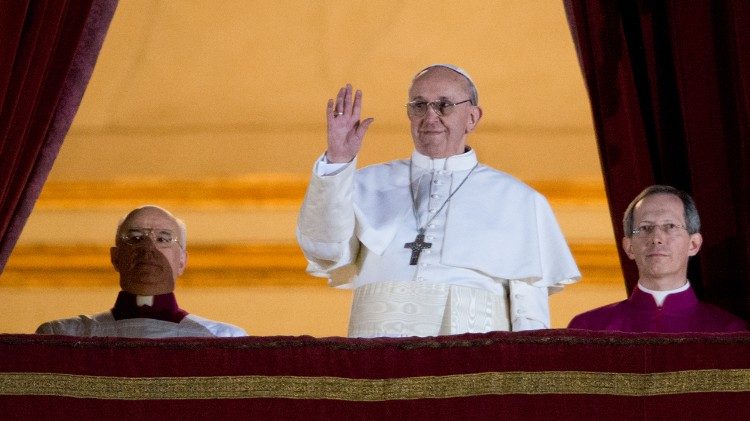

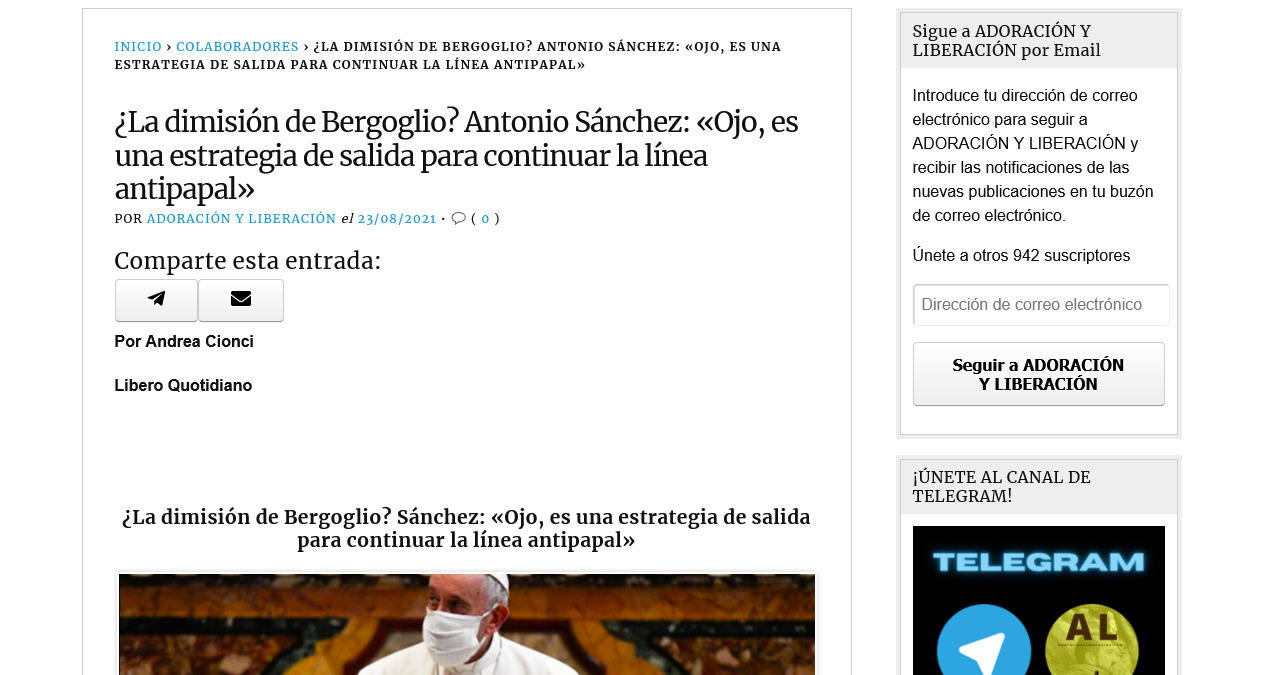
 Marcel
 Editor
 Joan
Joan Lynn Colgan Cohen
 Randy Engel10:31 AM (1 hour ago)

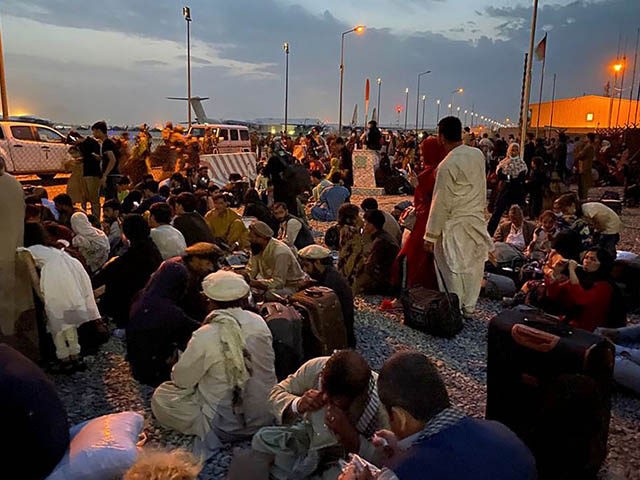


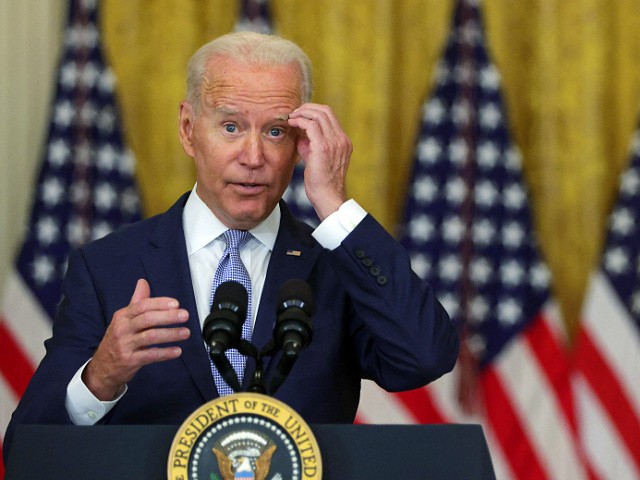


 ABYSSUS ABYSSUM INVOCAT / DEEP CALLS TO DEEP


You must be logged in to post a comment.