Marcia María de Oliveira, a Brazilian, is among the 25 coworkers of the two special secretaries of the synod for the Amazon: the Jesuit Michael Czerny, made a cardinal by Pope Francis last October 5, and the Dominican David Martínez de Aguirre Guinea, bishop of Puerto Maldonado, in Perù.
De Oliveira is a specialist on Amazonian societies and cultures, and was called to collaborate as an “expert” along with, among others, the Argentine Carlos María Galli, a theoretician of “the people’s theology,” and the German Paulo Suess, a professor of “inculturated” theology and coauthor of the base document of the synod, the controversial “Instrumentum Laboris.”
In this capacity, de Oliveira took part in the synodal press conference on Tuesday October 15. At which, responding to a question, she went back to the infanticide practiced in some Amazonian tribes, prefacing her remarks by saying that these questions are “very complex” and must be viewed from “different perspectives,” especially in their relationship with the sacred.
The following is an exact transcription of the words she spoke in this regard, delivered in Portuguese with simultaneous translation into other languages.
The transcription is taken from the video recording of the press conference, from 47:18 to 48:17:
“I personally have not followed any community that adopts this practice as a ritual or political question. There are some communities that establish some collective procedures or initiatives of birth control. It is all in relationship with the size of the family and the extent of the groups. All is based on conservation, survival, food supply, the number of persons who make up the group… It also has a lot to do with internal relations, to what extent that child, that elderly person, that adult person is capable of following the group in what are its internal movements.”
*
That’s all for the words of the expert on Amazonian cultures Marcia María de Oliveira, which certainly agree very poorly with the insistent, acritical exaltation – before and during the synod – of the “buen vivir” of those tribes, described in the “Instrumentum Laboris” as “harmony with oneself, with nature, with human beings and with the supreme being, since there is an inter-communication between the whole cosmos, where there is neither excluding nor excluded, and that among all of us we can forge a project of full life.”
But that’s not all. In the words of de Oliveira there is an allusion to the selective elimination not only of children but also of the elderly, which was the subject of the question that had been posed to her at the press conference by Swiss journalist Giuseppe Rusconi.
A few days before, in fact, at another synodal press conference, on Saturday October 12, São Félix bishop Adriano Ciocca Vasino – successor to the 91-year-old ultraindigenist Pedro Casaldaliga – had said: “My Indians tell me that the whites are cruel, because they allow the elderly who are not self-sufficient to live. And in this way they force the spirit of the elderly to remain chained to the body. And the spirit, chained, cannot spread its benefits upon the rest of the family.”
This too said with imperturbable nonjudgmental detachment. Pushing to the extreme limit the advice given by Pope Francis in the opening speech of the synod: “Let us approach the Amazonian peoples on tiptoe, respecting their history, their cultures, their styles of ‘buen vivir’.”Condividi:
As I have reported before, in February 2013 there was a de facto coup d’etat at the Vatican, the result of which was the imprisonment of Pope Benedict XVI, and the convocation of an illegal, illicit and invalid Conclave, which resulted in the illegal, illicit and invalid election of Jorge Mario Bergoglio.
Now, I invite the entire Church to examine more carefully what happened in the 58 minutes after the Consistory of February 11, 2013, which ended just before noon, Rome time, on that day.
According to Canon Law, it was the grave and solemn duty of the Dean of the College of Cardinals to approach Pope Benedict and ask for a written copy of his act of Renunciation.
Here are the relevant Canons of the Code of 1983 which regulate what should have been done:
Can. 40 — Exsecutor alicuius actus administrativi invalide suo munere fungitur, antequam litteras receperit earumque authenticitatem et integritatem recognoverit, nisi praevia earundem notitia ad ipsum auctoritate eundem actum edentis transmissa fuerit.
Can. 41 — Exsecutor actus administrativi cui committitur merum exsecutionis ministerium, exsecutionem huius actus denegare non potest, nisi manifesto appareat eundem actum esse nullum aut alia ex gravi causa sustineri non posse aut condiciones in ipso actu administrativo appositas non esse adimpletas; si tamen actus administrativi exsecutio adiunctorum personae aut loci ratione videatur inopportuna, exsecutor exsecutionem intermittat; quibus in casibus statim certiorem faciat auctoritatem quae actum edidit.
Needless to say, I have added some color to the letters of the text to make it clear that, in the very 2 Canons which Cardinal Sodano should have carefully read and acted upon, there is made by the Code itself the distinction between munus and ministerium. And yet for 6 years, and especially during the last 12 months, those who have sustained that the renunciation was valid, dared use the argument that there no distinction between the terms!
It seems so true, that it is almost a law, that whatever one investigates about the Pontificate of Bergoglio, one uncovers nothing but lies and frauds. This is clearly the greatest.
The Laws which governed what Cardinal Sodano should have done
Because in that key moment, before Sodano through Father Lombardi gave the Sig.ra Chirri the go ahead to publish to the world that Benedict had resigned, He will leave the Pontificate on Feb. 28 (B16 è dimesso. Lascia il Pontificato Feb 28), he HAD TO read these 2 canons, or at least recall them.
Let us therefore take a closer look at these 2 canons, which regard what is to be done when someone, with mere Executive authority, receives notice from someone, with the jurisdiction to posit an adminstrative act, that he is to take an action.
My English translation of the Canons:
Canon 40: The executor of any administrative act invalidly conducts his office (suo munero), before he receives the documents (letteras) and certifies (recognoverit) their integrity and authenticity, unless previous knowledge of them has been transmitted to him by the authority publishing the act itself.
Canon 41: The executor of an administrative act to whom there has been committed the mere ministry (ministerium) of execution, cannot refuse execution of the act, unless the same act appears to be null from (something) manifest [manifesto] or cannot be sustained for any grave cause or the conditions in the administrative act itself do not seem to be able to have been fulfilled: however, if the execution of the administrative act seems inopportune by reason of place or adjoined persons, let the executor omit the execution; in which cases let him immediately bring the matter to the attention of (certiorem faciat) the authority which published the act.
What Cardinal Sodano did
First, as Canon 40 states, Cardinal Sodano’s first duty was to ask Pope Benedict XVI for a written copy of the Act of Renunciation. This is because, as read out-loud, anyone fluent in Latin, as Cardinal Sodano is reputed to be, would have noticed multiple errors in the Latin, most grievous of which was the enunciation of commisum not commiso by the Holy Father. This touched upon the integrity of the act.
Second, in receiving the Act of Renunciation in the authentic Latin Text, and finding that it was as it was intended to be read, he was obliged to examine if the act was in conformity with Canon 332 §2, which reads:
Canon 332 § 2. Si contingat ut Romanus Pontifex muneri suo renuntiet, ad validitatem requiritur ut renuntiatio libere fiat et rite manifestetur, non vero ut a quopiam acceptetur.
My translation:
Canon 332 §2. If it happen that the Roman Pontiff renounce his office (muneri suo), for validity there is required that the renunciation be done freely and duly manifested, but not that it be accepted by anyone whomsoever.
And thus, in this examination, the Cardinal had to confront the very Distinctionbetween munus and ministerium that was founded in the Act of Renunciation, which contains the terms munus and ministerium, but renounces only the ministerium!
Clearly anyone reading Canon 40, would see that munus means office or charge! And in reading canon 41 that ministerium means execution of the duties of the office. Clearly he would as Dean of the Sacred College of Cardinals realize that it is one thing to have a munus to do something, quite another to put into motion his ministerium to execute it. — He was acting on the very basis of that distinction, because before he acted, he held the munus to act, and in acting he executed the ministerium to act!
For this reason, Cardinal Sodano must be questioned if not publicly accused of having closed his eyes! That is, of having ignored the distinction and his own grave duty and invalidly executed his office, by declaring the act a valid act of renunciation of the papal office!
This is especially true, because Canon 41 forbids (“let him omit the execution“) and Canon 40 invalidates the action of the executor to proceed to any action, not only because the core act of renunciation was invalid, as per canon 188 (for substantial error), to effect the loss of papal office, but also because, being invalid, the Cardinal Dean could NOT recognize that the command to call a conclave was opportune.
There are other anomalies in the Act of Renunciation which also should have caused the Cardinal to stop and refer to Pope Benedict, namely:
The Act of Renunciation is not an act of renunciation, but the declaration of an act of renunciation. As such it lacks the formal quality of a canonical act per se, since it is one thing to announce, another to enact!
The Act of Renunciation contains what appears to be a command to call a conclave. But this command is NOT a command, because it is a declaration not a command, and it is made in the First Person singular, which signifies the man who is the pope, inasmuch as he is the man, NOT the man who is the pope, inasmuch as he is the pope. But the man who is the pope, inasmuch as he is the man, whether he has renounced or not cannot call a Conclave, since he has no authority to do so!
The Act of Renunciation contains no derogation of any terms of canon law which it violates as is required by canon 38.
The errors in the Latin demonstrated clearly that the Holy Father had prepared the Act in secret without the counsel of canon lawyers and Latinists, and that therefore, it may lack formal interior consent or be based on other errors of fact or law or comprehension of Latin.
Thus, for Cardinal Sodano to proceed to act as if the renunciation were valid, violated the general principle of law, that the validity of the renunciation of power or right is NOT to be presumed.
This is a general principle of jurisprudence and is even found in Canon Law, in an applied form, in Canon 21:
Can. 21 — In dubio revocatio legis praeexistentis non praesumitur, sed leges posteriores ad priores trahendae sunt et his, quantum fieri potest, conciliandae.
Canon 21 — In doubt, the revocation of a pre-existing law is not presumed, but later laws are to be compared with prior ones, as much as can be done, be reconciled to them.
In a word, Cardinal Sodano by acting was claiming a munus to act (Canon 40) and using that authority to exercise a ministry (Canon 41) to deny that the Pope had a munus which had to be renounced (Canon 332 §2)!
Thus the Act of Renunciation appeared to be null from MANY manifest aspects of the terminology and grammatical structure. Canon 41 therefore required that he confer with the Pope to have them corrected! Canon 40 invalidated any action he took prior to recognizing the act as authentic and integral, that is, not canonically invalid, irritus or null. — And in Canon Law, as per canon 17, to recognize something as valid, does NOT mean insisting it is valid, when it is not! That is fraud.
By omitting the honest fulfillment of his duties, he acted with reckless disregard for his own office as Dean. He exploited the canonical defects in the Act to perpetrate a horrible crime of misrepresentation. This was tantamount to robbing the Roman Pontiff of his office by exploiting his authority, so as to declare valid what was invalid to produce a papal resignation!
Thus, according to the terms of Canon 40 and 41, Cardinal Sodano should have acted differently. The act of renunciation was of ministry, not of munus, and therefore was NOT an act of resignation. Therefore the declaration of a resignation, which had to have emanated from Cardinal Sodano’s desk, was a canonical lie and fraud! And since, ignorance of the law in those who should know the law is not presumed, Cardinal Sodano cannot be excused from an abuse of his office (munus).
What Cardinal Sodano should have done!
Upon receiving the document of Renunciation, and noticing that the renunciation of ministerium was not the act specified by Canon 332 §2, he should have spoken with Pope Benedict in the presence of 2 credible witnesses and brought this to his attention, as Canon 41 requires. Then he should have asked whether it was his intention to renounce the Petrine munus or simply to renounce the Petrine Ministerium. In the latter case, he should have (1) asked the Holy Father to issue a Motu Proprio naming someone to be his Vicar extraordinaire who would have the potestas executionis but not the office of the Pope, during the remainder of his life, OR, (2) in the case that he indicated that it was his intention to resign the papal office, he then should have asked him to sign a corrected copy of the act, containing the word muneri instead of ministerio and correcting all the other errors, whether of form, of Latin, or grammatical structure etc.. To have done anything less would be a grave sin of disrespect for the Office of the Successor of St. Peter, to which the Cardinal was bound by solemn vow to protect and defend.
Simple. Easy. Legal, Legit. By failing to do that, he convened an illicit, illegal and invalid Conclave, and made Bergoglio an Antipope, not the Pope!
(Photo Credits: CTV)
Posted inUncategorized|Comments Off on HIGH CRIMES AND MISDEMEANORS IN THE VATICAN IN 2013
…it probably tells us what they’ve been doing all along. The suppressed Third Secret of Fatima probably tells everyone that a secret sect would one day supplant the true pontiff with an impostor. And most important of all, the Third Secret probably tells us how we, the faithful laity, are supposed to cope with this crisis. It probably speaks DIRECTLY to us, which is precisely why it has been hidden away for a near century—because filling the Chair of Peter with a Freemasonic ally, and keeping a grip on it through a tedious knot of technicalities, is EXACTLY what they’ve always intended throughout the 20th Century.
So, what do we have? We have a “third secret of Fatima” that was released on June 26, 2000. It’s four pages long. And yet, we know that Sister Lucy’s letter was only one page long with about 25 lines of text. Heck, even a forensics laboratory confirmed that the four-page released letter has different handwriting from the past handwriting of Sister Lucy. It’s a fraud. A forgery.
But let’s suppose the official “third secret” letter at least has some elements of the original letter in it. And let’s suppose the following statement is truly a fragment that was recorded by Sister Lucia. She saw
“a Bishop dressed in White, we had the impression that it was the Holy Father.”
Let’s suppose this is a true part of her vision. Take note that she has the impression it was the Holy Father. Just as most of the world has the impression that Pope Francis is pope. Yet, Sister Lucy is not saying it IS the pope. Merely that she thinks this man could be the pope, judging from how he’s dressed. Stating that she “had an impression that it was the Holy Father” and that “this man is the Holy Father” are two different things. Later on in this description, she confidently discusses the Holy Father getting killed, but as for this person in the beginning, he merely looks like the Holy Father.
But, Fatima aside, we have other Heaven-sent messages telling us that Rome would turn. We can already recall how Our Lady of La Salette told the faithful that “Rome will lose the faith and become the seat of the Antichrist,” and that the Church will be in eclipse. We already know the story of Our Lady of Akita when she said: “The work of the Devil will infiltrate even into the Church.” But most of all, remember the words of Our Lady of Good Success, who told us exactly what we would be going through at this precise moment in history:
The devil will work to persecute the ministers of the Lord in every way, working with baneful cunning to destroy the spirit of their vocation and corrupting many. Those who will thus scandalize the Christian flock will bring upon all priests the hatred of bad Christians and the enemies of the One, Holy, Roman Catholic, and Apostolic Church. This apparent triumph of Satan will cause enormous suffering to the good pastors of the Church…and to the Supreme Pastor and Vicar of Christ on earth who, a prisoner in the Vatican, will shed secret and bitter tears in the presence of God Our Lord, asking for light, sanctity, and perfection for all the clergy of the world, to whom he is King and Father.
Our Lady of Good Success
I cannot speak with certainty and confidence to definitively know that Pope Francis holds no authority whatsoever, and that Pope Benedict is truly still the real pope. I can only go so far as saying “It’s probably true.” Like the Beast of the Sea, this man we call Pope Francis “is, but he isn’t.” Most certainly, we are all being gaslit by the cabal in the Vatican. But to what extent? I am doing what I can. As Steve Skojec wrote just two days ago:
And if the best, most qualified minds in the Church don’t tackle this, the amateurs will continue to do so, and they will make an awful mess of it.
And so here we are. Our fathers are not protecting the children as we are abused and bullied. The shepherds have abandoned the sheep, and the flock is going feral.
Is Our Lady of Good Success talking about Pope Benedict being a prisoner in the Vatican? At first blush, Pope Benedict appears to have stated multiple times that he’s happy with his resignation. But the following account claims otherwise. It is printed here, on my blog, with permission from the editor of the blog, From Rome. Read with discernment, and join me in praying to God for answers and help.
I will summarize in this article the suppositions and analysis which the volunteers and members of Veri Catholici have worked out in recent days about what really went on in the Vatican in 2012 — 2013. I will do so in a Timeline, which makes understanding what was going on easier. This will be a recitation of facts, with an interpretation which explains them all elegantly.
2012
In March 2012 Pope Benedict XVI established a Commission of Cardinals to investigate leaks of reserved and confidential documents on television, in newspapers, and in other communications media (in what is known as the Vatileaks scandal). It first met on Tuesday, 24 April 2012. Cardinal Herranz served as the Chair, and was accompanied by Cardinals Jozef Tomko and Salvatore De Giorgi. (Wikipedia: Vatican Leaks Scandal)
Fall
Someone leaks the results of the Vatican Commission on Gays in the Vatican to Team Bergoglio, which in response begins feverish activity at Rome (Documented by Dr. Sire in the Book, The Dictator Pope). This activity aims for the forced abdication of Benedict.
Early November: The Coup d’etat is hatched. Team Bergoglio demands the resignation of Pope Benedict to prevent the revelations of the Dossier to be presented by Vatican Commission on Gays in the Vatican. The contents of the dossier will implicate all the key members of Team Bergoglio and thus all force and expediency must be employed to stop its publication.
The conspiracy includes not only Team Bergoglio, but all named in the Dossier, the names of whom are given to Team Bergoglio by someone working in the Commission.
The terms of the Coup d’etat are as follows:
Pope Benedict will resign
Pope Benedict will not publish the contents of the Dossier
Pope Benedict will continuously testify that he resigned willingly
If Pope Benedict refuses, Team Bergoglio threatens the Pope with assassination, citing the published testimony of an Italian Journalist on Feb. 11, 2012 saying that the assassination will be within 1 year. The date Feb 11, 2013 is chosen for the resignation to signal to the Lavender Mafia round the world, that the abdication has been forced precisely to defend their evil institution.
Pope Benedict, taking counsel from no one, because he trusted no one, decides to go along but to leave tell tale signs for the Catholic world, so that any intelligent observer will discern what is going on. He extracts the condition of the promotion of his personal secretary to the position of the Pontifical Household, believing this will keep him safe and to signify that after his resignation, He is still the only one true Pope.
Nov. 23: James Michael Cardinal Harvey, who had been the Prefect of the Papal Household under Benedict is named Cardinal Priest of Saint Paul outside the Walls, in an apparent reward for his role in allowing Benedict to be betrayed in the Vatican Leaks scandal and to make way for Ganswein.
Dec. 7: Father Georg Gänswein, the private secretary of Pope Benedict from the time he was a Cardinal, is named Prefect of the Papal Household.
December 17: The Pope received a report on “Vatican lobbies” prepared by Cardinals Julián Herranz, Salvatore De Giorgi, a former archbishop of Palermo, and Jozef Tomko. The same day, the Pope decided to resign. (Wikipedia: Vatican Leaks). This decision is forced and is Benedict’s sign to Team Bergoglio that he has accepted the terms given in the Coup d’etat.
2013
January 6: The Feast of the Epiphany. Father Gänswein is ordained Archbishop of Urbs Salvia. He becomes the only holder of the office of Prefect of the Papal Household to ever enjoy the dignity of an Archbishop. Another Papal sign that the renunciation would be invalid and that Benedict would retain the true dignity of Pope. The choice of the titular see, Urbs Salvia, which was a center of the Imperial Cult of Augustus, Pontifex Maximus, is another sign to the Catholic world that Benedict’s resignation would be invalid, as the Prefect will care for the Pontifex Maximus. (That Bergoglio does not have an officer of the Papal Household caring for him is another sign he is not pope.)
Feb. 11, 2013: Pope Benedict XVI, his capacity as Bishop of Rome and Successor of Saint Peter renounces “the ministry which he received at the hands of the Cardinals” and calls for a Conclave to elect a new Supreme Pontiff. The alternate use of titles Successor of Saint Peter for himself and Supreme Pontiff for the one who would follow him is another sign to the Catholic world of the coup d’etat and forced resignation. But in his act of resignation, in resigning the ministerium not the munus he makes his resignation canonically invalid and sends a BIG CANONICAL MESSAGE to the Church warning them of what is going on (cf. Canon 332 §2). He also includes several errors in Latin in the text as written and as spoken to show that he is being coerced and has not acted freely.
Upon Benedict’s finishing the reading of Non Solum Propter, Cardinal Sodano, a chief conspirator in the Coup d’etat stands up and shouts out: This takes us as a surprise, like a bolt of lightning from heaven. He then orders all in the Vatican to say nothing about what the Act of Pope Benedict means, because he notices that the renunciation is of ministerium, not munus, as agreed. Not wanting to show that he is a member of the coup, he refrains from saying Benedict resigns. He orders Father Lombardi to speak with Journalists and find one who thinks it means he abdicated. Having found Giovanna Chirri, Lombardi gives her to go ahead to spread the fake news, and after the journalists of the world (prepared by Team Bergoglio) make it a fact, the Vatican Press Office confirms the fake news in the afternoon. — This is the Marxist tactic of using hearsay to repress truth. This hearsay is now the unquestionable dogma of the Lavender Mafia world wide. The sign that priests, bishops and cardinals, as well as laymen, will not question it is a tangible proof of their adhesion to the coup d’etat or beguilement by it.
Feb. 28: Pope Benedict, alarmed that no one has understood the signs he has given, gives his final address spelling out explicitly that he has resigned the active ministry, not the munus, in a last desperate attempt to stop the forced resignation. The lack of response from any Cardinals leads Benedict to believe that he has no friends among them and that they too are part of the Lavender Mafia. He flys to Castle Gandolfo where he hopes to be rescued by Catholic Forces who recognize his resignation is invalid.
Feast of Saint Joseph, Protector of the Church: March 19: At the papal inauguration of Pope Francis, Cardinal Tomko, a member of the Commission on Gay activity in the Vatican, was one of the six cardinals who made the public act of obedience on behalf of the College of Cardinals to the new pope at his papal inauguration. (Wikipedia: Cardinal Tomko) — In an act of obvious agreement to the coup d’etat. A sign, perhaps, that he was the one who leaked information of the investigation to Team Bergoglio in the late summer of 2012. — The date of March 19 was chosen to indicate to the Lavender Mafia that the coup had protected their evil institution.
March 23: Bergoglio warned that Benedict’s residence at Castel Gandolfo may be to escape the terms of the Coup d’etat, meets with him there and orders his return to the Vatican as a prisoner.
2014
June 12 : Bergoglio awards Cardinal Herranz for his silence by raising him from the dignity of a Cardinal Deacon to that of a Cardinal Priest. (Wikipedia: Cardinal Heranz).
2016
April: Pope Benedict approves the up and coming talk by Archbishop Gänswein at the Pontifical University of St Gregory the Great, in which the Archbishop affirms that Benedict retains the petrine munus and ministry, as another desperate attempt to get Catholics to study the timeline of events. Bergoglio responds with force and orders them both to silence on these matters.
2019
February to May: Benedict having received a canonical brief demonstrating his renunciation was invalid as regards the petrine munus, tacitly accepts it to indicate canonically that he knows he is still the Pope, and politically, that he is under duress not to speak.
# # # #
In fine: His Holiness Pope Benedict, XVI remains a prisoner in the Vatican waiting patiently that someone in the Catholic world will read this timeline and realize what it means.TAGGEDCATHOLIC CHURCHPOPE FRANCISPROPHECYSKOJEC
Laramie Hirsch is a red-pilled traditionalist Catholic writer. He is the author of the blogs Forge and Anvil and The Hirsch Files. His articles have appeared at blog sites such as Men of the West, Culture Wars, Stares at the World, Affirmative Right, The Counter-Revolution, and OnePeterFive. He lives in Tulsa, Oklahoma.View all posts by LH →
5 Comments on “They Won’t Release the 3rd Secret of Fatima Because…”
Michael Dowd says:October 13, 2019 at 7:09 am All you have said is true. It is therefore up to you and others like you to spread the word of truth as you are now doing. One day we may have to abandon the Vatican supervised Catholic Church , as it continues to deteriorate morally and doctrinally and form an underground Catholic Church as the various predictions of Our Lady come to pass. God Bless you and your work.REPLY
Lindsay Wheeler says:October 13, 2019 at 3:07 pm Thank you Br. Bugnolo! Thank you for posting that link! What that link does is CONFIRM Ann Barnhardt’s analysis two months ago! But I want to further the analysis, a better one, a different one, than Br. Bugnolo or Barnhardt makes. From the above link is a direct quote from “Pope Benedict”:Here, allow me to go back once again to 19 April 2005. The real gravity of the decision was also due to the fact that from that moment on I was engaged always and forever by the Lord. Always – anyone who accepts the Petrine ministry no longer has any privacy. He belongs always and completely to everyone, to the whole Church. In a manner of speaking, the private dimension of his life is completely eliminated. I was able to experience, and I experience it even now, that one receives one’s life precisely when one gives it away. Earlier I said that many people who love the Lord also love the Successor of Saint Peter and feel great affection for him; that the Pope truly has brothers and sisters, sons and daughters, throughout the world, and that he feels secure in the embrace of your communion; because he no longer belongs to himself, he belongs to all and all belong to him.The “always” is also a “for ever” – there can no longer be a return to the private sphere. My decision to resign the active exercise of the ministry does not revoke this. I do not return to private life, to a life of travel, meetings, receptions, conferences, and so on. I am not abandoning the cross, but remaining in a new way at the side of the crucified Lord. I no longer bear the power of office for the governance of the Church, but in the service of prayer I remain, so to speak, in the enclosure of Saint Peter. Saint Benedict, whose name I bear as Pope, will be a great example for me in this. He showed us the way for a life which, whether active or passive, is completely given over to the work of God. This IS SICK. Sick, Sick, Sick. This guy is COMPLICIT in evil! He is bifurcating! He is “creating” ad nuovo, out-of-thin-air—A NEW POSITION, of this so-called Papal Emeritus! It is NOT in Canon Law!Let us make this clear—-Either you Resign or you don’t. Clear, unambiguous, succinct. This is so-called “Pope” Benedict DOES NOT DO THIS. He purposely obfuscates!!!!! He is creating out of thin-air—this New Position of “emeritus” —against the clear direction of stated guidelines!A pope, any pope, is just a Bishop. First and foremost. Any bishop can resign his post due to physical health, disease, terminal illness, dementia or Alzheimers. What then happens, logically and commonsensically, the person resigns and either moves into a monastery, into a villa, or a nursing home and gives up ALL factors of the Office! That is Righteousness!Pope Benedict is NOT righteous and I stand by my earlier comments on another thread on this blog that Pope Benedict with this half-resignation is playing into the hands of those “Church theologians” that wanted a “Conciliar papacy”! This is Pope Benedict’s reason—as can be clearly be seen in the words from the Horse’s (ass) mouth!This::::: “”””””The real gravity of the decision was also due to the fact that from that moment on I was engaged always and forever by the Lord. Always – anyone who accepts the Petrine ministry no longer has any privacy. He belongs always and completely to everyone, to the whole Church. “””””””That is PURE unadulterated Narcissism! That is Sick people. To think of oneself that way—-IS SICK. Pope Benedict is a SICK man. That quote is full of sickness! The man is Deranged. No NORMAL person speaks like that. No person with COMMONSENSE speaks like that!You want to talk about who is the “real Pope”? Pope Benedict is COMPLICIT in this derangement of Office going on now! He is Complicit because he is mentally deranged! Pope Benedict is SICK in the head and in the Spirit!Pope B says “I do not return to private life, to a life of travel, meetings, receptions, conferences, and so on. I am not abandoning the cross,” “I’m not abandoning the cross”? Resignation of office—DOES NOT MEAN abandoning the cross!!!! People resign offices all day long everyday due to very good intentions–that doesn’t negate Righteousness or commonsense! If he went to Private Life—would he be abandoning his Christianity? Hell NO! What the hell, and it is hell, is this guy thinking?This guy is Sick. He is complicit. And he knows FULL well what he is doing! Yes, He is Still the Pope–but he is thoroughly deranged and a heretic. He is a Deranged, Sick, Heretical Bishop of Rome!Thank you Br. Bugnolo. That quote explains it all!REPLY
Withrow says:October 13, 2019 at 4:53 pm I totally agree that there is an element of foul play in Benedicts resignation. However, Im not really sure that I trust that Benedict is the innocent victim who has been wrongly overthrown. Or for that matter that he has been trying to signal to the faithful that he was coerced. The reason I say that, is from my own reading of his works, a few encyclicals, etc. I really do think he is at least in terms of his theology, actually insane. Remember that this is a guy who was instrumental in V2 from the beginning, has repeatedly questioned the idea of bodily resurrection, and doesn’t really think that Protestants are “really” outside the Church. And has in his career made very strange comments how he thinks Church leadership works. If he suddenly seems to advocate some kind of weird split papacy, I don’t nessesarily think thats just from coercion. I think it’s possible he may actually think its some kind of new phase, or update “adapting the Church to the modern age.” Which is the same way he has approached other aspects of the faith. For example he was initially glowing with the prospects for the new mass, and in his 1983 “eschatology”, even in the first few chapters he is intensely scornful of both specific aspects of traditional liturgy (like the Dies Irae chant representing a “spirit of apostasy”) and the culture of the church for huge stretches of time. But he then also writes documents around the same period praising traditional liturgy, and complaining of novelties. I don’t think he has a coherent understanding of contradictions being a problem. If two kinds of liturgy with different theology at same time, why not two popes? He doesn’t see the problem. Im not saying that coercion isn’t possible, or a contributing factor. But from my own limited understanding of what I have seen him write, and the theological ideas he has supported, I don’t see it as impossible that he would break Church canon and traditions willingly. Nor do I think it would be impossible, that he could do so and still think he was doing the right thing. I just think his ideas are a mess, and its possible that he wouldn’t even see it as a contradiction to traditional church practice. But at the same time I could be wrong. Its a mess and needs prayers. Regardless of his complicity or not, he needs prayers. Hail Mary full of grace!
The Psalmist says, “We went through fire and water”; nor is it possible to imagine trials fiercer or more various than those from which Catholicism has come forth uninjured, as out of the Egyptian sea or the Babylonian furnace.
First of all were the bitter persecutions of the Pagan Empire in the early centuries; then its sudden conversion, the liberty of Christian worship, the development of the cultus sanctorum, and the reception of Monachism into the ecclesiastical system. Then came the irruption of the barbarians, and the occupation by them of the orbis terrarum from the North, and by the Saracens from the South.
Meanwhile the anxious and protracted controversy concerning the Incarnation hung like some terrible disease upon the faith of the Church. Then came the time of thick darkness; and afterwards two great struggles, one with the material power, the other with the intellect, of the world, terminating in the ecclesiastical monarchy, and in the theology of the schools. And lastly came the great changes consequent upon the controversies of the sixteenth century.
Is it conceivable that any one of those heresies, with which ecclesiastical history abounds, should have gone through a hundredth part of these trials, yet have come out of them so nearly what it was before, as Catholicism has done?
Could such a theology as Arianism have lasted through the scholastic contest? or Montanism have endured to possess the world, without coming to a crisis, and failing? or could the imbecility of the Manichean system, as a religion, have escaped exposure, had it been brought into conflict with the barbarians of the Empire, or the feudal system?
A similar contrast discovers itself in the respective effects and fortunes of certain influential principles or usages, which have both been introduced into the Catholic system, and are seen in operation elsewhere.
When a system really is corrupt, powerful agents, when applied to it, do but develop that corruption, and bring it the more speedily to an end. They stimulate it preternaturally; it puts forth its strength, and dies in some memorable act.
Very different has been the history of Catholicism, when it has committed itself to such formidable influences. It has borne, and can bear, principles or doctrines, which in other systems of religion quickly degenerate into fanaticism or infidelity.
This might be shown at great length in the history of the Aristotelic philosophy within and without the Church; or in the history of Monachism, or of Mysticism; not that there has not been at first a conflict between these powerful and unruly elements and the Divine System into which they were entering, but that it ended in the victory of Catholicism.
The theology of St. Thomas, nay of the Church of his period, is built on that very Aristotelism, which the early Fathers denounce as the source of all misbelief, and in particular of the Arian and Monophysite heresies.
The exercises of asceticism, which are so graceful in St. Antony, so touching in St. Basil, and so awful in St. Germanus, do but become a melancholy and gloomy superstition even in the most pious persons who are cut off from Catholic communion.
*
And while the highest devotion in the Church is the mystical, and contemplation has been the token of the most singularly favored Saints, we need not look deeply into the history of modern sects, for evidence of the excesses in conduct, or the errors in doctrine, to which mystics have been commonly led, who have boasted of their possession of reformed truth, and have rejected what they called the corruptions of Catholicism.
It is true, there have been seasons when, from the operation of external or internal causes, the Church has been thrown into what was almost a state of deliquium; but her wonderful revivals, while the world was triumphing over her, is a further evidence of the absence of corruption in the system of doctrine and worship into which she has developed.
If corruption be an incipient disorganization, surely an abrupt and absolute recurrence to the former state of vigor, after an interval, is even less conceivable than a corruption that is permanent.
Now this is the case with the revivals I speak of. After violent exertion men are exhausted and fall asleep; they awake the same as before, refreshed by the temporary cessation of their activity; and such has been the slumber and such the restoration of the Church. She pauses in her course, and almost suspends her functions; she rises again, and she is herself once more; all things are in their place and ready for action.
Doctrine is where it was, and usage, and precedence, and principle, and policy; there may be changes, but they are consolidations or adaptations; all is unequivocal and determinate, with an identity which there is no disputing. Indeed it is one of the most popular charges against the Catholic Church at this very time, that she is “incorrigible”; change she cannot, if we listen to St. Athanasius or St. Leo; change she never will, if we believe the controversialist or alarmist of the present day.
*******
Such were the thoughts concerning the “Blessed Vision of Peace,” of one whose long-continued petition had been that the Most Merciful would not despise the work of His own Hands, nor leave him to himself; while yet his eyes were dim, and his breast laden, and he could but employ Reason in the things of Faith.
And now, dear Reader, time is short, eternity is long. Put not from you what you have here found; regard it not as mere matter of present controversy; set not out resolved to refute it, and looking about for the best way of doing so; seduce not yourself with the imagination that it comes of disappointment, or disgust, or restlessness, or wounded feeling, or undue sensibility, or other weakness.
Wrap not yourself round in the associations of years past; nor determine that to be truth which you wish to be so, nor make an idol of cherished anticipations.
Time is short, eternity is long.
Nunc dimittis servum tuum, Domine, Secundum verbum tuum in pace: Quia viderunt oculi mei salutare tuum.
– From Newman’s An Essay on the Development of Christian Doctrine, which study ended in his conversion.
John Henry Newman (1801-1890) was made a cardinal by Leo XIII in 1879, beatified by Benedict XVI in 2010, and canonized by Pope Francis on October 13, 2019. He was among the most important Catholic writers of the last several centuries. On February 13, 2019, Pope Francis approved Cardinal Newman’s canonization, which will happen later this year.
Posted inUncategorized|Comments Off on When a system really is corrupt, powerful agents, when applied to it, do but develop that corruption, and bring it the more speedily to an end. They stimulate it preternaturally; it puts forth its strength, and dies in some memorable act. Very different has been the history of Catholicism, when it has committed itself to such formidable influences. It has borne, and can bear, principles or doctrines, which in other systems of religion quickly degenerate into fanaticism or infidelity. – Saint John Henry Newman
Newman is a model of stability amid hostilities that arise from without. But he is also a model for spiritual resistance to the suspicion and distrust that arise within one’s own ranks.
John Henry Newman—rightly regarded as one of the most important Christian thinkers of the modern era—was born February 21, 1801 in the city of London. The span of his life encompasses nearly the entire nineteenth century. The Anglican divine and illustrious leader of the Oxford Movement was admitted into full communion with the Catholic Church in 1845 and died on August 11, 1890 as a cardinal in the Oratory Birmingham, his primary place of work since 1849.
Newman’s historical, theological, and spiritual works are equally remarkable. Most of his homilies appear in German editions, many of which boast a profound interpretation of Christianity’s central mysteries. His celebrity grew with his An Essay in Aid of a Grammar of Assent, which answered the question of how we can—with all the finitude of human knowing—arrive at certainty of faith’s assent to the historical revelation of God.
His work on the development of dogma is, we can say, nothing short of genius. In it Newman developed principles for the historical continuity and identity of revelation under the conditions of finite, human knowing within the believing Church founded by Christ and preserved in—and attended ever more deeply into—truth by the Holy Spirit. Newman’s 1851 lectures on the nature of the university, offered on the occasion of the Catholic University of Dublin’s founding, should be of the highest relevance for contemporary debates on the nature and goal of the university, education, and science, and the legitimacy of revelation-based theology in public schools.
Newman’s Apologia Pro Vita Sua is crucial for his spiritual biography. In it he renders the history of his religious convictions and defends himself against accusations that the motives behind his conversion were disingenuous. With this literary masterpiece penned in glittering English (which we could place alongside Augustine’s Confessions and Blaise Pascal’s Pensées), Newman restored honor to Catholic clergy in Protestant England, which had been characterized by anti-Catholic polemics since the reformation. Encouraged by Enlightenment polemics from eighteenth-century France, many then remained firmly convinced that Catholic priests and religious were nothing but evil hypocrites and pitiless agents of the antichrist seated on the Roman pontiff’s chair, for whom every means of slaking their hunger for power is justified. Many lived and cultivated the prejudices of the anti-scientific, reactionary Catholic Church and saw in Roman universalism the nemesis of the ideal of the nation-state with its imperial, colonial goals. In this context one could suffer the Church only as a national English Church; and the Anglican bishops put themselves in service of a dilated, national Christianity.
The Plurality of Christian Communities and the Visible Unity of the Catholic Church
By his own account Newman, a respected scholar and celebrated university preacher in Oxford, discovered the biblical and historical instability of the Protestant ur-dogma of the pope as antichrist. After this Newman could no longer shy away from the insight that it was the Catholic Church of the Roman pope (so disdained in England)—and not the Anglican national church, which had existed since the sixteenth century—which stood in real continuity with the Church of the apostles. With his extraordinary knowledge of the Bible and of the Church fathers he could not escape the conclusion that the Catholic Church is located in full continuity of doctrine and Church polity with the Church of the apostles, and that Protestant charges of corrupting the apostolic faith or of supplementing it with unbiblical elements of doctrine rather fall back on themselves. In his Apologia Newman wrote: “And as far as I know myself, my one paramount reason for contemplating a change is my deep, unvarying conviction that our Church is in schism, and that my salvation depends on my joining the Church of Rome.”
This same understanding of the Church as confession of faith finds expression in the Second Vatican Council. The declaration Dominus Iesus, published by the Congregation for the Doctrine of the Faith on August 6, 2000, says the same, though it is mostly misinterpreted because largely (by some intentionally) unread. For good reason Newman rejected the theory that the Anglican Church charts a middle way between Catholicism and Protestantism; he also rejected that we could pragmatically settle for the splintering of Christendom with the notion that there are several branches on the Church’s one tree. Yet the plurality of communities around now cannot count as a partial realization of Christ’s Church; the Church of Christ is indivisible. And indivisibility—which expresses itself visibly in the Church’s unity of belief, its sacramental life, and its apostolic constitution—belongs inexorably to the essence of the Church. The goal of the ecumenical movement is not, then, a manmade merger of ecclesial confederations. It is rather the restoration of full communion in faith and of the bishops as successors to the apostles, as it has been realized historically and continuously since the beginning in the Church, which “is governed by the successor of Peter and by the bishops in communion with him” (Dominus Iesus17).
Why did Newman oppose an ecumenism based on relativism and skepticism? Why did he not settle for the following formula? “We all believe in the same God, and so the Church’s teaching does not matter. Our knowledge of things is not exact. Religion is a matter of feeling, and so the majority of those who share the same sentiments determine which way the Church goes. For ecumenical unity, a mere sense of community and a sentimental relationship to ‘Jesus’ suffices to render unity according to the tastes of the majority. If you feel united, you too can celebrate a Eucharistic feast together—even if the binding doctrine of the Church or the separated Christian communities teach the opposite and recognize these doctrines as relevant to salvation.”
Newman believes in the reality of God, in the fact of a historical self-revelation in Jesus Christ, and in his current presence in the Church which is, in its essential structural elements and apostolic authority of its shepherds, led by the Spirit of God.
Whoever takes seriously the incarnation must also take seriously the Church as the work of God and beware any manipulation by ideologically stubborn pressure groups. The visible Church is the concretization of the Word of God’s incarnate presence in Jesus Christ. Because Israel bears a salvation history, because the incarnation happened, because Christ has really given up his life on the cross for the salvation of the world and has really risen again—thus there is also the concrete obligation faithfully to obey revelation, which makes present the confession of faith in the promise of salvation, in the sacraments, and in ecclesial authority of the apostles’ successors in the episcopate. It is within the context of these confessions that Newman wants to be understood.
The common view that one Christian confession is like the other and that true Christianity unfolds only within the interiority of the heart—beyond creed, dogma, sacrament, and magisterial authority—appears indeed quite plausible to great numbers of Christians today. But it is untenable in view of the holy scriptures’ claims about revelation and the Church. Because the visible, sacramental Church and the invisible community of the faithful belong together indissolubly, Newman had to pose the question: Which among the visible Christian communities now on offer can rightly lay claim to an identity of confession of faith and of historical continuity? He did not understand his conversion as a change from one Christian confession to another. Nor had he determined to take this step because Catholic piety might have appealed more to him emotionally, say, or because a Catholic culture of romantic style might have suited him more. Quite the opposite! The outer appearance of the Catholic Church should have disgusted him, even. Newman took the step because he realized in faith and conscience the complete identity of Christ’s Church with the visible Catholic Church. This was no slight to the Anglican Church. His conversion is not one’s cause for grief and another’s flush of success. Newman belongs to all Christians! He is one of the most impressive witnesses for the visible unity of the Church, which Jesus himself willed and which thus constitutes an unshakable benchmark of Christian identity (John 17:22ff).
Newman: Apologist for Christianity as Revealed Religion
Newman lived in the nineteenth century, which posed the basic questions also decisive for the twentieth century and which will bleed deeply into the twenty-first. These questions concern the fundamental challenge posed by the philosophy of the Enlightenment.
At stake is Christianity’s right to exist and the onus of historical revelation as truth and fact before human reason. In the critique of religion by Feuerbach, Marx, Nietzsche, and Freud, the apparent overcoming of revealed faith by modern science and the massive hostility to the Church of Hitler’s and Stalin’s totalitarian regimes always raise a single question: Does God exist, and is his Word allowed to be the measure for our faith and conscience?
In his famous talk at his elevation to cardinal (1879), Newman signals two possible attitudes toward revelation. He calls one the liberal, skeptical posture of agnosticism and atheism. The other he calls the dogmatic posture—that is, the basic willingness faithfully to obey the Word of God, which is represented in the human word of the Church’s confession: “Liberalism in religion is the doctrine that there is no positive truth in religion, but that one creed is as good as another, and this is the teaching which is gaining substance and force daily. It is inconsistent with any recognition of any religion as true. It teaches that all are to be tolerated, for all are matters of opinion. Revealed religion is not a truth, but a sentiment and a taste; not an objective fact, not miraculous; and it is the right of each individual to make it say just what strikes his fancy.” Dogmatic thinking opposes this. It acknowledges the fact of the revealed Word of God spoken to humans in Jesus Christ. In contrast to a merely emotional sense of an impersonal presence of the divine, the Word of God made flesh is rational and clearly expressible. This proves the Church’s confession of faith. In the sacramental act given to the Church by Christ, the Word made flesh is again present.
This comparison of both possible attitudes of modern people toward the self-revelation of God in Jesus Christ is not, of course, a question of the concepts of “liberal” and “dogmatic,” but rather of the thing identified by them.
Newman did not target political liberalism. Indeed, he recognized the humane views of many of its proponents. After the end of the religious wars in Europe and the devastation wrought by the French Revolution and Napoleon’s campaigns of expansion over the world, there remained no other choice than to reorganize society on the principles of religious freedom, tolerance, and equality of all before the law. So if religion was entrusted to the individual’s consciousness of truth, it was still far from becoming a private affair or something arbitrary. On the contrary, the challenge to individuals to seek truth and to face up to their obligatory power had increased enormously since the days when European rulers could still determine the religion of their subjects. To be sure, modern freedom of religion includes more than the right of the individual against the state’s claims to power and against pressures to conform to society. Decisive for the full realization of this fundamental right is also the communal dimension of the question of truth.
Every religious community must be allowed to determine for itself what are and are not the binding or dogmatic elements of its constitution along with the rational, identifiable conditions of their validity.
At this point the modern conflict between belief and unbelief emerges. In opposition to its own principles, liberalism demands its validity totally and exclusively. Its largesse and alleged capaciousness toward all religious orientations often just amount to a militant indifference to the claims of God’s Word. Liberalism as Newman critiques it is another form of rationalism:
Liberalism then is the mistake of subjecting to human judgment those revealed doctrines which are in their nature beyond and independent of it, and of claiming to determine on intrinsic grounds which are in their nature beyond and independent of it, and of claiming to determine on intrinsic grounds the truth and value of propositions which rest for their reception simply on the external authority of the Divine Word (Apologia, 493).
Liberalism claims the sole validity of metaphysical skepticism, even though under the assumptions of liberalism metaphysically valid and indubitable statements are impossible. Liberalism turns against the free right of religious communities to determine the truth content and horizon of their own metaphysical and epistemological principles. In contradiction to liberalism of this sort, rational justification of the act and content of faith became a theme of Newman’s life.
Here again Newman is impressively relevant. The declaration Dominus Iesus rejected the so-called pluralist theory of religion that relativizes Christ and the Church as irreconcilable with the fundamentals and substance of the Catholic faith. This theory about the equality and similarity of several forms of mediation and several mediators is based on epistemological relativism and skepticism. It assumes that every person can, with the help of his ancestral religion and culture, overcome his selfishness in order to engage his fellow human and to open himself to reality, which is always grander than anything we in our finitude can think or do. This is the salvation communicated to every religiously-minded person irrespective of whether he, before the ever-vanishing horizon of reality, imagines God as a personal God or an impersonal numinosum, or whether after death he anticipates a personal resurrection or a biological resuscitation of corpses, as unity with the one-and-all of being or else nothing beyond personal consciousness.
For Newman it was clear that the Christian confession of the universal salvific will of the one God and of the uniqueness of Jesus Christ’s revelation (cf. 1 Timothy 2:4ff) does not denigrate pre-Christian religions by absolutizing a tradition unique to the Christian West. Whoever debunks as unproven and indemonstrable the fundamental dogma of relativists, metaphysical skeptics, and agnostics for whom a historical self-revelation of God is impossible will also confess that God is already at work in the human pursuit of truth and in all religions’ desire for salvation. Thus in Jesus Christ “all people are saved and come to the knowledge of the truth” (1 Timothy 2:4).
For Newman, then, Christianity is the religion of the future because God, who once and for all has taken up residence in our world in his Word made flesh, is also the future of humanity:
Revelation begins where Natural Religion fails. The Religion of Nature is a mere inchoation, and needs a complement,—it can have but one complement, and that very complement is Christianity. Natural religion is based upon the sense of sin; it recognizes the disease, but it cannot find, it does but look out for the remedy. That remedy, both for guilt and for moral impotence, is found in the central doctrine of Revelation, the Mediation of Christ . . . Thus it is that Christianity is the fulfillment of the promise made to Abraham, and of the Mosaic revelations; this is how it has been able from the first to occupy the world and gain a hold on every class of human society to which its preachers reached; this is why the Roman power and the multitude of religions which it embraced could not stand against it; this is the secret of its sustained energy, and its never-flagging martyrdoms; this is how at present it is so mysteriously potent, in spite of the new and fearful adversaries which beset its path. It has with it that gift of staunching and healing the one deep wound of human nature, which avails more for its success than a full encyclopedia of scientific knowledge and a whole library of controversy, and therefore it must last while human nature lasts. It is a living truth which never can grow old.
Some persons speak of it as if it were a thing of history, with only indirect bearings upon modern times; I cannot allow that it is a mere historical religion. Certainly it has its foundations in past and glorious memories, but its power is in the present. It is no dreary matter of antiquarianism; we do not contemplate it in conclusions drawn from dumb documents and dead events, but by faith exercised in ever-living objects, and by the appropriation and use of ever-recurring gifts.
Our communion with it is in the unseen, not in the obsolete. At this very day its rites and ordinances are continually eliciting the active interposition of that Omnipotence in which the Religion long ago began. First and above all is the Holy Mass, in which He who once died for us upon the Cross, brings back and perpetuates, by His literal presence in it, that one and the same sacrifice which cannot be repeated. Next, there is the actual entrance of Himself, soul and body, and divinity, into the soul and body of every worshipper who comes to Him for the gift, a privilege more intimate than if we lived with Him during His long-past sojourn upon earth. And then, moreover, there is His personal abidance in our churches, raising earthly service into a foretaste of heaven. Such is the profession of Christianity, and, I repeat, its very divination of our needs is in itself a proof that it is really the supply of them . . .
The promised Deliverer, the Expectation of the nations, has not done his work by halves . . . He has created a visible hierarchy and a succession of sacraments, to be channels of His mercies . . . In all these ways He brings Himself before us . . . as human nature itself is still in life and action as much as ever it was, so He too lives, to our imaginations, by His visible symbols, as if He were on earth, with a practical efficacy which even unbelievers cannot deny, so as to be the corrective of that nature, and its strength day by day,—and that this power of perpetuating His Image . . . is a grand evidence how well He fulfils to this day that Sovereign Mission which, from the first beginning of the world’s history, has been in prophecy assigned to Him (Apologia, 487–489)
Newman: A Model of Stability
Another parallel to the present is the episode of the Achilli affair, which cast a dark cloud over 1851. A vow-breaking, apostatizing Dominican named Achilli had, much to the delight of his smug and Church-critical audience, related the Church’s crimes and transgressions, omitting no stereotype or prejudice. When Newman countered this populist approach with historical events, he was charged with libel. Though all the accusations proved unjustified, the judge sentenced Newman to pay a ruinous fine, deprived him of the right to speech, and cursed him as a completely sordid figure.
Even today there is bad blood and eruptions of hatred within the Church. In some countries like Holland, Switzerland, Austria, and Germany there are factions that assume the worst of bishops and the pope. Often theologians and priests who have lost faith or failed celibacy or the evangelical counsels lead and agitate for movements that demand Church reform and yet—consciously or not—sow only division and destruction.
Newman is a model of stability amid hostilities that arise from without. But he is also a model for spiritual resistance to the suspicion and distrust that arise within one’s own ranks. Today we call this “bullying.” For years higher personalities within the Church cast a “cloud of suspicion” over Newman. Newman did not shrink back sorely; he knew that Christ’s Church is more than group dynamics and their surge of sympathy and antipathy on the Church’s surface. The Church penetrates into the mystery of Christ. The Church as sacrament means being taken up into the sonship of Christ, who as head makes the Church his body, uniting individual believers as a community and imparting to it all the charisms and ministries to fulfill its mission of the world’s salvation. And so humanity—all-too-human—cannot destroy the Church; and we cannot yield to despair.
Even after all the external and internal difficulty, hostility, resistance, and irritation, Pope Leo XIII elevated Newman to the position of cardinal. He honored Newman for his belief rooted deeply in the Church and his willingness to serve with all the admirable talents of his spirit, his humanity, and his formation of the Church’s heart. “I was determined to honor the Church,” Leo explained, “by honoring Newman.”
Newman is undoubtedly an impressive Christian thinker who—with his work and life embroiled in conflicts regarding Christianity’s legitimacy in modernity—confidently and cogently points up humanity’s future. And this is nothing other than God in Jesus Christ and in his Church. Yet Newman was not only a brilliant theologian and gifted poet but also a great prayer; he brought the situation of the Church as he perceived and suffered it before God in prayer. Little commentary is needed to show how relevant these words are:
O God, the time is utterly beset. The cause of Christ lies as in agony. And yet—never did Christ stride more powerfully through the age, never was his advent starker, never his nearness more sensible, never his duty dearer than now. So in these flashes of eternity, between storm and storm, let us here below pray you: O God, You can relume the dark, You and you alone.*
*Translator’s note: Though this poem borrows lines from Newman, it is not his. It derives rather from Johannes Dierkes’s Gedanken und Gebete im Christuslicht (Paderborn: Junfermann, 1935), but quickly became misattributed to Newman himself.
Translated by Justin Shaun Coyle
Posted inUncategorized|Comments Off on “O God, the time is utterly beset. The cause of Christ lies as in agony. And yet—never did Christ stride more powerfully through the age, never was his advent starker, never his nearness more sensible, never his duty dearer than now. So in these flashes of eternity, between storm and storm, let us here below pray you: O God, You can relume the dark, You and you alone”
ROME, October 11, 2019 (LifeSiteNews) — Reacting to Pope Francis’s participation in a “pagan religious ceremony” on the grounds of the Vatican, a canon lawyer said on EWTN’s The World Over that the ceremony was “horrendous” and that Catholicism is supposed to “overthrow pagan false notions,” not be taught by them.
On October 4, Pope Francis observed as an Amazonian woman led a ritual in the Vatican gardens as part of a tree-planting ceremony. The woman, bedecked with a traditional feather headdress, prostrated herself before the tree and a pair of statues of naked pregnant women. The indigenous woman also shook a rattle in an apparent blessing or incantation over the group at the ceremony, who included a Franciscan friar. Some members of the group prostrated themselves or knelt during the ceremony, while the pope stood by.
On Thursday evening, EWTN television news host Raymond Arroyo interviewed editor Robert Royal of The Catholic Thing and canon lawyer Fr. Gerald Murray of the New York archdiocese to get their reactions to controversy over the pope and his participation in a “pagan” ceremony.
Fr. Murray said, “The ceremony can be accurately described as a pagan religious ceremony and that false goddess, Pachamama — who is like a creation god — this is horrendous, I have to say, no matter what the intention of those who invited those people there. It’s quite clear that that was a pagan religious ceremony with religious meaning to them. This should not be — ever occur in a Catholic institution, certainly not in the Holy See.”
Saying that he regretted the pope’s participation, Murray said: “Paganism is not here in the Earth to teach Catholicism. It’s the other way around. Catholicism is meant to overthrow pagan false notions.”
“The kick-off of the Amazon Synod was a very strange tree-planting ceremony on the feast day of St. Francis in the Vatican gardens behind you,” Arroyo said on the show. Referring to the wooden statues at the ceremony, Arroyo said, “Some say this was the Virgin Mary, Our Lady of the Amazon, visiting Saint Elizabeth.”
Asking for a reaction to what Arroyo called a “fertility god,” Royal answered that “something … is starting to characterize this synod in a strange way. Something unique, something that we’ve never seen before on the Vatican grounds took place. … No one has been able to interpret it. No one wants to take responsibility for how it was organized or who permitted it and why the pope was there and what it meant for him to be a witness as this was going on.”
As to its effects, Royal said it caused “…tremendous confusion, especially after many people before the synod even started were pointing out the dangers of this kind of syncretism[.]” He said it brought in “native elements that don’t really accord well with Catholicism,” that are “confusing and lead us down strange paths.” He added, “I think that the fact that no one can explain this is an additional problem, besides the fact that something that is not Christianity was celebrated on the grounds of the Vatican itself.”
Arroyo observed that Pope Francis abandoned his prepared remarks at the conclusion of the ceremony. The pope “cast aside his prepared remarks, said an Our Father, and he left,” Arroyo said. “I read that as sort of a subtle rejection of what he had just sat through,” he concluded.
Royal said that at the point of the pope’s departure, he had been standing for about one hour in the sun and appeared fatigued. But he added, “Even this we cannot read with any great degree of clarity, and one of the problems with this papacy is the way that ambiguity and a lack of clarity has led to people having very grave doubts, and then — now we have a generalized mistrust when a situation like this arises.”
A native Amazonian leader, Jonas Marcolino Macuxí, told LifeSiteNews that what he observed of the tree-planting ceremony at the Vatican was “pagan,” as evidenced by the smoke pots there that were intended to ward off evil. “It’s 100 percent pagan,” he averred through an interpreter. Macuxí is a trained lawyer who asserted in the interview that there are bishops and priests imbued with Liberation Theology concepts who are taking advantage of Amazonian people while urging them to return to ancestral life ways. Formerly Catholic but now an evangelical Protestant, Macuxí said, “My main concern is to unite people: Brazilians, whites, Indians, people from the rest of the world because the visions are being exploited, they’re being promoted and these can only lead to a major breakdown of society that we have to avoid in order for everyone to progress — Indians, whites, et cetera — and have a decent life and freedom.”
In another LifeSiteNews interview, Rexcrisanto Delson said he was appalled to learn of the pagan ceremony at the Vatican. “I saw the ceremony that was performed in the Vatican garden and couldn’t believe my eyes,” Delson told LifeSiteNews. Referring to the earlier interview with Macuxí, Delson said, “I later learned that an Amazon tribal leader confirmed it was purely pagan. Did the Catholics who participated and supported such a vile act not know it was pagan?” Delson said, “There’s no excuse from here on out to claim they didn’t know they were violating the First Commandment,” while quoting Psalm 95:5 in saying that “all the gods of the Gentiles are devils.”
Anthropologists identify “Pachamama” or “world mother” as a fertility goddess revered by the indigenous people of the Andes. The Quechua and Aymara peoples of the Andean region erect shrines to Pachamama at hallowed rocks and trees. She is depicted as an adult woman who is self-sufficient and creative in sustaining life on Earth. Among some native peoples after the European conquest of the 1500s and Christianization, Pachamama was often confused with the Virgin Mary. However, in pre-Conquest times, she was often a cruel goddess, greedy for human sacrifice, especially of children.
As I have reported before, in February 2013 there was a de facto coup d’etat at the Vatican, the result of which was the imprisonment of Pope Benedict XVI, and the convocation of an illegal, illicit and invalid Conclave, which resulted in the illegal, illicit and invalid election of Jorge Mario Bergoglio.
Now, I invite the entire Church to examine more carefully what happened in the 58 minutes after the Consistory of February 11, 2013, which ended just before noon, Rome time, on that day.
According to Canon Law, it was the grave and solemn duty of the Dean of the College of Cardinals to approach Pope Benedict and ask for a written copy of his act of Renunciation.
Here are the relevant Canons of the Code of 1983 which regulate what should have been done:
Can. 40 — Exsecutor alicuius actus administrativi invalide suo munere fungitur, antequam litteras receperit earumque authenticitatem et integritatem recognoverit, nisi praevia earundem notitia ad ipsum auctoritate eundem actum edentis transmissa fuerit.
Can. 41 — Exsecutor actus administrativi cui committitur merum exsecutionis ministerium, exsecutionem huius actus denegare non potest, nisi manifesto appareat eundem actum esse nullum aut alia ex gravi causa sustineri non posse aut condiciones in ipso actu administrativo appositas non esse adimpletas; si tamen actus administrativi exsecutio adiunctorum personae aut loci ratione videatur inopportuna, exsecutor exsecutionem intermittat; quibus in casibus statim certiorem faciat auctoritatem quae actum edidit.
Needless to say, I have added some color to the letters of the text to make it clear that, in the very 2 Canons which Cardinal Sodano should have carefully read and acted upon, there is made by the Code itself the distinction between munus and ministerium. And yet for 6 years, and especially during the last 12 months, those who have sustained that the renunciation was valid, dared use the argument that there no distinction between the terms!
It seems so true, that it is almost a law, that whatever one investigates about the Pontificate of Bergoglio, one uncovers nothing but lies and frauds. This is clearly the greatest.
The Laws which governed what Cardinal Sodano should have done
Because in that key moment, before Sodano through Father Lombardi gave the Sig.ra Chirri the go ahead to publish to the world that Benedict had resigned, He will leave the Pontificate on Feb. 28 (B16 è dimesso. Lascia il Pontificato Feb 28), he HAD TO read these 2 canons, or at least recall them.
Let us therefore take a closer look at these 2 canons, which regard what is to be done when someone, with mere Executive authority, receives notice from someone, with the jurisdiction to posit an adminstrative act, that he is to take an action.
My English translation of the Canons:
Canon 40: The executor of any administrative act invalidly conducts his office (suo munero), before he receives the document (letteras) and certifies (recognoverit) their integrity and authenticity, unless previous knowledge of them has been transmitted to him by the authority publishing the act itself.
Canon 41: The executor of an administrative act to whom there has been committed the mere ministry (ministerium) of execution, cannot refuse execution of the act, unless the same act appears to be null from (something) manifest [manifesto] or cannot be sustained for any grave cause or the conditions in the administrative act itself do not seem to be able to have been fulfilled: however, if the execution of the administrative act seems inopportune by reason of place or adjoined persons, let the executor omit the execution; in which cases let him immediately bring the matter to the attention of (certiorem faciat) the authority which published the act.
What Cardinal Sodano did
First, as Canon 40 states, Cardinal Sodano’s first duty was to ask Pope Benedict XVI for a written copy of the Act of Renunciation. This is because, as read out-loud, anyone fluent in Latin, as Cardinal Sodano is reputed to be, would have noticed multiple errors in the Latin, most grievous of which was the enunciation of commisum not commiso by the Holy Father. This touched upon the integrity of the act.
Second, in receiving the Act of Renunciation in the authentic Latin Text, and finding that it was as it was intended to be read, he was obliged to examine if the act was in conformity with Canon 332 §2, which reads:
Canon 332 § 2. Si contingat ut Romanus Pontifex muneri suo renuntiet, ad validitatem requiritur ut renuntiatio libere fiat et rite manifestetur, non vero ut a quopiam acceptetur.
My translation:
Canon 332 §2. If it happen that the Roman Pontiff renounce his office (muneri suo), for validity there is required that the renunciation be done freely and duly manifested, but not that it be accepted by anyone whomsoever.
And thus, in this examination, the Cardinal had to confront the very Distinctionbetween munus and ministerium that was founded in the Act of Renunciation, which contains the terms munus and ministerium, but renounces only the ministerium!
Clearly anyone reading Canon 40, would see that munus means office or charge! And in reading canon 41 that ministerium means execution of the duties of the office. Clearly he would as Dean of the Sacred College of Cardinals realize that it is one thing to have a munus to do something, quite another to put into motion his ministerium to execute it. — He was acting on the very basis of that distinction, because before he acted, he held the munus to act, and in acting he executed the ministerium to act!
For this reason, Cardinal Sodano must be questioned if not publicly accused of having closed his eyes! That is, of having ignored the distinction and his own grave duty and invalidly executed his office, by declaring the act a valid act of renunciation of the papal office!
This is especially true, because Canon 41 forbids (“let him omit the execution“) and Canon 40 invalidates the action of the executor to proceed to any action, not only because the core act of renunciation was invalid, as per canon 188 (for substantial error), to effect the loss of papal office, but also because, being invalid, the Cardinal Dean could NOT recognize that the command to call a conclave was opportune.
There are other anomalies in the Act of Renunciation which also should have caused the Cardinal to stop and refer to Pope Benedict, namely:
The Act of Renunciation is not an act of renunciation, but the declaration of an act of renunciation. As such it lacks the formal quality of a canonical act per se, since it is one thing to announce, another to enact!
The Act of Renunciation contains what appears to be a command to call a conclave. But this command is NOT a command, because it is a declaration not a command, and it is made in the First Person singular, which signifies the man who is the pope, inasmuch as he is the man, NOT the man who is the pope, inasmuch as he is the pope. But the man who is the pope, inasmuch as he is the man, whether he has renounced or not cannot call a Conclave, since he has no authority to do so!
The Act of Renunciation contains no derogation of any terms of canon law which it violates as is required by canon 38.
The errors in the Latin demonstrated clearly that the Holy Father had prepared the Act in secret without the counsel of canon lawyers and Latinists, and that therefore, it may lack formal interior consent or be based on other errors of fact or law or comprehension of Latin.
Thus, for Cardinal Sodano to proceed to act as if the renunciation were valid, violated the general principle of law, that the validity of the renunciation of power or right is NOT to be presumed.
This is a general principle of jurisprudence and is even found in Canon Law, in an applied form, in Canon 21:
Can. 21 — In dubio revocatio legis praeexistentis non praesumitur, sed leges posteriores ad priores trahendae sunt et his, quantum fieri potest, conciliandae.
Canon 21 — In doubt, the revocation of a pre-existing law is not presumed, but later laws are to be compared with prior ones, as much as can be done, be reconciled to them.
In a word, Cardinal Sodano by acting was claiming a munus to act (Canon 40) and using that authority to exercise a ministry (Canon 41) to deny that the Pope had a munus which had to be renounced (Canon 332 §2)!
Thus the Act of Renunciation appeared to be null from MANY manifest aspects of the terminology and grammatical structure. Canon 41 therefore required that he confer with the Pope to have them corrected! Canon 40 invalidated any action he took prior to recognizing the act as authentic and integral, that is, not canonically invalid, irritus or null. — And in Canon Law, as per canon 17, to recognize something as valid, does NOT mean insisting it is valid, when it is not! That is fraud.
By omitting the honest fulfillment of his duties, he acted with reckless disregard for his own office as Dean. He exploited the canonical defects in the Act to perpetrate a horrible crime of misrepresentation. This was tantamount to robbing the Roman Pontiff of his office by exploiting his authority, so as to declare valid what was invalid to produce a papal resignation!
Thus, according to the terms of Canon 40 and 41, Cardinal Sodano should have acted differently. The act of renunciation was of ministry, not of munus, and therefore was NOT an act of resignation. Therefore the declaration of a resignation, which had to have emanated from Cardinal Sodano’s desk, was a canonical lie and fraud! And since, ignorance of the law in those who should know the law is not presumed, Cardinal Sodano cannot be excused from an abuse of his office (munus).
What Cardinal Sodano should have done!
Upon receiving the document of Renunciation, and noticing that the renunciation of ministerium was not the act specified by Canon 332 §2, he should have spoken with Pope Benedict in the presence of 2 credible witnesses and brought this to his attention, as Canon 41 requires. Then he should have asked whether it was his intention to renounce the Petrine munus or simply to renounce the Petrine Ministerium. In the latter case, he should have (1) asked the Holy Father to issue a Motu Proprio naming someone to be his Vicar extraordinaire who would have the potestas executionis but not the office of the Pope, during the remainder of his life, OR, (2) in the case that he indicated that it was his intention to resign the papal office, he then should have asked him to sign a corrected copy of the act, containing the word muneri instead of ministerio and correcting all the other errors, whether of form, of Latin, or grammatical structure etc.. To have done anything less would be a grave sin of disrespect for the Office of the Successor of St. Peter, to which the Cardinal was bound by solemn vow to protect and defend.
Simple. Easy. Legal, Legit. By failing to do that, he convened an illicit, illegal and invalid Conclave, and made Bergoglio an Antipope, not the Pope!
Jonathan Turley asks a question today about why the media will not allow any discussion of Joe Biden’s obviously corrupt Achilles heel to be discussed.
Within his article Turley cites examples of CNN, NBC, MSNBC and a host of other mainstream news outlets that will not allow any discussion of Joe Biden’s transparently visible weakness. He ponders ‘why’?
[…] When Rep. Lee Zeldin (R-N.Y.) raised the issue on CNN, host Erin Burnett cut him off: “There is no evidence of Joe Biden doing anything wrong, and this is something that has been looked into, and I think — I want to make a point here — I think what we need to talk about right now is what did the president right now do or not do.” Other CNN hosts have repeated the line of “no evidence of wrongdoing” like a virtual incantation.
[…] For news shows on MSNBC, CNN and other cable networks, nothing is more disgusting than the mention of what Hunter Biden actually was doing in Ukraine.
[…] Joe Biden has insisted he never spoke with his son about his foreign dealings — an incredible but categorical statement. The then-vice president flew with his son on Air Force Two on an official trip to China but suggests they never discussed his son’s deal seeking $1.5 billion in investments with the state-backed Bank of China. During the trip, Hunter reportedly introduced his father to Chinese private equity executive Jonathan Li, who was part of that deal. Yet Biden insists he was never told of any business linkage or dealings. (read more)
Perhaps here’s “why”…
Long time CTH readers will have references to hundreds of examples of the UniParty at work. The basic elements about HOW money interacts with politics and who really controls the seats of power in DC has been discussed exhaustively.
The Big Club, is a myriad of financial interests who manipulate politics for personal power, wealth and influence. Wall Street multinational corporations, meaning those who rely upon the constructs of corrupted ‘globalism’, make up about 75% of the overall manipulative influence over U.S. trade, financial and political policy.
National corporations, those who gain through the growth of Main Street USA, only hold about 25% of the financial influence in politics; they are vastly outgunned. The power shift diminishing nationalism toward globalism happened over a period of 30 years +/-.
The purchased priorities of modern Democrats, that is the selling out of Main Street USA in favor of a “service driven economy”, have traditionally been aligned with the U.S. multinationals. Wall Street’s global elite support democrats because it’s the money that matters.
To the extent that democrats have ultra-left-wing social policies the Wall Street crowd doesn’t really care. That stuff doesn’t effect them; they can purchase ways around the nuttery and build walls around their houses etc. It is always the money that matters to those at the head of the political table. President Trump is the common enemy because he is weakening the multinational wealth model in favor of Main Street USA.
So, when it comes to democrat candidates, specifically the “chosen one” to represent the interests of the DNC Wall Street alignment, as we discussed back in 2017:
[…] The DNC party apparatus (donors and influence agents) will select the candidate. Then they will construct the road-map to the nomination using blockers, controlled opposition, dark horse candidates and splitters to carefully guide that chosen candidate to victory.
All-the-while the ‘others’ will be gathering the needed data to support the “chosen one”. The Democrat electorate will be oblivious to it.
The national party apparatus coordinates with the state party machines. Everything is always top down, timed, mapped out and planned by design. This doesn’t mean the downstream state party individuals need to know the specifics, because they don’t.
Back to Joe Biden.
Biden is currently “The Chosen One”. That is to say Biden is the candidate chosen by the global power elite to protect their financial interests. That is the answer to Johnathan Turley’s question. That is why the U.S. corporate media, part of the system that protects the interests of the Big Club, will not allow discussion of Biden’s obvious Achilles heel.
The Big Club selected Joe Biden. They go all-inon any of their selections, and they are going to help him regardless of how stupid they look doing it. However, if Biden can’t deliver a win (and it looks increasingly like Biden will fail)…. well, the Club will cut him off and replace with another “chosen one”. That’s why some people believe Hillary Clinton might re-emerge.
It is possible, but unlikely.
The Clintons are tenured club members; they might be able to lobby the members for another effort. However, it would take an overwhelming amount of DNC Club hubris and confidence to support a Clinton -vs- Trump 2.0.
However, there is a more likely argument to be made that Biden’s failure was planned. Coordinated by members who planned to push the Moonbattery of their useful idiots (their base) to the furthest reaches of left-wing policy; thereby creating a void that none of the current candidates could ever fill.
If that Machiavellian scheme is correct, and I wouldn’t put it past the DNC/Club to create such a design, into this DNC/Club created void another “chosen one” would be inserted at the opportune moment. This basic premise is a modification of the Democrat’s favorite rule book: (1) manufacture a crisis; and then (2) don’t let the crisis go to waste.
Regardless of all else, if the Money Managers behind the DNC Club don’t think Joe Biden can deliver, he will be replaced.
New: Joe Biden’s campaign sternly warns anyone who “calls themselves a ‘Democrat’” not to repeat “discredited lies” about Biden and his son at the debate. Or they’d be “making a profound statement about themselves.”
Posted inUncategorized|Comments Off on HAVE YOU NOTICED THAT CNN, NBC, MSNBC AND A HOST OF OTHER MAINSTREAM NEWS OUTLETS WILL NOT ALLOW ANY DISCUSSION OF JOE BIDEN’S TRANSPARENTLY VISIBLE ELECTORAL WEAKNESS
The term “Racist” Is an important tool in the Marxist tool bag…..A very effective one it seems. This is an interesting and different point of view from Britain. Food for thought. Does make you stop and think. When does political correctness go too far?”
Racist – me?
A thought provoking passage written by an ENGLISHMAN about the current situation in HIS homeland – this is thought provoking and is equally relevant in other countries. I have been wondering about why whites are racists, and no other race is?
There are British Africans, British Chinese, British Asian, British Turks, etc., etc., etc.
And then there are just British. You know what I mean, plain ole English people that were born here. You can include the Welsh, the Scottish and the people who live off our shores of Great Britain on tiny islands. Yes, we are all true Brits.
The others that live here call me ‘White boy,’ ‘Cracker,’ ‘Honkey,’ ‘Whitey,’ ‘Caveman’ ‘White trash’ and that’s OK…
But if I call you, Nigger, Spade, Towel head, Paki, Camel Jockey, Beaner, Gook or Chink, you call me a racist.
You say that whites commit a lot of violence against you. So why are the ghettos the most dangerous places to live?
You have the Muslim Council of Great Britain.
You have Black History Month.
You have swimming pools for Asian women.
You have Islamic banks for Muslims only.
You have year of the dragon day for Chinese people.
If we had a White Pride Day, you would call us racists.
If we had White History Month, we’d be racists.
If we had any organization for only whites to ‘advance’ OUR lives, we’d be racists.
A white woman could not be in the Miss Black Britain or Miss Asia, but any colour can be in the Miss UK.
If we had a college fund that only gave white students scholarships, you know we’d be racists.
There are over 200 openly proclaimed Muslim only schools in England. Yet if there were ‘White schools only’, that would be racist!
In the Bradford riots and Toxteth riots, you believed that you were standing-up for your race and rights. If we stood-up for our race and rights, you would call us racists.
You are proud to be black, brown, yellow and orange, and you’re not afraid to announce it. But when we announce our white pride, you call us racists.
We fly our flag, we are racists. If we celebrate St George’s day we are racists.
You can fly your flag and it’s called diversity. You celebrate your cultures and it’s called multiculturalism.
You rob us, carjack us, and rape our daughters. But, when a white police officer arrests a black gang member or beats up an Asian drug dealer running from the law and posing a threat to society, you call him a racist.
I am proud…. but you call me a racist.
Why is it that only whites can be racists??
There is nothing improper about this e-mail. Let’s see which of you are proud enough to send it on.
I sadly don’t think many will. That’s why we have LOST most of OUR RIGHTS in this country. We won’t stand up for ourselves!
BEING PROUD TO BE WHITE! It’s not a crime, YET… but it’s getting very close!
Posted inUncategorized|Comments Off on IF WE HAD OPEN BORDERS AS THE DEMOCRATS WANT WE WOULD SOON BECOME THE MESS THAT Great Britain HAS BECOME UNDER THE European Union. HERE IS A LAMENT BY A WHITE ENGLISHMAN
The following was written by Ben Stein and recited
by him on CBS Sunday Morning Commentary.
My confession:
I don’t like getting pushed around for being a Jew, and I don’t think Christians like getting pushed around for being Christians. I think people who believe in God are sick and tired of getting pushed around, period. I have no idea where the concept came from that America is explicitly an atheist country. I can’t find it in the Constitution, and I don’t like it being shoved down my throat.
Or maybe I can put it another way: Where did the idea come from that we should worship celebrities, but we aren’t allowed to worship God as we understand Him? I guess that’s a sign that I’m getting old, too. But there are a lot of us who are wondering where these celebrities came from and where the America we knew went to.
In light of the many jokes we send to one another for a laugh, this is a little different: This is not intended to be a joke; it’s not funny, it’s intended to get you thinking.
In light of recent events — terrorist attacks, school shootings,….
I think it started when Madeleine Murray O’Hare (she was murdered; her body was found a few years ago) complained she didn’t want prayer in our schools, and we said OK.
The Bible says thou shalt not kill; thou shalt not steal, and you should love your neighbor as yourself. Then someone said, you better not read the Bible in school…and we said OK.
Then Dr. Benjamin Spock said we shouldn’t spank our children when they misbehave because their little personalities would be warped and we might damage their self-esteem (Dr. Spock’s son committed suicide). We said an expert should know what he’s talking about…and we said OK
Now we’re asking ourselves why our children have no conscience, why they don’t know right from wrong, and why it doesn’t bother them to kill strangers, their classmates, and themselves.
If we think about it long and hard enough, we can probably figure it out. I think it has a great deal to do with
‘WE REAP WHAT WE SOW.’
Funny how simple it is for people to trash God and then wonder why the world’s going to hell. Funny how we believe what the newspapers say, but question what the Bible says. Funny how you can send ‘jokes’ through e-mail and they spread like wildfire, but when you start sending messages regarding the Lord, people think twice about sharing them. Funny how lewd, crude, vulgar and obscene articles pass freely through cyberspace, but public discussion of God is suppressed in the school and workplace.
Are you laughing yet?
Funny how when you forward this message, you will not send it to many on your address list because you’re not sure what they believe, or what they will think of you for sending it.
Funny how we can be more worried about what other people think of us than what God thinks of us.
Pass it on if you think it has merit. If not, then just discard it…no one but you will know you did.
But, if you discard this thought process, don’t sit back and complain about what bad shape the world is in. OK?


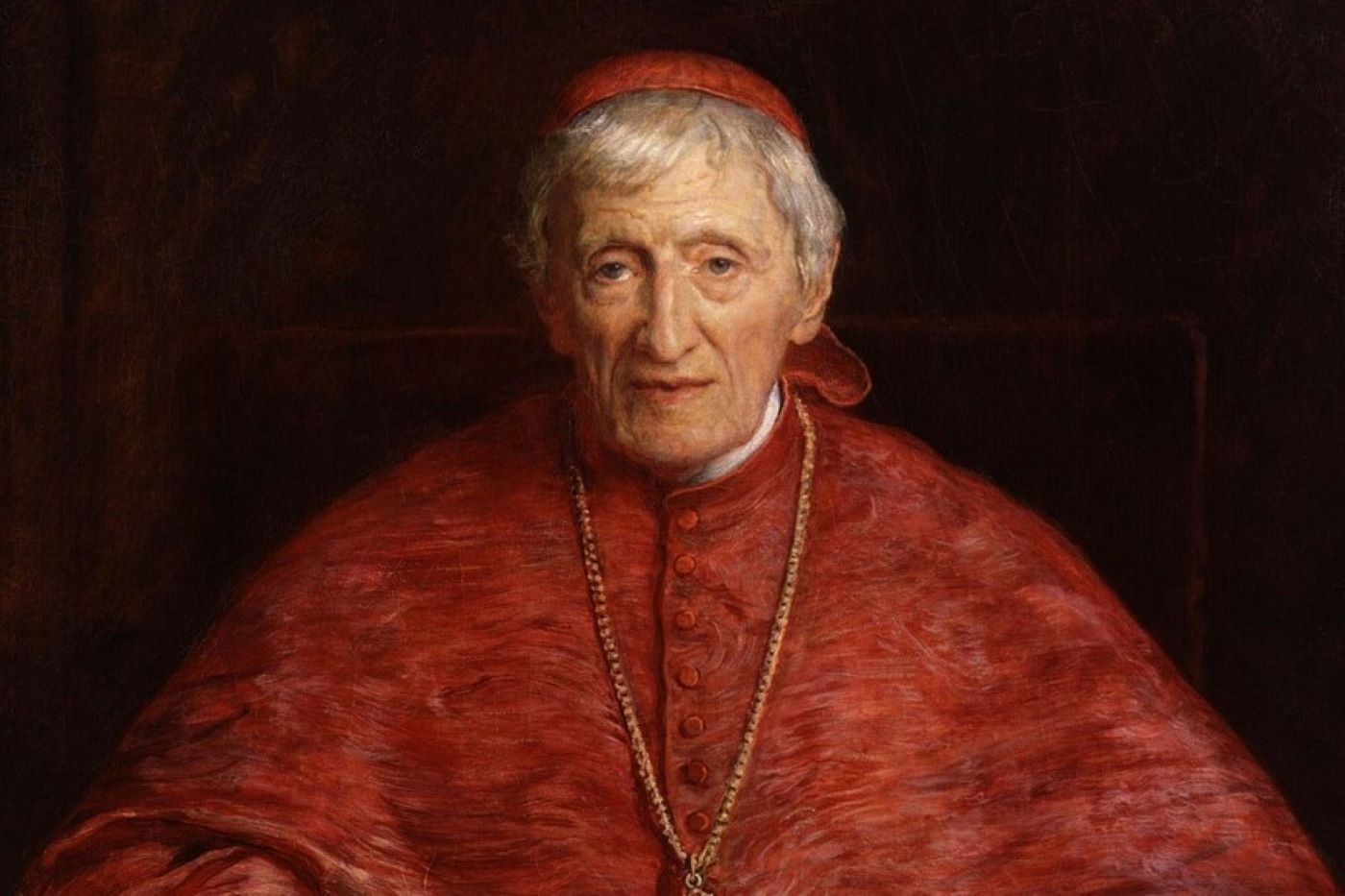


You must be logged in to post a comment.