The constitutional framers knew that not everyone would always agree on how other people exercised their fundamental rights, such as property and religious liberty, which was precisely why those rights were enshrined in the Constitution. However, modern progressives have sought to undermine that constitutional consensus.
The Supreme Court issued a number of high-profile decisions last term, some of which involved the census’s question on citizenship, political gerrymandering, and the Bladensburg cross. But one decision the media almost completely ignored was that of Knick v. Township of Scott, a 5-4 opinion that, perhaps more than any other decision last term, illustrates the differences between modern conservatives and liberals on the question of liberty.
The media almost completely ignored Knick v. Townshipof Scott, a 5-4 opinion that, perhaps more than any other decision last term, illustrates the differences between modern conservatives and liberals on the question of liberty.
At first glance, Knick appears to involve dry, procedural matters, of interest only to lawyers and judges. The Court held in Knick that someone with a Fifth Amendment takings claim does not have to go first to state court to vindicate their rights, but can proceed immediately to federal court. On a much deeper level though, the case revealed the differences between the conservative and liberal visions of individual liberty, of its importance in the constitutional scheme, and of the nature of the Constitution.
Modern progressives have sought to undermine the constitutional consensus on liberty.
The Question at Hand: The Right of Immediate Federal Appeal
The case arose when Rose Mary Knick brought suit against her township, Scott, Pennsylvania, which in 2012 had passed an ordinance that required any owner of land on which old gravestones might be located to allow the general public to enter the land and visit the grave site. Since Pennsylvania does not forbid burials on private land, small family grave sites, especially colonial-era gravesites, are not uncommon on private property. After the township decided that Knick, a 70-year-old single woman, might have gravestones on her 90-acre farm, it ordered her to let the public access her land to visit the suspected sites and put a public trail on her property.
Because Knick was given no compensation for this regulatory intrusion, she sued under the Fifth Amendment takings clause, which prohibits federal and state governments from taking private property without giving “just compensation” for that taking, which can arise from regulations that unduly burden an owner’s use or enjoyment of the property. But the appeal to the Supreme Court dealt only with the more narrow issue of whether the property owner had first to take her claim to state court before bringing it to federal court.
The Civil Rights Act of 1871 gives every person a right to sue in federal court for a constitutional violation of his or her rights, and the Fifth Amendment obviously creates a constitutional limitation against the government’s taking of private property. Under the Civil Rights Act, anyone with a constitutional claim, be it a First Amendment speech claim or a Fourth Amendment search and seizure claim, can take his or her case directly to a federal court. Due to subsequent Supreme Court decisions, however, the one exception was a claim under the Fifth Amendment takings clause, which could not be brought to federal court until it was fully litigated in state court. Thus, as far as the Supreme Court had been concerned, prior to Knick, property rights occupy a second-class status relative to other individual liberties in the Bill of Rights.
This second-class status resulted from a 1985 decision in Williamson County v. Hamilton Bank of Johnson City, in which the Court held that an aggrieved property owner cannot bring a takings case to federal court until he or she first exhausts all legal remedies in state court. Then, to make matters worse, twenty years later the Court ruled, in San Remo Hotel v. County of San Francisco, that a person whose takings claim has been rejected by a state court cannot then bring a claim in federal court, because the state court’s decision is final and cannot be litigated again. Consequently, as a result of Williamson County and San Remo Hotel, persons whose property has been taken by the government are denied access to federal courts to seek redress for that constitutional violation if state courts side with the local government. This made property rights the only constitutional right that cannot be vindicated in federal court.
An Opposition to Property Rights, in Disguise
Knick did not attract much media attention, perhaps because the case only seemed to involve a matter of procedure, namely, the choice of jurisdiction for bringing takings claims under the Fifth Amendment. Moreover, the dissenting justices did not present a controversial argument. The four liberal dissenters actually stood behind the conservative position of stare decisis, or respect for precedent.
The dissenters said Williamson County was correctly decided, but that in any event stare decisis should preclude its being overruled. Justice Kagan warned against a rush to overturn precedents, even though the Court’s decision in Citizens United (which decided that the First Amendment protected the right of corporations and unions to spend money on political campaign advertisements) was barely announced when many liberals, including President Obama, demanded that it be overturned. Moreover, progressivism, the philosophy of much contemporary liberalism, has a low regard for tradition and precedent as such.
The dissent’s stare decisis argument in Knick was a smokescreen for a much more fundamental and far-reaching opposition to property rights. Liberal judicial philosophy today harbors a view of liberty that contrasts sharply with that of the Bill of Rights. While the framers gave a high priority to property rights, modern progressives downgrade them to mere interests, usually ones that the government must regulate.
Since the New Deal, progressives have considered property rights to be a tool that the rich use to undermine democracy. Today, however, many leaders of the progressive movement are themselves a wealthy elite. Now they oppose property rights not because they might benefit the rich, but because they are a strong check on government. Progressivism seeks to expand the power and reach of the federal government, and therefore distrusts any rights or liberties for individuals that might obstruct that mission and supports any that will help it. The power of such rights to check government is precisely why the Anti-Federalists of the constitutional period fought so hard for a Bill of Rights.
This reasoning also explains progressives’ recent opposition to religious liberty, the first liberty mentioned in the Bill of Rights. They frame their position in terms of equality and anti-discrimination, but in fact they oppose religious freedom because it might protect age-old views on marriage that conflict with progressive social philosophy. More fundamentally, they wish to disarm religion as a potential check on the power of government and on the advancement of secularism within the federal government.
Even progressives’ attitudes on free speech demonstrate their discomfort with individual liberty. They call it unconstitutional to put any restrictions on marketing the most violent of games to children, even though they will concede almost no constitutional protections to protests on public property outside abortion clinics. They defend providing sexually explicit entertainment to children as if it were the pillar of democratic government, even as they curtail and punish—through laws on campaign speech and finance—speech that is unquestionably necessary for political life. It does not seem a stretch to conclude that progressives value free speech not on principle but only if it is useful to them.
Do Rights Exist Prior to Government or Not?
But there is an even more fundamental difference that the Knick decision reveals. The majority in Williamson County, the decision that was overruled in Knick, understood the operation of constitutional guarantees in a dangerous way. The Williamson Court understood the Fifth Amendment to give rise to a right to participate in a procedure—administrative or judicial. The Knick Court, however, recognizes that a government taking gives citizens the right not to appeal to the government, but to be compensated. The difference may be subtle, but Williamson implies that property rights (and possibly any right entertained under the Bill of Rights) are granted by the Constitution. The majority in Knick, however, implies that these rights exist prior to the Bill of Rights. Therefore the Constitution does not grant these rights, but merely protects them.
Some rights—like property rights—are natural rights. These are rights that are independent of any particular legal system or custom and are therefore inalienable. Other rights are legal rights, which are granted by law and can be modified or eliminated by law. No matter the type, all rights create a corresponding duty. So, the (natural) right to one’s property results in an entitlement to the enjoyment of that property on the part of the owner, and also imposes a duty on all others (including the state) to respect that entitlement. The breach of this duty—which could include trespass, vandalism, or even a taking for a public purpose—is definitionally a violation of this (natural) right. Because property rights are natural rights, such a breach does not require a law to define it as harm. The mere breach of the duty gives rise to a corollary right—the right to compensation. The Fifth Amendment properly construed understands a taking to be a breach of a duty created by a natural right, which is prior to the Constitution. Such a breach, therefore, gives immediate rise to a right to compensation—no tribunal needs to reach this conclusion. The Knick Court implies this. The Williamson Court, however, did not, and merely granted an aggrieved property owner access (and imperfect access at that) to the courts. The former seems to appreciate the implications of the natural-right character of property rights, while the later seems to imply that a government tribunal is required for more than just calculating damages.
The Primacy of Individual Rights Should Not Be a Political Issue
The vote in Knick shows us that the Framers’ idea of liberty as a check on government―a notion at the heart of the Bill of Rights and of our constitutional democracy―has become a partisan issue. The right defends it and the left decries it. Progressives view property rights as mere interests that do not have to be treated like other rights laid out in the Constitution. They view religious exercise as even less than a mere interest―as an illegitimate right that undermines the idea of secularist government. They accept the right of free speech only for their reliable cultural allies, like Hollywood; but if speech challenges progressives’ agenda, they call it dangerous and hateful.
But a notion as fundamental as individual liberty should not be so contentious. Indeed, liberty lies at the core of the constitutional order and for nearly 200 years has been accepted as such. The constitutional framers knew that not everyone would always agree on how other people exercised their fundamental rights, such as property and religious liberty, which was precisely why those rights were enshrined in the Constitution. However, modern progressives have sought to undermine that constitutional consensus on liberty, making various rights—e.g., property and religious liberty—secondary to the progressive agenda of a secularist society commanded by a domineering central government. Fortunately, as Knick reveals, the Supreme Court remains committed to the scheme of liberty set out in the U.S. Constitution.
Trey Dimsdale holds degrees in law, theology, and ethics and has worked as an attorney, educator, and non-profit administrator, and pastor. He is author of several articles, essays, and editorials on a wide range of topics and he has spoken around the world on issues as diverse a… READ MORE
Patrick Garry is the author of Redefining Conservatism: A Creed for the Poor and Disadvantaged (Encounter Books) and The False Promise of Big Government: How Washington Helps the Rich and Hurts the Poor (ISI Books).
Posted inUncategorized|Comments Off on MODERN PROGRESSIVES HAVE SOUGHT TO UNDERMINE THE CONSTITUTIONAL CONSENSUS ON LIBERTY BY DENYING CITIZENS ACCESS TO FEDERAL COURTS IN SOME TAKINGS CASES
Catholic League president Bill Donohue comments on an article posted October 2 on the website of USA TODAY on priestly sexual abuse:
Marisa Kwiatkowski is a young reporter for USA TODAY. Her colleague, John Kelly, is a middle-age reporter. For the sake of argument, let’s say they are both much older, in their late sixties. Let’s also imagine that they have been accused of sexual misconduct by a cub reporter when they were in their early thirties.
Nothing can be done about their alleged misconduct because the accuser came forward only yesterday, and the claim is beyond the statute of limitations. But a new law is being considered that would suspend the statute of limitations for one year, allowing old cases to be adjudicated. The law, however, only applies to those who work in journalism. If someone was molested by a priest or a rabbi, the new law would not apply.
What would Marisa and John have to say about that? Would they protest, arguing that the law was unjust because it singled out journalists? What if they enlisted the support of the Society of Professional Journalists (SPJ) and it agreed to tap an army of lawyers to fight the bill—wouldn’t they feel that was justified? And how would they react if their critics called them every name in the book, branding them and the SPJ “criminals” for skirting punishment for their outrageous behavior?
We all know what they would say. Which is why they are such phonies. The authors have done to the clergy and the Catholic Church what they would find despicable if done to them and their profession.
According to the logic outlined in their 3700-word story, it is callous, if not cruel, for bishops to fight legislation that singles out the Catholic Church under a law that suspends the statute of limitations in cases of sexual abuse. The bishops are supposed to keep their mouths shut, never alerting the faithful to the fact that the law has zero application to those who work outside the Catholic Church.
Obviously, the Catholic Church pushes back against lawmakers who never have the guts to include public school employees—teachers who rape their students—in such legislation. Should it be the only institution in the nation not to defend itself against unjust legislation?
We at the Catholic League have fought hard for decades trying to establish a level playing field, and we apologize to no one for doing so. Guess what happens when we succeed and the public schools are covered? The public school establishment rolls out its big-time lawyers to fight it.
The authors also find it unjust that the Catholic Church complains about adjudicating old cases. Do they have any idea why we have statutes of limitation on the books? Have they ever heard of due process? How can it reasonably be determined if the accused is guilty when the alleged offense took place decades ago?
The reporters think they’ve hit gold when they “ran 10 of the church’s opposition statements—including news releases and letters to government officials and to parishioners—through a language-processing algorithm, searching for commonalities.” Guess what their high-tech gimmick found? The Church frequently says that the unjust legislation they are fighting against is “unjust.” The sophistry of the reporters is stunning.
The story gets even sillier when we read about some alleged victim who “did not remember being the victim of abuse as a child…until she was 40.” Really? And why was that? If the reporters were on their game, they would know what a discredited concept the notion of repressed memory is. The scientific literature is near unanimous in concluding that the more heinous the offense, the less likely it is not to be remembered.
What makes this USA TODAY story so astonishing is its failure to mention the outstanding report done by USA TODAY in December 2016: it exposed what is going on in the public schools. The title of the report says it all. “Teachers Who Sexually Abuse Students Still Find Classroom Jobs: Despite Decades of Scandals, America’s Schools Still Hide Actions Of Dangerous Educators.”
The story is riveting. “A year-long USA TODAY Network investigation found that education officials put children in harm’s way by covering up evidence of abuse, keeping allegations secret and making it easy for abusive teachers to find jobs elsewhere.” It correctly noted that Congress passed a law in 2015 “requiring states to ban school districts from secretly passing problem teachers to other jurisdictions or face losing federal funds.” And what happened? “But 45 states have not instituted a ban.”
Why didn’t the authors of the USA TODAY story draw on this study? Wouldn’t that have put the issue in context? Or would that have gotten in the way of their narrative?
The Catholic Church has made enormous strides in combating sexual abuse. Indeed, as I have said many times before, there is no institution today, secular or religious, that has less of a problem with sexual misconduct than the Catholic Church. But one would never know this by reading this USA TODAY story.
People in Minnesota don’t call it Mall of America anymore, they call it Mall of Somalia.
There are now 100,000 Somalis living in Minneapolis. They have taken over Minneapolis city hall and the Minnesota attorney general’s office (Keith Ellison). They are re-writing local laws. They have taken over the Mall of America. We have a friend who retired last year from the Minneapolis police department whose beat was the Mall of America. The shop lifting (under the burkas) is out of control. Last year there was a knife fight in Macy’s. Once there was a waiting list for storefronts there. Now there are empty shops everywhere.
My cousin’s friend was the manager at Burlington coat factory until he quit last year. He said the women would put their kids in the toy section where they would open all the packages and play with the toys while the moms shopped. Then they would just leave the toys and packaging in the aisles and walk out. Also, the women would not use the restroom (for reasons I do not know) but instead would actually pee and poop in the dressing rooms.
Representative Ilhan Omar’s 5th district in Minnesota has been identified by the FBI as having the highest rate of Islamist terrorist recruitment in the United States, so it’s no surprise who they elected. The Jew-hating Anti-America sentiment isn’t just something that Omar is expressing for herself, but also represents the district.
Anyone with the least bit of curiosity about who elected Omar need only watch this video taken at the Mall of America in Bloomington, Minnesota.
Much ink has been spilled debating the merits and even the orthodoxy of the Instrumentum Laboris (or working document) of the Amazon Synod, which begins on October 6. We’re now less than one week out from the main event and, curiously, there has been no close reading of the Instrumentum itself. So, let’s begin with the basics.
There are six main themes in the document: colonialism, ecology and environmentalism, the South American Church’s decades-long involvement in liberation theology, syncretism of Catholicism with indigenous religions, the possibility of married priests, and the role of women in the Church. The synod fathers’ declarations on any and each of these issues may have implications for the global Church.
The Instrumentum is long on advocacy and accusations but tells us almost nothing substantive. It’s uninformative in general about the Amazon and the local Church. Although the Amazon River itself is almost entirely in Brazil, the Amazon River Basin includes parts of nine of South America’s twelve countries, plus French Guiana. The Vatican’s website for the synod includes a minimal and mostly historical background report from each country; we’re told little about the status and conditions in and of dioceses, parishes, seminaries, schools, hospitals, or other Church institutions, nor are we told about the numbers of priests, brothers, and nuns. Some of these national reports list the name of tribes but omit anything significant or specific about the indigenous peoples of the religion.
A superficial Internet search suggests that there are as many as 200 native tribes in the Amazon, with as many as half of those being “uncontacted.” Quite obviously, there are great variations in the religions (Catholic and otherwise) of the various tribes. What are those variations? In particular, the long report of Brazil—by far the largest county participating in the synod, and whose land contains about 90 percent of the Amazon territory—is notable for its recitation of the many meetings that the Brazilian Church has had with these indigenous peoples in recent decades. Curiously absent is any information on its efforts to evangelize them. It’s by no means clear, then, what are the real needs of the Church in the Amazon—let alone how the synod intends to redress them.
❧
As for the main themes of the Instrumentum, first is the thorough condemnation of European colonization—not only of the Amazon, but of Latin America as a whole. The colonialism of “territorial, political, economic, and cultural domination,” including “an economy based exclusively on profit” has created the “current social-environmental crisis.” The Church itself was sometimes “complicit with the colonizers.” The Instrumentum gives this emphasis to colonialism despite the reality that the six largest countries participating in the synod (Brazil, Bolivia, Colombia, Peru, Venezuela, and Ecuador) all became independent in the 1810s and 1820s—that is, two centuries ago.
The second (and perhaps most important) theme of the Instrumentum is ecology and environmentalism. Reflecting the new teaching in Pope Francis’s encyclical Laudato Si’ that “human life is grounded in three fundamental and closely intertwined relationships: with God, with our neighbor, and with the earth itself,” the Instrumentum holds that the Amazon provides “an integral understanding of our relationships with others, with nature, and with God.” As the basis for this teaching, both Laudato Si’ and the Instrumentum cite Genesis, whereby the ground became “cursed” and had to be tended by “toil” because of the sin of Adam.
The Instrumentum calls for the “ecological conversion” previously proclaimed by Francis in Laudato Si’, based on what he calls an “ecological spirituality.” Neither document refers to any passage in the New Testament to establish this doctrinal foundation. With that accomplished, the Instrumentum goes on to criticize at length the ecological degradations of the Amazon. The region is threatened with “environmental destruction and exploitation… the invasion of huge, so-called ‘development’ projects… the pollution of rivers, the air, soils and forests.”
Third, the Instrumentum is grounded in the 50 years of liberation theology as professed by a number of South American theologians and bishops. The history of liberation theology begins in earnest with a 1968 meeting of the Latin American episcopal conferences in Medellin, Colombia. In the 1980s, Joseph Cardinal Ratzinger—then head of the Congregation for the Doctrine of the Faith—clashed with its principal ideologists Gustavo Butierrez and Leonardo Boff.
The Instrumentum states that the Church in the Amazon has been seeking to “enculturate the Good News” in accordance with Medellin and the Second Vatican Council. The “impulses and inspirations” for “cultural diversity” come from Medellin and other Latin American bishops’ conferences. From that has emerged “a Latin American theology, especially Indian Theology.”
Fourth, the Instrumentum maintains that the Church must accept and recognize the “Amazon cosmovision,” including the integration of “indigenous theology and ecotheology” concerning the formation of “ordained ministers” and the “teaching of Pan-Amazonian indigenous theology in all [Catholic] educational institutions.” It goes on to declare that the Holy Spirit has taught Amazonian indigenous peoples “faith in the God Father-Mother Creator,” adding that the “Eucharistic ritual” must be adapted to indigenous “cultures,” and those cultures” must be thoroughly “integrated into liturgical and sacramental rituals.”
Fifth, the priesthood is mentioned in only three places. In the chapter concerning “an inculturated liturgy,” it states that “communities find it difficult to celebrate the Eucharist frequently because of the lack of priests.” In the only passage where the word “ordination” appears, the Instrumentum goes on to advocate the “possibility” of the “priestly ordination” of married “older people” (in the Spanish version, personas; in the French, personnes; the word “men” is not used in any language) “for the most remote areas.” Likewise, the synod’s Preparatory Document, which was released in June of 2018, only deals with the priesthood in a single paragraph—one that speaks in broad terms referring to “different pastoral agents,” including women. Both documents agree that, as the Instrumentum states, the alternative is “leaving communities without the Eucharist.”
Sixth, there is a great deal more detail about creating pastoral roles for women. It laments that a “patriarchal mentality still persists” in the Church, and “any kind of stereotype” of women “must be overcome.” “Women must assume a leadership role within the Church,” it insists. Their “leadership opportunity” must be “guaranteed” and have an “increasingly broad and relevant scope” in theology, liturgy, schools, and politics. The kind of “official ministry that can be conferred on women” should be identified. The Preparatory Document agrees about “official ministry.”
The Instrumentum has several passages denouncing violence and sex trafficking. One paragraph recites all the ills of families (for example, families headed by single women), offering the usual account of the status of the family in Western societies. That paragraph goes on to say that “one still finds women being subjugated within the family.” The Church is exhorted to “embrace more and more the feminine style of acting and of understanding events.”
Overall, unlike the Instrumentum’s assertion of the specific problem of a shortage of priests, the document’s advocacy of an increase in the role and power of women—almost all of it in the stereotypical language of Western feminism—does not seem to arise integrally or naturally from the whole text about the Amazon. And, indeed, we might have a tendency to wonder whether almost all of the Amazonian indigenous tribes—some of them very rural and remote and some still uncontacted—might have a “traditional” view of the role of women in society. It could even be said that applying Western feminism to them is a kind of neo-colonialism.
❧
Incidentally, the Amazon Synod is scheduled to take place at the same time as the “synodal journey” of the German church—which, despite some criticism from the Vatican, is going ahead with its proposals regarding married priests, new ministries for women, and changes in sexual morality.
In fact, both synods have been scheduled as a consequence of the Instrumentum’s assertion—quoting Pope Francis in Evangelium Gaudium regarding “a sound decentralization” of the Church—that the Church’s “call” is “to be ever more synodal.” And the fact that the Amazon Synod is being held in Rome rather than the Amazon (where indigenous tribes could participate) is telling.
But what precisely is going to happen during the three weeks of the synod? All the goals, purposes, ideas, concepts, and declarations of the Instrumentum and Preparatory Document, as well as the previous statements of the South American bishops’ conference, have already been clearly and forcefully made. It’s inconceivable that the synod will produce just another document of the same kind. Surely they must be ready, at last, to act.
Thomas Ascik is a retired federal prosecutor. He writes from North Carolina. His writing has appeared in a variety of publications including Catholic World Report, The Federalist, and The Imaginative Conservative.
Sex at the High Court: On the Redefinition of “Sex” in Civil Rights Law and Faulty Accounts of “Discrimination”
OCTOBER 1, 2019BY RYAN T. ANDERSONActivists are asking the Court to rewrite our nation’s civil rights laws in a way that would directly undermine one of their main purposes: protecting the equal rights of girls and women. Congress did not legislate such an outcome, and the Court should not usurp Congress’s authority by imposing such an extreme policy on the nation. Biology is not bigotry, and the Court should not conclude otherwise.
Next week the Supreme Court will hear oral arguments in cases that ask whether Title VII of the Civil Rights Act of 1964, which bans employment discrimination on the basis of sex, extends to discrimination on the basis of sexual orientation and transgender status.
It’s an odd legal argument, given that the public meaning of the word “sex” in 1964—and today, for that matter—refers to our status as male or female, not our sexual attractions, desires, actions, or identity. That’s why progressive activists have been trying for the past forty years to get Congress to pass laws that would add “sexual orientation” as a protected class, and it’s why they’ve been doing the same for “gender identity” for the past dozen years.
Because their attempts to work through the legislative process failed, activists took their arguments to court. And they failed there, too—at least, until April 2017. That marked the first time ever that a federal appellate court ruled that the Civil Rights Act prohibits employment discrimination on the basis of sexual orientation. Prior to that ruling, all eleven appellate courts that had addressed the issue had ruled that “sex” does not mean “sexual orientation.” And it wasn’t until March 2018 that, for the first time ever, an appellate court ruled that Title VII banned discrimination based on transgender status.
Activists would like to see the Supreme Court affirm these novel—indeed, activist—appellate court rulings, redefining the term “sex” in the Civil Rights Act and embracing a simplistic account of “discrimination.” Here’s why it shouldn’t.
What Is Sex Discrimination?
In 1998, the Supreme Court explained in Oncale v. Sundowner Offshore Services, Inc., that Title VII requires “neither asexuality nor androgyny.” It requires equality and neutrality. It does not exclude all sex-conscious standards, but it does exclude double standards for men and women—policies that disfavor at least some individuals of one sex compared to similarly situated members of the other. That was the explicit position of the unanimous Court in Oncale, which quoted Justice Ginsburg: “The critical issue, Title VII’s text indicates, is whether members of one sex are exposed to disadvantageous terms or conditions of employment to which members of the other sex are not exposed.”
The unanimous Court in Oncale echoed what a plurality opinion had said several years earlier, in the 1989 case Price Waterhouse v. Hopkins: that sex may not be used to create “disparate treatment of men and women.” Under Oncale and Price Waterhouse, courts applying Title VII must ask whether some women are subject to disadvantageous terms not faced by men in a similar position, or vice versa. Courts must look, in short, for unfairness due to sex. Mere consideration of sex is not enough.
This is why bans on sex discrimination didn’t abolish sex-specific private facilities (like bathrooms), sex-specific fitness standards (for police and firefighters, for example), or sex-specific athletic competitions (like the NBA and WNBA). After all, sex-specific bathrooms, fitness standards, and sports leagues don’t create disadvantageous conditions. On the contrary, they prevent disadvantageous treatment. That’s because they take sex differences seriously where they make a difference, for the sake of privacy and equality.
Yet LGBT activists effectively urge the Court to adopt a theory of sex discrimination that would rule out any policies that refer to sex, judging them to be inherently discriminatory. That would lead to asexuality and androgyny—precisely what the Court has said Title VII does not require.
Title VII Does Not Simply Forbid Any Action “Causally Linked” To Sex
The oral arguments next week center on whether the ban on “sex” discrimination extends to discrimination on the basis of sexual orientation and transgender status. The only way for the lawyers arguing this position to make their case is to reject the Ginsburg reading of Title VII—where it prohibits double standards for men and women—and to advance a novel theory where any reference to sex constitutes discrimination on the basis of sex. While this new approach is increasingly hailed as providing a knockdown textualist argument, it suffers from a fatal flaw.
According to the version proposed by lawyers for the employee in the gender identity case (Stephens), “any time the same decision would not have been made had the employee’s sex been different, an employer discriminates ‘because of sex.’” In the same vein, law professors Andy Koppelman and Bill Eskridge, amici on the side of the employees, propose that “an employer violates the law if it (1) takes negative employment action (2) that is causally linked to (3) the sex of the employee.”
This theory fails, because not every employment policy “causally linked” to sex imposes a disadvantage on individuals of one sex compared to similarly situated members of the other sex. So the theory doesn’t isolate sex discrimination. It flouts the Ginsburg reading—on which Title VII forbids only double standards for the sexes. Contrary to Oncale, it requires asexuality and androgyny.
To see why, let’s look at what embracing this theory would require.
Suppose a male employee at a fitness center repeatedly goes into the women’s locker room and is fired. Had his “sex been different” he would not have been fired. In that sense, his termination was “causally linked” to his sex. But the termination was not sex discrimination, because it reflected no double standard for men and women. Female employees who went into the men’s locker room would be fired too. The employer was simply enforcing a locker room policy that imposed the same “burden” on men and women: restriction to one specific locker room, based on sex.
Or suppose a female lifeguard is fired because she wears swimsuit bottoms but refuses to wear tops. Had her “sex been different,” she would not have been fired. The decision to fire her was “causally linked” to her sex. Yet her termination was not sex discrimination under Title VII, because a male lifeguard who exposed his private parts would have similarly been fired. The attire policy did not create a disadvantage for women that it did not impose on men: both are required to dress in ways that cover private parts.
The test put forth by the LGBT advocates is too simplistic. It does not test for sex-based discrimination. In both of the above examples, the employees were fired because they violated policies that do not disadvantage women compared to analogous men, or vice versa.
Far from being an instance of sex discrimination, preventing males from entering women-only private facilities is actually required to avoid sex discrimination. Justice Ginsburg took this point for granted in her majority opinion in United States v. Virginia, when she explained that, for the all-male Virginia Military Institute to become co-ed, it “would undoubtedly require alterations necessary to afford members of each sex privacy from the other sex in living arrangements.” Moreover, in 1975, when critics argued that the Equal Rights Amendment would require unisex intimate facilities, then-Professor Ginsburg explained that a ban on sex discrimination would not require such an outcome: “Separate places to disrobe, sleep, perform personal bodily functions are permitted, in some situations required, by regard for individual privacy.”
So it isn’t sex discrimination to act in a way “causally linked” to sex when sex is a relevant factor and you don’t disadvantage individuals of one sex compared to similarly situated members of the other sex. By contrast, an employer who allowed males to enter private women-only facilities would be guilty of sex discrimination under Title VII, because doing so would foster a hostile work environment. Yet the activists would hold such an employer guilty if he prevented males from entering. Their theory requires asexuality and androgyny, but Title VII does not—it forbids double standards and protects sensible workplace privacy policies.
Double Standards Based on Sex Are At the Heart of Sex Discrimination
The simplistic account of discrimination is easy to see when you look at concrete examples. Lawyers for Stephens, the employee in the gender identity case, claim:
Much as Ms. Phillips [the employee in a 1971 Title VII case, Phillips v. Martin Marietta Corp.] was discriminated against for being a woman and for having young children, so Ms. Stephens was fired for having a male sex assigned at birth and for living openly as a woman. That is sex discrimination.
But this assertion ignores the actual structure of the discrimination in Phillips. Phillips was discriminated against on the basis of sex because men with young children were not held to the same terms as women with young children. Had both men and women been held to the same standard, there would have been no disparate impact on men and women and hence no double standard. Nor is there any double standard here. Both males and females who refused to abide by the dress code would be treated in the same way.
The same is true in the sexual orientation cases. Yet lawyers for one of the employees there (Zarda) argue:
Had Martin Marietta articulated its policy as a refusal to hire “mothers,” rather than not hiring “women with young children,” the result would have been the same. Phillips’s sex (plus her parental status) is why she did not get the job. . . . The same logic applies to Zarda. Were he not a man, he would not have been fired for his attraction to men. Conversely, persons who shared his attraction to men but not his sex (i.e., “heterosexual women”) were not denied job opportunities. Saying he was fired for being “gay” does not change the analysis. Thus, Zarda has properly alleged discrimination “because of [his] sex.”
But the reason Martin Marietta was guilty of discrimination based on sex was not that it used certain magical words (“women with young children,” rather than “mothers”), but that it went easier on “men with young children” and “fathers.” If it had had an evenhanded policy regarding all “people with young children” and “parents,” there would have been no sex discrimination. So, too, an evenhanded policy against same-sex relationships does not discriminate on the basis of sex.
The lawyers obscure this dispositive point by picking the wrong comparator. Comparing Zarda to “persons who shared his attraction to men but not his sex (i.e., ‘heterosexual women’)” changes two factors—sex and sexual orientation—and so fails to ferret out the basis for the employment decision. Comparing a homosexual man to a heterosexual woman will not tell us whether the employment decision was driven by sex or by sexual orientation. In determining the basis of an employment decision, we should hold orientation constant and vary just the employee’s sex: the question is whether men and women attracted to their own sex are treated differently from each other.
Stephens’s argument, too, changes two factors—sex and transgender status. Stephens argues that Harris Homes “would not have fired Ms. Stephens for identifying and living openly as a woman if she were assigned a female sex at birth.” Well, yes, Harris Homes would not fire a woman who followed the women’s dress code. But that’s not an apt comparison to Stephens—a man who sought to follow the women’s dress code. Comparing Stephens to a cisgender woman changes two factors—sex and transgender status—and thus fails to hold constant all factors but sex. The proper comparison would be a woman who sought to dress according to the men’s dress code. That way both employees identify as transgender, and all that is changed is their sex. Comparing a transgender male to a cisgender female will not tell us whether the employment decision was driven by sex or by transgender status. The question is whether men and women who identify as the opposite sex are treated differently from each other. Harris Homes reports they would dismiss a female employee who sought to abide by the male dress code. In other words, there’s no double standard for men and women, so there’s no discrimination on the basis of sex. Both males and females who identify as transgender are held to the same standard.
Three Different Forms of Discrimination
Imagine an employer who won’t employ women but will employ men, or who won’t employ women with kids but will employ men with kids. This would be discrimination on the basis of sex, because “members of one sex are exposed to disadvantageous terms or conditions of employment to which members of the other sex are not exposed.” It’s a double standard for men and women.
By contrast, consider an employer who will hire straight men and women, but not men and women who identify as gay. Men and women are exposed to the same exact terms and conditions, so this wouldn’t be discrimination based on sex. The employment action doesn’t hinge on male or female, but on gay or straight.
And lastly, consider an employer who will hire cisgender men and women, but not transgender men and women. Here, too, men and women are exposed to the same exact terms and conditions, so this wouldn’t be discrimination based on sex. The employment action here isn’t concerned fundamentally with male or female, but with cisgender or transgender.
Redefining Sex and Embracing a Simplistic Account of Discrimination Will Have Drastic Consequences
If the Supreme Court were to adopt the activists’ theory, it would not simply distort the statutory text but would also cause serious practical harms—and unsurprisingly so. After all, the Court would be rewriting the law Congress passed—but with no opportunity for legislators to add to the definitions, qualifications, and limits they might have included if they had actually decided to address sexual orientation and gender identity. For instance, the activists’ position would either require the elimination of all sex-specific programs and facilities or allow access based on an individual’s subjective identity rather than his or her objective biology. It is telling that the activists are evasive about which of these outcomes is required by their theory. Making the theory’s implications explicit would prove decisively that their reading is unsound.
It would also highlight the severe consequences for privacy, safety, and equality. Employers would be prevented from protecting their employees’ privacy and would be exposed to ruinous liability. They would have to cover objectionable medical treatments. Physicians would have to perform them against conscience. And the consequences would not be limited to the employment context. If this new theory of sex and of discrimination is imposed on Title VII, then why not Title IX? Yet an activist reading of sex discrimination would spell the end of girls’ and women’s athletics, and of private facilities at school.
In short, activists ask the Court to rewrite our nation’s civil rights laws in a way that would directly undermine one of their main purposes: protecting the equal rights of girls and women. Congress did not legislate such an outcome, and the Court should not usurp Congress’s authority by imposing such an extreme policy on the nation. Biology is not bigotry, and the Court should not conclude otherwise. Only Congress, not the Court, can craft policy to address sexual orientation and gender identity—distinct concepts from sex—with attention to all the competing considerations.
Ryan T. Anderson is Founder and Editor-in-Chief of Public Discourse. He is also the William E. Simon Senior Research Fellow at The Heritage Foundation. He is the author of When Harry Became Sally: Responding to the Transgender Moment and Truth Overruled: The Future of … READ MORE
Posted inUncategorized|Comments Off on ENOUGH ALREADY YET !!! THERE IS EVIDENTLY NO BOTTOM TO THE CAN OF WORMS THAT THE CONGRESS OPENED UP WHEN THE FIRST LAWS WERE PASSED TO ELIMINATE ALL SEXUAL DISCRIMINATION FROM THE United States. UNFORTUNATELY SOME DISCRIMINATION EXISTS ONLY IN THE EYE OF THE BEHOLDER
While diplomatic and fierce, President Trump delivers extensive remarks to the press pool today in advance of a bilateral meeting with President Niinistö of Finland.
[Video and Transcript Below]
.
[Transcript] – PRESIDENT TRUMP: Well, thank you very much. It’s a great honor to have a man that’s become a friend of mine — we’ve gotten to know each other well — the President of Finland. And we have many things to discuss, including trade and military and purchases, and lots of different very exciting events.
So we’ll have a long time together today. We’ll then be having lunch. And I think we’re going to be seeing the media right afterwards and say a few words.
But it’s an honor, Mr. President, to have you with us. Thank you.
PRESIDENT NIINISTÖ: Thank you. Thank you very much. I’m waiting for our discussions.
PRESIDENT TRUMP: Yes. Yes. See? He’s made a few words, and he gets it done. (Laughter.) That’s what I like about him.
PRESIDENT NIINISTÖ: (Laughs.) Hope so.
PRESIDENT TRUMP: That’s what I like about him.
Anyway, okay, thank you all very much.
Q How do you respond to concerns that you are putting the whistleblower’s life in danger?
PRESIDENT TRUMP: Well, the whistleblower was very inaccurate. The whistleblower started this whole thing by writing a report on the conversation I had with the President of Ukraine. And the conversation was perfect; it couldn’t have been nicer.
I saw Rick Scott, I saw many of the senators talking about it, many of the congressmen talking about. Not a thing wrong. Unless you heard the Adam Schiff version, where he made up my conversation. He actually made it up. It should be criminal. It should be treasonous. He made it up — every word of it, made up — and read to Congress as though I said it.
And I’ll tell you what: He should be forced to resign from Congress — Adam Schiff. He’s a lowlife. He should be forced to resign. He took a perfect conversation, realized he couldn’t read it to Congress because it was perfect; it was a very nice conversation. I knew many people were on the phone. Not only were many people on the phone, we had stenographers on the phone taking it down, word for word.
He took that conversation, which was perfect; he said, “I can’t read this.” So he made up a conversation and he reported it and said it to Congress and to the American people. And it was horrible was he said. And that was supposed to be coming from me, but it was all fabricated.
He should resign from office in disgrace. And, frankly, they should look at him for treason because he is making up the words of the President of the United States. Not only words, but the meaning. And it’s a disgrace. It should not be allowed to happen.
Q But your own DNI said the call transcript was consistent with the complaint. So, should only whistleblowers —
PRESIDENT TRUMP: No, no, no, he didn’t say that. You have to take a look.
Q He did say that.
PRESIDENT TRUMP: No, no, no. He did not say that. And, in fact, if you look at what he said, he found everything to be very normal. He’s a good man, and — Joe. And he found it to be very normal. I saw Schiff trying to go 15 — you know, we call him “Shifty Schiff.” We don’t call him “Shifty Schiff” for nothing. He’s a shifty, dishonest guy — who, by the way, was critical of one of the great Secretary of States. Graduated number one in his class at West Point. Graduated top of — one of the top in his class at Harvard Law School. The most honorable person, Mike Pompeo. And this guy was negative on Mike Pompeo.
He can’t — you know, there’s an expression: He couldn’t carry his “blank” strap. I won’t say it because they’ll say it was so terrible to say. But that guy couldn’t carry his “blank” strap. You understand that?
So, you’re dealing with bad people. And, you know, I watched China over the last few days, and I watched some of these other countries build up, build up, build up. And we’ve built up more than any of them because of me, but no help due to the Democrats. They’re a disaster. They’re the “do-nothing” Democrats. They don’t do any work. All they want to do is try and win the election in 2020, so they come up with this impeachment nonsense.
And everyone knows the conversation — all based on a phone call that I had, where I’m talking to the President of Ukraine. You’ll hear from our ambassadors, you’ll hear from some of the folks that know all about the call — why the call was set up and everything else. It’s perfect. The call was perfect.
In fact, Lindsey Graham said, “I didn’t know you could be so nice.” There was no quid pro quo. Remember, before they saw — the only reason I put that out — and I did it with the approval of Ukraine, by the way; otherwise, I couldn’t have done it — was because the whistleblower was so dishonest. The whistleblower said terrible things about the call, but he then — I then found out he was second-hand and third-hand. In other words, he didn’t know what was on the call.
No, these are bad people. These are dishonest people. And when the American people find out what happened, it’s going to be a great day. And you know what? We have to go back to building our country, because 99 percent of Nancy Pelosi’s time is spent on this. She should worry about lowering the price of drugs, which I’ve done. But it’s hard to do it without the help of Congress — about creating border security, which I’ve done.
We’ve built — we now have hundreds of miles of wall under construction on the southern border. She should worry about infrastructure. She should worry about the USMCA. She’s not doing it. I just saw a part of her press conference before the President came. And I’m sorry to bother you with this, Mr. President, because we have other things to talk about.
PRESIDENT NIINISTÖ: (Inaudible.)
PRESIDENT TRUMP: But I will tell you, I just watched part — she says, “Oh, drug prices…” Well, she’s been trying to get drug prices down for — how long has she been in Congress? For years. She should focus on her own district. Do you see what’s happening to her district? We call it “tent city.” It’s terrible. In fact, we just sent a violation to the city of San Francisco: unsafe water, unsafe conditions, environmental — EPA.
Our EPA, which is doing a great job, is sending Nancy Pelosi, with all the talk about EPA — there’s needles and drugs all over the street. There’s tents. There’s people that are dying in squalor in the best location, in San Francisco. It used to be a great city. Now, you have to see what’s happened to San Francisco. You happen to see what — what’s — what the Democrats have allowed to happen. As an example, what they’ve allowed to happen, just take a look, to Los Angeles. Great cities.
One other thing: Yesterday, as you know, I was sued by the Governor, Gavin Newsom — he’s another beauty. I was sued by him. He’s a do-nothing. Sued by him so that I can’t get on the ballot in the state of California. It was a massive story. It was the biggest story, Mr. President. It was headlines all over the place: “Trump gets sued by this do-nothing governor in California.” It was big.
Here’s what happened: Yesterday, I won the case, very convincingly. A very tough, smart, highly respected judge — not a Trump person at all — not appointed by Trump; appointed by somebody that you would call the opposition — came out with a scathing and tough opinion. I won the case. I didn’t see one story that I won that case — not one story — from the fake news. I didn’t see Steve write it. I didn’t see you write it. I didn’t see anybody write it.
So, let me just tell you, just to finish: Nancy Pelosi and Shifty Shifft [sic] — who should resign in disgrace, by the way — and Jerry Nadler and all of them, it’s a disgrace what’s going on. And we should be focused on making America great again and keeping America great, because that’s what we have to do.
And when I look at that parade with military and millions of people and everything else, we better get smart. We better start focusing on the right things. Because what they did with this nonsense — think of it: You have a perfect — I mean, perfect, conversation with a President of another country — Ukraine, in this case — and they try and say, “Oh, let’s impeach him.”
They’ve been trying to impeach me from the day I got elected. I’ve been going through this for three years. They’ve been trying to impeach me from the day I got elected. And you know what? They failed. And this is the easiest one of all, because this one is based on one conversation.
What about Obama’s conversation with the President of Russia, where he says, “Hey, hey, tell Vlad I’ll talk to him after the election is over. I’ll talk to him…” Nobody reports that, right? That’s stuff you should report.
But you people should be ashamed of yourself. We have the most dishonest media that you can imagine. And you should be ashamed of yourselves.
Okay, I think I’ve answered most of your questions. What do you think?
Yes?
Q Finnish media here. Finland is the happiest country in the world.
PRESIDENT TRUMP: Finland is a happy country.
PRESIDENT NIINISTÖ: Yeah, for sure.
Q What can you learn? What can you learn from Finland, which has a social-democratic (inaudible)?
PRESIDENT TRUMP: Well, you got rid of Pelosi and you got rid of Shifty Schiff.
PRESIDENT NIINISTÖ: We have time to discuss about that.
PRESIDENT TRUMP: Finland is a happy country. He’s a happy leader, too. (Laughs.)
Q Some Republicans have raised concerns —
PRESIDENT TRUMP: No Republicans have raised concerns.
Q — about the whistleblower, that their name — that the identity of the whistleblower should be protected.
PRESIDENT TRUMP: I don’t care. Look, I think a whistleblower should be protected if the whistleblower is legitimate. But when the whistleblower makes a big report on the conversation I had with a President, of Ukraine, and it was a great conversation. It was per- — we talked mostly about “congratulations on your win.” We talked about corruption. And we’re really referring mostly to 2016, because what the Democrats did in 2016 was corrupt.
And let’s see what happens. They’re more concerned with that than they are with me and impeachment. They’re trying to hide what maybe is coming. I let our great — if you look — I’ll let our great law enforcement take care of it. Okay?
Attorney General Barr, I guess, is working on it. And I hope he’s working on it. Because what happened in 2016 is a disgrace to this country. And they’re more worried about that because they know they’re guilty as hell. All right? They’re much more worried about that.
Q Is the whistleblower immediately illegitimate if they are reporting misconduct about you?
PRESIDENT TRUMP: When a whistleblower —
Q About you, sir?
PRESIDENT TRUMP: Okay. Are you ready?
I heard the whistleblower’s report from you people, and how bad it was about just a simple conversation.
By the way, this whole thing revolves around a simple conversation. And if you remember at the beginning, it was “quid pro quo.” That’s all you heard about. And I think he said seven or eight times: “quid pro…” — in other words, “You’re going to that or we’re not going to give you money. You’re going to do this or we’re not going to…” I never said it.
But when I heard these horrible stories come out, I had no choice but to release a conversation — which I hate to do, and I hope I don’t have to do it again — with the leader of a country. I asked a certain person to call up a certain person in that country to get permission to do it; otherwise, I wouldn’t have been able to do it. And if I didn’t do it — and I appreciate Ukraine for allowing us to release the conversation. But it was so innocent, it didn’t hurt them. If anything, it helped them because it was a very innocent conversation.
But when a whistleblower takes that very nice, innocent — Lindsey Graham said, “I never knew you were that nice a person.” He said, “You never asked him for anything. You were really, really nice.” Lindsey was saying, “I never knew you were so nice. That was a perfect conversation.”
I heard Rick Scott today say, “That was a perfect conversation. How can they impeach him on that conversation?” He read it. He’s a very smart guy from Florida — Rick Scott — and he said, “That was a perfect conversation. How can you impeach somebody on that conversation?”
But the whistleblower wrote not that conversation. He wrote a vicious conversation. In other words, he either got it totally wrong, made it up, or the person giving the information to the whistleblower was dishonest. And this country has to find out who that person was, because that person is a spy, in my opinion.
Are you ready? So, when a whistleblower, purposely or not, gives something that’s totally erroneous — now, here’s where I fooled them. They never thought I’d release the conversation. They never thought in a million years that I’d release the conversation.
When “Liddle’” Adam Schiff saw the text, when he read it, he couldn’t believe it. When Nancy Pelosi, who worked a day early — Nancy Pelosi called for essentially impeachment — “Let’s impeach the President” — before she saw the transcript. And this is an exact word-for-word transcript of the conversation, right? Taken by very talented stenographers.
Q Well —
PRESDENT TRUMP: Listen to me.
So when she saw that, she was — she — I heard she went crazy. She said, “We can’t impeach him on this conversation. That’s a great conversation.” She went by the whistleblower. And the whistleblower was so bad, I would even think about it.
But here’s what happened: The whistleblower was wrong. The only thing that matters is the transcript of the actual conversation that I had with the President of Ukraine. It was perfect. We’re looking at congratulations. We’re looking at doing things together. And what are we looking at? We’re looking at corruption.
And, in, I believe, 1999, there was a corruption act or a corruption bill passed between both — and signed — between both countries, where I have a duty to report corruption. And let me tell you something: Biden’s son is corrupt, and Biden is corrupt. And I’d rather run against Biden than almost any of those candidates. And I think they’re all weak. But I think Biden has never been a smart guy, and he’s less smart now than he ever was.
Thank you very much. Thank you. Thank you.
Q Sir, have you actually wanted a moat on the border, sir? Sir, did you suggest a moat?
PRESIDENT TRUMP: Oh. Let me do that again; it’s a fair question. So this morning and last night, my comms people came to me. Listen to this one, President. I’m glad they’re interested in Finland, but what can you do? I’m interested in Finland much more.REPORT THIS AD
But my comms people came to me, and they said, “Sir, there’s a book or something being written.” It’s written by Washington Post people, so you know it’s inaccurate. You know it’s probably a fraud.
So two reporters from the Washington — and they said, “President Trump started screaming, ranting, and raving, that on the southern border…” — where we are right now building a tremendous wall; it’s unbelievable what’s going up. Army Corps of Engineers. It’s — we’re doing a lot. We have — we’ll soon have over 100 miles under construction and completed. We’re going to end up with over 400 to 500 miles.
Okay, ready? That I wanted a wall, but I wanted a moat. A moat — whatever that is. It’s not a word I used, but they used it. A moat. And in the moat, I wanted alligators and snakes. And I wanted the wall to be a fence, and I wanted it to be electrified. And I wanted sharp spikes at the top, so if anyone gets it, it goes piercing through their skin — is somewhat the way they said it. Skin-piercing spikes. But I want the whole wall to be electrocuted.
And, “Sir, you never said that.” They came to me — the comms people. They came to me yesterday. And they said, “Did you say this?” I said, “Why are you asking that stupid question?” “Because the fake news media is saying that you said this in a book.” I said, “What book?” And they said, “Washington Post.” I said, “Well, obviously it’s fake because almost everything the Washington Post does is fake.”
It’s a fake newspaper. It’s owned by a rich guy for the purposes of giving him power in Washington. It’s really — I mean, it’s a lobbyist — I call it the “Lobbyist Washington Post” — for Amazon. And he ought to be ashamed of himself, because what they do to his reputation — I think maybe it’s probably no good anyway. But what they do to his reputation with the Washington Post is a disgrace.
So these two reporters wrote this book, and they said I want a moat with alligators, snakes, electrified fences so people get electrocuted if they so much as touch the fence, and spikes on top. Never said it. Never thought of it. And I actually put out something on social media today. I said, I’m tough on the border, but I’m not that tough.
Okay. It was a lie. Just so you have it — you asked the question. It was a total lie. It was corrupt reporting. Okay?
Q Did you suggest —
PRESIDENT TRUMP: I don’t even “fake” anymore; I call the fake news now, “corrupt news.” Because “fake” isn’t tough enough, and I’m the one that came up with the term — I’m very proud of it — but I think I’m going to switch it largely to “corrupt news.” Because the media in this country — not everybody; we have some great reporters, some great journalists. But much of it is corrupt. It’s corrupt. You have corrupt media in this country. And it truly is the enemy of the people.
Thank you very much. Thank you. Have a good day, everybody. Go write some phony stories. Go write some phony stories. Go write a Schiff-like story.
Just another day in paradise.
PRESIDENT TRUMP: Thank you, Steve. I hope I answered all your questions.
Q I didn’t get — I didn’t get one in.
PRESIDENT TRUMP: Come here. Come here. Come here. What? Q I was going to ask you (inaudible) limit the number of people who are listening on those phone calls —
PRESIDENT TRUMP: I might. I might. Yeah. I — and, by the way, I assume many people. I always do. When I speak to a leader — if I speak to Finland, I always assume that many people are listening.
Q Yeah.
PRESIDENT TRUMP: And the other thing is that Nancy Pelosi’s account of my phone call is a total lie. I called her about guns, and then I heard her — she’s talking about impeachment. I said, “What are you talking about — impeachment?” I called her to say I’m making big progress on guns, okay?
Fellas, I don’t know if you’re with us, here.
Q (Inaudible) not here.
PRESIDENT TRUMP: But I’m saying that — and I think you have to put that out. That would be the only thing. All right. Good.
Q Thank you, sir.
PRESIDENT TRUMP: Good. Thank you, Steve. It was a lie. Her statement was a lie. But, you know, what else is new?
Lots of pre-synod posturing in Rome these days, where nearly every enemy of the Church and their allies have descended.
On Monday this week, homosexualist cheerleader James Martin had a private 30-minute audience with Pope Francis where, according to his tweet, it was just him and the Pope, one on one, with no one else but a translator present.
What a disgusting sight — truly.
Consider the underlying reality of this picture, a priest who advocates, routinely, for changing Church teaching on homosexuality sitting with the successor of St. Peter; the same successor of St. Peter who will not grant an audience to his own cardinals who signed the dubia letter pleading with him for clarification on Church doctrine.
In fact, Francis has put them off for so long that two of the original four have actually died. Talk about waiting out the opposition.
Martin has romped up and down the Church promoting sodomy, pretending he never challenges the teaching.
In truth, he spews the lies that God willfully made, intentionally created, men and women to behomosexual or lesbian.
And going further, he announces to gay Catholics, “God created you with special gifts and then called you into the church for a reason.”
Of course, none of this is that different from some of what Francis himself has said, which is why this meeting, while disgusting, can hardly come as a shock. Just as the unveiling of a statue in St. Peter’s Square, the first such statue in 400 years, could hardly be a shock.
It is an homage to what can be termed, the theology of globalism.
The statue depicts 140 migrants, matching the same number of saint statues on Bernini’s famous Colonnade. But that’s about where the comparison ends.
While Bernini’s statues depict many who gave up their lives for the true faith, this work depicts a political cause dressed up as religious.
The statue of fake spirituality will remain in St. Peter’s Square for a week and then be moved to the Vatican Gardens by order of Pope Francis.
Hopefully, some future pope will have it melted down and the bronze used to create a statue dedicated to the billion children murdered by abortion that no one here in the Vatican seems to care about.
It is supremely ironic that while Pope Francis scolds nations that care about their sovereignty by attempting to secure their borders, that he himself lives ensconced behind some of the most famous and largest walls in the world and is protected by one of the most elite security details in the world, armed to the teeth.
No one is saying the Vatican should tear down its walls, or hand over its guns. We live in an evil world where weapons and walls are necessary.
It’s just that the Pope shouldn’t be telling other countries to do so because, well, it’s more than a little hypocritical.
Likewise, there was another symbolic dynamic involving this immigration statue, and as far as we can tell, it went by completely unnoticed.
Francis unveiled the hypocritical statue in St. Peter’s Square on Sunday, Sept. 29. That’s the feast day of St. Michael.
But the Pope chose to essentially ignore that glorious Catholic feast and instead focus attention on the celebration of the World Day of Migrants and Refugees.
And so it goes and will continue to go with this papacy, downplaying or ignoring virtually everything Catholic he can, while lifting up every worldly, even Marxist, globalist issue he can to near liturgical or doctrinal levels.
Consider, a meeting with Martin while ignoring his cardinals; showcasing a statue of largely non-Catholics, diverting attention away from Catholic martyrs; focusing on World Day of Migrants and Refugees while downplaying the Catholic feast of the protector of the Church.
The meeting between “Evil Jimmy” and Francis is symbolic of looming disaster in the Church.
What people need to understand is all of these things — all of this — is all part and parcel of the same thing, the plan to remake the Church.
It is a plan to use the Church to advance the Left’s globalist agenda and all of these are pieces of that puzzle, the normalization of homosexuality, immigration policy, the downplaying and even persecution of tradition.
That’s what’s going on with the disastrous Theodore McCarrick-engineered plan for Catholics in China that Francis signed on to.
And that’s the goal of next week’s Amazon Synod: to sacramentalize the ecological movement; to raise to nearly supernatural heights Mother Nature — not for its own sake but for the sake of gaining even more strength and power for globalists.
Globalists don’t care about the earth or creation or religion. If they did, they wouldn’t push for the murder of a billion children — and counting.
What they do care about is using the issue to convince democratic people that their governments need to abandon their national sovereignty in a common effort to “save the earth.”
The Church is useful in this regard because like Evil Jimmy distorts the teaching on the love of God for all people, these Churchmen distort the Church’s teaching on the required care of creation.
Both issues, rooted in authentic morality, are twisted into a theology of globalism where a false morality is asserted — a feel-good morality. Not a shred of this is Catholic.
Loving your neighbor does not mean abandoning your borders. And respecting the dignity of each person does not mean accepting their perverted sexual practices.
But in modernist Rome, these are the brass ring wicked men have been striving for, for decades.
The faithful must decry these evils, for that is what they are.
Faithful Catholics don’t hate migrants, refugees, homosexuals or the earth.
But we will not sit back silently while Church teaching is twisted in such a manner to supplant truth with falsehoods; to replace Catholicism with humanism — no way!
Even a Cardinal Close To Bergoglio Is Condemning the Dangers of the Synods of the Amazon and Germany
*
A few days before the beginning of the synod on the Amazon, another cardinal of the highest rank has come out against the guidelines for the session, expressed in its base document, the “Instrumentum Laboris,” and forcefully propagandized by the progressive wing of the Church, especially German-speaking, guidelines that even hypothesize the extension of the priesthood to married men.
The cardinal is Marc Ouellet, 75, Canadian, prefect of the congregation for bishops and president of the pontifical commission for Latin America. He has done so with a book on sale as of today, which right from the title makes it clear on what side he stands in the dispute over married priests:
Unlike the other cardinals before him who have publicly contested the aims of the synod – Brandmüller, Müller, Sarah, Burke, Urosa Savino – Ouellet has never been classified among the opponents of the current pontiff, on the contrary. And this makes his taking the field even more explosive.
During these same days, moreover, there have been other public position statements that have also been very critical of the aims of the synod.
*
The first is from the “Ratzinger Schülerkreise,” meaning the old and new circle of pupils of Pope Benedict XVI when he was a philosophy professor.
On Saturday September 28 they held a symposium in Rome entitled: “Current challenges for holy orders,” entirely aimed at “resituating holy orders in a sacramental perspective,” and not instead in the purely functional one propounded by those who would like married priests where a need for them may be found, starting with the Amazon but then also in countries like Germany.
Among the presenters was Cardinal Gerhard Müller, who again denounced the serious danger that “the so-called ‘synodal path’ in Germany or the Amazonian synod could end up in the disaster of a further secularization of the Church.:”
And a talk was also given by Marianne Schlosser – professor of theology in Vienna, member of the international theological commission, and awarded in 2018 with the Ratzinger Prize – who dedicated much of her talk precisely to the defense of celibacy, explaining it above all as “sharing Jesus’ way of life,” all the more appropriate for those who with the sacrament of orders “participate in the priesthood of Christ.”
It must be noted that Marianne Schlosser resigned last September 21 from the synod scheduled for Germany, where she had been included as an expert in the forum on the role of women in the Church, clearly aimed at conferring holy orders on women as well.
*
The second position statement is from a bishop of Papua New Guinea, Cesare Bonivento, who for decades has been on mission precisely in one of those regions of the world, the islands of the Pacific, singled out even by Pope Francis as the most unequipped with celibate clergy and therefore most in need of married priests.
Bonivento has taken the field with a book in which he documents how the celibacy of the Catholic clergy was reaffirmed by Vatican Council II because of its theological foundation, and not because of the utilitarian reasons that instead today are brought forward to call for its retirement.
The third position statement is from “quite a number of prelates, priests, and Catholic faithful all over the world,” who in a manifesto made public in multiple languages on October 1 accused four “theses” of the base document of the synod of being “in contradiction both with individual points of the Catholic doctrine always taught by the Church, and with faith in the Lord Jesus, the only savior of all men”:
The first of the four “theses” judged as erroneous is also the most serious. It is where the “Instrumentum Laboris,” at no. 39, states that “a corporatist attitude, that reserves salvation exclusively for one’s own creed [editor’s note – meaning the creed of the Catholic Church] is destructive of that very creed.”
The authors of the manifesto contrast this thesis with the key statement of the 2000 declaration “Dominus Iesus,” which says that “those solutions that propose a salvific action of God beyond the unique mediation of Christ would be contrary to Christian and Catholic faith.”
But even before this there are the unequivocal words of Peter in the Acts of the Apostles (4:12): “Neither is there salvation in any other [than Jesus]. For there is no other name under heaven given to men, whereby we must be saved.”
*
So then, on this last point as well Cardinal Ouellet weighs in firmly, right from the first pages of his book.
To which it is helpful to return now.
In the introductory chapter of the book, in fact, Ouellet sets before the question of clerical celibacy another question that is even more paramount, which is precisely the same one on which John Paul II and then-cardinal Joseph Ratzinger held it necessary to publish “Dominus Jesus,” not by coincidence the most contested and debated doctrinal declaration of the Church over the past half century.
The cardinal writes:
“The new paths of the future will bear evangelical fruit if they are consistent with a complete proclamation of the Gospel, ‘sine glossa,’ which sacrifices nothing of the permanent values of the Christian tradition. […] In this light, seeking new roads for the evangelization of the indigenous in the Amazon means going beyond an approach that would be reduced to proceeding on the basis of Amazonian world views, in an effort of intercultural synthesis that runs the risk of being artificial and syncretistic. The unicity of Jesus Christ and, to a certain extent, of biblical culture imposes a dialogue that is respectful of cultures but clearly oriented to conversion to the mystery of the incarnation of the Word. The transcendent unicity of this irruption of the Word into human history confers upon biblical culture a place apart in the concert of nations, and justifies its being taught to all cultures, for the sake of bringing to them that to which they aspire and toward which their values and limitations lead, for the purpose of being illuminated and healed by it, and taken up beyond themselves.”
Two pages further on, Ouellet also applies this warning to countries like Germany, where he sees underway “modernizations” that in reality endanger the reason for being of the whole Church.
“If this reflection on evangelization is valid for the Amazon, a similar reflection holds true for the ‘new evangelization’ of countries that have long been Christian. If this is confused with a modernization of habits and customs, for the sake of making Christianity more acceptable in spite of certain negativities in its history, it is doomed to fail, and the people will not be fooled by superficial recipes that are offered to them to keep up their interest in the ecclesial institution. The Church either proposes the authentic Jesus who is identical with the Christ of faith, or it loses the reason for being of its mission, and the new powers of the media wielded by hostile hands will very soon render it superannuated and superfluous.”
The question of the priesthood and of celibacy is addressed by Cardinal Ouellet precisely against the backdrop just described. Presenting reasons that show its “pertinence today, all the more so in difficult contexts.”
Ouellet is among the participants in the upcoming synod on the Amazon. It will be interesting to see how much agreement these criticisms of his will receive.Condividi:
Posted inUncategorized|Comments Off on Unlike the other cardinals before him who have publicly contested the aims of the synod – Brandmüller, Müller, Sarah, Burke, Urosa Savino – Cardinal Ouellet has never been classified among the opponents of the current pontiff, on the contrary. And this makes his taking the field even more explosive when he opposes the Amazon Synod’s crazier proposals.
Today in Rome the Vatican Press Office started off the month of October 2019 by issuing a brief, somewhat mysterious notice regarding a police raid to acquire documents related to Vatican financial dealings.Here is that communiqué:Holy See Press Office Communiqué, 01.10.2019 (link)This morning activities were carried out to acquire documents and electronic devices from certain offices of the First Section of the Secretariat of State and the State Financial Information Authority.The operation, authorized by decree of the Promoter of Justice of the Tribunal, Gian Piero Milano, and the Adjunct Promoter, Alessandro Diddi, and of which the superiors were duly informed, is linked to the complaints presented at the beginning of last summer by the Institute for Works of Religion and the Office of the General Auditor, regarding financial transactions carried out over time.==========The press office gave no further information.Reading the press release, we glean these insights:(1) Vatican authorities (i.e., evidently Vatican gendarmes) this morning went into key Vatican offices (the First Section of the Vatican’s Secretariat of State and the offices of the Vatican City State’s Financial Information Authority) to take control of “documents and electronic devices.” (2) The “raid” to acquire these documents and “electronic devices” was ordered by the Vatican’s top judicial authorities — Gian Piero Milano, the Promoter of Justice, and Alessandro Diddi, the Adjunct Promoter.(3) “Superiors” in the Vatican were duly informed that this operation would occur. It is not stated which superiors, and it is not clear whether those “superiors” include Pope Francis himself and the Vatican Secretary of State, Cardinal Pietro Parolin (the top two “superiors” in the Vatican), or only other “superiors” below them in rank, like the men who head the two offices “raided”: Venezuelan Archbishop Edgar Peña Parra, who has headed the First Section for about one year, andSwiss lawyer Rene Bruelhart, who heads the Vatican’s Financial Information authority (in Italian, Autorità di Informazione Finanziaria, or A.I.F., the competent authority of the Holy See/Vatican City State empowered to fight money-laundering and the financing of terrorism.(4) The “operation” was “linked” to “complaints” from “the beginning of last summer” (which would seem to mean, according to ordinary usage in English, from more than a year ago, the summer of 2018, unless it refers to the summer just ended, the summer of 2019, in which case it would refer to complaints from four months ago).(5) The complaints were made by the Vatican bank (called the Institute for Works of Religion) and the Office of the General Auditor, and regarded “financial transactions carried out over time.”One wonders why a “raid” was required. Could not these “documents” and “electronic devices” (computers?) have been requested and reviewed through ordinary channels? Why a raid, and this sort of press release?Evidently, it is not possible in today’s Vatican for some information to be easily and reliably transferred from one Vatican office to another.In other words, it appears, financial records are being maintained in certain Vatican offices that are not able to be reviewed by Vatican judicial authorities without this type of police raid to seize the documents. We await further information. (Note: We also observe that Australian Cardinal George Pell, 78, was chosen by Pope Francis in February of 2014 to be the first head the Vatican Secretariat for the Economy, a new office, and charged with bringing transparency to Vatican finances. For more than three years, Pell encountered resistance at almost every turn. In the summer of 2017, Pell was charged by Australian authorities of having sexually abused two choirboys after Mass in 1996, and one of the boys in 1997. Pell took a leave from his post and returned to Australia to defend himself at trial. A first trial ended without a verdict due to a hung jury. Pell was convicted after a second trial on December 11, 2018. Pell was sentenced on March 13 to six years in prison, and is in prison now. Pell’s appeal to overturn the trial verdict was rejected in August by a three judge panel by a 2 to 1 vote. Pell, who continues to maintain his innocence, has filed a final appeal of the verdict with Australia’s highest judicial authority. A ruling is expected before the end of the year. All these matters are discussed at some length in the August-September issue of Inside the Vatican magazine. If you would like to obtain the issue, or subscribe, you may do so at this link.)=============This is how Reuters reported today’s story:Vatican police raid top offices in financial investigation (link)By Phil PullellaOctober 1, 2019VATICAN CITY (Reuters) – Vatican police raided the offices of the Holy See’s Secretariat of State and its Financial Information Authority, or AIF, on Tuesday and took away documents and electronic devices as part of an investigation of suspected financial irregularities, a Vatican statement said.It was believed to be the first time the two departments were searched for evidence involving alleged financial crimes.The Secretariat of State, the most powerful department in the Vatican, is the nerve center of its bureaucracy and diplomacy and the administrative heart of the worldwide Catholic Church.The AIF, headed by Swiss lawyer Rene Bruelhart, is the financial controller, with authority over all Vatican departments.The Vatican statement gave no details except to say that the operation was a follow-up to complaints filed in the summer by the Vatican bank and the Office of the Auditor General and were related to “financial operations carried out over the course of time”.A senior Vatican source said he believed the operation, which the statement said had been authorized by Vatican prosecutors, had to do with real estate transactions. (…)(Go to the link for the rest of the Reuters article)====================Here is how LifeSiteNews reported today’s story (link):BREAKING: Vatican police raid Secretariat of State looking for evidence of financial corruptionVATICAN CITY, October 1, 2019 (LifeSiteNews) – Vatican police raided its own Secretariat of State this morning to seize evidence connected to suspicious financial transactions that have been allegedly carried out over time. According to a bulletin released by the Holy See’s Press Office, “documents and electronic devices” were seized from “certain offices of the First Section of the Secretariat of State and the State Financial Information Authority.” The raid was authorized by Gian Piero Milano, the “Promoter of the Justice of the Tribunal”, i.e. the Vatican City prosecutor, and Alessandro Diddi, the “Adjunct Promoter.” The operation was “linked to complaints” made last summer by the Vatican Bank, officially known as the Institute for Works of Religion (IOR), and the Office of the General Auditor about a number of financial transactions “carried out over time”. The Secretariat of State is, roughly speaking, the civil service of the Holy See, directing the activities of the Curia, assisting Nuncios and handling diplomatic relations with other states. It is currently headed by Cardinal Pietro Parolin, who succeeded Cardinal Tarcisio Bertone as Secretary of State in October 2013. The “First Section” of the Secretariat of State is the Section for General Affairs, which is concerned with filling curial offices, publishing official documents, and diplomatic work. It has been headed by the Venezuelan Archbishop Edgar Peña Parra since October 2018. As the “Substitute” of this section, Peña Parra is the equivalent of a “Chief of Staff” and the third highest-ranking prelate in the Holy See. (…)(Go to the link to read the rest of the LifeSiteNews article.)(Note: These Letters are archived on the ITV website…)
Election of Pope Francis Pursuant to Universi Dominici Gregis
“My people have been a lost flock: their shepherds have caused them to go astray and have made them wander in the mountains. They have gone from the mountain to the hill: they have forgotten their resting place.”(Douay-Rheims translation, Old Testament, Jeremiah 50:6)
“According to the knowledge, competence, and prestige which they possess, they [i.e., Christian Faithful] have the right and even at times the duty to manifest to the sacred pastors their opinion on matters which pertain to the good of the Church and to make their opinion known to the rest of the Christian faithful, without prejudice to the integrity of faith and morals, with reverence toward their pastors, and attentive to common advantage and the dignity of persons.” (1983 CIC 212 §3)
By John J. Aréchiga
29 September 2017
The March 13, 2013, papal election of Jorge Mario Cardinal Bergoglio (Pope Francis) is arguably a high point in an ongoing modernist conspiracy and this commentary will establish probable cause that, pursuant to Universi Dominici Gregis, Bergoglio’s (Pope Francis) papal election is invalid.
On March 12, 2013, the Papal conclave of 2013 convened to elect a pope to succeed Benedict XVI – following the resignation of Benedict XVI on 28 February 2013.
On March 13, 2013, the College of Cardinals elected Jorge Mario Cardinal Bergoglio, SJ, an Argentine cardinal and Archbishop of Buenos Aires as pontiff. He selected the name of Francis.
Jorge Mario Cardinal Bergoglio (Pope Francis) celebrated his inauguration on March 19, 2013, and installed as Bishop of Rome on April 7, 2013.
The 1917 Pio-Benedictine Code of Canon Law, Canon 160, makes clear that only an apostolic constitution governs the election of the Roman Pontiff.
“The election of the Roman Pontiff is guided SOLELY (emphasis supplied) by the constitution of [Pope] Pius X Vacante Sede Apostolica of December 1904; in other ecclesiastical elections, the prescriptions of the canons that follow are to be observed [as well as] those special ones, if there are any, that are established for individual offices.”
“The cardinals of the Holy Roman Church constitute a special college which provides for the election of the Roman Pontiff according to the norm of special [not canonical] law [Apostolic constitution].”
On February 22, 1996, His Holiness John Paul II, Supreme Pontiff,publishedUniversi Dominici Gregis, Apostolic Constitution, On the Vacancy of the Apostolic See and the Election of the Roman Pontiff. Pope John Paul II declared abrogated all Constitutions and Orders issued in this regard by the Roman Pontiffs, and at the same time declared completely null and void anything done by any person, whatever his authority, knowingly or unknowingly, in any way contrary to Universi Dominici Gregis.
The election of Jorge Mario Cardinal Bergoglio (Pope Francis) was therefore pursuant to Universi Dominici Gregis, Apostolic Constitution, On the Vacancy of the Apostolic See and the Election of the Roman Pontiff, Given in Rome, at Saint Peter’s, on February 22, 1996, by His Holiness John Paul II, Supreme Pontiff.
In moving forward one must first understand the relevance of Universi Dominici Gregis before discussing relevant allegations and arguments.
Promulgation of Universi Dominici Gregis
In promulgating Universi Dominici Gregis His Holiness Pope John Paul II wrote:
“Wherefore, after mature reflection and following the example of my Predecessors, I lay down and prescribe these norms and I order that no one shall presume to contest the present Constitution and anything contained herein for any reason whatsoever (emphasis supplied). This Constitution is to be completely observed by all, notwithstanding any disposition to the contrary, even if worthy of special mention. It is to be fully and integrally implemented and is to serve as a guide for all to whom it refers. As determined above, I hereby declare abrogated all Constitutions and Orders issued in this regard by the Roman Pontiffs, and at the same time I declare completely null and void anything done by any person, whatever his authority, knowingly or unknowingly, in any way contrary to this Constitution (emphasis supplied). Given in Rome, at Saint Peter’s, on 22 February, the Feast of the Chair of Saint Peter, Apostle, in the year 1996, the eighteenth of my Pontificate.[Universi Dominici Gregis, Promulgation].”
An Apostolic Constitution, absent specific reference to a specific canon, takes precedence over canon law. Therefore, Canon Law did not have any bearing on the papal conclave election.
Interjecting canon law into the papal election of Jorge Mario Cardinal Bergoglio (Pope Francis) only serves to distract, confuse, and obfuscate relevant criteria published in Universi Dominici Gregis.
Powers of the College of Cardinals during the Vacancy of the Apostolic See
In promulgating Universi Dominici Gregis His Holiness Pope John Paul II made clear the powers of the College of Cardinals during the vacancy of the Holy See, and the election of the Roman Pontiff. Paragraphs 4-6 state:
“During the vacancy of the Apostolic See, laws issued by the Roman Pontiffs can in no way be corrected or modified, nor can anything be added or subtracted, nor a dispensation be given even from a part of them, especially with regard to the procedures governing the election of the Supreme Pontiff. Indeed, should anything be done or even attempted against this prescription, by my supreme authority I declare it null and void (emphasis supplied).” [Universi Dominici Gregis, paragraph 4]
“Should doubts arise concerning the prescriptions contained in this Constitution, or concerning the manner of putting them into effect, I decree that all power of issuing a judgment in this regard belongs to the College of Cardinals, to which I grant the faculty of interpreting doubtful or controverted points. I also establish that should it be necessary to discuss these or other similar questions, except the act of election, it suffices that the majority of the Cardinals present should concur in the same opinion.” [Universi Dominici Gregis, paragraph 5]
“In the same way, should there be a problem which, in the view of the majority of the assembled Cardinals, cannot be postponed until another time, the College of Cardinals may act according to the majority opinion.” [Universi Dominici Gregis, paragraph 6]
Arguably, Universi Dominici Gregis, paragraph 5, also rendered Normas Nonnullas superfluous, unnecessary, and moot.
That being said, and absent College of Cardinals interpretations of doubtful or controversial points, subsequent interpretations of Universi Dominici Gregis are those of the author. The author is neither a school trained theologian, canon lawyer, or law school graduate. However, in eighteen years of retirement the author has spent most of his days reading and researching a wide spectrum of church documents, catechisms, canon law, etc.
The author’s interpretation of Universi Dominici Gregis is personal opinion – to which the author is entitled. Universi Dominici Gregis is essentially the Church’s “regulation” that governs the election of the Roman Pontiff. More importantly, the author’s personal opinion is predicated on more than 30 years of federal service – auditing and investigating compliance with federal civilian and military “regulations”. Moving on.
Determining Validity of the Papal Election
A valid papal election depended on the compliance with Universi Dominici Gregis, Apostolic Constitution on the Vacancy of the Apostolic See and the Election of the Roman Pontiff.
“Should the election take place in a way other than that prescribed in the present Constitution, or should the conditions laid down here not be observed, the election is for this very reason null and void, without any need for a declaration on the matter; consequently, it confers no right on the one elected.” [Universi Dominici Gregis, paragraph 76]
“I decree that the dispositions concerning everything that precedes the election of the Roman Pontiff and the carrying out of the election itself must be observed in full (emphasis supplied), even if the vacancy of the Apostolic See should occur as a result of the resignation of the Supreme Pontiff, in accordance with the provisions of Canon 333 § 2 of the Code of Canon Law and Canon 44 § 2 of the Code of Canons of the Eastern Churches.” [Universi Dominici Gregis, paragraph 77]
Universi Dominici Gregis paragraph 76 essentially references the Matters to be Observed or Avoided in the Election of the Roman Pontiff as prescribed by paragraphs 78-86; paragraph 77 emphasizes that the dispositions concerning everything that precedes the election of the Roman Pontiff and the carrying out of the election itself must be observed in full, even if the vacancy of the Apostolic See should occur as a result of the resignation of the Supreme Pontiff.
In pertinent part Universi Dominici Gregis, paragraph 76, states:
“The [Papal] election is for this very reason null and void”
As written, “for this very reason” refers to “election take place in a way other than that prescribed in the present Constitution, or should the conditions laid down here not be observed.”
As written, “the [Papal] election” infers there was an election – and that the Church moved on.
In pertinent part Universi Dominici Gregis, paragraph 76, also states:
“Without any need for a declaration on the matter;”
As written, there is no need for adjudication by anyone. This includes the Magisterium and the College of Cardinals. This is both a logical and critical concept. It would be illogical to take the evidence of an invalid papal election to the invalidly elected pope or his appointees. It would also be a conflict of interest to take the evidence of an invalid papal election to the invalidly elected pope or his appointees.
The inference is that all that is required is for one or more responsible parties step forward with evidence that the papal election took place in a way other than that prescribed in Universi Dominici Gregis. This includes members of the laity.
In pertinent part Universi Dominici Gregis, paragraph 76, also states:
“Consequently, it confers no right on the one elected.”
As written, paragraph 76 infers that an invalidly elected pope does not speak infallibly on matters of Church faith and doctrine; cannot convene Church councils, synods, etc.; cannot lawfully reassign, appoint, or consecrate bishops, archbishops, or cardinals; cannot lawfully reorganize or restructure the Roman Rota; etc.
As written, paragraph 76 infers it may be minutes, hours, days, weeks, months, years, even decades, before it is discovered “the election” took place in a way other than that prescribed by Universi Dominici Gregis.
As written, paragraph 76 infers it may be days, weeks, months, years, even decades, before it is discovered “the election” took place in violation of the Matters to be Observed or Avoided in the Election of the Roman Pontiff as prescribed by Universi Dominici Gregis, paragraphs 78-86.
Given the preceding discussion of Universi Dominici Gregis, paragraphs 76 and 77, it is very important to note that paragraphs 76 and 77 were not addressed by Pope Benedict XVI’s February 22, 2013, Apostolic Letter, in the form of a Motu Proprio, that addressed specific issues concerning the election of the Roman Pontiff.
Given the preceding discussion of Universi Dominici Gregis, Matters to be Observed or Avoided in the Election of the Roman Pontiff, it is also very important to note that paragraphs 78-86 were not addressed by Pope Benedict XVI’s February 22, 2013, Apostolic Letter, in the form of a Motu Proprio, that addressed specific issues concerning the election of the Roman Pontiff.
It bears repeating: A valid papal election depended on the compliance with Universi Dominici Gregis, Apostolic Constitution on the Vacancy of the Apostolic See and the Election of the Roman Pontiff.
“Should the election take place in a way other than that prescribed in the present Constitution, or should the conditions laid down here not be observed, the election is for this very reason null and void, without any need for a declaration on the matter; consequently, it confers no right on the one elected.” [Universi Dominici Gregis, paragraph 76]
“I decree that the dispositions concerning everything that precedes the election of the Roman Pontiff and the carrying out of the election itself must be observed in full, even if the vacancy of the Apostolic See should occur as a result of the resignation of the Supreme Pontiff, in accordance with the provisions of Canon 333 § 2 of the Code of Canon Law and Canon 44 § 2 of the Code of Canons of the Eastern Churches.” [Universi Dominici Gregis, paragraph 77]
Matters to be Observed or Avoided in the Election of the Roman Pontiff
The Matters to be Observed or Avoided in the Election of the Roman Pontiff are enumerated in Universi Dominici Gregis, Part II, The Election of the Roman Pontiff, Chapter VI, Matters to be Observed or Avoided in the Election of the Roman Pontiff, paragraphs 78-86. These are the “conditions laid down” referenced by paragraph 76:
“Confirming the prescriptions of my Predecessors, I likewise forbid anyone, even if he is a Cardinal, during the Pope’s lifetime and without having consulted him, to make plans concerning the election of his successor, or to promise votes, or to make decisions in this regard in private gatherings.” [Universi Dominici Gregis, paragraph 79] Arguably, this is a polite way of saying “thou shalt not conspire with others” concerning the election of a pope’s successor.
“In the same way, I wish to confirm the provisions made by my Predecessors for the purpose of excluding any external interference in the election of the Supreme Pontiff…. I intend this prohibition to include all possible forms of interference, opposition and suggestion whereby secular authorities of whatever order and degree, or any individual or group, might attempt to exercise influence on the election of the Pope (emphasis supplied).” [Universi Dominici Gregis, paragraph 80] Arguably, this is a polite way of saying “thou shalt not conspire with others” concerning the election of a pope’s successor.
In pertinent part: “The Cardinal electors shall further abstain from any form of pact, agreement, promise or other commitment of any kind which could oblige them to give or deny their vote to a person or persons. If this were in fact done, even under oath, I decree that such a commitment shall be null and void and that no one shall be bound to observe it…. It is not my intention however to forbid, during the period in which the See is vacant, the exchange of views concerning the election.” [Universi Dominici Gregis, paragraph 81] Arguably, this is a polite way of saying “thou shalt not conspire with others” concerning the election of a pope’s successor.
“I likewise forbid the Cardinals before the election to enter into any stipulations, committing themselves of common accord to a certain course of action should one of them be elevated to the Pontificate. These promises too, should any in fact be made, even under oath, I also declare null and void.” [Universi Dominici Gregis, paragraph 82] Arguably, this is a polite way of saying “thou shalt not conspire with others” concerning the election of a pope’s successor.
In pertinent part: “With the same insistence shown by my Predecessors, I earnestly exhort the Cardinal electors not to allow themselves to be guided, in choosing the Pope, by friendship or aversion, or to be influenced by favour or personal relationships towards anyone, or to be constrained by the interference of persons in authority or by pressure groups, by the suggestions of the mass media, or by force, fear or the pursuit of popularity (emphasis supplied).” [Universi Dominici Gregis, paragraph 83]
Arguably, these “matters to be observed or avoided in the election of the Roman Pontiff” are a polite way of saying “thou shalt not conspire with others” concerning the election of a pope’s successor:
Pursuant to Universi Dominici Gregis, paragraph 76, and to the extent there is credible evidence, “should the conditions laid down here [paragraphs 78-86] not be observed, the [papal] election is for this very reason null and void, without any need for a declaration on the matter; consequently, it confers no right on the one elected.”
Relevant Allegations and Arguments
In recent days, weeks, and months allegations have surfaced that the papal election of Jorge Mario Cardinal Bergoglio (Pope Francis) was in violation of Universi Dominici Gregis, Part II, The Election of the Roman Pontiff, Chapter VI, Matters to be Observed or Avoided in the Election of the Roman Pontiff, paragraphs 78-86. For example:
October 1, 2015, Kindle eBook published Cardinal Godfried Danneels authorized biography; and published the hardcover edition in Dutch on September 22, 2015.
The authorized biography of Cardinal Godfried Danneels is documentary evidence. Pertinent parts of the authorized biography focus on the matters to be observed or avoided in the election of the Roman pontiff, (paragraphs 78-86).
In a September 23, 2015, article Karim Schelkens, co-author of Cardinal Danneels authorized biography, reportedly said: “The election of Bergoglio was prepared in Sankt-Gallen, without doubt….”
Arguably, in private gatherings the Sankt-Gallen Group, and others, during Pope Benedict XVI’s lifetime and without having consulted him, made plans (conspired) concerning the election of his successor, in violation of Universi Dominici Gregis, paragraph 79.
Arguably, in private gatherings the Sankt-Gallen Group, and others, conspired, individually and as a group, to exercise influence on members of the College of Cardinals regarding the election ofJorge Mario Cardinal Bergoglio (Pope Francis) – in violation of Universi Dominici Gregis, paragraph 80.
Arguably, in private gatherings the Sankt-Gallen Group, and others,formed a pact, agreement, promise or other commitment (i.e., conspired) which obliged them to give their vote to Jorge Mario Cardinal Bergoglio (Pope Francis) – in violation of Universi Dominici Gregis, paragraph 81.
On September 24, 2015, the National Catholic Register published an article about Cardinal Godfried Danneels authorized biography that suggested the violation of “Matters to be Observed or Avoided in the Election of the Roman Pontiff”– and [arguably] compromised the election of Pope Francis.
On September 24, 2015 Father John (“Z”) Zuhlsdorf commented on the National Catholic Register’s article about the authorized biography of Cardinal Godfried Danneels. Father Zuhlsdorf essentially confirmed that Cardinal Danneels acknowledges the existence of a “mafia” club that bore the name of St. Gallen; that the group wanted a drastic reform of the Church (“to make it “much more modern”); and for Cardinal Jorge Bergoglio to head it [the Church].
Reportedly, Cardinal Godfried Danneels publicly and good-humoredly admitted he was a regular member of a secret pressure group of Churchmen that met in the Swiss town of Sankt-Gallen.
Reportedly, Cardinal Godfried Danneels said that [the official report discreetly labeled “the Sankt-Gallen group” by its members as “the Mafia” and that they aimed to counter the growing influence of Cardinal Ratzinger under the pontificate of Saint John Paul II.
Reportedly, “The election of Bergoglio was prepared in Sankt-Gallen, without doubt. And the main lines of the program the Pope [Francis] is carrying out remain those that [Cardinal] Danneels and Co [Company] discussed more than ten years ago.”
Reportedly, “They wanted Church reform, they wanted to bring the Church closer to the hearts of people; they moved forward by stages,” commented Mettepenningen. “At the beginning of the year 2000, when John Paul II’s end was becoming more foreseeable, they thought more strategically about what was going to happen to the Church after John Paul II. When Cardinal Silvestrini joined the group it took on a more tactical and strategic character.”
Arguably, in private gatherings the Sankt-Gallen Group, and others, during Pope Benedict XVI’s lifetime and without having consulted him, made plans (conspired) concerning the election of his successor, in violation Universi Dominici Gregis, paragraph 79.
Arguably, in private gatherings the Sankt-Gallen Group, and others, conspired, individually and as a group, to exercise influence on the election ofJorge Mario Cardinal Bergoglio (Pope Francis) – in violation of Universi Dominici Gregis, paragraph 80.
Arguably, in private gatherings the Sankt-Gallen Group, and others,formed a pact, agreement, promise or other commitment of any kind (conspired) which obliged them to give their vote to Jorge Mario Cardinal Bergoglio (Pope Francis) – in violation of Universi Dominici Gregis, paragraph 81.
Arguably, in private gatherings the Sankt-Gallen Group, and others,over a period of ten years, entered into stipulations, committing themselves of common accord to a certain course of action should one of them be elevated to the Pontificate – in violation of Universi Dominici Gregis, paragraph 82.
A September 23, 2015, short online video, in Flemish, featuring Cardinal Godfried Danneels, appears to corroborate both the September 24, 2015, National Catholic Register article and the September 25, 2015, Life Site News article.
A literal English translation of the text immediately below the video reads: “A new official biography gives more insight into the life of Cardinal Danneels. Tells the Cardinal that he was in a secret club of cardinals which opposed Joseph Ratzinger. He calls it a mafia club and bore the name of St. Gallen. It wanted a drastic reform of the Church, much more modern and current Pope Francis to the head. That is ultimately successful.”
On September 26, 2015, Father John Zuhlsdorf (“Father Z”) inquired about the validity Pope Francis’ election.
On September 29, 2015, Life Site News published an article that further substantiates the existence of the “shadow council” referenced in Cardinal Godfried Danneels authorized biography. Swiss bishops essentially confirmed the existence of Cardinal Danneels’ ‘mafia’ against Benedict XVI.
On September 29, 2015, Life Site News published a second article that further substantiates the existence of the “shadow council” referenced in Cardinal Godfried Danneels authorized biography. The article references the release of a new book, by German bishops, about the controversial ‘Shadow Council’ in Rome.
In this context it is important to understand that Canon law, albeit inapplicable to papal elections, provides for and defines an extrajudicial confession: “A confession, whether in writing or orally, that is made outside the trial to the adversary himself or to others is called extrajudicial: it is for the judge having admitted to the trial and weighing the circumstances of all things, to decide what is to be made of it.” [1917 CIC 1753] [See also 1983 CIC 1537]
Why is it important to understand that Canon law, albeit inapplicable to papal elections, defines and provides for an extrajudicial confession? Arguably, the authorized biography of Cardinal Godfried Danneels and the September 23, 2015, short online video, in Flemish, featuring Cardinal Godfried Danneels, are extrajudicial confessions.
Are these extrajudicial confessions credible? Yes. Recent reports (May 25, 2015) of a recent private (“shadow council”) meeting are consistent with the extrajudicial confessions. Recall that on May 25, 2015, a private meeting, reportedly held at the Pontifical Gregorian University, the Jesuit University under the Holy See, convened by the presidents of the German, Swiss, and French bishops’ conferences, in anticipation of the Synod on the Family slated for October. Reportedly, the meeting’s objective was to push for modernist changes in “pastoral practice” as regards Communion for the divorced and “remarried,” as well as the welcoming of Catholics living in “stable” same-sex unions.
Arguably, given the above referenced extrajudicial confessions, articles, interviews, and videos, there is cause to conclude that the papal election of Jorge Mario Cardinal Bergoglio (Pope Francis) was in violation of Matters to be Observed or Avoided in the Election of the Roman Pontiff, paragraphs 78-86. Arguably:
In private gatherings the Sankt-Gallen Group, and others, during Pope Benedict XVI’s lifetime and without having consulted him, made plans (conspired) concerning the election of his successor, in violation [Universi Dominici Gregis, paragraph 79]
In private gatherings the Sankt-Gallen Group, and others, conspired, individually and as a group, to exercise influence on the election ofJorge Mario Cardinal Bergoglio (Pope Francis) – in violation of Universi Dominici Gregis, paragraph 80.
In private gatherings the Sankt-Gallen Group, and others, formed a pact, agreement, promise or other commitment of any kind (conspired) which obliged them to give their vote to Jorge Mario Cardinal Bergoglio (Pope Francis) – in violation of Universi Dominici Gregis, paragraph 81.
The Sankt-Gallen Group, and others, in private gatherings before the election, probably entered into stipulations; committing to a common accord and certain course of action should Jorge Mario Cardinal Bergoglio (Pope Francis) be elevated to the Pontificate – in violation of Universi Dominici Gregis, paragraph 82. Many of the previously enumerated allegations relevant to Canon Law evidence this.
Arguably, the Sankt-Gallen Group- and others- allowed their mutual friendships, aversions, personal relationships, pressure groups, interference of persons in authority, suggestions by the mass media, force, fear, and/or popularity- to choose Jorge Mario Cardinal Bergoglio (Pope Francis) in violation of Universi Dominici Gregis, paragraph 83.
Many of the previously enumerated allegations relevant to Canon Law also evidence this.
There are undertones of braggadocio arrogance throughout the allegations; it is as if there is no fear of repercussion.
That being said, and to the extent there is credible evidenceof these allegations, the 2013 papal election of Jorge Mario Cardinal Bergoglio (Pope Francis) is, pursuant to Universi Dominici Gregis, paragraph 76, therefore INVALID.
Counterarguments
Laity Have No Standing On Issue Of Papal Election – At the risk of being redundant: Some might incorrectly argue that the Christian Faithful (i.e., laity) have no standing with regard to whether the 2013 papal election of Jorge Mario Cardinal Bergoglio (Pope Francis) was valid. Their argument fails to take into consideration relevant canon law:
“According to the knowledge, competence, and prestige which they possess, they [i.e., Christian Faithful] have the right and even at times the duty to manifest to the sacred pastors their opinion on matters which pertain to the good of the Church and to make their opinion known to the rest of the Christian faithful, without prejudice to the integrity of faith and morals, with reverence toward their pastors, and attentive to common advantage and the dignity of persons.” [1983 CIC 212 §3]
Issues We Must Avoid – Some, out of fear of failure, might incorrectly argue that the chaos produced by invalidation of a papal election would bring more spiritual harm than good; that we must avoid certain issues at all costs: Excommunication, Sedevacantism, Schism, and the Indefectibility of the Church. Fear of failure is often associated with a mindset: Playing not to lose. This brings to mind a familiar saying: “Winning isn’t everything; it is the only thing.” That being said, the stakes are high. We are playing for eternal life. Winners go to heaven and losers go to hell.
Have faith! We have nothing to fear but fear itself. It is Christ’s Church – and the powers of death shall not prevail against it (Douay-Rheims Bible, Matthew 16:18).
A Matter of Priorities – Some will incorrectly argue we have a pope. That is not the issue. The primary issue is whether a valid election occurred. The relevance of secondary and collateral issues – Dubia, fraternal correction (Matthew 18:15-18), Excommunication, Sedevacantism, Schism, Indefectibility of the Church, etc., is predicated on whether we have a validly elected pope.
We Must Be Patient – Some might incorrectly argue that we must give the recent Dubia and fraternal correction (Matthew 18:15-18) time to resolve the many recent doctrinal and moral conflicts. History tells us this course of action may take years and years – and even then we still may not have an answer. In the interim we will lose many souls to Lucifer. Time is therefore of the essence. We must put ALL the issues on the table – including the validity of the papal election of Jorge Mario Cardinal Bergoglio (Pope Francis) – or we must also assume responsibility for the delay and responsibility for the many souls we will lose to Lucifer.
The underlying issue is scandal – especially scandal of the weak. We remain just as responsible as the person(s) causing scandal if we do not pursue fraternal correction consistent with our knowledge and abilities. Our souls depend on whether we are part of the problem or part of the solution.
Argument Lacks Foundation – Some will incorrectly counter by asserting that the argument (invalid papal election) lacks the deeper vision that the Church is a divine institution. They might incorrectly argue, for example, that:
“Your thesis (invalid papal election) cannot be convincingly sustained, because it lacks the foundation. Your approach is too human and lacks the deeper vision of the fact, that the Church is ultimately a Divine institution, of course she is also a human, a juridical reality with the importance of Canon or positive law. In the discussed theme of the alleged invalid election of Pope Francis, the positive, human law (Universi Dominici Gregis) becomes the absolute criterion.”
The preceding does not take into consideration that the Roman Catholic Church is Christ’s Church (Matthew 16:18) and that Christ set the example for us. It was so bad during Christ’s public life that Christ found it necessary to drive the money-changers out of the temple:
“And they came to Jerusalem. And when he was entered into the temple, he began to cast out them that sold and bought in the temple, and overthrew the tables of the moneychangers, and the chairs of them that sold doves. And he suffered not that any man should carry a vessel through the temple; And he taught, saying to them: Is it not written, My house shall be called the house of prayer to all nations? But you have made it a den of thieves. Which when the chief priests and the scribes had heard, they sought how they might destroy him. For they feared him, because the whole multitude was in admiration at his doctrine. And when evening was come, he went forth out of the city.” [Douay Rheims, Mark 11:15-19; see also Matthew 21:10-14, Luke 19:45-48, and John 2:13-16]
The argument (invalid election) has a vision that focuses on the example that Christ set for us.
Myopic Interpretation of Paragraph 76 – Some will incorrectly argue that Universi Dominici Gregis paragraph 76 does not apply to Universi Dominici Gregis paragraphs 76-86.
Straw Man Argument – Some will incorrectly counter with a straw man argument. They might incorrectly argue, for example, that:
“Let us imagine the following hypothetical and maybe exceptional scenario: before a conclave there is a real danger that a completely liberal candidate would be elected as pope even though under scrupulous observance of the electoral law and this candidate would bring an immense damage to the Church, but a group of good cardinals in order to save the Church from such a catastrophe, would undertake some steps, which would be formally contrary to the human papal law of the election (and therefore with invalidating character), in order to elect a notorious holy, strong and orthodox candidate, and in deed that candidate will be elected pope. This new Pope (juridical maybe elected invalidly) would save the Church from a real disaster, and he will issue then strong doctrinal statements, restore the dignity of the liturgy, restore the doctrinal chaos, appoint new saintly and orthodox bishops and cardinals. Would you start a campaign and discussion in order declare such a Pope an invalid Pope, even though he will renew the Church with his holy life and with his strong and wise government, rescuing thereby the Church from the domination of liberal bishops and cardinals, who were appointed by his former validly elected predecessor?”
A “straw man” is a common form of argument and is an informal fallacy based on giving the impression of refuting an opponent’s argument, while refuting an argument that was not advanced by that opponent. One who engages in this fallacy is said to be “attacking a straw man”. The typical straw man argument creates the illusion of having completely refuted or defeated an opponent’s proposition through the covert replacement of it with a different proposition (i.e. “stand up a straw man”) and the subsequent refutation of that false argument (“knock down a straw man”) instead of the opponent’s proposition.
This technique has been used throughout history in polemical debate, particularly in arguments about highly charged emotional issues where a fiery “battle” and the defeat of an “enemy” may be more valued than critical thinking or understanding both sides of the issue. [Essentially Verbatim: Wikipedia, online article about Straw man]
The above cited straw man argument does not refute or defeat the proposition that the March 13, 2013, papal election of Jorge Mario Cardinal Bergoglio (Pope Francis) was invalid.
Sedevacantism – Some will incorrectly argue that questioning the validity of the papal election of Jorge Mario Cardinal Bergoglio (Pope Francis) is an act of sedevacantism. Sedevacantism is the position, held by a minority of traditionalist Catholics that the alleged present occupant of the Holy See is not truly pope due to the mainstream church’s espousal of the heresy of modernism and that, for lack of a valid pope, the Holy See has been vacant since the death of Pope Pius XII in 1958. Questioning the validity of a specific papal election of Bergoglio (Pope Francis) has nothing to do with whether the Holy See has been vacant since the death of Pope Pius XII in 1958. There was an actual vacancy of the Holy See (i.e., resignation of Pope Benedict XVI) at the time of the papal election. The issue is not Sedevacantism, but whether or not the College of Cardinals followed or violated Universi Dominici Gregis. Clearly, the evidence and corroborated facts indicate that a significant number of cardinals violated the norms listed in Universi Dominici Gregis.
Normas Nonnullas – Some will incorrectly argue that Pope Benedict XVI’s Normas Nonnullas, On Certain Modifications to the Norms Governing the Election of the Roman Pontiff, was a factor in the election of his (Benedict XVI’s) successor.
Normas Nonnullas is of no value. Pope Benedict XVI promulgated it on February 22, 2013, only six days before his resignation on February 28, 2013, and in anticipation of his resignation. When Pope Benedict XVI published Normas Nonnullas (February 22, 2013) the Apostolic See was, (for all intents and purposes), vacant pending the official resignation of Pope Benedict XVI six days later (February 28, 2013). Recall that, while the Apostolic See was vacant, anything done “with regard to the procedures governing the election of the Supreme Pontiff” no value pursuant to Universi Dominici Gregis, paragraph 4.
Normas Nonnullas is also a moot point. Normas Nonnullas may have referenced quite a few paragraphs in Universi Dominici Gregis – but it did not abrogate or otherwise reference the Universi Dominici Gregis paragraphs critical to determining the validity of the papal election of Jorge Mario Cardinal Bergoglio (Pope Francis); it did not abrogate or otherwise reference Universi Dominici Gregis paragraphs 76-77 or paragraphs 78-86.
Finally, one can also argue that Pope Benedict XVI published Normas Nonnullas(six days before his resignation) so that he might influence the selection of his replacement. This issue is outside the scope of this commentary.
Relevance of Universi Dominici Gregis Paragraphs 76 and 77 – Some will incorrectly argue that Universi Dominici Gregis paragraphs 76-77 do not apply to paragraphs 78-86 (The Matters to be Observed or Avoided in the Election of the Roman Pontiff). Simply stated, there would be no need for paragraphs 78-86 if it were not for paragraphs 76-77 – and vice versa. The Matters to be Observed or Avoided in the Election of the Roman Pontiff (paragraphs 78-86) are central to determining whether the papal election is null and void without any need for a declaration on the matter (paragraph 76).
The conditions laid down referenced by paragraph 76 are the Matters to be Observed or Avoided in the Election of the Roman Pontiff pursuant to paragraphs 78-86.
The dispositions concerning everything that precedes the election of the Roman Pontiff and the carrying out of the election itself referenced by paragraph 77 are also the Matters to be Observed or Avoided in the Election of the Roman Pontiff pursuant to paragraphs 78-86.
Resignation of Pope Benedict XVI – Some say that “behind the scenes” coercion came into play with Pope Benedict XVI’s resignation. This issue is outside the scope of this commentary. The focus of this commentary is whether the papal election of Jorge Mario Cardinal Bergoglio (Pope Francis) was valid.
Conclusion
To the extent there is credible evidenceof the above referenced allegations, the 2013 papal election of Jorge Mario Cardinal Bergoglio (Pope Francis) is INVALID pursuant to paragraph 76 of Universi Dominici Gregis.
Recall that paragraph 76 infers it may be minutes, hours, days, weeks, months, years, even decades, before it is discovered “the election” took place in a way other than that prescribed by Universi Dominici Gregis;
Also recall that paragraph 76 infers it may be minutes, hours, days, weeks, months, years, even decades, before it is discovered “the election” took place in violation of the Matters to be Observed or Avoided in the Election of the Roman Pontiff as prescribed by Universi Dominici Gregis, paragraphs 78-86.
To whom do we look for resolution? The College of Cardinals. Recall that in Universi Dominici Gregis, paragraph 5, His Holiness Pope John Paul II, in pertinent part, wrote: “Should doubts arise concerning the prescriptions contained in this Constitution (emphasis supplied), or concerning the manner of putting them into effect, I decree that all power of issuing a judgment in this regard belongs to the College of Cardinals, to which I grant the faculty of interpreting doubtful or controverted points.”
Clearly, the issue is not sedevacantism, schism, or the indefectibility of the Church. The primary issue is fraternal correction (Matthew 18:15-18) of scandalous Catholic Modernists – prodigal sons – that elected Pope Francis. To what end fraternal correction? Preferably return of the prodigal sons – else excommunication.
Therefore, the proper ecclesiastical authorities must expeditiously investigate and adjudicate the allegations subject to Canon Law before the College of Cardinals takes up the issue of the papal election of Jorge Mario Cardinal Bergoglio (Pope Francis).
Why? Expeditious canonical investigation and adjudication will root out and identify those Cardinals – prodigal sons – that must recuse themselves when the College of Cardinals takes up the issue of the papal election of Jorge Mario Cardinal Bergoglio (Pope Francis).
Parting Thought
It is written in the Old Testament prophecy of Isaias:
“And I heard the voice of the Lord, saying: Whom shall I send, and who shall go for us? And I said: Lo, here am I. Send me.” (Douay-Rheims, Old Testament, Isaias 6:8)
Today we must ask who will go forward, who will also raise the issue of the election of Pope Francis Pursuant to Universi Dominici Gregis. Who of you will say:

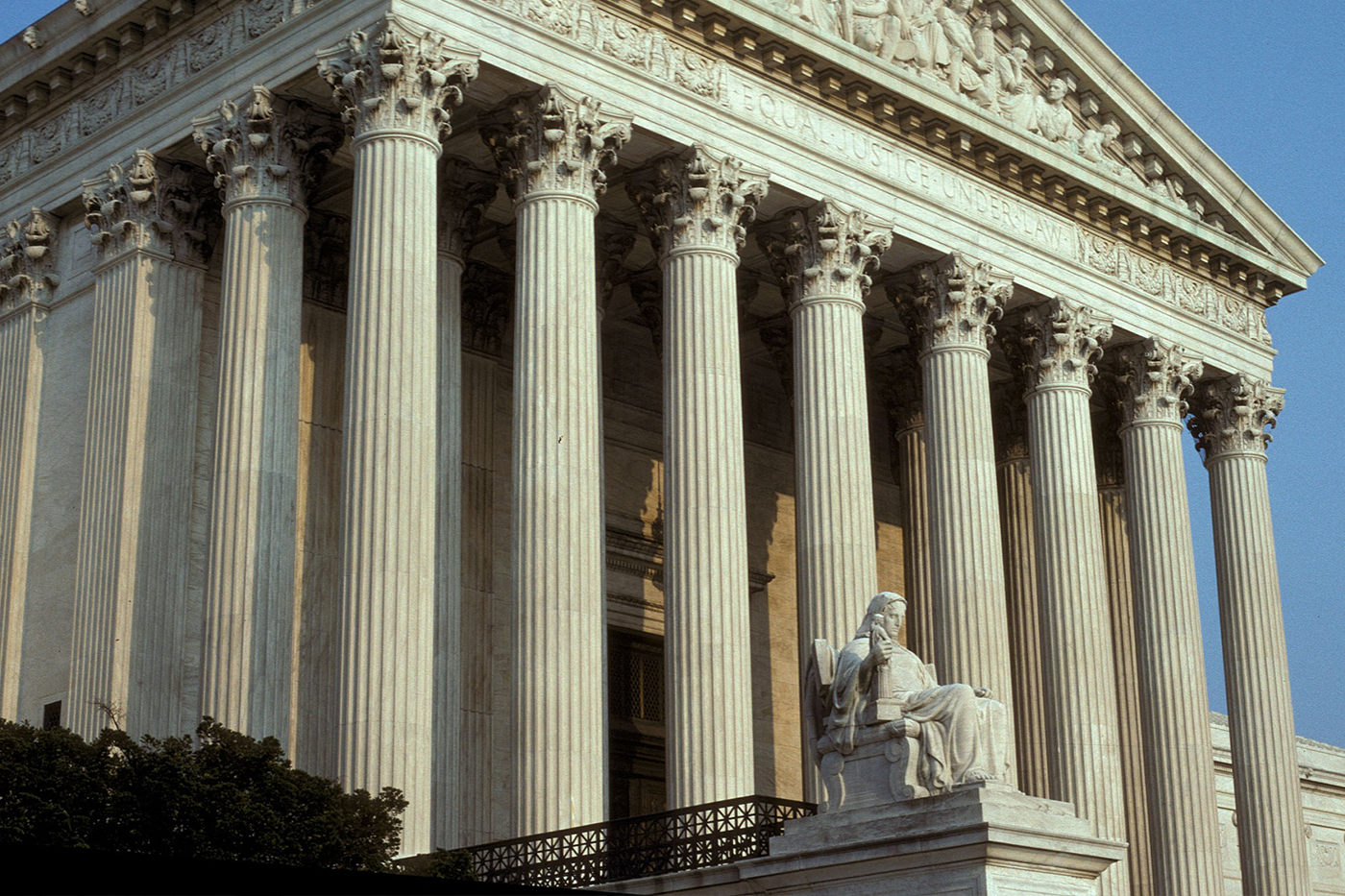


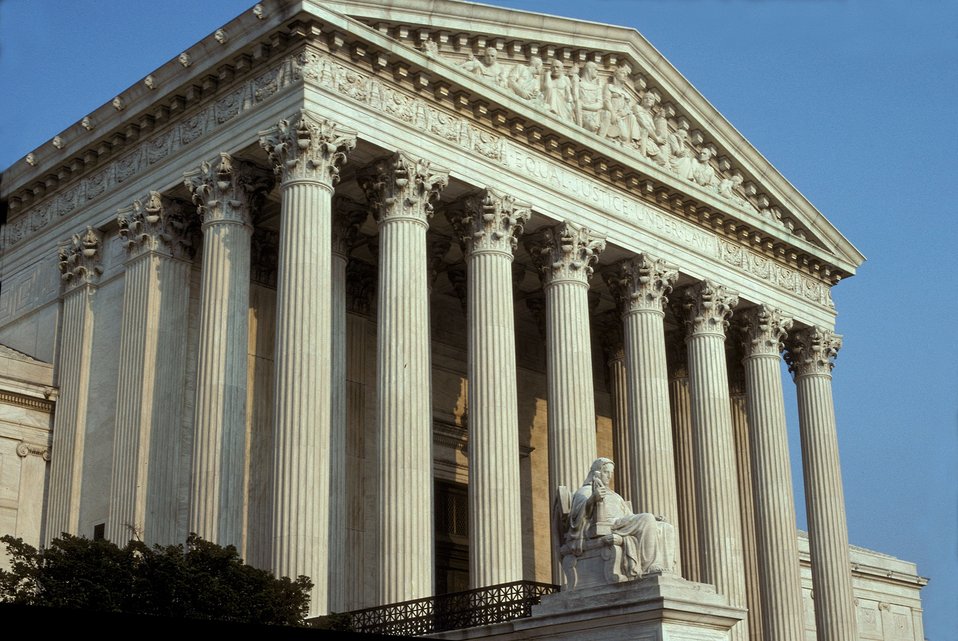


You must be logged in to post a comment.