President Trump continued his legacy of defending religious liberty with a stellar address at the United Nations today. He offered many examples of religious persecution around the globe, stating that 80 percent of the world’s population lives in nations where religious liberty is either restricted or banned altogether.
In one of the most startling statistics mentioned by President Trump, he said that “11 Christians are killed every day for following the teachings of Christ.” That alone is worthy of the kind of international dialogue that the U.N. was founded to address. But we need more than dialogue: the perpetrators need to be brought to justice.
The most ground-breaking aspect of President Trump’s statement came at the end. “The United States is forming a coalition of U.S. businesses for the protection of religious freedom. This is the first time this has been done. This initiative will encourage the private sector to protect people of all faiths in the workplace.”
This is a huge improvement over the Obama years when religious liberty was privatized to mean freedom to worship. People of faith want an expansive and robust interpretation of religious liberty—we are not satisfied to attend religious services.
The next battleground for religious liberty is the workplace. No one should be forced to engage in any religious practice, but neither should they be told to check their beliefs at the office door. Reasonable accommodations can and should be made. This is what the president is getting at, and we welcome it.
Trump also noted the hypocrisy of those who preach the wonders of diversity, which frequently is code to neuter religious liberty. “Too often people in positions of power preach diversity while silencing, shunning, or censoring the faithful. True tolerance means respecting the right of all people to express their deeply held religious beliefs.”
The last sentence is key. Trump was referring to the habits of Democrats on the Senate Judiciary Committee to impugn the integrity of Catholic nominees to the federal bench.
In 2003, Sen. Charles Schumer questioned Alabama’s attorney general, William Pryor, regarding his suitability to serve on a federal appeals court. “His beliefs are so well known,” Schumer said, “so deeply held, that it’s very hard to believe…that they’re not going to deeply influence the way he comes about saying, ‘I will follow the law.'”
In 2017, Sen. Dianne Feinstein played the same anti-Catholic card when she grilled Amy Coney Barrett, a nominee for the U.S. Court of Appeals for the Seventh Circuit. “You have a long history believing that your religious beliefs should prevail. When you read your speeches, the conclusion one draws is that the dogma lives loudly within you.”
The president is right. Those who preach diversity have a way of censoring religious speech and sanctioning those who hold to their “deeply held religious beliefs.” Evidently, there is no problem seating a nominee for the federal bench if he holds to deeply held secular beliefs. It’s just religious beliefs that cause the alarms to go off.
Congratulations to President Trump. He not only made a persuasive case for international religious liberty, he offered specifics on how he is going to contribute to our religious rights at home.
The cracks in the Axis powers became clear when the Armistice of Cassibile was announced on September 8, 1943, after the Italian government broke with the Nazis and joined the Western Allies. The National Socialists under the codename Unternehmen Alarich tried to take over the Italian zones of occupation in southern France and the Balkans before disarming the army of Italy itself, but they were foiled. Like the people they led, Hitler and Mussolini were birds of very different feathers, and their marriage of convenience was bound to fail. As languages reveal the psychology of the people who speak them, German and Italian are almost drolly unlike. For instance, German has many words for “invade,” such as überfallen, einfallen, and einmarschieren, while Italian for the most part simply has invadere, used more often than not in the passive tense.
What the German language may lack in mellifluousness (although Lieder have their beguilements) it makes up in its brilliant precision. If words are inadequate, it just makes up new ones by cobbling old ones together. While German may be superior for expressing thought, the elegant art of the Italian language lies in its ability to articulate vacuity. Or, more precisely, it employs melodic vowels to give the occasional impression of thought when there is none. Here, of course, the ghosts of Dante and Petrarch may stir to haunt me, but they were derivative of the Latin school. It is a long and downward spiral from Cicero to Il Duce.
This past summer, what is now called the John Paul II Pontifical Theological Institute for Marriage and Family was “reconstituted” with an abruptness and thoroughness that scandalized over forty international scholars, who objected to the firing of several distinguished professors. It was a real purge—a term for which German has many equivalents such as Saüberung and Reinigung, but which Italian invariably would call epurazione. The Institute retains the name “John Paul II,” but that only serves now as an ironic reminder that it has distanced itself from the theology, philosophy, and prophetic vision of that pontiff.
Archbishop Vincenzo Paglia, President of the Vatican’s Pontifical Council for the Family, oversaw the “reconstitution” of the Institute, of which he is also Grand Chancellor. When he was bishop of Terni-Narni-Amelia, Monsignor Paglia commissioned a large mural by Ricardo Cinalli, an Argentinian whose Uranian appetites are on full display in the erotic figures depicted—including the future Grand Chancellor. In 2016, Paglia also supervised the publication of a Vatican-approved sex education booklet; in response, Dr Richard Fitzgibbons, a psychiatrist who was a consultant to the Holy See’s Congregation for the Clergy and adjunct professor at the John Paul II Institute for Studies on Marriage and Family at the Catholic University of America, said: “this obscene or pornographic approach abuses youth psychologically and spiritually.”
In 2015, at the time of the Synod on the Family, Archbishop Paglia called for an end to “ecclesiastical gobbledygook” that “sterilizes families.” Perhaps to avoid the kind of “foolish consistency” Ralph Waldo Emerson called the “hobgoblin of little minds, adored by little statesmen and philosophers and divines,” the Grand Chancellor contradicted himself by appointing as President of the John Paul II Institute a cleric not guiltless of gobbledygook (discorso senza senso). This summer in his address at the opening of the new term, Monsignor Pierangelo Sequieri orated:
The recomposition of the thought (ricomposizione del pensiero) and practice of faith with the global covenant (l’alleanza globale dell’uomo) of man and woman is now, with all evidence, a planetary theological space for the epochal remodeling of the Christian form (un lugo teologico planetario per il rimodellamento epocale della forma cristiana); and for the reconciliation of the human creature with the beauty of faith. To put it in the simplest terms, by overcoming every intellectualistic separation between theology and pastoral care, spirituality and life, knowledge and love, this evidence must be rendered convincing for all: the knowledge of faith cares about the men and women of our time.
When he was finished, no one asked him what he meant, although there may have been much between the lines that should not have been said. It sounded too enchanting to mean less than its affected portentousness.
❧
Several decades ago, I was subjected to a ritual oral examination, a vive voce for a degree in the University of Oxford, before a tribunal of professors whose imposing presence in their academicals made the prospect of the Day of Judgement like a frolic. But they turned out to be quite kindly souls, if of different schools of thought on God and man. To my surprise, after having perused the hundred or so pages of my dissertation, the only criticism was that on an obscure page there was a line containing “academic jargon.” It was an edifying, and obviously memorable, complaint, even though the don making it harbored a Christology that might not have passed a test administered by St. Athanasius. The point was: if you know what you are saying and believe it to be true, make it clear—and not just to dons, but to everyone.
That was a different time, a different place, and a different culture. And the dons wore their learning lightly.
Descent into jargon to give the impression that obscurity is profundity is a temptation indulged not only by ecclesiastics, for it luxuriates in the ivied halls of academia and the labyrinthine corridors of government. But it parades with colorful panache in the Church, and it can bewitch even in English translation. If you make a list of jargonish adjectives and another of jargonish nouns, you are on your way to writing your own neoplastic academic speech, papal audience address, Apostolic Exhortation, or even your own Encyclical. Look through the ever-lengthening volumes of the Acta Apostolicae Sedis and other pontifical sources, and you can find inventive adjectives like “integrally ecological,” “planetary,” “dialectical,” “epochal,” “nuanced,” “ontological,” “clericalist,” “osteoporotic,” “neo-Pelagian,” “leprous,” “sloth-diseased,” “schizophrenic,” “paradigmatic,” “issue-oriented,” “cosmetic,” and “pickle pepper-faced.” Then in the column of nouns you can list, for starters: “field hospital,” “coprophagist,” “nominalist,” “soap bubble,” “rigidity,” “peripheries,” “paradigm,” “dicastery,” and “ecological debt.”
By switching back and forth, or by occult inspiration, you can construct prophetic sounding platitudes such as: “integrally ecological field hospitals,” “planetary coprophagists,” “dialectical nominalists,” “epochal soap bubbles,” “nuanced rigidities,” “ontological peripheries,” “clericalist paradigms,” and “pickle pepper-faced ecological debts.” Then you can start crisscrossing: “issue-oriented coprophagists,” “paradigmatic consequentialists,” “sloth-diseased nominalists,” and so forth. You can even describe “planetary field hospitals,” “osteoporotic nominalists,” “epochal peripheries,” and “schizophrenic clericalists.” It’s fun, and might have been the sort of pastime the late imperial senators in moth-eaten togas engaged in while the Ostrogoths menaced the crumbling Roman walls in the sixth century. Mathematically there are hundreds and indeed thousands of possibilities, and enough verbiage to keep paradigmatic dicasteries busy forever, per sempre. Or, to be more precise, Jargon wird niemals kaputt sein.
Doctor of the Church St. Catherine’s Advice to Cdl. Burke: Issue the Correction & Don’t Fear Schism
In 2016, Cardinal Raymond Burke in an interview gave a timeline on issuing the “formal correction” to Francis:
“In an exclusive interview with LifeSiteNews, Cardinal Raymond Burke has given an indication of the possible timeline of a “formal correction” of Pope Francis should the Pope not respond to the five dubia seeking clarity on Amoris Laetitia, presented to the Pope by four Cardinals, including Cardinal Burke.”
“’The dubia have to have a response because they have to do with the very foundations of the moral life and of the Church’s constant teaching with regard to good and evil, with regard to various sacred realities like marriage and Holy Communion and so forth,’ Burke said during a telephone interview.”
“’Now of course we are in the last days, days of strong grace, before the Solemnity of the Nativity of Our Lord, and then we have the Octave of the Solemnity and the celebrations at the beginning of the New Year – the whole mystery of Our Lord’s Birth and His Epiphany – so it would probably take place sometime after that.’”
“The cardinal, who is the patron of the Sovereign Order of Malta, said the format of the correction would be ‘very simple.’”
All faithful Catholics must pray that Cardinal Burke keeps his word and issue the first correction and possibly the second formal correction.
It is possible that the Dubia Cardinals, Cardinal Burke and Cardinal Walter Brandmuller, have already issued the first correction to Francis.
On January 4, 2017, LifeSiteNews reported that Cardinal Brandmuller told the Vatican Insider:
“‘I believe that Cardinal Burke is convinced that a formal correction must in the first instance be made in camera caritatis,’ meaning in private said Brandmuller.” (LifeSiteNews, “Cardinal Brandmuller gives details about possible ‘ fraternal correction’ of Pope,” January, 4 2017)
If the Dubia Cardinals have already issued the first correction and were to issue a second correction then Pope Francis is close to becoming “canonically guilty of heresy” and may be close to being removed from the “office” of the papacy unless he recants or rejects the “heresies he has announced” according to theologian John R. T. Lamont.
Lamont in Rorate Caeli wrote the “formal correction” by Cardinal Burke would lead to schism “probably leav[ing] the Church with Francis as an [heretical] anti-Pope contesting the authority of the new Pope”:
The “formal correction that Cardinal Burke envisages would be such an act. If such a warning were repeated twice and Pope Francis refused to heed both of these warnings, he would become canonically guilty of heresy…”
“… It is to be hoped that the correction of Pope Francis does not have to proceed this far, and that he will either reject the heresies he has announced or resign his office. Removing him from office would require the election of a new Pope, and would probably leave the Church with Francis as an anti-Pope contesting the authority of the new Pope.” (Rorate Caeli, “Considerations on the dubia of the four Cardinals,” December 5, 2016) [[http://rorate-caeli.blogspot.com/2016/12/article-considerations-on-dubia-of-four.html?m=1]
Doctor of the Church St. Catherine of Sienna was in the same situation that Cardinal Raymond Burke is in now.
Catherine knew what Cardinal Burke knows which is that if God’s will is done, in terms of speaking the truth and reforming the Church, there will be a schism.
It appears that the reason he hasn’t kept his word and issued the correction is that he fears that if he does God’s will in terms of speaking the truth and reforming the Church there will be a schism.
The Cardinal needs to take the advice of St. Catherine who is not only one of the greatest saints in history, but a Doctor of the Church.
Do God’s will no matter the consequences. Do God’s will even if it brings about a schism.
She knew that if she did God’s will and got the French Pope Gregory XI to leave the French court of Avignon and return to Rome that there would be a schism.
Catherine knew that as long as Gregory stayed in France that would be no “reform” of “the morals of the clergy” and that the corrupt inner circle of the papacy would get more corrupt leading to the loss of more souls.
In Nobel Prize winner Sigrid Undset’s biography “Catherine of Sienna,” Undset reports that when the Pope asked her if it was God’s will that he return to Rome:
“Catherine replied: ‘Who knows God’s will so well as your Holiness, for have you not bound yourself by a vow—‘ Greatly shaken, Gregory stared at the young woman. He had made a vow that he would return to to Rome if he were chosen to be Pope— it was while he was still cardinal. But he had not told a living soul. From that moment he knew he would leave Avignon.” (Page 210)
Undset’s biography shows the saint knew that her getting the Pope to leave Avignon would bring about a schism:
“Catherine replied… ‘When the Pope really begins to reform the morals of the clergy they will rebel and split the Church.’ No, there would be no new heresy, there would be schism. And she said to Raimondo and his friends that they would live to see this horror.” (Page 194-195)
“Catherine had foreseen the schism. When she received the news of it, she must have known that her longing to throw herself into the tumult of battle would soon be fulfilled… she had still much to do here on earth. Because she knew the time was approaching when she should depart from this life.” (Page 259)
St. Catherine reveal to Cardinal Burke that he will soon be departing from this life to meet the Living God. He must do God’s will and not fear a schism.
He must remember that he may be contradicting God’s will for him in not issuing the correction.
He must remember that it is his sacred duty as a cardinal to defend the glory of God, His Church and the very words taught by the Son of God Jesus Christ because:
Francis claims it is “authentic Magisterium” to contradict the very words of the Son of God and the infallible Revelation He gave to His Church.
Francis claims it is “authentic Magisterium” to contradict Jesus Christ who is God, the Bible, all popes, all Tradition by admitting to Holy Communion those committing the sexual act of adultery in violation of the Sixth Commandment which Pope John Paul II taught was “intrinsically impossible.” (Congregation for the Doctrine of the Faith, “Concerning Some Objections to the Teachings on the Reception of Holy Communion by Divorce and Remarried Members of the Faithful,” Joseph Cardinal Ratzinger, www.vatican.va)
Pray that Cardinal Burke and Cardinal Brandmuller correct Pope Francis so more souls are not lost.
St. Catherine we ask you to pray that Cardinal Burke and Cardinal Brandmuller correct Pope Francis.
Pray a Our Father now for this intention.
We ask you Mary, Mother of God, St. Joseph and St. Catherine to pray that the Precious Blood of Jesus Christ cover and flood the minds and hearts all the cardinals, bishops, clergy, religious and laity that they defend the glory of God and the truths of the Son of God Jesus Christ’s Revelation.
Pray one Our Father and the following prayer now for this intention.
Constant Prayer of St. Catherine to the Precious Blood of Jesus:
Precious Blood, ocean of Divine Mercy: Flow upon us!
Precious Blood most pure offering: Procure us every grace!
Precious Blood, hope and refuge of sinners: Atone for us!
Precious Blood, delight of holy souls: Draw us! Amen.
(Natural News) Over the last 24 hours, Natural News and NewsWars have spearheaded the reporting on the implications of Google’s “quantum supremacy” announcement from Friday. What’s astonishing is how few independent media publishers and mainstream media outlets are covering this story, considering it’s the biggest computing milestone in the history of humanity, with game-changing implications for the future of the human race.
It seems apparent that many people simply don’t want to believe those implications, so they choose to ignore what just happened. On the indy media side, one of the implications that seems to bother many publishers is the fact that quantum computing makes cryptocurrency obsolete. So quantum computing stories get ignored because the implications are too scary for the crypto crowd, which doesn’t feel comfortable considering the implications of what happens when the “crypto” portion of cryptocurrency no longer offers any real security at all.
The “crypto” in “cryptocurrency,” of course, stands for “cryptography.” It is cryptography that allows cryptocurrency transactions to be securely communicated over non-secure networks (such as the open internet) while verifying the authenticity of the party sending cryptocurrency funds. Quantum computing makes classical cryptography obsolete for mathematical reasons explained below.
Cryptography relies on cryptographic asymmetry, which is rendered obsolete by quantum computing
To back up for a minute, cryptography relies on what’s called asymmetry in computational difficulty in terms of encrypting something versus breaking that encryption. For example, it might take your desktop PC 10 seconds to encrypt a file, but breaking that encryption on another desktop PC might take 10 billion years (depending on the number of encryption bits and other factors).
However, quantum computing makes this roughly symmetrical, meaning the difficulty of encrypting a file is roughly symmetrical to the difficulty of breaking the encryption using quantum computing (qubits).
What this means is that even if Bitcoin doubled the number of bits used in its encryption algorithms to 512, quantum computers simply need to increase their qubits to 512 to be able to break all the Bitcoin encryption in about the same amount of time the encryption required (which is almost no time at all).
So you might say why not just make all Bitcoin encryption 1024 bits, or 2048 bits, or 4096? The answer should be obvious. Thanks to quantum computing, you no longer have an asymmetrical computing advantage, meaning that you are adding just as much computing burden to the encryption side as you are to the “breaking encryption” side of the equation. And if you thought Bitcoin was slow and bloated today, just imagine how slow it would become if you start doubling or quadrupling the number of bits needed for every secure communication.
Meanwhile, quantum computing is leaping forward at orders of magnitude that make your head spin. Honestly stated, most people just don’t follow the math and can’t comprehend the reality of how much faster quantum computers are at breaking encryption codes compared to classical computers.
This Cornell University science paper, published in January of 2016, tested the speed of a quantum computer solving a 945-variable equation, using quantum tunneling computational principles. The result? According to the study:
For instances with 945 variables, this results in a time-to-99%-success-probability that is ?10^8 times faster than SA running on a single processor core. We also compared physical QA with Quantum Monte Carlo (QMC), an algorithm that emulates quantum tunneling on classical processors. We observe a substantial constant overhead against physical QA: D-Wave 2X again runs up to ?10^8 times faster than an optimized implementation of QMC on a single core.
Ten to the power of 8 (i.e. 10^8) is of course 100 million times faster than a classical computational core such as the one powering your computer. And this was over 3 years ago, by the way, before the “quantum supremacy” announcement by Google last Friday.
If you do the math on this, what it means is that this quantum computing system can solve a problem in one second that would take your desktop PC over three years to solve.
Quantum computers are “stargates” that send complex problems to a multidimensional, hyper-computational realm which computes the correct answer
But it’s not just speed that matters. Quantum computers aren’t necessarily good at rendering 3D graphics, for example, or crunching databases. They are very narrow-use computational devices, and their No. 1 best application is breaking encryption (they’re also good at generating truly random numbers, which has many applications in cryptography). They do it almost by magic, invoking multidimensional mathematics that some say involve sending the encryption problem out to 2^n dimensions, where n is the number of bits used in the encryption. These 2^n dimensions each express one possible solution to the encryption problem. Yet the quantum computer is able to pick the “right” answer out of those multitude of dimensions and bring it back into our dimension, expressed as a readable state of qubits, which is then translated into regular binary.
Quantum computers, in other words, use the mathematics inherent in the fabric of the cosmos to “solve” problems without having to compute the solutions. You might say there really isn’t any “computation” taking place, but rather a diverting of the encryption problem to the fabric of the cosmos which does the computing for you. You could even call it a “computational wormhole” or “stargate” that seems to cheat the laws of reality.
If this makes no sense, you’re not alone. It’s difficult for humans to grasp the fact that the very nature of the cosmos is pure mathematics, from which the emergent property of physics springs forward. I recently spoke at the True Legends event in Branson, Missouri, and there I met Hugo de Garis, an Artificial Intelligence expert who proposes that the entire universe may in fact be the creation of a hyper-advanced AI intellect that created the cosmos out of pure mathematics. He is proposing, in other words, that “God” is an AI intellect, which means he believes in Deism (a God creator) but not necessarily Theism (the Christian, loving God as creator).
According to de Garis and others who are proficient in AI system and high-level mathematics, the fabric of the cosmos is nothing more than the expression of mathematics. This means the cosmos is computational by its nature. In other words, the cosmos computes things all the time, inherently. This includes the orbital cloud waves of electrons, by the way, and the actions and properties of atoms and subatomic particles. The construction of quantum computers means that humans have built a way to send mathematical problems to the cosmos, using the computational power inherent in the cosmos, and retrieve the answers back in our “real” world (which is course isn’t real at all, but lets pretend it is so we can get on with this explanation).
The fabric of reality is a hyper-dimensional, hyper-computational system
The very fabric of reality, in other words, is a hyper-dimensional supercomputer. If you can tap into it, you can ask it to solve incredibly complex mathematical problems for you. That’s what quantum computers really are: a sort of “stargate” into the mathematical hyperdimensional computational fabric of reality that solves problems for you at essential zero cost, since it’s part of the very structure of the universe itself.
A research paper published in 2014 confirms this, finding that quantum computers don’t run any faster than classical computers. There’s no “quantum speedup” of the CPU, in other words. The quantum “computer” isn’t actually doing the computing at all. As CNET reported in 2014:
A research team at the Swiss Federal Institute of Technology in Zurich reports that there is still a lack of definitive evidence that the D-Wave Two can perform functions any faster than traditional machines. The results of the test were published in the journal Science Thursday…
By the way, if you think this is interesting stuff, listen to my recent podcast on the distortions of spacetime by Faster-Than-Light (FTL) warp drive systems and how they allow ships to travel at multiples of the speed of light without violating the laws of the universe, which limit relative speed to C. This podcast is highly technical, but incredibly fascinating, and it explains the movement of the non-Earth ships recently captured on video by Air Force jet fighter pilots, which has now been verified as authentic by the U.S. Air Force itself.
(You can watch more of my lectures on FTL travel, warp drives, spacetime distortions, antimatter fuel systems and cosmic economics at OblivionAgenda.com. Many more lecture videos are on the way, by the way, covering these topics and much more.)
Quantum computers solve highly complex computational problems by delegating the computational load to the multidimensional, hyper-computational nature of the cosmos
In summary (so far), quantum computers are not really computational devices at all. They are portals to the computational nature of reality. Quantum computers don’t “compute” anything, simply stated. They dispatch highly complex problems to multiple dimensions which then return the “correct” answers to our reality. From there, scientists use classical circuits to read the state of the qubits and translate the answers into classical bit representations which are then of course easily translated into hexadecimal (base 16) expressions of values.
If you’re not yet convinced that the nature of reality is computational, realize that classic logic gates such as “OR” and “AND” functions have already been achieved and demonstrated at the Femto level, which is 1/1,000,000th the scale of nanotech. (Metric units, to review, go in this order, with 10^3 scale between each: milli, micro, nano, pico, femto, atto, zepto, yocto.)
The computational nature of the cosmos goes even far beyond this. The very structure of what might be called “the grid” is both quantized and highly computational. Just ask Planck. (By the way, the quantization of the fabric of the cosmos is very nearly proof all by itself that the underlying nature of reality is mathematical. This does not disprove the existence of God, by the way. It just means God expresses creation through mathematics, which are also found across all living systems such as plants, microbes, etc.)
Atomic physics, you might say, is an emergent property of the mathematical and computational undercurrent that penetrates and pervades the construct of “reality.” That’s why there are no electrons until you observe them, collapsing mathematical probability wave functions into a momentary expression of “reality” in order to complete the illusion for the conscious observer.
Quantum computing makes all known classical encryption obsolete: Cryptocurrency, military comms, banking and finance, etc.
Now that we’ve covered a bit about how quantum “computing” harnesses the hyper-computational, multidimensional fabric of the cosmos to rapidly find answers to a very narrow set of highly complex mathematical problems, we have to look more closely at the applications of this tech.
Here comes some more math. Be warned.
If you are encrypting files right now using a 256-bit encryption algorithm, and then you decide to switch to 512-bit encryption, in a classical computing model, you have just increased the difficulty of breaking the encryption by 2^256, which is a very large number.
But with quantum computing applied to the problem, the difficulty of the original 256-bit encryption is merely doubled when it shifts to 512-bit encryption. In other words, quantum computing allows code breakers to tackle increasingly complex problems with a linearrelationship to increased complexity rather than a logarithmic relationship.
Explained again, even if Bitcoin (for example) were to quadruple the number of bits used in its encryption from 256 to 1024, a quantum computer that breaks the 256-bit code in 1 second would only need 4 seconds to break the 1024-bit encryption (this is oversimplified, but roughly correct). The implications of this linear code breaking relationship are not realized by most people. In fact, almost no one seems to grasp what this means for our society.
I remain stunned by the fact that very few people can see what I find to be immediately obvious. For whatever reason, I’ve been truly blessed with the ability to almost instantly realize the long-term implications of present-day trends. This is what allowed me to predict over two years ago that quantum computing would break cryptocurrency. It’s also part of what got be permanently banned from YouTube, since the most dangerous thing in modern society is to be intelligent and a good communicator. (That’s when I started building Brighteon.com, the YouTube alternative for free speech.)
IBM, Google, Microsoft, Nokia, D-Wave, Alibaba and others are relentlessly pursuing quantum computing breakthroughs
Today, many organizations are spearheading quantum computers, including D-Wave which offers a commercially-available quantum computing system that you can purchase and put on your desk. (It’s only $15 million, but who’s counting?) According to media reports, Google “is using D-Wave as its primary product” for quantum computing research.
Other companies involved in quantum computing research include IBM, Microsoft, Nokia and even China’s Alibaba. The NSA, by the way, is heavily involved in some of this research for obvious reasons. Whoever breaks the most codes first will dominate the world. In fact, the race for high-qubit quantum computing earns an even higher priority than the race to develop the world’s first hyper-intelligent AI system.
What happens when you combine AI with quantum computing? You create an omniscient God-like computational intellect that would know everything (in human civilization, anyway) and could control everything. Hence the concerns about Google being involved in all this research, since Google is the most evil corporation in the world… and it has become strongly allied with communist China.
Whoever achieves high-qubit quantum computing first will be able to achieve all the following:
Spoofing all cryptocurrency transactions and effectively draining all crypto wallets, worldwide.
Decoding all military communications. This is “Enigma” on steroids.
Monitoring and spoofing nearly all banking and finance transactions. Full control over international wires.
Reading all encrypted communications involving civilians, government and military. There will be no such thing as privacy, not even Pretty Good Privacy.
Reading all encrypted hard drives, container files and other storage media, including those of the NSA and world governments. Too many secrets. Setec Atronomy.
The fact that so many powerful corporations and governments are pursuing quantum computing means it’s only a matter of time before present-day cryptocurrency becomes obsolete and completely compromised. Perhaps some crypto systems can advance to an enhanced form of encryption, but this is just conjecture.
It is probably because of this that most independent media outlets are avoiding discussing this issue, since many are promoters of cryptocurrency, a technology that will cease to be secure in less than three years, if Google’s scientists are correct in their predictions about quantum computing.
But guess what? Quantum computers can’t steal your gold, because they can’t teleport matter away from your home vault. So gold is still the best store of value, even in a world where digital secrets are all cracked. Quantum computers cannot alter the laws of atomic elements, and since gold is an element, its existence is guaranteed by the very nature of the universe. (Gold is gold, and you can’t alter it into anything other than gold unless you control a working nuclear fusion device, in which case gold is the least of your problems.)
One possible solution to maintaining secrets is to use quantum cryptography, a form of cryptography that relies on the phenomenon of quantum entanglement to secure digital files in ways that may put them out of reach of quantum computing. A leading edge organization named Crown Sterling claims to have produced “Time AI,” a so-called quantum computing solution that claims to securely encrypts data on computers and mobile devices. I’m skeptical of this claim, since your mobile phone doesn’t have any capability whatsoever to read the spin state of entangled atomic particles. As a general word of caution, I would urge consumer to be wary of “quantum encryption” claims, given that anyone can assign such labels to almost any technology at all. True quantum encryption requires a lab full of advanced physics equipment, by the way.
In any case, it seems obvious that any cryptocurrency that wishes to survive the rise of quantum computing will need to adopt something far more advanced than RSA or AES encryption, or it will be rendered obsolete.
And whatever nation or corporation that develops 1024-bit quantum computing first will rule the world and become more powerful than anyone can currently imagine. Whoever can decode all the secrets will rule the world.
God help us if that turns out to be Google.
The era of secrets is about to come to an end. Consider the implications on government surveillance and intrusion into the lives of citizens. Then ask yourself why almost no one else is covering this topic, given that it’s the biggest science story in human history. Has humanity become blind to the mechanisms of its own destruction?
Sadly, it seems the answer is yes.
Watch more science and “cosmic” video lectures of my work at OblivionAgenda.com.
Posted inUncategorized|Comments Off on FORGET THE AMAZON SYNOD! THE REAL THREAT TO THE WORLD IS THAT FRANCIS THE MERCIFUL WILL TRY T0 TEAM UP WITH GOOGLE TO RULE THE WORLD IN PLACE OF GOD
Why are the globalist elite and Francis using youth Greta Thunberg to inspire so-called GREEN YOUTH rallies in the media propaganda spectacular called the “Climate Strike” in over 150 countries?
What was the reason that Adolf Hitler inspired HITLER YOUTH rallies and wrote in Mien Kampf:
“Whoever has the youth has the future”?
Why is Francis making a “special invitee” to his Amazon Synod the one-world government advocate Hans Joachim (John) Schellnhuber according to journalist Edward Pentin on Twitter?
Might Francis’s main agenda at the Amazon Synod be not so much about undermining Catholic doctrine (which has already been greatly accomplished with Amoris Laetitia), but pushing for a one-world government?
Hitler wanted a one-world government so he inspired the Hitler youth and others with the propaganda and scare tactics against the Jews and all the so-called racially inferior useless eaters.
So, now, is it possible that the global elite and Francis apparently want a one-world government and are attempting to inspire green youth and others with propaganda using the big lie scare tactic of the end of the world is near unless the world accepts a “‘green dictatorship” one-world government.
On August 9, Francis in an interview with the Vatican Insider showed that he had joined climate extremists in shamelessly exploiting the youth Greta Thunberg for a “regressive green dictatorship” one-world government.
“He praised the increased awareness and movements among young people, such as Greta Thunberg, the Swedish teenager whose #FridaysForFuture campaign asks students to hold a strike to demand swift action on climate change. Francis had met the 16-year-old environmental activist at a weekly general audience in St. Peter’s Square in April.” [https://international.la-croix.com/news/cardinal-blase-cupich-voice-of-the-pope-in-the-united-states/9292] agnst-nationalism/] Scientist and doctor Laurent Alexandre according to Climate Changed Dispatch in the article “French Doctor Exposes How Militant Climate Extremists Are Exploiting Greta Thunberg” said “people who follow Greta Thunberg are the useful idiots of the green dictatorship”:
“In a stinging commentary at Le Figaro here, Dr. Laurent Alexandre, surgeon-urologist, a graduate of Sciences Po, HEC and ENA, and co-founder of the Doctissimo website, asserts that teenage Nobel Prize nominee Greta Thunberg is being shamelessly exploited and “is playing into the hands of economic interests.”
“Laurent Alexandre first comments that “the young people who follow Greta Thunberg are the useful idiots of the green dictatorship” much in the same way Lenin called left-wing bourgeois “useful idiots of the revolution” and that the failures of all Marxist models have ‘left the anti-liberals in turmoil.’”
“He writes that ecology today serves as ‘the ideal instrument to propose a new utopia that is a substitute for the Marxist dictatorship’. He adds: ‘By exploiting the youth, we are imposing a liberticidal agenda in the name of good feelings.’”
“… Alexandre implies that Greta Thunberg is unwittingly promoting ‘the interests of China and Russia’ and that her demands would make us “highly dependent on rare metals needed for wind, solar and storage installations, of which China has a near-monopoly.”
“The French urologist and book author describes Ms. Thunberg as ‘a shamefully manipulated victim’ who needs to be protected, but adds that her radical ideas ‘must be attacked relentlessly’”.
“… Finally, Alexandre comments that following the green path will backfire because it would ,aggravate global warming, increase the waste of public money, lead to a regressive green dictatorship and put us at the mercy of China and Russia. All liberal democrats, all Raymond Aron’s heirs, must combat the deadly utopias it conveys.’” [https://climatechangedispatch.com/doctor-greta-thunberg-climate-extremists/]
Is using the Amazon Synod as a way to push for this “repressive green dictatorship” one-world government the reason Francis made a “special invitee” of Schellnhuber ?
In 2015, LifeSiteNews reported that Francis appears to be in alliance with John Schellnhuber who is calling for a one-world government:
“… Schellnhuber is also known for his advocacy of a one-world government. In order to avoid his catastrophic predictions for unchecked climate change.”
On May 9, the New American reported on the “unholy alliance” between the one-world regime globalists and Francis:
Francis said “‘When a supranational common good is clearly identified, it is necessary to have a special authority legally and concordantly constituted capable of facilitating its implementation. We think of the great contemporary challenges of climate change, new forms of slavery and peace,’ his holiness told those gathered to discuss ‘Nation, State, and Nation-State,’ the conference theme.””Pope Francis put a pretty fine point on his message, claiming that planetary problems are exacerbated by ‘an excessive demand for sovereignty on the part of States.'”
“… Our only hope for planetary peace and progress is to make room for ‘international organizations’ to develop into governing bodies, supplanting the ‘state interests’ with the will of the United Nations, he stated.”
“… Those people pushing for unlimited access to abortion loathe the Roman Catholic Church and its centuries-long opposition to the murder of children in utero are the very people standing with the head of that church in the fight to kill sovereignty and establish a one-world government.”
“That seemingly bizarre and undeniably unholy alliance should be enough to compel people to question what the underlying goal of the globalists must be.”
The mysterious “whistleblower” case now looks like a coordinated Democrat effort to block any investigation of presidential candidate Joe Biden for corrupt pressure on Ukraine to drop the investigation of Burisma, an energy company operating in the country, on which his son Hunter Biden was a board member.
In March 2016, then Vice-President Joe Biden warned Ukraine that $1 billion in loan guarantees would be withheld by the U.S. unless they replaced Viktor Shokin, the prosecutor general who was investigating Hunter Biden. Ukraine did remove Shokin, and the prosecution was dropped. It looks like a clear case of a quid-pro-quo.
However, as things are starting to shake out, the current obfuscation to protect Joe Biden is President Trump asking Ukraine’s new president Volodymyr Zelensky to take another look at the issues surrounding the former government’s decision to fire the Ukrainian prosecutor. This is presumably the call concerning to the whistleblower. To wit, democrats see this as Trump asking Ukraine to interfere in the 2020 election.
Washington Post – A whistleblower complaint about President Trump made by an intelligence official centers on Ukraine, according to two people familiar with the matter, which has set off a struggle between Congress and the executive branch.
The complaint involved communications with a foreign leader and a “promise” that Trump made, which was so alarming that a U.S. intelligence official who had worked at the White House went to the inspector general of the intelligence community, two former U.S. officials said.
Two and a half weeks before the complaint was filed, Trump spoke with Ukrainian President Volodymyr Zelensky, a comedian and political newcomer who was elected in a landslide in May.
That call is already under investigation by House Democrats who are examining whether Trump and his attorney Rudolph W. Giuliani sought to manipulate the Ukrainian government into helping Trump’s reelection campaign. Lawmakers have demanded a full transcript and a list of participants on the call. (read more)
Three Democrat-controlled house committees – Foreign Affairs, Intelligence and Government Reform – have announced that they will investigate whether a host of ethical and legal rules have been violated.
From the Independent: […] The house committees’ chairs say they will scrutinise a telephone call between the US president and Mr Zelensky on 25 July, during which Mr Trump allegedly told the Ukrainian president to reopen the Biden investigation if he wanted to improve relations with the US.
They claim that Kurt Volker, the US special representative for Ukraine, was told to intercede with President Zelensky by the White House, and they are looking into the activities of Rudy Giuliani, Mr Trump’s personal lawyer.
Mr Giuliani urged Mr Zelensky soon after his election to focus on the Biden case, but the Ukrainian president is said to have refused, protesting that he did not want to get drawn into American internal politics.
This led to Mr Giuliani cancelling a trip to Kiev, saying he felt that he would be “walking into a group of people that are the enemies of our president … in some cases the enemies of the United States”. (more)
Posted inUncategorized|Comments Off on THE FURY WITH WHICH THE DEMOCRATS ARE CALLING FOR AN INVESTIGATION OF PRESIDENT TRUMP IN THE MATTER OF Joe Biden/HUNTER BIDEN/UKRAINE SUGGESTS THAT THERE IS SMOKE INDICATING A FIRE THAT THE DEMOCRATS WANT TO EXTINGUISH PRONTO TO PROTECT Joe Biden.
Everyone To the School of the Antichrist. But One Cardinal Rebels
*
While the controversy rages on in view of the synod on the Amazon, which in reality has its epicenter in the Church of Germany, the latest invention of Pope Francis has gone by almost unnoticed.
While the controversy rages on in view of the synod on the Amazon, which in reality has its epicenter in the Church of Germany, the latest invention of Pope Francis has gone by almost unnoticed.
It is entitled “Reinventing the Global Educational Alliance,” and it is open to “all public figures” who “are engaged on the worldwide level” in the field of education, to whatever religion they may belong. The announcement was made on September 12, and the summit is scheduled for May 14 2020 at the Vatican.
It comes as no surprise that a pope like Jorge Mario Bergoglio, who belongs to the Society of Jesus – for centuries a great instructor of the ruling classes – should take such an interest in the schooling and formation of the new generations. But what is striking is the complete absence from his educational project of any sort of Christian distinction.
In the video message with which Francis launches the initiative there is not the slightest trace of God, nor of Jesus, nor of the Church. The dominant formula is “new humanism,” with its trappings of “shared home,” “universal solidarity,” “fraternity,” “convergence,” “welcome”…
And the religions? These too bunched together and neutralized in an indistinct “dialogue.” In order to “gain back the ground lost to discrimination,” the pope refers to the document “on human brotherhood” that he signed on February 4 2019 with the Grand Imam of Al-Azhar, a document in which even “the pluralism and the diversity of religions” are “willed by God in His wisdom, through which He created human beings.”
The novelty of this initiative of Francis consists precisely in the fact that it is the first time a pope has claimed as his own and put himself at the helm of such a radically secularized global educational pact. Because in reality a “new humanism” without Christ is not an original, but a constant in the thought of the West of the last two centuries.
From the Grand Inquisitor of Fyodor Dostoevsky, to the Gospel according to Leo Tolstoy, to the Antichrist of Vladimir Solovyov, to the “new humanism,” no less, of Edgar Morin – the French philosopher whom Francis received in private audience last June 27 following a conference in Rome precisely on the “convergences” of his thought with the vision of the current pope – there are many forms under which the unique and incomparable person of Christ is dissolved, replaced with a generic love for humanity.
“Within this project,” Luisella Scrosati commented in La Nuova Bussola Quotidiana of September 16, “God too is accommodated nicely, as long as he takes his seat among the guests of this new united humanity and does not claim to be the Bridegroom who calls to the wedding, and even decides to keep out those who do not have the wedding garment.”
In 2005 there was a great theologian and cardinal, named Giacomo Biffi (1928-2015), who powerfully brought attention back to the “great crisis that struck Christianity in the last decades of the nineteen hundreds,” hollowing out its substance in the name of a universal fraternity.
Biffi, in a chapter of one of his books, took up the account of the Antichrist written in 1900 by the Russian theologian and philosopher Solovyov, and applied it to the Church of today.
Here are some of its dazzling passages. As relevant as ever.
*
THE DAYS ARE COMING, AND ARE ALREADY HERE…
by Giacomo Biffi
The Antichrist, says Solovyov, […] believed in goodness, and even in God. […] He gave “the greatest possible demonstrations of moderation, disinterest, and active beneficence.” […] The book that had gained for him universal fame and consensus bore the title: “The Open Road to Universal Peace and Prosperity.” […]
It is true that some men of faith wondered why the name of Christ did not appear even once, but others replied: “If the contents of the book are permeated with the true Christian spirit, with active love and universal benevolence, what more do you want?” […]
Where Solovyov’s presentation shows itself to be particularly original and surprising – and merits greater reflection – is in the attribution to the Antichrist of the qualities of pacifist, environmentalist, ecumenist. […]
In this description of the Antichrist, Solovyov […] alludes above all to the “new Christianity” that Leo Tolstoy was successfully promoting during those years. […]
In his “Gospel,” Tolstoy reduces all of Christianity to five rules of conduct which he derives from the Sermon on the Mount:
1. Not only must you not kill, but you must not even become angry with your brother. 2. You must not give in to sensuality, not even to the desire for your own wife. 3. You must never bind yourself by swearing an oath. 4. You must not resist evil, but you must apply the principle of non-violence to the utmost and in every case. 5. Love, help, and serve your enemy.
According to Tolstoy, although these precepts come from Christ, they in no way require the actual existence of the Son of the living God to be valid. […]
Of course, Solovyov does not specifically identify the great novelist with the figure of the Antichrist. But he intuited with extraordinary clairvoyance that Tolstoy’s creed would become during the 20th century the vehicle of the substantial nullification of the gospel message, under the formal exaltation of an ethics and a love for humanity presented as Christian “values.” […]
The days will come, Solovyov tells us – and are already here, we say – in which the salvific meaning of Christianity, which can be received only in a difficult, courageous, concrete, and rational act of faith, will be dissolved into a series of “values” easily sold on the world markets.
The greatest of the Russian philosophers warns us that we must guard against this danger. Even if a Tolstoian Christianity were to make us infinitely more acceptable in the living room, at social and political gatherings, and on television, we cannot and must not renounce the Christianity of Jesus Christ, the Christianity that has at its center the scandal of the cross and the astonishing reality of the Lord’s resurrection.
Jesus Christ, the crucified and risen Son of God, the only savior of mankind, cannot be transformed into a series of worthwhile projects and good inspirations, which are part and parcel of the dominant worldly mentality. Jesus Christ is a “rock,” as he said of himself. And one either builds upon this “rock” (by entrusting oneself) or lunges against it (through opposition): “He who falls on this stone will be broken to pieces; but when it falls on any one, it will crush him” (Mt. 21:44). […]
So Solovyov’s teaching was simultaneously prophetic and largely ignored. But we want to repropose it in the hope that Christianity will finally catch on to it and pay it a bit of attention.Condividi:
. The announcement was made on September 12, and the summit is scheduled for May 14 2020 at the Vatican.
It comes as no surprise that a pope like Jorge Mario Bergoglio, who belongs to the Society of Jesus – for centuries a great instructor of the ruling classes – should take such an interest in the schooling and formation of the new generations. But what is striking is the complete absence from his educational project of any sort of Christian distinction.
In the video message with which Francis launches the initiative there is not the slightest trace of God, nor of Jesus, nor of the Church. The dominant formula is “new humanism,” with its trappings of “shared home,” “universal solidarity,” “fraternity,” “convergence,” “welcome”…
And the religions? These too bunched together and neutralized in an indistinct “dialogue.” In order to “gain back the ground lost to discrimination,” the pope refers to the document “on human brotherhood” that he signed on February 4 2019 with the Grand Imam of Al-Azhar, a document in which even “the pluralism and the diversity of religions” are “willed by God in His wisdom, through which He created human beings.”
The novelty of this initiative of Francis consists precisely in the fact that it is the first time a pope has claimed as his own and put himself at the helm of such a radically secularized global educational pact. Because in reality a “new humanism” without Christ is not an original, but a constant in the thought of the West of the last two centuries.
From the Grand Inquisitor of Fyodor Dostoevsky, to the Gospel according to Leo Tolstoy, to the Antichrist of Vladimir Solovyov, to the “new humanism,” no less, of Edgar Morin – the French philosopher whom Francis received in private audience last June 27 following a conference in Rome precisely on the “convergences” of his thought with the vision of the current pope – there are many forms under which the unique and incomparable person of Christ is dissolved, replaced with a generic love for humanity.
“Within this project,” Luisella Scrosati commented in La Nuova Bussola Quotidiana of September 16, “God too is accommodated nicely, as long as he takes his seat among the guests of this new united humanity and does not claim to be the Bridegroom who calls to the wedding, and even decides to keep out those who do not have the wedding garment.”
In 2005 there was a great theologian and cardinal, named Giacomo Biffi (1928-2015), who powerfully brought attention back to the “great crisis that struck Christianity in the last decades of the nineteen hundreds,” hollowing out its substance in the name of a universal fraternity.
Biffi, in a chapter of one of his books, took up the account of the Antichrist written in 1900 by the Russian theologian and philosopher Solovyov, and applied it to the Church of today.
Here are some of its dazzling passages. As relevant as ever.
*
THE DAYS ARE COMING, AND ARE ALREADY HERE…
by Giacomo Biffi
The Antichrist, says Solovyov, […] believed in goodness, and even in God. […] He gave “the greatest possible demonstrations of moderation, disinterest, and active beneficence.” […] The book that had gained for him universal fame and consensus bore the title: “The Open Road to Universal Peace and Prosperity.” […]
It is true that some men of faith wondered why the name of Christ did not appear even once, but others replied: “If the contents of the book are permeated with the true Christian spirit, with active love and universal benevolence, what more do you want?” […]
Where Solovyov’s presentation shows itself to be particularly original and surprising – and merits greater reflection – is in the attribution to the Antichrist of the qualities of pacifist, environmentalist, ecumenist. […]
In this description of the Antichrist, Solovyov […] alludes above all to the “new Christianity” that Leo Tolstoy was successfully promoting during those years. […]
In his “Gospel,” Tolstoy reduces all of Christianity to five rules of conduct which he derives from the Sermon on the Mount:
1. Not only must you not kill, but you must not even become angry with your brother. 2. You must not give in to sensuality, not even to the desire for your own wife. 3. You must never bind yourself by swearing an oath. 4. You must not resist evil, but you must apply the principle of non-violence to the utmost and in every case. 5. Love, help, and serve your enemy.
According to Tolstoy, although these precepts come from Christ, they in no way require the actual existence of the Son of the living God to be valid. […]
Of course, Solovyov does not specifically identify the great novelist with the figure of the Antichrist. But he intuited with extraordinary clairvoyance that Tolstoy’s creed would become during the 20th century the vehicle of the substantial nullification of the gospel message, under the formal exaltation of an ethics and a love for humanity presented as Christian “values.” […]
The days will come, Solovyov tells us – and are already here, we say – in which the salvific meaning of Christianity, which can be received only in a difficult, courageous, concrete, and rational act of faith, will be dissolved into a series of “values” easily sold on the world markets.
The greatest of the Russian philosophers warns us that we must guard against this danger. Even if a Tolstoian Christianity were to make us infinitely more acceptable in the living room, at social and political gatherings, and on television, we cannot and must not renounce the Christianity of Jesus Christ, the Christianity that has at its center the scandal of the cross and the astonishing reality of the Lord’s resurrection.
Jesus Christ, the crucified and risen Son of God, the only savior of mankind, cannot be transformed into a series of worthwhile projects and good inspirations, which are part and parcel of the dominant worldly mentality. Jesus Christ is a “rock,” as he said of himself. And one either builds upon this “rock” (by entrusting oneself) or lunges against it (through opposition): “He who falls on this stone will be broken to pieces; but when it falls on any one, it will crush him” (Mt. 21:44). […]
So Solovyov’s teaching was simultaneously prophetic and largely ignored. But we want to repropose it in the hope that Christianity will finally catch on to it and pay it a bit of attention.
Everyone To the School of the Antichrist. But One Cardinal Rebels
*
While the controversy rages on in view of the synod on the Amazon, which in reality has its epicenter in the Church of Germany, the latest invention of Pope Francis has gone by almost unnoticed.
It is entitled “Reinventing the Global Educational Alliance,” and it is open to “all public figures” who “are engaged on the worldwide level” in the field of education, to whatever religion they may belong. The announcement was made on September 12, and the summit is scheduled for May 14 2020 at the Vatican.
It comes as no surprise that a pope like Jorge Mario Bergoglio, who belongs to the Society of Jesus – for centuries a great instructor of the ruling classes – should take such an interest in the schooling and formation of the new generations. But what is striking is the complete absence from his educational project of any sort of Christian distinction.
In the video message with which Francis launches the initiative there is not the slightest trace of God, nor of Jesus, nor of the Church. The dominant formula is “new humanism,” with its trappings of “shared home,” “universal solidarity,” “fraternity,” “convergence,” “welcome”…
And the religions? These too bunched together and neutralized in an indistinct “dialogue.” In order to “gain back the ground lost to discrimination,” the pope refers to the document “on human brotherhood” that he signed on February 4 2019 with the Grand Imam of Al-Azhar, a document in which even “the pluralism and the diversity of religions” are “willed by God in His wisdom, through which He created human beings.”
The novelty of this initiative of Francis consists precisely in the fact that it is the first time a pope has claimed as his own and put himself at the helm of such a radically secularized global educational pact. Because in reality a “new humanism” without Christ is not an original, but a constant in the thought of the West of the last two centuries.
From the Grand Inquisitor of Fyodor Dostoevsky, to the Gospel according to Leo Tolstoy, to the Antichrist of Vladimir Solovyov, to the “new humanism,” no less, of Edgar Morin – the French philosopher whom Francis received in private audience last June 27 following a conference in Rome precisely on the “convergences” of his thought with the vision of the current pope – there are many forms under which the unique and incomparable person of Christ is dissolved, replaced with a generic love for humanity.
“Within this project,” Luisella Scrosati commented in La Nuova Bussola Quotidiana of September 16, “God too is accommodated nicely, as long as he takes his seat among the guests of this new united humanity and does not claim to be the Bridegroom who calls to the wedding, and even decides to keep out those who do not have the wedding garment.”
In 2005 there was a great theologian and cardinal, named Giacomo Biffi (1928-2015), who powerfully brought attention back to the “great crisis that struck Christianity in the last decades of the nineteen hundreds,” hollowing out its substance in the name of a universal fraternity.
Biffi, in a chapter of one of his books, took up the account of the Antichrist written in 1900 by the Russian theologian and philosopher Solovyov, and applied it to the Church of today.
Here are some of its dazzling passages. As relevant as ever.
*
THE DAYS ARE COMING, AND ARE ALREADY HERE…
by Giacomo Biffi
The Antichrist, says Solovyov, […] believed in goodness, and even in God. […] He gave “the greatest possible demonstrations of moderation, disinterest, and active beneficence.” […] The book that had gained for him universal fame and consensus bore the title: “The Open Road to Universal Peace and Prosperity.” […]
It is true that some men of faith wondered why the name of Christ did not appear even once, but others replied: “If the contents of the book are permeated with the true Christian spirit, with active love and universal benevolence, what more do you want?” […]
Where Solovyov’s presentation shows itself to be particularly original and surprising – and merits greater reflection – is in the attribution to the Antichrist of the qualities of pacifist, environmentalist, ecumenist. […]
In this description of the Antichrist, Solovyov […] alludes above all to the “new Christianity” that Leo Tolstoy was successfully promoting during those years. […]
In his “Gospel,” Tolstoy reduces all of Christianity to five rules of conduct which he derives from the Sermon on the Mount:
1. Not only must you not kill, but you must not even become angry with your brother. 2. You must not give in to sensuality, not even to the desire for your own wife. 3. You must never bind yourself by swearing an oath. 4. You must not resist evil, but you must apply the principle of non-violence to the utmost and in every case. 5. Love, help, and serve your enemy.
According to Tolstoy, although these precepts come from Christ, they in no way require the actual existence of the Son of the living God to be valid. […]
Of course, Solovyov does not specifically identify the great novelist with the figure of the Antichrist. But he intuited with extraordinary clairvoyance that Tolstoy’s creed would become during the 20th century the vehicle of the substantial nullification of the gospel message, under the formal exaltation of an ethics and a love for humanity presented as Christian “values.” […]
The days will come, Solovyov tells us – and are already here, we say – in which the salvific meaning of Christianity, which can be received only in a difficult, courageous, concrete, and rational act of faith, will be dissolved into a series of “values” easily sold on the world markets.
The greatest of the Russian philosophers warns us that we must guard against this danger. Even if a Tolstoian Christianity were to make us infinitely more acceptable in the living room, at social and political gatherings, and on television, we cannot and must not renounce the Christianity of Jesus Christ, the Christianity that has at its center the scandal of the cross and the astonishing reality of the Lord’s resurrection.
Jesus Christ, the crucified and risen Son of God, the only savior of mankind, cannot be transformed into a series of worthwhile projects and good inspirations, which are part and parcel of the dominant worldly mentality. Jesus Christ is a “rock,” as he said of himself. And one either builds upon this “rock” (by entrusting oneself) or lunges against it (through opposition): “He who falls on this stone will be broken to pieces; but when it falls on any one, it will crush him” (Mt. 21:44). […]
So Solovyov’s teaching was simultaneously prophetic and largely ignored. But we want to repropose it in the hope that Christianity will finally catch on to it and pay it a bit of attention.
Pope Francis boldly declared last week that he’s unafraid of “pseudo-schismatics”: a clique of (mostly American) rigorist prelates and journalists whom Francis regards as a kind of loyal opposition to his papacy. But why should he have been afraid to begin with? A pseudo-schismatic is, by definition, not a schismatic. Pontiffs need no more fear pseudo-schismatics than exorcists need fear little boys who dress up as Harry Potter for Halloween—or, as the Holy Father might call them, pseudo-sorcerers.
Or maybe I’ve misinterpreted him. Francis could have meant to call them wannabe schismatics. Maybe he doesn’t think his opponents can muster enough support for a proper schism—something that would really tear the Body of Christ apart. After all, this isn’t Michael I Cerularius we’re dealing with, or even Henry VIII. These Americans might do him the “honor” of attacking him, as he calls it, but they don’t have the guts to take their bat and go home.
Anyway, it’s good that our Holy Father isn’t worried about an American schism, since there won’t be any. Hopefully, though, he’s keeping a close eye on the Germans.
❧
Reinhard Cardinal Marx, head of the German bishops’ conference, is planning to convene a two-year-long “binding synod,” in which certain influential laymen will be invited to participate. Its stated topics are a laundry list of progressive euphemisms: the “authority and separation of powers” (Gallicanism), “sexual morality” (legitimizing adultery and homosexuality), “the priestly mode of life” (abolishing clerical celibacy), and “women at the service of ecclesiastical offices” (female deacons, priests and bishops).
In June, Pope Francis sent a letter rebuking his ally Marx and all the participating bishops, ordering them not to go ahead with the sham synod. Marx ignored the pontiff. Then, last week, the Vatican’s Congregation for Bishops sent a letter to Marx informing him that the synod was “not ecclesiologically valid,” and that he was not to proceed in defiance of the Pope.
In his reply to the Congregation’s head, Cardinal Marx absolutely refused to comply with the Holy See’s orders, saying:
We hope that the results of forming an opinion [on these matters] in our country will also be helpful for the guidance of the Universal Church and for other episcopal conferences on a case-by-case basis. In any case, I cannot see why questions about which the Magisterium has made determinations should be withdrawn from any debate, as your writings suggest… Countless believers in Germany consider [these issues] to be in need of discussion.
Let’s be very clear on what Marx is saying here. The Vatican is protesting against the synod ostensibly because it claims authority (this “bindingness”) normally reserved for the Holy See and Ecumenical Councils. But Cardinal Marx’s reply makes the Germans’ intention perfectly clear: they refuse to “withdraw from debate” certain “questions about which the Magisterium has made determinations.”
What do we call a synod that convenes, in direct defiance of the Holy See, for the purpose of debating magisterial teaching? A schismatic sect, if not a heretical one.
❧
Now, the “H”-word is thrown around too lightly these days. Formal heresy has a very specific definition, which is openly and obstinately denying Church dogma. The Germans haven’t done that—at least, not yet. But they don’t want to exclude heretical views from their “binding synod either. They’re not embracing heresy, nor are they willing to rule it out.
Two years from now, the bishops of Germany will most likely have embraced the polity somewhere between that of the Church of Rome and the Church of England. Then we’d have our Henry VIII.
All orthodox Catholics ought to be grateful to the Holy Father for choosing the Magisterium over his old friend Marx. Those who accuse him of heresy ought to take note.
Having said that, Francis’s papacy has been full of encouragement for liberal firebrands like Cardinal Marx. Authority and separation of powers? Anyone who prefers a decentralized Church structure would welcome the concordat with China’s brutal communist regime. Sexual morality? Francis’s steadfast refusal to clarify certain passages in Amoris Laetitia has led to widespread uncertainty as to the Holy See’s line on welcoming the divorced-and-“remarried” to receive Holy Communion. Priestly mode of life? The upcoming Amazon Synod will ask whether clerical celibacy should be suspended in countries with low recruitment to the priesthood; only one man entered the seminary in Cardinal Marx’s diocese in 2016. Women at the service of ecclesiastical offices? Francis has said there’s “no certainty” whether or not women can receive sacramental ordination to the diaconate.
The German bishops are even calling their experiment a “synodal journey,” borrowing a favorite item from Francis’s lexicon: synodality. Of course, they’re twisting the Holy Father’s words. When Francis uses the term, he’s referring to Paul VI’s habit of soliciting advice from synods composed of his brother-bishops. Their input was taken seriously, but it wasn’t by any means binding, nor could it be.
That concept itself is fraught, but it doesn’t mean redistributing magisterial authority to local bishops conferences—which is why the Holy Father is, quite rightly, concerned that the Germans are attempting to democratize the Church. In his rebuke to Cardinal Marx, Francis warned that the Germans’ model of the synod draws power “from the bottom up” without the “top to bottom” aspect that “allows, in a specific and singular way, for the collegial dimension of the episcopal ministry.”
In other words, without the Supreme Pontiff, there’s no “collegiality” to speak of. Without the magisterial authority vested solely in Christ’s own Vicar on earth, the German bishops are just playing Vatican III.
❧
The fate of the German Church is now in its bishops’ hands. We can only hope Francis finds a way to rein them in. As one of our contributing editors helpfully suggested, the Vatican might simply propose that German Catholics stop paying the church tax. Let’s see how far they get on their “synodal journey” with nothing to support them but the laity’s goodwill.
And who knows? The German crisis might be leading the Holy Father to a change of heart. He may dedicate the rest of his life to shoring up the bounds of orthodoxy rather than testing them. He might begin working to strengthen the papacy, rather than shedding its prestige in the name of humility and diminishing its power for the sake of collegiality.
Two years ago, the Pope issued a Vatican stamp bearing the image of Martin Luther to commemorate the 500th anniversary of the Protestant Reformation. Two years from now, at the conclusion of the German synod, he may be compelled to launch the second Counter-Reformation.
In other news, Francis met last week with members of the Discalced Augustinians, an order with roots in the first Counter-Reformation. The OAD enacted true reforms in keeping with the Rule of St. Augustine, purging laxity and corruption from their ranks, so their brother-friars weren’t tempted to join the Lutheran heresy. Of course, Luther was himself an Augustinian priest.
“To be modern, some believe that it’s necessary to break away from the roots. This is their ruin, because the roots, the tradition, are the guarantee of the future,” Francis warned. “Never break away from your roots to be modern. That’s suicide.” This was on September 12th—the same day Cardinal Marx told the Vatican he would go forward with his synod.
by Jules Gomes • ChurchMilitant.com • September 18, 2019
Catholic church has tabernacle in the form of the phallus of a Hindu deity
DESHNUR, India (ChurchMilitant.com) – An Indian bishop has provoked a backlash from Catholic and Hindus after he celebrated the Holy Eucharist using saffron robes worn by Hindu priests before a tabernacle in the form of a Shivalinga — the phallus of the Hindu god Shiva.
Bp. Derek Fernandes
Bishop Derek Fernandes and his concelebrating clergy were photographed at Mass wearing Hindu clerical vestments and sporting rudraksha malas — a necklace of Hindu beads.
The clerics had also smeared their foreheads with a sacred vermillion paste called tilak — one of the most visible symbols of the Hindu religion.
Fernandes, who was appointed bishop of Belgaum in May by Pope Francis, was photographed in the offending attire on Aug. 29 while on a pastoral visit to a church in Deshnur, 28 kilometers from Belagavi in the state of Karnataka.
Bp. Fernandes in Hindu robesfor Mass
Journalist Savio Rodrigues, who is producing India’s first docu-film on sex abuse in the Indian Catholic Church, released the pictures on social media last Friday, accusing Fernandes of “saffronisation of Christianity.”
Catholics reacted with indignation, assuming that Bp. Fernandes was celebrating Mass with Hindu swamis (holy men) and desecrating the Holy Sacrament.
There was further outrage over the explicit Hindu theological content exhibited by the symbols used.
“Saffron is synonymous with Hinduism. It represents Agni, the Hindu god of fire. It also symbolizes Surya, the sun god, who is the source of truth. More recently, it has come to symbolize the terror of militant Hinduism — mercilessly persecuting Christians,” an Indian Catholic university lecturer, who has written a book on world religions, told Church Militant.
“We don’t worship the sun god but the Son of God and Jesus, who is the way, the truth and the life,” she said, speaking on condition of anonymity.
“Rudraksha malas are associated with the Hindu deity Lord Shiva and are commonly worn for protection by his devotees. The tilak is a mark of Hindu Sanatan Dharma — the eternal Hindu religion,” she explained. “It is smeared on a person’s forehead because it is the location through which one can channel Divinity, thus enhancing the spiritual character of an individual.”
“However, what is most shocking is that the tabernacle which houses the real presence of Our Lord’s Body and Blood, should be shaped like a Shivalinga — which is the phallus of the god of fertility and destruction, Shiva, inserted into the female genitals of his consort Parvati,” she pointed out.
Father Nelson Pinto, a priest of the diocese, defended the “inculturation” by explaining that when the first Jesuit priests went to Deshnur, in a predominantly Lingayat (a Hindu sect worshipping Shiva) region, they adopted the local culture.
“The Jesuit priests became vegetarians and embraced other local practices,” Pinto said.
“They did not do it to convert the people who lived there,” he clarified.
However, Hindus have interpreted the act as a covert attempt at conversion and a desecration of Hindu symbolism.
“Is there some way to legally stop this travesty? This is an insult to the ochre robes!” tweeted Shefali Vaidya, author and convenor of the Indic Academy.
“Hey @Pontifex stop them before they start wearing a Trishul (Shiva’s trident) pendant instead of the Cross,” an Indian historian responded.
“Just shows their insecurity in their own religion and a grudging admiration for Vedic traditions,” another Hindu wrote, while a Hindi language tweet called for Christianity to be “finished” in India because “missionaries have become too much.”
Model of a Shivalinga
The lecturer told Church Militant:
Ironically, the hierarchy of the Indian Catholic Church called for a moratorium on conversion decades ago. They say evangelization is making a Hindu a better Hindu. Most priests are pluralist to the core and have bought into Raymond Panikkar’s The Unknown Christ of Hinduism. They have become glorified social workers who are only interested in pushing liberation theology in villages and now even in cities.
“Gone is the greatness of Jesuits like Roberto di Nobili who adopted certain Hindu customs and baptized them solely to bring high-caste Hindus to Christ,” she added.
The Catholic Bishops Conference of India (CBCI) website lists offices or councils for ecumenism; justice, peace and development; tribal affairs; health care; scheduled castes and social communications, but none for evangelization.
Cdl. Ivan Dias lighting lamp in front of Hindu god Ganesha
In 1969, the Vatican permitted 12 points of adaptation for celebration of the Mass. This has resulted in widespread liturgical abuse, introduction of blatantly Hindu elements in liturgy and widespread confusion among Catholics — particularly converts from Hinduism.
The National Biblical Catechetical and Liturgical Center in Bangalore under the CBCI celebrates Mass with Hindu symbols and has a chapel built in the form of a temple.
Most Indian seminaries and religious houses of formation have adopted Hindu rites for in-house liturgical use, with yoga, “dhyana” techniques of meditation bhajans (Hindu choruses) chanted using the Hindu mantra “OM” and the “Gayatri Mantra” from the Vedas.
The Congregation for the Doctrine of the Faith under then-Cdl. Joseph Ratzinger issued a notification against the writings of Fr. Anthony de Mello after the Indian Jesuit came under Hindu and Buddhist influences.






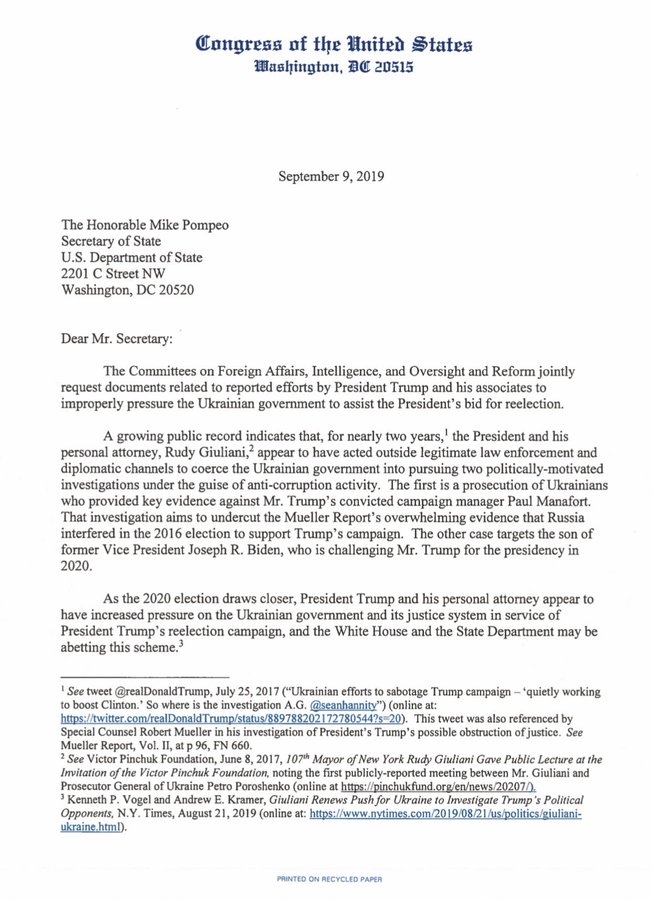
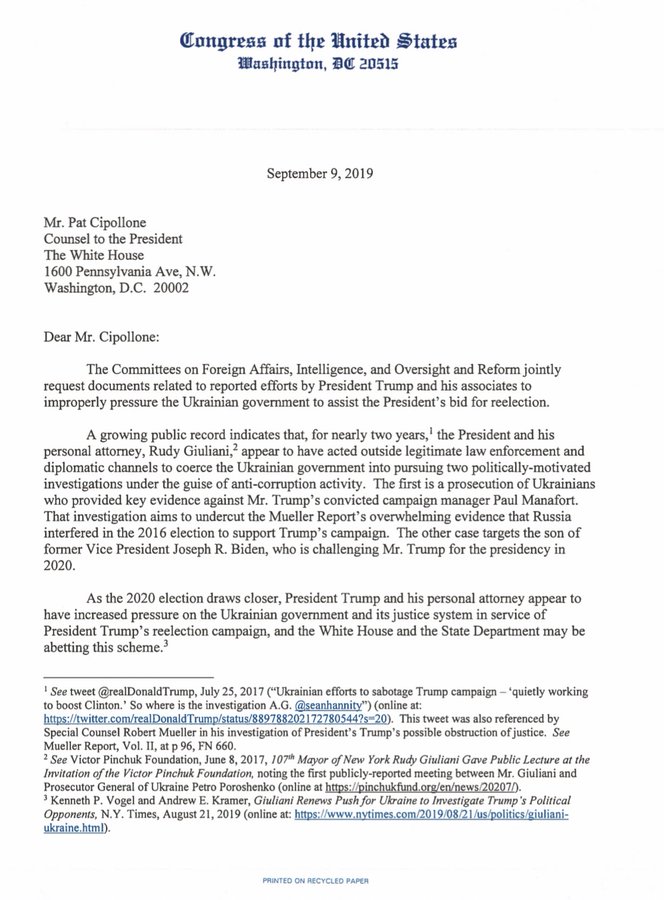


 ABYSSUS ABYSSUM INVOCAT / DEEP CALLS TO DEEP
You must be logged in to post a comment.