
 Brett Kavanaugh
A Monk/Theologian Breaks the Silence on the Church’s Metamorphosis

Brett Kavanaugh
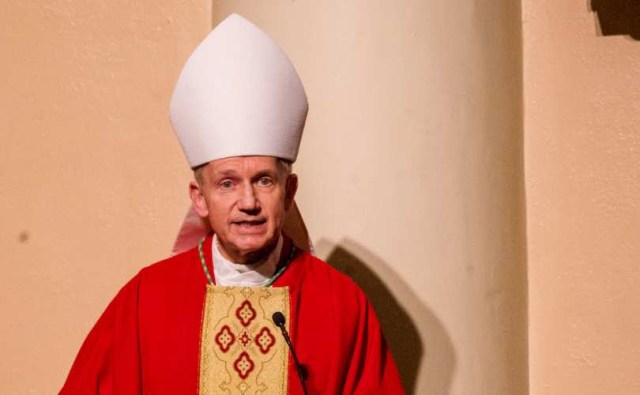
I respectfully disagree and I explain why in this video, Bishop Paprocki https://vimeo.com/278575755?ref=fb-share&1
Summary:
By a 5-4 majority, the Supreme Court declared June 27 that one of its rulings from 1977 was “wrongly decided” and overruled it, in a case on whether public-sector unions could continue to make nonmembers pay fair-share fees not related to the unions’ lobbying and political efforts. Bishop Frank J. Dewane of Venice, Florida, chairman of the U.S. bishops’ Committee on Domestic Justice and Human Development expressed disappointment with the decision.
Bishop Thomas Paprocki of Springfield, IL respectfully disagrees with Bishop DeWane citing the unions support of abortion and Pope Leo XIII’s landmark 1891 encyclical Rerum Novarum which says It is clear that they must pay special and chief attention to the duties of religion and morality, and that social betterment should have this chiefly in view; otherwise they would lose wholly their special character, and end by becoming little better than those societies which take no account whatever of religion. What advantage can it be to a working man to obtain by means of a society material well-being, if he endangers his soul for lack of spiritual food? “What doth it profit a man, if he gains the whole world and suffers the loss of his soul?” (Mat. 16,26)

After weeks of frenzied speculation, the decision is in: President Trump will nominate D.C. Circuit appellate judge Brett Kavanaugh to fill the Supreme Court seat vacated by retiring justice Anthony Kennedy. The pick will potentially give the court’s conservatives an ironclad five-man originalist bloc—provided Kavanaugh can survive a hotly contested confirmation process in the Senate.
“What matters is not a judge’s political views, but whether they can set aside those views to do what the law and the constitution require. I am pleased to say that I have found without doubt such a person,” Trump said during the much-hyped and televised announcement. “Throughout legal circles, he is considered a judge’s judge, a true thought leader among his peers. He is a brilliant jurist, with a clear and effective writing style, universally regarded as one of the finest and sharpest legal minds of our time.”
Kavanaugh spoke after Trump, thanking the president and Kennedy for their service to the country.
“The Framers established that the Constitution is designed to secure the blessings of liberty,” Kavanaugh said. “Justice Kennedy devoted his career to securing liberty. I am deeply honored to be nominated to fill his seat on the Supreme Court.”
The judge also thanked his parents for instilling in him “the importance of equality for all Americans,” and pitched himself as a down-the-middle textualist who would make decisions based on the letter of the law, not his own political views.
“My judicial philosophy is straightforward. A judge must be independent, and must interpret the law, not make the law. A judge must interpret statutes as written, and a judge must interpret the Constitution as written, informed by history and tradition and precedent.”
Kavanaugh, who follows Justice Neil Gorsuch as President Trump’s second nominee to the high court in as many years, has long been seen as a rising star in conservative jurisprudence, establishing himself as an originalist in the vein of Antonin Scalia with a hefty pile of written opinions in the decade since he was appointed to the D.C. Circuit by President George W. Bush.
Trump moved quickly after Kennedy’s surprise announcement last month, narrowing a list of more than 20 potential nominees down to four: Raymond Kethledge, Thomas Hardiman, Amy Coney Barrett, and Kavanaugh. Rumors swirled in the press about which direction the president was leaning, but Kavanaugh was consistently said to be in Trump’s top two.
Kavanaugh’s appointment now goes to the Senate, where Majority Leader Mitch McConnell will endeavor to shepherd him through with a narrow 51-vote majority. During last year’s fight, McConnell managed to marshal 54 votes to confirm Gorsuch, with three red-state Democrats joining the effort. But the margin of error will be even thinner this year: GOP senator Luther Strange was voted out in a special election, replaced by Democrat Doug Jones. A second senator, John McCain of Arizona, is convalescing at home as he fights an aggressive cancer. And Democrats are even less likely to break ranks this time around, given that replacing frequent swing voter Kennedy with an originalist will give the court’s conservatives a strong majority for the foreseeable future.
With that in mind, McConnell himself counselled Trump against picking Kavanaugh in recent days, saying the judge’s hefty pile of legal opinions might slow down confirmation proceedings as Republicans scramble to confirm him before the midterm elections.
The attention now turns to GOP Senate moderates Susan Collins and Lisa Murkowski, who between them will have the ability to spike the nomination if they should choose to do so. Collins had previously said she wanted Trump to appoint a nominee with a strong belief in judicial precedent, and thus would not support a nominee who has shown “hostility” toward Roe v. Wade. But early indications are that Collins will support Kavanaugh, as she supported Gorsuch last year: the two are ideological equals who even co-authored a book on precedent together.
“Tomorrow, I begin meeting with members of the Senate, which plays an essential role in this process,” Kavanaugh said. “I will tell each Senator that I revere the constitution. I believe that an independent judiciary is the crown jewel of our constitutional Republic. If confirmed by the Senate, I will keep an open mind in every case, and I will always strive to preserve the constitution of the United States and the American rule of law.”


NEWSCATHOLIC CHURCH, DEMOGRAPHICSMon Jul 9, 2018 – 1:23 pm EST
ROME, July 7, 2018 (LifeSiteNews) — The demographic collapse of the West in recent decades was planned in order to create the necessary conditions to usher in a New World Order, and the authors of this collapse are now influencing the Vatican at the highest levels, the former president of the Vatican bank has said.
Speaking at the first international conference of the John Paul II academy for human life and the family, Italian economist and banker Ettore Gotti Tedeschi said efforts to decrease the world’s population by globalist elites have set in motion a series of predictable and intended economic, geo-political, and social catastrophes meant to “persuade” people around the world to accept a global “political vision” that would eliminate national sovereignty and institute “gnostic environmentalism” as its “universal religion.”
The recurrent themes of the present papacy are poverty, immigration and the environment, and we are led to believe that these are caused by “the greed of bankers, war and man, the “cancer of nature.” But this is “fake news” according to Gotti Tedeschi. For him, the cause behind all of these scourges is the “collapse in births.”
The people pushing this fake news, he said, are “gnostic prophets” such as population control proponents Paul Ehrlich, Jeffrey Sachs and Ban Ki-moon who, rejecting the natural law and the divine order of creation, seek to proselytize the world with their “anti-Catholic gnosis.”
According to Gotti Tedeschi, the “greatest enemy” of the New World Order is the family because it provides “education, autonomy and independence” from the state. Its second enemy is the Catholic Church and yet these gnostic prophets are “rewriting genesis in the halls of the Vatican.”
“The demographic collapse was planned without any doubt,” Gotti Tedeschi said. “It is unthinkable that the decision makers in the United States and around the world did not know what they would have created by refusing life and the natural law.”
The Italian financier said the economic collapse has been caused by a “collapse in births,” not because couples are having no children, but because they are not having enough to provide economic growth. “Zero growth is two children for a couple,” he said. “Zero growth is substitution,” with the consequence that “GDP stops growing.” Governments have “solved” this problem by “increasing consumerism” and outsourcing production, primarily to Asia.
But as the demographic collapse results in an ever larger aging population, so governments must increase taxes to absorb the costs of those living in retirement, he explained, resulting in a crippling effect on GDP and nations’ economies. “It can appear to grow, but it is a big bluff invented in the last 30 years,” he said.
Gotti Tedeschi believes that none of this has happened by chance, and that the decrease in population was needed in order to produce a crisis in the global economy and so make it easier to usher in a New World Order. “Economy is a formidable means of persuasion,” he said. “It is the best excuse to make people around the world accept a conclusion.”
He referred to the “Kissinger Report,” which he said was partly an attempt to “homogenize culture” by relativizing religion and “if possible, creating religious syncretism.” This goal is helped by immigration, leading to a potentially dangerous mix of religious dogmas that could “cause war.”
The population control movement in the United States dates back to the pro-nazi, pro-eugenics founder of Planned Parenthood, Margaret Sanger. In 1969, President Richard Nixon criticized population growth in the third world, a problem later addressed by the Commission on Population Growth and the American Future in 1972, directed by J.D. Rockefeller III. At the time, American geo-stratestists thought that population growth in the third world was a threat to American international interests.
This led to the National Security Study Memorandum 200 (NSSM 200), published by Henry Kissinger two years later, in 1974. The 200-page report specifically states that population growth in the third world is a threat to American international interests because the growing populations need too many resources and the Western industrial system, for example, needs the resources of Africa. The report also called for increased funding to be given to Planned Parenthood.
“Everything was planned,” Gotti Tedeschi believes, lamenting the fact that documents such as the Kissinger Report have largely not been read.
He said the threat of environmental catastrophe, which he calls “fake news,” is now used to push for a reduction in the population gap between East and West. Not only that, but the growing gap between “too many rich and old” people and “too many young people who are unemployed” is used to “create the spirit for accepting euthanasia.” Such a mentality is “criminal,” he said, as he recalled Italy’s Prime Minister (he didn’t say which) telling him one could cut the cost of government expenditure “in one second” through euthanasia which would “cut 25% of the population over 60 years old.”
Gotti Tedeschi also drew attention to the current tension between globalism and nationalism: those who wish for a Europe that helps single countries grow as opposed to globalists who would prefer a Europe that governs all countries and eliminates national sovereignty.
So what can the Church do? “The Church will either collide or be isolated,” he said. But “something has happened that should worry a lot of people,” he added referring to recent actions taken, in particular, by the Pontifical Academy of Sciences.
Those currently advising the “top of the Church,” he observed, are population control advocates such as Paul Ehrlich, Jeffrey Sachs, and the former UN Secretary General, Ban Ki-moon — people he calls “gnostic prophets.”
To transform the “divine genesis into a gnostic genesis,” and to do this at the Pontifical Academy inside the Vatican would be their “masterpiece,” he said.
“We are near” to this happening, he added. “This should worry everyone.”
NEWS: US NEWS


RICHMOND, Va. (ChurchMilitant.com) – Two Catholics are running against each other in Virginia for a U.S. Senate seat, and the winner could help determine the success of Trump’s Supreme Court nominee.
Democrat Tim Kaine and GOP candidate Corey Stewart are going head to head in a tense election race; both claim to be Catholic, but Kaine is infamous for his theological dissent. Kaine supports legal abortion and same-sex “marriage.” He is also convinced the Catholic Church will eventually ordain female priests and have sacramental marriages of homosexual couples.
Free clip from CHURCH MILITANT Premium
WATCH MORE LIKE THIS
Stewart, the Republican challenging incumbent Kaine for the seat, is a practicing Catholic.
Some of Stewart’s political opponents accuse him of being friends with neo-Confederates and white nationalists. But he has hit back at the charge: “I completely disavow all those ideologies 100 percent.”
Stewart was involved in Donald Trump’s 2016 presidential campaign and still supports him. Stewart’s campaign website states, “Corey unapologetically stands with President Trump and will fight for his America First Agenda.”
The website also claims Stewart is “100 percent pro-life.”
A local news report on Stewart and Kaine’s respective campaigns stated that Kaine has a massive lead in the polls. The report from WJLA said, “A recent poll gave Kaine an 18-percent advantage, two-to-one among women voters.”
Virginia is a swing state and has voted Democrat in recent years, but political analyzersstill say it is in play, at least for the time being. Virginia was a staunchly Republican state until the 1980s — different from states like Florida, consistently a swing state.
Stewart is the chairman of the Board of County Supervisors in Prince William County. In 2017, he sought to become the Republican candidate for governor but lost in the primary.
Kaine has been a U.S. Senator for Virginia since 2013.
Senate elections like the one in Virginia could impact the appointment of Justice Anthony Kennedy’s replacement on the U.S. Supreme Court. Even though the president, Senate Republicans and many Americans want Kennedy’s successor to be appointed as soon as possible, the Senate Democrats want to delay voting on Trump’s appointee until a new Senate convenes in January 2019.
If the Senate Democrats have their way and postpone the appointment vote, elections like the one in Virginia will be crucial in getting Trump’s nominee into the Supreme Court.
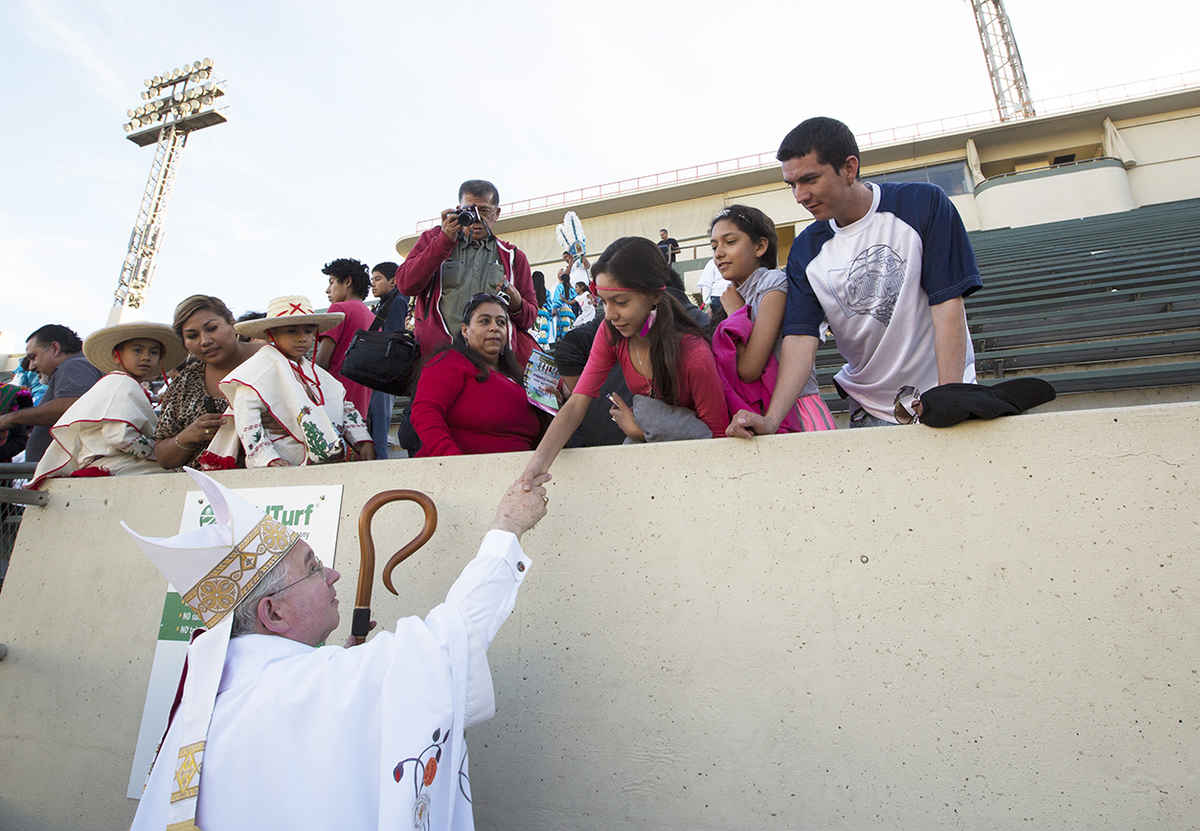
.- The U.S. Senate should not use a nominee’s stance on Roe v. Wade as a litmus test on suitability for appointment to the Supreme Court, the president of the nation’s bishops’ conference has said.
“By any measure, support for Roe is an impoverished standard for assessing judicial ability,” wrote Cardinal Daniel DiNardo, president of the USCCB, in a July 6 letter to senators.
“If a Supreme Court ruling was wrongly decided, is widely rejected as morally flawed and socially harmful, and is seen even by many supporters as having little basis in the Constitution, these are very good reasons not to use it as a litmus test for future judges,” the cardinal wrote.
DiNardo noted that most Americans oppose the policies permitted by the Roe v. Wade decision and “believe that abortion should not be legal for the reasons it is most often performed.”
He added that “mainstream medicine rejects abortion,” that state legislatures are “passing laws to provide as much protection from abortion as possible,” and that “even legal scholars who support abortion have criticized Roe for not being grounded in the U.S. Constitution.”
DiNardo added that “nominees’ faith should not be used as a proxy for their views on Roe. Any religious test for public office is both unjust and unconstitutional.”
The cardinal’s letter comes days before July 9, when President Donald Trump is expected to announce his pick to replace Justice Anthony Kennedy, who announced his retirement in June.
Pro-life advocates have expected hope that a Trump-appointed justice could give the court a majority of justices willing to overturn Roe v. Wade. Among the rumored candidates is Judge Amy Barrett, a Catholic, who made headlines last year when Sen. Dianne Feinstein criticized Barrett’s faith, saying that Catholic “dogma lives loudy” within her.
At least one Republican senator, Susan Collins of Maine, has said that a nominee who intends to overturn the Roe v. Wade decision would “not be acceptable.” The Senate is required to confirm a nominee before a Supreme Court appointment can take effect.
DiNardo’s letter said that the Church’s ethical commitment to the right to life “has profound consequences not only for abortion,” but for the death penalty, the right to health care, and other issues.
“Our civil society will be all the poorer if Senators, as a matter of practice, reject well-qualified judicial nominees whose consciences have been formed in this ethic,” DiNardo concluded.
{ABYSSUM}
“Catholica” is an international magazine of culture, politics, and religion, published in France, which in its more than thirty years of existence has brought in prestigious authors in their respective fields and specialties, from Émile Poulat to Robert Spaemann, from Ernst Wolfgang Böckenförde to Vladimir Bukowski, from Stanislaw Grygiel to Thierry Wolton, from Jacques Ellul to Pietro De Marco.
It is directed by Bernard Dumont. Who in the latest issue of the magazine, just off the presses, puts his byline on the following editorial, which can be read online by non-subscribers as well:
{The Dumont editorial is posted below in the original French}
The “word” that Dumont is pushing for as urgent is that which should break the “implausible” silence of almost all the cardinals and bishops – in the face of the dissolution of the traditional form of Catholicism, set in motion by the pontificate of Jorge Mario Bergoglio, or in other words in the face of the end of “Roman Catholicism” as denounced on Settimo Cielo by Professor Roberto Pertici.
But in this same latest issue of “Catholica” another voice is raised – not of a cardinal, but of a Benedictine monk and talented theologian – that thoroughly analyzes and criticizes what is perhaps the most radical subversion taking place in the Catholicism of today: that which assigns primacy no longer to the sacraments – “culmen et fons” of the Church’s life, according to Vatican Council II – but to ethics.
It is the subversion that underlies, in particular, both the new discipline of communion for the divorced and remarried and “intercommunion” between Catholics and Protestants.
Giulio Meiattini, the author of this critical analysis, has presented it in its most complete form in a book he published at the beginning of this year:
While in the interview in the latest issue of “Catholica” he presents its salient passages, the most significant of which are reproduced below.
Fr. Meiattini, a monk of the Benedictine abbey of La Madonna della Scala in Noci, is a professor at the Theological Faculty of Puglia and at the Pontifical Atheneum of St. Anselm in Rome.
*
“AMORIS LAETITIA” AND THE OBLITERATION OF THE SACRAMENTS
by Giulio Meiattini, OSB
(passages selected from the interview in “Catholica” no. 140)
NOT DISCERNMENT, BUT CUNNING
The situation of confusion is evident. Naturally there are those who deny that this is a matter of confusion, maintaining that this is the positive result of a style of ecclesial governance aimed at “initiating processes rather than possessing spaces” (cf. “Evangelii Gaudium” 223). Therefore, the first discernment to be made would be precisely on the nature of this situation: can confusion, disagreement among bishops on sensitive doctrinal points, be fruits of the Spirit? To me it seems not. To discern also means understanding if it is appropriate or not to initiate processes in certain fields, and also with what timing, modalities, and objectives.
Let us observe, for example, the manner in which the new discipline for the “divorced and remarried” was reached.
After Cardinal Kasper’s talk at the consistory had prepared the terrain so to speak, the two synods, with an intermediate year of heated discussions, were unable to give rise to a common approach on the problem discussed. Those who read the accounts of the “circuli minores” of the 2015 synod realize very well that on the point in question there was not a shared perspective.
But one thing is clear: that a large majority of the fathers had not developed the conviction to change the traditional discipline. So much so that the authors of the “Relatio finalis,” on the controversial point, took care not to introduce innovations.
But – here is another small step – they drafted formulas of an indefinite tone that, while not providing for access to the sacraments, changed the atmosphere so to speak. Thus the “non-opposition” to those hesitant formulas (which had trouble getting two thirds of the votes) was enough to allow another subsequent small step: a couple of ambiguous little footnotes in “Amoris Laetitia,” which do not affirm or deny but hint at a certain direction.
This further passage smashed the interpretive boundaries, until in the autumn of 2017 – another step – there came the pope’s official approval of the “Criteria” of the bishops of the region of Buenos Aires on chapter VIII of “Amoris Laetitia.”
But these criteria, if one is honest, are not a simple interpretation of “Amoris Laetitia.” They add and say things that are not to be found in “Amoris Laetitia” and that, above all, had never been approved at the synods and never would have been. […]
Thus, through small successive steps, over the course of three years a very large one was made and the discipline was slowly changed, but certainly not in a synodal manner, in my view.
I may be wrong, but this “modus operandi” is not discernment, but rather cunning. In place of reasonable and open debate (the famous “dubia” have never received a response!), the strategy of persuasion and of the fait accompli took hold.
FAITH REDUCED TO ETHICS
Among the ethical demands and the sacramental foundation of Christian existence, the center is undoubtedly the sacrament, which is the communication to the believer of the grace that saves, and, in that it is welcomed by and transforms man, is also an act of glorification, doxology. […] Ethics is neither the first word not the last.
In “Amoris Laetitia,” however, the opposite logic is followed: the starting points are categories taken from the natural law and principles of general ethics (attenuating factors, the relationship between universal norm and subjective situation, non-imputability, etc.), and from these major premises are drawn the consequences for the pastoral practice of the sacraments.
In this way, the dimension of the symbolic and the sacramental, which should anchor, embrace, and transcend the moral sphere, loses its significance and becomes a mere appendix to ethics. […] The demonstration is given by the fact that in concrete terms the sin of adultery loses its public significance linked to the testimonial aspect of the sacrament, and can be remitted in the “internal forum” without any need to explain before the community why a spouse who publicly contradicts the sacramental sign of fidelity should publicly receive the Eucharist.
In short, the result of the decisions of “Amoris Laetitia” is the reduction of the sacramental to the moral, meaning of faith to ethics, which to me does not seem to be a mere question of pastoral practice. What is at stake here is something essential to the nature of Christianity.
A “TREMENDOUS BURDEN”?
I sincerely do not understand how a bishop, above all that of Rome, could write phrases of this kind: “There is no need to lay upon two limited persons the tremendous burden of having to reproduce perfectly the union existing between Christ and his Church” (“Amoris Laetitia” 122).
Here is the glaring exemplification of what I stated before in a general way: if the evangelical ethic is isolated from the sacrament and reduced to a general norm it becomes “a tremendous burden,” like the Mosaic law, instead of “an easy yoke and a light burden.” Whatever happened, in this perspective, to the transformative effect of the sacrament? […] So then we could ask ourselves whether the encouragement of bearing witness to faith in Christ to the point of bloodshed is not an even more tremendous burden, not to be placed on the shoulders of the people. […]
One arrives at this point only if one is accustomed to conceiving of Christianity – perhaps without fully realizing it – as ethics.
“SIMUL IUSTUS ET PECCATOR”
“Amoris Laetitia” goes so far as to say that even if according to outward appearances one is living in a condition of objective sin, on account of attenuating factors one could be in the state of grace and even “grow in the life of grace” (no. 305).
It is clear that if this is the way things are, the interruption between sacrament and moral action, as already highlighted, leads to outcomes that overlap with the Lutheran conception of “simul iustus et peccator,” condemned by the Council of Trent. […] In this way, one could be at the same time just (before God, invisibly) and a sinner (before the Church, visibly). Works are at risk of having no more significance in the “discernment” of grace.
CATHOLIC COMMUNION EVEN FOR A BUDDHIST?
The direction that is taking shape around intercommunion between Catholics and Protestants obeys the same logic: it is not symbolic realism that determines the decision, but the simple evaluation of the presumed interior condition: if a Protestant is presumably in the state of grace (based on the attenuating factors of invincible ignorance, diminished responsibility, an honest way of life, etc.), why could he not receive the Catholic Eucharist? Perhaps one does not realize that posing the question this way could lead to making the same argument for a Buddhist or a Hindu who lives a good and just life. Tampering with the relationship between morality and the sacraments ultimately can lead to ecclesiological conceptions that are not Catholic.
(English translation by Matthew Sherry, Ballwin, Missouri, U.S.A.)T
++++++++++++++++++++++++++++++++++++++++++++++++++++++++++++++++++++++++++++
 imprimer ce texte
La « réforme » assume aujourd’hui dans l’Église une fonction comparable à celle qu’a exercée l’aggiornamento il y a plus d’un demi-siècle. L’ensemble de la période ayant immédiatement précédé et surtout suivi le concile Vatican II se déroule en effet selon un processus de longue durée, qui a connu des phases actives, des ralentissements (alors qualifiés d’involution), puis […]
La « réforme » assume aujourd’hui dans l’Église une fonction comparable à celle qu’a exercée l’aggiornamento il y a plus d’un demi-siècle. L’ensemble de la période ayant immédiatement précédé et surtout suivi le concile Vatican II se déroule en effet selon un processus de longue durée, qui a connu des phases actives, des ralentissements (alors qualifiés d’involution), puis aujourd’hui une nouvelle phase de reprise accélérée. Cette dernière cause des ravages mais présente l’intérêt de clarifier le sens général du mouvement ; en même temps, le délai écoulé permet de juger sur pièces le caractère inopérant de l’interprétation minimaliste des effets produits, interprétation qui se termine en impasses, telle l’herméneutique de la continuité, de peu d’intérêt pratique désormais faute de pouvoir s’imposer d’elle-même et de disqualifier définitivement son opposée, l’herméneutique de la rupture. L’actuelle réforme constitue une mise en conformité plus complète avec les exigences de la modernité tardive, laquelle mène nécessairement au-delà de celles de la modernité dans sa phase antérieure, celle qui était en train de s’achever au moment de Vatican II. Cependant tout se passe comme si cette nouvelle étape d’adaptation au milieu devait poursuivre inexorablement sa course, au sein d’un corps lent à réagir, sauf notables mais très minoritaires exceptions, demeurant comme médusé en présence des menaces les plus pressantes.
Cet état de choses est caractérisée par une sorte d’autocensure des plus lucides, une lenteur extrême à les voir prendre position, dénoncer publiquement l’inacceptable, se limitant dans la meilleure des hypothèses à une réaction à la critique de points secondaires ou dérivés. Les sessions du Synode sur la famille, en 2014 et 2015, ont marqué une parenthèse, en ce sens qu’un bon tiers des participants sont intervenus pour récuser clairement les changements doctrinaux et disciplinaires proposés, tandis que d’autres, apparemment décontenancés, n’ont fini par y acquiescer qu’en raison de manipulations dénoncées en leur temps. Depuis le silence est redevenu presque unanime, les valeureuses exceptions confirmant le fait. C’est ce silence qui suscite l’interrogation. Comment expliquer cette apparente paralysie, qui tranche singulièrement avec l’audace des ennemis de l’Église, extérieurs ou alliés dans la place ?
Une piste est suggérée par tous ceux qui, au prix d’un pénible travail d’exégèse, tentent de donner un sens traditionnel aux textes, discours et actes les plus gravement suspects. La sophistique, quelles que soient les intentions de ceux qui la pratiquent, n’est pas que du côté des ennemis de la continuité dogmatique, elle affecte parfois tout autant des personnes désireuses de fidélité. Or si les motivations des premiers relèvent nettement de la ruse ou de la mauvaise foi – que l’on pense à l’argument consistant à invoquer la mansuétude du Seigneur envers le pécheur, oubliant la condition de sortir de son péché, à tant d’autres citations tronquées également –, la motivation des seconds est différente. Elle consiste à tenter d’esquiver la difficulté, à la nier même en essayant désespérément de la couper de tout contexte, à refuser de connaître l’intention la plus claire des auteurs, voire de considérer l’ensemble d’un texte et sa logique interne pour n’en retenir que ce qui s’y trouve énoncé de la manière la plus traditionnelle. C’est une attitude intellectuelle que l’on a déjà rencontrée à propos des textes conciliaires présentant le plus de difficultés. Combien de pages, par exemple, n’aura-t-on pas écrites pour établir une parfaite complémentarité entre l’encyclique Quas primas, de Pie IX, et la déclaration conciliaire Dignitatis humanae ? Mais pourquoi agir ainsi ? Faudrait-il être malhonnête pour sauver l’orthodoxie ? Ne s’agit-il pas plutôt d’une réaction devant le risque de se scandaliser, comme saint Pierre se récriant vigoureusement à l’idée que son Seigneur et Maître puisse mourir comme le dernier des esclaves ? Il est permis de supposer que ce risque de scandale provienne lui-même d’un défaut de préparation à l’éventualité d’affronter l’épreuve de la Croix selon une modalité imprévue. Le silence devant le mal consisterait alors en une mise en suspens du jugement de vérité devant une situation subjectivement impensable.
Cette hypothèse d’ordre psychologique et moral est possible, mais elle ne coïncide pas avec la réaction spontanée et beaucoup plus nette de prélats qui ont clairement manifesté leur désaccord, entre autres, avec ce qui conduirait à traiter à égalité gens mariés et couples vivant en adultère, et qui par la suite cependant se sont tus.
Faudrait-il en incriminer leur manque de courage ? Seraient-ils impressionnés par les manœuvres d’intimidation qui jouent précisément sur la crainte et cherchent à susciter la mauvaise conscience par des accusations sans cesses réitérées de rigidité morale et de manque d’esprit d’ouverture, de pharisaïsme et autres perversions de l’esprit ? Peut-être, mais il certainement impossible de généraliser une telle possibilité.
Une autre hypothèse surgit donc, celle de la difficulté d’appréhender le caractère inédit de la situation actuelle de l’Église – tant par son ampleur que par les méthodes qui la créent – empruntant beaucoup d’éléments à une société politique soumise à des règles spécifiques généralement mal identifiées dans le monde ecclésiastique. L’entrée dans l’ère médiatique, symbolisée par l’ouverture des fenêtres du bureau de Jean XXIII devant les caméras de télévision, marquait déjà le début d’un imprudent emprisonnement dans les filets de la culture dominante. Presque soixante ans plus tard, tout cela s’est transformé en un système d’emprise sur les consciences bien plus complexe et efficace que dans le passé, d’où il est vain d’espérer pouvoir s’extraire sans identifier ses ressorts internes, ruses et finalités. Quant à l’exercice du pouvoir, il emprunte lui aussi beaucoup de traits à la manière dont il s’opère dans les systèmes politiques contemporains, caractérisés par la dilution, l’opacité, les jeux d’influences. Or il est notoire que beaucoup de responsables ecclésiastiques n’ont qu’une connaissance limitée dans ce domaine, qui exige une attention particulière à éviter la moindre parole susceptible de déformations, d’amalgames, à provoquer le désintérêt ou le rejet dès lors que l’on tente d’entrer dans des considérations de théologie ou de spiritualité risquant d’être immédiatement filtrées et retraduites en termes négatifs. Dans ces conditions, ce qui assure normalement l’unité sociale de l’Église – dans sa dimension naturelle s’entend – se trouve fortement affecté. La bienveillance mutuelle, l’obéissance prévenante envers la hiérarchie, la fidélité absolue de celle-ci dans la transmission du Bon Dépôt de la vérité évangélique, tout cela tend à être remplacé par une forme de contrôle social proche de celui qui s’exerce sur la société dans son ensemble. Ce contrôle spécifique de la période de modernité tardive dans laquelle nous vivons a des aspects déstructurants sur les individus qui en sont la cible, et dont il exige en outre qu’ils deviennent eux-mêmes les agents de leur propre conversion aux valeurs imposées. Ce phénomène d’étouffement a caractérisé toute la période de l’après-concile, avec de rares échappées, mais depuis l’investiture de Jorge Mario Bergoglio il a opéré un saut en avant particulièrement significatif.
L’un des éléments venant aggraver ce risque d’étouffement résulte de certaines conséquences de choix antérieurs, quand certaines pratiques internes à l’Église de l’époque postconciliaire se sont définies par mimétisme à l’égard des tendances externes. C’est le cas de la valorisation du collectif, rangé trop facilement dans la catégorie de la collégialité, mais s’alignant sur certaines tendances de la psychologie sociale des années 1960 en faveur de la multiplication des groupes, jusque dans la vie spirituelle (méditation de groupe, révision de vie, etc.). Il semble que l’on ait ainsi souvent assimilé à tort deux réalités bien distinctes, le groupe, de nature psychologique, et la communauté, organique et définie par l’ordre au service du Bien et de la Vérité. L’un des défauts de cet alignement sur certaines méthodes en vogue dans le milieu ambiant (dominant) est son impact, dans le domaine ecclésial, sur la prise de responsabilité, acte foncièrement personnel par nature, mais tendant à s’effacer au profit du collectif – de bas en haut de l’échelle, des comités paroissiaux aux conférences épiscopales et à leurs divers secrétariats. Paradoxalement, l’espace personnel, honoré pendant la même période au titre de la promotion des membres du Peuple de Dieu, s’est vu réduit jusqu’à l’isolement, tandis que se multiplièrent les instances collectives, à l’intérieur desquelles la dynamique de groupe peut aisément faire sentir ses effets. Ajoutons que tout cela est exposé au regard inquisiteur d’instances extérieures à l’Église, ou de véritables organes de police de la pensée installés en son sein même, fonctionnant comme des agences de notation et de classification en fonction du degré de conformation aux exigences de la doxa. Cette situation persiste de manière plus ou moins marquée depuis l’époque conciliaire, chacun pouvant constater à quel point elle s’est considérablement renforcée ces dernières années, les pressions de la culture dominante qui s’exercent depuis l’extérieur de l’Église et celles qui procèdent ad intra se conjuguant pour freiner, sinon interdire tout libre questionnement et en réprimer l’éventuelle formulation.
Cet interdit, déjà vérifié maintes fois dans le passé, est maintenant beaucoup plus pesant, à la mesure de la gravité nouvelle des questions suscitées par certaines des options les plus provocantes de la « réforme » en cours. Les exceptions – par exemple, les dubia présentés par les quatre cardinaux, mais aussi tout ce qui a pu s’exprimer comme analyses des options ou formulations s’éloignant de la tradition catholique – se sont heurtées à une ignorance affectée, associée au déferlement d’outrageantes critiques, jusque dans les documents les plus élaborés, sous forme de mise en cause de l’honnêteté, de suspicion d’hérésie gnostique ou pélagienne, et ainsi de suite. Dans le même temps, le refus de répondre non seulement persiste, mais est même érigé en vertu spirituelle, comme en témoigne un article dernièrement publié par le jésuite argentin Diego Fares, dans La Civiltà cattolica sur le thème de « l’esprit d’acharnement ». Cet auteur impute cette forme de mauvais esprit aux questionneurs, à « ceux qui discutent et insultent à coup de tweets », face auxquels le silence serait un geste de profonde humilité venant confondre l’esprit diabolique : « C’est la meilleure approche contre les médisances de couloirs, les airs scandalisés, les attaques qui aujourd’hui se diffusent facilement sur les réseaux sociaux, jusque dans les publications qui se définissent comme “catholiques”. » (loc. cit., n. 4029, 5-19 mai 2018, p. 225) Enfin si l’ordre juridique est en principe maintenu, son respect est discrétionnaire, selon une logique subtile dont seule une approche d’ensemble peut donner une idée cohérente. L’un des effets de cette situation « kafkaïenne » est de créer le trouble et la crainte. Cette analogie, même lointaine, est sans doute malaisée à percevoir d’emblée, ce qui renforce son effet perturbateur.
Si la collectivisation et la répression des questions gênantes constituent des freins d’origine récente, il resterait à tenir compte de la persistance d’un esprit légaliste dans une certaine culture ecclésiastique traditionnelle. Il s’agit d’un glissement ancien dans la pratique disciplinaire, qui repose sur l’obéissance, un acte moral de soumission de la raison et non d’exécution mécanique. C’est encore un paradoxe que de constater que, depuis le déroulement même du concile Vatican II et par la suite, une dépréciation, souvent rageuse, du « juridisme » et du « rubricisme », c’est-à-dire d’un respect ponctuel et scrupuleux des normes canoniques et liturgiques, ait pu coexister avec une mentalité positiviste, rappelant celle que l’on rencontre dans les systèmes administratifs de l’État moderne. Cette tendance à rapprocher la hiérarchie ecclésiale d’un corps préfectoral persiste, et elle est même encouragée par ceux-là mêmes qui la supportaient mal il y a encore quelques années mais qui en tirent profit aujourd’hui. Une tendance analogue, connue de longue date, est celle qui consiste à élever indûment au rang de Magistère – c’est-à-dire d’enseignement du Christ à travers ses ministres : « Qui vous écoute m’écoute » – toute parole émanant du pape François. Et cela d’autant plus que la forme même dans laquelle est présenté l’enseignement bergoglien échappe à toute catégorie classique, tranchée, dépourvue d’ambiguïté : elle est même délibérément tout le contraire. Mais l’habitude persiste de considérer que ce qui vient du haut de la hiérarchie, quelle que soit sa nature, est publiquement hors discussion. On en arrive alors à un conflit de devoirs dont les termes sont faussés. D’un côté, il semble impossible d’accepter le heurt frontal, pourtant envisagé par saint Paul lui-même – « Mais quand nous-mêmes, quand un ange venu du ciel vous annoncerait un autre Évangile que celui que nous vous avons annoncé, qu’il soit anathème ! » (Galates 1, 8) ; d’un autre côté, la conscience n’en reste pas moins choquée par des contradictions flagrantes avec les préceptes les plus explicites du Christ. Certains s’en remettent alors à l’œuvre du temps, se convainquant que l’entreprise « réformiste » actuelle est trop « périphérique » pour ne pas être une parenthèse appelée à être vite oubliée. Cette pensée est d’autant plus aisée que l’humble activité quotidienne à l’échelle de l’Église locale peut ouvrir une perspective de lente construction de l’avenir, en attente de voir passer l’orage. Mais est-il possible d’imaginer que le conflit global puisse ne pas avoir de retombées sur la paix locale, lorsque celle-ci existe – plus ou moins – par une heureuse et bien rare exception ? En outre, ne convient-il pas que le pasteur d’une portion du troupeau ait aussi, pour citer encore saint Paul (2Cor 11, 28) « la sollicitude de toutes les Églises » ?
Quelles que soient les hypothèses invoquées ici et toute autre imaginable, il reste à se demander jusqu’à quel niveau d’atteinte de l’unité doctrinale et pratique il faudra en arriver pour que se manifeste au grand jour une position du problème cohérente et proportionnée. La question est lancinante, et elle est posée avant tout aux successeurs des Apôtres et aux membres éminents du clergé romain, aux théologiens dont le rôle est de les soutenir, aux prêtres témoins immédiats des contradictions auxquelles aboutissent les changements de cap qui leur sont demandés, en définitive à tout chrétien confronté à la pression du « monde » devant lequel il est pour le moins indécent de se plier. Chacun peut comprendre que s’il peut y avoir un temps pour se taire, il y a aussi un temps pour parler.
Dans l’apparente paralysie générale il semble que deux conditions puissent favoriser une issue. L’une tient à l’effet d’émulation que peuvent provoquer les prises de position, même partielles, de personnalités ecclésiales. L’exemple récent du cardinal Willem Eijk, archevêque d’Utrecht, aux Pays-Bas, est notable à cet égard, de par les formules très fortes qu’il a utilisées pour mettre en cause le renvoi dos à dos des évêques allemands prêts à donner la communion aux non-catholiques et à ceux qui s’y refusent, le pape François se contentant de leur demander de se mettre d’accord entre eux. Le cardinal hollandais voit là une véritable démission de la fonction propre d’un souverain pontife. Il n’a pas hésité à citer à l’appui de sa réaction un passage du Catéchisme de l’Église catholique (n. 675) : « Avant l’avènement du Christ, l’Église doit passer par une épreuve finale qui ébranlera la foi de nombreux croyants (cf. Lc 18, 8 ; Mt 24, 12). La persécution qui accompagne son pèlerinage sur la terre (cf. Lc 21, 12 ; Jn 15, 19-20) dévoilera le “mystère d’iniquité” sous la forme d’une imposture religieuse apportant aux hommes une solution apparente à leurs problèmes au prix de l’apostasie de la vérité. »
La seconde condition est plus personnelle, spirituelle même. Elle consiste à surmonter l’opposition du démon muet, qui pour un motif ou un autre retient de témoigner du bien et du mal.
–>

 Tom Hoopes| Jul 09, 2018
 Hell is a tough reality of human existence — one that Pope Francis has warned about, saints have seen in terrifying visions, and 20th-century apparitions emphasized.
Most importantly, Jesus warned about hell in the Gospels.
Ultimately, faith has to be motivated by love, not fear — but Jesus thought it would be helpful to offer several examples of damnation, and I have personally found it helpful to keep them in mind.
After all, as St. John Paul II said, “hell is the ultimate safeguard of man’s conscience.”
The Catechism Pope John Paul promulgated in 1995 explains the existence of hell by describing mortal sin, which “causes exclusion from Christ’s kingdom and the eternal death of hell, for our freedom has the power to make choices forever, with no turning back.”
But what choices do the Gospels warn lead to hell?
First and most importantly, the decision not to serve the needy leads to hell.
In Matthew 25, Jesus presents his great parable of the last judgment in which the king separates mankind into two groups.
He welcomes those on his right to his kingdom saying, “For I was hungry and you gave me food, I was thirsty and you gave me drink, a stranger and you welcomed me, naked and you clothed me, ill and you cared for me, in prison and you visited me.”
Then, to those on his left who did none of these things, he says, “Depart from me, you accursed, into the eternal fire prepared for the devil and his angels.”
His reason? “Whatever you did for one of these least brothers of mine, you did for me.” And “what you did not do for one of these least ones, you did not do for me.”
God so closely associates himself with men and women made in his image and likeness that when we fail to serve our neighbors, we fail to serve him.
Jesus also warns those who do not spread the faith that they risk damnation.
But it is important to recognize that it is not just the material wellbeing of our neighbors we are responsible for, but their spiritual wellbeing, too.
Just before the Final Judgment in Matthew 25, Jesus tells the Parable of the Talents.
In it, a man going on a journey entrusts his possessions to his servants, giving five talents to one, two to another and just one to a third. When he returns, the first two servants have doubled their money, and are rewarded. But the other servant returns his one talent — he had buried it to keep it safe.
The master complains that he at least should have put it in the bank, and commands “throw this useless servant into the darkness outside, where there will be wailing and grinding of teeth.”
This story has helped shape my own life, driving home that “doing nothing” is not an option for a Christian. We must do something for God with what we have been given — at least volunteering at our parish, banking our talents with the Church.
Jesus also says those who don’t live a life of prayer backed by good works could also be headed toward ruin.
In a third Matthew 25 parable about hell, Jesus tells about the Wise and Foolish Virgins who are waiting for the Bridegroom to invite them into his wedding banquet — a metaphor for heaven.
The wise virgins have come prepared with enough oil to last the night, and the Bridegroom welcomes them in. The foolish virgins have not, and when they knock, they hear the terrible words, “I do not know you.”
The oil is their prayer and good works. The Bridegroom only knows people who talk to him and do his will. Claiming to be part of his company is not enough. “Not everyone who says to me, ‘Lord, Lord,’ shall enter the kingdom of heaven,” he says in the Sermon on the Mount, “but he who does the will of my Father who is in heaven.”
In each case, Jesus says we can be damned by our sins of omission — by those things we fail to do. But he also warns about what we do.
In the Sermon on the Mount, Jesus lists sins that lead to hell:
This all makes perfect sense — if not serving our brothers and sisters leads to hell, then certainly harming them (and ourselves) will, too.
So hell is the “bad news” of the Gospel. But don’t forget the good news.
Jesus summed up the Gospel this way: “God so loved the world that he gave his only Son, that whoever believes in him should not perish but have eternal life.”
Mercy is the beginning, end, and heart of his message:
So, keep in mind the road that leads to perdition, but don’t be afraid. God will do everything he can to keep you off of it, if you let him.

Is Technology Ruining Your Life? Take A Quick Quiz To Find Out By Clicking Here.
However, in the real world, addiction to the omnipresent small screens can be an actual handicap. Discouraging overexposure to technology might actually be an advantage in today’s hyper-connected world.
Such views are not those of overprotective parents unfamiliar with these technologies. Even the most enthusiastic promoters of computer gadgetry can be seen discouraging the very products they produce. The most notable case was Apple co-founder Steve Jobs, who claimed he did not let his teenage children have iPads and limited their tech consumption at home.
When the iPad exploded into market in 2010, Jobs’ daughters Erin and Eve were not part of the market. The late Steve Jobs and wife Laurene Powell deliberately regulated their children’s exposure to the new products and its culture.
What did the young Jobs girls do instead of texting and surfing the Web? Apparently, they did the things normal children do.
Biographer Walter Isaacson reports the family had dinner together every night where they would discuss books, history and other non-technical things. The iPad, iPhone and other devices had no place at their table. And the children did not seem particularly disturbed by the fact.
Apparently Jobs was not alone.
It appears that a growing number of high-tech executives take measures to limit the amount of exposure their children have to the technology they produce, design and market. These concerned parents cite the new technology’s overwhelming attraction and addiction as factors in their decisions.
One example of this trend is found at a Silicon Valley elementary school. According to a 2011 New York Times story on the trend, many engineers and executives from high profile tech companies like Apple, eBay, Google, Hewlett-Packard, and Yahoo send their children to a Waldorf elementary school in Los Altos, California, where television viewing is discouraged and electronic devices are banned. They claim such radical educational measures are necessary to ensure their children develop all their talents without unnecessary distractions.
Such “radical” measures are really not that radical. In fact, parents need not send their children to expensive private schools to allow their own children the same privileges as their counterparts in Los Altos.
All parents need to do is let their children be children. Children need to grow up being children with all the interacting, creativity and spontaneity that has always been part of a healthy childhood. They need to do things like play games, eat together as a family and solve problems together.
The real radicals are those who allow their children to be electronically sequestered and tethered to their little devices and thus never encountering the real world. If there is any doubt about this, all one needs to do is ask the experts. Steve Jobs would agree.


You must be logged in to post a comment.