THE ARTICLE REPRODUCED BELOW IS TYPICAL LEFT/LIBERAL PROPAGANDA SUPPORTING OPEN BORDERS. WHAT IS NEW IS THAT IT APPEARS IN A WEBSITE THAT IS SUPPOSEDLY CONSERVATIVE.


Thousands Of American Children Are Separated From Parents Put In Prison Every Year

Thousands Of American Children Are Separated From Parents Put In Prison Every Year

The plight of children who accompany their parents crossing the border into the United States illegally has captured the attention of the press.
{Commentary by Abyssum}

The plight of children who accompany their parents crossing the border into the United States illegally has captured the attention of the press this week. Politicians and media types have loudly decried the longtime practice of sending children into foster care or other temporary housing situations, while their parents are detained until the U.S. government can determine their fate.

Next week, Congress is set to vote on a Republican immigration bill with a provision that would reportedly end this practice. But this policy change would likely result in the children being sent to adult detention centers with their parents — a fate that is arguably worse than being sent elsewhere.

{This is a shameful propaganda piece promoting open borders.  Everyone entering the United States illegally MUST BE DETAINED.  Common sense should make that obvious to journalists and bishops.  The fact that parents cross our borders illegally with their children is a huge problem for everyone; ICE, the parents, the children, people who write or comment about the problem.

It is not improbable that some parents, who could leave their children with other relatives while they seek legal status in the U.S. instead choose to bring their children with them when they cross the border illegally counting on the humanitarian reputation of the United States to increase the likelihood that they will be allowed to stay in the United States.  If that were to be adopted as the U.S. policy you could be sure that the flow parents with children would increase exponentially.

Our detention centers were not build to house both adults and children.  To mingle children in a detention center populated primarily by adult men would increase the likelihood of sexual assaults on the children by single men, some of whom come from the worst cartel gangs in Mexico.

The solution Congress, under pressure from Nancy Pelosi, Chuck Schumer and the USCCB will probably pursue is the allocation of billions of dollars to build detention centers for families with children.

It is wrong for bishops, individually or speaking through the USCCB to push for open borders as a solution to the humanitarian problem presented by the illegal arrival in our nation of adults with children.  Such soft-hearted advocacy when combined with soft-headed thinking does not help anyone in this crisis.

Everyone who enters the United States must be detained while the possibility of their remaining here is adducted; the challenge in this emergency is to detain everyone, man, woman and child, in the most humane conditions possible.  The cost will be terrific and mistakes will be made by government agents, but journalists and bishops must not play politics and inflame passions by portraying the Trump Administration as heartless.}


Posted in Uncategorized | 1 Comment

I FOUND IT DIFFICULT TO WATCH THE HIT COMEDY SERIES, MASH, BECAUSE THE THEME SONG WHICH INTRODUCED EACH SEGMENT OF THE SERIES WAS: “SUICIDE IS EASY” THAT IS JUST ONE OF THE MANY WAYS THE LEFT/LIBERALS OF HOLLYWOOD HAVE TO POISON OUR SOCIETY

10dd0-daddbf1xsaassj8

June, 17, 2018
   Our Lord was probably a teenager when the Roman general Publius Quinctilius Varus impaled himself on his own sword in despair for having lost three legions in combat with Germanic tribesmen. Thirty years earlier Mark Antony had killed himself the same way in Egypt. The Celtic queen Boudica poisoned herself in Britain some sixty years later, and then, if the historian Josephus is to be believed, there was the mass suicide of Jews on Masada in the year 73.

In the twelfth and thirteenth centuries, the Albigensian cult thought that all created beings were the work of an evil power and considered suicide the ultimate good, as it freed the soul from the “prison” of the body. Contrary to those pessimists, life is sacred: “You have been purchased at a price, so glorify God in your body” (1 Corinthians 6:20). Consequently, “We are stewards, not owners, of the life God has entrusted to us. It is not ours to dispose of” (Catechism of the Catholic Church #2280).

Thus Chesterton, who fought serious depression, said: “Not only is suicide a sin, it is the sin. It is the ultimate and absolute evil, the refusal to take an interest in life . . . The man who kills himself, kills all men; as far as he is concerned he wipes out the world.” Though suicides were once denied Requiem blessings, the Church now teaches that a suicide victim’s responsibility can be diminished by “grave psychological disturbances, anguish or grave fear of hardship, suffering or torture” (CCC 2282).

Much publicity attended the recent suicides of a woman who designed fashionable handbags, and a celebrity chef. I never availed myself of their apparent talents, yet one wonders whether such lives might have been spared had the victims of their own hands studied more intently the wounds in the hands of the One who died so that “none be lost and all be saved.”

Suicide rates in our country in all age groups have climbed nearly 30% in the last generation. Among women between ages 45 and 64, who were promised sexual and social liberation, suicides have increased 60% in the last twenty years. While not wanting to lapse into the logical fallacy of “cum hoc ergo propter hoc” (a coincidence must be a consequence), these figures almost exactly match the increased number of Americans who say they have no faith or belong to no religion.

The only suicide whose fate is certain was Judas, who fell into remorse rather than repentance, and the difference is that he was ashamed of himself out of pride, and so he “repented to himself” and became the “son of destruction” (Matthew 27:3; John 17:12). Christians should not lose hope for those they loved and lost. Saint John Vianney, that master of mystical intuition, told a woman whose husband had jumped off a bridge: “Do not despair. Between the bridge and the water, he made an act of contrition.”

 Father George W. Butler
Posted in Uncategorized | 3 Comments

TRYING THIS ‘DRUG’ WILL GIVE YOU A HIGH SO HIGH YOU WILL BE BROUGHT LOW, EVEN TO THE POINT OF SUICIDE


PORN CRISIS


by Bradley Eli, M.Div., Ma.Th.  •  ChurchMilitant.com  •  June 14, 2018

Ted Bundy: ‘Like an addiction, you keep craving something harder’

{Commentary by Abyssum}

Experts are calling pornography the new crack cocaine as new evidence surfaces proving its ability to rapidly form an addiction.

Doctor Peter Kleponis, a licensed clinical psychologist with more than 20 years of professional experience, recently told Church Militant that pornography forms addictions much like other drugs. He said viewing porn causes the body to release a series of chemicals and overtime more stimulus is needed to produce the same effects.

As with any type of addiction, after a while a tolerance develops. A little isn’t enough. You need more of the drug to get the same effect. So what happens is a person spends more time viewing pornography. … And the type of pornography also becomes more extreme. So, after a while that soft porn just doesn’t do it anymore. So you go to more hardcore and more deviant forms of pornography.

In 2011, experts testified before the Senate Commerce Committee to the addicting capacity of porn, calling it the “new crack cocaine” and naming it the “most concerning thing to psychological health … existing today.” Subcommittee chairman Sen. Sam Brownback (R-Kansas) called the hearing the “most disturbing” one he’d ever attended in the Senate.

In his final interview before being executed serial killer, Ted Bundy, emphasized that it was pornography that destroyed him. During the 1989 interview he declared, “I was essentially a normal person, I had good friends, I led a normal life except for this one small but very potent, very destructive segment of it that I kept very secret and very close to myself and I didn’t let anybody know about it.”

He added, “[L]ike an addiction, you keep craving something harder, which gives you a greater sense of excitement, until you reach a point where the pornography only goes so far.”

Watch the panel discuss the addicting new drug enslaving souls in The Download—Porn Crisis.

{I was Bishop of Pensacola-Tallahassee when Ted Bundy committed his last heinous crime of clubbing to death the sorority girls at Florida State University in Tallahassee.  Interesting note:  the only girl he spared was one sleeping with a rosary in her hands. – +Rene Henry Gracida}

Posted in Uncategorized | Comments Off on TRYING THIS ‘DRUG’ WILL GIVE YOU A HIGH SO HIGH YOU WILL BE BROUGHT LOW, EVEN TO THE POINT OF SUICIDE

HERE IS YOUR LITTLE DOSE OF SATIRE TO HELP YOU PREPARE FOR THE DAY WHEN GOD CLEANS THE AUGEAN STABLES KNOWN AS THE VATICAN

Eccles and Bosco is saved


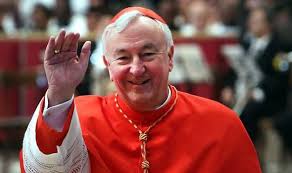
Ten little cardinals

Posted: 14 Jun 2018 05:13 PM PDT

Ten little cardinals… or which one became Pope?Dolan

“Don’t worry, you can lose weight by dancing with the Rockettes.”

Ten little cardinals going out to dine;
One ate far too much and then there were nine.

Tobin

“Nighty-night, Eccles baby! I love you.”

Nine little cardinals sat up very late;
One said “Nighty-night!” and then there were eight.

nichols

“Never offend people ny mentioning Catholic teaching, that’s my motto!”

Eight little cardinals defending Alfie Evans;
One wasn’t keen on this, and then there were seven.

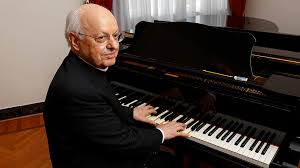
Baldisseri

“Fiddling? No, I’m a pianist.”

Seven little cardinals playing dirty tricks;
One rigged a synod and then there were six.

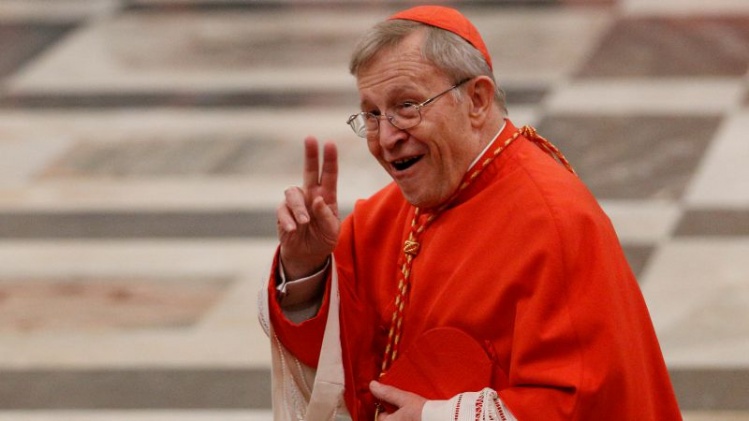
Kasper

“Hello, everyone, I’ve escaped again!”

Six little cardinals keeping faith alive;
One preferred to change it all, and then there were five.

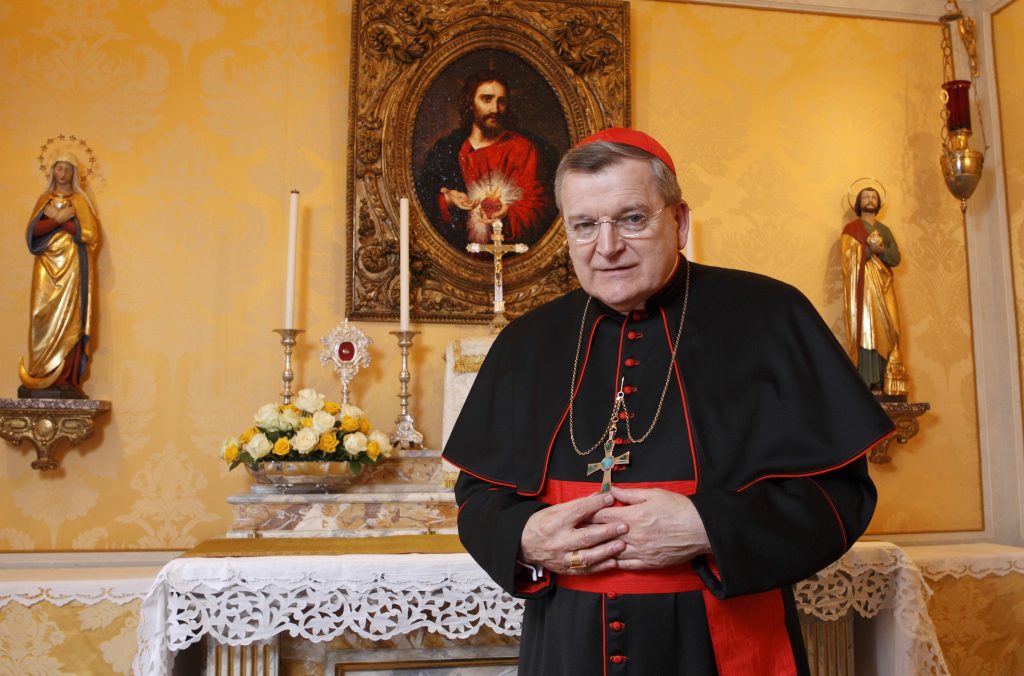
Burke

“One of these days I really must get round to correcting Pope Francis.”

Five little cardinals studied canon law;
One asked some Dubia and then there were four.

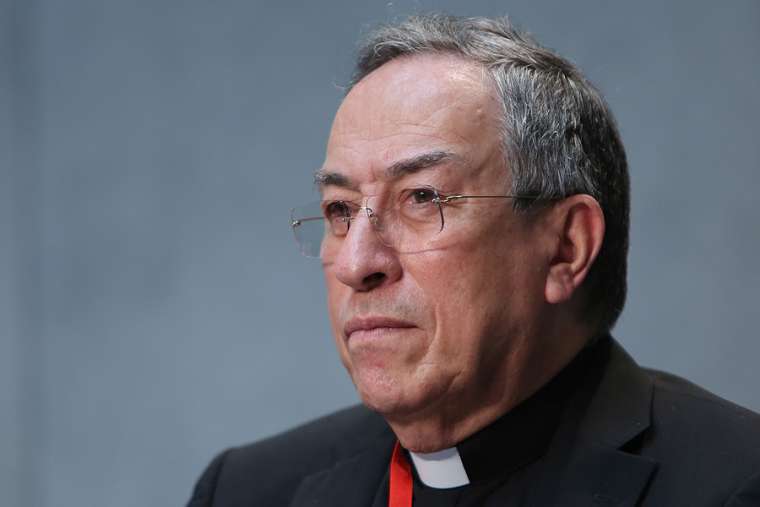
Maradiaga

“Money makes the world go round. That’s in the Bible somewhere.”

Four little cardinals on a spending spree;
One made all the money go, and then there were three.

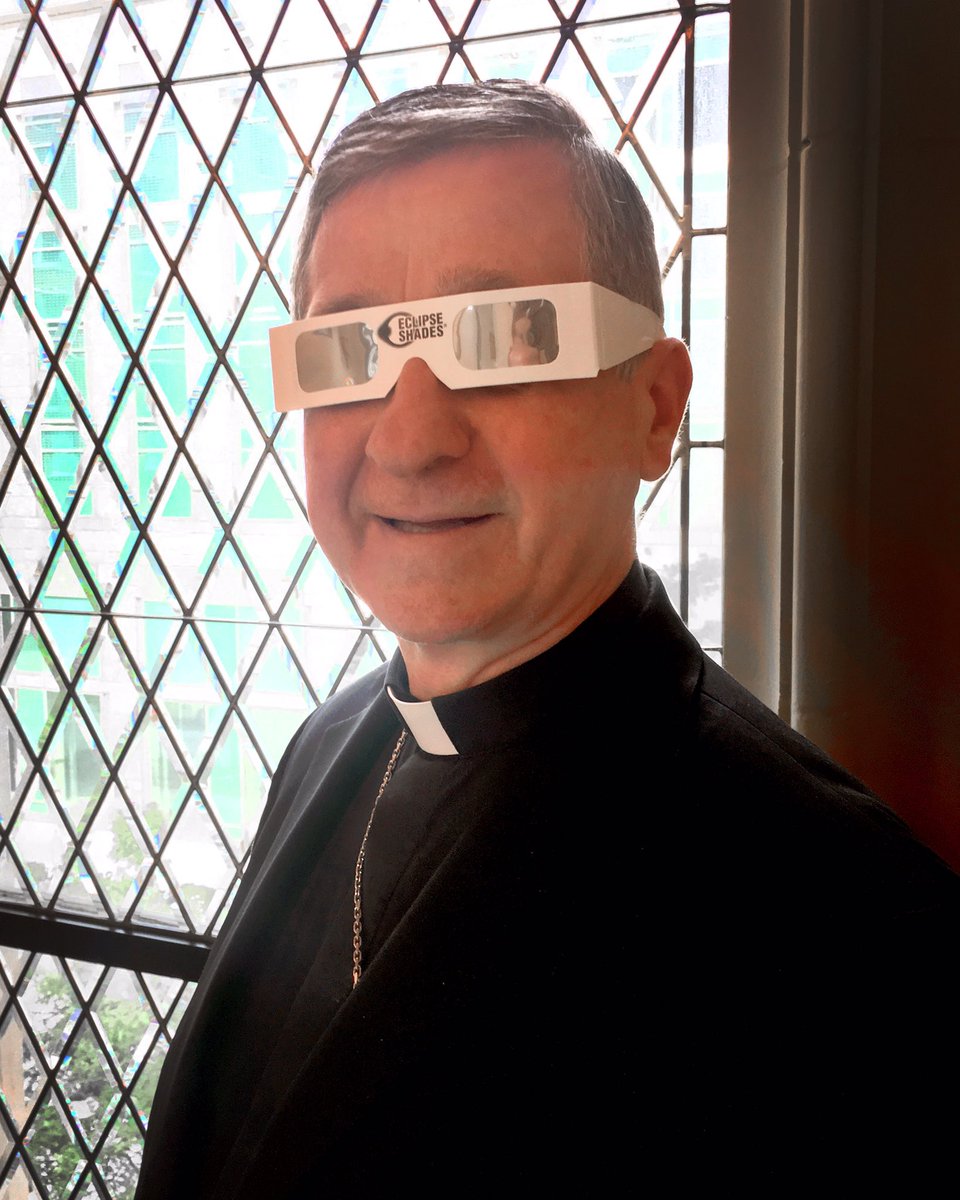
Cupich

“I can’t see any problems with the James Martin approach.”

Three little cardinals building bridges new;
One asked James Martin’s help, and then there were two.

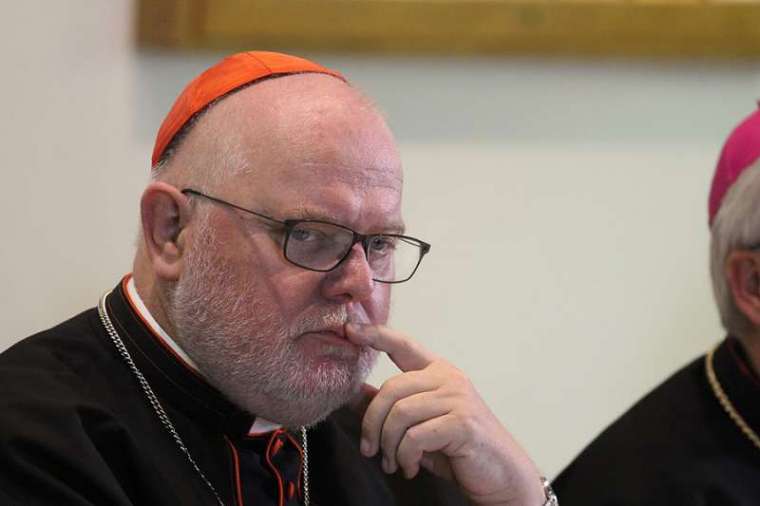
Marx

“Lutheran? Catholic? Who cares if they pay their Church Tax?”

Two little cardinals at Communion;
One joined the Protestants, and then there was one.

Sarah

“Oh no, what’s Pope Francis up to now?”

One little cardinal left silent and alone;
He became the next pope and then there were none.

Posted in Uncategorized | Comments Off on HERE IS YOUR LITTLE DOSE OF SATIRE TO HELP YOU PREPARE FOR THE DAY WHEN GOD CLEANS THE AUGEAN STABLES KNOWN AS THE VATICAN

HOW CAN AMERICA SURVIVE WITH A JUDICIARY INCLUDING SO MANY OBAMA JUDGES ??????????????????????????????

Posted in Uncategorized | 1 Comment

WHEN THE CULTURAL SEAS GET REALLY ROUGH, FASTEN THE LIFE PRESERVER THAT IS YOUR FAITH IN JESUS CHRIST LEST YOU JOIN THE CROWD WHO INSTEAD CHOOSE SUICIDE

Anthony Bourdain Showed Us How To Bond Over Food. We Should Take His Lesson To Heart

Anthony Bourdain Showed Us How To Bond Over Food. We Should Take His Lesson To Heart

There is something humanizing about putting aside differences, if only for a moment, to discuss how good biscuits taste.
THE FEDERALIST

Anthony Bourdain fully believed that food was one of life’s great pleasures. He also believed food was the answer to bridging vast differences between people. In 2011, Marc Maron interviewed Bourdain on his “WTF” podcast, and the topic of bonding over a meal became a centerpiece. Bourdain mentioned how he’d been able to find commonalities with new friends in the most unexpected places, all over the world, through the simple common interest of enjoying food.

He suggested that if it were so easy for him to form a bond with people who shared wildly different values in other countries, it should be something that is practiced here in the states between the Left and Right. Bourdain, a life-long, self-proclaimed “Lefty Democrat” found that he could easily find commonalities with other Americans that held conservative beliefs, because they could always find at least some common ground in food and drink.

Bourdain was truthful about himself to a fault, but he did not like dissent at the dinner table. He operated by the “Grandma Rule” — even if you hate the food, and Grandma says something you deeply disagree with — you smile, you eat, and you kiss your grandma and say “thank you” when you leave. He wanted to know people’s favorite foods, where they liked to go out drinking, and what their mothers used to cook for them. If the conversation would eventually shift towards something a bit murkier, and disagreements occurred, the shared meal established a mutual interest, and volatility over unshared political values was dissolved.

This is the greatest lesson that Anthony Bourdain has left us with — the simple fact that everyone likes a good meal, and even if two people like food, but can agree on nothing else, they can still share a meal, a couple beers, and have a good time. There is something humanizing about putting aside differences, if only for a moment, to discuss how good biscuits taste.

In establishing even this small area of common ground, defensiveness and fear can be muted, and a real conversation on differing values can occur. Points can be made calmly, and rationally. Both parties can listen to each other, and even be open to some of the ideas they might here.

For most of us, it can feel like fighting a battle on a daily basis as we defend our beliefs. We can feel threatened by an opinion that is particularly contrarian to our own, and angry when things don’t go the way we had hoped. The internet is particularly hostile ground, and none of us are our best selves when limited to 140 characters. People aren’t bound by a sense of decorum when they type hurtful words to each other in the anonymity of the internet.

At a table, however, with the simple joy of a good meal, civility can be restored. Once you sit down with someone, talk about your favorite childhood foods, and the way your dad taught you to cook a steak, would you be able to look at the person across from you and rip into their morals and values without entertaining the idea of kindness and camaraderie? Though it may be unrealistic to hope that everyone who politically disagrees with each other in the United States will be able to sit down to a good, home-cooked meal, and talk about our favorite neighborhood restaurants, it’s at least a reminder that we can find common ground.

++++++++++++++++++++++++++++++++++++++++++++++++++++++++++++++++++++++++++++


SUICIDE IS RISING
The suicides this week of Kate Spade and Anthony Bourdain are shocking and devastating for fans of the work they created over the years. Spade’s life and suicide resonate with women who loved her designs and products – her daughter was 13. http://vlt.tc/3azw

Bourdain was a creative genius who had gotten his life together after being a screw-up and an addict in his younger years. In a recent People interview, he had talked openly about the responsibility of living for his 11 year old daughter. http://vlt.tc/3b19 But in neither case was that bond enough to prevent these two outwardly successful creative people from hanging themselves.

++++++++++++++++++++++++++++++++++++++++++++++++++++++++++++++++++++++++++++

Why is It? Thoughts on Society and Anthony Bourdaine’s Suicide

Posted: 09 Jun 2018 10:38 AM PDT


My Saturday morning moment of pause to reflect on society,  friendship,  and the suicide of Anthony Bourdain.  

Why is It? 
THE OKIE TRADITIONALIST

{commentary by Abyssum}

Why is it modern man so superficially judges one another?  Based on attractiveness, fitness,  and socio-economic status?   It has always been so,  but never before in such global, epidemic proportions.   When Victorian,  19th Century,  British elite picked each other to pieces about who was most fit to marry or invite to their banquet,  they now look humble and unprejudiced compared to contemporary Westerners.   If Jane Austen were alive today,  she could make a killing writing satire about modern social cliques, or she may find today’s insanity beyond words.

For me,  I never much fitted into social cliques here in Oklahoma.  Providence placed me in the awkward position of being a religiously conservative and traditionalist Catholic,  in terms of religion and culture,  a white European/European-American masculine man,  an idealist and introvert by temperament, and of a lower economic background.  Just about every personal trait contemporary culture hates as an enemy of progress.  Imagine being in those categories,  surrounded, in your work place no less, by at-heart pagan liberals,  evangelical Protestants in background and disposition,  and almost the most uneducated people in the US (Oklahoma is 48th in the nation for education).   If you’re reading this,  odds are you can relate.

Why is It? 

Why is it sincere, authentic, sustained,  and virtuous friendship,  in all its varieties and forms, is today practically dead and obsolete?   Poets have always waxed and waned about how good friendship is precious when you find it,  but I’m as certain real,  natural,  genuine friendship today is as uncommon as it was once common just a few decades ago.

For me,  I was far more fortunate having good,  loyal,  sustained friendships throughout my formative years,  than in adulthood.   And in my observation,  that seems to hold true for many men.   When CS Lewis wrote about the modern problem of friendship in particular for modern men,  in his book The Four Loves,  it seemed even more a prognostication of the de-evolution of modern friendship now, than a diagnosis for his own time.

And, Why is It? 

Why is it Anthony Bourdain, internationally renowned food critic, two days ago hung himself to death in a Paris hotel room?
And likewise,  why is the media response to eulogize a man who just murdered himself?   Who was an unashamed, professed hedonist and drug addict {in his early life}?

CNN painted him as an object of admiration, and his suicide as incidental to the fact he is now gone.  Meanwhile,  the Netflix TV show,  “13 Reasons Why,” which critics say is actually encouraging suicide,  remains at the top of their list of most viewed shows.

I have Netflix,  and I’ve appreciated Bourdaine’s food shows, but his marriage,  family,  friendships,  wealth,  and status in the end was not enough for him.

My impression is that suicide in all its forms and reasons is becoming increasingly a politically correct topic, because modern man is finding fewer reasons to value human life.   Before, we had to tolerate a suicide, and provide a normal,  public burial full of eulogy.   But now, my sense is we are being pressured to ACCEPT self-termination of one’s life as moral.  I expect that euthanasia and physician-assisted suicide will eventually become a universal,  constitutional right.

May Anthony rest in peace,  and may God have mercy on his soul.

Conclusion:

Despite the sun still being in the sky,  and electrical lighting,  we live in a Dark Age.  The Christian social order,  and even the most basic natural law,  common sensical level of human society has been inverted,  destroyed,  thrown away,  and incinerated,  but replaced with an artificial,  materialist, godless,  collectivism, the momentum of which is leading to more world war, totalitarianism,  and desolation.

We have only one hope.   If you follow this blog,  you have discovered what this “one hope” is {the Son, not the sun}.

Pax vobiscum,  and have a restful weekend.  Thus ends my Saturday morning musing.

++++++++++++++++++++++++++++++++++++++++++++++

Bioedge
Sunday, June 10, 2018

The deaths this week of fashion designer Kate Spade and celebrity chef Anthony Bourdain (see below) focused the media once again on explanations for America’s rising suicide rates. The short answer is: nobody knows. The more nuanced long answer is: nobody knows for sure. But something is driving it. Here are a few paragraphs from the New York Times which suggest that suicide is becoming culturally more acceptable:

The rise of suicide turns a dark mirror on modern American society: its racing, fractured culture; its flimsy mental health system; and the desperation of so many individual souls, hidden behind the waves of smiling social media photos and cute emoticons.

Some experts fear that suicide is simply becoming more acceptable. “It’s a hard idea to test, but it’s possible that a cultural script may be developing among some segments of our population,” said Julie Phillips, a sociologist at Rutgers.

Prohibitions are apparently loosening in some quarters, she said. Particularly among younger people, Dr. Phillips said, “We are seeing somewhat more tolerant attitudes toward suicide.”

In surveys, younger respondents are more likely than older ones “to believe we have the right to die under certain circumstances, like incurable disease, bankruptcy, or being tired of living,” she said.

If this is the case, why, O why, is there a movement for assisted suicide? Yes, it’s hard to prove, but it makes sense: if assisted suicide is a triumph of compassion and autonomy, how can unassisted suicide possibly be a tragedy?


Posted in Uncategorized | Comments Off on WHEN THE CULTURAL SEAS GET REALLY ROUGH, FASTEN THE LIFE PRESERVER THAT IS YOUR FAITH IN JESUS CHRIST LEST YOU JOIN THE CROWD WHO INSTEAD CHOOSE SUICIDE

THE AMAZING CONSTITUTION OF THE UNITED STATES

Locke and the Founders Agree: The President Can Pardon Himself
by Nicholas Higgins
within Constitutional Law, Politics
Jun 13, 2018 08:00 pm http://www.thepublicdiscourse.com/2018/06/21826/
The pardon power is the most significant and strongest power of the president, and the Constitution places almost no limits on it. In using it, the president can unilaterally nullify the legitimate authority of the legislative and judicial branches.

Each fall, when I teach “Introduction to American Government” and discuss the power of the presidency, I always argue that the pardon power is the most significant and strongest power of the president.

For one thing, it is one of very few constitutionally unilateral powers. In issuing a pardon, the president does not need advice and consent from the Senate—as he does in hiring for the executive branch, making judicial appointments, and signing treaties—and the decision is not reviewable by the Supreme Court. Further, it is the only power that specifically undercuts the legitimate constitutional authority of the other two branches. It exempts someone from having to obey a legitimate law passed by Congress and from being punished for violating that law.

Thus, when Rudy Giuliani opined that “the president probably has power to pardon himself,” he was making a pretty shocking claim, one that has led to much debate. Despite the audacity of such a claim, an examination of the philosophical foundation of the pardon power and of the debate over it at the Constitutional Convention reveals that Giuliani is actually right.

Pardons and Prerogatives

The need for the pardon power may seem difficult to comprehend, but it arises from the very nature of “rule by law.” One of the major benefits of a system of laws, as opposed to rule by a person, is that it treats all people in the jurisdiction the same. Everyone under the law must act the same; the law favors no person because of his or her position, wealth, or power. This fundamental equality before the law is the heart of our constitutional and legal system. However, that very benefit also has a flaw: laws are often too general.

The law, like a fishing net, often captures actions that were not intended to be captured, and sometimes even punishes acts that support the goal or intent of the law. For example, if your neighbor’s house were on fire, and you went into his garage (trespassing) to fight the fire and smashed his car window to push the car out in the driveway to safety, you clearly violated laws in order to actually promote the goal of laws (protecting your neighbor’s property). One would hope that you would not be prosecuted for these acts, but that would require someone to have discretion—and the ability to go around or even against the law’s general treatment.

This issue of needed discretion was understood by John Locke, who, in his Two Treatises of Government, argues for discretion. He writes that we must “provide for the public good in such cases which, depending upon unforeseen and uncertain occurrences, certain and unalterable laws could not safely direct” (II.158). This power Locke calls “prerogative.”

Because of the undeniable connection between Locke’s prerogative power and the constitutional pardon power, it is worth examining the limits of the former to understand the limits of the latter.

Locke recognizes that the prerogative power does not merely involve unforeseen circumstances but also “the power to act without the prescription of the law, or even sometimes against it” (II.160). This is a significant power, because it is unbound by the legal order, allowing the ruler to act beyond or against the law. The question is, is there any limit to this power? Locke answers with an emphatic “yes.”

In every discussion of prerogative, Locke notes that all discretionary acts must be “for the public good” (II.156, II.158, II.160), and thus it is clear that the discretionary use of the power must further the primary goal of the political union, which is the public good (II.131). Locke recognizes that the application of this power can lead to a debate whether any particular instance is actually for the “public good,” observing that

the people are very seldom or never scrupulous or nice in the point or questioning of prerogative whilst it is in any tolerable degree employed for the use it was meant—that is, the good of the people, and not manifestly against it. But if there comes to be a question between the executive power and the people about a thing claimed as a prerogative, the tendency of the exercise of such prerogative, to the good or hurt of the people, will easily decide that question. (II.161)

Thus, Locke recognizes that the public itself must determine whether an act is for the public good. Locke also recognizes that if the discretionary power is used beyond its purpose, that does not invalidate the act, because the power is itself unchecked. Ultimately “the people have no other remedy in this, as in all other cases where they have no judge on earth, but to appeal to Heaven” (II.168). Thus, the presence of prerogative power inherently means there can be no checks upon its use.

Is it possible that a ruler could use the pardon power on himself for the sake of the public good? It is conceivable. However, even if such a use is not for the public good, there is no higher human authority to whom the people can appeal—at least according to Locke.

Are Presidential Self-Pardons Constitutional?

But does the Constitution, particularly as our founding fathers understood it, really allow the president to pardon himself?

Article II, section 2 notes that the president “shall have Power to grant Reprieves and Pardons for Offenses against the United States, except in Cases of Impeachment.” The president’s pardon power cannot extend to state criminal acts, as those are outside his jurisdiction (though most states give their governors some pardon power). Thus, the pardon must apply to a federal crime, and there were at first few federal crimes. Treason, piracy, and murder or larceny in a federal territory were the primary ones. Importantly, however, there were criminal laws about the integrity of the judicial process, which include perjury, bribery, and obstruction of the judicial process. Thus, the founders recognized the ability to pardon for everything from treason to obstruction of justice.

Would our founders think the president could pardon himself? On September 15, 1789, the Constitutional Convention took up discussionof Article II, section 2, with particular emphasis on the pardon power. Edmund Randolph of Virginia (who did not sign the Constitution) moved to add “excepting the cases of treason” from the president’s pardon power. In his view, “The prerogative of pardon in these cases was too great a trust. The president may himself be guilty. The Traytors may be his own instruments.” Randolph’s motion to limit the extent of pardon power was precisely because the founders recognized the president might use such power on himself.

This led to a discussion of where the power of pardon should reside. It was widely held that the legislature was not the proper place, both because of concerns about the separation of powers and because legislators “are governed too much by the passions of the moment.” In this debate, James Madison noted the impropriety of allowing the president to pardon treason, yet he did not think the legislature should have that power. He thought the best plan would be to have the Senate act as council to presidential pardons (though this was never made into an official motion). Despite this debate, Randolph’s proposal was soundly rejected, 8-2, with Connecticut divided (Rhode Island and New York were not represented in the vote).

From this debate, it is clear that the founders recognized the president could legally pardon himself for federal crimes, including treason. However, unlike Locke, who notes that the misuse of prerogative power leads only to the appeal to heaven, James Wilson recognized there was one more appeal: to impeachment. Wilson, summarizing the whole debate, aptly noted: “Pardon is necessary for cases of treason, and is best placed in the hands of the Executive. If he be himself a party to the guilt he can be impeached and prosecuted.” And it is this limitation that Trump advisor Chris Christie recognizes. “If the president were to pardon himself, he’ll get impeached.”

The pardon power’s philosophical roots in Locke’s prerogative power make it clear that the possibility that it will be used broadly and arbitrarily has been recognized from the start. This, combined with the founders’ rejection of limiting either the unitary act of the president to pardon or the pardon’s application to treason so the president could not self-pardon, is indicative that the founders permitted the president to pardon himself. However, they did put two clear limitations upon the pardon power: federal jurisdiction and excluding cases of impeachment.

Thus, Americans who think that a president’s use of a pardon (either on his half-brotherhis friends, a previous president, or even himself) is not for the public good can appeal not only to Heaven, but to the legislative branch for impeachment proceedings.

Dr. Nicholas Higgins is married to Anita, is the father of five children, and holds a PhD from the University of North Texas and an MA from University of Dallas. He is Assistant Professor of Politics at Regent University, where he teaches political thought and institutions.

Posted in Uncategorized | Comments Off on THE AMAZING CONSTITUTION OF THE UNITED STATES

THE SLIPPERY SLOPE IS BECOMING MORE SLIPPERY AS THE AMERICAN MEDICAL ASSOCIATION STUDIES HOW TO IMPLEMENT PHYSICIAN ASSISTED SUICIDE

10dd0-daddbf1xsaassj8

AMA Rejects Recommendation to Reaffirm Opposition to Medical Aid in Dying

The American Medical Association (AMA) House of Delegatestoday voted 53 to 47 percent to reject a report by its Council on Ethical and Judicial Affairs (CEJA)that recommended the AMA maintain its Code of Medical Ethics’ opposition tomedical aid in dying. Instead, the House of Delegates referred the report backto CEJA for further work.
TheAMA Code of Medical Ethics Opinion 5.7 adopted 25 years ago in 1993 beforemedical aid in dying was authorized anywhere in the United States says:“…permitting physicians to engage in assisted suicide would ultimately causemore harm than good. Physician-assisted suicide is fundamentally incompatiblewith the physician’s role as healer…”
Incontrast, the CEJA report implicitly acknowledges that medicalaid-in-laws improve end-of-life care, by spurring conversations betweenphysicians and terminally ill patients about all end-of-life care options, suchas hospice and palliative care:
“Patientrequests for [medical aid in dying] invite physicians to have the kind ofdifficult conversations that are too often avoided. They open opportunities toexplore the patient’s goals and concerns, to learn what about the situation theindividual finds intolerable and to respond creatively to the patient’sneeds…” said the report. “Medicine as a profession must ensure thatphysicians are skillful in engaging in these difficult conversations andknowledgeable about the options available to terminally ill patients.” (Seelines 38-45).
TheCEJA report also acknowledges: “Where one physicianunderstands providing the means to hasten death to be an abrogation of thephysician’s fundamental role as healer that forecloses any possibility ofoffering care that respects dignity…. another in equally good faith understandssupporting a patient’s request for aid in hastening a foreseen death to be anexpression of care and compassion.” (See lines 10–14).
Themajority of AMA delegates felt that the AMA Code of Medical Ethics should bemodified to better reflect the sentiment of the report. 
“Wefeel that the AMA abandons all of the physicians who, through their consciousbeliefs, are allowed to support patients who are in the states where it islegal and feel that that does need to be addressed regardless of how we feel,”said neurologist Lynn Parry, an AMA delegate from Colorado, just before thevote. “We don’t care how long it takes you.”
“Clearly,the AMA’s position is evolving as delegates hear from more and more colleagueswho practice medical aid in dying or believe the option should be available totheir patients,” said Dr. Roger Kligler, an AMA member and retired internist inFalmouth, Mass., living with stage 4 metastatic prostate cancer who supportsmedical aid in dying.
Medicalaid in dying has been authorized in Washington, D.C. and seven states —Colorado, Hawai‘i, Montana, Oregon, Vermont, Washington, and California —although the California law currently is under legal challengebased on a technicality. Collectively, these eight jurisdictions representnearly one out of five Americans (19%) and have 40 years of combined experiencesafely using this end-of-life care option.
“Manyof the AMA’s constituent societies favor neutrality in order to respect andprotect doctors and patients whether they decide to participate in this medicalpractice or not,” said Dr. David Grube, who wrote 30 prescriptions for medicalaid in dying in Oregonbetween 1998 and 2012 and currently is the national medical director forCompassion & Choices. “I’m heartened that the AMA House of Delegates isopen to continuing to study and learn about this issue when there is no clearconsensus among AMA members.”
Numerous professional associations have dropped theiropposition to medical aid in dying and adopted a neutral position. Theyinclude: the American Academy of Hospice andPalliative Medicine, Washington Academy of Family PhysiciansAmerican Pharmacists AssociationOncology Nursing AssociationCalifornia Medical Association, California Hospice and Palliative CareAssociationColorado Medical SocietyMaine Medical AssociationMaryland State Medical SocietyMassachusetts Medical SocietyMedical Society of the District ofColumbiaMinnesota Medical AssociationMissouri Hospice & Palliative CareAssociationNevada State Medical AssociationOregon Medical AssociationVermont Medical SocietyHospice and Palliative Care Council ofVermont, Washington Academy of Family Physicians, and Washington State Psychological Association.
Accordingto a 2016 Medscape online survey, more than 7,500 doctors from more than25 specialties agreed by nearly a 2-1 margin (57% vs. 29%) that“physician-assisted dying [should] be allowed for terminally ill patients.”
In fact, Oregon’s medical aid-in-dying law has helped spurthe state to lead the nation in hospice enrollment, according to the reportpublished in the New England Journal of Medicine. More than 40 percent ofterminally ill patients in Oregon were enrolled in home hospice in 2013,compared with less than 20 percent in the rest of the United States. Nearly two-thirds ofOregonians who died in 2013 did so at home, compared to less than 40percent of people elsewhere in the nation. Research shows over 85percent of Americans say they want to die at home.
Accordingto a May Gallup poll, 72 percent of U.S. adults agreed that“When a person has a disease that cannot be cured…doctors should be allowed bylaw to end the patient’s life by some painless means if the patient and his orher family request it.”

Posted in Uncategorized | Comments Off on THE SLIPPERY SLOPE IS BECOMING MORE SLIPPERY AS THE AMERICAN MEDICAL ASSOCIATION STUDIES HOW TO IMPLEMENT PHYSICIAN ASSISTED SUICIDE

At the end of the Hippocratic Oath, the medical student acknowledges the consequences of violating the promises just made. These principles are so integral to the profession that to violate them would be to abdicate one’s moral and professional standing. Such violations sooner or later decimate the bond of trust between physician and patient, leaving the profession and the patient in tatters.

Why the Hippocratic Oath Still Matters
by Aaron Rothstein
within Bioethics, Healthcare
Jun 11, 2018 08:03 pm http://www.thepublicdiscourse.com/2018/06/21531/
The Hippocratic Oath offers physicians of any generation guidelines, proscriptions, and prescriptions about how to be a good physician. We may not agree with all of its conclusions, but if we unthinkingly dismiss them, we do so at our own peril.

I swear by Apollo Physician and Asclepius and Hygieia and Panaceia and all the gods and goddesses, making them my witnesses, that I will fulfill according to my ability and judgment this oath and this covenant:

To hold him who has taught me this art as equal to my parents and to live my life in partnership with him, and if he is in need of money to give him a share of mine, and to regard his offspring as equal to my brothers in male lineage and to teach them this art—if they desire to learn it—without fee and covenant; to give a share of precepts and oral instruction and all the other learning to my sons and to the sons of him who has instructed me and to pupils who have signed the covenant and have taken an oath according to the medical law, but no one else.

I will apply dietetic measures for the benefit of the sick according to my ability and judgment; I will keep them from harm and injustice.

I will neither give a deadly drug to anybody who asked for it, nor will I make a suggestion to this effect. Similarly I will not give to a woman an abortive remedy. In purity and holiness I will guard my life and my art.

I will not use the knife, not even on sufferers from stone, but will withdraw in favor of such men as are engaged in this work.

Whatever houses I may visit, I will come for the benefit of the sick, remaining free of all intentional injustice, of all mischief and in particular of sexual relations with both female and male persons, be they free or slaves.

What I may see or hear in the course of the treatment or even outside of the treatment in regard to the life of men, which on no account one must spread abroad, I will keep to myself, holding such things shameful to be spoken about.

If I fulfill this oath and do not violate it, may it be granted to me to enjoy life and art, being honored with fame among all men for all time to come; if I transgress it and swear falsely, may the opposite of all this be my lot.

The Hippocratic Oath, Translated by Ludwig Edelstein

For most of medicine’s history, the Hippocratic Oath provided physicians with foundational principles—a universal standard for the practice of healing. Though modern scholars dispute his authorship, Hippocrates ostensibly wrote it in the fourth or fifth century B.C.E. The first recorded use of the Oath outside of ancient Greece was at the University of Wittenberg in Germany in 1508. And in the eighteenth century the Oath was translated into English. Medical schools in Europe and the United States have since used it as a way of ceremoniously admitting students into the medical profession.

But today, the Hippocratic Oath is not the only ethical code physicians use to guide their practices. The American Medical Association developed its own Code of Medical Ethics and its own Principles of Medical Ethics. The American Board of Physician Specialties created a code of ethics as well. And if that weren’t enough the American Osteopathic Association wrote its own ethical guidelines.

As these new options multiply, the Hippocratic Oath shrinks in significance. Although the practice of oath-taking in medical education increased significantly, from 72 percent in 1969 to 100 percent in 2009, according to a survey of US and Canadian medical schools, only 11.1 percent of schools now use the original version of the Hippocratic Oath. At Harvard Medical School, each class of students writes its own oaths. And 33 percent of schools surveyed use a new oath written in 1964 by the late Dr. Louis Lasagna, former Academic Dean of the School of Medicine at Tufts University.

For many, this is a welcome change. Dr. Robert Shmerling, the Faculty Editor of Harvard Health Publications, wrote in 2015 that the Hippocratic Oath consisted of “well-intentioned but outdated principles.” In an op-ed on euthanasia in the Los Angeles Times in 2014, Nora Zamichow and Dr. Ken Murray argued that, partially because of its prohibition against physician-assisted suicide, the Hippocratic Oath was a “flimsy shield” that physicians hide behind. “Since medicine has already discarded the vast majority of the Hippocratic oath,” they write, “why adhere to the sentence about poisoning, which probably was aimed at reminding physicians not to allow themselves to be enlisted in murder plots?” Emily Woodbury asserted in the Georgetown University Journal of Health Sciences in 2012 that the Hippocratic Oath ought to be discarded. She labeled the Oath as “sexist and elitist in the modern democratic context.” Its religious foundation is “irrelevant” and its cavalier attitude toward patient autonomy is “unacceptable.”

Admittedly, there are aspects of the Oath that are anachronistic. For instance, if we take the Oath literally, invoking Apollo and Asclepius doesn’t make much sense in an era when we no longer worship Greek gods. The author references “sons” over and over again and “brothers in male lineage,” implying perhaps that women are somehow unfit for or irrelevant to the profession. Today, females make up 50.7 percent of students entering medical school. Future physicians also utter the words “I will not use the knife,” resolving not do surgery. And yet surgeons are doctors as well.

Nevertheless, the Hippocratic Oath is more than simply outdated detritus. Its meaning is still rich and very much relevant. And we would be wise to look more closely at it.

The invocation of Greek gods is powerful. It is an acknowledgment of forces beyond our control that we don’t always understand. Many of our treatments work, but sometimes they do not. There are also diseases for which no treatments are available. Patients die or fall ill without a sensible explanation, mystifying and confusing us. Referring to powers greater than our own acknowledges our limitations and the limitations of our knowledge. It humbles us.

In the second paragraph, one declares loyalty to one’s colleagues, teachers, and future members of the profession. Perhaps this grew out of medicine as an apprenticeship: one spent time with one’s mentor, and it became a paternal relationship. Even today, though, teachers have a tremendous influence on what medical students decide to do. Trainees owe thanks to these doctors. But there is more. Dr. Leon Kass, a bioethicist who trained as a physician, wrote about the Hippocratic Oath in his book Toward a More Natural Science: Biology and Human Affairs, touching on this particular question of the mentor-student relationship. He writes:

Such a physician will understand that he is not a self-made or self-sufficient man, and that a belief in his own autonomy and independence is mistaken. He will appreciate that he owes both his life and his work to those who came before, that the art of medicine, like the rest of civilization, is a monument to the ancestors. By remembering his teacher and looking to his students, he will be kept aware of his ownmortality, not only as a human being, but also as a practitioner of the art, while at the same time being called to remember the potential immortality of the art itself.

And in remembering this, one understands the importance of mentoring the next generation.

Subsequently the student swears to offer dietetic measures “for the benefit of the sick.” As doctors, we frequently prescribe medications. High cholesterol? High blood sugar? High blood pressure? A medication ameliorates the pathology. But many of these chronic conditions don’t necessarily require medication. They require lifestyle changes: exercise, fruits and vegetables, smaller portions. These are not easy changes, but they are within our control. Just as importantly, offering these lifestyle interventions demonstrates a respect for the patient’s power over his or her health. The doctor merely pulls back the curtain to remind the patient of this. As Kass writes,

I mean to emphasize the Hippocratic Oath’s tacit assertion that medicine is a cooperative rather than a transforming art, and that the physician is but an assistant to nature working within, the body having its own powerful (even if not invincible) tendencies toward healing itself.

The Hippocratic Oath then addresses euthanasia and abortion. It reads: “I will neither give a deadly drug to anybody who asked for it, nor will I make a suggestion to this effect. Similarly I will not give to a woman an abortive remedy.” I don’t want to make a case for or against euthanasia or abortion in this particular essay. However, we ought to think about these issues as physicians and how they relate to what it is that we do. Doctors regularly treat human beings at the beginnings and ends. Both abortion and euthanasia force us to ask when the beginnings and ends are and when it is appropriate to intervene. The Oath comes down on one side of this question. A physician is free to disagree with its conclusion, but he or she must, at the very least, consider it.

In the next part of the Oath, the student resolves not to perform surgery: “I will not use the knife, not even on sufferers from stone, but will withdraw in favor of such men as are engaged in this work.” Why would future surgeons take such an oath? This seems anachronistic indeed. But we need to interpret this line liberally. It is sometimes tempting in medicine to fill the role expected of you by the patient. As a neurologist, I know very little about lung cancer. But when I take care of patients with lung disease, they sometimes ask me questions about the potential treatments available to them. I don’t know the answers to these questions. To pretend to know, to occupy that role, would be grossly irresponsible and unethical. An internal medicine doctor should not operate. And a general surgeon should not be treating Parkinson’s Disease. This part of the Oath makes it clear that, for the sake of the patient, a doctor should do only what he or she is able to do and nothing more.

And when a doctor can do something for the patient, ethical deportment is vital, especially when it comes to privacy and the private dwellings of the patient. The Oath forbids the physician from entering the patient’s house to perform “intentional injustice” and from having sexual relations with the patient. This passage glows with significance and is still relevant. As Kass explains,

The physician is both privileged and burdened by this exposure of vulnerability. He has the opportunity, rarely given to other human beings, to see without illusion the darker side of the human condition, and to see humanity, unprotected and stripped of pretense, struggling gamely to preserve itself. He is privileged to receive the trust implied by admission to the house, to the inner sanctum of the patient’s life-world. Yet this trust is also a burden or at least a responsibility that it would be self-contradictory to violate.

A doctor should never take advantage of a patient’s vulnerability. To do so would contradict all that the physician does to gain the patient’s trust. This trust relies on the assumption that the doctor is here only to heal and nothing else. How disastrous it would be if patients needed to worry about an ulterior motive of their physicians!

Finally, at the end of the Oath, the student acknowledges the consequences of violating the promises just made. These principles are so integral to the profession that to violate them would be to abdicate one’s moral and professional standing. Such violations sooner or later decimate the bond of trust between physician and patient, leaving the profession and the patient in tatters. The Oath, then, offers physicians of any generation guidelines, proscriptions, and prescriptions on how to be to a good physician. We may not agree with all of its conclusions, but if we dismiss them without a second thought, we do so at our own peril.

Aaron Rothstein, MD, is a neurology resident at the NYU School of Medicine and blogs regularly for The New Atlantis at http://practicing-medicine.thenewatlantis.com/.

Posted in Uncategorized | 2 Comments

“I consider Cardinal Zen to be such an upright, courageous Christian, because he opposes Pope Francis. He is guided by the voice of his God. His direct connection to the Lord gives him that courage.”

OnePeterFive
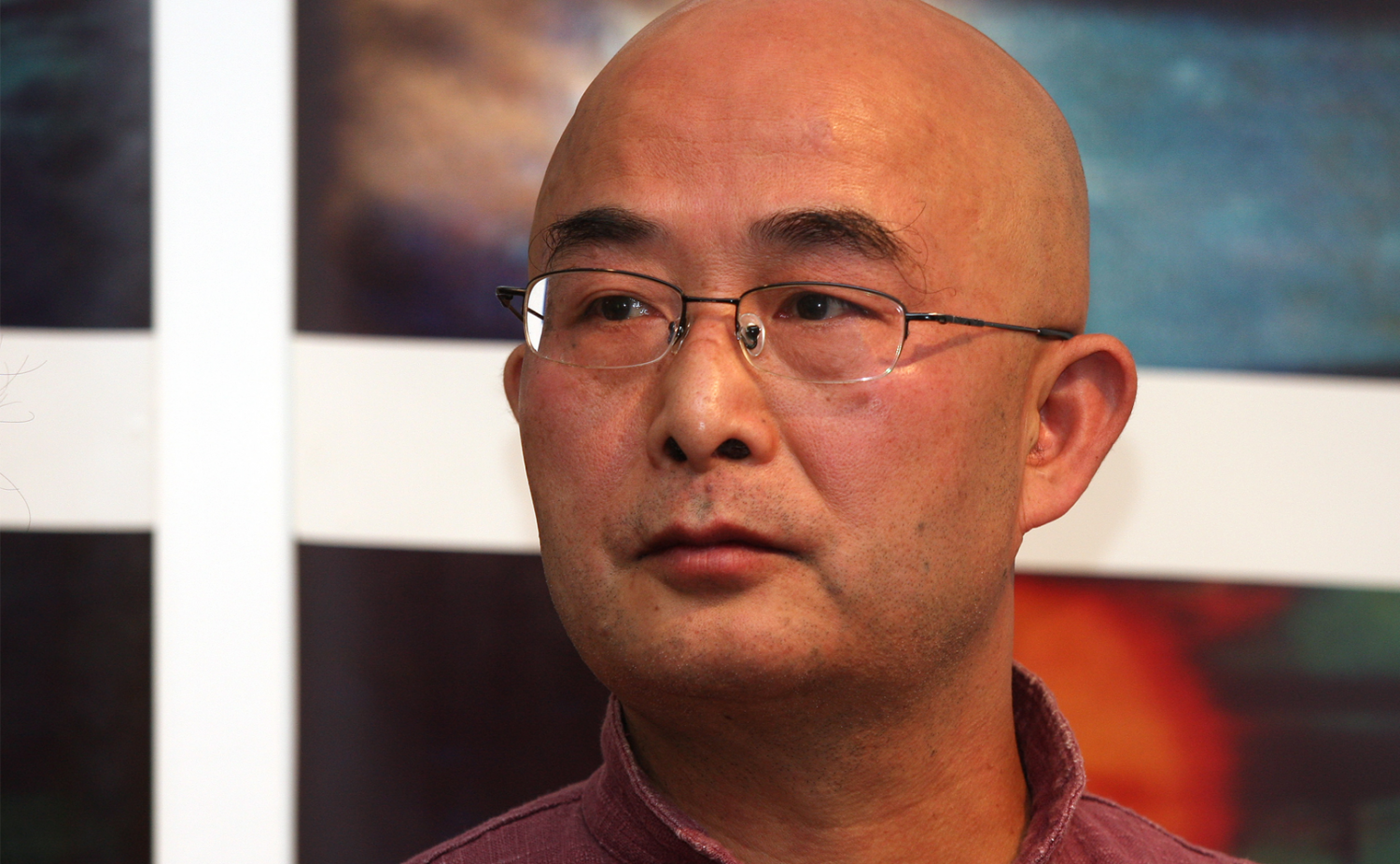
Image: Liao Yiwu by Elke Wetzig (Elya), Liao Yiwu 2010 CologneCC BY-SA 3.0

A Chinese dissident and author who was imprisoned by Chinese Communists for four years has warned the Catholic Church about making a “deal with the devil” as regards its negotiations with Beijing. Not a Christian himself, he nevertheless supports Cardinal Joseph Zen in his resistance against the proposed Vatican agreement with Communist China.

In an interview with Christ&Welt – the religion section of the German newspaper Die Zeit – that is to be published tomorrow, on 14 June, the Chinese musician and poet Liao Yiwu speaks about his time in prison, from 1990 to 1994. He was arrested after he wrote a poem critical of the Communist regime (“Massacre,” his poem referring to the massacre in Tiananmen Square on 4 June 1989). He met many Christians while in prison, about whom he later wrote in his own books.

When asked whether he is surprised that the Chinese government is increasingly attacking Christians, Liao Yiwu (59) responded: “No, it does not surprise me.” “In the view of the Chinese government,” he explains, “all Christians who do not register [with the State] – that is to say,  the so-called underground churches – are enemies of the system.” Speaking about the Vatican’s attempt at making an agreement with the Chinese government, the Chinese author refers to the resistance of Cardinal Joseph Zen who considers such a move to be a “sell-out” and a “misjudgment.”

Liao, who is one of the most prominent Chinese dissidents and who received, in 2012, the Peace Prize from the German Book Trade, comments further: “Cardinal Joseph Zen knows: he who makes a deal with the devil stains his white vest.” Liao also refers to the civil rights activist and Christian Wang Tang – one of the leaders during the protests in Tiananmen Square – who once said “together with his fellow Christians” that the pope should read Liao’s book about persecuted Christians. “Then he might change his mind.”

When asked whether he ever thought about turning to the Pope when he recently tried to help a fellow dissident to leave China, Liao responded with the words: “If this pope would have been Pope John Paul II, I would have considered it. He gave hope to the persecuted Christians in the Communist regimes.” “However,” adds Liao, “Pope Francis is for me the heretofore worst pope in history.” By way of explanation, the author says this is because “he brings those Christians into distress who are not themselves controlled by the State. And that is not Christian.”

Liao also describes the blessings that the Christian missionaries brought to China, starting with education, health, and even technology. He sees that Christianity brought hope into his country:

Had the farmers not received this Christian faith, their lives [under Communism] would have been even more hopeless. Also the women received some prospects through the mission; they were educated as nurses and teachers and were able to work in Christian institutions.

Again and again throughout the interview, Liao expresses his great respect for faithful Christians. He describes how one Christian physician offered homeless people free medical care; one day, Liao witnessed how this man operated on a patient secretly. “That impressed me,” he explains. Liao himself has suffered immensely since his childhood. Having been born during “The Great Leap Forward” (1958-1962), which caused a great famine, he fell prey to an illness as a child and nearly died. Later, he had to live in the streets, until he finally ended up in prison.

Liao has since fled his home country and now lives in Berlin, Germany. But he continues to describe the long-suffering of Christians in Chinese prisons. For him, Christians are “strong, because they understand that everything that happens in life is a test from God.” In one of his books about their persecution, he describes how he witnessed the quiet expectation of a Christian who was sentenced to death. It is in this context that this Chinese author returns to the witness of Cardinal Zen: “I consider Cardinal Zen to be such an upright, courageous Christian, because he opposes Pope Francis. He is guided by the voice of his God. His direct connection to the Lord gives him that courage.”

Posted in Uncategorized | Comments Off on “I consider Cardinal Zen to be such an upright, courageous Christian, because he opposes Pope Francis. He is guided by the voice of his God. His direct connection to the Lord gives him that courage.”