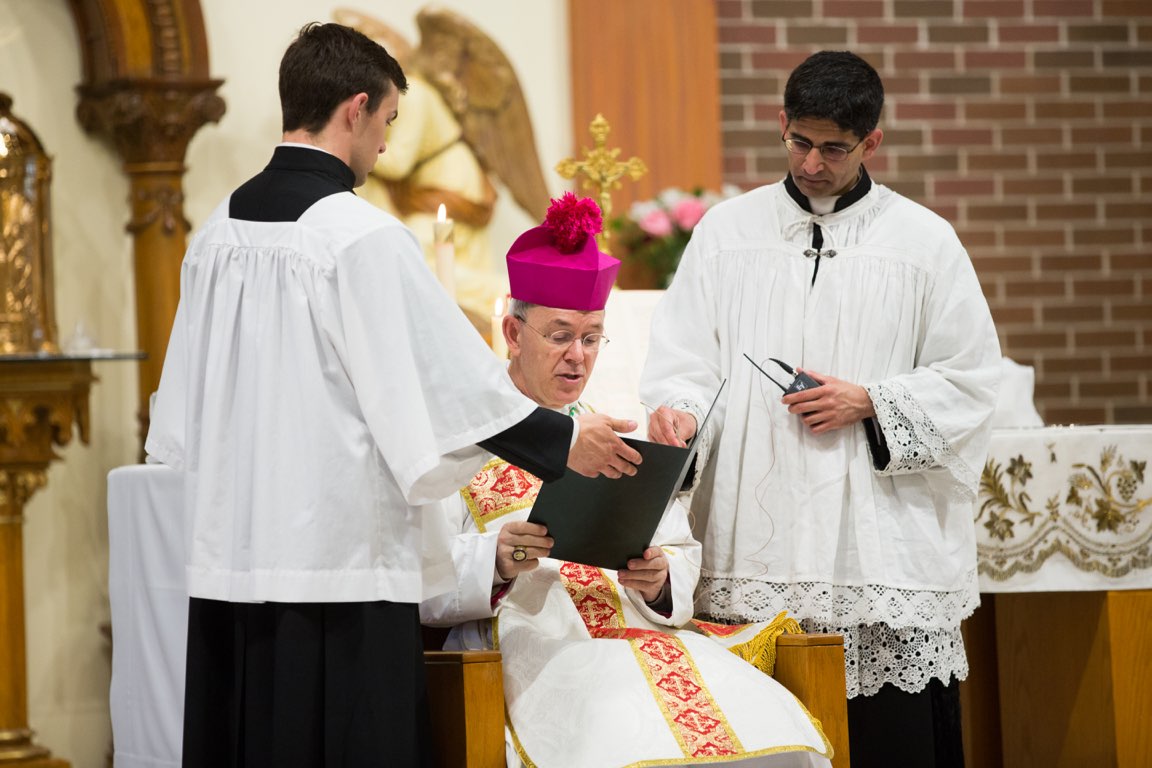
HERE IS YOUR LITTLE DOSE OF SATIRE TO HELP PREPARE YOU FOR WHAT IS GOING TO COME OUT OF THE WORLD CONGRESS ON FAMILIES TO BE HELD IN ‘CATHOLIC’ IRELAND IN AUGUST

Eccles and Bosco is saved


Spice up your life with Martinex!

Posted: 12 Jun 2018 09:37 AM PDT

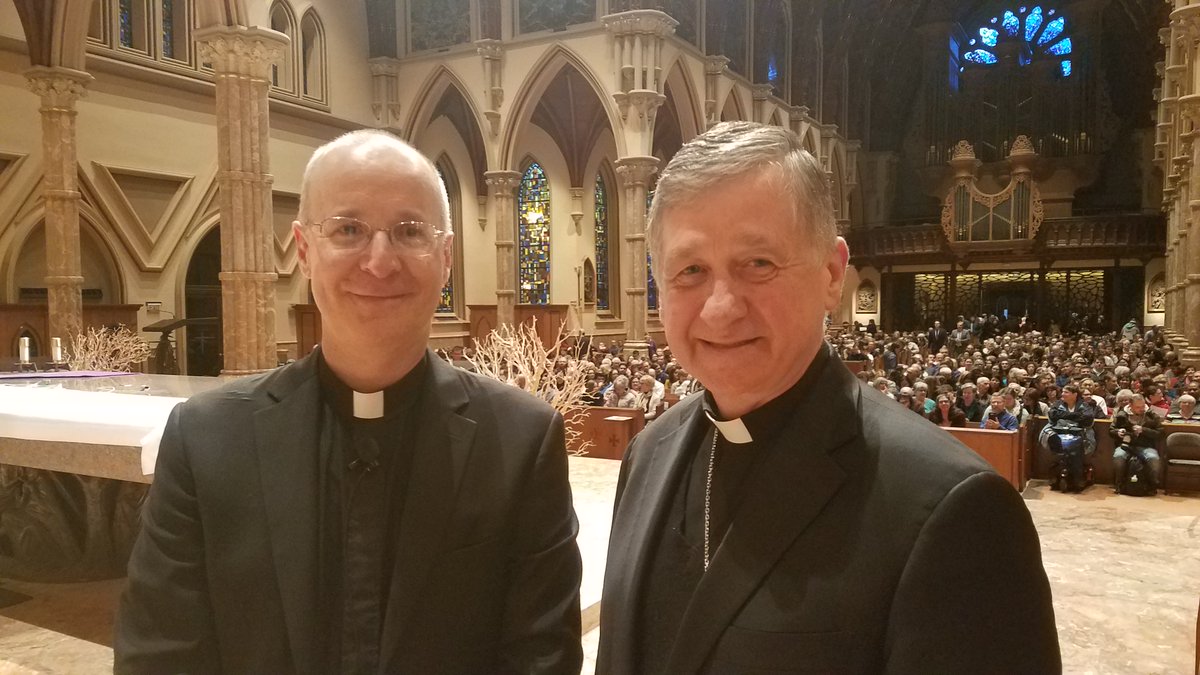
Thinking of organizing a religious event – it could be a baptism, a wedding, even a funeral? Want to make it go with a bang? Then what you need is Martinex! It comes in handy rainbow-patterned bottles.Cupich and Martin

Martinex – as recommended by Cardinals!

B.C. of Chicago explains. “I was just an ordinary second-rate cardinal, rather hazy about Catholic doctrines, and not really accepted in left-wing circles. But then I discovered Martinex, and suddenly my cathedral was full of adoring acolytes, while the street outside was full of angry Catholics! Now, I am strongly tipped to be the next Pope!”

World Meeting of Families

Liven up your family with Martinex!

Archbishop D.M. of Dublin is equally enthusiastic. “I was just a spineless nobody who managed to present such a feeble case against abortion that we lost the referendum, in spite of 70% of Ireland claiming to be religious. How could I stop people from mistaking me for a cardboard cutout? The answer was clear – serve bottles of Martinex at my World Meeting of Families! After all, for children of all ages, building bridges is more interesting than dolls and toy trains. Now, everyone is talking about us!”

Cardinal

“Don’t use Martinex – it’s toxic!”

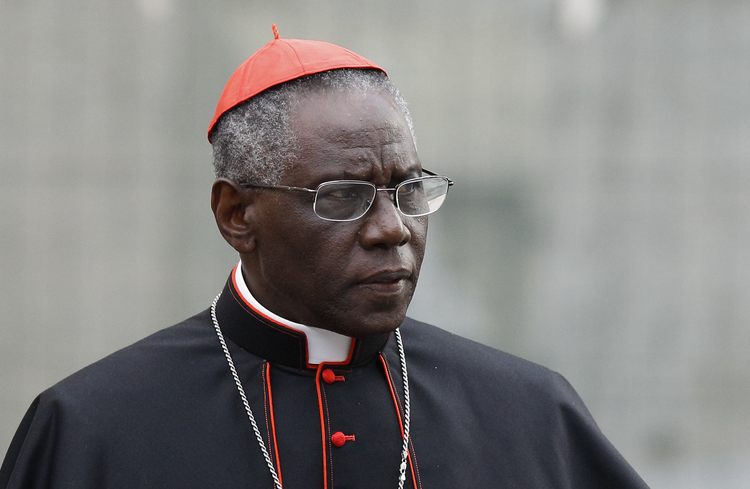
But not everyone sees Martinex as the way forward for the Catholic Church. Says Cardinal R.S. of Guinea. “Scientific tests have shown that Martinex rots your soul and leads you to eternal damnation. It even says so on the bottom of the bottle in small letters. What’s more, when I become Pope I’m going to burn that little squirt at the stake.

So there we are. You decide whether it’s worth the risk!

Posted in Uncategorized | 2 Comments

GNOSTICISM HAS COME ALIVE AGAIN AND STALKS THE LAND INFECTING BOTH THE UNDEREDUCATED AND THE ‘OVEREDUCATED’ WHO ARE ‘TOO BIG FOR THEIR BRITCHES’


Settimo Cielodi Sandro Magister

Gnosticism, an Ancient Heresy. But Here’s How It’s Reappearing Today

Francesco


The language of Pope Francis has already been the object of numerous analyses, which converge in recognizing his great communicative efficacy. But there are two epithets that he often applies to his adversaries within the Church, and yet are incomprehensible to most: “Gnostic” and “Pelagian.”

Not only that. Even the few who understand the ordinary significance of these two epithets find that many times Jorge Mario Bergoglio uses them contrary to their meaning.

It is breathtaking, for example, that he – in the book-length interview with the French sociologist Dominique Wolton – should apply the term “Pelagian” to none other than the mathematician, philosopher, and man of faith of the seventeenth century Blaise Pascal, who was the polar opposite of this and wrote that masterpiece which is “Les Provinciales” precisely in order to unmask the Pelagianism, the real thing, of many Jesuits of his time.

In the agenda-setting document of his pontificate, the exhortation “Evangelii Gaudium,” Francis dedicated an entire paragraph, 94, to what these two epithets mean to him.

But since then he has always used them in such an offhanded and interchangeable way as to induce even the congregation for the doctrine of the faith – in the recent letter to the bishops “Placuit Deo” – to bring a bit of order to the matter, stating in what really consist the two “deviations” now present in the Church “that resemble certain aspects of two ancient heresies, Pelagianism and Gnosticism.”

But once again without any appreciable effect on the elocution of Bergoglio, who never names the targets of his invective but lets everyone imagine who it may be, for example in the person of Cardinal Robert Sarah, he too covertly accused by the pope of “Gnosticism” and another time of “Pelagianism,” in the same way – entirely undeserved and improper – as a Pascal.

The following commentary is an attempt to bring clarity to the use of one of the two terms – “Gnosticism” – by an American theologian already known to the readers of Settimo Cielo, who had the opportunity to appreciate the open letter that he wrote to Pope Francis last summer: Thomas G. Weinandy, a member of the international theological commission consolidated into the Vatican congregation for the doctrine of the faith.

Fr. Weinandy shows how the dispute over “neo-Gnosticism” is not at all marginal, because it affects the transition underway in the Catholic Church, a transition set in motion by Pope Francis and feared and criticized by some, and by others eagerly pursued.

The commentary appeared on June 7 on the American website “The Catholic Thing” and is reproduced here in its entirety.

*

GNOSTICISM TODAY

by Thomas G. Weinandy, OFM, Cap.

There is much discussion today concerning the presence of a new Gnosticism within the Catholic Church.  Some of what has been written is helpful, but much of what has been described as a revival of this heresy has little to do with its ancient antecedent. Moreover, attributions of this ancient heresy to various factions within contemporary Catholicism are generally misdirected.  To bring some clarity to this discussion of neo-Gnosticism first demands a clear understanding of the old form.

Ancient Gnosticism came in various forms and expressions, often quite convoluted, but some essential principles are discernible:

–  First, Gnosticism holds a radical dualism: “matter” is the source of all evil, and “spirit” is the divine origin of all that is good.

– Second, human beings are composed of both matter (the body) and spirit (which provides access to the divine).

– Third, “salvation” consists in obtaining true knowledge (“gnosis”), an enlightenment that allows progress from the material world of evil to the spiritual realm, and ultimately communion with the immaterial supreme deity.

– Fourth,  diverse “Gnostic Redeemers” were proposed, each claiming to possess such knowledge, and to provide access to this “salvific” enlightenment.

In light of the above, human beings fall into three categories:

1) the “sarkic” or “fleshly” people, are so imprisoned in the material or bodily world of evil that they are incapable of receiving “salvific knowledge”;

2) the “psychic” or “soulish”, are partially confined to the “fleshly” realm and partially initiated into the spiritual domain. (Within “Christian Gnosticism,” these are the ones who live by mere “faith,” for they do not possess the fullness of divine knowledge.  They are not fully enlightened and so must rely on what they “believe.”);

3) finally, there are people capable of full enlightenment, the “Gnostics”, for they possess the fullness of divine knowledge.  By means of their saving knowledge, they can completely extricate themselves from the evil material world and ascend to the divine.

They live and are saved not by “faith” but by “knowledge.”

Compared to ancient Gnosticism, what is now being proposed as neo-Gnosticism within contemporary Catholicism appears confused and ambiguous, as well as misdirected. Some Catholics are accused of neo-Gnosticism because they allegedly believe that they are saved because they adhere to inflexible and lifeless “doctrines” and strictly observe a rigid and merciless “moral code.”  They claim to “know” the truth and, thus, demand that it must be held and, most importantly, obeyed.  These “neo-Gnostic Catholics” are supposedly not open to the fresh movement of the Spirit within the contemporary Church.  The latter is often referred to as “the new paradigm.”

Admittedly, we all know Catholics who act superior to others, who flaunt their fuller understanding of dogmatic or moral theology to accuse others of laxity.  There is nothing new about such righteous judgmentalism.  This sinful superiority, however, falls squarely under the category of pride and is not in itself a form of Gnosticism.

It would be right to call this neo-Gnosticism only if those so accused were proposing a “new salvific knowledge,” a new enlightenment that differs from Scripture as traditionally understood, and from what is authentically taught by the living magisterial tradition.

Such a claim cannot be made against “doctrines” that, far from being lifeless and abstract truths, are the marvelous expressions of the central realities of Catholic faith – the Trinity, Incarnation, the Holy Spirit, the real substantial presence of Christ in the Eucharist, Jesus’ law of love for God and neighbor reflected in the Ten Commandments, etc.  These “doctrines” define what the Church was, is, and always will be.  They are the doctrines that make her one, holy, catholic, and apostolic.

Moreover, these doctrines and commandments are not some esoteric way of life that enslaves one to irrational and merciless laws, imposed from without by a tyrannical authority.  Rather, these very “commandments” were given by God, in his merciful love, to humankind in order to ensure a holy god-like life.

Jesus, the Father’s incarnate Son, has further revealed to us the manner of life we are to live in expectation of his kingdom. When God tells us what we must never do, he is protecting us from evil, the evil that can destroy our human lives – lives he created in his image and likeness.

Jesus saved us from the devastation of sin through his passion, death, and resurrection, and he poured out his Holy Spirit precisely to empower us to live genuinely human lives.  To promote this way of life is not to propose a new salvific knowledge.  In ancient Gnosticism, people of faith – bishops, priests, theologians, and laity – would be called psychics. Gnostics would look down upon them precisely because they cannot claim any unique or esoteric “knowledge.” They are forced to live by faith in God’s revelation as understood and faithfully transmitted by the Church.

Those who mistakenly accuse others of neo-Gnosticism propose – when confronted with the nitty-gritty of real-life doctrinal and moral issues – the need to seek out what God would have them do, personally. People are encouraged to discern, on their own, the best course of action, given the moral dilemma they face in their own existential context – what they are capable of doing at this moment in time.  In this way, the individual’s own conscience, his or her personal communion with the divine, determines what the moral requirements are in the individual’s personal circumstances.  What Scripture teaches, what Jesus stated, what the Church conveys through her living magisterial tradition are superseded by a higher “knowledge,” an advanced “illumination.”

If there is any new Gnostic paradigm in the Church today, it would seem to be found here.  To propose this new paradigm is to claim to be truly “in-the-know,” to have special access to what God is saying to us as individuals here and now even if it goes beyond and may even contradict what He has revealed to everyone else in Scripture and tradition.

At the very least, no one claiming this knowledge should ridicule as neo-Gnostics those who live merely by “faith” in God’s revelation as brought forward by the Church’s tradition.

I hope that all this brings some clarity to the present ecclesial discussion over contemporary “Catholic” Gnosticism by placing it within the proper historical context. Gnosticism cannot be used as an epithet against those “unenlightened” faithful who merely seek to act, with the help of God’s grace, as the Church’s divinely inspired teaching calls them to act.

Posted in Uncategorized | 1 Comment

TO ALL WHO KNEW AND LOVED ARCHBISHOP FULTON J. SHEEN THE BODY-SNATCHING AND GRAVE ROBBING BY THE ARCHDIOCESE OF NEW YORK IS OFFENSIVE AND A SCANDAL


NY MAY BLOCK REMOVAL OF ABP. SHEEN’S BODY — AGAIN

NEWS: US NEWS

Print Friendly and PDF

by Christine Niles, M.St. (Oxon.), J.D.  •  ChurchMilitant.com  •  June 12, 2018   27 Comments

Journalist: New York ‘acting like a petulant, whiny teen’

NEW YORK (ChurchMilitant.com) – The New York archdiocese has made clear it’s not ready to comply with the recent court ruling on Abp. Fulton Sheen, raising fears it will continue the lengthy and costly court battle over the venerable archbishop’s remains.

Superior Court Judge Arlene Bluth ruled Friday that Joan Sheen Cunningham, niece and closest living relative to Sheen, with legal rights over his body, could have her uncle’s remains moved to Peoria, Illinois in order to advance his cause for canonization. On Monday, the trustees of St. Patrick’s Cathedral (where Sheen’s body rests) issued a statement expressing the possibility of appealing the decision: “We will review this decision carefully with our attorneys and determine what next steps might be taken.”

New York’s pursuit of civil litigation blocks the advancement of the Cause.Tweet

The trustees went on to claim that Sheen’s cause “can progress without any transfer of the remains” — a point rejected by the Peoria diocese, which issued a response clarifying the statement’s “inaccuracies”:

The Archdiocese of New York’s press release also state that the Cause can progress without the transfer of the remains. This is simply not true. In 2017, the Congregation for the Causes of the Saints in Rome established new rules, which unequivocally provide direction for this Cause. First, the new rules clearly stated that the wishes of the family, regarding the earthly remains of a potential saint, must be respected. … Second, the new rules indicate that a Cause can advance only when all civil litigation is resolved. In this case, New York’s pursuit of civil litigation blocks the advancement of the Cause.

Monsignor James Kruse, Vicar General of the Peoria diocese, spoke with Church Militant.

“The Vatican’s 2017 rules make clear the wishes of the family — in this case, Joan Sheen Cunningham — must be respected and litigation must be resolved before Abp. Sheen’s cause can advance,” he said. “The statement from New York claiming that the beatification of Abp. Fulton Sheen can advance without transfer of the body is simply untrue.”

The press release from Peoria noted it is “unprecedented” for remains not to be located in the same place as where the cause is advanced and where the beatification will take place — Peoria.

“If they determine to continue with legal actions,” the press release noted, “it will be the third time that this has been brought to court, despite the court ruling twice in Joan Sheen Cunningham’s favor.”

New York “has done almost nothing in the last fifteen years to assist in the Cause’s lengthy, complicated and laborious process,” the Peoria diocese clarified. “Instead, the Archdiocese of New York has only provided expensive legal resistance during the last two years by refusing to respect the legally supported petition of Joan Sheen Cunningham.”

Journalist Phil Luciano published a column asking how long New York will continue to hold up the canonization.

This is no longer a court battle about propriety, but pride. Stunned by repeated legal victories by the Peoria Diocese, the New York Archdiocese refuses to budge. It’s acting like a petulant, whiny teen who refuses to listen to his parents, even when flat-out wrong. It’s like big, bad New York can’t believe it’s been outwitted by lil’ ol’ Peoria.

Kruse told Church Militant the Peoria diocese is “requesting prayers for a renewed spirit of cooperation from the archdiocese of New York for Abp. Sheen’s cause to be brought to completion.”

The Peoria diocese has already been in contact with the Vatican, which has been assisting with the cause and has assured the diocese, based on this latest court ruling, that Pope Francis could be announcing Sheen’s beatification “in the very near future.”


Posted in Uncategorized | 3 Comments

UNDER NORMAL CONDITIONS CAN EVERY PRIEST ABSOLVE AND CONFIRM?

72b67-schneider2b252822529

A  faithful  reader of Abyssum asks the following questions:

“Thank you very much for your courage and light you provide in these difficult times. I have read from your blog about the invalid promulgation of Jorge Bergoglio as a Pope. I completely agree with you.

My question is this, I live in the Hartford diocese. Bishop Leonard Blair was appointed Bishop of Hartford by the man who now usurps the Chair of Peter. What I understand is that he is a true bishop because he was appointed as bishop by St. John Paul II, therefore he has the power to consecrate new priests, but does he has the power to grant faculties to priests who does not belong to his diocese? Does the priests in the Hartford diocese have the power to absolve?, to confirm?”

I respond to the questions as follows:

A priest becomes a bishop when he is named/appointed a bishop by a validly elected pope and when he is ordained/consecrated a bishop by three bishops in union with the Holy See of the Catholic Church.  Ordination/consecration bestows two sacramental powers on a priest validly named a bishop by a validly elected pope: the power of sacramental orders and the power of jurisdiction.  A validly appointed/consecrated bishop can under the usual conditions ordain deacons and priests.  A validly appointed/consecrated bishop cannot exercise the power of jurisdiction unless it has been specifically granted to him by a validly elected pope when, for example, he is appointed bishop or ordinary of a specific diocese or other jurisdiction of the Church.  A bishop appointed ordinary by a validly elected pope can grant priestly faculties to any priest in good standing even though the priest is not incardinated (belongs to) his diocese.  A priest cannot absolve and confirm without the faculties of the diocese (and permission to confirm) having been granted to him by a bishop who has been validly ordained/consecrated and appointed ordinary of that particular diocese.

+Rene Henry Gracida

Posted in Uncategorized | Comments Off on UNDER NORMAL CONDITIONS CAN EVERY PRIEST ABSOLVE AND CONFIRM?

NOW IS THE TIME

NOW IS THE TIME FOR ALL GOOD CARDINALS TO COME TO THE AID OF THE CHURCH !!!

Posted in Uncategorized | 3 Comments

THE PRESENT CRISIS IN THE CHURCH CAN BE RESOLVED ONLY BY CARDINALS, BUT ONLY BY CARDINALS WITH EXTRAORDINARY COURAGE, WHO WERE VALIDLY APPOINTED BY A VALIDLY ELECTED POPE

10-cardinal-sins1


The present crisis in the Church can only be resolved by Cardinals of the Church.

by +Rene Henry Gracida, Bishop Emeritus of Corpus Christi

(Emphasis by Abyssum in red type)

The Feast of Corpus Christi, June 3, 2018

“Statistics do not lie” they say, and the statistics recently released showing that Sunday Mass attendance is at the lowest point in the United States that it has ever been is sobering news.  Apostasy is in the air.  No one can deny that the Church is in a moment of crisis.  A crisis that can only be resolved by a group of Cardinals, who were validly appointed by Popes Saint John Paul II and Benedict XVI,  who did not incur the penalty of Excommunication Latae Sententiae by violating the restrictions of the Apostolic Constitution Universi Dominici Gregis which governed the Conclave held in 2013.

It can only be resolved by a group (however small in number) of validly appointed Cardinals who find that the election of Francis the Merciful at the Conclave of 2013 was invalid because the ballot which ‘elected’ him included ballots cast by Cardinals who had incurred the penalty of Excommunication Late Sententiae before voting, under the provisions of the Apostolic Constitution Universe Dominici Gregis, and among such Cardinals was Jorge Maria Bergolio himself.

It can only be resolved by a group (however small in number) of validly appointed Cardinals who, meeting in a special ad hoc conclave declare the See of Peter vacant and set the date for the next conclave which would be conducted under the provisions of Universi Dominici Gregis and which would proceed to elect the next Pope.

There is ample historical precedent for such a meeting  of Cardinals, however small in number.  Read  in the historical record below the many instances in which a crisis of the institutional Church was only resolved by the action of a small group of Cardinals who had been validly appointed cardinal by a validly elected Pope.

Here are some historical facts to help you put what I am proposing in proper perspective.  What I am proposing may seem radical to you, but believe me, what I am proposing is not nearly as radical as some of the solutions to similar crises that have occurred in the past.

Popes and Antipopes (999 .. 1503) from Wikipedia

Antipopes

Anti-popes were elected by an ecclesiastical faction and later declared uncanonical and invalid. Precise numbers are unknown due to scant documentation in earlier periods. The first anti-pope was probably St Hyppolitus (3rd Century) and the last Felix V, former Duke of Savoy. The number of antipopes range from 25 to 40.

High Middle Ages when the Europe was struggling with the rise of nationalism and new forms of political structure of society with consequent tensions between the Church and State.

1000 .. 1099

From
Date
Ruler Antipope To
Date
Comments
999 Sylvester II 1003
1003 John XVII
1004 John XVIII 1009
1009 Sergius IV 1012
1012 Benedict VIII 1024
1024 John XIX 1032
1032 Benedict IX 1045
1045 Clement II 1048 Imperial appointee
1048 Damasus II 1049 Imperial appointee
1049 Leo IX 1055 Imperial appointee
1055 Victor II 1057 Imperial appointee
1057 Stephen IX (X) 1058 Imperial appointee
1058 Benedict X Antipope?
1058 Nicholas II 1061
1061 Alexander II 1073
1061 Honorius II Antipope? 1072
1073 Gregory VII 1085
1080 Clement III Antipope 1100
1086 Victor III 1088
1088 Urban II 1099 On the last day of the council Pope Urban II preached about the oppression being inflicted on the Christians in the Middle East by the Muslim Seljuks. Christian churches were being destroyed and Christians attacked. The Pope called for the Christians in the West to help.
1099 Paschal II 1118

1100 .. 1199

From
Date
Ruler Antipope To
Date
Comments
1100 Theodoric Antipope 1102
1101 Albert Antipope
1105 Sylvester IV Antipope 1111
1118 Gelasius II 1119
1118 Gregory VIII Antipope 1121
1119 Calixtus II 1124
1124 Honorius II 1130
1124 Celestine II Antipope
1130 Innocent II 1143
1130 Anacletus II Antipope 1138
1138 Victor IV Antipope
1143 Celestine II 1144
1144 Lucius II 1145
1145 Eugenius III 1153
1153 Anastasius IV 1144
1154 Adrian IV 1155
1159 Alexander III 1181
1159 Victor IV (Octavian) Antipope 1164
1164 Paschall III Antipope 1168
1168 Calixtus III Antipope 1178
1179 Innocent III Antipope 1180
1181 Lucius III 1185
1185 Urban III 1187
1187 Gregory VIII
1187 Clement III 1191
1191 Celestine III 1198
1198 Innocent III 1216

1200 .. 1299

From
Date
Ruler Antipope To
Date
Comments
1216 Honorius III 1227
1227 Gregory IX 1242
1241 Celestine IV Oct – Nov
1243 Innocent IV 1254
1254 Alexander IV 1261
1261 Urban IV 1264
1265 Clement IV 1268
1271 Gregory X 1276
1276 Innocent V Jan – Jun
1276 Adrian V Jul – Aug
1276 John XXI 1277
1277 Nicholas III 1280
1281 Martin IV 1285
1285 Honorius IV 1287
1294 Celestine V Jul – Dec
1294 Boniface VIII 1303

1300 .. 1399

From
Date
Ruler Antipope To
Date
Comments
1303 Benedict XI 1304
1305 Clement V 1314

Babylonish Captivity & The Great Schism

Pope Clement V, a Frenchman, moved the Papacy to Avignon in France after his election (1309-1377). Urban V tried to return, and Gregory XI succeeded shortly before his death. Unfortunately the authorities in Avignon did not immediately accept this, and the Great Schism resulted, from 1378-1415, and they continued to elect a Pope. An attempt to solve this in 1409 resulted in three popes, two being “elected” at Pisa.

Popes of Avignon

From
Date
Ruler Antipope To
Date
Comments
1309 Clement V 1314
1316 John XXII 1334
1328 Nicholas V  Antipope 1330
1334 Benedict XII 1342
1342 Clement VI 1352
1352 Innocent VI 1362
1362 Urban V 1370 In 1367 Urban V travelled to Rome to restore the Papacy to Italy but had to return to France because of trouble there.
1370 Gregory XI In 1377 Gregory XI arrived in Rome to restore the Papacy to Italy.

Rome

From
Date
Ruler Antipope To
Date
Comments
1377 Gregory XI 1378
1378 Urban VI 1389
1377 Clement VII (Avignon) Antipope 1378
1389 Boniface IX 1404
1394 Benedict XIII (Avignon) Antipope 1423
1404 Innocent VII 1406
1406 Gregory XII 1415

Pisa

In 1409 the Council of Pisa tried to solve the problem of having two popes, Gregory and Benedict. In the end the council declared the two void and elected their own; Alexander V.

From
Date
Ruler Antipope To
Date
Comments
1409 Alexander V (Pisa)  Antipope 1410
1410 John XXIII (Pisa)  Antipope 1415
1417 Martin V 1431
1423 Clement VIII  Antipope 1429
1425 Benedict XIV  Antipope 1430
1431 Eugenius IV 1447
1439 Felix V  Antipope 1449
1447 Nicholas V 1455
1455 Calixtus III 1458
1458 Pius II 1464
1464 Paul II 1471
1471 Sixtus IV 1484
1484 Innocent VIII 1492
1492 Alexander VI 1503

Avignon Papacy

From Wikipedia, the free encyclopedia

Map of the city of Rome, showing an allegorical figure of Rome as a widow in black mourning the Avignon Papacy

The Avignon Papacy was the period from 1309 to 1376 during which seven successive popes resided in Avignon (which was then in the Kingdom of Arles, part of the Holy Roman Empire, now in France) rather than in Rome.[1]The situation arose from the conflict between the papacy and the French crown, culminating in the death of Pope Boniface VIII after his arrest and maltreatment by Philip IV of France. Following the further death of Pope Benedict XI, Philip forced a deadlocked conclave to elect the French Clement V as Pope in 1305. Clement refused to move to Rome, and in 1309, he moved his court to the papal enclave at Avignon, where it remained for the next 67 years. This absence from Rome is sometimes referred to as the “Babylonian Captivity of the Papacy”.[2][3] 

{It should be noted that since Peter was the first Pope and lived and died in Rome he was also the first Bishop of Rome.  Consequently every Pope after Peter held the title of Pope because he was the Bishop of Rome.  If he did not live in Rome it created a huge problem for the Church since the law of the Church has always been that a bishop MUST RESIDE IN THE DIOCESE of which he is he Bishop.  So the fact that many of the Popes who resided in Avignon did so by choice they were considered by Catholics to have abandoned their See and hence were no longer Pope.}

A total of seven popes reigned at Avignon, all French,[4][5] and all under the influence of the French Crown. In 1376, Gregory XI abandoned Avignon and moved his court to Rome (arriving on January 17, 1377). But after Gregory’s death in 1378, deteriorating relations between his successor Urban VI and a faction of cardinals gave rise to the Western Schism. This started a second line of Avignon popes, subsequently regarded as illegitimate. The last Avignon antipope, Benedict XIII, lost most of his support in 1398, including that of France; after five years besieged by the French, he fled to Perpignan in 1403. The schism ended in 1417 at the Council of Constance, after two popes had reigned in opposition to the papacy in Rome.[6]

The Papal palace in Avignon, France

{In many ways the Papal palace in Avignon was more luxurious than the Vatican and so some of the Avignon popes can be accused of letting luxury influence their decision to remain in Avignon rather than live in Rome.}

Among the popes who resided in Avignon, subsequent Catholic historiography grants legitimacy to these:

The two Avignon-based antipopes were:

Benedict XIII was succeeded by three antipopes, who had little or no public following, and were not resident at Avignon:

The period from 1378 to 1417, when there were rival claimants to the title of pope, is referred to as the “Western Schism” or “the great controversy of the antipopes” by some Roman Catholic scholars and “the second great schism” by many secular and Protestant historians. Parties within the Roman Church were divided in their allegiance among the various claimants to the office of pope. The Council of Constance finally resolved the controversy in 1417 when {the claims of the popes in Avignon and elsewhere were rejected and the Council of Constance chose a completely different man} the election of Pope Martin V was accepted by all.

Avignon and the small enclave to the east (Comtat Venaissin) remained part of the Papal States until 1791, when, under pressure from French revolutionaries, they were absorbed by the short-lived revolutionary Kingdom of France (1791–92), which, in turn, was abolished in favor of the French First Republic the following year.[7]

The papacy in the Late Middle Ages played a major temporal role in addition to its spiritual role. The conflict between the pope and the Holy Roman Emperor was fundamentally a dispute over which of them was the leader of Christendom in secular matters. In the early 14th century, the papacy was well past the prime of its secular rule – its importance had peaked in the 12th and 13th centuries. The success of the early Crusades added greatly to the prestige of the Popes as secular leaders of Christendom, with monarchs like those of England, France, and even the Holy Roman Emperor merely acting as marshals for the popes and leading “their” armies. One exception was Frederick II, Holy Roman Emperor, who was twice excommunicated by the Pope during a Crusade. Frederick II ignored this and was moderately successful in the Holy Land.

This state of affairs culminated in the unbridled declaration of papal supremacy, Unam sanctam, in November 1302. In that papal bull, Pope Boniface VIII decreed that “it is necessary to salvation that every human creature be subject to the Roman pontiff.” This was directed primarily to King Phillip IV of France who responded by saying, “Your venerable conceitedness may know that we are nobody’s vassal in temporal matters.” In 1303 AD, Pope Boniface VIII followed up with a bull that would excommunicate the king of France and put the interdict over France, and depose the entire clergy of France. Before this was finalized, Italian allies of the King of France broke into the papal residence and beat Pope Boniface VIII. He died shortly thereafter. Nicholas Boccasini was elected as his successor and took the name Pope Benedict XI. He absolved King Phillip IV and his subjects of their actions against Pope Boniface VIII; though the culprits who assaulted Boniface were excommunicated and ordered to appear before a pontifical tribunal. However, Benedict XI died within eight months of being elected to the papacy. After eleven months, Bertrand de Got, a French man and a personal friend of King Phillip IV, was elected as pope and took the name Pope Clement V.

Beginning with Clement V, elected 1305, all popes during the Avignon papacy were French. However, this makes French influence seem greater than it was. Southern France at that time had a culture quite independent from Northern France, where most of the advisers to the King of France were based. The Kingdom of Arles was still independent at that time, formally a part of the Holy Roman Empire. The literature produced by the troubadours in the Languedoc is unique and strongly distinct from that of Royal circles in the north. Even in terms of religion, the South produced its own variety of Christianity, Catharism, which was ultimately declared heretical. The movement was fueled in no small part by the strong sense of independence in the South even though the region had been severely weakened during the Albigensian Crusade a hundred years before. By the time of the Avignon Papacy, the power of the French King in this region was uncontested, although still not legally binding.

A stronger impact was made by the move of the Roman Curia from Rome to Poitiers in France in 1305, and then to Avignon in 1309. Following the impasse during the previous conclave, and to escape from the infighting of the powerful Roman families that had produced earlier Popes, such as the Colonna and Orsini families, the Roman Church looked for a safer place and found it in Avignon, which was surrounded by the lands of the papal fief of Comtat Venaissin. Formally it was part of Arles, but in reality it was under the influence of the French king. During its time in Avignon, the papacy adopted many features of the Royal court: the life-style of its cardinals was more reminiscent of princes than clerics; more and more French cardinals, often relatives of the ruling pope, took key positions; and the proximity of French troops was a constant reminder of where secular power lay, with the memory of Pope Boniface VIII still fresh.

The coat of arms of Benedict XIII displayed the papal tiara and cross. During this period, papal heraldry varied greatly and the crossed keys had not yet fully developed as a symbol of the papacy.


The temporal role of the Catholic Church increased the pressure upon the papal court to emulate the governmental practices and procedures of secular courts. The Catholic Church successfully reorganised and centralized its administration under Clement V and John XXII. The papacy now directly controlled the appointments of benefices, abandoning the customary election process that traditionally allotted this considerable income. Many other forms of payment brought riches to the Holy See and its cardinals: tithes, a ten-percent tax on church property; annates, the income of the first year after filling a position such as a bishopric; special taxes for crusades that never took place; and many forms of dispensation, from the entering of benefices without basic qualifications like literacy for newly appointed priests to the request of a converted Jew to visit his unconverted parents. Popes such as John XXII, Benedict XII, and Clement VI reportedly spent fortunes on expensive wardrobes, and silver and gold plates were used at banquets.

Overall the public life of leading church members began to resemble the lives of princes rather than members of the clergy. This splendor and corruption at the head of the Church found its way to the lower ranks: when a bishop had to pay up to a year’s income for gaining a benefice, he sought ways of raising this money from his new office. This was taken to extremes by the pardoners who sold absolutions for all kinds of sins to the poor. While pardoners were hated but needed to redeem one’s soul, the friars who failed to follow the Church’s moral commandments by failing their vows of chastity and poverty were despised. This sentiment strengthened movements calling for a return to absolute poverty, relinquishment of all personal and ecclesiastical belongings, and preaching as the Lord and his disciples had.

For the Catholic Church, an institution embedded in the secular structure and its focus on property, this was a dangerous development, and beginning in the early 14th century most of these movements were declared heretical. These included the Fraticelli and Waldensian movements in Italy and the Hussites in Bohemia (inspired by John Wycliffe in England). Furthermore, the display of wealth by the upper ranks of the church, which contrasted with the common expectation of poverty and strict adherence to principles, was used by enemies of the papacy to raise charges against the popes; King Philippe of France employed this strategy, as did Louis IV, Holy Roman Emperor. In his conflict with the latter, Pope John XXII excommunicated two leading philosophers, Marsilius of Padua and William of Ockham, who were outspoken critics of the papacy, and who had found refuge with Louis IV in Munich. In response, William charged the pope with seventy errors and seven heresies.

The proceedings against the Knights Templar in the Council of Vienne are representative of this time, reflecting the various powers and their relationships. In 1314 the collegium at Vienne convened to make a ruling concerning the Templars. The council, overall unconvinced about the guilt of the order as a whole, was unlikely to condemn the entire order based on the scarce evidence brought forward. Exerting massive pressure in order to gain part of the substantial funds of the Order, the King managed to get the ruling he wanted, and Pope Clement V ordered by decree the suppression of the order. In the cathedral of Saint Maurice in Vienne, the King of France and his son, the King of Navarre, were sitting next to him when he issued the decree. Under pain of excommunication, no one was allowed to speak at that occasion except when asked by the Pope. The Templars who appeared in Vienne to defend their order were not allowed to present their case — the cardinals of the collegium originally ruled that they should be allowed to raise a defense, but the arrival of the King of France in Vienne put pressure on the collegium, and that decision was revoked.

 After the arrest of the Bishop of Pamiers by Philip IV of France in 1301, Pope Boniface VIII issued the bull Salvator Mundi, retracting all privileges granted to the French king by previous popes, and a few weeks later Ausculta fili with charges against the king, summoning him before a council to Rome. In a bold assertion of papal sovereignty, Boniface declared that “God has placed us over the Kings and Kingdoms.”

In response, Philippe wrote “Your venerable conceitedness may know, that we are nobody’s vassal in temporal matters,” and called for a meeting of the Estates General, a council of the lords of France, who had supported his position. The King of France issued charges of sodomy, simony, sorcery, and heresy against the pope and summoned him before the council. The pope’s response was the strongest affirmation to date of papal sovereignty. In Unam Sanctam (November 18, 1302), he decreed that “it is necessary to salvation that every human creature be subject to the Roman pontiff.” He was preparing a bull that would excommunicate the King of France and put the interdict over France, and to depose the entire clergy of France, when in September 1303, William Nogaret, the strongest critic of the papacy in the French inner circle, led a delegation to Rome, with intentionally loose orders by the king to bring the pope, if necessary by force, before a council to rule on the charges brought against him. Nogaret coordinated with the cardinals of the Colonna family, long-standing rivals against whom the pope had even preached a crusade earlier in his papacy. In 1303 French and Italian troops attacked the pope in Anagni, his home town, and arrested him. He was freed three days later by the population of Anagni. However, Boniface VIII, then 68 years of age, was deeply shattered by this attack on his own person and died a few weeks later.
Clement V in a later engraving

The death of Pope Boniface VIII deprived the papacy of its most able politician who could stand against the secular power of the king of France. After the conciliatory papacy of Benedict XI (1303–04), Pope Clement V(1305–1314) became the next pontiff. He was born in Gascony, in southern France, but was not directly connected to the French court. He owed his election to the French clerics. He decided against moving to Rome and established his court in Avignon. In this situation of dependency on powerful neighbors in France, three principles characterized the politics of Clement V: the suppression of heretic movements (such as the Cathars in southern France); the reorganization of the internal administration of the church; and the preservation of an untainted image of the church as the sole instrument of God’s will on earth. The latter was directly challenged by Philippe IV when he demanded a posthumous trial of his former adversary, the late Boniface VIII, for alleged heresy. Phillipe exerted strong influence on the cardinals of the collegium, and compliance with his demand could mean a severe blow to the church’s authority. Much of Clement’s politics was designed to avoid such a blow, which he finally did (persuading Phillipe to leave the trial to the Council of Vienne, where it lapsed). However, the price was concessions on various fronts; despite strong personal doubts, Clement supported Phillipe’s proceedings against the Templars, and he personally ruled to suppress the order.

John XXII

One important issue during the papacy of Pope John XXII (born Jacques Duèze in Cahors, and previously archbishop in Avignon) was his conflict with Louis IV, Holy Roman Emperor, who denied the sole authority of the Pope to crown the Emperor. Louis followed the example of Philippe IV, and summoned the nobles of Germany to back his position. Marsilius of Padua justified secular supremacy in the territory of the Holy Roman Empire. This conflict with the Emperor, often fought out in expensive wars, drove the papacy even more into the arms of the French king.

Benedict XII

Pope Benedict XII (1334–1342), born Jaques Fournier in Pamiers, was previously active in the inquisition against the Cathar movement. In contrast to the rather bloody picture of the Inquisition in general, he was reported to be very careful about the souls of the examined, taking a lot of time in the proceedings. His interest in pacifying southern France was also motivation for mediating between the King of France and the King of England, before the outbreak of the Hundred Years’ War.

Under Pope Clement VI (1342–1352) the French interests started dominating the papacy. Clement VI had been Archbishop of Rouen and adviser to Philippe IV before, so his links to the French court were much stronger than those of his predecessors. At some point he even financed French war efforts out of his own pockets. He reportedly loved luxurious wardrobe and under his rule the extravagant life style in Avignon reached new heights.

Clement VI was also pope during the Black Death, the epidemic that swept through Europe between 1347–1350 and is believed to have killed about one-third of Europe’s population. Also during his reign, in 1348, the Avignon papacy bought the city of Avignon from the Angevins.[8]

Clement VI

Pope Innocent VI (1352–1362), born Etienne Aubert, was less partisan than Clement VI. He was keen on establishing peace between France and England, having worked to this end in papal delegations in 1345 and 1348. His gaunt appearance and austere manners commanded higher respect in the eyes of nobles at both sides of the conflict. However, he was also indecisive and impressionable, already an old man when being elected Pope. In this situation, the King of France managed to influence the papacy, although papal legates played key roles in various attempts to stop the conflict. Most notably in 1353 the Bishop of Porto, Guy de Boulogne, tried to set up a conference. After initial successful talks the effort failed, largely due to the mistrust from English side over Guy’s strong ties with the French court. In a letter Innocent VI himself wrote to the Duke of Lancaster: “Although we were born in France and although for that and other reasons we hold the realm of France in special affection, yet in working for peace we have put aside our private prejudices and tried to serve the interests of everyone”.

With Pope Urban V (1362–1370), the control by Charles V of France of the papacy became more direct. Urban V himself is described as the most austere of the Avignon popes after Benedict XII and probably the most spiritual of all. However, he was not a strategist and made substantial concessions to the French crown especially in finances, a crucial issue during the war with England. In 1369 Pope Urban V supported the marriage of Philip the Boldof the Duchy of Burgundy and Margaret III, Countess of Flanders, rather than giving dispensation to one of Edward III of England‘s sons to marry Margaret. This clearly showed the partisanship of the papacy; correspondingly, the respect for the church dropped.

Pope Gregory XI returned to Rome in 1376 and ended the Avignon Papacy.

The most influential decision in the reign of Pope Gregory XI (1370–1378) was the return to Rome, beginning on 13 September 1376 and ending with his arrival on 17 January 1377.[9][10] Although the Pope was French born and still under strong influence by the French King, the increasing conflict between factions friendly and hostile to the Pope posed a threat to the papal lands and to the allegiance of Rome itself. When the papacy established an embargo against grain exports during a food scarcity 1374 and 1375, Florence organized several cities into a league against the papacy: Milan, Bologna, Perugia, Pisa, Lucca and Genoa. The papal legate, Robert of Geneva, a relative of the House of Savoy, pursued a particularly ruthless policy against the league to re-establish control over these cities. He convinced Pope Gregory to hire Breton mercenaries. To quell an uprising of the inhabitants of Cesena he hired John Hawkwood and had the majority of the people massacred (between 2,500 and 3,500 people were reported dead). Following such events opposition against the papacy strengthened. Florence came in open conflict with the Pope, a conflict called “the war of the eight saints” in reference to the eight Florentine councilors who were chosen to orchestrate the conflict. The entire city of Florence was excommunicated and as reply the export of clerical taxes was stopped. The trade was seriously hampered and both sides had to find a solution. In his decision about returning to Rome, the Pope was also under the influence of Catherine of Siena, later canonized, who preached for a return to Rome.

This resolution was short-lived, however, when, having returned the papal court to Rome, Pope Gregory XI died. A conclave met and elected an Italian pope, Urban VI. Pope Urban alienated the French cardinals, who held a second conclave electing one of their own, Robert of Geneva, who took the name Clement VII, to succeed Gregory XI, thus founding a second line of Avignon popes. Clement VII and his successors are not regarded as legitimate, and are referred to as antipopes by the Catholic Church. This situation, known as the Western Schism, persisted from 1378 until the ecumenical Council of Constance (1414–1418) resolved the question of papal succession and declared the French conclave of 1378 to be invalid. A new Pope, Pope Martin V, was elected in 1417; other claimants to succeed to the line of the Avignon Popes (though not resident at Avignon) continued until c. 1437.

The period has been called the “Babylonian captivity” of the popes. When and where this term originated is uncertain although it may have sprung from Petrarch, who in a letter to a friend (1340–1353) written during his stay at Avignon, described Avignon of that time as the “Babylon of the west,” referring to the worldly practices of the church hierarchy.[11] The nickname is polemical, in referring to the claim by critics that the prosperity of the church at that time was accompanied by a profound compromise of the papacy’s spiritual integrity, especially in the alleged subordination of the powers of the Church to the ambitions of the French kings. As noted, the “captivity” of the popes at Avignon lasted about the same amount of time as the exile of the Jews in Babylon, making the analogy convenient and rhetorically potent. The Avignon papacy has been and is often today depicted as being totally dependent on the French kings, and sometimes as even being treacherous to its spiritual role and its heritage in Rome.

Almost a century and a half later, Protestant reformer Martin Luther wrote his treatise On the Babylonian Captivity of the Church (1520), but he claimed it had nothing to do with the Western Schism or papacy in Avignon.

The relationship between the papacy and France changed drastically over the course of the 14th century. Starting with open conflict between Pope Boniface VIII and King Philip IV of France, it turned to cooperation from 1305 to 1342, and finally to a papacy under strong influence by the French throne up to 1378. Such partisanship of the papacy was one of the reasons for the dropping esteem for the institution, which in turn was one of the reasons for the schism from 1378–1417. In the period of the Schism, the power struggle in the papacy became a battlefield of the major powers, with France supporting the Pope in Avignon and England supporting the Pope in Rome. At the end of the century, still in the state of schism, the papacy had lost most of its direct political power, and the nation states of France and England were established as two of the main powers in Europe.

  1. Jump up ^ The Avignon Papacy, P.N.R. Zutshi, The New Cambridge Medieval History: c. 1300-c. 1415, Vol. VI, Ed. Michael Jones, (Cambridge University Press, 2000), 653.
  2. Jump up ^ Adrian Hastings, Alistair Mason and Hugh S. Pyper, The Oxford Companion to Christian Thought, (Oxford University Press, 2000), 227.
  3. Jump up ^ Catholic Encyclopaedia entry para 7
  4. Jump up ^ Joseph F. Kelly, The Ecumenical Councils of the Catholic Church: A History, (Liturgical Press, 2009), 104.
  5. Jump up ^ Eamon Duffy, Saints & Sinners: A History of the Popes, (Yale University Press, 1997), 165.
  6. Jump up ^ The History of the Council of Constance, page 403, Stephen Whatley, Jacques Lenfant, published by A. Bettesworth, 1730.
  7. Jump up ^ P. M. Jones, Reform and Revolution in France: The Politics of Transition, 1774-1791, (Cambridge University Press, 1995), 13.
  8. Jump up ^ Avignon Papacy, Thomas M. Izbicki, Medieval France: An Encyclopedia, ed. William Kibler, (Routledge, 1995), 89.
  9. Jump up ^ Joëlle Rollo-Koster, Raiding Saint Peter: Empty Sees, Violence, and the Initiation of the Great Western Schism (1378), (Brill, 2008), 182.
  10. Jump up ^ Margaret Harvey, The English in Rome, 1362–1420: Portrait of an Expatriate Community, (Cambridge University Press, 2004), 3.
  11. Jump up ^ “Medieval Sourcebook: Petrarch: Letter Criticizing the Avignon Papacy”. Fordham.edu. Archived from the original on 4 June 2011. Retrieved 2011-06-10.

  • Ladurie, E. le Roi. “Montaillou, Catholics and Cathars in a French Village, 1294–1324“, trans. B. Bray, 1978. Also published as “Montaillou: The Promised Land of Error“.
  • Read, P. P., “The Templars“, Phoenix Press. Chapter 17, “The Temple Destroyed
  • Renouard, Yves. “Avignon Papacy
  • Rollo-Koster, Joelle. 2015. Avignon and its papacy, 1309-1417. Lanham, MD: Rowman & Littlefield.
  • Sumption, J., “Trial by Fire“, Faber and Faber, 1999.
  • Tuchman, B., “A Distant Mirror“, Papermac, 1978. Chapter 16 “The Papal Schism
  • Vale, M., “The Civilization of Courts and Cities in the North, 1200–1500“. In: Holmes, G. (ed.) “The Oxford History of Medieval Europe“, Oxford University Press, 1988.
  • Voltaire, F-M, “Essai sur les mœurs et l’esprit des nations et sur les principaux faits de l’histoire depuis Charlemagne jusqu’à Louis XIII.” (English: Essay on the manners and spirit of nations and on the principal facts of history from Charlemagne to Louis XIII) Vol I, T XI, Chap LXV; edited by René Pomeau (1990) in 2 Volumes (Garnier frères, Paris) OCLC 70306666
  • Zutschi, P.N.R., The Avignon Papacy. In: Jones, M. (ed.), The New Cambridge Medieval History. Volume VI c.1300-c.1415, pp. 653–673, 2000, Cambridge: Cambridge University Press.
Posted in Uncategorized | 9 Comments

The Eucharist is our true sun, our true life, our true happiness, our paradise already here on earth. Kneel in the presence of Jesus Christ Our Savior.


“Heaven is Being Opened”: On the Most Holy Eucharist
Sermon of H. E. Bishop Athanasius Schneider
St. Anthony of Padua Catholic Church, Winnipeg, Manitoba
May 31, 2018
(Emphasis in red type by Abyssum)
Dear brothers and sisters! Our Lord Jesus Christ said: «I am with you always, even unto the end of the world» (Mt 28:20). Jesus remained with us in the sacraments, particularly in the sacrament of the Eucharist.

Jesus sent the Holy Spirit who stays always with us. The Holy Spirit, the third Person of the Most Holy Trinity, dwells in those souls who live in the state of grace. The Holy Spirit lives always in the Church, because the Church is the Mystical Body of Christ. The Holy Spirit is the soul of the Church. The soul gives life to the body and to each of its parts. When the souls departs from the body, the body becomes dead, without life. This applies also to the Church. The Church cannot live without the Holy Spirit. The Church cannot move without the Holy Spirit. All good and holy deeds in the Church are accomplished with the help of the Holy Spirit.

Which is the greatest, the most important, the most indispensable act, which the Church could accomplish? This act is the celebration of the Holy Mass. And why? Because the Holy Mass is really and substantially the sacrifice of Christ on the Cross. It is the same and identical sacrifice which Jesus offered upon the Cross for the salvation and the eternal redemption of humankind. On the Cross, Jesus accomplished the most sublime act of the adoration of the Father, of the whole Holy Trinity, offering as the High Priest the sacrifice of His body and of His blood. He did this through the Holy Spirit (cf. Heb 9:14), with the power of the eternal Flame, Who is the Holy Spirit and Who burned always in the soul of Jesus. The sacrifice of the Cross, offered through the power of the Holy Spirit, is really and actually present in all its substance and in all its effects in the celebration of the Holy Mass.

Jesus, our High Priest, offers His sacrifice continuously—that means without interruption—through His priests. The human priest is the living instrument of Christ. The human priest was made a true priest by the power of the Holy Spirit. The human priest offers in the celebration of the Mass, also through the power of the Holy Spirit, the immense and divine sacrifice of Christ. The sacrifice of Christ is to such an extent great, that it can not be limited in the tight frame of time and space. The sacrifice of Christ is infinite and eternal. Whenever Holy Mass is celebrated, heaven is being opened, and Jesus Christ, our Eternal High Priest, is present with His immolated body, with His blood poured out, with His merciful Heart where without interruption burns the flame of the act of His total surrender to the Father for the salvation of men. Hence, in the Mass we are gazing spiritually at the living Christ with His wounds, His luminous and radiant wounds like divine diamonds. The mystery of the Holy Mass shows us the truth that Jesus Christ is our High Priest «ever living to make intercession for us» (Heb 7:25).

In each Holy Mass heaven is being opened, and with our spiritual eyes we see the immense glory of God, we see with the eyes of our soul the immolated and living Lamb, before Whom all the Angels and Saints in heaven prostrate themselves, falling down on their faces, adoring and glorifying Christ the Lamb with joyful and awed love. When the priest offers the sacrifice of Mass in the moment of the consecration and elevation of the living and immolated body of Christ, the heavens are truly being opened. What should we do in these sublime moments? We too should fall down on our knees, offering to our Savior the affects of our love, of our contrition, and of our gratitude, pronouncing in the depth of our heart maybe such words as: «Jesus, Son of the Living God, have mercy on me, a poor sinner», or «My Lord and my God, I believe!», or «My God and my All».

And then, this Eucharistic Body of Christ, filled with the immense divine glory and with His radiant wounds, is being carried by the consecrated hands of the priest in order to be delivered to our souls as divine food in the moment of Holy Communion. And what we shall do in this moment? Without any doubt, we should greet our Lord in the same manner as did the apostle Saint Thomas, who fell down upon his knees professing: «My Lord and my God!».

Saint Peter Julian Eymard said: “Has Jesus not a right to still greater honors in His Sacrament, since He multiplies His sacrifices therein and abases Himself more? To Him the solemn honors, the magnificence, the richness, the beauty of worship! God regulated Mosaic worship in its minutest details, and it was only a symbol. The worship and honors paid to Jesus Christ are the measure of the faith of a people. Let honor therefore be given to Jesus Eucharistic. He is worthy of it; He has a right to it” (The Real Presence. Eucharistic Meditations).

The form of the Holy Mass which we celebrate today is the form which had been celebrated even in its details during more than a thousand years. All our ancestors, almost all Saints whom we know from the second millennium—as, for example, Saint Francis, Saint Anthony of Padua, Saint Ignatius of Loyola, Saint John Mary Vianney, Saint Therese of Child Jesus, Saint Padre Pio, the young Saints: Saint Maria Goretti, Saint Francisco and Jacinta of Fatima—all of them were drawing their spiritual strength from this immemorial liturgy of the Eucharistic Sacrifice.

This form of the liturgy is therefore very ancient and venerable, it is the form which expresses the constant liturgical tradition of the Church. It should therefore not be called the “extraordinary form” of the Mass, but the “more ancient and constant form” of the Mass. The Church makes it available to us in our days. In this way we can feel as one and the same big family, which embraces Christian generations of more than a millennium. This represents for us a moving fact, which fills us with gratitude and joy. We not only have the same faith, we can as well pray and glorify God in the same liturgical manner, which has been valid and which had been loved by our ancestors. «Jesus Christ is same yesterday, today and forever» (Heb 13:8).

Come, O Holy Spirit, and make our faith unshakeable, so that we may not allow ourselves to be confused in our holy convictions by anyone. Come, O Holy Spirit and kindle in our soul the flame of a deep and awed love for the Eucharistic Sacrifice and the Eucharistic Body of our Savior Jesus Christ. Lord Jesus, stay always with us with your Holy Sacrifice and with your Eucharistic Body. The Eucharist is our true sun, our true life, our true happiness, our paradise already here on earth. Amen.

Photo courtesy of Jsenftphotography‎.

Posted in Uncategorized | 1 Comment

THE CHURCH IN EACH NATION IS NOT A SEPARATE CHURCH, IT IS RATHER A REALIZATION OF THE BODY OF CHRIST UNDER THE SPECIES OF EACH INDIVIDUAL CULTURE WHILE REMAINING THE SAME BODY OF CHRIST IN ALL

Cdl. Woelki in Emotional Speech: Intercommunion Debate is About Life, Death

OnePeterFive
(Emphasis in red type by Abyssum and {Commentary} in red type by Abyssum)

Last Thursday, on the Feast of Corpus Christi, Cardinal Rainer Woelki, one of the seven German bishops who opposedthe new German intercommunion handout allowing for some Protestant spouses of Catholics to receive Holy Communion, gave a moving speech at the end of the Procession and Pontifical Mass in his Cathedral of Cologne.

In this speech, Cardinal Woelki made it clear that he will not give up the fight for the right way with regard to matters of intercommunion, saying that this question is not “nonsense,” but, rather: “Here, it is about questions of life and death!” “It is about death and resurrection. It is about eternal life,” Woelki added. “Here, it is about Christ, it is about His Church, and thus it goes straight to the heart of the matter.”

{The Host that Cardinal Reinhard Marx would place on the tongue of a Lutheran is not a German Host, it is the same Host that I place on the tongue of a Catholic in Corpus Christi, Texas.  The law determining who may receive the Host in Communion is not differentiated by national or state boundaries.  It is the same law promulgated by Saint Paul and Saint Peter and all the apostles which the Church has faithfully adhered to throughout two thousand years of its life.  It cannot change to suit the shifting winds of social and political movements.  Because it is truly the Body and Blood of Jesus Christ it is not a tool for advancing political agendas.  It is truly about the life and death of Jesus Christ and the life and death of every Catholic and of the Church itself.}

The German cardinal and successor of Cardinal Joachim Meisner as the Archbishop of Cologne continued, saying:

That is why we have to fight for it and to find the right path — not any path, but the Path of the Lord which He points out to us. He alone is the Way, the Truth, and the Life.

Cardinal Woelki, who together with other six German bishops had written a letter to the Vatican in protest against the recent German intercommunion handout, rejected the claim that he had worked behind the back of Cardinal Reinhard Marx, the head of the German bishops, saying: “I answer with [the words of] the Holy Scripture: I appeared openly and freely, and I wrote and said that which needed to be written and said, in all publicity.”

The German prelate also warned against turning the Catholic Church in Germany into a “national church.” “We are not a national church.” Woelki, who was visibly moved while speaking, insisted that all national churches in the world have to walk together, as members of the Mystical Body of Christ. “We walk toward Christ, in fidelity to the Deposit of Faith, as it has been handed down to us by the Apostles.” He also encouraged the congregation to “deepen your faith in the Holy Eucharist” which is “the beating heart of the Church.”

Woelki finally invited all Catholics to work together, rather than against one another.

His homily was welcomed by the faithful with a big applause.

Cardinal Woelki’s words not only express a deep faith and devotion to Our Lord in the Holy Eucharist and a fidelity to the traditional teaching of the Catholic Church, he also reaffirmed hereby his decision to oppose a liberalizing attitude with regard to the question of Holy Communion for Protestant spouses. Only recently, on 18 May, he met in private audience Pope Francis in Rome, and Catholic observers assumed that the German intercommunion debate was the topic of this audience. No information was given by the Vatican concerning the content of that 18 May meeting.

However, the fact that Cardinal Woelki still now stands strong and firm and full of fire for Christ in the Holy Eucharist is a most encouraging sign.


Posted in Uncategorized | 2 Comments

 “Jesus will be in agony until the end of the world.”

Working Title/Artist: Christ Carrying the CrossDepartment: Robert Lehman CollnCulture/Period/Location: HB/TOA Date Code: Working Date: 1580s (?)
Digital Photo File Name: h1_1975.1.145.tif
Online Publications Edited By Steven Paneccasio for TOAH 07/09/15


At each Mass in our parish we recite the Prayer to Saint Michael, which was written by Pope Leo XIII in 1886 when the temporal sovereignty of the Holy See was under attack. While it used to be prayed universally after Low Masses, we continue it here since our patron is Saint Michael, and our neighborhood of “Hell’s Kitchen” historically has been in the crosshairs of Satan.

A friend of ours, Father Benedict Kiely, founded an organization (Nasarean.org) to help Christians in the Middle East where, as Pope Francis has said, the Church is being persecuted in ways more violent than at any time since the early centuries. As I write this, Fr. Kiely is in Mosul, Iraq, which has been almost totally destroyed, and where only a few Christian families remain after thousands have fled. To the discredit of much of the Western media, this has been downplayed, not unlike the refusal to ignore genocides and persecutions by Soviets and Nazis in times past.

The Aradin Charitable Trust, founded by Dr. Amal Marogy, in cooperation with the Nasarean organization, intends to have two shrines in the world dedicated to prayer for the persecuted Church. Our parish is fortunate to have the first such shrine, with an icon of Our Lady of Aradin that has been donated to us, in our important location in Manhattan. The icon depicts Mary in the traditional dress of an Iraqi bride. The border is written in Aramaic, the language of our Lord, which still is spoken in Qaraqosh, the home of the Iraqi Christian artist Mouthana Butres, who “wrote” the icon. Mr. Butres was driven from his home, along with all the Christians of Qaraqosh, by militant Muslims in August 2015, and he and his family now are refugees in Lebanon.

On the Feast of Corpus Christi, we give thanks that Our Lord is with us always, as he promised. In recent decades, there has been a neglect of the sacrificial character of the Mass. The Blessed Sacrament is a triumph of the Resurrection, which would not have occurred without the Crucifixion. Pascal said, “Jésus sera en agonie jusqu’à la fin du monde” — “Jesus will be in agony until the end of the world.” There are lands today that once were Christian, at least in ethos, but have abandoned the Cross Triumphant through sloth. There are other countries, as we have recently seen in Ireland, that have lost that triumph by violating and repudiating the Cross. While bourgeois populations dance in the streets for legalized abortion and the blessing of perverse imitations of marriage, there still are Christians taking up the cross in foreign lands, and in ways that decadents prefer to ignore. But their cries may yet redeem those who act as though they had never known the Lord.

by Father George W. Butler, Pastor of St. Micael Parish in NYC, June 3, 2018

Posted in Uncategorized | 1 Comment

HERE IS YOUR LITTLE DOSE OF SATIRE TO PREPARE YOU FOR THE MASS SUICIDE OF THE POPULATION OF IRELAND

Eccles and Bosco is saved


Irish people plan a mass suicide pact

Posted: 31 May 2018 07:35 AM PDT

Following the result of the referendum on abortion, and the decision by Irish politicians to press for euthanasia next (“anything to annoy the Catholic Church”), many Irish people feel that they should now go the whole way – instead of merely exterminating the very young and very old, why not wipe out the entire population?Ireland, empty

Ireland as it will look: empty.

Archbishop Diarmuid Martin of Dublin has already given his backing to this mass suicide pact, explaining that “It is surely God’s will to return Ireland to the state it was in when He created it – empty. Or, if it wasn’t, don’t expect me to speak out until after we’ve all been killed!”

The actual mechanism of the mass extermination of the Irish people is still to be decided. Historically, potato famines were very popular, but nowadays the only consequence of a potato famine would be that the Irish would no longer have to put up with that arch-bore Gary Lineker advertising his unhealthy snacks. Still, that alone makes this seem like a good idea.

Repulsive man eating crisps

Enough to make you yearn for another potato famine.

Clearly some more systematic way for the Irish to destroy themselves is required. Prime Minister Varadkar has organized a survey asking people which groups they would like to see exterminated first, and the following sections of the population were particularly disliked:

children, adults, the young, the old, the middle-aged, the religious, the non-religious, the whites, the blacks, the other races, tinkers, tailors, soldiers, sailors, rich men, poor men, beggarmen, thieves, fathers, mothers, males, females, people of undecided or indescribable sex/gender, tourists, local residents, hairy people, bald people, heterosexuals, homosexuals, anything else-sexuals, people called “Martin”, people not called “Martin”, the employed, the unemployed, the sick, the healthy, …

For each of these groups it is possible to find someone who dislikes them, so into the suicide booths they go!

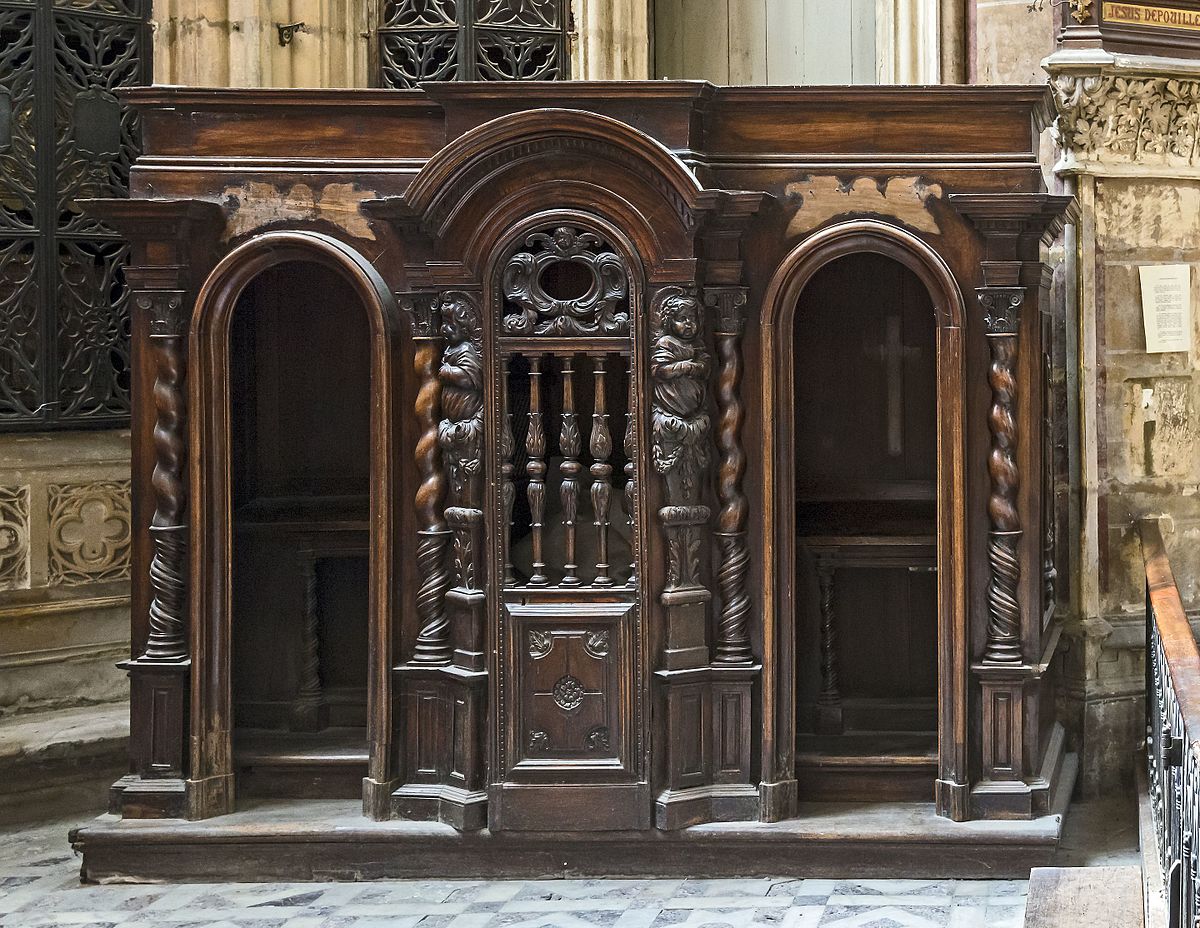
Ah yes, the suicide booths. Well they will look like this:

confessional

New-look suicide booth (no longer required for its original purpose).

There have already been some comments from devoutly religious British politicians on the MIDA (“Make Ireland Dead Again”) plan. Theresa May thinks it’s a wonderful idea, but Jacob Rees-Mogg doesn’t. Still, if MIDA is a success, then the United Kingdom is certain to follow suit.


Posted in Uncategorized | 3 Comments