At a societal level, the Christian and materialist philosophies propose strikingly differing visions of the ideal state and its relation to the human person. The Christian is concerned with society as composed of individuals, while the materialist with society as a mass of humanity in which the individual looses his importance.

Two ways of life


THE CATHOLIC THING

In the aftermath of the Second World War, an Oxford-based scientist wrote a short and moving book examining the truths of the Christian faith in a “scientific way.” The work is little known now, but the ideas explored in Frank Sherwood Taylor’s Two Ways of Life are remarkably relevant to our present situation in the post-Christian West.

Taylor examines two ways of life – the Christian and the Materialist – by asking what the discernible impact of each philosophy is upon the individual and society. A simple approach, admittedly, but one that can shed light on issues in every age, and on the truths of the Faith. As Christ himself said, “ye shall know them by their fruits.”

Our interior life impacts everything and everyone. The Christian knows the purpose of his life: To serve God, and to save his soul. As guides along this path, he has the life and teachings of Jesus, the wisdom and insights of Scripture, and the teaching authority of the Church. His whole life is marked by various loves, which come, in Dante’s words, from the “Love that moves the sun and the other stars.” He desires to imitate Our Lord, an aim gloriously high.

In the Christian framework, a child is welcomed into the world as a gift, not a burden. He is baptized as a creature of God. He soon learns of Christ and the momentous nature of the Incarnation.

He is taught that you cannot serve both God and Mammon, that power in this life should not concern him, and that suffering – should it come – is to be welcomed as means of entering into the divine life. He sees the beauty of creation in all things. He tries to put love at the center of his life. If he fails in this, he seeks forgiveness. When death comes it is not the end. He prays that he will enter beatitude.

The materialist, on the other hand, must start from a position of purposelessness. Free will is impossible. Everything happens by necessity, and the idea of choice is a sad illusion. How does someone live who has rejected purpose in the cosmos?

He fills his life with various aims and concerns. Anything to avoid pondering the meaninglessness of the void. In Sherwood Taylor’s words, “those who reject a belief in the spirit must strive to forget the darkness of the endless grave by playing with their toys.” What are these toys? Money, pleasure, power – the usual diversions.

Of course, in themselves such things can only result in emptiness. While the Christian knows that “Thou hast made us for thyself, O Lord, and our heart is restless until it finds its rest in thee,” the materialist is aware of a gnawing internal emptiness. Sherwood Taylor quotes Goethe’s Faust to illustrate this point:

I feel, indeed, that I have made the treasure
Of human thought and knowledge mine, in vain:
And if I now sit down in restful leisure
No fount of newer strength is in my brain,
I am no hair’s-breadth more in height,
Nor nearer to the Infinite.

Many materialists do, of course, seek the good – often, however, through forms of altruism that stem from the dying embers of Christian societies. Not many materialists seem to publicly support pre-Christian attitudes toward the poor and disabled, for example. A rational defense of materialistic altruism is a very difficult undertaking.

In the materialist framework, a child is fortunate when allowed to emerge from the womb. If he does, he soon imbibes the currently fashionable morality, which lacks an objective basis. He is told that actions are simply “clearly right or wrong.” He comes to understand that unless he commits murder he is probably a “good person,” whatever that means.

He learns that prosperity is something of the highest importance, that sex is separable from love and marriage, and that he lives in a time of great freedom and progress. He aims to fill his life with comforts. At the end, he faces the void alone. He is simply a mere “bundle of atoms,” of no importance in a vast and uncaring universe. Is it any wonder that the elderly and the “economically useless” are cast off in our progressive societies?

At a societal level, the Christian and materialist philosophies propose strikingly differing visions of the ideal state and its relation to the human person. Sherwood Taylor notes that the Christian is concerned with society as composed of individuals, while the materialist with society as a mass.  The Christian is called to love his neighbor as himself, his “neighbor” being whoever he encounters. He knows he is responsible before God for his actions towards others, especially the poor and the downtrodden. “For I was hungry, and you gave me to eat.” The contemporary materialist, meanwhile, is concerned with abstract concepts and interest groups. Hence, the growth of particular “communities” and “identities,” which require social intervention and the intrusion of the state into every facet of life.

Human beings become mere numbers for the state bureaucracy to meddle with in its quest for an earthly utopia. In this schema, the individual exists for the benefit of the state. The state becomes a new God, with politics the religion. Political opponents are evil incarnate, and faux moral outrage displaces sane political discourse.

Sherwood Taylor’s analysis is incredibly powerful. Of course, the impact of this or that philosophy of life does not give us complete certainty over its truthfulness. It can, however, indicate a great deal. Since Sherwood Taylor’s time we have seen great moral change in the West. The casting off of the Christian moral code has not resulted in an emancipated, rational populace. On the contrary, it has resulted in a terrible and sad confusion in both public and private life. What does this tell us?


*Image: Jesus Ministered to by Angels by J.J. Tissot, c. 1890 [Brooklyn Museum]

Christopher Akers

Christopher Akers

Christopher Akers is a writer living in Scotland and is a graduate of Edinburgh University. He is currently a graduate student in Literature and Arts at Oxford University, and his work has appeared in National Review and Reaction.

Posted in Uncategorized | 1 Comment

WHY DOES THE LEFT LOVE AND PROMOTE THE CULTURE OF DEATH???

Yes, Communism Is Definitely Idealist, And That’s Why It Leads To Mass Murder

Why do intellectuals still cling to Marxism? The answer is that Communism is ‘idealist’ in the strict philosophical sense. And that’s not a good thing.
Robert Tracinski

By

[ABYSSUM]

I’ve been puzzling for some time over the continuing hold of Communism on the minds of America’s intellectuals. How could a system fail so completely for so long, in so many different variations, leaving a trail of death and suffering in its wake—and still be regarded as “idealistic”?

The answer is that Communism is “idealist” in the strict philosophical sense. And that’s not a good thing.

I realized this while reading the latest paean to Marx in the New York Times, which has spent the last year struggling mightily to rehabilitate Communism. Previously, I had tried to explain why the Communist dream won’t die by looking at its moral appeal—the desperate urge to cling to the ideal of collectivized selflessness, even when it turns out to look like gulags and starvation. But this latest entry reveals an even deeper explanation: the refusal to adjust one’s ideas in response to reality is itself a crucial foundation of Communism.

I called this new piece a paean to Karl Marx, and that’s not an exaggeration. The title is: “Happy Birthday, Karl Marx. You Were Right!” You see, this Saturday marks 200 years since Marx was born. So Jason Barker, an associate professor of philosophy at a university in South Korea—he might want to take a stroll farther north—congratulates Marx on getting everything so amazingly right.

On May 5, 1818, in the southern German town of Trier, in the picturesque wine-growing region of the Moselle Valley, Karl Marx was born….

Today his legacy would appear to be alive and well. Since the turn of the millennium countless books have appeared, from scholarly works to popular biographies, broadly endorsing Marx’s reading of capitalism and its enduring relevance to our neoliberal age.

In 2002, the French philosopher Alain Badiou declared at a conference I attended in London that Marx had become the philosopher of the middle class. What did he mean? I believe he meant that educated liberal opinion is today more or less unanimous in its agreement that Marx’s basic thesis—that capitalism is driven by a deeply divisive class struggle in which the ruling-class minority appropriates the surplus labor of the working-class majority as profit—is correct.

Here, as I understand it, is the timeline. In 1818, Marx is born. In 2002, a French philosopher declares him to be right. Did, um, anything relevant happen in between those dates? Barker’s answer, incredibly, is “no.” The following is the entirety of what he has to say about the history of Communism in the 20th Century.

The idea of the classless and stateless society would come to define both Marx’s and Engels’s idea of communism, and of course the subsequent and troubled history of the Communist ‘states’ (ironically enough!) that materialized during the 20th century. There is still a great deal to be learned from their disasters, but their philosophical relevance remains doubtful, to say the least.

In the twentieth century, we had states that called themselves “Marxist,” based their economic systems on Marx’s teaching, and made generations of schoolchildren memorize Marx’s writings. Then those systems failed spectacularly, both as economies and as societies compatible with human life and happiness.

They’re still failing, with people starving and in concentration camps today, this moment, as you read this. But move along, nothing to see here. A hundred years of death and destruction has “doubtful philosophical relevance.”

It’s philosophers like this who have doubtful relevance. By “philosophers like this,” I mean something very specific, and ironically it is explained by Barker himself. He describes Marx’s encounter with previous German philosophers: “Marx found that the late-18th-century idealisms of Immanuel Kant and Johann Gottlieb Fichte that so dominated philosophical thinking in the early 19th century prioritized thinking itself—so much so that reality could be inferred through intellectual reasoning.”

When it is used to describe a school of philosophy, “idealism” does not mean a passionate commitment to a moral ideal. It means something closer to “idea-ism”: the notion that ideas take precedence over facts, that ideas come first and reality has to adjust to match them. Can there be any more thorough statement of “idealism,” in this sense, than declaring the bloody ideological conflicts of the twentieth century “philosophically irrelevant” because you don’t want to doubt Marx’s theory?

This is the hallmark of the defense of Communism—and of the contemporary Left as a whole. Western intellectuals strenuously denied and covered up the famine in Ukraine and Stalin’s rein of terror, and up to the very end, they outdid Baghdad Bob in their insistence that things were going just fine under Communism, and the Soviets were going to surpass us any day. Today, they are so committed to philosophical idealism that they will perform radical surgery to mutilate a person’s body to match his or her delusion of what it ought to be—and instead of calling it “reassignment,” they call it “confirmation.” You see, the idea in the person’s head determines his true physical reality, not the other way around.

This attitude toward facts explains most of the rest of Barker’s article. Here, for example, is the only fact he chooses to cite about the 200 year history of industrial capitalism: “according to Oxfam, 82 percent of the global wealth generated in 2017 went to the world’s richest 1 percent.” In the real world, global capitalism has produced unprecedented wealth for the masses and is a generation away from eliminating extreme poverty.

He also cites Marx’s prediction that educated professionals—a more entrenched class today than ever before—would be reduced to commoditized wage laborers. His proof for this? Recent advances in artificial intelligence that will someday produce robot doctors. So sure, if we skip over 200 years, straight through the present, and on to a science-fiction fantasy of the future, then Marx is totally proven right. Like I said, ideas in your head come first, and reality drags on behind.

Barker tries to tell us that Marx was “the complete opposite” of the philosophical idealists because he claimed that “It was the material world that determined all thinking.” But his doesn’t mean what you might think it means. It doesn’t mean that facts, observation, and evidence are the proper basis for ideas. Instead, it means that all ideas are just excuses or rationalizations for the existing relations of economic power.

This makes Marxist philosophy even more impervious to evidence, because any arguments against Marxism can be dismissed out of hand as attempts to impose the repressive thinking that perpetuates the power of the ruling class. In fact, to speak or argue against leftist ideas is itself a form of oppression. This is how Marxist theory became the most rigid and hidebound dogma of all, completely insulated from the impact of experience, analysis, criticism, and a century of historical evidence. That is how we get articles like Barker’s.

But at least he does us a service by boasting that this Marxist approach is the basis for the entire contemporary left. Now that Marxism has been expanded to cover “racial and sexual oppression,” the only solution to those problems is Marxist revolution: “enlightened or rational thinking is not enough, since the norms of thinking are already skewed by the structures of male privilege and social hierarchy, even down to the language we use.” This is why speakers with opposing views have to be disinvited or physically blocked from college campuses, purged from newspapers and magazines, flagged and filtered out by social media.

This explains the Marx-loving intellectuals’ stubborn imperviousness to evidence, their compulsion to place the idea of Marxism above the realm of facts and argument. But it also reveals something more ominous. It gives the lie to the excuse that totalitarianism is a distortion of Marxism. Absolute intolerance for ideological disagreement is baked right in to the deepest foundations of Marx’s theory, making the continued popularity of that theory deadly to the future of free speech.

This fact is definitely philosophically relevant.

Robert Tracinski is a senior writer for The Federalist. His work can also be found at The Tracinski Letter.

Posted in Uncategorized | 2 Comments

YOU DO NOT HAVE TO FORK OVER CASH TO OBTAIN THIS DRUG, IT IS FREE (BUT ULTIMATELY IT CAN COST YOU YOUR LIFE, FIRST YOUR MORAL LIFE AND THEN YOUR ETERNAL LIFE. WHAT IS THIS DRUG? PORNOGRAPHY !!!

(Pixabay)
MAY. 2, 2018
Secular Society Increasingly Admits Risks of Porn
Church continues to sound the alarm amid epidemic.
THE NATIONAL CATHOLIC REGISTER

Florida House Declares Porn a Public-Health Risk.” 

Royals Hold Anti-Porn Seminar for Players at Spring Training.

Recent headlines have put the issue of pornography more visibly in the public square.

The Church, of course, has always been clear that pornography and its related sins (masturbation, infidelity, money laundering, human trafficking, etc.) is gravely wrong. Not only does it demean the women (and men, and, horribly, children) who are the “porn stars,” it also wreaks havoc on the souls (and minds and bodies) of those who use pornography.

Increasingly, however, secular voices are taking up the same position.

Why is this happening, and why now?

According to former Florida Rep. Ross Spano, R-Dover, “As porn becomes more prolific and mainstream, our society becomes more and more desensitized to violence. This can also be linked to increased degradation of women and a rise in sexual violence, including sex trafficking, abuse of minors, human trafficking, domestic violence and more violent relationships. Children are being exposed to this ‘new normal,’ which can often lead to violence later in life.”

The Florida House made its declaration against porn in February, supported by research Spano presented to its Health and Human Services Committee in January.

“We have to start the discussion,” Spano told the Register.

This same desire to start the “discussion” is at the heart of the organization that presented a seminar to the Kansas City Royals baseball club.

Fight the New Drug was started in 2009 by a group of college students who “saw a need for conversation around this topic — especially among youth growing up in the digital age,” explained Natale McAneney, the group’s executive director.

She said the group’s presentation to the Royals was similar to any other presentation the staff gives for any other organization, such as schools or parent groups.

“As an organization, our goal is to educate and raise awareness about the harmful effects of pornography using science, facts and personal accounts,” McAneney said. “We typically approach this topic from the angle of how pornography can harm individuals (brain), relationships (heart) and society (world).”


Research Findings

McAneney pointed out the growing body of research showing that porn is a real problem.

“Although some individuals can be at greater risks to struggle with habits like pornography than others, due to their circumstances, the harmful effects of pornography do not discriminate based on diversifying factors,” she warned. “They can impact anyone.”

Fight the New Drug wants to help people make “educated and informed” decisions on porn, pointing them to what she described as “a vast amount of research proving that pornography can be addictive — although it’s important to note that not all individuals who struggle with pornography are addicts — and that it can impact relationships in a number of ways. Pornography also fuels the demand for sex-trafficking.”

For someone who works against pornography from within the Christian context, none of this is surprising.

Amanda Zurface, the Catholic campaign coordinator for Covenant Eyes, an accountability software company, said it boils down to this: “We live in an oversexualized culture. The focus is frequently pleasure. When pleasure is threatened or impeded for whatever reason, this gets people’s attention.”

And pornography, she explained, ultimately, is a threat to pleasure.

“The secular world hasn’t necessarily woken up to the topic of porn because they’ve all of a sudden formed a conscience and are finding pornography morally objectionable. Rather, many have started to realize that while porn is pleasurable, it can and does harm the greater pleasure that can come with ‘real sex.’”

Zurface noted how frequent viewing of pornography, especially internet pornography, overstimulates and desensitizes the user’s brain to what typically would be sexually arousing experiences, sometimes to the point of impairing a person’s physical capacity to engage in sexual relations with a partner.


The Church’s Vision

The Church’s fuller vision of human sexuality — articulated in the Catechism of the Catholic Church’s discussion of the Sixth Commandment — explains how the human person is a soul-body unity, and what is bad for the soul can’t be good for the body.

That’s why the secular opposition to porn will still be faced with inherent contradictions.

For example, Zurface noted how the #MeToo movement was “started by the secular culture to draw attention to sexual harassment and abuse.”

“The connection that hasn’t been made by the movement is that this abuse is fueled by porn,” she said. “Society needs to understand that you can’t have millions of men watching women getting abused and enjoying it in porn videos suddenly develop respect for women. It doesn’t work like that.”

Thus, while Zurface recognizes the benefits of “public support” for the morally correct position, she notes the increased need in Christian ministry that arises along with increased anti-porn support in the public sphere.

“Thanks to the secular culture, the topic is capturing people’s attention, and we have an opportunity to call on individuals, marriages and families to actually think about the negative consequences of porn for maybe the first time,” she said, adding that the Church might also be able to benefit from the support groups and therapists being trained on this topic.

“However, at the end of the day,” she warned, “the Church and secular society agree that pornography is harmful for different reasons.”

“If we don’t approach the issue of porn by explaining how it contradicts the vocation of man and woman to love, we won’t ultimately heal this wound,” she said. “We may overcome some of the effects of porn, but not the root of it all — society’s inability to really live true love.”

Register correspondent Kathleen Naab writes from Texas.

Posted in Uncategorized | Comments Off on YOU DO NOT HAVE TO FORK OVER CASH TO OBTAIN THIS DRUG, IT IS FREE (BUT ULTIMATELY IT CAN COST YOU YOUR LIFE, FIRST YOUR MORAL LIFE AND THEN YOUR ETERNAL LIFE. WHAT IS THIS DRUG? PORNOGRAPHY !!!

HERE IS A PEEK INTO THE SWAMP

Judicial
Watch' />
Soros-Funded Group Launches App to Help Illegal Aliens Avoid Feds

An open borders group that has benefitted from U.S. taxpayer dollars and is funded by leftwing billionaire George Soros launched a smartphone application to help illegal immigrants avoid federal authorities.

The app, Notifica (Notify), is described in a Laredo, Texas news article as a tool to protect immigrants living in the U.S. illegally by utilizing high tech and online social communications. With the click of a button, illegal aliens can alert family, friends and attorneys of encounters with federal authorities. “Immigration agents knocking at the door?” the news story asks. “Now, there’s an app for that, too.”

The group behind the app is called United We Dream, which describes itself as the country’s largest immigrant youth-led community. The nonprofit has more than 400,000 members nationwide and claims to “embrace the common struggle of all people of color and stand up against racism, colonialism, colorism, and xenophobia.” Among its key projects is winning protections and rights for illegal immigrants, defending against deportation, obtaining education for illegal immigrants and acquiring “justice and liberation” for undocumented LGBT “immigrants and allies.”

Illegal aliens encounter lots of discrimination, which creates a lot of fear, according to United We Dream. “We empower people to develop their leadership, their organizing skills, and to develop our own campaigns to fight for justice and dignity for immigrants and all people,” United We Dream states on its website, adding that this is achieved through immigrant youth-led campaigns at the local, state, and federal level.

United We Dream started as a project of the National Immigration Law Center (NILC), according to records obtained by Judicial Watch. Between 2008 and 2010, NILC received $206,453 in U.S. government grants, the records show. The project funded was for “immigration-related employment discrimination public education.” Headquartered in Los Angeles, NILC was established in 1979 and is dedicated to “defending and advancing the rights of immigrants with low income.”

The organization, which also has offices in Washington D.C. and Berkeley, California claims to have played a leadership role in spearheading Barack Obama’s amnesty program known as Deferred Action for Childhood Arrivals (DACA), which has shielded hundreds of thousands of illegal aliens from deportation. “Ultimately, NILC’s goals are centered on promoting the full integration of all immigrants into U.S. society,” according to its website.

Both the NILC and its offshoot, United We Dream, get big bucks from Soros’ Open Society Foundations (OSF). In fact, both nonprofits list OSF as a key financial backer. In the United States Soros groups have pushed a radical agenda that includes promoting an open border with Mexico and fighting immigration enforcement efforts, fomenting racial disharmony by funding anti-capitalist black separationist organizations, financing the Black Lives Matter movement and other groups involved in the Ferguson Missouri riots, weakening the integrity of the nation’s electoral systems, opposing U.S. counterterrorism efforts and eroding 2nd Amendment protections.

OSF has also funded a liberal think-tank headed by former Hillary Clinton campaign chairman John Podesta and the scandal-ridden activist group Association of Community Organizations for Reform Now (ACORN), so corrupt that Congress banned it from receiving federal funding.

Incredibly, the U.S. government uses taxpayer dollars to support Soros’ radical globalist agenda abroad. As part of an ongoing investigation, Judicial Watch has exposed several collaborative efforts between Uncle Sam and Soros in other countries.

Just last week Judicial Watch published a special investigative report that exposes in detail the connection between U.S.-funded entities and Soros’ OSF to further the Hungarian philanthropist’s efforts in Guatemala. The goal is to advance a radical globalist agenda through “lawfare” and political subversion, the report shows.

Much like in the United States, OSF programs in Guatemala include funding liberal media outlets, supporting global politicians, advocating for open borders, fomenting public discord and influencing academic institutions.

Last year Judicial Watch exposed a joint effort between the U.S. government and Soros to destabilize the democratically elected, center-right government in Macedonia. Records obtained by Judicial Watch in that investigation show that the U.S. Ambassador to Macedonia worked behind the scenes with OSF to funnel large sums of American dollars for the cause, constituting an interference of the U.S. Ambassador in domestic political affairs in violation of the Vienna Convention on Diplomatic Relations.

The cash—about $5 million—flowed through the State Department and USAID.

Posted in Uncategorized | 1 Comment

IS ENGLAND CURSED ???

Vox Cantoris


Dear England

Posted: 29 Apr 2018 05:22 AM PDT

Image result for our lady of walsingham statue

Dear England,

What a week you’ve had. At the same time as your new Royal baby was born, you invoked a fascist ideology to deny the rights of the parent of another to keep theirs alive. Little Alfie Evans is dead, yet, he lives this very day. As a baptized child, long before the age of reason, he was dead in this life and alive in the Lord a moment later. A friend on Facebook wrote a post yesterday with the picture of Terri Shiavo. You remember her, right? She is the woman who was the canary in the coal mine in the United States over a decade ago put to death by a corrupt judge and medical system which has gone awry. She wrote:

Welcome to the Kingdom, Alfie. Charlie’s over there with your nanny. Her name’s Terry. She knows you better than you think. And she’ll keep you warm and happy till Mum and Dad get here. Come in and meet Abba, Father — and He shall wipe away every tear, and Death shall have no dominion.

Think not that this writer hates England or the English people. As a Canadian, that would be impossible. But what England has become in the last half-century reveals the fraud which it had become for over 500 years.

In my fantasies about living in another time, that time would be in medieval England, hardly the Dark Ages. A time when the whole land was Catholic. When the King was Catholic. A time when the monasteries developed a social and economic system that was inherently Catholic. When people’s lives were governed by Embers and Rogations and Feasts of Saints. A time and a land where Jesus Christ ruled people’s lives because they loved Him and Mary, His mother, was always their queen.

All of this changed when their own wretched “Pol Pot” or Henry VIII, as one commenter put it came on the scene. I would argue it was a generation earlier when his father murdered the last Plantagenet, Richard III, the last truly Catholic King of England. The Tudor’s were a satanic force. A pathetic, immoral blood-thirsty family of usurpers. Henry VII, Henry VIII and his bastards, Edward VI and Elizabeth I. The real and rightful heir, Mary, was tainted in history as “bloody” for protecting her rule and attempting a restoration. How just that a filthy brutish devil who would worry so much about his dynasty should have that dynasty end only a generation later. A murderous regime that tortured and executed thousands of its own people who only wished to follow the faith of their fathers. Thomas More, and John Fisher. Margaret Clitherow, Edmund Campion and Robert Southwell and Anne Line. Priest and Bishops, Augustinians, Franciscans and Jesuits when they actually had faith. Laymen and women including Earl’s Lady’s Knights and commoners.

If this were to happen today, the modern world would consider it a religious genocide. England was no better than the Iran of today or the maniacal monsters of ISIS, or the fascist regime of Saudi Arabia. This was their own Reign of Terror,  The French got it from somewhere. England’s leaders are no better than Assad or Hussein.

After that, England became worse. It profited from the misery of others as it enslaved Africans and sold them as chattel. It beggared nations as it raped their resources. The sun never set on its empire, yet it was an empire of evil and pillage. It could have been an empire of grace. The whole course of world history changed that day when Richard III was murdered. England would have remained Catholic, the protestant revolution would have no doubt been isolated to central Europe, it would not have been taken around the world as it was by England. North America would be fully Catholic, much of Oceana as well. There would have been no pilgrims to Plymouth Rock. There would have been Catholic immigrants.

The “Church” of England is a fraud. No bishop is real. No priest is real. The bread is bread. It is a corrupt mockery of the real Church. Anglicanism is a putrid abomination dressed up with pretty music and regal ceremony.

England went on to pass over more than 50 Catholics to find a heretic apostate to sit on its throne. They would take a German heretic rather than a Catholic Englishman. It engaged in a family feud that butchered millions in the mud of Europe and then extracted such penalties from the German perpetrators that it should have been obvious that a greater war of evil would come from it.

The Windsors are a Germanic family of frauds. Their hold on the Throne of England is as illegitimate as Henry’s bastards and as false as the Anglican “Church.” The both deserve each other. The English people have been duped to think that their church is the Church and their queen is their Queen.

England has become a fascist socialist swamp. A pathetic shadow of its once great potential. It’s Queen, who purports to love Jesus as in her last Christmas message must see her death coming soon. She is close to it, no doubt. Yet, she signed into law the murderous abortion bill that has murdered 7,000,000 of her children. She sat by and did not even use moral suasion to prevent the deaths of Charlie Gard and Alfie Evans. Its people have generally become cowards and selfish.

Charlie and Alfie may have died, regardless. In fact, the doctors may have been correct about their diagnosis and the prognosis.

The issue then and now is the right of the parents to determine the care, to seek other opinions and other options.

England is now cursed. It cursed itself more than a half-millennium ago and it is being punished for its actions. In its zeal of hatred for Christ, it has embraced within it the tool which will destroy it, Islam.

To my English readers, God bless you and may Mary keep you. Find your courage, your soul, fight and reclaim your land for Christ, for Mary.

England is dying, it is almost dead, but it can be saved and it is a lesson for the rest of us in Canada, the United States, Australia and elsewhere.

Posted in Uncategorized | 2 Comments

HERE IS YOUR LITTLE DAILY DOSE OF SATIRE TO HELP YOU COPE WITH THE INSANITY OF THE BRITISH BISHOPS WHO HAVE NO OBJECTION TO EUTHANASIA FOR CHILDREN

Eccles and Bosco is saved


Eccles explains it to the bishops

Posted: 01 May 2018 06:50 AM PDT

All right, in you come. Nichols and McMahon at the front please, you’ve been getting very bad marks lately. Your auxiliaries next to you. The rest anywhere. Moth! Keep away from that candle flame, you’ll burn yourself. No laughing, Stock. Egan, you’re a bright lad, but try and sit away from the bad bishops, as they’re only trying to lead you astray.Bash Street Kids

The bishops are ready to learn.

Now, Pope Francis has asked me to explain some Catholic doctrine about children, the family, euthanasia, and so on. He was horrified that you seem to be so weak on Catholic teaching. Even Parolin was shocked.

Now, boys, what do we do when a child is seriously ill? Starve him to death, take him somewhere where he can be looked after, go to law to stop the parents having a say in what happens to him, ignore him completely? Any suggestions?

Smith, don’t do that! Burns, stop scratching. Arnold, put that away!

All right, here’s an easier one. Who is most likely to give love and care to a sick child? His parents, a judge with a strong anti-Catholic prejudice, a doctor who wants to withdraw food and drink?

Yes, these are difficult ethical issues, at least for a bishop with the intelligence of a goldfish.

goldfish

Very offended at being mistaken for a Catholic bishop.

All right, Nichols, I know what you’re going to say. The Holy Father is trying to seek political capital – pushing pro-life and family concerns onto the agenda – rather than curling up on the floor and letting Alder Hey tickle his tummy. Well, take it up with him.


Posted in Uncategorized | 1 Comment

THE MORE I HEAR AND READ ABOUT PREPARATIONS FOR THE OCTOBER 2018 SYNOD OF BISHOPS ON YOUNG PEOPLE, THE MORE I FEAR A REPETITION OF THE RIGGED SYNOD THAT GAVE US AMORIS LAETITIA. IF YOU HAVE THE COURAGE AND THE TIME WATCH THIS VIDEO


Posted in Uncategorized | 1 Comment

SHAME ON ARCHBISHOP MALCOM McMAHON OF LIVERPOOL AND ARCHBISHOP PAGLIA OF THE VATICAN ACADEMY FOR LIFE FOR THEIR HYPOCRISY IN THE ALFIE EVANS AFFAIR.

56
Shares

Facebook56TwitterEmailPinterestPocketGoogle+

Tosatti: Reflections on the Church’s Role in the Alfie Evans Case

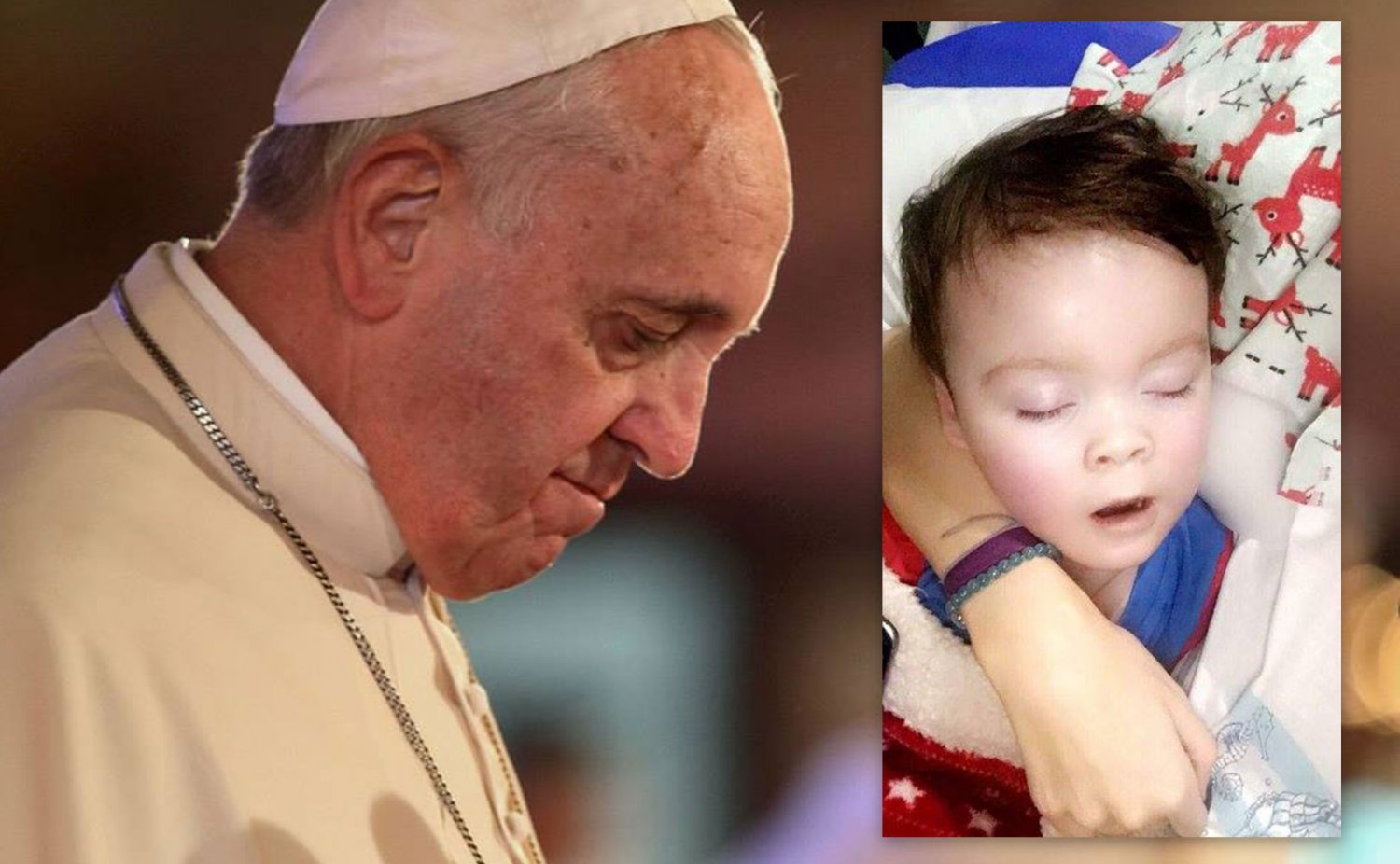
Editor’s note: we received word over the past weekend that little Alfie Evans had lost his fight for life, when he died in the early hours of Saturday, April 28. There is much to consider as we evaluate how this case progressed, and what precedent it sets for the future. Today, we present the thoughts of veteran Vatican journalist Marco Tosatti, who has watched the story closely from Italy, and has paid particular attention to the interventions made by various Catholic clerics, including the pope. 


I have tried to follow closely the developments in recent weeks of the dramatic story of Alfie Evans, and particularly from the point of view of the Church. As my readers know, I am often critical of the reigning Pontiff. I hope they will believe me now when I say that I think that the Pope has not done badly with the Alfie Evans case; he did what he could. His reception of Tom Evans, his promise of support, his push through the Secretariat of State and the Bambino Gesù Hospital to get some kind of action both from the Italian government and the hospital, his effort to free the child from the prison hospital where he died, are all actions that should be recognized, even more so when we consider that the local bishops in England and the Pontifical Academy for Life have all seemed very lukewarm and uncertain in this affair.

In an interview with an Italian newspaper on March 9, 2018,the President of the Pontifical Academy for Life, Msgr. Paglia, spoke of therapeutic obstinacy:

Above all the drama of the parents should be held in high esteem and I wish to express my complete closeness, also in prayer, for them and for Alfie. For this we need to pay close attention to the terms we use. They need to be correct and respectful: talk about “suppression” is neither fair nor respectful. In fact, if the repeated medical consultations truly showed that there is not a valid treatment in a situation where the little patient is located, the decision was not meant to shorten his life, but to suspend a situation of overzealous treatment.

Paglia changed his position after the Pope’s words of 15 April in defense of Alfie in his Angelus reflection:

The case of little Alfie Evans of Liverpool, his young parents Tom and Kate and all the people who, in these long and painful months of illness have worked in different ways for the good of this child, has been shown these days in all its terrible tragedy.

I pray for him and for the people involved, and I invite everyone to unite with this intention before the Lord of life. I strongly hope that dialogue and cooperation can be reopened between the parents, understandably upset by the pain, and the authorities of the hospital where Alfie has been treated until now, so that together they may seek the integral good of Alfie, and that the care of his life is not reduced to a legal dispute. Alfie cannot be abandoned, Alfie must be loved and so also his parents, to the fullest extent.

A subsequent statement on April 22 seemed equally ambiguous:

The dramatic story of Alfie Evans continues to arouse deep emotional resonance. Considering the developments which we are witnessing we cannot escape feeling a strong discomfort, mainly due to the sense that we are at an impasse where we all risk to be defeated. Given the still-problematic solutions that lie ahead in the evolution of the circumstances, we consider it important that we work together as collaboratively as possible. Only in the search for an agreement between all – an alliance of love between parents, family members and health care providers – can we find the best solution to help baby Alfie now in this dramatic moment of his life.

It is noteworthy that at the same time other bishops and Catholic specialists criticized the behavior of the hospital and were decidedly on the family’s side.

The Pope has spoken on several occasions. A first tweet by the Pope, on April 4, seemed to be in line with Msgr. Paglia:

It is my sincere hope that everything necessary may be done in order to continue compassionately accompanying little Alfie Evans, and that the deep suffering of his parents may be heard. I am praying for Alfie, for his family and for all who are involved.”

But on April 15, at the Angelus, he said,

I entrust to your prayer people such as Vincent Lambert, in France, little Alfie Evans in England, and others in different countries, who live, sometimes for a long time, in a state of serious infirmity, assisted medically for basic needs. These are delicate, very painful and complex situations. We pray that every patient is always respected in his dignity and treated in a way that is appropriate to his condition, and with the agreement of family members, doctors and other health professionals, with great respect for life.

Then there was the trip by Tom Evans in Rome, and the promise of help, and the Pope’s Blessing, and the Secretary of State and the Bambino Gesù Hospital began to work together. The Pope, on April 23, the day on which Alder Hey Hospital suspended Alfie’s life support at 10:17 P.M., wrote in a new tweet:

Moved by the prayers and the wide solidarity in favor of the little Alfie Evans, I renew my appeal that his parents suffering will be heard and that they will be granted their wish to try new treatment.

It was a clear request to allow Alfie to come to Italy.

Finally, the last tweet was after the child’s death:

I am deeply moved by the death of little Alfie. Today I pray especially for his parents, as God the Father receives him in his tender embrace.

The Diocese of Liverpool and the Bishops’ Conference of England and Wales behaved in the most disconcerting away about this whole matter. I think it would be interesting to know what links may exist between the Archbishop of Liverpool, Malcolm McMahon, and the Alder Hey Hospital. In all the official statements, including that after death, McMahon’s main concern seems to be to defend the hospital. I hope some English colleague could delve into this track.

A first statement of the Bishops of England and Wales, inspired by McMahon, said:

Our hearts go out to the parents of Alfie Evans and our prayers are for him and them trying to do everything they can for the care of their son. We affirm our belief that everyone who took harrowing decisions regarding the care of Alfie Evans acted with integrity and for the sake of Alfie, as they see it. The professionalism and care for seriously ill children demonstrated at Alder Hey Hospital should be recognized and affirmed. We know that public criticisms recently posted about their work are unfounded. The attention of our staff and Chaplaincy was provided to the family in a consistent manner. Bishop Tom Williams, Auxiliary Bishop of Liverpool, who worked as a hospital chaplain for many years, was involved with the chaplaincy team at Alder Hey, offering support to physicians and staff. He did not meet with the parents, who, of course, are not Catholics.

Tom and Alfie were baptized Catholics. The family said they never saw the  chaplains. Not only that: from the news reports of La Nuova Bussola Quotidiana one can see there was great difficulty in finding a local priest who would deal with Alfie. So much so that it was necessary to find an Italian priest who lived in London to come to Liverpool. And so in the last days of life of Alfie was rejected by the bishops, leaving the family without spiritual support.

Therefore, this statement of Bishop Williams contains two untrue things: that the Evans are not Catholics, and that chaplains have assisted them. Archbishop McMahon repeated the second thing – which was not true – to the Pope, when he made a lightning visit to Rome, between Tuesday and Wednesday [April 24 and 25], to meet the Pope briefly after the general audience. So writes the Tablet:

The Archbishop of Liverpool has told Pope Francis that Catholics in Liverpool are “heartbroken” by the Alfie Evans affair while telling The Tablet that the medical and chaplaincy team at Alder Hey hospital have been doing everything that is “possible” to help the seriously ill toddler. “I saw the Holy Father after the Wednesday General audience and we talked about Alfie. I was struck by his compassionate attitude to both Alfie and his parents, and he promised me he is continuing to pray for them,” the archbishop said.

And finally on 28 April, following the death of Alfie Evans, Archbishop Malcolm McMahon OP, Archbishop of Liverpool, made the following statement on behalf of the Catholic Bishops’ Conference of England and Wales:

I would like to express my deepest sympathy at this moment of loss to Tom and Kate as we hold little Alfie in our prayers. All who have been touched by the story of this little boy’s heroic struggle for life will feel this loss deeply. But as a Christian Alfie has the promises of God, who is love, to welcome him into his heavenly home. [Editor’s note: Alfie was finally recognized as a Christian, and maybe as a Catholic, after all…] Although the past few weeks have been difficult with much activity on social media, we must recognize that all who have played a part in Alfie’s life have wanted to act for his good as they see it. Above all, we must thank Tom and Kate for their unstinting love of their son, and the staff at Alder Hey Hospital for their professional care of Alfie. Now it is time for us to give Tom and Kate space to grieve their son’s death and offer our prayers for him and consolation for all.

And lastly, there was an interview given to Vatican Insider by the Secretary of State Cardinal Pietro Parolin. It was mainly on the Korea situation, but the last two questions were about Alfie. They show clearly a difference of sensibility between Parolin and Paglia, and the English and Welsh Bishops:

Vatican Insider: One last question: what do you think about little Alfie Evans’s case?

Parolin: It caused me an enormous sadness: in the face of a willingness, so openly expressed, so many times, and with such great commitment of means – the doctors of our Bambino Gesù Hospital went three times to Liverpool – there was a refusal to allow Alfie to be taken to Italy. That is incomprehensible. This was what struck me the most, it upset me. I cannot understand why. Or perhaps there is a reason, and it follows a terrible logic. The Pope and the Holy See have tried to do everything possible to help the family and to ensure that the child would be cared for during the course of his illness, despite the unfortunate prognosis.

Vatican Insider: The case sparked a heated debate.

Parolin: In these situations, everyone shouts, trying to pull water towards their mill. Now that the case is closed, and the media will forget about it quickly, we need to reflect quietly. These cases will happen again. All together, from different points of view, but also with the contribution of believers, we should try to give a truly human response to these situations, based on love for the person, respect for their dignity and unrepeatable uniqueness. We hope that it will be possible to do so, and that the discussion will not end without giving it some further thought, ready to be applied again once the next case occurs.

My personal opinion is that the behavior of the Archbishop of Liverpool in the case of Alfie Evans helped those who wanted to prevent the baby from receiving help elsewhere, and assisted in his murder, that the archbishop’s behavior was lacking and negligent, that his defense at all costs of Alder Hey Hospital is something that needs to be explained, and that perhaps an Apostolic visitation would be appropriate.

+++++++++++++++++++++++++++++++++++++++++++++++++++++++++++++++++++++++++++
Featured Image
Dorothy Cummings McLeanDorothy Cummings McLeanFollow Dorothy

NEWS

Alfie Evans was given 4 drugs just before he died: report

LIVERPOOL, May 1, 2018 (LifeSiteNews) – UK toddler Alfie Evans allegedly died within hours of receiving four different drugs from a nurse at Alder Hey hospital, Italian media is reporting. The information that Alfie was given four injections has also been obtained by LifeSiteNews from two different sources with connections to the Evans family.

Alfie Evans died in Liverpool’s Alder Hey children’s hospital on Saturday morning at 2:30 AM. According to Italian newspaper La Nuova Bussola Quotidiana, a nurse entered the child’s cubicle after his father Tom had been called aside and gave him four drugs. A source close to the family told LifeSiteNews that these were injections that were administered to Alfie after Tom had been summoned for an unusual middle-of-the-night meeting with the hospital. The child died two hours later.

It remains unclear why the alleged injections were given. The Evans family did not respond to LifeSiteNews’ request for comment.

Medical advisors to LifeSiteNews said they could not understand why the child would be given four separate drugs. One or two drugs could be explained as an attempt to sedate the child or administer painkillers, if he were in distress. Four, however, seemed to them mysterious. They recommend that an independent toxicology report be performed.

Alder Hey hospital doctors had previously conveyed to the Evans’ family in a legal document how they intended to use a drug cocktail that included Midazolam and Fentanyl as part of Alfie’s “end of life care plan.” Side effects of the drugs included respiratory depression. Tom Evans called it an “execution plan” for his son.

On the night of Monday, April 23, Alfie was suddenly removed from a ventilator and his life-supporting tubes. He had been on the ventilator for 15 months, and was unused to breathing on his own. He also had a lung infection, which would have required antibiotics to heal. Nevertheless, he managed to breathe independently, and continued to do so for more than 100 hours.

Tom Evans argued that the court order leading to Alfie’s extubation did not extend to depriving the child of oxygen and nutrition, and the child was permitted low levels of oxygen and, after 36 hours without nutrition, was fed.

La Nuova Bussola states that Alfie was given more life support in exchange for his father Tom’s promise not to speak any more to the press.

The day prior to Alfie’s death, Tom Evans read to the press outside the hospital what is now being called by many a “hostage letter.” In what appeared to be a forced statement, Tom read out a letter calling all the supporters of Alfie to go home and resume their lives. He thanked the hospital staff for their care of Alfie, even though just hours earlier he had attempted to have them charged with conspiracy to murderhis son. He also praised the hospital staff for their dignity and professionalism, even though the day before he said they were treating his son worse than an animal and felt like he was in a jail.

“To silence the press, the hospital promised Thomas more oxygen and more life-support,” Frigerio continued. “Two hours before death, [Alfie’s] oxygen saturation was at around 98, and Alfie’s heartbeat was around 160, so Thomas was convinced that he would be allowed to go home (as the hospital administration had told him on Friday afternoon).”

However, it is alleged that the child’s health declined rapidly after a nurse gave him four injections.

“Before he died, while Tom was away for a moment, leaving Kate [Alfie’s mother] half-asleep and another family member in the room, a nurse entered and explained that she would give the child four drugs (no-one knows which) to treat him,” Frigerio wrote.

She continued: “After about 30 minutes the [oxygen] saturation had fallen to 15. After two hours Alfie was dead.”

The  Nuova Bussola reporter, who was material in setting up an appointment between Tom Evans and Pope Francis, observed that she could not be sure that Alfie’s life ended only because he was removed from life-support.

++++++++++++++++++++++++++++++++++++++++++++++++++++++++++++++++++++++++++

EmailPinterestPocketGoogle+

Did Drugs Administered to Alfie Evans in His Final Hours Cause His Death?

The battle to save Alfie Evans carried a heavy emotional toll, and his death last Saturday has done little to lighten the burden. If anything, the sense of urgency has been replaced with one of outrage.

I can tell you the moment I connected with the story. I was sitting in my car outside a shop, waiting to go in. I had my phone in my hand, and checking my emails and notifications, came across a video of Alfie opening his eyes and looking around the room while sucking on a pacifier.

That’s when I realized that this little boy was very much alive, and that they were going to kill him anyway. I was suddenly overcome with grief, my eyes filling with tears. I found myself imagining being in Tom Evans’ place, fighting for one of my own sons. I broke down. Another video of Alfie and his father Tom did me in again today as I was working on this report. The idea that such a beautiful little child, clearly not “brain dead”, would be willfully killed by a medical and legal system against his parents wishes — all under the auspices of having the child’s best interests at heart — is a kind of monstrosity that just takes your breath way.

It is a staggering sort of hubris and cruelty.

Through the whole story, those pulling for Alfie’s survival suffered an overwhelming sense of powerlessness. There was nothing we could say, nothing we could do, to stop what was coming. No matter how loud I shouted, no matter what I wrote, that poor boy and his parents were tied to the tracks in front of a freight train with a full head of steam.

And we were forced to watch it run them over.

On Friday, April 26, Tom Evans read a conciliatory statement towards Alder Hey, thanking them, of all things, and asking everyone who was supporting the family to stop what they were doing and go home:

I wish to make a statement on behalf of myself and Kate.

Our lives have been turned upside down by the intense focus on Alfie and his situation.

Our little family, along with Alder Hey, has become the centre of attention for many people around the world and it has meant we have not been able to live our lives as we would like.

We are very grateful and we appreciate all the support we have received from around the world, including form our Italian and Polish supporters, who have dedicated their time and support to our incredible fight.

We would now ask you to return back to your everyday lives and allow myself, Kate and Alder Hey to form a relationship, build a bridge and walk across it.

We also wish to thank Alder Hey staff at every level for their dignity and professionalism during what must be an incredibly difficult time for them too.

Together we recognise the strains recent events have put upon us all, and we now wish for privacy for everyone concerned.

In Alfie’s interests we will work with his treating team on a plan that provides our boy with the dignity and comfort he needs.

From this point onwards there will be no more statements issued, or interviews given.

We hope you respect this.

The video of Tom reading the statement showed a man reciting something he had absolutely no emotional connection with. It appeared, as many people described it, to be a hostage statement. I found myself imagining it being handed to him by a PR rep for the hospital, accompanied by a threat. Something like:

We have won the court battles and now have total control over your son. He can go the easy way or the hard way. And we have no obligation to allow you to be present. You might want to read this statement we’ve prepared.

Privately, I speculated that part of whatever deal was struck with Tom Evans to get him to read that statement was a non-disclosure agreement, so that even after Alfie died, he’d be in a world of legal trouble if he ever talked about what really happened. (People following the story immediately began making a comparison to Charlie Gard, saying that his parents issued a similar statement at the end of their legal fight, and he was dead soon after.)

Sure enough, later that night as I lay in bed, I got the news that Alfie had finally succumbed. It was 2AM last Saturday morning. I was there in the dark, staring at my phone, unable to sleep, when I scrolled down and saw the news. Moments later, I began receiving messages from people claiming that he had died after being administered a cocktail of drugs. This rumor, as it turned out, would be repeated and contested for days after his death.

It was Benedetta Frigerio of La Nuova Bussola Quotidiana (NBQ) who attempted to assign the rumor to the realm of fact. She wrote a report detailing “all the facts” of how Alfie died, which was translated into English yesterday. It is an essential report in its entirety, but it contains a couple of particularly important assertions about how Alfie died among many disturbing facts. After Aflie was removed — without the normal weaning — from the ventilator he had been on for 15 months, he refused to die as expected. He continued breathing on his own. Frigerio relates how doctors kept trying to deprive Alfie of an oxygen mask, and how they would not give him nutrition for 36 hours. Frigerio also relates how Alfie was denied antibiotics to treat a lung infection. At some point, she reports, the doctors finally appeared to relent:

When the nutrition was at last supplied, however, it was kept at minimal levels. Still Alfie continued to live for 4 days defended by his parents from the doctors threats, opening his eyes from time to time and reacting. Then, in exchange for press silence, the hospital promised Thomas more oxygen and more life support. Two hours before dying, the oxygen saturation was about 98 and Alfie’s heartbeats approximately 160, stable to the point that Thomas was convinced he would be allowed to take his son home soon (as the hospital administration had told him on Friday afternoon). Before dying, while Thomas had left the room for a moment, leaving Kate drowsing and another family member in the room, a nurse entered and explained that she was going to give Alfie four drugs (no one knows what drugs) to treat him. No more than 30 minutes later, his oxygen saturation level dropped to 15. Two hours later, Alfie was dead. [emphasis added]

This section of Frigerio’s report is absolutely devastating, and it has unsurprisingly been widely contested. Caroline Farrow, a Catholic media commentator in the UK who had helped the Evans family with some press requests, tweeted out Frigerio’s story on the evening of April 30. She was subsequently contacted by an admin for one of the “Alfie’s Army” social media accounts who told her that “the story was untrue and causing the family great distress.” She made public statements to that effect, and issued an apology, but left her tweets up “for transparency.” (Farrow told me that she has not communicated directly with the family since the day Alfie died.)

Farrow has since been absolutely savaged on social media, being threatened with prosecution, subjected to insults, and harassed for simply tweeting out a story she had every reason to believe was true. (I personally made an attempt to engage with some of those attacking her on Twitter, and found them to have no interest in reasonable discourse.)

Faced with such aggressive backlash, and having been told by an admin of the Alfie’s Army group claiming contact with the family that the story was false, Farrow apologized for tweeting the story, and asked Frigerio to retract it. She then stated as much publicly:

This has not stopped the online lynch mobs. Farrow tweeted earlier today that “there is a group of lawyers engaging with troll accounts urging for me to be prosecuted and investigated and spreading this false information.”  Farrow claims that she can “only say what I have been told. She [Frigerio] published story. AA [Alfie’s Army – Ed.] admin messaged me and said it wasn’t true, causing distress, yet they are sticking with story & have translated page into English.”

Making the matter more confusing, LifeNews.com — not to be confused with our friends and colleagues at LifeSiteNews.com — contacted Farrow on Twitter and asked her about the drug claim. She responded:

LifeNews.com then proceeded to issue their own report claiming that Alfie Evans’ family had refuted the report of the boy being given “four unknown drugs just before he died.” They provided no additional sourcing for their story.

Frigerio, meanwhile, has stood her ground on her reporting.

Today, I contacted Riccardo Cascioli, Editor in Chief of NBQ. Cascioli stands by Frigerio’s story, and confirms that they have “sources related to an eyewitness”. Cascioli also told me that the Evans family has not contacted NBQ to request that Frigerio’s story be retracted.

As misinformation and conflicting reports muddy the waters of what really happened in little Alfie’s final hours, it is Alder Hey and the NHS that stand the most to gain from continued confusion. If Tom Evans did, as Frigerio claims, make some agreement with the hospital to obtain “more oxygen and more life support” for his son, then he may never be legally allowed to disclose what he saw that night.

Two questions thus remain, both of them pressing: was Alfie administered some cocktail of medications that accelerated or even caused his death? If so, was the administration of such medications intended to have that effect?

Michael Hichborn, President of The Lepanto Institute, spoke with me about what an affirmative answer to these questions might mean. “Withdrawal of food and air as a means of euthanasia is certainly important, in England, that isn’t a crime,” Hichborn said, “but direct euthanasia with drugs is.” Hichborn said the he believes “At the least, this calls for a criminal investigation.”

We cannot stop asking about how Alfie died.

Alfie Evans was a baptized Catholic. He was below the age of reason, and incapable of voluntary sin. We may rest assured that he, at least, is in heaven. But his family has been put through hell, and they are not alone. Cascioli insisted to me that whatever happened with the drugs Alfie was given, the kind of slow killing that comes from the withdrawal of oxygen, nutrition, and the like, is all-too-common. “They normally kill people. Kill children. Alfie is not an exception, they practice euthanasia on a daily basis.”

That is the deeper tragedy in all of this. May God have mercy on our souls.

Print Friendly, PDF & Email
Posted in Uncategorized | 1 Comment

BRAVO ARCHBISHOP JOSEPH NAUMANN

 The Touching Encouragement of an Archbishop

The Touching Encouragement of an Archbishop

There are many ways, big and small, to fight against today’s anti-Christian culture.

There are public displays of Faith that are impressive in their scope and organization. This can be seen every year at the National March for Life as well as similar marches in states and cities all across America. There are also tens of thousands of Public Square Rosary Rallies, and rallies in defense of traditional marriage nationwide. Still others hold public rallies of reparation and protest against blasphemy, Satanism or public vice. All these actions have a great impact far beyond what the participants imagine.There are more private actions that are also essential. Unseen heroic pro-lifers pray, inform and counsel at abortion clinics. Families, friends and individuals pray the rosary together in their adoration chapels, homes and schools. Some pray grace before meals in public. Some speak out or turn away when improper conversation takes place at work. These acts also have a tremendous effect.

However, one powerful witness to Catholic moral teaching is the willingness of many generous parents to accept a large family from God and thus fulfill His command to, “be fruitful and multiply.”

Today, so many couples, even Catholic couples, desire only one or two children, or even no children at all. They use contraception to prevent new life and live a selfish life turned toward pleasure. Such behavior is a denial of God’s providence and the order He put in society. In the past, most families had numerous children and made great sacrifices out of love for God and for the precious children God gifted to them. During those times, God was first, then one’s family. Careers and material things were rated way down the scale.

One touching gesture to encourage large families in these neo-pagan times is that of Archbishop Joseph Naumann of the Kansas City, Kansas archdiocese. For four years, he has been doing something unique that promotes the beauty of large families. Whenever a family has more than two children, Archbishop Naumann has offered to personally baptize any additional child.

In a 2014 column in the archdiocesan paper, The Leaven, the archbishop stated, “The question for Catholic couples should not be: How many children do we want to have?” Archbishop Naumann then outlined his new policy saying that “as a small gesture to encourage Catholic married couples to be generous in their openness to life, I am offering to baptize any child who is at least a couple’s third child…. My purpose in doing this is to demonstrate my personal support for those couples who take seriously the call to be generous in cooperating with God’s grace in giving life.”

This is an excellent initiative to promote Christian society, life and the family. The archbishop describes this gesture as small but it is also great in meaning. Archbishops have many responsibilities and busy schedules. Taking time to baptize numerous infants is no small action and it means a lot in the great battle for Christian culture. Indeed, this small action is a victory that should be known and celebrated.

Such actions may seem insignificance, but when performed out of love for God, they have far reaching effects both in Heaven and on Earth. Archbishop Naumann’s baptisms of these infants brings new souls into the Church and helps fill the ranks of the Church Militant with those who will eventually, with God’s help, transform American society into a culture of life. The family is a key part of any return to God.

Posted in Uncategorized | 1 Comment

The special peril of the time before us is the spread of that plague of infidelity, that the Apostles and our Lord Himself have predicted as the worst calamity of the last times of the Church. And at least a shadow, a typical image of the last times is coming over the world

El_Greco_021-large

The Infidelity of the Future:  The Great Apostasy

by Michael D. O’Brien

LifeSiteNews

“When the Son of Man returns, will he find any faith left on earth?” (Luke 18: 18)

As in every generation, the “near future” approaches, never quite materializing in ways we had imagined. Because of this, our perennial temptation is to dismiss the teleology of history, and the eschatology of revelation, as mental constructs produced by irrational fears or limited by enflamed analyses of contemporary situations, a cycle that is supposedly repeated without end, never delivering the promised omni-catastrophe. Even so, according to Christ in the Gospels and the Book of Revelation, and the letters of Sts. Peter, Paul, and John, and the Old Testament prophets, as well as the ecclesially approved private revelations that have increased in number and intensity for the past 150 years, the time is drawing near when all speculative scenarios will evaporate in the face of a real and ultimate peril for mankind. Then the future will become the present. Its prologue will be an apostasy unprecedented in scope. Indeed, day by day this apostasy spreads all around us. Its climax is the Day of the Lord, a day of fire.

In a number of sermons, Blessed Cardinal John Henry Newman wrote prophetically about the near future that was looming in his own times:

“I know that all times are perilous, and that in every time serious and anxious minds, alive to the honour of God and the needs of man, are apt to consider no times so perilous as their own. At all times the enemy of souls assaults with fury the Church which is their true Mother, and at least threatens and frightens when he fails in doing mischief. And all times have their special trials which others have not. And so far I will admit that there were certain specific dangers to Christians at certain other times, which do not exist in this time. Doubtless, but still admitting this, still I think that the trials which lie before us are such as would appall and make dizzy even such courageous hearts as St. Athanasius, St. Gregory I, or St. Gregory VII. And they would confess that dark as the prospect of their own day was to them severally, ours has a darkness different in kind from any that has been before it. The special peril of the time before us is the spread of that plague of infidelity, that the Apostles and our Lord Himself have predicted as the worst calamity of the last times of the Church. And at least a shadow, a typical image of the last times is coming over the world.”1


Newman’s approach was conditioned partly by the context of the times he lived in and also by his understanding of the constant temptation of Christians, that is, to make compromises with the spiritus mundi. It was clear to him that the spirit of the world in his day was making ever greater advances against what remained of old Christendom. And in other sermons, he went farther, warning that the diabolic spirit was moving toward a final confrontation.2 Newman pointed out that eras of lukewarmness and laxity among the faithful had always been the prologue to persecutions, and that the ultimate persecution would be preceded by the greatest apostasy in the history of the Church.3 There had been, of course, other periods of apostasy and heresy, such as the Arian crisis, and severe as they were, they arose at a time of vastly diverse religious confusion when civilized man was still crawling up out of the fever swamps of paganism.

And that is the difference between what has occurred in the past and what is occurring now across the entire Western world. A civilization that has known Christianity (and is now largely ignorant about how dark paganism can be) is choosing to go back down into the swamp, and all along the downward trajectory is calling it progress, proclaiming at every turn its tragically stunted concept of freedom and aggressively imposing it on everyone.

That the revolution has so swiftly overturned the fundamental principles of civilization is one of its more ominous characteristics—principles recognized by any sane society. Needless to say, there are historical and sociological factors involved, such as the shattering of confidence in a benevolent God by two unthinkably destructive world wars,

by the looming threat of nuclear war, by genocides, by the sexual revolution, and by the phenomenal growth of new media so powerful that it overwhelms consciousness, and hence conscience, making of the human will an instrument of its purpose—redefining not only the meaning of man but of Reality itself.

The Lukewarmness of Christians

But why have so many Christians proved to be so vulnerable, even eager, for these pathological narratives? Why, in short, do we tell lies to ourselves? We deceive ourselves because there are abundant rewards for doing so, while simultaneously the inner tensions inherent in the moral struggle of the human condition are eased, left behind, as if we were discarding an outmoded legend. Daily, we gulp plausible lies, a web of falsehoods coupled to flattery, to emotional and physical pleasures, and constantly reinforced by a new world culture largely contrived by the entertainment and communications media, by the corruption of education, by morally compromised politics, and most reprehensible of all, by ambiguous theology and spurious spiritualities.

In his second letter to Timothy, St. Paul exhorts the shepherds of the flock of the Lord to preach the word of God with determination, in season and out of season, to “convince, rebuke, and exhort,” to be unfailing in persistence and in teaching. “For the time is coming when people will not endure sound doctrine, but having itching ears they will accumulate for themselves teachers to suit their own likings, and will turn away from listening to the truth and wander into myths” (2 Tim 4:3-4).

If the current studies of faith and practice in the Western world are accurate, it appears that more than 80% of Catholics no longer believe in the Real Presence of Christ in the Eucharist and the need for Confession, nor in other fundamental doctrines of the Faith. Consistently, this majority rejects Church teachings on sexual morality. Yet many among them continue to attend Mass or define themselves as Catholic as a kind of cultural religious identity, useful as an ethical system in which to raise one’s children as law- abiding citizens—as “basically good people”—but demanding no accountability before God and man.

In 2 Thessalonians 2: 1-4, St. Paul cautions us to not be hastily shaken by any spirit or word to the effect that the Day of the Lord has come, for that day will not come until after the great apostasy (“falling away” and “rebellion” in some translations) which is the prelude to the revealing of “the man of lawlessness, the son of perdition,” who opposes God and exalts himself, taking his seat in the temple of God, proclaiming himself to be God. This is the Antichrist, who through lies and flattery will rise to power upon waves of a strong delusion, which takes root in the minds of men because they have opposed the truth and the authority of God and, in effect, exalted themselves as gods over their own lives.

In his second letter to Timothy he warns:

“But understand this, that in the last days there will come times of distress. For men will be lovers of self, lovers of money, proud, arrogant, abusive, disobedient to their parents, ungrateful, unholy, inhuman, implacable, slanderous, licentious, brutal, hating what is good, treacherous, reckless, swollen with conceit, lovers of pleasure rather than lovers of God, holding the form of religion but denying its power.” (2 Tim 3: 1-5)

Clearly, St. Paul is not so much referring here to the external enemies of the Church as to those who remain within her ranks. St. Peter’s second letter also reinforces this warning, pointing out that the coming infidelity will be not only external but internal:

“There were false prophets among the people, just as there will be false teachers among you, who will secretly bring in destructive heresies, even denying the Master who ransomed them, bringing upon themselves swift destruction. And many will follow their licentious ways and because of them the way of truth will be reviled.” (2 Peter 2: 1-2) . . .

“ . . . Remember the predictions of the holy prophets and the commandment of the Lord and Savior through your apostles. First of all you must understand this, that scoffers will come in the last days with scoffing, following their own passions, saying, ‘Where is this promise of his coming? For ever since the fathers fell asleep, all things have continued as they were from the beginning of creation.’ They deliberately ignore this fact, that by the word of God the heavens existed long ago, and an earth formed out of water and by means of water that then existed was deluged with water and perished. But by the same word the heavens and earth that now exist have been reserved for fire, being kept until the day of judgment and destruction of ungodly men.


“But do not ignore this one fact, beloved, that with the Lord one day is as a thousand years, and a thousand years as one day. The Lord is not slow about his promise as some count slowness, but is forbearing toward you, not wishing that any should perish, but that all should come to repentance. But the day of the Lord will come like a thief, and then the heavens will pass away with a mighty roar, and the elements will be dissolved by fire, and the earth and the works that are upon it will be burned up.” (2 Peter 3: 2-10)

Because man is religious by nature, the void that opens within him in the absence of a truly ennobling faith is soon filled with some kind of faith-system. As G. K. Chesterton once pointed out, when men cease to believe in God they do not then believe in nothing; they then become capable of believing anything.4 Nevertheless, the apostate must live with himself, and so he demands that he be the arbiter of the meaning of good and evil and that he enjoy an untroubled conscience as he goes about it, and woe to him who disturbs it. In order to live with the remnant of his conscience the apostate must see himself as a reformer-liberator: he is enlightened, he is compassionate, he is mellow— until he is resisted, and then he becomes merciless. The self-proclaimed “liberal” soon finds himself behaving very much like a fascist, and not knowing why—not even questioning why. This is also true of many a liberal heretic who remains in the ranks of the Church and takes upon himself the project of deconstructing her from within and attempting to rebuild her according to his own notions—offering the world a tame Christ rather than a merciful one, an undemanding Christianity rather than one which calls man higher to become his true self, an amputated Gospel missing vital limbs and organs. They are rebels masquerading as moral reformers.

In his prescient 1942 book, The Judgment of the Nations, historian Christopher Dawson warned that in the near future the imposition of neo-totalitarianism and corrupt morality would be purveyed as a moral crusade, one that by necessity would demand the

5

Church’s submission to the will of the State:

“It is due to the invasion of the spiritual by the temporal, the triumphant self- assertion of secular civilization and of the secular state against spiritual values and against the Church. The real meaning of what we call totalitarianism and the totalitarian state is the total control of all human activities and all human energies, spiritual as well as physical, by the State, and their direction to whatever ends are dictated by its interests, or rather the interests of the ruling party or clique. . . . In such an order there can be no place for religion unless religion forfeits its spiritual freedom and allows itself to be used by the new power as a means for conditioning and controlling the psychic life of the masses. But this is an impossible solution for the Christian, since it would be a sin against the Holy Ghost in the most absolute sense. Therefore, the Church must once again take up her prophetic office and bear witness to the Word even if it means the judgment of the nations and an open warfare with the powers of the world.”5

The future that Dawson foresaw seventy-five years ago is now here. It should be noted that this social revolution has been legally enforced in the once-Christian West by governments led by heretical or apostate Christians, complete with punishments for resistance to the new “orthodoxy.” It is perversely logical, therefore, that state- sanctioned, state-funded murder of widening categories of the human community (children, the elderly, the weak, the infirm, the depressed, et cetera) is promoted in the name of humanity, and that the erosion of freedom is done in the name of freedom. Moreover, wherever this spirit and ethos cannot cross the guarded frontiers of Islamic and Marxist nations (which have their own masks of the Beast), it does so through the medium of culture, electronically. It is thus a global revolution that has as its purpose the exaltation of man and the denial of the absolute rights of God. As the consequences of this brave new religion are hidden from man’s eyes, he has now come to call darkness light; he promotes betrayal as romance and murder as compassion; he calls the depths the heights. He will gain nothing and call it everything. He will lose everything and call it nothing. He will worship, as all created things must worship, yet as he strains to worship

himself alone he will come, without knowing it, to worship the father of lies. Then follows the unleashing of greater and greater degrees of evil that will, in the end, seek to devour everything.


Only one thing stands in its way: the Roman Catholic Church—that is, the Church when it lives to the utmost the fullness of life in Christ. When it is the bulwark that stands firm against all the malice and deceptions of the diabolic, and when it is a “sign of contradiction” against every corrupt rationalization produced by fallen mankind.

The gulf between the authentic follower of Christ and the heretic (or de facto apostate) is not always clear, because human beings are ever in transition, cannot be reduced to any one thing. For Newman, however, the distinction between the two could be seen in the conscience:

“. . . Christ dwells in the conscience of one, not of the other; that the one opens his heart to God, the other does not; the one views Almighty God only as an accidental guest, the other as the Lord and owner of all that he is; the one admits Him as if for a night, or some stated season, the other gives himself over to God, and considers himself God’s servant and instrument now and forever.”6

But what happens when the bulwark and sign of contradiction becomes the very instrument for malformation of conscience? When its universal charity for sinners mutates into a parody of itself and degenerates into empathy for sin? When its voice grows feeble and no longer calls man higher to become his true self?

Sacred Scripture is replete with warnings:

“And I sought for a man among them who should build up the wall and stand in the breach before me for the land, that I should not destroy it; but I found none. Therefore I have poured out my indignation upon them; I have consumed them with the fire of my wrath; their way I have requited upon their heads; says the Lord God.” (Ezekiel 22: 30)

And the words of Jesus:

7

“I know your works; you have the name of being alive, and you are dead. Awake, and strengthen what remains and is on the point of death, for I have not found your works perfect in the sight of my God. Remember then what you received and heard; keep that and repent. If you will not awake, I will come like a thief, and you will not know at what hour I will come upon you.” (Rev 3:1-3)

These warnings will strike us as harsh, authoritarian and loveless, to the degree that we do not hear the authentic voice of the speaker. “. . . he that will hear, let him hear; and he that will refuse to hear, let him refuse; for they are a rebellious house” (Ezekiel 3: 27). When Christ himself tells us that we must repent lest we lose what has been given to us at so great a cost, can we not hear the sweet fire of love in it? Can we not hear his words as the urgency of a passionate shepherd, rather than the vindictiveness of an autocrat?

And if we cannot hear this burning love, what has gone wrong with our interpretive lens? Have we approached the holy ground of God without removing our sandals? Have we presumed that God is there to serve us, on our terms? Have we placed ourselves, consciously or subconsciously, above the exigencies of Divine revelation, above the living Word of God, above the teaching authority of the Church which the Savior has given us and formed through two millennia of countless martyrs, great doctors, pastors, teachers and the humblest of hidden saints, a cloud of witnesses, “the great and the small”? Have we presumed that we are on the cusp of a new and better revelation. Have we been seduced into thinking of ourselves as the most advanced generation of Christians, the most enlightened, the last best interpreters of the law and the prophets— and of Christ himself? If so, we have become neo-gnostics—the Knowers—without knowing that we are “wretched, pitiable, poor, blind, and naked” (Rev 3:15-18).

The New Phariseeism

The Catechism of the Catholic Church defines heresy as an “obstinate post-baptismal denial of some truth which must be believed with divine and Catholic faith, or it is likewise an obstinate doubt concerning the same; apostasy is the total repudiation of the Christian faith.”7


Let there be no mistake about it: The spreading apostasy in our times has been caused only in part by the unprecedented power of secular forces brought against us. Its root cause is to be found in the heresies that have spread among us, a new kind of Phariseeism that would empty the Faith of its power and meaning, creating a psychological/spiritual milieu in which the spirit of anti-Christ is able to increasingly control men’s perceptions, thoughts, and emotional lives. It is this that makes it now possible for the actual “Man of Sin,” the Antichrist himself, to arise.

The overwhelmingly dominant problem within the Church of the West at this time of history is a Phariseeism that is connected to corrupt moral theology and disordered ecclesiology, whereby false teachers make people believe that they are the righteous, even if sinning in terms of sexual morality, or by teaching that such sin is not grave sin and is no impediment to reception of the sacraments. They feel self-justified by their belief in a new Gospel of social justice—and a very selective social justice it is— reducing the fullness of the Gospels to a false either/or choice: you are either a liberal dissident (“loving, compassionate”) or you are a Pharisee (a “dour legalist”). They make their peace with personal sin because they believe they are fulfilling the Gospel imperatives by helping the poor. And whenever their own hypocrisies and compromises with personal sin and error are questioned, they simply shoot the messenger, pointing the finger at anyone who stands in opposition to their agendas, demonizing the voice of truth by superficial comparisons to the legalistic Pharisees of the Gospels. The fact is, the new Pharisee not only neglects the “weightier matters,” he so often actively undermines them, and in the worst cases contributes to the death of the innocent. He does it, O most grievous of ironies, by appealing to mercy.

Thus, in the growing confusion in which we are all immersed, there is need for sober reflection on what, precisely, Jesus was rebuking in his interactions with the Pharisees of his times. The pertinent passages are to be found in Matthew 23: 1-39; Mark 7: 1-13; Mark 12: 35-40; Luke 11: 37-54; Luke 20: 45-47 (see also John 9: 1-41).

In each of these, Christ is, above all, confronting the Pharisees’ hypocrisy—their outward appearance of virtue, their inner corruption, greed and evil thoughts. (Matt 23: 27-28; Luke 12:1). They lay heavy burdens on man while neglecting the weightier matters of total fidelity to God. These hard sayings of Jesus can be properly understood only in their fullest context:


And one of the scribes came up and heard them disputing with one another, and seeing that he answered them well, asked him, “Which commandment is the first of all?” Jesus answered, “The first is, ‘Hear, O Israel: the Lord our God, the Lord is one; and you shall love the Lord your God with all your heart, and with all your soul, and with all your mind, and with all your strength.’ The second is this, ‘You shall love your neighbor as yourself.’ There is no other commandment greater than these.” (Mark 12: 28-31).

Jesus is clearly teaching that truly loving one’s neighbor is founded on total fidelity to the divine commandments. Without that context, the supposed righteousness of the old Pharisee degenerates into legalism without love. Equally, without that context, the supposed compassion of the new Pharisee tends to degenerate into superficial sentiment, self-indulgence and presumption. If love is not founded on total fidelity to God’s commandments, it is soon truncated and fosters short-range kindnesses that breed long- range cruelties. In Mark 7: 1-13, Jesus chastises the Pharisees for their disregard for God’s commandments, while they quibble over man-made fine points of their laws; for example, their allowing a person to neglect the basic needs of his aged parents because he has made a donation to the Temple treasury. In Matthew 23: 15, Jesus says that they make their converts twice as fit for hell as they are. In Luke 17: 3-4, he says, “If your brother sins, rebuke him; and if he repents, forgive him. And if he sins against you seven times in one day and returns to you seven times saying, ‘I repent,’ you must forgive him.” In John 8: 2-11, where Jesus meets the woman caught in adultery, the Pharisees would have condemned her and stoned her to death. After Jesus has shamed their consciences and blocked their evil intent, he says to the woman, “Neither do I condemn you. Go and do not sin again.”

In these and numerous other examples in the New Testament, building upon the Old Testament, Jesus does not shy away from rebuking sinners, again and again calling them to repentance, for he knew that repentance is the precondition for receiving mercy, liberating us from slavery to sin. It is the truth that will set us free, says the Lord.


The old Pharisees were very much preoccupied with the minutiae of the Law and its observance. They were quick to judge the weak and to condemn all those who fell short of their exacting standards. They were generally heartless, lacking in mercy. Moreover, they themselves were “whited sepulchers,” teaching the Mosaic Law and its elaborate derivatives but inwardly corrupt. And the end-fruit of their blindness was made manifest when they engineered the torture and execution of the Author of Life.

In our own times, it is undeniable that vestiges of the old Phariseeism remain among believers. Leaping instantly to mind are stereotypical images, which is the result of two, perhaps three, generations of an unceasing refrain in the liberalized churches of the Western world. It proclaims that the only truly grave sin is “intolerance,” by which is meant making people feel uncomfortable about themselves. Hand in hand with this is the endless vilification of those who are doctrinally and liturgically correct, but supposedly inwardly lifeless.

It goes without saying that pastors and laypeople who are doctrinally and liturgically correct but who lack charity and authentic missionary zeal are at risk of the “yeast of the Pharisees.” Yet any sincere Christian is vigilant about the potential for Phariseeism within himself, just as he is on guard against his temptations to sin. He knows that without the grace of Jesus he would be both the elder brother in the parable of the Prodigal Son, and the younger brother.

Does the Lord not say to us all, if we would hear: “Beware, my children, of the danger faced by the ‘elder son’ in the parable of the Prodigal Son, for you run the risk of sliding into Phariseeism.”?

And at the same time does he not cry out to each and every soul, “Repent of your sins! Come to me and live!” (Isaiah 55: 3-5; Ezekiel 33: 11; John 14: 6)?

Silencing and Paralysis

Catholics in North America and Western Europe live in near schizoid churches that would give us the former exhortation without the latter. A very large number of dioceses, parishes, and religious orders promote false splits in the mind and heart, positing that truth and mercy are in conflict with each other, that justice and mercy are relativistic free- floating concepts uncoupled from the foundation, from the One who is Justice and Mercy itself, that doctrine and pastoral practice need not be consistent, and that the authentic exercise of spiritual authority is authoritarianism. The massive corruption of the Church’s evangelical mission by dissident theologians, and those whom they shape, vastly outweighs the faults of the pietistic among us, who are a very small minority—I would say tiny, perhaps even proportionally microscopic. Decade after decade we have seen our churches transformed according to a false interpretation of Vatican II, the liturgy often made into a man-centered social ritual, have seen the magnificent teachings of our previous Popes ignored or refuted, or mutated and misapplied. We who live at the grass roots level in such national churches have experienced the marginalization of the faithful Catholic, have suffered silently under countless vehement homilies against Phariseeism that equate it with orthodoxy, while at the same time we have received minimal solid teaching from pulpits in a majority of dioceses.

Little by little, with a new generation of apostolic bishops and priests, the situation in some particular churches is improving, though there is a very long way to go before there is a true new renaissance. Most faithful Catholics continue to offer their sufferings for the very people who cause them, and for the ultimate purification and strengthening of the Body of Christ in our times. They strive to live both veritas and caritas as a single unified whole, in the midst of both the interior infidelities of our particular churches and the hostile social and political environments of our nations, which have largely capitulated to anti-life, anti-family policies.

As the years and decades roll onwards, completely faithful Catholics have increasingly felt like a battered minority, not a self-righteous “elite.” They know they are sinners. They know they need mercy. And because of this they know their need for the fullness of Christ’s Church and the Gospels, for authentic spiritual and sacramental life, the worship of God which man was created for—and this in order to have the interior strength to love one’s neighbor as oneself, both the person next door and all people in the global human community.

I can count on one hand the individuals I have met during my life who resemble the stereotype of the old Pharisee. By contrast, I know several hundred loving, heroically sacrificial people who do not judge others but who, by merely being faithful to the deposit of the Faith, are seen as a threat to the “unity” of the particular church. Without

12

provocation, they have often been scapegoats and lightning rods for the fears and malice of others, without retaliating. For the most part, they are the judged. If they have at times protested falsehoods taught in the House of God, sacrilege, and disobedience to the Church’s universal norms of worship, it has been done privately and charitably. The Church teaches that it is not only their right but, at times, their duty to do so (cf. Code of Canon Law, Can. 212, para. 3). Almost always they are met with irrational anger, or at the best, indifference. Suffering the negative consequences of their painful efforts, and with little or no improvement in their situations, many succumb to discouragement and in the end revert to silence. Their sense of futility grows like a cancer in the Body of Christ and too easily brings about a kind of paralysis. They have accepted as inevitable one of the most insidious, destructive tactics used by the new Pharisees in neutralizing opposition. The faithful have been taught again and again that to defend the truth is to find oneself accused of Phariseeism.

In a homily at a Mass on June 29, 1972, Pope Paul VI said that “the smoke of Satan is seeping into the Church of God through the cracks in the walls.” In a 1977 address, he went so far as to say:

“The tail of the devil is functioning in the disintegration of the Catholic world. The darkness of Satan has entered and spread throughout the Catholic Church even to its summit. Apostasy, the loss of faith, is spreading throughout the world and into the highest levels within the Church.” (Address on the Sixtieth Anniversary of the Fatima Apparitions, October 13, 1977)

The choice of this unusual description is significant, for the “tail of the devil” alludes to a passage in the Book of Revelation:

“A great sign appeared in the sky, a woman clothed with the sun, with the moon under her feet, and on her head a crown of twelve stars. Because she was with child, she cried aloud in pain as she labored to give birth. Then another sign appeared in the sky: it was a huge dragon, flaming red, with seven heads and ten horns; on his head were seven diadems. His tail swept a third of the stars from the sky and hurled them down to earth. Then the dragon stood before the woman about to give birth, ready to devour her child when it should be born.” (Rev 12:1-4).

Stand, therefore!

St. Paul reminds us in his letter to the Ephesians that if we hope to prevail through these dark times, resisting personal temptations to sin and error, the heresies and apostasy, and the alternatives of rage or despair, we must put on “the armor of God” that we may be able to stand against the wiles of the devil:

“For we are not contending against flesh and blood, but against the principalities, against the powers, against the world rulers of this present darkness, against the spiritual hosts of wickedness in the Heavenly places. Therefore take the whole armor of God that you may be able to withstand in the evil day, and having done all, to stand. Stand therefore, having girded your loins with truth, having put on the breastplate of righteousness, and having shod your feet with the equipment of the gospel of peace; above all taking the shield of faith, with which we can quench all the flaming darts of the evil one. And take the helmet of salvation, and the sword of the Spirit, which is the word of God. Pray at all times in the Spirit, with all prayer and supplication.” (Eph 6: 10-20)

This exhortation, delivered at the very beginning of the Church, is no less crucial in our own times. Indeed we need it more than ever, for the infidelity of the future is now all around us and among us.

The Catechism of the Catholic Church teaches:

Before Christ’s second coming the Church must pass through a final trial that will shake the faith of many believers. The persecution that accompanies her pilgrimage on earth (cf. Lk 21:12; Jn 15:19-20) will unveil the “mystery of iniquity” in the form of a religious deception offering men an apparent solution to their problems at the price of apostasy from the truth. The supreme religious deception is that of the Antichrist, a pseudo-messianism by which man glorifies himself in place of God and of his messiah come in the flesh. (cf. 2 Thess 2: 4-12; 1 Thess 5: 2-3; 2 Jn 7; 1 Jn 2:18, 22).


The Antichrist’s deception already begins to take shape in the world every time the claim is made to realize within history that messianic hope which can only be realized beyond history through the eschatalogical judgment. The Church has rejected even modified forms of this falsification of the kingdom to come under the name millenarianism (cf. Enchiridion Symbolorum, 3839), especially the “intrinsically perverse” political form of a secular messianism (Divini Redemptorus; Gaudium et Spes, 20-21).

The Church will enter the glory of the kingdom only through this final Passover, when she will follow her Lord in his death and Resurrection. (cf. Rev 19: 1-9). The Kingdom will be fulfilled, then, not by a historic triumph of the Church through a progressive ascendancy, but only by God’s victory over the final unleashing of evil, which will cause his Bride to come down from heaven. God’s triumph over the revolt of evil will take the form of the Last Judgment after the final cosmic upheaval of this passing world.8

The True Horizon

Our grief over the current condition of the Church, both universal and particular, is immense. And while this grief over the loss of so many souls and the corruption of the sacred is natural enough, we must never allow ourselves to be dismayed. Our chief temptations during this time of confusion may be to bitterness, isolation, and a subtle back-door devil of rebellion—even to the choice for schism, which would bring about a host of alternative evils. Instead, the Lord asks us to stand firm as a bulwark, as a sign of contradiction against the floods of deception and malice, regardless of the consequences, regardless of the prospects for “success” or “failure.” He always desires us to go deeper and farther, for at the heart of everything is union with Him. But this union grows only by faith and by suffering. Experiencing rejection, false judgments by others, the inability or unwillingness of shepherds to be true spiritual fathers, and a multitude of other disorders in the Body of Christ . . . all of these are a test for us (sometimes a severe test).


We must keep in mind that throughout its long history the Church has often been in crisis. She is ever populated by, and at times run by, less than edifying people. Yet the ship always steadies and moves forward. God is always at work, seeking to bring good from our seemingly endless follies. So, too, He will raise up new pastors and new saints for our times, and this will probably be in the midst of great tribulations. Our task is to keep turning our thoughts and the movements of our hearts toward the true horizon—to keep our eyes focused on the Church as the Bride of Christ being prepared to meet the Bridegroom.

He is coming. He is near. Human “solutions” such as apostasy or schism only add to the Bride’s wounds and impede her preparation. We must love the Church with a great love, never losing sight of the Lord’s promise that the “gates of hell” will not prevail against her. This implies that hell will surely try to do its worst, tempting us all, sifting us like wheat. Let us be part of the Church’s defense and not a part of the problem.

We will receive consolation and courage by offering everything we suffer as a sacrifice united to the Cross for the purification and strengthening of the Church. We men, and especially we pragmatist North Americans, must recognize in ourselves the mistaken belief that we can “fix” anything with enough knowledge, skill, tools, influence, rhetoric, strategies, etc. We must understand that in the case of the Church we cannot overcome this present darkness with our limited human strengths. We can only restore our own selves through cooperation with the grace of Christ—through our personal repentance, prayer, sacraments, sacrifice, endurance and perseverance, patience, mercy, truth, and the faith that is refined in the darkest of fires. It is from Jesus Christ himself that we will learn when to be silent before our accusers and when to speak up, and how, at all times, to stand firm and strengthen the things that remain.

+++

Readings:

“The judgment announced by the Lord Jesus refers above all to the destruction of Jerusalem in the year 70. Yet the threat of judgment also concerns us, the Church in Europe, and the West in general. With this Gospel, the Lord is also crying out to our ears

16

the words that in the book of Revelation he addresses to the Church of Ephesus: ‘If you do not repent I will come to you and remove your lampstand from its place’ (Rev 2: 5). Light can also be taken away from us, and we do well to let this warning ring out with its full gravity in our hearts, while we cry aloud to the Lord: ‘Help us to repent! Give all of us the grace of true renewal! Do not allow your light in our midst to be extinguished! Strengthen our faith, our hope and our love, so that we can bear good fruit!’.”

(Homily of Pope Benedict XVI, 2 October, 2005, at the opening of the synod in Rome)

*

“The greater the darkness, the more complete our trust should be.” (St. Faustina Kowalska, diary, Divine Mercy in My Soul, n. 357)

*

“Write this: Before I come as the just Judge, I am coming first as the King of Mercy. Before the day of justice arrives, there will be given to people a sign in the heavens of this sort:

“All light in the heavens will be extinguished, and there will be great darkness over the whole earth. Then the sign of the cross will be seen in the sky, and from the openings where the hands and the feet of the Savior were nailed will come forth great lights which will light up the earth for a period of time. This will take place shortly before the last day.” (words of Christ to St. Faustina Kowalska, diary, Divine Mercy in My Soul, n. 83)

*

“Many shall purify themselves, and make themselves white, and be refined, but the wicked shall do wickedly; and none of the wicked shall understand; but those who are wise will understand.” (Daniel 12:10)

*

“Awake, O sword, against my shepherd, against the man who stands next to me,” says the Lord of hosts. “Strike the shepherd that the sheep may be scattered. . . In the whole land, says the Lord, two thirds will be cut off and perish, and one third shall be left alive. I will bring this third through the fire, and refine them as silver is refined, and I will test them as gold is tested. They shall call upon my name, and I will answer them. I will say, ‘They are my people’; and they will say, ‘The Lord is my God.’ ” (Zechariah 13: 7-9)


“For behold, the day is coming, blazing like an oven, when all the arrogant and allevildoers will be stubble; the day that is coming shall burn them up, says the Lord of hosts, leaving them neither root nor branch. But for you who fear my name the sun of righteousness shall rise, with healing in its wings.” (Malachi 4: 1-2)


“So then, brethren, stand firm and hold to the traditions which you were taught by us, either by word of mouth or by letter.” (2 Thessalonians 2: 15)

* “Behold, I am coming soon.” (Revelation 22: 6, 20)

+++

Footnotes:

1. John Henry Newman (1801-1890), Sermon of October 2, 1873, “The Infidelity of the Future.”

2. Newman, Tracts for the Times, Volume V, 1838-40, Advent Sermons on Antichrist.

3. In his Ecclesiastical History, Eusebius of Caesarea, the fourth-century bishop and historian, also points out that all the major persecutions of the Church were preceded by periods of widespread laxity among the faithful.

4. This oft-quoted maxim of Chesterton’s is not, in fact, something he wrote, but rather a paraphrase or synthesis of similar insights scattered throughout his writings; for example, in one of his Father Brown stories his priest-detective says, “The first effect of not believing in God is that you lose your common sense.”

5. Christopher Dawson, The Judgment of the Nations, Sheed & Ward, New York, 1942.

6. Newman, Parochial and Plain Sermons, V, Sermon 16, December 25, 1837, “Christ Hidden from the World.”

7. Catechism of the Catholic Church, n. 2089; CIC, The Code of Canon Law, can. 751.


8. CCC, n. 675-677; see also n. 678-680.


Posted in Uncategorized | 1 Comment