GOODBYE BRITAIN, IT WAS NICE TO HAVE KNOWN YOU !!!

Britain’s Nervous Breakdown

Alfie Evans, unpopular war, censorship—what in the world is going on in the UK?

My editor at The American Conservative writes to ask: what is going on over there in the UK? It’s a good question. Since the Brexit referendum in 2016, my country has been going through what might be termed “a period of self-reflection.” A less generous description would be: “nervous breakdown.”

The newspapers are filled with increasingly frenzied pieces from writers on both the Left and the Right wondering what the rest of the world thinks of our small island. Are we “global Britain,” cocksure and cavalier? Or “little Britain,” timid and tame? Is everyone laughing at us? Or concerned that we have lost the plot? Have we lost the plot? Does anyone care? Do we even care?

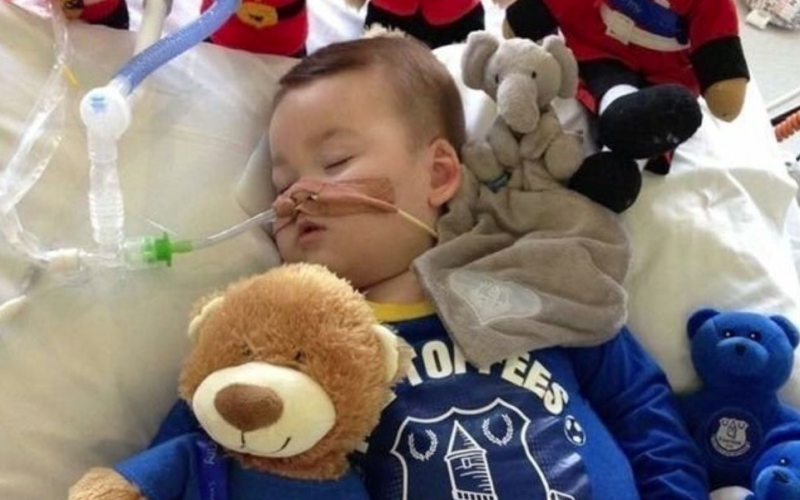
Passing news events are now imagined to be grand tests of our country’s character. Take the awful story of Alfie Evans, a 23-month-old British boy with brain damage. Doctors and judges said he would never recover, so instead his life support should be switched off. His parents disagreed. They wanted to take him to Rome to be treated in a Vatican hospital. The Italians even granted Alfie Italian citizenship to expedite the process.

Would the young boy die on the terms of the British state or on those of his parents? In the end, it was the former. The complex, sad story made headlines in the United States and across Europe. Britain was portrayed as the cruel man leaving Europe: Protestant utilitarianism turning its back on Catholic compassion. Brits reacted to the international condemnation with wounded pride, a common national trait, and a grudging acceptance that maybe we have gone mad.  So—have we become a callous, cold country? Was it British to let Alfie die against his parents’ wishes? Or is the British way to let the law decide? We don’t really know.

The Windrush scandal has also wounded British pride. During the Commonwealth Heads of Government visit last month, our Prime Minister Theresa May was forced to apologize to Caribbean leaders over deportation threats made to the children of Commonwealth citizens, who despite living and working in the UK for decades had been told they were living here illegally because of a lack of official paperwork. Is Britain now a racist country? No, screamed the Brexiteers, this isn’t what Brexit was meant to be about. Yes it was, squawked the Remainers. Amber Rudd, the home secretary, has now resigned over the scandal, making her the fourth member of May’s Cabinet to go in just six months. Our government appears to be crumbling to pieces. To settle the matter, the UN has sent a human rights experts to assess the situation. Tendayi Achiume, the UN Special Rapporteur on racism, arrives this week, and no doubt will be delighted to confirm our worst fears about our country.

Another test of national character came in the form of Theresa May’s decision to join the strikes in Syria alongside the U.S. and France. As any Brexiteer will tell you, the vote to leave the EU was about “taking back control,” which seemed to mean returning power to our parliament. But at the very point when May should have asked parliament about an act of war—even if she was not constitutionally obliged to—she chose not to. She went ahead regardless, despite polls suggesting the public were not at all convinced that throwing missiles at Assad was a good idea. May knew she couldn’t count on MPs to support her hawkish ambitions, but Number 10 was desperate not to be left out of the strikes agreed to by President Macron and President Trump. So do we now wage war to keep up appearances—and sod the national interest because the national image is more important? Did we really “take back control” only to forget what that means? And do we now do whatever the Americans—and, horror of horrors, the French—tell us to?

France isn’t helping to relieve Britain’s paranoia, especially with regards to Brexit, Trump, and that global superstar Monsieur Macron. The great fear here is that the UK-U.S. Special Relationship is deteriorating—or at the very least, not being nurtured. Macron, a fierce Brexit critic, has elegantly played on British insecurities by sidling up to the president of the United States. He’s Trump’s French poodle. But isn’t that our prime minister’s role? Did Theresa May’s tender hand-holding moment with President Trump mean absolutely nothing? It’s hard to exaggerate how quickly Brits can go from disgust at Trump to jealousy that France is muscling in on his affections.

At least we’ve managed to preserve our liberal values and free speech. Or have we? Brendan O’Neill recently documented in The Spectator all the recent examples of arrests made in the UK on the grounds of speech-related crimes. They included a Scottish man who had published a video of his girlfriend’s pug doing a Nazi salute, a teenage girl who quoted lyrics by the rapper Snap Dogg on Instagram, a Scottish man jailed for singing an offensive anti-Catholic song, a Christian preacher who told gay teenagers that homosexual sex is a sin, and the list goes on. A report revealed that the police are now making around nine arrests every day for offensive speech. Is Britain now a place where you can no longer say what you think? Is censorship a normal part of British life?

Add into the mix our feeling of impotence with regards to Russia following the Sergei Skripal poisoning, the prospect of a massive swing towards socialism with a Corbyn government, and the gnawing fear that the Queen may not be with us much longer, and you have a country beset by anxiety. The British have always been a little insane and we do tend to thrive on self-loathing, so perhaps it will all be okay. Nobody ever said Brexit would be easy. At least there is a royal wedding on the way. If that doesn’t lift our spirits, send for help.

Lara Prendergast is assistant editor for The Spectator.

Posted in Uncategorized | 1 Comment

For Solzhenitsyn, “the most striking feature which an outside observer notices in the West in our days is a decline in courage.” He means not so much personal manliness but strength of will in public life: “The Western world has lost its civil courage,” Bishops take note !!!

Wanted: A New Height of Vision

This year marks the 40thanniversary of Aleksandr Solzhenitsyn’s famous Harvard commencement address, “A World Split Apart.”  Five months after he delivered it, Karol Wojtyła was elected pope. Both men, from Communist lands, gave warnings to the West. How was Solzhenitsyn’s diagnosis different? How has it stood up over time?

We are used to commencement addresses that are left-wing stand-up comedy. But Solzhenitsyn did not go to Harvard to tell jokes. He promised bitterness. “Truth eludes us,” he began, “if we do not concentrate with total attention on its pursuit. And even while it eludes us, the illusion still lingers of knowing it and leads to many misunderstandings. Also, truth is seldom pleasant; it is almost invariably bitter.”

Likewise, Solzhenitsyn rejected social self-righteousness. The horrors of Nazism and Communism had taught him sober self-knowledge: “There is nothing that so assists the awakening of omniscience within us as insistent thoughts about one’s own transgressions, errors, mistakes,” he wrote in The Gulag Archipelago. “I remember myself in my Captain’s shoulder boards and the forward march of my battery through East Prussia, enshrouded in fire, and I say: ‘So were we any better?’”

What would you have said was the main problem in the West in 1978?  For Solzhenitsyn, “the most striking feature which an outside observer notices in the West in our days is a decline in courage.” But before you think of Jordan Peterson, consider that he means not so much personal manliness but strength of will in public life: “The Western world has lost its civil courage, both as a whole and separately, in each country, each government, each political party and of course in the United Nations. Such a decline in courage is particularly noticeable among the ruling groups and the intellectual elite, causing an impression of loss of courage by the entire society.”

Clearly, Solzhenitsyn judges societies based on the character traits that they form. He effectively runs through the cardinal virtues, arguing that our successes have led to moral decline. He decries the “welfare state,” by which he means, interestingly, not the habilitation of dependents by government, but a society devoted solely to material prosperity: “It has become possible to raise young people according to these ideals, leading them to physical splendor, happiness, possession of material goods, money and leisure, to an almost unlimited freedom of enjoyment.” So why should someone like that risk his life for any higher good?

Veritas: Solzhenitsyn at Harvard (6/8/78)

Moderation suffers, too, because freedoms are exploited to the full without self-restraint. We enjoy much freedom for evil, he says, but freedom for good hardly exists, as those who want to accomplish good get tripped up on every side. “Destructive and irresponsible freedom has been granted boundless space. Society appears to have little defense against the abyss of human decadence, such as, for example, misuse of liberty for moral violence against young people, motion pictures full of pornography, crime and horror.”

As for justice, it gets replaced by legalism: “Any conflict is solved according to the letter of the law and this is considered to be the supreme solution. . . .Nobody may mention that one could still not be entirely right, and urge self-restraint, a willingness to renounce such legal rights, sacrifice and selfless risk: it would sound simply absurd. One almost never sees voluntary self-restraint.”

The “culture of death” plays no role in the speech. But a criticism of abortion might, by friendly amendment, be placed here. We tend to think of the putative abortion right as “substantive due process,” the opposite of legalism. Someone who accepted Solzhenitsyn’s analysis, however, might say, “Of course it’s wrong and should be forbidden. It is claimed that it must be allowed only on a legalistic pretext, ‘what the constitution says.’  So let’s be clear and say: that is not its true basis at all.”

We can hardly believe it now, but it was true, that incipient “political correctness” then involved ignoring the evils of Communism: “There is a self-deluding interpretation of the contemporary world situation, which works as a sort of petrified armor around people’s minds. Human voices from seventeen countries of Eastern Europe and Eastern Asia cannot pierce it.” Without any censorship, he says, the media was marching in lockstep to preserve this viewpoint.

It is not that liberalism failed, but that it abandoned the medieval heritage that it had always required. Thus it failed to realize the synthesis of material and spiritual goods which was its original promise:

In American democracy at the time of its birth, all individual human rights were granted because man is God’s creature. That is, freedom was given to the individual conditionally, in the assumption of his constant religious responsibility. Such was the heritage of the preceding thousand years. Two hundred or even fifty years ago, it would have seemed quite impossible, in America, that an individual could be granted boundless freedom simply for the satisfaction of his instincts or whims.

Both the West and Communism reveal the failure of materialism.  The path forward for the West, however, is not a reform, but something completely new. The only truths it is willing publicly to affirm are “ossified formulas of the Enlightenment,” a “social dogmatism” inadequate to the trials we must face. Solzhenitsyn seems to agree with Marx on one point: that liberalism is on an inevitable path to, first, radicalism, then socialism, then Communism.  “Only voluntary, inspired self-restraint can raise man above the world stream of materialism,” but the West as currently constituted seems to lack the resources to do this.

“The world has approached a major turn in history, equal in importance to the turn from the Middle Ages to the Renaissance. It will exact from us a spiritual upsurge, we shall have to rise to a new height of vision, to a new level of life where our physical nature will not be cursed as in the Middle Ages, but, even more importantly, our spiritual being will not be trampled upon as in the Modern era.”

Michael Pakaluk

Michael Pakaluk

Michael Pakaluk, an Aristotle scholar and Ordinarius of the Pontifical Academy of St. Thomas Aquinas, is professor at the Busch School of Business and Economics at The Catholic University of America. He lives in Hyattsville, MD, with his wife Catherine, also a professor at the Busch School, and their eight children.

Posted in Uncategorized | 1 Comment

REMEMBER, HOSPITALS WANT THE ORGANS OF YOUR CHILDREN; ORGAN TRANSPLANATION WAS A $34,000,000,000 BUSINESS IN THE UNITED STATES IN 2017

Your email updates, powered by FeedBlitz

Medical Futility Blog – 1 new article

  1. Medical Futility and Brain Death Conflicts Involving Children in U.S. Courts from 2013 to 2018

Medical Futility and Brain Death Conflicts Involving Children in U.S. Courts from 2013 to 2018

There has been significant worldwide attention on the Jahi McMath and Alfie Evans cases. So, some medical researchers have me asked whether these cases are unique or whether they are just the tip of an iceberg.

Take Jahi McMath first. Brain death cases are just one type or subset of medical futility dispute. Focusing just on that one type of case. In the past five years, pediatric brain death cases going to court in the United States include at least these eight cases:

1. Jahi McMath
2. Israel Stinson
3. Allen Callaway
4. Aden Hailu
5. Isaac Lopez
6. Mirranda Lawson
7. Alex Pierce
8. Areen Chakrabarti

There are more cases if you count both young adults and adults. Furthermore, several published reports from Cleveland Clinic, San Francisco General, and other hospitals shows there are more conflicts than in the past, even if they do not escalate to court.

Are there more cases like Alfie Evans in the United States? Yes, there have been dozens that have escalated to court, plus many more mediated through intramural mechanisms. Still, very few involve the hospital going to court for permission to withhold or withdraw life-sustaining treatment.

First, in California, Texas, and Virginia the burden is flipped: the families must go to court to stop the clinicians. Moreover, that is a widely recommended approach at the institutional level: announce the plan and give the family time to challenge, but do not seek permission from the court.

The consequence of the “ask for forgiveness not permission” approach is that most of the U.S. cases are unlike the UK cases. U.S. clinicians rarely seek ex ante permission. Instead, U.S. cases usually have a different posture. Either (a) families are suing for money damages after the death, or (b) families are seeking to enjoin clinicians from stopping after such a plan has already been announced. When hospitals do get ex ante consent for withholding/withdrawal they usually get consent from a guardian instead of from the parents.

But I make these observations with a small sample size of cases. There appear to be few pediatric futility cases in U.S. courts. Why is that? I am not sure how much is (1) because clinicians are good at avoiding conflict, (2) because ethics consultants are good at resolving conflicts, (3) because clinicians cave in against their judgment, or (4) because a local county court guardianship proceeding is rarely visible or reported.

Posted in Uncategorized | Comments Off on REMEMBER, HOSPITALS WANT THE ORGANS OF YOUR CHILDREN; ORGAN TRANSPLANATION WAS A $34,000,000,000 BUSINESS IN THE UNITED STATES IN 2017

GLORY BE TO THE FATHER AND TO THE SON AND TO THE HOLY SPIRIT

EmailPinterestPocketGoogle+

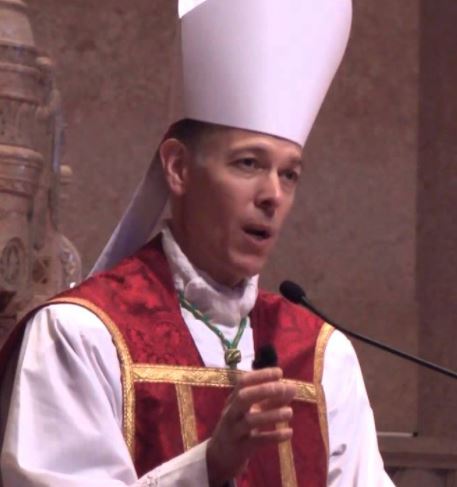
Pontifical Mass With Archbishop Sample in DC: Photos, Video, Audio, and Homily Transcript

LifeSiteNews

I spent last Saturday in DC, attending the Pontifical High Mass offered by Archbishop Sample of Portland, Oregon, in thanksgiving of the tenth anniversary of Summorum Pontificum. The last time such an event was held in main body of the largest Catholic church in the United States, the year was 2010.

On this occasion, it was a beautiful Spring day in the nation’s capital, and the upper church began filling early. I spent my first our on scene in line for confession, and only thanks to the gracious assistance of a friend, had a reserved seat in the front row of the Basilica for the main event.

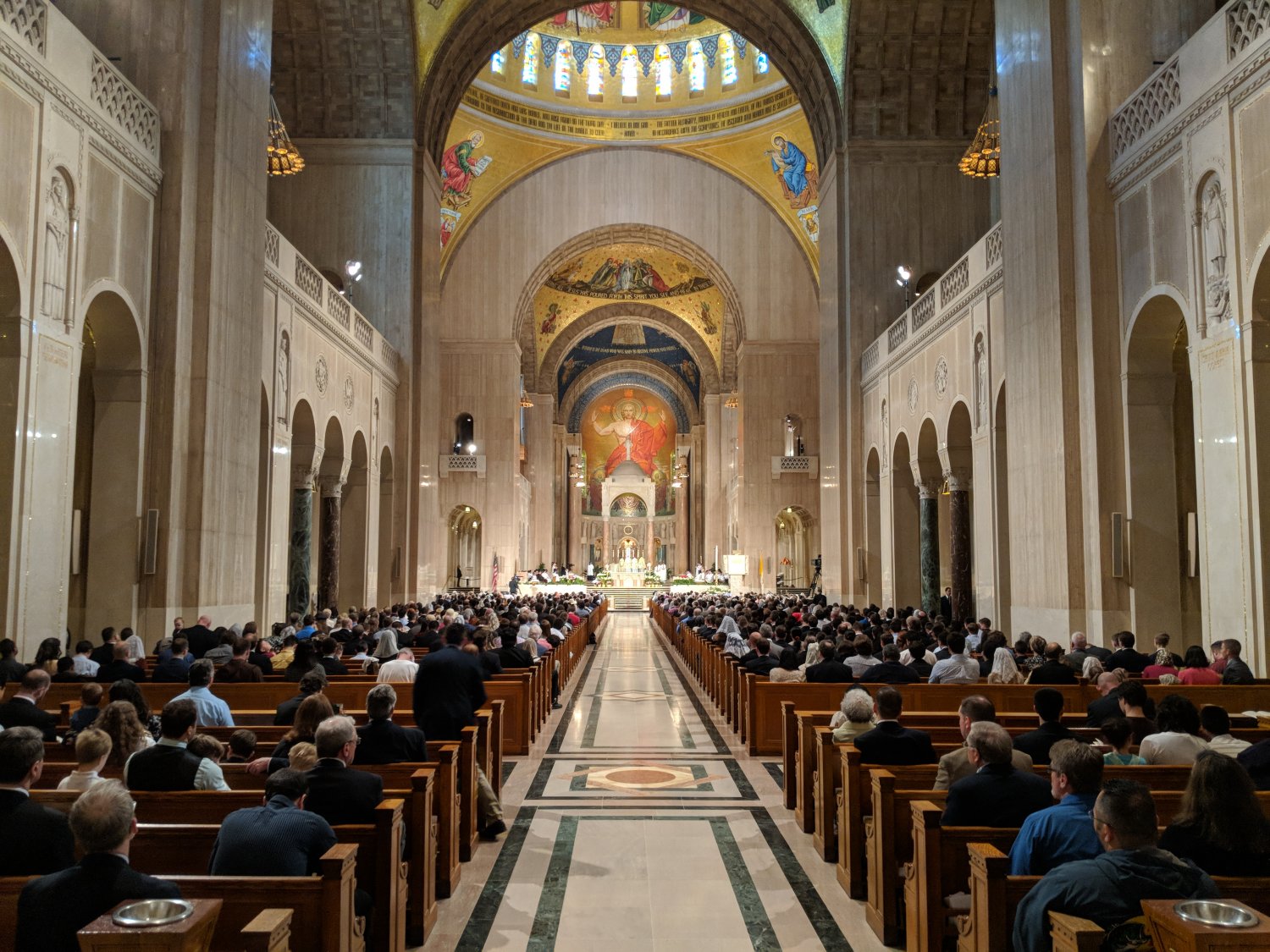
Attendance was good — I’ve heard estimates ranging in the neighborhood of 1500 to 4000 people. My personal guess would be about 2500, since the seating capacity of the upper church is 3500 and mid-Mass, this was the scene from the narthex:
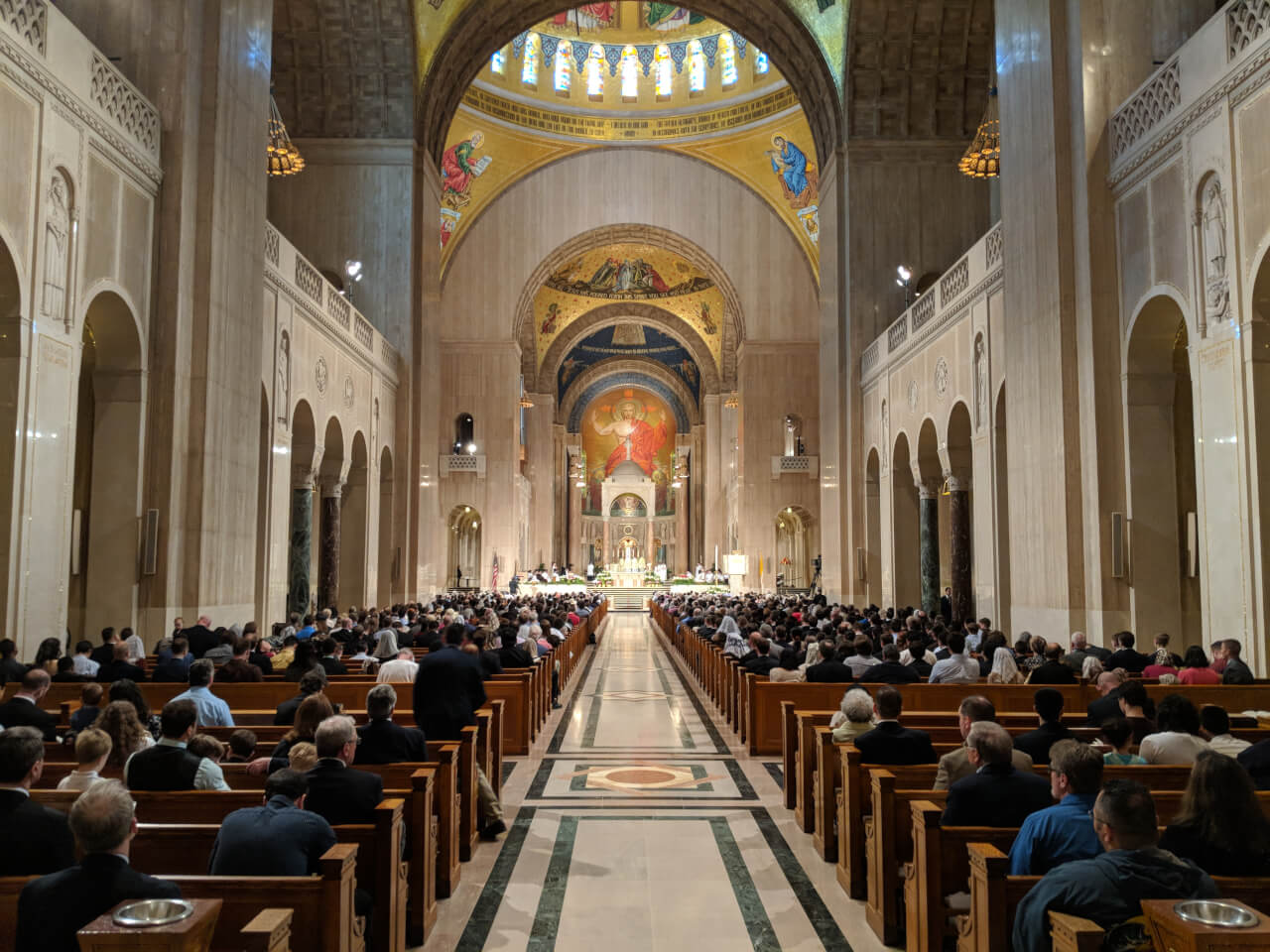
The pews weren’t filled to the brim, but there were people throughout the whole church. All in all, I’m happy with the turnout.

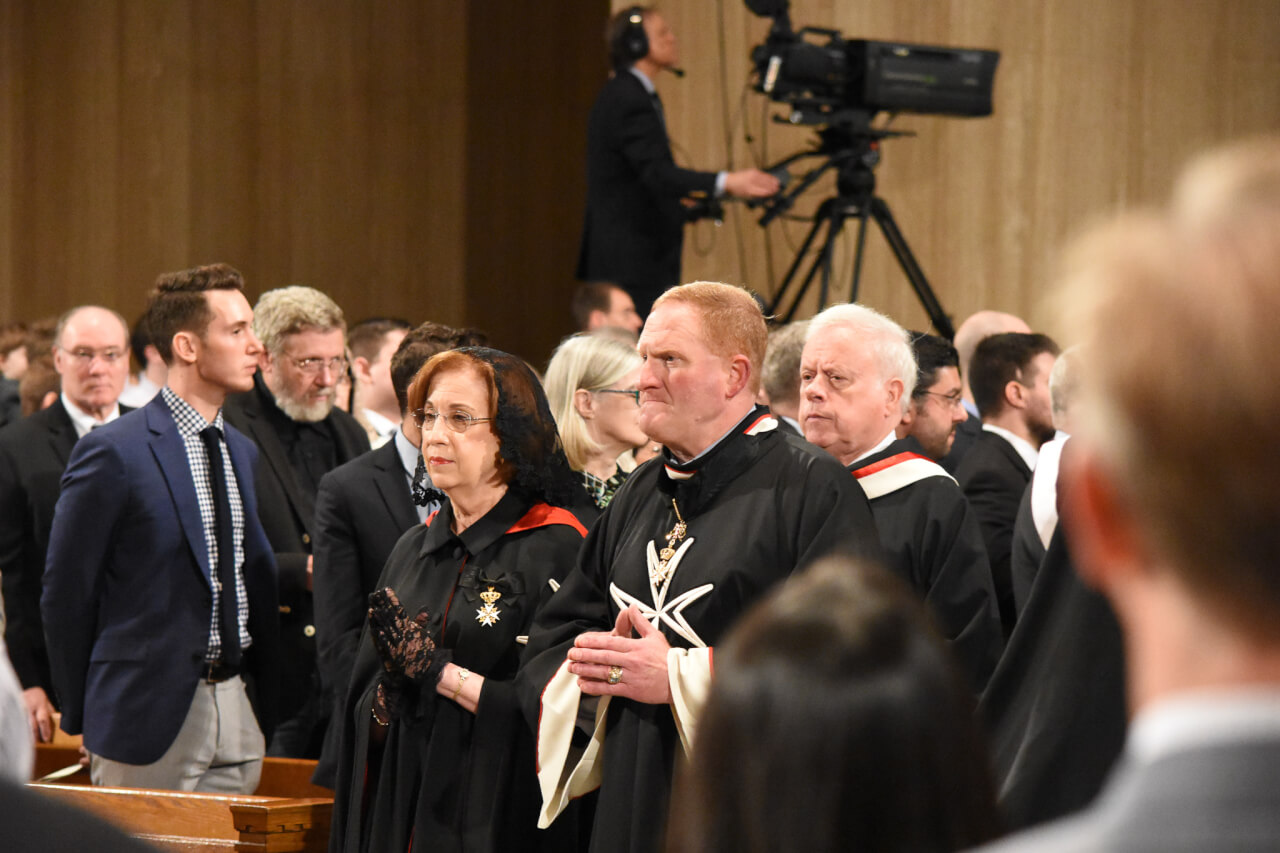
The Mass was well executed, with a vertiable army of altar servers and priests in choir. Among the notable clergy who participated in the liturgy were several priests from the Priestly Fraternity of St. Peter, including Fr. Joseph Bisig, who co-founded the Fraternity and served as its first Superior General. Clerics were also present from the Institute of Christ the King, Sovereign Priest, including provincial superior Canon Matthew Talarico. Maronite chorbishop Anthony Spinosa was also seen in attendance. Also spotted was Dom Daniel Augustine Oppenheimer, prior of the Canons Regular of the New Jerusalem. Honestly, there were so many clergy present I feel as though I’m doing them all a disservice by mentioning just a few.

The music was excellent, and was performed variously by the Scholas of The Lyceum School in South Euclid, Ohio, St. John the Baptist in Allentown, New Jersey, and St. Mary, Mother of God in Washington, DC, as well as by the Choir of the Basilica of the National Shrine of the Immaculate Conception. Selections included pieces by Tomas Luis de Victoria, Claudio Monteverdi, and Thomas Tallis, among others.

I took a number of photos for the event (which you are welcome to use if you credit me as the photographer with a link to this post):


Archbishop Sample’s homily was a rousing tribute to Summorum Pontificum, and he highlighted the youth presence at the Mass:

As we gather here today in this magnificent basilica, one cannot help but notice the very large presence of young people who have come to participate in this Holy Mass. I have met a good number of you personally. You are a sign – a great sign – of encouragement and hope for the Church tossed about these days on the troubled waters of secularism and relativism. As they say, you “get it”. You understand your place in the world and in the Church to help rebuild a culture of life in society and a renewal of Catholic culture within the Church herself.

Over the years since the release of Summorum Pontificum, I have heard many in the Church – including priests and bishops – express puzzlement and dismay over why so many young people are attracted to this venerable form of the Roman Rite. They say things like, “I just don’t understand. How could they be so attracted to a form of the liturgy that they did not grow up with or ever experience before?” If the comment has been directed to me, I have often responded “That is exactly the question you should be asking. Why are they attracted to this liturgy? Or perhaps more pointedly. What is it that this form of the Roman Rite provides for them that their own experience growing up with the Ordinary Form did not provide? For this will give us an insight into what future liturgical development might look like.”

[…]

So many young people have discovered this form of the sacred liturgy as part of their own Catholic heritage. I myself first discovered the traditional Latin Mass as a college student. I came across it. But for me it was an historical relic and something that I never imagined that I would actually experience. Maybe the experience of these young people growing up with the Ordinary Form did not carry with it the beauty reverence prayer fullness sense of mystery and transcendence or wonder and awe that the traditional Latin Mass has provided for them. Perhaps this is the answer to the question posed above about why so many young people are drawn to the Holy Mass celebrated according to the 1962 missal.

Where I would digress from the Archbishops’ thoughts somewhat was in his insistence that he was not “calling into question the legitimacy the validity or even the goodness of the missal promulgated by Blessed Paul VI” or in his emphasis on Benedict XVI’s insistence that there is “no contradiction between the two editions of the Roman Missal. In the history of the liturgy, there is growth and progress, but no rupture”. I think that most of us in the liturgical trenches not only question the “goodness” of the missal of Paul VI, but know very well by experience that there was indeed rupture — and that the so-called “hermeneutic of continuity” is, sadly, little more than wishful thinking.

That said, this was a Mass broadcast live on EWTN (see the video below) for an audience that one can only expect has been left largely unexposed to the beauty of the Church’s ancient liturgy or the deep theological and anthropological contrasts that exist between it and the new rite. On the whole, I found the Archbishop’s homily to be a good one, even if I eagerly await the day when the Second Vatican Council is no longer viewed as the mandatory reference point for all things by even our best prelates.

The video below offers the full broadcast of the Mass from EWTN with commentary from Msgr. Charles Pope and Msgr. Andrew Wadsworth. Beneath that, I’ve included a separate audio file and transcript of Archbishop Sample’s homily.

All told, this was an uplifting and hope-filled event, and I hope that we won’t have to wait another eight years for the next one. My gratitude goes to The Paulus Institute for making the liturgy happen, to Archbishop Sample for agreeing to offer the Mass, and to all the priests, deacons, seminarians, schola and choir memers for making it such a memorable event.

Thanks also go to each and every attendee — many of them pilgrims coming from far away — for filling the pews and making such a powerful statement about our love for the Church’s venerable Latin liturgy.

I had the misfortune of sitting directly in front of one of the EWTN cameras for the whole Mass, so I apologize in advance to the viewing audience:

Archbishop Sample’s homily (audio):

Audio Player

Transcript:

[00:00:00] In the name of the Father and of the son of the Holy Spirit.

[00:00:06] My dear brothers and sisters in the Risen Lord it is with the greatest joy that I gather with all of you this day in this beautiful National Shrine dedicated to our Blessed Mother under her title The Immaculate Conception – the patroness of our great country. We are in Mary’s shrine and we are all filled with gratitude and joy. We celebrate today this Holy Mass in honor of the Immaculate Heart of the Blessed Virgin Mary. We are all sinners yet in her Immaculate Heart we find refuge, consolation, protection, strength, and the love of her motherly embrace.

[00:01:31] Just as Holy Mary stood at the foot of the cross of our Divine Savior where her heart was pierced with the sword of sorrow. So she stands by us today, and at the foot of this altar as we sacramentally re-present the once-for-all sacrifice of Christ.

[00:02:07] As the Second Vatican Council’s document on the sacred liturgy reminded us — referencing the teachings of the Council of Trent — Christ who formally offered Himself in a bloody manner on the altar of the Cross is now offered in a sacramental and and unbloody manner in the Holy Sacrifice of the Mass. And His Holy Mother joins with us in this offering in the great communion of all the saints.

[00:02:55] We also gather to celebrate the tenth anniversary of the great gift our beloved Pope Emeritus Benedict XVI left to the Church in his motu proprio, Summorum Pontificum. Dear Holy Father, I know I speak on behalf of all gathered here, those watching this broadcast live through EWTN, and many others when I say thank you for your wisdom, foresight, and pastoral generosity in allowing the usus antiquior of the Roman Rite to once again flourish in the Universal Church.

[00:03:54] As we gather here today in this magnificent basilica, one cannot help but notice the very large presence of young people who have come to participate in this Holy Mass. I have met a good number of you personally. You are a sign – a great sign – of encouragement and hope for the Church tossed about these days on the troubled waters of secularism and relativism. As they say, you “get it”. You understand your place in the world and in the Church to help rebuild a culture of life in society and a renewal of Catholic culture within the Church herself.

[00:05:04] Over the years since the release of Summorum Pontificum, I have heard many in the Church – including priests and bishops – express puzzlement and dismay over why so many young people are attracted to this venerable form of the Roman Rite. They say things like, “I just don’t understand. How could they be so attracted to a form of the liturgy that they did not grow up with or ever experience before?” If the comment has been directed to me, I have often responded “That is exactly the question you should be asking. Why are they attracted to this liturgy? Or perhaps more pointedly. What is it that this form of the Roman Rite provides for them that their own experience growing up with the Ordinary Form did not provide? For this will give us an insight into what future liturgical development might look like.”

[00:06:38] Now I do not want to be misunderstood. I am not at all calling into question the liturgical reform that was actually called for by the Second Vatican Council. Nor am I calling into question the legitimacy the validity or even the goodness of the missal promulgated by Blessed Paul VI. But perhaps in the actual implementation of the council’s directives not everything that occurred has borne good fruit. And certainly through liturgical abuses other aberrations or simply a poor ars celebrandi the Ordinary Form of the Roman right has too often been disfigured and has been experienced as a rupture with our liturgical past.

[00:07:54] So many young people have discovered this form of the sacred liturgy as part of their own Catholic heritage. I myself first discovered the traditional Latin Mass as a college student. I came across it. But for me it was an historical relic and something that I never imagined that I would actually experience. Maybe the experience of these young people growing up with the Ordinary Form did not carry with it the beauty reverence prayer fullness sense of mystery and transcendence or wonder and awe that the traditional Latin Mass has provided for them. Perhaps this is the answer to the question posed above about why so many young people are drawn to the Holy Mass celebrated according to the 1962 missal.

[00:09:09] Pope Benedict XVI referenced this in his letter to the world’s bishops which accompanied the release of Summorum Pontificum. In speaking of Pope St. John Paul’s own efforts to pastorally provide for those attached to the traditional liturgy — which the saintly Pope did through his own motu proprio, Ecclesia Dei, in 1988 — Pope Benedict wrote this: “Immediately after the Second Vatican Council it was presumed that requests for the use of the 1962 missal would be limited to the older generation which had grown up with it. But in the meantime it has clearly been demonstrated that young persons too have discovered this liturgical form, felt its attraction, and found it a form of encounter with the mystery of the most Holy Eucharist particularly suited to them. Thus the need has arisen for a clearer juridical regulation which had not been foreseen at the time of the 1988 motu proprio.”

[00:10:40] Now, I don’t want to forget that older generation of Catholics who have remained attached to this ancient liturgy. You are important as well. This is the Mass of the Ages that has nourished the faith life of generations and generations of Catholics — including my parents’ generation. I often think about that. This is the mass that my grandparents participated in. This is the Mass that nourished the faith and devotion of my mother growing up. God rest her soul. This is the mass that drew my father to the Church and helped fuel his conversion. This is the mass that has produced saints.

[00:11:53] I believe one of the most important phrases in the letter of Pope Benedict XVI referenced above is this: “There is no contradiction between the two editions of the Roman Missal. In the history of the liturgy, there is growth and progress, but no rupture. What earlier generations held as sacred remains sacred and great for us too, and it cannot be all of a sudden entirely forbidden or even considered harmful. It behooves all of us to preserve the riches which have developed in the Church’s faith and prayer, and to give them their proper place.”

[00:12:53] As we continue our celebration of the tenth anniversary of Summorum Pontificum, I wish to touch upon one final point. This has to do with the positive motivation of the pope emeritus in issuing the motu proprio. He said that it is a matter of coming to an interior reconciliation in the heart of the Church.

[00:13:29] During my ad limina visit to Rome in the year 2012, and during our visit with Pope Benedict XVI, I had the opportunity to thank him for the gift of Summorum Pontificum. He responded at length to my intervention beginning by saying that he had issued the Mmotu proprio in order to reconcile the Church with her past. This reconciliation the pope emeritus spoke of involves learning from the experience of the Sacred Liturgy according to the usus antiquior in order to better inform and shape our understanding and celebration of the newer Roman Rite. With both liturgies flourishing side by side, there could be a mutual enrichment of the two forms of the one Roman Rite, perhaps leading to further liturgical development and progress. After mentioning some ways in which the Roman Missal of 1962 could be enriched by the newer Roman Missal, Pope Benedict said this about how the more ancient form of the liturgy could enrich the newer form: “The celebration of the Mass according to the missile Paul VI will be able to demonstrate more powerfully than has been the case hitherto the sacrality which attracts many people to the former usage.

[00:15:20] The most sure guarantee that the Missal of Paul VI can unite the parish communities and be loved by them consists in its being celebrated with great reverence in harmony with the liturgical directives. This will bring out the spiritual richness and the theological depth of this missal.

[00:15:43] I believe this is a key to interpreting Pope Benedict XVI’s desire, namely, that the flourishing of the more ancient form of the liturgy with its beauty reverence and sacredness will cause a natural development and enrichment of the way in which the newer Mass is celebrated. As he says there cannot and should not be a rupture between the two forms one must be able to recognize the older Roman Rite in the newer. I often get the impression that many people in the church live their lives as if the church sort of hit a reset button at Vatican II, and that the past no longer has relevance especially regarding the Sacred Liturgy. There must be further liturgical growth and development along the lines of a hermeneutic of continuity with the past and any experience of rupture must come to an end. May it be so.

[00:17:03] And so my dear brothers and sisters, let us give thanks to God for the life, pastoral ministry, and courage of Pope Emeritus Benedict XVI. Let us thank the Lord for both Pope Benedict’s gift to us — the greater celebration and availability of the usus antiquior of our common heritage in the Roman Rite. Let us pray for Pope Benedict XVI that the Lord grant him peace and joy during the time the Lord allows him to be on this earth praying and sacrificing for us. We take our prayers in gratitude now to that greatest of all acts of thanksgiving: the celebration of the Most Holy Eucharist.

[00:17:59] Let us go unto the altar of God.

[00:18:02] In the name of the father and the son and of the Holy Spirit.

Posted in Uncategorized | 1 Comment

J’ACCUSE: GREAT BRITAIN’S CATHOLIC BISHOPS STAND INDICTED FOR THEIR ABJECT FAILURE TO DEFEND LIFE AND PARENTAL RIGHTS


Diane Montagna

2000px-Union_Jack_1606_ScotlandNEWSBIOETHICSMon Apr 30, 2018 – 11:32 am EST

Open letter to UK bishops: Your response to Alfie Evans was an ‘abject failure’

#Alfieevans, Alfie Evans, Catholic, Parents Rights

LONDON, April 28, 2018 (LifeSiteNews) — The nephew of a renowned German Catholic philosopher and fierce opponent of Hitler, Dietrich von Hildebrand (1889-1977), has written an open letter to the bishops of England and Wales denouncing their response to Alfie Evans as an “abject failure.”

In a letter dated April 27, London resident Jean Pierre Casey criticizes the bishops of England and Wales for praising Alder Hey hospital’s “integrity,” and for “completely failing” to uphold Catholic teaching on life, the family, and God-given parental rights.

Casey also excoriates the prelates for cozying up to the National Health Service (NHS) rather than serving the people entrusted to their care.

“It is ever more obvious that beyond the thousands of abortions they procure annually, NHS hospitals are becoming death mills not only for the unborn, but for the living. […] That our bishops continue to ally themselves with the NHS in defending the indefensible is beyond comprehension,” he writes.

“If Church leaders remain silent in the face of such “tyranny, injustice and oppression,” he adds, they become “accomplices of, and indeed, active participants in, gravely evil acts.”

For all LifeSite coverage of the Alfie Evans case, click here.

Last Wednesday, just hours after Pope Francis tasked Italian prelate and former Vatican official, Bishop Francesco Cavina, with mediating relations between the Bambino Gesù hospital and the Holy See, to ensure Alfie’s transfer to Rome, the Bishops of England and Wales issued an official statement praising the judges and hospital for acting with “integrity” and “for Alfie’s good as they see it.”

The bishops also rejected as “unfounded” media reports criticizing Alder Hey hospital, saying their chaplaincy consistently cares for the staff and offered help to the family.

However, an internal memo from the Archdiocese of Liverpool leaked last week revealed that, while the archdiocese was offering support to Alder Hey doctors and hospital staff, they did not meet with the family on the grounds that “they are not Roman Catholic.”

Thomas and Alfie Evans are, in fact, both baptized Catholics, while Alfie’s mother, Kate James, is Anglican.

It also emerged on Thursday that Archbishop Malcolm McMahon of Liverpool, and Cardinal Vincent Nichols of Westminster, forced an Italian priest who was helping the family to return to his parish in London, leaving Alfie and his parents without spiritual care and support.

One notable exception to the silence was Bishop Philip Egan of Portsmouth, England, who on Monday expressed his support for Alfie and his parents, tweeting: “Let’s offer heartfelt prayers today for little Alfie Evans — now an Italian citizen — and his courageous parents. If there is anything at all that can be done, may the Lord enable us by His love and grace to effect it.”

In remarks accompanying his open letter, Jean Pierre Casey said: “My great uncle Dietrich von Hildebrand was resolute in the face of Nazi oppression. We must be resolute in the face of secular oppression when the rights of parents are being systematically undermined and the family is being attacked on all sides. Our bishops’ silence is shameful.”

Here below is his open letter to the bishops of England and Wales.


Open Letter to the Catholic Bishops of England and Wales from a concerned Catholic citizen

Your Excellencies:

Though I can understand the desire to strike a conciliatory tone when both the stakes and emotions are running high, it is a gross understatement to call the wording of your declaration on the Alfie Evans case unfortunate, particularly given the emphasis on the apparent “integrity” of the medical staff and administrators of Alder Hey hospital.

A hospital that acts as a jail, imprisoning a child against his parents’ wishes and better judgement does not act with integrity.

A hospital that seeks a court injunction to prevent the parents from exercising their rightful duty to act in the best interests of their child does not act with integrity.

A hospital that refuses to call into question its (possible, if not likely, mis-) diagnosis does not act with integrity.

A hospital that seeks to oust a chaplain who is providing spiritual solace to a family in need and administering sacraments does not act with integrity.

A hospital that refuses to consider alternatives does not act with integrity.

A hospital that requests police presence to prevent parents from exercising their lawful right to remove their child from the hospital’s care – threatening parents with a conviction of assault if they so much as touch their child – does not act with integrity.

A hospital that refuses to facilitate a meeting between its medical staff and the head of another hospital prepared to accept the child into its care does not act with integrity.

A hospital that fails to cooperate with other hospitals who send medical staff, equipment and transport to support the parents’ wishes for alternative forms of treatment does not act with integrity.

A hospital that refuses to hydrate or feed a child does not act with integrity.

More importantly — and worse than the unfortunate choice of words used in your declaration — is its abject failure to address the heart of the matter: the privileged link between children and their parents as their God-given custodians.

No mention is made in the declaration of the sanctity and dignity of human life.

No mention is made of the rights of parents as the primary educators and sole legitimate custodians of the child.

No mention is made of the primary rights of parents — not the state, or medical doctors, or conflicted, unelected magistrates — to determine what they believe to be in the best interests of their child.

Because the declaration so completely fails to uphold Catholic teachings in regards of life and the family, it ought not be considered a Catholic declaration. To label it as such is intensely misleading.

It is ever more obvious that beyond the thousands of abortions they procure annually, NHS hospitals are becoming death mills not only for the unborn, but for the living. Every parent in the UK, Catholic or otherwise, will now rightly question whether by admitting their child to a NHS hospital, their child will ever again be allowed to leave and see the light of day. That our bishops continue to ally themselves with the NHS in defending the indefensible is beyond comprehension.

Whilst you may be tempted to characterise me and others who share my views as ‘simpletons’ whose intellectual faculties are insufficient to fully grasp the ethical and medical subtleties of the case, I will reply: I know tyranny when I see it. I know oppression when I see it. I know injustice when I see it. And so do many thousands of others across the world. If our Church leaders, meaning the collective you, remain silent in the face of such tyranny, oppression and injustice, then not only do they fail in their mission to proclaim the Gospel of Jesus Christ, not only do they fail to publicly uphold the sanctity and dignity of all human life, not only do they fail to defend the rights of parents as the primary educators and as the sole legitimate custodians of their children — each one of these being individually considered a serious sin of omission — but they also become accomplices of, and indeed, active participants in, gravely evil acts.

I regret to say that with the kind of leadership — or rather the complete absence of leadership our bishops are showing — in grave public cases where a powerful public witness in defense of life, the family and God-given parental rights is not only necessary but is indeed a moral obligation, it is no wonder the flock of practising Catholics is so rapidly dwindling. For who wants to follow such shepherds? For this to occur so soon after the Charlie Gard saga, and with an essentially identical outcome — namely, the complete lack of leadership, lack of conviction, and lack of courage we are seeing from our bishops, I am afraid to say I am ashamed to be an English Catholic.

As Edmund Burke said : ‘The only thing necessary for the triumph of evil is for good men to do nothing.’

With every hope that the Holy Spirit will prompt you to put into action the prophetic words of St. John Paul II : “If you want peace, work for justice. If you want justice, defend life. If you want life, embrace the truth the truth revealed by God.”

NON ABBIATE PAURA!!!

JP Casey

London, 27 April 2018


Posted in Uncategorized | Comments Off on J’ACCUSE: GREAT BRITAIN’S CATHOLIC BISHOPS STAND INDICTED FOR THEIR ABJECT FAILURE TO DEFEND LIFE AND PARENTAL RIGHTS

GREAT BRITAIN, THE LAND THAT GAVE THE WORLD THE MAGNA CARTA IS NOW THE LAND OF THE CULTURE OF DEATH. SHAME ON PARLIAMENT FOR NOT REINING IN ITS JUDGES

Waste Land: Britain’s Culture of Death

CRISIS MAGAZINE

April is the cruellest month, breeding
Lilacs out of the dead land…

April 23 is St. George’s Day, the national feast day of England.

On April 23, 2018 three events occurred.

Ealing Council in west London became the first English Local Authority to implement a Public Spaces Protection Order (PSPO) for the area around a local abortion facility. It was claimed that this order was necessary “to protect women from distress and intimidation.”

Abortion providers and various pro-abortion groups had lobbied local politicians convincing them of the need for what are declared as “safe zones,” or by pro-life groups known as “censorship zones.” The politicians had been told of fanatical “groups” of pro-lifers accosting women as they entered the facility, forcing them to look at explicit pictures of abortions while calling them names—all influenced by tactics imported from the United States. The conclusion of the politicians was that the very act of praying outside an abortion facility was an act of intimidation.

The building that houses the abortion facility at Ealing has a curious history. Before the trade practiced there now, in the earlier part of the twentieth century, it was called Chapel House, an Anglo-Catholic hostel under the patronage of the Guild of St. Raphael, with its purpose being as a “Christian Home of Spiritual Healing.” On its wall to this day, just below the sign offering its latest services, there is a relief featuring the Archangel Michael.

For the local politicians the fact that for 23 years a peaceful vigil of prayer had taken place at the abortion facility in Ealing was disregarded. The fact also that during that time there had been no arrests or prosecutions of anyone involved in the vigil was also ignored. The concepts of freedom of assembly and freedom of speech were overridden. Those entering the abortion center generally spurned the pro-life groups who had been part of the vigil, however, not infrequently the vigil met expectant mothers only too willing to be helped emotionally and practically to continue with their pregnancy.

Following this first PSPO, however, other English councils, with encouragement from various abortion providers and their advocates, are now considering following Ealing’s lead. There is the prospect that soon it will be illegal in the UK to pray and offer help outside an abortion facility.

The second event on April 23 to take place in the UK was a royal birth. At a private hospital, also in west London, at 11:01 BST, a 22-man team of medics ensured the safe birth of the Duke and Duchess of Cambridge’s third child. The media rejoicing was immediate. Enthusiastic front pages vied with each other in their coverage of the event and pictures of the new-born as editors tried to outdo each other in finding ways to “welcome” the latest royal baby and congratulate his parents.

The third event took place later that day, some distance to the north of where the royal birth had happened. At a public hospital in Liverpool, the life support for a 23 month-old sick child, Alfie Evans, was switched off despite his parents’ pleas for their son’s treatment to continue.

¤ ¤ ¤ ¤

Alfie Evans was born May 9, 2016 in Liverpool, England, to Tom Evans and Kate James. In December of that year he was admitted to Alder Hey Children’s Hospital, Liverpool, after seizures; he was to remain there for 12 months. Then, on December 11, 2017, the hospital petitioned England’s High Court to withdraw ventilation, claiming further treatment would not be in the child’s “best interests.”

By February 2018, lawyers acting for the hospital told the High Court further treatment was “unkind and inhumane.”  They said Alfie was in a “semi-vegetative state” because of an unknown neurological condition. On February 20, a High Court judge authorized the removal of the child’s life support.

On March 1, Alfie’s parents launched a legal appeal of the High Court ruling. On March 6, their appeal was dismissed. On March 8, the parents appealed to the Supreme Court. Days later they learned that the Supreme Court refused to consider any appeal from the parents. On March 28, the European Court of Human Rights also refused to hear the case.

On April 4, the Wednesday of Easter Week, Pope Francis appealed on Twitter for Alfie’s life. On April 16, the parents mounted a “wrongful detention” appeal against the hospital.  On the same day the Court of Appeal ruled against them. Two days later, Tom Evans, a Catholic, like his son, travelled to Rome to meet the pope.

On April 23, Alfie was granted Italian citizenship. This was to facilitate his transfer to an Italian hospital. That same day Pope Francis once more asked that the suffering of Alfie’s parents “ be heard.” An air ambulance military helicopter was sent from Italy, equipped to take the sick child to the suitably named Bambino Gesù Hospital. His parents were keen to make the journey with him.

On the same day, Alder Hey Hospital switch off all life support for Alfie.

On April 24, a further appeal by the boy’s now frantic parents was dismissed by the High Court. The High Court judge insisted the child could not be taken to Rome. The next day, Alfie’s parents once more appealed to the Court of Appeal against the High Court ruling, but all grounds of appeal were refused. The child had to die in England.

On April 28, after having lived for a further five days, Alfie Evans died at 2:30 BST in Alder Hey Hospital.

                                                             ¤ ¤ ¤ ¤

In one week, three events concluded. A pregnancy ended in rejoicing. A local government consultation process ended with the right to peaceful vigil outside an abortion facility denied: the pregnancies there must be terminated, whether the women going there did so voluntarily or under pressure, feeling they had no alternative. The third event raises questions. Why would the medical establishment, backed to the hilt by the legal establishment, fight tooth and nail to keep Alfie Evans in England so that he could die in that Liverpool hospital? Why could he not go to Rome, yes to die, but with a greater level of support and encouragement, both medical and spiritual, available for him and his emotionally exhausted parents?

In recent cases, the media have been largely supportive of those who wish to travel abroad to end their lives. Many in the liberal media see the right to die where and when you will as a “human right,” something in which the state should not interfere; they are also vociferous in their support of those who move from one jurisdiction to another, from Ireland to England, for example, to have an abortion. This week, the same media were largely silent or dismissive of the case of Alfie Evans. British media reports, with a few exceptions, focused not on the child’s rights to receive the medical treatment on offer, or on his right to die in a place of consolation, or on his parents’ right to care for their child. Instead they chose to focus on vague accounts of “threats” to hospital staff; they were outraged at what they termed “Catholic fundamentalists” advocating on behalf of the child’s parents.

The name Alder Hey Hospital stirred memories. This hospital was at the center of a scandal at the end of the last century. Between 1988 and 1995, it was revealed that, without parental consent, the hospital had harvested 2,080 organs, removed from 800 children. Also without consent, Alder Hey had stored 1,500 foetuses that had been miscarried, stillborn or aborted. The subsequent government inquiry revealed how the doctor at the centre of the scandal had systematically and illegally ordered the removal of every organ from every child who had had a postmortem. It also told how in his office at the hospital, the same medical practitioner had kept the head of an 11-year-old child in a jar.

¤ ¤ ¤ ¤

I can’t help it, she said, pulling a long face,
It’s them pills I took, to bring it off, she said.
(She’s had five already, and nearly died of young George.)
The chemist said it would be all right, but I’ve never been the same.

The Culture of Death in Britain is all pervasive. So brazenly was it on display this past week that the scales dropped from the eyes of any who wished to see. Many do not want to see though. Instead, they prefer to see “fanatics” outside abortion facilities and think nothing further of what is taking place within the “clinics.” The same eyes look away as life support machines are turned off, and the full force of the law is used to prevent the sick moving to a better place to die.

The death of Alfie Evans came one day after the 50th anniversary of the implementation of the 1967 Abortion Act, the legislation that legalized abortion in England and Wales, and which ushered in a new understanding of what it is to be human in that jurisdiction.

Today, the Culture of Death has had 50 years of legalized sacrifice. In a country where the idea of individual rights is a mantra endlessly recited, there is one right that must never be talked of, let alone protected, the right to life for the child as yet unborn. Seemingly, now, the shadow of the Culture of Death envelops: the weak, the elderly, the defenseless, even the dying…

In this past week the darkness over Albion became ever more impenetrable. Although one thing is clear, in what now seems a perpetual night across this land, all the devils are here…

By the waters of Leman I sat down and wept…
Sweet Thames, run softly till I end my song,
Sweet Thames, run softly, for I speak not loud or long.
But at my back in a cold blast I hear
The rattle of the bones, and chuckle spread from ear to ear.

Editor’s note: Pictured above is Tom Evans, the father of Alfie Evans, in St. Peter’s Square after his meeting with Pope Francis on April 18, 2018. (Photo credit: Daniel Ibáñez / CNA)

K. V. Turley

By

K. V. Turley is a London-based freelance writer and filmmaker.

Posted in Uncategorized | 3 Comments

BRAVO ARCHBISHOP ALEXANDER K. SAMPLE, ARCHBISHOP OF PORTLAND

Saturday, April 28, 2018

Prominent Bishop Celebrates High Profile TLM at National Shrine in Washington, DC

Written by  Olivia Rao, Correspondent, Washington, DC

basilica washington dc


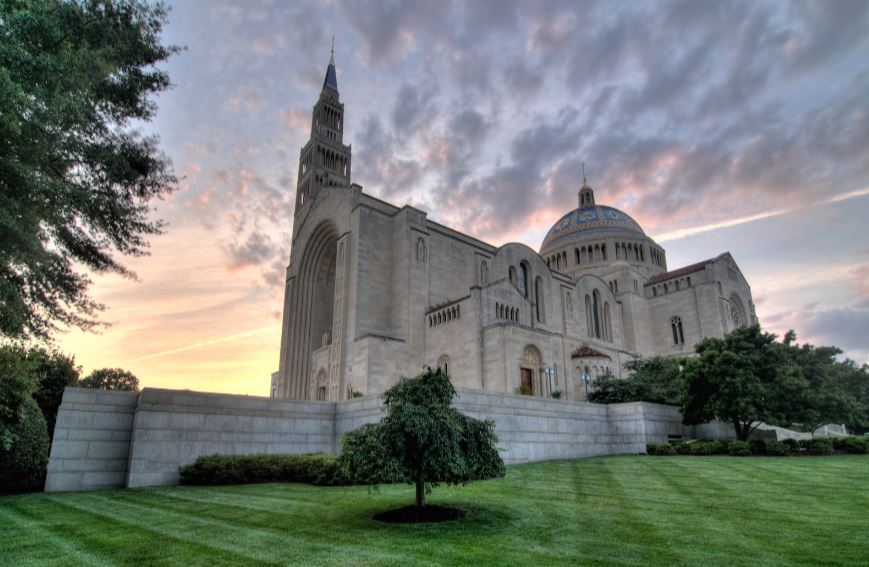
WASHINGTON, DC, April 28, 2018 (The Remnant Press) — A Solemn Pontifical Mass according to the Extraordinary Form was celebrated today at the Basilica of the National Shrine of the Immaculate Conception in Washington, D.C. The Pontifical Mass was organized by the Paulus Institute for the Propagation of Sacred Liturgy in honor of the tenth anniversary of the motu proprio Summorum Pontificum, issued by Pope Emeritus Benedict XVI in July, 2007. Although the tenth Anniversary of Summorum Pontificum was in July, 2017, the Pontifical Mass was delayed until the completion of the Trinity Dome over the transept of the basilica.

The Mass was celebrated by the Most Reverend Alexander K. Sample, archbishop of Portland in Oregon. Rev. Fr. D. B. Thompson of the Diocese of Lake Charles, Louisiana, served as assistant priest, Rev. Fr. Gregory Pendergraft of the F.S.S.P. served as deacon, and Canon Andrew Todd of the Institute of Christ the King Sovereign Priest served as the subdeacon. The first master of ceremonies was Rev. Fr. Zachary Akers, F.S.S.P. The second master of ceremonies was Rev. Fr. Gregory Eichman, F.S.S.P. Rev. Fr. Joseph M. Bisig, F.S.S.P., and Rev. Canon Matthew Talarico, Institute of Christ the King, served as deacons at the throne. Rev. Fr. Ernest Cibello, pastor of St. Mary Catholic Church in Hagerstown, Maryland, served as subdeacon of the cross.

The Mass celebrated was the Votive Mass of the Immaculate Heart of the Blessed Virgin Mary in Eastertide. The music was provided by the schola cantorum of The Lyceum School, the schola cantorum of St. John the Baptist Catholic Church in Allentown, New Jersey, the Choir of the Basilica of the National Shrine of the Immaculate Conception, the Washington Cornett and Sackbutt Ensemble, and the schola of St. Mary Mother of God Church in Washington, D.C. The propers of the mass were sung in Gregorian chant, and motets by Claudio Monteverdi, Pierre de Manchicourt, Thomas Tallis, Vincenzo Ugolini, and Luca Marenzio were performed.

Bishop SampleIn his sermon, Archbishop Sample spoke about Summorum Pontificum and the relationship of the Church today with the Extraordinary Form of the Mass. The archbishop, who said that he decided to learn the traditional Latin Mass on his own after Pope Benedict issued the motu proprio in 2007, thanked the pope emeritus profusely on behalf of all those present for giving the Church so great a gift as to allow the Latin rite to be celebrated once more.


He noted that in this day and age, it is the temptation of many Catholics to assume that the Catholic Church essentially hit a restart button at Vatican II and that it is unnecessary to inform oneself about the Church prior to the council, especially concerning the Sacred Liturgy. Archbishop Sample explained that knowledge of the Traditional Latin Mass is in fact quite necessary even for those who attend the Novus Ordo, as it is when the Extraordinary Form and the Ordinary Form work together for the good of the Church that the Church will thrive. There must, he said, be a “hermeneutic of continuity” between the pre-Vatican II Church and the post Vatican II Church. While stressing that he was not challenging the ideas and reforms of the Second Vatican Council, he acknowledged that the way in which those reforms were carried out has led to many of the problems the Church faces today. He assured the congregation that he fully believed in the validity and legitimacy of the Novus Ordo, but he expressed concern over the many liturgical abuses that the rite has shown itself to be prone to.

Archbishop Sample also noted the large number of young people present in the congregation. He said that many in the Church today do not understand why so many young people are drawn to the Latin Mass – a rite in which they did not grow up and with which they had no prior contact. That, the archbishop said, is exactly the question that should be asked: why are the young people drawn to the mass? Why is there such a desire among the young people of the Church to return to the Rite which their parents and grandparents attended? The Extraordinary Form of the Mass is a beautiful, solemn, and enriching Mass, he said. It is a Mass that was celebrated by generations and generations of faithful Catholics, a Mass that drew countless new converts to Catholicism, and a Mass “that produced saints.”

The Mass took place at the high altar of the upper church of the National Shrine, which, according to the National Shrine’s website, seats 3,500 people and can accommodate up to 6,000. It was encouraging to see that almost every pew in the Church was full and that so many of the faithful present were young. A significant number of the young people in the congregation, as well as many of the altar servers, were college students and seminarians from the nearby Catholic University of America. Also present were representatives from several chapters of Juventutem America. We should hope and pray that this wonderful experience, for many of them their very first experience of the Latin mass, will inspire these college students and young people to learn more about the Latin Mass and to grow in their faith.

Posted in Uncategorized | 8 Comments

CAN WE EXPECT ARCHBISHOP PAGLIA TO TELL US IN THE FUTURE THAT JESUS DID NOT RISE FROM DEATH BECAUSE HE DID NOT QUALIFY UNDER THE DEFINITIONS USED BY THE PONTIFICAL COMISSION FOR LIFE

Featured Image
Diane MontagnaDiane Montagna

NEWS

Vatican Academy for Life president sides with judge in Alfie Evans case

ROME, March 12, 2018 (LifeSiteNews) — The head of the Pontifical Academy for Life appears to be siding with a British judge who has ordered 22 month-old Alfie Evans to be denied life support against his parents’ will.

Archbishop Vincenzo Paglia said in an interview on Friday that Judge Anthony Hayden’s decision to remove the ventilator from Alfie is an interruption of “overzealous treatment” for the child. He said the judge’s sentence is therefore not at odds with the teaching of the Catholic Church and of Pope Francis.

But some members of the Pontifical Academy for Life are not in agreement with Archbishop Paglia’s position and argue that little Alfie’s ventilator is not “overzealous treatment” but essential life support that cannot legitimately be discontinued.

The Ruling

In a February 20 decision, Judge Anthony Hayden of the London High Court authorized doctors at Alder Hey Children’s Hospital in Liverpool, where Alfie Evans is hospitalized, to remove the life support that keeps him alive.

Little Alfie suffers from a serious neurodegenerative disease whose precise cause is unknown, and for which currently there is no known medical treatment.

Judge Hayden justified his decision to remove Alfie’s ventilator, in part by citing a message Pope Francis delivered on Nov. 7, 2017 at a Vatican meeting hosted by the Pontifical Academy for Life (That same message was successfully manipulated in Italy last year by those pushing for “living wills” which many regard as euthanasia through the back door).

Quoting a select passage from the Pope’s message, Justice Hayden argued that one can reasonably make a “decision that is morally qualified as withdrawal of ‘overzealous treatment’.”

However, in the Pope’s message, the rejection of “overzealous treatment” does not mean depriving the patient of what is indispensable for him to continue living (i.e. life support) — ventilation, hydration and nutrition — but only futile therapeutic measures that cause suffering with no benefit.

In fact, nowhere in the passage of the Pope’s message quoted by Justice Hayden, nor anywhere in the previous magisterium is it mentioned that continuing to provide the incurably sick person with life support (air, nutrition, water) is “overzealous treatment.”

On the contrary, according to a statement issued by the Congregation for the Doctrine of the Faith in 2007, regarding patients in a vegetative state, it is obligatory to continue essential life support as long as it is achieving its end. To discontinue it would be a form of euthanasia, even if the incurably sick person’s death is unavoidable over time.

As stated in the judge’s decision, the physicians who examined Alfie determined that the 22 month-old is in a “semi-vegetative state,” meaning that he more than qualifies for the cases that the CDF document addresses.

Furthermore, the British judge failed to mention a portion of Pope Francis’ message in which he said we “must always care for the living, without ourselves shortening their life.” The Pope also said it is a “categorical imperative” to “never abandon the sick.”

The Holy See has remained silent in response to Judge Hayden’s decision and his selective interpretation of the Pope’s words. According to Italian media reports and well-placed Vatican sources, Santa Marta and the Secretariat of State have been flooded with messages and telephone calls asking the Vatican to intervene. To date, the Holy See press office has not issued a statement.

Paglia weighs in

On March 9, the Italian website Tempi published an interview with Archbishop Paglia, President of the Pontifical Academy for Life, about little Alfie, in which he argued that the judge’s decision “was not meant to shorten his life, but to suspend a situation of overzealous treatment.”

But critics say that Archbishop Paglia, in agreeing with Judge Hayden’s interpretation of Pope Francis’ words, is confusing (as did the judge) the suspension of a treatment, which in some cases is licit based on the Church’s teaching and tradition, with the removal of essential life support, which is never licit.

A Vatican source with knowledge of the issue told LifeSiteNews that Paglia seems to be playing with the word “treatment,” for example when he says: “If killing were at stake, we could only be opposed to it…. But here, the issue is about a possible suspension of treatments.”

What “treatments?,” the source asked. What the Liverpool doctors and Judge Hayden want to suspend, he pointed out, are not futile treatments. Ventilation, hydration, and nutrition, he stressed, are life support, not therapy.

Yet a ventilator is not always considered ordinary and proportionate care and could be discontinued, a moral theologian in Rome clarified.

“When it is no longer medically beneficial, it is morally acceptable to stop the treatment; this includes giving food or water. A ventilator is not always a reasonable treatment when a person cannot breathe on his own and has no hope of recovery. So long as a person can metabolize food and water, these should be provided. But if a person cannot metabolize food and water, they should no longer be provided, nor is a ventilator morally necessary in that case,” he said.

If there is no hope of recovery for little Alfie, he added, the right thing to do would be to let the parents make the decision as to when to remove the ventilator. But as long as Alfie continues to metabolize food, that should be given to him.

Interestingly, the ethical reference points Archbishop Paglia used in making his argument can be found in liberal ethical positions on end-of-life questions found in the Italian Jesuit journal “Aggiornamenti Sociali” [Social Updates]. Its working group is headed by Jesuit Father Carlo Casalone, and Italian moral theologian Fr. Maurizio Chiodi, both new members of the Pontifical Academy for Life.

Fr. Chiodi is the newly appointed Pontifical Academy for Life (PAV) member who argued that responsible parenthood can require married couples to use contraception in some cases.

In the interview, Paglia also referred to the Board of the Italian Association of Catholic lawyers, an association whose president Francesco D’Agostino is also a PAV member. D’Agostino in the past has supported the possibility of suspending life support in some circumstances for the incurably ill. He has characterized the case of Charlie Gard as a similar rejection of an overzealous treatment.

Sgreccia differs with Paglia

In contrast to Paglia’s position, former Academy for Life President Cardinal Elio Sgreccia endorsed an article by Fr. Roberto Colombo, a member of the Faculty of Medicine and Surgery at the Catholic University in Rome, who explained that the Bambino Gesù Pediatric Hospital (Vatican City) offered to welcome little Alfie and provide him with full palliative care as long as he continued to live.

The proposal was noted in Judge Hayden’s decision, Fr. Colombo pointed out. The doctors of the Bambino Gesù Hospital had no intention of removing either mechanical ventilation or hydration and nutrition. As they themselves are reported in the judge’s decision to have said: “It is therefore possible that a prolonged ventilator support, with surgical tracheostomy should be performed. Feeding and hydration have been artificially provided through a nasogastric tube for several months, a clear indication for a gastrostomy is evident. Renal and liver functions seemed normal.”

However, Judge Hayden did not agree to little Alfie being transferred to the Bambino Gesù Hospital at the Vatican, nor to his transfer to a German medical center that offered him the same palliative care.

The fact that the doctors of the Bambino Gesú Hospital determined that providing a ventilator for little Alfie was both possible and reasonable life support, and offered to welcome him, may demonstrate that the judge’s order is intended to end little Alfie’s life.

Fr. Colombo ended by stating: “If a ruling intends to justify a further step towards the ‘throw away culture and culture of death’ it ought not to do so by manipulating the Pope’s words, whose meaning, in the context of the Church’s Magisterium, moves in the opposite direction, that is, to the ‘culture of welcome and of life’ — of every human life whose origin is from God, and from Him alone is brought to the end of its earthly existence.”

No response from Paglia

In comments to LifeSite, Fr. Colombo reiterated that “mechanical ventilation should not be considered as a therapy for Alfie, but rather a form of life support, as are enteral hydration and nutrition.”

“This is consistent with the statement of the physicians from the Bambino Gesù Pediatric Hospital who visited Alfie in Liverpool — that a tracheostomy and gastrostomy are the recommended and appropriate palliative care for Alfie,” he added.

“Using this support cannot be ‘therapeutic obstinacy,’ because there is no therapy to be considered or discussed for his disease. Ventilation is provided to take care of him (his life) until his death occurs, soon or later, as a consequence of his disease.”

LifeSiteNews also contacted Archbishop Paglia’s office and received no response. But it seems that not all of his colleagues are in agreement with him.

The Vatican Dicastery for Laity, Family and Life today tweeted an article by the Italian pro-life organization ProVita, titled: “Taking care of Alfie is not overzealous treatment.”

Little Alfie’s parents, Tom Evans and Kate James, are asking that the ruling be overturned.

RELATED:

Judge cites Pope Francis to justify ending baby’s life against parents’ wishes

Appeals court: Hospital can yank baby Alfie Evans’ life support against parents’ wishes

New Academy for Life member uses Amoris to say some circumstances ‘require’ contraception

Posted in Uncategorized | 1 Comment

HERE IS YOUR LITTLE DOSE OF SATIRE TODAY TO HELP YOU COPE WITH THE DEATH OF LITTLE ALFIE IN LIVERPOOL

Eccles and Bosco is saved


The Gospel according to St Malcolm

Posted: 27 Apr 2018 03:07 PM PDT

1. And they brought unto Jesus a sick baby, saying “Master, wilt thou heal this child, or at least take him to Rome, where he may be cared for?”2. But Jesus said, “Nay, I will not fight against the doctors, who say that he is better off dead.

3. For I say unto you, the weak and helpless ye will always have with you.

4. But do not give unto them food and drink, for it will make you unpopular with the judges, the soldiers, and indeed the doctors.”

5. And His disciples marvelled, and said “It is true. For we have heard the story of the Good Shepherd.

6. Who when one of his sheep is in danger, kicketh it into the ditch and goeth off to look after the ones who are healthy.”

sheep in ditch

“Watch out, here comes the Good Shepherd!”

7. So the disciples issued a statement, explaining that they had full confidence in the doctors, and especially their wish to take away from the baby his food, his drink, the air he breathed, and – if possible – his parents.

8. “The professionalism of those who have decided that the child must die quickly is recognised and affirmed,” they said.

9. For they spake always in that fashion.

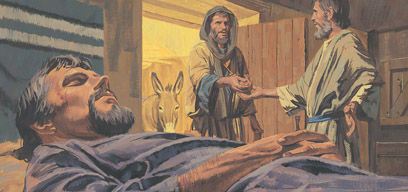
10. Then Jesus gave them a parable, telling of the man who was attacked and robbed on the road to Damascus.

11. And there came by a Samaritan, who seeing that the man was injured and near to death, took him to an inn and starved him.

12. “I tell you, the Samaritan was a neighbour to the man attacked by robbers. Go and do thou likewise.”

Good Samaritan

“See that he doesn’t get any food or drink.”

Posted in Uncategorized | 2 Comments

THE WORLDWIDE REJECTION OF THE WAY THE LIVERPOOL HOSPITAL TREATED ALFIE EVANS CONTINUES TO GROW

German doctor on Alfie Evans: UK could learn from Nazis how disabled should NOT be treated

Featured Image
Alfie Evans on April 23, 2018 hours before he was removed from his ventilator. Thomas Evans / Facebook screen-grab

Save Alfie Evans! Tell the hospital to let his parents take him home. Sign here.

MUNICH, Germany, April 27, 2018 (LifeSiteNews) – A leading German pediatrician is saying that the way the UK’s National Health Service (NHS) is dealing with disabled toddler Alfie Evans and his parents would never happen in his country given its history with the Nazi regime.

“We have learned in Germany because of our history, that there are things that you do not do with severely disabled patients,” Professor Nikolaus Haas, head of the Child Cardiology and Pediatric Intensive Medicine Unit at Munich University Hospital, told Germany’s Die Welt newspaper in an April 26 article.

“Our ethical understanding in Germany is different, I mean – thank God. The [hospital’s] logic that it is better for the child to die than that someone else looks at it, and even to sue [for that] in court, this is an unimaginable behavior for me,” he said.

Professor Haas may have been referring to the euthanasia program of Nazi-ruled Germany in which, between 1939 and 1945, thousands of children with mental or physical disabilities were exterminated.

IMPORTANT: For live updates on the Alfie Evans case click here

Alfie Evans, who is just under the age of two, remains in Alder Hey hospital in Liverpool after being removed from his ventilator Monday evening. He defied doctors’ expectations by beginning to breathe on his own.  Parents Tom and Kate have been fighting every step of the way for their son to be given oxygen, food, and water. They have asked the courts to allow their son to travel to Italy for treatment, but in a series or rulings this week, the courts sided with the hospital.

A video taken Monday evening by Tom Evans, on what was supposed to be his son’s “execution” day, shows the 23-month-old toddler responsive and alert, blinking and looking around the room.

A group of British doctors condemned on Tuesday what they called Alder Hey’s “medical tyranny” regarding the care of Alfie.

“We are deeply concerned and outraged by the treatment and care offered to Alfie Evans,” the doctors wrote. “Actions such as these have now brought the Alder Hey Hospital to worldwide attention and by extension bring our whole profession into disrepute,” they added.

Yesterday Tom Evans read what many called a “hostage letter” in which he asked that Alfie supporters leave hospital grounds and “allow myself, Kate and Alder Hey to form a relationship, build a bridge and walk across it.”

Meanwhile, a British Politician launched a campaign yesterday for “Alfie’s law” to give parents more say over their children’s medical care.

18.06 GB (18%) of 100 GB used
Last account activity: 26 minutes ago

Details

Posted in Uncategorized | 1 Comment