“The time will come when men will not put up with sound doctrine. Instead, to suit their own desires, they will gather around them a great number of teachers to say what their itching ears want to hear” (2 Timothy 4:3). THAT TIME HAS COME !!!

c0e0c-spadaro-pope

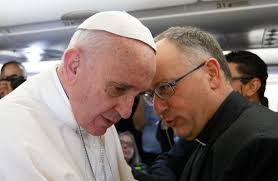
Francis and Father Spadaro

JANUARY 8, 2018

The Triumph of the People’s Church

ANNE HENDERSHOTT

CRISIS MAGAZINE

{ Abyssum }

Continuing his commitment to a doctrinal vision that prioritizes the lived experiences and insights of ordinary Catholics over the authoritative teachings of the Church, Pope Francis recently affirmed the importance of what he called a “free and responsible” form of Catholic theology—a “creative fidelity”—in the life of the Church. Speaking before a Vatican gathering of 100 members of the Italian Theological Association last month, Pope Francis advised the theologians to remain “anchored” to the teachings of Vatican II, by “proclaiming the Gospel in a new way” to a rapidly changing world.

This is not the first time that Pope Francis has called on theologians to embrace the spirit of Vatican II by announcing the Gospel in a new way, “more consonant with a profoundly different culture and world.” From the first days of his pontificate, Pope Francis has privileged a form of “Popular Catholicism” that prioritizes the insights, the beliefs, and the practices that emerge from the people themselves. The word “popular” does not refer to “prevalent,” rather, it refers to the religious practices and beliefs that emerge from the people themselves—not the priests. Emphasizing the contextual nature of all theological reflection, “Popular Catholicism” maintains that theology must always be cultural and historical. From this perspective, any attempt to de-culturize the theological and religious expressions of a community is dehumanizing because it rejects the authentic experience of the people.

Emerging in Latin America, as a way for Latino Catholics to differentiate themselves from the ways in which Catholicism was practiced in Spain, Popular Catholicism was originally a symbol of freedom—a rejection of the colonial dominance of the Roman Catholic Church in Spain. A leader of this movement has been theologian Orlando Espin, a professor of religious studies at the University of San Diego and director of the Center for the Study of Latino/a Catholicism at the university. In his 1999 edited collection of essays (published by Orbis Books) entitled From the Heart of Our People, Espin emphasizes the “contextual nature” of all theological reflection and maintains that theology is always cultural and historical. Espin maintains that the consequence of this cultural emergence is that elites—or those Espin calls the “hegemonic group and their allies,” have been successful in using the symbols and ideologies of religion to “oppress the marginalized.” Especially critical of those theologians who privilege the ecclesiastical institution as the witness to “true Catholicism,” Espin maintains that “the real daily life religion of most Catholics is regarded as an adulterated version of the institutional norm.”

Hardly a marginal figure in the Popular Catholicism movement, Espin has been a longtime leader of this movement to reject the religious authority of the hierarchy in favor of the more authentic lived experience of the people. Such a turn requires theologians to use what Pope Francis calls “creative fidelity” to allow the Church to be “rejuvenated by the perennial novelty of the Gospel of Christ.”

Highly respected by left-leaning national and international theologians, Espin was awarded the highest honor last year from the Catholic Theological Society of America—the world’s largest professional society of Catholic theologians. Receiving the John Courtney Murray Award for his “lifetime of distinguished theological achievement,” Espin, a priest of the Orlando diocese who no longer appears to function as a priest, and is currently married to his same-sex partner, thanked his “husband,” Ricardo Gallego, during his acceptance speech.

It is clear that after decades in the shadows, Popular Catholicism is now ascendant under the papacy of Pope Francis. This is in contrast to his predecessors. Both Pope St. John Paul II and Pope Benedict had spoken harshly about the dangers of a Church that was “born of the people.” Pope St. John Paul II gave a stern rebuke to the Latino theologians in 1983—publishing a letter to the Nicaraguan bishops denouncing the “people’s church” in especially harsh terms. In a speech that was reported on the pages of The New York Times on March 5, 1983, the pontiff predicted that “The Church born of the people is a new invention that is both absurd and of perilous character … only with difficulty, could it avoid being infiltrated by strangely ideological connotations.”

In 1984, Joseph Cardinal Ratzinger offered An Instruction On Certain Aspects of the Theology of Liberation in which he warned about the dangers of the “diverse theological positions,” and the “badly defined doctrinal frontiers” of this movement. Continuing the concerns of his predecessor in 2007 at a private Mass with his former doctoral students, Pope Benedict delivered a talk against theological arrogance by warning against theologians who “only talk in the end about ourselves [and] don’t go beyond ourselves and beyond people.”

As Pope St. John Paul II predicted, Popular Catholicism appears to have already been infiltrated by “strangely ideological connotations.” Many of today’s most highly regarded theologians—like Orlando Espin—draw from the same ideology, and implement the same language and methods of the liberation theologians of the past. In some ways, they are even more radical in their agenda than those of the past because they are now provided with theological cover from Pope Francis himself.

In contrast, many orthodox theologians in the Vatican have been publicly humiliated or removed from their positions. Cardinal Robert Sarah, the prefect of the Congregation for Divine Worship, saw Pope Francis replace sympathetic congregation members with critics who oppose his liturgical reforms and publicly rebuked the cardinal for promoting traditional liturgical practices. Pope Francis also refused to allow Cardinal Gerhard Muller serve a second term as prefect of the Congregation for the Doctrine of the Faith. Pope Emeritus Benedict has praised both of them following these actions by Pope Francis. It is clear that Pope Emeritus Benedict continues to support faithful Catholic theologians. In an interview with Cardinal Muller that was excerpted in the Catholic Herald, the cardinal said that Benedict was “disappointed” with the decision by Pope Francis to remove the cardinal from the head of the CDF. Stating that he had “defended the clear traditions of the faith” while in office, Cardinal Muller told the reporter that Pope Francis had dismissed him without explanation: “He did not give a reason, just as he gave no reason for dismissing three highly competent members of the Congregation for the Doctrine of the Faith a few months earlier.”

These are perilous times for the Church as Popular Catholicism continues to gain ascendancy. It is difficult to predict where all of this will take us. In his recently published book, The Power of Silence, Cardinal Robert Sarah suggests that the Church is in danger of sliding into the same kinds of worldly preoccupations that the Church in Latin America concerned itself with in the 1980s. Cardinal Sarah suggests that we are in danger of moving away from our concern for the salvific mission of the Church. It may be up to the laity to continue that work—along with the remnant of faithful theologians who courageously continue to guide us.

Tagged as Cardinal Gerhard MullerCardinal SarahOrlando EspinPope Francis,Progressive CatholicsTheological Dissent

By Anne Hendershott

Anne Hendershott is Professor of Sociology and Director of the Veritas Center at Franciscan University in Steubenville, Ohio. She is the author of Status Envy: The Politics of Catholic Higher Education; The Politics of Abortion; and The Politics of Deviance (Encounter Books). She is also the co-author of Renewal: How a New Generation of Priests and Bishops are Revitalizing the Catholic Church (2013).

+++++++++++++++++++++++++++++++++++++++++++++++++++++++++++++++++++++++++++++

What does 2 Timothy 4:3 mean by itching ears?


Question of the Week.com

Question: “What does 2 Timothy 4:3 mean by itching ears?”

Answer: The apostle Paul wrote a warning for the church: “The time will come when men will not put up with sound doctrine. Instead, to suit their own desires, they will gather around them a great number of teachers to say what their itching ears want to hear” (2 Timothy 4:3).

The Greek word translated “itching” literally means “to itch, rub, scratch, or tickle.” To want one’s ears “tickled” is to desire massages rather than messages—sermons that charm rather than challenge, entertain rather than edify, and please rather than preach. The people Paul warns about will have, as one commentator put it, “ears which have to be continually titillated with novelties.”

“Itching ears” is a figure of speech that refers to people’s desires, felt needs, or wants. It is these desires that impel a person to believe whatever he wants to believe rather than the actual truth itself. When people have “itching ears,” they decide for themselves what is right or wrong, and they seek out others to support their notions. “Itching ears” are concerned with what feels good or comfortable, not with the truth—after all, truth is often uncomfortable. Paul’s warning is that the church would one day contain those who only opened their ears to those who would scratch their “itch.”

Those with “itching ears” only want teachers who will assure them that all is well, teachers who say, “Peace, peace . . . when there is no peace” (Jeremiah 6:14). Where there is a demand for something, the suppliers are not far away. Paul says that not only will there be great demand for watered-down, personalized messages, but there will be “a great number of teachers” willing to provide such pap and steer people away from “sound doctrine.”

Evidence today of people having “itching ears” includes the popularity of messages that people are not required to change, as if repentance were outmoded; that people are basically good; that God is too loving to judge anyone; that the cross, with all its blood, is not really necessary; and that God wants His children to be healthy, wealthy, and content in this world. As people turn their backs on the truth about sin and condemnation, they disregard their need for repentance and forgiveness. And a craving for “new” and “fresher” ideas grows—even though there is “nothing new under the sun” (Ecclesiastes 1:9–10)—accompanied by a longing to feel good about who they are and where they’re going. Messages that tickle ears can fill a lot of churches, sell a lot of books, and buy a lot of time on cable tv.

Some of the early followers of Jesus complained about some of the Lord’s words: “Many of his disciples said, ʻThis is a hard teaching. Who can accept it?’ . . . From this time many of his disciples turned back and no longer followed him” (John 6:60, 66). Walking away from hard truth is easy to do.

In today’s postmodern church, we see many walking away from the hard truth. Some churches that once preached sound doctrine now teach as acceptable the very evils the Bible condemns. Some pastors are afraid to preach on certain passages of the Bible. “Christian feminists” deny God as a heavenly Father, calling Him a “she.” “Gay Christians” are not only welcomed without repentance into church fellowship but into the pulpit, as well.

The church’s remedy for those who have “itching ears” is found in the same passage of 2 Timothy: “Preach the word; be prepared in season and out of season; correct, rebuke and encourage—with great patience and careful instruction” (2 Timothy 4:2). It is a solemn charge, made “in the presence of God and of Christ Jesus, who will judge the living and the dead, and in view of his appearing and his kingdom” (verse 1). And it contains all the elements needed to combat the temptation to tickle ears: preach, correct, rebuke, and encourage. The content of preaching must be the written Word of God, and it must be preached when convenient and when inconvenient. This takes “great patience and careful instruction,” but sound doctrine is worth it.

The church’s quest to manage the comfort level of its audience must never take priority over preaching the Word. The fear of offending people’s sensibilities can never supersede the fear of offending God. Rather, the church should follow the example of the apostles: “We have renounced secret and shameful ways; we do not use deception, nor do we distort the word of God. On the contrary, by setting forth the truth plainly we commend ourselves to every man’s conscience in the sight of God” (2 Corinthians 4:2).

The church today, more than ever, needs to re-examine the teachings it endorses. We need to ask ourselves the following questions:

• Are our teachings truly from God or simply itches we want to scratch?
• Are we standing on solid biblical grounds, or have we allowed the world to influence our thinking?
• Have we guarded ourselves from the schemes of Satan (Ephesians 6:11)?
• Are we keeping ourselves “blameless for the coming of our Lord Jesus Christ” (1 Thessalonians 5:23)?

The truth is, God is not concerned with scratching our itches but in transforming us into the image of His Son (Romans 12:2; 2 Corinthians 4:4).
 

Posted in Uncategorized | 1 Comment

BRANDEMUELLER: “EVEN IF HE APPEARS TO BE SLEEPING, JESUS IS STILL IN THE BOAT.”

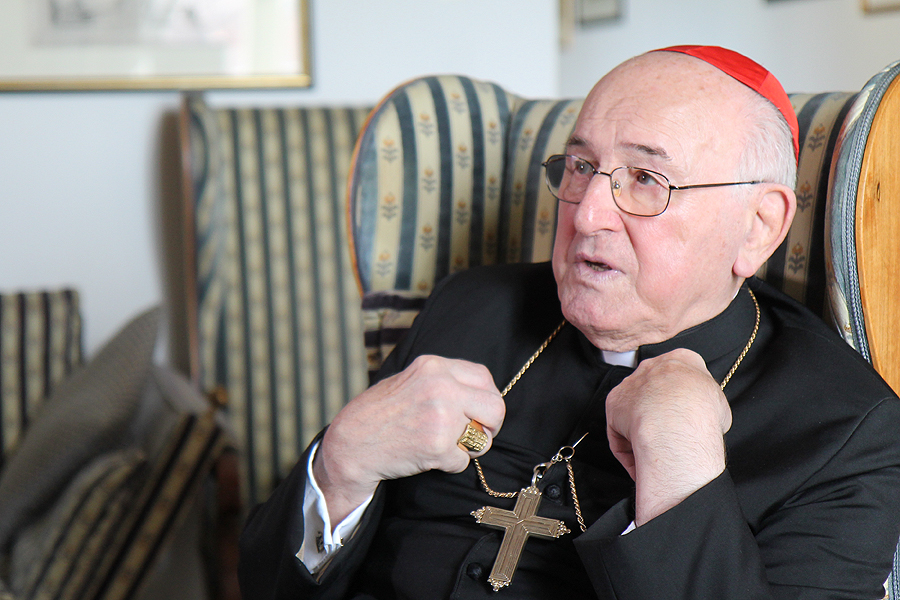
Cardinal Brandmüller on How the Dubia Should be Answered

OnePeterFive

FacebookTwitterEmailPocketGoogle+

In a new 30 December interview with Armin Schwibach, the Rome Correspondent of the Austrian Catholic website Kath.net, German Cardinal Walter Brandmüller — one of the signatories of the dubia concerning Pope Francis’ document Amoris Laetitia — has again repeated the five questions of the dubia that were submitted to the pope over a year ago and proceeds to explain how, and implicitly why, they must be answered in accordance with the moral teaching of the Catholic Church.

The German prelate sums up the five dubia as follows:

1.) Can a person who is bound by an existing sacramental bond and who now lives with a new partner in a marital relationship (AL, no 305; footnote 351) receive, in certain cases, “absolution and Communion”?

2.) Are there absolute moral commandments, respectively, interdicts, which are binding without exception and under all circumstances (such as the killing of an innocent person)?

3.) Is it still true that someone who lives continuously in the state of adultery finds himself, objectively, in the state of grave sin?

4.) Are there situations in life which mitigate the moral responsibility to such an extent that an immoral act (here: adultery) can thereby be morally excused, or even justified?

5.) Can a personal decision of conscience permit exceptions from the absolute interdiction of intrinsically immoral acts?

Brandmüller then proceeds to explain how these five questions should be answered in light of the Church’s moral teaching:

As you see, these [five] questions are pertaining to the foundations of the Faith and of the [Church’s] moral teaching. According to those [foundations], the questions 1, 4, and 5 should be clearly answered with “No,” and the questions 2 and 3 with “Yes.”

The astute observer might notice that the answers to the summarized dubia proposed by Brandmüller are somewhat different than those commonly circulating in the English-speaking world, which are often phrased as “No, Yes, Yes, Yes, Yes”. This discrepancy, however, is merely a matter of formulation. To avoid confusion, a brief explanation seems appropriate. Whereas, for example, in our own analysis of the five dubia the moral question was phrased such that it had to be answered in the affirmative on points 4 & 5, Brandmüller posits the same basic questions in such a way that they must be answered in the negative; i.e, “5. Does the Church’s teaching that an appeal to conscience cannot overcome absolute moral norms still hold true?” vs. “5. Can a personal decision of conscience permit exceptions from the absolute interdiction of intrinsically immoral acts?” The answer in the first case would be “yes,” the answer in the second would be “no,” but the same moral principle is being stated in both cases.

It is not the first time in recent months that Cardinal Brandmüller has spoken out on this issue. In October of 2017, he made strong remarks concerning those who claim that there might be exceptions with regard to adulterers and their possible access to the sacraments:

[H]e who claims that one may enter a new relationship while one’s own lawful wife is still alive is excommunicated because this is an erroneous teaching, a heresy. Whoever does make such a claim [is excommunicated]. […] Thus, if someone thinks he can contradict the defined Dogma of a General Council [e.g., Council of Trent], then that is indeed quite vehement. Exactly that is what one calls heresy – and that means exclusion from the Church – because one has left the common foundation of Faith. [emphasis added]

In the new interview, Schwibach also touches upon the matter of the recent praise of Martin Luther as it has been expressed by different prelates in Rome. For Cardinal Brandmüller, Martin Luther — while starting out with some reasonable concerns and criticisms — wound up not wanting to reform the Church, but to change her. However, “the Church of Jesus Christ can and shall always become ‘different’, that is to say, more perfect.” In quoting a Protestant Church historian, Franz Lau,  Brandmüller shows that Luther wanted a “radical revolt.” Luther intended specifically – as expressed in his own text addressed “To the Nobility of the German Nation” – to tear down three walls. As the German cardinals explains:

For him [Luther], the first wall was the priesthood based on the holy ordination; the second was the Magisterium of the Church based on the Mission given by Jesus Christ; the third was the existence of the papacy. That these three ‘walls’ have a firm biblical foundation, did not interest the angry Augustinian monk. Now that he has torn down all these three walls, Luther sees that the whole edifice of the papal Church has collapsed. To state that this total destruction is a “work of the Holy Ghost” is a thoroughly bizarre claim which can only be explained with the plain and simple ignorance of historical texts and facts – an ignorance which is more than astonishing for a bishop. [emphasis added]

A specific reference is being made here to Bishop Nunzio Galantino who had recently made such an erroneous statement about and praise for Martin Luther in October of 2017. (Galantino has been the Secretary-General of the Italian Bishops’ Conference since December of 2013.)

Beside this debate concerning the role of Martin Luther, Cardinal Brandmüller also discusses the current claim that man may chose his sexual orientation and may change it if desired. The prelate calls such an attitude a “nearly perverse revolt against the order of creation, against the nature of man as willed and created by God.” He adds: “To act against it [created nature] means the self-destruction of man. It would be a deceptive downplaying.” Brandmüller continues, saying:

It is indeed highly worrisome that the ideological confusion goes so far that one thinks one can carry subjectivism to extremes. That would then be the “No” to one’s own createdness and to the Creator. Man on the throne of God! A grotesque, absurd, and apocalyptic idea.

When discussing the question as to whether the Church should approach with an indulgent attitude those who are at her peripheries, leaving and allowing them to remain in the state they find themselves to be in, Cardinal Brandmüller makes it clear that “Jesus Christ Himself did not preach: ‘stay where you are’; rather, He said: ‘Convert and believe in the Gospels!’” The German cardinal, a Church historian and former President of the Pontifical Committee for Historical Sciences, then criticizes the Church’s current lack of missionary zeal to help these people when he says:

That one exhausts oneself with struggles within the Catholic Church, rather than being concerned about the eternal salvation of the many [outside], shows a shocking lack of spiritual vitality of the Catholics in our days.

Leaving the readers with some encouraging words, the cardinal adds: “The Lord was and is still in the boat, even if He seems to be sleeping.”

Posted in Uncategorized | 5 Comments

LIGHTNING STRUCK THE DOME OF ST. PETER BASILICA ON THE DAY JORGE BERGOLIO WAS ELECTED AND SUNDAY WHEN HE VISITED HIS LGBTG NATIVITY SCENE IN THE PIAZZA THE SKY WAS FILLED WITH SCREAMING SCAVENGER BIRDS

Eyes Opened, Life Site News

“Eerie and ominous” Sign: “the screaming, scavenging birds circling over the Vatican like a dead carcass”

“Eerie and ominous” Sign: “the screaming, scavenging birds circling over the Vatican like a dead carcass”

A sign indeed, to those who use their spiritual eyes to see.

ROME, January 2, 2018 (LifeSiteNews) — Would Pope Francis say anything about this year’s Vatican nativity scene — which was so clearly meant as a nod to the LGBT lobby — when he paid it a visit on New Year’s Eve?

He spoke not a word of course, but instead blessed it and chuckled as a few dignitaries, responsible for what some have called a “hideous” and “sacrilegious” crèche, gave him a guided tour.

And yet something very eerie and ominous happened that evening.

At exactly the same time as the Pope left St. Peter’s Basilica and walked to the crèche in St. Peter’s Square, a squabble of about 500 seagulls suddenly flew up from behind the basilica and circled around the crèche.

They swarmed above the nativity scene, squawking and squealing for about the exact time it took for the Pope to walk from the basilica to the crèche. They then disappeared into a night sky lit up by an almost full moon.

Many had been wondering what the Pope might say about the nativity scene. Facebook had banned users posting the figure of a naked man in the crèche, and when LifeSite revealed its creators came from Montevergine, a town with close links to Italy’s LGBT community, its sordid nature became clear.

The naked, athletic figure was ostensibly meant to be a poor man, showing one of the seven corporal works of mercy (clothing the naked) while other disturbing figures, in what is normally a scene of holy innocence and purity, showed a dead man covered in a blanket (burying the dead) and what looked like a decapitated head behind iron bars (visiting prisoners).

That the Pope should remain silent about the crèche, which even the Italian police in the square disliked and thought “strange,” is not surprising as he had seen the plans for the crèche weeks ago and had given it his approval.

Also the timely appearance of the seagulls, who scavenge on any filth they can find, is actually not new to St. Peter’s Square during this pontificate.

In the adjoining piazza and around the colonnade, passers-by have been shocked at the degradation and squalor that emerges there at night. The seagulls descend on the headquarters of the Church and pick at rubbish bins, leaving debris strewn across the sidewalks and roads.

The homeless are allowed to bed down under main thoroughfares and archways, on the outskirts of the colonnade and in front of the Holy See press office. Often they are drunk and disorderly, sometimes threatening passing tourists hoping to get a shot of the basilica.

For all of the Pope’s worthy outreach to the poor and the homeless, he hasn’t lifted them up and off the streets, but instead created a culture of homelessness around the Vatican.

Some have called the miserable scene “apocalyptic.”

And yet the general waste and degeneration, the screaming, scavenging birds circling over the Vatican like a dead carcass, is perhaps highly symbolic of this pontificate, one that many see leading the Church in the direction of a kind of death.

And all the time that the degradation and squalor continue in the Church — both physically and morally — no one is really speaking up and coming to her rescue.

Read the full article atLife Site News

Anthony H. Wagner

‘Eerie and ominous’ sign appears as Pope Francis visits Vatican Nativity

ROME, January 2, 2018 (LifeSiteNews) — Would Pope Francis say anything about this year’s Vatican nativity scene — which was so clearly meant as a nod to the LGBT lobby — when he paid it a visit on New Year’s Eve?

He spoke not a word of course, but instead blessed it and chuckled as a few dignitaries, responsible for what some have called a “hideous” and “sacrilegious” crèche, gave him a guided tour.

And yet something very eerie and ominous happened that evening.

At exactly the same time as the Pope left St. Peter’s Basilica and walked to the crèche in St. Peter’s Square, a squabble of about 500 seagulls suddenly flew up from behind the basilica and circled around the crèche.

They swarmed above the nativity scene, squawking and squealing for about the exact time it took for the Pope to walk from the basilica to the crèche. They then disappeared into a night sky lit up by an almost full moon.

Image
Seagulls flying above the Vatican Nativity

Many had been wondering what the Pope might say about the nativity scene. Facebook had banned users posting the figure of a naked man in the crèche, and when LifeSite revealed its creators came from Montevergine, a town with close links to Italy’s LGBT community, its sordid nature became clear.

The naked, athletic figure was ostensibly meant to be a poor man, showing one of the seven corporal works of mercy (clothing the naked) while other disturbing figures, in what is normally a scene of holy innocence and purity, showed a dead man covered in a blanket (burying the dead) and what looked like a decapitated head behind iron bars (visiting prisoners).

That the Pope should remain silent about the crèche, which even the Italian police in the square disliked and thought “strange,” is not surprising as he had seen the plans for the crèche weeks ago and had given it his approval.

Also the timely appearance of the seagulls, who scavenge on any filth they can find, is actually not new to St. Peter’s Square during this pontificate.

In the adjoining piazza and around the colonnade, passers-by have been shocked at the degradation and squalor that emerges there at night. The seagulls descend on the headquarters of the Church and pick at rubbish bins, leaving debris strewn across the sidewalks and roads.

The homeless are allowed to bed down under main thoroughfares and archways, on the outskirts of the colonnade and in front of the Holy See press office. Often they are drunk and disorderly, sometimes threatening passing tourists hoping to get a shot of the basilica.

For all of the Pope’s worthy outreach to the poor and the homeless, he hasn’t lifted them up and off the streets, but instead created a culture of homelessness around the Vatican.

Some have called the miserable scene “apocalyptic.”

And yet the general waste and degeneration, the screaming, scavenging birds circling over the Vatican like a dead carcass, is perhaps highly symbolic of this pontificate, one that many see leading the Church in the direction of a kind of death.

And all the time that the degradation and squalor continue in the Church — both physically and morally — no one is really speaking up and coming to her rescue.

Posted in Uncategorized | 1 Comment

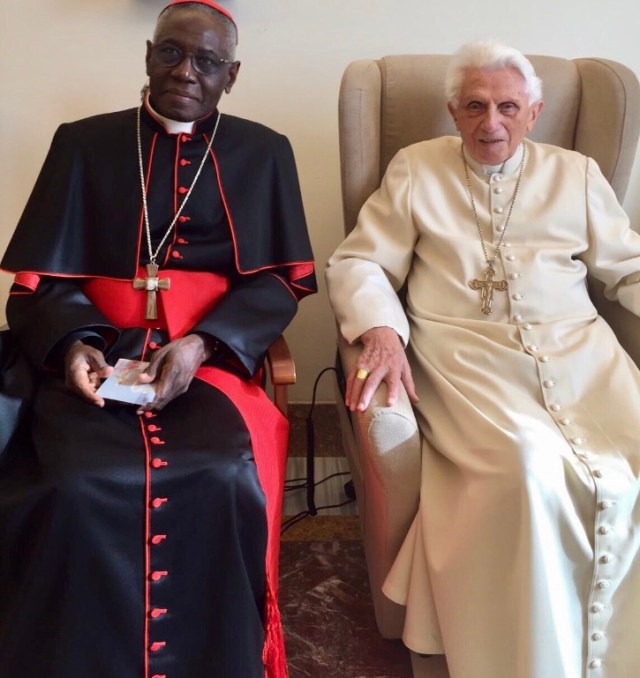
GOD BLESS POPE BENEDICT AND CARDINAL SARAH

IMG_0816

Posted in Uncategorized | 3 Comments

A WOMAN (ITALIAN) IN THE MAKING


hat tip: james ridley

Posted in Uncategorized | 1 Comment

ISLAM IS MOSTLY POLITICAL AND ONLY TO A VERY SMALL EXTENT RELIGION

Islam in the Public Square


CRISIS MAGAZINE

Secularists like to advise Christians that, for the sake of social harmony, they ought to keep their religion to themselves. Religion, they argue, is a private affair between an individual and his designated deity, and ought not to be dragged into the public square. Moreover, they helpfully add, it’s an imposition on others to confront them with beliefs that they may find offensive.

As for themselves, secularists have no qualms about imposing their own values on everyone within reach. They are convinced of the rightness of their beliefs, and consequently they don’t think twice about forcing Christian bakers, florists, and photographers to endorse gay weddings. They are also convinced that they know what’s best for your children. And what’s best for them, they are quite certain, is that they learn all the latest fashions in gender identity and marriage equality.

In his groundbreaking 1984 book, The Naked Public Square, Richard John Neuhaus argued that the public square can never be naked for long. In other words, it cannot be neutral about values: “If it is not clothed with the ‘meanings’ borne by religion, new ‘meanings’ will be imposed by virtue of the ambitions of the modern state.”

In short, the committed secularist won’t be satisfied with the removal of the crèche from the town square. He’ll insist that it be replaced with something that more accurately reflects American diversity—say, a monument to Margaret Sanger or a statue of James Obergefell. Of course, secular society’s reach extends well beyond the town green. The religion of secularism is constantly being advanced in a variety of venues—in courtrooms, school rooms, and in the newly remodeled bathrooms that accommodate the newly invented genders.

Fr. Neuhaus was right in predicting that “a perverse notion of the disestablishment of religion leads to the establishment of the state as Church.” The secular state quickly moves to enshrine whatever values it currently smiles upon. And it defends them as though they were divinely revealed dogma. But, despite his prescience, Neuhaus did fail to anticipate another development—namely, that the Judeo-Christian tradition might be displaced from the public square not only by the state, but also by another religion.

The possibility that Islam would one day be a contender for control of the public square probably didn’t enter his mind. That’s no surprise. Except for the blip caused by the Iranian Revolution, Islam wasn’t on anyone’s radar in the early eighties. Yet Islam is now well on its way to controlling the public square in parts of Europe. And, were it not for the election of Donald Trump and the defeat of the Muslim Brotherhood-friendly Clinton machine, the U.S. would now be playing catch-up.

As has often been observed, Islam is a political religion. Some, like Dutch MP Geert Wilders, contend that it is almost totally political with only a thin and deceptive veneer of religiosity. Whatever the exact proportion of politics to religion, it’s hard to deny that the political dimension looms large in Islam. Muhammad, after all, was a warlord. He conquered all of Arabia, and within a relatively short time after his death, his followers conquered an area larger than the Roman Empire. Sayyid Abul A’la Maududi, one of the most important twentieth-century Islamic theorists, wrote that “Islam requires the earth—not just a portion, but the whole planet.”

But, although Islamists think globally, they are patient enough to act locally. In European cities these days it’s not unusual to be forced to take a detour because the street ahead has been blocked by Muslims kneeling in prayer. Ostensibly, these gatherings are meant to demonstrate that there are not enough mosques, and that therefore the government must pay for more to be built. The ulterior agenda is to stake a territorial claim. It’s the Islamic version of “we’re here, we’re queer, and we’re in your face.” In this case, “We’re here, there are quite a number of us, and we’re ready for a confrontation. Give us what we want, or we can make your life unpleasant.”

Sometimes, the public square is literally a public square, or a street, or a park. Controlling the public square does not necessarily entail control of geographical territory, but it helps. And Muslims actually do control an increasing number of the public streets on the continent. When Muslims migrate to Europe, they tend to congregate in ghettos, some of which have earned the label “no-go-zones” because they are largely off-limits to non-Muslims. As Europeans are now discovering, such concentrated population pockets provide quite a bit of political leverage.

Some observers say that these Muslim enclaves are part of a deliberate strategy to Islamize Europe. They act to deter assimilation, and they allow Muslim leaders to gain a high degree of control over the Muslim population. In addition, the “zones” facilitate the formation of voting blocs and make it easier for Muslim activists to apply pressure to local and national governments.

Like secularists in the U.S., Muslims in Europe and the UK are accustomed to making demands, and equally accustomed to having their demands met. Whether the demand is for halal menus, prayer rooms in schools, special washing facilities, or exemption from Holocaust studies, European Muslims usually get what they want.

Islamists and secularists share a desire to monopolize the public square. Both also see Christians as a particular enemy of their expansionist ambitions. Consequently, both seek to minimize the influence of Christianity in the public square. Although Muslims in the West lack the numbers to directly limit the influence of Christians, they can do so indirectly by letting it be known that they are mightily offended by various Christian beliefs and practices. They can then rely on state and local authorities and lukewarm Christians to do the rest.

Thus, many of the traditional Christmas markets in Europe have been given new, non-offensive titles. Amsterdam’s Christmas Market is now “Winter Parade,” Brussels’ is now “Winter Pleasures,” and so on—“Wintermarkt,” “Winterville,” “Winter Festival”: anything but “Christmas Market.”

Secularists are already inclined to de-Christianize Christmas, and the fact that many Muslims are offended by Christmas gives them an excuse to speed up the process. In Luneburg, Germany a school Christmas party was postponed because a Muslim student complained about the singing of Christmas carols. In London, the All-Party Parliamentary Group on British Muslims issued a report aimed at drawing attention to the humanity of Muslims during Christmas. The report was titled “A Very Merry Muslim Christmas.” In Langon, France, teachers pulled 83 students out of a showing of The Star, an animated movie about the birth of Jesus, once it dawned on them that the subject was “too Christian.”

In Muslim-majority countries, restrictions on Christians are much more severe. Christians who try to take their religion with them into the public square risk jail or even execution at the hands of vigilante mobs. This attitude goes back to the beginnings of Islam—to the “Conditions of Omar” which were established by the second Caliph shortly after the death of Muhammad. The “Conditions” were a list of “dos” and “don’ts” that governed the lives of conquered Christians. Among other things Christians:

  • were not allowed to build or repair churches
  • were not to clang cymbals except lightly, and were not to sing loudly.
  • were not to display crosses on churches or raise their voices in prayer.
  • were not to make their religion appealing, nor try to convert anyone to it.

These rules, which are now being re-established in many Muslim countries, display an attitude toward Christianity that is quite similar to that of today’s secularists: keep it quiet, keep it to yourself, and keep it out of the public square. For the time being, Muslims and secularists are working in tandem to exclude Christians from the public squares. If and when that goal is accomplished, Muslims in the West will almost certainly move to push secularists to the sidelines. Once they have served their purpose, the services of committed secularists will no longer be needed.

But for the time being, Christians still have time to recognize the double threat and reassert their own values and beliefs. Thanks to Richard Neuhaus, many Christians do understand the importance of the public square. They realize that they can’t afford to confine their faith to church and home because if they do, they will eventually be safe neither at church nor at home. There are very practical reasons for Christians not to hide their light under a bushel.

Thanks to Christian thinkers such as Neuhaus, many Christians are well aware that secular society will grab every inch of the public square if they are allowed to do so. It’s high time that Christians also understand that Islam will do the same if given half a chance. Indeed, the subjugation of the public square to Allah is the raison d’être of Islam.

(Photo credit: Rachel Megawhat / Breitbart London)

William Kilpatrick

By

William Kilpatrick taught for many years at Boston College. He is the author of several books about cultural and religious issues, including Why Johnny Can’t Tell Right From Wrong; and Christianity, Islam and Atheism: The Struggle for the Soul of the West and The Politically Incorrect Guide to Jihad. His articles have appeared in numerous publications, including Catholic World Report, National Catholic Register, Aleteia, Saint Austin Review, Investor’s Business Daily, and First Things. His work is supported in part by the Shillman Foundation. For more on his work and writings, visit his website, turningpointproject.com

Posted in Uncategorized | 2 Comments

WHERE IS AL GORE WHEN WE NEED HIM?

image003-4

Posted in Uncategorized | 3 Comments

THE HITHERTO SECRET LIFE OF DONALD TRUMP


 the Other Trump
Please Read this article of Liz Crokin till the end – very interesting indeed !!!!
Good Deeds Will Never Be Mentioned in the News!!!!!
This is the Donald Trump that I have known for over 30 years.
Liz Crokin is an award-winning author, a seasoned journalist and an advocate for sex crime victims. Liz began her journey at the University of Iowa where she received a bachelor’s in journalism and political science.
Trump Does The Unthinkable by Liz Crokin
Donald Trump is a racist, bigot, sexist, xenophobe, anti-Semitic and Islamophobe — did I miss anything?….yup¦  he is also deplorable. The left and the media launch these hideous kinds of attacks at Trump everyday; yet, nothing could be further from the truth about the real estate mogul.
As an entertainment journalist, I’ve had the opportunity to cover Trump for over a decade, and in all my years covering him I’ve never heard anything negative about the man until he announced he was running for president.  Keep in mind, I got paid a lot of money to dig up dirt on celebrities like Trump for a living so a scandalous story on the famous billionaire could’ve potentially sold a lot of magazines and would’ve been a Huge feather in my cap.
Instead, I found that he doesn’t drink alcohol or do drugs, he’s a hardworking businessman.
On top of that, he’s one of the most generous celebrities in the world with a heart filled with more gold than his $100 million New York penthouse.
Since the media has failed so miserably at reporting the truth about Trump, I decided to put together some of the acts of kindness he’s committed over three decades which has gone virtually unnoticed or fallen on deaf ears.
•In 1986, Trump prevented the foreclosure of Annabell Hill’s family farm after her husband committed suicide. Trump personally phoned down to the auction to stop the sale of her home and offered the widow money. Trump decided to take action after he saw Hill’s pleas for help in news reports.
•In 1988, a commercial airline refused to fly Andrew Ten, a sick Orthodox Jewish child with a rare illness, across the country to get medical care because he had to travel with an elaborate life-support system. His grief stricken parents contacted Trump for help and he didn’t hesitate to send his own plane to take the child from Los Angeles to New York so he could get his treatment.
•In 1991, 200 Marines who served in Operation Desert Storm spent time at Camp Jejune in North Carolina before they were scheduled to return home to their families. However, the Marines were told that a mistake had been made and an aircraft would not be able to take them home on their scheduled departure date. When Trump got wind of this, he sent his plane to make two trips from North Carolina to Miami to safely return the Gulf War Marines to their loved ones.
•In 1995, a motorist stopped to help Trump after the limo he was traveling in got a flat tire. Trump asked the Good Samaritan how he could repay him for his help. All the man asked for was a bouquet of flowers for his wife. A few weeks later Trump sent the flowers with a note that read: We’ve paid off your mortgage.
•In 1996, Trump filed a lawsuit against the city of Palm Beach , Florida accusing the town of discriminating against his Mar-a-Lago resort club because it allowed Jews and blacks. Abraham Foxman, who was the Anti-Defamation League Director at the time, said Trump put the light on Palm Beach not on the beauty and the glitter, but on its seamier side of discrimination.  Foxman also noted that Trump’s charge had a trickle-down effect because other clubs followed his lead and began admitting Jews and blacks.
•In 2000, Maury Povich featured a little girl named Megan who struggled with Brittle Bone Disease on his show and Trump happened to be watching.  Trump said the little girl’s story and positive attitude touched his heart.  So he contacted Maury and gifted the little girl and her family with a very generous check.
•In 2008, after Jennifer Hudson’s family members were tragically murdered in Chicago , Trump put the Oscar-winning actress and her family up at his Windy City hotel for free. In addition to that, Trump’s security took extra measures to ensure Hudson and her family members were safe during such a difficult time.
•In 2013, New York bus driver Darnell Barton spotted a woman close to the edge of a bridge staring at traffic below as he drove by. He stopped the bus, got out and put his arm around the woman and saved her life by convincing her to not jump. When Trump heard about this story, he sent the hero bus driver a check simply because he believed his good deed deserved to be rewarded.
•In 2014, Trump gave $25,000 to Sgt. Andrew Tamoressi after he spent seven months in a Mexican jail for accidentally crossing the US-Mexico border.  President Barack Obama couldn’t even be bothered to make one phone call to assist with the United States Marine’s release; however, Trump opened his pocketbook to help this serviceman get back on his feet.
•In 2016, Melissa Consin Young attended a Trump rally and tearfully thanked Trump for changing her life. She said she proudly stood on stage with Trump as Miss Wisconsin USA in 2005. However, years later she found herself struggling with an incurable illness and during her darkest days she explained that she received a handwritten letter from Trump telling her she’s the bravest woman, I know. She said the opportunities that she got from Trump and his organizations ultimately provided her Mexican-American son with a full-ride to college.
•Lynne Patton, a black female executive for the Trump Organization, released a statement in 2016 defending her boss against accusations that he’s a racist and a bigot. She tearfully revealed how she’s struggled with substance abuse and addiction for years. Instead of kicking her to the curb, she said the Trump Organization and his entire family loyally stood by her through immensely difficult times.
Donald Trump’s kindness knows no bounds and his generosity has and continues to touch the lives of people from every sex, race and religion. When Trump sees someone in need, he wants to help.
Two decades ago, Oprah asked Trump in a TV interview if he’d run for president. He said: If it got so bad, I would never want to rule it out totally, because I really am tired of seeing what’s happening with this country.
That day has come.
Trump sees that America is in need and he wants to help.
How unthinkable!
On the other hand. have you ever heard of Hillary or Obama ever doing such things with their own resources?
Now that’s really unthinkable!
Posted in Uncategorized | 1 Comment

THERE ARE NO WINNERS IN NO-FAULT DIVORCE, EVERYONE, INCLUDING SOCIETY LOSES

notre_dame_paris


Non-profit self-studied researcher challenges Priest who is Canon Law Professor at Catholic University of America about his opinion on no-fault divorce.


Fr. John Beal virtually says the civil courts should decide the obligations of parties in marriage break-up, and I found that the obligations must be determined by natural law, divine law, and canon law — not no-fault divorce lawyers and government employees.  Today, I sent open letter to Fr. John Beal, canon law professor at Catholic University of America, because he virtually condones marital abandonment.  I’m asking everybody to send, on their behalf, my message too.


View 50-second promotional video, and share on Facebook HERE.

Same 50-second video on YouTube also HERE


See blog posting showing an open letter and text for copying to anyone’s message HERE


US Bishops should care about this.


MY MESSAGE TO FR. BEAL <beal@cua.edu>


January 1, 2018
The Solemnity of Mary, the Holy Mother of God
Mirror of Justice

Dear Rev. Beal,

With the non-profit organization Mary’s Advocates, I work to reduce unilateral no-fault divorce and support those who are abandoned. We publicize the Catechism and Canon law about separation of spouses and divorce.

This message is an open letter wherein I am asking you to emend your statement in two publications from Catholic University Press.


Although the Church reserves to itself the sole right to judge the validity of the marriages of the baptized, it recognizes the authority of secular courts to deal with the merely civil effects of marital break down. These civil effects include such matters as the distribution of property, child support, spousal support or alimony, custody of minor children, and child support and visitation. (p. 90 Martens. p. 470 Jurist)

Beal, John. Mitis Iudex Canons 1671-1682, 1688-1691: A Commentary. The Jurist 75 (2015): 467-538.

Beal, John. [Link HEREMitis Iudex Canons 1671-1682, 1688-1691: A CommentaryJustice and Mercy Have Met, Pope Francis and the Reform of the Marriage Nullity Process. Ed. Kurt Martens. Washington DC: Catholic University of America Press, 2017. 87-158


You appear to be explicitly condoning marital abandonment and all divorce, while giving the impression that the Church has relinquished its competence over cases of separation of spouses to the civil courts.

The phrase “merely civil effects” of marriage appears in canon 1692 §3, which discusses criteria that must be met before a tribunal judge can exercise the possible option of trying to persuade a spouse to go to the civil courts to manage a case of separation of spouses, rather than the bishop’s administrative venue or the tribunal’s judicial venue. In many states in the US, the only kind of separation available in the civil forum is divorce. So, in practice, the canons regarding approaching the civil forum are applicable to Catholics seeking a civil divorce or civil separation.

CHILDREN

In my research, I find the effects of marriage may be considered as being of a spiritual, temporal, or mixed character. When you say that custody of minor children and child visitation are merely civil effects of marriage, you teach readers that the upbringing of children is a purely temporal/material aspect of marriage. Anyone who has his or her own children would find that impossible.

The Catechism teaches that divorce is immoral, a grave offense against nature and only tolerable under certain criteria about which only the bishop, or his mandated delegate, has competence to judge (CCC 2382-2386). Canon law specifies a spouse has the right to educate his or her children (c. 226). Even for parties that have an invalid marriage, canon law requires that the ecclesiastic judge’s sentence must instruct the parties of their civil and moral obligations toward the upbringing of the children (Mitis Iudex c. 1691 §1, CIC c. 1689). It is a wrongful abdication of responsibility for Church authorities to leave determinations about upbringing of children to amoral no-fault divorce professionals.

No-fault divorce Courts routinely grossly interfere with the ability of an innocent spouse to educate his or her own children in the natural every-day interactions between child and parent. Courts forcibly/coercively separate children much or most of the time from the spouse who did nothing grave to justify separation who was counting on the other spouse to uphold the marriage promises. Furthermore, no-fault divorce Courts give children scandal by ordering children to undergo training sessions where government employees attempt to propagandize children into believing that there is nothing wrong with one or both spouses choosing to break-up the children’s intact home. Courts also give children scandal by forcing them to live with, or spend overnight visits with, the parent that is living with an adulterous partner and keeping no secrets about sleeping with the new partner.

PROPERTY

When you say that distribution of property, child support, and alimony are merely civil effects of marriage, you teach readers that one’s obligation to uphold one’s marriage promises is a purely material/temporal aspect of marriage, about which there are no moral and spiritual obligations. Obligation of marriage include being oriented toward the good of the other, and providing one’s share of mutuum adiutorium toward the other spouse and children in the marital home (cf. 1983 CIC c. 1055, 1917 CIC c. 1013). It is a wrongful abdication of responsibility for Church authorities to leave determinations about material support and property to amoral no-fault divorce professionals.

The civil no-fault divorce courts have no expectation that a party should uphold his or her marriage promises. Consequently, the civil Courts routinely are necessary, material, cooperators with objective evil when the civil courts order the innocent spouse, who wants to keep the family together, to financially equip the abandoner to maintain a second home. In cases in which the Church would judge a marriage to be invalid because one spouse simulated the promise of sexual fidelity or permanence, the civil courts have not respect for natural law which requires one to repair, as much as possible, harm caused to another. In no-fault divorce, the party that simulated is routinely rewarded at the expense of the innocent party.

While money, houses, furniture, household chores, and cars are all material temporal items, there are spiritual or moral obligations associated with these items. For example, if I stole a TV from a store, I would have the moral obligation to pay for it or return it; whether, or not, I fulfill that obligation has an obvious effect on my spiritual life. The obligations of marriage should not be treated with less respect. In no-fault divorce, a woman who selfishly chooses to breakup her marriage will be rewarded with property and support from her husband, though I hope you would agree that she is the one obligated to support the husband and children and repair the damage she causes. If her marriage broke-up because she suffered a grave psychic anomaly at the time of marriage making her incapable of consent, natural law seems to dictate that her putative husband should not have to financially support her, but the no-fault divorce courts routinely make the innocent party, who properly consented to marriage pay, and lose everyday access to his children. Even for parties that have an invalid marriage, canon law requires that the ecclesiastic judge’s sentence must instruct the parties of their civil and moral obligations toward one another (Mitis Iudex c. 1691 §1, CIC c. 1689).

CHURCH COMPETENCE PRIOR TO DIVORCE ACTION

In my work upholding marriage against unilateral no-fault divorce, I have found that some diocesan personnel think that separation and divorce are a private matter wherein one party can petition for divorce and that nothing is wrong with giving government civil courts full control over one’s family. Diocesan personnel are unaware that cases concerning the separation of spouses pertain to the public good (of the Church) and require the intervention of the diocesan Promoter of Justice. To correct this misunderstanding, I have a compiled canonical writing going back to the Council of Trent. Please see 7-page explanation and 107-page exhibits HERE).

I pray you will have time to consider my request to emend your statement about the merely civil effects of marriage, and work to restore to the ecclesiastic forum its proper competence over cases of separation of spouses. Because the United States Constitution forbids state legislatures to interfere with obligations of parties to a contract, and because state courts respect arbitration agreements, the canon lawyers in the US are in a position to join Mary’s Advocates’ movement to protect families from unilateral no-fault divorce.

Sincerely Yours in Christ,

Bai Macfarlane
Bai Macfarlane

Mary’s Advocates

2721 Wagar Road, Rocky River OH 44116


http://www.marysadvocates.org

ma.defending@marysadvocates.org

330-690-8942


“Pray daily for the Roman Rota and for all who work in the sector of the administration of justice in the Church, with recourse to the motherly intercession of Mary Most Holy, Speculum iustitiae.”  Pope Benedict XVI’s Address Jan. 26 2008


Preview YouTube video Catholic Professor Condoning No-Fault Divorce

Catholic Professor Condoning No-Fault Divorce


Posted in Uncategorized | 3 Comments

WHEN YOU SPEAK ENGLISH BE PRECISE


The use of Beautiful English…. this would be a first.!!!
I called an old school friend and asked what was he doing. 
He replied that he was working on “Aqua-thermal treatment of ceramics, 
aluminum, and steel under a constrained environment.”  I was really impressed….

On further inquiry I learned that he was washing dishes 
with hot water… under his wife’s supervision

hat tip: harry hooker
Posted in Uncategorized | Comments Off on WHEN YOU SPEAK ENGLISH BE PRECISE