THE TYRANNY OF THE LEFT IS PROMOTING THOUGHT CONTROL, BE CAREFUL WHAT YOU THINK

Featured Image
Atlanta Fire Chief Kelvin Cochran
Fr. Mark HodgesFr. Mark Hodges

NEWS, ,

Fire chief sacked after defending Biblical marriage takes discrimination case to court

ATLANTA, Georgia, November 20, 2017 (LifeSiteNews) — Atlanta’s former fire chief is suing the city and mayor for firing him two years ago after he wrote and self-published a book on his own time that defended real marriage while describing homosexual behavior as one of the perversions listed in the Bible.

Fire Chief Kelvin Cochran had his day in Federal court last week after he filed a civil rights suit, saying he was discriminated against for his religious beliefs. He has asked to be reinstated as fire chief and to receive back pay.

Alliance Defending Freedom (ADF) Senior Counsel Kevin Theriot argued that the city unjustly fired Cochran, denying him his First Amendment freedoms.

“It’s ironic that the city points to tolerance and inclusion as part of its reasoning,” Cochran said in an ADF press release. “What could be more intolerant and exclusionary than ending a public servant’s 30 years of distinguished service for his religious beliefs?”

During the hearing, U.S. District Judge Leigh May asked attorneys representing the city if the fire chief would have been fired had he penned a book about golf instead of marriage.

Kathryn Hinton, an attorney representing the city, replied with a straight face that “there would have been discipline imposed,” adding, “I believe the content itself was not the ultimate reason.”

The Federal judge said that a jury trial may be called in the spring on whatever issues she cannot resolve.

The lawsuit, which the U.S. District Court for the Northern District of Georgia determined had merit to go forward, charges that Cochran was subjected to retaliation and discrimination based on his viewpoint, and the violation of his freedoms of religion, association, and due process (firing without following proper procedure).

“A religious or ideological test can’t be used to fire a public servant, but that’s what the city did, as the facts of this case clearly demonstrate,” Theriot explained. “Chief Cochran is one of the most accomplished fire chiefs in the nation, but the city’s actions place every city employee in jeopardy who may hold to a belief that city officials don’t like.”

Cochran had a distinguished career of service.  The first black fire chief in Shreveport, Louisiana, he helped the New Orleans Fire Department through Hurricane Katrina.  He served as Atlanta’s fire chief until he was named FEMA’s U.S. Fire Administrator by President Barack Obama.  In 2010, the city of Atlanta lured him back to head the Atlanta Fire Department.

“I got on a plane and I went and I begged Chief Cochran to leave a presidential appointment confirmed by the Senate to come back to the city of Atlanta,” Mayor Kasim Reed said.  Cochran came back and continued to serve with distinction, being named 2012 Fire Chief of the Year.

Cochran attends Elizabeth Baptist Church, where he is a deacon and Bible study leader.  On his own personal time, he wrote a study guide exhorting Christian men to faithfulness, entitled, “Who Told You You Were Naked?”  Cochran says he got permission from the city’s ethics director to publish it, and to include his position as fire chief in its bio.

In the book, Cochran wrote against “sexual acts pursued for purposes other than procreation and marital pleasure in holy matrimony.”  Specifically, he condemned “multiple partners, with the opposite sex, same sex and sex outside of marriage and many other vile, vulgar and inappropriate ways which defile their body-temple and dishonor God.”

Elsewhere, Cochran’s book defines “uncleanness” as “whatever is opposite of purity; including sodomy, homosexuality, lesbianism, pederasty, bestiality, and, all other forms of sexual perversion.”

Cochran gave a copy of his book to friends in the fire department.  He also gave a copy to Mayor Reed in January 2014, and the mayor told Cochran he planned to read it. The book eventually found its way to Alex Wan, an openly homosexual Atlanta Councilman.

After reading the book, Wan pushed for Cochran’s firing. “When you’re a city employee and (have) thoughts, beliefs and opinions different from the city’s, you have to check them at the door,” the councilman said.

Mayor Reed bowed to the pressure and on November 24, 2014, placed Cochran under suspension without pay, causing him to lose over $14,000.  Mayor Reed also ordered him to take “sensitivity training.”

Despite being cleared of any wrongdoing by investigators, upon completion of his unpaid suspension in January 2015, Cochran was fired.

The mayor made it “clear” that the reason he fired Cochran was because “the material in Chief Cochran’s book is not representative of my personal beliefs and is inconsistent with the administration’s work to make Atlanta a more welcoming city.”

“After an investigation… found Cochran did not discriminate against anyone, the mayor fired him anyway –citing as his basis, ironically, the need to tolerate diverse views,” an ADF statement relayed.

“It should not matter that the investigation found no evidence that Mr. Cochran had mistreated gays or lesbians,” the New York Times opined in support of Cochran’s ouster.

“This is appalling… It’s a frightening day in the United States when a person cannot express their faith without fears of persecution,” Georgia Baptist Convention President Robert White lashed.  “It’s persecution when a godly fire chief loses his job over expressing his Christian faith.”

“When someone is disciplined and ultimately terminated because of personal views expressed, that’s the definition of a First Amendment issue,” Faith and Freedom Coalition Executive Director Timothy Head confirmed.

“This is true discrimination.  The LGBT community wants us to be afraid of expressing our Christian beliefs,” Rev. Franklin Graham commented. “They want us to cower in the face of their threats to the livelihoods of believers. But we shouldn’t back down!”

“Just because you sign my paycheck,” Elizabeth Baptist Church Pastor Dr. Craig Oliver told the Atlanta Journal Constitution, “doesn’t mean you can control what I think or say.”

A rally for Cochran delivered over 28,000 signatures to the mayor’s office to support religious freedom legislation before the Georgia House.

Family Research Council president Tony Perkins agreed.  “The naked truth is that the actions taken against the chief are designed to send a message that will silence Christians and in effect force them to ‘check their faith at the door’ of public service,” Perkins said, citing the city councilman’s own words.

Dr. Michael Youseff wrote in Charisma News that Christians “hold no hatred toward homosexuals” or anyone, “and yet, if you believe in biblical truth, the thought police will brandish you as a ‘hater.’“

The American Conservative columnist Rod Dreher wrote that Cochran’s real offense was believing the wrong things.  He took issue with the New York Times’ saying it doesn’t matter that the Atlanta investigation found Cochran did not discriminate against anyone.  “The New York Times believes in thought-crime,” he concluded.

“The LGBT members of our community have a right to be able to express their views and convictions about sexuality and deserve to be respected for their position without hate or discrimination,” Cochran told Fox News. “But Christians also have a right to express our belief regarding our faith and be respected for our position without hate and without discrimination.”

“In the United States, no one should be vilified, hated or discriminated against for expressing their beliefs,” Cochran summarized.

“This is a warning to every American that freedom of speech and freedom of religion are hanging by a thread, which will snap if we don’t fight to preserve these cherished protections,” Cochran admonished.

Reed says Cochran was fired for poor judgment and insubordination, not his religious beliefs.  He adds the charge that Cochran gave unsolicited copies of his book to subordinates.  The mayor also disputes that he was given a copy of the book, and that the city’s ethics director approved its publication.

ADF’s Jeremy Tedesco states the other side.  “Despite being completely exonerated over concerns related to his conduct and how he treats people, the city fired him anyway,” Tedesco said.  “That really goes to show that they fired him for one thing, and that is, he held the wrong beliefs, according to the city.”

“God is going to do great things,” Cochran said, “and He will vindicate me publicly.”

For a summary from Cochran’s viewpoint, click here.

Posted in Uncategorized | 1 Comment

SAINT POPE JOHN PAUL II PREDICTED THE PRESENT CRISIS POSED BY MUSLIM IMMIGRATION INTO EUROPE AND ELSEWHERE


The Terrifying Vision Of Pope John Paul II On Migrant Invasions And The Decline Of Europe

Related image

A never-before published prophecy attributed to Pope John Paul II has been revealed by a close confidant of the former pontiff during a memorial lecture on his life, the contents of which could cause scandal within the increasingly politically-correct Vatican.

Speaking in Italy on October 22nd, Monsignor Mauro Longhi from Trieste, an Opus Dei prelate and for ten years a member of the Vatican’s Congregation for the Clergy, was still a student when he accompanied the Polish pope on summer retreats into the Italian Alps in the 1980s and 90s.

Born Karol Wojtyła in Poland, John Paul II was known for his love of hiking and skiing, and it was during one such mountain retreat in the early 1990s at Bienno, Northern Italy, that the Italian priest claims to have been told of a troubling vision by the pontiff.

“I had looked at him thinking that he might need something,” the longtime friend of John Paul II explained as part of a series of recollections and anecdotes on their friendship, “but he realizes that I am looking at him; he has the shiver in his hand. It was the beginning of Parkinson’s.’’

“Dear Mauro, it is old age”, John Paul joked, before becoming more serious in tone and voice, according to the then student priest, going on to explain his vision.

‘’Remind this to those whom you will meet in the Church of the third millennium. I see the Church of the third millennium afflicted by a mortal plague, which compared to those of this millennium will be deeper, more painful’’, the Polish pope confided, having meant Communism and Nazism as the plagues of his time.


‘’It is called Islam. They will invade Europe. I have seen the hordes surging from the West to the East, from Morocco to Libya, from the Oriental countries towards Egypt.’’


“They will invade Europe. Europe will be a cellar; old relics, twilight, cobwebs. Old family souvenirs. You, the Church of the third millennium, must contain the invasion. But not with weapons. Weapons will not be enough, but with your faith, lived with integrity.”

Emerging from the Italian and French blogosphere in recent days, the story featured in Italian daily, La Stampa, Tuesday, with an article appearing on its Vatican Insider website.

The Turin-based newspaper, at pains to point out John Paul II’s commitment to inter-faith dialogue and bridge-building with the Muslim world, reports that Monsignor Longhi was unaware that his speech was being filmed and is saddened by the ensuing controversy.

The revelations are unlikely to be welcomed by Pope Francis, a liberal on migrant policy, frequently on the receiving end of criticism from conservatives for holding ”naïve” views on immigration into western nations.

Conservative Catholic La Nuova Bussola Quotidiana points out that in his 2003 Apostolic Exhortation, Ecclesia in Europa, the late Pope John Paul II counseled rather that the relationship with Islam must be “prudent“, with clear ideas about “possibilities and limitations“.

‘’It is also necessary to take into account the notable gap between European culture, with its profound Christian roots, and Muslim thought’’, the Polish pope wrote two years before his death.

‘’Public authorities have the responsibility of controlling waves of migration with a view to the requirements of the common good’’, the much-respected Catholic leader wrote in Ecclesia in Europa.

Monsignor Longhi, ordained a priest in 1995, and appointed to the Vatican’s Congregation for the Clergy by Pope Benedict XVI, claimed in his lecture that John Paul II shared with him that he had received visions ever since the celebration of his first Mass, offered for the soul of his father in Wawel Cathedral, Krakow, Poland on November 2nd, 1946.

It remains to be seen how the Vatican will react to the revelation of Monsignor Longhi, and to what, if any, extent the potentially explosive content may inform current church thinking on mass migration from the Islamic world into historically Christian nations.

Posted in Uncategorized | 1 Comment

MY THANKSGIVING DAY MEDITATION


A THANKSGIVING DAY MEDITATION

I began my novitiate year at the Benedictine monastery, Saint Vincent Archabbey, in Latrobe, Pennsylvania in 1952.  There were twelve us in the novice class.  I was the oldest, 29 years old, there was another novice who was several years younger but all the others were 18 and 19 years old.

Every day, after dinner, the novices would spend an hour in recreation in the novitiate garden walking and talking with one another or sitting on benches in the garden engaged in group discussions.

Because novices did not have access to radio, television, and newspapers our conversation never focused on current events or the burning social issues of the day.  Mostly we spoke about monastic life, what we were currently studying and our individual spiritual reading.

Being the oldest novice I was more alert to what was happening when our conversation tended to drift off with longer and longer moments of silence.  At such times, since the purpose of our time in the garden was social interaction I would say something controversial.  Sometimes the other novices would not take the bait but usually I could provoke animated discussion.

The year 1952 was only 36 years after Albert Einstein had proposed his Theory of General Relativity and the excitement in the scientific community had its repercussions in all of society.  I was not yet obsessed, as I am now, with the mystery of gravity.  It is not much help penetrating that mystery to be told that gravity is composed of Gravitons which are subatomic particles, hypothetical elementary particles that mediate the force of gravitation in the framework of quantum field theory. At that time I was obsessed with the reading of history; I was fascinated by the cycles of growth and decline in monasticism and other areas of church and civil life. Everything is changing, consequently some equate change with relativism.

So, the phenomenon of change was usually an underlying element in whatever topic I would throw out.  My favorite tease was “Everything is relative!”

My whole life has been dominated by the realization that God is, and that my existence and everything else that is is because God is.  God is the only absolute that I am aware of.  But, for the sake of provoking discussion I would refrain from mentioning God.  Needless to say, we had many animated discussions during the recreation period in the novices’ garden.

Memories of those discussions come flooding back into my consciousness now as I meditate on the gratitude I owe to God for being the absolute reality of my life.  I am conscious of that reality no matter how distant I drifted away from him in my life, and I have drifted, he was always there giving meaning and purpose to my life even though at those times I was completely unaware of it.

I owe my present awareness of God’s role in my life to a large extent to the thought and writings of Joseph Ratzinger/Pope Benedict XVI.  He has always been the greatest enemy of the virus of relativism.  I thank God for the influence this great pope has had on my life.

The other person I thank God for is Saint Pope John Paul II.  His Encyclical, Veritatis Splendor, is for me that most important magisterial teaching of the 20th Century, greater even than the decrees of the Second Vatican Council.  In a world were we must individually make moral decisions every day, some of eternal significance, the clarity of that Encylical is so amazing that I can understand why Amoris Latitae does not contain a single reference to it; it provides clear answers to the more controversial and ambiguous passages of AL.

This whole train of thought in my meditation began with the vision of Albert Einstein ‘spinning in his grave’ on his hearing Father Spadaro, S,J,’s statement that “sometimes 2+2 = 5.”

It is not true in physics and it is not true in theology.

Everything is not relative!

God is!

I am, and my relation to God is the only reality in my life that is unchanging!!

I will give thanks to God by celebrating the Eucharist;

the very word Eucharist means Thanksgiving.

DEO GRATIAS

Posted in Uncategorized | 2 Comments

MUELLER AND BUTTIGLIONE, FRIENDS AND YET SO FAR APART ON AMORIS LAETITIA

Settimo Cielodi Sandro Magister

Müller and Buttiglione, So Near, So Far

Libro

*

Following the release of the book on “Amoris Laetitia” that bears their signatures, both the philosopher Rocco Buttiglione and the theologian and cardinal Gerhard L. Müller have again spoken out to reiterate their respective positions.

Buttiglione in an interview with Andrea Tornielli for Vatican Insider:

> “Ecco la deviazione in cui cadono i critici di ‘Amoris laetitia'”

Cardinal Müller in an interview with Riccardo Cascioli for La Nuova Bussola Quotidiana:

> Müller: “Mai detto di eccezioni sulla comunione ai risposati”

Both of these interviews confirm that the positions of the philosopher and of the cardinal are by no means in congruence. And therefore it continues to seem inexplicable that Müller should write about Buttiglione’s ideas with such enthusiastic approval, and recommend them to readers.

What are the points on which Müller and Buttiglione disagree? Let’s take them in order.

*

Buttiglione starts from a premise that in effect, as he says, is “adamantly traditional,” taught in every catechism. It is the premise according to which that sin is not “mortal” but only “venial” which in spite of being of grave matter, like adultery, is committed without full knowledge and deliberate consent.

From this he deduces that the faithful who confesses this sin with these attenuating circumstances may receive sacramental absolution and receive communion, even if he continues to live “more uxorio” in a union that is illicit for the Church but the gravity of which he continues not to realize.

The critics, however, object to Buttiglione that in the very act of confessing this sin, if the confessor does his duty of enlightening consciences, the penitent becomes aware of the gravity of his way of life and of the voluntary nature by which he makes it his own, in continuous fashion. And therefore if he does not repent and detach himself from it (or at least resolve seriously to change his life as soon as possible) he can neither be absolved nor receive communion.

Buttiglione does not give a convincing response to this objection. Nor does Cardinal Müller, in his preface to the book, take the philosopher’s arguments into consideration.

For his part, the cardinal addresses another hypothesis, and only this, according to which in fact the divorced and remarried can be allowed to receive communion licitly, in the ‘internal forum’ and without giving scandal. And it is the hypothesis already repeatedly conjectured by Joseph Ratzinger as theologian, as cardinal, and as pope. An hypothesis completely in line with tradition, covered by Settimo Cielo in a previous post.

So this is a first divergence between the two. But then there is a second. And it is their opposite judgment on “Amoris Laetitia.”

*

On the postsynodal apostolic exhortation by Pope Francis, Buttiglione has nothing but great things to say.

Even on the cryptic footnote 351 in which Francis concealed his “openness” to communion for the divorced and remarried, Buttiglione speaks favorably. The pope was right to do so, he says, because in a world so complicated as the present one “it is not possible to dictate a disciplinary norm that would apply to all in a uniform way.” Better “to invite the episcopates and the individual bishops to take on their responsibilities.”

Müller, however, is of a completely different view. He traces back to precisely the obscurity of that footnote and of other passages the babel of interpretations that is now plain for all to see. He writes in the preface to the book:

“In footnote 351, the pope cites himself in ‘Evangelii Gaudium.’ However, the statement that the Eucharist is not a ‘prize for the perfect’ but ‘a powerful medicine and nourishment for the weak’ does not make things clearer. This by no means opens, for those who find themselves in a condition of grave sin and persist in it, the way to sacramental communion. There can be no confusing and exchanging of one and the other sacrament in their specific function. In Baptism and Penance is offered a medicine that purifies, that frees us ‘from the fever of sin.’ The sacrament of the Eucharist is a medicine that strengthens, that can be given only to those who are free from sin (Summa Theologiae, III, q. 80, a. 4 ad 2).”

And this is only one of the numerous critical observations that Müller directs toward “Amoris Laetitia” and subsequent statements from the pope, in the preface to the book.

The following is an assortment of them.

*

“Verbal images that are not always very successful (for example, hurling against others the commandments of God as if they were stones) and hasty translations of theological positions into the language of psychology, like legalism and pharisaism, provoke bewilderment instead of understanding for the pope’s pastoral intention (cf. ‘Amoris Laetitia’ 305). Those who are exerting themselves for the clarity and truth of the doctrine of the faith, especially in an age of relativism and agnosticism, does not deserve to be pigeonholed as rigoristic, pharisaic, legalistic, and Pelagian. Thus, for example, legalism is the opinion that man can attain the justice of God through the simple outward execution of the commandments, and Pelagianism is the idea that man can fulfill the commandments of God and therefore reach eternal life even without the unmerited and unmeritable grace of justification. What Catholic theologian defends such a position, which would stand in the most evident opposition to the doctrine of justification through grace?”

“The categories of marriage as ‘ideal’ in opposition to ‘reality,’ an ideal to which man can never correspond entirely, are perhaps appropriate for moral theology and the spiritual life, but not for sacramental theology. Marriage is not at all ‘an imperfect analogy’ (‘Amoris Laetitia’ 73) of the relationship of Christ with his Church. In the same paragraph, however, the analogy of the sacrament of marriage with the mystery of the unity of Christ and the Church are described in an absolutely correct way. Here we have an example of terminology that can cause confusion.”

“In article 305, and in particular in footnote 351 that is the object of impassioned discussion, the theological argumentation suffers from a certain lack of clarity that could and should have been avoided with a reference to the dogmatic definitions of the Council of Trent and of Vatican II on justification, on the sacrament of Penance, and on the appropriate way to receive the Eucharist.”

“The fundamental criteria for the application of chapter 8 of ‘Amoris Laetitia’ published by the bishops of the pastoral region of Buenos Aires unfortunately do not tell us anything about the problem of whether someone in the condition of impenitent mortal sin could approach the Lord’s table and receive the sacred species as communion of spiritual and supernatural life, something that would be a contradiction ‘in adiecto.’ In the reply letter from Pope Francis to the document of the Argentine bishops, the statement that ‘there is no other interpretation’ cannot be understood in the literal sense, in the face of the actual existence of contradictory interpretations. Among these are some that indeed refer to ‘Amoris Laetitia’ but are in direct contradiction with the doctrine defined dogmatically by the faith of the Church. It is not enough to affirm the orthodoxy of the controversial passages on admission to the Eucharist. It is also necessary to demonstrate the truth of these statements with persuasive arguments.”

*

Moreover, in the preface to the book, Cardinal Müller takes a shot at the immediate architects of much of “Amoris Laetitia”:

“The congregation for the doctrine of the faith has the theological and institutional competence to assure the consistent argumentation of the texts of the Roman magisterium. Individual theologians who may be brought in ‘ad hoc’ – albeit with all the gratitude and respect due to them – cannot elaborate a final draft.”

Here Müller is alluding in particular to Víctor Manuel Fernández, rector of the Pontificia Universidad Católica Argentina, for years the favorite theologian and ghostwriter of Jorge Mario Bergoglio, who made him an archbishop as soon as he was elected pope. His hand in the construction of ‘Amoris Laetitia’ is so evident that entire pieces of it come from articles of his from a dozen years ago.

As for the congregation for the doctrine of the faith, however, it is known that Pope Francis systematically ignores it, even after dismissing its prefect, who was none other than Cardinal Müller.

(English translation by Matthew Sherry, Ballwin, Missouri, U.S.A.)

Posted in Uncategorized | 1 Comment

THE RECENT ‘DOGMATIC’ DECLARATION THAT THE DEATH PENALTY HAS BEEN AND IS NOW AND ALWAYS HAS BEEN IMMORAL HAS PAINTED THIS PONTFICATE INTO ANOTHER DUBIUM CRISIS

Featured Image
Fr. Brian W. Harrison, O.S.

OPINION

Is the Pope’s teaching always free from error, even when it’s not infallible?

Priest poses ‘dubium’ on Pope Francis’ novel teaching on the death penalty.

Editor’s Note: Last month, LifeSite’s Rome correspondent, Diane Montagna, published an indepth interview with Father Brian Harrison, O.S. entitled: “It’s not ‘dissent’ to criticize ‘confusing cascade of papal novelties’.”

In the interview, the Australian-born Roman Catholic priest and theologian responded to critics of the recent Filial Correction who accuse the Correction’s authors and signatories of transgressing the requirements of the 1990 document of the Congregation for the Doctrine of the Faith — Donum Veritatis.

Donum Veritatis lays down the circumstances in which scholars might legitimately draw the attention of the Holy See to “deficiencies” in an official teaching document. The CDF document discourages loyal theologians from pursuing such dialogue though the media. On this basis, these critics accused the authors and signatories of the Filial Correction of being ‘dissenters.’

The chief critic, Mr. Emmett O’Regan, responded to the interview with a further essay published on Vatican Insider, in which he expounds upon a claim he made in his original article that Catholics can never in principle be justified in charging the Pope with heresy or doctrinal error in the exercise of his ordinary magisterium.

Now Fr. Harrison responds by proposing to Mr. O’Regan a single ‘dubium’ —  a simple “yes” or “no” question – that confronts him with a stark dilemma. Fr. Harrison’s question is both timely and perennial. We print it in full below.

Is the Non-Infallible Papal Magisterium Always Protected from Doctrinal Error?

by Fr. Brian W. Harrison, O.S.

In response to criticism of his initial denunciation of the Filial Correction (FC) that was submitted recently to Pope Francis by 62 Catholic scholars, expressing their concerns about heresies effectively being spread as a result of the 2016 exhortation Amoris Laetitia, Mr. Emmett O’Regan has posted a new and longer article on the Vatican Insider website.

Here he renews and expounds more fully his claim that Catholics can never in principle be justified in charging the Roman Pontiff with heresy or doctrinal error in the exercise of his ordinary magisterium.  According to Mr. O’Regan, even this non-infallible magisterium authenticum of Peter’s Successor is always protected from doctrinal error by the divine assistance of the Holy Spirit. And he claims that those who think otherwise, like the FC authors and others including myself, are implicitly denying the dogma of the Catholic Church’s indefectibility. I find many defects in Mr. O’Regan’s new article, beginning with the unduly restrictive understanding of the word “infallible” that he implicitly resorts to in attempting to defend his contention that teaching guaranteed by the Holy Spirit to be free from doctrinal error can still truly be called “non-infallible.”

However, rather than weary LifeSiteNews readers with a long and detailed analysis and critique of Mr. O’Regan’s arguments over that and other issues, I would prefer to cut to the chase by posing a simple question to him – one that requires the application of these general doctrinal principles to a specific issue that is currently in the news. You could call my question a dubium if you like, since it can be answered with a simple ‘Yes’ or ‘No’. First, however, a brief introduction to the question:

If everything taught in the non-infallible ordinary magisterium of Peter’s Successor is guaranteed to be divinely protected from error in faith and morals, then presumably Mr. O’Regan has held that for about 2,000 years the Popes, and virtually all the Fathers, Doctors, and Bishops in union with them, were protected from error in teaching, on the basis of Scripture (e.g., Gn. 9: 5-6, Rom. 13: 3-4) and Tradition that the State has the moral right under some circumstances to impose the death penalty. Edward Feser and Joseph Bessette give exhaustive documentation and explanations of this teaching in a long section, pp. 97-211, of their new book, By Man Shall His Blood be Shed, published by Ignatius Press early in 2017. (Actually, the authors argue persuasively that the legitimacy in principle of the death penalty is so strongly and consistently taught in Scripture, Tradition, and Magisterium, including the official Catechisms of both Trent and Vatican II, that it constitutes infallibleordinary magisterium. But let’s make things easier for Mr. O’Regan here and assume for the sake of argument that it’s only non-infallible or ‘authentic’ ordinary magisterium.) Presumably Mr. O’Regan himself has in the past, on the basis of his own theological principles, understood this teaching to be divinely protected from error, and has considered himself required (and indeed, “bound”) to give it the religious assent of his mind and will.

However, within the last six months (a little after Feser and Bessette completed their book), a Successor of Peter has for the first time in history asserted repeatedly and unambiguously the contrary of the above doctrine regarding capital punishment. On May 11, 2017, His Holiness Pope Francis preached a homily in which he classified the death penalty, along with slavery and “wars of religion,” as something that’s not only morally wrong under modern circumstances, but morally wrong under allcircumstances, past, present and future. He asserted that the death penalty is “something that formerly seemed normal and ‘not sinful’ [but] is today considered sinful: in reality, ‘it was a sin, but that historical period did not allow it to be perceived as such’ (in realtá era peccato, ma il momento storico non permetteva che lo percepisse come tale)”. (Readers can see here my comments on this astonishing papal homily in The Wanderer of 6/1/17.)

As if to banish any possible doubt about the Holy Father’s meaning and intentions regarding the death penalty, he delivered another important allocution several months later (October 11, 2017) commemorating the 25th anniversary of the Catechism of the Catholic Church and the 55th of the opening of Vatican Council II.  In this discourse he bluntly declared that the death penalty is “in itself contrary to the Gospel (in sé stessa contraria al Vangelo)”, and announced his intention to have the Catechism itself revised accordingly. (My commentary on this more recent speech can be read here.)

So here is the dubium I’d like to put to Mr. O’Regan: Does he now feel bound to give his religious assent of mind and will to the non-infallible, ordinary magisterial teaching of Pope Francis that capital punishment in itself is and always has been – or at least since the coming of Christ – mortally sinful, since it is “in itself contrary to the Gospel”?

If he answers “No”, then how does he reconcile that answer with his own thesis that the divine assistance of the Holy Spirit always protects even the non-infallible, ordinary magisterial teaching of Peter’s Successors from error, so that such teaching always requires our religious assent of mind and will?

If he answers “Yes”, then how does he escape the conclusion that his aforesaid thesis regarding the non-infallible ordinary papal magisterium is false? For if Pope Francis is right about the death penalty, the Holy Spirit did not preserve his predecessors in Peter’s See from the grave error – an error resulting in the immoral killing, century after century, of innumerable criminals – of requiring the faithful to believe the false doctrine that capital punishment is in principle allowed by the Gospel?

Finally, if Mr. O’Regan’s answer is “Yes”, then why does he give that answer? I mean, why does he still feel obliged to trust that Francis’s teaching on capital punishment has been protected from error by the Holy Spirit, when he must admit that the same Holy Spirit undeniably failed to protect Francis’ predecessors from imposing the opposite teaching on all the faithful for two millennia?

Posted in Uncategorized | 1 Comment

THE ECCLESIATICAL FOG IS NOT LIFTING, IT IS THICKENING

SSPXnews & events

You are here:

Amoris Laetitia: The Fog Thickens

November 20, 2017
Cardinal Walter Brandmüller and Cardinal Raymond Burke pictured at a Pontifical High Mass in St. Peter’s basilica to mark the 10th anniversary of Summorum Pontificum, Sept. 16, 2017. (Edward Pentin photo)

On November 14, one year to the day since the publication of the dubia, Cardinal Burke was interviewed by National Catholic Register’s Edward Pentin.

One year has passed since the publication of the dubia, five questions about Amoris Laetitiasubmitted to Pope Francis by Cardinals Burke and Brandmüller, together with Cardinals Meisner and Caffara, both recently deceased.

The Cardinal affirmed in the November 14th interview that confusion surrounding the proper interpretation of Amoris Laetitia has made the situation of the Church “ever more urgent,” and is “continually worsening.”

Amoris Laetitia Not an Expression of the Magisterium

With reference to Amoris Laetitia, he said that “by their very nature, affirmations that lack…clarity cannot be qualified expressions of the magisterium.” He pointed out also that those who hold that Church discipline has changed with regard to reception of the Eucharist by those in an objective state of sin “contradict each other when it comes to explaining the reasons and the consequences.” He surmises that “the goal of the interpreters is to arrive, in whatever way, at a change in discipline, while the reasons they adduce to this end are of no importance, nor do they show any concern about how much they put into danger essential matters of the deposit of faith.”

Attack on the Nature of Morality and the Sacraments

Cardinal Burke speaks of two pernicious consequences of this situation: firstly “a paradigm shift regarding the Church’s entire moral practice,” in which moral norms become relative and subjective consciences are given primacy in matters of morals.

The second effect of the cloud of confusion surrounding Amoris Laetitia is, according to Cardinal Burke, an erosion of “the sense of the ecclesial sacramental practice.” “The decisive criterion for admission to the sacraments has always been the coherence of a person’s way of life with the teachings of Jesus.” If the criterion becomes an absence of subjective culpability, “one would endanger the very regula fidei, the rule of faith, which the sacraments proclaim and actuate not only by words, but also by visible gestures.”

Another Plea for Clarity

“One year after rendering public the dubia,” Cardinal Burke told Mr. Pentin in conclusion:

I again turn to the Holy Father and to the whole Church, emphasizing how urgent it is that… the Pope should confirm his brothers in the faith with a clear expression of the teaching regarding both Christian morality and the meaning of the Church’s sacramental practice.”

USCCB to Develop Pastoral Plan Based on Amoris Laetita

On November 14, 2017, LifeSite News reported that Bishop Richard Malone of Buffalo, NY, of the US bishops’ Committee on Laity, Marriage, Family Life and Youth, was asked by a member of the American Society for the Defense of Tradition, Family and Property whether Amoris Laetitia allows Catholics living in adultery to receive Communion.

“That’s not an answer I’m going to provide for you,” was the Bishop’s response. “It’s not in my provenance [sic] to respond to that question right here.”

On the same day, the USCCB voted 223 to 12, with three abstentions, to develop a formal “Renewed Pastoral Plan for Marriage and Family Life Ministry and Advocacy” in light of Amoris Laetitia.

A Referendum on Pope Francis?

Another event at the US bishops’ meeting was portrayed by some media groups, including news service Crux, as a referendum on Pope Francis’ popularity: the election of a new head for the bishops’ committee on pro-life issues. Archbishop Joseph Naumann of Kansas City was chosen over Cardinal Blase Cupich, who was a favorite of progressives for the role and, according to Christopher White, writing for Crux on November 14, “considered a protégé of Francis.”

However, bishops on both sides denied there was any question of acting for or against Pope Francis. The Catholic Herald reported that the editor of the Catholic News Agency, JD Flynn, tweeted after the vote:

CNA has talked with bishops who emphasize this is not a referendum on Francis. Bishops voting for both candidates told me it was only about trying to discern the best fit.”

While conservative Catholics have been celebrating Archbishop Naumann’s election, commentator Phil Lawler at CatholicCulture.org has pointed out that the main reason for celebration is not that Archbishop Naumann will make any dramatic changes for the better (although his stance on pro-life issues has been historically conservative), but rather that the pro-life committee has been spared Cardinal Blase Cupich, who would undoubtedly have made radical changes for the worse. In an op-ed for the Chicago Tribune, Cardinal Cupich articulated his position on abortion, writing that it is a problem on the same level as poverty, unemployment and other social justice issues.

Posted in Uncategorized | Comments Off on THE ECCLESIATICAL FOG IS NOT LIFTING, IT IS THICKENING

WORKING DRAFT FOR THE SYNOD ON YOUTH 2019

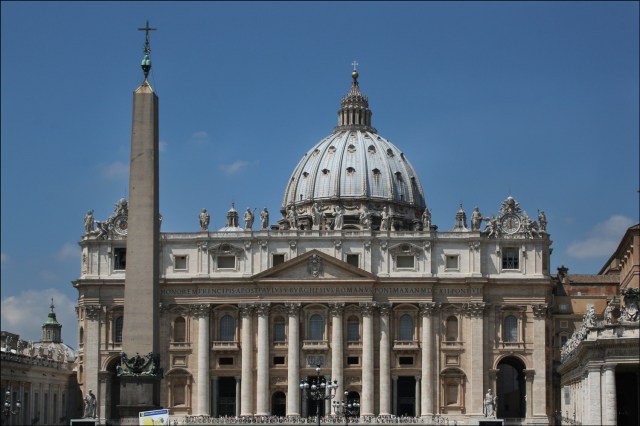
St-Peters-Basilica-Exterior

Working Draft

Mulierem Vocamus- We Call Women.

2019 Exhortation

  1. So many girls and young women plaintively and humbly recounted their call from the Holy Spirit to the priesthood that they cannot be ignored. We must recognize that these girls and young women, and those who identify as such, catholic and not, many of them but teenagers, are not lying and they are not mistaken. 1 The Spirit is the Spirit of Truth and We know that the Father of Lies would not do this because a house divided against itself would fall – unlike the totally united Church of today.2


  1. With 79% of the 485 carefully chosen bishops (representing over 7.93% of all bishops) agreeing in their post-synodal report (well-researched and painstakingly prepared before the synod began), We now see that We must integrate joyfully all the faithful into all the sacraments, We issue this proclamation. To do otherwise is to practice an intolerance, prejudice, injustice, and bigotry that can only be of the devil, as would be opposition to this truth, truth latent for centuries and now brought into the light by Us.

III.              We now develop the insights of these relatively few enlightened shepherds  and the fruits of the indwelling of Our Spirit in these girls and women who have been called (and we pray daily  for those girls and women who were led into error by The Evil One and said there was and is no such call). Based on these pre-synodal and synodal private revelations, and the report of the shepherds – We now elevate what they have done to real, just doctrine.3    For almost two millenia We have not heard, or We have ignored, Our Spirit, but now We hear, now We listen, now We act. 4

  1. Canon 1024 is, by Our decree, hereby changed from “A baptized male alone receives sacred ordination validly” to “Only A Baptized Person receives ordination validly.”  This is Our teaching and We order that it be held definitively, without question or ridicule, by all the faithful. We apologize for:  the centuries of error, the mistakes of numerous ecumenical councils, the falsehoods of so many declarations, the wrongheadness of so many bulls, so many simply wrong encyclicals, and, frankly, the stupid errors of almost all  predecessors in this office.5 We are heartily sorry to all the girls and women called by Us who have been denied the Sacrament of Holy Orders.
  2. We note that Jesus’s Command Of The Lord that only males be ordained, clearly present in His inspired Holy Scripture, was for His time on earth only, and that divergent interpretations of this Command, applying it misogynistically and patriarchally – for almost two thousand years – were mistaken and/or of the devil.


In conclusion, We solemnly proclaim  these teaching of old which are now again revealed.6

Hat Tip:  Guy McClung

Posted in Uncategorized | 10 Comments

THERE SEEMS TO BE LITTLE DOUBT THAT SOME OF THE OFFICIALS HIGH IN THE VATICAN CURIA OF THE PRESENT PONTIFICATE ARE MEMBERS OF THE MASONIC ORDER

How the Prohibition Against Freemasonry Disappeared from Canon Law

OnePeterFive
Google+PinterestPocket

By Fr. Paolo M. Siano

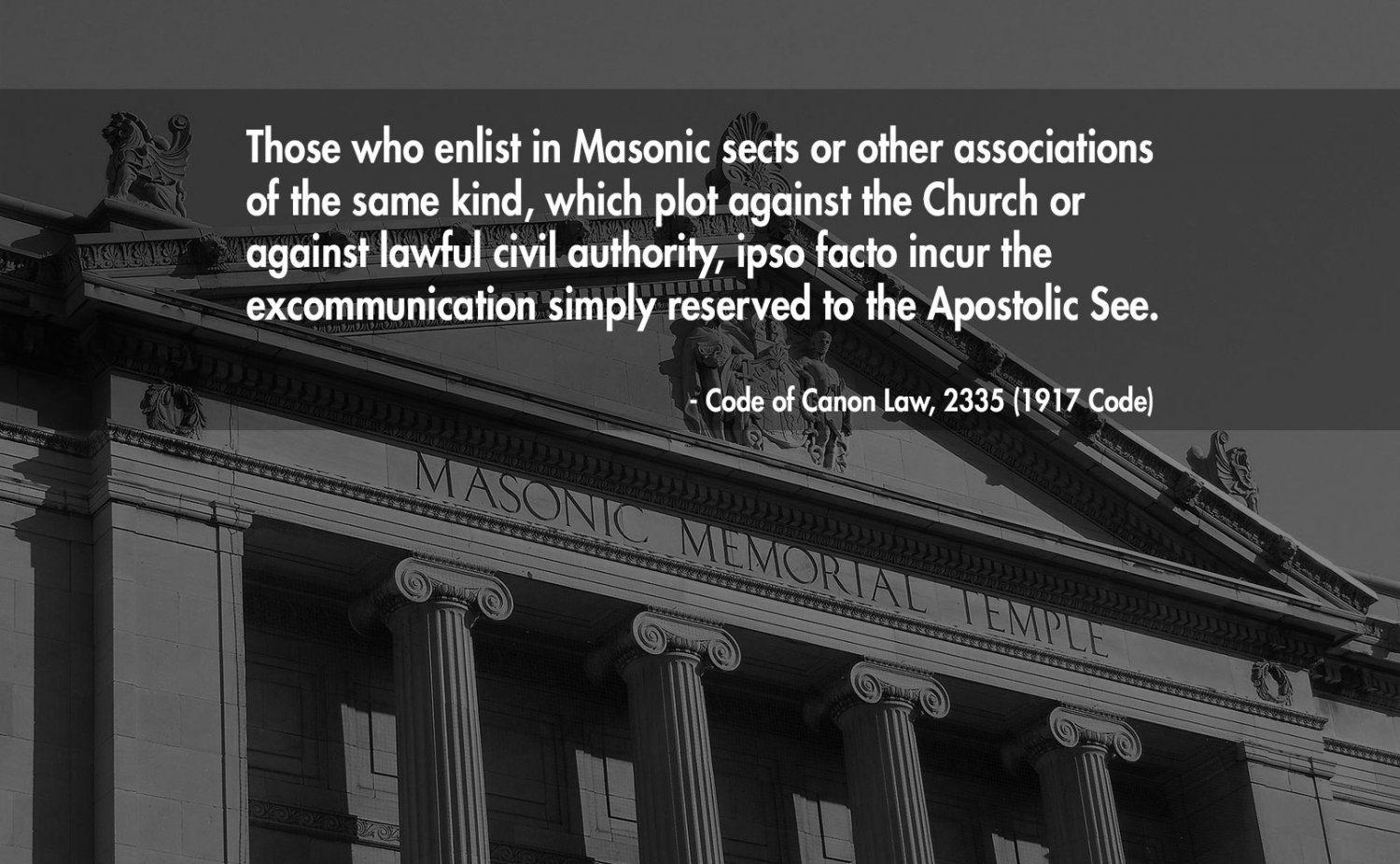
From October 20 – 29, 1981, the Plenary Congregation of the Pontifical Commission for the Revision of the Code of Canon Law met in the Vatican to discuss and vote on the renewal of canon 2335 of the 1917 Code of Canon Law which conferred excommunication on Catholics enrolled in Freemasonry or other sects which conspired against the Church and against the State. This canon was ultimately not renewed in the new 1983 Code of Canon Law.

It is interesting to note the two positions that existed within the Plenary Congregation: a minority position which favored renewing Canon 2335 (excommunicating Catholics enrolled as Freemasons), and a majority position which successfully proposed that this canon would not be renewed and thus there would be no excommunication of “Catholic Freemasons.”

I will now consider several points of the record of the Plenary Congregation translated from the Latin by Fr. Zbigniew Suchecki, OFM Conv., and published in the review “Religioni e Sette nel mondo (Religions and sects in the world)” of GRIS (Socio-Religious Research Group) of Bologna, in issue number 1 of 2008 dedicated to the theme “The Catholic Church and Freemasonry.”

The principal arguments of the majority position seem false to me and pastorally imprudent. They may be summarized as:

  • Canon 2335 should not be renewed because to do so would go against the principles of the revision of the Code of Canon Law approved by the 1967 Synod of Bishops and Pope Paul VI, which requested the reduction of the number of cases calling for the penalty of latae sententiae.
  • Because there are various degrees of adhesion to Freemasonry, it is not possible to know at which degree activity against the Church begins or if the offender, “judge of himself,” would know with certainty that he is culpable of acting against the Church and thus incurring the penalty [of latae sententiae excommunication].
  • The opinion remains valid according to which canon 2335 applied only to those who actively worked against the Church, as attested by the Notificatio of the Congregation for the Doctrine of the Faith of July 18, 1974.

Among those who held this position:

  • Esteban Gomez, OP [Dominican from Spain] (instructor at the Angelicum in Rome) asserted that “it is more grave to be a communist, and so if we have a canon excommunicating freemasons we would also have to have a canon excommunicating Communists”.
  • Cardinal Rosalio José Castillo Lara, SDB [Salesian Venezuelan, nephew of the Archbishop of Caracas] (Secretary of the Pontifical Commission for the Revision of the Code of Canon Law), was in accord with Gomez and asserted that “Freemasonry is not the same in all countries”.
  • Cardinal Franz König [Archbishop of Vienna] affirmed that “the position of the German Bishops’ Conference (see below) applies only to Masonry in that country but not for all…” König appealed to the same rescript of the CDF of 1974.
  • Bishop José Vicente Andueza Henriquez [Venezuelan bishop, also a Salesian] affirmed that “in countries like Venezuela Freemasonry coexists peacefully with the Church,” and that “there are Freemasons ‘of good faith’ who do not work against the Church but who cooperate with her…” Bishop Henriquez further maintained that “the excommunication of Freemasons is futile, it does not stop them from adopting new methods, and renewing this penalty in the new Code of Canon Law would stir up ‘needless new animosities.’” According to the Venezuelan prelate, “in Latin America the true danger is Communism, not Freemasonry.”
  • Bishop Roman Arrieta Villalobos, President of the Bishops’ Conference of Costa Rica, was convinced that “in many parts of the world Freemasonry no longer conspires against the Church, neither openly nor secretly”.

Let us now consider the principal arguments of the minority position favoring the renewal of the penalty prescribed by canon 2335:

  • The German Bishops’ Conference observed that the Church has the right to indicate clearly to the faithful whatever is dangerous for their faith, and “the adherence of a Catholic to Freemasonry shakes the very foundations of the faith.” After about six years of dialogues with the official leadership of Freemasonry of Germany (expressly favorable in its attitude towards the Church), the German bishops had nevertheless concluded that the essence of Freemasonry was the same, and so they asked for the renewal of canon 2335 in the new Code of Canon Law. Other bishops’ conferences, in contrast to the German conference, had perhaps not been familiar with authentic Masonic facts, documents and rituals. It was noted that anti-Church activity is one of the very principles of Freemasonry.  Moreover, German Freemasonry had made a “categorical refusal” to the bishops who asked to examine the rituals of the other degrees beyond the first three. If judgment about Freemasonry in each country were left to the individual bishops’ conferences, “one can well imagine how many and how great would be the pressures brought to bear upon bishops by influential persons of power or social influence, as well as the pressure of public opinion formed by thinking that is not alien to Freemasonry.” The German bishops observed still further that “for almost the entirety of the faithful it is impossible to form an exact judgment on this question. The right of the Church is properly this: to indicate to the faithful where dangers are hiding for their faith and for their Christian life.”
  • Cardinal Giuseppe Siri [Italian, from Genoa] observed: 1) Nothing has practically changed in the procedures of the Masonic sect. 2) If one objects that the authority of the Church (Paul VI) has said that the penalty ought to be reduced, I respond: ‘In taking counsel we must do those things that are fit for this time.”
  • Cardinal Joseph Ratzinger [German, Prefect of the CDF] noted that the different positions of the bishops’ Conferences do not signify that Freemasonry is different in different places, but that other Bishops were not as well-informed as the German Bishops, who had found that the essence of Freemasonry affirms relativism between truth and falsehood, between good and evil, the same relativism that feeds the contemporary moral crisis. For this reason Freemasonry constitutes “an extraordinary danger” and one that is much “more subtle” as compared to communism. In the first 3 degrees German Freemasons were open to dialogue, but in the 30 higher degrees they held to “an arcane discipline that became ever more severe.” Ratzinger maintained that the “opinion” of Fr. Gomez was “made with a certain lenience, which does not correspond to the gravity of the question and to the work [of research] which we have done.”
  • Cardinal Pietro Palazzini [Italian, Prefect of the Congregation for the Causes of the Saints] replied thus to the “unanimous” objection of the Consultors of the Pontifical Commission for the Revision of the Code of Canon Law: “the renewal of Canon 2335 does not violate the principles approved by the Pope and the 1967 Synod of Bishops; the reduction of penalties does not imply the elimination of all penalties; among the German bishops who asked for the renewal of Canon 2335 were some who took part in the [1967] Synod but who, having learned from experience, understood the necessity of maintaining the penalty of excommunication for Freemasons because their “creed” is “apostasy, at least implicitly”; that is, it eliminates truth and revealed religion while welcoming Catholics as “useful idiots”. In pastoral practice there is a need to avoid equivocating and to clearly show the sure way to salvation. Freemasonry is more dangerous than Communism, because while Communism is the explicit enemy of the Church, Freemasonry is is more subtle.

* * * * *

In the wake of the position of Cardinal König, Bishop Henriquez, etc., it seems one can also add the “Commentary on the Code of Canon Law” published in 1985 by the Pontifical University Urbaniana (PUU), then republished in 2001 by Libreria Editrice Vaticana (LEV) with the presentation of Cardinal Mario Francesco Pompedda, Prefect of the Supreme Tribunal of the Apostolic Signatura. In both editions (PUU, pp. 806-807; LEV, p. 814), edited by Monsignor Pio Vito Pinto [appointed in 2014 by Pope Francis to chair the pontifical commission for the reform of the marriage nullity process], on the topic of “Freemasonry” it is understood that “it is not easy to apply canon 1374 (which calls for a just punishment for anyone who enrolls in an association which works against the Church) unless the competent universal and local ecclesiastical authority clearly indicate which organizations fall under the authority of that canon…” [Editor’s note: as we have reported in the past, Msgr. Pinto himself has held a spot on one of the most well-known lists of suspected ecclesiastical Freemasons for decades.]

I ask myself: why does this commentary not cite the 1983 Declaration of the Congregation for the Doctrine of the Faith which reaffirmed the incompatibility between being a Mason (of any sort whatsoever) and being a Catholic?

In short, I am of the opinion that the crisis of the Church, yesterday as also today, results among other things from the differing attitudes of the Prelates of the Church towards Freemasonry.

Translated by Giuseppe Pellegrino

A version of this article originally appeared at the website, Amici del Timone di Ferrara. It has been translated, edited, and reprinted with permission.

Posted in Uncategorized | Comments Off on THERE SEEMS TO BE LITTLE DOUBT THAT SOME OF THE OFFICIALS HIGH IN THE VATICAN CURIA OF THE PRESENT PONTIFICATE ARE MEMBERS OF THE MASONIC ORDER

IF GEORGE SOROS IS NOT THE ANTI-CHRIST, HE IS CERTAINLY THE ANTI-CHRIST’S BANKER

Featured Image
George Soros
Natalia DueholmNatalia Dueholm

Farage’s November 14 statement came during a debate on leaked documents called The Paradise Papers, which shed some light on politicians’ offshore investments throughout the world. The database containing 13.4 million files originated from the offshore law firm Appleby, and is still being analyzed by the International Consortium of Investigative Journalists (ICIJ)

Initial coverage on the Papers by the mainstream media focused mainly on British royalty, some celebrities, big corporations, and Donald Trump’s entourage. At the beginning, it could be considered a tool against the Trump administration. However, the papers also contain the names of prominent Democratic donors, among them Soros. Though his name has been mentioned, few specifics have been given about the U.S. billionaire.

RELATED:  George Soros gave millions to these feminist groups to promote abortion around the globe

An exception to this media silence has been Spencer Woodman of the ICIJ. Woodman wrote, “Private equity funds controlled by Democratic mega-donor George Soros used Appleby to help manage a web of offshore entities.” Woodman cites a document detailing “the complex ownership structure of a company called S Re Ltd that was involved in reinsurance, or insurance for insurers. The structure … included entities based in the tax havens of Bermuda and the British Virgin Islands.”

Woodman added that “a spokesperson for Soros — who has donated money to ICIJ and other journalism outlets through his charitable organization, the Open Society Foundations — declined to comment for this story.”

Possibly, members of the European Parliament including Farage did not know that Soros’ name appeared in the Paradise Papers. Of course, having an offshore account is not necessarily illegal. At any rate, Farage argued that we should be interested in Soros’ Open Society Foundations (OSF) because the grant-making giant recently received $18 billion from its founder.

RELATED: How billionaire George Soros is trying to hijack the Catholic Church for his progressive agenda

What’s more, Farage pointed out that the group’s influence in the European Commission and Parliament is “truly extraordinary.” For instance, last year, OSF had 42 meetings with the European Commission, and even published a list of “reliable friends in the European Parliament with 226 names on it.” This constitutes 30 percent of all 751 members.

According to Farage, to have a debate “on full political and financial transparency,” those 226 members of the European Parliament identified as “friends” by OSF should answer a couple of “fair questions.” The first one is if they ever received funds directly or indirectly from OSF. The second is how many of their events they attended. Farage also wanted them to disclose a list of any meetings, with the representatives (of OSF), including Soros. He also called on the Parliament to create “a special committee to look into all of this.”

Paradoxically, it is possible that putting liberal Soros and his OSF on the spot was caused by the actions of left-leaning politicians and media. Farage remarked that “the use of money and the influence it may have had on the Brexit result or the Trump elections has reached the level of virtual hysteria.” Farage indicated that when  political subversion, collusion and offshore money are discussed, “maybe we are looking in the wrong place?”

In Britain, he said, the Electoral Commission recently launched an investigation to find out whether the Leave Campaign (pro-Brexit) took offshore or Russian money. This investigation was the result of questions asked by MP Ben Bradshaw, who, Farage explained, is linked to Soros’ OFS.

RELATED: George Soros spending more than ever to push his liberal agenda worldwide

Across the Atlantic, Russian influence in American elections is the subject of investigation in the House and Senate, as well as by the Special Counsel and former FBI Director Robert Mueller. While the left-leaning media constantly accuse Donald Trump of colluding with the Russians, House Republicans talk about Soros’ meddling in the elections of different countries. Rep. Steve King, R-Iowa, has recently spoken about Soros’ organizations manipulating elections in Macedonia. What’s more, with U.S. taxpayers’ money, King added. He also said the book of notorious activist Saul Alinsky Rules for Radicals, a guide for radical change, was translated into Macedonian. The disruptive techniques described in the book “were manifested within the election efforts in that part of the world.”

Political transparency should not be a partisan issue. Just as the Americans have the right to know the truth about Russian influence in the U.S. elections, they also have the right to know how their tax dollars are being used to manipulate elections abroad.

RELATED: