

zzzzz

Shutterstock
Everyone knows that porn is ubiquitous online, a danger to be aware of and avoid vigilantly. But what you might not know is that your 8-year-old could be finding it accidentally — in fact, new research says that 1 in 10 visitors to graphic porn sites are under 10 years old.
“According to research by security technology company Bitdefender, kids under the age of 10 now account for 22 percent of online porn consumption among those under 18 years old. Internal intelligence from Bitdefender’s parental control feature revealed that the under-10 age group is now accounting for one in 10 of the visitors to porn video sites. Even more unsettling, the sites most visited by children under 10 include porn mega sites which feature categories such as ‘extreme brutal gang bang,’ ‘sleep assault,’ ‘domestic discipline,’ and ‘crying in pain.’”
This is horrifying stuff. No one, no matter what they think about adult porn consumption, thinks it’s okay for kids to learn what “brutal gang bang” is before they learn to multiply. It’s not.
And yet, everywhere I go there are kids on tablets. Including my own kitchen.
For years, we eschewed devices in our own home and forbade their use in others’ homes. But now my kids have assigned homework in various apps — and I actually like the apps, the formats, and the fact that the kids enjoy doing homework on the tablet. But I know that Reading Plus is one or two accidental clicks away from graphic porn, and I have five kids. I can’t be there every minute, watching every move on the tablet. So what’s a parent to do?
First, don’t freak out and despair. It’s tempting to want to find a way to roll back time and give your kids a bucolic, device-free childhood, but that’s not always possible … and it might not be preferable. Technology isn’t going anywhere, and while our use of it might change, devices are going to be a fact of life for your kids at some point. Might as well figure out how to deal with the bad along with the good to help your children navigate this brave new world of tech.
Luckily, there is some pretty awesome parental control software available in 2017. PCMag ranked them all in January, so you can compare the various options yourself. But my top choice is Net Nanny, which comes with a family pass that allows you to filter and track content across all devices (including cell phones). The filtering is great for younger kids, and the social media tracking is perfect for teenagers. It also features cross-device internet time allowance, which lets you set limits for kids and enforces them for you.
I would encourage you to invest in filtering software if your kids have their own devices. Changing the settings on the device itself is insufficient — kids are 20 times more tech savvy than their parents are (ask me how I learned that you can organize apps into folders on the iPhone) and they can change those settings to what they want and back with you none the wiser. It’s also not enough to block mobile data on one phone line — any smartphone is capable of picking up wifi signals from anywhere and everywhere, and kids know how to take advantage of that. If you choose not to get filtering software but still want to be able to call your child, go totally old-school and get a Nokia flip-phone or a Verizon GizmoPal. Most flip phones just call and text, and the GizmoPal only sends and receives calls to approved phone numbers.
Of course, if you’ve got a truly tech-savvy kid, any amount of blocking and filtering can be undone or worked around. That’s why it’s important to be honest with your kids about what kind of stuff they might encounter online, why it’s so bad for them, and why you are trying to protect them from seeing it. Don’t have one internet safety talk and think you’re done, either — this should be an ongoing conversation, where your kids feel free to ask you questions and vice-versa, and one that happens often enough that they are comfortable bringing up something they might have seen that’s upset them.
Do be gentle, too — remember that kids don’t go looking for porn in the beginning, it comes looking for them. They need protection, but they also need to be taught how and why to protect themselves from pervasive and destructive sexual images. And there’s no software for that … just plain, old-fashioned parenting.

[ Emphasis and {commentary} in red type by Abyssum }
Two books have come out recently, both of them by prominent authors and both in response to the “dubia” submitted to Pope Francis one year ago by four cardinals, concerning the post-synodal exhortation “Amoris Laetitia.”
The first of these books, published in Italy by Ares, has already prompted a lot of discussion. It is by Rocco Buttiglione, a well-known scholar of philosophy and an authoritative interpreter of the philosophical thought of John Paul II, today a staunch defender of the “openness” introduced by Francis regarding communion for the divorced and remarried, and an equally resolute proponent of the perfect continuity between the magisterium of the current pope on the subject of morality and the encyclical “Veritatis Splendor” by pope Karol Wojtyla.
But even more than by what Buttiglione has written, which was already known, the discussion has been ignited by the preface for the same book, signed by Cardinal Gerhard L. Müller, the former prefect of the congregation for the doctrine of the faith.
In effect, this preface has appeared contradictory to many.
On the one hand, Müller writes that he completely agrees with Buttiglione’s ideas and warmly recommends them to the reader.
On the other hand, however, the cardinal himself envisions – explicitly – only one case of possible access to communion for a Catholic who has gone on to a new union while the first spouse is still alive. And it is the case in which the first marriage, although it was celebrated in church, is to be considered invalid because of the absence of faith or of other requisite essentials at the moment of celebration, but such invalidity “cannot be proven canonically.”
In which case, Müller writes,
“It is possible that the tension seen here between the public-objective status of the ‘second’ marriage and the subjective fault could open, under the conditions described, the way to the sacrament of penance and to holy communion, passing through a pastoral discernment in the internal forum.”
Now, no one has pointed out that the case hypothesized here by Müller is the same one that Joseph Ratzinger had envisioned and discussed, both as theologian and as pope, he too admitting the possibility of access to the sacraments, always and in any case with a decision made “in the internal forum” with a confessor and with caution not to generate public scandal:
> No Communion for Outlaws. But Benedict XVI Is Studying Two Exceptions
According to what he writes in the preface, this is therefore the threshold – entirely traditional – at which Cardinal Müller draws the line, concerning access to communion for the divorced and remarried.
Buttiglione, however, pushes much further, with the hardly understandable seal of approval from the former prefect of doctrine. One “doubt” more, this, instead of one less.
*
Then there is the second book in response to the “dubia” of the four cardinals. And its authors are two renowned French theologians: the Jesuit Alain Thomasset and the Dominican Jean-Miguel Garrigues.
This book too is in defense of the continuity and “complementarity” between the exhortation “Amoris Laetitia” of Pope Francis and the encyclical “Veritatis Splendor” of John Paul II.
And this too is inspiring a discussion, as can be seen in this critique by the philosopher Thibaud Collin, expressly written for Settimo Cielo.
Collin is a professor of moral philosophy and politics at the Collège Stanislas in Paris, and is one of the six lay scholars who gathered in Rome last April 22 for the study seminar on “Amoris Laetitia” with the significant title “To bring clarity,” remembered by Cardinal Carlo Caffarra in his last – and unheeded – letter to Pope Francis.

CASUISTRY HAS NEVER HAD IT SO GOOD
by Thibaud Collin
In these times of confusion, anything that seems to move in the direction of clarity is welcome. So it is with great hope that one opens the little book “A flexible morality, but not without a compass” by Frs. Alain Thomasset and Jean-Miguel Garrigues, the former a Jesuit and the latter a Dominican. Under the banner of Cardinal Schönborn, whose signature is on the preface, our two theologians intend to respond to the five “dubia” presented by the cardinals concerning the manner of understanding certain passages of the exhortation “Amoris Laetitia.”
Closing the book again, one inevitably finds that those ‘dubia” have not gone away. It could be said, on the contrary, that they unfortunately come out strengthened, so much do the arguments used to dispel them produce the opposite effect. This is certainly not a cause for rejoicing, because doubt is a painful uncertainty of the spirit. And the matter at stake there, the moral and sacramental life of the faithful, is serious enough to maintain that charity should urge one to dissolve them with the greatest urgency. As is well known, the Holy Father has not yet thought it good to consent to carry out such an action.
While waiting for the pope to make a decision, the debate continues and the division grows. And the more time goes by, the clearer it becomes that the reception of “Amoris Laetitia” is about to intersect the 50th anniversary of “Humanae Vitae” and the 25th anniversary of “Veritatis Splendor.” Now, the encyclical of John Paul II was responding to the objections aimed at the encyclical of Paul VI, tracing them back to their deepest roots. And today when we read the many texts dedicated to “Amoris Laetitia,” one gets the impression that history is repeating itself. One feels a strange sensation in the face of this regression. The four cardinals, with the cardinal of Bologna in the lead for evident historical reasons, have rightly taken aim at that in chapter 8 of “Amoris Laetitia” which seems to have been written… as if “Veritatis Splendor” never existed.
The two authors agree on the central thesis of the book: there is a complementarity between “Amoris Laetitia” (AL) and “Veritatis Splendor” (VS), and the “dubia” therefore have no reason to exist. Only those who make an intransigent interpretation of the encyclical of John Paul II maintain that the integration of the two texts poses problems. Fr. Alain Thomasset first of all presents the broad outlines of VS, situating it in its historical context again: the challenge of relativism that brings back into question “the indispensable points of reference for the conscience in the moment of decision” (p. 30); hence the benefit of having reaffirmed the existence of intrinsically evil actions. Two observations: 1) is not this contextualization itself too allusive? Fr. Thomasset in effect does not present any of the doctrines that VS confutes, and he has reason for this, because he is an heir of those who developed them. 2) Is today’s context so different from that of yesterday? The rest of the text goes on to confirm our fears. One may judge on the basis of these passages:
“Is it sufficient, in order to define and evaluate in moral terms a conjugal act that has recourse to the pill, to say that it is seeking to avoid procreation altogether, when instead it could be in certain cases the sole effective means of birth control in view of responsible parenthood? […] In the same way, how to take into consideration the difference between an act of adultery by a married person and a sexual relationship in the heart of a stable couple of remarried persons, where the circumstances and intentions are different? Definitions of intrinsically evil actions are not enough on their own for this moral evaluation, remaining too abstract and generic. They cannot take into consideration the whole complexity of the situations experienced and the entirety of the context, which has become more important than in the past for judging the application of the norms. An overhasty interpretation would block the participation of reason and conscience in the definition of the act in question and its moral evaluation” (pp. 77-78).
Here it can be seen that Fr. Thomasset, after adhering to the doctrine of VS in affirming the existence of intrinsically evil acts, denies it! He does not notice the contradiction because for him the notion of “intrinsically evil” develops to such a stratospheric altitude and to such a level of genericity that it cannot as such be decisive in practice. It is therefore up to the conscience to qualify the object of the action, meaning to give it a meaning by reflecting on it in its context and on the basis of its intentions. Everything ends up depending on a question of vocabulary. Moral evaluation rests on definition, meaning on the determination of the meaning for the conscience situated within the context. The notion of “intrinsically evil action” is no more than an empty shell, at the most a point of reference, a formal value of decision orientation. It therefore no longer means what it did in VS: an act that can never be chosen no matter what the circumstances and intention of the subject, because in making it the person would deny his real good, would separate himself from God and from his own happiness. Fr. Thomasset’s presupposition is that the moral law is a norm that stands against freedom, and the conscience must determine itself by arbitrating in their possible conflict. Fr. Thomasset therefore projects onto VS a legalistic “forma mentis,” hence the contradiction into which he falls. Now according to Saint Thomas, as quoted by VS, the moral law is a light that illuminates reason on the true good of the person and allows it to order action toward his happiness. The action is therefore called good or evil according to whether it is or is not in keeping with reason in relation to the objectives of the person. Conscience is this light of truth on the individual action to be performed. Like many today, the Jesuit theologian appeals to Saint Thomas to contest the universal scope of the natural law, incapable of embracing the contingency and complexity of practical life. But the virtue of prudence has never consisted in authorizing exceptions or in arbitrating conflicts of duty. This is that with which the subject determines “hic et nunc” the path for the realization of his true good. The judgment of prudence is practical and does not replace the judgment of conscience. Only those who conceive of the natural law according to the model of political law can employ the teaching of Saint Thomas to validate the putative exceptions to negative precepts. Adultery will never be an action that is good for the person who has gotten into this situation, even if he gives it a new name. This tactic is as old as the world: everyone tends to present the situation in the most advantageous aspects to his conscience, so that it may stop bothering him. Casuistry, so reviled today, has never had it so good. And it is a sure bet that even the beatification of Pascal will change nothing in this regard!
Fr. Jean-Miguel Garrigues recognizes that the “dubia” are waiting for a response, but he accuses Cardinal Gerhard Müller, “on account of his unyielding position,” of not having “made possible a fruitful collaboration between the congregation for the doctrine of the faith and the pope (p. 114). It could be objected to him that the cardinal prefect did what he could to preserve the continuity and consistency of the Church’s position in this regard. No later than 1999 Cardinal Ratzinger, in the introduction to a book explicitly backed by Saint John Paul II, affirmed that the position of “Familiaris Consortio” no. 84 “is founded on Sacred Scripture” and that with this pedigree it “is not a purely disciplinary rule, which could be changed by the Church. It stems from an objective situation that in and of itself makes access to holy communion impossible.” Cardinal Ratzinger’s successor was therefore more than justified in maintaining that if the pope had wanted to change such an ancient and well-established practice, he would not have done so with a footnote, a note whose meaning is not clear because it does not specify the type of faithful involved.
Fr. Jean-Miguel Garrigues maintains that the current difficulties are provoked by “a theological school” that contributed to the composition of “Veritatis Splendor” but ended up absolutizing it without perceiving the limits of its field of application. The encyclical of John Paul II mainly addresses the moral question on the level of the objective specification of the action on the basis of reason, while “Amoris Laetitia” addresses it on the level of exercise on the basis of appetite, and therefore of influences. The two approaches are complementary, because reason and will are both at the root of human action. In brief, the objectivity of the action and the imputability of the acting subject must not be confused; this is therefore a matter of distinguishing in order to unite. Fr. Garrigues instead accuses this “theological school” of refusing to take the subject into account in moral reflection. The “dubia” would therefore be due to mental rigidity and to pastoral narrow-mindedness, which became manifest on the occasion of the publication of “Amoris Laetitia.” A non-rigid interpretation of VS like the one proposed by Fr. Garrigues would make it possible not only to respond to the “dubia” by emphasizing the complementarity of the two texts, but also to formally denounce this resurgence of “tutiorism” in the thick of modernity. In any case, the tactic that consists in separating the good wheat of VS from the weeds of this “theological school” does not stand up to analysis.
And in effect, Fr. Garrigues never names this school; and he never discusses this or that text from it. That would have taken too much time, and above all would have led him to realize the emptiness of such an accusation. One can certainly disagree with Cardinal Carlo Caffarra or with Monsignor Livio Melina (because evidently they are the main accused, never called by name), but it seems intellectually dishonest to reduce their reflection and their pastoral commitment (if they are even recognized as having any) to a “tutiorism” or a disloyalty to John Paul II due to an excess of zeal! One must really have never read a line of their writings to accuse them of ignoring the moral subject and the order of exercise of the action. I have in front of me, for example, the text of a conference that Cardinal Caffarra gave in Ars at the beginning of the 1990’s. It is about Christian subjectivity. And rightly the problem was (already!) that of moral legalism, of which proportionalism is nothing but a variation. Now, only a careful analysis of the dynamics of human action grasped in the voluntary intention that becomes a choice allows one to get out of an approach in which law and conscience are seen as two concurrent poles. Let’s listen to the one whom Saint John Paul II had chosen as his close collaborator on one of the pastoral subjects closest to his heart, sexual ethics, marriage and family:
“In man, intention cannot be realized except through and within the choice. In human existence, what is most decisive is not the judgment of conscience, but the judgment of choice. One does not become Christian by thinking about becoming so, just as one does not exist by thinking about existing. I do not become even more Christian by thinking more deeply about Christianity: man’s thought does not create existence. There exists only one means to become Christian: to choose, to decide to become Christian. But the judgment of conscience is practical only potentially, while the judgment of choice is really practical: it is the exercise of reason in the very act of choosing (Ia IIae, Q. 58, a. 2 c). The understanding produced by the judgment of conscience is insufficient, because it can be overlooked by the person in the moment of choosing; it can be an understanding that does not consider the person as such is this individual here, with his desires and who must act in this given situation. If such an understanding does not express that which the individual really desires, it remains inoperative.”
Carlo Caffarra was thoroughly acquainted with Newman and Kierkegaard. He had also assimilated very well the Wojtylian personalism based on the comprehensive experience of the person in his action. To claim that this “theological school” ignores the order of practical exercise is just as absurd as isolating the central chapter of VS from its first chapter, which reflects on the calling of the rich young man, and from its third chapter, with urges martyrdom in fidelity to the salvific will of God.
Fr. Garrigues responds “yes” to the five “dubia.” The discernment of influences that limit the conscience and will of the subject allow one to opt in certain cases for the weak imputability of the subject situated in a state of life in contradiction with the Gospel. But as many have already emphasized, that is not enough to legitimize the reception of the sacraments. Not without breaking with the form in which the Church has conceived until today of the connection between faith, the moral life, and the sacramental order. Saying this does not deny subjectivity to the advantage of a deadly objectivity. It is on the contrary to render possible a subjectivization that may be adequate to the comprehensive truth of the human being. This is the role of every pastor. This was the deepest concern of that magnificent pastor who was Karol Wojtyla. Without a doubt, a certain interpretation of “Amoris Laetitia” can make it possible to specify and explore the modalities of this subjectivization. Only the Holy Father can determine the manner of receiving the exhortation correctly. Then the text will no longer be an occasion of division and confusion, but of maturation and communion.
(English translation by Matthew Sherry, Ballwin, Missouri, U.S.A.)

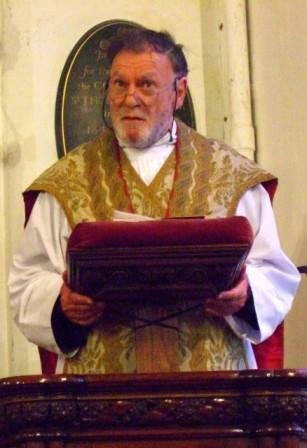
Servant of God Cardinal Francois Xavier Nguyen Van Thuan, was born in 1928, in the Vietnamese town of Hue. Nephew of assassinated leader Ngo Dinh Diem, he was ordained a priest in 1953. Paul VI appointed him coadjutor archbishop of Saigon on 24 April 1975, but six days later the city fell to the Communists. He was for 13 years in a a re-education camp, 9 in solitary confinement. In 1988, he was placed under house arrest, and a few years allowed to go to Rome, on condition that he never returns.
in 1994, he was appointed President of the Pontifical Council for Justice & Peace by John Paul II, and dealt with issues like third world debt (several years before Bono & Bob Geldoff took up that crusade!) . But also to mention his pivotal role in the creation of the Compendium of the Social Doctrine of the Church (of which I include a link), published in 2004. He died two years previously of cancer, having been made a cardinal in 2001. Due to his strong anti communist credentials, he is sometimes regarded as a hero of the religious right, but there could not have been a stronger son of the Church’s social doctrine. On 4 May 2017, Pope Francis declared him Venerable. NB I had the pleasure of interviewing him in the year 2000, when he made a visit to Melbourne, of which some of his vestments (which will be probably be relics) are in our cathedral. It will be a precious memory that I talked to a saint.
in the hearts of Jesus & Mary
Andrew Rabel
[ Emphasis and {commentary} in red type by Abyssum ]
I very much regret that I have never met Fr Thomas Weinandy, whose letter to PF has just been published. He is a distinguished American theologian; he was in Oxford for a decade or two and his reputation was high when I came back here later than his return to America. He was Warden of Greyfriars, a Permanent Private Hall of the University, and for a time Chairman of the Theology Faculty.
The fact that the American Episcopal Conference, within minutes, sacked him from being a Consultor of their Doctrine Committee {within minute of the publication of Father Weinandy’s publication of his letter critical of Francis} must indicate that America is awash with brilliant theologians. If that Conference really can so easily do without someone of his standing …
It must also indicate that the USA Episcopal Conference is dominated by very little men. God bless the dear little fellows.
This cheap and vulgar ritual humiliation exemplifies the extent to which PF is presiding over a bully-boy Church in which midget bishops and mini cardinals eager to compete and to defeat each other in the sycophancy stakes. Just as Tom Weinandy has, in effect, just said.
The young Weinandy was taught at Kings, London, by the great Anglican Thomist Canon Professor Eric Mascall, which gives him a link with our great Anglican Patrimony. I like to think that his action redeems the honour of the American Church, just as the courageous lecture given in August by Fr Aidan Nichols redeemed that of the English Church. Nichols is an Oxford man (Cardinal College) and Weinandy is Oxonian by adoption, so I feel that dear S Frideswide Universitatis specialis adiutrix must be quietly satisfied that, despite the demonic spirit of secularisation at work in modern Oxford, some of her lads have turned out good during this unparalleled crisis in the Church Militant. Floreat Oxonia.

|
Religious morality (and secular humanism) in Western civilization as precursors to medical ethics: A historic perspective Miguel A. Faria University School of Medicine; President, http://www.haciendapub.com, Macon, Georgia, USA Copyright: © 2015 Faria MA. This is an open-access article distributed under the terms of the Creative Commons Attribution License, which permits unrestricted use, distribution, and reproduction in any medium, provided the original author and source are credited. How to cite this article: Faria MA. Religious morality (and secular humanism) in Western civilization as precursors to medical ethics: A historic perspective. Surg Neurol Int 16-Jun-2015;6:105 Abstract |
|
In discussing bioethics and the formulation of neuroethics, the question has arisen as to whether secular humanism should be the sole philosophical guiding light, to the exclusion of any discussion (or even mention) of religious morality, in professional medical ethics. In addition, the question has arisen as to whether freedom or censorship should be part of medical (and neuroscience) journalism. Should independent medical journals abstain from discussing certain issues, or should only the major medical journals — i.e., the New England Journal of Medicine (NEJM), the Journal of the American Medical Association (JAMA) or Lancet — be heard, speaking with one “consensual,” authoritative voice? This issue is particularly important in controversial topics impacting medical politics — e.g., public health policy, socio-economics, bioethics, and |
11/1/2017
Religious morality (and secular humanism) in Western civilization as precursors to medical ethics: A historic perspective – Surgical Neurology International
the so-called redistributive justice in health care. Should all sides be heard when those controversial topics are discussed or only a consensual (monolithic) side? This historical review article discusses those issues and opts for freedom in medical and surgical practice as well as freedom in medical journalism, particularly in opinion pieces such as editorials, commentaries, or letters to the editor, as long as they relate to medicine and, in our special case, to neuroscience and neurosurgery. After answering those questions, and in response to a critical letter to the editor, this review article then expounds comprehensively on the historical and philosophical origins of ethics and religious morality. Necessarily, we discuss the Graeco-Roman legacy and the Judeo-Christian inheritance in the development of ethics and religious morality in Western civilization and their impact on moral conduct in general and on medical and neuroscience ethics in particular.
Keywords: Ethics, Graeco-Roman, Judeo-Christian, morality, religion, secular humanism
Recently, an important letter to the editor[ 48 ] was published in Surgical Neurology International (SNI) in response to my editorial, “The road being paved to neuroethics: A path leading to bioethics or to neuroscience medical ethics?”[ 22 ] In that article, I made several statements regarding ethics, morality, and religion, that to the letter writer seemed either inappropriate or outright incorrect. I took the attempted academic reprove with cordiality and in good cheer because it induced me to write about a contentious topic of interest to me, a topic in which no less than philosophy and history become judges of important moral assertions. Dr. Ludvic Zrinzo’s critical letter, which so encapsulates the new paradigm and zeitgeist of our time, has inspired me to write this historical review that I hope will clarify the issue and correct real misconceptions. I write this, then, with a ability, not to o end but to elucidate; not to condemn, but to instruct; not to sti e, but to facilitate the free exchange of ideas and foster intellectual discussion on a topic related to neuroethics, neuroscience ethics, and thus to SNI. This discussion is important because it may help clarify the speed and direction neurosurgery and neuroscience should take down the ethics road being paved, a road that leads either to the new secular humanism of bioethics or to continuing the traditional paradigm of medical ethics.[ 22 ] Besides, we still live in a free society where the free exchange of ideas is still possible and hopefully conducive to the maintenance of freedom in society at large as well as in medical academia in particular.
Now in the interest of facilitating this multidisciplinary discussion,[ 22 25 ] I quote below and in full one of the ofending paragraphs in my editorial that prompted the letter writer to launch his missive. It also defines the topic and sets the tone for the discussion. It reads:
New York Times columnist William Safire chaired a seminal conference on neuroethics in 2002 and cited Cicero for coining the Latin term moralis derived from the Greek ethicos, but opined that there was an overlapping distinction between the terms. I agree with Safire in that there is still a new distinction between the two terms. “Morality,” stemming from conformity with religious standards, has to do with the (moral) absolutes of right and wrong. “Ethics,” on the other hand, implies “subtle,” more complex “questions of equity” and refers to good and bad. Since what is good is usually right and what is bad is usually wrong, the
11/1/2017 Religious morality (and secular humanism) in Western civilization as precursors to medical ethics: A historic perspective – Surgical Neurology International
|
terms overlap and have thus become interchangeable in modern times. Nevertheless, in the liberal zeitgeist of our time, and with our modern emphasis on egalitarianism, the word “ethics” predominates; thus, we have the terms “bioethics” and “neuroethics” in vogue and the nuances of meaning those terms entail.[ 22 ] PROPOSITION OF SECULAR HUMANISM AND THE COUNTER ARGUMENT |
|
The editors welcomed the critical letter as bringing forth a controversial subject of importance in medical ethics related to the neurosciences. The letter-writer’s criticism begins with a quotation of Albert Einstein providing the gist of the disagreement: A man’s ethical behavior should be based efectually on sympathy, education, and social ties and needs; no religious basis is necessary. Man would indeed be in a poor way if he had to be restrained by fear of punishment and hope of reward after death.[ 17 48 ] An opinion rendered by such an exalted gure in the history of science should certainly be taken into consideration. Nevertheless, I must reply reluctantly that although Einstein was an undisputed genius in physics, and is in fact a hero of mine in the scientific pantheon, it should be noted Einstein, not a deity but a man of flesh and blood, has been wrong more than once, even in theoretical physics. For example, Einstein posited a “cosmological factor” explaining the supposed forces holding a static universe in place. He was wrong; the universe is not static, but expanding. He made a variety of other mistakes in physics: Errors in the formulation of his never completed unified field theory; in light refraction; and in quantum mechanics. More apropos, Einstein’s participation in his own family life was not a stellar performance. He was at times a cruel husband and a poor and neglectful father.[ 12 ] Furthermore, it should also be added that a man may be very knowledgeable in one or more areas of science, but this is no guarantee he may truly be a wise man or knowledgeable in all fields of knowledge. In this regard, Socrates (469–399 B.C.) dealt exactly with this issue in Plato’s Apology. During his trial by the Athenians in 399 B.C., Socrates explained why the Oracle of Delphi ruled him the wisest man of his time. And to make sure the Oracle was not in error, Socrates searched in vain for wiser men. He found all the notable politicians, poets, and the greatest men in Athens were deficient of wisdom. Searching further, Socrates went to the lower ranks of artisans and found them, as he expected, knowledgeable in their trades. But he told his judges: “However, Athenian men, it seemed to me that the workers also have the same fault as the poets; on account of performing the skill well each claimed also to be wise in other important matters, and this false note of theirs obscured that wisdom, so that I asked myself on behalf of the oracle, whether I should choose to be just as I am, neither wise in their wisdom nor ignorant in their ignorance, or to have both of what they have. Thus I replied to myself and the oracle that it is better for me to be as I was.” [ 38 ] |
11/1/2017 Religious morality (and secular humanism) in Western civilization as precursors to medical ethics: A historic perspective – Surgical Neurology International
|
Socrates was the wisest of men because, unlike other men, he was aware of his own limitations and deficiencies in the possession of knowledge. Knowledge in one field then does not make one an expert in all fields of knowledge or wise. FREEDOM OR CENSORSHIP IN MEDICAL JOURNALISM? |
|
In the critical letter’s concluding second paragraph, Dr. Zrinzo sums up his objections in the manner of secular humanism[ 7 18 ] as follows: “The editorial in question repeatedly suggests that morals are derived from religious principles. This is a common misconception…. Personal religious bias has no role in scientific discourse, including the neurosurgical literature.” [ 48 ] First, as to “Personal religious bias has no role in scientific discourse, including the neurosurgical literature,” let’s remind Dr. Zrinzo that the piece in question was an editorial, and what is an editorial? By definition it is an opinion piece usually written by a member of the editorial board of a newspaper, magazine, or medical journal. Second, what I stated is historically accurate and factually correct. “Misconception” implies error or opinion unsupported by factual information. In the paragraph cited above and in another paragraph I asserted moral precepts have their origin in, or are intertwined with religious morality, and that religion is beneficial, supporting the moral code of a society. As to the last of these statements, I admit, it is an opinion, but it is an informed opinion formulated from years of study.[ 18 19 20 21 22 23 24 25 ] The giants of medical ethics did not write their treatises without “personal religious bias,” nor without the influence of both the Oath of Hippocrates and Judeo-Christian ethics. The Oath of Hippocrates itself begins by invoking the Olympian gods, which, as I have related elsewhere, reminds the physicians themselves that they are not gods, that they are subservient to a power greater than themselves, and that they should invoke that power, whatever they personally hold sacred, in the service of their profession.[ 19 20 ] The English physician and medical ethicist Dr. Thomas Percival (1749–1804), who wrote and anticipated the modern codes of medical ethics followed in the next two centuries, not only in Great Britain but in the rest of Europe and the United States, was a devout Christian, a fact which is reflected in his emphasis on humanity and charity in his Medical Ethics (1803).[ 37 ] A father of neurosurgery, Harvey Cushing (1869– 1939), wrote in his Consecratio Medici (1928), “From vain regrets good Lord deliver us,” and called medicine a “divine vocation” ministered by those inspired by “heaven.”[ 15 ] And another English physician, Sir Thomas Browne (1605–1682), who wrote during the secular 17th Century of Genius, could not have written his meditations (Religio Medici, 1635) without the inspiration of religious morality in almost every page of his book. It has been said, Browne’s “faith exuded tolerance and goodwill towards humanity in an often intolerant era.”[ 13 23 ] He was cited in the writings of Thomas Percival, William Osler, and Harvey Cushing.[ 15 37 ] It would seem, then, that the misconception about the separation of religious morality from medical ethics is itself the misconception, at least when the main figures of medical ethics are consulted.[ 13 15 19 20 22 37 ] |
11/1/2017 Religious morality (and secular humanism) in Western civilization as precursors to medical ethics: A historic perspective – Surgical Neurology International
I believe medicine (and neurosurgery) should follow the compassionate medical ethics of these illustrious predecessors rather than the new bioethics. Traditional patient-oriented, medical ethics are based on the precepts of Hippocrates, placing the interest of the patient ahead of other considerations. Bioethics is population-based ethics, guided by utilitarianism, and/or monetary or budgetary considerations. There is a place for bioethics in laboratory research and veterinary medicine, but bioethics should not be the guiding light for what should remain the sacrosanct patient–doctor relationship. Bioethics and the veterinary ethic are applicable to humane animal research and when treating sick and injured animals – in which the veterinarian acts according to the wishes of the animal’s owner, the person responsible for paying the bill – but not sick human patients.[ 20 22 45 ]
Third, still pertaining to the statement, “personal religious bias has no role in scientific discourse, including the neurosurgical literature,” let me reply that we have no such blanket censorship in SNI, which is an independent medical publication, nor am I aware such dogmatic prohibition exists in medical journalism at large in free societies. The discussion, in fact, falls within the scope of SNI, as it regards controversial social issues and ethics in neuroscience. Lastly, let me state this type of blanket statement is frequently used to stifle the free exchange of ideas, which is anathema to academic intercourse, as well as a threat to liberty in a free society.[ 8 10 11 21 27 ]
I would not be fully addressing the importance of freedom in contradistinction to censorship in medical journalism if I did not mention there is a persistent double standard in the presentation of socioeconomic and political issues in the major medical journals. It seems that physicians with “progressive” political leanings, often the editors themselves, do not really want to limit religious or political discourse per se in the medical literature, but only limit those with whom they disagree (e.g., conservatives) and have the temerity to express a contrarian view to that deemed politically correct.[ 8 11 16 21 27 ]
In this regard, the major medical journals, such as the New England Journal of Medicine (NEJM), the Journal of the American Medical Association (JAMA), or The Lancet, can then speak unopposed with one collective voice in promoting leftist causes. We should counter: No, let both sides be heard! How many times have I seen correspondence sent by Dr. James I. Ausman, SNI editor-in-chief, asking dissenting readers to write and submit their own opinion pieces to SNI espousing their viewpoints? As the poetess Elizabeth Barrett Browning, in a diferent context, versifed in a famous sonnet, “let me count the ways”! If politics and religion are supposedly out of the realm of medicine and neurosurgery, well then we should test that hypothesis.
The mission statement of World Neurosurgery, the off cial journal of the World Federation of Neurosurgical Societies, includes the wording, to “serve as a forum for scientific, clinical, educational, social, cultural, economic, and political ideas and issues for global neurosurgery… Topics to be addressed in World Neurosurgery include: Education, economics, research, politics, culture.”[ 47 ] Culture, a term derived from the word “cult,” refers to religious as well as secular morality and ethics.
Now let us consider JAMA; and among its editorial objectives listed in addition to its mission statement (1993), we find:
11/1/2017 Religious morality (and secular humanism) in Western civilization as precursors to medical ethics: A historic perspective – Surgical Neurology International
Objective 5 – To foster responsible and balanced debate on controversial issues that a ect medicine and health care
Objective 7 – To inform readers about nonclinical aspects of medicine and public health, including the political, philosophic, ethical, legal, environmental, economic, historical, and cultural
Objective 8 – To recognize that, in addition to these specific objectives, THE JOURNAL has a social responsibility to improve the total human condition and to promote the integrity of science.[ 21 ]
For several decades now JAMA, NEJM, and The Lancet have published politically charged articles fulfilling objectives such as those enunciated by JAMA. These objectives have been fulfilled largely with progressivist tendencies and with little or no opportunities for dissenting voices to express their views.[ 16 ]
Let us take a quick survey of the major medical journals and see if they follow the rule or ful ll their one- way missions. In the process we should wonder if irate readers were equally indignant when the JAMA, NEJM, and The Lancet published articles condemning the personal ownership of firearms, promoting socialized medicine, or discussing religion within a political context:
“Would you say you ‘had sex’ if…?” This was a “peer-reviewed,” allegedly scienti c article in JAMA answering the question of whether oral sex was real sex or not; and so conveniently, a poll of students was conducted at a mid-Western university to answer the question.[ 43 ] The article was even placed on “fast track” by JAMA’s then editor Dr. George Lundberg in time to help President Bill Clinton when he was having political problems because of oral sex with Monica Lewinsky. You can guess the answer from the students: Oral sex is not sex!
“Interpreting the Right to Bear Arms – Gun Regulation and Constitutional Law.” In this article, the NEJM provided a forum to a dissenting lawyer, Mark Tushnet, J.D., who opposed a U.S. Supreme Court decision affirming the constitutional right of individual Americans to keep and bear arms[ 44 ]
“An open letter for the people in Gaza.” In this article, The Lancet gave a medical forum to Paola Manduca, Iain Chalmers, Derek Summerfield, Mads Gilbert, and Swee Ang, on behalf of 24 signatories and thereby endorsed one side of a highly charged political issue, blaming the Jews in Israel and exonerating the Moslems in Palestine for the escalating violence in Gaza during 2014[ 36 ]
“Religion, spirituality, and medicine: Application to clinical practice.” And here is a rare article that must have escaped the detection of censors at JAMA about religion being helpful in medical practice. This article had the audacity to discuss how “seriously ill patients use religious beliefs to cope with their illnesses,” and considers whether “physicians should pray with their patients”[ 34 ] The article shows that religion is not banned from medical journals, although they are indeed rare birds.
I wonder if Dr. Zrinzo objected when The Lancet editorialized with the article above. I ponder whether he sent critical letters to any of the aforementioned influential medical journals when they took the progressive side of those issues? We certainly welcome him to voice his opinions in SNI and ask only that he keep an
11/1/2017 Religious morality (and secular humanism) in Western civilization as precursors to medical ethics: A historic perspective – Surgical Neurology International
|
open mind about the alleged “biases” of others and to consider the implications of limiting academic debate. We published Dr. Zrinzo’s letters and comments. Most of my letters to JAMA and NEJM have never been published.[ 16 ] In short, it seems the moral indignation is only politically, ideologically and unidirectionally vented, expressed only when countering conservative points of view or detecting “religious bias” against Judeo- Christian medical ethics or the constitutional issues they consider unsavory, such as the individual rights of citizens to own firearms, the right to private medical care, the right of doctors to write about the influence of religion in easing the suffering of their patients, etc. No complaints are heard in meetings and publications about progressive ideas, such as utilitarian bioethics, more funding for socialized medicine, “redistributive justice,” and secular humanism. I’m aware Dr. Zrinzo claims that he is not promoting censorship and that I’m unfairly rewriting his letter,[ 48 49 ] but the fact remains that his concluding remark carried to its logical conclusion leads to censorship – i.e., the restriction of ideas deemed politically incorrect. In an academic setting and a free society, we should all be affirming: Let all sides be heard in the cause for academic freedom and the perpetuation of liberty.[ 6 8 10 11 21 27 ] Dr. Zrinzo further wrote, “…morality and ethics do not require a religious basis. This fact will stand, whatever the length of any forthcoming ‘extended commentary’.”[ 49 ] This reafirmation suggests his mind is made up and closed, and that my attempt to inform, as well as exchange ideas, will be futile. Nevertheless, I hope the information will not be lost by all. He has also claimed I’m trying to teach morality to my neurosurgery colleagues.[ 49 ] I’m not. The vast majority of my colleagues are in no need of such instruction. What I am attempting is to restore the time-honored, individual-based, patient-oriented medical ethics of Hippocrates in the neurosciences, medical ethics that have been gradually replaced by utilitarian, collectivist bioethics. I am also attempting to reclaim the loss of morality that has been gradually lost in society at large leading to increasing violence and crime, injuries and death. I hope to encourage my colleagues to action in both the civic and professional arenas in these endeavors. THE TWIN PILLARS OF WESTERN CIVILIZATION |
|
I now propose to show that my first assertion is correct and factual – namely, that moral precepts have their origin in and are inextricably entwined with both philosophy and religion. I beg my readers in advance to excuse my indulgence in taking so much time in expatiating on these fields of history, ethics, moral philosophy, and in tracing development, at least in part, from religion. But how is one to counter such a loaded assertion as, “morals derived from religious principles is a common misconception,” with a cursory denial without delving fully into the subject at hand? It is easy and quick to throw in such a blanket statement, even a cordial and academic objection; it takes much more time, effort, and persuasive evidence to refute such affrmation – even if it is the real misconception, particularly one so accepted and now taken for granted by the prevailing secular popular culture! |
11/1/2017 Religious morality (and secular humanism) in Western civilization as precursors to medical ethics: A historic perspective – Surgical Neurology International
Western culture and civilization stand on twin pillars that have withstood the test of time: The Judeo- Christian inheritance and the Greco-Roman legacy. Of these pillars, the Judeo-Christian tradition, we must remember, predates Socratic philosophy by at least half a millennium. Moreover, “let us remember,” wrote Aristotle (384–322 B.C.) [ Figure 1 ], “that we should not disregard the experience of ages.”[ 5 ] Indeed, traditional institutions that have benefited mankind are preserved, and those that have proven iniquitous or unworkable are discarded by the societies that have tried them and found them wanting. In the heroic age of the Near East that ended 3000 years ago, man propitiated gods for his well being in this life on earth. The heavens dictated man’s existence (i.e., astrology and divination). The tenets of this heroic age collapsed as man’s moral vacuity led to pessimism. There was, it seems, no purpose for man’s existence. But then came the Hebrew experience, the Ten Commandments, the Old Testament, and man was seen as having free will and having the capacity to do good or evil – i.e., develop moral conduct, for which he would be rewarded or punished in the afterlife. Christianity and the New Testament came almost a millennium later. Judeo- Christian morality formulated a code of moral conduct to establish and preserve order in society and cement the fellowship of men. This religious tradition was assimilated by the West with the advent of Christianity after Constantine the Great (reigned A.D. 306–337) and his successors made it the state religion of the Roman Empire. We must remember Judeo-Christian morality then originated not with Greek philosophic ruminations but from the Biblical prophets of the Old Testament in the Near East. Joined in the Roman Empire, the two legacies became the twin pillars of Western culture and civilization. Let us then not forget that the Judeo-Christian religious teachings of piety, hope, and charity were added later to the precepts of Hippocrates and become central and fundamental tenets of medical ethics.[ 19 20 ]
Figure 1
Bust of the moral philosopher and scientist Aristotle (384-322 B.C.)
The Greco-Roman pillar was erected in the West, stemming from the natural philosophers of ancient Greece in the 6th century B.C. But it was not cemented, as far as moral conduct and ethics, until the advent of Socrates (469–399 B.C.), Plato (427–347 B.C.), and Aristotle (384–322 B.C.). The ancient Greek philosophers did two things. Beginning in the 6th century B.C., the earliest ones, such as Thales of Miletus, Democritus and Empedocles, speculated on and attributed what was previously thought to be supernatural events to natural phenomena that followed physical (natural) laws. This major step laid the foundation for early science and philosophy. The successors to these natural (later denoted materialistic) philosophers in the following centuries, Socrates, Plato, and Aristotle, connected moral conduct, eternal truths, and goodness to God. Aristotle wrote in his Nicomachean Ethics that moral virtue develops as a result of habit (i.e., ethos that also gives us the word “ethics”; Greek, ethike) and practice, and that the moral virtues ultimately de ne character.[ 3 4 ]
11/1/2017 Religious morality (and secular humanism) in Western civilization as precursors to medical ethics: A historic perspective – Surgical Neurology International
In the course and development of Western civilization, the two legacies became inextricably entwined. This happened rst, as previously mentioned, when the pagan Greco-Roman world of the Roman Empire adopted the Judeo-Christian religion and ethics in the form of Christianity in the 4th century A.D. Moreover, the two legacies were reinforced when St. Augustine of Hippo (AD 354–430) reconciled Plato’s philosophy to Christian theology via Neoplatonism. They were further cemented and placed in an even more solid foundation when St. Thomas Aquinas (1225–1274) reconciled Aristotle, “The Philosopher,” to Christian thought in the 13th century. Those of us who were brought up in the West (and attended churches and synagogues) are familiar with the Judeo-Christian religious teachings and the accepted precepts of moral conduct. We are less familiar with the intellectual reincorporation of Greco-Roman philosophy into Christian thought by Aquinas in the 13th century.
Lest we forget, we should digress brie y to mention that as to the actual practice of the art and science of medicine, Aristotle, whose father was a court physician to King Philip II of Macedonia (father of Alexander the Great), often cites Hippocrates of Cos (460–370 B.C.) as his authority in medical knowledge. Hippocrates is the father of medicine and his celebrated Oath remains a high watermark in medical practice [ Figure 2 ]. Hippocrates’ dicta of non-male cence and bene cence – i.e., Primum non nocere, (“First Do No Harm”) – remain central tenets in medical ethics, in accordance with Judeo-Christian ethics and morality, which as we shall see, also stress non-male cence, bene cence, and the Golden Rule.[ 1 ]
Figure 2
The Oath of Hippocrates, a high watermark in medical ethics. Photo: Public domain
In his Ethics, Aristotle stressed that human action and ethics seek moral goodness – i.e., justice, temperance, courage, moderation, self-control, etc. – and the source of these moral virtues was God.[ 3 ] For Plato [ Figure 3 ], God was transcendent, the highest intelligence, who can punish those who performed wicked actions in this life. Death in the good man unites him with God and the universe.[ 39 ] For Aristotle, God was also eternal and immutable, the Prime Mover, who gave order to all things and was the Final Cause (i.e., the reason and purpose for existence) of all things.[ 2 ]
Figure 3
Bust of Plato (427-347 B.C.), philosopher and founder of the Academy in ancient Athens
11/1/2017 Religious morality (and secular humanism) in Western civilization as precursors to medical ethics: A historic perspective – Surgical Neurology International
|
RECONCILING ARISTOTELIAN ETHICS WITH JUDEO- CHRISTIAN TEACHINGS |
|
It was because of this connection of philosophy and moral conduct to religion in part that St. Augustine was able to reconcile Plato with Christian dogma and even credit Neoplatonism with facilitating his spiritual journey toward Christianity. St. Thomas Aquinas [ Figure 4 ], for his part, reconciled Aristotle to Christianity in a momentous step in Western philosophy and Christian morality and ethics. Figure 4 Painting of St. Thomas Aquinas (1225-1274), who reconciled Aristotelian philosophy to Christian theology and the father of scholasticism It should not be left unsaid the Jewish physician, Moses Maimonides (1135–1204), and the Spanish Moslem physician, Averroës (1126–1198), attempted to reconcile Aristotelian rationalism and theology in Judaism and Islam, respectively, in a similar fashion as St. Thomas Aquinas accomplished more thoroughly in Christian theology. Maimonides went on to even compose an Oath of medical ethics (that begins with “Exalted God…”) still in use today.[ 23 ] Ironically, Averroës has been called “a father of secular thought,” not in the Islamic East, where his followers were persecuted as heretics,[ 23 ] but in Western Europe. St. Thomas’ Christian moral philosophy came to a signi cant extent from Aristotle and remains dogma in the Catholic Church. St. Thomas Aquinas’ cardinal virtues – prudence, temperance, justice, and fortitude (courage) – are not too di erent from the moral virtues of Aristotle. Aristotle’s Ethics also included intellectual virtues such as intelligence, prudence, and wisdom. St. Thomas Aquinas instead listed the theological virtues – faith, hope, and charity. Any virtues with charity added becomes a “complete virtue” and “an object of God,” who is the cause and end of all things (Final Cause).[ 1 ] The Judeo-Christian tradition had been incorporated into the Greco-Roman world by the assimilation of Christianity into the empire in the 4th century A.D. It was subsequently spread throughout Europe after the collapse of the Graeco-Roman world in the West less than two centuries later [ Figure 5 ]. With the advent of St. Thomas Aquinas and the 13th century, nearly a millennium later, Graeco-Roman ethics would in turn be inserted anew into the teachings of Christianity.[ 19 ] Figure 5 Graeco-Roman legacy: The Forum Romanum — the ruins of the forum and monuments of ancient Rome. Courtesy Wikipedia |
11/1/2017 Religious morality (and secular humanism) in Western civilization as precursors to medical ethics: A historic perspective – Surgical Neurology International
In this context, we should also mention there were further contributions from Roman scholars, contributions to morality and ethics that are frequently neglected because of the earlier Greek philosophers. The Roman statesman and philosopher Cicero (106–43 B.C.) [ Figure 6 ], in uenced by Aristotle and the Stoic philosophers (including Panaetius [c. 185–110 B.C.] and Cicero’s own teacher, Posidonius of Rhodes [c. 135– 51 B.C.]), discussed the tenets of Natural Law – universal, just and eternal laws – derived from Nature’s God.[ 14 ] The concept of Natural Laws would also be woven centuries later into the tapestry of Christian moral philosophy by St. Thomas Aquinas. The concept of Natural Rights, incidentally, rights derived from God or Nature and not from governments, would likewise be added to political theory during the Enlightenment in the 17th century. And more apropos in professional ethics, we must also recollect that in the 1st century A.D., the physician (medicus), scholar and medical ethicist, Scribonius Largus, wrote about the need for compassion, humanitatis, on the part of the physicians: Medicis, in quibus nisi plenum misericordiae et humanitatis animus est secundum ipsius professionis voluntatem, omnibus diis et hominibus invisi esse debent. Here humanitatis refers to humanity (humanitarianism or compassion) rather than humanism that refers to the study of man. In a letter to me, published in the Medical Sentinel, the late scholar Plinio Prioreschi M.D., Ph.D. (1924–2014) speci cally translated the passage in his monumental History of Medicine as follows: “All men and Gods, in fact, should despise any physician whose heart is not full of humanity and mercy according to the purpose of his profession.”[ 40 41 ]
Figure 6
Cicero (106-43 B.C.), Roman philosopher, orator, and statesman
The merging of Greco-Roman thought with Judeo-Christian morality began in the Roman world even before Christianization of the empire. And we nd paradoxically more (Judeo-Christian) compassion, humility, charity, sense of duty, and fellowship of man in the Stoicism of the philosopher-emperor Marcus Aurelius than the imperial hubris, atheism, and secular humanism expected in a pagan Roman Emperor.[ 35 ] Ethics then in Western civilization evolved directly from the concept of the moral virtues of secular Greco-Roman philosophy as well as Judeo-Christian morality. In addition to the Oath and precepts of Hippocrates, traditional medical ethics inherited this dual inextricably entwined intellectual and devotional legacy.
We must also keep in mind that moral behavior is nurtured by habit (ethos), which forms character and appears in the common man, not from reading the exulted writings of Plato’s Republic and Aristotle’s Nicomachean Ethics, but from home instruction, practice and habit, ultimately derived from the religious teachings of Christian churches and Jewish synagogues. The same is true in the East, where the devotees commonly exert their devotions and learn moral principles from the priests in the Buddhist temples, and
11/1/2017 Religious morality (and secular humanism) in Western civilization as precursors to medical ethics: A historic perspective – Surgical Neurology International
|
other religious institutions. All good religions and moral philosophies teach variations of the Golden Rule: “Do unto others as you would have them do unto you” (Luke 6:31). In fact, close study of supposedly secular moral philosophies, derived from the teachings of ancient “pagan” Greek philosophers and even from their disciples in the Age of the Enlightenment, reveal them to be permeated with religious morality. Ethics and moral conduct are entwined with religious teachings in most cultures, with the notable exception of totalitarian tyrannies, particularly openly atheistic, communists dictatorships.[ 22 28 ] ANGST, MELANCHOLY, AND MODERN MAN |
|
The next assertion in the critical letter: Amoral and unethical behaviour is often supported by religion; historical and contemporary examples are support for slavery and oppression of women and homosexuals.[ 48 ] Historically, religion has made its share of mistakes. But by and large, the Judeo-Christian religion has been bene cial to those who have been nestled in Western civilization, and religious morality has been a partial bulwark against anarchy on the one hand, and the rise of totalitarian tyranny on the other. I have also expounded on this topic previously elsewhere.[ 30 ] This bene t is true also for other religions, particularly Buddhism [ Figure 7 ] and Hinduism, which have provided peace, moral guidance, and solace to an otherwise trying existence for countless millions in Asia and elsewhere over the centuries. Figure 7 Statue of Gautama Buddha, “the enlightened one” (c. 5th century B.C.) The length of this already quite extended historical review article precludes expounding on the possible e ects of skepticism, angst, irreligion, and the stress and fast pace of modern life on the state of mind and mental health of contemporary society. Let me just remind the reader that mental illness, random violence and senseless crime have been on the rise concomitant with modern technological advances.[ 25 29 31 ] And as early as the 19th century through the mid-20th century, eminent psychoanalysts, Sigmund Freud (1856– 1939) and Carl Jung (1875–1961); existentialist philosophers and thinkers, Søren Kierkegaard (1813–1855) and Albert Camus (1913–1960); not to mention numerous illustrious Catholic and Anglican theologians, such as G.K. Chesterton (1874–1936) and C.S. Lewis (1898–1963), discussed the toll that misunderstood science and learning, in association with moral vacuity, were exacting on the human spirit and in precipitating anxiety and other mental disorders of the modern age. Even poets and novelists were concerned. In the philosophic treatise, The Garden of Epicurus (1908), the French novelist, Nobel Prize winner in Literature (1921) and liberal social critic, Anatole France (1844–1924) discoursed on this topic. He noted: “Religions are |
11/1/2017 Religious morality (and secular humanism) in Western civilization as precursors to medical ethics: A historic perspective – Surgical Neurology International
|
strong and bene cent because they teach man his raison d’être, the nal causes of his existence.” And not exempting himself, France expounded, “those who have rejected the dogmas of theological morality, as almost all of us have done in this age of science and intellectual freedom, have no means left of knowing why they are in the world and what they are come there to do.” For the French novelist, rational thinking without spirituality reveals “cruelly the tragic absurdity of living.” And it is to this cruel realization that France traced the roots of the “melancholy” of modern man and the preponderance of “physical evil, moral evil, the miseries of the soul and the senses, the prosperity of the wicked, the humiliation of the just man.” Nevertheless, “all this would still be endurable…if we could divine a providence directing the chaos.”[ 32 ] Modern angst and anxiety aside, faith and religion provide an invisible support to the moral code, encourage discipline, and promote civility. Their in uence on moral conduct and overt behavior is certain.[ 7 22 25 30 ] Without the support of religion and our churches and synagogues, crime in Western society would certainly increase, forcing and giving the State the pretext to step in to combat the increased lawlessness and crime – steps that frequently end up restricting the freedom of lawful citizens and even establishing tyranny. This is no empty accusation; agent provocateurs have elicited violence and terror countless times from ancient Greece and Rome to the present age, instigating government reprisals that have resulted in the curtailment of freedom and the imposition of the brutal dictatorships of the 20th century.[ 8 26 27 28 ] SLAVERY AND THE TYRANNY OF FALSE RELIGIONS |
|
Slavery was also mentioned in the critical letter, and it is true that the system was supported by most religions and many thinkers and philosophers, right up until the era of the Enlightenment. Nevertheless, slavery was commonplace since ancient times supported by conquests and wars and again needing no religious support. The Catholic Church, in fact, ended slavery of Christian and Jews in most of Europe during the Middle Ages. And it was the Christian tenets of universal brotherhood, charity and compassion that gradually abolished the institution in most of the Western world. And it is well known that the horri c conditions of black slavery in later centuries, including in the British territories and the United States, were ameliorated at least in part by those same Christians. It was also the Christian teachings of various denominations (e.g. Anglicans, Quakers, and other Congregationalists) that fueled the abolitionist movements which in Britain was led by the evangelical Christian convert William Wilberforce (1759–1833) and in the Northern United States by the black abolitionists and Underground Railroad leaders, Frederick Douglass, Sojourner Truth, and Harriet Tubman, who even attended the same African Methodist Episcopal Churches in New York and Washington, D.C.[ 46 ] Horrible crimes were committed in war and peace in the name of religion, but much of this evil was committed by brutish individuals lacking self-control, acting on their own, presumably under the aegis of the Church or tyrannical governments. Aristotle admits there are wicked men who act and do evil for their own sake, although institutions or governments may be erroneously blamed.[ 4 ] The Church also erred as an institution, and religious inquisitions and wars conducted on her behalf are rightly condemned. |
11/1/2017 Religious morality (and secular humanism) in Western civilization as precursors to medical ethics: A historic perspective – Surgical Neurology International
|
Nevertheless, the institutions, including religious establishments that survive the test of time, survive because in the balance of human experience they are found to be of net bene t to mankind.[ 18 30 ] Such is the case with the Christian churches, the synagogues, mosques, temples of various other sects – and the Judeo-Christian ethics of the West. If we consult the history of man, we nd that those religions based on false or evil principles; that bring more mischief than bene ts to their followers; that bring more desperation and disquietude than solace and peace to the soul – are rejected or discarded to the dustbin of history, or eventually overthrown from within or from without. And so it happens that the dustbin of discarded religions is half-full containing such remnants of antediluvian religions as Aztec cannibalism, Celtic sacri ces, the pantheon of gods at Mount Olympus, thuggery in the Cult of Kali, as well as the even worse cults of civil religion represented by the cult of occultism and Aryan superiority of the Third Reich and the cults of personality of Lenin and Stalin in the USSR (and of Mao Tse-tung in China, moribund but still ostensibly in the books). RELIGIOUS MORALITY AND THE AMELIORATION OF THE HUMAN CONDITION |
|
In the West, the Christian religion also built the rst colleges and universities, as well as almshouses and later hospitals. The Saint days were and remain Catholic feast days, days of rest and hearty meals for the faithful in otherwise days full of sweat, toil, sickness and death. The legacy of learning, the preservation of the classics of ancient Greece and Rome, and the retention of the rudiments of the medical and surgical professions (e.g., practicing monks and barber-surgeons) were preserved in parchments and in actual service in the monasteries of Europe in the Middle Ages, until rediscovered by scholars in the late Medieval period and the Renaissance.[ 18 ] Knowledge was also preserved in Constantinople, capital of the Byzantine Empire, and in the Islamic East in translations of Aristotle and other Greek classical writers as well as in actual medical practices by Islamic physicians, such as Avicenna (A.D. 980–1037), Avenzoar (1094–1160), and others.[ 23 ] Hinduism in India and Buddhism in Nepal, China, and the Far East provided the same service and guidance in the East. Mao Tse-tung attempted to eradicate philosophic tradition and religion, (e.g., Confucianism and Buddhism) in China. Despite exterminating 40–60 million Chinese, the Chairman failed to do so, and today tradition and religion are resurgent there. The former Soviet Union attempted to eradicate Islam from Chechnya and her southern Republics, such as the Uzbekistan, Kazakhstan, Tajikistan, etc. Despite exterminations and resettlements of Chechens and Tatars, the USSR was unable to eliminate Islam from its soft underbelly. The Soviet State collapsed but the people’s religious faith did not. Religion, and the moral conduct it engenders, may be suppressed but not easily uprooted from the people. The greatest bene ts of religion have been in ameliorating the hard life and trying existence for millions living in poverty, in providing solace to others in di cult times, and in soothing the soul of countless others living lives of quiet desperation in primitive as well as modern society.[ 29 30 31 32 ] |
11/1/2017 Religious morality (and secular humanism) in Western civilization as precursors to medical ethics: A historic perspective – Surgical Neurology International
|
But there is even a more concrete evidence of the bene t of religion: What greater proof is needed than the fact that religious morality provided throughout the world the rst civilian hospitals in the history of humanity? Ameliorating the su ering in the human condition of the times, the rst civilian hospitals were all consecrated in the name of compassion and religious charity. In India, the great ruler Asoka (c. 273–232 B.C.) converted to Buddhism, created the rst charity hospitals there, and sent missionaries to proselytize the world. Likewise in China, a country without a religious foundation, it was nevertheless the Buddhist devotion of a prince that created the rst hospitals in A.D. 491.[ 42 ] Likewise, in Baghdad and Cairo in the Near East and Córdoba in southern Spain, Islamic public hospitals ministered with religious compassion to the sick, and provided shelter for the in rm during the Middle Ages.[ 23 ] And in the Western world, the rst hospital experiences were most instructive. The formidable Roman legions were served by physician surgeons (medici legionis). The Roman military tradition created well- provided in rmaries and military hospitals (valetudinaria), some were even attached to gymnasia for physical exercise and to spas (thermae) for the recuperation and enjoyment of the convalescing legionaries,[ 42 ] but there were no hospitals for civilians until Christian times. Actually, there was an institution that at rst glance resembled a civilian “hospital” in the West, but it was, in fact, a pagan hospice dedicated to Asclepius, who was said to have come to Rome to combat an epidemic. It was built in 293 B.C. on the Insula Tiburina (an isolated island in the Tiber River) also known as “the Island of the Epidaurian Serpent,” where the indigent and “worn out” slaves were left to die.[ 18 36 44 ] The rst true hospital, though, was a compassionate Christian shelter also built in Rome by the Christian charity of Ladies Fabiola and Marcella ( . A.D. 4th century).[ 18 33 42 ] Subsequently, after the collapse of Rome in the West, Byzantine facilities were built with the impetus and treasure of Christian charity in the Eastern Roman Empire. I believe no greater and more convincing proof can be found of the bene t of religious morality in general and Christian charity in particular in ameliorating human su ering than the rst hospital experience.[ 18 33 36 42 44 ] In the Middle Ages, it was the Christian tradition that continued to build hospitals (e.g., Hôtel-Dieu hospital in Paris and St. Bartholomew’s in London) as well as founded the rst colleges and universities.[ 18 33 ] As it regards the rst medical schools, the evidence is that they were initiated by Benedictine monks – i.e., Monte Cassino, becoming a religious, and Salerno, a lay medical school. Constantine Africanus (A.D. 1010– 1087), who translated ancient manuscripts from the Arabic into Latin (returning lost Greek knowledge to the West) and who made Salerno a great center of learning, had been a monk at Monte Cassino. Moreover, the order of barber-surgeons, who gave rise to the renowned Renaissance surgeon Ambroise Paré (c. 1510– 1580), originated with monks and monastic medicine in the early Medieval period.[ 18 33 37 ] HUMANITARIANISM OR SECULAR HUMANISM? |
|
Finally, the letter writer, expressing another contemporary view of secular humanism pregnant with casuistry, states: |
11/1/2017 Religious morality (and secular humanism) in Western civilization as precursors to medical ethics: A historic perspective – Surgical Neurology International
Numerous secular, non-religious individuals and organisations (such as Doctors Without Borders) display highly moral and ethical behaviour without belief in a god/gods or religion.[ 48 ]
This is true as far as the organizations are concerned [ Figure 8 ], but not necessarily true of the individuals who actually do the work. The often-ignored reality is many of the individuals participating in many of these organizations are in fact quiet, religious people operating with compassion and guided by an engendered religious morality. These altruistic individuals keep their religion to themselves (as it should be), although they might be working under the umbrella of a secular organization. Others have been in uenced by religious principles in earlier life, even if they no longer are practicing Christians, Jews, Moslems, or Buddhists. The fact is that in our present age openly espousing religion is not faddish or politically correct and can get you into trouble. And yes, there might be others, who are professed atheists or avowed secular humanists and who do humanitarian work under a moral and personal ethic. Aristotle also mentions people who are intelligent and wise and who live virtuously, guided by reason in the pursuit of goodness. But these “noble” individuals, who are intrinsically good, needing no education, training, or religion to exercise virtue, are the happy few. Most people need the guidance of religion or moral codes. Aristotle writes, “For each state of character has its own ideas of the noble and the pleasant, and perhaps the good man di ers from others most by seeing the truth in each class of things, being as it were the norm and measure of them.”[ 3 ] Secular humanists refer to these few when they proclaim that man is the measure of all things. Some materialistic and Epicurean philosophers of ancient Greece believed this to be the case. Plato and Aristotle denied it, and in their writings, criticized many of the materialistic philosophers who preceded them and the sophists who followed them.
Figure 8
Doctors Without Borders, international humanitarian medical organization. Courtesy Doctors Without Border
Lucky few perhaps, but for the rest of common humanity, we must cultivate the moral virtues, achieve them through discipline, moderation, education, habit, contemplation, and religious morality as discussed by both the ancient Greek sages, Plato and Aristotle; the theologians, St. Augustine and St. Thomas Aquinas; as well as the medical ethicists, Sir Thomas Browne and Dr. Thomas Percival. Happiness and “the good life” come from good conduct and from exercising the moral and intellectual virtues, and never doing evil. This is also what the Judeo-Christian ethic and all good religions espouse and fortify in the people because religious morality not only provides spiritual solace but also promotes moral guidance and ethical behavior. Not all people will act virtuously of their own initiative. Those “brutish persons lacking self-control,” the intemperate, and the wicked, posited Aristotle, must be made to behave properly and punished for their crimes by the force of law. Aristotle writes, “[The] legislators…. punish and take vengeance on those who do wicked acts.”[ 3 ]
11/1/2017 Religious morality (and secular humanism) in Western civilization as precursors to medical ethics: A historic perspective – Surgical Neurology International
|
Thus, like St. Thomas Aquinas, Aristotle, and other realistic and sagacious Greco-Roman statesmen and medical ethicists we have mentioned, I prefer individualism, freedom, and humanitarianism, even if stemming from religious precepts, and at last resort, the law of the State; rather than to depend on the secular humanist notions of collectivist utopias and the purportedly intrinsic goodness and capabilities of rational man.[ 7 9 11 27 ] These are misguided notions that failing in their dreams of creating paradises on earth, have been conducive, as history has shown, to the expansion of government, the use of force, curtailment of liberty, censorship, collectivist statism, and veritable hells on earth.[ 6 7 8 26 27 28 ] References |
|
1. Last accessed on 2014 Dec 08. Q[54], A[2]. Available from: http://www.ccel.org/ccel/aquinas/summa. FS_Q62_A2.html#FS_Q62_A2-p6. 2. Aristotle .editors. On Man in the Universe. Metaphysics. Roslyn, NY: Walter J. Black, nc; 1943. p. 9-10 3. Aristotle .editors. On Man in the Universe. Nicomachean Ethics. Roslyn, NY: Walter J. Black, Inc; 1943. p. 86-142 4. Aristotle .editors. On Man in the Universe. Nicomachean Ethics. Roslyn, NY: Walter J. Black, Inc; 1943. p. 178-93 5. Aristotle .editors. On Man in the Universe. Politics. Roslyn, NY: Walter J. Black, Inc; 1943. p. 276- 6. Last accessed on 2014 Dec 8. Available from: http://www.surgicalneurologyint.com/text.asp? 2011/2/1/185/91140. 7. Last accessed on 2014 Dec 08. Available from: http://www.haciendapub.com/articles/god-or-man- nal- arbiter-moral-law-russell-l-blaylock-md. 8. Last accessed on 2014 Dec 8. Available from: http://www.surgicalneurologyint.com/text.asp? 2011/2/1/179/90702. 9. Last accessed on 2014 Dec 08. Available from: http://www.haciendapub.com/articles/national-health- insurance-part-ii-any-social-utility-elderly-russell-l-blaylock-md. 10. Last accessed on 2015 Mar 20. Available from: http://www.haciendapub.com/articles/regimentation- medicine-and-death-creativity-part-1-russell-l-blaylock-md-ccn. 11. Last accessed on 2014 Dec 08. Available from: http://www.haciendapub.com/articles/when-rejecting- orthodoxy-becomes-mental-illness-russell-l-blaylock-md. 12. Brian D.editors. The Unexpected Einstein: The Real Man Behind the Icon. Hoboken, NJ: Wiley; 2007. p. 13. Browne T, Greenhill W.A.editors. Religio Medici, Letter to a Friend and Christian Morals. London: Macmillan and Co; 1936. p. |
11/1/2017 Religious morality (and secular humanism) in Western civilization as precursors to medical ethics: A historic perspective – Surgical Neurology International
14. Last accessed on 2015 Mar 03. Available from: http://www.fordham.edu/halsall/ancient/cicero-laws1asp.
15. Last accessed on 2015 Mar 03. Available from: https://archive.org/details/39002086108496.med.yale.edu.
16. Last accessed on 2015 Mar 03. Available from: http://libertyunyielding.com/2014/03/21/surgeon- general-gate-double-standard-mixing-health-guns-politics/.
17. Einstein A. Religion and science. New York Times Magazine. 1930. p. 1-4
18. Faria MA. Vandals at the Gates of Medicine — Historic Perspectives on the Battle Over Health Care Reform Macon, GA. Hacienda Publishing, Inc. 1994. p. 217-21
19. Faria MA. Vandals at the Gates of Medicine — Historic Perspectives on the Battle Over Health Care Reform Macon, GA. Hacienda Publishing, Inc. 1994. p. 169-75
20. Last accessed on 2015 Mar 03. Available from: http://www.haciendapub.com/medicalsentinel/transformation-medical-ethics-through-time-part-i- medical-ethics-and-statist-control.
21. Last accessed on 2014 Dec 08. Available from: http://www.haciendapub.com/medicalsentinel/medical- sentinel-breath-fresh-air.
22. Last accessed on 2014 Dec 8. Available from: http://www.surgicalneurology.int.com/text.asp? 2014/5/1/146/142323.
23. Faria MA. Vandals at the Gates of Medicine — Historic Perspectives on the Battle Over Health Care Reform Macon, GA. Hacienda Publishing, Inc. 1994. p. 306-9
24. Last accessed on 2015 Mar 30. Available from: http://www.surgicalneurologyint.com/text.asp? 2015/6/1/35/152733.
25. Last accessed on 2014 Dec 8. Available from: http://www.surgicalneurologyint.com/text.asp? 2013/4/1/16/106578.
26. Last accessed on 2014 Dec 08. Available from: http://www.haciendapub.com/articles/stalin- communists-and-fatal-statistics.
27. Last accessed on 2014 Dec 08. Available from: http://www.haciendapub.com/articles/liberal-orthodoxy- and-squelching-political-or-scienti c-dissent-miguel-faria-jr-md.
28. Last accessed on 2014 Dec 8. Available from: http://www.haciendapub.com/medicalsentinel/cuban- psychiatry-perversion-medicine.
29. Last accessed on 2014 Dec 6. Available from: http://www.surgicalneurologyint.com/textasp? 2013/4/1/49/110146.
|
|||||
|
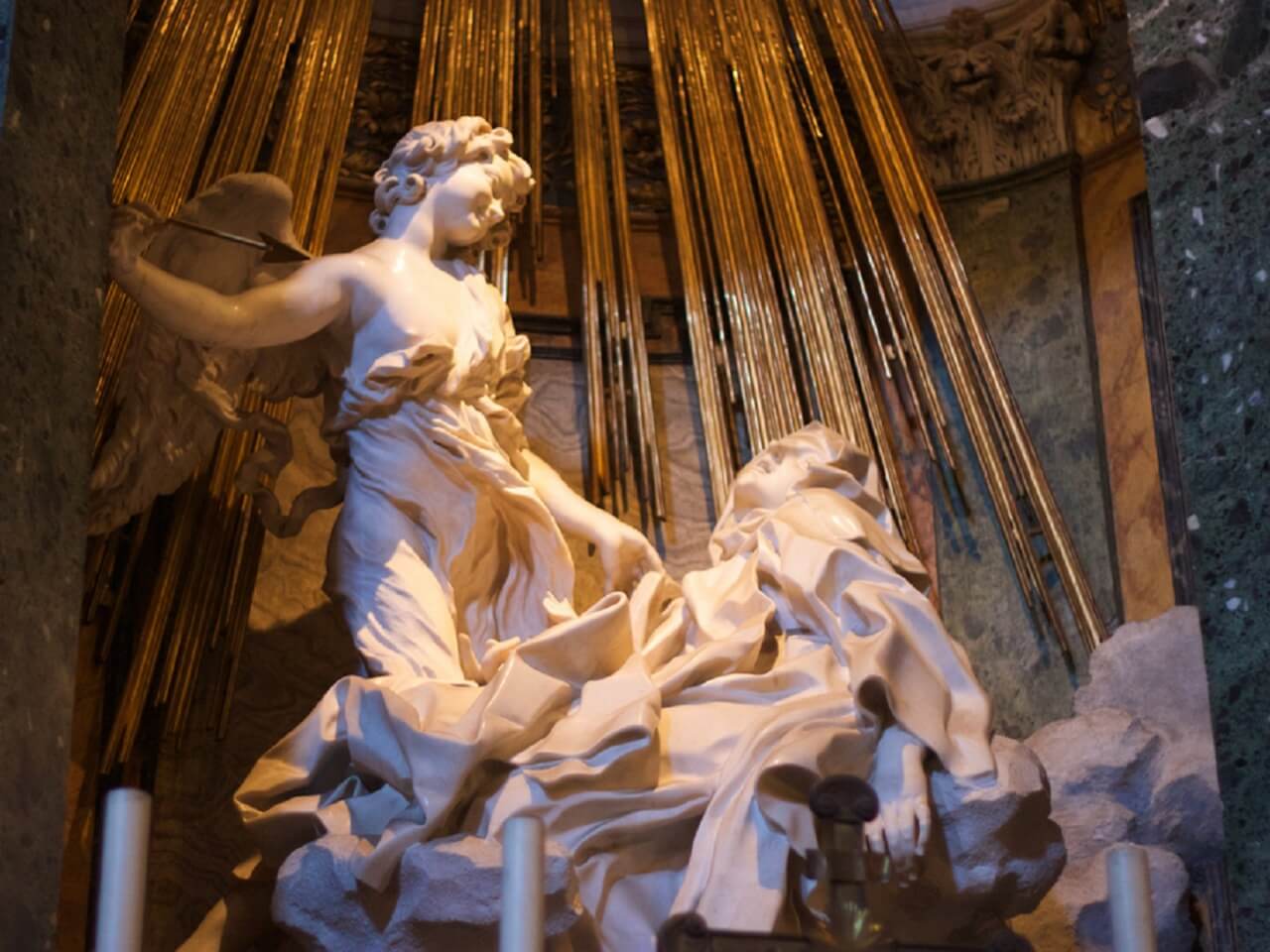


During His sublime discourse to the apostles on the eve of His Passion, Our Lord explained the nature of our relationship to Him in the spiritual life as follows:
I am the true vine; and My Father is the husbandman. Every branch in Me that beareth not fruit, He will take away: and every one that beareth fruit, He will purge it, that it may bring forth more fruit. … Abide in Me, and I in you. As the branch cannot bear fruit of itself, unless it abide in the vine, so neither can you, unless you abide in Me. I am the vine: you the branches: he that abideth in Me, and I in him, the same beareth much fruit: for without Me you can do nothing. If any one abide not in Me, he shall be cast forth as a branch, and shall wither, and they shall gather him up, and cast him into the fire, and he burneth. If you abide in Me, and My words abide in you, you shall ask whatever you will, and it shall be done unto you. In this is My Father glorified; that you bring forth very much fruit, and become My disciples. (John 15:1-2, 4-8)
While the “fruit” Our Lord speaks of certainly includes exterior works (e.g., the corporal and spiritual works of mercy), it seems the primary “fruit” He calls us to produce – or rather, desires to produce in us – is that of interior conversion, which manifests as “the fruit of the Spirit” – namely, “charity, joy, peace, patience, benignity, goodness, longanimity, mildness, faith, modesty, continency, chastity” (Gal. 5:22-23).
Fr. John Hardon, S.J. explains in his Pocket Catholic Dictionary that these fruits listed by St. Paul are “identifiable effects of the Holy Spirit” in our souls.[i] Our Lord tells us, “By their fruits you shall know them,” and “A good tree cannot bring forth evil fruit: neither can an evil tree bring forth good fruit” (Matt. 7:16, 18). With humility, then, we must take stock of the fruits we ourselves are producing (rather than focusing on our neighbor, which is so easy to do) and make sure we are allowing the Holy Ghost to cultivate His good fruits in our hearts, minds, and actions. All His fruits are important, of course, but for the present, let us examine more closely the fruits of joy, peace, and patience.
The Joy of the Lord
Amid the difficulties and “cares of this life” (Luke 21:34), we sometimes forget that God wants us to be joyful, that He created us to share in His own eternal joy. Being made in His image and likeness, we all naturally desire happiness, although many are confused about how to attain it. So how do we transcend the fleeting delights found in natural goods and experience the supernatural joy of the Lord? Jesus gives us a clue in His Last Supper discourse, when He says: “As the Father hath loved Me, I also have loved you. Abide in My love. If you keep My commandments, you shall abide in My love; as I also have kept My Father’s commandments, and do abide in His love. These things I have spoken to you, that My joy may be in you, and your joy may be filled” (John 15:9-11).
Our Lord shows us that true and lasting joy is a fruit of charity, the very life of God Himself, which we first receive through Baptism, “the laver of regeneration and renovation of the Holy Ghost” (Tit. 3:5). St. Thomas Aquinas demonstrates how charity produces joy in his Summa Theologiae:
It is written: “The charity of God is poured forth in our hearts by the Holy Ghost, Who is given to us” (Rom. 5:5). But joy is caused in us by the Holy Ghost according to Romans 14:17: “The kingdom of God is not meat and drink, but justice and peace, and joy in the Holy Ghost.” Therefore, charity is a cause of joy.
He goes on to explain:
[W]hen we were treating of the passions [in a previous section of the Summa], joy and sorrow proceed from love, but in contrary ways. For joy is caused by love, either through the presence of the thing loved, or because the proper good of the thing loved exists and endures in it; and the latter is the case chiefly in the love of benevolence, whereby a man rejoices in the well-being of his friend, though he be absent. On the other hand, sorrow arises from love, either through the absence of the thing loved, or because the loved object to which we wish well, is deprived of its good or afflicted with some evil. Now charity is love of God, Whose good is unchangeable, since He is His goodness, and from the very fact that He is loved, He is in those who love Him by His most excellent effect, according to 1 John 4:16: “He that abideth in charity, abideth in God, and God in him.” Therefore, spiritual joy, which is about God, is caused by charity. [ii]
The more we grow in our exercise of charity, by loving God and our neighbor as Jesus taught us, the more firmly we will abide in His love and be filled with His joy. Our lives on Earth will still involve suffering, for it is “through many tribulations we must enter into the kingdom of God” (Acts 14:21), but the same Lord Who commands us to take up our cross daily and follow Him (see Luke 9:23) also says: “Come to Me, all you that labor and are burdened: and I will refresh you. Take My yoke upon you and learn of Me, because I am meek and humble of heart: and you shall find rest for your souls. For My yoke is sweet and My burden light” (Matt. 11:28-30).
There is, of course, a time and a place in life for sorrow (e.g., compunction of heart for our sins, grief due to the loss of a loved one), but we must be careful not to let it consume us. St. Francis de Sales, renowned bishop and doctor of the Church, wrote about sorrow and how to deal with it in his Introduction to the Devout Life:
Sorrow that is according to God produces penance that surely tends to salvation, whereas the sorrow that is according to the world produces death,” says St. Paul [2 Cor. 7:10]. Sorrow, then, can either be good or evil according to its different ways of affecting us. True enough, it produces more bad effects than good, for it has only two good effects, namely, compassion and repentance, whereas it has six evil effects, namely, anxiety, sloth, wrath, jealousy, envy, and impatience. …
The enemy uses sorrow to set temptations before good men. Just as he tries to make the wicked rejoice in their sins, so also he tries to make the good grieve over their virtues and good works, and just as he cannot bring men to do evil except by making it look attractive, so also he cannot turn us away from good except by making it look disagreeable. The evil one is pleased with sadness and melancholy because he himself is sad and melancholy and will be so for all eternity.Hence, he desires that everyone should be like himself.
Evil sorrow disturbs and upsets the soul, arouses inordinate fears, creates disgust for prayer, stupefies and oppresses the brain, deprives the mind of prudence, resolution, judgment, and courage, and destroys its strength. In a word, it is like a severe winter which spoils all the beauty of the country and weakens all the animals. It takes away all sweetness from the soul and renders it disabled and impotent in all its faculties. [iii]
After describing the malady, St. Francis prescribes the following remedies: prayer [iv], perseverance in good works, singing spiritual songs [v], external acts of devotion, bearing one’s soul to a trusted priest, and humble resignation to God’s will. He concludes by assuring his readers: “Do not doubt that after God has put you on trial He will deliver you from this evil” [vi].
Truly, “the joy of the Lord is our strength” (2 Esd. 8:10) and our refreshment in this vale of tears, as St. Peter reminds us: “Dearly beloved, think not strange the burning heat which is to try you, as if some new thing happened to you; but if you partake of the sufferings of Christ, rejoice that when His glory shall be revealed, you may also be glad with exceeding joy” (1 Pet. 4:12-13). Our Lord Himself says the same: “Blessed are ye when they shall revile you, and persecute you, and speak all that is evil against you, untruly, for My sake: Be glad and rejoice, for your reward is very great in heaven” (Matt. 5:11-12).
The Peace of Christ
Pax Domini sit semper vobiscum – “the peace of the Lord be always with you.” We hear these words just prior to the Agnus Dei during Holy Mass. And after the Agnus Dei, the priest prays in preparation for Holy Communion: “O Lord Jesus Christ, Who didst say to Thine Apostles: Peace I leave you, My peace I give unto you: look not upon my sins but upon the faith of Thy Church; and deign to give her that peace and unity which is in accord with Thy will: Who livest and reignest God, world without end. Amen.” Jesus spoke about the gift of His peace, like His joy, during the same Last Supper discourse: “Peace I leave with you: My peace I give unto you: not as the world giveth, do I give unto you. Let not your heart be troubled: nor let it be afraid” (John 14:27). Notice how He emphasizes that “not as the world giveth, do I give unto you.” What, exactly, distinguishes the peace of Christ from worldly peace?
St. Thomas observes that true peace, another fruit of charity, is first and foremost something interior – namely, a right ordering of our appetites (desires). He quotes St. Augustine’s definition (“peace is tranquility of order”) and explainsthat “tranquility consists in all the appetitive movements in one man being set at rest together.” This mention of “rest” brings to mind another famous line from Augustine found at the beginning of his Confessions: “You move us to delight in praising You; for You have formed us for Yourself, and our hearts are restless till they find rest in You.” The primary object of our desire must be God Himself, the Supreme Good. Only when we allow Him to detach us from the endless pursuit of finite goods will we experience “the peace of God, which surpasseth all understanding” (Philip. 4:7). This requires us to “put off … the old man” of sin, “who is corrupted according to the desire of error” and “put on the new man, who according to God is created in justice and holiness of truth” (Eph. 4:22, 24). As St. Paul explains elsewhere, we must reckon ourselves “dead to sin, but alive unto God” (Rom. 6:11) as a result of our dying with Christ through Baptism and rising with Him to the life of grace.
Interior peace of soul, a fruit of God’s purifying love, is thus necessary for authentic and lasting peace with our neighbor. St. James touches on this truth in his epistle: “From whence are wars and contentions among you? Are they not hence, from your concupiscences, which war in your members?” (Jam. 4:1). In other words, the root of all conflicts among individuals, families, and nations is ultimately a lack of God’s peace in the soul. If we desire peace in our relationships with others, we must first “let the peace of Christ rejoice in [our own] hearts” (Col. 3:15). Then, and only then, will we be able to love – not only those who love us, but even our enemies, as Our Lord commands (see Matt. 5:43-48) and St. Paul exhorts:
If it be possible, as much as is in you, have peace with all men. Revenge not yourselves, my dearly beloved; but give place unto wrath, for it is written: Revenge is mine, I will repay, saith the Lord. But if thy enemy be hungry, give him to eat; if he thirst, give him to drink. For, doing this, thou shalt heap coals of fire upon his head. Be not overcome by evil, but overcome evil by good. (Rom. 12:18-21)
Patient Endurance
Finally, to preserve joy and peace in the midst of adversity, we must have patience. The Holy Ghost produces this good fruit in our souls by moving us to exercise, in particular, the virtue of hope and the gift of fortitude by which we look forward with confidence to the promise of heavenly glory and resolve to “persevere unto the end” – even unto martyrdom – and thus “be saved” (Matt. 10:22). As part of the “pruning process” mentioned by Jesus as necessary for our spiritual growth (see John 15 above), our heavenly Father often uses trials and suffering as the means of refining us, as it is written in the Book of Ecclesiasticus:
Son, when thou comest to the service of God, stand in justice and in fear, and prepare thy soul for temptation. Humble thy heart, and endure: incline thy ear, and receive the words of understanding: and make not haste in the time of clouds. Wait on God with patience: join thyself to God, and endure, that thy life may be increased in the latter end. Take all that shall be brought upon thee: and in thy sorrow endure, and in thy humiliation keep patience. For gold and silver are tried in the fire, but acceptable men in the furnace of humiliation. Believe God, and He will recover thee: and direct thy way, and trust in Him. Keep His fear, and grow old therein. Ye that fear the Lord, wait for His mercy: and go not aside from Him, lest ye fall. Ye that fear the Lord, believe Him: and your reward shall not be made void. Ye that fear the Lord, hope in Him: and mercy shall come to you for your delight. Ye that fear the Lord, love Him, and your hearts shall be enlightened. My children, behold the generations of men: and know ye that no one hath hoped in the Lord, and hath been confounded. For who hath continued in his commandment, and hath been forsaken? or who hath called upon Him, and He despised him? For God is compassionate and merciful, and will forgive sins in the day of tribulation: and He is a protector to all that seek Him in truth. (Ecclus. 2:1-10)
We find the very same message repeated on the pages of the New Testament. “For patience is necessary for you,” says St. Paul, “that, doing the will of God, you may receive the promise” (Heb. 10:36). St. James goes even further, proclaiming: “My brethren, count it all joy when you shall fall into divers temptations; knowing that the trying of your faith worketh patience. And patience hath a perfect work; that you may be perfect and entire, failing in nothing. … Blessed is the man that endureth temptation; for when he hath been proved, he shall receive a crown of life, which God hath promised to them that love him” (James 1:2-4, 12). And Our Lord promises, “In your patience you shall possess your souls” (Luke 21:19).
Abide in Christ
“I am the vine: you the branches: he that abideth in Me, and I in him, the same beareth much fruit: for without Me you can do nothing,” says Our Lord (John 15:5). Let us, therefore, abide in Him through daily prayer; frequent resort to Confession and reception of Holy Communion; and true devotion to Mary, which St. Louis de Montfort calls “the true Tree of Life.” By these means, the Holy Ghost will surely produce His good fruits in our souls and help us abound in good works.
“Now the God of hope fill you with all joy and peace in believing; that you may abound in hope, and in the power of the Holy Ghost” (Rom. 15:13).
Notes
[i] See Fr. John A. Hardon, Pocket Catholic Dictionary (New York: Doubleday, 1985), p. 157 (Fruits of the Holy Spirit).
[ii] Summa Theologiae II-II, q. 28, a. 1. Notice how St. Thomas distinguishes between love as a passion (a feeling based on the enjoyment of a good possessed) and love as the virtue of charity (to will the good of the other).
[iii] Introduction to the Devout Life, trans. by John K. Ryan (New York: Image Books, 2003 ed.), p. 241.
[iv] He cites James 5:13: “Is any of you sad? Let him pray.”
[v] The Book of Psalms, which constitutes a majority of the Church’s Divine Office, is replete with exhortations to “[b]e glad in the Lord” (Ps. 31:11), “[r]ejoice in the Lord” (Ps. 32:1), “[d]elight in the Lord” (Ps. 36:4), “praise the Lord with joy” (Ps. 94:1), and “[s]ing joyfully to God” (Ps. 99:2). The New Testament contains similar passages (see Eph. 5:18-19, Col. 3:16).
[vi] Introduction to the Devout Life, p. 243.



In the wake of the latest instance of a faithful son of the Church pointing out that the papal emperor has no clothes, we have been treated to yet another flurry of loud and aggressive assertions that there is nothing to see here, no confusion really exists, and can everyone please stop acting childish and just move along?
Meanwhile, that faithful son — Fr. Thomas Weinandy — has been forced out of his position as a doctrinal consultant to the USCCB, while their president, Cardinal Daniel DiNardo, had the audacity to talk about his “departure” under the auspices of “an opportunity to reflect on the nature of dialogue within the Church.”
Dialogue? Really? Since when does dialogue include the immediate dismissal of a man who posed his concerns — rooted in his conscience, which we are constantly informed by our betters in the Church can serve as the arbiter of all critical moral truths — with such deference and respect to the pope that people have criticized him for being too obsequious? Of course DiNardo wasn’t man enough to come out and admit that Fr. Weinandy had been told to resign; instead, he referred to his “departure” as though his former chief of staff on doctrinal matters had merely drifted away inexplicably on a gentle breeze like Mary Poppins.
Let’s make something clear: the USCCB is a disgrace to Catholics everywhere — a predominately progressive organization that has enriched itself through hundreds of millions of dollars of government money for refugee resettlement while opposing any sensible laws to restrict immigration — a fact that looks very much, as Catholic writer and author John Zmirak pointed out on yesterday, like political simony. “How much would we have to pay the bishops to teach what the Catechism says on #immigration?” he asked. To put it more bluntly, I’d be interested in knowing how much we’d have to pay them to just be Catholic.
The USCCB’s concern for disassociating itself with an uncouth thinker only goes so far, however. For example, they still haven’t asked Ralph McCloud to resign. McCloud is the head of the USCCB’s Catholic Campaign for Human Development, who split his first year working for the US bishops by moonlighting as treasurer for the political campaign of Wendy Davis, a Planned Parenthood-endorsed candidate for the Texas state senate who was at that time was in the process of unseating a pro-life incumbent. Davis would go on to be known for her 11-hour long filibuster in the Texas legislature to block more restrictive abortion regulations. Under McCloud’s leadership the CCHD has been linked to funding from Planned Parenthood affiliates and an organization performing same sex marriages.
No “departure” for Mr. McCloud while wistful reflections on dialogue were issued.
Or what about the USCCB subsidiary, Catholic Relief Services (CRS), which was recently exposed as being involved in developing an African sex-education program “aimed at children as young as 10, encourages condom use, promotes abortifacient contraception, normalizes homosexuality and masturbation and lists Planned Parenthood as a resource.”
Was action taken? Nope.
For that matter, how about Jessica Garrels, a “program quality coordinator” for CRS, whom, as Michael Hichborn of the Lepanto Institute reminded us yesterday, “had strongly supported and promoted Planned Parenthood on her Facebook page.” Among other examples Hichborn cited — including a profile picture with a Planned Parenthood graphical overlay on her account — on January 9, 2016, Garrels “wrote “Well said!” cheering on the statement of US Representative Gwen S. Moore in her defense of maintaining funding to Planned Parenthood.” Hichborn continues:
Shortly after the the article on Garrels was published and sent to the bishops of the United States, Garrels’ Facebook page was locked up tight to hide her posts from public view. CRS never issued a response to the report, and when LifeSiteNews contacted CRS for a comment on the matter, “CRS did not respond to LifeSiteNews’ inquiry into the information about its employees’ public support for Planned Parenthood.”
As it turns out, Garrels is still employed at CRS over a year later.
Just this summer, Garrels gave an interview to the Huffington Post on behalf of Catholic Relief Services. Clearly, they think she’s a perfectly acceptable ambassador for the brand.
Support abortion? Not to worry! You can stay at the USCCB.
Respectfully ask the pope to consider the damage he is doing to the Church by citing specific examples raised through pastoral work via the concerns of the faithful? Get. Out.
Knowing just how impossible it is to do what I’d really love to see happen — defund the USCCB — makes fighting back challenging. After all, with a tidal wave of cash coming from the federal government, we can only do so much damage by starving them of income from the faithful. And we should starve them in any way we can. Not a single penny should be transferred from the faithful to a single USCCB program. In fact, we should probably begin putting the pressure on our own bishops through their annual appeals. Perhaps we should all put letters in those envelopes in lieu of checks, telling our bishops that if they don’t reign in the conference, they’ll get no more money from us. But to be honest, it’s hard for me to come up with a specific action item in this regard because the whole thing should simply be gutted and set on fire and dumped into the nearest ocean. (And nuked from orbit, just to be sure.)
Feeling this frustration yesterday and looking for any opportunity to make our voices heard, I began encouraging people on social media to go to the Facebook page of the USCCB and leave one-star reviews after I saw others encouraging the same. Within no time, their page was flooded with people complaining about their treatment of Fr. Weinandy along with other issues. Clearly, there’s a lot of pent-up frustration out there amongst the faithful.
But the USCCB wasn’t having it. They began banning anyone who left a negative review from interacting with their page, making it impossible to comment on other reviews or posts or even to so much as hit the “like” button. Today, since Facebook won’t allow a page owner to edit or delete negative reviews, they’ve instead found a way to remove the reviews feature entirely. (That’s okay, though. I saved a whole bunch of them in a nice long screenshot. You can download the PDF here. For posterity!)
So. Much. Dialogue!
You can still go to their contact page and give them a piece of your mind. Mostly, though, this will be a minor irritation that low-level staffers will have to deal with. After all, important members of the USCCB — like Cardinal Blase Cupich, who is in the running for the USCCB’s pro-life committee despite repeatedcollusion with pro-abortion politicians and an outrageous statement about the undercover Planned Parenthood videos — have to give critical talks like this week’s “Dialogue [there’s that word again!] in the Key of Pope Francis”, in which he is seen defending Fr. James Martin, SJ, and telling us that if we want to “take up discernment” in the mode of Pope Francis, we must “be prepared to let go of cherished beliefs and long-held biases”.
And what about this gem, taken from the same speech?
Cupich, of course, makes an important point here about the evolution of decentra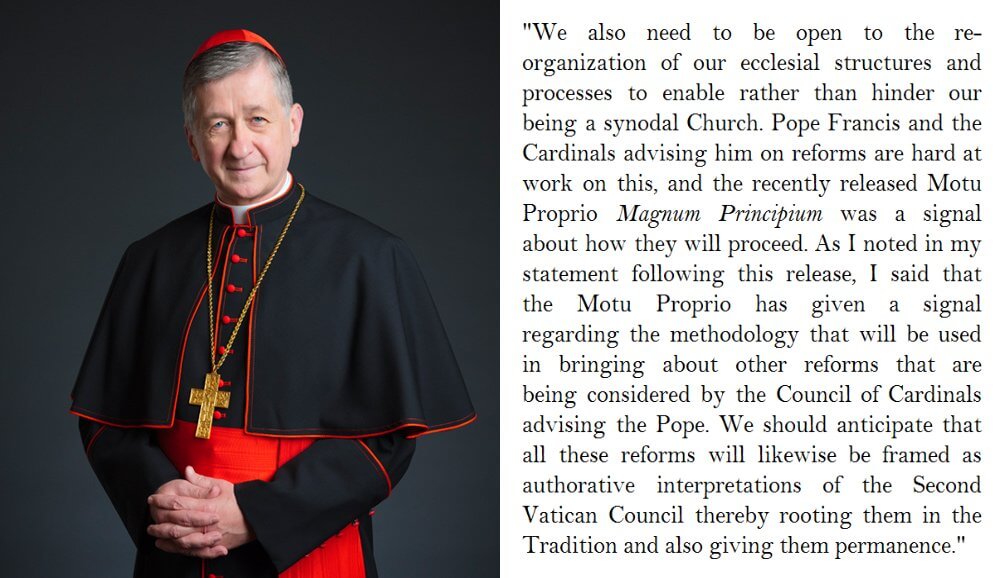 lized ecclesiastical structures. Many people simply discount the role of the USCCB because it has “no power” and “no official authority” within the Church. But remember, Francis wants to change that too. From his exhortation, Evangelii Gaudium (32):
The Second Vatican Council stated that, like the ancient patriarchal Churches, episcopal conferences are in a position “to contribute in many and fruitful ways to the concrete realization of the collegial spirit”.[36] Yet this desire has not been fully realized, since a juridical status of episcopal conferences which would see them as subjects of specific attributions, including genuine doctrinal authority, has not yet been sufficiently elaborated.[37] Excessive centralization, rather than proving helpful, complicates the Church’s life and her missionary outreach.
The pope took a big step, in fact, toward granting significant autonomy to bishops conferences in his motu proprio Magnium Principium, which, as he clarified in his very public rebuke to Cardinal Sarah, grants them the authority to perform their own regional Mass translations without Rome’s pre-approval. (Already, the excitement in parts of Europe is bubbling over with the new possibilities!)
Meanwhile, the faithful are left with no recourse to this style of “dialogue,” which effectively amounts to being shouted down and told to know our place, under the iron fist of the Dictatorship of Mercy. In addition to continuing to speak out, prayer and penance is most likely the course of action the saints would recommend. Admittedly, however, such a response feels incredibly meager in the face of the continued implosion of all we hold sacred.
++++++++++++++++++++++++++++++++++++++++++++++++++++++++++++++++++++++++++++
HERE IS AN EXCERPT FROM MY ESSAY ON THE LIMITS OF POWER OF EPISCOPAL CONFERENCES: A Mechanism Of Restraint
Then Joseph Cardinal Ratzinger, now Pope Benedict XVI, in his famous interview with the Italian journalist, Vittorio Messori, published as The Ratzinger Report had some very important things to say about the relationship of individual bishops to episcopal conferences. Asked if everything was restored to order with Vatican II Cardinal Ratzinger replied:
In the documents, yes; but not in practice, where another of the paradoxical effects of the post-conciliar period has come to light….The decisive new emphasis on the role of the bishops is in reality restrained (enphasis added) or actually risks being smothered by the insertion of bishops into Episcopal conferences that are ever more organized, often with burdensome bureaucratic structures. We must not forget that the episcopal conferences have no theological basis, they do not belong to the structure of the Church, as willed by Christ, that cannot be eliminated; they have only a practical, concrete function. (page 59)
No Episcopal conference, as such, has a teaching mission; its documents have no weight of their own, save that of the consent given to them by the individual bishops. (Messori asked why does the Prefect insist upon this point?) Because it is a matter of safeguarding the very nature of the Catholic Church, which is based on an episcopal structure and not on a kind of federation of national churches. The national level is not an ecclesial dimension (emphasis added.) ( page 60)
(Cardinal Ratzinger recalled an Episcopal conference that had been held in Germany in the 1930’s) Well, the really powerful documents against National Socialism were those that came from individual courageous bishops. The documents of the conference, were often rather wan and too weak with respect to what the tragedy called for.” (page 61)
I know bishops who privately confess that they would have decided differently than they did at a conference if they had had to decide by themselves. Accepting the group spirit, they shied away from the odium of being viewed as a ‘spoilsport’, as ‘backward’, as ‘not open’. It seems very nice always to decide together. This way, however entails the risk of losing the ‘scandal’ and the ‘folly’ of the Gospel, that ‘salt’ and that ‘leaven’ that today are more indispensable than ever for a Christian (above all when he is a bishop, hence invested with precise responsibility for the faithful) in the face of the gravity of the crisis. ( page 62).




27 comments:
Mike Walsh, MM said…
Lepanto said…
Arthur L. Gallagher said…
Such bodies tend inevitably to activism, change, partisanship and, it appears, obfuscation and heterodoxy. They tend to issue an enormous number of statements on all kinds of issues, some of which would be better left unsaid.
Just look at the Anglicans- they took the leap from erastianism to synodalism, and went from the frying pan and into the fire- all in living memory.
God intended the Catholic Church to be ruled by Bishops, under the Pope. When that model is deviated from, predictable results will follow, just as they do in any politically fueled bureaucracy.
GOR said…
The USCCB has learned the lesson well. So much for mercy, humility and dialogue. The hypocrisy is palpable.
ansgarus said…
Sent his men to seize her, Frideswide’s faith was strong –
In an instant blinded then his sight restored,
They knew both the wrath and mercy of the Lord.
Banshee said…
Fr. Weinandy’s sign from God was a good part of the story, enough that a usually liberal source felt they needed to print it. Apparently, unusually specific requests do sometimes get unusually specific answers.
Ray Kinsella said…
thomas tucker said…
Hans Georg Lundahl said…
{Yes, she was a Benedictine hermitess and nun, the daughter of Prince Didan of the Upper Thames region of England. She is sometimes called Fredeswinda. When Prince Algar of a neighboring kingdom asked for her hand in marriage, Frideswide fled to Thomwry Wood in Birnsey, where she became a hermitess. She founded the St. Mary’s Convent in Oxford and is patroness of the university of that city. Her relics are extant. In liturgical art she is depicted as a Benedictine, sometimes with an ox for companion.}
Patti Day said…
Amateur Brain Surgeon said…
The good Father Weinandy was canned for bravely standing-up for the truth – the truth the USCCB promotes in their Religious Liberty Educational Program for high schoolers:
…And this is love, that we follow his [God’s] commandments; this is the commandment, as you have heard from the beginning, that you follow love” (2 John 6). We too should read, note, and practice the Ten Commandments and live as many virtues as we can, especially faith, hope, and love so that we can approach threats against religious liberty with critical judgment and courage in action.
To take to heart the advice of Pope Francis: “Let the Risen Jesus enter your life, welcome him as a friend with trust: he is life! If up till now you have kept him at a distance, step forward. He will receive you with open arms. If you have been indifferent, take a risk: you won’t be disappointed. If following him seems difficult, don’t be afraid, trust him, be confident that he is close to you, he is with you and he will give you the peace you are looking for and the strength to live as he would have you do.”
Click to access Religious-Liberty-Lesson-Plan.pdf
To be fair to the Bishops, this is their plan for High School students and so it would be unfair of us to think it ought apply to them.
ABS could have highlighted other instructions from the educational series but he had to stop because Just War
Ray Kinsella said…
Albrecht von Brandenburg said…
I certainly hope that things have improved.
Woody said…
Woody said…
Long-Skirts said…
OFFERINGSMy church she is a Catholic
But some like Luther’s view
Or say it doesn’t matter that
Hank killed some Saints, a few.
He also had oh, several wives
And took some of their heads
But Church of England called him first
That stallion of all beds.
Carthusians, smarthusians
In habits hung around
Quiet not like Campion
Beth brought that braggart down.
And merry, Margaret Clitherow
Oh, what a cheeky dame
Hiding priests behind her skirts
Liz crushed her little game.
Then Thomas More, oh what a bore
They pleaded some did cry,
“Let horny Hank play his bed prank
Just nod and wink an eye!”
Some Bishops say, “That’s long ago.
Those times are of past scene.”
Now, “Who are we to judge?” They ask
“Just make sure you go green!”
And on some Altars relics,
Rigid, martyred by Hank’s lust –
Bishops bent with sin’s intent
Will burn us ash to dust.
S Thorfinn said…
I wondered about that at times but I found a few passages of wisdom (like picking up grains of sand at the beach) in Cardinal Sarah’s two recent books that could be relevant. He mentions the fine line he walked when serving under Sekou Toure’s dictatorship in Guinea. Some wished he would speak out more; some even wondered if he was complicit. I encourage all to read or re-read relevant passages, but the gist was that martyrdom may come but in the meantime it may be necessary to employ the cunning of a serpent in faithfully living one’s vocation, rather than marching straight off to martyrdom. He also cites the example of Bishop Wojtyla in Poland.
Nicholas Mitchell said…
Joshua said…
Christopher Boegel said…
Christopher Boegel said…
Rose Marie said…
Albrecht von Brandenburg said…
Matthew Reilly said…
Matthew Reilly said…