

This Church, St. Mary’s in Krakow produced Saint John Paul II
This Church, St. Mary’s in Krakow produced Saint John Paul II
 Tom Hoopes | May 22, 2017
Each year in my Christianity and Mass Media class at Benedictine College, we cover pornography — the 21st-century mass media juggernaut.
And each year the pornography problem grows worse. The latest: The two most popular online video streaming services are featuring pornography-friendly marquee programs — a documentary and a biopic.
I haven’t (and won’t) watch either one, but speaking to exorcists recently (after writing about them before) has made me realize something about this phenomenon: Satan is pornography’s biggest fan.
Why?
First, Satan loves pornography because he hates freedom.
When we renew our baptismal promises the Church asks: “Do you reject Satan, so as to live in the freedom of God’s children?”
To use pornography is to say: “I do not.” Pornography militates against freedom. The science of it is well known: The human brain, when aroused by erotic images, dumps chemicals into the bloodstream that push the throttle of the viewer to full-speed “give me more” mode. Idle online curiosity quickly becomes addictive obsession.
Dabbling with pornography is like opening the window of a pressurized airplane at a high altitude. It pulls you in and spits you out.
The same thing happens to women involved in the pornography industry. Women seeking modeling careers, or a brief injection of cash in tough times, quickly find themselves in the clutches of a degrading industry, with images of themselves that they regret circulating forever online.
A recent pornography scam is not unlike what happens anyway to “legitimate” pornographic actresses: Lured by money, they find themselves in the clutches of men who only want to use them.
Which is a second reason Satan loves pornography: It is the ultimate structure of sin.
When we lie, or cheat, or steal, we commit a sin that implicates each of us, alone. When we involve others in our sin, that’s worse. But what about a sin that helps create, perpetuate and supercharge international syndicates of sin?
Using pornography churns a vortex of sin that Satan uses to drag whole groups of people — performers, programmers, sellers, and unsuspecting bystanders — down to his lair.
Third: Satan loves disfiguring the image of God.
Satan’s ultimate target isn’t us: It’s God. He can’t touch God — but since we are made in the image and likeness of God, we are the next best thing.
If we understood how immense our souls are, and how beautifully they mirror the Trinity, we would shudder with the responsibility. Satan understands, and he lunges at every opportunity to shatter that image. In fact:
Fourth: The demons love to make human beings look like animals.
In Chapter 12 of Revelation, it is the vision of a woman — a flesh and blood human being — clothed with the sun and crowned with stars which infuriates the disobedient angels.
Demons, creatures of pure spirit, cannot abide a material creature being made higher than them. The very thought disgusts them. So they delight in showing just how disgusting these human creatures really are.
An exorcist described to me how victims of possession will often imitate animals — grunting or arching their backs. Demons don’t possess more people because we save them the trouble. We choose to imitate animals on our own.
Fifth, the devil loves to destroy the innocence of children.
When the apostles argue who is the greatest in the 18th Chapter of Matthew, Jesus places a child in their midst. Then, a few verses later, he adds that anyone who causes a child to sin would be better off thrown into the sea with a millstone tied around his neck.
The demons have already chosen the millstone. Now they want to cause as many children to sin as possible.
Along with abortion, history will condemn our times most, I think, for our refusal to protect children from pornography. Even a notorious male pornographic actor is disgusted at how children experience pornography.
The reason for our failure here is obvious: Adults want easy, anonymous access to pornography. We care more about protecting that access than we do about protecting our kids.
Demons are like predatory insects.
They single-mindedly care about one thing: Boring into your soul and turning you against God. Using pornography is like breaking open their hive right there on your desktop.

Sixth Sunday of Easter
Lectionary: 55
Reading 1
Philip went down to the city of Samaria
and proclaimed the Christ to them.
With one accord, the crowds paid attention to what was said by Philip
when they heard it and saw the signs he was doing.
For unclean spirits, crying out in a loud voice,
came out of many possessed people,
and many paralyzed or crippled people were cured.
There was great joy in that city.
Now when the apostles in Jerusalem
heard that Samaria had accepted the word of God,
they sent them Peter and John,
who went down and prayed for them,
that they might receive the Holy Spirit,
for it had not yet fallen upon any of them;
they had only been baptized in the name of the Lord Jesus.
Then they laid hands on them
and they received the Holy Spirit.
Responsorial Psalm
R. (1) Let all the earth cry out to God with joy.
Shout joyfully to God, all the earth,
sing praise to the glory of his name;
proclaim his glorious praise.
Say to God, “How tremendous are your deeds!”
R. Let all the earth cry out to God with joy.
“Let all on earth worship and sing praise to you,
sing praise to your name!”
Come and see the works of God,
his tremendous deeds among the children of Adam.
R. Let all the earth cry out to God with joy.
He has changed the sea into dry land;
through the river they passed on foot;
therefore let us rejoice in him.
He rules by his might forever.
R. Let all the earth cry out to God with joy.
Hear now, all you who fear God, while I declare
what he has done for me.
Blessed be God who refused me not
my prayer or his kindness!
R. Let all the earth cry out to God with joy.
Reading 2
Beloved:
Sanctify Christ as Lord in your hearts.
Always be ready to give an explanation
to anyone who asks you for a reason for your hope,
but do it with gentleness and reverence,
keeping your conscience clear,
so that, when you are maligned,
those who defame your good conduct in Christ
may themselves be put to shame.
For it is better to suffer for doing good,
if that be the will of God, than for doing evil.
For Christ also suffered for sins once,
the righteous for the sake of the unrighteous,
that he might lead you to God.
Put to death in the flesh,
he was brought to life in the Spirit.
Alleluia
R. Alleluia, alleluia.
Whoever loves me will keep my word, says the Lord,
and my Father will love him and we will come to him.
R. Alleluia, alleluia.
Gospel
Jesus said to his disciples:
“If you love me, you will keep my commandments.
And I will ask the Father,
and he will give you another Advocate to be with you always,
the Spirit of truth, whom the world cannot accept,
because it neither sees nor knows him.
But you know him, because he remains with you,
and will be in you.
I will not leave you orphans; I will come to you.
In a little while the world will no longer see me,
but you will see me, because I live and you will live.
On that day you will realize that I am in my Father
and you are in me and I in you.
Whoever has my commandments and observes them
is the one who loves me.
And whoever loves me will be loved by my Father,
and I will love him and reveal myself to him.”
THE HOMILY
(THE COLLECT)
Grant,
almighty God,
that we may celebrate
with heartfelt devotion these days of joy, which we keep
in honor of the risen Lord,
and that what we relive in remembrance
we may always hold to in what we do. Through our Lord Jesus Christ, your Son, who lives and reigns with you
in the unity of the Holy Spirit,
one God, for ever and ever.
Amen!
What does the opening prayer of this Mass, that I have just read to you, mean, when it asks: “that what we relive in remembrance we may always hold to in what we do”?
What is it that we relive in remembrance?
It is no wonder that at times we have difficulty remembering what it is that is important in our lives.
Our waking hours are filled with distractions coming at us from every direction.
We are somewhat like the disciples on the road to Emmaus. The tragic events of the past twenty-four hours so pre-occupied their thinking that they failed to see that the passion, death and resurrection of Our Lord Jesus Christ was the completion of everything that he had foretold them.
It was only after he disappeared from their sight at table after reminding them of all that the
prophets had foretold the Jewish people that the Messiah would have to endure that they remembered what he had told them during his public ministry.
They remarked to each other: “Were not our hearts burning within us as we walked with him and heard him tell us of all that the Mesiah would have to suffer?”
The recent events of Good Friday were so traumatic for the disciples that their involuntary memory momentarily failed them.
Marcel Proust, the French novelist, who wrote the seven volume novel entitled The Remembrance of Things Past ( a La Recherche de la Temps Perdu) exploring the phenomenon of involutary memory, died in November 1922; I was born nine months later. I am not suggesting that there was a natural connection between the two events, but I have often reflected on the gift of involuntary memory with which God blessed me .
At age 93 I have increasing difficulty in remembering names of people I KNOW when I meet them. But memory flashbacks, such as the memory of every detail connected with my first Holy Communion come endlessly during the course of an ordinary day.
To prove to you that I am serious when I say that I frequently remember EVERYTHING about my First Holy Communion which occured in 1930 let me tell you that after the Mass all of the First Communicants went to the Parish Hall and were treated to a communion breakfast and
FOR THE FIRST TIME EVER
I ate corn flakes.
It was a wonderful treat added to having just received the Body and Blood of Christ.
What was so special about eating corn flakes?
THEY HAD JUST BEEN INVENTED
and no one had ever eaten them before.
I think that that person is blest who involuntarily remembers significant religious events in their past life, but even more to the point of todays readings in this Mass, they are twice blessed if they frequently involuntarily recall the events of the life of Our Lord Jesus Christ
On Sunday, June 4, Pentecost Sunday,we will have completed our annual Emmaus walk with Jesus Christ. During the 90 days from the First Sunday of Lent to Pentecost Our Lord Jesus Christ has walked with us in the human ‘person’, the Church, of which he is the head.
Day after day during those 90 days he will have told us of all that he endured and suffered for our sakes. He did this through the Liturgy of the Church.
If we are to continue to walk with him we must let our hearts ‘burn within us’ as we relive the events of these 90 days conscious of who HE is and who we are in relation to him.
He has promised that he will not leave us as orphans and so we have a companion walking with us on our journey to ‘Emmaus,’ the Holy Spirit.
Let the Holy Spirit guide you.
Remember that Our Lord said that the proof of your love for him is when you remember his commandments
AN KEEP THEM !!!
Almighty God,
Eternal Father,
as we walk along our journey to the heavenly Emmaus where Christ our Lord will reveal himself to us,
grant that through the graces given us by the Holy Spirit we may relive what we have vicariously experienced with Jesus as we accompanied him through 90 days on his way to Golgotha and his resurrection.
Grant that we may so keep his commandments
that our love for him is never in doubt.
This we ask through the same
Jesus Christ, Our Lord,
who lives and reigns with you and the
Holy Spirit, One God,
forever and ever.
Amen!
By Father George W. Rutler
Often have I reflected on a story that an Australian bishop told me, about a man on a railroad platform who said “I am not a Catholic, but there is one thing about the Catholic Church I have never understood.” The prelate replied, “Only one thing? I am a bishop, and there are many things about the Church I do not understand.”
That is how it must be, since mortals did not invent the Church. The countless sects and denominations structured by humans have a certain cogency and predictability because they are fashioned according to natural understanding. The Holy Catholic Church was planned by divine intelligence, and in consequence there are mysterious elements that are unpredictable and often contradictory to limited logic. The “Church Militant,” which exists in time and space, in contrast to the “Church Expectant” of the faithful departed and the “Church Triumphant” of the saints, will be a mix of the best human accomplishments and the bleakest human foibles, but none of that alters the Church’s supernatural character as the living presence of Christ.
An architect knows where each door leads in the house he has designed, but God made the Church, and so we have to find our way around in it by the guidance of Christ who is “the way, the truth and the life” (John 14:6). To those who say that they accept Christ but not the institutional Church, the answer is that the Church is an institution because Christ instituted it, and so the Church is indispensable.
With deliberate symmetry, the Lord invoked the pattern of forty days that is threaded through salvation history, spending forty days on earth from his Resurrection to his Ascension. His departure from this world was the means by which he could be omnipresent, no longer confined to one generation in time or one acre of space. His instruction as he ascended was to bring others into his Church: “Go, therefore, and make disciples of all nations, baptizing them in the name of the Father, and of the Son, and of the Holy Spirit, teaching them to observe all that I have commanded you. And behold, I am with you always, until the end of the age” (Matthew 28:19-20).
When I was appointed as pastor here on 34th Street, the question frequently asked was, “How many Catholics are in that neighborhood?” As our Lord was “taken up,” he did not send his disciples into Catholic neighborhoods, because there were none. So the right question must be: “How many Catholics will there be in the neighborhood?”
There will be many things we do not understand about the Church. The one thing that must be understood, because Christ made it so very clear, is that he says of himself, and by so saying says of his Church: “No one comes to the Father except through me” (John 14:6).

CRISIS MAGAZINE
The Gallup polling people have issued a new report on the views Americans hold on what used to be called the moral issues. The results are totally expected and still disappointing.
We love our contraception. A whopping 91 percent find it morally acceptable. Divorce is approved of by 73 percent. Fornication is okay with 69 percent of us. Same-sex relations are approved of by 63 percent. Bastardy is fine with 62 percent. Coming in below 50 percent approval, however, is abortion at 43 percent, teen sex at 36 percent, pornography at 36 percent, and suicide at 18 percent. Polygamy has climbed to 17 percent and cloning gets 14 percent.
And then there’s this. Coming in dead last is adultery that gets only 9 percent approval. This has climbed, too. It used to be at 6 percent, then 7, now 9.
Hold onto that thought, that overwhelmingly Americans do not approve of extramarital affairs. And consider a massive New York Times valentine to adultery that appeared in the Sunday Magazine a few weeks ago.
“Is an Open Marriage a Happier Marriage” by Susan Dominus is a 12,000-word wet smooch to several couples who have decided to “open” their marriages to other people, that is, the wife takes boyfriends, the husband takes girlfriends, sometimes everyone jumps into the pool together.
The main protagonists are a couple named Daniel and Elizabeth who find that some years after their wedding, they—mostly Daniel—have grown bored with their sex life. Daniel says Elizabeth’s interest had waned. She agreed and blamed her strict—always strict—Catholic upbringing. Daniel cast his desires in the form of rights. He said he had a right to better sex. Increasingly itchy, Daniel wrote about “nonmonogamy” on a blog about sexuality run by a friend of his. Yes, Daniel has friends who blog about sexuality.
Daniel eventually broached the subject of adultery with Elizabeth. He explained to her that having their second child did not detract from the love they felt for their first child because “love is additive. It is not finite.” Oh, yeah, they have two children. These two hapless creatures make at least a cameo appearance in this saga.
Elizabeth was not buying. Dominus writes, “[Elizabeth] was not even sure what, exactly, he wanted from her, or how she could give it.” This does not last long.
They continued with their humdrum lives of mediocre sex until one night in 2015 Elizabeth meets Joseph at a charity fundraiser. She and Joseph “go to tea” a few times.
Dominus says Elizabeth and Joseph barely knew each other and this allowed for a kind of “lightness” between them, “pure fun in the face of everything.” On their third date, he kisses her and she likes “someone else’s mouth on hers for the first time in 24 years.”
And then, get this. Elizabeth’s husband Daniel is upset. This was the guy who brought the idea to her in the first place. Go figure that. Nobody could see that coming.
Where Daniel said outside sex was his civil or human right or whatever, Elizabeth said the affair was important for her “growth” and that she was “taking a stand” for her own pleasure and she was “sticking to it.”
So, off they went to a sex therapist who warned them they were headed for divorce. Concerned, Elizabeth offers to quit boffing Joseph if that is what Daniel wants. And you know what Daniel really wants? It turns out he just wants to give his permission for another man to diddle his wife. He said it’s okay and now he felt better. There is a word for the kind of man Daniel is. It is an old word, a good word. Wuss. Daniel is a wuss. He is also a cuckold. He is a wussified cuckold.
Understand that a lot of this is backed up by the very latest, the most up to the minute therapy and “science.” Daniel and Joseph and Elizabeth want you to know they are not shoving off into rough waters with nothing but a leaky boat. Their sails are full of wisdom from someone named Tammy Nelson, a therapist with an interest in open relationships who wrote a book coining a new term, “The New Monogamy.”
Tammy says, “The new monogamy is, baldly speaking, the recognition that, for an increasing number of couples, marital attachment involves a more fluid idea of connection to the primary partner than is true of the ‘old monogamy.’ Within the new notion of monogamy, each partner assumes that the other is, and will remain, the main attachment, but that outside attachments of one kind or another are allowed—as long as they don’t threaten the primary connection.”
In the New Monogamy, the connection to your spouse is “more fluid.” Anytime the sexual revolutionaries talk about fluidity, you can be sure that some institution is taking it in the chops. Tammy says the New Monogamy could include not only long-lasting relationships outside of marriage but also one night stands.
You notice that the New Monogamy sounds a great deal like the old adultery.
And then, a few paragraphs later, Dan Savage rears his hoary head. You had to expect Dan Savage to make an appearance since he coined the word “monogamish,” what Savage says most gay relationship are built on, that is, a main squeeze and lots of hot man-on-man action on the side. This is what they call being faithful. Seriously they do. Proponents of the New Monogamy greatly admire the way gay men have led the way in this kind of “fidelity.” By the way, if any of you say gays are not generally faithful to their “spouse,” you will get labeled a hater, even though they know, everyone knows, Dan Savage knows they’re not. The only rule in Savage-World is that both partners behave “ethically,” whatever that might mean.
Besides therapists, and sex experts like Savage, in this mammoth New York Timesthumb-sucker, Dominus brings in some academics to back these claims. She says there’s “an entire scientific field … has evolved to understand the near-totally diminishment of lust for their partners that so many women in long-term monogamous relationships feel.” Dominus says, “It took decades for sex researchers to consider the possibility that women’s fabled low libido might be a symptom of monogamy.” (Italics mine.) Monogamy now has “symptoms.”
Dominus even brings in genetics. She says, “There may be people who are more inclined toward monogamy or polyamory that others, who may even, at least one study shows—how they love their studies—have some genetic predisposition toward one or the other. Have you ever noticed how often those seeking to throw off the shackles of middle class morality, those who seek greater freedom, eventually want to attribute the urge to a lack of freedom.
Back to the Daniel & Elizabeth Show. He gets a girlfriend and goes away with her. Later that night Elizabeth playfully texts him, “Are you naked yet?” But when Daniel comes home the next day from his New Monogamy snog, Elizabeth is upset! Why? Because it took weeks for her and Joseph to work up to the sex. They spent weeks growing their relationship before they got naked, and here Daniel jumps into bed almost immediately. She gets over it. Daniel eventually breaks up with his girlfriend. Elizabeth still sees Joseph who, by the way, has a wife who is in the dark about all of this. The children are not mentioned any more. Who cares about them anyway?
If all of this sounds tedious, it is. If it sounds juvenile, it’s that, too. One of the things you notice in talking to the New Sexual Revolutionaries is that far from being sophisticated about sex, they are remarkably unsophisticated. It is like expecting anything remotely adult in an adult film, or expecting to find any gentlemen at a gentlemen’s club.
And no matter what new phrases they coin or how they dress it up in therapy-talk and academic studies, the fact is they are bored with their husbands and wives and they miss that electricity one feels early on in relationships. Like any teenager, they much prefer to be “in love” than to love. Love is boring: in love is amazing. But the real story is they are run-of-the-mill horndogs and just can’t admit it.
If there is any good news it is that, at least according to Gallup, hardly anyone thinks this is a good thing. I wonder what their kids say?

Austin Ruse is president of C-FAM (Center for Family & Human Rights), a New York and Washington DC-based research institute focusing on international legal and social policy. The views expressed here are not necessarily those of C-FAM.

Congressman Brad Wenstrup (R-Ohio) gave an eye-opening lecture yesterday at FRC on the harmful D.C. assisted suicide law and why Congress must repeal it. Earlier this year, Washington, D.C. joined six other states in legalizing assisted suicide. As a physician of over 25 years and a strong supporter of patient rights and access to quality care, Rep. Wenstrup has led the charge in Congress to repeal it, citing that this is not a partisan issue, but a human issue.
Assisted suicide endangers the most vulnerable — people who are sick, poor, and elderly, and fails to hold doctors and health insurance companies accountable. As in other states, health insurance companies could refuse actual life-saving treatment and only offer assisted suicide as an option because it is cheaper. Thus, it decreases options for patients and leaves them unprotected. Assisted suicide also corrupts the medical profession which is built on the “first do no harm” principle of the Hippocratic Oath. A doctor’s role is to bring healing or comfort to a patient — not to kill the patient.
The D.C. assisted suicide law is very dangerous. First, like other assisted suicide laws, there is a lack of accountability and transparency. For example, the death certificate does not specify that the person died by assisted suicide. Instead, it requires that the cause of death be recorded as the underlying disease. This is deceptive and it does not allow authorities to properly report on its incidence and outcomes. As Rep. Wenstrup said, nowhere else in medicine is this acceptable. This law also does not require a doctor or witnesses to be present with the person when they take the lethal drugs, and there is no follow-up. Once the lethal drugs are prescribed, they could potentially fall into the hands of a child or in the hands of a family or friend who stands to gain by taking that person’s life, and no one would know.
Second, it threatens people who do not have terminal illnesses. Even illnesses such as diabetes, which can be curable, can qualify someone for lethal assisted suicide drugs. The law does not even require people to screen for mental illness.
Third, there are no safeguards in the law to stop assisted suicide “tourism” to our nation’s capital.
Assisted suicide is not healthcare. It is bad policy and it sends the message that some people’s lives are not worth living. In fact, where assisted suicide exists, the general suicide rate also skyrockets. For example, in Oregon where assisted suicide is legal, the general suicide rate has been increasing since 2000. It has long outpaced the country. In 2012, the Oregon general suicide rate was 42% higher than the national average.
FRC will continue to work with Rep. Wenstrup and other supporters to repeal the D.C. assisted suicide law and protect the lives and well-being of the most vulnerable populations among us.
LifeNews Note: Tony Perkins is the president of the Family Research Council.
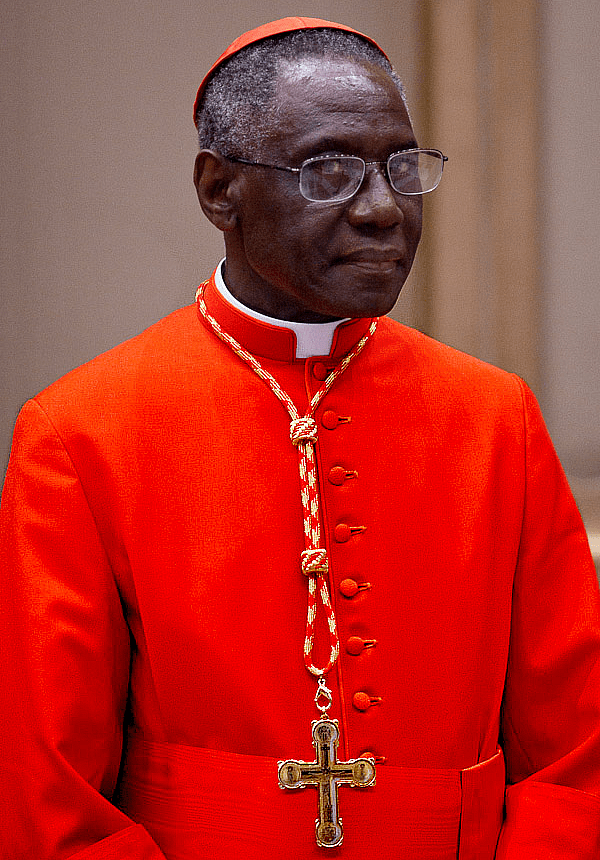

In French, Cardinal Robert Sarah has published his latest bestseller without the preface by Benedict XVI. Nor does it appear in the subsequent Englishversion.
But now here it is in the German edition, which has just started arriving in bookstores. And it will soon be in the Italian edition that Cantagalli will begin to sell at the end of June. While the French and English editions will publish it in their future reprints.
“With Cardinal Sarah, a master of silence and of interior prayer, the liturgy is in good hands,” Benedict XVI concludes in his text, composed in his diminutive handwriting during Easter Week.
The original title of the book is “La force du silence,” and last October www.chiesa put some of its most incisive passages online in four languages.
Now Benedict XVI writes:
“We should be grateful to Pope Francis for appointing such a spiritual teacher as head of the congregation that is responsible for the celebration of the liturgy in the Church.”
It is no mystery, however, that Jorge Mario Bergoglio confined Cardinal Sarah to that post in order to neutralize him, certainly not to promote him. In fact he has deprived him of all effective authority, has surrounded him with men who are working against him, and has even disavowed in public his proposals for a “reform of the reform” in the liturgical field.
Proposals that Benedict XVI, however, endorses in full, when in the preface he decries “the dangers that continually threaten the spiritual life, of priests and bishops also, and thus endanger the Church herself, too, in which it is not uncommon for the Word to be replaced by a verbosity that dilutes the greatness of the Word.”
The following is the complete text of the preface by the “pope emeritus” for Cardinal Sarah’s book.
*
PREFACE
Ever since I first read the Letters of Saint Ignatius of Antioch in the 1950s, one passage from his Letter to the Ephesians has particularly affected me: “It is better to keep silence and be [a Christian] than to talk and not to be. Teaching is an excellent thing, provided the speaker practices what he teaches. Now, there is one Teacher who spoke and it came to pass. And even what He did silently is worthy of the Father. He who has truly made the words of Jesus his own is able also to hear His silence, so that he may be perfect: so that he may act through his speech and be known through his silence” (15, 1f.). What does that mean: to hear Jesus’s silence and to know him through his silence? We know from the Gospels that Jesus frequently spent nights alone “on the mountain” in prayer, in conversation with his Father. We know that his speech, his word, comes from silence and could mature only there. So it stands to reason that his word can be correctly understood only if we, too, enter into his silence, if we learn to hear it from his silence.
Certainly, in order to interpret Jesus’s words, historical knowledge is necessary, which teaches us to understand the time and the language at that time. But that alone is not enough if we are really to comprehend the Lord’s message in depth. Anyone today who reads the ever-thicker commentaries on the Gospels remains disappointed in the end. He learns a lot that is useful about those days and a lot of hypotheses that ultimately contribute nothing at all to an understanding of the text. In the end you feel that in all the excess of words, something essential is lacking: entrance into Jesus’s silence, from which his word is born. If we cannot enter into this silence, we will always hear the word only on its surface and thus not really understand it.
As I was reading the new book by Robert Cardinal Sarah, all these thoughts went through my soul again. Sarah teaches us silence—being silent with Jesus, true inner stillness, and in just this way he helps us to grasp the word of the Lord anew. Of course he speaks hardly at all about himself, but now and then he does give us a glimpse into his interior life. In answer to Nicolas Diat’s question, “At times in your life have you thought that words were becoming too cumbersome, too heavy, too noisy?,” he answers: “In my prayer and in my interior life, I have always felt the need for a deeper, more complete silence. … The days of solitude, silence, and absolute fasting have been a great support. They have been an unprecedented grace, a slow purification, and a personal encounter with … God. … Days of solitude, silence, and fasting, nourished by the Word of God alone, allow man to base his life on what is essential.” These lines make visible the source from which the cardinal lives, which gives his word its inner depth. From this vantage point, he can then see the dangers that continually threaten the spiritual life, of priests and bishops also, and thus endanger the Church herself, too, in which it is not uncommon for the Word to be replaced by a verbosity that dilutes the greatness of the Word. I would like to quote just one sentence that can become an examination of conscience for every bishop: “It can happen that a good, pious priest, once he is raised to the episcopal dignity, quickly falls into mediocrity and a concern for worldly success. Overwhelmed by the weight of the duties that are incumbent on him, worried about his power, his authority, and the material needs of his office, he gradually runs out of steam.”
Cardinal Sarah is a spiritual teacher, who speaks out of the depths of silence with the Lord, out of his interior union with him, and thus really has something to say to each one of us.
We should be grateful to Pope Francis for appointing such a spiritual teacher as head of the congregation that is responsible for the celebration of the liturgy in the Church. With the liturgy, too, as with the interpretation of Sacred Scripture, it is true that specialized knowledge is necessary. But it is also true of the liturgy that specialization ultimately can talk right past the essential thing unless it is grounded in a deep, interior union with the praying Church, which over and over again learns anew from the Lord himself what adoration is. With Cardinal Sarah, a master of silence and of interior prayer, the liturgy is in good hands.
Benedict XVI, pope emeritus
Vatican City, Easter Week 2017
(English translation by Matthew Sherry, Ballwin, Missouri, U.S.A.)

Getty Images
Some years ago, I was dating a guy who took his time in telling me that he loved me. He told me he didn’t want to say it until he knew he wanted to say it forever. I was okay with that approach because I knew I wouldn’t say it back unless I felt the same. So when he finally whispered it in my ear on that warm September night by the river, I knew what it meant, and after whispering it back, I asked, “Does this mean I’ll be Mrs. Kleehammer someday?”
He said it did. And 15 years later, I’m still Mrs. Kleehammer.
There’s nothing like hearing those three magic words — I love you — to send waves of fuzzy warmth radiating throughout your entire body. But have you ever been in a relationship where those words were exchanged — but you found yourself wondering if you both meant the same thing?
Intimacy is a sense of closeness, friendship, having a bond. Passion is the sensual, sexual attraction, and commitment is the decision and plan to remain committed to the relationship.
We experience different types of love based on the presence and absence of each of these three components.
Nonlove is the absence of intimacy, passion and commitment. It’s what we feel for new acquaintances (at least those that we don’t fall in love with at first sight). Most of the time, nonlove is not even considered an actual type of love at all — for obvious reasons — but I would argue that there can still be love at this level. After all, Jesus wanted everyone to love one another, right? It’s not that he was saying we all need to be intimately and passionately committed to people we’ve never met, but that we are supposed to foster love in the form of good will toward our fellow humans.
Liking is intimacy without passion or commitment. This is the type of love we feel for our buddy who loves to bike with us, or pal who hosts game night every week. It’s even the kind of love we feel for our college bestie, who has been better at keeping in touch and arranging get-togethers than we ever expected. Great conversations, companionship, mutual interests — these are the things that gradually lead to solid friendships. Liking, even though it doesn’t come with passion or commitment, can nurture a close bond. Play cards and share a pizza enough times with the same person, confide a few things in one another, and they’ll inevitably become a major part of your life. Liking is kind of the foundation-like layer of love in your life.
Infatuation is passion without intimacy or commitment. This is the crush that you can’t stop thinking about, or the guy you’ve had a few dates with and are crazy about. It’s the moment when your new guy walks in the room and your heart nearly leaps out of your chest. Many would argue that infatuation should be considered a form of lust rather than love, but those who experience it often do consider themselves “in love.” Read more: What C.S. Lewis can teach us about true love Sadly, though fun at times, this state is fleeting—it either fades away or progresses into a more substantial form of love. And thank goodness, because who could sustain that amount of sheer heart-thumping craziness for more than a few months? You’d never get anything done, because infatuated people can’t focus on anything besides the object of their attraction. Dishes go unwashed, the car oil stays unchanged, the LinkedIn profile stays un-updated. But it’s sweet while it lasts, right?
Romantic love is intimacy and passion without commitment, describing a state that most serious dating relationships go through before any kind of real plans for the future are involved. This is the heavenly “falling in love” moment — but still the stage when you’re hesitant to mention your sister’s wedding in the fall for fear he’ll think you’re inviting him. Many are content to stay here for a while, and simply enjoy the journey together, but others find themselves in the classic situation of “wondering where the relationship is going.” When this happens, intimacy leads to heartfelt conversations that clarify each other’s feelings. Hopefully, you’re both headed in the same direction.
Conjugal love is intimacy and commitment without passion. This is the kind of love that many married couples find themselves in after several years. Some begin to feel they want to rekindle the passion — hence those “spice it up”articles that come through your newsfeed — while others find they are perfectly content with this type of love. Even some unmarried couples see conjugal love as a strong enough bond to get married. I recently spoke with a woman who was once engaged to a man she was intimate with, but wasn’t passionate about. It didn’t bother her, because she figured that passion would fade eventually anyway. However, when she realized that marrying him would mean she would never experience that passion, with anyone, she couldn’t go through with it — it seemed like “settling.” Eventually, she did meet and marry a man she was very passionate about, and while their relationship has developed into a more conjugal type of love at this point, she says the passion was important in forming the initial strength of their marriage bond. She is thankful she didn’t rob herself of that experience by marrying someone for whom she didn’t feel any passion.
Fatuous love — in contrast to conjugal love — is passion and commitment without intimacy. It’s the serious relationship where the couple is sexually on fire, but does not have a lot of common ground for companionship. These are couples who have a lot of “drama” in their lives, and seem to get a charge out of either fighting or being physically intimate. Since intimacy tends to be the element that carries a relationship through difficult times, couples who experience fatuous love can strengthen their commitment by being more intentional about developing their friendship, practicing empathy, and discovering mutual interests to bond over.
Empty love describes a relationship that has commitment without passion or intimacy. Now, no one hopes to find themselves in this kind of marriage, but it’s not uncommon—people do grow apart even when they’ve taken vows. But note that passion and intimacy are both very fluid, and they can flow just as easily as they can ebb. A few years ago, my husband and I went through a difficult season in our marriage where we would both admit that our passion and intimacy suffered greatly. But we did not give up on each other, and as we grew over time, we were eventually able to re-cultivate both. Now, our passion and intimacy are stronger than ever, as is our commitment. So as long as there is still commitment, and a willingness to grow, there is still hope for the rest.
Consummate love is the Grand Poobah of all loves. This one is ultimately what we’re all hoping for in our “forever” love — the combination of intimacy, passion and commitment. Sternberg refers to it as the “ultimate, all-consuming love.”
Reaching this level of love means allowing the relationship to evolve over time, often passing through other kinds of love along the way. And many times, both members of the relationship may be experiencing different types of love in the same relationship. Perhaps the defining moment for a couple is not necessarily the moment they say those three magic words, but the moment they come to a mutual understanding of what those words mean in the relationship. In the early days of a relationship, it’s unlikely both players are ready for consummate love — that’s totally normal. But if the complete version is what we want, it’s important to know that about ourselves, so we won’t settle, or sell ourselves short. We have to take the time to understand where we’re at in love — and whether or not where we’re at is where we really want to be.
 AP Photo/Paul Sancya
Imagine if some Muslim member of Congress went on Twitter to share some harmless verses from the Quran — from the “happy parts” composed early on in Muhammad’s life, where he calls for peace and mercy.
Or if a Jewish member of Congress plucked some uplifting phrases out of the Talmud.
Or if a Californian member of Congress had offered something from the Dalai Lama.
Would it cause a controversy? I certainly hope not. I’d be especially troubled if Christian journalists raised a ruckus. If they pretended that a legislator doing this on his own Twitter account was a threat to American Christians, I’d consider those journalists idiots or bigots. They’d recall the classic character Gob Bluth on Arrested Development, who heckled a harmless student from India, with “Go home, you terrorist!”
But Jennifer Rubin of The Washington Post, and a number of other journalists, have apparently taken Gob Bluth as a role model. They’ve responded with shock and outrage to the following: Yesterday morning Catholic U.S. Senator Marco Rubio posted some phrases from the Bible on Twitter. (In fact, they were from the readings at the day’s daily Mass.) Here’s one:
Pretty ominous, huh? As if that weren’t enough, Sen. Rubio next went full-on Old Testament, posting these blood and thunder lines from Proverbs:
Isn’t your skin just crawling? What kind of moral monster would use his prestige as a U.S. legislator to share sentiments like that? Surely, this is the camel’s nose poking under the tent, making way for a full-on Christian theocracy, just like we saw on Netflix in The Handmaid’s Tale.
The Palm Beach Post helpfully compiled reactions which were almost that hysterical. Here’s The Washington Post’s Jennifer Rubin:
Esquire politics blogger Charles P. Pierce’s response was even more … fragile:
Leah McElrath writes for leftwing website Shareblue — and pledges in her Twitter profile to “#RESIST Trump, GOP, & global rise of white nationalist authoritarianism.” McElrath found Rubio’s Bible Tweets a positively creepy:
Normally I’d just shrug this off as part of the ordinary friction that comes in a free society when people of different views and beliefs rub up against each other. Sen. Rubio himself, apparently bemused, took to retweeting these crackpot reactions himself, without comment. A canny reaction.
But put this in context. For centuries, American Christians were a vast and highly tolerant majority. Now the tenor of culture and laws has changed so drastically, that we are becoming an unpopular minority. Perhaps one not to be tolerated.
We got that message from the campaign of destruction launched against President Trump’s appointee for Army Secretary Mark Green. Green was forced to withdraw after Democrats denounced him as a hatemonger. What had Green said that outraged them?
Those positions made him unfit for public office in 2017 America. It’s the same America where the Governor of New Jersey just refused to ban child marriages out of respect for Islam, but Christian bakers and florists are force to service same-sex weddings. The same America where worried conservative Christians gave Donald Trump almost 80 percent of their votes … and couldn’t even get him to overturn Obama’s executive orders targeting them. Where Christian schools have to fight all the way to the Supreme Court to get public funds for playground safety. But public universities like U.C. Berkeley spend millions building “genderless” locker rooms to cater to the tragic pathologies of “transgender” students.
That’s how weak and vulnerable we have become. We don’t have the clout of the transgender lobby.
There’s no group that’s easier to get away with hating than one that was once quite powerful, which loses its grip. Think of the fate of noblemen in France after 1789, priests in Russia after 1917, or once-elite Tutsis in Rwanda in 1994.
In cases like those, people in the newly powerful group can indulge in open hatred for members of the now-dethroned minority. They can hide it behind past “abuses” (real or imagined). They can target innocent people, whip up resentment, encourage discrimination, even get the government to persecute helpless people — whose crime is that they belong to the group that fell from power.
This scapegoating has nothing to do with justice. Instead it’s a naked exercise in bullying.


