In 2004, Christopher Young was convicted of killing the owner of a mini-market in San Antonio TX. As a result, he was sentenced to be executed. Today he still awaits execution on Texas’ infamous death row. More than 500 leaders of various faiths are petitioning for him to be given a new trial. One leader is the retired bishop of the Diocese of West Texas, the Rt Revd Robert Hibbs. He joins leaders from Protestant, Catholic, Jewish and Islamic faiths in the petition.
Bishop Hibbs makes it clear that they requesting a new trial on one specific reason, that a potential juror was eliminated from the jury for Young’s trial because of her association with a Baptist Church which had a prison ministry. The bishop and other faith leaders state that their petition for a new trial has nothing to do with a belief of whether Young is or isn’t guilty. Nor is the petition brought because of an opposition to capital punishment.
The potential juror was a participant in her church’s Outreach Ministries, a program that was their congregation’s attempt to fulfill the example of Jesus to minister to the poor, the hungry, those without shelter & clothing, the imprisoned and the sick. The woman herself did not work in the prison ministry of the Outreach program but was dismissed as a juror because of her affiliation with a church that had such a ministry.
Indeed, the government struck this juror even though she did not personally work with prisoners, she was removed, in short, because of her mere association with a church that pursued its mission of aiding the weak.
– Robert Hibbs, Retired Bishop of West Texas
Next week the US Supreme Court is scheduled to look into the matter of a new trial on the basis of the excluded juror in a conference. A conference is a private meeting of the justices were they discuss the case and decide whether to take it up.
Posted inUncategorized|Comments Off on WOMAN DENIED RIGHT TO SERVE ON A JURY BECAUSE SHE BELONGED TO A CHRISTIAN CHURCH THAT MINISTERED TO ANYONE AND EVERYONE IN PRISON
Last week, in Friday’s Vortex, we asked the question directly to Fr. James Martin: Do you identify as a homosexual? Yes or no?
There are many reasons for that question to be asked, and those reasons criss-cross over theological, spiritual and political lines. Let’s begin our further examination of this question about Fr. Martin with the understanding that there are many priests and bishops and even cardinals who are either secret homosexuals, or at least way too friendly to that agenda. Pope Benedict said so. Pope Francis has said so, and the raw facts of the state of the Church these days say so, not to mention the gigantic homosexual priest sex abuse scandal that cost the Church in the U.S. nearly $3 billion.
Men who identify as homosexuals who go on to get ordained are an extreme danger to the Church and the average Catholic. It’s why the Church forbids them from being ordained in the first place — a rule that many liberal and Church of Nice bishops simply ignore — and they were doing it long before Pope Francis arrived on the scene.
Many bishops today still seem unconcerned about ordaining a man who identifies as homosexual — perhaps because they feel an affinity with them — as long as that man doesn’t appear to display traits which might make him a financial or legal liability down the road for abusing altar boys.
For the man who sees himself, his sexuality, as homosexual, something that needs to be incorporated into his spirituality as a priest, such a man is lying to himself. And he will substitute in a heartbeat Church teaching as a result of his own deep, inordinate desire to be accepted.
Father Martin claims that priests who are homosexual are more fit and able to identify with those who suffer. They may feel more at home with them — probably true — but they are considerably less likely, because of their own psychological illness and perhaps guilty consciences, to instruct them in the hard truths of the Church.
In fact, priests who self-identify as homosexual have created a virtual cottage industry of actually undermining those hard truths of the Church. They see the Church and Her teachings as oppressive, hurtful, marginalizing and all that — the very way they feel all the time, precisely because they identify as gay. Their entire self-perception is wrapped up in their homosexuality, and in that great interior struggle which comes from their own longsuffering, they are quick to reject the hard truths because they create a scenario in their minds that these hard truths make them more of a victim class.
So they tell young men in confession that masturbation is okay. They tell other homosexual travelers that sex between them is okay as long as it’s monogamous. And they get into positions of power and influence in the Church and rain down terror on anyone who promotes authentic Catholic teaching. And they feel completely justified in doing so because the pain of their past and present needs to find an enemy on which to seek revenge.
Martin paints the ordained homosexual as approaching sanctity. He conveniently never addresses the vindictiveness present in the homosexual subculture — the personal pettiness and jealousy and rage. Nor does he ever approach the topic of promiscuity present among those who identify as homosexual males.
For a man who spends so much time cheerleading for homosexuality to be accepted in the Church, it’s odd that he almost never mentions these aspects of life in the homosexual world, aspects which are very present on that scene. Men like Martin and many others — so many that the average Catholic would be revulsed if they knew the reality — go about their insidious work not because they care about the “other,” but because they care about themselves and want to be relieved of the desperate guilt and anxiety they feel.
They have this affliction and never moved beyond it. They will not preach the hard truths because what the man who self-identifies as homosexual fears more than anything on earth is rejection. They don’t really accept themselves, and if others reject them, a psychological tailspin of grief and despair sets in that it is nearly impossible to pull out of.
So the self-identifying homosexual priest (whether he is sexually active or not) will want to be crowd-pleaser. The Mass becomes a grand stage for him to be “accepted” by the “audience” in the pews — not the Sacrifice of the Son to the Father. Even those who cannot overcome their personal shyness and be great performers still suffer from the affliction of needing acceptance.
If they can’t get the crowd to applaud them and give them a false sense of self-worth, they can always have security in not offending so as not to be rejected. This particular strategy is a favorite among self-identifying homosexual prelates. Never offend, or at least do everything in your power to give as little offense as possible so nobody rejects you, even if they don’t really applaud you.
What a woeful, crippling platform from which to govern as a successor of the Apostles.
They heard in seminaries — all on the quiet, of course — that it’s okay to have gay sexual partners, as long as they are other priests, that they should never go outside the clerical state to relieve themselves sexually — too much chance of the reality getting known. This has been the standard in at least the American priesthood for decades now.
The priestly ministry has been crippled in its exercise because of the intrinsic disorder of the homosexual priest. The priesthood, which is intrinsically “other”-related, has become largely a “me” experience. Self-identifying homosexual priests, because they suffer from a deep psychological disorder, are not capable of being “Father.” They are only capable of being hurt and deeply wounded son. And because of this, they will throw aside Holy Mother Church any time they perceive a contest between themselves and the teaching.
The priesthood for these men is not a place where, as Abp. Sheen described it, the man burns himself out like a candle for the good of his spiritual children, but rather a place where they can nourish their own hurts at the expense of their spiritual children. And those of them that do ascend to the office of bishop — the destruction to the Faith is multiplied a thousand times over.
Until this ecclesiastical swamp is drained, little is going to change in the Church. There is too much overlooking and embracing of homosexuality in the ranks of Catholic priests and bishops.
A “Climate of Fear” in the Vatican? January-February 2017
THE NEW OXFORD REVIEW
Several independent reports out of Rome paint a troubling picture of the working situation at “headquarters.” Indications are that the Eternal City is on edge. And in the midst of the palpable sense of unease, anxiety, and, yes, even fear, one man looms large. That man is Pope Francis.
Much, though not all, of the distress radiates from a remarkable development: Four high-ranking prelates have publicly challenged the Pope over Amoris Laetitia, his murky and verbose apostolic exhortation in which he seems to suggest that divorced and civilly remarried Catholics can be admitted to Holy Communion. On November 14 cardinals Raymond Burke of the U.S., Carlo Caffarra of Italy, and Walter Brandmüller and Joachim Meisner of Germany made public a dubia, a set of five short yes-or-no questions addressed to Pope Francis about passages in Amoris Laetitia that, they say, have caused “uncertainty, confusion, and disorientation among many of the faithful.”
The cardinals decided to go public with the dubia after submitting it to Francis privately in September — and then waiting two months for a reply that never came. The dubia calls on the Pope, “with profound respect,” to “dispel ambiguity” and “resolve the uncertainties and bring clarity.”
So far, not only has Francis refused to respond privately to the cardinals’ request, he has also refused to respond publicly. In fact, he’s made only one public comment about the dubia. In an interview in Avvenire, an Italian Catholic magazine (Nov. 18), Francis referred obliquely to “a certain legalism” that wants to see everything as “black and white,” and he wondered aloud whether such criticism doesn’t come “from an evil spirit” or “the desire to hide one’s own dissatisfaction under armor.” Yes, you read that correctly: Francis actually suggested that the men who asked him to make specific some of his (intentionally?) ambiguous ramblings might be under the influence of demons!
While maintaining a certain aloofness about it in public, the Pope is apparently very agitated about the dubia. Edward Pentin, a respected Vatican correspondent, told Raymond Arroyo, host of EWTN’s The World Over (Nov. 18), that Francis is “boiling with rage.” Reportedly, the Holy Father has been working hard behind the scenes to vilify and isolate the four cardinals and their supporters.
Pentin offered further insight in an interview with Beverly Stevens, editor of Regina, an online Catholic magazine (Dec. 8). The Pope, he said, instead of addressing the cardinals’ concerns — either in public or private — is treating them as “adversaries.” He has even questioned the cardinals’ “mental state.” Observers are reading this as a manifestation of Francis’s “anger at having his agenda taken off course,” Pentin went on to say. And so, one hears the phrases “reign of terror” and “Vatican martial law” frequently bandied about in Rome these days.
Pentin’s report was echoed by Steve Jalsevic, managing director of the pro-life news service LifeSiteNews.com. Blogging from Rome during a recent visit, Jalsevic wrote that there is a “consistent pattern of widespread anxiety and very real fear among faithful Church servants,” the likes of which he’d never witnessed before in his ten years of making biannual trips there (Dec. 16). The tension gripping the Vatican is by no means limited to those embroiled in the dubia controversy. Many curial functionaries, Jalsevic said, are “afraid of being removed from their positions, fired from their jobs in Vatican agencies or of encountering severe public or private reprimands and personal accusations from those around the pope or even from Francis himself.”
That the Pope could be so vindictive would be startling if he hadn’t already given us glimpses of the man behind the magnanimous papal persona. “Severe reprimands” and “personal accusations” don’t seem all that out of character. As anyone who has paid even the slightest attention to this papacy knows, Francis rarely passes up an opportunity to deliver a tongue-lashing to Catholic prelates or laymen (see, for example, our New Oxford Note “Pope Francis: Put-Down Artist?” Apr. 2014) — especially to those whom he considers excessively orthodox (or “rigid,” as he likes to label them). It is odd — isn’t it? — that the alleged “Pope of mercy” would so readily indulge his mean streak.
“Widespread anxiety” in the workplace is perhaps all the more understandable when one’s boss commemorates the birth of the company’s Founder (if we may be so banal) by haranguing and insulting his underlings. Francis has made it his own peculiar Yuletide tradition to lambast his audience during his annual Christmas address to the Curia. He raised a lot of eyebrows in 2014 when he let loose with what was described as “scathing critique of the church’s highest-ranking officials” (The Guardian, Dec. 22, 2014). In that year’s Christmas address, Francis called the Curia “a sick body” and accused its members in attendance of having “spiritual Alzheimer’s,” “existential schizophrenia,” and a “funereal face,” of feeling “superior to everyone and everything” while at the same time being “victims of careerism and opportunism.” Most notably, Francis decried “the sickness of those who insatiably try to multiply their powers and to do so are capable of calumny, defamation and discrediting others, even in newspapers and magazines, naturally to show themselves as being more capable than others.”
Yup, it was a real barn-burner. The reaction among those in attendance was said to be stony silence.
In his 2016 Christmas address (Dec. 22), Francis sprinkled his seasonal greetings to the Curia with sharp denunciations of the different types of “resistance” his reform measures have encountered. He excoriated resistance that is “born of fearful or hardened hearts content with the empty rhetoric of ‘spiritual window-dressing’ typical of those who say they are ready for change, yet want everything to remain as it was before.” And he condemned resistance that “springs up in misguided minds and comes to the fore when the devil inspires ill intentions (often cloaked in sheep’s clothing).” This “malicious resistance,” he continued, “hides behind words of self-justification and often accusation; it takes refuge in traditions, appearances, formalities, in the familiar, or else in a desire to make everything personal, failing to distinguish between the act, the actor, and the action.”
Yes, Francis doubled down on his earlier accusation of demonic influence over those who aren’t onboard with his program — those with “hardened hearts” who use “words” to “justify” their resistance. Could this be a veiled attack on the dubiapresenters and their supporters? It doesn’t stretch the imagination to think so.
As usual, Francis’s words leave a lot of room for interpretation. But what seems clear is that he wants to rid the Vatican of a certain mindset — one that clings to “traditions” and resists “change” of the type Francis favors. Rather, he seems to want a Vatican made up of likeminded minions — with minds like unto his own.
Indeed, a fondness for tradition is something Francis simply can’t seem to comprehend. This November a book of his homilies and speeches from his time in Buenos Aires was released. Titled In Your Eyes Are My Word, the book includes a new interview with Fr. Anthony Spadaro, S.J., editor of the Rome-based publication La Civiltà Cattolica. In it the Pope sets his acid tongue against young people who attend the Traditional Latin Mass. “Why so much rigidity?” he says of them. “Dig, dig, this rigidity always hides something, insecurity or even something else. Rigidity is defensive. True love is not rigid.” One would guess, then, that the Holy Father thinks that people who prefer the Latin Mass lack true love. How he came to that conclusion is unclear. But it won’t do any good to ask him because, according to Spadaro, “The pope doesn’t give binary answers to abstract questions.”
If the Pope’s words are not clear, his actions speak volumes. This November (it was an eventful month!) Francis gutted the Congregation for Divine Worship and the Discipline of the Sacraments — not the first dicastery that comes to mind when one thinks of necessary curial reform. In the process, he expelled Raymond Burke and George Pell, two cardinals who are on public record as supporting the Latin Mass and who have even celebrated it themselves. Not to go unnoticed: Burke was also one of the signatories of the dubia.
One of Francis’s new appointees in the Congregation for Divine Worship is the reliably liberal Rainer Cardinal Woelki of Germany. How liberal is he? A Reuters report (Jul. 11, 2014) quoted Woelki as saying, “If two homosexuals take responsibility for each other, if they are loyal to each other over the long term, then one should see this in the same way as heterosexual relations.” This sense of false equivalence evidently informs much of his thinking. “Someone who lets people drown in the Mediterranean also drowns God — every day, thousands of times,” Woelki said during his homily at last year’s Corpus Christi Mass, reprimanding Europeans who are hesitant to accommodate a mass influx of Middle Eastern migrants. The German cardinal turned that entire Mass into a political statement: He used an overturned refugee boat as an altar. The altar of sacrifice as a prop! Talk about a Francis clone: Woelki could have easily ended his soliloquy on homosexual relations with, “Who am I to judge?” And Francis is, of course, one of the world’s most vocal proponents of European resettlement of Muslim migrants from the Middle East — despite the almost daily acts of horror they have been committing against their host nations (see, for example, our New Oxford Notes “Barbarians at the Gates of Civilization,” Jul.-Aug. 2015; “Barbarians Inside the Gates,” Mar. 2016; and “Barbarians Inside the Temple,” Sept. 2016).
Speculating on what these changes to the Congregation for Divine Worship mean for the liturgy, Pentin told Stevens that “most of the new members, though not all, are in favor of innovative approaches to the Novus Ordo.” It’s likely that this will be the “liturgical emphasis” coming out of the Vatican “in the months and years ahead.” Right, because that worked out so well the first time around. If this is Francis’s idea of curial reform, it’s no wonder he’s encountered resistance.
As for the larger picture, Pentin said that the upheaval at the congregation is “just a small part of an acceleration in changes being enacted by Francis who has privately voiced his wish for his legacy of radical change to continue after he is no longer Pope…. Some say it shows a revolution in full swing.”
A revolution? It sounds an awful lot like the same failed revolution of the 1970s that wrought so much damage to the Church — a revolution Popes St. John Paul II and Benedict XVI spent so much time and energy turning back.
Whether or not Francis’s reform measures amount to a full-blown revolution, his vindictive style of Church governance has some observers comparing the mood in and around today’s Rome to that of post-revolutionary Bolshevik Russia. “Dialogue seems to be accepted only if you think like everyone else — that is practically like a regime,” observed Bishop Athanasius Schneider of Kazakhstan. And he would know: He grew up in the Soviet Union; Stalin sent his parents to the gulag. In Rome today, as in Soviet Russia, those who don’t “follow the line of the party” aren’t allowed a voice (LifeSiteNews.com, Dec. 6). “We live in a climate of threats and of denial of dialogue towards a specific group,” Bishop Schneider said in reference to Cardinal Burke and his dubia cosigners — and anyone else not in lockstep with Francis’s reform movement. “We need to be able to ask questions openly without being afraid of repressions.”
Not only that, but it would be helpful to receive straightforward, honest answers to important questions — those posed with respect but also with a sense of urgency. “The Holy Father has to bring clarity and support to his brothers in resolving doubts,” said Bishop Schneider. “Only clarity will bring unity. If there is to be an answer from the Pope, then it must be unambiguous. He must say what is the truth.”
An unambiguous answer? Let’s face it: That’s probably asking for too much from this Pope — especially if he reacts to requests for clarity with rage, reprimands, and threats of repression.
Welcome to Francis’s Vatican, where fury, fear, and fractionalization rule the day.
——————————————————————–
“Seeking Clarity: A Plea to Untie the Knots in Amoris Laetitia”: The Dubia*
1. It is asked whether, following the affirmations of Amoris Laetitia (nos. 300-305), it has now become possible to grant absolution in the Sacrament of Penance and thus to admit to Holy Communion a person who, while bound by a valid marital bond, lives together with a different person more uxorio [in a marital way] without fulfilling the conditions provided for by Familiaris Consortio (no. 84) and subsequently reaffirmed by Reconciliatio et Paenitentia (no. 34) and Sacramentum Caritatis (no. 29). Can the expression “in certain cases” found in note 351 (no. 305) of Amoris Laetitia be applied to divorced persons who are in a new union and who continue to live more uxorio?
2. After the publication of Amoris Laetitia (cf. no. 304), does one still need to regard as valid the teaching of St. John Paul II’s encyclical Veritatis Splendor (no. 79), based on Sacred Scripture and on the Tradition of the Church, on the existence of absolute moral norms that prohibit intrinsically evil acts and that are binding without exceptions?
3. After Amoris Laetitia (no. 301), is it still possible to affirm that a person who habitually lives in contradiction to a commandment of God’s law, as for instance the one that prohibits adultery (cf. Mt. 19:3-9), finds himself in an objective situation of grave habitual sin (cf. Pontifical Council for Legislative Texts, Declaration, June 24, 2000)?
4. After the affirmations of Amoris Laetitia (no. 302) on “circumstances which mitigate moral responsibility,” does one still need to regard as valid the teaching of Veritatis Splendor (no. 81), according to which “circumstances or intentions can never transform an act intrinsically evil by virtue of its object into an act ‘subjectively’ good or defensible as a choice”?
5. After Amoris Laetitia (no. 303), does one still need to regard as valid the teaching of Veritatis Splendor (no. 56) that excludes a creative interpretation of the role of conscience and that emphasizes that conscience can never be authorized to legitimate exceptions to absolute moral norms that prohibit intrinsically evil acts by virtue of their object?
* The four cardinals’ plea to Pope Francis, “Seeking Clarity: A Plea to Untie the Knots in Amoris Laetitia,” contains four parts: a foreword, a personal letter to the Pope, the dubia (or questions) themselves, and an explanatory note. This is the official English translation of the dubia, slightly edited for brevity and clarity.
posted Friday, 17 Feb 2017Cardinal Gerhard Muller, prefect of the Congregation for the Doctrine of the Faith (CNS)
In an interview with the German magazine Rheinische Post, Cardinal Müller said it was “not his style” to criticise publications by bishops. However, he added, “I do not think it is particularly beneficial for each individual bishop to comment on papal documents to explain how he subjectively understands the document.”
In recent weeks, the bishops of Malta and Germany have issued guidelines permitting Communion for the remarried. The Maltese bishops said that it might be “impossible” for some couples to avoid sex, and that people could not be refused Communion if they discerned that they were “at peace with God”.
However, several bishops have affirmed the traditional teaching that the remarried cannot receive Communion, except when they endeavour to live “in complete continence”.
Cardinal Müller has recently endorsed the traditional teaching. He has also pointed to magisterial teaching, most recently that of John Paul II, Benedict XVI and the Congregation for the Doctrine of the Faith, which says continence is necessary. The cardinal told an Italian magazine that this teaching was “not dispensable, because it is not only a positive law of John Paul II, but he expressed an essential element of Christian moral theology and the theology of the sacraments.”
Theologians distinguish between positive law, which can be changed, and divine law, which cannot. Cardinal Müller thus effectively said that Communion for the remarried was against God’s law.
In the new interview, he said: “It cannot be that the universally binding doctrine of the Church, formulated by the Pope, is given different and even contradictory regional interpretations. The basis of the Church is the unity of faith. The Church no longer experiences a new revelation.”
Cardinal Müller also said that, in order to be absolved of adultery, a penitent must resolve not to sin again. He said: “No one can alter the sacraments as a means of grace according to their own choice – for example, so that the sacrament of Confession can be given without the intention to sin no more.”
Elsewhere in the interview, the cardinal said that he thought papal resignations would remain a rare exception in future. He also said that it was important to honour Church leaders because of their role, not just because of their human qualities. “Everyone is weak and mortal,” the cardinal said. “Jesus did not choose the wisest, the richest, and the most prominent among his apostles, but simple people, craftsmen, fishermen. We depend on the grace of God and not on what we achieve every day.
“That is why it is important not to look for supermen in the pope, the bishops, or priests, and, if they cannot fulfil these exaggerated expectations, turn away disappointed in the Gospel and the Church. Everyone needs forgiveness. But the grace of God proves itself in human weakness. We give honour to the Pope not because of his human achievements, but because Christ has given him a special ministry for the whole Church.”
The cardinal paid tribute to Pope Francis’s “moral authority”, pointing out that the Pope was recognised by atheists as “an authentic guide”.
Posted inUncategorized|Comments Off on CARDINAL MUELLER WARNS BISHOPS NOT TO GIVE ‘CONTRADICTORY INTERPRETATIONS’ OF THE CHURCH’S DOCTRINE
If you are a priest who has been hassled by your bishop about saying the traditional Mass with the 1962 Missale Romanum, pay attention. Help has arrived.
Recently a priest of my acquaintance sent two questions to my old haunts the Pontifical Commission “Ecclesia Dei”. Here are the priest’s questions with the answers from the PCED following the answers. The original response follows, below.
1. Do the provisions of Summorum Pontificum permit an ordinary to require that all priests first obtain his permission to celebrate the Extraordinary Form of the Mass, or do the provision of the motu proprio itself grant such permission?
Ad primum: as to the first part: negative ; as to the second part: affirmative. It should however be clear that it pertains to the Local Ordinary to ensure that the priest is idoneus as required by Art5§4 of the Motu Proprio.
2. Do the provisions of Summorum Pontificum require a pastor (parochus) to obtain the permission of his ordinary to have the Extraordinary Form of the Mass said in his parish, or is the pastor obligated only to consult his ordinary?
Ad secundum: in a case such as those referred to under Art. 5§1 of the Motu Proprio, the Pastor should inform the Local Ordinary, insofar as the latter, as Moderator of the liturgical life in the Diocese (Can. 835 §1), is competent to verify the existence of the coetus fidelium and the availability of a qualified priest ; in the case of occasional celebrations, Art. 5 §3 of the Motu Proprio is to be applied.
To review:
1 a) Under Summorum Pontificum a priest does NOT need the permission of a local ordinary (read in effect: the diocesan bishop – there are more than one type of “ordinary”) to use the 1962MR.
1 b) The Local Ordinary, however, can determine of the priest is “idoneus“.
2) Pastors do not need permission of the bishop to have regularly scheduled Masses with the 1962MR at the parish. The Bishop can still make determinations about whether or not there is a coetusand if there is a qualified (idoneus, I suppose) priest available. Otherwise, for occasional Masses the pastor is pretty much in charge.
We have to look at two issues here. What is “idoneus” (“fit for, suitable, apt, capable”) and what is a “coetus” (“an assemblage, group, meeting together”). In years past I have been over this ground thoroughly. Here are some pointers.
First and foremost, idoneus means a minimum capability. It does not mean “expertise”. Remember that the Church’s law must be interpreted in the most favorable way when it comes to people’s rights (favorabilia ampliantur). Summorum Pontificum establishes that, if priest has faculties to say Mass at all, he therefore automatically has the faculty also to use the 1962 Missale Romanum. If he has faculties he must be assumed to be idoneus and also not impeded. He is capable of celebration Mass with the Roman Rite in either use. That is the juridical point of view. But we know that the practical view is a little different. It is reasonable that a priest should know the language he is going to use for Mass. His Eminence Edward Card. Egan of New York, who was a well-known canonist, said for his Archdiocese when Summorum Pontificum came out in his policy statement:
II. Priests who choose to celebrate Mass in the “extraordinary” form must have a sufficient knowledge of the Latin language to pronounce the words correctly.
Card. Egan was correct. The priest does not have to be an expert Latinist. That is what idoneus is all about: it is minimum qualification (faculties, etc.), not expertise in the Latin language. Idoneus cannot be interpreted so widely as to restrict a priest’s rights unreasonably. To impose a Latin test for the older form of Mass would be a supreme injustice without also imposing a test of every priest of the diocese for the newer form. It would be a hypocritical, punitive double-standard not also to test every priest who says Mass in, say, Spanish, not to mention what the GIRM and rubrics of the Novus Ordo really say and then confirm that the priest sticks to them.
Do we want priests to be able to do more than say the words properly? Sure. Remember that the 1983 Canon Law states that seminarians should be very well trained in Latin (can 249). Thus, if the bishop doesn’t insist that his seminarians get some Latin, he is being negligent, and when someone stands up to say publically that the seminarians are properly formed, they aren’t exactly telling the truth. The same can be said for the emphasis on the work of St. Thomas Aquinas stressed in canon law, as well as knowedge of the whole of the Roman Rite, which includes the TLM. But I digress.
As far as a “stable group”, a coetus, is concerned, Summorum Pontificum indicates:
Art. 5, § 1. In parishes, where there is stably present a group of the faithful attached to the previous liturgical tradition, let the pastor willingly receive their petitions that Mass be celebrated according to the Rite of the Missale Romanum issued in 1962. …
The usual liberal common-sense defying questions arose about how big the group had to be and whether or not they had to be registered in the parish in question, blah blah blah. Those questions were clearly answered. The Instruction about Summorum Pontificum calledUniversae Ecclesiae:
15. A coetus fidelium (“group of the faithful”) can be said to be stabiliter existens(“existing in a stable manner”), according to the sense of art. 5 § 1 of the Motu Proprio Summorum Pontificum, when it is constituted by some people of an individual parish who, even after the publication of the Motu Proprio, come together by reason of their veneration for the Liturgy in the Usus Antiquior, and who ask that it might be celebrated in the parish church or in an oratory or chapel; such a coetus (“group”) can also be composed of persons coming from different parishes or dioceses, who gather together in a specific parish church or in an oratory or chapel for this purpose.
The law on this says “some people”. There is no minimum number identified by the Holy See. Some have mentioned that a coetus in other contexts can be as few a three. And the priest himself can be a part of the coetus! It is, therefore, wrong to try to impose a minimum number. For example, Bp. Fatty McButterpants of the Diocese of Libville writes to Fr. Joe Wlotrzewiszczykowycki, who tried to get something good going at his parish, St. Christine the Astonishing, for the many refugees from Fr. Bruce Hugalot’s Sing A New Faith Community Into Being Faith Community: “There must be at least 100 people! They must live in the parish boundaries! And you have to be able to write an essay in the Latin style of Tacitus about why you want to do this!” No. Fatty is acting ultra vires. Also, the people in the group do NOT have to be from the same parish, either as registrants or territorial residents. They don’t even have to be from the same diocese. They just have be coming around regularly for the purpose of attending Mass. As it turns out, however, Bp. McButterpants will wind up crucifying Fr. Wlotrzewiszczykowycki in a thousand other ways, which prompts him to flee to Bp. Noble in the nearby Diocese of Black Duck with the help of Msgr. Zuhlsdorf at St. Ipsidipsy in Tall Tree Circle.
Lake Erie is the fourth largest lake (by surface area) of the five Great Lakes in North America and the thirteenth largest globally if measured in terms of surface area. It is the southernmost, shallowest and smallest by volume of the Great Lakes , and therefore it also has the shortest average water residence time.
Lake Erie’s northern shore is bounded by the Canadian province of Ontario , with US states of Ohio , Pennsylvania and New York on its southern and easternmost shores and Michigan on the west.
PS: The Great Lakes are actually not lakes.
They are inland seas!
The Edmond Fitzgerald sank in November of 1975 in a horrible hurricane on Lake Superior … 100 mph winds and a blizzard of blinding snow & ice. More ships have sunk in the Great Lakes than anywhere else!
The following photos give you some idea why.
Looks like the oceanbut it’s the Great Lakes .
Dave Sandford
He recently spent time on Lake Erie shooting the Great Lake ‘s turbulent fall season. From mid-October to mid-November, the longtime professional sports photographer traveled each week to Port Stanley, Ontario, on the edge of Lake Erie to spend hours taking photos.
This series of images shows what this Great Lake looks like after the sunbathers and boaters leave and the weather begins to turn.
1. His goal was to capture the exact moment when lake waves driven by gusting winds collide with a rebound wave that’s created when the water hits a pier and collection of boulders on the shore.
Dave Sandford
2. “The best way I can describe the water is it’s like a washing machine. It’s not like ocean waves, where you have a nice set that’s rolling in. They are really erratic, they go all over the place, and there is a strong undertow there so it can be a very dangerous place.”
Dave Sandford
3.
Dave Sandford
4. “I’ve had a number of people, who used to live by the Great Lakes, contact me …. and they said the photos really stirred something inside them because they grew up there and know what the water can be like.”
Dave Sandford
5.
Dave Sandford
6. “I’m hearing from other people that are blown away. They say, ‘This can’t be a lake, it’s got to be an ocean.’ They had no idea that a lake could generate waves of this size and force.”
Dave Sandford
7.
Dave Sandford
8. “The wave [in this photo] looks sort of like a mountain. I’ve already had it printed up for my own wall at home. These waves move so fast. It’s insane how fast they form, and then from the time that they form to that nice peak to exploding, it’s a mere second.”
Dave Sandford
9. “I really enjoyed that challenge, when I was out there, of getting it when it’s in that almost perfect peak on both sides before it explodes, so it has that look of a mountain or a volcano.”
Dave Sandford
10. “There was only one evening where the sun broke through. Most were very overcast days.”
Dave Sandford
11.
Dave Sandford
12. “I enjoy the challenge of freezing things in time. Getting them at the right moment at the peak moment.”
Dave Sandford
13. He said his sports photography and his waves series share one importantcharacteristic. “In all the things I’ve made my living doing in photography there are no do-overs no re-dos. You get one shot at it and that’s it, so it really helps you to hone your craft.”
Dave Sandford
14.
Dave Sandford
15. “When you’re on a beach you don’t have a studio setting where you can set something or someone up and have multiple opportunities to get it. It’s one and done.”
Dave Sandford
16.
Dave Sandford
17.
Dave Sandford
18.
Dave Sandford
19. “No two waves are ever the same…… you either have it or you don’t.”
We live on a blue planet that circles around a ballof fire next to a moon that moves the sea,
Cardinal Burke Firmly Rejects Account by Order of Malta’s Acting Head
The Cardinal Patron of the Order says he is “stunned” by Von Rumerstein’s account of Albrecht von Boeselager’s dismissal and considers it “a calumny”; also gives interview detailing his recent visit to Guam.
Cardinal Raymond Burke has firmly rejected an account given by the acting head of the Sovereign Military Order of Malta who said in an interview this week that the cardinal, and not the Order’s Grand Master, was the one who asked its Grand Chancellor to resign in December.
Here below are Cardinal Burke’s remarks in response to the account given by Fra’ Ludwig Hoffmann von Rumerstein, who is reportedly suffering from ill health and not in possession of all his faculties: {emphasis by Abyssum}
“The account given by Fra’ Ludwig Hoffmann von Rumerstein is not accurate. I had no authority to ask the Grand Chancellor to resign. I simply stated that the person who knowingly permitted the distribution of contraceptives in the Order’s works should take responsibility, and then the Grand Master once again asked the Grand Chancellor to resign which he refused to do. Then the Grand Master proceeded to his dismissal without my involvement at all. The account of the Grand Master and myself stands.
To be frank, I am stunned by what Hoffmann von Rumerstein states in the article. I consider it a calumny.”
More on this story to follow next week.
***
Meanwhile, Cardinal Burke has given an interview to Italian television, giving details of his visit to Guam this week where he has been acting as presiding judge over a clerical sex abuse case dating back to the 1970s.
In the brief interview, the patron of the Order of Malta said the Congregation for the Doctrine of the Faith sent him on the mission as he serves as president of the Congregation’s apostolic tribunal, and that he has known about the assignment since last October.
The cardinal said his duty was to “deal with a delicate ecclesiastical penal trial”, and that the Pope had “never spoken to me about this task.” He added that he “dealt exclusively” with superiors of the CDF “which is the usual procedure in such cases.”
He further explained that the Pope had “entrusted the case to the Congregation, and the Congregation had proceeded according to the standard procedure for training the members of the Court.”
“In any case,”, he continued, “I think I’ve been chosen based on my study of canon law and my long experience in ecclesiastical trials.”
Earlier this week, the Vatican issued a statement saying the CDF constituted the tribunal on Oct. 5 2016. The tribunal is “autonomous and its work is separate from the Congregation,” the Vatican said, adding that in addition to Cardinal Burke as presiding judge, four other bishops are serving as judges on the case.
Asked how long the assignment will last, the cardinal said it will soon be completed (sources have told the Register this part of the assignment finished today and the cardinal returns to Rome Feb. 24). He added “it’s not clear” how long it will take to complete the entire case, but he hopes to “finish the job before the summer.”
When journalist Fabio Marchese Ragona asked if it was “punishment” from the Pope because he has questioned some of the Holy Father’s actions, the cardinal said: “No, I do not see this mission as a punishment of the Pope and certainly I’m not living it as a punishment!”
He said it is “normal for a cardinal, according to their preparedness and availability, to receive special assignments for the good of the Church.” He added he was “not surprised” by the CDF’s request and he accepted it, “conscious of the heavy responsibility that it involves, but without any thought of other motivations on the part of Pope Francis or the Congregation.”
Posted inUncategorized|Comments Off on BURKE SETS THE RECORD STRAIGHT
I am confident that you recognize that prayer as the Offertory Prayer of the Holy Sacrifice of this Mass that we are offering to God the Father through his Son,
Jesus Christ,
What is it that we offer “to the majesty of the Father?”
Certainly, what you place in the collection plate is a visible symbol of what you are offering to the Father in the celebration of this Mass. And what does it symbolize?
It stands for, it represents, it symbolizes you. you body and soul, whom he created out of love,
to know him, to love him, to serve him and to be with him forever in the life to come.
Your presence at this Mass tells the Father that you do love him and that your coming to participate in this Holy Sacrifice is evidence of that love,
Your presence tells the Father that you have heard His Son and that whatever sacrifices you have made in your life since you last participated in a celebration of Mass you offer and join with the sacrifice of his Son which is the essential element of this Mass.
The words of Saint Paul in the First Reading
“…everything belongs to you…
the world, or life or death,
or the present or the future;
all belong to you,
and you to Christ,
and
Christ to God (the Father).”
give you some idea of what you bring to this Mass when YOU bring YOURSELF to this Mass.
Ah, but then the words of our Lord Jesus Christ at the end of today’s Gospel reading come as a shock:
“So, be perfect, just as your heavenly Father is perfect.”
How, on earth, is it possible for any human being to be perfect “even as your heavenly Father is perfect”?
Do not think that Jesus is asking you, directing you, expecting you to become perfect in the same way his Father is perfect.
That is impossible.
What Jesus is asking of us is that we STRIVE TO BE HOLY BY BEING ALL THAT GOD MADE US TO BE.
If we do that, we will become perfect as the Father is perfect: He is perfect in His being and we will be perfect in our being.
His being is pure spirit,
our being is to be human,
that is,
body and spirit.
We are called to be perfectly human !!!
We can become perfectly human because God made us in his image !!!
This means that God gave us an intellect so that we can know things and a will so that we can choose among the things we know, doing good and avoiding evil. God gives us through the gift to us of the Holy Spirit the power to love and to do good and avoid evil.
To be perfectly human, as God made us and redeemed us through the sacrifice of Jesus on the cross,
is to strive, out of love, to do good and avoid evil.
But as St. Paul,bemoaned in the seventh chapter of his Epistle to the Romans, the material side of us is frequently at war with the spiritual side of us.
However in the eighth chapter of that same Epistle, St.Paul tells us:
“But you are not in the flesh, you are in the Spirit, if the Spirit of God really dwells in you. Any one who does not have the Spirit of Christ does not belong to him. But if Christ is in you, although your bodies are dead because of sin, your spirits are alive because of righteousness”
In the second reading Saint Paul reminded us that we are the temples of God, and the Holy Spirit dwells in us. So it is possible for us to strive for holiness with the help of the Holy Spirit in spite of the drag our bodies sometimes inflict on us.
As I am frequently remind you, if the Holy Spirit is to help you, you must listen to the Holy Spirit and listening to the Holy Spirit means hearing the Holy Spirit.
Turn off the radio, put down the iPhone, take off the ear plugs, put away the iPad, turn off the television, Throughout the day make sure that you have periods of silence.
Then, if you hear the voice of the Holy Spirit listen to what the Holy Spirit is telling you and respond through prayer,
The most perfect way to hear the voice of the Holy Spirit and to listen to what the Holy Spirit is saying is through adoration of Christ in the Eucharist, you will hear the wee voice of the Holy Spirit urging you to love your family, love your neighbor, love your enemies, love your life,
love your God.
Each time you do that you are striving to be more perfect as Jesus Christ has urged you and you are being perfectly human.
Cardinal Burke urges massive U.S. crowd to defend faith amid Church confusion
LENEXA, Kansas, February 17, 2017 (LifeSiteNews) – The façade of Cardinal Raymond Burke as a boogeyman of tradition projected by his critics and the media was nowhere to be found last Friday when he gave his usual clear witness to the Catholic faith before an overflow crowd in the Kansas City area.
Cardinal Burke delivered a stirring, clear message on defending the Catholic faith amid the current confusion in the Church that was embraced with resounding gratitude by more than 1,500 who flocked to St. James Catholic Academy.
Many had come from various parts of Kansas and surrounding states to hear his talk entitled “The Challenges to the Defense of the Faith in Our Times” at the Kansas City region of the Knights of Malta’s Defense of the Faith Lecture.
A faith leader in demand
Cardinal Burke’s appearance for the Kansas City Knights of Malta was largely unpublicized in the midst of the tempest in Church hierarchy. Yet it took off on social media in the weeks leading up to the event, resulting in the extraordinarily high turnout, and thousands watching on Facebook Live.
“It really had a life of its own,” said Dr. Paul Camarata, who is with the Kansas City Knights of Malta.
“We were thrilled with the response of the faithful to the event,” Camarata said, “with over 1,500 in attendance Friday night and 4,500 watching online and with almost 10,000 views of the video total since on Facebook.”
Camarata headed the Knights’ committee overseeing the chapter’s Defense of the Faith Lecture. He told LifeSiteNews that preparations began almost a year ago, but once word got out that Cardinal Burke was coming, interest escalated exponentially, all in a matter of a few weeks.
“Our committee considered several speakers who might be appropriate for the lecture,” he stated. “However, we knew we had one of the most eminent defenders of the faith, who happened to have a very special role in the Order — Cardinal Burke, the Cardinal Patron of the Order. Who better to ask to give a Defense of the Faithtalk than the Cardinal Patron of the Order!”
Cardinal Raymond Burke speaks to an overflow crowd in Lexena, Kansas. Lisa Bourne / LifeSiteNews
Cardinal Burke’s visit to give the lecture for the local Knights of Malta coincided with his celebrating the White Mass for the Kansas City Catholic Medical Association (CMA) and numerous other appearances over several days.
Camarata, who is also a member of the local CMA, had a hand in getting the cardinal to and from the various local events, and he said it was an amazing time for him personally.
“The outpouring of support was really amazing,” Camarata told LifeSiteNews. “To see how many people love him and support what he’s doing for the Church.”
Camarata told LifeSiteNews that Knights and Dames in other regions of the order were incredibly impressed with the event and Cardinal Burke, and Camarata has received numerous messages from them about it.
“When we mentioned to local Knights and Dames the thought of inviting His Eminence, they were thrilled and excited to host him,” he said. “In fact, we have received notices in advance, with virtually no marketing, from Knights, Dames, and other interested faithful that were coming from many neighboring states including Iowa, Nebraska, Arkansas, and Oklahoma, in addition to, of course, Kansas and Missouri.”
President of the Knights of Malta Federal Association, U.S.A. Margaret Melady and executive director Deacon Michael Stankewicz were in attendance for the lecture, as was the local ordinary Kansas City, Kansas, Archbishop Joseph Naumann.
“I even received an email from a Knight in Germany who found out about the event!” exclaimed Camarata. “There were Knights from Minnesota and Pennsylvania who expressed their wishes to be able to attend.”
Cardinal Raymond Burke speaks to an overflow crowd in Lexena, Kansas. Lisa Bourne / LifeSiteNews
Our faith is in God
The cardinal took questions after his talk. In response to one, he said that despite the tremendous confusion in society and the Church, our faith must not be shaken and must remain fixed on Christ.
“Our faith does not depend on one person or another person,” Cardinal Burke said. “We pray that those who are clergy and our fellow Catholics are strong and witnesses to Christ, but people fail. But that doesn’t destroy our faith.”
Asked what he would say to a convert who feels betrayed that what is written in the Catechism does not at times seem to be the belief system of clergy and laity today, the cardinal told those in attendance that Catholics have the testimony to the faith from the Catechism and the discipline of the Church in the Code of Canon Law.
“There is no question we’re living through a time in which there is a tremendous amount of confusion, not only in society, but also within the Church itself,” he responded, saying he often encounters frustrated individuals who are beginning to question their Catholic faith.
This could be particularly difficult for those who have come into the Catholic Church, the cardinal said, because they saw in the Church fidelity to the truth of Christ handed down through the apostolic tradition. And his response is always that our faith does not depend on any one person. Although there’s a great temptation to be discouraged because of the erroneous or confused statements by clergy or fellow Catholics, Cardinal Burke reminded the crowd that St. Paul encountered this in the first preaching of the faith.
“You always have people who think they know better than the Church, or who want to use the Church for some other purpose,” he said.
“St. Paul was very strong. Even if an angel from heaven announced to you something different from what I’ve taught you or what you’ve been taught in the Church (he said), ‘Anathema sit.’ In other words, the angel is an anathema, is excommunicated.”
“So that’s what we have to keep in mind,” Cardinal Burke continued. “Our faith is in our Lord Jesus Christ, who’s alive in the living Tradition of the Church. “And He safeguards that through the apostolic tradition. We find that expressed in the Catechism and the Code of Canon Law for the discipline of the Church.”
Educating in the faith and forming conscience
Asked in the Q&A whether an erroneous conscience leads to salvation, Cardinal Burke responded, “No in fact, it can’t. It leads in fact to just the opposite.”
And this is, as he had also pointed out in his lecture, why it’s so important for Catholics to educate their children and young people, and to educate themselves.
If our consciences are not well formed according to the truth of Christ, he said, there is the danger so prevalent today of conscience being abstracted from objective truth.
Fundamental issues
Regarding voting for a pro-choice or a pro-abortion candidate, Cardinal Burke said Catholics need to look for is the candidate who is sound on fundamental issues.
“Human life, the family, religious freedom, freedom of education,” he said. “Those are the fundamental issues. But the first has to be the safeguarding and protection of human life itself.”
“We tend to abstract politics from our Christian faith, and that is really lethal,” the cardinal continued. “Politics has to be informed — and as the Holy Father (Pope Benedict) said, purified and elevated — by our Christian faith. And that means also in the way we vote.”
This response and other answers to questions garnered fervent applause in addition to a lengthy standing ovation at the end of the presentation.
Persevering in faith
Cardinal Burke’s lecture in the Kansas City area came just before the former head of the Church’s highest court was sent to Guam to preside over a Church trial investigating sexual abuse charges against Agana Archbishop Anthony Apuron.
It also follows weeks of turmoil within the highest levels of the Sovereign Military Order of the Knights of Malta and the Vatican, before Cardinal Burke being effectively sidelined as the cardinal patron of the order by Pope Francis.
The pope’s appointment of a special delegate to the Knights of Malta is seen as rejoinder to the dubia submitted by Cardinal Burke and three other cardinals last November seeking clarification on the pope’s Amoris Laetitia document.
Amoris Laetitia has created widespread confusion on whether the Church has abandoned its teaching on marriage and opened the door to those living in non-marital unions to receive Communion. The pope has remained silent on the issue.
Cardinal Burke referenced the Catechism, the Second Vatican Ecumenical Council and teachings from Popes Benedict XVI, Saint John Paul II and Paul VI in addressing the crisis of Christian culture, reason and faith related to objective moral principles. The cardinal also talked about holiness in a totally secularized world and the new evangelization, and holiness related to witnessing to the truth on human sexuality. And he spoke about “the critical service” of parents as primary educators of their children.
Response from the faithful
A number of Catholics present for the Defense of the Faith Lecture shared their reaction with LifeSiteNews.
“I liked it,” said Jacob Villotti, of Garden City, Missouri, roughly 60 miles southeast of Lenexa. “His witness is unwavering, his fidelity to the faith, and the traditions of the Church.”
Murphy Obershaw, a senior at St. James Academy, said she thought the talk was good, especially the cardinal’s emphasis on prayer in daily life.
“It gave me something to think about” making more time for prayer, Obershaw told LifeSiteNews. “I thought that it was a good thing that he has this whole prayer campaign going on. I need to pray more often.”
Jeremiah Martell, 19, of nearby Bonner Springs, Kansas, said, “He basically told us stuff I already knew, and just put it in a more concrete way.”
“It was very impressive,” stated Jeanette Inglin, 19, of DeSoto, Kansas, 15 miles west. “It gives us courage to go on, knowing that Cardinal Burke defends the faith. He’s just very admirable. I liked it a lot.”
Joe Meyers, 16, of Bucyrus, Kansas, said that even though he came with his parents, “I would have come anyway. I knew he was a pretty solid cardinal.”
Camarata summed up the impact of the event.
“It will be hard to match the success of this event, which is just a testimony to how eager the Catholic faithful are to hear how to best live out our faith,” he said.


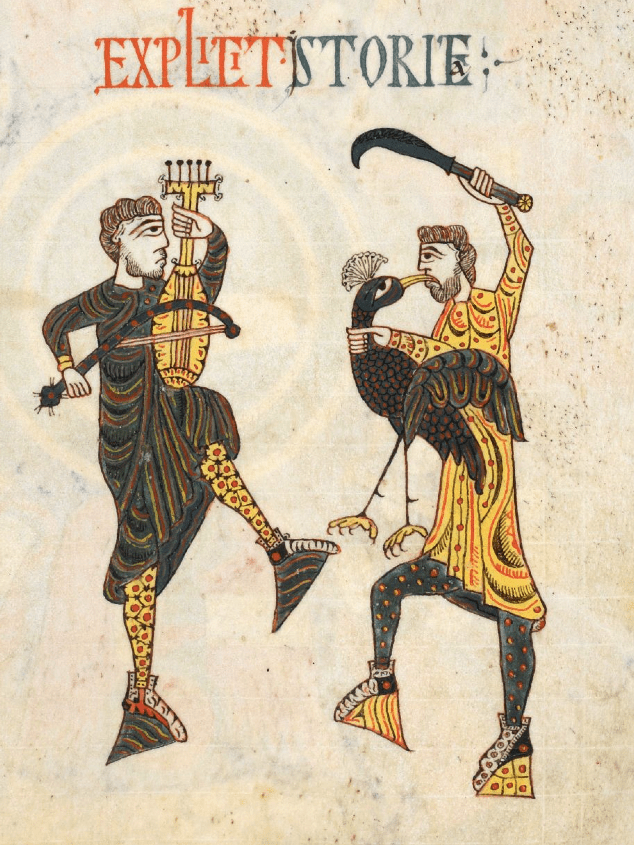


 If you are a priest who has been hassled by your bishop about saying the traditional Mass with the 1962 Missale Romanum, pay attention. Help has arrived.


![[]](https://ci6.googleusercontent.com/proxy/4p-KnJvugzHBox8coUUuHtKWnjwiH4yDbbmnYDtFv0To86oYncUmpKztVT7CLyClp_nFX5q7eOXmkz0C1xzL7SM_nFqvHuboHuQSkeT5BNLGaNp1X3G_AZo2XGotREZKJ5IhmZUGw_N3gSo9qoNTWZ7IyIs=s0-d-e1-ft#http://ak-hdl.buzzfed.com/static/2015-12/9/22/enhanced/webdr06/original-30041-1449717854-4.jpg)

![[]](https://ci4.googleusercontent.com/proxy/JxLmwz-Fvsh1aZ9cXlKTBzqC7dOYAg7zVlL07DvIuYFo3cVhr5DqjrrqCRQUtPb6mOFp4oAXpkBP0lYHvC2SgjGSF2-jjCosD4u-_G-5vcyCt8I_hZTwOZP1YbhBT-BKGLaFoI0rVxux_dSRTTPJNWq6gQ=s0-d-e1-ft#http://ak-hdl.buzzfed.com/static/2015-12/9/22/enhanced/webdr10/original-9707-1449717827-3.jpg)

![[]](https://ci6.googleusercontent.com/proxy/gjY8ywlH7CpkTaWVExTVp0O1jidFHr7JQHKC2w18sQ6b86y8VCZ6ZOU-PoWcZbWYoTPKCVmZHm0GzBXRh3JgbAJXWV-mmsJ8ymElDNV1aTPE3qlp7qraKl8jxbJuaazBPI0Xwpuzw0kAO7000r4BReDQE_s=s0-d-e1-ft#http://ak-hdl.buzzfed.com/static/2015-12/9/22/enhanced/webdr02/original-13310-1449717841-3.jpg)


![[]](https://ci5.googleusercontent.com/proxy/gXA0o-1aCBiBG7RYRC99eVvx6EqcAHjEDzJfWpFAclz9TEhpa1dtp_oTCxWg1coSHmbJ61qB3hSl9Hg8hEMeEJRRXKca_vtKg_Yii8WMTvhy1S53YhR-sXcFqJALEw_AVO47r8FzMUvAZVJuuBDs4C1VTA=s0-d-e1-ft#http://ak-hdl.buzzfed.com/static/2015-12/9/22/enhanced/webdr13/original-7816-1449717860-7.jpg)
![[]](https://ci5.googleusercontent.com/proxy/UNmg6zO6AGeJne5cGLH9MhZ6TIQuIcfxnZkza5vZfiOXnWNw4C1jzlFWS1NJ0VO4CZ6WvlyPpFIsNCC-cK4WNuuD139qKwXmscm9kSOWZcUVCrNgxr2uqvr_tU3g93pPqJ1tfj6jh81ZxhpfCh01e0VmR_Y=s0-d-e1-ft#http://ak-hdl.buzzfed.com/static/2015-12/9/22/enhanced/webdr06/original-30744-1449717882-3.jpg)
![[]](https://ci5.googleusercontent.com/proxy/nSVRUxiKY_CMSCmCgp5QcHdHubeXdgrbs3zyf9gkMXwE1noHhtUrjpJpLMhUJntqoTzkUTY8T84Pij5Xe0WV28cfKX3iuBY8IqaSO9Kf1HqJBKrsUv3xCO39OjWC2id_vZaiBlEEu5L7XGPeSQxRLtepMkw=s0-d-e1-ft#http://ak-hdl.buzzfed.com/static/2015-12/9/22/enhanced/webdr08/original-27655-1449717858-3.jpg)

![[]](https://ci4.googleusercontent.com/proxy/7jJsfuxKAPTAfIqXlUwycK5jgqj9Fu3mhj010ycMXOYGwBDdOGRrkbfw7NF-Rcao0noW8ij6FkSGREDz9QjvoCVTV6LV9DRwd9BugBah-MiUCrlisRmYPzBenqgpwH-xJi4xbzceeiKc3gVMvVbCe5EUYgw=s0-d-e1-ft#http://ak-hdl.buzzfed.com/static/2015-12/9/22/enhanced/webdr08/original-24646-1449717882-3.jpg)

![[]](https://ci4.googleusercontent.com/proxy/6WcDAani8362cF2YOQYQ2kUR7_xwB8M-Ue2dWUPwOVNTao6nc5uktV7SG21HIiSJml_zJQFe7KZDHFtny10eg1FrVHcn0F63u5bon8pNk9glwZCW5_StfKjAzcI_SvVbsuxlbXQTlWma8BaL8IOQUpwAQAa7=s0-d-e1-ft#http://ak-hdl.buzzfed.com/static/2015-12/9/22/enhanced/webdr15/original-20000-1449717892-19.jpg)
![[]](https://ci6.googleusercontent.com/proxy/JWhGRLaGlVjuk-iwV7b2WIgtrY3Cxr9-mCQufpBLL1ndYf9KveqM3_GLnyLeGOV-ka0BKnnZlo673AjGEsxkzkPt-ylGt6Ds8Y1pBlfxZgxr1lWk5JkZ6641Geqc_jDvIFZY6TZ5ViixOlulh01jI8trbg=s0-d-e1-ft#http://ak-hdl.buzzfed.com/static/2015-12/9/22/enhanced/webdr01/original-7685-1449717897-4.jpg)
![[]](https://ci4.googleusercontent.com/proxy/5FPsCDOy7LgueicQxFXM9ayvNoad9f4uqq7S72BfHTelNInixv1i7VngYzfJM2ng3Qw6os8o9hr3uNLceIQ2DSduA3oQlgR0ly2rqLwUvBBPj98_LIf5v0kTlefgU5rMx5jNG4k2eCc5ja5cjYojO3OkULo=s0-d-e1-ft#http://ak-hdl.buzzfed.com/static/2015-12/9/22/enhanced/webdr02/original-13329-1449717902-3.jpg)




You must be logged in to post a comment.