As Joe Biden’s polls stagnate and the midterms approach, we are now serially treated to yet another progressive melodrama about the dangers of a supposed impending radical right-wing violent takeover.
This time the alleged threat is a Neanderthal desire for a “civil war.”
The FBI raid on Donald Trump’s Florida home, the dubious rationale for such a historic swoop, and the popular pushback at the FBI and Department of Justice from roughly half the country have further fueled these giddy “civil war” conjectures.
Recently “presidential historian” Michael Beschloss speculated about the parameters of such an envisioned civil war.
Beschloss is an ironic source. Just days earlier, he had tweeted references to the executions of Julius and Ethel Rosenberg, who passed U.S. nuclear secrets to the Soviet Union in the 1950s, in connection with the FBI raid on Mar-a-Lago.
That was a lunatic insinuation that Trump might justly suffer the same lethal fate due to supposedly mishandling of “nuclear secrets.” Unhinged former CIA Director Michael Hayden picked up on Beschloss’s death-penalty prompt, adding that it “sounds about right.”
Hayden had gained recent notoriety for comparing Trump’s continuance of the Obama Administration’s border detention facilities to Hitler’s death camps. And he had assured the public that Hunter Biden’s lost and incriminating laptop was likely “Russian disinformation”.
So, like the earlier “Russian collusion” hoax, and the January 6 “insurrection,” the supposed right-wing-inspired civil war is the latest shrill warning from the Left about how “democracy dies in darkness” and the impending end of progressive control of Congress in a few months.
On cue, Hollywood now joins the civil war bandwagon. It has issued a few bad, grade-C movies. They focus on deranged white “insurrectionists” who seek to take over the United States in hopes of driving out or killing off various “marginalized” peoples.
Pentagon grandees promise to learn about “white rage” in the military and to root it out. But never do they offer any hard data to suggest white males express any greater degree of racial or ethnic chauvinism than any other demographic.
When we do hear of an insurrectionary plan—to kidnap the Michigan governor—we discover a concocted mess. Twelve FBI informants outnumbered the supposed four “conspirators.” And two of them were acquitted by a jury and the other two so far found not guilty due to a mistrial.
The buffoonish January 6 riot at the Capitol is often cited as proof of the insurrectionary right-wing movement. But the one-day riotous embarrassment never turned up any armed revolutionaries or plots to overthrow the government.
What it did do was give the Left an excuse to weaponize the nation’s capital with barbed wire and thousands of federal troops, in the greatest militarization of Washington D.C. since the Civil War.
In contrast, Antifa and BLM rioters were no one-day buffoons. They systematically organized a series of destructive and deadly riots across the country for over four months in summer 2020. The lethal toll of their work was over 35 dead, $2 billion in property losses, and hundreds of police officers injured.
Such violent protestors torched the ironic St. John’s Episcopal Church and attempted to fight their way into the White House grounds. Their violent agenda prompted the Secret Service to evacuate the president of the United States to a secure bunker.
The New York Times gleefully applauded the rioting near the White House grounds with the snarky headline “Trump Shrinks Back.”
As far as secession talk, it mostly now comes from the Left, not the Right. Indeed, a parlor game has sprung up among elites in venues such as The Nation and The New Republic imaging secession from the United States. Blue-staters brag secession would free them from the burden of the red-state conservative population.
Over the last five years, it was the Left who talked openly of tearing apart the American system of governance—from packing the Supreme Court and junking the Electoral College to ending the ancient filibuster and nullifying immigration law.
Time essayist Molly Ball in early 2021 gushed about a brilliant “conspiracy” of wealthy tech lords, Democratic Party activists, and Biden operators.
Ball bragged how they had systematically poured hundreds of millions of dark money into changing voting laws and absorbing the role of government registrars in key precincts.
What was revolutionary were new progressive precedents of impeaching a president twice, trying him as a private citizen, barring minority congressional representatives from House committee memberships, and tearing up the state of the union address on national television.
In contrast, decrying the weaponization of a once-professional FBI, and the scandals among its wayward Washington hierarchy is not insurrectionary. Nor is being appalled at the FBI raiding a former president’s and possible presidential candidate’s home, when historically disputes over presidential papers were the business of lawyers, not armed agents.
Historic overreach is insurrectionary, not objecting to it. And those who warn most of some mythical civil war are those most likely to incite one.
As the Associated Pressexplained, McElroy is a Francis loyalist, generally at odds with the conservative majority in the U.S. Conference of Catholic Bishops (USCCB), having been chosen over Cordileone and the Archbishop of Los Angeles and USCCB President, José Gomez, another noted conservative. McElroy has not only questioned why the conference insists on identifying abortion as its “preeminent” priority – instead of giving more prominence to poverty, immigration or climate change – but has denounced the campaign to exclude Catholic politicians who support abortion rights from Communion.
What a contrast with Cordileone, who barred US House Speaker Nancy Pelosi from receiving Communion because of her support for abortion access. While McElroy signed a statement expressing support for LGBT youth, Cordileone has spoken out about same-sex marriage and Gomez has fiercely attacked “woke” culture. McElroy has also been the subject of criticism for his strong support for the Association of United States Catholic Priests, a more liberal group whose priorities include expanding the role of women in Church leadership and creating “priestless parishes”.
The fact the Pope has elevated a man who once said “the death toll from abortion is more immediate, but the long-term death toll from unchecked climate change is larger and threatens the very future of humanity” speaks volumes. This, after all, is a Pontiff who has described the Eucharist as “not a prize for the perfect but a powerful medicine and nourishment for the weak.” The Pope has said priests should not be politicians and condemn their flock but should be pastors who accompany the faithful with compassion.
So, while the promotion of McElroy over Cordileone, and Gomez, points to the Pope’s efforts at legacy-building it also gets to the heart of a divergent interpretation of the faith. In one context, this was recently summed up by Niall Gooch, when contrasting the Pope with Hungarian Prime Minister, Viktor Orbán. Writing for the Catholic Herald, Gooch argued that – for Orbán – “the guiding light of politics is the continuity and integrity of a particular community and its particular way of life rooted in Christianity.” By contrast, “the Pope shows little interest in the idea of preserving any given country as a Christian nation.”
In fairness, this divide doesn’t fit as neatly with the divide in the US Church, since the USCCB has supported the DREAM Act, with the Mexican-born Gomez stating: “The United States is a great country because it is a land of opportunity, family values, and compassion. Throughout our history, we have given newcomers the opportunity to work hard and be successful, to our country’s substantial benefit.” More recently, Cordileone said: “Let us, here in San Francisco, lead the way by example. Let us make our Golden Gate an authentic symbol of a city that will let no stranger wait outside its door, and where the wandering one will say, “I’ll wander no more.””
Of course, many on the traditional right in the US – who espouse strong conservative values on, say, abortion or same-sex marriage – take a more defiant tone on immigration as well. Regardless, the dividing lines of the American (and wider Western) culture wars: the sanctity of human life vs. the sanctity of human choice, and tradition vs. modernity, have been exposed by the Pope’s choice of McElroy and passing over of Cordileone. One final thought: the US is perhaps the last country among all the countries of the Anglosphere and western Europe which has serious conservative pushback against an enforced consensus of liberalism. Whether such pushback will ultimately prove to be in vain – and whether the US, like western Europe, is now on a train which has likely already left the station – remains to be seen.
Our elites are now viewed with the disdain they have earned on their own merits. And they are none too happy about it.
By: Victor Davis Hanson
American Greatness
August 21, 2022
Elites have always been ambiguous about the muscular classes who replace their tires, paint their homes, and cook their food. And the masses who tend to them likewise have been ambivalent about those who hire them: appreciative of the work and pay, but also either a bit envious of those with seemingly unlimited resources or turned off by perceived superciliousness arising from their status and affluence.
Yet the divide has grown far wider in the 21st century. Globalization fueled the separation in several ways.
One, outsourcing and offshoring eroded the rust-belt interior, while enriching the two coasts. The former lost good-paying jobs, while the latter found new markets in investment, tech, insurance, law, media, academia, entertainment, sports, and the arts making them billions rather than mere millions.
So, the problem was one of both geography and class. Half the country looked to Asia and Europe for profits and indeed cultural “diversity,” while the other half stuck with tradition, values, and custom—as they became poorer.
The elite found in the truly poor—neglecting their old union-member, blue-collar Democratic base—an outlet for their guilt, noblesse oblige, condescension at a safe distance, call it what you will. The poor if kept distant were fetishized, while the middle class was demonized for lacking the taste of the professional classes, and romance of the far distant underclass.
Second, race became increasingly divorced from class—a phenomenon largely birthed by guilty, wealthy, white elites and privileged, diverse professionals. For the white bicoastal elite, it became a mark of their progressive fides to champion woke racialism that empowered the non-white of their own affluent class while projecting their own discomfort with and fears of the nonwhite poor onto the middle class as supposed “racists,” despite the latter’s more frequently living among, marrying within, and associating with the “other.”
The net result was more privilege for the elite and wealthy nonwhites, more neglect of the inner-city needy, and more disdain for the supposedly illiberal clingers, dregs, deplorables, chumps, and irredeemables.
The results of these contortions were surreal. The twentysomething who coded a video game that went viral globally became a master of the universe, while the brilliant carpenter or electrical contractor was seen as hopelessly trapped in a world of muscular stasis. Oprah and LeBron James were victims. So were the likes of Ibram X. Kendi, Ilhan Omar, and the Obamas, while the struggling Ohio truck driver, the sergeant on the frontline in Afghanistan, and Indiana plant worker became their oppressors. Or so the progressive bicoastal elite instructed us.
Globalization and its geography, along with the end of ecumenical class concerns, certainly widened the ancient mass-elite divide. But there was a third catalyst that explained the mutual animosity in the pre-Trump years. The masses increasingly could not see any reason for elite status other than expertise in navigating the system for lucrative compensation.
An Incompetent Elite
In short, money and education certification were no longer synonymous with any sense of competency or expertise. Just the opposite often became true. Those who thought up some of the most destructive, crackpot, and dangerous policies in American history were precisely those who were degreed and well-off and careful to ensure they were never subject to the destructive consequences of their own pernicious ideologies.
The masses of homeless in our streets were a consequence of various therapeutic bromides antithetical to the ancient, sound notions of mental hospitals. The new theories ignored the responsibilities of nuclear families to take care of their own, and the assumption that hard-drug use was not a legitimate personal choice, but rather a catastrophe for all of society.
From universities also came critical race theory and critical legal theory, which were enshrined throughout our institutions. The bizarre idea that “good” racism was justified as a get-even response to “bad” racism, resonated as ahistorical, illogical, and plain, old-fashioned race-based hatred.
The masses never understood why their children should attend colleges where obsessions with superficial appearances were celebrated as “diversity,” graduation ceremonies matter-of-factly were segregated by race, dorms that were racially exclusive were lauded as “theme houses,”Jim-Crow-style set-aside zones were rebranded “safe spaces,” and racial quotas were merely “affirmative action.”
Ancient notions such as that punishment deter crime were laughed at by the degreed who gave us the current big-city district attorneys. Their experiments with decriminalizing violent acts, defunding the police, and delegitimizing incarceration led to a Lord of the Flies-style anarchy in our major cities. Note well, those with advanced or professional degrees who dreamed all this up did not often live in defunded police zones, did not have homeless people on their lawns, and found ways for their children to navigate around racial quotes in elite college admissions.
So, the credentialed lost their marginal reputations for competency. Were we really to believe 50 former intelligence heads and experts who claimed Hunter Biden’s laptop was “Russian disinformation”? Even if they were not simply biased, did any of them have the competence to determine what the laptop was?
Or were we to take seriously the expertise of “17 Nobel Prize winners” who swore Biden’s “Build Back Better” debacle would not be inflationary as the country went into 9 percent plus inflation? Did we really believe our retired four-stars that Trump was a Nazi, a Mussolini, and someone to be removed from office “the sooner the better”?
Or were we to trust the 1,200 “health care professionals”who assured us that, medically speaking, while the rest of society was locked down it was injurious for the health of people of color to follow curfews and mask mandates instead of thronging en masse in street protests?
Or were we to believe Kevin Clinesmith’s FISA writ, or Andrew McCabe’s four-time assertion that he did not leak to the media, or that James Comey under oath really did not know the answers to 245 inquiries? Did Robert Mueller really not know what either the Steele dossier or Fusion GPS was?
Middle-Class Competence
On the operational level, the elite proved even more suspect. Militarily, the middle classes in the armed forces proved as lethal as ever, despite being demonized as racists and white supremacists. But their generals, diplomats, and politicians proved so often incompetent in translating their tactical victories in the Middle East and elsewhere into strategic success or even mere advantage.
Nationally, the failure of the elite that transcends politics is even more manifest. The country is $30 trillion in debt. No one has the courage to simply stop printing money. The border is nonexistent, downtown America is a No Man’s Land, and our air travel is a circus—and not an “expert” can be found willing or able to fix things. Is Pete Buttigieg the answer to thousands of canceled flights or backed-up ports? Is Alejandro Mayorkas to be believed when he assures the border is “closed” and “secure” as millions flood across?
The universities are turning out mediocre graduates without the skills or knowledge of a generation ago, but certainly with both greater debt and arrogance.
Our bureaucratic fixers can only regulate, stop, retard, slow down, or destroy freeways, dams, reservoirs, aqueducts, ports, and refineries—and yet never seem to give up their own driving, enjoyment of stored water, or buying of imported goods.
Is it easier to topple than to sculpt a statue?
A generation from now, in the emperor has no clothes fashion, someone may innocently conclude that most “research” in the social sciences and humanities of our age is as unreliable as it is unreadable, or that the frequent copy-cat Hollywood remakes of old films were far worse than the originals.
Does anyone think a Jim Acosta is on par with a John Chancellor? That Mark Milley is equal to a Matthew Ridgway? Is Anthony Fauci like a Jonas Salk or an Albert Sabin?
Yet this lack of competence and taste among the elite is not shared to the same degree in a decline of middle-class standards.
Homes are built better than they were in the 1970s. Cars are better assembled than in the 1960s. The electrician, the plumber, and the roofer are as good or better than ever. The soldier stuck in the messy labyrinth of Baghdad or on patrol in the wilds of Afghanistan was every bit as brave and perhaps far more lethal than his Korean War or World War II counterpart.
How does this translate to the American people? They navigate around the detritus of the elite, avoiding big-city downtown USA.
They are skipping movies at theaters. They are passing on watching professional sports. They don’t watch the network news. They think the CDC, NIAID, and NIH are incompetent—and fear their incompetence can prove deadly.
Millions increasingly doubt their children should enroll in either a four-year college or the military, and they assume the FBI, CIA, and Justice Department are as likely to monitor Americans as they are unlikely to find and arrest those engaged in terrorism or espionage.
When the elite peddles its current civil-war or secession porn—projecting onto the middle classes their own fantasies of a red/blue violent confrontation, or their own desires to see a California or New York detached from Mississippi and Wyoming—they have no idea that America’s recent failures are their own failures.
The reason why the United States begs Russia, Iran, Venezuela, and Saudi Arabia to pump more oil is not because of lazy frackers in Texas or incompetent rig hands in North Dakota, but because of utterly incompetent diplomats, green zealots, and ideological “scientists.”
Had the views of majors and colonels in Afghanistan rather than their superiors in the Pentagon and White House prevailed, there would have been no mass flight or humiliation in Kabul.
Crime is out of control not because we have either sadistic or incompetent police forces but sinister DAs, and mostly failed, limited academics who fabricated their policies.
Current universities produce more bad books, bad teaching, bad ideas, and badly educated students, not because the janitors are on strike, the maintenance people can’t fix the toilets, or the landscapers cannot keep the shrubbery alive, but because their academics and administrators have hidden their own incompetence and lack of academic rigor and teaching expertise behind the veil of woke censoriousness.
The Naked Emperors’ Furious Search for Fig Leaves
The war between blue and red and mass versus elite is really grounded in the reality that those who feel they were the deserved winners of globalization and who are the sole enlightened on matters of social, economic, political, and military policy have no record of recent success, but a long litany of utter failure.
They have become furious that the rest of the country sees through these naked emperors. Note Merrick Garland’s sanctimonious defense of the supposed professionalism of the Justice Department and FBI hierarchies—while even as he pontificated, they were in the very process of leaking and planting sensational “nuclear secrets” narratives to an obsequious media to justify the indefensible political fishing expedition at a former president’s home and current electoral rival to Merrick Garland’s boss.
The masses increasingly view the elites’ money, their ZIP codes, their degrees and certificates, and their titles not just with indifference, but with the disdain they now have earned on their own merits.
And that pushback has made millions of our worst and stupidest quite mad.
Posted inUncategorized|Comments Off on Elites have always been ambiguous about the muscular classes who replace their tires, paint their homes, and cook their food. And the masses who tend to them likewise have been ambivalent about those who hire them: appreciative of the work and pay, but also either a bit envious of those with seemingly unlimited resources or turned off by perceived superciliousness arising from their status and affluence.
You don’t think the DOJ is being weaponized for political gain? Take a look at this story that compares the FBI raid on Trump’s Mar-a-Lago residence with Slick Willy’s sock drawer. Let’s set the stage for this comparison. The Department of Justice is obsessing over former President Donald Trump’s files. Bruce Reinhart is the federal judge that signed off on the search warrant for the early morning clown show. He is a rabid anti-Trump judge. Federal agents took boxes of documents, some of which might have been declassified while others declared personal records. They also took Trump’s passports… The basis for the search has been eviscerated by former Justice Gorsuch law clerk Mike Davis. He clearly showed that the Presidential Records Act is not a criminal statute. The president is the ultimate authority in declassifying classified information, which the Supreme Court affirmed in 1988. Now let’s compare this fiasco with former President Bill Clinton and his sock drawer. Ten years ago, Judicial Watch filed a legal motion to recover tapes that were supposedly stored in Bill Clinton’s sock drawer. But the motion was rejected by a judge because they were considered to be personal records of Bill Clinton. These tapes included conversations about the presidency, the potential firing of a CIA director, and nominating Madeline Albright as secretary of state. They were not his McDonald’s order. The court also ruled that the National Archives had no legal authority to take them, this is according to the Washington Times. Ironically, this sock drawer incident could aid the Trump legal team in the fight with the DOJ. The court ruled that the National Archives and Records Administration had no power to “seize control of them” because Mr. Clinton had used his authority under the Presidential Records Act to declare the recordings part of his records. So let’s get this straight, both Bill and Hillary got away with legal matters involving classified documents… Did you hear that thud? I just dropped the mic.
Posted inUncategorized|Comments Off on PRESIDENT TRUMP, YOU SHOULD CITE BILL CLINTON’S SOCK DRAWER IN DEFENSE OF MELANIA’S UNDERWEAR DRAWER
In the wake of Traditionis Custodes, some have made the good-faith suggestion that a “solution” for a future depleted of traditional Latin Masses is “doing the Novus Ordo in Latin.”
This is an absolute non-starter for several reasons.
First, the missals are notably different. All you have to do is compare them to see that the Order of Mass and the Propers of the Mass are largely divergent. The classic article here is Matthew Hazell’s, demonstrating that only 13% of the orations of the old missal are found intact in the new one (and not 17%, the already-low figure at which Fr. Anthony Cekada had arrived, but which turns out on closer inspection to be too generous).
As I demonstrate in my book The Once and Future Roman Rite: Returning to the Traditional Latin Liturgy after Seventy Years of Exile (due out from TAN Books early October 2022), we are dealing here not with two versions of the Roman Rite but with two rites: the Roman Rite and whatever one must call the other one: the “modern rite” or “Vatican rite” or “Pauline rite” of Paul VI. If someone happens to enjoy the modern rite in Latin, by all means let him have it; but that’s not a substitute for the TLM, and no one who is even a little bit familiar with the TLM would be able to perceive it to be such.
Second, the new liturgy was never designed by its architects and implementers to be said in Latin. Pope Paul VI bade adieu to Latin (and Gregorian chant along with it) in his infamous general audiences of March 1965 and November 1969, as I discuss in a lecture that has become one of the chapters of the aforementioned book. On November 19, 1969, he declared:
The introduction of the vernacular will certainly be a great sacrifice for those who know the beauty, the power, and the expressive sacrality of Latin. We are parting with the speech of the Christian centuries; we are becoming like profane intruders in the literary preserve of sacred utterance. We will lose a great part of that stupendous and incomparable artistic and spiritual thing, the Gregorian chant. We have reason indeed for regret, reason almost for bewilderment. What can we put in the place of that language of the angels? We are giving up something of priceless worth. But why? What is more precious than these loftiest of our Church’s values?
The answer will seem banal, prosaic. Yet it is a good answer, because it is human, because it is apostolic. Understanding of prayer is worth more than the silken garments in which it is royally dressed. Participation by the people is worth more—particularly participation by modern people, so fond of plain language which is easily understood and converted into everyday speech.
This is the same pope who noted only five years later, in a moment of melancholy and unintentional self-criticism: “Modern man is sated by talk; he is obviously tired of listening, and what is worse, impervious to words.”[1]
In the giant doorstopper of a book Documents on the Liturgy 1963–1979, one can find hundreds of references to Mass in the vernacular, and scarcely any reference to Mass in Latin. The Latin editio typica of Paul VI’s Missale Romanum [sic] was understood by all, except perhaps Opus Dei clergy, as a launching-point for the multitudinous vernacular versions. One can tell because the Latin itself is clunky and clumsy throughout; it’s a committee product intended for practical extrapolations.
Third, and moving more deeply into the heart of the matter, the Novus Ordo is in fact built for a kind of immediate rational comprehension and active engagement that is foreign to traditional liturgy conducted in an archaic sacral language, where much that is said and done is not being said and done for or towards the congregation at all, and where being caught up in the larger liturgical action is the main point: the “creation of a presence.”[2]
No one has analyzed the stark differences between the rites, as far as language goes, better than Dr. Joseph Shaw of the Latin Mass Society of England and Wales and my fellow contributing editor at OnePeterFive. In a masterful five-part series at his blog LMS Chairman, Dr. Shaw explains why the “Reform of the Reform” (ROTR) was dead in the water even before it started (and before it was euthanized for good effect by Pope Francis). Here I would like to take up a few of the major points he makes.
While I am in favour of Latin, worship ad orientem and pretty well everything the RotR promotes, it is clear to me that the difficulty of imposing them on the Novus Ordo is not just a matter of parochial habits. The problem with the texts and ceremonies, in terms of bringing them closer to the Traditional Mass, is not just a matter of how many changes you would need to make. The problem is that the Novus Ordo has its own ethos, rationale and spirituality. It encapsulates its own distinct understanding of what liturgical participation is. It is to promote this kind of participation that its various texts and ceremonies have been done as they are. If you put it in Latin, ad orientem, and especially if you start having things not currently allowed, like the silent Canon, then you undermine the kind of participation for which the Novus Ordo was designed. This means that there is a danger, in promoting something which amounts to a compromise between the two Missals, of falling between two stools.
In Part 2, “The Liturgical Movement,” Shaw notes that the movers and shakers of the Liturgical Movement were frustrated that the people before the Council were not more “into” the liturgy (according to presumably enlightened notions of what such “into-ness” should look like). The poor folks did not understand its content as well as the experts themselves did, being fluent in Latin as they were and having lots of time to study and so forth. Having grown impatient with educational approaches, they tried a blunter method:
Some liturgists made a final effort to get the wonderful texts of the ancient liturgical tradition across to the Faithful. They experimented with having Mass facing the people, so everyone could see what was going on. Then they realised that, if you want people to understand the texts, you really are a lot better off having the texts read aloud, and in the vernacular. It stands to reason! But things were moving on. Even aloud, and in English, the texts were too long, too complicated. In fact, putting them into the vernacular simply served to emphasise that these texts were unsuitable for repetitive use in the congregation’s mother tongue. Furthermore, the order in which things happened was confusing and (apparently) illogical. And then there were other theological fashions which disliked the emphasis on sin, penance, and the saints. It all had to go.
What we got instead was a Missal which the Faithful could follow word by word, without the need (after a while) of hand-missals. The prayers were simple, the ceremonies short and cut down to the bone, and (apparently) logical. It was in the vernacular. It faced the people. The translation used words of one syllable wherever possible. It all fitted together.
Now, when the ROTR folks look at the result, they sense that there’s a great lack:
Something is missing from the Mass, the sacrality has gone. So they want to put some sacrality back. They see the things which seem most associated with it in the Traditional Mass, and they want to put them back. So they propose, and actually practice, the use of Latin, celebration ad orientem, Gregorian Chant and so on. These are all good things. But when the reformers said that they had to be sacrificed for the sake of comprehensibility, they weren’t entirely wrong. Thinking about word-by-word understanding, verbal communication, it is perfectly true that, unless you are a superhuman Latinist, it is harder to follow the Canon in Latin than it is in English. Unless you are lip-reader, it is harder still if it is silent. Unless you have X-Ray eyes, it is harder still if the priest has his back to you.
Pope Paul VI famously said, using a phrase of Jungmann’s, that Latin was a ‘curtain’ which obscured the liturgy, it had to be drawn back. Yes: if you have a very narrow understanding of participation. But that is the understanding of participation upon which the entire reform was based.
In Part 3, “Falling Between Two Stools,” Shaw makes explicit the assumptions of the reformers and why they are mistaken.[3] He then explains what happens when you try to “mix n’ match”:
The Novus Ordo is geared towards verbal comprehension. It may be lacking in other things—certainly the Reform of the Reform people tell us so—but in terms of understanding the liturgical texts it must be said it is pretty successful. They are read nice and clearly, usually amplified, in one’s mother tongue (at least for those of us who have a major language as a mother tongue, and live where it is an official language); the vocabulary (at least until the new translation) is not challenging. Yes, we get the message, at the intellectual, word-by-word level.
To say the Vetus Ordo operates at another level is to state the obvious. You can’t even hear the most important bits—they are said silently. If you could hear them, they’d be in Latin. And yet, somehow, it has its supporters. It communicates something, not in spite of these barriers to verbal communication, but by meansof the very things which are clearly barriers to verbal communication. The silence and the Latin are indeed among the most effective means the Vetus Ordo employs to communicate what it communicates: the mysterium tremendum, the amazing reality of God made present in the liturgy.
If you take the Novus Ordo and make it verbally incomprehensible, or take the Vetus Ordo and take away the Latin and the silence, you are not creating the ideal liturgy. You are in grave danger of creating something that is neither fish nor fowl: that doesn’t work at either level.
Please go and read the rest of the article, which I refrain from quoting here only to prevent my own article from ballooning past all readability.
[A] compromise missal, with ‘the best’ of the Ordinary Form and of the Extraordinary Form, could turn out to be something which doesn’t allow the Faithful to engage with it effectively, in either the typical Traditional fashion or the typical Novus Ordo fashion.
The idea that you can make the Traditional Latin Mass easier to participate in by making various changes—using the vernacular, having silent prayers aloud, having the priest face the people—is based on the idea that there is only one kind of meaningful participation, and that is an intellectual, verbal participation: a comprehension of the liturgy by a grasp of the liturgical texts word by word, as they are said. But, as I argued, this is not so….
I also warned that something similar can happen from the other direction. If you take the Novus Ordo and put it into Latin, for example, you instantly take away much of the intellectual, verbal engagement for which the 1970 Missal was designed. Will you create a sense of the sacred to compensate? Perhaps. But the whole rite has been set up wrong, from that point of view, and most Catholics in the pew will not find it at all obvious how to allow themselves to engage with it at the appropriate way, in the context of the mixed signals they are getting from the ceremonies and texts….
If we are going to talk about the future, of what there is some chance of really working with the bulk of ordinary Catholics, the Reform of the Reform is based on a terrible mistake. The mistake is to assume you can preserve what is attractive about one Form while combining it with what is attractive about the other. You can’t, because they are incompatible…. [I]n the EF it is precisely those things which impede verbal communication which facilitate non-verbal communication: Latin, silence, worship ad orientem and so on. An attempt to ramp up verbal communication in the EF will destroy what makes it attractive.
Similarly, an attempt to bring in more ‘sense of the sacred’ in the OF will radically reduce its big selling point: the ease of verbal communication. I’m not saying that it’s not a good idea to try, I’m just saying you need to be terribly careful.
(In Part 5, “1965?,” Shaw explains why the “interim missal” of 1965 also falls between two stools: it is neither what Sacrosanctum Concilium called for nor has it retained the subtle complexus of qualities of the usus antiquior. It is perhaps the worst of all: neither the old fish nor the new fowl. I would urge my readers, at their leisure, to go and read the full series by Shaw, since he makes many fine points in each of the five articles that I have had to skip over in the interests of space.)
Fourth and finally, it is often brought as a reproach against devotees of the TLM that we have too “aesthetic” a view of the liturgy, or conversely that we think too much in terms of “devotion” and “reverence” (as if these things were really a problem!). But the truth is, the TLM is inherentlyaesthetic and devotional, and the Latin language is an important component in its genetic makeup.
Those, on the other hand, who, knowing that the Novus Ordo was meant by Paul VI (et al.) to be in the vernacular, now seek for it to be in Latin, are indeed guilty of a kind of aestheticism and devotionalism. In this scenario, the Latin becomes a decoration and a mystificiation, like the other “smells and bells” that give the illusion of continuity in our liturgical worship and smudge the profound differences in content between old and new.
It’s that dragon of optionitis rearing its ugly head once more. The TLM basically has to be in Latin: the language is bone of its bone, flesh of its flesh. It is written on its birth certificate and its passport. Yes, I know, I know: the Iroquois ended up getting some of the old liturgy in their own language, and there’s a Glagolithic Mass, and the high-church Anglicans did up a Cranmerized Roman Missal, etc. But 99.9% of the time, the old Roman liturgy was in Latin, and the same thing is true today in thousands of Mass locations across a hundred countries. Whereas in the Novus Ordo, even the language used is an option, like so much else. As a result, somebody has to choose to do the new Mass in Latin. This choice, like other choices, instantly creates polarization, in a way that something inevitable, something simply given, does not do.[4]
In short, the Latin Novus Ordo is not a solution for our woes. It is an awkward illusion that will confuse some, disappoint others, and inspire no one. The one and only solution, in both the short term and the long term, is a principled, inflexible adherence to the great Latin liturgical tradition, which no one on earth has the authority to outlaw, and which it would be spiritual suicide to surrender.
Image credit: Cathopic.
[1] Apostolic Exhortation Evangelii Nuntiandi, n. 42.
[2] Mosebach used this phrase to describe the traditional rite for reading the Gospel, but it lends itself as a description of the entire classical liturgy.
[3] “I described the historical process by which we ended up with a liturgy from which drama, gesture, mystery, awe, and beauty have been systematically removed. There is still some left, but less than before; the point is that their removal was not accidental, but deliberate and systematic. There was a principle at work: Mass should be readily comprehensible. Drama, poetry, anything which is hidden from sight or in a foreign language: these are inevitably harder to understand. And who can argue with the principle? What the reformers took for granted was the presupposition that we are talking about verbal communication. So let’s get this assumption out in the open: Mass should be readily comprehensible at the level of verbal communication.
“Suddenly it looks less obvious. Might it be possible that what is more readily comprehensible at the verbal level is actually less readily comprehensible, or, to use another term favoured by liturgists, meaningful, taking verbal and non-verbal forms of communication together? Listen to what Fr Aidan Nichols OP observed (Looking at the Liturgy, 59): ‘To the sociologist, it is by no means self-evident that brief, clear rites have greater transformative potential than complex, abundant, lavish, rich, long rites, furnished with elaborate ceremonial.’
“When you put it like that, it is clear enough. It is perfectly possible that the effort to make Mass more meaningful at a verbal level has had such a deleterious effect on its non-verbal aspect that we’ve ended up with something which is less meaningful all things considered.”
On April 8, a Hillsdale College professor named David Azerrad gave a spirited lecture at St. Vincent College in Latrobe, Pennsylvania, advancing arguments conservatives have heard many times before. In his talk, Azerrad attacked practices such as affirmative action, disparate-impact law, and other privileges that have been accorded to non-white Americans as supposed recompense for past racist injustices.
Dr. Azerrad used some provocative rhetoric, including the phrase “black privilege” (a play on the ubiquitous “white privilege”), a reference to America’s “semi-official racial hierarchy,” and the fact that Vice President Kamala Harris’ skin color was one reason she was chosen as Joe Biden’s running mate. He ended with an exhortation that no American should find controversial: “We either develop the stomach for color-blindness, treating everybody equally under the law, not discriminating…or we decide to tear down our civilization in this mad quest to achieve equal racial outcomes.”
The talk was part of a conference at St. Vincent’s Center for Political and Economic Thought, a conservative institute for research and education that has hosted many contentious speakers and debates in decades past. It was slotted as the 2022 installment of CPET’s Culture and Policy series, entitled Politics, Policy, and Panic: Governing in Times of Crisis. The conference featured a number of high-profile speakers, including health-policy expert Scott Atlas and Brownstone Institute founder Jeffrey Tucker, who attacked politicians’ use of the Covid-19 pandemic to unjustly seize and centralize power. As a Latrobe resident and adjunct professor at St. Vincent, I attended the conference and had lunch with Azerrad just before he spoke.
The aftermath of the talk was far more momentous than the talk itself, which generated a heated question-and-answer session but not the usual chants, disruptive behavior, or physical violence that are now commonplace on American campuses. Graduating senior Joseph LaForest informed me, “Many more St. Vincent students supported Dr. Azerrad’s talk than the media has reported. Groupthink is not something that characterizes me or my peers.” Azerrad confirmed this as well: he stayed at St. Vincent for a couple days after his talk and numerous students and faculty came up to greet and thank him.
The university administration, on the other hand, lost its mind.
Immediately following the April 8 lecture, Dean Gary Quinlivan released a statement that accused Azerrad of “invidious discrimination,” “degrading the sanctity of human life,” “demeaning” and “deprecating” black people, and “bigotry.” The college president, Paul Taylor, who is a Benedictine priest and Ed.D., scooped up Dr. Quinlivan’s denunciation on April 19, affirming it and announcing structural changes to CPET that would place it directly under the control of his personal cabinet, specifically his executive vice president Jeff Mallory. Mallory is a former St. Vincent basketball player who most recently served in the Diversity, Inclusion, and Student Advancement Department at Duquesne University. A faculty member I spoke to said that Mallory, at President Taylor’s direction, drafted the letter on behalf of Dean Quinlivan, with the assistance of St. Vincent’s general counsel, another cabinet member named Bruce Antkowiak.
The unspoken target of these administrators’ scheme was Dr. Brad Watson, the co-director of CPET who invited Azerrad to speak. Watson, a respected scholar of political science whose Intercollegiate Studies Institute seminars I attended as a graduate student, has long been the most nationally prominent and outspoken professor on campus. His clashes with the current St. Vincent administration over free speech and other issues date from before the CPET event, he informs me—a subject which I will cover in more detail below. The administration’s victory over Watson is undoubtedly pyrrhic. Watson is now resigning entirely as a St. Vincent professor in protest of “an administration that does not understand academic freedom, or intellectual freedom more broadly, and has no interest in learning.”
The administration did not limit its attacks to one professor. President Taylor lashed out against many who disagreed with his decision, even off campus. Local Catholic school teacher James Kuniega, a St. Vincent alumnus (’16), attended the CPET event and was perturbed by the administration’s curtailment of free speech in response. Kuniega wrote an email to President Taylor and Vice President Mallory describing his experience at the event and politely expressing his disapproval at how the situation was handled. He was surprised to receive an email from his superintendent the next day summoning him to a disciplinary meeting. As it turned out, Taylor’s response to Kuniega’s disagreement was a phone call to his boss—at an unaffiliated institution, no less—raising threatening implications about his employment status. Kuniega commented: “I expressed my dissent respectfully and how did they respond? They went after my livelihood; a job teaching subjects that I love with amazing students and colleagues. That’s not right.”
President Taylor then instituted a campus speaker policy that stirred up more controversy than the original CPET event itself. Going forward, Taylor announced, any speaker invited to St. Vincent must have their speech approved by the president before arriving. Reporting on this requirement, over a dozen media outlets across the ideological spectrum from City Journal to The Chronicle of Higher Education have published news and opinion pieces highlighting how extreme this new policy is, compared to even the most left-wing colleges. While a few progressive outlets cheered the cancellations of Azerrad and Watson, and local left-wing activists even led a “call President Taylor” campaign to provoke him to censorship, the mainstream reaction to the administration’s decision has been surprise and disappointment. Already, major center-right donors have reportedly suspended their philanthropic support of the college. The Foundation for Individual Rights in Education said that the policy “could be the most extreme example of guest speaker censorship that FIRE has seen in its more-than-20-year history.” St. Vincent’s accreditor, the Middle States Commission on Higher Education, sent President Taylor a formal request to explain his decision, which appears to constitute a violation of the commission’s formal accreditation standards.
This negative attention is an unmitigated disgrace for St. Vincent College, which has long stood as a home for open discourse, liberal studies, and small-town Catholic community and values. The Benedictine Order founded the Archabbey and College in Latrobe in 1846, and it stands today as the largest Benedictine monastery in the Western Hemisphere. The vast majority of St. Vincent students are from Westmoreland County or its seven surrounding counties, a conservative rural part of Pennsylvania replete with patriotic holiday parades, intact families, and high levels of volunteering and civic participation. My own teaching experiences in the philosophy department have been nothing but positive, with what felt like a disproportionate number of exceptional students who shared my passion for ideas. I felt privileged to teach blended philosophy courses to both abbey seminarians and brilliant academic-scholarship recipients, who diligently parsed complex thinkers like Kant and Hobbes and drew out their own ideas and applications.
College-affiliated programs like CPET and the Benedictine Leadership Studies program have molded hundreds of young minds, forging a reputation for preserving the Catholic liberal-arts tradition and study of Western civilization over decades of sacrificial leadership. To many, it now appears that one haphazard, flailing overreaction by the administration turned St. Vincent from a hidden gem of Western Pennsylvania to, in the wording of The Federalist, a “hysterical” Catholic college that maligned a Jewish guest speaker.
The crisis at St. Vincent goes much deeper than it appears on the surface of the recent media flurry—and those I spoke to among the faculty, staff, and board of directors described an ideological undercurrent within the administration that has held back the college’s success for years. St. Vincent’s idyllic rural setting and monastic trappings have not protected it from the scourge of wokeism. Rather, the college has long suffered from a more insidious phenomenon that I like to call “yokel wokeism”: the pained embarrassment of liberals who feel ashamed of being associated with their conservative rural neighbors, colleagues, and students. The woke yokel will go to any length to prove his or her liberal bona fides to the cosmopolitan mainstream.
I have written about the woke yokel, a.k.a. “hicklib,” phenomenon in my previous reporting on Southwestern Pennsylvania politics. Progressive groups like the Westmoreland Diversity Coalition and Voice of Westmoreland, the local activists who initiated the call-in campaign to President Taylor, have set themselves the Sisyphean task of making Latrobe into another Berkeley—and they almost exclusively rely on outside funding from George Soros and Democrat-linked super PACs to do so. To give you an impression of this entourage, imagine a group of embittered white women, most retirees but a few community-college students, hoisting lonely “I’m With Her” banners on neighborhood streets awash with Trump signs and “Come and Take Them” bumper stickers. These are the woke yokels—informed strictly by MSNBC and its social-media ecosystem, livid over inequalities and slights they have never experienced or even witnessed in their well-functioning communities, and ashamed to look like and live among their perceived culture-war enemies. Instead of learning to co-exist—or, heaven forbid, befriend—their unwoke neighbors, these progressives routinely call in fire support from the corporate left to use against the deplorables next door.
This phenomenon is highly relevant to exposing the activists who have seized control of the St. Vincent administration. When most conservatives heard about the death of free speech at CPET, they assumed it was the result of interference or intimidation by powerful outsiders riding in to dispense social justice at the request of left-wing students. This is something conservatives have become accustomed to. But when I spoke with David Azerrad about how St. Vincent responded to the controversy, he said he was primarily impressed at the maturity of our students, who behaved well, asked some smart questions, and even burst into spontaneous applause during his lecture. The administration, on the other hand, “caved more quickly to wokeism than any administration I’ve ever seen.” Plus, he added, there was no discernible pressure on them to do so.
Peter Wood, the esteemed president of the National Association of Scholars, also pondered this enigma in an article for American Greatness. Through conversations he had on his recent visit to Latrobe, Wood concluded that President Taylor was wary of St. Vincent losing support from high-profile supporters, most especially the Pittsburgh Steelers, whose yearly training camp on the college’s field has put Latrobe and St. Vincent on the map for over 50 years. Art Rooney II, the Steelers’ president and a partner at the Pittsburgh law and lobbying firm Buchanan, Ingersoll & Rooney, is also the chairman of St. Vincent’s board of directors. Wood speculated that Rooney had pressured the administration by threatening to move the Steelers training camp elsewhere—a ploy that would have been unprecedented, given the implications of an NFL team goading a private college to censor free speech.
In a sense, Rooney’s position on the board does implicitly pressure St. Vincent to present a palatable public image to the Steelers and their fans. Indeed, Dean Quinlivan, who authored the original statement attacking Azerrad, confided in a faculty member I spoke to that he was “extremely worried” that bad press from the CPET event would drive away the Steelers. However, Pittsburgh reporter Jonathan Barnes and I both directly asked Rooney if he had made any threats about moving the training camp on account of Azerrad’s alleged “racism.” Though he avoided answering any other questions, Steelers director of communications Burt Lauten flatly denied that Rooney had made any such threats, and other St. Vincent board members with knowledge of the board’s discussions later confirmed this. They also confirmed that the board conducted at least one heated, hour-long argument about the CPET incident, although President Taylor and his cabinet made their final decision without an official vote from the board.
Though Dr. Wood and I share a contempt for the St. Vincent administration writ large, I believe that his outside perspective has led him to attribute too much agency to Art Rooney and the Steelers. St. Vincent is not run by hapless, apolitical Benedictine monks who were pressured by powers-that-be from Pittsburgh into enacting Maoism on campus. In fact, the opposite is true. President Taylor and his closest advisors, including general counsel Bruce Antkowiak, COO Jeff Mallory, and former vice president of academic affairs John Smetanka—the school’s wokest yokels—purposely invited outside financial pressure to effect a fundamental transformation of the school’s academic practices and character. Their transformation agenda has been under way for years. Father Paul Taylor began this mission before he became president, starting with the student recruitment and fundraising campaigns that he led while rising through the administrative ranks, first in the office of Residence Life, then in Institutional Advancement, and culminating in his personnel choices as president.
I first encountered Fr. Paul at an orientation for new professors in 2019, when he spoke to faculty about his vision as St. Vincent’s new president. Because he is an ordained priest, I was somewhat surprised and put off by his presentation, which focused mainly on finances and education buzzwords like you might hear at any of the Ivy Leagues or Seven Sisters. I asked him directly after his presentation how he would maintain the college’s Catholic identity. “The Benedictine motto is prayer and work,” he responded. “The monks at the Archabbey pray, and the students on campus work.” In other words, the academic side of St. Vincent would foster its Catholic distinctives by doing exactly what every other college does.
This is not to cast aspersions on President Taylor’s religious sincerity, but he clearly holds a secularized understanding of Catholic education that helps explain his recent actions. It explains why he penned a public statement declaring Azerrad’s lecture an affront to Catholicism, while not condemning, for example, St. Vincent faculty who have published articles promoting LGBT ideology in the student paper. It was not Art Rooney who pressured him and the other administrators to engage in censorship—in fact, it was President Taylor, volunteer chaplain for the Steelers for nearly 18 years, who helped install Rooney in his position as board chair. This despite knowing that Rooney was already infamous for woke corporate activism like his “Rooney Rule,” an affirmative-action policy that encourages NFL teams to select a minority candidate when hiring top coaching positions, or his law and lobbying firm’s pro bono work on behalf of LGBT organizations. As the Wall Street Journalreported in 2017, Rooney backed an effort to bring his Rooney Rule to law firms across the country, injecting a sweeping affirmative-action movement into the halls of power. In other words, President Taylor purposefully let the fox into the hen house. It’s no surprise that Azerrad’s lecture, which specifically attacked affirmative-action programs like these, drew his ire.
President Taylor has been singled out for pushing a hardline progressive agenda in years past. While Taylor was a student-life administrator, then-Chairman of the Board J. Christopher Donahue said that he had been “single-handedly responsible” for instituting a race-conscious admissions process that increased the rural college’s African-American enrollment tenfold in just a few years. “Very soon, students of color will be in the majority in the United States,” Taylor said in an interview with the St. Vincent student paper, casually celebrating demographic replacement, and concluding simply: “So, for us to continue to be welcoming to all students is important.”
He also led a $100 million fundraising initiative in 2017 that marketed St. Vincent to a certain kind of donor: mailers that were sent to alumni, high net worth individuals, and corporate philanthropy decisionmakers included full-page spreads that featured World Economic Forum founder Klaus Schwab, anti-religion activist Neil DeGrasse Tyson, and LGBT sex scandal-embroiled Cardinal Donald Wuerl. The campaign was not targeted toward the typical St. Vincent alumni family. It was an attempt to build funding relationships with a new audience and to lock in financial incentives that would drive the school’s agenda in a progressive direction.
President Taylor’s staunch wokeism paid off. In 2019, he eventually gained enough bureaucratic clout as an administrator to be selected as the college’s president. He accumulated power for himself and his allies immediately, to avoid letting the ultimate crisis go to waste. When the pandemic, race riots, and election chaos of 2020 rocked the nation, President Taylor ripped off the mask that was covering his yokel wokeism and began to act much like the politicians that CPET’s “Governing in Times of Crisis” conference criticized.
He and his cabinet proxies used their administrative bully pulpit to bloviate about social distancing, George Floyd, vaccines, January 6, Ukraine, and every other performative, flash-in-the-pan cause du jour. He quarantined and re-quarantined students in their dorm rooms, long after the initial wave of the pandemic, prioritizing performative public-health measures like “campus case counts” and masked photoshoots over students’ learning and mental health. Masking was only made optional on campus in March of this year, keeping up the façade of masks’ effectiveness even longer than Joe Biden’s White House. President Taylor also took the pandemic as an opportunity to empower his cabinet members, and even appoint new ones, with significantly greater authority over St. Vincent’s operations. He handed the reins of most of St. Vincent’s new health restrictions to general counsel Bruce Antkowiak, tasked Dean of Academics John Smetanka with enforcing them, and hired Jeff Mallory, the Duquesne administrator, as new COO in a summer 2020 overture to diversity, equity, and inclusion activists.
In the wake of that summer’s riots, President Taylor also announced a controversial new “bigotry hotline” that morphed into a “Covid-rules-violation hotline” in the fall. Now students, faculty, and staff could easily and anonymously report on their fellow Bearcats for engaging in a virus-spreading handshake or making a politically incorrect comment. The editor-in-chief of the student paper, Jonathan Meilander, criticized the hotline, pointing to the crude totalitarianism of a system that would automatically initiate a disciplinary process based on an anonymous accusation. Taylor dispatched Dean of Academics John Smetanka to defend the anti-bigotry hotline in a counter op-ed in the student paper. His piece would have been comical if Smetanka did not hold such immense power to enforce his opinions on campus. Smetanka argued that even the reading of classic literature like Mark Twain could cause “harm” to minority students, and supported tearing down statues that the woke left considered offensive.
Incidentally, St. Vincent boasts a magnificent 20-foot bronze statue of its Benedictine founder, Fr. Boniface Wimmer, which may be under threat.
When it came to health restrictions, Smetanka approached his role even more neurotically than President Taylor. Smetanka is the archetypal woke yokel: a diehard Star Wars aficionado and self-professed “nerd” of the Reddit variety, Smetanka’s cringeworthy love of mass-market science fiction apparently extends to his understanding of health and disease. He became a loud proponent of “slowing the spread” during the pandemic, but, like many hectoring public-health authorities, he seemed far less concerned about his own carefree behavior or personal health choices. Smetanka would stalk the halls and lean in closely toward the faces of colleagues, removing his mask to berate them for failing to socially distance. This year, he took the ultimate woke yokel escape route, leveraging his “success” as St. Vincent’s leftist advance-guard to finally escape rustic Latrobe. He is now beginning in another administrative role at Notre Dame College of Ohio in Cleveland.
As a newly hired professor, my first awakening to the ruthlessness of the Taylor regime came during an encounter with Smetanka in the fall of 2020, when I was teaching a philosophy course and reluctantly complying with the classroom restrictions that had been imposed: universal masking, required “remote learning” (unexcused absence) for any student who wanted it, cameras recording every class session, and other rules and regulations. For the most part, Latrobe shops and businesses did not even require masks, let alone institute elevator-capacity restrictions and the like, so many faculty shared a general assumption when the fall semester began, campus restrictions would not be rigorously enforced. But thanks to general counsel Antkowiak’s dire warnings of possible student litigation that never materialized, Dean Smetanka’s hall-monitoring, and President Taylor’s new hotline, professors began accidentally running afoul of the administration one by one.
When my turn came, Smetanka decided to make an example out of this adjunct. During class one morning, a disgruntled student apparently submitted a hotline accusation that I had moved some desks to better facilitate a socially distanced philosophy discussion. Within minutes, Smetanka burst in the door of my classroom, interrupting my lecture to vent angrily in my face, even flipping up his protective visor to do so. Flecks of spittle flew from his mouth as he summarily suspended me from teaching—in front of my students—on the grounds that by moving the desks, I was “spreading a killer virus.”
The so-called “Campus Safety Reporting Form” is still in use and publicly available, even to non-students, on St. Vincent’s website.
The extreme behavior of Smetanka and the rest of President Taylor’s cabal is part and parcel with what it means to be a woke yokel. It is motivated by the same anxiety that drives them to make statements and enact censorship policies going far beyond the progressive mainstream. In part, Taylor and his ilk are simply not sophisticated enough to be subtle. But they are also frantic to prove themselves to the big-city professional class they admire. Because without their corporate buzzwords and education degrees, they are mortified to stare in the mirror and realize that they look and behave just like their neighbors—whom they perceive as peasantry.
For this reason, St. Vincent has contracted the potentially fatal disease of wokeness in leadership that will ruin the student experience for any locals who attend and ultimately negate the school’s own value proposition, rendering it a slightly more backwater version of any bland, nominally Catholic liberal-arts college. The CPET crackdown on free speech was not some one-off blunder by an innocent St. Vincent administration, nor was it the sole result of outside corporate pressure. It came as a surprise and a disappointment to the various alumni in Latrobe I have spoken to, but the truth is the woke yokels have been lying in wait for a pretext to enact their vision for some time. In 2021, Watson confronted Dean Smetanka publicly over his support for the snitch hotline and his insistence on erasing “racially insensitive” Western classics from St. Vincent classrooms. According to students and faculty that I spoke to, this led to his being targeted for suppression by the administration. His removal from leadership would surely have happened at some point irrespective of Azerrad or CPET. The very existence of an unbowed conservative with tenure is an affront to President Taylor’s progressive agenda.
To prove this point, one need look no further than the way St. Vincent’s other conservatives reacted to these developments. Kiron Skinner, a member of the college’s board of directors who was a Trump administration appointee, reportedly opposed the administration’s CPET decision, but chose to avoid comment in any of the ensuing media spectacle. On the phone, she told me that she was not involved with the board’s discussion at all, but when I informed her that other board members and faculty had confirmed she in fact was, she clarified that she meant she was “not involved in the decision-making” (which, technically, none of the board members were). Pressed further, she noted that she was “moving to Southern California” and declined to comment on the situation in any way. Dr. Skinner has long served as a senior fellow at the conservative Hoover Institution, whose mission includes “upholding a system of natural liberty” (presumably including free speech and academic freedom). On May 26, she tweeted a general comment in support of “free speech in academia—particularly for faith-based liberal arts institutions.” But when given an opportunity to speak out in support of this cause, she chose not to.
Dean Gary Quinlivan, St. Vincent’s fourth-highest-paid professor according to the college’s IRS reporting, is an ostensible conservative who published several books about liberty and free speech before taking a leftward turn in his April 9 letter. It seems that Quinlivan’s $147,000 salary—lavish pay for Latrobe’s relatively low cost of living—is compensation not for speaking courageous truths as an educator but for enforcing President Taylor’s autocracy. With friends like these, CPET barely needs enemies.
Readers may also note that while a couple of students and alumni were willing to go on record for this article, members of the board and faculty would only speak on background. Most at St. Vincent have been conspicuously silent about this situation. To be fair, the administration’s attack on adjunct professors and local high-school teachers would be enough to make any full-time faculty member nervous about speaking up. Losing a tenured professorship as a sole provider in this economy is not a prospect anyone would want to face. Not every academic can “follow the logos wherever it leads” after Socrates’s martyric example of intellectual and moral courage, but this is unquestionably what undergraduates need most in 2022—to know that woke totalitarianism is not normal or acceptable.
Subscribe Today
Get weekly emails in your inbox
Email Address:
Besides, to paraphrase the Martin Niemöller confession, “First they came for Brad Watson.” Until St. Vincent’s conservatives—the board, the faculty, the alumni, even the students—learn to fight back, President Taylor will continue to rule by fear.
What lessons can extramural onlookers take away from the St. Vincent affair? For one, universities of a Catholic or conservative mold must beware of new initiatives and fundraising programs that can lock in corporate dollars and sway the university’s mission for decades. Personnel is policy, especially at the university level, so stakeholders of an institution must learn to recognize the warning signs of wokeness among even low-level functionaries and fundraisers who may rise to positions of power. Often, as in St. Vincent’s case, the disease can be read in the eyes and the behavior—in how a person speaks and treats others. Ignore the red flags at your peril.
For another, conservatives in old-fashioned rural America must not underestimate the woke yokels in their midst. Even more than the out-of-touch coastal elite or the aggressive BIPOC activist, the woke yokel is driven to unmatched rage and antagonism by the pained embarrassment of being middle-American. Though Latrobe and other hinterland communities may feel like Tolkien’s Shire, conservatives must beware lest they find it scoured by whichever progressive outsiders the woke yokels invite in. Whether it be political activists, corporate media, government agencies, or even an NFL team, conservatives cannot allow the bullying and coercion to begin. Because as Azerrad and Watson and many others at St. Vincent can attest, it will not end until we work together to end it.
This article appears in the September/October 2022 issueSubscribe Now
ABOUT THE AUTHOR
Andrew Cuff
Andrew Cuff is Communications Director of Knight Takes Rook (ktr.agency), a political agency of Beck & Stone. He lives in Latrobe, Pennsylvania, with his family of six. Follow him on Twitter @AndrewJCuff.
Imagine a war between the United States and China. America emerges victorious. As one of the terms of China’s surrender, President Joe Biden requires Chinese president Xi Jinping to be baptized Catholic, with Biden serving as Xi’s godfather.
Americans, even American Catholics, would recoil at this demand. And even though Biden is one of Pope Francis’s favorite world leaders, our current pontiff would also be horrified about this arrangement. After all, Francis often speaks out against conversions, to say nothing of forced conversions.
Yet one of the most revered Catholic kings in history did exactly this and Catholics of the time accepted it as a legitimate demand. What does that say about Catholics’ evolving attitudes about conversion and evangelization?
In 878, King Alfred (“the Great”) of Wessex was in a tight spot. His kingdom was teetering on the brink of complete conquest by the Vikings, led by the vicious pagan Guthrum. Alfred spent weeks in hiding, engaging in small hit-and-run attacks on enemy forces while amassing an army to launch a sizable offensive on Guthrum.
In May of that year, at the Battle of Edington, Alfred’s forces decisively defeated the Viking army in one of the most celebrated battles in English history. Among the requirements of the peace treaty that followed, Alfred required Guthrum and 30 of his nobles to be baptized, with Alfred serving as Guthrum’s godfather and Guthrum taking the Christian name Aethelstan.
It’s impossible to read a modern recounting of this event that does not express outrage or at least deep embarrassment at the baptism requirement. And the arrangement does seem to modern ears to unduly wed the political and the religious while disrespecting the religious freedom of the defeated Vikings. Yet by all accounts Aethelstan remained true to his baptismal vows, and with his former adversary no longer a threat, Alfred established what was to become one of the world’s greatest Christian kingdoms.
Of note is that Alfred’s actions were not controversial in his own time. No one, from the pope to the lowliest parishioner, would have thought anything wrong with the baptismal demand. Yet clearly such actions today would be roundly condemned, from the pope to the lowliest parishioner.
So should we just chalk this up to “progress?” Should we just look at our Catholic forebears with embarrassment or even disdain for their pre-modern attitudes?
While I don’t think Catholics today need to accept every viewpoint of past generations uncritically, it would also be wrong to casually dismiss the deep-seated attitude of our fathers and mothers in the Faith who were fervently religious and committed to the cause of Christ.
While Alfred’s actions understandably seem extreme to us, what’s more troubling is the significant divide between the attitude of the great missionaries of the New World and today’s Catholic. This divide came to the fore during the pope’s recent visit to Canada, with many critics confusing, perhaps purposefully, the difference between legitimate missionary work and forced acceptance of Catholicism.
That confusion can be excused coming from non-Catholics, however, since it also seems to exist with the Church’s leader, Pope Francis. From the beginning of his pontificate Francis has waged an all-out war against what he calls “proselytism,” as I detail in my book Deadly Indifference. Pope Benedict XVI also condemned proselytism, but he meant using physical force to bring about the conversion of non-Catholics, while Francis has so loosely defined the term as to encompass all evangelization and missionary work.
One of the most popular sayings among Catholics is fake news: “Preach the Gospel at all times, and if necessary, use words.” This quote, attributed to St. Francis of Assisi—although it goes completely against his own practice of continually preaching with words—has been used as an excuse to avoid proclaiming the Gospel with our words. The Poverello’s namesake, Pope Francis, has insisted time and again that the wordless form of evangelization is the only proper one.
While we might believe that King Alfred’s actions were too extreme, the pendulum has swung too far to the other side today. Church history, after all, has countless stories of aggressive Catholic missionaries that didn’t employ forced conversion.
St. Boniface cut down the sacred oak tree dedicated to Thor. The first Franciscan martyrs went into Mosques to openly condemn Islam, and when they were killed, St. Francis himself praised them as “true Franciscans.” The North American Jesuit missionaries urged baptism to the Native Americans, telling them that hell awaited those who refused the cleansing waters of Christ.
None of these examples involved force as did Alfred’s treaty, but all would likely be condemned harshly today by Church leaders as undue “proselytism” (or perhaps sins against interreligious dialogue).
What is the balance then between respect for the freedom of individuals and following the command of Christ to make disciples of all nations? Where should we fall on the spectrum from Pope Francis to King Alfred the Great?
Frankly, a lot closer to Alfred. Jesus commanded—not suggested—that his followers make disciples of all nations. He didn’t tell us to just live our lives and leave non-Christians alone. No, he wants us to actively work for the conversion of everyone, and history and common sense tells us that won’t happen just by living a quiet Catholic life in the suburbs.
We must be aggressive—yes, aggressive—about spreading the Faith. This can be done while still respecting each person’s human dignity. In fact, I’d argue the best way to honor someone’s dignity is to urge them to live up to it fully by becoming Catholic. In an age where aggressive secularization has led to millions of fallen-away Catholics, we need to be equally aggressive in bringing people back into the fold.
How does this aggressive evangelization look in the modern world? In many ways, just like it looked in previous generations: unapologetically proclaiming the truth of Catholicism and the fact that outside the Church there is no salvation. It includes being clear that Catholicism is not simply one option among many, but is the One True Faith.
While we don’t need to force people to baptism, we are called by our Lord to urge people to the baptismal font. Keeping quiet and hoping for others’ conversions is not the mission of Catholics in any age.
St. Bartholomew, one of the twelve apostles, was a man who was so deeply moved by the love Christ had for him that he eventually died a martyr sharing with the world this good news.
His life and intercession serves as a reminder for us that with the love of Christ and Our Lady, we can overcome anything.
Not much is certain of St. Bartholomew except for the fact that Scripture clearly lists him as one of the twelve apostles.
His name simply means, “son of Talmai”, and so it is speculated that this was not his proper name.
Instead, multiple passages indicate that he may be Nathanael, the man the Lord saw praying underneath the fig tree (Jn. 1:43-2:2).
The Gospel of John tells us that Nathanael was initially unsure whether Jesus could truly be the Messiah.
But when Jesus called him by name, and knew that Nathanael had prayed under the fig tree, Nathanael exclaimed, “you are the Son of God! You are the King of Israel!” Nathanael’s zealous profession may seem surprising at first.
What moved him so quickly and so powerfully?
The key is, Nathanael was praying under the fig tree when no one was around.
But in speaking to the Lord in prayer, and then being called by name by that same Lord, Nathanael realized that God was standing before him in the person of Jesus.
Through prayer and the grace of Christ, Nathanael knew that he was known, created, and loved by the Lord. This was the source of his confession and sanctity.
Regardless of whether Nathanael is the same person as St. Bartholomew, tradition tells us that the holy saint was so moved by the love of God and the joy of the Gospel that he accepted a brutal martyrdom in order to share the Good News.
The same must be true for us.
As Our Lady of Fatima warned us, we are living in a culture today that is often and in various ways opposed to our faith and devotion.
The battle is hard, and we cannot win alone.
We must turn to prayer each day and find refuge in the Immaculate Heart of Mary and the Sacred Heart of Jesus.
By praying with the life and love of Christ each day with the Rosary, we find the strength to be like St. Bartholomew and share the good news.
St. Bartholomew, pray for us! In the Hearts of Jesus and Mary,
Christopher P. Wendt
Posted inUncategorized|Comments Off on Through prayer and the grace of Christ, Nathanael knew that he was known, created, and loved by the Lord. This was the source of his confession and sanctity.
James Carroll Can’t Give It Up August 24, 2022 Catholic League president Bill Donohue comments on the latest attack on the Catholic Church by James Carroll: He needs to let it go, but he can’t. Hating the Catholic Church is not merely a pastime for James Carroll, it is his life. He quit the priesthood many moons ago, but the divorce has been messy. Catholicism continues to haunt him. A quarter century ago, in 1997, Carroll wrote a piece for the New Yorker, “The Silence,” that tore into the doctrine of papal infallibility, the teaching that Jesus is the means to salvation, and the role of Pope Pius XII during the Holocaust. Now he’s back—choosing the New Yorker as his home again—claiming we have too many Catholics on the Supreme Court, among other things. Carroll claims that “five Catholic Justices on the Supreme Court” are “undermining not only basic elements of American democracy, such as the ‘wall of separation,’ but also the essential spirit of Catholicism’s great twentieth-century renewal,” which, he makes plain, is the Second Vatican Council. It’s not easy to get so much wrong in the matter of so few words. Not sure whether Carroll considers Sonia Sotomayor to be a Catholic—she is one of the six Catholics on the high court—or whether, in his mind, her support for abortion rights makes her a role model for all Catholics. No matter, he mentions that Neil Gorsuch, who is an Episcopalian, was raised and educated as a Catholic, making him almost as bad as John Roberts, Samuel Alito, Clarence Thomas, Brett Kavanaugh and Amy Coney Barrett. Carroll does not cite a single instance which would support his unfounded conclusion that these Catholics don’t believe in what he considers to be the heart of the First Amendment. If he knew anything about constitutional law, he would know that the First Amendment provisions regarding the free exercise of religion, as well as the so-called establishment clause, were written by Madison to safeguard religious liberty from state encroachment. The “wall” metaphor is nowhere mentioned. Carroll’s ignorance of jurisprudence is telling. Unlike legislators, who are entitled to allow their own views, whether they be religious or secular, to inform their pronouncements on the law, judges have a different charge: their job is to interpret the law as crafted by those who wrote it. Thus it is mindboggling for Carroll to criticize the Catholic Justices for their lack of fidelity to Vatican II—that would be the furthest thing from their mind. They have no obligation, one way or the other, to honor or trash it. Carroll has a long history of attacking Catholic teaching on birth control and abortion, casting these moral strictures as being anti-women. Too bad he doesn’t tell us how birth control liberated women—it sure liberated men—or how abortion is good for women. He is most off-base with his criticisms of abortion. He argues that the Church’s teaching against abortion began in 1869 when Pope Pius IX located ensoulment at conception. He is wrong. “Since the first century the Church has affirmed the moral evil of every procured abortion. This teaching has not changed and remains unchangeable.” The Catholic Catechism’s statement is based on historical fact. The Didache, the first catechism, declared in the first century that “You shall not murder…. You shall not procure abortion, not destroy a newborn child.” In 197, Tertullian wrote, “To prevent birth is anticipated murder; it makes little difference whether one destroys a life already born or does away with it in its nascent stage.” Carroll’s Catholic heroes are Joe Biden and Nancy Pelosi. His only complaint is that they do not explicitly reject what science and the Catholic Church know to be true, namely that human life begins at conception. Nonetheless he sees in them a harbinger of the Catholic Church’s future. Carroll never learns. The Catholic Church he has long envisioned has never taken root. On October 15, 1990, he wrote in People magazine that the radical Catholic group, Call to Action, was attempting to get 100,000 signatures demanding that the Church change its teachings on sexuality, adopting the dissident agenda. “I’ll be surprised if they don’t make it,” he said. A year later, on November 11, 1991, the New York Times ran a story on what happened. “The 100,000 signatures,” the paper said, “have proven hard to obtain.” It concluded, “To date, the group has received about 21,000.” It’s not easy being James Carroll. Too bad he just can’t give it up.
Posted inUncategorized|Comments Off on THE MAGNIFICENT OBSESSION



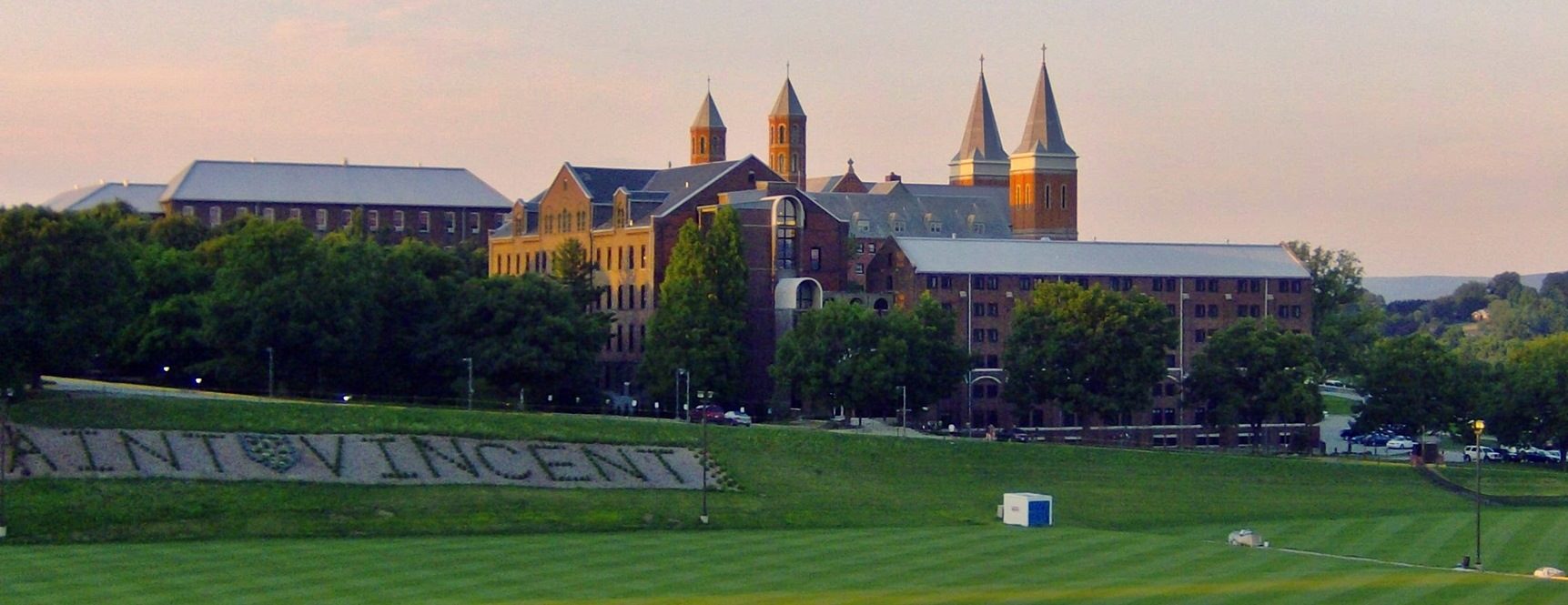
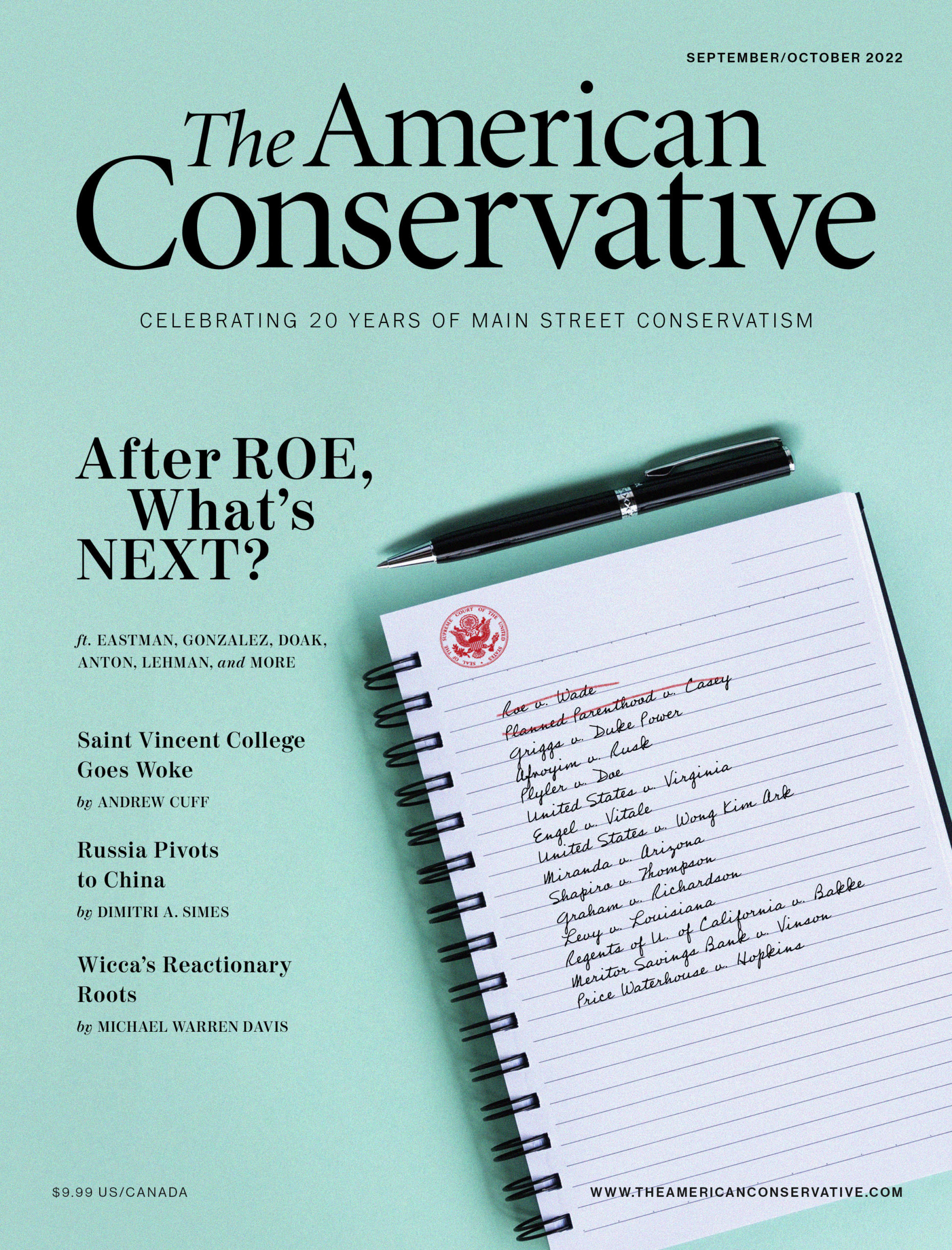


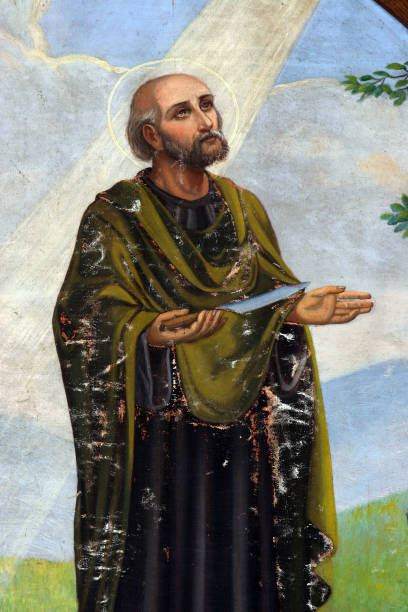


You must be logged in to post a comment.