’By ED WHELANApril 6, 2022 7:37 AMEleventh Circuit chief judge William Pryor has just published a critique of law professor Adrian Vermeule’s “common good constitutionalism,” an approach to constitutional interpretation that Vermeule has set forth both in some articles and in a recent book with that title. I can’t succinctly summarize Pryor’s critique, so I will instead offer some excerpts:I want … to address a kind of results-oriented jurisprudence that is indistinguishable in everything but name from Justice Brennan’s living constitutionalism: Harvard Law Professor Adrian Vermeule’s so-called common-good constitutionalism—a variant of what I call living common goodism. Vermeule’s approach, in his words, “take[s] as its starting point substantive moral principles that conduce to the common good, principles that [judges] . . . should read into the majestic generalities and ambiguities of the written Constitution.” [Pryor’s italics.] Replace “common good” with “human dignity” and Vermeule’s living common goodism sounds a lot like Brennan’s living constitutionalism. Indeed, the difference between Brennan’s living constitutionalism and Vermeule’s living common goodism consists mainly in their differing substantive moral beliefs; in practice, the methodologies are the same…. The Constitution does not give judges the power to “read into” the text of the Constitution “substantive moral principles that conduce to the common good.” And fashioning that kind of jurisprudence would conflict with natural law. As Professor Robert George has explained, when courts exceed their jurisdiction and usurp “legislative authority,” whether for good or bad causes, “they violate the rule of law by seizing power authoritatively allocated by the framers and ratifiers of the Constitution to other branches of government.”…A major theme of Vermeule’s recent popular-level polemic defending living common goodism is that it supposedly prevailed at the Founding. He contends that living common goodism “is the original understanding” of the Constitution. In his revisionist historical account, “the classical legal tradition structured and suffused our law” “[r]ight from the beginning, long before the Constitution of 1789.” And living common goodism “has since been displaced . . . by originalism,” which he labels as a creature of the late 20th century. Rubbish!…Vermeule’s argument for that historical revisionism does not withstand scrutiny. He argues that three opinions—the first Justice Harlan’s dissent in Lochner v. New York, the decision of the Supreme Court in United States v. Curtiss-Wright, and the decision of a New York court in Riggs v. Palmer— “illustrate how deeply the classical legal tradition has always infused our law.” Setting aside whether these decisions support Vermeule’s methodology, it strains credulity to suppose that a dissenting opinion from 1905, a Supreme Court decision from 1936, and a state-court decision from 1889 could establish that living common goodism is deeply rooted in the American tradition: that it “structured and suffused our law” “[r]ight from the beginning, long before the Constitution of 1789 was written.” Vermeule’s argument is about as persuasive as using Roe v. Wade as evidence that living constitutionalism is deeply rooted in our legal tradition. Pryor goes on to argue that both Harlan’s dissent in Lochner and the Court’s ruling in Curtiss-Wright were originalist and that “most American courts … rejected Riggs in favor of the textualist approach [Vermuele] says was invented after the Second World War. He argues more broadly that Vermeule’s revisionism “flouts a mountain of historical evidence” dating back to the Founding era. This Day in Liberal Judicial Activism—April 11By ED WHELANApril 11, 2022 8:00 AM2018—“Progressive fury” (as CNN puts it) is unleashed on federal district nominee Wendy Vitter for declining to opine at her confirmation hearing whether she believes that Brown v. Board of Education was correctly decided. Malicious charges spread that Vitter supports racial segregation. Never mind that, like many other nominees, Vitter took the position that it was improper for her to comment on the rightness or wrongness of any Supreme Court ruling. Never mind that she committed to apply all existing precedents. Never mind that she testified that racial segregation is immoral. Never mind that no one identified anything in her life or career to suggest that she is racially biased. Never mind that she has earned the support of Democrats like New Orleans mayor Mitch Landrieu (who, among other things, called for the removal of city monuments honoring leaders of the Confederacy). What many on the Left really object to—or so it would seem from the questions posed at the hearing by Senate Democrats—is that Vitter is openly pro-life. 2018—Federal district judge Manuel L. Real rules (in City of Los Angeles v. Sessions) that the Department of Justice, in administering a federal program to give grants to local governments to hire officers, cannot favor applicants who commit to address illegal immigration, and he enters a nationwide injunction against DOJ. Some fifteen months later, a Ninth Circuit panel will reverse Real’s ruling. 2019—Accepting the Thomas Jefferson Foundation Medal in Law from his alma mater, the University of Virginia law school, federal district judge Carlton W. Reeves addresses what he calls the three “great assaults” on the federal judiciary. Reeves powerfully describes the first two assaults, in the Reconstruction Era and in the resistance to Brown v. Board of Education. But he then descends into rank partisanship as he decries the “third great assault on our judiciary,” which consists above all of tweets and comments by Donald Trump slamming various judges and rulings. There is plenty of room to deplore Trump’s comments without seeing in them anything remotely like the return of the Klan. This Day in Liberal Judicial Activism—April 10By ED WHELANApril 10, 2022 8:00 AM2017—Livid that Senate Democrats’ historically idiotic filibuster of Neil Gorsuch’s nomination has led Republicans to abolish the 60-vote cloture threshold for Supreme Court nominations, Democratic senator Ed Markey vows that Senate Democrats will restore the filibuster for Supreme Court nominations as soon as they regain control of the Senate. But after Senate Democrats do take control of the Senate in 2021, neither Markey nor Senate Democrats will make any such effort. Instead, Markey will launch an effort to pack the Supreme Court. This Day in Liberal Judicial Activism—April 9By ED WHELANApril 9, 2022 8:00 AM2001—A Ninth Circuit panel, in an opinion by Stephen Reinhardt, rules in Doe v. Otte that application of Alaska’s Sex Offender Registration Act (commonly termed a “Megan’s Law”) to those whose crimes were committed before enactment of the Act violates the constitutional bar on ex post facto punishments. The Act requires sex offenders in the state to register with law-enforcement authorities, and it provides that a central registry of information about offenders will be made public. The Ninth Circuit concludes that the Act imposes criminal punishment and therefore may not be applied retroactively.On review (styled Smith v. Doe), the Supreme Court in March 2003 reverses the Ninth Circuit by a 6 to 3 vote (with Stevens, Ginsburg, and Breyer in dissent). The Act, the Court determines, creates a regulatory scheme that is civil and nonpunitive. In his 39th and final argument before the Supreme Court, the attorney for Alaska, a fellow by the name of John G. Roberts, Jr., marks his last victory as an advocate. 2018—The Ninth Circuit issues a 6-5 en banc ruling in Rizo v. Yovino, with Judge Stephen Reinhardt listed as the author of the six-judge majority holding that an employer’s consideration of prior pay is impermissible under the Equal Pay Act. Never mind that Reinhardt died eleven days earlier and that his putative vote was essential to the outcome. In February 2019, a unanimous Supreme Court will summarily reverse the Ninth Circuit on the ground that Reinhardt could not take part in the case after his death: “Federal judges are appointed for life, not for eternity.” 2018—Taking what it calls “an incremental step in the constitutional discourse over the unique protections that the Eighth Amendment affords to juvenile homicide offenders,” a Third Circuit panel rules (in United States v. Grant) that a man sentenced to a term of 65 years without parole for brutal crimes (including murder) that he committed when he was 16 years old has a presumptive right to be released from prison before he turns 65. This Day in Liberal Judicial Activism—April 8By ED WHELANApril 8, 2022 8:00 AM2005—A split Ninth Circuit panel, in an opinion by notorious activist judge Stephen Reinhardt, rules in a habeas case (Musladin v. Lamarque) that under clearly established Supreme Court law a defendant on trial for murder was deprived of his right to a fair trial by an impartial jury when the trial judge permitted family members of the victim (or, as Reinhardt insists on referring to him in quotes, the “victim”) to wear buttons bearing the deceased’s photograph. (The panel will later substitute in a slightly different version of its opinion.) In 2006, a mere two months after oral argument, the Supreme Court (in Carey v. Musladin) will unanimously reverse the Ninth Circuit. 2015—Shirley, you can’t be serious! The day after Wisconsin voters amend the state constitution to alter the method for determining who is chief justice of the Wisconsin supreme court, Wisconsin chief justice Shirley S. Abrahamson files a federal lawsuit contending that the amendment violates her constitutional rights. The legal reasoning in Abrahamson’s complaint reflects just the sort of activist nonsense that Abrahamson has been notorious for during her decades on the court.Less than three months later, the federal judge handling the case—an Obama appointee, no less—will grant summary judgment against Abrahamson. This Day in Liberal Judicial Activism—April 7By ED WHELANApril 7, 2022 8:00 AM1969—Justice Thurgood Marshall’s majority opinion in Stanley v. Georgia declares that the First Amendment forbids criminalizing the possession of concededly obscene material. Marshall blithely distinguishes away the Court’s previous categorical statements that obscenity is not protected by the First Amendment. Stanley, Marshall grandiosely proclaims, is asserting “the right to satisfy his intellectual and emotional needs in the privacy of his own home.” Yep, that carefully captures what viewing obscenity is all about. (Three justices, including Brennan, decline to join Marshall’s opinion and instead separately find a Fourth Amendment basis for vacating Stanley’s conviction.) 1969—In majority opinions by Justice Brennan in Kirkpatrick v. Preisler and Wells v. Rockefeller, the Supreme Court, building on its 1964 ruling in Wesberry v. Sanders (see This Day for February 17), rules that the states, in crafting their congressional redistricting plans, must aim to “achieve precise mathematical equality” in the populations of congressional districts. It rejects the argument that there is any “fixed numerical or percentage population variance small enough to be considered de minimis.” In dissent, Justice Harlan laments that the Court “transforms a political slogan [‘one man, one vote’] into a constitutional absolute”: Strait indeed is the path of the righteous legislator. Slide rule in hand, he must avoid all thought of county lines, local traditions, politics, history, and economics, so as to achieve the magic formula: one man, one vote…. [I]nsistence on mathematical perfection does not make sense even on its own terms. Census figures themselves are inexact; our mobile population rapidly renders them obsolete; large groups of ineligible voters are unevenly distributed throughout the State. Harlan also presciently observes that “the Court’s exclusive concentration upon arithmetic blinds it to the realities of the political process…. The fact of the matter is that the rule of absolute equality is perfectly compatible with ‘gerrymandering’ of the worst sort.” 1994—In a divided Ninth Circuit panel decision in Hartooni v. INS, Judge Harry Pregerson invents a rule that a reviewing court must treat an asylum applicant’s testimony as credible and true unless the immigration judge made “an explicit finding that any specific statement … was not credible.” Pregerson’s invention will taint Ninth Circuit immigration rules for nearly three decades, until the Supreme Court unanimously rules in 2021 (in Garland v. Dai) that the Ninth Circuit’s “special rule” is an “embellishment” that “mistakenly flips [the proper] standard on its head.” This Day in Liberal Judicial Activism—April 6By ED WHELANApril 6, 2022 8:00 AM1994—Justice Harry Blackmun announces his impending retirement after 24 years on the Court. His majority opinion in Roe v. Wade (1973) is rivaled only by Dred Scott as the worst opinion in Supreme Court history. As one of Blackmun’s former clerks, Edward Lazarus (who described himself as “someone utterly committed to the right to choose [abortion]” and as “someone who loved Roe’s author like a grandfather”), aptly put it, “As a matter of constitutional interpretation and judicial method, Roe borders on the indefensible.” Also from Lazarus: “Justice Blackmun’s opinion provides essentially no reasoning in support of its holding. And in the [decades] since Roe’s announcement, no one has produced a convincing defense of Roe on its own terms.” (My June 2005 Senate testimony (in parts 1 and 2) presents additional criticisms, including from other supporters of legal abortion, and explains why abortion policy needs to be restored to its rightful place in the democratic political processes.) 2016—In an Atlantic essay, lefty law professor Erwin Chemerinsky salivates over the prospect that President Obama’s hoped-for appointment of Merrick Garland to the Supreme Court would create a liberal majority that “likely would overrule” the Court’s landmark Second Amendment ruling in D.C. v. Heller and that would move the Court’s decisions dramatically leftward on a broad range of issues, including preventing any regulation of abortion, entrenching racial quotas, eliminating First Amendment protections against campaign-finance restrictions, abolishing the death penalty, and extravagantly overreading the Establishment Clause (farewell, school choice, and goodbye, In God We Trust). And all of that is before Chemerinsky even begins briefly sketching his “dream” agenda. Alas for Chemerinsky’s dreams, Senate Republicans will succeed in blocking action on Garland’s nomination, and Donald Trump will defeat Hillary Clinton in the presidential election seven months later. M. Edward Whelan III Distinguished Senior Fellow andAntonin Scalia Chair in Constitutional Studies Ethics and Public Policy Center 1730 M Street N.W., Suite 910 Washington, D.C. 20036 202-682-1200 www.EPPC.org
Father Stu In TheatersInboxCatholic League pr@catholicleague.org via auth.ccsend.com 11:13 AM (1 hour ago)to me Father Stu In Theaters April 11, 2022 Several of us had an opportunity, thanks to Carmel Communications, to attend a pre-screening of the forthcoming film Father Stu. This is an excellent biographical drama, and we would highly recommend you see it when it opens in theaters on April 13. Father Stu stars Mark Wahlberg as Fr. Stuart Long. In his younger years, Stu becomes a wild man, and the film follows his journey from washed-up amateur boxer to failed Hollywood actor to a holy man of God. Further, the strong focus on Confession was beautifully done, and meshed well with the plot. That said there are a few things to keep in mind before seeing Father Stu.The film is rated R for strong language. Yes, the language is strong but, it helps to tell this story and highlight the redemptive aspects of the plot. Also, viewers should be aware that there is one scene depicting impropriety between the male and female leads. However, none of these critiques should be a reason to avoid seeing the movie. In short, Father Stu is a deeply moving film that opens hearts and minds to the saving power of Christ. A beautiful movie, with great actors, a fantastic sound track, and a powerful story. Hopefully, you will be able to make some time to see it this Easter season. For more information, click here.
Biden’s Supreme Court nominee made one rash decision with devastating consequences
April 5, 2022
Joe Biden is anxious to get his Supreme Court pick confirmed.
But skeletons in her judicial closet keep emerging.
And Biden’s Supreme Court nominee made one rash decision with devastating consequences.
Judge Ketanji Brown Jackson has not had the smooth confirmation process that the Democrats expected.
Unlike the Democrats’ disgusting smear of Justice Brett Kavanaugh and other Republican appointees, Jackson has been peppered on her legal record.
Missouri Senator Josh Hawley brought up the fact that Jackson has a tendency to give lenient sentences to sex offenders who harm children.
A case involving a convicted molester named Leo Weekes served as an example.
Weekes was given a slap on the wrist after failing to register as a sex offender, and soon after he sexually assaulted someone else.
The New York Post reported that “[i]n 2010, Weekes was convicted in DC Superior Court of raping his 13-year-old niece four years earlier. He was sentenced to 16 months in jail and four years of supervised probation and was required to register as a sex offender for the next decade . . . Weekes failed to register – lying about his whereabouts by claiming he lived in DC in February 2013 when prosecutors said he was really living with his wife in Temple Hills, Maryland since 2012. He was hauled before Jackson, then a federal judge in DC, on Feb. 19, 2014 for sentencing after pleading guilty to a charge of failing to register.”
Prosecutors asked for 30 months in prison plus five years probation, but Jackson sentenced him to 12 months with credit for time served.
The prosecutors who condemned Weekes in harsh terms were correct because he offended again.
The Post added that “Weekes landed on law enforcement’s radar again in June 2015 – when he would have been in prison had prosecutors gotten their way . . . Weekes allegedly plied his sister-in-law with liquor while she was babysitting for his wife. He then allegedly started touching her, trying three separate times to pull her leggings down . . . Weekes ‘was able to digitally penetrate her vagina with his fingers and then tried to perform oral sex on her.’ In response, the sister-in-law punched Weekes in the head, stopping the alleged attack. ‘She noticed that the defendant had his penis exposed and was trying to insert it,’ the report continues, ‘but was unable to get close.’”
This is the creep that Jackson gave a light sentence, and he isn’t the only one.
Child sex offenders have an astronomically high recidivism rate, so if there’s any class of criminals that deserve a sterner hand from judges, it is them.
For whatever reason, Judge Jackson saw fit to go easier on them, and at least in this instance, another victim had to pay the price.
Stay tuned to Right News Wire for any updates to this ongoing story.
Posted inUncategorized|Comments Off on JOSEPH BIDEN’S SUPREME COURT NOMINEE GAVE A SHOCKING LIGHT SENTENCE TO A SEX OFFENDER. THE CASE BROUGHT BACK MEMORIES OF HIS SON, HUNTER BIDEN’S FATHERING A SON WITH A POLE DANCER. IT TOOK A COURT ORDERED GENETICS TEST OF HUNTER BIDEN WHICH PROVED HUNTER BIDEN’S PARENTAGE AND FORCED HIM TO PAY CHILD SUPPORT FOR HIS SON,
Ever since we set out on our spiritual journey on pre-Lent Septuagesima Sunday, step by step we have approached Holy Week. While a measure of weariness might distress us as we slog along the paths of penance and discipline, of self-denial and self-examination, our hearts rise because we draw nearer to the goal of victory and Easter glory. Let us enter this last time of trial and transformation, the four days remaining in Passiontide and the last three, their own set, the Sacred Triduum.
As Christ entered Jerusalem through a gate riding on an ass, so too you can enter Holy Week with some of my poor comments.
Remember context always. For months the Scribes and Pharisees became more and more hostile toward the Lord, who moved the people to belief through miracles and teaching with genuine authority. By this point, shortly before the great pilgrimage to Jerusalem for Passover, Christ performed His greatest and last miracle before His Passion: the resurrection of Lazarus of Bethany (John 11:1-45). After this the leaders of the Temple “took counsel how to put him to death” (v. 53).
Following a brief stay at Ephraim and Jericho, where He taught, healed the blind and predicted His betrayal, Passion and Resurrection, Christ returned to Bethany and the house of Mary, Martha and Lazarus a couple of days before His final journey to Jerusalem. No doubt news of His return and of the miracle of Lazarus had spread and people were anticipating His every move.
When Christ finally headed to Jerusalem for His final Passover, they went along the well-trodden road, so familiar because the Jews made pilgrimages year in and year out. Our Lord remained mostly silent except to teach about the inevitability of God’s loving plan. They went by way of Bethphage, whence the paschal lamb was brought to the Temple. Here He instructed the disciples to bring to Him the colt of an ass, upon which they put their cloaks for Him to ride like the Davidic Priest King Solomon, who in 1 Kings 1 rode David’s donkey into the city with a great crowd (Matthew 21:7). The people, flooding to the city for the holy days, strew the way with branches and their own cloaks. Word spread. The whole city was excited because Jesus was coming. With each turn and rise, glimpses of the city were revealed from the Mount of Olives, glimpses of the Temple, while all along people were singing the psalms of the pilgrims which the people of Jerusalem would answer on solemn festivals, “Hosia-na!… “Save us!” Hosanna… Blessed be he that comes in the name of the Lord.”
In recognition of the Lord as the Davidic Messiah Priest King, the people stopped singing the spring festival songs, usual at Passover, and started to sing the songs for the autumn harvest festival of Sukkoth, Tabernacles. During Sukkoth, which went on for a week, there was a ceremony of pouring water and wine out as people waved palm branches toward the altar. This ceremony looked forward to the return of God’s presence cloud to the Temple which had departed with the Ark. On that first Palm Sunday people cut branches and waved them toward Jesus, singing the psalms of Sukkoth rather than of Passover, because they thought Christ would go to the Temple to offer sacrifice as the Davidic priest and bring in a new era. The pilgrims and the greeters would have sung the familiar psalms in unison as they marched up the last rugged ascent to the very place where Jesus had looked upon the city and wept because He foresaw its destruction.
Advertisement – Continue Reading Below
Then they went on down, into the city to the Temple Mount, eventually to return to Bethany in the evening. They counted the hours and the short days until the Preparation day of the Passover, the slaughter of the lambs and the eating of the Paschal meal. In the time that followed before the preparation of the Pascha, Our Lord would curse the fruitless fig tree, cleanse the Temple, heal the sick, speak of the tribute to Caesar, and speak with Greeks – Gentiles – first fruits of His Passion who were drawn to Him as a final sign that His time had come as foreseen in Isaiah 2. He would state the great commandment and teach in parables of the laborers in the vineyard, the King’s son and the wedding garment and then discourse to His disciples of the Last Things with the image of the wise and foolish virgins, the talents, and the final reckoning. And then Judas – driven by greed and later possessed by Satan – would sell the Lord while the Lord and Apostles prepared for the Passover meal.
But this Sunday, Christ’s final days began. Through our sacred liturgical worship and by our baptismal character these sacred mysteries are made present to us and we to them in their devout celebration. Today Our Lord comes to Jerusalem, mounted on the colt of a donkey.
The Lord had His ass colt to bear Him to His Passion and His Victory. Though the ass recalled Solomon, and other than the fact that everyone but Christ would have been walking up to the city, asses were an ordinary, everyday sight and presence. In our rites, we the baptized celebrate the triumph of Christ’s arrival in Jerusalem. In your Palm Sunday procession, claim part of that victory as sharers in Christ’s mission.
Do not leave that victory behind you at church when the dismissal comes at the end of Holy Mass and it is time to return to the world. We are our rites. You do not stop being sharers in Christ’s Passion and victory at the portal of the church. You must consciously carry Christ into every corner of your sphere of life and into every open heart.
Advertisement – Continue Reading Below
First, to bear Christ to where He wants you to take Him, you must be a good donkey colt yourself, obedient, docile, patient. Don’t be a froward ass. Mary said, “Let it be done to me” and Christ humbled Himself to death. We have the examples of saints. Be a good donkey and carry Christ to where He has to go.
Next, allow yourself to be borne along by your own donkey colts, that is, the ordinary and everyday tasks and events which bear you along in your day. Our daily responsibilities, our daily troubles, even our sufferings are all our donkey colts which bear us, in turn bearing Christ into each cranny of our lives and into the lives of others. Bear them with self-control, perseverance, and good cheer. Is it possible to imagine Mary of Nazareth preparing a meal or cleaning up afterward with a grumble and a frown? She bore Christ before any donkey did, thus teaching all donkeys to bear Him. She teaches us that even in the smallest way, hardly perceptible except perhaps to those closest to us, how to bear Christ in the place where we, in our vocation, must bring Him.
Life doesn’t have to be exotic to have dramatic results. In the most ordinary things, faithfully completed, much is accomplished. And your participation in the sacred rites of Holy Week, the coming Triduum, is “the least you could do,” if you get my drift. Of course, it is the most you can do, not because of who you are or do in them, but because of what He makes of you as you are in them. We are our rites, and He is their Actor.
Go to confession. Go to your rites. Take others to both. It’s the least you can do.
Posted inUncategorized|Comments Off on Remember context always. For months the Scribes and Pharisees became more and more hostile toward the Lord, who moved the people to belief through miracles and teaching with genuine authority. By this point, shortly before the great pilgrimage to Jerusalem for Passover, Christ performed His greatest and last miracle before His Passion: the resurrection of Lazarus of Bethany (John 11:1-45). After this the leaders of the Temple “took counsel how to put him to death” (v. 53).
The Godfather’s two endings: Lighting a candle and the wrong side of the door
Now half a century old, Francis Ford Coppola’s revered New Hollywood masterpiece has one of the best-known final shots in film history—but it almost had a much more Catholic ending.
A still from the film “The Godfather” (1972) featuring Al Pacino (left) and Marlon Brando. (Images: Wikipedia)
The shattering final shot in Francis Ford Coppola’s The Godfather, while it is among the most celebrated closing shots in cinema history, was not the original ending envisioned by Coppola. Anyone who knows the film well can see the last image in their mind’s eye: a closing door eclipsing the stricken face of Diane Keaton’s Kay, cutting her off from her husband, Al Pacino’s Michael Corleone, whom she now realizes has claimed the mantle of his late father, crime-family patriarch Don Vito Corleone (Marlon Brando).
But Coppola also shot an alternate ending, taken directly from Mario Puzo’s novel and similarly centered on Kay. The unused shot finds Kay in a Catholic church lighting votive candles as she prays for her husband’s soul and for her family. This alternate denouement would have ended the film on an arguably more hopeful note; certainly the effect would have been poignant continuity rather than ruthless rupture.
Puzo envisioned Kay taking her place alongside Michael’s mother, Vito’s widow Carmella (Morgana King), and other mob wives and mothers pleading with heaven on behalf of their corrupt menfolk. This would have been a more Italian and certainly a more Catholic denouement. For Coppola, whose idea of Catholic identity was entangled with hypocrisy and decadence (“to do one thing and think another,” Coppola once told Brian De Palma, “seemed very Catholic to me”), it would have underscored the contradictions at the heart of Sicilian crime-family culture. By implicitly contrasting lived Christian spirituality with mob life, it would also have made a more traditional Hollywood ending.
Jon Lewis, author of Whom God Wishes to Destroy: Francis Coppola and the New Hollywood, considers Coppola’s original ending superior to the ending that wound up in the film, which he says was preferred by Paramount production chief Robert Evans. The original ending, Lewis maintains, “returns us to the film’s thematic conflation of family and religion and Michael’s betrayal of both”; the actual ending “only accounts for Michael’s power and Kay’s growing irrelevance in his life.” (See Lewis’ essay “If History Has Taught Us Anything…” in editor Nick Browne’s Francis Ford Coppola’s The Godfather Trilogy, page 30.)
This is a plausible case for the alternate ending…but it only underscores, for me, the brilliance of the actual ending. The door quietly closing between Kay and Michael—far from representing only an insuperable barrier in their marriage and their once-candid relationship—becomes a potent metaphor resolving multiple themes and ideas established as early as the opening scene and even the opening shot. In the process, the final image offers a damning last word (at least until the sequels) on Michael’s choices and their consequences.
The end in the beginning: family and Family
The Godfather opens and closes in the same darkened room, a home office or study used first by Vito and then by Michael. The muted abruptness of the final shot and the blotting out of Kay’s speechless face contrasts strikingly with the opening shot: a sustained, tight closeup on the face of an aggrieved Italian immigrant pouring out a tale of woe. An undertaker named Bonasera, he has come to petition Don Vito to avenge a brutal attack on his daughter. As Bonasera speaks, the shot pulls back until we are looking over Vito’s shoulder from behind his desk.
Outdoors, an extravagant wedding reception for Vito’s daughter Connie is underway, the conceit being that Sicilian tradition forbids a man to refuse any request on his daughter’s wedding day. During the grand half-hour opening sequence, both Vito and the camera move repeatedly between the shadowy, hushed world of the office and the boisterous outdoor festivities. Vito belongs to both settings, but the delineation between the two realms—inside and outside, shadow and light—is strictly maintained.
“Papa never talked business at the table, in front of the kids,” Connie will later say, meaning Family business. Vito is both a family man and a Family man; to men like him, both are important, but always separate. “It’s business, not personal” is a mantra of the crime-family world, but the personal is essential too. “A man who doesn’t spend time with his family can never be a real man,” Vito says. When Michael eventually takes over the Family business, Vito wants to know if he’s happy with his own family, with Kay and their two children. Michael says he is, but one of The Godfather’s central ideas is that the seemingly successful compartmentalization that has defined the father’s life will elude the son.
The rules of the game
Bonasera’s opening dialogue with Don Vito, and even his monologue in the first shot, provide an elegantly efficient journey from the bright world outside the door into the shadow world within. From the start this is not an Italian story, but an American one: “I believe in America” are the film’s first words. Bonasera could be applying for citizenship. He is a productive member of society, hardworking and law-abiding, and he has been rewarded with success and happiness.
Despite family ties (Vito’s wife Carmella is godmother to Bonasera’s daughter), the undertaker has kept a cautious distance from the Corleones—a choice Vito doesn’t resent, though he points it out. “You were afraid to be in my debt…You found paradise in America, had a good trade, made a good living. The police protected you, and there were courts of law. And you didn’t need a friend like me.” Now, though, the police and the courts have failed Bonasera; the young men who hospitalized his daughter went free, and Bonasera, shamed and dishonored in his helplessness and his inability to avenge the insult to his daughter’s honor, turns to Don Vito for “justice.”
The inner world is criminal, but not lawless. As Bonasera’s clumsy attempts to buy Vito’s services reveal, it is governed by its own codes of honor, etiquette, and conduct. There are lines Vito won’t cross, or at least that he would prefer not to cross. “We’re not murderers,” he scoffs in response to Bonasera’s initial wish for ultimate vengeance. This is at best an equivocation; they are murderers. Vito means perhaps that they are not wanton killers; murder is a serious business, to be employed only when necessary. He is a prudent man, with a healthy sense of how violence begets violence, not to mention press and police pressure.
Don Vito takes offense at Bonasera’s offer of money. The currency of this world is not first of all currency, but “friendship”—or, at least, respect and loyalty, along with favors and debts. What he wants is to be invited over for a cup of coffee; to be called “Godfather”; to be Bonasera’s “friend”: all on the understanding that the day may or may not come when the godfather will call upon Bonasera for a “friendly” service in return.
Significantly, when the day does come, it’s a further delineation of the wall of separation between family and Family. Vito’s son Santino, or Sonny (James Caan), has been brutally murdered in a mob hit leaving his body riddled with machine-gun fire—and Vito can’t bear for his wife Carmella to see how her son ended. The debt Bonasera feared is paid simply by plying his trade to make Sonny’s corpse as presentable as possible to spare Carmella the full horror of her son’s Mafia death.
Catholic on the outside
The title “godfather” here implies, of course, a Catholic milieu. Explaining its importance, Vito’s adopted son, Tom Hagan (Robert Duvall), uses pious language (“a religious, sacred, close relationship”)—yet, significantly, he doesn’t say “to Catholics” or “to Christians,” but “to the Italian people.” As there is family and Family, so the term “godfather” has different meanings on opposite sides of the door. Vito and his family are at least semi-practicing Catholics, but inside the door the significance of the godfather/godchild relationship is purely cultural. The Church as such—like the police and the courts of law—is consigned strictly to the outer world.
This is not to say, of course, that these institutions are beyond corruption. On the contrary, a bent cop, Captain McCluskey (Sterling Hayden), is an important supporting character in The Godfather, and The Godfather Part III (also known in a recut version as The Godfather Coda: The Death of Michael Corleone) is largely preoccupied with corruption in the Church. Rather, what these institutions represent has no significance for or bearing on the shadow world. The Church and the clergy serve a ceremonial role in family life, especially at critical junctures and rites of passage—weddings, funerals, baptisms, first communions, etc.—but the Church has no moral voice that resonates within the shadow world, at least in the first two Godfather films.
This represents a striking break from older mobster movies with a Catholic milieu, like On the Waterfront(1954) and Angels with Dirty Faces (1938). In these films, priests are public voices of social conscience who directly take on organized crime; whether they heed them or not, the mob can’t simply ignore clerical voices. In The Godfather, the Church’s voice is barely a presence to be ignored. (Don Vito does have a passing line about how “most people nowadays” want things “like gambling…liquor—even women”—that are “forbidden to them by the pezzonovante [bigshots] of the Church.”)
Replacing Apollonia
From the start, when we first meet Michael and Kay at the opening wedding sequence, Michael disregards the compartmentalization represented by his father’s office door. Michael explains frankly to Kay about his father’s sometimes brutal business, adding, “That’s my family, Kay, not me.” Michael feels no need for the duality that defines his father’s life because he is on a different trajectory: a college student, a war hero, and, perhaps one day, his father fondly hopes, a bigshot in the outside world, a senator or governor.
When a surprise attempt on his life incapacitates Vito, family ties lead Michael—to the deep regret of Vito and others—to take a hand in Family business. After striking back at Vito’s attackers with a shockingly brazen double murder, Michael flees to Sicily. There he makes a tragically short-lived marriage to a Sicilian country girl named Apollonia (Simonetta Stefanelli), who is killed by a car bomb meant for Michael.
The logic of this haunting episode ultimately leads straight to the closing door in the final shot. Apollonia’s violent death ripples through the rest of the film and beyond partly because she had the makings of a typical mob wife. She would have fulfilled traditional wifely and motherly duties, not asked questions about her husband’s business, and joined Carmella in lighting candles in church. After Apollonia’s death, Michael turns back to Kay, but the candidness of their past relationship is gone. “In five years,” Michael dissembles, “the Corleone family is going to be completely legitimate.”
This is Michael’s bid to recreate with Kay the kind of relationship that he might have had with Apollonia; to compartmentalize with Kay as his father did with Carmella. The alternate ending would have cast Kay as a functional replacement for Apollonia, as Michael wanted, thereby undermining the narrative weight of Michael’s marriage to Apollonia and her death. The Godfather is an American story. Kay is not a Sicilian mob wife. What seemed to work for Vito—who died a peaceful death playing in a sunlit garden with his grandson, and was given a lavish family funeral—will not work for Michael, and one part of the reason is that Kay is not Apollonia.
The wrong side of the door
Perhaps what seemed to work for Vito wasn’t really working as well as it appeared, especially toward the end. Michael’s line to Kay that “my father’s way of doing things is over…even he knows that” may have been a line, but it echoes critical remarks from other mobsters pushing back on Don Vito’s approach to business. “It’s not like the old days,” one says regarding Vito’s opposition to drug trafficking; another tells Michael that his father’s thinking was old-fashioned. Vito miscalculates badly in sending his enforcer Luca Brasi (Lenny Montana) to infiltrate a rival family, and, whether or not he realized the role that Connie’s abusive husband Carlo (Gianni Russo) played in his son Santino’s murder, Vito wouldn’t have had the heart to make his daughter a widow.
From the outset Michael is more ruthless than his father. Vito preferred peaceful solutions to threats and threats to violence; Michael prefers to strike as fast and hard as he can and weather the consequences. More fundamentally, where Vito to the end of his days saw himself as a paterfamilias taking care of his family, Michael—perhaps like the senator or governor he might have been—becomes increasingly motivated only by his own power.
Not only does he make his sister a widow (which was, by the logic of the shadow world, necessary and inevitable), Michael also issues a chilling ultimatum to his older brother Fredo (John Cazale) foreshadowing Fredo’s execution in The Godfather Part II. His relationship with Kay is a sham—or, as Kay flings in his face in Part II, an “abortion”—and when Kay leaves him, Michael’s insistence on keeping custody of the children is a power move. (Tom, not Michael, buys the children presents that are ostensibly from their father. According to Part III, Michael ultimately returns custody of the children to Kay as part of his attempted arc of redemption.)
The Godfather Part II ends with Michael alone, with nothing but his wealth and power, but his trajectory is set by the end of the first film. Unlike Vito, who managed to belong to both worlds, Michael is a Family man, but not a family man—which means, by his father’s maxim, that he is not a “real man.” He does not compartmentalize, because he exists entirely in the shadows. This is the real significance of The Godfather’s final image: not that Kay is barred from the inner world of her husband’s business, but that Michael has barred himself from the world outside. Michael, not Kay, is the one on the wrong side of the door; it’s he who is shut in, not she who is shut out.
Coda: The Irishman and leaving the door open
The Godfather’s final shot is so closely connected to the terrible, masterful climax—the iconic Baptism/massacre sequence intercutting between coordinated assassinations of the heads of the other Families and Michael’s unflinching liturgical responses as godfather to Connie and Carlo’s baby, renouncing Satan and all his works and pomps—that it’s not hard to posit a theological gloss to the closing image of Michael shut in on the wrong side of the door. This case could be bolstered by analysis of The Godfather Part III, in which Michael’s quest for redemption finds him making an uneasy confession to a cardinal he recognizes as a “good man” and “a true priest.” For the last few years, though, the closed door at the end of The Godfather has become inseparable in my mind from the denouement of an unrelated gangster movie: Martin Scorsese’s sprawling 209-minute saga The Irishman, starring Al Pacino as Jimmy Hoffa and Robert De Niro (who played young Vito Corleone in The Godfather Part II) as the film’s protagonist, mob hitman Frank Sheeran.
The Irishman recalls The Godfather trilogy in a few ways. There are family baptisms that for Frank have a mob significance rather than a sacred significance (Frank’s growing importance in the mob is highlighted by the larger number of people in attendance at his second child’s baptism compared to the first). Like Michael, Frank makes decisions that alienate him from his family. The world of the film is the story that Frank tells himself about his life, so we spend the whole movie inside Frank’s head—and the inside of Frank’s head is revealed to be a lonely place. A place that could turn out to be hell.
Toward the end, in a nursing home, Frank makes stumbling attempts to confess to a priest, but he doesn’t feel remorse. Around the same time Frank reflects that, rather than being cremated or buried, he would rather be interred in a crypt. The idea of burial troubles him: “When they go into the ground,” he muses, “it’s so final.” Somehow he feels that interment in a crypt is “not that final.” The same fear of finality haunts the final scene, in which the priest promises to see Frank again after Christmas. “I ain’t going nowhere,” Frank replies. Then, as the priest leaves, Frank asks him not to close the door all the way. “I don’t like that. Leave it open a little.” Perhaps the closed door is too much like the lid of a casket. Frank knows his family will not come to visit him, and he doesn’t know how to invite God in. But he wants to leave the door open.
Michael, in the last shot of The Godfather, wants the door closed. It is a casket lid that he shuts on himself. “The doors of hell,” C.S. Lewis once wrote, “are locked from the inside.” Michael’s story may not end there, but it’s as damning a moment in a man’s life as I can think of in any film.
If you value the news and views Catholic World Report provides, please consider donating to support our efforts. Your contribution will help us continue to make CWR available to all readers worldwide for free, without a subscription. Thank you for your generosity!
Click here for more information on donating to CWR. Click here to sign up for our newsletter.
Steven D. Greydanus is a member of the New York Film Critics Circle, a permanent deacon in the Catholic Archdiocese of Newark, and the founder of DecentFilms.com. He has degrees in media arts and religious studies. He and his wife Suzanne have seven children.
Deacon Edward PeitlerAPRIL 8, 2022 AT 2:17 AMI always found it ironic how the head of a New York crime family had a brother who was a Catholic priest and who feigned mental illness, was hospitalized at a NY Catholic psychiatric hospital, had a Catholic psychiatrist, was given psychological tests by a Catholic psychologist, and not infrequently was observed making the sign of the cross. The take-away: there will never be an acceptable substitute for speaking the truth to lies. Lies abound within this Catholic Church and the only antidote is radical truth-telling.REPLY
Terence McManusAPRIL 8, 2022 AT 7:10 AMIn the book Kaye converts to Catholicism around the time she marries Michael and takes to going to Church every day with Mama Corleone. When she realizes that Michael has lied to her about the killings, specifically that of Carlo Rizzi, she goes to him and tells him that she is leaving him and taking the children to New Hampshire. Michael says he understands. A few days later Tom Hagen comes to New Hampshire and persuades her to come back. On the day when the whole family is scheduled to leave New York for Nevada, Kaye and Mama Corleone go to weekday (Latin) Mass as usual. When it comes time for Holy Communion: “Washed clean of sin, a favored supplicant, she bowed her head and folded her hands over the altar rail. She shifted her body to make her weight less punishing to her knees. She emptied her mind of all thoughts of herself, her children, of all anger, of all rebellion, of all questions. Then with a profound and deeply willed desire to believe, to be heard, as she had done every day since the murder of Carlo Rizzi, she said the necessary prayers for the soul of Michael Corleone.” This is what Coppola decided to leave out of the movie, although we are told that it had been filmed and could have been used. But it was NOT used. Combine that with the blatant anti-Catholicism of Godfather Pt.3 and it is fair to state that Coppola has some serious issues with the Catholic Church, which means, to me, that he uses his considerable artistic gifts to take a shot at it any time he can. In my opinion that should be kept in mind whenever the subject of this movie comes up.REPLY
MarkAPRIL 8, 2022 AT 7:33 AMLikw the author, I prefer the chosen ending to the sugary pious alternative. Scorcese showed in Goodfellas that mob wives were not always women who focused on prayers and candles for their erring hubbies, but ready and knowing partakers of criminal wealth.REPLY
Posted inUncategorized|Comments Off on THE GODFATHER FILMS ARE SO GREAT BECAUSE THEY ARE SO REALISTIC IN THEIR PORTRAYAL OF THE CONSTANT TENSION BETWEEN GOOD AND EVIL IN THE FILM LIFE OF THE PRINCIPAL CHARACTERS
The Church’s teaching on papal heresy, and the authority of a council when there exists positive doubt about the validity of claims on the papal munus have been elaborated by Pope Gregory XVI, St. Robert Bellarmine, St. Alphonsus Liguori, Pietro Ballerini, and others as well. Their teachings are based on the teachings of Pope, Innocent III, St. Thomas Aquinas, and on the rulings of the popes on the question of papal heresy (which I have quoted verbatim in my two volumes*). I have explained their teaching on these points with ample verbatim quotations in my volumes on papal heresy and the case against Bergoglio. There exists no possible justification to quote the bogus scholarship of such a theological charlatan as Robert Siscoe. In Ch. 9 no. 5 of De Potestate Ecclesiastica, etc., Ballerini sums up the canonical rulings of the Church, saying that popes, cannot be judged for any crime, except those who would deviate from the faith into heresy, because they would fall from the papacy and lose the primacy by the heresy itself ipso facto: “In sacris canonibus … numquam vero judicio cujusquam subjiciendos indicant, nisi forte sint a fide devii. Quæ hæresis exceptio ea de causa fit, quia ob hæresim ipso facto a pontificatu decidentes, primatus jurisdictionem amitterent”. Ballerini, whose doctrine on the primacy formed the basis of the dogmatic pronouncement in Chapter III of Pastor Æternus, explains that the canonical exception for judging heretic popes exists precisely because a heretic pope would by the heresy itself fall from office ipso facto. Gregory XVI comments on Ballerini, saying that the judgment would not be made against the pope, “but only against the person, who was before adorned with papal dignity”.** Robert Siscoe and John Salza invert this clear and explicit teaching, and they twist Ballerini’s words, claiming in their writings that according to Ballerini, the heretic pope would not fall from office until he is first judged by the Church! Their writings are totally saturated with this kind of dishonest scholarship, as I have amply demonstrated. * Vol. I – To Deceive the Elect – The Catholic Doctrine on the Question of a Heretical Pope; Vol. II – On the True and the False Pope – The Case Against Bergoglio by Fr. Paul Kramer B.Ph.,S.T.B., M. Div., S.T.L (Cand.) ** Gregorio XVI, Il trionfo della santa chiesa contro gli assatti dei novatori, Venezia 1832, Capo – Don Leonardosaid [The Catholic Monitor comment section: https://www.thecatholicmonitor.com/2022/04/why-dont-you-mr-ferrara-in-2022-again.html%5D
Getting back to the professor’s article, he next said that according “Antonio Socci, in the volume ‘It is not Francis. The Church in the great storm'” there is probable cause of “nullity of the election of Jorge Mario Bergoglio” as pope” – The Catholic Monitor
On March 23, 2019, Bishop Rene Gracida who would have to be part of such a “universal acceptance” demonstrated that Salza’s thesis is false:
Vatican expert Sandro Magister is the creator of the www.chiesa.espressonline.it website. In 2015, the site had an article “On the election of Pope Francis” which was authored by a unnamed “professor of canon law.”
The article presented evidence from journalist Antonio Socci that it disagreed with which said there may have been serious irregularities against Pope John Paul II’s apostolic constitution “Universi dominici gregis” that “regulated the vacancy of the Apostolic See and the election of the [new] Roman pontiff.”
The constitution governed the 2013 conclave which because of serious irregularities could have invalidated the conclave that elected Francis thus making him an antipope according to Socci.
The post states that Francis’s authorized biographer from Argentina Elisabbeta Piqué revealed in her book “Francis. Life and revolution” that:
“In the election of Pope Francis… [a cardinal] shuffles the pieces of paper placed in the urn, he realizes that there is one more: there are 116 and not 115 as they should be. It seems that, by mistake, a cardinal placed two pieces of paper in the urn: one with the name of his chosen one and one in white, which had remained attached to the first. Things that happen. Nothing to be done, this vote is immediately canceled, the sheets will be burned later without having been seen, and we proceed to a sixth vote »; and this indiscretion would have been confirmed by some cardinal.” [https://chiesa-espresso-repubblica-it.translate.goog/articolo/1350960.html?_x_tr_sch=http&_x_tr_sl=it&_x_tr_tl=en&_x_tr_hl=en&_x_tr_pto=nui,sc: “Elisabetta Piqué, ‘Francesco. Life and revolution’, Lindau, Turin, 2013, pp. 39-40.?”]
Getting back to the professor’s article, he next said that according “Antonio Socci, in the volume ‘It is not Francis. The Church in the great storm'” there is probable cause of “nullity of the election of Jorge Mario Bergoglio” as pope”:
It is not worth dwelling on the inferences that invariably follow the conclusion of each conclave, based on alleged revelations by subjects kept to a strict secret. In any case, according to this news Antonio Socci, in the volume “It is not Francis. The Church in the great storm” (3), supported the thesis of the nullity of the election of Jorge Mario Bergoglio, which was perfected on May 13, 2013. In fact, in his opinion, one would have erroneously (not however in bad faith, but out of superficiality and approximation, “and the nullity of the election does not absolutely represent a judgment on the person”: his goodness!) applied n. 68 of the apostolic constitution “Universi dominici gregis”promulgated on February 22, 1996 by John Paul II who regulates the vacancy of the Apostolic See and the election of the Roman pontiff.
This rule states that if, during the counting of the ballots, the scrutineer in charge verifies, by taking them visibly one by one from the ballot box, that the number of ballots does not correspond to the number of voters, they must be burned and a second ballot proceeded (4).
Instead, according to Socci, n. 69, which pertains to a subsequent step and states that if in the counting of the votes the scrutineers find two ballots folded so as to appear to have been filled in by a single voter, if they bear the same name they must be counted for only one vote, if instead they carry two different names, neither of the two votes will be valid, but in neither of the two cases the ballot is annulled (5).
Therefore “a vote that had to be considered valid and scrutinized” (p. 110) would have been canceled: the provisions of the constitution “Universi dominici gregis” having been transgressed, according to the provisions of n. 76 the election of Francis would therefore be null and void, without any declaration on the subject, conferring no right on the elected person (“Quodsi electio aliter celebrated fuerit, quam haec Constitutio statuit, aut non servatis condicionibus pariter hic praescriptis , electio eo ipso est nulla et invalida absque ulla declaratione, ideoque electo nullum ius tribuit “).
Among other things, in the opinion of Socci (which spreads in further assumptions about the trend of the votes not supported by any feedback and on which I do not delay here), a fifth vote would have been immediately carried out in contrast with the no. . 63 which imposes, in the days following the first, “duo suffragia erunt ferenda, tum mane tum vespere”: according to the author, “on the afternoon of March 13, with that further vote, the regulation was forced and the the elderly cardinals to an unexpected stress by making them vote again “(p. 116)…
Magister’s professor in the post disagrees with Socci’s thesis and says that apparently the Universal acceptance thesis put forward by John Salza that was promoted by former One Peter Five publisher Steve Skojec is part of the answer to Socci:
Antonio Socci finally argues: “Even if only a dubious judgment were expressed on the validity of the procedures followed that 13 March 2013, it can be considered that the conclave must be redone because the doctrine teaches that” dubius papa habetur pro non papa “(a dubious pope he considers himself not to be pope), as the great doctor of the Church and Jesuit cardinal St. Roberto Bellarmino writes in the treatise “De conciliis et ecclesia militant” “(pp. 7, 122). Socci’s Conclave
On the contrary, even if what is reported had happened, the procedure followed, as demonstrated, would have been integrally “ad normam iuris”: the election of Pope Francis, having reached the expected majority on the fifth ballot (the first, I remember, occurred May 12), would be valid, there would be nothing to heal, there would be no doubt, much less “positive” and “insoluble” (as the law postulates), about its validity.
Given the total juridical groundlessness of these suppositions, even if one wants to give credit to the information on which he claims to take root, the bogeyman – rashly agitated – of the current sitting on the chair of Peter of a dubious pope also vanishes. However, canon law has constantly and unanimously taught that the pacifica “universalis ecclesiae adhaesio” is an infallible sign and effect of a valid election and a legitimate papacy (10): and the adhesion of the people of God to Pope Francis cannot be in no way in doubt. .[https://chiesa-espresso-repubblica-it.translate.goog/articolo/1350960.html?_x_tr_sch=http&_x_tr_sl=it&_x_tr_tl=en&_x_tr_hl=en&_x_tr_pto=nui,sc]
Most importantly, on March 23, 2019, Bishop Rene Gracida who would have to be part of such an “universal acceptance” demonstrated that Salza’s thesis is false:
I am in receipt of an email from Steve Skojec, publisher of the website OnePeterFive in which he defends his posts in which he argues for the validity of the election of Francis the Merciful on the basis of the “universal acceptance” of Francis’ election by the world’s Catholic population.
The idea of “universal acceptance” of the election of popes of the past may have had it’s origin in the first centuries of the Church when popes were chosen by acclamation of the assembled citizens of Rome, and perhaps later when the princes and kings of Europe decided on the legitimacy of papal contestants in the time of the Avignon captivity of the papacy.
But the idea of “universal acceptance” as the principle determining the validity of Francis’ claim to the Chair of Peter is absurd in this day of instant electronic communication. There is not a world-wide Pew or Gallup poll that can determine the degree of “acceptance” of the Bergolian regime as valid by the world’s Catholic population.
From the moment that Francis appeared on the balcony of St. Peter’s Basilica improperly dressed and accompanied by men of known or suspected homosexual orientation many Catholics besides myself were shocked and dismayed.
Almost immediately almost every word publicly uttered by Francis shocked Catholic sensibilities, such as telling the woman with several children to “stop breeding like rabbits.” Many Catholics withheld their “acceptance” and adopted a wait-and-see attitude.
Then the Amoris Laeticia debacle unfolded and now an even larger percentage of Catholic around the world began to express reservations about the ‘papacy’ of Francis the Merciful. There was never universal acceptance of the validity of Jorge Bergoglio.
One thing is certain, the popes of the Twentieth Century were aware that the election of future popes was now no longer subject to the interference of kings and princes as in the past, now the corruption of the democratic processes for choosing the heads of nations was threatening the papal conclaves of the Church. Pope Paul VI, perhaps alarmed by the forces for radical reform of the Church follow the lead of his recent predecessor and published a revision of the Apostolic Constitution which governs papal conclaves.
It is unthinkable that Pope Saint John Paul II was unaware of the plotting that began with the St. Gallen Mafia in the early 1990s.
His magnificent Apostolic Constituion, Universi Dominci Gregis, was his prescient action to head off the corruption of the conclaves of the future. Yet, the rot at the center of the hierarchy had progress to such point that Jorge Bergoglio was almost elected instead of Joseph Ratzinger, but the St. Gallen conspirators succeed in 2013 with the election of Francis the Merciful.
What is the sure test of the validity of the election of a cardinal to the papacy? It is not the medieval concept of ‘universal acceptance.’ It is compliance with the law of the Church. The Apostolic Constitution Universi Dominici Gregis is the only law in effect since it was published by Pope Saint John Paul II in 1992.
If there is one characteristic that is common to the leadership of the Church since the Second Vatican Council is disregard for law, all law, divine law and canon law. Men who would be architects of the Church of the Future ignore the law of God and the law of His Church. That is why some cling to the outmoded concept of ‘universal acceptance’ of a man who obtained the Chair of Peter through the manipulations of many who by their immoral lives reveal their contempt for law, all law, including Divine Law.
His Holiness, Pope John Paul II, having known a prodigious amount of information on this, was fully knowledgeable in the details of dogmatic and doctrinal principles which previous to his Apostolic Constitution, Universi Dominici Gregis, could and would be applied to resolve questions about the validity of a particular historic Papacy, and that His Holiness categorically and specifically intended to dispense with, and utterly to preempt, the need for, and use of, any principles which had been applied historically to resolve ambiguities and doubts about the incumbency of any Pontiff putatively emerging from a Conclave to which His Apostolic Constitution, Universi Dominici Gregis applied.
This means that because the status of Monsignor Bergoglio can be determined completely by a fair and just application of Universi Dominici Gregis without reference to any guidance external or extrinsic to such Constitution, having recourse to such historic doctrinal and dogmatic concepts, e.g., universal acceptance, is neither material nor relevant, and never necessary or proper for the rational discernment of the question of whether or not Monsignor Bergoglio was validly elected as a true Roman Pontiff. The “scienter” Promulgation determines this certainty of discernment confined within the “four corners” of the Constitution:
“This Constitution . . . is to be fully and integrally implemented and is to serve as a guide for all to whom it refers. As determined above, I hereby declare abrogated all Constitutions and Orders issued in this regard by the Roman Pontiffs, and at the same time I declare completely null and void anything done by any person, whatever his authority, knowingly or unknowingly, in any way contrary to this Constitution.”[Promulgation Clause, Apostolic Constitution, Universi Dominici Gregis]
This language does not admit of any exception, and certainly not an exception based on the degree to which a putative Pope has “acceptance” as such. “Universal acceptance” originated in an age before the printing press, a time when what was required was known by few and what was performed was understood by even less. It simply has no place in discerning a Conclave called subject to Universi Dominici Gregis. What Skojec, Does not seem to understand is that, long in advance and lawfully, His Holiness, Pope John Paul II, has forbidden anyone from resorting to “universal acceptance” or any other principle extrinsic to Universi Dominici Gregis to discern the outcome of papal election.
Thus, His Holiness, Pope John Paul II, having known a prodigious amount of information on this, was fully knowledgeable in the details of dogmatic and doctrinal principles which previous to his Apostolic Constitution, Universi Dominici Gregis, could and would be applied to resolve questions about the validity of a particular historic Papacy, and His Holiness categorically and specifically intended to dispense with, and utterly to preempt, the need for, and use of, any such principles which had been applied historically to resolve ambiguities and doubts about the incumbency of any Pontiff putatively emerging from a Conclave to which His Apostolic Constitution, Universi Dominici Gregis applied.
This means that because the status of Monsignor Bergoglio can be determined completely by a fair and just application of Universi Dominici Gregis without reference to any guidance external or extrinsic to such Constitution, having recourse to any such historic doctrinal and dogmatic concept, e.g., universal acceptance, is neither material nor relevant, and never necessary or proper for the rational discernment of the question of whether or not Monsignor Bergoglio was validly elected as a true Roman Pontiff. The “scienter” Promulgation determines this certainty of discernment confined within the “four corners” of the Constitution:
“This Constitution . . . is to be fully and integrally implemented and is to serve as a guide for all to whom it refers. As determined above, I hereby declare abrogated all Constitutions and Orders issued in this regard by the Roman Pontiffs, and at the same time I declare completely null and void anything done by any person, whatever his authority, knowingly or unknowingly, in any way contrary to this Constitution.” [Promulgation Clause, Apostolic Constitution, Universi Dominici Gregis]
This language does not admit of any exception, and certainly not an exception based on the degree to which a putative Pope has “acceptance” as such. “Universal acceptance” originated in an age before the printing press, a time when what was required was known by few and what was performed was understood by even less. It simply has no place in discerning a Conclave called subject to Universi Dominici Gregis.
Pray an Our Father now for reparation for the sins committed because of Francis’s Amoris Laetitia.
Pray an Our Father now for the restoration of the Church as well as the Triumph of the Kingdom of the Sacred Heart and the Immaculate Heart of Mary.
Stop for a moment of silence, ask Jesus Christ what He wants you to do now and next. In this silence remember God, Father, Son and Holy Ghost – Three Divine Persons yet One God, has an ordered universe where you can know truth and falsehood as well as never forget that He wants you to have eternal happiness with Him as his son or daughter by grace. Make this a practice. By doing this you are doing more good than reading anything here or anywhere else on the Internet.
Francis Notes:
– Doctor of the Church St. Francis de Sales totally confirmed beyond any doubt the possibility of a heretical pope and what must be done by the Church in such a situation:
“[T]he Pope… WHEN he is EXPLICITLY a heretic, he falls ipso facto from his dignity and out of the Church, and the Church MUST either deprive him, or, as some say, declare him deprived, of his Apostolic See.” (The Catholic Controversy, by St. Francis de Sales, Pages 305-306)
– LifeSiteNews, “Confusion explodes as Pope Francis throws magisterial weight behind communion for adulterers,” December 4, 2017:
The AAS guidelines explicitly allows “sexually active adulterous couples facing ‘complex circumstances’ to ‘access the sacraments of Reconciliation and the Eucharist.'”
– On February 2018, in Rorate Caeli, Catholic theologian Dr. John Lamont:
“The AAS statement… establishes that Pope Francis in Amoris Laetitia has affirmed propositions that are heretical in the strict sense.”
– On December 2, 2017, Bishop Rene Gracida:
“Francis’ heterodoxy is now official. He has published his letter to the Argentina bishops in Acta Apostlica Series making those letters magisterial documents.”
Pray an Our Father now for the restoration of the Church by the bishops by the grace of God.
What is needed right now to save America from those who would destroy our God given rights is to pray at home or in church and if called to even go to outdoor prayer rallies in every town and city across the United States for God to pour out His grace on our country to save us from those who would use a Reichstag Fire-like incident to destroy our civil liberties. [Is the DC Capitol Incident Comparable to the Nazi Reichstag Fire Incident where the German People Lost their Civil Liberties?: http://catholicmonitor.blogspot.com/2021/01/is-dc-capital-incident-comparable-to.html?m=1 and Epoch Times Show Crossroads on Capitol Incident: “Anitfa ‘Agent Provocateurs‘”: http://catholicmonitor.blogspot.com/2021/01/epoch-times-show-crossroads-on-capital.html?m=1]
Pray an Our Father now for the grace to know God’s Will and to do it.SHARESHAREComments
The Church’s teaching on papal heresy, and the authority of a council when there exists positive doubt about the validity of claims on the papal munus have been elaborated by Pope Gregory XVI, St. Robert Bellarmine, St. Alphonsus Liguori, Pietro Ballerini, and others as well. Their teachings are based on the teachings of Pope, Innocent III, St. Thomas Aquinas, and on the rulings of the popes on the question of papal heresy (which I have quoted verbatim in my two volumes*). I have explained their teaching on these points with ample verbatim quotations in my volumes on papal heresy and the case against Bergoglio. There exists no possible justification to quote the bogus scholarship of such a theological charlatan as Robert Siscoe. In Ch. 9 no. 5 of De Potestate Ecclesiastica, etc., Ballerini sums up the canonical rulings of the Church, saying that popes, cannot be judged for any crime, except those who would deviate from the faith into heresy, because they would fall from the papacy and lose the primacy by the heresy itself ipso facto: “In sacris canonibus … numquam vero judicio cujusquam subjiciendos indicant, nisi forte sint a fide devii. Quæ hæresis exceptio ea de causa fit, quia ob hæresim ipso facto a pontificatu decidentes, primatus jurisdictionem amitterent”. Ballerini, whose doctrine on the primacy formed the basis of the dogmatic pronouncement in Chapter III of Pastor Æternus, explains that the canonical exception for judging heretic popes exists precisely because a heretic pope would by the heresy itself fall from office ipso facto. Gregory XVI comments on Ballerini, saying that the judgment would not be made against the pope, “but only against the person, who was before adorned with papal dignity”.** Robert Siscoe and John Salza invert this clear and explicit teaching, and they twist Ballerini’s words, claiming in their writings that according to Ballerini, the heretic pope would not fall from office until he is first judged by the Church! Their writings are totally saturated with this kind of dishonest scholarship, as I have amply demonstrated. * Vol. I – To Deceive the Elect – The Catholic Doctrine on the Question of a Heretical Pope; Vol. II – On the True and the False Pope – The Case Against Bergoglio by Fr. Paul Kramer B.Ph.,S.T.B., M. Div., S.T.L (Cand.) ** Gregorio XVI, Il trionfo della santa chiesa contro gli assatti dei novatori, Venezia 1832, Capo – Don Leonardosaid [The Catholic Monitor comment section: https://www.thecatholicmonitor.com/2022/04/why-dont-you-mr-ferrara-in-2022-again.html%5D
Getting back to the professor’s article, he next said that according “Antonio Socci, in the volume ‘It is not Francis. The Church in the great storm'” there is probable cause of “nullity of the election of Jorge Mario Bergoglio” as pope” – The Catholic Monitor
On March 23, 2019, Bishop Rene Gracida who would have to be part of such a “universal acceptance” demonstrated that Salza’s thesis is false:
Vatican expert Sandro Magister is the creator of the www.chiesa.espressonline.it website. In 2015, the site had an article “On the election of Pope Francis” which was authored by a unnamed “professor of canon law.”
The article presented evidence from journalist Antonio Socci that it disagreed with which said there may have been serious irregularities against Pope John Paul II’s apostolic constitution “Universi dominici gregis” that “regulated the vacancy of the Apostolic See and the election of the [new] Roman pontiff.”
The constitution governed the 2013 conclave which because of serious irregularities could have invalidated the conclave that elected Francis thus making him an antipope according to Socci.
The post states that Francis’s authorized biographer from Argentina Elisabbeta Piqué revealed in her book “Francis. Life and revolution” that:
“In the election of Pope Francis… [a cardinal] shuffles the pieces of paper placed in the urn, he realizes that there is one more: there are 116 and not 115 as they should be. It seems that, by mistake, a cardinal placed two pieces of paper in the urn: one with the name of his chosen one and one in white, which had remained attached to the first. Things that happen. Nothing to be done, this vote is immediately canceled, the sheets will be burned later without having been seen, and we proceed to a sixth vote »; and this indiscretion would have been confirmed by some cardinal.” [https://chiesa-espresso-repubblica-it.translate.goog/articolo/1350960.html?_x_tr_sch=http&_x_tr_sl=it&_x_tr_tl=en&_x_tr_hl=en&_x_tr_pto=nui,sc: “Elisabetta Piqué, ‘Francesco. Life and revolution’, Lindau, Turin, 2013, pp. 39-40.?”]
Getting back to the professor’s article, he next said that according “Antonio Socci, in the volume ‘It is not Francis. The Church in the great storm'” there is probable cause of “nullity of the election of Jorge Mario Bergoglio” as pope”:
It is not worth dwelling on the inferences that invariably follow the conclusion of each conclave, based on alleged revelations by subjects kept to a strict secret. In any case, according to this news Antonio Socci, in the volume “It is not Francis. The Church in the great storm” (3), supported the thesis of the nullity of the election of Jorge Mario Bergoglio, which was perfected on May 13, 2013. In fact, in his opinion, one would have erroneously (not however in bad faith, but out of superficiality and approximation, “and the nullity of the election does not absolutely represent a judgment on the person”: his goodness!) applied n. 68 of the apostolic constitution “Universi dominici gregis”promulgated on February 22, 1996 by John Paul II who regulates the vacancy of the Apostolic See and the election of the Roman pontiff.
This rule states that if, during the counting of the ballots, the scrutineer in charge verifies, by taking them visibly one by one from the ballot box, that the number of ballots does not correspond to the number of voters, they must be burned and a second ballot proceeded (4).
Instead, according to Socci, n. 69, which pertains to a subsequent step and states that if in the counting of the votes the scrutineers find two ballots folded so as to appear to have been filled in by a single voter, if they bear the same name they must be counted for only one vote, if instead they carry two different names, neither of the two votes will be valid, but in neither of the two cases the ballot is annulled (5).
Therefore “a vote that had to be considered valid and scrutinized” (p. 110) would have been canceled: the provisions of the constitution “Universi dominici gregis” having been transgressed, according to the provisions of n. 76 the election of Francis would therefore be null and void, without any declaration on the subject, conferring no right on the elected person (“Quodsi electio aliter celebrated fuerit, quam haec Constitutio statuit, aut non servatis condicionibus pariter hic praescriptis , electio eo ipso est nulla et invalida absque ulla declaratione, ideoque electo nullum ius tribuit “).
Among other things, in the opinion of Socci (which spreads in further assumptions about the trend of the votes not supported by any feedback and on which I do not delay here), a fifth vote would have been immediately carried out in contrast with the no. . 63 which imposes, in the days following the first, “duo suffragia erunt ferenda, tum mane tum vespere”: according to the author, “on the afternoon of March 13, with that further vote, the regulation was forced and the the elderly cardinals to an unexpected stress by making them vote again “(p. 116)…
Magister’s professor in the post disagrees with Socci’s thesis and says that apparently the Universal acceptance thesis put forward by John Salza that was promoted by former One Peter Five publisher Steve Skojec is part of the answer to Socci:
Antonio Socci finally argues: “Even if only a dubious judgment were expressed on the validity of the procedures followed that 13 March 2013, it can be considered that the conclave must be redone because the doctrine teaches that” dubius papa habetur pro non papa “(a dubious pope he considers himself not to be pope), as the great doctor of the Church and Jesuit cardinal St. Roberto Bellarmino writes in the treatise “De conciliis et ecclesia militant” “(pp. 7, 122). Socci’s Conclave
On the contrary, even if what is reported had happened, the procedure followed, as demonstrated, would have been integrally “ad normam iuris”: the election of Pope Francis, having reached the expected majority on the fifth ballot (the first, I remember, occurred May 12), would be valid, there would be nothing to heal, there would be no doubt, much less “positive” and “insoluble” (as the law postulates), about its validity.
Given the total juridical groundlessness of these suppositions, even if one wants to give credit to the information on which he claims to take root, the bogeyman – rashly agitated – of the current sitting on the chair of Peter of a dubious pope also vanishes. However, canon law has constantly and unanimously taught that the pacifica “universalis ecclesiae adhaesio” is an infallible sign and effect of a valid election and a legitimate papacy (10): and the adhesion of the people of God to Pope Francis cannot be in no way in doubt. .[https://chiesa-espresso-repubblica-it.translate.goog/articolo/1350960.html?_x_tr_sch=http&_x_tr_sl=it&_x_tr_tl=en&_x_tr_hl=en&_x_tr_pto=nui,sc]
Most importantly, on March 23, 2019, Bishop Rene Gracida who would have to be part of such an “universal acceptance” demonstrated that Salza’s thesis is false:
I am in receipt of an email from Steve Skojec, publisher of the website OnePeterFive in which he defends his posts in which he argues for the validity of the election of Francis the Merciful on the basis of the “universal acceptance” of Francis’ election by the world’s Catholic population.
The idea of “universal acceptance” of the election of popes of the past may have had it’s origin in the first centuries of the Church when popes were chosen by acclamation of the assembled citizens of Rome, and perhaps later when the princes and kings of Europe decided on the legitimacy of papal contestants in the time of the Avignon captivity of the papacy.
But the idea of “universal acceptance” as the principle determining the validity of Francis’ claim to the Chair of Peter is absurd in this day of instant electronic communication. There is not a world-wide Pew or Gallup poll that can determine the degree of “acceptance” of the Bergolian regime as valid by the world’s Catholic population.
From the moment that Francis appeared on the balcony of St. Peter’s Basilica improperly dressed and accompanied by men of known or suspected homosexual orientation many Catholics besides myself were shocked and dismayed.
Almost immediately almost every word publicly uttered by Francis shocked Catholic sensibilities, such as telling the woman with several children to “stop breeding like rabbits.” Many Catholics withheld their “acceptance” and adopted a wait-and-see attitude.
Then the Amoris Laeticia debacle unfolded and now an even larger percentage of Catholic around the world began to express reservations about the ‘papacy’ of Francis the Merciful. There was never universal acceptance of the validity of Jorge Bergoglio.
One thing is certain, the popes of the Twentieth Century were aware that the election of future popes was now no longer subject to the interference of kings and princes as in the past, now the corruption of the democratic processes for choosing the heads of nations was threatening the papal conclaves of the Church. Pope Paul VI, perhaps alarmed by the forces for radical reform of the Church follow the lead of his recent predecessor and published a revision of the Apostolic Constitution which governs papal conclaves.
It is unthinkable that Pope Saint John Paul II was unaware of the plotting that began with the St. Gallen Mafia in the early 1990s.
His magnificent Apostolic Constituion, Universi Dominci Gregis, was his prescient action to head off the corruption of the conclaves of the future. Yet, the rot at the center of the hierarchy had progress to such point that Jorge Bergoglio was almost elected instead of Joseph Ratzinger, but the St. Gallen conspirators succeed in 2013 with the election of Francis the Merciful.
What is the sure test of the validity of the election of a cardinal to the papacy? It is not the medieval concept of ‘universal acceptance.’ It is compliance with the law of the Church. The Apostolic Constitution Universi Dominici Gregis is the only law in effect since it was published by Pope Saint John Paul II in 1992.
If there is one characteristic that is common to the leadership of the Church since the Second Vatican Council is disregard for law, all law, divine law and canon law. Men who would be architects of the Church of the Future ignore the law of God and the law of His Church. That is why some cling to the outmoded concept of ‘universal acceptance’ of a man who obtained the Chair of Peter through the manipulations of many who by their immoral lives reveal their contempt for law, all law, including Divine Law.
His Holiness, Pope John Paul II, having known a prodigious amount of information on this, was fully knowledgeable in the details of dogmatic and doctrinal principles which previous to his Apostolic Constitution, Universi Dominici Gregis, could and would be applied to resolve questions about the validity of a particular historic Papacy, and that His Holiness categorically and specifically intended to dispense with, and utterly to preempt, the need for, and use of, any principles which had been applied historically to resolve ambiguities and doubts about the incumbency of any Pontiff putatively emerging from a Conclave to which His Apostolic Constitution, Universi Dominici Gregis applied.
This means that because the status of Monsignor Bergoglio can be determined completely by a fair and just application of Universi Dominici Gregis without reference to any guidance external or extrinsic to such Constitution, having recourse to such historic doctrinal and dogmatic concepts, e.g., universal acceptance, is neither material nor relevant, and never necessary or proper for the rational discernment of the question of whether or not Monsignor Bergoglio was validly elected as a true Roman Pontiff. The “scienter” Promulgation determines this certainty of discernment confined within the “four corners” of the Constitution:
“This Constitution . . . is to be fully and integrally implemented and is to serve as a guide for all to whom it refers. As determined above, I hereby declare abrogated all Constitutions and Orders issued in this regard by the Roman Pontiffs, and at the same time I declare completely null and void anything done by any person, whatever his authority, knowingly or unknowingly, in any way contrary to this Constitution.”[Promulgation Clause, Apostolic Constitution, Universi Dominici Gregis]
This language does not admit of any exception, and certainly not an exception based on the degree to which a putative Pope has “acceptance” as such. “Universal acceptance” originated in an age before the printing press, a time when what was required was known by few and what was performed was understood by even less. It simply has no place in discerning a Conclave called subject to Universi Dominici Gregis. What Skojec, Does not seem to understand is that, long in advance and lawfully, His Holiness, Pope John Paul II, has forbidden anyone from resorting to “universal acceptance” or any other principle extrinsic to Universi Dominici Gregis to discern the outcome of papal election.
Thus, His Holiness, Pope John Paul II, having known a prodigious amount of information on this, was fully knowledgeable in the details of dogmatic and doctrinal principles which previous to his Apostolic Constitution, Universi Dominici Gregis, could and would be applied to resolve questions about the validity of a particular historic Papacy, and His Holiness categorically and specifically intended to dispense with, and utterly to preempt, the need for, and use of, any such principles which had been applied historically to resolve ambiguities and doubts about the incumbency of any Pontiff putatively emerging from a Conclave to which His Apostolic Constitution, Universi Dominici Gregis applied.
This means that because the status of Monsignor Bergoglio can be determined completely by a fair and just application of Universi Dominici Gregis without reference to any guidance external or extrinsic to such Constitution, having recourse to any such historic doctrinal and dogmatic concept, e.g., universal acceptance, is neither material nor relevant, and never necessary or proper for the rational discernment of the question of whether or not Monsignor Bergoglio was validly elected as a true Roman Pontiff. The “scienter” Promulgation determines this certainty of discernment confined within the “four corners” of the Constitution:
“This Constitution . . . is to be fully and integrally implemented and is to serve as a guide for all to whom it refers. As determined above, I hereby declare abrogated all Constitutions and Orders issued in this regard by the Roman Pontiffs, and at the same time I declare completely null and void anything done by any person, whatever his authority, knowingly or unknowingly, in any way contrary to this Constitution.” [Promulgation Clause, Apostolic Constitution, Universi Dominici Gregis]
This language does not admit of any exception, and certainly not an exception based on the degree to which a putative Pope has “acceptance” as such. “Universal acceptance” originated in an age before the printing press, a time when what was required was known by few and what was performed was understood by even less. It simply has no place in discerning a Conclave called subject to Universi Dominici Gregis.
Pray an Our Father now for reparation for the sins committed because of Francis’s Amoris Laetitia.
Pray an Our Father now for the restoration of the Church as well as the Triumph of the Kingdom of the Sacred Heart and the Immaculate Heart of Mary.
Stop for a moment of silence, ask Jesus Christ what He wants you to do now and next. In this silence remember God, Father, Son and Holy Ghost – Three Divine Persons yet One God, has an ordered universe where you can know truth and falsehood as well as never forget that He wants you to have eternal happiness with Him as his son or daughter by grace. Make this a practice. By doing this you are doing more good than reading anything here or anywhere else on the Internet.
Francis Notes:
– Doctor of the Church St. Francis de Sales totally confirmed beyond any doubt the possibility of a heretical pope and what must be done by the Church in such a situation:
“[T]he Pope… WHEN he is EXPLICITLY a heretic, he falls ipso facto from his dignity and out of the Church, and the Church MUST either deprive him, or, as some say, declare him deprived, of his Apostolic See.” (The Catholic Controversy, by St. Francis de Sales, Pages 305-306)
– LifeSiteNews, “Confusion explodes as Pope Francis throws magisterial weight behind communion for adulterers,” December 4, 2017:
The AAS guidelines explicitly allows “sexually active adulterous couples facing ‘complex circumstances’ to ‘access the sacraments of Reconciliation and the Eucharist.'”
– On February 2018, in Rorate Caeli, Catholic theologian Dr. John Lamont:
“The AAS statement… establishes that Pope Francis in Amoris Laetitia has affirmed propositions that are heretical in the strict sense.”
– On December 2, 2017, Bishop Rene Gracida:
“Francis’ heterodoxy is now official. He has published his letter to the Argentina bishops in Acta Apostlica Series making those letters magisterial documents.”
Pray an Our Father now for the restoration of the Church by the bishops by the grace of God.
What is needed right now to save America from those who would destroy our God given rights is to pray at home or in church and if called to even go to outdoor prayer rallies in every town and city across the United States for God to pour out His grace on our country to save us from those who would use a Reichstag Fire-like incident to destroy our civil liberties. [Is the DC Capitol Incident Comparable to the Nazi Reichstag Fire Incident where the German People Lost their Civil Liberties?: http://catholicmonitor.blogspot.com/2021/01/is-dc-capital-incident-comparable-to.html?m=1 and Epoch Times Show Crossroads on Capitol Incident: “Anitfa ‘Agent Provocateurs‘”: http://catholicmonitor.blogspot.com/2021/01/epoch-times-show-crossroads-on-capital.html?m=1]
Pray an Our Father now for the grace to know God’s Will and to do it.
Posted inUncategorized|Comments Off on IT IS CERTAIN THAT BY THE PROVISIONS OF THE CONTENTS OF THE APOSTOLIC LETTER, UNIVERSI DOMINICI GREGIS, POPE BENEDICT XVIII WAS AND STILL IS THE VICAR OF CHRIST AND HEAD OF THE CHURCH HERE ON EARTH
Even a truncated Russian Federation has four times the pre-war population of Ukraine. It enjoys well over 10 times the Ukrainian gross domestic product. Russia covers almost 30 times Ukraine’s area.
And how does Ukraine expel Russian troops from its borders when its Western allies must put particular restrictions on their life-giving military and financial aid?
The interests of Europe and the United States are not quite the same as those of a beleaguered Ukraine. NATO also wants Vladimir Putin humiliated, but only if the war can be confined within the borders of Ukraine.
The West seeks a resounding reaffirmation of the supposed “rules-based international order” that prevents aggressive invasions across national borders—but not at the price of a nuclear exchange.
So to accomplish those grand agendas, the West restricts some of its generous supplies to Ukraine. It sends plenty of lethal weapons—as long as some of them will not provoke a losing Russia into doing something stupid, like resorting to tactical nuclear weapons to save face.
There are other complications. Time is fickle. In theory, it should favor a resilient Ukraine.
The longer the war goes on, the more sanctions will hurt the Russian economy and insidiously undermine Russian public support for the war.
On the other hand, the longer the war continues, the greater the Russian losses, and the fewer acceptable off-ramps for Putin, all the more likely he will grow desperate and escalate to Götterdӓmmerung levels.
Admittedly, Putin is no longer fighting to win over Ukraine and force it back intact into the Russian federation. He is no longer wary of eradicating infrastructure that he once felt would once again become valuable Russian assets.
Instead, Russia is going full Carthaginian peace in Eastern Ukraine—leveling cities, murdering civilians, and destroying an entire modern society for generations.
There is as yet still no deterrent force that can stop his bombs and missiles and disrupt Putin’s nihilist strategy. Again, Putin feels liberated by caring nothing about international opinion, and less than nothing about Western outrage over reported Russian war crimes.
Putin instead believes the stick, of an unpredictable Russia with 7,000 nuclear weapons, and its carrot, of becoming the world’s largest daily producer of oil, cut a lot of lofty talk about humanity.
So the war has become more complex precisely because Putin failed in his initial shock-and-awe effort to decapitate the Ukrainian government, storm the cities, and install a puppet government.
Putin’s strategy is now paradoxically much simpler—and harder to stop. He will claim victory by institutionalizing Vichy-like Russian states in the Donbas region and Crimea.
In the meantime, his air attacks will render Eastern Ukraine an inert wasteland that will require decades to rebuild.
Even after an armistice, Putin can periodically threaten to expand his devastation to Western Ukraine, should he feel Kyiv is once again growing too close to Europe.
So, can Ukraine ever win?
Ukraine must stop the airborne wreckage by gaining air supremacy through the use of more sophisticated and larger anti-aircraft batteries and far more SAMs and Stinger smaller systems. Some NATO nations may have to send Ukraine their Soviet-era fighters to replace losses—with conditions that they stay inside Ukrainian air space.
Second, the supply war must no longer be defined as a larger Russian economy versus a tiny Ukraine.
Instead, Putin is now warring against the supply chain of all of Europe and the United States—and all out of his reach. The Ukrainian war machine will only grow—if fueled by allies that combined account for 70% of the world’s GDP.
Putin cannot stop the influx of Western help unless he threatens to use nuclear weapons.
Ukraine may reach a tipping point soon if it can both stop Russian air attacks and expel Putin’s ground troops from its cities.
But Kyiv cannot realistically invade Russia to hit its supply depots. It cannot go nuclear to deter future Russian invasions. It cannot shame a bloodthirsty Putin on the world’s humanitarian stage.
And it cannot join NATO to win the direct help of 30 other nations.
But what Ukraine can do is push Russian troops back to the border regions and let the Russian-speaking Ukrainian borderlands work out their star-crossed relationships with a now blood-soaked and unreliable Putin.
It can inflict such death and destruction on the conventional Russian military that Putin will fear he will suffer even worse global humiliation than the United States faced after Afghanistan.
Ukraine can also seek an armistice along the Black Sea coast. It might agree to a plebiscite or some sort of demilitarized zone and small-scale population exchanges to ensure that Crimea does not become a permanent battleground.
All that is not outright victory, but it is something. And that something was not imaginable when Russia invaded in late February.
Letter #65, 2022, Wednesday, April 6: Viganò The Italian Catholic journalist Aldo Maria Valli has just had a long with Archbishop Carlo Maria Viganò, 81. The text is posted on Valli’s website in Italy (link) and also published below. *** The interview seeks to understand the various forces acting on the Church as a whole, and on individual consciences, in the world today, and especially in Viganò’s native Italy, where the government is increasingly “technocratic” and, in Viganò’s view, oppressive of the freedom and individual rights of Italian citizens. The large goal of the archbishop — as he himself explains his own mind — is to discover the various ways in which fidelity to the teaching of Christ, handed down since the Apostles, has increasingly been replaced by acceptance of ideas, actions, beliefs not in keeping with that orthodox depositum fidei (“deposit of the faith”) once handed down. Increasingly, the archbishop finds the cause in a spirit of worldliness, of modernism, which has been entering into the Church over many decades, notably in some of the leading religious orders, a deep-rooted phenomenon with a long history, not a phenomenon of just the past few years. *** It must also be recalled that Viganò’s training was as a civil and canon lawyer (in Italy) and as a diplomat (in the Holy See’s diplomatic school), so his training was a preparation to be engaged in struggles and battles over the Church and civil law, and over public policy. This is the reason why he tends to seek, and to outline, a course of public action, implying alliances and movements of intellectual, national and ecclesial reform, in order to face the crisis that looms before us. —RM
Interview of Archbishop Carlo Maria Viganò with Aldo Maria Valli (link) Wednesday, April 6, 2022 Your excellency, here in Italy it is more and more apparent that there is a political vacuum. A growing number of Italians do not feel that they are represented by the current political parties. On the other hand, there are political movements that are gearing up in different ways to fill this void. This question also concerns Catholics, perhaps more than anyone else, as was apparent during the first public meeting of the Comitato Liberi in Veritate [“Free in the Truth Committee”], which was formed in response to the anti-globalist appeal that you issued, beginning with the consideration that for two years now we have been living with all the effects of a global coup. There are two questions in this regard. First: Do you think that there is room for political action by those who intend to oppose the dominant aligned thought and fight for the liberty of man as God has created him? Second: is it still useful to invest in a national commitment when it has now been demonstrated that the biggest decisions are being made at the supra-national level by powerful people who are able to influence and direct the choices of individual nations? Archbishop Carlo Maria Viganò: Catholics, as citizens, have the right and duty to influence society by their civic and political involvement. To sit back and let others participate in the political life of the nation, especially at a moment when the principles of the natural law and morality are ignored or openly opposed, would be irresponsible. It is true that the democratic system has its weak points, because it gives the power of governance to the numerical majority rather than to what is right and good. However, we ought to recognize that first with the pandemic farce and now with the Russian-Ukrainian crisis, we now understand that the will of the majority, despite all the manipulations of the mainstream media, is less and less convinced of the official narrative. This shows that there is a split between the ruling political class and citizens, who are realizing that a coup has been carried out against them by a mafia of bureaucrats and political leaders who are enslaved to the globalist elite. As soon as people understand that a silent coup is happening, they will have to react and oppose the dictatorship before they are deprived of other fundamental rights. [Interview continues below]
As a special thank you to readers of The Moynihan Letters, we would like to offer you the opportunity to order Finding Vigano: In Search of the Man Whose Testimony Shook the Church and the World. With your purchase, you will receive a complimentary one-year subscription to Inside the Vaticanmagazine. Yes, order a book, and get a free 1-year subscription to our fascinating bi-monthly magazine.Order Finding Vigano and Get Inside the Vatican Magazine Free!
In your Appeal for an anti-globalist alliance [Editor’s Note: issued in May of 2020, almost two years ago now, just after the churches of the world were first closed due to the Covid virus], you called rulers, political and religious leaders, intellectuals, and people of good will to unite, inviting all of them to join together in issuing an anti-globalist manifesto. Can you update us on the latest developments with this initiative in Italy and elsewhere? Archbishop Viganò: I issued an Appeal in order to respond to the globalist tyranny, and I see that interest and support for it is growing from many different quarters in various nations. I believe however that the evidence of who is responsible for the Russian-Ukrainian crisis and the folly of insisting on provocations rather than seeking peace will make many people understand the danger to which they are exposed if they do not organize in order to firmly resist the deep state’s coup. I know that in the United States the initiative has found a warm reception not only among Republicans but also among many Democrat voters who are disgusted by the scandals and corruption of Obama, the Clintons, and the Bidens. In your Appeal you speak of real “popular movements of resistance and committees of national liberation” for a radical reform of politics. In the opinion of some, however, in the present situation there is not a suitable moral tension because public opinion largely complacent and asleep. How would you respond to this objection based on your contacts all over the world? Archbishop Viganò: The masses are little inclined to moblilize for action, especially if they have been manipulated and sedated by experts in social psychology. True resistance and the establishment of the Committee of National Liberation will be successful if it is coordinated by intellectuals and politicians who know how to place the common good and the defense of justice before their own political advantage. We need courageous leaders with a sense of honor, who are animated by sound moral principles: their example, along with a reawakening of consciences and a resurgence of dignity among judges, law enforcement, and public officials, could truly prevent the advent of the New World Order. Social and political commitment must obviously be combined with a supernatural perspective, uniting action to prayer that is confident in the help of Divine Providence. Priests, religious, and all the faithful are therefore called to spiritually accompany their brothers and sisters in the good fight, not only with prayer but also with penance, fasting, and the frequent reception of the Sacraments. The Mercy of God and the powerful intercession of Most Blessed Virgin await a concrete gesture from us of true conversion in order to pour out a torrent of graces on poor humanity. Thus, our numerical inferiority and our lack of means before the enemy will provide an opportunity for the Lord to show the truth of His words: “Sine me nihil potestis facere” – “Without me you can do nothing.” (Jn 15:5). One of the reasons the globalist coup took place and continues to unfold is that the highest level of authority of the Catholic Church is no longer a guarantor of freedom with respect to human dignity. Instead, it is enslaved to the New World Order, speaks the same language as the globalists and follows the same interests as the dominant elites. This subservience to the globalist agenda, which is a source of great suffering for so many Catholics, seems to extinguish all hope for a Christian rebirth. The time factor plays an important role in this. The longer this pontificate lasts, the more the Church is becoming aligned with the overall project, even to the point of self-destruction. Do you think that a recovery will be possible after Bergoglio’s reign? What do you see on the horizon? Archbishop Viganò: The complicity of the Bergoglian church and the entire world Episcopate with the psycho-pandemic farce marked one of the low points of the Hierarchy in the entire history of the Church. But this is the logical consequence of a corrupt and corrupting ideology that finds its basis in Vatican II, as its creators are proud to reiterate. Just a few days ago, on March 25, other conspirators gathered in Chicago to coordinate a marketing operation with which to emphasize that whoever opposes Bergoglio opposes the Council. Beyond the poor reputation of these conspirators – among whom McCarrick’s courtiers and minions stand out – we cannot help but agree with them on the intrinsic relationship between the conciliar cancer and the Bergoglian metastasis. It is evident that the apostasy of the Catholic hierarchy is the punishment with which the Divine Majesty is afflicting rebellious and sinful humanity, so that it recognizes the sovereign rights of God, converts, and finally returns under the gentle yoke of Christ. And as long as the Bishops do not recognize their betrayal and repent of it, no hope is possible for the world, since salvation can only be had in the one Flock under the one Shepherd. Recently a memorandum circulated among the members of the Sacred College, signed with the pseudonym Demos, which lists the disasters that have been caused at every level (doctrinal, pastoral, managerial, economic, legislative) by Bergoglio’s pontificate. “Better late than never,” some have commented, while others have said: “There’s no point in closing the barn door after all the horses have escaped.” What do you think about this memorandum? Do you think it was written by a cardinal? Is it the symptom of a belated awareness? Archbishop Viganò: This memorandum lists the horrors of the Bergoglian “pontificate.” Doing so is already a step forward compared to extolling him. But the horrors and errors of the Argentine and his court did not appear out of nowhere, as if in the preceding Pontificates everything was perfect and wonderful. The crisis began with Vatican II: deploring the symptoms of an illness without understanding its causes is a useless and harmful operation. If the College of Cardinals is not persuaded that it is necessary to return to what the Church believed, taught, and celebrated up until Pius XII, all opposition to the present regime will be doomed to certain failure. In your opinion, is there someone within the College of Cardinals who is credible and authentically Catholic on whom the Cardinals could focus their votes in a conclave in order to effect a total change of tune compared to the current pontificate? Archbishop Viganò: Certain popes, let’s not forget, are granted [to the Church]; others are inflicted [on her]. But before discussing the next Conclave, it is necessary to shed light on the abdication of Benedict XVI and the question of the manipulation of the 2013 Conclave, which sooner or later ought to be the subject of an official investigation. If there proves to be any evidence of irregularity, the Conclave would be null and the election of Bergoglio would be null, just as all of his appointments, acts of governance, and magisterial utterances would be null. It would be a reset that would providentially bring us back to the status quo ante, with a College of Cardinals composed only of those Cardinals who were appointed up to the time of Benedict XVI, ousting all those who have been created since 2013 who are notoriously ultra-progressive. Certainly the present situation, with all of the rumors circulating about Ratzinger’s resignation and Bergoglio’s election, does not help the ecclesial body and creates confusion and disorientation among the faithful. Here too, Catholics can implore the Divine Majesty to spare His Church further humiliations by granting her a good Pope. If there is a Cardinal that really wants to “change the tune,” let him come forward and – for the love of God – may he stop referring to Vatican II and instead think of the sanctification of the Clergy and the faithful. In the United States, the Biden Administration is increasingly in trouble, and the President is increasingly showing his inadequacy; and yet, because of alliances and the intersection of interests at the highest level, it seems impossible to bring down this house of cards. What is Trump doing? Can you help us to better understand the American situation, on which you are an expert? Archbishop Viganò: The Biden Administration is a mirror of the corruption that prevails generally in public affairs with no regard for the immutable moral principles of the Gospel. And if a politician who favors abortion, euthanasia, gender ideology, and all of the worst deviations dares to call himself a Catholic, we must ask what is the responsibility of the teachers, educators, and priests by whom this politician was formed. What did his parish priest teach him in his catechism lessons? What did his professor at his Catholic university teach him? What guidance did the future political leader’s spiritual director give him? And this brings us back to our starting point: Vatican II, which instead of converting the world to the Church converted the Church to the world, making her evangelization fruitless. There was much talk of the “missionary Church,” but, simultaneously, preaching became the propaganda of fatuous philanthropic ideals, tired leftist ideologies, and empty pacifist slogans. And behold what has emerged from those Jesuit schools, the crème de la crème of Vatican II: people like Pelosi and Biden, who have nothing Catholic about them but present themselves with impunity to receive Communion to the applause of Bishops and even of Bergoglio himself. The American Episcopate, too careful to please Bergoglio, has indeed been very careful not to condemn the Democratic Party platform, even though it did not hesitate to lash out against President Trump who, even with all his contradictions, definitely defended the principles of the natural law and the sanctity of life in a more effective and convinced way. The Russian-Ukrainian crisis is showing us a Biden who is a puppet of the deep state, stubbornly preventing peace in the present conflict because he is too concerned with covering up his own scandals and those of his son Hunter: I am thinking for example of Burisma and the American interests in biolabs in Ukraine. If the evidence leads to the indictment of Hunter Biden and proves the involvement of his father, Joe, impeachment will be inevitable and amply justified, and this could lead Trump back into power. If, in the meantime, the ongoing investigations demonstrate that there was electoral fraud [in 2020], Trump could be proclaimed President. And this would be a mortal blow for the deep state and the Great Reset. The Covid affair and now the affair of the war in Ukraine have brought to light the existence of profound differences – we could say anthropological differences even before they are cultural and political differences – between those who perceive the problem of the conditioning to which we have been subjected by the constant coordinated action of the “thought bosses” and those who instead accept the dominant narrative and align themselves with the imposed dogmas. Faced with such differences, which are dividing even people united by family ties and friendship, how should we conduct ourselves, as believers, in order to testify to the Truth without yielding to the temptation of the “militarization” of consciences? Archbishop Viganò: The manipulation of consciences constitutes a real violation of individual liberty, leading to the dulling of his faculties which can in turn affect the morality of his actions. Social psychology teaches that anyone who is subjected to mental conditioning according to specific techniques will end up acting by staggering his judgment or even abstaining from forming a moral evaluation of his actions: think of the driving force of the example of the mass populace, of the power that social judgment exercises over our behavior, of the force of the threat of sanctions that is used to make us “respect the rules,” and conversely of the seduction of prizes and rewards that are used to make us act “socially responsibly.” This is, for example, the foundation on which the pandemic farce was built, in which all the principles of mass manipulation were implemented with great success, without there being an equivalent mass reaction against them by those who were deprived of rights, work, salary, and the ability to travel. The faithful, as members of society, also endured the regime propaganda with Covid, with the aggravating circumstance that the civil authorities were ratified and supported by ecclesiastical authority, who therefore led Catholics to uncritically obey the lockdowns, the use of masks, and the administration of a morally unacceptable experimental gene therapy. It must therefore be recognized that responsibility for the acceptance of the psychopandemic and the vaccine campaign rests almost entirely with the Pastors of the Church, and especially with Bergoglio, who makes no secret of his unconditional support for the New World Order, the World Economic Forum, and the globalist ideology. You speak to me of the “militarization” of consciences as if this was a deplorable thing. Our Lord said: “From now on a household of five will be divided, three against two and two against three; father against son and son against father, mother against daughter and daughter against mother, mother-in-law against daughter-in-law and daughter-in-law against mother-in-law” (Lk 12:52-53). And again: “Brother will hand over brother to death, and the father his son, and children will rise up against their parents and have them put to death. You will be hated by all because of my name; but whoever perseveres to the end will be saved” (Mt 10:21-22). How can we think that in the face of the unfolding of the forces of evil and the attack of the New World Order against society and against Christ it will be possible to avoid the “militarization” of our consciences, if by this expression we mean giving courageous testimony to Christ, and to Christ Crucified? The truth is not a club with which to strike those who ignore it, but rather a light that cannot be hidden under a bushel basket, a light that may perhaps dazzle at first, but a light cannot be ignored by people of good will and right conscience. Whoever does not want to see that light – which is always a ray of the one Light of the world who is Christ – takes sides with the darkness and must be helped, with Charity, to come out of the darkness. This is all the more true for our loved ones: their erroneous convictions often crack when they are met by our patient response without animosity, and over time they come to understand that our “conspiracy theory” was simply anticipating with reason and insight those things that shortly thereafter would be public knowledge. Of course, it is easier to understand the deception of the psychopandemic than the much greater deception that was hatched by the Modernists with the Council. Among some Catholics there is an objection against you that is making the rounds, which goes more or less like this: “Archbishop Viganò is too concerned now with politics and economics, moving away from his proper field of action, which ought to be the strictly religious sphere dealing with theology, doctrine, and pastoral practice.” How would you respond? Archbishop Viganò: But what do they know about my pastoral activity? With the strength that the Lord grants me, I carry out an intense pastoral and doctrinal activity, which constitutes my main commitment, along with providing spiritual and material support for priests and faithful all over the world – this priestly action does not make the news, also because I am not in the habit of taking an entourage with me… On the other hand, those who attack me today because I speak about politics and the health emergency, yesterday attacked me because I denounced corruption in the Church and the deviations of the Council and the reformed liturgy. The “sectorization” of competencies is an excellent tool with which the adversary decides, motu proprio [with his own hand], what his interlocutor is authorized to say, when he can say it, and what qualifications he must have in order to open his mouth. Who exactly has decided that a Bishop may not intervene in political matters? Secularists and, among Catholics, those who curiously allow ultra-progressive bishops and clergy to ramble on, who swoon if Bergoglio speaks against Trump or in favor or Trudeau, but who tear their garments if a bishop does not please the system or does not follow the narrative in a way that is unified with the aligned thinking. I do not think that Saint Ambrose – who moreover came from a career in public administration and was acclaimed as bishop when he was still a layman – would have ever had a scruple about intervening in political questions. For a bishop is a shepherd, and among the sheep of the flock that the Lord has assigned to him there are both the humble and the powerful, subjects and rulers, men and women, honest citizens as well as delinquents: they are all sheep to be led into good pastures and to be protected from the wolves. It seems to me that in my interventions I have always and only pursued the mission that the Lord has entrusted to me as Successor of the Apostles, working for the salvation of souls at an hour in which humanity is falling into the abyss without anyone sounding the alarm about the imminent danger. We are about to enter Holy Week. Would you like to offer us a few words, Your Excellency, to help us to live it well, in an authentically Catholic way? Archbishop Viganò: With the Fifth Sunday of Lent we are entering into Passiontide, which will culminate in the celebration of the Sacred Triduum: the beauty and profound spirituality of the liturgical rites of these days are a precious occasion to worthily complete Holy Lent in preparation for the Resurrection of Our Lord. Let us contemplate the Hosanna of the crowd that triumphantly receives the Son of David into Jerusalem, and that shortly afterward allows itself to be manipulated by the Sanhedrin and cries out to Pilate for the crucifixion of the King of Israel. May it be a warning to keep us away from evil counselors and corrupt authorities, following the Lord with courage along the Way of the Cross. Let us contemplate the painful Scourging at the Pillar, the Crowning with Thorns, the ascent to Calvary and the Crucifixion of Our Lord, after an unjust and iniquitous sentence carried out by the civil authority in order to please the interests of the high priests. Uniting ourselves spiritually to the Passion of Our Most Holy Redeemer, may we not allow ourselves to be deceived by those who still today would like to use their authority to condemn Our Lord Jesus Christ to death, repeating the words of the crowd on Good Friday: Non habemus regem, nisi Cæsarem – We have no king but Caesar (Jn 19:15). ”Videbunt in quem transfixerunt” – “They will look upon Him whom they have pierced” (Jn 19:37), says Scripture. May we too look upon Our Savior, disfugured by the torments of the Passion, and consider what part each of us has played in the sufferings of Our Lord. Let us repent of our sins, of our infidelities, of our chasing after human respect, of the times we have been culpably silent. Let us rouse ourselves from our mediocrity and stand courageously under the banner of the King of Kings, beginning with living in the Grace of God, reciting the Rosary, attending Holy Mass, and frequently going to Confession and receiving Holy Communion. And let us remember that there is no Resurrection without the Cross, and that the instrument of death has become, through the Most Precious Blood shed by the Lord, the emblem of Life and Victory. 3 April 2022 First Sunday of Passiontide
Posted inUncategorized|Comments Off on MORE OF THE WISDOM OF ARCHBISHOP CARLO MARIA VIGANO


 Catholic League pr@catholicleague.org


 Deacon Edward Peitler
 Terence McManus
 Mark
Mark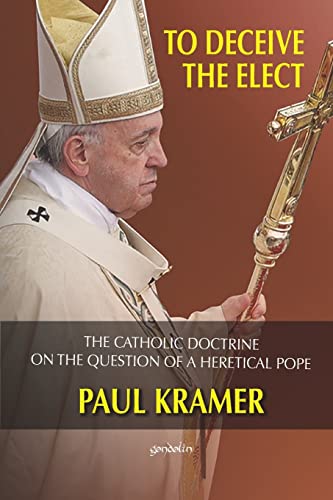
 ABYSSUS ABYSSUM INVOCAT / DEEP CALLS TO DEEP
You must be logged in to post a comment.