December 23, 2021 Why Christmas is Good For America By Don FederMazel Tov to the season to be jolly This article originally appeared on December 8, 2021 in the Washington Times I once interviewed Elyakim Haetzni, then a member of the Knesset, who told me that he always supported higher subsidies for religious education in Israel. I was puzzled. “Elyakim, you said you’re an agnostic. Isn’t that a contradiction?” I asked. “Not at all,” he replied. “Even though I’m not a believer myself, I know that religion makes my country stronger.” That’s how I feel about Christmas. I don’t celebrate the holiday, but I support its public celebration robustly. Christmas is something that brings us closer as a people. This era is marked by relentless assaults on our institutions and traditions. Statues of historical figures as diverse as Stonewall Jackson and Theodore Roosevelt are removed from public display. At sports events, it’s become routine for players to refuse to stand for the Pledge of Allegiance. Students are taught to hate America through critical race theory and other educational indoctrination. The Supreme Court is under attack by partisans who fear it will overturn Roe v. Wade. As a Jew, I have no problem with Christmas trees in parks or nativity scenes in front of city hall, whether or not they’re camouflaged with Santas and snowmen. They are reminders of our religious heritage. That’s one of the things that makes the Left nervous about Christmas. It wants America to be a cosmopolitan land of rootlessness — united by nothing more than our location on the globe and a vague belief in democracy. That’s why it cheers the alien horde surging across our southern border and purging Christmas from the public square. Anything that disunites us is good in its eyes. As much as the Declaration of Independence or Constitution, Christmas unites us as a people. According to a 2017 Pew poll, roughly 90% of Americans celebrate Christmas — probably more than any other holiday, including Thanksgiving and the Fourth of July. In a way, that makes Christmas a national holiday. Christmas has a venerable lineage. Although the custom of the gaily festooned tree only goes back to the 19th century, the gift-giving tradition is said to be inspired by the wise men who journeyed to Bethlehem. I give not because I want something in return but as an expression of love. Besides generosity, one of the holiday’s chief appeals is hopefulness. For North America, Christmas comes during a gloomy season that’s brightened by colorful decorations and colorfully wrapped presents. Optimism is a uniquely American virtue. The settlers came here seeking opportunity. Regardless of their station at birth, America gave them a chance for a fresh start. Like Hanukkah, Christmas urges us to have hope for the future. Even though things look bleak, God will make it turn out right in the end. One of the most popular songs of the season, which came out during the depths of World War II, speaks to that. “Christmas Eve will find me where the love light gleams. I’ll be home for Christmas, if only in my dreams.” With our economy in the doldrums, crime surging and enemies everywhere — like the Star of Bethlehem and the Hanukkah menorah — Christmas points the way to hope. More than anything else that is what I wish for my country. Don Feder is communications director at the Ruth Institute and is a good friend of Bill Donohue.
Posted inUncategorized|Comments Off on CHRISTMAS IS GOOD FOR AMERICA AND ONLY THOSE WHO HATE ALL RELIGIOUS SENTIMENT WOULD ARGUE THAT IT IS NOT!
For two years now, a global coup has been carried out all over the world, planned for some time by an elite group of conspirators enslaved to the interests of international high finance.
This coup was made possible by an emergency pandemic that is based on the premise of a virus that has a mortality rate almost analogous to that of any other seasonal flu virus, on the delegitimization and prohibition of effective treatments, and on the distribution of an experimental gene serum which is obviously ineffective, and which also clearly carries with it the danger of serious and even lethal side effects.
We all know how much the mainstream media has contributed to supporting the insane pandemic narrative, the interests that are at stake, and the goals of these groups of power: reducing the world population, making those who survive chronically ill, and imposing forms of control that violate the fundamental rights and natural liberties of citizens.
And yet, two years after this grotesque farce started, which has claimed more victims than a war and destroyed the social fabric, national economies, and the very foundations of the rule of law, nothing has changed in the policies of Nations and their response to the so-called pandemic.
Last year, when many still had not yet understood the gravity of the looming threat, I was among the first to denounce this coup, and I was promptly singled out as a conspiracy theorist.
Today more and more people are opening their eyes and beginning to understand that the emergency pandemic and the “ecological emergency” are part of a criminal plan hatched by the World Economic Forum, the UN, the WHO, and a galaxy of organizations and foundations that are ideologically characterized as clearly anti-human and — this needs to be said clearly — anti-Christian.
One of the elements that unequivocally confirms the criminal nature of the Great Reset is the perfect synchrony with which all the different Nations are acting, demonstrating the existence of a single script under a single direction.
And it is disconcerting to see how the lack of treatment, the deliberately wrong treatments that have been given in order to cause more deaths, the decision to impose lockdowns and masks, the conspiratorial silence about the adverse effects of the so-called “vaccines” that are in fact gene serums, and the continuous repetition of culpable errors have all been possible thanks to the complicity of those who govern and the institutions.
Political and religious leaders, representatives of the people, scientists and doctors, journalists and those who work in the media have literally betrayed their people, their laws, their Constitutions, and the most basic ethical principles.
The electoral fraud of the 2020 presidential election against President Trump has shown itself to be organic to this global operation, because in order to impose illegitimate restrictions in violation of the principles of law it was necessary to be able to make use of an American President who would support the psycho-pandemic and support its narrative.
The Democratic Party, part of the deep state, is carrying out its task as an accomplice of the system, just as the deep church finds in Bergoglio its own propagandist.
The recent rulings of the Supreme Court and the autonomous action of some American states — where the vaccination obligation has been declared unconstitutional — give us hope that this criminal plan can collapse and that those responsible will be identified and tried: both in America as well as in the whole world.
How was it possible to arrive at such a betrayal? How have we come to be considered enemies by those who govern us, not in support of the common good, but rather to feed a hellish machine of death and slavery?
The answer is now clear: throughout the world, in the name of a perverted concept of freedom, we have progressively erased God from society and laws.
We have denied that there is an eternal and transcendent principle, valid for all men of all times, to which the laws of States must conform.
We have replaced this absolute principle with the arbitrariness of individuals, with the principle that everyone is his own legislator.
In the name of this insane freedom — which is license and libertinage — we have allowed the Law of God and the law of nature to be violated, legitimizing the killing of children in the womb, even up to the very moment of birth; the killing of the sick and the elderly in hospital wards; the destruction of the natural family and of Marriage; we have recognized rights to vice and sin, putting the deviations of individuals before the good of society.
In short, we have subverted the entire moral order that constitutes the indispensable basis of the laws and social life of a people.
Already in the fourth century B.C., Plato wrote these things in his last work the Laws and identified the cause of the Athenian political crisis precisely in the breaking of the divine order — the cosmos — between these eternal principles and human laws.
These natural moral principles of the Greco-Roman world found their fulfillment in Christianity, which built Western civilization by giving them a supernatural impetus.
Christianity is the strongest defense against injustice, the strongest garrison against the oppression of the powerful over the weak, the violent over the peaceful, and the wicked over the good, because Christian morality makes each of us accountable to God and our neighbor for our actions, both as citizens and as rulers.
The Son of God, whose Birth we will celebrate in a few days, became Incarnate in time and in history in order to heal an ancient wound, and to restore by Grace the order broken by disobedience.
His social Kingship was the generating principle of the ordo Christianus that for two centuries now has been fiercely fought against by Freemasonry: because the Revolution it promotes is chaos; it is disorder; it is infernal rebellion against the divine order so as to impose Satan’s tyranny.
Now, as we see what is happening around us, we understand how mendacious were the promises of progress and freedom made by those who destroyed Christian society, and how deceptive was the prospect of a new Tower of Babel, built not only without regard for God but even in direct opposition to Him.
The infernal challenge of the Enemy is repeated over the centuries unchanged, but it is doomed to inexorable failure.
Behind this millennial conspiracy, the adversary is always the same, and the only thing that changes are the particular individuals who cooperate with him.
Dear American brothers and sisters! Dear Patriots! this is a crucial moment for the future of the United States of America and of the whole of humanity.
But the pandemic emergency, the farce of global warming and the green economy, and the economic crisis deliberately induced by the Great Reset with the complicity of the deep state, are all only the consequence of a much more serious problem, and it is essential to understand it in depth if we want to defeat it.
This problem is essentially moral; indeed, it is religious.
We must put God back in the first place not only in our personal lives, but also in the life of our society.
We must restore to Our Lord Jesus Christ the Crown that the Revolution has torn from Him, and in order for this to happen a true and profound conversion of individuals and of society is necessary.
For it is absolutely impossible to hope for the end of this global tyranny if we continue to remove from the Kingdom of Christ the nations that belong to Him and must belong to Him.
For this reason, the movement to overturn Roe v. Wade also acquires a very important meaning, since respect for the sacredness of unborn life must be sanctioned by positive law if it is to be a mirror of the Eternal Law.
You are animated by a yearning for justice, and this is a legitimate and good desire. “Blessed are those who hunger and thirst for righteousness,” says the Lord (Mt 5:6).
But this Justice must be based on the awareness that this is a spiritual battle in which it is necessary to take sides without equivocation and without compromise, holding transcendent and eternal references that even the pagan philosophers glimpsed, and that have found fulfillment in the Revelation of the Son of God, the Divine Master.
My appeal for an Anti-Globalist Alliance — which I renew today — aims precisely to constitute a movement of moral and spiritual rebirth which will inspire the civil, social and political action of those who do not want to be enslaved as slaves to the New World Order.
A movement that at the national and local level will be able to find a way to oppose the Great Reset and that coordinates the denunciation of the coup that is currently in progress.
Because in the awareness of who our adversary is and what his aims and purposes are, we can disrupt the criminal action he intends to pursue and force him to retreat.
In this, the opposition to the pandemic farce and the vaccination obligation must be determined and courageous on the part of each of you.
Yours must therefore be a work of truth, bringing to light the lies and deceptions of the New World Order and their anti-human and antichristic matrix.
And in this it is mainly the laity and all people of good will — each in the professional and civil role he holds — who must coordinate and organize together to make a firm but peaceful resistance, so as not to legitimize its violent repression by those who today hold power.
Be proud of your identity as American patriots and of the Faith that must animate your life.
Do not allow anyone to make you feel inferior just because you love your homeland, because you are honest at work, because you want to protect your family and raise your children with healthy values, because you respect the elderly, because you protect life from conception to its natural end.
Do not be intimidated or seduced by those who propagate a dystopian world in which a faceless power imposes on you contempt for the Law of God, presents sin and vice as licit and desirable, despises righteousness and Morality, destroys the natural family and promotes the worst perversions, plans the death of defenseless and weak creatures, and exploits humanity for its own profit or to preserve power.
Be worthy heirs of the great Archbishop Fulton Sheen, and do not follow those of your Pastors who have betrayed the mandate they have received from Our Lord, who impose iniquitous orders on you or who remain silent before the evidence of an unheard of crime against God and humanity.
May this Holy Christmas illuminate your minds and inflame your hearts before the Infant King who lays in the manger.
And just as the choirs of the Angels and the homage of the Magi united with the simple adoration of the Shepherds, so also today your commitment to the moral rebirth of the United States of America — one Nation under God —will have the blessing of Our Lord and will gather those who govern you around you. Amen.
May God bless you, and may God bless the United States of America.
+ Carlo Maria Viganò, Archbishop
18 December 2021
Posted inUncategorized|Comments Off on ARCHBISHOP VIGANO ADDRESSES A LETTER TO THE CITIZENS OF THE United States
as World Marks 30th Anniversary of Disintegration of USSR
By: CONRAD BLACK
The New York Sun
December 19, 2021
December 26 will mark the 30th anniversary of the disintegration of the Union of Soviet Socialist Republics, and with it, the collapse of international communism. Political scientist Francis Fukuyama spoke for many when he said that we were “at the end of history” and that there would be no political evolution beyond what appeared to be the total triumph of liberal democracy.
This can be seen now as a hopeful view inflated by triumphalism. China has risen to take the place of the Soviet Union, which itself replaced the Nazi German Third Reich as the principal rival to western democracy. One could easily imagine, looking at the feeble and inadequate regime now in office in Washington and imagine that the West, haltingly led by the United States and infested by appeasers and defeatists, was once again under severe challenge by a transoceanic, totalitarian power.
Showing unsuspected powers of improvisation, the international left that was completely defeated in the Cold War vanished into the undergrowth, but almost spontaneously returned as champions of environmentalism. If capitalism could not be defeated by a competitive economic system, Marxism, it shortly found itself in mortal combat with the old left now in alliance with the authentic, if often tedious, conservationists in a holy assault on capitalism as an environmental threat to the future of the planet itself.
We appear to be in a more dangerous confrontation with China and other countries conniving with it — especially Russia, Iran, and North Korea — than we really are. China is aggressively posturing and claiming international waters as its own and threatening to accelerate reunification with Taiwan. Russia, having lost nearly half its population in the fall of the Soviet Union, is openly threatening to annex at least the predominantly Russian parts of Ukraine.
The enfeeblement of the American administration invites the inference that America is in irreversible decline. In fact, while China has enjoyed astonishing success as a development story, bootstrapping itself up from the socioeconomic depths, its institutions are untrustworthy, its government still maintains a high degree of control over the economy and the country’s largest businesses, and it is run by an odious and corrupt dictatorship. It is a country with few natural resources and an aging population due to its long-standing previous one-child policy.
All this obscures the fact that the Cold War and the dissolution of the U.S.S.R. were the greatest and most bloodless strategic victories in the history of the world. The greatest consequence of them is the triumph of capitalism in the world, in particular in China and Russia. It is the best system because it is the only one that is aligned with the almost universal human ambition to have more.
Because it incentivizes competition, it inevitably leads to an overheated and potentially self-destructive economic frenzy, but since the Second World War, capitalism has demonstrated its ability to lift countries out of poverty and make advanced economies more prosperous, including formerly communist China, formerly fascist Spain, almost all of central and western Europe, South Korea, Israel, Chile, Singapore and much of Latin America. India is making unprecedented progress.
This is the triumph of capitalism: the peace dividend at the end of the Cold War and the demonstration of the absolute superiority of the American over the Soviet system as the Americans outdistanced the Soviet Union militarily while spending far less on military matters. The triumph of capitalism was earned, even if pure capitalism is not for everybody.
The waffling generated by a sharp change in prevailing currents of public policy in the United States should not be mistaken for a reversal in the fortunes of capitalism, whose benefits are sweeping over almost all the world.
The United States is in the midst of a complicated process of renovation. Six years ago, Donald Trump was practically the only prominent American who saw how disillusioned people were over being mired in fruitless Middle Eastern wars, seeing the steady exportation of American jobs to cheap labor markets and the importation of the resulting unemployment, and the fact that those in the middle class had seen virtually no increase in the purchasing power of their incomes for decades.
Mr. Trump led an assault on the complacent bipartisan governing political class. Despite being harassed by false allegations of colluding with Russia to rig the 2016 election and a spurious impeachment trial over an unexceptionable conversation with the president of Ukraine, he effectively eliminated unemployment, increased domestic oil production while reducing foreign imports, and cracked down on illegal immigration.
Only the coronavirus gave the Democrats the opportunity they needed to terrorize the population and deprive Trump of what appeared to be his probable re-election.
The Biden administration has made an almost complete shambles of every policy area: immigration, inflation, Covid, crime, and the unprecedented and shameful debacle in Afghanistan. It is increasingly obvious that either Mr. Trump or a candidate supported by him and endorsing most of his policies will be elected in 2024, and the renovation of America will resume.
There will be a new and more purposeful political elite and a powerful backlash against woke anti-Americanism in the schools and universities, the self-serving hypocrisy of limousine liberals on Wall Street and in Silicon Valley, and the narcissistic hypocrisy of Hollywood and Big Sport. In these circumstances, the status of the United States as the world’s most important and influential country will be re-established.
China is fundamentally not remotely as strong a country like the United States. Its institutions are not credible and are universally mistrusted; it has the political instability of dictatorships where succession is always uncertain. Russia has a smaller GDP than Canada and is desperately trying to regain shards of its former empire after the sudden secession of nearly half the Soviet population.
The West can accommodate Russian ambitions up to a point. The key is to avoid driving a truncated and demoralized Russia into the arms of China and effectively giving the Chinese the right to develop the vast territory of Russian Siberia. As long as this can be avoided, the resumption of American national renovation will re-establish the unambiguous superiority of American influence in the world, and particularly its economic model. Capitalism is imperfect, but it is invincible, as was demonstrated 30 years ago.
Posted inUncategorized|Comments Off on Capitalism is imperfect, but it is invincible, as was demonstrated 30 years ago.
Archbishop Arthur Roche, 73, from Great Britain, successor since May 2021 of Cardinal Robert Sarah as the head (Prefect) of the Vatican office for the liturgy, the Congregation for Divine Worship and the Discipline of the Sacraments (CDW), making him the highest-ranking British official in the Roman Curia. This morning in Rome — one week before Christmas — he released a series of generally restrictive decisions in regard to the old liturgy of the Catholic Church (link) “At the solemn closing of the second session of the [Vatican II] Council (4 December 1963), St Paul VI said (n. 11): ‘The difficult, complex debates have had rich results. They have brought one topic to a conclusion, the sacred liturgy. Treated before all others, in a sense it has priority over all others for its intrinsic dignity and importance to the life of the Church and today we will solemnly promulgate the document on the liturgy. Our spirit, therefore, exults with true joy, for in the way things have gone we note respect for a right scale of values and duties. God must hold first place; prayer to him is our first duty. The liturgy is the first source of the divine communion in which God shares His own life with us. It is also the first school of the spiritual life.‘”—Archbishop Arthur Roche, in a “Responsa ad dubia” (“Response to doubts expressed,” released today, December 18, regarding a number provisions of the July 16, 2021, decree Traditionis custodes (“Of Tradition the Protectors”) of Pope Francis, which called for restriuctions on the celebration of the old liturgy. Note, however, that this citation of Paul VI by Roche, which is introduced to give the support of the canonized Pope Paul to the work of the liturgical reform which led to the “new Mass,” is a citation from December, 1963, almost six years before the promulgation of the “new” liturgy in 1969. Why os this important? Because the fundamental issue, which has been much discussed ever since, is not what the Council itself said, but whether and to what extent what the Council said was faithfully followed during those six years of rewriting the liturgy (1964-1969), and so whether what was produced (the “Novus Ordo” Mass) was actually what was envisioned and called for by the bishops of the Council when they promulgated the decree on the sacred liturgy. For example, the Council decree calls for the preservation of Latin in the liturgy (at least in some parts). Has that been followed? We all know it has not. So, St. Paul VI rightly says that the topic of the liturgy was “brought to a conclusion” during 1962 and 1963, and Archbishop Roche has a right to cite this statement. But this citation begs the question of whether the work of the liturgical commission from 1964-1969 was carried out in such a way as to reflect full fidelity to what the Council decreed. Whether this was so, whether the work of the Commission was faithful or unfaithful to the Council, and to the Council Fathers, has remained a matter of legitimate discussion among thoughtful Catholics until the present day, and should remain so ”I am of the opinion, to be sure, that the old rite should be granted much more generously to all those who desire it. It’s impossible to see what could be dangerous or unacceptable about that. A community is calling its very being into question when it suddenly declares that what until now was its holiest and highest possession is strictly forbidden and when it makes the longing for it seem downright indecent.”—Cardinal Joseph Ratzinger (later Pope Benedict XVI), Salt of the Earth, 1997 (link) ”In reality what happened was that an unprecedented clericalization came on the scene. Now the priest — the ‘presider,’ as they now prefer to call him — becomes the real point of reference for the whole Liturgy. Everything depends on him. We have to see him, to respond to him, to be involved in what he is doing. His creativity sustains the whole thing… Not surprisingly, people try to reduce this newly created role by assigning all kinds of liturgical functions to different individuals and entrusting the ‘creative’ planning of the Liturgy to groups of people who like to, and are supposed to, ‘make a contribution of their own.’ Less and less is God in the picture.” —Cardinal Joseph Ratzinger, Spirit of the Liturgy, Ignatius Press, 2000 “For fostering a true consciousness in liturgical matters, it is also important that the proscription against the form of liturgy in valid use up to 1970 [the older Latin Mass] should be lifted. Anyone who nowadays advocates the continuing existence of this liturgy or takes part in it is treated like a leper; all tolerance ends here. There has never been anything like this in history; in doing this we are despising and proscribing the Church’s whole past. How can one trust her at present if things are that way?”—Cardinal Joseph Ratzinger, in the same work, which was published in the year 2000 (underlining added) *** Letter #181, 2021, Saturday, December 18: Roche A day of a certain sadness, a few days before Christmas. Today in Rome, a week before the great holy day commemorating the Lord’s incarnation, which began to unwind and overcome the frustration of all human life under the weight and sorrow of the fall of Adam and Eve, a document was released which further tightens already strict restrictions on the “old Mass” and “old sacraments” (for the wording of each of the sacraments was also revised in the post-conciliar reform of the 1960s). Here below is: 1) an article by Vaticanist Hannah Brockhaus of Catholic News Agency, then 2) the actual text of the document released by the Vatican, then 3) an interpretation of the document from the traditionalist website, Rorate Caeli. All best wishes for Advent and Christmas.—RM *** The Vatican of today “contra Benedictum” (“against Benedict”) The sadness, even during the joy of Advent, comes from a sense that the valuable and true thoughts and insights of a venerable old man — Pope Benedict — are being treated in a cavalier and superficial way. The sadness, even during the joy of Advent, is due to a perception that, in the current debate over the liturgy, the present authorities in Rome, have made up their minds in direct contradiction to many of the insights and counsels of Emeritus Pope Benedict XVI (who is still alive). The sadness, even during the joy of Advent, is due to the sense that the profound convictions — the religious consciences — of many tens of thousands are being cruelly mischaracterized and nonchalantly disregarded by a group of powerful men who could be and ought to be more charitable — as Pope Benedict was, and is. In Rome today, some truths that need to be considered, truths that were considered and reflected upon by Pope Benedict XVIwhen he published his own “compromise” decree in 2007, Summorum pontificum, are not being considered. I do recognize the danger of making any liturgy — which is a ceremony of thanksgiving to God for gifts and graces given, and of worship of God for His intrinsic goodness and holiness — into a sort of “externalized” and “externalizing” cold and dark “cage of rigid forms” inside of which worshippers may slip, regrettably, into formalism, perhaps credulity, perhaps even forms of superstition. But… but… it must be recognized — as Pope Benedict recognized, after years of thought — that there is also the danger of horizontalizing and secularizing the liturgy, of diminishing the degree of reverence for the Almighty, All-Holy God. Benedict wrote, in his explanatory letter accompanying Summorum Pontificum in 2007, 14 years ago: “In the history of the liturgy there is growth and progress, but no rupture. What earlier generations held as sacred, remains sacred and great for us too, and it cannot be all of a sudden entirely forbidden or even considered harmful.” (link, italic and underline emphasis both added) The experience of 50 and more years (1970-2021) has now shown us the possibility of both of these dangers becoming real: too much rigorism, or too much laxism. Let us pray for wisdom and charity in these times, that these wounds may find healing, through the Lord’s mercy. ±±±±±±±±±±±±±±±±±±± Traditionis custodes: Vatican further tightens restrictions on Traditional Latin Mass By Hannah Brockhaus Catholic News Agency, Vatican City, Dec 18, 2021 / 04:36 am The Vatican issued Saturday further strict guidelines on the celebration of the Traditional Latin Mass, in response to questions about the motu proprio Traditionis custodes. The explanatory document, which bans confirmations and ordinations according to pre-Vatican II Roman Missals, was published Dec. 18 with Pope Francis’ approval, the Vatican’s liturgy office said. Traditionis custodes is a July 16 motu proprio in which Pope Francis placed sweeping restrictions on the celebration of Mass using the 1962 Roman Missal, known variously as the extraordinary form of the Roman Rite, the Tridentine Mass, and the Traditional Latin Mass. (You can read a further explanation of the document here.) His predecessor Benedict XVI had issued a 2007 apostolic letter called Summorum Pontificum, which acknowledged the right of all priests to say Mass using the Roman Missal of 1962, which is in Latin. The Congregation for Divine Worship and the Discipline of the Sacraments, the Vatican office responsible for matters related to the sacred liturgy, said it had received “several requests for clarification” on the correct application of Traditionis custodes. The congregation published Dec. 18 a “responsa ad dubia” (“answers to doubts”), with one-word replies — either “negative” or “afffirmative” — to 11 specific questions, followed by brief explanations. Archbishop Arthur Roche, prefect of the liturgy congregation, also wrote a letter to the presidents of bishops’ conferences, in which he said that the primary aim of the new restrictions was to foster ecclesial communion. Ecclesial communion, he said, is expressed by recognizing that the liturgical books promulgated in conformity with the decrees of the Second Vatican Council are “the unique expression” of the prayer of the Roman Rite. “This is the direction in which we wish to move, and this is the meaning of the responses we publish here,” Roche said. In one of the responses, the Divine Worship congregation said that according to Traditionis custodes, sacraments cannot be celebrated using the liturgical books Rituale Romanum and the Pontificale Romanum promulgated prior to the Vatican II reforms. The Pontificale Romanum contains the rites and ceremonies usually performed by bishops and the Rituale Romanum is one of the official ritual books used by a priest or deacon for rites not found in the Roman Missal, which is used for Mass. The Vatican congregation clarified that a diocesan bishop can authorize the use of the 1952 edition of the Rituale Romanum, but not the Pontificale Romanum, “only to those canonically erected personal parishes which, according to the provisions of the Motu Proprio Traditionis custodes, celebrate using the Missale Romanum [Roman Missal] of 1962.” This restriction is intended “to re-establish in the whole Church of the Roman Rite a single and identical prayer expressing its unity,” the liturgy office said. “In implementing these provisions, care should be taken to accompany all those rooted in the previous form of celebration towards a full understanding of the value of the celebration in the ritual form given to us by the reform of the Second Vatican Council,” the document said. “This should take place through an appropriate formation that makes it possible to discover how the reformed liturgy is the witness to an unchanged faith, the expression of a renewed ecclesiology, and the primary source of spirituality for Christian life.” One of the changes Pope Francis’ motu proprio introduced to the Traditional Latin Mass was the obligation for it to be celebrated only in non-parish churches, oratories, or chapels. The Vatican said Saturday that bishops can ask the Congregation for Divine Worship for a dispensation from this obligation “if it is established that it is impossible to use another church, oratory or chapel.” The congregation went on to say that if the dispensation is given for a community to celebrate the Traditional Latin Mass in a parish, “such a celebration should not be included in the parish Mass schedule, since it is attended only by the faithful who are members of the said group” and “it should not be held at the same time as the pastoral activities of the parish community.” “It is to be understood that when another venue becomes available, this permission will be withdrawn,” the liturgy office said. The note also explained that the reason for the provision that the Traditional Latin Mass not be celebrated in parish churches is “intended to affirm that the celebration of the Eucharist according to the previous rite, being a concession limited to these groups, is not part of the ordinary life of the parish community.” “There is no intention in these provisions to marginalize the faithful who are rooted in the previous form of celebration: they are only meant to remind them that this is a concession to provide for their good (in view of the common use of the one lex orandi[law of prayer] of the Roman Rite) and not an opportunity to promote the previous rite,” it added. Another response emphasized that at Traditional Latin Masses, “it possible to use the full text of the Bible for the readings.” The document noted that “Traditionis custodes states that the readings are to be proclaimed in the vernacular language, using translations of Sacred Scripture for liturgical use, approved by the respective episcopal conferences.” It added: “No vernacular lectionaries may be published that reproduce the cycle of readings of the previous rite.” In his letter to the presidents of bishops’ conferences, Roche said that a continuous formation regarded the liturgy is needed for priests and lay Catholics. “As pastors we must not lend ourselves to sterile polemics, capable only of creating division, in which the ritual itself is often exploited by ideological viewpoints,” he said. “Rather, we are all called to rediscover the value of the liturgical reform by preserving the truth and beauty of the Rite that it has given us,” he said. “For this to happen, we are aware that a renewed and continuous liturgical formation is necessary both for priests and for the lay faithful.” The new guidelines also explained certain regulations for priests who celebrate Traditional Latin Masses and ministers who assist them. The diocesan bishop must seek the authorization of the Vatican to permit priests ordained after the publication of Traditionis custodes to celebrate the Mass according to the 1962 Roman Missal. Deacons and other instituted ministries participating in the celebration of the Traditional Latin Mass need to have the permission of their bishop. The Vatican said it wanted to ensure that priests who wish to celebrate the Traditional Latin Mass “share the desire of the Holy Father” that the Vatican II reform of the liturgy is recognized “as the unique expression of the lex orandi of the Roman Rite.” Under the new restrictions, the Divine Worship congregation also banned priests who offer the Traditional Latin Mass from “bination,” or celebrating Mass twice on the same day. It explained that priests granted permission to offer the Traditional Latin Mass may not offer more than one Old Rite Mass each day, or offer both the older Mass and the ordinary form Mass on the same day. “It is not possible to grant bination on the grounds that there is no ‘just cause’ or ‘pastoral necessity’ as required by canon 905 §2: the right of the faithful to the celebration of the Eucharist is in no way denied, since they are offered the possibility of participating in the Eucharist in its current ritual form,” the document stated. The congregation also offered guidance for bishops on how to respond to priests who do not accept the validity of the act of concelebration of the Mass — that is, when two or more priests or bishops celebrate Mass together — in particular, priests who refuse to concelebrate the Chrism Mass with their bishop. According to the Vatican, these priests should have their permission to celebrate the Traditional Latin Mass revoked. The congregation went on to say that before permission is removed, however, the bishop should “establish a fraternal dialogue” with the priest and “accompany him towards an understanding of the value of concelebration.” “The explicit refusal not to take part in concelebration, particularly at the Chrism Mass, seems to express a lack of acceptance of the liturgical reform and a lack of ecclesial communion with the bishop,” the note said. *** Here is the official text of the document released today. It opens with an explanatory introduction by Archbishop Roche, followed by the text containing the various questions (“dubia“) raised, with each answer given, and explained: Congregation for Divine Worship and the Discipline of the Sacraments RESPONSA AD DUBIA on certain provisions of the Apostolic Letter TRADITIONIS CUSTODES issued “Motu Proprio” by the Supreme Pontiff FRANCIS TO THE PRESIDENTS OF THE CONFERENCES OF BISHOPS Your Eminence / Your Excellency, Following the publication by Pope Francis of the Apostolic Letter “Motu Proprio data” Traditionis custodes on the use of the liturgical books from prior to the reform of the Second Vatican Council, the Congregation for Divine Worship and the Discipline of the Sacraments, which exercises the authority of the Apostolic See for material within its competence (cf. Traditionis custodes, n. 7), received several requests for clarification on its correct application. Some questions have been raised from several quarters and with greater frequency. Therefore, after having carefully considered them, having informed the Holy Father and having received his assent, the responses to the most recurrent questions are published herewith. The text of the Motu Proprio and the accompanying Letter to the Bishops of the whole world clearly express the reasons for the decisions taken by Pope Francis. The first aim is to continue “in the constant search for ecclesial communion” (Traditionis custodes, Preamble) which is expressed by recognising in the liturgical books promulgated by the Popes Saint Paul VI and Saint John Paul II, in conformity with the decrees of the Second Vatican Council, the unique expression of the lex orandi of the Roman Rite (cf. Traditionis custodes, n. 1). This is the direction in which we wish to move, and this is the meaning of the responses we publish here. Every prescribed norm has always the sole purpose of preserving the gift of ecclesial communion by walking together, with conviction of mind and heart, in the direction indicated by the Holy Father. It is sad to see how the deepest bond of unity, the sharing in the one Bread broken which is His Body offered so that all may be one (cf. Jhn 17:21), becomes a cause for division. It is the duty of the Bishops, cum Petro et sub Petro, to safeguard communion, which, as the Apostle Paul reminds us (cf. 1 Cor 11:17-34), is a necessary condition for being able to participate at the Eucharistic table. One fact is undeniable: The Council Fathers perceived the urgent need for a reform so that the truth of the faith as celebrated might appear ever more in all its beauty, and the People of God might grow in full, active, conscious participation in the liturgical celebration (cf. Sacrosanctum Concilium n. 14), which is the present moment in the history of salvation, the memorial of the Lord’s Passover, our one and only hope. As pastors we must not lend ourselves to sterile polemics, capable only of creating division, in which the ritual itself is often exploited by ideological viewpoints. Rather, we are all called to rediscover the value of the liturgical reform by preserving the truth and beauty of the Rite that it has given us. For this to happen, we are aware that a renewed and continuous liturgical formation is necessary both for Priests and for the lay faithful. At the solemn closing of the second session of the Council (4 December 1963), St Paul VI said (n. 11): “The difficult, complex debates have had rich results. They have brought one topic to a conclusion, the sacred liturgy. Treated before all others, in a sense it has priority over all others for its intrinsic dignity and importance to the life of the Church and today we will solemnly promulgate the document on the liturgy. Our spirit, therefore, exults with true joy, for in the way things have gone we note respect for a right scale of values and duties. God must hold first place; prayer to him is our first duty. The liturgy is the first source of the divine communion in which God shares his own life with us. It is also the first school of the spiritual life. The liturgy is the first gift we must make to the Christian people united to us by faith and the fervour of their prayers. It is also a primary invitation to the human race, so that all may lift their now mute voices in blessed and genuine prayer and thus may experience that indescribable, regenerative power to be found when they join us in proclaiming the praises of God and the hopes of the human heart through Christ and the Holy Spirit”. When Pope Francis (Address to the participants in the 68th National Liturgical Week, Rome, 24 August 2017) reminds us that “after this magisterium, after this long journey, We can affirm with certainty and with magisterial authority that the liturgical reform is irreversible” he wants to point us to the only direction in which we are joyfully called to turn our commitment as pastors. Let us entrust our service “to maintain the unity of the Spirit in the bond of peace” (Eph 4,3), to Mary, Mother of the Church.From the offices of the Congregation for Divine Worship and the Discipline of the Sacraments, 4 December 2021, on the 58thanniversary of the promulgation of the Constitution on the Scared Liturgy Sacrosanctum Concilium. ✠ Arthur Roche Prefect The Supreme Pontiff Francis, in the course of an Audience granted to the Prefect of this Congregation on 18 November 2021, was informed of and gave his consent to the publication of these RESPONSA AD DUBIA with attached EXPLANATORY NOTES. *** [Here follow the questions and answers.] Traditionis custodes Art. 3. Episcopus, in dioecesibus ubi adhuc unus vel plures coetus celebrant secundum Missale antecedens instaurationem anni 1970: […] § 2. statuat unum vel plures locos ubi fideles, qui his coetibus adhaerent, convenire possint ad Eucharistiam celebrandam (nec autem in ecclesiis paroecialibus nec novas paroecias personales erigens); To the proposed question: When it is not possible to find a church, oratory or chapel which is available to accommodate the faithful who celebrate using the Missale Romanum (Editio typica 1962), can the diocesan Bishop ask the Congregation for Divine Worship and the Discipline of the Sacraments for a dispensation from the provision of the Motu Proprio Traditionis custodes (Art. 3 § 2), and thus allow such a celebration in the parish church? The answer is: Affirmative. Explanatory note. The Motu Proprio Traditionis custodes in art. 3 § 2 requests that the Bishop, in dioceses where up to now there has been the presence of one or more groups celebrating according to the Missal prior to the reform of 1970, “designate one or more locations where the faithful adherents of these groups may gather for the Eucharistic celebration (not however in the parochial churches and without the erection of new personal parishes)”. The exclusion of the parish church is intended to affirm that the celebration of the Eucharist according to the previous rite, being a concession limited to these groups, is not part of the ordinary life of the parish community. This Congregation, exercising the authority of the Holy See in matters within its competence (cf. Traditionis custodes, n. 7), can grant, at the request of the diocesan Bishop, that the parish church be used to celebrate according to the Missale Romanum of 1962 only if it is established that it is impossible to use another church, oratory or chapel. The assessment of this impossibility must be made with the utmost care. Moreover, such a celebration should not be included in the parish Mass schedule, since it is attended only by the faithful who are members of the said group. Finally, it should not be held at the same time as the pastoral activities of the parish community. It is to be understood that when another venue becomes available, this permission will be withdrawn. There is no intention in these provisions to marginalise the faithful who are rooted in the previous form of celebration: they are only meant to remind them that this is a concession to provide for their good (in view of the common use of the one lex orandi of the Roman Rite) and not an opportunity to promote the previous rite. Traditionis custodes Art. 1. Libri liturgici a sanctis Pontificibus Paulo VI et Ioanne Paulo II promulgati, iuxta decreta Concilii Vaticani II, unica expressio “legis orandi” Ritus Romani sunt. Art. 8. Normae, dispositiones, concessiones et consuetudines antecedentes, quae conformes non sint cum harum Litterarum Apostolicarum Motu Proprio datarum praescriptis, abrogantur. To the proposed question: Is it possible, according to the provisions of the Motu Proprio Traditionis Custodes, to celebrate the sacraments with the Rituale Romanum and the Pontificale Romanum which predate the liturgical reform of the Second Vatican Council? The answer is: Negative. The diocesan Bishop is authorised to grant permission to use only the Rituale Romanum (last editio typica 1952) and not the Pontificale Romanum which predate the liturgical reform of the Second Vatican Council. He may grant this permission only to those canonically erected personal parishes which, according to the provisions of the Motu Proprio Traditionis custodes, celebrate using the Missale Romanum of 1962. Explanatory note. The Motu Proprio Traditionis custodes intends to re-establish in the whole Church of the Roman Rite a single and identical prayer expressing its unity, according to the liturgical books promulgated by the Popes Saint Paul VI and Saint John Paul II, in conformity with the decrees of the Second Vatican Council and in line with the tradition of the Church. The diocesan Bishop, as the moderator, promoter and guardian of all liturgical life, must work to ensure that his diocese returns to a unitary form of celebration (cf. Pope Francis, Letter to the Bishops of the whole world that accompanies the Apostolic Letter Motu Proprio data Traditionis custodes). This Congregation, exercising the authority of the Holy See in matters within its competence (cf. Traditionis custodes, n. 7), affirms that, in order to make progress in the direction indicated by the Motu Proprio, it should not grant permission to use the Rituale Romanum and the Pontificale Romanum which predate the liturgical reform, these are liturgical books which, like all previous norms, instructions, concessions and customs, have been abrogated (cf. Traditionis Custodes, n. 8). After discernment the diocesan Bishop is authorised to grant permission to use only the Rituale Romanum (last editio typica1952) and not the Pontificale Romanum which predate the liturgical reform of the Second Vatican Council. This permission is to be granted only to canonically erected personal parishes which, according to the provisions of the Motu Proprio Traditionis custodes, celebrate with the Missale Romanum of 1962. It should be remembered that the formula for the Sacrament of Confirmation was changed for the entire Latin Church by Saint Paul VI with the Apostolic Constitution Divinæ consortium naturæ (15 August 1971). This provision is intended to underline the need to clearly affirm the direction indicated by the Motu Proprio which sees in the liturgical books promulgated by the Saints Pope Paul VI and Pope John Paul II, in conformity with the decrees of the Second Vatican Council, the unique expression of the lex orandi of the Roman Rite (cf. Traditionis custodes, n. 1). In implementing these provisions, care should be taken to accompany all those rooted in the previous form of celebration towards a full understanding of the value of the celebration in the ritual form given to us by the reform of the Second Vatican Council. This should take place through an appropriate formation that makes it possible to discover how the reformed liturgy is the witness to an unchanged faith, the expression of a renewed ecclesiology, and the primary source of spirituality for Christian life. Traditionis custodes Art. 3. Episcopus, in dioecesibus ubi adhuc unus vel plures coetus celebrant secundum Missale antecedens instaurationem anni 1970: § 1. certior fiat coetus illos auctoritatem ac legitimam naturam instaurationis liturgicae, normarum Concilii Vaticani II Magisteriique Summorum Pontificum non excludere; To the proposed question: If a Priest who has been granted the use of the Missale Romanum of 1962 does not recognise the validity and legitimacy of concelebration – refusing to concelebrate, in particular, at the Chrism Mass – can he continue to benefit from this concession? The answer is: Negative. However, before revoking the concession to use the Missale Romanum of 1962, the Bishop should take care to establish a fraternal dialogue with the Priest, to ascertain that this attitude does not exclude the validity and legitimacy of the liturgical reform, the teaching of the Second Vatican Council and the Magisterium of the Supreme Pontiffs, and to accompany him towards an understanding of the value of concelebration, particularly at the Chrism Mass. Explanatory note. Art. 3 § 1 of the Motu Proprio Traditionis custodes requires the diocesan Bishop to ascertain that the groups requesting to celebrate with the Missale Romanum of 1962 “do not deny the validity and the legitimacy of the liturgical reform, dictated by Vatican Council II and the Magisterium of the Supreme Pontiffs”. St Paul forcefully reminds the community of Corinth to live in unity as a necessary condition to be able to participate at the Eucharistic table (cf. 1 Cor 11,17-34). In the Letter sent to the Bishops of the whole world to accompany the text of the Motu Proprio Traditionis custodes, the Holy Father says: “Because ‘liturgical celebrations are not private actions, but celebrations of the Church, which is the sacrament of unity’ (cf. Sacrosanctum Concilium, n. 26), they must be carried out in communion with the Church. Vatican Council II, while it reaffirmed the external bonds of incorporation in the Church — the profession of faith, the sacraments, of communion — affirmed with St. Augustine that to remain in the Church not only ‘with the body’ but also ‘with the heart’ is a condition for salvation (cf. Lumen Gentium, n. 14)”. The explicit refusal not to take part in concelebration, particularly at the Chrism Mass, seems to express a lack of acceptance of the liturgical reform and a lack of ecclesial communion with the Bishop, both of which are necessary requirements in order to benefit from the concession to celebrate with the Missale Romanum of 1962. However, before revoking the concession to use the Missale Romanum of 1962, the Bishop should offer the Priest the necessary time for a sincere discussion on the deeper motivations that lead him not to recognise the value of concelebration, in particular in the Mass presided over by the Bishop. He should invite him to express, in the eloquent gesture of concelebration, that ecclesial communion which is a necessary condition for being able to participate at the table of the Eucharistic sacrifice. Traditionis custodes Art. 3. Episcopus, in dioecesibus ubi adhuc unus vel plures coetus celebrant secundum Missale antecedens instaurationem anni 1970: […] § 3. constituat, in loco statuto, dies quibus celebrationes eucharisticae secundum Missale Romanum a sancto Ioanne XXIII anno 1962 promulgatum permittuntur. His in celebrationibus, lectiones proclamentur lingua vernacula, adhibitis Sacrae Scripturae translationibus ad usum liturgicum ab unaquaque Conferentia Episcoporum approbatis; To the proposed question: In Eucharistic celebrations using the Missale Romanum of 1962, is it possible to use the full text of the Bible for the readings, choosing the pericopes indicated in the Missal?? The answer is: Affirmative. Explanatory note. Art. 3 § 3 of the Motu Proprio Traditionis custodes states that the readings are to be proclaimed in the vernacular language, using translations of Sacred Scripture for liturgical use, approved by the respective Episcopal Conferences. Since the texts of the readings are contained in the Missal itself, and therefore there is no separate Lectionary, and in order to observe the provisions of the Motu Proprio, one must necessarily resort to the translation of the Bible approved by the individual Bishops’ Conferences for liturgical use, choosing the pericopes indicated in the Missale Romanum of 1962. No vernacular lectionaries may be published that reproduce the cycle of readings of the previous rite. It should be remembered that the present Lectionary is one of the most precious fruits of the liturgical reform of the Second Vatican Council. The publication of the Lectionary, in addition to overcoming the “plenary” form of the Missale Romanum of 1962 and returning to the ancient tradition of individual books corresponding to individual ministries, fulfils the wish of Sacrosanctum Concilium, n. 51: “The treasures of the Bible are to be opened up more lavishly, so that richer fare may be provided for the faithful at the table of God’s word. In this way a more representative portion of the holy scriptures will be read to the people in the course of a prescribed number of years”. Traditionis custodes Art. 4. Presbyteri ordinati post has Litteras Apostolicas Motu Proprio datas promulgatas, celebrare volentes iuxta Missale Romanum anno 1962 editum, petitionem formalem Episcopo dioecesano mittere debent, qui, ante concessionem, a Sede Apostolica licentiam rogabit. To the proposed question: Does the diocesan Bishop have to be authorised by the Apostolic See to allow priests ordained after the publication of the Motu Proprio Traditionis custodes to celebrate with the Missale Romanum of 1962 (cf. Traditionis custodies, n. 4)? The answer is: Affirmative. Explanatory note. Article 4 of the Latin text (which is the official text to be referenced) reads as follows: «Presbyteri ordinati post has Litteras Apostolicas Motu Proprio datas promulgatas, celebrare volentes iuxta Missale Romanum anno 1962 editum, petitionem formalem Episcopo dioecesano mittere debent, qui, ante concessionem, a Sede Apostolica licentiam rogabit». This is not merely a consultative opinion, but a necessary authorisation given to the diocesan Bishop by the Congregation for Divine Worship and the Discipline of the Sacraments, which exercises the authority of the Holy See over matters within its competence. (cf. Traditionis custodes, n.7). Only after receiving this permission will the diocesan Bishop be able to authorise Priests ordained after the publication of the Motu Proprio (16 July 2021) to celebrate with the Missale Romanum of 1962. This rule is intended to assist the diocesan Bishop in evaluating such a request: his discernment will be duly taken into account by the Congregation for Divine Worship and the Discipline of the Sacraments. The Motu Proprio clearly expresses the desire that what is contained in the liturgical books promulgated by Popes Saint Paul VI and Saint John Paul II, in conformity with the decrees of the Second Vatican Council, be recognised as the unique expression of the lex orandi of the Roman Rite: it is therefore absolutely essential that Priests ordained after the publication of the Motu Proprio share this desire of the Holy Father. All seminary formators, seeking to walk with solicitude in the direction indicated by Pope Francis, are encouraged to accompany future Deacons and Priests to an understanding and experience of the richness of the liturgical reform called for by the Second Vatican Council. This reform has enhanced every element of the Roman Rite and has fostered – as hoped for by the Council Fathers – the full, conscious and active participation of the entire People of God in the liturgy (cf. Sacrosanctum Concilium no. 14), the primary source of authentic Christian spirituality. Traditionis custodes Art. 5. Presbyteri, qui iam secundum Missale Romanum anno 1962 editum celebrant, ab Episcopo dioecesano licentiam rogabunt ad hanc facultatem servandam. To the proposed question: Can the faculty to celebrate using the Missale Romanum of 1962 be granted ad tempus? The answer is: Affirmative. Explanatory note. The possibility of granting the use of the Missale Romanum of 1962 for a defined period of time – the duration of which the diocesan Bishop will consider appropriate – is not only possible but also recommended: the end of the defined period offers the possibility of ascertaining that everything is in harmony with the direction established by the Motu Proprio. The outcome of this assessment can provide grounds for prolonging or suspending the permission. To the proposed question: Does the faculty granted by the diocesan Bishop to celebrate using the Missale Romanum of 1962 only apply to the territory of his own diocese? The answer is: Affirmative. To the proposed question: If the authorised Priest is absent or unable to attend, must the person replacing him also have formal authorisation? The answer is: Affirmative. To the proposed question: Do Deacons and instituted ministers participating in celebrations using the Missale Romanum of 1962 have to be authorised by the diocesan Bishop? The answer is: Affermative. To the proposed question: Can a Priest who is authorised to celebrate with the Missale Romanum of 1962 and who, because of his office (Parish Priest, chaplain, etc.), also celebrates on weekdays with the Missale Romanum of the reform of the Second Vatican Council, binate using the Missale Romanum of 1962? The answer is: Negative. Explanatory note. The Parish Priest or chaplain who – in the fulfilment of his office – celebrates on weekdays with the current Missale Romanum, which is the unique expression of the lex orandi of the Roman Rite, cannot binate by celebrating with the Missale Romanumof 1962, either with a group or privately. It is not possible to grant bination on the grounds that there is no “just cause” or “pastoral necessity” as required by canon 905 §2: the right of the faithful to the celebration of the Eucharist is in no way denied, since they are offered the possibility of participating in the Eucharist in its current ritual form. To the proposed question: Can a Priest who is authorised to celebrate using the Missale Romanum of 1962 celebrate on the same day with the same Missal for another group of faithful who have received authorisation? The answer is: Negative. Explanatory note. It is not possible to grant bination on the grounds that there is no “just cause” or “pastoral necessity” as required by canon 905 §2: the right of the faithful to the celebration of the Eucharist is in no way denied, since they are offered the possibility of participating in the Eucharist in its current ritual form. [End, Dr. Malone’s December 14 statement] *** Here is the explanation (link) given by the traditionalist website, Rorate Caeli: A “Revolution of Tenderness”, or “The Roche Christmas Massacre”: A Farce in Eleven Dubia As reported by this blog a few days ago, the “clarifications” of Traditionis custodes from the CDWDS, which the Pope has given his assent to, have been published today – relentlessly appalling in their attempted suppression of the traditional rites, yet comically absurd in their claim to be “preserving the gift of ecclesial communion by walking together, with conviction of mind and heart.” In this current joke of a pontificate, war truly is peace. The summary of what the Pope and the CDWDS are attempting to do is as follows: 1. Dispensations from art. 3 § 2 of TC can, in principle, be given for the traditional Mass to be celebrated in parish churches. Of course, under the current regime, “decentralisation” means the opposite of what most people would expect it to mean, so the Bishop is to request permission from the CDWDS, who may then graciously allow him to give permission for this, but “only if it is established that it is impossible to use another [non-parish] church, oratory or chapel.” Further, once a non-parish church is available, “this permission will be withdrawn.” Of course, “there is no intention in these provisions to marginalise the faithful who are rooted in the previous form of celebration”. No, contrary to all appearances, “this is a concession to provide for their good”. Unlike the luminaries currently occupying the CDWDS, we plebs are not practiced in this sort of doublespeak. Why, sometimes Archbishop Roche can believe as many as six impossible things before breakfast! 2. The use of the traditional Rituale Romanum is allowable only for personal parishes, and use of the traditional Pontificale Romanum is absolutely forbidden. Pope Benedict’s statement that “What earlier generations held as sacred, remains sacred and great for us too, and it cannot be all of a sudden entirely forbidden or even considered harmful” has officially been chucked down the memory-hole. 3. The canonical right of priests to freely choose not to take part in concelebrated Masses (see Canon 902) is now being treated as “a lack of acceptance of the liturgical reform”. Perhaps in the fulness of time there will be someone in the CDWDS who this sort of wrongthink can be reported to. 4. To fulfill the conditions of TC art. 3 § 3, only a Bible in an authorised vernacular translation may be used for the proclamation of the readings at the usus antiquior. I have already pointed out the many problems and issues that will result from this, but the CDWDS is insistent that “no vernacular lectionaries may be published that reproduce the cycle of readings of the previous rite”. So, we now have a new Index Librorum Prohibitorum for “modern man” — the traditional lectionary! 5. The CDWDS clarifies that TC art. 4 decentralises power by centralising it, requiring the explicit permission of the Apostolic See for priests ordained after 16th July 2021 to celebrate the traditional Latin Mass. This is “intended to assist the diocesan Bishop in evaluating such a request”, presumably as long as the answer the Bishop comes to is “permission denied.” 6. The granting of fixed-term, temporary permissions for the celebration of the usus antiquior is clearly desired by the CDWDS to be the norm: “the possibility of granting the use of the Missale Romanum of 1962 for a defined period of time… is not only possible but also recommended”. And you’d all better be on your best behaviour, boys and girls, as “the outcome of this assessment [at the end of the ad tempus period] can provide grounds for prolonging or suspending the permission”. A new Roman Inquisition of tenderness! 7. Papers, please! Every sacred minister now requires authorisation for celebrations of the traditional Mass – not just priests, but deacons, instituted ministers, etc. — no matter the circumstances. If the priest celebrating your Sunday traditional Mass falls sick, but he’s the only priest the Bishop has authorised for such celebrations, then tough. If you’re a priest who has permission from your own Bishop to celebrate the usus antiquior but find yourself in another diocese for travel, study, etc., then tough. 8. Finally, no bination using the 1962 Missal, for any reason whatsoever. Canon 905 § 2 doesn’t apply here, apparently, because we can just attend Mass “in its current ritual form.” How very pastoral! * * * * * ”Peace, peace” they say, when there is no peace (Jer. 8:11). And there can be no peace, or unity, from this irresponsible, ideological and illegitimate attack on the traditional Roman Rite, and the faithful attached to it. If it wasn’t obvious at this point, then it really should be to all by now: this attempted extermination of the usus antiquior demonstrates that everything this papacy claims to be — “merciful”, “accompanying”, “listening”, “synodal”, “tender”, “decentralising” — is a (…) lie. Lord, have mercy on your Church! [End, Rorate Caeli analysis] *
The meaning, structure, and organization of this Rosary campaign are explained in the Proposal on the website linked above. But I think it important also to examine why it is singularly appropriate and necessary to be preparing for and promoting this event during the Advent season.
It is during Advent that our hearts and minds, anticipating the birth of Jesus, become most open to His saving Light. St. Louis de Montfort said that the Incarnation is the most important of the mysteries of Christ’s life because it contains the grace and intention of all the rest. It is here where God’s saving Light and Grace are born into this world, thereby making possible the Passion and Resurrection of Our Lord which has earned the grace of salvation for all men. It therefore constitutes an absolute line of demarcation in human history. It irrevocably separates Darkness from Light, and Life from spiritual Death.
All the modern errors which have penetrated into the Church, and into the individual minds and hearts of the faithful, can therefore be seen as a denial of the absolute uniqueness of the Advent and Incarnation of Our Lord. They also constitute a denial of the absolutely necessary saving mission of the Church. Christ is the Light of the World Who was born on Christmas Day, and this Light made its Triumphal entrance into His Temple the Church on the Feast of the Presentation of Our Lord and the Purification of Mary. For this reason, February 2 is the last day of the Christmas season, and represents its fulfillment and perfection within Christ’s Church. It is this perfection which has now been obscured in the darkness of sin and error.
All Catholics possessing a good grasp of their faith understand, at least intuitively, the breadth of dogmas which are intimately and integrally connected to the Incarnation of Jesus Christ. Reaching backwards in human history, we touch upon those dogmas concerning man’s origin – his creation in a state of original justice, his initial possession of sanctifying grace, his subsequent Fall through Original Sin, and the promise of a future Redeemer. All of world history before the Incarnation, in other words, must rightly be viewed as a period of intense waiting and longing for the Advent of Jesus Christ.
With the actual Coming of Jesus we encounter a whole new host of dogmas: that which defines the union of the Divine and human natures in the One Divine Person of Jesus Christ; that which defines the justification achieved through Christ’s Passion and Resurrection ; those doctrines concerning baptism and the taking away of original sin, reception of the Holy Spirit, and the infusion of sanctifying grace into the soul in order to effect that “New Creation” which is man restored to the life and friendship of God; and, finally, that dogma concerning the founding of the Church with its mission from Christ to preach these truths – this Light – to the whole world, and to baptize, and to “bring into captivity every understanding unto the obedience of Christ.” (2 Cor 10:5).
The Advent of Christ, in other words, is the very center of all of human history. It is impossible to devalue its absolute significance, and the line of demarcation in human history which it represents, without at the same time undermining every one of the above-mentioned dogmas. It is this denial of the true meaning and significance of the Advent of Christ which has now penetrated deeply into the Church, and is the cause of the darkness now within. And this is precisely what Joseph Ratzinger did in the passages quoted below from his book Being Christian (1970):
“This week we celebrate with the Church the beginning of Advent. If we think back to what we learned as children about Advent and its significance, we will remember being told that the Advent wreath, with its candles, is a reminder of the thousands of years (perhaps thousands of centuries) of the history of mankind before Christ. It reminds all of us of the time when an unredeemed mankind awaited salvation. It brings to our minds the darkness of an as yet unredeemed history in which the light of hope was only slowly kindled until, in the end, Christ, the light of the world, came and freed mankind from the darkness of condemnation. We learned also that those thousands of years before Christ were a time of condemnation because of original sin, while the centuries after the birth of our Lord are ‘anni salutis reparatae,’ years of restored salvation. And finally, we will remember being told that, in Advent, besides thinking back on the past to the period of condemnation and expectation of mankind, the Church also fixes her attention on the multitude of people who have not yet been baptized, and for whom it is still Advent, since they wait and live in the darkness of the absence of salvation.
If we look at the ideas we learned as children through the eyes of contemporary man and with the experiences of our age, we will see that we can hardly accept them. The idea that the years after Christ, compared with those before, are years of salvation will seem to be a cruel irony if we remember such dates as 1914, 1918, 1933, 1939, 1945; dates which mark periods of world war in which millions of men lost their lives, often in terrifying circumstances; dates which bring back the memory of atrocities such as humanity has never before experienced. One date (1933) reminds us of the beginning of a regime [Nazi Germany] which achieved the most cruel perfection in the practice of mass murder; and finally, we remember that year in which the first atomic bomb exploded on an inhabited city, hiding in its dazzling brilliance a new possibility of darkness for the world.
“If we think about these things, we will have difficulty in distinguishing between a period of salvation and one of condemnation. And, extending our vision even further, if we contemplate the works of destruction and barbarity perpetrated in this and the preceding centuries by Christians (that is to say by us who call ourselves ‘redeemed’), we will be unable to divide the nations of the world into the redeemed and the condemned.
If we are sincere, we will no longer build up a theory which divides history and geography into zones of redeemed and zones of condemned. Rather, we will see the whole of history as a gray massin which it is always possible to perceive the shining of a goodness which has not completely disappeared, in which there can always be found in men the desire to do good, but also in which breakdowns occur which lead to the atrocities of evil.” [all emphasis is mine]
All of this, of course, is a profound denial of Catholic truths concerning Christ’s Redemption (especially as found in Galatians 3) and the meaning of baptism. The Incarnation of Christ is an ontological event which radically changed God’s relationship to man, man’s relationship to God, and the course and nature of human history. It is Christ’s Advent which altered the “gray mass” of human history into a choice between light and darkness. It is Satan who wishes to obscure this radical demarcation in history, and the choice which it requires of each one of us. “Gray masses,” whether they are postulated in the realm of morality and ethics, or in regard to the redemptive work of Christ, are the realm of Satan. If there is not a truly significant historical effect of Christ’s Advent and Passion, then we must also conclude that there has been no real historical effects of baptism and sanctifying grace upon individuals, and therefore upon the social order. This, of course, is exactly what Joseph Ratzinger tried to establish as an historical fact with his litany of atrocities applicable to the 20th century, and also his reference to atrocities perpetrated by nominal Christians in centuries past. It is immensely ironic and tragic that Joseph Ratzinger did not realize that the 20th Century atrocities which he lists in no way provide evidence against the traditional view of Christ’s Advent, or against such doctrines as original sin, sanctifying grace, or the necessity for implementing the Social Kingship of Christ. Rather, they provide profound confirmation of the inevitable consequences of the decay of traditional Christian orthodoxy and civilization, and the resultant ascension to power of forces, ideas, individuals, and movements (such as Communism, Nazism, secular-messianic democracy, pluralism, and relativism) at total war with Christianity. It is these forces and ideas which have now penetrated into the hearts and minds of innumerable Catholics, including many in the hierarchy, and have now darkened and obscured the Light which was ushered into the Church almost 2,000 years ago upon the day of The Presentation of Our Lord and The Purification of Mary, and is absolutely necessary to overcome the darkness of this world.
So now, during this Advent and Christmas season, let us turn our eyes away from the darkness of the world and inward towards the saving Light of Christ. And as part of this preparation and celebration, let us also turn our hearts to what is necessary in order that this Light may once again, for the salvation of all men, be restored to its virginal purity in Christ’s Catholic Church.
We ask all Catholics to journey to their churches of February 2, and, through the praying of the Rosary, to beseech Our Blessed Mother to intercede with her Son for the specific intention of the Purification of the Church and the Triumph of the Light of Christ over the Darkness of sin and error.
We also ask all those who read these words, and take them to heart, to do everything they can during this season of Christmas, and all through the month of January, to convince their family, friends, and personal contacts to do the same, and to also ask their priests and bishops to open their churches for this Rosary To The Interior: For the Purification of the Church.
Our Hope: Fatima, and What Remains of True Catholic Intelligence
For he that doth truth, cometh to the light (John 3: 21)
Introduction
Fatima is our only Hope. All that follows is a journey “to the Borders” to this conclusion.
In a 27 page letter, dated July 16th, 2017, 62 intellectuals sent a letter titled Correctio FilialisDe Haeresibus Propagatis (Filial Correction For the Propagation of Heresies) to Pope Francis addressing “the propagation of heresies effected by the apostolic exhortation Amoris Laetitia and by other words, deeds and omissions of Your Holiness.” On September 24, the website Rorate Caeli published this document, accompanied by the following introductory Note:
There will be many Catholics, even traditionalists, whose first defeatist reaction will be to belittle this effort. But the wise, the learned in history, will understand that this is just the first part, the first piece of the puzzle, with next steps still to come in a long and extended process.
This first step is an initiative of a theological nature that will likely lead, God willing, to an initiative of a canonical nature from those who have the mandate to act. And so it begins.[this statement rendered in bold emphasis was also the title of Rorate Caeli’s presentation of the Correctio….].
This statement is simply false. There is, in the first place, no “initiative of a canonical nature” by which the Pope can be disciplined or declared deposed. I recommend my articles A Tower of Babel: The Rush to Depose a Pope, and Cardinal Burke: The Center Will Not Hold, in reference to this subject (all articles referenced can be found in the menu of the left side of this page).
Secondly, the solution to the present crisis does not, I think, lie in an intellectual initiative. The minds of Catholic intellectuals have largely been eviscerated of the ability to penetrate to the intellectual roots of the present crisis. This is fully evident in the Correctio Filialis itself, which never penetrates to the root heresy present in Amoris Laetitia. I will have more to say about this later. First, in order to help “flesh-out” what will later be discussed, I offer the following:
Preamble: A Letter to Priests
On September 27, 2017, I sent the following letter to the Bishop and 73 priests whom I could locate serving in the Diocese of St. Cloud, Minnesota. It took quite a bit of work. The diocese lists the towns and names of the individual churches, but not the addresses or current pastor(s). This information had to be accessed through their online bulletins. The letters were hand-addressed to each individual priest, with my name and return-address included.
Dear Father,
The Catholic Church teaches that to knowingly or culpably deny even one doctrine of the Catholic Faith is to lose sanctifying grace (and thus charity, or the state of being in God’s friendship), and to fall into mortal sin. And, of course, to commit even one grave moral sin results in the same loss. The Council of Trent solemnly declares:
“In opposition also to the subtle wits of certain men, who, by pleasing speeches and good words, seduce the hearts of the innocent, it is to be maintained, that the received grace of Justification is lost, not only by infidelity whereby even faith itself is lost, but also by any other mortal sin whatever, though faith be not lost; thus defending the doctrine of the divine law, which excludes from the kingdom of God not only the unbelieving, but the faithful also (who are) fornicators, adulterers, effeminate, liers with mankind, thieves, covetous, drunkards, railers, extortioners, and all others who commit deadly sins; from which, with the help of divine grace, they can refrain, and on account of which they are separated from the grace of Christ.” (Session VI, chapter XV).
According to Pew Research Polls (and basically verified by other polls), we have the following statistics in regard to the acceptance of serious mortal sins among American Catholics: 50% of American Catholics believe that abortion should be legal in “most or all cases” (and surely a much higher percentage believe it should be legal in at least the “hard” cases such as “life of the mother”, rape, and incest), 70% believe gay marriage “should be accepted by society” (this figure is up 12% in just the past 10 years), 89% believe that artificial contraception is morally acceptable or not a moral issue at all, 85% believe it is acceptable for unmarried couples to live together outside of marriage, 76% believe that unmarried, co-habiting couples should be allowed to receive Holy Communion, and over 60 % believe that divorced and remarried couples (without an annulment) should be allowed to receive Holy Communion (this last statistic may have grown significantly since the data collected here came before the apparent endorsement of such a practice in certain instances by Pope Francis in “Amoris Laetitia”, and before being put into practice by a significant number of bishops), . All this would make it almost certain that over 80 % of Catholics in this country embrace at least one of these errors (and this without even considering infallible dogmatic teachings of the Faith such as Transubstantiation, Original Sin, Mary’s Perpetual Virginity, the Immaculate Conception, etc.). Such rejection of Catholic beliefs might be somewhat lower in rural areas, but I severely doubt if there is a 10% difference.
Holy Scripture and the Church also teach that anyone who receives Holy Communion while being in mortal sin not only commits sacrilege (“guilty of the body and of the blood of the Lord”), but also “eateth and drinketh judgment to himself” (1 Cor. 11: 27-29). What duty, therefore, can be more incumbent upon every priest in this present age of apostasy from Catholic Truth than that of very carefully explaining from the pulpit the nature of both mortal sin and Eucharistic sacrilege, of being very specific in regard to the sins enumerated above, and declaring emphatically that anyone who commits these sins, or denies these teachings of Christ and His Church, must not receive Holy Communion? To be silent in regard to this obligation entails not only complicity in “re-crucifying” Christ, but also amounts to confirming the vast majority of Catholics in mortal sin. This is not charity or mercy towards souls.
Of course, any priest who would fulfill this obligation would almost certainly and immediately begin losing many parishioners, and this translates into a large loss of revenues. It is necessary first of all, therefore, that a priest who is to be faithful in preaching these truths makes the fundamental choice of serving God rather than Mammon.
Even more important, however, is the question as to whether priests are willing to follow Christ and be a sign of contradiction to “the world, the flesh, and the devil”, or whether they choose to abet, especially through their silence, the descent of the Church into the cesspool of this modern world. The latter, of course, is precisely the course upon which the priesthood almost universally embarked after Vatican II – which every Sunday found the priest in the pulpit preaching about love, mercy, and forgiveness, while the vast majority of the faithful were amalgamating their faith to the world and succumbing to mortal sins which destroy their life in God. We also cannot fail to note that this silence rebounded upon the priesthood itself with a huge loss of vocations, desertions from the priesthood, and the descent of many into every conceivable form of “filth”. As Jesus said to his disciples, “You are the salt of the earth. But if the salt lose its savour, wherewith shall it be salted? It is good for nothing any more but to be cast out, and to be trodden on by men.” (Mt. 5:13).
Our individual churches have largely become temples of massive sacrilege, and this despite all the gentle sentiments that each week waft forth from the pulpit. It is here, in the pulpit, where the local priest must take his stand either for Belial or Christ: “He that is not with me, is against me: and he that gathereth not with me scattereth.” (Mt. 12:30). It is here where he succumbs to silence, or speaks the Word of Truth which is the life of Christ and the only light by which he and all his flock may be drawn out from all the evils of this modern world.”
After reading this letter, a friend called it “explosive”. I would have to agree – its arguments are not only irrefutable, but carry with them the most grave consequences. Any priest who still possessed any belief in the Real Presence and the concept of sanctifying grace would necessarily have to conclude that the vast majority of Sacred Hosts which he distributed were destined for sacrilegious reception, and for the concomitant condemnation of the souls who received Our Lord in such conditions of mortal sin. Further, he should have been deeply convicted in his own conscience that by remaining silent in relation to these truths he himself would be complicit in countless grave sins against Our Lord, and against those faithful in his parish whom he might otherwise claim to love (and in the case of the bishop, all those in his diocese) .
It is now one month since I sent my letter, and I have received one reply. It was extreme. I offer it here not because I think it representative of all that I could have conceivably received at this point of time, but because I think it accurately represents the logical conclusion of the loss of Catholic mind and heart we now see progressing at a geometric pace within Christ’s Catholic Church.
This priest’s reply ran to a full 3 pages of 12 font type. I certainly do not want to tax the reader’s patience by quoting the whole thing, but I do want to offer two parts, neither of which were authored by this priest himself, but were originally penned by writers whom he quoted, and with whom he obviously agrees. The first is a gross caricature of the spirituality (and doctrine) which has come down to us through the centuries. It is also a horrendous blasphemy of the God Whom Catholics have worshipped over the past 2,000 years. The second embodies his view of the new “mercy”, which is the inevitable omega point of the new and erroneous concept of mercy now washing over the Church.
The first passage is taken originally from the writings of theologian Walter Imbiorski:
“You see, part of the difficulty is that most of us are caught up emotionally in what I would call Anselmian Salvation Theology, which goes something like this. God created the world. Adam and Eve sinned. God got pretty damn sore, goes into a 10,000 year pout, slams the gates of heaven and throws the scoundrels out. So, he’s up there pouting and about 5,000 years go by and the Son comes up and gives him the elbow and says, ‘Hey Dad, now is the time to forgive those people down there.’ God says, ‘No, I don’t like them, they offended my divine majesty, they stay out. Let’s make another galaxy instead!’ Five thousand more years go by and the Son comes up and says: ‘Aw come on, Dad, Let’s forgive them! Look, I tell you what I’m going to do. If you will love them again, I’ll go down there and become one of them, then you’ll have to love them because I’ll be one of them.’ God looks at the Son and says: ‘Don’t bank on it. That doesn’t turn me on too much at all.’ So the Son replies, ‘All right, God-Father, I’ll tell you what I’m going to do. I’ll raise the ante. I’ll make you an offer you can’t refuse! I’ll not only go down there and become one of them, I’ll suffer for them, real blood – you know how that turns you on, Dad! How about it?’ And God says, ‘Now you’re talking. But it’s got to be real torture and real blood – no God-tricks you understand. You’ve really got to suffer. And if you’ll do that then I’ll forgive them. But if they stray off the straight and narrow just that much – Zap – I’m going to send them to hell so fast their heads will swim.’ And that is what we have been calling the ‘good news’ of the Gospel.”
Now, I realize that at this point the reader might be thoroughly disgusted, and that I might be accused of here employing the bizarre musings of one unhinged priest (or theologian) in order to try to establish some sort of norm for the future. I therefore offer the following from an interview/discussion between Pope Emeritus Benedict XVI and Jacques Servais conducted in October of 2015:
Benedict XVI: “It seems to me that in the theme of divine mercy is expressed in a new way what is meant by justification by faith. Starting from the mercy of God, which everyone is looking for, it is possible even today to interpret anew the fundamental nucleus of the doctrine of justification, and have it appear again in all its relevance.”
Servais: “When Anselm says that Christ had to die on the cross to repair the infinite offense that had been made to God, and in this way to restore the shattered order, he uses a language which is difficult for modern man to accept (cfr. Gs 215.ss iv). Expressing oneself in this way, one risks likely to project onto God an image of a God of wrath, relentless toward the sin of man, with feelings of violence and aggression comparable with what we can experience ourselves. How is it possible to speak of God’s justice without potentially undermining the certainty, deeply established among the faithful, that the God of the Christians is a God “rich in mercy” (Ephesians 2:4)?”
Benedict XVI: “The conceptuality of St. Anselm has now become for us incomprehensible. It is our job to try again to understand the truth that lies behind this mode of expression. For my part I offer three points of view on this point [in the interest of brevity and relevance, we will here examine only the first two – the third is much in line with them].”
Before moving on to examine Benedict’s alternative to the “conceptuality of St. Anselm”, it is absolutely necessary to understand what has already been accomplished by Benedict’s new way of conceptualization in regard to justification by faith. The concept of a God demanding Justice has been eliminated. At least four times in the course of this interview Benedict specifically identifies such a view with believing in a cruel God. In his entire interview he in fact never mentions God’s justice without identifying it with cruelty. Thus, again from Benedict XVI:
“Only where there is mercy does cruelty end, only with mercy do evil and violence end. Pope [Pope] Francis is totally in agreement with this line. His pastoral practice is expressed in the fact that he continually speaks to us of God’s mercy. It is mercy that moves us toward God, while justice frightens us before Him.”
There is here, in Benedicts’ view no value in the concept of God’s Justice as leading us towards Him, or towards His Mercy. The concept that “Fear of the Lord is the beginning of wisdom” has been totally eliminated. Justice and Mercy are diametrically opposed. We must also note, as evidenced in this passage, the deep union of hearts between the theology of Benedict and the pastoral work of Francis.
When we now come to examine Benedict’s first point necessary for “overcoming” the conceptuality of Anselm, we encounter the second and third instances of Benedict identifying cruelty with the notion of God’s Justice:
“The contrast between the Father, who insists in an absolute way on justice, and the Son who obeys the Father and, obedient, accepts the cruel demands of justice, is not only incomprehensible today, but, from the point of view of Trinitarian theology, is in itself all wrong.
“The Father and the Son are one and therefore their will is intrinsically one. When the Son in the Garden of Olives struggles with the will of the Father, it is not a matter of accepting for himself a cruel disposition of God, but rather of attracting humanity into the very will of God. We will have to come back again, later, to the relationship of the two wills of the Father and of the Son.”
We must here add a bit of theological commentary, even being so bold as to correct deficiencies in Benedict’s view of traditional Catholic theology. Catholic theology has always recognized the unity of Will between the Father and Son. The cruelty suffered by the Son in obedience to the Father, was seen to be at the hands of men, and was not in any way seen as the Son subjecting himself to the cruelty of the Father. Rather, it was viewed as a true unity of wills between Father and Son necessary for thesatisfaction of Justice in accord with the one divine nature of both Father and Son. What is unique here in the thought of Benedict is that this demand of Divine Justice has ceased to exist, and is replaced solely by an act of Divine Mercy which seeks to attract men. This attraction is, of course, an evolutionary process, devoid of any justification for judgment and condemnation.
This brings us to the second point which Benedict offers us in regard to a “new way” of understanding justification. At the beginning of the long paragraph in which he discusses this point, he simply begins by asking, “So why the cross and atonement?” After talking about the immense amount of cruelty and suffering present in the world, he offers the following answer:
“Above I quoted the theologian for whom God had to suffer for his sins in regard to the world [because of all the horrible things in the world, and in the face of the misery of being human – all of which ultimately depends on Him]. Now, due to this reversal of perspective, the following truths emerge: God simply cannot leave ‘as is’ the mass of evil that comes from the freedom that he himself has granted. Only He, coming to share in the world’s suffering, can redeem the world.”
Here we arrive at the crux of Benedict’s solution. The “reversal of perspective” which he sees as absolutely essential to modern man and the survival of his faith is to cease viewing man as being under compulsion to satisfy God’s Justice, but rather to view God as under compulsion to show man mercy. As he says elsewhere in his interview, “…the man of today has in a very general way the sense that God cannot let most of humanity be damned. In this sense, the concern for the personal salvation of souls typical of past times has for the most part disappeared.”
I would hope after reading Benedict’s words quoted above, that the sentiments expressed by my priest-correspondent should no long seem like a singular act of mental imbalance. And further, that the conclusion of this priests’ letter, taken from another author (whom he does not name), should not at all seem illogical, given the premises supposedly established by both the theologian Imbiorski and Pope Emeritus Benedict XVI. They are in fact only the logical conclusion of believing in a God Who Himself is under the compulsion to save those to whom he gave free will – a gift which they (apparently justifiably) were unable to handle. Here is that conclusion:
One day Hilda came to me crying because her son had tried to commit suicide for the fourth time. She told me that he was involved in prostitution, drug dealing and murder. She ended her list of her son’s “big sins” with, “What bothers me most is that my son says he wants nothing to do with God. What will happen to my son if he commits suicide without repenting and wanting nothing to do with God?”
Since at the time my image of God was like Good Old Uncle George [an earlier “parable” he had told in which God is depicted as Uncle George who likes to throw children into furnace if they do not visit him every week], I thought, “God will probably send your son to hell” But I didn’t want to tell Hilda that. I was glad that my many years of theological training had taught me what to do when I don’t know how to answer a difficult theological question; ask the other person, “What do you think?”
“Well,” Hilda responded, “I think that when you die, you appear before the judgment seat of God. If you have lived a good life, God will send you to heaven. If you have lived a bad life, God will send you to hell.” Sadly, she concluded, “Since my son has lived such a bad life, if he were to die without repenting, God would certainly send him to hell.”
Although I tended to agree with her, I didn’t want to say, “Right on, Hilda! Your son would probably be sent to hell.” I was again grateful for my theological training which taught me a second strategy: when you don’t know how to solve a theological problem, then let God solve it. So I said to Hilda, “Close your eyes. Imagine that you are sitting next to the judgment seat of God. Imagine also that your son has died with all these serious sins and without repenting. He has just arrived at the judgment seat of God. Squeeze my hand when you can imagine that.”
A few minutes later Hilda squeezed my hand. She described to me the entire judgment scene. Then I asked her, “Hilda how does your son feel?” Hilda answered, “My son feels so lonely and empty.” I asked Hilda what she would like to do. She said, “I want to throw my arms around my son.” She lifted her arms and began to cry as she imagined herself holding her son tightly.
Finally, when she stopped crying, I asked her to look into God’s eyes and watch what God wanted to do. God stepped down from the throne, and just as Hilda did, embraced Hilda’s son. And the three of them, Hilda, her son and God, cried together and held one another.
I was stunned. What Hilda taught me in those few minutes is the bottom line of healthy Christian spirituality. God loves us at least as much as the person who loves us the most.
I too grew up with an image of God as a stern judge, but am glad that as a Church we have come round to focusing more on God’s loving mercy, which also has a strong basis in Sacred Scripture.
What is important to realize here is that the “end of the story” arrived at in this account of Hilda and her son is simply the logical conclusion of Pope Emeritus Benedict XVI’s two statements that “The conceptuality of St. Anselm has now become for us incomprehensible” …., and “In this sense, the concern for the personal salvation of souls typical of past times has for the most part disappeared.”
The “conceptuality of St. Anselm” (minus of all the blasphemous elements of cruelty attributed to it by the theologian Imbiorski, and Benedict) is of course the theology of St. Augustine, St. Thomas, all the great Saints and theologians, the Council of Trent, and Holy Scripture. Before proceeding any further, it is therefore necessary to offer a brief synopsis of this conceptuality and its absolute necessity to all Catholic thought and spirituality.
God created man in His own image with a very specific substantial nature. The form, or essence, of this nature is the human soul. From the beginning, God added to this human nature the supernatural gift of Charity (through the completely gratuitous gift of Sanctifying Grace), which is very simply defined by Holy Scripture and the Church as the supernatural grace of Friendship with God. At first, this might seem to us a rather dull definition. We tend to think of friendship as something less than love. This is not true of the friendship between God and man. St. Thomas writes:
Accordingly, since there is a communication between man and God, inasmuch as He communicates His happiness to us, some kind of friendship must needs be based on this same communication of which it is written (1 Cor. 1. 9): ‘God is faithful: by Whom you are called unto the fellowship of His Son’. The love which is based on this communication, is charity: wherefore it is evident that charity is the friendship of man for God.”
It is therefore in the Catholic teaching concerning Charity that all the truths concerning man’s true imaging and relationship to God are fulfilled. Conversely, it is in distortion and denial of this conceptuality that the entire Catholic faith is unraveled.
When man sinned against God, and violated this Friendship with God in the depth of his being, he lost the supernatural gift of Charity. Although he also certainly lost the preternatural gifts (such as the gift of immortality and the absence of concupiscence) which had accompanied Charity, he did not lose his basic human nature, or the form of his individual being – which is a particular soul created in the image of God. Man, therefore, still retained that same substantial nature to which supernatural Charity could once again be super-added (the term used by St. Thomas). The life, death, and resurrection of Our Lord merited for all men the possible restoration of Charity to their souls. This restoration is made a reality through baptism, and may again be restored (if lost by subsequent sin) through the confession of sins.
For all of the above to be perceived as being true, it is absolutely necessary that one philosophical truth be indeed accepted by the human heart and mind: there must be such a thing as a substantive human nature, common to all men of all times, and for which all men since the beginning of time are responsible before God. In other words, human nature has not substantially changed at all. Adam possessed the same human nature as does the child conceived in his mother’s womb at this very moment. Cultures – and all sorts of other things in man’s environment which accidentally affect his emotional, intellectual, and spiritual makeup – have changed, but human nature and its obligations before God has not changed.
It is all this that is denied in the philosophy and theology of such men as Jorge Bergoglio and Joseph Ratzinger (and, of course, that of my priest-correspondent) Having succumbed to reductive atomic and quantum science, the concept of substantial being (in the words of Joseph Ratzinger) “has become inaccessible to modern man”. According to this new, “scientific” philosophy, the nature of man can only be seen in term of evolving relationships. In the recurring phrase of Pope Francis, “time is greater than space” – in other words, man’s becoming is greater than his being. It is only logical, therefore, that spiritual evolution trumps fixed dogma and doctrine, and that everything must be subjected to a false mercy (which trumps both Truth and true Mercy), simply because there is no way to judge a human nature which is defined solely in terms of an evolutionary progression towards some future omega point.
All of this takes us back again to the Catholic concept of Charity. In traditional catholic theology, the possession of Charity defines a state of the human soul which is necessary in order for a person to be in friendship with God. If the human soul is now to be defined solely in terms of evolving relationships, there can be no such state. The concept of Charity must be “essentialized” in order to bring it into accord with a view which now sees the nature of man’s soul in evolutionary terms rather than that of substantial being. As Joseph Ratzinger wrote in his book Eschatology: Death and Eternal Life: “The challenge to traditional theology today lies in the negation of an autonomous, ‘substantial’ soul with a built-in immortality in favor of that positive view which regards God’s decision and activity as the real foundation of a continuing human existence.” (p.150). And further: ‘The soul’ is our term for that in us which offers a foothold for this relation [with the eternal]. Soul is nothing other than man’s capacity for relatedness with truth, with love eternal. (p.259).
In other words, “Charity” must be set in motion, and lose its doctrinal position as determiner of whether or not a person is alive in the friendship of God, or dead in sin. It is to be replaced by a heretical view of charity which views it as a totally unmerited gift of gradual and progressive activity of God in the soul of a man, which at no point in this progression is to be judged. In other words, when charity is seen as totally unmerited, there can ultimately be no justice, no judgment, no mortal sin, no absolute demand of either objective Truth (Faith) or Morals. There is only an endless mercy towards a mindless mush of indeterminacy.
And this leads us to the subject which I examined in the Introduction to this article.
The Radical Insufficiency of Correctio Filialis
The Council of Trent defines the Justification of man in the following words:
“For although no one can be just but he to whom the merits of the Passion of our Lord Jesus Christ are communicated, yet is this done in the said justification of the impious, when by the merit of that same most hold Passion,the charity of God is poured forth by the Holy Spirit in the hearts of those that are justified and is inherent therein: whence, man, through Jesus Christ, in Whom he is ingrafted, receives, in the said justification, together with the remission of sins, all these gifts infused at once, faith, hope and charity.
It is the supernatural gift of charity (through sanctifying grace) which is the only “place” where God and man are united in friendship. Faith can exist without charity, as can hope. But these can only exist as supernatural virtues if they are established in charity. And, on the other hand, charity necessarily includes not only faith (at least implicit) and hope, but also requires the avoidance of all mortal sin. Again, from the Council of Trent:
“In opposition also to the subtle wits of certain men, who, by pleasing speeches and good words, seduce the hearts of the innocent, it is to be maintained, that the received grace of Justification is lost, not only by infidelity whereby even faith itself is lost, but also by any other mortal sin whatever, though faith be not lost; thus defending the doctrine of the divine law, which excludes from the kingdom of God not only the unbelieving, but the faithful also (who are) fornicators, adulterers, effeminate, liers with mankind, thieves, covetous, drunkards, railers, extortioners, and all others who commit deadly sins; from which, with the help of divine grace, they can refrain, and on account of which they are separated from the grace [Charity, or Sanctifying Grace] of Christ.” (Session VI, chapter XV).
It is the supernatural gift of Charity existing in the hearts of individual men and women through which Christ’s Incarnation continues to be present in His Mystical Body. It is a delicate and fragile thing because it requires the cooperation of fallen man. While being the totally gratuitous gift of God, it is also the most necessarily merited thing on the part of man. It is also therefore the ultimate target of Satan.
We must always remember that the Antichrist is precisely this: Anti-Christ. St. John writes, “And every spirit that dissolveth Jesus, is not of God: and this is Antichrist, of whom you have heard that he cometh, and he is now already in the world.” Satan certainly knows that he cannot dissolve Jesus Christ Himself. Rather, his purpose in this world is to dissolve Jesus in the minds and hearts of men. Over the centuries, he has aimed at accomplishing this by depriving individuals of sanctifying grace and charity through particular heresies and mortal sin. He has been tremendously successful, but his final goal is not just the souls of individual men and women. Rather, he aims to bring the entire human “experiment’ crashing down to final failure. He is now directly targeting the only place in this world where man is ingrafted into Christ and becomes His friend: the supernatural gift of Charity. His aim is to radically change its meaning in the minds and hearts of all Catholics, by denying that its presence in the human soul must be merited through cooperation in both faith and works. It is this heresy which is very explicitly taught in paragraph 296 of Amoris Laetitia.
“The way of the Church is not to condemn anyone for ever; it is to pour out the balm of God’s mercy on all those who ask for it with a sincere heart… For true charity is always un-merited, unconditional and gratuitous.”
I have examined this subject extensively in my four articles on Amoris Laetitia to be found towards the bottom of the Menu on the left side of this page.
Correctio Filialis quotes from 12 paragraphs of Amoris Laetitia in order to help establish the existence of 7 heresies which it claims are being propagated by Pope Francis. But it completely misses the heresy – “For true charity is always un-merited, unconditional – which is the foundation of not only all the explicit/implicit errors in Amoris Laetitia regarding marriage and the entire moral law, but also its apparent denial of Hell and eternal punishment. After all, if charity is always unmerited and unconditional, there can be no responsibility on the part of man, no demand upon the exercise of his free will, and therefore no just punishment for transgression.
Much of what is happening in regard to the present crisis, and in relation to the theology of such people as my priest-correspondent, Pope Francis, and Pope Emeritus Benedict XVI has been compared to Luther. I myself have done so extensively. But it is important to realize that this theology goes one horrendous step further. Luther at least required faith in Christ for salvation. Hilda’s son, on the other hand, died while being in total rejection of God, and yet is embraced by Christ; Benedict’s God appears to be under the obligation of universal mercy, even to the point where, in his words, “the concern for the personal salvation of souls typical of past times has for the most part disappeared”; and Pope Francis has taught that “proselytization is a sin” and that atheists can be saved. This demonic theology is not just a matter of particular heresies in regard to sexuality, marriage, and the moral life in general. Rather, it is to be identified as a direct Satanic attack upon the substantiality of the entire Christian faith.
All this has been deemed necessary because of a cowardly subjection of the faith to reductive science, and the universal surrender of substantial being to evolutionary becoming. What awaits us at the Teilhardian omega point of this evolutionary journey is not the Christ Who judges us as to whether we have lived in His Charity, but the Antichrist who embraces us in our infidelity and sin. Teihard de Chardin wrote “It is Christ, in very truth, who saves, – but should we not immediately add that at the same time it is Christ who is saved by Evolution? (The Heart of Matter, p. 92). The “Christ of Evolution” is in fact the Antichrist of God’s Revelation.
It is clear from Correctio Filialis, and the superficiality of its analysis of Amoris Laetitia, that the world of traditional Catholic intelligentsia is incapable of making any real beginning of a solution to this enormous crisis. Our hope lies elsewhere.
Fatima: Our Hope
“Take and drink ye all of this, for this is the Chalice of My Blood, of the new and eternal testament: the mystery of faith: which shall be shed for you and for many unto the remission of sins.”
Our hope lies in the many who have retained a depth of Catholic intelligence in their hearts and minds, and not in the world of a few contemporary Catholic intellectuals.
On October 7, 2017 (Feast of Our Lady of the Holy Rosary), 13 days after Correctio Filialis was published on the website Rorate Caeli, a truly extraordinary event occurred in Poland. It is estimated that between 1,200,000 and 1,400,000 journeyed to the borders of their country – gathering in Churches, on highways, along the shores of the Baltic Sea, and even in boats on rivers – to pray the rosary for the conversion of Europe and the world. They were joined by uncountable numbers of others praying inland in their country. This event was promoted in order to honor the 100th anniversary of the Miracle of the Sun on October 13, 1917, and to fulfill Our Lady’s requests at Fatima.
Fatima is everything that the theology of such persons as my priest-correspondent, Pope Emeritus Benedict XVI, and Pope Francis is not. It is Christianity of substance – of an infinitely loving and just God Who is much offended, of unchangeable and absolutely objective Revelation and Truth, of the reality of the substantial human soul created in God’s Image and responsible before God, of the necessity of repentance and conversion, of a Hell prepared for those who reject the demands of supernatural Charity, of the radical distinction between mortal and venial sin, of the necessity of prayer and reparation in order to stave off overwhelming chastisement for the sins of the world, and the absolute necessity for those who call themselves Catholics to fulfill their role in the work of Christ for the conversion and salvation of those immersed in the darkness of sin and unbelief.
All of this “substantial” Catholicity, still remaining in large numbers of Catholics in Poland, is a huge sign of contradiction not only to the modern world but also to a modern Church largely prostituted to reductive science, evolutionary spirituality, and the concupiscence of the world. It was not by accident that the event of October 7 was crowned with the title “Rosary to the Borders”. It was an act of Catholic militancy in defense of the life of Christ that remains in the Polish nation and the light of Christ that yet remains in the minds and hearts of the many individuals who responded to the requests of their spiritual Mother. It was a magnificent act of collective spiritual childhood – a “yes” to the absolutely substantial reality of both God and man.
It is here where our hope lies, and not in a largely superficial and disunited intelligentsia.
During the past thirty years, I have observed what might be called the traditional Catholic intelligentsia at work . It has been much like watching panicked chickens in a barnyard – running helter-skelter into often opposing directions, and sometimes even into the mouth of the fox. It began with Archbishop Lefebvre consecrating four bishops expressly against a papal mandate not to do so, thus violating the Divine Constitution of the Church at that point where apostolic succession is perpetuated, and also heretically denying Vatican I’s dogmatic teaching concerning the Papal Primacy of Jurisdiction. It then moved on to all sorts of sedevacantism in opposition to Lefebvre’s position. With the Papacy of Francis, this disorientation has graduated to many new forms of intellectual fantasy, such as the following: Francis is already automatically excommunicated and therefore deposed; Francis can be deposed by the College of Cardinals; Francis has to be deposed by a General Council; Benedict never really validly resigned; there is a Papal Diarchy in which Benedict only gave over the administrative function of the Church to Francis, and actually still retains the spiritual office of the Papacy. The notion, proposed by the websiteRorate Caeli and others, that it might be possible to bring all these metaphorical “chickens” into some sort of unity in order to effect a “canonical solution” is delusional. And finally, let us bring back into this equation all the liberal Cardinals and Bishops. Do we tell them that they simply cannot participate in a “canonical solution” to a crisis that they do not even recognize?
We need also add that during all of this period of terrible crisis in the Church, there has reigned an almost impenetrable blindness to the fact that, especially through his voluminous writings, Joseph Ratzinger/Benedict XVI has been the most prominent architect of the philosophy and theology which Francis, my priest-correspondent, many bishops, and innumerable numbers of the faithful are now carrying out to a logical conclusion.
The fact is that we are faced with only two solutions to the present chaos – the same two solutions offered by Our Lady 100 years ago: God’s chastisement, or fulfilling Our Lady’s requests. There has been much ink spent in discussing Fatima over recent decades: debate over whether the Collegial Consecration has been made, debate over the Third Secret, petitions to the Holy Father, voluminous examinations of the deceptions, betrayals, obfuscations, and falsifications of the Fatima message, desecration of the Shrine, etc. But the heart of the Fatima message is not what they have done, but what we must do. How many traditional Catholics, for instance, have recently fulfilled Our Lady’s request for the First Five Saturdays? How many faithfully pray the Rosary daily with real intent and charity that Jesus may lead all souls to Heaven, “especially those most in need of Thy Divine Mercy”? How many come anywhere close to avoiding all those fashions and near occasions to sin (especially in relation to forms of entertainment) which so horrified little Jacinta after she had seen Our Lady?
I suggest that the reader pick up the simplest book detailing the events at Fatima, very carefully read the instructions and requests of the Angel and Our Lady, and the responses of the children. And then truly examine his or her conscience in regard to these requests.
I know that I personally do not come out very well in such an examination. For this reason, and others, I intend this to be my last article, and work harder in order to follow the way of Our Lady, who said that her Immaculate Heart would be our refuge and the way that leads us to God.
I intend to leave intact my writings on my website, and hopefully it will be maintained by those who follow after my death. I can write no more. Such a statement is of course reminiscent of St. Thomas words at the end of his life to the effect that all his writings appeared to him “as straw” and that he could write no more. Thomas’ words appeared to follow some sort of mystical experience. I claim no such vision. But I do claim to have been faithful to the mind of St. Thomas himself. I cannot count the number of times that individuals, who wish to detract from the centrality of Thomas’s philosophy and theology to the Church, have quoted to me the “as straw” words of Thomas. Of course, any profound mystical experience is bound to make all discursive thought seem “as straw”. But it is “straw” that has saved many a babe from a cold death (and possibly even the Baby Jesus), and it is the “straw” of Thomas’ philosophy (especially his metaphysics) and theology which holds together the mortar of God’s Truth in the face of the howling, destructive force of modern reductive science and evolutionary theory.
Finally, I wish to offer a rather peculiar observation. There have appeared many pictures on the web of people praying the rosary during the Rosary to the Borders event in Poland. Even though I did read in one article that there were many young people who participated, what I see almost exclusively in these pictures would seem to indicate otherwise. It is often said that the future of the Church belongs to the young. Our Lord tells us that unless we become as “one of these” (little children), we shall not enter the Kingdom of Heaven. But it may indeed be the case these days that we cannot equate “the young” with “little children” or with spiritual childhood. What I see, at least in this country, among so many young Catholics is largely a matter of a puerile faith and amalgamation to pop culture. On the other hand, what I saw in these pictures from Poland on the Feast of Our Lady of the Holy Rosary is spiritual childhood written in the hard lines of the faces of the old who have suffered for what remains. I pray that it is enough, and that it will spread its wings in all of us, and especially in our children.
– James LarsonPray an Our Father now for reparation for the sins committed because of Francis’s Amoris Laetitia.
Pray an Our Father now for the restoration of the Church as well as the Triumph of the Kingdom of the Sacred Heart and the Immaculate Heart of Mary.
Stop for a moment of silence, ask Jesus Christ what He wants you to do now and next. In this silence remember God, Father, Son and Holy Ghost – Three Divine Persons yet One God, has an ordered universe where you can know truth and falsehood as well as never forget that He wants you to have eternal happiness with Him as his son or daughter by grace. Make this a practice. By doing this you are doing more good than reading anything here or anywhere else on the Internet.
Francis Notes:
– Doctor of the Church St. Francis de Sales totally confirmed beyond any doubt the possibility of a heretical pope and what must be done by the Church in such a situation:
“[T]he Pope… WHEN he is EXPLICITLY a heretic, he falls ipso facto from his dignity and out of the Church, and the Church MUST either deprive him, or, as some say, declare him deprived, of his Apostolic See.” (The Catholic Controversy, by St. Francis de Sales, Pages 305-306)
– If Francis betrays Benedict XVI & the”Roman Rite Communities” like he betrayed the Chinese Catholics we must respond like St. Athanasius, the Saintly English Bishop Robert Grosseteste & “Eminent Canonists and Theologians” by “Resist[ing]” him: https://www.thecatholicmonitor.com/2021/12/if-francis-betrays-benedict-xvi.html
– LifeSiteNews, “Confusion explodes as Pope Francis throws magisterial weight behind communion for adulterers,” December 4, 2017:
The AAS guidelines explicitly allows “sexually active adulterous couples facing ‘complex circumstances’ to ‘access the sacraments of Reconciliation and the Eucharist.'”
– On February 2018, in Rorate Caeli, Catholic theologian Dr. John Lamont:
“The AAS statement… establishes that Pope Francis in Amoris Laetitia has affirmed propositions that are heretical in the strict sense.”
– On December 2, 2017, Bishop Rene Gracida:
“Francis’ heterodoxy is now official. He has published his letter to the Argentina bishops in Acta Apostlica Series making those letters magisterial documents.”
Pray an Our Father now for the restoration of the Church by the bishops by the grace of God.
Costco Offends Christians December 20, 2021 Catholic League president Bill Donohue explains why Costco has offended Christians: Why do organizations that have a very good family-friendly reputation find it necessary to offend Christians, especially during the Christmas season? As I recently detailed, the Salvation Army did so by adopting the racist ideas imbued in critical race theory. Now Costco has offended Christians by relegating Christmas to a second-class status. In the December edition of Costco Connection, a publication of Costco Wholesale, the lead article, “A Festive Season,” compares Christmas to Hanukkah and Kwanzaa in a way that is downright insulting. Written by Tim Talevich, the editorial director of the magazine, he offers a 111-word account of Hanukkah, a 38-word statement about Christmas and a 43-word summary of Kwanzaa. This alone would not mean much, but when we read what he says about the three holidays, it takes on more significance. What Talevich says about Hanukkah and Kwanzaa is accurate and nicely done. But when it comes to Christmas, he resorts to editorializing, and in a way that is not endearing to Christians. We are told that December 25 is “likely not his [Jesus’] birthday” and that the “early Christians didn’t even celebrate Christmas.” He closes by saying “it’s a popular secular and religious event around the world.” There is a big difference between these three holidays. Hanukkah is a minor holiday in the Jewish tradition, one that is not mandated by the Torah the way other Jewish holidays are (e.g., Yom Kippur). Christmas is a major holiday for Christians. Kwanzaa was made up out of whole cloth in 1966 by an ex-con who served four years in prison—five years after he founded Kwanzaa—for beating and torturing two women. It may be that December 25 is not the actual birthday of Jesus. So what? Why be pedantic about it? That’s when it is celebrated. We declared our independence from England on July 2, 1776, yet we celebrate the Declaration on July 4. Moreover, if Talevich is quick to doubt the birth date of Jesus, why did he write with certainty about the Maccabees in the second century B.C.? The first evidence of celebrating Christmas is around A.D. 200. What does this mean to the average Christian? Nothing. Lots of celebratory events in history evolved over time, for all sorts of reasons. So what is the point that Talevich wants to make? Any cultural observer worth his salt knows the game that is being played here. In keeping with the cultural mantra about inclusion and diversity—which are clearly political constructs—he seeks to elevate any day in December that could possibly compete with Christmas. That is why he even finds time to mention the winter solstice on December 21, National Ugly Sweater Day on December 17, and Festivus on December 23. Talevich is not alone in diluting the importance of Christmas. Secularists can’t cancel it, though many have tried, but they can create faux competition with it. Those who think this is an overreaction need to ask themselves how African Americans would react if we turned February into Diversity Month, celebrating our multicultural heritage. What would this do to the significance of Black History Month? Talevich ends by saying, “Costco’s role in all this? We’re here with food, gifts and just about anything else you might need to fully celebrate December’s holidays.” He is being disingenuous. Without Christmas, Costco’s cash registers wouldn’t ring so loudly. The food and gifts they sell are overwhelmingly Christmas gifts, and everyone knows it. Recognizing all legitimate holidays is a good thing, but treating a major religious holiday as if it were inauthentic is offensive. This wouldn’t matter if Costco had a lousy reputation. And it wouldn’t matter if Talevich were a low-level employee. But neither is true. Which is why it matters. Contact: ttalevich@costco.com
Bishop Gracida: “ONE CAN SAY THAT [MASS DESTROYER] FRANCIS THE MERCIFUL IS A HERETIC UNTIL ONE DIES BUT IT CHANGES NOTHING. WHAT IS NEEDED IS ACTION… WE MUST PRESSURE THE CARDINALS [& BISHOPS] TO ACT”
It is sad and almost humorous as you read all the Francis Traditionalists who the renowned Vatican expert Marco Tosatti’s website describes as “the traditionalist-sedevacantists who do not want to understand nor even discuss the investigation of … Bergoglio [Francis]” as they are all screaming at the top of their lungs that Francis is making “illegal laws” and may be a heretic for his most recent attack on the Traditional Latin Mass of the Ages:
On December 15, in the Tosatti website, in the post “La Sede Impedita, Benedetto XVI, Bertone e Gänswein. Le Dimissioni” (which was translated by From Rome), he seemed to be a bit hard on the Francis Trads calling them “traditionalist-sedevacantists” because I assume they make a lot of noise, but don’t act to solve the problems in the Church:
Now, the fact is that if we go to the next conclave with 80 non-cardinals appointed by the antipope, another antipope will be elected. Thus, if we continue to pay attention, on the one hand, to the mainstream that has sold out in block to Bergoglianism, and, on the other hand, to the traditionalist-sedevacantists who do not want to understand nor even discuss the investigation of Plan B and legitimize Bergoglio with canonical follies..
… The upper levels of the clergy, even if they have understood this, have been totally immobilized due to the possible retaliation of the antipope. The only ones who are able to do anything are journalists, but 98% of these are completely sold out to Bergoglianism, and the remaining 2% is held hostage by the anti-Ratzingerian traditionalists, and both categories together prevent there being any debate on this matter. [https://www.fromrome.info/2021/12/16/tosatti-airs-cioncis-impeded-see/]
Now, let get to the point:
In what way do the Francis Trads not act to solve the problem of Francis.
Bishop Rene Gracida put it best:
“ONE CAN SAY THAT FRANCIS THE MERCIFUL IS A HERETIC UNTIL ONE DIES BUT IT CHANGES NOTHING. WHAT IS NEEDED IS ACTION… WE MUST PRESSURE THE CARDINALS TOACT.”
Francis is not orthodox so there are only two things he could be:
1. A validly elected pope who is a material heretic until cardinals correct him and then canonically proclaim he is a formal heretic if he doesn’t recant thus deposing him (See: “Unambiguously Pope Francis Materially Professes Death Penalty Heresy: Cd. Burke: ‘If a Pope would Formally Profess Heresy he would Cease, by that Act, to be the Pope'”: http://catholicmonitor.blogspot.com/2018/08/unambiguously-pope-francis-materially.html?m=1) or
2. a invalidly elected antipope who is a heretic.
The point is whether you think using all the information available 1. is the objective truth or 2. is the objective truth you must act.
You must as Bishop Garcida says put: “pressure on the cardinals [and bishops] to act” whichever you think.
Strangely enough, a member of the Francis Trads back in 2016 also called on Traditionalists to act and on of all places in One Peter Five which is a card holding member of Trad Inc.
It was five years ago when I used to love to read One Peter Five’s comment section that this happened.
Here is a fun flashback when Steve Skojec actually defended Ann Barnhardt from Chris Ferrara and Ferrara called for an imperfect council:
” Chris Ferrara: To declare that Francis is not the Pope… make[s] for good click bait…”
“… Steve Skojec: “Ann writes things that certainly come across as sensationalist… This is who she is. I don’t believe she ever publishes something she doesn’t truly believe in. I don’t think it’s fair to call this clickbait… “
“…. Chris Ferrara: “My only objection is any of us making final forensic determinations based on ‘overwhelming evidence’ and then announcing our verdict of one. It’s a rather silly exercise.”
“Perhaps a better approach is to amass the evidence and send it to every cardinal, DEMANDING they convene [an imperfect council] and issue the kind of judgement Bellermine contemplated in this situation: not that the Pope is deposed, but that he has deposed himself. Such a hypothetical conclave would offer the Pope an opportunity to explain himself.” [https://onepeterfive.com/if-francis-is-an-antipope-we-cant-know-it-yet/]
Moreover, Ferrara explained in 2018 about the need for an imperfect council:
What would be the grounds for a declaration of deposition at such a gathering of prelates? One could readily point to the evidence that a faction that included Bergoglio himself had agreed upon his election before the conclave, and that all those involved, including Bergoglio, were thereby excommunicated latae sententiae in accordance with Article 81 of John Paul II’s Universi Dominici Gregis, which provides:
‘The Cardinal electors shall further abstain from any form of pact, agreement, promise or other commitment of any kind which could oblige them to give or deny their vote to a person or persons. If this were in fact done, even under oath, I decree that such a commitment shall be null and void and that no one shall be bound to observe it; and I hereby impose the penalty of excommunication latae sententiae upon those who violate this prohibition.'”
To quote Cajetan on this point (citations taken from the linked article by Robert Siscoe), deposition by an imperfect council is appropriate ‘when one or more Popes suffer uncertainty with regard to their election, as seems to have arisen in the schism of Urban VI and others. Then, lest the Church be perplexed, those members of the Church who are available have the power to judge which is the true pope, if it can be known, and if it cannot be known, [it has] the power to provide that the electors agree on one or another of them.’ I am not saying that such a case has been proven. Rather, what I am saying is that this hypothetical imperfect council could determine that it has been proven and act accordingly, and that the Church would judge any resulting deposition of Bergoglio in the same manner it judges the deposition of Benedict IX.[https://remnantnewspaper.com/web/index.php/articles/item/4092-can-the-church-defend-herself-against-bergoglio]
Ana Milan wrote in the Catholic Monitor how this could be started:There is no reason for Cardinal Burke not to call for an Imperfect Council in order to clarify once & for all that the Canons governing papal resignations & PJPII’s Rules covering papal election procedures were transparently kept to, as it doesn’t appear to the general laity that they were. He must realise that the Papacy cannot be bifurcated & that PBXVI was improperly coerced into abandoning the Church by foul means, so why must adherents to the OHCA Church of Christ continue to tolerate a Marxist/Masonic Bishop of Rome who does not want the title Vicar of Christ?
It was reported that there was an extra vote counted in favour of AF that has never been explained & Cardinals of the St. Gallen Group admitted afterwards that they had made many ‘phone calls with the intention of persuading fellow Cardinals to vote for AF who was ‘their man’. Such enthusiasm counts as electioneering!
Does Cardinal Burke really believe that a truly elected Pope would hand over 7M Chinese Catholics to the CCP for $2B per annum? How does he stand with the Abu Dhabi Declaration that God desires all religions & the Pachamama disaster within the walls of the Vatican with a follow-up Amazonian Synod later in the year? [http://catholicmonitor.blogspot.com/2020/07/dr-taylor-marshall-mccarrick-perhaps.html?m=1]
Again, the only prelate in the world to take attorney Ferrara’s legal advice was Bishop Gracida who “amass[ed] the evidence” and wrote a Open Letter to all the cardinals “DEMANDING they convene [an imperfect council].”
The laity need to force people like Cardinal Burke and other cardinals as well as bishops to answer the theologically sound, clear and precise arguments put forward and either clearly and precisely counter them or put into action the needed canonical procedures to remove Francis if he was “never validly elected” the pope or else remove him from the Petrine office for heterodoxy.
If Burke and others do not act they could be putting their immortal souls in danger because they are denying the Petrine office of Pope John Paul II who made binding law for the 2013 conclave in Universi Dominici Gregis.
AN OPEN LETTERTO THE CARDINALS OF THE HOLY ROMAN CATHOLIC CHURCHAND OTHER CATHOLIC CHRISTIAN FAITHFULIN COMMUNION WITH THE APOSTOLIC SEE
Recently many educated Catholic observers, including bishops and priests, have decried the confusion in doctrinal statements about faith or morals made from the Apostolic See at Rome and by the putative Bishop of Rome, Pope Francis. Some devout, faithful and thoughtful Catholics have even suggested that he be set aside as a heretic, a dangerous purveyor of error, as recently mentioned in a number of reports. Claiming heresy on the part of a man who is a supposed Pope, charging material error in statements about faith or morals by a putative Roman Pontiff, suggests and presents an intervening prior question about his authenticity in that August office of Successor of Peter as Chief of The Apostles, i.e., was this man the subject of a valid election by an authentic Conclave of The Holy Roman Church? This is so because each Successor of Saint Peter enjoys the Gift of Infallibility. So, before one even begins to talk about excommunicating such a prelate, one must logically examine whether this person exhibits the uniformly good and safe fruit of Infallibility. If he seems repeatedly to engage in material error, that first raises the question of the validity of his election because one expects an authentically-elected Roman Pontiff miraculously and uniformly to be entirely incapable of stating error in matters of faith or morals. So to what do we look to discern the invalidity of such an election? His Holiness, Pope John Paul II, within His massive legacy to the Church and to the World, left us with the answer to this question. The Catholic faithful must look back for an answer to a point from where we have come—to what occurred in and around the Sistine Chapel in March 2013 and how the fruits of those events have generated such widespread concern among those people of magisterial orthodoxy about confusing and, or, erroneous doctrinal statements which emanate from The Holy See. His Apostolic Constitution (Universi Dominici Gregis) which governed the supposed Conclave in March 2013 contains quite clear and specific language about the invalidating effect of departures from its norms. For example, Paragraph 76 states: “Should the election take place in a way other than that prescribed in the present Constitution, or should the conditions laid down here not be observed, the election is for this very reason null and void, without any need for a declaration on the matter; consequently, it confers no right on the one elected.” From this, many believe that there is probable cause to believe that Monsignor Jorge Mario Bergoglio was never validly elected as the Bishop of Rome and Successor of Saint Peter—he never rightly took over the office of Supreme Pontiff of the Holy Roman Catholic Church and therefore he does not enjoy the charism of Infallibility. If this is true, then the situation is dire because supposed papal acts may not be valid or such acts are clearly invalid, including supposed appointments to the college of electors itself. Only valid cardinals can rectify our critical situation through privately (secretly) recognizing the reality of an ongoing interregnum and preparing for an opportunity to put the process aright by obedience to the legislation of His Holiness, Pope John Paul II, in that Apostolic Constitution, Universi Dominici Gregis. While thousands of the Catholic faithful do understand that only the cardinals who participated in the events of March 2013 within the Sistine Chapel have all the information necessary to evaluate the issue of election validity, there was public evidence sufficient for astute lay faithful to surmise with moral certainty that the March 2013 action by the College was an invalid conclave, an utter nullity. What makes this understanding of Universi Dominici Gregis particularly cogent and plausible is the clear Promulgation Clause at the end of this Apostolic Constitution and its usage of the word “scienter” (“knowingly”). The Papal Constitution Universi Dominici Gregis thus concludes definitively with these words: “. . . knowingly or unknowingly, in any way contrary to this Constitution.” (“. . . scienter vel inscienter contra hanc Constitutionem fuerint excogitata.”) [Note that His Holiness, Pope Paul VI, had a somewhat similar promulgation clause at the end of his corresponding, now abrogated, Apostolic Constitution, Romano Pontifici Eligendo, but his does not use “scienter”, but rather uses “sciens” instead. This similar term of sciens in the earlier abrogated Constitution has an entirely different legal significance than scienter.] This word, “scienter”, is a legal term of art in Roman law, and in canon law, and in Anglo-American common law, and in each system, scienter has substantially the same significance, i.e., “guilty knowledge” or willfully knowing, criminal intent. Thus, it clearly appears that Pope John Paul II anticipated the possibility of criminal activity in the nature of a sacrilege against a process which He intended to be purely pious, private, sacramental, secret and deeply spiritual, if not miraculous, in its nature. This contextual reality reinforced in the Promulgation Clause, combined with: (1) the tenor of the whole document; (2) some other provisions of the document, e.g., Paragraph 76; (3) general provisions of canon law relating to interpretation, e.g., Canons 10 & 17; and, (4) the obvious manifest intention of the Legislator, His Holiness, Pope John Paul II, tends to establish beyond a reasonable doubt the legal conclusion that Monsignor Bergoglio was never validly elected Roman Pontiff. This is so because: 1. Communication of any kind with the outside world, e.g., communication did occur between the inside of the Sistine Chapel and anyone outside, including a television audience, before, during or even immediately after the Conclave; 2. Any political commitment to “a candidate” and any “course of action” planned for The Church or a future pontificate, such as the extensive decade-long “pastoral” plans conceived by the Sankt Gallen hierarchs; and, 3. Any departure from the required procedures of the conclave voting process as prescribed and known by a cardinal to have occurred:each was made an invalidating act, and if scienter (guilty knowledge) was present, also even a crime on the part of any cardinal or other actor, but, whether criminal or not, any such act or conduct violating the norms operated absolutely, definitively and entirely against the validity of all of the supposed Conclave proceedings. Quite apart from the apparent notorious violations of the prohibition on a cardinal promising his vote, e.g., commitments given and obtained by cardinals associated with the so-called “Sankt Gallen Mafia,” other acts destructive of conclave validity occurred. Keeping in mind that Pope John Paul II specifically focused Universi Dominici Gregis on “the seclusion and resulting concentration which an act so vital to the whole Church requires of the electors” such that “the electors can more easily dispose themselves to accept the interior movements of the Holy Spirit,” even certain openly public media broadcasting breached this seclusion by electronic broadcasts outlawed by Universi Dominici Gregis. These prohibitions include direct declarative statements outlawing any use of television before, during or after a conclave in any area associated with the proceedings, e.g.: “I further confirm, by my apostolic authority, the duty of maintaining the strictest secrecy with regard to everything that directly or indirectly concerns the election process itself.” Viewed in light of this introductory preambulary language of Universi Dominici Gregis and in light of the legislative text itself, even the EWTN camera situated far inside the Sistine Chapel was an immediately obvious non-compliant act which became an open and notorious invalidating violation by the time when this audio-visual equipment was used to broadcast to the world the preaching after the “Extra Omnes”. While these blatant public violations of Chapter IV of Universi Dominici Gregis actuate the invalidity and nullity of the proceedings themselves, nonetheless in His great wisdom, the Legislator did not disqualify automatically those cardinals who failed to recognize these particular offenses against sacred secrecy, or even those who, with scienter, having recognized the offenses and having had some power or voice in these matters, failed or refused to act or to object against them: “Should any infraction whatsoever of this norm occur and be discovered, those responsible should know that they will be subject to grave penalties according to the judgment of the future Pope.” [Universi Dominici Gregis, ¶55] No Pope apparently having been produced in March 2013, those otherwise valid cardinals who failed with scienter to act on violations of Chapter IV, on that account alone would nonetheless remain voting members of the College unless and until a new real Pope is elected and adjudges them. Thus, those otherwise valid cardinals who may have been compromised by violations of secrecy can still participate validly in the “clean-up of the mess” while addressing any such secrecy violations with an eventual new Pontiff. In contrast, the automatic excommunication of those who politicized the sacred conclave process, by obtaining illegally, commitments from cardinals to vote for a particular man, or to follow a certain course of action (even long before the vacancy of the Chair of Peter as Vicar of Christ), is established not only by the word, “scienter,” in the final enacting clause, but by a specific exception, in this case, to the general statement of invalidity which therefore reinforces the clarity of intention by Legislator that those who apply the law must interpret the general rule as truly binding. Derived directly from Roman law, canonical jurisprudence provides this principle for construing or interpreting legislation such as this Constitution, Universi Dominici Gregis. Expressed in Latin, this canon of interpretation is: “Exceptio probat regulam in casibus non exceptis.” (The exception proves the rule in cases not excepted.) In this case, an exception from invalidity for acts of simony reinforces the binding force of the general principle of nullity in cases of other violations. Therefore, by exclusion from nullity and invalidity legislated in the case of simony: “If — God forbid — in the election of the Roman Pontiff the crime of simony were to be perpetrated, I decree and declare that all those guilty thereof shall incur excommunication latae sententiae. At the same time I remove the nullity or invalidity of the same simoniacal provision, in order that — as was already established by my Predecessors — the validity of the election of the Roman Pontiff may not for this reason be challenged.” His Holiness made an exception for simony. Exceptio probat regulam in casibus non exceptis. The clear exception from nullity and invalidity for simony proves the general rule that other violations of the sacred process certainly do and did result in the nullity and invalidity of the entire conclave. While it is not necessary to look outside Universi Dominici Gregis in order to construe or to interpret its plain meaning, the first source to which one would look is the immediately prior constitution which Universi Dominici Gregis abrogated or replaced. Pope John Paul II replaced entirely what Pope Paul VI had legislated in the immediately previous Constitution on conclaves, Romano Pontfici Eligendo, but in so doing, Pope John Paul II used Romano Pontfici Eligendo as the format or pattern for His new constitution on conclaves. Making obvious changes, nonetheless, Pope John Paul II utilized the content and structure of his predecessor’s constitution to organize and outline Universi Dominici Gregis. Therefore, while it is not legally necessary to look outside Universi Dominici Gregis, the primary reference to an extraneous source of construction would entail an examination of Romano Pontfici Eligendo, and that exercise (bolsterd by the use of the key word “scienter” in the Promulgation Clause) would reinforce the broad principle of invalidity.
Comparing what Pope John Paul II wrote in His Constitution on conclaves with the Constitution which His replaced, you can see that, with the exception of simony, invalidity became universal. In the corresponding paragraph of what Pope Paul VI wrote, he specifically confined the provision declaring conclave invalidity to three (3) circumstances described in previous paragraphs within His constitution, Romano Pontfici Eligendo. No such limitation exists in Universi Dominici Gregis. See the comparison both in English and Latin below: Romano Pontfici Eligendo, 77. Should the election be conducted in a manner different from the three procedures described above (cf. no. 63 ff.) or without the conditions laid down for each of the same, it is for this very reason null and void (cf. no. 62), without the need for any declaration, and gives no right to him who has been thus elected. [Romano Pontfici Eligendo, 77: “Quodsi electio aliter celebrata fuerit, quam uno e tribus modis, qui supra sunt dicti (cfr. nn. 63 sqq.), aut non servatis condicionibus pro unoquoque illorum praescriptis, electio eo ipso est nulla et invalida (cfr. n. 62) absque ulla declaratione, et ita electo nullum ius tribuit .”] as compared with:Universi Dominici Gregis, 76: “Should the election take place in a way other than that prescribed in the present Constitution, or should the conditions laid down here not be observed, the election is for this very reason null and void, without any need for a declaration on the matter; consequently, it confers no right on the one elected.” [Universi Dominici Gregis, 76: “Quodsi electio aliter celebrata fuerit, quam haec Constitutio statuit, aut non servatis condicionibus pariter hic praescriptis, electio eo ipso est nulla et invalida absque ulla declaratione, ideoque electo nullum ius tribuit.”] Of course, this is not the only feature of the Constitution or aspect of the matter which tends to establish the breadth of invalidity. Faithful must hope and pray that only those cardinals whose status as a valid member of the College remains intact will ascertain the identity of each other and move with the utmost charity and discretion in order to effectuate The Divine Will in these matters. The valid cardinals, then, must act according to that clear, manifest, obvious and unambiguous mind and intention of His Holiness, Pope John Paul II, so evident in Universi Dominici Gregis, a law which finally established binding and self-actuating conditions of validity on the College for any papal conclave, a reality now made so apparent by the bad fruit of doctrinal confusion and plain error.
It would seem then that praying and working in a discreet and prudent manner to encourage only those true cardinals inclined to accept a reality of conclave invalidity, would be a most charitable and logical course of action in the light of Universi Dominici Gregis, and out of our high personal regard for the clear and obvious intention of its Legislator, His Holiness, Pope John Paul II. Even a relatively small number of valid cardinals could act decisively and work to restore a functioning Apostolic See through the declaration of an interregnum government. The need is clear for the College to convene a General Congregation in order to declare, to administer, and soon to end the Interregnum which has persisted since March 2013. Finally, it is important to understand that the sheer number of putative counterfeit cardinals will eventually, sooner or later, result in a situation in which The Church will have no normal means validly ever again to elect a Vicar of Christ. After that time, it will become even more difficult, if not humanly impossible, for the College of Cardinals to rectify the current disastrous situation and conduct a proper and valid Conclave such that The Church may once again both have the benefit of a real Supreme Pontiff, and enjoy the great gift of a truly infallible Vicar of Christ. It seems that some good cardinals know that the conclave was invalid, but really cannot envision what to do about it; we must pray, if it is the Will of God, that they see declaring the invalidity and administering an Interregnum through a new valid conclave is what they must do. Without such action or without a great miracle, The Church is in a perilous situation. Once the last validly appointed cardinal reaches age 80, or before that age, dies, the process for electing a real Pope ends with no apparent legal means to replace it. Absent a miracle then, The Church would no longer have an infallible Successor of Peter and Vicar of Christ. Roman Catholics would be no different than Orthodox Christians. In this regard, all of the true cardinals may wish to consider what Holy Mother Church teaches in the Catechism of the Catholic Church, ¶675, ¶676 and ¶677 about “The Church’s Ultimate Trial”. But, the fact that “The Church . . . will follow her Lord in his death and Resurrection” does not justify inaction by the good cardinals, even if there are only a minimal number sufficient to carry out Chapter II of Universi Dominici Gregis and operate the Interregnum.This Apostolic Constitution, Universi Dominici Gregis, which was clearly applicable to the acts and conduct of the College of Cardinals in March 2013, is manifestly and obviously among those “invalidating” laws “which expressly establish that an act is null or that a person is effected” as stated in Canon 10 of the 1983 Code of Canon Law. And, there is nothing remotely “doubtful or obscure” (Canon 17) about this Apostolic Constitution as clearly promulgated by Pope John Paul II. The tenor of the whole document expressly establishes that the issue of invalidity was always at stake. This Apostolic Constitution conclusively establishes, through its Promulgation Clause [which makes “anything done (i.e., any act or conduct) by any person . . . in any way contrary to this Constitution,”] the invalidity of the entire supposed Conclave, rendering it “completely null and void”.So, what happens if a group of Cardinals who undoubtedly did not knowingly and wilfully initiate or intentionally participate in any acts of disobedience against Universi Dominici Gregis were to meet, confer and declare that, pursuant to Universi Dominici Gregis, Monsignor Bergoglio is most certainly not a valid Roman Pontiff. Like any action on this matter, including the initial finding of invalidity, that would be left to the valid members of the college of cardinals. They could declare the Chair of Peter vacant and proceed to a new and proper conclave. They could meet with His Holiness, Benedict XVI, and discern whether His resignation and retirement was made under duress, or based on some mistake or fraud, or otherwise not done in a legally effective manner, which could invalidate that resignation. Given the demeanor of His Holiness, Benedict XVI, and the tenor of His few public statements since his departure from the Chair of Peter, this recognition of validity in Benedict XVI seems unlikely. In fact, even before a righteous group of good and authentic cardinals might decide on the validity of the March 2013 supposed conclave, they must face what may be an even more complicated discernment and decide which men are most likely not valid cardinals. If a man was made a cardinal by the supposed Pope who is, in fact, not a Pope (but merely Monsignor Bergoglio), no such man is in reality a true member of the College of Cardinals. In addition, those men appointed by Pope John Paul II or by Pope Benedict XVI as cardinals, but who openly violated Universi Dominici Gregis by illegal acts or conduct causing the invalidation of the last attempted conclave, would no longer have voting rights in the College of Cardinals either. (Thus, the actual valid members in the College of Cardinals may be quite smaller in number than those on the current official Vatican list of supposed cardinals.) In any event, the entire problem is above the level of anyone else in Holy Mother Church who is below the rank of Cardinal. So, we must pray that The Divine Will of The Most Holy Trinity, through the intercession of Our Lady as Mediatrix of All Graces and Saint Michael, Prince of Mercy, very soon rectifies the confusion in Holy Mother Church through action by those valid Cardinals who still comprise an authentic College of Electors. Only certainly valid Cardinals can address the open and notorious evidence which points to the probable invalidity of the last supposed conclave and only those cardinals can definitively answer the questions posed here. May only the good Cardinals unite and if they recognize an ongoing Interregnum, albeit dormant, may they end this Interregnum by activating perfectly a functioning Interregnum government of The Holy See and a renewed process for a true Conclave, one which is purely pious, private, sacramental, secret and deeply spiritual. If we do not have a real Pontiff, then may the good Cardinals, doing their appointed work “in view of the sacredness of the act of election” “accept the interior movements of the Holy Spirit” and provide Holy Mother Church with a real Vicar of Christ as the Successor of Saint Peter. May these thoughts comport with the synderetic considerations of those who read them and may their presentation here please both Our Immaculate Virgin Mother, Mary, Queen of the Apostles, and The Most Holy Trinity, Father, Son and Holy Spirit.N. de Plume
Un ami des PapePray an Our Father now for reparation for the sins committed because of Francis’s Amoris Laetitia.
Pray an Our Father now for the restoration of the Church as well as the Triumph of the Kingdom of the Sacred Heart and the Immaculate Heart of Mary.
Stop for a moment of silence, ask Jesus Christ what He wants you to do now and next. In this silence remember God, Father, Son and Holy Ghost – Three Divine Persons yet One God, has an ordered universe where you can know truth and falsehood as well as never forget that He wants you to have eternal happiness with Him as his son or daughter by grace. Make this a practice. By doing this you are doing more good than reading anything here or anywhere else on the Internet.
Francis Notes:
– Doctor of the Church St. Francis de Sales totally confirmed beyond any doubt the possibility of a heretical pope and what must be done by the Church in such a situation:
“[T]he Pope… WHEN he is EXPLICITLY a heretic, he falls ipso facto from his dignity and out of the Church, and the Church MUST either deprive him, or, as some say, declare him deprived, of his Apostolic See.” (The Catholic Controversy, by St. Francis de Sales, Pages 305-306)
– If Francis betrays Benedict XVI & the”Roman Rite Communities” like he betrayed the Chinese Catholics we must respond like St. Athanasius, the Saintly English Bishop Robert Grosseteste & “Eminent Canonists and Theologians” by “Resist[ing]” him: https://www.thecatholicmonitor.com/2021/12/if-francis-betrays-benedict-xvi.html
– LifeSiteNews, “Confusion explodes as Pope Francis throws magisterial weight behind communion for adulterers,” December 4, 2017:
The AAS guidelines explicitly allows “sexually active adulterous couples facing ‘complex circumstances’ to ‘access the sacraments of Reconciliation and the Eucharist.'”
– On February 2018, in Rorate Caeli, Catholic theologian Dr. John Lamont:
“The AAS statement… establishes that Pope Francis in Amoris Laetitia has affirmed propositions that are heretical in the strict sense.”
– On December 2, 2017, Bishop Rene Gracida:
“Francis’ heterodoxy is now official. He has published his letter to the Argentina bishops in Acta Apostlica Series making those letters magisterial documents.”
Pray an Our Father now for the restoration of the Church by the bishops by the grace of God.
On the day Traditionis Custodes was released, I compared it to the detonation of the first atomic bomb in New Mexico on the same date in 1945. With the release on December 18 of the Responsa Ad Dubia—essentially an instruction on the implementation of the motu proprio—a similar comparison suggests itself. There were two atomic bombs dropped on Japan. The motu proprio and its letter was the Little Boy, and this instruction is the Fat Man.
Or, to use another comparison, TC was like chopping off branches and threatening to spray the tree with harmful chemicals, but the Responsa is like trying to dig up the tree from the roots so that it will never grow again.Advertisement – Continue Reading Below
(By the way, it’s nice, isn’t it, to think that when dubia are submitted to the pope by four cardinals about upholding the Ten Commandments, they receive no response; but when a set of dubia on how to limit liturgical tradition are submitted to a Roman congregation, they receive a rapid and stark response. In some ways, that should tell us all we need to know.)
I would like to begin with the timing of this bomb, because it is significant. Those who are well-versed in theology understand that authority arises from the need to promote and safeguard the common good, and that the common good therefore limits the legitimate exercise of authority. If an authority acts manifestly against the common good, its action or command or ruling has no legal standing; it is an act of violence.
Understandably, people want and need to have a reasonable certainty that a given act is contrary to the common good before they ignore it or oppose it.
It was not difficult to see, even before today, that the Vatican opponents of the traditional liturgical rites of the Church of Rome are animated by an animosity toward tradition that is totally incompatible with the Catholic Faith and an animosity toward the faithful who adhere to tradition that is totally contrary to charity and the much-vaunted desire for “unity” and “communion” (lip service for “diversity” and “peripheries” and “minorities” etc. notwithstanding—that’s the typical modus operandi of hypocrites).Advertisement – Continue Reading Below
However, by releasing a document like this—so full of malice, pettiness, hatred, and cruelty, and so abundant in its lies—exactly one week before the great feast of Christ’s Nativity shows, more eloquently than any other gesture possibly could, that we are dealing with mafia thugs who have set themselves against our spiritual good, our vocations, our families, in such a way that their attack on the Church’s common good could not possibly be more apparent.
Thomas Cardinal Cajetan (1469–1534): “You must resist, to his face, a pope who is openly tearing the Church apart.”
Francisco de Vitoria (1483–1546): “If the Pope by his orders and his acts destroys the Church, one can resist him and impede the execution of his commands.”Advertisement – Continue Reading Below
St. Robert Bellarmine (1542–1621): “As it is lawful to resist the pope, if he assaulted a man’s person, so it is lawful to resist him, if he assaulted souls, or troubled the state, and much more if he strove to destroy the Church. It is lawful, I say, to resist him, by not doing what he commands, and hindering the execution of his will.”
Sylvester Prierias (1456–1523): “He [the pope] does not have the power to destroy; therefore, if there is evidence that he is doing it, it is licit to resist him. The result of all this is that if the pope destroys the Church by his orders and acts, he can be resisted and the execution of his mandate prevented. The right of open resistance to prelates’ abuse of authority stems also from natural law.”
Francisco Suárez (1548–1617): “If the Pope lays down an order contrary to right customs one does not have to obey him; if he tries to do something manifestly opposed to justice and to the common good, it would be licit to resist him; if he attacks by force, he could be repelled by force, with the moderation characteristic of a good defense.”
God’s Providence is therefore clear, and I consider this instruction to be a Christmas gift. By showing that its authors hate Catholic tradition, hate continuity with the past, hate the faithful, they make it easy for us to see that they are acting against the common good and therefore deserve to be resisted. We are not only permitted to resist; we are obliged to do so, if we would avoid sinning against what we know to be right, holy, true, and good.Advertisement – Continue Reading Below
The content of the instruction is, in a certain sense, entirely predictable: it follows the ideological script of the Sant’Anselmians, led by their prince Andrea Grillo. Every provision in the document is designed to strangle the life out of traditional clergy and laity, narrowing or eliminating their way of life until it disappears to make way for the supposedly “unique expression” of the Roman Rite, which is falsely attributed to the Second Vatican Council. The document was written in Bergoglian newspeak, with plentiful use of the word “accompany”: everyone must be “accompanied” to the “irreversible” Novus Ordo.
The instruction puts particular emphasis on “unity” understood as uniformity, with (again) no attention to how this is compatible with the Church’s long-existing variety of rites within the Latin West, including the Ambrosian, Mozarabic, and Anglican Ordinariate rites. The following statement is particularly revealing: “It is the duty of the Bishops, cum Petro et sub Petro, to safeguard communion, which, as the Apostle Paul reminds us (cf. 1 Cor 11:17-34), is a necessary condition for being able to participate at the Eucharistic table.” How very interesting! Would this episcopal duty to ensure the necessary conditions for sacramental participation extend to, say, abortion-supporting politicians, public adulterers, proponents of the LGBT lifestyle, and dissenters from basic Catholic doctrine? Or are the only ones in danger of sinning against the conditions for communion those who are traditional in faith, morals, and liturgy?
That is a question that will never be raised or answered by the proponents of Traditionis Custodes, because they are not honest and they have no need or desire to be honest. Eucharistic coherence has never been a serious concern of theirs or they would have taken real steps to end liturgical abuses a long time ago—abuses over which they like to shed crocodile tears, as they sharpen their knives for the trads. Such are the bullies in power. For now.
The document describes the Vatican II liturgical reform and its fruits with the mandatory optimism and boilerplate positivity we have come to expect in curial documents, so reminiscent of Soviet economic reports of endless abundance in the worker paradise. The propagandistic language about “full, conscious, active participation” is much on display, in spite of the embarrassing fact that attendance and involvement in the Novus Ordo liturgical rites in Western countries suffered a sharp decline at the time of the first ferment of reform and has been in an apparently irreversible decline ever since, while the only sector showing consistent demographic and pastoral growth is the traditionalist one. The first and most basic form of active participation is just showing up for Mass, and the second most basic form is actually knowing what the Holy Sacrifice of the Mass is and striving to be in a state of grace for Holy Communion, but apparently the CDW has a different and more esoteric definition.Advertisement – Continue Reading Below
Moreover, the documented widespread loss of faith in the Real Presence of Our Lord in the Holy Eucharist, together with a loss of belief in mortal sin and the use of confession, is not exactly a badge of honor for the success of the great reform, unless its aim was to abolish these superstitions in the spirit of Archbishop Roche’s countryman Thomas Cranmer.
This instruction marks a supreme moment of decision for everyone who has any connection whatsoever with the usus antiquior. (Indeed, it affects every Catholic because of the pope’s boundedness to tradition, which is constitutive of his office and role in the Church—but for now I am concerned with those who will be most immediately affected by this new document.)
Bishops must decide whether or not they are going to accept the program of ideology put before them, based as it is on a mess of lies, fantasies, hypocrisy, gaslighting, and venom. Bishops were slapped hard on one cheek by Traditionis Custodes, which, in the name of restoring to them authority over liturgy, in fact limited it in multiple ways; and they have been slapped hard on the opposite cheek by this CDW document, which further restricts their freedom of discernment, action, and pastoral care. How much will they allow themselves to be slapped and kicked before they wake up and recognize that they are successors of the apostles, bishops placed over their churches to serve and nourish their people—and not middle managers governed by Vatican apparatchiks dancing to the tune of a Peronist dictator whose effective papal motto is Hagan lío?
In practice, bishops who have made a fruitful use of the traditional Pontificale Romanum or who are open to doing so if the good of their flocks would call for it should do the right thing by ignoring this decree from Rome and carrying on with confirmations and ordinations in the old pontifical rites. As the great Bishop Robert Grosseteste once responded to a pope who was out of bounds: Filialiter et obedienter non obedio, contradico et rebello: “In a filial way, obediently [to Christ], I do not obey, I contradict and rebel.” In imitating him they will follow an already well-established pattern of prelates ignoring whatever they dislike from the Vatican—in this case (if not in most others) fully and totally justified.Advertisement – Continue Reading Below
Priests of the “Ecclesia Dei” institutes must decide whether or not they will comply with an instruction whose obvious purport is to erase their characteristic specificity, to undermine unilaterally their papally-approved constitutions, and to call into question the legitimacy of their vocations as received from God and solemnly recognized by the Church. To comply with provisions that aim, ultimately, to wipe the usus antiquior off the face of the earth is to commit suicide. To comply with rulings that contradict the inner coherence, orthodoxy, and praiseworthiness of the Catholic lex orandi and lex credendi across the ages is to embrace an error that eviscerates Catholicism.
It will be, in short, a “Lefebvre Moment” for the Priestly Fraternity of St. Peter, the Institute of Christ the King, the Institute of the Good Shepherd, and any other such bodies. The only honorable response they can make is: Non possumus—we cannot, in good conscience, comply with these prescriptions. Throw at us any penalties or punishments you wish; we will ignore them all, because they will have no force. A future pope will vindicate us, as John Paul II and Benedict XVI did with adherents of tradition decades ago.
Diocesan priests face a similar crossroads. If they have discovered the treasure of Tradition, they will not lightly give it up. They should remember that they need absolutely no permission to celebrate the Roman Rite, for which they were ordained priests; and if the traditional Roman Rite does not count as the Roman Rite, then the Catholic Church is not the Catholic Church, and nothing is anything.
If priests are fortunate to live in a diocese with a sympathetic bishop who clear-sightedly recognizes the evil of the Vatican’s moves against the Latin liturgical heritage and the clergy and faithful who love it, they will quietly work around this instruction, as if it had never been born. If they live under a hostile or frightened bishop who limits or cancels tradition, they will consider ways of moving or working elsewhere, in order to live their priestly calling to the full. But if nothing else avails, this may be the moment when they choose the better part of radical fidelity to Christ and His Church and suffer the consequences of that decision. They will not find themselves left out in the cold, with no work to do. On the contrary, the traditional faithful will rally to their support in every way, taking care of their material needs and opening the doors to a fruitful apostolate.Advertisement – Continue Reading Below
Laity, too, have choices to make, but the best choice would be to take the steps that will ensure that the tradition will continue long after the ageing nostalgics of Vatican II have passed to their eternal reward. They should attend only the traditional liturgy as a matter of principle, even moving nearer to a place of secure access to it. They should joyfully celebrate the riches of the old liturgical calendar in their families and pass on the burning torch of faith to the next generations.
In its abundance of charity, the CDW explains that the liturgies of such Catholics are not part of the ordinary life of the parish; the activities of this group should never coincide with those of the parish; the group should be jettisoned from a parish as soon as may be; their Masses may not be advertised in the schedule; and presumably no new members are to be invited, since the group is hermetically sealed off to prevent cross-contamination. All this, and yet Roche has the gall to say: “There is no intention in these provisions to marginalise the faithful”?
The response of a healthy Catholic to such offensive impertinence and worse-than-racist prejudice is to say: “To hell with you” (for that is where such ideas came from and belong). “We will announce our Masses far and wide. We will keep publishing our books, brochures, missals, and every sort of paraphernalia. We will advertise our activities and invite new attendees. We will promote tradition actively among friends, family, strangers, and potential converts. We will channel our donations to its support. We will, in short, do everything in our power to ensure that your unjust war against tradition meets with the embarrassing and inglorious defeat it richly deserves. Deus vult. You will never, ever win.”
If your diocesan TLM is canceled, go to the SSPX for Sundays and Holy Days. Pray the rosary and the traditional breviary at home. If you don’t have any Latin Mass in your area at all, find an Eastern Catholic rite or, should it be available, an Anglican Ordinariate parish.
We have been preparing for this moment. We are not really surprised, are we? Let us use the resources we have in hand. Here are some especially useful ones:
From Benedict’s Peace to Francis’s War. This anthology contains ALL the arguments—theological, historical, canonical, pastoral—that can and must be made against Traditionis Custodes and, mutatis mutandis, against the Responsa Ad Dubia. It is a veritable handbook for our cause at this moment. Get it, study it, mark it up. The challenges against us will pour in from the hyperpapalists and opportunists who glory in their shame, suppressing reason and contradicting faith. We should be ready to respond, as St. Peter exhorts us to do (cf. 1 Pet 3:15).
True Obedience in the Church: A Guide to Discernment in Challenging Times. This book addresses the nature and limits of obedience and its relationship to authority and the common good, using Thomistic theological principles, canonical axioms, and examples from history. In particular, it demonstrates that an attack on the traditional liturgy of the Church cannot but be an attack on her common good, which therefore deserves to be resisted. It also enters into the question of the illicitness of punishments and prohibitions based on false or antagonistic premises. (A relevant excerpt is published here; the book is coming out in February, but I will try to work out an earlier Kindle release.)
“We’ve been having tunnel vision” dealing with the COVID-19 pandemic, Dr. Ben Carson told EpochTV’s “American Thought Leaders” program.
“Let’s throw the politics out. We could solve this problem pretty quickly,” he stated in an interview that will premiere on Dec. 18 at 7 p.m. New York time.
“Let’s open this thing up to all the different mechanisms,” said Carson, a renowned neurosurgeon who was awarded the Presidential Medal of Freedom—the highest civilian award in the nation—in 2008 for his work. He retired in 2013 and ran for the presidency in 2016, before serving as the secretary of Housing and Urban Development during the Trump administration.
“Let’s look around the world at things that work. Let’s look at the fact that on the western coast of Africa, there’s almost no COVID. And let’s ask ourselves, why is that? And then you see, it’s because they take antimalarials, particularly hydroxychloroquine. Let’s study that. Let’s see what’s going on there.”
“Let’s listen to these physician groups who’ve had incredible success with ivermectin. Let’s look at the results with monoclonal antibodies. Let’s look at all of these things. Let’s put them all in our armamentarium so that we don’t have a one-size-fits-all system.”
The U.S. Food and Drug Administration (FDA) at one time had authorized hydroxychloroquine for treating certain COVID-19 patients but quickly revoked the emergency use authorization (EUA) in June 2020, claiming no data showed its effectiveness.
The FDA hasn’t approved or issued a EUA for ivermectin to treat COVID-19, citing the same reasons.
Using hydroxychloroquine or ivermectin to treat COVID-19 patients has been highly controversial. Some studies show, and some doctors claim, that hydroxychloroquine or ivermectin can effectively treat COVID-19 patients. A vaccine confidence insight report (pdf) from the Centers for Disease Control and Prevention (CDC) labeled such claims as misinformation or disinformation.
“COVID is a virus. Viruses mutate. That’s what they do. And they will continue to mutate,” Carson said.
Carson pointed out that fortunately, most of the time, viruses become a little weaker with each mutation.
“We can admit that and deal with it, or we can take every little mutation and every little change and try to make it into a crisis so we can frighten people and control their lives more,” Carson said.
The latest variant has been named Omicron. During a White House COVID-19 Task Force briefing on Dec. 15, CDC Director Dr. Rochelle Walensky said that she expected Omicron cases to increase in the coming weeks, urging people to take preventive measures such as being vaccinated and getting booster doses.
Carson said he has some concerns with how COVID-19 is being utilized to “manipulate and frighten people.”
“We should be using every tool available to us to fight the pandemic. There’s no question about that,” Carson said.“But that means, you know, therapeutics, which had been poo-pooed. And I understand why. Because to get a EUA—an emergency use authorization—to pursue the vaccines, you can’t have anything effective as an alternative. So, that’s a defect in our system, we need to get rid of that.
“I think a lot of people died unnecessarily because we had that attitude,” Carson added. He shared that when he contracted the CCP (Chinese Communist Party) virus and was severely ill, monoclonal antibodies saved his life. He said monoclonal antibodies weren’t utilized the way they should have been early on.
The FDA issued its first EUA for monoclonal antibodies to treat COVID-19 patients in November 2020.
“There are many things that have been very effective that we have not pursued, including natural immunity,”Carson said.
“Well, why wouldn’t you collect that information? Why wouldn’t you want to know that? The only reason you wouldn’t do that is that you didn’t want to know the answer,” he said. “Because it didn’t fit very neatly into what you’re trying to do, which is get everybody to be vaccinated.”
That’s one of the reasons people are losing confidence in federal health agencies, he suggested.
Last month, the CDC said it had no record of naturally immune people transmitting the CCP virus.
“A lot of people who probably should be vaccinated are not doing it because they see these inconsistencies, these things that make absolutely no sense,” Carson said. “This demand that everybody get a vaccination, except if you’re coming across the southern border illegally, then it’s not all that important.”
Carson also opposes forcing children to be vaccinated.
“We have a situation where you have the government advocating that children be vaccinated, even though the risk for death for a child with COVID is 0.025 percent, essentially the same as it is for seasonal flu. You don’t see us doing all this every year for seasonal flu,” Carson stated.
“The risk of mortality for a healthy child is approaching zero, and yet we’re saying do this without knowing what the long-term risks are?” he said. “And why would you subject an innocent child to a lifetime of unknown risk? It just makes absolutely no sense.
“We need to have faith in our government. We need to have faith in our health care systems. And by injecting politics into it, I think we have put ourselves behind the eight ball. It’s going to take a while to reestablish that trust,” he said.
“Why not learn how to look at what’s logical and what makes sense? And why not encourage discussion of those things, rather than everybody getting their respective corners and shooting hand grenades at each other?”
The way out is real leadership, he said.
“The only path is strong leadership. We don’t have that.”
Underlined items in blue are links to external articles/studies
Physicians who still practice medicine cannot afford to write or say the following for fear of being canceled. As a recently retired physician, I can no longer be coerced to keep silent with threats to my medical license or hospital privileges.
COVID-19 is probably the greatest and most successful “epidemiological swindle” in history. By comparison, Carlo Ponzi and Bernie Madoff were pikers. The COVID scam has affected most of earth’s 7.8 billion inhabitants, consumed trillions of dollars — and achieved
The COVID “pandemic of fear” is a con, perpetrated by those in power to extend and expand their power. Their scheme is simple. Take a new flu-like respiratory virus created in China, SARS-CoV-2; tout it as a threat to all human life; suspend (“temporarily,” of course!) personal liberty and freedom; then justify their tyranny by asserting a need to protect all Americans from death by virus. When the threat recedes, redefine the terms, demand vaccine passports, and booster shots to maintain public fear. As new viral variants evolve such as Delta or Omicron, resume draconian measures including masks and lockdowns, more boosters, and loss of employment if unvaccinated.
Make sure any evidence exposing the scam is labeled “misinformation.” Censor any reports that call into question the accuracy of official narratives. Punish those who question the government or refuse the mandates.
ü Is COVID a scam, or is it a real danger?
ü Are masks safe?
ü What are the effects of Washington’s anti-COVID policies: medical, political, financial, and social?
ü Does natural immunity protect us?
ü Do medications work?
ü What do the data show us?
Medical risk.
Based on CDC data, the risk of death for children is less than 0.1 percent and for healthy adults less than 0.17 percent. COVID is dangerous only to a small segment of the population: the elderly, diabetics, and the infirm with serious pre-existing medical conditions such as immunocompromise, chronic lung disease, kidney or heart failure, often several of these illnesses in a single patient.
Since the true health risk could never justify the imposition of pseudo-martial law and taking away constitutionally guaranteed freedoms, Washington said COVID was an existential threat to all, like bubonic plague or Ebola.
To provoke public panic, Washington reported “COVID deaths” on a daily (sometimes hourly) basis, claiming a total COVID death toll of more than 790,000. This mortality data is distorted. Only 12 to 23 percent of the deaths were actually due to the virus, based on autopsy data and medical demographics respectively. The majority died primarily because of their pre-existing conditions. Anyone who died with a positive COVID test was classified by the CDC as a COVID death regardless of the real reason they died, viz., a fatal motorcycle crash.
Mask mandates.
The Washington swamp mandated lockdowns, social distancing, and wearing face masks, as a demonstration of their power.
It may seem reasonable that masks are protective, but medical data from Sweden, Israel, and U.S. schools suggest otherwise. They don’t protect. Worse, masks may actually be dangerous. A group of concerned Florida parents performed a study, which revealed that kids’ face masks contained dangerous pathogens that can cause pneumonia, Lyme disease, tuberculosis, and meningitis, among others. Mask efficacy and safety research was not done by Washington as it would have revealed their scam.
Effects of Washington policies.
The touted benefit of Washington’s COVID mandates is saving lives. The cost of their mandates – lockdowns, PPE, social distancing, and coerced injections – is both staggering and ignored by the feds. Deaths due to social isolation are up, in the elderly as well as teenage suicides. So too are both crime and drug usage. Mental health has declined as have opportunities to learn for school-age children. Economic losses, particularly in small businesses, are massive.
Would Americans have accepted such self-destruction if Washington had been truthful about COVID being merely a new flu, dangerous only to a small fraction of the population?
Immune protection.
In those with intact immune systems, viral infection first induces protective antibodies and later T-cells and B-cells. Antibodies gradually fade months after the infection, but the T- and B- killer cells retain the memory of the viral signature and provide long-term protection. This is called natural immunity. When enough people have acquired such post-infection (natural) protection, herd immunity stops viral spread.
A natural immune response occurs when the killer cells’ memory sees any one of the numerous viral protein “spikes.” Vaccination with mRNA gene therapy teaches the immune system to identify and respond to only one protein spike. Natural immunity is stronger and more protective than mRNA injection, even with boosters.
The precise number of Americans with natural immunity is grossly underestimated because the true number of COVID infections is not known. For the first year of COVID, only symptomatic patients were tested. How many asymptomatic COVID “cases” were never identified? Almost certainly, tens of millions.
The federal government minimizes the number of asymptomatic COVID infections because of natural immunity. Washington even denies natural immunity’s protective nature. Admitting this would reduce the fear factor.
Treatment.
To maintain the COVID scam, Washington has to ignore, disparage, and even suppress information about treatments for COVID such as Hydroxychloroquine, Ivermectin, and monoclonal antibodies. Otherwise, there would be no justification for imposing mandates.
The FDA cannot lawfully approve any medication under an “emergency use” designation as is the case for the existing Covid vaccines if there are any other medications that will offer similar protection, (i.e. Hydroxychloroquine, Ivermectin, and monoclonal antibodies), therefore, these must be denied as effective.
Call to Action
Americans have a bone-deep commitment to individual liberty and freedom. This is apparent from the grassroots activities pushing back against recent authoritarian over-reach, from parents suing school boards over CRT, and vaccine mandates for kids to sinking poll numbers for the Biden administration.
With the COVID scam exposed, the following is our call to action.
Recognize what is happening and why. Washington has created a false threat from COVID. The scam is designed to circumvent the Constitution and restore tyranny, this time by the professional political class rather than an aristocracy.
Resist Washington’s power-grab. Wear a face mask or don’t: you choose. Spend your money at businesses that reject Washington mandates. Use the courts to push back against federal overreach and illegal orders.
Reject self-styled medical authorities with megalomaniacal statements like “I represent science,” as though other physicians’ studies or experience aren’t real science. When bureaucrat-MDs like Anthony Fauci tell Americans what reports and data they cannot see, reject such censorship. When President Biden orders you to inject yourself with experimental gene therapy (mRNA), reject his instructions. Decide for yourself.
Also reject news outlets and social media that support Washington’s scam, viz., New York Times, Washington Post, CNN; and YouTube, Facebook, and Twitter.
Question closely studies labeled “misinformation,” denigrated, downplayed, or outright censored. A Google search for the Great Barrington Declaration produced: “This site can’t be reached.”
Replace government officials who support and encourage the federal scam. Use the ballot box at all levels, from president, congress, governors, and state representatives to your local school board and city council.
Progressive Democrats, temporarily in control of both Congress and the White House, are engaged in realpolitik, German for practical politics. Realpolitik is a system of decision-making focused solely on increasing one’s power — with no regard for ethics, morality, or effect on others.The COVID scam may be their greatest ploy as they move forward on their Path to Power and the resumption of tyranny.
Deane Waldman, M.D., MBA is Professor Emeritus of Pediatrics, Pathology, and Decision Science; former director of the Center for Healthcare Policy at Texas Public Policy Foundation; former Director, New Mexico Health Insurance Exchange; and author of the multi-award-winning book Curing the Cancer in U.S. Healthcare: StatesCare and Market-Based Medicine.
Posted inUncategorized|Comments Off on HOW TO RECOGNIZE A SCAM WHEN YOU ENCOUNTER ONE


 Archbishop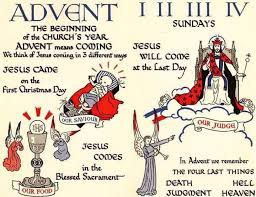



 ABYSSUS ABYSSUM INVOCAT / DEEP CALLS TO DEEP

You must be logged in to post a comment.