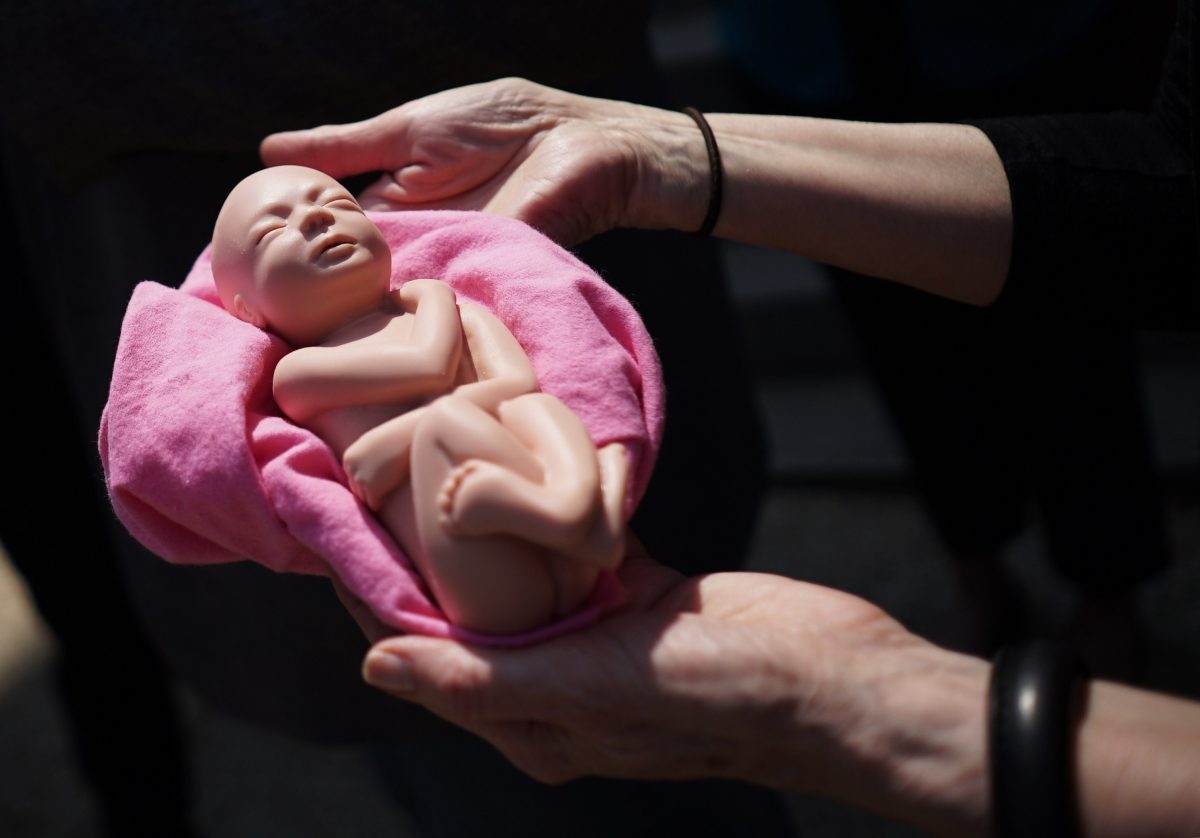
IT ALL COMES DOWN TO THE QUESTIONS, WHAT DOES IT MEAN TO BE “HUMAN” AND WHEN DOES HUMAN LIFE BEGIN

Updated References for Accurate “Language” Re “Human Being”/”Human Person”/”Personhood”

Dianne N. Irving
Copyright February 2, 2015
Reproduced with Permission

I. Introduction

Given the continuing epidemic in efforts to scientifically, politically and legally deconstruct the accurate definitions of “human being”, “human person”, “personhood” and related critical sub-terms, the focus of this article is the accurate definitions of those terms to be used — especially given the real life and deadly consequences of those linguistic deconstructions to innocent living human beings. 

The accurate definitions also refute the current pandemic efforts by transhumanists and related groups to deconstruct those same terms to claim legal “personhood” for non-human animals (e.g., apes, dolphins, etc.), robots, cyborgs, avatars AI’s (artificial intelligences), zombies, posthumans, etc. Indeed, for them, many innocent human beings (including human adults) would not be “persons”. Consider the real-life implications of that 

Thus paradoxically, either way, such linguistic deconstructions have deadly consequences for living innocent human beings (including adults) and their progeny. 

Person: applies to all living human beings from the beginning of their biological development as human organisms – regardless of age, race, sex, gender, capacity to function, condition of physical or mental dependency and/or disability, or method of sexual or asexual reproduction used, whether existing in vivo or in vitro . The term “person” does not apply to any non-human animals. 

Personhood: is the legal recognition of a human being’s full status as a human person, that applies to all human beings, regardless of age, race, sex, gender, capacity to function, condition of physical or mental dependency and/or disability, or method of sexual or asexual reproduction used, whether existing in vivo or in vitro 

III. Definitions of Human Sexual and Asexual Reproduction

[[See lengthy list and direct quotes for critical terms below following this section on “definitions”]] 

A. Human Sexual Reproduction:

Based on the long known accurate internationally documented and acknowledged scientific references below, “human sexual reproduction” can be defined briefly as the following: 

“In human sexual reproduction (i.e., the immediate use of human sperm and human oocyte) — both in vivo (inside the body) and in vitro (outside the body) — the biological beginning of a new human being/organism occurs when a human sperm makes contact with the protective covering of and fuses with a human oocyte (before the “zygote” is developed). Examples include normal natural sexual intercourse, and artificial sexual reproduction in IVF/ART research laboratories and infertility clinics.” 

** See, e.g., Carnegie Stage One: 

” Embryonic life commences with fertilization , and hence the beginning of that process may be taken as the point de depart of stage 1. Despite the small size and weight of the organism at fertilization, the embryo is “schon ein individual-spezifischer Mensch” [definitely and specifically a human person] (Blechschmidt, 1972). … Fertilization is the procession of events that begins when a spermatozoon makes contact with an oocyte or its investments and ends with the intermingling of maternal and paternal chromosomes at metaphase of the first mitotic division of the zygote (Brackett et al, 1972). … Fertilization, which takes place normally in the ampulla of the uterine tube i.e., fallopian tube – not the uterus ], includes (a) contact of spermatozoa with the zona pellucida of an oocyte, penetration of one or more spermatozoa through the zona pellucida and the ooplasm, swelling of the spermatozoal head and extrusion of the second polar body, (b) the formation of the male and female pronuclei, and (c) the beginning of the first mitotic division, or cleavage, of the zygote. … The three phases (a, b, and c) referred to above will be included here under stage 1, the characteristic feature of which is unicellularity. … The term “ovum”, which has been used for such disparate structures as an oocyte and a 3-week embryo, has no scientific usefulness and is not used here. Indeed, strictly speaking, “the existence of the ovum … is impossible (Franchi, 1970).” [ Carnegie Stages of Early Human Embryonic Development , Stage One, at: http://www.medicalmuseum.mil/assets/documents/collections/hdac/stage01.pdf%5D 

B. Human Asexual Reproduction

Based on the long known accurate internationally documented and acknowledged scientific references below, “human asexual reproduction” can be defined briefly as the following: 

“In human asexual reproduction (i.e., without the immediate use of human sperm and human oocyte) — both in vivo (inside the body) and in vitro (outside the body) — the biological beginning of a new human being/organism occurs when the status of the DNA in a mere human cell or cells is regulated or reversed back to that of a new human being/organism.” 

Examples include naturally occurring human identical (monozygotic) “twinning” within the woman’s fallopian tube and/or uterus, and artificial “twinning”, pronuclei transfer, somatic cell nuclear transfer, germ line cell nuclear transfer, and other genetic engineering and regenerative medicine research techniques in IVF/ART and other research laboratories and infertility clinics.” 

** See, e.g., Carnegie Stages 2, 3, 4, and 5 where asexual reproduction by “twinning” is addressed. Also, the human molecular genetics textbook by Strachan and Read: 

The term ‘clones’ indicates genetic identity and so can describe genetically identical molecules (DNA clones), genetically identical cells or genetically identical organisms. Animal clones occur naturally as a result of sexual reproduction. For example, genetically identical twins are clones who happened to have received exactly the same set of genetic instructions from two donor individuals, a mother and a father. A form of animal cloning can also occur as a result of artificial manipulation to bring about a type of asexual reproduction. The genetic manipulation in this case uses nuclear transfer technology: a nucleus is removed from a donor cell then transplanted into an oocyte whose own nucleus has previously been removed. … The individual providing the donor nucleus and the individual that develops from the ‘renucleated’ oocyte are usually described as “clones”, but it should be noted that they share only the same nuclear DNA; they do not share the same mitochondrial DNA, unlike genetically identical twins . … Wilmut et al (1997) reported successful cloning of an adult sheep. For the first time, an adult nucleus had been reprogrammed to become totipotent once more, just like the genetic material in the fertilized oocyte from which the donor cell had ultimately developed. … Successful cloning of adult animals has forced us to accept that genome modifications once considered irreversible can be reversed and that the genomes of adult cells can be reprogrammed by factors in the oocyte to make them totipotent once again. [Tom Strachan and Andrew P. Read, Human Molecular Genetics 2(New York: John Wiley & Sons, Inc, 1999), pp. 508-509]. (emphases added) 

IV. Definitions of Other Terms Used Within the Major Definition:

In vivo : within the body (including the fallopian tube and the uterus). 

In vitro : outside the body, e.g., in IVF/ART, genetic engineering, regenerative medicine and other research laboratories and infertility clinics. 

Human Being: any human organism, including the single-cell human embryo, who possesses a genome specific for and consistent with an individual member of the human species, regardless of age, race, sex, gender, capacity to function, condition of physical or mental dependency and/or disability, or method of sexual or asexual reproduction used, whether existing in vivo or in vitro 

Human Genome: the total amount of nuclear and extra-nuclear DNA genetic material in a cell that constitutes an organism as an individual member of the human species – including the single-cell human embryo. 

Human embryo: all human beings during the first 8 weeks of their biological development, including single-cell human embryos from the beginning of their biological development. 

Human fetus: all human beings from the beginning of the fetal period of their biological development (the beginning of 9 weeks) through birth, 

V. Documentation of the Accurate Human Embryology in the Carnegie Stages of Early Human Embryonic Development

Note that the standard URLs for the Carnegie Stages used for decades have now been changed. The URLs used below are the updated ones. Note also that there are some texts and websites that use the phrase “Carnegie Stages”, but the scientific definitions portrayed are different from those in the genuine Carnegie Stages. Here are some examples of reliable websites: 

(1) The original Carnegie Stages of Early Human Embryonic Development at the National Museum of Health and Medicine (Human Developmental Anatomy Center), which also gives the history of the science of human embryology and the institutionalization of the Carnegie Stages in 1942. See Carnegie Stage One (phases a, b, and c) at: http://www.medicalmuseum.mil/assets/documents/collections/hdac/stage01.pdf . See Carnegie Stage Two (that also includes explanation of natural asexual reproduction), at: http://www.medicalmuseum.mil/assets/documents/collections/hdac/stage02.pdf . See Carnegie Stage Three (that also includes explanation of natural asexual reproduction), at: http://www.medicalmuseum.mil/assets/documents/collections/hdac/stage03.pdf . See Carnegie Stage Four (that also includes explanation of natural asexual reproduction), at: http://www.medicalmuseum.mil/assets/documents/collections/hdac/stage04.pdf . See Carnegie Stage Five (that also includes explanation of natural asexual reproduction), at: http://www.medicalmuseum.mil/assets/documents/collections/hdac/stage05.pdf . See all 23 stages of the early developing human embryo, short descriptions are found at: http://www.medicalmuseum.mil/index.cfm?p=collections.hdac.anatomy.s01 . To find more extensive scientific details and scientific references for each of these “stages”, click into the desired Stage, then click into the “textbook” at the bottom left side of the screen. 

(2) The new website, “The Virtual Human Embryo”, housed at the Louisiana State University’s Health Sciences Center (probably the easiest to follow). For Stage 1, see: http://www.ehd.org/virtual-human-embryo/stage.php?stage=1 

(3) There is now even a new iPhone “app” for the Carnegie Stages, entitled “Embryo”, available from the National Library of Medicine, at: http://apps.usa.gov/embryo/ 

(4) The Endowment for Human Development has recently produced a new DVD of “The Virtual Human Embryo: Digitally Reproduced Embryonic Morphology” (Nov. 23, 2011). The DVD is available, at: http://www.ehd.org/virtual-human-embryo/ 

(5) The most recent updating of the Carnegie Stages online (Jan. 2011) by the international nomenclature committee on human embryology, i.e., the Terminologia Embryologica Committee (TE) which has operated internationally and updated the Carnegie Stages continuously since 1942 to the present. Go to: http://www.unifr.ch/ifaa/Public/EntryPage/ViewTE/TEe02.html . You are viewing “Page 8”; now use buttons at top to move to Page 10 to arrive at description of Carnegie Stages 1-5 in Chart; The right side of chart provides the following documentation of the first 5 Stages; see especially “Single cell EMBRYO [St. 1].]] 

(6) Although the Carnegie Stages focus mainly on human sexual reproduction, it has always also addressed human asexual reproduction as well, especially human monozygotic (identical) “twinning”. For example, see Carnegie Stages 2, 3, 4, and 5 (identical twins/triplets). See also explanations of “twinning” and many other human asexual reproductive techniques — in vivo and in vitro — in human embryology textbooks and in human molecular genetics textbooks (e.g., as provided above). 

VI. Other Resources:

Moore, Keith, and T.V.N. Persaud, The Developing Human: Clinically Oriented Embryology , 6th ed. Only. (Philadelphia: W.B. Saunders Company, 1998)

— The usual site of fertilization [i.e., sexual reproduction] is the ampulla of the uterine tube [fallopian tube, not the uterus itself], its longest and widest part. If the oocyte is not fertilized here, it slowly passes along the tube to the uterus, where it degenerates and is reabsorbed. Although fertilization may occur in other parts of the tube, it does not occur in the uterus . … Human development begins when an oocyte is fertilized (p. 34). 

— The embryo’s chromosomes sex is determined at fertilization by the kind of sperm (X or Y) that fertilizes the ovum; hence it is the father rather than the mother whose gamete determines the sex of the embryo (p. 37). 

(also in Moore, Keith, and T.V.N. Persaud, The Developing Human: Clinically Oriented Embryology , 7th ed. (Philadelphia: W.B. Saunders Company, 2003) 

Muller, Fabiola, and Ronan O’Rahilly. Human Embryology & Teratology , 3rd ed. (New York: Wiley-Liss, 1994) 

— The embryonic period proper …occupies the first 8 postovulatory weeks (i.e., timed from the last ovulation) … The fetal period extends from 8 weeks to birth (p. 55). 

Muller, Fabiola, and Ronan O’Rahilly. ibid. (New York: Wiley-Liss, 2001)

— Recapitulation, the So-Called Biogenetic Law . The theory that successive stages of individual development (ontogeny) correspond with (“recapitulate”) successive adult ancestors in the line of evolutionary descent (phylogeny) became popular in the nineteenth century as the so-called biogenetic law. This theory of recapitulation, however, has had a “regrettable influence on the progress of embryology” (G. de Beer). … According to the “laws” of von Baer, general characters (e.g., brain, notochord) appear in development earlier than special characters (e.g., limbs, hair). Furthermore, during its development an animal departs more and more from the form of other animals. Indeed, the early stages in the development of an animal are not like the adult stages of other forms but resemble only the early stages of those animals. The pharyngeal clefts of vertebrate embryos, for example, are neither gills nor slits. Although a fish elaborates this region into gill slits, in reptiles, birds, and mammals it is converted into such structures as the tonsils and the thymus (p. 16). 

… (Fertilization is) the procession of events that begins when a spermatozoon makes contact with a secondary oocyte or its investments, and ends with the intermingling of maternal and paternal chromosomes at metaphase of the first mitotic division of the zygote. The zygote is characteristic of the last phase of fertilization and is identified by the first cleavage spindle. It is a unicellular embryo (p. 19). 

— Although life is a continuous process, fertilization … is a critical landmark because, under ordinary circumstances, a new, genetically distinct human organism is formed…(p. 31). 

… Fertilization takes place normally in the ampulla (lateral end) of the uterine tube (p. 31). 

— “The term ‘pre-embryo’ is not used here for the following reasons: (1) it is ill-defined because it is said to end with the appearance of the primitive streak or to include neurulation; (2) it is inaccurate because purely embryonic cells can already be distinguished after a few days, as can also the embryonic (not pre-embryonic!) disc; (3) it is unjustified because the accepted meaning of the word embryo includes all of the first 8 weeks; (4) it is equivocal because it may convey the erroneous idea that a new human organism is formed at only some considerable time after fertilization; and (5) it was introduced in 1986 ‘largely for public policy reasons’ (Biggers).” … Just as postnatal age begins at birth, prenatal age begins at fertilization,” (p. 88). 

— “Undesirable terms in Human Embryology”: “Pre-embryo”; ill defined and inaccurate; Use “embryo” (p. 12). 

[Note: O’Rahilly is one of the originators of The Carnegie Stages of Early Human Embryological Development , and has sat on the international Nomina Embryologica Committee for decades] 


The following references were taken from web sites, full citation listed along with pertinent material.

— “Carnegie Stages of Early Human Embryonic Development” (updated): Carnegie Stages of Early Human Embryonic Development, Stage 1: Embryonic life commences with fertilization, and hence the beginning of that process may be taken asthe point de depart of stage 1 . Despite the small size (ca. 0.1 mm) and weight (ca. 0.004 mg) of the organism at fertilization, the embryo is “schon ein individual-spezifischer Mensch” (Blechschmidt, 1972). 

… Fertilization is the procession of events that begins when a spermatozoon makes contact with an oocyte or its investments and ends with the intermingling of maternal and paternal chromosomes at metaphase of the first mitotic division of the zygote (Brackett et al.,1972). 

… Fertilization, which takes place normally in the ampulla of the uterine tube, includes (a) contact of spermatozoa with the zona pellucida of an oocyte, penetration of one or more spermatozoa through the zona pellucida and the ooplasm, swelling of the spermatozoal head and extrusion of the second polar body, (b) the formation of the male and female pronuclei, and (c) the beginning of the first mitotic division, or cleavage, of the zygote. 

… The three phases (a, b, and c) referred to above will be included here under stage 1, the characteristic feature of which is unicellularity. [http://www.medicalmuseum.mil/assets/documents/collections/hdac/stage01.pdf] 


— Some recent Irving articles (note, older articles still retain the now-unusable URLs for the Carnegie Stages):

“Personhood ‘Language’ 2008 – 2011” (October 2, 2011), at: http://www.lifeissues.net/writers/irv/irv_192personhoodlanguage.html 

“Why Accurate Human Embryology Is Needed To Evaluate Current Trends In Research Involving Stem Cells, Genetic Engineering, Synthetic Biology and Nanotechnology” (November 20, 2012), at: http://www.lifeissues.net/writers/irv/irv_206accuratehumanembryology1.html 

Notice: Carnegie Stages – Lost, and Found (Aug. 10, 2012), at: http://www.lifeissues.net/writers/irv/irv_200lostandfound.html

“Any Human Cell – iPS, Direct Programmed, Embryonic, Fetal or Adult – Can Be Genetically Engineered to Asexually Reproduce New Human Embryos for Purposes of Reproduction (‘Infertility’)” (November 2011), at: http://www.lifeissues.net/writers/irv/irv_194cellasexuallyreproduce1.html 

— Relevant References from Irving article:

— Kollias, et al. “The human beta-gobulin gene contains downstream developmental specific enhancer”, Nucleic Acids Research 15 (14) (July 1987), pp. 5739-47. 

— Also similar work by R. K. Humphries, A. Schnieke. E.g., as determined in extensive numbers of transgenic mice experiments, “The human beta-gobulin gene contains downstream developmental specific enhancer.” 

— Moore, Keith, and T.V.N. Persuad, The Developing Human: Clinically Oriented Embryology , 6th ed. only (Philadelphia: W.B. Saunders Company, 1998): “Sutton and Boveri declared independently in 1902 that the behavior of chromosomes during germ cell formation and fertilization agreed with Mendel’s principles of inheritance. In the same year, Garrod reported alcaptonuria as the first example of Mendelian inheritance in human beings. Many consider Garrod to be the Father of Medical Genetics. It was soon realized that the (single-cell embryo) contains all the genetic information necessary for directing the development of a new human being (p. 12). 

— Holtzer et al., “Induction-dependent and lineage-dependent models for cell-diversification are mutually exclusive,” Progress in Clinical Biological Research 175:3-11 (1985). Also similar work by, e.g., F. Mavilio, C. Hart. 

— (3) Larsen, William, Human Embryology , 2nd ed. (New York: Churchill Livingstone, 1997), pp. 19, 33, 49. 


Further references for: “The Single-Cell Human Embryo Asexually Reproduced is a Human Being When the Cell’s DNA is in the State of Differentiation as that of a Single-Cell Sexually Reproduced Human Embryo”:

The following quotations were taken from embryology books, full citation listed:

— Campbell, Keith, and Ian Wilmut. Cambridge Quarterly of Healthcare Ethics 139 (Spring 1988): “One potential use for this technique would be to take cells – skin cells, for example – from a human patient who had a genetic disease… You take these and get them back to the beginning of their life by nuclear transfer into an oocyte to produce a new embryo. From that new embryo, you would be able to obtain relatively simple, undifferentiated cells, which would retain the ability to colonize the tissues of the patient.” 

On being asked in an interview: “Do you think that society should allow cloning of human embryos because of the great promise of medical benefit?”: “Yes. Cloning at the embryo stage – to achieve cell dedifferentiation – could provide benefits that are wide ranging…” – Keith Campbell, head of embryology at PPL Therapeutics 

— Carlson, Bruce M. Human Embryology and Developmental Biology , 2nd ed. (St. Louis, MO: Mosby, 1999): “Early mammalian embryogenesis is considered to be a highly regulative process. Regulation is the ability of an embryo or an organ primordium to produce a normal structure if parts have been removed or added. At the cellular level, it means that the fates of cells in a regulative system are not irretrievably fixed and that the cells can still respond to environmental cues.” (p. 44). 

“Of the experimental techniques used to demonstrate regulative properties of early embryos, the simplest is to separate the blastomeres of early cleavage-stage embryos and determine whether each one can give rise to an entire embryo. This method has been used to demonstrate that single blastomeres, from two- and sometimes four-cell embryos can form normal embryos, …” (p. 44). 

“…The relationship between the position of the blastomeres and their ultimate developmental fate was incorporated into the inside-outside hypothesis. The outer blastomeres ultimately differentiate into the trophoblast, whereas the inner blastomeres form the inner cell mass, from which the body of the embryo arises. Although this hypothesis has been supported by a variety of experiments, the mechanisms by which the blastomeres recognize their positions and then differentiate accordingly have remained elusive and are still little understood. If marked blastomeres from disaggregated embryos are placed on the outside of another early embryo, they typically contribute to the formation of the trophoblast. Conversely, if the same marked cells are introduced into the interior of the host embryo, they participate in formation of the inner cell mass. Outer cells in the early mammalian embryo are linked by tight and gap junctions … Experiments of this type demonstrate that the developmental potential or potency (the types of cells that a precursor cell can form) of many cells is greater than their normal developmental fate (the types of cells that a precursor cell normally forms)” (p. 45). 

“Another means of demonstrating the regulative properties of early mammalian embryos is to dissociate mouse embryos into separate blastomeres and then to combine the blastomeres of two or three embryos. The combined blastomeres soon aggregate and reorganize to become a single large embryo, which then goes on to become a normalappearing tetraparental or hexaparental mouse. By various techniques of making chimeric embryos, it is even possible to combine blastomeres to produce interspecies chimeras (e.g., a sheep-goat)” (p. 45). 

“… Blastomere removal and addition experiments have convincingly demonstrated the regulative nature (i.e., the strong tendency for the system to be restored to wholeness) of early mammalian embryos. Such knowledge is important in understanding the reason exposure of early human embryos to unfavorable environmental influences typically results in either death or a normal embryo.” (p. 46). 

” … Classic strategies for investigating developmental properties of embryos are (1) removing a part and determining the way the remainder of the embryo compensates for the loss (such experiments are called deletion experiments) and (2) adding a part and determining the way the embryo integrates the added material into its overall body plan (such experiments are called addition experiments). Although some deletion experiments have been done, the strategy of addition experiments has proved to be most fruitful in elucidating mechanisms controlling mammalian embryogenesis.” (p. 46). 

“…Some types of twinning represent a natural experiment that demonstrates the highly regulative nature of early human embryos,” (p. 48). 

“…Monozygotic twins and some triplets, on the other hand, are the product of one fertilized egg. They arise by the subdivision and splitting of a single embryo. Although monozygotic twins could … arise by the splitting of a two-cell embryo, it is commonly accepted that most arise by the subdivision of the inner cell mass in a blastocyst. Because the majority of monozygotic twins are perfectly normal, the early human embryo can obviously be subdivided and each component regulated to form a normal embryo.” (p. 49) 

** Elder, Kay T. “Laboratory techniques: Oocyte collection and embryo culture,” ed. Peter Brinsden, A Textbook of In vitro Fertilization and Assisted Reproduction , 2nd ed. (New York: The Parthenon Publishing Group, 1999): “Surprisingly, fragmented embryos, repaired or not, do implant and often come to term. This demonstrates the highly robust nature of the human embryo, as it can apparently lose over half of its cellular mass and still recover.” (p. 197) 

Even proponents of human cloning research admit that the immediate product of cloning is a new living human embryo, a human being. See, for example: 

** Ian Wilmut: “The majority of reconstructed embryos were cultured in ligated oviducts of sheep… Most embryos that developed to morula or blastocyst after 6 days of culture were transferred to recipients and allowed to develop to term,” etc. 

** Larsen, William, Essentials of Human Embryology (New York: Churchill Livingstone, 1998): “If the splitting occurred during cleavage – for example, if the two blastomeres produced by the first cleavage division become separated – the monozygotic twin blastomeres will implant separately, like dizygotic twin blastomeres, and will not share fetal membranes. Alternatively, if the twins are formed by splitting of the inner cell mass within the blastocyst, they will occupy the same chorion but will be enclosed by separate amnions and will use separate placentae, each placenta developing around the connecting stalk of its respective embryo. Finally, if the twins are formed by splitting of a bilaminar germ disc, they will occupy the same amnion.” (p. 325) 

** Muller, Fabiola, and Ronan O’Rahilly. Human Embryology & Teratology . (New York: Wiley-Liss, 2001): 
“Biopsy of an embryo can be performed by removing one cell from a 4-cell, or two cells from an 8-cell, embryo. This does not seem to decrease the developmental capacity of the remaining cells.” (p. 37). 
“The embryo enters the uterine cavity after about half a week … Each cell (blastomere) is considered to be still totipotent (capable, on isolation, of forming a complete embryo), and separation of these early cells is believed to account for one-third of cases of monozygotic twinning,” (p. 37). 

** National Bioethics Advisory Commission. Cloning Human Beings: Report and Recommendations. (Rockville, MD: June 1997): “The Commission began its discussions fully recognizing that any effort in humans to transfer a somatic cell nucleus into an enucleated egg involves the creation of an embryo, with the apparent potential to be implanted in utero and developed to term.” (p. 3). 

** National Institutes of Health. Background Paper: Cloning: Present uses and Promises, Jan. 29, 1998. “This experiment [producing Dolly] demonstrated that, when appropriately manipulated and placed in the correct environment, the genetic material of somatic cells can regain its full potential to direct embryonic, fetal, and subsequent development.” (p. 3). 

** Read, Andrew P., and Tom Strachan, Human Molecular Genetics 2, 2nd ed. (New York: John Wiley & Sons, Inc., 1999): “Nuclear transfer technology was first employed in embryo cloning, in which the donor cell is derived from an early embryo, and has been long established in the case of amphibians. … Wilmut et al (1997) reported successful cloning of an adult sheep [“Dolly”]. For the first time, an adult nucleus had been reprogrammed to become totipotent once more, just like the genetic material in the fertilized oocyte from which the donor cell had ultimately developed. … Successful cloning of adult animals has forced us to accept that genome modifications once considered irreversible can be reversed and that the genomes of adult cells can be reprogrammed by factors in the oocyte to make them totipotent once again. … Animal clones occur naturally…. For example, genetically identical twins are clones who happened to have received exactly the same set of genetic instructions from two donor individuals, a mother and a father. A form of animal cloning can also occur as a result of artificial manipulation to bring about a type of asexual reproduction. The genetic manipulation in this case uses nuclear transfer technology: a nucleus is removed from a donor cell then transplanted into an oocyte whose own nucleus has previously been removed. The resulting ‘renucleated’ oocyte can give rise to an individual who will carry the nuclear genome of only one donor individual, unlike genetically identical twins. The individual providing the donor nucleus and the individual that develops from the ‘renucleated’ oocyte are usually described as “clones”, but it should be noted that they share only the same nuclear DNA; they do not share the same mitochondrial DNA, unlike genetically identical twins.” 

Silver, Lee M., Remaking Eden: Cloning and Beyond in a Brave New World (Avon Books 1997): “Yet there is nothing synthetic about the cells used in cloning… The newly created embryo can only develop inside the womb of a woman in the same way that all embryos and fetuses develop. Cloned children will be full-fledged human beings, indistinguishable in biological terms from all other members of the species. Thus, the notion of a soulless clone has no basis in reality,” (p. 107). 

** Van Blerkom, Jonathan, American Medical News, Feb. 23, 1998: [Expressing disbelief that some deny that human cloning produces an embryo]: “If it’s not an embryo, what is it?” Dr. Van Blerkom said researchers’ efforts to avoid the word “embryo” in this context are “self-serving.” 

** Wilmut, Ian, et al., “Viable offspring derived from fetal and adult mammalian cells,” 385 Nature 810-813 (Feb. 27, 1997). 


The following were taken from web sites, full citation listed along with pertinent material:

** National Institutes of Health, Office of Science Planning and Policy, “CLONING: Present Uses and Promises”, April 27, 1998. http://www1.od.nih.gov/osp/ospp/scipol/cloning.htm: “Cloning and somatic cell nuclear transfer are not synonymous. Cloning is the production of a precise genetic copy of DNA, a cell, or an individual plant or animal. Cloning can be successfully accomplished by using a number of different technologies. Somatic cell nuclear transfer is one specific technology that can be used for cloning.” 

“The Cloning of Humans (Prevention) Bill 2001,” http://www.parliament.qld.gov.au/Parlib/ Publications_pdfs/books/2001036.pdf: “Cloning can occur naturally in the asexual reproduction of plants, the formation of identical twins and the multiplication of cells in the natural process of repair. The cloning of DNA, cells, tissues, organs and whole individuals is also achievable with artificial technologies. … The cloning of a cell or an individual may be achieved through a number of techniques, including: molecular cloning …, blastomere separation (sometimes called “twinning” after the naturally occurring process that creates identical twins): splitting a developing embryo soon after fertilization of the egg by a sperm (sexual reproduction) to give rise to two or more embryos. The resulting organisms are identical twins (clones) containing DNA from both the mother and the father. … somatic cell nuclear transfer: the transfer of the nucleus of a somatic cell into an unfertilized egg whose nucleus, and thus its genetic material, has been removed. A number of scientific review bodies have noted that the term “cloning” is applicable in various contexts, as a result of the development of a range of cloning techniques with varying applications.” 


Further references for: “The Single-Cell Human Embryo Possesses A Genome Specific For And Consistent With an Individual Member of the Human Species”:

The human genome is not defined in terms of the nuclear genes alone, but in terms of the total DNA in the cell, including DNA found in the mitochondria outside of the nucleus in the cytoplasm. The following were taken from embryology books, full citation listed along with pertinent material: 

** Lewin, Benjamin, Genes VII (New York: Oxford University Press, 2000): ” A genome consists of the entire set of chromosomes for any particular organism, and therefore comprises a series of DNA molecules, each of which contains a series of many genes. The ultimate definition of a genome is to determine the sequence of the DNA of each chromosome. (p. 4) 

… “Genes not residing within the nucleus are generally described as extranuclear; they are transcribed and translated in the same organelle compartment (mitochondrion or chloroplast) in which they reside. By contrast, nuclear genes are expressed by means of cytoplasmic protein synthesis.” (p. 81) 

** Read, Andrew P., and Tom Strachan, Human Molecular Genetics 2, 2nd ed. (New York: John Wiley & Sons, Inc., 1999): 

— “In animal cells, DNA is found in both the nucleus and the mitochondria .” (p. 10) 

— “The mitochondria also have ribosomes and a limited capacity for protein synthesis.” (p. 18) 

— ” The human genome is the term used to describe the total genetic information (DNA content) in human cells. It really comprises two genomes: a complex nuclear genome…, and a simple mitochondrial genome… Mitochondria possess their own ribosomes and the few polypeptide-encoding genes in the mitochondrial genome produce mRMAs, which are translated on the mitochondrial ribosomes.” (p. 139) 


The following were taken from human embryology books, full citation listed along with pertinent material:

** Carlson, Bruce M., Human Embryology and Developmental Biology (St. Louis, MO: Mosby, 1994): “After the eighth week of pregnancy the period of organogenesis (embryonic period) is largely completed and the fetal period begins.” (p. 407) 

** Carlson, Bruce M., Human Embryology and Developmental Biology , 2nd ed. (St. Louis, MO: Mosby, 1999): “Human pregnancy begins with the fusion of an egg and a sperm, but a great deal of preparation precedes this event. First both male and female sex cells must pass through a long series of changes (gametogenesis) that convert them genetically and phenotypically into mature gametes, which are capable of participating in the process of fertilization. Next, the gametes must be released from the gonads and make their way to the upper part of the uterine tube, wherefertilization normally takes place. … Finally, the fertilized egg, now properly called an embryo, must make its way into the uterus …. .” (p. 2) 

— “Fertilization age: dates the age of the embryo from the time of fertilization.” (p. 23) 

— “In the female, sperm transport begins in the upper vagina and ends in the ampulla of the uterine tube [fallopian tube] where the spermatozoa make contact with the ovulated egg.” (p. 27) 

— “The sex of the future embryo is determined by the chromosomal complement of the spermatozoon. (If the sperm contains 22 autosomes and an X chromosome, the embryo will be a genetic female, and if it contains 22 autosomes and a Y chromosome, the embryo will be a male.) … Through the mingling of maternal and paternal chromosomes, the zygote is a genetically unique product of chromosomal re-assortment, which is important for the viability of any species.” (p. 32) 

— “Early mammalian embryogenesis is considered to be a highly regulative process. Regulation is the ability of an embryo or an organ primordium to produce a normal structure if parts have been removed or added. At the cellular level, it means that the fates of cells in a regulative system are not irretrievably fixed and that the cells can still respond to environmental cues.” (p. 44). 

— “Blastomere removal and addition experiments have convincingly demonstrated the regulative nature (i.e., the strong tendency for the system to be restored to wholeness) of early mammalian embryos. Such knowledge is important in understanding the reason exposure of early human embryos to unfavorable environmental influences typically results in either death or a normal embryo.” (p. 46) 

— “Some types of twinning represent a natural experiment that demonstrates the highly regulative nature of early human embryos …” (p. 48) 

— “The relationship between the position of the blastomeres and their ultimate developmental fate was incorporated into the inside-outside hypothesis. The outer blastomeres ultimately differentiate into the trophoblast, whereas the inner blastomeres form the inner cell mass, from which the body of the embryo arises. Although this hypothesis has been supported by a variety of experiments, the mechanisms by which the blastomeres recognize their positions and then differentiate accordingly have remained elusive and are still little understood. If marked blastomeres from disaggregated embryos are placed on the outside of another early embryo, they typically contribute to the formation of the trophoblast. Conversely, if the same marked cells are introduced into the interior of the host embryo, they participate in formation of the inner cell mass. Outer cells in the early mammalian embryo are linked by tight and gap junctions … Experiments of this type demonstrate that the developmental potential or potency (the types of cells that a precursor cell can form) of many cells is greater than their normal developmental fate (the types of cells that a precursor cell normally forms).” (p. 45). 

** Elder, Kay T., “Laboratory techniques: Oocyte collection and embryo culture”, in Peter Brinsden, (ed.), A Textbook of in vitro Fertilization and Assisted Reproduction , 2nd edition (New York: The Parthenon Publishing Group, 1999): “Surprisingly, fragmented embryos, repaired or not, do implant and often come to term. This demonstrates the highly robust nature of the human embryo, as it can apparently lose over half of its cellular mass and still recover.” (p. 197) 

** Larsen, William, Human Embryology , 2nd ed. (New York: Churchill Livingstone, 1997): 

… “[W]e begin our description of the developing human with the formation and differentiation of the male and female sex cells or gametes, which will unite at fertilization to initiate the embryonic development of a new individual.” (p. 1) 

— “In this text, we begin our description of the developing human with the formation and differentiation of the male and female sex cells or gametes, which will unite at fertilization to initiate the embryonic development of a new individual. … Fertilization takes place in the oviduct [not the uterus]… resulting in the formation of a zygote containing a single diploid nucleus.” (p.1). 

** Moore, Keith, and T.V.N. Persaud, The Developing Human: Clinically Oriented Embryology , 6th ed. only. (Philadelphia: W.B. Saunders Company, 1998): 

— “The usual site of fertilization is the ampulla of the uterine tube [fallopian tube], its longest and widest part. If the oocyte is not fertilized here, it slowly passes along the tube to the uterus, where it degenerates and is reabsorbed. Although fertilization may occur in other parts of the tube, it does not occur in the uterus. … Human development begins when a oocyte is fertilized.” (p. 34) 

— “The embryo’s chromosomes sex is determined at fertilization by the kind of sperm (X or Y) that fertilizes the ovum; hence, it is the father rather than the mother whose gamete determines the sex of the embryo.” (p. 37) 

Muller, Fabiola, and Ronan O’Rahilly. Human Embryology & Teratology , 3rd ed. (New York: Wiley-Liss, 1994) 
The embryonic period proper …occupies the first eight postovulatory weeks (i.e., timed from the last ovulation) … The fetal period extends from eight weeks to birth. (p. 55) 

Muller, Fabiola, and Ronan O’Rahilly. ibid. (New York: Wiley-Liss, 2001 ) “The term ‘pre-embryo’ is not used here for the following reasons: (1) it is ill-defined because it is said to end with the appearance of the primitive streak or to include neurulation; (2) it is inaccurate because purely embryonic cells can already be distinguished after a few days, as can also the embryonic (not pre-embryonic!) disc; (3) it is unjustified because the accepted meaning of the word embryo includes all of the first 8 weeks; (4) it is equivocal because it may convey the erroneous idea that a new human organism is formed at only some considerable time after fertilization; and (5) it was introduced in 1986 ‘largely for public policy reasons’ (Biggers).” … Just as postnatal age begins at birth, prenatal age begins at fertilization.” (p. 88) “Undesirable terms in Human Embryology”: “Pre-embryo”; ill defined and inaccurate; use “embryo” (p. 12). 
Recapitulation, the So-Called Biogenetic Law. The theory that successive stages of individual development (ontogeny) correspond with (“recapitulate”) successive adult ancestors in the line of evolutionary descent (phylogeny) became popular in the nineteenth century as the so-called biogenetic law. This theory of recapitulation, however, has had a “regrettable influence on the progress of embryology” (G. de Beer). … According to the “laws” of von Baer, general characters (e.g., brain, notochord) appear in development earlier than special characters (e.g., limbs, hair). Furthermore, during its development an animal departs more and more from the form of other animals. Indeed, the early stages in the development of an animal are not like the adult stages of other forms but resemble only the early stages of those animals. The pharyngeal clefts of vertebrate embryos, for example, are neither gills nor slits. Although a fish elaborates this region into gill slits, in reptiles, birds, and mammals it is converted into such structures as the tonsils and the thymus. (p. 16) 

… (Fertilization is) the procession of events that begins when a spermatozoon makes contact with a secondary oocyte or its investments, and ends with the intermingling of maternal and paternal chromosomes at metaphase of the first mitotic division of the zygote. The zygote is characteristic of the last phase of fertilization and is identified by the first cleavage spindle. It is a unicellular embryo. (p. 19) 
Although life is a continuous process, fertilization … is a critical landmark because, under ordinary circumstances, a new, genetically distinct human organism is formed…. (p. 31) 

… Fertilization takes place normally in the ampulla (lateral end) of the uterine tube. (p. 31) 
“Biopsy of an embryo can be performed by removing one cell from a 4-cell, or two cells from an 8-cell, embryo. This does not seem to decrease the developmental capacity of the remaining cells.” (p. 37). 
The following were taken from web sites, full citation listed along with pertinent material. “Carnegie Stages of Early Human Embryonic Development,” http:// nmhm.washingtondc.museum/collections/hdac/Select_Stage_and_Lab_Manual.htm The first 8 weeks of human development are called the embryological period. After eight 8 the embryo becomes a fetus, and after birth a neo-nate. There are various ways to determine the age and development of an embryo. It should be noted that age and stage are not the same thing. An age is a measurement of time where as stage of development is an assessment of the level physical development of the embryo. Like older babies and children, embryos will develop at varying rates, which may depend on a variety of factors in the embryos environment. 

Irving, Dianne N., “Playing God by manipulating man: Facts and frauds of human cloning” October 4, 2003. http://www.lifeissues.net/writers/irv/irv_22manipulatingman1.html “This new single-cell human being immediately produces specifically human proteins and enzymes 

(1) (not carrot or frog enzymes and proteins), and genetically directs his/her own growth and development. (In fact, this genetic growth and development has been proven not to be directed by the mother, but rather by the embryo.) 

(2) The human embryo begins to divide and grows bigger and bigger, developing through several stages as an embryo over an 8-week period. Several of these developmental stages of the growing embryo are given special names, e.g., a morula (about 4 days), a free blastocyst (about 4-5 days), an implanting blastocyst (about 5-7 days), a bilaminar (two layer) embryo (during the second week), and a trilaminar (3 layer) embryo (during the third week). But it is the very same human embryo who is progressing throughout all of these various stages of growth and development.” 


References:

  • Holtzer et al., “Induction-dependent and lineage-dependent models for cell-diversification are mutually exclusive,” Progress in Clinical Biological Research 175:3-11 (1985);
  • Kollias et al, “The human beta-gobulin gene contains downstream developmental specific enhancer, “Nucleic Acids Research 15(14) (July 1987), pp. 5739-47.
  • Larsen, William. Human Embryology , 2nd ed. (New York: Churchill Livingstone, 1997) pp. 19, 33, 49.
  • Moore, Keith, and T.V.N. Persaud, The Developing Human: Clinically Oriented Embryology , 6th ed. only . (Philadelphia: W.B. Saunders Company, 1998) 
    “Sutton and Boveri declared independently in 1902 that the behavior of chromosomes during germ cell formation and fertilization agreed with Mendel’s principles of inheritance. In the same year, Garrod reported alcaptonuria as the first example of Mendelian inheritance in human beings. 
    Many consider Garrod to be the Father of Medical Genetics. It was soon realized that the (single-cell embryo) contains all the genetic information necessary for directing the development of a new human being (p. 12).
  • Read, Andrew P., and Tom Strachan. Human Molecular Genetics 2, 2nd ed. (New York: John Wiley & Sons, Inc., 1999) 
  • Nuclear transfer technology was first employed in embryo cloning, in which the donor cell is derived from an early embryo, and has been long established in the case of amphibians. … Wilmut et al (1997) reported successful cloning of an adult sheep [“Dolly”]. For the first time, an adult nucleus had been reprogrammed to become totipotent once more, just like the genetic material in the fertilized oocyte from which the donor cell had ultimately developed. … Successful cloning of adult animals has forced us to accept that genome modifications once considered irreversible can be reversed and that the genomes of adult cells can be reprogrammed by factors in the oocyte to make them totipotent once again . … Animal clones occur naturally…. For example, genetically identical twins are clones who happened to have received exactly the same set of genetic instructions from two donor individuals, a mother and a father. A form of animal cloning can also occur as a result of artificial manipulation to bring about a type of asexual reproduction. The genetic manipulation in this case uses nuclear transfer technology: a nucleus is removed from a donor cell then transplanted into an oocyte whose own nucleus has previously been removed. The resulting ‘renucleated’ oocyte can give rise to an individual who will carry the nuclear genome of only one donor individual, unlike genetically identical twins. The individual providing the donor nucleus and the individual that develops from the ‘renucleated’ oocyte are usually described as “clones”, but it should be noted that they share only the same nuclear DNA; they do not share the same mitochondrial DNA, unlike genetically identical twins (pp. 508-509).
  • Also similar work by, e.g., F. Mavilio, C. Hart.
  • Also similar work by, e.g., R. K. Humphries, A. Schnieke.
  • Carlson, Bruce M. Human Embryology and Developmental Biology (St. Louis, MO: Mosby, 1994): ” After the eighth week of pregnancy the period of organogenesis (embryonic period) is largely completed and the fetal period begins.” (p. 407)
  • Muller, Fabiola, and Ronan O’Rahilly. Human Embryology & Teratology , 3rd ed. (New York: Wiley-Liss, 1994): “The embryonic period proper …occupies the first eight postovulatory weeks (i.e.,timed from the last ovulation) … The fetal period extends from eight weeks to birth.” (p. 55)
Posted in Uncategorized | Comments Off on IT ALL COMES DOWN TO THE QUESTIONS, WHAT DOES IT MEAN TO BE “HUMAN” AND WHEN DOES HUMAN LIFE BEGIN

USQUEQUO DOMINE, USQUEQUO???????????????

THE CATHOLIC MONITOR

SEARCH

If Francis betrays Benedict XVI & the”Roman Rite Communities” like he betrayed the Chinese Catholics we must respond like St. Athanasius, the Saintly English Bishop Robert Grosseteste & “Eminent Canonists and Theologians” by “Resist[ing]” him

Traditionis Custodes • An “Attack” On The Traditional Latin Mass?

The pope’s authority is bound to the Tradition of faith, and that also applies to the liturgy. It is not “manufactured” by the authorities. Even the pope can only be a humble servant of its lawful development and abiding integrity and identity…. The authority of the pope is not unlimited; it is at the service of Sacred Tradition. – Pope Benedict XVI when still Cardinal Joseph Ratzinger

“[E]minent canonists and theologians could maintain that a pope deserves to be resisted if he is guilty of injuring either tradition or the Christian people who rely on it.” –  Theologian Dr. Peter Kwasniewski

“The pope has power to build up,” wrote Grosseteste, “but not to pull down. These appointments tend to destruction, not edification, being of man’s device and not according to the words of the Apostles or the will of Christ. By my very love and obedience to the Holy See I must refuse obedience in things altogether opposed to the sanctity of the Apostolic See and contrary to Catholic unity. As a son and a servant I decline to obey, and this refusal must not be taken as rebellion, for it is done in reverence to divine commands.” (This letter is quoted by Matthew Paris and in the Burton Annals. It can be read in full in the Epistles, No. 128.) – The saintly English Bishop Robert Grosseteste [https://www.gutenberg.org/files/64437/64437-h/64437-h.htm]

The Summorum-Pontificum.de writer Michael Charlier is predicting that “Francis Plans Bloodbath: Roman Rite Communities Will Be FORCED Into Novus Ordo” according to Gloria.tv:

Michael Charlier writes on Summorum-Pontificum.de (30 November) that measures will be announced before the end of 2021 to force all Roman Rite communities into the Novus Ordo.

Charlier has published accurate reports and predictions in the past…

… According to Charlier, papal delegates will be sent to these communities. Unlike commissioners, they won’t replace existing superiors but will be their superiors. Their mandate is “to reconcile” their communities “with the spirit of the Council”.

As a first step, presiding the Eucharist will be ordered to totally replace the celebration of Mass so that these priests can subsequently be integrated into Novus Ordo pastoral work.

The public celebration of Mass, which is still permitted for the time being, will be entrusted only to Novus Ordo priests who are faithful to the failed Council. Roman Rite priests will only be allowed to celebrate Mass internally and in exceptional cases. The administration of the other sacraments will be forbidden.
[https://www.gloria.tv/post/cCnpRKVZbAvb6QHZBBNYhUQu7]

Rorate Caeli presented a translation of the November 30 Charlier article from the German website Motu proprio: Summorum Pontificum that they titled Ex-Ecclesia Dei Communities Facing a Decision(source). It is summed up by the above Gloria.tv’s post and concludes apparently saying resistance to this betrayal of Pope Benedict XVI’s act of religious freedom for Traditionalist Catholics is “schismatic “:

[T]he unbridled and despotic character of Francis and to the lack of ideas and arguments in post-conciliar theology and liturgy, which up to now has been able to develop a certain persuasive power only in those places where, under modernist and secularist influence, attempts are being made to emancipate oneself from core elements of the traditional teachings of the apostles.

This point of departure opens up extremely unpleasant prospects for short- and medium-term development. It is conceivable that the “papal delegates” will be able to persuade at least parts and probably also majorities of the leadership of some communities to submit to their own twisted understanding of obedience. It is hardly conceivable that all or even the great majority of their members will follow them in this regard; the communities will break up. That might well be in line with the papal strategy. The split will have an even greater effect on the communities of tradition. Ordinary people in the pews are thoroughly fed up with watching their beloved Catholic Church being transformed into a left-green Zeitgeist agency by faithless bishops in the regions and curial officials in Rome who are addicted to modernization mania. The already existing split between the secularist-universalist and the “simply Catholic” camps in the Church will deepen—and that split certainly reaches a good deal further than the adherents of the traditional liturgy. It is quite conceivable that Francis—as he let slip in a rare moment of clarity and truth—will go down in history as “the pope who divided the Church” (source).

The defenders of apostolic tradition should not make this easier for him by now positing ostentatiously schismatic acts on their part. According to Matthew (10:16), the Lord urges the disciples to be “wise as serpents, but guileless as doves.” This [twofold advice] is not easy to reconcile—but that is precisely the task. 
[https://rorate-caeli.blogspot.com/2021/12/ex-ecclesia-dei-communities-facing.html]

The theologian Dr. Peter Kwasniewski says that Charlier said to him it will “make a smooth transition to the NO”:

The author has clarified his meaning in an email to me. TC alleges all TLM-exclusive clergy to be illoyal to “THE COUNCIL”—thus conveniently equating the Council and the “spirit of the Council” as seen by Bugnini and his followers up to Archbishop Roche. On the other hand, TC also assumes that most diocesan clergy (and in Germany/central Europe this is often the case) are steeped in this spirit and therefore will “celebrate” the TLM in the “right” spirit—e.g., trying to use readings from the modern lectionary and contemporary songs, altar girls, and all the rest, in order to make a smooth transition to the NO. [https://rorate-caeli.blogspot.com/2021/12/ex-ecclesia-dei-communities-facing.html]

This is not the first time that Francis has betrayed Catholics. In 2018, the Catholic Monitor wrote of the Francis betrayal of the Chinese Catholics and called on them to resist and disobeyed in good conscience as shown by the saintly English Bishop Robert Grosseteste in 1253:

On November 2, Vatican expert Marco Tosatti reported that Cardinal Joseph Zen said:


“[T]he ‘Interim Agreement’ signed last September between the Holy See and the Chinese government allow a meeting between the two Churches… It does not make sense… It is a secret agreement of which only three elements are known for the time being. Everything is controlled by Parolin [Secretary of State, ed.], The Pope does not understand anything. Parolin does not tell the whole truth to Pope Francis! Parolin knows the reality of the situation of Chinese Catholics, but does not tell the whole truth to the Pope. He has no faith!… He wants a diplomatic agreement with China.” [https://translate.googleusercontent.com/translate_c?depth=1&hl=en&ie=UTF8&nv=1&prev=_t&rurl=translate.google.com&sl=auto&sp=nmt4&tl=en&u=https://www.marcotosatti.com/2018/11/02/zen-il-papa-crede-di-poter-unire-la-chiesa-in-cina-ma-e-ingenuo-non-avra-lultima-parola-con-i-comunisti/&xid=17259,15700019,15700122,15700124,15700149,15700186,15700191,15700201,15700214,15700230&usg=ALkJrhgVetExMjuR3v2_4HE5V5x5y6AGSQ]

Communist expert Robert Royal on EWTN’s World Over has said that the Chinese government is a totalitarian regime that doesn’t respect truth, religious rights and most of all human life.

It is evil and totally godless.

Human life for them is cheap. People are killed and tortured at the whim of the regime.

Do Parolin and Francis believe that the underground Chinese Catholics are worthless things that they can cause suffering for to play at the so-called game of “diplomacy”?

If the Pope is actively collaborating with Parolin, with full understanding, in the totalitarian Chinese Communist deal, then he “has no faith” as Cardinal Zen said of Parolin. Francis said of the China deal:

“I think of the resistance, the Catholics who have suffered. It’s true. And they will suffer…”

“… I signed the [China deal] agreement,” Pope Francis stated. “I am responsible.”
(Catholic Herald, “Pope Francis takes responsibility for China Deal,” September 26,2018)

The betrayal of the Chinese Church can thus be called the Francis/Parolin deal.

The Francis/Parolin deal is a abuse of papal power which can be disobeyed in good conscience as shown by the saintly English Bishop Robert Grosseteste.

In 1253, Bishop Grosseteste disobeyed Pope lnnocent IV who ordered that a benefice within his jurisdiction be given to the papal nephew. Benefices were a form of financial exploitation given to prelates who didn’t reside in the diocese and never saw their flock so souls were lost for lack of true shepherding or pastoral care.

Grosseteste said that benefices have only one end: “the salvation of souls.” Exploitative use of benefices was a abuse of papal power so he disobeyed Pope Innocent IV.

Innocent reportedly raged in anger, but his advisors told him to back down because all of Christendom knew Bishop Grosseteste was “one of the most learned men” of the age and a saintly bishop.

The Catholic Encyclopedia said of Grosseteste:

“Bishop of Lincoln and one of the most learned men of the Middle Ages… That he opposed… abuses of the papal administration is certain, but a study of his letters and writings… destroy the myth that he disputed the plena potestas of the popes.”
(Catholic Encyclopedia, new advent.org, “Robert Grosseteste”)

If a pope could be disobeyed by “one of the most learned men of the Middle Ages” for the lost of souls due to benefices then there is no doubt that the Francis/Parolin betrayal of the Chinese Church to the totalitarian Communist regime which will result in the loss souls must be disobeyed.

Moreover, the Arian heretics were saying the same thing about Doctor of the Church St. Athanasius when he as some historians say was excommunicated by the pope of the time. That he was in schism.

The saint was resisting the Arian heretic bishops even apparently outside the valid pope’s approval.

Cardinal John Henry Newman showed that a bishop can resist popes and other bishops.

Newman said Athanasius ordained priests against the authority of the Arian heretical bishops who were validly appointed bishops under the pope of the time.

In fact, scholar Joseph Bingham on page 98 in “The Antiquities of the Christian Church” said:

“Athanasius… made no scruples to ordain… [Bishop] Euesebius of Samosata… ordained bishops also in Syria and Cilicia.” 

Newman in his “The Development of Christian Doctrine” denied that Bishop Athanasius’s “interference” in the dioceses of the heretical Arian bishops was schism:

“If interference is a sin, division which is the cause of it is a greater; but where division is a duty, there can be no sin interference.”
(Gutenberg.org, “An Essay on the Development of Christian Doctrine,” Sixth Edition)

Was Doctor of the Church St. Athanasius a schismatic?

Also, serious scholars are claiming Francis is a material heretic. The 19 Scholar’s Open Letter say that Francis is a material heretic which also brings into play the Doctors of the Church St. Robert Bellarmine and Francis de Sales option on explicit heretical popes:

Doctor of the Church St. Francis de Sales totally confirmed beyond any doubt the possibility of a heretical pope and what must be done by the Church in such a situation:

“[T]he Pope… WHEN he is EXPLICITLY a heretic, he falls ipso facto from his dignity and out of the Church, and the Church MUST either deprive him, or, as some say, declare him deprived, of his Apostolic See.”
(The Catholic Controversy, by St. Francis de Sales, Pages 305-306)

Saint Robert Bellarmine, also, said “the Pope heretic is not deposed ipso facto, but must be declared deposed by the Church.”
[https://archive.org/stream/SilveiraImplicationsOfNewMissaeAndHereticPopes/Silveira%20Implications%20of%20New%20Missae%20and%20Heretic%20Popes_djvu.txt]

Bishop Rene Gracida’s Open Letter to the Cardinals analysing and quoting Pope John Paul II’s Universi Dominici gregis questions the validity of the Francis conclave calling for an cardinal investigation into the validity of the Francis conclave. [http://www.thecatholicmonitor.com/2019/03/could-francis-be-antipope-even-though.html]

Finally, the theologian Dr. Kwasniewski stated “eminent canonists and theologians could maintain that a pope deserves to be resisted if he is guilty of injuring either tradition or the Christian people who rely on it”:

[E]minent canonists and theologians could maintain that a pope deserves to be resisted if he is guilty of injuring either tradition or the Christian people who rely on it.


Cardinal Juan de Torquemada (1388–1468) states that if a pope fails to observe “the universal rite of ecclesiastical worship” and “divides himself with pertinacity from the observance of the universal church,”  he is “able to fall into schism” and is neither to be obeyed nor “put up with” (non est sustinendus).[14] The well-known commentator on St. Thomas, Cardinal Cajetan (1469–1534), counsels: “You must resist, to his face, a pope who is openly tearing the Church apart—for example, by refusing to confer ecclesiastical benefices except for money, or in exchange for services… A case of simony, even committed by a pope, must be denounced.”[15] Cajetan is talking about simony, the buying or selling of ecclesiastical offices, which was obviously a massive problem in centuries past; but it is far from being the worst sin or the greatest problem. Objectively speaking, the imposition of harmful discipline such as the promulgation of a valid but inadequate and inauthentic liturgy, or an assault on the integrity of doctrine, is certainly worse than simony. Francisco Suárez (1548–1617) declares: “If the Pope lays down an order contrary to right customs, one does not have to obey him; if he tries to do something manifestly opposed to justice and to the common good, it would be licit to resist him; if he attacks by force, he could be repelled by force, with the moderation characteristic of a good defense.”[16] Suárez moreover claims that the pope could be schismatic “if he wanted to overturn all the ecclesiastical ceremonies resting on apostolic tradition.”[17] (Note he says “resting on,” apostolica traditione firmatas: he’s talking about the whole structure that has been raised upon apostolic origins. That would mean something like the 1570 Missale Romanum.) The Dominican Sylvester Prierias (1456–1523), a leading figure in the initial response to Martin Luther, explains that if the pope is destroying the Church by evil actions,

he would certainly sin; he should neither be permitted to act in such fashion, nor should he be obeyed in what was evil; but he should be resisted with a courteous reprehension.… He does not have the power to destroy; therefore, if there is evidence that he is doing it, it is licit to resist him. The result of all this is that if the Pope destroys the Church by his orders and acts, he can be resisted and the execution of his mandate prevented. The right of open resistance to prelates’ abuse of authority stems also from natural law.[18]

Francisco de Vitoria (1483–1546) likewise says: “If the Pope by his orders and his acts destroys the Church, one can resist him and impede the execution of his commands.” St. Robert Bellarmine (1542–1621) concurs:As it is lawful to resist the pope, if he assaulted a man’s person, so it is lawful to resist him, if he assaulted souls, or troubled the state, and much more if he strove to destroy the Church. It is lawful, I say, to resist him, by not doing what he commands, and hindering the execution of his will; still, it is not lawful to judge or punish or even depose him, because he is nothing other than a superior.[19][…]To see that the position I am defending here is not extravagant, we should consider a famous proponent of it in recent times: none other than Joseph Ratzinger. In The Spirit of the Liturgy (2000), Ratzinger writes:After the Second Vatican Council, the impression arose that the pope really could do anything in liturgical matters, especially if he were acting on the mandate of an ecumenical council. Eventually, the idea of the givenness of the liturgy, the fact thatone cannot do with it what one will, faded from the public consciousness of the West. In fact, the First Vatican Council had in no way defined the pope as an absolute monarch. On the contrary, it presented him as the guarantor of obedience to the revealed Word. The pope’s authority is bound to the Tradition of faith, and that also applies to the liturgy. It is not “manufactured” by the authorities. Even the pope can only be a humble servant of its lawful development and abiding integrity and identity…. The authority of the pope is not unlimited; it is at the service of Sacred Tradition.
Benedict XVI takes up the same theme in 2005, in his first papal homily at St. John Lateran:The power that Christ conferred upon Peter and his Successors is, in an absolute sense, a mandate to serve. The power of teaching in the Church involves a commitment to the service of obedience to the Faith. The pope is not an absolute monarch whose thoughts and desires are law. On the contrary: the pope’s ministry is a guarantee of obedience to Christ and to his Word. He must not proclaim his own ideas, but rather constantly bind himself and the Church to obedience to God’s Word, in the face of every attempt to adapt it or water it down, and every form of opportunism. … The pope knows that in his important decisions, he is bound to the great community of faith of all times, to the binding interpretations that have developed throughout the Church’s pilgrimage. Thus, his power is not being above the Word of God, but at the service of it. It is incumbent upon him to ensure that this Word continues to be present in its greatness and to resound in its purity, so that it is not torn to pieces by continuous changes in usage.[22] [https://rorate-caeli.blogspot.com/2021/08/the-popes-boundenness-to-tradition-as.html] Pray an Our Father now for reparation for the sins committed because of Francis’s Amoris Laetitia. 

Pray an Our Father now for the restoration of the Church as well as the Triumph of the Kingdom of the Sacred Heart and the Immaculate Heart of Mary.

Stop for a moment of silence, ask Jesus Christ what He wants you to do now and next. In this silence remember God, Father, Son and Holy Ghost – Three Divine Persons yet One God, has an ordered universe where you can know truth and falsehood as well as never forget that He wants you to have eternal happiness with Him as his son or daughter by grace. Make this a practice. By doing this you are doing more good than reading anything here or anywhere else on the Internet.

Francis Notes:

– Doctor of the Church St. Francis de Sales totally confirmed beyond any doubt the possibility of a heretical pope and what must be done by the Church in such a situation:

“[T]he Pope… WHEN he is EXPLICITLY a heretic, he falls ipso facto from his dignity and out of the Church, and the Church MUST either deprive him, or, as some say, declare him deprived, of his Apostolic See.”
(The Catholic Controversy, by St. Francis de Sales, Pages 305-306)

Saint Robert Bellarmine, also, said “the Pope heretic is not deposed ipso facto, but must be declared deposed by the Church.”
[https://archive.org/stream/SilveiraImplicationsOfNewMissaeAndHereticPopes/Silveira%20Implications%20of%20New%20Missae%20and%20Heretic%20Popes_djvu.txt]

– “If Francis is a Heretic, What should Canonically happen to him?”: http://www.thecatholicmonitor.com/2020/12/if-francis-is-heretic-what-should.html

– “Could Francis be a Antipope even though the Majority of Cardinals claim he is Pope?”: http://www.thecatholicmonitor.com/2019/03/could-francis-be-antipope-even-though.html

 –  LifeSiteNews, “Confusion explodes as Pope Francis throws magisterial weight behind communion for adulterers,” December 4, 2017:

The AAS guidelines explicitly allows “sexually active adulterous couples facing ‘complex circumstances’ to ‘access the sacraments of Reconciliation and the Eucharist.'”

–  On February 2018, in Rorate Caeli, Catholic theologian Dr. John Lamont:

“The AAS statement… establishes that Pope Francis in Amoris Laetitia has affirmed propositions that are heretical in the strict sense.”

– On December 2, 2017, Bishop Rene Gracida:

“Francis’ heterodoxy is now official. He has published his letter to the Argentina bishops in Acta Apostlica Series making those letters magisterial documents.”

Pray an Our Father now for the restoration of the Church by the bishops by the grace of God.

Election Notes: 

– Intel Cryptanalyst-Mathematician on Biden Steal: “212Million Registered Voters & 66.2% Voting,140.344 M Voted…Trump got 74 M, that leaves only 66.344 M for Biden” [http://catholicmonitor.blogspot.com/2020/12/intel-cryptanalyst-mathematician-on.html?m=1]

– Will US be Venezuela?: Ex-CIA Official told Epoch Times “Chávez started to Focus on [Smartmatic] Voting Machines to Ensure Victory as early as 2003”: http://catholicmonitor.blogspot.com/2020/12/will-us-be-venezuela-ex-cia-official.html– Tucker Carlson’s Conservatism Inc. Biden Steal Betrayal is explained by “One of the Greatest Columns ever Written” according to Rush: http://catholicmonitor.blogspot.com/2021/01/tucker-carlsons-conservatism-inc-biden.html?m=1 – A Hour which will Live in Infamy: 10:01pm November 3, 2020: 
http://www.thecatholicmonitor.com/2021/01/a-hour-which-will-live-in-infamy-1001pm.html?m=1 What is needed right now to save America from those who would destroy our God given rights is to pray at home or in church and if called to even go to outdoor prayer rallies in every town and city across the United States for God to pour out His grace on our country to save us from those who would use a Reichstag Fire-like incident to destroy our civil liberties. [Is the DC Capitol Incident Comparable to the Nazi Reichstag Fire Incident where the German People Lost their Civil Liberties?http://catholicmonitor.blogspot.com/2021/01/is-dc-capital-incident-comparable-to.html?m=1 and Epoch Times Show Crossroads on Capitol Incident: “Anitfa ‘Agent Provocateurs‘”: 
http://catholicmonitor.blogspot.com/2021/01/epoch-times-show-crossroads-on-capital.html?m=1
Pray an Our Father now for the grace to know God’s Will and to do it. 

Posted in Uncategorized | Comments Off on USQUEQUO DOMINE, USQUEQUO???????????????


Posted on Gab:

World renowned Graphene expert Dr. Andreas Noack was raided by police, and later ’died’ 24 hours after making THIS VIDEO, where he revealed that the intended ‘mechanism of death’ from the COVID vaccine is ‘death by a trillion cuts’ from ‘Graphene razor-blades’ inside in the vaccine.

Video here -> https://www.bitchute.com/video/Ervbi96YgrzG/

****************************************************************************

From:

Sent: Monday, November 29, 2021 10:39 PM
Subject: let us pray

WAS IT MURDER???????

GOD’s Blessings…let us continue to pray and especially for those who are risking their lives to share the truth.

May Dr. Andreas Noack (died receive GOD’s Mercy and rest in peace….We pray for his family…..

———- Forwarded Message ——from Our Prayer Companion—-
A German doctor,scientist (died under suspicious circumstances) who specializes in nano carbon materials isolated a mono layer of nano carbon in the vaccines and did a video exposing it below. In the video he says these carbon structures are basically VERY sharp razor blades. He says that the leaders are either incompetent or mass murders. He said there isn’t anyway to get these out of ones system and they have the propensity to kill those with high flowing blood streams such as the pro athletes we are seeing die suddenly. He says it will slowly cut others epithelial cells in your vessels and/our heart. He says this is why we are seeing so many heart conditions. 

 This may help explain some of your family/friends reactions post the shot.

Subject: Dr. Andreas Noack – Murdered – 4 Days After Exposing “Razor Blades” In Death Jabs

Police raids German Dr. Andreas Noack house during live video stream (insiderpaper.com)
https://www.bitchute.com/video/uUZFIf3MCrfu/

Posted in Uncategorized | 1 Comment

THE Supreme Court SIGNALS THAT IT IS READY TO LIMIT ABORTIONS

  • POLITICS
  • SUPREME COURT SIGNALS IT’S READY TO LIMIT ABORTION AT HISTORIC ARGUMENTS

Supreme Court Signals It’s Ready to Limit Abortion at Historic Arguments

Protesters and counterprotesters gather outside of the Supreme Court at the Women’s March and Rally for Abortion Justice in Washington, D.C., on Oct. 2. Elizabeth Bick for TIMEBY ABIGAIL ABRAMS  DECEMBER 1, 2021 3:48 PM EST
The Supreme Court on Wednesday seemed ready to uphold a Mississippi law that bars abortions after 15 weeks of pregnancy, a move that would significantly curtail the right to abortion in the United States. 

The law in question directly contradicts what has been the central holding of Roe v. Wade, the 1973 decision that established the constitutional right to abortion and said that states cannot ban the procedure before fetal viability, which occurs around 24 weeks of pregnancy.

After nearly two hours of often heated oral arguments, the Supreme Court’s six conservative justices appeared willing to undermine that nearly 50-year-old precedent, but they seemed divided on whether the court should weaken the viability standard or overturn Roe entirely. The three liberal justices vigorously defended Roe and questioned Mississippi’s arguments for doing away with the precedent.Most RecentThe Michigan School Shooting Shows That COVID-19 Isn’t the Only Thing American Kids Need Protection FromHow the Enron Scandal Changed American Business ForeverClimate Experts Say Vacuuming CO2 From the Sky is a Costly Boondoggle. The U.S. Government Just Funded It AnywayTIME and Cricket Media Announce Launch of TIME for Kids in ChinaREAD MORE‘Cows Are the New Coal.’ How the Cattle Industry Is Ignoring the Bottom Line When It Comes to Methane EmissionsMLB Opening Day Threatened By First Work Stoppage Since 1995TIME and Cricket Media Announce Launch of TIMEfor Kids in Chinahttps://imasdk.googleapis.com/js/core/bridge3.490.0_en.html#goog_1414178728https://imasdk.googleapis.com/js/core/bridge3.490.0_en.html#goog_1103034296https://imasdk.googleapis.com/js/core/bridge3.490.0_en.html#goog_1474613244TIME and Cricket Media Announce Launch of TIME for Kids in China

Chief Justice John Roberts, typically the most moderate of the conservative majority, seemed to push for a middle ground that would allow states to prohibit abortions before viability but not get rid of the Court’s precedent altogether. He asserted that Mississippi’s law does not represent a “dramatic departure” from viability. “Why is 15 weeks not enough time?” Roberts asked during the arguments. 

PAID PARTNER CONTENT

Here Are the Coolest Gifts Of 2021

BY THEWALLETGURU

Some of the other conservative justices suggested they may want to go further. Justices Clarence Thomas, Samuel Alito, Neil Gorsuch and Amy Coney Barrett expressed clear skepticism of Roe and Planned Parenthood v. Casey, the 1992 decision that reaffirmed the right to abortion and prohibited laws that pose an “undue burden” on people seeking abortions. 

Conservative Justice Brett Kavanaugh argued the Supreme Court should return the issue of abortion to the states, which would mean overruling Roe. “The Constitution is neither pro-life nor pro-choice,” he said, adding that the Court should “return to a position of neutrality.”

Read More: Inside Mississippi’s Last Abortion Clinic—And the Biggest Fight for Abortion Rights in a Generation

Julie Rikelman, the lawyer arguing on behalf of the Mississippi abortion clinic challenging the state’s law, responded that overturning Roe would not be a neutral act. The Constitution protects liberty, she said, but if women cannot make decisions about their own pregnancies, “then they will never have equal status under the Constitution.”

The case is the result of a decades-long effort by advocates and legislators who oppose abortion. Republican-led states have passed waves of laws restricting the procedure and aimed at testing Roe in recent years. Overturning the landmark ruling would eliminate abortion access in large swaths of the country, particularly in the South and Midwest. Nearly half of states would act quickly to ban abortion completely, forcing people to travel across state or national boundaries to access abortions, go around the law, or carry unwanted pregnancies to term.

A long time coming

Abortion rights activists were bracing for this moment. The fact that the Court agreed earlier this year to consider the Mississippi case at all signaled that a majority of the justices were ready to revisit Roe. When Mississippi passed its law in 2018, the state’s only abortion clinic, Jackson Women’s Health Organization, immediately filed suit challenging the law. A federal district court and the conservative Fifth Circuit Court of Appeals both ruled the law was unconstitutional.

Mississippi then appealed the case to the Supreme Court, and after months of deliberation, the justices agreed to take the case focused on the question of whether all bans on abortion before viability should be unconstitutional. However, Mississippi then asked the Court to go further, urging the justices to completely overturn Roe v. Wade.

Mississippi’s case is just one of the abortion-related disputes the Supreme Court has heard this term. On Nov. 1, it heard arguments over a Texas law that bans almost all abortions after about six weeks of pregnancy and has not yet ruled on that. The decision in the Mississippi case is expected to come by the end of June, just months before the midterm elections.

Read More: The Supreme Court Will Consider the Texas Abortion Law. Their Decision Could Change the Court—and the Country

A political case

While the justices did not specifically mention the electoral implications of the Mississippi case on Wednesday, several asked whether overturning a long-held precedent like Roe would make the Court be seen as a political actor.

“Will this institution survive the stench that this creates in the public perception that the Constitution and its reading are just political acts?” asked liberal Justice Sonia Sotomayor during arguments. “If people actually believe that it’s all political, how will we survive? How will the courts survive?”

Liberal Justice Stephen Breyer, quoting from Casey, made a similar point. “To overrule under fire in the absence of the most compelling reason to re-examine a watershed decision would subvert the court’s legitimacy beyond any serious question,” he read.

Another liberal justice, Elena Kagan, also argued that the Court should be careful about overturning precedent in order to prevent “people from thinking that the court will go back and forth depending on changes to the courts membership.”

Read more: The Fate of Roe v. Wade May Rest on This Woman’s Shoulders


More from TIME

Alabama’s Abortion Ban Is Designed to Challenge Roe v. Wade at the Supreme Courthttps://imasdk.googleapis.com/js/core/bridge3.490.0_en.html#goog_5192122660 seconds of 2 minutes, 16 secondsVolume 0% 


The Court has grown more conservative over the last few years as former President Donald Trump nominated three justices, Gorsuch, Kavanaugh, and Barrett. Despite this new 6-3 conservative majority, many legal scholars predicted before Wednesday that the conservative justices would likely want to avoid being seen as overly partisan. Four of the court’s justices have publicly expressed concerns about that this year. Public approval of the Court reached a historic low this fall. 

The justices have also dealt with high profile cases before important elections in the past. In 2012, Roberts voted to uphold the Affordable Care Act shortly before that year’s presidential election. 

Lawrence Baum, a political science professor at the Ohio State University who studies federal judicial decision making, said that the justices would likely be aware of how a ruling that avoids firing up Democratic voters on the issue of abortion could help Republicans in the midterms next year. “They might want to find some way to finesse things so there wouldn’t be headlines about the Court overturning Roe,” he said before Wednesday’s arguments. 

Mississippi Solicitor General Scott Stewart argued that it is Roe and Casey that have damaged the Court and the country.

Roe vs. Wade and Planned Parenthood vs. Casey haunt our country,” Stewart said in his opening argument. “They poison the law. They’ve choked off compromise. For 50 years they’ve kept this court at the center of a political battle that it can never resolve and 50 years on, they stand alone. Nowhere else does this court recognize a right to end a human life.”

The viability question

Much of the arguments focused on the viability standard established by Roe

If Mississippi’s law prohibiting abortion is allowed to stand, that would move the line at which abortion limits are constitutional away from the current state of focusing on viability, around 24 weeks. 

“The right of a woman to choose, the right to control her own body, has been clearly set since Casey, and never challenged. You want us to reject that line of viability and adopt something different,” Sotomayor said to Stewart during the arguments. 

Both sides in this case argued there is no middle ground on the issue of abortion, but Stewart said if the Court does not go all the way in overruling its precedent, it could offer a “clarified version” of the “undue burden” standard established in Casey that would allow laws like Mississippi’s to stand.

Abortion rights advocates have said that any decision upholding Mississippi’s law will effectively eliminate the right to abortion. 

Rikelman, the lawyer for the Mississippi clinic, and U.S. Solicitor General Elizabeth Prelogar, who also argued in support of the clinic, noted that allowing Mississippi’s 15-week law would open the floodgates to other laws further limiting abortion. Mississippi has also previously passed a six-week abortion ban, and many other states have laws that are currently blocked or making their way through the courts that could be revisited depending on the outcome of this case. 

“For a half century, this Court has correctly recognized that the Constitution protects a woman’s fundamental right to decide whether to end a pregnancy before viability,” Prelogar said. “That guarantee that the state cannot force a woman to carry a pregnancy to term and give birth, has engendered substantial individual and societal reliance. The real-world effects of overruling Roe and Casey would be severe and swift.”

Posted in Uncategorized | Comments Off on THE Supreme Court SIGNALS THAT IT IS READY TO LIMIT ABORTIONS

RE: SAFE HAVEN LAWS GIVING WOMEN BEARING UNWANTED CHILDREN THE OPTION OF LEAVING THE NEWBORN DIRECTLY IN THE CARE OF THE STATE UNTIL IT CAN BE ADOPTED

Missing Justice Barrett’s Point on Safe-Haven Laws

By ED WHELAN

December 2, 2021 2:44 PM

In its brief in Dobbs, the state of Mississippi argued that one of the factual developments in the years since Roe and Casey were decided is that “all 50 States and the District of Columbia have enacted ‘safe haven’ laws, giving women bearing unwanted children the option of leaving the newborn directly in the care of the state until it can be adopted.”

At oral argument yesterday, Justice Barrett probed whether this development reduces or eliminates the “burdens of parenting” associated with an unwanted pregnancy. (Transcript, pp. 56-58, 108-109.) Barrett made clear, I thought, that she was distinguishing the “burdens of parenting” from the “burdens of pregnancy” (p. 109): “[I]t doesn’t seem to me to follow that pregnancy and then parenthood are all part of the same burden” (pp. 56-57).

But what struck me as clear was evidently not clear to others. Alexandra DeSanctis has already responded to the Daily Beast’s distortion. I’ll address here law professor Sherry Colb’s response to Barrett. In doing so, I will move past Colb’s characterization of pregnancy resulting from voluntary intercourse as “forced pregnancy” and of the human fetus as a “parasite.”

Colb’s primary response to Barrett simply ignores Barrett’s distinction between the burdens of parenting and the burdens of pregnancy: “Given how physically intrusive and biologically threatening a pregnancy is, the opportunity to give up children for adoption is completely irrelevant to the wholesale assault that the placenta wages against a woman’s body.” What she is identifying in the italicized language obviously consists entirely of the burdens of pregnancy.

Colb offers a second “more subtle” reason why Barrett is wrong:

When one has carried a pregnancy to term and given birth, one will generally be overcome with a sense of attachment to the baby…. Once we give birth, having to hand the baby over to someone else is likely to be gut-wrenching and devastating.

Such a decision surely could be “gut-wrenching and devastating,” though I would think that a woman with a well-formed conscience would find it even more gut-wrenching and devastating to kill her child (and that a state’s laws could properly treat the killing as worse than the emotional turmoil from the safe-haven decision). In any event, insofar as a mother decides “to hand the baby over to someone else,” she is relieving herself of any further burdens of parenting. So Colb’s point is relevant as a response to Barrett only when those powerful emotions prevent a mother from availing herself of the safe-haven option.

Posted in Uncategorized | Comments Off on RE: SAFE HAVEN LAWS GIVING WOMEN BEARING UNWANTED CHILDREN THE OPTION OF LEAVING THE NEWBORN DIRECTLY IN THE CARE OF THE STATE UNTIL IT CAN BE ADOPTED

New York CITY’S MAYOR, BILL DE BLASIO, HAS PROVEN TO BE THE GREATEST ENEMY OF BLACK AND BROWN New Yorkers THE CITY HAS EVER KNOWN


De Blasio’s War On Minorities Spikes
December 2, 2021
Catholic League president Bill Donohue comments on New York City Mayor Bill de Blasio’s latest attack on minorities:
New York City Mayor Bill de Blasio has proven to be the greatest enemy of black and brown New Yorkers the city has ever known.
Innocent blacks are being killed by street thugs at a level we have not seen in many years, and they, along with Hispanics, are being denied the same kinds of options afforded affluent white people when it comes to choosing the school of their choice. Now de Blasio is exploiting minorities again by setting up drug shoot-up clinics in their neighborhoods.
De Blasio’s motives may be different from that of the Ku Klux Klan, but his policies deliver exactly the kinds of results they love.
The mayor has chosen East Harlem, also known as Spanish Harlem (where I once taught), and Washington Heights, another minority neighborhood, to open his first legal shooting gallery for druggers.
Imagine an 11-year-old black or brown kid, who has been told by his mother never to take drugs, walking to school and on his way he sees  municipal authorities providing needles to zombie-like drug users as they inject heroin into their arms. What message is that sending?
We know from Canadian cities like Alberta and Vancouver that these open-air clinics never work. Not only do they not get drug users to stop, they turn the neighborhood into a crime-ridden mess. No one wants them where they live, which is precisely why de Blasio is choosing neighborhoods where the vulnerable live.
De Blasio is a master at orchestrating spikes in crime, the victims of whom are overwhelmingly black and Hispanic. His no-bail policy for many serious crimes—effectively creating a catch-and release turnstile—has resulted in a sharp increase in violent crime. Similarly, his decision to release hard-core criminals from prison—offering them free Mets tickets—has only emboldened criminals to continue business as usual.
This summer, after receiving $6 billion in federal COVID-19 relief, which the Biden administration explicitly said could be used to fight crime—de Blasio said he would not spend a dime on the police. The man is not stupid: he knows the consequences of his decision. That African Americans pay a steep price for his reckless war on public safety bothers him not a whit.
When COVID was raging last year, de Blasio was demanding that everyone practice social distancing, and to that end he banned all parades. But when Black Lives Matter carried out their illegal demonstrations, walking side-by-side, the New York mayor said they were exempt from practicing social distancing. That’s because he agreed with their cause.
When some of the protesters got violent, he told the police to stand down, ensuring that more innocent persons, many of whom were black cops, would be assaulted, if not killed. To this day, the police are told to back off, and they are duly obliging. This is not lost on the thugs.
De Blasio’s predecessor, Mayor Michael Bloomberg, shut down failing public schools. In his first year in office, de Blasio rewarded the worst schools in New York City: he gave them $150 million in additional funding. Did it work? Of course not.
He dealt minorities another blow when he sought to undermine charter schools and school-choice initiatives. And while he boasted that his son Dante, who is part black, graduated from an elite public high school for gifted students, it didn’t take him long before he sought to crush these schools as well.
Drugs and crime have devastated black and brown neighborhoods under de Blasio, and his determination to keep minorities consigned to the lousiest schools in the city—allowing them no way out—has only added to their plight.
De Blasio is an absolute failure, crippling the very people he said he would help. He has done infinitely more damage to minorities than white supremacists could ever dream of doing.
Contact: BdeBlasio@cityhall.nyc.gov
Posted in Uncategorized | Comments Off on New York CITY’S MAYOR, BILL DE BLASIO, HAS PROVEN TO BE THE GREATEST ENEMY OF BLACK AND BROWN New Yorkers THE CITY HAS EVER KNOWN

THE DIFFERENCE BETWEEN JORGE BERGOLIO’S AND BENEDICT XVI’S UNDERSTANDING OF THE DEVELOPMENT OF DOCTRINE IS THE DIFFERENCE BETWEEN NIGHT AND DAY

THE CATHOLIC MONITOR

SEARCH

Francis’s Development of “the Supraheresy” that was “Unknown even to the Heretics of Earlier Ages” vs. Benedict XVI & Vatican I on “Lawful Development” of Scripture and Tradition 

Traditionis Custodes • An “Attack” On The Traditional Latin Mass?

It appears that most Catholic don’t know that Francis’s latest attack on Traditionalist Catholics which Gloria.tv called “Francis Plans Bloodbath: Roman Rite Communities Will Be FORCED Into Novus Ordo” (https://www.gloria.tv/post/cCnpRKVZbAvb6QHZBBNYhUQu7) is an attack on Vatican I and Pope Benedict XVI’s teachings on the limits of the authority of the pope and “lawful development”:

– For the Holy Spirit was promised to the successors of Peter not so that they might, by his revelation, make known some new doctrine, but that, by his assistance, they might religiously guard and faithfully expound the revelation or deposit of faith transmitted by the apostles. – First Vatican Council

– The pope’s authority is bound to the Tradition of faith, and that also applies to the liturgy. It is not “manufactured” by the authorities. Even the pope can only be a humble servant of its lawful development and abiding integrity and identity…. The authority of the pope is not unlimited; it is at the service of Sacred Tradition. – Pope Benedict XVI when still Cardinal Joseph Ratzinger [https://rorate-caeli.blogspot.com/2021/08/the-popes-boundenness-to-tradition-as.html]

To put this in context, Fr. John Hunwicke explained the problems that Francis has with Vatican I and “lawful development” as opposed to “the Supraheresy”:

Every time the current regime has yet another doctrinal accident, ‘developmemt’ is invoked. The Graf von Schoenborn did it at the News Conference after Amoris laetitia when Diane Montagna asked whether that document contradicted Familiaris consortio. Leering down at her, he even had the condescending impertinence to mention Blessed John Henry Newman. During the Deathgate scandal, the same naughty little word has again been bobbing around in the troubled waters.

What few commentators appear to have pointed out is that Newman… he was doing it as an Anglican to satisfy himself that the Catholic Church which he was on the point of joining had never changed its doctrine.

I do not recollect that during the Arian Controversy, or the Reformation disorders, either side ever justified the positions they tenaciously held by invoking Development. My impression is that each side simply bandied Scripture and Tradition cheerfully around so as to show that what they held was the truth “clearly” shown forth in Scripture and Tradition.

Bergoglianism has been encapsulated in an even more extreme form than this by the cynically blasphemous observation of the jesuit “General” that the Lord’s Words were not captured on camera, and by Fr Rosica’s boastfully candid admission that the Church is now entirely at the mercy of a pope to whom neither Scripture nor Tradition are prescriptive. Such exponents appear to offer a model of Christian teaching ministry unknown even to the heretics of earlier ages. Here we have not a heresy, but the supraheresy. Earlier heresiarchs may have monkeyed around with, and perverted the sense of, both Scripture and Tradition, but, I think, never before have we had the diabolical claim that a major heretical teacher is quite simply free from any control whatsoever within the Word of God whether written or orally transmitted. When I use the term ‘diabolical’, I mean it in the fullest possible sense. The fingerprints all over these preposterous claims are unmistakeable.

Some celebrated words in Pastor aeternus of Vatican I admirably taught that the Successor of S Peter was not promised the inspiration of the Spirit so that he could teach new doctrine, but so that by His help he could guard and faithfully set forth the Deposit of Faith handed down through the Apostles.
 [http://liturgicalnotes.blogspot.com/2018/08/development-and-newman.html] 

This get us to Pope Benedict’s idea of “lawful development” as opposed to Francis’s idea of “monkeyed around with… both Scripture and Tradition” according to the Pray Tell Blog:

The question can be raised in light of this issue whether there is a 
tension between Ratzinger’s deference toward liturgical tradition and 
its relation to Petrine authority on the one hand, and his understand-
ing of the Holy See as “gardener” of the liturgy on the other hand. 
What exactly constitutes the liturgical “Tradition of faith” within 
the liturgy for which “the pope can only be a humble servant of its 
lawful development and abiding integrity and identity”?80 The pres-
ent location of the peace predates the Gregorian reforms, and since 
77 ratzinger, Spirit of the Liturgy, 70.
78 ratzinger, God Is Near Us, 68.
79 Of course the exchange of peace in the new liturgy could also be 
suppressed; however, the Pope in Sacramentum caritatis, 9, strongly endors-
es the current form of the sign of peace as a gesture of “great value.” Such 
approbation makes a future suppression of the practice unlikely.
80 ratzinger, Spirit of the Liturgy 66.
5THE FuTuRE OF THE ROMAN RITE: 
READING BENEDICT IN THE LIGHT OF RATzINGER
then a distinctive theology has arisen from it.8 But Ratzinger’s com-
ments on the offertory prayers and the sign of peace convey a strong 
preference for the earliest meaning of these rituals. How, then, does 
he understand “lawful development” and organic growth in light of 
two millennia of Christian worship?
In the first place, Ratzinger was very critical of “archaeological 
enthusiasm” that sought the oldest known form of the liturgy, deem-
ing this the “pure” form of the rite and all subsequent growths “the 
product of misunderstandings and ignorance of the past.”8 While 
he acknowledged that “[a] great deal of this was right,” he cautioned 
that “liturgical reform is something different from archaeological 
excavation, and not all the developments of a living thing have to 
be logical in accordance with a rationalistic or historical standard.”8 
This thinking harmonizes with what has been examined thus far: 
Ratzinger clearly was attracted to the original meanings of specific 
liturgical rituals, but he desired them within the context of careful, 
organic growth in light of a genuine understanding of the liturgy as the 
Church’s self-expression, and not as the forced product of a historicism 
and liturgical rigorism that seeks the ancient for its own sake.
Ratzinger acknowledged this contemporary archaizing trend and 
its consequent dismissal of the liturgical inheritance of the Middle 
Ages as a danger latent within the liturgical movement before the 
Council.8 At Fontgombault he rejected this approach in defense of 
“genuinely legitimate developments” of the medieval period, and pro-
posed a “return to an exegesis rooted in the living reality of the Church, 
of the Church of all ages” so that “within the limitations which are 
certainly to be found in the texts of Trent, Trent remains the norm, as 
re-read with our greater knowledge and deeper understanding of the 
Fathers and of the New Testament, as read with the Fathers and with 
the Church of all ages.”85 This return is to be done, he asserted, in 
harmony with the Church and her pastors and not led by specialists, 
as was the case with the reforms following the Council.86
There seems to exist a tension, then, between Ratzinger’s prefer-
ence – and now Benedict’s preference concerning the sign of peace 
– for original liturgical rituals and organic development in relation 
to Petrine authority. Even if a potential change in liturgical rite or 
8 See michael p. foley, “A Crisis of Meaning in the Sign of Peace,” 
The Latin Mass (Advent/Christmas 007) 6-9.
8 ratzinger, Preface to Reid, Organic Development, .
8 Ibid.
8 LAQL 6. Cf. ratzinger, Milestones, 57.
85 LAQL 7-8.
86 LAQL 8.6 DAVID G. BONAGuRA, JR.
potential growth harmonizes with the Church and her pastors, such 
as in Benedict’s collegial consultation with the bishops on moving the 
sign of peace, does the Pope have the authority to change a part of 
the liturgy that existed legitimately and grew in its own right over the 
course of fifteen hundred years? If so, then it seems the liturgical norm 
is not Trent, or even the reform of St Gregory the Great, but rather 
the first few centuries of liturgical worship; yet Ratzinger cautioned 
against establishing such a rational and historical standard. On the 
other hand, it is noted that Ratzinger did not advocate reintroducing 
further ancient practices into the reformed liturgy; his comments on 
the offertory and the peace follow from initiations made by others. 
But within these two specific rituals, the question remains as to what 
should be the standard for proper organic growth following their ini-
tiations, even when they stand to benefit the whole Church.87
Nevertheless, despite this difficulty, there is no tension between 
liturgical epochs for the theologian Joseph Ratzinger, and now Pope 
Benedict XVI, because his standard is the genuine spirit of the lit-
urgy that has permeated the Church for two millennia and found its 
most recent expression in the liturgical movement and Sacrosanctum 
concilium. As a theologian, Ratzinger reminded his readers that “the 
Liturgy is not about us, but about God.”88 Now as Roman Pontiff, 
Benedict has already implemented his reform of the spirit of the lit-
urgy through Sacramentum caritatis, Summorum pontificum, and his own 
manner of celebrating the liturgy. Even moving the sign of peace is 
aimed primarily at fostering this same spirit. Thus a large-scale rubri-
cal reform of the reform does not seem to be in the works; any such 
initiative must wait until the “new liturgical movement” desired by 
Ratzinger in The Spirit of the Liturgy and put in motion since Benedict’s 
election takes hold. As he told Peter Seewald, only then can a proper 
assessment of rubrics occur, an assessment that may still be decades 
away. For the interim, Benedict’s concluding comment in his preface 
to his “opera omnia” succinctly captures his early achievements and 
future vision for liturgical reform as pope: “I would be happy if this 
new edition of my liturgical writings could contribute to displaying 
the great perspectives of our liturgy, and putting certain frivolous 
controversies about external forms in the right place.”89
David G. Bonagura, Jr., is a graduate student at the Institute of Religious Studies 
at St Joseph Seminary in Dunwoodie, New York, and an associate editor of The u
niversity Bookman. [https://www.praytellblog.com//wp-content/uploads/2010/02/13.3Bonagura1.pdf]

Finally, renowned Catholic philosopher Edward Feser explains what “lawful development” looks like in layman’s language:

But development is not a matter of looking for loopholes by which the Church “could teach” some novel doctrine you’ve come up with.  The Church either already teaches something, at least implicitly, or she does not.  If she does, then naturally she could teach it.  But if she doesn’t, then she can’t teach it.  As the First Vatican Council taught: 
For the Holy Spirit was promised to the successors of Peter not so that they might, by his revelation, make known some new doctrine, but that, by his assistance, they might religiously guard and faithfully expound the revelation or deposit of faith transmitted by the apostles.And as Pope St. Pius X exclaimed: “Far, far from the clergy be the love of novelty!”In his book on Aquinas, Chesterton says, concerning the development of doctrine:When we talk of a child being well-developed, we mean that he has grown bigger and stronger with his own strength; not that he is padded with borrowed pillows or walks on stilts to make him look taller.  When we say that a puppy develops into a dog, we do not mean that his growth is a gradual compromise with a cat; we mean that he becomes more doggy and not less.Now, part of the point here is that a true development of doctrine is neither the introduction into Catholic teaching of some novelty from outside (which would be like putting pillows and stilts on a child) nor the reversal of past teaching (which would be like a puppy becoming less dog-like).  But the example also illustrates the point (whether Chesterton meant it to or not) that development is something that happens rather than something the Church does.  A child’s developing is not like a child’s stretching.  It is not something he tries to do.Unsurprisingly, then, proposals that doctrine be actively “developed” in this or that direction end up resembling amputations of doggy parts or strapping pillows, stilts, and the like onto a child.  To cash out the metaphors, such proposals involve ignoring aspects of past teaching that conflict with a proposed novelty, strained reinterpretations of texts that contradict the novelty, claiming to see novel theses asserted in ancient texts that have never historically been understood to assert such theses, and so forth.That brings us to a sixth point: Much of what is peddled as “development of doctrine” these days is precisely the kind of thing Pius X condemned as modernism.  Go read Pascendi Dominici Gregis.  And weep. [http://edwardfeser.blogspot.com/2017/11/two-further-ideas-about-development-of.html]
Pray an Our Father now for reparation for the sins committed because of Francis’s Amoris Laetitia. 

Pray an Our Father now for the restoration of the Church as well as the Triumph of the Kingdom of the Sacred Heart and the Immaculate Heart of Mary.

Stop for a moment of silence, ask Jesus Christ what He wants you to do now and next. In this silence remember God, Father, Son and Holy Ghost – Three Divine Persons yet One God, has an ordered universe where you can know truth and falsehood as well as never forget that He wants you to have eternal happiness with Him as his son or daughter by grace. Make this a practice. By doing this you are doing more good than reading anything here or anywhere else on the Internet.

Francis Notes:

– Doctor of the Church St. Francis de Sales totally confirmed beyond any doubt the possibility of a heretical pope and what must be done by the Church in such a situation:

“[T]he Pope… WHEN he is EXPLICITLY a heretic, he falls ipso facto from his dignity and out of the Church, and the Church MUST either deprive him, or, as some say, declare him deprived, of his Apostolic See.”
(The Catholic Controversy, by St. Francis de Sales, Pages 305-306)

Saint Robert Bellarmine, also, said “the Pope heretic is not deposed ipso facto, but must be declared deposed by the Church.”
[https://archive.org/stream/SilveiraImplicationsOfNewMissaeAndHereticPopes/Silveira%20Implications%20of%20New%20Missae%20and%20Heretic%20Popes_djvu.txt]

– “If Francis is a Heretic, What should Canonically happen to him?”: http://www.thecatholicmonitor.com/2020/12/if-francis-is-heretic-what-should.html

– “Could Francis be a Antipope even though the Majority of Cardinals claim he is Pope?”: http://www.thecatholicmonitor.com/2019/03/could-francis-be-antipope-even-though.html

 –  LifeSiteNews, “Confusion explodes as Pope Francis throws magisterial weight behind communion for adulterers,” December 4, 2017:

The AAS guidelines explicitly allows “sexually active adulterous couples facing ‘complex circumstances’ to ‘access the sacraments of Reconciliation and the Eucharist.'”

–  On February 2018, in Rorate Caeli, Catholic theologian Dr. John Lamont:

“The AAS statement… establishes that Pope Francis in Amoris Laetitia has affirmed propositions that are heretical in the strict sense.”

– On December 2, 2017, Bishop Rene Gracida:

“Francis’ heterodoxy is now official. He has published his letter to the Argentina bishops in Acta Apostlica Series making those letters magisterial documents.”

Pray an Our Father now for the restoration of the Church by the bishops by the grace of God.

Election Notes: 

– Intel Cryptanalyst-Mathematician on Biden Steal: “212Million Registered Voters & 66.2% Voting,140.344 M Voted…Trump got 74 M, that leaves only 66.344 M for Biden” [http://catholicmonitor.blogspot.com/2020/12/intel-cryptanalyst-mathematician-on.html?m=1]

– Will US be Venezuela?: Ex-CIA Official told Epoch Times “Chávez started to Focus on [Smartmatic] Voting Machines to Ensure Victory as early as 2003”: http://catholicmonitor.blogspot.com/2020/12/will-us-be-venezuela-ex-cia-official.html– Tucker Carlson’s Conservatism Inc. Biden Steal Betrayal is explained by “One of the Greatest Columns ever Written” according to Rush: http://catholicmonitor.blogspot.com/2021/01/tucker-carlsons-conservatism-inc-biden.html?m=1 – A Hour which will Live in Infamy: 10:01pm November 3, 2020: 
http://www.thecatholicmonitor.com/2021/01/a-hour-which-will-live-in-infamy-1001pm.html?m=1 What is needed right now to save America from those who would destroy our God given rights is to pray at home or in church and if called to even go to outdoor prayer rallies in every town and city across the United States for God to pour out His grace on our country to save us from those who would use a Reichstag Fire-like incident to destroy our civil liberties. [Is the DC Capitol Incident Comparable to the Nazi Reichstag Fire Incident where the German People Lost their Civil Liberties?http://catholicmonitor.blogspot.com/2021/01/is-dc-capital-incident-comparable-to.html?m=1 and Epoch Times Show Crossroads on Capitol Incident: “Anitfa ‘Agent Provocateurs‘”: 
http://catholicmonitor.blogspot.com/2021/01/epoch-times-show-crossroads-on-capital.html?m=1
Pray an Our Father now for the grace to know God’s Will and to do it.      

Posted in Uncategorized | Comments Off on THE DIFFERENCE BETWEEN JORGE BERGOLIO’S AND BENEDICT XVI’S UNDERSTANDING OF THE DEVELOPMENT OF DOCTRINE IS THE DIFFERENCE BETWEEN NIGHT AND DAY

I AM AN UNCLE WHOSE NIECE 42 YEARS AGO GAVE BIRTH TO A SON (A FIRST AND ONLY CHILD BORN TO HER) WHO DEVELOPED AUTISM AFTER BEING VACCINATED SO I HAVE A PERSONAL KNOWLEDGE OF AUTISM

An pro-life activist holds a model of an unborn baby in a file photo. (Mandel Ngan/AFP/Getty Images)

An pro-life activist holds a model of an unborn baby in a file photo. (Mandel Ngan/AFP/Getty Images)VIEWPOINTS

The Abortion–Autism Link—An Unconsented Risk

Ian GentlesBrent RooneyNovember 30, 2021 Updated: December 1, 2021biggersmallerPrint

Commentary 

For several decades, the incidence of childhood autism has been growing at an alarming rate in North America, and elsewhere around the world. Autism is a hugely expensive mental malady that also causes much stress within families and has led in some cases to parents divorcing.

Can anything be done to reduce the risk of childhood autism? It has already been established that babies born prematurely (under 37 weeks’ gestation), are at a much higher—7 percent—risk of autism than babies born after a full-term delivery (under 2 percent). Numerous studies have also established that women who undergo induced abortions have a much higher subsequent risk of giving birth prematurely. Within the past few years there have been more and more studies indicating that women who have abortions have a much higher risk of subsequently bearing a child with autism. Yet there has been virtually no public discussion of these findings.

The global incidence of autism is now around one in 160 children. In North America, the rise has been much more dramatic. The Centers for Disease Control and Prevention in Atlanta reports that the prevalence of Autism Spectrum Disorder (ASD) has reached nearly 2 percent, or one child in 54. Poland stands out as a major exception to this alarming phenomenon, for reasons that we’ll discuss below.

A variety of risk factors for autism have been identified. Maternal age is one—the older the mother, the higher the chance that her baby will be born with autism. Sex is also a risk factor. Boys are four to five times more likely to be born with autism than girls. Being born prematurely, or with a low birth weight, is also connected with an increased risk of later development of autism.

Yet there’s one major factor that’s never discussed outside the pages of specialized medical journals. That factor is induced abortion.

We have counted no fewer than eight studies over the past 22 years in respected medical journals—several of them from China—all pointing to abortion as a major risk factor for autism.

As early as 1999 an international group of researchers reported in the Journal of Perinatal Medicine that a woman who terminates one or more pregnancies through induced abortion, miscarriage, or still birth, has almost double the risk of delivering a baby later diagnosed with autism. Three years later, a paper in the International Journal of Neuroscience revealed that abortions were “significantly more common” among women who bore autistic children than among women who did not. In fact, abortions were among the three most significant factors linked to autism.

A few years later, another major study in the respected journal Pediatrics found that a quarter of children born prematurely screened positively for autism. A few years after that, another study confirmed premature birth as “an established risk factor” for autism. Now, it has been well known for some time that induced abortion results in a significantly higher rate of premature births in a woman’s later pregnancies. Therefore, the conclusion is unavoidable: Abortion is a significant factor in the recent alarming increase in the incidence of autism. It’s no surprise that almost all of this increased risk has taken place since the legalization of abortion in many countries from the 1960s onward.

In the past few years there have been a growing number of studies directly linking induced abortion with the rising global incidence of autism spectrum disorders (ASD). The evidence continues to pile up. For example, one large study found that a higher percentage of mothers of children with ASD reported previous abortions than mothers with no ASD children. The study of American nurses reported, after adjusting for other factors, that those who had had previous abortions experienced a 26 percent increased risk of bearing a child with ASD. This finding is all the more impressive because these women all boasted “a high level of health education and good access to health care, [and a] detailed and prospectively collected obstetric history.”

To all the studies directly linking abortion with autism may be added those that make passing reference to prior abortions as being “significantly more common” among women who bore autistic children than women who did not.

When we turn to China, the findings are similar, but much more striking.

For example, one Chinese study found that mothers with a history of abortion suffered 12 times the risk of bearing a child with autism.

Another recent Chinese study (pdf) found that abortion was one of the five main factors associated with autism. To be more precise, a mother who had a previous abortion had more than twice the risk of bearing a child with ASD. (The exact figure was 2.07 times the risk.) The same study also put the finger on premature birth as a significant risk factor for autism. As we have seen, women who have abortions are much more likely to give birth prematurely following a later pregnancy.

Another recent study from China tells us that the “mother’s induced abortion history” is one of the main influencing factors for ASD.

Corroboration of these findings from China comes from a recent Vietnamese study revealing that in Hoa Binh Province, women with previous abortions have an almost 300 percent (274 percent to be exact) greater risk of bearing a child with autism. This appeared in the prestigious Journal of Health Developmental Studies in 2019.

Another interesting piece of corroborating evidence comes from Poland. In 1989, shortly after the fall of communism and the election of a democratic government, that country passed a law banning virtually all abortions. The law worked: Apart from a small percentage of women who go to Russia or Hungary to obtain abortions, the practice of induced abortion has largely disappeared from Poland. Over 30 years later, Poland now boasts just about the lowest autism rate in the world—one child in every 2,900. Compare this to one child in 54 in the United States and one child in 66 in Canada. No one is claiming (yet) that Poland’s low rate of abortion has directly contributed to the very low rate of autism, but the association between the two is remarkable.

So, to sum up, all the studies that have examined induced abortion as a significant factor in a mother’s subsequent delivery of a child with ASD have uncovered a positive link. We’ve not found a single study that denies the link. In good scientific fashion, there will need to be quite a few more studies establishing such a link before anyone can talk about induced abortion being a “cause” of autism. But in the meantime, the evidence is piling up.

The purpose of this article is to raise the question: Why is there no discussion in the mainstream media of all this evidence? It’s certainly no service to women to hide these findings, any more than it’s a service to women to hide the clearly established findings of a definite link between abortion and breast cancer, or between abortion and premature births, or between the contraceptive pill and breast cancer. Yet few doctors or midwives inform women hoping to become pregnant of these risks. Neither do abortion consent forms warn of the undeniable risk of premature delivery. And yet, failure to warn patients about the credible adverse risks of a medical treatment violates both Canadian and U.S. law.

The first columnist in a major newspaper to link abortions with autism was Barbara Kay in Canada’s National Post in January 2012. Almost a decade later, isn’t it high time that the rest of the mainstream media let people know what has since been established about this risk?

Views expressed in this article are the opinions of the author and do not necessarily reflect the views of The Epoch Times.Ian GentlesFollowIan Gentles is a fellow of the Royal Historical Society and distinguished professor of history and global affairs at Tyndale University in Toronto. He is the co-author of “Complications: Abortion’s Impact on Women” (2nd ed., 2018), published by the deVeber Institute for Bioethics in Toronto.Brent RooneyFollowBrent Rooney, M.Sc., is the lead author of two peer-reviewed studies on premature birth. 

Posted in Uncategorized | 1 Comment

A MUST-READ SYMPOSIUM

The Human Life Reviewpage1image3042877072

SYMPOSIUM: Dobbs v. Jackson Women’s Health Organization PERSPECTIVES ON THE IMPENDING FATE OF ROE

[The Supreme Court’s ruling in Dobbs v. Jackson Women’s Health Organization, expected to be issued in June 2022, could mean the end of Roe v. Wade. Or maybe just the beginning of the end. It could even mean the end of the fight to overturn it. Following are keen takes on the significance of the case from prominent pro-life leaders and thinkers, in- cluding three of the Human Life Foundation’s Great Defenders of Life—Clarke Forsythe, Kristan Hawkins, and Helen Alvaré.—the Editors]

Clarke Forsythe

The Supreme Court announced Monday that it will hear Mississippi’s defense of its limit on abor- tion after 15 weeks of pregnancy. However the high court rules, it’s unlikely to satisfy activists on either side. But a large majority of Americans would likely support a decision upholding the law.

Mississippi’s law prohibits abortion when “the probable gestational age of the unborn human being” is “greater than” 15 weeks, “except in a medical emergency or in the case of a severe fetal abnormality,” defined as a condition that is “incompatible with life outside the womb.” As in previ- ous abortion cases, the law was challenged as unconstitutional in toto by an abortion clinic, Jackson Women’s Health Organization.

The state’s limit has broad support nationally. As one researcher found, “Polls stretching back for decades show that two-thirds or more of the public believe abortion should generally be illegal in the second trimester.” The most recent Gallup poll on the matter in 2018 found that 65% thought abortion should be illegal in the second trimester (after 12 weeks). A January 2020 Marist Poll found 7 in 10 Americans support limiting abortion after the first trimester.

There is a notion—repeated throughout the media and implied sometimes even by Supreme Court justices—that Americans are too “polarized” to decide the abortion issue through the dem- ocratic process and need the court to do it for them. The Mississippi case and polling on gesta- tional limits obviously demonstrates that there is copious middle ground. The position of activists at both ends of the spectrum shouldn’t obscure the broad public agreement on moderate limits, and the potential for legislators to write reasonable laws.

271 Madison Avenue, Room 1005 New York, NY 10016 (212) 685-5210 http://www.humanlifereview.com

1

Symposium

Mississippi hasn’t asked the Supreme Court to overturn Planned Parenthood v. Casey or Roe v. Wade. Instead, the justices will consider “whether all pre-viability prohibitions on elective abortions are unconstitutional,” a modest question. This is one the high court has never addressed directly, though it has bypassed it more than once. The Supreme Court created its “viability rule” in Roe— though it was dictum, a point not necessary to its decision. And it merely repeated the rule in Casey, also dictum, based on the casual assertion that states have two interests in limiting abortions—in prenatal lives and maternal health—which are “not strong enough” before fetal viability to justify a broad limitation.

Mississippi is challenging those factual assumptions by pointing to evolving understanding of fetal development through ultrasonography, enhanced state legal protection in tort and criminal law for prenatal injury and contemporary data on the medical risks to women from late-term abortions. A well-regarded 2004 study—which Mississippi cites in its legislative findings—found that the risk of maternal mortality increases considerably for late-term abortions. Specifically, “compared with wom- en whose abortions were performed at or before 8 weeks of gestation, women whose abortions were performed in the second trimester were significantly more likely to die of abortion-related causes.”

Many Americans might be surprised to know that since Roe in 1973, the Supreme Court hasn’t addressed an actual abortion prohibition that applied before fetal viability. (The Congressional ban on partial-birth abortion, which the Court upheld in 2007, prohibited one very narrowly defined abortion procedure.) Many scholars on both sides of the abortion issue agree that the high court has never given an adequate rationale for its viability rule.

Mississippi’s law also spotlights the embarrassing disparity between U.S. and international law on abortion. A 2011 United Nations survey and other studies show that America—because of Roe— is one of only seven nations, of some 198 across the globe, that allow abortion for any reason after 20 weeks of pregnancy.

Mississippi’s law reflects the diversity of approaches that the states have taken on abortion in recent years. Delaware, Hawaii, Illinois, Maine, Massachusetts, New Mexico, New York, Rhode Island and Vermont have passed laws to codify Roe. These would keep abortion legal for nearly any reason, at any time of pregnancy, as the Supreme Court through Roe has dictated for 48 years. Six other states had previously passed similar laws.

On the other hand, some 13 states in recent years, including Mississippi, have passed strong limits on abortion. Missouri, North Dakota, South Dakota, Tennessee and Utah have also passed prohibi- tions of abortion conditioned on the overruling of Roe. None is enforceable now due to injunctions by federal or state courts. Virtually all exclude the women seeking abortions from any legal penal- ties—Mississippi’s are limited to the “physician”—as state abortion policy generally did for nearly a century before Roe.

Like it or not, this diversity is democracy at work. These varied laws embody public opinion much better than the sweeping edict in Roe that put the court at the center of abortion politics. Leg- islators are accountable to the people for their votes, unlike judges. There is democratic legitimacy in laws passed by elected representatives, reflecting the consent of the governed.

If the court loosens its grip on abortion politics, the states have shown that they are ready and able to address the issue in ways that reflect Americans’ varying viewpoints, grounded in the science of fetal development and maternal health.

—Clarke Forsythe is senior counsel at Americans United for Life and author of Abuse of Discretion: The Inside Story of Roe v. Wade. This piece was originally published in the Wall Street Journal and is reprinted with Mr. Forsythe’s permission.

2

The Human Life Review

Kristan Hawkins

In Dobbs v. Jackson Women’s Health Organization, the Supreme Court will consider—for the first time since Roe v. Wade—allowing state abortion bans based on gestational limits. As a tragic consequence of Roe, abortion on-demand has come to operate silently in the background of Ameri- can life, largely accepted as the status quo by the generations born since 1973. Many say that Roe is settled lawbut what the law is and whether it’s actually settled (spoiler: It’s not) are questions the abortion industry and its political allies would prefer to leave untouched.

With the Supreme Court potentially on the brink of reversing Roe v. Wade, Roe’s defenders are in a situation much like that of The Wizard of Oz’s “man behind the curtain.” They have been operating a powerful-looking propaganda machine churning out innocuous-sounding ideas like “a woman’s right to choose” for decades, hoping no one pulls back the curtain to reveal the truth and drain the puppet master of his influence over public opinion. The abortion movement knows that the ground on which it stands is weak, and its worst nightmare is that ordinary Americans will come to know the extent of abortion violence permitted under law in the United States. To pave the way toward the public embrace of a victory in Dobbs, Americans need to talk about Roe.

Polling on American sentiment toward abortion consistently finds a bizarre contradiction: Many more Americans support the vague concept of Roe (the “right to choose”) than they do the actual tenets of Roe (abortion on demand through all nine months of pregnancy, for any reason, and often funded by taxpayers). The most recent Gallup polling finds that 58 percent of Americans oppose overturning Roe v. Wade (while 32 percent support overturning it), but only 32 percent of the same group believe that abortion should be “legal in all circumstances” (as it is under Roe). That means there’s a huge discrepancy between Americans saying they support Roe and understanding that Roe is synonymous with abortion being “legal in all circumstances.”

But even the 32 percent statistic appears to be an overestimation of support for Roe when con- trasted with the same pollster’s findings in 2018, when Gallup revealed that only 13 percent of Americans support abortion in the third trimester. It is simply not possible for 58 percent of Ameri- cans to support Roe if only 13 percent of Americans support third-trimester abortions. Skewed poll- ing like this, which fails to ensure that Americans know what they are expressing support for when they endorse Roe v. Wade, along with a media complicit in the misdirection, have culminated in the propagandistic claim that Roe is settled. It is anything but settled.

Those working to win Americans over to the pro-life position are not up against massive support for Roe v. Wade. Rather, they are up against Americans not knowing what Roe v. Wade permits—and they need to return the conversation to exposing Roe in order to neutralize the Dobbs fearmongers.

For proof of how tenuous the abortion industry’s grasp on American abortion opinion is, just look to Nancy Pelosi, one of the most ardent acolytes for Roe v. Wade. Pelosi is so afraid to discuss the realities of the ruling that she refuses to even engage with reporters on the subject. When asked at a press conference whether a 15-week-old preborn child is a human being, Pelosi didn’t own up to the Supreme Court decision she claims to embrace by stating that, “Yes, a 15-week-old baby is a human being who can be legally killed for any reason in any state.” Instead, Pelosi did what Roe’s defenders always do: ignored the damning question and pledged fealty to Roe. “Let me just say that I am a big supporter of Roe v. Wade,” Pelosi said, before citing her own five children as her bizarre credential for taking such a draconian position on the killing of innocent children. She then ignored follow-up questions and called on the next reporter.

By pledging fealty to Roe instead of engaging in conversation about it, defenders of the ruling 3

Symposium

reveal that their kryptonite is exposure of the facts about Roe. They don’t want Americans to know that the U.S. is among only seven nations permitting the killing of unborn children past 20 weeks of pregnancy—something that even the Washington Post admits is true. Among these fellow govern- ments are the notorious human rights abusers North Korea and Communist China. And in the U.S., Roe permits abortion not just past 20 weeks, but up until the very moment of birth.

Leading up to Dobbs v. Jackson Women’s Health Organization, the abortion industry and its mainstream media and pop culture allies will not be objectively analyzing the legal merits of Roe (spoiler: There are none). Instead, the pro-life movement should be prepared for frenetic, panic- inducing coverage characterizing Roe’s impending demise as the biggest setback for women in modern history—a dystopian nightmare for U.S. women and girls. According to our opponents, rape survivors will be left destitute, women carrying children diagnosed with fetal “anomalies” will be forced to subject them to unnecessary suffering, and the opportunities women have gained over the last century will vanish without the right to kill their children. They’ll claim that women will have to forgo career and education goals, and will frame this as a loss of “autonomy” over their bodies and an exertion of “control” by the “religious right.” In other words, abortion allies will unleash every trick in their abortion marketing playbook with greater ferocity than Americans have probably ever seen. It will be an onslaught.

Of course, the pro-life movement has debunked these claims ad nauseam. Pro-life Americans needn’t be overwhelmed by the noise, but they must be prepared to demand accountability on the questions the abortion industry and its allies have spent 48 years deflecting. Remember: The abor- tion lobby can only argue that reversing Roe is bad if Americans first accept the premise that Roe itself is good. Rather than trying to play defense against the apocalyptic projections Big Abortion will make about the reversal of Roe, pro-life Americans need only bring the conversation back to Roe itself, forcing Roe’s defenders to actually defend Roe.

The Pro-Life Generation has the upper hand in the court of public opinion leading up to the Dobbs ruling and the potential end of Roe. Now is not the time to squander it by letting the abortion indus- try dictate the terms of the public conversation around abortion.

—Kristan Hawkins is president of Students for Life of America.

Teresa Stanton Collett

Last month the Supreme Court agreed to review the constitutionality of a Mississippi statute pro- hibiting most abortions performed after 15 weeks gestation.1 The Mississippi prohibition is unre- markable, even liberal, when compared with the laws governing abortion in most European nations, where gestational limits on abortion have been employed for decades,2 yet it is being discussed in some quarters as the equivalent of imposing a national ban on all abortions. In fact, it is not, and even if the Court goes so far as to declare that the Constitution poses no impediment to any pre- viability prohibition, an important question remains: Does the Constitution require all prohibitions to contain a “health” exception, and if so, how is health to be defined?

To explain the gravity of this question, a brief review of the legal history of abortion is in order.

Jane Roe’s case was brought to the courts by abortion rights activists, who had enjoyed some early success in efforts to repeal existing protections for unborn children,3 but soon suffered nu-

4

The Human Life Review

merous defeats in other state legislatures. The pro-life public largely supported the states’ abortion restrictions, notwithstanding the shifting views of elite legal4 and medical professionals.5 As well documented by Clarke Forsythe, the opinion of Roe v. Wade6 was the result of some odd and un- foreseeable events combined with judicial maneuvering to achieve a particular legal result.7 The opinion itself largely reflects the legal imagination of its author, Justice Blackmun, rather than a legal mandate from the people embodied in the text of the Constitution.

Justice Blackmun crafted Roe to be seen largely as a “moderate” opinion,8 an opinion that seem- ingly limited abortion on demand to the first 12-14 weeks of pregnancy, which the Court identified as the “first trimester.” After that period, states had the power to regulate abortion to protect wom- en’s health and safety. Laws to protect the child were only permissible after the baby developed to the point of viability, when he or she could live outside the womb. Even then, states would be required to allow the child to be killed through abortion if a doctor deemed it “necessary to protect the woman’s life or health.”

The deceptiveness of Roe’s purportedly constitutional compromise becomes apparent when read- ing Roe’s companion case, Doe v. Bolton.9 As prolifers know, but most voters do not, Doe defined “health” to include “all factors—physical, emotional, psychological, familial, and the woman’s age—relevant to the well-being of the patient.” Under this definition, any woman who is distressed by her pregnancy qualifies for an abortion under the “health” exception. The provider need only characterize the abortion as “necessary” for the woman’s “psychological health.”10

This brief legal history illustrates an important point about the possible outcome of Dobbs—if a majority of the Court uphold the Mississippi pre-viability prohibition at 15 weeks, it is equally crucial that the Court also uphold the narrow life and health exceptions contained in the statute:

[e]xcept in a medical emergency or in the case of a severe fetal abnormality, a person shall not perform, induce, or attempt to perform or induce an abortion of an unborn human being if the probable gestational age of the unborn human being has been determined to be greater than fifteen (15) weeks.11

Both “severe fetal abnormality” and “medical emergency” are defined in the statute.12 Unlike the Court’s construction of Georgia’s “health” exception in Doe, recognizing both psychological and social concerns, the Mississippi exceptions are limited to physical conditions.13

Pro-life advocates should guard against a pyrrhic victory that directly overrules Roe v. Wade and Planned Parenthood of S.E. Penn. v. Casey, while expanding the availability of abortion on demand by imposing the broad health exception of Doe v. Bolton on every prohibition.

NOTES

1. Dobbs v. Jackson Women’s Health Organization, No. 18-60868 (5th Cir. 2019), cert. granted, Sup. Ct. Dkt. 19-1392 (May 17, 2021).
2. Mary Ann Glendon, Abortion and Divorce in Western Law (1989).
3. Alaska, Hawaii, New York, and Washington repealed their prohibitions on abortion, and generally allowed licensed physicians to perform abortions on request before fetal viability. Judith P. Borne et al., Surveillance of Legal Abortions in the United States, 1970, J. Ob. Gyn. Neonatal Nursing 17, 18 (Apr. 1971) at https://www.jognn.org/article/S0090-0311(15)30413-0/fulltext.

4. Samuel Walker, May 21, 1959, A First Step: American Law Institute Proposes Abortion Law Reform, Today in Civil Rights History at http://todayinclh.com/?event=american-law-institute-proposes-abortion-law-reform.
5. Amicus Brief of the American Association of Pro-Life Obstetricians and Gynecologists in June Medical LLC v. Russo, 591 US ___, (2016) at https://www.supremecourt.gov/DocketPDF/18/18-1323/126927/20191227154424488_AAPLOG%20Amicus%20 Brief.pdf

6. 410 U.S. 113 (1973).
7. Clarke Forsythe, Abuse of Discretion: The Inside Story of Roe v. Wade (2013).
8. “[A]ppellant and some amici argue that the woman’s right is absolute and that she is entitled to terminate her pregnancy at

5

Symposium

whatever time, in whatever way, and for whatever reason she alone chooses. With this we do not agree.” Roe at 153.
9. 410 U.S. 179 (1973).
10. California provides a useful example of the abuse of the “psychological” health standard. After liberalizing the state’s abortion laws in the 1960s, California defined “necessary” for the psychological health as the same used for civil commitment, i.e., one had to be a danger to oneself or another, or the property of another. Despite this very, very narrow definition for what would constitute a mental health justification for abortion, in 1970 more than 60,000 women in California obtained an abortion on mental health grounds (representing more than 98 percent of all abortions sought and authorized under the 1967 California Therapeutic Abortion Act). In People v. Barksdale, 8 Cal. 3d 320, 105 Cal. Rptr. 1, 503 P.2d 257 (1972), the California Supreme Court, noting these statistics, struck down the law, saying that either pregnancy created mental health issues no one normally would anticipate or that doctors who had to approve abortions for mental health reasons did not understand the law.
11. Jackson Women’s Health Org. v. Dobbs, 945 F.3d 265, 269 (5th Cir. 2019).
12. “Severe fetal abnormality” is defined as “a life-threatening physical condition that, in reasonable medical judgment, regardless of the provision of life-saving medical treatment, is incompatible with life outside the womb.” “Medical emergency” is defined as a condition in which “an abortion is necessary to preserve the life of a pregnant woman whose life is endangered by a physical disorder, physical illness, or physical injury, including a life-endangering physical condition arising from the pregnancy itself, or when the continuation of the pregnancy will create a serious risk of substantial and irreversible impairment of a major bodily function.” Also, the medical licenses of doctors who violate the Act “shall be suspended or revoked[.]”
13. Dobbs, 945 F.3d at 269, n. 3.

—Teresa Stanton Collett is professor at the University of St. Thomas School of Law (MN) and director of the school’s Prolife Center.

George McKenna

Decades ago I worked on a project to develop a telecourse on controversial political issues. The project was headed by a former associate of Edward R. Murrow, the famed CBS broadcaster of the 1950s. Like Murrow, he enjoyed debates on hot-button issues and was well-informed on the facts that set the stage for the debates. But on one issue I found a surprising ellipsis in his knowledge base. As he worked over his introduction to the topic of abortion, he tried this out on me: “Now, the Supreme Court’s Roe v. Wade decision struck down all legal bans on abortion for the first trimester of pregnancy, right?” No, I said, its decision in Roe and its companion case, Doe v. Bolton, in effect outlawed bans on abortion for all three trimesters.

He was thunderstruck. He was a thoroughly secular liberal, fine with early abortions but simply could not process the idea of an abortion in the eighth or ninth month.

Here is what Roe v. Wade has wrought. We have a sitting governor in the State of Virginia, Ralph Northam, a former pediatric neurologist, who has carefully explained what you do after you’ve aborted a late-term baby who is struggling to stay alive: “The infant would be kept comfortable. The infant would be resuscitated if that’s what the mother and the family desired. . . .” (My ital- ics) Otherwise “a discussion would ensue between the physician and the mother.” Dr. Northam said this on the air, in a radio interview, and was surprised that so many listeners were appalled.

Now we have a challenge to Roe v. Wade that is expected to be taken up in the fall: an appeal by the state of Mississippi to uphold its ban on abortion after the 15th week of pregnancy. Mississippi’s legal team sought answers to three different questions bearing on the case, but the Court narrowed them down to one: whether all pre-viability bans on elective abortions violate the Constitution. How will the Court answer that question?

We know that three judges, Stephen Breyer, Sonia Sotomayor, and Elena Kagan, will answer with an emphatic “Yes.” I will hazard a probable “no” from Justices Clarence Thomas and Samuel Alito, and all the rest are question marks. From a pro-life perspective the shakiest question-mark may be

6

The Human Life Review

John Roberts, because of his reluctance to overturn longstanding precedents. The second-shakiest, in my opinion, is Brett Kavanaugh, because of apparent assurances he had given to Maine Senator Susan Collins, a “right to choose” supporter, during three hours of private conversation with her before she voted “yes” for his confirmation. (See my article in the Winter 2019 edition of HLR.) If, despite my fears, both Roberts and Kavanaugh vote strictly on the constitutionality of Mississippi’s ban on abortion, pro-life wins by 6-3. If one of them defects, pro-life wins by 5-4. If both defect, Roe v. Wade will have barely beaten back its most serious challenge. All of this figuring, by the way, is based on the assumption that Justices Neil Gorsuch and Amy Coney Barrett will vote for life. If that doesn’t happen, it could be a blowout 7-2 vote for abortion, and prolifers would probably need a constitutional amendment to get rid of Roe v. Wade. Which, by the way, is what many of them were asking for right after the case was decided in 1973, until the Catholic Bishops prevailed, backing the modified version of letting the states decide what to do about abortion within their own borders.

How should this case be decided? Holding strictly to the issue allowed by the Court, I would vote “no” on the question of whether all pre-viability prohibitions on elective abortion are uncon- stitutional. I would even hazard an obiter dictum that, except to save the life of the mother, no such prohibitions should be unconstitutional. I follow the science, which says that human life begins at or around the time sperm fertilizes the egg, and my moral code, which says you’re not supposed to kill people.

So I’m a little disappointed with the Mississippi law. It left quite a bit on the table (so to speak) by not banning abortion in the first trimester, when, nationally, more than 90 percent of abortions are performed. Even so, there are reasons for hope. As Hadley Arkes has noted, this case may finally force the Court—and the public—to recognize how morally crazy the “viability” standard is. A child in the womb is only legally human when he or she is able to live outside the womb? By that standard, helpless people are not entitled to our protection.

To which I would add my own hope that sustaining Mississippi’s abortion law would go far to- ward desacralizing Roe v. Wade. The abortion industry has come to treat Roe as a holy writ whose basic structure must never, never be tampered with. If the Court sustained this law, it would reset the time clock for “abortion rights.” If Mississippi were allowed to ban the killing of non-viable ba- bies after the first 15 weeks of a woman’s pregnancy, then the fact of non-viability would no longer be a shield against a ban. Non-viability would be irrelevant. But if non-viability becomes irrelevant after 15 weeks, why not before 15 weeks? Why not 14 weeks, or 13? And so on, down the line. The old slippery slope, this time working in our favor.

—George McKenna is professor emeritus of political science at City College of New York.

Kristen Day

Democrats for Life of America (DLFA) enthusiastically welcomes the Supreme Court’s decision to hear Dobbs v. Jackson Women’s Health Organization. We join the rest of the pro-life movement in urging the Court to overturn Roe v. Wade or at least curtail the limits Roe has imposed on our ability to protect unborn life. DFLA hopes that Dobbs will serve as a historic turning point in the way our nation frames the debate around abortion.

7

Symposium

The Roberts Court is slow, incrementalist, and concerned about the institutional legitimacy of the Supreme Court. If the decision in Dobbs fits that trend—giving the pro-life movement a partial vic- tory but not everything it wants—there will be understandable disappointment within the movement. Yet it is also worth considering the upshot of such a decision. In that scenario, we should take heart and counsel from an unlikely source: the late Justice Ruth Bader Ginsburg. Herself a hero of the pro- choice movement, she unabashedly critiqued Roe for being too broad and overreaching; she would have preferred a more incremental approach to legalizing abortion, one that would not have spurred so much backlash.1 In an incrementalist Dobbs decision, the pro-life movement can avoid that pitfall (among the many others) of Roe. Such a Dobbs decision could be the cornerstone upon which we slowly craft an unshakeable pro-life consensus that lasts generations.

It is helpful to take stock of our country’s current abortion debate. During his tenure in the Senate, Joe Biden voted in favor of a federal ban on late-term abortion, regularly supported budgets includ- ing the Hyde Amendment, and said that abortion is “always a tragedy.”2 In the course of the presi- dential primary, Mr. Biden reversed himself and began campaigning to end the Hyde Amendment and codify Roe into federal law. Mr. Biden justified his significant shift in substance and tone by indirectly invoking the pro-life movement’s success: more state regulation on abortion, a decline in the number of abortion clinics, and of course, more Supreme Court justices likely to overturn Roe.3 Both this platform and this reasoning illustrate a journey toward greater polarization on abortion for our nation, for the Democratic Party, and for President Biden.

This (oversimplified) history of Mr. Biden’s about-face on abortion highlights the symbolic val- ue of the Roe case. It can only be assumed that when politicians promise to “codify Roe,” they are speaking symbolically; would the pro-choice coalition not prefer to legislate along the lines of Planned Parenthood v. Casey, or Whole Woman’s Health v. Hellerstedt, or the laws passed in New York and Illinois in 2019? Although subsequent cases have overshadowed Roe legally, Roe remains firmly rooted in the American imagination as the case that legalized abortion across the entire na- tion. Dobbs has the potential to become similarly lodged in our national conscience. It is impera- tive—both during litigation and after the Court rules—for the pro-life movement to recognize the symbolic salience of this case and respond accordingly. There is a chance for Roe to be superseded not just legally, but symbolically, and thus to chart a course which is more hospitable for the unborn.

Biden’s newfound abortion extremism also mirrors the ways in which the “pro-life” and “pro- choice” sides have radicalized each other: each ratcheting up the stakes in response to the other’s moves. This dynamic of polarization will likely continue in response to any variety of rulings in Dobbs. If the Supreme Court gives the pro-life movement an inch more room for legal restrictions, abortion activists will declare that Roe was overturned and attempt to mobilize resistance and win over public opinion.

No matter the legal ramifications of Dobbs, there will be plentiful political, intellectual, cultural, and, perhaps above all, social work for the pro-life movement. A groundbreaking 2019 sociologi- cal study found that most Americans speak little about abortion, often out of fear of conflict. The same study found that this left people without vocabulary to discuss abortion with scientific, moral, and legal nuance.4 Dobbs will give us ample opportunities to advocate for the lives of the unborn with subtlety, information, and passion. We must use the openings Dobbs will create with family members, friends, and colleagues. If they are already pro-life, now is an ideal moment for their in- creased involvement. If they disagree with us, when better to courageously and respectfully engage in rigorous dialogue?

What better time to dispel the myths about abortion and the pro-life movement? Dobbs will offer 8

The Human Life Review

fresh chances to prove that our movement is not about propping up patriarchy, that we care for hu- man life at all stages (not just in the womb), and that women will thrive more in a society that re- stricts abortion than in one that celebrates it. When better to lovingly share the alternatives to abor- tion? When better to replace the faux hospitality of networks assisting women to get abortions5 with the extension of our clinics that support and empower women to carry their pregnancies to term?

No matter how the Court ends up ruling in Dobbs, any success the pro-life movement achieves against abortion will need to be extended into a whole-life movement. We need an extensive range of options on the table to support mothers, fathers, and children born and unborn. This is one rea- son DFLA cheers President Biden’s child tax credit. The pro-life movement will also need patient, canny alliances as we work with others who may not share our entire outlook or agenda in states that currently enshrine abortion in their laws, budgets, and culture. As we build a culture of life, every victory against one threat to human life helps us dismantle the others. Every victory against the death penalty, racism, and euthanasia is a victory against abortion, and vice versa.

With the clashing symbols of Roe and Dobbs, our nation could experience a reframing of the abortion debate unlike anything we have experienced in the last half century. Dobbs already has generated and will doubtless continue to generate big, front-page headlines and endless conversa- tion across a variety of media. Abortion advocates will have quite an opening. So too will the pro- life movement! Let your friends know that they do not have to choose between being Democrats and being pro-life. DFLA’s elected officials have a long, proud history of voting “pro-life for thewhole life.” The members of our rising generation of incredible activists, candidates, and legislative and executive leaders promise to honor and extend that legacy. Our goal is for both political parties to agree on defense for the unborn and support for their mothers.

DFLA will be on the front steps of the Supreme Court with our megaphones, but we will also be in the trenches: giving witness, persuading others, and making sacrifices to support the most vulner- able in our society. Democrats for Life of America will seize the opportunity provided by Dobbs to defend unborn children, empower women, and build a lasting pro-life consensus.

NOTES

  1. https://www.law.uchicago.edu/news/justice-ruth-bader-ginsburg-offers-critique-roe-v-wade-during-law-school-visit
  2. https://www.politico.com/story/2019/06/21/joe-biden-abortion-hyde-amendment-1543804
  3. Ibid.
  4. https://churchlife-info.nd.edu/en-us/how-americans-understand-abortion-a-comprehensive-interview-study-of-abortion-

attitudes-in-the-u.s?utm_campaign=AAS%20Research%20Report%202020&utm_source=MICL%20Resources%20Page&utm_ medium=MICL%20Resources%20Page&utm_content=MICL%20Resources%20Page

5. https://abortionfunds.org/

—Kristen Day is executive director of Democrats for Life.

Helen Alvaré

In Dobbs, the Supreme Court will not restore greater protection to unborn life without a credible argument that by so doing, they are not impairing 21st-century women’s equal and robust oppor- tunities in every sector of society. This is true even though Roe v. Wade and Planned Parenthood v. Casey appeared to rest a constitutional right of abortion in women’s “liberty” (freedom from the

9

Symposium

burdens of pregnancy and mothering) and not their “equality” interests. But no one can forget the Casey plurality’s ringing claim that “[t]he ability of women to participate equally in the economic and social life of the Nation has been facilitated by the availability of abortion in the event that con- traception should fail.” In fact, abortion advocates continue to lean heavily on this claim. It features relentlessly in the legislative histories of several states (RI, IL, NY, VT) recently enshrining abor- tion on demand throughout pregnancy into law.

Not surprisingly, the Casey Court cited no empirical data in support of its conclusion, only foot- noting the musings of two committed pro-legal-abortion academics. No such evidence was intro- duced, either, in the state contests noted above. Instead, legislators and interest groups with a shock- ing lack of curiosity or intelligence regarding abortion’s true impacts upon women rely upon the “intuition” that, without children, women will finish high school or attain higher education. Without children, women will obtain or excel in particular employment.

And they couldn’t make the empirical case even if they were genuinely interested in doing so. Dozens of laws since the 1970s have enshrined into law women’s equal opportunities in politics, the economy, housing, education, the military, and myriad other domains. Women—with and without children—have grasped these opportunities afforded to them and achieved impressive results in ev- ery domain. Today there are more women in college than men. There are more women in many grad- uate programs too. As of December 2019, women constituted more than half of the U.S. workforce.

Even those knowing the least amount about the sciences of economics and sociology would know how impossible it is—credibly, statistically—to sustain the claim that women’s current successes in these and other domains could be causally tied to abortion. There are simply too many factors, unfolding through too many decades, and intersecting with too many other phenomena (e.g., the economy generally, developments in technology affecting the labor force) to allow for a reliable conclusion. Furthermore, there is important evidence to the contrary.

First, a meta-analysis of the credible literature about abortion’s effects upon women—some by abortion advocates—indicates that, on average, it has negative physical and psychological effects. Even were there some economic advantages to obtaining an abortion, the negative effects of these harms would have to be netted out.

Furthermore, it is easy enough to point to a raft of empirical data showing that abortion rates and ratios declined at the same time that women’s academic, employment, and income data soared. In short, there isn’t even a correlation between women’s having abortions and their achievements in these domains. The correlation is the opposite. So how could abortion have caused improvements?

Third, the women most likely to succeed in feminist-materialist-equality terms are the very women experiencing the fewest abortions. These are white women with higher education. Poorer women, women of color, and women with fewer educational opportunities, on the other hand, have highly disproportionate rates of abortion. This suggests that deprivation and tragedy lead to abor- tion; abortion does not cause accomplishment.

In fact, legal abortion has likely held women back from even greater gains by disincentivizing law- makers and corporations from accommodating women with their children more generously. If the whole world—including pro-abortion feminists—proclaims that the “ideal worker” is like a man with- out parenting responsibilities, then why should public and private policies extend accommodation to women? Or why else is it that only now, in the early 21st century, are corporations and lawmakers seri- ously considering significant financial assistance for parents, and laws and policies mandating greater flexibility for parents, and paid leave from work with a job guaranteed upon return?

Even though the Dobbs case is proceeding within the “liberty” framework established by Roe and 10

The Human Life Review

Casey, more than a few amici will likely be making the case to the Supreme Court that abortion does not cause equality between the sexes. In fact it almost certainly impairs it. Whatever the Court actually does in its final opinion, it will need this reassurance.

—Helen Alvaré is professor of law at the Antonin Scalia Law School at George Mason University. She publishes and teaches in the areas of family law and law and religion. She is a member of the board of Catholic Relief Services, an advisor to the US Conference of Catholic Bishops and a member of the Holy See’s Dicastery for Laity, Marriage and Life.

Kelsey Hazzard

Dobbs v. Jackson Women’s Health Organization presents the Supreme Court with an opportunity to save countless lives from the violence of abortion. That is, of course, the primary reason the Court should reverse Roe v. Wade and Planned Parenthood v. Casey.

There is a secondary reason, however, which I wish to explore here: Reversing Roe and Casey will correct an egregious violation of the separation of church and state.

For decades, the abortion industry and its lobbyists have advanced a false narrative that the pro- life position is inherently religious. Speaking as a pro-life atheist, that is hogwash. In fact, nearly 13 million religiously unaffiliated Americans oppose abortion.1 We accept the overwhelming scientific consensus that human life begins at fertilization.

Scientific consensus, not religion, should inform government policy. But the justices who decided Roe v. Wade paid no heed to that laudable principle. They relied heavily upon religion and pseudo- science to muddy the waters and strip unborn children of legal recognition:

We need not resolve the difficult question of when life begins. When those trained in the respective disciplines of medicine, philosophy, and theology are unable to arrive at any consensus, the judiciary, at this point in the development of man’s knowledge, is not in a position to speculate as to the answer.

It should be sufficient to note briefly the wide divergence of thinking on this most sensitive and difficult question. There has always been strong support for the view that life does not begin until live birth. This was the belief of the Stoics. It appears to be the predominant, though not the unanimous, attitude of the Jewish faith.

. . . The Aristotelian theory of mediate animation, that held sway throughout the Middle Ages and the Renais- sance in Europe, continued to be official Roman Catholic dogma until the 19th century, despite opposition to this ensoulment theory from those in the Church who would recognize the existence of life from the moment of conception. The latter is now, of course, the official belief of the Catholic Church. As one brief amicus discloses, this is a view strongly held by many non-Catholics as well, and by many physicians.2

The Court treated the Stoics, Jewish scholars, Aristotle, and modern-day physicians as equal- ly valid, competing sources of wisdom on the question of when a human life begins. They are not. No offense to Aristotle, but he never saw a sonogram. The Stoics lacked the benefit of the scientific method. If the Court had a robust respect for the separation of church and state, the disciplines of philosophy and theology would not have warranted consideration. The Supreme Court would have followed modern medicine—and Roe would have been a very different opinion.

It’s worth noting that Roe primarily cites beliefs from Western traditions. If the Court had expanded its horizons a bit, the fallacy might have been easier to spot. For instance, Malaysian

11

Symposium

folklore holds that a child lives for forty days in its father’s womb, located in his brain, before mak- ing the journey to the mother’s womb. Among the Arapesh of Papua New Guinea, it was believed that baby-making required repeated acts of intercourse during the first few weeks of pregnancy. Neither of those beliefs is any more wrong than the “preformationist” hypothesis of 17th-century Europe, which held that each sperm contained a tiny child, called a homunculus. (You may have noticed echoes of that belief from pro-choice internet trolls who say that if abortion is murder, mas- turbation is a holocaust.) Perhaps we should count ourselves lucky that the Supreme Court didn’t cite Spartan philosophy, which encouraged infanticide.

All of those beliefs were potentially defensible in the times and places they arose. But we know better now. My life, your life, and the life of every powerful person in a black robe began when an egg cell fused with a sperm cell.

Alas, the Court’s privileging of supernatural nonsense to justify abortion only worsened in Planned Parenthood v. Casey, when Justice Kennedy infamously declared that “at the heart of liberty is the right to define one’s own concept of existence, of meaning, of the universe, and of the mystery of human life.”3

We have freedom of thought in this country. You’re at liberty to believe whatever you want to believe. You can believe the earth is flat; we’ll all judge you for it, but it’s not illegal to believe it. But if your belief that the earth is flat leads you to ignore the curvature of the earth while you’re navigating an airplane, we have a problem. And if a person’s subjective beliefs about the “mystery of human life” are allowed to trump laws against killing other people, that’s not liberty. That’s op- pression.

The evidence for life before birth is overwhelming. Knowing what we now know, the denial of life’s existence in the womb amounts to a religious doctrine—and a particularly destructive one. It has no place in a civilized legal system.

The law at issue in Dobbs prohibits abortion after 15 weeks. There is no avoiding the fact that a 15-week-old in the womb is alive: not merely a “mystery” or “potential life,” but a living person with recognizably human features. Indeed, a 15-week law is rather modest by international stan- dards. It’s high time for the Court to accept the science and restore church-state separation. It’s high time for the Court to reverse Roe and Casey.

Posted in Uncategorized | Comments Off on A MUST-READ SYMPOSIUM

A SYMPOSIUM: Dobbs v. Jackson Women’s Health Organization PERSPECTIVES ON THE IMPENDING FATE OF ROE. This Symposium presents important appraisals of the possible results of SCOTUS decision on the case of Dobbs v Jackson Women’s Health Organization

The Human Life Reviewpage1image1047455632

SYMPOSIUM: Dobbs v. Jackson Women’s Health Organization PERSPECTIVES ON THE IMPENDING FATE OF ROE

[The Supreme Court’s ruling in Dobbs v. Jackson Women’s Health Organization, expected to be issued in June 2022, could mean the end of Roe v. Wade. Or maybe just the beginning of the end. It could even mean the end of the fight to overturn it. Following are keen takes on the significance of the case from prominent pro-life leaders and thinkers, in- cluding three of the Human Life Foundation’s Great Defenders of Life—Clarke Forsythe, Kristan Hawkins, and Helen Alvaré.—the Editors]

Clarke Forsythe

The Supreme Court announced Monday that it will hear Mississippi’s defense of its limit on abor- tion after 15 weeks of pregnancy. However the high court rules, it’s unlikely to satisfy activists on either side. But a large majority of Americans would likely support a decision upholding the law.

Mississippi’s law prohibits abortion when “the probable gestational age of the unborn human being” is “greater than” 15 weeks, “except in a medical emergency or in the case of a severe fetal abnormality,” defined as a condition that is “incompatible with life outside the womb.” As in previ- ous abortion cases, the law was challenged as unconstitutional in toto by an abortion clinic, Jackson Women’s Health Organization.

The state’s limit has broad support nationally. As one researcher found, “Polls stretching back for decades show that two-thirds or more of the public believe abortion should generally be illegal in the second trimester.” The most recent Gallup poll on the matter in 2018 found that 65% thought abortion should be illegal in the second trimester (after 12 weeks). A January 2020 Marist Poll found 7 in 10 Americans support limiting abortion after the first trimester.

There is a notion—repeated throughout the media and implied sometimes even by Supreme Court justices—that Americans are too “polarized” to decide the abortion issue through the dem- ocratic process and need the court to do it for them. The Mississippi case and polling on gesta- tional limits obviously demonstrates that there is copious middle ground. The position of activists at both ends of the spectrum shouldn’t obscure the broad public agreement on moderate limits, and the potential for legislators to write reasonable laws.

271 Madison Avenue, Room 1005 New York, NY 10016 (212) 685-5210 http://www.humanlifereview.com

1

Symposium

Mississippi hasn’t asked the Supreme Court to overturn Planned Parenthood v. Casey or Roe v. Wade. Instead, the justices will consider “whether all pre-viability prohibitions on elective abortions are unconstitutional,” a modest question. This is one the high court has never addressed directly, though it has bypassed it more than once. The Supreme Court created its “viability rule” in Roe— though it was dictum, a point not necessary to its decision. And it merely repeated the rule in Casey, also dictum, based on the casual assertion that states have two interests in limiting abortions—in prenatal lives and maternal health—which are “not strong enough” before fetal viability to justify a broad limitation.

Mississippi is challenging those factual assumptions by pointing to evolving understanding of fetal development through ultrasonography, enhanced state legal protection in tort and criminal law for prenatal injury and contemporary data on the medical risks to women from late-term abortions. A well-regarded 2004 study—which Mississippi cites in its legislative findings—found that the risk of maternal mortality increases considerably for late-term abortions. Specifically, “compared with wom- en whose abortions were performed at or before 8 weeks of gestation, women whose abortions were performed in the second trimester were significantly more likely to die of abortion-related causes.”

Many Americans might be surprised to know that since Roe in 1973, the Supreme Court hasn’t addressed an actual abortion prohibition that applied before fetal viability. (The Congressional ban on partial-birth abortion, which the Court upheld in 2007, prohibited one very narrowly defined abortion procedure.) Many scholars on both sides of the abortion issue agree that the high court has never given an adequate rationale for its viability rule.

Mississippi’s law also spotlights the embarrassing disparity between U.S. and international law on abortion. A 2011 United Nations survey and other studies show that America—because of Roe— is one of only seven nations, of some 198 across the globe, that allow abortion for any reason after 20 weeks of pregnancy.

Mississippi’s law reflects the diversity of approaches that the states have taken on abortion in recent years. Delaware, Hawaii, Illinois, Maine, Massachusetts, New Mexico, New York, Rhode Island and Vermont have passed laws to codify Roe. These would keep abortion legal for nearly any reason, at any time of pregnancy, as the Supreme Court through Roe has dictated for 48 years. Six other states had previously passed similar laws.

On the other hand, some 13 states in recent years, including Mississippi, have passed strong limits on abortion. Missouri, North Dakota, South Dakota, Tennessee and Utah have also passed prohibi- tions of abortion conditioned on the overruling of Roe. None is enforceable now due to injunctions by federal or state courts. Virtually all exclude the women seeking abortions from any legal penal- ties—Mississippi’s are limited to the “physician”—as state abortion policy generally did for nearly a century before Roe.

Like it or not, this diversity is democracy at work. These varied laws embody public opinion much better than the sweeping edict in Roe that put the court at the center of abortion politics. Leg- islators are accountable to the people for their votes, unlike judges. There is democratic legitimacy in laws passed by elected representatives, reflecting the consent of the governed.

If the court loosens its grip on abortion politics, the states have shown that they are ready and able to address the issue in ways that reflect Americans’ varying viewpoints, grounded in the science of fetal development and maternal health.

—Clarke Forsythe is senior counsel at Americans United for Life and author of Abuse of Discretion: The Inside Story of Roe v. Wade. This piece was originally published in the Wall Street Journal and is reprinted with Mr. Forsythe’s permission.

2

The Human Life Review

Kristan Hawkins

In Dobbs v. Jackson Women’s Health Organization, the Supreme Court will consider—for the first time since Roe v. Wade—allowing state abortion bans based on gestational limits. As a tragic consequence of Roe, abortion on-demand has come to operate silently in the background of Ameri- can life, largely accepted as the status quo by the generations born since 1973. Many say that Roe is settled lawbut what the law is and whether it’s actually settled (spoiler: It’s not) are questions the abortion industry and its political allies would prefer to leave untouched.

With the Supreme Court potentially on the brink of reversing Roe v. Wade, Roe’s defenders are in a situation much like that of The Wizard of Oz’s “man behind the curtain.” They have been operating a powerful-looking propaganda machine churning out innocuous-sounding ideas like “a woman’s right to choose” for decades, hoping no one pulls back the curtain to reveal the truth and drain the puppet master of his influence over public opinion. The abortion movement knows that the ground on which it stands is weak, and its worst nightmare is that ordinary Americans will come to know the extent of abortion violence permitted under law in the United States. To pave the way toward the public embrace of a victory in Dobbs, Americans need to talk about Roe.

Polling on American sentiment toward abortion consistently finds a bizarre contradiction: Many more Americans support the vague concept of Roe (the “right to choose”) than they do the actual tenets of Roe (abortion on demand through all nine months of pregnancy, for any reason, and often funded by taxpayers). The most recent Gallup polling finds that 58 percent of Americans oppose overturning Roe v. Wade (while 32 percent support overturning it), but only 32 percent of the same group believe that abortion should be “legal in all circumstances” (as it is under Roe). That means there’s a huge discrepancy between Americans saying they support Roe and understanding that Roe is synonymous with abortion being “legal in all circumstances.”

But even the 32 percent statistic appears to be an overestimation of support for Roe when con- trasted with the same pollster’s findings in 2018, when Gallup revealed that only 13 percent of Americans support abortion in the third trimester. It is simply not possible for 58 percent of Ameri- cans to support Roe if only 13 percent of Americans support third-trimester abortions. Skewed poll- ing like this, which fails to ensure that Americans know what they are expressing support for when they endorse Roe v. Wade, along with a media complicit in the misdirection, have culminated in the propagandistic claim that Roe is settled. It is anything but settled.

Those working to win Americans over to the pro-life position are not up against massive support for Roe v. Wade. Rather, they are up against Americans not knowing what Roe v. Wade permits—and they need to return the conversation to exposing Roe in order to neutralize the Dobbs fearmongers.

For proof of how tenuous the abortion industry’s grasp on American abortion opinion is, just look to Nancy Pelosi, one of the most ardent acolytes for Roe v. Wade. Pelosi is so afraid to discuss the realities of the ruling that she refuses to even engage with reporters on the subject. When asked at a press conference whether a 15-week-old preborn child is a human being, Pelosi didn’t own up to the Supreme Court decision she claims to embrace by stating that, “Yes, a 15-week-old baby is a human being who can be legally killed for any reason in any state.” Instead, Pelosi did what Roe’s defenders always do: ignored the damning question and pledged fealty to Roe. “Let me just say that I am a big supporter of Roe v. Wade,” Pelosi said, before citing her own five children as her bizarre credential for taking such a draconian position on the killing of innocent children. She then ignored follow-up questions and called on the next reporter.

By pledging fealty to Roe instead of engaging in conversation about it, defenders of the ruling 3

Symposium

reveal that their kryptonite is exposure of the facts about Roe. They don’t want Americans to know that the U.S. is among only seven nations permitting the killing of unborn children past 20 weeks of pregnancy—something that even the Washington Post admits is true. Among these fellow govern- ments are the notorious human rights abusers North Korea and Communist China. And in the U.S., Roe permits abortion not just past 20 weeks, but up until the very moment of birth.

Leading up to Dobbs v. Jackson Women’s Health Organization, the abortion industry and its mainstream media and pop culture allies will not be objectively analyzing the legal merits of Roe (spoiler: There are none). Instead, the pro-life movement should be prepared for frenetic, panic- inducing coverage characterizing Roe’s impending demise as the biggest setback for women in modern history—a dystopian nightmare for U.S. women and girls. According to our opponents, rape survivors will be left destitute, women carrying children diagnosed with fetal “anomalies” will be forced to subject them to unnecessary suffering, and the opportunities women have gained over the last century will vanish without the right to kill their children. They’ll claim that women will have to forgo career and education goals, and will frame this as a loss of “autonomy” over their bodies and an exertion of “control” by the “religious right.” In other words, abortion allies will unleash every trick in their abortion marketing playbook with greater ferocity than Americans have probably ever seen. It will be an onslaught.

Of course, the pro-life movement has debunked these claims ad nauseam. Pro-life Americans needn’t be overwhelmed by the noise, but they must be prepared to demand accountability on the questions the abortion industry and its allies have spent 48 years deflecting. Remember: The abor- tion lobby can only argue that reversing Roe is bad if Americans first accept the premise that Roe itself is good. Rather than trying to play defense against the apocalyptic projections Big Abortion will make about the reversal of Roe, pro-life Americans need only bring the conversation back to Roe itself, forcing Roe’s defenders to actually defend Roe.

The Pro-Life Generation has the upper hand in the court of public opinion leading up to the Dobbs ruling and the potential end of Roe. Now is not the time to squander it by letting the abortion indus- try dictate the terms of the public conversation around abortion.

—Kristan Hawkins is president of Students for Life of America.

Teresa Stanton Collett

Last month the Supreme Court agreed to review the constitutionality of a Mississippi statute pro- hibiting most abortions performed after 15 weeks gestation.1 The Mississippi prohibition is unre- markable, even liberal, when compared with the laws governing abortion in most European nations, where gestational limits on abortion have been employed for decades,2 yet it is being discussed in some quarters as the equivalent of imposing a national ban on all abortions. In fact, it is not, and even if the Court goes so far as to declare that the Constitution poses no impediment to any pre- viability prohibition, an important question remains: Does the Constitution require all prohibitions to contain a “health” exception, and if so, how is health to be defined?

To explain the gravity of this question, a brief review of the legal history of abortion is in order.

Jane Roe’s case was brought to the courts by abortion rights activists, who had enjoyed some early success in efforts to repeal existing protections for unborn children,3 but soon suffered nu-

4

The Human Life Review

merous defeats in other state legislatures. The pro-life public largely supported the states’ abortion restrictions, notwithstanding the shifting views of elite legal4 and medical professionals.5 As well documented by Clarke Forsythe, the opinion of Roe v. Wade6 was the result of some odd and un- foreseeable events combined with judicial maneuvering to achieve a particular legal result.7 The opinion itself largely reflects the legal imagination of its author, Justice Blackmun, rather than a legal mandate from the people embodied in the text of the Constitution.

Justice Blackmun crafted Roe to be seen largely as a “moderate” opinion,8 an opinion that seem- ingly limited abortion on demand to the first 12-14 weeks of pregnancy, which the Court identified as the “first trimester.” After that period, states had the power to regulate abortion to protect wom- en’s health and safety. Laws to protect the child were only permissible after the baby developed to the point of viability, when he or she could live outside the womb. Even then, states would be required to allow the child to be killed through abortion if a doctor deemed it “necessary to protect the woman’s life or health.”

The deceptiveness of Roe’s purportedly constitutional compromise becomes apparent when read- ing Roe’s companion case, Doe v. Bolton.9 As prolifers know, but most voters do not, Doe defined “health” to include “all factors—physical, emotional, psychological, familial, and the woman’s age—relevant to the well-being of the patient.” Under this definition, any woman who is distressed by her pregnancy qualifies for an abortion under the “health” exception. The provider need only characterize the abortion as “necessary” for the woman’s “psychological health.”10

This brief legal history illustrates an important point about the possible outcome of Dobbs—if a majority of the Court uphold the Mississippi pre-viability prohibition at 15 weeks, it is equally crucial that the Court also uphold the narrow life and health exceptions contained in the statute:

[e]xcept in a medical emergency or in the case of a severe fetal abnormality, a person shall not perform, induce, or attempt to perform or induce an abortion of an unborn human being if the probable gestational age of the unborn human being has been determined to be greater than fifteen (15) weeks.11

Both “severe fetal abnormality” and “medical emergency” are defined in the statute.12 Unlike the Court’s construction of Georgia’s “health” exception in Doe, recognizing both psychological and social concerns, the Mississippi exceptions are limited to physical conditions.13

Pro-life advocates should guard against a pyrrhic victory that directly overrules Roe v. Wade and Planned Parenthood of S.E. Penn. v. Casey, while expanding the availability of abortion on demand by imposing the broad health exception of Doe v. Bolton on every prohibition.

NOTES

1. Dobbs v. Jackson Women’s Health Organization, No. 18-60868 (5th Cir. 2019), cert. granted, Sup. Ct. Dkt. 19-1392 (May 17, 2021).
2. Mary Ann Glendon, Abortion and Divorce in Western Law (1989).
3. Alaska, Hawaii, New York, and Washington repealed their prohibitions on abortion, and generally allowed licensed physicians to perform abortions on request before fetal viability. Judith P. Borne et al., Surveillance of Legal Abortions in the United States, 1970, J. Ob. Gyn. Neonatal Nursing 17, 18 (Apr. 1971) at https://www.jognn.org/article/S0090-0311(15)30413-0/fulltext.

4. Samuel Walker, May 21, 1959, A First Step: American Law Institute Proposes Abortion Law Reform, Today in Civil Rights History at http://todayinclh.com/?event=american-law-institute-proposes-abortion-law-reform.
5. Amicus Brief of the American Association of Pro-Life Obstetricians and Gynecologists in June Medical LLC v. Russo, 591 US ___, (2016) at https://www.supremecourt.gov/DocketPDF/18/18-1323/126927/20191227154424488_AAPLOG%20Amicus%20 Brief.pdf

6. 410 U.S. 113 (1973).
7. Clarke Forsythe, Abuse of Discretion: The Inside Story of Roe v. Wade (2013).
8. “[A]ppellant and some amici argue that the woman’s right is absolute and that she is entitled to terminate her pregnancy at

5

Symposium

whatever time, in whatever way, and for whatever reason she alone chooses. With this we do not agree.” Roe at 153.
9. 410 U.S. 179 (1973).
10. California provides a useful example of the abuse of the “psychological” health standard. After liberalizing the state’s abortion laws in the 1960s, California defined “necessary” for the psychological health as the same used for civil commitment, i.e., one had to be a danger to oneself or another, or the property of another. Despite this very, very narrow definition for what would constitute a mental health justification for abortion, in 1970 more than 60,000 women in California obtained an abortion on mental health grounds (representing more than 98 percent of all abortions sought and authorized under the 1967 California Therapeutic Abortion Act). In People v. Barksdale, 8 Cal. 3d 320, 105 Cal. Rptr. 1, 503 P.2d 257 (1972), the California Supreme Court, noting these statistics, struck down the law, saying that either pregnancy created mental health issues no one normally would anticipate or that doctors who had to approve abortions for mental health reasons did not understand the law.
11. Jackson Women’s Health Org. v. Dobbs, 945 F.3d 265, 269 (5th Cir. 2019).
12. “Severe fetal abnormality” is defined as “a life-threatening physical condition that, in reasonable medical judgment, regardless of the provision of life-saving medical treatment, is incompatible with life outside the womb.” “Medical emergency” is defined as a condition in which “an abortion is necessary to preserve the life of a pregnant woman whose life is endangered by a physical disorder, physical illness, or physical injury, including a life-endangering physical condition arising from the pregnancy itself, or when the continuation of the pregnancy will create a serious risk of substantial and irreversible impairment of a major bodily function.” Also, the medical licenses of doctors who violate the Act “shall be suspended or revoked[.]”
13. Dobbs, 945 F.3d at 269, n. 3.

—Teresa Stanton Collett is professor at the University of St. Thomas School of Law (MN) and director of the school’s Prolife Center.

George McKenna

Decades ago I worked on a project to develop a telecourse on controversial political issues. The project was headed by a former associate of Edward R. Murrow, the famed CBS broadcaster of the 1950s. Like Murrow, he enjoyed debates on hot-button issues and was well-informed on the facts that set the stage for the debates. But on one issue I found a surprising ellipsis in his knowledge base. As he worked over his introduction to the topic of abortion, he tried this out on me: “Now, the Supreme Court’s Roe v. Wade decision struck down all legal bans on abortion for the first trimester of pregnancy, right?” No, I said, its decision in Roe and its companion case, Doe v. Bolton, in effect outlawed bans on abortion for all three trimesters.

He was thunderstruck. He was a thoroughly secular liberal, fine with early abortions but simply could not process the idea of an abortion in the eighth or ninth month.

Here is what Roe v. Wade has wrought. We have a sitting governor in the State of Virginia, Ralph Northam, a former pediatric neurologist, who has carefully explained what you do after you’ve aborted a late-term baby who is struggling to stay alive: “The infant would be kept comfortable. The infant would be resuscitated if that’s what the mother and the family desired. . . .” (My ital- ics) Otherwise “a discussion would ensue between the physician and the mother.” Dr. Northam said this on the air, in a radio interview, and was surprised that so many listeners were appalled.

Now we have a challenge to Roe v. Wade that is expected to be taken up in the fall: an appeal by the state of Mississippi to uphold its ban on abortion after the 15th week of pregnancy. Mississippi’s legal team sought answers to three different questions bearing on the case, but the Court narrowed them down to one: whether all pre-viability bans on elective abortions violate the Constitution. How will the Court answer that question?

We know that three judges, Stephen Breyer, Sonia Sotomayor, and Elena Kagan, will answer with an emphatic “Yes.” I will hazard a probable “no” from Justices Clarence Thomas and Samuel Alito, and all the rest are question marks. From a pro-life perspective the shakiest question-mark may be

6

The Human Life Review

John Roberts, because of his reluctance to overturn longstanding precedents. The second-shakiest, in my opinion, is Brett Kavanaugh, because of apparent assurances he had given to Maine Senator Susan Collins, a “right to choose” supporter, during three hours of private conversation with her before she voted “yes” for his confirmation. (See my article in the Winter 2019 edition of HLR.) If, despite my fears, both Roberts and Kavanaugh vote strictly on the constitutionality of Mississippi’s ban on abortion, pro-life wins by 6-3. If one of them defects, pro-life wins by 5-4. If both defect, Roe v. Wade will have barely beaten back its most serious challenge. All of this figuring, by the way, is based on the assumption that Justices Neil Gorsuch and Amy Coney Barrett will vote for life. If that doesn’t happen, it could be a blowout 7-2 vote for abortion, and prolifers would probably need a constitutional amendment to get rid of Roe v. Wade. Which, by the way, is what many of them were asking for right after the case was decided in 1973, until the Catholic Bishops prevailed, backing the modified version of letting the states decide what to do about abortion within their own borders.

How should this case be decided? Holding strictly to the issue allowed by the Court, I would vote “no” on the question of whether all pre-viability prohibitions on elective abortion are uncon- stitutional. I would even hazard an obiter dictum that, except to save the life of the mother, no such prohibitions should be unconstitutional. I follow the science, which says that human life begins at or around the time sperm fertilizes the egg, and my moral code, which says you’re not supposed to kill people.

So I’m a little disappointed with the Mississippi law. It left quite a bit on the table (so to speak) by not banning abortion in the first trimester, when, nationally, more than 90 percent of abortions are performed. Even so, there are reasons for hope. As Hadley Arkes has noted, this case may finally force the Court—and the public—to recognize how morally crazy the “viability” standard is. A child in the womb is only legally human when he or she is able to live outside the womb? By that standard, helpless people are not entitled to our protection.

To which I would add my own hope that sustaining Mississippi’s abortion law would go far to- ward desacralizing Roe v. Wade. The abortion industry has come to treat Roe as a holy writ whose basic structure must never, never be tampered with. If the Court sustained this law, it would reset the time clock for “abortion rights.” If Mississippi were allowed to ban the killing of non-viable ba- bies after the first 15 weeks of a woman’s pregnancy, then the fact of non-viability would no longer be a shield against a ban. Non-viability would be irrelevant. But if non-viability becomes irrelevant after 15 weeks, why not before 15 weeks? Why not 14 weeks, or 13? And so on, down the line. The old slippery slope, this time working in our favor.

—George McKenna is professor emeritus of political science at City College of New York.

Kristen Day

Democrats for Life of America (DLFA) enthusiastically welcomes the Supreme Court’s decision to hear Dobbs v. Jackson Women’s Health Organization. We join the rest of the pro-life movement in urging the Court to overturn Roe v. Wade or at least curtail the limits Roe has imposed on our ability to protect unborn life. DFLA hopes that Dobbs will serve as a historic turning point in the way our nation frames the debate around abortion.

7

Symposium

The Roberts Court is slow, incrementalist, and concerned about the institutional legitimacy of the Supreme Court. If the decision in Dobbs fits that trend—giving the pro-life movement a partial vic- tory but not everything it wants—there will be understandable disappointment within the movement. Yet it is also worth considering the upshot of such a decision. In that scenario, we should take heart and counsel from an unlikely source: the late Justice Ruth Bader Ginsburg. Herself a hero of the pro- choice movement, she unabashedly critiqued Roe for being too broad and overreaching; she would have preferred a more incremental approach to legalizing abortion, one that would not have spurred so much backlash.1 In an incrementalist Dobbs decision, the pro-life movement can avoid that pitfall (among the many others) of Roe. Such a Dobbs decision could be the cornerstone upon which we slowly craft an unshakeable pro-life consensus that lasts generations.

It is helpful to take stock of our country’s current abortion debate. During his tenure in the Senate, Joe Biden voted in favor of a federal ban on late-term abortion, regularly supported budgets includ- ing the Hyde Amendment, and said that abortion is “always a tragedy.”2 In the course of the presi- dential primary, Mr. Biden reversed himself and began campaigning to end the Hyde Amendment and codify Roe into federal law. Mr. Biden justified his significant shift in substance and tone by indirectly invoking the pro-life movement’s success: more state regulation on abortion, a decline in the number of abortion clinics, and of course, more Supreme Court justices likely to overturn Roe.3 Both this platform and this reasoning illustrate a journey toward greater polarization on abortion for our nation, for the Democratic Party, and for President Biden.

This (oversimplified) history of Mr. Biden’s about-face on abortion highlights the symbolic val- ue of the Roe case. It can only be assumed that when politicians promise to “codify Roe,” they are speaking symbolically; would the pro-choice coalition not prefer to legislate along the lines of Planned Parenthood v. Casey, or Whole Woman’s Health v. Hellerstedt, or the laws passed in New York and Illinois in 2019? Although subsequent cases have overshadowed Roe legally, Roe remains firmly rooted in the American imagination as the case that legalized abortion across the entire na- tion. Dobbs has the potential to become similarly lodged in our national conscience. It is impera- tive—both during litigation and after the Court rules—for the pro-life movement to recognize the symbolic salience of this case and respond accordingly. There is a chance for Roe to be superseded not just legally, but symbolically, and thus to chart a course which is more hospitable for the unborn.

Biden’s newfound abortion extremism also mirrors the ways in which the “pro-life” and “pro- choice” sides have radicalized each other: each ratcheting up the stakes in response to the other’s moves. This dynamic of polarization will likely continue in response to any variety of rulings in Dobbs. If the Supreme Court gives the pro-life movement an inch more room for legal restrictions, abortion activists will declare that Roe was overturned and attempt to mobilize resistance and win over public opinion.

No matter the legal ramifications of Dobbs, there will be plentiful political, intellectual, cultural, and, perhaps above all, social work for the pro-life movement. A groundbreaking 2019 sociologi- cal study found that most Americans speak little about abortion, often out of fear of conflict. The same study found that this left people without vocabulary to discuss abortion with scientific, moral, and legal nuance.4 Dobbs will give us ample opportunities to advocate for the lives of the unborn with subtlety, information, and passion. We must use the openings Dobbs will create with family members, friends, and colleagues. If they are already pro-life, now is an ideal moment for their in- creased involvement. If they disagree with us, when better to courageously and respectfully engage in rigorous dialogue?

What better time to dispel the myths about abortion and the pro-life movement? Dobbs will offer 8

The Human Life Review

fresh chances to prove that our movement is not about propping up patriarchy, that we care for hu- man life at all stages (not just in the womb), and that women will thrive more in a society that re- stricts abortion than in one that celebrates it. When better to lovingly share the alternatives to abor- tion? When better to replace the faux hospitality of networks assisting women to get abortions5 with the extension of our clinics that support and empower women to carry their pregnancies to term?

No matter how the Court ends up ruling in Dobbs, any success the pro-life movement achieves against abortion will need to be extended into a whole-life movement. We need an extensive range of options on the table to support mothers, fathers, and children born and unborn. This is one rea- son DFLA cheers President Biden’s child tax credit. The pro-life movement will also need patient, canny alliances as we work with others who may not share our entire outlook or agenda in states that currently enshrine abortion in their laws, budgets, and culture. As we build a culture of life, every victory against one threat to human life helps us dismantle the others. Every victory against the death penalty, racism, and euthanasia is a victory against abortion, and vice versa.

With the clashing symbols of Roe and Dobbs, our nation could experience a reframing of the abortion debate unlike anything we have experienced in the last half century. Dobbs already has generated and will doubtless continue to generate big, front-page headlines and endless conversa- tion across a variety of media. Abortion advocates will have quite an opening. So too will the pro- life movement! Let your friends know that they do not have to choose between being Democrats and being pro-life. DFLA’s elected officials have a long, proud history of voting “pro-life for thewhole life.” The members of our rising generation of incredible activists, candidates, and legislative and executive leaders promise to honor and extend that legacy. Our goal is for both political parties to agree on defense for the unborn and support for their mothers.

DFLA will be on the front steps of the Supreme Court with our megaphones, but we will also be in the trenches: giving witness, persuading others, and making sacrifices to support the most vulner- able in our society. Democrats for Life of America will seize the opportunity provided by Dobbs to defend unborn children, empower women, and build a lasting pro-life consensus.

NOTES

  1. https://www.law.uchicago.edu/news/justice-ruth-bader-ginsburg-offers-critique-roe-v-wade-during-law-school-visit
  2. https://www.politico.com/story/2019/06/21/joe-biden-abortion-hyde-amendment-1543804
  3. Ibid.
  4. https://churchlife-info.nd.edu/en-us/how-americans-understand-abortion-a-comprehensive-interview-study-of-abortion-

attitudes-in-the-u.s?utm_campaign=AAS%20Research%20Report%202020&utm_source=MICL%20Resources%20Page&utm_ medium=MICL%20Resources%20Page&utm_content=MICL%20Resources%20Page

5. https://abortionfunds.org/

—Kristen Day is executive director of Democrats for Life.

Helen Alvaré

In Dobbs, the Supreme Court will not restore greater protection to unborn life without a credible argument that by so doing, they are not impairing 21st-century women’s equal and robust oppor- tunities in every sector of society. This is true even though Roe v. Wade and Planned Parenthood v. Casey appeared to rest a constitutional right of abortion in women’s “liberty” (freedom from the

9

Symposium

burdens of pregnancy and mothering) and not their “equality” interests. But no one can forget the Casey plurality’s ringing claim that “[t]he ability of women to participate equally in the economic and social life of the Nation has been facilitated by the availability of abortion in the event that con- traception should fail.” In fact, abortion advocates continue to lean heavily on this claim. It features relentlessly in the legislative histories of several states (RI, IL, NY, VT) recently enshrining abor- tion on demand throughout pregnancy into law.

Not surprisingly, the Casey Court cited no empirical data in support of its conclusion, only foot- noting the musings of two committed pro-legal-abortion academics. No such evidence was intro- duced, either, in the state contests noted above. Instead, legislators and interest groups with a shock- ing lack of curiosity or intelligence regarding abortion’s true impacts upon women rely upon the “intuition” that, without children, women will finish high school or attain higher education. Without children, women will obtain or excel in particular employment.

And they couldn’t make the empirical case even if they were genuinely interested in doing so. Dozens of laws since the 1970s have enshrined into law women’s equal opportunities in politics, the economy, housing, education, the military, and myriad other domains. Women—with and without children—have grasped these opportunities afforded to them and achieved impressive results in ev- ery domain. Today there are more women in college than men. There are more women in many grad- uate programs too. As of December 2019, women constituted more than half of the U.S. workforce.

Even those knowing the least amount about the sciences of economics and sociology would know how impossible it is—credibly, statistically—to sustain the claim that women’s current successes in these and other domains could be causally tied to abortion. There are simply too many factors, unfolding through too many decades, and intersecting with too many other phenomena (e.g., the economy generally, developments in technology affecting the labor force) to allow for a reliable conclusion. Furthermore, there is important evidence to the contrary.

First, a meta-analysis of the credible literature about abortion’s effects upon women—some by abortion advocates—indicates that, on average, it has negative physical and psychological effects. Even were there some economic advantages to obtaining an abortion, the negative effects of these harms would have to be netted out.

Furthermore, it is easy enough to point to a raft of empirical data showing that abortion rates and ratios declined at the same time that women’s academic, employment, and income data soared. In short, there isn’t even a correlation between women’s having abortions and their achievements in these domains. The correlation is the opposite. So how could abortion have caused improvements?

Third, the women most likely to succeed in feminist-materialist-equality terms are the very women experiencing the fewest abortions. These are white women with higher education. Poorer women, women of color, and women with fewer educational opportunities, on the other hand, have highly disproportionate rates of abortion. This suggests that deprivation and tragedy lead to abor- tion; abortion does not cause accomplishment.

In fact, legal abortion has likely held women back from even greater gains by disincentivizing law- makers and corporations from accommodating women with their children more generously. If the whole world—including pro-abortion feminists—proclaims that the “ideal worker” is like a man with- out parenting responsibilities, then why should public and private policies extend accommodation to women? Or why else is it that only now, in the early 21st century, are corporations and lawmakers seri- ously considering significant financial assistance for parents, and laws and policies mandating greater flexibility for parents, and paid leave from work with a job guaranteed upon return?

Even though the Dobbs case is proceeding within the “liberty” framework established by Roe and 10

The Human Life Review

Casey, more than a few amici will likely be making the case to the Supreme Court that abortion does not cause equality between the sexes. In fact it almost certainly impairs it. Whatever the Court actually does in its final opinion, it will need this reassurance.

—Helen Alvaré is professor of law at the Antonin Scalia Law School at George Mason University. She publishes and teaches in the areas of family law and law and religion. She is a member of the board of Catholic Relief Services, an advisor to the US Conference of Catholic Bishops and a member of the Holy See’s Dicastery for Laity, Marriage and Life.

Kelsey Hazzard

Dobbs v. Jackson Women’s Health Organization presents the Supreme Court with an opportunity to save countless lives from the violence of abortion. That is, of course, the primary reason the Court should reverse Roe v. Wade and Planned Parenthood v. Casey.

There is a secondary reason, however, which I wish to explore here: Reversing Roe and Casey will correct an egregious violation of the separation of church and state.

For decades, the abortion industry and its lobbyists have advanced a false narrative that the pro- life position is inherently religious. Speaking as a pro-life atheist, that is hogwash. In fact, nearly 13 million religiously unaffiliated Americans oppose abortion.1 We accept the overwhelming scientific consensus that human life begins at fertilization.

Scientific consensus, not religion, should inform government policy. But the justices who decided Roe v. Wade paid no heed to that laudable principle. They relied heavily upon religion and pseudo- science to muddy the waters and strip unborn children of legal recognition:

We need not resolve the difficult question of when life begins. When those trained in the respective disciplines of medicine, philosophy, and theology are unable to arrive at any consensus, the judiciary, at this point in the development of man’s knowledge, is not in a position to speculate as to the answer.

It should be sufficient to note briefly the wide divergence of thinking on this most sensitive and difficult question. There has always been strong support for the view that life does not begin until live birth. This was the belief of the Stoics. It appears to be the predominant, though not the unanimous, attitude of the Jewish faith.

. . . The Aristotelian theory of mediate animation, that held sway throughout the Middle Ages and the Renais- sance in Europe, continued to be official Roman Catholic dogma until the 19th century, despite opposition to this ensoulment theory from those in the Church who would recognize the existence of life from the moment of conception. The latter is now, of course, the official belief of the Catholic Church. As one brief amicus discloses, this is a view strongly held by many non-Catholics as well, and by many physicians.2

The Court treated the Stoics, Jewish scholars, Aristotle, and modern-day physicians as equal- ly valid, competing sources of wisdom on the question of when a human life begins. They are not. No offense to Aristotle, but he never saw a sonogram. The Stoics lacked the benefit of the scientific method. If the Court had a robust respect for the separation of church and state, the disciplines of philosophy and theology would not have warranted consideration. The Supreme Court would have followed modern medicine—and Roe would have been a very different opinion.

It’s worth noting that Roe primarily cites beliefs from Western traditions. If the Court had expanded its horizons a bit, the fallacy might have been easier to spot. For instance, Malaysian

11

Symposium

folklore holds that a child lives for forty days in its father’s womb, located in his brain, before mak- ing the journey to the mother’s womb. Among the Arapesh of Papua New Guinea, it was believed that baby-making required repeated acts of intercourse during the first few weeks of pregnancy. Neither of those beliefs is any more wrong than the “preformationist” hypothesis of 17th-century Europe, which held that each sperm contained a tiny child, called a homunculus. (You may have noticed echoes of that belief from pro-choice internet trolls who say that if abortion is murder, mas- turbation is a holocaust.) Perhaps we should count ourselves lucky that the Supreme Court didn’t cite Spartan philosophy, which encouraged infanticide.

All of those beliefs were potentially defensible in the times and places they arose. But we know better now. My life, your life, and the life of every powerful person in a black robe began when an egg cell fused with a sperm cell.

Alas, the Court’s privileging of supernatural nonsense to justify abortion only worsened in Planned Parenthood v. Casey, when Justice Kennedy infamously declared that “at the heart of liberty is the right to define one’s own concept of existence, of meaning, of the universe, and of the mystery of human life.”3

We have freedom of thought in this country. You’re at liberty to believe whatever you want to believe. You can believe the earth is flat; we’ll all judge you for it, but it’s not illegal to believe it. But if your belief that the earth is flat leads you to ignore the curvature of the earth while you’re navigating an airplane, we have a problem. And if a person’s subjective beliefs about the “mystery of human life” are allowed to trump laws against killing other people, that’s not liberty. That’s op- pression.

The evidence for life before birth is overwhelming. Knowing what we now know, the denial of life’s existence in the womb amounts to a religious doctrine—and a particularly destructive one. It has no place in a civilized legal system.

The law at issue in Dobbs prohibits abortion after 15 weeks. There is no avoiding the fact that a 15-week-old in the womb is alive: not merely a “mystery” or “potential life,” but a living person with recognizably human features. Indeed, a 15-week law is rather modest by international stan- dards. It’s high time for the Court to accept the science and restore church-state separation. It’s high time for the Court to reverse Roe and Casey.

NOTES

1. Hazzard, Kelsey. “Non-religious pro-life population grows to 12.8 million.” Secular Pro-Life Perspectives, 18 Aug. 2018, https://blog.secularprolife.org/2018/08/non-religious-pro-life-population-grows.html
2. Roe v. Wade, 410 U.S. 113, 160-161 (1973).
3. Planned Parenthood of Southeastern Pennsylvania v. Casey, 505 U.S. 833, 851 (1992).

Kelsey Hazzard is founder and president of Secular Pro-Life.
©2021 The Human Life Foundation, Inc.

This symposium will appear in the Summer 2021 issue of the Human Life Review TO SUBSCRIBE: https://humanlifereview.com/subscribe/

Digital $20 per year / Digital and print $40.00 per year/$50 all foreign 12

Posted in Uncategorized | Comments Off on A SYMPOSIUM: Dobbs v. Jackson Women’s Health Organization PERSPECTIVES ON THE IMPENDING FATE OF ROE. This Symposium presents important appraisals of the possible results of SCOTUS decision on the case of Dobbs v Jackson Women’s Health Organization