The DEMOCRATIC CONVENTION SCHEDULE has been released.
Monday July 20, 2020
11:15 AM Free lunch, medical marijuana, and ride to the Convention in buses or SQUAD CARS. Forms distributed for Food Stamp enrollment.
2:30 PM Group Voter Registration for Undocumented Immigrants.
4:00 PM Opening Flag Burning Ceremony Sponsored by CNN
4:15 PM Address on “Being the Real You” Rachel Dolezal, former Head of the Seattle NAACP and Caitlyn Jenner
4:30 PM “How to Bank $200 Million as a Public Servant and Claim to be Broke” Hillary Clinton
4:45 PM “How to have a successful career without ever having a job, and still avoid paying taxes!” A Seminar Moderated by Al Sharpton and Jesse Jackson
5:00 PM Medals of Freedom presentation to Army deserter Bo Berghdal Baltimore Looters
5:30 PM Invitation-only Autograph Session Souvenir photographs of Elizabeth Warren dressed in Native American clothing
5:45 PM Tribute to All of the 57 States Congresswoman Nancy Pelosi
6:00 PM General vote on praising Baltimore rioters, and on using the terminology “Alternative Shoppers” instead of “Looters”
7:30 PM Announcement of VP Nominee – Stacy Abrams Former Ambassador to Chris Stevens with a quick a post-mortem rebuttal
8:30 PM The White House “Semantics Committee” Meeting General vote on re-branding “Muslim Terrorism” as “Random Acts of Islamic Over-Exuberance”
9:00 PM “Liberal Bias in Media – How we can make it work for you” Tutorial sponsored by CBS, NBC, ABC, CNN, the Washington Post and the New York Times with Guest Speaker, Don Lemon
9:15 PM Tribute Film to the Brave Freedom Fighters still incarcerated at GITMO by Michael Moore
9:45 PM Personal Finance Seminar – “Businesses Don’t Create Jobs” Hosted by speaker Barack Obama
10:00 PM Group Condemnation of Bitter Gun Owners.
10:30 PM Ceremonial “We Surrender” Waving of the White Flag
11:00 PM Short film, “Setting Up Your Own Illegal Email Server While Serving in A Cabinet Post and How to Pretend It’s No Big Deal” Hosted by Hillary Clinton
11:30 PM Official Nomination of Kamala Harris Bill Maher and Chris Matthews
During a surprise event on Friday President Trump invited the press into the oval office where Guatemalan Interior Minister Enrique Degenhart and acting DHS Secretary Kevin McAleenan were signing a joint asylum agreement. The President then held a press conference filled with lots of news.
[Transcript] – THE PRESIDENT: Well, thank you very much for being here. We appreciate it. I’m thrilled to be with a very important man in Guatemala, the Minister Enrique Degenhart. And we are doing a very important signing. It’s a historic asylum, or safe third, agreement between our two countries. A very important event.
We’ve long been working with Guatemala, and now we can do it the right way. It’s going to be terrific for them and terrific for the United States.
This landmark agreement will put the coyotes and the smugglers out of business. These are bad people. These are very, very bad, sick, deranged people who make a lot of money off other people’s miseries. It’s going to provide safety for legitimate asylum-seekers, and stop asylum fraud and abuses system.
This is also transformative in the step it will take, and the many, many steps it will take for security and safety. For Guatemala, it signifies the incredible bright future for their country. This agreement will usher in a new era of investment and growth for their nation, and sets the stage for cooperation between our countries and expanding access to the H-2A visa, which is your agricultural workers and farm workers.
We’re going to have them coming into our country in a easier fashion than even before. It’s very important for our business, for our farms, for our ranches. And we are going to make that a very, very much easier, less cumbersome program. And further bilateral investment will take place.
But the H-2A is really going to be streamlined. And all of those workers that come in, we want them to continue to come in. As you know, we have a very low rate of unemployment — record-setting. We’re at about 3.5, maybe 3.6. I hear it’s going down — probably will — because the country is doing tremendous business. Had another record stock market.
Today, we’re sending a clear message to human smugglers and traffickers that your day is over. And we’re investing in the future of Guatemala, the safety of migrants and their families. We’ll protect the rights of those with legitimate claims, and we’ll end the widespread abuse of the system and the crippling crisis on our border.
I want to thank Mexico. As you know, Enrique, the Mexican government, the President of Mexico, has now 21,000 troops on our double borders — on their border. By you, they have about 6,000. And then, on our southern border, they have — getting close to 20,000 by itself. It’s going to probably be about 26,000 people total — soldiers. And very good ones. It’s had a tremendous impact. Really an incredible impact.
So, Kevin, if you look at what’s happened over the last short period of time, it’s really been great. Now, if the Democrats would sign something, it would be a lot easier. But we have to do it around the Democrats because they refuse to want to close up the border. They want open borders. That means smugglers, it means hijackers, it means drugs, it means crime. It’s frankly, a disgrace.
But with Guatemala and with Mexico, and with other countries that will be signing safe third agreements very shortly, we’re doing really well.
I want to thank — if I might, Enrique — the President of Guatemala, President Morales. Please give him my regards.
MINISTER DEGENHART: Thank you, sir.
THE PRESIDENT: Thank you very much. He’s a terrific guy. We like him very much. And we’ve worked together really, really well.
So if you two gentlemen would sit down, Kevin and Enrique, and you’ll sign. I’ll stand right behind you. This way, I’ll confirm it.
(The safe third country agreement is signed.)
THE PRESIDENT: That’s a very big thing. It’s a very important signature. Never been done before. Thank you very much, Enrique.
MINISTER DEGENHART: Mr. President, thank you very much. Thank you.
THE PRESIDENT: Thank you all very much.
Q What was the breakthrough that led to this?
THE PRESIDENT: Look, we’ve been dealing for many years, I would say, with Guatemala and with other countries. And we are now at a point where we are — we just get along. And they’re doing what we’ve asked them to do. And I think it’s going to be a great thing for Guatemala. They don’t want these problems either. So we were able to get this done, and we got it done fairly quickly. But this is after many, many years.
Mexico also is working along with us very nicely. I mean, tremendously, actually. You’ll see a chart where the numbers are really through the — through the floor, I should say, because they’re going down.
Kevin, maybe you want to speak to the numbers, how well we’re doing in terms of apprehensions.
ACTING SECRETARY MCALEENAN: Absolutely, Mr. President. Since the agreement was signed with Mexico that you energized and drove, we’ve had 28 percent reduction in June, and we’re headed toward another 22 percent reduction in July in crossings. So 43 percent overall thanks to the effort on the government of Mexico’s side and the implementation of our Migrant Protection Protocols border-wide.
THE PRESIDENT: And the fact that they do have, really, a big slowdown coming in from Guatemala at the border, because we have, again, 6,000 Mexican troops at the border of Guatemala. So that helps. But this will really help. This is something that’s going to be rather incredible. So the numbers are going down.
We — we could really do this in a much easier fashion if we had cooperation from the Democrats. We have absolutely no cooperation. Nobody can understand them. Most of these people, five years ago, they all wanted a wall.
And we’re building a lot of wall right now. A lot of it. We’ve ripped down old wall and we’ve ripped down wall that didn’t even exist which was — it had bad footings, bad foundations. It was — there used to be a wall there; there wasn’t. It was gobbled up by the people that crossed. And we’re building beautiful, new wall. A lot of it. And it’s getting built rapidly.
So a lot of things are happening. But this is a very — this is a very big day.
John?
Q Mr. President, the big focus of the Democrats today was to say that they are going to continue and expand your investigations. They’re looking through the grand jury testimony behind the Mueller report. They want to try to enforce the subpoena against Don McGahn. What do you say?
THE PRESIDENT: I think it’s a disgrace what the Democrats are doing. It’s so sad to see what their — how they’re impeding all of the good things that we’re doing. Like, as an example, today it’s the border. We’re strengthening up our border with a great country. And we have other great countries that are going to be signing on also.
And we’re doing this all because the Democrats won’t give us what we need. So simple: Get rid of the loopholes; work on asylum. It would take a very short period of time. They won’t do it. All they want to do is impede. They want to investigate. They want to go fishing.
And I watch Bob Mueller, and they have nothing. There’s no collusion, there’s no obstruction. They have nothing. It’s a disgrace.
We want to find out what happened with the last Democrat President. Let’s look into Obama the way they’ve looked at me. From day one, they’ve looked into everything that we’ve done. They could look into the book deal that President Obama made. Let’s subpoena all of his records. Let’s subpoena all of the records having to do with Hillary Clinton and all of the nonsense that went on with Clinton and her foundation and everything else. We could do that all day long.
Frankly, the Republicans were gentlemen and women. When we had the majority in the House, they didn’t do subpoenas all day long. They didn’t do what they — what these people have done.
What they’re doing is a disgrace. So destructive to our country. And I think that’s why we’re going to take back the House. That’s why we’re easily going to hold the presidency and we’re going to continue to hold the Senate.
And you know, people don’t say it, but we picked up two seats in the Senate. We went from 51 to 53 in the ’18 election. Nobody says it. They talk about the House. And I didn’t get to campaign very much for the House. I couldn’t because we were campaigning for the Senate. We almost picked up five seats. You know that very well.
So it’s a disgrace that they’re doing it. They’re doing it for political reasons. And most of them, many of them, are admitting that. It’s politics. And frankly, it’s a very sad thing for our country.
Yes.
Q What’s your thinking now about sanctions on Turkey? You had that meeting with the Republican senators the other night.
THE PRESIDENT: Well, we’re looking at the whole Turkey situation. You know, they’ve ordered 125 F-35 fighter jets. Billions and billions of dollars. They’ve paid some of it. The planes are being made. They’re easily sold to other nations because they’re the greatest fighter jet in the world. And we have a backlog of orders.
But it’s a tough situation. They’re getting the S-400 and the — our statutes, and everything else. As you do that, you just can’t order this equipment. And generally speaking, you can’t order equipment, period.
I don’t blame Turkey because there are a lot of circumstances and a lot of — a lot of problems that occurred during the Obama administration. This dates back to the Obama administration, which was a disaster, okay?
Yes, John.
Q May I come back to Guatemala, sir?
THE PRESIDENT: Please.
Q Earlier this week, it looked like things were not going in the right direction. You were even threatening tariffs against Guatemala. What turned around in the last couple of days?
THE PRESIDENT: Well, I think I’d ask maybe Kevin and Enrique to answer. The relationship has been very good.
ACTING SECRETARY MCALEENAN: We stayed at the table. We’ve been working on it throughout. Enrique has demonstrated a tremendous commitment, the Minister of Government for Guatemala, helping lead the region to take responsibility for migration flows, to work together with the United States on how we can take the power away from the criminal organizations that are exploiting these vulnerable migrants. And we just stayed — we stayed with it and got over the line.
MINISTER DEGENHART: And I would say that Guatemala is definitely clear on the responsibility that it has. We are clear that we have to make changes. And the way to do it is working together with our best ally. That’s what we’re showing here today, and we are definitely committed to continue doing and improving what we have.
Q Your court said that this was not possible to do. How did you get around that?
MR. DEGENHART: No, they didn’t say that.
Q Well, I thought that — it looked like the courts were saying that you could not sign an asylum agreement with the United States.
MINISTER DEGENHART: So what the court said, which is a provisional injunction, was basically define the process that had to be followed. As Secretary McAleenan mentioned a little while ago, define how to do that procedure and we are going to implement it.
Q Can you explain how this will work? If someone leaves Guatemala and —
THE PRESIDENT: Yes.
Q — walks through Mexico into the U.S., what happens? Are they turned around and (inaudible)?
THE PRESIDENT: Yes. A lot of good things happen. Go ahead, Kevin.
ACTING SECRETARY MCALEENAN: So this is a return to the appropriate approach under international law to protecting asylum seekers at the earliest possible point in their journey.
If you have a Honduran family or an El Salvadorian national, instead of having them pay a smuggler, come all the way to our border to seek asylum — when they arrive in Guatemala, they’re in a country that has a fair proceeding for assessing asylum claims, and that’s where they should make that claim; not returns at understanding under international law.
Q Make a claim to stay in Guatemala or claim to the U.S.?
ACTING SECRETARY MCALEENAN: They can make a protection claim, if they would like, in Guatemala. So if they arrive in the U.S. not having availed themselves of that opportunity, they’ll be returned to Guatemala.
Q And that’s a claim to stay in Guatemala at that point?
ACTING SECRETARY MCALEENAN: It’s a claim for protection under international law for asylum.
THE PRESIDENT: Which we’ve never had before and which is something that’s so good — good for everybody, but it’s so good.
Q Are tariffs off the table now, sir?
Q Are you going to sign a border agreement soon? And who with?
THE PRESIDENT: Well, we have a great agreement with Mexico, but we’re going to probably do some additional work on it because we can’t get anything from the Democrats. Dealing with Mexico is really — what Mexico is doing for us at the border is far greater than what the Democrats have done.
You know, the amazing thing about the Democrats: It was all fine, everything was great, four or five years ago, before I was President. And now they think we’re going to win, so they’re doing everything they can — with the impeachment nonsense, where you had no obstruction, you had no collusion.
You know, obstruction is sort of interesting. They’ve interviewed 500 people. They’ve interviewed lawyers. They’re interviewed everybody that they wanted to interview; people that have — I could have kept back by using presidential privilege. I could’ve kept back everybody. They didn’t have to interview anybody.
I gave them a total — and they say “obstruction.” These people are clowns. The Democrats are clowns. They’re being laughed at all over the world. And I watched this morning — I watched Nancy Pelosi trying to get through that, with the performance that Robert Mueller put on, where — I don’t think he ever read the agreement or the document. And the document said, “No collusion.” They don’t even talk about that. So there was no crime. They said, “Well, there was no crime but he obstructed.” How do you obstruct if there’s no crime? But, actually, it was worse than that because it was a phony crime that they put on. The crime was what they put on.
But I watched Mueller — for two and a half years, we’ve watched this. And that’s the best they have, and it’s a disgrace. And the world is laughing at them. And unfortunately, it’s so bad for our country. It’s bad in our relationships with other countries, including Russia. There’s no reason we shouldn’t get along with Russia. There’s no reason we shouldn’t get along with other countries.
And one of the things that’s nice about Guatemala is we’ve never had a better relationship. Right now, they’ve agreed to do something that’s very good for the United States. And we’re going to work with them also. We’re going to be — it’s going to be a partnership. And it’s happening with Mexico too. We never had any kind of cooperation with Mexico ever, until this President, frankly, and my presidency, where you have maybe 21,000 — could be 26,000 — soldiers.
And it’s still good for Mexico because they’re killing — they’re getting rid of the cartels, which everybody knows they’ve been running big portions of Mexico — and the coyotes and all of these terrible people. Mexico has done a great job for their people. The President has done a great job for his people. And President Morales has done a great job by doing this, because now he has a friend in the United States instead of an enemy of the United States.
Yes, John.
Q Mr. President, are you going to slap tariffs on French wine?
THE PRESIDENT: I might. I might. So, France put on a tax on our companies. You know that. And — wrong. Wrong thing to do. They should not have done it. So I may do that. I may — I’ve always liked American wines better than French wines, even though I don’t drink wine. (Laughter.) I just like the way they look, okay? But American wines are great. American wines are great. And they didn’t do the right thing, when they start taxing our companies. We tax our companies; they don’t tax our companies.
So France did that. I told him — I said, “Don’t do it, because if you do it, I’m going to tax your wine” — tariff, or tax — call it whatever you want. So, yeah, we’re working on that right now.
Q You were critical of Macron’s decision to do this. How is that relationship between you and Macron?
THE PRESIDENT: Good. I just spoke to him.
Q You used to be very close.
THE PRESIDENT: No, I just spoke to him. I have a good relationship with President Macron. But they shouldn’t have done this. They’re used to taking advantage of the United States, but not with me as President.
Look, I look at deals that were done with other Presidents and this country, and it’s a disgrace that our country has allowed this to happen — where China, for years and years and years was making from $300 billion to $507 billion a year, okay? Now we’re taking in billions of dollars from China, and it’s all turning around.
Whether a deal is made — you know, they’re going next week; they have more meetings. Meeting after meeting. I don’t think, personally, China would sign a deal if I had a 2 percent chance of losing the election. I think China would probably say, “Let’s wait. Let’s wait. Maybe Trump will lose and we can deal with another dope or another stiff,” like the people that allowed these deals to happen, this horrible thing to happen to our country. Because what’s happened to our country — the money that China has taken out of the United States has rebuilt China. And I don’t blame China. I blame the United States for allowing that to happen.
So if I’m President Xi, or if I’m, frankly, Iran — and Iran wants to make a deal; I can tell you that right now. But if I’m Iran, I’ll probably say, “Man, if I can hold out, I’m going to wait for Sleepy Joe Biden instead of Trump, because Sleepy Joe, we can make any deal we want with him. He doesn’t know what’s happening.”
So, what else?
Q Back to the tariffs on French wine. When?
THE PRESIDENT: We’ll be announcing it sometime fairly soon. We’ll see what happens. But they put a tax on. We said, “Don’t do it. We tax our companies. You don’t tax our companies.” And we’ll be announcing something. It might be on wine; it might be on something else. But we’ll be — it’s called “reciprocal.” It’s a reciprocal tax. And we’ll be announcing that fairly soon, John.
It makes sense, John. Do you agree with that? You’re a man — you’re a man that enjoys wine. You just won’t enjoy French wine anymore.
Go ahead, Steve.
Q I would agree that American wines are very, very good.
THE PRESIDENT: They are great.
Q I think Mnuchin and Lighthizer are going to Shanghai next week for those trade talks. Are —
THE PRESIDENT: They will be going.
Q You don’t sound optimistic that they’re going to come out with a deal.
THE PRESIDENT: No, I’m never — look, look, look: I think that China will probably say, “Let’s wait. It’s 14, 15 months until the election. Let’s see if one these people that give the United States away, let’s see if one of them could possibly get elected.” And I’ll tell you what: When I win, like almost immediately, they’re all going to sign deals, and they’re going to be phenomenal deals for the country.
But — so I don’t know that they’re going to — I don’t know if they’re going to make a deal. Maybe they will; maybe they don’t. I don’t care, because we’re taking in tens of billions of dollars’ worth of tariffs. And the farmers are happy because I gave them $16 billion out of the tariffs and had tremendous — you know, much more than that left over, as you know. Tremendous amount of money left over, like by three times. And we haven’t even taxed China yet, compared to what I could do. So we have tens of billions of dollars rolling in from China. We never had 10 cents coming in.
And again, I don’t blame President Xi. I blame our past leaders for allowing it to happen for so many years with the World Trade Organization. China was totally flat-lined. And when the World Trade Organization came about and China joined the World Trade, they became a rocket ship, because, you know, it’s a very unfair situation that took place at the World Trade Organization, as are many of them.
So they’re going to go and we’ll talk. We’ll see. I don’t personally care that much because we’re getting billions and billions. Remember this: The people aren’t paying for it. Everyone says people pay for it. China has devalued the currency, and they’re putting money in — they’re pumping money into their society, into their country, like you wouldn’t believe. You call it “quantitative easing.” With us, we have a Fed that does quantitative tightening and they raise interest rates.
So we have a normalized rate. President Obama had no rates and he had no tightening. And we still have a much better economy than in his wildest dreams.
So — and there is something okay about that, but we — look, the Fed acted too soon. I turned out to be right. They acted too soon and too violently. We’ve had nine increases, I believe — you’ll check that — but I believe it’s nine increases. A couple of under — a couple under her and a lot under Powell. I’m not a fan.
Okay, what else?
Q The U.S. dollar, sir. The U.S. dollar. It is too high? Too low? (Inaudible.)
THE PRESIDENT: Oh, the dollar is very strong. The country is very strong. The dollar is a — it’s a beautiful thing in one way, but it makes it harder to compete. And despite that — but we have a very powerful dollar. So that’s the good news.
Despite that, we’re doing really well. The country is doing well. It’s really become, more than ever before, the currency of choice. You know, you have the euro that tried to cut in. Well, the euro is now not doing so well. Europe is not doing so well. China is not doing very well. You look at other countries — we’re the hottest economic country in the world. There’s nobody close. Even Guatemala wants to do business with us now. So, we’re happy. Right?
MINISTER DEGENHART: Yes, sir. Thank you, sir.
Q On the dollar valuation, why did you not consider a proposal that was floated on Tuesday here in the Oval Office to devalue it?
THE PRESIDENT: I could do that in two seconds if I wanted.
Q But why did you not want to entertain it then?
THE PRESIDENT: Well, I wouldn’t say I’m not going to do something, but I’m — you know, look, having a strong dollar — there’s a reason that it sounds so good. And having a strong dollar is having a strong dollar.
We have an amazing country. We have a very strong country. That’s why our country has a strong currency. Other countries have a currency that’s down the tubes. It’s a currency that’s weak. China’s currency is very low. You look at other countries — look at the euro; the euro is so low. I mean, Germany is paying almost no interest. We’re paying 2.1 percent. We’re paying a lot of interest. That’s because we have a strong currency.
It’s a very complicated formula for some people. It’s not complicated for me. The Federal Reserve raised the rates too fast and too soon, and they shouldn’t have done quantitative tightening, which they did. If they didn’t do that, we would be at 4.5 percent instead of 2.1. Everybody is so thrilled with 2.1. We could have had it much more, except for the Federal Reserve. And we could have been five- to ten thousand points higher in the Dow.
Now, I don’t want to sound too upset about it because we just broke the all-time record in the history of our country on the Dow. But we could have been higher, right? Could have been a contender. Could have been higher, as Marlon would say. Marlon Brando. The great Marlon Brando.
Yes, Steve.
Q Are you okay with North Korea firing off these short-range missiles?
THE PRESIDENT: Well, you said it: They’re short-range missiles. And my relationship is very good with Chairman Kim. And we’ll see what happens. But they are short-range missiles, and many people have those missiles.
Q You don’t sound too spun up about it.
THE PRESIDENT: Nope. Not at all.
Q They’re describing those short-range as a warning, and “short-range” is short-range for the United States but not short-range for our allies, right? South Korea, Japan.
THE PRESIDENT: Well, he didn’t say — he didn’t say a warning to the United States, I can tell you that. He didn’t say a warning to the United States. But they have their disputes. The two of them have their disputes. They’ve had them for a long time. But he didn’t say that. But they are short-range missiles and very standard missiles.
Q Mr. President, have you spoken with Boris Johnson yet?
THE PRESIDENT: Yes. Very good question.
Q And what did you have to say?
THE PRESIDENT: That’s the best question you’ve ever asked.
Q I asked it the other day, and you said, “no.”
THE PRESIDENT: Well, you know why your timing is good? Because I spoke to him about — how long have you been here? Sixteen minutes. I spoke to him 17 minutes ago. I hung up the phone as you were coming in.
And he’s a good guy. He’s a friend of mine. I think we’re going to have a great relationship. And Boris is going to be a great Prime Minister. I predict he will be a great Prime Minister. He has what it takes. They needed him for a long time. UK needed him for a long time. And —
Q Would you — would you invite him here?
THE PRESIDENT: — let’s see what happens. Yeah, he’ll – he and I will spend a lot of — we just spent a lot of time when I was with the Queen in one of the great, most beautiful couple of days that I’ve ever experienced. She’s a tremendous woman. Incredible woman. We get along very well.
So, Boris and I just spoke. I congratulated him. And he’s all set to go. He’s going to be — I think he’ll do a great job.
We’re working already on a trade agreement. And I think it will be a very substantial trade agreement. You know, we can do with the UK — we can do three to four times. We were actually impeded by their relationship with the European Union. We were very much impeded on trade. And I think we can do three to four, five times what we’re doing.
We don’t do the kind of trade we could do with what some people say is Great Britain, and some people remember a word you don’t hear too much is the word, “England,” which is a piece of it.
But with the UK, we could do much, much more trade. And we expect to do that, okay?
Q Apple. You just warned Apple about tariff. So —
THE PRESIDENT: Apple?
Q Yeah, Apple. And they’re saying they don’t have skilled labor in the U.S.
THE PRESIDENT: Well, I want Apple to build their plants in the United States. I don’t want them to build them in China. So when I heard they were going to build in China, I said, “No, it’s okay. You can build in China, but when you send your product into the United States, we’re going to tariff you.” But we’ll work it out.
A man I have a lot of liking for and respect is Tim Cook. And we’ll work it out. I think they’re going to announce that they’re going to build a plant in Texas. And if they do that, I’m starting to get very happy. Okay?
Q Mr. President, do you expect to get some more agreements, like the one signed today, with Honduras and El Salvador? And are you working on doing that?
THE PRESIDENT: I do. I do. I do indeed.
Q Will you get them soon?
THE PRESIDENT: Pretty soon. I mean, we get quick agreements.
So I just want to end up by saying that Guatemala has been really a pleasure to deal with, and we’re going to have a great relationship for many years to come.
And I’d like you, please, extend my warmest regards to the people of Guatemala.
MINISTER DEGENHART: Thank you, Mr. President.
THE PRESIDENT: Thank you very much. Thank you. Thank you, everybody.
Q When are you planning your working vacation in Bedminster?
THE PRESIDENT: What?
Q Are you planning a working vacation in Bedminster this year?
THE PRESIDENT: By the way, Bedminster is not a vacation. I don’t go to —
Q That’s why I said, “working.”
THE PRESIDENT: — Manhattan because when I go to Manhattan, I — you know, I stay at Trump Tower and I have to close up the whole city of Manhattan. So I go to Bedminster, which is a beautiful place, but it’s never a vacation. It’s working, mostly.
Q Are you planning a trip to Bedminster over an extended period of time in August?
THE PRESIDENT: Well, I hope not because I like working. I’d rather be right here. You know, but probably over a short period of time.
A lot of times you go and they do a lot of work in the White House. For instance, the Obama administration worked out a brand-new air conditioning system for the West Wing and it was so good before they did the system. Now that they did the system, it’s freezing or hot in here.
Q Can I rephrase my question?
THE PRESIDENT: Yes.
Q Will you be spending an extended period of time working in Bedminster during the month of August?
THE PRESIDENT: Not extended, but for a short period of time. You know, meaning like less than a week.
But again, I don’t — I do that, just officially — just to put that on record — I do that because when I go into Trump Tower, they close up 10 blocks around the building. And it’s Manhattan, New York City. It’s a big — I don’t want to inconvenience people. I don’t get any credit for that, but that’s okay.
Whereas Bedminster, everybody — you know, it works out very easily. It’s a much easier — it’s a much easier thing. It’s a great place. But I would love to go to Manhattan. I just don’t like seeing the city closed up.
I’ve had to suffer — living in Manhattan, I’ve had to suffer gravely as Presidents would come in and come out. And the entire city would be shut down. So I guess I understand it better than most, right? Thank you.
Q You got the G7 summit coming up after that.
THE PRESIDENT: We have the G7 coming up. Yes. We look forward to it. It will be in France.
Q Any other stops planned?
THE PRESIDENT: I don’t know. This was a stop which — this is a stop that we didn’t have planned, right here in the Oval Office — (laughter) — with Guatemala.
And again, thank you very much, Enrique. Thank you everybody.
Q Would you put tariffs on wine before the G7, or would you wait to negotiate with Macron?
When is a “pope” not a pope?by Steven O’ReillyJuly 26, 2019 (Steven O’Reilly) – When is a “pope” not a pope? A recent commentary by Cardinal Müller seems to suggest, albeit in an oblique manner, how we might know.Cardinal Müller recently released a statement “On the Synodal Process in Germany and the Synod for the Amazon,” the text of which was translated by Maike Hickson from the German and posted on LifeSiteNews. The text was also published and posted on other sites in four languages (English, Italian, German and Spanish). This is the second of Müller’s criticisms of the Instrumentum Laboris for the Amazon Synod. His first may be found on LifeSite News here.Both of Müller’s commentaries are excellent, and should be read by all Catholics. I will not go into his critique in detail, other than to comment on a significant paragraph that many have certainly seen by now. In the most recent commentary, rejecting the possibility of female deacons, Cardinal Müller writes the following (emphasis added):”The Magisterium of the Pope and of the bishops has no authority over the substance of the Sacraments (Trent, Decree on Communion under both species, DH 1728; Sacrosanctum Concilium 21). Therefore, no synod – with or without the Pope – and also no ecumenical council, or the Pope alone, if he spoke ex cathedra, could make possible the ordination of women as bishop, priest, or deacon. They would stand in contradiction the defined doctrine of the Church. It would be invalid. Independent of this, there is the equality of all baptized in the life of Grace, and in the vocation to all ecclesial offices and functions for which exercise the Sacrament of Holy Orders itself is not necessary.” (On the Synodal Process in Germany and the Synod for the Amazon by Cardinal Gerhard Müller, text posted by LifeSiteNew, 7/26/2019)If we assume hypothetically that Pope Francis were to make such an ex cathedradeclaration on the subject above, there seems to me to be two implications embedded in the Cardinal’s statement. The first — obviously — what the Cardinal says explicitly, i.e., that such an “ex cathedra” declaration, in the Cardinal’s mind, would be invalid, and thus should be disregarded by the Faithful.However, as Catholics well know, this poses an obvious difficulty. Vatican I defined the dogma of papal infallibility in the following terms (emphasis added):”…the Roman Pontiff, when he speaks ex cathedra, that is, when carrying out the duty of the pastor and teacher of all Christians in accord with his supreme apostolic authority he explains a doctrine of faith or morals to be held by the universal Church, through the divine assistance promised him in blessed Peter, operates with that infallibility with which the divine Redeemer wished that his church be instructed in defining doctrine on faith and morals; and so such definitions of the Roman Pontiff from himself, but not from the consensus of the Church, are unalterable.” (Pastor Aeternus cited in Fundamentals of Catholic Doctrine, Denzinger, 1839)In addition, this definition is followed by a canon, which states: “But if anyone presumes to contradict this definition of Ours, which may God forbid: let him be anathama” (Denzinger 1840).Clearly, a faithful Catholic will note the seeming disconnect between what Pastor Aeternus defined infallibly, and what Cardinal Müller said above. But, the Cardinal is no dummy as to suggest ex cathedra statements can be disregarded. This suggests, to me at least, a hidden, unstated and inescapable implication in the Cardinal’s statement, as well as being an indication of how he and other Cardinals are now privately viewing Pope Francis–though this is speculative.There is only one way, in logic at least, for a Catholic to accept Vatican I on papal infallibility but reject a heretical declaration that seemingly meets the formal conditions of being ex cathedra.Given that a true pope is protected by the Holy Spirit from teaching an error ex cathedra, it follows that if a man, seemingly “pope,” were to teach something which denies or conflicts with a known truth of the Catholic Faith it must be either (1) the man thought to be “pope” was never a true pope to begin with, or (2) the man thought to be “pope” had, at some point in the past, already fallen through heresy or apostasy from the Petrine office. Those are the logical implications as I see them. Whether these are intended by the Cardinal or not with respect to Francis, in such a hypothetical scenario as he outlined, I cannot say.If this a fair analysis, it may suggest the Cardinal and at least a few others in the Sacred College are actively considering one of these options to be a real possibility in the case of Pope Francis. If nothing else, it certainly is a shot across the bow of Pope Francis. It does suggest, along with other statements from the likes of Cardinal Brandmuller, that some in the “resistance” are reaching the point where they can bend no more. So, after so many years, we may be reaching a decisive moment.Steven O’Reilly is a graduate of the University of Dallas and the Georgia Institute of Technology. A former Intelligence Officer, he and his wife, Margaret, live near Atlanta with their family. He has written apologetic articles and is working on a historical-adventure trilogy, entitled Pia Fidelis, set during the time of the Arian crisis. The first book of the Pia Fidelis trilogy. The Two Kingdoms, should be out later this summer or by early fall 2019 (Follow on twitter at @fidelispia for updates). He asks for your prayers for his intentions. He can be contacted at StevenOReilly@AOL.com (or follow on Twitter: @S_OReilly_USA).Steven O’Reilly | July 27, 2019 at 12:23 am | Categories: anti-pope, Pope Francis, Uncategorized | URL: https://wp.me/p7YMML-5Ww
Posted inUncategorized|Comments Off on CARDINAL MUELLER SEEMS TO SUGGEST HOW WE MIGHT KNOW WHEN A ‘POPE’ IS NOT A POPE
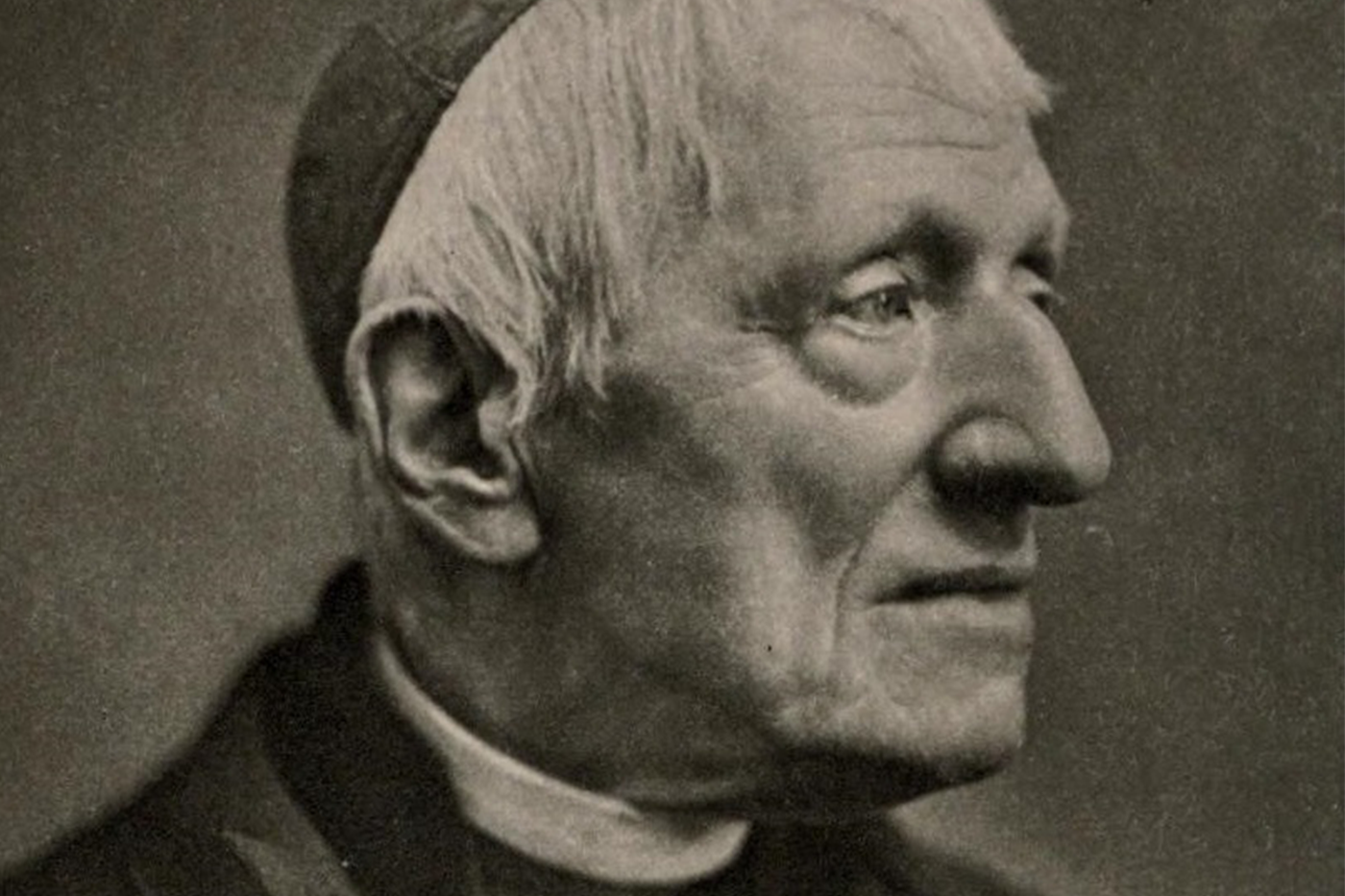
Newman Contra Liberalism: Conscience, Authority, and the Infidelity of the Future
In response to the temptations of liberalism in religion, Newman articulated a profound vision of conscience as a natural mode of hearing God’s voice. Newman’s insights remain important resources today for resisting the notion of conscience as “the right of self-will.”
In February of this year, news came from Rome that Pope Francis had cleared the way for the canonization of John Henry Newman (1801–1890), the celebrated nineteenth-century theologian and Oratorian priest, who midway through his life converted from Anglicanism to Roman Catholicism. When the canonization takes place, it is likely to reignite discussions about the significance of Newman’s legacy.
Newman has been many things to many people. He clearly possessed a conservative outlook on divine revelation and humanity’s standing before God. But he also advanced ideas—such as doctrinal development and the responsibility of the hierarchy to consult the faithful—that went beyond the standard ways in which Catholic theologians had thought. In light of these tensions, how are we best to understand the work of this holy priest and scholar, who exercised such a profound influence on modern Catholic theology?
Relatively late in life, Newman offered his view on the unifying purpose behind his various projects in the memorable “Biglietto Speech” (which he delivered in 1879 upon receiving word that he had been named a cardinal). In that speech, Newman confessed his own inadequacies, noting that over the course of years he had “made many mistakes” and that his work lacked “that high perfection which belongs to the writings of Saints.” Despite these shortcomings, there was, Newman asserted, an underlying continuity to his efforts, one in which he took pride:
I rejoice to say, to one great mischief I have from the first opposed myself. For thirty, forty, fifty years I have resisted to the best of my powers the spirit of liberalism in religion. Never did Holy Church need champions against it more sorely than now, when, alas! it is an error overspreading, as a snare, the whole earth.
In response to the temptations of liberal religion, Newman articulated a profound vision of conscience as a natural mode of hearing God’s voice. He brought this concept into relation with ecclesiastical authority, which he saw as a divinely ordained assistance for rooting out errors in moral judgment. Newman’s insights on these matters, though addressed to specific challenges that Catholics faced during his lifetime, remain important resources for resisting the spirit of liberalism in religion today.
Newman’s Thoughts on Conscience
Some have speculated that, when Newman is canonized, the Holy Father will also bestow on him the title Doctor of the Church (Doctor Ecclesiae) and specifically “doctor of conscience.” If Newman receives this honor, I hope that those who are interested in the question of conscience will attend closely to what he actually wrote, rather than speculate based on a few snippets of his writings.
We hear a lot of talk these days about the “primacy of conscience,” and, with the proper qualifications, Newman’s writings could support this idea. But that concept can also be employed in ways that contradict what Newman said about conscience, and it’s important that we not put Newman’s authority behind ideas that he never would have defended.
Newman touched on conscience at various places in his writings, but his most notable discussion of it can be found in his essay on papal authority, titled A Letter to the Duke of Norfolk (1875). There Newman memorably described conscience as “the aboriginal vicar of Christ.” By this phrase he intended to highlight that it is in and through our conscience that we first hear the voice of God. As Reinhard Hütter rightly observes, Newman’s understanding of conscience is “essentially theonomic,” that is, it has divine law as its foundation: “Conscience is not simply a human faculty, but is in its root constituted by the eternal law, the Divine Wisdom communicated to the human intellect. It is upon its theonomic nature and upon it alone that the prerogatives and the supreme authority of conscience are founded.”
This theonomic framework totally dispels any notion that Newman’s emphasis on the primacy of conscience could lead to subjectivist or relativist ethics. Newman took precautions against this potential misconception by distinguishing between conscience, rightly understood, and a counterfeitunderstanding of conscience, which had wormed its way into the popular mindset. As he put it:
Conscience has rights because it has duties; but in this age, with a large portion of the public, it is the very right and freedom of conscience to dispense with conscience, to ignore a Lawgiver and Judge, to be independent of unseen obligations. . . . Conscience is a stern monitor, but in this century it has been superseded by a counterfeit, which the eighteen centuries prior to it never heard of, and could not have mistaken for it, if they had. It is the right of self-will.
This notion of conscience as “the right of self-will” has become ever more pervasive since Newman’s time. Newman’s stance on conscience, then, was not only countercultural but also prophetic. If persons of faith today are to avoid being tossed here and there by “false liberty of thought” (as Newman called itin his Apologia pro Vita Sua), we will have to hold fast to the theonomic understanding of conscience that Newman articulated.
Conscience in Relation to Church Authority
Because Newman understood conscience as theonomic, he consistently emphasized that the central concern of the moral life is to discern what God requires of us. In matters of moral inquiry, God has not left us stumbling in the dark, but has given us the Church, which can speak authoritatively on questions pertaining to divine and natural law.
From Newman’s vantage point, then, ecclesiastical authority is a gift, not a burden. The Church can bind our consciences because her leaders speak with the authority given by Christ to the Apostles. That the modern world ignores the voice of the magisterium is not a mark against the Church’s authority; rather, it is testimony to humanity’s persisting rebellion against the will of God.
This facet of Newman’s theology runs counter to the liberal notion that the individual is master over his own life. As Newman puts it in the Letter to the Duke of Norfolk, the divine law is “the rule of ethical truth, the standard of right and wrong, a sovereign, irreversible, absolute authority in the presence of men and Angels.” A conscience that is attuned to the divine law is “a stern monitor.”
Too often, however, we become indifferent to the voice of conscience. Because of sin’s effects on the mind, our “sense of right and wrong [is] easily puzzled, obscured, [and] perverted.” Consequently, God has given us the Church to guide us along the right path: “The Church, the Pope, the Hierarchy are, in the Divine purpose, the supply of an urgent demand. Natural Religion, certain as are its grounds and its doctrines as addressed to thoughtful, serious minds, needs, in order that it may speak to mankind with effect and subdue the world, to be sustained and completed by Revelation.”
Nevertheless, Newman did not counsel unthinking obedience on the part of the Church’s members. For Newman, conscience and ecclesiastical authority exist in a dynamic interrelationship. The Church does not rule by fiat, but appeals to the consciences of the faithful, who are ultimately answerable to God.
This is the import of Newman’s famous quip about raising a glass to conscience first, and then to the Pope. Were a pope (or any other holder of church office) to denigrate conscience, he would in effect saw off the very branch on which he sat. For whenever ecclesiastical authorities uphold some facet of the moral law, they make a direct appeal to the consciences of persons of good will.
The Infidelity of the Future
Because society in general was drifting away from a traditional understanding of conscience and its relation to divinely established authority, Newman anticipated a coming age of infidelity. Arguably his most dire prophecy was this: “The trials which lie before us are such as would appall and make dizzy even such courageous hearts as St. Athanasius, St. Gregory I, or St. Gregory VII. And they would confess that dark as the prospect of their own day was to them severally, ours has a darkness different in kind from any that has been before it.” In this area of his thought as well, Newman’s anti-liberal instincts were manifest. Newman was no naïve optimist, and he remained skeptical about narratives of uninterrupted progress.
In spite of his criticisms, Newman recognized certain positive aspects of the liberal tradition. In the Biglietto Speech he readily admitted “that there is much in the liberalistic theory which is good and true; for example, not to say more, the precepts of justice, truthfulness, sobriety, self-command, benevolence, which . . . are among its avowed principles, and the natural laws of society.”
It is precisely on account of these characteristics, however, that liberalism can play such an insidious role in society. As Newman warns in the same speech, “There never was a device of the Enemy [Satan] so cleverly framed and with such promise of success.” If we are not careful, we are liable to mistake the attainments of liberal society for the inbreaking of the kingdom of God, and lose sight of the ultimate destiny to which humans are called.
The battle in which Newman fought has not ended since his death. If anything, it has intensified. Newman’s contention that “[n]ever did Holy Church need champions against [liberalism] more sorely than now,” just as readily applies to our own context.
Of course, we should be careful not to conflate the “liberalism” that Newman opposed with the word as it is commonly used today. Certainly, there are errors intrinsic to contemporary political liberalism that need critiquing, but that conversation is distinct from the struggle against the spirit of liberalism in religion, which demands unqualified resistance. In the Biglietto Speech, Newman specifically described this strand of liberalism as “the doctrine that there is no positive truth in religion, but that one creed is as good as another.” This outlook teaches that “[r]evealed religion is not a truth, but a sentiment and a taste; not an objective fact, not miraculous; and [that] it is the right of each individual to make it say just what strikes his fancy.”
As his words indicate, the preeminent object of Newman’s concern was religious indifferentism. With great prescience, he recognized how a relativistic approach to religious differences corrodes the foundational claims of the Christian faith. If, as the Church confesses, the Incarnation is the central fact of history, then the person of Jesus demands our undivided allegiance. The confession of Christ as Lord simply cannot be squared with the notion of religion as a mere sentiment.
During Jesus’ public ministry, he posed the question to his disciples, “Who do you say that I am?” How we answer that question—in the time and in the place that God has ordained for us—will have all sorts of ramifications for the lives of our families and of our communities. So even though one may distinguish between the spirit of liberalism in religion and present-day political liberalism, the topics are not unrelated. One of the myths of the liberal tradition, as inherited from such thinkers as John Locke and J.S. Mill, is that there exists a strict demarcation between religious practice, which liberalism treats as a private matter, and our political existence, which is lived out in the public square. But if religion fundamentally has to do with that which ties or binds a community together (as in the classical sense of religio), then it can never be a matter of merely private concern.
By refusing to separate the natural and supernatural ends of human existence, John Henry Newman’s antiliberal stance pointed us toward a truly integral form of life—one that has the potential to renew a dying culture.
Posted inUncategorized|Comments Off on THE CANNONIZATION OF CARDINAL NEWMAN IS TO TAKE PLACE SOON
Questions Persist About Vatican Finances, Real EstatePosted by Edward Pentin on Monday Jul 22nd, 2019 at 1:56 PMMany of the issues identified as problematic are still in play, according to informed sources who spoke with the Register.
VATICAN CITY — By October 2016, two years into his term as prefect of the Vatican’s Secretariat for the Economy, Cardinal George Pell had become aware of a Vatican dicastery handling large amounts of unregistered cash in offshore accounts.
But nearly three years later the questions raised by Cardinal Pell about the management of Administration of the Patrimony of the Holy See (APSA), the dicastery which handles the Vatican’s real estate and financial assets, have seemingly gone unanswered. Pell had identified money laundering and fraud risks related to the APSA’s use of foreign bank accounts and had questioned particular asset and real estate transactions.
Keen to move swiftly ahead with Pope Francis’ mandate to root out mismanagement and possible corruption in Vatican financial operations, the cardinal prefect contacted Australian banking friends in London in 2016 to find out more. They estimated that possibly as much as €100 million could be held in these accounts, primarily in the branches of two private banks located in Lugano, Switzerland.
Cardinal Pell responded by saying he would ask a Swiss law firm to first collect bank statements going back 10 years of one of these accounts, and to have the Vatican’s auditor general, Libero Milone, a former partner with Deloitte, a multinational financial auditing and consultancy firm, inspect them. To do this, Pell had to ask in writing for Pope Francis’ permission, which the Holy Father duly gave him with a simple signature.
Yet the bank statements never made it to Cardinal Pell or Milone — both of whom subsequently departed from their Vatican positions. An alleged sexual abuse scandal overshadowed the cardinal, and a barrage of accusations besieged Milone, but a year later Vatican officials exonerated the auditor following an internal investigation that failed to produce evidence to support the accusations.
Sources say the initiative to obtain the bank statements was most likely sabotaged after certain individuals became aware of the inquiry. Officials at APSA often used the excuse that they were having difficulty obtaining the data when asked for information pertaining to these accounts.
“They were delaying it, having ‘problems,’” said one of two informed sources in comments to the Register. “Effectively they were shielding the accounts.”
A major part of the resistance, the Register has learned, is that much of the money was kept in “ciphered accounts” which the Promontory Financial Group — one of several outside contractors brought in to help clean up Vatican finances — warned in 2014 were a money laundering and fraud risk that needed to be addressed.
While many of the accounts are now thought to be closed, it remains unclear exactly how many there were or if any are still operating. (Promontory believed there were at least six accounts generating potentially problematic activity).
Although Cardinal Pell’s former dicastery, now headed by former APSA deputy Msgr. Luigi Mistò, is in charge of vigilance and control over APSA, sources say it appears unlikely that the dicastery will ever know the precise amounts that were held in these accounts, or to whom they belonged.
‘Highly Irregular Transactions’
The accounts in question had irregular international banking numbers, making them difficult to track.
The money that was thought to have been in these accounts, in the Lugano branches of two private banks, Banca della Svizzera Italiana and Julius Bär, could have been be as much as €7 billion, according to some estimates. Both banks refused to confirm or deny the existence of the accounts: a Julius Bär spokeswoman told the Register July 11 that as a “matter of policy” they “do not comment on alleged or existing client relationship.”
The existence of the offshore accounts and the difficulty in accounting for them was confirmed to the Register by a second source familiar with the situation.
“It became clear as the months went by that there was a hub of corruption within APSA, and related to this were these two banks in Lugano,” said the source on condition of anonymity. “Highly irregular transactions were transiting through these banks.”
Neither Claudia Ciocca, a director in the Secretariat for the Economy charged with investigating these accounts, nor Archbishop Nunzio Galantino, the current APSA president, responded to the Register’s request for comment.
Tommaso Di Ruzza, the director of the Vatican’s Financial Information Authority which monitored APSA until 2016, told the Register that as far as he was concerned, it was “not correct” to describe these as “illicit accounts.” He said he “cannot disclose if we found anomaly indicators.”
Di Ruzza said that “as a general rule,” if the Authority does find anomalies, it “spontaneously provides” and requests information from “its foreign counterparts” including Italian ones if “the interested subject is an Italian citizen or the transaction is connected with the Italian territory.” He declined to answer whether it made this verification when the Authority had oversight for APSA.
APSA’s Real Estate Holdings
Another challenge Cardinal Pell faced in trying to bring transparency, control and vigilance to Vatican finances was the inadequate management of foreign real estate holdings.
Sources say only few officials within APSA know the true extent of the Vatican’s foreign real estate portfolio, which is held largely “off the books” and handled confidentially.
Much of the foreign real estate APSA administers derives from funds the Italian government provided to the Vatican after the Lateran Pacts of 1929. This was paid in compensation for Church property that had been confiscation by the Italian state during the Risorgimento, the period in the 19th century during which the modern state of Italy was consolidated.
By 2016, the value of APSA’s real estate holdings was estimated to be worth at least €800 million with a portfolio including property in London’s prestigious Mayfair, as well as in Paris and Switzerland. The management of the UK portfolio is apparently carried out by APSA through a managing company called British Grolux Investments Ltd, which does not identify the Vatican’s ownership in its records although its board of directors contains various members linked directly to APSA.
In 2015, for reasons unknown, APSA spent €100 million to purchase a prestigious London property containing 108 apartments and 57,000 square feet of shops. Cardinal Domenico Calcagno, who served as APSA’s president from July 2011 until June of 2018, reportedly asked Cardinal Pell to effectively rubber-stamp the transaction only at the eleventh hour, but the cardinal advised against it due to serious questions he felt were unanswered.
The deal nevertheless went ahead after the Pope overruled Cardinal Pell’s concerns because Cardinal Calcagno had told Francis that APSA would lose its down payment of £3.5 million ($4.9 million) if the deal did not go ahead right away.
Cardinal Pell had also firmly opposed a proposal to use the Vatican’s pension fund for half the purchase, and specifically asked to know how this investment figured into the pension fund’s strategy.
But the fund’s president was also Cardinal Calcagno who wrote a letter to himself, from APSA to the fund, to approve the transaction. At the time the cardinal was also being investigated for embezzlement allegations relating to his time as bishop of Savona (that investigation has not resulted in any criminal proceedings against the cardinal, who had reached the mandatory retirement age of 75 for bishops at the time his resignation as president of APSA was accepted last year by Pope Francis).
The purchase of the London property in 2015, located at 176-206 High Street Kensington, is now viewed by officials as a mistake, having been made at the top of the London property market which experts were referring to as a “speculative bubble,” and with a relatively strong pound that lost significant value after the Brexit referendum a year later.
“What needs to be stressed is that the real estate APSA manages is not its own to manage, but belongs to the Church,” said the second Register source. “Instead, they deal with it like it’s theirs only, and if anyone tries to look in and see how they’re managing it, the person is seen as an intruder, even if that person happens to be from the Secretariat of State or from the Secretariat for the Economy.”
Lack of Transparency
APSA is not the only Vatican body with an apparent aversion to scrutiny. In 2017, the first ever external audit of the Vatican by Price Waterhouse Coopers (PwC) was abruptly cancelled by the Secretariat of State just months after it had started, and having been agreed upon by the Council of the Economy – a group of cardinals that oversees the Secretariat for the Economy.
Cardinal Pell’s dicastery had already uncovered vast amounts of money that had not been recorded in financial statements (94 million euros in the Secretariat for State, later followed by nearly 1 billion euros in various other dicasteries).
In comments to the Register, Cardinal Angelo Becciu, who was sostituto (second in charge) at the Secretariat of State at the time and is now prefect of the Congregation for the Causes of Saints, said he was unaware of the bank accounts or foreign real estate handled by APSA. He said APSA had its own “autonomy” and that not all of its operations were known to the Secretariat of State.
The Sardinian-born cardinal also said the Secretariat of State “never opposed, in principle, the audit by the PwC” but wanted to establish “temporal and thematic” limits to their “intervention.”
“They showed up and said they had to see everything,” he said, adding: “It is perfectly clear that this could not have been followed, also because of the very high costs of the operation, which had been agreed by the Secretariat for the Economy without consulting anyone.” The cardinal also maintained that because termination of the PwC contract was “consensual” and without any financial penalties, it showed that PwC auditors also “realized the operation had been poorly planned and that, for the good of all, had to be stopped.”
However, we understand from reliable sources that PwC was given alternative work to make up for the loss in fees.
Those same sources have told the Register that the events discussed in this article comprise just a “small sample” of the misconduct in play, but that Archbishop Galantino, and the new sostituto, Archbishop Edgar Peña Parra, are making some progress in addressing financial mismanagement and possible corruption in the Vatican and abroad.
What many evaluators, inspectors, and consultants would prefer to see is a radical change of personnel.
“It would be so simple to eliminate the corruption: change the people and obey the rules,” said the second Register source. “Changing the structures helps as that creates control and vigilance, checks and balances, but it’s senseless to do that if people who control the assets, human resources, employee contracts and so on, are the same corrupt people as before, the so-called ‘old guard.’”
In addition to Archbishop Galantino and Claudia Ciocca, the Register contacted Archbishop Peña Parra and the Holy See Press office asking if they could confirm the existence of the Swiss accounts, APSA’s foreign real estate portfolio, and the full reasons for the PwC audit cancellation. None of these parties replied to the Register’s queries for clarification regarding these matters.
Posted inUncategorized|Comments Off on THE ORIGIN OF THE PRESSURE TO DESTROY CARDINAL GEORGE PELL IS BECOMING MORE CLEAR DAY BY DAY
Turning Toward God: Celebrating the Mass Ad Orientem
A Letter from Bishop James S. Wall
Celebrating Mass Ad Orientem, Ad Deum, and Versus Populum
My dear friends in Christ:
Recently Pope Emeritus Benedict XVI released a powerful letter, in which he touched on a number of topics, including especially the sexual abuse crisis that has impacted the Church and even society as a whole. In his letter, he also addressed the Eucharist. He acknowledged, and rightfully so, that we have become too lax in our approach to the Eucharist. There were a number of reasons for this, even extreme cases when Holy Communion has been distributed to non-Catholics at weddings and other large events for the sake of “inclusion.” We know, however, that such “inclusivity” is actually quite dangerous, for it can put someone’s soul at risk in the name of not hurting feelings. Remember St. Paul: “Whoever, therefore, eats the bread or drinks the cup of the Lord in an unworthy manner will be guilty of profaning the body and blood of the Lord. Let a man examine himself, and so eat of the bread and drink of the cup. For anyone who eats and drinks without discerning the body eats and drinks judgment upon himself” (1 Cor. 11:27-29). We would do well to remember, then, that the Eucharist is not simply a nice “sign” or “symbol” of communion with God, but rather trulyis communion with God. (In fact, it is so far from being a mere symbol in the modern sense of that term, that Flannery O’Connor once famously said that “if it is just a symbol, to hell with it!) For the Eucharist is nothing less than the very Body, Blood, Soul, and Divinity of Jesus Christ, and the “source and summit of the Christian life” (Lumen gentium, 11).
Pope Benedict’s letter thus provides an opportunity for us to reflect on how better to respect the Most Blessed Sacrament of the Eucharist. There are of course many ways to do this: arriving early to prepare for Mass in prayer; staying after to offer an Act of Thanksgiving; dressing appropriately at Mass and in Church (“Sunday best” is still a thing!); keeping the one-hour Eucharistic fast; making regular (even monthly) sacramental confession; and reverently, not hurriedly, receiving Holy Communion readily come to mind (cf.Catechism of the Catholic Church, 1385-1389). There is, however, one particular practice that I would like to highlight here. It is about exercising the option to celebrate the Holy Sacrifice of the Mass facing “toward the East” (ad orientem) or “toward God” (ad Deum) as distinct from “toward the people” (versus populum).
Let me say at the outset: I know this can be a contentious topic. To make changes to the way we pray can be difficult, especially when it comes to liturgical prayer. By explaining and advocating for this, I am in no way trying to disrupt the way the people of this Diocese pray. Rather, I am trying to open the treasury of the Church’s patrimony, so that, together, we can all experience one of the most ancient ways that the Church has always prayed, starting with Jesus and reaching even to our own day, and thereby learn from the “ever ancient, ever new” wisdom of the Church.
With that in mind, let me start with just a brief historical note. Essentially, we can say that celebrating Mass ad orientem is one of the most ancient and most consistent practices in the life of the Church—it is part of how the Church has always understood the proper worship of God. Uwe Michael Lang has published a book showing just this, entitled Turning Towards the Lord: Orientation in Liturgical Prayer and published by Ignatius Press. His extensive and thorough research shows this very fact: that, in the words of Cardinal Ratzinger, “Despite all the variations in practice that have taken place far into the second millennium, one thing has remained clear for the whole of Christendom: praying toward the east is a tradition that goes back to the beginning” (The Spirit of the Liturgy, p. 75). This means that celebration of Mass ad orientem is not a form of antiquarianism, i.e. choosing to do something because it is old, but rather choosing to do something that has always been. This also means, in turn, that versus populum worship is extremely new in the life of the Church, and, while a valid liturgical option today, it still must be considered novel when it comes to the celebration of Mass.
Allow me now to give a brief explanation of ad orientem or ad Deum worship. Prayer and worship “toward the East” (ad orientem, oriented prayer) “is, first and foremost, a simple expression of looking to Christ as the meeting place between God and man. It expresses the basic christological form of our prayer. […] Praying toward the east means going to meet the coming Christ. The liturgy, turned toward the East, effects entry, so to speak, into the procession of history toward the future, the New Heaven and the New Earth, which we encounter in Christ” (Joseph Ratzinger,The Spirit of the Liturgy, p. 69-70). By facing Christ together at Mass, we can see how “[o]ur prayer is thus inserted into the procession of the nations to God” (ibid., p. 76).
Ad orientem worship is thus a very powerful reminder of what we are about at Mass: meeting Christ Who comes to meet us. Practically speaking, this means that things will look a bit different, for at such Masses the Priest faces the same direction as the Assembly when he is at the altar. More specifically, when addressing God, such as during the orations and Eucharistic Prayer, he faces the same direction as the people, that is, toward God (ad Deum). He does so literally, to use a phrase dear to St. Augustine, by “turning toward the Lord” present in the Blessed Sacrament. In contrast, when addressing the people, he turns to face them (versus populum).
Some of you may be familiar with this, and perhaps have even been at Masses celebrated this way. The common way of describing such Masses is usually to say, by way of objection, that “the priest has his back to the people.” Now, while this is technically true, it largely misses the main point, which is one much grander and more beautiful: ad orientem worship shows, even in its literal orientation, that the priest and the people are united together as one in worshipping God, even physically with their bodies, “in a common act of trinitarian worship…. Where priest and people together face the same way, what we have is a cosmic orientation and also an interpretation of the Eucharist in terms of resurrection and trinitarian theology. Hence it is also an interpretation in terms of Parousia [end of the world], a theology of hope, in which every Mass is an approach to the return of Christ” (Joseph Ratzinger,Feast of Faith, p. 140). Celebrating Mass ad orientem, then, is meant to remind us of all these important factors of our faith, and, ultimately, that the Mass is not first and foremost about us, but rather about God and His glory—about worshipping Him as He desires and not as we think best. It is His work after all, not ours, and we are simply entering into it by His gracious will. In 2007, Pope Benedict spoke of just this fact in his address to the monks of Heiligenkreuz Abbey in Vienna:
“In all our efforts on behalf of the liturgy, the determining factor must always be our looking to God. We stand before God—he speaks to us and we speak to him. Whenever in our thinking we are only concerned about making the liturgy attractive, interesting and beautiful, the battle is already lost. Either it is Opus Dei [the work of God], with God as its specific subject, or it is not. In the light of this, I ask you to celebrate the sacred liturgy with your gaze fixed on God within the communion of saints, the living Church of every time and place, so that it will truly be an expression of the sublime beauty of the God who has called men and women to be his friends!”
Notice the emphasis on looking toward God together!
Another common objection or at least misunderstanding is that this particular way of celebrating Mass was disallowed at or after the Second Vatican Council. This is not accurate, as none of the conciliar documents even mention this. Additionally, a close reading of the rubrics of the Roman Missal will still show today that ad orientem is assumed to be the normal posture at Mass: they often describe the priest “turning to face the people,” which implies he is facing the altar before and after doing so.
Finally, let me say a few words on the matter of preference. There is an old saying that holds de gustibus non est disputandum: when it comes to taste, there is no room for dispute. To a point, that is true. Nobody can fault anybody for liking chocolate chip ice cream more than mint, or Chevrolet more than Ford. When it comes to the ways in which we worship God, however, nothing is simply a matter of taste. Msgr. Charles Pope explains this well: “Preferences should be rooted in solid liturgical principles. […] People matter, and they should be nourished and intelligently engaged in the Sacred Liturgy—but not in a way that forgets that the ultimate work of the Liturgy is not merely to please or enrich us but to be focused on and worship the Lord” (National Catholic Register, “5 Things to Remember in the ‘Ad Orientem’ Discussion,” 8 August 2016).
For all these reasons, I have decided that, since the recent solemnity of Corpus Christi, the 11:00am Sunday Mass will henceforth be celebrated ad orientem at the Cathedral of the Sacred Heart in Gallup.
This provides the faithful with the opportunity to attend the Mass in this way—indeed, in this way which is still approved and generously allowed by the Church. This is also a practice I would like to encourage throughout the Diocese of Gallup. I believe it is pastoral to offer Masses both ad orientemand versus populum, so that, together, we can all be exposed to the varied riches of the Church and Her prayerful history. With St. Augustine, allow me to conclude with this heartfelt prayer: in our worship, hearts, and lives, “let us turn towards the Lord God and Father Almighty, and with a pure heart let us give Him sincere thanks as well as our littleness will allow…. May He increase our faith, rule our mind, give us spiritual thoughts, and at last lead us to His blessedness, through Jesus Christ His Son. Amen.”
May God bless you!
The Most Reverend James S. Wall Bishop of Gallup
Given in Gallup, at the Chancery/Cathedral, this 22nd day of July, in the Year of our Lord MMXIX, the tenth of Our Episcopate, on the liturgical memorial of St. Mary Magdalene.
I went over to Gregory’s penthouse recently to see if I could learn more about the Gregory-Dorsonville alliance. I, of course, was stonewalled left and right. Building officials wouldn’t even acknowledge that Dorsonville lived there. Never mind that I had confirmed his presence there through a clueless receptionist who had gone to look for him after I confidently declared, “I am here to see Bishop Mario Dorsonville.” That head fake displeased the pastor of Our Lady Queen of the Americas (the parish below the penthouse) with whom I shortly thereafter got into a row. He couldn’t kick me out of the building, but he refused to entertain any questions about Dorsonville and Gregory.
The Our Lady Queen of the Americas building, which is in the neighborhood commonly called Embassy Row, is a very odd set-up: at the top of it is a multimillion-dollar residence replete with marble, rugs, and artwork while on the other floors exist a neglected, déclassé parish and jobs/learning center for illegal immigrants called the Washington English Center. This last is funded by liberals and socialists from outfits like the Herb Block Foundation (Block was the communist cartoonist for the Washington Post). I was told that Cardinal Wuerl went to great lengths to avoid the plebes below him; a former pastor of the Our Lady Queen of the Americas parish told me that he had never spoken to Wuerl. Apparently, Gregory is making a little bit more of an effort. I was told that he actually said Mass at the parish a few weeks back.
Gregory’s taste for high living got him into trouble in his last assignment. Atlantan Catholics smacked him down for trying, in the supposed austere age of Pope Francis, to build a mansion in Buckhead, the Beverly Hills of Atlanta. Thanks to McCarrick and Wuerl, who spent millions on unnecessary residences, Gregory can now indulge his penchant for posh comforts — a tendency that led his priests to call him the “Queen of the Nile,” a reference not to his race but to his Cleopatra-like imperiousness.
Why Gregory is bunking with a Maradiaga protégé cries out for greater scrutiny. Dorsonville has now lived with McCarrick, Wuerl, and Gregory. He has become one of the hinges on which corrupt Wuerlworld hangs.
I went over to Gregory’s penthouse recently to see if I could learn more about the Gregory-Dorsonville alliance. I, of course, was stonewalled left and right. Building officials wouldn’t even acknowledge that Dorsonville lived there. Never mind that I had confirmed his presence there through a clueless receptionist who had gone to look for him after I confidently declared, “I am here to see Bishop Mario Dorsonville.” That head fake displeased the pastor of Our Lady Queen of the Americas (the parish below the penthouse) with whom I shortly thereafter got into a row. He couldn’t kick me out of the building, but he refused to entertain any questions about Dorsonville and Gregory.
The Our Lady Queen of the Americas building, which is in the neighborhood commonly called Embassy Row, is a very odd set-up: at the top of it is a multimillion-dollar residence replete with marble, rugs, and artwork while on the other floors exist a neglected, déclassé parish and jobs/learning center for illegal immigrants called the Washington English Center. This last is funded by liberals and socialists from outfits like the Herb Block Foundation (Block was the communist cartoonist for the Washington Post). I was told that Cardinal Wuerl went to great lengths to avoid the plebes below him; a former pastor of the Our Lady Queen of the Americas parish told me that he had never spoken to Wuerl. Apparently, Gregory is making a little bit more of an effort. I was told that he actually said Mass at the parish a few weeks back.
Gregory’s taste for high living got him into trouble in his last assignment. Atlantan Catholics smacked him down for trying, in the supposed austere age of Pope Francis, to build a mansion in Buckhead, the Beverly Hills of Atlanta. Thanks to McCarrick and Wuerl, who spent millions on unnecessary residences, Gregory can now indulge his penchant for posh comforts — a tendency that led his priests to call him the “Queen of the Nile,” a reference not to his race but to his Cleopatra-like imperiousness.
Why Gregory is bunking with a Maradiaga protégé cries out for greater scrutiny. Dorsonville has now lived with McCarrick, Wuerl, and Gregory. He has become one of the hinges on which corrupt Wuerlworld hangs.
Posted inUncategorized|Comments Off on SOME THINGS NEVER CHANGE IN WASHINGTON, D.C., WHETHER IN POLITICS, OR MORALS, OR THE Roman Catholic Church
Posted inUncategorized|Comments Off on NEXT YEAR’S GENERAL ELECTION COULD WITNESS THE TOTAL TAKEOVER OF THE ELECTION RESULTS BY GOOGLE, FACEBOOK, TWITTER AND OTHER SOCIAL MEDIA




You must be logged in to post a comment.